


Abstract
Heavy metal (HM) contamination of soils frequently occurs in combination with other environmental stressors, resulting in a cumulative effect that interferes with plant physiology, biochemistry, and development in a more severe and complex manner than the individual stressors alone. While there are many reviews that consider abiotic stress combinations broadly, this review focuses specifically on combined HM + abiotic stress conditions and classifies in terms of the effect on symptoms or induced defense mechanisms as additive, synergistic (exacerbated) or even antagonistic (counteracted). It is revealed that the combined stress response may depend on the way that each of the stresses presents itself to plant tissues, i.e., whether it is a chemical compound whose accumulation into roots may be regulated or a stress whose application is more general, such as heat stress or flooding (localized versus systemic, respectively). Combined localized stresses such as HMs and hydrocarbons tend to elicit synergistic responses, while localized + systemic stresses are more variable, tending toward antagonistic, such as HM and drought. Modern analysis tools indicate an overlap in or induction of unique response pathways that may alter depending on the conditions (intensity, duration and timing of exposure; greenhouse versus field conditions). The latest findings in mitigation techniques, ranging from chemical amendments and biological treatments, such as biochar and phytohormones, respectively, to genetic engineering, as also summarized. It is revealed that biochar and genetic approaches are both the most-widely used and the most effective.
Keywords:
drought; flooding; heat; hydrocarbons; oxidative stress; pesticides; plastics; salinity; stress mitigation; tolerance 1. Introduction
Plants must cope with a wide range of abiotic stresses that impact their ability to obtain resources from the environment. Among them, heavy metals (HM) pollution is an ever-increasing environmental problem with a strong negative influence on plant life and agricultural production [1]. Agricultural soils themselves may present high levels of HM and metalloids, such as cadmium (Cd), chromium (Cr), copper (Cu), manganese (Mn), lead (Pb), nickel (Ni), zinc (Zn), arsenic (As) and mercury (Hg). Recent estimates suggest that between 14 and 17% of agricultural soils are contaminated with at least one heavy metal (Table 1) [2,3,4,5,6,7,8,9], translating to upwards of 8 million hectares of arable land affected by heavy metals [2]. In this same study, a machine learning model approach (extremely randomized trees) was used to aggregate soil data from over 700,000 samples representing 1493 different climatic, geographic and land use regions. It emerged that both natural (geological and climatic) and anthropogenic factors have contributed to the formation of a metal enriched belt that stretches across southern Europe, the Middle East, southern India and southeast China. This area has the highest probability of soils exceeding the threshold limits for agricultural areas for seven metals: As, Cd, Co, Cr, Cu, Ni and Pb. Many sources of HM contamination have been identified (Figure 1) [10,11,12,13]. Among these, the main ones include certain industrial emissions, such as those from mining, smelting, and manufacturing; in agriculture, the use of phosphate fertilizers containing Cd and pesticides containing As compounds; in urban areas, the predominant sources of HMs are electronic waste and untreated wastewater. These various toxic substances can thus easily infiltrate food supply chains and consequently threaten the safety of products intended for human and animal consumption [14,15].
Table 1.
A summary of the dominant abiotic stress factors that significantly impact the productivity of agricultural land. The amount of agricultural land that is impacted globally is indicated both in terms of the percent of total agricultural land and the number of hectares that this represents. For pesticides, herbicides and fungicides, there is a wide range of compounds used with varying degrees of impact on ecosystems. To simplify this category, only conventional and organic farming were considered.
Figure 1.
A summary of HM sources and factors regulating HM mobility in the soil and availability to plants. Large black arrows indicated the direction of flow from HM sources. Soil horizons: O—organic matter; A—topsoil; E—eluviation layer; B—subsoil; C—parent rock; R—bedrock.
The increasing presence of HM in soils (and waters) has become a critical priority not simply for sustainable global development, but in particular for food security and human health. HM have a very long half-life, and therefore persist in the environment for extended periods, thus exerting toxic effects on microorganisms, plants, animals, and humans [16]. Highly toxic metal species can bioaccumulate within the food chain, intensifying the risk to human health. Specific HM and metalloids, in fact, may alter human metabolic processes through chronic low-level exposure [17,18]. Several substances, such as Hg, Cd, Pb, and inorganic As species, may cause cytotoxicity and systemic toxicity. For instance, they can bind to enzymes in mammalian cells, interact with key cellular components, induce disruption of redox homeostasis and ion transport mechanisms, and compromise DNA repair processes [17,18,19,20].
Unfortunately, HMs represent only a portion of the environmental stressors that threaten the growth, productivity and survival of plants. Climate change is aggravating the frequency and intensity of abiotic stresses such as drought, high temperatures and flooding [21]. Anthropogenic factors such as the pressure to stimulate greater crop productivity and the increased production of waste is resulting in greater inputs of chemicals and microplastics into agricultural soils and irrigation water. Drought (moderate) and heat stress currently affect the greatest amount of agricultural land area (Table 1). A recent study estimated the global crop losses by the end of the century due to climate change for six staple crops under current emission scenarios as −27.8% for maize, −6% for rice, −21.7% for sorghum, −35.7% for soybean, −28% for wheat and −29.8% for cassava [22]. These estimates also took into account different adaptation strategies (e.g., locally adapted cultivars, water management strategies), finding that countries with moderate temperature and precipitation regimes are the most vulnerable to crop losses because their production systems are inherently less adapted to higher temperatures and drought. This suggests that the losses will not be distributed evenly across the globe and that adapting our production methods will not be sufficient.
Alarmingly, climate change is also increasing the probability of HM toxicity co-occurring with other abiotic stresses and increasing the pressure to find targeted mitigation strategies to reduce the impact to our agricultural production system. Climatic factors such as increased temperature and intense precipitation events, as well as elevated transpiration rates of plants, are increasing the availability and mobility of heavy metals in soil [5]. Until recently, research has focused primarily on individual stress responses in plants, as well as single stress-specific mitigation methods. However, rapidly changing environmental conditions and future climate models are stimulating a change in experimental approach to look further into combined stress responses in plants. These phenomena have been recently analyzed and reviewed in crop plants with multiomic approaches revealing the fact that differential regulation occurs depending on whether plants experience stresses individually or in combination based on complex stress response networks [23,24,25]. These broad reviews have been fundamental in identifying physiological and molecular processes that are involved in plant responses to combined abiotic stress. Primary and secondary metabolism are among the key processes most commonly impacted [23]. Both are targeted by the elevated production of reactive oxygen species (ROS) that is a general physiological response to HMs and many other abiotic stresses including drought, salinity and high temperature [1]. These processes are intricately connected to tissue chlorosis, reductions in shoot and root growth and the downregulation of photosynthesis. The tendency of current reviews to consider heavy metals as single group ends up generalizing their effects on plant physiology and comparing them as a monolith in relation to other abiotic stress combinations. However, heavy metals may be present in diverse ionic forms which can influence their availability for uptake, their transport into plant tissues and their toxicity thresholds. Some heavy metals are micronutrients and are therefore essential to the plant life cycle in small quantities, while others have no role in plant function. By focusing attention on individual HMs in combination with other abiotic stresses, this review seeks to elucidate response patterns that may be connected to specific mechanisms involved in the uptake, accumulation and tolerance to HMs. This information should shed light on the mitigation strategies to be applied that are most adapted to specific case scenarios.
Given the vulnerability of our global food production system to variability in soil and weather conditions, and the increasing likelihood of HM and abiotic stress co-occurrence, going forward it will be vital to know which interactions have the greatest negative impact on plant health and why. This is especially important in the areas where the highest rate of HM contamination is occurring in coincidence with zones of elevated agricultural productivity [2]. The present review focuses on the seven HMs with the highest probability of affecting agricultural soils at a global scale (As, Cd, Co, Cr, Cu, Ni and Pb) in combination with other common abiotic stresses—salinity, drought, flooding, temperature, industrial chemicals and microplastics. Following an overview of transport mechanisms for the selected HMs mentioned above and general abiotic stress responses in plants, connections between physiological processes and response mechanisms will be identified in order to classify combined HM + abiotic stress responses as additive, synergistic and antagonistic—and the likely mechanisms involved (e.g., biochemical mitigation, physical exclusion). The emerging mitigation strategies that can aid in shifting the response to one that is antagonistic are also presented, including biological, chemical and genetic approaches. These studies reveal the advances in knowledge that have been made regarding the complex HM and combined abiotic stress responses and suggest new areas of research to improve the crop adaptation to future conditions.
2. Literature Review Approach
In contrast to other reviews in the literature that tend to consider HMs as a single group, this review focuses on individual HMs in combination with other abiotic stresses. In particular, studies dealing with combinations of abiotic stress and the seven HMs with the highest probability to increase in concentration in agricultural soils (As, Cd, Co, Cr, Cu, Ni and Pb) were included in this review. These were limited to studies on agriculturally relevant crop species, with some exceptions for plants with potential commercial value in the future (current local use, halophytes). The principal search engines used were PubMed, Google Scholar and Researchgate. Studies were selected based on the time since publication (2006–present for physiological studies and 1996–present for more general information on plant responses), plant species (crop species, mainly herbaceous) and type of study conducted (controlled greenhouse and growth chamber trials and pot experiments). Table 2 summarizes the specific keyword and themes used in the search process, and a list of criteria used to determine inclusion or exclusion of studies from consideration. In particular, studies on plants with no edible or commercial production as food, building materials or fibers were not included, and neither were those focused solely on metals outside of the seven listed above (ex. Al, Hg, Sr, Ti, Zn). Though relevant, these excluded metals are less likely to have an outsized effect on global food production in the future based on current predictions. However, studies with multiple HMs that included at least one metal from the specified list were considered. The literature search focused on the physiological responses of plants to the combination of individual abiotic stresses with HM stresses, introduced by notes on the action of each stress source. We looked especially for studies that used multiomic approaches to characterize changes in gene expression and metabolic pathways in response to stress intensity. Also, of particular interest were trials that explicitly described the type of response elicited with terms such as additive, synergistic and antagonistic, as these types of responses can shift depending on the intensity and combination of the stress applied.
Table 2.
A summary of the topics and keywords used in the literature search.
3. Heavy Metal Sources, Mobility and Effects on Plants
Heavy metals in soil originate from both biogeochemical and anthropogenic sources (Figure 1). The weathering of soil parent material is a natural source of HMs that can depend on both climatic and geographic factors, especially with regard to As, Cd, Co, and Cu [2]. Anthropogenic activities are rapidly increasing the amount of HMs deposited in agricultural soils through multiple methods of diffusion. Run-off from automobiles, landfill leachates, mining activities and industrial operations significantly contribute to soil HM concentrations. The agricultural industry itself is also responsible for increasing soil HM levels, especially through the application of pesticides (in particular As and Pb) and through irrigation with contaminated water [11,12]. The abovementioned waste management, mining and industrial activities all risk releasing HMs into underground aquifers that are then used for crop irrigation. As such, the principal anthropogenic sources of HMs are highly dependent on the types of activities that exist in a region and whether one is looking at the agricultural system of a region as a whole or at the scale of individual fields. For example, in England, it was found that atmospheric deposition was responsible for up to 82% of HMs in the soil; however, when evaluating at the level of individual fields, sewage was a significant factor in the cases where it was applied [11]. Similarly, in a meta-analysis of HM sources in agricultural soils in China, atmospheric deposition caused between 43 and 82% of the As, Cr, Hg, Ni and Pb contents of soil, while significant concentrations of Cd, Cu and Zn came from livestock manure applications [12]. Livestock manure is beginning to receive greater attention as it represents the circularity of HMs in the food chain: animals are fed with HM- and growth promoter-enriched feed and a portion of the HMs consumed ends up in manure [13,26]. The manure is then applied to agricultural fields as fertilizer, with the additional consequence of increasing soil HM concentrations.
The mobility of HMs and their availability to plants is mainly determined by soil properties (Figure 1). Soil pH, electroconductivity (EC), and total organic content (TOC) are the three factors that have the greatest impact on HM mobility and availability [27,28,29,30]. pH is negatively correlated with HM availability, as demonstrated in rice plants in which root HM concentrations of Cr, Cu, Fe, Mn and Pb increased with soil pH values below 7.0, but decreased when pH rose above 7.0 [30]. In contrast, EC and TOC are positively correlated with HM availability. In particular, TOC together with soil clay content, affect the cation exchange capacity of soil by providing negatively charged particles to which HMs and other essential nutrients can bind or be released from into the soil solution for uptake by plants. Redox potential of soil can affect HM mobility with greater HM mobilization under reducing conditions, as found with As, Fe and Mn [31]. Additionally, plant–soil cycling helps to mobilize HMs from lower soil horizons to upper horizons within the range of plant roots [32]. Clearly, soil chemistry and texture strongly influence the degree to which HMs are available for uptake by plants once they are deposited into the soil by the abovementioned sources.
HMs enter plants through absorption by the root system and may remain there or be translocated to the shoots, reaching toxic concentrations as they accumulate (Figure 2) [33]. In the absence of exclusion or avoidance mechanisms, such as chelation by root exudates, heavy metal ions such as Cd2+ and Pb2+ and Zn2+ in the soil may take advantage of non-selective cation channels to enter plant roots where they may accumulate or be translocated to the shoots, depending on the species [33,34,35]. This process is highly regulated by the presence of numerous transporters, both specific and non-specific for HMs. Long-distance transport of HMs, especially translocation from the roots to the shoots, occurs via the transpiration stream in the xylem tissue. Transporter proteins at the root endodermis and bundle sheath cells of leaves determine HM loading and unloading of the xylem. In both root cortical cells and leaf parenchyma cells, HMs can accumulate in organelles at the subcellular level or be sequestered in vacuoles. Thus, the specificity, localization and abundance of transporters determine the distribution of HMs within plant tissues. This reliance on membrane-bound transporters is a key factor that may explain similarities between salinity and HM stress responses (glycophytes versus halophytes; metallophytes) and differentiate HM stress from other abiotic stresses such as temperature or drought. The various transporters and their specificities also help to distinguish the threshold levels of different plant species for the various HMs.
Figure 2.
HM transport from soil to the leaf via xylem uploading and unloading. Cell types: RH—root hair; CO—cortex; EN—endodermis; PE—pericycle; XY—xylem; BS—bundle sheath; ME—mesophyll; VAC—vacuole; CHL—chloroplast. Red arrow: apoplastic pathway; yellow arrow: symplastic pathway; dark orange arrow: vascular transport; purple arrow: intercellular transport (leaf).
The distribution of accumulated HMs within plant tissues also determines the degree and location where HM stress responses and symptoms may be stimulated. Figure 3 summarizes the common HM physiological responses seen at three different organ levels in plants: roots, shoots and leaves. The negative effects of toxic concentrations of heavy metals range from morphological alterations in plant growth to disruptions in fundamental physiological processes such as photosynthesis and cellular respiration. Increased ROS production plays a pivotal role in determining the extent and type of damage that occurs, including cessation of cell proliferation at meristems and the degradation of membranes. Prolonged exposure can lead to stress effects both from the direct impacts of the HMs themselves as well as the limitations in nutrient and water acquisition due to reductions in root biomass.
Figure 3.
A summary of the main effects of heavy metal stress on plants, linking symptoms with the underlying physiological and molecular processes.
There are many overlapping effects between the different heavy metals, indicating that there are shared response patterns involving fundamental physiological processes and/or mechanisms of stress mitigation [25,36]. An increase in ROS production is one of the first markers of HM stress, leading to the induction of both enzymatic and nonenzymatic antioxidant systems and oxidative stress responses with prolonged or intense exposure [36]. The visual and physiological effects that are summarized in Figure 3 are regulated following the activation of several signaling networks in response to HMs [37,38,39,40,41,42,43,44,45]. Stress response gene expression is regulated by a number of signaling cascade networks including Ca-binding kinases (CKPKs, CMLs, CaM [42]), MAPKs [43], enzymatic and non- enzymatic antioxidants [45] and hormones like abscisic acid (ABA), ethylene [46] and jasmonic acid (JA) [47]. Thus, different heavy metals may activate similar biochemical and genetic pathways to induce a catalog of plant responses and defense mechanisms.
4. Effects of Other Individual Abiotic Stresses
The way that an abiotic stress factor initially interacts with a plant and whether the effects of that stress are localized or systemic are likely two key factors that may aid our understanding of the responses and defense mechanisms that are stimulated in the plant following exposure. This section briefly looks at individual abiotic stresses other than HMs in terms of their interaction or mode of perception in plants and classifies them as localized or systemic stresses (Table 3; [48,49,50,51,52,53,54,55,56,57,58,59,60,61,62,63,64,65]). Localized stress in this instance is defined as a stress factor whose impact on plant tissues is mainly determined by its distribution, i.e., where it is accumulated. These are compounds whose movement within the plant body is regulated by transporters, as seen with HMs, hydrocarbons, MPs and other synthetic chemicals. In contrast, systemic stress factors are those that are applied ubiquitously across the plant body and stimulate stress responses factors that are transported long-distance such as ROS and plant hormones to initiate a global response. These include drought, flooding and temperature stress, which tend to affect the entire below- or aboveground organ system, and sometimes both, simultaneously. Here, salinity stress is listed as both localized and systemic because though sodium (Na) ion accumulation and distribution are regulated by transporters, it often stimulates drought symptoms by disturbing plant water relations, notably osmolarity, and thus water potential.
Table 3.
Principal plant responses to abiotic stresses, characterized according to the location of their main effect upon exposure.
4.1. Localized and Mechanical Stresses: Microplastics, Hydrocarbons, Synthetic Chemicals
Agricultural productivity has long been associated with the use of a broad spectrum of synthetic chemical products including herbicides, pesticides and fungicides. These substances, together with heavy metals, are among the most dangerous contaminants of agricultural soils, causing major environmental problems globally [60]. Recent studies have also shown that the amount of microplastics (MPs) in aquatic and land ecosystems is dramatically increasing, with effects that can be transferred between organisms through food webs. Chemical compounds like pesticides, hydrocarbons and microplastics can be accumulated by plants to toxic levels that damage their tissues in ways similar to HMs. Also, like HMs, their uptake and transport can be regulated, depending on the plant species and the chemical itself, limiting the effects to the tissue with direct exposure. Hydrocarbons, such as perfluoroakyl and polyfluoroakyl substances (PFAs) are commonly used in industrial processes and are frequent environmental pollutants that accumulate and easily diffuse in soil and water systems [48,66,67]. The most common, perfluorooctancesulfonic acid, is accumulated by plants, and has been evaluated in numerous crop plants. As the examples summarized in Table 3 show, these chemical compounds demonstrate primarily localized effects on the tissues where they accumulate, though translocation to other plant organs is a common consequence of long-term exposure, as with HMs.
Some MPs present a more extreme example of a localized effect at the point of exposure than either HMs or the other types of chemical stress factors listed here. In a recent review, it was observed that the main effects of MP on plant growth are mechanical. MPs can adsorb to the surface of germinating seeds and roots, physically blocking water channels and nutrient uptake [50], respectively. The effects of MPs are not limited to the root system: they can enter into the xylem [51] where embolisms may form, further impeding water and nutrient translocation to the shoot tissues. Soil properties may also be altered by MP pollution, further reducing nutrient availability, soil respiration levels and pH [68]. By investigating the effect of polyethylene (PE)-MP of different diameters (13 µm and 130 µm) and different concentrations, it was found that alterations to soil properties were dependent on particle size. Smaller particles had a negative effect on soil respiration rates, dissolved oxygen content, and the availability of macronutrients phosphorus and potassium, and reduced soil pH. In contrast, larger particles still reduced potassium and phosphorus concentrations and pH, but soil respiration rates and dissolved organic carbon (DOC) were not impacted. Thus, changes to soil properties can have further effects on plant growth by limiting soil respiration and nutrient availability and overall nutrient cycling of the soil system.
4.2. From Localized to Systemic Stress: Salinity (Osmotic)
The amount of land area considered to be salt-affected (soils with greater than 40 mM sodium (Na) is rapidly increasing globally and becoming a widespread environmental concern (Table 1) [69]. Salinization is caused primarily by human activities and climate change and is now considered a critical driver of freshwater ecosystem degradation [70]. Saline soil conditions alter cell expansion and division, especially of the root system, limiting root growth [71]. Stomatal aperture is negatively affected by salinity-induced oxidative stress leading to their closure [54]. Elevated salinity significantly affects normal cellular ion homeostasis, specifically by decreasing K+/Na+ ratios [55,56]. Similar to drought, salinity stress also disrupts water relations and limits tissue hydration, and thus, activates similar response pathways [54,57]. Because of this, salinity stress is thought to impact plants in two different ways: (1) ion toxicity by accumulation of Na and limited uptake of K; (2) osmotic stress by disrupting tissue water potential. The response of plants to soil salinity can be localized to the root systems, in which the transport mechanisms that regulate Na uptake can aid plants in minimizing Na accumulation. The expression of some transporters, such as GmSOS1 in Glycine max [71] and HKT1:5 and NHX in Oryza sativa and Oryza coarctata [56] can be upregulated in response to exposure to elevated salinity to maintain optimal Na+ and K+ concentrations. Prolonged or intense exposure can severely disrupt Na+/K+ homeostasis, activating a systemic response that includes ROS signaling to initiate antioxidant production [72] and the hormone ABA to regulate stomatal aperture as a way to limit tissue dehydration [73].
As with HM stress, the dosage and the duration of the exposure to salinity is a key determining factor for the type of response that is elicited in the plant. Though the roots are the main point of direct contact with saline conditions, a more systemic response can be activated through stress signaling pathways, such as hormones and ROS, as Na+ is translocated to other tissues. Given their shared responses, metabolomic and genomic profiles could provide significant insight when HMs and salinity are applied individually and in combination.
4.3. Systemic Stresses with Hormonal Transduction Pathways: Drought, Flooding and Heat Stress
Abiotic stresses that are weather-related are among the most severe and widespread of environmental stresses, including drought [22], heat stress [74] and flooding [75,76]. All three are unpredictable in duration and their effects may be cumulative. Furthermore, climate change is increasing both their variability and intensity. For example, flooding can impact plants in different ways depending on the degree—waterlogging of the root system only, or partial or complete submergence of the shoot system. In flooded conditions, water fills the gas-filled pores in the soil, reducing soil oxygen levels leading to hypoxic conditions. The hypoxic conditions may be temporary with conditions returning to normal as water recedes [75,76]. As summarized in Table 3, reductions in plant growth are a general negative consequence of drought, flooding, and high temperatures. Limited root growth in all three scenarios further exacerbates the stress response by reducing nutrient uptake and availability to shoot-level processes such as photosynthesis and protein synthesis [59,60,63].
Direct exposure to stress is not necessary for plant tissues to exhibit a response. Though drought and flooding are mainly experienced at the root-level, responses are also seen in the shoots. In particular, hormones play an important role in communicating the imposition of stress to tissues that are not directly impacted. In many cases the transduction of these signals aids the plant in mounting defense mechanisms to mitigate the negative impact on the plant body overall. Abscisic acid (ABA) and ethylene are hormones whose roles in drought and flooding responses, respectively, are well known. ABA produced in the roots in response to reduced soil water potential values is transported to the shoots where, along with ROS and Ca signaling, it induces stomatal closure to prevent further water loss by plant [77]. Similarly, ethylene produced in submerged roots can stimulate the production of aerenchyma in non-submerged portions of the root system to increase oxygen availability for cellular respiration [76]. The inverse is true with heat stress (HS), in that though air temperature directly affects leaves and stems, the soil helps to buffer root systems from temperature extremes. Despite this, root system growth may also be negatively impacted under elevated air temperatures. Root growth is also significantly altered in response to high temperatures, with reductions in cell divisions in the root apical meristem and inhibition of lateral root growth [62]. In this example, both shoots and roots of Arabidopsis thaliana and Solanum lycopersicon (tomato) are negatively affected by elevated temperatures. Moreover, the study also showed that leaf temperature responses are influenced by the temperature that the roots experience in the soil. Using a specialized system to create realistic temperature gradients between the surface and the soil, it was found that HS signaling occurs between the root and shoot systems in Arabidopsis thaliana and tomato. When a temperature gradient was applied (cooler temperatures in the root zone than in the shoot zone), plants were better able to regulate their responses to maintain photosynthetic function at the leaf level. Based on the gene ontology data of the study, it appears that auxin signaling plays a role in communication of root temperature conditions to elicit a response at the shoot-level. For systemic stresses, plant hormones and ROS act as the messenger between the stress factor itself and the response, rather than having a subcellular effect based on distribution.
6. Mitigation Strategies
Mitigation strategies for various abiotic stressors can have a significant impact on the sustainability of agricultural and environmental systems. Integrated approaches that combine technological, biological, and genetic innovations to strengthen plant resilience to abiotic stress are always desirable and, among these, various materials have demonstrated interesting capabilities that should be appropriately exploited [105]. Some strategies are well-suited for a particular set of HM × abiotic stress combinations, while others represent a more general approach, as described in detail in the following section and summarized in Figure 4. For example, biochar, a natural soil amendment, has been found to be particularly effective at chelating HMs in the soil, reducing their uptake by plants. It is also effective at simultaneously reducing Na, hydrocarbon and MP pollution by stabilizing these compounds in the soil.
Figure 4.
A summary of the mitigation strategies described in Section 6, linking strategies with their target stresses based on experimental evidence in the literature.
6.1. Biological
An intricate interplay exists between the microbiome and its host, particularly in the context of mitigating the adverse influences of climate change and abiotic stresses on plant resilience [106]. Root-borne bacteria and fungi are well-known to aid plants in acquiring water and nutrients when they are scarce and recent studies describe their role in improving plant growth in the presence of heavy metals as well. Several studies, in fact, describe the efficacy of plant microbiome in mitigating the effects of some abiotic stresses in plants. Among these are studies concerning heavy metals [107,108,109], drought [110,111], and salinity [112,113]. For example, a study on the interactions between nodule bacteria and Pisum sativum plants under drought and Cd stress found that rhizobial 1-aminocyclopropane-1-carboxylate (ACC) deaminase improved shoot biomass, nodulation, N2 fixation, and fertilizer (nitrogen and mineral nutrients) uptake in plants under single stress (water deficit or Cd toxicity), while combined water deficit and Cd stress negatively affected the plant/rhizobia interaction, which could not be improved by rhizobial ACC deaminase [114]. Endophytic fungi may also play a role in the plant response to combined HM × drought stress and HM x heat stress. The effect of Paecilomyces formosus LHL10 and Penicillium funiculosum LHL06 on Glycine max plants grown under heavy metal (Ni, Cd, and Al) stress, high temperature, and drought conditions was studied [115]. The authors found that co-inoculation with the fungi promoted plant growth and photosynthetic activity, as well as glutathione, catalase, and SOD activity, while reducing lipid peroxidation and improving macronutrient uptake under drought stress. Co-inoculation also reduced metal accumulation and translocation in plants by reducing heavy metal ATPase gene expression.
Arbuscular mycorrhizal fungi (AMF) are known to be key factors in plant–microbe interactions [116] and can help in promoting plant growth through various mechanisms, including improving water and nutrient absorption and mitigating the absorption of HM [117,118,119]. An interesting stress-alleviating effect of heavy metal-contaminated saline soils was attributed to the AMF Funneliformis mosseae (Fm) with the chelating agent nitrilotriacetic acid (NTA). A pot experiment on Suaeda salsa showed that AMF and NTA promoted plant growth, increased the accumulation of Na, Cd, and mineral elements, but decreased the concentrations of Na, Cd, and MDA in shoots when subjected to combined stress. Transcriptomic analysis revealed different regulatory pathways following single or combined application of the two amendments, identifying differentially expressed genes (DEGs) mainly in antioxidant defense, photosynthesis, and osmoregulation [120]. Alfalfa (Medicago sativa) fertilized with nitrogen or inoculated with a salt- and cadmium-tolerant Sinorhizobium meliloti strain was subjected to combined stress with NaCl and CdCl2, finding that inoculated plants had a higher aerial biomass than nitrogen-fertilized plants. SOD and CAT increased under stress conditions, but the increase in CAT activity was significantly lower in inoculated plants. Cd accumulation was also lower in inoculated plants. Expression analyses of the involved genes showed that inoculation increased resistance to combined stress by stimulating the biosynthesis of proline, phytochelatins and homophytochelatins [121].
Based on the knowledge that plant growth-promoting microorganisms can help improve plant resistance to stress conditions, research was conducted on the application of Azospirillum spp. (Az), phosphate-solubilizing bacteria (PSB), K-mobilizing bacteria (KMB), and AMF to rapeseed (Brassica campestris) plants subjected to salinity and Cd stress simultaneously. It was found that this combination of stresses primarily reduced plant growth, relative water content, and photosynthetic pigment levels, while increasing lipid peroxidation, electrolyte leakage, and ROS generation. In contrast, application of Az, PSB, or KMB restored these parameters to pre-stress values, with KMB being the most effective [122], underscoring the importance of K availability in confronting salinity stress.
General awareness of the dangers of micro- and nanoplastic bioaccumulation and hydrocarbon pollution in the environment is relatively recent. As such, to date there are few studies that have investigated approaches to mitigate the negative effects of MP, NP and hydrocarbon stress on plants alone or in combination with heavy metal stress. The complex interactions between heavy metals and PAHs must be taken into account, especially in relation to the activity of soil enzymes. In a pot experiment, alfalfa (Medicago sativa L.) plants were grown in soil containing moderate levels of HMs (Cu, Pb and Zn at 87, 100 and 110 mg kg−1 DW, respectively) and petroleum hydrocarbons (3800 mg kg−1 DW). The study evaluated the efficacy of alfalfa phytoremediation, Pseudomonas aeruginosa bioaugmentation and bioaugmentation-assisted phytoremediation. Analysis of plant biomass and physiological parameters demonstrated that plants were able to tolerate and grow in co-contaminated soil, especially when the soil was inoculated with P. aeruginosa, which appeared to reduce metal concentration and translocation into the plant and alleviate stress. The highest removal of petroleum hydrocarbons was obtained in the bioaugmentation-assisted phytoremediation treatment [123].
6.2. Chemical
The addition of stabilizing agents to contaminated soils reduces the bioavailability of HM through the formation of precipitates, HM complexes, and adsorption. This technique also offers other interesting advantages, such as increasing soil biological activity and its physicochemical properties, improving the soil’s water retention capacity, resulting in the proliferation and elongation of plant roots and thus greater availability of essential nutrients [124].
6.2.1. Inorganic Compounds
Lime compounds are inorganic calcium-containing materials, characterized by a predominance of carbonates, oxides, and hydroxides. Lime stabilization treatment of hazardous waste-contaminated soils has yielded significant results and has become increasingly widespread over the years [125]. Silica, as well, exhibits versatile surface chemistry and high porosity with a large pore size, characteristics that give it good pollutant removal efficiency. More specifically, it functions effectively as an adsorbent for metal ion extraction due to its two-dimensional channel arrangement. The chemical and physical properties of silica-based adsorbents can also be improved through functionalization [126]. Other immobilizing agents, such as zeolite, clay minerals, iron oxides, and other chemical amendments [127,128] are frequently used in the case of HM toxicity in soils, but there is currently little information of their effectiveness under combined HM+abiotic stress conditions.
6.2.2. Organic Amendments
Many studies have aimed to identify ways to mitigate the negative effects of combined heavy metal and other abiotic stresses, such as salinity and drought stress, through organic amendments. One of the most promising methods is the use of biochar (BC) as a soil amendment [129,130]. Biochar is the residual matter resulting from the burning of organic matter under low-oxygen conditions. It has gained significant attention recently in the last decade for its effectiveness in buffering the effects of both heavy metal and drought stress on plants and stabilizing heavy metals in the soil through chelation. The use of BC was studied in combination with zinc nanoparticles (ZnO NPs), finding that the application of ZnO NPs alongside co-composted BC was useful in reducing Cd uptake by Triticum aestivum plants under simultaneous Cd and drought stress [131]. Forty-five-day-old wheat plants were grown under conditions of severe and mild drought along with well-irrigated soil (control). The soil was enriched with three levels of BC (0%, 3.0% and 5.0% w/w). It was observed that drought stress increased Cd concentration in plants and caused oxidative stress associated with decreased antioxidant enzyme activities. It also negatively affected plant height, spike length, chlorophyll content, gas exchange parameters, root and shoot dry biomass and grain yield. In contrast, BC increased plant morphological and physiological parameters and reduced oxidative stress and Cd content. In combination with other natural and synthetic amendments, BC can improve plant growth despite simultaneous HM and drought stress [130]. The individual and combined effects of BC and plant growth-promoting rhizobacteria (PGPR) were studied on Zea mays. The authors observed improved growth and other physiology parameters (chlorophyll, phenolics, relative water content) and reduced accumulation of HM under drought, metal (Ni and Zn) or HM and drought conditions. It was concluded that the reduction in bioaccumulation of HMs from the combined treatment with groundnut shell biochar (GS-BC) and Bacillus pseudomycoides strain ARN7 suggests a possible use of the treatment to improve HM phytostabilization [89]. In a study on soil-grown wheat (Triticum aestivum L.) subjected to salinity and Cd accumulation, it was observed that, compared to Cd stress alone, soil salinity reduced several parameters such as plant growth, biomass, chlorophyll content, and gas exchange, and also caused oxidative stress [132].
Phosphorus-rich materials and HM chelators are widely used as soil remediation agents due to their high affinity for HMs present in the soil. Their use, alone or dispersed on porous BC (phosphorus-enriched biochar, PBC), has shown interesting applications in soil remediation. The preparation of engineered PBC composites, by incorporating components such as microorganisms, iron, double layered hydroxides, etc., also provides promising results [133]. Biodegradable chelators are interesting agents in the remediation of heavy metal. However, their use presents some challenges for their applications, such as the assessment of the factor affecting the efficiency of metal removal and the incomplete understanding of the involved mechanisms of metal removal [134]. Currently, the most often used and widely studied compounds are ethylenediaminetetraacetic acid [135], [S, S]–ethylenediaminedisuccinic acid [134], glucomonocarbonic acid [135], glutamate–N,N–diacetic acid [136], polyaspartic acid [137], and iminodisuccinic acid [138].
6.2.3. Hormone Treatments
There are several natural and synthesized compounds that can be applied to reduce the negative effects of drought and heavy metal stress individually and in combination, helping plants to maintain photosynthetic pigments and avoid oxidative stress. The application of salicylic acid (SA), a growth regulator, and spermidine (Spd), a polyamine, can be used to counteract drought and chromium deficiency stress, either individually or in combination [139]. A study evaluated the efficacy of sodium nitroprusside (SNP) and melatonin (MEL) in alleviating the detrimental effects of drought and stress caused by excess Pb and Cd on maize growth. It was observed that under extreme water stress, MEL and SNP reduced nutrient uptake losses, especially potassium (K), while increasing biomass production, antioxidant activity and photosynthetic efficiency [140]. In date palm (Phoenix dactylifera L.), it was observed that exogenous silicon (Si) treatment in the root zone can reduce the stress caused by the combination of salinity and Cd toxicity, thus improving plant development and inducing physiological and biochemical modulation. In fact, Si application led to a lower metal uptake and an improvement in macronutrient uptake. MDA content was decreased through the modulation of antioxidant activities and endogenous stress-related hormones as ABA, SA and jasmonic acid (JA) were also downregulated [141].
6.2.4. Synthetic Compounds
As several studies on MP have shown, synthetic compounds can actually have a mitigating effect with regard to HM stress by adsorbing and limiting their uptake. Other synthetic compounds can play a similar role, binding to soil contaminants or improving over plant growth in the face of HM and hydrocarbon pollution. A study on wheat [142] demonstrated that silicon (Si) nanoparticles applied through foliar dressing improved growth, photosynthesis, leaf defense system and Si concentrations in wheat tissues while reducing Cd content, especially in grains, in both normal and water-stressed soil containing excess Cd (7.67 mg kg−1). The lowest plant growth, yield and chlorophyll concentrations, associated with the highest oxidative stress and Cd concentrations in plant tissues were observed in the water-stressed control (35% WHC, water-holding capacity), followed by the normal control (75% WHC). A study focused on trying to limit the stress caused by Cd and DDT in Brassica alboglabra by testing the mitigating effect of Ca impregnated with benzenedicarboxylic acid (BdCa). BdCa indeed reduced the bioaccumulation of Cd and DDT, also supporting photosynthetic mechanisms and antioxidant enzymatic defenses [143]. Environmentally friendly compounds that aid plants in combatting the effects of abiotic stress are of increasing interest, especially compounds such as L-GH that may be synthesized from the by-products of industrial processes like papermaking. A pot experiment on Chinese broccoli (Brassica campestris L.), in fact, evaluated the effects of L-GH (up to 0.5%) and foliar Se (3 mg L−1) under drought conditions (H = 75% control; HA = 45% field water capacity) on growth and heavy metal (Cd, Cu, Zn) uptake. The results indicated that this treatment can effectively mitigate the combined stresses of drought and heavy metals on the growth of the analyzed plants [144]. Ryegrass was also tested in petroleum- and heavy metal-contaminated soil, with the application of nitrogen and phosphorus fertilizers [145]. The petroleum and heavy metal co-contamination promoted the increase in length, surface area, volume and diameter of ryegrass roots. Chl a/b and Chl/carotenoid ratios also increased, while the photosynthetic pigment content in the early stages of the experiment decreased. Fertilizer application improved the aboveground biomass growth, but reduced the length, surface area, volume and diameter of roots in the contaminated soil, concluding that fertilizers could alleviate the inhibitory effect of combined pollution, thus improving the remediation attitude of ryegrass.
6.3. Genetic
Different genetics approaches have been found to contribute to the mitigation of stresses due to the combined action of HM and other abiotic factors. Conventional breeding has relied on exploiting natural genetic variation for traits related to metal exclusion, sequestration, and tolerance, as well as for the entire complex array of phenomena associated with responses to other sources of abiotic stress. The effectiveness of this strategy, however, is often limited by the complex quantitative heritability and strong environmental influences on responses to these stresses. To overcome these limitations, modern breeding strategies integrate genomic selection, marker-assisted selection, QTL mapping, and the use of candidate genes to accelerate genetic progress and increase selection precision. Transgenic and genome-editing approaches are also expanding, allowing for the functional validation and targeted manipulation of numerous key genes primarily involved in antioxidant defense and stress signaling pathways [146]. Plant responses to abiotic stresses are clearly controlled by multiple traits and have typically been studied by analyzing single genes/traits. Genome-wide association studies (GWAS) now provide a more powerful tool for studying multiple or complex traits related to one or more stresses, providing useful information for breeding and developing future crops [147,148].
There are a number of targets for emerging genomic approaches to focus on in order to more fully understand the regulation of plant responses to abiotic stress, especially HMs in particular. Ion transporters play a key role in plant growth, development, and stress response. Based on this, several families of ion transporters from plants have been identified and characterized in recent years. These are being biotechnologically manipulated to better understand their functions. Furthermore, several studies aim to transfer or overexpress multiple genes to develop plants capable of withstanding multiple abiotic stresses [147,148]. MicroRNAs (miRNAs) and other RNAs are important post-transcriptional regulators modulating the expression of several stress-responsive genes [149]. Furthermore, plastid transformation is a useful transgenic approach for site-specific integration of foreign genes into the plastid genome and the stable expression of traits related to metal stress tolerance [150]. Among all available genome-editing principles aimed at creating novel quantitative trait loci for abiotic stress tolerance, the clustered regularly interspaced short palindromic repeat-Cas (CRISPR/Cas) system which can be utilized for rapid development of abiotic stress-tolerant plants and presents some positive aspects, such as simplicity, adaptability, flexibility and wide applicability [151].
Similar to the differences observed between glycophytes and halophytes, genotypic variation occurs in response to heavy metal and salinity stress, both individually and in combination. In two cotton (Gossypium hirsutum L.) genotypes differing in salt tolerance it was observed, in hydroponics, that salinity and/or Cd drastically reduced plant growth, chlorophyll content and photosynthesis with greater effect on the sensitive genotype. In this genotype salinity and/or Cd induced MDA accumulation, which instead remained unchanged in the tolerant genotype. In both genotypes, under combined stress Cd content was decreased while Na concentration was increased, compared with Cd alone, while differential responses of antioxidant enzymes to Cd, NaCl and combined treatments indicated genotype- and time course- dependent variations [152]. Transcription factors, in fact, are recognized for their significant involvement in both abiotic and biotic stress responses. These factors, combined with phytohormone signaling pathways regulated by compounds such as abscisic acid, salicylic acid, jasmonic acid, ethylene, and ROS, are important for effective cross-talk between different stress signaling pathways [153].
Transgenic Arabidopsis plants expressing the rice MYB-R1 transcription factor (OsMYB-R1) demonstrated increased tolerance to drought and chromium stress. The role of OsMYB-R1 in the expression of key stress-related genes, such as those that improve root architecture and in maintaining cellular homeostasis, has been highlighted [154]. In two rice cultivars (DR-92 and Bh-1, Cd tolerant and sensitive, respectively), the effect of increased Cd2+ levels and heat was studied, showing an increase in the activity of stress-related enzymes. In the presence of Cd2+ or heat stress individually, SOD and POD activities were higher in cv. DR-92, while CAT and glutathione reductase (GR) activities were higher in cv. Bh-1. In the presence of a combined Cd2+ and heat stress, SOD and POD activities decreased significantly in root/shoot in both sensitive and tolerant cultivars, while a strong increase in GR activity was detected in cv. Bh-1 [155]. In a study on transgenic rice (Oryza sativa L. cv. Zhonghua No.11) carrying glutathione-S-transferase (GST, EC.2.5.1.18) and catalase1 (CAT1, EC. 1.11.1.6), better resistance to Cd and combined Cd and heat stress was found in transgenics compared to non-transgenics, also demonstrating lower oxidative damage induced by Cd and combined stress in transgenics, measured not only by GST and CAT1 transgene but also by the whole ascorbate-glutathione cycle [156]. Even the introduction of the gene, BnbZIP3, from Boehmeria nivea into Arabidopsis helped to increase tolerance to cadmium and drought, as demonstrated by increased seed germination and root growth [157].
Transgenic tomato plants overexpressing SlMAPK3 showed significant stress tolerance due to the combination of drought and the presence of Cd (100 µM), highlighting a reduction in oxidative stress and an increased antioxidant defense [158,159]. The heavy metal ATPase (HMA), metallothionein (MT), and phytochelatin (PC) genes are essential for metal uptake, detoxification, and accumulation. Their combined contribution improves the efficiency of hyperaccumulation. Particularly MTs, cysteine-rich proteins with metal-chelating properties, have been shown to play a role in various abiotic stresses and are therefore designated as biomolecular markers of stress [160,161]. In chickpea overexpressing MTtype-1 (CarMT1) gene, the analysis of its role in stress tolerance against drought and heavy metals, it resulted that transgenic seeds showed a better seed survival efficiency under different heavy metal stresses and that high transcript levels were detected under the drought beyond changes in physiological and biochemical parameters, suggesting stress mitigating roles of CarMT1 [162].
It is also worth mentioning that several genetic mapping methods, such as quantitative trait loci (QTL) mapping, QTL sequencing (QTL-seq), and RNA sequencing (RNA-seq), have been developed to rapidly distinguish candidate genes within major QTLs. This work is being explored in the regulation of tolerance to various heavy metals [163].
7. Future Perspectives
The wide range of abiotic stresses to which plants can be subjected can significantly impact their survival. Heavy metal pollution, combined with other sources of stress, as illustrated, can have significant effects on various biological processes and severely alter normal plant growth. The effects can be synergistic, especially in case of salinity stress and HMs in glycophyte species and some MP and HM combinations across various species. Other HM and abiotic stress combinations can be antagonistic, with HM accumulation restricted, as in the case of some MPs, HS, and salinity in halophyte species. What emerges from the review of the studies included here is that the interaction between HMs and other abiotic stresses cannot be generalized into a single common response profile. Whether a response to a particular combined HM × abiotic stress combination is synergistic (exacerbated) or antagonistic (counteracted) likely depends on the way that individual metals are transported and accumulated in plant tissues, including translocation rates and sequestration mechanisms. In terms of stress combinations, there are links between the type of interaction the stress has with plant tissues (localized or systematic) and the response that is stimulated (synergistic or antagonistic). Combined localized stresses tend to elicit synergistic responses, while localized + systemic stresses are more variable, tending toward antagonistic. Further studies on the effects of combined stresses are needed, especially in relation to ongoing climate change and to address several aspects that may lead to variable results:
- (1)
- the effect under field conditions: most studies of abiotic stresses are conducted under controlled conditions or in pot experiments. While this helps to isolate and characterize specific effects due to individual stresses, it is not necessarily the same response that would be seen when plants are exposed to multiple factors at once for varying periods of time and degrees of intensity. In nature, resources are rarely homogeneous in their availability, and plants exist within an ecosystem that includes soil, water, and air microorganisms that are all interacting and coping with the environmental conditions they are presented with;
- (2)
- dosage of HM and other stresses can significantly shift the response from one that is synergistic to one that is additive, complicating the extent to which results from controlled trials can be interpreted;
- (3)
- the potential role of priming in attenuating the effects of a later-imposed stress;
- (4)
- the age of the plant when exposed to the stress can determine the outcome of the response. Some phases of the plant life cycle may be more sensitive to abiotic stresses than others, a factor that can have significant impacts on plant reproduction and survival, especially in an agricultural scenario when maximizing productivity is essential. It may also determine the appropriate timing to apply mitigation strategies in order to have the greatest impact on plant survival and productivity.
What is needed are approaches that will help us to improve our understanding of the effects of combined HM and abiotic stress responses in plants to find more targeted methods for improving crop plant adaptation (through classical breeding and biotechnology) and to apply the most efficient strategies for mitigating stress responses. The emerging use of multiomics approaches is an effective strategy, providing information about gene regulation networks, signaling pathways that are activated or deactivated, and the function of genes that are activated in response to a stress. For example, it appears from the studies on halophytes and metallophytes that an innate tolerance for one type of ionic stress tends to confer tolerance to a wider range of ion toxicity. One area of research that could provide a greater understanding of how this co-tolerance functions is through metabolomic analyses, a method that is already elucidating the intricate details of responses to individual stress. Molecular approaches have also been successfully applied under salinity and Cd stress conditions with the hydrophyte Pistia stratiotes [163], revealing significant changes in the metabolic profile and gene expression patterns. It was found that the addition of NaCl reduced Cd accumulation, and more importantly, transcriptome and weighted gene coexpression network (WGCNA) analysis revealed that the metabolic pathways of alpha-linolenic acid and biosynthesis of ribosomes, flavonoids, and phenylpropanoids were significantly enhanced under both treatments. Some genes were expressed only under salinity stress alone, while the combination of salinity and Cd stress led to an increase in the proteasome pathway.
Computer-based data integration and analysis are also valuable tools that may help to find patterns in responses from the vast amount of data that is already currently available. A compendium with an interactive platform, called “Stress Combinations and their Interactions in Plants Database” (SCIPDb; http://www.nipgr.ac.in/scipdb.php, accessed on 23 June 2026) has been conveniently created [164]. This platform provides information on morpho-physio-biochemical and molecular responses of plants to different stress combinations. Additionally, meta-analysis, CiteSpace and machine learning analyses have highlighted that co-exposure to MP/NP and HM can have contradictory toxic effects on plants, related to different factors [165].
8. Conclusions
In conclusion, plant responses to combined HM and abiotic stresses are complex, and in many cases contradictory, depending on the dosage and specific combination. There is a lot of information available from studies conducted under controlled conditions with experimental protocols that simplify the number of abiotic stress combinations. While this information is helpful in creating a general understanding of plant responses to multiple stresses, it does not provide a complete picture regarding the effects of these stresses under natural conditions. Climate change and the anticipated impacts to our food production system is a global problem. A global approach is needed to address the problem that should include sharing of the tools that are rapidly emerging to help integrate vast amounts of data, as well as new genetic technologies to help our food systems adapt and mitigation strategies to help combat the effects of these combined stresses in the field before reductions in yield have time to manifest. However, we can start now by applying the tools currently available in contexts that more closely resemble natural conditions to begin to fully elucidate the response networks that combined stresses elicit in plants.
Author Contributions
Conceptualization, M.C.; writing—original draft preparation, M.C. and E.R.P.; writing—review and editing, M.C. and E.R.P. All authors have read and agreed to the published version of the manuscript.
Funding
This research received no external funding.
Data Availability Statement
No new data were created or analyzed in this study. Data sharing is not applicable to this article.
Conflicts of Interest
The authors declare no conflicts of interest.
Abbreviations
The following abbreviations are used in this manuscript:
| ABA | abscisic acid |
| ACC | 1-aminocyclopropane-1-carboxylate |
| AMF | arbuscular mycorrhizal fungi |
| APX | ascorbate peroxidase |
| Az | Azospirillum sp. |
| B[a]P | benzo(a)pyrene |
| BC | biochar |
| BdCa | benzenedicarboxylic acid-impregnated Calcium |
| CAT | catalase |
| Chl | chlorophyll |
| DDT | dichlorodiphenyltrichloroethane |
| DEG | differentially expressed gene |
| DHAR | dehydroascorbate reductase |
| DOC | dissolved organic carbon |
| DW | dry weight |
| EC | electroconductivity |
| FLT | fluoranthene |
| GPX | guaiacol peroxidase |
| GR | glutathione reductase |
| Gs | stomatal conductance |
| GST | glutathione-S-transferase |
| GSTU | glutathione-S-transferase tau |
| GWAS | Genome-wide association studies |
| HM | heavy metal |
| HMA | heavy metal ATPase |
| HS | heat shock |
| JA | jasmonic acid |
| KMB | potassium-mobilizing bacteria |
| L-GH | lignin-based hydrogel |
| MDA | malondialdehyde |
| MTs | Metallothioneins |
| NTA | nitrilotriacetic acid |
| MEL | melatonin |
| MP | microplastics |
| NPs | nanoparticles |
| PA | polyamide |
| PAHs | polycyclic aromatic hydrocarbons |
| PBC | phosphorus-enriched biochar |
| PC | phytochelatin |
| PE | polyethylene |
| PEG | polyethylene glycol |
| PFAS | perfluoroalkyl and polyfluoroalkyl substances |
| PGPR | plant growth-promoting rhizobacteria |
| PLA | polylactic acid |
| Pn | net photosynthetic rate |
| POD | peroxidase |
| PP | polypropylene |
| PS | polystyrene |
| PSB | phosphate-solubilizing bacteria |
| PTFE | polytetrafluoroethylene |
| PVC | polyvinyl chloride |
| ROS | reactive oxygen species |
| RP | rubber particles |
| SA | salicylic acid |
| SNP | sodium nitroprusside |
| SOD | superoxide dismutase |
| Spd | spermidine |
| TOC | total organic carbon |
| Tr | transpiration rate |
| WHC | water-holding capacity |
References
- Bharti, R.; Sharma, R. Effect of heavy metals: An overview. Mater. Today-Proc. 2022, 51, 880–885. [Google Scholar] [CrossRef] [Scilit]
- Hou, D.; Jia, X.; Wang, L.; McGrath, S.P.; Zhu, Y.-G.; Hu, Q.; Zhao, F.-J.; Bank, M.S.; O’Connor, D.; Nriagu, J. Global soil pollution by toxic metals threatens agriculture and human health. Science 2025, 388, 316–321. [Google Scholar] [CrossRef] [Scilit] [PubMed]
- FAO. Global Status of Salt-Affected Soils—Main Report; FAO: Rome, Italy, 2024. [Google Scholar]
- Miao, C.; Zhang, Q.; Li, X.; Hu, J.; Sadegh, M.; AhgaKouchak, A. Global drought extremes in 2025. Nat. Rev. Earth Environ. 2026, 7, 277–279. [Google Scholar] [CrossRef] [Scilit]
- Zhang, M.; Zhai, G.; He, T.; Wu, C. A growing global threat: Long-term trends show cropland exposure to flooding on the rise. Sci. Total Environ. 2023, 15, 165675. [Google Scholar] [CrossRef] [Scilit]
- Bajaj, K.; Mehrabi, Z.; Ramankutty, N. Exposure of global agricultural lands to extreme weather using CMIP6 projections of future climate. Environ. Res. Lett. 2025, 20, 124077. [Google Scholar] [CrossRef] [Scilit]
- FAO. Land Statistics 2001–2023—Global, Regional and Country Trends; FAOSTAT Analytical Brief 107; FAO: Rome, Italy, 2005. [Google Scholar]
- Willer, H.; Trávníček, J.; Schlatter, B. Statistical development of organic farming in global context. In Advances in Organic Farming; CABI: London, UK, 2025; pp. 60–77. [Google Scholar]
- Kedzierski, M.; Cirederf-Boulant, D.; Palazot, M.; Yvin, M.; Bruzaud, S. Continents of plastics: An estimate of the stock of microplastics in agricultural soils. Sci. Total Environ. 2023, 88, 163294. [Google Scholar] [CrossRef] [Scilit]
- Macklin, M.G.; Thomas, C.J.; Mudbhatkal, A.; Brewer, P.A.; Hudson-Edwards, K.A.; Lewin, J.; Scussolini, P.; Eilander, D.; Lechner, A.; Owen, J.; et al. Impacts of metal mining on river systems: A global assessment. Science 2023, 381, 1345–1350. [Google Scholar] [CrossRef] [Scilit] [PubMed]
- Nicholson, F.A.; Smith, S.R.; Alloway, B.J.; Carlton-Smith, C.; Chambers, B.J. An inventory of heavy metals inputs to agricultural soils in England and Wales. Sci. Total Environ. 2003, 311, 205–219. [Google Scholar] [CrossRef] [Scilit] [PubMed]
- Luo, L.; Ma, Y.; Zhang, S.; Wei, D.; Zhu, Y.-G. An inventory of trace element inputs to agricultural soils in China. J. Environ. Manag. 2009, 90, 2524–2530. [Google Scholar] [CrossRef] [Scilit]
- Adekanmi, T.A. Health Hazards of Toxic and Essential Heavy Metals from the Poultry Waste on Human and Aquatic Organisms. In Veterinary Medicine and Science; IntechOpen: London, UK, 2022. [Google Scholar] [CrossRef] [Scilit]
- Munir, N.; Jahangeer, M.; Bouyahya, A.; El Omari, N.; Ghchime, R.; Balahbib, A.; Aboulaghras, S.; Mahmood, Z.; Akram, M.; Ali Shah, S.M.; et al. Heavy metal contamination of natural foods is a serious health issue: A review. Sustainability 2022, 14, 161. [Google Scholar] [CrossRef] [Scilit]
- Rehman, K.; Fatima, F.; Waheed, I.; Akash, M.S.H. Prevalence of exposure of heavy metals and their impact on health consequences. J. Cell Biochem. 2018, 119, 157–184. [Google Scholar] [CrossRef] [Scilit] [PubMed]
- Jan, A.T.; Azam, M.; Siddiqui, K.; Ali, A.; Choi, I.; Haq, Q.M. Heavy metals and human health: Mechanistic insight into toxicity and counter defense system of antioxidants. Int. J. Mol. Sci. 2015, 16, 29592–29630. [Google Scholar] [CrossRef] [Scilit] [PubMed]
- Rai, P.K.; Lee, S.S.; Zhang, M.; Tsang, Y.F.; Kim, K.H. Heavy metals in food crops: Health risks, fate, mechanisms, and management. Environ. Int. 2019, 125, 365–385. [Google Scholar] [CrossRef] [Scilit] [PubMed]
- Mititelu, M.; Neacșu, S.M.; Busnatu, Ș.S.; Scafa-Udriște, A.; Andronic, O.; Lăcraru, A.E.; Ioniță-Mîndrican, C.-B.; Lupuliasa, D.; Negrei, C.; Olteanu, G. Assessing heavy metal contamination in food: Implications for human health and environmental safety. Toxics 2025, 13, 333. [Google Scholar] [CrossRef] [Scilit] [PubMed]
- Rahman, Z.; Singh, V.P. The relative impact of toxic heavy metals (THMs) (arsenic (As), cadmium (Cd), chromium (Cr)(VI), mercury (Hg), and lead (Pb)) on the total environment: An overview. Environ. Monit. Assess. 2019, 191, 419. [Google Scholar] [CrossRef] [Scilit] [PubMed]
- Karri, V.; Kumar, V.; Ramos, D.; Oliveira, E. Comparative in vitro toxicity evaluation of heavy metals (lead, cadmium, arsenic, and methylmercury) on HT-22 hippocampal cell line. Biol. Trace Elem. Res. 2018, 184, 226–239. [Google Scholar] [CrossRef] [Scilit] [PubMed]
- Zandalinas, S.I.; Balfagón, D.; Gómez-Cadenas, A.; Mittler, R. Plant responses to climate change: Metabolic changes under combined abiotic stresses. J. Exp. Bot. 2022, 73, 3339–3354. [Google Scholar] [CrossRef] [Scilit] [PubMed]
- Hultgren, A.; Carleton, T.; Delgado, M.; Gergel, D.R.; Greenstone, M.; Houser, T.; Hsiang, S.; Jina, A.; Kopp, R.E.; Malevich, S.B.; et al. Impacts of climate change on global agriculture accounting for adaptation. Nature 2025, 642, 644–652. [Google Scholar] [CrossRef] [Scilit] [PubMed]
- Liu, F.; Xi, M.; Liu, T.; Wu, X.; Ju, L.; Wang, D. The central role of transcription factors in bridging biotic and abiotic stress responses for plants’ resilience. New Crops 2024, 1, 100005. [Google Scholar] [CrossRef] [Scilit]
- Anwar, K.; Joshi, R.; Dhankher, O.P.; Singla-Pareek, S.L.; Pareek, A. Elucidating the response of crop plants towards individual, combined and sequentially occurring abiotic stresses. Int. J. Mol. Sci. 2021, 22, 6119. [Google Scholar] [CrossRef] [Scilit] [PubMed]
- Shabbir, R.; Singhal, R.K.; Mishra, U.N.; Chauhan, J.; Javed, T.; Hussain, S.; Kumar, S.; Anuragi, H.; Lal, D.; Chen, P. Combined abiotic stresses: Challenges and potential for crop improvement. Agronomy 2022, 12, 2795. [Google Scholar] [CrossRef] [Scilit]
- Faridullah, F.; Pervaiz, A.; Irshad, M.; Alam, A.; Mahmood, Q.; Ashraf, M. Trace elements characterization in fresh and composted livestock manures. J. Hydrol. 2014, 1, 6. [Google Scholar]
- Zhong, X.; Chen, Z.; Li, Y.; Ding, K.; Liu, W.; Liu, Y.; Yuan, Y.; Zhang, M.; Baker, A.J.M.; Yang, W.; et al. Factors influencing heavy metal availability and risk assessment of soils at typical metal mines in Eastern China. J. Hazard. Mater. 2020, 400, 123298. [Google Scholar] [CrossRef] [Scilit]
- McCauley, A.; Jones, C.; Jacobsen, J. Soil pH and organic matter. In Nutrient Management Modules 8, #4449-8; Montana State University Extension Service: Bozeman, MT, USA, 2009; pp. 1–12. [Google Scholar]
- Antoniadis, V.; Robinson, J.S.; Alloway, B.J. Effects of short-term pH fluctuations on cadmium, nickel, lead, and zinc availability to ryegrass in a sewage sludge-amended eld. Chemosphere 2008, 71, 759–764. [Google Scholar] [CrossRef] [Scilit] [PubMed]
- Zeng, F.; Ali, S.; Zhang, H.; Ouyang, Y.; Qiu, B.; Wu, F.; Zhang, G. The influence of pH and organic matter content in paddy soil on heavy metal availability and their uptake by rice plants. Ecotoxic Environ. Saf. 2011, 159, 84–91. [Google Scholar] [CrossRef] [Scilit]
- Bourg, A.C.M.; Loch, J.P.G. Mobilization of heavy metals as affected by pH and redox conditions. In Biogeodynamics of Pollutants in Soils and Sediments; Salomons, W., Stigliani, W.M., Eds.; Springer: Berlin/Heidelberg, Germany, 1995. [Google Scholar]
- Imseng, M.; Wiggenhauser, M.; Keller, A.; Müller, M.; Rehkämper, M.; Murphy, K.; Kreissig, K.; Frossard, E.; Wilcke, W.; Bigalke, M. Fate of Cd in Agricultural Soils: A Stable Isotope Approach to Anthropogenic Impact, Soil Formation, and Soil-Plant Cycling. Environ. Sci. Technol. 2018, 52, 1919–1928. [Google Scholar] [CrossRef] [Scilit] [PubMed]
- Marschner, H. Mineral Nutrition of Higher Plants, 3rd ed.; Academic Press: Cambridge, MA, USA, 2012. [Google Scholar]
- Jin, L.; Qiao, Q.; Xiong, Y.; Liu, Z.; Wang, Y.; Guan, E.; Zhang, P.; Chen, Z.; Zhang, L.; Hou, X.; et al. Absorption, transport, and bioavailability of lead (Pb) in plant systems and nanomaterial detoxification mechanisms. Plant Physiol. Biochem. 2025, 229, 110785. [Google Scholar] [CrossRef] [Scilit] [PubMed]
- Zhang, X.; Xue, W.; Zhang, C.; Wang, C.; Huang, Y.; Wang, Y.; Peng, L.; Liu, Z. Cadmium pollution leads to selectivity loss of glutamate receptor channels for permeation of Ca2+/Mn2+/Fe2+/Zn2+ over Cd2+ in rice plant. J. Hazard. Mater. 2023, 452, 131342. [Google Scholar] [CrossRef] [Scilit] [PubMed]
- Mansoor, S.; Ali, A.; Kour, N.; Bornhorst, J.; AlHarbi, K.; Rinklebe, J.; Abd El Moneim, D.; Ahmad, P.; Chung, Y.S. Heavy metal induced oxidative stress mitigation and ROS scavenging in plants. Plants 2023, 12, 3003. [Google Scholar] [CrossRef] [Scilit] [PubMed]
- Yang, S.; Han, X.; Li, J.; Luan, F.; Zhang, S.; Han, D.; Yang, M.; Chen, Q.; Qi, Z. Oceanobacillus picturae alleviates cadmium stress and promotes growth in soybean seedlings. J. Hazard. Mater. 2024, 472, 134568. [Google Scholar] [CrossRef] [Scilit] [PubMed]
- Rizvi, A.; Khan, M.S. Heavy metal induced oxidative damage and root morphology alterations of maize (Zea mays L.) plants and stress mitigation by metal tolerant nitrogen fixing Azotobacter chlorococcum. Ecotoxicol. Environ. Saf. 2018, 157, 9–20. [Google Scholar] [CrossRef] [Scilit] [PubMed]
- Wang, L.-L.; Ling, F.-C.; Qi, Z.-A.; Fang, Z.-J.; Li, H.; Gong, J.-M. Localized nitrate uptake by NRT1.8 antagonizes root meristem growth inhibition upon cadmium stress. J. Hazard. Mater. 2026, 503, 141117. [Google Scholar] [CrossRef] [Scilit] [PubMed]
- Quadros, I.P.S.; Madeira, N.N.; Loriato, V.A.P.; Saia, T.F.F.; Silva, J.C.; Soares, F.A.F.; Carvalho, J.R.; Braga Reis, P.A.; Fontes, E.P.B.; Clarindo, W.R.; et al. Cadmium-mediated toxicity in plant cells is associated with the DCD/NRP-mediated cell death response. Plant Cell Environ. 2022, 45, 556–571. [Google Scholar] [CrossRef] [Scilit] [PubMed]
- Anjum, N.A.; Aref, I.M.; Duarte, A.C.; Pereira, E.; Ahmad, I.; Iqbal, M. Glutathione and proline can coordinately make plants withstand the joint attack of metal (loid) and salinity stresses. Front. Plant Sci. 2014, 5, 662. [Google Scholar] [CrossRef] [Scilit] [PubMed]
- Hamel, L.-P.; Sheen, J.; Séguin, A. Ancient signals: Comparative genomics of green plant CDPKs. Trends Plant Sci. 2014, 19, 79–89. [Google Scholar] [CrossRef] [Scilit] [PubMed]
- Jonak, C.; Nakagami, H.; Hirt, H. Heavy metal stress. Activation of distinct mitogen-activated protein kinase pathways by copper and Cd. Plant Physiol. 2004, 136, 3276–3283. [Google Scholar] [CrossRef] [Scilit] [PubMed]
- Fang, H.; Jing, T.; Liu, Z.; Zhang, L.; Jin, Z.; Pei, Y. Hydrogen sulfide interacts with calcium signaling to enhance the chromium tolerance in Setaria italica. Cell Calcium 2014, 56, 472–481. [Google Scholar] [CrossRef] [Scilit] [PubMed]
- Khan, T.; Shah, L.; Khan, S.; Wani, O.A.; Sheikh, Z.N.; Afroza, B.; Rashid, R.; Baloch, F.S.; Mansoor, S. Comprehensive review of multiomics applications and remediation of plant heavy metal toxicity. Stress. Biol. 2025, 5, 58. [Google Scholar] [CrossRef] [Scilit] [PubMed]
- Vasilev, A.; Lidon, F.; Scotti, P.; Da Graca, M.; Yordanov, I. Cd-induced changes in chloroplast lipids and photosystem activities in barley plants. Biol. Plant. 2004, 48, 153–156. [Google Scholar] [CrossRef] [Scilit]
- Singh, I.; Shah, K. Exogenous application of methyl jasmonate lowers the effect of Cd-induced oxidative injury in rice seedlings. Phytochemistry 2014, 108, 57–66. [Google Scholar] [CrossRef] [Scilit] [PubMed]
- Rico, C.M.; Wagner, D.C.; Ofoegbu, P.C.; Kirwa, N.J.; Clubb, P.; Coates, K.; Zenobio, J.E.; Adeleye, A.S. Toxicity assessment of perfluorooctanesulfonic acid (PFOS) on a spontaneous plant, velvetleaf (Abutilon theophrasti), via metabolomics. Sci. Total Environ. 2024, 907, 167894. [Google Scholar] [CrossRef] [Scilit] [PubMed]
- Shahid, M.; Manoharadas, S.; Chakdar, H.; Alrefaei, A.F.; Albeshr, M.F.; Almutairi, M.H. Biological toxicity assessment of carbamate pesticides using bacterial and plant bioassays: An in-vitro approach. Chemosphere 2021, 278, 130372. [Google Scholar] [CrossRef] [Scilit] [PubMed]
- Jiang, X.; Chen, H.; Liao, Y.; Ye, Z.; Li, M.; Klobučar, G. Ecotoxicity and genotoxicity of polystyrene microplastics on higher plant Vicia faba. Environ. Pollut. 2019, 250, 831–838. [Google Scholar] [CrossRef] [Scilit] [PubMed]
- Li, L.; Luo, Y.; Li, R.; Zhou, Q.; Peijnenburg, W.J.G.M.; Yin, N.; Yang, J.; Tu, C.; Zhang, Y. Effective uptake of submicrometre plastics by crop plants via a crack-entry mode. Nat. Sustain. 2020, 3, 929–937. [Google Scholar] [CrossRef] [Scilit]
- Colzi, I.; Renna, L.; Bianchi, E.; Castellani, M.B.; Coppi, A.; Pignattelli, S.; Loppi, S.; Gonnelli, C. Impact of microplastics on growth, photosynthesis and essential elements in Cucurbita pepo L. J. Hazard. Mater. 2022, 423, 127238. [Google Scholar] [CrossRef] [Scilit] [PubMed]
- Shen, L.; Li, Z.; Huang, X.; Zhang, P.; Zhang, L.; Zhao, W.; Wen, Y.; Liu, H. Effects of polystyrene microplastic composite with florfenicol on photosynthetic carbon assimilation of rice (Oryza sativa L.) seedlings: Light reactions, carbon reactions, and molecular metabolism. J. Hazard. Mater. 2024, 478, 135470. [Google Scholar] [CrossRef] [Scilit] [PubMed]
- Miller, G.; Suzuki, N.; Ciftci-Yilmaz, S.; Mittler, R. Reactive oxygen species homeostasis and signaling during drought and salinity stresses. Plant Cell Environ. 2010, 33, 453–467. [Google Scholar] [CrossRef] [Scilit] [PubMed]
- Ishikawa, T.; Shabala, S. Control of xylem Na+ loading and transport to the shoot in rice and barley as a determinant of differential salinity stress tolerance. Physiol. Plant. 2019, 165, 619–631. [Google Scholar] [CrossRef] [Scilit] [PubMed]
- Ishikawa, T.; Shabala, L.; Zhou, M.; Venkataraman, G.; Yu, M.; Sellamuthu, G.; Chen, Z.-H.; Shabala, S. Comparative analysis of root Na+ relation under salinity between Oryza sativa and Oryza coarctata. Plants 2022, 11, 656. [Google Scholar] [CrossRef] [Scilit] [PubMed]
- Xu, C.; Shan, J.; Liu, T.; Wang, Q.; Ji, Y.; Zhang, Y.; Wang, M.; Xia, N.; Zhao, L. CONSTANS-LIKE 1a positively regulates salt and drought tolerance in soybean. Plant Physiol. 2023, 191, 2427–2446. [Google Scholar] [CrossRef] [Scilit] [PubMed]
- Farooq, M.; Wahid, A.; Kobayashi, N.; Fujita, D.; Basra, S.M.A. Plant drought stress: Effects, mechanisms and management. In Sustainable Agriculture; Lichtfouse, E., Navarrete, M., Debaeke, P., Souchère, V., Alberola, C., Eds.; Springer: Dordrecht, The Netherlands, 2009; pp. 153–188. [Google Scholar] [CrossRef] [Scilit]
- Nguyen, T.N.; Tuan, P.A.; Mukherjee, S.; Son, S.; Ayele, B.T. Hormonal regulation in adventitious roots and during their emergence under waterlogged conditions in wheat. J. Exp. Bot. 2018, 69, 4065–4082. [Google Scholar] [CrossRef] [Scilit] [PubMed]
- Branco-Price, C.; Kaiser, K.A.; Jang, C.J.H.; Larive, C.K.; Bailey-Serres, J. Selective mRNA translation coordinates energetic and metabolic adjustments to cellular oxygen deprivation and reoxygenation in Arabidopsis thaliana. Plant J. 2008, 56, 743–755. [Google Scholar] [CrossRef] [Scilit] [PubMed]
- Chen, K.; Hu, Q.; Ma, X.; Zhang, X.; Qian, R.; Zheng, J. The effect of exogenous melatonin on waterlogging stress in Clematis. Front. Plant Sci. 2024, 15, 1385165. [Google Scholar] [CrossRef] [Scilit] [PubMed]
- González-García, M.P.; Conesa, C.M.; Lozano-Enguita, A.; Baca-González, V.; Simancas, B.; Navarro-Neila, S.; Sánchez-Bermúdez, M.; Salas-González, I.; Caro, E.; Castrillo, G.; et al. Temperature changes in the root ecosystem affect plant functionality. Plant Commun. 2023, 4, 100514. [Google Scholar] [CrossRef] [Scilit] [PubMed]
- Hütsch, B.W.; Jahn, D.; Schubert, S. Grain yield of wheat (Triticum aestivum L.) under long-term heat stress is sink-limited with stronger inhibition of kernel setting than grain filling. J. Agron. Crop Sci. 2019, 205, 22–32. [Google Scholar] [CrossRef] [Scilit]
- Tian, B.; Talukder, S.K.; Fu, J.; Fritz, A.K.; Trick, H.N. Expression of a rice soluble starch synthase gene in transgenic wheat improves the grain yield under heat stress conditions. Vitr. Cell. Dev. Biol.-Plant 2018, 54, 216–227. [Google Scholar] [CrossRef] [Scilit] [PubMed]
- Erickson, A.N.; Markhart, A.H. Flower developmental stage and organ sensitivity of bell pepper (Capsicum annuum L.) to elevated temperature. Plant Cell Environ. 2002, 25, 123–130. [Google Scholar] [CrossRef] [Scilit]
- Tariq, S.R.; Shafiq, M.; Chotana, G.A. Distribution of heavy metals in the soils associated with the commonly used pesticides in cotton fields. Scientifica 2016, 2016, 7575239. [Google Scholar] [CrossRef] [Scilit] [PubMed]
- Buck, R.C.; Franklin, J.; Berger, U.; Conder, J.M.; Cousins, I.T.; de Voogt, P.; Astrup Jensen, A.; Kannan, K.; Mabury, S.A.; van Leeuwen, S.P.J. Perfluoroalkyl and polyfluoroalkyl substances in the environment: Terminology, classification, and origins. Integr. Environ. Assess. Manag. 2011, 7, 513–541. [Google Scholar] [CrossRef] [Scilit] [PubMed]
- Cheng, Y.; Wang, F.; Huang, W.; Liu, Y. Response of soil biochemical properties and ecosystem function to microplastics pollution. Sci. Rep. 2024, 14, 28328. [Google Scholar] [CrossRef] [Scilit] [PubMed]
- Jeppesen, E.; Beklioglu, M.; Ozkan, K.; Akyurek, Z. Salinization increase due to climate change will have substantial negative effects on inland waters: A call for multifaceted research at the local and global scale. Innovation 2020, 1, 100030. [Google Scholar] [CrossRef] [Scilit] [PubMed]
- Munns, R.; Tester, M. Mechanisms of salinity tolerance. Ann. Rev. Plant Biol. 2008, 59, 651–681. [Google Scholar] [CrossRef] [Scilit] [PubMed]
- Zhang, M.; Cao, J.; Zhang, T.; Xu, L.; Yang, L.; Li, X.; Ji, F.; Gao, Y.; Ali, S.; Zhang, Q.; et al. A putative plasma membrane Na+/H+ antiporter GmSOS1 is critical for salt stress tolerance in Glycine max. Front. Plant Sci. 2022, 13, 870695. [Google Scholar] [CrossRef] [Scilit] [PubMed]
- Ketehouli, T.; Zhou, Y.G.; Dai, S.Y.; Carther, K.F.I.; Sun, D.Q.; Li, Y.; Nguyen, Q.V.H.; Hu, X.; Wang, F.-W.; Liu, W.-C. A soybean calcineurin B-like protein-interacting protein kinase, GmPKS4, regulates plant responses to salt and alkali stresses. J. Plant Physiol. 2021, 256, 153331. [Google Scholar] [CrossRef] [Scilit] [PubMed]
- Chen, K.; Li, G.J.; Bressan, R.A.; Song, C.P.; Zhu, J.K.; Zhao, Y. Abscisic acid dynamics, signaling, and functions in plants. J. Integr. Plant Biol. 2020, 62, 25–54. [Google Scholar] [CrossRef] [Scilit] [PubMed]
- Zhao, C.; Liu, B.; Piao, S.; Wang, X.; Lobell, D.B.; Huang, Y.; Huanga, M.; Yaoa, Y.; Bassuk, S.; Ciais, P.; et al. Temperature increase reduces global yields of major crops in four independent estimates. Proc. Natl. Acad. Sci. USA 2017, 114, 9326–9331. [Google Scholar] [CrossRef] [Scilit] [PubMed]
- Wright, A.J.; de Kroon, H.; Visser, E.J.W.; Buchmann, T.; Ebeling, A.; Eisenhauer, N.; Fischer, C.; Hildebrandt, A.; Ravenek, J.; Roscher, C.; et al. Plants are less negatively affected by flooding when growing in species-rich plant communities. New Phytol. 2017, 213, 645–656. [Google Scholar] [CrossRef] [Scilit] [PubMed]
- Pan, J.; Sharif, R.; Xu, X.; Chen, X. Mechanisms of waterlogging tolerance in plants: Research progress and prospects. Front. Plant Sci. 2021, 11, 627331. [Google Scholar] [CrossRef] [Scilit] [PubMed]
- Liu, H.; Song, S.; Zhang, H.; Li, Y.; Niu, L.; Zhang, J.; Wang, W. Signaling transduction of ABA, ROS, and Ca2+ in plant stomatal closure in response to drought. Int. J. Mol. Sci. 2022, 23, 14824. [Google Scholar] [CrossRef] [Scilit] [PubMed]
- Li, Y.; Chen, Z.; Xu, S.; Zhang, L.; Hou, W.; Yu, N. Effect of combined pollution of Cd and B [a] P on photosynthesis and chlorophyll fluorescence characteristics of wheat. Pol. J. Environ. Stud. 2015, 24, 157–163. [Google Scholar] [CrossRef] [Scilit] [PubMed]
- Li, G.; Wang, Z.; Lv, Y.; Jia, S.; Chen, F.; Liu, Y.; Huang, L. Effect of culturing ryegrass (Lolium perenne L.) on Cd and pyrene removal and bacteria variations in co-contaminated soil. Environ. Technol. Innov. 2021, 24, 101963. [Google Scholar] [CrossRef] [Scilit]
- Chen, F.; Aqeel, M.; Khalid, N.; Nazir, A.; Irshad, M.K.; Akbar, M.U.; Alzuaibr, F.M.; Ma, J.; Noman, A. Interactive effects of polystyrene microplastics and Pb on growth and phytochemicals in mung bean (Vigna radiata L.). J. Hazard. Mater. 2023, 449, 130966. [Google Scholar] [CrossRef] [Scilit] [PubMed]
- Dong, Y.; Bao, Q.; Gao, M.; Qiu, W.; Song, Z. A novel mechanism study of microplastic and As co-contamination on indica rice (Oryza sativa L.). J. Hazard. Mater. 2022, 421, 126694. [Google Scholar] [CrossRef] [Scilit] [PubMed]
- Jia, H.; Wu, D.; Yu, Y.; Han, S.; Sun, L.; Li, M. Impact of microplastics on bioaccumulation of heavy metals in rape (Brassica napus L.). Chemosphere 2022, 288, 132576. [Google Scholar] [CrossRef] [Scilit] [PubMed]
- Huang, F.; Hu, J.; Chen, L.; Wang, Z.; Sun, S.; Zhang, W.; Jiang, H.; Luo, Y.; Wang, L.; Zeng, Y.; et al. Microplastics may increase the environmental risks of Cd via promoting Cd uptake by plants: A meta-analysis. J. Hazard. Mater. 2023, 448, 130887. [Google Scholar] [CrossRef] [Scilit] [PubMed]
- Sghaier, D.B.; Duarte, B.; Bankaji, I.; Caçador, I.; Sleimi, N. Growth, chlorophyll fluorescence and mineral nutrition in the halophyte Tamarix gallica cultivated in combined stress conditions: Arsenic and NaCl. J. Photoch. Photobio. Biol. 2015, 149, 204–214. [Google Scholar] [CrossRef] [Scilit] [PubMed]
- Jiang, Y.; Chen, X.; Cao, X.; Wang, C.; Yue, L.; Li, X.; Wang, Z. Mechanistic insight into the intensification of arsenic toxicity to rice (Oryza sativa L.) by nanoplastic: Phytohormone and glutathione metabolism modulation. J. Hazard. Mater. 2024, 469, 134086. [Google Scholar] [CrossRef] [Scilit] [PubMed]
- Ondrasek, G.; Rengel, Z.; Maurović, N.; Kondres, N.; Filipović, V.; Savić, R.; Blagojević, B.; Tanaskovik, V.; Gergichevich, C.M.; Romić, D. Growth and element uptake by salt-sensitive crops under combined NaCl and Cd stresses. Plants 2021, 10, 1202. [Google Scholar] [CrossRef] [Scilit] [PubMed]
- Azzouz, F.; Bouziani, E. Impact of salt and metallic stress on the sodium and potassium uptake by the Vicia faba L. plants. Plant Arch. 2022, 22, 283287. [Google Scholar] [CrossRef] [Scilit]
- Ouaini, A.; Yssaad, H.A.; Nouri, T.; Nani, A.; Benouis, S. Influence of combined stress by salinity (NaCl) and heavy metals (Pb (NO3)2) on the proline, chlorophyll and lead accumulation in the tissues of the Atriplex canescens (Pursh) Nutt. Agric. Sci. Technol. 2023, 15, 1313–8820. [Google Scholar] [CrossRef] [Scilit]
- Anbuganesan, V.; Vishnupradeep, R.; Bruno, L.B.; Sharmila, K.; Freitas, H.; Rajkumar, M. Combined application of biochar and plant growth-promoting rhizobacteria improves heavy metal and drought stress tolerance in Zea mays. Plants 2024, 13, 1143. [Google Scholar] [CrossRef] [Scilit] [PubMed]
- Naz, F.; Hamayun, M.; Rauf, M.; Arif, M.; Afzal Khan, S.; Ud-Din, J.; Gul, H.; Hussain, A.; Iqbal, A.; Kim, H.Y.; et al. Molecular mechanism of Cu metal and drought stress resistance triggered by Porostereum spadiceum AGH786 in Solanum lycopersicum L. Front. Plant Sci. 2022, 13, 1029836. [Google Scholar] [CrossRef] [Scilit] [PubMed]
- Kochhar, S.; Kochhar, V.K. Expression of antioxidant enzymes and heat shock proteins in relation to combined stress of cadmium and heat in Vigna mungo seedlings. Plant Sci. 2005, 168, 921–929. [Google Scholar] [CrossRef] [Scilit]
- Zhou, R.; Niu, L.; Yin, J.; Jiang, F.; Wang, Y.; Zhao, T.; Wu, Z.; Zhu, W. Differences in physiological responses of two tomato genotypes to combined waterlogging and cadmium stresses. Antioxidants 2023, 12, 1205. [Google Scholar] [CrossRef] [Scilit] [PubMed]
- Ergün, N.; Ozçubukçu, S.; Kolukirik, M.; Temizkan, Ö. Effects of temperature—Hevy metal interactions, antioxidant enzyme activity and gene expression in wheat (Triticum aestivum) seedlings. Acta Biol. Hung. 2014, 65, 439–450. [Google Scholar] [CrossRef] [Scilit] [PubMed]
- Zhao, Y.H.; Jia, X.; Wang, W.K.; Liu, T.; Huang, S.P.; Yang, M.Y. Growth under elevated air temperature alters secondary metabolites in Robinia pseudoacacia L. seedlings in Cd-and Pb-contaminated soils. Sci. Total Environ. 2016, 565, 586–594. [Google Scholar] [CrossRef] [Scilit] [PubMed]
- Kumar, R.; Ivy, N.; Bhattacharya, S.; Dey, A.; Sharma, P. Coupled effects of microplastics and heavy metals on plants: Uptake, bioaccumulation, and environmental health perspectives. Sci. Total Environ. 2022, 836, 155619. [Google Scholar] [CrossRef] [Scilit] [PubMed]
- An, Q.; Wen, C.; Yan, C. Meta-analysis reveals the combined effects of microplastics and heavy metal on plants. J. Hazard. Mater. 2024, 476, 135028. [Google Scholar] [CrossRef] [Scilit] [PubMed]
- Xu, L.; Xie, W.; Dai, H.; Wei, S.; Skuza, L.; Li, J.; Shi, C.; Zhang, L. Effects of combined microplastics and heavy metals pollution on terrestrial plants and rhizosphere environment: A review. Chemosphere 2024, 358, 142107. [Google Scholar] [CrossRef] [Scilit] [PubMed]
- Wang, B.; Wang, P.; Zhao, S.; Shi, H.; Zhu, Y.; Teng, Y.; Jiang, G.; Liu, S. Combined effects of microplastics and cadmium on the soil-plant system: Phytotoxicity, Cd accumulation and microbial activity. Environ. Pollut. 2023, 333, 121960. [Google Scholar] [CrossRef] [Scilit] [PubMed]
- Sharma, A.; Shahzad, B.; Kumar, V.; Kohli, S.K.; Sidhu, G.P.S.; Bali, A.S.; Handa, N.; Kapoor, D.; Bhardwaj, R.; Zheng, B. Phytohormones regulate accumulation of osmolytes under abiotic stress. Biomolecules 2019, 9, 285. [Google Scholar] [CrossRef] [Scilit] [PubMed]
- Gong, K.; Zhang, Q.; Shao, X.; Wu, Y.; Qiao, Z.; Qiu, L.; Zhang, W.; Peng, C. Microplastics alter Cr accumulation and fruit quality in Cr (VI) contaminated soil-cucumber system during the lifecycle: Insight from rhizosphere bacteria and root metabolism. Sci. Total Environ. 2024, 912, 168792. [Google Scholar] [CrossRef] [Scilit] [PubMed]
- Bankaji, I.; Sleimi, N.; López-Climent, M.F.; Perez-Clemente, R.M.; Gomez-Cadenas, A. Effects of combined abiotic stresses on growth, trace element accumulation, and phytohormone regulation in two halophytic species. J. Plant Growth Regulat. 2014, 33, 632–643. [Google Scholar] [CrossRef] [Scilit]
- Han, Z.; Osman, R.; Liu, Y.; Wei, Z.; Wang, L.; Xu, M. Analyzing the impacts of cadmium alone and in co-existence with polypropylene microplastics on wheat growth. Front. Plant Sci. 2023, 14, 1240472. [Google Scholar] [CrossRef] [Scilit] [PubMed]
- Nechita, C.; Iordache, A.M.; Lemr, K.; Levanič, T.; Pluhacek, T. Evidence of declining trees resilience under long term heavy metal stress combined with climate change heating. J. Clean. Prod. 2021, 317, 128428. [Google Scholar] [CrossRef] [Scilit]
- Li, Q.; Lu, Y.; Shi, Y.; Wang, T.; Ni, K.; Xu, L.; Liu, S.; Wang, L.; Xiong, Q.; Giesy, J.P. Combined effects of cadmium and fluoranthene on germination, growth and photosynthesis of soybean seedlings. J. Environ. Sci. 2013, 25, 1936–1946. [Google Scholar] [CrossRef] [Scilit] [PubMed]
- Rahim, H.U.; Ali, W.; Uddin, M.; Ahmad, S.; Khan, K.; Bibi, H.; Alatalo, J.M. Abiotic stresses in soils, their effects on plants, and mitigation strategies: A literature review. Chem. Ecol. 2025, 41, 552–585. [Google Scholar] [CrossRef] [Scilit]
- Kabir, A.H.; Baki, M.Z.I.; Ahmed, B.; Mostofa, M.G. Current, faltering, and future strategies for advancing microbiome-assisted sustainable agriculture and environmental resilience. New Crops 2024, 1, 100013. [Google Scholar] [CrossRef] [Scilit]
- Zheng, Y.K.; Qiao, X.G.; Miao, C.P.; Liu, K.; Chen, Y.W.; Xu, L.H.; Zhao, L.X. Diversity, distribution and biotechnological potential of endophytic fungi. Ann. Microbiol. 2016, 66, 529–542. [Google Scholar] [CrossRef] [Scilit]
- Pandey, V.C. Phytoremediation of heavy metals from fly ash pond by Azolla caroliniana. Ecotoxicol. Environ. Saf. 2012, 82, 8–12. [Google Scholar] [CrossRef] [Scilit] [PubMed]
- Hao, L.; Zhang, Z.; Hao, B.; Diao, F.; Zhang, J.; Bao, Z.; Guo, W. Arbuscular mycorrhizal fungi alter microbiome structure of rhizosphere soil to enhance maize tolerance to La. Ecotoxicol. Environ. Saf. 2021, 212, 111996. [Google Scholar] [CrossRef] [Scilit] [PubMed]
- Zandalinas, S.I.; Mittler, R.; Balfagón, D.; Arbona, V.; Gómez-Cadenas, A. Plant adaptations to the combination of drought and high temperatures. Physiol. Plant. 2018, 162, 2–12. [Google Scholar] [CrossRef] [Scilit] [PubMed]
- Xu, L.; Naylor, D.; Dong, Z.; Simmons, T.; Pierroz, G.; Hixson, K.K.; Kim, Y.-M.; Zink, E.M.; Engbrecht, K.M.; Wang, Y.; et al. Drought delays development of the sorghum root microbiome and enriches for monoderm bacteria. Proc. Natl. Acad. Sci. USA 2018, 115, E4284–E4293. [Google Scholar] [CrossRef] [Scilit] [PubMed]
- Li, X.; Zhang, X.; Zhao, Y.; Yu, X. Cross-talk between gamma-aminobutyric acid and calcium ion regulates lipid biosynthesis in Monoraphidium sp. QLY-1 in response to combined treatment of fulvic acid and salinity stress. Biores. Technol. 2020, 315, 123833. [Google Scholar] [CrossRef] [Scilit] [PubMed]
- He, Q.; Xie, Z.; Fu, Z.; Wang, H.; Chen, L.; Gao, S.; Zhang, W.; Song, J.; Xu, P.; Yu, J.; et al. Effects of phenol on extracellular polymeric substances and microbial communities from aerobic granular sludge treating low strength and salinity wastewater. Sci. Total Environ. 2021, 752, 141785. [Google Scholar] [CrossRef] [Scilit] [PubMed]
- Belimov, A.A.; Zinovkina, N.Y.; Safronova, V.I.; Litvinsky, V.A.; Nosikov, V.V.; Zavalin, A.A.; Tikhonovich, I.A. Rhizobial ACC deaminase contributes to efficient symbiosis with pea (Pisum sativum L.) under single and combined cadmium and water deficit stress. Environ. Exp. Bot. 2019, 167, 103859. [Google Scholar] [CrossRef] [Scilit]
- Bilal, S.; Shahzad, R.; Imran, M.; Jan, R.; Kim, K.M.; Lee, I.-J. Synergistic association of endophytic fungi enhances Glycine max L. resilience to combined abiotic stresses: Heavy metals, high temperature and drought stress. Ind. Crops Prod. 2020, 143, 111931. [Google Scholar] [CrossRef] [Scilit]
- Shi, X.; Zhao, Y.; Xu, M.; Ma, L.; Adams, J.M.; Shi, Y. Insights into plant–microbe interactions in the rhizosphere to promote sustainable agriculture in the new crops era. New Crops 2024, 1, 100004. [Google Scholar] [CrossRef] [Scilit]
- Yang, J.; Kloepper, J.W.; Ryu, C.M. Rhizosphere bacteria help plants tolerate abiotic stress. Trends Plant Sci. 2009, 14, 1–4. [Google Scholar] [CrossRef] [Scilit] [PubMed]
- Chen, L.; Wang, F.; Zhang, Z.; Chao, H.; He, H.; Hu, W.; Fang, L. Influences of arbuscular mycorrhizal fungi on crop growth and potentially toxic element accumulation in contaminated soils: A meta-analysis. Crit. Rev. Environ. Sci. Technol. 2023, 53, 1795–1816. [Google Scholar] [CrossRef] [Scilit]
- Santander, C.; Aroca, R.; Ruiz-Lozano, J.M.; Olave, J.; Borie, F.; Cornejo, P. Arbuscular mycorrhiza effects on plant performance under osmotic stress. Mycorrhiza 2017, 27, 639–657. [Google Scholar] [CrossRef] [Scilit] [PubMed]
- Cui, X.; Jia, B.; Diao, F.; Li, X.; Xu, J.; Zhang, Z.; Li, F.Y.; Guo, W. Transcriptomic analysis reveals the molecular mechanisms of arbuscular mycorrhizal fungi and nitrilotriacetic acid on Suaeda salsa tolerance to combined stress of cadmium and salt. Process Saf. Environ. 2022, 160, 210–220. [Google Scholar] [CrossRef] [Scilit]
- Pacheco-Insausti, M.C.; Ponce, I.T.; Quiñones, M.A.; Pedranzani, H.E.; Pueyo, J.J. Effects of inoculation with stress-tolerant rhizobia on the response of alfalfa (Medicago sativa L.) to combined salinity and cadmium stress. Plants 2023, 12, 3972. [Google Scholar] [CrossRef] [Scilit] [PubMed]
- Hasanuzzaman, M.; Alam, M.M.; Naz, F.; Rummana, S.; Siddika, A.; Sultana, A.; Sinthi, F.; Prasad, P.V.V. Modulating reactive oxygen species and ion homeostasis for combined salt and cadmium stress tolerance in Brassica campestris: The role of beneficial microbes. Plant Stress 2024, 14, 100605. [Google Scholar] [CrossRef] [Scilit]
- Agnello, A.C.; Bagard, M.; van Hullebusch, E.D.; Esposito, G.; Huguenot, D. Comparative bioremediation of heavy metals and petroleum hydrocarbons co-contaminated soil by natural attenuation, phytoremediation, bioaugmentation and bioaugmentation-assisted phytoremediation. Sci. Total Environ. 2016, 563, 693–703. [Google Scholar] [CrossRef] [Scilit] [PubMed]
- Tauqeer, H.M.; Fatima, M.; Rashid, A.; Shahbaz, A.K.; Ramzani, P.M.A.; Farhad, M.; Basharat, Z.; Turan, V.; Iqbal, M. The current scenario and prospects of immobilization remediation technique for the management of heavy metals contaminated soils. In Approaches to the Remediation of Inorganic Pollutants; Hasanuzzaman, M., Ed.; Springer: Singapore, 2021; pp. 155–185. [Google Scholar] [CrossRef] [Scilit]
- Derakhshan Nejad, Z.; Jung, M.C.; Kim, K.H. Remediation of soils contaminated with heavy metals with an emphasis on immobilization technology. Environ. Geochem. Health 2018, 40, 927–953. [Google Scholar] [CrossRef] [Scilit] [PubMed]
- Cashin, V.B.; Eldridge, D.S.; Yu, A.; Zhao, D. Surface functionalization and manipulation of mesoporous silica adsorbents for improved removal of pollutants: A review. Environ. Sci. Water Res. Technol. 2018, 4, 110–128. [Google Scholar] [CrossRef] [Scilit]
- Lwin, C.S.; Seo, B.H.; Kim, H.U.; Owens, G.; Kim, K.R. Application of soil amendments to contaminated soils for heavy metal immobilization and improved soil quality—A critical review. Soil. Sci. Plant Nutr. 2018, 64, 156–167. [Google Scholar] [CrossRef] [Scilit]
- Peng, W.; Li, X.; Xiao, S.; Fan, W. Review of remediation technologies for sediments contaminated by heavy metals. J. Soils Sediments 2018, 18, 1701–1719. [Google Scholar] [CrossRef] [Scilit]
- Burrows, L.A.; Edwards, C.A. The use of integrated soil microcosms to assess the impact of carbendazim on soil ecosystems. Ecotoxicology 2004, 13, 143–161. [Google Scholar] [CrossRef] [Scilit] [PubMed]
- Abbas, T.; Rizwan, M.; Ali, S.; Adrees, M.; Mahmood, A.; Zia-ur-Rehmanet, M.; Ibrahim, M.; Arshad, M.; Qayyum, M.F. Biochar application increased the growth and yield and reduced cadmium in drought stressed wheat grown in an aged contaminated soil. Ecotoxicol. Environ. Saf. 2018, 148, 825–833. [Google Scholar] [CrossRef] [Scilit] [PubMed]
- Bashir, A.; ur Rehman, M.Z.; Hussaini, K.M.; Adrees, M.; Qayyum, M.F.; Sayal, A.U.; Rizwan, M.; Ali, S.; Alsahli, A.A.; Alyemeni, M.N. Combined use of zinc nanoparticles and co-composted biochar enhanced wheat growth and decreased Cd concentration in grains under Cd and drought stress: A field study. Environ. Technol. Innov. 2021, 23, 101518. [Google Scholar] [CrossRef] [Scilit]
- Abbas, T.; Rizwan, M.; Ali, S.; Adrees, M.; Zia-ur-Rehman, M.; Qayyum, M.F. Effect of biochar on alleviation of cadmium toxicity in wheat (Triticum aestivum L.) grown on Cd-contaminated saline soil. Environ. Sci. Pollut. Res. 2018, 25, 25668–25680. [Google Scholar] [CrossRef] [Scilit] [PubMed]
- Peiris, C.; Alahakoon, Y.A.; Arachchi, U.M.; Mlsna, T.E.; Gunatilake, S.R.; Zhang, X. Phosphorus-enriched biochar for the remediation of heavy metal contaminated soil. J. Agric. Food Res. 2023, 12, 100546. [Google Scholar] [CrossRef] [Scilit]
- Cao, Y.; Qian, X.; Zhang, Y.; Qu, G.; Xia, T.; Guo, X.; Jia, H.; Wang, T. Decomplexation of EDTA-chelated copper and removal of copper ions by non-thermal plasma oxidation/alkaline precipitation. Chem. Eng. J. 2019, 362, 487–496. [Google Scholar] [CrossRef] [Scilit]
- Beiyuan, J.; Tsang, D.C.; Valix, M.; Zhang, W.; Yang, X.; Ok, Y.S.; Li, X.-D. Selective dissolution followed by EDDS washing of an e-waste contaminated soil: Extraction efficiency, fate of residual metals, and impact on soil environment. Chemosphere 2017, 166, 489–496. [Google Scholar] [CrossRef] [Scilit] [PubMed]
- Wang, G.; Zhang, S.; Xu, X.; Zhong, Q.; Zhang, C.; Jia, Y.; Li, T.; Deng, O.; Li, Y. Heavy metal removal by GLDA washing: Optimization, redistribution, recycling, and changes in soil fertility. Sci. Total Environ. 2016, 569, 557–568. [Google Scholar] [CrossRef] [Scilit] [PubMed]
- Mu’azu, N.D.; Haladu, S.A.; Jarrah, N.; Zubair, M.; Essa, M.H.; Ali, S.A. Polyaspartate extraction of cadmium ions from contaminated soil: Evaluation and optimization using central composite design. J. Hazard. Mater. 2018, 342, 58–68. [Google Scholar] [CrossRef] [Scilit] [PubMed]
- Tang, J.; Tang, H.; Wang, H.; Sima, W.; Liang, R.; Liao, Y.; Liang, C. Enhanced electrokinetic remediation removal heavy metal from sludge assisted by the combined biodegradable iminodisuccinic acid and electrolyte circulation technology. Int. J. Environ. Anal. Chem. 2023, 103, 7055–7069. [Google Scholar] [CrossRef] [Scilit]
- Naz, R.; Sarfraz, A.; Anwar, Z.; Yasmin, H.; Nosheen, A.; Keyani, R.; Roberts, T.H. Combined ability of salicylic acid and spermidine to mitigate the individual and interactive effects of drought and chromium stress in maize (Zea mays L.). Plant Physiol. Biochem. 2021, 159, 285–300. [Google Scholar] [CrossRef] [Scilit] [PubMed]
- Ullah, F.; Saqib, S.; Zaman, W.; Khan, W.; Zhao, L.; Khan, A.; Khan, W.; Xiong, Y.-C. Mitigating drought and heavy metal stress in maize using melatonin and sodium nitroprusside. Plant Soil. 2024, 511, 1597–1619. [Google Scholar] [CrossRef] [Scilit]
- Khan, A.; Bilal, S.; Khan, A.L.; Imran, M.; Al-Harrasi, A.; Al-Rawahi, A.; Lee, I.J. Silicon-mediated alleviation of combined salinity and cadmium stress in date palm (Phoenix dactylifera L.) by regulating physio-hormonal alteration. Ecotox. Environ. Saf. 2020, 188, 109885. [Google Scholar] [CrossRef] [Scilit] [PubMed]
- Adrees, M.; Khan, Z.S.; Rehman, M.Z.; Rizwan, M.; Ali, S. Foliar spray of silicon nanoparticles improved the growth and minimized cadmium (Cd) in wheat under combined Cd and water-limited stress. Environ. Sci. Pollut. Res. 2022, 29, 77321–77332. [Google Scholar] [CrossRef] [Scilit] [PubMed]
- Mubeen, S.; Shahzadi, I.; Akram, W.; Saeed, W.; Yasin, N.A.; Ahmad, A.; Shah, A.A.; Siddiqui, M.H.; Alamri, S. Calcium nanoparticles impregnated with benzenedicarboxylic acid: A new approach to alleviate combined stress of DDT and cadmium in Brassica alboglabra by modulating bioacummulation, antioxidative machinery and osmoregulators. Front. Plant Sci. 2022, 13, 825829. [Google Scholar] [CrossRef] [Scilit] [PubMed]
- Ma, Q.; Huang, W.; Xu, W.; Zhou, H.; Hashan, D.; She, D. Synergistic mechanisms of lignin-based novel materials and leaf-surface selenium fertilizer in alleviating drought and heavy metal stress. Ind. Crop. Prod. 2024, 222, 119487. [Google Scholar] [CrossRef] [Scilit]
- Zhang, C.; Zhang, Z.; Zhou, J.; Wang, Y.; Ai, Y.; Li, X.; Zhang, P.; Zhou, S. Responses of the root morphology and photosynthetic pigments of ryegrass to fertilizer application under combined petroleum–heavy metal stress. Environ. Sci. Pollut. Res. 2022, 29, 87874–87883. [Google Scholar] [CrossRef] [Scilit] [PubMed]
- Hasan, N.; Naaz, N.; Budakoti, M.; Laskar, R.A.; Shariq, M.; Sharma, N.; Choudhary, S.; Bhinda, M.S.; Joshi, D.C. Breeding approaches for enhancing heavy metal tolerance in legume: A comprehensive review. Plant Mol. Biol. 2026, 44, 82. [Google Scholar] [CrossRef] [Scilit]
- He, G.; Qin, L.; Tian, W.; Meng, L.; He, T.; Zhao, D. Heavy metal transporters-associated proteins in Solanum tuberosum: Genome-wide identification, comprehensive gene feature, evolution and expression analysis. Genes 2020, 11, 1269. [Google Scholar] [CrossRef] [Scilit] [PubMed]
- Challa, S.; Neelapu, N.R. Genome-wide association studies (GWAS) for abiotic stress tolerance in plants. In Biochemical, Physiological and Molecular Avenues for Combating Abiotic Stress Tolerance in Plants; Wani, S.H., Ed.; Academic Press: Cambridge, MA, USA, 2018; pp. 135–150. [Google Scholar] [CrossRef] [Scilit]
- Ghosh, S.; Adhikari, S.; Adhikari, A.; Hossain, Z. Contribution of plant miRNAome studies towards understanding heavy metal stress responses: Current status and future perspectives. Environ. Exp. Bot. 2022, 194, 104705. [Google Scholar] [CrossRef] [Scilit]
- Koźmińska, A.; Wiszniewska, A.; Hanus-Fajerska, E.; Muszyńska, E. Recent strategies of increasing metal tolerance and phytoremediation potential using genetic transformation of plants. Plant Biotech. Rep. 2018, 12, 1–14. [Google Scholar] [CrossRef] [Scilit] [PubMed]
- Zafar, S.A.; Zaidi, S.S.E.A.; Gaba, Y.; Singla-Pareek, S.L.; Dhankher, O.P.; Li, X.; Mansoor, S.; Pareek, A. Engineering abiotic stress tolerance via CRISPR/Cas-mediated genome editing. J. Exp. Bot. 2020, 71, 470–479. [Google Scholar] [CrossRef] [Scilit] [PubMed]
- Ibrahim, W.; Ahmed, I.M.; Chen, X.; Cao, F.; Zhu, S.; Wu, F. Genotypic differences in photosynthetic performance, antioxidant capacity, ultrastructure and nutrients in response to combined stress of salinity and Cd in cotton. Biometals 2015, 28, 1063–1078. [Google Scholar] [CrossRef] [Scilit] [PubMed]
- Li, J.; Tian, J.; Zhou, M.; Tian, J.; Liang, C. Research progress on the physiological and molecular mechanisms underlying soybean aluminum resistance. New Crops 2024, 2, 100034. [Google Scholar] [CrossRef] [Scilit]
- Tiwari, P.; Indoliya, Y.; Chauhan, A.S.; Pande, V.; Chakrabarty, D. Over-expression of rice R1-type MYB transcription factor confers different abiotic stress tolerance in transgenic Arabidopsis. Ecotox. Environ. Saf. 2020, 206, 111361. [Google Scholar] [CrossRef] [Scilit] [PubMed]
- Nahakpam, S.; Shah, K. Expression of key antioxidant enzymes under combined effect of heat and cadmium toxicity in growing rice seedlings. Plant Growth Regul. 2011, 63, 23–35. [Google Scholar] [CrossRef] [Scilit]
- Zhao, F.Y.; Liu, W.; Zhang, S.Y. Different responses of plant growth and antioxidant system to the combination of cadmium and heat stress in transgenic and non-transgenic rice. J. Integr. Plant Biol. 2009, 51, 942–950. [Google Scholar] [CrossRef] [Scilit] [PubMed]
- Huang, C.; Zhou, J.; Jie, Y.; Xing, H.; Zhong, Y.; She, W.; Wei, G.; Yu, W.; Ma, Y. A ramie (Boehmeria nivea) bZIP transcription factor BnbZIP3 positively regulates drought, salinity and heavy metal tolerance. Mol. Breed. 2016, 36, 120. [Google Scholar] [CrossRef] [Scilit]
- Sreelatha, L.; Ambili, A.L.; Sreedevi, S.C.; Achuthavarier, D. Metallothioneins: An unraveling insight into remediation strategies of plant defense mechanisms. Environ. Sci. Pollut. Res. 2025, 32, 405–427. [Google Scholar] [CrossRef] [Scilit] [PubMed]
- Muhammad, T.; Zhang, J.; Ma, Y.; Li, Y.; Zhang, F.; Zhang, Y.; Liang, Y. Overexpression of a mitogen-activated protein kinase SlMAPK3 positively regulates tomato tolerance to cadmium and drought stress. Molecules 2019, 24, 556. [Google Scholar] [CrossRef] [Scilit] [PubMed]
- Mierek-Adamska, A.M.; Tylman-Mojżeszek, W.; Pawełek, A.; Kulasek, M.; Dąbrowska, G.B. The potential role of Brassica napus metallothioneins in salt stress and interactions with plant growth-promoting bacteria. Genes 2025, 16, 166. [Google Scholar] [CrossRef] [Scilit] [PubMed]
- Kumar, S.; Yadav, A.; Verma, R.; Dubey, A.K.; Narayan, S.; Pandey, A.; Sahu, A.; Srivastava, S.; Sanyal, I. Metallothionein (MT1): A molecular stress marker in chickpea enhances drought and heavy metal stress adaptive efficacy in transgenic plants. Environ. Exp. Bot. 2022, 199, 104871. [Google Scholar] [CrossRef] [Scilit]
- Raza, A.; Tabassum, J.; Zahid, Z.; Charagh, S.; Bashir, S.; Barmukh, R.; Khan, R.S.A.; Barbosa, F., Jr.; Zhang, C.; Chen, H. Advances in “omics” approaches for improving toxic metals/metalloids tolerance in plants. Front. Plant Sci. 2022, 12, 794373. [Google Scholar] [CrossRef] [Scilit] [PubMed]
- Wang, S.Q.; Zhou, X.L.; Jin, Y.S.; Jeppesen, E.; Yang, L.; Shen, S.K. Gene co-expression networks unravel the molecular responses of freshwater hydrophytes to combined stress of salinity and cadmium. Chemosphere 2023, 340, 139933. [Google Scholar] [CrossRef] [Scilit] [PubMed]
- Priya, P.; Patil, M.; Pandey, P.; Singh, A.; Babu, V.S.; Senthil-Kumar, M. Stress combinations and their interactions in plants database: A one-stop resource on combined stress responses in plants. Plant J. 2023, 116, 1097–1117. [Google Scholar] [CrossRef] [Scilit] [PubMed]
- Wu, Y.; Zhu, J.; Sun, Y.; Wang, S.; Wang, J.; Zhang, X.; Song, J.; Wang, R.; Chen, C.; Zou, J. Effects of the co-exposure of microplastic/nanoplastic and heavy metal on plants: Using CiteSpace, meta-analysis, and machine learning. Ecotox. Environ. Saf. 2024, 286, 117237. [Google Scholar] [CrossRef] [Scilit] [PubMed]
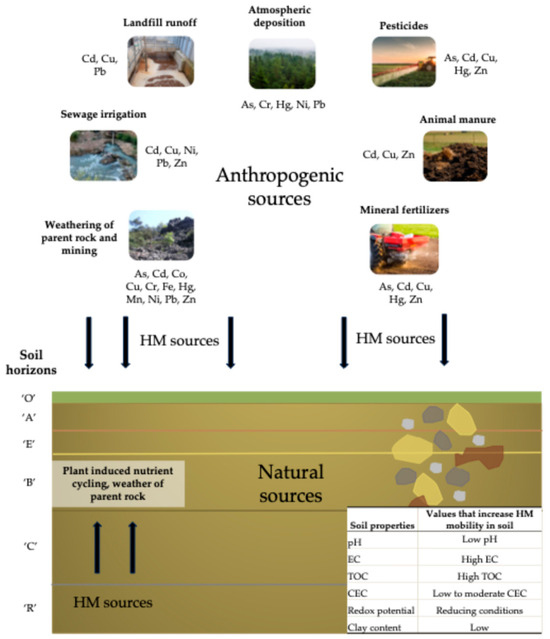
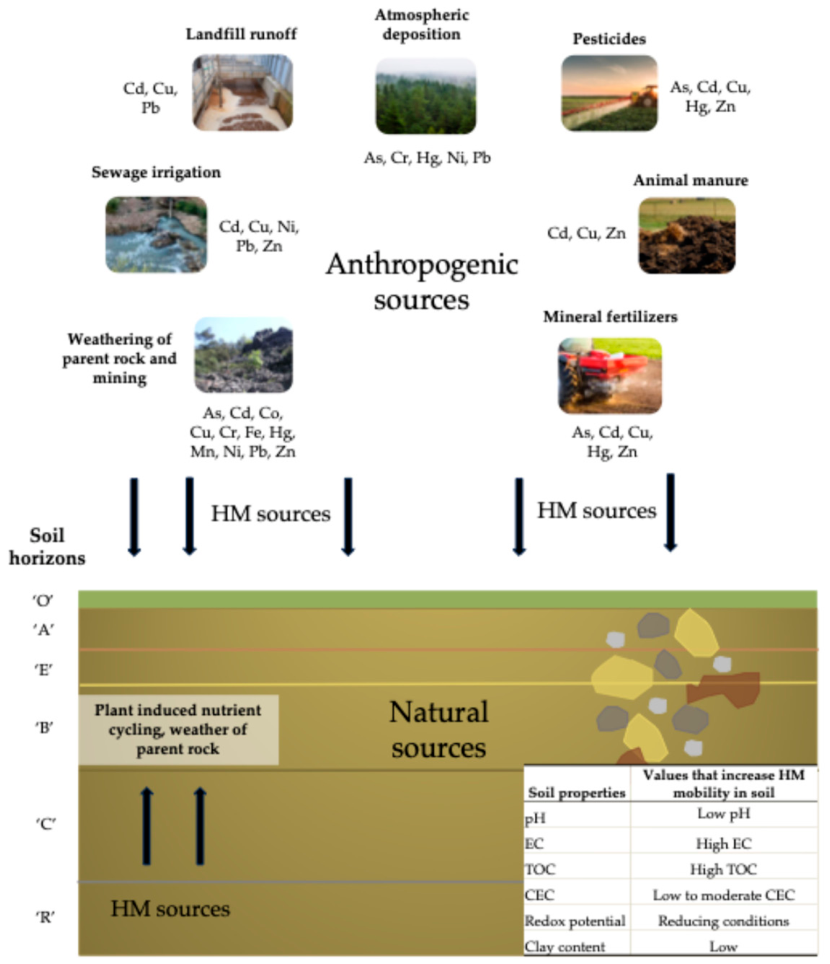
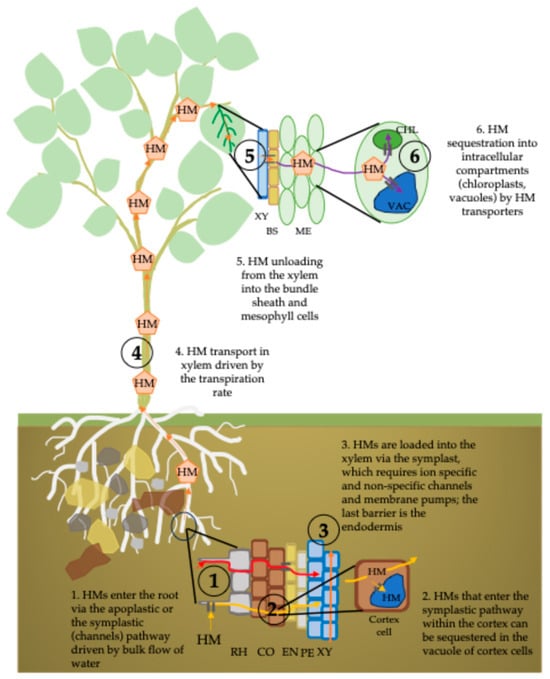
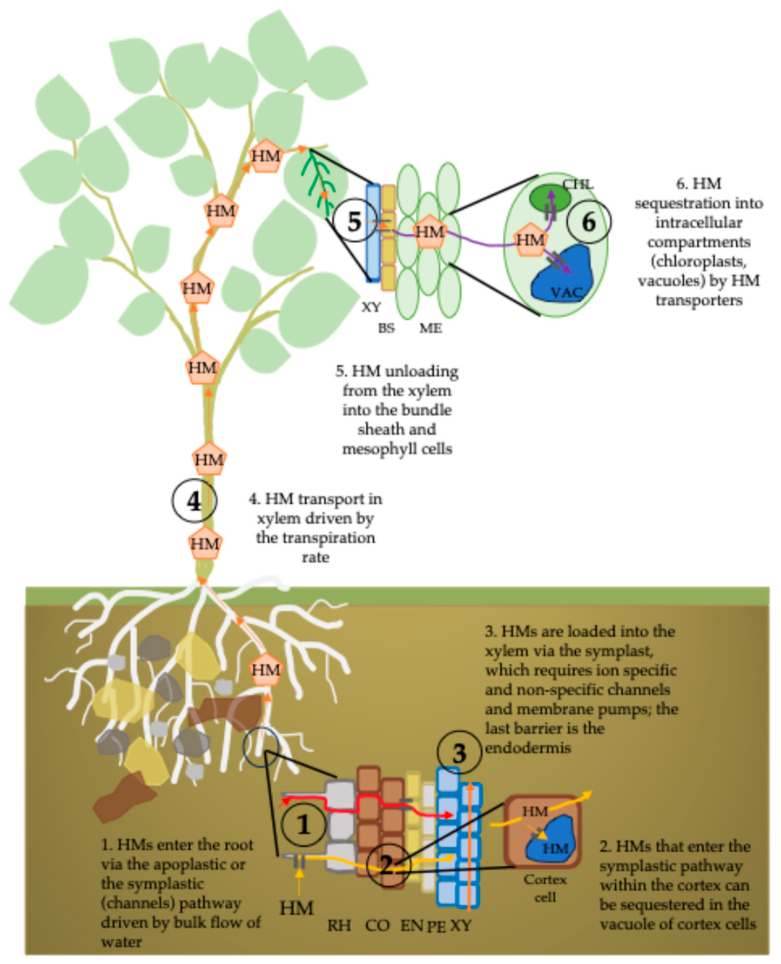
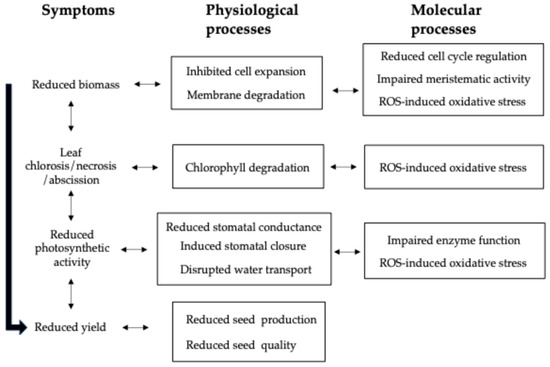
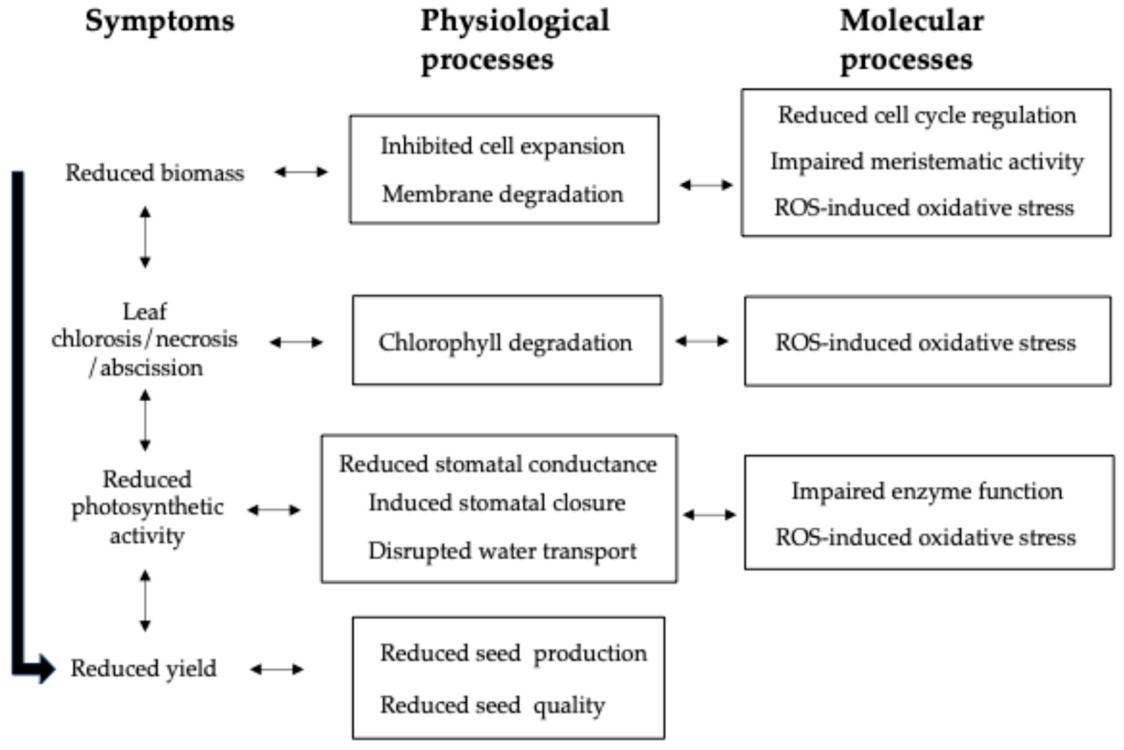
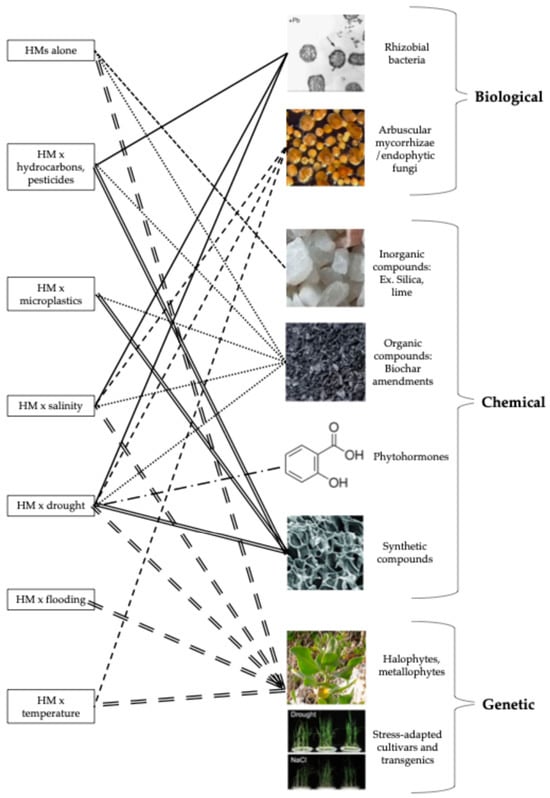
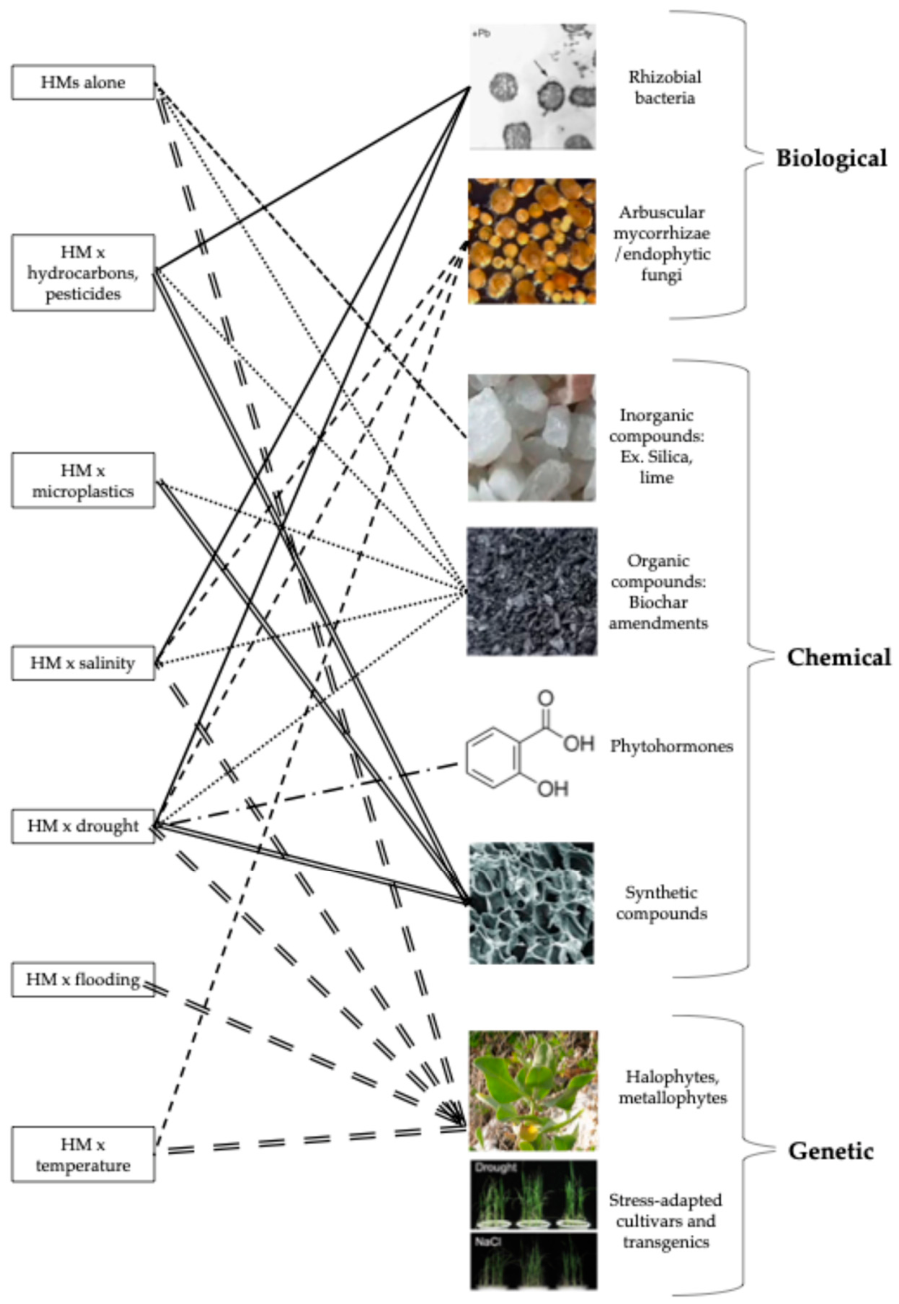

Disclaimer/Publisher’s Note: The statements, opinions and data contained in all publications are solely those of the individual author(s) and contributor(s) and not of MDPI and/or the editor(s). MDPI and/or the editor(s) disclaim responsibility for any injury to people or property resulting from any ideas, methods, instructions or products referred to in the content. |
© 2026 by the authors. Licensee MDPI, Basel, Switzerland. This article is an open access article distributed under the terms and conditions of the Creative Commons Attribution (CC BY) license.