


Abstract
Carnivorous plants possess highly specialized trap structures that enable the acquisition of nutrients from captured animals. This study investigated whether the aquatic environment influences the architecture of glandular emergences (tentacles) in the submerged form of Drosera intermedia. Morphometric analyses were performed on tentacles from plants growing in sandy terrestrial habitats, emergent wetland habitats, and submerged aquatic habitats. Significant differences in tentacle morphology were detected among habitat types. Emergent plants generally developed the largest tentacles and tentacle heads, whereas submerged plants exhibited shorter marginal tentacles and smaller glandular heads. In contrast, the shape of both marginal and central tentacle heads remained relatively stable across habitats, indicating stronger developmental conservation of this trait. Nevertheless, the submerged form differed significantly in the morphology of central tentacle heads. These results demonstrate that aquatic conditions substantially modify the structure of carnivorous emergences, revealing pronounced phenotypic plasticity in the carnivorous syndrome of D. intermedia. The reduction in tentacle size under submerged conditions may reflect altered functional demands associated with prey capture, changes in mucilage effectiveness, and the mechanical constraints imposed by the aquatic environment. However, differences in light availability, nutrient status, and other habitat characteristics may also contribute to the observed patterns. At the same time, the persistence of glandular structures indicates the retention of the carnivorous apparatus despite prolonged submergence. This study highlights the remarkable developmental flexibility of D. intermedia and provides new evidence that trap morphology in carnivorous plants may be highly responsive to environmental conditions.
1. Introduction
Since the time of Charles Darwin [1], carnivorous plants have attracted the attention of scientists, the general public, and hobbyists alike [2,3,4,5]. Carnivorous plants, also referred to as insectivorous plants, are mixotrophic organisms that have evolved a complex carnivorous syndrome involving prey attraction and capture, the digestion of trapped organisms, and the subsequent absorption of nutrients derived from prey tissues [4,6,7,8,9]. However, carnivory is energetically costly because it requires substantial investment in trap production and is often associated with reduced photosynthetic efficiency. Consequently, carnivory is advantageous only under specific environmental conditions, particularly in habitats with sufficient light availability [10,11]. Under low-light conditions, carnivorous plants may lose their carnivorous characteristics, either failing to produce traps altogether or developing malformed trapping structures.
In species of the genus Drosera L. (sundews), the margins and adaxial surface of the leaf blade are covered by specialized emergences, commonly referred to as tentacles [1,12]. The most widespread tentacle type, designated as T0, consists of radially symmetrical glandular emergences composed of a slender stalk and a terminal glandular head [13,14]. These structures secrete sticky mucilage that attracts and immobilizes prey. Subsequently, the same glands release digestive enzymes and absorb nutrients liberated from prey tissues [4,15]. In addition to carrier-mediated uptake, nutrient acquisition in Drosera also involves endocytosis, enabling the absorption and intracellular digestion of intact proteins [15,16,17]. Several additional types of emergences have been described within the genus [13,14,18]. Particularly remarkable are the snap-tentacles of Drosera glanduligera Lehm., which can complete their bending movement within approximately 75 ms following mechanical stimulation [19]. Altogether, glandular emergences are essential structural and functional components of the carnivorous syndrome in Drosera.
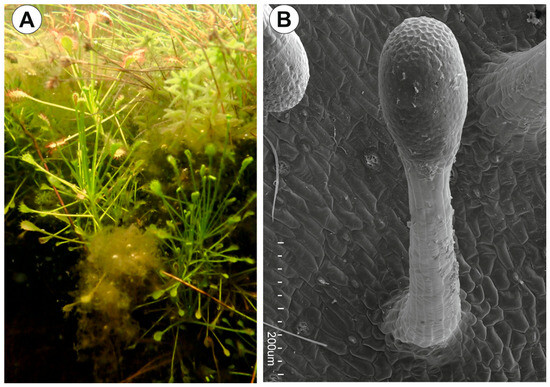
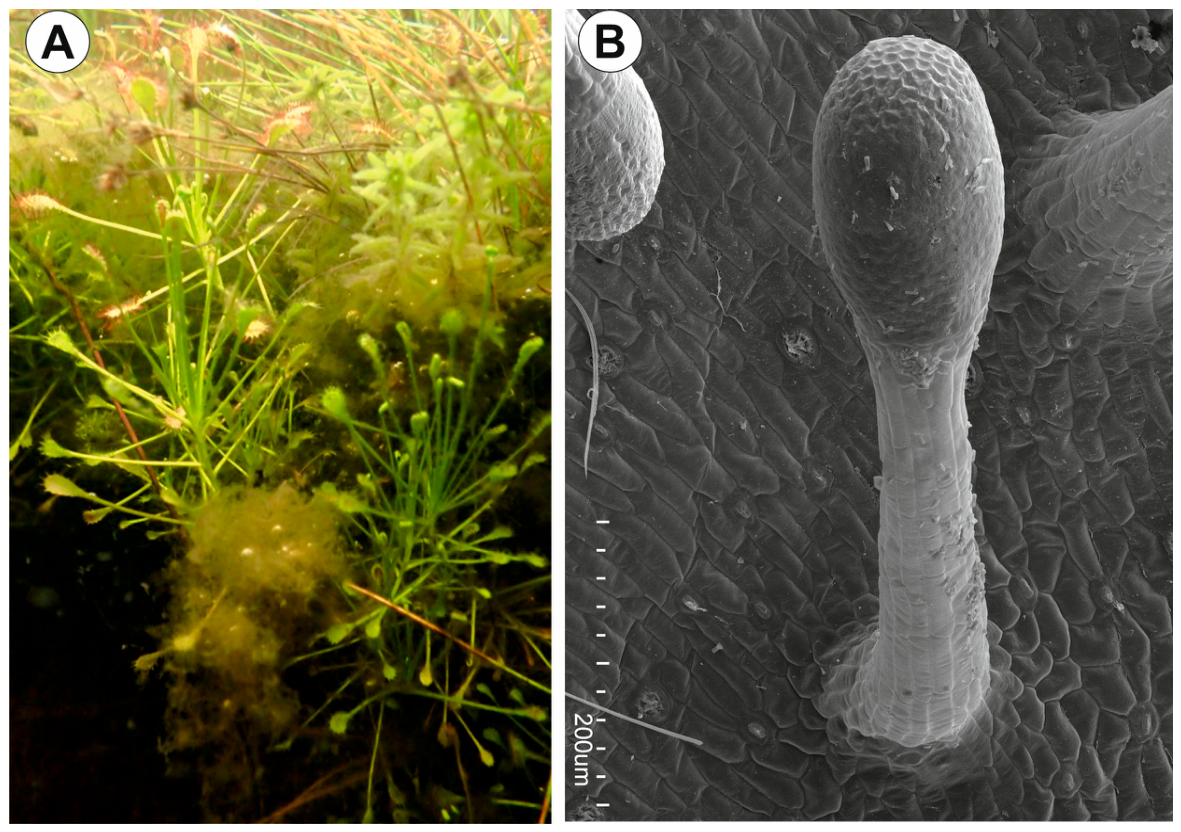
Recently, it was demonstrated that some populations of Drosera intermedia Hayne (oblong-leaved sundew) develop a fully submerged growth form (Figure 1A) that is capable not only of surviving but also of growing underwater for many years [20]. According to Banaś et al. [20], submerged plants differ markedly from terrestrial and peatland forms in both plant architecture and photosynthetic performance. In this context, the present study aims to determine whether long-term growth under aquatic conditions affects the morphology and spatial distribution of glandular emergences in D. intermedia. Specifically, we tested the hypothesis that the submerged form of D. intermedia undergoes a partial functional reduction in carnivorous syndrome.
Figure 1.
(A) A submerged growth form of D. intermedia. (B) A glandular emergence from D. intermedia leaf. Bar 200 µm.
2. Results
All examined plants exhibited T0-type emergences on their leaves (Figure 1B).
2.1. Differences in the Lengths of Tentacles of Leaf Blades
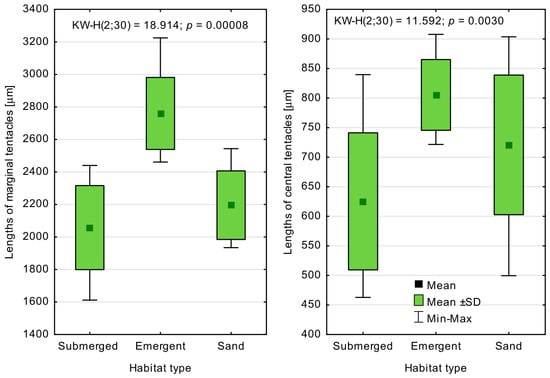
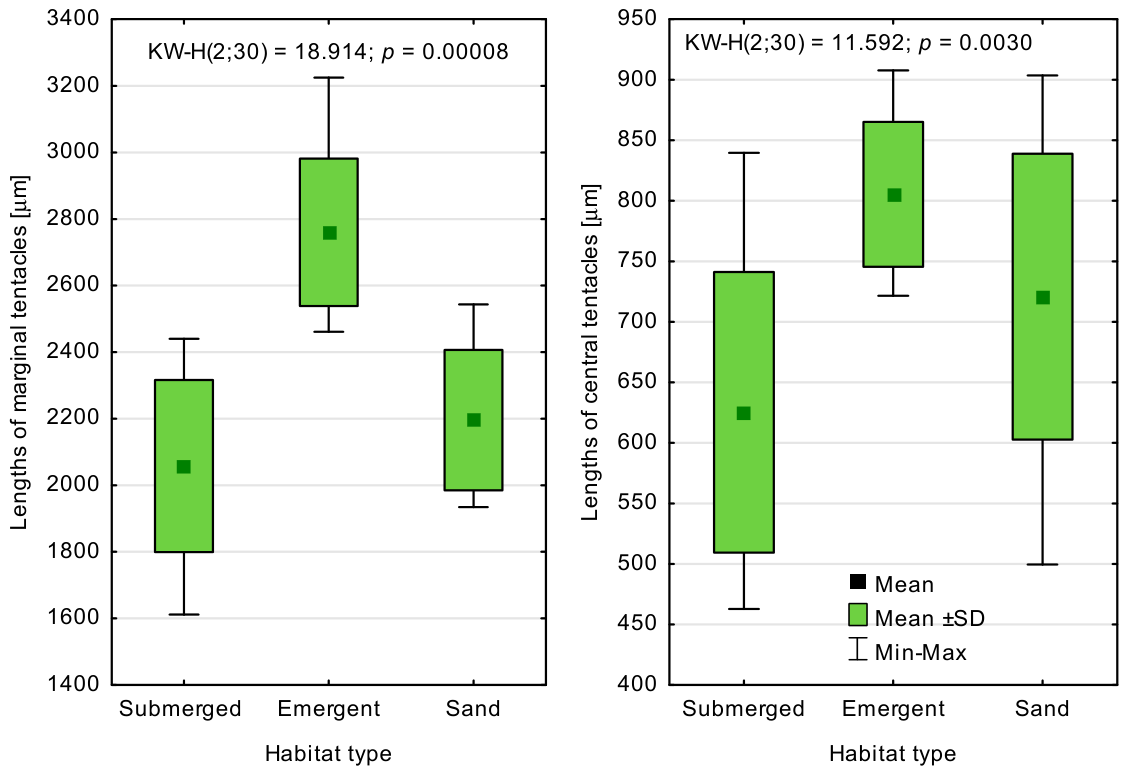
The length of the tentacles on the marginal parts of the leaf blades of D. intermedia varies among populations from different habitat types (Table 1). The submerged form is characterized by the shortest tentacle length (2057.827 ± 258.37 µm; Figure 2). Post hoc Dunn’s tests indicated significant pairwise differences between submerged and emergent habitat types (Table 2) on the marginal parts of the leaf blades. The mean values are highest in the emergent form.
Table 1.
Lengths of tentacles on the marginal and central parts of the leaf blades of D. intermedia depending on habitat type.
Figure 2.
Length of tentacles on the marginal and central parts of leaf blades of D. intermedia depending on habitat type.
Table 2.
Results of the Dunn post hoc test for comparisons of emergence lengths on the marginal and central parts of leaf blades of D. intermedia between habitat types.
The lengths of tentacles on the central parts of the leaf blades are more than three times shorter than those on the marginal parts. The submerged form also has the shortest tentacle length, but only the difference relative to the emergent form is statistically significant. Sundews growing as emergent plants are characterized by the longest tentacle lengths (Table 2; Figure 2), which are greater than those of both the submerged form (p = 0.000116) and the form growing on sand (p = 0.00315; Table 2).
2.2. Differences in the Shapes of Tentacle Heads
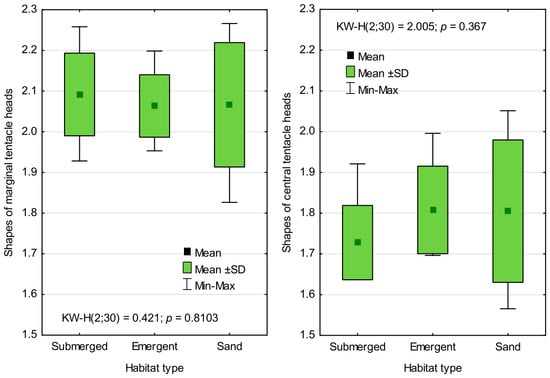
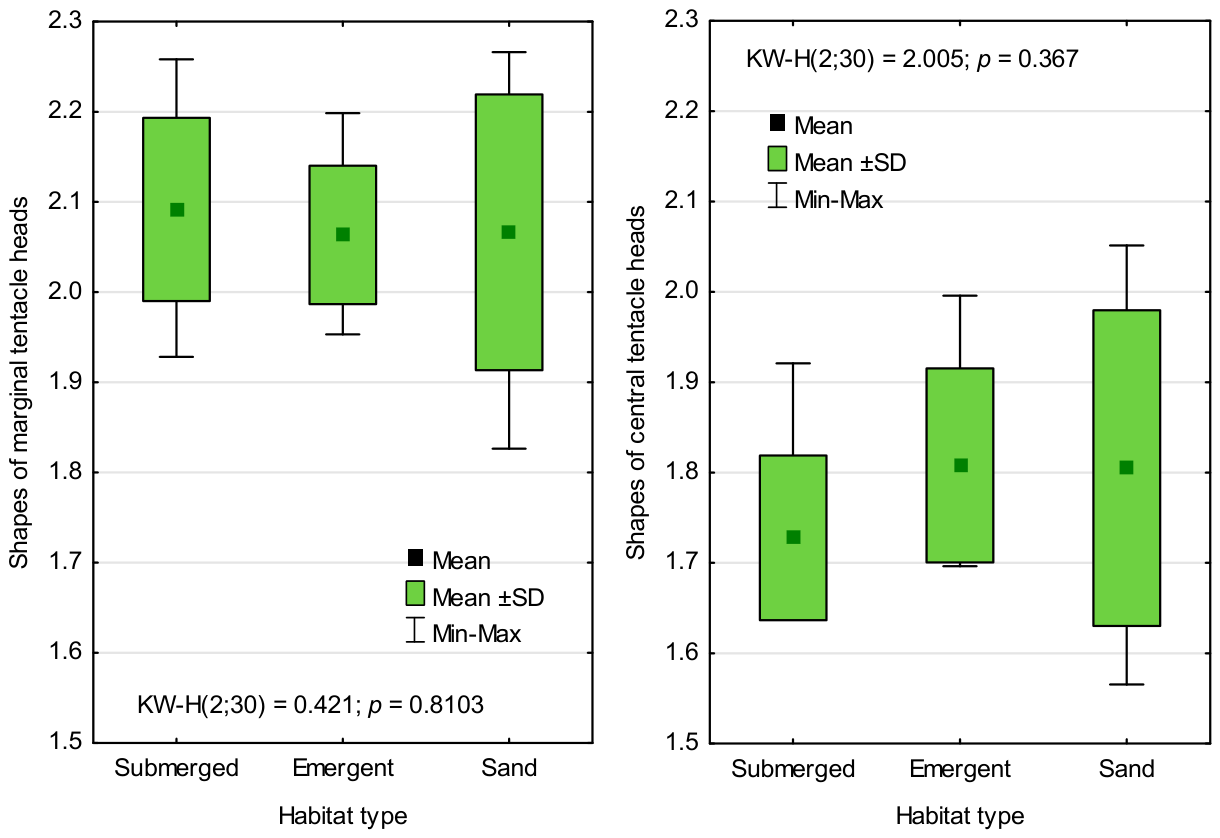
The Kruskal–Wallis test does not indicate significant differences in the shapes of tentacle heads among habitat types (Figure 3). For the tentacles at the margins of the leaf blades and those in their central parts, the head shape values are very similar (Table 3).
Figure 3.
Variation in the shapes of tentacle heads on the margins and central parts of leaf blades of D. intermedia across habitat types.
Table 3.
The shapes of tentacle heads on the marginal and central parts of blades of D. intermedia depending on habitat type.
2.3. Differences in the Dimensions of Tentacle Heads
2.3.1. Tentacle Heads Lengths
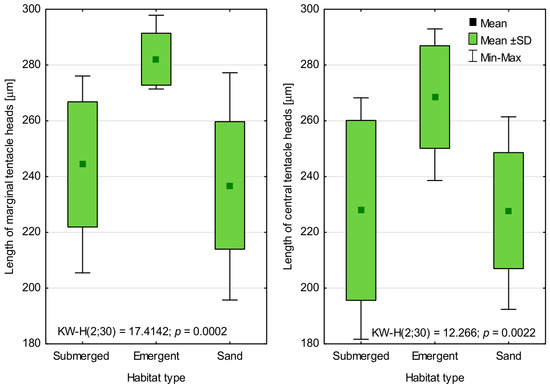
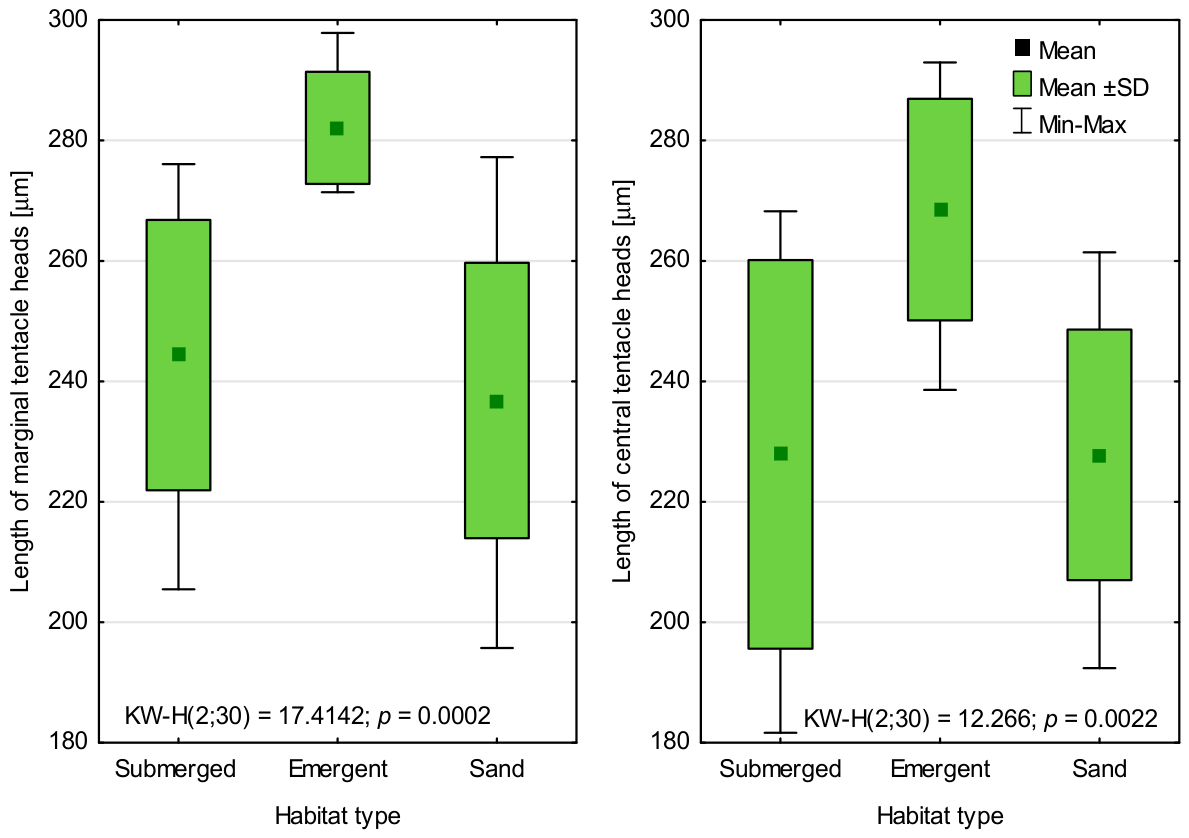
A Kruskal–Wallis test indicated significant differences in the length of tentacle heads among habitat types (Figure 4). This applies to tentacles found both at the margins of the leaf blade and in its central part. The highest mean values were recorded in emergent habitats (Table 4). Dunn post hoc tests showed significant differences between emergent and sandy and between emergent and submerged habitats. Sandy and submerged habitats did not differ significantly (Table 5).
Figure 4.
Mean length of tentacle heads on the marginal and central parts of leaf blades of D. intermedia across habitat types.
Table 4.
Length of tentacle heads on the marginal and central parts of leaf blades of D. intermedia across habitat types.
Table 5.
Approximate p-values for multiple comparisons of the lengths of tentacle heads on the central parts of leaf blades of D. intermedia between habitat types. Analysis based on the Dunn test.
2.3.2. Tentacle Heads Widths
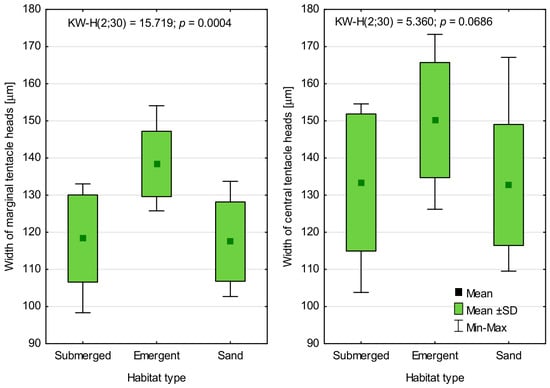
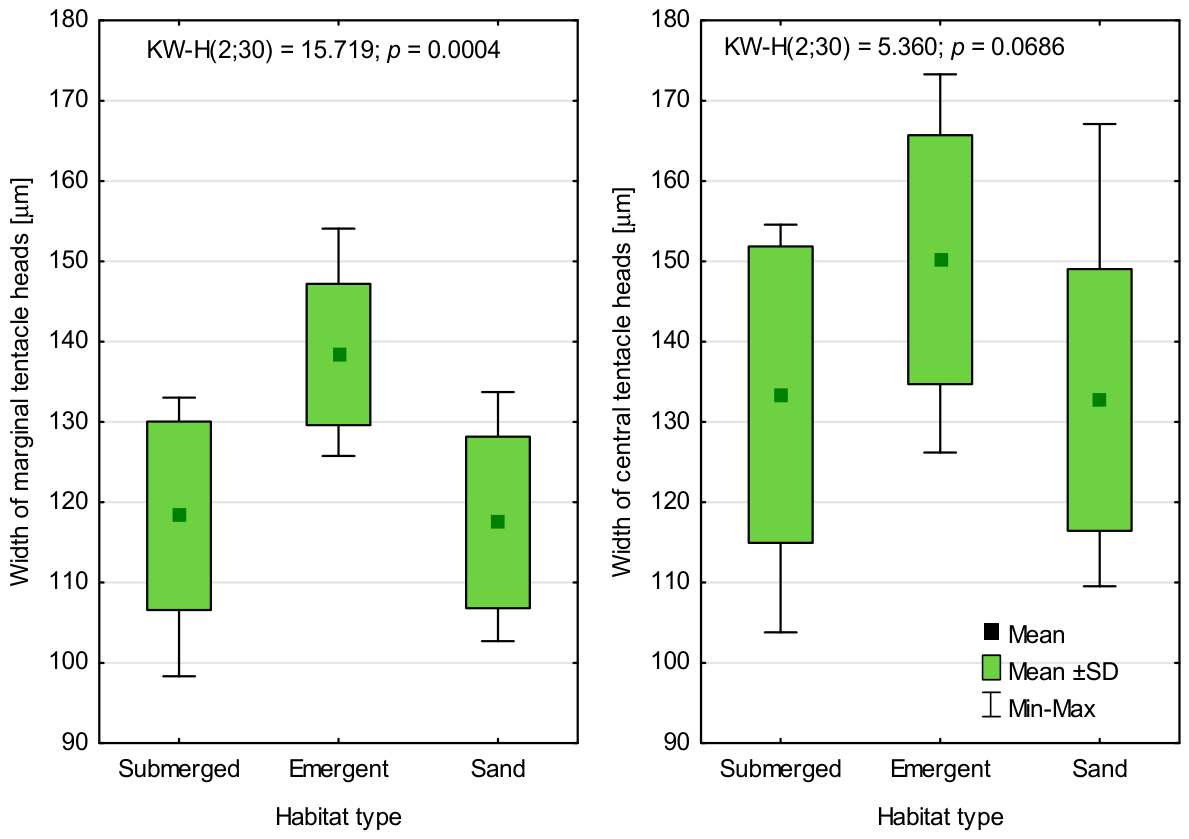
Emergent habitats exhibited the greatest mean widths (Table 6; Figure 5). Significant differences in tentacle head width were also detected (Table 7), but only for marginal tentacle heads. Post hoc tests indicated significant differences between emergent and sandy and between emergent and submerged habitats, with no significant difference between sandy and submerged habitats (Table 7).
Table 6.
The width of tentacle heads on the marginal and central parts of leaf blades of D. intermedia across habitat types.
Figure 5.
Widths of tentacle heads on the marginal and central parts of leaf blades of D. intermedia across habitat types.
Table 7.
Approximate p-values for multiple comparisons of the widths of tentacle heads on the marginal parts of leaf blades of Drosera intermedia between habitat types. Analysis based on the Dunn test.
2.4. Morphological Traits and Habitat Characteristics
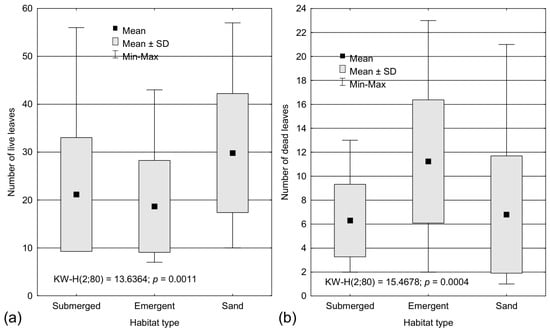
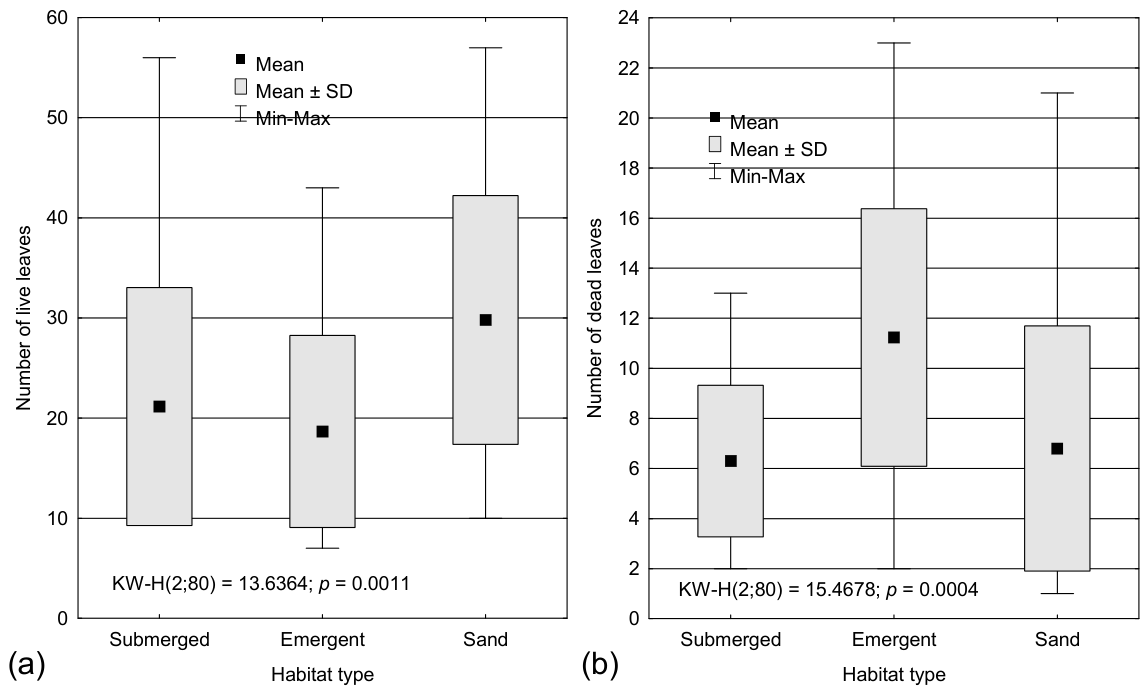
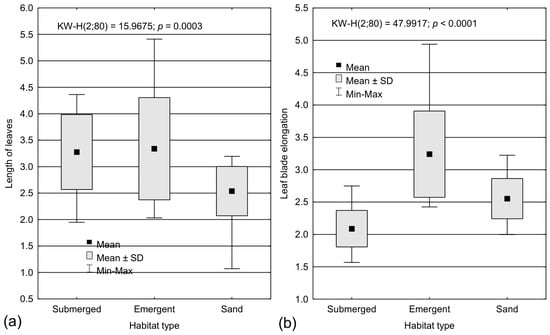
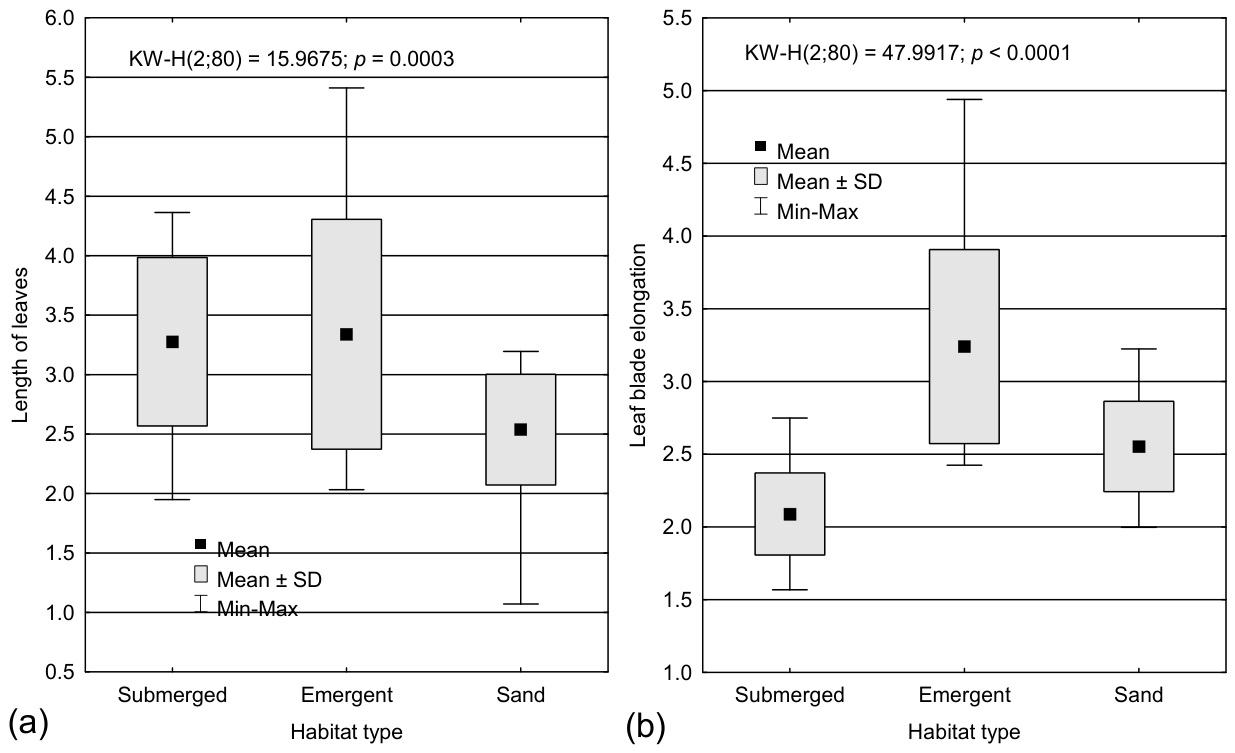
In morphological traits, the leaves of the sundew growing on sand stand out clearly (Table 8, Table 9 and Table 10, Figure 6, Figure 7, Figure 8 and Figure 9). They have the highest number of livie leaves in the rosette, more than both emergent plants (p = 0.001) and submerged plants (p = 0.03). Like emergent sundews, they have fewer dead leaves in the rosette than emergent sundews. However, they are distinguished by the shortest leaf length, which is shorter than those of both emergent individuals on peat bogs and those growing submerged (p = 0.002).
Table 8.
Summary of morphological traits and habitat characterictics of D. intermedia populations growing in sandy habitats.
Table 9.
Summary of morphological traits and habitat characteristics for emergent populations of D. intermedia.
Table 10.
Summary of morphological traits and habitat characteristics for submerged populations of D. intermedia.
Figure 6.
Number of live (a) and dead (b) leaves in D. intermedia across habitat types. Both traits differed significantly among habitats.
Figure 7.
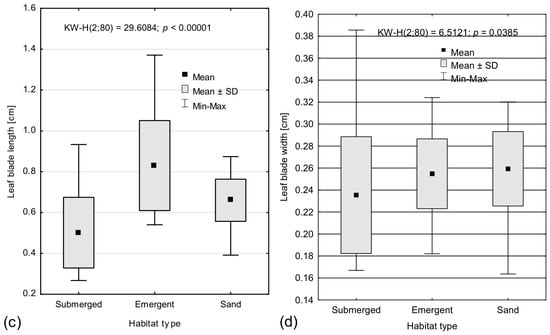
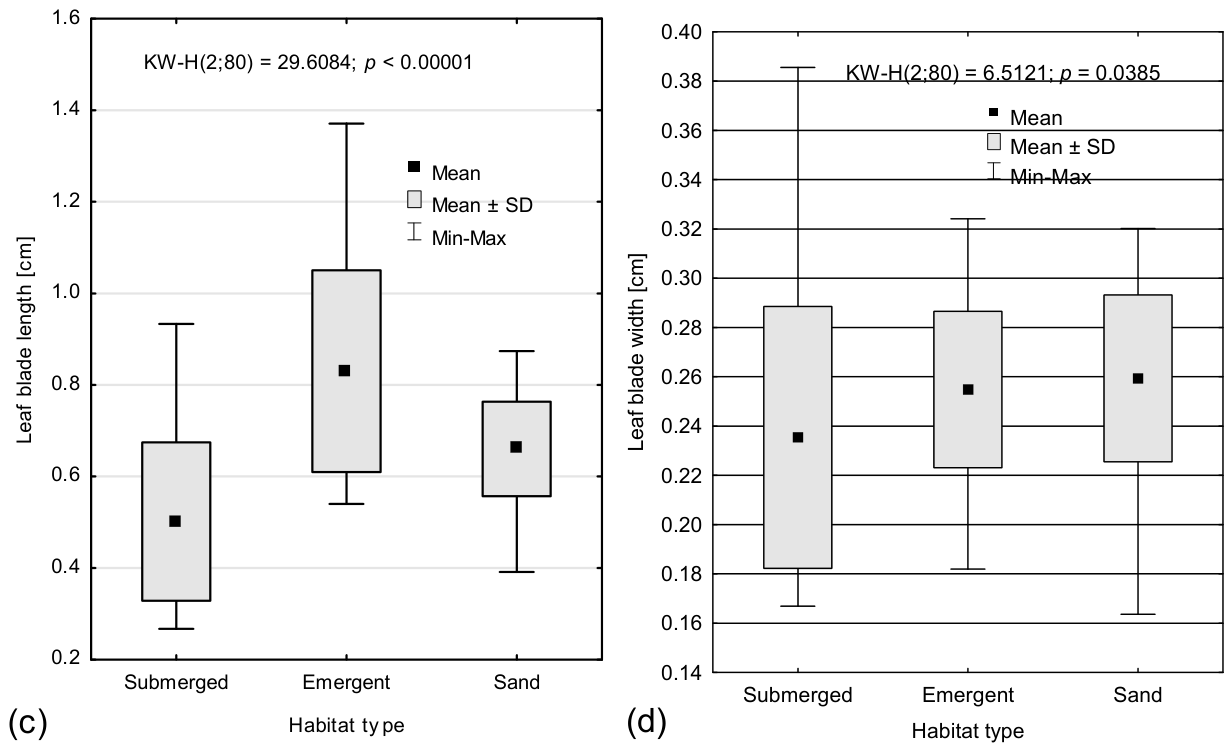
Variation in leaf morphological traits of D. intermedia across habiat types: (a) leaf length, (b) blade elongation, (c) blade length, and (d) blade width.
Figure 8.
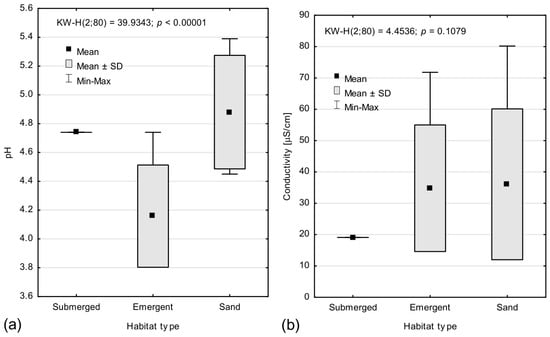
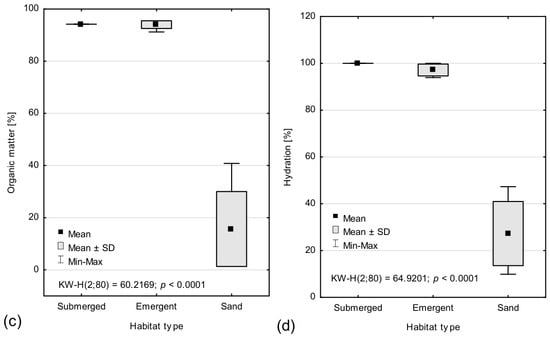
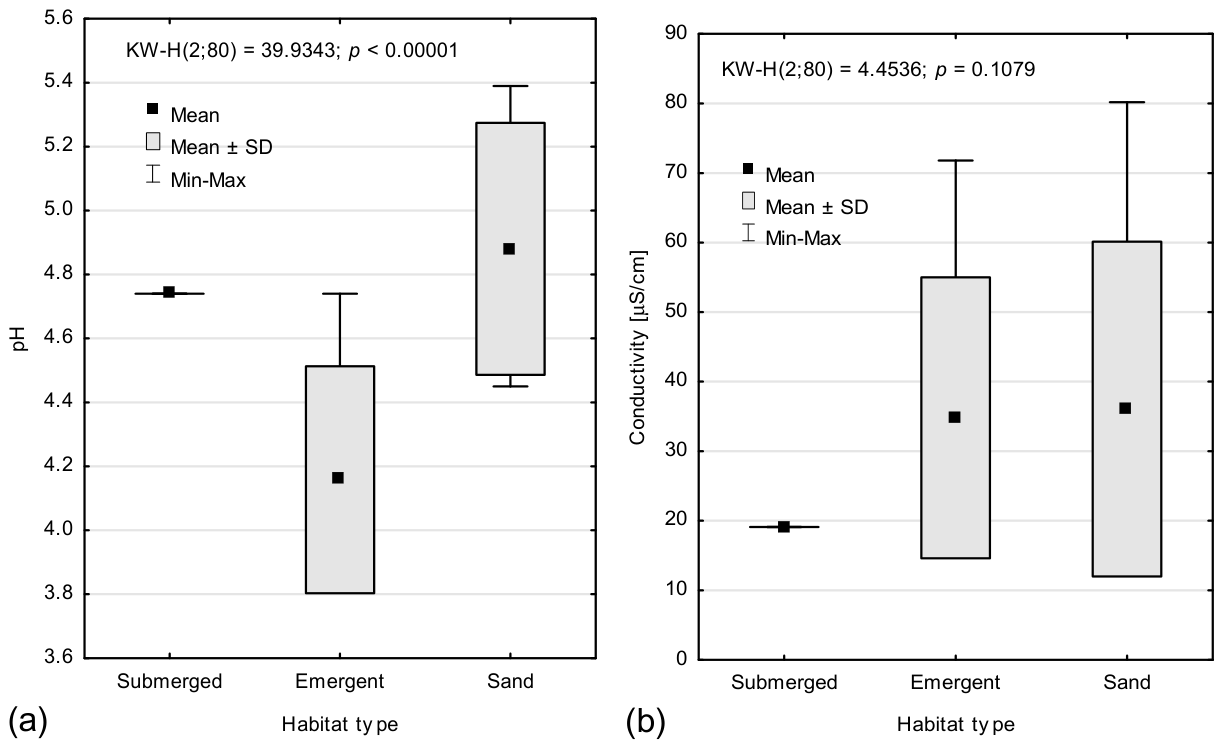
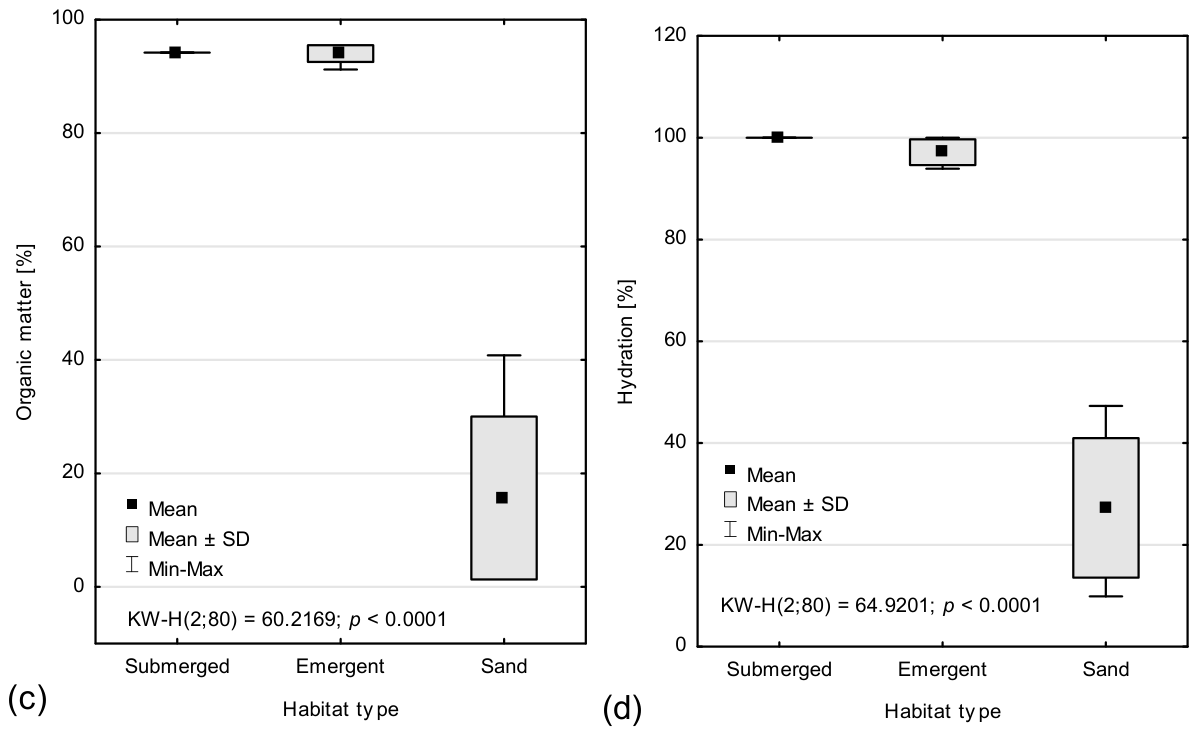
Environmental and physiological characteristics of D. intermedia habitats: (a) pH, (b) conductivity, (c) organic matter content, and (d) hydration.
Figure 9.
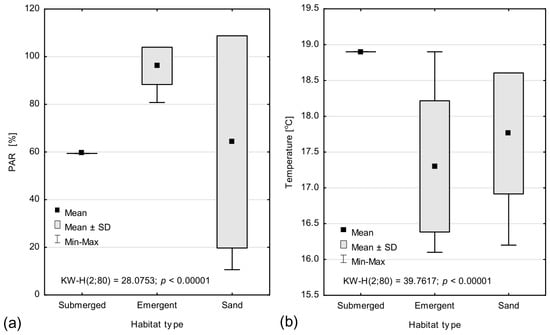
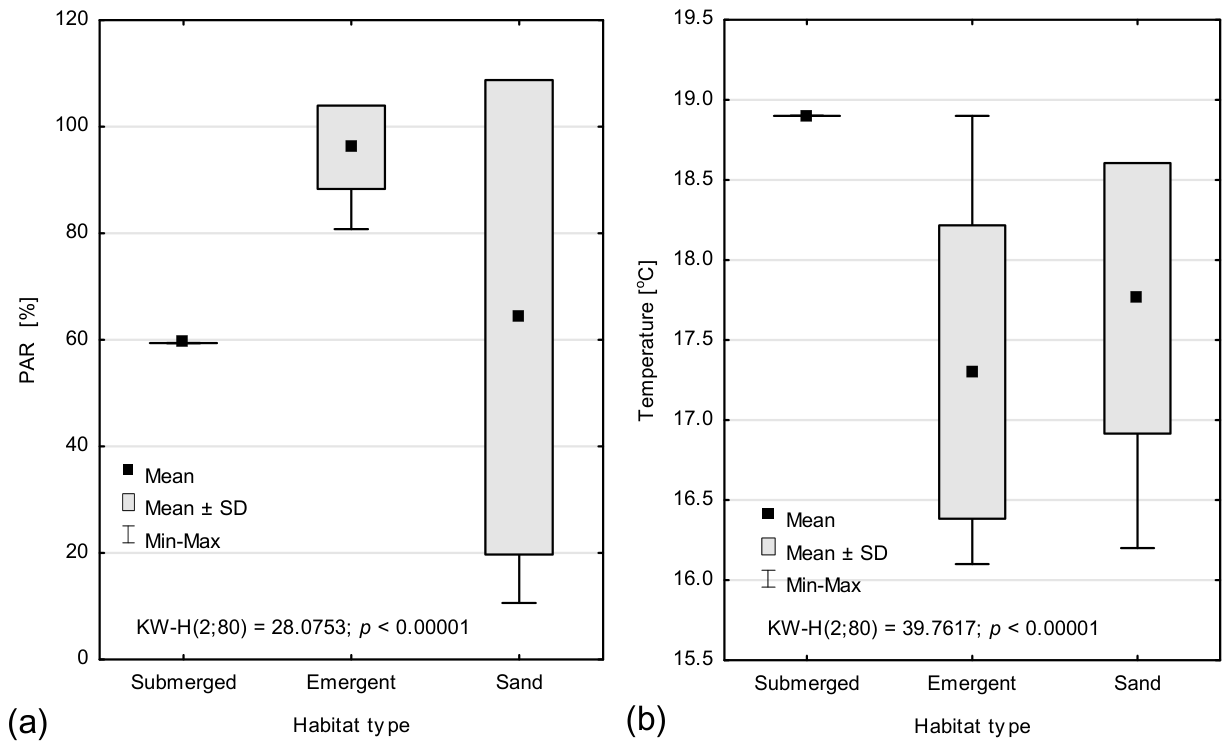
Differences in environmental conditions among D. intermedia habitats: (a) PAR and (b) temperature.
The elongation of the leaf blade varies considerably among the studied forms (p < 0.002); it is shortest in the submerged form, slightly greater in plants growing on sand, and greatest in the emergent form (Figure 7). The length of the leaf blade also varies very markedly, as shown in Figure 7; it is shortest in the submerged form and longest in the emergent form. In contrast, the width of the leaf blade in the submerged form is smaller only than that of plants growing on sand.
The habitats occupied by the sundews studied differ in many characteristics. Emergent forms occur on substrates with a lower pH than submerged and sand forms, which also receive the most light (PAR is highest; Figure 8 and Figure 9). The submerged form occupies habitats with a significantly higher temperature than the other forms, whilst the sand form occupies habitats that are the least hydrated and the least rich in organic matter, and, of course, the richest in mineral matter.
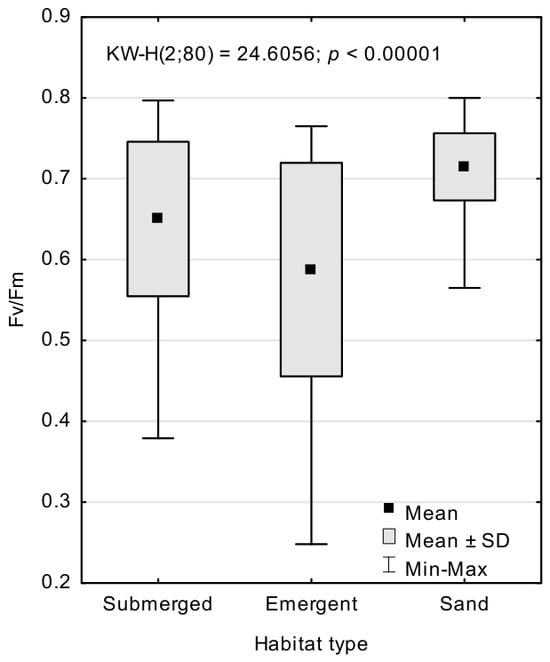
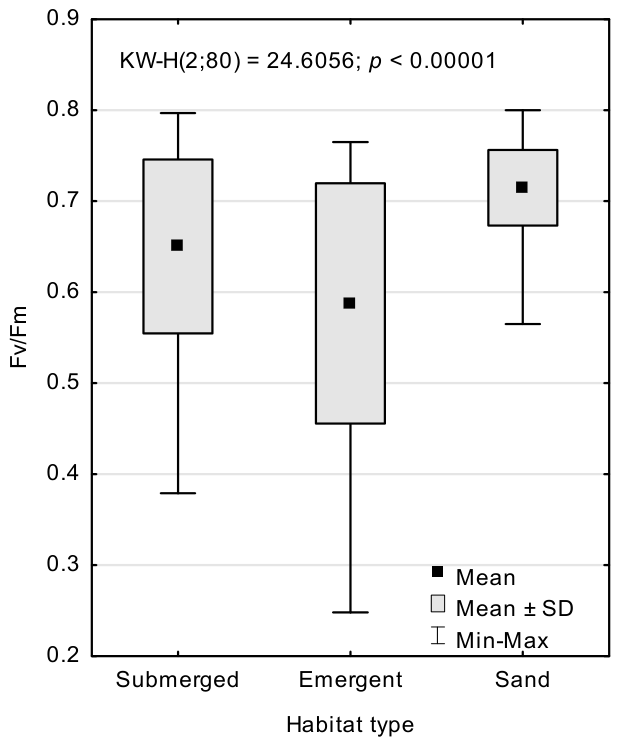
The highest Fv/Fm ratio was observed in the sand form; it is higher than in both the submerged and emergent forms (Figure 10). Interestingly, the ratio is lowest in the emergent form (Table 9), which may indicate that these sundews are in the poorest condition, despite occupying habitats most typical of D. intermedia.
Figure 10.
Differences in Fv/Fm ratio among D. intermedia habitats.
3. Discussion
The present study demonstrates that the aquatic environment strongly influences the architecture of carnivorous traps in the submerged form of Drosera intermedia. Although these differences are consistent with an effect of submergence, the studied habitats also differed in several other environmental parameters, including light availability, substrate characteristics, water content, pH, and temperature. Therefore, the observed variation likely reflects the combined influence of multiple environmental factors rather than submergence alone. Significant differences were detected in tentacle length, tentacle head dimensions, and the shape of central tentacle heads among plants growing in sandy, emergent, and submerged habitats. The obtained results indicate that the submerged form does not merely represent a phenotypic variant with altered growth habit but exhibits substantial modifications in trap morphology associated with the aquatic environment.
The most conspicuous pattern concerns tentacle elongation. Tentacles on both the central and marginal parts of the leaf blade differed significantly among habitat types, with emergent plants generally exhibiting the longest tentacles, whereas submerged plants developed the shortest marginal tentacles. This reduction in tentacle length in submerged forms may reflect the altered mechanical and ecological conditions under water. However, differences in light regime, nutrient availability, and other habitat characteristics may also contribute to the observed pattern. Consequently, the present data do not allow the relative importance of individual environmental variables to be disentangled. In terrestrial and emergent habitats, long tentacles increase the effective prey-capture surface and facilitate interception of mobile arthropods. Underwater, however, elongated emergences may become mechanically disadvantageous because water resistance substantially alters movement efficiency and increases energetic costs. Similar environmentally induced modifications or even loss of carnivorous structures have been described in other carnivorous plants, where trap morphology is tightly linked to habitat conditions. One example is the production of phyllodia by Sarracenia, which are more efficient at photosynthesis [21]. Another example is the African liana Triphyophyllum peltatum Airy Shaw, which exhibits seasonal carnivory [22]. It produces trap leaves only when there is a phosphorus deficiency in the soil [23]. Fukushima et al. [24] demonstrated that in Cephalotus follicularis Labill., the formation of the photosynthetic leaf or insect-catching trap is regulated by two co-varying environmental signals: temperature and photoperiod. Whitewoods et al. [25] showed that the simple shifts in gene expression may cause the formation of a traps in Utricularia gibba L.
The observed reduction in tentacle head size in submerged plants is also ecologically meaningful. Emergent plants possessed significantly larger tentacle heads than submerged or sandy forms, both in the central region and on leaf margins. Since glandular heads are responsible for mucilage secretion, digestive enzyme production, and nutrient absorption, these results suggest that submerged plants may exhibit reduced investment in typical aerial carnivorous functions. In aquatic conditions, mucilage-based trapping becomes less efficient because secreted mucilage disperses in water and loses adhesive properties. Consequently, selective pressure maintaining large glandular heads may be weakened.
Interestingly, the shape of tentacle heads showed different responses depending on their position on the leaf blade. Significant differences occurred in the central tentacles, particularly between submerged and non-submerged forms, whereas marginal tentacle head shape remained remarkably stable among habitats. This pattern suggests that different functional modules within the trap exhibit distinct levels of developmental plasticity. Marginal tentacles may be under stronger structural or functional constraints because they participate directly in prey interception and leaf-edge architecture. In contrast, central tentacles appear more evolutionarily flexible and responsive to environmental conditions.
The results may support the hypothesis that the submerged form of D. intermedia undergoes partial functional reduction in the carnivorous syndrome. This interpretation should be treated cautiously because the present study does not permit discrimination between the effects of submergence itself and those of other environmental variables that differed among habitats. However, further research is needed to prove this conclusively. Carnivory is energetically expensive because it requires the production of specialized emergences, digestive secretions, and absorptive tissues. Underwater conditions likely alter prey availability, prey type, and nutrient dynamics, this may potentially reduce the adaptive advantage of maintaining fully developed in aerial traps. This interpretation is consistent with the cost–benefit model of carnivory proposed by Givnish and co-authors [10,11], who emphasized that carnivory is only advantageous under specific combinations of nutrient limitation and sufficient light availability.
At the same time, the submerged form clearly retains carnivorous structures rather than completely eliminating them. This indicates that the observed modifications represent ecological adjustment rather than evolutionary loss of carnivory. Such phenotypic plasticity may be particularly advantageous in unstable wetland habitats where water level fluctuations periodically shift plants between terrestrial, emergent, and submerged conditions, while simultaneously altering other environmental parameters such as irradiance, substrate moisture, and nutrient availability. The submerged form occurs under conditions that are difficult and extreme for D. intermedia, similar to the sand-dwelling form, as confirmed by the close similarity of many of the characteristics we studied, which differ greatly from the typical emergent form occupying the habitat typical of this species. Our research contributes to a broader understanding of how the environment (and water in particular) influences the architecture and physiology of plants in the genus Drosera [20,26].
The present study also has broader implications for understanding the evolution of trap diversity in Droseraceae. Previous studies mainly focused on interspecific differences in trap architecture and physiology, whereas the current results demonstrate that substantial variation may also occur within a single species depending on habitat conditions. Therefore, environmental plasticity should be considered an important factor shaping trap morphology alongside phylogenetic constraints and adaptive evolution, especially since there are over 260 known species of Drosera, which exhibit enormous diversity in terms of morphology and habitats [27,28,29,30].
It should be noted that the phenomenon of the occurrence of the aquatic form of D. intermedia has so far been observed only in post-glacial lakes with a layer formed by Sphagnum, which overgrows the water surface [20]. In Czech populations of D. intermedia that were flooded, plants died if a deeper flooding in colored water lasted for a long time of several weeks [Adamec L. personal information. 18.05.2026]. In the context of D. intermedia, of particular interest is Drosera amazonica Rivadavia, A. Fleischm. & Vicent., a species from the Amazon basin that has adapted to survive underwater during seasonal fluctuations in water level [31]. This species disperses its seeds through water (hydrochory). Unfortunately, there is no information on how prolonged flooding affects the carnivorous syndrome in Drosera amazonica.
In the context of how terrestrial carnivorous plants’ traps function, an interesting observation made by Popping et al. [32] is that the traps of Dionaea muscipula J.Ellis can operate in an aquatic environment.
Several limitations should nevertheless be acknowledged. The present study focused primarily on morphology and did not directly assess prey capture efficiency, digestive activity, mucilage chemistry, or trap biomechanics under aquatic conditions. Furthermore, it remains unclear whether the observed modifications are entirely environmentally induced or partially genetically fixed within submerged populations. An additional limitation is that multiple environmental variables differed among the investigated habitats. Therefore, although the observed morphological differences are associated with the submerged habitat, the present study cannot determine the relative contribution of submergence, light availability, substrate properties, temperature, pH, or other environmental factors. Future studies combining controlled experiments with multivariate statistical approaches (e.g., PCA, RDA, or GLM) would help disentangle the influence of individual environmental drivers on trap morphology in Drosera intermedia. Furthermore, integrating anatomy, biomechanics, physiology, and transcriptomics could clarify the mechanisms underlying trap modification in submerged plants.
4. Materials and Methods
4.1. Analysis of Environmental Parameters
Plant material of Drosera intermedia Hayne was collected in June 2024 from two sites: (1) peatlands surrounding Lake Moczadło within the Zaborski Landscape Park near Męcikał (Chojnice County, Pomeranian Voivodeship, 53°48′52.7″ N 17°38′27.6″ E; emergent wetland habitats, and submerged aquatic habitats) and (2) the shore of Lake Moczadło (53°48′51.2″ N 17°38′00.7″ E; sandy terrestrial habitats). At each site, environmental conditions were recorded, and the architectures of six individuals of the respective sundew species were measured at 5 localities (a total of 30 individuals were collected from each habitat type, although only 20 underwater specimens were collected due to the limited number of such plants). To this end, the plants were uprooted. All specimens from a given site were carefully laid out on a special, scaled mat and photographed to enable the measurement of architectural features using graphics software (CorelDRAW X6). Three typical individuals of each sundew species were preserved as herbarium specimens in the Herbarium Universitatis Gedanensis UGDA. Based on the photographs, the plant architecture was measured, including the number of living and dead leaves, leaf length, and the width and length of the leaf blade. The collection of D. intermedia and research in the Moczadło Lake Reserve were conducted under permits issued by the Regional Directorate for Environmental Protection in Gdańsk.
The environmental conditions were determined at each locality (6 for each habitat type, excluding aquatic habitats, which consisted of a single reservoir and were measured at only one location) based on the following:
- -
- Photosynthetically active radiation (PAR) was measured using a LI-250 light meter (LI-COR, Lincoln, NE, USA) and then converted into a percentage of the light reaching a fully illuminated site;
- -
- pH and temperature—using a WTW 320/SET1 pH meter (WTW, Xylem Analytics, Weilheim, Germany) and a SENTIX 97T measuring electrode (WTW, Xylem Analytics, Weilheim, Germany);
- -
- Electrical conductivity—using a WTW Cond 3210 SET 2 conductivity meter (WTW, Xylem Analytics, Weilheim, Germany);
- -
- Substrate moisture content—calculated as a percentage of the difference between the mass of fresh substrate and substrate dried to constant weight at 105 °C in a Binder FD115 laboratory oven (BINDER GmbH, Tuttlingen, Germany);
- -
- The organic matter content in the substrate was calculated as a percentage of the difference in mass between the dry substrate and the substrate calcined in a SEL 96C muffle furnace (Czylok Sp. z o.o., Jastrzębie-Zdrój, Poland) at 550 °C for 5 h.
Chlorophyll fluorescence (Fv/Fm parameter) was measured for each of the 30 individuals from the habitat type (20 underwater specimens) using a Handy Pea fluorometer (Hansatech Ltd., Pentney, UK), as described by Aksmann et al., 2016 [33], always on the third leaf (fully developed and mature) counting from the shoot axis.
Leaves of D. intermedia for tentacles measurements were sampled from 10 individuals typical of each habitat, namely submerged, emergent, and sandy terrestrial sites, as in [20]. The leaves collected for this purpose were fully developed and mature (this was the 3rd or 4th leaf from the shoot apex). Leaves were fixed in 70% ethanol immediately after sampling and then stored at 4 °C. To prepare for scanning electron microscopy (SEM), the traps were fixed in 70% ethanol, later increased to 100% ethanol, and then transferred to acetone and dried using supercritical CO2. The material was then sputter-coated with gold and examined using a Hitachi S-4700 scanning electron microscope (Tokyo, Japan), which is housed at the Institute of Geological Sciences, Jagiellonian University, Kraków, Poland, or a Hitachi UHR FE-SEM SU 8010 microscope (Hitachi, Tokyo, Japan), which is housed at the Institute of Biology, Biotechnology and Environmental Protection, Faculty of Natural Sciences University of Silesia in Katowice.
4.2. Statistical Analysis Methods
From each habitat type, ten individuals were selected, and one mature leaf per plant was randomly sampled and prepared for microscopic examination in anhydrous glycerol. All emergences present on each leaf were measured. A total of 803 emergences were measured in the central leaf regions (>500 µm from the end of leaf blade margin) and 1445 in the marginal regions (<500 µm from the end of leaf blade margin). Morphometric measurements of tentacle length and head size were obtained using a Nikon Eclipse E400 microscope (Nikon, Japan) with digital imaging support. When tentacles required multisegmented measurements, segment lengths were summed manually.
Tentacles head shapes were calculated as length-to-width ratios. Emergence lengths and head dimensions from central and marginal leaf regions were compared across the three habitat types. Tentacles from the same leaf are not independent observations; they were used solely to calculate the mean values of the traits (tentacle length, tentacle head size, and tentacle head shape) for each leaf/individual. In the study, the leaf/individual plant was treated as a random factor; therefore, the mean values of the traits calculated for each leaf/individual were analyzed (10 for each habitat types). Statistical analyses were performed in STATISTICA 13.1. To determine differences between habitat types, the Kruskal–Wallis test (α = 0.05) was applied, and significant results were followed by Dunn’s post hoc test.
5. Conclusions
The aquatic environment significantly modifies trap morphology in the submerged form of Drosera intermedia. Submerged plants develop shorter tentacles and smaller glandular heads compared with emergent forms, while certain trap features, particularly the shape of marginal tentacle heads, remain relatively stable. These results may indicate substantial phenotypic plasticity of the carnivorous apparatus and suggest partial functional reorganization of the carnivorous syndrome under aquatic conditions. The persistence of modified traps in submerged plants demonstrates that carnivory may be retained despite strong environmental alteration, highlighting the remarkable ecological flexibility of D. intermedia.
Author Contributions
Conceptualization, I.K., K.B. and B.J.P.; methodology, I.K., K.B. and B.J.P.; software, I.K., K.B. and B.J.P.; validation, I.K., K.B. and B.J.P.; formal analysis, I.K. and K.B.; investigation, I.K., K.B. and B.J.P.; resources, I.K., K.B. and B.J.P.; data curation, B.J.P.; writing—original draft preparation, I.K., K.B. and B.J.P.; writing—review and editing, I.K., K.B. and B.J.P.; visualization, I.K., K.B. and B.J.P.; supervision, B.J.P.; project administration, B.J.P.; funding acquisition, K.B. and B.J.P. All authors have read and agreed to the published version of the manuscript.
Funding
The research has been partially supported by the Ministry of Science and Higher Education of Poland, within the statutory activities of the Institute of Botany, Faculty of Biology, Jagiellonian University (N18/DBS/000002) and the Department of Plant Ecology, Faculty of Biology, University of Gdańsk.
Data Availability Statement
The original contributions presented in this study are included in the article. Further inquiries can be directed to the corresponding author.
Acknowledgments
We thank Regionalna Dyrekcja Ochrony Środowiska w Gdańsku for permission for performing sundew collection and environmental studies (plant sampling—RDOŚ-Gd-WZG.6400.98.2022.SK.2, research in the nature reserve—RDOŚ-Gd-WOC.6205.28.2022.ATP.2; RDOŚ-Gd-WOC.6205.18.2024.JR.2).
Conflicts of Interest
The authors declare no conflicts of interest.
References
- Darwin, C. Insectivorous Plants; John Murray: London, UK, 1875. [Google Scholar]
- Fenner, C.A. Beiträge zur Kenntnis der Anatomie, Entwicklungsgeschichte und Biologie der Laubblätter und Drüsen einiger Insektivoren. Flora 1904, 93, 335–434. [Google Scholar]
- Lüttge, U. Ecophysiology of carnivorous plants. In Physiological Plant Ecology III; Lange, O.L., Nobel, P.S., Osmond, C.B., Ziegler, H., Eds.; Encyclopedia of Plant Physiology, Volume 12C; Springer: Berlin/Heidelberg, Germany, 1983; pp. 489–517. [Google Scholar]
- Juniper, B.E.; Robbins, R.J.; Joel, D.M. The Carnivorous Plants; Academic Press: London, UK, 1989. [Google Scholar]
- Slack, A. Carnivorous Plants; MIT Press: Yeovil, UK, 2000. [Google Scholar]
- Barthlott, W.; Porembski, S.; Seine, R.; Theisen, I. The Curious World of Carnivorous Plants: A Comprehensive Guide to Their Biology and Cultivation; Timber Press: Portland, OR, USA, 2007. [Google Scholar]
- Król, E.; Płachno, B.J.; Adamec, L.; Stolarz, M.; Dziubińska, H.; Trębacz, K. Quite a few reasons for calling carnivores “the most wonderful plants in the world”. Ann. Bot. 2012, 109, 47–64. [Google Scholar] [PubMed]
- Adamec, L. Foliar mineral nutrient uptake in carnivorous plants: What do we know and what should we know? Front. Plant Sci. 2013, 4, 10. [Google Scholar]
- Ellison, A.M.; Adamec, L. (Eds.) Carnivorous Plants: Physiology, Ecology, and Evolution; Oxford University Press: Oxford, UK, 2018. [Google Scholar]
- Givnish, T.J.; Burkhardt, E.L.; Happel, R.E.; Weintraub, J.D. Carnivory in the bromeliad Brocchinia reducta with a cost/benefit model for the general restriction of carnivorous plants to sunny, moist, nutrient-poor habitats. Am. Nat. 1984, 124, 479–497. [Google Scholar] [CrossRef] [Scilit]
- Givnish, T.J.; Sparks, K.W.; Hunter, S.J.; Pavlovič, A. Why are plants carnivorous? Cost/benefit analysis, whole-plant growth, and the context-specific advantages of botanical carnivory. In Carnivorous Plants: Physiology, Ecology, and Evolution; Ellison, A.M., Adamec, L., Eds.; Oxford University Press: Oxford, UK, 2018; pp. 232–255. [Google Scholar]
- Lloyd, F.E. The Carnivorous Plants; Chronica Botanica Company: Waltham, MA, USA, 1942. [Google Scholar]
- Hartmeyer, I.; Hartmeyer, S.R.H. Clandestine diversity: Snap-tentacles of the genus Drosera. Carniflora Aust. 2006, 7, 4–18. [Google Scholar]
- Poppinga, S.; Hartmeyer, S.R.; Masselter, T.; Hartmeyer, I.; Speck, T. Trap diversity and evolution in the family Droseraceae. Plant Signal. Behav. 2013, 8, e24685. [Google Scholar] [CrossRef] [Scilit] [PubMed]
- Lichtscheidl, I.; Lancelle, S.; Weidinger, M.; Adlassnig, W.; Koller-Peroutka, M.; Bauer, S.; Krammer, S.; Hepler, P.K. Gland cell responses to feeding in Drosera capensis, a carnivorous plant. Protoplasma 2021, 258, 1291–1306. [Google Scholar] [CrossRef] [Scilit] [PubMed]
- Adlassnig, W.; Koller-Peroutka, M.; Bauer, S.; Koshkin, E.; Lendl, T.; Lichtscheidl, I.K. Endocytotic uptake of nutrients in carnivorous plants. Plant J. 2012, 71, 303–313. [Google Scholar] [CrossRef] [Scilit] [PubMed]
- Ivesic, C.; Krammer, S.; Koller-Peroutka, M.; Laarouchi, A.; Gruber, D.; Lang, I.; Lichtscheidl, I.K.; Adlassnig, W. Quantification of protein uptake by endocytosis in carnivorous Nepenthales. Plants 2023, 12, 341. [Google Scholar] [CrossRef] [Scilit] [PubMed]
- Ivesic, C.; Adlassnig, W.; Koller-Peroutka, M.; Kress, L.; Lang, I. Snatching sundews—Analysis of tentacle movement in two species of Drosera in terms of response rate, response time, and speed of movement. Plants 2022, 11, 3212. [Google Scholar] [CrossRef] [Scilit] [PubMed]
- Poppinga, S.; Hartmeyer, S.R.H.; Seidel, R.; Masselter, T.; Hartmeyer, I.; Speck, T. Catapulting tentacles in a sticky carnivorous plant. PLoS ONE 2012, 7, e45735. [Google Scholar] [CrossRef] [Scilit] [PubMed]
- Banaś, K.; Aksmann, A.; Płachno, B.J.; Kapusta, M.; Marciniak, P.; Ronowski, R. Individual architecture and photosynthetic performance of the submerged form of Drosera intermedia Hayne. BMC Plant Biol. 2024, 24, 449. [Google Scholar] [CrossRef] [Scilit] [PubMed]
- Ellison, A.M.; Gotelli, N.J. Nitrogen availability alters the expression of carnivory in the northern pitcher plant, Sarracenia purpurea. Proc. Natl. Acad. Sci. USA 2002, 99, 4409–4412. [Google Scholar] [CrossRef] [Scilit] [PubMed]
- Green, S.; Green, T.L.; Heslop-Harrison, Y. Seasonal heterophylly and leaf gland features in Triphyophyllum (Dioncophyllaceae), a new carnivorous plant genus. Bot. J. Linn. Soc. 1979, 78, 99–116. [Google Scholar] [CrossRef] [Scilit]
- Winkelmann, T.; Bringmann, G.; Herwig, A.; Hedrich, R. Carnivory on demand: Phosphorus deficiency induces glandular leaves in the African liana Triphyophyllum peltatum. New Phytol. 2023, 239, 1140–1152. [Google Scholar] [CrossRef] [Scilit] [PubMed]
- Fukushima, K.; Narukawa, H.; Palfalvi, G.; Hasebe, M. A discordance of seasonally covarying cues uncovers misregulated phenotypes in the heterophyllous pitcher plant Cephalotus follicularis. Proc. Biol. Sci. 2021, 288, 20202568. [Google Scholar] [CrossRef] [Scilit] [PubMed]
- Whitewoods, C.D.; Gonçalves, B.; Cheng, J.; Cui, M.; Kennaway, R.; Lee, K.; Bushell, C.; Yu, M.; Piao, C.; Coen, E. Evolution of carnivorous traps from planar leaves through simple shifts in gene expression. Science 2020, 367, 91–96. [Google Scholar] [CrossRef] [Scilit] [PubMed]
- Banaś, K.; Ronowski, R.; Marciniak, P. Effects of Environmental Conditions on the Individual Architectures and Photosynthetic Performances of Three Species in Drosera. Int. J. Mol. Sci. 2023, 24, 9823. [Google Scholar] [CrossRef] [Scilit] [PubMed]
- Lowrie, A.; Robinson, A.; Nunn, R.; Rice, B.; Bourke, G.; Gibson, R.; McPherson, S.; Fleischmann, A. Drosera of the World, Volume 1: Oceania; Redfern Natural History Productions: Poole, UK, 2017. [Google Scholar]
- Lowrie, A.; Robinson, A.; Nunn, R.; Rice, B.; Bourke, G.; Gibson, R.; McPherson, S.; Fleischmann, A. Drosera of the World, Volume 2: Oceania, Asia, Europe and North America; Redfern Natural History Productions: Poole, UK, 2017. [Google Scholar]
- Lowrie, A.; Robinson, A.; Nunn, R.; Rice, B.; Bourke, G.; Gibson, R.; McPherson, S.; Fleischmann, A. Drosera of the World, Volume 3: Latin America and Africa; Redfern Natural History Productions: Poole, UK, 2017. [Google Scholar]
- Fleischmann, A.; Cross, A.T.; Gibson, R.; Gonella, P.M.; Dixon, K.W. Systematics and evolution of Droseraceae. In Carnivorous Plants: Physiology, Ecology, and Evolution; Ellison, A.M., Adamec, L., Eds.; Oxford University Press: Oxford, UK, 2018; pp. 45–57. [Google Scholar]
- Rivadavia, F.; Vicentini, A.; Fleischmann, A. A New Species of Sundew (Drosera, Droseraceae), with Water-Dispersed Seed, from the Floodplains of the Northern Amazon Basin, Brazil. Ecotropica 2009, 15, 13–21. [Google Scholar]
- Poppinga, S.; Kampowski, T.; Metzger, A.; Speck, O.; Speck, T. Comparative kinematical analyses of Venus flytrap (Dionaea muscipula) snap traps. Beilstein J. Nanotechnol. 2016, 7, 664–674. [Google Scholar] [CrossRef] [Scilit] [PubMed]
- Aksmann, A.; Pokora, W.; Baścik-Remisiewicz, A.; Dettlaff-Pokora, A.; Tukaj, Z. High hydrogen peroxide production and antioxidative enzymes expression in the Chlamydomonas reinhardtii cia3 mutant with an increased tolerance to cadmium and anthracene. Phycol. Res. 2016, 64, 300–311. [Google Scholar] [CrossRef] [Scilit]

Disclaimer/Publisher’s Note: The statements, opinions and data contained in all publications are solely those of the individual author(s) and contributor(s) and not of MDPI and/or the editor(s). MDPI and/or the editor(s) disclaim responsibility for any injury to people or property resulting from any ideas, methods, instructions or products referred to in the content. |
© 2026 by the authors. Licensee MDPI, Basel, Switzerland. This article is an open access article distributed under the terms and conditions of the Creative Commons Attribution (CC BY) license.