


Abstract
Excessive light intensity, often resulting from anthropogenic disturbances, poses a threat to light-sensitive Liquidambar formosana seedlings. This study examined the effects of five light intensity levels and three silicon (Si) application rates on photosynthetic performance, oxidative stress responses, and seedling growth. Results indicated that full sunlight significantly reduced ground diameter, chlorophyll content, specific leaf area, and stomatal conductance. Meanwhile, it increased the activities of superoxide dismutase and peroxidase, and led to higher accumulation of malondialdehyde (MDA). Application of Si enhanced seedling height, biomass accumulation, and antioxidant enzyme activity under high-light conditions, while reducing MDA content, stomatal CO2 conductance, and transpiration rate, and maintaining a stable net photosynthetic rate. However, excessive Si (3000 mg·kg−1) led to decreased catalase activity, chlorophyll content, and leaf area under intense light. These findings suggest that L. formosana seedlings perform best under moderate shade (11,000–46,000 lx) and moderate Si application (1000–2000 mg·kg−1), which together mitigate photoinhibition damage. Optimal physiological responses thus require balanced Si concentrations. Further investigation is warranted to elucidate the mechanisms underlying the interactive effects of shading and Si application for improved seedling resilience.
1. Introduction
Light serves as a critical environmental factor for plant survival, with plant growth and physiological processes being inherently dependent on suitable light conditions [1]. Seedling regeneration, essential for the long-term sustainability of tree populations [2], may be adversely affected by climate change, undermining the effectiveness of traditional afforestation measures. A major constraint lies in the high sensitivity of young leaf cells to excessive light. Although light is essential for photosynthesis, excessive radiation induces multiple stress-response mechanisms [3].
Under prolonged high-light stress, plants initially upregulate photosynthetic capacity by enhancing the electron transport efficiency of photosystem II (PSII) or increasing Rubisco activity [4,5]. However, such responses are short-lived and may ultimately exacerbate light-induced suppression. Consequently, chloroplasts are repositioned within leaf tissues to minimize light interception [6]. Simultaneously, non-photochemical quenching (NPQ), via the xanthophyll cycle, dissipates excess light energy as heat, thereby preventing peroxidation of the PSII reaction center [6,7]. The burst of reactive oxygen species (ROS) caused by light stress further activates redox-regulatory mechanisms [8,9], including the enzymatic actions of superoxide dismutase (SOD), catalase (CAT), peroxidase (POD), and the synthesis of low-molecular-weight antioxidants.
With sustained exposure to intense light, the associated metabolic costs become apparent: ROS accumulation leads to increased mitochondrial respiration, while stomatal closure limits CO2 intake, disrupting the photosynthesis-respiration balance [10]. Additionally, the biosynthesis of antioxidants competes for energy and resources with pathways responsible for protein and cellulose production. This ultimately impairs overall growth, establishing a positive feedback loop that exacerbates light inhibition. This process is particularly detrimental to shade-adapted species [10], whose inherent low-light preferences increase the cost of light defense, resulting in dwarfism, reduced biomass, and regeneration failure.
In contrast, moderate shading has been shown to enhance organic matter accumulation and root development in shade-tolerant plants. For instance, seedling mass of red cone species in South Asia peaked under 60% shading [11]. Experimental shading also led to increased leaf area and chlorophyll content, reduced leaf thickness, and improved PSII efficiency and gas exchange [12]. Leaf water conductance, positively correlated with light intensity, doubled under higher light levels. However, shaded conditions typically reduce radiation, cooling needs, and transpiration demand, thus enhancing water-use efficiency [13].
The dual role of light is evident: while excessive light impairs physiological function, overly shaded environments may enhance chlorophyll content but suppress net photosynthetic rates and biomass accumulation [14]. An intermediate light level can optimize physiological performance and promote growth and reproduction [15]. However, due to the spatial and temporal heterogeneity of natural light and the economic limitations of artificial light regulation, ideal light conditions are difficult to achieve in practice, necessitating alternative strategies to mitigate strong light stress.
Silicon (Si), the second most abundant element in Earth’s crust [16], offers such a strategy. Unlike many nutrients, Si provides multiple plant benefits without toxicity, even at high concentrations [17]. Its uptake primarily occurs as monosilicic acid (Si(OH)4), which polymerizes into amorphous silica (SiO2·nH2O) within plant tissues, accumulating in cell walls and intercellular spaces [18,19]. Passive transport and compartmentalization prevent toxic accumulation [20]. Silicon plays a pivotal role in improving crop yield and stress resilience [21,22], often accumulating in higher quantities than potassium or calcium in species like rice and sugarcane [23].
Silicon alleviates both abiotic and biotic stressors through physical and biochemical pathways [24]. Physically, silica deposition in epidermal layers reduces water loss and impedes pathogen invasion, as observed in Cucumis melo against Acidovorax citrulli [25]. In Quercus robur, high-light exposure increased epidermal silicon, stomatal density, and trichome formation [26]. Biochemically, silicon strengthens antioxidant defense by activating enzymes such as SOD and POD. In cadmium-stressed tomato seedlings, silicon reduced levels of H2O2, superoxide, and malondialdehyde (MDA) by 40%, 34%, and 33%, respectively, alleviating oxidative damage [27]. Furthermore, in salinity-stressed mung bean, Si restored photosynthetic function by regulating Rubisco expression [28]. These mechanisms are particularly relevant for perennial trees, where prolonged stress leads to chronic metabolic decline.
Liquidambar formosana, an ecologically important yet low-silicon-accumulating species, has received little attention regarding silicon–light interactions, despite its widespread use in subtropical afforestation. This species is widely distributed in Southeast Asia and is a key afforestation species in southern China due to its rapid growth, fire resistance, and ecological benefits [29]. Naturally shade-tolerant, its seedlings exhibit pronounced sensitivity to high light, directly affecting survival rates. Moreover, its foliage is rich in anthocyanins, which exhibit antioxidative properties and protect against pests, ultraviolet radiation, and photooxidative stress. In other species, anthocyanin accumulation has been enhanced through silicon and light manipulation, contributing to increased resistance [30,31].
Research on the interaction between light conditions and silicon (Si) fertilization has revealed that silicon plays a multifaceted role in enhancing plant resilience under varying light and nutrient regimes. For instance, silicon application improved stomatal conductance and water relations in sorghum under water stress by enhancing hydraulic conductivity, though it showed no direct physical effect on stomatal movement under light changes [32]. Similarly, silicon dioxide nanoparticles (SiO2NPs) were found to mitigate low-light and nitrogen-deficiency stresses in fragrant rice by modulating antioxidant responses, nitrogen metabolism, and biomass accumulation [33]. In tomatoes, a low-silicon-accumulating species, silicon alleviated drought-induced photoinhibition and oxidative damage by optimizing light energy allocation and reinforcing chloroplast antioxidant systems [34,35].
While numerous studies have elucidated the role of silicon in mitigating abiotic stress in herbaceous crops and high-Si accumulators, its physiological and biochemical mechanisms in woody species, particularly those with low silicon uptake capacity, remain poorly explored. Furthermore, the interactive effects between shading, a common management practice in forestry, and silicon amendment are virtually unknown. This knowledge gap is critical given the contrasting life strategies and stress defense mechanisms between shade-tolerant trees and light-demanding crops. To address this, our study investigated whether and how exogenous silicon can enhance the resilience of a shade-tolerant, low-silicon-accumulating tree species to high-light stress, with the aim of providing insights into silicon-mediated stress resistance and offering practical strategies to improve afforestation success and promote forest sustainability.
2. Results
2.1. Photosynthetic Parameters Under Different Treatments
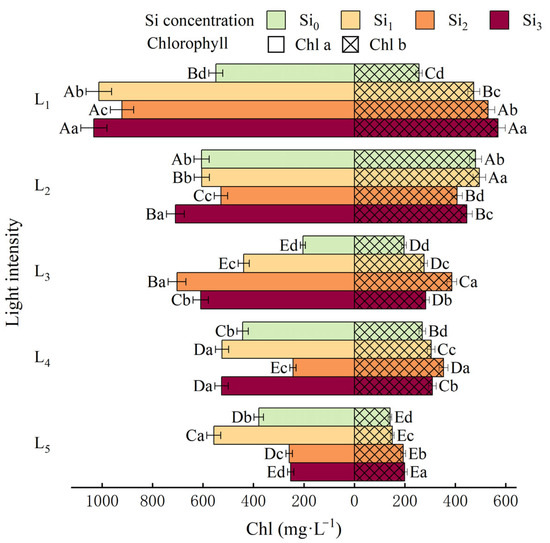
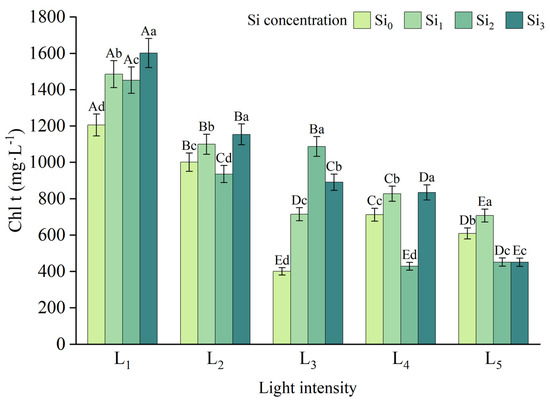
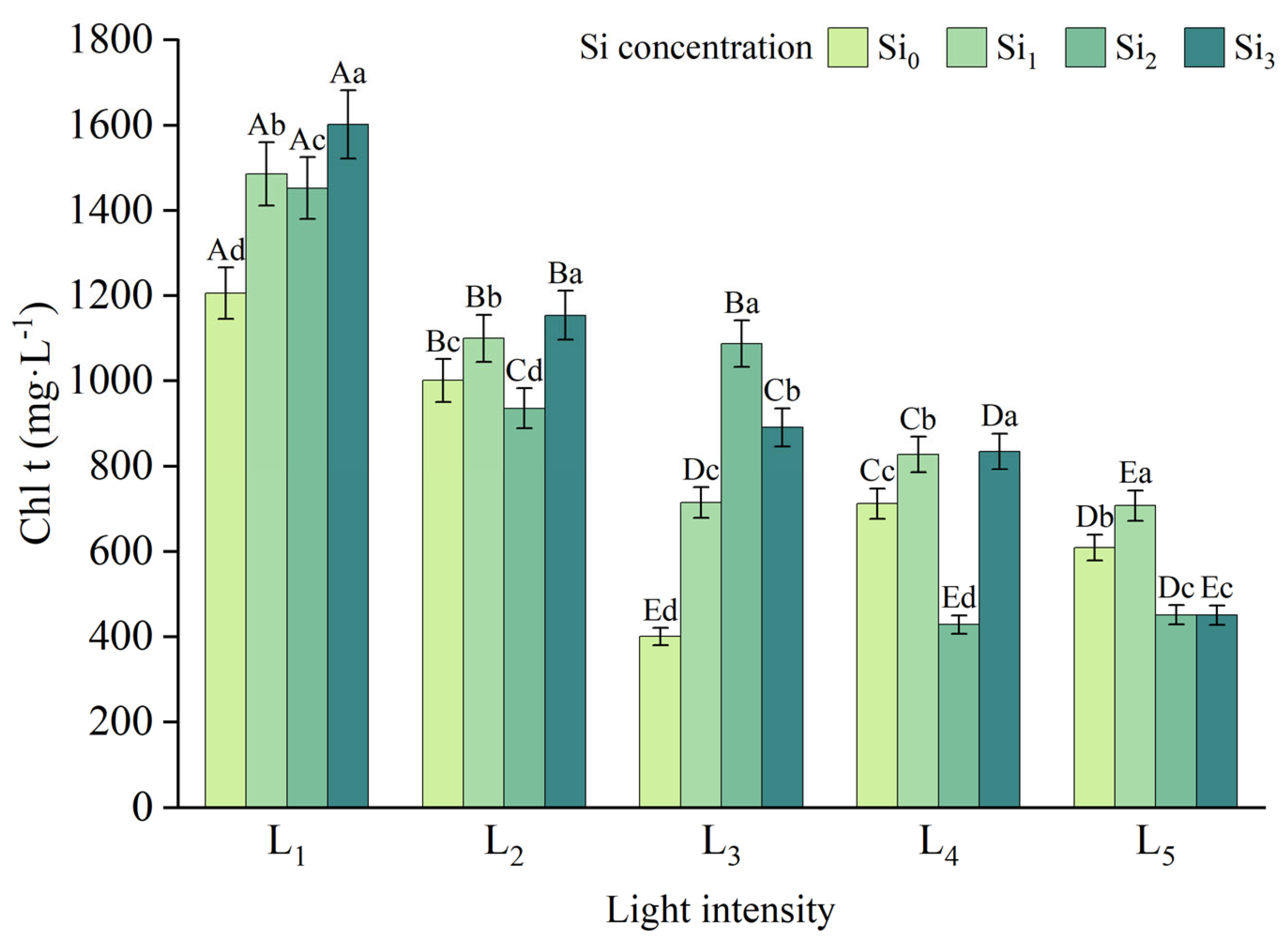
Except for Si1, the contents of Chl a, Chl b and Chl t in the L1 group were significantly higher than those in the other light groups under the same Si treatment (Figure 1 and Figure 2, p < 0.05), and the addition of Si3 made the total chlorophyll content of L1 and L3 higher than that of blank group by 32.8% and 15.3%. Chl a/b reaches the maximum value at L5 × Si1 and L5 × Si0.
Figure 1.
Chl a and Chl b under different treatments. Data is shown as mean ± SD (n = 3). Different lowercase letters indicate significant differences among shade treatments, while different uppercase letters indicate significant differences among Si treatments. The legend Si0–Si3 represents different silicon concentrations, and the labels L1–L5 indicate different light intensities. The values of these two levels are shown in Table 1. Si0: 0 mg/kg; Si1: 1000 mg/kg; Si2: 2000 mg/kg; Si3: 4000 mg/kg; L1: 5% of relative illumination; L2: 15% of relative illumination; L3: 40% of relative illumination; L4: 60% of relative illumination; L5: 100% of relative illumination.
Figure 2.
Changes in the Chl t under different treatments. Data is shown as mean ± SD (n = 3). Different lowercase letters indicate significant differences among shade treatments, while different uppercase letters indicate significant differences among Si treatments. The legend Si0–Si3 represents different silicon concentrations, and the labels L1–L5 indicate different light intensities. The values of these two levels are shown in Table 1. Si0: 0 mg/kg; Si1: 1000 mg/kg; Si2: 2000 mg/kg; Si3: 4000 mg/kg; L1: 5% of relative illumination; L2: 15% of relative illumination; L3: 40% of relative illumination; L4: 60% of relative illumination; L5: 100% of relative illumination.
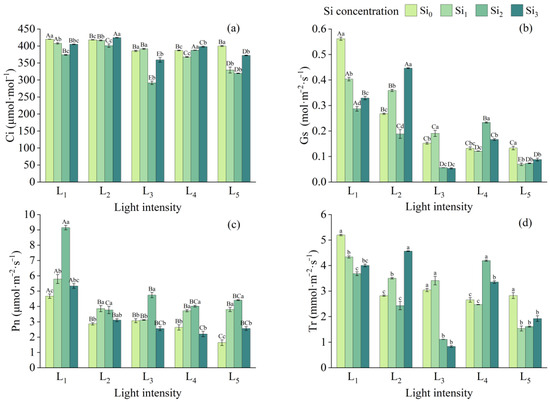
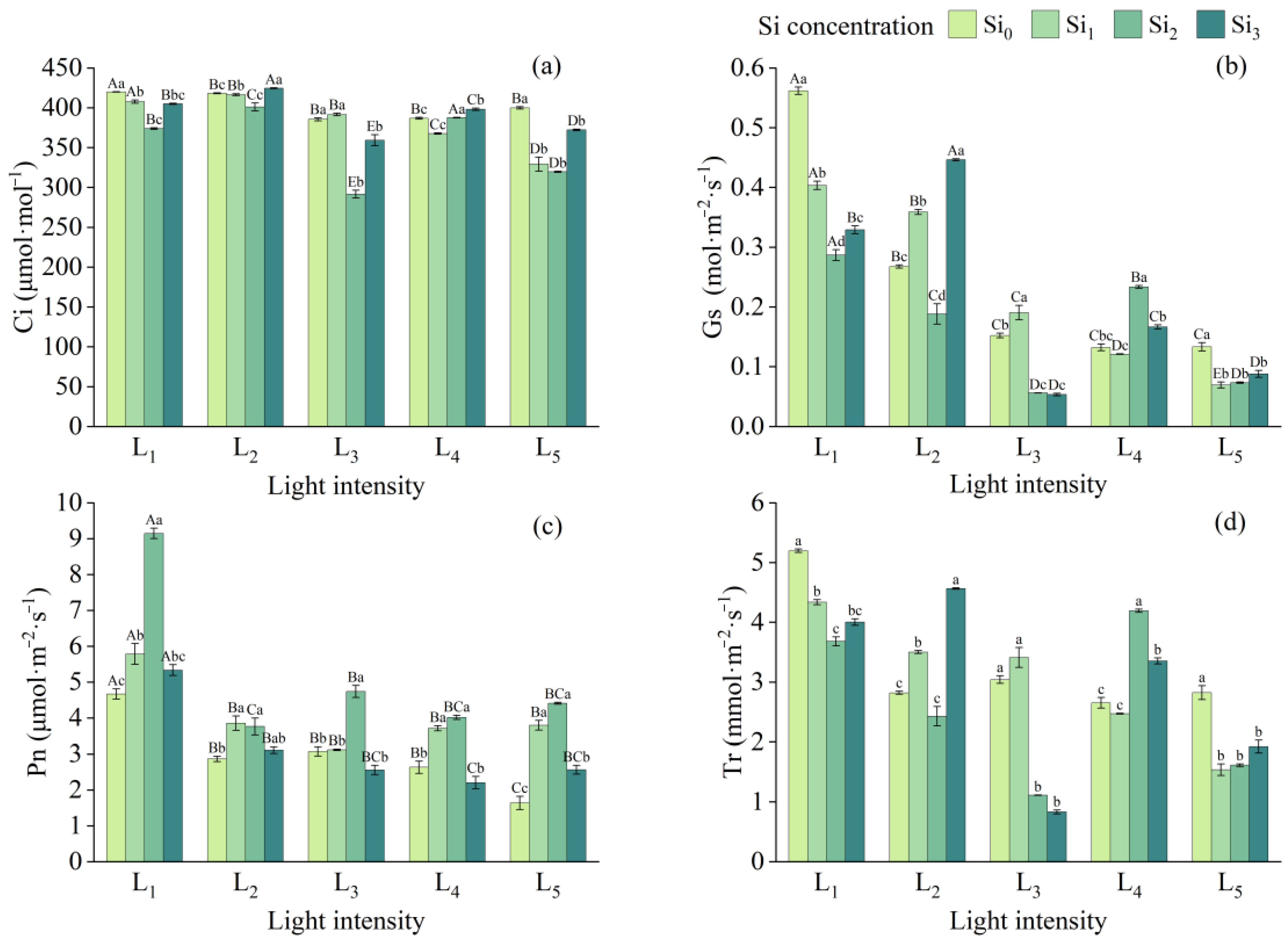
Increased light intensity significantly reduced all four physiological indicators, with the most pronounced effect observed in Gs, which decreased by 76.9% from L1 to L5 under the Si0 treatment. In contrast, the effect on Ci was more moderate. Notably, apart from L3 × Si4 and L4 × Si4, the Pn was higher in the silicon-treated groups compared to the control, with the Si2 treatment showing the greatest improvement. Under the same light conditions, appropriate silicon supplementation led to changes in Ci ranging from −24.4% to +2.9%, in Gs from −64.8% to +76.4%, and in Tr from −72.6% to +61.9%, relative to the Si0 treatment (Figure 3).
Figure 3.
Gas exchange indicators in leaves under different treatments: (a) Ci, (b) Gs, (c) Pn, (d) Tr. Data is shown as mean ± SD (n = 3). Different lowercase letters indicate significant differences among shade treatments, while different uppercase letters indicate significant differences among Si treatments. The legend Si0–Si3 represents different silicon concentrations, and the labels L1–L5 indicate different light intensities. The values of these two levels are shown in Table 1. Si0: 0 mg/kg; Si1: 1000 mg/kg; Si2: 2000 mg/kg; Si3: 4000 mg/kg; L1: 5% of relative illumination; L2: 15% of relative illumination; L3: 40% of relative illumination; L4: 60% of relative illumination; L5: 100% of relative illumination.
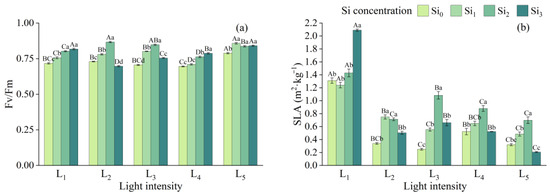
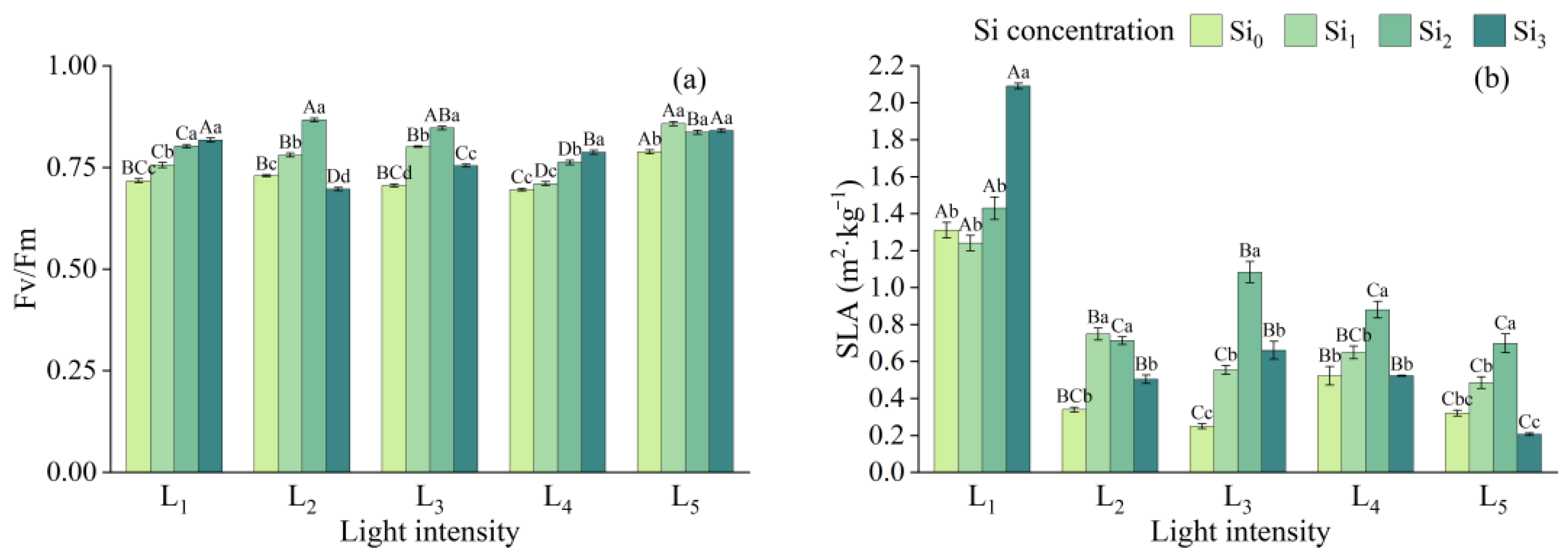
Obviously, the addition of silicon promotes the Fv/Fm value in each light, which is closer to 1 at Si2 or Si3, reaching the maximum value of the same light treatment, but the value at L2 × Si3 (0.75) is far less than the overall average. With the increase in light intensity, the average value of Fv/Fm even shows an increasing trend (Figure 4).
Figure 4.
Photosynthetic functional traits under different treatments: (a) Fv/Fm, (b) SLA. Data is shown as mean ± SD (n = 3). Different lowercase letters indicate significant differences among shade treatments, while different uppercase letters indicate significant differences among Si treatments. The legend Si0–Si3 represents different silicon concentrations, and the labels L1–L5 indicate different light intensities. The values of these two levels are shown in Table 1. Si0: 0 mg/kg; Si1: 1000 mg/kg; Si2: 2000 mg/kg; Si3: 4000 mg/kg; L1: 5% of relative illumination; L2: 15% of relative illumination; L3: 40% of relative illumination; L4: 60% of relative illumination; L5: 100% of relative illumination.
For SLA, from L1 to L5, the overall value decreases and then increases briefly. L1 has the highest SLA of all groups, and it reaches the maximum in Si3 (2.09). The addition of Si3 under the rest of the light generally results in lower values; especially, the L5 group achieves the lowest SLA (0.21). When the degree of shading is low, Si2 usually achieves the highest value, with an additional 48.3% to 59.5% of Si0.
2.2. Antioxidant Enzyme Activities and Malondialdehyde Content Under Different Treatments
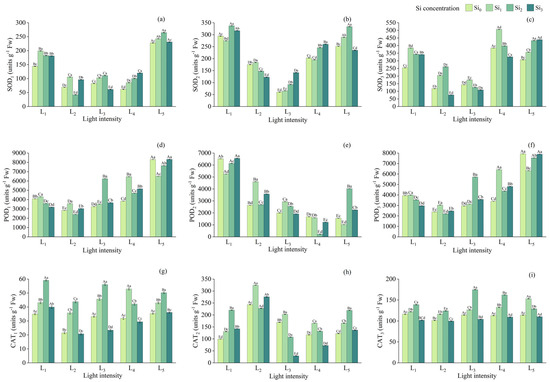
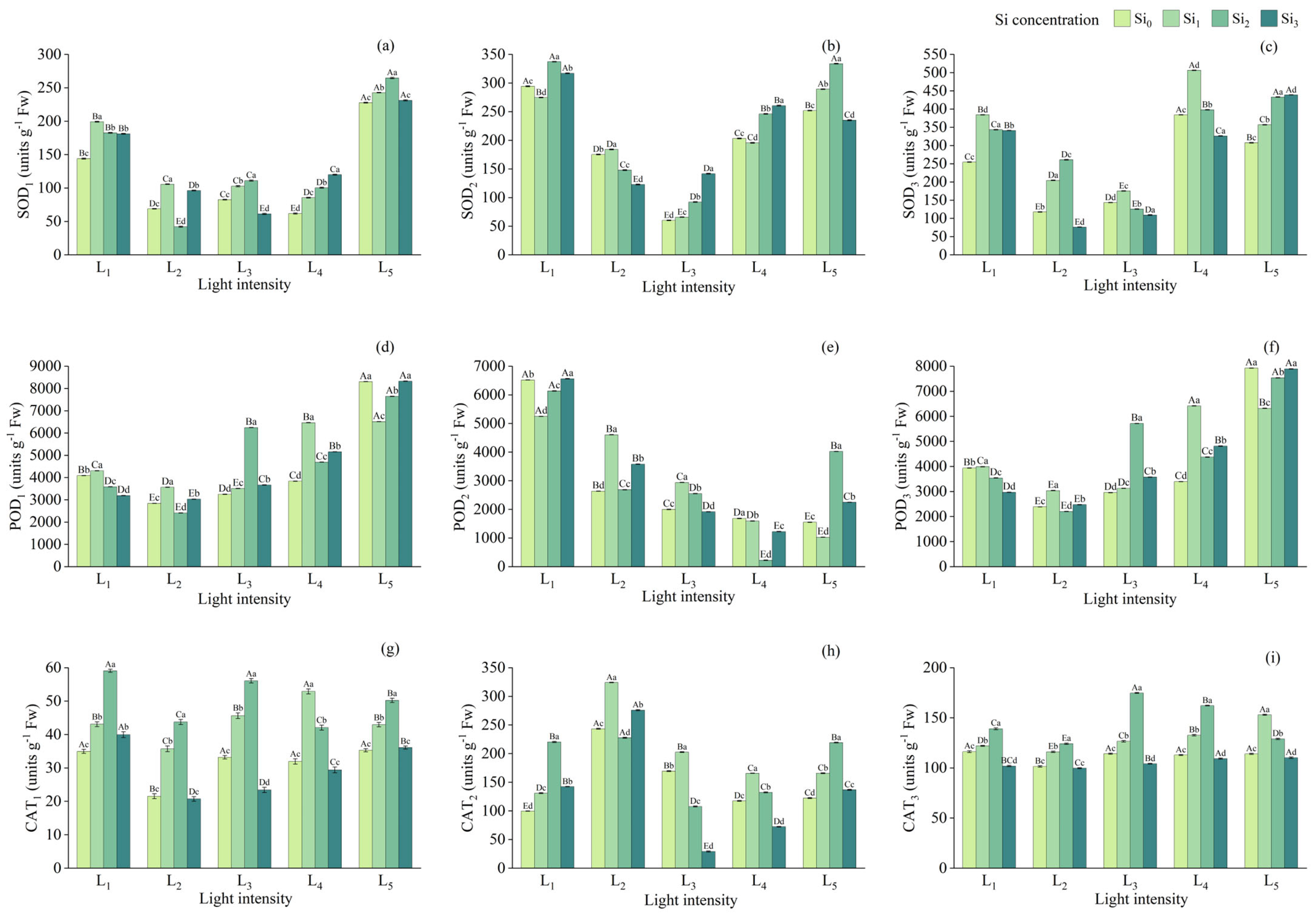
During the first two experimental stages, the SOD activity in leaves under both L1 and L5 conditions was significantly higher than under other light treatments (p < 0.05). Under these two light intensities, the Si1 and Si2 treatments exhibited the most pronounced stimulatory effects on SOD activity, with SOD3 values increasing by 1.21% and 0.74%, respectively, compared to the control. Overall, SOD activity reached its highest levels under L4 and L5. Conversely, the lowest SOD activity was observed in the Si3 treatment under both L2 and L3 conditions, which aligns with the pattern of lower antioxidant activity observed under moderate light conditions (L2 and L3).
As light intensity increased from L1 to L5, POD2 activity showed a decreasing trend, while POD1 and POD3 exhibited the opposite pattern, with nearly identical changes between them. For CAT1 and CAT2, the Si2 treatment resulted in significantly higher activity under both full light (L5) and minimal light (L1) compared to other silicon levels under the same light intensity (p < 0.05). For the remaining light conditions, Si1 generally produced the highest CAT activity. In contrast, the Si3 treatment markedly suppressed CAT activity, with CAT3 remaining at a consistently low level (Figure 5).
Figure 5.
Antioxidant enzyme activities in leaves at three stages under different treatments: (a–c) SOD at 90 days, 180 days, and 270 days, respectively, (d–f) POD at 90 days, 180 days, and 270 days, respectively, (g–i) CAT at 90 days, 180 days, and 270 days, respectively. Data is shown as mean ± SD (n = 3). Different lowercase letters indicate significant differences among shade treatments, while different uppercase letters indicate significant differences among Si treatments. The legend Si0–Si3 represents different silicon concentrations, and the labels L1–L5 indicate different light intensities. The values of these two levels are shown in Table 1. Si0: 0 mg/kg; Si1: 1000 mg/kg; Si2: 2000 mg/kg; Si3: 4000 mg/kg; L1: 5% of relative illumination; L2: 15% of relative illumination; L3: 40% of relative illumination; L4: 60% of relative illumination; L5: 100% of relative illumination.
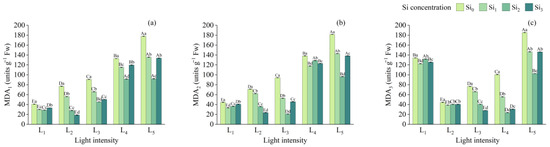
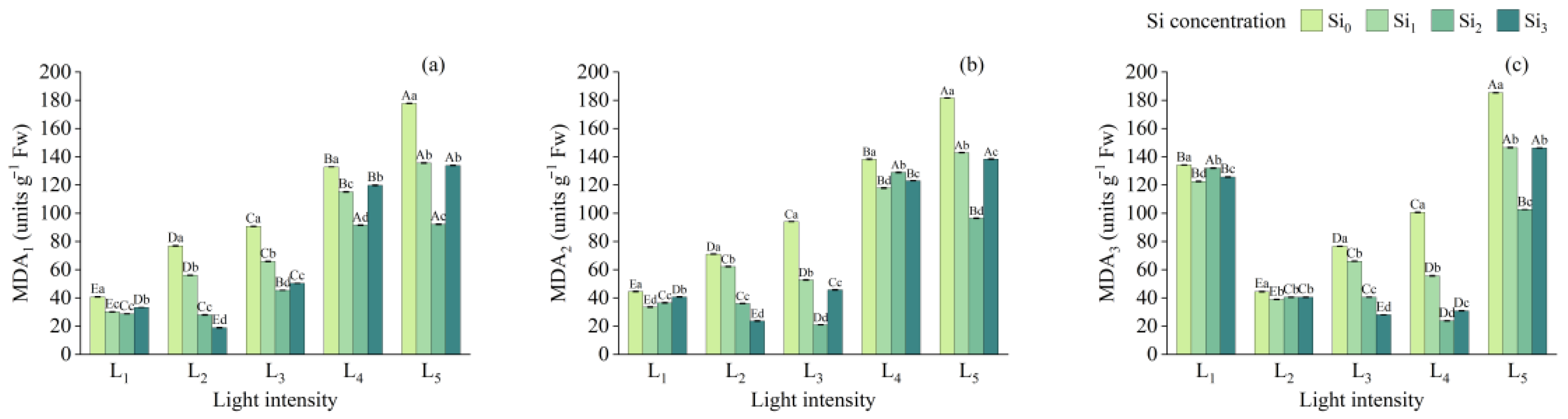
In the first two stages, MDA content in the Si0 treatment increased significantly and steadily with rising light intensity and was significantly higher at both L1 and L5 compared to other treatments (p < 0.05). Overall, there was little difference in MDA content between silicon and non-silicon treatments under L1. However, under other light conditions, exogenous silicon application significantly reduced MDA levels, with Si3 generally resulting in the lowest values (Figure 6).
Figure 6.
MDA content in leaves under different treatments at (a) 90 days, (b) 180 days, and (c) 270 days, respectively. Data is shown as mean ± SD (n = 3). Different lowercase letters indicate significant differences among shade treatments, while different uppercase letters indicate significant differences among Si treatments. The legend Si0–Si3 represents different silicon concentrations, and the labels L1–L5 indicate different light intensities. The values of these two levels are shown in Table 1. Si0: 0 mg/kg; Si1: 1000 mg/kg; Si2: 2000 mg/kg; Si3: 4000 mg/kg; L1: 5% of relative illumination; L2: 15% of relative illumination; L3: 40% of relative illumination; L4: 60% of relative illumination; L5: 100% of relative illumination.
2.3. Growth Indicators Under Different Treatments
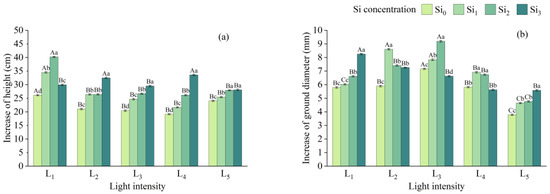
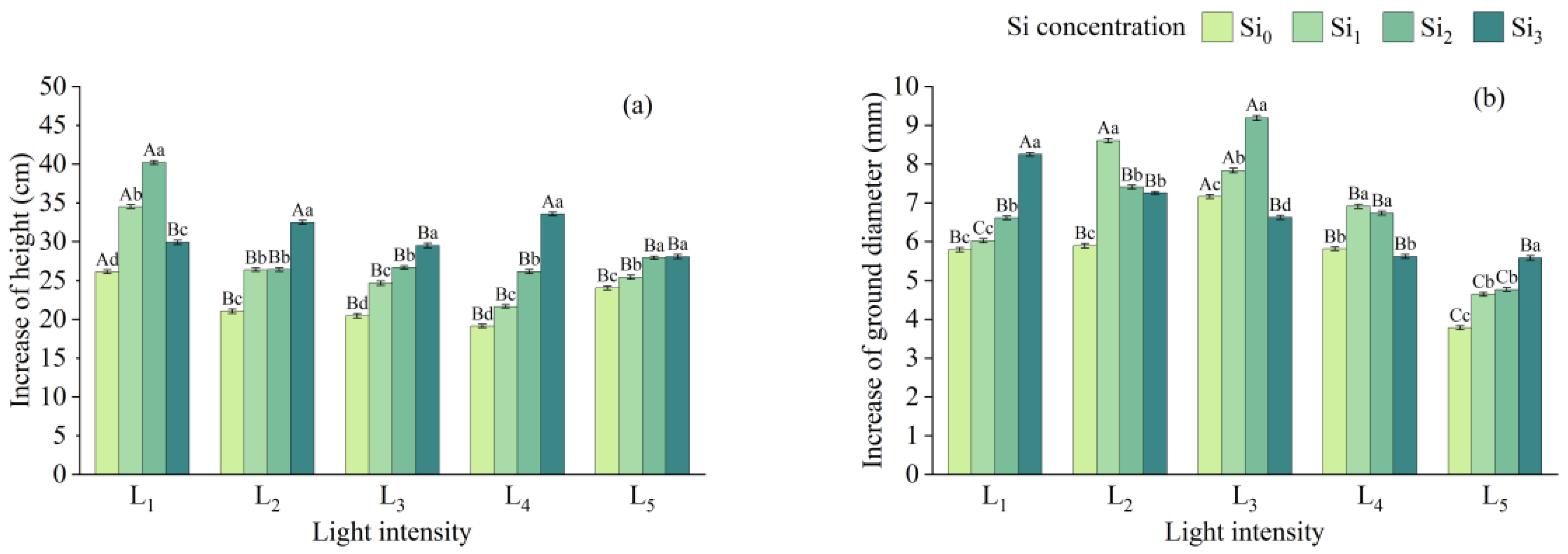
The greatest increase in seedling height was observed under L1, while the maximum increase in ground diameter occurred under L3. In contrast, both parameters were lower under L5 than under other light conditions (Figure 7). Under the same shading level, the average seedling height growth in silicon-treated seedlings was 5.77% to 72.42% higher than that of the control group, with Si2 and Si3 treatments showing the most pronounced effects. However, the effect of silicon on ground diameter growth under different light intensities did not follow a clear pattern. Notably, under L3 and L4, the ground diameter growth of the Si3 treatment was even lower than that of Si0.
Figure 7.
Increase in growth indicators under different treatments: (a) height, (b) ground diameter. Data is shown as mean ± SD (n = 3). Different lowercase letters indicate significant differences among shade treatments, while different uppercase letters indicate significant differences among Si treatments. The legend Si0–Si3 represents different silicon concentrations, and the labels L1–L5 indicate different light intensities. The values of these two levels are shown in Table 1. Si0: 0 mg/kg; Si1: 1000 mg/kg; Si2: 2000 mg/kg; Si3: 4000 mg/kg; L1: 5% of relative illumination; L2: 15% of relative illumination; L3: 40% of relative illumination; L4: 60% of relative illumination; L5: 100% of relative illumination.
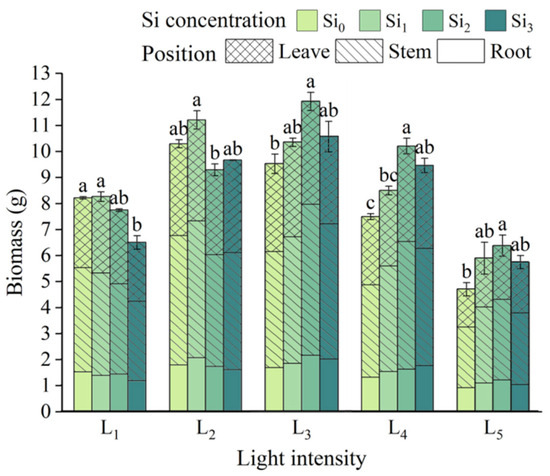
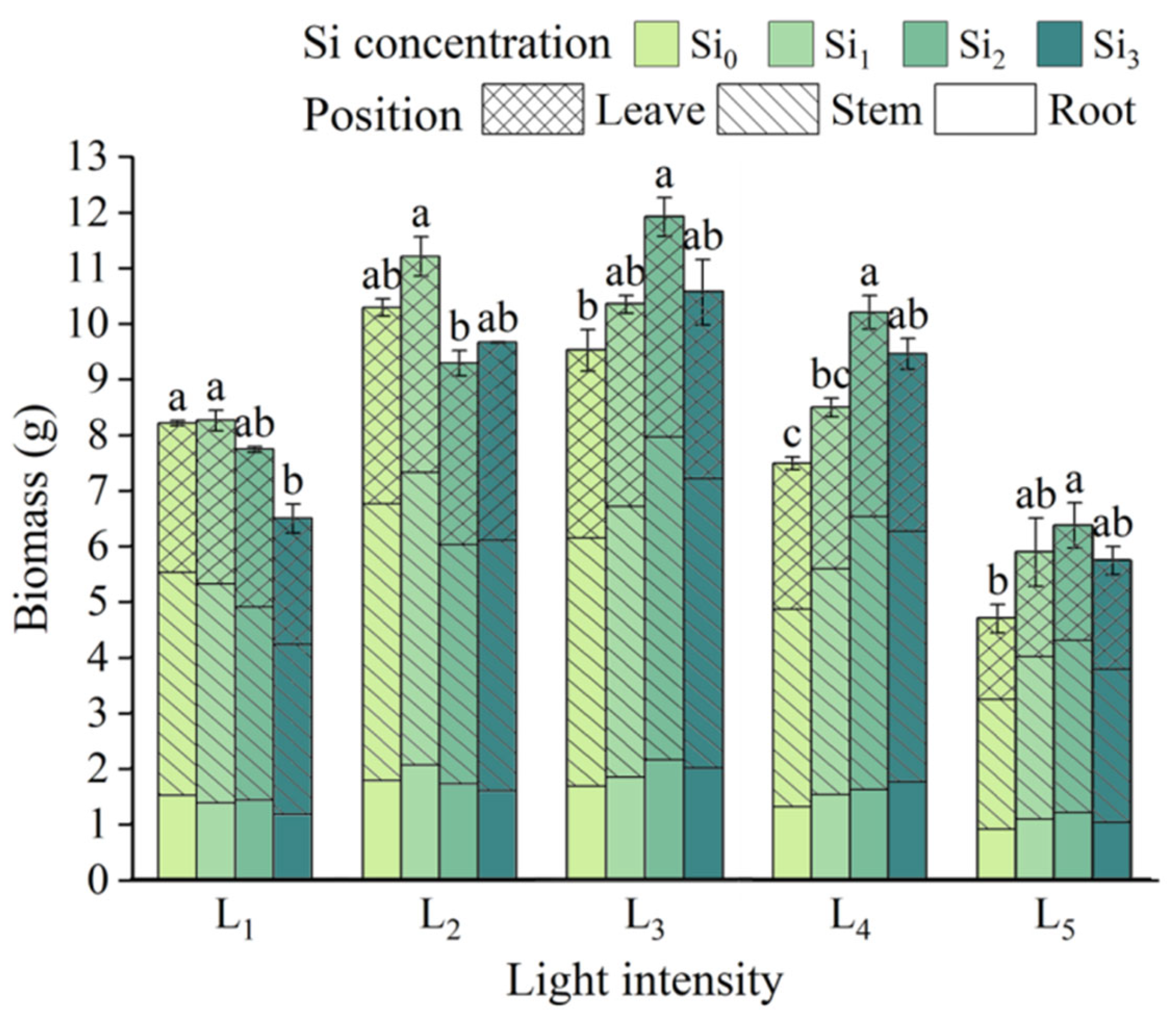
Total seedling biomass reached a significant maximum under L3, while the lowest biomass was observed in the L5 × Si0 treatment. Except under L1 and L2, silicon addition consistently increased biomass across all light treatments, with the highest values in each group typically achieved under the Si2 treatment (Figure 8).
Figure 8.
Seedling biomass allocation under different fertilization and shade treatments. Data is shown as mean ± SD (n = 3). Different lowercase letters indicate significant differences among shade treatments. The legend Si0–Si3 represents different silicon concentrations, and the labels L1–L5 indicate different light intensities. The values of these two levels are shown in Table 1. Si0: 0 mg/kg; Si1: 1000 mg/kg; Si2: 2000 mg/kg; Si3: 4000 mg/kg; L1: 5% of relative illumination; L2: 15% of relative illumination; L3: 40% of relative illumination; L4: 60% of relative illumination; L5: 100% of relative illumination.
2.4. Correlations Between Photosynthetic, Antioxidant, and Biomass Parameters
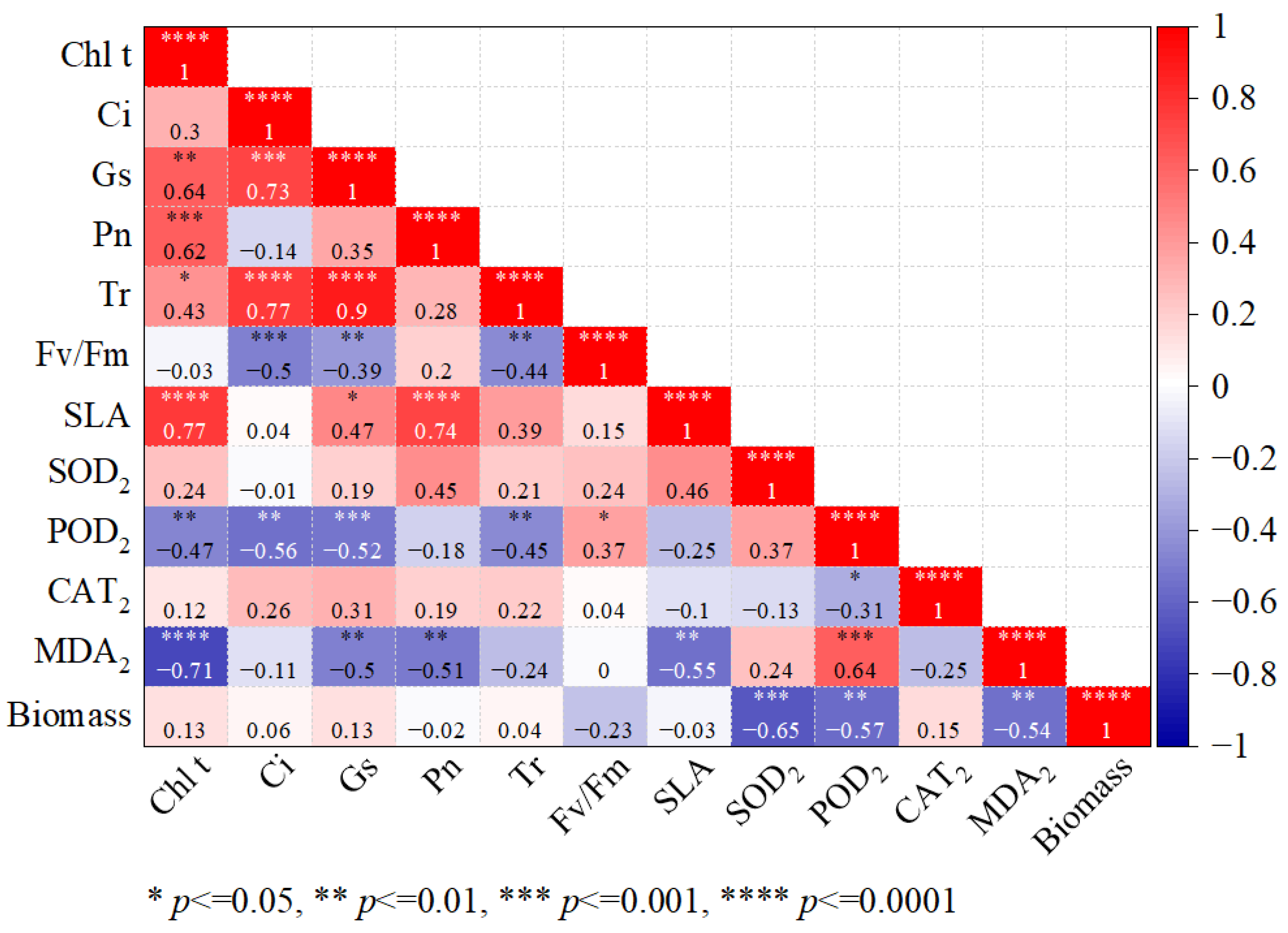
According to Figure 9, Chl t was significantly positively correlated with Pn (r = 0.621, p < 0.001). Ci was significantly positively correlated with Tr (r = 0.767, p < 0.001). POD2 was significantly negatively correlated with MDA2 (r = −0.639, p < 0.001). Meanwhile, MDA2 was significantly negatively correlated with total biomass (r = −0.541, p < 0.001).
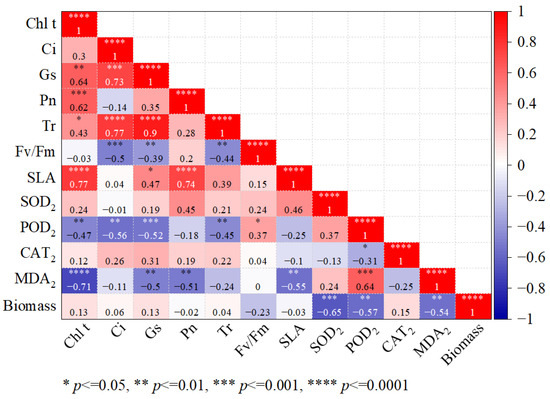
Figure 9.
Correlation heatmap of photosynthetic, antioxidant, and biomass parameters. Cht: total chlorophyll; Ci: intercellular CO2 concentration; Gs: stomatal conductance; Pn: net photosynthetic rate; Tr: transpiration rate; Fv/Fm: the maximum photochemical efficiency of PSII; SLA: Single leaf area; SOD: superoxide dismutase; POD: peroxidase; CAT: catalase; MDA: malondialdehyde; Biomass: biomass of the leaf.
3. Discussion
3.1. Effects of Shade and Silicon Addition on Chlorophyll Content in Liquidambar formosana Leaves
The effects of shading and Si supplementation on chlorophyll content in the leaves of Liquidambar formosana seedlings were investigated. Chlorophyll plays a vital role in capturing light energy and converting it into chemical energy, thereby directly influencing photosynthetic efficiency. Its content and photosynthetic characteristics are responsive to abiotic environmental factors such as light, CO2 concentration, and temperature. Within a physiological range, increased light intensity typically promotes chlorophyll synthesis to enhance light-harvesting efficiency for photosynthesis.
Under low light conditions (L1), seedlings exhibited a compensatory increase in chlorophyll content (Figure 10), likely serving to counteract light limitation by enhancing light absorption. This observation aligns with the findings of Huang in Boehmeria nivea, where shaded conditions led to significant increases in chlorophyll a + b content per unit leaf dry weight, albeit with smaller increments under short-term shading [36]. In contrast, high light intensities (L4–L5) resulted in photoinhibition, as evidenced by decreased chlorophyll content and elevated SOD and POD activity across all three measurement periods (Figure 1 and Figure 2), indicating the induction of oxidative stress. These results suggest that the absence of shading is detrimental to seedling growth.
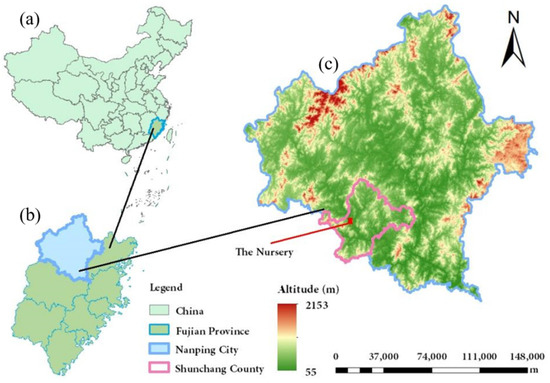
Figure 10.
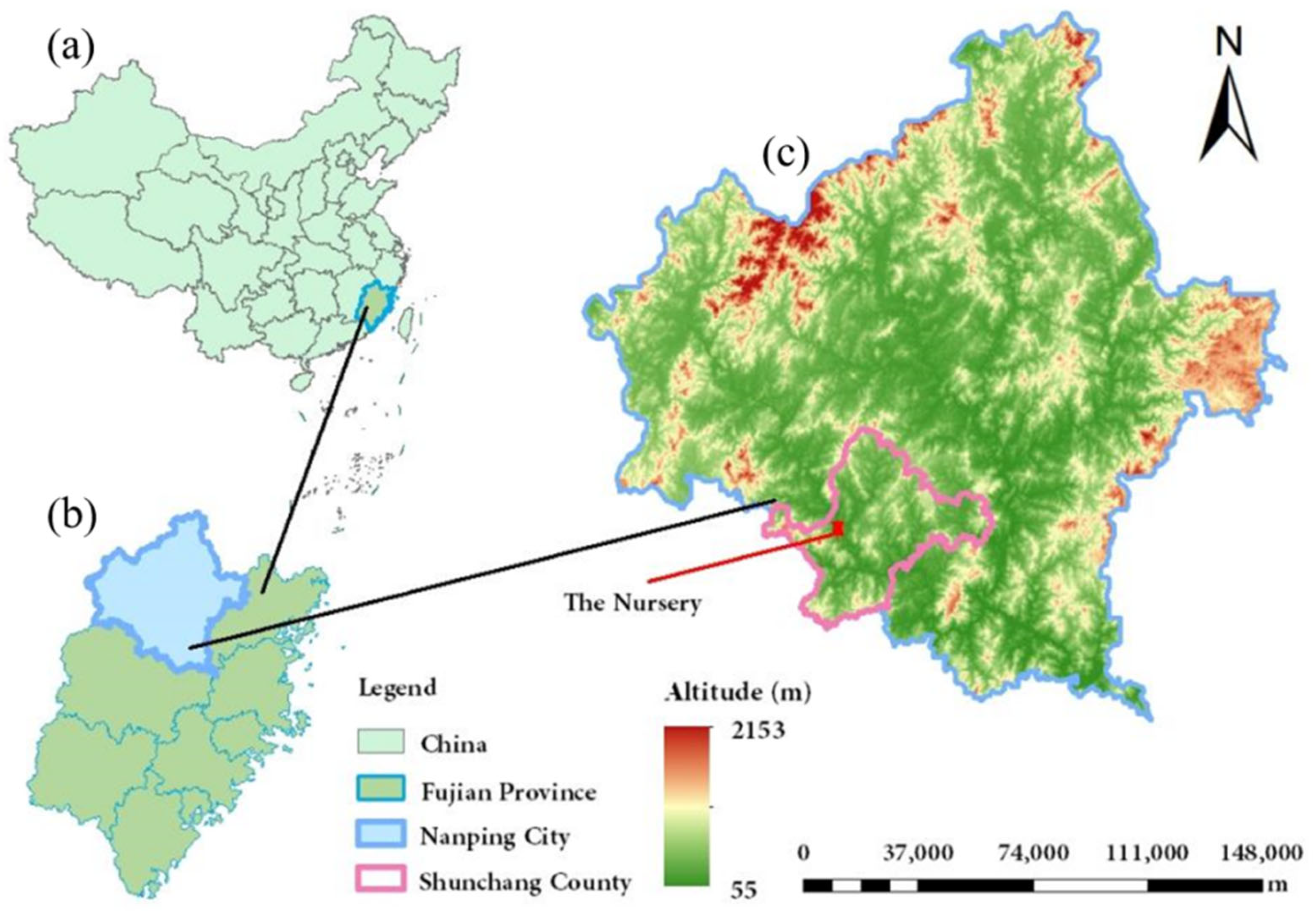
Map of the study located. (a) China, (b) Fujian Province, (c) Nanping City. The red polygon in (c) refers to the nursery site is located.
The observed light–chlorophyll–antioxidant interaction is consistent with broader plant stress adaptation mechanisms. For instance, in Populus hybrids subjected to intense light, chlorophyll a/b ratios declined markedly, while SOD and POD activities increased to mitigate oxidative damage [37], paralleling the response observed under L5. Shade-adapted species such as Dendrobium huoshanense typically accumulate more chlorophyll b to optimize light capture; however, insufficient light can reduce photosynthetic efficiency and delay ROS scavenging [38]. Moderate light levels (L2–L3) appear to provide an optimal balance. In rice mutants with reduced chlorophyll b content, moderate light enhanced PSII stability by upregulating SOD and CAT activity, thereby reducing H2O2 accumulation and photodamage [39]. Similarly, Medicago sativa under moderate heat stress maintained chlorophyll content through increased POD and CAT activity, whereas excessive stress damaged thylakoid membranes and impaired carbon fixation [40].
These findings suggest that moderate light intensities promote chlorophyll synthesis while minimizing oxidative overload, as demonstrated in L. formosana seedlings under L2–L3. The role of light-harvesting chlorophyll a/b-binding proteins (Lhcs) may further underpin this mechanism. Under drought stress, Lhcs have been shown to activate ABA signaling, which stabilizes chlorophyll content and enhances antioxidant enzyme activity [40]. For example, Arabidopsis mutants overexpressing Lhcb1 retained higher chlorophyll levels and exhibited elevated SOD activity under high light, resembling the adaptive responses observed under L2–L3 in this study. Additionally, research on Triticum aestivum indicates that moderate light optimizes NPQ, allowing excess energy to be dissipated without compromising CO2 assimilation [41]. Collectively, these findings support the hypothesis that the synergistic regulation of chlorophyll retention and antioxidant activity under L2–L3 light conditions constitutes a conserved adaptive strategy that maintains photosynthetic efficiency while mitigating oxidative stress.
3.2. Positive Effect of Silicon Addition on Photosynthetic Efficiency of Liquidambar formosana
The beneficial role of silicon in enhancing photosynthetic performance under varying light conditions has been attributed to conserved physiological mechanisms across plant species. Notably, the lowest Pn was consistently observed in the absence of silicon (Si0), underscoring the importance of Si addition under light stress. Improvements in photosynthesis associated with Si may involve optimized chloroplast development [42], stomatal regulation, enhanced enzyme activity, antioxidant defense, and transcriptional regulation [38].
In this study, the decreases in Gs, Ci, and Tr occurred concurrently, whereas Pn increased, indicating that the observed photosynthetic enhancement was likely influenced more by non-stomatal factors (e.g., chlorophyll content, PSII efficiency) than by stomatal conductance alone. Meanwhile, an appropriate concentration of Si (Si2) significantly increased chlorophyll content and maximum quantum yield of PSII (Fv/Fm). Silicon was also reported to alter the mechanical properties of mesophyll cells through silica-hydroxyl cross-linking in cell walls, thereby indirectly improving the substrate binding efficiency of Rubisco [43,44].
Previous studies have demonstrated that Si significantly enhances Pn under low light, likely due to induced morphological adaptations. Si supplementation promoted vertical leaf orientation via cell wall silicification, increasing SLA, improving light distribution within the canopy, and enhancing light capture in lower leaves [45]. Additionally, Si-treated plants exhibited higher carotenoid content, further supporting enhanced photoreaction efficiency by enabling the absorption of a broader light spectrum, including blue-violet light. Based on light distribution models [46], Si-induced SLA increases may raise canopy transmittance by 25%, which may account for the greater Pn enhancement in lower leaves (+25%) compared to upper leaves (+8%).
Under high light conditions (L5), Si treatment led to a significant reduction in chlorophyll content. This may indicate resource reallocation, where Si-treated plants invested relatively more in carbon fixation and ROS detoxification than in chlorophyll synthesis, although further biochemical evidence is needed. MDA levels were consistently lower in Si-treated groups compared to controls, while antioxidant enzyme activities exhibited an initial increase followed by a variable decline. This aligns with Liang’s findings [47] that Si-induced activation of specific SOD isoenzymes (e.g., Cu/Zn-SOD) enhances superoxide clearance.
Furthermore, Si may promote carbon fixation over chloroplast biosynthesis by modulating carbon allocation, as indicated by a 15% increase in soluble sugar content. Gao [48] also demonstrated that Si helps maintain the structural integrity of the electron transport chain by stabilizing PSII protein D1, sustaining Fv/Fm values above 0.75 under strong light. However, excessive Si application (Si3) was associated with reduced Pn, likely due to inhibition of Gs and Ci and limited additional antioxidant benefits, suggesting a concentration threshold for optimal Si efficacy [49,50]. While moderate silicon deposition strengthens cell walls, over-silicification could reduce cell elasticity, impede gas exchange, and hinder cell expansion [18]. The active uptake and polymerization of silicon at high concentrations may divert energy and resources away from other critical processes such as photosynthesis and repair mechanisms, particularly under extreme stress [51]. These factors highlight the importance of identifying species-specific and environment-specific optimal silicon dosages to avoid detrimental effects.
3.3. Effect of Silicon Addition on Growth Promotion of Seedlings Under Stress
Light is a critical environmental factor influencing plant survival, growth, and reproduction, directly affecting functional traits. Consequently, morphological indicators such as seedling height, ground diameter, and biomass vary with spatial heterogeneity and serve as proxies for assessing seedling quality and stress intensity. Under L2 and L3 conditions, seedlings exhibited a lower increment in height and a greater increment in ground diameter, resulting in a compact morphology. In contrast, seedlings under L1 were taller and slenderer. This trend is consistent with previous reports on morphological responses of Cunninghamia lanceolata to varying light intensities [51].
To increase light acquisition, seedlings grown under shaded environments tend to allocate more resources to height growth, thereby enhancing their competitive ability for light capture [52]. However, biomass accumulation was greater under L2 and L3, and Si supplementation at all concentrations significantly promoted both height and diameter growth under identical light conditions.
At the cellular level, Si-induced synergism between cell wall silicification and expansion has been reported. Silicon deposition in the cell wall leads to the formation of a double-layered “Si–epidermis” structure, which enhances mechanical strength and structural stability. In maize, Si treatment increased plant height and leaf area by 12.3% and 15.8%, respectively, independent of the acid-growth mechanism associated with plasma membrane H+-ATPase activity, but possibly regulated via expansin activity [53]. For seedlings, lateral growth is also associated with enhanced water uptake capacity. Similarly, Si-induced cell wall silicification in rice has been shown to reduce transpiration rate and decrease leaf H2O2 and MDA content by 30–45%, thereby maintaining cellular water balance [54].
The nonlinear response of SLA to light and silicon (Figure 4b) reflects a strategic trade-off between light capture efficiency and photoprotective investment. Under deep shade (L1), the significantly higher SLA (p < 0.001) represents a classic morphological adaptation to maximize light interception per unit biomass. The subsequent decline in SLA with increasing light intensity suggests a shift in resource allocation towards leaf thickening and palisade tissue development, which enhances photoprotection but reduces light capture efficiency per unit mass. This morphological shift is corroborated by the strong positive correlation between SLA and photosynthetic pigments (Chl t: r = 0.768, p < 0.001), indicating that thinner leaves (high SLA) are associated with greater light-harvesting capacity.
The resurgence of SLA under moderate light (L3) with Si2 treatment is particularly intriguing. It indicates that silicon supplementation may facilitate a more efficient and resilient leaf morphology, optimizing both light capture and structural integrity without necessitating excessive investment in defensive structures [46]. This silicon-mediated optimization is likely linked to the observed reduction in oxidative stress. Our correlation analysis reveals a significant negative relationship between SLA and the lipid peroxidation marker MDA (MDA2: r = −0.548, p < 0.001), suggesting that leaves with higher SLA under Si amendment are not more vulnerable to oxidative damage. On the contrary, silicon may enhance the biochemical photoprotective capacity, as supported by the strong negative correlation between key antioxidant enzymes (e.g., POD2) and MDA (POD2 vs. MDA2: r = −0.639, p < 0.001). Therefore, silicon appears to decouple the traditional trade-off, allowing for the maintenance of a more acquisitive leaf morphology (higher SLA) while concurrently bolstering the antioxidant system to manage the associated oxidative pressure.
These findings support Hattori’s model [55] of Si-mediated enhancement of cell wall rigidity, in which Si deposition promotes morphogenesis through both physical fortification and chemical signaling. Additionally, Si mitigates the adverse effects of photoinhibition on carbon metabolism by stabilizing photoassimilates, further highlighting its pleiotropic regulatory roles. It should also be noted that the effects of Si on biomass allocation may vary depending on plant species [45].
4. Materials and Methods
4.1. Study Area
This study was conducted in Shunchang County, Nanping City, Fujian Province, southeastern China (117°29′–118°14′ E, 26°38′–27°12′ N) (Figure 10). The region has a subtropical monsoon climate, with an average annual temperature of 20 °C and an average annual precipitation of 1359 mm. The nursery site is at an altitude of 134 m, with basic soil physicochemical properties including pH 6.92, organic matter 0.14 g/kg, available phosphorus 0.03 g/kg, and readily available potassium 0.08 g/kg.
4.2. Experimental Design
One-year-old Liquidambar formosana seedlings with similar height, diameter at breast height (DBH), and canopy structure were selected for the experiment. A total of 200 seedlings were transplanted into plastic cylindrical pots (bottom diameter: 20 cm; height: 30 cm), each containing 3 kg of soil with a measured pH of 5.0 and an available phosphorus content of 5 mg·kg−1. Throughout the experimental period, seedlings were regularly irrigated, and no additional exogenous substances were applied.
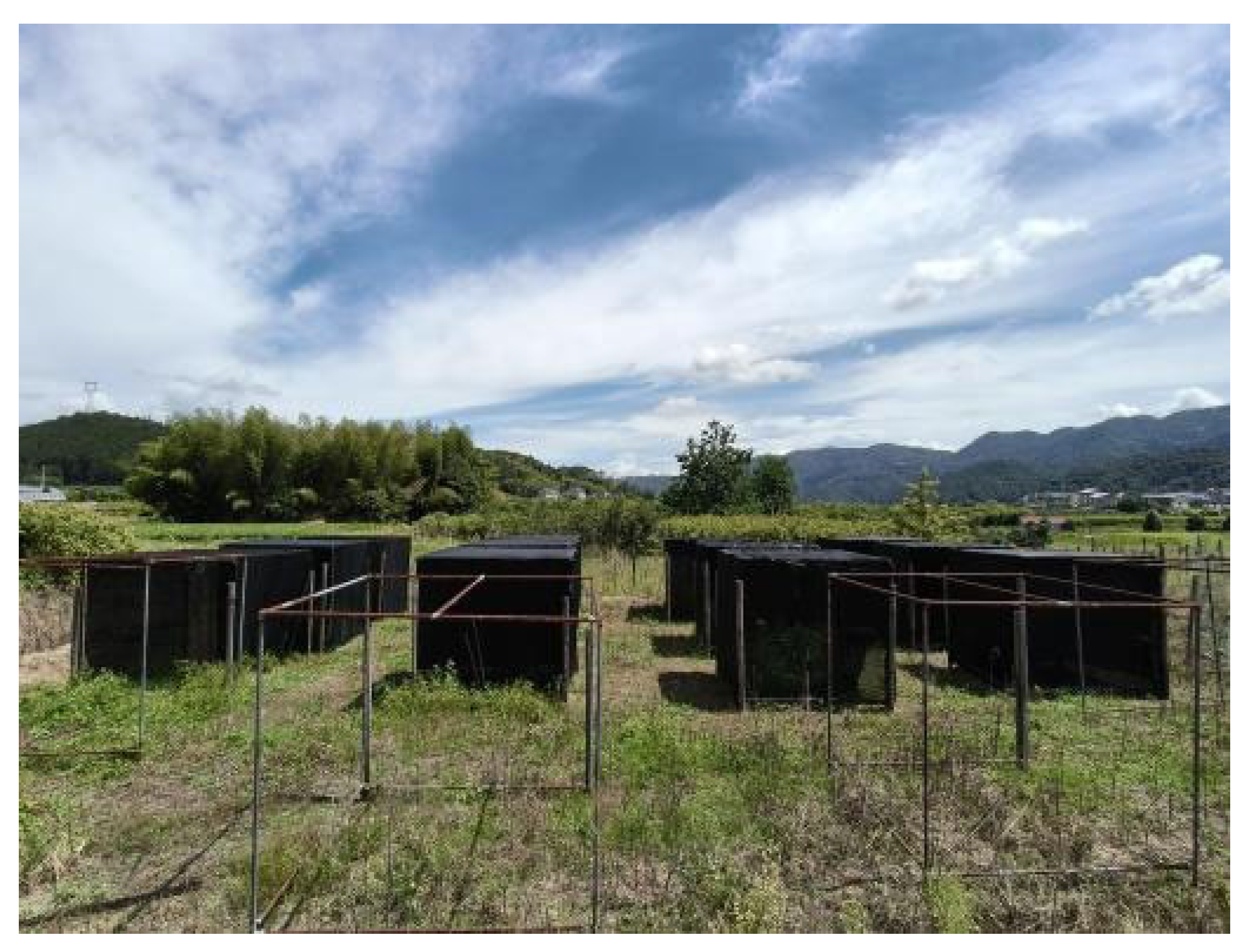
The experimental design included five light intensity treatments: 100% (full sunlight), 60%, 40%, 15%, and 5% of ambient light. The full sunlight group was placed outdoors under natural light conditions, while the remaining treatments were conducted under shade chambers constructed using iron frames covered with different matching nylon meshes of single-layer 40 mesh, single-layer 60 mesh, 60 mesh + 40 mesh and double-layer 80 mesh to achieve the desired shading levels. Each shade chamber measured 6 m × 4 m × 3 m and was spaced 3.0 m apart to minimize mutual interference among treatments.
Silicon treatments were applied using a water-soluble sodium metasilicate (Na2SiO3·5H2O, analytical grade) with a SiO2 content ≥ 50%. Root application was employed instead of foliar spraying to enhance fertilizer uptake efficiency and avoid potential foliar damage caused by high-concentration spraying, particularly under variable weather conditions. Additionally, the physical characteristics of the leaves—being thin, leathery, and pubescent—were considered less conducive to efficient foliar absorption. Since silicon is not readily fixed in the soil, root fertilization allowed for better control of silicon uptake.
A total of 3 applications were made at 15-day intervals, starting 1 week after transplanting. Each application delivered the respective silicon concentration (0, 1000, 2000, or 4000 mg·kg−1 soil) in 200 mL of aqueous solution per pot. The experiment consisted of two variables (light intensity and silicon concentration) in a factorial design with three replicates, comprising 20 treatment combinations with six seedlings per treatment (Table 1, Figure 11). To track the dynamic physiological responses, we measured the key indicators (antioxidant enzymes and malondialdehyde content) at 3 critical stages. These stages were 90 days, 180 days, and 270 days after the treatment, respectively.
Table 1.
Treatment of four silicon fertilizer concentration gradients and five light intensity gradients.
Figure 11.
Photographs of experimental treatments. The two experimental frame on the front without shade are the group of 100% of relative illumination, while the other frames have different sunshades placed on them according to the experimental design.
4.3. Measurement of Growth Indicators
Seedling height was measured using a tape measure, while ground diameter was determined with an electronic vernier caliper. For biomass assessment, entire seedlings were carefully uprooted, cleaned, and subsequently divided into three components: roots, stems, and leaves. These components were initially subjected to a temperature of 105 °C for 30 min to eliminate microbial activity. Thereafter, they were dried at 65 °C until a constant weight was achieved. The dry weight of each component was recorded, and the corresponding biomass was calculated accordingly.
4.4. Testing of Antioxidant Enzym Activities and Malondialdehyde Content
0.2 g of fresh leaves were placed in phosphate-buffered solution and thoroughly ground under an ice bath. Then, they were transferred to a 5-milliliter centrifuge tube and centrifuged at 4 °C and 10,000× g for 20 min. The supernatant was used as the enzyme solution. The activity of SOD was determined using the nitroblue tetrazolium (NBT) photoreduction method. Peroxidase POD activity was measured based on the guaiacol oxidation method, while catalase CAT activity was assessed via ultraviolet (UV) absorption. The malondialdehyde MDA content was quantified using the thiobarbituric acid (TBA) method [35]. The Spectramax ID5 microplate reader was used to measure the absorbance of the reaction system.
4.5. Testing of Photosynthetic Efficiency
The absorbance of the chlorophyll extract was measured at 663 nm and 645 nm using a microplate reader after fresh chlorophyll was extracted with 95% ethanol. Based on the absorbance values, the contents of chlorophyll a (Chl a), chlorophyll b (Chl b), and total chlorophyll (Chl t) were calculated accordingly.
For the determination of the maximum photochemical efficiency of PSII (Fv/Fm), the same leaf area used for chlorophyll pigment measurement was selected, and measurements were conducted between 9:00 and 11:00 a.m. The leaves were dark-adapted for 20 min prior to fluorescence measurements. Maximal fluorescence (Fm) and variable fluorescence (Fv) were then recorded using a FluorCam chlorophyll fluorescence imaging system in broadleaf seedlings.
Single leaf area (SLA) and total leaf area were calculated based on leaf length and width measurements obtained using ImageJ software (Version 1.54p). For each treatment, 3 leaves from equivalent positions were selected for analysis.
On clear and sunny days, gas exchange parameters including net photosynthetic rate (Pn), stomatal conductance (Gs), transpiration rate (Tr), and intercellular CO2 concentration (Ci) were measured on fully expanded, healthy leaves selected from the middle to upper canopy of representative plants in each treatment group using a LI-6400XT portable photosynthesis system.
4.6. Statistical Analysis
A two-way analysis of variance (ANOVA) was performed to test interactions between treatment levels and assess data significance, validity, and reliability. One-way ANOVA and interaction analysis were applied to test the significance of differences in the traits. Tukey’s honest significant difference (HSD) post hoc test was conducted for multiple comparisons when factors or interactions showed significance at a level of a = 0.05. These analyses were performed using the R programming software (version 4.3.2).
Additionally, Pearson’s correlation analysis was conducted to examine the linear relationships between measured photosynthetic, antioxidant, and biomass parameters. The correlation coefficients and their significance levels (p-values) were calculated, and a correlation matrix heatmap was generated for visualization using the R programming software (version 4.3.2).
5. Conclusions
The mitigating effects of exogenous silicon application on the growth and physiological responses of Liquidambar formosana seedlings under high light stress were investigated. It was observed that silicon induced adaptive responses to high light and enhanced stress resistance; however, higher concentrations of silicon were found to be less effective. The alleviation of strong light stress by silicon was attributed to its roles in physical protection, biochemical modulation, and physiological regulation. Nonetheless, the defense mechanisms inherent to the seedlings, in conjunction with silicon supplementation, were insufficient to fully counteract the detrimental effects of intense light. The observed variations under different light intensities highlighted the shade tolerance of Liquidambar formosana seedlings. Our findings demonstrate that the mitigating effect of silicon on Liquidambar formosana seedlings is highly dependent on light intensity, with an optimal combination of moderate shading (40–60% light) and moderate silicon application (1000–2000 mg·kg−1) yielding the best physiological and growth responses.
Author Contributions
Conceptualization, S.J. and D.Z.; methodology, S.J. and D.Z.; software, S.C.; validation, S.J. and D.Z.; formal analysis, S.C. and S.J.; data curation, S.C., M.Z., T.L., Y.C., J.L. and X.L.; writing—original draft preparation, S.C., J.L., Z.L., D.Z. and S.J.; writing—review and editing, S.C., M.Z., T.L., Y.C., J.L., Y.H., X.L., D.Z. and S.J.; visualization, S.C.; supervision, S.J. and D.Z.; project administration, D.Z.; funding acquisition, D.Z. All authors have read and agreed to the published version of the manuscript.
Funding
This research is supported by the National Natural Science Foundation of China (Project No. 32071760), the Natural Science Foundation of Fujian Province (Project Nos. 2023J011419, 2023J01436 and 2025J011270), and Fujian Province Natural Resources Science and Technology Innovation Project Funding (Project No. KY-030000-04-2025-037).
Data Availability Statement
The data presented in this study are available on request from the corresponding author.
Conflicts of Interest
The authors declare no competing interests.
References
- Rezvi, H.U.A.; Tahjib-Ul-Arif, M.; Azim, M.A.; Tumpa, T.A.; Tipu, M.M.H.; Najnine, F.; Dawood, M.F.A.; Skalicky, M.; Brestič, M. Rice and Food Security: Climate Change Implications and the Future Prospects for Nutritional Security. Food Energy Secur. 2023, 12, e430. [Google Scholar] [CrossRef] [Scilit]
- Daniel, J.C. Photomorphogenesis in Plants, 1st ed.; Springer: Dordrecht, The Netherlands, 1986; pp. 341–366. ISBN 978-90-247-3317-0. [Google Scholar]
- Szymańska, R.; Ślesak, I.; Orzechowska, A.; Kruk, J. Physiological and Biochemical Responses to High Light and Temperature Stress in Plants. Environ. Exp. Bot. 2017, 139, 165–177. [Google Scholar] [CrossRef] [Scilit]
- Naramoto, M.; Katahata, S.; Mukai, Y.; Kakubari, Y. Photosynthetic Acclimation and Photoinhibition on Exposure to High Light in Shade-Developed Leaves of Fagus Crenata Seedlings. Flora–Morphol. Distrib. Funct. Ecol. Plants 2006, 201, 120–126. [Google Scholar] [CrossRef] [Scilit]
- Demmig-Adams, B.; Adams, W.W., III. Photoprotection and Other Responses of Plants to High Light Stress. Annu. Rev. Plant Biol. 1992, 7, 599–626. Available online: https://www.annualreviews.org/content/journals/10.1146/annurev.pp.43.060192.003123 (accessed on 28 October 2025). [CrossRef]
- Lal, A.; Edwards, G. Analysis of Inhibition of Photosynthesis under Water Stress in the C4 Species Amaranthus cruentus and Zea mays: Electron Transport, CO2 Fixation and Carboxylation Capacity. Funct. Plant Biol. 1996, 23, 403. [Google Scholar] [CrossRef] [Scilit]
- Faraloni, C.; Di Lorenzo, T.; Bonetti, A. Impact of Light Stress on the Synthesis of Both Antioxidants Polyphenols and Carotenoids, as Fast Photoprotective Response in Chlamydomonas reinhardtii: New Prospective for Biotechnological Potential of This Microalga. Symmetry 2021, 13, 2220. [Google Scholar] [CrossRef] [Scilit]
- Yang, B.; Tang, J.; Yu, Z.; Khare, T.; Srivastav, A.; Datir, S.; Kumar, V. Light Stress Responses and Prospects for Engineering Light Stress Tolerance in Crop Plants. J. Plant Growth Regul. 2019, 38, 1489–1506. [Google Scholar] [CrossRef] [Scilit]
- Escoubas, J.M.; Lomas, M.; LaRoche, J.; Falkowski, P.G. Light Intensity Regulation of Cab Gene Transcription Is Signaled by the Redox State of the Plastoquinone Pool. Proc. Natl. Acad. Sci. USA 1995, 92, 10237–10241. [Google Scholar] [CrossRef] [Scilit] [PubMed]
- Hong-Min, W.U.; Sheng-Pu, S.; Jin-Yan, Z.; Zhu, C.U.N.; Zhen-Gui, M.; Long-Gen, L.I.; Ben-Cai, S.H.A.; Jun-Wen, C. Photodamage to Photosystem in a Typically Shade-Tolerant Species Panax Notoginseng Exposed to a Sudden Increase in Light Intensity. Chin. J. Plant Ecol. 2021, 45, 404. [Google Scholar] [CrossRef] [Scilit]
- Xue, G.; Wu, J.; Zhou, B.; Zhu, X.; Zeng, J.; Ma, Y.; Wang, Y.; Jia, H. Effects of Shading on the Growth and Photosynthetic Fluorescence Characteristics of Castanopsis hystrix Seedlings of Top Community-Building Species in Southern Subtropical China. Forests 2023, 14, 1659. [Google Scholar] [CrossRef] [Scilit]
- Almeida, S.M.Z.; Almeida, L.P.D.; Giacobbo, C.L.; Galon, L.; Perboni, A.T.; Sant’Anna-Santos, B.F.; Bermeo, P.; Danner, M.A. Campomanesia xanthocarpa (Myrtaceae: Myrtoideae) Seedlings Reveal Morpho-Physiological Plasticity under Shade Conditions. Braz. J. Biol. 2023, 83, e276695. [Google Scholar] [CrossRef] [Scilit]
- Grunwald, Y.; Yaaran, A.; Moshelion, M. Illuminating Plant Water Dynamics: The Role of Light in Leaf Hydraulic Regulation. New Phytol. 2024, 241, 1404–1414. [Google Scholar] [CrossRef] [Scilit]
- Ilić, Z.S.; Milenković, L.; Stanojević, L.; Cvetković, D.; Fallik, E. Effects of the Modification of Light Intensity by Color Shade Nets on Yield and Quality of Tomato Fruits. Sci. Hortic. 2012, 139, 90–95. [Google Scholar] [CrossRef] [Scilit]
- Sharma, A.; Kumar, V.; Shahzad, B.; Ramakrishnan, M.; Singh Sidhu, G.P.; Bali, A.S.; Handa, N.; Kapoor, D.; Yadav, P.; Khanna, K.; et al. Photosynthetic Response of Plants Under Different Abiotic Stresses: A Review. J. Plant Growth Regul. 2020, 39, 509–531. [Google Scholar] [CrossRef] [Scilit]
- Andy, H. Review of Plant Physiology and Plant Molecular Biology. Q. Rev. Biol. 2002, 77, 67–68. [Google Scholar] [CrossRef] [Scilit]
- Ma, J.F.; Yamaji, N. Silicon Uptake and Accumulation in Higher Plants. Trends Plant Sci. 2006, 11, 392–397. [Google Scholar] [CrossRef] [Scilit] [PubMed]
- Coskun, D.; Deshmukh, R.; Sonah, H.; Menzies, J.G.; Reynolds, O.; Ma, J.F.; Kronzucker, H.J.; Bélanger, R.R. The Controversies of Silicon’s Role in Plant Biology. New Phytol. 2019, 221, 67–85. [Google Scholar] [CrossRef] [Scilit]
- Haynes, R. Significance and Role of Si in Crop Production. Adv. Agron. 2017, 146, 83–166. [Google Scholar] [CrossRef] [Scilit]
- Liang, Y.; Sun, W.; Zhu, Y.-G.; Christie, P. Mechanisms of Silicon-Mediated Alleviation of Abiotic Stresses in Higher Plants: A Review. Environ. Pollut. 2007, 147, 422–428. [Google Scholar] [CrossRef] [Scilit] [PubMed]
- Khan, A.; Khan, A.L.; Muneer, S.; Kim, Y.-H.; Al-Rawahi, A.; Al-Harrasi, A. Silicon and Salinity: Crosstalk in Crop-Mediated Stress Tolerance Mechanisms. Front. Plant Sci. 2019, 10, 1429. [Google Scholar] [CrossRef] [Scilit]
- Alvarez, J.; Datno, L.E. The Economic Potential of Silicon for Integrated Management and Sustainable Rice Productionq. Crop Prot. 2001, 20, 43–48. [Google Scholar] [CrossRef] [Scilit]
- Mandlik, R.; Thakral, V.; Raturi, G.; Shinde, S.; Nikolić, M.; Tripathi, D.K.; Sonah, H.; Deshmukh, R. Significance of Silicon Uptake, Transport, and Deposition in Plants. J. Exp. Bot. 2020, 71, 6703–6718. [Google Scholar] [CrossRef] [Scilit]
- Zhu, Y.; Gong, H. Beneficial Effects of Silicon on Salt and Drought Tolerance in Plants. Agron. Sustain. Dev. 2014, 34, 455–472. [Google Scholar] [CrossRef] [Scilit]
- Conceição, C.S.; Felix, K.C.S.; Mariano, R.L.R.; Medeiros, E.V.; Souza, E.B. Combined Effect of Yeast and Silicon on the Control of Bacterial Fruit Blotch in Melon. Sci. Hortic. 2014, 174, 164–170. [Google Scholar] [CrossRef] [Scilit]
- Nedukha, O. The Effect of Light Intensity on Quercus robur L. Leaf Structure and Silicon Content. J. Bot. Res. 2024, 7, 184–197. [Google Scholar] [CrossRef] [Scilit]
- Liu, Z.; Wu, X.; Yan, J.; Fan, W.; Li, T.; Wang, S.; Liu, P. Silicon Reduces Cadmium Accumulation and Toxicity by Regulating Transcriptional and Physiological Pathways, and Promotes the Early Growth of Tomato Seedlings. Ind. Crops Prod. 2023, 206, 117720. [Google Scholar] [CrossRef] [Scilit]
- Al Murad, M.; Muneer, S. Physiological and Molecular Analysis Revealed the Role of Silicon in Modulating Salinity Stress in Mung Bean. Agriculture 2023, 13, 1493. [Google Scholar] [CrossRef] [Scilit]
- Yin, G.; Wang, Y.; Xiao, Y.; Yang, J.; Wang, R.; Jiang, Y.; Huang, R.; Liu, X.; Jiang, Y. Relationships between Leaf Color Changes, Pigment Levels, Enzyme Activity, Photosynthetic Fluorescence Characteristics and Chloroplast Ultrastructure of Liquidambar formosana Hance. J. For. Res. 2022, 33, 1559–1572. [Google Scholar] [CrossRef] [Scilit]
- Afifi, M.; Rezk, A.; Obenland, D.; El-kereamy, A. Vineyard Light Manipulation and Silicon Enhance Ethylene-Induced Anthocyanin Accumulation in Red Table Grapes. Front. Plant Sci. 2023, 14, 1060377. [Google Scholar] [CrossRef] [Scilit] [PubMed]
- Zhao, S.; Blum, J.A.; Ma, F.; Wang, Y.; Borejsza-Wysocka, E.; Ma, F.; Cheng, L.; Li, P. Anthocyanin Accumulation Provides Protection against High Light Stress While Reducing Photosynthesis in Apple Leaves. Int. J. Mol. Sci. 2022, 23, 12616. [Google Scholar] [CrossRef] [Scilit]
- Hattori, T.; Sonobe, K.; Inanaga, S.; An, P.; Tsuji, W.; Araki, H.; Eneji, A.E.; Morita, S. Short term stomatal responses to light intensity changes and osmotic stress in sorghum seedlings raised with and without silicon. Environ. Exp. Bot. 2006, 60, 177–182. [Google Scholar] [CrossRef] [Scilit]
- Chang, S.; Sun, F.; Ren, Y.; Zhang, M.; Pan, S.; Liu, H.; Li, W. Silicon dioxide nanoparticles regulate the growth, antioxidant response, and nitrogen metabolism of fragrant rice seedlings under different light and nitrogen conditions. Silicon 2024, 16, 4281–4299. [Google Scholar] [CrossRef] [Scilit]
- Cao, B.-L.; Ma, Q.; Zhao, Q.; Wang, L.; Xu, K. Effects of silicon on absorbed light allocation, antioxidant enzymes and ultrastructure of chloroplasts in tomato leaves under simulated drought stress. Sci. Hortic. 2015, 194, 53–62. [Google Scholar] [CrossRef] [Scilit]
- Huang, C.J.; Wei, G.; Jie, Y.C.; Xu, J.J.; Anjum, S.A.; Tanveer, M. Effect of Shade on Plant Traits, Gas Exchange and Chlorophyll Content in Four Ramie Cultivars. Photosynthetica 2016, 54, 390–395. [Google Scholar] [CrossRef] [Scilit]
- Lin, X.Y.; Wang, X.X.; Zeng, Q.Y.; Yang, Q. Leaf Structure and Photosynthesis in Populus alba under Naturally Fluctuating Environments. Photosynthetica 2022, 60, 240–250. [Google Scholar] [CrossRef] [Scilit] [PubMed]
- Fan, H.Y.; Li, T.C.; Li, Z.P.; Lin, Y.; Cai, Y.P. Effects of Exogenous Nitric Oxide on The Chlorophyll Fluorescence and Antioxidant System of Dendrobium huoshanense Under High Light Stress. Acta Hortic. Sin. 2008, 35, 1215–1220. [Google Scholar] [CrossRef]
- Xie, Y.K.; Chen, H.K.; Zhang, R.X.; Zhang, W. Antioxidase System of a Rice Mutant with Low Chlorophyll b. Agric. Sci. Technol. 2008, 9, 6–10+30. [Google Scholar] [CrossRef]
- Liu, H. Original Review of Environmental Physiology: Photosynthesis and Systematic Metabolomics. J. Biol. Sci. 2024, 7, 1–61. [Google Scholar] [CrossRef] [Scilit]
- Fenfen, M.; Zhao, Y.; Lv, M.; Shi, B.; Liu, F.; Zhu, X. Enhancing Plant Photosynthesis through Activating Cells Deficient in Photosynthetic Apparatus. bioRxiv 2023, bioRxiv:09.27.559740. [Google Scholar] [CrossRef] [Scilit]
- Leister, D. Enhancing the Light Reactions of Photosynthesis: Strategies, Controversies, and Perspectives. Mol. Plant 2023, 16, 4–22. [Google Scholar] [CrossRef] [Scilit]
- Mitani-Ueno, N.; Yamaji, N.; Ma, J.F. High Silicon Accumulation in the Shoot Is Required for Down-Regulating the Expression of Si Transporter Genes in Rice. Plant Cell Physiol. 2016, 57, 2510–2518. [Google Scholar] [CrossRef] [Scilit]
- Hussain, S.; Wang, J.; Asad Naseer, M.; Saqib, M.; Siddiqui, M.H.; Ihsan, F.; Xiaoli, C.; Xiaolong, R.; Hussain, S.; Ramzan, H.N. Water Stress Memory in Wheat/Maize Intercropping Regulated Photosynthetic and Antioxidative Responses under Rainfed Conditions. Sci. Rep. 2023, 13, 13688. [Google Scholar] [CrossRef] [Scilit] [PubMed]
- Poorter, H.; Niinemets, Ü.; Ntagkas, N.; Siebenkäs, A.; Mäenpää, M.; Matsubara, S.; Pons, T. A Meta-Analysis of Plant Responses to Light Intensity for 70 Traits Ranging from Molecules to Whole Plant Performance. New Phytol. 2019, 223, 1073–1105. [Google Scholar] [CrossRef] [Scilit]
- Liang, Y.; Wong, J.W.C.; Wei, L. Silicon-Mediated Enhancement of Cadmium Tolerance in Maize (Zea mays L.) Grown in Cadmium Contaminated Soil. Chemosphere 2005, 58, 475–483. [Google Scholar] [CrossRef] [Scilit] [PubMed]
- Santos, M.S.D.; Sanglard, L.M.V.P.; Barbosa, M.L.; Namorato, F.A.; de Melo, D.C.; Franco, W.C.G.; Pérez-Molina, J.P.; Martins, S.C.V.; DaMatta, F.M. Silicon Nutrition Mitigates the Negative Impacts of Iron Toxicity on Rice Photosynthesis and Grain Yield. Ecotoxicol. Environ. Saf. 2020, 189, 110008. [Google Scholar] [CrossRef] [Scilit] [PubMed]
- Sales, A.C.; Campos, C.N.S.; De Souza Junior, J.P.; Da Silva, D.L.; Oliveira, K.S.; De Mello Prado, R.; Teodoro, L.P.R.; Teodoro, P.E. Silicon Mitigates Nutritional Stress in Quinoa (Chenopodium quinoa Willd.). Sci. Rep. 2021, 11, 14665. [Google Scholar] [CrossRef] [Scilit]
- Oliveira, K.S.; De Mello Prado, R.; Checchio, M.V.; Gratão, P.L. Silicon via Nutrient Solution Modulates Deficient and Sufficient Manganese Sugar and Energy Cane Antioxidant Systems. Sci. Rep. 2021, 11, 16900. [Google Scholar] [CrossRef] [Scilit]
- Debona, D.; Rodrigues, A.F.; Datnoff, E.L. Silicon’s Role in Abiotic and Biotic Plant Stresses. Annu. Rev. Phytopathol. 2017, 55, 85–107. [Google Scholar] [CrossRef] [Scilit]
- Liu, Q.Q.; Ma, X.Q.; Huang, Z.J.; Guo, S.; Wang, D.Y.; Wang, C.; Liu, B. Effects of light intensity on the morphology characteristics and leaf non-structural carbohydrate content of Chinese fir seedlings. Acta Ecol. Sin. 2019, 39, 4455–4462. [Google Scholar]
- Franklin, K.A. Shade Avoidance. New Phytol. 2008, 179, 930–944. [Google Scholar] [CrossRef] [Scilit]
- Pitann, B.; Bakhat, H.F.; Fatima, A.; Hanstein, S.; Schubert, S. Silicon-Mediated Growth Promotion in Maize (Zea mays L.) Occurs via a Mechanism That Does Not Involve Activation of the Plasma Membrane H+-ATPase. Plant Physiol. Biochem. 2021, 166, 1121–1130. [Google Scholar] [CrossRef] [Scilit]
- Lin, H.; Fang, C.; Li, Y.; Lin, W.; He, J.; Lin, R.; Lin, W. Cadmium-Stress Mitigation through Gene Expression of Rice and Silicon Addition. Plant Growth Regul. 2017, 81, 91–101. [Google Scholar] [CrossRef] [Scilit]
- Hattori, T.; Inanaga, S.; Tanimoto, E.; Lux, A.; Luxová, M.; Sugimoto, Y. Silicon-Induced Changes in Viscoelastic Properties of Sorghum Root Cell Walls. Plant Cell Physiol. 2003, 44, 743–749. [Google Scholar] [CrossRef] [Scilit] [PubMed]
- Gill, S.S.; Tuteja, N. Reactive oxygen species and antioxidant machinery in abiotic stress tolerance in crop plants. Plant Physiol. Biochem. 2010, 48, 909–930. [Google Scholar] [CrossRef] [Scilit] [PubMed]
Disclaimer/Publisher’s Note: The statements, opinions and data contained in all publications are solely those of the individual author(s) and contributor(s) and not of MDPI and/or the editor(s). MDPI and/or the editor(s) disclaim responsibility for any injury to people or property resulting from any ideas, methods, instructions or products referred to in the content. |
© 2025 by the authors. Licensee MDPI, Basel, Switzerland. This article is an open access article distributed under the terms and conditions of the Creative Commons Attribution (CC BY) license (https://creativecommons.org/licenses/by/4.0/).