


Abstract
Lignin constitutes a fundamental component of plant defense mechanisms against environmental stressors. 4-coumarate 3-hydroxylase (C3H) serves as a pivotal enzyme in lignin biosynthesis. However, its role in the halophyte Sesuvium portulacastrum remains uncharacterized. In this study, the SpC3H gene was cloned, and subsequent sequence alignment and phylogenetic analyses revealed the highest similarity (57.14%) with BvC3H from Beta vulgaris, exhibiting the closest evolutionary relationship with Beta vulgaris and Spinacia oleracea C3H protein. Quantitative real-time polymerase chain reaction demonstrated that SpC3H expression was markedly upregulated in both roots and leaves of S. portulacastrum under 800 mM NaCl treatment. Root expression peaked at 48 h (25.3-fold), whereas leaves displayed dual expression maxima at 12 h (7.9-fold) and 72 h (10.7-fold). Subcellular localization assays confirmed cytoplasmic distribution. Heterologous expression in Arabidopsis thaliana indicated that transgenic lines exhibited enhanced growth performance, higher fresh weight, and elevated lignin contents relative to wild-type plants under salt stress, accompanied by reduced reactive oxygen species (ROS) accumulation and lower relative electrical conductivity. Furthermore, activities of superoxide dismutase and peroxidase, together with expression of lignin biosynthesis-associated and antioxidant enzyme genes, were markedly elevated. Collectively, these findings establish that SpC3H confers salt tolerance by promoting lignin biosynthesis and activating antioxidant defenses to eliminate ROS, thereby providing a theoretical foundation for genetic improvement of plant salt tolerance.
1. Introduction
Soil salinization has progressively intensified as a consequence of global climate change and inappropriate anthropogenic activities (e.g., excessive irrigation, improper management, and fertilizer misuse), emerging as a significant environmental challenge to food security and ecological stability [1,2]. Salt stress hinders water transport in plants, compromises membrane integrity, disrupts ion homeostasis, and triggers excessive accumulation of reactive oxygen species (ROS), ultimately resulting in oxidative injury and metabolic imbalance [3]. To withstand salt stress, plants have developed intricate regulatory strategies, including activation of osmotic adjustment pathways (e.g., proline and betaine biosynthesis) to sustain cellular turgor pressure, along with the induction of enzymatic antioxidant defenses [superoxide dismutase (SOD), catalase (CAT), ascorbate peroxidase (APX), etc.] and non-enzymatic scavenging systems (ascorbic acid, glutathione, etc.) to eliminate ROS, thereby mitigating salt-induced damage to crop development [4,5].
Lignin represents a principal constituent of the secondary cell wall in plant xylem, which imparts the mechanical strength necessary for cellular support and effective transport [6]. Therefore, lignin is indispensable for facilitating the translocation of water and minerals through the xylem and serves a vital function in overall plant growth and development [7]. Additionally, lignin has been shown to participate actively in responses to high salinity stress [8]. Numerous studies have indicated that the upregulation of lignin biosynthesis-related genes enhances lignin deposition and cell wall fortification, thereby conferring resistance to stress-induced damage [9,10]. Within the lignin biosynthetic pathway, the transcriptional regulation of structural genes—including 4-hydroxycinnamate: CoA ligase (4CL), cinnamoyl CoA reductase (CCR), cinnamyl alcohol dehydrogenase (CAD), 4-hydroxycinnamoyl CoA: shikimate/quinate hydroxycinnamoyltransferase (HCT), p-coumarate 3-hydroxylase (C3H), caffeate/5-hydroxyferulate 3-O-methyltransferase (COMT), caffeoyl CoA 3-O-methyltransferase (CCoAOMT), and ferulate 5-hydroxylase/coniferaldehyde 5-hydroxylase (F5H)—has been found to correlate strongly with lignin accumulation in plant tissues [11,12,13].
Cytochrome P450s (CYP450s) constitute a superfamily of genes encoding monooxygenases that catalyze diverse and complex reactions within secondary metabolism in plants, thereby contributing to numerous biological processes, including growth regulation and responses to abiotic stresses [2]. Within the lignin biosynthetic pathway, p-coumarate 3-hydroxylase (C3H, belonging to the CYP98A subfamily), as a member of the CYP450 monooxygenase family, catalyzes hydroxylation at the C3 position, converting p-coumaroyl shikimate/quinate to caffeoyl shikimate/quinate [14]. This enzyme participates in the formation of coniferyl alcohol and sinapyl alcohol [15,16], thereby directly influencing the ratio of H-type to G/S-type lignin monomers as well as the overall polymerization pattern. Recent investigations have demonstrated that CYP450 family genes can enhance salt tolerance through multiple regulatory pathways. For instance, AtCYP94B3 and AtCYP86B1, regulated by the WRKY9 transcription factor, control suberin biosynthesis and thereby modulate salt tolerance in Arabidopsis thaliana seedlings [17]. In Oryza sativa, OsCYP71D8L maintains growth equilibrium under salt stress by coordinating gibberellin and cytokinin homeostasis [18]. Similarly, TaCYP81D5 in Triticum aestivum confers salt tolerance during both seedling and reproductive stages by enhancing ROS scavenging efficiency [19]. Moreover, A. thaliana lines heterologously expressing Panax ginseng PgCYP736B exhibited reduced H2O2 accumulation, increased carotenoid content, and activation of abscisic acid biosynthetic genes, suggesting that CYP450s may regulate salt tolerance by integrating antioxidant defenses with hormone signaling networks [20].
Sesuvium portulacastrum L., a perennial succulent herb of the genus Sesuvium in the family Aizoaceae, exhibits remarkable tolerance to salinity, drought, heavy metals, and other abiotic stresses [21]. Several salt tolerance-related functional genes have been identified in this species, including SpCIPK2, which enhances salt tolerance in transgenic A. thaliana by regulating ion homeostasis and antioxidant enzyme activity [22], and SpAQP1, which mitigates salt-induced injury by activating the antioxidant system [23]. Nevertheless, the role of C3H in mediating salt tolerance in S. portulacastrum has not been documented. Transcriptome data from previous studies revealed that salt stress markedly induced sustained upregulation of SpC3H within the lignin biosynthetic pathway of S. portulacastrum [10], yet its precise function under salinity conditions remains unresolved. In this study, the SpC3H gene was cloned from S. portulacastrum, its expression profile under salt stress was examined by quantitative real-time polymerase chain reaction, and heterologous expression in A. thaliana was conducted to verify the salt tolerance of transgenic lines. These findings provide a theoretical framework for subsequent functional investigations of SpC3H and support the potential application of such genes in the genetic improvement of plant salt tolerance.
2. Results
2.1. Multiple Sequence Alignment and Phylogenetic Tree Analysis of SpC3H
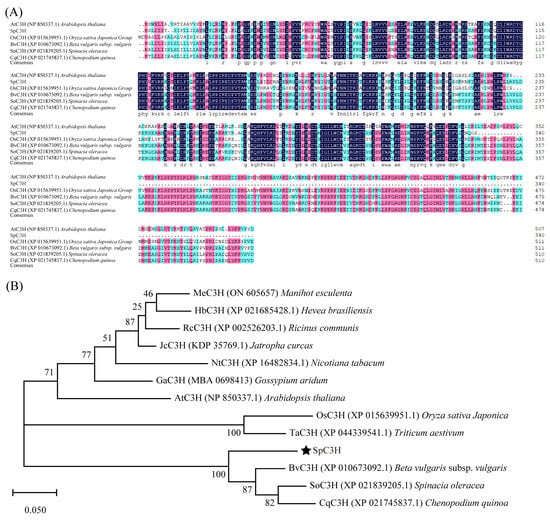
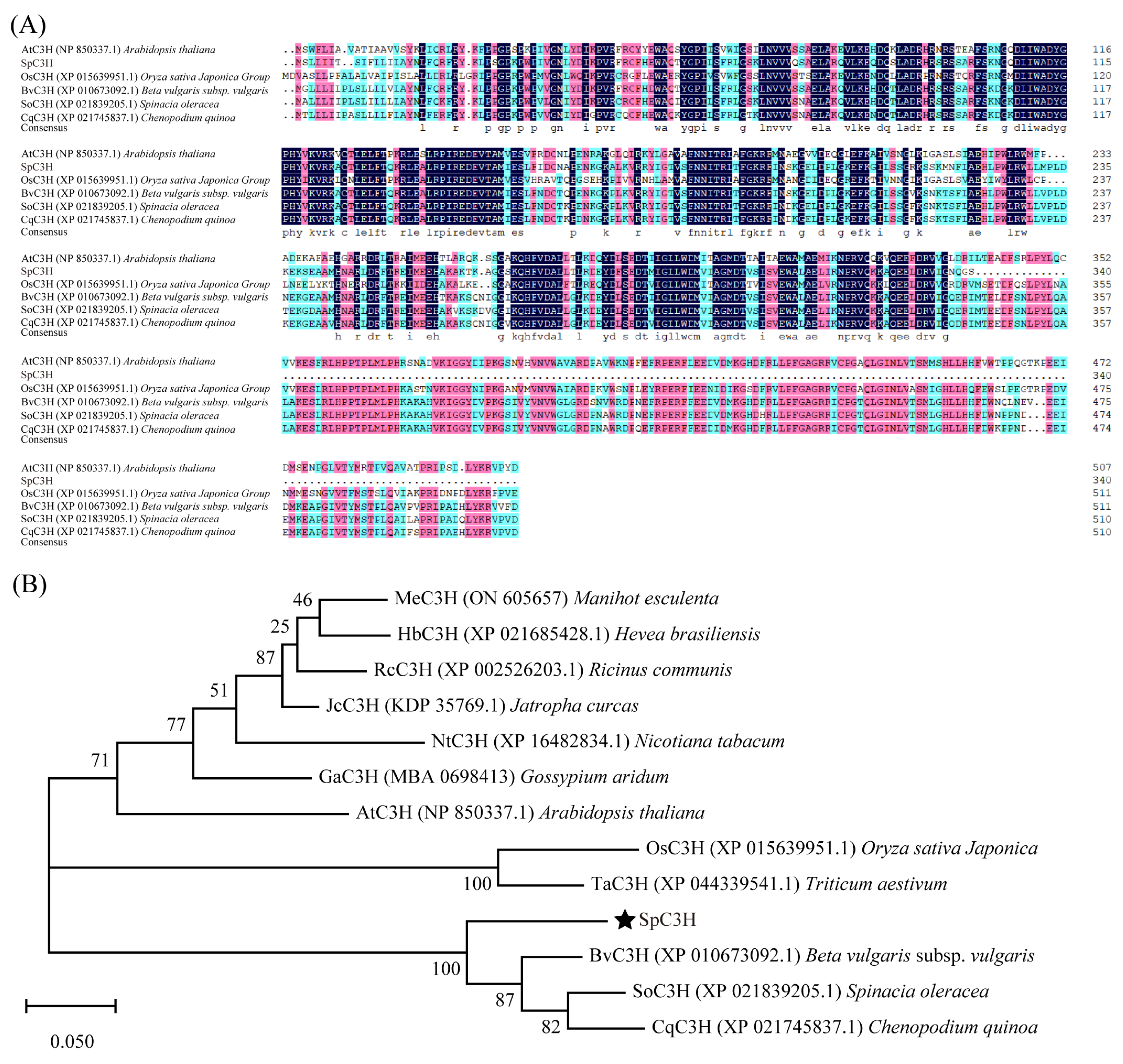
In a previous transcriptome analysis of Sesuvium portulacastrum under salt stress, SpC3H (transcript_HQ_Sp_Three_transcript60205/f2p0/2176) was found to be markedly upregulated in response to salt induction [10]. The SpC3H gene was cloned from S. portulacastrum cDNA, and multiple sequence alignment of C3H proteins from S. portulacastrum, Oryza sativa, Spinacia oleracea, Beta vulgaris, Chenopodium quinoa, and Arabidopsis thaliana were analyzed using DNAMAN 8.0. The analysis indicated that the SpC3H protein exhibited the highest similarity to BvC3H from Beta vulgaris, with 57.14% identity. This was followed by S. oleracea and C. quinoa, with similarities of 56.37% and 56.18%, respectively, whereas SpC3H shared 42.28% and 37.84% similarity with AtC3H and OsC3H, respectively (Figure 1A).
Figure 1.
Sequence analysis of SpC3H protein: (A) Sequence alignment of C3H proteins from different species. (B) Phylogenetic tree analysis of C3H protein. The star represents the SpC3H protein.
To further elucidate the evolutionary relationships of SpC3H with other plant species, phylogenetic analysis was performed in MEGA X using amino acid sequences encoded by C3H genes from S. portulacastrum, O. sativa, A. thaliana, Nicotiana tabacum, B. vulgaris, S. oleracea, C. quinoa, Manihot esculenta, Ricinus communis, Hevea brasiliensis, Jatropha curcas, Triticum aestivum, and Gossypium aridum (Figure 1B). The analysis indicated that BvC3H, SoC3H, and CqC3H shared the closest phylogenetic relationships with SpC3H, whereas more distant relationships were observed with woody species such as MeC3H, HbC3H, RcC3H, and JcC3H.
2.2. Expression Analysis of the SpC3H Gene in Response to Salt Stress
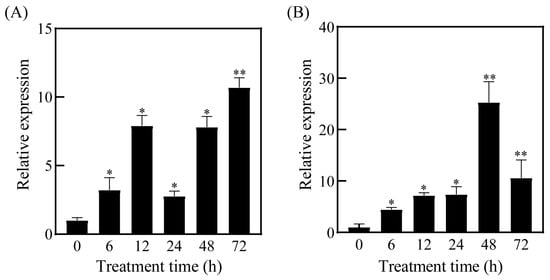
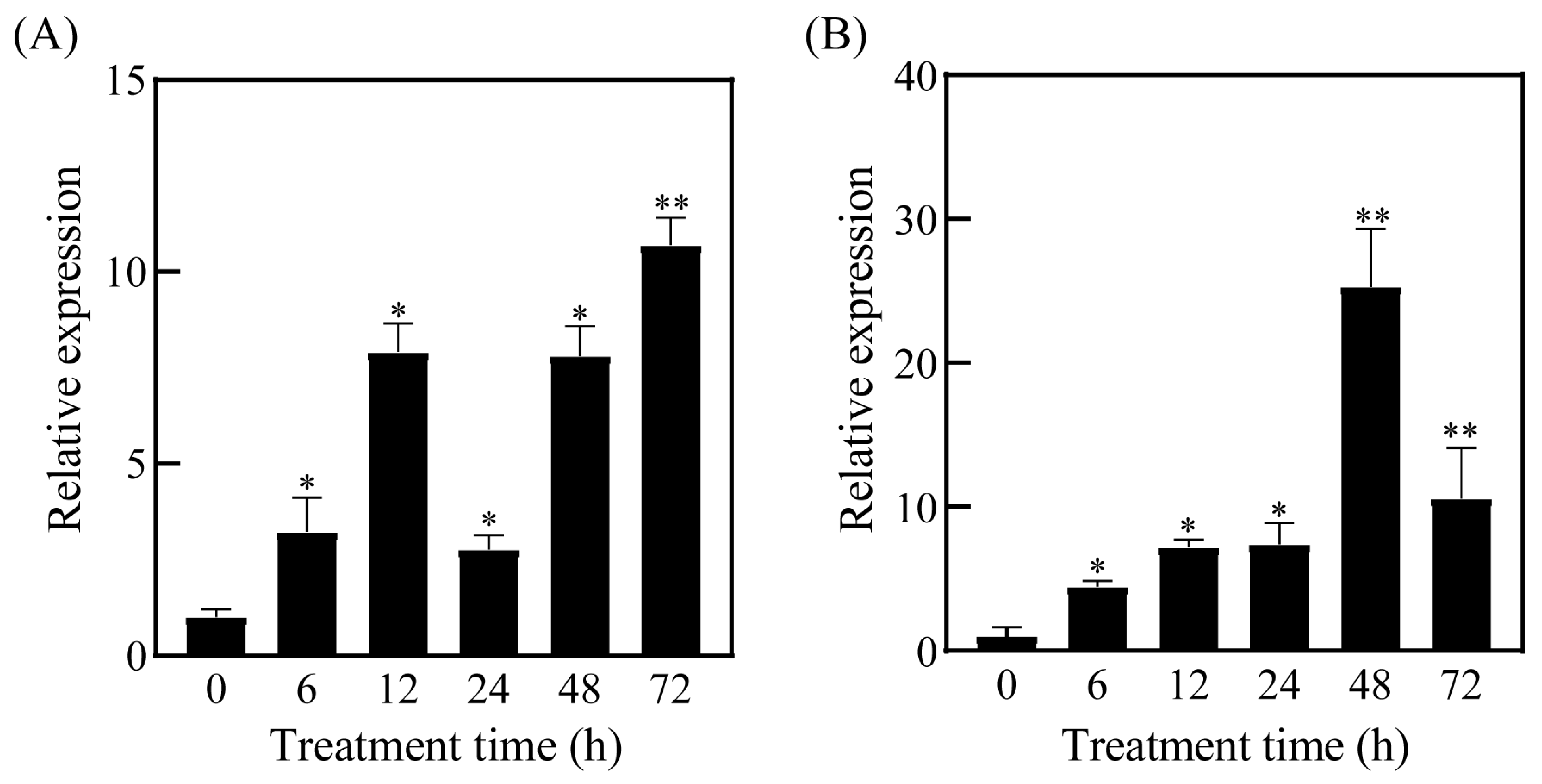
To evaluate the transcriptional response of SpC3H under salt stress, RT-qPCR was conducted using seedlings exposed to 800 mM NaCl. The analysis showed that SpC3H was upregulated in both roots and leaves of S. portulacastrum (Figure 2). In leaves, two expression peaks were observed within 72 h, occurring at 12 h and 72 h, with transcript levels reaching 7.9- and 10.7-fold relative to the initial level, respectively (Figure 2A). In roots, SpC3H expression increased rapidly following salt treatment and peaked at 48 h, approximately 25.3-fold higher than the initial level (Figure 2B). These results indicate that SpC3H expression is strongly induced by salt stress.
Figure 2.
Expression patterns of SpC3H under salt stress: (A) Expression levels of SpC3H in leaves of S. portulacastrum following treatment with 800 mM NaCl. (B) Expression levels of SpC3H in roots of S. portulacastrum under 800 mM NaCl treatment. Time points are indicated as follows: 0 h represents the untreated control, and 6, 12, 24, 48, and 72 h represent samples collected after 6, 12, 24, 48, and 72 h of treatment, respectively. Asterisks denote statistically significant differences (* p < 0.05; ** p < 0.01).
2.3. Subcellular Localization of SpC3H
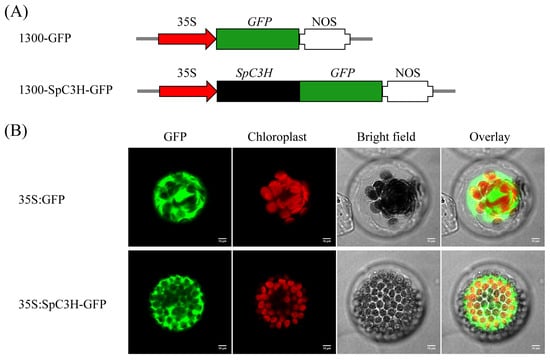
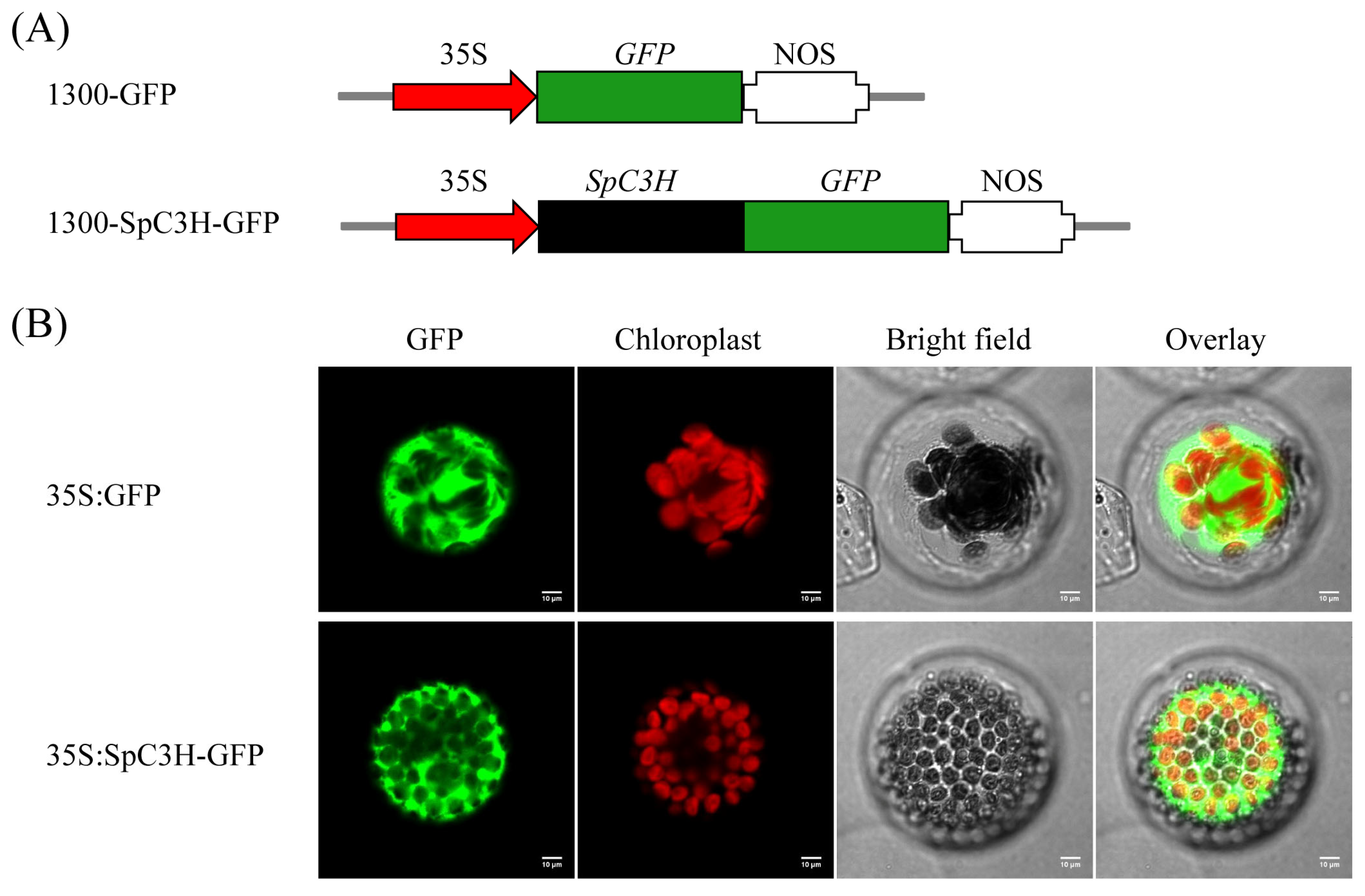
The SpC3H coding sequence was inserted into the pCAMBIA1300-GFP vector to generate a fusion construct with GFP. The recombinant plasmid pCAMBIA1300-SpC3H-GFP and the empty pCAMBIA1300-GFP vector were introduced into A. thaliana protoplasts via Agrobacterium-mediated transformation. Confocal microscopy revealed fluorescence signals indicating that SpC3H was localized in the cytoplasm (Figure 3).
Figure 3.
Localization of the SpC3H protein in plant cells: (A) Vectors for SpC3H subcellular localization analysis. (B) SpC3H localization in cells. Arabidopsis mesophyll protoplasts were transformed with the 1300-GFP and 1300-SpC3H-GFP plasmids, and GFP fluorescence was assessed via confocal microscopy. The results are presented from left to right: GFP fluorescence (first column), chloroplast autofluorescence (second column), and bright-field images (third column), with the overlays of these images displayed in the fourth column. Scale bar = 10 μm.
2.4. Heterologous Expression of SpC3H Enhances Salt Tolerance in Transgenic A. thaliana
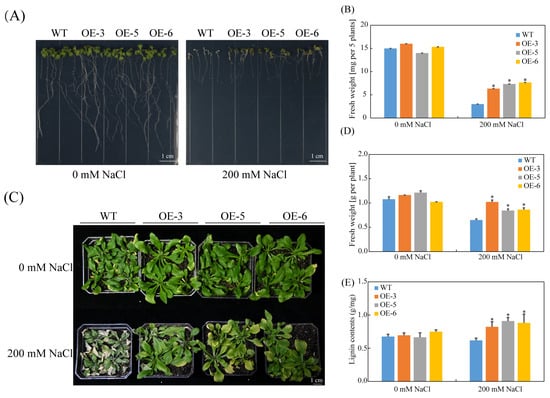
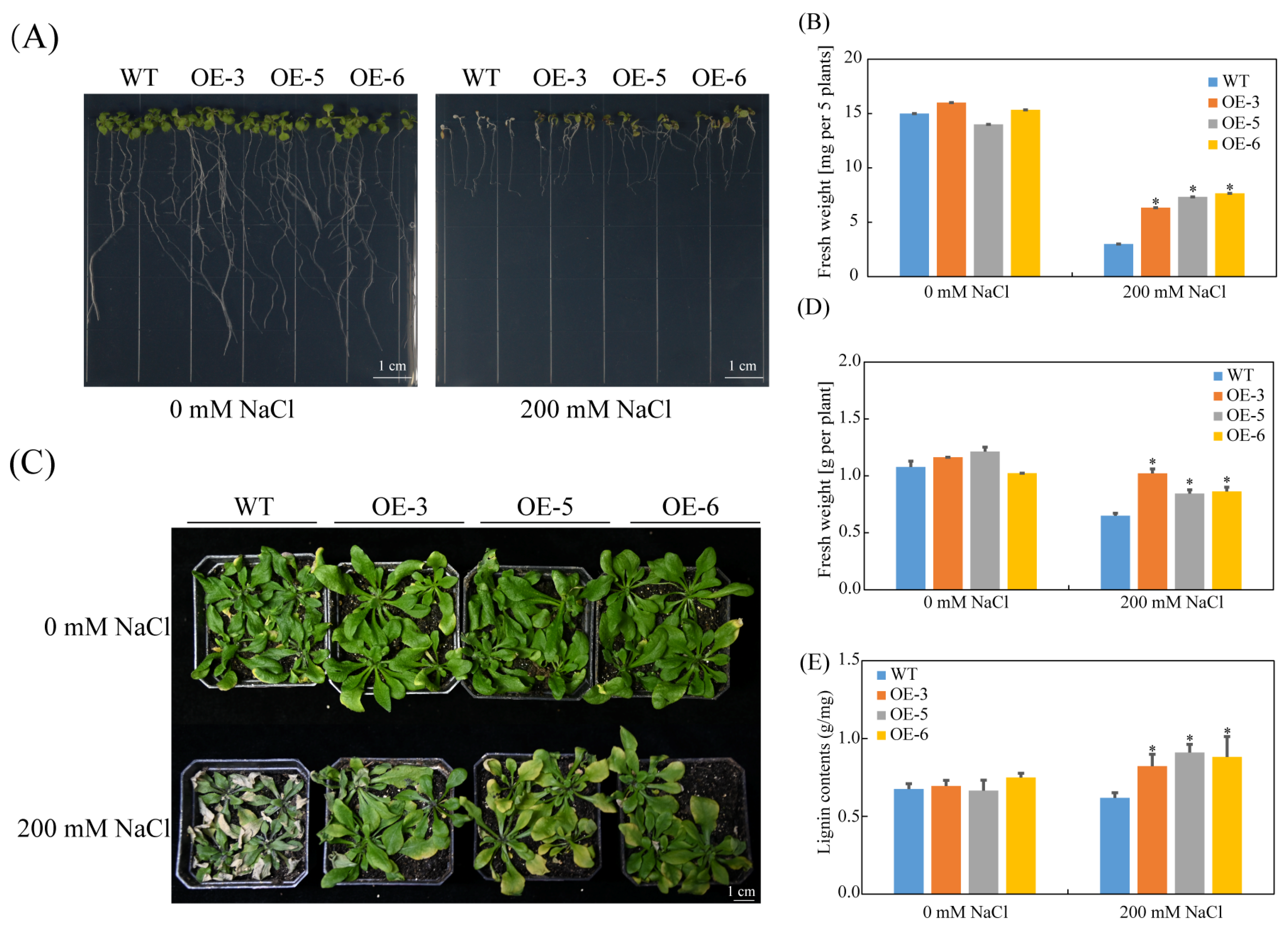
To investigate the function of SpC3H, the recombinant plasmid pCAMBIA1300-SpC3H was introduced into A. thaliana via Agrobacterium-mediated transformation. After selecting HygB-resistant plants on MS plates, we characterized several of these plants using PCR (Figure S1A) and confirmed their identity through semi-quantitative RT-PCR verification (Figure S1B). Three independent transgenic lines exhibiting relatively high expression levels of SpC3H, specifically OE-3, OE-5, and OE-6, were selected for subsequent experiments. After 9 days of cultivation on 1/2 MS medium comprising 0 or 200 mM NaCl, seedlings on salt-free medium exhibited vigorous growth with dark green leaves. At 200 mM NaCl, growth inhibition was observed in all plants. However, transgenic lines displayed superior performance relative to WT, with fresh weight markedly higher than that of WT (Figure 4A,B).
Figure 4.
Phenotypes of SpC3H transgenic Arabidopsis under salt stress: (A) Phenotypic analysis of Arabidopsis plants grown on 1/2 MS medium under salt stress conditions. (B) Fresh weight of the plants shown in (A). Data represent the mean ± SD of 12 replicates. (C) Phenotypes of Arabidopsis grown in soil under salt stress conditions. (D) Fresh weight of the plants shown in (C). Data represent the mean ± SD of six replicates. (E) Lignin contents in different transgenic lines following salt treatment. Data are expressed as mean ± SE from five biological replicates. Asterisks (*) denote statistically significant differences compared to wild-type (WT) controls at p < 0.05. WT: wild-type plants; OE-3: SpC3H-transgenic line 3; OE-5: SpC3H-transgenic line 5; OE-6: SpC3H-transgenic line 6. Scale bar = 1 cm.
To further assess the response of SpC3H to salt stress, 8-day-old uniformly grown seedlings from 1/2 MS medium were transplanted into soil and cultivated for one month before salt treatment. After 10 days of NaCl irrigation, WT leaves exhibited yellowing and wilting, whereas transgenic plants maintained normal growth and showed markedly greater fresh weight than WT (Figure 4C,D). Moreover, lignin contents in leaves of transgenic lines under salt stress were markedly higher than those of WT (Figure 4E), suggesting that SpC3H enhances salt tolerance in A. thaliana by promoting lignin biosynthesis.
2.5. SpC3H Enhances Salt Tolerance in A. thaliana by Regulating Antioxidant Enzyme Activity to Scavenge ROS Accumulation
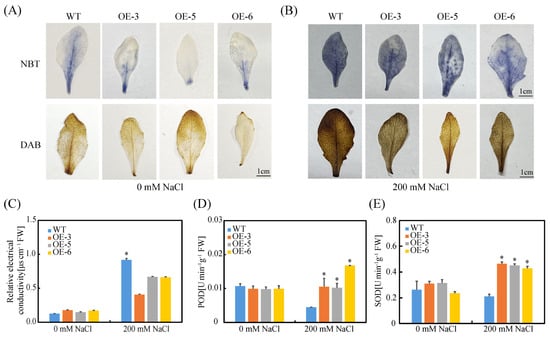
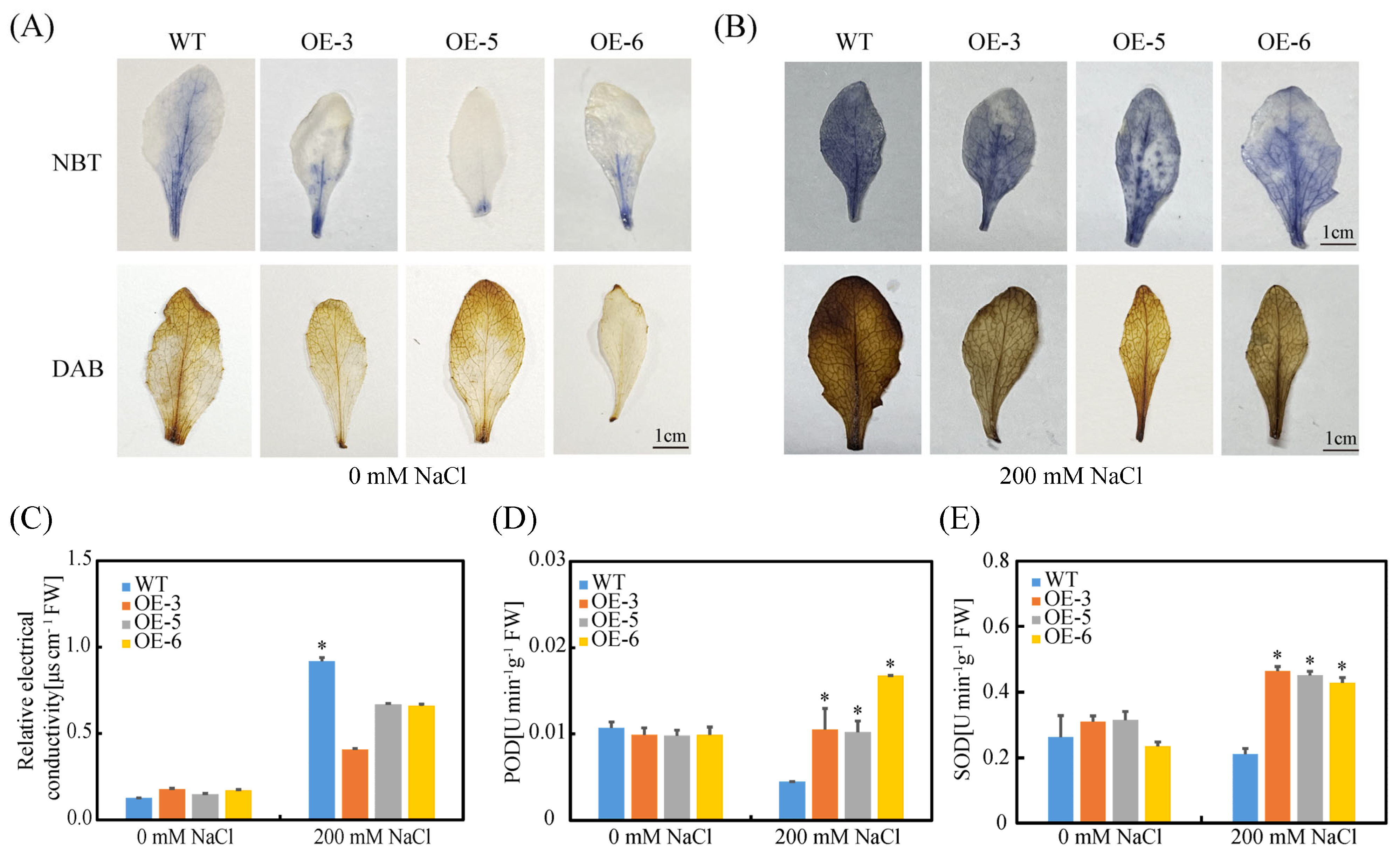
To clarify the mechanism by which SpC3H modulates ROS metabolism under salt stress, histochemical staining combined with physiological and biochemical analyses was performed. NBT and DAB staining revealed that under normal conditions, both transgenic and WT leaves displayed only slight staining, reflecting low levels of H2O2 and O2−. Under salt stress, deeper staining was observed in the leaves of both groups. However, transgenic lines exhibited lighter coloration than WT, indicating that SpC3H overexpression effectively suppressed excessive ROS accumulation (Figure 5A,B). Further measurements showed that the relative conductivity of transgenic lines was markedly lower than that of WT under salt treatment (Figure 5C), suggesting improved maintenance of cell membrane integrity. Moreover, enzymatic assays demonstrated that POD and SOD activities in overexpression lines were markedly elevated compared with WT under salt stress (Figure 5D,E), supporting the conclusion that SpC3H enhances salt tolerance by activating the antioxidant enzyme system to eliminate ROS.
Figure 5.
Physiological index determination under salt stress: (A) NBT staining of leaves from different Arabidopsis genotypes. (B) DAB staining of leaves from different Arabidopsis genotypes. (C) Determination of relative conductivity. (D) Measurement of POD activity. (E) Measurement of SOD activity. Data are expressed as mean ± SD (n = 3). Asterisks denote statistically significant differences (* p < 0.05). WT: wild-type plants; OE-3: SpC3H-transgenic line 3; OE-5: SpC3H-transgenic line 5; OE-6: SpC3H-transgenic line 6. Scale bar = 1 cm.
2.6. SpC3H Enhanced the Expression of Lignin Biosynthesis Pathway Genes and Antioxidant Enzyme-Related Genes in Transgenic A. thaliana Under Salt Stress
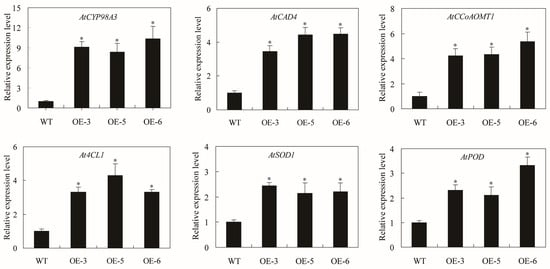
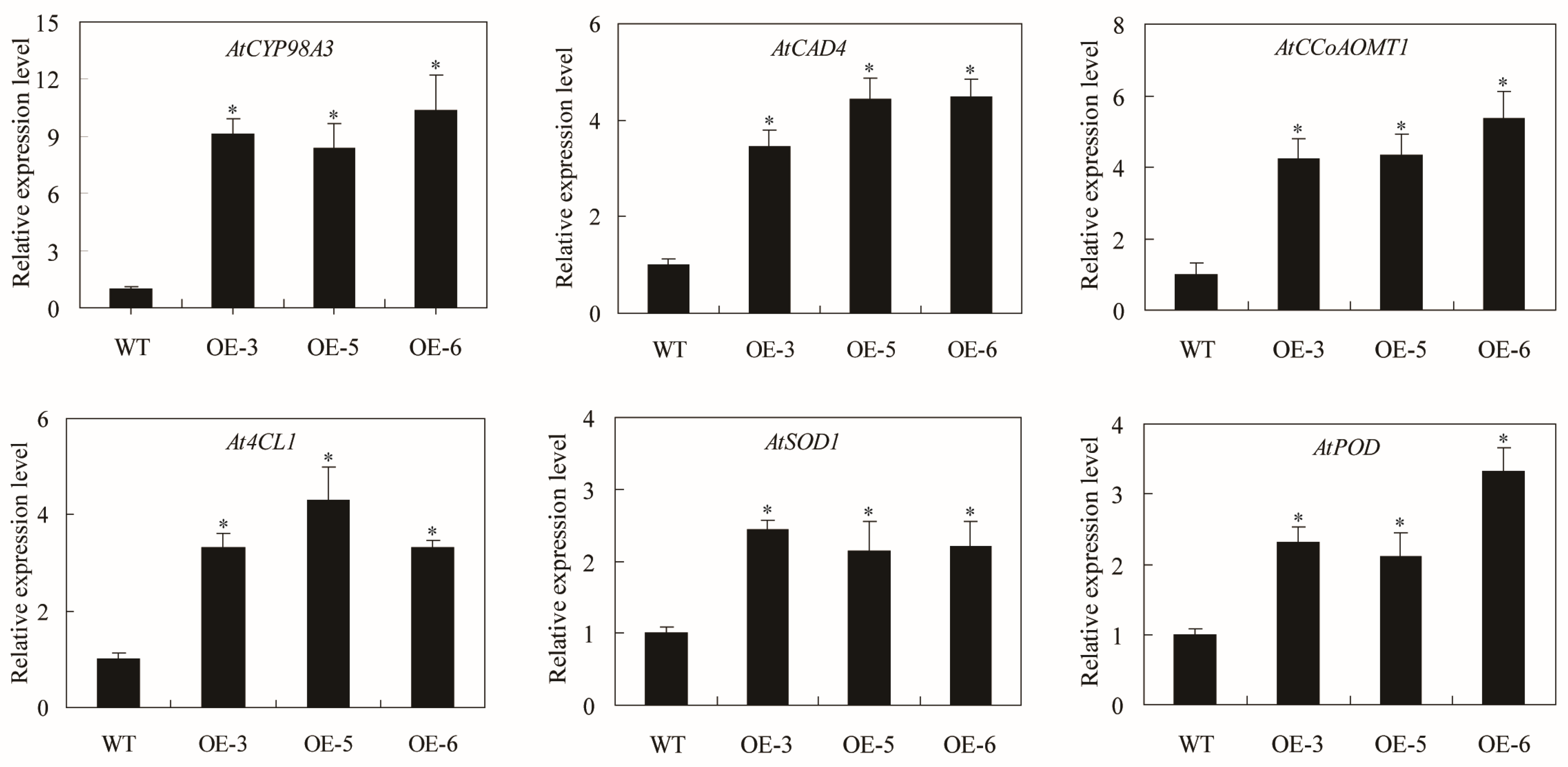
Given the role of SpC3H in lignin accumulation and ROS scavenging, the expression of stress-related genes under salt stress was examined. The analysis showed that lignin biosynthesis pathway genes, including AtCYP98A3, AtCAD4, AtCCoAOMT1, and At4CL1, were upregulated in SpC3H-overexpressing lines. Among these, AtCYP98A3 was markedly upregulated in all three transgenic lines, with transcript levels approximately 9-, 8-, and 10-fold higher than those of WT under salt stress (Figure 6). Antioxidant enzyme-related genes AtSOD1 and AtPOD were also expressed at markedly higher levels in transgenic lines compared with WT.
Figure 6.
Relative expression analysis of stress-responsive genes was conducted in SpC3H overexpressing lines versus the wild type under salt stress. Data are presented as means with standard errors (n = 3). Asterisks (*) denote significant differences at p < 0.05 or p < 0.01, respectively, compared to WT. WT: wild-type plants; OE-3: SpC3H-transgenic line 3; OE-5: SpC3H-transgenic line 5; OE-6: SpC3H-transgenic line 6.
3. Discussion
Lignin, a major component of plant cell walls, enhances cellular mechanical strength. Under salt stress, lignification of root cell walls is intensified, which not only restricts intracellular ion uptake but also increases the rigidity and stability of conductive tissues, thereby improving plant salt tolerance [24]. Salt stress also alters the transcriptional profiles of genes associated with lignin biosynthesis, thereby modulating lignin production as an adaptive response [25]. C3H functions as a precursor enzyme for lignin biosynthesis and represents a key metabolic node linking multiple pathways, exerting a central regulatory role in lignin monomer formation [26,27,28,29]. Specifically, C3H catalyzes hydroxylation at the C-3 position of phenylpropanoid compounds, a reaction essential for determining lignin monomer composition and associated metabolic processes [30]. Suppression of C3H expression has been shown to reduce lignin content by approximately 25% in jute stem segments [30].
Previous research revealed that salt stress induced the expression of lignin biosynthesis pathway genes in S. portulacastrum and elevated the levels of sinapic acid, sinapaldehyde, and sinapyl alcohol, with C3H markedly upregulated under salt treatment [10]. Consistent with these findings, this study showed that SpC3H expression increased in both roots and leaves of S. portulacastrum under salt stress, reaching its maximum at 48 h in roots and peaking at 12 h and 72 h in leaves (Figure 2). This temporal expression profile was closely associated with the physiological responses of plants to salinity. As the primary organ sensing salt stress, roots exhibited rapid SpC3H induction, likely representing an early response that triggers salt tolerance mechanisms and accelerates protein synthesis to mitigate stress. The biphasic expression observed in leaves may indicate complex regulatory strategies at different developmental stages. The peak at 12 h could be associated with early defense responses, during which salt-tolerant plants adapt to salt stress, followed by a return to lower expression levels. In contrast, the peak at 72 h may correspond to the establishment of long-term adaptation. Previous studies have shown that plants coordinately activate multiple genes in different tissues and at distinct time points under salt stress [3]. This expression pattern suggests the presence of a complex transcriptional regulatory mechanism upstream of SpC3H. However, the specific upstream molecular mechanisms driving its spatiotemporal expression remain unclear. We speculate that salt stress signals may activate the SpC3H promoter through transcription factors such as MYB and NAC. For instance, within the lignin synthesis regulatory network, NAC-MYB has been recognized as a core cascade [31]. In Arabidopsis, certain NAC transcription factors are considered pivotal for regulating lignin synthesis [32]. OsNAC5 enhances drought resistance in rice by increasing lignin content in the roots [33]. Additionally, MYB transcription factors play a significant role in the transcriptional regulation of lignin. In Arabidopsis, MYB58 and MYB63 positively regulate cell wall formation by promoting lignin synthesis [34]. As a transcriptional activator of lignin synthesis in poplar, PtoMYB92 promotes cell wall formation [35]. CmMYB15 regulates lignin biosynthesis in chrysanthemum [36]. Studies have shown that CsMYB330 and CsMYB308 enhance fruit lignification by regulating the expression of the Cs4CL1 gene in sweet oranges [37]. To further investigate the mechanism by which SpC3H regulates plant salt tolerance, future research should analyze the SpC3H promoter sequence to determine whether it contains cis-acting elements related to salt stress responses, such as ABA response elements (ABRE) [38], thereby elucidating the molecular pathway of its transcriptional activation.
C3H regulates lignin biosynthesis by modulating the transcription of key genes in the lignin synthesis pathway. In A. thaliana overexpressing PbC3H1, transcript levels of major lignin biosynthesis genes, including AtPAL, AtC4H, At4CL, AtHCT, AtC3H, AtCCOMT, AtCCR, AtCOMT, AtCAD4, and AtCAD5, were markedly elevated relative to WT [39]. Under salt stress, SpC3H enhanced the tolerance of transgenic A. thaliana and increased lignin content in leaves (Figure 4). RT-qPCR analysis further demonstrated that SpC3H upregulated the transcription of secondary wall formation genes AtCYB98A3, AtCAD4, AtCCoAOMT1, and At4CL1 in transgenic Arabidopsis thaliana (Figure 6), suggesting that SpC3H may contribute to salt tolerance by strengthening secondary wall formation in A. thaliana. These results suggest that SpC3H may play a crucial regulatory role under salt stress. Its expression can positively regulate multiple downstream genes, thereby synergistically enhancing secondary cell wall formation.
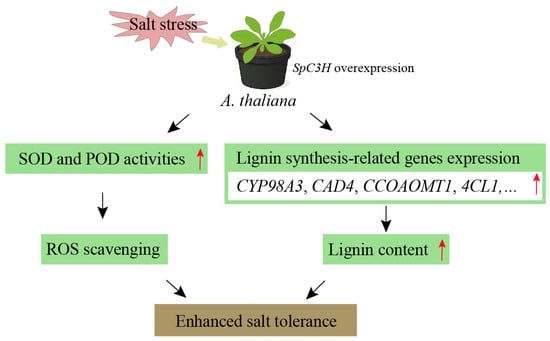
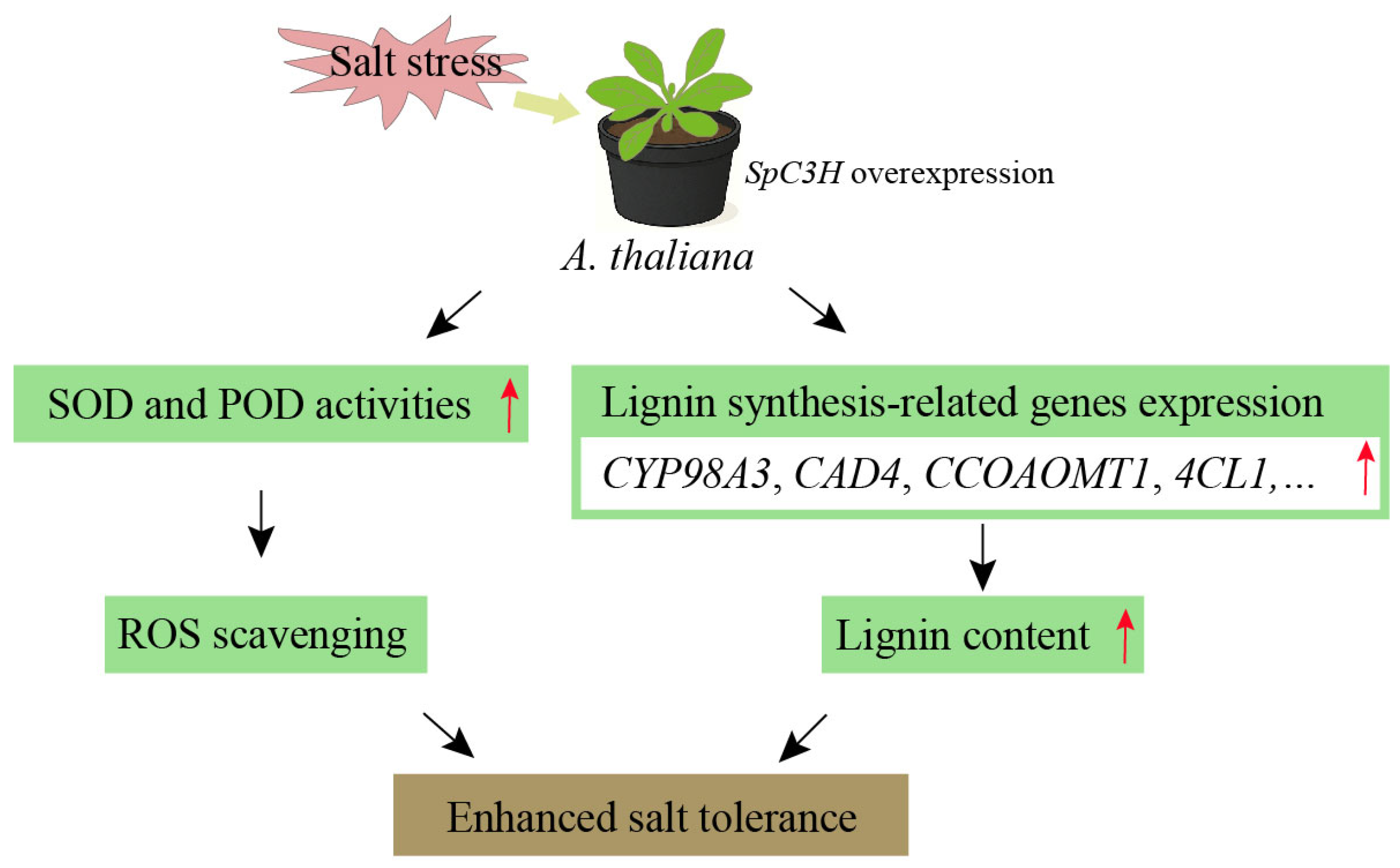
Salt stress rapidly induces excessive ROS accumulation, including H2O2, superoxide, and hydroxyl radicals (OH), which disrupt redox homeostasis and inflict oxidative damage on plant cells [40]. At elevated concentrations, ROS trigger cellular injury through lipid peroxidation, protein oxidation, and nucleic acid damage [41]. SOD constitutes the primary defense against ROS by catalyzing the dismutation of O2− into H2O2 and O2, after which H2O2 is further decomposed into H2O and O2 by POD and CAT [42,43,44]. In this study, SOD and POD activities in transgenic lines were markedly higher than those in WT under salt stress, while H2O2 and O2− accumulation were effectively suppressed, and relative conductivity was reduced (Figure 5C–E), suggesting improved maintenance of cell membrane integrity. These results indicate that the salt tolerance mechanism mediated by SpC3H involves not only lignin biosynthesis but also activation of the antioxidant defense system (Figure 7). Under salinity, excessive ROS accumulation induces oxidative injury, whereas SpC3H coordinates lignin production with antioxidant defense, thereby enabling efficient ROS scavenging, mitigating oxidative damage, and preserving cell wall structural stability, ultimately enhancing salt tolerance. This mechanism aligns with previous findings that CYP450 family genes confer salt tolerance through diverse pathways. For instance, AoCYP94B3 and AoCYP86B1 from Avicennia officinalis promote suberin deposition to restrict Na+ transport to aerial tissues and simultaneously participate in ROS metabolism regulation [17]. Previous studies have demonstrated that NAC transcription factors can concurrently regulate genes associated with lignin synthesis and antioxidant enzymes involved in ROS scavenging [45]. Nevertheless, the molecular interactions between these two systems in the salt-tolerant mechanisms of the halophyte S. portulacastrum require further investigation.
Figure 7.
Working model of SpC3H in regulating salt tolerance through ROS scavenging and lignin accumulation. Overexpression of SpC3H in transgenic Arabidopsis resulted in the upregulation of genes associated with antioxidase system and lignin biosynthesis, thereby scavenging ROS and accumulating lignin in leaves.
Although this study clarified the multifaceted roles of SpC3H in salt tolerance, the upstream regulatory mechanisms controlling its expression remain unresolved. How salt stress signals are transduced to activate SpC3H expression, and whether specific transcription factors or signaling pathways are implicated, requires further investigation. Moreover, the synergistic regulation between lignin biosynthesis and antioxidant defense systems needs to be elucidated, as molecular evidence is still insufficient to explain how these systems interact to enhance plant salt tolerance. Future studies could employ gene-editing technologies to precisely modify SpC3H and its upstream or downstream genes, combined with multi-omics approaches such as transcriptomics, proteomics, and metabolomics, to comprehensively dissect the molecular regulatory networks of SpC3H in salt tolerance, thereby providing a stronger theoretical basis for the genetic improvement of plant salt tolerance.
4. Materials and Methods
4.1. Plant Materials and Treatment
Sesuvium portulacastrum was cultivated at the experimental base of Hainan University and propagated hydroponically. Healthy, morphologically uniform cuttings (retaining the apical four stem nodes with the basal two pairs of leaves removed) were selected, rinsed, and positioned in hydroponic cultivation slots with planting cotton. Plants were grown in 1/2 Hoagland nutrient solution under natural light at 25 ± 2 °C. Oxygen concentration in the solution was maintained by an oxygen pump, and the solution was renewed every 5 days. After 10 days of cultivation, plants exhibiting uniform growth were subjected to salt stress by supplementing NaCl into the nutrient solution to a final concentration of 800 mM. Six treatment time points (0, 6, 12, 24, 48, and 72 h) were established, with three biological replicates for each. Leaf and root tissues were harvested separately, immediately frozen in liquid nitrogen, and stored at −80 °C for RNA extraction.
4.2. Sequence Alignment
To investigate the evolutionary characteristics of SpC3H, multiple sequence alignment was conducted with ClustalW, and a phylogenetic tree of C3H proteins from diverse species was generated using the maximum likelihood method (Bootstrap = 1000) in MEGA X.
4.3. Gene Cloning and Vector Construction
Total RNA was isolated from root samples subjected to salt stress using the RNAprep Pure Plant kit (Tiangen Biotech, Beijing, China, DP441). After DNase I digestion, complementary DNA (cDNA) was synthesized by reverse transcription with the PrimeScript RT reagent kit containing gDNA Eraser (TaKaRa, Dalian, China, RR047A). The resulting cDNA was pooled and used as the template to amplify the coding DNA sequence of the SpC3H gene with primers SpC3H-1300-F and SpC3H-1300-R (Table S1). The amplified fragment was ligated into the pCAMBIA1300 plant expression vector at the Sal I and Kpn I restriction sites, yielding the recombinant plasmid pCAMBIA1300-SpC3H for subsequent genetic transformation assays.
4.4. Subcellular Localization
The SpC3H gene (excluding the stop codon) was amplified from pooled cDNA samples using primers SpC3H-1300-F and SpC3H-1300-GFP-R (Table S1). After double digestion with Sal I and Kpn I, the amplified product was ligated into the pCAMBIA1300-GFP vector and fused in-frame with GFP, generating the recombinant plasmid pCAMBIA1300-SpC3H-GFP. The plasmid was introduced into Arabidopsis thaliana protoplasts according to the method described by An et al. [46]. Subcellular localization of GFP fluorescence was examined using confocal microscopy, with the empty pCAMBIA1300-GFP vector used as a control.
4.5. Gene Expression Analysis
To assess the expression profile of the SpC3H gene under salt stress, fluorescent quantitative primers SpC3H-qRT-F and SpC3H-qRT-R were designed (Table S1). Quantitative real-time polymerase chain reaction (RT-qPCR) was carried out using ChamQ™ Universal SYBR qPCR Master Mix (Vazyme, Nanjing, China, 7E280C8), with all procedures performed per the supplier’s protocols. For each sample, three biological replicates were established, and each biological replicate contained three technical replicates. Relative expression levels were determined by the 2−△△CT method, with SpGAPDH employed as the internal reference gene [22].
4.6. Transformation of Arabidopsis thaliana
The recombinant plasmid pCAMBIA1300-SpC3H was introduced into Agrobacterium GV3101 and delivered to Biorun Co., Ltd. (Wuhan, China) for transformation of A. thaliana (Col-0). T1 seeds were surface-sterilized and germinated on 1/2 Murashige and Skoog (MS) medium comprising 50 mg/L hygromycin B (HygB), followed by cultivation at 22 °C under long-day conditions (16 h light/8 h dark). Resistant seedlings were selected, and genomic DNA was extracted using the TransDirect Plant Tissue PCR Kit (TransGen Biotech, Beijing, China, AD301-01). Transgenic-positive lines were confirmed through PCR amplification using the SpC3H-1300-F and SpC3H-1300-R primers for the SpC3H gene, as well as the Hyg-F and Hyg-R primers (Table S1) for the HygB gene. Concurrently, RNA was extracted from the seedlings of putative transgenic plants and non-transformed control plants utilizing the RNAprep Pure Plant kit (Tiangen Biotech (Beijing) Co., Ltd., Shanghai China, DP441). First-strand cDNA was synthesized using the PrimeScript RT reagent kit (TaKaRa, Dalian, China, RR047A) and subsequently employed as a template for semi-quantitative RT-PCR analysis with gene-specific primers SpC3H-semi-RT-F and SpC3H-semi-RT-R (Table S1). Positive plants were self-crossed to generate the T2 generation, and single-copy insertion lines were identified based on a 3:1 resistance segregation ratio. Homozygous T3 lines were subsequently employed for experiments.
4.7. Salt Stress Treatment
Plate-based salt tolerance assay: Surface-sterilized wild-type (WT) and transgenic A. thaliana seeds (T3 generation) were vernalized at low temperature for 48 h, then germinated on 1/2 MS medium for 4 days, and then transferred to 1/2 MS comprising 0 or 200 mM NaCl and cultured vertically for another 9 days. Photographs were taken, and primary root length was quantified using ImageJ (v1.53).
Soil-based salt tolerance assay: Eight-day-old seedlings grown on 1/2 MS medium were transplanted into substrate (vermiculite/soil = 3:1) and cultivated under normal conditions for 4 weeks. Plants were subsequently irrigated with 200 mM NaCl solution for 10 days, after which fresh weight and survival rate were recorded. Three biological replicates were conducted for each assay.
4.8. Determination of Physiological Indicators
Lignin content in leaves was quantified using the reagent kit (MZS-1-G, Suzhou Keming Biotechnology Co., Ltd., Suzhou, China) per the supplier’s protocol. Nitroblue tetrazolium chloride (NBT) and 3,3′-diaminobenzidine (DAB) staining were applied to assess H2O2 and O2− accumulation in leaves under salt stress [47,48]. Following the procedure of Dionisio-Sese and Tobita [49], 0.1 g of fresh leaves was immersed in deionized water for 24 h, and initial conductivity (C1) and post-boiling conductivity (C2) were measured with a conductivity meter (DDS-307A). Relative electrical conductivity (REL) was calculated as REL = C1/C2 × 100%. Peroxidase (POD) activity in leaves was determined using the reagent kit (G0107W, Suzhou Grace Biotechnology Co., Ltd., Suzhou, China).
4.9. Expression of Lignin Synthesis and Antioxidant Enzyme-Related Genes in Arabidopsis thaliana
To examine the transcriptional response of transgenic A. thaliana to salt stress, RT-qPCR was employed to assess the expression of lignin synthesis-related genes AtCYP98A3 (AT2G40890), AtCAD4 (AT3G19450), AtCCoAOMT1 (AT4G34050), and At4CL1 (At1g51680), as well as antioxidant enzyme-related genes AtSOD1 (At1g08830) and AtPOD (AT3G17070). The AtACT2 gene was used as the internal reference [22]. Primer sequences for RT-qPCR are provided in Table S1.
4.10. Statistical Analysis
All experiments were performed in three biological replicates unless otherwise stated. Statistical analysis was carried out utilizing Excel 2019, and statistical differences were assessed utilizing one-way analysis of variance (ANOVA). Data are expressed as means with standard errors, and p < 0.05 was regarded as statistically significant.
5. Conclusions
In this study, the key gene SpC3H, encoding C3H in the lignin biosynthesis pathway, was cloned from the halophyte S. portulacastrum. Phylogenetic analysis indicated that SpC3H shared the closest evolutionary relationship with herbaceous species such as Beta vulgaris, Spinacia oleracea, and Chenopodium quinoa, while showing the most distant relationship with woody plants, including Manihot esculenta and Hevea brasiliensis. SpC3H was markedly induced by salt stress and exhibited tissue-specific expression patterns. Expression in roots peaked at 48 h, reflecting an early response of root systems as the primary organ for salt perception, whereas leaf expression showed two peaks at 12 h and 72 h, potentially corresponding to distinct regulatory phases of short-term stress response and long-term adaptation. Subcellular localization confirmed that the SpC3H protein was localized in the cytoplasm. Under salt stress, transgenic A. thaliana heterologously expressing SpC3H displayed enhanced growth in both plate and soil culture conditions, confirming its positive regulatory role in salt tolerance. Further analyses revealed increased lignin content in transgenic leaves and elevated transcription of key lignin biosynthesis genes, including AtCYB98A3, AtCAD4, AtCCoAOMT1, and At4CL1, indicating that SpC3H improves salt tolerance by reinforcing secondary wall formation. Moreover, transgenic lines exhibited markedly higher SOD and POD activities than WT, accompanied by reduced H2O2 and O2− accumulation, lower relative conductivity, and improved maintenance of cell membrane integrity, confirming that SpC3H enhances antioxidant defense to mitigate oxidative damage. In summary, SpC3H enhances salt tolerance through synergistic regulation of lignin biosynthesis and ROS scavenging pathways. This study provides new insight into the molecular mechanisms of salt tolerance and establishes a theoretical framework for applying SpC3H in the genetic improvement of crop salt tolerance.
Supplementary Materials
The following supporting information can be downloaded at https://www.mdpi.com/article/10.3390/plants14213347/s1, Table S1: Primers used in this study. Figure S1: Detection of SpC3H-transgenic lines. (A) Displays the detection of DNA amplification in the leaves of transgenic plants. The upper panel shows the amplification of the SpC3H gene, while the lower panel depicts the amplification of the HygB gene. M: DL2000 marker, 1-12: different transgenic lines, P: positive control, WT: wild-type plant. (B) Presents the semi-quantitative RT-PCR results for the detection of SpC3H in the leaves of SpC3H-transgenic lines. 1-8: different transgenic lines.
Author Contributions
Conceptualization, Y.Z.; formal analysis, Y.L., Y.H., T.Z., Y.W. and Y.Z.; funding acquisition, Y.L., Z.S. and Y.Z.; investigation, Y.L. and Y.H.; methodology, Y.L. and Y.Z.; supervision, Z.S. and Y.Z.; writing—original draft preparation, Y.L., Y.H. and Y.Z.; writing—review and editing, Y.Z. All authors have read and agreed to the published version of the manuscript.
Funding
This study was supported by the National Natural Science Foundation of China (32560748), Jiangsu Provincial Natural Science Foundation of China (BK20241849), and the Education Department of Hainan Province (Hnky2021-19, Qhys2021-248).
Data Availability Statement
The original contributions presented in this study are included in the Supplementary Materials. Further inquiries can be directed to the corresponding authors.
Conflicts of Interest
The authors declare no conflicts of interest.
References
- Litalien, A.; Zeeb, B. Curing the earth: A review of anthropogenic soil salinization and plant-based strategies for sustainable mitigation. Sci. Total Environ. 2020, 698, 134235. [Google Scholar] [CrossRef] [Scilit] [PubMed]
- Hassani, A.; Azapagic, A.; Shokri, N. Global predictions of primary soil salinization under changing climate in the 21st century. Nat. Commun. 2021, 12, 6663. [Google Scholar] [CrossRef] [Scilit] [PubMed]
- Yang, Y.; Guo, Y. Elucidating the molecular mechanisms mediating plant salt-stress responses. New Phytol. 2018, 217, 523–539. [Google Scholar] [CrossRef] [Scilit] [PubMed]
- Arif, Y.; Singh, P.; Siddiqui, H.; Bajguz, A.; Hayat, S. Salinity induced physiological and biochemical changes in plants: An omic approach towards salt stress tolerance. Plant Physiol. Biochem. 2020, 156, 64–77. [Google Scholar] [CrossRef] [Scilit]
- Xiao, F.; Zhou, H. Plant salt response: Perception, signaling, and tolerance. Front. Plant Sci. 2023, 13, 1053699. [Google Scholar] [CrossRef] [Scilit]
- Rogers, L.A.; Campbell, M.M. The genetic control of lignin deposition during plant growth and development. New Phytol. 2004, 164, 17–30. [Google Scholar] [CrossRef] [Scilit]
- Choi, S.J.; Lee, Z.; Kim, S.; Jeong, E.; Shim, J.S. Modulation of lignin biosynthesis for drought tolerance in plants. Front. Plant Sci. 2023, 14, 1116426. [Google Scholar] [CrossRef] [Scilit]
- Moura, J.C.; Bonine, C.A.; de Oliveira Fernandes Viana, J.; Dornelas, M.C.; Mazzafera, P. Abiotic and biotic stresses and changes in the lignin content and composition in plants. J. Integr. Plant Biol. 2010, 52, 360–376. [Google Scholar] [CrossRef] [Scilit]
- Oliveira, D.M.; Mota, T.R.; Salatta, F.V.; Sinzker, R.C.; Končitíková, R.; Kopečný, D.; Simister, R.; Silva, M.; Goeminne, G.; Morreel, K.; et al. Cell wall remodeling under salt stress: Insights into changes in polysaccharides, feruloylation, lignification, and phenolic metabolism in maize. Plant Cell Environ. 2020, 43, 2172–2191. [Google Scholar] [CrossRef] [Scilit]
- Li, Y.; Zhang, T.; Kang, Y.; Wang, P.; Yu, W.; Wang, J.; Li, W.; Jiang, X.; Zhou, Y. Integrated metabolome, transcriptome analysis, and multi-flux full-length sequencing offer novel insights into the function of lignin biosynthesis as a Sesuvium portulacastrum response to salt stress. Int. J. Biol. Macromol. 2023, 237, 124222. [Google Scholar] [CrossRef] [Scilit]
- Wang, W.; Zhao, X.; Li, M.; Huang, L.; Xu, J.; Zhang, F.; Cui, Y.; Fu, B.; Li, Z. Complex molecular mechanisms underlying seedling salt tolerance in rice revealed by comparative transcriptome and metabolomic profiling. J. Exp. Bot. 2016, 67, 405–419. [Google Scholar] [CrossRef] [Scilit] [PubMed]
- Wang, Z.; Gerstein, M.; Snyder, M. RNA-Seq: A revolutionary tool for transcriptomics. Nat. Rev. Genet. 2019, 10, 57–63. [Google Scholar] [CrossRef] [Scilit] [PubMed]
- Duan, W.; Lu, B.; Liu, L.; Meng, Y.; Ma, X.; Li, J.; Zhang, K.; Sun, H.; Zhang, Y.; Dong, H.; et al. Effects of exogenous melatonin on root physiology, transcriptome and metabolome of cotton seedlings under salt stress. Int. J. Mol. Sci. 2022, 23, 9456. [Google Scholar] [CrossRef] [Scilit] [PubMed]
- Wang, X.; Xue, Y.; Zhao, W. The research progress of C3H/HCT in lignin biosynthesis. Chem. Life 2008, 28, 650–653. (In Chinese) [Google Scholar]
- Schoch, G.; Goepfert, S.; Morant, M.; Hehn, A.; Meyer, D.; Ullmann, P.; Werck-Reichhart, D. CYP98A3 from Arabidopsis thaliana is a 3′-hydroxylase of phenolic esters, a missing link in the phenylpropanoid pathway. J. Biol. Chem. 2001, 276, 36566–36574. [Google Scholar] [CrossRef] [Scilit]
- Franke, R.; Humphreys, J.M.; Hemm, M.R.; Denault, J.W.; Ruegger, M.O.; Cusumano, J.C.; Chapple, C. The Arabidopsis REF8 gene encodes the 3-hydroxylase of phenylpropanoid metabolism. Plant J. 2002, 30, 33–45. [Google Scholar] [CrossRef] [Scilit]
- Krishnamurthy, P.; Vishal, B.; Bhal, A.; Kumar, P.P. WRKY9 transcription factor regulates cytochrome P450 genes CYP94B3 and CYP86B1, leading to increased root suberin and salt tolerance in Arabidopsis. Physiol. Plant. 2021, 172, 1673–1687. [Google Scholar] [CrossRef] [Scilit]
- Zhou, J.; Li, Z.; Xiao, G.; Zhai, M.; Pan, X.; Huang, R.; Zhang, H. CYP71D8L is a key regulator involved in growth and stress responses by mediating gibberellin homeostasis in rice. J. Exp. Bot. 2020, 71, 1160–1170. [Google Scholar]
- Wang, M.; Yuan, J.; Qin, L.; Shi, W. TaCYP81D5, one member in a wheat cytochrome p450 gene cluster, confers salinity tolerance via reactive oxygen species scavenging. Plant Biotechnol. J. 2020, 18, 791–804. [Google Scholar] [CrossRef] [Scilit]
- Balusamy, S.R.; Rahimi, S.; Yang, D.C. Characterization of squalene-induced PgCYP736B involved in salt tolerance by modulating key genes of abscisic acid biosynthesis. Int. J. Biol. Macromol. 2019, 121, 796–805. [Google Scholar] [CrossRef] [Scilit]
- Lokhande, V.H.; Gor, B.K.; Desai, N.S.; Tukaram, D.N.; Penna, S. Sesuvium portulacastrum, a plant for drought, salt stress, sand fixation, food and phytoremediation: A Review. Agron. Sustain. Dev. 2013, 33, 329–348. [Google Scholar] [CrossRef] [Scilit]
- Li, Y.; Hu, Y.; Liu, W.; Xia, H.; Liu, Y.; Sun, Z.; Zhou, Y. Heterologous expression of Sesuvium portulacastrum SpCIPK2 confers salt tolerance in transgenic Arabidopsis thaliana. Physiol. Plant. 2024, 176, e14654. [Google Scholar] [CrossRef] [Scilit] [PubMed]
- Chang, W.; Liu, X.; Zhu, J.; Fan, W.; Zhang, Z. An aquaporin gene from halophyte Sesuvium portulacastrum, SpAQP1, increases salt tolerance in transgenic tobacco. Plant Cell Rep. 2016, 35, 385–395. [Google Scholar] [CrossRef] [Scilit] [PubMed]
- Kim, H.J.; Triplett, B. Involvement of extracellular Cu/Zn superoxide dismutase in cotton fiber primary and secondary cell wall biosynthesis. Plant Signal. Behav. 2008, 3, 1119–1121. [Google Scholar] [CrossRef] [Scilit] [PubMed]
- Shafi, A.; Zahoor, I. Plant survival and tolerance under high salinity: Primary and secondary cell wall-sensing mechanism. In Salt Stress, Microbes, and Plant Interactions: Causes and Solution; Akhtar, M.S., Ed.; Springer: Singapore, 2019; Volume 1, pp. 129–146. [Google Scholar]
- Cao, Y.; Han, Y.; Li, D.; Lin, Y.; Cai, Y. Systematic analysis of the 4-coumarate: Coenzyme a ligase (4CL) related genes and expression profiling during fruit development in the Chinese pear. Genes 2016, 7, 89. [Google Scholar] [CrossRef] [Scilit]
- Cao, Y.; Li, X.; Jiang, L. Integrative analysis of the core fruit lignification toolbox in pear reveals targets for fruit quality bioengineering. Biomolecules 2019, 9, 504. [Google Scholar] [CrossRef] [Scilit]
- de Vries, S.; Fürst-Jansen, J.M.R.; Irisarri, I.; Dhabalia, A.A.; Ische, T.; Feussner, K.; Abreu, I.N.; Petersen, M.; Feussner, I.; de Vries, J. The evolution of the phenylpropanoid pathway entailed pronounced radiations and divergences of enzyme families. Plant J. 2021, 107, 975–1002. [Google Scholar] [CrossRef] [Scilit]
- Sreekumar, S.; Divya, K.; Joy, N.; Soniya, E.V. De novo transcriptome profiling unveils the regulation of phenylpropanoid biosynthesis in unripe Piper nigrum berries. BMC Plant Biol. 2022, 22, 501. [Google Scholar] [CrossRef] [Scilit]
- Shafrin, F.; Das, S.S.; Sanan-Mishra, N.; Khan, H. Artificial miRNA mediated down-regulation of two monolignoid biosynthetic genes (C3H and F5H) cause reduction in lignin content in jute. Plant Mol. Biol. 2015, 89, 511–527. [Google Scholar] [CrossRef] [Scilit]
- Zhao, Q. Lignification: Flexibility, biosynthesis and regulation. Trends Plant Sci. 2016, 21, 713–721. [Google Scholar] [CrossRef] [Scilit]
- Zhong, R.Q.; Richardson, E.A.; Ye, Z.H. Two NAC domain transcription factors, SND1 and NST1, function redundantly in regulation of secondary wall synthesis in fibers of Arabidopsis. Planta 2007, 225, 1603–1611. [Google Scholar] [CrossRef] [Scilit]
- Bang, S.W.; Choi, S.; Jin, X.; Jung, S.E.; Choi, J.W.; Seo, J.S.; Kim, J.K. Transcriptional activation of rice CINNAMOYL-CoA REDUCTASE 10 by OsNAC5, contributes to drought tolerance by modulating lignin accumulation in roots. Plant Biotechnol. J. 2022, 20, 736–747. [Google Scholar] [CrossRef] [Scilit]
- Zhou, J.; Lee, C.; Zhong, R.; Ye, Z.H. MYB58 and MYB63 are transcriptional activators of the lignin biosynthetic pathway during secondary cell wall formation in Arabidopsis. Plant Cell 2009, 21, 248–266. [Google Scholar] [CrossRef] [Scilit]
- Li, C.; Wang, X.; Ran, L.; Tian, Q.; Fan, D.; Luo, K. PtoMYB92 is a transcriptional activator of the lignin biosynthetic pathway during secondary cell wall formation in Populus tomentosa. Plant Cell Physiol. 2015, 56, 2436–2446. [Google Scholar] [CrossRef] [Scilit]
- An, C.; Sheng, L.P.; Du, X.P.; Wang, Y.J.; Zhang, Y.; Song, A.P.; Jiang, J.F.; Guan, Z.Y.; Fang, W.M.; Chen, F.D.; et al. Overexpression of CmMYB15 provides chrysanthemum resistance to aphids by regulating the biosynthesis of lignin. Hortic. Res. 2019, 6, 84. [Google Scholar] [CrossRef] [Scilit]
- Jia, N.; Liu, J.P.; Sun, Y.F.; Tan, P.H.; Cao, H.; Xie, Y.Y.; Wen, B.T.; Gu, T.Y.; Liu, J.M.; Li, M.M.; et al. Citrus sinensis MYB transcription factors CsMYB330 and CsMYB308 regulate fruit juice sac lignification through fine-tuning expression of the Cs4CL1 gene. Plant Sci. 2018, 277, 334–343. [Google Scholar] [CrossRef] [Scilit]
- Narusaka, Y.; Nakashima, K.; Shinwari, Z.K.; Sakuma, Y.; Furihata, T.; Abe, H.; Narusaka, M.; Shinozaki, K.; Yamaguchi-Shinozaki, K. Interaction between two cis-acting elements, ABRE and DRE, in ABA-dependent expression of Arabidopsis rd29A gene in response to dehydration and high-salinity stresses. Plant J. 2003, 34, 137–148. [Google Scholar] [CrossRef] [Scilit] [PubMed]
- Cao, Y.; Chen, Y.; Zhang, L.; Cai, Y. Two monolignoid biosynthetic genes 4–coumarate:coenzyme A ligase (4CL) and p–coumaric acid 3–hdroxylase (C3H) involved in lignin accumulation in pear fruits. Physiol. Mol. Biol. Plant. 2023, 29, 791–798. [Google Scholar] [CrossRef] [Scilit] [PubMed]
- Miller, G.; Suzuki, N.; Ciftci-Yilmaz, S.; Mittler, R. Reactive oxygenspecies homeostasis and signalling during drought and salinity stresses. Plant Cell Environ. 2010, 33, 453–467. [Google Scholar] [CrossRef] [Scilit]
- Wrzaczek, M.; Brosché, M.; Kangasjärvi, J. ROS signaling loops-production, perception, regulation. Curr. Opin. Plant Biol. 2013, 16, 575–582. [Google Scholar] [CrossRef] [Scilit]
- Misra, N.; Gupta, A.K. Effect of salinity and different nitrogen sources on the activity of antioxidant enzymes and indole alkaloid content in Catharanthus roseus seedlings. J. Plant Physiol. 2006, 163, 11–18. [Google Scholar] [CrossRef] [Scilit] [PubMed]
- Chaves, M.M.; Flexas, J.; Pinheiro, C. Photosynthesis under drought and salt stress: Regulation mechanisms from whole plant to cell. Ann. Bot. 2009, 103, 551–560. [Google Scholar] [CrossRef] [Scilit] [PubMed]
- Liu, C.; Liu, Y.; Guo, K.; Fan, D.; Li, G.; Zheng, Y.; Yu, L.; Yang, R. Effect of drought on pigments, osmotic adjustment and antioxidant enzymes in six woody plant species in karst habitats of southwestern China. Environ. Exp. Bot. 2011, 71, 174–183. [Google Scholar] [CrossRef] [Scilit]
- Bouzroud, S.; Fayezizadeh, M.R.; Das, S.; Sarraf, M.; Saleem, M.H.; Ercisli, S.; Mirmazloum, I.; Hasanuzzaman, M. Molecular insights into NAC transcription factors: Key regulators of plant response to metal stress. J. Plant Growth Regul. 2025, 44, 5647–5664. [Google Scholar] [CrossRef] [Scilit]
- An, G. Binary ti vectors for plant transformation and promoter analysis. Method. Enzymol. 1987, 153, 292–305. [Google Scholar]
- Daudi, A.; O’Brien, J.A. Detection of hydrogen peroxide by DAB staining in Arabidopsis leaves. Bio. Protoc. 2012, 2, e263. [Google Scholar] [CrossRef] [Scilit]
- Zhu, H.; Yang, X.; Wang, X.; Li, Q.; Guo, J.; Ma, T.; Zhao, C.; Tang, Y.; Qiao, L.; Wang, J.; et al. The sweetpotato β-amylase gene IbBAM1.1 enhances drought and salt stress resistance by regulating ROS homeostasis and osmotic balance. Plant Physiol. Biochem. 2021, 168, 167–176. [Google Scholar] [CrossRef] [Scilit]
- Dionisio-Sese, M.L.; Tobita, S. Antioxidant responses of rice seedlings to salinity stress. Plant Sci. 1998, 135, 1–9. [Google Scholar] [CrossRef] [Scilit]
Disclaimer/Publisher’s Note: The statements, opinions and data contained in all publications are solely those of the individual author(s) and contributor(s) and not of MDPI and/or the editor(s). MDPI and/or the editor(s) disclaim responsibility for any injury to people or property resulting from any ideas, methods, instructions or products referred to in the content. |
© 2025 by the authors. Licensee MDPI, Basel, Switzerland. This article is an open access article distributed under the terms and conditions of the Creative Commons Attribution (CC BY) license (https://creativecommons.org/licenses/by/4.0/).