


Abstract
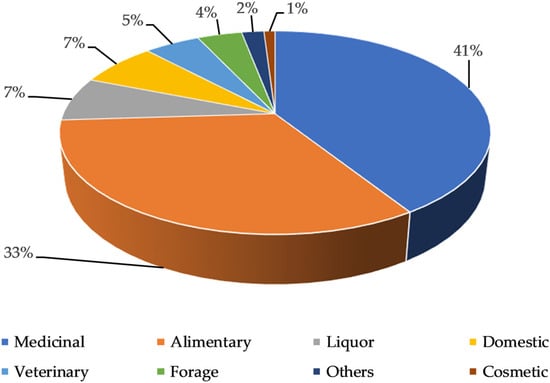
Most of traditional knowledge about plants and their uses is fast disappearing because of socio-economic and land use changes. This trend is also occurring in bio-cultural refugia, such as mountain areas. New data on Traditional Ethnobotanical Knowledge (TEK) of Italian alpine regions were collected relating to three valleys (Cogne, Valsavarenche, Rhêmes) of the Gran Paradiso National Park. Extensive dialogues and semi-structured interviews with 68 native informants (30 men, 38 women; mean age 70) were carried out between 2017 and 2019. A total of 3918 reports were collected, concerning 217 taxa (including 10 mushrooms, 1 lichen) mainly used for medicinal (42%) and food (33%) purposes. Minor uses were related to liquor making (7%), domestic (7%), veterinary (5%), forage (4%), cosmetic (1%) and other (2%). Medicinal plants were used to treat 14 ailment categories, of which the most important were respiratory (22%), digestive (19%), skin (13%), musculoskeletal (10%) and genitourinary (10%) diseases. Data were also evaluated by quantitative ethnobotanical indexes. The results show a rich and alive traditional knowledge concerning plants uses in the Gran Paradiso National Park. Plants resources may provide new opportunities from the scientific point of view, for the valorization of local products for health community and for sustainable land management.
1. Introduction
The traditional uses of plants express the resilient relationship between human communities and their environment. This cultural heritage, cumulated and evolved living in close contact with nature is fast disappearing owing to socio-economic and land use changes [1]. In areas historically exposed to very few external influences and centered around a subsistence economy, such as islands and alpine regions, this trend is less noticeable. Therefore, these areas represent important BioRefugia for the conservation of the biodiversity of plants and animals as well as for the cultural differences [2,3,4].
In recent years, several ethnobotanical investigations have been focused on different North Italian alpine regions, such as Piedmont [5,6,7], Lombardy, including the Stelvio National Park, [8,9,10,11,12] and Western Liguria [13]. The ethnobotanical traditions of Valle Orco, located in the Piedmont side of Gran Paradiso National Park, was previously investigated [14]. Regarding the Aosta Valley, previous ethnobotanical studies are limited and dated (e.g., the scientific studies done by Binel (1972) [15] on the traditional use of some local species and by Chimenti Signorini and Fumagalli (1983) [16] on the medicinal plants used in Valtournanche). However, several informative books concerning the same topic are known [17,18,19,20,21].
The Aosta valley, located at the north-western end of Italy, is the smallest region the country, with an extension of 3620 km2. The region is surrounded by mountains (Gran Paradiso, Cervino, Monte Rosa and Monte Bianco) that separate it from Piedmont, Switzerland, and France. The Aosta Valley was inhabited since the Neolithic and, starting from 25 BC, it was annexed to the Roman Empire, due to its strategic position. After the fall of the Roman Empire, the region suffered various invasions and dominations and, in 575 AD, it fell under the Franco-Burgundian kingdom, that marked the passage from a Celtic-Ligurian-Latin culture to a Franco-Roman one [22]. After dissolution of the Carolingian empire and various dominations, from the XI century the region was annexed to the Savoy dominio. The French was adopted in the Aosta Valley from the 16th century and elected as official language. Even after the Italian unification (1861), the Aosta Valley tried to preserve its peculiar linguistic and cultural traditions, which made it an autonomous bilingual region with a special statute (from 1948). The original population of the Aosta Valley commonly uses the patois dialect, which is clearly influenced by the Franco-provençal language [23]. The originality of patois lies in its variety, since there are many dialect inflections according to the valleys, neighboring municipalities, and villages.
Aosta Valley, due to its partial geographical and socio-cultural isolation, represents an ideal breeding ground for ethnobotanical research. Typical traditions, representative of the original population, are still preserved in these areas, being scarcely affected by external influences. We collected data concerning the TEK of the three valleys (Cogne, Valsavarenche, Rhêmes) included in the Gran Paradiso National Park, an area of high naturalistic interest. Our survey combined ethnobotanical data concerning the relationships between people and plants with folk medicine, to preserve the traditional uses of the local flora and to revitalize the strong cultural identity of the alpine valleys. The recovery of TEK has an intrinsic cultural value and mainly provides some new opportunities for a sustainable land management and for the valorization of local products [24]. In addition, data obtained on traditional use of natural products could be useful for the rational development of new medicines for health community.
2. Results
A total of 68 informants (30 men and 38 women) aged between 36 and 92 years (mean age 70 years) were interviewed in Cogne, Valsavarenche and Rhêmes valleys (Table 1), respectively.
Table 1.
Distribution of the informants, gender and residence in the municipalities of Cogne (1.544 m), Valsavarenche (1.541 m), Rhêmes (R. Saint-Georges 1.218 m and R. Notre-Dame 1.725 m).
Almost all informants (97%) have always been residents of their respective valleys, about 54% (37) of them had a primary level of education, 19% (13) have reached middle school, 22% (15) reached secondary school and 4% (three) obtained university studies. Regarding their employment, 66.2% of them were retired, previously housewives or employed as farmers, breeders, cheesemaker, veterinary, teachers, park guards, nature guides, restaurateurs, public servants, etc.
2.1. Plants Diversity Analysis
At the end of the interviews, we collected information on 220 plants (69 families), 10 mushrooms (six families), one lichen. In addition to the wild species (149), cultivated (41) and purchased (29) plants were also considered. As reported in previously ethnobotanical studies concerning the Italian Alps [6,8,9,13], the most quoted families (>10 species) were Asteraceae, with 26 species, followed by Rosaceae (15) and Lamiaceae (11). We also found an important role of Poaceae and Apiaceae, with 10 species, followed by Fabaceae (9). For all cited taxa, detailed data are provided in Table 2.
Table 2.
Traditional uses of plants, fungi, lichens and others in the Gran Paradiso National Park (Aosta Valley).
The final database included 3918 reports concerning 231 taxa. The most representative uses were medicinal (42%) and food (33%) followed by other categories, as reported in Figure 1.
Figure 1.
Percentage of citation and categories of use.
The general importance of the useful plants in the investigated area was evaluated calculating EI and EPI indices. According to Vitalini et al. (2013) [9], the Ethnobotanicity Index (EI) was calculated as the ratio between the number of the wild taxa cited in the medicinal, cosmetic, veterinary, and food (alimentary and liquoristic) sectors and the estimated number of taxa in the wild flora of the area. The resulting value of EI (12.8%) falls above the range of values (5.37–10.75%) reported by Guarrera et al. (2008) [25] for different Italian regions and above those referred in different Italian Alpine areas (e.g., 6.2% for Val San Giacomo [9], 9.7% for Stelvio National Park [10], 11% for North-Western Ligurian Alps [13] and 12% for South Tyrol [26]).
The richness of popular knowledge about the wild species was verified by the Ethnophytonomic Index (EPI), higher (EPI 0.11) than the EPI value previously reported in Italy and for another alpine areas (EPI 0.06) [9]. Nevertheless, this value shows an erosion of the linguistic heritage associated with plants, suggesting that only 11% of the wild taxa have a vernacular name.
The local importance of each species was calculated by using the Relative Frequency of Citation (RFC). In Table 3 the species that obtained an RFC > 0.50 were reported.
Table 3.
Species with a Relative frequency of Citation (RFC) > 0.50.
Peucedanum ostruthium showed the highest RFC value (0.97), being reported by almost all informants (233 citations). Imperatoria, called agrù, is considered a panacea to cure all diseases and is mainly used to treat different medicinal and veterinary problems. Thanks to its antiseptic and anti-inflammatory properties, it is used to treat external and internal diseases. Different parts of the plant (flowers, leaves, roots) and different herbal preparations (infusion, decoction, compress) are used. Imperatoria is also used for liquoristic and for domestic purposes; roots fumigations are also reported to disinfect the stables, a practice mainly important during calving.
Urtica dioica (0.91), Blitum bonus-henricus (0.90) and Bistorta officinalis (0.87) are reported by most informants, especially for alimentary uses. Stinging nettle is included in seven categories of use, being reported as food and medicine for humans and animals, as cosmetic and for domestic and other purposes.
Another important plant used is Juniperus communis (RFC 0.88), that is reported as seasoning, for its medicinal and veterinary applications and for domestic and handcraft uses.
At the opposite side, species cited by only few informants include plants, whose traditional use has been almost completely lost (e.g., Teucrium chamaedrys (RFC 0.10), Alchemilla xanthochlora (RFC 0.09) Geranium robertianum and Hylotelephium maximum (RFC 0.07), Euphrasia officinalis subsp. rostkoviana (RFC 0.06), Veronica fruticans (RFC 0.03)). Even some poisonous plants, today completely disused, were reported by few informants as vermifuge or as abortifacient e.g., Hedera helix, Daphne mezereum, Dryopteris filix-mas and Juniperus sabina (RFC 0.02).
2.2. Medicinal Uses
Medicinal plants represent the most important category of use, with a total of 1639 citations concerning 124 taxa, including 122 plants belonging to 51 families, one lichen (Parmeliaceae) and one fungus (Agaricaceae). Asteraceae (20 species), Lamiaceae (eight), Rosaceae (eight), Pinaceae (five), Plantaginaceae (five), Gentianaceae (four) and Apiaceae (four) are the families with the highest number of species.
Most used parts were flowers and leaves (30%), followed by fruits and seeds (17%), roots (11%), aerial parts (7%), resin, latex and sap (4%). Major herbal preparations included infusion (35%), decoction (30%), syrup (11%), poultice/compress (10%) and maceration in oil (7%) or alcohol (7%).
Human disorders were classified into 14 categories based on the International Statistical Classification of Diseases and Related Health Problems (ICD-10) by the World Health Organization [27]. Used subcategories concern diseases of the: respiratory tract; digestive system; subcutaneous tissues; genitourinary tract; musculoskeletal system and connective tissue; circulatory system; nervous system; eye and adnexa; ear and mastoid process (sensory system); infections and parasitosis; pregnancy, childbirth and puerperium; symptoms and signs not elsewhere classified; dental and oral; endocrine, nutritional and metabolic.
As reported for other alpine areas [9,13], also in the PNGP, the most frequent treatments were those of the respiratory, digestive, and integumentary systems, showing the highest citations (352, 315 and 219, respectively), followed by those of the genitourinary tract, musculoskeletal system and connective tissue (169 and 156 citations, respectively) (Table 4).
Table 4.
Factor informant consensus (Fic) index related to the agreement on species used to treat different diseases.
The informant consensus factor (Fic), calculated for each medicinal subcategory, ranged from 0.53 to 0.90. The obtained values showed a good consensus on the choice of plants for most disease categories, with values close to 1 (from 0.80 to 0.90) (see Table 3). For the treatment of dental and circulatory problems, for the treatment of problems related to pregnancy, for infectious and parasitic diseases and nervous problems a greater choice of medicinal plants has been reported (Fic from 0.69 to 0.75).
Considering the use of plants in relation to specific disease categories, we calculated the Fidelity Level (FL) and selected the species with a FL > 70% and with at least 10 citations in the disease category for which the highest FL has been obtained. In Table 5 we reported these species with the related disease category and their main bioactive compounds involved in the specific therapeutic effects based on pharmacological investigations.
Table 5.
Fidelity level (FL) value of medicinal plants against a given disease subcategory and main bioactive compounds responsible for the therapeutic effects.
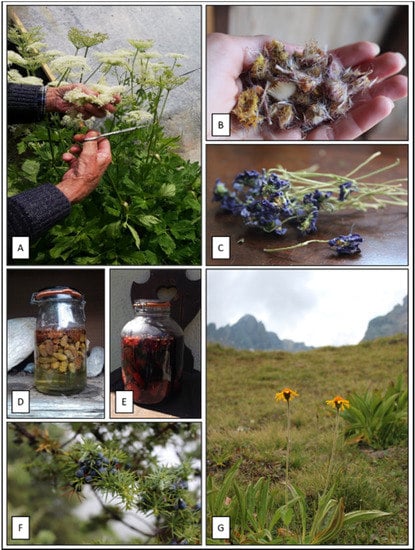
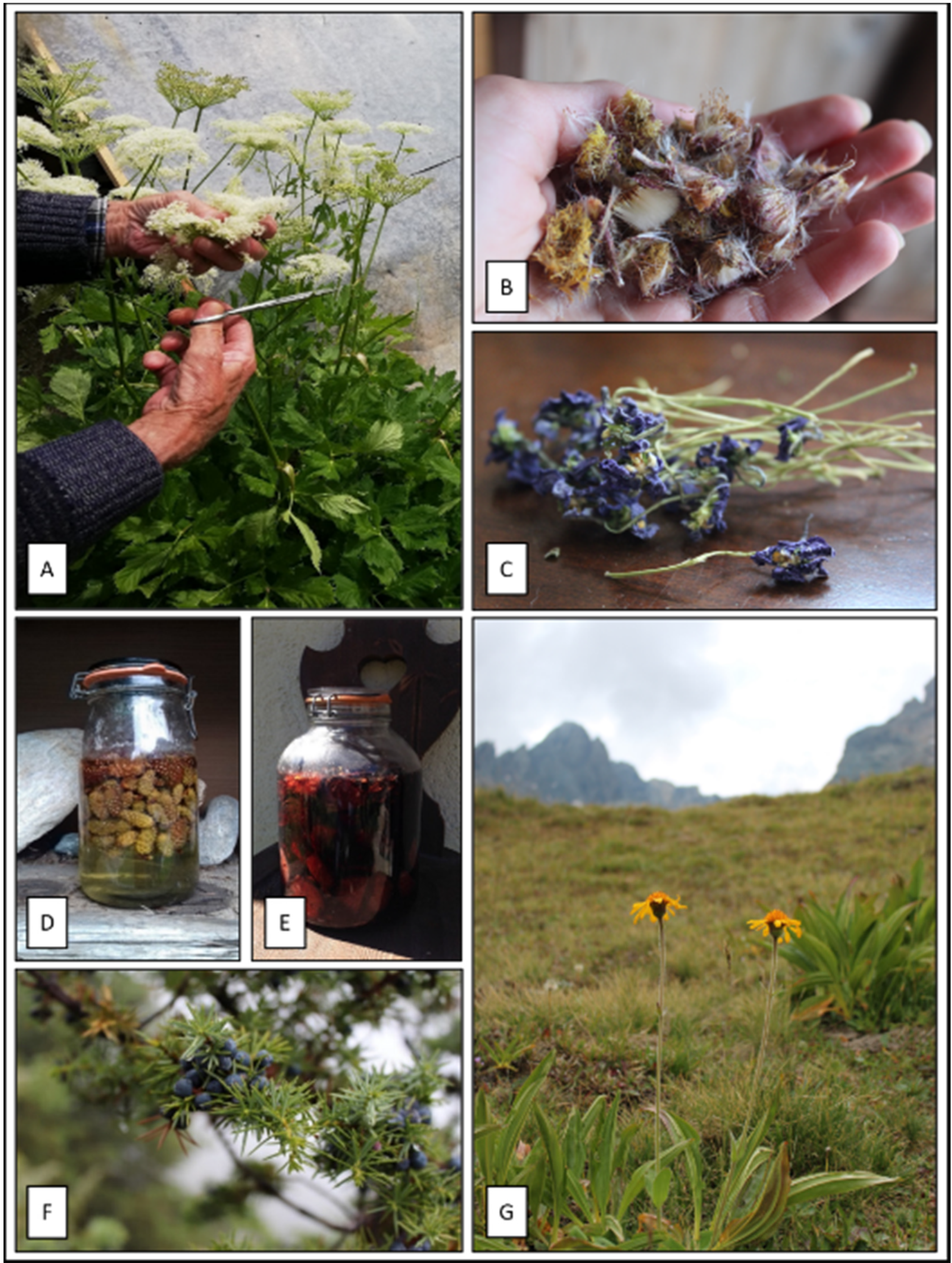
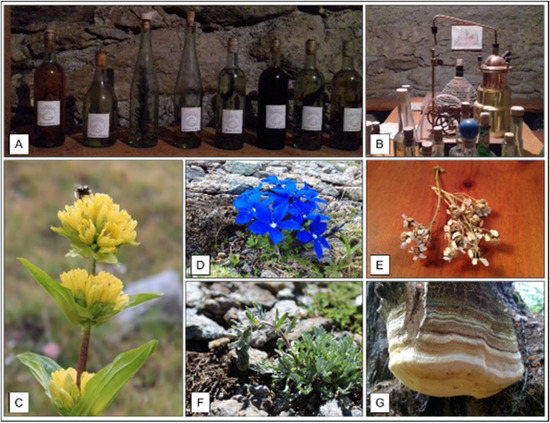
Some of the most important medicinal plants are depicted in Figure 2A–G. Peucedanum ostruthium (Figure 2A) is not included among species with high FL, because it is used to treat several categories of diseases, including respiratory, digestive, muscular, skin and genitourinary problems.
Figure 2.
Medicinal plants: (A) Peucedanum ostruthium; (B) Tussilago farfara; (C) Viola calcarata; (D) Pinus sylvestris syrup; (E) Pinus cembra syrup; (F) Juniperus communis; (G) Arnica montana.
For the respiratory tract, the species with the highest FL value (100%) were Cetraria islandica together with Tussilago farfara (91.7%) (Figure 2B) and Viola calcarata (98.3%) (Figure 2C), used to treat phlegm, bronchitis and colds. Other species used for the same purpose are Artemisia umbelliformis, Gymnadenia nigra, Teucrium chamaedrys, Thymus pulegioides, Salvia officinalis and Artemisia genipi. In addition, different Pinaceae such as Pinus sylvestris L. (Figure 2D), Pinus cembra (Figure 2E), Pinus mugo and Picea abies were widely used for the treatment of respiratory diseases: young resinous cones or buds were macerated with sugar in a glass jar and exposed to the sun to obtain a syrup. For the digestive system high FL value were found for Carum carvi, Gentiana punctata and Juniperus communis (Figure 2F). For the diseases of the skin and subcutaneous tissues, leaves of Calendula officinalis, Plantago spp., Hilotelephium maximum were widely used, while latex of Chelidonium majus and Euphorbia seguieriana were indicated to treat warts. For the diseases of the genitourinary tract, Arctostaphylos uva-ursi was the most quoted plant followed by Vaccinium vitis-idaea and Polygonum aviculare. Among the species referred for the treatment of musculoskeletal system, Arnica montana (Figure 2G) was used to treat blows and external hematomas, while Equisetum arvense in form of decoction to strengthen bones and against osteoporosis. For the diseases of the sensory system (eye and adnexa), the most important taxa were Rosa sp., Euphrasia officinalis subsp rostkoviana and Matricaria discoidaea. Infections and parasitosis were commonly treated with flowers of Tanacetum vulgare and bulbs of Allium sativum. For pregnancy, childbirth and the puerperium Linum usitatissimum, Malva neglecta were used as emollients, while Carduus defloratus L. was reported as a galactogogue.
2.3. Liquoristic Uses
Different liqueurs consisting of herbal macerates in alcohol were considered traditional preparations with also medicinal properties. In the studied area, 35 different taxa (35 plants and 1 fungus) were reported in liqueur making.
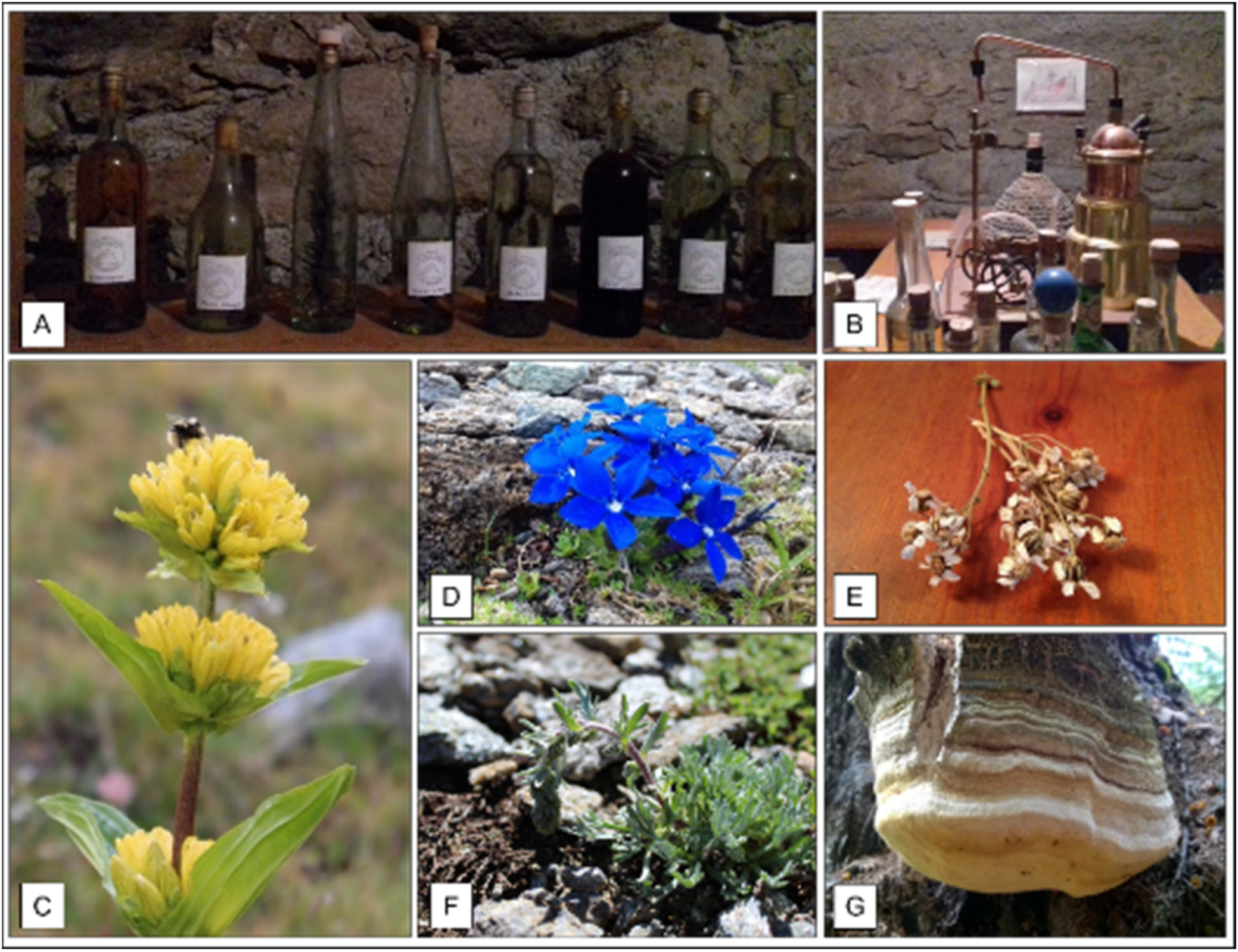
Digestive liqueurs and grappas were prepared with artisanal systems (Figure 3A,B). The roots of Gentiana punctata (Figure 3C) and G. lutea, as well as the flowers of G. acaulis and G. verna (Figure 3D) were reported for this purpose. The aerial parts of different species such as Achillea erba-rotta (Figure 3E) and A. moschata were added in the Fernet liqueur; Artemisia genipi (Figure 3F), A. glacialis, A. umbelliformis in the Genepì liqueur. The Kummel liqueur was made by using the seeds of C. carvi, while the Arquébùse using the leaves of T. vulgare. In addition, several species belonging to the Pinaceae were quoted to flavor grappas and liqueurs (e.g., Larix decidua, Picea abies, Pinus cembra, P. mugo and P. sylvestris). Even wild berries were used to flavor grappas (e.g., Rubus idaeus, Vaccinium myrtillus and Rosa canina). In the Cogne valley, a traditional beer recipe obtained by macerating in water the seeds of Hordeum vulgare L., the fruits of Berberis vulgaris, and the roots of Polypodium vulgare, was referred. Lastly, several informants reported the old use of the fungus Fomitopsis officinalis (Figure 3G), added in liqueur for its bitter properties.
Figure 3.
Liquoristic use: (A,B) Artisan distillery and several bottles of typical liqueurs and grappas; (C) Gentiana punctata; (D) Gentiana verna; (E) Achillea erba-rotta; (F) Artemisia genipi; (G) Phomitopsis officinalis.
2.4. Food Plants and Edible Fungi
Alimentary plants represent the second most important category of uses, with a total of 1302 citations concerning 103 edible species belonging to 40 families. Rosaceae (10 species), Asteraceae (eight), Lamiaceae (six), Fabaceae (six), Poaceae (six), Ericaceae and Grossulariaceae (five) are the most represented families. Data about nine edible fungi belonging to five families were also collected; Agaricaceae, Boletaceae and Suillaceae represent the most quoted families.
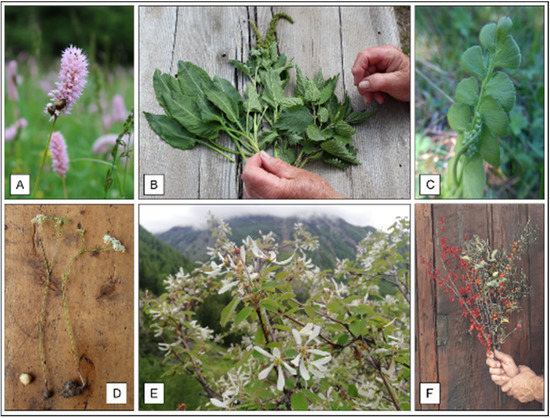
The leaves of Bistorta officinalis, Blitum bonus-henricus, Urtica dioica (Figure 4A,B) and Taraxacum officinale were used as ingredient in soups, in omelets or stir-fried with butter and eaten as a side dish. The young leaves of Taraxacum officinale were also often consumed raw in salad, with boiled eggs, potatoes and walnut oil. Other wild species less frequently reported as ingredients for soups were Silene vulgaris, Tragopogon pratensis, Primula veris, Phyteuma spp. and Rumex acetosa. Botrychium lunaria (Figure 4C) is a very valued fern used in summer’s soups, especially in the mountain pastures.
Figure 4.
Food plants: (A) Bistorta officinalis; (B) Bistorta officinalis, Blitum bonus-henricus, Urtica dioica; (C) Botrychium lunaria; (D) Bunium bulbocastanum; (E) Amelanchier ovalis; (F) Berberis vulgaris, Hippophae rhamnoides, Rosa canina.
Several species were mainly eaten in the past as a snack. For example, the leaves of Rumex acetosella and the stems of T. pratensis for their refreshing properties; the root of P. vulgare for its sweet taste of licorice, while bulbs of Bunium bulbocastanum (Figure 4D) for their chestnut flavor. Edible flowers cited by informants included P. veris, Viola calcarata and Trifolium pratense.
Various wild or cultivated fruits were eaten fresh or used for jelly, jams or syrups. The most quoted included Fragaria vesca, Ribes nigrum and R. rubrum, Rubus idaeus and Vaccinium myrtillus, followed by Amelanchier ovalis (Figure 4E), Berberis vulgaris, Hippophae rhamnoides, R. canina (Figure 4F), Arctous alpina, Ribes uva-crispa and R. petraeum, Rubus saxatilis, Sambucus nigra, Vaccinium uliginosum and V. vitis-idaea.
Among the aromatic plants, some are purchased form valley floor such as Laurus nobilis, Salvia rosmarinus and S. officinalis, while others are wild local species such as T. pulegioides and Juniperus communis, used for seasoning meat (e.g., in the mocetta and in the ’suede in civet’ recipes). In addition, some exotic species were also used as spices (e.g., Myristica fragrans and Syzygium aromaticum). All these aromatic plants, with the addition of C. carvi fruits, were used in the past for seasoning the repùta, a typical recipe for storing some cultivated vegetables (Allium ampeloprasum, Brassica rapa, Brassica oleracea, Daucus carota and Beta vulgaris). Hordeum vulgare, Secale cereale and Triticum sp.pl. were widely cultivated in the past to make flour for baking. Solanum tuberosum is also today an important cultivated plant, playing an important role in human nutrition in the mountain areas. The most common vegetable rennet used in the past in cheesemaking were Ranunculus sp.pl., Galium sp.pl., Lotus corniculatus, Urtica dioica, Bistorta officinalis and A. genipi. Roasted roots of Taraxacum officinale and Cychorium intybus and roasted seeds of Hordeum vulgare were used as coffee substitutes until the second postwar period.
2.5. Veterinary Uses and Forage
Species of veterinary interest account for 5% of the total uses, with 229 citations, while the plants used as fodder account for 4% with 123 citations. Altogether, data for about 61 species belonging to 29 families were collected. The most represented families were Asteraceae (eight species), Fabaceae (seven) and Poaceae (seven), followed by Apiaceae, Rosaceae and Polygonaceae (four species).
The daily cows feeding was made up of hay, consisting of Festuca sp. added with some cultivated plants such as Onobrychis viciifolia and Medicago sativa. In addition, the mash given to fatten animals and increase milk production included Brassica rapa, Solanum tuberosum, Triticum sp., Zea mays and Avena sativa; Hordeum vulgare is also added for its anti-inflammatory properties.
Several wild plants, common at lower altitude pastures, were referred as good fodder for cows (e.g., Bistorta officinalis, Alchemilla vulgaris, Taraxacum officinale, Trifolium pratense and T. repens). In the higher altitude pastures, other plants increased the milk production and its quality (e.g., Trifolium alpinum and Viola calcarata).
Several remedies are reported in case of cow pregnancy. First, 15 days before the calve birth, some emollient plants were given in form of decoction such as Linum usitatissimum and Malva neglecta or M. sylvestris L. Even the pods of Vicia faba and Phaseolus vulgaris were reported for their emollient properties. The decoction prepared with Achillea millefolium was given to the pregnant cow as an anti-inflammatory, while the flowers of Carduus defloratus and Carlina acaulis were added to the mash to increase the milk production.
Several plants were used to treat different animal diseases (e.g., for the digestive system problems, the roots of Gentiana punctata or G. lutea or the berries of J. communis were added in the fodder mixture). Arnica montana and P. ostruthium were reported to treat musculoskeletal problems; Imperatoria was also used to treat skin problems such as infected wounds and hoofing problems. Mentha sp. was reported in case of cow mastitis.
The leaves of Taraxacum officinale, Trifolium pratense and Urtica dioica were also reported as a good fodder for rabbits and hens. During the winter nettle was added dried in the fodder to increase eggs production.
As repellents for noxious insects, leaves of Levisticum officinale and Veratrum album were indicated.
2.6. Domestic and Handcraft
In this study, 340 citations were related to plants used for domestic and handcraft purposes, including 39 species belonging to 28 families. Among these, Apiaceae, Lamiaceae, Pinaceae and Salicaceae are the most represented with three species.
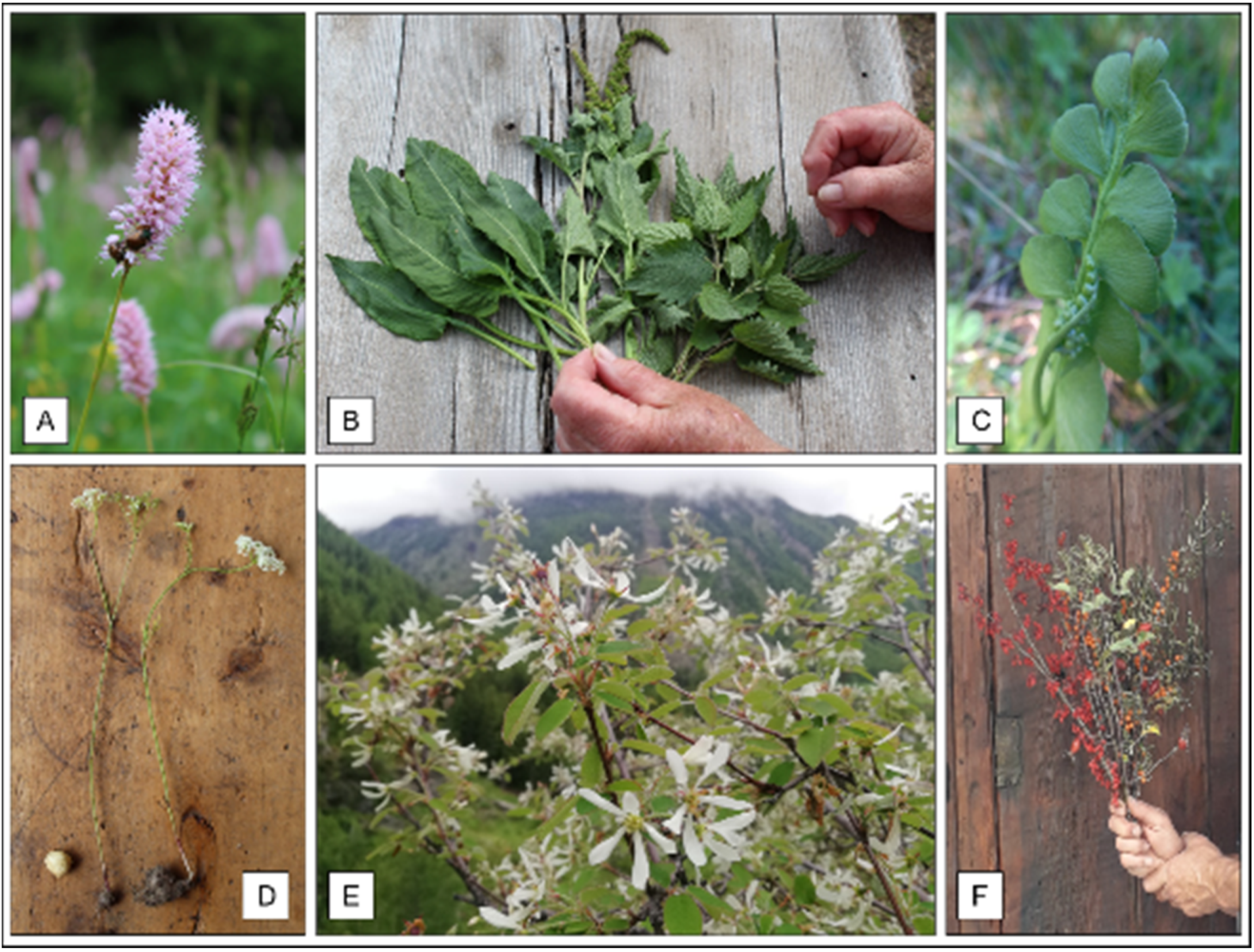
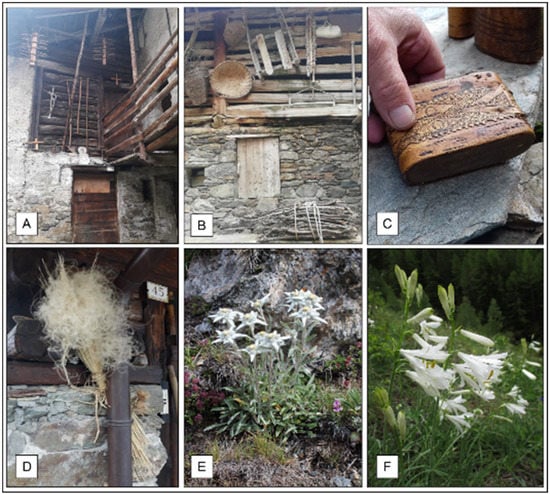
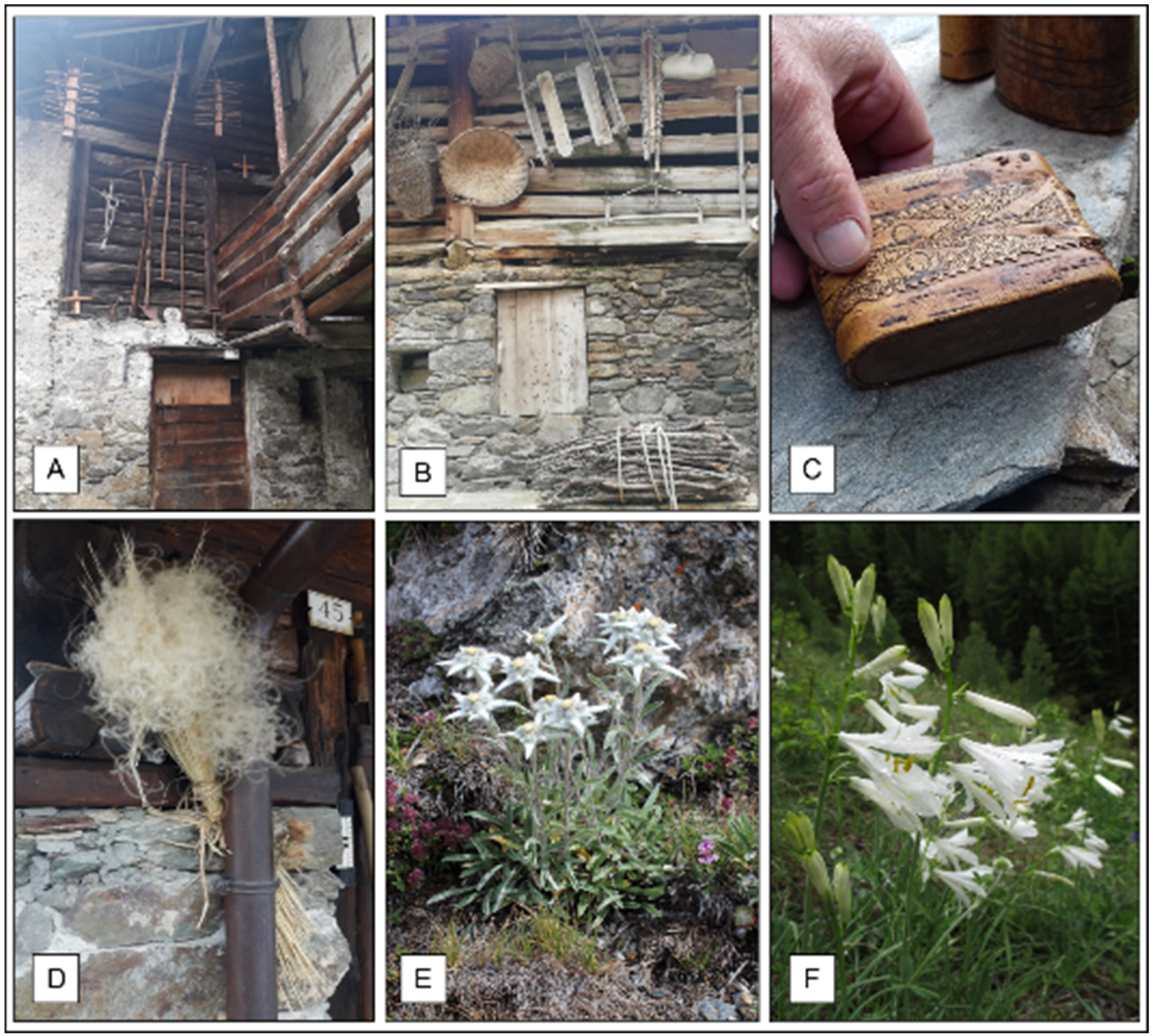
Several species were used for the manufacture of small tools and as construction wood. Larix decidua and Picea abies were used for construction purpose such as to build roofs and perimeter walls, respectively. On the contrary, thanks to its durable wood, Fraxinus excelsior L. was used to make blades and pickaxes (Figure 5A). Pinus cembra was considered the most valuable wood for building furniture, because of his resinous smell and his mothproof power. Juniperus communis was used for building the stick to turn the polenta, to which confers its typical aroma. Brooms made by branches of Betula pendula Roth and B. vulgaris were used to clean the stables and to remove the wheat chaff from the barn floor. The branches of Sambucus nigra, Viburnum lantana, Corylus avellane, Clematis vitalba, Salix caprea and S. purpurea were used for making baskets such as the traditional gerle (Figure 5B). In the past, the cortex of Betula pendula was used to build handcrafted snuffboxes with artistic inlaid designs (Figure 5C). Domestic uses of plants for Valeriana celtica and Lavandula angustifolia put in the closets against moths were also referred.
Figure 5.
Domestic, handcraft and other uses: (A) Handles of tools such as shovels and picks made by Fraxinus excelsior wood, ratelei, used to store the loaves, roofs of the house made by Larix decidua wood; (B) baskets and traditional gerle made by Salix sp., other agro-pastoral tools; (C) snuff-singer made by Betula pendula cortex; (D) Stipa pennata, timepiece plant; (E) Leontopodium nivale subsp. Alpinum; (F) Paradisea liliastrum.
2.7. Others Uses
During the interviews, several other uses and traditional practices related to the local flora were collected. The aqueous macerate of Urtica dioica was widely used as fertilizer and as insecticide in home gardens. Moreover, Carlina acaulis and Stipa pennata. (Figure 5D) were used as timepiece plants, hanged on the houses for weather forecast. Flowers of Leontopodium alpinum Cass. (Figure 5E) were collected, dried and used as bookmarkers. Some plants were used in the past for ludic activities (e.g., the flowers of Arctium lappa were thrown on clothes by children; whistles were made by using the hollow stems of Heracleum spondhylium and Angelica silvestris). Several plants were also reported as tobacco substitutes (e.g., the leaves of Arnica montana and the needles of Pinus spp).
Several plants were traded until the second postwar period as a source of income: the aerial parts of Artemisia genipi, A. absinthium, Achillea erba-rotta and A. millefolium; the roots of Gentiana lutea and G. punctata; the thallus of Fomitopsis officinalis.
During the interviews, some traditional magico-spiritual practices, were documented: in the Epinèl village, in the Cogne Valley, during St John fest (24 June), a bunch of wildflowers was collected at dawn, still covered in dew, and placed on the house doors in sign of protection. Similar practice was found in the Rhêmes valley, where the flowers of Paradisea liliastrum (Figure 5F) were used to build a cross with flowers protruding at the ends that was placed on the doors against the misfortune.
Other uses not related to plants were recorded in the studied area. In particular, the marmot fat and the ibex marrox were indicated to treat respiratory and musculoskeletal diseases. In these valleys, the presence of local healers called Rabeilleurs showing therapeutic ability in massage in case of musculoskeletal problems, were also documented. In addition, in Aosta valley still persists the practice of Sécrèts, consisting of the treatment of several diseases (e.g., warts, worms, burns, pains and others) by using prayers and rituals. The healing formulas were kept secret and handed down mainly orally, usually within the family or the village [48].
3. Discussion
The present results are consistent with ethnobotanical data from other Italian alpine areas [5,6,7,8,9,10,11,12,13,15,16]. The high EI value obtained in our study indicates that the knowledge of useful plants is still well consolidated in the studied area. The impervious territory and the climate, characterized by severe and long winters, forced the population to collect abundant supplies of food, medicinal herbs and firewood suitable for survival. As food reserve, in addition to cultivated cereals and potatoes, other vegetables such as cabbages, carrots, turnips and leeks were cultivated in home gardens. Elderly people remember a typical dish, called repùta, that was prepared with these fermented vegetables in the Cogne valley. Nowadays, in home gardens, in addition to food plants, several aromatic and medicinal plants were also commonly cultivated (e.g., Calendula officinalis, Levisticum officinale, Cyanus segetum, Tanacetum vulgare and Rosa × alba). These species were dried and stored or used fresh to prepare traditional remedies such as infusions, liqueurs and syrups.
An important source of food and medicine also came from wild plants and fungi. According to data from other Italian alpine regions, many small edible fruits and berries such as different Vaccinium and Ribes species are still today collected [5,6,7,8,9,10,11,12,13,15,16]. However, in the studied area, our informants also cited the use of other fruits: Arctous alpina and Rubus saxatilis. As regard to edible wild plants, used raw in salads or boiled, besides the most common species collected in the alpine areas, data concerning the Pteridophyte B. lunaria, used to prepare tasty soups, were also recorded. Curiously, this fern was also reported in the neighboring Waldesian valleys of Piedmont for the treatment of skin diseases [7].
Many wild plants were also quoted for their medicinal properties, used alone or in association to treat several diseases. Traditional remedies were used for the treatment of respiratory diseases, very frequents among the local population. Among species quoted for the treatment of cough, cold and flu, in addition to some Viola species, reported also in other alpine zones, the use of V. calcarata, was recorded. Lamaison et al. (1991) [36] found in this species different bioactive compounds such as flavonoids, rutin and mucilages, that could be related to its activity against airway problems. Indeed, the effectiveness of quercetin-type flavonols such as rutin against viral low respiratory tract infections has been recently demonstrated [49]. The traditional use of the lichen C. islandica for the treatment of respiratory diseases is probably due to the presence of polysaccharides with antiviral [28] and anti-inflammatory properties [29]. For the same purposes, also several Artemisia species are used. In this regard, Vouillamoz et al. (2015) [50], suggested that Artemisia bioactive compounds (sesquiterpene lactones) could be involved in the activation of bitter receptors, stimulating ciliary motion and relaxation of bronchial tissues. By this way, these compounds prevent infections and improve ventilation; the absorption path of these volatile compounds explains the use of inhalations in addition to herbal tea, the main preparation traditionally used.
The use of different Pinaceae species is widespread throughout the Alps to prepare antitussive syrups with expectorant and decongestant properties [7,8,9,10,11,12,13,16]. Phenolic acids, flavonoids, proanthocyanidins, terpenoids and resin acids with antimicrobial and anti-inflammatory activities can contribute to their healthy effect on the respiratory system [30,34,35,37].
Digestive diseases are also very common in the studied area, probably related to a diet rich in animal fats. In agreement with other investigation on the traditional medicine of Alpine areas [5,6,7,8,9,10,11,12,13,15,16], the digestive use of different species of Gentiana (mainly G. punctata), Achillea and Artemisia, as well as of J. communis and C. carvi, were recorded. Artemisia spp., representing iconic plants of the Alpine region, were commonly called génépi and they were widely used for infusions and liqueurs making with thermogenic and digestive effects [50].
Skin and musculoskeletal problems often affected the population involved in manual and field work and consequently several plants were cited for this purpose. The use of Arnica montana for musculoskeletal diseases was related to the presence of helenalin and dihidrohelenalin-type sesquiterpene lactones, flavonoids and phenolic acids with anti-inflammatory activity [43,44,45]. On the contrary, Plantago spp. were widely used being rich in polysaccharides and flavonoids with anti-inflammatory effects for treatment of wounds and other skin problems [40]. Some species were also indicated to treat infections and parasitosis such as Allium sativum and Tanacetum vulgare. A. sativum with sulfur-containing phytoconstituents and flavonoids showed antibacterial, antiviral, antifungal, antiprotozoal, antioxidant and anti-inflammatory properties [39], whereas T. vulgare, rich in β-thujone, was responsible for the anthelmintic activity [33].
Regarding the medicinal and veterinary properties, P. ostruthium deserves a special mention, representing the core of the cultural ethnobotanical heritage of the investigated area, as showed by RFC value. The rhizome has a long tradition of medicinal use and the plant has been known as ’Divinum remedium’ since the eighteenth century [51]. The phytochemical profile of the rhizomes of P. ostruthium showed the main bioactive compounds such as coumarins, oxypeucedanin hydrate, oxypeucedanin, ostruthol, imperatorin, osthole, isoimperatorin and ostruthin [52]. In Aosta valley, the plant is considered a panacea for all ailments. Moreover, in our survey, information concerned traditional uses not only of root/rhizome but also of leaves and the flowers, used both as external and internal remedies. Similar uses of these aerial portions are only rarely referred for other alpine areas such as Swiss Alps [53], South Tyrol [26] and Austria [54].
Given the considerable economic importance of pastoralism in these valleys, several plants were quoted to increase milk production and quality. Data on some species typical of alpine pastures such as T. alpinum and V. calcarata, rarely reported in previous studies, were recorded [5,6,7,8,9,10,11,12,13,15,16]. Our informants also reported the past use of different species of Galium as rennet, in agreement with similar data reported by Biella and Pieroni (2015) for Piedmont. In addition, other species were cited for the same purpose in the studied area such as L. corniculatus, U. dioica, Ranunculus spp. and Bistorta officinalis.
Quantitative analysis of the data collected showed the most cited species (RFC values), representing the heart of the ethnobotanical culture of the investigated area. In addition, Fic and FL gives us useful indications about medicinal species worthy of being further studied from the phytochemical and pharmacological point of view.
The general importance of the useful plants in the study area was showed by a very high EI value, compared with those obtained by studies on other Italian alpine areas and such as another protected area, Stelvio National Park [10]. Similarly, EPI value obtained in our survey was higher than that referred for Stelvio National Park, showing a good popular knowledge concerning local names of the wild species in PNGP. Although in the Aosta Valley the patois dialect is very widespread, several differences in the plant dialectal names among the three valleys indagated, were found. Moreover, the documented dialect names used in Aosta Valley were similar to those used in Lower and Central Valais (Switzerland) (e.g., J. communis called tsénèvro in Aosta Valley and dzenièvro in Switzerland, Artemisia vulgaris reported as porta rusò and porta-rozò and V. vitis-idea known as gravelòn and gravèlong, respectively) [53]. This knowledge is fast disappearing because of the linguistic homologation that characterizes modern societies. Therefore, the documentation of these local names is crucial also to preserve TEK handed down orally from one generation to the next.
4. Materials and Methods
4.1. Study Area
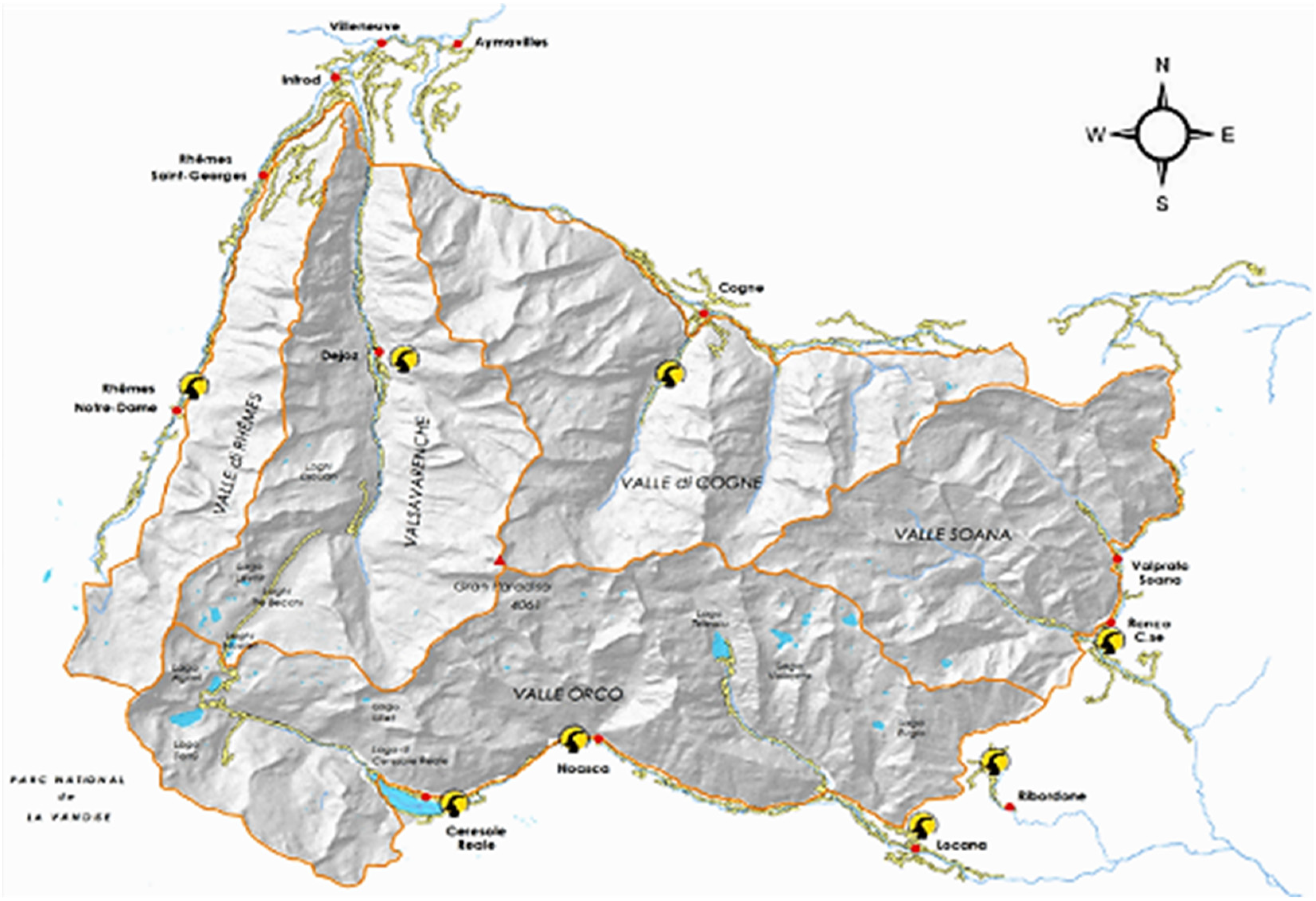
The investigated area included the three valleys, namely Cogne, Valsavarenche, Rhêmes, of the Gran Paradiso National Park (PNGP) in Aosta Valley, Western Alps, Northern Italy (Figure 6). In addition, the land use and vegetation map of the PNGP is added as supplementary material (Figure S1). [55]
Figure 6.
Map of the Gran Paradiso National Park.
The PNGP, previously a royal hunting reserve ceded to the state at the beginning of the twentieth century by the King Vittorio Emanuele III of Savoy, is a protected area established in 1922. It is the Italy’s first National Park established to preserve fauna, flora and the natural beauty of the landscape. The PNGP covers 71.044 ha between Aosta Valley (52%) and Piedmont (48%) and includes five valleys (Cogne, Valsavarenche, Rhêmes, Orco, Soana) surrounding the Gran Paradiso peak (4061 m). The current geomorphological set-up is the result of the action of the glaciers that led to the formation of large valleys, while currently, the main modeling agent of the landscape is river engravings. The cliffs are mostly of siliceous origin, although there are some areas of calcareous and limestone, especially on the Aosta Valley side. The lithology, geomorphological and climatic features strongly influence the vegetation. The great biodiversity of the park is due—in addition to the considerable extension of its territories—to the presence of two slopes, the Aosta Valley and the Piedmont ones, very different in lithology and climatic characteristics. Furthermore, the landscape is characterized by several micro-environments due to the significant differences in altitude (from 800 m to 4061 m a.s.l.). The protected area has an average altitude of about 2400 m and the subalpine, alpine and snowy vegetation types are the most represented natural environments. Forest formation mainly consists of Larix decidua and Picea abies, with Pinus cembra at the higher altitudes; in alpine grasslands Festuca sp., Carex curvula and Sesleria caerulea are the most represented species. The flora of prairies and pastures is mainly composed of acidophilous species, due to the wide dominance of the siliceous substrates; however, in calcareous outcrops also basophilous species are present.
Until today, about 1160 taxa [56], including Lycopods, Horsetails, Pteridophytes, Gymnosperms and Angiosperms, have been listed within the PNGP, 82 of which are endemic to the Alps. Native species account for 99% of the total (1127 species). Due to the high degree of plant biodiversity and to the high number of rare species, the entire territory of the park has been declared Site of Community Importance (ZSC IT 1201000). Collection of plants within the National Park is subject to the regulation-excerpt of the PNGP [57]. The gathering of plants is currently prohibited unless specific authorization. However, only for residents, a few edible and medicinal species with a strong cultural value are excluded.
In the 13 Municipalities of the Park, including 6 municipalities in Piedmont and 7 in Aosta Valley, live about 8300 people. Our research was focused on the municipalities of Cogne (1370 inhabitants), Valsavarenche (169 inhabitants) and Rhêmes (251 inhabitants), representing the Aosta Valley area belonging to the PNGP. The dialectal language commonly used by all the residents of the three valleys is called patois.
4.2. Field Study and Data Collection
Ethnobotanical data were collected during summer over three consecutive years (2017–2019), through extensive dialogues and semi-structured interviews with 68 inhabitants aged between 36–92 years (mean age 70 years). Informants were native or longtime residents in the area and had strong links with the traditional human activities of the territory. We selected informants using snowball techniques and we tried to ensure that all key informants were interviewed. We obtained the oral prior informed consent from all informants, according to the ISE (International Society of Ethnobiology) Code of Ethics. During the individually or in groups interviews, we tried to build a relationship of confidence with informants, to facilitate the dialogue. The age, gender, origin, level of education and occupation of all informants were recorded.
The questions were aimed at documenting the use of plants as food and medicine for humans and animals. In addition, also liquoristic, domestic, cosmetic and others uses were documented. The informants were asked to provide local name, parts used, period of gathering, association with other plants, preparation and use, related recipes and further indications. We reported the plant uses derived from the oral tradition in the local community. During the interviews we collect several fresh plants and dried samples representative of the local officinal flora. The nomenclature of plants follows “Plants of the world” [58] and the corresponding synonymous were added, according to “Flora d’Italia” [59,60]. “Index fungorum” [61] was used for the nomenclature of fungal species. Voucher specimens of the wild cited plant species were prepared and deposited at the Ethnobotanical Herbarium of the PNGP in the Paradisia Alpine Botanic Garden (Valnontey, Cogne).
4.3. Data Analysis and Quantitative Indices
All the ethnobotanical data were added and organized in spreadsheets of Microsoft Excel, in order to process the survey results.
Data were evaluated by quantitative parameters such as ethnobotanicity and ethnophytonomic indices, relative frequency of citation, factor informant consensus and fidelity level.
4.3.1. Ethnobotanicity Index
Ethnobotanicity Index (EI) [62] allows to estimate the importance of the useful plants in a defined area. It is the ratio, expressed as percentage (%), between the number of used wild plants and the number of species making up the flora of the considered territory.
4.3.2. Ethnophytonomic Index
Ethnophytonomic Index (EPI) [63] allows to estimate the wealth of the people’s knowledge about the local plant species. It is the ratio between the number of plants with vernacular name and the total number of species belonging to the studied area.
4.3.3. Relative Frequency of Citation (RFC)
The local importance of each species was calculated by using the Relative Frequency of Citation (RFC) [64]:
where FC is the number of informants, who mentioned the use of the species and N is the total number of informants (68 in this study).
RFC = FC/N
4.3.4. Factor Informant Consensus (Fic)
Factor informant consensus (Fic) [65] is used to identify the main categories of diseases and to consider the agreement among the respondents on the use of plants. It was calculated according to the following formula:
where Nur refers to the number of use citations in each category and Nt to the number of species used in the same category. The values of Fic ranging from 0 to 1. A high value is obtained when one or few plant species are used by a large proportion of informants to treat a given disease category, while a low value indicates that the informants are in disagree about the taxa to be used in the treatment of a certain ailment.
Fic = (Nur − Nt)/(Nur − 1)
4.3.5. Fidelity Level
The Fidelity Level Index (FL) [66,67] was also considered to indicate the informants’ choice for a potential plant species to treat a given disease. It was calculated by the following formula:
where Np is the number of use reports for a given species reported to be used for a particular ailment category and N is the total number of use reports cited for any given species.
FL = (Np/N) × 100
5. Conclusions
Our survey provided an exhaustive prospect of the Ethnobotanical Traditional Knowledge (TEK) in the territory of the Gran Paradiso National Park, located in the Aosta Valley, an area so far scarcely studied from the perspective of plant folk traditions. Data collected confirmed that this knowledge mainly remains in the memories of the eldest population and enhanced the important role of the mountain areas as biocultural refugia. However, TEK is fast disappearing among the new generations and, therefore, documenting and preserving such information is crucial to reduce the loss of biocultural diversity. The results of our study contribute to the goal of Article 8(j) of the Convention on Biological Diversity (CBD) that recognizes the importance of preserving the traditional knowledge of indigenous peoples to conserve biological diversity and to ensure the sustainable use of its components. We observed that the uses of food wild plants to prepare typical dishes and liqueurs, as well as the use of medicinal plants to cure the most common diseases of human and livestock, are still well preserved by local population. Some of these species need further investigation (e.g., B. lunaria for its nutritional properties). In regard to medicinal plants, inhabitants give a great healing value to all the portions of P. ostruthium used in these valleys for the treatment of several diseases. Further studies are in progress to better characterize the phytochemical profile and the biological activity of these plants. As a future perspective, it would be useful to complete the ethnobotanical investigation also in the Piedmont side of the PNGP. It would also be useful to select some medicinal species and evaluate the possibility of local production of phytotherapeutics based on traditional remedies. The Park would play a key role in optimizing the ecosystem services of the flora, in a context of greater involvement of local populations.
Supplementary Materials
The following are available online at https://www.mdpi.com/article/10.3390/plants11020170/s1, Figure S1: Land use and vegetation map of the Gran Paradiso National Park.
Author Contributions
Conceptualization, L.C. and L.P.; methodology and investigations, C.D., L.C. and L.P.; data curation, C.D. writing—original draft preparation, C.D. and L.C.; supervision, A.S. and M.M. All authors have read and agreed to the published version of the manuscript.
Funding
This research was funded by the Gran Paradiso National Park (PNGP), 100022-2018-LC-ALTRI-EP-N_001 (DISTAV-UNIGE) (L.C.); C.D. is recipient of a MIUR PhD scholarship: XXXVI Course STAT-DiSTAV, University of Genoa, Italy.
Informed Consent Statement
Informed consent was obtained from all subjects involved in the study.
Data Availability Statement
The data presented in this study are available in this article; databases are held at Distav (University of Genoa) and at PNGP (Aosta).
Acknowledgments
Special thanks are due to the informants. We thank Andrea Mainetti for his helpful suggestions on PNGP vegetation characterization.
Conflicts of Interest
The authors declare no conflict of interest.
References
- Guarrera, P.M. Usi e Tradizioni Della Flora Italiana. Medicina Popolare ed Etnobotanica; Aracne Editrice S.r.l.: Roma, Italy, 2006. [Google Scholar]
- Barthel, S.; Crumley, C.; Svedin, U. Bio-cultural refugia-Safeguarding diversity of practices for food security and biodiversity. Glob. Environ. Chang. 2013, 23, 1142–1152. [Google Scholar] [CrossRef] [Scilit]
- Pieroni Andrea, U.; Pawera Lukas, S.G.M. Gastronomic Ethnobiology. In Introduction to Ethnobiology; Albuquerque, U.P., Alves, R.R.N., Eds.; Springer International Publishing: Cham, Switzerland, 2016; pp. 53–62. [Google Scholar]
- La Rosa, A.; Cornara, L.; Saitta, A.; Salam, A.M.; Grammatico, S.; Caputo, M.; La Mantia, T.; Quave, C.L. Ethnobotany of the Aegadian Islands: Safeguarding biocultural refugia in the Mediterranean. J. Ethnobiol. Ethnomed. 2021, 17, 47. [Google Scholar] [CrossRef] [Scilit] [PubMed]
- Pieroni, A.; Giusti, M.E. Alpine ethnobotany in Italy: Traditional knowledge of gastronomic and medicinal plants among the Occitans of the upper Varaita valley, Piedmont. J. Ethnobiol. Ethnomed. 2009, 5, 32. [Google Scholar] [CrossRef] [Scilit] [PubMed]
- Mattalia, G.; Quave, C.L.; Pieroni, A. Traditional uses of wild food and medicinal plants among Brigasc, Kyé, and Provençal communities on the Western Italian Alps. Genet. Resour. Crop Evol. 2013, 60, 587–603. [Google Scholar] [CrossRef] [Scilit]
- Bellia, G.; Pieroni, A. Isolated, but transnational: The glocal nature of Waldensian ethnobotany, Western Alps, NW Italy. J. Ethnobiol. Ethnomed. 2015, 11, 37. [Google Scholar] [CrossRef] [Scilit]
- Vitalini, S.; Tomè, F.; Fico, G. Traditional uses of medicinal plants in Valvestino (Italy). J. Ethnopharmacol. 2009, 121, 106–116. [Google Scholar] [CrossRef] [Scilit]
- Vitalini, S.; Iriti, M.; Puricelli, C.; Ciuchi, D.; Segale, A.; Fico, G. Traditional knowledge on medicinal and food plants used in Val San Giacomo (Sondrio, Italy)—An alpine ethnobotanical study. J. Ethnopharmacol. 2013, 145, 517–529. [Google Scholar] [CrossRef] [Scilit]
- Vitalini, S.; Puricelli, C.; Mikerezi, I.; Iriti, M. Plants, people and traditions: Ethnobotanical survey in the Lombard Stelvio National Park and neighbouring areas (Central Alps, Italy). J. Ethnopharmacol. 2015, 173, 435–458. [Google Scholar] [CrossRef] [Scilit]
- Dei Cas, L.; Pugni, F.; Fico, G. Tradition of use on medicinal species in Valfurva (Sondrio, Italy). J. Ethnopharmacol. 2015, 163, 113–134. [Google Scholar] [CrossRef] [Scilit]
- Bottoni, M.; Milani, F.; Colombo, L.; Nallio, K.; Colombo, P.S.; Giuliani, C.; Bruschi, P.; Fico, G. Using Medicinal Plants in Valmalenco (Italian Alps): From Tradition to Scientific Approaches. Molecules 2020, 25, 4144. [Google Scholar] [CrossRef] [Scilit]
- Cornara, L.; La Rocca, A.; Terrizzano, L.; Dente, F.; Mariotti, M.G. Ethnobotanical and phytomedical knowledge in the North-Western Ligurian Alps. J. Ethnopharmacol. 2014, 155, 463–484. [Google Scholar] [CrossRef] [Scilit]
- Barinotto, L. Piante Medicinali e di Uso Tradizionale in Valle Orco; University of Torino: Torino, Italy, 2013. [Google Scholar]
- Binel, B. Piante Medicinali della Valle d’Aosta Nella Tradizione Popolare; Société la flore Vald: Aosta, Italy, 1972. [Google Scholar]
- Chimenti Signorini, R.F.M. Indagine etnofarmacologica nella Valtournanche (Valle d’Aosta). Webbia J. Plant Taxon. Geogr. 1983, 37, 69–94. [Google Scholar]
- Poggio, L. Piante officinali della Valle d’Aosta; Neos: Torino, Italy, 2006. [Google Scholar]
- Denarier, N. Venti Erbe per Stare Bene. Piante Medicinali Della Valle d’Aosta; VIDA: Aosta, Italy, 2006. [Google Scholar]
- Pieller, C. Guaritori e Rimedi, la Medicina Tradizionale in Valle d’Aosta; END: Aosta, Italy, 2011. [Google Scholar]
- Armand, H. Vivere e Guarire in Montagna; END: Gignod, Aosta, Italy, 2014. [Google Scholar]
- Bétemps, A. Erbario, Erbe Misteriose e Flora Generosa Nello Spazio Selvatico o Antropizzato Della Montagna Valdostana e Dintorni; Priuli and Verlucca: Torino, Italy, 2012. [Google Scholar]
- Colliard, L. La Culture Valdôtaine au Cours des Siècles; ITLA: Aosta, Italy, 1976. [Google Scholar]
- Ascoli, G.I. Schizzi Franco-Provenzali; Victor Attinger: Neuchâtel, Switzerland, 1952. [Google Scholar]
- Giulia, C.; Andrea, P.; Guarrera, P.M. Etnobotanica: Conservazione di un Patrimonio Culturale Come Risorsa per Uno Sviluppo Sostenibile; Edipuglia: Bari, Italy, 2013. [Google Scholar]
- Guarrera, P.; Lucchese, F.; Medori, S. Ethnophytotherapeutical research in the high Molise region (Central-Southern Italy). J. Ethnobiol. Ethnomed. 2008, 4, 7. [Google Scholar] [CrossRef] [Scilit]
- Petelka, J.; Plagg, B.; Säumel, I.; Zerbe, S. Traditional medicinal plants in South Tyrol (northern Italy, southern Alps): Biodiversity and use. J. Ethnobiol. Ethnomed. 2020, 16, 74. [Google Scholar] [CrossRef] [Scilit] [PubMed]
- International Classification of Diseases (ICD). Available online: https://www.who.int/classifications/classification-of-diseases (accessed on 16 November 2021).
- Olafsdottir, E.S.; Ingólfsdottir, K. Polysaccharides from lichens: Structural characteristics and biological activity. Planta Med. 2001, 67, 199–208. [Google Scholar] [CrossRef] [Scilit]
- Freysdottir, J.; Omarsdottir, S.; Ingolfsdottir, K.; Vikingsson, A.; Olafsdottir, E.S. In vitro and in vivo immunomodulating effects of traditionally-prepared extract and purified compounds from Cetraria islandica. Proc. Nutr. Soc. 2008, 67, 2021. [Google Scholar] [CrossRef] [Scilit]
- Apetrei, C.L.; Tuchilus, C.; Aprotosoaie, A.C.; Oprea, A.; Malterud, K.E.; Miron, A. Chemical, antioxidant and antimicrobial investigations of Pinus cembra L. bark and needles. Molecules 2011, 16, 7773–7788. [Google Scholar] [CrossRef] [Scilit] [PubMed]
- Afshar, K.; Fleischmann, N.; Schmiemann, G.; Bleidorn, J.; Hummers-Pradier, E.; Friede, T.; Wegscheider, K.; Moore, M.; Gágyor, I. Reducing antibiotic use for uncomplicated urinary tract infection in general practice by treatment with uva-ursi (REGATTA)—A double-blind, randomized, controlled comparative effectiveness trial. BMC Complement. Altern. Med. 2018, 18, 203. [Google Scholar] [CrossRef] [Scilit] [PubMed]
- Gilca, M.; Gaman, L.; Panait, E.; Stoian, I.; Atanasiu, V. Chelidonium majus—An integrative review: Traditional knowledge versus modern findings. Forsch. Komplementarmed. 2010, 17, 241–248. [Google Scholar] [CrossRef] [Scilit] [PubMed]
- Godinho, L.S.; Aleixo De Carvalho, L.S.; Barbosa De Castro, C.C.; Dias, M.M.; Pinto, P.D.F.; Crotti, A.E.M.; Pinto, P.L.S.; De Moraes, J.; Da Silva Filho, A.A. Anthelmintic activity of crude extract and essential oil of tanacetum vulgare (Asteraceae) against adult worms of schistosoma mansoni. Sci. World J. 2014, 2014, 460342. [Google Scholar] [CrossRef] [Scilit]
- Süntar, I.; Tumen, I.; Ustün, O.; Keleş, H.; Küpeli Akkol, E. Appraisal on the wound healing and anti-inflammatory activities of the essential oils obtained from the cones and needles of Pinus species by in vivo and in vitro experimental models. J. Ethnopharmacol. 2012, 139, 533–540. [Google Scholar] [CrossRef] [Scilit]
- Mitić, Z.S.; Jovanović, B.; Jovanović, S.; Mihajilov-Krstev, T.; Stojanović-Radić, Z.Z.; Cvetković, V.J.; Mitrović, T.L.; Marin, P.D.; Zlatković, B.K.; Stojanović, G.S. Comparative study of the essential oils of four Pinus species: Chemical composition, antimicrobial and insect larvicidal activity. Ind. Crops Prod. 2018, 111, 55–62. [Google Scholar] [CrossRef] [Scilit]
- Lamaison, J. Comparative study of viola lutea Huds, V. Calcarata L. and V. odorata L. Plantes Médicinales et Phytothérapie 1991, 25, 79–88. [Google Scholar]
- Basholli-Salihu, M.; Schuster, R.; Hajdari, A.; Mulla, D.; Viernstein, H.; Mustafa, B.; Mueller, M. Phytochemical composition, anti-inflammatory activity and cytotoxic effects of essential oils from three Pinus spp. Pharm. Biol. 2017, 55, 1553–1560. [Google Scholar] [CrossRef] [Scilit] [PubMed]
- Chen, S.; Dong, L.; Quan, H.; Zhou, X.; Ma, J.; Xia, W.; Zhou, H.; Fu, X. A review of the ethnobotanical value, phytochemistry, pharmacology, toxicity and quality control of Tussilago farfara L. (coltsfoot). J. Ethnopharmacol. 2021, 267, 113478. [Google Scholar] [CrossRef] [Scilit] [PubMed]
- Batiha, G.E.S.; Beshbishy, A.M.; Wasef, L.G.; Elewa, Y.H.A.; Al-Sagan, A.A.; El-Hack, M.E.A.; Taha, A.E.; Abd-Elhakim, Y.M.; Devkota, H.P. Chemical constituents and pharmacological activities of garlic (Allium sativum L.): A review. Nutrients 2020, 12, 872. [Google Scholar] [CrossRef] [Scilit] [PubMed]
- Adom, M.B.; Taher, M.; Mutalabisin, M.F.; Amri, M.S.; Abdul Kudos, M.B.; Wan Sulaiman, M.W.A.; Sengupta, P.; Susanti, D. Chemical constituents and medical benefits of Plantago major. Biomed. Pharmacother. 2017, 96, 348–360. [Google Scholar] [CrossRef] [Scilit] [PubMed]
- Mirzaee, F.; Hosseini, A.; Jouybari, H.B.; Davoodi, A.; Azadbakht, M. Medicinal, biological and phytochemical properties of Gentiana species. J. Tradit. Complement. Med. 2017, 7, 400–408. [Google Scholar] [CrossRef] [Scilit] [PubMed]
- Fierascu, R.C.; Fierascu, I.; Ortan, A.; Paunescu, A. Plantago media L.—Explored and potential applications of an underutilized plant. Plants 2021, 10, 265. [Google Scholar] [CrossRef] [Scilit]
- Petrova, M.; Zayova, E.; Vassilevska-Ivanova, R.; Vlahova, M. Biotechnological approaches for cultivation and enhancement of secondary metabolites in Arnica montana L. Acta Physiol. Plant. 2012, 34, 1597–1606. [Google Scholar] [CrossRef] [Scilit]
- Sharma, S.; Arif, M.; Nirala, R.K.; Gupta, R.; Thakur, S.C. Cumulative therapeutic effects of phytochemicals in Arnica montana flower extract alleviated collagen-induced arthritis: Inhibition of both pro-inflammatory mediators and oxidative stress. J. Sci. Food Agric. 2016, 96, 1500–1510. [Google Scholar] [CrossRef] [Scilit]
- Kriplani, P.; Guarve, K.; Baghael, U.S. Arnica montana L.—A plant of healing: Review. J. Pharm. Pharmacol. 2017, 69, 925–945. [Google Scholar] [CrossRef] [Scilit]
- Bais, S.; Gill, N.S.; Rana, N.; Shandil, S. A Phytopharmacological Review on a Medicinal Plant: Juniperus communis. Int. Sch. Res. Not. 2014, 2014, 634723. [Google Scholar] [CrossRef] [Scilit]
- Maurya, A.K.; Devi, R.; Kumar, A.; Koundal, R.; Thakur, S.; Sharma, A.; Kumar, D.; Kumar, R.; Padwad, Y.S.; Chand, G.; et al. Chemical Composition, Cytotoxic and Antibacterial Activities of Essential Oils of Cultivated Clones of Juniperus communis and Wild Juniperus Species. Chem. Biodivers. 2018, 15, e1800183. [Google Scholar] [CrossRef] [Scilit]
- Cout, F. Secret, Formule di Guarigione in uso in Valle d’Aosta; Priuli and Verlucca: Ivrea, Torino, Italy, 2005. [Google Scholar]
- Brito, J.C.M.; Lima, W.G.; Cordeiro, L.P.B.; da Cruz Nizer, W.S. Effectiveness of supplementation with quercetin-type flavonols for treatment of viral lower respiratory tract infections: Systematic review and meta-analysis of preclinical studies. Phyther. Res. 2021, 35, 4930–4942. [Google Scholar] [CrossRef] [Scilit]
- Vouillamoz, J.F.; Carlen, C.; Taglialatela-Scafati, O.; Pollastro, F.; Appendino, G. The génépi Artemisia species. Ethnopharmacology, cultivation, phytochemistry, and bioactivity. Fitoterapia 2015, 106, 231–241. [Google Scholar] [CrossRef] [Scilit]
- Hoobert, R. A Compendious Medical Dictionary; Printed for Murray and Highley: London, UK, 1799. [Google Scholar]
- Vogl, S.; Zehl, M.; Picker, P.; Urban, E.; Wawrosch, C.; Reznicek, G.; Saukel, J.; Kopp, B. Identification and quantification of coumarins in Peucedanum ostruthium (L.) Koch by HPLC-DAD and HPLC-DAD-MS. J. Agric. Food Chem. 2011, 59, 4371–4377. [Google Scholar] [CrossRef] [Scilit]
- Abbet, C.; Mayor, R.; Roguet, D.; Spichiger, R.; Hamburger, M.; Potterat, O. Ethnobotanical survey on wild alpine food plants in Lower and Central Valais (Switzerland). J. Ethnopharmacol. 2014, 151, 624–634. [Google Scholar] [CrossRef] [Scilit]
- Vogl, S.; Picker, P.; Mihaly-Bison, J.; Fakhrudin, N.; Atanasov, A.G.; Heiss, E.H.; Wawrosch, C.; Reznicek, G.; Dirsch, V.M.; Saukel, J.; et al. Ethnopharmacological in vitro studies on Austria’s folk medicine—An unexplored lore in vitro anti-inflammatory activities of 71 Austrian traditional herbal drugs. J. Ethnopharmacol. 2013, 149, 750–771. [Google Scholar] [CrossRef] [Scilit] [PubMed]
- Piano del Parco|Parco Nazionale Gran Paradiso. Available online: http://www.pngp.it/vivere-nel-parco/piano-del-parco (accessed on 3 December 2021).
- La Flora Vascolare del PNGP in Numeri; aggiornamento 2020; Available online: flora_vascolare_pngpdati_agg2020.pdf (accessed on 16 November 2021).
- Regolamento di Fruizione del Parco Nazionale Gran Paradiso. Available online: http://www.pngp.it/en/regolamento-fruizione#eng (accessed on 22 December 2021).
- Plants of the World Online|Kew Science. Available online: http://www.plantsoftheworldonline.org/ (accessed on 22 November 2021).
- Pignatti, S. Flora d’Italia. Media, E.-N.B., Ed.; Edagricole: Bologna, Italy, 2017. [Google Scholar]
- IPFI: Index Plantarum. Available online: https://www.actaplantarum.org/flora/flora.php (accessed on 16 November 2021).
- Index Fungorum. Available online: http://www.indexfungorum.org/names/Names.asp (accessed on 16 November 2021).
- Portères, R. Ethnobotanique Générale. Laboratoire d’Ethnobotanique et Ethnozoologie; Muséum National d’Histoire Naturelle: Paris, France, 1970. [Google Scholar]
- Bonet, M.À.; Parada, M.; Selga, A.; Vallès, J. Studies on pharmaceutical ethnobotany in the regions of L’Alt Emporda and Les Guilleries (Catalonia, Iberian Peninsula). J. Ethnopharmacol. 1999, 68, 145–168. [Google Scholar] [CrossRef] [Scilit]
- Tardío, J.; Pardo-De-Santayana, M. Cultural importance indices: A comparative analysis based on the useful wild plants of southern Cantabria (northern Spain). Econ. Bot. 2008, 62, 24–39. [Google Scholar] [CrossRef] [Scilit]
- Heinrich, M.; Ankli, A.; Frei, B.; Weimann, C.; Sticher, O. Medicinal plants in Mexico: Healers’ consensus and cultural importance. Soc. Sci. Med. 1998, 47, 1859–1871. [Google Scholar] [CrossRef] [Scilit]
- Jacob, F.; Zohara, Y.; Amotz, D.; Palewitch, D. A preliminary classification of the healing potential of medicinal plants, based on a rational analysis of an ethnopharmacological field survey among bedouins in the Negev desert, Israel. J. Ethnopharmacol. 1986, 16, 275–287. [Google Scholar] [CrossRef] [Scilit]
- Andrade-Cetto, A.; Heinrich, M. From the field into the lab: Useful approaches to selecting species based on local knowledge. Front. Pharmacol. 2011, 2, 20. [Google Scholar] [CrossRef] [Scilit] [PubMed]

Publisher’s Note: MDPI stays neutral with regard to jurisdictional claims in published maps and institutional affiliations. |
© 2022 by the authors. Licensee MDPI, Basel, Switzerland. This article is an open access article distributed under the terms and conditions of the Creative Commons Attribution (CC BY) license (https://creativecommons.org/licenses/by/4.0/).