Article

Evaluating the Rhizosphere and Endophytic Microbiomes of a Bamboo Plant in Response to the Long-Term Application of Heavy Organic Amendment
1
China National Bamboo Research Center, Key Laboratory of Bamboo Forest Ecology and Resource Utilization of National Forestry and Grassland Administration, Hangzhou 310012, China
2
National Long-Term Observation and Research Station for Forest Ecosystem in Hangzhou-Jiaxing-Huzhou Plain, Hangzhou 310012, China
3
Engineering Research Center of Biochar of Zhejiang Province, Hangzhou 310021, China
*
Author to whom correspondence should be addressed.
Plants 2022, 11(16), 2129; https://doi.org/10.3390/plants11162129

Submission received: 12 July 2022 / Revised: 12 August 2022 / Accepted: 12 August 2022 / Published: 16 August 2022

Abstract

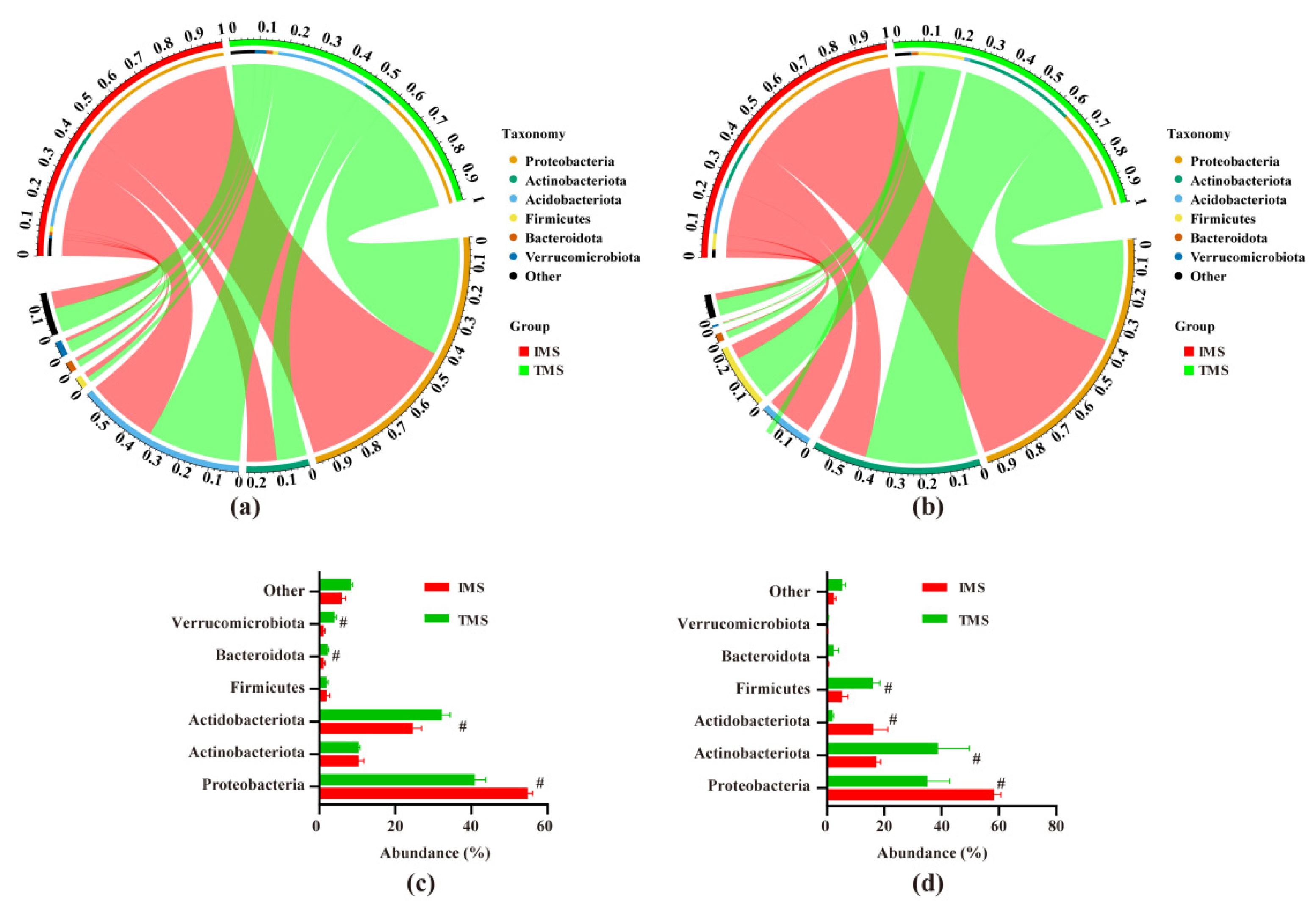
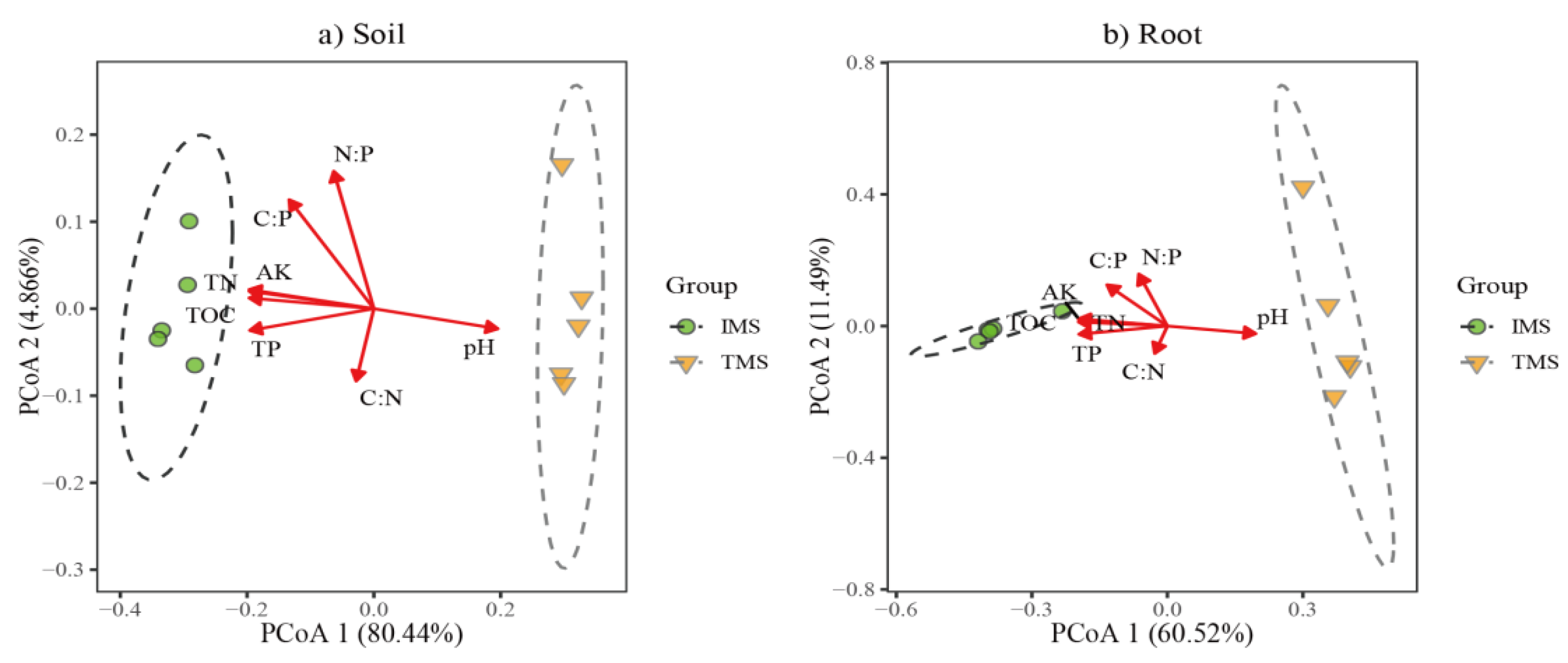
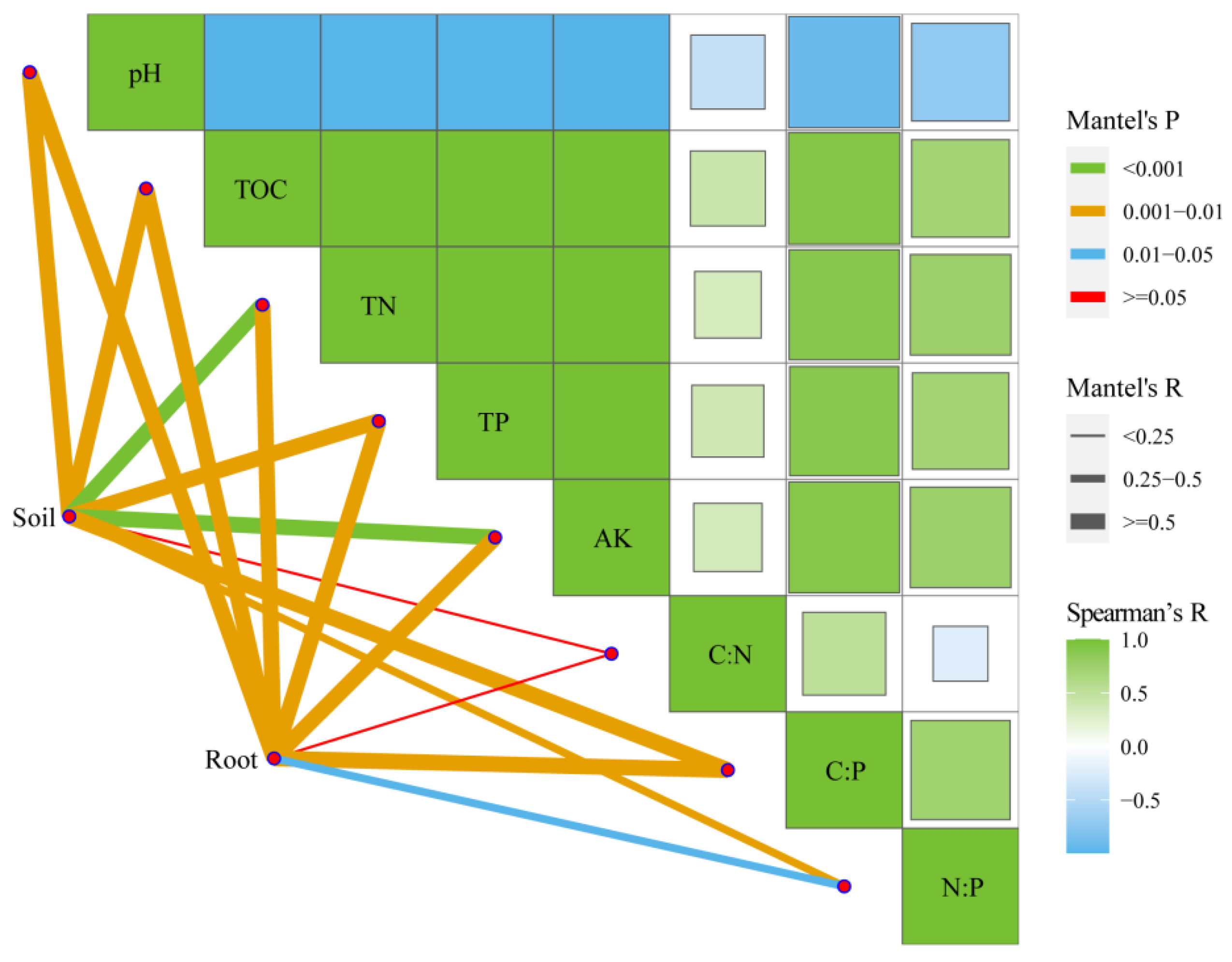
Root-associated bacteria play a major role in plant health and productivity. However, how organic amendment influences root-associated bacteria is uncertain in Lei bamboo (Phyllostachys praecox) plantations. Here, we compared the rhizosphere and endophytic microbiomes in two Lei bamboo plantations with (IMS) and without (TMS) the application of organic amendment for 16 years. The results showed IMS significantly increased (p < 0.05) the relative abundance of Proteobacteria and significantly decreased (p < 0.05) the relative abundance of Acidobacteria, Bacteroidetes, and Verrucomicrobiota. The root endophytic Proteobacteria and Acidobacteria were significantly higher in abundance (p < 0.05) in the IMS than in the TMS, while Actinobacteria and Firmicutes were significantly lower in abundance. Five taxa were assigned to Proteobacteria and Acidobacteria, which were identified as keystones in the rhizosphere soil microbiome, while two species taxonomically affiliated with Proteobacteria were identified as keystones in the root endophytic microbiota, indicating this phylum can be an indicator for a root-associated microbiome in response to IMS. The soil pH, soil total organic carbon (TOC), total nitrogen (TN), total phosphorus (TP), available potassium (AK), and TOC:TP ratio were significantly correlated (p < 0.05) with the bacterial community composition of both rhizosphere soils and root endophytes. TMS increased the microbial network complexity of root endophytes but decreased the microbial network complexity of rhizosphere soil. Our results suggest IMS shapes the rhizosphere and endophytic bacterial community compositions and their interactions differently, which should be paid attention to when designing management practices for the sustainable development of forest ecosystems.
Keywords: bamboo forest; organic amendment; rhizosphere; plant endophyte; bacterial community bamboo forest; organic amendment; rhizosphere; plant endophyte; bacterial community