


Abstract
In high-density cities, limited land availability constrains the expansion of new public sports facilities, increasing the importance of activating existing spatial resources. School sports facilities, which are widely distributed across urban residential areas, may provide supplementary opportunities for community physical activity during non-teaching periods. Using Nanjing, China, as a case study, this study adopts a four-phase research design comprising spatial assessment, stakeholder salience analysis, empirical investigation, and governance strategy development. First, GIS-based analysis was used to examine the spatial distribution of non-school sports facilities and school campuses and to compare 15-min walking accessibility under a baseline scenario and a hypothetical school-sharing scenario. Modeled population coverage increased from 62.93% to 71.67%, while approximately 147.37 km2 and 605,700 residents were additionally covered, indicating substantial potential for spatial supplementation. Second, six stakeholder groups were assessed using the Mitchell Salience Model based on power, legitimacy, and urgency. Third, 32 semi-structured interviews and a resident questionnaire survey (N = 216) were used to examine stakeholder concerns, residents’ perceived needs and attitudes, and major implementation conflicts. The findings indicate that the principal barriers to joint use are concentrated around safety responsibility, cost sharing, and use priorities. Based on these findings, four governance strategies are proposed: spatio-temporal decoupling, risk hedging, embedded negotiation, and digital supervision. Overall, school sports facilities show considerable potential to supplement existing urban sports provision, but their effective joint use depends on appropriate arrangements for stakeholder coordination, risk management, and operational implementation.
1. Introduction
Rapid urbanization and urban densification have intensified competition for limited land resources while increasing demand for accessible spaces for everyday physical activity. In high-density cities, the challenge of public sports provision is not simply the shortage of facilities, but also the uneven spatial distribution of resources and their accessibility to surrounding populations. Previous studies on compact urban development have demonstrated that the effectiveness of public-service provision depends strongly on the spatial relationship between facilities, residential areas, and transportation networks rather than facility quantity alone [1,2,3]. Therefore, understanding the spatial configuration of existing resources has become increasingly important for improving urban service capacity.
From a geospatial perspective, geographic information systems (GIS), network analysis, and accessibility modelling provide important approaches for evaluating whether public facilities are spatially aligned with population needs. Recent studies have moved beyond traditional supply-based indicators toward accessibility-based assessments. Price et al. [4] demonstrated how GIS-based accessibility modelling incorporating multiple transport modes can reveal variations in access to public services, while Yang et al. [5] showed that network-based accessibility analysis can support the optimization of sports facility distribution. Similarly, recent multi-scale accessibility studies have indicated that areas with relatively sufficient facility numbers may still experience limited accessibility due to spatial location, network connectivity, and population distribution constraints [6,7]. These findings suggest that urban sports provision should be evaluated as a spatial accessibility problem rather than merely a facility quantity problem.
Under conditions of limited urban land availability, activating existing institutional spaces provides an alternative strategy to expanding sports infrastructure through new construction. School sports facilities are particularly valuable in this context because schools are widely distributed within residential areas and often contain sports spaces that remain underused during non-teaching periods. Previous research has identified schools as important potential contributors to community physical activity environments. For example, Maddock et al. [8] reported that the In-Motion joint-use pilot in urban Honolulu successfully opened school recreational facilities to students, staff, and community residents; participants were generally satisfied with the recreational programs and reported that the initiative helped them engage in more physical activity. Lafleur et al. [9] further found that, across 12 joint-use school sites in underserved communities in Los Angeles County, approximately three-quarters of observed users engaged in moderate-to-vigorous physical activity, while community use was 16 times higher at sites providing organized physical activity programs than at sites without such programs. More recent research has nevertheless revealed a persistent gap between physical potential and actual utilization: school facilities may provide substantial opportunities for physical activity, but their use during non-school hours often remains limited by operational, programming, and management constraints [10,11].
International experiences indicate that the effectiveness of school–community facility sharing depends not only on the physical availability of facilities but also on institutional arrangements. Warner and Zhang [12] found that partnership-based approaches and formal joint-use mechanisms played important roles in supporting shared service delivery between communities and schools. Wang et al. [13] further demonstrated that formal agreements, communication mechanisms, and administrative arrangements influence the implementation of joint-use services across school districts. These studies suggest that school sports facilities represent a potential supplementary resource for urban sports provision, but spatial availability alone does not guarantee effective public access.
In China, the promotion of school sports facility sharing has been incorporated into broader national strategies for physical activity and public service improvement. The Healthy China 2030 Plan established national fitness and physical activity as important public-health objectives [14]. Subsequently, the Ministry of Education and the General Administration of Sport issued policy guidance encouraging the opening of school sports facilities to communities while maintaining teaching order and campus safety [15]. The State Council further emphasized the improvement and shared use of existing fitness resources [16], and provincial policies have promoted localized implementation approaches [17]. However, despite increasing policy attention, practical implementation remains uneven due to unresolved issues concerning safety responsibility, operating costs, management workload, access procedures, and stakeholder coordination.
This implementation gap reveals an important distinction between spatial opportunity and institutional realization. Geospatial analysis can identify where additional sports resources may exist and estimate potential accessibility improvements under alternative scenarios. For example, Hu and Ma [18] found that opening school sports facilities significantly expanded community sports-service capacity in central Suzhou, with the largest increase occurring at a 25% opening level, when the average access distance remained below 1500 m; when the opening level reached 50%, residents’ choice of facilities increased substantially. Wang et al. [19] similarly found that, under a hypothetical JUA scenario in Nanjing, football-pitch catchment areas expanded from 66.19 to 169.46 km2, while the proportion of residential POIs within the catchment increased from 35.39% to 91.46%. These findings demonstrate that activating school-based sports resources can generate substantial potential accessibility gains, while leaving open the question of whether such spatial potential can be institutionally realized.
Therefore, school sports facility sharing should be examined not only as a spatial optimization issue but also as a governance challenge involving multiple actors and competing interests. Spatial governance research emphasizes that urban space is shaped not only by physical configurations but also by interactions among governments, institutions, communities, and other social actors [20]. Similarly, co-governance studies highlight the importance of negotiation, responsibility allocation, trust building, and institutional coordination in managing shared public resources [21,22]. In the context of school sports facilities, different stakeholders occupy distinct positions: governments seek to improve public-service efficiency, schools are responsible for facility management and safety, residents demand convenient access to sports resources, students and parents prioritize educational functions and campus security, while social organizations and third-party operators may provide operational support.
Using Nanjing, China, as a case study, this research combines GIS analysis, stakeholder salience assessment, semi-structured interviews, and resident surveys to examine both the potential spatial contribution and institutional conditions of school sports facility sharing. Rather than assuming that accessibility directly leads to successful implementation, this study distinguishes between potential spatial supplementation and practical institutional realization. Specifically, it addresses three research questions:
- To what extent can school sports facilities spatially supplement existing urban sports provision under a hypothetical sharing scenario?
- Which stakeholders are most salient in the joint use of school sports facilities, and how do differences in their interests, concerns, and risk perceptions shape the governance process?
- What co-governance mechanisms can be proposed to address stakeholder conflicts and support the effective and sustainable joint use of school sports facilities?
By combining spatial assessment with stakeholder and governance analysis, this study provides empirical evidence on both the potential spatial value and the practical governance challenges of school sports facility sharing in high-density cities.
2. Literature Review
2.1. Spatial Accessibility and the Potential of Shared Urban Resources
In high-density urban environments, improving public service provision increasingly requires not only the construction of new facilities but also the efficient utilization of existing spatial resources. Previous studies have demonstrated that accessibility is a more comprehensive indicator than facility quantity because it reflects the interaction between facility locations, transportation networks, and population distribution [1,2]. Therefore, spatial accessibility analysis has become an important approach for evaluating whether existing resources can effectively respond to urban demand.
Recent advances in geographic information systems (GIS) have enabled increasingly refined assessments of public-service accessibility. Accessibility-based approaches incorporate spatial impedance, network connectivity, and population demand, allowing researchers to identify service gaps that may remain hidden in conventional supply-based evaluations. Geurs and van Wee [1] conceptualized accessibility as the extent to which spatial opportunities can be reached through transportation systems, providing a theoretical foundation for subsequent GIS-based accessibility studies. More recent empirical research has further demonstrated that network-based accessibility models can reveal significant variations in public-service accessibility within compact urban areas [2,4].
For sports facilities, accessibility analysis has been widely applied to examine the relationship between facility distribution and physical activity opportunities. Higgs et al. [2] used GIS-based methods to evaluate access to sports facilities in Wales and found that accessibility differed substantially across spatial scales and socioeconomic contexts. Similarly, recent studies have shown that sports facilities with similar quantitative supply levels may produce different service outcomes because of differences in location, surrounding populations, and transport connectivity [3,23]. These findings suggest that sports provision should be understood as a spatial configuration problem rather than merely a facility quantity problem.
Beyond evaluating existing facilities, recent research has increasingly explored how underused institutional spaces can supplement urban services. Schools represent a particularly important type of embedded urban infrastructure because they are widely distributed within residential areas and often contain sports spaces that remain available during evenings, weekends, or holidays. Shared-use research has demonstrated that school facilities can expand opportunities for physical activity and community recreation when appropriate access mechanisms are established [9]. However, empirical studies also indicate that physical availability alone does not ensure effective utilization, as liability concerns, operating costs, formal agreements, and management arrangements can substantially influence shared-use implementation [13,24].
Thus, existing geospatial research provides valuable evidence regarding where supplementary capacity may exist, but it provides limited explanation regarding whether such capacity can be practically activated. This limitation highlights the necessity of integrating spatial analysis with governance perspectives.
2.2. Stakeholder Conflicts and Institutional Barriers in School Facility Sharing
School sports facility sharing is not merely a spatial allocation issue but a governance process involving multiple actors with different interests, responsibilities, and capacities. Because school facilities operate simultaneously as educational spaces and public resources, their shared use requires coordination among governments, schools, communities, and service providers.
Stakeholder theory provides a foundation for analysing these complex relationships. Freeman [25] defined stakeholders as actors who can affect or are affected by organizational decisions, emphasizing the importance of considering multiple interests in decision-making. Building on this perspective, Mitchell et al. [26] proposed the stakeholder salience framework, identifying power, legitimacy, and urgency as key attributes determining stakeholder influence. This framework has been widely applied to evaluate the relative positions of different actors in public governance processes.
Subsequent research has further refined stakeholder analysis by emphasizing that public governance involves unequal distributions of resources, authority, and influence. Bryson [27] highlighted the importance of stakeholder identification and analysis in public-sector decision-making, while Reed et al. [28] argued that stakeholder analysis should examine not only who participates but also how relationships, conflicts, and power structures shape decision outcomes.
Within shared public-resource governance, conflicts commonly emerge around responsibility allocation, risk perception, and resource control. Collaborative governance research demonstrates that multi-actor arrangements often face challenges related to unequal power, insufficient trust, and unclear institutional responsibilities. Ansell and Gash [29] identified trust building, dialogue, and institutional design as essential conditions for collaborative governance, while Emerson et al. [30] emphasized the importance of collaborative capacity and shared motivation.
These challenges are particularly evident in school-community facility sharing. Schools are often supportive of public access but concerned about safety liability, maintenance costs, and disruption of educational functions. Governments typically emphasize efficient utilization of public resources but must balance policy objectives with administrative risks. Residents seek convenient and affordable access to sports spaces, whereas students and parents may prioritize campus security and educational order. Social organizations and third-party operators may provide operational support but require clear institutional boundaries.
Recent empirical studies of Joint Use Agreements (JUAs) further demonstrate these stakeholder tensions. Warner and Zhang [12] found that power relations among governments, schools, and communities significantly influence joint-use implementation. Wang et al. [13] showed that formal agreements, communication mechanisms, and administrative arrangements are important factors supporting school-community shared services. Aminpour et al. [31] found that stakeholder power and capacity in shared-space governance are dynamic and that effective shared use requires collaboration at both policy and operational levels, together with mutually agreed guidelines and co-design processes.
Therefore, identifying stakeholder salience and conflict structures is essential for understanding why spatial potential does not automatically translate into effective facility sharing.
2.3. Co-Governance Pathways for Sustainable Shared-Space Management
Because school facility sharing involves multiple stakeholders and uncertain responsibilities, collaborative and co-governance approaches have become increasingly important for managing shared urban resources. Unlike traditional hierarchical governance, co-governance emphasizes interaction among governments, institutions, communities, and non-state actors in the process of decision-making and implementation.
Collaborative governance theory provides an important foundation for understanding these processes. Ansell and Gash [29] proposed that successful collaboration depends on institutional conditions, face-to-face dialogue, trust development, and shared commitment. Emerson et al. [30] further developed an integrative framework emphasizing three dimensions: principled engagement, shared motivation, and capacity for joint action. These theories suggest that effective resource sharing requires not the elimination of stakeholder differences, but mechanisms that allow competing interests to be coordinated.
Recent urban governance studies have extended this perspective to spatial management. Healey [32] argued that collaborative planning requires negotiation among actors with different forms of knowledge and interests. Spatial governance research further emphasizes that urban spaces are shaped through interactions between physical resources, institutional arrangements, and social actors rather than through spatial planning alone [20].
For shared public facilities, co-governance mechanisms generally involve three dimensions. First, institutional arrangements are required to clarify responsibilities, liabilities, and operating rules. Second, financial and organizational mechanisms are needed to distribute costs and reduce implementation burdens. Third, information and digital technologies may support more adaptive management. Digital twin research suggests that real-time spatial data and simulation platforms can improve monitoring, coordination, and decision-making in complex urban systems [33,34].
In the context of school sports facility sharing, these approaches provide potential pathways including government-supported incentive mechanisms, school-centered operational arrangements, third-party service participation, and digital platforms for access scheduling and facility monitoring. However, existing studies have rarely integrated spatial accessibility assessment with stakeholder salience and governance analysis. Spatial studies can identify where shared facilities may generate accessibility benefits, whereas governance studies explain why these benefits may or may not be realized. Therefore, an integrated spatial-governance framework is needed to understand both the potential value and implementation conditions of school sports facility sharing.
3. Material and Methods
3.1. Case Study: Nanjing
In China, the central districts of cities are characterized by dense populations, compact construction land, and high development intensity, which align closely with the defining features of high-density urban areas. Therefore, the research focuses on the main urban area of Nanjing (118°22′–119°14′ E, 31°14′–32°37′ N) (Figure 1a), data is sourced from the Nanjing Urban Planning and Natural Resources Bureau (https://ghj.nanjing.gov.cn/). As a pivotal provincial capital in the Yangtze River Delta of East China, Nanjing is characterized by a high-density urban morphology and a robust foundation for mass sports.
Figure 1.
Research area. (a) The research scope covers Xuanwu District, Qinhuai District, Jianye District, Gulou District, Qixia District, Yuhuatai District and Jiangning District in Nanjing City. (b) As of 7 May 2025, the government has officially announced the number of school sports venues open to the public and the administrative units.
By 2024, the central districts of Nanjing reached a population of 6.39 million; such extreme land scarcity renders the expansion of public sports facilities through incremental development virtually impossible. At the same time, schools are widely distributed across residential areas and constitute an important stock of institutional space that may provide supplementary sports resources during non-teaching periods. Under China’s nearby-enrollment policy for compulsory education, many schools are spatially embedded within or adjacent to residential communities [35], creating potential conditions for community access. However, the availability and capacity of school sports facilities vary across campuses and should not be assumed solely from school location.
Nanjing has also introduced policies to encourage the opening of primary and secondary school sports facilities to the public. In 2025, Jiangning District implemented a local pilot program in which 53 schools were announced as open to community users, including 24 schools with regular evening opening arrangements (Figure 1b). These initiatives indicate growing institutional support for school–community facility sharing, but implementation remains uneven across districts and schools. Practical concerns related to safety responsibility, operating costs, access control, and coordination among government agencies, schools, residents, and service providers continue to influence the extent and form of opening.
These characteristics make Nanjing a suitable case for examining both the potential spatial contribution of school sports facilities and the governance conditions associated with their joint use. The case therefore provides an empirical setting in which spatial accessibility, stakeholder differences, and implementation conflicts can be examined within the same urban context.
3.2. Research Framework
To investigate how underused school sports facilities can be activated through co-governance in high-density urban environments, this study adopts a four-phase research design comprising spatial assessment, stakeholder analysis, empirical investigation, and governance strategy development.
The research consists of four sequential phases (Figure 2).
Figure 2.
Overview of the four-phase research framework.
Phase 1: Spatial Assessment and Accessibility Analysis. GIS-based spatial analysis is used to examine the distribution of existing non-school sports facilities and school campuses, evaluate baseline 15-min walking accessibility, and estimate the potential supplementary contribution of school campuses under a hypothetical sharing scenario. The results provide spatial evidence on whether school-based resources may help address gaps in existing sports provision.
Phase 2: Stakeholder Identification and Salience Analysis. Potential stakeholders are identified via literature review and evaluated using the Mitchell Salience Matrix (Power, Legitimacy, and Urgency) to categorize definitive, expectant, and latent actors.
Phase 3: Empirical Investigation of Stakeholder Concerns and Conflicts. Semi-structured interviews examine stakeholder interests, concerns, and perceived responsibilities, while the resident survey assesses perceived needs, attitudes, and perceptions of school facility sharing.
Phase 4: Governance Strategy Development. Based on the identified structural frictions, the study proposes four context-sensitive governance strategies: spatio-temporal decoupling, risk hedging, embedded negotiation, and digital supervision.
3.3. Data Collection and Research Methods
To evaluate the potential contribution of school sports facilities to urban sports accessibility, this study conducted a GIS-based spatial analysis of public sports spaces and school sports spaces across the seven central districts of Nanjing.
Spatial datasets included sports facility POIs, school locations, facility entrances, pedestrian network, administrative boundaries, campus boundaries, and population grids. Public sports facilities and school-related POIs were obtained from a local Nanjing dataset recorded on 19 January 2025. Campus boundaries were derived from an OpenStreetMap snapshot dated 9 September 2026, and population data were obtained from the WorldPop 2020 China population-count raster (UN-adjusted, 3 arc-second resolution). All spatial analyses were conducted in the WGS 84/UTM Zone 50N projected coordinate system.
Public sports spaces were identified through sports-related POIs, including public fitness facilities, sports venues, and selected commercial sports facilities. Non-sports entertainment facilities, training facilities, and identifiable school-based sports facilities were excluded. School data included primary schools, secondary schools, vocational schools, universities, and other formal educational institutions. Duplicate records and non-target educational entities were removed through spatial matching, campus-boundary identification, and attribute verification. Finally, 743 school campus proxy points and 1109 non-school sports facility POIs were retained. Since campus proxy points do not directly represent the capacity, quality, or opening status of individual school sports facilities, they were used as proxies for potential school-based sports resources.
Kernel density estimation (KDE) was first applied to compare the spatial clustering characteristics of public and school sports spaces. Both facility types were treated as equal-weight points, using a 100 m cell size and a 1000 m search radius. The same spatial extent and classification scheme were applied to both KDE surfaces to facilitate comparison.
A network-based 15-min walking accessibility model was then developed using ArcGIS Pro 3.7. The pedestrian network was constructed based on road distance, with an average walking speed of 4.8 km/h and a 15-min walking threshold of approximately 1200 m. Highways, expressways, ramps, independent bicycle lanes, and unrealistic pedestrian connections were excluded. Facility entrances were preferentially used as network access points, while representative facility points were applied when entrance information was unavailable. A maximum network connection distance of 200 m was applied, and the connection distance was included in the total walking cost.
Two accessibility scenarios were compared:
- (1)
- Existing public sports space scenario: representing modeled baseline accessibility based on identified non-school sports facilities.
- (2)
- Potential school-sharing scenario: integrating school sports spaces into the existing sports network to simulate the potential improvement resulting from school-community sharing.
Newly covered areas were defined as areas within the school service areas that were not covered under the baseline scenario. Overlapping service areas were dissolved before calculation to avoid double counting. Population coverage was estimated using the fixed WorldPop 2020 population surface. Each population raster cell was subdivided into a 10 × 10 subgrid, and population was allocated proportionally according to the share of the cell covered by each service area.
Since POI and campus proxy data cannot fully represent the internal capacity, quality, opening schedules, fees, or access conditions of individual facilities, the GIS analysis represents a conditional spatial scenario rather than actual post-opening accessibility. Therefore, the results should be interpreted as estimates of potential spatial supplementation rather than actual service provision.
3.4. Stakeholder Identification and Empirical Investigation
3.4.1. Stakeholder Salience Assessment
To identify key actors involved in JUAs, stakeholder significance was quantified using the “Power–Legitimacy–Urgency” model [26] combined with an expert scoring method. Six stakeholder categories were initially identified through literature review and policy analysis, including government agencies, schools, residents, students and parents, social organizations, and third-party operators. Ten specialists in Landscape Architecture and urban public space (including PhD candidates and senior researchers) were invited to evaluate the six initially identified stakeholder categories using a 10-point scale, where higher scores indicated stronger stakeholder salience. Specifically, power referred to the stakeholder’s capacity to influence policy implementation, resource allocation, and facility-opening decisions; legitimacy referred to the extent to which the stakeholder’s involvement, interests, and claims were considered appropriate and institutionally or socially recognized; and urgency referred to the degree to which the stakeholder’s claims required timely attention in the process of school sports facility sharing. Each expert independently assigned a score from 1 (very low) to 10 (very high) for each of the three dimensions. The scores of the ten experts were then averaged for each stakeholder category and dimension to obtain the final Power, Legitimacy, and Urgency scores. The results of Kendall’s Coefficient of Concordance (W) yielded a value of 0.944 (p < 0.01), confirming a high degree of inter-rater consensus. Based on these scores, a stakeholder salience matrix was constructed to compare the relative salience of the six stakeholder groups.
3.4.2. Semi-Structured Interviews and Questionnaire Surveys as Data Collection Methods
Subsequently, qualitative investigation was conducted from April to May 2025. Semi-structured interviews were held with 32 representative stakeholders (Appendix A) to delve into stakeholder concerns and perceived implementation risks during policy implementation (Appendix B). Utilizing thematic analysis, the study extracted nuanced positions and collaborative opportunities among diverse actors. Interview materials were manually coded through repeated reading, with meaningful statements assigned initial codes and subsequently grouped into broader themes through iterative comparison. Microsoft Excel was used to organize the coding framework and facilitate comparison across stakeholder groups.
A resident questionnaire survey was subsequently conducted from June to August 2025 using community-based, non-probability on-site sampling (Appendix C). Questionnaires were distributed face-to-face in selected older neighborhoods and newly developed residential communities in the main urban area of Nanjing. Eligible participants were residents of the study area who were able to understand and independently complete the questionnaire. A total of 216 valid questionnaires were obtained. Given the exploratory nature of the survey, the sample size was determined by feasible recruitment during the predefined fieldwork period rather than by an a priori power calculation.
The questionnaire collected information on exercise behaviors, facility-use needs, policy awareness, perceived benefits, and attitudes toward school sports facility sharing. According to the pre-specified routing design, respondents selecting “fully able,” “relatively able,” or “general” on the item assessing the compensatory potential of school facility sharing proceeded to the subsequent policy-attitude items, resulting in a post-branch subsample of 170 respondents.
3.4.3. Questionnaire Analysis Methods
To verify the reliability and validity of the questionnaire, we conducted a series of statistical tests. Cronbach’s α = 0.778 indicated acceptable internal consistency, while the KMO value and Bartlett’s test indicated adequate suitability for multivariate analysis.
All 216 valid questionnaires were retained for full-sample descriptive analysis. However, according to the questionnaire routing design, respondents who expressed negative evaluations of the compensatory potential of school sports facility sharing did not proceed to the subsequent policy-attitude module. Consequently, 170 respondents provided complete observations for the nine indicators included in the NMDS analysis, whereas the remaining 46 questionnaires were retained as valid responses in the descriptive analysis but were not included in the NMDS because the corresponding post-branch variables were not collected.
Non-metric Multidimensional Scaling (NMDS) was therefore conducted on this conditional subsample of 170 respondents to explore the relational structure among nine core indicators, including Support, Potential, and Reality. NMDS was selected because it identifies relative patterns among variables without requiring an assumption of multivariate normality. Spearman’s rank correlation analysis was additionally used to examine pairwise associations observed in the NMDS configuration. The NMDS findings were interpreted as exploratory patterns within the post-branch subsample rather than as estimates representative of the full resident sample.
4. Findings
4.1. Spatial Accessibility and Potential Compensation Effects of School Sports Facilities
Before examining stakeholder conflicts and governance mechanisms, it is first necessary to determine whether school sports facilities have meaningful spatial value as supplementary urban sports resources. Accordingly, this study first examines the spatial distribution of existing sports facilities and school campuses and then compares 15-min walking accessibility under the existing provision and a hypothetical school-sharing scenario. The purpose of this analysis is not to evaluate the actual performance of opened school facilities, but to establish whether incorporating school sports resources could meaningfully compensate for gaps in the existing urban sports-space network.
The spatial distribution and kernel density results reveal a clear difference between the two types of resources (Figure 3). Existing public sports facilities show pronounced spatial clustering, with high-density concentrations and relatively sparse provision outside these clusters. School campuses also exhibit clustered patterns but form a broader and more dispersed spatial network across the study area. Importantly, the two distributions do not completely overlap. School campuses are present in a number of locations where the density of existing public sports facilities is comparatively limited, suggesting a potentially complementary spatial relationship between school-based and existing sports resources. The KDE results therefore provide initial evidence that school campuses are not simply duplicating the spatial distribution of existing sports facilities but may help fill gaps within the current provision system.
Figure 3.
Spatial distribution and kernel density patterns of sports resources in Nanjing. (a) Sports facility distribution; (b) Public sports facility kernel density; (c) School campus proxy kernel density.
This complementary pattern becomes more evident in the network-based 15-min walking accessibility analysis (Figure 4). Under the baseline scenario based on identified non-school sports facilities, the modeled service areas remain spatially discontinuous, leaving substantial areas outside convenient walking access. When school campuses are incorporated as potential supplementary resources, the service network expands noticeably and fills part of these existing accessibility gaps. Based on the fixed WorldPop 2020 population surface, modeled population coverage increases from 62.93% under the baseline scenario to 71.67% under the potential school-sharing scenario, corresponding to an increase of 8.74 percentage points. The additional service areas amount to approximately 147.37 km2, potentially extending 15-min walking access to approximately 605,700 additional residents.
Figure 4.
Potential changes in 15-min walking accessibility after incorporating school campuses as supplementary sports resources. (a) Modeled 15-min walking coverage of identified non-school sports facilities under the baseline scenario; (b) modeled 15-min walking coverage associated with school campus proxy points; (c) comparison between baseline coverage and additional areas potentially served after incorporating school campuses; and (d) modeled population distribution within the additionally covered areas. School campuses are treated as proxies for potential school-based sports resources, and all population estimates are based on a fixed gridded population surface.
The coverage-comparison and population-distribution maps further demonstrate that the accessibility gains generated by school facilities are not limited to simple spatial expansion. Newly covered areas frequently occur along the margins and discontinuities of the existing service network, while some of these areas also contain considerable residential populations. This indicates that school sports facilities may function as strategically located supplementary resources capable of improving the continuity and population reach of the existing sports-space system. In this sense, the value of school sharing lies not merely in increasing the number of available facilities, but in activating an already embedded spatial network to compensate for deficiencies in existing public provision.
Overall, the GIS results demonstrate the potential spatial contribution of school sports facilities. Under the hypothetical sharing scenario, school campuses expand modeled walking coverage and the population potentially served. However, these results represent potential rather than realized accessibility, as opening schedules, internal access, facility capacity, fees, and management restrictions were not individually modeled. The subsequent stakeholder analysis therefore examines the institutional barriers and governance conditions associated with implementation.
4.2. Divergence of Positions Among Multiple Stakeholders
JUA governance is a complex interaction among diverse stakeholders, whose influence is determined by the dimensions of Power, Legitimacy, and Urgency. Based on literature and expert scoring (N = 10), this study categorizes six stakeholder groups into three levels using the Mitchell Salience Matrix (Figure 5):
Figure 5.
Categories, role positioning, and interests of stakeholders in JUAs.
- Definitive Stakeholders (Government and Schools): Possessing high salience across all dimensions, they control administrative and physical resources, forming the decision-making nucleus;
- Expectant Stakeholders (Residents, Students, and Parents): They have legitimate claims and urgent needs but remain marginalized in resource allocation power;
- Latent Stakeholders (Social Organizations and Third-Party Intermediaries): Involved via professional services, their current influence remains low.
Overall, the salience assessment indicates an uneven distribution of decision-making influence among stakeholder groups. Government agencies and schools occupy stronger positions in policy and facility management, whereas residents, students, and parents primarily express demand-side concerns. Social organizations and third-party operators mainly perform supporting roles. These differences provide the context for the stakeholder positions identified in the interviews.
The semi-structured interviews further revealed differences in priorities and concerns among the six stakeholder groups. Government participants mainly emphasized public-service provision and the efficient use of existing urban resources, while also noting practical concerns related to fiscal input, cross-departmental coordination, and campus safety.
“Our goal is clear—to implement the national ‘Fitness for All’ strategy and maximize the use of limited urban space.”(Government official, male, 54)
Government participants generally regarded school sports facilities as potential supplementary public resources and supported their broader use during non-teaching periods. At the same time, they acknowledged implementation constraints related to funding, departmental coordination, incentive mechanisms, and safety management.
“We certainly support serving the community, but campus safety and teaching order must come first.”(School teacher, female, 45)
School participants generally recognized the public-service value of facility sharing but placed greater emphasis on campus safety, teaching order, additional management workload, equipment maintenance, and responsibility for possible accidents. Several participants also noted that insufficient financial compensation could increase the operational burden associated with opening.
“There aren’t enough sports venues near our community, and gyms are extremely expensive. If schools could open their facilities, it would be a great convenience.”(Resident, female, 63)
Residents mainly emphasized the availability, convenience, and affordability of nearby sports facilities. Many viewed school sports facilities as a potential supplementary community resource during non-teaching periods, particularly where existing sports provision was perceived as insufficient or commercial alternatives were considered costly.
“School resources should first serve enrolled students. Too many external users might compromise safety or disrupt classes.”(Parent, male, 39)
Students and parents placed greater emphasis on student priority, campus security, and educational order. Their concerns focused particularly on whether external access might reduce students’ use opportunities or introduce additional safety and management risks.
“We hope to participate in facility management and organize community activities to strengthen residents’ engagement and sense of belonging.”(Community worker, female, 24)
“We need clear institutional rules and cost-recovery mechanisms to ensure professional management and mitigate safety or financial risks.”(Property management company, male, 37)
Social organizations mainly emphasized community participation, activity organization, and communication between residents and schools, whereas third-party operators focused more on professional management, operating rules, cost recovery, and risk control. Their positions suggest different but potentially complementary supporting roles in the implementation of school facility sharing.
In summary, the stakeholder analysis reveals clear differences in decision-making influence, priorities, and perceived responsibilities. Government agencies and schools hold stronger formal roles in policy implementation and facility management; residents emphasize convenient and affordable access; students and parents prioritize student use and campus safety; and social organizations and third-party operators focus on participation, coordination, and professional operation. These differences form the basis for the specific stakeholder conflicts examined in Section 4.4.
4.3. Residents’ Perspectives: Needs, Perceptions, and Attitudes
As the primary beneficiaries of the policy, residents’ demands and attitudes provide an important indication of the practical acceptance of JUAs. A total of 216 valid questionnaires were obtained. According to the questionnaire routing design, respondents who perceived school sports facility sharing as having at least some compensatory potential (“fully able,” “relatively able,” or “general”) proceeded to the subsequent policy-attitude items, resulting in a subsample of 170 respondents, whereas those selecting “relatively unable” or “completely unable” did not complete this module. Descriptive analyses were based on the full sample (N = 216), whereas analyses involving the subsequent policy-attitude variables were based on the post-branch subsample (n = 170). Survey results further indicate that residents’ attitudes toward school sports facility sharing are associated with their perceptions of facility conditions, expected benefits, and institutional arrangements. These findings represent residents’ subjective perceptions and preferences rather than direct measures of objective spatial accessibility.
4.3.1. Perceived Facility Needs and Attitudes Toward School Facility Sharing
Survey results indicate a substantial perceived demand for supplementary sports spaces among residents (Figure 6). Among the full sample (N = 216), 66.7% of respondents considered the opening of nearby school sports facilities during non-teaching hours either “fully able” or “relatively able” to alleviate shortages in existing sports provision and better meet their exercise needs. A further 12.0% selected the neutral category. These responses suggest that many residents perceive a mismatch between their everyday exercise needs and the availability of accessible sports spaces, and consequently recognize school sports facilities as a potentially important supplementary community resource.
Figure 6.
Respondent characteristics, exercise patterns, and perceptions of sports-facility provision (N = 216).
This perceived demand is also reflected in residents’ attitudes toward school facility sharing. Among the 170 respondents who proceeded to the subsequent policy-attitude module, 72.4% expressed explicit support for opening nearby school sports facilities, while a further 15.9% held a neutral attitude. The relatively high level of acceptance suggests that perceived shortages in sports provision may provide an important social basis for JUAs. For residents who experience limited access to nearby exercise spaces, school facilities may therefore be viewed not only as educational spaces but also as potential community resources during non-teaching periods. Such perceived benefits may increase residents’ willingness to support shared-use arrangements and to comply with necessary management requirements, such as access rules, opening schedules, and safety regulations. In this sense, resident demand and policy acceptance provide an important foundation for broader participation in the governance of shared school sports facilities, although the extent of such participation remains dependent on the specific institutional and management arrangements adopted.
4.3.2. Relationships Among Residents’ Perceptions and Attitudes
The NMDS analysis further illustrates the relationships among residents’ perceptions and attitudes toward school sports facility sharing (Figure 7). The two-dimensional solution yielded a stress value of 0.25 and was therefore interpreted as an exploratory representation of the relational structure. The ordination shows that the nine indicators are distributed in several relatively distinct directions. Frequency and Availability exhibit similar orientations, indicating a close association between residents’ exercise frequency and perceived facility availability. By contrast, Awareness, Support, Expectation, and Sufficiency are positioned in relatively similar directions, suggesting that policy awareness, perceived adequacy, expectations, and supportive attitudes are closely related within the overall perceptual structure.
Figure 7.
NMDS ordination and Spearman correlations among residents’ perceptions and attitudes toward school sports facility sharing. (a) Two-dimensional NMDS ordination of respondents in the post-branch subsample (n = 170), with sample density and fitted vectors representing the nine questionnaire indicators (Stress = 0.25); (b) distribution of female respondents in the NMDS space, with point size representing age; (c) distribution of male respondents, with point size representing age; and (d) Spearman correlation matrix among the nine questionnaire indicators.
Potential occupies a distinct position in the ordination, whereas Reality extends in a different direction. This distinction suggests that residents’ perceptions of the potential benefits of school sports facility sharing are not fully consistent with their evaluations of existing conditions. In other words, respondents may recognize the value of school facilities as supplementary sports resources even when their assessment of current facility provision or implementation conditions remains less favorable.
The Spearman correlation matrix generally supports the relationships observed in the NMDS configuration. Support is positively associated with several perception-related indicators, particularly those concerning policy awareness, expected benefits, and perceived adequacy. These results indicate that residents’ attitudes toward school sports facility sharing are associated with a combination of policy cognition and perceived benefits rather than with a single factor. Meanwhile, the relationships involving Reality are comparatively differentiated, further reflecting a distinction between respondents’ assessments of current conditions and their expectations regarding future sharing.
The gender-specific distributions in Figure 7b,c show broadly similar patterns, with substantial overlap in the NMDS space and no evident separation between male and female respondents. Age also does not display a clear clustering pattern within either group. Overall, the results suggest that residents’ attitudes toward school sports facility sharing are embedded in a multidimensional set of perceptions involving facility availability, policy awareness, perceived benefits, and expectations. These findings provide additional evidence that public acceptance of JUAs is closely related to how residents perceive both the potential value of shared facilities and the conditions under which such sharing may be implemented.
4.4. Manifestations of Conflicts Among Stakeholders
The interview data identified a series of recurring disagreements among stakeholder groups concerning safety responsibility, operating costs, access procedures, and use priorities. To clarify how these concerns differed across actors, the following subsections summarize the main pairwise conflicts identified in the interviews.
4.4.1. Government vs. Schools: Policy Expansion and Operational Responsibility
“School sports venues are high-quality public resources, and keeping them completely closed is essentially a waste.”(Government official, Male, 39)
“Opening up means additional staffing, facility maintenance, and we still have to take full responsibility for safety—yet there is no extra budget for any of this.”(School Administrator, male, 35)
Schools expressed particular concern about unclear responsibility for accidents and the additional financial and managerial burden associated with opening. In contrast, government participants emphasized the public-service value of expanding access. The conflict therefore centered on the distribution of operational responsibility, safety liability, and implementation costs.
4.4.2. Government vs. Residents: Policy Implementation and Access Convenience
“From a citywide planning perspective, we must balance safety, management, and financial input.”(Government official, male, 45)
“Some schools claim to be open, but the process is cumbersome—requiring advance applications, online appointments, and even fees. It’s too much trouble.”(Resident, female, 43)
Government participants emphasized the need to balance broader public access with safety, management, and financial sustainability, whereas residents placed greater emphasis on convenient procedures, suitable opening hours, and affordable access. Residents expressed particular concern about advance applications, reservation requirements, restricted time slots, and fees. The disagreement therefore centered on how policy objectives could be translated into access arrangements that are both operationally manageable and convenient for community users.
4.4.3. Government vs. Students and Parents: Public Access and Campus Safety
“The opening process will use institutionalized management and insurance mechanisms to minimize risks, and we hope parents can see the social significance of this openness.”(Government official, female, 26)
“A school should be a relatively enclosed, safe environment. If outsiders come and go at will, how can we guarantee students’ safety while they are on campus?”(Parent, female, 41)
Government participants emphasized the potential role of institutional management, insurance, and monitoring in reducing operational risks, whereas students and parents placed greater emphasis on maintaining campus security and limiting uncontrolled external access. The disagreement therefore focused on the extent to which community access could be expanded without affecting student safety and educational order.
4.4.4. Schools vs. Residents: Management Requirements and Access Expectations
“We worry that external users may not follow the rules—damaging facilities or disturbing school order.”(School administrator, female, 37)
“Some schools say they are open, but access is restricted—limited time slots, designated groups, or only through group bookings.”(Resident, male, 46)
Schools emphasized controllable access, compliance with campus rules, maintenance costs, and the risks associated with external users. Residents, in contrast, preferred simpler access procedures, convenient opening periods, and relatively low-cost use. These differences resulted in disagreements over the degree of access restriction, the allocation of operating costs, and the level of management control required during opening periods.
4.4.5. Schools vs. Students and Parents: Opening Arrangements and Student Priority
“We worry that strangers entering the campus may affect students’ safety. It’s better to keep schools strictly enclosed.”(Parent, female, 41)
“We already lack outdoor activity space during breaks, and opening it up would make things even tighter.”(Student, male, 15)
Students and parents expressed concern that external use could affect campus safety, reduce the space available for students, or interfere with school activities. Schools similarly emphasized the need to protect teaching order while considering possible community use during non-teaching periods. The main disagreement therefore concerned how student priority could be maintained while allowing limited external access, as well as how responsibility for possible safety incidents should be allocated.
4.4.6. Residents vs. Students and Parents: Community Access and Priority Use
“School sports facilities are funded by taxpayers—they should be shared as public resources. Leaving them idle during evenings or holidays is a waste.”(Resident, male, 65)
“Social environments are complicated. Even after class hours, students are still on campus. A single lapse could lead to safety incidents—how can we feel assured?”(Parent, female, 39)
Residents emphasized the public-service value of making school sports facilities available during periods of non-use, whereas students and parents placed greater emphasis on student priority and campus safety. Residents generally viewed unused school facilities as potential supplementary community resources, while parents were more concerned about possible interference with after-school activities and the risks associated with external users. The disagreement therefore centered on the balance between community access and the educational function of school facilities.
4.4.7. Schools vs. Social Forces (Social Organizations and Third-Party Institutions): Operational Support and Responsibility Allocation
“Introducing third-party institutions indeed relieves much of our burden. However, if a safety issue arises, the school remains the primary liable entity. After all, the venue belongs to us.”(School Administrator, Male, 42)
“We possess professional operational teams and risk control standards, but in practice, school regulations are exhaustive, requiring layer-upon-layer of reporting.”(Head of a Social Sports Organization, Male, 36)
Schools recognized that social organizations and third-party operators could provide professional support for facility management, but remained concerned about safety responsibility and the extent of operational authority that could be delegated. Third-party actors, in contrast, emphasized professional management, clearer operating rules, and sufficient autonomy to manage costs and risks. The main disagreements therefore concerned responsibility allocation, operational authority, approval procedures, and the balance between public-service objectives and operating costs.
4.4.8. Summary: Structural Logic and Governance Challenges of Multi-Party Conflicts
Overall, the pairwise comparisons indicate that stakeholder conflicts are concentrated in three recurring dimensions: safety responsibility, cost sharing, and use priorities. Safety-related concerns are most prominent among schools, students, and parents, whereas government agencies and residents place greater emphasis on expanding public access. Cost-related disagreements mainly concern the additional expenditure associated with security, maintenance, utilities, and professional operation. Conflicts over use priorities arise from the need to balance the educational function of school facilities with community demand during non-teaching periods.
Figure 8 summarizes these differences in terms of stakeholder benefit orientation and perceived risk. The matrix illustrates that stakeholder groups vary in both their expected benefits from facility sharing and their perceived exposure to operational or safety risks. These differences provide an empirical basis for the governance strategies discussed in Section 5.
Figure 8.
Stakeholder benefit orientation and perceived risk matrix.
5. Discussion
5.1. Spatial Supplementation and Its Governance Implications
The spatial analysis provides a direct response to the first research question by demonstrating the extent to which school sports facilities could supplement existing urban sports provision under a hypothetical sharing scenario. At the city-wide level, incorporating school campus proxy points into the existing non-school sports-facility network increased modeled 15-min walking population coverage from 62.93% to 71.67%. This corresponds to an increase of approximately 8.7 percentage points, with about 147.37 km2 of additional land area and approximately 605,700 residents falling within newly covered service areas. These results indicate that the spatial contribution of school sports facilities is substantial but supplementary: school campuses do not replace the existing sports-facility system, but can extend its coverage into areas that are not adequately served under the baseline scenario.
The KDE and network results further suggest that this supplementary effect is associated with the spatial configuration of school campuses. Compared with the more clustered distribution of existing non-school sports facilities, school campuses form a broader and more dispersed network across residential areas. Their potential contribution is therefore not limited to increasing the total number of available facilities; more importantly, school campuses are located in parts of the urban fabric where existing service areas are discontinuous or comparatively limited. The newly covered areas identified in the accessibility analysis are consequently concentrated around gaps and margins of the baseline service network, indicating a complementary rather than substitutive relationship between school-based and existing sports resources.
From a planning perspective, this finding suggests that school sports facilities may constitute an important stock-based spatial resource in high-density urban areas where opportunities for large-scale new facility construction are constrained. Their value lies in improving the spatial reach and continuity of the existing sports-service network through the reuse of already embedded institutional spaces. However, the magnitude of this modeled improvement should not be interpreted as equivalent to actual post-opening accessibility. The analysis assumes that school-based sports resources can be accessed by surrounding residents and does not incorporate school-specific opening schedules, fees, internal circulation, facility capacity, or other operational restrictions. The population estimates are also based on a fixed WorldPop 2020 surface. Accordingly, the results demonstrate the potential spatial supplementation of school sports facilities under a standardized hypothetical sharing scenario rather than the realized effects of actual school opening.
This distinction also has an important governance implication. The GIS results establish that a meaningful spatial opportunity exists, but they do not by themselves determine whether such potential can be realized in practice. The subsequent stakeholder analysis therefore focuses on the institutional and organizational conditions that may facilitate or constrain the implementation of school-community sharing.
5.2. Stakeholder Conflicts and the Conditions for Co-Governance
The stakeholder analysis provides a direct response to the second research question by showing that the governance of school sports facility sharing is characterized by unequal stakeholder salience and differentiated interests. Based on the Mitchell salience framework, government agencies and schools were identified as definitive stakeholders because they possess relatively high levels of power, legitimacy, and urgency in policy implementation and facility management. Residents, students, and parents were positioned as expectant stakeholders: although their claims are legitimate and often urgent, their direct influence over resource allocation and operational decisions is comparatively limited. Social organizations and third-party operators were identified as latent stakeholders, whose participation depends largely on whether formal institutional arrangements create space for coordination, service provision, and risk management. These differences indicate that stakeholder participation in school facility sharing is not symmetrical, and that governance outcomes are shaped by the unequal distribution of decision-making authority, operational responsibility, and exposure to risk.
The interview findings further show that these differences are concentrated around three recurring areas of conflict: safety responsibility, cost sharing, and use priorities. Safety-related conflict is most evident between schools, parents, government agencies, and potential external users. Schools and parents tend to place greater emphasis on campus security, educational order, and responsibility for possible incidents, whereas government agencies and residents place greater emphasis on the public-service value of expanding community access. Cost-sharing conflict arises because facility opening may generate additional expenditure for security, cleaning, maintenance, utilities, and management, while the actors expected to bear these costs do not necessarily receive corresponding benefits or resources. Use-priority conflict reflects the tension between the educational function of school facilities and their potential community-service function, particularly when residents’ demand for convenient access overlaps with students’ priority use of campus space. Rather than representing isolated disagreements, these three conflicts reveal a broader mismatch between resource control, responsibility allocation, and benefit expectations among stakeholders.
The resident survey provides a complementary perspective on these interview findings. Rather than serving as an independent test of all stakeholder relationships, the survey primarily captures the demand-side perceptions and attitudes of residents. The relatively high level of support for school facility sharing suggests that residents generally recognize its potential community value, but this support is conditional on practical arrangements such as accessibility, opening procedures, expected benefits, safety, and management rules. In this sense, the questionnaire results help contextualize the resident position identified in the interviews, while the interviews provide the broader cross-stakeholder explanation of how conflicts emerge and are negotiated. This distinction also clarifies the methodological relationship between the two forms of evidence: the interviews identify the structure of stakeholder conflicts, whereas the survey provides additional evidence on residents’ perceptions and policy acceptance.
These findings suggest that the central challenge for co-governance is not to eliminate differences among stakeholders, but to establish institutional arrangements capable of accommodating them. Effective coordination therefore requires clearer allocation of safety responsibility and operating costs, explicit rules governing user priority and opening periods, and more stable channels through which residents, parents, social organizations, and third-party operators can participate in decision-making and implementation. This interpretation is consistent with stakeholder and co-governance perspectives, which emphasize that collaborative governance depends on how differences in power, legitimacy, responsibility, and interests are organized rather than on the assumption of complete consensus among actors [26,36].
It should also be noted that the six stakeholder categories used in this study represent governance-level analytical groups rather than internally homogeneous populations. Differences among school types, resident socioeconomic groups, and commercial versus volunteer operators were not statistically examined in detail. Therefore, the present findings should be interpreted primarily at the stakeholder-group level, while finer within-group differentiation remains an important direction for future research.
5.3. Operational Governance Strategies: Feasibility, Costs, Risk, and Digital Support
Based on the spatial analysis, stakeholder salience assessment, interviews, and resident survey, this study proposes four operational strategies for supporting the joint use of school sports facilities: spatio-temporal decoupling, risk hedging, embedded negotiation, and digital supervision. These strategies should be understood as context-sensitive governance options derived from the Nanjing case rather than as empirically validated solutions. Their implementation would require further testing through actual pilot projects and longitudinal evaluation.
First, spatio-temporal decoupling can help reconcile community access with the educational function of school space. Separate entrances, physical partitions, differentiated circulation routes, and clearly defined opening periods may reduce direct interference between external users and routine teaching activities [36]. However, such arrangements may generate additional implementation costs. One-time expenditures may include entrance modification, fencing or spatial separation, access-control systems, lighting, surveillance, wayfinding, emergency facilities, and accessibility improvements, while recurring costs may involve security, cleaning, utilities, maintenance, and staff support during opening periods. Therefore, the feasibility of spatio-temporal decoupling depends not only on spatial conditions but also on whether these additional costs can be reasonably distributed among governments, schools, and service providers.
Second, risk-hedging mechanisms may help reduce schools’ concerns regarding safety responsibility and operational uncertainty. Possible measures include clearer allocation of responsibilities, dedicated risk funds, third-party liability insurance, and standardized procedures for incident reporting and claims handling [37]. Insurance should be understood primarily as a mechanism for financial risk transfer rather than as a substitute for legal responsibility. Its protective effect depends on the scope of coverage, exclusions, contractual arrangements, and applicable legal rules. Likewise, user agreements or safety notices may clarify behavioral obligations, but they should not be assumed to automatically exempt schools or other responsible actors from statutory duties. A workable risk-sharing mechanism therefore requires coordination among schools, governments, insurers, and operators rather than reliance on a single contractual instrument.
Third, embedded negotiation can provide a more stable channel for coordinating competing interests. Neighborhood- or community-level coordination mechanisms involving schools, residents, parents, social organizations, and third-party operators could support routine consultation over opening schedules, access rules, complaints, and maintenance responsibilities. Such arrangements may be particularly important because the stakeholder analysis indicates persistent differences in priorities: residents emphasize convenient access, schools and parents prioritize safety and educational order, while operators are concerned with management feasibility and cost recovery. Rather than seeking complete consensus, embedded negotiation can provide a procedural mechanism for making these differences visible and adjusting implementation rules over time [31].
Finally, digital technologies may provide operational support for capacity management and information coordination. The digital-twin component proposed in this study should be regarded as a conceptual implementation architecture rather than an empirically tested system. A potential architecture could include four layers: (1) a data layer integrating reservations, access records, facility status, and occupancy information; (2) a platform layer for data integration and visualization; (3) an analytical layer for occupancy monitoring, demand forecasting, and abnormal-event detection; and (4) an application layer supporting reservations, time-slot allocation, maintenance scheduling, and emergency management. Such a system could help schools and operators monitor facility use and adjust opening intensity according to demand. At the same time, privacy protection, data minimization, access authorization, and transparent data-use rules should be incorporated into the system design. Digital management should therefore support operational coordination rather than rely on punitive individual credit scoring or excessive user profiling.
Taken together, these four strategies address different dimensions of the conflicts identified in the empirical analysis: spatio-temporal decoupling responds primarily to use-priority conflicts; risk hedging addresses safety and responsibility concerns; embedded negotiation provides a mechanism for managing competing interests; and digital supervision supports day-to-day operational coordination (Figure 9). Their effectiveness, however, remains dependent on local fiscal capacity, school conditions, institutional arrangements, and actual implementation practices. Future pilot-based and longitudinal research is therefore needed to evaluate their operational costs, governance performance, and long-term sustainability.
Figure 9.
Conceptual operational framework for school–community facility sharing. The framework summarizes the relationships among key stakeholder groups and the proposed governance mechanisms derived from the Nanjing case.
5.4. Contextual Transferability and Comparison with Existing Literature
The findings of this study complement existing research on collaborative governance and school-facility sharing. Ansell and Torfing [22] conceptualize co-creation as a process in which public agencies, private actors, and citizens jointly contribute to public problem solving and value creation. Empirical evidence further indicates that stakeholder priorities are not homogeneous. Using an integrated SNA–RIM framework, Bai et al. [38] found substantial differences in sustainability priorities among local governments, residents, developers, and designers: local governments placed greater emphasis on return on investment, employment opportunities, and environmental quality, whereas residents prioritized income growth, public-service facilities, and municipal infrastructure. The Nanjing case similarly shows that stakeholder participation is asymmetrical because actors differ in decision-making power, responsibilities, risk exposure, and substantive priorities. In the present study, these differences are concentrated around safety responsibility, cost sharing, and use priorities.
The study also extends previous research on the spatial sharing of school resources. Yang and Li [39] found substantial disparities in the distribution of school sports facilities across three education groups in Xi’an. By integrating GIS-based accessibility analysis with a composite index and multi-objective optimization, they identified suitable sharing-center schools and proposed inter-school sharing schemes that could improve facility utilization and alleviate resource imbalances. The present study extends this perspective by showing that such spatial sharing potential remains conditional on institutional and operational arrangements. Zhao and Zhang [40] proposed differentiated time–space sharing arrangements for educational facilities, sports spaces, parking areas, lecture halls, and libraries in Shanghai and advocated the use of smart-city tools to support campus-space management. Aminpour et al. [31] further found that the shared use of public open spaces by schools requires collaboration at both policy and operational levels, with stakeholder power and capacity changing as patterns of space use evolve. They also identified mutually agreed guidelines and co-design processes as important tools for coordinating shared-space governance. Accordingly, the four strategies proposed here—spatio-temporal decoupling, risk hedging, embedded negotiation, and digital supervision—should be understood as complementary and context-dependent options rather than a fixed governance package.
At a broader urban-spatial level, evidence from related studies of multifunctional urban space also provides useful contextual insight into the transferability of shared-space strategies. Examining three-dimensional functional mixing in Guangzhou’s Tianhe Central District, Hu et al. [41] found that the degree of functional mixing exhibited a staged pattern of rapid initial increase, subsequent fluctuation, and more gradual growth, highlighting the importance of intensive and multifunctional use of existing urban space under constrained land conditions. This broader spatial perspective suggests that the adaptive reuse and sharing of existing institutional spaces may become increasingly relevant in high-density urban areas. Nevertheless, the feasibility of specific governance strategies remains context dependent: spatio-temporal decoupling is influenced by campus configuration and retrofit costs; digital supervision depends on data infrastructure and management capacity; and insurance-based risk sharing requires clear responsibility allocation, appropriate coverage, exclusions, and workable claims procedures. The value of the Nanjing case therefore lies less in providing a fixed model for replication than in illustrating a set of governance principles that can be adapted to different spatial, fiscal, legal, and administrative conditions. Given the single-city design of this study, these differentiated pathways should be interpreted as context-sensitive propositions rather than empirically verified city-type models.
5.5. Limitations and Future Directions
Although this study provides theoretical and practical references for public resource sharing in high-density areas through the deconstruction of the Nanjing case, certain limitations remain to be addressed in future research.
First, the empirical analysis focuses on Nanjing, a large and relatively developed city in eastern China. Its urban density, fiscal capacity, and governance conditions may differ from those of medium-sized cities or less-developed regions. Therefore, the proposed governance strategies should be regarded as context-sensitive rather than universally applicable. Future research should conduct comparative studies across cities with different development levels and institutional contexts to further assess their transferability.
Second, the resident survey adopted community-based non-probability sampling, and detailed geographic identifiers were not retained for all respondents. Consequently, district-level weighting and spatial comparisons of resident attitudes could not be conducted, and the survey results should not be interpreted as statistically representative of residents across Nanjing’s seven central districts. In addition, socioeconomic variables such as household income were not systematically collected, which limited subgroup-level analysis of socioeconomic differences in fitness access. Future studies should employ stratified sampling, retain district- or community-level geographic information, and collect more detailed socioeconomic data to examine spatial and socioeconomic variations in residents’ needs and policy attitudes.
Third, the study is based primarily on cross-sectional data collected in 2025 and therefore cannot evaluate how stakeholder attitudes, facility use, or governance performance change over time. In addition, the GIS analysis represents a hypothetical school-sharing scenario rather than observed post-opening accessibility. Future research should combine longitudinal surveys, repeated spatial accessibility assessments, and actual operational data from shared school facilities to evaluate the long-term effectiveness and sustainability of different governance strategies.
Future evaluations should move beyond accessibility alone and consider both the quality of shared spaces and user characteristics. For example, Chen et al. [42] developed a mixed-method protocol integrating systematic environmental observation with geospatial measures of the natural environment and spatial configuration, and found that the associations between environmental attributes and health-related activities varied across age groups and activity types. Accordingly, future assessments of shared school sports facilities could complement conventional accessibility measures with indicators of spatial quality, environmental characteristics, and differentiated user needs.
6. Conclusions
This study examined the potential spatial contribution and governance challenges of joint use of school sports facilities in Nanjing. Under the hypothetical school-sharing scenario, modeled 15-min walking population coverage increased from 62.93% to 71.67%, indicating that school campuses could provide meaningful spatial supplementation to existing urban sports provision. These results represent potential rather than realized accessibility, as actual opening conditions, facility capacity, fees, and internal access arrangements were not individually modeled.
Stakeholder analysis further identified clear differences in the interests and concerns of governments, schools, residents, students and parents, social organizations, and third-party operators. The major implementation conflicts were concentrated around safety responsibility, cost sharing, and use priorities. Based on these findings, this study proposes four governance strategies: spatio-temporal decoupling, risk hedging, embedded negotiation, and digital supervision. These strategies emphasize the coordination of operational responsibilities and stakeholder interests rather than treating facility sharing as a simple spatial allocation issue.
Overall, the findings demonstrate that school sports facilities have considerable potential to supplement existing sports resources in land-constrained urban areas, but their effective joint use depends on appropriate institutional and operational arrangements. The study provides spatial and empirical evidence for understanding school–community facility sharing in high-density cities. Future research should examine larger and more diverse urban samples, incorporate longitudinal evaluation of actual sharing practices, and further assess facility capacity, operating costs, and the transferability of governance strategies across different urban contexts.
Author Contributions
Conceptualization, Zhen Xu; Methodology, Lewen Zhan and Zhen Xu; Software, Lewen Zhan and Shengchen Yin; Validation, Zhenguo Wang, Lifei Wang and Shengchen Yin; Formal analysis, Zhenguo Wang and Shengchen Yin; Investigation, Lewen Zhan and Lifei Wang; Resources, Lifei Wang, Shengchen Yin and Zhen Xu; Data curation, Lewen Zhan and Lifei Wang; Writing—original draft, Lewen Zhan; Writing—review & editing, Lewen Zhan, Zhenguo Wang, Shengchen Yin and Zhen Xu; Visualization, Lewen Zhan, Zhenguo Wang and Zhen Xu; Supervision, Zhen Xu; Project administration, Zhen Xu; Funding acquisition, Zhen Xu. All authors have read and agreed to the published version of the manuscript.
Funding
This work was supported by National Natural Science Foundation of China Project Research on Physical Activity in Urban Open Space with HIA Approach [No.52078254].
Data Availability Statement
Publicly available spatial data used in this study include the WorldPop 2020 China population dataset (https://doi.org/10.5258/SOTON/WP00660) and OpenStreetMap data (https://www.openstreetmap.org/). Restrictions apply to the availability of the underlying third-party POI data obtained through the Amap Web Service API, which may not be redistributed without permission from the data provider. Interview transcripts and individual-level questionnaire data are not publicly available due to privacy and confidentiality considerations. The derived data supporting the findings of this study are available from the corresponding author upon reasonable request.
Conflicts of Interest
The authors declare no conflicts of interest.
Abbreviations
The following abbreviations are used in this manuscript:
| JUAs | Joint Use Agreements |
| CGN | Co-governance Network |
Appendix A. Participants of Interviews
| No. | Stakeholder Group | Profile |
| 1 | Government | Male, 50s, government official |
| 2 | Government | Male, 30s, government official |
| 3 | Government | Male, 40s, government official |
| 4 | Government | Female, 20s, government official |
| 5 | School | Female, 40s, school administrator |
| 6 | School | Male, 30s, school administrator |
| 7 | School | Female, 30s, school administrator |
| 8 | School | Male, 40s, school administrator |
| 9 | School | Male, 30s, school PE teacher |
| 10 | Resident | Female, 60s, Gulou District |
| 11 | Resident | Female, 40s, Xuanwu District |
| 12 | Resident | Male, 40s, Xuanwu District |
| 13 | Resident | Male, 60s, Qinhuai District |
| 14 | Resident | Female, 20s, Jiangning District |
| 15 | Resident | Male, 30s, Jiangning District |
| 16 | Resident | Male, 20s, Qixia District |
| 17 | Resident | Male, 20s, Jianye District |
| 18 | Resident | Female, 50s, Yuhuatai District |
| 19 | Student | Male, 10s, Xuanwu District (middle school) |
| 20 | Student | Female, 10s, Xuanwu District (primary school) |
| 21 | Student | Female, 10s, Qinhuai District (middle school) |
| 22 | Student | Male, 10s, Qinhuai District (primary school) |
| 23 | Parent | Male, 30s, Gulou District (primary school) |
| 24 | Parent | Female, 40s, Qinhuai District (middle school) |
| 25 | Parent | Female, 40s, Jianye District (primary school) |
| 26 | Parent | Male, 30s, Jiangning District (primary school) |
| 27 | Parent | Male, 50s, Yuhuatai District (middle school) |
| 28 | Social Organization | Female, 20s, Community worker |
| 29 | Social Organization | Female, 30s, Community volunteer |
| 30 | Social Organization | Female, 40s, Community worker |
| 31 | Third-party Institution | Male, 30s, property management company staff |
| 32 | Third-party Institution | Male, 30s, head of a community sports organization |
Appendix B. Interview Questions
- Part 1: Stakeholder’s view on JUAs
- What is your understanding of JUAs?
- What role do you mainly play in the matter of JUAs? How frequently and deeply does your organization participate in or be involved in this matter?
- What do you think is the core significance of JUAs?
- Which aspect of the process of JUAs do you care about the most?
- Part 2: Role of stakeholder and their engagement in JUAs
- For Government
- What do you think is the biggest bottleneck that the government is currently facing in promoting JUAs?
- When the government guides schools to open, what incentive measures (such as special funds, bonus points in assessment) have been adopted? How effective are they?
- When a school accident occurs, how does the government currently define the boundary of legal liability?
- How do you assess the feasibility and risks of introducing social forces (third-party companies) to participate in the operation?
- For Schools
- If the school sports facilities are made available to the public, will it impose a burden on the daily teaching management of the school? What aspects does the burden mainly involve?
- What are the main core factors currently hindering the expansion of JUAs?
- If they are opened to the public, how will the school bear the possible operating costs?
- Regarding the safety issue you just raised, if the “teaching area” and “sports area” are separated through physical isolation facilities (time-space decoupling), will your concerns be alleviated?
- For Residents
- Is the school near your residential area open to the public? If so, is the current process for entering the school for exercise convenient? How do you evaluate the opening hours and admission criteria?
- If a small amount of maintenance fee needs to be paid to ensure the sustainability of the opening, what do you think is a reasonable range?
- If the school requires residents to sign a safety commitment letter and abide by the credit evaluation system, would you be willing to cooperate?
- Would you be willing to serve as a community volunteer to assist the school in maintaining the order of sports activities?
- For Students and Parents
- What is your attitude towards JUAs? What are your main concerns?
- Do you think that “social sharing” has diluted the quality of the campus resources that students originally had?
- Will the introduction of real-name reservation system and blacklist credit system enhance your sense of security?
- Would you be willing to participate in the supervision committee for the opening of school venues?
- For Social Organization
- In the matter of JUAs, what role do you think community organizations can play?
- Do you think it would be meaningful to establish a permanent consultative committee consisting of “family-school-community” to deal with the issue of JUAs?
- How do you think the community can mobilize residents for self-management to reduce the management pressure on the school?
- For Third-Party Institution
- As a third-party operator, what do you think is the biggest challenge for you in participating in JUAs?
- How to balance commercial profit with the public welfare nature of the school?
- What are the problems of claims and determination in the promotion of public liability insurance for campus shared spaces at present?
- Can digital platforms (such as reservation systems, dynamic facial recognition) play a role in reducing the management costs of the campus?
- Part 3: Stakeholder’s expectations on JUAs
- In your opinion, what kind of management model should an ideal and sustainable “shared campus” have?
- If you want this collaborative governance stakeholder analysis network to truly function, what do you think is the most urgently needed change at present?
Appendix C. Questionnaire Survey
- Does your residential community have any sports facilities?
□Yes □No
- 2.
- Do you often use the community sports facilities for exercise?
□ Almost every day □ 3–4 times a week □ 1–2 times a week
□ 3–4 times a month □ 1–2 times a month □ 1–2 times every half year
□ 1–2 times a year □ Almost never used
- 3.
- The duration of your single use of the community sports facilities:
□ 30 minutes or less □ 30 minutes to 1 hour □ 1 to 2 hours □ 2 hours or more
- 4.
- Do the sports facilities in your neighborhood meet your daily needs?
□ Fully meet □ Relatively meet □ General
□ Relatively not meet □ Completely not meet
- 5.
- Do you think that if the schools around the community open their sports facilities to residents during non-teaching hours, it could address the current shortage of sports facilities in the community and better meet your exercise needs:
□ Fully meet □ Relatively meet □ General
□ Relatively not meet □ Completely not meet
If you select “Relatively not meet” or “Completely not meet”, please skip the subsequent policy-attitude questions.
Thank you for your participation.
- 6.
- Do you support the opening of sports facilities in the surrounding schools to residents during non-teaching hours?
□ Very supportive □ Relatively supportive □ General
□ Relatively unsupportive □ Very unsupportive
- 7.
- Have you previously been informed about the policy documents related to the opening of school sports facilities to the public?
□ Very well informed □ Relatively informed □ General
□ Relatively unaware □ Very unaware
- 8.
- What is your opinion on the relevant departments’ stance on implementing the policy documents for the opening of these facilities?
□ Very supportive □ Relatively supportive □ General
□ Relatively opposed □ Very opposed
- 9.
- Does the school in your neighborhood open its sports facilities to the public during non-teaching hours?
Previously opened, but now closed □ Never opened
Currently open (please fill in the opening year: ______)
(If the answer has never been made available, please directly proceed to Q12.)
- 10.
- Is the school in the vicinity of your residential area open to the public for free?
□ Yes □ No
- 11.
- The objects for which the sports facilities in the vicinity of your residential area are open are:
□ Open to parents of students
□ Open to residents in the surrounding community of the school
□ Open to social sports organizations
□ Open to the general public
□ Only open to specific groups such as teenagers, the elderly, and the disabled
□ Other (e.g., ____________________)
- 12.
- What benefits do you think the opening of sports facilities by the school to the surrounding residential areas brings? / What reasons do you support for the opening of sports facilities by the school in the vicinity of the residential area (multiple choices):
□ Increase the utilization rate of school sports facilities
□ Alleviate the current shortage of sports facilities in the residential area
□ Meet the diverse fitness needs of the surrounding residents
□ Strong sports atmosphere, enhancing the enthusiasm of the surrounding residents for sports and fitness
□ Strengthen the connection and interaction between the school and the surrounding community
□ Help the school establish a good image
□ Others (e.g., ____________________)
- 13.
- What potential drawbacks do you think there are for the opening of sports facilities by the school to the surrounding residential areas? / What reasons do you oppose for the opening of sports facilities by the school in the vicinity of the residential area (multiple choices):
□ Unclear division of management responsibilities
□ Concerns about sports risks due to facility failures or aging
□ Others (e.g., ____________________)
- 14.
- How can schools strengthen the safety management of the opening of sports facilities?
□ Develop a safety responsibility system and emergency response measures for the opening of school sports facilities
□ Establish a compensation system for damage or destruction of school sports facilities
□ Require exercisers to sign a sports safety responsibility agreement or purchase personal sports injury insurance
□ Regularly inspect and maintain sports facilities
□ Clearly define the opening targets and formulate access methods for exercise personnel entering the school
- 15.
- How should schools better manage the matters related to the opening of sports facilities for public access?
□ Establish a specialized sports facility management institution as the management entity
□ Introduce a professional operation management institution as the management entity
□ Cooperate with the superior management department or community committee to manage with the school
- 16.
- How do you think the school should manage the entry of residents into the campus?
□ Implement the ID card registration management method
□ Adopt the pass application management method
□ Enter through the online platform reservation system
□ Free access
□ Others (e.g., ____________________)
- 17.
- How do you think the school should strictly define the open targets?
□ Open to parents of students
□ Open to residents of the surrounding community of the school
□ Open to social sports organizations
□ Open to the entire society
□ Only open to specific groups such as teenagers, the elderly, the disabled, etc.
□ Others (e.g., ____________________)
- 18.
- When do you hope the school will open its sports facilities?
□ Open them during legal holidays
□ Open them during non-teaching time from Monday to Friday
□ Open them during winter and summer vacations
□ Others (e.g., ____________________)
- 19.
- Do you think the school should charge residents for using the facilities?
□ All free for public access
□ Charge fees after obtaining approval from the industrial and commercial department
□ Offer preferential policies for specific groups (teenagers, the elderly, the disabled, parents of students, etc.), and charge according to the price standard for other groups
□ Others (e.g., ____________________)
- 20.
- What other ways do you think can better promote the opening of school sports facilities?
□ Increase the publicity efforts for the opening of school sports facilities
□ Establish a performance reward mechanism for the opening of school sports facilities
□ Include the opening of school sports facilities in the assessment of advanced collective in mass sports
□ Others (e.g., ____________________)
- 21.
- Regarding the opening of school sports facilities to the public, do you have any other suggestions:
- ______________________________________________________________________________________________________________________________________________________________________________________________________________________________
- 22.
- Your gender is: □Male □Female
- 23.
- Your age is:
□Under the age of 18 □18–25 □26–30 □31–40
□41–50 □51–60 □Over 60 years old
References
- Geurs, K.T.; van Wee, B. Accessibility evaluation of land-use and transport strategies: Review and research directions. J. Transp. Geogr. 2004, 12, 127–140. [Google Scholar] [CrossRef] [Scilit]
- Higgs, G.; Langford, M.; Norman, P. Accessibility to sport facilities in Wales: A GIS-based analysis of socio-economic variations in provision. Geoforum 2015, 62, 105–120. [Google Scholar] [CrossRef] [Scilit]
- Liu, M.; Yan, J.; Dai, T. A multi-scale approach mapping spatial equality of urban public facilities for urban design. Heliyon 2023, 9, e18281. [Google Scholar] [CrossRef] [Scilit]
- Price, A.; Langford, M.; Higgs, G. Computing geographical access to services: The design of a client–server solution that incorporates multiple transport modes. Trans. GIS 2021, 25, 1849–1867. [Google Scholar] [CrossRef] [Scilit]
- Yang, K.; Xie, Y.; Guo, H. Optimization of spatial distribution of sports parks based on accessibility analysis. PLoS ONE 2023, 18, e0291235. [Google Scholar] [CrossRef] [Scilit]
- Zhang, M.; Li, Z.; Peng, H. The accessibility analysis of multiple public facilities in the central urban areas based on multi-transportation modes: A study in Chengdu. Trans. GIS 2023, 27, 2213–2233. [Google Scholar] [CrossRef] [Scilit]
- Jiang, S.; Lu, L.; Wang, H.; Liu, J.; Xu, J.; Li, Q. Research on the spatial allocation of national fitness resources at the street scale—Taking Fuzhou city as an example. Heliyon 2024, 10, e29293. [Google Scholar] [CrossRef] [Scilit]
- Maddock, J.; Choy, L.B.; Nett, B.; McGurk, M.D.; Tamashiro, R. Increasing access to places for physical activity through a joint use agreement: A case study in urban Honolulu. Prev. Chronic Dis. 2008, 5, A91. [Google Scholar]
- Lafleur, M.; Gonzalez, E.; Schwarte, L.; Banthia, R.; Kuo, T.; Verderber, J.; Simon, P. Increasing physical activity in under-resourced communities through school-based, joint-use agreements, Los Angeles county, 2010–2012. Prev. Chronic Dis. 2013, 10, 120270. [Google Scholar] [CrossRef] [Scilit]
- Yu, H.; Mulhearn, S.C.; van der Mars, H.; Griffo, J.M.; Kulinna, P.H. Off-Hours Facility Use in Public High Schools: Physical Activity Potential vs. Reality. Res. Q. Exerc. Sport 2022, 93, 341–351. [Google Scholar] [CrossRef] [Scilit]
- Carlton, T.A.; Kanters, M.A.; Bocarro, J.N.; Floyd, M.F.; Edwards, M.B.; Suau, L.J. Shared use agreements and leisure time physical activity in North Carolina public schools. Prev. Med. 2017, 95, S10–S16. [Google Scholar] [CrossRef] [Scilit]
- Warner, M.E.; Zhang, X. Joint use between communities and schools: Unpacking dimensions of power. Community Dev. 2023, 54, 496–511. [Google Scholar] [CrossRef] [Scilit]
- Wang, Y.; Warner, M.E.; Sipple, J.W. Sharing spaces: Joint use service delivery in New York state school districts. Community Dev. 2023, 54, 567–587. [Google Scholar] [CrossRef] [Scilit]
- CPC Central Committee; The State Council. ‘Healthy China 2030’ Plan. 2016. Available online: https://www.gov.cn/zhengce/2016-10/25/content_5124174.htm (accessed on 25 October 2016).
- Ministry of Education; General Administration of Sport of China. Opinions of the Ministry of Education and the General Administration of Sport of China on Promoting the Opening of School Sports Venues to the Public. 2017. Available online: http://www.moe.gov.cn/srcsite/A17/moe_938/s3276/201703/t20170307_298483.html (accessed on 23 September 2026).
- General Office of the State Council. Opinions of the General Office of the State Council on Strengthening the Construction of Fitness Facilities for All and Developing Mass Sports. 2020. Available online: https://www.gov.cn/zhengce/content/2020-10/10/content_5550053.htm (accessed on 10 October 2020).
- Jiangsu Provincial Sports Bureau. Notice of the Provincial Sports Bureau on Issuing the “Opinions on Accelerating the High-Quality Development of Sports and Demonstrating New Achievements in the New Practice of Chinese-Style Modernization in Jiangsu. 2024. Available online: https://sports.nanjing.gov.cn/njstyj/202410/t20241010_4781576.html (accessed on 2 August 2024).
- Hu, Y.; Ma, X. Accessibility and Sharing: An Empirical Study of the Impact of Opening School Sports Facilities on Public Sports Services in the Community—A Case Study of Suzhou Downtown. Shanghai Urban Plan. Rev. 2022, 2022, 32–39. (In Chinese) [Google Scholar]
- Wang, L.; Dai, Y.; Han, L.; Xu, Z. Optimizing urban resource efficiency: A scenario analysis of shared sports facilities in fostering sustainable communities in Nanjing, China. J. Clean. Prod. 2024, 468, 143082. [Google Scholar] [CrossRef] [Scilit]
- He, J.; Tan, Y. Evolution logic of urban spatial growth governance and its enlightenment in China: From a perspective of spatial governance. J. Urban Manag. 2025, 14, 590–606. [Google Scholar] [CrossRef] [Scilit]
- Bradley, S.; Mahmoud, I.H. Strategies for Co-creation and Co-governance in urban contexts: Building trust in local communities with limited social structures. Urban Sci. 2024, 8, 9. [Google Scholar] [CrossRef] [Scilit]
- Ansell, C.; Torfing, J. Co-creation: The new kid on the block in public governance. Policy Politics 2021, 49, 211–230. [Google Scholar] [CrossRef] [Scilit]
- Liu, L.; Xu, Z.; Yao, S.; Lv, M.; Liu, C. Optimizing the spatial accessibility of outdoor sports facilities: A greedy heuristic algorithm based on remote sensing images. Int. J. Digit. Earth 2024, 17, 2390427. [Google Scholar] [CrossRef] [Scilit]
- Chace, M.; Vilvens, H. Opening the doors for health: School administrators’ perceived benefits, barriers, and needs related to shared use of school recreational facilities for physical activity. J. Phys. Act. Health 2015, 12, 1017–1022. [Google Scholar] [CrossRef] [Scilit]
- Freeman, R.E. Strategic Management: A Stakeholder Approach; Cambridge University Press: Cambridge, UK, 2010. [Google Scholar]
- Mitchell, R.K.; Agle, B.R.; Wood, D.J. Toward a theory of stakeholder identification and salience: Defining the principle of who and what really counts. Acad. Manag. Rev. 1997, 22, 853–886. [Google Scholar] [CrossRef] [Scilit]
- Bryson, J.M. What to do when stakeholders matter: Stakeholder identification and analysis techniques. Public Manag. Rev. 2004, 6, 21–53. [Google Scholar] [CrossRef] [Scilit]
- Reed, M.S.; Graves, A.; Dandy, N.; Posthumus, H.; Hubacek, K.; Morris, J.; Prell, C.; Quinn, C.H.; Stringer, L.C. Who’s in and why? A typology of stakeholder analysis methods for natural resource management. J. Environ. Manag. 2009, 90, 1933–1949. [Google Scholar] [CrossRef] [Scilit]
- Ansell, C.; Gash, A. Collaborative Governance in Theory and Practice. J. Public Adm. Res. Theory 2008, 18, 543–571. [Google Scholar] [CrossRef] [Scilit]
- Emerson, K.; Nabatchi, T.; Balogh, S. An Integrative Framework for Collaborative Governance. J. Public Adm. Res. Theory 2011, 22, 1–29. [Google Scholar] [CrossRef] [Scilit]
- Aminpour, F.; Feng, X.; Mularczyk, L.; Pettit, C. Sharing public open spaces with local schools: A stakeholder-based analysis of governance issues. Cities 2024, 150, 105007. [Google Scholar] [CrossRef] [Scilit]
- Healey, P. Collaborative Planning: Shaping Places in Fragmented Societies; Palgrave Macmillan: Basingstoke, Hampshire, UK, 2006. [Google Scholar]
- Dembski, F.; Wössner, U.; Letzgus, M.; Ruddat, M.; Yamu, C. Urban Digital Twins for Smart Cities and Citizens: The Case Study of Herrenberg, Germany. Sustainability 2020, 12, 2307. [Google Scholar] [CrossRef] [Scilit]
- Fuller, A.; Fan, Z.; Day, C.; Barlow, C. Digital Twin: Enabling Technologies, Challenges and Open Research. IEEE Access 2020, 8, 108952–108971. [Google Scholar] [CrossRef] [Scilit]
- Hao, Y.; Zhang, Y.; Cheng, J. “The fengqiao model”: A Chinese grassroots social governance scheme of Co-construction, Co-governance, and sharing. In Grassroots Governance in China: Innovative Practices and Case Analysis; Hao, Y., Zhang, Y., Cheng, J., Eds.; Springer Nature: Singapore, 2025; pp. 9–42. [Google Scholar] [CrossRef] [Scilit]
- Soto, C.; Thomson, C.S.; Uti Nchor, J. Realizing the potential for circularity in Glasgow through the socio-spatial dimension of urban systems. Build. Res. Inf. 2024, 52, 957–983. [Google Scholar] [CrossRef] [Scilit]
- Liu, K.; Zhang, X.; Xu, D. Research on community fitness spaces under the guidance of the national fitness program. Sustainability 2023, 15, 13273. [Google Scholar] [CrossRef] [Scilit]
- Bai, Y.; Wu, S.; Zhang, Y. Exploring the key factors influencing sustainable urban renewal from the perspective of multiple stakeholders. Sustainability 2023, 15, 10596. [Google Scholar] [CrossRef] [Scilit]
- Yang, Y.; Li, Z. Evaluation study on the potential of inter-school sharing of sports facilities in primary and secondary schools. J. Xi’an Univ. Arch. Tech. 2024, 56, 938–948. (In Chinese) [Google Scholar] [CrossRef]
- Zhao, Y.; Zhang, M. Strategies of Sharing Community Fundamental Education Spaces: Take Shanghai as an Example. Shanghai Urban Plan. Rev. 2024, 2, 100–109. (In Chinese) [Google Scholar] [CrossRef]
- Hu, X.; Bai, R.; Ma, J.; Li, C.; Wen, S. Research on the Function Mixing Degree in the Three-Dimensional Space of Buildings in Urban Central Districts: Case Study of Guangzhou Tianhe Central District in China. J. Urban Plan. Dev. 2025, 151, 05025027. [Google Scholar] [CrossRef] [Scilit]
- Chen, S.; Wang, C.; Cheng, S.; Yang, Z.; Wang, Y. Developing a mix-method protocol to assess green space quality for multiage health-related activities. Appl. Psychol. Health Well-Being 2026, 18, e70176. [Google Scholar] [CrossRef] [Scilit]
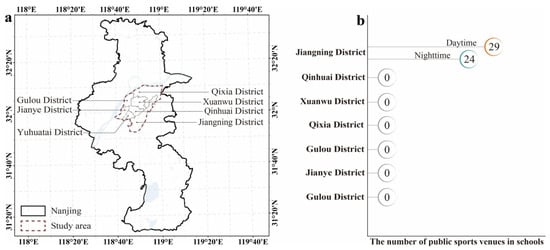
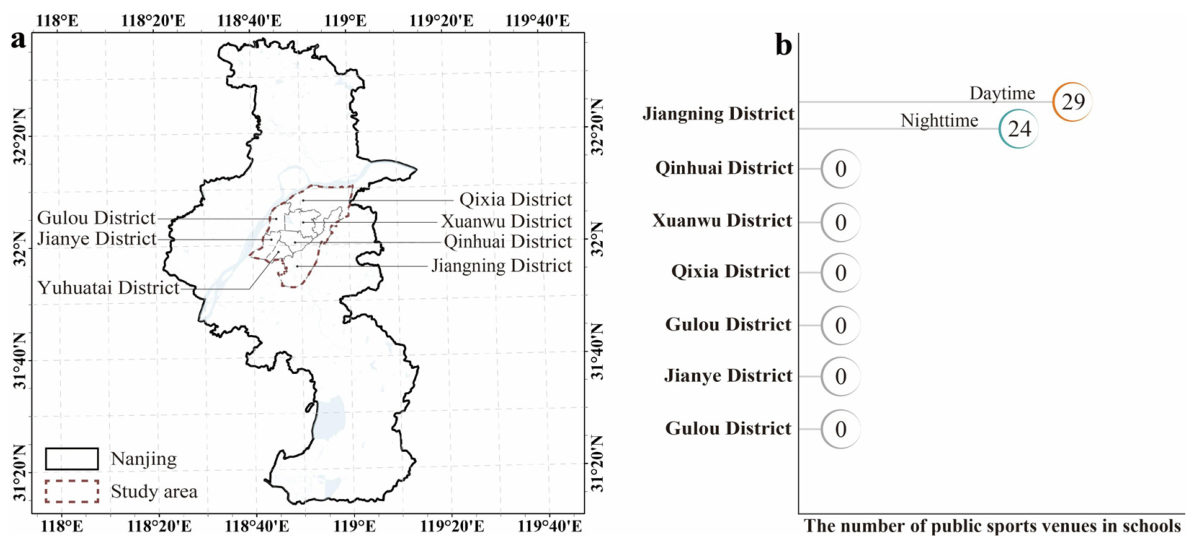
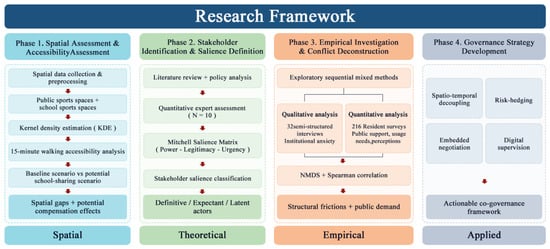
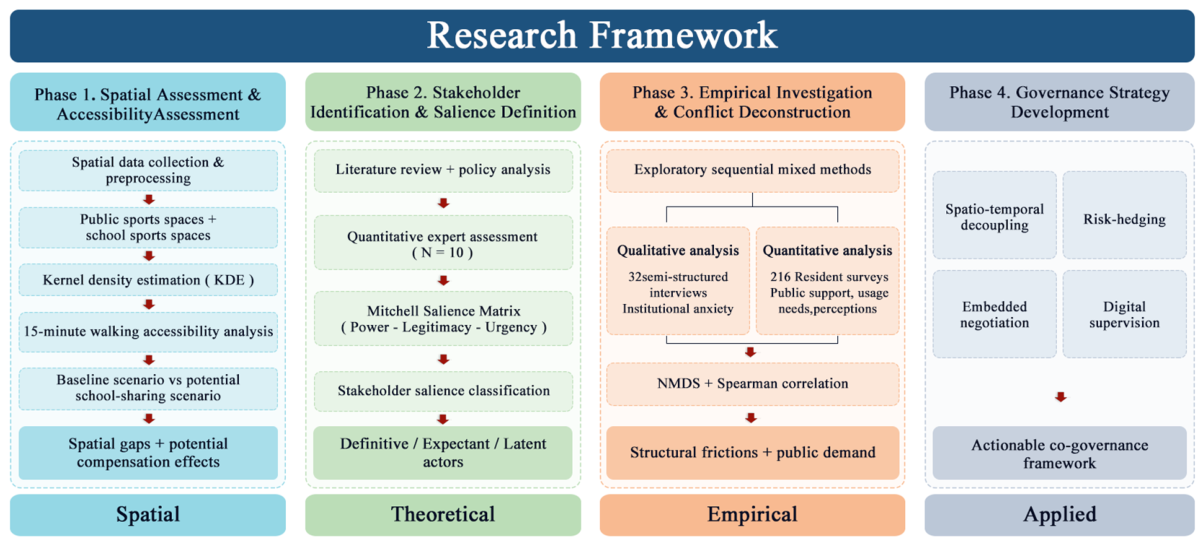
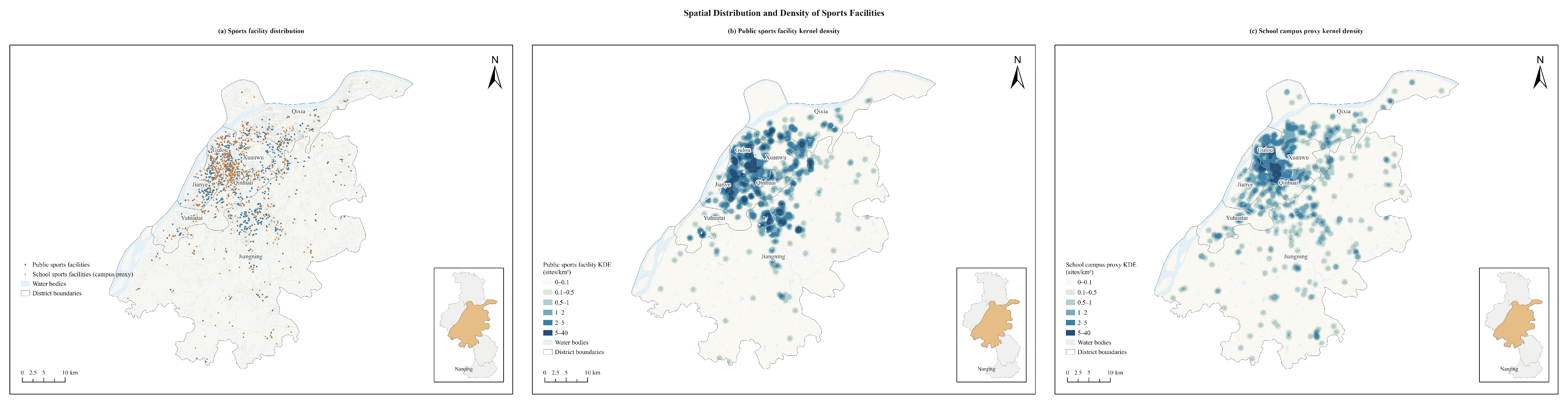
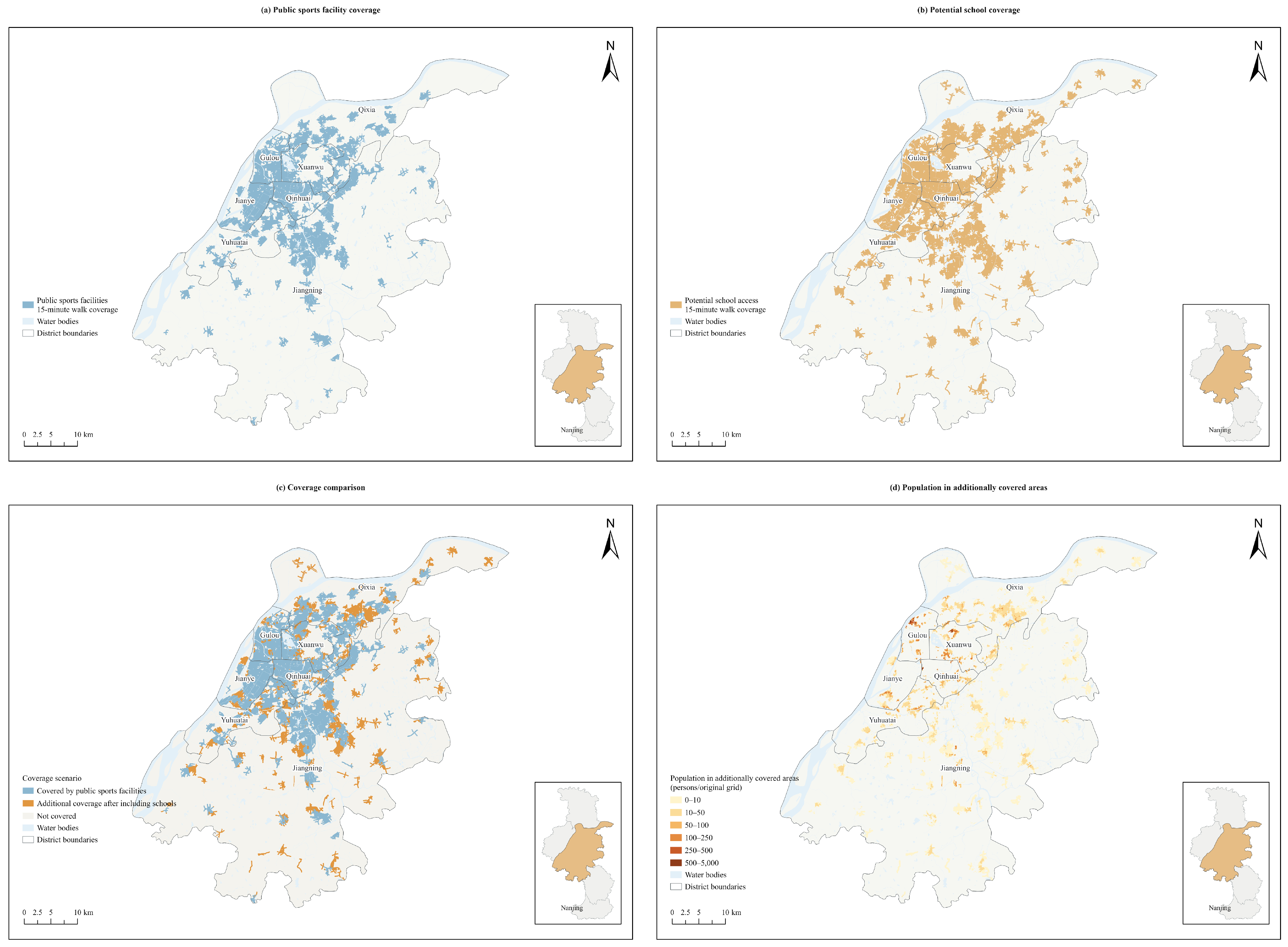
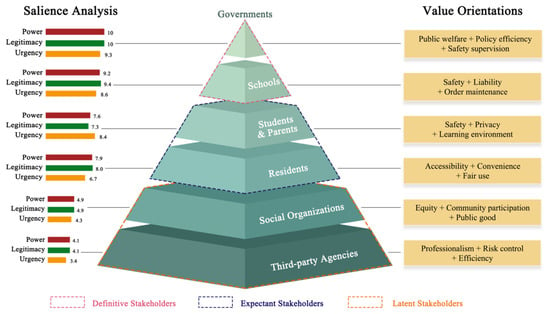
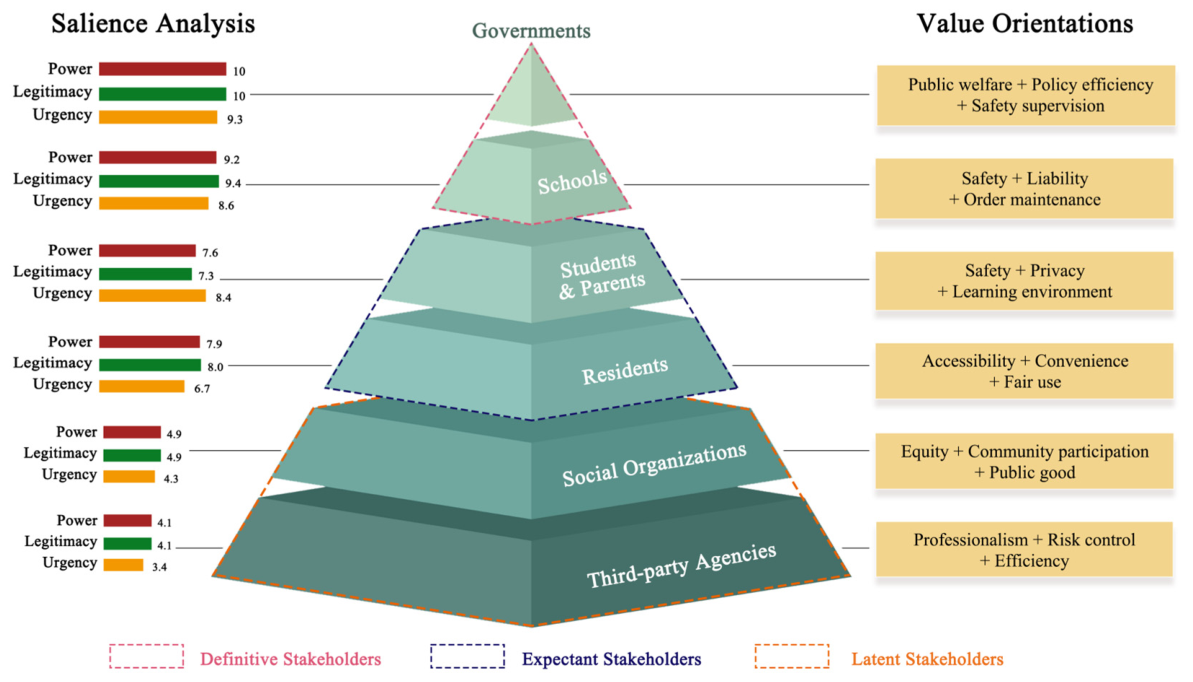
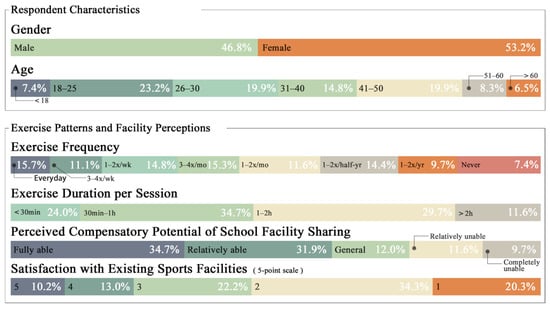
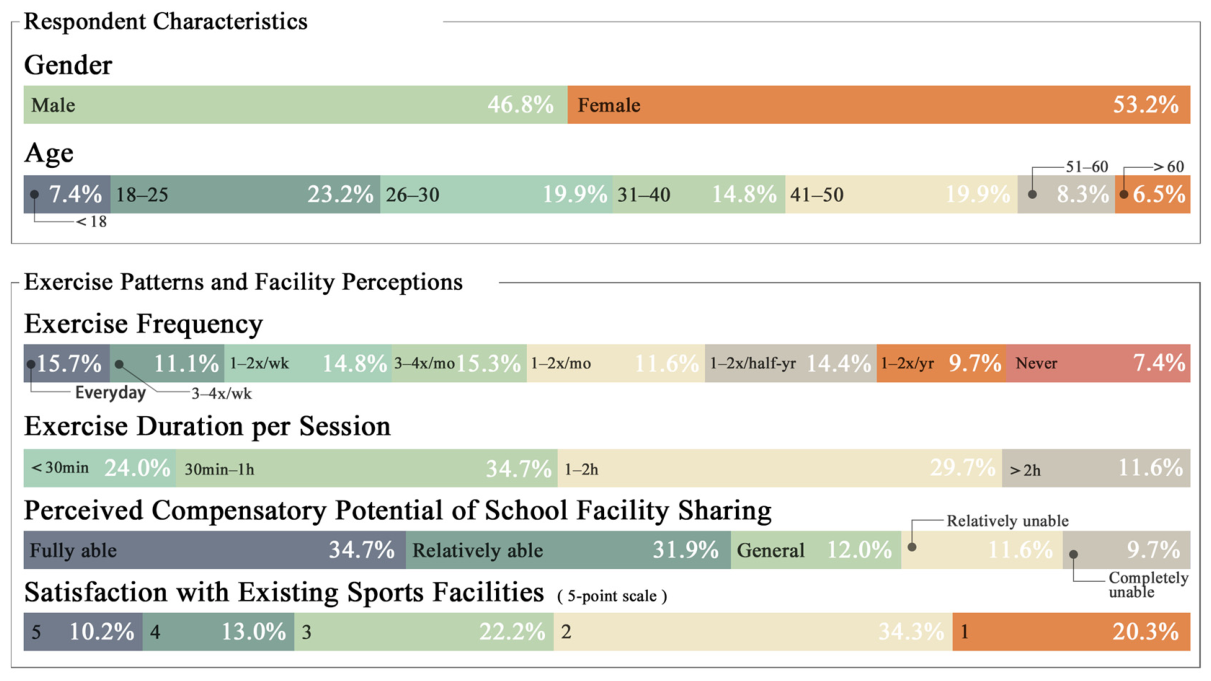
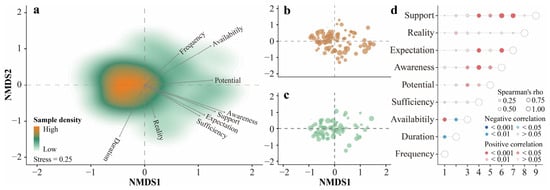
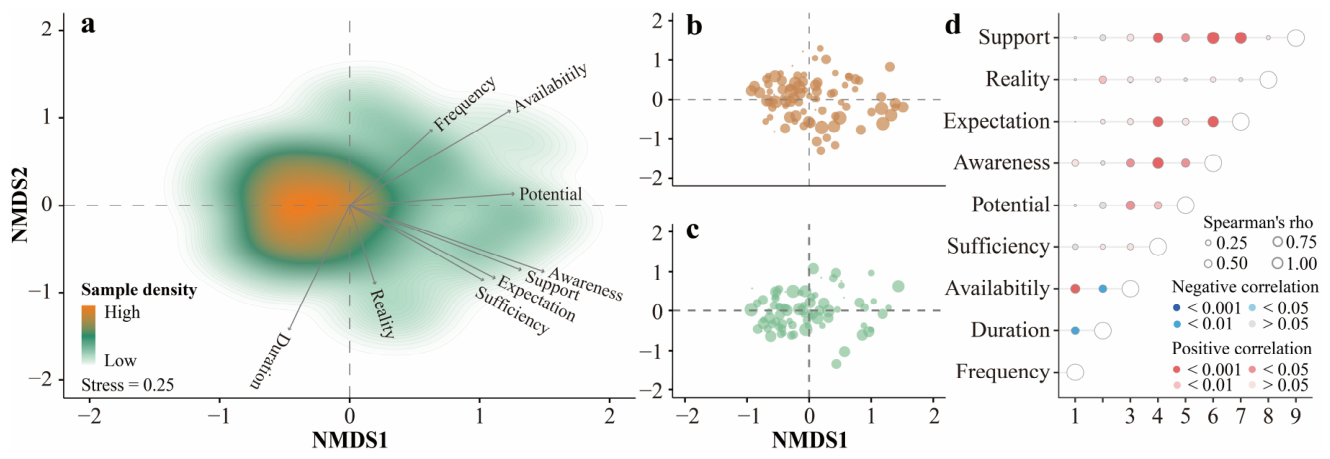
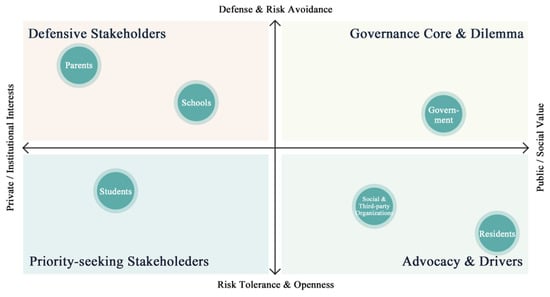
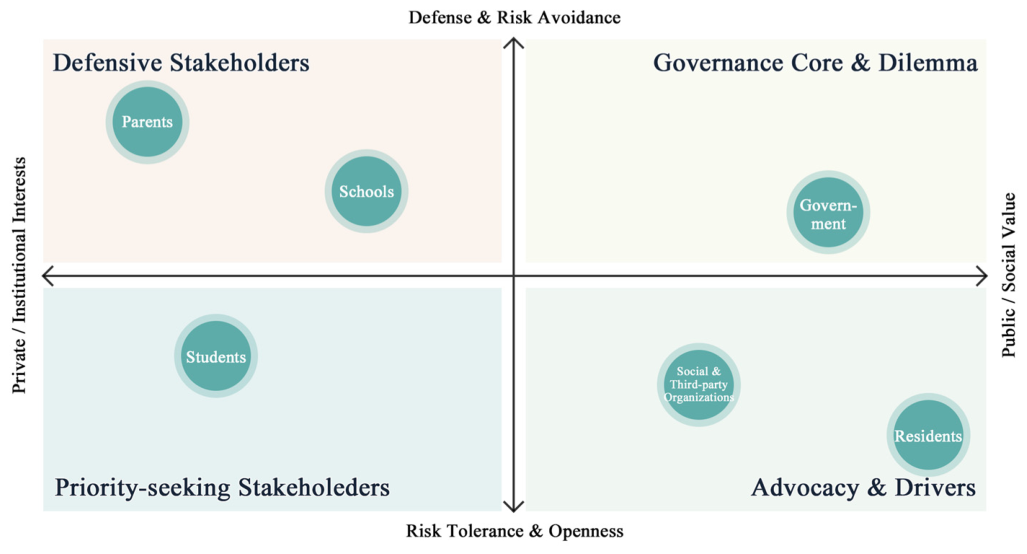
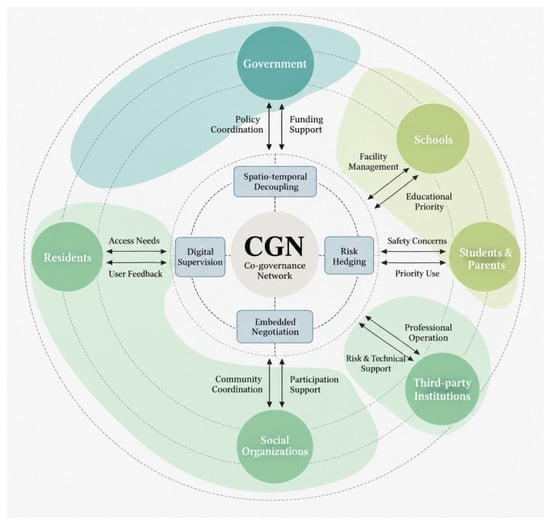
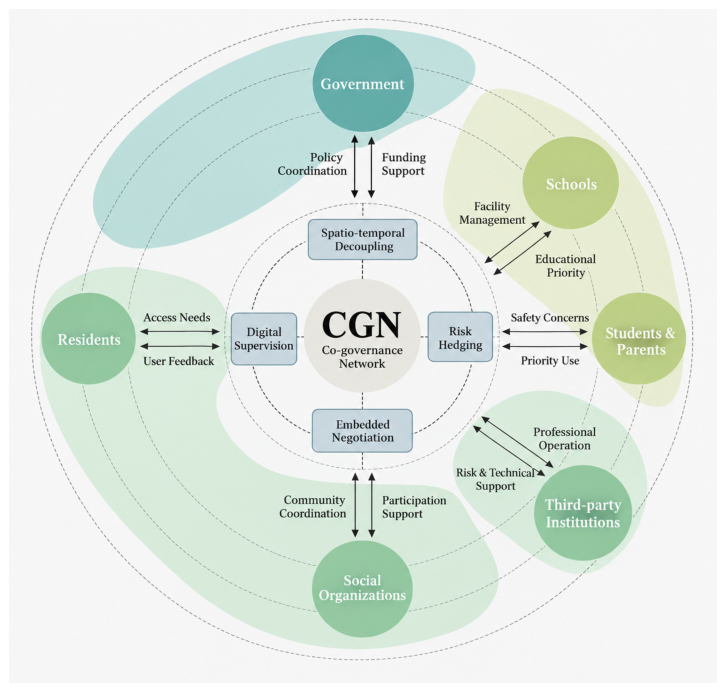
Disclaimer/Publisher’s Note: The statements, opinions and data contained in all publications are solely those of the individual author(s) and contributor(s) and not of MDPI and/or the editor(s). MDPI and/or the editor(s) disclaim responsibility for any injury to people or property resulting from any ideas, methods, instructions or products referred to in the content. |
© 2026 by the authors. Published by MDPI on behalf of the International Society for Photogrammetry and Remote Sensing. Licensee MDPI, Basel, Switzerland. This article is an open access article distributed under the terms and conditions of the Creative Commons Attribution (CC BY) license.