


Abstract
Infectious spleen and kidney necrosis virus (ISKNV) causes systemic infections and high mortality in various freshwater and marine fish species, posing a serious threat to aquaculture and ornamental fish industries. In this study, 72 antiviral compounds were screened against five ISKNV target proteins, DNA polymerase, transcription elongation factor (TFIIS), adenosine triphosphatase (ATPase), ankyrin repeat-containing protein, and major capsid protein (MCP) using molecular docking, followed by in vitro evaluation in dwarf gourami fin (DGF) cells. Fludarabine, liquiritin, and lycorine consistently ranked among the top 20 compounds across all five targets and were selected for further evaluation. Fludarabine and lycorine strongly inhibited MCP, ATPase, and DNA polymerase expression with inhibition rates exceeding 85%. Infectious viral titers were reduced by approximately 39- and 81-fold in the fludarabine- and lycorine-treated groups, respectively, compared with those in the ISKNV-infected control group. Time-course analysis revealed that both compounds suppressed extracellular viral release and delayed the progression of cytopathic effects. These results suggest that multi-target docking combined with in vitro evaluation may be a useful strategy for prioritizing antiviral candidates against ISKNV.
1. Introduction
The infectious spleen and kidney necrosis virus (ISKNV) is a double-stranded DNA virus belonging to the genus Megalocytivirus within the family Iridoviridae [1,2]. ISKNV is known to infect a wide range of freshwater and marine fish species, causing systemic infection, splenomegaly, abnormal swimming behavior, severe tissue necrosis, and high cumulative mortality [3,4,5]. Since its first identification in Mandarin fish in China, ISKNV has been detected in various fish species in several Asian countries, including China, Singapore, Taiwan, Malaysia, and Indonesia [4,6]. More recent reports have described ISKNV infections in India, Australia, Germany, the USA, and Ghana, indicating an expanding geographical distribution [4,7,8,9,10]. ISKNV has also been detected in imported ornamental fish, suggesting that the international ornamental fish trade may contribute to the transboundary dissemination of the virus. In Korea, ISKNV infection was previously reported in freshwater ornamental fish imported from Asian countries, and the virus was recently redetected and isolated from a dwarf gourami (Trichogaster lalius) imported from Singapore in 2023 [5,11]. These findings highlight the need for effective disease prevention and antiviral intervention strategies against ISKNV.
To control Megalocytivirus-associated diseases, several vaccination strategies, including formalin-inactivated, recombinant, and DNA vaccines, have been investigated, particularly against the red sea bream iridovirus (RSIV) and ISKNV [12,13,14]. Formalin-inactivated vaccines against RSIV have been developed and applied in several cultured marine fish species, contributing to disease reduction in aquaculture [15,16]. However, vaccine-based control remains primarily preventive and may be limited by the host species, administration method, outbreak timing, and variable protective efficacy among different viral genotypes [2,12]. In addition, antiviral agents have not been commercially established for ISKNV infection, despite the need for rapid intervention during outbreaks. Therefore, identifying effective antiviral candidates against ISKNV remains an important objective in fish virology and aquaculture disease management.
Various approaches have been explored for discovering antiviral compounds, including high-throughput screening, natural compound screening, drug repurposing, and structure-based virtual screening [17,18,19]. Among these, molecular docking has gained prominence as a rapid and cost-effective tool for predicting ligand–protein interactions and prioritizing potential antiviral candidates before biological validation [19,20,21]. Previous studies have also demonstrated that predictive modeling approaches, including molecular docking, can provide an efficient framework for prioritizing therapeutic candidates across diverse disease models and viral pathogens [20,21]. The large ISKNV genome, which contains more than 120 predicted open reading frames (ORFs), necessitates rational target selection in structure-based antiviral screening [1]. Because many ISKNV proteins have not yet been functionally characterized, prioritizing the viral proteins involved in replication, transcription, virion formation, and host interactions may improve the efficiency and biological relevance of docking-based antiviral discovery. Docking-based antiviral screening has been applied to multiple viral pathogens, including the influenza virus, herpesviruses, coronaviruses, and dengue virus [21,22,23,24]. Recent studies applied docking-based methods to viruses affecting aquatic animals, highlighting the potential value of this strategy in fish antiviral research [25]. However, docking predictions alone are insufficient to fully explain antiviral effectiveness because computational interaction scores do not always correlate with actual viral inhibition under biological conditions [26,27].
Because the experimental evaluation of large compound libraries is time-consuming and labor-intensive, structure-based molecular docking provides an efficient strategy for prioritizing potential antiviral candidates for subsequent biological validation. Therefore, confirming the antiviral potential of docking-selected candidates requires biological validation using suitable infection models. In this study, 72 antiviral compounds were screened against five ISKNV target proteins using a multi-target molecular docking approach. To evaluate the biological relevance of the docking-based selection, the selected compounds were further evaluated using an in vitro dwarf gourami fin (DGF) cell infection model through cytotoxicity analysis to assess compound safety, viral gene expression assays to determine transcriptional inhibition, infectious viral titer quantification to evaluate productive virus replication, time-course cytopathic effect (CPE) observation to monitor virus-induced cellular damage, and extracellular viral load analysis to assess viral release. Together, these complementary assays provided a comprehensive biological evaluation of the docking-selected candidate compounds. This study aimed to evaluate the applicability of docking-based antiviral screening for ISKNV and identify potential antiviral candidates for further investigation.
2. Materials and Methods
2.1. Platform for Molecular Modeling
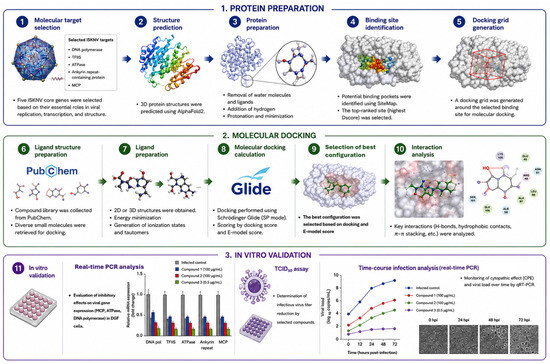
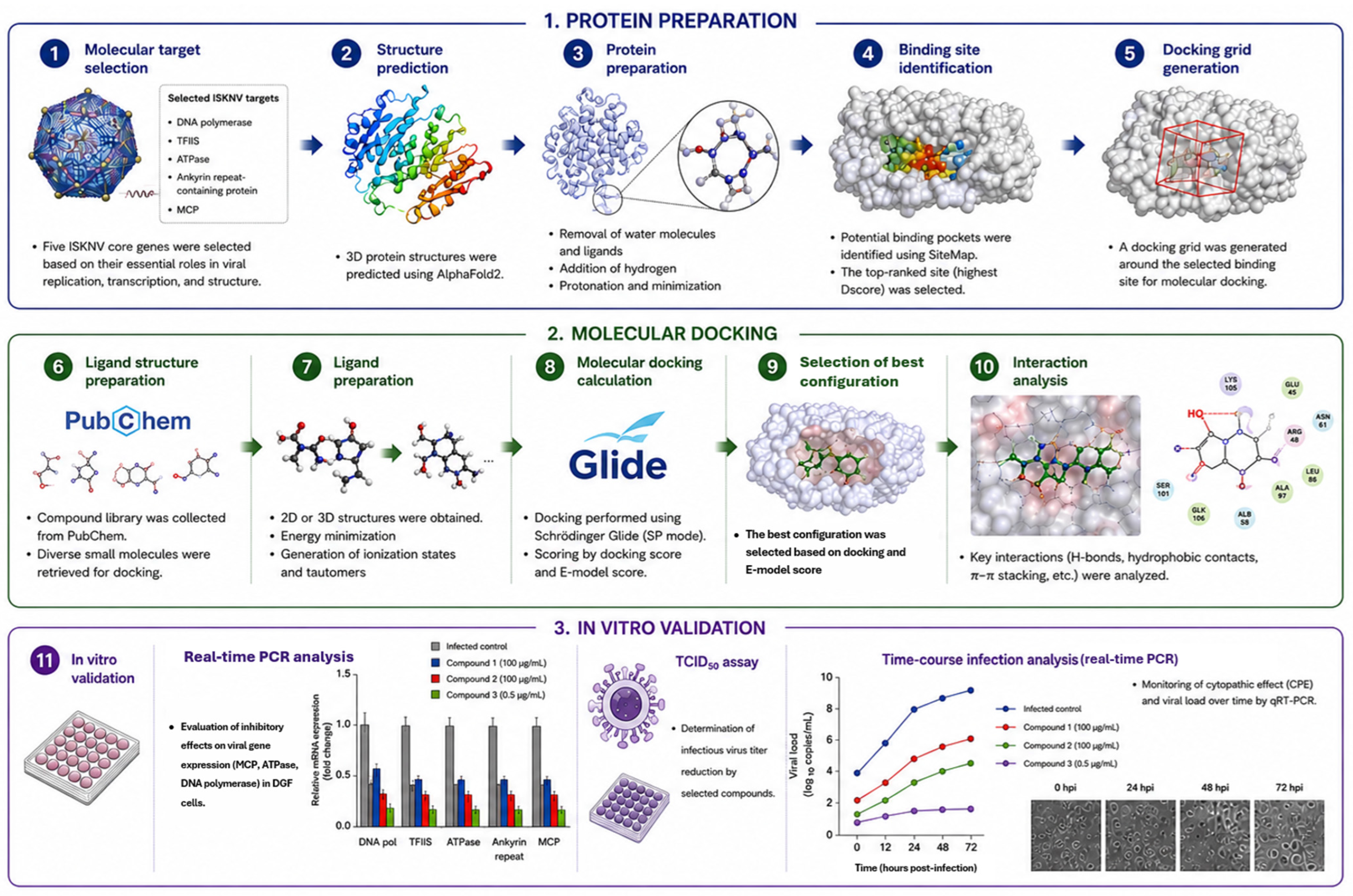
The Schrödinger Maestro suite, version 14.5 (Schrödinger, LLC, New York, NY, USA), was used for all the computational analyses. The workflow included the preparation of ligands and proteins, prediction of binding pockets using SiteMap, receptor grid generation with Glide, molecular docking, calculation of docking scores, and visualization of ligand–protein interactions. The experimental workflow used in this study is illustrated in Figure 1.
Figure 1.
Schematic workflow of infectious spleen and kidney necrosis virus (ISKNV) target selection, protein structure prediction, molecular docking, candidate prioritization, and subsequent in vitro evaluation.
2.2. Ligand Preparation
A total of 72 compounds were selected to form ligand libraries for molecular docking analysis. Chemical information for each compound, including the compound name, PubChem Compound Identifier (CID), Chemical Abstracts Service (CAS) number, and molecular formula, was obtained from the PubChem database. The initial compound library was established through an extensive literature survey of compounds previously reported to exhibit antiviral activity against DNA and RNA viruses, including human and aquatic animal viruses. Candidate compounds were collected based on published evidence of antiviral efficacy or their potential for drug repurposing as antiviral agents, regardless of their original clinical indications. The resulting library comprised FDA-approved drugs, investigational or non-approved compounds, natural products, and other repurposed compounds, which were subsequently classified according to their pharmacological characteristics, biological applications, and regulatory status (Table 1). Chemical structures were imported into Schrödinger Maestro and prepared for molecular docking using the LigPrep module. During ligand preparation, three-dimensional structures were created, ionization states were assigned, and energy-minimized ligand conformations were produced for subsequent docking analysis.
Table 1.
Antiviral compounds used for molecular docking analysis against selected ISKNV target proteins. Compounds were collected through literature reports describing antimicrobial activity and classified according to their reported pharmacological or chemical characteristics. PubChem compound identifier (CID) and molecular formulas were provided for compound identification and reproducibility.
2.3. Selection and Sequence Preparation of ISKNV Target Proteins
Viral target protein candidates were identified by examining the conserved core genes of ISKNV and their predicted functional relevance to viral replication, transcription, viral structure, and host interaction, using the reference genome sequence of ISKNV (GenBank accession no. AF371960). Based on this screening, five ISKNV proteins were selected for molecular docking studies: DNA polymerase, transcription elongation factor (TFIIS), adenosine triphosphatase (ATPase), ankyrin repeat-containing protein, and major capsid protein (MCP) (Table 2).
Table 2.
Functional classification and rationale for selection of ISKNV proteins used for molecular docking analysis based on the reference genome AF371960.
Primers were designed to amplify the complete ORFs of the selected genes from the ISKNV-SAY-23 isolate, which was detected in dwarf gourami imported from Singapore in 2023 [5]. Polymerase chain reaction (PCR)-amplified products were cloned using the T-Blunt™ PCR cloning kit (SolGent, Daejeon, Republic of Korea) according to the manufacturer’s instructions. The cloned inserts were subjected to Sanger sequencing, and the confirmed nucleotide sequences were translated into amino acid sequences for subsequent structure prediction and molecular docking studies. The primer sequences and expected product sizes for complete ORF amplification are listed in Table 3.
Table 3.
Primers used to amplify complete open reading frames (ORFs) of selected ISKNV genes.
2.4. Protein Structure Prediction, Preparation, SiteMap Analysis, and Receptor Grid Generation
The amino acid sequences of the selected ISKNV proteins were used as input for three-dimensional structure prediction with ColabFold version 1.6.1 (AlphaFold2 using MMseqs2). The protein models predicted by AlphaFold were exported in the Protein Data Bank (PDB)-format files and imported into Schrödinger Maestro for protein preparation. The protein models were processed using the Protein Preparation Wizard, involving the assignment of bond orders, addition of hydrogen atoms, optimization of hydrogen-bonding networks, and restrained energy minimization.
Potential ligand-binding pockets were predicted using the SiteMap module of Schrödinger Maestro. The binding sites were evaluated based on pocket size, DScore, SiteScore, and pocket volume. For each target protein, docking grids were generated using the Glide receptor grid-generation module based on the predicted binding sites. For ATPase, two independent docking grids were generated because distinct SiteMap regions were selected: one grid included site 1, whereas the other grid included sites 2, 3, 4, and 5. SiteMap and grid selection criteria are listed in Table 4.
Table 4.
SiteMap analysis and binding pocket prediction of selected ISKNV proteins used for molecular docking. SiteScore and DScore values were used to identify potential ligand-binding sites for grid generation.
2.5. Molecular Docking and Interaction Analysis
Molecular docking was executed using the Schrödinger Maestro Glide module. Ligands, once prepared, were docked into the receptor grids of each selected ISKNV protein using the standard precision (SP) mode. The docking results were evaluated using Glide docking and E-model scores. The Glide docking score is an empirical scoring function used to estimate the relative favorability of ligand–protein interactions, whereas the E-model score is primarily used to rank ligand poses by combining the Glide docking score with energetic terms, including Coulombic, van der Waals, and ligand strain energies. Therefore, lower (more negative) docking scores indicate more favorable predicted ligand–protein interactions, and lower E-model scores indicate more favorable and stable predicted binding poses.
For each target protein, the docking scores were ranked to identify the highest-scoring compounds. The top 20 compounds for each of the five ISKNV target proteins were extracted and compared across all the targets. Compounds that consistently appeared in the top 20 list for all five target proteins were prioritized as candidate compounds for further in vitro evaluations. Based on these criteria, fludarabine, liquiritin, and lycorine were selected for assessment. For representative interaction analysis, the compound with the highest docking score among the three selected candidates for each target protein was visualized. Three-dimensional binding poses and two-dimensional ligand–protein interaction maps were generated using the Schrödinger Maestro software to identify key ligand–residue interactions within the predicted docking pockets.
2.6. Cell Culture and Compounds
DGF cells previously established in our laboratory were used for all the in vitro assays. The cells were maintained at 28 °C in Leibovitz’s medium (L-15; Gibco, Waltham, MA, USA) supplemented with 10% fetal bovine serum (FBS; Gibco, Waltham, MA, USA), non-essential amino acids (NEAA; Gibco, Waltham, MA, USA), and hydroxyethyl piperazine ethane sulfonic acid (HEPES; Gibco, Waltham, MA, USA), as previously described, with minor modifications [30].
Fludarabine and lycorine were purchased from MedChemExpress (MCE; Monmouth Junction, NJ, USA), and liquiritin was purchased from Sigma-Aldrich (St. Louis, MO, USA). Stock solutions (20 mg/mL) of each compound were prepared by dissolving 10 mg of compound in 500 μL of dimethyl sulfoxide (DMSO). These stock solutions were aliquoted and stored at −80 °C until use. For the in vitro experiments, stock solutions were diluted with L-15 medium to obtain the specified working concentrations. The final concentration of DMSO in the treated samples was adjusted to be less than 0.01%, which was confirmed to be non-toxic to DGF cells.
2.7. Cytotoxicity Assay
The cytotoxic effects of fludarabine, liquiritin, and lycorine on DGF cells were evaluated using the CCK-8 assay. Briefly, DGF cells were seeded in a monolayer in 96-well plates at a density of 4 × 10⁴ cells/well and incubated at 28 °C until cell attachment. The cells were exposed to different concentrations of each compound. After 72 h of treatment, the CCK-8 reagent (Sigma-Aldrich, St. Louis, MO, USA) was added to each well, and absorbance was measured at 450 nm using a microplate spectrophotometer (Mobi, MicroDigital Co., Ltd., Seongnam, Republic of Korea). Cell viability was calculated in comparison to the untreated control group. Dose–response curves were generated using nonlinear regression using a four-parameter logistic model in GraphPad Prism version 10.6. The concentrations for the fludarabine and liquiritin cytotoxicity tests were selected according to Baek et al. (2025) [31], and lycorine was used at concentrations below its cytotoxic range.
2.8. Analysis of Viral Gene Expression Following Compound Treatment
To evaluate the inhibitory effects of selected compounds on viral gene expression, DGF cells were seeded in 24-well plates at a density of 2 × 10⁵ cells/well and incubated until a confluent monolayer was formed. The cells were infected with ISKNV at 1 × 10⁵ median tissue culture infectious dose (TCID50) and incubated at 28 °C for 2 h to facilitate viral adsorption. After adsorption, unbound viral particles were removed, and the cells were rinsed twice with phosphate-buffered saline (PBS). Fresh L-15 medium with 5% FBS was then added, containing either fludarabine (100 μg/mL), liquiritin (100 μg/mL), or lycorine (0.5 μg/mL). The infected cells were incubated at 28 °C for 72 h. After 72 h post-infection, the culture supernatant was discarded, and the cells were washed twice with PBS. Total RNA was extracted using the yesRTM Total RNA Extraction Kit (GenesGen, Busan, Republic of Korea) according to the manufacturer’s instructions. The concentration and purity of RNA were measured using a NanoVue Plus spectrophotometer (GE Healthcare, Chicago, IL, USA), and RNA samples with acceptable A260/A280 ratios were used for cDNA synthesis. cDNA was synthesized using a PrimeScript™ 1st cDNA Synthesis Kit (Takara, Shiga, Japan) according to the manufacturer’s instructions.
The mRNA expression levels of the ISKNV MCP, ATPase, and DNA polymerase genes were quantified through real-time PCR using 2 × qPCRBIO SyGreen Blue Mix Lo-ROX (PCR Biosystems Ltd., London, UK) in a qTower3 Real-Time Thermocycler (Analytik Jena GmbH, Jena, Germany). Each PCR included gene-specific forward and reverse primers at a final concentration of 1 µM. The real-time PCR conditions and primer sequences are presented in Table 5. The experiment was conducted in triplicate, using DGF cell β-actin as an endogenous control. Specificity was verified with a melt curve, and the relative transcription levels of the target gene were analyzed using the comparative Ct method (2−ΔΔCt) [32]. Finally, inhibition percentages were calculated as follows: Inhibition (%) = {1 − (2−ΔΔCt of tested sample/2−ΔΔCt of control sample)} × 100. Statistical analyses were performed using one-way analysis of variance (ANOVA) with GraphPad Prism version 10.6.
Table 5.
Primers and real-time PCR conditions used for in vitro evaluation of ISKNV gene expression.
2.9. Determination of Viral Titers Following Compound Treatment
To determine the effects of the selected compounds on the production of infectious virus, viral titers were measured using the TCID50 assay [35]. DGF cells were seeded in 96-well plates at a density of 4 × 10⁴ cells/well and incubated until a monolayer formed. Culture supernatants containing ISKNV were serially diluted 10-fold and inoculated into DGF cells. After 2 h of adsorption at 28 °C, the inoculum was discarded, and the cells were washed twice with PBS to eliminate any unbound viral particles. For treatment, L-15 medium supplemented with 5% FBS and the test compound was used. The treatment concentrations were fludarabine at 100 μg/mL, liquiritin at 100 μg/mL, and lycorine at 0.5 μg/mL. At 10 days post-infection, CPE were observed, and viral titers were calculated as TCID50/mL.
2.10. Time-Course Analysis of Cytopathic Effects and Extracellular Viral Load
For time-course analysis, DGF cells were seeded in 24-well plates at a density of 2 × 10⁵ cells/well and incubated until a confluent monolayer was formed. The cells were infected with ISKNV at 1 × 10⁵ TCID50 and incubated at 28 °C for 2 h. After viral adsorption, the inoculum was removed, and the cells were washed twice with PBS. Fresh L-15 medium containing 5% FBS and each compound was added (fludarabine, 100 μg/mL; liquiritin, 100 μg/mL; and lycorine, 0.5 μg/mL). Cell morphology and CPE were monitored from 72 to 144 h post-infection using a microscope.
To quantify the extracellular viral load, culture supernatants were collected at 24, 48, 72, 96, 120, and 144 h post-infection. Viral DNA was extracted from the supernatant using the yesGTM Cell Tissue Mini Kit (GenesGen, Busan, Republic of Korea). Real-time PCR targeting the ISKNV MCP gene was performed using a TaqMan probe-based assay, as described by Kim et al. (2021) [34]. Viral load was calculated based on the MCP gene copy number (Table 5), and log10-transformed values were used for subsequent statistical analyses.
3. Results
3.1. Selection of ISKNV Target Proteins and Molecular Docking Analysis
Five ISKNV viral proteins were selected as molecular docking targets based on their conserved core gene functions and predicted biological relevance to viral DNA replication, transcriptional regulation, virion assembly, host interaction, and viral structure (Table 3). Complete ORFs of the selected genes were amplified, cloned, and confirmed by sequencing. The confirmed nucleotide sequences were translated into amino acid sequences and used for downstream structural predictions and docking analyses (Table A1). Molecular docking was performed against the selected ISKNV target proteins using a library of 72 compounds, and docking and E-model scores were calculated for each ligand–protein complex (Table 6). For each target protein, the top 20 compounds based on docking scores were extracted and compared across the five target proteins. Fludarabine, liquiritin, and lycorine were the only compounds consistently included among the top 20 docking-ranked compounds across all five target proteins. These compounds were therefore selected for subsequent in vitro evaluation because they demonstrated broad predicted binding compatibility rather than target-specific affinity (Table 7).
Table 6.
Docking and E-model scores of 72 antiviral-related compounds against five selected ISKNV target proteins. Lower docking and E-model scores indicate more favorable predicted binding affinity and ligand–protein interaction stability. Color gradients were applied to the docking scores for each target protein column to facilitate visual comparison, with red indicating lower (more favorable) docking scores and green indicating higher (less favorable) docking scores.
Table 7.
Compounds consistently identified among the top 20 docking candidates across the five ISKNV target proteins were selected for subsequent in vitro evaluation.
3.2. Representative Ligand–Protein Interaction Analysis
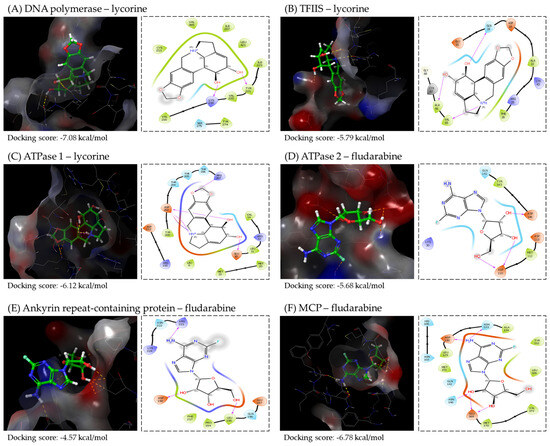
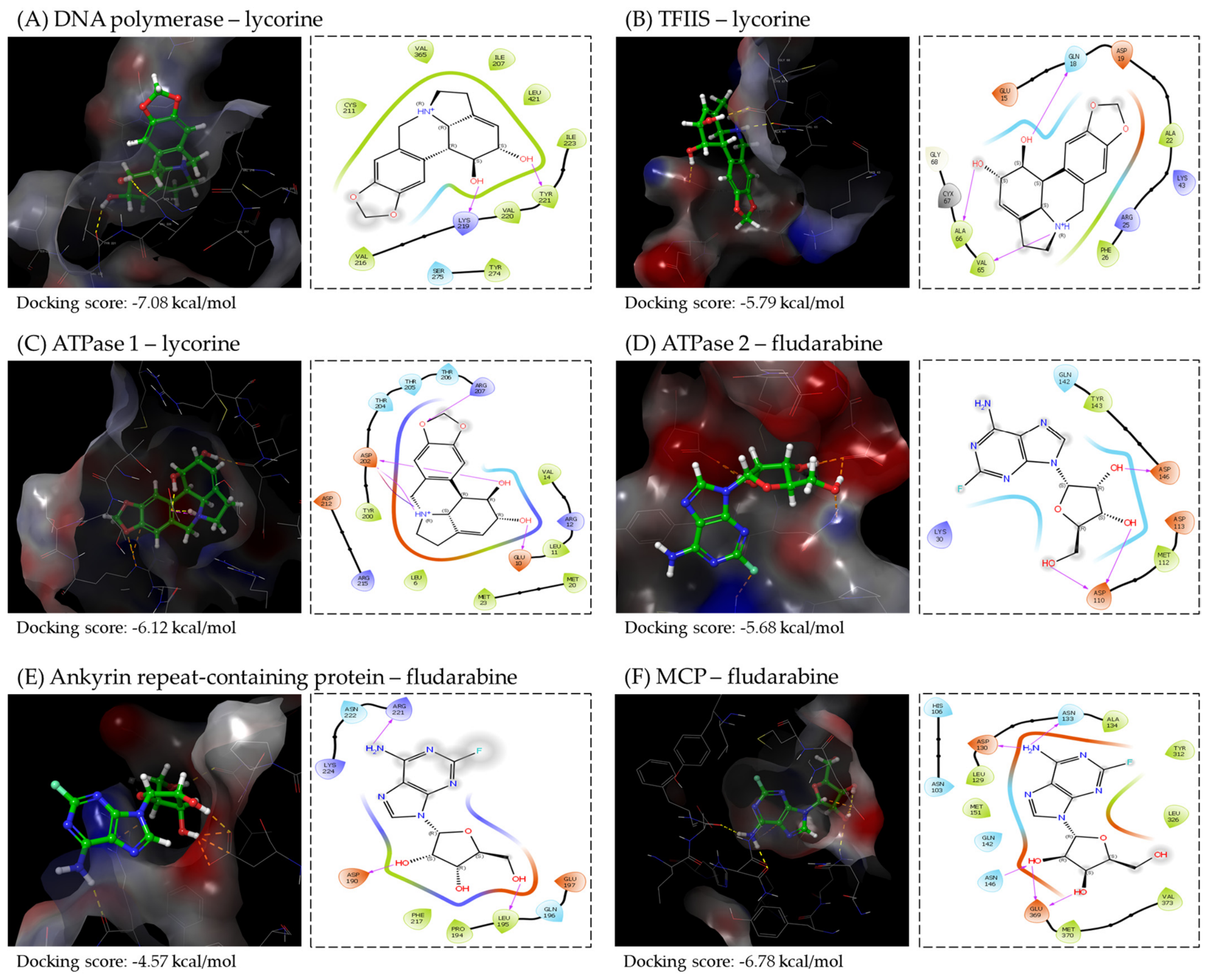
Representative ligand–protein interactions were visualized for each ISKNV target protein using the compound that showed the highest docking score among the three selected candidates. The complexes analyzed included DNA polymerase–lycorine, TFIIS–lycorine, ATPase 1–lycorine, ATPase 2–fludarabine, ankyrin repeat-containing protein–fludarabine, and MCP–fludarabine (Figure 2). The selected compounds were positioned within the predicted docking pockets and formed multiple interactions with surrounding amino acid residues. The three-dimensional docking poses showed that the ligands were accommodated within the protein surface cavities. In addition, two-dimensional interaction maps revealed hydrogen bonding, polar contacts, and hydrophobic interactions with residues located near the predicted binding sites, suggesting that the selected compounds have potential binding compatibility with multiple ISKNV target proteins. The principal hydrogen-bonding and hydrophobic interactions identified for the representative docking complexes are summarized in Table 8.
Figure 2.
Molecular docking interactions between selected compounds and ISKNV target proteins. For each target protein, the highest-ranked compound among the three selected candidates was used for the interaction analysis. Three-dimensional binding poses and corresponding two-dimensional interaction maps were generated to visualize ligand-binding within the predicted docking pockets.
Table 8.
Summary of the principal ligand–protein interactions identified from representative molecular docking poses of selected antiviral compounds with ISKNV target proteins. Hydrogen bonding and hydrophobic interactions were identified from two-dimensional interaction maps generated using the Schrödinger Maestro Glide module.
3.3. Cytotoxicity of Selected Compounds on DGF Cells
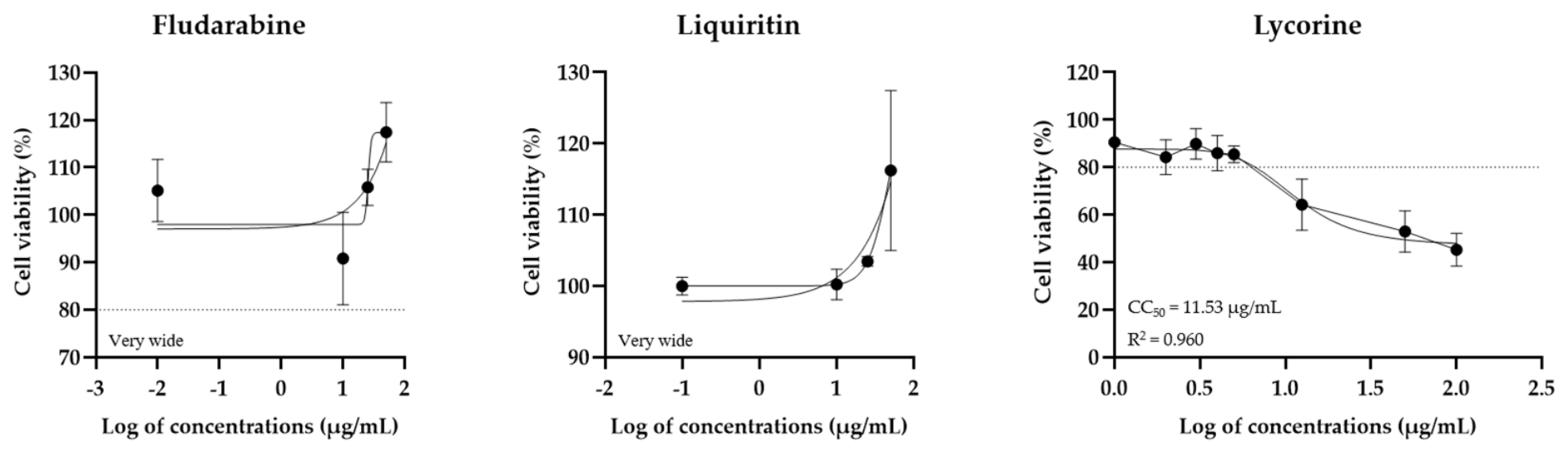
The treatment concentrations of fludarabine, liquiritin, and lycorine were determined using previous cytotoxicity data and further cytotoxicity evaluations in DGF cells (Figure A1). Based on the cytotoxicity findings from our previous study [31], fludarabine and liquiritin were used at a concentration of 100 μg/mL for subsequent antiviral testing. The cytotoxicity of lycorine was evaluated in DGF cells using a CCK-8 assay after 72 h of exposure to the compound. Lycorine exhibited concentration-dependent cytotoxicity, with a calculated CC50 value of 11.53 μg/mL. Although the 72 h cytotoxicity assay showed detectable cell viability at concentrations exceeding 0.5 μg/mL, extended incubation during the infection time-course analysis showed morphological changes at 1–10 μg/mL concentrations. Therefore, lycorine was used at 0.5 μg/mL to minimize cytotoxic effects during extended antiviral evaluation.
3.4. Antiviral Effects of Selected Compounds on ISKNV Viral Gene Expression
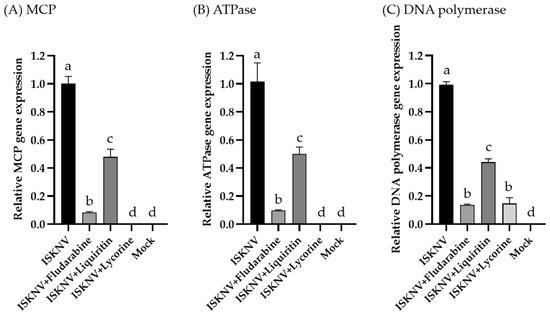
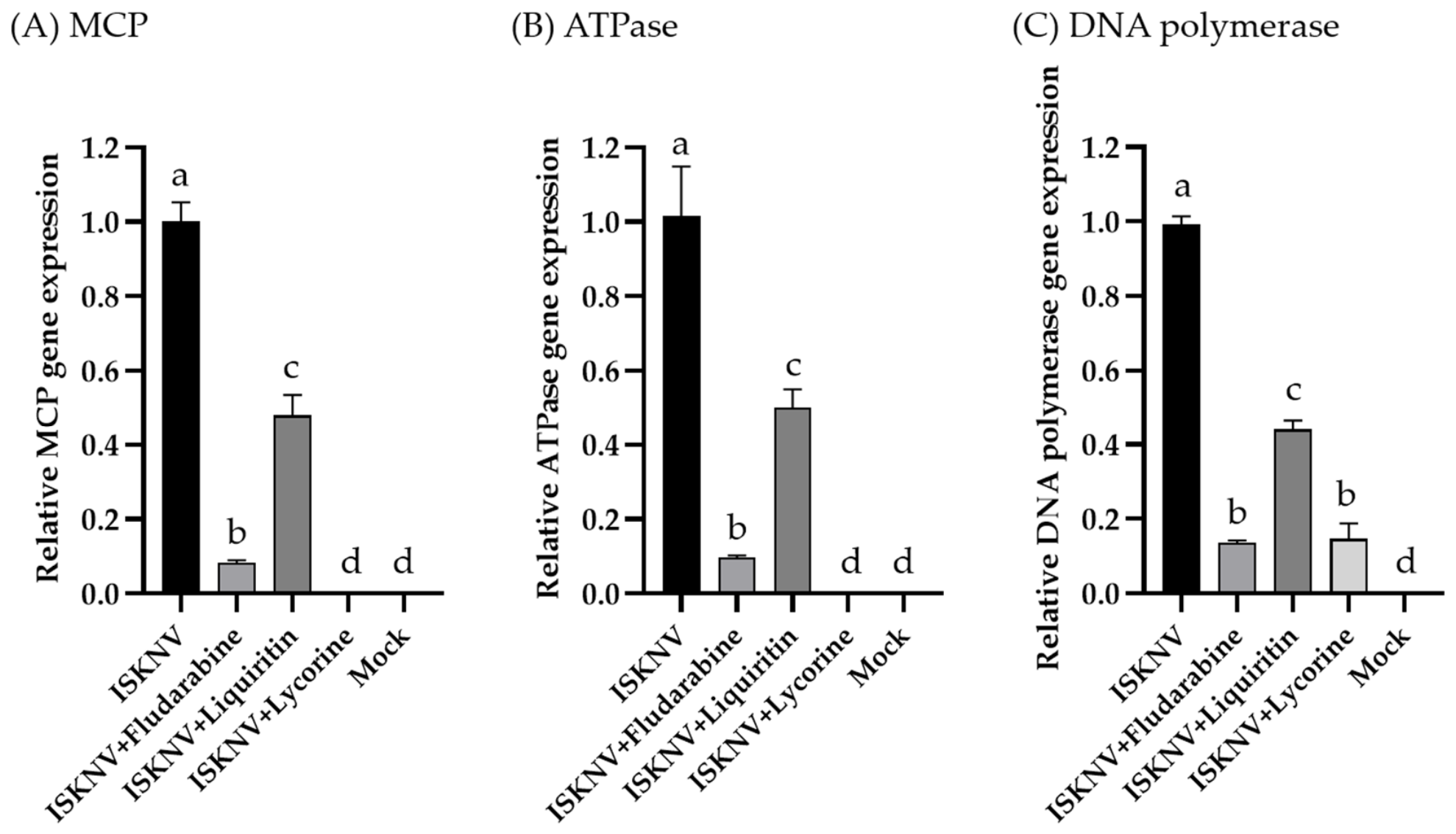
To assess the antiviral effects of the selected compounds on viral gene expression, ISKNV-infected DGF cells were treated with fludarabine, liquiritin, or lycorine, and the relative mRNA expression levels of MCP, ATPase, and DNA polymerase were analyzed 72 h post-infection using real-time PCR. All three compounds reduced the expression levels of ISKNV target genes to varying degrees compared to the infected control (p > 0.05; Figure 3). The calculated inhibition rates are listed in Table 9. In this study, inhibition rates greater than 80% were considered to indicate strong inhibitory effects. Fludarabine showed strong inhibition of all three viral genes, with inhibition rates of 91.67 ± 0.72%, 90.66 ± 0.35%, and 86.11 ± 0.82% for MCP, ATPase, and DNA polymerase, respectively. Liquiritin exhibited moderate inhibitory effects, with inhibition rates of 52.11 ± 5.60%, 50.33 ± 5.16%, and 56.41 ± 2.59% for MCP, ATPase, and DNA polymerase, respectively. Lycorine also showed strong inhibition of MCP, ATPase, and DNA polymerase expression, with inhibition rates of 99.81 ± 0.08%, 99.66 ± 0.09%, and 85.46 ± 4.33%, respectively.
Figure 3.
Relative mRNA expression levels of MCP, ATPase, and DNA polymerase in ISKNV-infected DGF cells 72 h post-infection. Expression levels were quantified by real-time PCR and normalized to β-actin. Data are presented as the mean ± SD from three independent experiments. Statistical analysis was performed using one-way analysis of variance (ANOVA) followed by Tukey’s multiple comparison test in GraphPad Prism version 10.6. Different letters indicate statistically significant differences among groups (p < 0.05).
Table 9.
Inhibition rates of selected compounds against MCP, ATPase, and DNA polymerase gene expression compared to the ISKNV-infected control group at 72 h post-infection.
3.5. Effects of Treatments on Infectious ISKNV Production
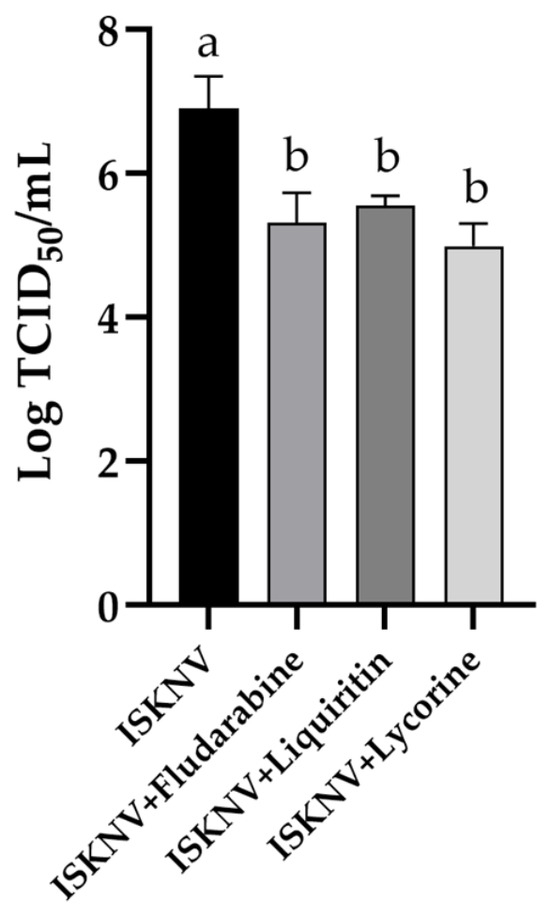
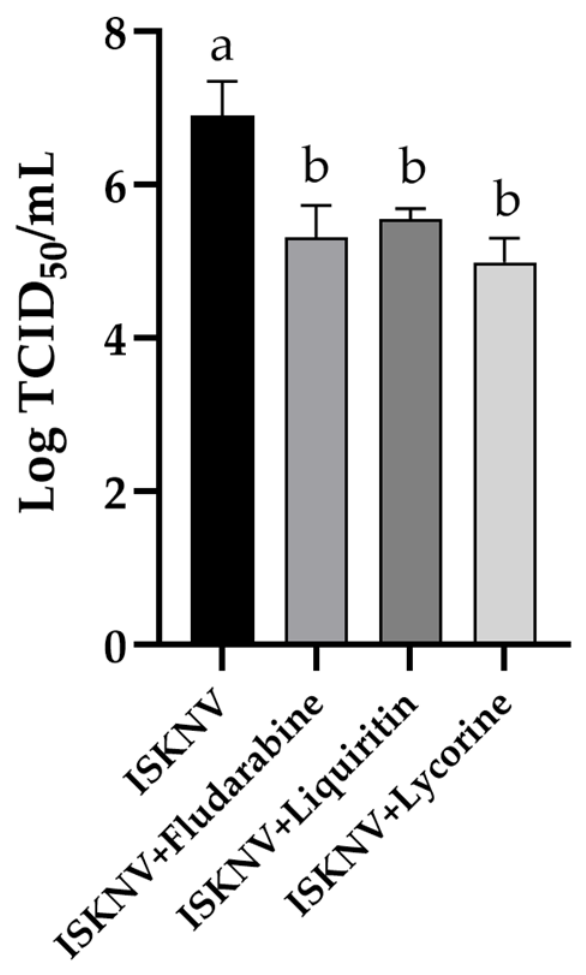
To determine whether the selected compounds affected infectious virus production, extracellular viral titers were measured using the TCID50 assay after applying the test compound treatment. Across three independent experiments, the ISKNV-infected control group exhibited an infectious viral titer of 6.90 ± 0.44 log10 TCID50/mL. The viral titers of the fludarabine-, liquiritin-, and lycorine-treated groups were 5.31 ± 0.42, 5.55 ± 0.14, and 4.99 ± 0.31 log10 TCID50/mL, respectively (Figure 4). Compared with the infected control group, the treatments with fludarabine, liquiritin, and lycorine resulted in reduced extracellular infectious viral titers by approximately 39-fold, 22-fold, and 81-fold, respectively. Among the compounds tested, lycorine was the most effective in decreasing infectious viral titers under the test conditions.
Figure 4.
Infectious ISKNV titers in DGF cells following treatment with selected compounds at single concentrations. Viral titers were measured using the TCID50 assay following treatment with fludarabine (100 μg/mL), liquiritin (100 μg/mL), and lycorine (0.5 μg/mL). Data are presented as mean ± SD from three independent experiments. Statistical analysis was performed using one-way ANOVA followed by Tukey’s multiple comparison test. Statistically significant differences between groups are indicated by different letters (p < 0.05).
3.6. Time-Course of CPE Progression
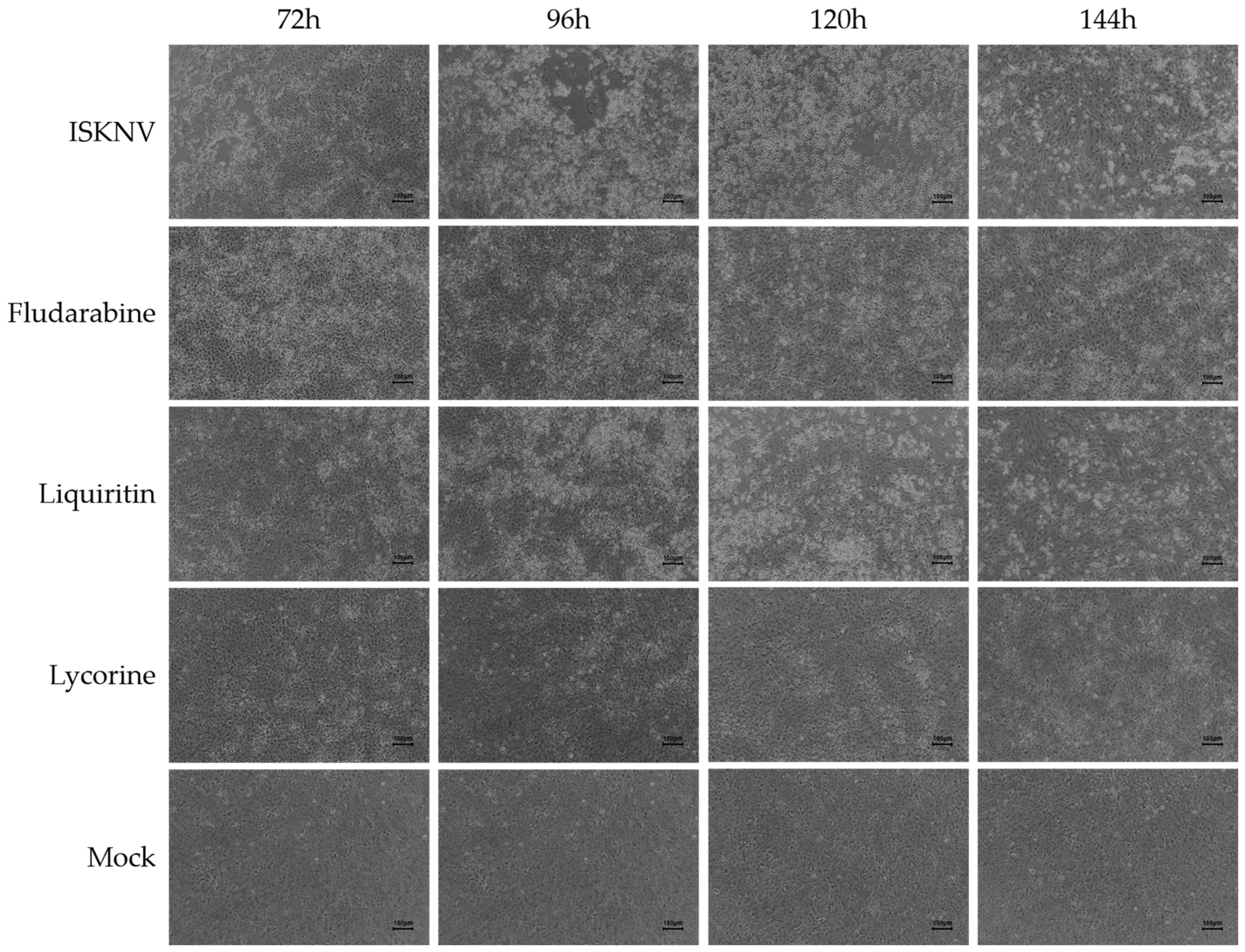
Microscopic observations over time were conducted to compare CPE progression in ISKNV-infected DGF cells after treatment with the chosen compounds (Figure 5). Up to 48 h post-infection, no marked CPE was observed. In the ISKNV-infected control group, cell rounding, cellular enlargement, and monolayer disruption were evident at 72 h post-infection and progressively aggravated until 144 h post-infection. Conversely, the fludarabine-treated group maintained the cell monolayer up to 144 h post-infection, although some cells appeared enlarged and condensed. The liquiritin-treated cells exhibited cellular shrinkage and enlargement at 96 h post-infection, with partial monolayer disruption at 120 h post-infection, and at 144 h post-infection, the CPE pattern resembled that of the infected control group. The lycorine-treated cells showed only mild cellular enlargement, and their overall cell morphology remained comparable to that of mock cells throughout the observation period.
Figure 5.
Microscopic observations over time of cytopathic effects (CPE) in ISKNV-infected DGF cells after treatment with selected compounds. DGF cells were infected with ISKNV and treated with fludarabine (100 μg/mL), liquiritin (100 μg/mL), or lycorine (0.5 μg/mL). Images of cell morphology were captured at specified intervals following infection. The progression of ISKNV-associated CPE, including cell enlargement, cell rounding, and monolayer destruction, was compared among the treatment groups. Scale bars = 100 μm.
3.7. Time-Course Analysis of Extracellular Viral Load
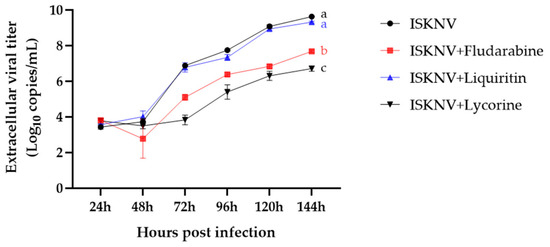
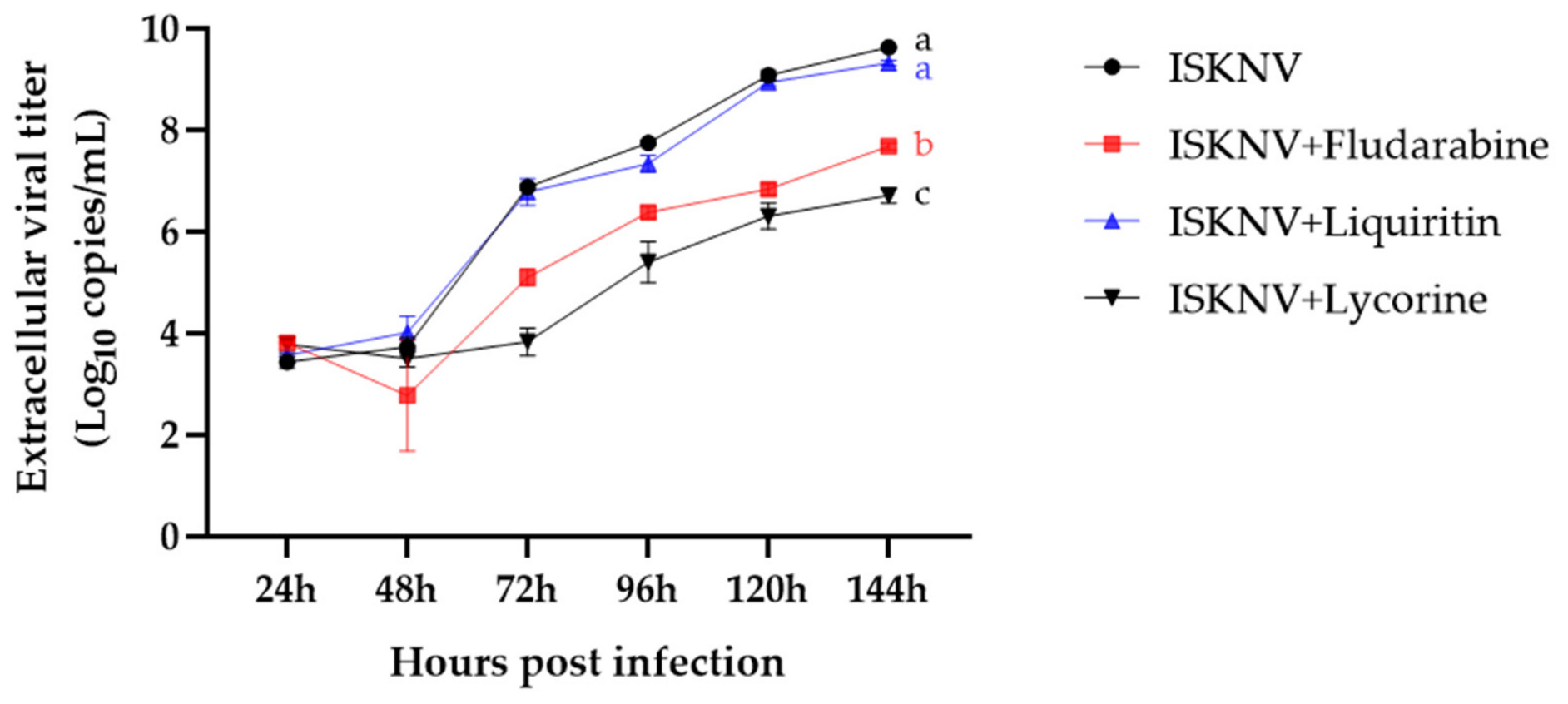
The extracellular viral load was quantified in the culture supernatants collected at various time intervals, using real-time PCR targeting the ISKNV MCP gene (Figure 6). Viral load increased progressively in the ISKNV-infected control group from 3.43 ± 0.12 log10 copies at 24 h post-infection to 9.63 ± 0.01 log10 copies/mL at 144 h post-infection. Fludarabine treatment suppressed the rise in extracellular viral load at 72 h post-infection, resulting in 5.10 ± 0.17, 6.38 ± 0.11, 6.84 ± 0.11, and 7.68 ± 0.07 log10 copies/mL at 72, 96, 120, and 144 h post-infection, respectively. Lycorine exhibited the most potent inhibitory effect, with viral loads of 3.83 ± 0.27, 5.39 ± 0.40, 6.30 ± 0.26, and 6.71 ± 0.14 log10 copies/mL at the corresponding time points. The liquiritin-treated cells exhibited viral loads comparable to those of the infected control group, particularly at later time points, reaching 9.32 ± 0.05 log10 copies/mL at 144 h post-infection. Overall, fludarabine and lycorine reduced extracellular ISKNV release over time, whereas liquiritin demonstrated limited inhibition during extended periods of infection. Statistical analysis using log10-transformed viral load values revealed significant differences between the fludarabine- and lycorine-treated groups and the ISKNV-infected control group at 144 h post-infection (p < 0.05), whereas the liquiritin-treated group did not differ significantly from the infected control group (p > 0.05).
Figure 6.
Time-course analysis of extracellular ISKNV viral load in DGF cells treated with specific compounds. Viral load was quantified by MCP-targeted real-time PCR using culture supernatants collected at specified time points and expressed as log10 copies/mL. Data are presented as mean ± SD from three independent experiments. Statistical analysis was performed using two-way ANOVA, followed by Tukey’s multiple comparison test in GraphPad Prism version 10.6. Different letters indicate statistically significant differences among the groups at each time point (p < 0.05).
4. Discussion
Structure-based molecular docking is frequently used as an initial screening approach for discovering antiviral candidates because it allows rapid prioritization of compounds predicted to interact with viral target proteins [19,21]. Recent studies have demonstrated that virtual screening approaches can efficiently narrow down the number of candidate compounds before biological validation, thus enhancing the efficiency of antiviral drug discovery processes [27,36]. However, several studies have indicated that docking scores do not always directly correlate with actual biological or antiviral efficacy, suggesting that computational prediction alone may not fully account for antiviral activity [27]. In the present study, a multi-target docking strategy was applied to reduce the potential bias associated with single-target screening. Instead of selecting only the top-ranked compound for each target, compounds that consistently ranked among the top candidates across multiple viral proteins were prioritized. This strategy was intended to identify compounds with potential multi-target interactions, which may provide broader antiviral activity against ISKNV while reducing dependence on inhibition of a single viral protein. This approach may enhance the reliability of candidate selection by identifying compounds with broadly predicted interactions involving multiple viral processes. Consistent with the docking results, fludarabine and lycorine showed relatively significant antiviral activity in vitro, suggesting that repeated high-ranking interactions across multiple viral proteins are associated with their antiviral potential against ISKNV.
Among the tested compounds, lycorine demonstrated the strongest antiviral effect against ISKNV in vitro. Lycorine is a natural alkaloid isolated from Amaryllidaceae plants that exhibits broad-spectrum antiviral activity against several RNA and DNA viruses, including coronaviruses, enterovirus 71, chikungunya virus, dengue virus, and herpes simplex virus [37,38,39,40]. Previous studies have shown that lycorine inhibits viral replication by decreasing viral RNA levels and suppressing genome replication across different viral systems [38,39]. Consistent with these reports, lycorine significantly suppressed the expression of MCP, ATPase, and DNA polymerase genes. The coordinated suppression of three representative viral genes was accompanied by reductions in infectious viral titers and extracellular viral load, as well as delayed CPE progression, suggesting that lycorine affected multiple ISKNV replication-associated endpoints. Notably, lycorine achieved the most substantial reduction in infectious viral titer among the compounds tested, indicating that the observed transcriptional suppression was translated into reduced productive viral replication. Although direct inhibition of the predicted target proteins was not experimentally confirmed, the overall consistency between the docking predictions and the in vitro findings supports the antiviral potential of lycorine against ISKNV.
Fludarabine also demonstrated significant antiviral activity in this study. Fludarabine is a purine nucleoside analog that has been clinically used to treat hematological malignancies and is known to interfere with nucleic acid synthesis by inhibiting DNA polymerase activity and chain elongation [41,42,43]. In this study, fludarabine reduced viral gene expression and infectious viral titers, consistent with its predicted mechanism of interfering with DNA synthesis. ISKNV is a large double-stranded DNA virus that depends on viral DNA replication for successful infection. Therefore, the antiviral activity of fludarabine may be associated with interference with viral DNA synthesis-related processes.
Liquiritin moderately inhibited viral gene expression during the early infection stages; however, its inhibitory effect was less apparent during the extended time-course analysis. Liquiritin, a flavonoid derived from licorice, is recognized for its antiviral [44], antioxidant [45], and anti-inflammatory activities [46]. Although the exact mechanism by which liquiritin acts against ISKNV remains unclear, the current findings suggest that its antiviral effect under the conditions tested may be relatively weaker than that of fludarabine and lycorine.
Although all three selected compounds reduced ISKNV gene expression at 72 h post-infection, their effects on infectious virus production and long-term CPE progression differed. This variation can be attributed to the distinct biological information provided by each assay. Real-time PCR measures changes in viral transcript or genome copy numbers, whereas TCID50 and CPE observations indicate the generation of infectious progeny viruses and the resulting virus-induced cellular damage. Therefore, reduced viral mRNA expression at a single time point does not necessarily indicate the sustained inhibition of viral protein synthesis, virion assembly, or infectious particle production. In this study, liquiritin moderately reduced MCP, ATPase, and DNA polymerase expression at 72 h post-infection, but the extracellular viral load and CPE progression at later time points were comparable to those of the ISKNV-infected control group. This suggests that liquiritin may transiently inhibit viral gene expression, which may be insufficient to block downstream viral replication events, leading to infectious virus release under the present experimental conditions. Previous studies have demonstrated that mRNA levels do not always correlate directly with protein expression levels, particularly in dynamic biological contexts involving post-transcriptional regulation and protein turnover [47,48]. Conversely, fludarabine and lycorine exhibited consistent inhibition of viral gene expression, infectious titer, extracellular viral load, and CPE progression, supporting their potential antiviral activity against ISKNV. Although these findings do not conclusively prove the enzymatic inhibition of these proteins, they imply that the selected compounds might disrupt ISKNV replication through multi-target effects on replication-associated and structural viral components.
This study highlights the effectiveness of molecular docking as a preliminary screening tool for selecting antiviral candidates against aquatic animal viruses. Experimental antiviral screening using fish cell lines and large DNA viruses often requires extended incubation periods, cytotoxicity evaluations, viral gene quantification, and infectivity assays, making large-scale compound screening labor-intensive and time-consuming. Structure-based docking can streamline this process and reduce the number of compounds subjected to downstream biological assays by prioritizing candidates with predicted interactions with functionally relevant viral proteins. In the present study, the docking-based selection strategy successfully narrowed the 72 compounds to three candidates, two of which, fludarabine and lycorine, exhibited consistent antiviral effects across molecular, infectivity-based, and morphological evaluations. These findings support the use of docking as a practical prescreening tool when combined with biological validation.
Despite these insights, this study has certain limitations. Molecular docking predicts potential ligand–protein interactions based on structural modeling; however, direct biochemical validation of target binding was not performed. Additionally, the antiviral evaluation was limited to a single fish cell line and a narrow range of compound concentrations under in vitro conditions. Although fludarabine and lycorine significantly reduced viral gene expression, infectious viral titers, and delayed CPE progression, the reduction in extracellular viral load was relatively limited, indicating that the selected compounds did not completely suppress ISKNV replication under the experimental conditions used in this study. These findings suggest that the observed antiviral effects were partial and should be interpreted cautiously. Furthermore, this study focused on compounds that consistently exhibited favorable docking performance across multiple viral targets. Further studies comparing this multi-target prioritization strategy with compounds showing exceptionally high affinities for individual viral targets would provide further insight into the relative advantages of these screening approaches. In addition, incorporating established antiviral compounds with known activity against ISKNV and compounds with limited or no antiviral activity would provide valuable benchmarks for further validating the predictive performance of docking-based screening strategies. Therefore, additional studies, including dose-dependent antiviral investigations, molecular mechanisms, protein-level validations, and in vivo challenge experiments, are required to further evaluate the antiviral potential of the selected compounds against ISKNV. Nevertheless, the present study demonstrated that a multi-target docking-based screening strategy combined with biological validation can be effectively applied to identify potential antiviral candidates against ISKNV. Among the compounds tested, lycorine and fludarabine exhibited measurable antiviral activities and represent candidates for further investigation against ISKNV infection.
5. Conclusions
In conclusion, this study demonstrates the applicability of integrating multi-target molecular docking with comprehensive in vitro biological validation as a screening strategy for identifying antiviral candidates against ISKNV. Fludarabine and lycorine demonstrated consistent antiviral effects in alignment with docking-based prioritization and in vitro evaluation, whereas liquiritin exhibited weaker and less sustained antiviral activity, despite its favorable docking profile. Additionally, the reduction in extracellular viral load was limited, indicating that these compounds did not completely suppress ISKNV replication under the present experimental conditions. Therefore, fludarabine and lycorine should be considered preliminary antiviral candidates requiring further optimization and validation. Overall, these findings support the use of docking as a prioritization tool, while emphasizing that computational predictions should be interpreted within the limitations of structure-based modeling and confirmed through biological validation.
Author Contributions
Conceptualization, E.-J.B. and K.-I.K.; methodology, E.-J.B.; software, E.-J.B. and Y.-J.J.; validation, E.-J.B. and H.-D.C.; formal analysis, E.-J.B. and H.-D.C.; investigation, E.-J.B. and Y.-J.J.; writing—original draft preparation, E.-J.B.; writing—review and editing, K.-I.K.; project administration, K.-I.K.; funding acquisition, K.-I.K. All authors have read and agreed to the published version of the manuscript.
Funding
This research was supported by the Basic Science Research Program through the National Research Foundation of Korea (NRF) funded by the Ministry of Education (RS-2022-NR075592).
Informed Consent Statement
Not applicable.
Data Availability Statement
The data presented in this study are available upon request from the corresponding author.
Acknowledgments
During the preparation of this manuscript, the authors used ChatGPT (OpenAI, GPT-5) to assist with the preparation of the schematic workflow shown in Figure 1. The generated content was subsequently reviewed, modified, and finalized by the authors of this study. The authors take full responsibility for the content of this manuscript.
Conflicts of Interest
The authors declare no conflicts of interest.
Abbreviations
Abbreviations used in this manuscript are as follows:
| ISKNV | Infectious spleen and kidney necrosis virus |
| RSIV | Red sea bream iridovirus |
| ORFs | Open reading frames |
| DGF | Dwarf gourami fin |
| CPE | Cytopathic effect |
| CID | Compound identifier |
| CAS | Chemical Abstracts Service |
| TFIIS | Transcription elongation factor |
| ATPase | Adenosine triphosphatase |
| MCP | Major capsid protein |
| PCR | Polymerase chain reaction |
| PBD | Protein Data Bank |
| SP | Standard precision |
| L-15 | Leibovitz’s |
| FBS | Fetal bovine serum |
| NEAA | Non-essential amino acids |
| HEPES | Hydroxyethyl piperazine ethane sulfonic acid |
| MCE | MedChemExpress |
| DMSO | Dimethyl sulfoxide |
| TCID50 | Median tissue culture infectious dose |
| PBS | Phosphate-buffered saline |
| ANOVA | Analysis of variance |
Appendix A
Table A1.
Amino acid sequences of selected ISKNV proteins used for molecular docking analysis. aa: Amino Acid; *: stop codon.
Appendix B
Figure A1.
Cytotoxicity assessment of fludarabine, liquiritin, and lycorine in DGF cells. Cell viability was measured using the CCK-8 assay 72 h after treatment with the test compound, and absorbance was determined at 450 nm. Dose–response curves were generated using nonlinear regression with a four-parameter logistic model based on log-transformed concentrations in GraphPad Prism version 10.6. Data are presented as mean ± SD from three independent experiments.
References
- He, J.G.; Deng, M.; Weng, S.P.; Li, Z.; Zhou, S.Y.; Long, Q.X.; Wang, X.Z.; Chan, S.M. Complete genome analysis of the mandarin fish infectious spleen and kidney necrosis iridovirus. Virology 2001, 291, 126–139. [Google Scholar] [CrossRef] [Scilit] [PubMed]
- Kurita, J.; Nakajima, K. Megalocytiviruses. Viruses 2012, 4, 521–538. [Google Scholar] [CrossRef] [Scilit] [PubMed]
- Subramaniam, K.; Shariff, M.; Omar, A.R.; Hair-Bejo, M. Megalocytivirus infection in fish. Rev. Aquac. 2012, 4, 221–233. [Google Scholar] [CrossRef] [Scilit]
- Jung-Schroers, V.; Adamek, M.; Wohlsein, P.; Wolter, J.; Wedekind, H.; Steinhagen, D. First outbreak of an infection with infectious spleen and kidney necrosis virus (ISKNV) in ornamental fish in Germany. Dis. Aquat. Org. 2016, 119, 239–244. [Google Scholar] [CrossRef] [Scilit] [PubMed]
- Choi, S.W.; Jeong, Y.J.; Jeong, Y.S.; Kim, K.I. Genetic and pathogenic characteristics of infectious spleen and kidney necrosis virus isolated from dwarf gourami (Trichogaster lalius) imported into Korea. Aquaculture 2024, 593, 741297. [Google Scholar] [CrossRef] [Scilit]
- He, J.G.; Weng, S.P.; Huang, Z.J.; Zeng, K. Identification of outbreak and infectious diseases pathogen of Siniperca chuatsi. Acta Sci. Nat. Univ. Sunyatseni 1998, 5, 74–77. [Google Scholar]
- Girisha, S.K.; Kushala, K.B.; Nithin, M.S.; Puneeth, T.G.; Naveen Kumar, B.T.; Vinay, T.N.; Suresh, T.; Ajay, S.K.; Venugopal, M.N.; Ramesh, K.S. First report of the infectious spleen and kidney necrosis virus (ISKNV) infection in ornamental fishes in India. Transbound. Emerg. Dis. 2021, 68, 964–972. [Google Scholar] [CrossRef] [Scilit] [PubMed]
- Mohr, P.G.; Moody, N.J.; Williams, L.M.; Hoad, J.; Cummins, D.M.; Davies, K.R.; Crane, M.S. Molecular confirmation of infectious spleen and kidney necrosis virus (ISKNV) in farmed and imported ornamental fish in Australia. Dis. Aquat. Org. 2015, 116, 103–110. [Google Scholar] [CrossRef] [Scilit] [PubMed]
- Ramírez-Paredes, J.G.; Paley, R.K.; Hunt, W.; Feist, S.W.; Stone, D.M.; Field, T.R.; Haydon, D.J.; Ziddah, P.A.; Nkansa, M.; Guilder, J.; et al. First detection of infectious spleen and kidney necrosis virus (ISKNV) associated with massive mortalities in farmed tilapia in Africa. Transbound. Emerg. Dis. 2021, 68, 1550–1563. [Google Scholar] [CrossRef] [Scilit] [PubMed]
- Yanong, R.P.; Waltzek, T.B. Megalocytivirus infections in fish, with emphasis on ornamental species. EDIS 2013, 2013, FA182. [Google Scholar] [CrossRef] [Scilit]
- Jeong, J.B.; Kim, H.Y.; Jun, L.J.; Lyu, J.H.; Park, N.G.; Kim, J.K.; Do Jeong, H. Outbreaks and risks of infectious spleen and kidney necrosis virus disease in freshwater ornamental fishes. Dis. Aquat. Org. 2008, 78, 209–215. [Google Scholar] [CrossRef] [Scilit] [PubMed]
- Caipang, C.M.A.; Takano, T.; Hirono, I.; Aoki, T. Genetic vaccines protect red seabream, Pagrus major, upon challenge with red seabream iridovirus (RSIV). Fish. Shellfish Immunol. 2006, 21, 130–138. [Google Scholar] [CrossRef] [Scilit] [PubMed]
- Dong, C.; Xiong, X.; Luo, Y.; Weng, S.; Wang, Q.; He, J. Efficacy of a formalin-killed cell vaccine against infectious spleen and kidney necrosis virus (ISKNV) and immunoproteomic analysis of its major immunogenic proteins. Vet. Microbiol. 2013, 162, 419–428. [Google Scholar] [CrossRef] [Scilit] [PubMed]
- Zhang, M.; Hu, Y.H.; Xiao, Z.Z.; Sun, Y.; Sun, L. Construction and analysis of experimental DNA vaccines against megalocytivirus. Fish. Shellfish Immunol. 2012, 33, 1192–1198. [Google Scholar] [CrossRef] [Scilit] [PubMed]
- Nakajima, K.; Ito, T.; Kurita, J.; Kawakami, H.; Itano, T.; Fukuda, Y.; Aoi, Y.; Tooriyama, T.; Manabe, S. Effectiveness of a vaccine against red sea bream iridoviral disease in various cultured marine fish under laboratory conditions. Fish. Pathol. 2002, 37, 90–91. [Google Scholar] [CrossRef] [Scilit]
- Nakajima, K.; Maeno, Y.; Kurita, J.; Inui, Y. Vaccination against red sea bream iridoviral disease in red sea bream. Fish. Pathol. 1997, 32, 205–209. [Google Scholar] [CrossRef] [Scilit]
- Strang, B.L. Toward inhibition of human cytomegalovirus replication with compounds targeting cellular proteins. J. General. Virol. 2022, 103, 001795. [Google Scholar] [CrossRef] [Scilit] [PubMed]
- Pushpakom, S.; Iorio, F.; Eyers, P.A.; Escott, K.J.; Hopper, S.; Wells, A.; Doig, A.; Guilliams, T.; Latimer, J.; McNamee, C.; et al. Drug repurposing: Progress, challenges and recommendations. Nat. Rev. Drug Discov. 2019, 18, 41–58. [Google Scholar] [CrossRef] [Scilit] [PubMed]
- Talluri, S. Molecular docking and virtual screening based prediction of drugs for COVID-19. Comb. Chem. High Throughput Screen. 2021, 24, 716–728. [Google Scholar] [CrossRef] [Scilit] [PubMed]
- Roy, U. Structural evaluation of interleukin-19 cytokine and interleukin-19-bound receptor complex using computational immuno-engineering approach. Targets 2024, 2, 385–395. [Google Scholar] [CrossRef] [Scilit]
- Elfiky, A.A. Ribavirin, Remdesivir, Sofosbuvir, Galidesivir, and Tenofovir against SARS-CoV-2 RNA dependent RNA polymerase (RdRp): A molecular docking study. Life Sci. 2020, 253, 117592. [Google Scholar] [CrossRef] [Scilit] [PubMed]
- Sahoo, M.; Jena, L.; Rath, S.N.; Kumar, S. Identification of suitable natural inhibitor against influenza A (H1N1) neuraminidase protein by molecular docking. Genom. Inform. 2016, 14, 96. [Google Scholar] [CrossRef] [Scilit] [PubMed]
- Wang, H.C.; Zhang, Q.X.; Zhao, J.; Wei, N.N. Molecular docking and molecular dynamics simulations studies on the protective and pathogenic roles of the amyloid-β peptide between herpesvirus infection and Alzheimer’s disease. J. Mol. Graph. Model. 2022, 113, 108143. [Google Scholar] [CrossRef] [Scilit] [PubMed]
- Lima, A.R.; Silva, J.; Bezerra, L.L.; Marinho, M.M.; Marinho, E.S. Molecular docking of potential curcuminoids inhibitors of the NS1 protein of dengue virus. Int. J. Sci. Eng. Res. 2017, 8, 861–868. [Google Scholar]
- Khang, L.T.P.; Dinh-Hung, N.; Islam, S.I.; Dwinanti, S.H.; Mwamburi, S.M.; Permpoonpattana, P.; Linh, N.V. A review of in silico approaches for discovering natural viral protein inhibitors in aquaculture disease control. J. Fish. Dis. 2025, 48, e14120. [Google Scholar] [CrossRef] [Scilit] [PubMed]
- Ghasemi, J.B.; Abdolmaleki, A.; Shiri, F. Molecular docking challenges and limitations. In Pharmaceutical Sciences: Breakthroughs in Research and Practice; IGI Global Scientific Publishing: Hershey, PA, USA, 2017; pp. 770–794. [Google Scholar] [CrossRef] [Scilit]
- Power, H.; Wu, J.; Turville, S.; Aggarwal, A.; Valtchev, P.; Schindeler, A.; Dehghani, F. Virtual screening and in vitro validation of natural compound inhibitors against SARS-CoV-2 spike protein. Bioorg. Chem. 2022, 119, 105574. [Google Scholar] [CrossRef] [Scilit] [PubMed]
- Eaton, H.E.; Metcalf, J.; Penny, E.; Tcherepanov, V.; Upton, C.; Brunetti, C.R. Comparative genomic analysis of the family Iridoviridae: Re-annotating and defining the core set of iridovirus genes. Virol. J. 2007, 4, 11. [Google Scholar] [CrossRef] [Scilit] [PubMed]
- Guo, C.J.; Chen, W.J.; Yuan, L.Q.; Yang, L.S.; Weng, S.P.; Yu, X.Q.; He, J.G. The viral ankyrin repeat protein (ORF124L) from infectious spleen and kidney necrosis virus attenuates nuclear factor-κ B activation and interacts with I κ B kinase β. J. General. Virol. 2011, 92, 1561–1570. [Google Scholar] [CrossRef] [Scilit] [PubMed]
- Jeong, Y.J.; Kim, K.I. A new cell line derived from the caudal fin of the dwarf gourami (Trichogaster lalius) and its susceptibility to fish viruses. Biology 2023, 12, 829. [Google Scholar] [CrossRef] [Scilit] [PubMed]
- Baek, E.J.; Choi, H.D.; Kim, K.I. Screening of potential antiviral compounds and in vitro evaluation of 5-fluorouracil, ganciclovir, ethyl ferulate, and saponin against infectious spleen and kidney necrosis virus (ISKNV). J. Fish. Pathol. 2025, 38, 11–29. [Google Scholar] [CrossRef]
- Rao, X.; Huang, X.; Zhou, Z.; Lin, X. An improvement of the 2–∆∆CT method for quantitative real-time polymerase chain reaction data analysis. Biostat. Bioinform. Biomath. 2013, 3, 71. [Google Scholar]
- Jin, J.W.; Kim, K.I.; Kim, J.K.; Park, N.G.; Do Jeong, H. Dynamics of megalocytivirus transmission between bivalve molluscs and rock bream Oplegnathus fasciatus. Aquaculture 2014, 428, 29–34. [Google Scholar] [CrossRef] [Scilit]
- Kim, G.H.; Kim, M.J.; Choi, H.J.; Koo, M.J.; Kim, M.J.; Min, J.G.; Kim, K.I. Evaluation of a novel TaqMan probe-based real-time polymerase chain reaction (PCR) assay for detection and quantitation of red sea bream iridovirus. Fish. Aquat. Sci. 2021, 24, 351–359. [Google Scholar] [CrossRef] [Scilit]
- Reed, L.J.; Muench, H. A Simple Method of Estimating Fifty per Cent Endpoints. Am. J. Epidemiol. 1938, 27, 493–497. [Google Scholar] [CrossRef] [Scilit]
- Wei, X.; Gao, M.; Sheng, N.; Yao, W.; Bao, B.; Cheng, F.; Cao, Y.; Yan, H.; Zhang, L.; Shan, M.; et al. Mechanism investigation of Shi-Xiao-San in treating blood stasis syndrome based on network pharmacology, molecular docking and in vitro/vivo pharmacological validation. J. Ethnopharmacol. 2023, 301, 115746. [Google Scholar] [CrossRef] [Scilit] [PubMed]
- Shen, L.; Zhao, J.; Xia, Y.; Lu, J.; Sun, J.; Tang, J.; Xing, H.; Yin, L.; Yang, Y.; Wang, C. Lycorine derivative effectively inhibits the replication of coronaviruses both in vitro and in vivo. hLife 2024, 2, 75–87. [Google Scholar] [CrossRef] [Scilit]
- Liu, J.; Yang, Y.; Xu, Y.; Ma, C.; Qin, C.; Zhang, L. Lycorine reduces mortality of human enterovirus 71-infected mice by inhibiting virus replication. Virol. J. 2011, 8, 483. [Google Scholar] [CrossRef] [Scilit] [PubMed]
- Agrawal, T.; Siddqui, G.; Dahiya, R.; Patidar, A.; Madan, U.; Das, S.; Asthana, S.; Samal, S.; Awasthi, A. Inhibition of early RNA replication in Chikungunya and Dengue virus by lycorine: In vitro and in silico studies. Biochem. Biophys. Res. Commun. 2024, 730, 150393. [Google Scholar] [CrossRef] [Scilit] [PubMed]
- Renard-Nozaki, J.; Kim, T.; Imakura, Y.; Kihara, M.; Kobayashi, S. Effect of alkaloids isolated from Amaryllidaceae on herpes simplex virus. Res. Virol. 1989, 140, 115–128. [Google Scholar] [CrossRef] [Scilit] [PubMed]
- Hood, M.A.; Finley, R.S. Fludarabine: A review. Dicp 1991, 25, 518–524. [Google Scholar] [CrossRef] [Scilit] [PubMed]
- Gandhi, V.; Plunkett, W. Cellular and clinical pharmacology of fludarabine. Clin. Pharmacokinet. 2002, 41, 93–103. [Google Scholar] [CrossRef] [Scilit] [PubMed]
- Christopherson, R.I.; Mactier, S.; Almazi, J.G.; Kohnke, P.L.; Best, O.G.; Mulligan, S.P. Mechanisms of action of fludarabine nucleoside against human Raji lymphoma cells. Nucleosides Nucleotides Nucleic Acids 2014, 33, 375–383. [Google Scholar] [CrossRef] [Scilit] [PubMed]
- Zhu, J.; Deng, Y.Q.; Wang, X.; Li, X.F.; Zhang, N.N.; Liu, Z.; Zhang, B.; Qin, C.F.; Xie, Z. An artificial intelligence system reveals liquiritin inhibits SARS-CoV-2 by mimicking type I interferon. bioRxiv 2020. [Google Scholar] [CrossRef] [Scilit]
- Sun, Y.X.; Tang, Y.; Wu, A.L.; Liu, T.; Dai, X.L.; Zheng, Q.S.; Wang, Z.B. Neuroprotective effect of liquiritin against focal cerebral ischemia/reperfusion in mice via its antioxidant and antiapoptosis properties. J. Asian Nat. Prod. Res. 2010, 12, 1051–1060. [Google Scholar] [CrossRef] [Scilit] [PubMed]
- Yu, J.Y.; Ha, J.Y.; Kim, K.M.; Jung, Y.S.; Jung, J.C.; Oh, S. Anti-inflammatory activities of licorice extract and its active compounds, glycyrrhizic acid, liquiritin and liquiritigenin, in BV2 cells and mice liver. Molecules 2015, 20, 13041–13054. [Google Scholar] [CrossRef] [Scilit] [PubMed]
- Liu, Y.; Beyer, A.; Aebersold, R. On the dependency of cellular protein levels on mRNA abundance. Cell 2016, 165, 535–550. [Google Scholar] [CrossRef] [Scilit] [PubMed]
- Cortazzo da Silva, L.; Aoki, J.I.; Floeter-Winter, L.M. Finding correlations between mRNA and protein levels in leishmania development: Is there a discrepancy? Front. Cell. Infect. Microbiol. 2022, 12, 852902. [Google Scholar] [CrossRef] [Scilit] [PubMed]

Disclaimer/Publisher’s Note: The statements, opinions and data contained in all publications are solely those of the individual author(s) and contributor(s) and not of MDPI and/or the editor(s). MDPI and/or the editor(s) disclaim responsibility for any injury to people or property resulting from any ideas, methods, instructions or products referred to in the content. |
© 2026 by the authors. Licensee MDPI, Basel, Switzerland. This article is an open access article distributed under the terms and conditions of the Creative Commons Attribution (CC BY) license.