


Abstract
Antibiotic resistance poses a growing threat to public health, yet limited innovation and development of new antibacterial agents continue to hinder antibiotic discovery. Although only a few novel antibiotic candidates have passed clinical trials and reached the market, resistance continues to grow faster than antibiotic development. Despite numerous advances in drug development, using these technologies in isolation has constrained antibiotic discovery. This review examines how advanced technologies integrate into antibiotic drug discovery. It highlights a coupled approach (co-applied technologies) as an innovative strategy to mitigate the limitations of single approaches and accelerate lead discovery. By highlighting each technology and reviewing its potential applications, this strategy opens new routes and methods that can yield novel chemical scaffolds and new mechanisms of action (i.e., weakening microbial resistance), addressing the challenges posed by increasing global resistance and shortcomings in current antibiotic development. The review also addresses the challenges and barriers to discovering next-generation antibiotics. It also encourages researchers to implement platforms that combine coupled approaches and technologies, such as computational, genomic, biochemical, and structural tools, to replenish the next-generation antibiotic discovery pipeline and address the antimicrobial resistance (AMR) crisis. To strengthen global efforts and lessen the AMR crisis, an innovative antibiotic discovery strategy is necessary.
1. Introduction
The discovery of next-generation antibiotics is a leading area of biomedical innovation that can address a critical healthcare threat: the rapid rise in antimicrobial resistance AMR. Worldwide, antibacterial resistance is linked to approximately 4.95 million deaths annually [1], and this number is projected to climb to 10 million by 2050 [2]. The problem is particularly severe with Gram-negative bacteria, whose cell envelopes are less permeable and have strong drug efflux mechanisms [3]. As conventional antibiotics lose efficacy against multidrug-resistant (MDR) pathogens, the search for new antibacterial agents has become urgent.
Treatment regimens are losing efficacy against dangerous pathogens such as carbapenem-resistant Enterobacteriaceae, vancomycin-resistant Enterococci, and methicillin-resistant Staphylococcus aureus (MRSA). The current pharmaceutical pipeline falls far short of meeting the scale of this challenge, emphasizing the necessity for bold new strategies and sustained, collaborative efforts across multiple disciplines [4].
Although high-throughput screening (HTS) is a valuable tool for identifying synthetic small-molecule antibiotics, the success rate remains extremely low, with active hits occurring in fewer than 0.1% of cases [5,6]. In addition, the discovery of natural antibiotic molecules is limited, as researchers often rediscover known compounds or exclude them because of unfavorable characteristics. Whether compounds originate from natural products or chemical synthesis, the next stage is lead generation, often called the “hit-to-lead” process. This phase relies on medicinal chemistry to produce analogs of the initial hits (hit expansion) and conduct structure-activity relationship (SAR) analyses. These efforts are performed in cycles alongside toxicity testing in eukaryotic cells to refine the biological and functional properties of the new compounds [7].
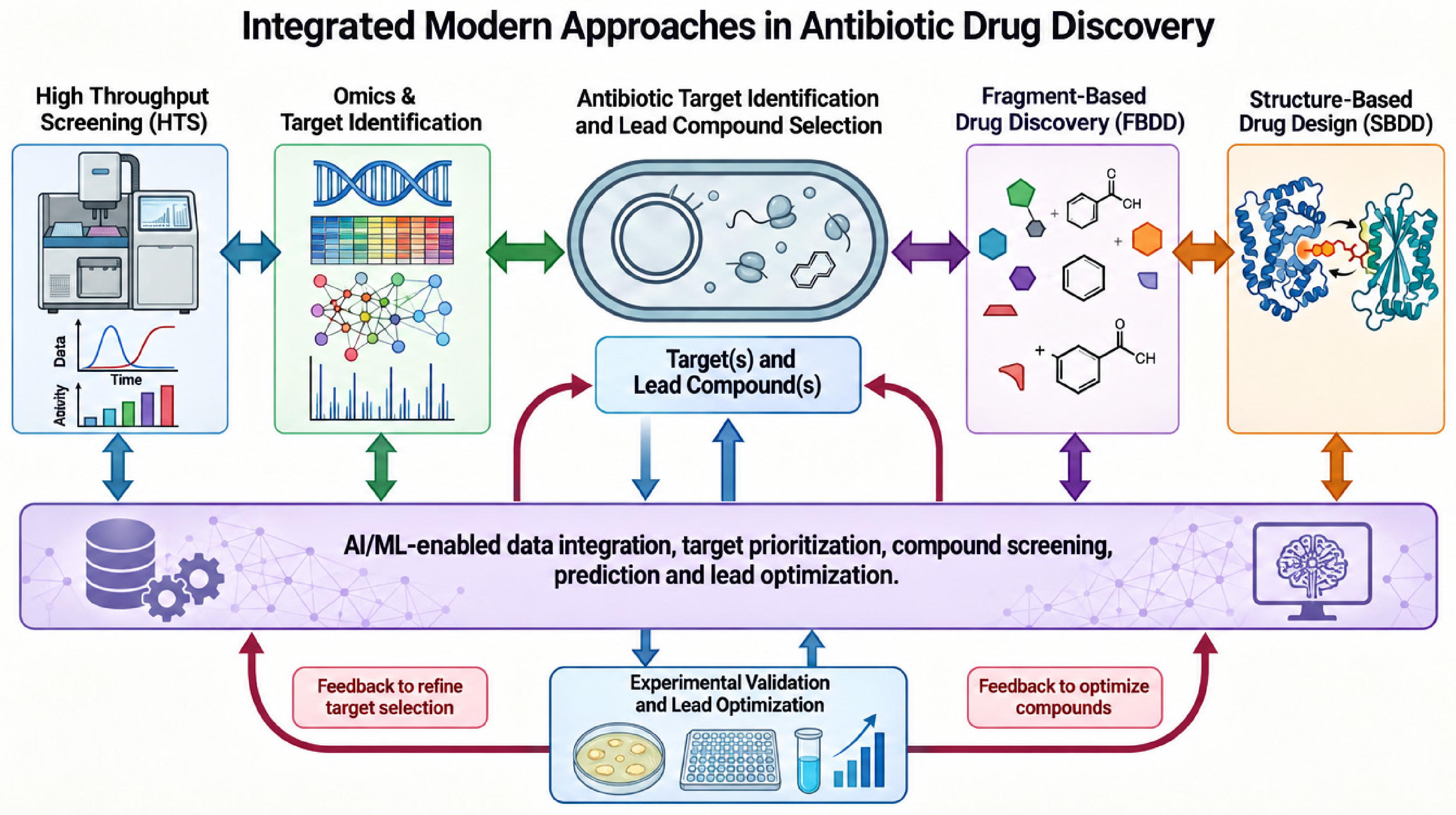
Next-generation antibiotics stand apart through their novel chemical structures, innovative molecular targets, unique modes of action, and reduced likelihood of cross-resistance with existing drugs. These features make them central to overcoming conventional therapies’ limitations. One of the most transformative developments in this field has been the application of advanced technologies and approaches, as shown in Figure 1. Artificial intelligence (AI)-driven screening now allows researchers to design and computationally evaluate millions of potential molecules with unprecedented speed and precision. This approach has already produced structurally distinct and mechanistically innovative candidates, including promising compounds with activity against high-priority MDR pathogens such as N. gonorrhoeae and MRSA [8]. In parallel, synthetic biology and genome mining have unlocked entirely new avenues for antibiotic discovery. By engineering microbial systems and systematically exploring microbial genomes, scientists have gained access to previously hidden reservoirs of chemical diversity [9]. These methods have helped identify novel antibiotic leads and significantly expanded the repertoire of potential therapeutic agents, offering hope for a revitalized antibiotic pipeline (Figure 1).
In this narrative review, the literature was identified through searches of databases including PubMed, Scopus, Web of Science, and Google Scholar, covering recent publications (January 2020 to August 2026). Search terms combined “antimicrobial discovery,” “antibiotic discovery,” and “antimicrobial discovery” with revised technologies, including omics approaches, CRISPR interference and Ten-seq, genome mining, microfluidics, high-throughput screening (HTS), and AI. Relevant peer-reviewed studies and reports from authoritative entities focusing on antibiotic discovery strategy and technologies, describing individual or integrated discovery technologies or providing evidence on pipeline innovation, mechanisms of action, resistance, or translational barriers were included. Unrelated studies, non-English publications, and conference papers were excluded. As a narrative review, we did not perform quantitative counts of selected publications.
This review focuses mainly on co-applied technologies and coupled approaches in next-generation antibiotic discovery, their constraints, and current antibiotic development approaches. It also synthesizes the concept of ‘coupling’ approaches and reviews recent methodologies applied in antibiotic discovery, evaluating their capabilities and bottlenecks as synergistic pathways for developing novel antibiotics. Finally, it evaluates the challenges and opportunities in developing next-generation antibiotics.
Figure 1.
Schematic representation of integrated modern approaches in antibiotic drug discovery. Approaches such as HTS, omics, targeted identification, FBDD, and SBDD interact to select and prioritize targets. AI and ML integrate data and predict targets and lead compounds. Feedback loops and bidirectional arrows indicate continuous validation and refinement of target selection (created using Figurelabs Inc., v2026.10.).
2. Antibiotic Discovery Enabled by Coupling Approaches and Technologies
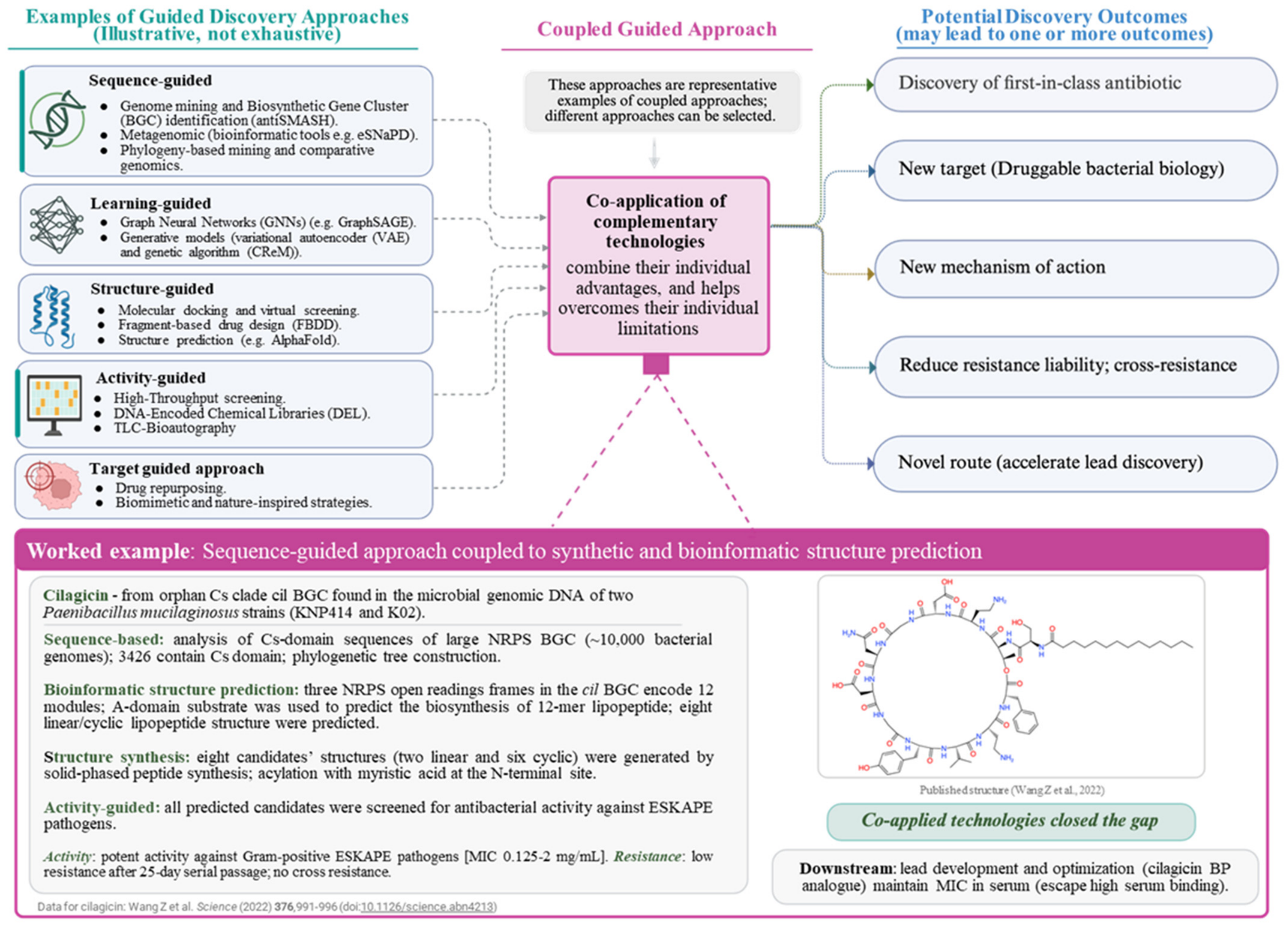
The rapid emergence of AMR requires developing new antibiotics. Recent antibiotic discovery cases demonstrate the importance of coupling technologies and approaches across the antibiotic discovery pipeline. This review introduces the term “co-application” to describe using complementary technologies in antibiotic discovery, where coupling these technologies/approaches can increase opportunities for innovation in antibiotic development. In contrast, no single approach alone is sufficient for novel discovery, and co-application helps overcome limitations and accelerate lead discovery (Figure 2).
Chu J et al. first introduced the concept of a synthetic-bioinformatic natural product (syn-BNP), in which bioinformatic tools and algorithms were applied to the sequenced microbial genome to predict structures that were then synthesized and screened for activity, bypassing the producing organism [10]. Cilagicin (Figure 2) is an example of leveraging the advantages of coupling technologies, where researchers used a syn-BNP approach to lipopeptide structures based on the cil BGC and screened these molecules for antibacterial activity [11].
This review revised the “co-application” approach of applying multiple technologies in the discovery pipeline. “Co-application” refers to applying complementary technologies simultaneously at the same stage, each contributing directly to candidate discovery (Table 1); coupling technologies generates new chemical scaffolds, new mechanisms of action, and discovery routes. Nevertheless, co-application also refers to applying technologies at different stages as candidates progress through discovery and development (Table 2) (i.e., the World Health Organization (WHO) report does not use the term co-application; this reflects the review’s analytical classification).
Based on the WHO report analyzing antibacterial agents in the preclinical and clinical pipeline [12], Table 2 compiles the antibacterial agents in the clinical pipeline at phases I, II, and III (until 15 February 2025). In this framework, the absence of detectable cross-resistance (i.e., no cross-resistance, NCR) is the defining criterion for considering an agent potentially innovative. A total of 12 agents showed no cross-resistance; therefore, these agents were considered innovative. This study reviewed other agents for which other innovative criteria, such as a new antibiotic class, new target, and new mechanism of action, were demonstrated, whereas the actual NCR has not yet been determined. Table 2 presents 12 agents that showed NCR, along with other agents for which NCR is inconclusive but it is considered potentially innovative under the WHO surrogate criteria (new antibiotic class, new target, and new mechanism of action). These agents the WHO classifies under the subset of products meeting surrogate predictors for innovation.
Table 1.
Summary of next-generation antibiotics developed by co-applied coupled technologies.
Table 2.
A summary of 17 novel antibacterial agents in phase I–III development (until 15 February 2025), extracted from the WHO 2025 clinical antibacterial pipeline.
Figure 2.
Schematic representation of a coupled guided approach of multiple advanced technologies in antibiotic discovery and a worked example of Cilagicin. (Created using Created in BioRender. Alajmi, A. (2026) https://BioRender.com/2ptrj06) [11].
3. The Current State of Antibiotic Discovery
3.1. Historical Pipeline Decline and the Rediscovery Problem
The modern age of antibiotics began with natural product discoveries in the 1940s; soil-dwelling actinomycetes and fungi produced most scaffold families (aminoglycosides, penicillins, macrolides, and tetracyclines) that remain central to clinical therapy today. “These initial discoveries span approximately the 1940s–1960s, after which point the pace of new scaffold discovery plummeted, what many describe as a ‘discovery void’ or long-term decline in novel chemical class generation” [18,19]. This decline appears to result from at least two connected phenomena. One cause was a relentless stream of repeated, highly efficient rediscoveries after large-scale, and sometimes redundant, screening of culturable microbes and known sources provided mostly abundant, relatively simple molecules rather than novel scaffolds. A second factor was declining commercial incentive and increased regulatory stringency at the end of the 20th century, which led major pharmaceutical companies to pull back from, or exit altogether, antibacterial development because of low return on investment, high risk, and logistical obstacles [19,20].
Although natural products remain the most fruitful avenue of antibacterial chemistry, traditional discovery workflows are only marginally effective without new technology. For these new-generation discovery efforts, high-throughput technologies are needed to achieve “dereplication,” identify known products (preventing wasted effort), culture microbes that do not easily grow in a lab, and mine genomes. Advanced analysis techniques are employed by integrated approaches to exploit currently undiscovered natural products found in ‘hidden’ chemical space within the world of ‘uncultured’ taxa and ‘cryptic’ biosynthetic clusters [21,22].
The practical upshot for modern antibiotic discovery is clear: more compounds are in development than 10 years ago, but most candidates are variants of current classes or lack unique modes of action that are inadequate against high-priority, MDR infections. The WHO and numerous recent surveys thus advocate for reinvigorated, integrated discovery pipelines that incorporate contemporary genomics/metabolomics, structural biology, and AI-driven prioritization to yield truly novel scaffolds and expedite translation [23,24]. The WHO report (2021) describes the antibacterial preclinical and clinical pipeline as a “stagnant” and the majority of it derived from existing classes with low novelty [25]. According to the WHO report (2025), the current number of licensed clinical trials for antibacterial agents remains inadequate to address the growing threat of MDR infections [12].
3.2. Current Antibiotics in the Development Pipeline
The WHO 2025 analysis indicates a decrease in the global antibacterial development pipeline from 97 agents in 2023 to 90 agents in 2025. Of these, 50 are conventional antibiotics, and 40 are non-conventional, highlighting a strong trend toward other therapeutic modalities, including bacteriophages, monoclonal antibodies, and microbiome-based approaches. Innovation remains relatively rare; only 12 agents in the 2025 pipeline meet the WHO’s innovation requirements, including the absence of cross-resistance [12]. Importantly, therapeutics against most lethal pathogens remain scarce, with only five antibacterial agents active against at least one of the WHO-determined “critical priority” Gram-negative pathogens, including carbapenem-resistant Acinetobacter baumannii, Pseudomonas aeruginosa, and Enterobacterales.
BL/BLI inhibitors (BL/BLI) are the most abundant in the late-stage clinical candidate set. The sulbactam-durlobactam (SUL-DUR) phase 3 ATTACK trial was a high-impact study. It proved highly effective against infections of the Acinetobacter baumannii-calcoaceticus complex, including carbapenem-resistant strains [26]. Later worldwide clinical evaluations confirmed its superior activity and synergistic effects with partner medications, resulting in regulatory approval and clinical use [27]. Another well-established BL/BLI-specific candidate, cefepime–taniborbactam, outperformed meropenem in the phase 3 CERTAIN-1 trial of cUTI, yet regulatory progress is hampered by the Food and Drug Administration (FDA)-driven concerns [28]. Cefepime–zidebactam is a novel approach in this class, acting as a “β-lactam enhancer” in which zidebactam binds directly to penicillin-binding protein 2 (PBP2), increasing cefepime’s antibacterial activity rather than only inhibiting β-lactamases. Preclinical and translational tests show its effects on MDR Gram-negative bacteria, particularly troublesome strains of Pseudomonas aeruginosa [29].
As of 2025, it is an active global phase III agent for treating diseases in patients with compassionate care needs [30]. Despite these developments, therapies targeting metallo-β-lactamase (MBL)-producing pathogens (e.g., NDM, VIM, IMP producers) have limited activity, and only one MBL-targeting candidate has reached the pre-registration stage globally [12]. To date, the pipeline is overwhelmingly composed of reformulations, derivatives, and BL/BLI combinations, underscoring the continued lack of first-in-class antibiotics targeting new chemical scaffolds. Despite these challenges, cefepime–zidebactam (Zaynich) was approved by the FDA as a novel antibiotic in May 2026 [31].
While alternative approaches draw more attention, most are in an embryonic stage, lacking precise regulatory pathways and translational capabilities [12]. Unmet needs remain due to a lack of oral and pediatric formulations, although the proportion of pediatric populations affected by severe resistant infections is relatively high [12]. The study identified incremental development trends in antibacterial agents under investigation between 2017 and 2025, notably for Mycobacterium tuberculosis and a more limited selection of Gram-negative pathogens. However, this expansion remains limited compared with the global burden of AMR [12]. Without sustained commitment to research and development incentives, stronger public–private partnerships, robust regulatory mechanisms, and sustained investment in innovative therapeutic strategies, antibiotic-resistant infections will remain endemic, with minor incidents that may become fatal threats to global health.
3.3. Advanced Drug Discovery Approaches
In recent decades, drug discovery approaches have evolved significantly, leveraging chemistry, molecular biology, and computational sciences. Several innovative strategic approaches have improved the drug development pipeline and discovery, including fragment-based drug design [32], HTS, fragment-based drug discovery (FBDD), AI and machine learning (ML), structure-based drug design (SBDD), and docking studies [33]. Using genomics and proteomics technologies is essential for identifying new drug targets and binding sites, as well as for developing and improving the efficacy and safety of existing drugs [34].
HTS involves screening compound libraries (thousands to millions) against targeted agents, which are proteins, enzymes, or receptors involved in disease, to narrow down the potential compounds suitable for further pharmacological or biological evaluation for better therapeutic outcomes [35]. Moreover, genomics and proteomics were introduced to overcome the challenges and limitations associated with traditional drug development methods [36]. AI refers to computers or machines that mimic human intelligence by processing large amounts of data and identifying patterns and correlations to make predictions. In contrast, ML is a part of AI that improves accuracy and replicates human learning every time by applying statistical methods for data classification and predictions [37].
However, these approaches have several limitations. For example, HTS has a significant economic burden, with costs reaching $2.8 billion and a long timeline [33]. Moreover, ML prediction errors occur when using extrapolation with sorted data, which represents an artificial, simplified scenario that does not reflect the complexity of real-world drug discovery datasets [38]. Additionally, the limitations of genomics, proteomics, and HTS approaches in drug discovery include difficulties in data integration, resource and high price requirements, privacy and ethical issues, biological complexity, and the introduction of mutations [39]. These limitations highlight critical risks that coupled or combined approaches in drug discovery can help mitigate.
Coupled approaches integrate multiple methodologies and technologies that impact and enhance the drug discovery and development process. For example, ML and AI have significantly advanced drug design and play critical roles in developing novel compounds. Innovative techniques such as SBDD, deep learning, virtual screening, and de novo drug design have made substantial contributions across different stages of drug research and development, which include target identification, assessment, and evaluation of appropriate drug candidates; molecular compound design and synthesis; and computational models for validation and optimization of the developed drug. During the COVID-19 pandemic, AI and ML tools were successfully integrated into the process. They reduced vaccine development time and cost by processing large amounts of data to accelerate antigen discovery, target identification and designing the clinical trials for vaccine development [40,41]. During the preclinical phase, deep learning (DL) and natural language processing techniques were employed with a complex, raw dataset from varied sources to extract valuable data for developing a drug with an increased probability of successful outcomes in a short timeframe and at a lower cost [33].
Another emerging field is computer-aided drug design (CADD), which has the potential to accelerate the drug development process and reduce its cost. However, combining CADD with AI, ML, and DL technologies is essential because it enhances accuracy, predictive power, time and cost efficiency, scalability, adaptability, and risk reduction in drug discovery and development. In silico methods, which combine multiple computational techniques, have yielded promising results in the vast data landscape of drug discovery [37].
4. Coupled Strategies and Case Studies
4.1. HTS + and (AI/ML) Prioritization
For a drug to get to a patient, it can take anywhere between billions of dollars and 10–15 years [42]. Since the 1990s, HTS has become one of the most widely used methods for drug discovery. In this method, researchers automatically screen millions of compounds against a biological target. Those molecules that show desired activity are identified. These are called “hits.”
4.1.1. HTS in Isolation: Opportunities and Limitations
HTS requires expensive, high-tech equipment and resources, which can increase overall costs. The HTS system screens compounds using historical data and inputs. This limits the discovery of new molecules. Of all the molecules screened, only a few become actual drugs. This can happen for many reasons, from screening unnecessary molecules to nonspecific binding or poor assay design. This can lead to many false positives and false negatives. HTS also limits molecular exploration. AI and ML are emerging tools for molecular prioritization. Systems such as DL and graph neural networks (GNN) have also shown the ability to handle complex biological systems [43,44].
4.1.2. AI/ML Prioritization: Benefits and Challenges
AI/ML techniques use expansive chemical and biological datasets that are already available. These models predict compound–target interactions and optimize drug-like properties. They can also prioritize molecules for wet-lab testing. AI/ML can use DL and graph-based models to search for structurally different molecules. The system predicts molecular activity [44]. AI and ML can also help in prioritizing molecules. This helps reduce the burden on chemical experiments [45]. These models can work together to use multiple filters for the search, such as potency, selectivity, solubility, and toxicity [44]. AI can produce false leads when used alone. Therefore, it is important to use it with experimental methods.
4.1.3. Synergy of HTS and AI/ML
Using HTS with AI/ML provides multiple benefits in the drug discovery process. HTS produces high-quality experimental data. This can be used to train or fine-tune ML models. The AI/ML model reduces the experimental load by prioritizing compounds for validation. Co-application of AI with HTS (Figure 3) demonstrates how complementary technologies can mitigate each other’s limitations.
Figure 3.
Co-application of AI and HTS technologies. Illustration of the integration of AI and HTS as a complementary approach. (Created using FigureLabs Inc., v2026.10.).
4.1.4. Bottlenecks Addressed and Remaining Challenges
AI reduces the search space by removing unnecessary compounds. This creates a smaller, more focused HTS area, reducing screening costs and improving efficiency. DL and GNN help expand the design space [44,45], enabling predictions for molecules that are not structurally similar to existing molecules [46]. AI and HTS systems improve assay optimization, reducing repeat testing and expediting the hit-to-lead flow [47]. How AI predictions work is still not fully understood. There is limited knowledge of the biological interpretability [48]. We still face a challenge in predicting human pharmacokinetics, toxicity, and efficacy [49]. Although the wet-lab burden is reduced, we still need experimental confirmation through in vitro and in vivo studies [50]. The regulatory guidelines on the use of AI/ML in drug discovery and development are still in the very early stages [51].
4.2. Proteomics in Antibiotic Discovery
Proteomics, the analysis of all proteins expressed in bacteria, allows the tracking of molecular changes in response to exposure to antibiotics, offering important information on resistance mechanisms and helping in the identification of new antimicrobial medications [52].
Proteomics has mainly been applied to investigate medication effects on bacterial cells and determine their molecular targets. Generating reference protein maps of bacteria treated with known antibiotics allows researchers to match protein expression profiles and classify new drugs according to similar effects. For instance, a protein dataset from Escherichia coli treated with 19 antibiotics was analyzed, in which ML models were applied to predict the mechanisms of action of antibiotics accurately [53]. Moreover, chemical proteomics approaches such as active proteomic approaches (ABPP) can be utilized to identify direct drug targets by trapping the proteins that interact with them, as shown by the identification of Signal Peptidase IB (SpsB) as a target for the molecule OXF-077 [54,55].
Proteomics is essential for discovering novel antimicrobials and investigating bacterial resistance mechanisms (Figure 4). Proteomic investigations of archaea and the human microbiome have identified short protein chains with antibacterial action against pathogens such as Acinetobacter baumannii [55,56]. These investigations also allow understanding of the adaptive responses of bacteria to antibiotic treatment, such as metabolic rearrangement and management of oxidative stress [57]. It is envisaged that proteomic data, along with polymorphism data and ML approaches, would enable the identification of novel antibacterial treatments and enhance the ability to forecast resistance patterns [52].
Figure 4.
Overview of proteomics-based strategies for antibiotic discovery and development (created using FigureLabs Inc., v2026.10.).
Antibiotic Discovery Through Proteomics and AI/ML
Combining AI with proteomics is revolutionizing antibiotic discovery by holistically analyzing protein databases to provide precise predictions of drug activity and resistance mechanisms. ML models can detect trends in protein sequences, protein abundance profiles, and mass spectrometry findings; categorize potential chemicals; and study resistance routes faster and more precisely than traditional methods [52,58]. This integration also allows the identification of obscure antibacterial peptides, such as arcacyns, that are particularly active against pathogens such as Acinetobacter baumannii and Escherichia coli, with several candidates showing effectiveness similar to polymyxin B [56,59,60]. AI further accelerates drug target discovery by integrating proteomics with genomic and structural data, using tools like AlphaFold [61,62,63]. ML methods can also predict antibiotic resistance, correlate protein fingerprints with chemical characteristics, and accelerate susceptibility testing using MALDI-TOF [52,56,64].
HTS techniques such as LC-MS/MS, thermoproteomic analysis (TPP/CETSA), and ABPP generate large datasets that can be coupled with ML to identify drug responses, direct targets, and enzyme interactions [56,65]. Public databases like PRIDE facilitate examining and sharing this data. For instance, DL allows integration of proteomic, chemical, and structural data to predict antibacterial activity and search for top candidates [15,64,66,67], as seen with the discovery of halicin. Tools for structural prediction such as AlphaFold also accurately model proteins in 3D, which is useful for successful target discovery and antibiotic design [68].
4.3. Phenotypic Screening: From Activity to Mechanism of Action (MoA)
Phenotyping is the cornerstone of antibiotic discovery, enabling direct measurement of compound effects in live organisms without knowing the target. Determining the MoA of these compounds remains a major hurdle for drug candidates and can be approached using chemical proteomics tools coupled to imaging [69]. To that end, proteomic methodologies like thermoproteomics (TPP) and CETSA-MS can detect drug target protein interactions by observing ligand-induced changes in protein stability. These methods are usually used to validate binding of candidate target-hit compounds [69,70,71,72]. TPP can also support broader, more unbiased target discovery across the proteome through activity-dependent probe labeling that enables target identification using ABPs, which target actively engaged proteins with competitive chemical probes [72]. Finally, Bacterial Cytological Profiling (BCP) uses high-throughput live-cell microscopy, combined with computational analysis and ML algorithms, to provide detailed morphological information and efficiently assign a potential MoA to an antibiotic [72].
4.3.1. Combined Approaches Close MoA Gap
BCP provides quick, pathway-level candidate hypotheses, while TPP/CETSA-MS identify unbiased targets across the proteome; orthogonal CETSA or biochemical verification of target engagement completes the cycle, increasing MoA confidence [73,74]. Fusion improves predictive accuracy. Combining morphological profiles with proteomic data and network approaches increases the likelihood of correct MoA attribution and identifies candidate drugs that merit lead follow-up; standard datasets and publicly available information help train and validate models [64]. Current limitations include membrane proteins, and the least abundant targets frequently fall below detection limits and out of solution during TPP and CETSA, as documented by technical reviews; and proteomic binding and activity are not a surrogate for the clinical causal role of the target; for the identification of bacterial killing mechanisms, evidence from biochemical analyses and genetic evidence must follow the findings [74,75].
4.3.2. Fragment-Based Approaches Coupled with Phenotypic or Target-Based Screening
The fragment-based drug discovery (FBDD) approach is one of the drug discovery strategies that involves the screening of smaller molecular weight molecules (fragments) [76,77]. FBDD has proven effective in identifying lead molecules in early-stage drug discovery, with eight FDA-approved drugs and more than 50 identified leads proceeding to clinical trial phases as of 2026 [78]. Currently, FBDD has become one of the most widely used approaches in pharmaceutical companies, academic institutes, and startup companies [79]. Unlike HTS, FBDD uses libraries of low-molecular-weight molecules (~150 to 300 Da) and often has a low affinity (KD ~0.1–1 mM [76,77,80]. While coupling approaches aim to improve efficiency, combining FBDD with advances in computational and structural screening methods will improve hit-identification success rates, especially in anti-infective development.
FBDD has used a wide range of screening methods, starting with NMR spectroscopy (ligand-observed and protein-observed) for identifying small fragment binders, which led to the development of FBDD [81]. Other techniques include SPR (Surface Plasmon Resonance), ITC (Isothermal Titration Calorimetry), NMS (Native mass spectrometry), X-ray crystallography, MST (Microscale Thermophoresis), BLI (Bio-layer Interferometry), FP (Fluorescence Polarization, phenotypic screening, biochemical assays, and virtual screening [82,83]. However, NMR has emerged as a powerful tool with fewer limitations and a higher hit-confirmation rate [84].
Furthermore, coupling various technologies with a fragment-based approach improves the uncovering of new druggable sites and reveals targets. FBDD can assess target druggability, including undruggable and complex targets such as RNA and proteins [85]. Strategies of FBDD in designing and developing new antibacterials include targeting metalloenzymes (lactamases, UDP-3-O-acyl-N-acetylglucosamiine deacetyllase, and botulinum neurotoxins’ metalloprotease), cell wall enzymes (glycosidases, UDP-N-acetylglucosamine enolpyruvyl transferase, and phosphopantetheine adenylyltransferase), cell wall components and adhesion factors (lectins), bacterial virulence factors (EcDsbA and VcDsbA), quorum sensing, and bacterial enzymes catalyzing purine synthesis, and were extensively reviewed previously [86].
In antibiotic discovery, targeting bacterial enzymes, including DNA gyrase, which is essential for DNA replication and transcription by relieving supercoiling of double-stranded DNA, candidates target either the GyrA “DNA cleavage domain” or the GyrB “ATPase domain”. Many successful DNA gyrase inhibitor classes are available, including quinolones and aminoquinolines [87,88]. Screening fragment-based drug libraries, followed by several rounds of refinement, optimization, and structure-guided design validation using pharmacophore fitting and molecular docking of over 3000 fragments, identified 150 hits across 14 chemical classes and ultimately produced the clinical candidate AZD5099. Despite discontinuous clinical phases, AZD5099 is a novel antibacterial scaffold [13].
During bacterial replication, the FtsZ protein is necessary for separating newly formed cells. Inhibition of FtsZ leads to filament formation and cell lysis [89]. Fragment-based development of FtsZ inhibitors did not start with typical fragment-library screening; instead, Czaplewski and coworkers used 3-methoxybenzamide (a known small-molecule FtsZ inhibitor) as the starting scaffold to develop a novel antibiotic. Numerous systematic structure–activity relationship (SAR) efforts led to the discovery of PC190723, a potent and selective antibacterial candidate against Staphylococcus aureus, including resistant strains [90,91,92,93].
Aminoglycosides are an important and potent class of antibiotics used to treat critical Gram-negative infections, including Pseudomonas aeruginosa. However, emerging resistant strains have lowered the efficacy of such potent antibiotics [94,95]. Aminoglycoside phosphotransferases (APHs), considered key enzymes in resistant strains, inactivate aminoglycosides. Recently, the FBDD approach, along with structural, biochemical, and thermodynamic analyses, identified and characterized an APH inhibitor. The phosphate donor of APHs is adenosine 5′-triphosphate (ATP), which is the inhibition target site of the newly developed fragment [96]. This recent work demonstrates the efficacy of FBDD in developing novel antibacterial compounds; however, the integration and coupling of AI, computational, and experimental techniques will enhance hit identification [97].
FBDD has been coupled with technologies such as phenotypic screening of 3200 fragment-like compounds, leading to the investigation of the 10-F05 candidate that actively inhibits ESKAPE pathogens, including MRSA, Klebsiella pneumoniae, and Escherichia coli. By integrating and coupling biochemical, proteomic, and genetic analyses, the FabH protein was found to be the major target, which is crucial for unsaturated fatty acid synthesis for bacterial membrane fluidity [98].
4.4. Genomics and Metagenomics Advancement
Innovative strategies to identify antimicrobial targets have become increasingly important because of emerging MDR pathogens. Genomics and metagenomics have emerged, revolutionizing discovery and providing extensive genetic data catalogs, biosynthetic gene clusters, and metabolic pathways. Metagenomics has transformed several fields of research over the past 20 years, including agriculture, clinical, and environmental research [99,100]. Whole-genome sequencing (WGS) has provided detailed information about pathogen genetics, including resistance determinants, virulence genes, and critical metabolic pathways. Metagenomics involves collecting genetic material from a mixed community of organisms in an environment and identifying uncultured microbial communities. This strategy has discovered promising new enzymes, β-lactamases, efflux pumps, and biosynthetic gene clusters with potential clinical relevance [101].
Functional metagenomics offers specific advantages: it allows direct screening of genes and active products without culturing, accelerates the discovery of new drugs from marine and extreme environments, and reveals new enzyme family members that operate under specific physicochemical conditions. In clinical settings, metagenomics is used for the rapid diagnosis of bloodstream infections, lung and central nervous system infections, and for detecting antimicrobial resistance genes [99].
Despite these advances, genomics and metagenomics remain largely descriptive. The presence of a gene does not necessarily mean it is a necessary drug candidate or has the potential to be one. Most genes are accessory, redundant, or only needed under specific circumstances. Challenges include incomplete microbiological databases, difficulty expressing large DNA fragments from metagenomic libraries in heterologous hosts, and obstacles to HTS. Thus, translating sequence data into actionable therapeutic strategies requires functional assays [99].
CRISPRi Chemical Genetics and Tn-Seq Coupling for Drug–Target Mapping
In the post-genomic era, identifying novel antimicrobial targets remains challenging. Thus, identifying bacterial pathways that affect drug efficacy and pathogenicity in resistant strains requires a focused strategy to develop novel, more active therapeutic approaches. Functional genomic approaches, especially chemical genetics, bridge the genomic domain with personalized treatment prospects and aim to systematically explore bacterial pathways regulating growth, drug susceptibility, and pathogenicity [100].
Genome-wide functional genomics approaches such as CRISPR interference (CRISPRi) and transposon sequencing (TnSeq) link bacterial genes to specific perturbations. This information provides leads on gene function, such as antibiotic transport genes and those involved in cell wall synthesis, membrane integrity, and global stress responses. Despite the extensive application of TnSeq in functional genomics and antimicrobial research, it faces several technical limitations. These include its inability to investigate essential genes and incomplete gene disruption caused by certain transposon insertions, which requires creating large mutant libraries for comprehensive genome coverage. TnSeq may also misclassify non-essential genes as essential because polarity effects can affect bona fide essential genes, or because random Tn insertions can miss some genes for stochastic reasons. CRISPRi uses a single-guide RNA (sgRNA) to direct a catalytically inactive Cas9 protein (dCas9) to a gene of interest, thus repressing transcription. Because the organism continues to grow and divide while depleting the targeted protein, it shows phenotypic changes that precede cell death. Thus, CRISPRi offers functional information that TnSeq alone cannot [102,103,104].
CRISPRi combined with TnSeq has emerged as an effective strategy to overcome such limitations. Unlike TnSeq alone, CRISPRi permits conditional, adjustable repression of essential loci, allowing an orderly study of drug-induced effects on essential cellular processes. However, both tools have strengths: TnSeq is often easier to implement than CRISPRi, while CRISPRi can target essential genes that TnSeq cannot reach. Importantly, neither can easily map genetic interactions genome-wide, complicating understanding of how genetic elements fit within the larger genomic context and thereby obscuring their function. Additionally, CRISPRi shares with TnSeq the problem of polarity, which must be considered when interpreting phenotypes [104,105,106].
Combining CRISPRi with TnSeq represents an advanced chemical genetics strategy for mapping drug targets in bacterial systems. This approach has been successfully used in Streptococcus pneumoniae to map genome-wide genetic interactions, providing a robust framework for drug target mapping. Based on core cellular functions such as metabolism, DNA replication, cell division, and cell envelope biogenesis, CRISPRi–TnSeq identifies both aggravating and suppressor genetic interactions. Aggravating interactions reveal functional dependencies within a genome that can be targeted for synergistic antimicrobial effects. In contrast, suppressor interactions uncover buffering pathways and genetic redundancy that may contribute to antimicrobial tolerance or resistance. Notably, pleiotropic nonessential genes that interact with multiple essential pathways can influence phenotypic robustness under stress, affecting drug susceptibility and serving as valuable combination-drug targets.
When combined, CRISPRi–TnSeq chemical-genetic coupling merges CRISPRi precision with TnSeq scalability. This method involves a CRISPRi-mediated knockdown of a specific gene layered over a transposon mutant pool. Sequencing the mutant population under drug pressure reveals synthetic interactions between genes that worsen or alleviate drug effects when combined with repression [100,103,105].
4.5. Natural Product Discovery: Genome Mining, Metabolomics and ML
The discovery of microbial natural products has historically supplied a disproportionate share of clinically approved antibiotics, yet the rate of genuinely novel scaffold identification has declined sharply over recent decades [18]. This decrease indicates a methodological gap between the genetic potential stored in microbial genomes and the chemical entities eventually identified and described, in addition to biosynthetic exhaustion [20]. Most biosynthetic gene clusters (BGCs) remain transcriptionally silent, and genome sequencing has shown that most microorganisms’ biosynthetic capacity far exceeds what is expressed under typical laboratory conditions [7]. Genome mining, untargeted metabolomics, and ML are three complementary fields that together turn natural product research from descriptive exploration into a hypothesis-driven, data-intensive science. To address this “silent majority,” an integrated framework is needed [21].
Contemporary sequencing and annotation platforms—including antiSMASH 7.0, DeepBGC, PRISM, and BiG-SCAPE—support systematic identification and classification of BGCs across diverse microbial taxa [7]. These tools analyze gene cluster structure and enzyme composition to infer biosynthetic pathways and predict general chemical classes. This led the lab to prioritize clusters likely to produce novel compounds. Comparative analysis using specialized tools, such as BiG-FAM, identifies clusters with low similarity to known pathways, which are often associated with previously unknown chemical structures [7]. However, the transcriptional silencing of most BGCs under standard culture conditions remains a key bottleneck [107]. Therefore, the real challenge is not identification alone, but expression: even well-annotated clusters cannot be chemically characterized without tiptoeing strategies to activate their biosynthetic machinery. Metagenomics-based approaches extend this further by accessing the biosynthetic potential of uncultivated organisms, substantially broadening the discovery space [101].
Metabolomics complements genome mining by providing direct insight into microbial metabolic output under specific conditions [21]. Techniques such as LC–MS/MS, combined with GNPS molecular networking, guide metabolite detection, group related compounds, and identify known molecules through dereplication [7]. Drilling down into data-processing steps, including statistical filtering and spectrum-based annotation, can reveal low-abundance or transient metabolites. Metabolite production often depends on growth conditions, and some compounds are chemically unstable, limiting consistent detection [107]. Advanced approaches, such as the nanoRAPIDS pipeline, circumvent these limitations by enabling the detection of bioactive metabolites at exceedingly low concentrations [22]. Overall, genome mining and metabolomics provide complementary perspectives: genomic data indicate biosynthetic potential, whereas metabolomic data reflect what is actually produced under given conditions.
Integrating genomic and metabolomic data through metabologenomics allows direct linking of BGCs to their corresponding metabolites, a step that neither approach can achieve alone [7]. Tools such as NPLinker support this process by triangulating strain co-occurrence, spectral similarity, and gene cluster family information to generate ranked BGC–metabolite associations. Methods such as Input–Output Kernel Regression (IOKR) further improve these links by comparing predicted molecular features with observed spectral data. ML takes the wheel by decoding complex patterns in genome–metabolome datasets [49]. Models that curate blueprints of known BGC–metabolite pairs can predict structural classes, estimate novelty, and suggest bioactivity potential. More advanced approaches, including GNNs, incorporate gene organization and fragmentation spectra to improve prediction accuracy [15].
The discovery of halicin using DL demonstrated the potential of ML-guided prioritization to identify structurally novel antibiotics that may not emerge from conventional screening approaches [15]. However, these predictions still require experimental validation. Without biochemical confirmation, ML models may reinforce existing dataset biases instead of identifying truly novel compounds [38]. Despite this progress, several persistent hurdles continue to limit the impact of integrated genome mining–metabolomics–ML workflows. Low expression levels and limited metabolite synthesis make it challenging to functionally characterize cryptic BGCs. The lack of standardized scoring methods across computational tools reduces reproducibility and makes cross-study comparisons difficult [107].
Synthetic biology approaches, including promoter engineering and heterologous expression, can help activate silent gene clusters, although their efficiency remains variable [20]. Meanwhile, community initiatives such as the Paired Omics Data Platform (PODP) aim to improve data standardization and benchmarking, enhancing transparency and reproducibility [7]. Advances in long-read sequencing, high-resolution mass spectrometry, and improved computational prioritization models are expected to expand the discovery of structurally novel natural products and untapped biosynthetic potential [108]. Ultimately, fully integrated and ML-supported workflows will be essential to bridge the gap between biosynthetic potential and therapeutic application [23].
4.6. Structure-Enabled and Generative Design: Pairing Structure Tools with Chemistry
Among the most powerful coupled approaches emerging in antibiotic innovation are structure-enabled and generative design frameworks—these pair high-resolution target modeling with generative AI and medicinal chemistry to create structurally novel antibacterial compounds. Recent advances in structural biology, molecular modeling, and AI have enabled a new approach to antibiotic discovery: structure-enabled, generative design. This approach integrates predicted or experimentally determined target structures with ML models to design and optimize new antibacterial compounds [15,68,109]. High-accuracy protein structures from AlphaFold2 and RoseTTAFold have greatly expanded access to structural templates for essential bacterial proteins, even when no experimental crystal structures exist [8]. These models enable virtual screening and molecular docking campaigns, letting computational chemists predict binding poses and energetics for millions of virtual compounds. By coupling in silico design with in vitro validation, these pipelines illustrate how computational and chemical disciplines can operate in tandem to expand the antibiotic discovery space.
The traditional antibiotic pipeline relies heavily on practical screening of natural products or chemical libraries. However, declining discovery success rates, together with the rapid emergence of MDR pathogens, have motivated a shift toward rational, structure-based strategies [8,110]. Structure-enabled design exploits the increasing availability of high-quality 3D models of bacterial proteins to identify druggable sites and predict ligand interactions before experimental testing. The release of AlphaFold2 and RoseTTAFold has democratized access to atomic-level predictions for virtually all essential bacterial proteins [68,111]. Even when experimental crystallographic data are lacking, these models enable molecular docking, fragment screening, and virtual hit expansion. As a result, they shorten the exploratory phase of antibiotic discovery.
In parallel, integrating deep generative models has shifted computational design from screening to creation. Generative algorithms such as variational autoencoders (VAEs), generative adversarial networks (GANs), GNNs, and more recently diffusion models learn complex structure–activity relationships from known compounds and can de novo propose chemical structures predicted to satisfy multiple objectives simultaneously (e.g., potency, selectivity, permeability, and low toxicity) [9,112]. When paired with structure-based docking and reinforcement learning, these models form a closed-loop optimization cycle in which computational agents design, score, and refine molecules toward a defined biological target.
At the center of this transformation is the emergence of accurate protein structure prediction, most notably through AlphaFold2, which has dramatically increased access to high-confidence 3D protein models previously considered structurally intractable [68,113]. For many bacterial targets with no resolved crystal or cryo-EM structures, common among novel antibiotic targets, AlphaFold2 provides a structural foundation for rational design. This is particularly crucial for antimicrobial drug discovery, where many essential bacterial proteins have no experimentally determined structures [113]. Nonetheless, predicted models often come with caveats: confidence in loop regions may be low, and the models typically reflect a static conformation, lacking the induced-fit dynamics relevant to ligand binding [113].
Once structural models are established, molecular docking plays a central role in estimating ligand-binding affinities and identifying potential interaction modes. In integrated pipelines, docking filters and ranks compounds generated by AI models, connecting structural modeling with generative chemistry. However, docking remains essentially approximate, so false positives and false negatives remain common due to limitations in scoring functions and a lack of dynamic flexibility modeling [114]. These shortcomings have encouraged the use of ensemble docking or molecular dynamics simulations (MDS) to capture structural variability more accurately.
Coupling generative AI with structure-based tools represents a transformative leap in design strategy. Generative models, ranging from variational autoencoders to GNNs and, more recently, diffusion models, can propose novel chemical structures optimized for desired properties such as binding affinity, lipophilicity, and synthetic feasibility. When conditioned on the 3D geometry of a protein binding pocket, these models are capable of producing candidates that are not just syntactically correct but structurally plausible binders [115]. In antibiotic discovery, this enables scaffold hopping away from known pharmacophores and exploration of chemical space far beyond existing compound libraries.
A particularly promising integration is pairing structure-aware generative design with medicinal chemistry filters and docking-based scoring. AI-generated molecules can be docked to the AlphaFold-derived target structure and filtered by medicinal chemistry rules, toxicity predictions, and synthetic accessibility models. In some frameworks, these filters are embedded directly into the generative loop through multi-objective optimization, improving the likelihood that generated candidates are not only potent but viable as drug leads [116]. Importantly, feedback from experimental assays, such as MICs, cytotoxicity, or permeability, can refine and retrain generative AI models, completing a closed-loop optimization cycle [115].
This structure-AI coupling provides several advantages over traditional discovery pipelines. It reduces experimental screening costs, expands the accessible chemical space, and increases the likelihood of finding compounds with novel mechanisms of action. Moreover, integrating quantum-chemical descriptors, molecular dynamics, and AI-guided retrosynthesis links computational predictions directly to medicinal chemistry synthesis routes [114,115]. These innovations are enabling a more rational, data-rich antibiotic design ecosystem. However, important challenges remain. Many generative models are trained on limited or biased antibiotic datasets, leading to poor generalization across bacterial targets [116]. Predicted binding poses from docking to AlphaFold models may also suffer from local inaccuracies, particularly in flexible or poorly conserved regions [117]. Furthermore, translating in silico potency into in vivo efficacy requires careful evaluation of membrane permeability, efflux susceptibility, and toxicity, properties current AI models do not yet reliably capture. Therefore, while structure-enabled and generative design represents a transformative opportunity, its success will depend on close integration with experimental validation, medicinal chemistry, and microbiology expertise to ensure clinically viable outcomes [117].
4.7. Microfluidics + Imaging/AI for Rapid Single-Cell Readouts
In recent years, droplet microfluidic systems have gained significant attention for antibiotic discovery. These devices consist of interconnected channels that process or control fluids at the microscale [118]. Droplets form when a continuous fluid stream is fragmented into small, uniform droplets, creating independent reaction units. This platform provides high-throughput, rapid, and sensitive AST data, resulting in strong susceptibility profile prediction [119]. Multiple approaches have been established to control and monitor bacterial phenotype via various coupled platforms, including bright-field (BF) [120,121] fluorescence (FL) microscopy [122], growth indicators (e.g., resazurin) [123,124,125] or oxygen sensors [126], demonstrating antibiotic-induced changes in shape or growth in real time. Consequently, when these systems are combined with DL analysis, the resulting data can overcome many limitations such as inaccurate droplet tracking and missed heterogeneity by enabling robust automated droplet detection and standardized high-throughput analysis across experiments [127].
For instance, a multiplexed microfluidic system measured antibiotic susceptibility of E. coli within 4 h [128]. In contrast, a microfluidic single-cell device coupled with an automated phase-contrast imaging system measured antibiotic susceptibility of E. coli from urine samples within approximately 30 min. The system successfully tracked growth and morphological changes in single cells in real time via direct visualization of individual bacteria [129]. Similarly, Grigorov et al. fabricated a microfluidic chip that enabled semi-automatic bacterial inoculation. The device allowed monitoring of more than 100 independent E. coli-cultivated chambers to assess bacterial growth in the presence of antibiotics efficiently [130].
Moreover, integrating ML with single-cell microfluidics improves AST by combining the precision of microscale culture with AI’s analytical power. For example, Riti et al. developed a droplet microfluidic platform encapsulating 21 fast-growing E. coli and Klebsiella pneumoniae in a nanoliter droplet. They integrated a DL pipeline (“DropDeepL AST”) to determine antibiotic susceptibility by automatically classifying droplets as growth-positive or inhibited [131]. The results demonstrated rapid phenotypic AST for colistin within 2 h, measured directly from urine samples, with 100% agreement with the reference broth microdilution (BMD) method. Additionally, Tang et al. developed a microfluidic impedance system to measure label-free impedance fluctuations that reflect cell growth and viability in individual bacterial cells during antibiotic exposure [132]. The system determines susceptibility in 30 min by learning and analyzing growth-related phenotypes from the time-lapse data. Zagajewski et al. conducted a similar study, focusing on single-cell imaging of E. coli under antibiotic stress. The system produced high-resolution microscopy images processed using DL classifiers to separate treated from untreated cells across four antibiotics (ciprofloxacin, gentamicin, rifampicin, and co-amoxicillin/clavulanic acid) [133]. The model demonstrated 80% accuracy at the single-cell level and detected ciprofloxacin-induced phenotypes within 30 min. Alternatively, researchers coupled a high-throughput microfluidic platform with angle-resolved scattered-light imaging to detect bacterial growth at the single-cell level. They also integrated DL to analyze these complex light patterns and classify susceptibility results [134]. The system achieved AST within 1–2 h, demonstrating its potential for rapid, high-throughput phenotypic testing.
These recent advancements in single-cell microfluidic platforms have significantly improved conventional culture-based AST. Combined with imaging and DL, these platforms help overcome several bottlenecks in antimicrobial susceptibility testing, including speed, throughput, resolution, and automation. In terms of speed, conventional methods often require 24–48 h, whereas microfluidics combined with imaging and DL can deliver results within 30 min to a few hours [127]. Additionally, the approach provides high throughput by performing and testing thousands of conditions in parallel [135]. Another advantage of the integrated platform is its ability to capture rare phenotypes at the single-cell level, demonstrating heterogeneous responses. Finally, integrating DL enables automated analysis without manual phenotype scoring [119]. Despite these advances, key bottlenecks remain. DL techniques require large, representative, and high-quality datasets to train robust models [136]. Moreover, developing, training, and validating high-performing models demand high-performance computing resources [137]. Lastly, scalability is an issue, as most studies relied on model bacteria such as E. coli, whereas extending the technology to critical pathogens is still a challenge [138].
5. Challenges and Barriers
Despite the urgent global need to address the alarming rise in antimicrobial resistance, the discovery and innovation of next-generation antibiotics remain difficult due to many challenges [4,139]. Unlike in other therapeutic areas, antibiotic innovation faces a unique combination of scientific, technological, economic, regulatory, and social barriers. Together, these obstacles have significantly reduced the replenishment of the antibiotic pipeline, creating an alarming gap between the rapid emergence of resistance and the slow introduction of new antibiotics [140,141].
From a scientific perspective, one of the most challenging aspects of antibiotic discovery is bacteria’s adaptability to new antimicrobial agents [4]. Microorganisms evolve rapidly, acquiring resistance through genetic mutations, horizontal gene transfer, and biofilm formation [142]. The diversity of adaptability mechanisms, including efflux pumps, enzymatic degradation, and target modification, creates a major challenge for antibiotic development and discovery [143]. Promising compounds in preclinical studies often lose efficacy once bacteria exploit one or more resistance pathways, and the lack of novel targets exacerbates this problem. Most approved antibiotics target a limited number of bacterial processes, such as cell wall synthesis or protein translation, and attempts to move beyond these targets have often failed [9]. Even when researchers identify new targets, validating their essentiality and “druggability” requires extensive genetic and biochemical work, further slowing progress [144].
Additional challenges arise from difficulties in drug penetration and retention, particularly against Gram-negative pathogens. Their impermeable outer membrane and active efflux systems hinder intracellular antibiotic accumulation without causing host toxicity. Consequently, many compounds with strong in vitro activity fail in vivo [145,146]. Attrition rates in antibiotic discovery remain high, as molecules that show activity in the lab often fail pharmacokinetic or toxicity testing. These failures are not only costly but also reinforce the perception of antibiotics as a high-risk area of drug development [7].
Technological limitations further constrain innovation and discovery of novel antibiotics against resistant bacterial strains. HTS, while central to modern discovery, often rediscovers known chemical scaffolds rather than yielding novel ones [147]. Emerging approaches, such as genome mining, AI-driven design, and synthetic biology, hold promise but are still evolving and can produce compounds with poor drug-like properties [148]. Uncultivable microorganisms represent another untapped reservoir of antibiotic diversity, though exploiting them requires technically demanding metagenomic and cultivation methods that are not yet widely adopted. Compounding this, preclinical models frequently fail to predict clinical efficacy, as rodent systems cannot fully replicate human pathophysiology or pharmacokinetics, leading to disappointing clinical trial outcomes [108].
Severe economic barriers magnify scientific and technological challenges. Unlike medications for chronic conditions, antibiotics are typically administered for short treatment periods, and stewardship programs intentionally limit their use to maintain long-term effectiveness [149]. This paradox reduces sales potential and makes antibiotics financially less attractive than other therapeutic classes. With development costs exceeding one billion USD over a decade, many large pharmaceutical companies have withdrawn from antibiotic research and development (R&D) [150]. Smaller biotech firms now dominate the field but often lack the financial resilience to withstand long development timelines and regulatory hurdles. Several firms have gone bankrupt shortly after gaining approval, highlighting the antibiotic market’s fragility [151].
Regulatory frameworks add another layer of complexity in the journey of discovery and development of next-generation antibiotics. Clinical trials for antibiotics are particularly challenging because of infection heterogeneity, recruitment difficulties, and ethical constraints, especially in trials targeting MDR pathogens [152]. Meeting stringent endpoints requires large and costly studies, often beyond the capacity of smaller firms. Although some streamlined pathways have been introduced, regulatory frameworks remain misaligned with medical needs, and fragmented global approaches further hinder efficiency and equitable access.
Even when new antibiotics reach the market, resistance can emerge within a few years, undermining their utility [153]. Integrating them into stewardship programs, while essential, restricts use and market uptake, disincentivizing further innovation. The absence of rapid, reliable diagnostic tools exacerbates this issue, as empiric prescribing remains the norm and often leads to inappropriate use. Without investment in diagnostics, even next-generation antibiotics will fall short of their potential [154,155,156].
Although coupling complementary technologies can address some limitations of individual discovery approaches, their integration does not necessarily result in greater clinical success. A major limitation is the limited quantitative evidence showing that coupled strategies consistently improve candidate progression or clinical translation compared with conventional approaches. Historical experience highlights the difficulty of translating large-scale discovery efforts into successful antibiotics. Between 1995 and 2001, for example, GlaxoSmithKline (GSK) conducted 67 target-based high-throughput screening campaigns against genomics-derived antibacterial targets, screening compound libraries containing approximately 260,000–530,000 compounds. Only 16 campaigns yielded hits, of which five progressed to lead compounds, and none ultimately advanced to clinical trials [157,158,159]. This illustrates that increasing screening capacity or combining discovery approaches alone may not overcome the biological barriers underlying antibiotic development.
Several integrated discovery programs have produced promising candidates that have not yet translated successfully into clinical development. AZD5099, for instance, was identified through a combined fragment-based approach incorporating NMR screening, X-ray crystallography, molecular modeling, and medicinal chemistry optimization, but its development was discontinued during Phase I because of safety concerns [83]. Likewise, many compounds emerging from genome mining, metabolomics, AI-guided screening, and other integrated workflows remain at the preclinical stage, making it difficult to determine whether these approaches ultimately improve clinical success [160]. Accordingly, successful examples such as halicin and abaucin should be considered proof-of-concept rather than definitive evidence of superior clinical productivity [161].
An additional challenge is the gap between computational or laboratory performance and therapeutic efficacy in patients. Integrated workflows may improve hit identification, target characterization, mechanism-of-action prediction, or compound prioritization. Still, these improvements do not necessarily ensure adequate bacterial accumulation, favorable pharmacokinetics, tissue penetration, safety, or efficacy during infection. This is particularly relevant for Gram-negative pathogens, where outer-membrane permeability and efflux mechanisms can prevent compounds with strong target-level or in vitro activity from reaching effective intracellular concentrations. Moreover, standard microbiological assays may not fully reproduce host nutritional conditions, immune responses, biofilm formation, or infection-site physiology, adding further uncertainty to clinical translation [162].
Integration also introduces practical challenges that may be less pronounced in single-method workflows. Combining genomic, metabolomic, structural, computational, and phenotypic datasets requires compatible data standards, high-quality training datasets, reproducible analytical workflows, and specialized expertise. As more technologies are incorporated, workflow complexity, cost, and the risk of technical incompatibility or error propagation may increase. In AI-assisted workflows, biased or incomplete datasets can also affect compound prioritization, while computational predictions still require experimental validation. Therefore, assess the value of coupled strategies not solely by the number of hits identified or the novelty of resulting compounds, but by their ability to improve downstream outcomes, including lead quality, pharmacological properties, in vivo efficacy, safety, and progression toward clinical development.
Social and behavioral factors may also contribute to the crisis. In many regions, antibiotics are available without prescription, and misuse in both human health and agriculture remains widespread. These practices accelerate resistance and diminish the utility of newly developed agents [163]. Awareness of AMR is uneven, and without sustained education targeting healthcare providers and the public, behavioral drivers of misuse will persist.
Barriers to next-generation antibiotic discovery are complicated and interdependent. Scientific complexity, technological bottlenecks, economic disincentives, regulatory misalignment, and social behaviors converge to form a daunting obstacle to innovation. Overcoming these barriers requires coordinated action across disciplines and sectors. Incentive models must be restructured to make antibiotic development financially sustainable, regulatory frameworks must adapt to support innovation, and stewardship efforts must pair rapid diagnostics with targeted prescribing. Public education and international collaboration are equally important to ensure sustainable use. Without significant global action, the antibiotic pipeline will remain fragile, and the world risks sliding toward a post-antibiotic era.
The overall time from discovery to market ranged from 8 to 18 years [7]. In the 2000s, among antibiotics for which an investigational new drug (IND) application was filed, only 17% received FDA approval within 12 years; however, 62% were discontinued during this development cycle, and Prasad et al. conducted extensive failure analysis [7]. They analyzed 13 antibiotic candidates targeting Gram-negative bacterial strains from 2010 to 2020 that fell out of the clinical pipeline and found that most programs stopped after Phase 1 due to safety concerns, the most commonly reported cause of discontinuation. For novel antibiotics, these findings indicate that scientific innovation in antibiotic development did not reach clinics and benefit patients’ health [164]. Therefore, coupled discovery approaches could be regarded as a strategy to improve early-stage success rather than improve clinical success.
Attrition and extended activities in the antibiotic discovery cycle can increase the early-stage discovery budget by 50–100 million € [7]. Additionally, implementing co-application approaches presents resource-related barriers. For hit identification using chemical libraries, designing and assembling molecules and curating such libraries are costly and require highly skilled practitioners [7]. Depending on the technology applied, co-application workflows require integrating curated datasets, sufficient computational capacity, advanced instruments, and multidisciplinary facilities. However, access to these laboratories and resources could be limited for academia, industry, or other sectors such as SMEs. In the case of datasets and data repositories, managing the infrastructure for such technologies could be beyond the abilities of scientists and data developers in academic institutions [165].
The application of a co-application approach depends on the laboratory’s infrastructure; integrating technologies such as omics analyzers with AI technologies requires access to analytical facilities and specialized instruments as well as computational facilities [166]. Notably, these technologies are not available in every institution or within single laboratories, creating accessibility and financial barriers. Therefore, sharing resources and open-source computational tools may significantly improve the accessibility and availability of research outputs, though applying these technologies depends on institutional infrastructure and available facilities.
6. Conclusions and Future Perspectives
Rising antimicrobial resistance is recognized as a major global health problem threatening public health. Despite advances in these approaches, antibiotic discovery remains largely unoriginal. One of WHO’s research and development priorities for strengthening the antibacterial discovery pipeline is to prioritize innovation in antibiotic discovery. Meanwhile, when innovation in antibiotic discovery falls short, multiple coupled approaches can overcome a single technology’s limitations by combining methods to address each limitation and strengthen their overall impact. Relying on a single approach in antibiotic discovery is no longer effective.
The integrated technologies reviewed in this study represent a promising and recommended plan intended for developing novel antibiotics that address the challenge of AMR. Integrating approaches such as genome mining with metabolomics and ML, HTS with computational modeling and ML, and fragment-based approaches with phenotypic or target-based screening is essential to advancing the detection of novel antibiotic candidates, reducing experimental failures, and saving time and resources. Other emerging tools, such as microfluidics and generative AI, further enhance these coupled strategies in antibacterial discovery. The coupled approach will help researchers investigate new scaffolds with lead-candidate potential while facilitating characterization of their modes of action and key molecular and biological properties. In conclusion, this review calls for implementing coupled antibacterial discovery approaches by co-applying technologies to harness their advantages and overcome constraints, contributing to global efforts to combat antimicrobial resistance through the development and discovery of novel antibiotics. Current evidence supports coupled discovery as a promising approach to expand chemical space and improve mechanistic understanding. However, researchers have not yet quantitatively shown that it outperforms conventional approaches across the antibiotic development pipeline. Future studies should therefore report standardized performance measures, including hit-to-lead conversion, lead-to-candidate progression, preclinical efficacy, toxicity-related failure, and clinical progression, when sufficient data are available. Such benchmarking would help distinguish genuine improvements in discovery efficiency from isolated successful examples and clarify when integrating multiple technologies provides a meaningful translational advantage.
Further, the authors propose coupled approaches to increase the chance of identifying hits and improve the discovery stage by integrating complementary methods. However, evidence of reduced cost or time of discovery, improved hit rates, or outperformance of the single approach has not yet been demonstrated. In addition, the co-application discovery strategy neither outperforms the single approach nor guarantees clinical success, as toxicity, safety, and/or pharmacokinetic concerns drive attrition during development.
Author Contributions
Conceptualization, A.M.A. and E.A.T.; investigation, A.A.A. (Abdullah A. Alshehri), N.A.F., F.A.A., H.M.A., H.A.A. (Hamzah A. Alghamdi), M.A.A., A.A.A. (Abdulkareem A. Alshehri), S.F.A., E.A.A., H.A.A. (Hissah A. Alhuwaimel), Z.A., N.K.A., M.S.A., S.J.J. and M.M.F.; writing—original draft preparation, A.A.A. (Abdullah A. Alshehri), N.A.F., F.A.A., H.M.A., H.A.A. (Hamzah A. Alghamdi), M.A.A., A.A.A. (Abdulkareem A. Alshehri), S.F.A., E.A.A., H.A.A. (Hissah A. Alhuwaimel), Z.A., N.K.A., M.S.A., S.J.J. and M.M.F.; writing—review and editing, A.M.A. and E.A.T.; visualization, M.M.F.; supervision, A.M.A. and E.A.T. All authors have read and agreed to the published version of the manuscript.
Funding
This research received no external funding.
Institutional Review Board Statement
Not applicable.
Informed Consent Statement
Not applicable.
Data Availability Statement
No new data were created or analyzed in this study.
Conflicts of Interest
The authors declare no conflicts of interest.
References
- Global Burden of Bacterial Antimicrobial Resistance in 2019: A Systematic Analysis. Lancet 2022, 399, 629–655. [Google Scholar] [CrossRef] [Scilit] [PubMed]
- O’Neill, J. Review on Antimicrobial Resistance: Tackling Drug-Resistant Infections Globally: Final Report and Recommendations; Wellcome Trust: London, UK, 2016; Volume 80. [Google Scholar]
- Masi, M.; Réfregiers, M.; Pos, K.M.; Pagès, J.-M. Mechanisms of Envelope Permeability and Antibiotic Influx and Efflux in Gram-Negative Bacteria. Nat. Microbiol. 2017, 2, 17001. [Google Scholar] [CrossRef] [Scilit] [PubMed]
- Muteeb, G.; Rehman, M.T.; Shahwan, M.; Aatif, M. Origin of Antibiotics and Antibiotic Resistance, and Their Impacts on Drug Development: A Narrative Review. Pharmaceuticals 2023, 16, 1615. [Google Scholar] [CrossRef] [Scilit] [PubMed]
- Liao, J.; Xu, G.; Mevers, E.E.; Clardy, J.; Watnick, P.I. A High-Throughput, Whole Cell Assay to Identify Compounds Active against Carbapenem-Resistant Klebsiella pneumoniae. PLoS ONE 2018, 13, e0209389. [Google Scholar] [CrossRef] [Scilit] [PubMed]
- Stanley, S.A.; Grant, S.S.; Kawate, T.; Iwase, N.; Shimizu, M.; Wivagg, C.; Silvis, M.; Kazyanskaya, E.; Aquadro, J.; Golas, A.; et al. Identification of Novel Inhibitors of M. tuberculosis Growth Using Whole Cell Based High-Throughput Screening. ACS Chem. Biol. 2012, 7, 1377–1384. [Google Scholar] [CrossRef] [Scilit] [PubMed]
- Miethke, M.; Pieroni, M.; Weber, T.; Brönstrup, M.; Hammann, P.; Halby, L.; Arimondo, P.B.; Glaser, P.; Aigle, B.; Bode, H.B.; et al. Towards the Sustainable Discovery and Development of New Antibiotics. Nat. Rev. Chem. 2021, 5, 726–749. [Google Scholar] [CrossRef] [Scilit] [PubMed]
- Krishnan, A.; Anahtar, M.N.; Valeri, J.A.; Jin, W.; Donghia, N.M.; Sieben, L.; Luttens, A.; Zhang, Y.; Modaresi, S.M.; Hennes, A.; et al. A Generative Deep Learning Approach to de Novo Antibiotic Design. Cell 2025, 188, 5962–5979.e22. [Google Scholar] [CrossRef] [Scilit] [PubMed]
- Cardona, S.T.; Rahman, A.S.M.Z.; Novomisky Nechcoff, J. Innovative Perspectives on the Discovery of Small Molecule Antibiotics. npj Antimicrob. Resist. 2025, 3, 19. [Google Scholar] [CrossRef] [Scilit] [PubMed]
- Chu, J.; Vila-Farres, X.; Inoyama, D.; Ternei, M.; Cohen, L.J.; Gordon, E.A.; Reddy, B.V.B.; Charlop-Powers, Z.; Zebroski, H.A.; Gallardo-Macias, R.; et al. Discovery of MRSA Active Antibiotics Using Primary Sequence from the Human Microbiome. Nat. Chem. Biol. 2016, 12, 1004–1006. [Google Scholar] [CrossRef] [Scilit] [PubMed]
- Wang, Z.; Koirala, B.; Hernandez, Y.; Zimmerman, M.; Brady, S.F. Bioinformatic Prospecting and Synthesis of a Bifunctional Lipopeptide Antibiotic That Evades Resistance. Science 2022, 376, 991–996. [Google Scholar] [CrossRef] [Scilit] [PubMed]
- World Health Organization. Analysis of Antibacterial Agents in Clinical and Preclinical Development: Overview and Analysis; World Health Organization: Geneva, Switzerland, 2025. [Google Scholar]
- Basarab, G.S.; Hill, P.J.; Garner, C.E.; Hull, K.; Green, O.; Sherer, B.A.; Dangel, P.B.; Manchester, J.I.; Bist, S.; Hauck, S.; et al. Optimization of Pyrrolamide Topoisomerase II Inhibitors toward Identification of an Antibacterial Clinical Candidate (AZD5099). J. Med. Chem. 2014, 57, 6060–6082. [Google Scholar] [CrossRef] [Scilit] [PubMed]
- Hover, B.M.; Kim, S.-H.; Katz, M.; Charlop-Powers, Z.; Owen, J.G.; Ternei, M.A.; Maniko, J.; Estrela, A.B.; Molina, H.; Park, S.; et al. Culture-Independent Discovery of the Malacidins as Calcium-Dependent Antibiotics with Activity against Multidrug-Resistant Gram-Positive Pathogens. Nat. Microbiol. 2018, 3, 415–422. [Google Scholar] [CrossRef] [Scilit] [PubMed]
- Stokes, J.M.; Yang, K.; Swanson, K.; Jin, W.; Cubillos-Ruiz, A.; Donghia, N.M.; MacNair, C.R.; French, S.; Carfrae, L.A.; Bloom-Ackermann, Z.; et al. A Deep Learning Approach to Antibiotic Discovery. Cell 2020, 180, 688–702.e13. [Google Scholar] [CrossRef] [Scilit] [PubMed]
- Liu, G.; Catacutan, D.B.; Rathod, K.; Swanson, K.; Jin, W.; Mohammed, J.C.; Chiappino-Pepe, A.; Syed, S.A.; Fragis, M.; Rachwalski, K.; et al. Deep Learning-Guided Discovery of an Antibiotic Targeting Acinetobacter baumannii. Nat. Chem. Biol. 2023, 19, 1342–1350. [Google Scholar] [CrossRef] [Scilit] [PubMed]
- Terzi, I.; Panagopoulos, P.; Rafailidis, P. Zosurabalpin: An Antibiotic with a New Mechanism of Action against Carbapenem-Resistant Acinetobacter baumannii. Infez. Med. 2025, 33, 175–181. [Google Scholar] [CrossRef] [Scilit] [PubMed]
- Newman, D.J. Natural Products and Drug Discovery. Natl. Sci. Rev. 2022, 9, nwac206. [Google Scholar] [CrossRef] [Scilit] [PubMed]
- Skender, B. The Demise of the Antibiotic Pipeline: The Bayer Case. Humanit. Soc. Sci. Commun. 2024, 11, 1069. [Google Scholar] [CrossRef] [Scilit]
- Schneider, Y.K. Bacterial Natural Product Drug Discovery for New Antibiotics: Strategies for Tackling the Problem of Antibiotic Resistance by Efficient Bioprospecting. Antibiotics 2021, 10, 842. [Google Scholar] [CrossRef] [Scilit] [PubMed]
- Baranova, A.A.; Alferova, V.A.; Korshun, V.A.; Tyurin, A.P. Modern Trends in Natural Antibiotic Discovery. Life 2023, 13, 1073. [Google Scholar] [CrossRef] [Scilit] [PubMed]
- Nuñez Santiago, I.; Machushynets, N.V.; Mladic, M.; van Bergeijk, D.A.; Elsayed, S.S.; Hankemeier, T.; van Wezel, G.P. nanoRAPIDS as an Analytical Pipeline for the Discovery of Novel Bioactive Metabolites in Complex Culture Extracts at the Nanoscale. Commun. Chem. 2024, 7, 71. [Google Scholar] [CrossRef] [Scilit] [PubMed]
- Hegemann, J.D.; Birkelbach, J.; Walesch, S.; Müller, R. Current Developments in Antibiotic Discovery. EMBO Rep. 2022, 24, EMBR202256184. [Google Scholar] [CrossRef] [Scilit] [PubMed]
- Butler, M.S.; Gigante, V.; Sati, H.; Paulin, S.; Al-Sulaiman, L.; Rex, J.H.; Fernandes, P.; Arias, C.A.; Paul, M.; Thwaites, G.E.; et al. Analysis of the Clinical Pipeline of Treatments for Drug-Resistant Bacterial Infections: Despite Progress, More Action Is Needed. Antimicrob. Agents Chemother. 2022, 66, e0199121. [Google Scholar] [CrossRef] [Scilit] [PubMed]
- World Health Organization. 2021 Antibacterial Agents in Clinical and Preclinical Development: An Overview and Analysis 2022. Available online: https://iris.who.int/server/api/core/bitstreams/7005d5d8-0158-4140-90d7-e76de91c3995/content (accessed on 1 October 2026).
- Kaye, K.S.; Shorr, A.F.; Wunderink, R.G.; Du, B.; Poirier, G.E.; Rana, K.; Miller, A.; Lewis, D.; O’Donnell, J.; Chen, L.; et al. Efficacy and Safety of Sulbactam-Durlobactam versus Colistin for the Treatment of Patients with Serious Infections Caused by Acinetobacter baumannii-Calcoaceticus Complex: A Multicentre, Randomised, Active-Controlled, Phase 3, Non-Inferiority Clinical Trial (ATTACK). Lancet Infect. Dis. 2023, 23, 1072–1084. [Google Scholar] [CrossRef] [Scilit] [PubMed]
- Pogue, J.M.; Harrington, J.; Wangchinda, W.; Kaye, K.S. New Perspectives on Antimicrobial Agents: Sulbactam-Durlobactam. Antimicrob. Agents Chemother. 2025, 69, e0108624. [Google Scholar] [CrossRef] [Scilit] [PubMed]
- Chris Dall FDA Rejects New Drug Application for Cefepime-Taniborbactam. Available online: https://www.cidrap.umn.edu/antimicrobial-stewardship/fda-rejects-new-drug-application-cefepime-taniborbactam (accessed on 23 June 2026).
- Dubey, D.; Roy, M.; Shah, T.H.; Bano, N.; Kulshrestha, V.; Mitra, S.; Sangwan, P.; Dubey, M.; Imran, A.; Jain, B.; et al. Compassionate Use of a Novel β-Lactam Enhancer-Based Investigational Antibiotic Cefepime/Zidebactam (WCK 5222) for the Treatment of Extensively-Drug-Resistant NDM-Expressing Pseudomonas Aeruginosa Infection in an Intra-Abdominal Infection-Induced Sepsis Patient: A Case Report. Ann. Clin. Microbiol. Antimicrob. 2023, 22, 55. [Google Scholar] [CrossRef] [Scilit] [PubMed]
- Polati, V.R.; Gattu, S.; Maturu, V.N.; Prakasham, P.S.; Maqsood, M. Investigational Antibiotic Cefepime/Zidebactam as a Therapeutic Option for the Treatment of an Unyielding Empyema in a Paediatric Patient Caused by Extensively Drug-Resistant Pseudomonas Aeruginosa: A Case Report. Eur. J. Clin. Microbiol. Infect. Dis. 2025, 44, 1349–1355. [Google Scholar] [CrossRef] [Scilit] [PubMed]
- Food and Drug Authority U.S. Food and Drug Administration ZAYNICH (Cefepime and Zidebactam) for Injection: Highlights of Prescribing Information; NDA 220787; Silver Spring, MD, USA. Available online: https://www.accessdata.fda.gov/drugsatfda_docs/label/2026/220787Orig1s000lbl.pdf (accessed on 13 October 2026).
- Chan, B.W.G.L.; Lynch, N.B.; Tran, W.; Joyce, J.M.; Savage, G.P.; Meutermans, W.; Montgomery, A.P.; Kassiou, M. Fragment-Based Drug Discovery for Disorders of the Central Nervous System: Designing Better Drugs Piece by Piece. Front. Chem. 2024, 12, 1379518. [Google Scholar] [CrossRef] [Scilit] [PubMed]
- Das, I.J.; Bhatta, K.; Sarangi, I.; Samal, H.B. Chapter One—Innovative Computational Approaches in Drug Discovery and Design. In Advances in Pharmacology; Narayan, C.V., Verma, S., Grewal, A.S., Singh, N., Nimesh, H., Eds.; Academic Press: Cambridge, MA, USA, 2025; Volume 103, pp. 1–22. ISBN 1054-3589. [Google Scholar]
- Dogiparthi, L.K.; Bukke, S.P.N.; Thalluri, C.; Thalamanchi, B.; Vidya, K.P.; Sree, G.N.; Tatiparthi, H.; Uppicherla, D.; Thummaginjala, K.P. The Role of Genomics and Proteomics in Drug Discovery and Its Application in Pharmacy. Discov. Appl. Sci. 2025, 7, 552. [Google Scholar] [CrossRef] [Scilit]
- Kiriiri, G.K.; Njogu, P.M.; Mwangi, A.N. Exploring Different Approaches to Improve the Success of Drug Discovery and Development Projects: A Review. Future J. Pharm. Sci. 2020, 6, 27. [Google Scholar] [CrossRef] [Scilit]
- Sundarasekar, J.; Sahgal, G. Role of Genomics and Proteomics in Drug Discovery. In Concepts in Pharmaceutical Biotechnology and Drug Development; Bose, S., Shukla, A.C., Baig, M.R., Banerjee, S., Eds.; Springer Nature: Singapore, 2024; pp. 207–246. ISBN 978-981-9711-48-2. [Google Scholar]
- Vemula, D.; Jayasurya, P.; Sushmitha, V.; Kumar, Y.N.; Bhandari, V. CADD, AI and ML in Drug Discovery: A Comprehensive Review. Eur. J. Pharm. Sci. 2023, 181, 106324. [Google Scholar] [CrossRef] [Scilit] [PubMed]
- von Korff, M.; Sander, T. Limits of Prediction for Machine Learning in Drug Discovery. Front. Pharmacol. 2022, 13, 832120. [Google Scholar] [CrossRef] [Scilit] [PubMed]
- Roy, R.; Singh, S.K.; Ahmad, N.; Misra, S. Challenges and Advancements in High-Throughput Screening Strategies for Cancer Therapeutics. Glob. Transl. Med. 2024, 3, 2448. [Google Scholar] [CrossRef] [Scilit]
- El Arab, R.A.; Alkhunaizi, M.; Alhashem, Y.N.; Al Khatib, A.; Bubsheet, M.; Hassanein, S. Artificial Intelligence in Vaccine Research and Development: An Umbrella Review. Front. Immunol. 2025, 16, 1567116. [Google Scholar] [CrossRef] [Scilit] [PubMed]
- Okesanya, O.J.; Hassan, M.M.; Adebayo, U.O.; Ali, I.; Ahmed, M.M.; Oso, T.A.; Othman, Z.K.; Cue, E.G.; Espinas, A.D.; Lucero-Prisno, D.E. Artificial Intelligence and Machine Learning across Vaccine Lifecycle: A Systematic Review. Curr. Res. Biotechnol. 2026, 11, 100379. [Google Scholar] [CrossRef] [Scilit]
- Paul, S.M.; Mytelka, D.S.; Dunwiddie, C.T.; Persinger, C.C.; Munos, B.H.; Lindborg, S.R.; Schacht, A.L. How to Improve R&D Productivity: The Pharmaceutical Industry’s Grand Challenge. Nat. Rev. Drug Discov. 2010, 9, 203–214. [Google Scholar] [CrossRef] [Scilit] [PubMed]
- Abou Hajal, A.; Al Meslamani, A.Z. Insights into Artificial Intelligence Utilisation in Drug Discovery. J. Med. Econ. 2024, 27, 304–308. [Google Scholar] [CrossRef] [Scilit] [PubMed]
- Walters, W.P.; Barzilay, R. Applications of Deep Learning in Molecule Generation and Molecular Property Prediction. Acc. Chem. Res. 2021, 54, 263–270. [Google Scholar] [CrossRef] [Scilit] [PubMed]
- Zhavoronkov, A.; Ivanenkov, Y.A.; Aliper, A.; Veselov, M.S.; Aladinskiy, V.A.; Aladinskaya, A.V.; Terentiev, V.A.; Polykovskiy, D.A.; Kuznetsov, M.D.; Asadulaev, A.; et al. Deep Learning Enables Rapid Identification of Potent DDR1 Kinase Inhibitors. Nat. Biotechnol. 2019, 37, 1038–1040. [Google Scholar] [CrossRef] [Scilit] [PubMed]
- Liyaqat, T.; Ahmad, T.; Saxena, C. Advancements in Molecular Property Prediction: A Survey of Single and Multimodal Approaches. Arch. Comput. Methods Eng. 2026, 33, 613–643. [Google Scholar] [CrossRef] [Scilit]
- Vora, L.K.; Gholap, A.D.; Jetha, K.; Thakur, R.R.; Solanki, H.K.; Chavda, V.P. Artificial Intelligence in Pharmaceutical Technology and Drug Delivery Design. Pharmaceutics 2023, 15, 1916. [Google Scholar] [CrossRef] [Scilit] [PubMed]
- Zhou, Z.; Hu, M.; Salcedo, M.; Gravel, N.; Yeung, W.; Venkat, A.; Guo, D.; Zhang, J.; Kannan, N.; Li, S. XAI Meets Biology: A Comprehensive Review of Explainable AI in Bioinformatics Applications. arXiv 2023, arXiv:2312.06082. [Google Scholar]
- Vamathevan, J.; Clark, D.; Czodrowski, P.; Dunham, I.; Ferran, E.; Lee, G.; Li, B.; Madabhushi, A.; Shah, P.; Spitzer, M.; et al. Applications of Machine Learning in Drug Discovery and Development. Nat. Rev. Drug Discov. 2019, 18, 463–477. [Google Scholar] [CrossRef] [Scilit] [PubMed]
- Mak, K.-K.; Pichika, M.R. Artificial Intelligence in Drug Development: Present Status and Future Prospects. Drug Discov. Today 2019, 24, 773–780. [Google Scholar] [CrossRef] [Scilit] [PubMed]
- Fu, L.; Jia, G.; Liu, Z.; Pang, X.; Cui, Y. The Applications and Advances of Artificial Intelligence in Drug Regulation: A Global Perspective. Acta Pharm. Sin. B 2025, 15, 1–14. [Google Scholar] [CrossRef] [Scilit] [PubMed]
- Aita, S.E.; Ristori, M.V.; Cristiano, A.; Marfoli, T.; De Cesaris, M.; La Vaccara, V.; Cammarata, R.; Caputo, D.; Spoto, S.; Angeletti, S. Proteomic Insights into Bacterial Responses to Antibiotics: A Narrative Review. Int. J. Mol. Sci. 2025, 26, 7255. [Google Scholar] [CrossRef] [Scilit] [PubMed]
- Yu, Y.; O’Rourke, A.; Lin, Y.-H.; Singh, H.; Eguez, R.V.; Beyhan, S.; Nelson, K.E. Predictive Signatures of 19 Antibiotic-Induced Escherichia coli Proteomes. ACS Infect. Dis. 2020, 6, 2120–2129. [Google Scholar] [CrossRef] [Scilit] [PubMed]
- Chen, K.; Zhang, L.; Ding, Y.; Sun, Z.; Meng, J.; Luo, R.; Zhou, X.; Liu, L.; Yang, S. Activity-Based Protein Profiling in Drug/Pesticide Discovery: Recent Advances in Target Identification of Antibacterial Compounds. Bioorg. Chem. 2024, 151, 107655. [Google Scholar] [CrossRef] [Scilit] [PubMed]
- Bradbury, J.D.; Walsh, T.R.; Lanyon-Hogg, T. Chemical Proteomics Identifies Signal Peptidase IB (SpsB) as a Target of the SOS Response Inhibitor OXF-077 and a Regulator of Quinolone Resistance Emergence in Staphylococcus aureus. bioRxiv 2025. [Google Scholar] [CrossRef] [Scilit]
- Torres, M.D.T.; Wan, F.; de la Fuente-Nunez, C. Deep Learning Reveals Antibiotics in the Archaeal Proteome. Nat. Microbiol. 2025, 10, 2153–2167. [Google Scholar] [CrossRef] [Scilit] [PubMed]
- Subanovic, M.; Frawley, D.; Tierney, C.; Velasco-Torrijos, T.; Walsh, F. Proteomic and Metabolomic Responses of Priority Bacterial Pathogens to Subinhibitory Concentration of Antibiotics. npj Antimicrob. Resist. 2025, 3, 80. [Google Scholar] [CrossRef] [Scilit] [PubMed]
- Wan, F.; Torres, M.D.T.; Guan, C.; de la Fuente-Nunez, C. Tutorial: Guidelines for the Use of Machine Learning Methods to Mine Genomes and Proteomes for Antibiotic Discovery. Nat. Protoc. 2025, 20, 2685–2697. [Google Scholar] [CrossRef] [Scilit] [PubMed]
- de la Fuente-Nunez, C. Mining Biology for Antibiotic Discovery. PLoS Biol. 2024, 22, e3002946. [Google Scholar] [CrossRef] [Scilit] [PubMed]
- Marchal, I. Mining Archaea for Antibiotics. Nat. Biotechnol. 2025, 43, 1425. [Google Scholar] [CrossRef] [Scilit] [PubMed]
- Li, Y.; Huang, J.; Sheng, Y.; Wei, C.; Liu, M.; Wang, X.; Chen, Y.; Li, X.; Zheng, M. Chapter Three—Artificial Intelligence for Drug Target Identification. In Annual Reports in Medicinal Chemistry; Feng, J., Ed.; Academic Press: Cambridge, MA, USA, 2025; Volume 64, pp. 91–164. ISBN 0065-7743. [Google Scholar]
- Hsu, C.-Y.; Askar, S.; Alshkarchy, S.S.; Nayak, P.P.; Attabi, K.A.L.; Khan, M.A.; Mayan, J.A.; Sharma, M.K.; Islomov, S.; Soleimani Samarkhazan, H. AI-Driven Multi-Omics Integration in Precision Oncology: Bridging the Data Deluge to Clinical Decisions. Clin. Exp. Med. 2025, 26, 29. [Google Scholar] [CrossRef] [Scilit] [PubMed]
- Valavanidis, A. AlphaFold Protein Structure Database Predicted Millions of 3D Structures. Can AlphaFold Revolutionize the Discovery of New Drugs? ResearchGate: Berlin, Germany, 2023; pp. 1–28. [Google Scholar]
- Visonà, G.; Duroux, D.; Miranda, L.; Sükei, E.; Li, Y.; Borgwardt, K.; Oliver, C. Multimodal Learning in Clinical Proteomics: Enhancing Antimicrobial Resistance Prediction Models with Chemical Information. Bioinformatics 2023, 39, btad717. [Google Scholar] [CrossRef] [Scilit] [PubMed]
- Tagliazucchi, L.; Costi, M.P. Mass Spectrometry Proteomics: A Key to Faster Drug Discovery. J. Med. Chem. 2026, 69, 30–71. [Google Scholar] [CrossRef] [Scilit] [PubMed]
- Anne Trafton Artificial Intelligence Yields New Antibiotic. Available online: https://news.mit.edu/2020/artificial-intelligence-identifies-new-antibiotic-0220 (accessed on 10 July 2026).
- Valavanidis, A. Artificial Intelligence Application with Machine- Learning Algorithm Identified a Powerful Broad-Spectrum Antibiotic; ResearchGate: Berlin, Germany, 2020; pp. 1–24. [Google Scholar]
- Jumper, J.; Evans, R.; Pritzel, A.; Green, T.; Figurnov, M.; Ronneberger, O.; Tunyasuvunakool, K.; Bates, R.; Žídek, A.; Potapenko, A.; et al. Highly Accurate Protein Structure Prediction with AlphaFold. Nature 2021, 596, 583–589. [Google Scholar] [CrossRef] [Scilit] [PubMed]
- Melander, R.J.; Mattingly, A.E.; Melander, C. Phenotypic Screening of Compound Libraries as a Platform for the Identification of Antibiotic Adjuvants: Identification of Colistin Adjuvants from a Natural Product Library. Methods Enzym. 2022, 665, 153–176. [Google Scholar] [CrossRef] [Scilit] [PubMed]
- Schenone, M.; Dančík, V.; Wagner, B.K.; Clemons, P.A. Target Identification and Mechanism of Action in Chemical Biology and Drug Discovery. Nat. Chem. Biol. 2013, 9, 232–240. [Google Scholar] [CrossRef] [Scilit] [PubMed]
- Senges, C.H.R.; Stepanek, J.J.; Wenzel, M.; Raatschen, N.; Ay, Ü.; Märtens, Y.; Prochnow, P.; Vázquez Hernández, M.; Yayci, A.; Schubert, B.; et al. Comparison of Proteomic Responses as Global Approach to Antibiotic Mechanism of Action Elucidation. Antimicrob. Agents Chemother. 2020, 65, e01373-20. [Google Scholar] [CrossRef] [Scilit] [PubMed]
- Ha, J.; Park, H.; Park, J.; Park, S.B. Recent Advances in Identifying Protein Targets in Drug Discovery. Cell Chem. Biol. 2021, 28, 394–423. [Google Scholar] [CrossRef] [Scilit] [PubMed]
- Nonejuie, P.; Burkart, M.; Pogliano, K.; Pogliano, J. Bacterial Cytological Profiling Rapidly Identifies the Cellular Pathways Targeted by Antibacterial Molecules. Proc. Natl. Acad. Sci. USA 2013, 110, 16169–16174. [Google Scholar] [CrossRef] [Scilit] [PubMed]
- Mateus, A.; Kurzawa, N.; Becher, I.; Sridharan, S.; Helm, D.; Stein, F.; Typas, A.; Savitski, M.M. Thermal Proteome Profiling for Interrogating Protein Interactions. Mol. Syst. Biol. 2020, 16, e9232. [Google Scholar] [CrossRef] [Scilit] [PubMed]
- Savitski, M.M.; Reinhard, F.B.M.; Franken, H.; Werner, T.; Savitski, M.F.; Eberhard, D.; Martinez Molina, D.; Jafari, R.; Dovega, R.B.; Klaeger, S.; et al. Tracking Cancer Drugs in Living Cells by Thermal Profiling of the Proteome. Science 2014, 346, 1255784. [Google Scholar] [CrossRef] [Scilit] [PubMed]
- Congreve, M.; Carr, R.; Murray, C.; Jhoti, H. A ‘Rule of Three’ for Fragment-Based Lead Discovery? Drug Discov. Today 2003, 8, 876–877. [Google Scholar] [CrossRef] [Scilit] [PubMed]
- Shuker, S.B.; Hajduk, P.J.; Meadows, R.P.; Fesik, S.W. Discovering High-Affinity Ligands for Proteins: SAR by NMR. Science 1996, 274, 1531–1534. [Google Scholar] [CrossRef] [Scilit] [PubMed]
- AlKharboush, D.F.; Kozielski, F.; Wells, G.; Porta, E.O.J. Fragment-Based Drug Discovery: A Graphical Review. Curr. Res. Pharmacol. Drug Discov. 2025, 9, 100233. [Google Scholar] [CrossRef] [Scilit] [PubMed]
- Fu, W. Fragment-Based Drug Design. In Artificial Intelligence for Drug Design; Li, H., Zheng, M., Zhu, F., Bai, F., Eds.; Springer Nature: Singapore, 2026; pp. 605–619. ISBN 978-981-95-2525-6. [Google Scholar]
- Li, Q. Application of Fragment-Based Drug Discovery to Versatile Targets. Front. Mol. Biosci. 2020, 7, 180. [Google Scholar] [CrossRef] [Scilit] [PubMed]
- Li, Z.; Wang, L.; Gao, J.; Ruan, K. The Rise of NMR-Integrated Fragment-Based Drug Discovery in China. Magn. Reson. Lett. 2025, 5, 200179. [Google Scholar] [CrossRef] [Scilit] [PubMed]
- Xu, W.; Kang, C. Fragment-Based Drug Design: From Then until Now, and Toward the Future. J. Med. Chem. 2025, 68, 5000–5004. [Google Scholar] [CrossRef] [Scilit] [PubMed]
- Lamoree, B.; Hubbard, R.E. Using Fragment-Based Approaches to Discover New Antibiotics. SLAS Discov. 2018, 23, 495–510. [Google Scholar] [CrossRef] [Scilit] [PubMed]
- Holvey, R.S.; Erlanson, D.A.; de Esch, I.J.P.; Farkaš, B.; Jahnke, W.; Nishiyama, T.; Woodhead, A.J. Fragment-to-Lead Medicinal Chemistry Publications in 2023. J. Med. Chem. 2025, 68, 986–1001. [Google Scholar] [CrossRef] [Scilit] [PubMed]
- Charoensutthivarakul, S.; Thomas, S.E.; Curran, A.; Brown, K.P.; Belardinelli, J.M.; Whitehouse, A.J.; Acebrón-García-de-Eulate, M.; Sangan, J.; Gramani, S.G.; Jackson, M.; et al. Development of Inhibitors of SAICAR Synthetase (PurC) from Mycobacterium Abscessus Using a Fragment-Based Approach. ACS Infect. Dis. 2022, 8, 296–309. [Google Scholar] [CrossRef] [Scilit] [PubMed]
- Konaklieva, M.I.; Plotkin, B.J. Fragment-Based Lead Discovery Strategies in Antimicrobial Drug Discovery. Antibiotics 2023, 12, 315. [Google Scholar] [CrossRef] [Scilit] [PubMed]
- Spencer, A.C.; Panda, S.S. DNA Gyrase as a Target for Quinolones. Biomedicines 2023, 11, 371. [Google Scholar] [CrossRef] [Scilit] [PubMed]
- Rajakumari, K.; Aravind, K.; Balamugundhan, M.; Jagadeesan, M.; Somasundaram, A.; Brindha Devi, P.; Ramasamy, P. Comprehensive Review of DNA Gyrase as Enzymatic Target for Drug Discovery and Development. Eur. J. Med. Chem. Rep. 2024, 12, 100233. [Google Scholar] [CrossRef] [Scilit]
- Margolin, W. FtsZ and the Division of Prokaryotic Cells and Organelles. Nat. Rev. Mol. Cell Biol. 2005, 6, 862–871. [Google Scholar] [CrossRef] [Scilit] [PubMed]
- Haydon, D.J.; Stokes, N.R.; Ure, R.; Galbraith, G.; Bennett, J.M.; Brown, D.R.; Baker, P.J.; Barynin, V.V.; Rice, D.W.; Sedelnikova, S.E.; et al. An Inhibitor of FtsZ with Potent and Selective Anti-Staphylococcal Activity. Science 2008, 321, 1673–1675. [Google Scholar] [CrossRef] [Scilit] [PubMed]
- Tan, C.M.; Therien, A.G.; Lu, J.; Lee, S.H.; Caron, A.; Gill, C.J.; Lebeau-Jacob, C.; Benton-Perdomo, L.; Monteiro, J.M.; Pereira, P.M.; et al. Restoring Methicillin-Resistant Staphylococcus aureus Susceptibility to β-Lactam Antibiotics. Sci. Transl. Med. 2012, 4, 126ra35. [Google Scholar] [CrossRef] [Scilit] [PubMed]
- Elsen, N.L.; Lu, J.; Parthasarathy, G.; Reid, J.C.; Sharma, S.; Soisson, S.M.; Lumb, K.J. Mechanism of Action of the Cell-Division Inhibitor PC190723: Modulation of FtsZ Assembly Cooperativity. J. Am. Chem. Soc. 2012, 134, 12342–12345. [Google Scholar] [CrossRef] [Scilit] [PubMed]
- Kaul, M.; Mark, L.; Zhang, Y.; Parhi, A.K.; Lyu, Y.L.; Pawlak, J.; Saravolatz, S.; Saravolatz, L.D.; Weinstein, M.P.; LaVoie, E.J.; et al. TXA709, an FtsZ-Targeting Benzamide Prodrug with Improved Pharmacokinetics and Enhanced In Vivo Efficacy against Methicillin-Resistant Staphylococcus aureus. Antimicrob. Agents Chemother. 2015, 59, 4845–4855. [Google Scholar] [CrossRef] [Scilit] [PubMed]
- Ramirez, M.S.; Tolmasky, M.E. Aminoglycoside Modifying Enzymes. Drug Resist. Updates 2010, 13, 151–171. [Google Scholar] [CrossRef] [Scilit] [PubMed]
- Wright, G.D.; Thompson, P.R. Aminoglycoside Phosphotransferases: Proteins, Structure, and Mechanism. Front. Biosci. 1999, 4, 640–652. [Google Scholar] [CrossRef] [Scilit] [PubMed]
- Kowalewski, J.; Deutscher, R.; Richardoz, M.; Tomaszczyk, M.; Gelin, M.; Labesse, G.; Hausch, F.; Wright, G.D.; Dunyach-Remy, C.; Guichou, J.-F.; et al. Fragment-Based Drug Design of a Bacterial Kinase Inhibitor Capable of Increasing the Antibiotic Sensitivity of Clinical Isolates. Commun. Chem. 2025, 8, 417. [Google Scholar] [CrossRef] [Scilit] [PubMed]
- Jinsong, S.; Qifeng, J.; Xing, C.; Hao, Y.; Wang, L. Molecular Fragmentation as a Crucial Step in the AI-Based Drug Development Pathway. Commun. Chem. 2024, 7, 20. [Google Scholar] [CrossRef] [Scilit] [PubMed]
- Larsen, N.; Henriksen, M.G.; Crocoll, C.; Li, Q.; Lametsch, R.; Poojary, M.M.; Krych, L.; Petersen, M.A.; Jespersen, L. Enhancing the Sensory and Nutritional Properties of Faba Bean Protein through Fermentation with Lactic Acid Bacteria and Bacillus spp. Int. J. Food Microbiol. 2026, 446, 111549. [Google Scholar] [CrossRef] [Scilit] [PubMed]
- Zhang, L.; Chen, F.; Zeng, Z.; Xu, M.; Sun, F.; Yang, L.; Bi, X.; Lin, Y.; Gao, Y.; Hao, H.; et al. Advances in Metagenomics and Its Application in Environmental Microorganisms. Front. Microbiol. 2021, 12, 766364. [Google Scholar] [CrossRef] [Scilit] [PubMed]
- Yan, M.-Y.; Zheng, D.; Li, S.-S.; Ding, X.-Y.; Wang, C.-L.; Guo, X.-P.; Zhan, L.; Jin, Q.; Yang, J.; Sun, Y.-C. Application of Combined CRISPR Screening for Genetic and Chemical-Genetic Interaction Profiling in Mycobacterium Tuberculosis. Sci. Adv. 2022, 8, eadd5907. [Google Scholar] [CrossRef] [Scilit] [PubMed]
- Adeleke, B.S.; Muller, D.; Babalola, O.O. A Metagenomic Lens into Endosphere Microbial Communities, Promises, and Discoveries. Lett. Appl. Microbiol. 2023, 76, ovac030. [Google Scholar] [CrossRef] [Scilit] [PubMed]
- Jana, B.; Liu, X.; Dénéréaz, J.; Park, H.; Leshchiner, D.; Liu, B.; Gallay, C.; Zhu, J.; Veening, J.-W.; van Opijnen, T. CRISPRi–TnSeq Maps Genome-Wide Interactions between Essential and Non-Essential Genes in Bacteria. Nat. Microbiol. 2024, 9, 2395–2409. [Google Scholar] [CrossRef] [Scilit] [PubMed]
- Liu, X.; Kimmey, J.M.; Matarazzo, L.; de Bakker, V.; Van Maele, L.; Sirard, J.-C.; Nizet, V.; Veening, J.-W. Exploration of Bacterial Bottlenecks and Streptococcus Pneumoniae Pathogenesis by CRISPRi-Seq. Cell Host Microbe 2021, 29, 107–120.e6. [Google Scholar] [CrossRef] [Scilit] [PubMed]
- Alberts, M.E.; Kurtz, M.P.; Müh, U.; Bernardi, J.P.; Bollinger, K.W.; Dobrila, H.A.; Duncan, L.; Laster, H.M.; Orea, A.J.; Pannullo, A.G.; et al. Analysis of Essential Genes in Clostridioides difficile by CRISPRi and Tn-Seq. J. Bacteriol. 2025, 207, e0022025. [Google Scholar] [CrossRef] [Scilit] [PubMed]
- Jana, B.; Liu, X.; Dénéréaz, J.; Park, H.; Leshchiner, D.; Liu, B.; Gallay, C.; Veening, J.-W.; van Opijnen, T. CRISPRi-TnSeq: A Genome-Wide High-Throughput Tool for Bacterial Essential-Nonessential Genetic Interaction Mapping. Nat. Commun. 2023, 14, 7923. [Google Scholar]
- Yap, Z.L.; Lucas, G.G.; Safklou, M.; Darragh, R.; Hogan, A.M.; Motnenko, A.; Blunt, W.; Sparling, R.; Levin, D.B.; Fernández Do Porto, D.; et al. Burkholderia Genes Involved in Extracellular Bioplastic Degradation Revealed by Tn-Seq and CRISPR-Cas. bioRxiv 2025. [Google Scholar] [CrossRef] [Scilit]
- Dasí-Delgado, P.; Andreu, C.; del Olmo, M. Strategies Used for the Discovery of New Microbial Metabolites with Antibiotic Activity. Molecules 2025, 30, 2868. [Google Scholar] [CrossRef] [Scilit] [PubMed]
- Atanasov, A.G.; Zotchev, S.B.; Dirsch, V.M.; Orhan, I.E.; Banach, M.; Rollinger, J.M.; Barreca, D.; Weckwerth, W.; Bauer, R.; Bayer, E.A.; et al. Natural Products in Drug Discovery: Advances and Opportunities. Nat. Rev. Drug Discov. 2021, 20, 200–216. [Google Scholar] [CrossRef] [Scilit] [PubMed]
- Roney, J.P.; Ovchinnikov, S. State-of-the-Art Estimation of Protein Model Accuracy Using AlphaFold. Phys. Rev. Lett. 2022, 129, 238101. [Google Scholar] [CrossRef] [Scilit] [PubMed]
- David, L.; Brata, A.M.; Mogosan, C.; Pop, C.; Czako, Z.; Muresan, L.; Ismaiel, A.; Dumitrascu, D.I.; Leucuta, D.C.; Stanculete, M.F.; et al. Artificial Intelligence and Antibiotic Discovery. Antibiotics 2021, 10, 1376. [Google Scholar] [CrossRef] [Scilit] [PubMed]
- Baek, M.; DiMaio, F.; Anishchenko, I.; Dauparas, J.; Ovchinnikov, S.; Lee, G.R.; Wang, J.; Cong, Q.; Kinch, L.N.; Schaeffer, R.D.; et al. Accurate Prediction of Protein Structures and Interactions Using a Three-Track Neural Network. Science 2021, 373, 871–876. [Google Scholar] [CrossRef] [Scilit] [PubMed]
- Zhavoronkov, A.; Leung, C.Y. Engineering the Future of R&D: The Case for AI-Driven, Integrated Biotechnology Ecosystems. arXiv 2025, arXiv:2509.21390. [Google Scholar]
- Yang, Z.; Zeng, X.; Zhao, Y.; Chen, R. AlphaFold2 and Its Applications in the Fields of Biology and Medicine. Signal Transduct. Target. Ther. 2023, 8, 115. [Google Scholar] [CrossRef] [Scilit] [PubMed]
- Walters, W.P.; Murcko, M. Assessing the Impact of Generative AI on Medicinal Chemistry. Nat. Biotechnol. 2020, 38, 143–145. [Google Scholar] [CrossRef] [Scilit] [PubMed]
- Stärk, H.; Ganea, O.; Pattanaik, L.; Barzilay, D.R.; Jaakkola, T. EquiBind: Geometric Deep Learning for Drug Binding Structure Prediction. In Proceedings of the 39th International Conference on Machine Learning; Chaudhuri, K., Jegelka, S., Song, L., Szepesvari, C., Niu, G., Sabato, S., Eds.; PMLR: London, UK, 2022; Volume 162, pp. 20503–20521. [Google Scholar]
- Weller, J.A.; Rohs, R. Structure-Based Drug Design with a Deep Hierarchical Generative Model. J. Chem. Inf. Model. 2024, 64, 6450–6463. [Google Scholar] [CrossRef] [Scilit] [PubMed]
- Sadhukhan, S.; Bhattacharya, R.; Bhattcharya, D.; Sahana, S.; Pradhan, B.; Pandit, S.; Gill, H.S.; Rajeev, M.; Nag, M.; Lahiri, D. Artificial Intelligence in Protein-Based Detection and Inhibition of AMR Pathways. J. Comput. Aided Mol. Des. 2025, 40, 4. [Google Scholar] [CrossRef] [Scilit] [PubMed]
- Xiang, N.; Ni, Z. Microfluidics for Biomedical Applications. Biosensors 2023, 13, 161. [Google Scholar] [CrossRef] [Scilit] [PubMed]
- Wu, W.; Mu, Y. Microfluidic Technologies for Advanced Antimicrobial Susceptibility Testing. Biomicrofluidics 2024, 18, 031504. [Google Scholar] [CrossRef] [Scilit] [PubMed]
- Kang, W.; Sarkar, S.; Lin, Z.S.; McKenney, S.; Konry, T. Ultrafast Parallelized Microfluidic Platform for Antimicrobial Susceptibility Testing of Gram Positive and Negative Bacteria. Anal. Chem. 2019, 91, 6242–6249. [Google Scholar] [CrossRef] [Scilit] [PubMed]
- Akuoko, Y.; Nagliati, H.F.; Millward, C.J.; Woolley, A.T. Improving Droplet Microfluidic Systems for Studying Single Bacteria Growth. Anal. Bioanal. Chem. 2023, 415, 695–701. [Google Scholar] [CrossRef] [Scilit] [PubMed]
- Amselem, G.; Guermonprez, C.; Drogue, B.; Michelin, S.; Baroud, C.N. Universal Microfluidic Platform for Bioassays in Anchored Droplets. Lab. Chip 2016, 16, 4200–4211. [Google Scholar] [CrossRef] [Scilit] [PubMed]
- Kao, Y.-T.; Kaminski, T.S.; Postek, W.; Guzowski, J.; Makuch, K.; Ruszczak, A.; von Stetten, F.; Zengerle, R.; Garstecki, P. Gravity-Driven Microfluidic Assay for Digital Enumeration of Bacteria and for Antibiotic Susceptibility Testing. Lab. Chip 2020, 20, 54–63. [Google Scholar] [CrossRef] [Scilit] [PubMed]
- Zhang, P.; Kaushik, A.M.; Hsieh, K.; Li, S.; Lewis, S.; Mach, K.E.; Liao, J.C.; Carroll, K.C.; Wang, T.-H. A Cascaded Droplet Microfluidic Platform Enables High-Throughput Single Cell Antibiotic Susceptibility Testing at Scale. Small Methods 2022, 6, 2101254. [Google Scholar] [CrossRef] [Scilit] [PubMed]
- Wang, Y.; Cai, D.; Ouyang, X.; He, H.; Liu, Y.; Zou, J.; Chen, Z.; Wu, B.; Wu, H.; Liu, D. Cascade Filtration and Droplet Digital Detection Integrated Microfluidic Assay Enables Isolating Culture-Free Phenotypic Identification of Carbapenem-Resistant Organisms. Biosens. Bioelectron. 2023, 220, 114863. [Google Scholar] [CrossRef] [Scilit] [PubMed]
- Qiu, W.; Nagl, S. Automated Miniaturized Digital Microfluidic Antimicrobial Susceptibility Test Using a Chip-Integrated Optical Oxygen Sensor. ACS Sens. 2021, 6, 1147–1156. [Google Scholar] [CrossRef] [Scilit] [PubMed]
- Sun, H.; Xie, W.; Mo, J.; Huang, Y.; Dong, H. Deep Learning with Microfluidics for On-Chip Droplet Generation, Control, and Analysis. Front. Bioeng. Biotechnol. 2023, 11, 1208648. [Google Scholar] [CrossRef] [Scilit] [PubMed]
- Mohan, R.; Mukherjee, A.; Sevgen, S.E.; Sanpitakseree, C.; Lee, J.; Schroeder, C.M.; Kenis, P.J.A. A Multiplexed Microfluidic Platform for Rapid Antibiotic Susceptibility Testing. Biosens. Bioelectron. 2013, 49, 118–125. [Google Scholar] [CrossRef] [Scilit] [PubMed]
- Baltekin, Ö.; Boucharin, A.; Tano, E.; Andersson, D.I.; Elf, J. Antibiotic Susceptibility Testing in Less than 30 Min Using Direct Single-Cell Imaging. Proc. Natl. Acad. Sci. USA 2017, 114, 9170–9175. [Google Scholar] [CrossRef] [Scilit] [PubMed]
- Grigorov, E.; Peykov, S.; Kirov, B. Novel Microfluidics Device for Rapid Antibiotics Susceptibility Screening. Appl. Sci. 2022, 12, 2198. [Google Scholar] [CrossRef] [Scilit]
- Riti, J.; Sutra, G.; Naas, T.; Volland, H.; Simon, S.; Perez-Toralla, K. Combining Deep Learning and Droplet Microfluidics for Rapid and Label-Free Antimicrobial Susceptibility Testing of Colistin. Biosens. Bioelectron. 2024, 257, 116301. [Google Scholar] [CrossRef] [Scilit] [PubMed]
- Tang, T.; Liu, X.; Yuan, Y.; Kiya, R.; Zhang, T.; Yang, Y.; Suetsugu, S.; Yamazaki, Y.; Ota, N.; Yamamoto, K.; et al. Machine Learning-Based Impedance System for Real-Time Recognition of Antibiotic-Susceptible Bacteria with Parallel Cytometry. Sens. Actuators B Chem. 2023, 374, 132698. [Google Scholar] [CrossRef] [Scilit]
- Zagajewski, A.; Turner, P.; Feehily, C.; El Sayyed, H.; Andersson, M.; Barrett, L.; Oakley, S.; Stracy, M.; Crook, D.; Nellåker, C.; et al. Deep Learning and Single-Cell Phenotyping for Rapid Antimicrobial Susceptibility Detection in Escherichia coli. Commun. Biol. 2023, 6, 1164. [Google Scholar] [CrossRef] [Scilit] [PubMed]
- Graf, M.; Sarkar, A.; Svensson, C.-M.; Munser, A.-S.; Schröder, S.; Hengoju, S.; Rosenbaum, M.A.; Figge, M.T. Rapid Detection of Microbial Antibiotic Susceptibility via Deep Learning Supported Analysis of Angle-Resolved Scattered-Light Images of Picoliter Droplet Cultivations. Sens. Actuators B Chem. 2025, 424, 136866. [Google Scholar] [CrossRef] [Scilit]
- Zhou, J.; Dong, J.; Hou, H.; Huang, L.; Li, J. High-Throughput Microfluidic Systems Accelerated by Artificial Intelligence for Biomedical Applications. Lab. Chip 2024, 24, 1307–1326. [Google Scholar] [CrossRef] [Scilit] [PubMed]
- McIntyre, D.; Lashkaripour, A.; Fordyce, P.; Densmore, D. Machine Learning for Microfluidic Design and Control. Lab. Chip 2022, 22, 2925–2937. [Google Scholar] [CrossRef] [Scilit] [PubMed]
- Srikanth, S.; Dubey, S.K.; Javed, A.; Goel, S. Droplet Based Microfluidics Integrated with Machine Learning. Sens. Actuators A Phys. 2021, 332, 113096. [Google Scholar] [CrossRef] [Scilit]
- Postek, W.; Pacocha, N.; Garstecki, P. Microfluidics for Antibiotic Susceptibility Testing. Lab. Chip 2022, 22, 3637–3662. [Google Scholar] [CrossRef] [Scilit] [PubMed]
- Chinemerem Nwobodo, D.; Ugwu, M.C.; Oliseloke Anie, C.; Al-Ouqaili, M.T.S.; Chinedu Ikem, J.; Victor Chigozie, U.; Saki, M. Antibiotic Resistance: The Challenges and Some Emerging Strategies for Tackling a Global Menace. J. Clin. Lab. Anal. 2022, 36, e24655. [Google Scholar] [CrossRef] [Scilit] [PubMed]
- Gargate, N.; Laws, M.; Rahman, K.M. Current Economic and Regulatory Challenges in Developing Antibiotics for Gram-Negative Bacteria. npj Antimicrob. Resist. 2025, 3, 50. [Google Scholar] [CrossRef] [Scilit] [PubMed]
- Ekwueme, C.T.; Anyiam, I.V.; Ekwueme, D.C.; Anumudu, C.K.; Onyeaka, H. Reconstructing the Antibiotic Pipeline: Natural Alternatives to Antibacterial Agents. Biomolecules 2025, 15, 1182. [Google Scholar] [CrossRef] [Scilit] [PubMed]
- Uddin, T.M.; Chakraborty, A.J.; Khusro, A.; Zidan, B.R.M.; Mitra, S.; Emran, T.B.; Dhama, K.; Ripon, M.K.H.; Gajdács, M.; Sahibzada, M.U.K.; et al. Antibiotic Resistance in Microbes: History, Mechanisms, Therapeutic Strategies and Future Prospects. J. Infect. Public Health 2021, 14, 1750–1766. [Google Scholar] [CrossRef] [Scilit] [PubMed]
- Joseph, J.; Boby, S.; Mooyottu, S.; Muyyarikkandy, M.S. Antibiotic Potentiators as a Promising Strategy for Combating Antibiotic Resistance. npj Antimicrob. Resist. 2025, 3, 53. [Google Scholar] [CrossRef] [Scilit] [PubMed]
- Emmerich, C.H.; Gamboa, L.M.; Hofmann, M.C.J.; Bonin-Andresen, M.; Arbach, O.; Schendel, P.; Gerlach, B.; Hempel, K.; Bespalov, A.; Dirnagl, U.; et al. Improving Target Assessment in Biomedical Research: The GOT-IT Recommendations. Nat. Rev. Drug Discov. 2021, 20, 64–81. [Google Scholar] [CrossRef] [Scilit] [PubMed]
- Saxena, D.; Maitra, R.; Bormon, R.; Czekanska, M.; Meiers, J.; Titz, A.; Verma, S.; Chopra, S. Tackling the Outer Membrane: Facilitating Compound Entry into Gram-Negative Bacterial Pathogens. npj Antimicrob. Resist. 2023, 1, 17. [Google Scholar] [CrossRef] [Scilit] [PubMed]
- Belay, W.Y.; Getachew, M.; Tegegne, B.A.; Teffera, Z.H.; Dagne, A.; Zeleke, T.K.; Abebe, R.B.; Gedif, A.A.; Fenta, A.; Yirdaw, G.; et al. Mechanism of Antibacterial Resistance, Strategies and next-Generation Antimicrobials to Contain Antimicrobial Resistance: A Review. Front. Pharmacol. 2024, 15, 1317629. [Google Scholar] [CrossRef] [Scilit] [PubMed]
- Terekhov, S.S.; Osterman, I.A.; Smirnov, I.V. High-Throughput Screening of Biodiversity for Antibiotic Discovery. Acta Naturae 2018, 10, 23–29. [Google Scholar] [CrossRef] [Scilit]
- Zhang, D.; Xu, F.; Wang, F.; Le, L.; Pu, L. Synthetic Biology and Artificial Intelligence in Crop Improvement. Plant Commun. 2025, 6, 101220. [Google Scholar] [CrossRef] [Scilit] [PubMed]
- Shrestha, J.; Zahra, F.; Preston Cannady, P., Jr. Antimicrobial Stewardship; StatPearls: Treasure Island, FL, USA, 2023. [Google Scholar]
- Nathan, C.; Goldberg, F.M. The Profit Problem in Antibiotic R&D. Nat. Rev. Drug Discov. 2005, 4, 887–891. [Google Scholar] [CrossRef] [Scilit] [PubMed]
- Wells, N.; Nguyen, V.-K.; Harbarth, S. Novel Insights from Financial Analysis of the Failure to Commercialise Plazomicin: Implications for the Antibiotic Investment Ecosystem. Humanit. Soc. Sci. Commun. 2024, 11, 941. [Google Scholar] [CrossRef] [Scilit]
- Elshobary, M.E.; Badawy, N.K.; Ashraf, Y.; Zatioun, A.A.; Masriya, H.H.; Ammar, M.M.; Mohamed, N.A.; Mourad, S.; Assy, A.M. Combating Antibiotic Resistance: Mechanisms, Multidrug-Resistant Pathogens, and Novel Therapeutic Approaches: An Updated Review. Pharmaceuticals 2025, 18, 402. [Google Scholar] [CrossRef] [Scilit] [PubMed]
- Ferraz, M.P. Antimicrobial Resistance: The Impact from and on Society According to One Health Approach. Societies 2024, 14, 187. [Google Scholar] [CrossRef] [Scilit]
- Donà, D.; Barbieri, E.; Brigadoi, G.; Liberati, C.; Bosis, S.; Castagnola, E.; Colomba, C.; Galli, L.; Lancella, L.; Lo Vecchio, A.; et al. State of the Art of Antimicrobial and Diagnostic Stewardship in Pediatric Setting. Antibiotics 2025, 14, 132. [Google Scholar] [CrossRef] [Scilit] [PubMed]
- Alatawi, A.D.; Hetta, H.F.; Ali, M.A.S.; Ramadan, Y.N.; Alaqyli, A.B.; Alansari, W.K.; Aldhaheri, N.H.; Bin Selim, T.A.; Merdad, S.A.; Alharbi, M.O.; et al. Diagnostic Innovations to Combat Antibiotic Resistance in Critical Care: Tools for Targeted Therapy and Stewardship. Diagnostics 2025, 15, 2244. [Google Scholar] [CrossRef] [Scilit] [PubMed]
- Panditrao, A.; Panditrao, M.M. Toward Smarter Testing: Diagnostic Stewardship in Healthcare Systems. Adesh Univ. J. Med. Sci. Res. 2025, 6, 11–21. [Google Scholar] [CrossRef] [Scilit] [PubMed]
- Payne, D.J.; Gwynn, M.N.; Holmes, D.J.; Pompliano, D.L. Drugs for Bad Bugs: Confronting the Challenges of Antibacterial Discovery. Nat. Rev. Drug Discov. 2007, 6, 29–40. [Google Scholar] [CrossRef] [Scilit] [PubMed]
- Livermore, D.M. Discovery Research: The Scientific Challenge of Finding New Antibiotics. J. Antimicrob. Chemother. 2011, 66, 1941–1944. [Google Scholar] [CrossRef] [Scilit] [PubMed]
- Boyd, N.K.; Teng, C.; Frei, C.R. Brief Overview of Approaches and Challenges in New Antibiotic Development: A Focus on Drug Repurposing. Front. Cell Infect. Microbiol. 2021, 11, 684515. [Google Scholar] [CrossRef] [Scilit] [PubMed]
- Liu, Y.; Zhu, K.; Peng, W.; Liu, Z.; Mao, X. Multi-Omics and Artificial Intelligence for Precision Drug Discovery and Potential Clinical Applications. Signal Transduct. Target. Ther. 2026, 11, 210. [Google Scholar] [CrossRef] [Scilit] [PubMed]
- Esposito, S.; Fainardi, V.; Arnesano, G.G.; Argentiero, A.; Principi, N. Artificial Intelligence in the Fight Against Antimicrobial Resistance: Applications in Diagnosis, Susceptibility Prediction, Precision Dosing, and Antibiotic Discovery. Antibiotics 2026, 15, 983. [Google Scholar] [CrossRef] [Scilit] [PubMed]
- Farha, M.A.; Tu, M.M.; Brown, E.D. Important Challenges to Finding New Leads for New Antibiotics. Curr. Opin. Microbiol. 2025, 83, 102562. [Google Scholar] [CrossRef] [Scilit] [PubMed]
- Ahmed, S.K.; Hussein, S.; Qurbani, K.; Ibrahim, R.H.; Fareeq, A.; Mahmood, K.A.; Mohamed, M.G. Antimicrobial Resistance: Impacts, Challenges, and Future Prospects. J. Med. Surg. Public Health 2024, 2, 100081. [Google Scholar] [CrossRef] [Scilit]
- Prasad, N.K.; Seiple, I.B.; Cirz, R.T.; Rosenberg, O.S. Leaks in the Pipeline: A Failure Analysis of Gram-Negative Antibiotic Development from 2010 to 2020. Antimicrob. Agents Chemother. 2022, 66, e0005422. [Google Scholar] [CrossRef] [Scilit] [PubMed]
- Mullowney, M.W.; Duncan, K.R.; Elsayed, S.S.; Garg, N.; van der Hooft, J.J.J.; Martin, N.I.; Meijer, D.; Terlouw, B.R.; Biermann, F.; Blin, K.; et al. Artificial Intelligence for Natural Product Drug Discovery. Nat. Rev. Drug Discov. 2023, 22, 895–916. [Google Scholar] [CrossRef] [Scilit] [PubMed]
- Aswini, R.; Saranya, B.; Gayathri, K.; Karthikeyan, E. Revolutionizing Infectious Disease Surveillance: Multi-Omics Technologies and AI-Driven Integration. Decod. Infect. Transm. 2025, 3, 100061. [Google Scholar] [CrossRef] [Scilit]
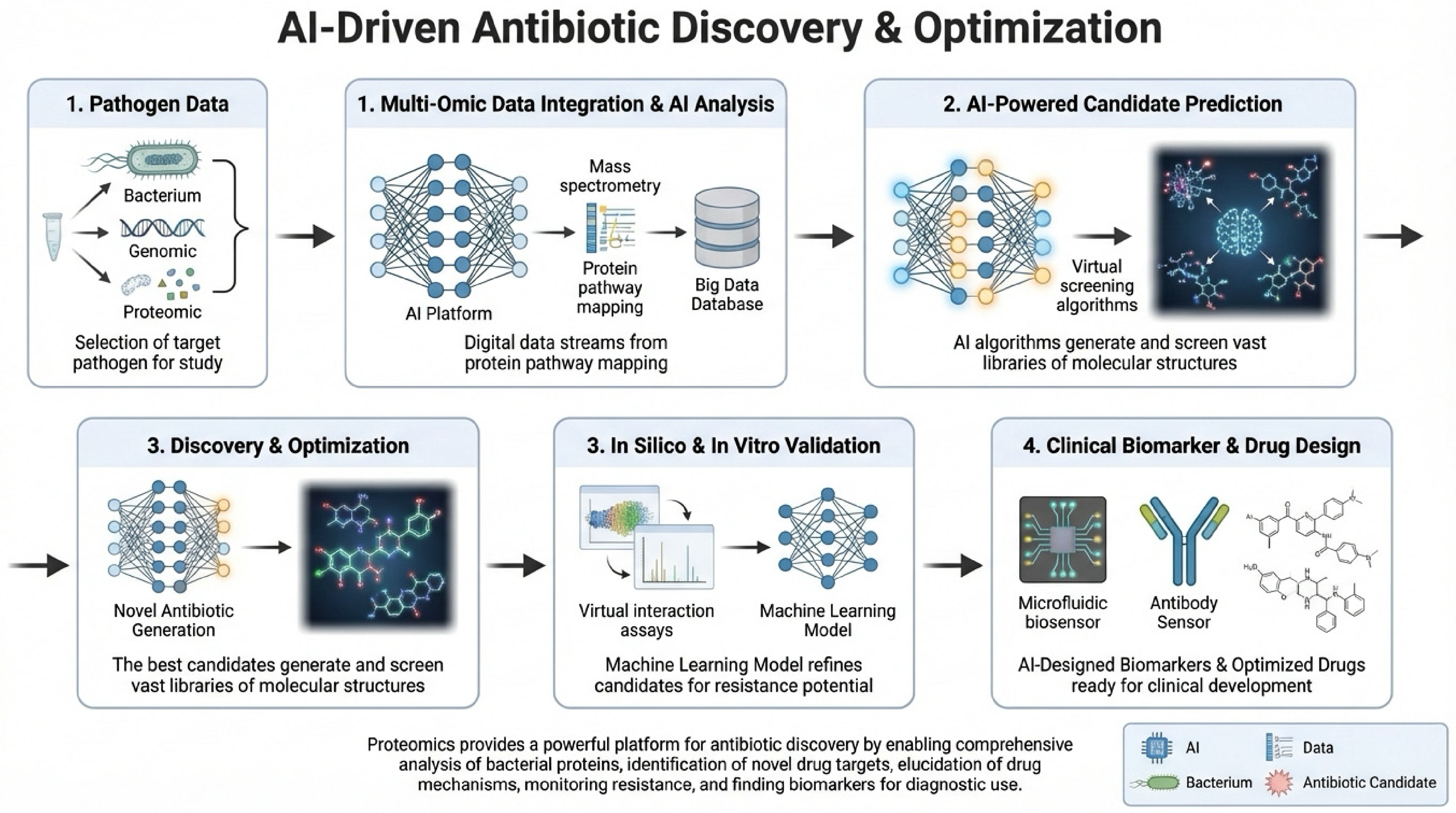
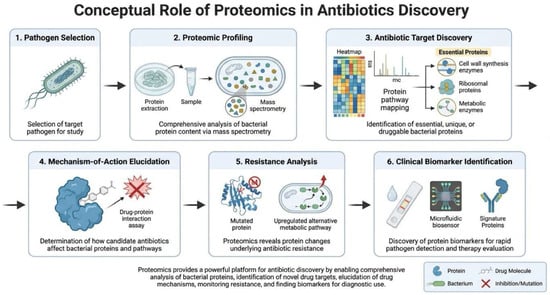
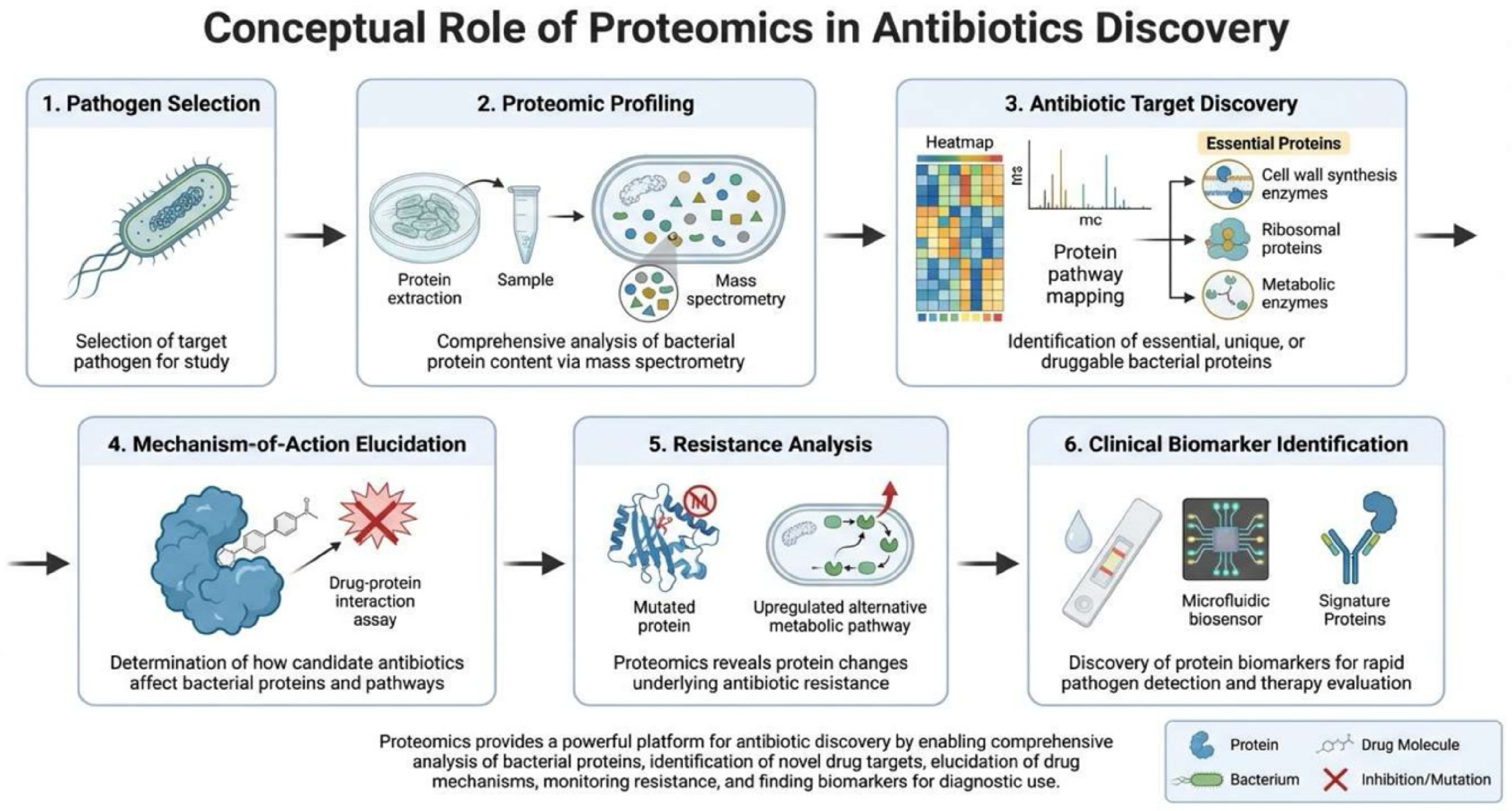
Disclaimer/Publisher’s Note: The statements, opinions and data contained in all publications are solely those of the individual author(s) and contributor(s) and not of MDPI and/or the editor(s). MDPI and/or the editor(s) disclaim responsibility for any injury to people or property resulting from any ideas, methods, instructions or products referred to in the content. |
© 2026 by the authors. Licensee MDPI, Basel, Switzerland. This article is an open access article distributed under the terms and conditions of the Creative Commons Attribution (CC BY) license.