


Error in Figure
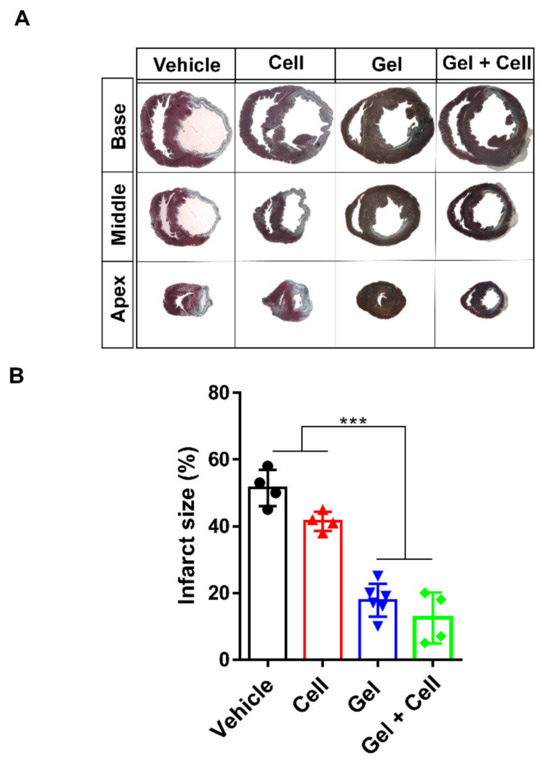
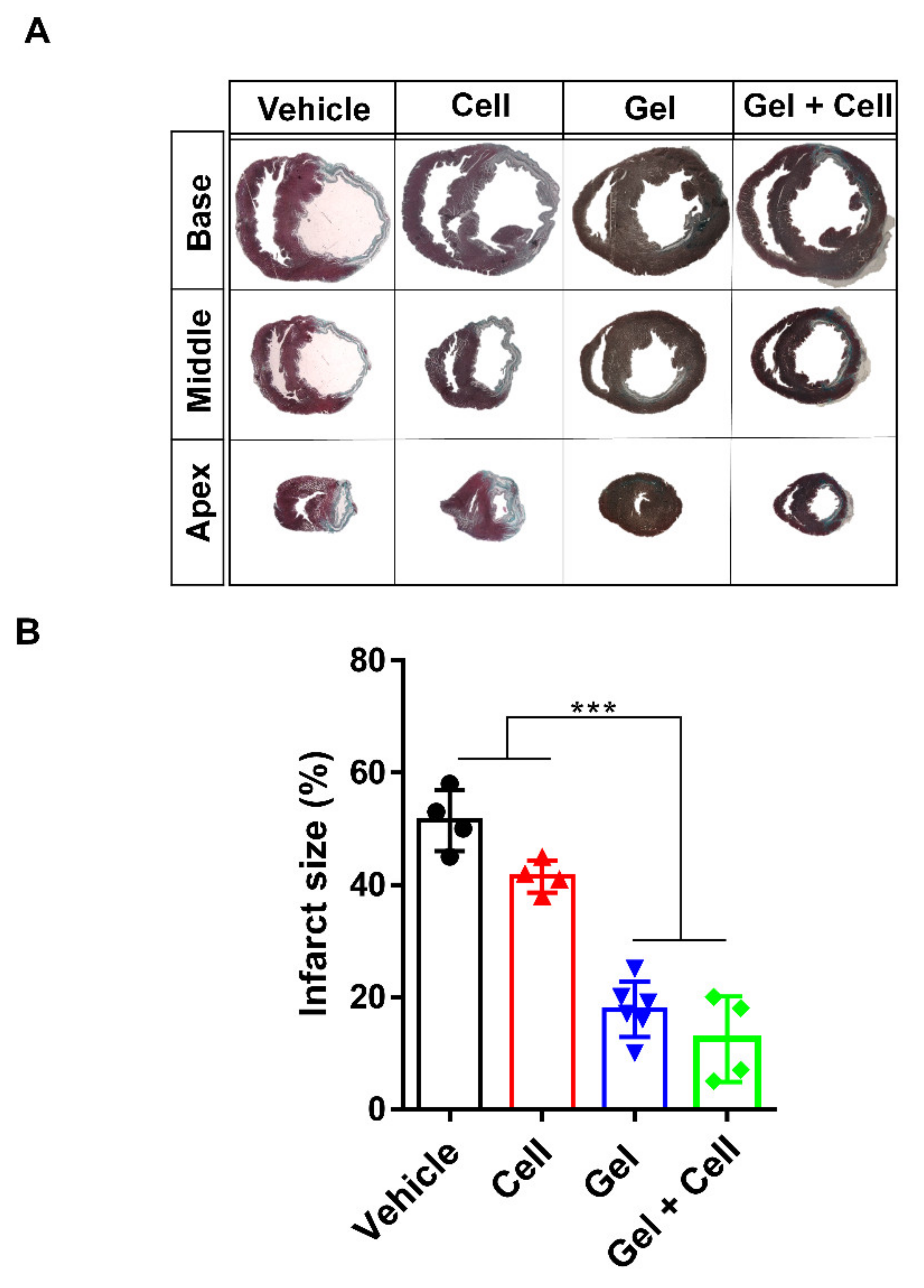
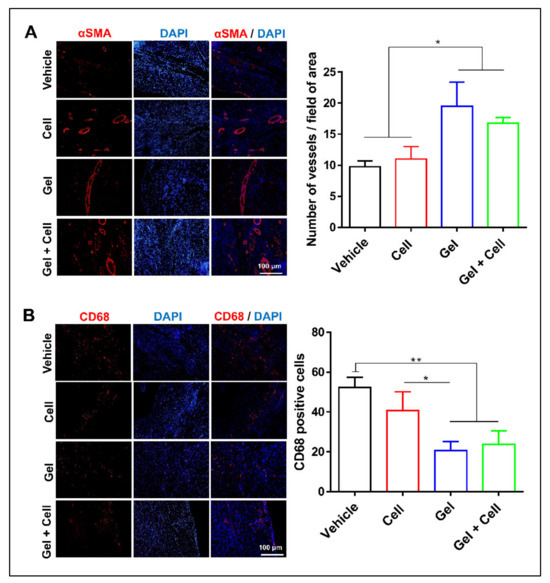
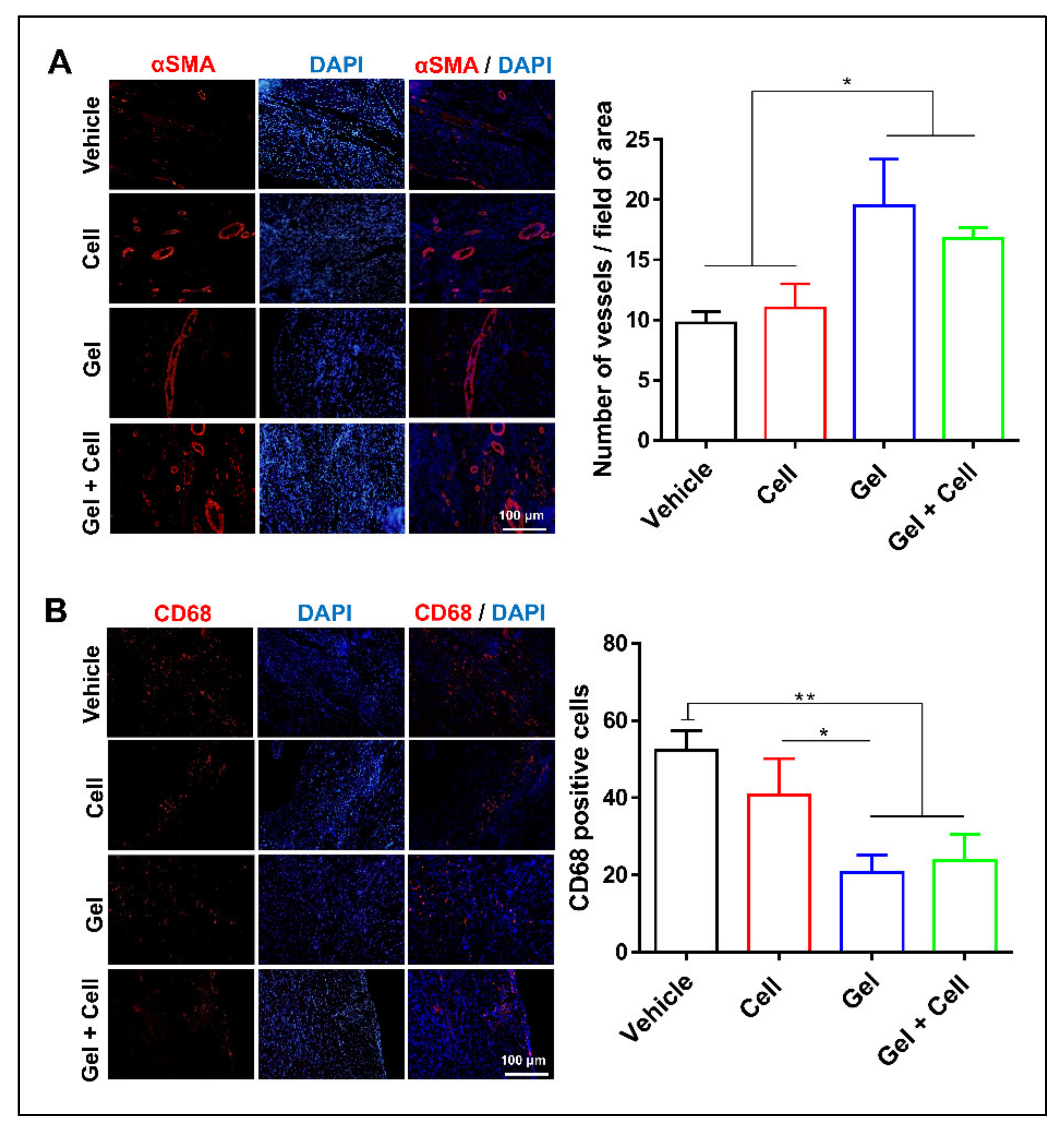
The authors wish to make the following corrections to this paper [1]. Following publication, it was discovered that some of the representative images provided in Figures 4 and 5 have overlap with that in another published paper [2] and are incorrect. This occurred because the in vivo experiments were performed simultaneously with manuscript [2]. The two studies were related and investigated the regenerative potential of hydrogel-encapsulated mesenchymal stem cells (MSC) as well as MSC-derived exosomes for rat hearts after myocardial infarction. In order to minimize the number of control ani-mals as much as possible and to reduce the number of sacrificed rats for these projects, the same control rats served as the control group for all the treatment groups in both papers. This explains why the provided bar plot for the control group (vehicle) rats appeared the same in both figures from the two articles. To avoid overlapping figures, the representative images of vehicle group in Figure 4A and Figure 5A,B. are replaced as below.
Figure 4.
(RADA)4-SDKP hydrogel diminished scar size. (A) Representative images of Masson’s trichrome (MT) stained heart sections at the apex, middle, and base areas for all groups. (B) At day 28, the infarct area (% of left ventricle (LV)) was decreased in the Gel and Gel + Cell groups in comparison with the Cell and Vehicle groups. All data are presented as mean ± standard deviation (n ≥ 4). *** p < 0.001.
Figure 5.
(RADA)4-SDKP hydrogel increased angiogenesis and reduced inflammation. (A) More vessels (α-SMA⁺ cells) were detected in the Gel and Gel + Cell groups compared with the Vehicle group. (B) A lower number of CD68⁺ macrophages were observed in the Gel and Gel + Cell groups compared with the Cell and Vehicle groups. All data are presented as mean ± standard deviation (n ≥ 3). * p < 0.05; ** p < 0.01.
Furthermore, the representative images of Gel group were incorrect in Figure 5A and are therefore replaced.
The authors would like to apologize for any inconvenience caused to the readers of Biomolecules for this error. We would like to state that the scientific conclusions were un-affected. The published version will be updated on the article webpage, with a reference to this correction notice.
Due to an issue relating to intellectual property, the (RADA)4-SDKP peptide sequence in Materials and Methods section is deleted as the authors requested. A correction has been made to 2. Materials and Methods, 2.1. Preparation of the (RADA)4-SDKP Hydrogel.
References
- Firoozi, S.; Pahlavan, S.; Ghanian, M.-H.; Rabbani, S.; Tavakol, S.; Barekat, M.; Yakhkeshi, S.; Mahmoudi, E.; Soleymani, M.; Baharvand, H. A Cell-Free SDKP-Conjugated Self-Assembling Peptide Hydrogel Sufficient for Improvement of Myocardial Infarction. Biomolecules 2020, 10, 205. [Google Scholar] [CrossRef] [Scilit] [PubMed]
- Firooziab, S.; Pahlavanc, S.; Ghanian, M.-H.; Rabbanid, S.; Tavakol, S.; Barekate, M.; Nazaric, S.; Pakzadc, M.; Shekaricg, F.; Hassanic, S.-N.; et al. Mesenchymal stem cell-derived extracellular vesicles alone or in conjunction with a SDKP-conjugated self-assembling peptide improve a rat model of myocardial infarction. Biochem. Biophys. Res. Commun. 2020, 524, 903–909. [Google Scholar] [CrossRef] [Scilit] [PubMed]
Disclaimer/Publisher’s Note: The statements, opinions and data contained in all publications are solely those of the individual author(s) and contributor(s) and not of MDPI and/or the editor(s). MDPI and/or the editor(s) disclaim responsibility for any injury to people or property resulting from any ideas, methods, instructions or products referred to in the content. |
© 2024 by the authors. Licensee MDPI, Basel, Switzerland. This article is an open access article distributed under the terms and conditions of the Creative Commons Attribution (CC BY) license (https://creativecommons.org/licenses/by/4.0/).