Skip to Content

Universe

  • Congratulations to Prof. Roger Penrose, Advisory Board member of Universe, for receiving the Nobel Prize in Physics 2020.
Universe is a peer-reviewed, open access journal focused on theoretical, experimental, and observational progress in fundamental and applied physics, from circumterrestrial space to cosmological scenarios, and is published monthly online by MDPI.

Quartile Ranking JCR - Q2 (Astronomy and Astrophysics)

Get Alerted

Add your email address to receive forthcoming issues of this journal.

All Articles (3,483)

  • Perspective
  • Open Access

Matter at ultra-high densities finds a physical realization inside neutron stars. It is generally acknowledged that huge magnetic fields are present in these stellar objects, and if not for the presence of the magnetic fields, neutron stars would be much more “silent” and practically invisible. However, a series of questions still remain concerning the role of magnetic fields in the neutron star structure and internal dynamics. We present an overview of these topics, pointing out the importance of a new set of observations (glitches and related events, and precession) and old questions that must be accommodated by a more complete theory of neutron star physics.

18 May 2026
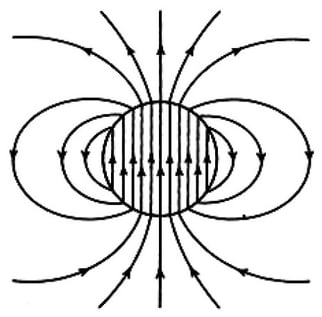
A toy “all-core” neutron star and its central magnetic field.

The spin alignment of vector mesons, characterized by the spin-density-matrix element ρ00, is an important observable for studying spin dynamics in relativistic heavy-ion collisions. Experimental measurements have reported deviations of ρ00 from the isotropic expectation of 1/3, motivating careful evaluation of possible acceptance effects. In this work, we investigate the influence of finite experimental coverage on the extracted ρ00 of K0 mesons using a toy model constrained by realistic kinematic distributions from the AMPT model. The reconstructed ρ00 is examined as a function of pseudorapidity (η) and transverse momentum (pT) within typical experimental acceptance ranges. We find that limited pseudorapidity coverage can lead to reconstructed ρ00 values above 1/3, even when the input distribution is isotropic. This behavior originates from the selective removal of decay daughters outside the η window, which modifies the cosθ distribution. A dependence on transverse momentum is also observed, particularly at low pT where daughter particles are more sensitive to longitudinal acceptance constraints. Comparisons with STAR measurements are presented for reference, without attempting to reinterpret the experimental results. Overall, this study provides a systematic examination of acceptance-induced effects and may serve as a useful reference for future measurements of vector-meson spin alignment.

16 May 2026

While, in standard quantization, the energy spectrum of an oscillator does not depend on its mass, in Planck length deformed quantization, the energy spectrum becomes mass-dependent. That means that the field oscillator masses will source a gravitational field through the Nullpunktsenergie as long as we follow this scheme of quantization. Admitting these masses are tangible, their gravitational effect will manifest itself even within the framework of standard field theory. We shall consider the possible gravitational implications based on this approach. If the mass scale for field oscillators is set by the inverse size of the box containing the field and the three-momentum cutoff dictated by the black hole energy bound is exploited, one finds that the number of Fourier modes saturates the black hole entropy bound. Following certain “holographic” reasoning, one can derive various kinds of dark energy models that may be interesting for further study.

14 May 2026

We perform three-dimensional general relativistic magnetohydrodynamic (GRMHD) simulations of a near-maximally spinning black hole (spin parameter a=0.998) with varying initial magnetic field geometries, systematically exploring the parameter space connecting magnetically arrested disk (MAD), intermediate (INT), and standard and normal evolution (SANE) accretion states. The magnetic flux threading the black hole horizon emerges as the fundamental state variable controlling jet efficiency, flow magnetization, and radiative output across all three states. We introduce complementary diagnostics—broadband spectral energy distributions spanning radio through hard X-ray frequencies and time-resolved X-ray light curves—that together connect simulation dynamics directly to multiwavelength observables. The radiative output follows a clear MAD > INT > SANE hierarchy in time-averaged luminosity, mean X-ray emission, as well as variability. Furthermore, MAD exhibits the highest fractional variability through quasi-periodic magnetic flux eruption events, and INT and SANE show moderate variability driven by episodic reconnection and stochastic MRI turbulence, respectively. Scaling to GRS 1915+105, Cyg X-1, and HLX-1, we demonstrate that all twelve temporal classes of GRS 1915+105 map naturally onto our three magnetic states, Cyg X-1’s persistent hard state is reproduced by a sustained INT configuration, and HLX-1’s extreme luminosities arise through efficient Blandford–Znajek extraction in MAD states scaled to higher black hole mass.

12 May 2026

News & Conferences

Volumes

Latest Issues

Open for Submission

Editor's Choice

XFacebookLinkedIn
Universe - ISSN 2218-1997