


Abstract
Background: Exercise timing may influence cardiovascular and metabolic responses, but the available evidence varies across populations, exercise protocols, and assessment periods. Objectives: To compare the cardiovascular and metabolic effects of morning and late-day exercise in individuals with and without specified cardiometabolic diagnoses. Methods: PubMed, Web of Science, Embase, Scopus, and the Cochrane Library databases were searched for relevant published literature. We included randomized controlled trials and randomized crossover trials comparing exercise performed within prespecified morning and late-day time windows. Eligible populations included individuals without target cardiometabolic diagnoses and patients with hypertension, diabetes mellitus, coronary artery disease, or metabolic syndrome. Studies were synthesized quantitatively when outcomes were sufficiently comparable for pooling and otherwise summarized narratively. Random-effects models were used for the primary meta-analyses. Results: Thirty-seven studies involving 1150 participants were included. In parallel group trials involving participants without the target diagnoses, late-day exercise was associated with lower blood glucose and triglyceride levels than morning exercise; both estimates were based on two studies and rated as low-certainty evidence. In randomized crossover trials, mean platelet volume was higher after morning exercise both immediately after exercise and during recovery, whereas most other cardiovascular, metabolic, and exercise-response outcomes showed no statistically significant difference between exercise timings. In patients with hypertension and diabetes, pooled analyses did not demonstrate significant differences in the available outcomes, although the evidence was limited and imprecise. Evidence for coronary artery disease and metabolic syndrome was sparse, comprising two and one trials, respectively. Conclusions: Current evidence is insufficient to establish a universally optimal exercise time or demonstrate that differences in acute biomarkers translate into long-term clinical benefit or harm. Although some individual outcomes differed according to exercise timing, the available evidence is limited by the small number of studies, methodological heterogeneity, and limited evidence in populations with cardiometabolic diseases. Larger, well-designed trials with standardized exercise timing protocols and outcome measures are needed to determine whether exercise timing has clinically meaningful effects on cardiovascular and metabolic health.
1. Introduction
Cardiovascular disease (CVD) is the leading cause of death and disability worldwide and imposes a substantial social and economic burden [1,2]. CVD is projected to claim approximately 24 million lives by 2030 [3]. Due to complex pathophysiological mechanisms, treatment for CVD and its complications remains limited. In recent years, the World Heart Federation, American Heart Association, American Medical Association, and American College of Sports Medicine have all recommended exercise to improve cardiovascular health, and it is widely validated [4,5,6].
Circadian rhythms regulate cardiovascular function and may influence responses to exercise. Epidemiological studies have found that shift workers have a higher prevalence of hypertension and greater risks of myocardial infarction and coronary artery disease than individuals who do not work shifts, even after adjustment for traditional risk factors [7,8]. This has prompted growing interest in whether exercise timing modifies cardiovascular and metabolic responses, particularly when exercise is performed in the morning versus later in the day. However, findings remain inconsistent. Some studies suggest that late-day exercise may improve autonomic regulation, reduce systemic vascular resistance, and lower blood pressure in patients with hypertension [9,10]. Conversely, morning physical activity has been associated with lower risks of coronary heart disease, ischemic stroke, and other cardiovascular events by 16%, 17%, and 21%, respectively [11] and with better cardiovascular health [12,13]. These divergent findings may partly reflect differences in participant characteristics, disease status, exercise protocols, and study designs.
Despite growing interest in circadian-informed exercise prescription, it remains unclear whether the cardiovascular and metabolic effects of exercise timing are consistent across populations with different physiological and pathological characteristics. Existing evidence comes from heterogeneous populations, including healthy individuals and patients with hypertension, diabetes mellitus, coronary artery disease, and metabolic syndrome. However, to our knowledge, no previous review has comprehensively compared the effects of exercise timing across these populations within a unified analytical framework. Therefore, this systematic review and meta-analysis aimed to compare the effects of morning versus late-day exercise on cardiovascular and metabolic outcomes across healthy and cardiometabolic populations by synthesizing evidence from randomized controlled and randomized crossover trials.
2. Materials and Methods
This systematic review and meta-analysis was conducted in accordance with the Preferred Reporting Items for Systematic Reviews and Meta-Analyses (PRISMA) 2020 guidelines [14]. The protocol was registered with PROSPERO under the title “Morning and late-day exercise show no difference in cardiovascular indicators across different populations: A systematic review and meta-analysis of randomized controlled trials and crossover studies” (PROSPERO ID: CRD420251134958).
2.1. Search Strategy
Two independent investigators (Miao Y and Xingyu Q) searched PubMed, Web of Science, Scopus, Embase, and the Cochrane Library for studies published from 1 January 2000, to 19 September 2026. The search strategy combined Medical Subject Headings (MeSH) with free-text terms to identify relevant studies. Search terms included, but were not limited to, “exercise,” “cardiovascular disease,” “morning,” and “evening.” Boolean operators (AND, OR, and NOT) were used to combine search terms. The complete database-specific search strategies are provided in Supplementary Materials S1.
2.2. Study Eligibility
Records retrieved from the databases were managed using EndNote X9(Clarivate Analytics, Philadelphia, PA, USA). Two independent reviewers (Miao Y and Xingyu Q) screened the literature records in the following three steps. First, animal studies, reviews, conference abstracts, case reports, and other non-article formats were excluded. Next, the literature unrelated to the study topic was excluded by screening titles and abstracts. Finally, the remaining articles underwent full-text review to assess their eligibility for inclusion based on study design (randomized controlled trials or randomized crossover trials), population characteristics, intervention protocols, and availability of quantitative outcome data. Disagreements between the two reviewers were resolved through discussion with a third reviewer (Weian L or Rui Y). The screening process was documented using the PRISMA flow diagram.
2.3. Selection Criteria
Eligibility criteria were established according to the Population, Intervention, Comparator, Outcomes, and Study design (PICOS) framework, following the Cochrane Handbook.
Population: The study population encompasses diverse groups with variable cardiovascular health, specifically including individuals without target diagnoses (adults > 18 years with no reported diagnosis of hypertension, diabetes or prediabetes, coronary artery disease, or metabolic syndrome; this category could include participants described as healthy, sedentary, overweight, or obesity), hypertensive individuals (meeting World Health Organization (WHO) hypertension criteria with systolic blood pressure (SBP) ≥ 140 mmHg and/or diastolic blood pressure (DBP) ≥ 90 mmHg), diabetic individuals (hospital-diagnosed diabetes or prediabetes), individuals with coronary artery disease (confirmed by coronary angiography, electrocardiogram (ECG), etc. and in a stable disease state), and individuals with metabolic syndrome (meeting International Diabetes Federation (IDF) diagnostic criteria).
Intervention: Eligible studies directly compared morning with late-day exercise, including both single-bout exercise and long-term exercise. Morning exercise was defined as a session performed entirely between 05:00 and 11:00, and late-day exercise was defined as a session performed entirely between 16:00 and 22:00. Studies were excluded if either exercise condition extended beyond its corresponding time window or if the reported information was insufficient to confirm that both conditions met these criteria. Comparator: The focal comparison involves “contrasting morning versus late-day exercise across different populations or within the same cohort.” This entails either the same group of participants (randomized crossover trial) or different participants matched for baseline characteristics (randomized controlled trial) receiving either morning or late-day exercise intervention.
Outcomes: Outcome measures must include at least one quantitative indicator related to cardiovascular health, specifically comprising blood pressure metrics (systolic, diastolic, mean arterial pressure), metabolic indicators (fasting blood glucose, postprandial blood glucose, triglycerides, total cholesterol, high-density lipoprotein (HDL), low-density lipoprotein (LDL), insulin levels), blood and inflammatory markers (mean platelet volume (MPV)), fibrinogen, high-sensitivity C-reactive protein (hs-CRP), white blood cell count, heart rate-related metrics (resting heart rate, immediate post-exercise heart rate, peak heart rate), other indicators (lactate levels, maximal oxygen uptake, subjective fatigue levels).
Study design: Only randomized controlled trial and randomized crossover trial were included. Subgroup analyses by population were pre-specified to test the hypothesis that baseline physiological and pharmacological status may modify the effects of exercise timing.
Exclusion criteria: Studies were excluded if they met any of the following: non-randomized crossover trials or non-randomized crossover trials, non-English language, non-article formats, study design or study content is not in compliance, non-original studies, not direct morning versus late-day exercise comparison, exercise timing outside the predefined windows, or exercise timing could not be verified against the predefined windows.
2.4. Data Extraction
Two independent reviewers (Miao Y and Xingyu Q) extracted data using a standardized form covering the following: (1) study characteristics (e.g., author, title, publication year, trial name), (2) patient demographics (e.g., age, sex, ethnicity, sample size), (3) intervention details (e.g., specific times for morning and late-day exercise, exercise modality, exercise intensity, exercise duration), (4) outcome data (e.g., baseline values of core outcome measures, pre- and post-intervention differences, mean values, standard deviations, standard errors), and (5) confounding factor control (e.g., diet, sleep, environment, exercise habits, medication).
2.5. Quality Assessment
For parallel group randomized controlled trials, the Cochrane Risk of Bias 2.0 (RoB 2.0) tool was used to assess five domains: (1) randomization process, (2) deviations from intended interventions, (3) missing outcome data, (4) outcome measurement, and (5) selection of the reported result. For randomized crossover trials, the RoB 2.0 crossover trial extension was applied, with additional attention to period effects and carryover effects, including the adequacy of the washout period and the appropriateness of the crossover design. Each domain and the overall risk of bias were classified as “low risk,” “some concerns,” or “high risk” (Supplementary Materials S2).
To evaluate the overall certainty of evidence for the primary meta-analyzed outcomes (i.e., blood pressure, blood glucose, triglycerides, and MPV), the Grading of Recommendations Assessment, Development and Evaluation (GRADE) framework was applied (Supplementary Materials S3). The certainty of evidence was rated as high, moderate, low, or very low based on five domains, including risk of bias, inconsistency, indirectness, imprecision, and publication bias. Given the limited number of studies per outcome (<10), formal publication bias assessment using funnel plots or Egger’s test was not performed, in line with current methodological recommendations [14].
2.6. Statistical Analysis
We assessed the feasibility of quantitative synthesis according to trial design, population characteristics, intervention characteristics, and outcome availability. Meta-analyses were performed using R software (version 4.3.2; R Foundation for Statistical Computing, Vienna, Austria), primarily using the meta and metafor packages. Random-effects models were used as the primary analytical approach because clinical and methodological heterogeneity was anticipated across studies, including differences in population characteristics, exercise modality and intensity, intervention duration, and outcome assessment. Continuous outcomes were synthesized as standardized mean differences (SMDs) using Hedges’ g with 95% confidence intervals (CIs), with the effect direction defined as morning exercise minus late-day exercise (i.e., exercise performed in the afternoon or evening). Thus, positive SMDs indicated higher outcome values following morning exercise, whereas negative SMDs indicated higher outcome values following late-day exercise. A two-sided p value < 0.05 was considered statistically significant.
Statistical heterogeneity was assessed using the I2 statistic, Cochran’s Q test, and Tau2. Heterogeneity was interpreted in conjunction with the magnitude and direction of the pooled effects rather than by I2 alone. Where appropriate, fixed-effect models were used in sensitivity analyses to examine the robustness of the pooled estimates to the choice of meta-analytic model. For outcomes with substantial heterogeneity, additional sensitivity analyses were conducted when sufficient data were available to explore the influence of individual studies. For randomized crossover trials, a sensitivity analysis was performed by excluding Aloui K 2017 because of its unusually small standard deviations, which may have contributed to high heterogeneity in several outcomes. When exclusion of a study left only one eligible study for an outcome, no pooled estimate was calculated.
For randomized crossover trials, morning and late-day conditions were entered as two groups using an unpaired approach. Because paired effect estimates, paired standard errors, or within-participant correlation coefficients could not be consistently obtained or extracted from the included studies, the within-participant correlation between conditions was not incorporated into the effect size calculations. This represents a methodological limitation of the present analysis and is acknowledged in the Discussion.
Quantitative synthesis was conducted separately according to population and trial design when sufficient comparable data were available. Randomized controlled trials and randomized crossover trials were therefore not combined within the same pooled analysis. Outcomes reported in only one eligible study were summarized descriptively rather than quantitatively pooled.
3. Results
3.1. Literature Search
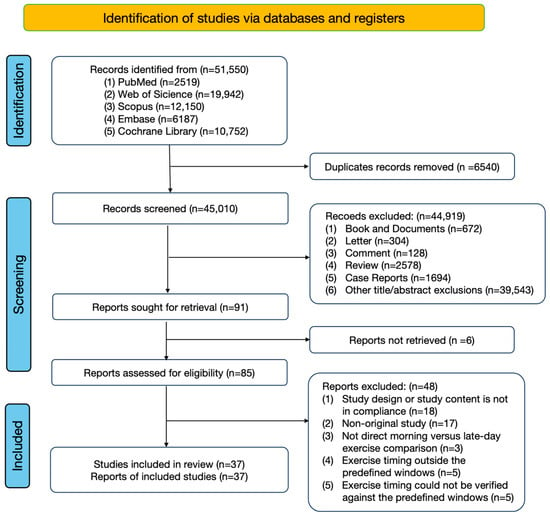
The search identified 51,550 records, of which 6540 duplicates were removed. The remaining 45,010 records underwent title and abstract screening, and 44,919 were excluded. Ninety-one reports were sought for retrieval, of which six were not retrieved. Of the 85 reports assessed for eligibility, 48 were excluded for the reasons shown in Figure 1, resulting in the inclusion of 37 studies (Figure 1).
Figure 1.
Literature screening flow diagram based on PRISMA.
3.2. Study Characteristics
A total of 37 studies involving 1150 participants were included in the systematic review and meta-analysis. The characteristics of the included studies and participants are summarized in Supplementary Table S1. Of these studies, nine studies refs. [15,16,17,18,19,20,21,22,23] were randomized controlled trials, and 28 studies refs. [24,25,26,27,28,29,30,31,32,33,34,35,36,37,38,39,40,41,42,43,44,45,46,47,48,49,50,51] were randomized crossover trials. Among the randomized controlled trials, three studies refs. [15,20,23] enrolled individuals without the target cardiometabolic diagnoses, three studies refs. [16,18,19] enrolled individuals with hypertension, two studies refs. [21,22] enrolled individuals with coronary artery disease, and one study refs. [17] enrolled individuals with metabolic syndrome. Among the randomized crossover trials, 20 studies refs. [25,26,28,29,30,31,32,34,35,36,37,38,43,44,45,46,47,48,50,51] enrolled individuals without the target cardiometabolic diagnoses, four studies refs. [24,33,39,49] enrolled individuals with hypertension, and four studies refs. [27,40,41,42] enrolled diabetic individuals.
In total, 19 studies refs. [15,16,18,19,23,25,26,28,29,30,32,34,36,40,41,42,44,45,46] contributed data to at least one meta-analysis. The remaining 18 studies refs. [17,20,21,22,24,27,31,33,35,37,38,39,43,47,48,49,50,51] met the eligibility criteria but could not be included in a quantitative synthesis because their reported outcomes or data were not sufficiently comparable or suitable for pooling; their findings were summarized narratively.
3.3. Characteristics of Exercise Interventions
3.3.1. Exercise Period
Among the 37 studies, most studies investigated acute exercise sessions performed either in the morning or late day [19,23,24,25,26,27,28,29,30,31,32,34,35,36,37,38,39,40,41,42,43,44,45,46,47,48,50,51]. Only nine studies refs. [15,16,17,18,19,20,21,22,33] implemented exercise interventions lasting 8 weeks or longer (Supplementary Materials Table S1).
3.3.2. Exercise Types
In total, 22 studies refs. [16,18,19,20,21,22,24,28,29,31,32,33,35,36,38,39,40,43,44,45,46,50] focused on solely aerobic exercise, three studies refs. [30,34,42] focused on resistance exercise alone, seven examined high-intensity interval exercise refs. [17,25,26,27,37,41,51], and only one investigated combined aerobic and resistance exercise [15]. Additionally, one study ref. [49] has explored aerobic exercise combined with resistance exercise, and one study ref. [23] has explored aerobic exercise combined with high-intensity interval exercise.
Referencing the intensity comparison table from earlier studies, 15 studies refs. [17,18,21,23,25,26,27,30,35,37,41,45,49,51] involved high-intensity exercise, 20 studies used moderate-intensity exercise [15,19,20,22,24,28,31,33,34,38,39,40,42,43,44,46,47,48,49,50], and two studies refs. [16,29] used low-intensity exercise.
3.3.3. Session Duration
Each exercise session lasted less than 30 min in nine studies [17,24,26,27,28,37,41,43,51], 30–60 min in 18 studies [15,16,18,19,20,21,22,23,30,33,34,38,39,40,42,44,47,50], and more than 60 min in 1 study [31]. Additionally, nine studies refs. [25,29,32,35,36,45,46,48,49] did not specify exercise duration.
3.3.4. Confounding Factors
Beyond the effects of exercise timing on cardiovascular outcomes, eight studies accounted for exercise habits [15,25,28,29,31,34,36,45], five studies refs. [17,27,38,42,50] combined dietary and meal timing effects, five studies refs. [20,24,37,41,47] considered sleep-related indicators, three study refs. [19,33,51] examined medication use, and one study ref. [45] addressed environmental factors.
3.4. Quality Assessment Results of Included Studies
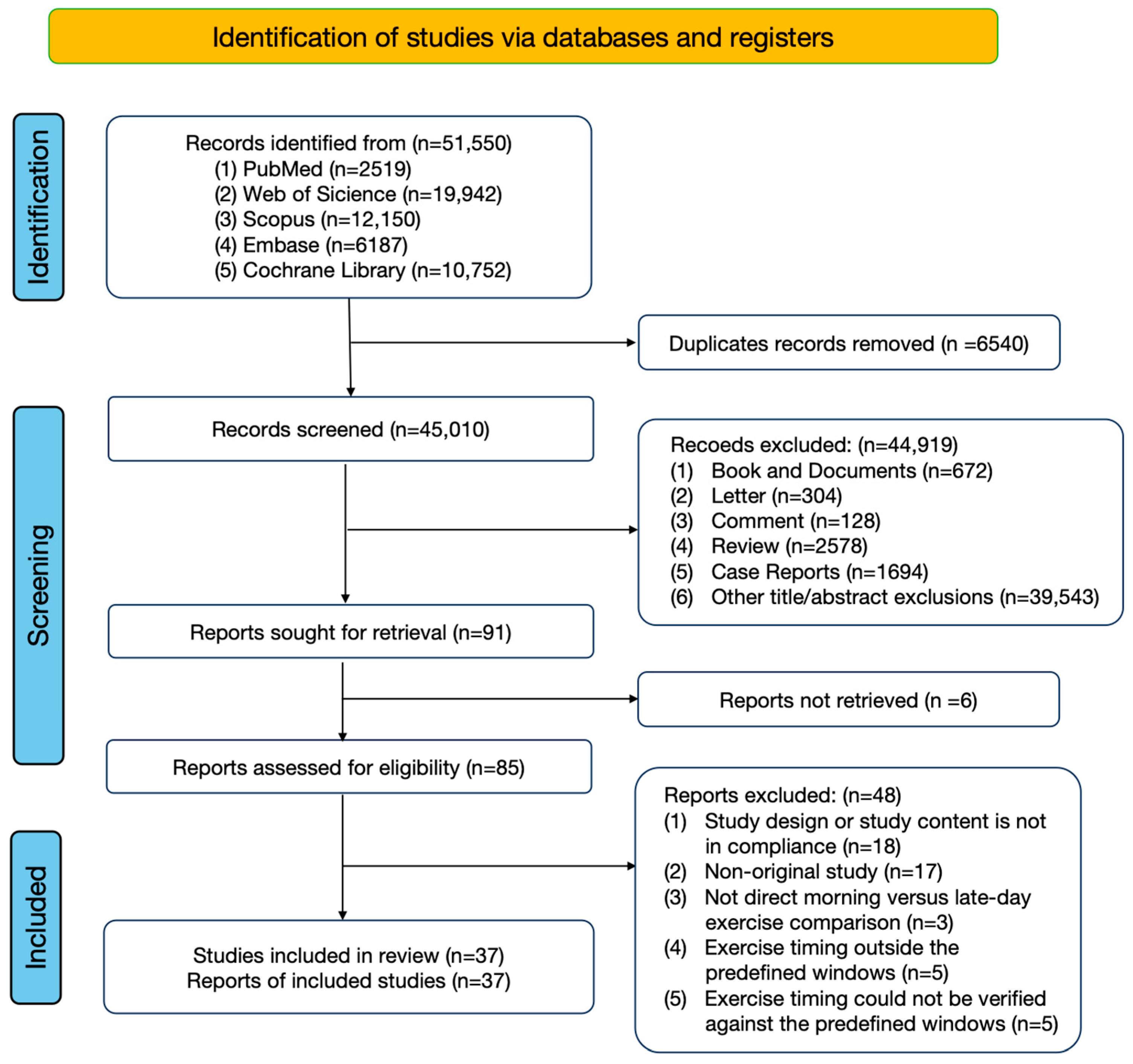
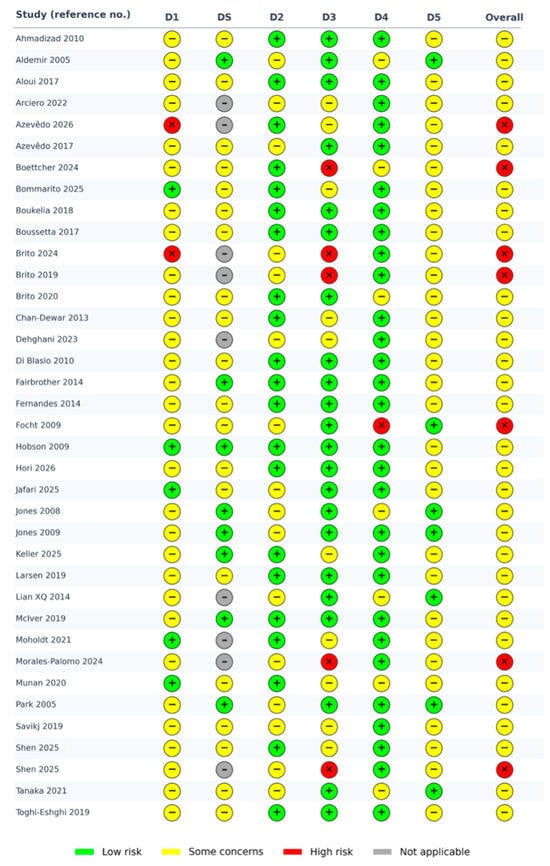
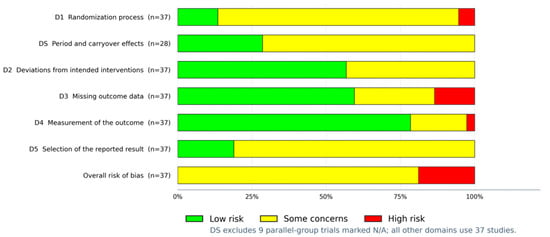
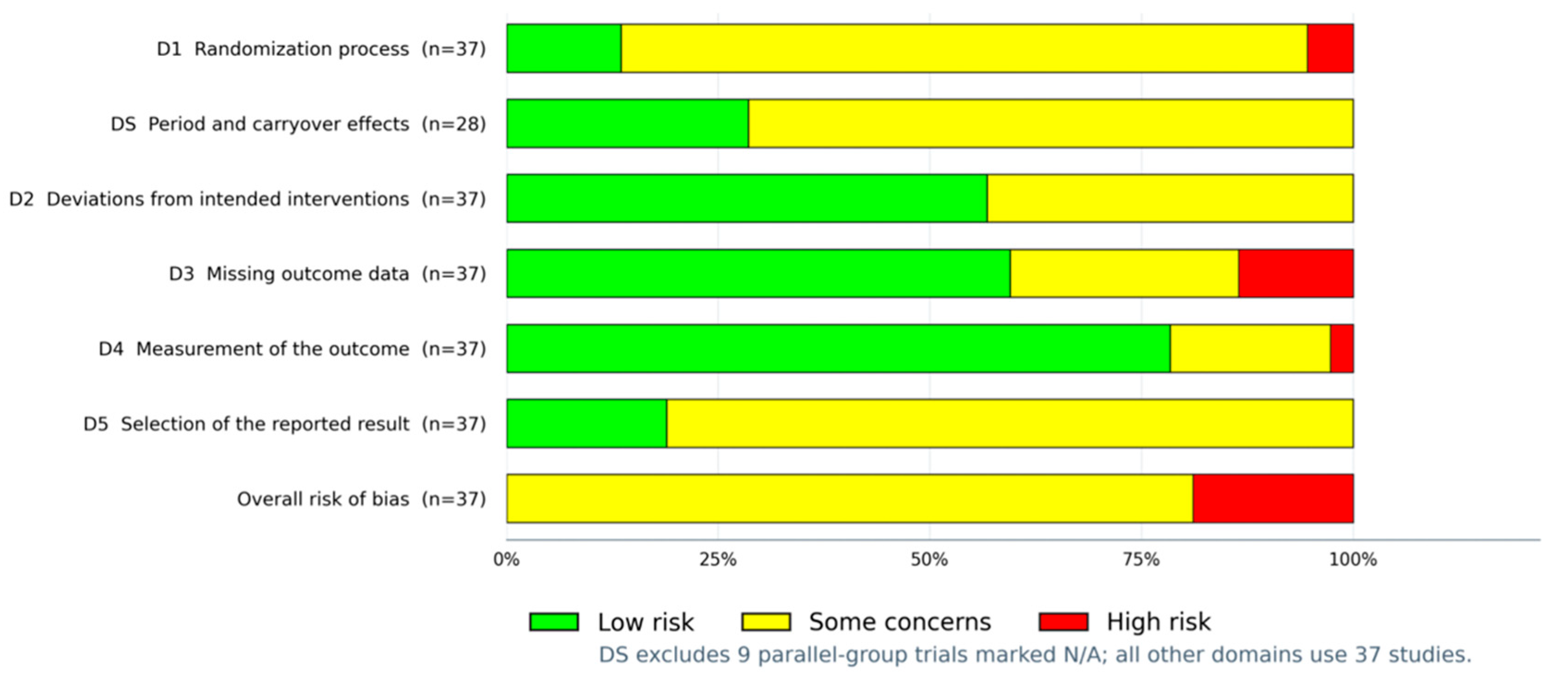
Risk of bias was assessed for 37 included studies using the appropriate RoB 2 versions for parallel group and crossover trials (Figure 2 and Figure 3). Overall, 30 studies refs. [15,21,22,23,24,25,26,27,28,29,30,31,33,35,36,37,38,39,40,41,42,43,44,45,46,47,48,49,50,51] were judged to raise some concerns, and seven studies refs. [16,17,18,19,20,32,34] were judged to be at high risk of bias; none was judged to be at low risk overall. For the five core domains, some concerns were most frequent in the randomization process (30/37) and selection of the reported result (30/37). Most studies were judged to be at low risk for deviations from intended interventions (21/37), missing outcome data (22/37), and measurement of the outcome (29/37). High-risk judgments occurred in the randomization process (2/37), missing outcome data (5/37), and outcome measurement (1/37); some studies had high-risk judgments in more than one domain. Among the 28 crossover trials, the additional domain assessing period and carryover effects was judged to be at low risk in eight studies [24,27,28,31,38,39,43,46] and to raise some concerns in 20 studies [25,26,29,30,32,33,34,35,36,37,40,41,42,44,45,47,48,49,50,51]. This domain was not applicable to the nine parallel group trials. The supplementary document provides a detailed assessment of RoB 2.
Figure 2.
Cochrane Risk of Bias 2.0 tool results. The studies presented in the figure correspond, from top to bottom, to references [15,16,17,18,19,20,21,22,23,24,25,26,27,28,29,30,31,32,33,34,35,36,37,38,39,40,41,42,43,44,45,46,47,48,49,50,51]. D1–D5 represent the five RoB 2 domains: bias arising from the randomization process, bias due to deviations from intended interventions, bias due to missing outcome data, bias in measurement of the outcome, and bias in selection of the reported result.
Figure 3.
Distribution of risk-of-bias judgments across RoB 2 domains and overall. Domain S was applicable only to the 28 randomized crossover trials; the nine parallel group trials were therefore not included in its denominator. The distributions for all other domains and the overall judgment were based on all 37 included studies.
3.5. Quantitative Analysis
3.5.1. Individuals Without Target Diagnoses
Because of randomized controlled trials and randomized crossover trials differed in design, pooled analyses were conducted separately.
Randomized controlled trials
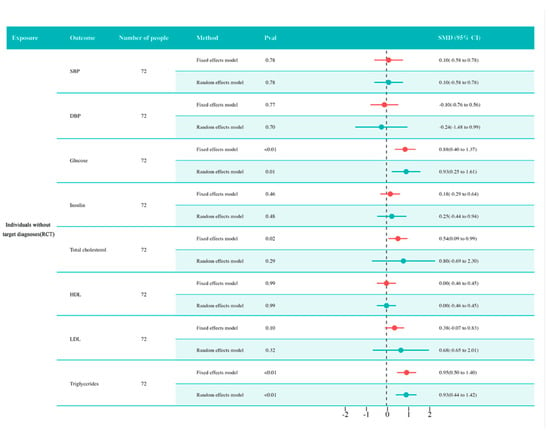
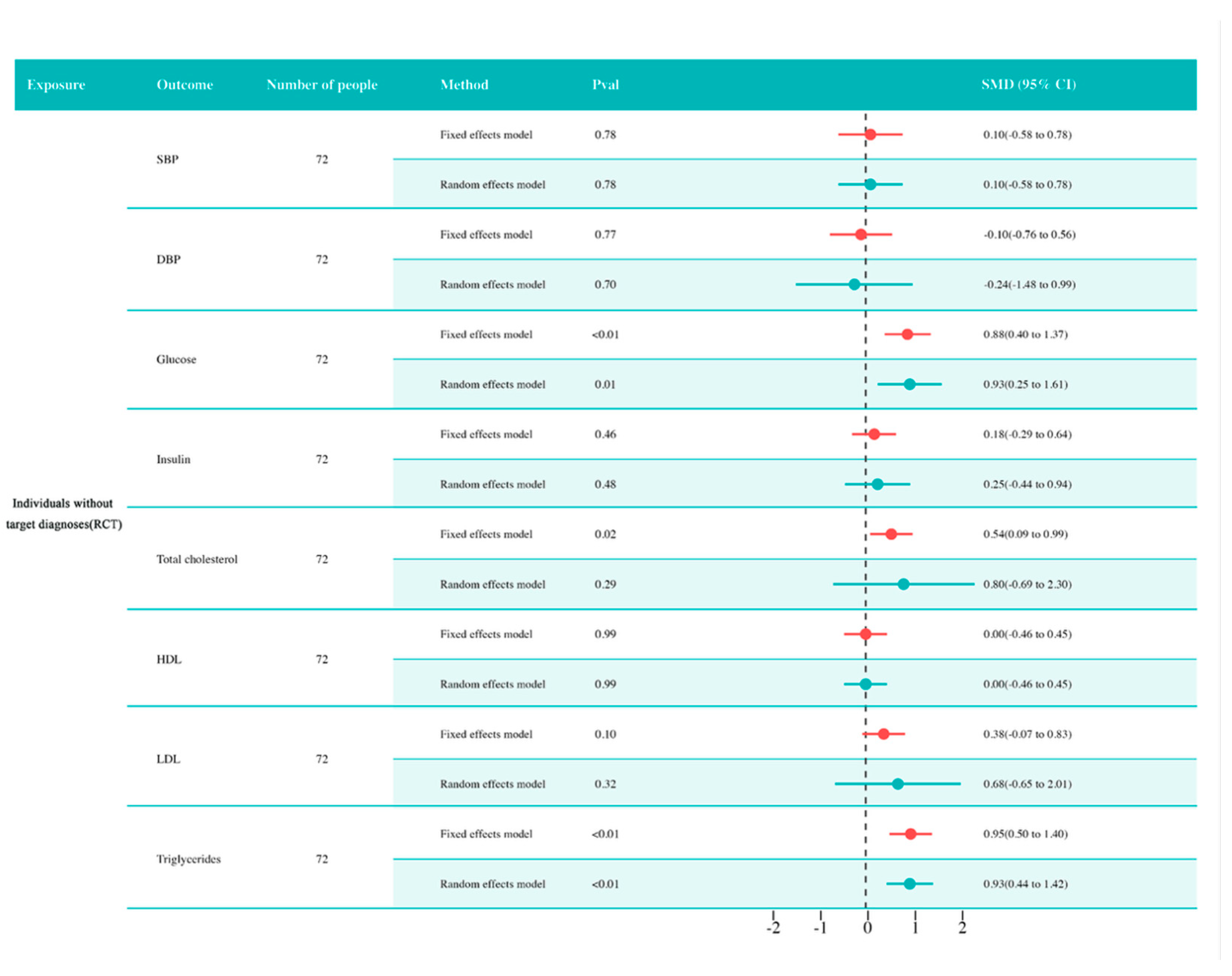
In randomized controlled trials [15,23], there was no significant difference between morning and late-day exercise in SBP (SMD = 0.10, 95% CI = [−0.58, 0.78], I2 = 25%, p = 0.78), DBP (SMD = −0.24, 95% CI = [−1.48, 0.99], I2 = 55%, p = 0.70), total cholesterol (SMD = 0.80, 95% CI = [−0.69, 2.30], I2 = 68%, p = 0.29), insulin (SMD = 0.25, 95% CI = [−0.44, 0.94], I2 = 26%, p = 0.48), HDL (SMD = −0.00, 95% CI = [−0.46, 0.45], I2 = 0%, p = 0.99), or LDL (SMD = 0.68, 95% CI = [−0.65, 2.01], I2 = 70%, p = 0.32).
However, regarding blood glucose, the late-day exercise group showed significantly lower levels compared with the morning group (SMD = 0.93, 95% CI = [0.25, 1.61], I2 = 30%, p < 0.01). Similarly, for triglycerides, levels were significantly lower in the late-day exercise group (SMD = 0.93, 95% CI = [0.44, 1.42], I2 = 0%, p < 0.01) (Figure 4).
Figure 4.
Forest plot of cardiovascular indicators after morning and late-day exercise in the individuals without target diagnoses (randomized controlled trials).
Randomized crossover trials
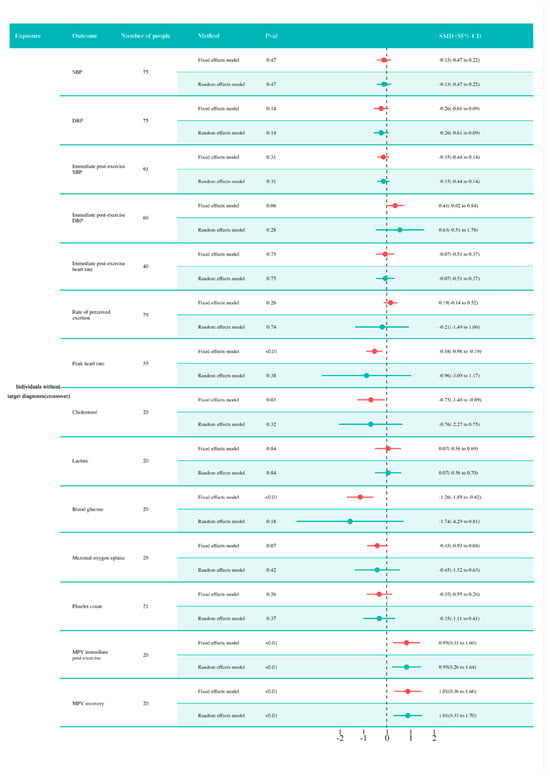
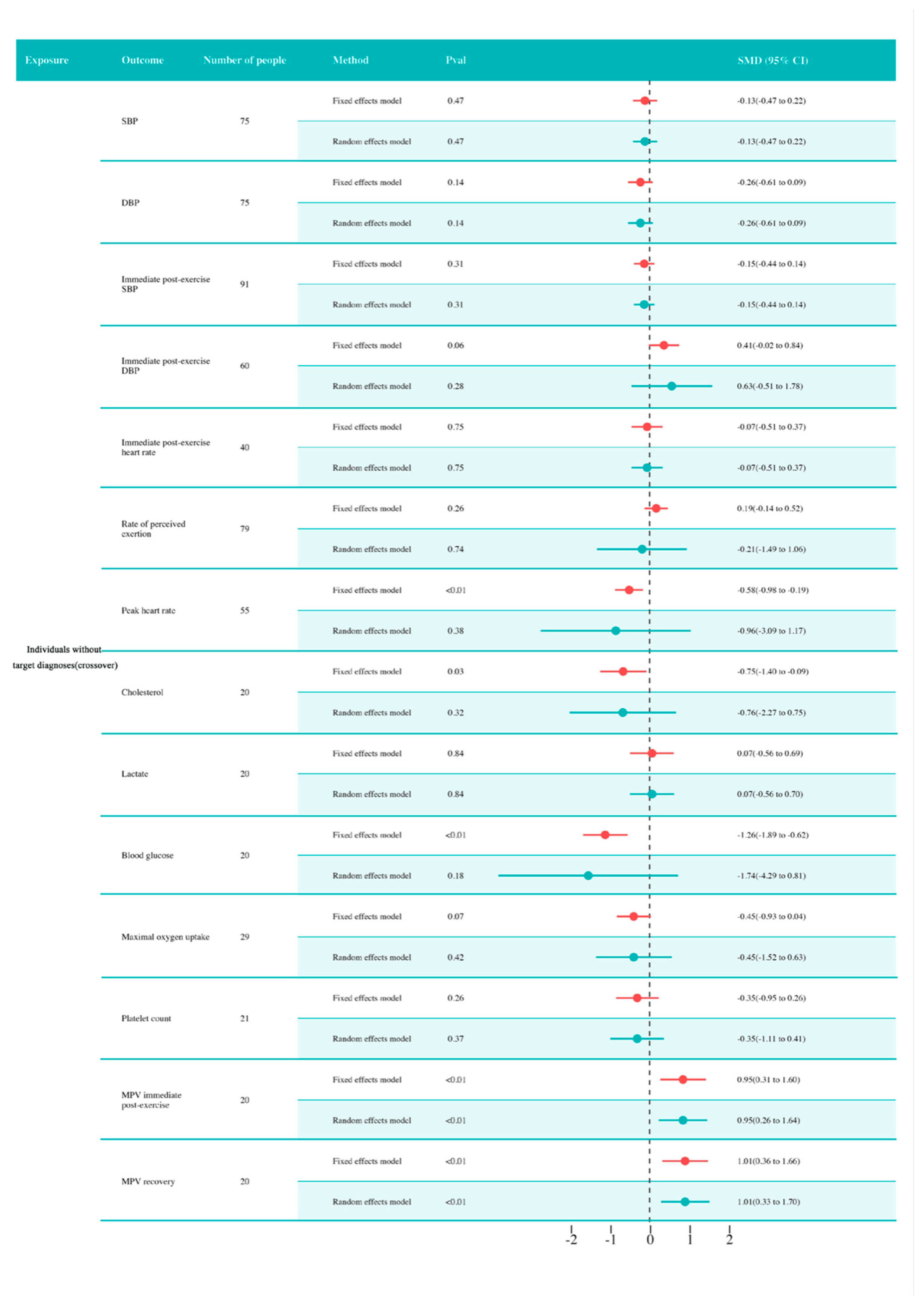
Eleven randomized crossover trials contributed to the meta-analysis. In individuals without target diagnoses, there was no significant difference between morning and late-day exercise in SBP (SMD = −0.13, 95% CI −0.47 to 0.22; I2 = 0%, p = 0.47), DBP (SMD = −0.26, 95% CI −0.61 to 0.09; I2 = 0%, p = 0.14), immediate post-exercise SBP (SMD = −0.15, 95% CI −0.44 to 0.14; I2 = 0%, p = 0.31), immediate post-exercise DBP (SMD = 0.63, 95% CI −0.51 to 1.78; I2 = 81%, p = 0.28), immediate post-exercise heart rate (SMD = −0.07, 95% CI −0.51 to 0.37; I2 = 0%, p = 0.75), rate of perceived exertion (SMD = −0.21, 95% CI −1.49 to 1.06; I2 = 89%, p = 0.74), peak heart rate (SMD = −0.96, 95% CI −3.09 to 1.17; I2 = 91%, p = 0.38), total cholesterol (SMD = −0.76, 95% CI −2.27 to 0.75; I2 = 80%, p = 0.32), blood lactate (SMD = 0.07, 95% CI −0.56 to 0.70; I2 = 0%, p = 0.84), blood glucose (SMD = −1.74, 95% CI −4.29 to 0.81; I2 = 89%, p = 0.18), maximal oxygen uptake (SMD = −0.45, 95% CI −1.52 to 0.63; I2 = 74%, p = 0.42), or platelet count (SMD = −0.35, 95% CI −1.11 to 0.41; I2 = 35%, p = 0.37).
Notably, MPV was significantly higher after morning exercise than after late-day exercise, both immediately post-exercise (SMD = 0.95, 95% CI 0.26 to 1.64; I2 = 0%, p < 0.01) and during the recovery phase (SMD = 1.01, 95% CI 0.33 to 1.70; I2 = 0%, p < 0.01) (Figure 5).
Figure 5.
Forest plot of cardiovascular indicators after morning and late-day exercise in in the individuals without target diagnoses (randomized crossover trials).
Because Aloui K ref. [25] reported relatively small standard deviations, which may have contributed to the high heterogeneity observed in several outcomes, a sensitivity analysis was performed by excluding this study. After exclusion, heterogeneity decreased from I2 = 81% to 0% for immediate post-exercise DBP (SMD = 0.08, 95% CI −0.31 to 0.48; p = 0.68), from I2 = 91% to 0% for peak heart rate (SMD = 0.11, 95% CI −0.28 to 0.51; p = 0.57), from I2 = 89% to 55% for RPE (SMD = 0.39, 95% CI −0.18 to 0.96; p = 0.18), and from I2 = 74% to 0% for maximal oxygen uptake (SMD = 0.08, 95% CI −0.60 to 0.75; p = 0.83). After exclusion, only one study remained for lactate, blood glucose, and total cholesterol. Therefore, pooled estimates were not calculated, and the single-study SMDs were reported descriptively. Although the pooled estimates changed for some outcomes, the statistical interpretation remained unchanged, as none of the sensitivity analyses yielded a statistically significant difference between morning and late-day exercise.
3.5.2. Individuals with Hypertension
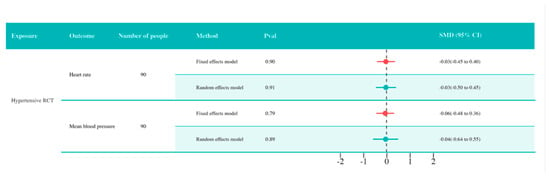
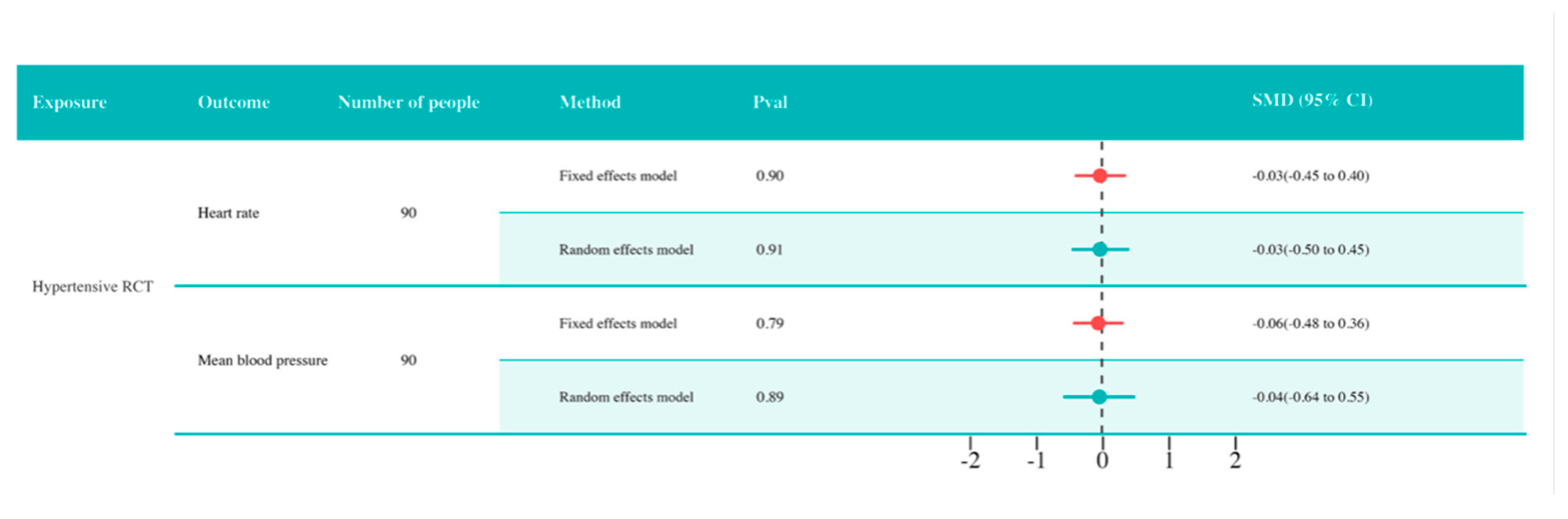
Three randomized controlled trials refs. [16,18,19] were included in the meta-analysis. There was no significant difference between morning and late-day exercise in heart rate (SMD = −0.03, 95% CI = [−0.50, 0.45], I2 = 0%, p = 0.91) or mean blood pressure (SMD = −0.04, 95% CI = [−0.64, 0.55], I2 = 37.5%, p = 0.89) among individuals with hypertension (Figure 6).
Figure 6.
Forest plot of cardiovascular indicators after morning and late-day exercise in hypertensive patients (randomized controlled trials).
3.5.3. Individuals with Diabetes
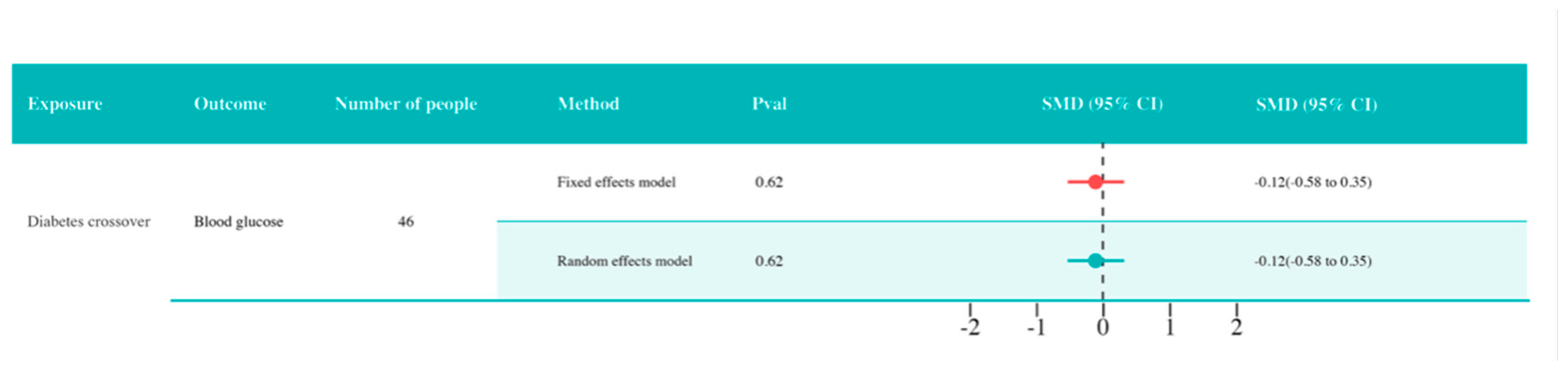
3. randomized crossover trials refs. [40,41,42] were included in the meta-analysis. Analysis revealed no significant difference in the effect of morning versus late-day exercise on blood glucose levels in diabetes patients (SMD = −0.12, 95% CI = [−0.58, 0.35], I2 = 0%, p = 0.62) (Figure 7).
Figure 7.
Forest plot of cardiovascular indicators after morning and late-day exercise in diabetes patients (randomized controlled trials).
3.6. Qualitative Analysis
3.6.1. Individuals Without Target Diagnoses
Blood Pressure. Six studies refs. [25,26,32,34,43,44] did not detect a statistically significant difference in SBP between morning and late-day exercise, and four studies refs. [25,26,34,43] reported no significant between-time difference in DBP. In contrast, one study ref. [44] reported a greater reduction in DBP after late-day than morning exercise. Three studies refs. [18,29,43] found no significant between-time difference in mean arterial pressure, whereas one study ref. [31] reported an increase in mean arterial pressure following morning exercise. Shen et al. ref. [47] observed a smaller immediate increase in SBP after exercise at 06:00 than after exercise at 16:00 or 18:00. In that study, DBP was below its pre-exercise value 20 min after the 06:00 session only.
Blood Glucose. Three studies refs. [38,46,51] did not detect a statistically significant difference in blood glucose between morning and late-day exercise. Three studies refs. [23,37,50] reported lower glucose levels after late-day than morning exercise, whereas two studies refs. [25,36] reported higher levels after late-day exercise.
Heart Rate. Five studies reported no significant difference in heart rate between morning and late-day exercise. Only two studies reported significantly higher heart rates during late-day exercise compared to morning.
Five studies refs. [18,29,36,37,44] reported no statistically significant difference in heart rate between morning and late-day exercise, whereas two studies refs. [45,46] reported higher heart rates during late-day exercise than during morning exercise.
Perceived Exertion. Four studies refs. [26,32,37,46] did not detect a statistically significant difference in subjective fatigue between morning and late-day exercise. Two studies [15,44] reported greater fatigue following morning exercise, whereas one study ref. [25] reported greater fatigue following late-day exercise.
Lactic Acid. Two studies refs. [25,36] did not detect a statistically significant difference in lactic acid levels between morning and late-day exercise. However, one study ref. [30] reported higher lactic acid levels during late-day exercise.
3.6.2. Individuals with Hypertension
Systolic Blood Pressure. One study ref. [39] did not detect a statistically significant difference in SBP between morning and late-day exercise. However, three studies refs. [16,18,33] reported a greater reduction in SBP following late-day exercise, whereas two studies refs. [24,49] reported a greater reduction following morning exercise.
Diastolic blood pressure. Two studies refs. [16,33] did not detect a statistically significant difference in DBP between morning and late-day exercise. However, two studies [18,24] reported a greater reduction in DBP following late-day exercise.
Mean Arterial Pressure. Two studies refs. [16,33] reported a greater reduction in mean arterial pressure following late-day than morning exercise.
Sympathetic Nervous Activity. Two studies refs. [16,18] reported lower sympathetic nervous activity following late-day than morning exercise.
3.6.3. Individuals with Diabetes
In a randomized crossover study of adults with type 2 diabetes, Keller et al. ref. [27] compared single bouts of high-intensity interval exercise beginning at 09:00 and 16:00. Morning exercise was associated with a greater short-term post-exercise glucose elevation than late-day exercise, whereas the 24-h glucose profile did not differ between the two conditions. C-reactive protein and NT-proBNP concentrations were also higher in the morning condition. These findings describe acute responses in one study and do not establish a sustained advantage of either exercise time.
3.6.4. Individuals with Coronary Artery Disease
Two randomized controlled trials refs. [21,22] examined exercise timing in participants with coronary artery disease. In an 8-week supervised cardiac rehabilitation trial [21], the late-day group had higher post-intervention left ventricular ejection fraction, E-wave velocity, and E/A ratio and lower A-wave velocity and E/e′ ratio than the morning group. NT-proBNP concentrations were also lower in the late-day group. In a 12-week walking trial [22], the late-day group showed greater reductions in fibrinogen, high-sensitivity C-reactive protein, white blood cell count, and LDL cholesterol than the morning group. These findings are based on two trials assessing different outcomes and should be interpreted as preliminary.
3.6.5. Individuals with Metabolic Syndrome
Among all included studies, only one randomized controlled trial [17] included previously inactive adults with metabolic syndrome. Participants were assigned to morning exercise, late-day exercise, or a non-exercise control group. The exercise groups completed supervised high-intensity interval cycling three times per week for 16 weeks, with the high-intensity intervals targeting 90% of maximum heart rate. Both exercise groups showed greater reductions in diastolic blood pressure than the control group. Compared with late-day exercise, morning exercise resulted in greater reductions in systolic blood pressure, fasting insulin, insulin resistance assessed by HOMA-IR, and the metabolic syndrome Z score. Mean arterial pressure decreased within both exercise groups, but only the morning group differed significantly from the control group in the post hoc comparison. These findings are based on a single trial.
4. Discussion
We conducted a systematic review and meta-analysis of 37 studies to evaluate the differential effects of morning versus late-day exercise on cardiovascular and metabolic indicators across healthy individuals and cardiometabolic populations.
Among individuals without the target cardiometabolic, the effects of exercise timing varied according to the outcome and study design. In the randomized controlled trials, late-day exercise was associated with lower blood glucose and triglyceride levels than morning exercise [15,23], with pooled SMDs of 0.93 (95% CI, 0.25–1.61) and 0.93 (95% CI, 0.44–1.42), respectively. However, these findings were based on only two studies involving 72 participants, and this category includes people described as healthy as well as those with overweight or obesity. The certainty of evidence was limited because of concerns regarding risk of bias and imprecision. Therefore, the observed differences should be interpreted as evidence of a possible timing-related difference in metabolic status rather than definitive evidence that late-day exercise produces superior long-term metabolic adaptations. Previous experimental work has proposed that time-of-day differences in insulin availability, counter-regulatory hormones, and skeletal muscle glucose metabolism may contribute to variation in post-exercise or pre-exercise metabolic responses [52]. Similarly, differences in substrate availability and lipid metabolism across the day may contribute to variation in circulating triglyceride concentrations [53,54]. Nevertheless, these mechanisms were not directly evaluated in the included randomized trials, and the present meta-analysis cannot establish the biological pathway underlying the observed differences. In randomized crossover trials, MPV was higher following morning than late-day exercise, both immediately after exercise and during recovery [28,30]. Although the direction of the difference was consistent across the two contributing studies and no statistical heterogeneity was detected, the limited number of studies leaves substantial uncertainty regarding between-study heterogeneity and the robustness of this finding. Endogenous circadian variation in platelet activation may offer a possible explanation [55,56,57]. MPV difference was not established by the included studies. MPV reflects average platelet size and does not directly measure platelet activation or clinical thrombotic risk. Observational associations between MPV and cardiovascular outcomes therefore cannot establish the clinical implications of the acute exercise-related difference observed here [58,59,60,61,62,63]. Furthermore, the two contributing studies did not assess thrombotic events, myocardial infarction, stroke, or sustained changes in platelet function [28,30]. These findings should therefore be interpreted as an acute biomarker difference rather than evidence of chronic adaptation, sustained prothrombotic or ischemic effects of morning exercise, or clinical benefit from late-day exercise. Further studies using standardized blood sampling and measurement procedures, complementary measures of platelet activation, and longer follow-up are needed to clarify the reproducibility and clinical relevance of this finding. The crossover analyses in this population did not detect statistically significant timing differences for most blood pressure, heart rate, metabolic, or exercise performance outcomes. Several pooled estimates were nevertheless highly heterogeneous, including immediate post-exercise diastolic blood pressure (I2 = 81%), peak heart rate (I2 = 91%), perceived exertion (I2 = 89%), blood glucose (I2 = 89%), total cholesterol (I2 = 80%), and maximal oxygen uptake (I2 = 74%). Differences in exercise modality, intensity, baseline fitness, participant characteristics, and measurement timing are plausible sources of clinical and methodological variation. The relatively small standard deviations reported by Aloui et al. may have contributed to larger standardized effect estimates for some outcomes. This study used the Yo-Yo intermittent recovery test, a high-intensity intermittent protocol that differed substantially from the continuous aerobic or resistance exercise protocols used in many other included crossover trials [25]. Differences in exercise intensity and protocol may therefore have contributed to the observed heterogeneity. However, the available evidence does not establish whether this variation reflects differences in study methods, a biological interaction between exercise timing and exercise protocol, or both. In sensitivity analyses, excluding the study by Aloui et al. reduced I2 for several outcomes. However, only one study remained for each of blood lactate, blood glucose, and total cholesterol, precluding further pooling of these outcomes. These analyses suggest that this study may have influenced the pooled estimates and heterogeneity statistics, but they do not establish a definitive source of heterogeneity. Moreover, a nonsignificant pooled effect should not be interpreted as evidence of equivalence between morning and late-day exercise, and an I2 of 0% based on few studies does not rule out clinically meaningful differences between studies.
For most other cardiovascular and metabolic outcomes, no significant differences were observed between morning and late-day exercise. This pattern was evident across both the randomized controlled and crossover evidence, although the underlying study designs and response windows differed. The crossover studies primarily captured acute responses to exercise performed at different times of day, whereas randomized controlled trials provide a framework for evaluating adaptations associated with repeated exercise interventions. The distinction between acute responses and training adaptations is central to interpreting this review. A single exercise bout may change blood pressure, glucose, heart rate, or platelet measures during exercise and early recovery; such observations cannot by themselves establish the effects of weeks of repeated training. Conversely, outcomes measured after an 8- to 16-week program reflect adaptation to a repeated intervention under particular exercise and lifestyle conditions [64]. The limited number of randomized trials and the predominance of acute or short-term crossover studies restrict the extent to which acute responses can be linked to sustained cardiometabolic adaptations. In addition, healthy individuals generally have relatively well-preserved cardiometabolic homeostasis, which may reduce the magnitude of detectable differences between exercise timings.
Among individuals with hypertension, the pooled comparisons did not detect statistically significant differences between morning and late-day exercise in heart rate (SMD = −0.03, 95% CI −0.50 to 0.45) or mean arterial pressure (SMD = −0.04, 95% CI −0.64 to 0.55). However, these confidence intervals include effects in either direction and do not establish equivalence between the two exercise times. Findings for systolic and diastolic blood pressure varied across individual trials. Differences in exercise modality, intensity, intervention duration, and the timing of outcome assessment may partly explain this variation. In particular, acute post-exercise blood pressure responses and changes following repeated training reflect different aspects of blood pressure regulation and should be interpreted separately. Antihypertensive medication use, including drug class, dose, and administration time, may also influence the observed responses, although its contribution to between-study differences could not be established in the present analysis. Taken together, the available evidence does not establish a consistently superior exercise time for blood pressure management in this population. The findings also cannot determine whether the observed physiological differences translate into sustained improvements in blood pressure control or reductions in cardiovascular events. Further adequately powered randomized trials with clearly defined exercise protocols, documented medication regimens, standardized outcome assessment, and longer follow-up are needed.
Among individuals with diabetes, the pooled analysis of three randomized crossover trials did not detect a statistically significant difference in blood glucose between morning and late-day exercise (SMD = −0.12, 95% CI −0.58 to 0.35). Although no statistical heterogeneity was detected, the evidence included one trial in type 1 diabetes and two in type 2 diabetes, with differences in exercise modality, glycemic measures, and assessment periods [40,41,42]. The small number of studies limits the interpretation of heterogeneity estimates and precluded reliable subgroup comparisons by diabetes type. The pooled result therefore does not establish equivalent effects across these populations. In a separate acute trial involving adults with type 2 diabetes [41], morning high-intensity interval exercise was followed by a greater short-term glucose rise than exercise beginning at 16:00, whereas the 24-h glucose profile did not differ significantly between conditions. This finding highlights the importance of distinguishing acute glycemic responses from glucose regulation over longer assessment periods. Differences in medication use, nutritional state, meal timing, and baseline glycemic control may also influence responses [65], but their contributions were not directly examined in this meta-analysis. Given the low certainty of evidence and the clinical diversity of the included populations, the available findings do not establish a consistently preferable exercise time for people with diabetes. Future trials should distinguish diabetes types and clearly document treatment regimens, nutritional conditions, exercise protocols, and glucose assessment timing.
Among individuals with coronary artery disease, Only two parallel group trials addressed coronary artery disease, and they measured different outcomes after different training programs [21,22]. The 8-week rehabilitation trial reported between-group differences in echocardiographic measures and NT-proBNP [21], whereas the 12-week walking trial reported larger reductions in selected inflammatory and lipid measures in the late-day group [22]. These findings cannot be treated as independent replication of a single outcome. Neither trial demonstrated that choosing late-day exercise reduces myocardial infarction, hospitalization, or mortality. Differences in rehabilitation setting, participant characteristics, concurrent care, and outcome measurement may also contribute to the observed contrasts. The evidence for this population is therefore exploratory and does not justify a clinical recommendation to replace an established rehabilitation schedule.
Among individuals with metabolic syndrome, a single 16-week randomized trial in previously inactive adults with metabolic syndrome found greater reductions in systolic blood pressure, fasting insulin, HOMA-IR, and the metabolic syndrome Z score after morning than late-day exercise [17]. Both exercise groups had larger reductions in diastolic blood pressure than the non-exercise control group. Although mean arterial pressure decreased within both exercise groups, only the morning versus control post hoc comparison reached statistical significance; that finding alone does not establish a significant morning versus late-day difference in mean arterial pressure. The participants consumed different pre-exercise meals according to training time, and the trial did not directly test a circadian mechanism. Its results should be viewed as preliminary and should not be generalized to all people with metabolic syndrome.
Several aspects of the interventions were intertwined with clock time. Meal size and timing, fasting status [66], sleep duration and quality, habitual physical activity, medication use and timing, and environmental temperature may each affect the measured outcomes. Primary studies reported or controlled these factors to varying degrees; lack of reporting cannot be interpreted as evidence that they were held constant. In particular, differing pre-exercise meals in the metabolic syndrome trial [17] and the contrast between fasting morning and afternoon resistance exercise in type 1 diabetes [42] complicate attribution of all observed differences to exercise timing alone [67]. Exercise modality and intensity [68], baseline health status [69], and the delay between exercise and blood sampling [70] can also alter effect estimates. Because too few comparable studies are available within these combinations, the current review cannot reliably isolate the contribution of each factor through subgroup analysis or meta-regression.
Several limitations affect the certainty of interpretation. Seven studies were rated at high overall risk of bias, and the remaining 30 raised some concerns. None was rated at low risk overall. In the crossover trials, morning and late-day conditions were analyzed using an unpaired approach, and the within-participant correlation between conditions was not incorporated into the effect size calculations. In addition, period and carryover effects were insufficiently resolved in many reports, which may affect the precision of effect estimates. Many outcomes were informed by only a few small studies, so confidence intervals and I2 estimates may be unstable; no statistical significance should not be equated with equivalence. We could not assess small study effects reliably with formal funnel plot methods for outcomes with fewer than ten studies. Differences in population, intervention duration [71], meal conditions [72], medications, and outcome timing [73] further limit generalizability. These considerations are particularly important for the acute MPV finding and for the coronary artery disease and metabolic syndrome subgroups, where direct clinical outcome evidence is lacking.
Future randomized studies should report the exact start and end times of exercise, exercise dose, meal timing and composition, sleep, habitual activity, medication schedules, and standardized outcome assessment times [74,75]. Crossover trials should also report allocation sequence, period and carryover assessments, and paired outcome data or sufficient statistics to reconstruct within-participant effects. Parallel group trials with longer follow-up and clinically relevant endpoints are needed to determine whether timing-related differences in acute biomarkers persist with training and translate into outcomes that matter to patients. Until such evidence is available, exercise timing decisions should be individualized to clinical needs, safety, and adherence rather than based on an assumed universal advantage of either time window.
Overall, several limitations should be acknowledged. First, although random-effects models were used to account for anticipated clinical and methodological heterogeneity, substantial between-study variability remained for several outcomes, which may have reduced the precision of pooled estimates. Second, most included studies evaluated acute or short-term interventions, whereas evidence from long-term exercise training remains limited, restricting conclusions regarding sustained cardiometabolic adaptations to exercise timing. Third, the relatively small number of studies available for most outcomes precluded formal assessment of publication bias and meta-regression analyses, limiting exploration of potential sources of heterogeneity. Fourth, important confounding factors, including diet, sleep, environmental conditions, exercise modality, and exercise intensity, were not consistently controlled across the included studies and may have influenced cardiometabolic responses. Finally, medication use was not systematically collected or adjusted for in studies involving cardiometabolic populations. Although many primary studies reported stable pharmacological treatment, the absence of individual-level medication data prevents distinction between disease-related attenuation of circadian responsiveness, medication-related effects, and insufficient statistical power. Despite these limitations, the available evidence suggests that the influence of exercise timing may differ according to baseline health status rather than indicating a universally superior time of day for exercise. Future large-scale randomized trials with standardized exercise protocols, longer follow-up periods, and more rigorous control of potential confounding factors are needed to clarify the role of circadian-aligned exercise in cardiovascular and metabolic health.
To our knowledge, this is the first systematic review and meta-analysis to comprehensively evaluate the effects of morning versus late-day exercise on cardiovascular and metabolic outcomes across both healthy individuals and cardiometabolic populations. By integrating evidence from randomized controlled and randomized crossover trials and examining findings according to population health status, this review provides a more comprehensive overview of the potential role of exercise timing than previous narrative summaries.
5. Conclusions
Current randomized evidence does not establish a universally optimal time for exercise across populations. In participants without the target cardiometabolic diagnoses, small parallel group analyses suggested lower blood glucose and triglyceride levels following late-day exercise, while crossover studies observed higher MPV immediately after morning exercise and during recovery. The clinical meaning and persistence of the acute MPV difference are unknown. Results in hypertension and diabetes were heterogeneous or imprecise, and findings for coronary artery disease and metabolic syndrome rested on only two and one trials, respectively. Larger, rigorously reported trials with consistent outcome timing, adequate control of meals and medication, and longer follow-up are needed before population-specific clinical recommendations can be made.
Supplementary Materials
The following supporting information can be downloaded at: https://www.mdpi.com/article/10.3390/metabo16110805/s1. Supplementary Materials S1: Search strategy; Supplementary Materials S2: Risk of bias assessment; Supplementary Materials S3: GRADE evidence profiles; Supplementary Materials S4: Meta-analytic results; Supplementary Table S1: Characteristics of the included studies.
Author Contributions
M.Y. and X.Q. contributed equally to this work. M.Y. and X.Q. independently performed the two-stage literature screening and extracted study characteristics, intervention details, and outcome data. M.Y. conducted the data analysis. X.Q. led the initial drafting and preliminary figure preparation, while both authors contributed to the initial manuscript drafting and finalized the manuscript. Discrepancies were resolved with assistance of W.L. and R.Y., who also contributed to the final manuscript review. All authors have read and agreed to the published version of the manuscript.
Funding
This research received no external funding.
Institutional Review Board Statement
Not applicable.
Informed Consent Statement
Not applicable.
Data Availability Statement
All data generated or analyzed during this study are included in this published article and its Supplementary Materials.
Acknowledgments
We sincerely thank Weian L. and Rui Y. for their support in resolving discrepancies during the literature screening process and for their valuable assistance with the final manuscript review. We also appreciate the colleagues who provided constructive suggestions that helped improve the clarity of data interpretation and presentation. In addition, we would like to express our sincere gratitude to the editors and the journal staff for their professional support throughout the submission and review process and to the anonymous reviewers for their insightful comments and constructive suggestions, which have greatly helped us improve the quality of this manuscript.
Conflicts of Interest
The authors declare no conflicts of interest.
Abbreviations
The following abbreviations are used in this manuscript:
| 1RM | one-repetition maximum |
| AMPK | AMP-activated protein kinase |
| BMAL1 | brain and muscle ARNT-like protein-1 |
| CI | confidence interval |
| CVD | cardiovascular disease |
| DBP | diastolic blood pressure |
| ECG | electrocardiogram |
| GRADE | Grading of Recommendations Assessment, Development and Evaluation |
| HDL | high-density lipoprotein |
| HR | heart rate |
| HRmax | maximum heart rate |
| hs-CRP | high-sensitivity C-reactive protein |
| I2 | I-squared heterogeneity statistic |
| IDF | International Diabetes Federation |
| IL-6 | interleukin-6 |
| LDL | low-density lipoprotein |
| METs | metabolic equivalents |
| MPV | mean platelet volume |
| NF-κB | nuclear factor kappa-light-chain-enhancer of activated B cells |
| NT-proBNP | N-terminal pro-B-type natriuretic peptide |
| PICOS | Population, Intervention, Comparator, Outcomes, Study design |
| PRISMA | Preferred Reporting Items for Systematic Reviews and Meta-Analyses |
| PROSPERO | International Prospective Systematic Reviews Register |
| RAAS | renin–angiotensin–aldosterone system |
| RoB 2.0 | Cochrane Risk of Bias tool version 2.0 |
| SBP | systolic blood pressure |
| SMD | standardized mean difference |
| VO2 peak | peak oxygen uptake |
| WHO | World Health Organization |
References
- Qian, X.; Guo, Y.; Sun, P. Mechanisms of exercise in preventing cardiovascular diseases: Insights from gut microbiota characteristics in pathological states of cardiovascular diseases. Rev. Endocr. Metab. Disord. 2025, 26, 693–718. [Google Scholar] [CrossRef] [Scilit] [PubMed]
- Roth, G.A.; Johnson, C.; Abajobir, A.; Abd-Allah, F.; Abera, S.F.; Abyu, G.; Ahmed, M.; Aksut, B.; Alam, T.; Alam, K.; et al. Global, regional, and national burden of cardiovascular diseases for 10 causes, 1990 to 2015. J. Am. Coll. Cardiol. 2017, 70, 1–25. [Google Scholar] [CrossRef] [Scilit] [PubMed]
- Campagna, R.; Vignini, A. The Role of Xenobiotic Caffeine on Cardiovascular Health: Promises and Challenges. J. Xenobiot. 2025, 15, 51. [Google Scholar] [CrossRef] [Scilit] [PubMed]
- Ezzatvar, Y.; Izquierdo, M.; Núñez, J.; Calatayud, J.; Ramírez-Vélez, R.; García-Hermoso, A. Cardiorespiratory fitness measured with cardiopulmonary exercise testing and mortality in patients with cardiovascular disease: A systematic review and meta-analysis. J. Sport Health Sci. 2021, 10, 609–619. [Google Scholar] [CrossRef] [Scilit] [PubMed]
- Ballin, M.; Nordström, P.; Niklasson, J.; Nordström, A. Associations of objectively measured physical activity and sedentary time with the risk of stroke, myocardial infarction or all-cause mortality in 70-year-old men and women: A prospective cohort study. Sports Med. 2021, 51, 339–349. [Google Scholar] [CrossRef] [Scilit] [PubMed]
- Paluch, A.E.; Gabriel, K.P.; Fulton, J.E.; Lewis, C.E.; Schreiner, P.J.; Sternfeld, B.; Sidney, S.; Siddique, J.; Whitaker, K.M.; Carnethon, M.R. Steps per day and all-cause mortality in middle-aged adults in the coronary artery risk development in young adults study. JAMA Netw. Open 2021, 4, e2124516. [Google Scholar] [CrossRef] [Scilit] [PubMed]
- Morris, C.J.; Purvis, T.E.; Hu, K.; Scheer, F.A.J.L. Circadian misalignment increases cardiovascular disease risk factors in humans. Proc. Natl. Acad. Sci. USA 2016, 113, E1402–E1411. [Google Scholar] [CrossRef] [Scilit] [PubMed]
- Vyas, M.V.; Garg, A.X.; Iansavichus, A.V.; Costella, J.; Donner, A.; Laugsand, L.E.; Janszky, I.; Mrkobrada, M.; Parraga, G.; Hackam, D.G. Shift work and vascular events: Systematic review and meta-analysis. BMJ 2012, 345, e4800. [Google Scholar] [CrossRef] [Scilit] [PubMed]
- Brito, L.C.; Peçanha, T.; Fecchio, R.Y.; Pio-Abreu, A.; Silva, G.; Mion-Junior, D.; Halliwill, J.R.; Forjaz, C.L.M. Comparison of morning versus evening aerobic-exercise training on heart rate recovery in treated hypertensive men: A randomized controlled trial. Blood Press. Monit. 2021, 26, 388–392. [Google Scholar] [CrossRef] [Scilit] [PubMed]
- Qian, J.; Scheer, F.A.; Hu, K.; Shea, S.A. The circadian system modulates the rate of recovery of systolic blood pressure after exercise in humans. Sleep 2020, 43, zsz253. [Google Scholar] [CrossRef] [Scilit] [PubMed]
- Albalak, G.; Stijntjes, M.; van Bodegom, D.; Jukema, J.W.; Atsma, D.E.; van Heemst, D.; Noordam, R. Setting your clock: Associations between timing of objective physical activity and cardiovascular disease risk in the general population. Eur. J. Prev. Cardiol. 2023, 30, 232–240. [Google Scholar] [CrossRef] [Scilit] [PubMed]
- Albalak, G.; Stijntjes, M.; Wijsman, C.A.; Slagboom, P.E.; van der Ouderaa, F.J.; Mooijaart, S.P.; van Heemst, D.; Noordam, R. Timing of objectively-collected physical activity in relation to body weight and metabolic health in sedentary older people: A cross-sectional and prospective analysis. Int. J. Obes. 2022, 46, 515–522. [Google Scholar] [CrossRef] [Scilit] [PubMed]
- Schumacher, L.M.; Thomas, J.G.; Raynor, H.A.; Rhodes, R.E.; Bond, D.S. Consistent morning exercise may be beneficial for individuals with obesity. Exerc. Sport Sci. Rev. 2020, 48, 201–208. [Google Scholar] [CrossRef] [Scilit] [PubMed]
- Page, M.J.; McKenzie, J.E.; Bossuyt, P.M.; Boutron, I.; Hoffmann, T.C.; Mulrow, C.D.; Shamseer, L.; Tetzlaff, J.M.; Akl, E.A.; Brennan, S.E.; et al. The PRISMA 2020 statement: An updated guideline for reporting systematic reviews. Int. J. Surg. 2021, 88, 105906. [Google Scholar] [CrossRef] [PubMed]
- Arciero, P.J.; Ives, S.J.; Mohr, A.E.; Robinson, N.; Escudero, D.; Robinson, J.; Rose, K.; Minicucci, O.; O’Brien, G.; Curran, K.; et al. Morning exercise reduces abdominal fat and blood pressure in women; evening exercise increases muscular performance in women and lowers blood pressure in men. Front. Physiol. 2022, 13, 893783. [Google Scholar] [CrossRef] [Scilit] [PubMed]
- Brito, L.C.; Azevêdo, L.M.; Amaro-Vicente, G.; Costa, L.R.; da Silva Junior, N.D.; Halliwill, J.R.; Rondon, M.U.P.B.; Forjaz, C.L.M. Evening but not morning aerobic training improves sympathetic activity and baroreflex sensitivity in elderly patients with treated hypertension. J. Physiol. 2024, 602, 1049–1063. [Google Scholar] [CrossRef] [Scilit] [PubMed]
- Morales-Palomo, F.; Moreno-Cabañas, A.; Alvarez-Jimenez, L.; Mora-Gonzalez, D.; Ortega, J.F.; Mora-Rodriguez, R. Efficacy of morning versus afternoon aerobic exercise training on reducing metabolic syndrome components: A randomized controlled trial. J. Physiol. 2024, 602, 6463–6477. [Google Scholar] [CrossRef] [Scilit] [PubMed]
- Brito, L.C.; Peçanha, T.; Fecchio, R.Y.; Rezende, R.A.; Sousa, P.; DA Silva-Júnior, N.; Abreu, A.; Silva, G.; Mion-Junior, D.; Halliwill, J.R.; et al. Morning versus Evening Aerobic Training Effects on Blood Pressure in Treated Hypertension. Med. Sci. Sports Exerc. 2019, 51, 653–662. [Google Scholar] [CrossRef] [Scilit] [PubMed]
- Azevêdo, L.M.; da Silva Junior, N.D.; de Oliveira, G.F.; Marin, T.C.; Albino, S.A.A.; Costa, L.A.R.; Brito, L.C.; Forjaz, C.L.M. Aerobic training conducted at different times of day in elderly patients with hypertension: A controlled trial. GeroScience 2026, 48, 7021–7037. [Google Scholar] [CrossRef] [Scilit] [PubMed]
- Shen, B.; Zheng, H.; Liu, H.; Chen, L.; Yang, G. Differential benefits of 12-week morning vs. evening aerobic exercise on sleep and cardiometabolic health: A randomized controlled trial. Sci. Rep. 2025, 15, 18298. [Google Scholar] [CrossRef] [Scilit] [PubMed]
- Dehghani, M.; Cheragi, M.; Delfan, B.; Dehghani, M.; Shakarami, A.; Bagheri, Y.; Namdari, P.; Namdari, M. Difference of cardiac rehabilitation in the morning or evening on indexes of left ventricular and N-terminal pro-brain natriuretic peptide: A randomized controlled trial. Ann. Med. Surg. 2023, 85, 3482–3490. [Google Scholar] [CrossRef] [Scilit] [PubMed]
- Lian, X.-Q.; Zhao, D.; Zhu, M.; Wang, Z.-M.; Gao, W.; Zhao, H.; Zhang, D.-G.; Yang, Z.-J.; Wang, L.-S. The influence of regular walking at different times of day on blood lipids and inflammatory markers in sedentary patients with coronary artery disease. Prev. Med. 2014, 58, 64–69. [Google Scholar] [CrossRef] [Scilit] [PubMed]
- Moholdt, T.; Parr, E.B.; Devlin, B.L.; Debik, J.; Giskeødegård, G.; Hawley, J.A. The effect of morning vs evening exercise training on glycaemic control and serum metabolites in overweight/obese men: A randomised trial. Diabetologia 2021, 64, 2061–2076. [Google Scholar] [CrossRef] [Scilit] [PubMed]
- Fairbrother, K.; Cartner, B.; Alley, J.R.; Curry, C.D.; Dickinson, D.L.; Morris, D.M.; Collier, S.R. Effects of exercise timing on sleep architecture and nocturnal blood pressure in prehypertensives. Vasc. Health Risk Manag. 2014, 10, 691–698. [Google Scholar] [CrossRef] [Scilit] [PubMed]
- Aloui, K.; Abedelmalek, S.; Chtourou, H.; Wong, D.P.; Boussetta, N.; Souissi, N. Effects of time-of-day on oxidative stress, cardiovascular parameters, biochemical markers, and hormonal response following level-1 yo-yo intermittent recovery test. Physiol. Int. 2017, 104, 77–90. [Google Scholar] [CrossRef] [Scilit] [PubMed]
- Bommarito, J.C.; Millar, P.J. The effects of morning versus evening high-intensity interval exercise on the magnitude of the morning blood pressure surge. Appl. Physiol. Nutr. Metab. 2025, 50, 1–11. [Google Scholar] [CrossRef] [Scilit] [PubMed]
- Keller, M.J.; Brady, A.J.; Smith, J.A.B.; Savikj, M.; MacGregor, K.; Jollet, M.; Öberg, S.B.; Nylén, C.; Björnholm, M.; Rickenlund, A.; et al. Inflammatory markers and blood glucose are higher after morning vs afternoon exercise in type 2 diabetes. Diabetologia 2025, 68, 2023–2035. [Google Scholar] [CrossRef] [Scilit] [PubMed]
- Aldemir, H.; Kiliç, N. The effect of time of day and exercise on platelet functions and platelet-neutrophil aggregates in healthy male subjects. Mol. Cell. Biochem. 2005, 280, 119–124. [Google Scholar] [CrossRef] [Scilit] [PubMed]
- Boukelia, B.; Gomes, E.C.; Florida-James, G.D. Diurnal variation in physiological and immune responses to endurance sport in highly trained runners in a hot and humid environment. Oxid. Med. Cell. Longev. 2018, 2018, 3402143. [Google Scholar] [CrossRef] [Scilit] [PubMed]
- Ahmadizad, S.; El-Sayed, M.S.; MacLaren, D.P. Effects of time of day and acute resistance exercise on platelet activation and function. Clin. Hemorheol. Microcirc. 2010, 45, 391–399. [Google Scholar] [CrossRef] [Scilit] [PubMed]
- Jones, H.; George, K.; Edwards, B.; Atkinson, G. Effects of time of day on post-exercise blood pressure: Circadian or sleep-related influences? Chronobiol. Int. 2008, 25, 987–998. [Google Scholar] [CrossRef] [Scilit] [PubMed]
- Boettcher, A.E.; Penfold, H.E.; Currie, K.D. Exercise systolic blood pressures are unaffected by time of day in healthy young adults. J. Hum. Hypertens. 2024, 38, 568–574. [Google Scholar] [CrossRef] [Scilit] [PubMed]
- Brito, L.C.; Azevêdo, L.; Peçanha, T.; Fecchio, R.Y.; Rezende, R.A.; da Silva, G.V.; Pio-Abreu, A.; Mion, D.; Halliwill, J.R.; Forjaz, C.L.M. Effects of ACEi and ARB on post-exercise hypotension induced by exercises conducted at different times of day in hypertensive men. Clin. Exp. Hypertens. 2020, 42, 722–727. [Google Scholar] [CrossRef] [Scilit] [PubMed]
- Focht, B.C.; Koltyn, K.F. Alterations in pain perception after resistance exercise performed in the morning and evening. J. Strength Cond. Res. 2009, 23, 891–897. [Google Scholar] [CrossRef] [Scilit] [PubMed]
- Chan-Dewar, F.; Gregson, W.; Whyte, G.; Gaze, D.; Waterhouse, J.; Wen, J.; George, K. Do the effects of high intensity 40 km cycling upon left ventricular function and cardiac biomarker during recovery vary with time of day? J. Sports Sci. 2013, 31, 414–423. [Google Scholar] [CrossRef] [Scilit] [PubMed]
- Fernandes, A.L.; Lopes-Silva, J.P.; Bertuzzi, R.; Casarini, D.E.; Arita, D.Y.; Bishop, D.J.; Lima-Silva, A.E. Effect of time of day on performance, hormonal and metabolic response during a 1000-M cycling time trial. PLoS ONE 2014, 9, e109954. [Google Scholar] [CrossRef] [Scilit] [PubMed]
- Larsen, P.; Marino, F.; Melehan, K.; Guelfi, K.J.; Duffield, R.; Skein, M. Evening high-intensity interval exercise does not disrupt sleep or alter energy intake despite changes in acylated ghrelin in middle-aged men. Exp. Physiol. 2019, 104, 826–836. [Google Scholar] [CrossRef] [Scilit] [PubMed]
- McIver, V.J.; Mattin, L.R.; Evans, G.H.; Yau, A.M.W. Diurnal influences of fasted and non-fasted brisk walking on gastric emptying rate, metabolic responses, and appetite in healthy males. Appetite 2019, 143, 104411. [Google Scholar] [CrossRef] [Scilit] [PubMed]
- Park, S.; Jastremski, C.A.; Wallace, J.P. Time of day for exercise on blood pressure reduction in dipping and nondipping hypertension. J. Hum. Hypertens. 2005, 19, 597–605. [Google Scholar] [CrossRef] [Scilit] [PubMed]
- Munan, M.; Dyck, R.A.; Houlder, S.; Yardley, J.E.; Prado, C.M.; Snydmiller, G.; Boulé, N.G. Does exercise timing affect 24-hour glucose concentrations in adults with type 2 diabetes? A follow up to the exercise-physical activity and diabetes glucose monitoring study. Can. J. Diabetes 2020, 44, 711–718.e1. [Google Scholar] [CrossRef] [Scilit] [PubMed]
- Savikj, M.; Gabriel, B.M.; Alm, P.S.; Smith, J.; Caidahl, K.; Björnholm, M.; Fritz, T.; Krook, A.; Zierath, J.R.; Wallberg-Henriksson, H. Afternoon exercise is more efficacious than morning exercise at improving blood glucose levels in individuals with type 2 diabetes: A randomised crossover trial. Diabetologia 2019, 62, 233–237. [Google Scholar] [CrossRef] [Scilit] [PubMed]
- Toghi-Eshghi, S.R.; Yardley, J.E. Morning (fasting) vs afternoon resistance exercise in individuals with type 1 diabetes: A randomized crossover study. J. Clin. Endocrinol. Metab. 2019, 104, 5217–5224. [Google Scholar] [CrossRef] [Scilit] [PubMed]
- Jones, H.; George, K.; Atkinson, G. Timing of exercise within the waking period does not alter blood pressure during subsequent nocturnal sleep in normotensive individuals. J. Exerc. Sci. Fit. 2009, 7, S42–S50. [Google Scholar] [CrossRef] [Scilit]
- Di Blasio, A.; D’angelo, E.; Gallina, S.; Ripari, P. Relationship between time of day and variation in blood pressure response to aerobic exercise. Sports Med. 2010, 63, 167–178. [Google Scholar]
- Boussetta, N.; Abedelmalek, S.; Aloui, K.; Souissi, N. The effect of air pollution on diurnal variation of performance in anaerobic tests, cardiovascular and hematological parameters, and blood gases on soccer players following the Yo–Yo Intermittent Recovery Test Level-1. Chronobiol. Int. 2017, 34, 903–920. [Google Scholar] [CrossRef] [Scilit] [PubMed]
- Hobson, R.M.; Clapp, E.L.; Watson, P.; Maughan, R.J. Exercise capacity in the heat is greater in the morning than in the evening in man. Med. Sci. Sports Exerc. 2009, 41, 174–180. [Google Scholar] [CrossRef] [Scilit] [PubMed]
- Shen, B.; Liu, H.; Zhang, S.; Chen, L.; Yang, G. Time-of-day-dependent effects of aerobic exercise on carotid hemodynamics in sedentary adults. Biology 2025, 14, 713. [Google Scholar] [CrossRef] [Scilit] [PubMed]
- Hori, A.; Saito, R.; Suijo, K.; Mizuno, M.; Hotta, N. Exaggerated systolic blood pressure response to late-night low- and high-intensity resistance exercise in healthy young men. Am. J. Physiol. Regul. Integr. Comp. Physiol. 2026, 330, R501–R511. [Google Scholar] [CrossRef] [Scilit] [PubMed]
- Azevêdo, L.M.; de Souza, A.C.; Santos, L.E.S.; Miguel Dos Santos, R.; de Fernandes, M.O.M.; Almeida, J.A.; Pardono, E. Fractionated concurrent exercise throughout the day does not promote acute blood pressure benefits in hypertensive middle-aged women. Front. Cardiovasc. Med. 2017, 4, 6. [Google Scholar] [CrossRef] [Scilit] [PubMed]
- Tanaka, Y.; Ogata, H.; Park, I.; Ando, A.; Ishihara, A.; Kayaba, M.; Yajima, K.; Suzuki, C.; Araki, A.; Osumi, H.; et al. Effect of a single bout of morning or afternoon exercise on glucose fluctuation in young healthy men. Physiol. Rep. 2021, 9, e14784. [Google Scholar] [CrossRef] [Scilit] [PubMed]
- Jafari, A.; Kazemi, F. The impact of acute morning versus evening high-intensity interval training on circulating irisin levels and metabolic parameters in overweight postmenopausal women. Exp. Gerontol. 2025, 208, 112821. [Google Scholar] [CrossRef] [Scilit] [PubMed]
- Mancilla, R.; Brouwers, B.; Schrauwen-Hinderling, V.B.; Hesselink, M.K.C.; Hoeks, J.; Schrauwen, P. Exercise training elicits superior metabolic effects when performed in the afternoon compared to morning in metabolically compromised humans. Physiol. Rep. 2020, 8, e14669. [Google Scholar] [CrossRef] [Scilit] [PubMed]
- Galan-Lopez, P.; Casuso, R.A. Metabolic Adaptations to Morning Versus Afternoon Training: A Systematic Review and Meta-analysis. Sports Med. 2023, 53, 1951–1961. [Google Scholar] [CrossRef] [Scilit] [PubMed]
- Kim, H.-K.; Furuhashi, S.; Takahashi, M.; Chijiki, H.; Nanba, T.; Inami, T.; Radak, Z.; Sakamoto, S.; Shibata, S. Late-afternoon endurance exercise is more effective than morning endurance exercise at improving 24-h glucose and blood lipid levels. Front. Endocrinol. 2022, 13, 957239. [Google Scholar] [CrossRef] [Scilit] [PubMed]
- Scheer, F.A.J.L.; Michelson, A.D.; Frelinger, A.L.; Evoniuk, H.; Kelly, E.E.; McCarthy, M.; Doamekpor, L.A.; Barnard, M.R.; Shea, S.A. The human endogenous circadian system causes greatest platelet activation during the biological morning independent of behaviors. PLoS ONE 2011, 6, e24549. [Google Scholar] [CrossRef] [Scilit] [PubMed]
- Wang, Z.; Chen, Z.; Li, F.; Chen, L.; Xiong, G. Circadian rhythm in platelet: An emerging therapeutic target in human diseases. Front. Physiol. 2026, 17, 1795526. [Google Scholar] [CrossRef] [Scilit] [PubMed]
- Smith, C.C.T.; Wilson, A.P.; Prichard, B.N.C.; Betteridge, D.J.; Meade Th, W.; Dyer, S.; Tofler, G.H.; Brezinski, D.; Schafer, A.I.; Ch, A.C.; et al. Concurrent morning increase in platelet aggregability and the risk of myocardial infarction and sudden cardiac death. N. Engl. J. Med. 1987, 317, 1736–1737. [Google Scholar] [CrossRef] [Scilit] [PubMed]
- Wada, H.; Dohi, T.; Miyauchi, K.; Shitara, J.; Endo, H.; Doi, S.; Tsuboi, S.; Ogita, M.; Iwata, H.; Kasai, T.; et al. Mean platelet volume and long-term cardiovascular outcomes in patients with stable coronary artery disease. Atherosclerosis 2018, 277, 108–112. [Google Scholar] [CrossRef] [Scilit] [PubMed]
- Guthikonda, S.; Lev, E.I.; Patel, R.; DeLao, T.; Bergeron, A.L.; Dong, J.-F.; Kleiman, N.S. Reticulated platelets and uninhibited COX-1 and COX-2 decrease the antiplatelet effects of aspirin. J. Thromb. Haemost. 2007, 5, 490–496. [Google Scholar] [CrossRef] [Scilit] [PubMed]
- Guthikonda, S.; Alviar, C.L.; Vaduganathan, M.; Arikan, M.; Tellez, A.; DeLao, T.; Granada, J.F.; Dong, J.-F.; Kleiman, N.S.; Lev, E.I. Role of reticulated platelets and platelet size heterogeneity on platelet activity after dual antiplatelet therapy with aspirin and clopidogrel in patients with stable coronary artery disease. J. Am. Coll. Cardiol. 2008, 52, 743–749. [Google Scholar] [CrossRef] [Scilit] [PubMed]
- Bath, P.; Algert, C.; Chapman, N.; Neal, B. Association of mean platelet volume with risk of stroke among 3134 individuals with history of cerebrovascular disease. Stroke 2004, 35, 622–626. [Google Scholar] [CrossRef] [Scilit] [PubMed]
- Berger, J.S.; Eraso, L.H.; Xie, D.; Sha, D.; Mohler, E.R. Mean platelet volume and prevalence of peripheral artery disease, the national health and nutrition examination survey, 1999–2004. Atherosclerosis 2010, 213, 586–591. [Google Scholar] [CrossRef] [Scilit] [PubMed]
- Sansanayudh, N.; Anothaisintawee, T.; Muntham, D.; McEvoy, M.; Attia, J.; Thakkinstian, A. Mean platelet volume and coronary artery disease: A systematic review and meta-analysis. Int. J. Cardiol. 2014, 175, 433–440. [Google Scholar] [CrossRef] [Scilit] [PubMed]
- Fitzpatrick, R.; Wilson, J.; Davison, G.; McMahon, G.; Bleakley, C.; Mcclean, C. Optimising exercise time-of-day for cardiometabolic health: Insights from a systematic review and meta-analysis in varied adult cohorts. J. Sports Sci. 2026, 44, 1158–1188. [Google Scholar] [CrossRef] [Scilit] [PubMed]
- Burns, S.F.; Miyashita, M.; Stensel, D.J. High-intensity interval exercise and postprandial triacylglycerol. Sports Med. 2015, 45, 957–968. [Google Scholar] [CrossRef] [Scilit] [PubMed]
- Hegele, R.A.; Ginsberg, H.N.; Chapman, M.J.; Nordestgaard, B.G.; Kuivenhoven, J.A.; Averna, M.; Borén, J.; Bruckert, E.; Catapano, A.L.; Descamps, O.S.; et al. The polygenic nature of hypertriglyceridaemia: Implications for definition, diagnosis, and management. Lancet Diabetes Endocrinol. 2014, 2, 655–666. [Google Scholar] [CrossRef] [Scilit] [PubMed]
- Whyte, L.J.; Ferguson, C.; Wilson, J.; Scott, R.A.; Gill, J.M.R. Effects of single bout of very high-intensity exercise on metabolic health biomarkers in overweight/obese sedentary men. Metab. Clin. Exp. 2013, 62, 212–219. [Google Scholar] [CrossRef] [Scilit] [PubMed]
- Hou, T.; Chacon, A.N.; Su, W.; Katsumata, Y.; Guo, Z.; Gong, M.C. Role of sympathetic pathway in light-phase time-restricted feeding-induced blood pressure circadian rhythm alteration. Front. Nutr. 2022, 9, 969345. [Google Scholar] [CrossRef] [Scilit] [PubMed]
- Huang, T.; Lu, C.; Schumann, M.; Le, S.; Yang, Y.; Zhuang, H.; Lu, Q.; Liu, J.; Wiklund, P.; Cheng, S. Timing of Exercise Affects Glycemic Control in Type 2 Diabetes Patients Treated with Metformin. J. Diabetes Res. 2018, 2018, 2483273. [Google Scholar] [CrossRef] [Scilit] [PubMed]
- Georgakouli, K.; Stamperna, A.; Deli, C.K.; Syrou, N.; Draganidis, D.; Fatouros, I.G.; Jamurtas, A.Z. The Effects of Postprandial Resistance Exercise on Blood Glucose and Lipids in Prediabetic, Beta-Thalassemia Major Patients. Sports 2020, 8, 57. [Google Scholar] [CrossRef] [Scilit] [PubMed]
- Peng, F.; Li, X.; Xiao, F.; Zhao, R.; Sun, Z. Circadian clock, diurnal glucose metabolic rhythm, and dawn phenomenon. Trends Neurosci. 2022, 45, 471–482. [Google Scholar] [CrossRef] [Scilit] [PubMed]
- Pedersen, B.K.; Febbraio, M.A. Muscles, exercise and obesity: Skeletal muscle as a secretory organ. Nat. Rev. Endocrinol. 2012, 8, 457–465. [Google Scholar] [CrossRef] [Scilit] [PubMed]
- Reaven, G.M. Banting lecture 1988. Role of insulin resistance in human disease. Diabetes 1988, 37, 1595–1607. [Google Scholar] [CrossRef] [Scilit]
- Ramirez-Jimenez, M.; Morales-Palomo, F.; Moreno-Cabañas, A.; Alvarez-Jimenez, L.; Ortega, J.F.; Mora-Rodriguez, R. Aerobic exercise training improves nocturnal blood pressure dipping in medicated hypertensive individuals. Blood Press. Monit. 2022, 27, 272–275. [Google Scholar] [CrossRef] [Scilit] [PubMed]
- Biaggioni, I. Circadian clocks, autonomic rhythms, and blood pressure dipping. Hypertens 2008, 52, 797–798. [Google Scholar] [CrossRef] [Scilit] [PubMed]
Disclaimer/Publisher’s Note: The statements, opinions and data contained in all publications are solely those of the individual author(s) and contributor(s) and not of MDPI and/or the editor(s). MDPI and/or the editor(s) disclaim responsibility for any injury to people or property resulting from any ideas, methods, instructions or products referred to in the content. |
© 2026 by the authors. Licensee MDPI, Basel, Switzerland. This article is an open access article distributed under the terms and conditions of the Creative Commons Attribution (CC BY) license.