


Abstract
Type 2 diabetes combined with obesity is a prevalent metabolic comorbidity with high clinical heterogeneity, leading to inconsistent treatment efficacy and difficult long-term standardized management. Emerging evidence indicates that the small GTPase ADP-ribosylation factor 6 (ARF6) signaling axis plays a vital regulatory role in glycolipid metabolism disorders, insulin resistance and adipose tissue inflammation. Aberrant ARF6 expression is closely correlated with the occurrence and progression of type 2 diabetes and obesity, making it a promising pre-clinical candidate biomarker and potential druggable therapeutic target, which still requires large-scale clinical validation. Traditional clinical evaluation and intervention rely on conventional biochemical indicators and empirical treatment, which cannot meet the demands of individualized precision management. Artificial intelligence technology has gradually matured in endocrinology clinical practice, supporting accurate disease stratification, auxiliary diagnosis and optimized therapeutic decision-making. This review summarizes the pre-clinical significance of ARF6 in diabetic obesity and systematically discusses conceptual application prospects as well as major unresolved limitations of artificial intelligence in ARF6-oriented precision diagnosis and targeted intervention, aiming to provide practical references for the clinical translational research of metabolic precision management.
1. Introduction
The global prevalence of type 2 diabetes and obesity continues to rise, forming a severe public health burden across all age groups [1,2]. Diabetic obesity presents high clinical heterogeneity. Patients exhibit distinct degrees of insulin resistance, adipose inflammation and glycemic fluctuation [3]. These differences lead to inconsistent treatment efficacy and increased complication risks. Conventional clinical management mainly depends on body mass index, fasting blood glucose and glycosylated hemoglobin [4]. These routine indicators cannot fully capture the underlying molecular heterogeneity of metabolic disorders and may be insufficient to support accurate individual risk stratification and tailored treatment. Small GTPase ARF6 is a vital regulator of membrane trafficking, cytoskeleton remodeling and metabolic signal transduction [5,6]. Recent high-level pre-clinical studies together with limited preliminary human observations suggest a regulatory role of ARF6 in glycolipid metabolic homeostasis [7,8]. Aberrant ARF6 activation or downregulation has been associated with pancreatic β-cell dysfunction, peripheral insulin resistance and visceral adipose tissue remodeling [7,8]. Several pre-clinical studies indicate that aberrant ARF6 expression may represent a molecular signature linked to progressive T2DM and obesity [9]. In limited sample cohorts, it may help to distinguish metabolic severity and predict disease progression, although large-scale clinical validation remains absent, showing great potential as a novel non-invasive candidate biomarker and therapeutic target.
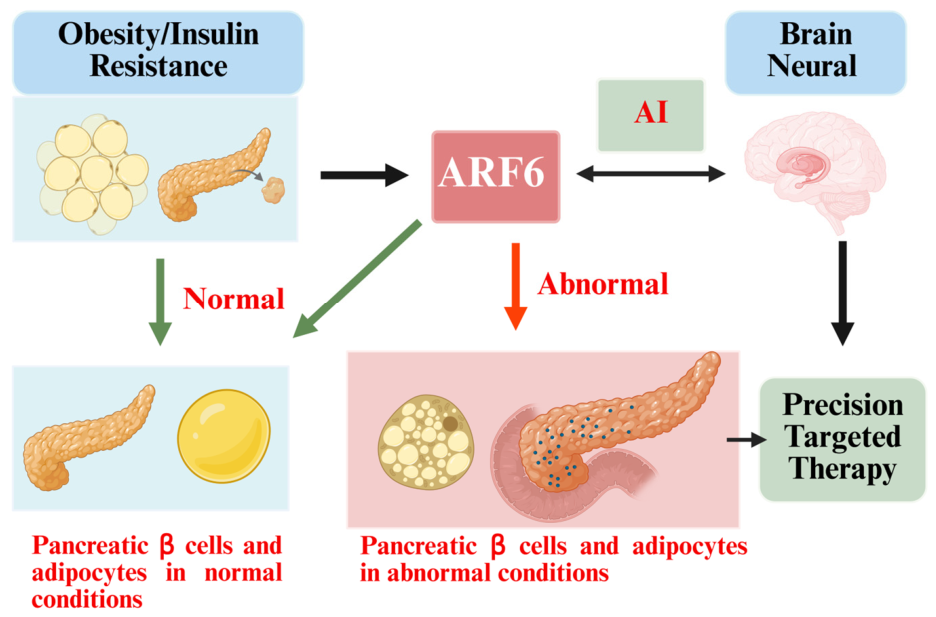
In recent years, artificial intelligence technology has achieved breakthrough applications in endocrinology and metabolic diseases. Machine learning and predictive modeling tools can mine high-dimensional clinical and molecular data. They realize intelligent auxiliary diagnosis, individualized risk assessment and precise treatment optimization for heterogeneous metabolic populations [10]. Compared with traditional empirical diagnosis, AI-driven strategies significantly improve the accuracy of disease stratification and avoid over-treatment or under-treatment [11]. Nevertheless, few review articles have systematically discussed the combined clinical potential of the ARF6 biomarker together with AI-enabled precision management for type 2 diabetes complicated with obesity. Most existing studies only discuss the basic mechanism of ARF6 or the broad application of AI in diabetes separately [9,12]. For this narrative review, we searched PubMed and Web of Science using keywords: ARF6, ADP-ribosylation factor 6, type 2 diabetes, obesity, insulin resistance, adipose inflammation, artificial intelligence, and precision management. Publications from Jan 2018 to May 2026 were screened. After initial database retrieval, title-and-abstract screening excluded records without thematic relevance. Potentially eligible papers proceeded to full-text assessment. Original research articles and review articles closely related to our theme were included; articles without direct relevance to ARF6, type 2 diabetes obesity or AI-enabled metabolic management were excluded. Reference lists of included papers were manually checked to capture additional relevant publications. This review integrates the latest evidence of ARF6 in regulating T2DM and obesity pathogenesis [9,13] (Figure 1). It focuses on the clinical transformation value of ARF6 as a novel candidate biomarker and therapeutic target for diabetic obesity. It further explores the application prospects and existing limitations of AI in ARF6-based precision diagnosis and targeted intervention. The purpose is to provide a new theoretical basis for improving the individualized clinical management system of diabetic obesity (Figure 1).
Figure 1.
Regulatory role of ARF6 in type 2 diabetes with obesity and AI-driven precision targeted therapy pathway. This figure illustrates the role of ARF6 in obesity/insulin resistance: Normal ARF6 expression maintains the homeostasis of pancreatic β-cells and adipocytes, whereas abnormal expression leads to cellular dysfunction; by comparing the cellular phenotypes of pancreatic β-cells and adipocytes under physiological versus abnormal ARF6 conditions, this figure elucidates the biological basis for developing ARF6-targeted therapies combined with artificial intelligence. The neural elements in the figure represent hypothetical potential research directions; the central nervous-system-related mechanisms of ARF6 will not be discussed further in this review.
2. Biological Function of ARF6 in Glycolipid Metabolism and Metabolic Homeostasis
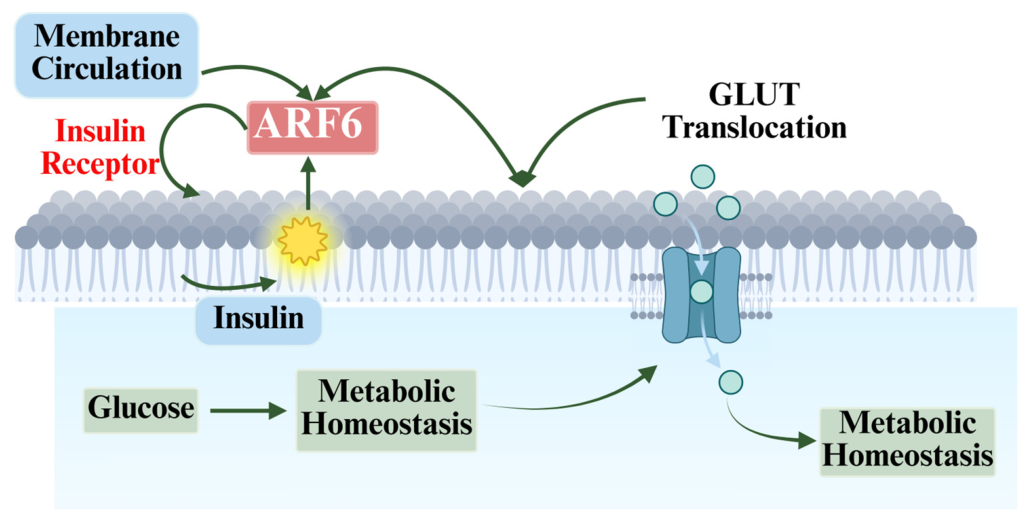
ARF6 is a conserved small GTP-binding protein widely expressed in metabolic key tissues, including pancreas, liver, skeletal muscle and adipose tissue [9,14] (Figure 2). It mainly regulates cell membrane transport, lipid metabolism and inflammatory signal activation. Its expression level and activation state are closely linked to the stability of systemic glycolipid metabolism [14,15,16]. Under physiological conditions, ARF6 maintains normal insulin signal transduction [9,17]. It promotes insulin receptor membrane recycling and glucose transporter translocation [9,13]. It contributes to efficient glucose uptake and utilization in peripheral tissues [7].
Figure 2.
ARF6 regulates insulin signaling and glucose metabolic homeostasis through membrane trafficking. Insulin stimulation can activate ARF6, which promotes glucose uptake in peripheral tissues and maintains metabolic homeostasis by regulating the membrane cycling of insulin receptors and the membrane translocation of glucose transporters (GLUTs).
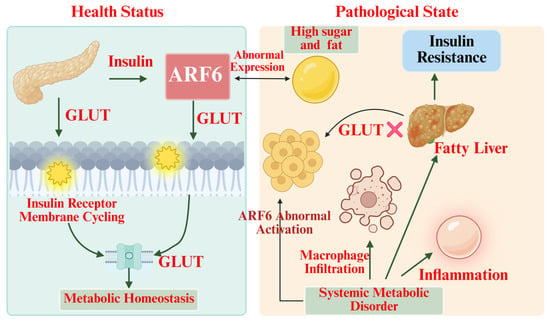
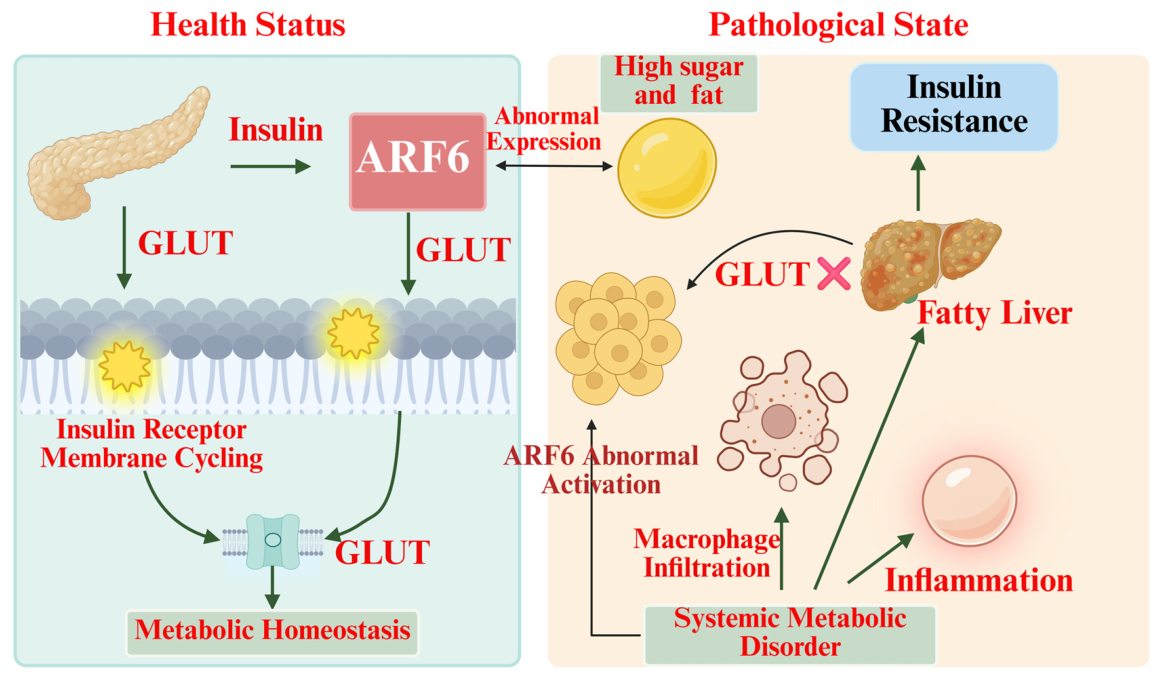
Under obese and hyperglycemic conditions, ARF6 signaling is significantly dysregulated. High glucose and lipid overload induce abnormal ARF6 expression [7,18]. This condition impairs insulin signal conduction in skeletal muscle and liver, resulting in peripheral insulin resistance [19]. In adipose tissue, abnormal ARF6 activation promotes adipose macrophage infiltration and metabolic inflammation [20]. It accelerates visceral fat accumulation and adipose tissue fibrosis, further exacerbating systemic metabolic disorders [7]. Preliminary observations from limited clinical samples suggest that circulating ARF6 may correlate positively with BMI, fasting blood glucose and the insulin-resistance index and negatively with islet β-cell function [9,13]. It is worth noting that evidence from tissue-specific genes indicates that downregulation of ARF6 in endothelial cells alone can induce systemic insulin resistance, suggesting that ARF6 possesses differentiated metabolic functions that are highly dependent on the tissue microenvironment [7]. These findings strongly suggest that ARF6 is closely involved in the whole progression of diabetic obesity (Figure 3).
Figure 3.
Schematic diagram of the mechanism by which ARF6 signaling dysregulation mediates systemic metabolic disorders under obesity and hyperglycemic conditions. Under physiological conditions, ARF6 maintains metabolic homeostasis; under obesity and hyperglycemic conditions, high sugar and high fat loads induce ARF6 signaling dysregulation, triggering insulin resistance and adipose inflammation, ultimately leading to systemic metabolic disorder.
In diabetic complication models, ARF6 dysregulation also mediates renal podocyte cholesterol deposition and vascular endothelial dysfunction. It promotes the occurrence of diabetic microvascular complications [7,18,21]. This multi-tissue regulatory feature makes ARF6 different from traditional single metabolic indicators [22]. It can reflect the overall metabolic disorder degree and complication risk of patients, laying a foundation for its clinical biomarker application.
3. ARF6 as a Novel Biomarker and Therapeutic Target for Diabetic Obesity
3.1. Clinical Biomarker Value of ARF6
Traditional diagnostic indicators for diabetic obesity have obvious limitations. BMI cannot distinguish fat distribution and metabolic inflammation degree [23,24]. Glycosylated hemoglobin only reflects short-term average glycemic level [25]. They lack molecular specificity for early disease prediction and risk stratification. With the progress of translational metabolomics and proteomics, tissue-specific molecular biomarkers have become the new direction of metabolic precision diagnosis [26,27].
ARF6 shows potential advantages as a candidate biomarker for diabetic obesity (Table 1). Firstly, altered ARF6 expression arises early during metabolic disturbance and may predict progression from simple obesity toward hyperglycemia [7]. Secondly, in small cohorts, circulating ARF6 levels appear to correlate with insulin-resistance severity and adipose inflammation, which might help stratify metabolic heterogeneity among patients with similar conventional biochemical indicators [9,20]. Thirdly, ARF6 detection is minimally invasive. It may have broad prospects for clinical adoption, although its analytical performance still requires systematic clinical validation.
Table 1.
Comparison of ARF6 and traditional diagnostic indicators in diabetic obesity. This table compares the advantages of ARF6 over traditional diagnostic indicators in early prediction and clinical application, while also covering metabolic inflammation, insulin-resistance assessment and patient-stratification performance.
3.2. Targeted Therapeutic Potential of ARF6
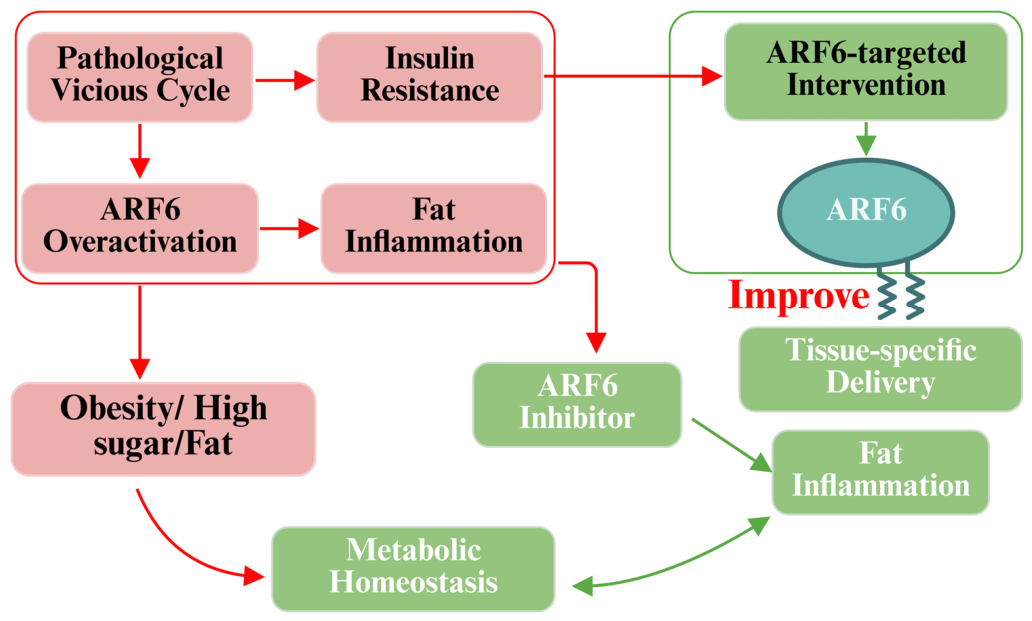
Based on pre-clinical mechanistic evidence, ARF6 represents a potential druggable therapeutic target for diabetic obesity [9,30]. Specific inhibition of pathological ARF6 over-activation within metabolic tissues can reduce adipose-tissue inflammation [9]. Of note, endothelial-specific ARF6 depletion exerts opposing metabolic effects, as described in reference [7]. Although tissue-specific delivery strategies targeting ARF6 may reduce systemic side effects [7,9], these observations remain limited to pre-clinical models, and substantial barriers persist before clinical translation. In particular, non-selective ARF6 inhibition carries tissue-specific risks. Evidence from transgenic animals indicates that the absence of ARF6 in endothelial cells induces systemic insulin resistance, and non-selective ARF6 inhibition may also impair physiological insulin secretion by pancreatic β-cells [7,9,31]. These risks underscore the necessity of adopting a tissue-selective delivery strategy that inhibits ARF6 only in metabolically diseased tissues while preserving its homeostatic physiological functions in endothelial cells and β-cells.
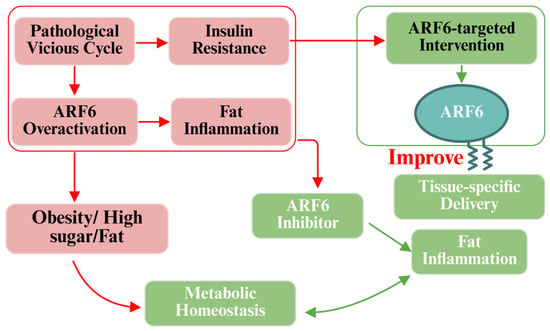
Compared with existing metabolic targets, ARF6 has unique advantages. It acts on the upstream link of insulin signal and inflammatory response [9,13]. It can simultaneously improve insulin resistance and adipose inflammation and block the vicious cycle of metabolic disorder [7,9,20]. Therefore, ARF6-targeted therapy may offer prospective value for the individualized treatment of refractory diabetic obesity (Figure 4).
Figure 4.
Proposed mechanism for ARF6-targeted intervention for diabetic obesity. In diabetic obesity, pathological ARF6 over-activation drives a vicious pathological cycle of insulin resistance and adipose inflammation. Targeted ARF6 inhibition combined with tissue-specific delivery can interrupt this cycle in pre-clinical models; substantial barriers remain before clinical translation can be realized.
4. AI-Driven Precision Management Based on ARF6 Biomarker
This section describes a proposed conceptual framework for ARF6-oriented AI-driven precision management. To date, no patient-validated AI model combining ARF6 markers for diabetic obesity has been formally reported.
4.1. AI-Assisted Disease Risk Stratification and Early Diagnosis
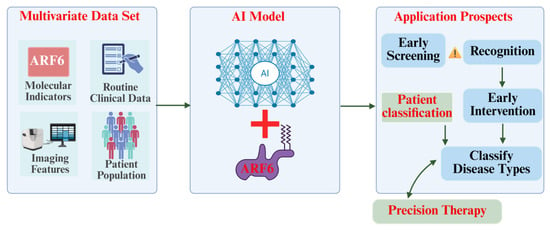
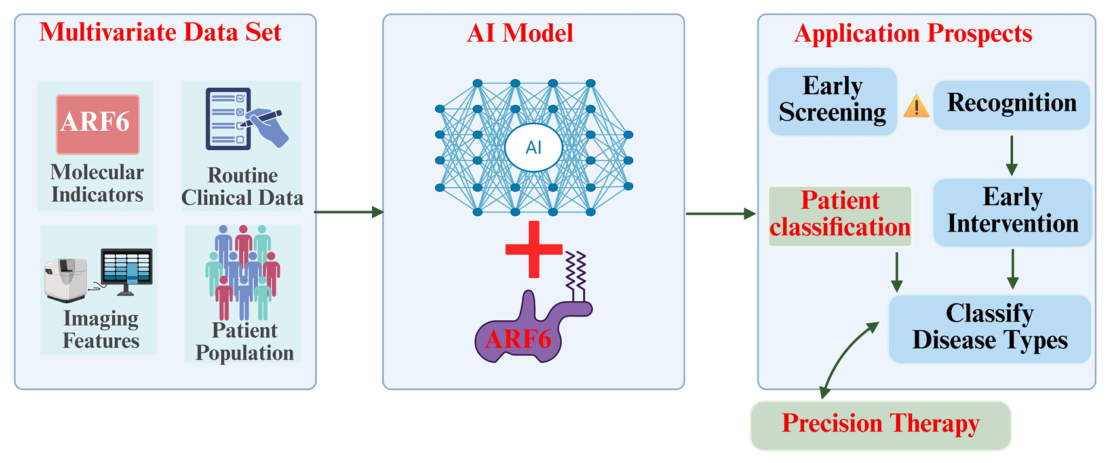
The clinical heterogeneity of diabetic obesity makes traditional unified diagnosis standards unable to meet precision management needs. AI machine learning models have data mining capabilities [32,33]. They can integrate ARF6 molecular indicators with routine clinical data, imaging features and demographic information [14,34,35,36]. They may be used to construct disease risk prediction models [37].
Recent studies suggest that AI models based on multi-dimensional molecular biomarkers may improve the accuracy of early diagnosis of metabolic diseases [37,38,39]. By combining ARF6 expression levels with clinical indicators using AI algorithms, it may be possible to screen for individuals at high risk of progressing from simple obesity to type 2 diabetes; this approach may enable early warning and intervention for metabolic deterioration, and the proposed AI stratification model could classify patients with obesity and type 2 diabetes into different molecular subtypes based on ARF6 expression patterns [37]. In addition, AI-driven stratification models could subtype diabetic–obese patients according to ARF6-related molecular features, which might provide a basis for individualized treatment planning (Figure 5 and Figure 6).
Figure 5.
Conceptual diagram for AI-assisted early-diagnosis and risk-stratification workflows incorporating ARF6. Hypothetical AI models integrating ARF6 molecular markers alongside multi-dimensional clinical data could construct predictive pipelines that might support early-risk screening and patient molecular subtyping, if prospectively validated. The figure is schematic and does not display measured model outputs.
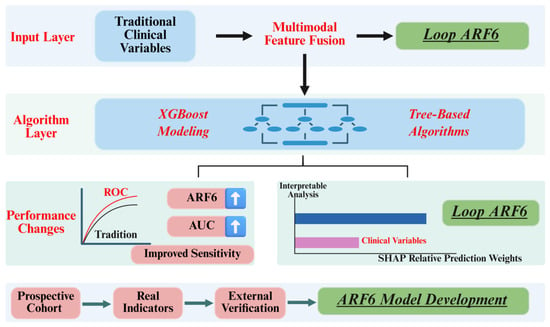
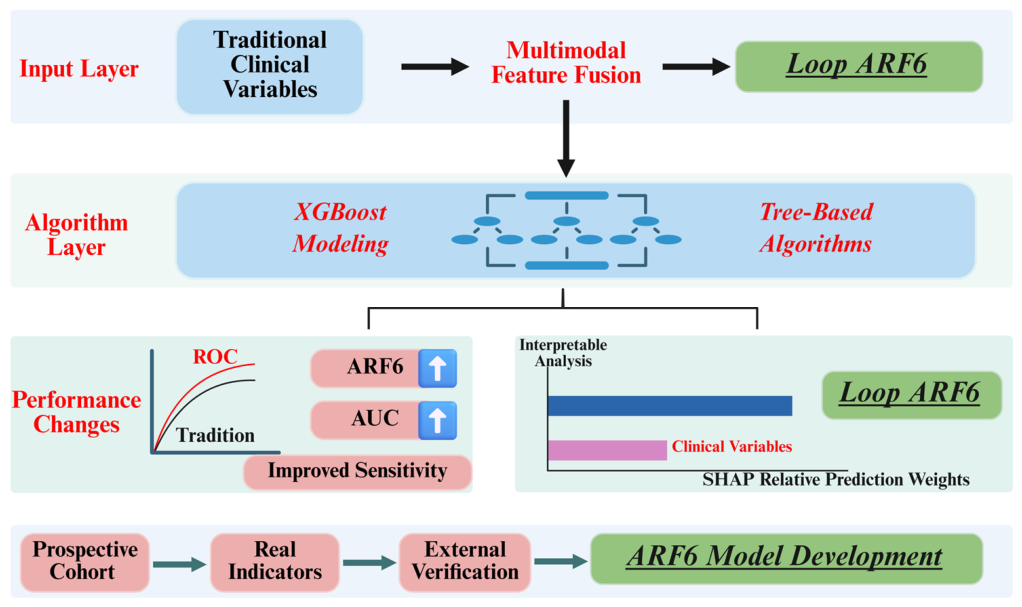
Figure 6.
ARF6: Analytical paradigms combining machine learning and the current status of clinical validation. In this schematic, “Loop ARF6” represents an analytical workflow: biomarker features derived from ARF6 are input into a multimodal machine learning pipeline to perform iterative model building and evaluation. Published research on metabolic diseases indicates that, within a machine-learning-based analytical paradigm, tree-based ensemble algorithms such as XGBoost are well-suited for integrating circulating molecular biomarkers with traditional clinical variables. The figure is a conceptual diagram only and does not display any measured performance metrics, axis scales, or empirical SHAP weight data for ARF6. The lengths of the bars in the SHAP plot are used solely to illustrate the workflow and do not represent experimentally derived predictive weights when comparing ARF6 with clinical variables. SHAP-based feature importance analysis can further quantify the predictive weights of circulating molecular biomarkers in multimodal models, providing a reference framework for the future development and clinical validation of ARF6-related models [40].
4.2. AI-Optimized Individualized Targeted Intervention
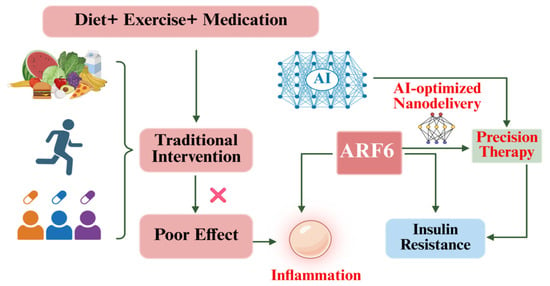
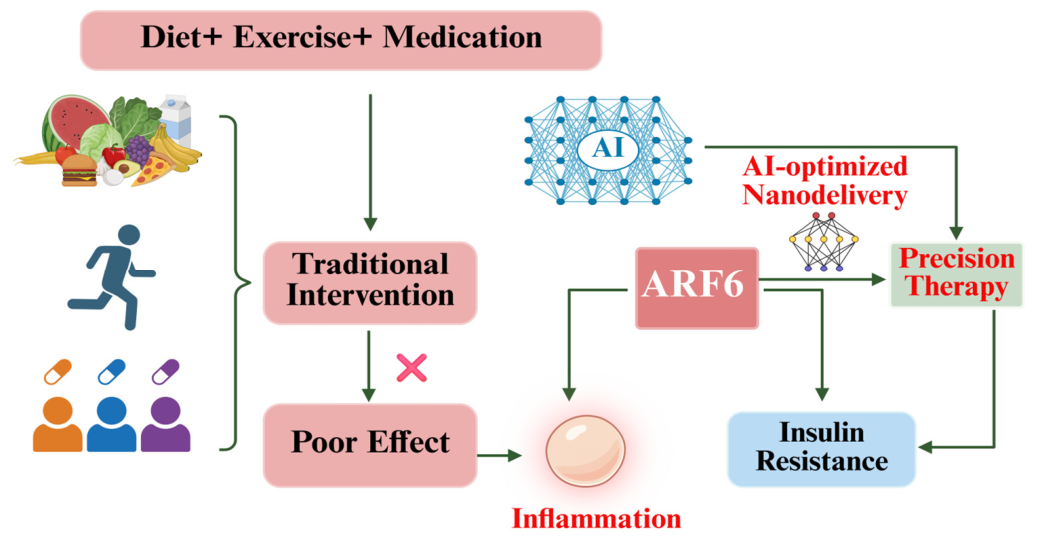
Traditional treatment of diabetic obesity adopts unified diet, exercise and drug intervention schemes. It ignores individual molecular differences, resulting in poor treatment response in some patients [32,41]. In the future, based on ARF6 biomarker characteristics, artificial intelligence may have the capacity to intelligently optimize treatment strategies. For patients with high ARF6 expression and severe adipose inflammation, AI models could potentially recommend targeted anti-inflammatory and metabolic regulation schemes [9,42,43]. For patients dominated by insulin resistance caused by ARF6-mediated signal dysfunction, such models might prioritize insulin-sensitization intervention [7,9].
In addition, it is anticipated that AI simulation technology can optimize ARF6-targeted nanodelivery parameters. It improves the tissue targeting efficiency and biosafety of targeted drugs [44,45], which may offer technical support for the future clinical translation of ARF6-targeted therapy [14]. This hypothetical intelligent-intervention paradigm could break the limitations of traditional empirical treatment and enable precise matching between molecular subtyping and clinical treatment (Figure 7).
Figure 7.
Personalized targeted intervention model for diabetic obesity based on AI and ARF6. Traditional intervention models largely ignore individual differences and often achieve poor effects. In this conceptual framework, AI could use ARF6-related characteristics to formulate differentiated treatment plans and optimize targeted delivery, potentially enabling more precise and personalized management of diabetic obesity.
4.3. AI-Based Long-Term Disease Monitoring and Prognosis Evaluation
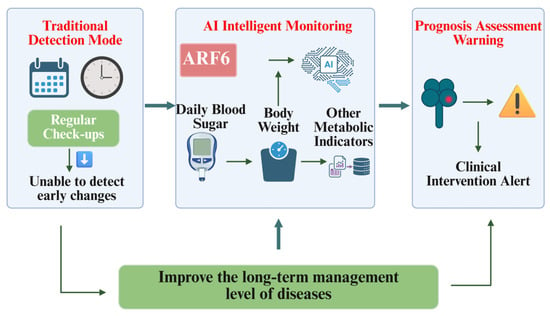
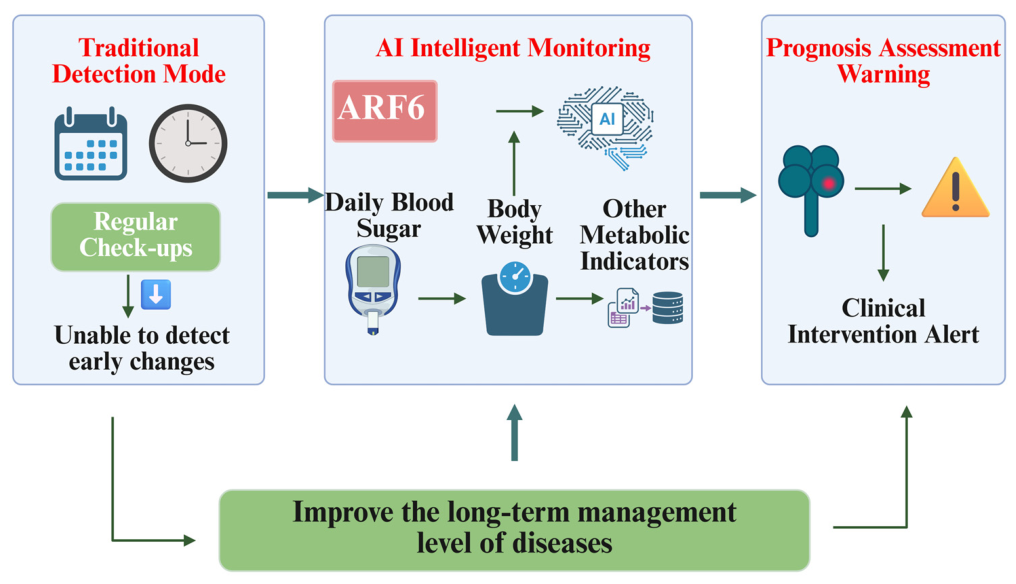
Long-term dynamic monitoring is the key to reducing complications of diabetic obesity. Traditional regular re-examination cannot capture subtle molecular changes in the early stage of disease progression [46,47]. At present, clinically available technology for continuous or real-time measurement of circulating ARF6 is not yet established, which differs from well-developed continuous glucose-monitoring devices [47]. Therefore, real-time tracking of circulating ARF6 for complication risk prediction remains a hypothetical future technical vision. If such detection techniques could be developed in the future, AI-based intelligent monitoring systems might interpret serial, periodically measured circulating ARF6 data together with daily blood-glucose, body-weight and other metabolic data to evaluate trends in disease progression.
Under this proposed conceptual framework, if serial ARF6 measurements became clinically available, AI prognostic models could assess the risk of diabetic nephropathy, vascular lesions and other complications based on serial changes in ARF6 [15,48]. Such a potential monitoring-and-warning system would compensate for the limitations of conventional static biomarkers and optimize long-term management for patients with diabetic obesity [49,50] (Figure 8).
Figure 8.
Hypothetical long-term monitoring and prognostic-assessment model for diabetic obesity based on ARF6 and artificial intelligence. Traditional periodic check-ups cannot readily capture early pathological shifts. This schematic illustrates a potential future workflow: if continuous ARF6 measurement technology were developed, AI systems integrating serial ARF6 read-outs together with daily metabolic data might enable complication-risk alerting and could improve long-term patient management.
5. Discussion
Diabetic obesity is a complex metabolic disease driven by multiple genes and environmental factors. Its clinical heterogeneity is the core difficulty restricting precise clinical management [32,51]. Traditional diagnostic and therapeutic strategies rely on macroscopic phenotypic indicators [32,52]. They cannot reflect the underlying molecular pathological characteristics of patients, resulting in low accuracy of risk stratification and poor individualization of treatment [27]. This review indicates that ARF6 is a core molecular regulator of glycolipid metabolism disorder in diabetic obesity [9,14]. Its abnormal expression is closely related to insulin resistance, adipose inflammation and disease progression, which can serve as a candidate biomarker and therapeutic target for diabetic obesity [7,16].
Compared with traditional metabolic biomarkers such as FGF21 and GDF15, preclinical evidence suggests that ARF6 exerts a relatively direct regulatory role in insulin signaling and adipose tissue remodeling. It is expected to reflect key molecular characteristics of metabolic disorders at the molecular level and has the potential for early disease assessment; however, there is currently a lack of accurate data from human studies [9,31,53,54,55]. The combination of ARF6 molecular markers and AI technology further expands its clinical application value [56,57]. AI models may help extract the relationship between ARF6 dynamic changes and clinical phenotypes. It may break through the limitations of single static detection and realizes intelligent stratification, accurate diagnosis and individualized intervention of diabetic obesity [7,58,59]. This cross integration of molecular biomarkers and artificial intelligence provides a new research direction for the precision management of metabolic diseases.
Despite the good application prospects, the clinical transformation of ARF6 and AI combined strategy still has some limitations. In terms of biomarker implementation, circulating ARF6 suffers from unresolved technical obstacles, including non-standardized detection assays, undefined normal reference intervals, and potential confounding effects from renal clearance, all of which hinder its direct translation into routine clinical practice. First, most current studies on ARF6 in diabetic obesity are preclinical basic experiments, and large-sample, multi-center clinical cohort studies are still insufficient. The cutoff value of circulating ARF6 for clinical diagnosis and risk stratification lacks a unified standard [13,57,60]. Second, most AI prediction models are based on single-center retrospective data. The generalization ability and clinical practicability of the models need to be further verified by prospective studies [27,61]. Third, the relatively high technical cost of AI-based intelligent monitoring and targeted intervention limits their popularization and application in primary medical institutions [62,63].
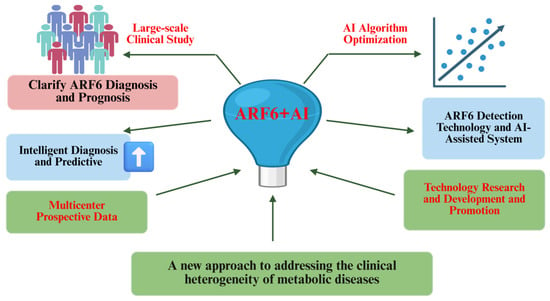
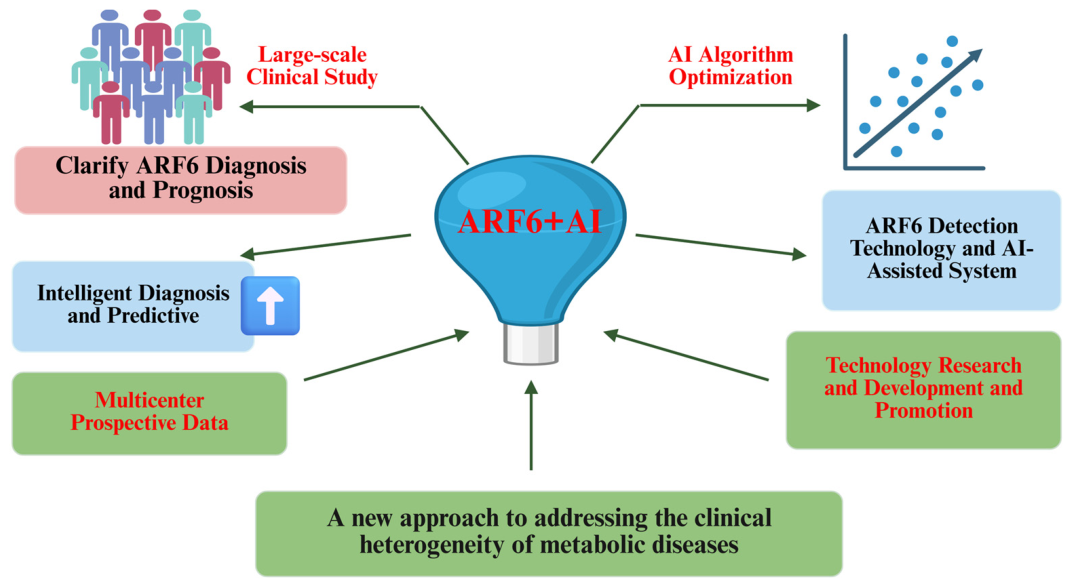
Future research should focus on three directions. First, carry out large-sample clinical studies to clarify the diagnostic threshold and prognostic evaluation standard of ARF6 in diabetic obesity. Second, optimize AI algorithm models based on multi-center prospective data to improve the accuracy and generalization of intelligent diagnosis and prediction. Third, develop low-cost ARF6 detection technology and simplified AI auxiliary diagnosis system. It promotes the popularization of precision management mode in grass-roots clinical practice. ARF6-centred biomarker strategies combined with artificial-intelligence workflows hold theoretical potential for improving clinical management of diabetic obesity (Figure 9). Further multi-center prospective research will be required before these approaches can be translated into real-world clinical tools.
Figure 9.
Future research directions of ARF6 combined with AI in precision management of diabetic obesity. Future research focus: clarify the diagnostic and prognostic criteria of ARF6, optimize AI algorithm models, and develop low-cost detection systems. ARF6 combined with AI is expected to become a new approach to addressing the clinical heterogeneity of metabolic diseases.
6. Conclusions
ARF6 is a key regulatory molecule of glycolipid metabolism and adipose tissue homeostasis. Its abnormal expression represents an important molecular feature of type 2 diabetes combined with obesity. It shows promise as a pre-clinical candidate biomarker for early-warning and risk-stratification, as well as a potential pre-clinical therapeutic target, and unified clinical cutoff values and prospective cohort validations are still urgently needed.
Author Contributions
Y.W.: Conceptualization, resources, methodology, software, formal analysis, investigation, data curation, writing—original draft, visualization, writing—review and editing, supervision, project administration, funding acquisition. Y.C.: methodology, investigation. H.W.: funding acquisition, resources. All authors have read and agreed to the published version of the manuscript.
Funding
This study was supported by Jilin Health Science and Technology Capacity Enhancement Project (No. 2023JC053), Jilin Natural Science Foundation (No. YDZJ202401124ZYTS), and Jilin Provincial Science and Technology Development Plan Project (No. YDZJ202402030CXJD).
Institutional Review Board Statement
Not applicable.
Informed Consent Statement
Not applicable.
Data Availability Statement
No new data were created or analyzed in this study.
Conflicts of Interest
The authors declare no conflicts of interest.
References
- Huang, X.; Wu, Y.; Ni, Y.; Xu, H.; He, Y. Global, regional, and national burden of type 2 diabetes mellitus caused by high BMI from 1990 to 2021, and forecasts to 2045: Analysis from the global burden of disease study 2021. Front. Public Health 2025, 13, 1515797. [Google Scholar] [CrossRef] [Scilit]
- Currenti, W.; Losavio, F.; Quiete, S.; Alanazi, A.M.; Messina, G.; Polito, R.; Ciolli, F.; Zappalà, R.S.; Galvano, F.; Cincione, R.I. Comparative Evaluation of a Low-Carbohydrate Diet and a Mediterranean Diet in Overweight/Obese Patients with Type 2 Diabetes Mellitus: A 16-Week Intervention Study. Nutrients 2023, 16, 95. [Google Scholar] [CrossRef] [Scilit]
- Suzuki, K.; Hatzikotoulas, K.; Southam, L.; Taylor, H.J.; Yin, X.; Lorenz, K.M.; Mandla, R.; Huerta-Chagoya, A.; Melloni, G.E.M.; Kanoni, S.; et al. Genetic drivers of heterogeneity in type 2 diabetes pathophysiology. Nature 2024, 627, 347–357. [Google Scholar] [CrossRef] [Scilit]
- American Diabetes Association Professional Practice Committee for Diabetes. Obesity and Weight Management for the Prevention and Treatment of Diabetes: Standards of Care in Diabetes-2026. Diabetes Care 2026, 49, S166–S182. [Google Scholar] [CrossRef] [Scilit]
- Fujibayashi, K.; Mima, J. The Small GTPase Arf6 Functions as a Membrane Tether in a Chemically-Defined Reconstitution System. Front. Cell Dev. Biol. 2021, 9, 628910. [Google Scholar] [CrossRef] [Scilit]
- Chen, K.J.; Hsu, J.W.; Lee, F.S. AMPK promotes Arf6 activation in a kinase-independent manner upon glucose starvation. J. Cell Sci. 2022, 135, 259609. [Google Scholar] [CrossRef] [Scilit]
- Islam, M.T.; Cai, J.; Allen, S.; Moreno, D.G.; Bloom, S.I.; Bramwell, R.C.; Mitton, J.; Horn, A.G.; Zhu, W.; Donato, A.J.; et al. Endothelial-Specific Reduction in Arf6 Impairs Insulin-Stimulated Vasodilation and Skeletal Muscle Blood Flow Resulting in Systemic Insulin Resistance in Mice. Arterioscler. Thromb. Vasc. Biol. 2024, 44, 1101–1113. [Google Scholar] [CrossRef] [Scilit]
- Thamilselvan, V.; Kowluru, A. Paradoxical regulation of glucose-induced Rac1 activation and insulin secretion by RhoGDIβ in pancreatic β-cells. Small GTPases 2021, 12, 114–121. [Google Scholar] [CrossRef] [Scilit]
- Wang, Y.; He, Y.; Xiu, Z.; Wang, H. Tissue-specific targeting of the ARF6 signalling axis for type 2 diabetes and obesity: From mechanism to nanodelivery. Clin. Transl. Med. 2026, 16, e70692. [Google Scholar] [CrossRef] [Scilit]
- Liu, J.; Liu, Z.; Liu, C.; Sun, H.; Li, X.; Yang, Y. Integrating Artificial Intelligence in the Diagnosis and Management of Metabolic Syndrome: A Comprehensive Review. Diabetes/Metab. Res. Rev. 2025, 41, e70039. [Google Scholar] [CrossRef] [Scilit]
- Clarós, A.; Ciudin, A.; Muria, J.; Llull, L.; Mola, J.; Pons, M.; Castán, J.; Cruz, J.C.; Simó, R. A model based on artificial intelligence for the prediction, prevention and patient-centred approach for non-communicable diseases related to metabolic syndrome. Eur. J. Public Health 2025, 35, 642–649. [Google Scholar] [CrossRef] [Scilit]
- Sun, H.; Zhang, K.; Lan, W.; Gu, Q.; Jiang, G.; Yang, X.; Qin, W.; Han, D. An AI Dietitian for Type 2 Diabetes Mellitus Management Based on Large Language and Image Recognition Models: Preclinical Concept Validation Study. J. Med. Internet Res. 2023, 25, e51300. [Google Scholar] [CrossRef] [Scilit]
- Kim, K.H.; Yoo, M.; Choi, M.Y.; Yoo, B.C. A Practical Roadmap for Clinical Translation of Metabolic Biomarkers: A Review. Int. J. Mol. Sci. 2026, 27, 2030. [Google Scholar] [CrossRef] [Scilit]
- Sun, D.; Guo, Y.; Tang, P.; Li, H.; Chen, L. Arf6 as a therapeutic target: Structure, mechanism, and inhibitors. Acta Pharm. Sin. B 2023, 13, 4089–4104. [Google Scholar] [CrossRef] [Scilit]
- Li, Y.; Li, X.; Yang, Y.; Li, F.; Chen, Q.; Zhao, Z.; Zhang, N.; Li, H. Hepatocyte growth factor attenuates high glucose-disturbed mitochondrial dynamics in podocytes by decreasing ARF6-dependent DRP1 translocation. Biochim. Biophys. Acta Mol. Cell Res. 2024, 1871, 119623. [Google Scholar] [CrossRef] [Scilit]
- Fiola-Masson, É.; Campbell, S.; Laplante, V.; Lejri, R.; Kanaho, Y.; Gauchat, J.F.; Servant, M.J.; Claing, A. ARF6 controls VSMC phenotypic switching upon lipid stimulation to promote inflammatory signaling contributing to the progression of atherosclerosis. J. Biol. Chem. 2026, 302, 111165. [Google Scholar] [CrossRef] [Scilit]
- Chau, D.D.; Li, W.; Chan, W.W.R.; Sun, J.K.; Zhai, Y.; Chow, H.M.; Lau, K.F. Insulin stimulates atypical protein kinase C-mediated phosphorylation of the neuronal adaptor FE65 to potentiate neurite outgrowth by activating ARF6-Rac1 signaling. FASEB J. Off. Publ. Fed. Am. Soc. Exp. Biol. 2022, 36, e22594. [Google Scholar] [CrossRef] [Scilit]
- Hu, J.; Yang, Q.; Chen, Z.; Liang, W.; Feng, J.; Ding, G. Small GTPase Arf6 regulates diabetes-induced cholesterol accumulation in podocytes. J. Cell. Physiol. 2019, 234, 23559–23570. [Google Scholar] [CrossRef] [Scilit]
- He, B.; Copps, K.D.; Stöhr, O.; Liu, B.; Hu, S.; Joshi, S.; Haigis, M.C.; White, M.F.; Zhu, H.; Tao, R. Spatial regulation of glucose and lipid metabolism by hepatic insulin signaling. Cell Metab. 2025, 37, 1568–1583.e1567. [Google Scholar] [CrossRef] [Scilit]
- Li, R.; Shen, Q.; Wu, N.; He, M.; Liu, N.; Huang, J.; Lu, B.; Yao, Q.; Yang, Y.; Hu, R. MiR-145 improves macrophage-mediated inflammation through targeting Arf6. Endocrine 2018, 60, 73–82. [Google Scholar] [CrossRef] [Scilit]
- Giubilaro, J.; Schuetz, D.A.; Stepniewski, T.M.; Namkung, Y.; Khoury, E.; Lara-Márquez, M.; Campbell, S.; Beautrait, A.; Armando, S.; Radresa, O.; et al. Discovery of a dual Ras and ARF6 inhibitor from a GPCR endocytosis screen. Nat. Commun. 2021, 12, 4688. [Google Scholar] [CrossRef] [Scilit]
- Mukhamedova, N.; Fleetwood, A.J.; Huynh, K.; Xu, Y.; Van Buuren-Milne, T.; Faulkner, A.; Fu, Y.; Parhami, F.; Meikle, P.J.; Levental, I.; et al. Targeting the ARF6-dependent recycling pathway to alter lipid rafts and reduce inflammation. J. Lipid Res. 2025, 66, 100900. [Google Scholar] [CrossRef] [Scilit]
- Wu, Y.; Li, D.; Vermund, S.H. Advantages and Limitations of the Body Mass Index (BMI) to Assess Adult Obesity. Int. J. Environ. Res. Public Health 2024, 21, 757. [Google Scholar] [CrossRef] [Scilit]
- Chait, A.; den Hartigh, L.J. Adipose Tissue Distribution, Inflammation and Its Metabolic Consequences, Including Diabetes and Cardiovascular Disease. Front. Cardiovasc. Med. 2020, 7, 22. [Google Scholar] [CrossRef] [Scilit]
- Liang, Z.; Zhang, M.; Wang, C.; Hao, F.; Yu, Y.; Tian, S.; Yuan, Y. The Best Exercise Modality and Dose to Reduce Glycosylated Hemoglobin in Patients with Type 2 Diabetes: A Systematic Review with Pairwise, Network, and Dose-Response Meta-Analyses. Sports Med. 2024, 54, 2557–2570. [Google Scholar] [CrossRef] [Scilit]
- Song, J.; Wang, C.; Zhao, T.; Zhang, Y.; Xing, J.; Zhao, X.; Zhang, Y.; Zhang, Z. Multi-omics approaches for biomarker discovery and precision diagnosis of prediabetes. Front. Endocrinol. 2025, 16, 1520436. [Google Scholar] [CrossRef] [Scilit]
- Nguyen, C.M.; Seldin, M. From Methylation to Metabolism: Linking Molecular Layers in Diabetes Risk. Diabetes 2025, 74, 2214–2215. [Google Scholar] [CrossRef] [Scilit]
- Li, S.; Looby, N.; Chandran, V.; Kulasingam, V. Challenges in the Metabolomics-Based Biomarker Validation Pipeline. Metabolites 2024, 14, 200. [Google Scholar] [CrossRef] [Scilit]
- Vo, D.-K.; Trinh, K.T. Emerging Biomarkers in Metabolomics: Advancements in Precision Health and Disease Diagnosis. Int. J. Mol. Sci. 2024, 25, 13190. [Google Scholar] [CrossRef] [Scilit]
- Jayashankar, V.; Selwan, E.; Hancock, S.E.; Verlande, A.; Goodson, M.O.; Eckenstein, K.H.; Milinkeviciute, G.; Hoover, B.M.; Chen, B.; Fleischman, A.G.; et al. Drug-like sphingolipid SH-BC-893 opposes ceramide-induced mitochondrial fission and corrects diet-induced obesity. EMBO Mol. Med. 2021, 13, e13086. [Google Scholar] [CrossRef] [Scilit]
- Veluthakal, R.; Thurmond, D.C. Emerging Roles of Small GTPases in Islet β-Cell Function. Cells 2021, 10, 1503. [Google Scholar] [CrossRef] [Scilit]
- Franks, P.W.; Sargent, J.L. Diabetes and obesity: Leveraging heterogeneity for precision medicine. Eur. Heart J. 2024, 45, 5146–5155. [Google Scholar] [CrossRef] [Scilit]
- Shenouda, A.; Senthilkumar, S.; Mourad, Y.; Xie, J.; Peker, E.; Zeeshan, S.; Ahmed, Z. Artificial intelligence to investigate metabolomics data for precision medicine. Metabolomics Off. J. Metabolomic Soc. 2026, 22, 29. [Google Scholar] [CrossRef] [Scilit]
- Vashistha, R.; Brosda, S.; Aoude, L.G.; Ng, J.; Kundu, P.; Barbour, A.P.; Vegh, V. Agent-MIRA: AI-orchestrated medical imaging agent for PET image retrieval and assistance. Comput. Med. Imaging Graph. Off. J. Comput. Med. Imaging Soc. 2026, 129, 102725. [Google Scholar] [CrossRef] [Scilit]
- Zhu, G.; Song, Y.; Lu, Z.; Yi, Q.; Xu, R.; Xie, Y.; Geng, S.; Yang, N.; Zheng, L.; Feng, X.; et al. Machine learning models for predicting metabolic dysfunction-associated steatotic liver disease prevalence using basic demographic and clinical characteristics. J. Transl. Med. 2025, 23, 381. [Google Scholar] [CrossRef] [Scilit]
- Javaid, H.; Petrescu, C.C.; Schmunk, L.J.; Monahan, J.M.; O’Reilly, P.; Garg, M.; McGirr, L.; Khasawneh, M.T.; Al Lail, M.; Ganta, D.; et al. The impact of artificial intelligence on biomarker discovery. Emerg. Top. Life Sci. 2025, 8, 89–105. [Google Scholar] [CrossRef] [Scilit]
- Qiu, S.; Guo, J.; Zhang, Z.; Liang, H.; You, H.; Hu, Y.; Liu, G.; Wang, Y. MetaboLM: A metabolomic language model for multi-disease early prediction and risk stratification. Nat. Commun. 2025, 16, 11272. [Google Scholar] [CrossRef] [Scilit]
- Yang, J.; Cao, B.; Yuemaierabola, A.; Gong, Y.; Guo, Y.; Zhong, H.; Zhang, K.; Wang, S.; Huang, Q.; Li, J.; et al. Machine learning-based clinical prediction model and multi-omics integration for assessing pancreatic cancer risk in new-onset diabetes. J. Transl. Med. 2026, 24, 298. [Google Scholar] [CrossRef] [Scilit]
- Miao, Q.; Chen, X.; Chen, W.; Wang, J.; Huang, L.; Zhang, R.; Gao, M.; Zhang, X. Multi-stage screening and staging of obesity-induced T2DM via non-targeted SERS-AI platform with biochemical interpretability. Sens. Actuators B Chem. 2025, 444, 138373. [Google Scholar] [CrossRef] [Scilit]
- Arslan, A.K.; Yagin, F.H.; Algarni, A.; Karaaslan, E.; Al-Hashem, F.; Ardigò, L.P. Enhancing type 2 diabetes mellitus prediction by integrating metabolomics and tree-based boosting approaches. Front. Endocrinol. 2024, 15, 1444282. [Google Scholar] [CrossRef] [Scilit]
- Vargas, K.G.; Rütten, T.; Siemes, B.; Brockmeyer, M.; Parco, C.; Hoss, A.; Schlesinger, S.; Jung, C.; Roden, M.; Kelm, M.; et al. Assessing the potential for precision medicine in body weight reduction with regard to type 2 diabetes mellitus therapies: A meta-regression analysis of 120 randomized controlled trials. Diabetes Obes. Metab. 2024, 26, 2139–2146. [Google Scholar] [CrossRef] [Scilit]
- Nie, J.; Haft, C.; Xia, A.; Wang, X. AI-Powered Diabetes Precision Health: From Data to Action. NEJM AI 2025, 2, AIp2500475. [Google Scholar] [CrossRef] [Scilit]
- Lu, X.; Jiang, G.; Gao, Y.; Chen, Q.; Sun, S.; Mao, W.; Zhang, N.; Zhu, Z.; Wang, D.; Zhang, G.; et al. Platelet-derived extracellular vesicles aggravate septic acute kidney injury via delivering ARF6. Int. J. Biol. Sci. 2023, 19, 5055–5073. [Google Scholar] [CrossRef] [Scilit]
- Ha, S.; Lee, D.H.; Lee, T.; Jiang, H.; Lee, H.-j.; Seo, S.; Yang, J.Y.; Park, S.; Park, S.-G.; Shin, J.; et al. Machine learning-driven exosome-mimetic lipid nanoparticles for tumor-specific targeting. Nano Converg. 2026, 13, 2. [Google Scholar] [CrossRef] [Scilit]
- Sun, Z.; Huang, J.; Su, L.; Li, J.; Qi, F.; Su, H.; Chen, Y.; Zhang, Q.; Zhang, Q.; Li, Z.; et al. Arf6-mediated macropinocytosis-enhanced suicide gene therapy of C16TAB-condensed Tat/pDNA nanoparticles in ovarian cancer. Nanoscale 2021, 13, 14538–14551. [Google Scholar] [CrossRef] [Scilit]
- Jenkins, I.; Casazza, K.; Narayan, V.; Lernhardt, W.; Savich, V.; Uffens, J.; Gutierrez-Castrellon, P.; Lakey, J.R.T. Operon™ Platform-Enabled for Cardiometabolic Biomarker Screening and Precision Treatment Strategies: A Type 2 Diabetes-Centered Review with Cardiovascular Extension. Int. J. Mol. Sci. 2026, 27, 3969. [Google Scholar] [CrossRef] [Scilit]
- Battelino, T.; Lalic, N.; Hussain, S.; Ceriello, A.; Klobucar, S.; Davies, S.J.; Topsever, P.; Heverly, J.; Ulivi, F.; Brady, K.; et al. The use of continuous glucose monitoring in people living with obesity, intermediate hyperglycemia or type 2 diabetes. Diabetes Res. Clin. Pract. 2025, 223, 112111. [Google Scholar] [CrossRef] [Scilit]
- Li, T.; Chen, K.; Sun, Y.; Zhang, L. Diabetic kidney disease: Integrating multi-omics insights, artificial intelligence, and novel therapeutics for precision medicine. Front. Genet. 2026, 17, 1760654. [Google Scholar] [CrossRef] [Scilit]
- Li, Y.; Zhou, S.; Ren, B.; Ju, S.; Li, X.; Li, W.; Li, B.; Cai, Y.; Chang, C.; Huang, L.; et al. The application of artificial intelligence models in predicting the risk of diabetic foot: A multicenter study. BioData Min. 2025, 18, 57. [Google Scholar] [CrossRef] [Scilit]
- Al-Hudaibi, Z.H.; Almatar, R.M.; Alwabari, Z.A.; Al-Duhailan, O.M.; Alsuwailem, H.M.; Alhajji, Z.M. Explainable Artificial Intelligence-PREDICT: Development and Validation of an Explainable Artificial Intelligence Tool for Early Prediction of Diabetic Complications in Saudi Arabia. J. Adv. Trends Med. Res. 2025, 2, 114–119. [Google Scholar] [CrossRef] [Scilit]
- McClain, D.A. Subphenotyping Obesity in Pursuit of Personalized Medicine: The Devil is in the Details. Diabetes Metab. Syndr. Obes. Targets Ther. 2025, 18, 4671–4673. [Google Scholar] [CrossRef] [Scilit]
- Lim, S.; Nam, G.E.; Sharma, A.M. Differences between Type 2 Diabetes Mellitus and Obesity Management: Medical, Social, and Public Health Perspectives. Diabetes Metab. J. 2025, 49, 565–579. [Google Scholar] [CrossRef] [Scilit]
- Wang, D.; Day, E.A.; Townsend, L.K.; Djordjevic, D.; Jørgensen, S.B.; Steinberg, G.R. GDF15: Emerging biology and therapeutic applications for obesity and cardiometabolic disease. Nat. Rev. Endocrinol. 2021, 17, 592–607. [Google Scholar] [CrossRef] [Scilit]
- Gliniak, C.M.; Gordillo, R.; Youm, Y.H.; Lin, Q.; Crewe, C.; Zhang, Z.; Field, B.C.; Fujikawa, T.; Virostek, M.; Zhao, S.; et al. FGF21 promotes longevity in diet-induced obesity through metabolic benefits independent of growth suppression. Cell Metab. 2025, 37, 1547–1567.e1546. [Google Scholar] [CrossRef] [Scilit]
- Xia, W.; Veeragandham, P.; Cao, Y.; Xu, Y.; Rhyne, T.E.; Qian, J.; Hung, C.W.; Zhao, P.; Jones, Y.; Gao, H.; et al. Obesity causes mitochondrial fragmentation and dysfunction in white adipocytes due to RalA activation. Nat. Metab. 2024, 6, 273–289. [Google Scholar] [CrossRef] [Scilit]
- Yang, Y.; Qing, L.; You, C.; Li, Q.; Xu, W.; Dong, Z. Methuosis key gene ARF6 as a diagnostic, prognostic and immunotherapeutic marker for prostate cancer: Based on a comprehensive pan-cancer multi-omics analysis. Discov. Oncol. 2025, 16, 882. [Google Scholar] [CrossRef] [Scilit]
- Zhang, C.; Liu, Y.; Yuan, X.; Yang, X.; Yang, B.; Huang, Y.; Wang, F.; He, Z.; Li, Y. Identification and validation of ARF6 for a potential prognostic biomarker of acute myeloid leukemia. Cancer Cell Int. 2025, 25, 218. [Google Scholar] [CrossRef] [Scilit]
- Onodera, Y.; Nam, J.-M.; Horikawa, M.; Shirato, H.; Sabe, H. Arf6-driven cell invasion is intrinsically linked to TRAK1-mediated mitochondrial anterograde trafficking to avoid oxidative catastrophe. Nat. Commun. 2018, 9, 2682. [Google Scholar] [CrossRef] [Scilit]
- Masson, W.; Corral, P.; Nogueira, J.P.; Lavalle-Cobo, A. Applicability of Artificial Intelligence in the Field of Clinical Lipidology: A Narrative Review. J. Lipid Atheroscler. 2024, 13, 111–121. [Google Scholar] [CrossRef] [Scilit]
- Gudmundsdottir, V.; Zaghlool, S.B.; Emilsson, V.; Aspelund, T.; Ilkov, M.; Gudmundsson, E.F.; Jonsson, S.M.; Zilhão, N.R.; Lamb, J.R.; Suhre, K.; et al. Circulating Protein Signatures and Causal Candidates for Type 2 Diabetes. Diabetes 2020, 69, 1843–1853. [Google Scholar] [CrossRef] [Scilit]
- Kermansaravi, M.; Monami, M.; Cohen, R.V. Feasibility of AI-simulated patients for tailored selection of diabetes remission prediction models in metabolic bariatric surgery: A proof-of-concept study. Diabetol. Metab. Syndr. 2025, 17, 451. [Google Scholar] [CrossRef] [Scilit]
- Cangelosi, G.; Conti, A.; Caggianelli, G.; Panella, M.; Petrelli, F.; Mancin, S.; Ratti, M.; Masini, A. Barriers and Facilitators to Artificial Intelligence Implementation in Diabetes Management from Healthcare Workers’ Perspective: A Scoping Review. Medicina 2025, 61, 1403. [Google Scholar] [CrossRef] [Scilit]
- Emmert-Streib, F. Grand Challenges for Artificial Intelligence in Molecular Medicine. Front. Mol. Med. 2021, 1, 734659. [Google Scholar] [CrossRef] [Scilit]

Disclaimer/Publisher’s Note: The statements, opinions and data contained in all publications are solely those of the individual author(s) and contributor(s) and not of MDPI and/or the editor(s). MDPI and/or the editor(s) disclaim responsibility for any injury to people or property resulting from any ideas, methods, instructions or products referred to in the content. |
© 2026 by the authors. Licensee MDPI, Basel, Switzerland. This article is an open access article distributed under the terms and conditions of the Creative Commons Attribution (CC BY) license.