


Abstract
Illegal, unreported, and unregulated (IUU) fishing activities have become one of the most critical challenges facing the global fish industry, particularly in developing countries, with the economic impact of fish fraud reaching billions of dollars annually. A major contributor to this problem is the limitation of conventional fish supply chain systems, which lack secure data sharing among stakeholders, fail to provide trusted product information to consumers, and offer insufficient transparency for regulatory authorities. These shortcomings facilitate fraud and weaken trust and oversight across the supply chain. Blockchain technology has demonstrated strong capability to address key cybersecurity challenges by enhancing traceability, transparency, and tamper-resistant data integrity across distributed supply chain stakeholders. In this paper, we present an enterprise-oriented prototype of a secure, permissioned blockchain-based fish supply chain system designed to enable trusted data sharing and end-to-end traceability across multi-stakeholder environments. Building upon our prior work in Ethereum-based seafood quality monitoring, this study contributes: (1) a modular, consortium-grade architecture implemented using Hyperledger Fabric and containerized via Docker, supporting scalable organizational participation; (2) formal UML-based system modeling of supply chain actors, assets, and lifecycle transitions; and (3) custom chaincode logic that enforces ownership transfer workflows and regulatory compliance policies. In addition, the architecture is designed as agent-ready, exposing standardized APIs that enable future integration of autonomous AI-driven client applications for proactive supply chain orchestration. By leveraging a private, permissioned network model, the functional prototype demonstrates the feasibility of improving data veracity and providing a practical foundation for mitigating fraud and enhancing regulatory oversight in the global fish industry.
1. Introduction
Fish is among the most widely traded and consumed food products globally, with market valuations reaching a record $193.3 billion as of 2025 [1]. The product undergoes multiple harvesting, processing, distribution, and retail stages, often involving 6 to 10 distinct hand-offs, before reaching end consumers. This extreme geographical dispersion and operational complexity render the seafood sector uniquely vulnerable to Illegal, Unreported, and Unregulated (IUU) activities, including illegal fishing, product substitution, mislabeling, and counterfeiting [2,3]. Such practices negatively impact food safety, undermine consumer trust, and damage the reputation and economic sustainability of the seafood industry. These challenges are especially severe in developing countries, where regulatory oversight and technological infrastructure are often limited.
The pervasiveness of fraud has reached a critical threshold; recent 2026 FAO data indicates that approximately 20% of the global catch is subject to some form of deceptive practice, such as short-weighting or species substitution [4]. These practices negatively impact food safety, undermine consumer trust, and damage the reputation and economic sustainability of the seafood industry, with annual global economic losses now estimated between $26 billion and $50 billion [5]. These challenges are especially severe in developing countries, where regulatory oversight and technological infrastructure are often limited, leaving up to 35% of local processors without the digital tools necessary for basic traceability [5].
A primary driver of IUU-related fraud is the industry’s reliance on conventional supply chain architectures, which remain largely centralized and siloed. These legacy systems suffer from opaque data-sharing practices among stakeholders and provide insufficient transparency for regulatory oversight. The vulnerability of centralized architectures is most evident in their role as single points of failure. Beyond simple transparency issues, these repositories are increasingly susceptible to sophisticated cyber threats; the World Economic Forum’s 2025 Outlook identifies supply chain vulnerabilities as the primary ecosystem risk, noting that 71% of stakeholders have experienced a material impact from a third-party cyber incident in the last year [6,7]. Consequently, consumers are often left without verifiable information regarding product origin, while the interconnected infrastructure remains exposed to “silent” data tampering and systemic collapse [8,9].
Blockchain technology has emerged as a disruptive foundation for establishing trust across diverse domains, including smart cities, healthcare, finance, and supply chain [10,11]. Its ability to provide decentralized trust, tamper-resistant data storage, and transparent transaction recording has positioned blockchain as a key enabling technology for next-generation digital infrastructures. According to updated Gartner forecasts, blockchain’s total business value is projected to reach USD 3.1 trillion by 2030, with direct enterprise spend on blockchain-secured supply chains hitting a critical inflection point in 2026 [12]. This growth is increasingly driven by ‘digital provenance’ requirements, where blockchain acts as the foundational layer for verifying data veracity and mitigating the estimated USD 50 billion lost annually to supply chain fraud.
Among these application domains, supply chain management has emerged as one of the most promising areas for blockchain adoption. Blockchain-based supply chain systems enable end-to-end traceability by automatically recording and updating transaction data whenever product ownership or state changes occur across the supply chain network. This capability supports transparency, accountability, and trust among distributed stakeholders. Market reports further reinforce this trend, projecting that the global market for blockchain-integrated supply chain solutions is experiencing a Compound Annual Growth Rate (CAGR) between 50% and 88% through 2030 [13,14]. This explosive growth reflects a definitive shift from theoretical research to large-scale industrial demand, as enterprises seek to mitigate the estimated USD 50 billion lost annually to supply chain fraud.
In recent years, growing demand for secure and transparent supply chain solutions has accelerated interest in blockchain adoption across various industries, including food and agriculture. Blockchain-enabled supply chains exhibit several advantages over traditional systems, such as decentralization, distribution, traceability, robustness, transparency, immutability, security, redundancy, and scalability [9,15]. A high-level comparison between traditional centralized supply chain systems and blockchain-based approaches is summarized in Table 1.
Table 1.
Comparison Between Traditional Centralized and Blockchain-Based Supply Chain Systems.
As interest in blockchain-enabled supply chain solutions continues to grow, an increasing number of studies have focused on developing secure and practical implementations that move beyond conceptual designs. Recent research has explored the application of blockchain technologies to enhance traceability, transparency, and trusted data sharing across various food supply chains, including the integration of permissioned blockchain platforms, such as Hyperledger Fabric, and real-world deployment considerations. Within this evolving research landscape, fish supply chains have gained attention due to their operational complexity, regulatory requirements, and susceptibility to fraud.
Building on this growing body of work, this study presents a functional prototype of a permissioned blockchain-based fish supply chain system using Hyperledger Fabric. The proposed system is designed to track and trace fish products from harvesting to consumption while enabling secure data sharing among trusted stakeholders, leveraging Docker for modularity and smart contracts for automated governance. Furthermore, the architecture is designed to support an agentic economy, where autonomous AI agents act as intelligent client applications that proactively manage supply chain events by interacting with the existing blockchain API. The main contributions of this work are as follows:
- Consortium-Oriented Architecture Design: We develop an enterprise-oriented, modular, and consortium-grade permissioned blockchain architecture using Hyperledger Fabric and Docker, supporting multi-organization participation, role-based access control, and scalable deployment. Unlike prior Fabric-based food traceability systems that focus primarily on data recording, the proposed architecture is designed to enable interoperable, API-driven integration across stakeholders in a real-world fish supply chain setting.
- Agentic Interaction Layer: We introduce an agent-ready architectural extension that exposes standardized RESTful APIs, enabling future integration of autonomous AI-driven clients for proactive workflow orchestration and cross-stage validation. This design differentiates the system from existing approaches by decoupling intelligent automation from on-chain logic, allowing extensibility without modifying chaincode.
- Domain-Specific Modeling and Business Logic: We provide formal UML-based modeling of fish supply chain actors, assets, and lifecycle transitions, coupled with custom chaincode logic that enforces ownership transfer and compliance-aware workflows. The design is tailored to fish supply chain operations, supporting traceability across harvesting, processing, distribution, and retail stages.
- Data Veracity-Aware Design: While blockchain ensures immutability after data registration, we propose a system design that highlights the data veracity challenge that can be addressed at the point of entry through role-based validation, multi-source data integration, and extensible agent-driven verification mechanisms, thereby reducing reliance on manual inputs and improving auditability.
- Prototype Implementation and Multi-Dimensional Evaluation: We implement and evaluate a functional prototype in a containerized Hyperledger Fabric environment, assessing system behavior using quantitative and system-level metrics. These metrics collectively evaluate performance (latency, throughput), correctness (state transitions), and security (access control enforcement).
2. Related Work
The integration of permissioned blockchain into food supply chains has redefined how stakeholders approach transparency, safety, and accountability. Unlike public blockchains, which often face scalability and privacy hurdles, permissioned networks are characterized by restricted membership, where participants’ identities are vetted. Hyperledger Fabric has become the industry standard for these applications due to its modular plug-and-play architecture, which supports confidential transactions via private channels and executes automated business logic through smart contracts, known as chaincode.
Several systematic reviews and domain analyses emphasize the expanding role of blockchain for traceability, safety, and trust in food and agrifood supply chains, underscoring opportunities for integrating Fabric with IoT, EPCIS, and consumer-oriented real-time visibility mechanisms [16,17,18]. This body of literature identifies a strategic shift toward multimodal storage mechanisms. In these architectures, high-volume sensor data is stored off chain, typically in decentralized systems like IPFS, while only cryptographic hashes and vital transaction metadata are recorded on the Fabric ledger. This approach maintains system performance and scalability. Furthermore, emerging research in the agentic economy highlights the potential for autonomous AI agents to serve as intelligent interaction layers. These agents can proactively manage supply chain events by acting as digital twins for stakeholders, autonomously invoking blockchain transactions based on real-time telemetry without human intervention [19].
Academic research into Fabric-based food systems has evolved from basic architectural proposals to performance-optimized frameworks. As summarized in Table 2, studies emphasize the integration of IoT technologies, such as RFID, QR code, and environmental sensors, to automate data collection and mitigate the risk of human error or intentional manipulation at the source [20,21,22]. Other work focuses on privacy preservation, access control, and performance evaluation using transactions per second and latency metrics [23,24,25]. Recent works [26,27] introduced advanced features like GS1 EPCIS compatibility and trust-value mechanisms that penalize stakeholders for uploading fraudulent data. Notably, Fabric-based traceability systems ensure that every transaction (e.g., farm to distributor, distributor to retailer) is cryptographically signed using algorithms such as Ed25519 or ECDSA, securing the provenance of food products. These systems also significantly reduce provenance query latency, from days to seconds in pilot deployments, and expand the number of tracked products and supply chain participants.
The industrial viability of Hyperledger Fabric is best illustrated through wide-scale commercial deployments. While IBM Food Trust, used by retail giants like Walmart, Nestlé, and Carrefour, remains prominent to reduce tracking times for products like mangoes and leafy greens from 7 days to 2.2 s [28]. Other significant platforms include:
- FairChain: Developed to support coffee and cocoa traceability, this platform ensures fair value transfer to small-scale farmers by providing a transparent record of the product’s journey and price points.
- Bumble Bee Foods & SAP: Utilizing the SAP (Walldorf, Germany) Business Network Material Traceability (built on Fabric), Bumble Bee Foods (San Diego, CA, USA) tracks yellowfin tuna from Indonesian waters to the shelf, allowing consumers to verify the species, catch location, and sustainability certifications via a QR code.
- BeefChain: A Wyoming-based initiative that uses Fabric to provide provenance for cattle, allowing ranchers to command premium prices by proving age, source, and grass-fed status.
- Oracle Blockchain Platform: Used by global producers like Certified Origins to track extra virgin olive oil, ensuring that high-value products are not adulterated or mislabeled during transit.
As of 2026, the industrial landscape has shifted from passive blockchain monitoring to active Agentic Orchestration. Global leaders like SAP and Siemens are now deploying autonomous AI agents that act as digital colleagues to proactively manage supply chain events, such as feeding schedules in aquaculture or automated price negotiations, by interacting directly with trusted ledger APIs. These agentic systems, which accounted for approximately 17% of total AI business value in 2025, significantly reduce the data veracity gap by replacing manual entries with automated, sensor-driven validations [29].
Building on this industrial foundation, our foundational expertise in the field is established through extensive previous work in blockchain integration for seafood traceability and quality monitoring [30,31]. We have previously developed layered IoT architecture using permissionless blockchain integrated with Machine Learning to detect contamination and adulteration in fish supply chains [30,32,33,34]. These studies integrated specialized sensing devices to bridge the gap between physical food safety and digital records and address data integrity and multi-sensor fusion in high-risk aquatic environments [32,33,35]. This paper extends that background by transitioning to a Hyperledger Fabric environment to leverage its superior privacy controls and enterprise scalability.
In contrast to prior work, this paper proposes a functional prototype for a permissioned blockchain-based fish supply chain using Hyperledger Fabric. The proposed system emphasizes practical deployment aspects, including containerized execution using Docker, a custom chaincode design, and stakeholder authentication that balances transparency with the commercial privacy needs of peers. Distinctively, the architecture is designed to be agent-ready, allowing AI agents to consume the existing RESTful API to automate regulatory compliance and asset transfers, thereby reducing the data veracity gap inherent in manual entry systems. Our implementation demonstrates the feasibility of applying enterprise Hyperledger technology to enhance transparency and trust in the fish supply chain.
Table 2.
Related Work on blockchain-based food supply chain systems using Hyperledger Fabric.
3. Proposed System Design
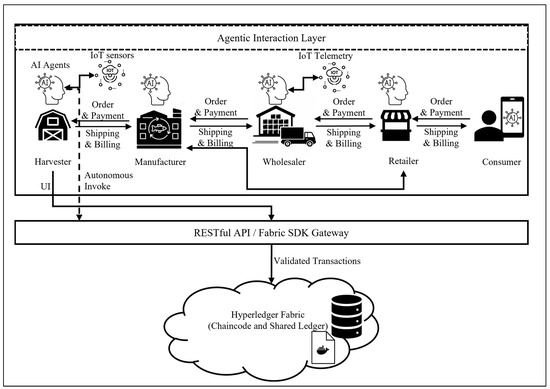
Figure 1 illustrates the architecture and operational workflow of the proposed enterprise-oriented, permissioned blockchain-based fish supply chain system. The design supports secure, multi-stakeholder collaboration while ensuring traceability and auditability. The system is implemented using Hyperledger Fabric, where participants operate within a permissioned environment governed by Membership Service Provider (MSP) policies. This architecture is a preferred choice for commercial solutions, as it requires authenticated participants and trusted actors to join the network before engaging in transactions.
Figure 1.
Proposed enterprise-oriented, permissioned blockchain-based fish supply chain flow featuring Agentic Stakeholder Interactions.
- A.
- Supply Chain Actors and Roles
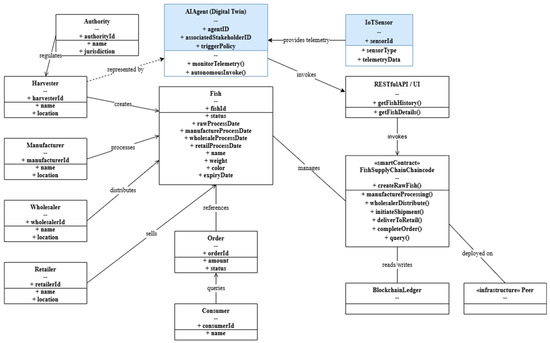
The main actors and their associated activities, as modeled in the UML diagram depicted in Figure 2, are summarized as follows:
Figure 2.
UML class diagram of the proposed prototype, showing main fish supply chain entities and chaincode managing fish asset states on the Hyperledger Fabric ledger.
- Harvester: Creates and registers newly caught fish as blockchain assets.
- Manufacturer: Processes fish products and updates compliance-related metadata.
- Wholesaler (Distributor): Aggregates and transports products, managing batch-level logistics.
- Retailer: Finalizes delivery to the consumer and monitors product conditions throughout the retail stage.
- Consumer: Queries product provenance and verifies authenticity via the RESTful API to retrieve the fish history.
- Authority: External regulatory bodies (e.g., FDA) that define the standards, jurisdictions, and compliance rules reflected in the recorded metadata.
- Autonomous AI Agents (Agentic Interaction Layer): Representing an intelligent, application-tier interaction layer. Designed as Digital Twins of the human stakeholders, these agents utilize the Fabric SDK and RESTful API to monitor IoT Telemetry (e.g., temperature and location) in real time, identify anomalies or policy violations based on a predefined trigger Policy, and autonomously invoke chaincode functions when specific conditions are met, potentially reducing the data veracity gap caused by manual entry.
- B.
- Transaction Workflow and Asset Lifecycle
The lifecycle of a fish asset is managed by the chaincode through a series of state transitions, ensuring all participants can track the journey of the product (Figure 1):
- Registration: The Harvester (or their Agent) registers a fish product, creating a tamper-resistant digital record with a unique hash to track the product across all subsequent stages.
- Ownership Transfer and Processing: Participants execute transactions (e.g., Order & Payment, Shipping & Billing) through chaincode functions. These interactions update the asset state while preserving a complete historical record on the Blockchain Ledger.
- Distribution and Retail: The product progresses through the Wholesaler and Retailer. All logistics and compliance events are recorded, ensuring transparency across the “Chain of Custody.”
- Validation & Consensus: All transaction requests (manual or autonomous) pass through the RESTful API. They are ordered via Raft consensus and appended to the ledger only after passing endorsement policies.
- Verification: Consumers query the identifier via a mobile or web interface. If the product is genuine, the system returns the full provenance history; otherwise, no record is shown.
In the proposed blockchain-based fish supply chain, a permissioned private blockchain is preferred over permissionless public alternatives (e.g., Ethereum), as participants are pre-determined at design time and must possess digital signatures to access the shared ledger. This enables faster settlement and customized consensus, performed via Raft consensus, which does not require all nodes to participate in validation, thereby offering superior scalability, privacy, and performance. The platform exposes a web-based front-end interface implemented using JavaScript and HTML5 to support convenient asset management. This interface, along with the RESTful API, provides the foundation for the proposed Agentic Interaction Layer to interface with the blockchain. Chaincode (Smart Contracts) encapsulates the business logic among network participants to maintain data consistency, while Access Control List (ACL) policies authenticate and authorize all transaction requests.
While blockchain ensures immutability, the system incorporates design-level mechanisms to address data veracity. Role-Based Access Control (RBAC), managed via ACLs, ensures that only authorized participants can submit specific data types. The system enforces structured validation through front-end interfaces and chaincode logic, requiring standardized formats before a transaction is committed. Finally, the inherent Auditability of the architecture ensures that all data, whether submitted manually or autonomously via the Agentic Layer, is permanently recorded, providing a robust trace-back capability for regulators and stakeholders to reconcile inconsistencies at their source.
- C.
- Threat Model and Risk Mitigation
The proposed architecture is designed to mitigate several security and operational risks inherent in fish supply chains. By introducing an Agentic AI layer with a permissioned Hyperledger Fabric framework, the system can address the following threats:
- False Data Entry and IoT Stream Manipulation: Traditional systems rely on manual logs, which are prone to “human-in-the-loop” fraud. As shown in Figure 1, the integration of IoT Telemetry with Autonomous AI Agents can ensure that data regarding the physical state of the catch (e.g., GPS, temperature) is validated locally before ledger submission. This automated verification minimizes the data veracity gap and prevents the injection of fabricated environmental data.
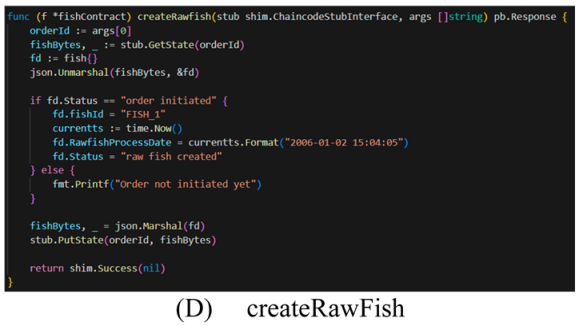
- Compromised Endpoints and Misuse of Credentials: The system utilizes MSP to issue unique X.509 digital certificates. All interactions with the RESTful API/Fabric SDK Gateway (Figure 1) require cryptographic authentication. Even if an endpoint is compromised, the attacker is restricted by RBAC defined in the UML Class Diagram (Figure 2); for instance, a compromised Retailer credential cannot invoke the createRawFish function, which is restricted to Harvesters.
- Unauthorized Invocation of Chaincode: As modeled in the UML Class Diagram (Figure 2), business logic is encapsulated within smart contracts that enforce strict state transitions. Chaincode functions can only be executed if the transaction meets the network’s Endorsement Policies, requiring multiple independent peers to validate the request before it is committed to the immutable ledger.
- Malicious Insider Behavior: The architecture mitigates insider threats through Immutable Auditability. Every transaction is cryptographically signed and timestamped, creating a permanent trail. Because the ledger is distributed and requires consensus for updates, a single malicious insider cannot retroactively alter records to hide IUU activities without detection by other consortium members.
4. Preliminaries
This section reviews the key concepts and technologies underlying the implementation of the proposed blockchain-based fish supply chain prototype using Hyperledger Fabric. It first reviews blockchain fundamentals and their relevance to supply chain applications, then summarizes the main components of Hyperledger Fabric and the integration of autonomous agents and IoT mechanisms used in our system.
- A.
- Overview of Blockchain
Blockchain was initially introduced as the foundational technology for Bitcoin cryptocurrencies, enabling virtual money exchange without the need for a central authority. Since then, its application has expanded to a wide range of domains, including e-government, healthcare, energy, banking, and supply chain management. At a high level, a blockchain is a distributed, append-only ledger maintained by multiple nodes, where transactions are grouped in cryptographically linked blocks, providing tamper resistance and verifiable data integrity.
For supply chain applications, an important design decision is the type of blockchain to deploy. Private or permissioned blockchains are typically preferred over fully public, permissionless networks because they allow the participating organizations and users to be explicitly identified and governed. Within the Hyperledger project, the Linux Foundation has introduced several enterprise-oriented frameworks, including Fabric, Burrow, Iroha, Sawtooth, Indy, and Quilt, with Hyperledger Fabric emerging as a widely adopted platform for commercial and consortium use cases [24].
Permissioned blockchain platforms such as Hyperledger Fabric enable enterprises to create multiple logical networks as private subnets of communication between organizations or organizational units. These subnets support data isolation, privacy, and confidentiality, and can be configured to mitigate specific supply chain vulnerabilities using mechanisms like channels. Access to the permissioned network is restricted to selected participants whose identities are known; these participants can perform transactions securely and privately while benefiting from improved scalability, transparency, performance, and efficiency compared to many public blockchain deployments [48].
Identity and authentication are central to blockchain-based supply chain systems. Blockchain platforms provide built-in identity management using digital certificates and cryptographically secure public–private key pairs. In our proposed design, these identities extend beyond human actors to include Autonomous AI Agents, which are assigned unique credentials to sign transactions and interact with the ledger as digital twins for stakeholders.
- B.
- Hyperledger Fabric
Hyperledger Fabric, launched under the Hyperledger umbrella by the Linux Foundation in 2015, is one of several modular blockchain frameworks contributed by industry partners such as IBM. It is an open-source, permissioned blockchain platform designed to address enterprise and business requirements and has become a widely used solution for industrial applications, including supply chain and provenance systems.
Hyperledger Fabric version 2.0, released in January 2020, introduced major enhancements related to smart contracts, private data handling, policy management, and consensus mechanisms. As a permissioned network, Fabric provides higher security, privacy, and confidentiality, making it suitable for developing scalable blockchain applications in enterprise settings. Its architecture is modular and configurable, with plug-and-play components for consensus, membership services, and data storage, and it leverages containerization to host chaincode that encapsulates the application logic.
Fabric supports the design and deployment of private or consortium blockchain solutions focused on business-oriented use cases. It is implemented primarily in Go (GoLang) and offers SDKs for multiple programming languages, including, GoLang (v1.24+), Java (JDK 17+), Node.js (20 + LTS), and Python (commonly-supported SDK). Unlike some platforms that restrict smart contracts to domain-specific languages (e.g., Solidity in Ethereum), Hyperledger Fabric allows chaincodes to be written in general-purpose languages, which simplifies integration with existing enterprise stacks. This flexibility is crucial for the integration of Agentic Layer, as it allows AI Agents to interface with the blockchain via standard SDKs to perform proactive state updates based on real-world triggers.
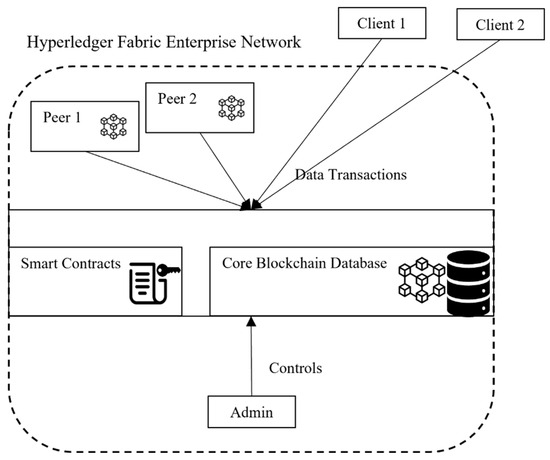
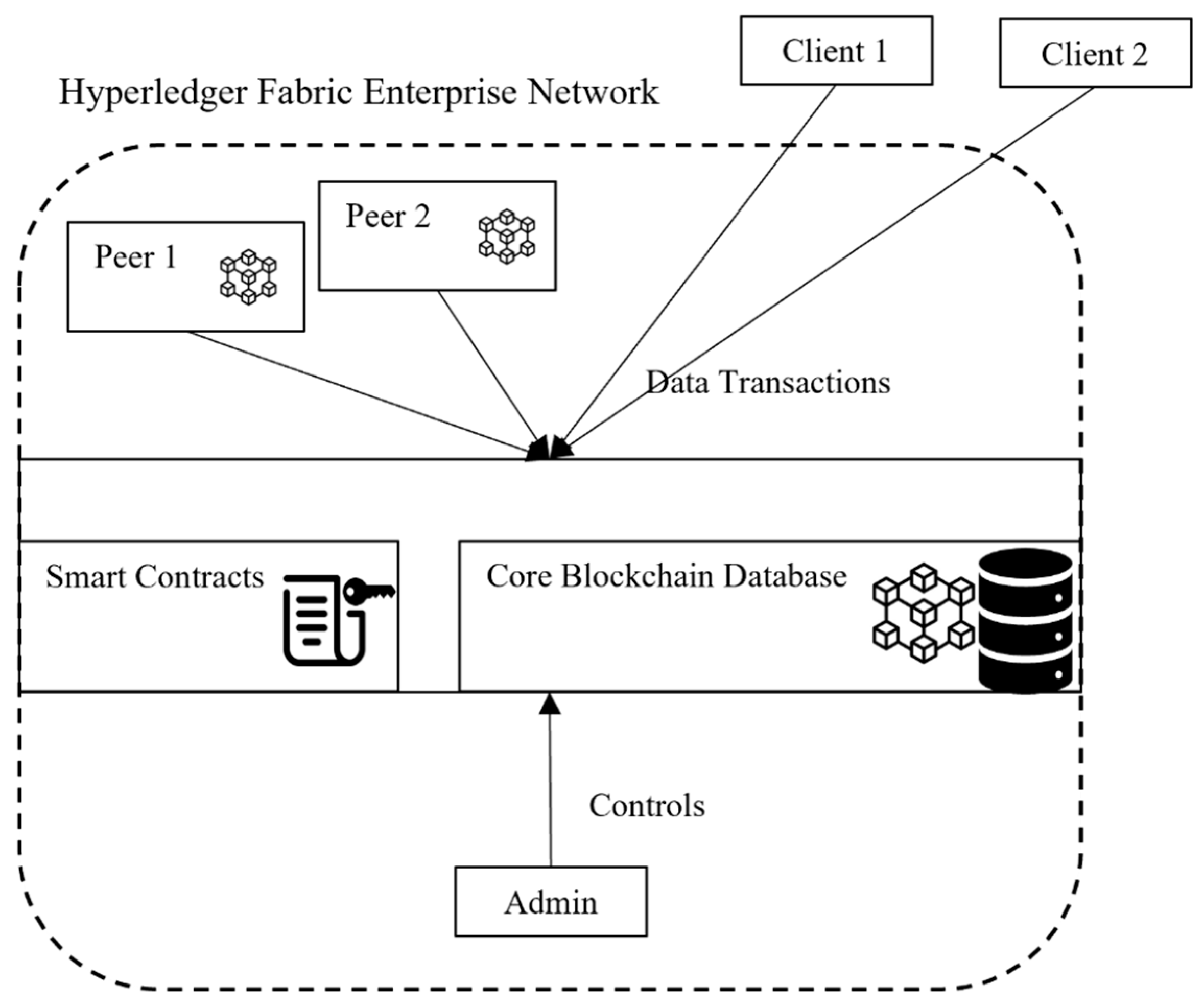
A typical Hyperledger Fabric enterprise network consists of a set of identified and registered peers, along with clients or end users who interact with the system through front-end applications. End users do not have full access to the blockchain ledger; instead, they submit transaction proposals and queries via user interfaces such as desktop applications, web browsers, or mobile apps. A blockchain administrator manages the blockchain database, configuration, and access control for the entire platform and defines which data are public and which are only available to specific organizations or roles according to business policies (Figure 3).
Figure 3.
Illustration of Hyperledger Fabric enterprise network.
- C.
- Deploying Blockchain with Docker
Docker is an open-source containerization technology that allows software packages to run in isolated environments called containers. Containers bundle an application together with its dependencies and runtime environment, enabling consistent deployment across different host operating systems. In the proposed prototype, Docker is used to simplify the setup and execution of Hyperledger Fabric components on the host system.
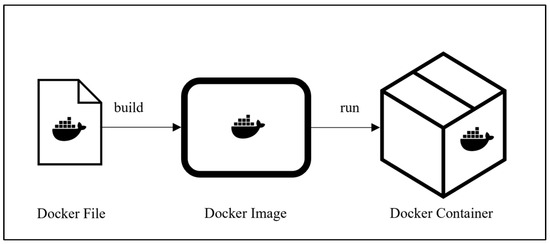
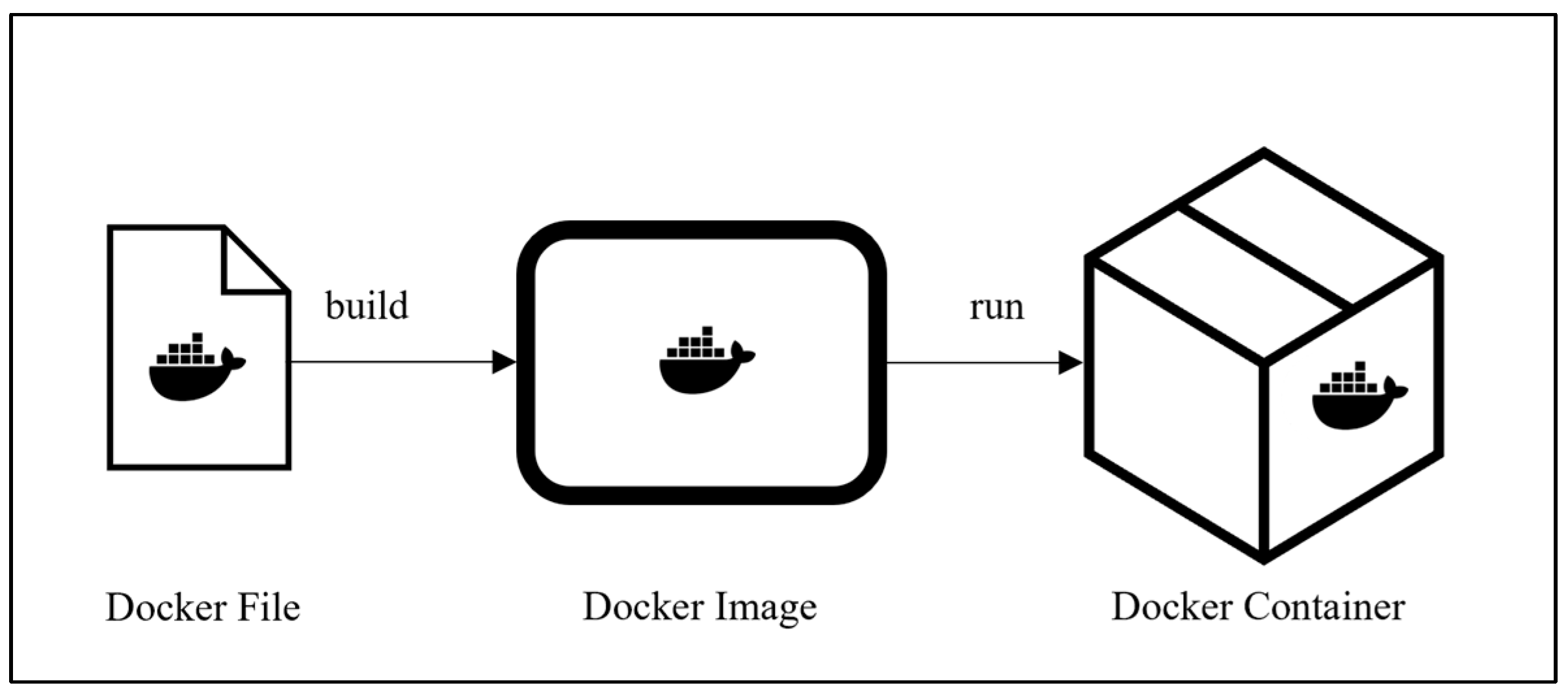
For each new node in the blockchain network, a Docker image is created using a Dockerfile, which is a text file that specifies all the instructions required to build the image (Figure 4). A Docker image is a non-running, reusable template; to execute the node, the image must be instantiated as a Docker container. The container provides an isolated environment for running the node, including connectivity to the Hyperledger Fabric network through specific network ports. The relationship between the Dockerfile, Docker image, and Docker container is often represented as a build-and-run pipeline, where the Dockerfile defines the image and the container hosts an active instance of that image.
Figure 4.
Illustration of basic docker components.
Docker containers share the host operating system kernel, which makes them lightweight and fast to start compared to traditional virtual machines. This results in reduced hardware resource requirements and easier deployment, scaling, and management of Fabric peers, orderers, and auxiliary services in the proposed system. Furthermore, the containerized nature of Fabric allows for the modular deployment of auxiliary services, such as the proposed AI Agent instances and IoT telemetry collectors, ensuring they run in isolated environments alongside the blockchain nodes.
- D.
- Channels
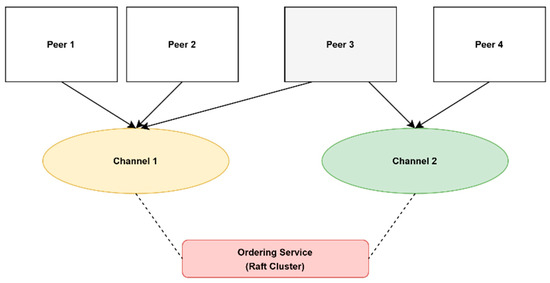
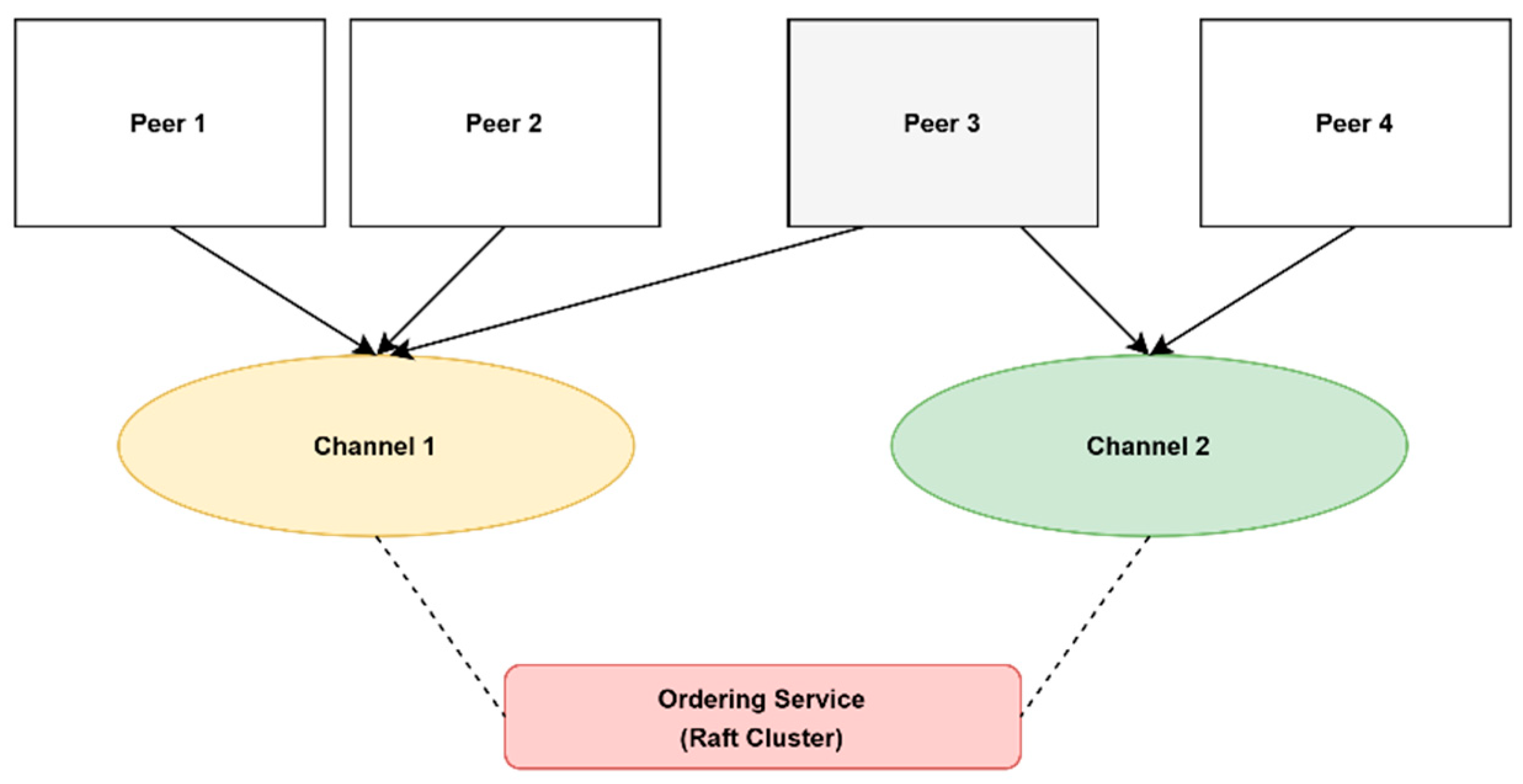
Hyperledger Fabric supports the creation of multiple logical blockchains called channels within a single network. A channel is a secure, independent sub-blockchain that provides confidentiality and data isolation by restricting transactional data to a specific subset of peers. Each channel has its own ledger of transactions and can host its own set of smart contracts (chaincode), ensuring that peers not belonging to a channel have no visibility into its transactional data. Despite this isolation, all channels share the same Ordering Service (Raft Cluster), which is responsible for ordering transactions into blocks.
In a typical configuration, each peer that participates in a channel maintains a copy of that channel’s ledger and corresponding chaincode. As illustrated in Figure 5, a single node such as Peer 3 can participate in multiple channels (Channel 1 and Channel 2) simultaneously, enabling fine-grained data partitioning. Channels are especially useful in supply chain scenarios where different business relationships require selective data sharing and confidentiality guarantees between specific organizations.
Figure 5.
Illustration of the concept of channels.
- E.
- Chaincode
In Hyperledger Fabric, smart contracts are implemented as chaincode [49] which is an executable program that encapsulates the business logic agreed upon by the network peers. Business logic defines the rules governing transaction execution, state transitions, and validation conditions. Chaincode initializes and manages the ledger state by processing different types of transactions that are communicated over the network.
A chaincode is invoked whenever a supply chain activity triggers a state change, such as the creation of a new fish asset, transfer of ownership, or update of product status. While traditional workflows rely on manual invocation via a user interface, our design conceptually supports automated invocation through the Agentic Layer. In this model, the chaincode can be triggered either by a human stakeholder or proactively by an Autonomous AI Agent reacting to real-time IoT telemetry (e.g., temperature spikes or GPS geofencing).
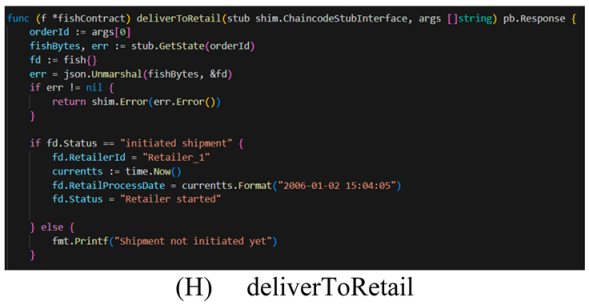
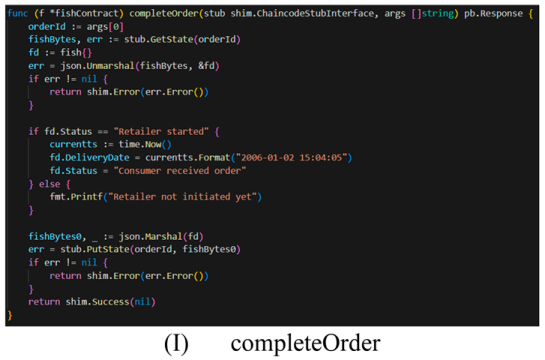
Upon invocation, the corresponding chaincode function reads and writes values to the ledger, ensuring that all peers participating in the channel maintain a consistent view of the fish assets and related transactions. In the proposed prototype, chaincode functions implement the main operations of the fish supply chain, including order initiation, raw fish creation, processing, distribution, shipment, delivery to retailers, and order completion, ensuring ledger integrity and state consistency are maintained whether the data is submitted manually or via the proposed autonomous agentic workflow.
- F.
- Consensus
Consensus in Hyperledger Fabric ensures that transactions are validated and ordered in a way that maintains a consistent ledger across distributed peers and prevents duplicate or conflicting transactions. Unlike public blockchains that rely on resource-intensive mechanisms such as Proof of Work, Fabric supports pluggable consensus protocols tailored to permissioned environments. In this work, we adopt Raft as the consensus protocol in the Hyperledger Fabric network.
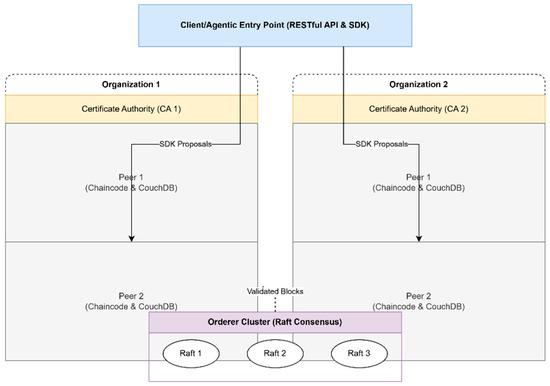
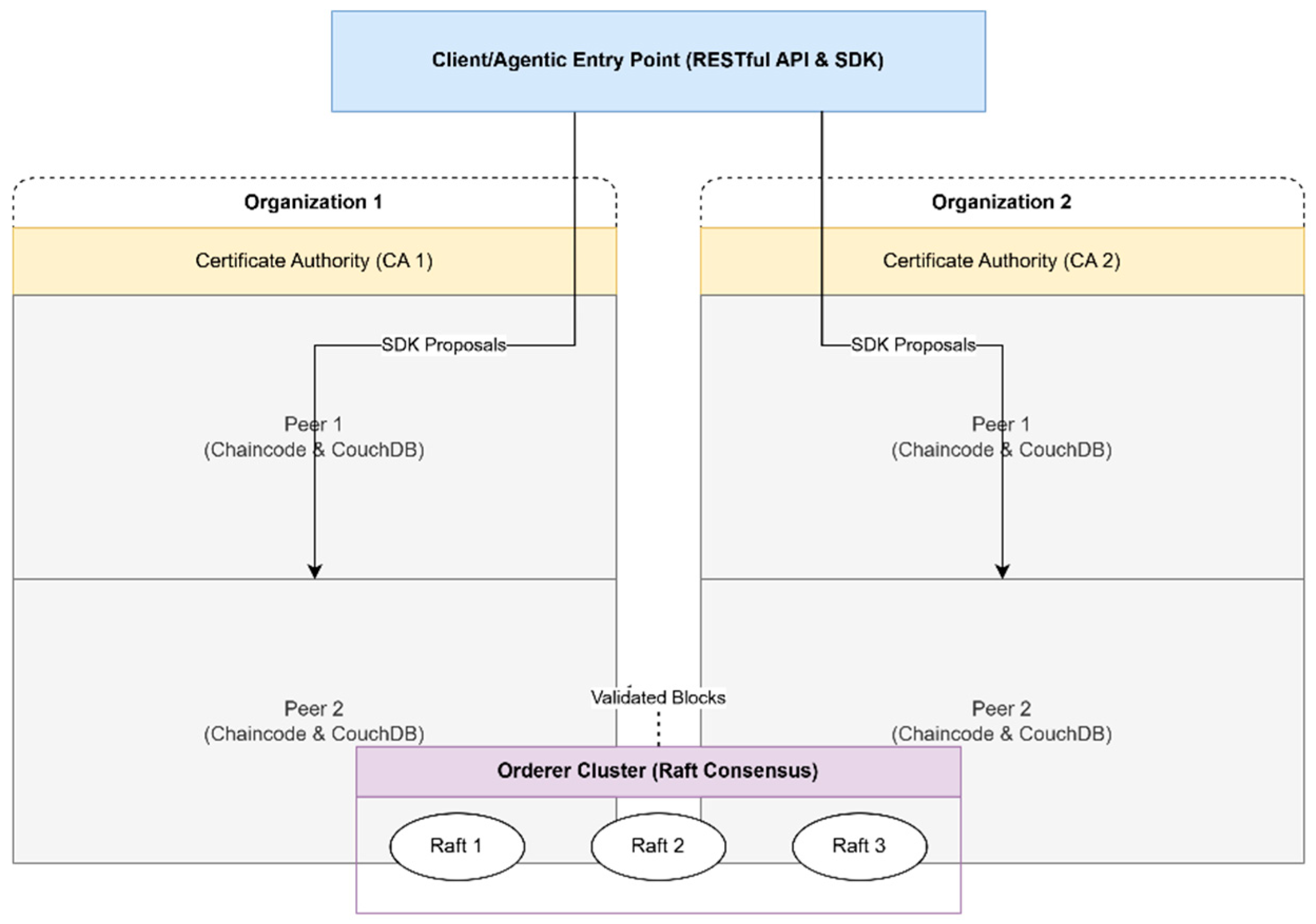
In the system architecture, the blockchain network consists of multiple stakeholder organizations, each with one or more peer nodes participating in the consensus process for ledger consistency. The ordering service (Orderer) orchestrates the flow of transactions: it receives endorsed transactions from peers, orders them, and packages them into blocks that are then distributed to the peers for validation and commitment. Each peer is typically integrated with CouchDB and the Raft-based ordering cluster (Figure 6).
Figure 6.
Illustration of the concept of organizations in Hyperledger Fabric network.
CouchDB is used as the state database to support scenarios with a large number of transactions and to avoid redundancy in the low-level blockchain file system. It provides rich query capabilities over JSON-style documents, which is particularly beneficial for read-only analytical queries and complex filtering of fish asset records. When designing applications that use CouchDB, transactions are structured to read and write a relatively small number of keys per operation to maintain performance.
Raft, in turn, acts as the crash fault-tolerant (CFT) ordering service that manages transaction streams and contributes to the ordering and batching of transactions into blocks. All transactions received from peers are sequenced by the Raft leader node, which then generates blocks and disseminates them to the peers. The orderer is therefore a fundamental component of the Hyperledger Fabric network, responsible for delivery guarantees and block creation, ensuring that all peers converge on the same ordered sequence of transactions through a leader-based consensus mechanism.
- G.
- Interaction with Hyperledger Fabric Network
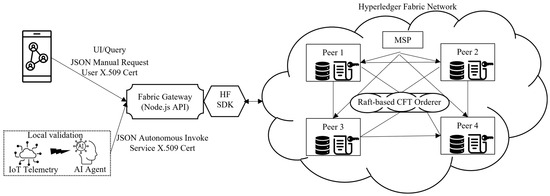
External applications interact with the Hyperledger Fabric network and its deployed chaincode through a RESTful API that leverages the Hyperledger Fabric Client SDK. The RESTful API exposes a set of methods that allow external clients to submit transaction proposals and query ledger data. In the proposed fish supply chain solution, the RESTful API is implemented using the Node.js platform and serves as the primary entry point for both the User Interface (UI) and the proposed Agentic Layer.
As illustrated in Figure 7, the system supports a multi-modal interaction strategy:
Figure 7.
Illustration of the interaction with Hyperledger Network showing the unified Node.js RESTful API gateway processing transactions from both manual and autonomous access.
- Manual Interaction: A UI application, such as a mobile app, consumes the functionality exposed by the RESTful API to enable stakeholders and consumers to interact with the system manually under User X.509 identities. For example, consumers can query the history and attributes of a fish product by scanning an identifier, while authorities can perform online inspections by viewing product features and traceability data.
- Autonomous Interaction: Simultaneously, the Agentic Layer uses this same gateway to process real-time IoT telemetry under distinct Service X.509 identities. This telemetry acts as a proactive trigger for the AI Agents, which perform local telemetry validation to filter noise before autonomously generating JSON transaction proposals and submitting them via the RESTful API.
This dual-interaction model ensures that the system remains accessible to human users while benefiting from the speed and veracity of autonomous AI-driven automation. Transactions are ordered via a Raft-based consensus mechanism, with the API gateway incorporating a resilience loop for idempotency and retries. On the persistence side, CouchDB operates following a client–server model to manage JSON-based documents representing the current world state. The combination of RESTful APIs, client SDKs, and UI components provides a flexible interaction layer that decouples front-end applications from the blockchain internals, supporting the seamless tracking and tracing of fish products across the supply chain.
5. Development Environment
The proposed blockchain-based fish supply chain prototype is implemented using a permissioned private blockchain architecture based on Hyperledger Fabric. The system is designed as a modular client–server architecture and is deployed in a containerized environment to support reproducibility, scalability, and seamless integration of the proposed Agentic Interaction Layer.
- A.
- Deployment Platform
The blockchain network can be deployed either on cloud-based infrastructures (e.g., Microsoft Azure, AWS, or Google Cloud) or on on-premises servers to satisfy operational and security requirements and further to handle the life cycle of the deployments that includes security patches, critical updates, upgrades, change management and restarting services [49]. While private organizations often prefer on-premises deployments for sensitive regulatory data, cloud solutions are typically employed for additional capacity or geographical distribution.
For experimental and prototyping purposes, the proposed system is deployed on a local VM running Ubuntu Linux. This setup allows for full control over configuration, network topology, and security policies while providing a stable environment for the AI Agents and IoT telemetry collectors to interact with the blockchain nodes without external network dependencies.
- B.
- Software Stack and Tools
The implementation environment consists of the following core components, curated to support both the standard blockchain functions and the advanced agentic features:
- Hyperledger Fabric (v2.0): Used as the permissioned blockchain framework to manage identities (for both human stakeholders and AI Agents), transactions, and the distributed ledger state.
- Docker Engine (v20.X): Used to containerize all Fabric components, including peers, orderers, and certificate authorities. Docker also hosts the proposed Agentic Layer components, ensuring isolation and consistent runtime behavior across the system.
- Programming Languages:
- ○
- Go (Golang): Used to implement the chaincode business logic.
- ○
- Node.js: Used to develop the RESTful API layer, serving as the gateway for both the Mobile UI (manual JSON requests) and the AI Agents (autonomous JSON invokes).
- ○
- Java (JDK + Spring Boot): Used for backend integration and SDK-based interactions.
- Development Tools: Apache NetBeans IDE 12.3 and Visual Studio Code (v1.65.2) were utilized for development and debugging.
- Version Control: Git was employed for modular source code management.
- C.
- Hardware Specifications
All experimental work was carried out on a machine running Windows 11, equipped with an Intel Core i7-1165G7 @ 2.80 GHz processor and 32 GB RAM. This hardware configuration provides the necessary computational overhead to run multiple Docker containers, hosting the blockchain network, the API gateway, and the simulated agentic components, simultaneously. Table 3 summarizes the main development environment parameters used in the proposed prototype.
Table 3.
Development Environment and System Configuration.
- D.
- System Architecture Overview
The development environment is logically organized into two primary layers: the Back-End Blockchain Layer and the Front-End Interaction Layer, which together facilitate both manual and autonomous operations across the fish supply chain.
- Back-End Layer (Blockchain & Ledger): This layer consists of the Hyperledger Fabric blockchain network, which maintains the distributed ledger and executes chaincode to enforce agreed-upon business logic. All fish-related transactions, from harvesting to retail, and their corresponding state updates are permanently recorded on the ledger, ensuring end-to-end immutability and traceability.
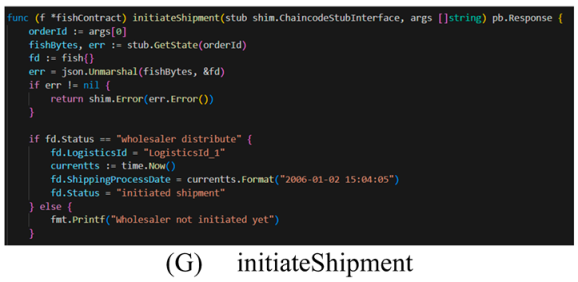
- Front-End Layer (Interaction & Agentic Layer): Implemented as a web-based and mobile-accessible interface, this layer interacts with the blockchain through a Node.js RESTful API built using the Hyperledger Fabric SDK. acts as the unified gateway between physical operations and the digital ledger. It enables human stakeholders (e.g., Harvesters, Wholesalers) and consumers to submit transactions and query fish provenance data through a web-based interface without requiring direct access to the low-level blockchain. Beyond these manual interfaces, this layer also supports Agentic Integration by hosting Autonomous AI Agents that serve as digital twins for stakeholders. Utilizing the same RESTful API and Fabric SDK, these agents proactively monitor IoT telemetry (e.g., temperature deviations or geofencing alerts) and can automatically trigger specific chaincode functions, such as initiateShipment or qualityAlert, without human intervention when predefined thresholds are met.
Hyperledger Fabric does not provide a native user interface; therefore, the UI and API layers serve as the essential interaction bridge. As illustrated in Figure 7, this design decouples the complex blockchain internals from external applications, allowing for a scalable architecture that supports both current mobile-based implementations and future autonomous AI-driven automation.
- E.
- Chaincode Implementation and Deployment
The core business logic of the fish supply chain is implemented using Fabric chaincode, which is deployed and executed on peer nodes within the network. The chaincode governs all state transitions of fish assets as they move across different supply chain actors, ensuring that every handoff is validated and recorded.
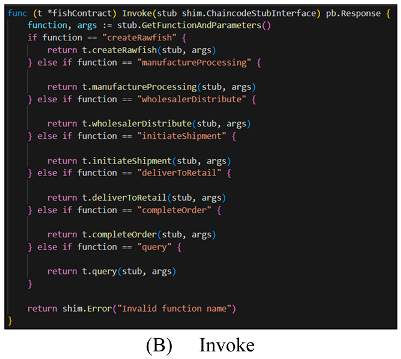
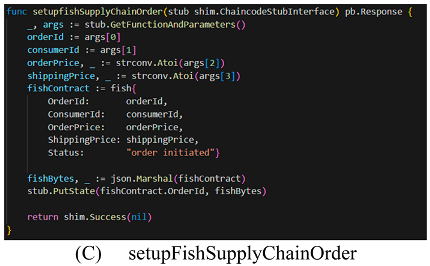
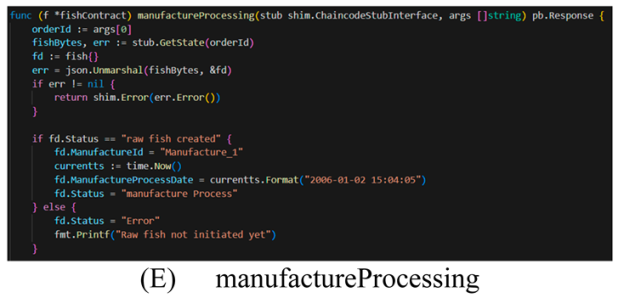
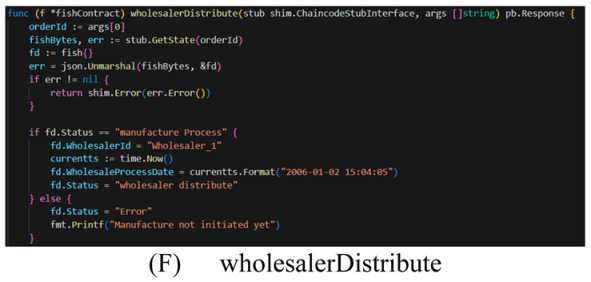
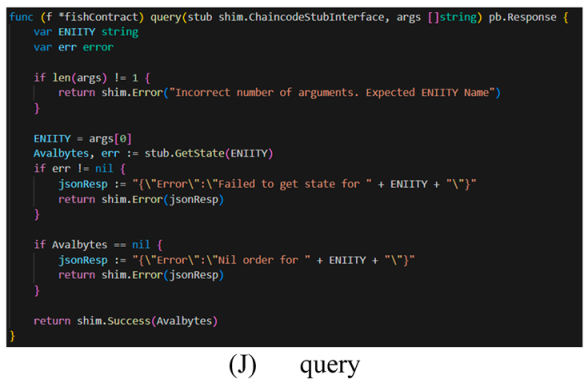
The following functions are primarily implemented in the chaincode (as summarized in Table 4 and demonstrated in Table 5): setupFishSupplyChainOrder, createRawFish, manufactureProcessing, wholesalerDistribute, initiateShipment, finishShipment, deliverToRetail, and completeOrder. In addition to standard administrative functions, such as Init for ledger initialization and query for retrieving provenance information, the system utilizes the Invoke mechanism to trigger state transitions. These transitions can be initiated manually by stakeholders via the UI or autonomously by the AI Agents within the proposed Agentic Layer when environmental telemetry (e.g., GPS geofencing or temperature sensing) satisfies predefined conditions.
Table 4.
Description of chaincode functions implemented in the proposed fish supply chain system.
Table 5.
Screenshots of chaincode Function Execution in Hyperledger Fabric.
Each fish asset is uniquely identified using a FishId and is associated with a Status field that reflects its current lifecycle stage (e.g., raw, processed, fresh, frozen, damaged, shipped, or delivered). Temporal and ownership attributes, such as processing dates, manufacturer IDs, wholesaler IDs, logistics identifiers, and retailer IDs, are updated at each stage through corresponding chaincode function invocations.
Peer nodes host both the ledger and the deployed chaincode. Each ledger entry represents a cryptographically verifiable transaction corresponding to a fish asset’s state change. The ledger begins with a genesis block and grows as new transactions, such as fish creation, processing, or shipment, are committed to the chain. This structure ensures that every change in the fish’s journey is recorded as an immutable, time-stamped block, providing a transparent audit trail for all stakeholders.
- F.
- Supporting Services and APIs
Identity management and access control are handled through the MSP and Certificate Authority (CA), which authenticate all participants and map identities to organizational roles within the Fabric network. This framework ensures that only authorized actors, including human stakeholders and the AI Agents, can invoke specific chaincode functions.
A RESTful API, implemented using Node.js, exposes blockchain functionality to external applications. Through this API, users can submit transactions, initiate supply chain operations, and query fish provenance data. The REST layer abstracts the complexity of Fabric SDK interactions and enables seamless integration with the graphical user interface and the autonomous agentic layer.
- G.
- Graphical User Interface
The graphical user interface or GUI is implemented as a browser-based web application and mobile-accessible interface that enables:
- Supply chain actors to register and update fish product information manually throughout the lifecycle;
- Consumers to trace the full history of a fish product using its identifier;
- Authorities to perform online inspections by reviewing immutable ledger records and verifying compliance.
The GUI interacts exclusively with the RESTful API, ensuring a strict separation between presentation logic and blockchain infrastructure. This decoupling allows the system to remain user-friendly for human participants while the AI Agents operate in parallel through the same API gateway to handle high-frequency, telemetry-driven data entry.
6. Experimental Results
This section presents the experimental evaluation of the proposed Hyperledger Fabric-based fish supply chain system through a functional prototype implementation. The evaluation aims to demonstrate the system’s ability to ensure data integrity, enforce access control, and maintain acceptable performance under both manual and autonomous (agent-based) interactions.
- A.
- Prototype Implementation and Asset Modeling
To evaluate the proposed system, a representative set of fish products was defined as:
Fish options = {tuna, lobster, salmon, snapper}. Each fish product is modeled as a unique blockchain asset identified by a FishId and associated with a structured set of attributes capturing its lifecycle across the supply chain.
These attributes include harvest location and date, fish type and quality classification, sustainability and regulatory compliance indicators, as well as processing, shipment, and delivery timestamps. In addition, ownership identifiers are maintained for each participating supply chain actor. As the asset progresses through the supply chain, these attributes are incrementally updated through the chaincode functions listed in Table 4, ensuring a consistent and tamper-resistant state evolution. For future work, the system can be extended with sector-specific functions and parameters to further enhance seafood governance, such as: VerifyCatchCertificate() to authenticate the legal origin of the seafood by validating the vessel’s license and catch permit numbers against official regulatory databases before the fish asset is registered on the ledger, UpdateTemperatureLog() to enable continuous cold-chain monitoring by recording real-time ambient temperature data from IoT sensors, ensuring a transparent and immutable history of thermal conditions during transit, ValidateCompliance(FAO_Zone) to automatically cross-reference the harvest coordinates with designated Food and Agriculture Organization (FAO) fishing zones to ensure the catch was obtained from authorized maritime regions, thereby mitigating IUU fishing risks, CheckFreshnessThreshold() to execute business logic that evaluates the elapsed time and cumulative temperature exposure against predefined safety standards to determine if the fish remains within acceptable freshness parameters for human consumption.
- B.
- System Interaction and Transaction Workflow
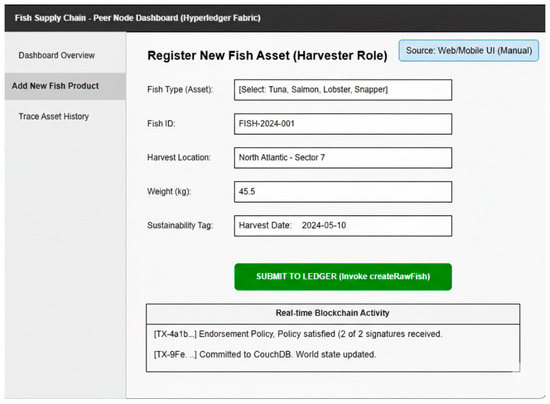
The system provides a web-based interface that acts as the primary interaction layer between users and the blockchain network. As illustrated in Figure 8, participants such as harvesters can register new fish products and initiate supply chain workflows through structured input forms. Each submission triggers a corresponding chaincode invocation (e.g., createRawFish or setupFishSupplyChainOrder), resulting in a transaction that is endorsed, ordered, and committed to the distributed ledger.
Figure 8.
Web Interface Dashboard for the proposed prototype.
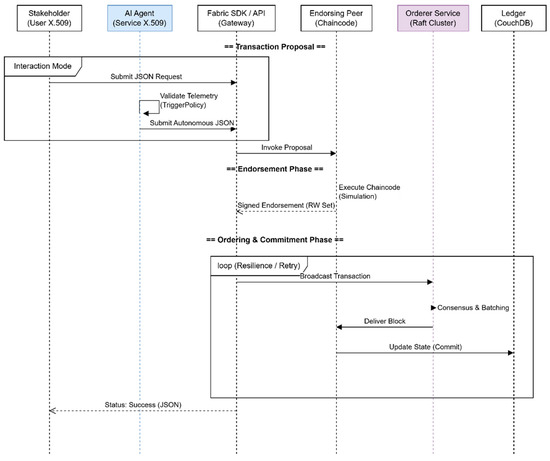
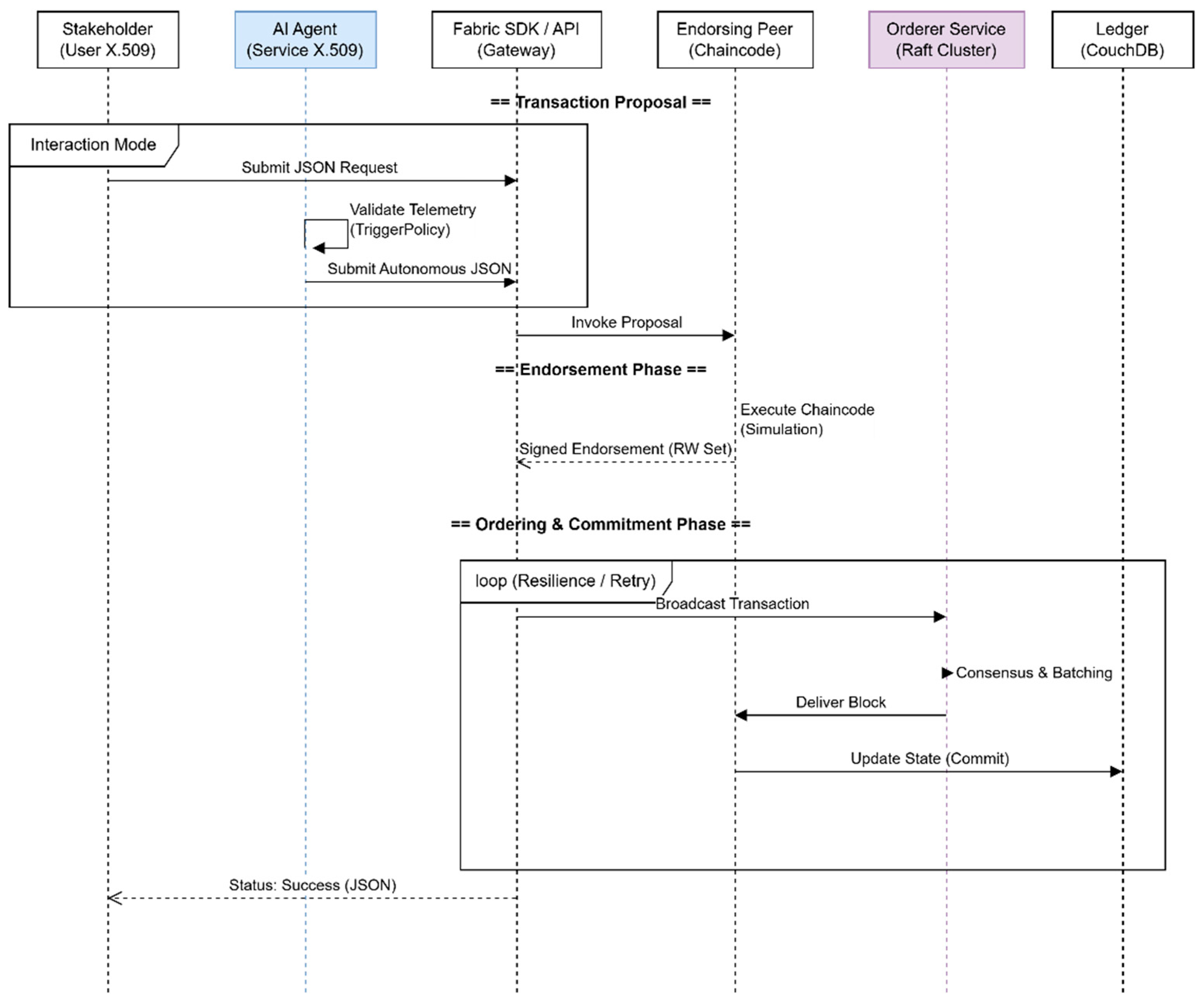
Figure 9 depicts the sequence of operations involved in transaction execution within Hyperledger Fabric, organized into three primary phases: Transaction Proposal, Endorsement, and Ordering & Commitment. The process begins in the Interaction Mode, where a stakeholder (User X.509) submits a JSON request or an AI Agent (Service X.509) performs local telemetry validation to filter noise before submitting a proposal. The Node.js SDK then sends an Invoke Proposal to the endorsing peer, which executes a chaincode simulation to generate and return a signed RW set. During the final phase, a resilience loop facilitates automated retries as the SDK broadcasts the transaction to the Raft-based ordering service for consensus and batching. Once the Orderer delivers the block, the peer performs a final validation of the RW set and executes Update State (Commit) to the CouchDB ledger, ultimately returning a success confirmation to the client to ensure a deterministic and immutable audit trail.
Figure 9.
Sequence diagram for transaction execution flow.
A detailed traceability example is shown in Figure 10, where the lifecycle of a specific fish asset is tracked across multiple stages, from initial registration using createRawFish() to final settlement via completeOrder(). At each stage, relevant metadata is recorded, enabling a transparent and immutable audit trail. This traceability mechanism allows consumers and regulatory authorities to verify product authenticity, provenance, and compliance at any point in time.
Figure 10.
Traceability Timeline of fish asset state transitions.
- C.
- Experimental Setup and Performance Evaluation
The proposed system is evaluated using a prototype deployment consists of two organizations, each maintaining a CA and two peer nodes with CouchDB state databases, and a three-node Raft-based ordering service (Figure 6). The system operates on a single application channel with an endorsement policy requiring validation from both organizations. Block formation is configured with a maximum size of 100 transactions and a timeout of 2 s.
Transactions follow a key–value workload pattern, typically involving one to two read operations and a single write operation per transaction, with a controlled conflict rate below 2%. Client interactions are performed through a RESTful API and the Fabric Gateway SDK under moderate concurrency levels of approximately 100–300 simultaneous requests, representing both manual user interactions and agent-based submissions.
Basic performance measurements were collected during prototype execution under moderate load conditions to establish a baseline. The system sustained an estimated 3000–3500 transactions per second (TPS) for simple invoke and query operations, which is consistent with previously reported performance of Hyperledger Fabric in similar local and containerized environments. State-changing transactions exhibited an average end-to-end latency of approximately 600–900 ms, measured from submission to ledger commitment, while query operations demonstrated lower response times in the range of 300–500 ms, as they access the CouchDB world state without requiring consensus.
Access control enforcement was validated through the MSP, which successfully restricted transaction execution to authorized roles. Unauthorized attempts to invoke chaincode functions were rejected by the network, while consumers were restricted to read-only query access, protecting sensitive organizational data. These results confirm that the proposed system achieves secure collaboration among heterogeneous supply chain participants while maintaining transparency and accountability required for modern food supply chains.
7. Conclusions
Fish supply chains face persistent challenges related to IUU fishing, data fragmentation, and a lack of trustworthy mechanisms for tracking product provenance across multiple stakeholders. Traditional centralized systems are often insufficient, as they are vulnerable to data manipulation, single points of failure, and limited interoperability within complex, multi-actor environments. To address these challenges, this paper proposed a permissioned blockchain-based fish supply chain system implemented using Hyperledger Fabric. By leveraging a permissioned architecture, the solution ensures that only authenticated participants can write to the ledger while providing transparent, auditable access to consumers and regulatory authorities, a balance critical for protecting sensitive business data while maintaining compliance with sustainability requirements.
The proposed system architecture is built on a robust, enterprise-grade stack centered around Hyperledger Fabric, a platform selected for its modular framework, including CA servers, organizational peer nodes, and comprehensive identity management. The core business logic is encapsulated within chaincode, which ensures valid state transitions and model supply chain workflows from harvest to retail delivery. At the data tier, the system utilizes a CouchDB world state database for efficient rich queries, supported by a Raft-based ordering service to maintain reliable transaction consensus. Interaction with the ledger is facilitated by an Application Gateway consisting of a RESTful API and Fabric SDK (supporting Java, Go, and Node.js), which provides the essential foundation for both human-driven UIs and the integrated AI Agents. Finally, the entire infrastructure is Docker-based, utilizing containerized peer nodes to support modular deployment and organizational scalability.
The resulting prototype demonstrates how each stage of the supply chain is recorded as an immutable transaction, strengthening accountability and providing a technical foundation for mitigating IUU practices. While this work focuses on a functional prototype and preliminary results, it illustrates the potential of permissioned blockchain technology, integrated with the principles of an agentic economy, to transition toward a full multi-agent system. Several technical limitations must be addressed for industrial-scale transition. Current constraints include the latency overhead inherent in the Raft consensus and endorsement cycle, which may impact throughput in high-volume global markets. Additionally, while the Agentic Interaction Layer is conceptually integrated, the prototype currently relies on a centralized API gateway, representing a potential bottleneck. The transition from laboratory to industrial application involves significant interoperability challenges, specifically regarding the integration of legacy ERP systems and considering the data veracity at the point of manual entry by stakeholders in regions with low digitalization.
Future work will focus on a systematic performance evaluation to stress test the network under realistic transaction loads and the implementation of off-chain data storage for high-frequency IoT telemetry. Research will also explore practical integration and decentralized execution with autonomous AI agents as active system actors and deployment in real operational environments to further validate its long-term impact. By addressing these technical and infrastructural barriers, the proposed system can evolve from a functional prototype into a resilient, global seafood traceability standard.
Author Contributions
Conceptualization, S.I., B.O., H.R.; Investigation, S.I., B.O., H.R., E.T.H.; Methodology, S.I., B.O., H.R.; Supervision, S.I., H.R.; software, S.I., B.O.; validation, S.I., B.O.; Writing—original draft, S.I., B.O., H.R., E.T.H.; Writing—review and editing, S.I., B.O., H.R., E.T.H.; Visualization, S.I., E.T.H.; Project Administration, S.I., H.R. All authors have read and agreed to the published version of the manuscript.
Funding
This research received no external funding.
Data Availability Statement
No new data were created or analyzed in this study.
Conflicts of Interest
Author Bashar Othman was employed by the company Frame&Build. The remaining authors declare that the research was conducted in the absence of any commercial or financial relationships that could be construed as a potential conflict of interest.
References
- The Food and Agriculture Organization of the United Nations. The State of World Fisheries and Aquaculture 2024: Blue Transformation in Action; The Food and Agriculture Organization of the United Nations: Rome, Italy, 2024; Available online: https://www.fao.org/publications/fao-flagship-publications/the-state-of-world-fisheries-and-aquaculture (accessed on 20 February 2025).
- Lewis, S.G.; Boyle, M. The Expanding Role of Traceability in Seafood: Tools and Key Initiatives. J. Food Sci. 2017, 82, A13–A21. [Google Scholar] [CrossRef] [Scilit] [PubMed]
- Cook, B.; Zealand, W.N. Blockchain: Transforming the seafood supply chain. World Wide Fund Nat. 2018, Draft Report 1.4.1, 501–508. [Google Scholar]
- The Food and Agriculture Organization of the United Nations. Food Fraud in the Fisheries and Aquaculture Sector. February. 2026. Available online: https://news.un.org/en/story/2026/02/1166932 (accessed on 26 February 2026).
- World Economic Forum. Global Cybersecurity Outlook 2026. January. 2026. Available online: https://www.weforum.org/reports/global-cybersecurity-outlook-2026/ (accessed on 26 February 2026).
- Global Initiative Against Transnational Organized Crime. The Illegal, Unreported and Unregulated Fishing Risk Index: 2025 Update. 2025. Available online: https://iuufishingindex.net/reports (accessed on 26 February 2026).
- OECD/FAO. OECD-FAO Agricultural Outlook 2025–2034; Organisation for Economic Co-Operation and Development (OECD): Paris, France, 2025. [Google Scholar] [CrossRef] [Scilit]
- Yeboah-Ofori, A.; Islam, S.; Lee, S.W.; Shamszaman, Z.U.; Muhammad, K.; Altaf, M.; Al-Rakhami, M.S. Cyber Threat Predictive Analytics for Improving Cyber Supply Chain Security. IEEE Access 2021, 9, 94318–94337. [Google Scholar] [CrossRef] [Scilit]
- Ismail, S.; Reza, H. Security Challenges of Blockchain-Based Supply Chain Systems. In Proceedings of the 2022 IEEE 13th Annual Ubiquitous Computing, Electronics and Mobile Communication Conference, UEMCON 2022; Institute of Electrical and Electronics Engineers Inc.: Piscataway, NJ, USA, 2022. [Google Scholar] [CrossRef] [Scilit]
- Gopi, K.; Mazumder, D.; Sammut, J.; Saintilan, N. Determining the provenance and authenticity of seafood: A review of current methodologies. Trends Food Sci. Technol. 2019, 91, 294–304. [Google Scholar] [CrossRef] [Scilit]
- Ismail, S.; Dawoud, D.W.; Reza, H. Securing Wireless Sensor Networks Using Machine Learning and Blockchain: A Review. Futur. Internet 2023, 15, 200. [Google Scholar] [CrossRef] [Scilit]
- Kandaswamy, R.; Furlonger, D. Forecast: Blockchain Business Value, Worldwide, 2017–2030. 2017. Available online: https://www.gartner.com/en/documents/3855708 (accessed on 26 February 2026).
- MarketsandMarkets. Blockchain Market by Provider (Application, Infrastructure, Middleware), Type (Public, Private, Hybrid, Consortium), Deployment Mode (Cloud, On-Premises, Hybrid), Organization Size, Vertical, and Region—Global Forecast to 2030; MarketsandMarkets: Northbrook, IL, USA, 2025; Available online: https://www.marketsandmarkets.com/Market-Reports/blockchain-technology-market-90100890.html (accessed on 26 February 2026).
- Grand View Research. Blockchain Supply Chain Market Size, Share & Trends Analysis Report By Application (Asset Tracking, Counterfeit Detection), By End-Use (FMCG, Healthcare, Logistics), By Region, And Segment Forecasts, 2024–2030; Grand View Research: San Francisco, CA, USA, 2026; Available online: https://www.grandviewresearch.com/industry-analysis/blockchain-supply-chain-market-report (accessed on 26 February 2026).
- Ismail, S.; Dandan, S.; Dawoud, D.W.; Reza, H. A Comparative Study of Lightweight Machine Learning Techniques for Cyber-Attacks Detection in Blockchain-Enabled Industrial Supply Chain. IEEE Access 2024, 12, 102481–102491. [Google Scholar] [CrossRef] [Scilit]
- Dua, A.; Ang, T.F.; Ku, C.S.; Mohammed, O.; Luo, Y.; Chen, J.; Bhatti, U.A.; Por, L.Y. Security and Privacy in Permissioned Blockchain Interoperability: A Systematic Review. Comput. Mater. Contin. 2025, 85, 2579–2624. [Google Scholar] [CrossRef] [Scilit]
- Li, K.; Lee, J.Y.; Gharehgozli, A. Blockchain in food supply chains: A literature review and synthesis analysis of platforms, benefits and challenges. Int. J. Prod. Res. 2023, 61, 3527–3546. [Google Scholar] [CrossRef] [Scilit]
- Guggenberger, T.; Sedlmeir, J.; Fridgen, G.; Luckow, A. An in-depth investigation of the performance characteristics of Hyperledger Fabric. Comput. Ind. Eng. 2022, 173, 108716. [Google Scholar] [CrossRef] [Scilit]
- Aylak, B.L. SustAI-SCM: Intelligent Supply Chain Process Automation with Agentic AI for Sustainability and Cost Efficiency. Sustainability 2025, 17, 2453. [Google Scholar] [CrossRef] [Scilit]
- Guo, M.; Liu, X.J.; Zhang, W. Using blockchain technology in human food chain provenance. WIT Trans. Built Environ. 2018, 179, 391–396. [Google Scholar] [CrossRef] [Scilit]
- Perera, T.; Hettige, S.P.T.; Jayatilake, S.A.P.; Abeygunawardhana, W.; Bandara, H.M.N.D. Blockchain-Based Product Traceability beyond Proof of Existence. In Proceedings of the MERCon 2020—6th International Multidisciplinary Moratuwa Engineering Research Conference, Moratuwa, Sri Lanka, 28–30 July 2020; pp. 1–6. [Google Scholar] [CrossRef] [Scilit]
- Iftekhar, A.; Cui, X.; Hassan, M.; Afzal, W. Application of Blockchain and Internet of Things to Ensure Tamper-Proof Data Availability for Food Safety. J. Food Qual. 2020, 2020, 5385207. [Google Scholar] [CrossRef] [Scilit]
- Srivastava, A.; Desai, Y. Performance Analysis of Hyperledger Fabric based Blockchain for Traceability in Food Supply Chain. In Proceedings of the 2021 IEEE 2nd International Conference on Technology, Engineering, Management for Societal Impact Using Marketing, Entrepreneurship and Talent, TEMSMET 2021; Institute of Electrical and Electronics Engineers Inc.: Piscataway, NJ, USA, 2021. [Google Scholar] [CrossRef] [Scilit]
- Ravi, D.; Ramachandran, S.; Vignesh, R.; Falmari, V.R.; Brindha, M. Privacy preserving transparent supply chain management through Hyperledger Fabric. Blockchain Res. Appl. 2022, 3, 100072. [Google Scholar] [CrossRef] [Scilit]
- Sugandh, U.; Nigam, S.; Khari, M.; Misra, S. An Approach for Risk Traceability Using Blockchain Technology for Tracking, Tracing, and Authenticating Food Products. Information 2023, 14, 613. [Google Scholar] [CrossRef] [Scilit]
- Oh, S.E.; Kim, J.H.; Kim, J.Y.; Ahn, J.H. Food Safety Distribution Systems Using Private Blockchain: Ensuring Traceability and Data Integrity Verification. Foods 2025, 14, 1405. [Google Scholar] [CrossRef] [Scilit]
- Zhou, Z.; Feng, Y.; Sakurai, K. Design and Implementation of a Trusted Food Supply Chain Traceability System with Incentive Using Hyperledger Fabric. Computers 2026, 15, 108. [Google Scholar] [CrossRef] [Scilit]
- Köhler, S.; Pizzol, M. Technology assessment of blockchain-based technologies in the food supply chain. J. Clean. Prod. 2020, 269, 122193. [Google Scholar] [CrossRef] [Scilit]
- Monteiro, G. The Companies Winning at AI are Reinvesting, Not Saving. Medium, February. 2026. Available online: https://medium.com/@guilhermecm4191/the-companies-winning-at-ai-are-reinvesting-not-saving-5b4f03b8641c (accessed on 26 February 2026).
- Vasefi, F.; Barton, K.E.; Zadeh, H.K.; Ismail, S.S.; Reza, H. System and Method for Assessing Product. U.S. Patent 2023/0375476 A1, 23 November 2023. [Google Scholar]
- Ismail, S.; Sueker, M.; Asaduzzaman, S.; Reza, H.; Vasefi, F.; Zadeh, H.K. Seafood quality, adulteration, and traceability technology integrated with blockchain supply chain. In Sensing for Agriculture and Food Quality and Safety XVI; Kim, M.S., Cho, B.-K., Eds.; International Society for Optics and Photonics: Bellingham, WA, USA, 2024; p. 130600F. [Google Scholar] [CrossRef] [Scilit]
- Zadeh, H.K.; Hardy, M.; Sueker, M.; Li, Y.; Tzouchas, A.; MacKinnon, N.; Bearman, G.; Haughey, S.A.; Akhbardeh, A.; Baek, I.; et al. Rapid Assessment of Fish Freshness for Multiple Supply-Chain Nodes Using Multi-Mode Spectroscopy and Fusion-Based Artificial Intelligence. Sensors 2023, 23, 5149. [Google Scholar] [CrossRef] [Scilit]
- Ismail, S.; Dawoud, D.; Reza, H.; Vasefi, F.; Gorji, H.T.; Tavakolian, K. Food Supply Chain Contamination Detection and Sanitation Management with Blockchain Integration. In Proceedings of the 2025 IEEE 15th Annual Computing and Communication Workshop and Conference (CCWC), Las Vegas, NV, USA, 6–8 January 2025; pp. 841–847. [Google Scholar] [CrossRef] [Scilit]
- Ismail, S.; Reza, H.; Salameh, K.; Zadeh, H.K.; Vasefi, F. Toward an Intelligent Blockchain IoT-Enabled Fish Supply Chain: A Review and Conceptual Framework. Sensors 2023, 23, 5136. [Google Scholar] [CrossRef] [Scilit] [PubMed]
- Asaduzzaman, S.; Ismail, S.; Carlin, K.; Beyer, E.; Hoffman, T.; Sueker, M.; Ahmed, Y.; Marateb, H.R.; Vasefi, F.; Zadeh, H.K. Beef freshness assessment with handheld multimode point spectroscopy and machine learning. In Sensing for Agriculture and Food Quality and Safety XVII; Kim, M.S., Cho, B.-K., Vasefi, F., Eds.; International Society for Optics and Photonics: Bellingham, WA, USA, 2025; p. PC1348409. [Google Scholar] [CrossRef] [Scilit]
- Bechtsis, D.; Tsolakis, N.; Bizakis, A.; Vlachos, D. A Blockchain Framework for Containerized Food Supply Chains. Comput. Aided Chem. Eng. 2019, 46, 1369–1374. [Google Scholar] [CrossRef] [Scilit]
- Chandra, G.R.; Liaqat, I.A.; Sharma, B. Blockchain Redefining: The Halal Food Sector. In Proceedings of the 2019 Amity International Conference on Artificial Intelligence, AICAI 2019, Dubai, United Arab Emirates, 4–6 February 2019; pp. 349–354. [Google Scholar] [CrossRef] [Scilit]
- Gao, K.; Liu, Y.; Xu, H.; Han, T. Hyper-FTT: A Food Supply-Chain Trading and Traceability System Based on Hyperledger Fabric. In Communications in Computer and Information Science; Springer: Singapore, 2020; Volume 1156 CCIS, pp. 648–661. [Google Scholar] [CrossRef] [Scilit]
- Gao, K.; Liu, Y.; Xu, H.; Han, T. Design and implementation of food supply chain traceability system based on hyperledger fabric. Int. J. Comput. Sci. Eng. 2020, 23, 185–193. [Google Scholar] [CrossRef] [Scilit]
- Zhang, X.; Sun, P.; Xu, J.; Wang, X.; Yu, J.; Zhao, Z.; Dong, Y. Blockchain-based safety management system for the grain supply chain. IEEE Access 2020, 8, 36398–36410. [Google Scholar] [CrossRef] [Scilit]
- Dong, Z.; Chen, J.; Chen, Y.; Shao, R. Food traceability system based on blockchain. In ACM International Conference Proceeding Series; Association for Computing Machinery: New York, NY, USA, 2020; pp. 571–576. [Google Scholar] [CrossRef] [Scilit]
- Provenance, I.E.O.; Learning, D. IoT-Blockchain Enabled Optimized Provenance System for Food Industry 4.0 Using Advanced Deep Learning. Sensors 2020, 20, 2990. [Google Scholar] [CrossRef] [Scilit]
- Hao, Z.; Mao, D.; Zhang, B.; Zuo, M.; Zhao, Z. A Novel Visual Analysis Method of Food Safety Risk Traceability Based on Blockchain. Int. J. Environ. Res. Public Health 2020, 17, 2300. [Google Scholar] [CrossRef] [Scilit]
- Vo, K.T.; Nguyen-Thi, A.T.; Nguyen-Hoang, T.A. Building Sustainable Food Supply Chain Management System Based on Hyperledger Fabric Blockchain. In Proceedings of the 2021 15th International Conference on Advanced Computing and Applications, ACOMP 2021; Institute of Electrical and Electronics Engineers Inc.: Piscataway, NJ, USA, 2021; pp. 9–16. [Google Scholar] [CrossRef] [Scilit]
- Kaur, R.; Kalra, S.; Attri, V.K. An Approach for Secure Product Traceability in Food Supply Chain Based on Blockchain. Turk. J. Comput. Math. Educ. 2021, 12, 221–233. [Google Scholar]
- Balamurugan, S.; Ayyasamy, A.; Joseph, K.S. IoT-Blockchain driven traceability techniques for improved safety measures in food supply chain. Int. J. Inf. Technol. 2022, 14, 1087–1098. [Google Scholar] [CrossRef] [Scilit]
- Amiri, S.M.H.; Islam, M.; Hossen, M.S.; Amiri, S.M.H.; Mamun, M.S.A.; Akter, N. Blockchain-enabled solutions for enhancing supply chain transparency and traceability. Int. J. Sci. Res. Arch. 2025, 16, 928–945. [Google Scholar] [CrossRef] [Scilit]
- Uddin, M. Blockchain Medledger: Hyperledger fabric enabled drug traceability system for counterfeit drugs in pharmaceutical industry. Int. J. Pharm. 2021, 597, 120235. [Google Scholar] [CrossRef] [Scilit] [PubMed]
- Liao, Z.; Pang, X.; Zhang, J.; Xiong, B.; Wang, J. Blockchain on Security and Forensics Management in Edge Computing for IoT: A Comprehensive Survey. IEEE Trans. Netw. Serv. Manag. 2021, 19, 1159–1175. [Google Scholar] [CrossRef] [Scilit]




Disclaimer/Publisher’s Note: The statements, opinions and data contained in all publications are solely those of the individual author(s) and contributor(s) and not of MDPI and/or the editor(s). MDPI and/or the editor(s) disclaim responsibility for any injury to people or property resulting from any ideas, methods, instructions or products referred to in the content. |
© 2026 by the authors. Licensee MDPI, Basel, Switzerland. This article is an open access article distributed under the terms and conditions of the Creative Commons Attribution (CC BY) license.