


Abstract
Space–air–ground integrated networks (SAGINs) enable flexible content delivery through satellite–UAV–ground cooperation, yet time-varying user demand and dynamic backhaul conditions pose significant challenges to efficient UAV caching. To address these challenges, this paper proposes PCICaching, a backhaul-aware and prediction-driven UAV caching framework that integrates LSTM-based popularity forecasting, cache-aware user association, and conditionally activated cooperative caching. Under normal satellite backhaul conditions, PCICaching operates in a latency-oriented mode and reduces average content delivery latency by up to 33.9% and 38.9% compared with representative GTGA-based and history-based baselines, respectively. When backhaul connectivity degrades, the proposed C3 mechanism enlarges cluster-level content coverage and maintains service continuity with only a moderate latency increase of approximately 14.2%. Moreover, the proposed sequential decomposition enables scalable online operation with per-update execution time below 100 ms. These results demonstrate that PCICaching provides a structurally adaptive and computationally efficient solution for UAV-assisted caching in SAGINs, effectively balancing latency efficiency and content availability under time-varying demand and infrastructure uncertainty.
1. Introduction
Space–air–ground integrated networks (SAGINs) have emerged as a promising architecture for next-generation wireless systems by enabling seamless cooperation among satellites, unmanned aerial vehicles (UAVs), and ground users [1]. SAGINs leverage the wide coverage of satellites, the flexible deployment of UAVs, and the proximity to end users at the ground layer. This architecture provides an effective platform for applications such as emergency communications, Internet of Things (IoT) services, and content-centric multimedia delivery [2]. In particular, cache-enabled UAVs have attracted increasing attention because they reduce end-to-end delivery latency and mitigate dependence on satellite backhaul. As a result, they improve content availability and service continuity at the network edge [3].
However, the effectiveness of UAV-assisted caching critically depends on the ability to adapt to user content request patterns, which are inherently dynamic and time-varying in practical scenarios [4]. User interests may shift rapidly due to social events, trending news, or location-dependent activities, leading to nonstationary and highly volatile content popularity distributions [5]. Under such conditions, caching strategies based solely on static assumptions or long-term historical statistics often fail to respond promptly to popularity changes. This leads to low cache hit rates and degraded quality of service [6]. Moreover, in SAGIN environments, the operational conditions of the satellite backhaul may also vary over time due to environmental factors or resource contention. Such variability introduces not only demand uncertainty but also infrastructure uncertainty. As a result, optimizing caching solely for latency under a fixed system objective becomes insufficient. This challenge is further exacerbated by the limited onboard storage capacity of UAVs. Under strict storage constraints, suboptimal or rigid cache placement decisions can quickly negate the potential benefits of edge caching.
Recent works have further explored learning-based UAV caching and backhaul-aware content delivery strategies in dynamic network environments [7,8,9,10]. To cope with dynamic content demand, a variety of caching and resource optimization methods have been investigated in the literature [11,12,13,14]. History-based caching schemes update cache contents according to past request frequencies, but their reactive nature inevitably introduces delays in responding to sudden popularity shifts [15]. More sophisticated optimization approaches, such as genetic algorithm (GA)-based caching and game-theoretic (GT) user association, have been shown to achieve strong performance under static or moderately varying demand conditions [16]. However, most existing methods—whether reactive or optimization-driven—are designed under a fixed system objective, typically latency minimization. They also implicitly assume stable or sufficiently reliable backhaul connectivity. In SAGIN environments, both content demand and backhaul quality may evolve over time. Under such dynamics, single-objective formulations can become suboptimal when infrastructure conditions change. Furthermore, cache placement, user association, and transmission resources are tightly coupled in multi-layer SAGIN architectures. As a result, frequent global re-optimization becomes computationally demanding in practical online deployments. These observations motivate the need for a framework that is predictive, computationally efficient, and adaptable to varying backhaul conditions.
Motivated by these observations, this paper adopts predictive caching as a mechanism for proactively managing content placement under nonstationary demand in SAGIN environments [17]. Rather than solely improving prediction accuracy, we focus on integrating demand prediction into system-level decision processes that operate under varying backhaul conditions. While learning-based models are effective in capturing temporal correlations in content popularity [18,19,20], prediction alone is insufficient if the overall caching framework assumes a fixed optimization objective or stable infrastructure. Therefore, instead of proposing a fundamentally new predictor, we develop a backhaul-aware predictive caching architecture. This architecture coordinates content placement, user association, and resource allocation within a unified and adaptive framework.
In this work, we propose Prediction-driven and Cooperative Integrated Caching (PCICaching), a backhaul-aware predictive UAV caching framework for SAGINs with time-varying demand and infrastructure conditions. Rather than introducing a new prediction model in isolation, PCICaching integrates demand forecasting with structurally adaptive cache placement and user association mechanisms. An LSTM-based popularity predictor is employed to capture the temporal evolution of content demand, serving as a control input for proactive cache updates. Given the predicted demand, cache placement and user–UAV association are coordinated through a greedy iterative clustering (GIC) mechanism that minimizes expected delivery latency under normal backhaul conditions. Importantly, the framework operates under different system objectives depending on backhaul availability. It performs latency-oriented optimization during normal operation and switches to availability-oriented cooperation when backhaul connectivity degrades. This dual-mode capability distinguishes PCICaching from conventional predictive caching approaches that assume fixed optimization objectives and stable infrastructure conditions.
We explicitly consider practical scenarios in which satellite backhaul connectivity may be degraded or temporarily unavailable due to environmental conditions, link blockages, or operational constraints [21]. Such backhaul variability is particularly relevant in SAGIN architectures, where long-distance satellite links are inherently sensitive to environmental and resource dynamics. Under these conditions, minimizing latency alone may no longer be the dominant objective; instead, maintaining high content availability and service continuity at the UAV layer becomes critical [22]. This shift in system objective reveals a limitation of conventional predictive caching frameworks. These frameworks typically assume stable backhaul connectivity and optimize under a fixed latency-oriented formulation.
PCICaching incorporates a conditionally activated coverage-aware cooperative caching module. When the satellite backhaul link becomes degraded or unavailable, UAVs within the same cluster reorganize their cache placement and engage in inter-UAV content sharing, thereby enlarging cluster-level content availability. This design trades a moderate increase in delivery latency for improved service continuity. It reflects a deliberate objective adaptation rather than a fixed latency-driven strategy. Importantly, the cooperative mechanism remains dormant during normal backhaul conditions, ensuring that latency efficiency is preserved when infrastructure support is sufficient. Through this conditional activation, PCICaching enables a dual-mode operational capability that is not inherently provided by conventional predictive caching schemes designed under single-objective assumptions.
PCICaching does not rely on a single static optimization objective. Instead, it supports multiple operating modes according to satellite backhaul quality. Under normal backhaul conditions, the framework prioritizes latency-oriented optimization. When backhaul connectivity degrades, it shifts toward maximizing content availability and service continuity within UAV clusters. This conditional objective adaptation represents a system-level capability rather than simple parameter tuning of conventional predictive caching methods with fixed objectives. The main contributions of this paper can be summarized as follows:
- Backhaul-aware dual-mode predictive caching architecture: We develop a UAV caching framework for SAGINs that supports conditional objective switching based on satellite backhaul quality. Unlike conventional predictive caching methods designed under fixed latency-oriented objectives, the proposed architecture enables latency-efficient operation under normal backhaul conditions. It switches to availability-oriented cooperative operation when backhaul connectivity degrades.
- Prediction-driven decoupled cache–association coordination: We introduce a prediction-guided decision structure that integrates content popularity forecasting with cache placement and user association through a sequential decomposition strategy. By treating predicted demand as a control input, the framework decouples cache updates from user association reconfiguration. This enables scalable online operation while still capturing the interaction between caching and delivery latency.
- Conditionally activated cooperative cache reorganization (C3): We design a coverage-aware cooperative caching mechanism that reorganizes cluster-level cache placement when backhaul support becomes limited. Through controlled inter-UAV cooperation, the mechanism enlarges effective content availability within UAV clusters and enhances service continuity. It remains dormant under normal backhaul conditions to preserve latency efficiency.
Extensive simulation results under time-varying demand scenarios indicate that PCICaching achieves lower latency and higher cache hit ratios than representative history-based and non-predictive baselines. The framework also maintains scalability and computational efficiency suitable for dynamic SAGIN environments.
The remainder of this paper is organized as follows. Section 2 introduces the system model and formulates the backhaul-aware caching and association problem. Section 3 presents the proposed PCICaching framework, including the prediction-driven decision structure, the cache–association coordination mechanism, and the cooperative caching enhancement. Section 4 provides simulation-based performance evaluation under dynamic demand and varying backhaul conditions. Finally, Section 5 discusses practical implications and Section 6 concludes the paper.
2. Materials and Methods
2.1. Network Architecture and Content Delivery Model
In this work, we consider the downlink transmission of a space–air–ground integrated network (SAGIN) composed of multiple low Earth orbit (LEO) satellites, unmanned aerial vehicles (UAVs), and ground users (GUs). As illustrated in Figure 1, the SAGIN considered in this study adopts a hierarchical three-layer architecture, in which satellites, UAVs, and GUs constitute the space, air, and ground layers, respectively, enabling content delivery through satellite backhaul, aerial relaying, and proximity-based access.
Figure 1.
Downlink communication architecture of the considered SAGIN. LEO satellites provide wide-area backhaul connectivity to UAVs via S2A links, while UAVs deliver content to their associated ground users through A2G links. UAVs associated with the same satellite form a cluster and can exchange cached contents via A2A links, enabling cooperation among UAVs at the aerial layer.
A satellite serves a group of UAVs, and each UAV provides downlink access to a group of ground users. Let , , and denote the sets of satellites, UAVs, and GUs, respectively. UAVs are equipped with local caches for storing content in advance. Those associated with the same satellite are grouped into a cluster, which is used as the basic unit for modeling inter-UAV cooperation. Within each cluster, UAVs are allowed to exchange cached contents through A2A links. Each GU is associated with exactly one UAV, while a UAV may simultaneously serve multiple ground users. For a given GU k, the UAV directly serving k is referred to as its primary UAV, whereas the remaining UAVs in the same cluster are referred to as its secondary UAVs.
A three-dimensional Cartesian coordinate system is adopted to characterize the network geometry, with its origin located at the center of the considered ground coverage area. The locations of satellite s, UAV u, and GU k are represented by , , and , respectively.
The content request and caching model adopted in the considered SAGIN is described as follows. A finite content library consisting of F files is considered, denoted by , for analytical tractability, all files are assumed to have identical size Q bits. Each GU requests one file from the content library.
Due to the limited onboard storage capacity, each UAV can cache at most M files, where . Let denote the cache placement vector of UAV u, where indicates whether file f is cached at UAV u. Accordingly, the cache capacity constraint at UAV u is given by
Satellites are assumed to have access to the complete content library through remote servers and provide backhaul support when requested contents are not available at the UAV layer.
Under the above content library and caching model, user content requests are characterized by a time-varying popularity distribution. At time slot t, each GU independently requests one file according to a time-varying popularity distribution , where . The popularity distribution is allowed to evolve over time, capturing the dynamic and non-stationary nature of practical content demand.
Depending on cache availability, the requested content of a GU can be delivered through different transmission paths. When the requested file is cached at the primary UAV associated with the user, the content is directly transmitted to the target GU via the A2G link. If the requested file is not available at the primary UAV but is cached at another UAV within the same cluster, the content is first transmitted to the primary UAV through A2A links and then forwarded to the target user. If none of the UAVs within the same cluster cache the requested file, the associated satellite retrieves the content from remote content servers and forwards it to the primary UAV via the S2A link, after which the UAV delivers the content to the user. The quality of the S2A backhaul link may vary over time due to environmental or operational factors, which can affect end-to-end latency and content availability.
2.2. Latency Modeling for Cache-Aware Content Delivery
The achievable data rates of different wireless links in the considered SAGIN are characterized to derive the corresponding end-to-end transmission latency for content delivery. In the considered SAGIN architecture, a user request may be satisfied through three progressively more resource-intensive delivery paths:
- Direct UAV delivery: The requested content is cached at the primary UAV associated with the user and is transmitted directly through the A2G link.
- Intra-cluster forwarding: The content is not available at the primary UAV but is cached at another UAV within the same cluster. In this case, the content is first transmitted via an A2A link and then forwarded through the A2G link.
- Satellite-assisted retrieval: The requested content is unavailable at the UAV layer and must be retrieved from the satellite via the S2A backhaul before being delivered to the user.
These delivery modes correspond to increasing levels of transmission distance and resource dependency. Direct UAV delivery involves only a single A2G transmission; intra-cluster forwarding requires both A2A and A2G transmissions, while satellite-assisted retrieval additionally depends on long-distance satellite backhaul resources. Consequently, the end-to-end latency is fundamentally determined by which delivery path is activated, which in turn depends on cache placement and user association decisions.
The following rate and latency expressions formalize this delivery structure.
To maintain analytical tractability while preserving the dependence on transmit power and interference, an equivalent SINR-based rate model is adopted for the S2A, A2A, and A2G links.
The S2A transmission is first considered. The S2A link is affected by co-channel interference from other beams of the same satellite as well as transmissions from other satellites. Moreover, the frequency band used for UAV-to-UAV communications is assumed to be orthogonal to that of S2A links for modeling simplicity, and hence the interference from A2A transmissions is neglected.
The achievable data rate from satellite s to UAV u is given by
where denotes the transmit power allocated by satellite s to UAV u, denotes the equivalent channel power gain of the S2A link, and denotes the noise power at UAV u. The equivalent gain subsumes the effects of large-scale path loss, fading, and beamforming, and can be obtained from standard channel models [23].
The interference term represents the intra-satellite crosstalk interference caused by other beams of satellite s, and is given by
where denotes the equivalent interference coupling gain from the transmission intended for UAV to UAV u.
Similarly, the inter-satellite interference from other satellites is given by
where denotes the equivalent interference coupling gain from satellite to UAV u.
The achievable data rate from UAV to UAV u over the A2A link is given by
where denotes the transmit power allocated by UAV to UAV u, and denotes the equivalent channel gain of the A2A link. Due to the predominantly line-of-sight nature of A2A communications, only co-channel interference from concurrent A2A transmissions is considered.
Next, we consider the A2G transmission from UAV u to its associated GU k. For the A2G link, interference from satellite transmissions and other UAVs is neglected due to exclusive UAV-based access and sufficiently large inter-node distances.
The achievable data rate from UAV u to GU k is given by
where denotes the transmit power allocated by UAV u to GU k, denotes the equivalent channel gain of the A2G link, denotes the set of GUs served by UAV u, and denotes the noise power at ground user k.
It is assumed that files received by the primary UAV are immediately forwarded to the target GU without incurring queuing delay. Under this assumption, the end-to-end latency experienced by a GU depends on the adopted content delivery path.
If the requested file f is cached at the primary UAV u, the content is directly transmitted to GU k via the A2G link. The corresponding end-to-end latency consists of the round-trip propagation delay between UAV u and GU k, as well as the transmission delay, and is given by
The propagation delay is modeled based on the geometric distance between nodes, and the transmission delay is determined by the achievable data rate. The factor models a round-trip propagation delay accounting for the request/feedback signaling associated with content delivery.
When the requested file f is cached at a secondary UAV within the same UAV cluster, the content is first transmitted from UAV to the primary UAV u via the A2A link and then forwarded to GU k through the A2G link. The corresponding end-to-end latency is given by
If none of the UAVs in the same cluster caches the requested file f, the content is retrieved from the associated satellite s and forwarded to GU k through the S2A and A2G links. In this case, the end-to-end latency is given by
The three latency expressions in (7)–(9) reflect a clear structural hierarchy in delivery cost:
- Local caching (Primary UAV): When the requested file is cached at the serving UAV, only a single A2G transmission is required. This represents the lowest-latency regime, as no inter-UAV or satellite resources are involved.
- Cluster-level forwarding (Secondary UAV): When the file is cached within the same UAV cluster but not at the primary UAV, additional A2A transmission is required before final delivery. The latency increases due to extra propagation distance and shared inter-UAV transmission resources.
- Backhaul-dependent retrieval (Satellite-assisted): When the requested content is unavailable at the UAV layer, satellite backhaul transmission becomes necessary. This case introduces long-distance propagation delay and shared S2A link capacity, leading to the highest expected latency.
Therefore, cache placement decisions directly determine which latency regime is activated for a given request. The system-level performance is fundamentally shaped by the proportion of requests falling into each of these three categories.
Here, and denote the numbers of files concurrently requested by UAV u from secondary UAV and satellite s, respectively, where the corresponding transmission rates are equally shared among these concurrent file requests. The factors and capture the sharing of the A2A/S2A link capacity among concurrent file deliveries to the primary UAV, whereas denotes the effective rate allocated to user k on the A2G link.
In addition to the baseline caching and delivery mechanisms described above, a coverage-aware cooperative caching module is introduced to enhance service continuity under degraded or unavailable satellite backhaul conditions. Since this mechanism is conditionally activated only in specific operational scenarios, it is detailed in Section 3 and is not incorporated into the baseline problem formulation.
From the above expressions, the end-to-end latency experienced by each user is jointly determined by content placement decisions, delivery paths, and transmit power allocation across different wireless links. For modeling simplicity, the size of management frames used for content requests is assumed negligible compared with the file size Q bits, and transmissions are assumed to be error-free, such that latency is dominated by data transmission time.
Let denote the UAV–GU association matrix, where if UAV u is the primary UAV serving GU k, and otherwise. Each GU is associated with exactly one primary UAV
Based on the above definitions, the end-to-end latency experienced by an individual GU k for receiving the requested file f is defined as a function of the UAV–GU association and cache placement, given by
where implicitly depends on the transmit power allocation through the achievable data rates given by
where denotes the set of cache placement vectors.
2.3. Problem Formulation
To establish a unified system abstraction, we first consider a general formulation in which the UAV–GU association and cache placement are jointly designed to minimise the aggregate end-to-end latency experienced by all ground users, subject to practical system constraints. This formulation provides a unified abstraction of the interactions among user association, cache placement, and the content delivery paths in SAGINs.
However, the above joint optimization problem involves discrete association and caching variables coupled with nonlinear latency expressions, resulting in a mixed-integer and non-convex formulation. Obtaining a globally optimal solution becomes computationally prohibitive for large-scale and time-varying SAGIN scenarios. Therefore, this formulation is adopted as a system-level reference model, rather than a directly solvable optimization program.
Although the joint formulation provides a unified system abstraction, solving it directly is fundamentally challenging due to the following structural coupling:
- Cache–association interdependence: Cache placement determines the feasible content delivery paths, while user association decisions influence traffic load and achievable transmission rates. These two decision layers are mutually dependent.
- Discrete combinatorial variables: Both cache indicators and association variables are binary, leading to a mixed-integer optimization problem with exponentially growing search space.
- Nonlinear latency expressions: The end-to-end latency depends on SINR-based rate expressions, which introduce nonconvex coupling between transmission power, interference, and delivery path selection.
As a result, obtaining a globally optimal solution to the joint problem becomes computationally prohibitive in large-scale and time-varying SAGIN environments. The formulation (P0) represents a unified system-level abstraction that jointly captures the interactions among cache placement, user association, and content delivery paths under time-varying content popularity. It characterizes the structural coupling between discrete caching decisions and association variables within a latency-oriented optimization objective. The decision variables a and , respectively, denote the UAV–GU association matrix and the cache placement configuration, while the expectation operator is taken with respect to the predicted content popularity distribution. The above joint latency minimisation problem can be abstractly expressed as
It is important to emphasize that (P0) is introduced as a conceptual reference problem rather than a formulation intended for direct real-time solution. Due to the mixed-integer and nonconvex nature of the problem, solving (P0) directly becomes computationally prohibitive in large-scale and time-varying SAGIN environments. Instead, it provides a structural starting point that motivates the sequential decomposition strategy adopted in the proposed PCICaching framework. Rather than directly solving (P0), we employ a decomposition approach in which cache placement and user association are addressed sequentially. Cache placement decisions are determined based on predicted content popularity, after which user association is optimized under the resulting cache configuration.
Under this sequential design, the cache placement vector is regarded as fixed during the association stage, while physical-layer transmission conditions are incorporated through achievable-rate-based latency expressions. We formulate a user association problem that minimizes the expected end-to-end latency with respect to the predicted content demand distribution.
In problem (P1), the objective function minimises the aggregate expected end-to-end latency of all ground users, where the expectation is taken with respect to the predicted content popularity distribution . This formulation allows user association decisions to account for anticipated content demand rather than relying solely on instantaneous requests.
The latency term reflects different content delivery paths, including local UAV delivery, inter-UAV forwarding, and satellite-assisted delivery, depending on the cache availability under . Consequently, the optimization in (P1) incorporates the influence of cache placement on user-perceived latency through the resulting delivery path selection.
3. Optimisation Method
3.1. Framework Overview & Online Operation
Cache placement and GU–UAV association jointly determine the end-to-end content delivery latency in space–air–ground integrated networks by shaping multiple feasible delivery paths. However, solving the resulting joint optimization problem in an online and time-varying setting is nontrivial. The difficulty lies in the fact that discrete cache placement and user association decisions must be repeatedly updated online under nonstationary content demand.
By leveraging historical request observations to estimate future content popularity, the decision process is structured in terms of expected performance under a predicted demand distribution, where cache placement is determined proactively and user association is subsequently optimized given the resulting cache states.
The proposed decomposition avoids explicit mathematical relaxation and instead organizes the decision process sequentially from a system-level perspective. This structure facilitates periodic online reconfiguration with reduced computational complexity compared with solving the full joint problem.
PCICaching operates as a periodic online decision framework with periodic configuration updates, where popularity prediction is trained offline using historical data, and caching, clustering, and power allocation are executed online.
While the proposed framework primarily considers latency-oriented optimization under normal operation, practical deployments may introduce additional objectives when satellite backhaul conditions degrade. To accommodate such scenarios, PCICaching incorporates a conditionally activated coverage-aware cooperative caching mechanism, which adjusts the effective optimization emphasis toward content availability within UAV clusters.
At each update interval, the predicted content popularity is first used to update the cache placement at each UAV according to a priority-based rule, forming the baseline caching configuration. Given the resulting cache states, the GU–UAV association is subsequently refined using the greedy iterative clustering algorithm to minimize the expected content delivery latency. The quality of the satellite backhaul is then monitored to determine whether the cooperative caching mechanism should be activated.
The cooperative caching mechanism is activated when the measured satellite backhaul quality falls below a predefined threshold. When cooperative caching is triggered, cache update priorities are adjusted according to a coverage-aware rule to enhance content availability; otherwise, the system maintains the baseline predictive caching strategy. Finally, lightweight power allocation is performed based on the established user association to support data transmission during the current update interval. This procedure is repeated in subsequent update intervals, allowing the framework to adapt to time-varying content demand and network conditions. Algorithm 1 summarizes the periodic online operation of the proposed PCICaching framework.
Before presenting the algorithm, we clarify that Algorithm 1 provides a high-level workflow of the periodic online operation of the proposed PCICaching framework. The inputs include the system parameters, the current cache configuration, historical request observations, and the trained LSTM predictor. The outputs consist of the updated cache placement, refined GU–UAV association, and power allocation decisions for the current update interval. Each step in Algorithm 1 invokes specific sub-modules described in Section 3.2, Section 3.3 and Section 3.4.
Figure 2 illustrates the overall workflow of the proposed PCICaching framework during each update interval.The following subsections elaborate on the individual modules within this framework.
Figure 2.
Overall periodic online workflow of the proposed PCICaching framework with dual operating modes. The framework operates in a latency-optimal baseline mode under normal backhaul conditions and conditionally switches to a coverage-guaranteed mode by activating C3 when satellite backhaul connectivity is degraded.
Specifically, the popularity prediction step corresponds to the LSTM-based forecasting module in Section 3.2, the cache placement update follows the scoring rule defined in Section 3.3.1, the association refinement invokes the Greedy Iterative Clustering (GIC) algorithm described in Algorithm 2, and the cooperative activation corresponds to the C3 mechanism introduced in Section 3.4.
| Algorithm 1: Overall online operation of the proposed PCICaching framework |
|
| Algorithm 2: Greedy Iterative Clustering (GIC) |
|
3.2. LSTM-Based Popularity Prediction
As outlined in Section 3.1, PCICaching operates as a periodic online framework in which popularity prediction serves as the first-stage control input for subsequent decision-making. Section 3.2 specifies the LSTM-based prediction module that provides the one-step-ahead popularity estimate , which is then used by the cache placement and association coordination mechanisms described in Section 3.3.
Let denote the content popularity distribution at time slot t, where represents the request probability of file f and . To model the temporal evolution of content demand under nonstationary request patterns, an LSTM-based predictor is employed to process the historical popularity sequence. The LSTM recursively updates its hidden state as
where represents a compact latent state that summarizes the popularity dynamics observed up to time slot t. Based on the hidden state representation, the content popularity for the next update interval is predicted through a linear projection followed by a softmax normalization, given by
where denotes the one-step-ahead predicted popularity distribution. The softmax operation ensures that the prediction forms a valid probability distribution over the content library and can be directly used as an input for subsequent caching and clustering decisions.
The structure of the LSTM-based popularity predictor is illustrated in Figure 3. The LSTM-based popularity predictor is trained offline using historical content request traces collected over a sufficiently long observation period. During system operation, the trained model is deployed for online inference, where a single forward pass is performed at the beginning of each update interval to generate the one-step-ahead popularity prediction .
Figure 3.
Structure of the sequence-to-one LSTM-based popularity prediction module. The predictor maps the historical popularity sequence to a one-step-ahead estimate , which serves as the control input for subsequent caching and clustering decisions.
The popularity prediction is updated on a slower time scale than user association and transmission scheduling and, once obtained, is treated as a fixed input for cache placement and clustering decisions throughout the corresponding update interval.
The proposed PCICaching framework is prediction-agnostic in nature, in the sense that the popularity prediction module is decoupled from subsequent caching and clustering decisions. Consequently, alternative forecasting models can be incorporated without modifying the overall system architecture.
3.3. Prediction-Driven Cache Placement and Association Coordination
Following the prediction stage described in Section 3.2, the predicted popularity distribution is translated into concrete system-level decisions. Section 3.3 details how the output of the prediction module is integrated into cache placement and GU–UAV association updates within the overall framework introduced in Section 3.1.
3.3.1. Cache Placement Based on Predicted Popularity and Local Demand
Given the predicted content popularity distribution , PCICaching updates the cache placement at each UAV using a priority-based rule under limited storage capacity. To translate the predicted popularity into concrete cache placement decisions, a caching score is assigned to each content file at each UAV.
For UAV u and content file f, the caching score is defined as
where denotes the predicted global request probability of file f, represents the normalized historical request frequency of file f among users associated with UAV u, and captures the spatial relevance of file f inferred from neighboring UAVs within the same cluster.
The term reflects the local demand intensity at UAV u and is obtained from recent request observations of its associated users, while aggregates cache states or demand estimates from neighboring UAVs using weights determined by inter-UAV distances or cluster topology. The coefficients , , and are design parameters that balance the contributions of global popularity prediction, local demand, and spatial correlation, respectively. They are design parameters that balance the contributions of global popularity prediction, local demand, and spatial correlation. In our simulations, moderate variations of these coefficients do not substantially alter the overall performance trends when predicted popularity remains the dominant factor.
Based on the resulting scores , each UAV populates its cache by selecting the M files with the highest scores, subject to its cache capacity constraint.
3.3.2. Cache-Aware User Association via Greedy Iterative Updates
After the cache placement is determined, PCICaching refines the GU–UAV association by seeking to reduce the expected content delivery latency under the predicted popularity distribution. To this end, a GIC algorithm is employed, which iteratively updates user associations based on the expected latency variation induced by reassociation.
For a candidate reassociation of user k from its current UAV to UAV u, the expected latency variation is defined as
where is the current serving UAV of user k, and denotes the corresponding end-to-end latency under cache placement .
At each iteration, the GIC algorithm selects the GU–UAV reassociation that yields the largest reduction in expected content delivery latency under the current cache placement. Algorithm 2 summarizes the proposed greedy iterative clustering procedure.
The GIC procedure converges in a finite number of iterations because only reassociation updates that strictly reduce the expected content delivery latency are accepted and the association space is finite. However, as a greedy method, it does not guarantee global optimality with respect to (P1). Each iteration evaluates all feasible user–UAV pairs, resulting in a per-iteration computational complexity on the order of in the worst case.
3.3.3. Power Allocation for Rate Evaluation
Power allocation is performed as an auxiliary step after the user–UAV association is determined to compute the achievable transmission rates required for latency evaluation. Both satellites and UAVs are subject to individual transmit power constraints.
A computationally simple power allocation rule based on proportional resource sharing is adopted, and the resulting transmission rates are used in the latency model for satellite–UAV, UAV–UAV, and UAV–GU links.
The adopted power allocation rule proportionally distributes the available transmit power according to traffic demand and channel conditions, without explicitly solving a separate optimization problem. The transmit power of satellite s allocated to serve UAV is given by
where denotes the maximum transmit power of satellite s, is the set of UAVs served by satellite s, represents the aggregated traffic demand from UAV u to satellite s, and denotes the effective channel gain between satellite s and UAV u.
Similarly, the transmit power of UAV u is divided into two parts: for inter-UAV communications and for UAV–GU communications, where . The parameter is selected based on practical deployment considerations and remains fixed during each update interval.
The power allocated by UAV u to communicate with UAV is given by
The power allocated by UAV u to serve GU k is given by
Here, represents the aggregated traffic demand from UAV u to satellite s, and denotes the effective channel gain between satellite s and UAV u.
3.4. Backhaul-Aware Cooperative Caching and Complexity Analysis
The cache placement and clustering strategies developed in the previous sections focus on latency-oriented operation under reliable satellite backhaul conditions. When backhaul capacity becomes limited or unavailable, content availability within UAV clusters becomes more critical for sustaining service continuity. To address this situation, a coverage-aware cooperative caching mechanism is introduced to enable content sharing among UAVs within the same cluster under backhaul-constrained conditions. The proposed enhancement allows UAVs within the same cluster to cooperatively serve content requests when satellite backhaul support is insufficient.
To model the variability of the satellite–UAV (S2A) backhaul link, we adopt a two-state abstraction in which the backhaul operates in either a normal or a degraded state. The state transition is governed by a backhaul quality indicator , which reflects the effective achievable S2A rate averaged over the update interval. When falls below a predefined threshold , the link is considered degraded or temporarily unavailable for reliable content retrieval.
This abstraction captures practical scenarios such as satellite beam handover, link blockage, adverse atmospheric conditions, or temporary resource congestion. The impact of backhaul degradation on end-to-end latency is implicitly reflected in the S2A transmission rate in Equation (2), where reduced SINR directly increases the satellite-assisted delivery latency in Equation (9).
We note that the objective of this work is to study system-level caching adaptability rather than detailed orbital or roaming dynamics. Therefore, the two-state backhaul abstraction provides a tractable yet representative model for evaluating structural adaptability under infrastructure uncertainty.
Under reliable satellite backhaul conditions, caching the same popular contents across multiple UAVs can reduce access latency and balance user load. However, when backhaul connectivity becomes limited or unavailable, redundant replicas across UAVs become inefficient, as they reduce the diversity of contents available within the cluster.
The cooperative caching mechanism is therefore motivated by a structural trade-off:
- Redundancy for latency: Replicating popular content across UAVs minimizes delivery delay when backhaul is stable, as more users can access locally cached files.
- Diversity for availability: Distributing different contents across UAVs enlarges the union of cached files within the cluster, improving service continuity when satellite support is degraded.
C3 explicitly shifts the system from a redundancy-oriented design to a diversity-oriented design when backhaul quality deteriorates. This adaptation represents a structural change in caching philosophy rather than a mere parameter adjustment.
The coverage-aware cooperative caching mechanism is activated only under backhaul-constrained conditions. When the satellite backhaul quality falls below a predefined threshold or becomes unavailable, UAVs within the same cluster cooperatively share cached contents to support ongoing service. Otherwise, when the backhaul operates normally, the system follows the baseline predictive caching and clustering strategy to maintain latency-efficient operation.
The activation of C3 is governed by the satellite backhaul condition. Let denote a generic backhaul quality indicator at time slot t (e.g., an interval-average achievable rate or delivery reliability) monitored by the controller. To prevent unnecessary coordination overhead, cooperative caching is not continuously active. Instead, the framework monitors the quality of the satellite backhaul and activates C3 only when service continuity is at risk.
The activation decision follows a threshold-based rule:
where denotes the activation threshold. To avoid frequent switching, the activation decision is updated once per cache update interval and remains unchanged within the interval.
When C3 is activated, cache placement is updated in a cooperative manner at the cluster level. Instead of allowing each UAV to independently cache the same set of popular contents, C3 reorganizes cache placement within each UAV cluster to reduce content redundancy and enlarge the union of cached contents.
Let denote a UAV cluster and denote the cache indicator of file f at UAV u. Under C3 activation, the effective cache availability of file f within cluster is defined as
Compared with independent cache placement at individual UAVs, maximizing enlarges the set of contents available within the cluster and can increase the cluster-level cache hit ratio under backhaul-constrained conditions.
The coverage-aware cooperative caching reorganization aims to maximize the expected cluster-level cache coverage under predicted content popularity. When C3 is activated, the design objective shifts from minimizing individual delivery latency to enlarging the effective content coverage within each UAV cluster. The key idea is to maximize the probability that a requested file is available somewhere inside the cluster, thereby avoiding satellite retrieval.
This objective can be conceptually described as
The objective in (27) is not solved optimally; instead, it serves to characterize the design principle of C3.
In practice, C3 is implemented using a greedy reorganization rule. Within each cluster, content files are first ranked according to the predicted popularity . For each file, a UAV that has not cached the file and still has available cache capacity is selected to store it, thereby avoiding redundant replicas within the cluster whenever possible. For a given file f, the UAV selected to cache f is chosen from the cluster according to local demand or link quality indicators, subject to cache capacity constraints.
By enlarging the cluster-level cache coverage, C3 can improve the cache hit ratio under degraded backhaul conditions. The detailed procedure of the proposed C3 reorganization is summarized in Algorithm 3.
| Algorithm 3: Cluster-Aware Cooperative Cache (C3) Reorganization |
|
From a system-level perspective, C3 increases cache diversity within each cluster by reducing redundant replicas and enlarging the effective union of cached files. While this mechanism may introduce additional intra-cluster transmissions and slightly increase latency, it significantly enhances content availability and resilience under backhaul-constrained conditions. The activation decision is updated once per cache update interval and remains unchanged within the interval; when the backhaul quality recovers above the threshold, the system reverts to the baseline caching strategy in the next interval.
The per-update computational complexity of the proposed framework is dominated by the clustering and caching procedures, and can be expressed as
The prediction and power allocation modules involve only constant-time inference or closed-form computations and incur comparatively small overhead relative to clustering and caching. Under the simulation settings considered in this study, the average execution time per update is below 100 ms, suggesting practical feasibility for real-time operation.
4. Experimental Evaluation
This section evaluates the performance of the proposed PCICaching framework through comprehensive simulations under dynamic content popularity. The adopted baseline schemes are selected to represent two primary methodological categories in UAV caching literature, namely optimization-driven joint design approaches and reactive history-based caching mechanisms. The evaluation focuses on average content delivery latency as the primary performance metric, while also examining prediction accuracy, clustering effectiveness, scalability, and computational efficiency from an engineering perspective. For clarity and reproducibility, the hardware and software environment used in the simulations is summarized in Table 1.
Table 1.
Simulation Hardware and Software Environment.
To ensure experimental transparency and reproducibility, we explicitly clarify the simulation topology adopted in this study. All experiments are conducted over a three-layer SAGIN architecture, consisting of LEO satellites, UAV relays, and ground users deployed within a service area. The satellites operate at an altitude of , UAVs hover at a fixed altitude of , and ground users are located at ground level.
Satellite positions follow a deterministic grid deployment over quadrant centers of the service area. UAVs and ground users are randomly and uniformly distributed within the coverage region for each independent simulation run. A hierarchical two-layer clustering structure is adopted: UAVs are statically grouped to their nearest satellite, while ground users are dynamically associated with UAVs via the proposed cache-aware GIC algorithm. UAV–UAV cooperative communication for C3 is restricted within the same satellite cluster.
In the simulations, GUs requests follow a hotspot-shifting popularity process to emulate nonstationary and large-magnitude Top-K changes over time. The content library contains files and is partitioned into 5 non-overlapping hotspot groups, each consisting of 15 files. One simulation time slot corresponds to one cache update interval in the proposed framework. Each time slot has a duration of 1 second, during which user content requests are collected, popularity is predicted, and caching decisions are updated accordingly. This slot duration is consistent with the time scale of content popularity dynamics in UAV-assisted networks. During each update horizon, one hotspot group dominates the request distribution, accounting for of the generated requests, while the remaining requests form a long-tail background over the other contents. The dominant hotspot is switched every 50 time steps, and a smooth transition over 5 steps is applied to avoid unrealistic abrupt jumps. All methods are evaluated under identical request traces produced by the same hotspot-shifting process, ensuring a fair comparison under the considered time-varying demand dynamics.
Figure 4 first compares the overall latency performance of PCICaching with representative baseline schemes under time-varying content demand. Subsequent experiments provide further insights into the individual contributions of the learning-based prediction, cooperative caching, and clustering components, as well as the scalability and complexity characteristics of the proposed framework.
Figure 4.
Average content delivery latency under dynamic content popularity.
Unless otherwise stated, PCICaching operates in the latency-optimal mode without activating the cooperative caching enhancement, which is evaluated separately as a resilience-oriented mechanism.
For comparison, two representative baseline schemes are considered. The GTGA scheme [24] adopts game-theoretic user association and genetic-algorithm-based caching without content popularity prediction, representing a non-predictive optimization-based approach. The historical-frequency-based scheme updates cache contents according to past request statistics and serves as a lightweight reactive baseline [25].
Figure 4 illustrates the average content delivery latency over time under dynamic content popularity for different caching frameworks. The proposed PCICaching framework consistently achieves the lowest latency among all compared methods when operating in the latency-optimal mode. Compared with the GTGA baseline and the historical-frequency-based scheme, PCICaching reduces the average latency by 33.9% and 38.9%, respectively.
To further disentangle the contributions of individual components within the proposed framework, we conduct a controlled ablation study under identical system configurations. Three variants are considered: PCI-full, which corresponds to the complete PCICaching framework with LSTM-based popularity prediction and GIC-based user association; PCI-noPred, where the LSTM predictor is replaced by a historical-mean popularity estimator while keeping all other modules unchanged; and PCI-noGIC, where the GIC association mechanism is replaced by nearest-neighbor association based solely on channel gain, while retaining the LSTM predictor.
Figure 5 presents the time-evolving latency and cache hit rate under the three variants. In terms of latency, PCI-full achieves an average delay of 0.00455 s, compared to 0.00671 s for PCI-noPred and 0.00533 s for PCI-noGIC. This corresponds to a 32.2% latency reduction attributable to the prediction module and an additional 14.7% reduction due to GIC-based association refinement.
Figure 5.
Component-wise ablation study. (a) Average latency comparison over time. (b) Cache hit rate comparison over time. The results demonstrate that the LSTM prediction module contributes the dominant performance gain, while GIC clustering further improves latency efficiency.
Regarding cache hit rate, PCI-full achieves 97.61%, compared to 96.44% for PCI-noPred and 97.50% for PCI-noGIC. The prediction module contributes a 1.17 percentage-point improvement, while the clustering module primarily affects latency rather than cache coverage.
These results clearly indicate that the performance gain of PCICaching does not originate from parameter tuning or cache-score configuration alone. The LSTM-based predictor provides the dominant improvement under dynamic popularity shifts, whereas the GIC module further refines delivery efficiency through cache-aware association optimization. The two components are complementary and jointly necessary for achieving the full system-level performance gain.
Although non-cooperative configurations () may occasionally achieve high hit rates under highly concentrated hotspot demand, they sacrifice cache diversity and reduce resilience under popularity shifts. Overall, the results demonstrate that the proposed framework is robust to reasonable parameter variations and that the observed performance improvement cannot be attributed to fine-grained parameter tuning.
To address potential concerns regarding statistical variability and confounding factors, we further conduct a multi-seed robustness validation. All experiments are repeated over 10 independent deployments with different network topology seeds and request realizations. For each metric, we report the mean and sample standard deviation across runs.
The results are summarized in Figure 6. As shown in Figure 6a, PCICaching achieves an average latency of ms, compared with ms for GTGA and ms for the Historical baseline. Two-sided independent t-tests confirm that the latency reductions are statistically significant (). Notably, the between-method performance gap is substantially larger than the within-method variance, indicating that the improvements are not attributable to random deployment fluctuations.
Figure 6.
Statistical validation over 10 independent deployments with different random seeds. Error bars denote sample standard deviation. Two-sided independent t-tests confirm that the latency improvements of PCICaching over GTGA and Historical are statistically significant (). (a) Average latency (ms): PCICaching reduces latency by 38% over Historical; (b) Top-M prediction accuracy (%): PCICaching (LSTM) substantially outperforms the historical frequency baseline; (c) Cache hit rate (%): PCICaching+C3 achieves over 99% hit rate via cooperative caching.
Figure 6b shows the Top-M prediction accuracy across deployments. The LSTM-based predictor consistently achieves , outperforming the historical frequency baseline () by over 30 percentage points. The small standard deviation demonstrates stable predictive performance across heterogeneous network realizations.
Finally, Figure 6c presents the C3 ablation study. Enabling cooperative caching increases the hit rate from to . The near-zero variance reflects the structural coverage guarantee of the round-robin cooperative mechanism. Overall, the ranking of all methods remains consistent across all seeds, confirming that the reported gains are statistically robust rather than artifacts of a specific deployment configuration.
When the cooperative caching module C3 is activated, PCICaching experiences a moderate latency increase of approximately 14.2%. This increase is an expected outcome of the enhanced cache diversity mechanism, which introduces additional UAV–UAV relay transmissions within each cluster to improve content availability. Nevertheless, even under this coverage-guaranteed operating mode, PCICaching continues to significantly outperform both GTGA and the historical baseline, achieving 24.6% and 30.3% lower latency, respectively.
We further evaluate the robustness of the cooperative caching mechanism with respect to the cache-score weights , which balance local demand, global demand, and coverage diversity incentives under the constraint . Six representative weight combinations are tested, including both non-cooperative settings () and cooperative settings ().
The resulting average latency and cache hit rate are shown in Figure 7. Within the cooperative caching regime (), performance variation remains limited. The cache hit rate varies within 1.72 percentage points across all cooperative configurations, and the latency variation remains moderate relative to the default configuration. The default setting achieves the lowest latency (0.00454 s) and the highest hit rate (97.72%) among all cooperative configurations.
Figure 7.
Sensitivity analysis of cache-score weights . (a) Average latency under different weight combinations. (b) Cache hit rate under different weight combinations. The results indicate that performance remains stable within the cooperative caching regime (), confirming robustness against parameter variations.
These results demonstrate that PCICaching naturally supports two complementary operating modes: a latency-optimal mode tailored for normal satellite backhaul conditions, and a coverage-guaranteed mode designed to maintain service continuity when satellite communication is degraded or unavailable.
To further explain the latency advantages observed in Figure 4, Figure 8 compares the content popularity prediction accuracy of PCICaching with the historical frequency-based approach under dynamic request patterns. The proposed LSTM-based predictor achieves an average Top-K prediction accuracy of 84.0%, whereas the historical method only reaches 52.6%.
Figure 8.
Top-K content popularity prediction accuracy under dynamic popularity evolution.
The substantial accuracy gap indicates that historical frequency statistics are insufficient to capture the temporal dynamics of content popularity in hotspot-shifting scenarios. By contrast, the learning-based predictor in PCICaching effectively anticipates future popularity variations, enabling proactive cache placement and providing a fundamental performance advantage that directly translates into the latency reductions observed in Figure 4.
In addition to latency performance, cache availability is a key metric for evaluating system robustness under degraded satellite backhaul conditions.
When C3 is disabled, PCICaching achieves an average cache hit ratio of 74.9%, which already significantly outperforms the historical-frequency-based caching scheme (54.9%). This improvement is primarily attributed to proactive cache placement enabled by accurate content popularity prediction.
When C3 is enabled, the cache hit ratio further increases to 99.4%, approaching full content coverage within each UAV cluster. This gain is achieved through cooperative content sharing among neighboring UAVs, which substantially enhances cache diversity and alleviates the storage limitations of individual UAVs.
It is worth noting that C3 is designed as a conditional enhancement module rather than a latency-optimal mechanism. While cooperative caching introduces additional inter-UAV transmissions and leads to a moderate increase in delivery latency, as observed in Figure 9, it plays a critical role in maintaining service continuity and content availability when satellite backhaul links are degraded or unavailable.
Figure 9.
Impact of C3 on cache hit ratio under time-varying content popularity. PCICaching with C3 significantly improves content availability compared with PCICaching without C3 and the historical baseline.
Beyond caching decisions, efficient user clustering is essential for balancing network load and reducing system latency. Figure 10 evaluates the effectiveness of the proposed GIC algorithm by comparing it with random association and nearest-UAV-based clustering strategies.
Figure 10.
Performance comparison of different user clustering strategies. (a) System latency under varying numbers of ground users. (b) Scalability of system latency with increasing user population.
As shown in Figure 10a, GIC consistently achieves the lowest system latency across different numbers of ground users. When the number of users is relatively small (), GIC reduces the system latency by approximately 25% compared with random clustering and by 15% compared with the nearest-UAV-based strategy. As the network load increases, the performance gap becomes more pronounced. For , GIC achieves a latency reduction of about 29% relative to random clustering, while for , the latency reduction further increases to approximately 68%, highlighting the strong scalability advantage of the proposed clustering method.
Figure 10b further illustrates the scalability trends of different clustering strategies. While the system latency of the random and nearest-UAV-based methods grows rapidly as the number of users increases, the latency under GIC increases much more slowly and remains at a relatively low level. This behavior indicates that GIC effectively balances user load among UAVs by accounting for cache availability and communication conditions, thereby avoiding congestion and performance degradation in large-scale scenarios.
To further evaluate the system-level scalability of the proposed framework, Figure 11 investigates the performance of PCICaching under large-scale network settings by increasing the number of ground users from to . The proposed framework is compared with the GTGA method and the historical-frequency-based caching scheme.
Figure 11.
Scalability performance comparison under varying network sizes. (a) Average system latency versus the number of ground users. (b) Scalability of average latency with increasing network size.
As shown in Figure 11a, PCICaching consistently achieves the lowest average system latency across all considered network scales. Compared with GTGA, PCICaching reduces the system latency by approximately 41–42% over different values of K. When compared with the historical baseline, the latency reduction becomes even more pronounced as the network size increases, indicating robust performance advantages under heavy network loads.
Figure 11b further illustrates the scalability trends of different caching strategies. While the latency of GTGA and the historical method increases rapidly with the number of users, PCICaching exhibits a much slower growth rate and maintains stable latency performance even in large-scale scenarios. These results indicate that the proposed framework effectively mitigates network congestion and resource contention through predictive caching and efficient user association, making it well suited for large-scale SAGIN deployments.
Computational efficiency is critical for enabling real-time operation in large-scale SAGINs. Figure 12 compares the computational complexity and runtime performance of the proposed PCICaching framework with the GTGA method under different network scales. The total computation time includes cache placement, user clustering, and power allocation processes.
Figure 12.
Computational complexity and runtime comparison. (a) Total computation time under varying numbers of ground users. (b) Runtime scalability with increasing network size.
As shown in Figure 12a, PCICaching consistently requires less computation time than GTGA across all evaluated scenarios. When the number of ground users is small (), PCICaching achieves up to a speedup compared with GTGA. As the network scale increases, the speedup gradually decreases but remains significant. For and , PCICaching still achieves approximately and faster execution, respectively.
It is worth noting that the relatively smaller speedup at large network scales is mainly due to the fact that GTGA is also designed as an online optimization framework with reasonably efficient execution. Nevertheless, by avoiding the high computational overhead of genetic search and equilibrium-based iterations, PCICaching consistently maintains lower runtime across all scales.
Figure 12b further illustrates the growth trend of computation time as the network size increases. While both methods exhibit increasing runtime with respect to K, the growth rate of PCICaching is consistently lower than that of GTGA. These results indicate that the proposed framework achieves a favorable balance between computational efficiency and optimization performance, making it well suited for real-time and large-scale SAGIN deployments.
To further examine whether the observed performance gains depend on a particular traffic concentration level, we additionally evaluate the proposed framework under different popularity skewness settings. While the previous experiments adopt a representative hotspot-shifting scenario with medium demand concentration, practical content distributions may range from highly skewed heavy-tail patterns to near-uniform regimes. It is therefore important to verify that the superiority of PCICaching persists across heterogeneous traffic distributions.
In this supplementary study, the degree of popularity concentration is controlled by varying the fraction of requests directed to the active hotspot set, while keeping the hotspot size and switching period unchanged. Specifically, three cases are considered: a heavy-tail scenario in which 90% of requests concentrate on 15% of files, a medium-skewness scenario (the default setting) in which 70% of requests concentrate on 15% of files, and a near-uniform scenario in which only 40% of requests are directed to the hotspot set. By fixing the temporal switching dynamics and varying only the concentration parameter, the experiment isolates the impact of skewness without altering the predictor’s operating regime.
Figure 13 reports the average content delivery latency under the three skewness levels. As expected, the latency of all schemes increases when the popularity distribution becomes flatter, since reduced concentration weakens the effectiveness of caching. Nevertheless, PCICaching consistently achieves the lowest latency in all cases. Under heavy-tail demand, the latency reduction reaches 54.9% and 44.3% compared with GTGA and the Historical baseline, respectively. In the medium-skewness case, the corresponding reductions remain 51.4% and 39.0%. Even under near-uniform demand, where caching becomes inherently more challenging, PCICaching still preserves a 34.3% reduction over GTGA and a 16.2% reduction over the Historical scheme. Importantly, the relative performance ordering remains unchanged across all scenarios, indicating that the advantage of PCICaching does not rely on a specific skewness assumption.
Figure 13.
Average content delivery latency under different popularity skewness levels.
The corresponding local cache hit ratios are shown in Figure 14. PCICaching consistently attains the highest hit ratio across all three demand regimes. In the heavy-tail case, the gain reaches 27.9 and 22.3 percentage points over GTGA and Historical, respectively. Although the gap narrows under near-uniform demand, PCICaching still maintains a 14.2 and 7.5 percentage-point advantage. This persistent improvement stems from the predictor’s ability to anticipate upcoming hotspot transitions. While history-based schemes cache contents according to outdated request statistics and thus experience temporary degradation after each hotspot switch, the LSTM-driven mechanism proactively updates cache placement according to predicted future demand. Since this predictive capability is independent of the concentration parameter, the resulting performance gains generalize across different traffic skewness levels.
Figure 14.
Local cache hit ratio under different popularity skewness levels.
Overall, the results confirm that the performance improvements observed in the main experiments are not scenario-specific. Across heavy-tail, medium, and near-uniform demand distributions, PCICaching consistently outperforms representative predictive and non-predictive baselines in both latency and hit ratio metrics, thereby demonstrating strong robustness and external validity with respect to heterogeneous traffic patterns.
To provide an intuitive explanation for the performance advantages of GIC observed in the previous experiments, Figure 15 visualizes the user association and UAV clustering results under identical network settings.
Figure 15.
Visualization of user association and UAV clustering strategies under identical network settings. (a) GIC-based clustering enables balanced load distribution among UAVs. (b) Nearest-distance-based clustering causes load concentration and performance degradation.
As shown in Figure 15a, the proposed GIC-based clustering strategy achieves a well-balanced distribution of ground users among UAVs. Each UAV serves a comparable number of users, resulting in a low load standard deviation of 0.71 and an average system latency of 190.55 ms. This balanced association enables efficient utilization of UAV resources and effectively avoids congestion at individual nodes.
In contrast, Figure 15b illustrates the clustering result of the nearest-distance-based strategy. Due to its purely distance-driven association rule, a large number of users are concentrated on a small subset of UAVs, leading to severe load imbalance and increased service latency. This visual comparison clearly highlights the importance of load-aware and cache-aware clustering decisions in large-scale SAGIN environments.
Overall, the experimental results comprehensively validate the effectiveness and practicality of the proposed PCICaching framework. The results demonstrate that learning-based popularity prediction and cache-aware user clustering jointly contribute to significant latency reduction under dynamic content demand. The C3 mechanism further enhances content availability and service continuity in scenarios with degraded satellite backhaul, while incurring only a moderate latency trade-off. Scalability and complexity evaluations confirm that the proposed framework maintains stable performance and computational efficiency as the network size increases, making it suitable for real-time and large-scale SAGIN deployments.
5. Discussion
The discussion is organized around the operational regimes, structural trade-offs, and boundary conditions of the proposed framework.
Rather than pursuing globally optimal or equilibrium-based solutions, PCICaching adopts a predictive and incremental optimization philosophy that emphasizes scalability, robustness, and real-time adaptability. This design choice reflects the operational characteristics of SAGIN-enabled UAV networks, where content popularity and user distribution evolve dynamically and satellite backhaul conditions may fluctuate. In such environments, frequent reconfiguration and low-complexity decision-making become more critical than strict global optimality.
It is important to clarify that the advantages of PCICaching are not universal. The framework is particularly effective in regimes where content demand exhibits temporal predictability and where backhaul variability meaningfully affects the system objective. When both demand dynamics and infrastructure uncertainty coexist, a structurally adaptive mechanism can provide measurable gains over single-objective caching schemes.
The cooperative caching module C3 is introduced as a conditional enhancement within the PCICaching framework, rather than as a continuously active latency-oriented mechanism. Its design objective is to improve content availability and maintain service continuity in operational scenarios where satellite backhaul links become partially degraded or temporarily unavailable. By explicitly separating this objective from latency minimization under normal conditions, C3 reflects a structural shift in optimization emphasis: from redundancy-oriented latency reduction to diversity-oriented availability preservation.
It is important to note that C3 is not universally beneficial. While the results in Figure 9 show that enabling C3 substantially increases the cluster-level cache hit ratio and enables near-complete content coverage, this improvement is achieved at the cost of potentially increased intra-cluster forwarding latency. When backhaul conditions are stable or recover rapidly, maintaining redundant replicas across UAVs may yield lower end-to-end latency than enforcing coverage diversity. Therefore, the benefit of C3 critically depends on the persistence and severity of backhaul degradation relative to the cache update interval.
From a system perspective, C3 provides resilience in SAGIN environments characterized by intermittent satellite connectivity and infrastructure uncertainty. By allowing UAVs to cooperatively reorganize cached content, the mechanism enlarges the effective union of cached files within each cluster and mitigates the constraints imposed by limited onboard storage. However, its performance gain is conditional on reliable inter-UAV communication and moderate coordination overhead; in scenarios where A2A links are capacity-limited or highly unreliable, the advantage of cooperative reorganization may diminish.
At the same time, cooperative caching inevitably incurs additional inter-UAV transmissions, resulting in a moderate increase in content delivery latency. Rather than eliminating this overhead, PCICaching explicitly incorporates it into the activation logic of C3. The mechanism is selectively triggered only when satellite backhaul reliability falls below a predefined threshold, thereby restricting diversity-oriented cache reorganization to regimes where service continuity becomes more critical than latency minimization.
Nevertheless, the effectiveness of this conditional activation depends on the stability of the backhaul state. If backhaul quality fluctuates rapidly around the activation threshold, frequent switching between operational modes may reduce overall efficiency. Similarly, if the degradation duration is shorter than the cache update interval, the benefit of cooperative reorganization may not fully materialize. These observations highlight that the resilience gain of C3 is contingent upon time-scale alignment between backhaul dynamics and cache adaptation.
Through this conditional strategy, PCICaching aims to maintain latency-efficient performance in typical operating regimes while providing structural resilience under sustained backhaul constraints. Rather than universally improving latency, C3 extends the applicability of predictive caching to infrastructure-constrained scenarios.
Scalability and real-time responsiveness are also critical requirements for practical SAGIN-enabled UAV caching systems, where both the number of ground users and network conditions may vary significantly over time. The PCICaching framework addresses these requirements through sequential decomposition and greedy incremental updates, avoiding computationally intensive global optimization. However, it should be noted that this design sacrifices global optimality guarantees; the greedy iterative clustering procedure converges to a locally optimal association configuration, and its performance may depend on initialization under highly heterogeneous network topologies.
From a scalability perspective, PCICaching exhibits stable performance trends as network size increases. The GIC algorithm balances user load among UAVs by incorporating both latency estimation and capacity constraints, which helps mitigate congestion and moderates latency growth as the number of users increases. Compared with purely distance-based or random association strategies, the load-aware clustering mechanism provides more consistent performance under dense user deployments, as reflected in Figure 10 and Figure 11.
However, scalability is achieved through heuristic decomposition rather than globally coordinated optimization. While the greedy iterative updates remain computationally efficient for the considered network scales, the association procedure may incur increased iteration counts under highly heterogeneous topologies or extremely unbalanced user distributions. Moreover, the computational complexity grows with both the number of users and UAVs, and real-time feasibility depends on maintaining moderate update intervals relative to network dynamics.
From a computational standpoint, Figure 12 shows that PCICaching consistently incurs lower runtime overhead than the GTGA baseline across different network sizes. This reduction stems from replacing population-based global search and equilibrium-finding procedures with greedy updates and closed-form rate approximations. Nevertheless, the runtime advantage does not imply absolute minimal complexity; rather, it reflects a trade-off between solution optimality and computational tractability.
These scalability and runtime characteristics suggest that PCICaching is suitable for real-time operation in moderately large SAGIN deployments under centralized or semi-centralized control architectures. However, practical implementation would require additional consideration of signaling overhead, synchronization among UAV clusters, and controller processing capacity. The modular structure of PCICaching allows individual components, including the popularity prediction module and clustering strategy, to be refined independently, but such modularity does not eliminate the need for coordination cost management in large-scale systems.
While the proposed PCICaching framework demonstrates favorable performance and scalability under the considered settings, its effectiveness is conditioned on several structural assumptions that define the boundary of applicability.
First, the framework relies on the existence of temporal predictability in content demand. Although the LSTM-based predictor provides accurate one-step-ahead forecasts under the simulated hotspot-shifting process, the performance gain of predictive caching inherently diminishes when demand becomes highly erratic, adversarial, or weakly correlated over time. In such regimes, reactive or hybrid caching strategies may perform comparably. Therefore, the advantage of PCICaching is contingent upon moderate demand regularity and appropriate update intervals relative to popularity evolution.
Second, UAV mobility and energy consumption are modeled in a simplified manner. The current formulation does not explicitly couple trajectory optimization, flight endurance, and caching decisions. In practical SAGIN deployments, energy constraints and mobility dynamics may restrict the feasibility of frequent cache reorganization or inter-UAV cooperation. Incorporating joint trajectory–caching–communication optimization, as well as multi-objective formulations that account for energy efficiency, would provide a more comprehensive system-level evaluation.
Third, the framework assumes centralized or semi-centralized coordination for clustering and cache placement decisions. While suitable for many SAGIN architectures, this assumption introduces signaling overhead and controller processing requirements. In large-scale or highly dynamic networks, decentralized or hierarchical implementations may become necessary. Designing distributed variants of predictive cooperative caching, potentially supported by lightweight consensus or federated learning mechanisms, remains an open research challenge.
All UAVs are assumed to have identical cache capacities for analytical clarity and to isolate the impact of backhaul-aware structural adaptability. We do not explicitly model heterogeneous buffering capabilities or distributed storage pooling across UAVs.
However, the proposed PCICaching framework is not restricted to homogeneous storage assumptions. The cache placement rule and the C3 can naturally accommodate UAVs with different cache capacities by modifying the per-UAV storage constraint. In heterogeneous scenarios, UAVs with larger storage would naturally host more distinct contents under the same priority-based rule.
Extending the framework to explicitly model heterogeneous buffering or dynamic storage allocation is an interesting direction for future work.
Overall, PCICaching should be viewed as a structurally adaptive framework rather than a universally optimal solution. Its primary contribution lies in demonstrating that conditional objective switching—between latency efficiency and availability preservation—can be realized through modular integration of prediction, clustering, and cooperative caching. The performance gains observed in this work arise when demand nonstationarity and backhaul variability coexist within a manageable coordination overhead. Extending the framework to more heterogeneous, energy-constrained, or fully decentralized environments represents a meaningful direction for future investigation.
6. Conclusions
This work proposed PCICaching, a structurally adaptive UAV caching framework for SAGINs under dynamic demand and backhaul variability. By integrating prediction-driven cache planning with conditionally activated cooperative caching, the framework enables latency-efficient operation under normal conditions and availability-oriented resilience under degraded backhaul. The results indicate that adaptive system-level coordination can effectively balance performance and scalability, while its benefits depend on moderate demand predictability and manageable coordination overhead.
Author Contributions
Conceptualization, methodology, and theoretical analysis, T.L.; algorithm design and simulation implementation, T.L.; data analysis and visualization, T.L., Y.Z., and W.S.; system modeling and simulation assumptions, Y.Z.; experimental configuration and comparative implementation, W.S.; writing—original draft preparation, T.L.; writing—review and editing, C.S.; supervision and technical guidance, C.S.; project administration and final approval of the manuscript, C.S. All authors have read and agreed to the published version of the manuscript.
Funding
This research received no external funding.
Data Availability Statement
All data generated or analyzed during this study are included in this published article.
Conflicts of Interest
Authors Tie Liu, Chenhua Sun, Yasheng Zhang, and Wenyu Sun are employed by the China Electronics Technology Group Corporation Network Communications Research Institute. The authors declare that the research was conducted in the absence of any commercial or financial relationships that could be construed as a potential conflict of interest.
Abbreviations
The following abbreviations are used in this manuscript:
| A2A | Air-to-Air |
| A2G | Air-to-Ground |
| C3 | Coverage-aware Cooperative Caching |
| GA | Genetic Algorithm |
| GIC | Greedy Iterative Clustering |
| GT | Game-Theoretic |
| GTGA | Game-Theoretic Genetic Algorithm |
| GU | Ground User |
| IoT | Internet of Things |
| LEO | Low Earth Orbit |
| LSTM | Long Short-Term Memory |
| PA | Power Allocation |
| PCICaching | Prediction-driven and Cooperative Integrated Caching |
| S2A | Space-to-Air |
| SAGIN | Space–Air–Ground Integrated Network |
| SINR | Signal-to-Interference-plus-Noise Ratio |
| UAV | Unmanned Aerial Vehicle |
References
- Saad, W.; Bennis, M.; Chen, M. A Vision of 6G Wireless Systems: Applications, Trends, Technologies, and Open Research Problems. IEEE Netw. 2019, 34, 134–142. [Google Scholar] [CrossRef] [Scilit]
- Qiu, Y.; Niu, J.; Zhu, X.; Zhu, K.; Yao, Y.; Ren, B.; Ren, T. Mobile Edge Computing in Space-Air-Ground Integrated Networks: Architectures, Key Technologies and Challenges. J. Sens. Actuator Netw. 2022, 11, 57. [Google Scholar] [CrossRef] [Scilit]
- Zhang, M.; EI-Hajjar, M.; Ng, S.X. Intelligent Caching in UAV-Aided Networks. IEEE Trans. Veh. Technol. 2021, 71, 739–752. [Google Scholar] [CrossRef] [Scilit]
- Bastug, E.; Bennis, M.; Debbah, M. Living on the Edge: The Role of Proactive Caching in 5G Wireless Networks. IEEE Commun. Mag. 2014, 52, 82–89. [Google Scholar] [CrossRef] [Scilit]
- Lerman, K.; Hogg, T. Using a Model of Social Dynamics to Predict Popularity of News. In Proceedings of the 19th International World Wide Web Conference, Raleigh, NC, USA, 26–30 April 2010; pp. 621–630. [Google Scholar]
- Blasco, P.; Gündüz, D. Learning-Based Optimization of Cache Content in a Small Cell Base Station. In Proceedings of the 2014 IEEE International Conference on Communications (ICC), Sydney, NSW, Australia, 10–14 June 2014; pp. 1897–1903. [Google Scholar]
- Ameur, A.I.; Oubbati, O.S.; Rachedi, A.; Arishi, A.; Atiquzzaman, M. Intelligent UAV Caching and Energy Management in 6G Networks. IEEE Trans. Netw. Sci. Eng. 2025, in press. [Google Scholar] [CrossRef] [Scilit]
- Wei, Q.; Li, R.; Bai, W.; Han, Z. Multi-UAV-Enabled Energy-Efficient Data Delivery for Low-Altitude Economy: Joint Coded Caching, User Grouping, and UAV Deployment. IEEE Internet Things J. 2025, in press. [Google Scholar] [CrossRef] [Scilit]
- Neetu, R.R.; Ghatak, G.; Bohara, V.A. Handover Management in UAV Networks with Blockages. IEEE Open J. Commun. Soc. 2025, in press. [Google Scholar]
- Zhang, P.; Chen, S.; Zheng, X.; Li, P.; Wang, G.; Wang, R.; Wang, J.; Tan, L. UAV Communication in Space–Air–Ground Integrated Networks (SAGINs): Technologies, Applications, and Challenges. Drones 2025, 9, 108. [Google Scholar] [CrossRef] [Scilit]
- Ji, M.; Caire, G.; Molisch, A.F. Wireless Device-to-Device Caching Networks: Basic Principles and System Performance. IEEE J. Sel. Areas Commun. 2015, 34, 176–189. [Google Scholar] [CrossRef] [Scilit]
- Ji, M.; Caire, G.; Molisch, A.F. Fundamental Limits of Caching in Wireless D2D Networks. IEEE Trans. Inf. Theory 2015, 62, 849–869. [Google Scholar] [CrossRef] [Scilit]
- Liu, D.; Chen, B.; Yang, C.; Molisch, A.F. Caching at the Wireless Edge: Design Aspects, Challenges, and Future Directions. IEEE Commun. Mag. 2016, 54, 22–28. [Google Scholar] [CrossRef] [Scilit]
- Zhang, T.; Wang, Y.; Liu, Y.; Xu, W.; Nallanathan, A. Cache-Enabling UAV Communications: Network Deployment and Resource Allocation. IEEE Trans. Wirel. Commun. 2020, 19, 7470–7483. [Google Scholar] [CrossRef] [Scilit]
- Garetto, M.; Leonardi, E.; Traverso, S. Efficient Analysis of Caching Strategies under Dynamic Content Popularity. In Proceedings of the 2015 IEEE Conference on Computer Communications (INFOCOM), Hong Kong, China, 26 April–1 May 2015; pp. 2263–2271. [Google Scholar]
- Nguyen, M.-H.T.; Bui, T.T.; Nguyen, L.D.; Garcia-Palacios, E.; Zepernick, H.-J.; Shin, H.; Duong, T.Q. Real-Time Optimized Clustering and Caching for 6G Satellite–UAV–Terrestrial Networks. IEEE Trans. Intell. Transp. Syst. 2023, 25, 3009–3019. [Google Scholar] [CrossRef] [Scilit]
- Chang, Z.; Lei, L.; Zhou, Z.; Mao, S.; Ristaniemi, T. Learn to Cache: Machine Learning for Network Edge Caching in the Big Data Era. IEEE Wirel. Commun. 2018, 25, 28–35. [Google Scholar] [CrossRef] [Scilit]
- Fan, Q.; Li, X.; Li, J.; He, Q.; Wang, K.; Wen, J. PA-Cache: Evolving Learning-Based Popularity-Aware Content Caching in Edge Networks. IEEE Trans. Netw. Serv. Manag. 2021, 18, 1746–1757. [Google Scholar] [CrossRef] [Scilit]
- Cheng, G.; Jiang, C.; Yue, B.; Wang, R.; Alzahrani, B.; Zhang, Y. AI-Driven Proactive Content Caching for 6G. IEEE Wirel. Commun. 2023, 30, 180–188. [Google Scholar] [CrossRef] [Scilit]
- uz Zaman, S.K.; Jehangiri, A.I.; Maqsood, T.; ul Haq, N.; Umar, A.I.; Shuja, J.; Ahmad, Z.; Dhaou, I.B.; Alsharekh, M.F. LiMPO: Lightweight Mobility Prediction and Offloading Framework Using Machine Learning for Mobile Edge Computing. Cluster Comput. 2023, 26, 99–117. [Google Scholar] [CrossRef] [Scilit]
- Lutz, E.; Cygan, D.; Dippold, M.; Dolainsky, F.; Papke, W. The Land Mobile Satellite Communication Channel—Recording, Statistics, and Channel Model. IEEE Trans. Veh. Technol. 2002, 40, 375–386. [Google Scholar] [CrossRef] [Scilit]
- Peng, X.; Shen, J.-C.; Zhang, J.; Letaief, K.B. Backhaul-Aware Caching Placement for Wireless Networks. In Proceedings of the 2015 IEEE Global Communications Conference (GLOBECOM), San Diego, CA, USA, 6–10 December 2015; pp. 1–6. [Google Scholar]
- Almers, P.; Bonek, E.; Burr, A.; Czink, N.; Debbah, M.; Degli-Esposti, V.; Hofstetter, H.; Kyösti, P.; Laurenson, D.; Matz, G.; et al. Survey of Channel and Radio Propagation Models for Wireless MIMO Systems. EURASIP J. Wirel. Commun. Netw. 2007, 2007, 019070. [Google Scholar] [CrossRef] [Scilit]
- Shao, X.; Yang, C.; Song, Y.; Li, T.; Han, Z. Game Theoretical Approaches for Cooperative UAV NOMA Networks. IEEE Wirel. Commun. 2021, 28, 96–105. [Google Scholar] [CrossRef] [Scilit]
- Garg, N.; Sellathurai, M.; Bhatia, V.; Bharath, B.N.; Ratnarajah, T. Online Content Popularity Prediction and Learning in Wireless Edge Caching. IEEE Trans. Commun. 2019, 68, 1087–1100. [Google Scholar] [CrossRef]
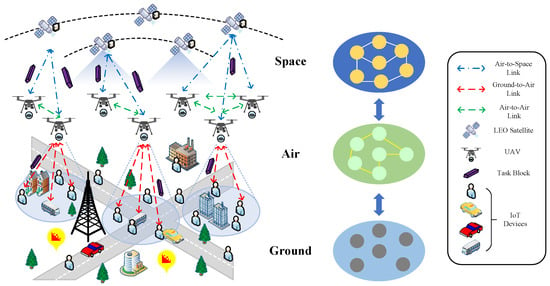
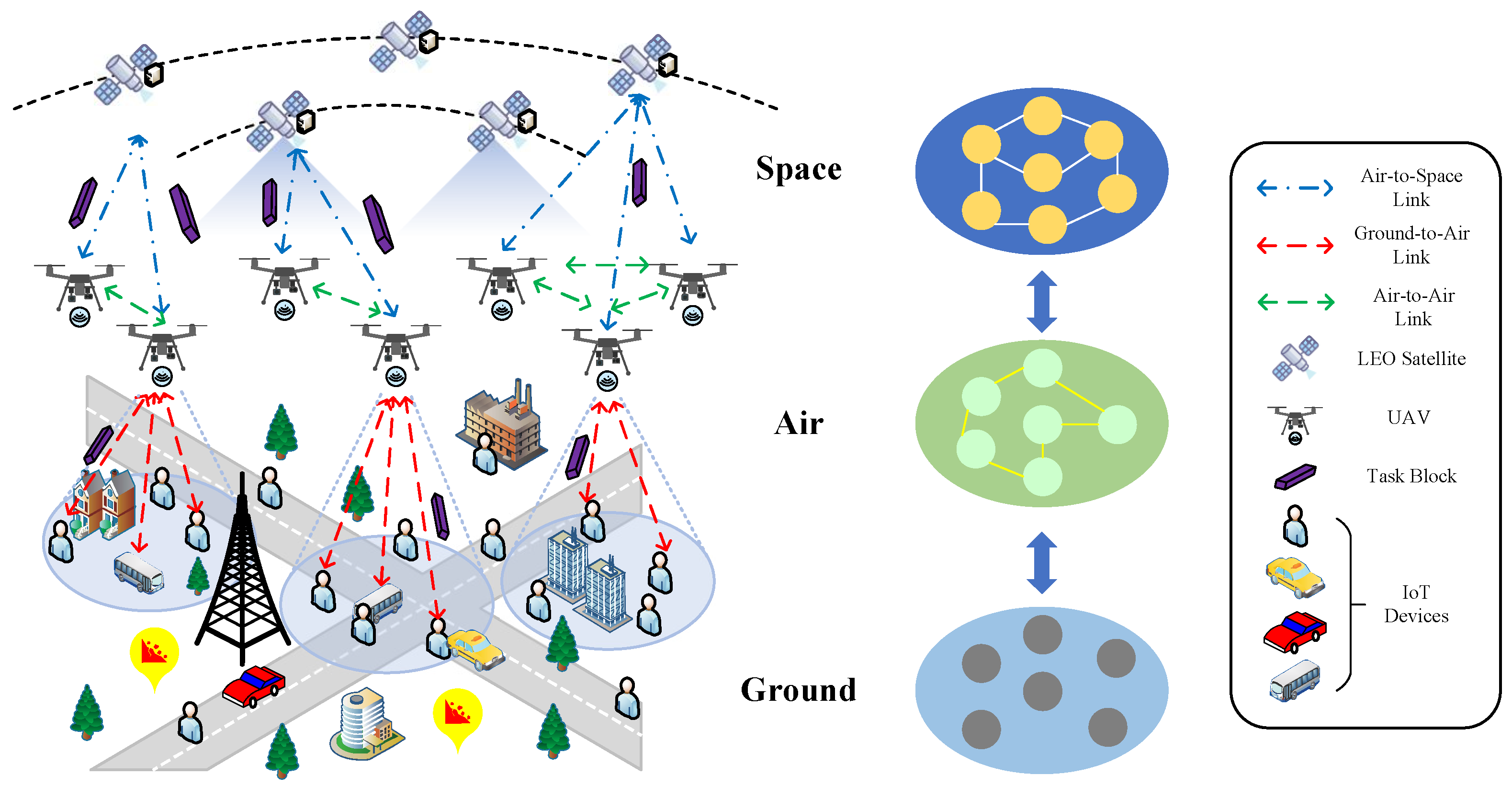
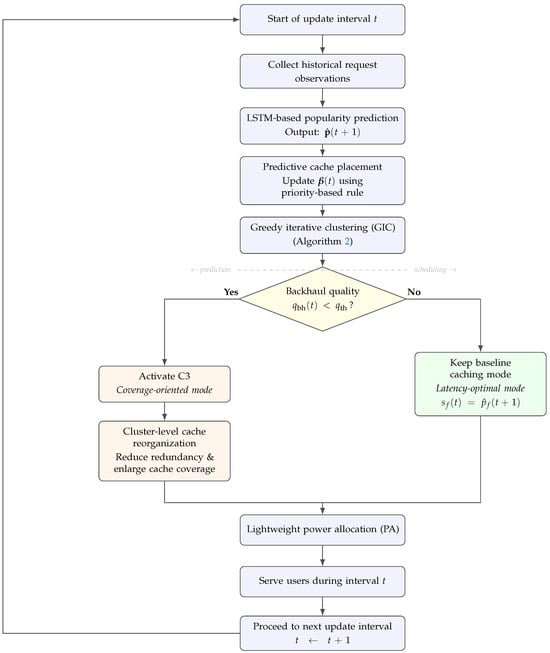
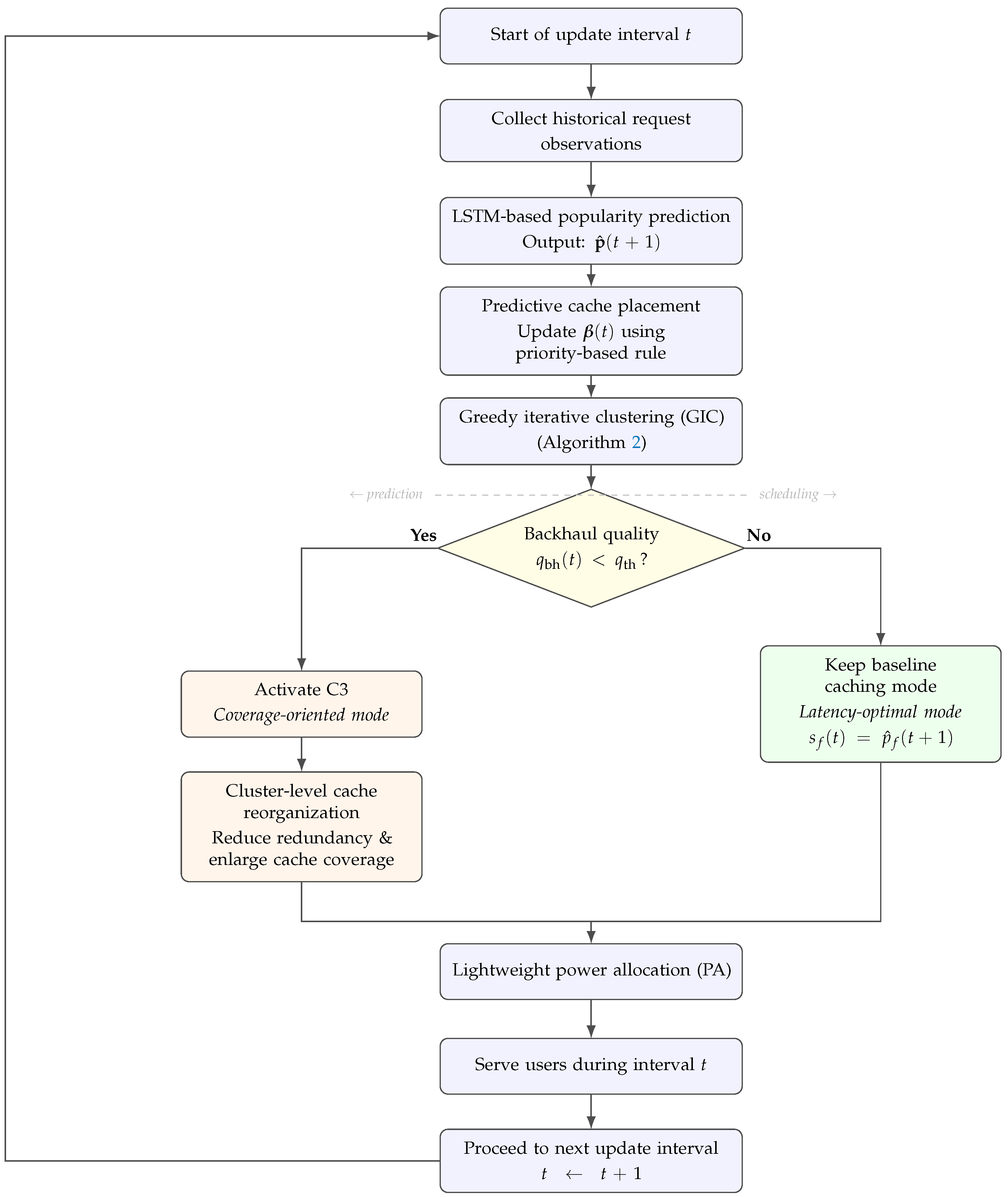
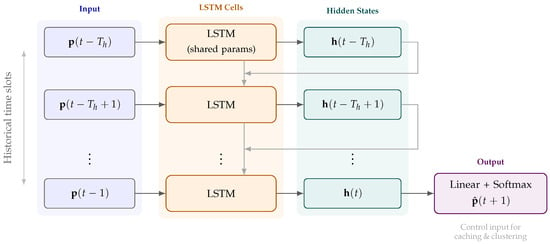
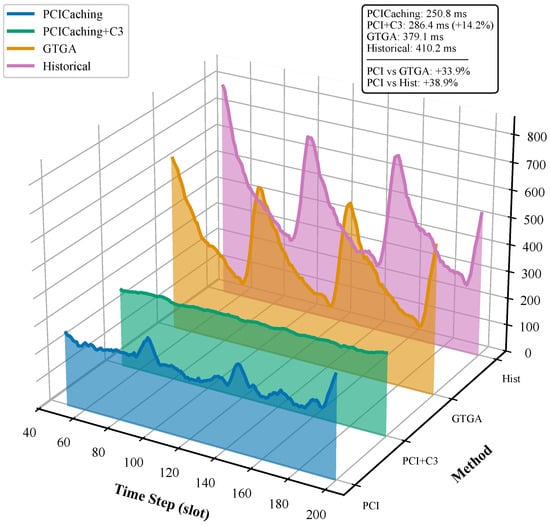
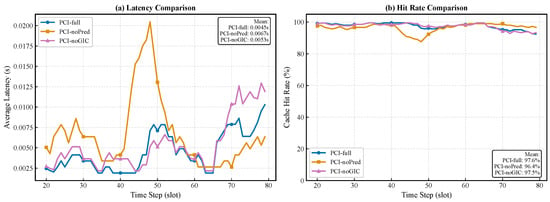
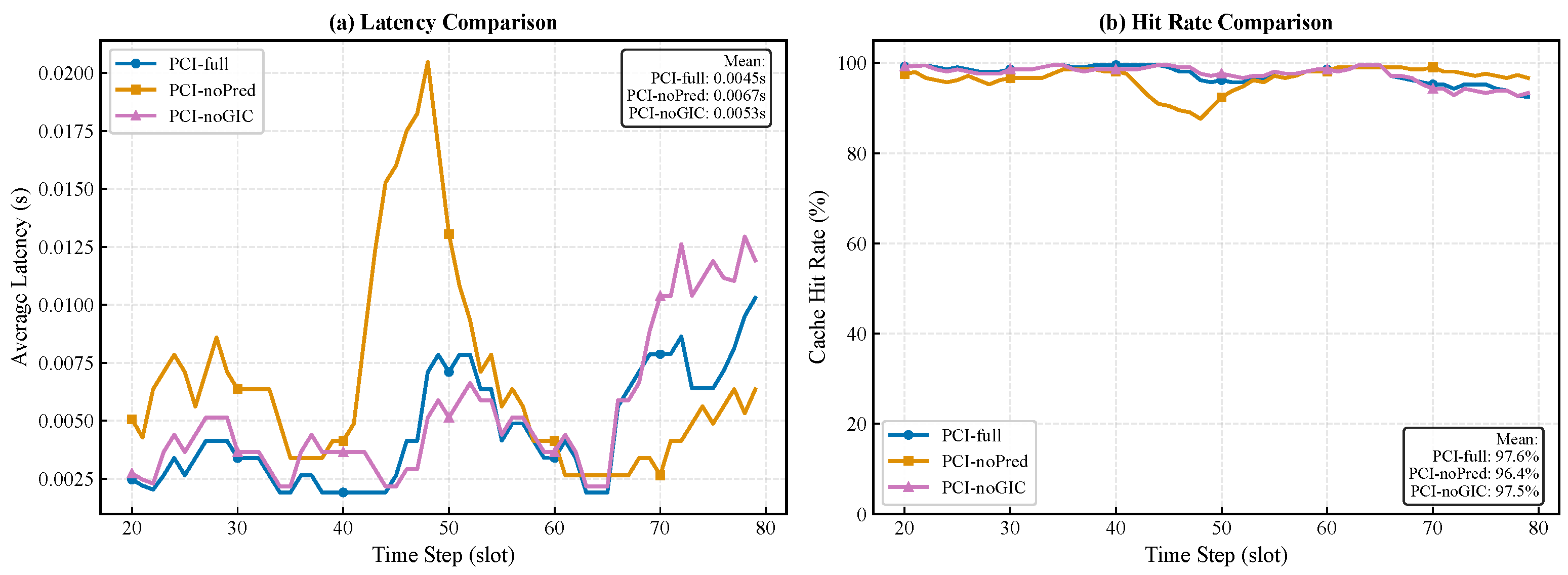
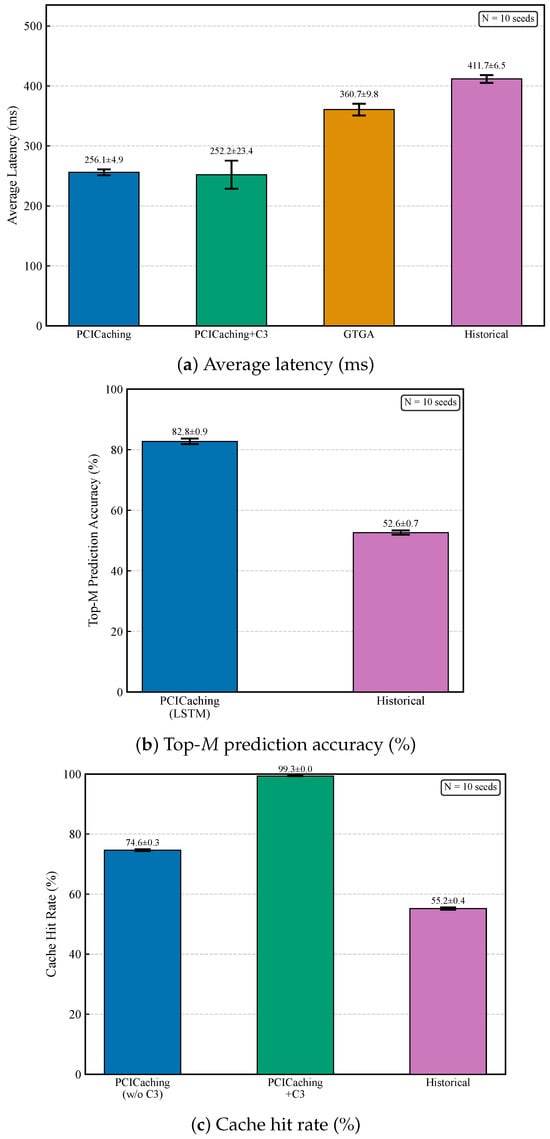
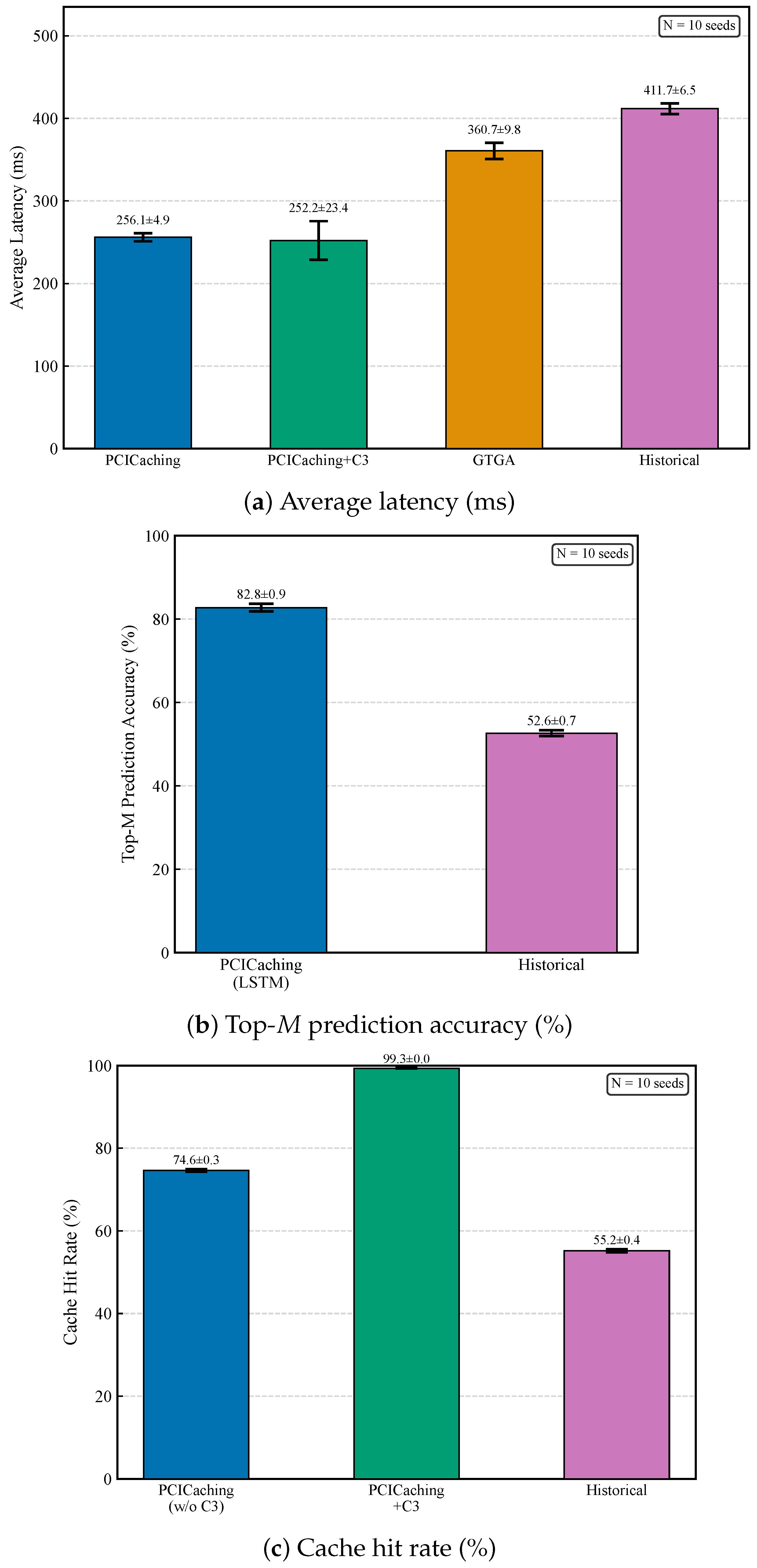
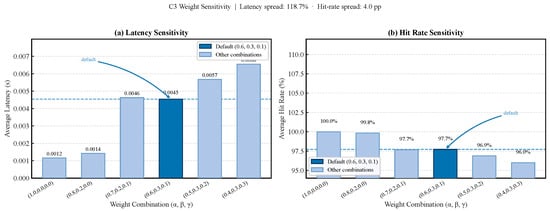
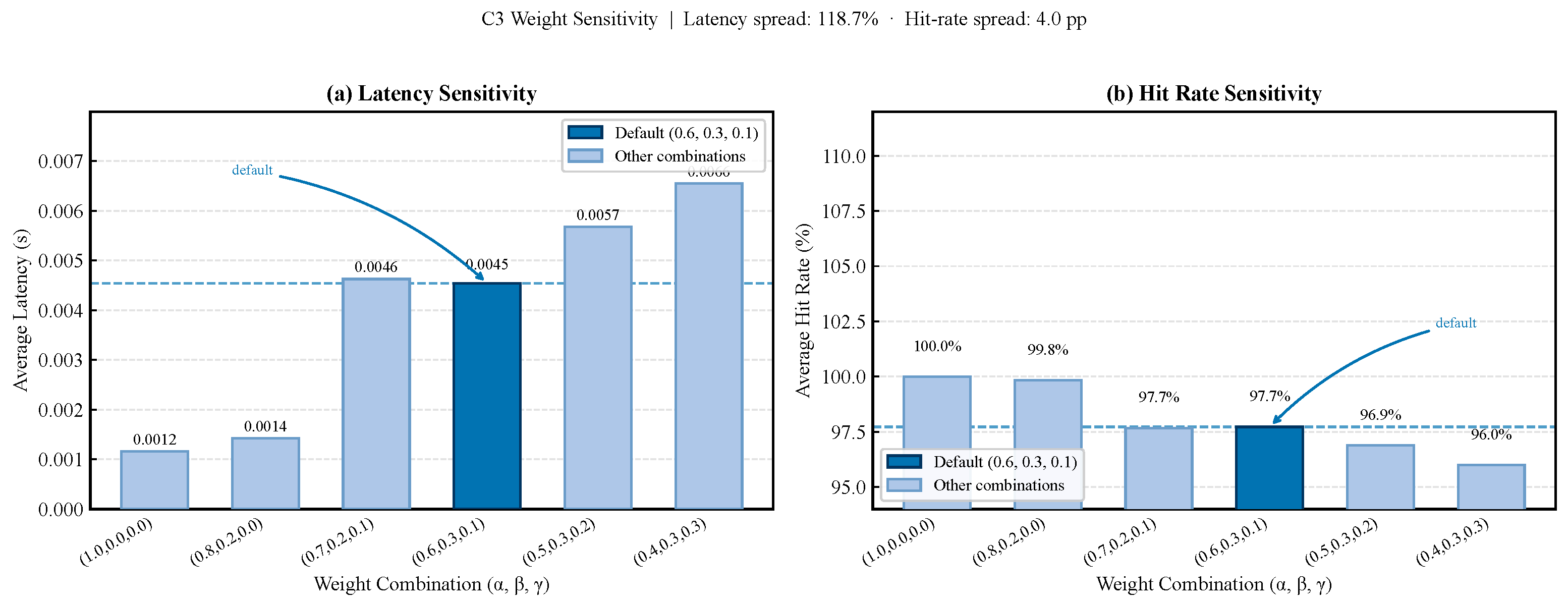
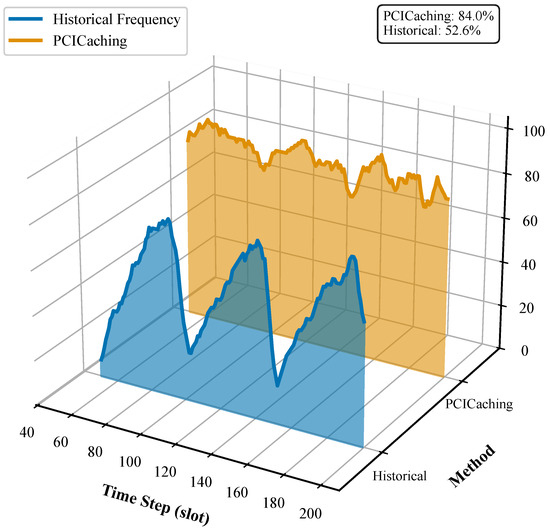
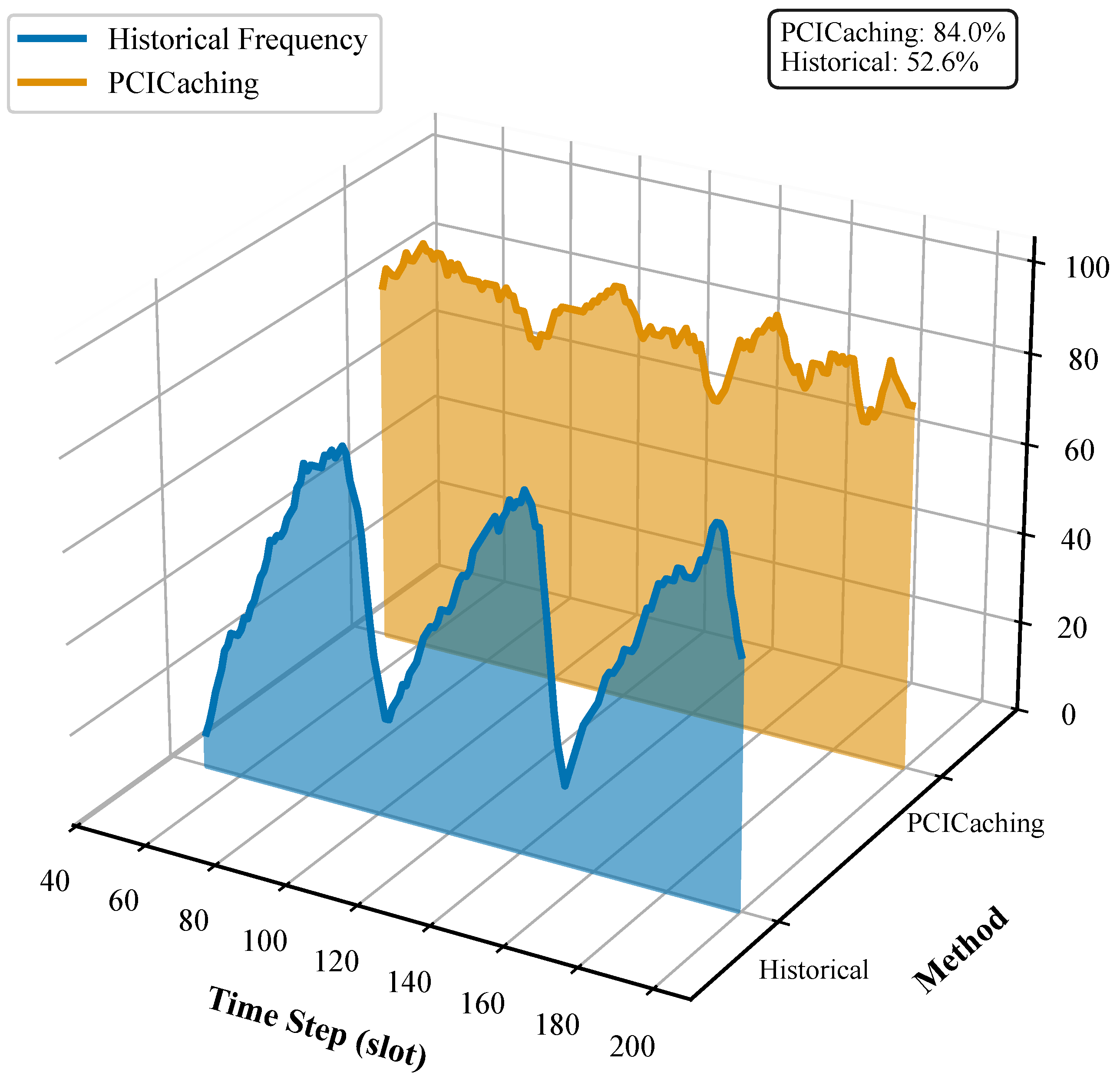
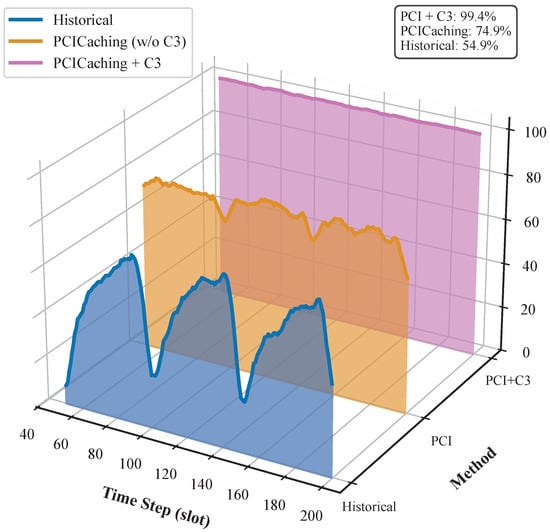
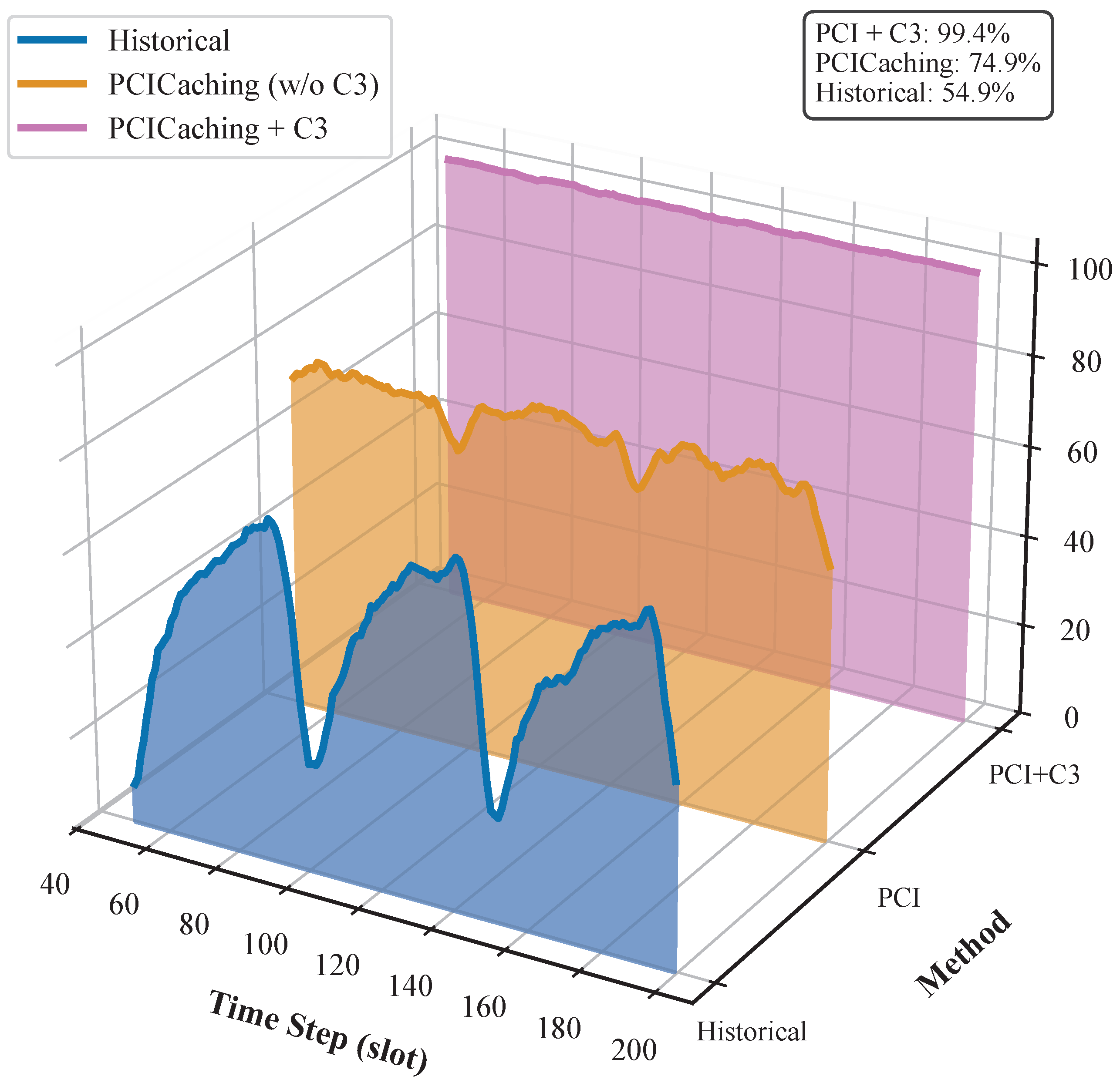
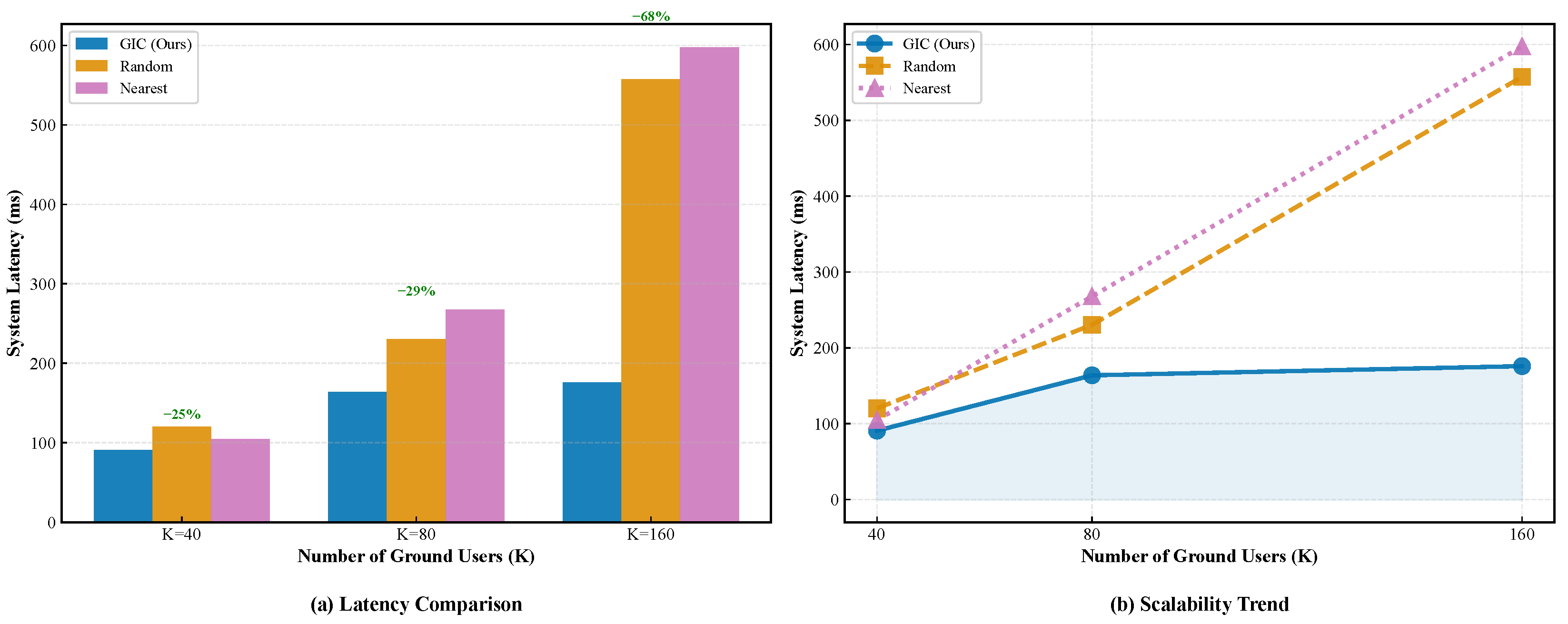
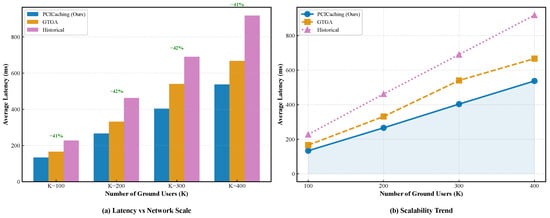
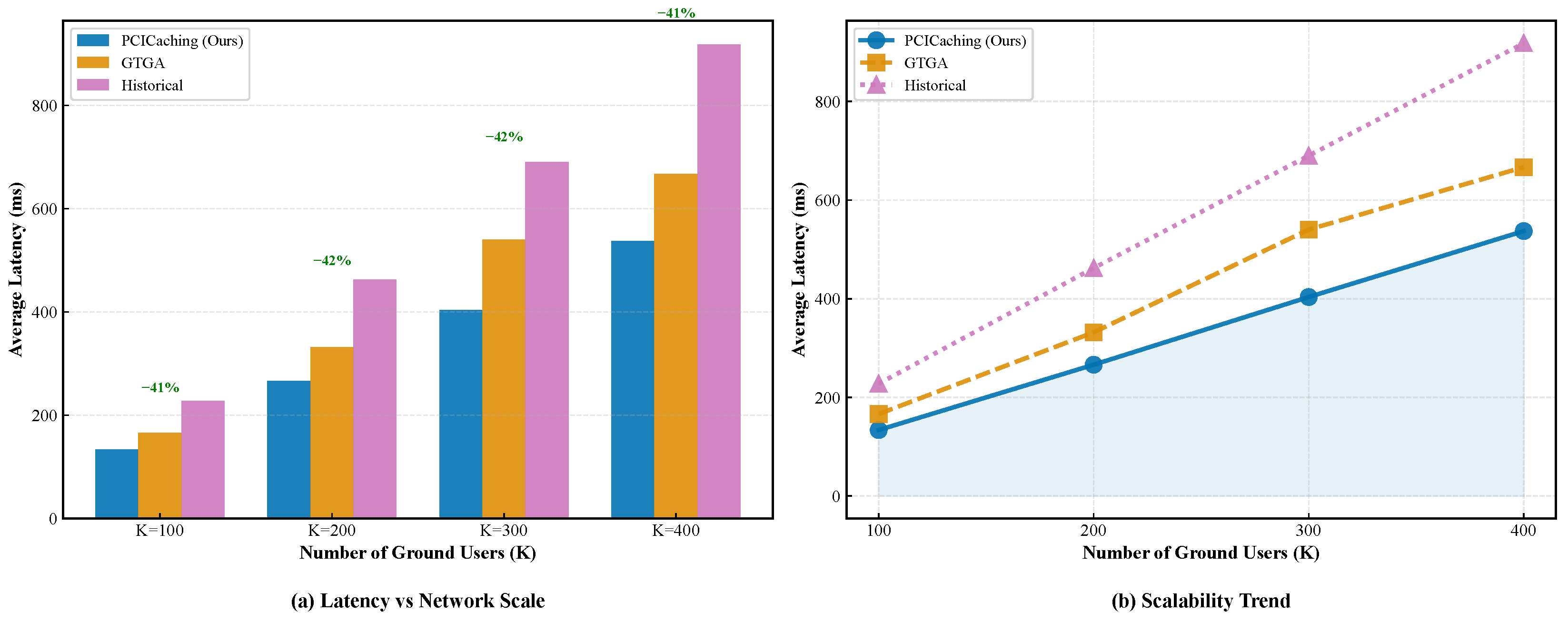
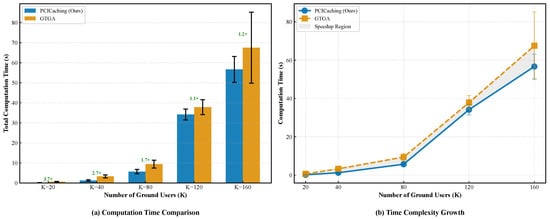
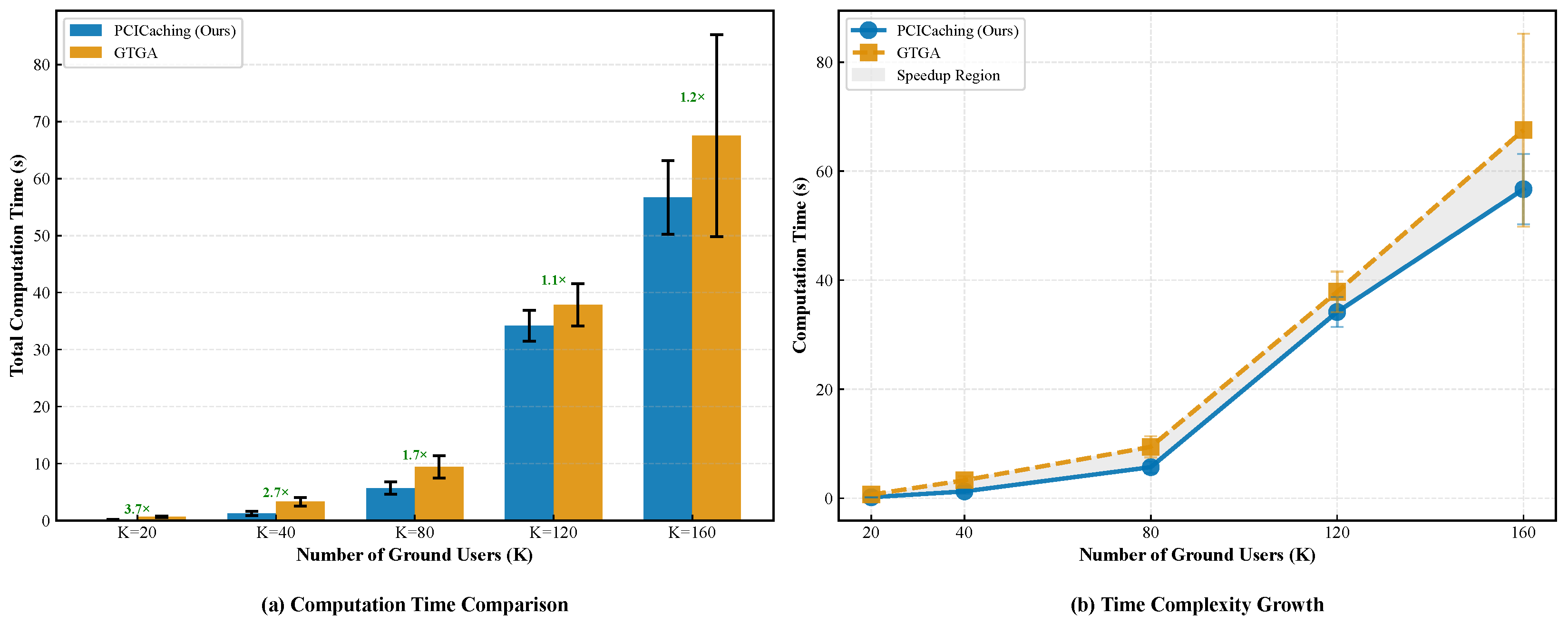
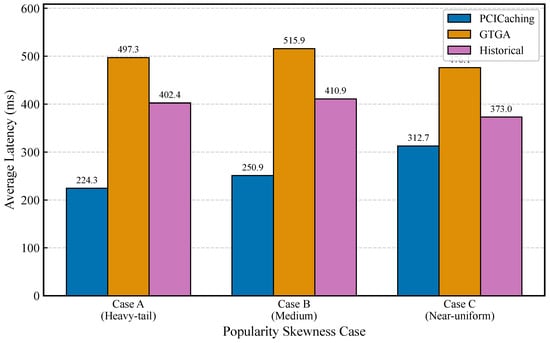
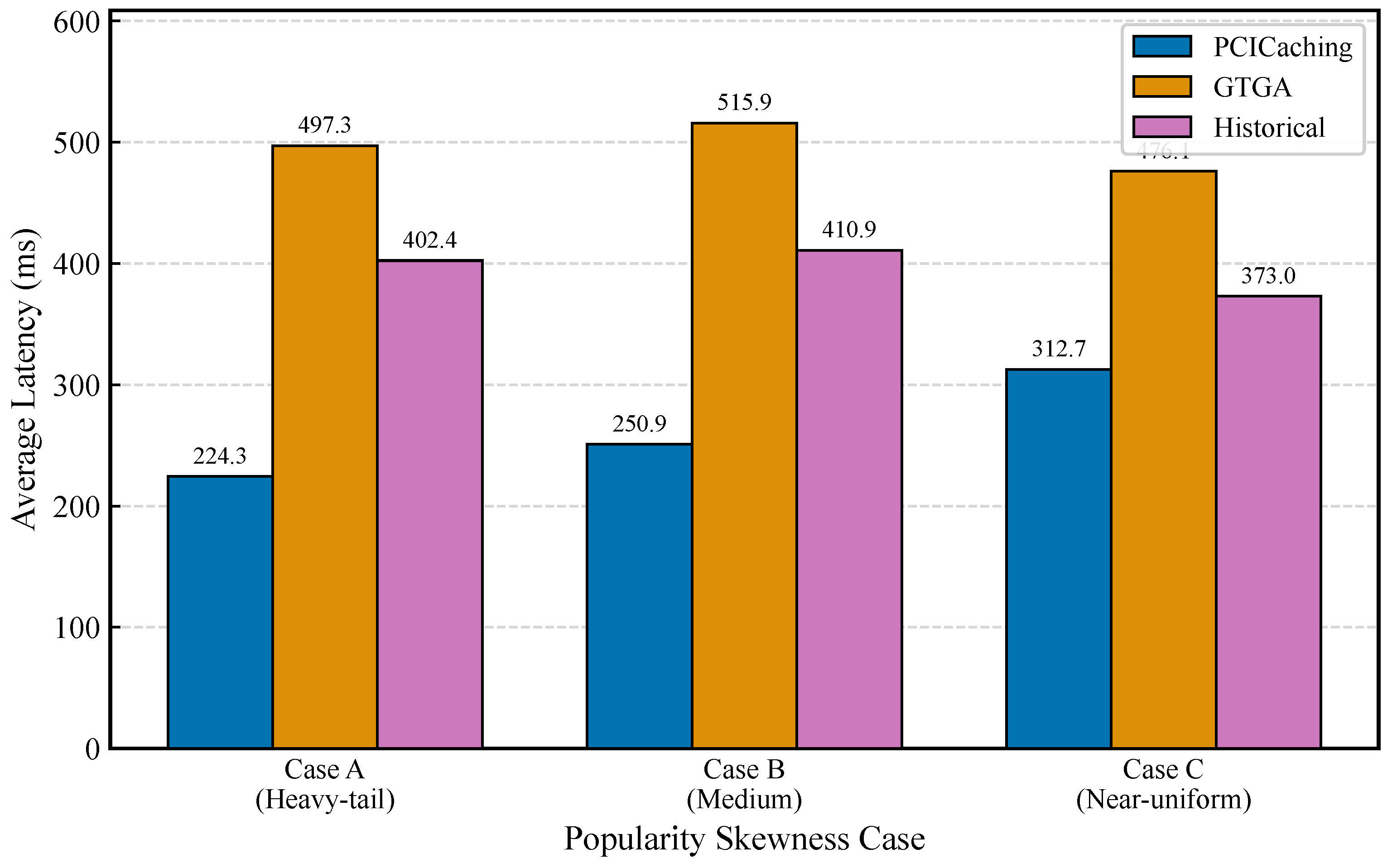
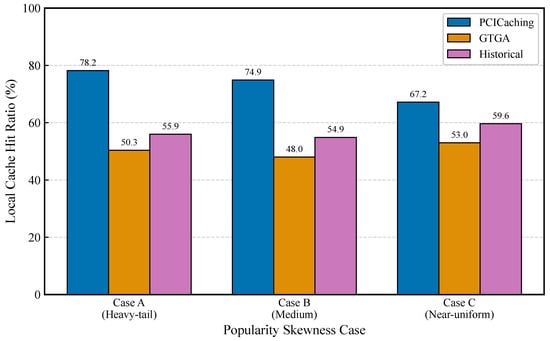
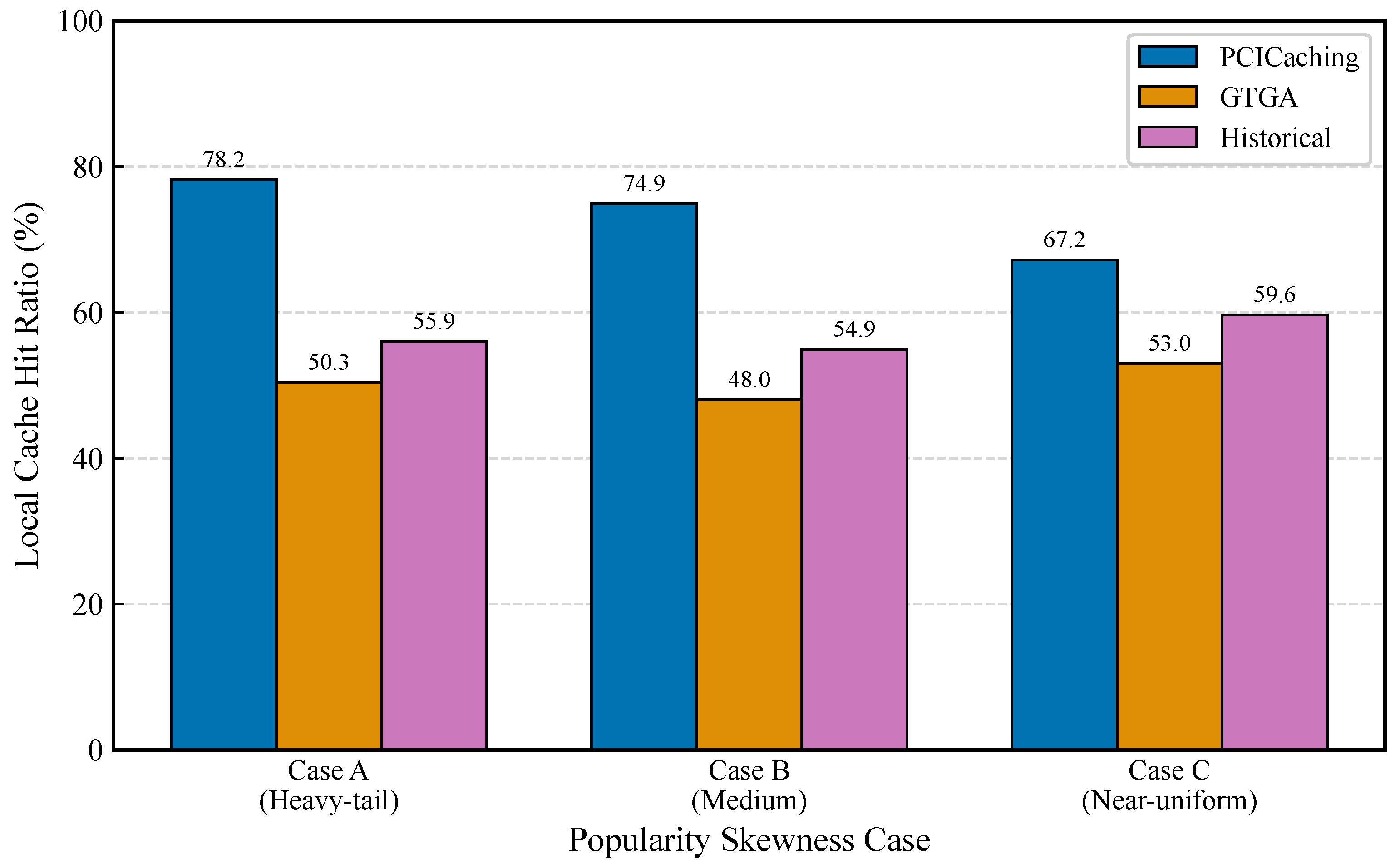
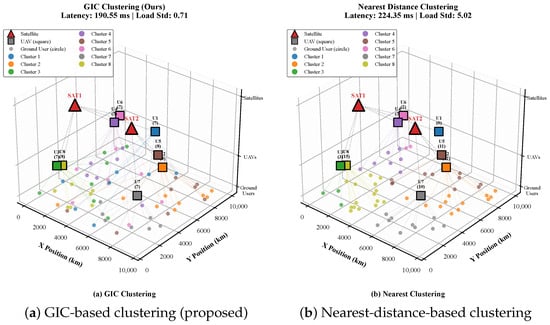
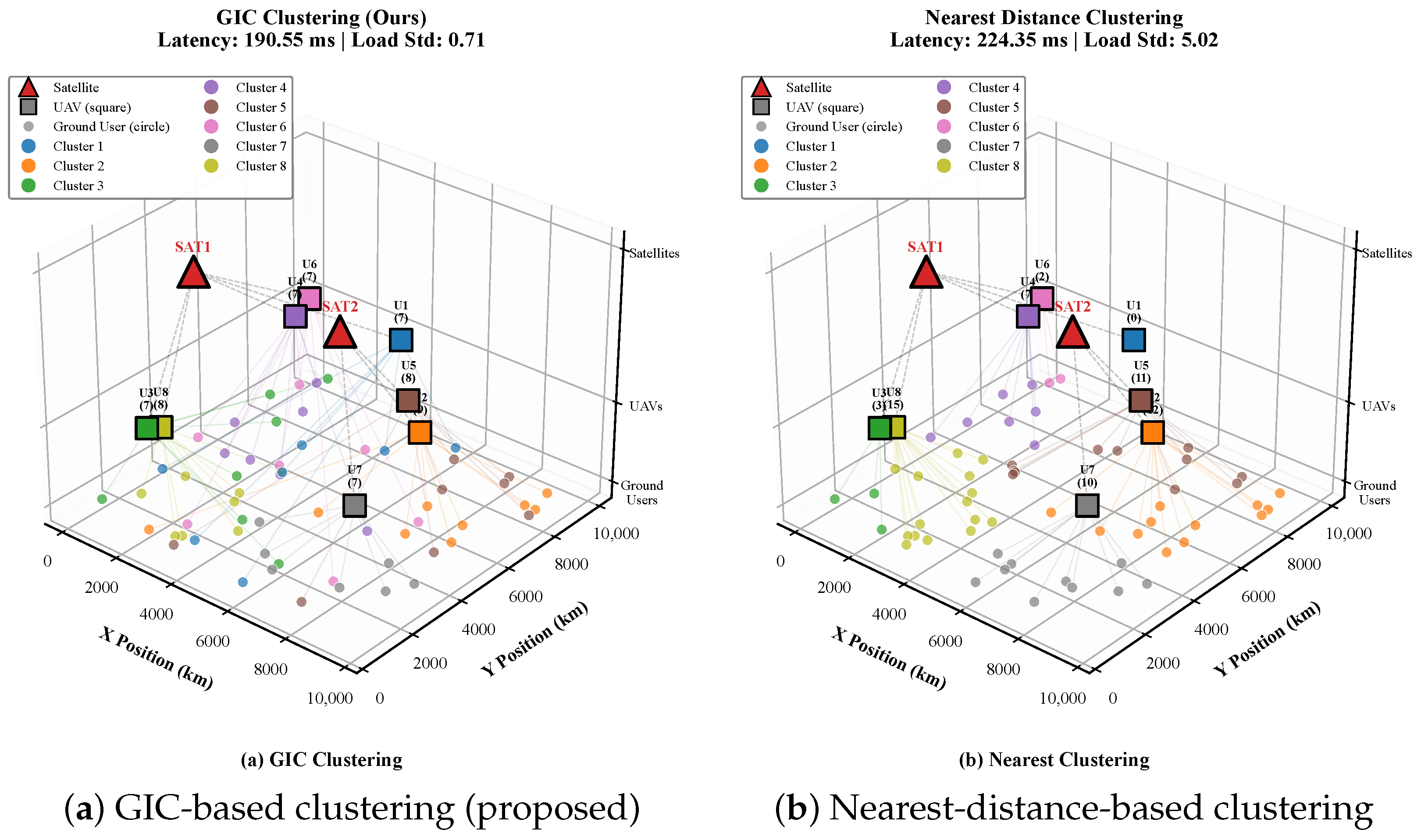

Disclaimer/Publisher’s Note: The statements, opinions and data contained in all publications are solely those of the individual author(s) and contributor(s) and not of MDPI and/or the editor(s). MDPI and/or the editor(s) disclaim responsibility for any injury to people or property resulting from any ideas, methods, instructions or products referred to in the content. |
© 2026 by the authors. Licensee MDPI, Basel, Switzerland. This article is an open access article distributed under the terms and conditions of the Creative Commons Attribution (CC BY) license.