


Abstract
Ensuring production safety and enabling rapid emergency response in complex industrial environments remains a critical challenge. Traditional inspection robots are often limited by perception delays when confronted with sudden dynamic threats. This paper presents a vision-driven dynamic digital twin system designed to enhance real-time monitoring and emergency management capabilities. The framework constructs high-fidelity 3D models using SolidWorks 2024, Scaniverse 5.0.0, and 3ds Max 2024, and integrates them into a unified digital twin environment via the Unity 3D engine. Its core contribution is a vision-driven dynamic mapping mechanism: robots operating on the Robot Operating System (ROS) and equipped with ZED stereo cameras and embedded YOLOv5m models perform real-time detection, such as personnel and fire sources. Recognized targets trigger the dynamic instantiation of corresponding virtual models from a pre-built library, enabling automated, real-time reconstruction within the digital twin. An integrated service platform further supports early warning, status monitoring, and maintenance functions. Experimental validation confirms that the system satisfies key performance metrics, including data collection completeness exceeding 99.99%, incident detection accuracy of 80%, and state synchronization latency below 90 milliseconds. The system improves the dynamic updating efficiency of digital twins and demonstrates strong potential for proactive safety assurance and efficient emergency response in dynamic industrial settings.
1. Introduction
With continuous progress in environmental perception, positioning, navigation, and control technologies, intelligent robots are being increasingly deployed for automated inspection and operational maintenance in industrial facilities [1]. Nevertheless, when facing frequent emergencies, such as unauthorized personnel intrusion, sudden fire outbreaks, or abnormal equipment states existing robotic systems often lack the capability for rapid perception and effective response, resulting in considerable safety risks due to delayed intervention. Moreover, the complex and hazardous nature of environments makes manual periodic inspections not only resource-intensive [2], but also ineffective in identifying and addressing sudden dynamic threats, owing to inherent limitations such as delayed reaction times and monitoring blind spots. Hence, the development of an emergency-oriented digital twin system, capable of real-time dynamic mapping of operational states, intelligent anomaly diagnosis, and prompt emergency intervention, presents substantial research value and engineering significance.
In current industrial practice, many facilities continue to depend on manual monitoring and handling of emergency incidents, leading to delayed responses and considerable safety hazards [3,4]. Thus, achieving real-time perception and rapid reaction to unforeseen events in industrial environments has emerged as a pressing challenge in smart manufacturing and industrial safety. Advances in inspection robotics and intelligent patrolling technologies are steadily replacing human labor in high-risk and repetitive tasks, representing a key trend in modern industrial automation [5,6,7]. Inspection robots designed for plant environments exhibit strong adaptability and multi-functional monitoring capabilities, enabling reliable detection of emergencies such as unauthorized intrusions, fires, and equipment anomalies. For vision-based inspection, accurately parsing complex scenes and preserving fine-grained details (e.g., equipment edges, texture patterns) are crucial for reliable anomaly diagnosis. Recent advances in frequency-aware semantic segmentation, particularly through frequency-domain decoupling and enhancement, have demonstrated strong capabilities in addressing these challenges. Representative works such as FDNet [8] and FreDNet [9] explicitly separate and refine high-frequency (edge, texture) and low-frequency (contextual structure) components, significantly improving segmentation accuracy and boundary consistency in high-resolution imagery. These approaches offer a promising technical pathway to enhance the visual perception module within robotic inspection systems, ensuring that the digital twin receives structurally faithful and semantically precise scene representations. Consequently, this paper focuses on factories as a typical application scenario within complex industrial environments, concentrating on their characteristic sudden operational conditions. It investigates the dynamic interaction mechanism between real-time data from inspection robots and digital twin systems, constructing a high-fidelity dynamic twin framework for emergency response. This aims to enhance the real-time and intelligent levels of factory safety operations and maintenance, providing technical support to advance industrial emergency management from reactive handling towards proactive early warning.
To overcome the latency and high-risk limitations inherent in manual inspection and emergency response within industrial facilities, recent research has focused on intelligent solutions based on the fusion of perception and decision-making. Abate [10] developed a multi-sensor fusion framework that enhances proactive safety management by continuously monitoring personnel physiological and behavioral data, enabling real-time identity verification and status assessment in dynamic operational environments. From a resource optimization perspective, Afrin et al. [11] formulated the scheduling of delay-sensitive and computation-intensive tasks in multi-robot systems as a constrained multi-objective optimization problem. Utilizing an improved NSGA-II algorithm, their approach simultaneously optimizes production span, energy consumption, and operational cost, thereby improving both the resource efficiency and real-time capability of emergency response systems. Mahmud et al. [12] addressed autonomous inspection in hazardous settings by devising a robot vision-based system capable of automated gauge reading, anomaly identification, and preliminary response to incidents such as gas leaks, which reduces dependence on risky human intervention. Furthermore, Anupriya et al. [13] combined IoT with machine learning to establish an intelligent security system that supports real-time data acquisition, anomaly detection, and predictive maintenance, leveraging cloud-based coordination and automated alerts for early hazard warning and rapid mitigation. In summary, current research reflects an evolution from passive monitoring toward active perception, and from isolated control to collaborative decision-making, laying a crucial theoretical and technological foundation for developing next-generation emergency management systems in smart factories.
While current research has progressed from passive monitoring to active perception, and from isolated control to collaborative decision-making, a critical gap remains in achieving seamless real-time alerting, reporting, and monitoring following perceptual recognition. To address this limitation, this paper proposes a robot vision-based dynamic digital twin system tailored for emergency management in industrial settings. At its core, a high-fidelity virtual environment is constructed using the Unity3D 2022 engine, with real-time data transmission and model-driven operations enabled through Socket communication. On the perceptual front, ZED stereo cameras combined with deep-learning models perform simultaneous detection of dynamic targets and acquisition of their 3D spatial coordinates. Leveraging a pre-configured library of virtual 3D object models, the system subsequently achieves rapid identification of unforeseen targets and enables dynamic twin modeling. This integrated framework significantly enhances real-time situational awareness and response effectiveness in emergent factory scenarios.
The main research content and contributions of this paper are as follows:
(1) This work proposes a vision-driven closed-loop digital twin architecture for emergency management, addressing the gap in end-to-end seamless integration from perception to response.
Unlike standard digital twin pipelines focused on visualization or offline simulation, this framework defines a complete “perception-mapping-simulation-early warning” closed-loop system. Its core methodological innovation lies in autonomously driving the generation and state updates of high-fidelity virtual models within Unity through real-time data mapping via Socket communication. This process utilizes dynamic targets and their 3D coordinates identified by stereo vision, thereby establishing genuine real-time causal relationships between physical events and digital twins. This architecture effectively bridges the “information silos” commonly found between perception systems and monitoring systems in existing research, enabling a seamless pipeline from anomaly detection to virtual recreation to decision support.
(2) Designed a rapid dynamic twin construction method based on a prefabricated model library.
To enable the “dynamic” capability of the aforementioned architecture, we propose a systematic approach based on a semantic pre-fabricated emergency model library. This library pre-associates typical emergency events with corresponding reusable 3D models and behavioral rules. When the visual system detects an anomaly, this method instantly retrieves and instantiates the correct virtual object from the library—without manual intervention—and registers it to the real-world 3D location. This approach surpasses static or preconfigured digital twin models, resolving latency bottlenecks in emergency response caused by delays in model creation and scene adaptation.
(3) We developed and quantitatively evaluated an integrated emergency digital twin prototype system, validating the framework’s effectiveness.
Based on the aforementioned architecture and methodology, we implemented a complete system prototype integrating real-time early warning, 3D situational monitoring, and interactive capabilities. Through designed experiments, we comprehensively evaluated the system’s performance across key metrics including target detection accuracy, end-to-end information transmission latency, and virtual scene synchronization fidelity. This demonstrated the feasibility and effectiveness of this vision-driven digital twin solution in enhancing factory emergency response speed and situational awareness capabilities.
2. Architecture of a Dynamic Digital Twin System for Inspection Robot
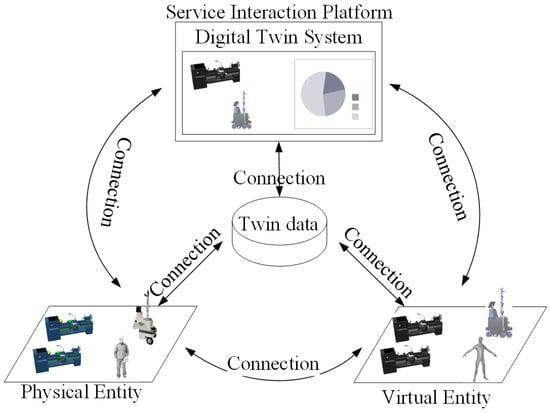
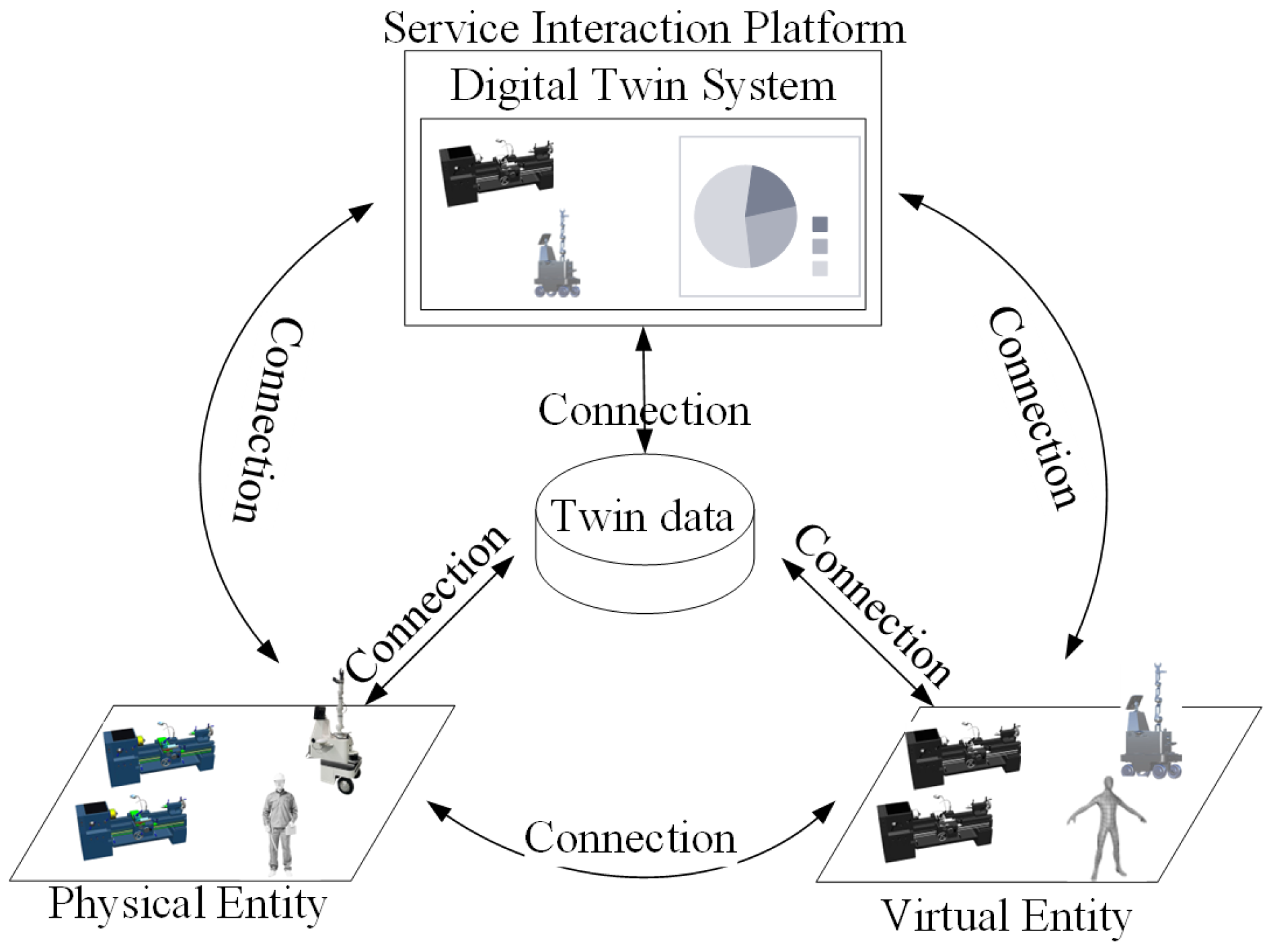
To meet the demands of emergency management in industrial settings, this paper proposes and develops a dynamic digital twin system founded on inspection robotics and digital twin technology. The system employs sensor-equipped inspection robots—featuring devices such as ZED depth cameras—as core perceptual nodes to enable real-time monitoring and rapid alerting for sudden incidents within the factory environment. This section constructs the overall system architecture based on the theoretical foundation of the classic five-dimensional digital twin model proposed by Professor Tao et al. [14,15]. This model deconstructs the digital twin system into five core dimensions: physical entities, virtual models, twin data, services, and connections, providing a clear logical hierarchy for system design, as illustrated in the Figure 1.
Figure 1.
Overall Architecture Diagram of the Inspection Robot Dynamic Twin System.
However, to meet the specific requirements for real-time perception and dynamic response to emergencies in industrial environments, this paper conducts a detailed analysis of each component while adhering to the overall framework of the model, as follows:
(1) Physical entities: From static assets to an active, dynamic collection of sensing capabilities
Physical entities in classical models typically refer to known, static, or quasi-static assets in industrial settings. The core innovation of this system lies in introducing inspection robots as mobile sensing units. Equipped with a stereoscopic vision system, the robot transforms from a passive mapping object into an intelligent sensing entity capable of actively detecting, tracking, and locating sudden dynamic targets (such as intruders or unexpected fire sources). This shift establishes the data foundation for real-time dynamic digital twins at the physical level.
(2) Virtual Models: From pre-set models to a dynamic resource library that can be activated on demand
Traditional digital twin virtual models are predominantly high-fidelity replicas of known physical entities, primarily used for design verification or condition monitoring. This system introduces a critical extension for emergency scenarios: a “prefabricated, semantically linked dynamic model library.” Beyond static factory environment models, this library pre-constructs virtual prototypes of typical emergency targets (e.g., personnel, flames) along with their behavioral logic. When the perception system detects anomalies, corresponding virtual models can be instantly retrieved, instantiated, and precisely registered within the 3D scene.
(3) Twin Data: From Multi-source Heterogeneous Data to Real-time Visual Streams as the Core Driving Force
The twin data layer within the five-dimensional model encapsulates all relevant data. This system explicitly establishes “real-time visual perception stream data” as the core data source driving the dynamic evolution of the digital twin. This data directly triggers the generation and updating of corresponding model states within the virtual world, serving as the key enabler for the twin’s “dynamic nature.”
(4) Services: From general-purpose functional modules to a closed-loop emergency service chain triggered by perception
The digital twin system proposed in this paper centers on real-time early warning services. Its alert mechanism is not triggered by manual queries but is automatically and instantaneously activated by anomaly detection data within the twin data layer. This triggers synchronized updates to virtual scenarios and physical alarm devices. This mechanism elevates the service model from passive response to proactive intervention, serving as the core foundation for the system’s autonomous emergency response capabilities.
(5) Connectivity: From Universal Interconnect to Dedicated Channels Ensuring Visual-Twin Synchronization
Connectivity serves as the foundation for achieving synergy across all dimensions. This paper implements semantic stream synchronization between real-time perception modules in the Robot Operating System (ROS) and the Unity3D virtual engine through customized bridging middleware based on socket communication. This channel ensures real-time consistency between physical events and virtual mappings, thereby enabling authentic dynamic interactions.
To implement a real-time monitoring and dynamic digital twin system for emergency management, the system requires the following core functional capabilities:
(1) High-Fidelity Virtual Scene Construction and Dynamic Asset Integration. A virtual 3D environment corresponding to the physical layout is established within the Unity3D engine, incorporating models of inspection robots and critical equipment. A configurable library of digital assets—representing typical emergency scenarios such as unauthorized personnel intrusion, fire detection, and equipment abnormality—enables rapid scene composition and real-time mapping of emergent situations.
(2) Real-Time Communication and Efficient transmission of sensor data. A low-latency, high-reliability data transmission network is constructed. Using multi-modal sensors deployed on inspection robots—including ZED depth cameras—the system achieves continuous environmental perception and efficient monitoring of plant conditions and emergency events.
(3) Intelligent Analysis and Visualized Early-Warning Platform. The YOLOv5m model is used for real-time visual recognition and anomaly detection. Identified objects and events are dynamically registered within the virtual scene via the digital twin interface, triggering synchronous early-warning and alert mechanisms to support data-driven, visualized emergency response.
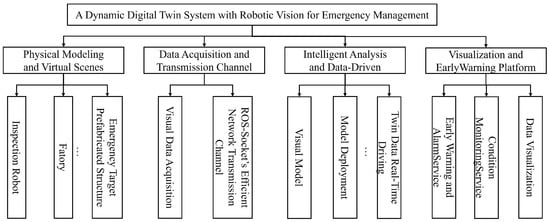
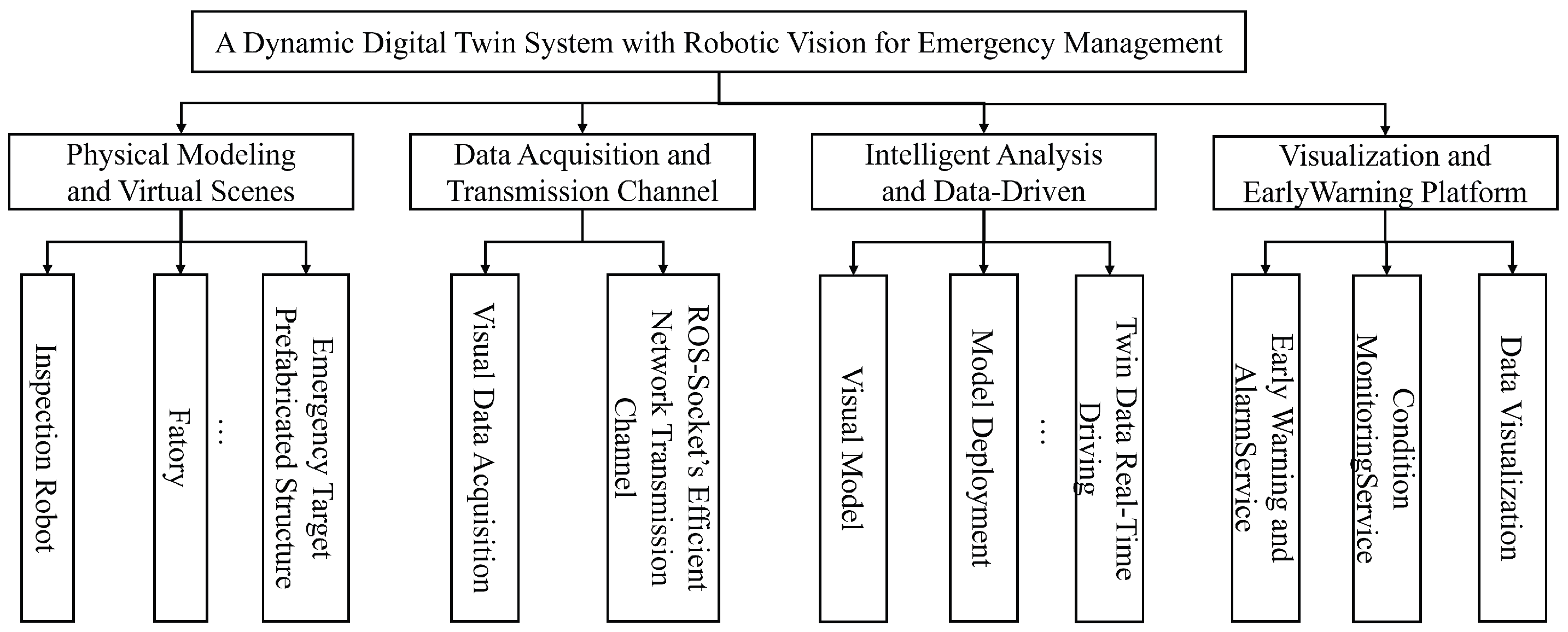
Guided by these functional requirements, this paper adopts a modular design approach, organizing the system into four core modules: physical entity modeling and virtual scene construction; data acquisition and transmission channels; intelligent analysis and data-driven processing; and visualization and early-warning platform integration. The functional architecture of the system is presented in Figure 2.
Figure 2.
System Functional Architecture Diagram.
3. Physical Entity Modelling and Virtual Scene Construction
3.1. Physical Entity Modelling
3.1.1. Establishing a 3D Model of the Inspection Robot
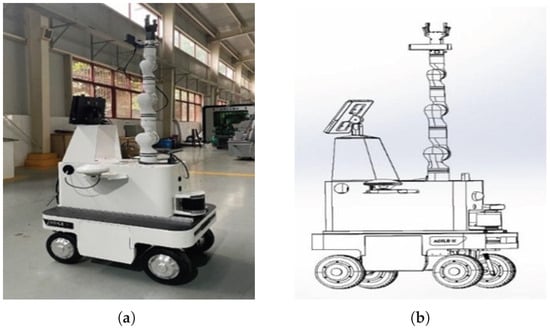
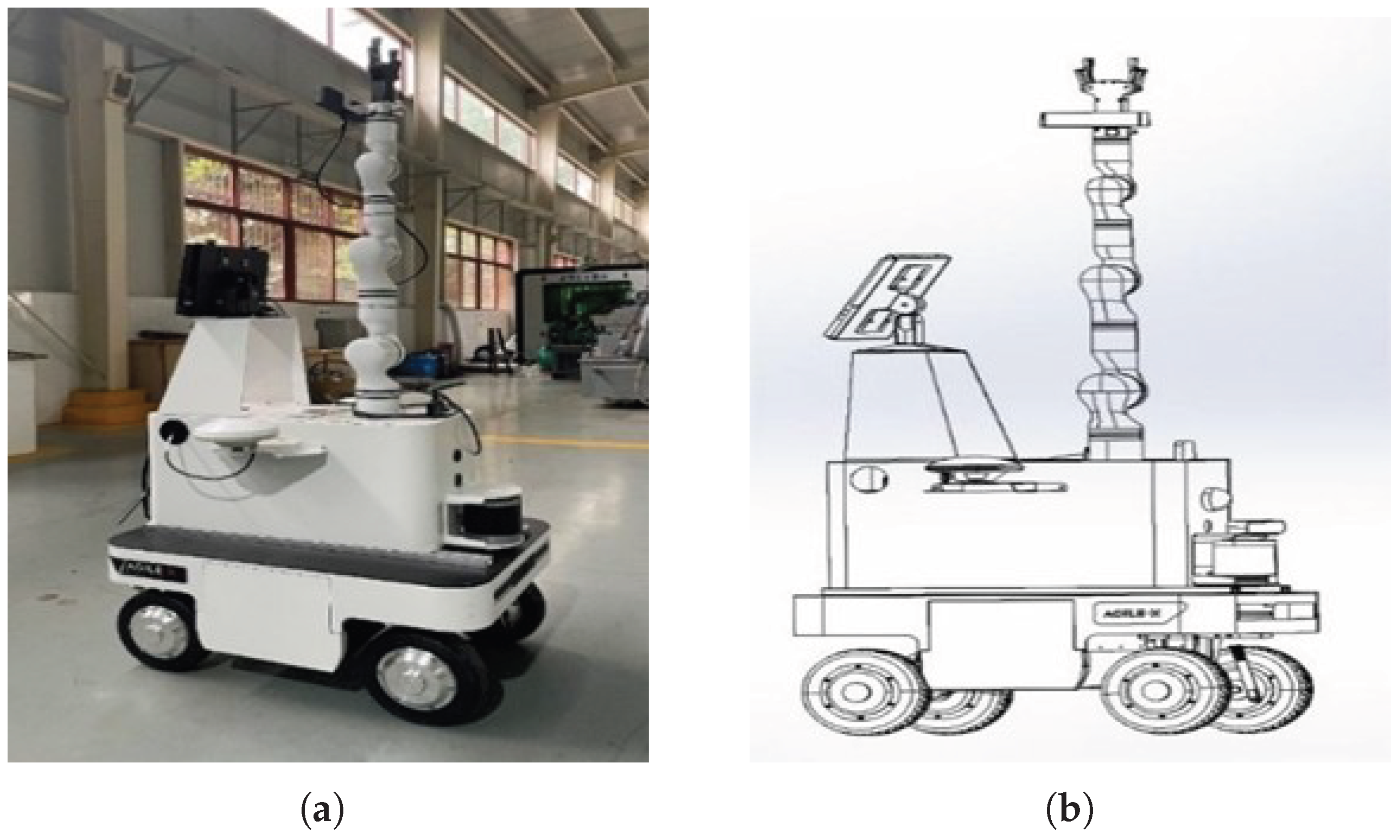
To fulfill the requirements for real-time situational awareness and rapid intervention in emergency management, this research specifically designs a multi-sensor inspection robot. The robotic platform integrates a chassis, main body, manipulator, and multiple environmental sensing units, with its physical assembly shown in Figure 3a. It is equipped with a ZED stereo depth camera and temperature, humidity sensors, allowing high-precision, real-time monitoring of typical emergency scenarios such as unauthorized personnel intrusion, abnormal flames, and abrupt environmental parameter variations. As illustrated in Figure 3a, the robot achieves a compact integration of functional modules through precisely designed structural components, ensuring reliable operation in complex industrial settings. To establish a corresponding digital twin model, the inspection robot was virtually reconstructed in three dimensions using SolidWorks, as presented in Figure 3b.
Figure 3.
Physical Inspection Robot and 3D Model Diagram. (a) Inspection Robot. (b) 3D Model of Inspection Robot.
3.1.2. Establishing 3D Models of the Factory and Its Large-Scale Internal Equipment
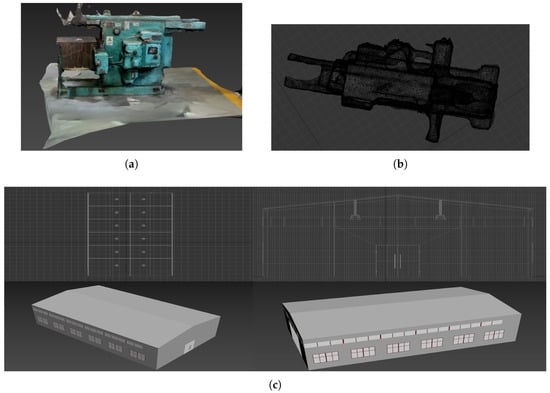
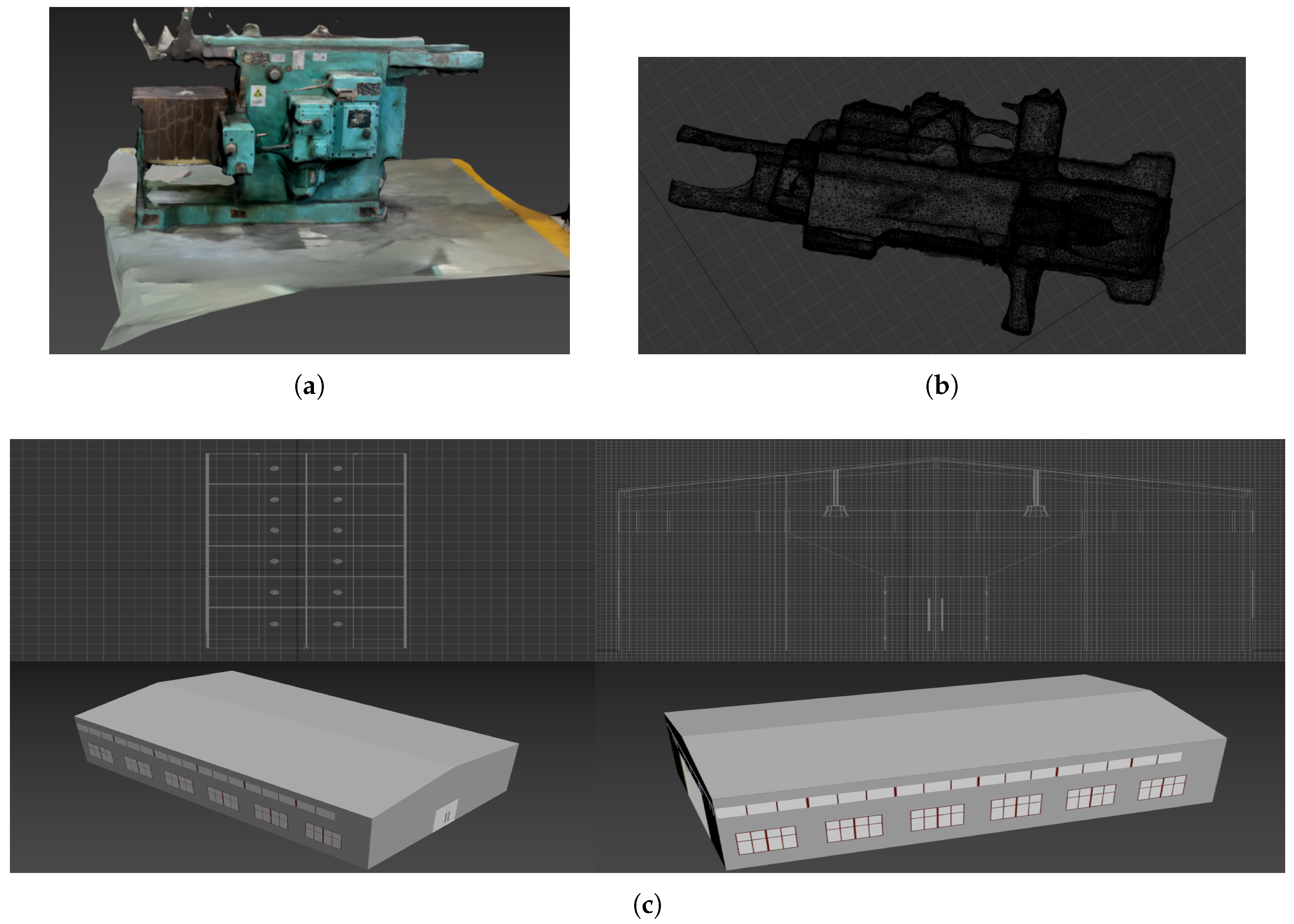
To validate the perception and response capabilities of the proposed system under realistic industrial conditions, a metalworking workshop was selected as a representative simulation environment. A high-fidelity digital replica of the workshop was developed using 3ds Max. For large-scale equipment with complex geometries, 360°-surround scanning was performed using Scaniverse 5.0.0 software along with visual acquisition devices, ensuring geometric accuracy while improving modeling efficiency. This approach is particularly suitable for emergency simulation scenarios that prioritize real-time performance and usability over extreme precision. The resulting rendered 3D model is shown in Figure 4a.
Figure 4.
Workshop and Equipment Models Diagram. (a) Scaniverse 5.0.0 Software Modelling. (b) Equipment Model Conversion. (c) Workshop 3D Model.
To further enhance system performance, polygon optimization techniques were applied to both the workshop and equipment models, reducing polygon counts and computational overhead. This optimization maintains visual fidelity while significantly lowering rendering and interaction latency, thereby supporting smoother real-time operation within the digital twin environment.
3.1.3. Establish a Prefabricated Component Model Library for Factory Contingency Scenarios
In complex and high-risk industrial environments, traditional safety monitoring relies mainly on manual periodic inspections [16], which often fail to account for unpredictable emergencies and introduce monitoring blind spots, thereby exposing personnel to significant safety hazards. To address these limitations, this paper leverages digital twin technology to establish a prefabricated asset library specifically designed for typical emergency scenarios, enabling the twin system to achieve real-time situational awareness and rapid early warning of abnormal events.
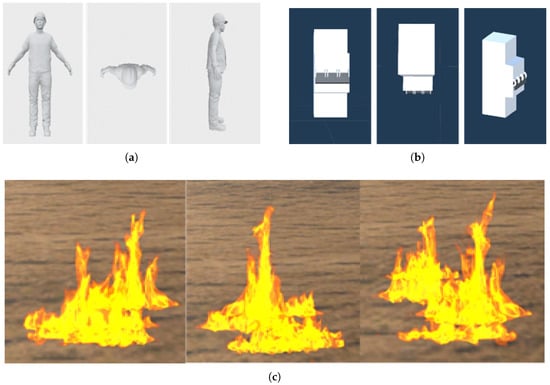
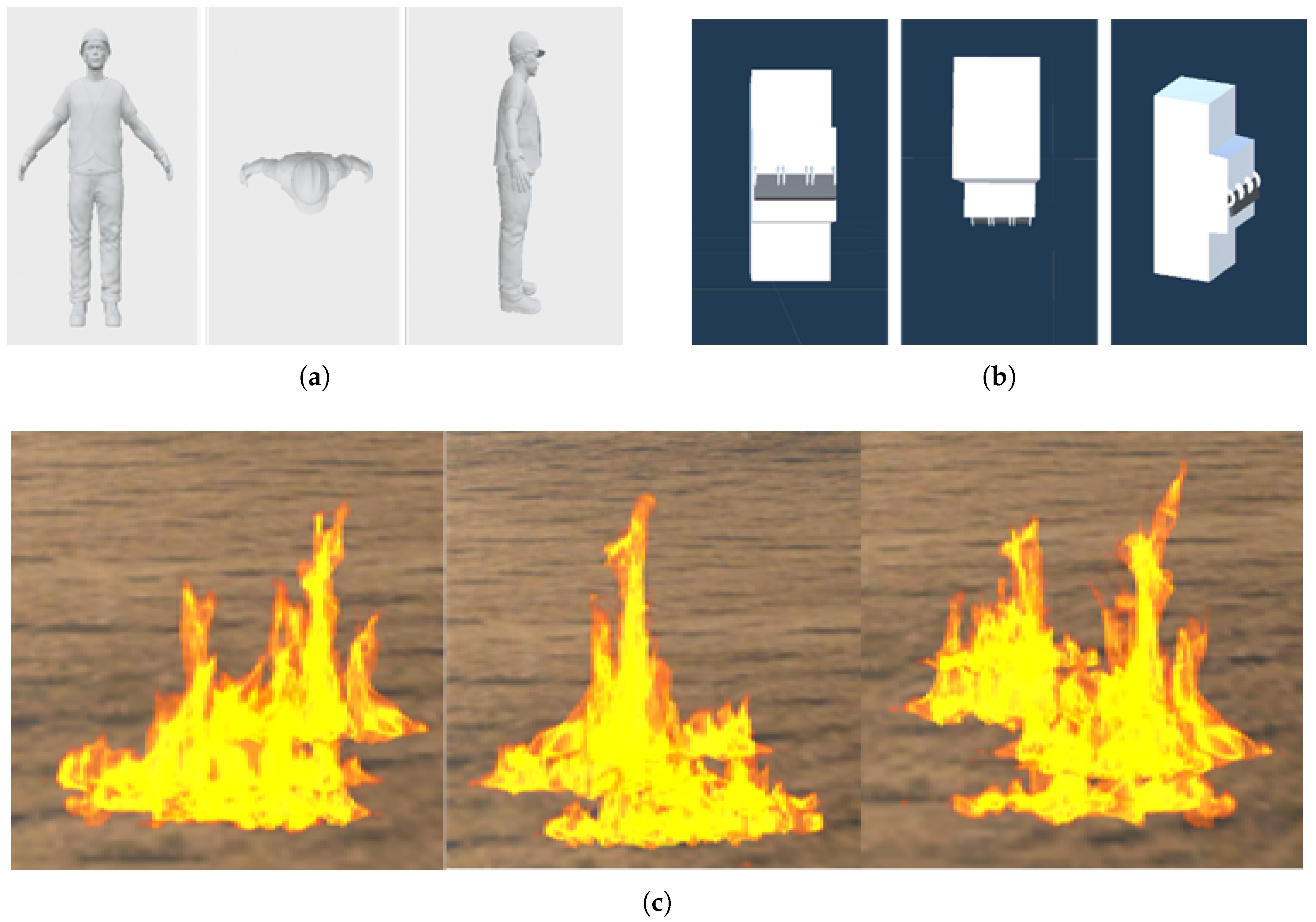
Emergencies predominantly occur within designated hazardous zones, with common scenarios including unauthorized personnel intrusion [17], abnormal equipment status [18] (e.g., Air circuit breaker), and fire outbreaks [19]. To enable accurate mapping and dynamic response of physical entities within the digital twin, a prefabricated model library was developed in the Unity3D environment, incorporating key objects such as human figures, electrical switch states, and flame effects. Representative models from this library are illustrated in Figure 5.
Figure 5.
Prefabricated Asset Library Diagram. (a) Person. (b) Air circuit breaker. (c) Fire.
3.2. Establishing a Digital Twin Scenario for Factory Emergency Management
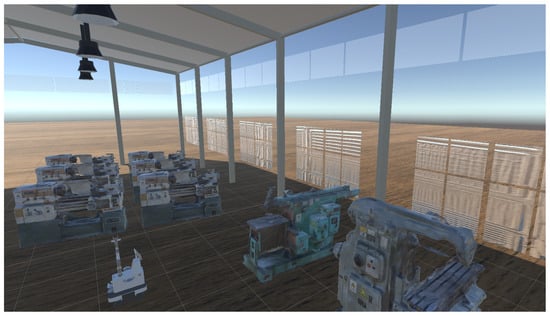
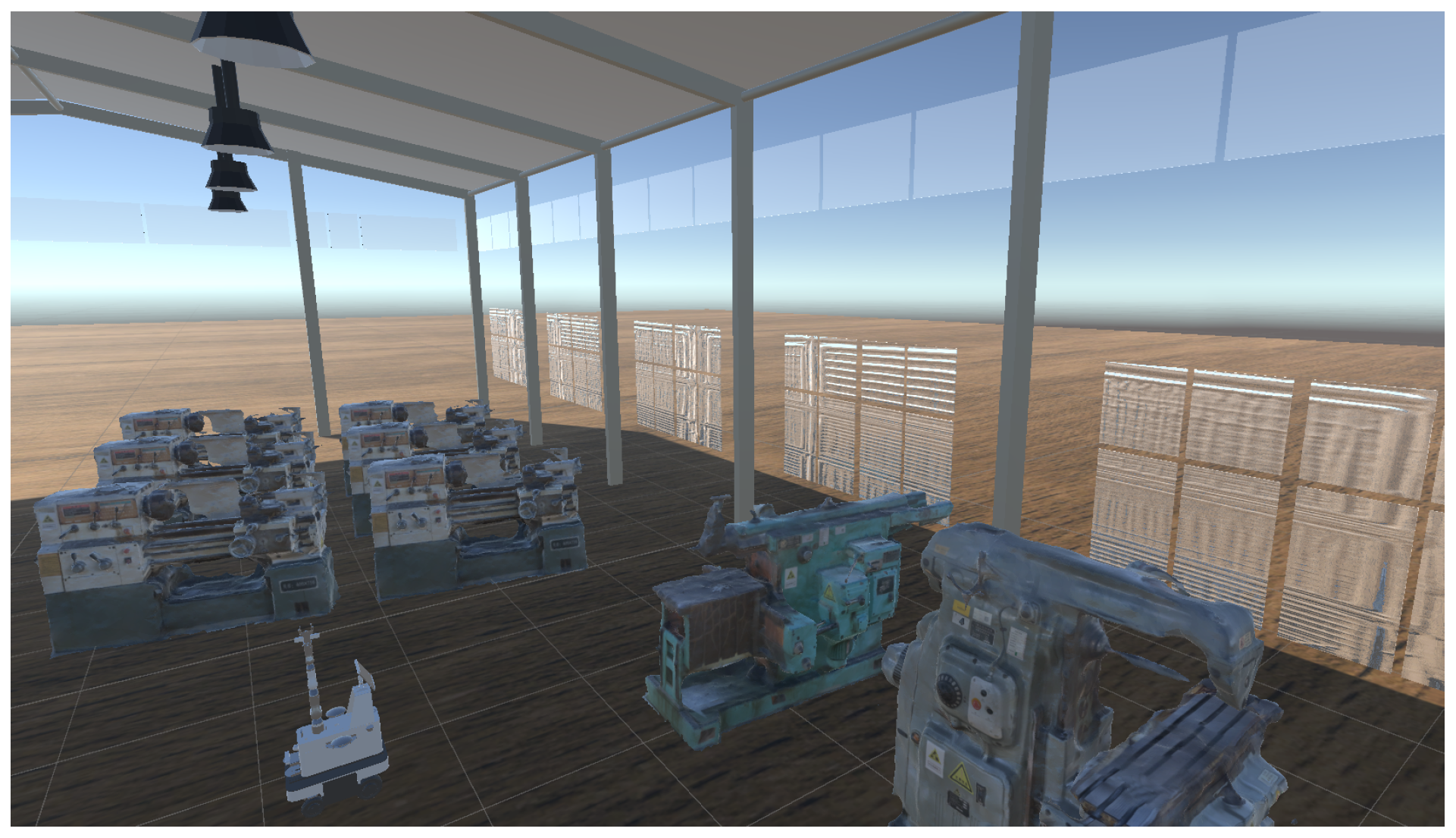
Within the Unity 3D environment, 3D models corresponding to key physical entities—including the inspection robot, its operational indoor setting, and relevant electromechanical equipment—were systematically integrated. Each model was assigned accurate physical properties, finalizing the construction of the interactive digital twin environment. This environment consists of three primary model categories: static element twins, dynamic element twins, and the twin representing the inspection robot itself. The resulting integrated digital twin model is presented in Figure 6.
Figure 6.
Digital Twin Scenario for Inspection Robot Operations and Maintenance.
4. Data Acquisition and Transmission Channel
4.1. Visual Data
Twin data serves as the fundamental driver enabling digital twin systems to achieve virtual-physical interaction and closed-loop control [20]. In this framework, the multi-source sensors deployed on the inspection robot constitute the primary data source for real-time monitoring of unforeseen events within the factory. Visual sensing, in particular, fulfills a critical data acquisition role during inspection tasks, laying the necessary groundwork for dynamic twin implementation and visualization.
To acquire visual information during both routine patrols and emergency situations, the system utilizes ZED stereo depth cameras as its principal sensing units. These devices capture real-time video streams of the operational environment while concurrently obtaining three-dimensional spatial coordinates of relevant targets. This combined image and spatial dataset forms the core of the dynamic twin data, which is subsequently mapped onto the twin platform for visualization and alert processing. Representative scene imagery captured by the sensors is shown in Figure 7.
Figure 7.
The ZED Camera Visual Sensor Captures Real-World Diagram.
4.2. Efficient Network Transmission Channel Based on Socket
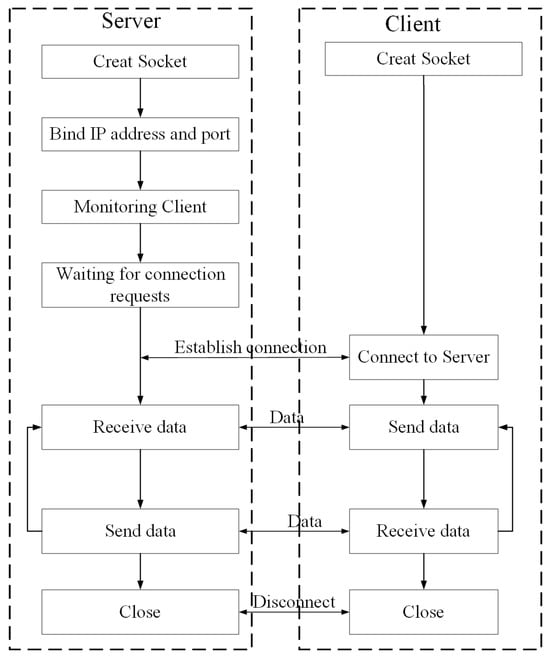
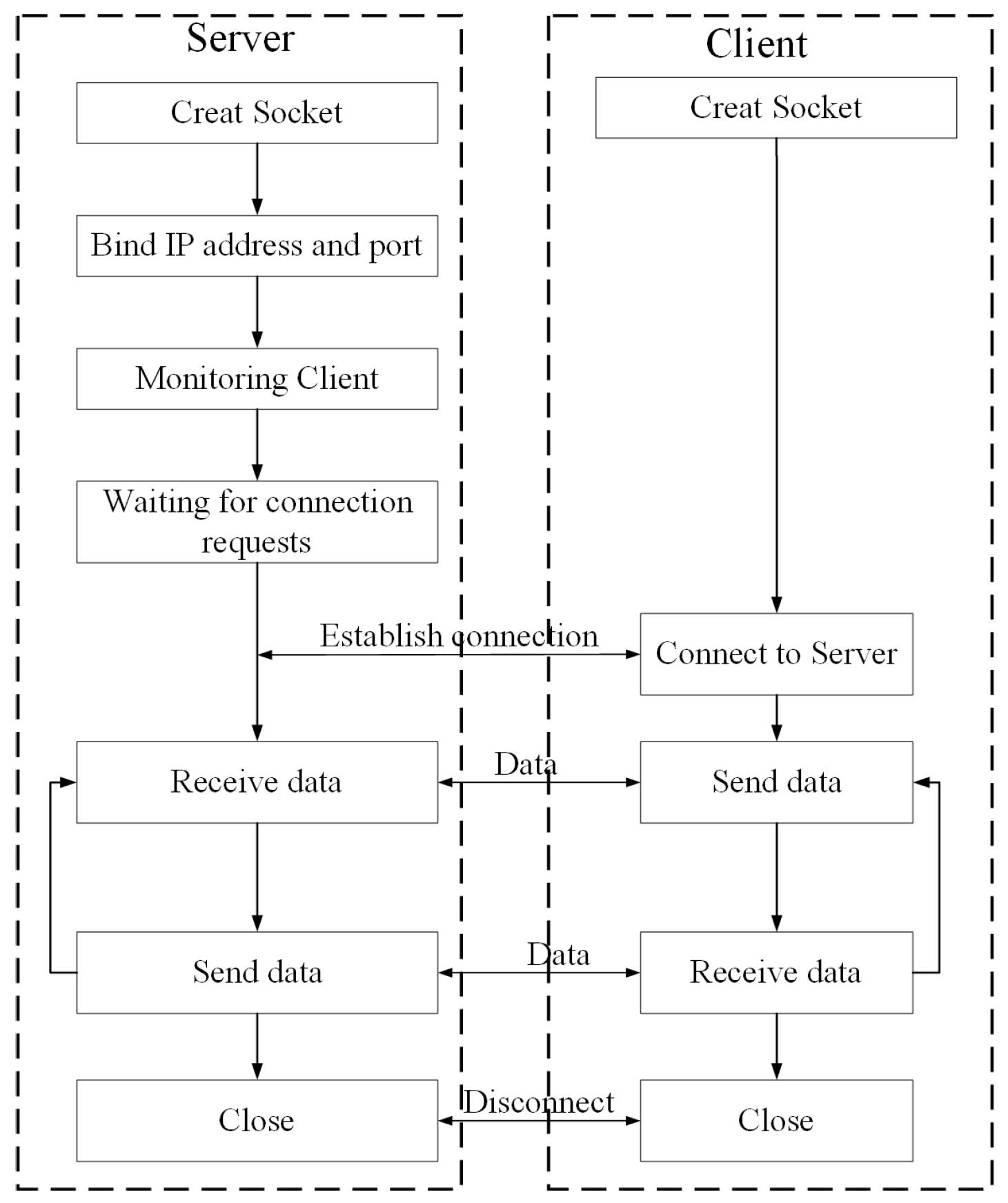
Efficient, low-latency network transmission is essential to ensure the real-time operation and interactive capacity of digital twin systems [21,22]. Stable, real-time data transfer is crucial for enabling internal monitoring of factory conditions, incident detection, and early-warning functions. To facilitate efficient data exchange between the ROS framework on the inspection robot and the Unity3D development environment, this paper implements a bidirectional communication link based on Socket protocols. This architecture reliably supports the real-time transmission of visual data, equipment status, and control commands between the physical and virtual systems. The workflow of the Socket-based ROS–Unity communication is illustrated in Figure 8.
Figure 8.
Interactive Communication Architecture.
In this system, image streams and three-dimensional coordinates acquired by the vision sensors are transmitted in real time to the virtual platform via the established communication link. Through visualization rendering and sensor-fusion processing, the data drive continuous updates of the virtual counterparts, enabling real-time mapping and bidirectional interaction with the physical entities.
5. Object Detection and Data-Driven Processing
Existing systems still suffer from response delays in the perception phase and difficulties in achieving real-time alerts when handling sudden emergencies, failing to meet the urgent demands for real-time performance and autonomous decision-making in emergency response scenarios. To address this, this paper proposes a “vision-driven” dynamic digital twin approach. Its core lies in constructing a closed-loop autonomous data pipeline of “perception-driven-mapping,” enabling real-time visual information to continuously and directly drive the dynamic evolution of the virtual environment. Compared to mainstream approaches, this system integrates real-time semantic perception with a data mapping engine. It dynamically constructs and synchronizes virtual representations of on-site emergency situations in real time, enabling proactive early warnings and alerts. This fundamentally transforms the twin system from passive monitoring to active early warning, and from reliance on manual intervention to support for autonomous response.
5.1. Object Detection
5.1.1. Object Detection Based on YOLOv5m
(1) Early-Warning Detection Dataset
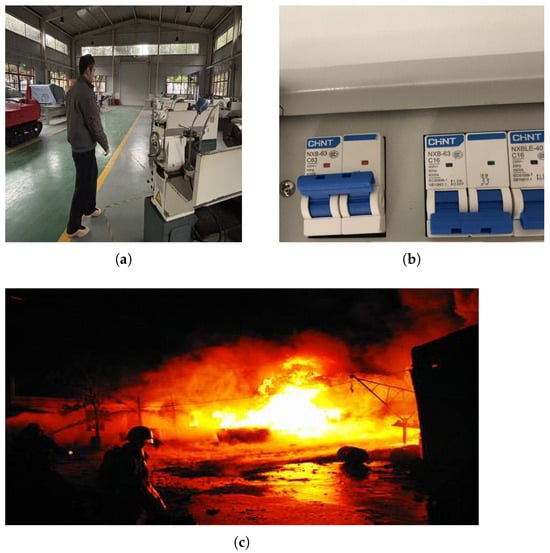
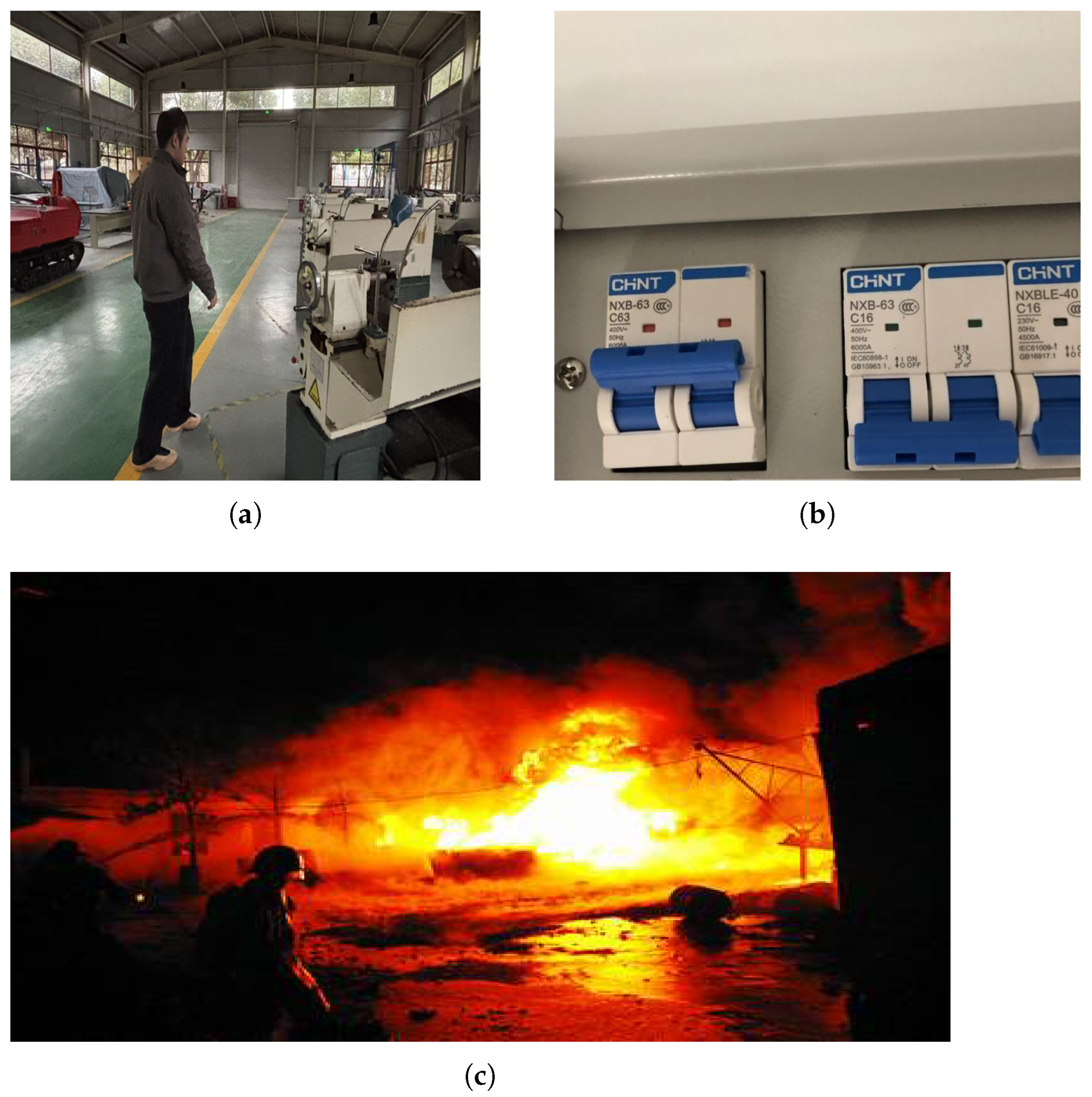
To improve the real-time operational efficiency and emergency perception capability of inspection robots in complex factory settings, this study compiled an image dataset covering critical scenarios such as personnel presence, electrical switch states, and sudden fire incidents. Representative samples from the dataset are shown in Figure 9. For real-time object detection, the YOLO series is adopted due to its single-stage, end-to-end architecture [23,24], which performs simultaneous localization and classification in one forward pass, offering outstanding inference speed suitable for real-time applications [25,26,27].
Figure 9.
Object Detection Dataset. (a) Person. (b) Air circuit breaker. (c) Fire.
(2) Comparison with the YOLO Series and Model Selection
To identify the most suitable detection model for this system and ensure fair model comparisons and reliable conclusions, this study conducted comparative experiments on multiple versions of the YOLO series using a self-built dataset. All experiments were trained on the same hardware platform, as detailed in Table 1. The dataset was randomly partitioned into training, validation, and test sets at an 8:1:1 ratio. Input images were uniformly resized to 640 × 640 pixels, with training cycles set to 200 iterations and a fixed batch size of 8. Comparative experiments were conducted using multiple versions of the YOLO series models on the partitioned dataset, with results presented in Table 2.
Table 1.
Hardware Specifications.
Table 2.
YOLOX Comparative Experiments.
Among the compared models, YOLOv5m achieved the most balanced and robust performance across key metrics: it attained a precision of 0.872, significantly higher than other variants, indicating strong false-positive control for targets such as unauthorized personnel and flames—thereby improving early-warning reliability. Its recall of 0.864 reflects a high capability to capture relevant objects, effectively reducing missed detections of potential hazards. Furthermore, its mAP@0.5 reached 0.817, exceeding the practical threshold of 80% and demonstrating a favorable trade-off between detection sensitivity and specificity.
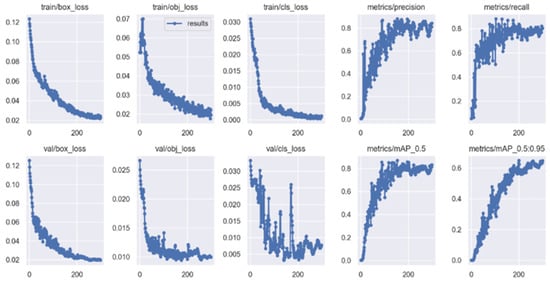
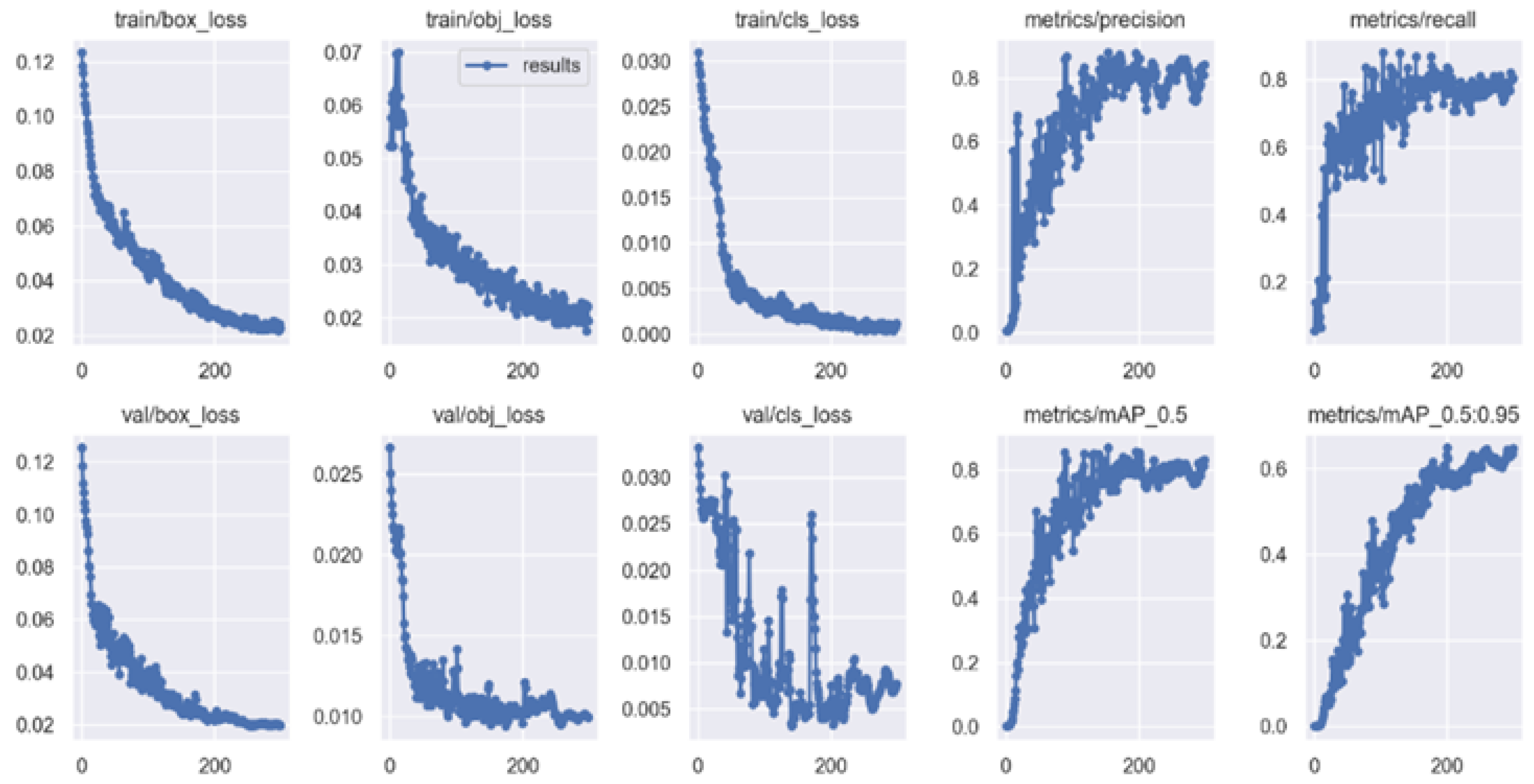
Based on these experimental outcomes, YOLOv5m was selected as the core object detection model for the system, fulfilling the requirements of real-time awareness, accurate identification, and rapid incident response in smart factory environments. The corresponding training performance curves are illustrated in Figure 10.
Figure 10.
Yolov5m Model Training Results Diagram.
(3) Stability Analysis Based on K-Fold Cross-Validation
To rigorously evaluate the statistical robustness and generalization capability of model performance, we subjected the selected models to stringent 5-fold cross-validation. Specifically, this approach randomly partitions the training dataset into five mutually exclusive subsets; in each iteration, the model is trained on four subsets and validated on the remaining one. This procedure is replicated five times, and the results are aggregated to yield a more reliable estimation of the model’s performance on unseen data. Cross-validation outcomes are summarized in Table 3. The model exhibited high stability across all primary evaluation metrics, with coefficients of variation generally below 10%. These findings collectively demonstrate favorable reproducibility and generalization potential of the model.
Table 3.
Cross-validation Outcomes.
(4) Model Performance Evaluation
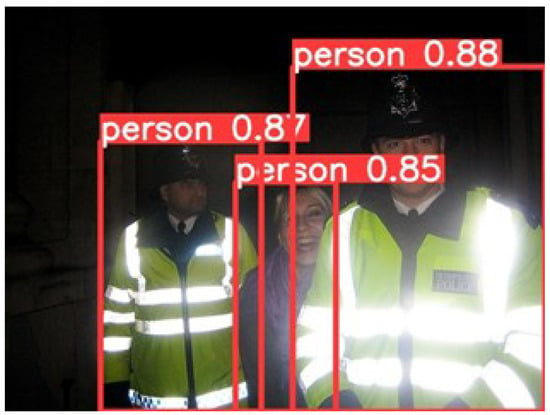
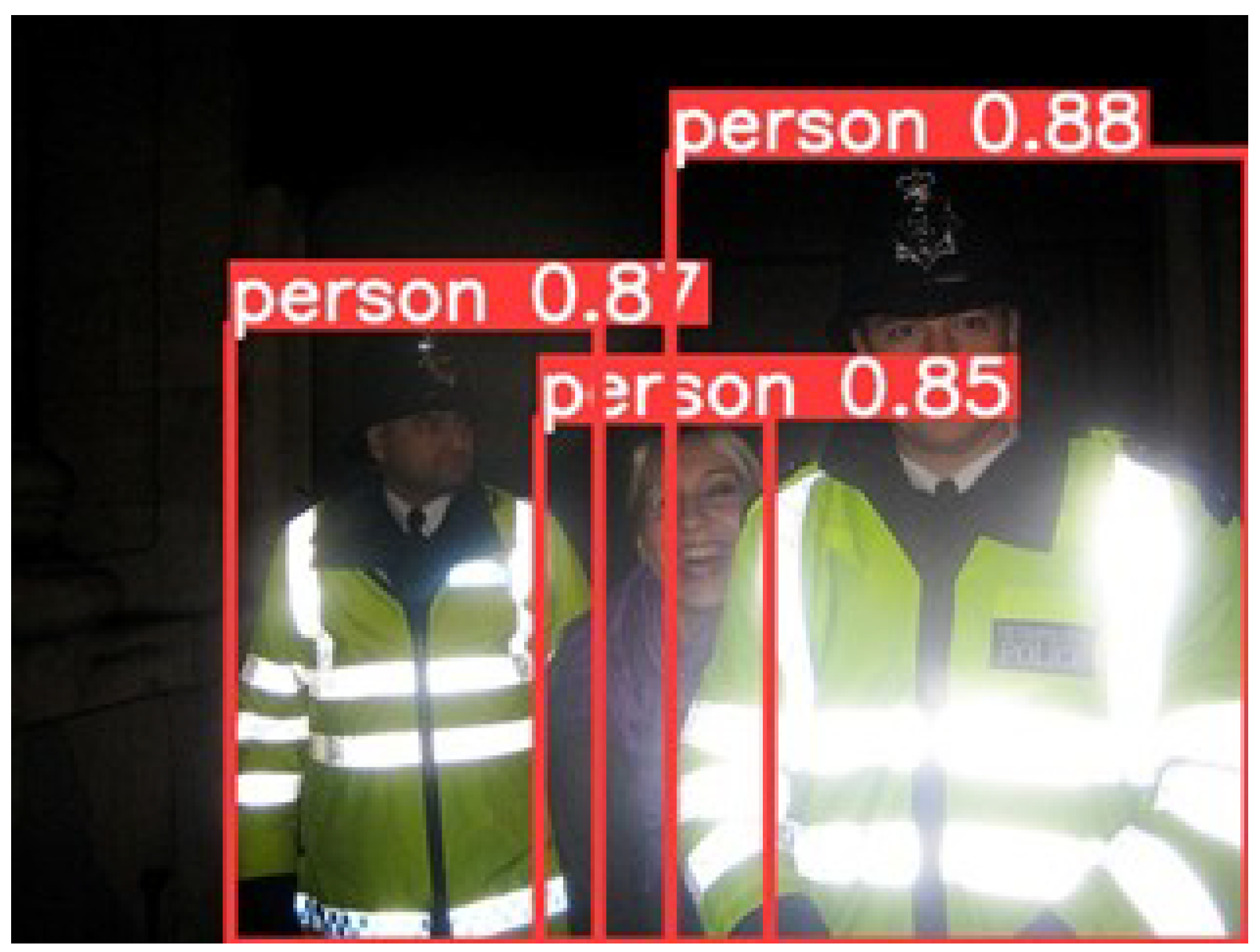
To further verify the generalization capability of the proposed model, we conducted supplementary experiments on the publicly available COCO dataset [28], with a specific focus on the person category. As shown in Table 4, the test results demonstrate that the selected model achieved a mean average precision (mAP) of 0.842 at an intersection over union (IoU) threshold of 0.5 (i.e., mAP@0.5). Meanwhile, the detection performance of the model on the COCO dataset is intuitively visualized in the corresponding Figure 11. Collectively, these results corroborate that the model possesses favorable generalization potential.
Table 4.
Experimental Outcomes on COCO (Person) Dataset.
Figure 11.
Detection Results on COCO (Person) Dataset.
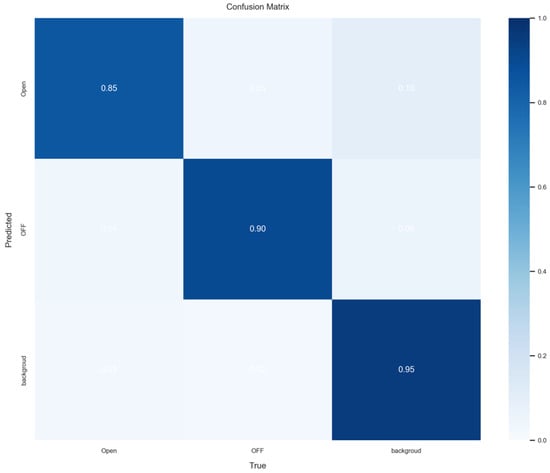
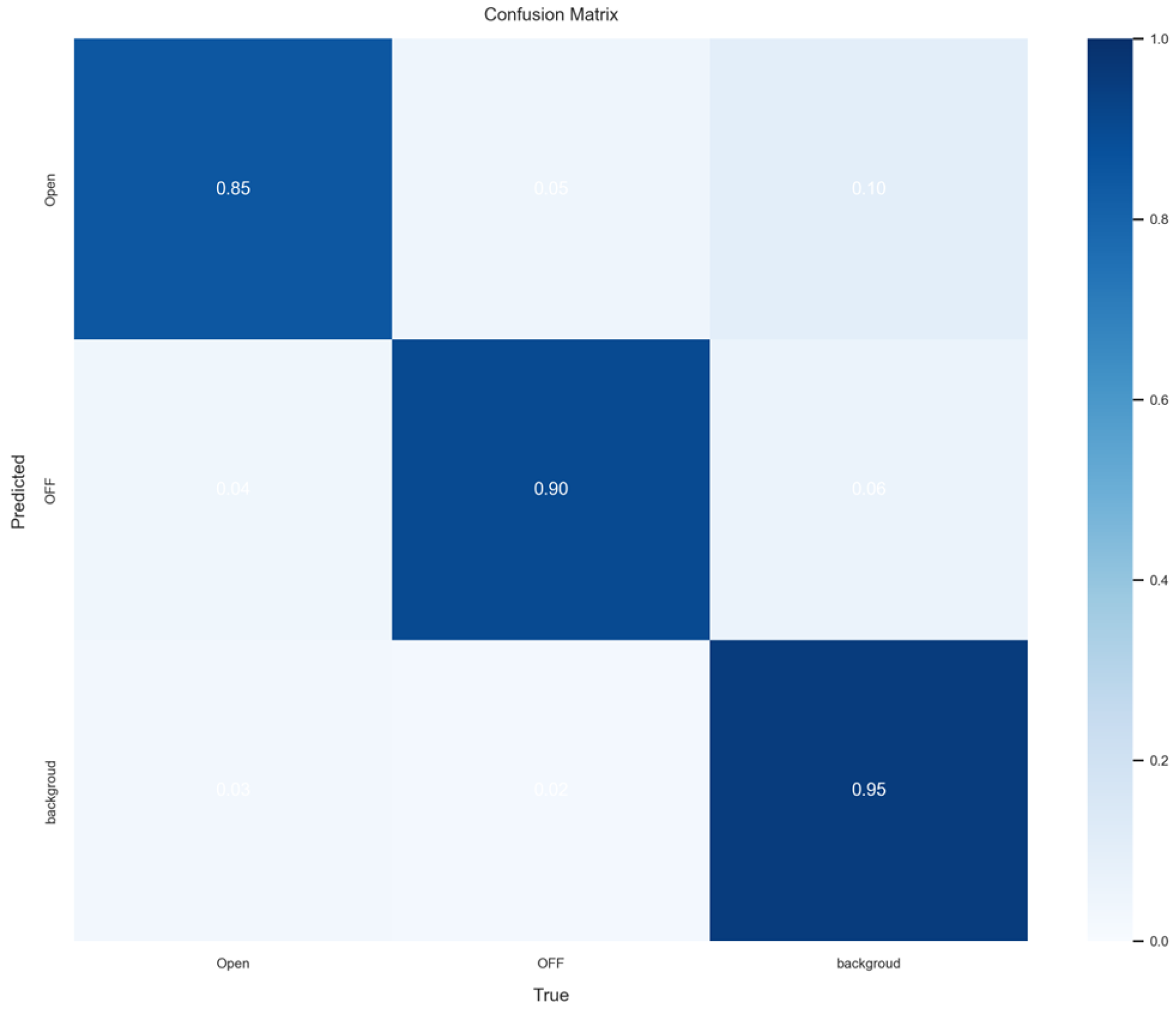
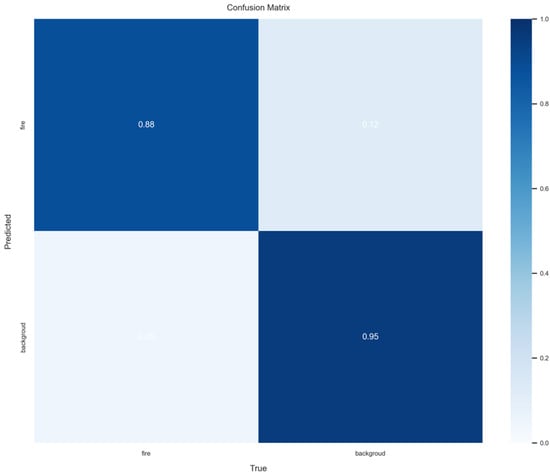
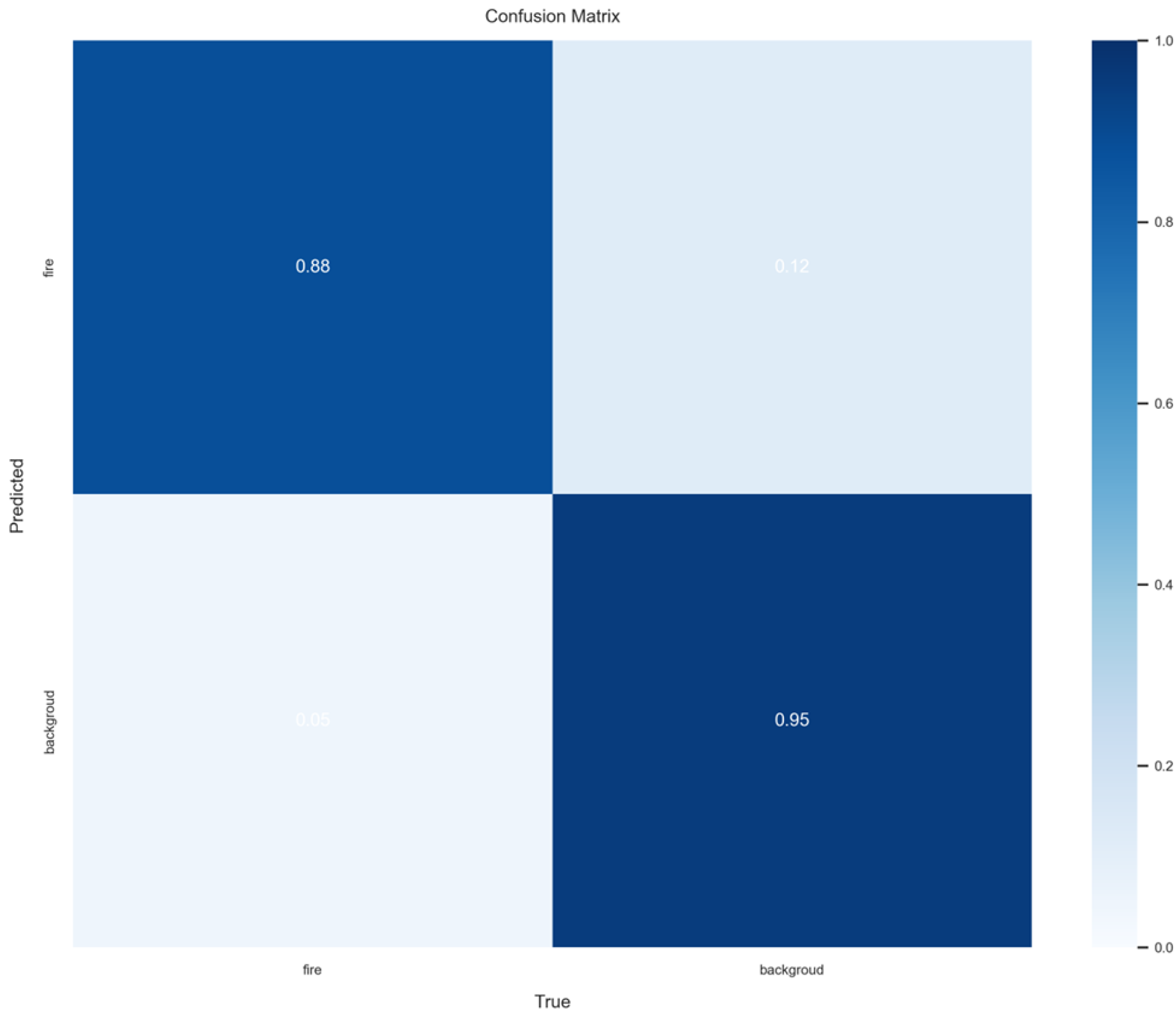
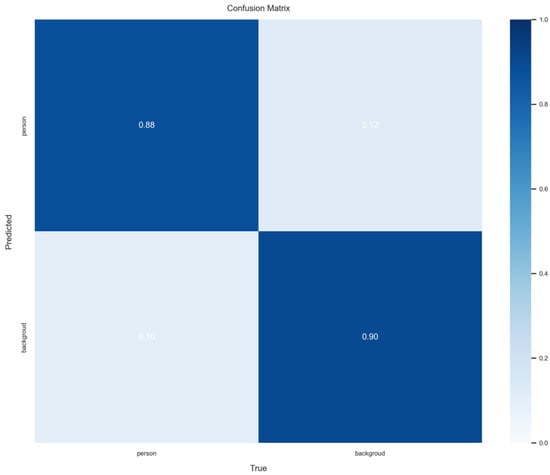
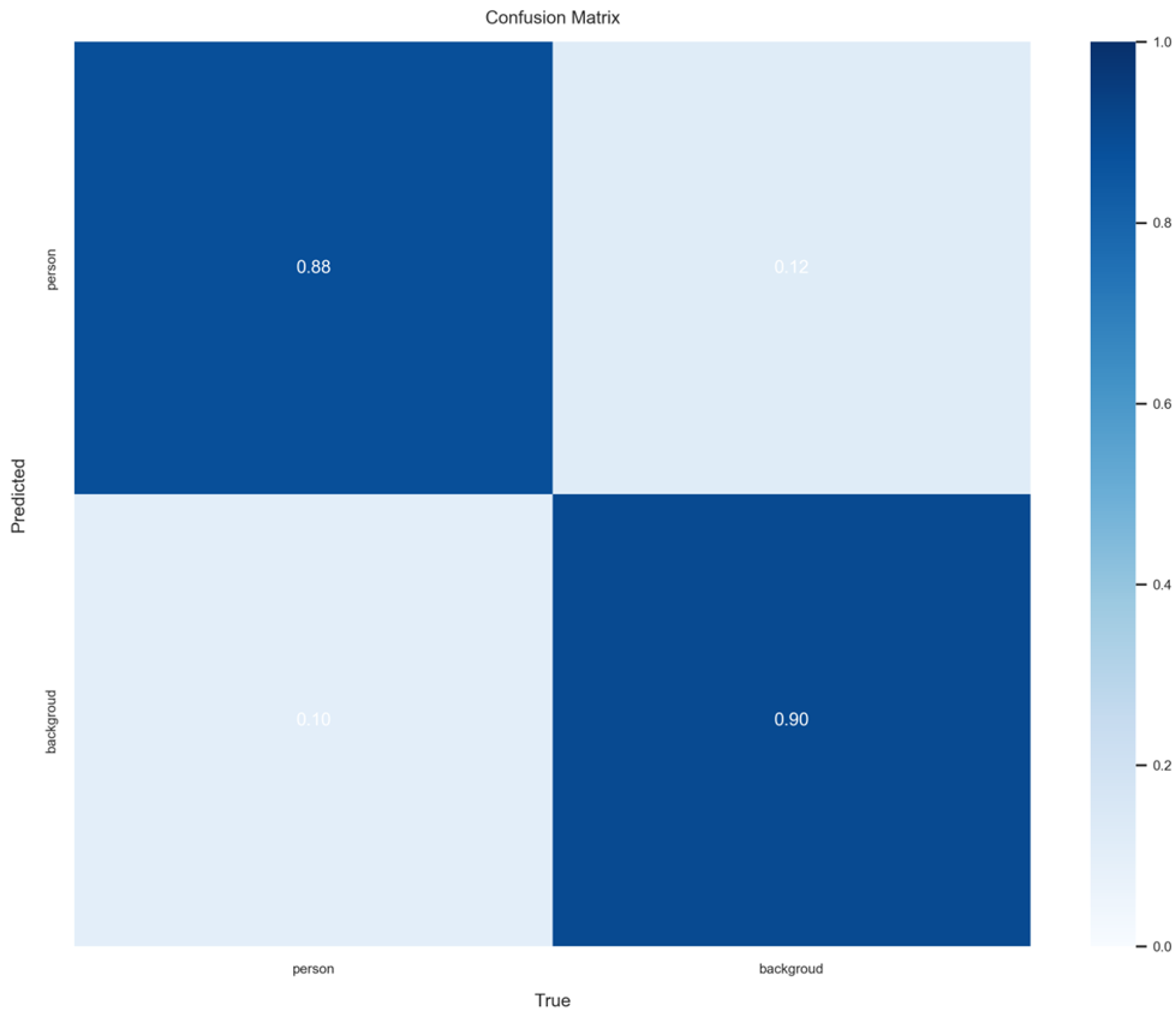
To comprehensively evaluate the practical performance of the proposed model, we conducted further validation on the trained model using an independent test set, with detailed performance metrics presented in Table 5. Meanwhile, to intuitively demonstrate the model’s discrimination efficacy across different categories, we plotted the corresponding confusion matrices: Figure 12 shows the confusion matrix for switch state recognition, Figure 13 depicts that for flame detection, and Figure 14 illustrates that for human detection. The test results indicate that the model achieves excellent performance across key categories, including the ON/OFF states of switches, Fire, and Person, fully demonstrating high detection reliability and stability.
Table 5.
Category-Specific Evaluation Metrics of the Model.
Figure 12.
Confusion Matrix of Switch State.
Figure 13.
Confusion Matrix of Fire.
Figure 14.
Confusion Matrix of Person.
5.1.2. Edge Deployment of the YOLOv5m Model
To improve the efficiency of perceiving and responding to unexpected events in factory environments, this system implements the object detection model at the edge, directly on the inspection robot [29,30,31], with the hardware configuration details shown in the Table 6 below. Unlike approaches that stream full video to a central digital twin platform for processing, this edge-based inference performs image analysis locally on the robot. Only essential recognition outcomes—such as the presence of unauthorized personnel along with their three-dimensional pose and other key metadata—are transmitted to the cloud. Accordingly, the YOLOv5m model has been deployed on an ROS-enabled inspection robot platform. This deployment integrates several functional components within the edge computing unit, including a deep learning inference framework, image preprocessing modules, and ROS node communication interfaces, forming a comprehensive edge intelligence perception system. This architecture substantially reduces communication bandwidth requirements and transmission latency, enabling more efficient closed-loop data processing and enhancing overall system responsiveness.
Table 6.
Deployment Environment Configuration Information Table.
In practical deployment, the YOLOv5m model is wrapped into a ROS-compatible node to enable effective communication and data exchange with other robot modules. The implementation procedure consists of the following steps, as illustrated in the Figure 15: First, a dedicated ROS node is created to subscribe to the image topic/camera/image_raw published by the depth camera. Upon receiving an image, the ROS image message is converted into OpenCV format using the cv_bridge utility and then passed to the YOLOv5m model for real-time object detection. The detection outputs—including object class, confidence score, and bounding box coordinates—are formatted into a structured string and published to the topic/yolov5/detection, where they become accessible to other functional modules within the system.
Figure 15.
Model Deployment Flowchart.
5.2. Real-Time Driving of Twin Data in Unity 3D
In hazardous and complex industrial environments, real-time data-driven interaction within a digital twin system is essential for establishing dynamic bidirectional mapping between physical entities and their virtual three-dimensional counterparts [32]. This capability is critically important for enhancing the system’s visualized early-warning functionality and enabling structured control in intricate operational scenarios. To achieve this, a real-time data-driven architecture is implemented based on Unity3D. The implementation process comprises the following steps: First, a stable and low-latency communication link is established between the physical and virtual domains. Next, corresponding virtual models in Unity3D are configured with dedicated C# scripts. These scripts integrate key functional modules, including topic configuration, ROS socket communication interfaces, methods for parsing and processing incoming data, and debugging outputs for real-time monitoring. Finally, the processed data is mapped in real time onto the three-dimensional models, achieving synchronized representation of the virtual and physical states.
To clarify the real-time data-driven mechanism in the digital twin, this section details the end-to-end workflow from data acquisition to final mapping in Unity 3D, using the ROS topic/yolov5/detections as an illustrative example. The test results are shown in the Figure 16:
Figure 16.
Real-time interaction of twin data.
(1) Data acquisition and topic structure. The visual detection data transmitted via this topic includes seq, stamp, frame_id, and bounding_boxes. Each bounding box further contains the target category, confidence score, and pixel-coordinates.
(2) Message file generation and deployment. Since Unity 3D does not natively support ROS message formats, corresponding .msg files are first generated from the topic’s data structure and deployed in the ROS environment. On the Unity side, dedicated plugins are used to generate these message definitions.
(3) Data reception and processing. After the communication interface is successfully configured in Unity, topic data can be received. To map detection results onto the virtual 3D model, C# scripts are attached to the corresponding model objects. These scripts parse the incoming data and implement the visualization-driving logic.
(4) Data validation and mapping results. Once Unity correctly receives and parses the topic data, the system achieves real-time driving of the detection information onto the 3D model, completing the virtual-physical synchronization.
6. Visualisation and Warning Platform
6.1. Design of the Emergency Management Interaction Platform
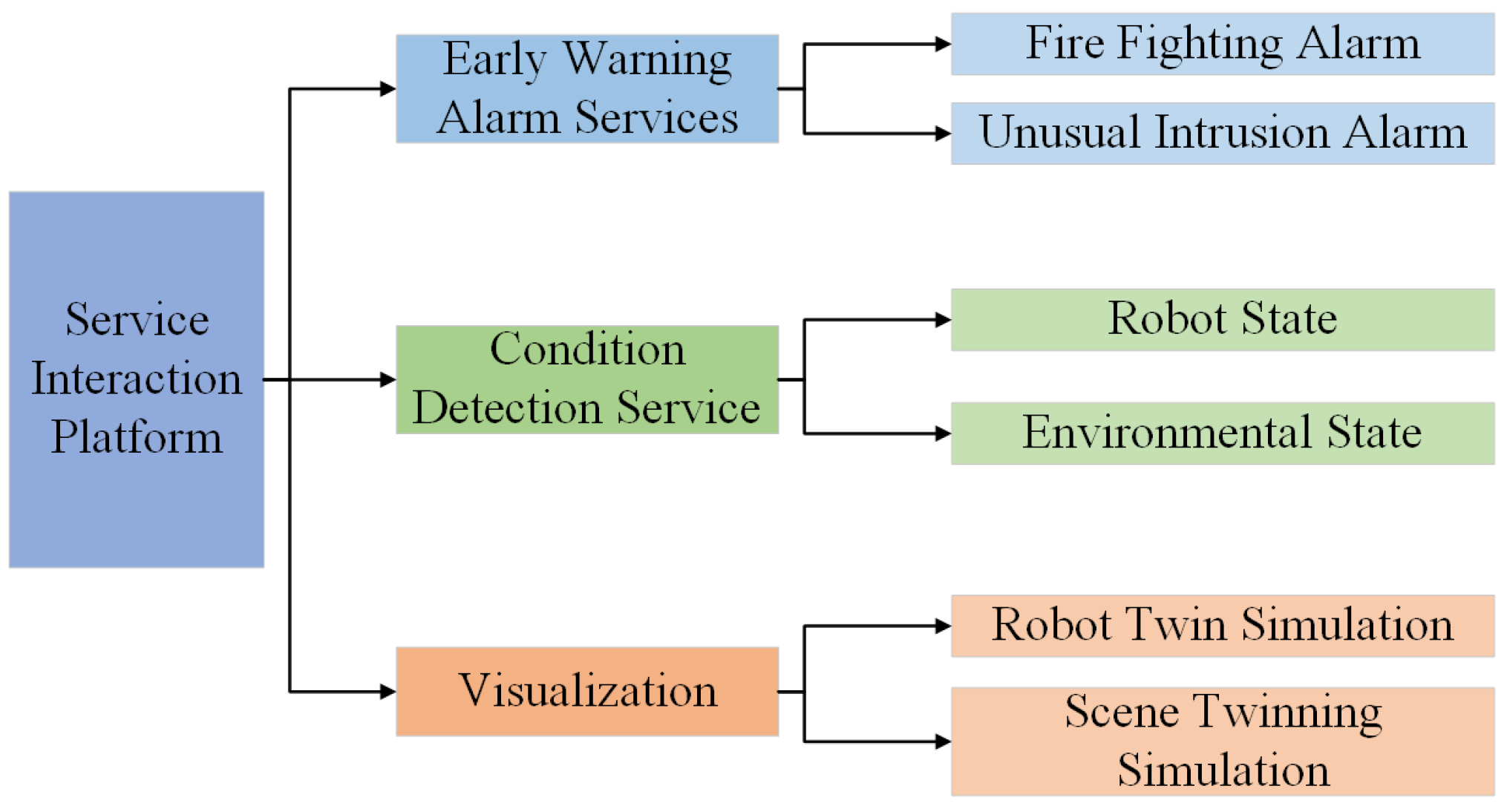
To meet the requirements for real-time verification of equipment status and task integrity within the emergency management framework—particularly the need for rapid situational awareness and immediate alerting during factory emergencies—this paper designs a service-oriented interaction platform for the digital twin system, as shown in Figure 17. Its core components and functions are outlined below:
Figure 17.
Functionality of the Digital Twin System Service Interaction Platform.
(1) Early-warning and alarm service. Designed for complex equipment or environments that require continuous monitoring, this service provides proactive anomaly detection and alerting, specifically including fire-extinguishing alarms and unauthorized-intrusion alerts.
(2) Status-monitoring service. This module performs real-time detection and feedback on the operational status of various equipment and systems, ensuring that all parameters remain within normal working ranges. Key features include robot-status monitoring and environmental-condition tracking.
(3) Data visualization. Presents digital-twin effects and associated data in an intuitive manner, accurately reflecting the real-time state of the physical world. It supports dynamic updates and interactive operations, enabling functions such as robot-twin simulation and scenario-twin simulation.
6.2. Functional Testing of Digital Twin System
6.2.1. Test Environment
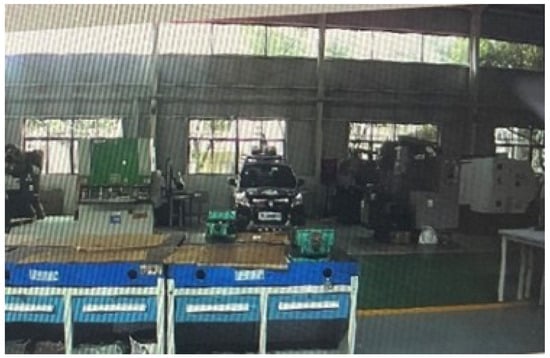
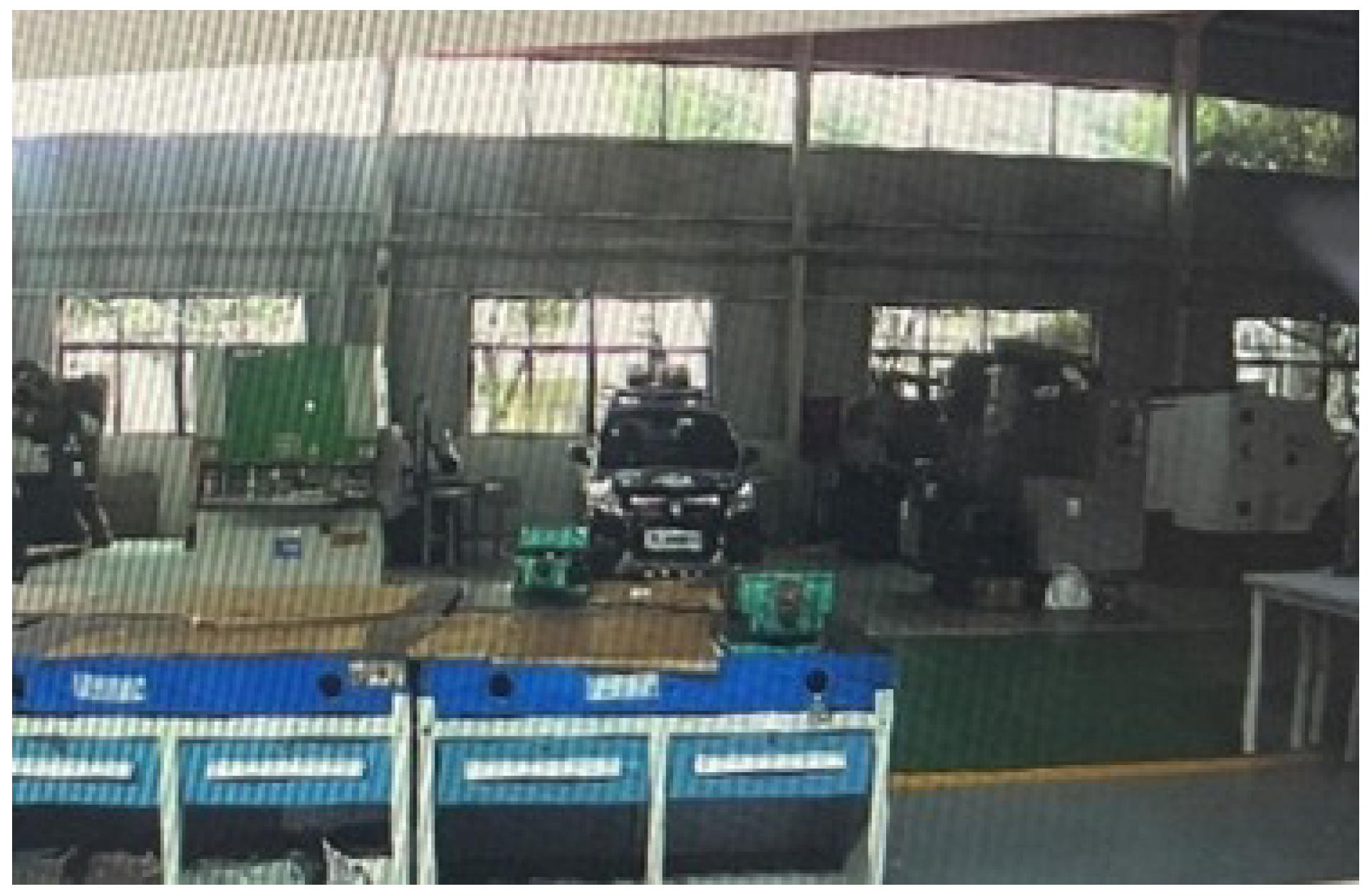
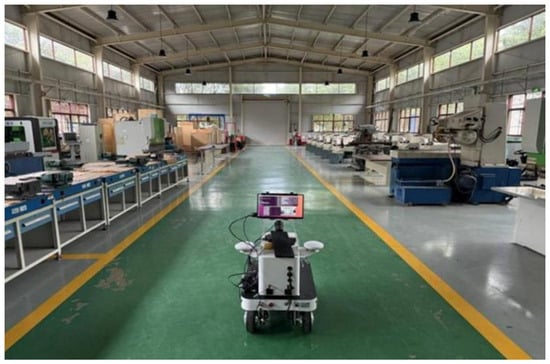
The experimental scenario was constructed in a university laboratory setting that simulates a factory environment. Using robots designed for hazardous-site inspection, a series of engineered functions were systematically tested and validated. The overall configuration of the test environment is shown in Figure 18.
Figure 18.
Experimental Environment.
6.2.2. Functional Testing of the Dynamic Digital Twin System for Inspection Robots
To experimentally validate the core services of the proposed digital twin system, functional verification was performed on two key service categories: early-warning alerting and status monitoring.Testing was conducted under conditions where the system continuously processed multiple foundational data streams, including temperature and positioning. Each functional scenario underwent 100 rounds of testing.
(1) Verification of Early-Warning Alert Service
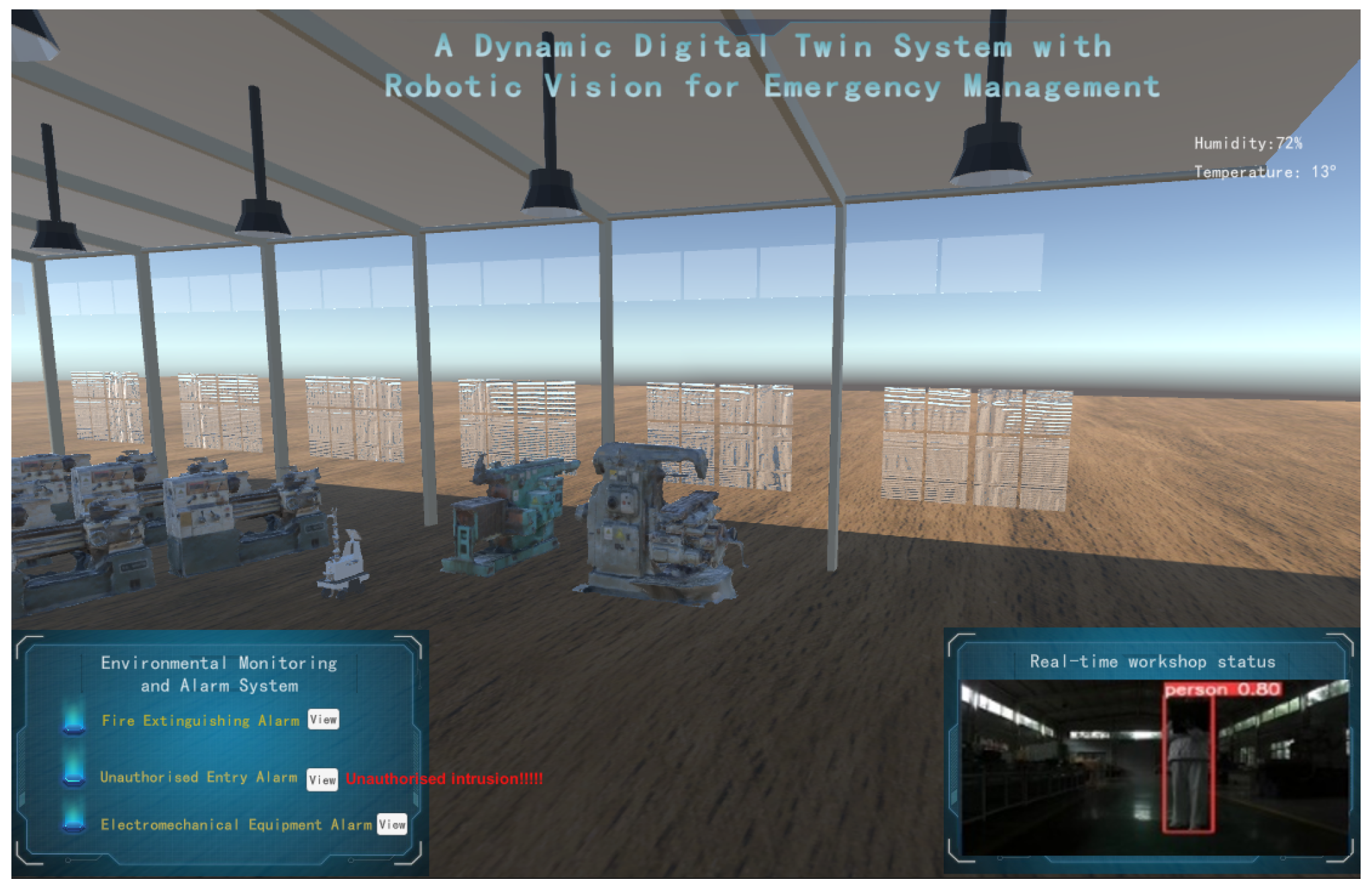
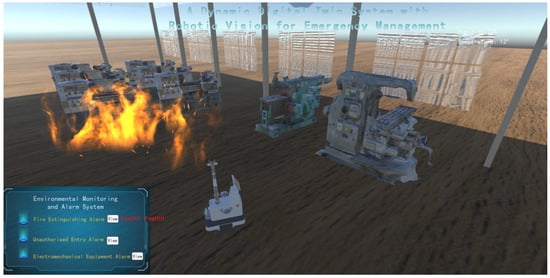
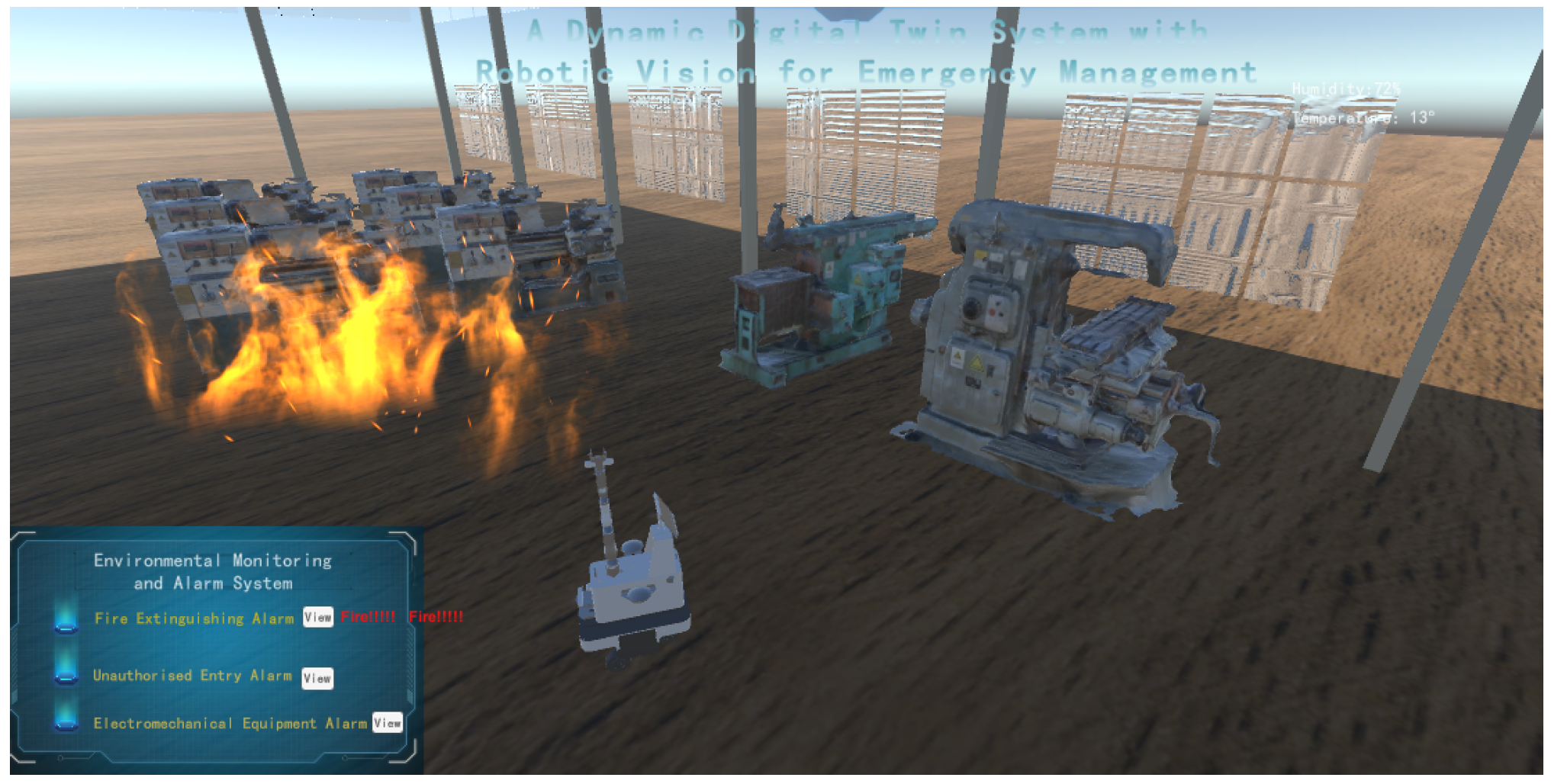
(a) Fire-Extinguishing Alert: Utilizing the patrol robot’s real-time fire-detection capability, the system dynamically maps the incident location within the digital twin environment and triggers immediate visual and auditory alarms to prompt user intervention. A third-person perspective view of the alert and navigation interface during this process is shown in Figure 19.
Figure 19.
Flame Detection Alarm Testing.
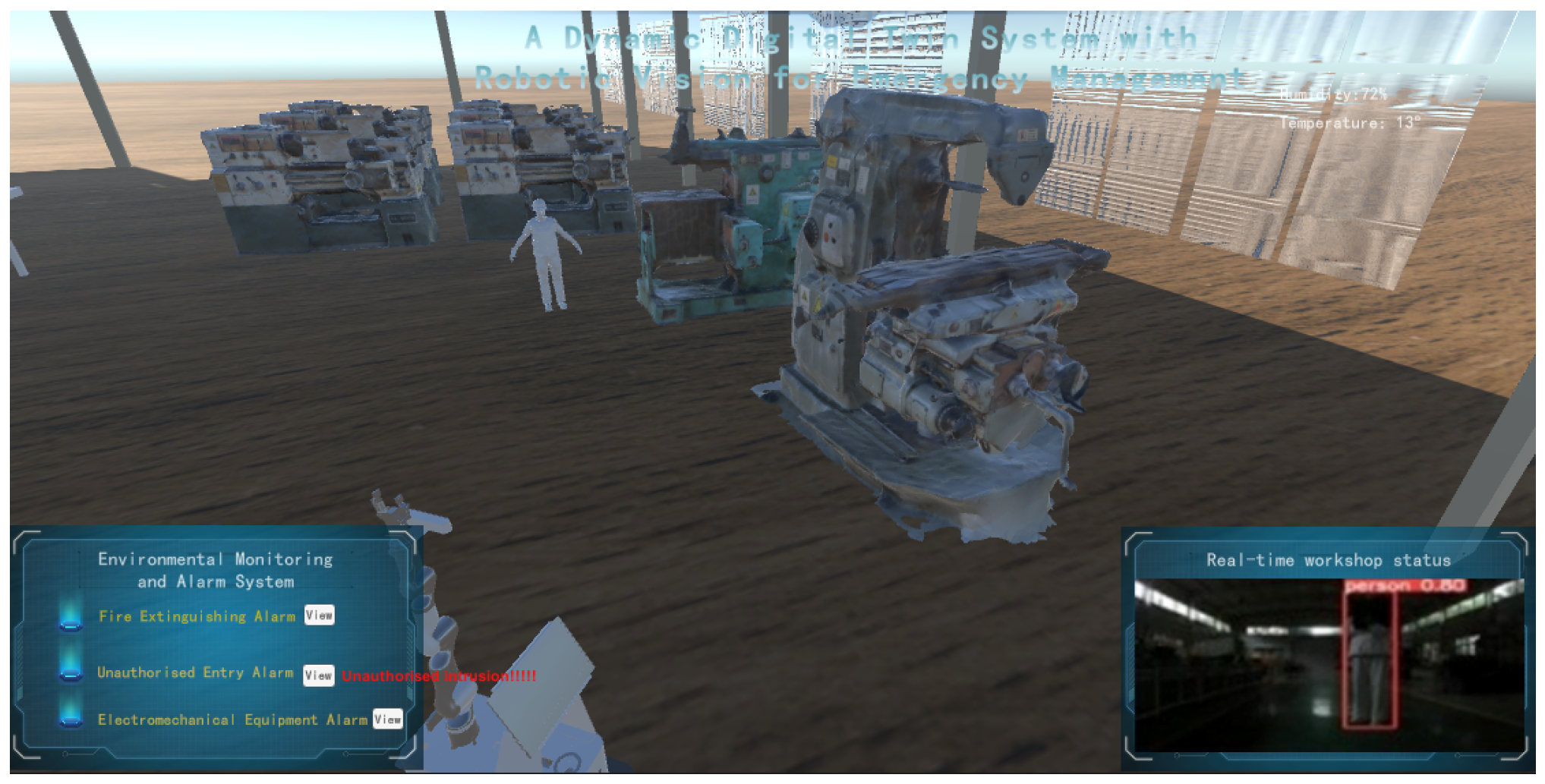
(b) Unauthorized-Intrusion Alert: When personnel are detected in restricted areas of the facility, the patrol robot instantly identifies the intrusion and issues an alert, notifying the user of a potential security breach. The corresponding third-person view of the robot’s patrol path during this event is presented in Figure 20.
Figure 20.
Intruder Alarm Test.
(2) Status Monitoring Service
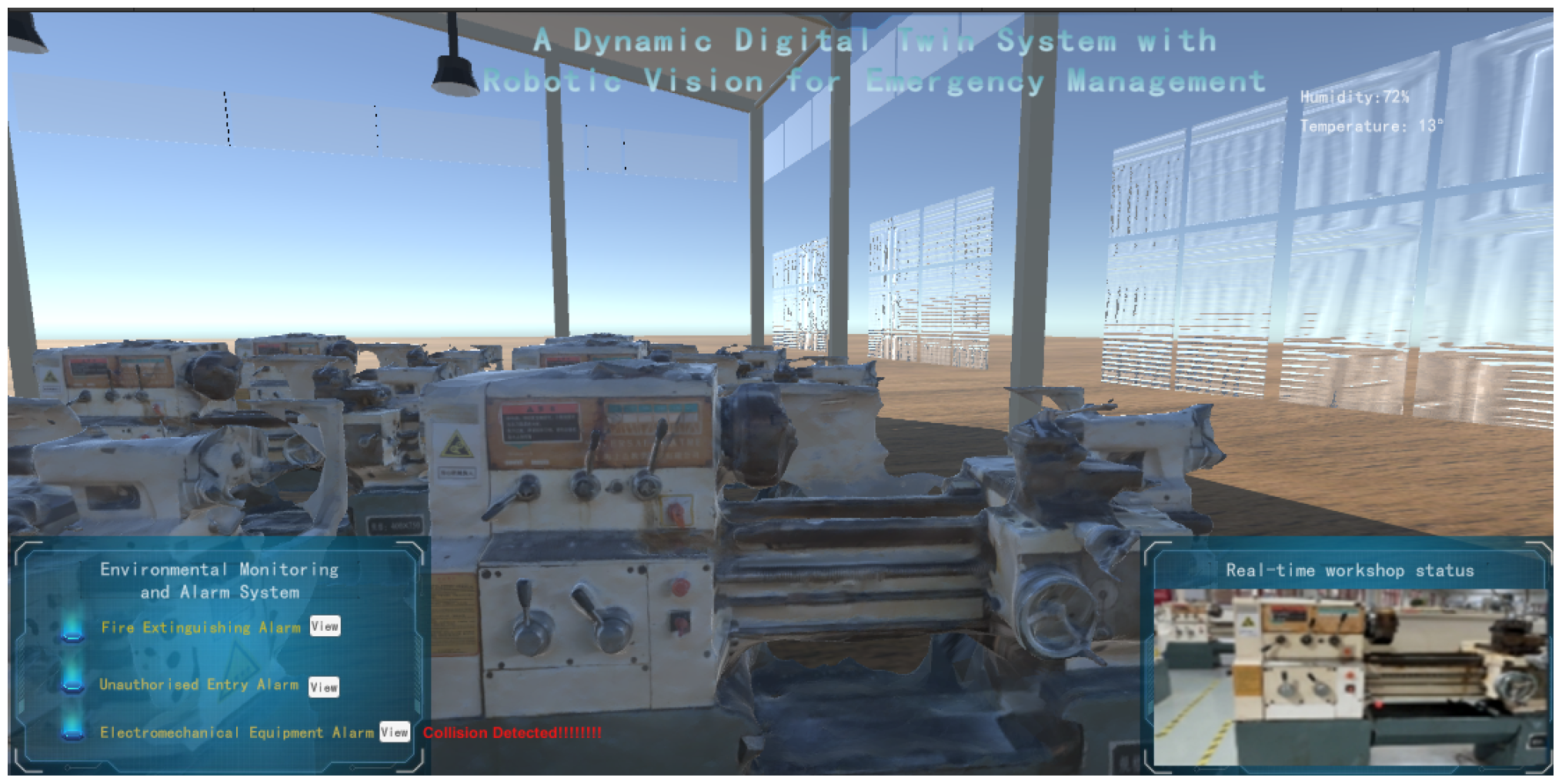
(a) Robot-Status Monitoring: This function provides real-time monitoring of the robot’s operational state. Upon detecting an incident such as a collision, the system dynamically visualizes the abnormal status within the digital twin interface. A first-person perspective from the robot’s onboard inspection camera during operation is shown in Figure 21.
Figure 21.
Collision Twin Function Testing.
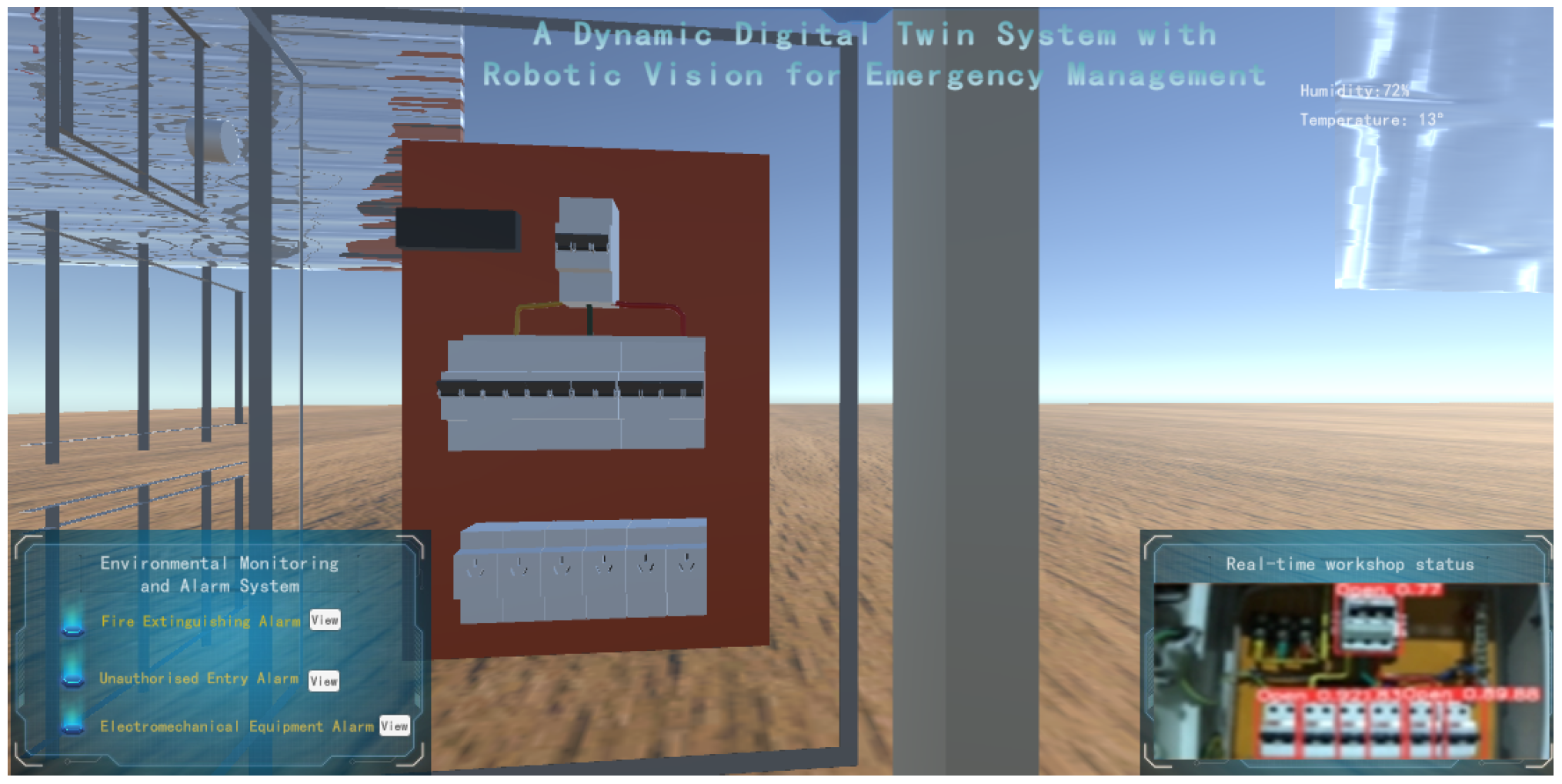
(b) Electrical Switch-Status Monitoring: This service tracks key electrical parameters, such as switch states, within the robot’s vicinity. When monitored values exceed predefined operational thresholds, the system triggers an instant anomaly alert. All monitoring data are updated and visualized in real time through the digital twin interface, as shown in Figure 22.
Figure 22.
Electrical Switch Status Twin Function Testing.
(3) Performance Analysis of Twin System Interactions
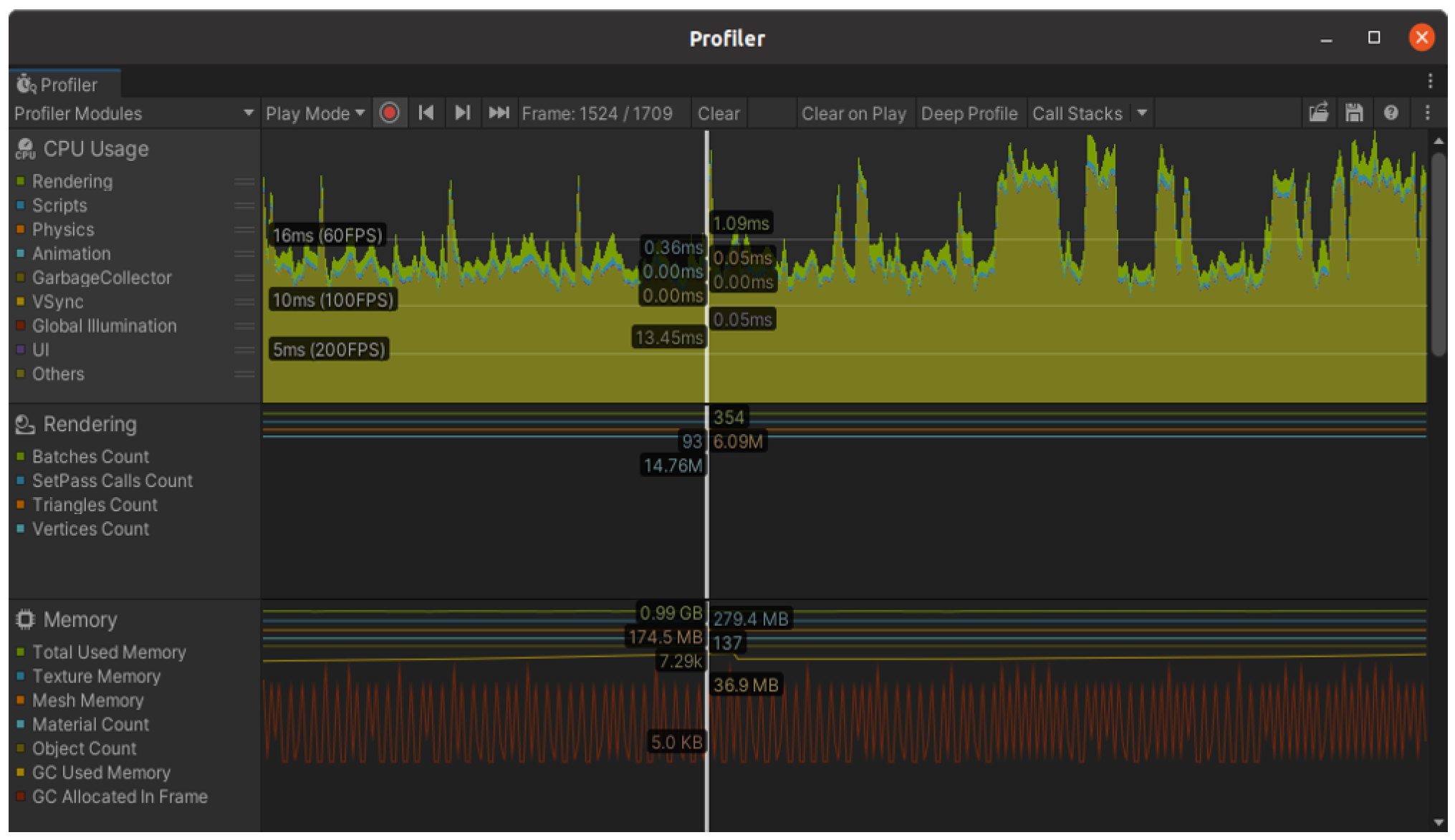
The interactive performance of the system was evaluated using the built-in Profiler tool in Unity 3D to monitor key metrics such as CPU usage, rendering performance, and memory allocation. Performance test results are presented in Figure 23. The data show that the system sustains a stable frame rate above 200 FPS during operation. Considering that a refresh rate of 60 FPS is widely regarded as sufficient for a smooth visual experience, the achieved performance confirms excellent fluidity and highly responsive interaction, fully supporting real-time monitoring and control within the digital twin environment.
Figure 23.
Twin System Interaction Performance Testing.
To assess the system’s real-time data acquisition and dynamic-twin synchronization during functional validation, the corresponding performance metrics are summarized in the Table 7.
Table 7.
System performance.
To thoroughly analyze the technical details behind achieving state synchronism, we conducted a comprehensive measurement of the total time required for a single event—from its occurrence to the completion of warning rendering in the virtual scene. As shown in the Table 8, this total time primarily comprises three components: YOLO model inference time, network data transmission time, and Unity3D rendering warning time. Across various test scenarios—including switch states, pedestrians, and flames—the duration of each phase exhibited minor variations. However, the total time for any scenario remained well below the 90-millisecond synchronous target, fundamentally ensuring the system’s synchronous performance.
Table 8.
Full-Path Latency Breakdown for State Synchronization.
7. Results
To address the safety risks and monitoring gaps inherent in prolonged manual surveillance within complex hazardous environments, this paper presents a dynamic digital twin system for emergency management in typical industrial scenarios. The system successfully meets all design targets, achieving: (1) data collection completeness rate exceeding 99.99%, (2) sudden incident detection accuracy of 80%, and (3) state synchronization latency under 90 ms. The core contribution is a vision-based method for the dynamic updating of digital twin models. During system development, high-fidelity 3D models of inspection robots, complex equipment, and indoor environments were created using multi-source tools–SolidWorks, Scaniverse, and 3ds Max–and integrated into the Unity 3D platform to establish preliminary geometric alignment between physical entities and the virtual scene. At the data-interaction level, a comprehensive pipeline for twin data exchange was implemented, encompassing acquisition via the ROS framework, transmission over Socket protocol, and real-time processing and model actuation within Unity. This architecture ensures robust and efficient data mapping throughout the system. By further integrating visual inspection with a prefabricated model library, the system’s responsiveness to dynamic scene changes is significantly enhanced, improving both the efficiency of data updates and the accuracy of target registration. These improvements directly contribute to the achieved performance metrics, particularly the high data completeness and low synchronization latency.To optimize operational workflow, a unified interface incorporating real-time monitoring, visualization, and early-warning functionalities was developed, substantially improving usability and situational awareness.
The current dynamic digital twin system based on visual detection still faces certain application limitations. It primarily supports detection and virtual-physical mapping for pre-modeled physical objects, but cannot yet achieve automatic recognition and dynamic reconstruction for unmodeled unknown objects within a scene. Moving forward, we will further explore real-time 3D scanning and reconstruction technologies for unknown objects, thereby expanding the system’s adaptive twin capabilities across broader industrial scenarios.
Additionally, this research primarily validates the system’s real-time detection and twin synchronization performance under single sudden events (e.g., a single intrusion or fire incident). However, real industrial environments are often more complex and variable, potentially involving extreme conditions such as low illumination, partial occlusion, concurrent multi-zone events, and overlapping multi-type incidents (e.g., simultaneous fire and personnel intrusion). Subsequent research will therefore focus on evaluating the system’s performance in the following areas: concurrent multi-event processing capabilities, multi-robot coordination and dynamic resource scheduling mechanisms, and real-time rendering performance in large-scale complex twin scenarios.
Through rigorous evaluation and continuous optimization of the aforementioned system, we anticipate further enhancing its robustness, reliability, and engineering applicability in real industrial environments.
Author Contributions
Conceptualization, Q.Z.; methodology, R.A.; software, R.A.; validation, R.A. and X.C.; investigation, Q.Z. and T.Z.; resources, J.L.; data curation, Q.Z. and R.A.; writing—original draft preparation, Q.Z.; writing—review and editing, Z.M. and J.L.; visualization, R.A. and T.Z.; supervision, Z.M., J.L. and T.Z.; project administration, Z.M. and T.Z.; funding acquisition, J.L., J.D. and Y.G. All authors have read and agreed to the published version of the manuscript.
Funding
This research was funded by the Key R&D Program of Sichuan Provincial Department of Science and Technology, grant numbers 2023YFN0077 and 2025YFHZ0031; and the Chengdu Science and Technology Bureau Project, grant numbers 2024-YF05-02414-SN and 2026-YF11-00056-HZ.
Institutional Review Board Statement
Ethical review and approval were waived for this study due to the following reason: The human photos involved in this study were voluntarily provided by the research team members, and the materials were only used for academic research display without involving privacy disclosure or any potential risks to the participants.
Informed Consent Statement
Informed consent was obtained from all subjects involved in the study. The research team members voluntarily provided the human photos used in this study and signed the informed consent form, agreeing to the use of the materials for academic research purposes. Additionally, written informed consent has been obtained from the subjects to publish this paper, as the photos included can be identified by the participants themselves.
Data Availability Statement
Please contact the corresponding author for Data.
Acknowledgments
The author sincerely thanks the funding support of the Key R&D Program of Sichuan Provincial Department of Science and Technology (2023YFN0077, 2025YFHZ0031) and the Chengdu Science and Technology Bureau Project (2024-YF05-02414-SN, 2026-YF11-00056-HZ).
Conflicts of Interest
Authors Jiushuang Dai and Ying Geng were employed by the Luzhou North Chemical Industry Co., Ltd. The remaining authors declare that the research was conducted in the absence of any commercial or financial relationships that could be construed as a potential conflict of interest.
References
- Liang, X.; Xiao, R.; Zhang, J. A review on digital twin for robotics in smart manufacturing. In Proceedings of the 2022 IEEE 17th Conference on Industrial Electronics and Applications (ICIEA), Chengdu, China, 16–19 December 2022; IEEE: Piscataway, NJ, USA, 2022; pp. 1510–1515. [Google Scholar]
- Chu, C.-H.; Weng, C.-Y.; Chen, Y.-T. Enhancing manual inspection in semiconductor manufacturing with integrated augmented reality solutions. J. Manuf. Syst. 2024, 77, 933–945. [Google Scholar] [CrossRef] [Scilit]
- Chen, Z.; Pan, A.; Tan, L.; Qu, Q. Research on Safety Risk Assessment Grading by Combining AHP-FCE and Risk Matrix Method-Taking Emergency Industrial Park of Fangshan District in Beijing as an Example. Fire 2025, 8, 169. [Google Scholar] [CrossRef] [Scilit]
- Kayathri, T.L.; Abinesh, R.; Dharun Pranay, R.R.; Gokulakannan, D.; Abishek Kumar, B. Industrial Safety Monitoring System by Solenoid Valve using IoT. In Proceedings of the 2025 6th International Conference on Intelligent Communication Technologies and Virtual Mobile Networks (ICICV), Tirunelveli, India, 17–19 June 2025; pp. 1837–1842. [Google Scholar]
- Sanchez-Cubillo, J.; Del Ser, J.; Martin, J.L. Toward fully automated inspection of critical assets supported by autonomous mobile robots, vision sensors, and artificial intelligence. Sensors 2024, 24, 3721. [Google Scholar] [CrossRef] [Scilit]
- Di Castro, M.; Ferre, M.; Masi, A. CERNTAURO: A Modular Architecture for Robotic Inspection and Telemanipulation in Harsh and Semi-Structured Environments. IEEE Access 2018, 6, 37506–37522. [Google Scholar] [CrossRef] [Scilit]
- Fischer, G.K.J.; Bergau, M.; Gómez-Rosal, D.A.; Wachaja, A.; Graeter, J.; Odenweller, M. Evaluation of a Smart Mobile Robotic System for Industrial Plant Inspection and Supervision. IEEE Sens. J. 2024, 24, 19684–19697. [Google Scholar] [CrossRef] [Scilit]
- Li, X.; Xu, F.; Yu, A.; Lyu, X.; Gao, H.; Zhou, J. A Frequency Decoupling Network for Semantic Segmentation of Remote Sensing Images. IEEE Trans. Geosci. Remote Sens. 2025, 63, 5607921. [Google Scholar] [CrossRef] [Scilit]
- Li, X.; Xu, F.; Zhang, J.; Zhang, H.; Lyu, X.; Liu, F.; Gao, H.; Kaup, A. Frequency-Guided Denoising Network for Semantic Segmentation of Remote Sensing Images. IEEE Trans. Geosci. Remote Sens. 2026, 64, 5400217. [Google Scholar] [CrossRef] [Scilit]
- Abate, A.F.; Cimmino, L.; Cuomo, I.; Nardo, M.D.; Murino, T. On the impact of multimodal and multisensor biometrics in smart factories. IEEE Trans. Ind. Inform. 2022, 18, 9092–9100. [Google Scholar] [CrossRef] [Scilit]
- Afrin, M.; Jin, J.; Rahman, A.; Tian, Y.; Kulkarni, A. Multi-objective resource allocation for edge cloud based robotic workflow in smart factory. Future Gener. Comput. Syst. 2019, 97, 119–130. [Google Scholar] [CrossRef] [Scilit]
- Mahmud, S.; Dannemiller, J.; Sourave, R.; Lin, X.; Kim, J. Smart robot vision system for plant inspection for disaster prevention. In Proceedings of the 2022 Sixth IEEE International Conference on Robotic Computing (IRC); IEEE: Piscataway, NJ, USA, 2022; pp. 416–420. [Google Scholar]
- Anupriya, V.; Kumar, S.; Kasiselvanathan, M.; Sudharsan, S.; Sujeeth, K.; Vigneshwar, M. Intelligent Factory Safety and Emergency Response System Using LabVIEW. Int. Res. J. Adv. Eng. Hub 2025, 4, 296–305. [Google Scholar] [CrossRef] [Scilit]
- Wu, C.; Zhou, Y.; Pessôa, M.V.P.; Peng, Q.; Tan, R. Conceptual digital twin modeling based on an integrated five-dimensional framework and TRIZ function model. J. Manuf. Syst. 2021, 58, 79–93. [Google Scholar] [CrossRef] [Scilit]
- Tao, F.; Zhang, M.; Nee, A.Y.C. Five-Dimension Digital Twin Modeling and Its Key Technologies. In Digital Twin Driven Smart Manufacturing; Tao, F., Zhang, M., Nee, A.Y.C., Eds.; Academic Press: Cambridge, MA, USA, 2019; pp. 63–81. [Google Scholar]
- Chen, H.; Lu, J.; Lu, S.; Wang, R. Adaptive Multi-Objective Planning for Mobile Robots in Industrial Environments. IEEE Access 2025, 13, 183886–183901. [Google Scholar] [CrossRef] [Scilit]
- Tran, S.V.-T.; Lee, D.; Bao, Q.L.; Yoo, T.; Khan, M.; Jo, J.; Park, C. A Human Detection Approach for Intrusion in Hazardous Areas Using 4D-BIM-Based Spatial-Temporal Analysis and Computer Vision. Buildings 2023, 13, 2313. [Google Scholar] [CrossRef] [Scilit]
- Sołtysek, Ł.; Szczepanik, J.; Dudzik, R.; Sułowicz, M.; Schwung, A. Protection and Control Standards with Auto Diagnosis for the Motor in Low-Voltage Switchgear According to Industry 4.0. Electronics 2021, 10, 2993. [Google Scholar] [CrossRef] [Scilit]
- Matveev, Y.; Abu-Abed, F.; Zhironkina, O.; Zhironkin, S. Software Supporting the Visualization of Hazardous Substance Emission Zones During a Fire at an Industrial Enterprise. Fire 2025, 8, 279. [Google Scholar] [CrossRef] [Scilit]
- Zhu, H.; Lin, B. Digital twin-driven energy consumption management of integrated heat pipe cooling system for a data center. Appl. Energy 2024, 373, 123840. [Google Scholar] [CrossRef] [Scilit]
- Hashmi, R.; Liu, H.; Yavari, A. Digital twins for enhancing efficiency and assuring safety in renewable energy systems: A systematic literature review. Energies 2024, 17, 2456. [Google Scholar] [CrossRef] [Scilit]
- Yu, P.; Wang, C.; Guo, Y.; Yu, L. Digital Twin Virtual-Real Mapping Technology Based on Cloud Architecture. In Proceedings of the 2024 10th International Conference on Systems and Informatics (ICSAI); IEEE: Piscataway, NJ, USA, 2024; pp. 1–6. [Google Scholar]
- Bhattacharjee, S. A Literature-based Performance Assessment of the YOLO (You Only Look Once) CNN Approach for Real-time Object Detection. Comput. J. Appl. Comput. Sci. Intell. Technol. 2025, 4, 18–40. [Google Scholar] [CrossRef] [Scilit]
- Wei, J.; Wang, Q.; Zhao, Z. YOLO-G: Improved YOLO for cross-domain object detection. PLoS ONE 2023, 18, e0291241. [Google Scholar] [CrossRef] [Scilit]
- Kang, C.H.; Kim, S.Y. Real-time object detection and segmentation technology: An analysis of the YOLO algorithm. JMST Adv. 2023, 5, 69–76. [Google Scholar] [CrossRef] [Scilit]
- Wang, M.; Sun, H.; Shi, J.; Liu, X.; Zhang, B.; Cao, X. Q-YOLO: Efficient Inference for Real-time Object Detection. arXiv 2023, arXiv:2307.04816. [Google Scholar]
- Sirisha, U.; Praveen, S.P.; Srinivasu, P.N.; Bhoi, P.B.; Bhoi, A.K. Statistical analysis of design aspects of various YOLO-based deep learning models for object detection. Int. J. Comput. Intell. Syst. 2023, 16, 126. [Google Scholar] [CrossRef] [Scilit]
- Lin, T.-Y.; Maire, M.; Belongie, S.J.; Hays, J.; Perona, P.; Ramanan, D.; Dollár, P.; Zitnick, C.L. Microsoft COCO: Common objects in context. In Proceedings of the European Conference on Computer Vision (ECCV); Springer: Zurich, Switzerland, 2014; pp. 740–755. [Google Scholar]
- Liu, M.; Li, Z.; Sheng, G. Edge Intelligent Visual Monitoring of Substations Based on Lightweight Object Detection Model. IEEE Trans. Instrum. Meas. 2025, 74, 3533112. [Google Scholar] [CrossRef] [Scilit]
- Hussain, M. YOLO-v1 to YOLO-v8, the rise of YOLO and its complementary nature toward digital manufacturing and industrial defect detection. Machines 2023, 11, 677. [Google Scholar] [CrossRef] [Scilit]
- Zhai, H.; Du, J.; Ai, Y.; Hu, T. Edge Deployment of Deep Networks for Visual Detection: A Review. IEEE Sens. J. 2024, 25, 18662–18683. [Google Scholar] [CrossRef] [Scilit]
- Zou, Y.; Liu, Y.; Chen, Z.; Liu, J.; Chen, J.; Chen, M.; Lv, P.; Duan, H.; Li, H. Data driven digital twin system for the cross-domain vehicle. Ocean Eng. 2024, 311, 118846. [Google Scholar] [CrossRef] [Scilit]



Disclaimer/Publisher’s Note: The statements, opinions and data contained in all publications are solely those of the individual author(s) and contributor(s) and not of MDPI and/or the editor(s). MDPI and/or the editor(s) disclaim responsibility for any injury to people or property resulting from any ideas, methods, instructions or products referred to in the content. |
© 2026 by the authors. Licensee MDPI, Basel, Switzerland. This article is an open access article distributed under the terms and conditions of the Creative Commons Attribution (CC BY) license.