1. Introduction
Zinc oxide (ZnO) has become a significant material of interest in current materials research due to its outstanding electrical, optical, and chemical properties. Based on its basic physical properties, ZnO is a wide-bandgap semiconductor of 3.37 eV with a notable exciton binding energy of approximately 60 meV; consequently, it can continue to emit effective excitonic emission at room temperature [
1]. These natural features have facilitated its use in various applications, such as high-performance devices with ultraviolet (UV) optoelectronic applications [
2], piezoelectric nanogenerators [
3], and chemical sensors [
4]. Especially, the increasing global environment, which focuses on water sustainability to promote ZnO as a promising photocatalyst material [
5]. The efficient heterogeneous photocatalytic reactions by ZnO material make it a strong candidate for the oxidative breakdown of organic pollutants in wastewater. Thus, this offers a promising route toward cleaner and more sustainable water treatment [
5]. The fundamental efficacy of a photocatalyst is not just determined by its chemical composition but mainly dictated by its morphological structure and crystallographic quality of materials [
6]. The transition from bulk to nanostructured ZnO significantly increases the specific surface area, thereby enhancing the density of active catalytic sites for redox reactions. The relative separation of photogenerated electron-hole pairs is an important factor in suppressing carrier recombination. This factor is strongly dependent on the dimensions and boundary conditions of the nanostructure [
7]. Thus, the intentional manipulation of ZnO’s physical morphology, including the conversion of isotropic particles into highly anisotropic nanorods or nanoflakes, has become essential for enhancing its light harvesting and charge-transfer efficiencies [
8]. The different morphological characteristics of ZnO can be determined by the synthesis methods and the zinc salt precursors used in the synthesis of ZnO [
9]. Therefore, the differences in zinc salt precursors and the reaction parameters, such as temperature and pH, can affect the morphology of ZnO nanoparticles [
10]. In addition, tailoring the morphology of the ZnO photocatalyst is a promising strategy for enhancing photocatalytic efficiency, as the photocatalytic performance is governed not only by the surface area but also by the morphology, which influences light absorption, charge separation, and surface reaction processes [
11].
Among the various processes for synthesizing zinc oxide, such as sputtering [
12], hydrothermal [
13], precipitation [
14], and sol–gel process [
15], the one-step sol–gel process is the best for simple synthesis without calcination to obtain pure zinc oxide. This is because it strikes an optimal balance between ease of use, scalability, and precise control of chemical proportions. Unlike energy-intensive vapor deposition methods [
16], the sol–gel process operates under thermodynamically controlled conditions, enabling precise control of growth kinetics via chemical dosing [
17]. Previous studies have reported that ZnO nanostructures synthesized via the sol–gel method exhibit morphology-dependent photocatalytic performance [
18,
19]. Different ZnO morphologies, including nanorods, nanodiscs, and nanoflowers, have shown varying photocatalytic efficiencies toward the degradation of organic pollutants in aqueous solutions under UV and visible-light irradiation, highlighting the important role of morphology in photocatalytic processes. Among these structures, ZnO nanodiscs exhibit the highest photocatalytic activity, achieving approximately 75% degradation after 8 h. The superior performance of the nanodisc structure has been attributed to its high exposure of polar facets, which prolongs the lifetime of photogenerated species and enhances photocatalytic efficiency. The major challenge is to synthesize ZnO at low temperature without a post-treatment step, which often results in the uniform ZnO nanostructures. To address this issue, hexamethylenetetramine (HMTA) has gained importance as a structure-directing and base-releasing agent for the synthesis of ZnO [
20]. HMTA acts as a kinetic regulator through its thermal decomposition, releasing hydroxyl (
) ions that maintain the solution in a supersaturated state and promote ordered crystallization rather than disordered aggregation. HMTA-assisted growth indicates a synergistic interaction between the selected zinc precursor and HMTA under mild conditions in a one-step sol–gel process. In addition, the zinc salt precursors, such as zinc acetate and zinc nitrate, play a decisive role. These precursors introduce a variety of anionic ions into the reaction mixture, which significantly alter ionic strength, coordination geometry, and the energy barrier to nucleation in nanoparticles, and are effective for the growth of ZnO products with different morphologies. In particular, the anionic species associated with zinc acetate and zinc nitrate influence the pH evolution during synthesis, altering nucleation and growth rates, leading to variations in particle size, aggregation degree, and the formation of rod- or flake-like architectures. These structural differences subsequently affect charge transport pathways, electron–hole recombination rates, and the density and accessibility of active sites for pollutant molecules [
21]. A systematic comparison of ZnO synthesized from different zinc precursors under identical, low-temperature, one-step conditions is therefore essential for clarifying how precursor chemistry governs morphology, porosity, and defect structure, and how these interrelated factors determine photocatalytic performance. In this context, understanding how variations in chemical composition regulate the formation of rod- or flake-like ZnO structures is particularly important, because these morphologies strongly influence porosity, surface energy, and ultimately the photocatalytic efficiency of the ZnO material [
22].
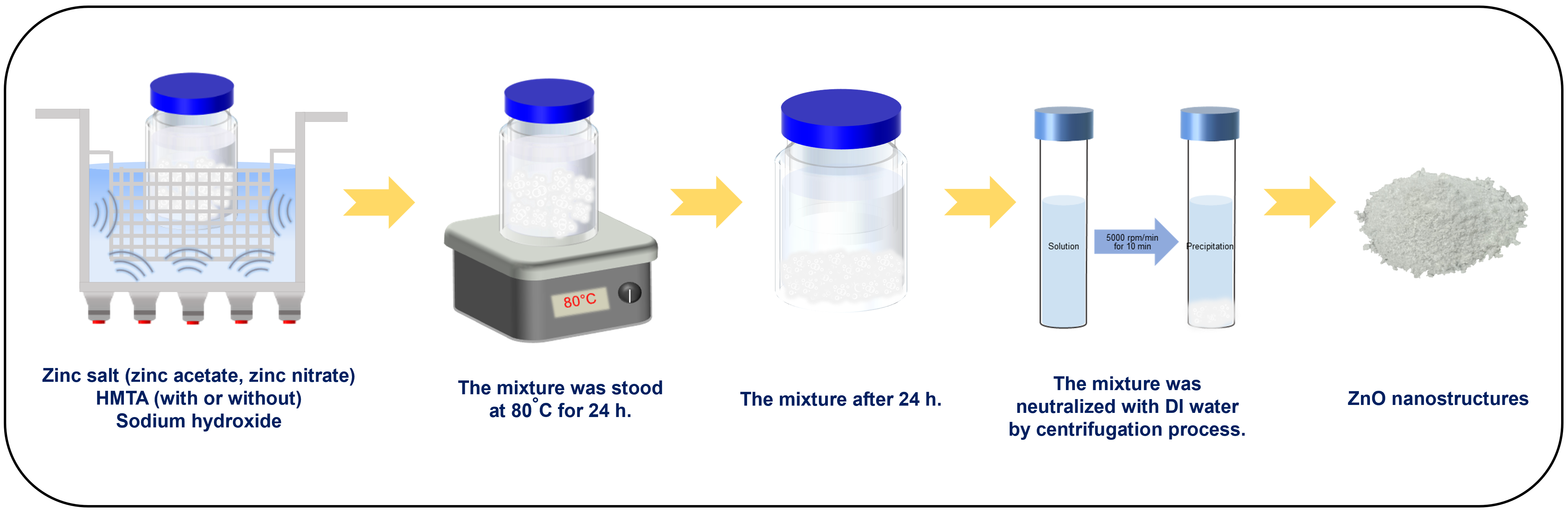
This work investigated the influence of hexamethylenetetramine (HMTA) on ZnO nanostructures generated from different zinc salt precursors, including zinc acetate and zinc nitrate, via a simple one-step sol–gel method at 80 °C. Phase-pure ZnO powders can be obtained via this facile process without post-synthesis annealing, as confirmed by XRD analysis. Although all samples exhibited the characteristic wurtzite ZnO phase, significant differences in morphology, defect structure, and photocatalytic behavior were observed depending on the precursor and HMTA addition. Morphological characterization revealed the formation of rod-shaped and flake-like ZnO nanostructures with distinct dimensions, while the incorporation of HMTA under mild synthesis conditions resulted in smaller and more uniform structures due to the gradual generation of ions during ZnO nucleation and growth. The reduced defect-related emission observed in HMTA-assisted samples suggests improved charge separation, thereby enhancing photocatalytic degradation of Rhodamine B. These findings provide new insights into the cooperative effects of precursor chemistry and HMTA on ZnO crystal growth and establish an important structure–property relationship for the design of efficient ZnO-based photocatalysts.
3. Results and Discussion
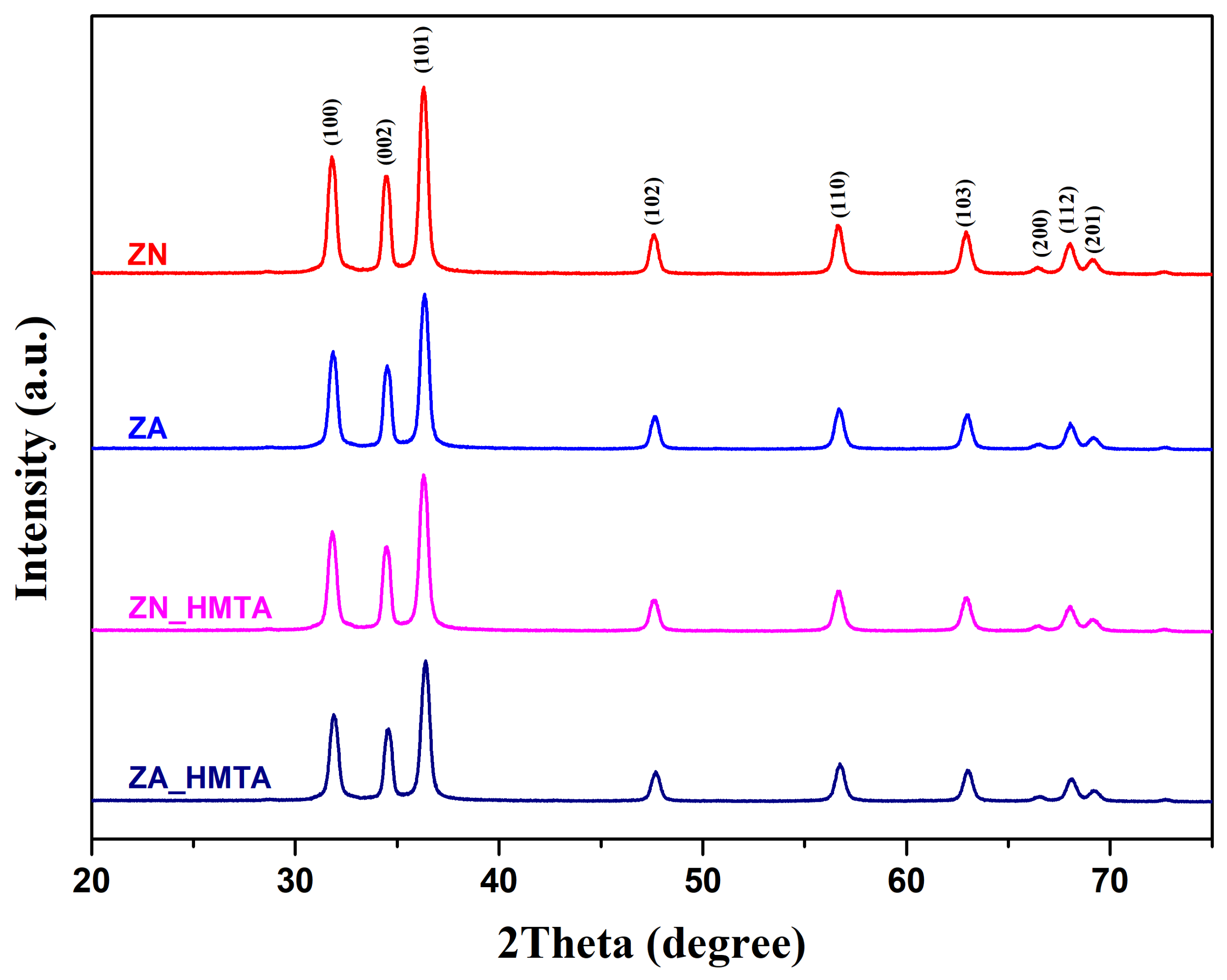
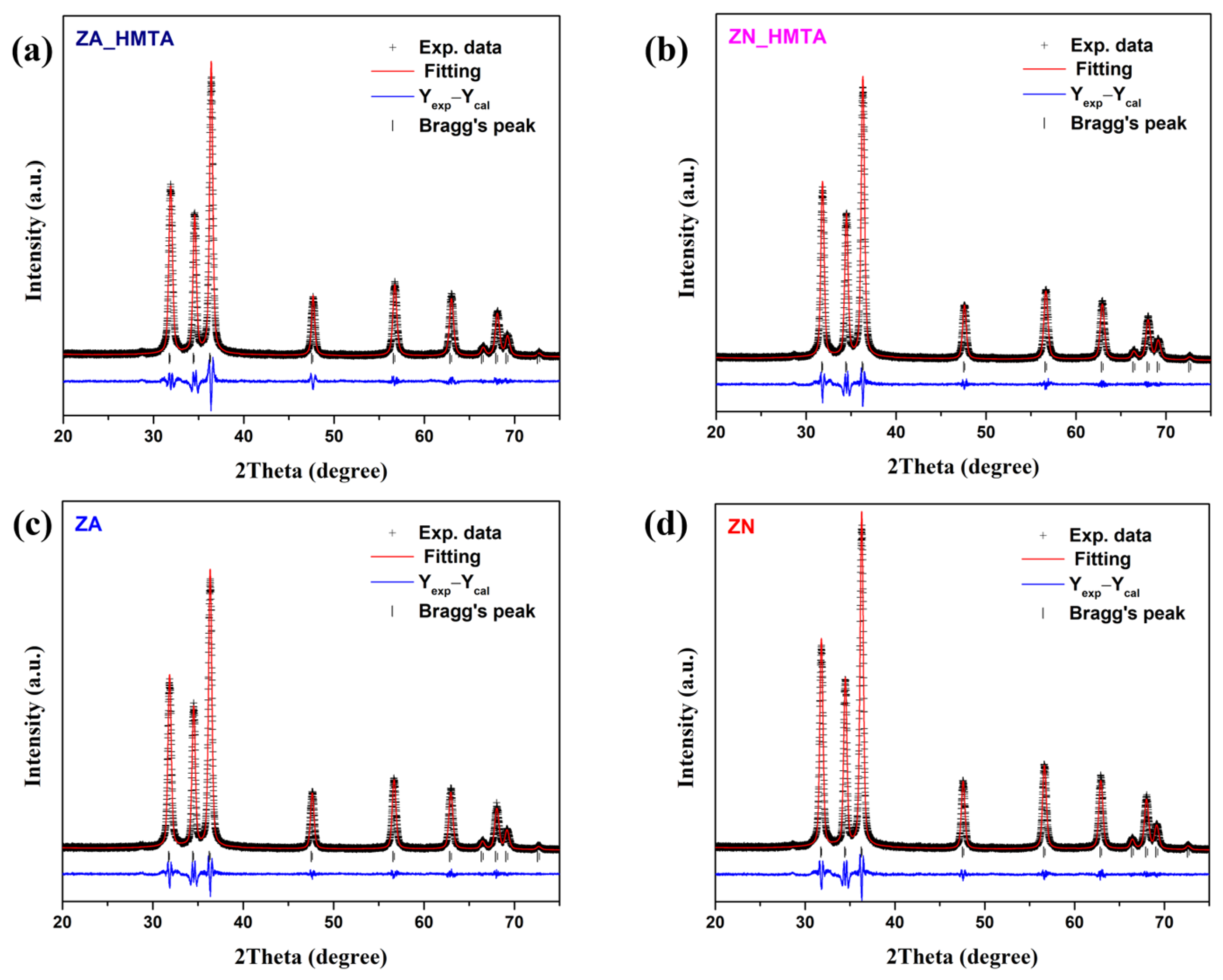
The X-ray diffraction patterns of ZnO nanostructures synthesized from different zinc salt precursors, with and without HMTA, are presented in
Figure 2 (stacked patterns) and
Figure 3 (Rietveld refinements). All samples show a series of well-defined diffraction peaks in the 2θ range of 20–75° at approximately 31.8°, 34.4°, 36.3°, 47.6°, 56.6°, 62.9°, 66.4°, 68.0°, 69.1°, and 72.6°, corresponding to the (100), (002), (101), (102), (110), (103), (200), (112), (201), and (004) planes of hexagonal wurtzite ZnO (ICSD No. 167690). The stacked patterns in
Figure 2 clearly confirm that ZA_HMTA, ZN_HMTA, ZA, and ZN all share the same phase, with no additional reflections from residual zinc salts or Na-containing by-products, indicating that phase-pure ZnO was obtained for all synthesis routes. Moreover, the Rietveld refinements (
Figure 3) show excellent agreement between the experimental and calculated profiles, demonstrating that the structural model accurately describes all samples. The refined lattice parameters and d-spacings exhibit only minor variations, suggesting that neither the choice of zinc precursor (acetate vs. nitrate) nor the presence of HMTA significantly perturbs the average crystal lattice. Furthermore, the calculated d-spacing values for the ZnO nanostructures show negligible variation across all samples, indicating that the influence of the precursor type and the presence or absence of HMTA on the crystal lattice is minimal. The relative intensity ratio of the dominant diffraction planes, especially the (002) and (101) planes, was calculated by the ratio of their peak intensities (I
(002)/I
(101)) to confirm the preferred orientation of ZnO crystallites along the c-axis [
21]. ZnO diffraction patterns by zinc acetate precursor with/without HMTA were further analyzed to explore the dominant rod-like shapes within the ZnO nanostructures owing to the high respect ratio of I
(002)/I
(101). The average crystal size of ZnO powder obtained from different zinc salt precursors ranges from approximately 20 to 25 nanometers, as shown in
Table 1, depending on morphology. The largest crystal sizes are found in ZnO materials synthesized using a zinc nitrate precursor, which are associated with dense aggregation into flake-like structures.
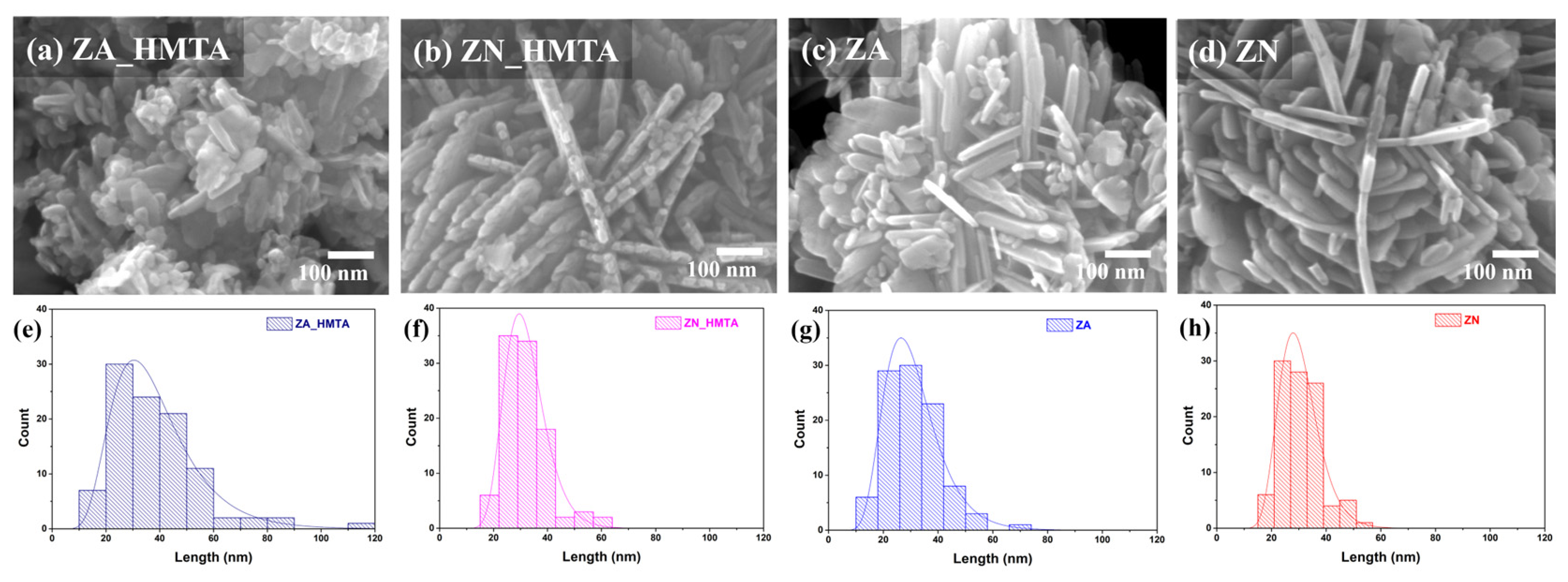
Surface morphologies of ZnO nanostructures from zinc acetate and zinc nitrate with and without HMTA are demonstrated in
Figure 4a–d. ZnO derived from zinc acetate with HMTA (
Figure 4a) exhibits large flake-like structures with small rod-like features in certain regions. Meanwhile, ZnO obtained from zinc nitrate with HMTA (
Figure 4b) shows pronounced aggregation, leading to predominantly flake-like morphologies. These structures can be presented by HMTA hydrolysis under thermal conditions. Hydroxide ions (OH¯) are gradually released from HMTA and react with Zn
2+ to form zinc hydroxide intermediates that subsequently dehydrate to ZnO [
25]. The hydrolysis of HMTA on ZnO formation can be expressed by Equations (3)–(6) as:
The products of ZnO nanostructures lead to a smaller size and more uniform morphology, which is attributed to the influence of
ions from the HMTA source in the sol–gel process. When NaOH is used together with HMTA, the controlled
release promotes more oriented growth and tighter aggregation of flakes and rods. In contrast, the ZnO sample synthesized from zinc acetate without HMTA (
Figure 4c) exhibits a mixed phase of flakes and rods, but the rod-like structures appear more distinct and less embedded compared to the condition with HMTA. Although some degree of aggregation is still observed, the individual features are more clearly recognizable. Meanwhile, the ZnO sample derived from zinc nitrate without HMTA in
Figure 4d predominantly reveals thick plate-like structures with a more separated morphology. Therefore, the ZnO products in the absence of HMTA may be completely formed by the direct reaction of zinc ions with NaOH to form zinc hydroxide. After mild thermal treatment in a one-step sol–gel process, Zn(OH)
2 is likewise converted into ZnO product as follows by Equations (7) and (8);
However, NaOH alone on ZnO (without HMTA), yields more clearly arranged, better-defined rod- and plate-like structures. Moreover, the influence of carboxylate and nitrate ions in the precursors tends to promote aggregation during growth, favoring the formation of larger ZnO nanoparticles [
26]. Thus, ZnO formation under all synthesis conditions proceeds via the dehydration of zinc hydroxide intermediate under mild thermal conditions in a one-step sol–gel process [
17]. Moreover, the average flake lengths obtained from the particle size distribution histograms in
Figure 4e–h, as determined by ImageJ 1.54d analysis, are 38 nm for ZA_HMTA, 32 nm for ZN_HMTA, 31 nm for ZA, and 30 nm for ZN. These histograms provide statistical information on the nanoflake dimensions and clearly show that the zinc precursor and the presence of HMTA influence both the mean length and the size dispersion. Thus, the ZnO nanostructures exhibit different flake and rod sizes, with their formation and degree of aggregation strongly dependent on the zinc precursor type and the presence of HMTA surfactant, which influences their available surface area and photocatalytic activity.
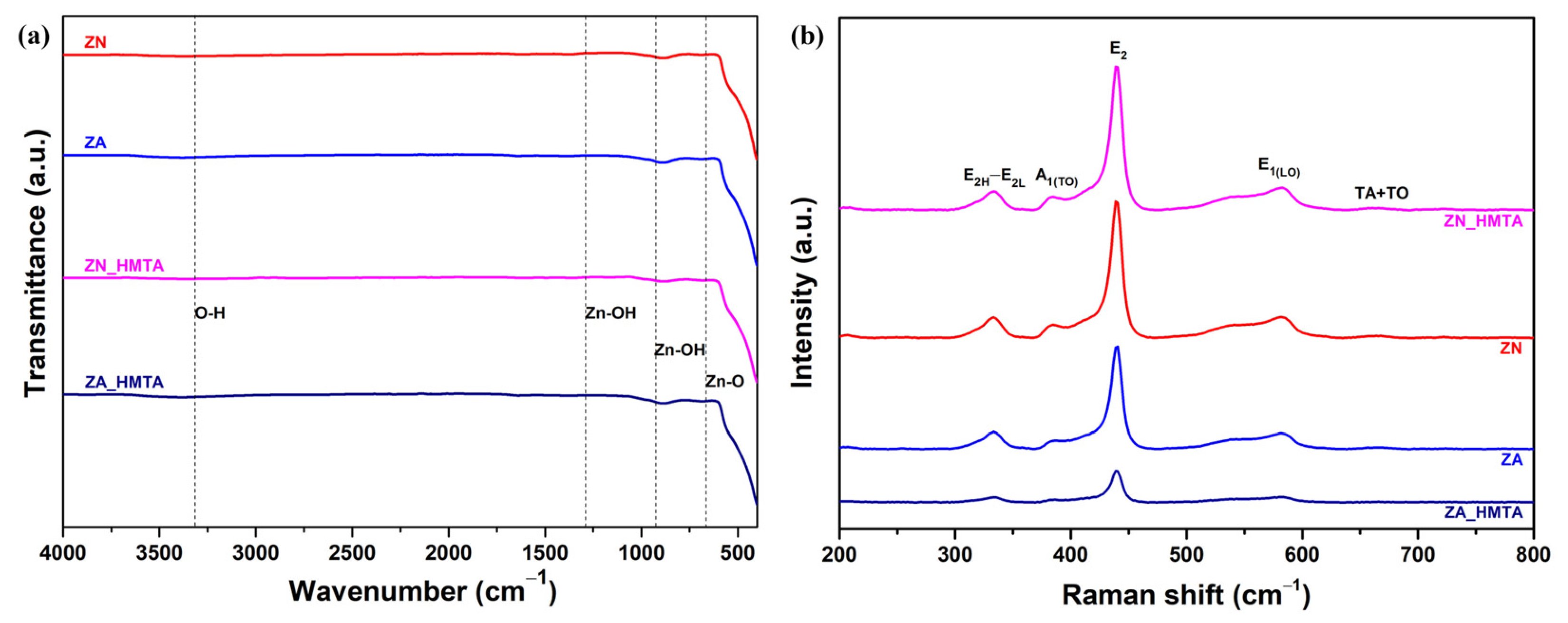
The chemical bonding of ZnO nanostructures generated from various zinc precursors and the presence of HMTA in
Figure 5 were investigated using an FT-IR and a Raman spectrophotometer. All samples with FTIR spectra (
Figure 5a) recorded across the range of 400 to 4000 cm
−1 consistently display vibrational modes corresponding to Zn−O bonding at 454 and 523 cm
−1 through all conditions. The major peaks at 690 and 900 cm
−1 are attributed to Zn–O lattice vibrations and surface Zn−OH groups. These hydroxyl species are likely associated with surface defects or some residual hydroxylation product [
27]. This result confirms the formation of ZnO powder, indicating the incorporation of Zn atoms into the oxygen lattice. The prominent peak around 3400 cm
−1 in the FT-IR spectra was assigned to O−H stretching from the hydroxyl group [
28]. Thus, all FT-IR spectra of all ZnO conditions exhibit the functional groups linked to ZnO bonding, confirming the existence of pure ZnO without any chemical impurities across all ZnO products without a post-treatment process. Meanwhile,
Figure 5b shows the Raman spectra of ZnO nanostructures synthesized from zinc acetate and zinc nitrate with and without HMTA. All four samples exhibit very similar spectral features, consistent with the FTIR results, confirming that they share the same basic structure. The main Raman spectra correspond to the hexagonal wurtzite phase of ZnO, and no additional peaks associated with impurity phases are observed in all samples. As expected from group theory, the optical phonons at the Brillouin zone center are described by
A1 + E1 + 2
E2. The polar
A1 and
E1 modes give rise to distinct transverse optical (TO) and longitudinal optical (LO) components. A strong and sharp peak observed near 440 cm
−1 in all spectra is assigned to the E
2(high) mode of hexagonal wurtzite ZnO, which is related to the vibration of oxygen atoms in the ZnO lattice [
13]. Additional features around 335 cm
−1 and 590 cm
−1 are attributed to the E
2H−E
2L and E
1(L) modes, respectively [
29]. Moreover, a clear difference among the samples is the overall Raman intensity. The ZnO obtained from the zinc nitrate precursor, especially from zinc nitrate with the HMTA sample, shows the highest with well-defined peaks. This agrees with the highest average crystallite size related to the XRD results, which indicate larger crystallite sizes and higher crystallinity for the ZN-based samples. Overall, the Raman and FTIR analyses confirm phase-pure wurtzite ZnO and show that the choice of zinc precursor and the use of HMTA subtly influence the structural order and crystallinity of the resulting nanostructures.
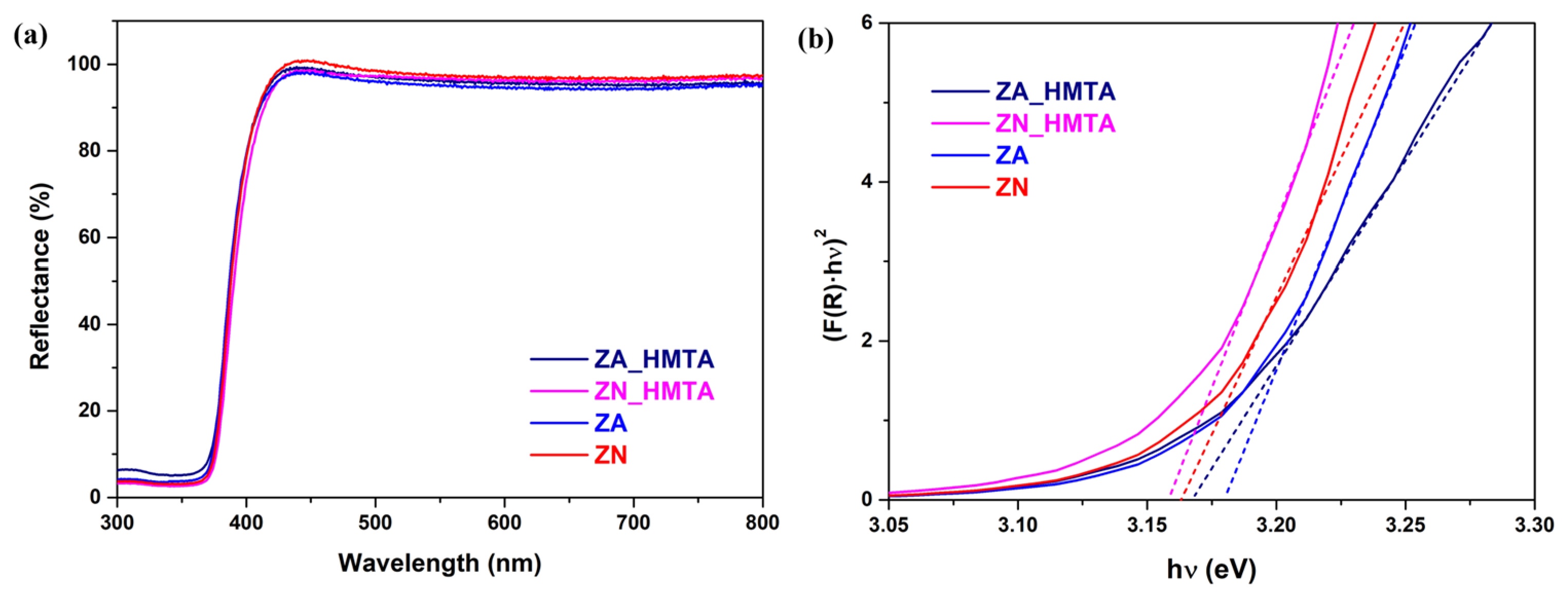
To further support the proposed photocatalytic mechanism and assess the influence of precursor and HMTA on the electronic structure, UV–Vis diffuse reflectance spectra of all ZnO samples were recorded (
Figure 6a). All compositions (ZA, ZN, ZA_HMTA, and ZN_HMTA) exhibit a sharp absorption edge in the near-UV region, with negligible absorption in the visible range, which is characteristic of wide-bandgap ZnO.
The optical bandgap (Eg) was estimated from the reflectance data using the Kubelka–Munk function, as shown in
Figure 6b, following Equation (9) [
30].
By linearly extrapolating the high-energy region of each curve, the obtained Eg values of approximately 3.16 eV (ZA_HMTA), 3.17 eV (ZN_HMTA), 3.18 eV (ZA), and 3.16eV (ZN) were obtained. These results indicate that all samples retain the typical wide bandgap of wurtzite ZnO (~3.2–3.3 eV), and that neither the choice of zinc precursor (acetate vs. nitrate) nor the incorporation of HMTA induces a significant bandgap narrowing or visible-light absorption. This observation is fully consistent with the photocatalytic tests, where ZnO exhibits much higher activity under UV irradiation than under Xenon light, confirming that the materials behave predominantly as UV-driven photocatalysts. The small differences in Eg (~0.02–0.03 eV) are within the experimental uncertainty of the method and do not indicate major changes in the band edge positions. Consequently, the modest enhancements in photocatalytic degradation observed for HMTA-assisted samples cannot be attributed to bandgap engineering, but rather to the combined effects of improved crystallinity, more uniform rod/flake morphology, modified porosity, and possibly defect-related surface states, as discussed in the previous sections. In this sense, the UV–Vis DRS results support our interpretation that the underlying degradation pathway follows the conventional ZnO-based ROS mechanism, and that the role of HMTA and precursor chemistry is to optimize structural and textural features rather than to fundamentally alter the electronic band structure.
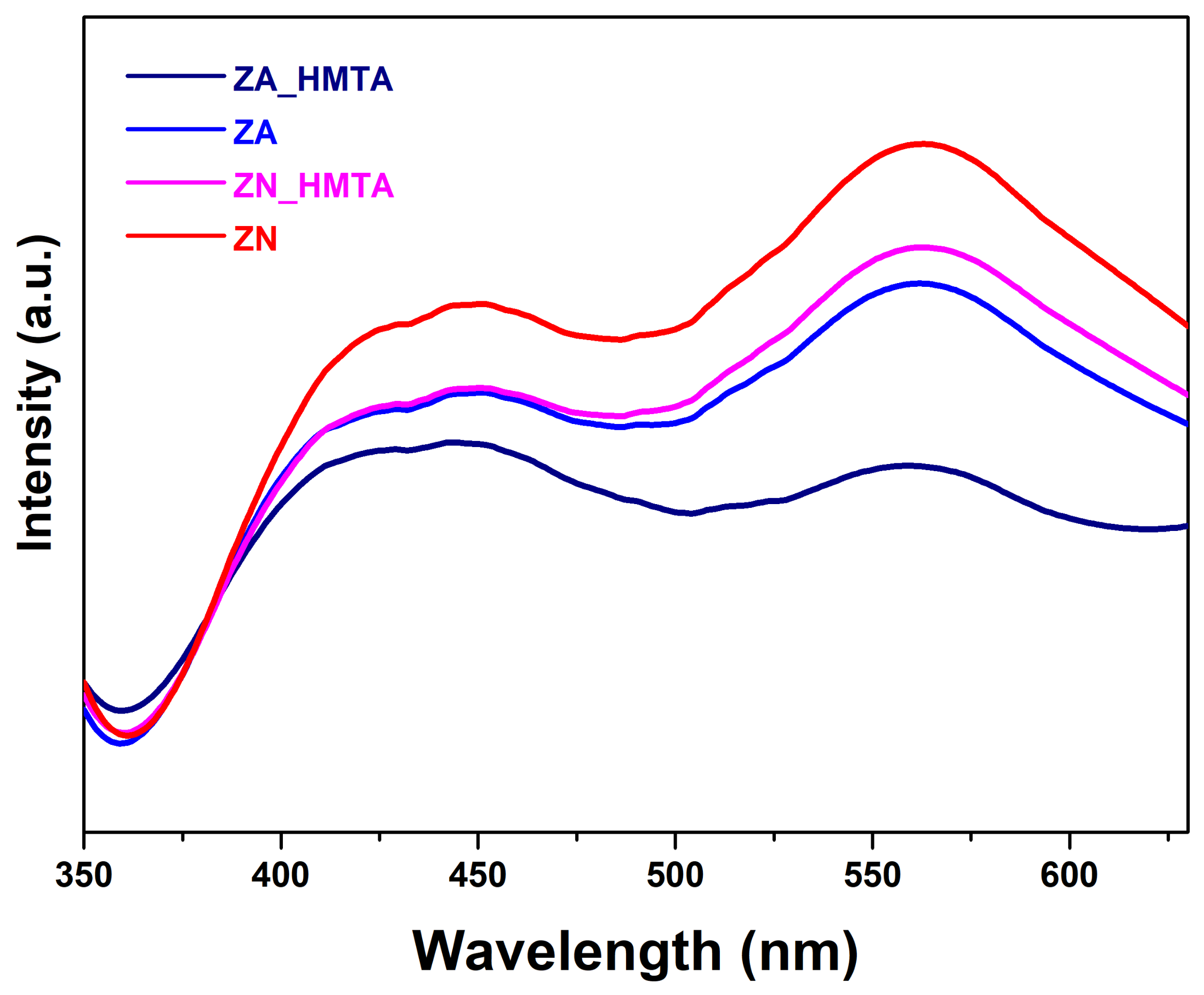
The fluorescence spectra of ZnO nanostructures recorded in the wavelength range of 350 to 650 nm are shown in
Figure 7. All samples exhibit a broad visible emission band extending from approximately 420 to 620 nm, with a maximum intensity centered around 560–580 nm. This board green-yellow emission is typically associated with deep-level defect-related transitions involving intrinsic defects in the ZnO lattice, such as oxygen vacancies (VO), zinc interstitials (Zni), oxygen interstitials (Oi) and zinc vacancies (VZn) [
31]. A clear dependence of the intensity on both the zinc precursor and the presence of HMTA is observed. Notably, the intensity of the ZA_HMTA sample is significantly lower than that of ZA, indicating a reduced density of radiative electron–hole recombination and suggesting more efficient charge separation in the HMTA-assisted ZnO obtained from zinc acetate. In contrast, the ZN sample shows the highest intensity among the four, implying a higher concentration of defect-related states and enhanced electron-hole recombination. The incorporation of HMTA into the nitrate-based system results in a decrease in the fluorescence spectrum (ZN_HMTA), indicating that HMTA suppresses the formation of defect states during crystal growth. These results support that HMTA, as a capping agent, influences the defect structure and charge-carrier dynamics of ZnO in a precursor-dependent manner. For both precursor systems, the presence of HMTA reduces the intensity of defect-related visible emissions, indicating a lower concentration of recombination centers. The reduced defect-related emission indicates improved charge separation efficiency, which is expected to benefit photocatalytic performance.
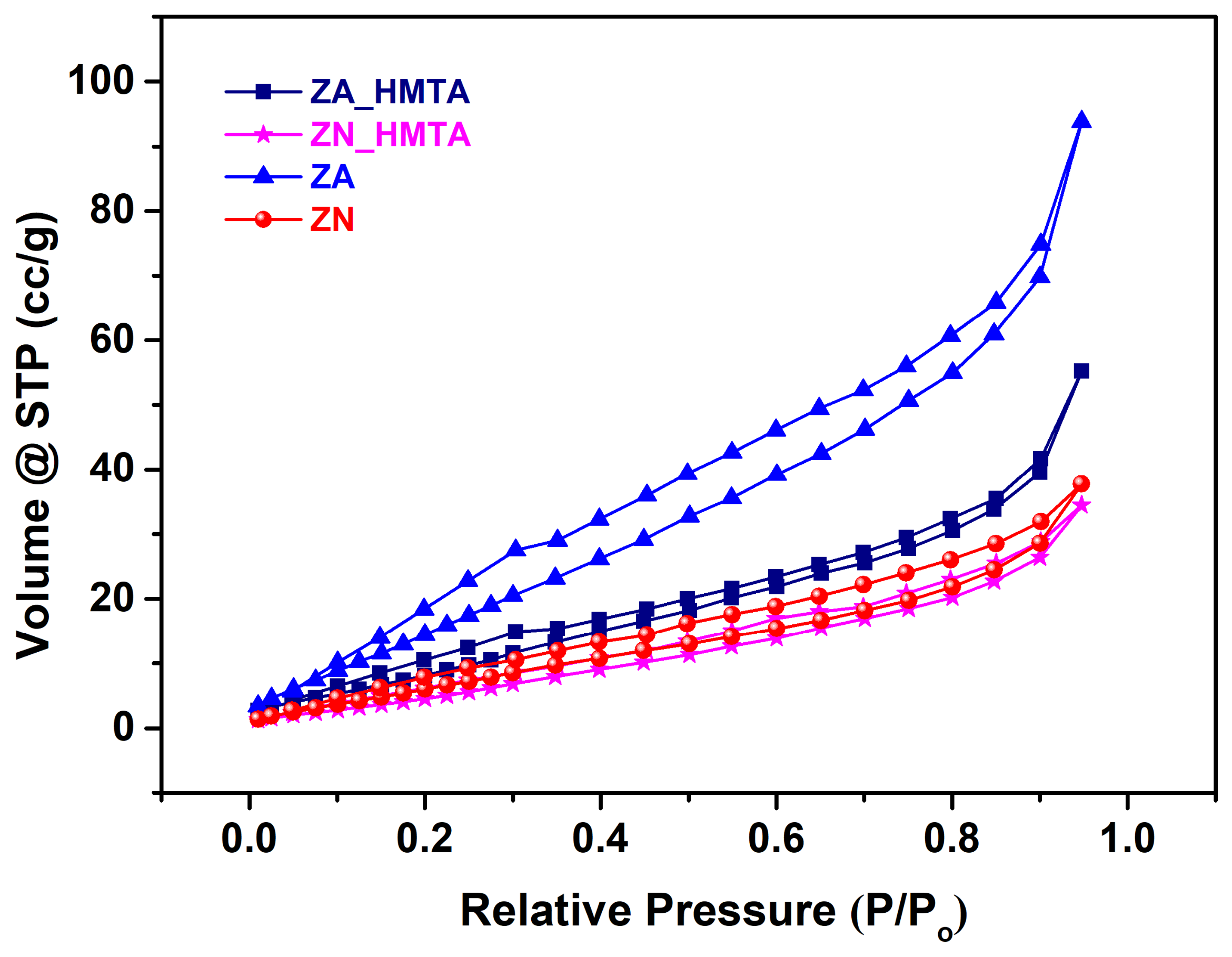
The specific surface area results for all samples derived from zinc acetate and zinc nitrate, with and without HMTA, are presented in
Figure 8. The values of surface area per volume, cumulative volume, and average pore diameter are summarized in
Table 2. All ZnO samples exhibit Type IV isotherms with H3 hysteresis, as indicated by the IUPAC classification of adsorption isotherms [
32]. The variations in H3-type hysteresis loops observed in all samples may result from particle aggregation. ZnO without HMTA reduces the tendency of particle agglomeration during synthesis, related to the Raman results, which show a lower signal in the ZnO without HMTA conditions. This is why ZnO derived from zinc acetate without HMTA exhibits a higher surface area compared to the other samples. In addition, a higher cumulative pore volume is observed in this condition owing to more pores available for gas adsorption, thereby increasing the overall surface area measured by BET analysis. A higher cumulative pore volume indicates a more interconnected porosity, which enhances surface interactions. The ZnO sample using zinc acetate as the precursor presents a more uniformly distributed pore structure with smaller pore sizes, resulting in a greater surface area compared to the sample prepared from zinc nitrate. Conversely, ZnO from zinc nitrate reveals a lower surface area due to larger average pore diameters, associated with the XRD and Raman results. Therefore, larger average pore sizes can correspond to a reduction in specific surface area, as the available surface area for gas adsorption decreases. The low cumulative volume observed in the samples by zinc nitrate implies that they have fewer or less effective pores for gas adsorption. Consequently, this point leads to a less porous structure overall, resulting in diminishing surface area. Thus, the product prepared with zinc acetate without HMTA exhibits the highest surface area due to its higher cumulative volume. Meanwhile, ZnO from zinc nitrate displays the lowest surface area due to its large average pore diameter values and the least cumulative volume. However, BET analysis measures the total accessible surface area, and not all of this area necessarily contributes effectively to catalysis. The nature, connectivity, and accessibility of the pores, as well as the type and distribution of active sites, are also critical factors governing photocatalytic performance.
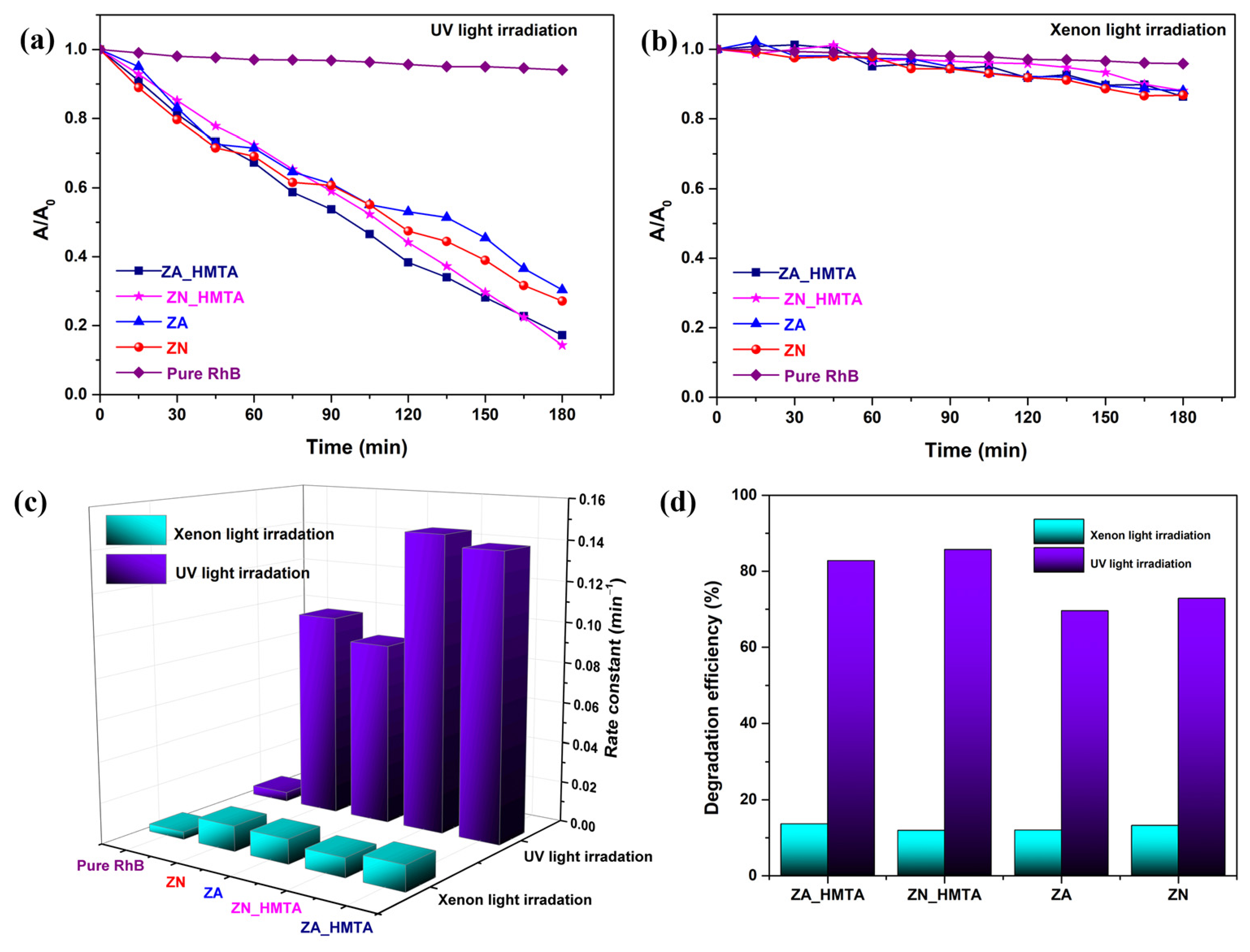
To evaluate the degradation efficiency for potential photocatalytic applications,
Figure 9 illustrates the photocatalytic performance in RhB degradation by ZnO nanophotocatalysts derived from zinc acetate and zinc nitrate in the presence and absence of HMTA. A pure RhB solution without any photocatalyst is employed as a control sample to verify its stability under UV and Xenon lamp irradiation. The negligible change in RhB absorbance confirms that self-photodegradation does not occur in the absence of the photocatalyst. In
Figure 9a, all samples show a gradual decrease in the normalized absorption (A/A
0) over time, confirming their effective photocatalytic activity under UV irradiation. Notably, ZnO photocatalyst-based HMTA demonstrates comparable or even superior photocatalytic activity despite its lower surface area and larger average pore diameter. This apparent inconsistency can be explained by synergistic effects arising from better crystallinity, favorable morphology, enhanced catalytically active facets, optimized pore architecture, and more efficient charge separation in the HMTA-containing samples. The presence of HMTA promotes controlled nucleation and growth, leading to higher crystallinity and fewer detrimental defects that typically act as electron-hole recombination centers. Consequently, a greater proportion of photogenerated charge carriers can participate in the photocatalytic reaction. Furthermore, HMTA also directs the formation of well-defined rod- and flake-like structures, which improve light harvesting through multiple scattering and provide efficient pathways for charge transport to reactive surface sites. While BET analysis reflects the total accessible surface area, ZnO synthesized with HMTA may expose a higher fraction of reactive crystal facets, thereby increasing its effective active area beyond what is suggested by surface area measurement alone. In addition, the presence of larger pores facilitates the diffusion of RhB molecules and intermediates, minimizing mass transfer limitations that are often encountered in materials with ultrafine, narrow-pore structures. Under Xenon light irradiation (
Figure 9b), RhB degradation is significantly reduced across all samples, reflecting the predominantly UV-active nature of ZnO due to its wide bandgap. Only a limited fraction of the Xenon lamp spectrum lies in the UV region with sufficient energy to excite electrons across the bandgap, resulting in diminished photocatalytic activity under these conditions. Under UV irradiation, the pseudo-first-order rate constants (
k) for RhB degradation are 0.1395 min
−1 (ZA_HMTA), 0.1451 min
−1 (ZN_HMTA), 0.0887 min
−1 (ZA), and 0.0994 min
−1 (ZN), whereas under Xenon irradiation, the corresponding
k values decrease to 0.0124, 0.0094, 0.0120, and 0.0124 min
−1, respectively. Thus, lower degradation efficiencies are observed, as most photogenerated electron-hole pairs are not effectively activated by visible light irradiation. Due to its wide bandgap (~3.3–3.4 eV), pristine ZnO is primarily activated by the UV region, resulting in limited utilization of the visible-light irradiation and consequently lower photocatalytic activity under Xenon irradiation. To overcome this limitation, extensive research has focused on modifying ZnO through metal/non-metal doping, heterojunction formation, defect engineering, and plasmonic enhancement. These strategies have been demonstrated to broaden visible-light absorption, suppress electron–hole recombination, and enhance the overall photocatalytic performance of ZnO-based materials. The summarized
k constants in each experimental condition are presented in
Figure 9c and
Table 3 quantitatively support the trend that HMTA-assisted samples exhibit improved photocatalytic reaction kinetics despite their relatively lower specific surface area. During the sol–gel process, HMTA acts not only as a gelling agent but also as a morphology-directing agent through the controlled release of
ions, thereby influencing ZnO nucleation and crystal growth. As a result, ZnO synthesized in the presence of HMTA exhibits uniform nanostructures with modified defect characteristics. This indicates that factors beyond surface area play a dominant role in determining photocatalytic performance by reducing charge-carrier recombination and promoting more efficient separation and migration of photogenerated electrons and holes in the ZnO photocatalyst [
28]. Furthermore,
Figure 9d presents the photocatalytic degradation percentage of RhB using ZnO nanostructures synthesized from zinc acetate and zinc nitrate, with and without HMTA. Under UV irradiation, the RhB degradation efficiencies reached 83% (ZA_HMTA), 86% (ZN_HMTA), 70% (ZA), and 73% (ZN). In contrast, the corresponding degradation efficiencies under Xenon irradiation were 14%, 12%, 12%, and 13%, respectively. The superior photocatalytic performance of the HMTA-assisted samples under UV irradiation indicates that HMTA improves ZnO morphology and facilitates more efficient separation of photogenerated charge carriers. Combined analysis of BET surface area, structural, and kinetic data indicates that the choice of zinc salt precursor and the presence of HMTA play critical roles in tailoring crystallinity, morphology, pore structure, and charge separation efficiency [
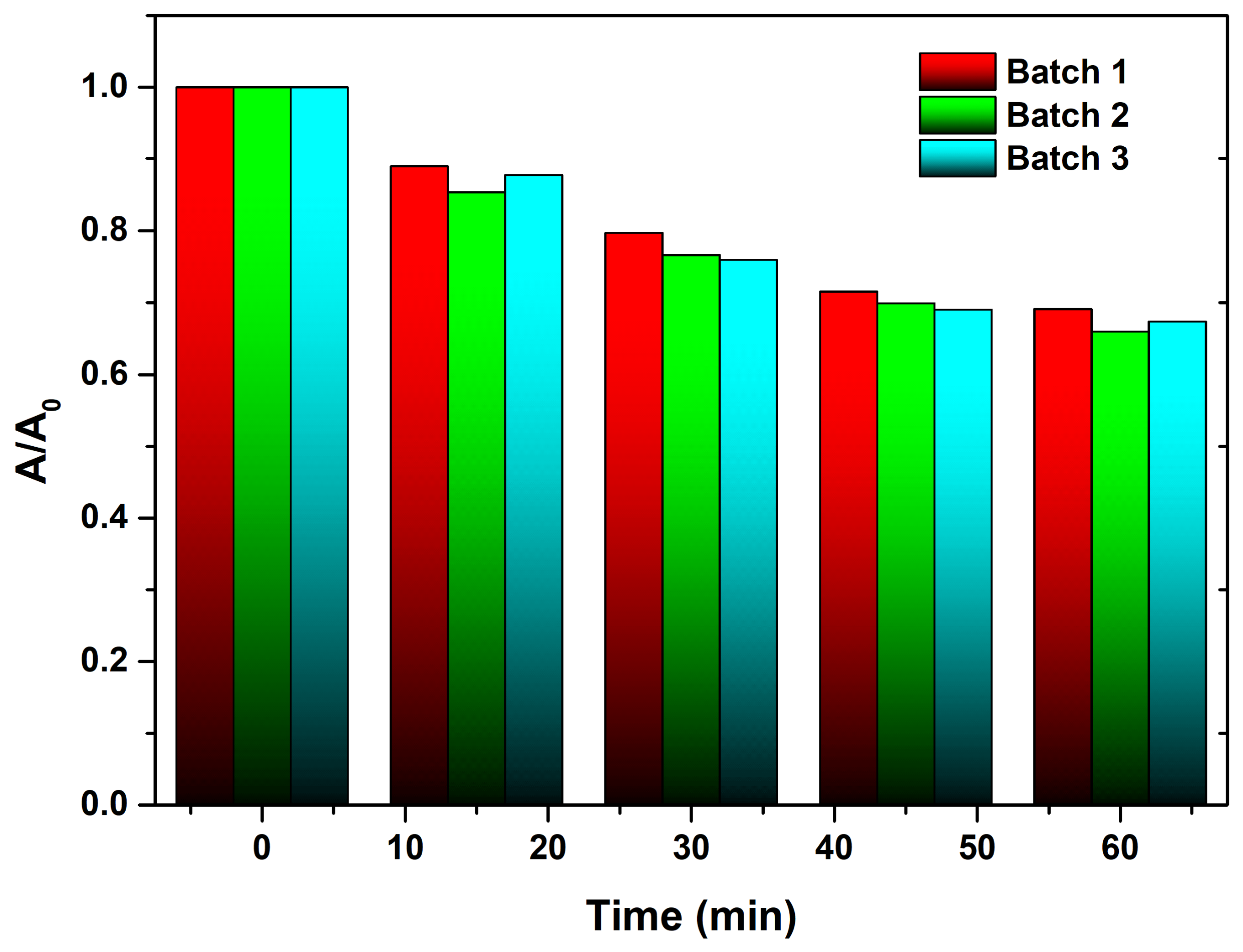
8]. It is the synergic interplay of these factors that ultimately controls the photocatalytic efficiency of ZnO nanostructures in RhB degradation. Moreover, the reproducibility of the photocatalytic performance of ZnO material synthesized from a zinc nitrate precursor with HMTA assistance is evaluated in
Figure 10. The photocatalytic degradation of RhB under UV irradiation was examined using three independently prepared ZnO batches (Batch 1, Batch 2, and Batch 3). For each batch, a fresh ZnO sample was synthesized and tested under identical experimental conditions. The nearly overlapping A/A
0 profiles observed throughout the 60 min irradiation period demonstrate excellent reproducibility of both the synthesis process and the photocatalytic performance. These results confirm that the HMTA-assisted synthesis route using a zinc nitrate precursor consistently produces ZnO with reliable structural characteristics and reproducible photocatalytic activity.
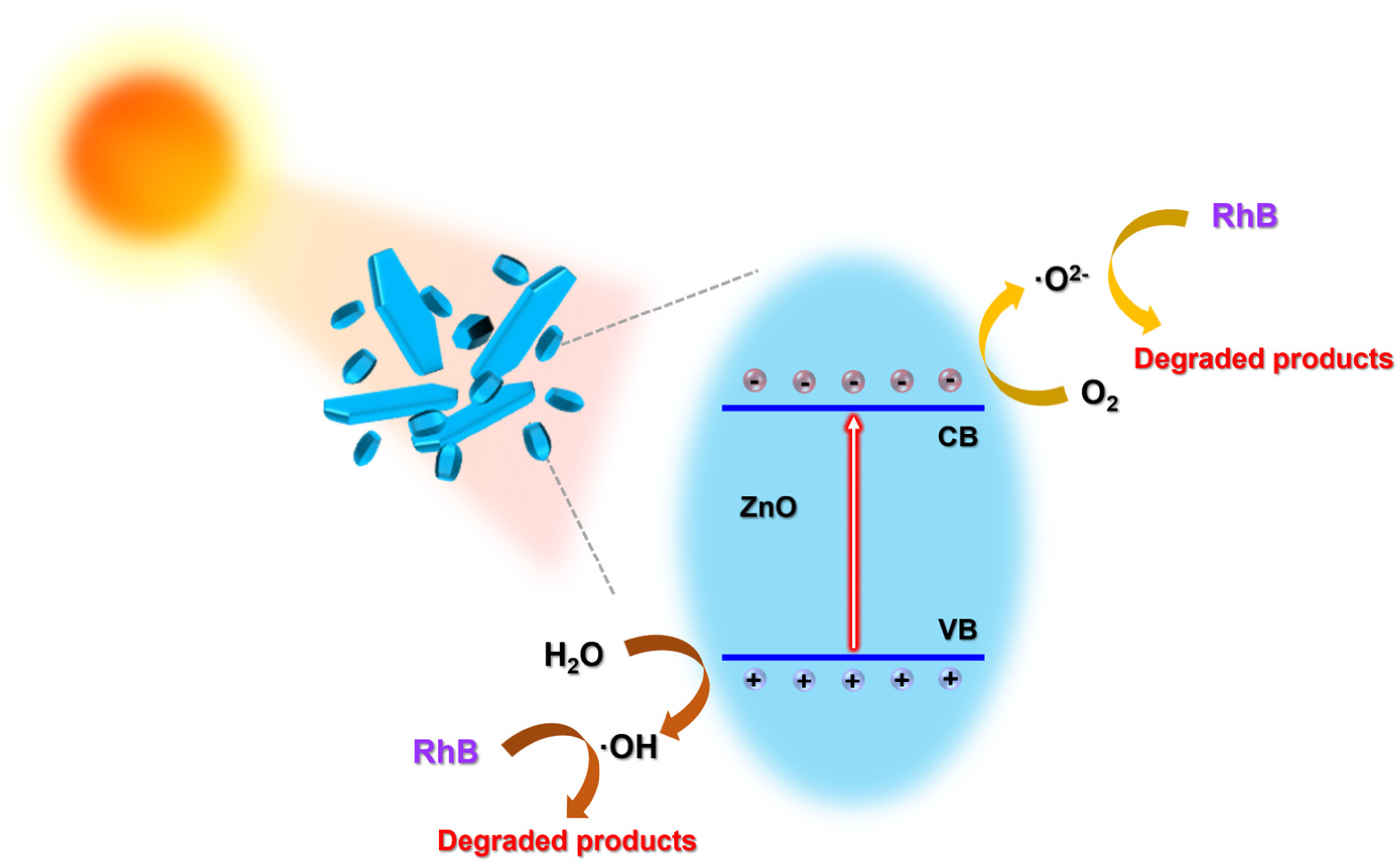
The photocatalytic mechanism of rhodamine B degradation over the ZnO nanostructures in this work can be described in terms of oxidative damage as schematically shown in
Figure 11. When ZnO is irradiated with photons of energy equal to or greater than its bandgap (typically in the UV range), electrons in the valence band (VB) are excited to the conduction band (CB), leaving behind positively charged holes in the VB. These photogenerated electrons and holes then migrate toward the ZnO surface. If they recombine within the bulk, no useful reaction occurs, so efficient photocatalysis depends not only on generating these charge carriers but also on keeping them separated long enough to reach the surface. At the ZnO surface, conduction-band electrons react with adsorbed oxygen molecules to form superoxide radicals (
), while valence-band holes oxidize surface water molecules or hydroxide ions to produce hydroxyl radicals (
) [
22]. These highly reactive species, together with direct oxidation by holes, attack RhB molecules adsorbed on the ZnO surface. In addition, RhB degradation under photocatalysis is commonly initiated by N-deethylation of amino groups via photogenerated holes and reactive oxygen species from the catalyst, leading to the sequential formation of deethylated intermediates [
33]. Following N-deethylation, the xanthene chromophore undergoes cleavage and subsequent ring-opening reactions, ultimately leading to the formation of smaller organic intermediates and, eventually, the mineralization of the dye into CO
2 and H
2O. These degradation processes are reflected by the progressive decrease in the absorbance intensity of RhB, resulting in a reduction in the absorbance ratio (A/A
0) during photocatalytic treatment [
34]. Our results make it clear that photocatalytic performance is governed by more than surface area alone. A high BET surface area and large pore volume, as observed for ZnO derived from zinc acetate without HMTA, provide many potential adsorption sites, but this does not automatically yield the most efficient RhB degradation. In contrast, the HMTA-mediated growth environment is relatively
, which can modify the crystallinity structure of ZnO [
8]. These changes affect band bending and surface states at the solid–liquid interface, promoting better spatial separation of electrons and holes near the surface. Thus, charge recombination is suppressed and the steady-state concentrations of
and
at the surface increase, leading to more efficient oxidative degradation of RhB, even when the overall BET surface area is lower.




 ,
,