


Abstract
Federated learning (FL) enables collaborative model training without sharing raw data, but remains vulnerable to poisoning attacks in which malicious participants manipulate local data, model updates, gradients, or learned behaviours to degrade performance or introduce targeted failures. These threats become harder to assess and mitigate in heterogeneous federated learning (HFL), where clients may differ in data distributions, model architectures, task objectives, resource availability, communication reliability, participation patterns, privacy constraints, and deployment environments. Existing surveys provide valuable coverage of FL security, poisoning attacks, robust aggregation, privacy-preserving mechanisms, and heterogeneity, but they do not sufficiently analyse how heterogeneity changes both poisoning behaviour and mitigation reliability. This survey addresses that gap by examining how statistical, model, task, device, communication, and participation heterogeneity affect poisoning feasibility, stealth, persistence, impact, transferability, attribution, and detectability. It then proposes a heterogeneity-aware taxonomy of poisoning mitigation mechanisms and compares existing strategies using operational criteria centred on attack–defence alignment, evidence validity, server visibility, privacy compatibility, scalability, deployment feasibility, and benign-client preservation. The central argument is that poisoning mitigation in HFL should not be evaluated only by attack type, defence family, clean accuracy, or attack success rate but also by whether defences observe and protect the channels through which heterogeneity-shaped attacks are expressed. The survey further identifies open challenges for developing channel-aware, privacy-compatible, scalable, adaptive, and false-positive-aware defences that preserve useful benign diversity under realistic HFL conditions.
1. Introduction
Federated learning (FL) enables multiple distributed clients to collaboratively train machine learning models without sharing their raw data. This makes FL attractive for privacy-sensitive and distributed environments such as healthcare, edge computing, the Internet of Things (IoT), wireless networks, intrusion detection systems, smart cities, and mobile applications [1,2,3,4,5,6]. By keeping data local to clients, FL reduces direct data exposure and supports collaborative intelligence across organisations, devices, and domains. However, decentralisation also introduces a different security surface. Since the server relies on client-submitted updates, malicious participants can manipulate local training data, model parameters, gradients, or update behaviour to corrupt the global model.
Among the most significant threats to FL are poisoning attacks, including data poisoning, label flipping, model poisoning, backdoor attacks, Byzantine behaviour, Sybil attacks, and colluding malicious-client strategies [7,8,9,10,11,12,13,14,15,16,17]. These attacks can degrade global model performance, introduce targeted misclassification behaviour, preserve high clean accuracy while activating hidden malicious triggers, or disrupt convergence. Unlike conventional centralised learning, FL gives adversaries repeated opportunities to influence training through local updates, while the server may have limited visibility into local data, local training behaviour, or client intent.
At the same time, real FL deployments are rarely homogeneous. Clients may differ in their data distributions, local objectives, model architectures, computational resources, communication quality, privacy requirements, and participation patterns [18,19,20,21,22,23,24]. This heterogeneity is not a minor implementation detail. It is a fundamental feature of practical FL systems. For example, IoT and edge clients may operate under limited energy and memory budgets; wireless clients may suffer from intermittent connectivity; healthcare or intrusion-detection clients may observe highly domain-specific data; and personalised FL systems may intentionally allow local models or objectives to adapt to local requirements [25,26,27,28,29,30,31,32,33,34].
The interaction between poisoning attacks and heterogeneity creates a critical security problem. Many poisoning defences rely on the assumption that malicious clients can be detected because their updates deviate from benign behaviour. However, in heterogeneous federated learning (HFL), benign clients may naturally produce updates that appear abnormal because of non-IID data, rare local classes, personalised objectives, limited computation, different model components, delayed communication, or unstable participation. This makes it harder to distinguish malicious behaviour from legitimate client diversity. Conversely, attackers may exploit heterogeneity to hide poisoned updates within normal update variability, improve backdoor stealth, increase persistence, shift attribution towards benign clients, or evade anomaly-based defences. Canonical and recent attack studies, including model replacement, distributed backdoor attacks, personalised FL backdoors, privacy-assisted poisoning, shadow backdoors, and foundation-model-based backdoors, illustrate how poisoning behaviour can interact with different FL structures and assumptions [35,36,37,38,39,40].
Although FL security and FL heterogeneity have both been widely studied, they are often treated as separate research streams. Security-focused surveys provide valuable classifications of poisoning attacks, backdoor attacks, Byzantine robustness, privacy-preserving mechanisms, secure aggregation, and trust frameworks [7,8,9,10,11,12,13,14,15,16,17,41]. Heterogeneity-oriented surveys, in contrast, primarily analyse non-IID learning, model diversity, system constraints, communication limitations, and asynchronous participation from optimisation and deployment perspectives [18,19,20,21,22,23,24]. As a result, there remains a need for a survey that explicitly analyses poisoning mitigation through the lens of heterogeneity, defence evidence, privacy and server visibility, benign-client preservation, and practical deployment constraints.
This survey addresses that gap by providing a heterogeneity-aware analysis of poisoning attacks and mitigation strategies in FL. The survey does not claim to be the first to review poisoning attacks, backdoor attacks, Byzantine robustness, privacy-preserving FL, or HFL. Instead, its contribution lies in integrating these areas into a single analytical framework that examines how heterogeneity affects attack behaviour, defence assumptions, server visibility, privacy compatibility, scalability, deployment feasibility, and benign-client preservation. The central argument is that heterogeneity changes poisoning behaviour and therefore changes what defences must detect, preserve, tolerate, and evaluate. This shifts the analysis from asking only which defence family is effective against which attack, towards asking whether a defence observes and protects the channel through which a heterogeneity-shaped attack is expressed.
The main contributions of this survey are as follows:
- Systematic positioning of related surveys: The survey critically positions existing surveys on FL security, poisoning attacks, backdoor attacks, Byzantine robustness, robust aggregation, privacy-preserving FL, trust mechanisms, deployment-oriented FL, and heterogeneity. It identifies the remaining gap around poisoning mitigation under HFL-specific assumptions, especially attack–defence alignment, defence evidence validity, privacy and server visibility, benign-client preservation, and deployment feasibility.
- Heterogeneity-aware analysis of poisoning attack effects: The survey analyses how statistical, model, personalisation, KD, task and objective, device and resource, communication, and participation heterogeneity affect poisoning attack feasibility, stealth, persistence, impact, transferability, attribution, and detectability.
- Heterogeneity-aware taxonomy of poisoning mitigation mechanisms: The survey introduces a taxonomy of poisoning mitigation mechanisms based on attack coverage, defence principle, deployment stage, evidence requirements, heterogeneity assumptions, server visibility, privacy compatibility, scalability, decision style, and benign-diversity risk.
- Comparative analysis through attack–defence alignment: The survey compares attacks and defences using operational criteria that assess heterogeneity coverage, attack–defence alignment, evidence validity, privacy compatibility, scalability and deployability, benign-client preservation, and evaluation completeness. This comparison identifies where defences are misaligned with heterogeneity-shaped poisoning channels, such as logits, representations, proxy data, stale updates, local objectives, or participation timing.
- Open challenges and future research directions for HFL-suitable mitigation: The survey identifies unresolved research challenges in developing poisoning defences that are channel-aware, heterogeneity-aware, privacy-compatible, scalable, deployment-feasible, and benign-client-preserving under realistic HFL conditions.
To maintain readability while preserving coverage, the paper uses grouped evidence, comparative tables, and coded synthesis categories in the main text rather than discussing every included paper individually.
The remainder of this paper is organised as follows. Section 2 introduces the background concepts required for the analysis. Section 3 presents the review methodology. Section 4 positions this survey against existing security, privacy, poisoning, backdoor, Byzantine robustness, deployment-oriented, and heterogeneity-related surveys. Section 5 analyses how heterogeneity affects poisoning attack behaviour in FL. Section 6 presents the proposed taxonomy of poisoning mitigation mechanisms. Section 7 compares poisoning attacks and mitigation strategies through heterogeneity-aware operational criteria and attack–defence alignment. Section 8 discusses open challenges and future research directions. Finally, Section 9 concludes the paper.
2. Background: Federated Learning, Heterogeneity, and Poisoning Threats
This section introduces the core concepts required for the heterogeneity-aware analysis developed in the rest of the survey. It first summarises the FL learning process, then defines the major forms of heterogeneity considered in this paper, and finally outlines the main poisoning threat categories and mitigation assumptions relevant to HFL.
2.1. Federated Learning
Federated learning is a distributed machine learning paradigm in which multiple clients collaboratively train a model under the coordination of a central server or a decentralised coordination mechanism, while keeping their raw data local [1,42]. In the standard cross-device or cross-silo setting, the server initialises a global model and sends it to selected clients. Each client trains the model locally using its private data and returns a model update, gradient, or parameter difference to the server. The server then aggregates the received updates to produce a new global model. This process is repeated over several communication rounds until convergence.
The classical FL setting is often represented by algorithms such as Federated Averaging, where the server computes a weighted average of client updates according to the number of local samples [42]. However, practical FL systems may differ substantially from this simplified setting. Clients may not participate in every round, may train on different data distributions, may have different hardware capabilities, may communicate over unreliable networks, or may use personalised or heterogeneous model components. These practical characteristics motivate the need to analyse FL not only as a distributed optimisation problem, but also as a security-sensitive system operating under heterogeneous conditions.
2.2. Forms of Heterogeneity in Federated Learning
Heterogeneity refers to the diversity of client data, models, resources, communication conditions, objectives, and participation patterns in FL systems. Heterogeneity is widely recognised as one of the main challenges in practical FL deployment [18,19,20,21,22,23,24]. In this survey, heterogeneity is treated not only as an optimisation challenge, but also as a security-relevant factor that affects poisoning attack behaviour and mitigation reliability. Although non-IID data is a central form of heterogeneity in FL, HFL is broader: it may also involve differences in model architecture, personalisation strategy, task objective, device capability, communication reliability, participation pattern, privacy constraint, and deployment environment. Privacy and server visibility are treated as cross-cutting conditions because they affect what evidence is available for poisoning detection, aggregation, repair, and attribution.
Statistical heterogeneity occurs when client data are non-independent and identically distributed. Clients may observe different classes, class proportions, feature distributions, domains, or behavioural patterns. For example, in healthcare or intrusion detection, each organisation may observe different patient populations, attack profiles, network traffic, or operational conditions. Statistical heterogeneity can cause benign updates to diverge from the global average, making it more difficult to distinguish malicious deviations from legitimate local variation.
Model, personalisation, and KD heterogeneity occurs when clients use different model architectures, model sizes, layers, representation structures, personalised components, or knowledge-transfer mechanisms. This may arise in resource-constrained environments, personalised FL, federated distillation, knowledge distillation, or foundation-model-assisted FL. Model and KD heterogeneity complicate direct comparison of client updates because parameters may not be aligned across clients or because the exchanged object may be logits, representations, teacher outputs, or proxy-data-based knowledge rather than directly comparable weights. These settings may also create additional attack surfaces, such as poisoning shared representations, manipulating local heads, corrupting logits, or exploiting knowledge-transfer channels.
Task and objective heterogeneity occurs when clients optimise related but non-identical objectives. This is common in personalised FL, multi-task FL, intrusion detection, healthcare, and cross-domain deployments, where clients may share part of the learning process while preserving local decision layers, task-specific components, or domain-specific objectives. From a security perspective, task and objective heterogeneity can blur the boundary between benign personalisation and malicious manipulation, especially when local updates legitimately move in different directions or when attacks affect only a minority domain, local task, or client group.
Device and resource heterogeneity refers to differences in client hardware, energy availability, memory, computation, and local training capacity. Edge, IoT, mobile, and wearable FL systems often include clients with limited and uneven resources [2,3,4,6]. Resource heterogeneity may affect the number of local epochs, batch sizes, training quality, update magnitude, and participation frequency. These differences may increase benign update variance and create uncertainty for anomaly-based defences, especially when weak or delayed clients resemble unreliable or malicious participants.
Communication heterogeneity refers to differences in network bandwidth, latency, packet loss, connectivity, and wireless channel quality. This is particularly relevant in wireless FL, UAV-enabled FL, mobile networks, and edge-IoT systems [25,34]. Communication heterogeneity may lead to delayed updates, stale gradients, partial participation, or asynchronous aggregation. These conditions can affect both attack timing and defence consistency because stale or delayed benign updates may appear inconsistent with fresh updates.
Participation heterogeneity occurs when clients participate irregularly across training rounds because of sampling, dropout, availability, energy constraints, or connectivity limitations. Partial and intermittent participation are common in cross-device FL and asynchronous FL [21,27]. Participation heterogeneity can reduce the reliability of distributed attacks that require multiple malicious clients to participate simultaneously, but it can also help attackers hide by appearing only in selected rounds, distributing malicious influence across identities, or exploiting gaps in monitoring, trust, and reputation histories.
2.3. Poisoning Threats in Federated Learning
Poisoning attacks aim to manipulate the FL training process by altering local data, labels, gradients, model updates, or training behaviour. These attacks differ from inference attacks, which aim to extract private information, because poisoning attacks primarily target the integrity and reliability of the learned model. Existing surveys commonly classify poisoning attacks according to the attack target, adversarial goal, attack phase, or manipulation method [7,8,9,11,12,13,14].
Data poisoning attacks manipulate a client’s local training data before or during local training. The attacker may insert malicious samples, modify features, or corrupt training examples so that the resulting local model update influences the global model in a harmful direction. Data poisoning can be targeted, where the attacker aims to misclassify specific inputs or classes, or untargeted, where the goal is to degrade overall model performance.
Label-flipping attacks are a specific form of data poisoning in which the attacker changes the labels of selected training samples. For example, samples from one class may be relabelled as another class to shift the decision boundary. Label-flipping attacks are often simple to implement, but their impact can vary depending on data distribution, class imbalance, client sampling, and aggregation strategy.
Model poisoning attacks directly manipulate the model update, gradient, or parameter values submitted by malicious clients. Compared with data poisoning, model poisoning can be more powerful because the adversary can optimise the submitted update to maximise global damage or bypass aggregation rules. Model replacement attacks are a prominent example, where the attacker scales a malicious update so that it dominates the aggregated global model [35].
Backdoor attacks aim to implant hidden malicious behaviour while preserving normal performance on clean inputs. In a typical backdoor attack, the global model behaves correctly on benign samples but produces attacker-chosen outputs when a specific trigger pattern is present. Backdoor attacks are especially dangerous in FL because they can remain stealthy if clean accuracy is not significantly degraded, which means that conventional accuracy-based evaluation may fail to reveal targeted malicious behaviour [10,11,12,13].
Byzantine attacks describe arbitrary or malicious client behaviour that can disrupt training, delay convergence, or corrupt the global model. Byzantine clients may submit random, scaled, sign-flipped, inconsistent, or strategically crafted updates. Byzantine robustness is therefore closely related to poisoning mitigation, particularly when malicious clients attempt to manipulate aggregation while appearing statistically plausible [14].
Sybil and collusion attacks occur when an adversary controls multiple clients or coordinates several malicious participants. Such attacks can increase malicious influence during aggregation, manipulate trust mechanisms, or make poisoned updates appear more consistent. In HFL, colluding attackers may exploit natural client diversity to distribute malicious behaviour across clients, rounds, identities, or trigger fragments, reducing the detectability of each individual malicious update.
2.4. Why Heterogeneity Matters for Poisoning Mitigation
Heterogeneity changes the assumptions under which poisoning attacks and defences operate. In homogeneous or IID settings, malicious updates may be easier to identify because benign updates are expected to follow similar directions or distributions. In HFL, however, benign updates may naturally differ because clients have different data, models, resources, communication conditions, participation patterns, or objectives. This weakens the assumption that outlying updates are necessarily malicious and increases the risk that benign but unusual clients may be incorrectly filtered, down-weighted, isolated, or repaired away.
This issue is central to poisoning mitigation. Robust aggregation methods may assume that most benign updates are mutually consistent. Anomaly detection methods may assume that malicious clients are statistically separable from benign clients. Validation-based methods may assume that the server has representative, clean validation data. Trust and reputation methods may assume stable client behaviour over time. These assumptions may not hold in HFL, where benign-client diversity can produce high update variance, intermittent participation, local task-specific behaviour, delayed updates, or constrained-client behaviour that appears anomalous from a global perspective.
Server visibility is also important. In this survey, server visibility refers to the evidence available to the server for monitoring, aggregation, detection, repair, attribution, or mitigation. This evidence may include raw model updates, gradients, model parameters, logits, validation behaviour, client histories, trust scores, metadata, or, in more restrictive settings, only aggregated outputs. The level of visibility determines which mitigation strategies are technically feasible and whether the defence observes the same channel through which poisoning is expressed.
Privacy compatibility refers to whether a defence can operate under privacy-preserving FL mechanisms. Secure aggregation, differential privacy, local differential privacy, encryption, trusted execution, and limited server observability may restrict, aggregate, or distort the evidence available to poisoning defences. As a result, a mitigation strategy that assumes full access to client updates may not transfer directly to privacy-preserving or visibility-limited FL settings.
Therefore, poisoning mitigation in HFL requires more than classifying attacks as data poisoning, model poisoning, backdoor, or Byzantine behaviour. It also requires analysing the heterogeneity conditions under which attacks become stealthier and defences become less reliable, as well as analysing the visibility, privacy, scalability, deployment, and benign-client preservation assumptions that shape mitigation suitability. These concepts establish the technical basis for the heterogeneity-aware attack, defence, comparative, and open-challenge analyses developed in the following sections.
3. Review Methodology
This section describes the methodology used to identify, screen, categorise, and synthesise literature on poisoning attacks and mitigation mechanisms in heterogeneous federated learning. The review was designed to support the central aim of the paper: to examine poisoning attacks and their mitigation not only by attack type or defence mechanism but also by heterogeneity assumptions, attack–defence alignment, server visibility, privacy compatibility, scalability, deployment feasibility, and benign-client preservation.
3.1. Search Strategy
The literature search covered studies published between 2016 and 2026. Searches were conducted across Scopus, IEEE Xplore, ACM Digital Library, and arXiv. Across the database searches, the keywords were applied to title, abstract, and keyword or metadata fields where supported by the database. The main search focused on three concepts: the FL context, poisoning-related threats, and heterogeneity-related conditions.
The search strategy was organised around three concept groups. The first group captured the FL context through the term “federated learning”. The second group captured poisoning-related threats, including poisoning, backdoor attack, label flipping, Byzantine behaviour, malicious clients, and general attack terminology. The third group captured heterogeneity-related conditions, including heterogeneity settings, non-IID data, asynchronous learning, personalization, and personalization.
The following generic Boolean query was used as the base search string and was adapted to the syntax of each database:
(“federated learning”) AND (“poison*” OR “backdoor” OR “label flipping” OR “Byzantine” OR “malicious client” OR “attack”) AND (“heterogen*” OR “non-IID” OR “non IID” OR “asynchronous” OR “personalization” OR “personalisation”).
To make the search reproducible, Table 1 reports the database-specific search strings used in the review. Minor syntax differences were required because databases handle phrase search, wildcards, field restrictions, and Boolean operators differently.
Table 1.
Database-specific search strings used for literature identification.
Additional targeted searches were conducted to identify survey papers, canonical baselines, and studies relevant to specific parts of the analysis but not always retrieved by the main Boolean query. These targeted searches used short Boolean combinations of “federated learning” and “heterogeneous federated learning” with terms such as “survey”, “systematic review”, “SoK”, “poisoning”. “backdoor”, “robust aggregation”, and “knowledge distillation”. Backward and forward snowballing were also applied to highly relevant papers to identify additional surveys, canonical baselines, attack studies, and defence studies.
3.2. Screening and Selection Criteria
The search identified 1850 records through database searching and snowballing. After removing 356 duplicate records, 1494 unique records remained for screening. Title and abstract screening reduced this set to 760 potentially relevant records. A further relevance and availability check led to 321 full texts being assessed. Of these, 120 records were retained as the main screened evidence base. In addition, 10 supporting records from the screened and snowballing pool were retained because they were necessary as canonical baselines, background references, or contextual support for interpreting the taxonomy and comparative analysis. The final evidence base therefore consisted of 130 records.
Papers were considered eligible when they addressed at least one of the following: FL security, poisoning attacks, backdoor attacks, Byzantine robustness, malicious-client behaviour, adversarial updates, poisoning mitigation, privacy-preserving robustness, secure aggregation-compatible defence, or HFL deployment. Particular attention was given to studies that connected security with heterogeneity, including non-IID data, model diversity, task or objective diversity, resource-constrained clients, communication variability, asynchronous or partial participation, edge or IoT deployment, privacy-preserving aggregation, and limited server visibility.
Papers were excluded when they met one or more of the following criteria: they were unrelated to FL; focused only on centralised machine learning; addressed privacy attacks without poisoning, integrity, or mitigation relevance; discussed heterogeneity only as an optimisation issue without security relevance; proposed generic FL optimisation without attack, defence, or HFL-relevant analysis; were duplicate records; were not available in English; were inaccessible; or lacked sufficient technical detail for coding. Full-text exclusions were recorded according to the primary reason for exclusion. Table 2 summarises the exclusion categories used during screening.
Table 2.
Exclusion categories used during screening and eligibility assessment.
Screening was conducted in sequential stages: duplicate removal, title and abstract screening, relevance and availability checking, full-text eligibility assessment, and final role-based inclusion. To reduce selection bias, each stage used the same inclusion and exclusion rules. Borderline papers were not immediately removed during title and abstract screening; instead, they were moved to the full-text stage when their relevance to poisoning, mitigation, heterogeneity, or privacy-compatible robustness was unclear.
Screening consistency was controlled through a single-reviewer two-pass protocol. The screened records were first assessed for relevance against the inclusion and exclusion criteria. After the coding framework had been finalised, a second consistency pass was conducted to recheck borderline papers and papers central to the taxonomy or comparative analysis. Uncertain cases were retained for full-text checking rather than excluded during the title and abstract stage. Because the review did not use a formal dual-reviewer screening process, inter-rater agreement statistics such as Cohen’s kappa were not applicable; this is acknowledged as a methodological limitation.
3.3. Paper Categorisation
The final evidence base was organised according to the role each paper played in the survey. This distinction was necessary because not every included paper contributes to the manuscript in the same way. Some papers are used to position the survey against previous work, some support background concepts, some support the heterogeneity-aware attack analysis, and some support the defence taxonomy and comparative analysis. Broader coverage is preserved through grouped citations, evidence tables, comparative matrices, and synthesis categories in the main text.
The final evidence base included 20 core related-survey papers, 25 supporting survey or background papers, 41 poisoning attack papers, 42 poisoning mitigation or defence papers, and 9 canonical baseline papers. These category counts are not mutually exclusive because some papers contributed to more than one analytical category. For example, a paper could support both the defence taxonomy and the comparative analysis, or a survey could contribute to both related-work positioning and background motivation.
The paper categories were defined as follows:
- Core related-survey papers: Survey, review, systematic review, systematisation of knowledge, taxonomy, or comprehensive overview papers used to position this survey against existing FL security, poisoning, backdoor, Byzantine robustness, privacy, trust, deployment, and heterogeneity surveys.
- Supporting survey and background papers: Papers used to support background positioning, practical deployment motivation, heterogeneity definitions, privacy context, or system-level discussion.
- Poisoning attack papers: Primary studies that proposed, evaluated, benchmarked, or theoretically analysed data poisoning, label poisoning, model poisoning, backdoor attacks, Byzantine attacks, Sybil attacks, gradient manipulation, contribution manipulation, privacy-assisted poisoning, poisoning against personalised FL, or attacks against knowledge-distillation-based FL.
- Poisoning mitigation and defence papers: Studies that proposed, evaluated, or substantially discussed poisoning mitigation mechanisms, including robust aggregation, anomaly detection, clustering, trust or reputation scoring, validation-based filtering, personalised mitigation, backdoor repair, privacy-preserving robustness, knowledge distillation, secure aggregation-compatible mechanisms, blockchain-assisted trust, trusted execution environments, and hybrid approaches.
- Canonical baselines: Foundational FL and robust aggregation papers retained as reference points for interpreting later HFL-oriented mitigation mechanisms.
3.4. Coding and Analysis Framework
A structured coding matrix was used to ensure consistency across all included papers. The coding process recorded whether each paper contributed to the related survey comparison, background, attack analysis, defence taxonomy, comparative analysis, or open challenges. Papers were not coded only by attack type or defence mechanism. They were also coded according to HFL-relevant assumptions and constraints.
For attack papers, the coding focused on how heterogeneity affected poisoning behaviour. The coded dimensions included attack type, attacker capability, heterogeneity type, poisoning channel, attack feasibility, stealth, persistence, impact, transferability, attribution, detectability, server visibility, privacy context, deployment setting, and evaluation assumptions.
For defence papers, the coding focused on mitigation suitability under HFL conditions. The coded dimensions included attack coverage, defence principle, evidence used by the defence, deployment stage, heterogeneity assumption, attack–defence alignment, server visibility, privacy compatibility, scalability, communication overhead, computational overhead, evaluation setting, benign-client preservation, false-positive risk, assumptions, and key limitations.
For survey papers, the coding focused on survey type, main scope, attack taxonomy, defence taxonomy, heterogeneity treatment, privacy or visibility treatment, deployment discussion, attack–defence alignment, and limitation relative to this survey.
The main coding dimensions were:
- Attack type: data poisoning, label flipping, model poisoning, backdoor attacks, Byzantine attacks, Sybil attacks, collusion, adaptive attacks, and composite poisoning.
- Defence principle: robust aggregation, anomaly detection, clustering, trust and reputation, validation-based filtering, privacy-preserving defence, knowledge distillation, blockchain or trusted execution, repair-based defence, and hybrid mechanisms.
- Deployment stage: client-side, server-side pre-aggregation, aggregation-stage, post-aggregation, and hybrid defence.
- Heterogeneity type: statistical heterogeneity; model, personalisation, and KD heterogeneity; task and objective heterogeneity; device and resource heterogeneity; communication heterogeneity; participation heterogeneity; and mixed HFL conditions.
- Server visibility and privacy compatibility: visibility of raw updates, gradients, logits, validation behaviour, encrypted updates, aggregated signals, secure aggregation, differential privacy, local differential privacy, homomorphic encryption, trusted execution, secure computation, or limited server visibility.
- Attack–defence alignment: whether the evidence used by a defence matched the channel through which the poisoning attack was expressed, including weights, gradients, logits, representations, proxy data, triggers, validation behaviour, client histories, or participation timing.
- Practical constraints: scalability, communication overhead, computational overhead, memory or energy cost, clean validation data, proxy data, known malicious-client ratio, server trust, deployment context, and false-positive risk.
To reduce coding bias, the coding framework was applied in stages. First, a pilot coding pass was performed on a purposive subset of papers representing surveys, attack studies, defence studies, and deployment-oriented studies. The coding categories were then refined to reduce ambiguity between overlapping concepts such as statistical heterogeneity and task and objective heterogeneity, privacy compatibility and server visibility, and model, personalisation, and KD heterogeneity. Second, the full evidence base was coded using the final matrix. Third, papers that were central to the taxonomy or comparative analysis were rechecked during manuscript drafting to ensure that the cited evidence supported the specific claim being made. Ambiguous coding decisions were marked as unclear rather than forced into a category.
This coding framework provided the basis for Section 5, which analyses poisoning attacks under heterogeneity; Section 6, which develops the mitigation taxonomy; Section 7, which compares attacks and defences according to operational suitability and attack–defence alignment; and Section 8, which identifies open research challenges.
3.5. Evidence Preservation and Synthesis Strategy
The review distinguishes between evidence inclusion and narrative emphasis. To maintain readability, not all included papers are discussed with equal detail in the prose. Representative studies are cited in the taxonomy section, core comparative studies are grouped in the comparative analysis, and the broader coded evidence base is preserved through grouped citations, evidence tables, comparative matrices, and synthesis categories in the main text. Papers were therefore organised across prose, grouped citations, and tables according to their analytical role, not removed from the review.
Section 4 uses the core survey papers and supporting surveys to position this work against existing literature. Section 5 uses the attack-paper evidence base to analyse how heterogeneity changes attack feasibility, stealth, persistence, impact, attribution, and detectability. Section 6 uses representative defence studies to construct the heterogeneity-aware taxonomy. Section 7 uses grouped attack and defence evidence to assess attack–defence alignment, evidence validity, conditional suitability, privacy compatibility, scalability, deployment feasibility, and benign-client preservation. The grouped tables and comparative matrices preserve the broader coded evidence base, including studies that are not discussed in detail in the main prose.
This synthesis strategy supports the central aim of the survey: to analyse poisoning mitigation in FL through the lens of heterogeneity and attack–defence alignment rather than treating heterogeneity as a secondary deployment issue or reducing mitigation assessment to attack type and defence mechanism alone.
Figure 1 summarises the PRISMA-style literature identification, screening, eligibility assessment, and inclusion process used to construct the final evidence base.
Figure 1.
PRISMA-style flow diagram for the literature identification, screening, eligibility assessment, and inclusion process.
4. Related Surveys and Research Positioning
4.1. Rationale
Existing surveys play an important role in shaping how federated learning (FL) security is conceptualised, classified, and evaluated. In particular, prior survey literature has organised the field around poisoning attacks, backdoor attacks, Byzantine behaviour, adversarial threats, robust aggregation, secure aggregation, privacy-preserving mechanisms, and trust frameworks [7,8,9,10,11,13,17]. These contributions have established useful taxonomies based on attack type, adversarial objective, attack phase, defence technique, aggregation stage, privacy mechanism, and application domain. However, the structure of a taxonomy also determines which relationships are made visible. While existing surveys provide substantial coverage of FL security threats and defences, they do not fully explain how different forms of heterogeneity affect poisoning attack behaviour, defence assumptions, mitigation reliability, or practical deployability.
This distinction is central to the present survey. In realistic FL deployments, clients may differ in data distribution, model architecture, task objective, device capability, communication reliability, participation frequency, and deployment context. Such heterogeneity can make malicious updates harder to distinguish from benign but atypical updates, increase false-positive risks in anomaly-based defences, weaken assumptions behind robust aggregation, and complicate privacy-preserving mitigation. Therefore, this section does not simply summarise previous surveys. Instead, it critically analyses how existing survey taxonomies frame FL security and identifies the need for a heterogeneity-aware analysis of poisoning mitigation. In particular, this survey asks whether poisoning defences observe, protect, and evaluate the same evidence channels that heterogeneity-shaped poisoning attacks exploit.
4.2. Security-Focused FL Survey Literature
4.2.1. Poisoning, Backdoor, Byzantine, and Adversarial Attack Surveys
A substantial body of survey literature has focused directly on poisoning, backdoor, Byzantine, and adversarial attacks in FL. Poisoning-oriented surveys classify attacks according to whether they manipulate local training data, model updates, labels, gradients, or aggregation behaviour, and they commonly distinguish between targeted and untargeted objectives [7,8]. Defence-oriented surveys further organise mitigation mechanisms around local-update inspection, anomaly detection, filtering, reputation mechanisms, and robust aggregation [9]. These works are central to the poisoning-mitigation literature because they define the main technical vocabulary of the field, including data poisoning, model poisoning, malicious-client behaviour, robust aggregation, and server-side detection.
Backdoor-specific surveys provide a more focused treatment of targeted poisoning. Existing backdoor surveys classify attacks by poisoning target, trigger design, attacker capability, model-update manipulation, training phase, and defence stage [10,11,12,13]. This literature is particularly relevant because backdoor attacks expose the difficulty of preserving global task performance while preventing targeted malicious behaviour. Recent systematisation work also draws attention to threat assumptions, non-IID settings, secure aggregation compatibility, and evaluation inconsistencies [13]. Nevertheless, the dominant emphasis remains on backdoor attack and defence categories rather than on how heterogeneity itself changes attack stealth, persistence, transferability, detectability, or mitigation reliability.
Byzantine and adversarial FL surveys extend the discussion beyond conventional poisoning. Byzantine robustness work examines arbitrary or malicious client behaviour and reviews aggregation-based approaches designed to reduce the influence of abnormal updates [14]. Similarly, adversarial FL surveys analyse attack impact, attacker knowledge, visibility, budget, and generalisability across FL settings [15]. These perspectives are closely related to poisoning mitigation because many practical defences rely on assumptions about update similarity, bounded malicious ratios, or distinguishable benign and malicious behaviours. However, these assumptions become weaker in HFL, where benign clients may naturally produce divergent updates because of data skew, model differences, resource constraints, or asynchronous participation. As a result, heterogeneity is often acknowledged but not treated as a central security variable.
Taken together, poisoning, backdoor, Byzantine, and adversarial surveys provide strong attack-based, objective-based, phase-based, and defence-based taxonomies. Their limitation is not the absence of security coverage, but the absence of a systematic link between heterogeneity and security behaviour. In most cases, heterogeneity appears as experimental context or deployment difficulty rather than as an analytical dimension that influences attack impact, attack stealth, defence reliability, privacy compatibility, and false-positive behaviour.
4.2.2. Privacy, Security, Robustness, and Trust-Oriented Surveys
A second strand of survey literature examines FL security and privacy more broadly. Surveys on privacy-preserving FL against poisoning attacks highlight an important tension between robustness and confidentiality [16]. Many poisoning defences require access to client updates, gradients, similarity scores, validation data, behavioural histories, or anomaly evidence. In contrast, privacy-preserving mechanisms such as secure aggregation, differential privacy, homomorphic encryption, and secure multi-party computation may hide, perturb, or restrict the signals required for detection [16,17]. This tension is highly relevant to poisoning mitigation because a defence that assumes full server visibility may not remain feasible in privacy-preserving FL.
Broader FL security and privacy surveys provide taxonomies that cover attacks, defences, frameworks, applications, and future directions [17]. These works are valuable because they situate poisoning within a wider landscape of security-enhancing and privacy-preserving mechanisms, including Byzantine robustness, secure aggregation, differential privacy, cryptographic protocols, and trusted execution approaches. However, their breadth limits their ability to examine poisoning mitigation in detail under heterogeneous conditions. Non-IID data and deployment diversity are often recognised as important challenges, but they are not consistently used to compare the assumptions, failure modes, and practical constraints of poisoning defences.
Robust FL surveys with heterogeneity considerations are especially relevant to the present work. Chen et al. provide a broad treatment of robustness under heterogeneity, covering data, model, task, device, and communication heterogeneity [43]. This is important because it establishes a structured view of the heterogeneity space. However, the main orientation is robust HFL in general rather than poisoning mitigation specifically. Consequently, the survey does not systematically analyse how each heterogeneity type affects poisoning attack stealth, attack impact, detectability, robust aggregation assumptions, secure aggregation compatibility, or false-positive risks in anomaly-based defences.
Trust-oriented and blockchain-enabled FL surveys add another perspective by focusing on decentralised trust, auditability, smart contracts, incentives, secure multi-party computation, and blockchain-based defence mechanisms [41,44]. These surveys are useful for understanding how trust and accountability mechanisms can support secure FL. However, their taxonomy logic is primarily organised around blockchain functionality and decentralised system design, rather than around poisoning mitigation under HFL conditions. They therefore strengthen the broader security context but do not replace the need for a heterogeneity-aware poisoning-mitigation survey.
4.2.3. Edge, IoT, Wireless, 6G, and IDS-Oriented Security Surveys
A third group of surveys focuses on practical FL environments, including edge computing, IoT, wireless networks, 6G communication systems, and intrusion detection systems. These surveys are important because poisoning mitigation is rarely deployed in idealised FL settings. Real-world FL systems are shaped by resource-constrained devices, partial participation, non-IID data, intermittent communication, client mobility, privacy constraints, and varying levels of trust.
Edge and edge-IoT surveys show that FL security must be evaluated under practical constraints such as limited computation, communication overhead, energy consumption, intermittent connectivity, and heterogeneous client capabilities [2,3]. These surveys discuss threats such as poisoning, backdoor attacks, Byzantine behaviour, inference leakage, privacy leakage, and malicious clients, alongside defences such as robust aggregation, anomaly detection, differential privacy, secure aggregation, cryptographic mechanisms, and trusted execution approaches [2,3]. However, poisoning mitigation is usually one component of a broader edge-security discussion. The analysis does not consistently examine how edge heterogeneity changes malicious-update detectability, benign-update variance, defence thresholds, or the scalability of mitigation techniques.
Wireless and 6G-oriented surveys further demonstrate the importance of practical deployment conditions. Wireless FL security surveys connect poisoning and backdoor attacks with non-IID data, communication constraints, client mobility, and defence stages [4,12]. Among these, wireless backdoor surveys are particularly close to the present work because they explicitly connect poisoning targets, wireless FL assumptions, and defence mechanisms [12]. However, their focus remains primarily on wireless backdoor threats rather than on a general heterogeneity-aware taxonomy of poisoning mitigation across FL environments.
IDS-oriented surveys provide another practical lens. FL-IDS surveys classify work by architecture, aggregation method, privacy-preserving technique, explainability mechanism, and deployment context [5,6]. They also recognise that data heterogeneity, privacy mechanisms, communication constraints, and cross-domain deployment affect IDS performance and trust. These surveys are valuable for illustrating how FL security is applied in sensitive and distributed environments. Nevertheless, they remain application-specific and do not generalise poisoning mitigation across heterogeneity types, defence assumptions, privacy compatibility, scalability, and false-positive behaviour. Similarly, system-level surveys of decentralised learning highlight non-IID data, device and resource heterogeneity, communication efficiency, privacy, and poisoning defence, but their central contribution is deployment-oriented rather than a security-centred taxonomy of poisoning mitigation [25].
These practical-security surveys confirm that real FL environments are intrinsically heterogeneous. They also show that security mechanisms must operate under constraints such as limited computation, unstable communication, partial participation, privacy-preserving aggregation, and domain-specific risks. However, heterogeneity is still usually framed as an implementation or deployment issue rather than as a core analytical variable that reshapes poisoning attack behaviour and defence effectiveness.
4.3. Supporting Surveys on Practical Deployment and Heterogeneity
In addition to the main security-focused surveys, several complementary surveys show the growing interest in practical FL deployment, domain-specific security, and system-level challenges. These works examine multi-tier edge-fog-cloud architectures, cross-silo privacy preservation, recommendation systems, 5G intrusion detection, smart healthcare, the Social Internet of Vehicles, IoT intrusion detection, cyberspace security, and smart cities [26,27,28,29,30,31,32,33,34]. Collectively, they demonstrate that practical FL systems are shaped by non-IID data, communication overhead, client participation differences, resource constraints, scalability requirements, privacy-preserving mechanisms, and application-specific deployment risks [26,27,28,29,30,34]. They also confirm that security and privacy are increasingly considered alongside deployment concerns, including adversarial attacks, data poisoning, backdoor attacks, model inversion, intrusion detection, privacy leakage, and trust management [28,29,30,31,32,33,34]. However, these surveys are primarily organised around application domains, privacy preservation, optimisation, system architecture, or deployment challenges rather than poisoning mitigation as the central analytical focus. They therefore support the motivation for this survey but are not direct substitutes for a poisoning-mitigation taxonomy.
Heterogeneity-oriented FL surveys further strengthen the background for the present work. These surveys establish that heterogeneity is a central feature of practical FL systems, including statistical or non-IID heterogeneity, model heterogeneity, system and device heterogeneity, resource heterogeneity, communication heterogeneity, architectural heterogeneity, and asynchronous participation [18,19,20,21,22,23,24]. Existing heterogeneity surveys classify solutions for improving convergence, personalisation, communication efficiency, resource utilisation, model adaptation, and deployment scalability [18,19,20,23]. They also highlight the importance of asynchronous training, computationally constrained devices, wireless and IoT settings, and security and privacy preservation in heterogeneous environments [21,22,24]. However, these works mainly treat heterogeneity as a performance, optimisation, personalisation, communication, or deployment challenge. Although some mention poisoning, Byzantine behaviour, backdoor attacks, malicious clients, or privacy leakage, they do not systematically examine how heterogeneity affects poisoning attack stealth, attack impact, detectability, defence reliability, secure aggregation compatibility, scalability, or false-positive behaviour. This reinforces the central gap addressed by the present survey: FL security and FL heterogeneity have both been studied extensively, but their interaction remains insufficiently systematised.
4.4. Comparative Analysis of Existing Surveys
Table 3 compares the main security-focused survey papers according to their focus, taxonomy logic, treatment of heterogeneity, and limitation relative to this survey. The comparison shows that existing surveys provide strong coverage of poisoning attacks, backdoor attacks, Byzantine robustness, adversarial threats, privacy-preserving FL, secure aggregation, edge-IoT security, wireless FL, and IDS-oriented FL. However, their taxonomies are usually organised around attack category, defence category, threat model, phase, technique, or application domain. Heterogeneity is generally treated as contextual background rather than as a security-relevant analytical dimension.
Table 3.
Comparison of existing surveys and their limitations relative to a heterogeneity-aware analysis of poisoning mitigation in federated learning.
4.5. Research Gap Analysis
The reviewed surveys show that FL security and FL heterogeneity have both been studied extensively, but they are rarely integrated into a single analytical framework. Security-focused surveys provide detailed classifications of poisoning attacks, backdoor attacks, Byzantine behaviour, adversarial threats, robust aggregation, privacy-preserving mechanisms, secure aggregation, and trust frameworks [7,8,9,10,11,12,13,14,15,16,17,41]. Practical and application-oriented surveys show that real FL deployments are heterogeneous, resource-constrained, communication-limited, privacy-sensitive, and often domain- specific [2,3,4,5,6,25,26,27,28,29,30,31,32,33,34]. Heterogeneity-oriented surveys further establish that statistical, model, system, device, communication, architectural, and participation heterogeneity are fundamental features of FL environments [18,19,20,21,22,23,24].
Despite this breadth, existing surveys usually study security and heterogeneity separately. Security surveys tend to classify attacks and defences without treating heterogeneity as a core analytical dimension. Heterogeneity surveys tend to classify non-IID learning, model diversity, device constraints, communication limitations, and asynchronous training without systematically analysing how these conditions affect poisoning mitigation. Consequently, several critical questions remain insufficiently explored: how non-IID data affects attack stealth, how model heterogeneity changes the interpretation of abnormal updates, how device and communication heterogeneity increase benign update variance, how asynchronous participation affects detection consistency, how privacy-preserving aggregation restricts the evidence available to defences, and how benign client diversity increases false-positive risk.
More specifically, existing surveys rarely assess attack–defence alignment, namely, whether the evidence used by a mitigation strategy, such as update distance, validation behaviour, logits, client history, or trust scores, matches the channel through which a heterogeneity-shaped poisoning attack is expressed.
This gap is particularly important because many poisoning defences rely on identifying deviations from an assumed benign distribution of client behaviour. In HFL, benign clients may naturally produce updates that appear anomalous due to class imbalance, rare behaviours, domain-specific data, limited computation, model architectural differences, or intermittent participation. A defence that performs well in an IID or homogeneous setting may therefore become unreliable when client diversity increases. Conversely, attackers may exploit heterogeneity to hide malicious behaviour within normal update variability. Existing surveys do not systematically analyse this interaction between heterogeneity, attack behaviour, defence assumptions, and mitigation effectiveness.
4.6. Positioning of This Survey
This survey addresses the identified gap by providing a heterogeneity-aware analysis of poisoning mitigation in federated learning. It does not claim to be the first survey on FL poisoning, backdoor attacks, Byzantine robustness, adversarial threats, or privacy-preserving FL. Rather, its contribution is to extend existing security taxonomies by treating heterogeneity as a central analytical dimension that influences both attack behaviour and defence effectiveness.
Specifically, the proposed perspective extends prior survey taxonomies along six dimensions. First, it distinguishes heterogeneity types, including statistical heterogeneity, model, personalisation, and KD heterogeneity, task and objective heterogeneity, device and resource heterogeneity, communication heterogeneity, and participation heterogeneity. Second, it analyses the effect of these heterogeneity types on poisoning attack behaviour, including stealth, impact, persistence, transferability, and detectability. Third, it examines how heterogeneity affects defence assumptions, including assumptions about comparable client updates, known malicious-client ratios, server-side validation data, visibility of raw updates, and synchronised participation. Fourth, it evaluates privacy compatibility, particularly whether mitigation remains feasible under secure aggregation, differential privacy, encrypted updates, or limited server visibility. Fifth, it considers scalability and deployment constraints, including edge and IoT resource limits, wireless instability, client sampling, communication cost, and large-scale participation. Sixth, it explicitly analyses false-positive risks caused by benign client diversity, which are often overlooked in conventional poisoning-defence taxonomies.
By mapping poisoning mitigation strategies against these dimensions, this survey provides insights that are not visible in attack-only, defence-only, phase-based, technique-based, or application-specific surveys. It explains not only what attacks and defences exist, but also when and why mitigation strategies may fail under realistic HFL conditions. It further compares attacks and defences through an alignment lens, examining whether the evidence used by defences remains valid for the poisoning channels created by heterogeneity. This heterogeneity-aware perspective is therefore necessary for developing poisoning defences that are robust, privacy-compatible, scalable, benign-client-preserving, and practically deployable in modern federated learning systems.
5. Heterogeneity-Aware Taxonomy of Poisoning Attack Effects in Federated Learning
5.1. Rationale and Scope of the Attack Taxonomy
Existing FL security surveys commonly classify poisoning attacks by attack type, such as data poisoning, label flipping, model poisoning, backdoor attacks, and Byzantine attacks [7,8,10,11,13]. These classifications are useful, and defence-oriented surveys further organise mitigation strategies around robust aggregation, anomaly detection, privacy-preserving mechanisms, and server-side inspection [9,16,17]. However, they do not fully explain how poisoning behaviour changes when FL systems become heterogeneous. In HFL, clients may differ in data distributions, model architectures, task objectives, device resources, communication conditions, and participation patterns [18,19,20,21,43]. These differences change what an attacker can manipulate, how malicious behaviour appears, how long the attack persists, and how reliably it can be detected.
This section therefore provides a heterogeneity-aware taxonomy of poisoning attack effects. Rather than reclassifying attacks by their conventional type, the taxonomy examines how heterogeneity changes the attack surface and weakens mitigation assumptions. This is important because the boundary between attack categories can become less rigid under realistic assumptions; for example, data poisoning can produce effects equivalent to Byzantine gradient manipulation [45]. The taxonomy identifies which form of heterogeneity is exploited, which poisoning channel is used, how the attack hides within benign client diversity, and which defence assumption becomes unreliable. This provides the attack-side basis for the defence taxonomy and comparative analysis that follow.
5.2. Attack Taxonomy Dimensions
The taxonomy uses seven dimensions to analyse how heterogeneous conditions affect poisoning attacks. These dimensions focus on where malicious influence enters the FL process, how it is concealed, how it persists, and why it may evade or weaken existing mitigation strategies.
5.3. Heterogeneity-Induced Attack Mechanisms
The taxonomy dimensions in Table 4 can be applied across the main forms of heterogeneity that shape poisoning behaviour in HFL. The purpose is not to repeat each attack category, but to identify how each heterogeneous condition changes the attack surface, the attacker’s opportunity, and the reliability of mitigation evidence.
Table 4.
Taxonomy dimensions for heterogeneity-aware poisoning attack analysis in FL.
Table 5 shows that heterogeneity does not create a single new poisoning attack type. Instead, it changes the conditions under which existing poisoning strategies become feasible, stealthy, persistent, or difficult to detect. Statistical heterogeneity mainly weakens assumptions about update comparability. Model heterogeneity shifts the attack surface towards representations and knowledge-transfer channels. Task and objective heterogeneity broadens attack impact beyond global accuracy. Device, communication, and participation heterogeneity affect when and how malicious influence enters the system. These mechanisms motivate mitigation strategies that account for benign diversity rather than treating all atypical behaviour as adversarial.
Table 5.
Heterogeneity-induced poisoning mechanisms and challenged defence assumptions.
5.4. Cross-Cutting Effects on Poisoning Behaviour
The heterogeneity-induced mechanisms in Table 5 show that heterogeneity does not affect poisoning attacks in a single direction. It can strengthen an attack, constrain it, shift it to a different channel, or make its effects harder to interpret. Across the reviewed studies, five cross-cutting effects are particularly important: feasibility, stealth, persistence, impact, and detectability.
First, heterogeneity changes attack feasibility by altering what the attacker must control. Under statistical heterogeneity, the attacker may need to compensate for biased local data or limited class coverage before the poisoned behaviour transfers to the wider federation. Population-alignment and privacy-inference-assisted attacks illustrate how adversaries can reduce this limitation by approximating wider client distributions [38,46,47]. Under model heterogeneity, feasibility depends less on direct manipulation of a shared parameter vector and more on whether the attacker can influence shared representations, logits, teacher outputs, proxy data, or adaptation stages [37,53,54,55]. Therefore, the attacker capability required in HFL is shaped by the form of heterogeneity present in the learning pipeline.
Second, heterogeneity changes stealth because benign client behaviour is no longer expected to be uniform. In non-IID settings, honest updates may naturally deviate from the global direction, making malicious deviations harder to separate from legitimate client drift. Distributed backdoor attacks, gradient-skewness attacks, and anti-traceable backdoors exploit this ambiguity by making malicious behaviour appear consistent with benign diversity or by shifting suspicion towards atypical benign clients [36,71,72]. This weakens defences that assume malicious clients are easily identifiable as statistical outliers.
Third, heterogeneity affects attack persistence. In participation-heterogeneous settings, the survival of a distributed or collusive attack may depend on malicious client selection frequency, role division, or repeated participation [39,70]. In personalised and model-heterogeneous FL, persistence depends on whether the malicious behaviour is embedded in components that survive local adaptation, such as shared encoders, personalised representations, or test-time adaptation pathways [50,73,74,75]. Thus, persistence in HFL is not only a property of the attack trigger, but also of the system component through which the attack is propagated.
Fourth, heterogeneity broadens attack impact. In homogeneous evaluations, poisoning impact is often measured through clean accuracy degradation or attack success rate. In HFL, this is insufficient because harm may be localised to specific clients, classes, sub-populations, domains, or operational contexts. Attack severity can vary across datasets, partitioning regimes, aggregation rules, and heterogeneity levels, while some attacks may affect fairness, contribution evaluation, client-level utility, or domain-specific reliability without causing a proportional global performance drop [48,49,59,60,61,62,63,64,76,77]. Evaluation should therefore consider both global and heterogeneous local effects.
Finally, heterogeneity changes detectability by weakening the evidence available to mitigation strategies. Update-based detection becomes less reliable when benign updates are naturally diverse. Parameter-space inspection becomes insufficient when poisoning moves into logits, representations, proxy data, or distillation signals. Reputation and history-based mechanisms become weaker when clients participate intermittently or operate under changing resource and communication conditions. These issues are visible in attacks against KD-based FL, federated distillation, hierarchical FL, and false-attribution settings [53,54,69,72]. Therefore, detectability in HFL depends not only on whether malicious behaviour is abnormal, but also on whether the defence observes the channel through which the attack is expressed.
At the same time, heterogeneity does not uniformly increase poisoning risk. For example, KD-based FL can sometimes dilute targeted poisoning depending on the distillation design and evaluation setting [78].
Overall, these effects show why poisoning attacks in HFL require a heterogeneity-aware analysis. Heterogeneity changes the attacker’s required capability, the appearance of malicious behaviour, the survival path of the attack, the location of harm, and the reliability of detection evidence. This motivates defence mechanisms that are not only robust to poisoning in general, but also explicit about the heterogeneity assumptions on which their detection, filtering, repair, or trust decisions depend.
5.5. Implications for Defence Design
The preceding taxonomy shows that poisoning mitigation in HFL cannot be evaluated only by asking whether a defence is effective against a particular attack type. It must also be evaluated by asking whether the defence observes the channel through which the attack is expressed and whether its assumptions remain valid under heterogeneous conditions. A defence that performs well in homogeneous FL may become unreliable when benign clients differ in data distributions, model structures, task objectives, device resources, communication conditions, or participation patterns.
The first implication is that defences must account for benign diversity before treating atypical behaviour as malicious. Statistical heterogeneity can make honest updates appear unusual, while adaptive attacks can exploit this update dispersion to evade detection or shift suspicion towards benign clients [71,72]. Therefore, update-based anomaly detection and robust aggregation should not rely only on distance from an average update. They should distinguish adversarial deviation from legitimate non-IID behaviour; otherwise, they risk either missing stealthy attacks or filtering useful benign clients.
The second implication is that defences must inspect the correct poisoning channel. In model-heterogeneous, personalised, and distillation-based FL, malicious influence may not appear primarily in a shared parameter vector. It may instead enter through shared encoders, personalised components, logits, teacher outputs, proxy data, synthetic data, or representation-transfer mechanisms [37,50,53,54,55]. This means that parameter-space robust aggregation alone may be insufficient when the attack surface has shifted to knowledge-transfer or adaptation channels.
The third implication is that defences must consider persistence across the HFL pipeline. In participation-heterogeneous settings, distributed, Sybil, or collusive attacks may persist through repeated selection, role division, or hierarchical aggregation [39,69,70]. In personalised FL, attacks may survive by targeting components that remain active after local adaptation or test-time personalisation [73,74,75]. Effective mitigation should therefore protect not only the aggregation round, but also the downstream stages where poisoned behaviour may reappear.
The fourth implication is that evaluation criteria must reflect heterogeneous impact. Clean accuracy and attack success rate are important, but they may hide localised harm. Poisoning can affect particular clients, domains, classes, sub-populations, fairness outcomes, or contribution scores without producing a proportional global performance drop [59,60,62,63,64]. Defence evaluation in HFL should therefore report both global and local effects, including benign-client preservation and the risk of excluding statistically distinct but honest clients.
Finally, defences must be explicit about visibility and deployment assumptions. Privacy constraints, secure or limited aggregation, compressed communication, unreliable participation, and resource-constrained clients can all reduce the evidence available for detection and attribution. Attacks that exploit fabricated updates, proxy data, public data, server-side resources, or distillation signals show that reduced visibility can create security blind spots [40,53,54,79,80]. This motivates defence taxonomies that classify mitigation strategies not only by mechanism, but also by their required evidence, privacy compatibility, scalability, deployment feasibility, and assumptions about heterogeneity.
These implications motivate the defence taxonomy in the next section. The central question is no longer only which defence family is robust to which poisoning attack but whether the defence remains valid when the attack is shaped by statistical, model, task and objective, device and resource, communication, and participation heterogeneity.
6. Heterogeneity-Aware Taxonomy of Poisoning Mitigation Mechanisms in Federated Learning
6.1. Rationale and Scope of Defence Taxonomy
The preceding section showed that heterogeneity changes poisoning attack behaviour by affecting the attack surface, poisoning channel, stealth mechanism, persistence path, impact scope, and detectability. This section examines the corresponding defence-side problem: whether poisoning mitigation strategies remain reliable when the evidence they depend on is altered by heterogeneous FL conditions.
Existing FL security surveys commonly classify poisoning mitigation according to attack type or defence mechanism, including robust aggregation, anomaly detection, filtering, trust and reputation, clustering, backdoor-specific repair, privacy-preserving defence, and hybrid mitigation [7,8,9,10,11,16,17]. These classifications are useful, but they do not fully determine whether a defence is suitable for HFL. As discussed in the related-survey and background sections, practical FL systems may involve statistical, model, task and objective, device and resource, communication, and participation heterogeneity [18,19,20,21,43]. These conditions can weaken assumptions about comparable updates, stable benign behaviour, shared model semantics, representative validation data, reliable client histories, and full server visibility.
This section therefore provides a heterogeneity-aware taxonomy of poisoning mitigation mechanisms. Rather than classifying defences only by technical family, the taxonomy classifies the assumptions that determine whether a defence remains valid under HFL conditions. It identifies the defence principle used, the evidence required, the deployment stage, the heterogeneity assumptions, the level of server visibility and privacy compatibility, the scalability and overhead profile, and the risk of penalising benign but atypical clients. This provides the defence-side foundation for the comparative analysis that follows.
6.2. Defence Taxonomy Dimensions
The defence taxonomy uses seven dimensions to analyse whether a poisoning mitigation strategy remains suitable under HFL conditions. These dimensions capture the attack coverage and mitigation logic, the evidence required, the point of intervention, the heterogeneity assumptions, the visibility and privacy requirements, the deployment cost, and the risk of penalising benign but atypical clients. Mixed heterogeneity is treated here as a combined condition in which multiple heterogeneity types interact, rather than as a separate taxonomy category.
6.3. Heterogeneity-Induced Defence Failure Mechanisms
The taxonomy dimensions in Table 6 can be applied across the main forms of heterogeneity that affect poisoning mitigation in HFL. The purpose is not to suggest that heterogeneity always causes defence failure. Rather, it is to identify which defence assumptions become less reliable when benign clients differ in their data, models, objectives, resources, communication behaviour, or participation patterns.
Table 6.
Taxonomy dimensions for heterogeneity-aware poisoning mitigation analysis in FL.
Table 7 shows that HFL suitability cannot be inferred from attack coverage or non-IID evaluation alone. A defence may tolerate one form of heterogeneity while still depending on another assumption, such as homogeneous model parameters, visible client-level evidence, stable participation, representative validation data, or sufficient client resources. Therefore, poisoning mitigation in HFL should be assessed by whether the defence’s evidence remains meaningful under the specific heterogeneity conditions present in the federation.
Table 7.
Heterogeneity-induced defence failure mechanisms and mitigation implications.
6.4. Cross-Cutting Effects on Mitigation Reliability
The failure mechanisms in Table 7 show that heterogeneity affects poisoning mitigation through several recurring reliability issues. These effects cut across defence families and help explain why attack coverage alone is insufficient for judging HFL suitability. Across the reviewed mitigation studies, five cross-cutting effects are particularly important: evidence validity, visibility and privacy compatibility, scalability and deployability, benign-client preservation, and attack–defence alignment.
First, heterogeneity affects evidence validity. Many defences rely on evidence such as update distance, gradient direction, norm deviation, validation performance, clustering similarity, contribution quality, or client history. Under HFL, these signals may no longer have a stable meaning. Non-IID data can make honest updates diverge; model heterogeneity can invalidate parameter-space comparison; participation heterogeneity can weaken historical evidence; and task and objective heterogeneity can make a single validation set unrepresentative. As a result, the central question is not only whether the defence uses a recognised signal, but whether that signal remains meaningful under the heterogeneity conditions being evaluated [81,83,101,103,105].
Second, heterogeneity interacts with server visibility and privacy compatibility. Robust aggregation, anomaly detection, filtering, clustering, and reputation mechanisms often require access to individual updates, distances, similarities, histories, or validation behaviour. However, privacy-preserving FL may restrict or perturb this evidence through secure aggregation, differential privacy, local differential privacy, homomorphic encryption, trusted execution, or secure computation. This creates a trade-off: stronger privacy can reduce the evidence available for poisoning detection, while stronger detection may require more client-level visibility [97,106,107,108,109,110,111]. A defence is therefore more suitable for HFL when it states what visibility it requires and whether it can operate under privacy-preserving constraints.
Third, heterogeneity affects scalability and practical deployability. A defence may be effective in simulation but impractical when applied to large-scale, resource-constrained, asynchronous, or communication-limited federations. Server-side comparison, clustering, validation, model repair, and reputation tracking may become expensive as the number of clients or model size increases. Client-side checking, encryption, distillation, trusted execution, or personalised repair may be infeasible for lightweight IoT, edge, mobile, UAV, or wireless clients. Communication-heavy protocols may also increase latency, dropout, or energy consumption [95,96,97,98,99,100]. Therefore, HFL suitability requires reporting not only robustness, but also where the computational, communication, storage, and cryptographic burden is placed.
Fourth, heterogeneity affects benign-client preservation. A defence can reduce poisoning impact while still harming the federation if it filters, down-weights, isolates, or repairs away useful benign contributions. This risk is particularly important for clients with rare classes, minority domains, personalised objectives, constrained resources, delayed updates, or intermittent participation. Hard filtering may remove honest outliers; soft weighting may systematically marginalise difficult clients; clustering may isolate minority groups; and post-aggregation repair may degrade underrepresented tasks if the auxiliary evidence is not representative [86,87,89,105,112,113,114]. A defence should therefore be assessed by whether it preserves benign diversity as well as suppresses malicious influence.
Fifth, heterogeneity affects attack–defence alignment. A defence is reliable only if it observes and protects the channel through which the attack is expressed. Parameter-space robust aggregation may be poorly aligned with attacks that move into logits, teacher outputs, proxy data, personalised components, or shared representations. Validation-based repair may miss domain-specific or minority-client harm if the validation data are not representative. Reputation-based methods may be weak against Sybil, intermittent, or role-divided attacks when historical evidence is sparse. Therefore, HFL mitigation should be evaluated by matching the attack channel to the defence evidence, rather than by assuming that a defence family is broadly suitable for all poisoning settings [88,89,90,93,99,107].
Overall, these effects show why poisoning mitigation in HFL should be evaluated as an assumption-sensitive problem. A defence may be robust against a particular attack but still unsuitable if its evidence is invalid under heterogeneity, if it requires unrealistic server visibility, if it is too costly for the deployment setting, if it penalises benign diversity, or if it does not observe the attack channel. These observations motivate the comparative analysis, where mitigation strategies are assessed using operational criteria rather than defence labels alone.
6.5. Implications for Defence Evaluation
The preceding taxonomy shows that poisoning defences in HFL should not be evaluated only by attack type, defence family, clean accuracy, or attack success rate. These measures are necessary, but they do not fully determine whether a defence is reliable under heterogeneous conditions. A defence may reduce poisoning impact in a controlled setting while still relying on assumptions that become fragile when clients differ in data distributions, model structures, task objectives, device resources, communication behaviour, participation patterns, or privacy constraints.
The first implication is that defence evaluation should report the evidence on which the mitigation decision depends. Robust aggregation, anomaly detection, filtering, trust scoring, clustering, repair, and privacy-preserving defence rely on different signals, such as update geometry, validation behaviour, logits, histories, proxy data, encrypted values, or model outputs. Evaluation should therefore clarify whether this evidence remains meaningful under the heterogeneity considered and whether the defence observes the channel through which the attack is expressed [81,83,88,89,101,103,105].
The second implication is that HFL suitability should be evaluated beyond non-IID data alone. Non-IID evaluation is important, but it does not establish that a defence can handle model heterogeneity, task and objective heterogeneity, device and resource constraints, communication delay, intermittent participation, or limited server visibility. A stronger evaluation should state whether heterogeneity is used only as motivation, as an experimental condition, or as part of the defence design itself [18,19,20,21,43,88,89,95,101].
The third implication is that privacy compatibility and deployment feasibility should be treated as verifiable evaluation criteria. Defence studies should specify whether the method requires plaintext client updates, individual update inspection, trusted validation data, persistent client histories, auxiliary proxy data, additional communication rounds, cryptographic computation, or trusted hardware. They should also report sensitivity to privacy budgets, compression, staleness, dropout, and the number of participating clients when these conditions affect the defence evidence [95,96,97,98,100,106,107,108,109,110,111].
The fourth implication is that benign-client preservation should be evaluated explicitly. In HFL, honest clients may appear atypical because they hold rare classes, represent minority task objectives, use smaller or personalised models, communicate with delay, participate intermittently, or operate under resource constraints. Defence evaluation should therefore report not only attack mitigation, but also false positives against benign non-IID clients, per-client attack success rate, per-domain or per-objective accuracy, cold-start behaviour, worst-client performance, and whether benign heterogeneous clients are wrongly filtered, down-weighted, isolated, or harmed by model repair [86,87,89,103,104,105,112,113,114].
Overall, the defence taxonomy provides the criteria required for the comparative analysis that follows. Mitigation strategies should be compared according to their attack coverage, defence principle, required evidence, deployment stage, heterogeneity assumptions, visibility and privacy requirements, scalability, and benign-diversity risk. This allows the comparison to move beyond qualitative descriptions and towards clearer, evidence-based judgments about when a poisoning defence is genuinely suitable for heterogeneous federated learning.
7. Comparative Analysis of Poisoning Attacks and Mitigation Strategies Under HFL
7.1. Comparative Rationale and Operational Criteria
The preceding attack and defence taxonomies provide the basis for comparing the reviewed studies under HFL conditions. The comparison does not assign a single overall ranking because the papers use different datasets, threat models, attack objectives, federation settings, model assumptions, privacy constraints, and reported metrics. Instead, the analysis uses the taxonomy dimensions as operational criteria to assess how each study links heterogeneity to poisoning behaviour, defence evidence, and mitigation reliability.
Where available, empirical results are extracted directly from the reviewed papers, including clean accuracy, accuracy degradation, attack success rate, attack success rate reduction, precision, recall, F1-score, false positive rate, false negative rate, per-client or per-class performance, overhead, number of clients, participation rate, privacy parameters, staleness, compression, and scalability indicators. Since these metrics are not reported consistently across studies, they are interpreted alongside the taxonomy-based criteria in Table 8, rather than combined into a single numerical score.
Table 8.
Operational criteria used in the comparative analysis.
Each criterion is coded using four levels: High, Medium, Low, or Unclear. High indicates that the criterion is explicitly supported by the study’s design, evaluation, or reported evidence. Medium indicates partial support, with some assumptions left untested or underreported. Low indicates limited support for a criterion on which the study’s claim depends. Unclear indicates that the paper does not provide enough information for a reliable judgement. Criteria that are structurally irrelevant to a study are treated as not applicable rather than as low.
The coding is applied conservatively. A study is not marked as low simply because it has a narrow scope; it is marked as low only when its evidence does not support the broader HFL suitability claim being made. The criteria are then used to organise the attack-side comparison, the defence-side comparison, and the attack–defence alignment analysis. Together, these comparisons test the central claim that heterogeneous federated learning changes both what poisoning attacks look like and what makes defences reliable.
7.2. Attack-Side Comparison: How Heterogeneity Changes Poisoning Behaviour
This subsection applies the attack taxonomy to the reviewed poisoning studies. The aim is not to repeat conventional attack categories, but to compare how different forms of heterogeneity change attack feasibility, stealth, persistence, impact, and detectability. The discussion first synthesises the main evidence by heterogeneity type, and Table 9 then summarises the comparative outcome.
Table 9.
Comparative outcomes of heterogeneity-aware poisoning attack analysis.
Statistical heterogeneity is the most extensively examined attack-side condition, but the reviewed evidence shows that its effect is conditional rather than one-directional. Non-IID data can weaken naive backdoor attacks by limiting trigger transferability or increasing local data bias, as shown by studies where stronger heterogeneity reduces median ASR for standard backdoors while increasing ASR variability [48]. However, adaptive attackers can compensate for this limitation by exploiting population-level information, generated supplementary data, or benign gradient skew. Population-alignment attacks infer the whole-population label distribution and construct auxiliary data aligned with the global distribution and gradients, increasing early-stage ASR from to – in high non-IID balanced settings, and from to – in high non-IID imbalanced settings [46,47]. Similarly, PI-SBA uses GAN-generated supplementary data to reduce label-skew bias, reporting ASR gains of around 20– under strong heterogeneity with only small main-task accuracy degradation [38]. Statistical heterogeneity also affects detectability and attribution: anti-traceable backdoors exploit label-skew ownership to shift suspicion towards benign clients, increasing attribution FPR by over and reducing TPR below [72]. STRIKE further shows that benign gradient skew can become an attack surface, reducing FEMNIST accuracy to against DnC compared with for the best baseline attack [71]. These findings are reinforced by studies showing that robust aggregation may overreact to legitimate heterogeneous gradients under label poisoning, that attack severity varies across datasets and non-IID constructions, and that poisoning can damage subgroup fairness while preserving global utility [49,59,76,77]. Overall, statistical heterogeneity creates evidence ambiguity: malicious deviation may resemble legitimate client drift, while adaptive attacks can exploit that ambiguity to improve feasibility, stealth, attribution failure, and subgroup-level impact.
Model, personalisation, and KD heterogeneity change the poisoning surface from directly comparable model updates to shared encoders, private heads, partial parameter spaces, logits, teacher outputs, proxy data, synthetic data, multimodal representations, and foundation-model-assisted knowledge channels. In personalised FL, BapFL shows that parameter-decoupled models can still carry backdoors through the shared feature encoder, achieving ASR on MNIST, on Fashion-MNIST, and on CIFAR-10, while remaining effective even when data heterogeneity reduces transferability [37]. Bad-PFL further shows that personalisation does not automatically remove backdoors: by using natural target-class features as triggers, it maintains high ASR across full-sharing and partial-sharing PFL methods, including under FedAvg, under FedBN, under FedRep, and under FedPAC on CIFAR-10, and remains effective under robust aggregation and fine-tuning-based removal [50]. Structural model heterogeneity is addressed more directly by CapsuleBD, which shows that reducing the shared attack space does not remove backdoor risk; by targeting high-influence shared parameters and separating benign and malicious objectives into shell and poison models, CapsuleBD reports around average ASR even with a reduction in attack space, and – ASR with only limited clean-accuracy loss in most settings [55]. KD-based and federated-distillation attacks show an even clearer relocation of the poisoning channel: ManipulatingKD poisons uploaded logits rather than weights and remains effective under robust aggregation, while FDSA manipulates class priorities and logit scaling while preserving high cosine similarity, thereby bypassing similarity-based aggregation in federated distillation [53,54]. At the same time, KD is not uniformly insecure: some KD-based FL methods show resistance to targeted backdoors when the transferred knowledge does not preserve trigger-specific features, with several algorithms reporting very low ASR, while methods involving richer parameter sharing or generated knowledge remain more vulnerable [78]. Foundation-model-assisted FL extends this mechanism further, as poisoned synthetic data can initialise heterogeneous clients with a backdoor and reinforce it through server-side distillation, with reported ASR above in heterogeneous image settings and above in text settings despite several defences [58]. Supporting studies on multimodal FL, cross-domain federated fine-tuning, frequency-domain PFL backdoors, and test-time personalisation show that the same pattern extends to cross-modal fusion, feature-shift triggers, persistent frequency-domain features, and deployment-time adaptation [56,57,74,75]. Overall, model, personalisation, and KD heterogeneity challenge the assumption that poisoning can be detected through a common weight space or standard update anomaly. They show that HFL defences must inspect the actual knowledge-transfer interface, including shared encoders, private classifiers, parameter mappings, logits, representations, proxy data, synthetic data, and distillation signals.
Task and objective heterogeneity changes poisoning behaviour by making the attack depend on domain semantics, multimodal relationships, deployment-time adaptation, proxy data, or application-specific objectives rather than only global model degradation. Cross-domain federated fine-tuning provides a strong example: Silent Penetrator shows that domain shift itself can become the backdoor carrier since the victim client’s clean private-domain samples can activate the malicious behaviour without an explicit inference-time trigger. In this setting, the attack achieves strong penetration across DomainNet, PACS, and Office-Home, including PA under FedIns on Office-Home and PA under FedVPT on PACS, while PA-T can reach after attack cessation in the multi-shot setting [57]. Multimodal FL introduces a different task-level attack surface: Bad-MFL shows that poisoning can exploit the semantic alignment between image and text modalities rather than a single feature space, reaching ASR on CrisisMMD and ASR on Hateful Memes, with up to higher ASR than baseline attacks [56]. Deployment-time task adaptation creates another surface: FedPoisonTTP shows that poisoning can occur during federated test-time personalisation, where adversarial clients inject in-distribution poisoned inputs into local adaptation streams; for example, under FedAvg-TENT, benign-client accuracy drops from to on CIFAR-10-C and from to on CIFAR-100-C, while FedAvg-CoTTA drops from to and from to , respectively [75]. Foundation-model-assisted FL further shows that poisoning can enter through synthetic or proxy data before ordinary client training begins: a one-time compromise of FM-generated data can plant a backdoor during client initialisation and reinforce it through server-side distillation, with ASR above in many heterogeneous image settings and above in text settings [58]. Supporting application-specific studies reinforce the same pattern: spatial forecasting attacks can create regional anomalies above and increase MSE by 281– under localised patch attacks, while speaker-verification, dialogue-system, autonomous-vehicle, and physical-world backdoor studies show that acoustic, textual, traffic-sign, and real-world trigger semantics shape both attack transferability and detectability [63,64,65,66,68]. Overall, task and objective heterogeneity challenges the assumption that global clean accuracy or average ASR is sufficient to measure poisoning harm. In HFL, attacks may be localised to a domain, modality, client group, task objective, adaptation stream, or physical environment, so mitigation must evaluate per-domain, per-objective, per-client, fairness, worst-client, and deployment-specific outcomes rather than relying only on aggregate model performance.
Device and resource heterogeneity affects poisoning behaviour by changing both attacker capability and defence feasibility. In resource-constrained edge or IoT settings, clients may have limited computation, memory, energy, bandwidth, local data volume, or aggregation influence. This can constrain naive poisoning because weak clients may struggle to train, amplify, or persistently submit effective malicious updates. However, adaptive attacks can compensate for weak local capability by using external resources or knowledge-transfer mechanisms. For example, LBKD shows that low-altitude edge clients with limited data and computation can still be used for backdoor injection when the attacker relies on LLM-generated poisoned data and bidirectional knowledge distillation to strengthen the malicious local model [67]. Physical-world backdoor evidence further shows that deployment conditions can become part of the poisoning surface: rather than inserting only digital triggers, attackers can use real-world objects or environmental features as triggers, making attack success dependent on sensing conditions, client context, and physical deployment variability [68]. On the defence side, device heterogeneity creates evidence ambiguity because low-quality, delayed, incomplete, or noisy updates may reflect benign resource constraints rather than malicious intent. UAV-enabled federated edge learning illustrates this problem: clients may become stragglers or dropouts because of CPU limits, mobility, bandwidth, battery depletion, or unstable connectivity, while malicious participants may produce similar unreliable behaviour; in one setting with 50 UAVs and communication delay between 20 and , a reliability-aware selection and filtering method keeps ASR below most of the time on MNIST and below most of the time on CIFAR-10 under untargeted attacks [98]. Resource-aware FL also shows that weak clients should not simply be excluded: FedPARL evaluates system heterogeneity with , , and stragglers and supports partial local work to preserve benign resource-constrained clients [95]. Similarly, deployment-oriented defences such as SRFL and FLIFRA show that privacy protection, trusted execution, local anomaly detection, reputation weighting, and hybrid local-server filtering can improve robustness, but they introduce computation, communication, memory, or trusted-hardware assumptions that may not hold for lightweight clients [97,99]. Overall, device and resource heterogeneity challenges the assumption that all clients can train, communicate, and execute defence operations uniformly. HFL attack and defence evaluation should therefore report constrained-client behaviour, client-side overhead, resource sensitivity, false positives against weak but benign clients, and whether the defence remains deployable under realistic edge, IoT, mobile, or UAV constraints.
Communication heterogeneity changes poisoning behaviour mainly by altering how malicious influence is delivered, aggregated, and observed. In hierarchical or asynchronous FL, poisoned updates may be amplified, diluted, delayed, or obscured depending on where they enter the aggregation topology and how stale they are when they reach the server. Hierarchical FL evidence shows that label flipping, sign flipping, and model poisoning can behave differently when updates pass through client, edge, regional, and global aggregation layers, because intermediate aggregation can smooth or propagate malicious discrepancies [69]. In asynchronous FL, the same update deviation may reflect poisoning or benign staleness, since a client may have trained from an older global model. AsyncFilter addresses this by comparing updates within staleness groups rather than directly comparing stale and fresh updates; it reports accuracy improvements of up to , , , and across MNIST, FashionMNIST, CIFAR-10, and CINIC-10, and remains stable across staleness limits, keeping final accuracy above under LIE and above under GD [101]. AFLGuard provides a trusted-reference view of the same problem, comparing delayed client updates with a trusted server update in direction and magnitude; under gradient-deviation attacks, AFLGuard reports test errors of and on MNIST and Fashion-MNIST, while Kardam rises to , and it keeps backdoor ASR at most across real-world datasets [102]. Deployment-constrained FL extends this ambiguity further: in UAV-enabled federated edge learning, slow, missing, or divergent updates may reflect CPU limits, bandwidth, mobility, battery depletion, dropout, or malicious poisoning [98]. Overall, communication heterogeneity challenges the assumption that the server observes timely, complete, fresh, and equally reliable updates from all clients. Attack evaluation should therefore report whether poisoning remains effective or detectable under staleness, delay, hierarchy, dropout, bandwidth limits, and partially visible communication, rather than assuming synchronous and uniformly reliable participation.
Participation heterogeneity changes poisoning behaviour by affecting which clients are selected, how often malicious clients contribute, whether malicious influence is fragmented across participants, and whether one adversary can appear as multiple identities. Distributed backdoor attacks show the basic mechanism: DBA decomposes a global trigger into local trigger components, so no single malicious client carries the full backdoor, but aggregation assembles the partial malicious behaviours into a persistent global trigger [36]. In the single-shot MNIST setting, DBA maintains about ASR after 50 rounds, while a centralised backdoor falls to about ASR; under FoolsGold, DBA reaches ASR at round 30, compared with for a centralised backdoor [36]. Shadow backdoor attacks extend this idea by showing that unreliable malicious participation can weaken distributed attacks, but can also be addressed through role differentiation. When one DBA attacker fails to participate, ASR on CIFAR-10 drops to after 100 rounds compared with an expected , whereas SBA uses one principal attacker and several shadow attackers to improve persistence; after further training, SBA maintains ASR, compared with for DBA and for centralised backdoor attacks [39]. Even with low attacker intensity, such as , SBA reports ASR and ASR-t, showing that low-intensity shadow roles can preserve attack persistence while reducing direct exposure [39]. Participation heterogeneity also includes identity manipulation. SPoiL shows that a malicious user can create Sybil clients that inherit poisoned data, increasing the probability and weight of poisoned updates during random client selection. With malicious users, the model accuracy falls from without malicious users to for real information and for false information; with malicious users, increasing Sybil identities produces progressively larger accuracy drops, from about with to about with [70]. These studies show that participation heterogeneity affects poisoning feasibility, stealth, and persistence by changing the effective influence of malicious clients across rounds, identities, and roles. They also challenge defences that assume stable client identity, reliable participation history, or one-to-one correspondence between real users and client identities.
Overall, the attack-side comparison supports the first part of the survey’s central claim: heterogeneous federated learning changes what poisoning attacks look like. It changes the attacker’s required capability, the channel through which poisoning is expressed, the mechanism of stealth and persistence, the scope of harm, and the evidence available for detection and attribution. These findings motivate the defence-side comparison, which examines whether existing mitigation strategies remain reliable when their evidence and assumptions are exposed to the same heterogeneous conditions.
7.3. Defence-Side Comparison: How Heterogeneity Changes Mitigation Reliability
The preceding attack-side comparison showed that heterogeneity changes the channel, persistence, visibility, and impact of poisoning attacks. This subsection applies the same heterogeneity categories from the defence side. The aim is not to rank defence families, but to compare how statistical, model, task and objective, device and resource, communication, and participation heterogeneity affect the evidence used by mitigation strategies. The discussion therefore asks whether defences remain reliable when their assumptions about update comparability, validation evidence, client histories, server visibility and privacy compatibility, scalability, and benign-client preservation are weakened under HFL conditions.
Statistical heterogeneity changes mitigation reliability by weakening the assumption that benign client updates form a compact and comparable reference distribution. Classical robust aggregation, secure-aggregation-compatible defence, and anomaly detection methods often rely on update distances, norms, coordinate statistics, cosine similarity, secure aggregation evidence, or deviations from a dominant benign pattern [115,116,117,118,119,120,121,122]. Under non-IID data, however, honest clients with rare classes, imbalanced labels, or domain-skewed samples may naturally diverge from the majority. Heterogeneity-aware aggregation methods, including bucketing, gradient splitting, robust optimisation, entropy-based weighting, value-sensitive aggregation, and heterogeneity-aware robust aggregation, directly address part of this problem by modelling benign non-IID drift [81,82,83,84,85,123,124]. However, this evidence mainly supports statistical heterogeneity rather than full HFL suitability. A method that performs under Dirichlet or label-skew partitions may still assume homogeneous model parameters, visible plaintext updates, stable participation, and synchronous communication. Detection-oriented studies reinforce this point: FLIFRA remains useful in IDS settings, but its detection accuracy decreases by about 3–5 percentage points as heterogeneity increases, showing that stronger benign diversity can reduce separability between poisoned and honest clients [99]. Therefore, statistical heterogeneity requires defences to report not only attack suppression, but also false positives against benign non-IID clients and whether malicious deviation is distinguishable from legitimate client drift.
Model, personalisation, and KD heterogeneity change mitigation reliability by weakening parameter-space evidence. Robust aggregation, coordinate-wise filtering, update-distance detection, and many anomaly detectors assume that clients submit comparable model updates. This assumption becomes fragile when clients use different architectures, partial parameter sharing, shared encoders with private heads, personalised models, logits, representations, or distillation signals. Clustering, personalisation, representation-based grouping, and KD-based mitigation are more suitable for these settings because they reduce reliance on one shared parameter space [88,89,90,93,105,112,125]. PerVK illustrates this shift by defending personalised local models through virtual learning and attention distillation; it reports global and local backdoor test values of 0 or close to 0 in many evaluated settings while maintaining clean performance under severe non-IID conditions [89]. FedKC also treats personalisation as part of defence reliability, improving the average accuracy of the worst ten personalised clients by about 2– compared with other methods [90]. These results show that model-heterogeneous defence should evaluate both global and personalised outcomes. At the same time, KD and representation-based defences introduce new assumptions: logits, proxy data, local memory, or representations must be trustworthy and representative. Therefore, model, personalisation, and KD heterogeneity require defences to specify whether they protect weights, logits, representations, teacher outputs, proxy data, personalised heads, or shared encoders, rather than assuming that parameter-space robustness is sufficient.
Task and objective heterogeneity change mitigation reliability by weakening global validation and global performance evidence. A defence may preserve average clean accuracy or reduce average ASR while still failing to protect minority domains, local objectives, IDS traffic patterns, health populations, financial clients, multimodal tasks, or physical-world conditions. IDS-oriented and domain-specific defences show why this matters. pFL-IDS combines personalised local IDS learning with poisoned-client detection under heterogeneous IoT traffic, reporting strong non-IID results such as accuracy , F1 , and ASR in one non-IID scenario, and accuracy , F1 , and ASR in another [62]. CFL-IDS uses clustered IDS training to avoid forcing all edge nodes into a single global model; on the Gas Pipeline dataset, it reports accuracy , recall , F1 , and FPR , while on UNSW-NB15, it reports accuracy , recall , F1 , and FPR [86]. SECFL-IDS-LPD further shows that clustering clients through server-side public-data evaluation can improve IDS performance under extreme heterogeneity, with F1 improvements of and over FedAvg on CICIDS2017 and CAN-intrusion settings, respectively [87]. Backdoor-specific mitigation studies reinforce the same evaluation issue: trigger reconstruction, model repair, Fisher-based analysis, parameter-disparity analysis, calibration, privacy-enhancing repair, and swarm-oriented backdoor defence can target stealthy behaviour, but their reliability depends on whether trigger evidence, proxy data, validation data, model outputs, or repair signals represent minority clients, personalised models, rare classes, and domain-specific tasks [113,114,126,127,128,129]. These studies support the defence-side implication that HFL evaluation should include per-domain, per-client, per-objective, FPR, FNR, worst-client, and task-specific metrics, rather than relying only on global clean accuracy or average ASR.
Device and resource heterogeneity change mitigation reliability by affecting whether clients can execute the defence and whether their behaviour is interpreted correctly. Client-side validation, local anomaly detection, encryption, trusted execution, KD, personalised repair, and attestation may improve robustness, but they can be infeasible for lightweight IoT, edge, UAV, or mobile clients. Resource-aware FL shows that weak clients should not simply be removed: FedPARL evaluates system heterogeneity with , , and stragglers and supports partial local work so that constrained clients can still contribute rather than being excluded outright [95]. UAV-enabled federated edge learning gives a similar reliability problem. In a setting with 50 UAVs, communication delay between 20 and , heterogeneous CPU frequencies, mobility, battery limits, and malicious participants, reliability-aware filtering keeps ASR below most of the time on MNIST and below most of the time on CIFAR-10 under untargeted attacks [98]. Deployment-oriented defences also introduce overhead. FLIFRA, for example, reports about min per round on BoT-IoT compared with about min for FedAvg, although it converges in around 40 rounds compared with about 50 rounds for FedAvg [99]. SRFL further shows that trusted execution and privacy-aware model partitioning can improve robustness in IoT environments, but TEE memory and client capability become part of the defence assumption [97]. Therefore, device and resource heterogeneity require defence studies to report client-side overhead, memory and computation cost, energy or communication sensitivity, constrained-client outcomes, and whether weak but benign clients are wrongly filtered or down-weighted.
Communication heterogeneity changes mitigation reliability by altering the meaning of update freshness and timing. In synchronous FL, many defences implicitly assume that updates are produced from comparable global states. In asynchronous or unreliable settings, however, an honest stale update may differ from fresh updates simply because it was trained from an older global model. This affects robust aggregation, anomaly detection, filtering, and reputation mechanisms that use distance, similarity, or temporal consistency. AFLGuard addresses this problem by comparing delayed client updates with a trusted server update in direction and magnitude; under gradient-deviation attacks, it reports test errors of and on MNIST and Fashion-MNIST, while Kardam rises to , and it keeps backdoor ASR at most across real-world datasets [102]. AsyncFilter takes a different approach by grouping updates according to staleness and comparing updates within comparable staleness groups. It reports accuracy improvements of up to , , , and across MNIST, FashionMNIST, CIFAR-10, and CINIC-10, and keeps final accuracy above under LIE and above under GD across tested staleness limits [101]. These studies show that communication-aware defence should not treat all delayed or stale updates as suspicious. Instead, mitigation should report staleness limits, delay distributions, dropout, compression sensitivity, and whether poisoning remains detectable when updates are stale, incomplete, or topology-mediated.
Participation heterogeneity changes mitigation reliability by weakening client history, trust, reputation, and behavioural evidence. Several defences rely on repeated observations of the same client, stable identities, historical similarity, convergence trends, contribution records, or behavioural attestation. These assumptions become fragile when clients participate intermittently, drop out, rejoin after long absences, appear as cold-start clients, or when attackers manipulate identities through Sybil strategies. Historical-similarity methods show the benefit and limitation of this evidence. You et al. track client distance trends over rounds and use reputation to reduce false positives under non-IID data; with , the clean accuracy is , and when malicious clients are of the participants, the method remains within less than of the clean FL system, while under malicious clients it improves accuracy by around 4 percentage points over undefended FL [103]. Behavioural attestation extends this idea by checking whether workers genuinely train over time. attestedFL reports average accuracy improvements of , , and for three individual attestation lines in the MTL Trajet setting, around when all three are combined, and an average improvement of on CIFAR when all defences are activated [104]. However, these approaches require identifiable and repeatedly observed clients; attestedFL also reports about times longer per iteration with 50 nodes on MNIST compared with FL without the defence [104]. Therefore, participation heterogeneity requires mitigation studies to evaluate cold-start clients, dropout, uneven participation, Sybil risk, sparse histories, and whether trust or reputation scores penalise benign but intermittent clients.
Across all six heterogeneity types, privacy and server visibility act as cross-cutting constraints. Many defences require individual updates, distances, similarities, histories, validation behaviour, logits, or client-level scores. Secure aggregation, differential privacy, local differential privacy, homomorphic encryption, trusted execution, and secure computation may hide, aggregate, perturb, or encrypt this evidence. Privacy-preserving robust defences attempt to recover mitigation capability under restricted observability [93,97,100,106,107,108,109,110,111,125,130]. However, privacy compatibility should not be treated as a binary property. In statistically heterogeneous settings, privacy noise can further blur malicious and benign updates. In model-heterogeneous settings, encrypted parameter comparison may be infeasible if clients do not share the same architecture. In resource-constrained settings, cryptographic or trusted-execution operations may be too expensive. In participation-heterogeneous settings, privacy-preserving reputation may require persistent identity, which can itself raise privacy concerns. Therefore, privacy-compatible mitigation should be evaluated together with heterogeneity, overhead, and benign-client preservation.
Overall, the defence-side comparison supports the second part of the survey’s central claim: heterogeneous federated learning changes what makes poisoning defences reliable. A defence may reduce poisoning under a specific threat model but still be unsuitable for HFL if its evidence is invalid under heterogeneity, if it assumes homogeneous parameter spaces, if it requires unrealistic server visibility, if it depends on stable participation histories, if it is too costly for constrained clients, or if it suppresses benign diversity. Table 10 summarises the defence-side comparison by linking each heterogeneity type to the affected defence evidence, mitigation reliability issue, representative defence families, and operational implication. These findings motivate the next subsection on attack–defence alignment and mismatch, where the central question becomes whether existing defences actually observe and protect the channels exploited by heterogeneity-shaped poisoning attacks.
Table 10.
Comparative outcomes of defence-side mitigation reliability under HFL conditions.
7.4. Attack–Defence Alignment and Mismatch
The preceding two subsections show that heterogeneity changes both poisoning behaviour and mitigation reliability. This subsection connects those analyses by asking a more direct question: do existing defences observe, protect, and evaluate the same channels that heterogeneity-shaped attacks exploit? The purpose is not to introduce another taxonomy, but to identify alignment gaps between the attack surface created by heterogeneity and the evidence used by mitigation strategies. In general, an alignment gap appears when an attack exploits one channel, such as benign update drift, logits, representations, domain features, stale updates, or participation timing, while the defence observes another channel, such as global update distance, average clean accuracy, or stable client history.
The first mismatch is between statistical drift and outlier-based detection. Under statistical heterogeneity, attacks exploit the ambiguity between malicious deviation and legitimate non-IID client drift. Population-alignment and privacy-inference-assisted attacks reduce the attacker’s local-data bias by approximating the global distribution, while anti-traceable attacks shift suspicion towards benign clients, and gradient-skew attacks hide malicious behaviour inside dense but skewed benign-gradient regions [38,46,47,71,72]. In contrast, many defences observe update distance, norm deviation, coordinate statistics, cosine similarity, or deviation from a dominant benign pattern [115,116,117,118,119,120]. The mismatch is that malicious updates are not always simple outliers, and benign non-IID updates are not always safe to filter. This is visible in attacks that increase attribution FPR by more than while reducing TPR below , and in STRIKE, which reduces FEMNIST accuracy to against DnC compared with for the best baseline attack [71,72]. Heterogeneity-aware aggregation methods reduce part of this gap by modelling benign non-IID drift, but they mainly address statistical heterogeneity and may still assume homogeneous parameters, visible updates, and stable participation [81,82,83,84,85,123]. The design implication is that defences should evaluate whether malicious deviation is separable from legitimate client drift, rather than assuming that update abnormality is sufficient evidence of poisoning.
The second mismatch is between model, personalisation, and KD poisoning channels and parameter-space defences. The attack-side evidence shows that poisoning can move away from directly comparable model updates and into shared encoders, private heads, high-influence parameter subsets, logits, teacher outputs, proxy data, synthetic data, representations, multimodal fusion, and foundation-model-assisted knowledge channels [37,50,53,54,55,58]. However, many mitigation strategies still observe weights, gradients, update distances, or coordinate-level statistics. The mismatch occurs when the malicious signal is expressed through a knowledge-transfer interface while the defence inspects only the parameter-update interface. For example, BapFL and Bad-PFL show that personalisation can preserve backdoors through shared encoders or natural-feature triggers, while CapsuleBD reports around average ASR even with a reduction in attack space [37,50,55]. KD-based attacks further show that malicious logits or similarity-preserving logit manipulations can corrupt distillation while remaining outside ordinary parameter-space inspection [53,54]. Defences based on clustering, personalisation, representation grouping, and KD are better aligned with these settings, but they introduce their own assumptions about proxy data, logits, representations, local memory, and personalised utility [88,89,90,93,105,112]. The design implication is that a defence must specify the protected channel: weights, logits, representations, teacher outputs, proxy data, shared encoders, private heads, or personalised components.
The third mismatch is between local or task-specific harm and global evaluation metrics. Task and objective heterogeneity allows poisoning to target domain semantics, modality relationships, deployment-time adaptation, synthetic data, fairness outcomes, physical triggers, or application-specific objectives. Such harm may remain local to a domain, client group, task objective, modality, or physical environment rather than appearing as a large global accuracy drop. Silent Penetrator, Bad-MFL, FedPoisonTTP, foundation-model-assisted poisoning, spatial forecasting attacks, speaker-verification backdoors, dialogue-system backdoors, and physical-world backdoors all show that attack impact can be task-specific or domain-specific [56,57,58,64,65,66,68,75]. In contrast, many defences still report global clean accuracy, average ASR, or generic validation behaviour. The mismatch is that the defence may appear successful while missing harm to minority domains, local task objectives, physical environments, or subgroup fairness. Domain-aware IDS and clustered defences partly address this gap by reporting F1, FPR, FNR, per-domain behaviour, and task-specific metrics; for example, pFL-IDS reports accuracy , F1 , and ASR in one non-IID IDS scenario, while CFL-IDS reports FPR on the Gas Pipeline dataset and FPR on UNSW-NB15 [62,86]. The design implication is that HFL defence evaluation should include per-domain, per-client, per-objective, fairness, FPR/FNR, worst-client, and deployment-specific outcomes, not only global accuracy or average ASR.
The fourth mismatch is between resource-constrained clients and heavy defence requirements. Device and resource heterogeneity changes both attack feasibility and defence feasibility. On the attack side, weak edge clients may initially constrain poisoning because they have limited data, computation, or aggregation influence, but adaptive attackers can compensate using external data generation, bidirectional KD, or physical-world triggers [67,68]. On the defence side, many mitigation methods require local validation, anomaly detection, cryptographic computation, trusted execution, distillation, personalised repair, or repeated monitoring. The mismatch appears when a defence assumes that all clients can execute the same security procedure, while the federation contains lightweight, battery-limited, bandwidth-limited, mobile, or intermittently connected clients. Resource-aware and deployment-oriented studies show the need to distinguish malicious unreliability from benign resource constraints. FedPARL evaluates system heterogeneity with , , and stragglers and supports partial local work, while UAV-enabled filtering under 50 UAVs and communication delay between 20 and keeps ASR below most of the time on MNIST and below most of the time on CIFAR-10 under untargeted attacks [95,98]. FLIFRA also shows that hybrid local-server detection introduces overhead, reporting about min per round on BoT-IoT compared with about min for FedAvg, although it converges in fewer rounds [99]. The design implication is that mitigation should report client-side overhead, constrained-client performance, and false positives against weak but benign clients.
The fifth mismatch is between stale or delayed updates and synchronous defence assumptions. Communication heterogeneity changes how poisoning is delivered and observed because updates may be stale, delayed, incomplete, compressed, topology-mediated, or partially visible. Attacks in hierarchical or asynchronous FL can be amplified, diluted, or delayed by aggregation topology and update timing [69]. Many defences, however, assume that updates are fresh and comparable because they are produced from the same or similar global model state. The mismatch is that stale benign updates may look malicious, while poisoned stale updates may bypass defences that do not account for timing. Asynchronous defences provide evidence of better alignment. AFLGuard compares delayed client updates with a trusted server update in direction and magnitude; under gradient-deviation attacks, it reports test errors of and on MNIST and Fashion-MNIST, while Kardam rises to , and it keeps backdoor ASR at most across real-world datasets [102]. AsyncFilter instead groups updates by staleness and compares updates within comparable timing contexts, reporting improvements of up to , , , and across MNIST, FashionMNIST, CIFAR-10, and CINIC-10 [101]. The design implication is that communication-aware defences should report staleness limits, delay distributions, dropout, compression, and topology effects, rather than evaluating poisoning mitigation only under synchronous assumptions.
The sixth mismatch is between distributed, Sybil, or intermittent attacks and history-based trust. Participation heterogeneity allows attackers to distribute malicious influence across clients, identities, roles, or rounds. DBA splits a global trigger into local trigger components, SBA uses principal and shadow attackers to improve persistence under unreliable malicious participation, and SPoiL uses Sybil identities to increase the probability and weight of poisoned updates in random client selection [36,39,70]. In contrast, trust, reputation, behavioural attestation, clustering, and historical-similarity defences often assume stable identities and sufficient repeated observations. The mismatch is that the attack manipulates participation structure while the defence depends on participation history. Historical-similarity methods can help when identities are stable: with , You et al. report clean accuracy , and when malicious clients are of participants, the method remains within less than of clean FL [103]. Behavioural attestation similarly improves robustness by monitoring convergence, angular consistency, and quasi-validation progress, but it requires repeated observations and adds overhead; attestedFL reports about times longer per iteration with 50 nodes on MNIST compared with FL without the defence [104]. The design implication is that participation-aware defences should evaluate cold-start clients, dropout, uneven selection, Sybil identities, history sufficiency, and whether trust scores penalise benign but intermittent clients.
Privacy and limited server visibility create a cross-cutting mismatch across all six heterogeneity types. Some attacks exploit channels that privacy-preserving defences may not observe, such as privacy leakage, fabricated updates, public or synthetic data, proxy data, logits, teacher outputs, or server-side pathways [38,40,53,54,58,79,80]. At the same time, many defences require evidence that privacy mechanisms hide, aggregate, perturb, or encrypt, including individual updates, distances, similarities, histories, validation behaviour, logits, and client-level scores. Privacy-preserving robust defences attempt to recover mitigation capability under secure aggregation, differential privacy, local differential privacy, homomorphic encryption, trusted execution, or secure computation [93,97,100,106,107,108,109,110,111,125,130]. However, privacy compatibility is not a binary property. A method may protect client confidentiality while removing the evidence needed to distinguish malicious behaviour from benign heterogeneity, or it may preserve robustness only by assuming proxy data, trusted hardware, cryptographic resources, or persistent identity. Therefore, privacy-aware mitigation should be evaluated together with evidence validity, heterogeneity, overhead, and benign-client preservation.
Table 11 summarises the attack–defence alignment analysis by linking each heterogeneity focus to the attack-side channel or effect, the defence evidence usually used, the resulting alignment or mismatch, and the corresponding design implication.
Table 11.
Attack–defence alignment and mismatch under heterogeneous FL conditions.
Overall, the alignment analysis shows that HFL suitability depends on attack–defence alignment, not only on whether a method belongs to a recognised defence family. Robust aggregation, anomaly detection, clustering, trust, reputation, backdoor repair, privacy-preserving mitigation, and KD-based defence can each be useful, but only when the evidence they use matches the channel through which poisoning is expressed. A defence is misaligned when it inspects weights while the attack manipulates logits, reports global accuracy while the attack harms a minority domain, relies on fresh synchronous updates while the attack exploits staleness, or relies on trust histories while the attacker uses intermittent or Sybil participation.
The next subsection turns these mismatches into concrete design lessons. In particular, it identifies what future HFL poisoning defences should observe, what they should preserve, what assumptions they should report, and which evaluation metrics are needed to show that mitigation is reliable under heterogeneous federated learning.
7.5. Key Findings and Design Lessons
The comparative analysis shows that poisoning mitigation in HFL is an alignment problem rather than a defence-family selection problem. A defence may be effective against a recognised poisoning attack, but still fail under HFL if it observes the wrong evidence, assumes comparable clients, relies on unavailable visibility, ignores localised harm, or suppresses benign heterogeneous clients. The key findings below summarise the design lessons that follow from the attack-side comparison, defence-side comparison, and attack–defence mismatch analysis.
First, HFL suitability should not be inferred from non-IID robustness alone. Statistical heterogeneity is the most widely evaluated condition, and non-IID-aware aggregation, bucketing, gradient splitting, and heterogeneity-aware weighting improve robustness when benign update drift is explicitly modelled [81,82,83,84,85]. However, non-IID evaluation does not establish that a defence can handle model heterogeneity, task and objective heterogeneity, device and resource constraints, communication delay, intermittent participation, or privacy-limited visibility. The design lesson is that HFL-oriented defences should state whether heterogeneity is used only as motivation, as an evaluation condition, or as part of the defence mechanism itself.
Second, defences must observe the actual poisoning channel. The attack-side comparison shows that poisoning may move from data, labels, or model updates into shared encoders, personalised heads, logits, representations, proxy data, synthetic data, distillation signals, domain features, physical triggers, or participation timing [37,50,53,54,55,58]. A defence that inspects parameter distances may be poorly aligned with an attack expressed through logits or synthetic data. A defence that monitors average clean accuracy may miss domain-specific or fairness-related harm. The design lesson is that each defence should explicitly identify the evidence channel it protects and justify why that evidence matches the attack channel.
Third, evidence validity is the central defence-side reliability problem. Many defences rely on update distance, gradient direction, validation behaviour, clustering similarity, client history, reputation, or contribution scores. Under HFL, these signals may no longer have stable meaning. Non-IID data can make honest updates diverge, stale updates can appear inconsistent, resource-constrained clients can produce low-quality updates, and intermittent clients may lack reliable histories. Historical and behavioural methods can reduce one-shot false positives, but they depend on stable identity and repeated observations [101,103,104]. The design lesson is that defences should validate whether their evidence remains meaningful under the heterogeneity being evaluated, rather than assuming that the same signal works across all FL settings.
Fourth, evaluation should move beyond global clean accuracy and average ASR. Task and objective heterogeneity means that poisoning harm may be localised to specific clients, classes, domains, modalities, sub-populations, adaptation streams, or physical environments. Domain-specific and IDS-oriented studies show the importance of F1, FPR, FNR, per-domain behaviour, and local utility, while attack studies show that global performance can hide fairness degradation, spatial anomalies, cross-modal triggers, or domain-specific backdoors [56,57,62,64,86,87]. The design lesson is that HFL defence evaluation should report local and subgroup-level metrics, including per-client, per-domain, per-objective, minority-class, worst-client, fairness, FPR, and FNR outcomes where relevant.
Fifth, privacy compatibility must be evaluated together with evidence availability. Privacy-preserving FL can hide, aggregate, perturb, or encrypt the evidence required by poisoning mitigation. Secure aggregation, differential privacy, local differential privacy, homomorphic encryption, trusted execution, and secure computation can improve confidentiality, but may also reduce access to update distances, similarities, histories, logits, or validation behaviour [93,97,100,106,107,108,109,110,111]. The design lesson is that privacy should not be reported as an isolated feature. A privacy-compatible defence should state what evidence remains visible, what evidence is protected, what evidence is distorted, and how robustness is preserved under restricted visibility.
Sixth, benign-client preservation should be treated as part of robustness. In HFL, honest clients may be atypical because they hold rare classes, represent minority domains, use different models, communicate with delay, participate intermittently, or operate under resource constraints. Hard filtering may remove these clients, soft weighting may marginalise them, clustering may isolate them, and repair may remove useful local behaviour if auxiliary evidence is unrepresentative. Deployment-oriented studies also show that stronger defences may introduce client-side overhead, trusted-hardware assumptions, cryptographic cost, or local computation burdens that weak clients cannot support [95,97,98,99]. The design lesson is that a defence should report not only how much poisoning it suppresses, but also which benign clients are filtered, down-weighted, isolated, delayed, or harmed.
Table 12 summarises these findings and their corresponding design implications.
Table 12.
Key findings and design lessons from the comparative analysis.
Overall, the main lesson is that HFL poisoning mitigation should be designed and evaluated as an assumption-sensitive problem. No defence family is uniformly suitable across heterogeneous FL settings. Robust aggregation, anomaly detection, clustering, trust, reputation, backdoor repair, privacy-preserving mitigation, and KD-based defence can each be useful when their evidence aligns with the attack channel and the deployment assumptions are realistic. They become fragile when they observe the wrong signal, rely on homogeneous clients, require unavailable visibility, ignore local harm, or penalise benign diversity.
These findings lead directly to the open challenges and future research directions. Future work should move from isolated robustness claims towards defence designs that are channel-aware, heterogeneity-aware, privacy-compatible, deployment-feasible, and benign-client-preserving under realistic HFL conditions.
8. Open Challenges and Future Research Directions
The comparative analysis shows that poisoning mitigation in HFL is not only a matter of selecting a stronger defence family. It is an assumption-sensitive problem in which heterogeneity changes the attack channel, the evidence available to the defence, the meaning of benign deviation, and the conditions under which mitigation remains reliable. This section converts the attack–defence mismatches identified in Section 7 into future research directions. The central challenge is to develop poisoning mitigation strategies that are channel-aware, heterogeneity-aware, privacy-compatible, scalable, and able to preserve useful benign diversity under realistic HFL conditions.
8.1. Beyond Non-IID Evaluation Towards Mixed HFL Threat Models
A first open challenge is that many poisoning studies still use statistical non-IID data as the main proxy for heterogeneity. Non-IID evaluation remains necessary because label skew, quantity skew, class imbalance, feature skew, and domain skew directly affect update comparability, attack stealth, attribution, and robust aggregation. Heterogeneity-aware aggregation, bucketing, gradient splitting, robust optimisation, value-sensitive aggregation, and related methods show that explicitly modelling benign non-IID drift can improve robustness [81,82,83,84,85]. However, the comparative analysis shows that non-IID robustness does not establish full HFL suitability. A defence may tolerate statistical heterogeneity while still assuming homogeneous architectures, visible plaintext updates, stable participation, synchronous communication, representative validation data, or unconstrained client resources.
Future research should therefore move towards mixed HFL threat models. Mixed heterogeneity should not be treated as a separate taxonomy category, but as a realistic experimental condition in which several heterogeneity types interact. For example, a client may be statistically atypical, resource-constrained, intermittently selected, delayed in communication, and protected by privacy mechanisms at the same time. Under such conditions, the same defence evidence can be affected in multiple ways: update distance may reflect non-IID drift, staleness, or weak local training; client history may be sparse because of intermittent participation; and validation evidence may not represent minority domains. Defences evaluated only under isolated IID/non-IID partitions may therefore overstate their suitability for practical HFL.
Future benchmarks should test poisoning attacks and defences under combinations of statistical, model, task and objective, device and resource, communication, and participation heterogeneity. They should report how each heterogeneity dimension changes attack success, detection reliability, convergence, false positives, benign-client preservation, and deployment overhead. The goal is not simply to make experiments more difficult, but to determine whether the defence evidence remains meaningful when multiple benign-diversity factors affect the same decision rule. This would make HFL evaluation more reproducible and would prevent broad robustness claims from being inferred from a single non-IID data split.
8.2. Channel-Aware Defence for Model, Personalisation, and KD Heterogeneity
A second challenge is that many defences still observe model weights, gradients, update distances, or coordinate statistics, while heterogeneity-shaped attacks may operate through different channels. The attack-side comparison showed that poisoning can move into shared encoders, private heads, high-influence parameter subsets, logits, representations, teacher outputs, proxy data, synthetic data, multimodal fusion, and foundation-model-assisted knowledge channels [37,50,53,54,55,58]. This creates a channel-alignment problem: a defence may be strong against abnormal parameter updates but blind to malicious logits, poisoned proxy data, compromised synthetic data, or backdoors embedded in personalised components.
Future defences should explicitly state which channel they protect. In model-heterogeneous FL, this may require architecture-aware aggregation, representation-level validation, output-space comparison, or cluster-specific defence rather than direct parameter comparison. In personalised FL, the defence must clarify whether it protects the shared encoder, private head, local adaptation stage, personalised model, or test-time adaptation process. In KD-based FL, the defence must validate whether the logits, soft labels, teacher outputs, proxy datasets, or distillation losses are trustworthy. Existing personalised, KD-based, clustering, and representation-aware mitigation studies provide useful starting points because they reduce reliance on direct parameter comparison and can preserve local or model-specific behaviour [88,89,90,93]. However, these mechanisms also create new evidence assumptions because logits, proxy data, local memory, representations, and personalised components may themselves become poisoning channels. This is especially important because the same mechanisms used to support heterogeneity, such as KD, proxy data, and foundation-model-generated data, can themselves become poisoning carriers.
Channel-aware defence should also evaluate attack–defence alignment directly. A defence should not only report that it reduces ASR or preserves clean accuracy; it should show that the evidence it inspects corresponds to the channel through which malicious influence is expressed. For example, a KD-based defence should test attacks on logits and proxy data, not only attacks on model updates. A personalised defence should report both global and local outcomes, including whether backdoors persist after local adaptation. A foundation-model-assisted FL defence should audit synthetic data and server-side distillation, not only client updates. Without this channel-level evaluation, model, personalisation, and KD heterogeneity will continue to create attack surfaces that are only partially observed by conventional mitigation methods.
8.3. Benign-Client Preservation and False-Positive-Aware Mitigation
A third challenge is preserving useful benign diversity while suppressing malicious influence. In HFL, honest clients may look atypical because they hold rare classes, represent minority domains, train smaller or personalised models, communicate with delay, participate intermittently, or operate under resource constraints. These behaviours can resemble poisoning when defences rely on majority similarity, fixed thresholds, strict filtering, distance-based outlier detection, or reputation decay. The comparative analysis therefore shows that benign-client preservation is not a secondary fairness concern; it is part of mitigation reliability.
Future work should make false-positive-aware mitigation a core design objective. Defences should report not only global clean accuracy, attack success rate, or detection accuracy, but also false positive rate, false negative rate, benign-client exclusion, down-weighting, cluster isolation, client influence, minority-class performance, worst-client performance, and domain-specific utility. This is particularly important for hard filtering, anomaly detection, clustering, trust scoring, reputation weighting, and model repair. A client may not be removed completely but may still become marginalised through persistently low weights or cluster isolation. Similarly, a backdoor repair method may reduce ASR while damaging rare-class or domain-specific performance if its proxy or validation evidence is not representative.
Future defences should also explain their decisions. When a client is filtered, down-weighted, isolated, or assigned low trust, the evaluation should clarify whether the decision reflects malicious behaviour or legitimate heterogeneity. Historical and behavioural methods can reduce one-round false positives, but they depend on stable identities and repeated observations [103,104]. Resource-aware methods can preserve weak clients through partial work or reliability-aware selection, but they also risk penalising benign clients affected by battery limits, bandwidth, mobility, or weak computation [95,98]. Future research should therefore design decision rules that separate malicious unreliability from benign difficulty and should evaluate whether the defence preserves heterogeneous client contributions rather than simply suppressing deviation from the majority.
8.4. Privacy-Compatible and Visibility-Aware Poisoning Defence
Privacy and server visibility remain cross-cutting challenges rather than separate heterogeneity types. Many poisoning defences require individual updates, gradients, distances, similarities, validation behaviour, logits, histories, reputation scores, or client-level contribution signals. Privacy-preserving FL deliberately restricts this evidence through secure aggregation, differential privacy, local differential privacy, homomorphic encryption, trusted execution, or secure computation. This creates a visibility mismatch: the evidence required to distinguish poisoning from benign heterogeneity may be hidden, aggregated, encrypted, perturbed, or only available through trusted hardware or client-side reporting.
Future work should treat server visibility as an explicit design variable. A defence should state what evidence it requires, where that evidence is produced, whether it is plaintext, encrypted, noisy, aggregated, client-reported, or proxy-derived, and whether it remains meaningful under heterogeneity. Privacy-compatible mitigation should not be assessed only by attaching a privacy mechanism to an existing robust aggregation rule. It should be assessed by whether the defence can still align with the attack channel when visibility is restricted. For example, secure aggregation may hide the individual update evidence needed for anomaly detection, DP noise may blur the distinction between malicious deviation and non-IID drift, and HE-based comparison may be costly or limited when clients use heterogeneous models.
Privacy-preserving robust defences show that robustness and confidentiality can be combined, but they also introduce cryptographic, protocol, noise, hardware, communication, and scalability assumptions [93,97,100,106,107,108,109,110,111,125,130]. Future studies should evaluate these assumptions jointly with attack suppression, benign-client preservation, and heterogeneity severity. They should also consider adaptive attackers that exploit restricted visibility, for example, by hiding inside aggregated evidence, exploiting DP noise, poisoning proxy data, or manipulating client-side signals. A privacy-compatible defence is therefore not sufficient unless it is also visibility-aware and evidence-valid under HFL conditions.
8.5. Scalable and Deployable Defence for Resource-Constrained and Asynchronous HFL
A fifth challenge is practical deployability. Many defences are evaluated in controlled simulations where clients have enough computation, memory, energy, bandwidth, and availability to execute the defence. HFL deployments are often different. Edge, IoT, UAV, mobile, wireless, healthcare, and IDS systems may include lightweight devices, intermittent links, limited battery, small local datasets, slow training, stale updates, compression, trusted-execution constraints, and partial participation. In such settings, a defence can be theoretically robust but practically unsuitable.
Future research should treat computation, communication, memory, energy, cryptographic cost, and client-side burden as part of defence validity. Client-side checking, local anomaly detection, encryption, trusted execution, KD, personalised repair, and behavioural attestation may improve robustness, but may also be infeasible for weak clients. Deployment-oriented evidence already shows that reliability-aware and resource-aware methods can reduce poisoning impact while preserving constrained clients, but also that such designs introduce their own assumptions and overheads [95,97,98,99]. Future work should report where the defence burden is placed, whether constrained clients can execute the protocol, and whether weak but benign clients are filtered, delayed, or down-weighted because they cannot meet the defence requirements.
Asynchronous and communication-limited FL also require more realistic evaluation. Delayed or stale benign updates may appear suspicious when compared with fresh updates, while stale poisoned updates may evade defences that assume synchronous freshness. Staleness-aware and trusted-reference approaches show that communication-aware mitigation is possible [101,102], but broader evaluation is needed under different delay distributions, staleness limits, dropout rates, compression levels, wireless conditions, and topology structures. Future defences should distinguish poisoning from communication-induced drift and should report whether robustness holds when updates are delayed, compressed, incomplete, or aggregated through hierarchical and edge layers. Deployment feasibility should therefore be understood as a security requirement, not merely as an implementation detail.
8.6. Standardised Evaluation Protocols for HFL Poisoning Mitigation
A sixth challenge is the lack of standardised evaluation protocols for poisoning mitigation under HFL. Existing studies often differ in client number, malicious-client ratio, attack type, dataset, model architecture, non-IID setting, privacy assumption, participation pattern, communication model, resource profile, and reported metrics. These differences make it difficult to determine whether a defence is genuinely HFL-suitable or whether it was evaluated under easier assumptions.
Future evaluation protocols should report both security and heterogeneity conditions. At minimum, studies should specify the number of clients, malicious-client ratio, participation rate, heterogeneity type and severity, data partitioning method, model architecture assumptions, privacy mechanism, server visibility, communication setting, resource assumptions, and whether training is synchronous or asynchronous. Performance reporting should include clean accuracy, ASR, ASR reduction, macro-F1, TPR, FPR, FNR, detection delay, convergence behaviour, per-client performance, per-class performance, per-domain performance, worst-client performance, computation cost, communication cost, memory cost, and client-side overhead where relevant. These metrics should be reported across multiple heterogeneity levels rather than a single IID/non-IID split.
Standardisation is also needed for attack–defence alignment. For update-level defences, benchmarks should test whether malicious updates remain separable from benign drift. For model-heterogeneous defences, benchmarks should include attacks on logits, representations, proxy data, shared encoders, personalised heads, and KD channels. For backdoor defences, ASR should be reported with clean accuracy, class-level effects, minority-client utility, and domain-specific behaviour. For detection-based defences, FPR and FNR should be reported specifically for benign heterogeneous clients. For privacy-preserving defences, visibility assumptions, privacy budget or mechanism, cryptographic overhead, and robustness under restricted evidence should be reported explicitly. For deployment-oriented defences, staleness, dropout, resource constraints, client-side overhead, and constrained-client preservation should be reported together.
Future benchmarks should also include mixed HFL evaluation. Rather than evaluating robustness under one heterogeneity type at a time, benchmarks should combine non-IID data, model diversity, delayed communication, partial participation, privacy restrictions, resource constraints, and task-specific domains. This would allow researchers to evaluate whether a defence fails because it lacks attack coverage, because its evidence becomes invalid, because privacy hides required information, because overhead is too high, or because benign clients are wrongly suppressed. Such protocols would directly address the evaluation completeness gap identified in the comparative analysis.
8.7. Adaptive and Multi-Vector Attack–Defence Co-Design
The final challenge is that future poisoning mitigation must anticipate adaptive and multi-vector adversaries. The comparative analysis shows that attackers can exploit the same heterogeneity that defences must tolerate. Statistical heterogeneity can be used for population alignment, false attribution, or gradient-skew concealment; model, personalisation, and KD heterogeneity can be used to poison logits, representations, proxy data, or shared encoders; communication heterogeneity can be used to exploit staleness and topology; and participation heterogeneity can be used for distributed triggers, shadow roles, or Sybil amplification [36,39,53,54,70,71,72].
Future evaluations should therefore include attackers that are aware of the defence mechanism, heterogeneity model, clustering rule, trust score, privacy restriction, validation data, or deployment constraint. Such attackers may mimic rare-client behaviour, hide inside small clusters, poison slowly across rounds, manipulate historical reputation, exploit stale updates, shift suspicion towards benign clients, attack proxy data, or target KD and representation channels. Static malicious-client ratios, fixed attack schedules, and non-adaptive threat models are unlikely to capture these risks.
Future research should move towards attack–defence co-design under HFL. This does not mean designing attacks and defences in isolation. It means evaluating how a defence changes the attacker’s optimal strategy and how an adaptive attacker changes the evidence required by the defence. A channel-aware defence should be tested against channel-switching attacks. A trust-based defence should be tested against reputation manipulation, intermittent participation, and Sybil strategies. A privacy-compatible defence should be tested against attacks that exploit restricted visibility. A resource-aware defence should be tested against attackers that mimic weak-client behaviour. This co-design perspective would make poisoning mitigation more robust against realistic adversaries that exploit several heterogeneity dimensions simultaneously.
Overall, future research should move from isolated robustness claims towards integrated HFL poisoning mitigation. The next generation of defences should be evaluated by whether they observe the correct attack channel, preserve benign diversity, remain compatible with privacy constraints, scale to constrained and asynchronous deployments, and withstand adaptive attacks that exploit heterogeneity itself. Addressing these challenges is necessary for turning heterogeneity-aware poisoning mitigation from a conceptual framework into reliable practice. It also reinforces the main contribution of this survey: poisoning mitigation in HFL must be judged by attack–defence alignment, evidence validity, and deployment suitability, not by defence labels or aggregate robustness metrics alone.
9. Conclusions
This survey examined poisoning attacks and mitigation strategies in heterogeneous federated learning (HFL) from an assumption-aware and alignment-focused perspective. Its central argument is that poisoning defences should not be assessed only by attack type, defence family, clean accuracy, or attack success rate. Instead, their suitability depends on whether they remain reliable when clients differ in data distributions, model architectures, task objectives, resource capabilities, communication behaviour, participation patterns, privacy requirements, and server visibility.
The survey showed that heterogeneity changes both sides of the security problem. On the attack side, heterogeneity can alter poisoning feasibility, stealth, persistence, attribution, impact, and detectability. On the defence side, the same heterogeneity can weaken the evidence used for mitigation, including update distances, validation behaviour, logits, representations, client histories, trust scores, and proxy data. This makes attack–defence alignment central: a defence is reliable only when it observes and protects the channel through which the poisoning attack is expressed.
The proposed taxonomies and comparative analysis provide a structured basis for assessing this alignment. By analysing attack effects, mitigation assumptions, deployment stage, privacy compatibility, scalability, decision style, benign-client preservation, and evaluation completeness, the survey shows that no single defence family is universally suitable for HFL. Robust aggregation, anomaly detection, trust mechanisms, clustering, personalisation, backdoor repair, privacy-preserving mitigation, and KD-based methods each offer useful capabilities, but each can become fragile when its evidence or assumptions are invalidated by heterogeneity.
The survey also identified several future research directions. Future work should move beyond isolated non-IID evaluation towards mixed HFL conditions, develop channel-aware defences for model, personalisation, and KD heterogeneity, preserve benign but atypical clients, design privacy-compatible and visibility-aware mitigation, support resource-constrained and asynchronous deployments, standardise evaluation protocols, and test adaptive attackers that exploit heterogeneity itself.
Overall, poisoning mitigation in HFL requires a shift from mechanism-centred robustness towards assumption-aware, evidence-valid, deployment-aware, and benign-client-preserving security evaluation. This shift is essential for developing federated learning defences that remain reliable, privacy-compatible, scalable, and practically deployable in genuinely heterogeneous environments.
Author Contributions
Conceptualization, A.D., D.D. and P.L.; methodology, A.D.; formal analysis, A.D.; investigation, A.D., D.D. and P.L.; resources, A.D., D.D. and P.L.; data curation, A.D.; writing—original draft preparation, A.D.; writing—review and editing, A.D., D.D. and P.L.; visualization, A.D.; supervision, D.D. and P.L.; project administration, A.D., D.D. and P.L. All authors have read and agreed to the published version of the manuscript.
Funding
This research was supported by PhD scholarship from the Computer Science Research centre at the University of the West of England.
Data Availability Statement
No new data were created or analysed in this study. Data sharing is not applicable to this article.
Conflicts of Interest
The authors declare no conflicts of interest.
References
- Kairouz, P.; McMahan, H.B.; Avent, B.; Bellet, A.; Bennis, M.; Bhagoji, A.N.; Bonawitz, K.; Charles, Z.; Cormode, G.; Cummings, R.; et al. Advances and Open Problems in Federated Learning. Found. Trends Mach. Learn. 2019, 14, 1–210. [Google Scholar] [CrossRef] [Scilit]
- Alhawas, S.; Rassam, M.A. Federated Learning in Edge Computing: Vulnerabilities, Attacks, and Defenses—A Survey. Sensors 2026, 26, 1275. [Google Scholar] [CrossRef] [Scilit] [PubMed]
- Li, H.; Ge, L.; Tian, L. Survey: Federated learning data security and privacy-preserving in edge-Internet of Things. Artif. Intell. Rev. 2024, 57, 130. [Google Scholar] [CrossRef] [Scilit]
- Sirohi, D.; Kumar, N.; Rana, P.S.; Tanwar, S.; Iqbal, R.; Hijjii, M. Federated learning for 6G-enabled secure communication systems: A comprehensive survey. Artif. Intell. Rev. 2023, 56, 11297–11389. [Google Scholar] [CrossRef] [Scilit] [PubMed]
- Kale, D.R.; Jadhav, A.N.; Jadhav, N.; Mohite, S.B.; Khatawkar, S.; Yadav, A.S.; Patil, S.; Salunkhe, M. Federated Learning for Privacy-Preserving Intrusion Detection: A Systematic Review, Taxonomy, Challenges, and Future Directions. J. Inf. Syst. Telecommun. 2026, 4, 333–345. [Google Scholar] [CrossRef] [Scilit]
- Bilal, M.A.; Islam, I.U.; Khan, M.J.; Nisar, S.; Farooq, M.; Khan, H. Secure and Explainable Federated Learning for IoT Intrusion Detection: A Comprehensive Survey. IEEE Open J. Commun. Soc. 2026, 7, 3650–3679. [Google Scholar] [CrossRef] [Scilit]
- Sagar, S.; Li, C.S.; Loke, S.W.; Choi, J. Poisoning Attacks and Defenses in Federated Learning: A Survey. arXiv 2023, arXiv:2301.05795. [Google Scholar] [CrossRef] [Scilit]
- Xia, G.; Chen, J.; Yu, C.; Ma, J. Poisoning Attacks in Federated Learning: A Survey. IEEE Access 2023, 11, 10708–10722. [Google Scholar] [CrossRef] [Scilit]
- Wang, Z.; Kang, Q.; Zhang, X.; Hu, Q. Defense Strategies Toward Model Poisoning Attacks in Federated Learning: A Survey. In IEEE Wireless Communications and Networking Conference, WCNC; IEEE: Austin, TX, USA, 2022; pp. 548–553. [Google Scholar] [CrossRef] [Scilit]
- Gong, X.; Chen, Y.; Wang, Q.; Kong, W. Backdoor Attacks and Defenses in Federated Learning: State-of-the-Art, Taxonomy, and Future Directions. IEEE Wirel. Commun. 2023, 30, 114–121. [Google Scholar] [CrossRef] [Scilit]
- Nguyen, T.D.; Nguyen, T.; Nguyen, P.L.; Pham, H.H.; Doan, K.D.; Wong, K.S. Backdoor attacks and defenses in federated learning: Survey, challenges and future research directions. Eng. Appl. Artif. Intell. 2024, 127, 107166. [Google Scholar] [CrossRef] [Scilit]
- Wan, Y.; Qu, Y.; Ni, W.; Xiang, Y.; Gao, L.; Hossain, E. Data and Model Poisoning Backdoor Attacks on Wireless Federated Learning, and the Defense Mechanisms: A Comprehensive Survey. IEEE Commun. Surv. Tutor. 2024, 26, 1861–1897. [Google Scholar] [CrossRef] [Scilit]
- Bellachia, A.A.; Bouchiha, M.A.; Ghamri-Doudane, Y. SoK: Understanding backdoor attacks defenses in federated learning. Expert Syst. Appl. 2026, 325, 132558. [Google Scholar] [CrossRef] [Scilit]
- Shi, J.; Wan, W.; Hu, S.; Lu, J.; Yu Zhang, L. Challenges and Approaches for Mitigating Byzantine Attacks in Federated Learning. In Proceedings—2022 IEEE 21st International Conference on Trust, Security and Privacy in Computing and Communications, TrustCom 2022; IEEE: Wuhan, China, 2022; pp. 139–146. [Google Scholar] [CrossRef] [Scilit]
- Kumar, K.N.; Mohan, C.K.; Cenkeramaddi, L.R. The Impact of Adversarial Attacks on Federated Learning: A Survey. IEEE Trans. Pattern Anal. Mach. Intell. 2024, 46, 2672–2691. [Google Scholar] [CrossRef] [Scilit] [PubMed]
- Xia, F.; Cheng, W. A survey on privacy-preserving federated learning against poisoning attacks. Clust. Comput. 2024, 27, 13565–13582. [Google Scholar] [CrossRef] [Scilit]
- Jimenez-Gutierrez, D.M.; Falkouskaya, Y.; Hernandez-Ramos, J.L.; Anagnostopoulos, A.; Chatzigiannakis, I.; Vitaletti, A. On the security and privacy of federated learning: A survey with attacks, defenses, frameworks, applications, and future directions. Inf. Fusion 2026, 131, 104155. [Google Scholar] [CrossRef] [Scilit]
- Ma, X.; Zhu, J.; Lin, Z.; Chen, S.; Qin, Y. A state-of-the-art survey on solving non-IID data in Federated Learning. Future Gener. Comput. Syst. 2022, 135, 244–258. [Google Scholar] [CrossRef] [Scilit]
- Gao, D.; Yao, X.; Yang, Q. A Survey on Heterogeneous Federated Learning. arXiv 2022, arXiv:2210.04505. [Google Scholar] [CrossRef] [Scilit]
- Ye, M.; Fang, X.; Du, B.; Yuen, P.C.; Tao, D. Heterogeneous Federated Learning: State-of-the-art and Research Challenges. ACM Comput. Surv. 2023, 56, 1–44. [Google Scholar] [CrossRef] [Scilit]
- Xu, C.; Qu, Y.; Xiang, Y.; Gao, L. Asynchronous federated learning on heterogeneous devices: A survey. Comput. Sci. Rev. 2023, 50, 100595. [Google Scholar] [CrossRef] [Scilit]
- Pfeiffer, K.; Rapp, M.; Khalili, R.; Henkel, J. Federated Learning for Computationally Constrained Heterogeneous Devices: A Survey. ACM Comput. Surv. 2023, 55, 1–27. [Google Scholar] [CrossRef] [Scilit]
- Lin, Y.; Long, Y.; Zhou, Z.; Pang, Y.; Yang, C. Towards Heterogeneous Federated Learning: Analysis, Solutions, and Future Directions. In Artificial Intelligence Security and Privacy, Proceedings of the First International Conference on Artificial Intelligence Security and Privacy, AIS&P 2023, Guangzhou, China, 3–5 December 2023; Lecture Notes in Computer Science; Springer: Singapore, 2024; Volume 14509, pp. 172–189. [Google Scholar] [CrossRef] [Scilit]
- Mengistu, T.M.; Kim, T.; Lin, J.W. A Survey on Heterogeneity Taxonomy, Security and Privacy Preservation in the Integration of IoT, Wireless Sensor Networks and Federated Learning. Sensors 2024, 24, 968. [Google Scholar] [CrossRef] [Scilit] [PubMed]
- Bellavista, P.; Foschini, L.; Mora, A. Decentralised Learning in Federated Deployment Environments: A System-Level Survey. ACM Comput. Surv. 2021, 54, 1–38. [Google Scholar] [CrossRef] [Scilit]
- Waref, D.; Alayary, Y.; Abd El Ghany, M.A.; Salem, M.A.M. Review on federated optimization in multi-tier architectures. J. King Saud Univ.—Comput. Inf. Sci. 2026, 38, 101. [Google Scholar] [CrossRef] [Scilit]
- Qin, Y.; Zheng, X.; Ma, Q.; Liao, G.; Chen, X. Participation-Dependent Privacy Preservation in Cross-Silo Federated Learning. IEEE Trans. Serv. Comput. 2025, 18, 342–356. [Google Scholar] [CrossRef] [Scilit]
- Sun, Z.; Xu, Y.; Liu, Y.; He, W.; Kong, L.; Wu, F.; Jiang, Y.; Cui, L. A Survey on Federated Recommendation Systems. IEEE Trans. Neural Netw. Learn. Syst. 2024, 36, 6–20. [Google Scholar] [CrossRef] [Scilit] [PubMed]
- Chennoufi, S.; Blanc, G.; Jmila, H.; Kiennert, C. SoK: Federated Learning based Network Intrusion Detection in 5G: Context, State of the Art and Challenges. In Proceedings of the ACM International Conference Proceeding Series; Association for Computing Machinery: New York, NY, USA, 2024. [Google Scholar] [CrossRef] [Scilit]
- Abbas, S.R.; Abbas, Z.; Zahir, A.; Lee, S.W. Federated Learning in Smart Healthcare: A Comprehensive Review on Privacy, Security, and Predictive Analytics with IoT Integration. Healthcare 2024, 12, 2587. [Google Scholar] [CrossRef] [Scilit] [PubMed]
- Xing, L.; Zhao, P.; Gao, J.; Wu, H.; Ma, H. A Survey of the Social Internet of Vehicles: Secure Data Issues, Solutions, and Federated Learning. IEEE Intell. Transp. Syst. Mag. 2023, 15, 70–84. [Google Scholar] [CrossRef] [Scilit]
- Arisdakessian, S.; Wahab, O.A.; Mourad, A.; Otrok, H.; Guizani, M. A Survey on IoT Intrusion Detection: Federated Learning, Game Theory, Social Psychology, and Explainable AI as Future Directions. IEEE Internet Things J. 2023, 10, 4059–4092. [Google Scholar] [CrossRef] [Scilit]
- Liu, F.; Li, M.; Liu, X.; Xue, T.; Ren, J.; Zhang, C. A Review of Federated Meta-Learning and Its Application in Cyberspace Security. Electronics 2023, 12, 3295. [Google Scholar] [CrossRef] [Scilit]
- Al-Huthaifi, R.; Li, T.; Huang, W.; Gu, J.; Li, C. Federated learning in smart cities: Privacy and security survey. Inf. Sci. 2023, 632, 833–857. [Google Scholar] [CrossRef] [Scilit]
- Bagdasaryan, E.; Veit, A.; Hua, Y.; Estrin, D.; Shmatikov, V. How To Backdoor Federated Learning. In Proceedings of the Twenty Third International Conference on Artificial Intelligence and Statistics; Proceedings of Machine Learning Research; Chiappa, S., Calandra, R., Eds.; PMLR: Palermo, Italy, 2020; Volume 108, pp. 2938–2948. [Google Scholar]
- Xie, C.; Huang, K.; Chen, P.Y.; Li, B. DBA: Distributed Backdoor Attacks against Federated Learning. In Proceedings of the 8th International Conference on Learning Representations, ICLR 2020, Addis Ababa, Ethiopia, 26–30 April 2020. [Google Scholar]
- Ye, T.; Chen, C.; Wang, Y.; Li, X.; Gao, M. BapFL: You can Backdoor Personalized Federated Learning. ACM Trans. Knowl. Discov. Data 2024, 18, 166. [Google Scholar] [CrossRef] [Scilit]
- Mei, H.; Li, G.; Wu, J.; Zheng, L. Privacy Inference-Empowered Stealthy Backdoor Attack on Federated Learning under Non-IID Scenarios. In Proceedings of the 2023 International Joint Conference on Neural Networks (IJCNN); IEEE: Gold Coast, Australia, 2023; pp. 1–10. [Google Scholar] [CrossRef] [Scilit]
- Ren, Q.; Zheng, Y.; Yang, C.; Li, Y.; Ma, J. Shadow backdoor attack: Multi-intensity backdoor attack against federated learning. Comput. Secur. 2024, 139, 103740. [Google Scholar] [CrossRef] [Scilit]
- Li, X.; Wu, C.; Wang, J. Unveiling Backdoor Risks Brought by Foundation Models in Heterogeneous Federated Learning. In Proceedings of the Advances in Knowledge Discovery and Data Mining: 28th Pacific-Asia Conference on Knowledge Discovery and Data Mining, PAKDD 2024, Taipei, Taiwan, 7–10 May 2024; Proceedings, Part III; Springer: Singapore, 2024; pp. 168–181. [Google Scholar] [CrossRef] [Scilit]
- Dib, O. Blockchain-enabled defenses in federated learning: A comprehensive survey. Comput. Sci. Rev. 2026, 61, 100932. [Google Scholar] [CrossRef] [Scilit]
- McMahan, B.; Moore, E.; Ramage, D.; Hampson, S.; Arcas, B.A.y. Communication-Efficient Learning of Deep Networks from Decentralized Data. In Proceedings of the 20th International Conference on Artificial Intelligence and Statistics; Proceedings of Machine Learning Research; Singh, A., Zhu, J., Eds.; PMLR: Cambridge, MA, USA, 2017; Volume 54, pp. 1273–1282. Available online: https://proceedings.mlr.press/v54/mcmahan17a.html (accessed on 1 May 2026).
- Chen, C.; Liao, T.; Deng, X.; Wu, Z.; Huang, S.; Zheng, Z. Advances in Robust Federated Learning: A Survey with Heterogeneity Considerations. IEEE Trans. Big Data 2025, 11, 1548–1567. [Google Scholar] [CrossRef] [Scilit]
- Liu, K.; Yan, Z.; Liang, X.; Kantola, R.; Hu, C. A survey on blockchain-enabled federated learning and its prospects with digital twin. Digit. Commun. Netw. 2024, 10, 248–264. [Google Scholar] [CrossRef] [Scilit]
- Farhadkhani, S.; Guerraoui, R.; Hoang, L.N.; Villemaud, O. An Equivalence Between Data Poisoning and Byzantine Gradient Attacks. In Proceedings of the 39th International Conference on Machine Learning, ICML 2022, Baltimore, MD, USA, 17–23 July 2022; Proceedings of Machine Learning Research; PMLR: Cambridge, MA, USA, 2022; Volume 162, pp. 6284–6323. Available online: https://proceedings.mlr.press/v162/farhadkhani22b.html (accessed on 1 May 2026).
- Liu, T.; Hu, X.; Shu, T. Technical Report: Assisting Backdoor Federated Learning with Whole Population Knowledge Alignment. arXiv 2022, arXiv:2207.12327. [Google Scholar] [CrossRef] [Scilit]
- Liu, T.; Hu, X.; Shu, T. Facilitating Early-Stage Backdoor Attacks in Federated Learning with Whole Population Distribution Inference. IEEE Internet Things J. 2023, 10, 10385–10399. [Google Scholar] [CrossRef] [Scilit]
- Zawad, S.; Ali, A.; Chen, P.Y.; Anwar, A.; Zhou, Y.; Baracaldo, N.; Tian, Y.; Yan, F. Curse or Redemption? How Data Heterogeneity Affects the Robustness of Federated Learning. Proc. AAAI Conf. Artif. Intell. 2021, 12B, 10807–10814. [Google Scholar] [CrossRef] [Scilit]
- Soubih, A.; Lahmer, S.A.; Abuhamad, M.; Abuhmed, T. Towards Robust Federated Learning: Investigating Poisoning Attacks Under Clients Data Heterogeneity. In Proceedings of the 2025 19th International Conference on Ubiquitous Information Management and Communication, IMCOM 2025, Bangkok, Thailand, 3–5 January 2025; Lee, S., Choo, H., Ismail, R., Eds.; Institute of Electrical and Electronics Engineers Inc.: Piscataway, NJ, USA, 2025. [Google Scholar] [CrossRef] [Scilit]
- Fan, M.; Hu, Z.; Wang, F.; Chen, C. Bad-PFL: Exploiting Backdoor Attacks against Personalized Federated Learning. In Proceedings of the 13th International Conference on Learning Representations, ICLR 2025, Singapore, 24–28 April 2025; pp. 12400–12427. Available online: https://openreview.net/forum?id=79nO2DPjVX (accessed on 1 May 2026).
- Zhuang, H.; Yu, M.; Wang, H.; Hua, Y.; Li, J.; Yuan, X. Backdoor Federated Learning by Poisoning Backdoor-Critical Layers. arXiv 2023, arXiv:2308.04466. [Google Scholar] [CrossRef] [Scilit]
- Song, X.; Li, H.; Hu, K.; Zai, G. Backdoor Federated Learning by Poisoning Key Parameters. Electronics 2025, 14, 129. [Google Scholar] [CrossRef] [Scilit]
- Pang, X.; Wang, Z.; Liu, D.; Hu, J.; Sun, P.; Luo, M.; Ren, K. Poisoning Attacks to Knowledge Distillation-Based Federated Learning Under Robust Aggregation Rules. IEEE Trans. Inf. Forensics Secur. 2025, 20, 7061–7076. [Google Scholar] [CrossRef] [Scilit]
- Chen, P.; Wan, C.; Zou, H.; Wen, T.; Wu, Z. Exploring Subtle Manipulation Vulnerabilities in Federated Distillation. In Proceedings of the IEEE International Conference on Trust, Security and Privacy in Computing and Communications, TrustCom 2025, Guiyang, China, 14–17 November 2025; IEEE: Piscataway, NJ, USA, 2025; pp. 1765–1774. [Google Scholar] [CrossRef] [Scilit]
- Liao, Y.; Zhao, X.; Zhou, B.; Huang, Y. CapsuleBD: A Backdoor Attack Method Against Federated Learning Under Heterogeneous Models. IEEE Trans. Inf. Forensics Secur. 2025, 20, 4071–4086. [Google Scholar] [CrossRef] [Scilit]
- Lai, Y.; Wu, L.; Lin, H.; Liu, J. Bad-MFL: A Cross-Modality Bi-Trigger Backdoor Attack Against Multimodal Federated Learning. IEEE Internet Things J. 2025, 12, 39326–39337. [Google Scholar] [CrossRef] [Scilit]
- Huang, W.; Li, G.; Chen, M.; Li, J.; Zhu, H. Silent Penetrator: Breaching Cross-Domain Federated Fine-Tuning via Feature Shift-Induced Backdoor. IEEE Trans. Inf. Forensics Secur. 2025, 20, 7106–7120. [Google Scholar] [CrossRef] [Scilit]
- Li, X.; Wu, C.; Wang, J. Foundation Models in Federated Learning: Assessing Backdoor Vulnerabilities. In Proceedings of the 2025 International Joint Conference on Neural Networks (IJCNN), Rome, Italy, 30 June–5 July 2025; IEEE: Piscataway, NJ, USA, 2025; pp. 1–8. [Google Scholar] [CrossRef] [Scilit]
- Meerza, S.I.A.; Liu, J. EAB-FL: Exacerbating Algorithmic Bias through Model Poisoning Attacks in Federated Learning. In Proceedings of the Thirty-Third International Joint Conference on Artificial Intelligence, IJCAI-24, Jeju, Republic of Korea, 3–9 August 2024; Larson, K., Ed.; International Joint Conferences on Artificial Intelligence Organization: San Francisco, CA, USA, 2024; pp. 458–466. [Google Scholar] [CrossRef] [Scilit]
- Xu, Z.; Jiang, F.; Niu, L.; Jia, J.; Li, B.; Poovendran, R. ACE: A Model Poisoning Attack on Contribution Evaluation Methods in Federated Learning. In Proceedings of the 33rd USENIX Security Symposium, USENIX Security 24, Philadelphia, PA, USA, 14–16 August 2024; USENIX Association: San Francisco, CA, USA, 2024; pp. 4175–4192. Available online: https://www.usenix.org/conference/usenixsecurity24/presentation/xu-zhangchen (accessed on 1 May 2026).
- Das, K.A.; Barbhuiya, F.A.; Dey, K. Fake Model Free-Rider Attacks in Federated Model Distillation. In Proceedings of the Conference Proceedings—IEEE International Conference on Systems, Man and Cybernetics; Institute of Electrical and Electronics Engineers Inc.: Piscataway, NJ, USA, 2025; pp. 2992–2999. [Google Scholar] [CrossRef] [Scilit]
- Thein, T.T.; Shiraishi, Y.; Morii, M. Personalized federated learning-based intrusion detection system: Poisoning attack and defense. Future Gener. Comput. Syst. 2024, 153, 182–192. [Google Scholar] [CrossRef] [Scilit]
- Almutairi, S.; Barnawi, A. A comprehensive analysis of model poisoning attacks in federated learning for autonomous vehicles: A benchmark study. Results Eng. 2024, 24, 103295. [Google Scholar] [CrossRef] [Scilit]
- Chichifoi, K.; Merizzi, F.; Colajanni, M. Evaluating Adversarial Attacks on Federated Learning for Temperature Forecasting. arXiv 2025, arXiv:2512.13207. [Google Scholar] [CrossRef] [Scilit]
- Zhang, L.; Liu, L.; Meng, D.; Wang, J.; Hu, S. Stealthy Backdoor Attack Towards Federated Automatic Speaker Verification. In Proceedings of the ICASSP 2024—2024 IEEE International Conference on Acoustics, Speech and Signal Processing (ICASSP); IEEE: Seoul, Republic of Korea, 2024; pp. 1311–1315. [Google Scholar] [CrossRef] [Scilit]
- Verma, M.; Babu, S.S. Silent Intruders: Dissecting Textual Backdoor Attacks in Federated Dialog Systems. In Neural Information Processing, ICONIP 2024; Mahmud, M., Doborjeh, M., Wong, K., Leung, A.C.S., Doborjeh, Z., Tanveer, M., Eds.; Communications in Computer and Information Science; Springer: Singapore, 2026; Volume 2294, pp. 371–386. [Google Scholar] [CrossRef] [Scilit]
- Wang, H.; Li, B.; Chen, P.; Wu, L.; Li, Z.; Quek, T.Q.S. LBKD: Rethinking Federated Backdoors for Low-Altitude Economy via LLMs and Bidirectional Knowledge Distillation. IEEE Trans. Netw. Sci. Eng. 2026, 13, 4422–4439. [Google Scholar] [CrossRef] [Scilit]
- Li, Y.; Lu, X.; Luo, G.; Zhu, Y. A Physical Backdoor Attack Against Practical Federated Learning. In Proceedings of the 2025 28th International Conference on Computer Supported Cooperative Work in Design, CSCWD 2025, Compiègne, France, 5–7 May 2025; IEEE: Piscataway, NJ, USA, 2025; pp. 1857–1862. [Google Scholar] [CrossRef] [Scilit]
- Alqattan, D.S.; Snasel, V.; Ranjan, R.; Ojha, V. Analysis of deep learning under adversarial attacks in hierarchical federated learning. High-Confid. Comput. 2025, 5, 100321. [Google Scholar] [CrossRef] [Scilit]
- Lian, Z.; Zhang, C.; Nan, K.; Su, C. SPoiL: Sybil-Based Untargeted Data Poisoning Attacks in Federated Learning. In Network and System Security, NSS 2023, Canterbury, UK; Lecture Notes in Computer Science; Springer: Cham, Switzerland, 2023; Volume 13983, pp. 235–248. [Google Scholar] [CrossRef] [Scilit]
- Liu, Y.; Chen, C.; Lyu, L.; Jin, Y.; Chen, G. Exploit Gradient Skewness to Circumvent Byzantine Defenses for Federated Learning. In Proceedings of the AAAI Conference on Artificial Intelligence, AAAI 2025, Philadelphia, PA, USA, 25 February–4 March 2025; Walsh, T., Shah, J., Kolter, Z., Eds.; AAAI Press: Washington, DC, USA, 2025; Volume 39, pp. 19024–19032. [Google Scholar] [CrossRef] [Scilit]
- Chen, B.; Li, G.; Mei, H.; Li, J.; Chen, M.; Debbah, M. Anti-traceable backdoor: Blaming malicious poisoning on innocents in non-IID federated learning. J. Inf. Secur. Appl. 2026, 94, 104240. [Google Scholar] [CrossRef] [Scilit]
- Xuan, Y.; Chen, X.; Zhao, Z.; Dong, Y.; Zhao, X.; Tang, B. Practical and General Backdoor Attacks Against Personalized Federated Learning. In Neural Information Processing, ICONIP 2025; Communications in Computer and Information Science; Springer: Singapore, 2026; Volume 2757, pp. 449–463. [Google Scholar] [CrossRef] [Scilit]
- Birhan, N.; Wesego, D.; Shenkut, D.; Liu, F.; Takabi, D. DCInject: Persistent Backdoor Attacks via Frequency Manipulation in Personal Federated Learning. In Proceedings of the ICASSP 2026—2026 IEEE International Conference on Acoustics, Speech and Signal Processing (ICASSP), Barcelona, Spain, 4–8 May 2026; pp. 1866–1870. [Google Scholar] [CrossRef] [Scilit]
- Akil, M.; Iftee, R.; Hasan, S.M.A.; Ali, A.A.; Rahman, A.K.M.M.; Mistry, S.; Krishna, A. FedPoisonTTP: A Threat Model and Poisoning Attack for Federated Test-Time Personalization. arXiv 2025, arXiv:2511.19248. [Google Scholar] [CrossRef] [Scilit]
- Errami, L.; El Bergou, H.; ElHammouti, H. A Comprehensive Evaluation of Byzantine Attacks and Defenses Under Data Heterogeneity. IEEE Access 2025, 13, 156054–156071. [Google Scholar] [CrossRef] [Scilit]
- Peng, J.; Li, W.; Vlaski, S.; Ling, Q. Mean Aggregator Is More Robust Than Robust Aggregators under Label Poisoning Attacks on Distributed Heterogeneous Data. J. Mach. Learn. Res. 2025, 26, 1–51. Available online: https://www.jmlr.org/papers/v26/24-1307.html (accessed on 1 May 2026).
- He, W.; Liu, Z.; Chang, C.H. An Empirical Study of the Inherent Resistance of Knowledge Distillation Based Federated Learning to Targeted Poisoning Attacks. In Proceedings of the 2023 IEEE 32nd Asian Test Symposium (ATS), Beijing, China, 22–25 October 2023; IEEE: Piscataway, NJ, USA, 2023; pp. 1–6. [Google Scholar] [CrossRef] [Scilit]
- Huang, J.; Zhao, Z.; Chen, L.Y.; Roos, S. Fabricated Flips: Poisoning Federated Learning without Data. In Proceedings of the 2023 53rd Annual IEEE/IFIP International Conference on Dependable Systems and Networks (DSN), Porto, Portugal, 27–30 June 2023; IEEE: Piscataway, NJ, USA, 2023; pp. 274–287. [Google Scholar] [CrossRef] [Scilit]
- Sun, W.; Li, S.; Sun, Y.; Zhang, J. DABS: Data-Agnostic Backdoor attack at the Server in Federated Learning. arXiv 2023, arXiv:2305.01267. [Google Scholar] [CrossRef] [Scilit]
- Karimireddy, S.P.; He, L.; Jaggi, M. Byzantine-Robust Learning on Heterogeneous Datasets via Bucketing. In Proceedings of the 10th International Conference on Learning Representations, ICLR 2022, Online, 25–29 April 2022; Available online: https://openreview.net/forum?id=jXKKDEi5vJt (accessed on 1 May 2026).
- Liu, Y.; Chen, C.; Lyu, L.; Wu, F.; Wu, S.; Chen, G. Byzantine-Robust Learning on Heterogeneous Data via Gradient Splitting. In Proceedings of the 40th International Conference on Machine Learning, ICML 2023, Honolulu, HI, USA, 23–29 July 2023; Proceedings of Machine Learning Research; PMLR: Cambridge, MA, USA, 2023; Volume 202, pp. 21404–21425. Available online: https://proceedings.mlr.press/v202/liu23d.html (accessed on 1 May 2026).
- Xie, Y.; Zhang, W.; Pi, R.; Wu, F.; Chen, Q.; Xie, X.; Kim, S. Robust Federated Learning against both Data Heterogeneity and Poisoning Attack via Aggregation Optimization. arXiv 2022, arXiv:2211.05554. [Google Scholar]
- Qiu, M.; Liu, Z.; Du, R.; Liang, X. BRAFL: Byzantine-Robust Aggregation Scheme for Federated Learning under Data Heterogeneity. In Proceedings of the International Joint Conference on Neural Networks; Institute of Electrical and Electronics Engineers Inc.: Piscataway, NJ, USA, 2025; pp. 1–8. [Google Scholar] [CrossRef] [Scilit]
- Zeng, H.; Zhou, T.; Guo, Y.; Cai, Z.; Liu, F. Towards value-sensitive and poisoning-proof model aggregation for federated learning on heterogeneous data. J. Parallel Distrib. Comput. 2025, 196, 104994. [Google Scholar] [CrossRef] [Scilit]
- Shan, Y.; Yao, Y.; Zhou, X.; Zhao, T.; Hu, B.; Wang, L. CFL-IDS: An Effective Clustered Federated Learning Framework for Industrial Internet of Things Intrusion Detection. IEEE Internet Things J. 2024, 11, 10007–10019. [Google Scholar] [CrossRef] [Scilit]
- Wei, L.; Chen, C.; Hao, B.; He, M. SECFL-IDS-LPD: An Effective Clustered Federated Learning and Poisoning Defense Framework for Computing Power Network Intrusion Detection. In Proceedings of the 2025 28th International Conference on Computer Supported Cooperative Work in Design, CSCWD 2025, Compiègne, France, 5–7 May 2025; IEEE: Piscataway, NJ, USA, 2025; pp. 835–841. [Google Scholar] [CrossRef] [Scilit]
- Sun, H.; Zhu, W.; Sun, Z.; Cao, M.; Liu, W. FMDL: Federated Mutual Distillation Learning for Defending Backdoor Attacks. Electronics 2023, 12, 4838. [Google Scholar] [CrossRef] [Scilit]
- Wang, Y.; Zhai, D.H.; Xia, Y.; Liu, D. PerVK: A Robust Personalized Federated Framework to Defend Against Backdoor Attacks for IoT Applications. IEEE Trans. Ind. Inform. 2024, 20, 4930–4939. [Google Scholar] [CrossRef] [Scilit]
- Sun, L.; Tian, J.; Muhammad, G. FedKC: Personalized Federated Learning with Robustness Against Model Poisoning Attacks in the Metaverse for Consumer Health. IEEE Trans. Consum. Electron. 2024, 70, 5644–5653. [Google Scholar] [CrossRef] [Scilit]
- Wang, H.; Xu, Z.; Tan, Q.; Zhang, Y. A Dual Personalized Clustering-Based Defense Against Composite Poisoning Attacks in Federated Learning. In Proceedings of the Algorithms and Architectures for Parallel Processing: 25th International Conference, ICA3PP 2025, Zhengzhou, China, 30 October–2 November 2025; Proceedings, Part IV; Springer: Singapore, 2026; pp. 141–159. [Google Scholar] [CrossRef] [Scilit]
- Liu, X.; Xu, C.; Zhang, P. Byzantine-Robust Federated Learning Based on Multi-center Secure Clustering. In Proceedings of the 2023 International Conference on Electronics, Computers and Communication Technology, CECCT 2023, Guilin, China, 17–19 November 2023; ACM: New York, NY, USA, 2024; pp. 203–207. [Google Scholar] [CrossRef] [Scilit]
- Chen, P.; Tan, W.; Zhong, Y.; Wang, H.; Fan, L.; Weng, J. RPCFL: A byzantine-robust and privacy-preserving clustered federated learning framework. Clust. Comput. 2026, 29, 125. [Google Scholar] [CrossRef] [Scilit]
- Venkateswaran, S.; Shaikh, Q.; Singh, S.; Abraham, J.; Bochare, A. Defense Mechanism to Thwart Model Poisoning on Non-IID Data Based Federated Learning for Credit Fraud Detection System. In Proceedings of the 2025 International Conference on Emerging Smart Computing and Informatics, ESCI 2025, Pune, India, 5–7 March 2025; Institute of Electrical and Electronics Engineers Inc.: Piscataway, NJ, USA, 2025. [Google Scholar] [CrossRef] [Scilit]
- Imteaj, A.; Amini, M.H. FedPARL: Client Activity and Resource-Oriented Lightweight Federated Learning Model for Resource-Constrained Heterogeneous IoT Environment. Front. Commun. Netw. 2021, 2, 657653. [Google Scholar] [CrossRef] [Scilit]
- Taik, A.; Moudoud, H.; Cherkaoui, S. Data-Quality Based Scheduling for Federated Edge Learning. In Proceedings of the 2021 IEEE 46th Conference on Local Computer Networks (LCN), Edmonton, AB, Canada, 4–7 October 2021; IEEE: Piscataway, NJ, USA, 2021; pp. 17–23. [Google Scholar] [CrossRef] [Scilit]
- Cao, Y.; Zhang, J.; Zhao, Y.; Su, P.; Huang, H. SRFL: A Secure Robust Federated Learning framework for IoT with trusted execution environments. Expert Syst. Appl. 2024, 239, 122410. [Google Scholar] [CrossRef] [Scilit]
- Cheriguene, Y.; Jaafar, W.; Yanikomeroglu, H.; Kerrache, C.A. Towards Reliable Participation in UAV-Enabled Federated Edge Learning on Non-IID Data. IEEE Open J. Veh. Technol. 2024, 5, 125–141. [Google Scholar] [CrossRef] [Scilit]
- Anley, M.B.; Genovese, A.; Tesema, T.B.; Piuri, V. FLIFRA: Hybrid Data Poisoning Attack Detection in Federated Learning for IoT Security. In Proceedings of the 2025 IEEE International Conference on Systems, Man, and Cybernetics (SMC), Vienna, Austria, 5–8 October 2025; IEEE: Piscataway, NJ, USA, 2025; pp. 6816–6823. [Google Scholar] [CrossRef] [Scilit]
- Zhang, J.; He, Y.; Deng, X.; Yu, X.; Liu, S.; Wang, E. SuperFL: Bridging LDP with Byzantine Robustness in Federated Learning on Non-IID Data for Low-Altitude Networks. IEEE Trans. Cogn. Commun. Netw. 2026, 12, 5736–5747. [Google Scholar] [CrossRef] [Scilit]
- Kang, Y.; Li, B. AsyncFilter: Detecting Poisoning Attacks in Asynchronous Federated Learning. In Proceedings of the 25th International Middleware Conference, Middleware 2024, Hong Kong, China, 2–6 December 2024; ACM: New York, NY, USA, 2024; pp. 481–493. [Google Scholar] [CrossRef] [Scilit]
- Fang, M.; Liu, J.; Gong, N.Z.; Bentley, E.S. AFLGuard: Byzantine-Robust Asynchronous Federated Learning. In Proceedings of the 38th Annual Computer Security Applications Conference, ACSAC 2022, Austin, TX, USA, 5–9 December 2022; ACM: New York, NY, USA, 2022; pp. 632–646. [Google Scholar] [CrossRef] [Scilit]
- You, X.; Liu, Z.; Yang, X.; Ding, X. Poisoning Attack Detection Using Client Historical Similarity in Non-IID Environments. In Proceedings of the 2022 12th International Conference on Cloud Computing, Data Science & Engineering (Confluence), Virtual, 27–28 January 2022; Institute of Electrical and Electronics Engineers Inc.: Piscataway, NJ, USA, 2022; pp. 439–447. [Google Scholar] [CrossRef] [Scilit]
- Mallah, R.A.; López, D.; Badu-Marfo, G.; Farooq, B. Untargeted Poisoning Attack Detection in Federated Learning via Behavior AttestationAl. IEEE Access 2023, 11, 125064–125079. [Google Scholar] [CrossRef] [Scilit]
- Chen, Z.; Tian, P.; Liao, W.; Yu, W. Zero Knowledge Clustering Based Adversarial Mitigation in Heterogeneous Federated Learning. IEEE Trans. Netw. Sci. Eng. 2021, 8, 1070–1083. [Google Scholar] [CrossRef] [Scilit]
- Chen, X.; Xu, C.; Dou, B.; Zhang, P. PPAPAFL: A Novel Approach to Privacy Protection and Anti-poisoning Attacks in Federated Learning. In Tools for Design, Implementation and Verification of Emerging Information Technologies, Proceedings of the 18th EAI International Conference, TridentCom 2023, Nanjing, China, 11–13 November 2023; Liu, J., Xu, L., Huang, X., Eds.; Lecture Notes of the Institute for Computer Sciences, Social Informatics and Telecommunications Engineering; Springer: Cham, Switzerland, 2024; Volume 523, pp. 117–138. [Google Scholar] [CrossRef] [Scilit]
- Li, C.; Lv, P.; He, J.; Chen, K.; Zhu, H. HEFLGuard: Backdoor Detection in Homomorphic Encryption-Based Federated Learning. IEEE Trans. Inf. Forensics Secur. 2026, 21, 4816–4830. [Google Scholar] [CrossRef] [Scilit]
- Zhu, G.; Shen, W.; Liu, Z.; Qin, J.; Ma, J. BPFLH: Byzantine-Robust Privacy-Preserving Federated Learning for Heterogeneous Data. IEEE Trans. Dependable Secur. Comput. 2026, 23, 6103–6118. [Google Scholar] [CrossRef] [Scilit]
- Chen, X.; Tian, Y.; Wang, S.; Yang, K.; Zhao, W.; Xiong, J. DBFL: Dynamic Byzantine-Robust Privacy Preserving Federated Learning in Heterogeneous Data Scenario. Inf. Sci. 2025, 700, 121849. [Google Scholar] [CrossRef] [Scilit]
- Egger, M.; Bitar, R. Private Aggregation for Byzantine-Resilient Heterogeneous Federated Learning. In Proceedings of the 2025 IEEE Information Theory Workshop, ITW 2025, Sydney, Australia, 29 September–3 October 2025; Institute of Electrical and Electronics Engineers Inc.: Piscataway, NJ, USA, 2025; pp. 1–6. [Google Scholar] [CrossRef] [Scilit]
- Bai, J.; Meng, B.; Wang, D.; Xiang, C.; Yu, S.; Zhou, T. A Robust Horizontal Federated Learning Framework Based on Trimmed K-Means and Homomorphic Encryption. In Proceedings of the 2026 International Conference on Artificial Intelligence and Control, CAIC 2026, Sanya, China, 6–8 February 2026; ACM: New York, NY, USA, 2026; pp. 523–529. [Google Scholar] [CrossRef] [Scilit]
- Tan, Z.; Liu, X.; Che, Y.; Wang, Y. Clustered Federated Learning with Inference Hash Codes Based Local Sensitive Hashing. In Information Security and Cryptology, Inscrypt 2023; Ge, C., Yung, M., Eds.; Lecture Notes in Computer Science; Springer: Singapore, 2024; Volume 14527, pp. 73–90. [Google Scholar] [CrossRef] [Scilit]
- Castellon, F.E.; Singh, D.; Mayoue, A.; Gouy-Pailler, C. FUBA: Federated Uncovering of Backdoor Attacks for Heterogeneous Data. In Proceedings of the 2023 5th IEEE International Conference on Trust, Privacy and Security in Intelligent Systems and Applications (TPS-ISA), Atlanta, GA, USA, 1–4 November 2023; IEEE: Piscataway, NJ, USA, 2023; pp. 55–63. [Google Scholar] [CrossRef] [Scilit]
- Yuan, J.; Zhang, Q.; Chen, N.; Chen, S.; Xu, B. A Multi-Granularity Clustering Approach for Federated Backdoor Defense with the Adam Optimizer. In Proceedings of the Thirty-Fourth International Joint Conference on Artificial Intelligence, IJCAI 2025, Montreal, Canada, 16–22 August 2025; Satellite Event in Guangzhou, China, 29–31 August 2025; Kwok, J., Ed.; International Joint Conferences on Artificial Intelligence Organization: Marina del Rey, CA, USA, 2025; pp. 6931–6939. [Google Scholar] [CrossRef] [Scilit] [PubMed]
- Blanchard, P.; El Mhamdi, E.M.; Guerraoui, R.; Stainer, J. Machine Learning with Adversaries: Byzantine Tolerant Gradient Descent. In Advances in Neural Information Processing Systems 30; Curran Associates, Inc.: Red Hook, NY, USA, 2017; pp. 119–129. Available online: https://papers.nips.cc/paper/6617-machine-learning-with-adversaries-byzantine-tolerant-gradient-descent (accessed on 1 May 2026).
- Yin, D.; Chen, Y.; Kannan, R.; Bartlett, P. Byzantine-Robust Distributed Learning: Towards Optimal Statistical Rates. In Proceedings of the 35th International Conference on Machine Learning, ICML 2018, Stockholm, Sweden, 10–15 July 2018; Dy, J., Krause, A., Eds.; Proceedings of Machine Learning Research; PMLR: Cambridge, MA, USA, 2018; Volume 80, pp. 5650–5659. Available online: https://proceedings.mlr.press/v80/yin18a.html (accessed on 1 May 2026).
- Li, L.; Xu, W.; Chen, T.; Giannakis, G.B.; Ling, Q. RSA: Byzantine-Robust Stochastic Aggregation Methods for Distributed Learning from Heterogeneous Datasets. In Proceedings of the Thirty-Third AAAI Conference on Artificial Intelligence, AAAI 2019, Honolulu, HI, USA, 27 January–1 February 2019; AAAI Press: Washington, DC, USA, 2019; pp. 1544–1551. [Google Scholar] [CrossRef] [Scilit]
- Cao, X.; Fang, M.; Liu, J.; Gong, N.Z. FLTrust: Byzantine-Robust Federated Learning via Trust Bootstrapping. In Proceedings of the 28th Annual Network and Distributed System Security Symposium, NDSS 2021, Online, 21–25 February 2021; Internet Society: Reston, VA, USA, 2021. [Google Scholar] [CrossRef] [Scilit]
- Nishimoto, K.; Chiang, Y.H.; Lin, H.; Ji, Y. FedATM: Adaptive Trimmed Mean Based Federated Learning against Model Poisoning Attacks. In Proceedings of the 2023 IEEE 97th Vehicular Technology Conference (VTC2023-Spring), Florence, Italy, 20–23 June 2023; IEEE: Piscataway, NJ, USA, 2023; pp. 1–5. [Google Scholar] [CrossRef] [Scilit]
- Tripathi, A.; Sharma, K.; Mishra, R.; Maiti, T.K. SpectralKrum: A Spectral-Geometric Defense Against Byzantine Attacks in Federated Learning. arXiv 2025, arXiv:2512.11760. [Google Scholar] [CrossRef] [Scilit]
- Chen, Z.; Xue, Y.; Ren, Y.; Zheng, H.; Xu, H.; Hua, K.; Fang, D.; Feng, H. MaEA: A Secure Aggregation Defense Method Against Poisoning Attacks in Federated Learning. In Proceedings of the 2025 34th International Conference on Computer Communications and Networks, ICCCN 2025, Tokyo, Japan, 4–7 August 2025; IEEE Inc.: Piscataway, NJ, USA, 2025; pp. 1–6. [Google Scholar] [CrossRef] [Scilit]
- Bhatt, D.; Gruenwald, L. Detection of Poisoning Attacks in Federated Learning with Non-IID Data. In Proceedings of the 2025 International Conference on Computer, Information and Telecommunication Systems (CITS), Colmar, France, 16–18 July 2025; IEEE: Piscataway, NJ, USA, 2025; pp. 1–8. [Google Scholar] [CrossRef] [Scilit]
- Huang, W.; Shi, Z.; Ye, M.; Li, H.; Du, B. Self-Driven Entropy Aggregation for Byzantine-Robust Heterogeneous Federated Learning. In Proceedings of the 41st International Conference on Machine Learning, ICML 2024, Vienna, Austria, 21–27 July 2024; Salakhutdinov, R., Kolter, Z., Heller, K., Weller, A., Oliver, N., Scarlett, J., Berkenkamp, F., Eds.; Proceedings of Machine Learning Research; PMLR: Cambridge, MA, USA, 2024; Volume 235, pp. 20096–20110. Available online: https://proceedings.mlr.press/v235/huang24u.html (accessed on 1 May 2026).
- Yang, H.; Gu, D.; He, J. A Robust and Efficient Federated Learning Algorithm Against Adaptive Model Poisoning Attacks. IEEE Internet Things J. 2024, 11, 16289–16302. [Google Scholar] [CrossRef] [Scilit]
- Li, Z.; Bao, H.; Guan, M.; Pan, H.; Huang, C.; Dai, H.N. EBS-CFL: Efficient and Byzantine-Robust Secure Clustered Federated Learning. In Proceedings of the Thirty-Ninth AAAI Conference on Artificial Intelligence, AAAI 2025, Philadelphia, PA, USA, 25 February–4 March 2025; Walsh, T., Shah, J., Kolter, Z., Eds.; AAAI Press: Washington, DC, USA, 2025; Volume 39, pp. 18593–18601. [Google Scholar] [CrossRef] [Scilit]
- Huang, W.; Ye, M.; Shi, Z.; Du, B.; Tao, D. Fisher Calibration for Backdoor-Robust Heterogeneous Federated Learning. In Computer Vision—ECCV 2024, Proceedings of the 18th European Conference, Milan, Italy, 29 September–4 October 2024; Proceedings, Part XV; Lecture Notes in Computer Science; Springer: Cham, Switzerland, 2024; Volume 15073, pp. 247–265. [Google Scholar] [CrossRef] [Scilit]
- Huang, W.; Ye, M.; Shi, Z.; Wan, G.; Li, H.; Du, B. Parameter Disparities Dissection for Backdoor Defense in Heterogeneous Federated Learning. In Advances in Neural Information Processing Systems 37, Proceedings of the 38th Annual Conference on Neural Information Processing Systems, NeurIPS 2024, Vancouver, BC, Canada, 10–15 December 2024; Globerson, A., Mackey, L., Belgrave, D., Fan, A., Paquet, U., Tomczak, J.M., Zhang, C., Eds.; Curran Associates, Inc.: Red Hook, NY, USA, 2024. [Google Scholar] [CrossRef] [Scilit]
- Chen, Z.; Yu, S.; Fan, M.; Liu, X.; Deng, R.H. Privacy-Enhancing and Robust Backdoor Defense for Federated Learning on Heterogeneous Data. IEEE Trans. Inf. Forensics Secur. 2024, 19, 693–707. [Google Scholar] [CrossRef] [Scilit]
- Wang, B.; Zhou, Z.; Yang, S.; Li, Z.; Ma, X.; Xu, C. Eliminating Stealthy Backdoors via Occupying and Withdrawing for Secure Personalized Federated Learning in UAV Swarms. IEEE Trans. Cogn. Commun. Netw. 2026, 12, 2965–2978. [Google Scholar] [CrossRef] [Scilit]
- Yu, J.; Zhang, H.; Xia, Q.; Zou, Y.; Liu, Y. LPP-FL: A Lightweight Privacy-Preserving Federated Learning Against Byzantine Attacks on Non-IID Data. IEEE Trans. Inf. Forensics Secur. 2025, 20, 11607–11622. [Google Scholar] [CrossRef] [Scilit]
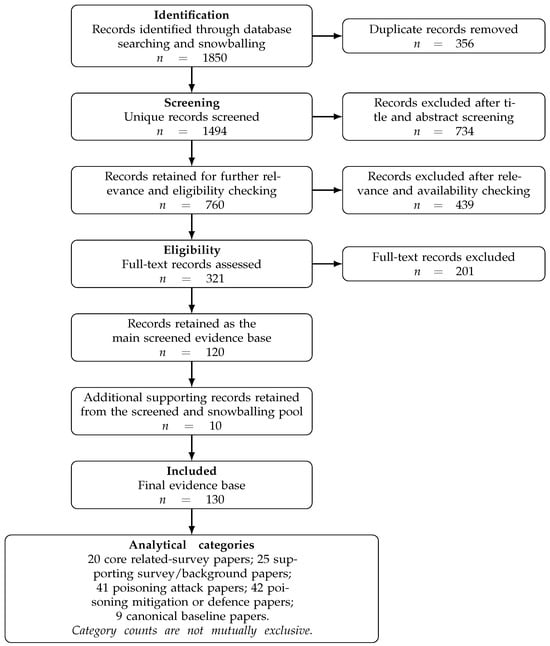
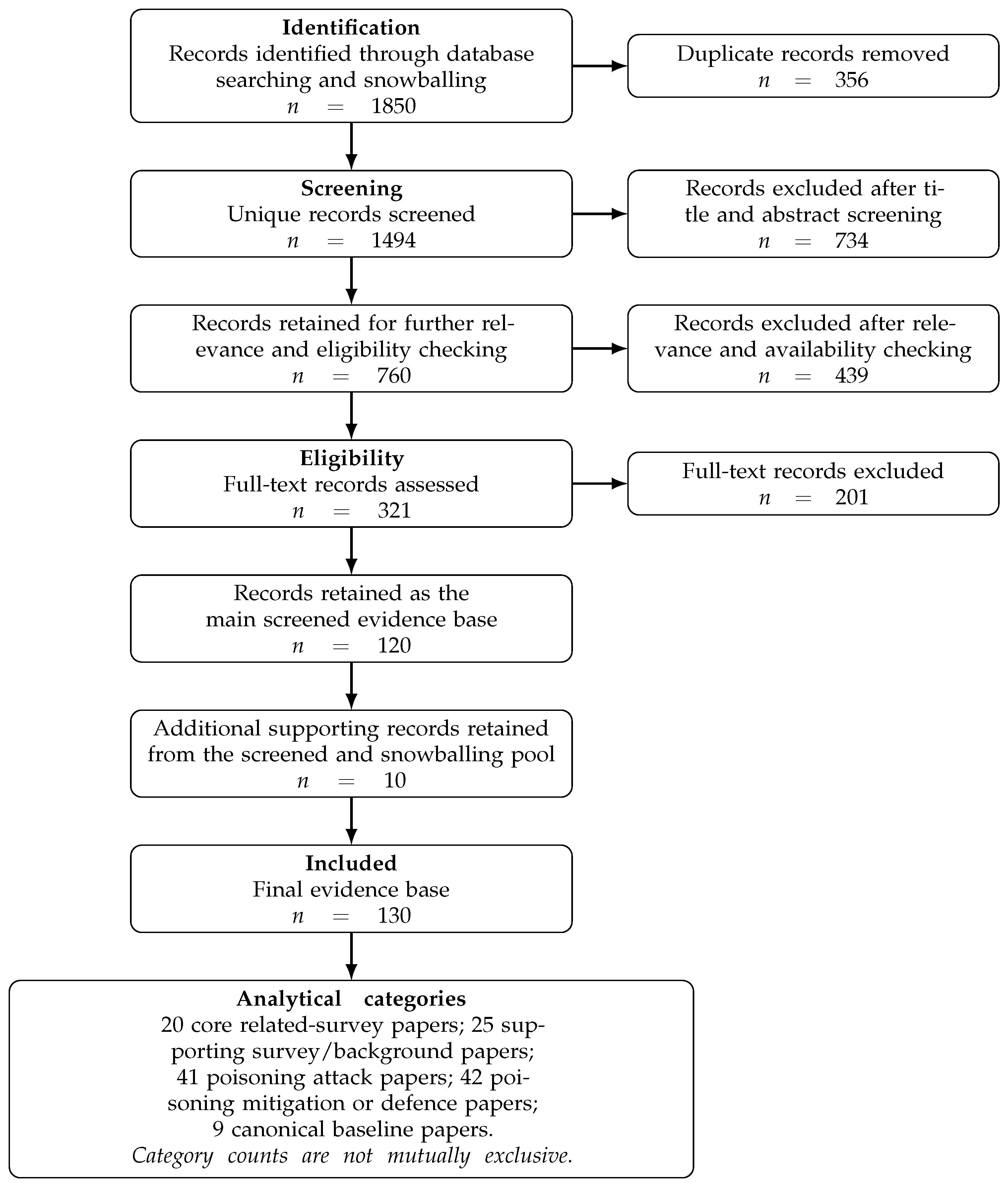

Disclaimer/Publisher’s Note: The statements, opinions and data contained in all publications are solely those of the individual author(s) and contributor(s) and not of MDPI and/or the editor(s). MDPI and/or the editor(s) disclaim responsibility for any injury to people or property resulting from any ideas, methods, instructions or products referred to in the content. |
© 2026 by the authors. Licensee MDPI, Basel, Switzerland. This article is an open access article distributed under the terms and conditions of the Creative Commons Attribution (CC BY) license.