


Abstract
End-to-end scene text detection and recognition, which involves detecting and recognizing text in natural images, still faces significant challenges, particularly in handling text of arbitrary shapes, complex backgrounds, and computational efficiency requirements. This paper proposes a novel and viable end-to-end OCR framework that synergistically combines a powerful detection network with advanced recognition models. For text detection, we develop a method called Text Contrast Self-Calibrated Network (TextCSCN), which employs pixel-wise supervised contrastive learning to extract more discriminative features. TextCSCN addresses long-range dependency modeling and limited receptive field issues through self-calibrated convolutions and Global Convolutional Networks (GCNs). We further introduce an efficient Mamba-based bidirectional module for boundary refinement, enhancing both accuracy and speed. For text recognition, our framework employs a Swin Transformer backbone with Bidirectional Feature Pyramid Networks (BiFPNs) for optimized multi-scale feature extraction. We propose a Pre-Gated Contextual Attention Gate (PCAG) mechanism to effectively fuse visual and linguistic information while minimizing noise and uncertainty in multi-modal integration. Experiments on challenging benchmarks including TotalText and CTW1500 demonstrate the effectiveness of our approach. Our detection module achieves state-of-the-art performance with an F-score of 88.21% on TotalText, and the complete end-to-end system shows comparable improvements in recognition accuracy, establishing new benchmarks for scene text spotting.
1. Introduction
Scene text spotting, which integrates text detection and recognition from natural images into a single unified framework, is a pivotal computer vision task with a multitude of practical applications, including autonomous driving, real-time translation, industrial automation, and optical character recognition (OCR) [1,2]. Despite the significant progress driven by deep learning, developing a viable end-to-end system remains challenging. These challenges stem from the inherent complexities of text in natural scenes, such as diverse scales, irregular shapes (e.g., curved or rotated text), varied fonts, reversed text, noisy images, and complex backgrounds [1,3]. A primary hurdle in end-to-end text spotting lies in the detection stage. While many methods have shown remarkable performance, two fundamental problems often persist: the difficulty in modeling long-range dependencies and the limitation of small receptive fields. Long-range dependency modeling is crucial for understanding the contextual connections between distant elements, which is vital when text spans a large area of an image. Concurrently, a small receptive field restricts the model’s ability to perceive the broader context, leading to less accurate detections, especially for large or irregularly shaped text instances in cluttered scenes. Previous approaches like TextBPN++ [4] have attempted to address this with dilated convolutions [5], but this may not be the optimal strategy for the concentrated and contiguous nature of text. Following detection, the text recognition module faces its own set of challenges. It must accurately transcribe the characters from the detected regions, which are often distorted or part of a complex layout. Models that lack an integrated Language Model (LM) often struggle with ambiguous or visually unclear characters, highlighting the need for contextual understanding [6]. Furthermore, the seamless fusion of powerful visual features extracted from the detected region and the semantic knowledge from a language model is critical for achieving high recognition accuracy. Approaches like ABINet++ [7] have made significant strides by incorporating an autonomous, bidirectional, and iterative language model, demonstrating the power of integrating linguistic knowledge. However, ABINet++ has limitations and encounters challenges in the scenarios, such as reliance on linguistic knowledge or complex linguistic rules, low quality images (noisy and distorted text), error accumulation due to detection module issue or vision model’s poor prediction (poor feature extraction/prediction), high computational load, and other. To address these multifaceted challenges, we propose a novel and efficient end-to-end framework for scene text spotting. Our framework synergizes a powerful detection network, named TextCSCN (Text Contrast Self-Calibrated Network), with an enhanced recognition network based on the ABINet++ architecture.
For the detection module, TextCSCN tackles the aforementioned challenges precisely. We introduce a pixel-wise supervised contrastive learning mechanism [8,9] to learn more viable and discriminative feature representations, ensuring that pixel embeddings of the same text instance are more similar than those of the background. To model long-range dependencies and expand the receptive field, we employ Self-Calibrated Convolutions (SCNet) [10] and a Global Convolutional Network (GCN) [11]. They come with added features as follows. The first is SCNet which we use as feature-extractor (backbone) instead of conventional CNN architectures, such as ResNet [12]. The issue with ResNet is that it is often sensitive to noise and produces coarse high-resolution features, rendering them less effective for identifying tiny text examples. Their unvarying kernel dimensions also lead to unchanging receptive fields. To address this, SCNet performs feature transformations across two different scale-spaces: the original resolution and a down-sampled latent space. The embeddings from the latent space, possessing broader receptive fields, direct and fine-tune the feature modifications within the original space, resulting in a more resilient and adaptable feature extraction process. Next, it is GCN which is primarily used for boundary proposal network. As stated earlier, in TextBPN++ [4], dilated convolutions [5] are adopted. Notably, dilated convolutions are often used to increase the receptive field, however, they may not be ideal for scene text, which is typically concentrated and contiguous. The performance of dilated convolutions is also strongly tied to the dilation ratio hyperparameter. We assert that an effective boundary proposal module requires both an extensive receptive field and a design tailored to the elongated nature of text. Therefore, we utilize a GCN [11]. GCN replaces standard convolutions with a combination of and kernels. This architecutre broadens the receptive field while simultaneously reducing computational costs. The strip convolutions are inherently better suited to the elongated shape of text, and the decoupled nature of the kernels allows the module to adapt to text of varying orientations. Following this, a coarse result is obtained, which needs to be further refined. Specifically, the refinement process involves using the model to predict the offset between the coarse polygon points and the ground truth polygon points. To address this, we innovatively propose a bidirectional boundary refinement module called GreedySnake using Mamba [13] mechanism, which has a linear time complexity and a bidirectional modeling strategy. With this, the input is expanded in dimension and then split, with certain parts of it being inverted. For text instances, this inversion enables the model to achieve bidirectional modeling capability. Furthermore, in terms of computational complexity, compared to the commonly used Transformer, our method achieves linear complexity combining Mamba based GreedySnake, making it faster in both the inference and training stages.
For the recognition module, we build upon the strong foundation of ABINet++ [7], which excels at integrating linguistic context through its iterative language model. To further boost its performance, we enhance its vision model by replacing the standard backbone with a Swin Transformer [14,15]. The Swin Transformer’s hierarchical structure and shifted window mechanism enable it to capture fine-grained details and multi-scale visual features more effectively, providing the language model with a more powerful visual representation for recognition. Regarding the fusion model, we adopt new fusion strategies to more efficiently integrate visual features with language features to achieve better results.
In sum, our proposed end-to-end network seamlessly integrates the TextCSCN detector with the enhanced ABINet++ recognizer. TextCSCN provides highly accurate and viable boundary proposals for arbitrarily shaped text, which are then fed into the recognition module. The recognizer, we use Swin Transformer backbone network in the vision model and adopts new fusion strategies in the fusion model to enhance model performance. Our key contributions are:
- A novel end-to-end text spotting framework that combines two powerful models, the TextCSCN Detector module and enhanced text recognition module of ABINet++.
- TextCSCN Detector: (1). TextCSCN is based on a supervised learning method, which operates on a pixel-wise level. The distinct feature of this method is its utilization of contrastive learning principles which can help improve the accuracy and efficiency of text detection in varied scenes. (2). To tackle the challenge of modeling long-range dependencies, we integrate self-calibrated convolution which can help expand the receptive fields of each convolutional layer by inner linkages and interactions. By incorporating self-calibration, our model can effectively capture long-range dependencies, leading to improved performance in scene text detection. (3). In the Boundary Proposal phase, we integrate the Global Convolutional Network (GCN), designed to expand the receptive field. This advancement bolsters the model’s proficiency in assimilating contextual information from an extensive array of input features. (4). A bidirectional boundary refinement module, named GreedySnake, has been developed specifically to address the requirements of text detection tasks. The module combines the Mamba mechanism with linear time complexity and viable bidirectional modelling capability.
- Enhanced ABINet++ Recognizer: (1). We introduce a novel model integrating the feature fusion capabilities of BiFPN with a Swin Transformer backbone. This hybrid design enhances the network’s ability to focus on critical scene text features while suppressing interference from complex backgrounds. By employing a multi-scale feature fusion mechanism, the enhanced Vision Model (VM) effectively captures text information across various scales, resulting in improved detection performance, particularly in challenging outdoor environments. (2). Our study integrates the Pre-Gated and Contextual Attention Gate (PCAG) model, which combines both Pre-Gating and CAG mechanisms within the cross-attention module, alongside other advanced gated-attention mechanisms. The new fusion strategy can help improve both the accuracy and efficacy of the model.
2. Related Work
In this section, we provide a review of the existing literature pertinent to our work. We structure our review into key areas, such as foundation of detection-recognition operation, scene text detection, scene text recognition, end-to-end text spotting, challenges of detecting reverse or inverted text, and other related advancements in the domain.
2.1. Foundation of Detection-Recognition Operation
We first present the foundation of a detection recognition network (model) in the context of our tasks (Figure 1)—the backbone, neck, and head are functional components that work together to extract features and produce desired outcome (depending on the task or type of the problem).
Figure 1.
Foundation of a detection recognition model.
2.1.1. Backbone
The backbone is a critical component for extracting multi-scale features from an input image. The field offers several families of architectures. Convolutional Neural Networks (CNNs) remain a foundational choice, with ResNet [12] being a prominent example due to its effective use of residual connections. These architectures are often enhanced with attention mechanisms, such as in SENet [16] and CBAM [17], to refine feature representations. More recently, Transformer-based vision backbones have demonstrated state-of-the-art performance. The Vision Transformer (ViT) [18] pioneered the direct application of Transformers to image patches, while the Swin Transformer [14,19] introduced a hierarchical approach with linear complexity, offering a strong balance of speed and accuracy.
2.1.2. Neck
The neck component is responsible for further processing and combining the feature maps from the backbone. In simple terms, it is a feature aggregator. It often uses techniques like Feature Pyramid Networks (FPN) [20] or Path Aggregation Networks (PAN) [21], or BiFPN [22] or similar model to fuse features from different layers and scales, creating a richer and more informative representation.
2.1.3. Head
The head is the final part of a detection, segmentation, or recognition model. It takes the refined feature maps from the neck and uses them to predict the desired outcome.
To improve the performance of OCR systems, we should tackle the complicated irregular samples as discussed earlier. We can come with modified backbone, neck, and/or head.
2.2. Scene Text Detection
Scene text detection aims to localize text instances within an image. Modern methods are predominantly based on deep learning and can be broadly classified into segmentation-based and contour-based approaches.
2.2.1. Segmentation-Based Methods
Scene text detection models that utilize a segmentation-based strategy, such as TextSnake [23], PSENet [24], PANet [25], DBNet [26] and DBNet++ [27], function by producing a probability map, commonly referred to as a heatmap. This map indicates the likelihood that any given pixel is part of a text element. Due to their strong emphasis on pixel-level feature analysis, these techniques are exceptionally well-suited for detecting text instances of irregular or curved forms.
Specifically, the TextSnake [23] model proposes a distinctive method for representing curved text, capable of handling instances that are horizontal, multi-directional, or contain various bends. It conceptualizes a text line as a sequence of interconnected, overlapping disks, each positioned on a central axis and characterized by a distinct radius (r) and angle (). However, TextSnake suffers from two limitations: (1) A single segmentation network fails to process text instances that vary in scales. (2) TextSnake regards the character direction to be perpendicular to the text direction. This assumption is often too restrictive and may lead to failure detection especially when encountering distorted texts [28].
PANet [25] focuses on addressing the problem that text instances may overlap. It operates by assigning an embedding value to every pixel. Crucially, the pixels belonging to different text instances are given distinct embedding values. This characteristic enables a post-processing step to effectively separate text instances that are touching or connected, by grouping pixels with the same embedding into separate text contours. However, PANet faces challenges in handling curved text, balancing speed and accuracy, and maintaining performance with small or overlapping objects.
PSENet [24], in contrast, functions by creating multiple kernels at varying scales for each text element. The methodology involves a progressive expansion process, starting from the smallest kernel and gradually growing it to reconstruct the complete text instance. PSENet demonstrates superior performance in detecting curved and multi-oriented text, making it particularly effective for diverse and challenging scenarios in scene text detection. However, the complex post-processing steps and heavy network do not meet the requirement of real-time detection.
DBNet [26] utilizes an auxiliary component that predicts a threshold map. This map addresses the challenge of accurately separating adjacent text instances by requiring higher confidence scores for pixels located at the borders of each instance, thereby improving text connectivity. Building on the success of DBNet, DBNet++ [27] introduced architectural improvements through the incorporation of an Adaptive Scale Fusion (ASF) module. This enhancement strengthens the model’s capability to process text instances across multiple scales while maintaining real-time processing efficiency. This highlights a continuous trend in segmentation-based methods: refining the post-processing and feature fusion stages to achieve a better balance between speed and accuracy. Although promising, segmentation-based methods still heavily depend on accurate pixel-level predictions and complex post-processing.
2.2.2. Contour-Based Methods
A wide variety of methods have been developed for text contour modeling, with a primary concentration on detecting scene text based on its contours. Notable approaches in this field include ABCNet [29], FCENet [30], CountourNet [31], TextRay [32], and PCR [33]. Among these, ABCNet and FCENet stand out for their strategy of using mathematical curves to represent text instances, which allows them to handle diverse and irregular shapes effectively. Essentially, these models function by predicting the parameters of a curve that best fits the target text. ABCNet [29], for instance, shows exceptional flexibility in fitting text of arbitrary shapes, particularly in oriented or curved scenes, by leveraging parameterized Bézier curves for this purpose. FCENet [30] adopts an alternative strategy by utilizing Fourier contour embedding. This technique involves first predicting the text contours within the Fourier domain and then using an inverse Fourier transform to reconstruct the final text instance shapes. This process ensures a high-fidelity representation of the original text’s form. ContourNet [31] conceptualizes text instances as sequences of contour vertices and introduces a contour initialization framework coupled with an iterative optimization procedure. It employs graph convolutional networks to effectively capture the sequential nature and geometric relationships of the contour points, allowing them to be progressively adjusted to accurately fit the text boundary. TextRay [32] presents an alternative representation strategy by projecting rays from the predicted center of a text instance toward its perimeter. The framework learns to estimate the endpoints of these rays, which collectively constitute the text outline. This ray-casting methodology offers a reliable mechanism for capturing the geometric properties of irregularly shaped text. Similarly, PCR (Progressive Contour Regression) [33] also predicts contour points but does so in a coarse-to-fine strategy. The approach begins by establishing an initial coarse outline with a limited number of vertices and subsequently enhances it through the incremental addition of vertices across multiple stages, thereby achieving more precise and detailed boundary delineation, particularly for intricate text configurations. These methods can achieve high-precision boundary localization and directly output polygonal representations suitable for downstream tasks. However, the modeling process can be complex, potentially slower than segmentation methods, and may struggle with topological changes or extremely convoluted text shapes.
Furthermore, other methods like TextBPN [34] and TextBPN++ [4] harness the capabilities of Convolutional Neural Networks (CNNs). These models first use a CNN to generate an initial estimate of the text boundaries along with offset information. Subsequently, they employ a Transformer-based architecture to iteratively refine and adjust these boundaries. This iterative refinement leads to more precise and accurate text boundary predictions, thereby improving the overall performance of the text contour modeling. We observe that a small receptive field restricts a model’s ability to perceive the broader context, leading to less accurate detections, especially for large or irregularly shaped text instances in cluttered scenes. TextBPN++ have attempted to address this with dilated convolutions [5], but this may not be the optimal strategy for the concentrated and contiguous nature of text.
Moreover, it is worth noting that innovations in related computer vision fields, such as salient object detection, often provide valuable insights for architectural design. For example, the recent work by Tang et al. [35] introduces a “Divide-and-Conquer” strategy for RGB-thermal salient object detection. Their proposed confluence triple-flow network decomposes the task into sub-problems, using dedicated network flows to explore modality-specific and modality-complementary information in parallel. This approach of decoupling and then selectively fusing information streams to improve robustness against challenging inputs (such as noise, defective modalities) shares conceptual similarities at a high level with the goals of advanced text detection systems, where robust feature extraction and fusion are equally crucial for achieving state-of-the-art performance.
2.3. Scene Text Recognition
After text regions have been identified, a recognition model converts them into sequences of characters. These approaches have undergone substantial evolution, transitioning from character-level classification techniques to sequence-to-sequence modeling frameworks.
2.3.1. CTC-Based Methods
CTC-based methods were among the first to show significant success in the field. The core innovation of Connectionist Temporal Classification (CTC) lies in its ability to handle variable-length sequences without requiring precise alignment between input features and output characters. It achieves this by adding a blank token to the character label set. The sequence modeling component of the network (typically an RNN) then outputs probability distributions over these augmented labels for each feature frame. This predicted sequence is subsequently converted into the final output string by first merging consecutive identical characters and removing all blank tokens. This many-to-one mapping allows multiple different paths to correspond to the same final text label, thereby freeing the model from the burden of explicit alignment. A representative example is CRNN [36], which integrates a CNN for feature extraction, an RNN (commonly LSTM) for sequence modeling, and employs Connectionist Temporal Classification (CTC) as the loss function. The CTC loss effectively manages variable-length sequences while eliminating the need for precise alignment between input features and output characters. However, CRNN encounters a couple of limitations and challenges, such as limited ability to handle complex text layouts, difficulty with variable text lengths, and potential issues with gradient vanishing/exploding in recurrent neural networks (RNNs), dependency on pre-segmented text, computational complexity, and other.
Another more advanced method is SVTRv2 [37]. As an upgraded version of SVTR [38], SVTRv2 constructs a pure Transformer-based visual text recognition framework. The method effectively captures local and global visual representations by dividing the input image into patches and utilizing self-attention mechanism, eliminating the dependency on Convolutional Neural Networks (CNN) and Recurrent Neural Networks (RNN), thus achieving concise and high-accuracy end-to-end recognition. SVTRv2 achieves superior recognition performance by improving the visual backbone network design and combining it with a concise and efficient Connectionist Temporal Classification (CTC) decoding module. The research demonstrates that with powerful visual feature representation, a simple CTC architecture can outperform complex encoder-decoder structures. However, CTC based methods exhibit several limitations, such as challenges with irregular text, limited linguistic Information encoding, lack of explainable 2D spatial relationship, optimization challenges with individual characters, difficulty with 2D CTC implementations, accuracy gap compared to attention-based methods, and other.
2.3.2. Attention-Based Methods
Attention-based methods have gained widespread adoption owing to their enhanced performance, particularly when dealing with irregular or curved text instances. These models utilize an attention mechanism that enables the decoder to dynamically concentrate on the most pertinent feature regions during character prediction. Models such as SVTR [38] have showcased the effectiveness of employing Vision Transformers for feature extraction in recognition applications. To achieve further improvements in accuracy, particularly for visually challenging characters, recent research has incorporated explicit language models (LMs). ABINet [6] and its enhanced version ABINet++ [7] introduced a bidirectional and iterative language modeling approach that collaborates synergistically with the vision component to improve recognition outcomes, performing error correction through linguistic context. However, ABINet++ has limitations and encounters challenges in the scenarios, such as reliance on linguistic knowledge or complex linguistic rules, low quality images (noisy and distorted text), error accumulation due to detection module issue or vision model’s poor prediction (poor feature extraction/prediction), high computational load, and other. We go deeply as follows: (1). Linguistic knowledge or Linguistic rules: ABINet++ performs well on text that follows standard linguistic rules, however, it may struggle with random character sequences, license plates, or combinations of alphanumeric characters that lack context. To this, complex linguistic rules can help, but it remains a significant research challenge. (2). Low quality images (noisy and distorted text): ABINet++ can handle challenging images, however, its performance may go down under severe conditions like extreme blur, complex backgrounds, or heavy occlusion. One of the reasons of it is rudimentary vision model’s poor feature extraction/prediction which is passed as the initial input to the language model. As a result, it (language model) may struggle to produce a sufficiently accurate prediction and finally correct it. In this way, error is accumulated. (3). Error accumulation due to poor detection module: It is noted in ABINet++ paper that the key focus is on the recognition module and performance is evaluated based on end-to-end recognition, not necessarily detection accuracy. Especially, Bezier curve detection in ABCNet [29] is chosen as the text detection method. Notably, Bézier curve detection in ABCNet include a high sensitivity to high-precision control point prediction, challenges in handling text with large aspect ratios or extreme curvatures, and difficulties with certain industrial and complex scenarios like varying scale, density, and intricate backgrounds. (4). High computational load: The iterative correction process may increase computational requirements, especially for high resolution images and for longer texts where multiple refinement steps are necessary.
Attention-based methods can be further categorized based on their decoding strategies, primarily including autoregressive (AR) and parallel decoding (PD) paradigms. Autoregressive models adopt a character-by-character text recognition approach, using previously predicted characters as context information for current predictions. This serialized processing method typically achieves higher recognition accuracy. For example, CDistNet [39] proposes the Multi-Domain Character Distance Perception (MDCDP) module, where position embeddings simultaneously query visual and semantic features. This tightly coupled feature fusion mechanism achieves more viable feature-character alignment, particularly excelling in handling challenging text instances. In contrast, parallel decoding models can infer all characters in a single forward pass, offering significant computational efficiency advantages compared to autoregressive models. However, establishing stable recognition context in a single forward computation remains a key challenge. To address this issue, CPPD [40] introduced character counting and character ordering modules. These components work collaboratively to build comprehensive recognition context, enabling the model to predict complete character sequences in one go while maintaining recognition accuracy close to that of autoregressive models. Compared with ABINet++, CDistNet better suits in the case of severe text deformation (e.g., curves or tight spacing) where correctly perceiving the position and distance of characters is key. On the other hand, compared with ABINet++, CPPD is better suited for faster inference speed while maintaining comparable accuracy.
In addition, novel research paradigms and training strategies are being explored to break through the performance boundaries of text recognition. IGTR [41] reconstructs the text recognition task as an instruction learning problem. By training models using triplets of (condition, question, answer) related to character attributes, IGTR achieves deep and refined understanding of text images, surpassing traditional sequence prediction paradigms. This question-answering learning paradigm represents a fundamental innovation over traditional recognition processes. Meanwhile, innovative pre-training methods continue to emerge. DPTR [42] proposes a novel pre-training strategy that uses only text labels without corresponding images. This method utilizes text embeddings from large vision-language models like CLIP [43] as pseudo-visual features, effectively bridging the domain gap between synthetic and real-world data, and significantly improving the overall performance of various decoders. IGTR is an instruction-guided learning paradigm, offers a flexible approach to scene text recognition compared with ABINet++. For applications requiring strong zero-shot capabilities, adaptability to various text patterns, and a focus on efficient inference with a smaller model size, IGTR might be the better choice. Compared with ABINet++, if our main goal is to improve the generalization of an existing model with limited resources then DPTR is a more viable solution.
2.4. End-to-End Text Spotting
End-to-end methods strive to integrate detection and recognition components within a unified, trainable architecture, promoting collaborative interaction between these two processes. Initial two-stage methodologies employed a straightforward pipeline connecting a detector with a recognizer, resulting in performance constraints due to detector limitations and potential error accumulation. Contemporary end-to-end frameworks pursue simultaneous optimization of both components. Mask TextSpotter [44] conducts instance segmentation for text detection and subsequently executes recognition on the segmented areas. ABCNet v2 [45] presented an adaptive end-to-end training approach designed to enhance the alignment between detection outputs and recognition features. SwinTextSpotter [15] illustrated the advantages of utilizing a shared Swin Transformer backbone across both tasks, resulting in improved collaborative performance.
In recent years, end-to-end text localization paradigms have undergone significant transformation driven by query-based methods, primarily inspired by the DETR [46] architecture from general object detection. SPTS [47] redefines text localization as a set prediction problem, adopting a Transformer-based encoder-decoder structure to directly predict text instance sets, where each instance is represented by its boundary coordinates and corresponding character sequence. This unified approach effectively eliminates the dependency on RoI (Region of Interest) operations and complex post-processing steps found in traditional methods, providing a more concise and universal framework for text localization. Building upon this, IATS [2] further proposes an inverse adversarial learning framework. This method guides the recognition process by estimating text reading order and employs dynamic sampling strategies to focus on handling difficult samples. This design achieves more robust synergy between detection and recognition branches within a unified query-driven system, significantly improving overall performance. As a text spotting method, ABINet++ outperforms Mask TextSpotter, ABCNet v2, and SPTS. On the other hand, IATS is likely better for the specific task of spotting inverse-like scene text, while ABINet++ is a strong all-around performer on general and low-quality images.
2.5. Analysis of Reversed/Inverted Text
A challenging task in scene text detection is managing reversed or inverted text (i.e., text that appears flipped or rotated upside-down). Such instances frequently emerge in real-world situations, including text displayed on glass surfaces observed from the reverse side or within decorative logos. Numerous conventional models encounter difficulties in these scenarios due to their implicit training on datasets predominantly featuring upright text orientations. The most efficient and commonly employed approach to tackle this issue is data augmentation. Through the random application of 180-degree rotations or horizontal/vertical reflections to training samples, the model develops invariance to such orientational variations [48]. A model’s resilience to these transformations serves as a reliable measure of its generalization capacity. Although data augmentation remains the fundamental approach to handle such variant tasks, some modern architectures inherently possess stronger viability. For instance, contour-based representations like TextSnake [23] or methods that directly predict boundary points like TextBPN++ [4] offer greater flexibility in modeling non-standard orientations compared to methods relying on rigid bounding box representations. Today, explicit architectural components specifically designed for inverted text are a few, such as IATS [2], DPText-DETR [49], and robust data augmentation remains the most crucial factor for generalization.
2.6. Analysis of Cross-Lingual Attention, Supervised Contrastive Learning, and Domain Adaptation
In the field of cross-lingual font style transfer, Zhao et al. [50] introduces a method called FCAGAN that incorporates a specialized full-domain convolutional attention module to achieve comparable results. This method comes with added features, such as (1). Few-shot learning: It can learn and transfer font styles with only a small number of reference samples, making it practical for real-world applications. (2). High quality and integrity: The generated text maintains high quality to the target style while preserving the integrity and readability of the new characters. (3). Cross-lingual robustness: It can handle the structural differences between languages, a major challenge for other methods. This study can help us analyze style-variant texts in our domain.
In the domain of text-to-face image generation, Song et al. [51] introduces a method called AttriDiffuser that can help produce high-quality and diverse facial images from complex text descriptions. It improves upon standard diffusion models for text-to-face synthesis by integrating elements of GANs, including an adversarial training process and a face diversity discriminator. The key advantages of the method are, (1). Superior synthesis: It can help better synthesizing high-quality, precise facial images that incorporate multi-faceted textual descriptions. (2). High diversity: It can help generate a wider variety of results. (3). Improved accuracy: It can help generate facial features accurately reflecting the input text. This study can help us perform multi-modal feature alignment using diffusion model and adversarial modeling.
In the domain of extracting structured information from unstructured text references, Yin et al. [52] introduces a method CONT_Prompt_ParseRef integrating contrastive learning and prompt learning. It leads improve the accuracy and efficiency of bibliographic reference parsing while contrastive learning helps optimize the model’s ability to distinguish between different citation components, prompt learning helps ensure a structured, task-specific framework for information extraction. This combined approach ensures viablibility in handling inconsistencies, ambiguity, and the diverse formats found in real-world bibliographic data. The integration of contrastive and prompt learning offers several benefits: (1). Reduced reliance on labeled data, (2). Improved accuracy and robustness, (3). Enhanced understanding of metadata. In the domain of our task, this study can be helpful for supervised contrastive learning in structured sequence tasks.
In context-aware modeling, Nie et al. [53] introduces a text-to-3D generation T2TD model. It uses “prior knowledge guidance” to generate high-quality, complex 3D objects from text annotations. The model simulates how humans use experience to fill in missing details from ambiguous annotations, improving upon prior models that struggle with generalization because of limited data.
In the domain adaptation field, Ning et al. [54], introduces a method called called Multi-Representation Domain Adaptation Network (MRDAN). It is for unsupervised domain adaptation that can help transfer knowledge from several labeled source domains to an unlabeled target domain. This method uses a multilevel distribution alignment (MLDA) strategy to gradually decrease the domain discrepancies and a viable module to distinguish between common and unknown classes in the target domain. This study can help us carry out viable domain adaptation across variable input distributions in the context of our study.
3. Methodology
Our proposed end-to-end text detection framework aims to achieve viability and efficiency by integrating the novel TextCSCN detection module with an enhanced recognition module based on ABINet++. This section demonstrates in detail the overall architecture and core innovations in each component.
3.1. Overall Architecture
The framework operates in a two-stage end-to-end manner. First, the input image is fed into the text detection module TextCSCN, which is responsible for accurately locating text instances of arbitrary shapes, and then these instances are passed to the Enhanced ABINet++ recognition module. This module is equipped with a powerful visual backbone network and iterative language model that transcribes visual features into final text sequences, while using new fusion strategies to further improve the model’s accuracy.
3.2. Text Detection Module: TextCSCN
Our text detector, TextCSCN (Text Contrast Self-Calibrated Network), is built upon the architecture of TextBPN++ [4], a strong baseline for arbitrary-shaped text detection. Based on TextBPN++, we make a several key modifications. For the backbone architecture, we adopt SCNet [10] as a replacement for the original ResNet [12] to better integrate spatial and channel information. In the boundary proposal phase, recognizing the requirement for an expanded receptive field, we incorporate GCN (Global Convolution Network) [11] in place of the conventional dilated convolution [5] to tackle this challenge. These modifications represent more than superficial adjustments; they are fundamental enhancements that significantly boost the overall model performance, ensuring optimal adaptation to specific task demands. Furthermore, to augment both the efficiency and precision of our approach, we integrate supervised contrastive learning into the framework. This sophisticated learning paradigm empowers our model to more effectively distinguish between different data types, consequently enhancing its capacity for accurate predictions and decision-making. As shown in Figure 2, our method comprises three distinct modules. The boundary proposal phase employs SCNet [10] for feature extraction and GCN [11] for boundary generation, producing initial outcomes. A portion of these outcomes serves to guide supervised contrastive learning for enhanced feature representation, while the remainder undergoes refinement through our proposed GreedySnake mechanism in the coarse-to-fine phase (A bidirectional boundary refinement module which combines the Mamba mechanism with linear time complexity and robust bidirectional modelling capability. It help address the requirements of text detection tasks as discussed in the later part of the paper). More specifically, the procedure encompasses the following operations: utilizing SCNet as the backbone architecture to capture text features, producing pixel-level classification, distance field, direction field, and embedding representations. These components are subsequently employed to construct preliminary text contours. This initial contour undergoes further refinement within a dedicated module to achieve more accurate outcomes. Upon obtaining results from GCN, we perform sampling on the classification outcomes, identifying positive samples (depicted as red points in the illustration) positioned within text instances. The contrastive approach is trained through the differentiation between positive samples and numerous negative samples, based on the fundamental principle of sample similarity. The resulting preliminary outcomes are then fed into the GreedySnake module, initially undergoing projection, followed by flipping transformations, and ultimately yielding refined final outcomes through Mamba iteration.
Figure 2.
Framework of TextCSCN.
Before introducing the TextCSCN, we first outline the baseline approach, TextBPN++, which forms the foundation of TextCSCN.
3.2.1. Baseline Approach (TextBPN++)
We first detail the core components of our baseline, TextBPN++, a coarse-to-fine framework. The quality of the initial coarse boundary is paramount, as it directly impacts the potential for subsequent refinement. Therefore, our enhancements are concentrated on the initial boundary proposal stage.
Boundary Proposal Module
The framework first predicts three crucial pieces of prior information—a Classification map, a Direction map, and a Distance map—to generate a rough boundary. These maps are supervised by ground-truth labels during training.
- Classification Map: This map provides a confidence score for each pixel, indicating its likelihood of belonging to a text region versus the background.
- Direction Map (V): This map contains a 2D unit vector for each text pixel, pointing towards the nearest pixel on the text boundary. This is defined as:where is a pixel and is the closest boundary pixel.
- Distance Map (D): This map stores the normalized distance from each text pixel to its nearest boundary pixel, defined as:
These three maps are combined to generate an initial coarse contour proposal. As depicted in Figure 3, the formation of the preliminary text contour is achieved through the systematic application of the classification, direction, and distance maps. In this procedure, the classification map functions at a pixel-by-pixel level to differentiate text from background elements. The direction map contributes by indicating the text’s spatial orientation, and the distance map provides essential data on relative positioning. The combined output from these maps is instrumental in creating the initial rough contour, which forms the basis for a later refinement stage designed to improve precision.
Figure 3.
TextBPN++ Boundary Proposal Analysis: Use three maps to generate candidates. Adapted from [4].
Boundary Deformation
For each proposed boundary, N control points are uniformly sampled. The model is then trained iteratively to predict the per-vertex offsets required to deform the initial polygon into a more precise boundary, effectively capturing both topological and sequential context.
After introducing the baseline model TextBPN++, we return to the improved model TextCSCN. Our method enhances the baseline by integrating a Self-Calibrated Network (SCNet) for superior feature extraction, a Global Convolutional Network (GCN) to expand the receptive field in the boundary proposal module, a supervised contrastive learning scheme to improve feature representation, and a Mamba based GreedySnake module to ensure bidirectional boundary refinement.
3.2.2. Improved Feature Extraction with Self-Calibrated Network (SCNet)
Traditional CNN backbones like ResNet [12] are often sensitive to noise and produce coarse high-resolution features, which are suboptimal for detecting small text instances. Their fixed kernel sizes also result in static receptive fields. To overcome these limitations, we adopt SCNet [10] as our backbone. The core advantage of SCNet lies in its self-calibration convolution mechanism: by performing feature transformation between the original resolution space and downsampled latent space. The embeddings from the latent space, with their larger receptive fields, guide and calibrate the feature transformations in the original space, leading to more viable and adaptive feature extraction. To preserve spatial details, we implement a multi-level feature fusion strategy. Features extracted from different layers of SCNet ( to ) are progressively merged.
The features are then up-sampled and fused using a merging function:
The final fused feature map F is computed as:
where represents the feature hierarchy after up-sampling and is the ReLU activation function.
3.2.3. Text Boundary Proposal with Global Convolutional Network (GCN)
While dilated convolutions are often used to increase the receptive field, they may not be ideal for scene text, which is typically concentrated and contiguous. The performance of dilated convolutions is also highly dependent on the dilation ratio hyperparameter. We argue that an effective boundary proposal module requires both a large receptive field and a design tailored to the elongated nature of text. Therefore, we utilize a Global Convolutional Network (GCN) [11]. GCN replaces standard convolutions with a combination of and kernels. This structure expands the receptive field while reducing computational complexity. The strip convolutions are inherently better suited to the elongated shape of text, and the decoupled nature of the kernels allows the module to adapt to text of arbitrary orientations. The GCN operation is formulated as:
where represents a convolution operation with a 1 × k kernel size.
3.2.4. Supervised Contrastive Learning for Text Detection
The central tenet of Contrastive Learning is to pull embeddings of the same class closer together in the feature space while pushing embeddings of different classes apart. We adapt this principle to our pixel-wise text detection task by incorporating a supervised contrastive loss, inspired by [8]. To maintain computational efficiency, we perform sampling after the boundary proposal stage to select positive samples (pixels within text instances) and negative samples (pixels outside text instances). We extend the InfoNCE [55] loss for our supervised setting. We achieve this by defining a supervised contrastive learning loss where r represents the pixels sampled from the boundary proposal results. The loss for a single sampled pixel i is:
where and are the sets of positive and negative sample embeddings relative to pixel i, is a temperature hyperparameter, and ‘sim()’ is the cosine similarity function. This loss encourages more compact intra-class feature distributions.
The total training objective is a combination of the original boundary proposal loss () and our supervised contrastive loss ():
where represents the original boundary proposal loss and is a weighting coefficient.
3.2.5. GreedySnake: A Bidirectional Boundary Refinement Module
Previous methods often use graph convolution networks (GCNs) or Transformers for boundary refinement. However, Transformers suffer from quadratic time complexity concerning sequence length, creating a bottleneck. To address this, we propose an innovative boundary refinement module named GreedySnake. This module is designed for efficiency and is tailored to the bidirectional nature of text. It integrates the Mamba [13] mechanism, which has linear time complexity, with a bidirectional modeling strategy. The staging of the bidirectional boundary refinement module is shown in the Figure 4. In the refinement module, the input data first undergoes a dimensional expansion process through a series of carefully designed neural network layers, after which it is systematically split into multiple segments based on predefined criteria. During this splitting process, specific portions of the expanded input are strategically inverted. When applying this methodology to text-based instances, this innovative inversion mechanism enables the model to achieve sophisticated bidirectional modeling capability, allowing it to capture both forward and backward contextual relationships within the text sequences simultaneously. We define a function that processes both the original and a flipped version of the input sequence of control points:
The full refinement process for a set of control points is:
Figure 4.
GreedySnake: Bidirectional Boundary Refinement Module.
This approach achieves viable bidirectional modeling without the computational cost of Transformers, improving both the accuracy and speed of the refinement stage. This improvement in computational efficiency makes our model notably faster and more scalable during both the inference phase when making predictions and the training stage when learning from large datasets, particularly when handling lengthy sequences or processing massive amounts of data in real-world applications.
After introducing TextCSCN, we turn our attention to the text recognition part.
3.3. Text Recognition Module: Enhanced ABINet++ Recognizer
For the text recognition stage, we adapt and enhance the powerful ABINet++ framework [7], a state-of-the-art model known for its iterative vision-language refinement. The overall architecture, which is depicted in Figure 5, is central to our recognition module. As illustrated in the figure, the model operates on a principle of iterative correction between two primary components: a Vision Model (VM) and a Language Model (LM). The process begins with the VM, from the backbone to the position attention, which processes the cropped text image to generate an initial prediction. Concurrently, the LM, which employs a Bidirectional Cloze Network (BCN), models linguistic probabilities to predict characters based on their context, independent of visual input. The core innovation lies in the iterative fusion and correction loop. The output from the VM is passed to the LM for linguistic refinement. The LM’s corrected prediction is then used to gate and enhance the visual features, guiding the VM to focus on ambiguous or misclassified characters in the subsequent iteration. The fusion model fused the vision prediction and the language prediction, then the fusion prediction will passed to language model for more loop. This synergistic loop, repeated multiple times, allows the model to progressively correct visual errors using learned linguistic knowledge. ABINet++ [7] improves upon its predecessor, ABINet [6], by incorporating a more robust vision model and better geometric alignment (e.g., via Bezier curve detection), enhancing performance in complex scenes. Our work builds upon this strong foundation, where our main modifications focus on further enhancing the visual features within the VM and optimizing the final fusion strategy to better align the vision and language predictions.
Figure 5.
Framework of ABINet++. Adapted from [7].
3.3.1. Vision Model (VM)
The Vision Model (VM) integrates an attention mechanism for decoding characters and utilizes Bezier Curve Detection to achieve precise and efficient text localization. When tasked with recognizing long text, ABINet [6] struggles to balance accuracy and speed, especially for text instances exceeding 100 characters. These challenges stem from its position-based attention strategy, which isolates the linguistic context from the VM. This separation limits the model’s ability to accurately pinpoint the most relevant response center for each query, particularly when the content of individual characters is not fully considered. To surmount these limitations, ABINet++ [7] incorporates several key enhancements. As shown in Figure 6, the updated VM optimizes the integration of visual features and employs refined attention mechanisms. These improvements yield significant advancements in both detection accuracy and processing efficiency, particularly for long text recognition tasks.
Figure 6.
Framework of Vision Model. Adapted from [7].
Notably, ResNet [12] is employed as the backbone for feature extraction in the Vision Model. In our study, original ResNet [12] backbone served as the baseline for comparison against three advanced alternatives: SENet [16], CBAM [17], and Swin Transformer [14]. We analyze their ability to capture a wider range of features, which is crucial for accurate text detection and recognition in complex scenarios. We also integrate the feature fusion capabilities of BiFPN with the Swin Transformer backbone. This hybrid design enhances the network’s ability to focus on critical scene text features while suppressing interference from complex backgrounds. By employing a multi-scale feature fusion mechanism, the enhanced Vision Model (VM) effectively captures text information across various scales, resulting in improved detection performance, particularly in challenging outdoor environments.
3.3.2. Convolution Sequence Modeling (CSM)
For recognizing long text, Transformer-based models are often impractical due to their quadratic time complexity and high memory usage with lengthy sequences. To address this, ABINet++ [7] utilizes a Stacked Multiscale Network (SMN) with a ResNet50 backbone and a BezierAlign method. To further augment long-text feature extraction, advanced backbones like SENet [16], ResNet-CBAM [17], and Swin Transformer [14] are integrated into the model. The Bezier Curve Detection in ABCNet [29] employs a simplified pipeline that minimizes the need for intricate post-processing. Unlike segmentation-based or other regression-focused text detection methods, BezierAlign effectively transforms multi-scale, arbitrarily-shaped text into normalized, horizontally-aligned features. These features can then be directly fed into the attention module, mirroring the approach used in ABINet for text recognition.
The VM’s backbone is built upon BiFPN for efficient feature extraction. BiFPN enhances the anchor-free object detection method FCOS [56], where the VM regresses eight control points for two Bezier curves (3rd-order) to delineate each text instance. The mathematical representation for the backbone is:
Here, signifies the Bezier Curve Detection model, and k denotes the number of text instances in the input image .
3.3.3. Horizontal Feature Aggregation (HFA)
Horizontal Feature Aggregation boosts performance via two primary enhancements. The first involves the integration of a U-Net [57], which aggregates features by systematically expanding receptive fields through downsampling. The second incorporates a Transformer network [58] into the U-Net structure, applying it to the most detailed feature map to capture global dependencies. Through BezierAlign, the method normalizes arbitrarily shaped text into a horizontal layout, allowing the model to concentrate on horizontal feature interactions. This alignment facilitates effective and robust information integration via non-local mechanisms, leading to a marked improvement in overall performance.
3.3.4. Position and Content Attention (PCA)
Position and Content Attention (PCA) tackles the issue of multiple response centers by improving the query vector’s discriminative power through the integration of character content features. This is achieved via an iterative refinement strategy that progressively enhances the precision of content feature computation. In the first iteration, a preliminary content vector is extracted directly from the visual feature map . In subsequent iterations, the visual feature from the preceding step is repurposed and refined as the content vector, thereby increasing its representational accuracy with each pass.
The query vector representation is updated as:
where the content feature is computed iteratively:
with , i as the iteration index, and as the feature map dimensions. The number of iterations is empirically set to three. Crucially, all content vectors are trained under the supervision of ground-truth labels, ensuring reliable and accurate feature learning.
The training objective for the VM in text spotting includes losses for both content vector learning and text detection. The total loss function is defined as:
where is the cross-entropy loss for content vectors across iterations, and is the detection loss derived from the methods in ABCNet [29] and ABCNetv2 [45].
3.3.5. Language Model (LM)
The Language Model (LM) functions independently, treating spelling correction as a distinct task by blocking gradient flow at the input vectors during training. It utilizes a Bidirectional Cloze Network (BCN) to estimate character probability distributions from bidirectional feature representations, promoting robust language modeling. The LM structure is illustrated in Figure 7.
Figure 7.
Framework of Language Model. Adapted from [7].
To prevent the model from attending to its own position, attention masks are applied within the multi-head attention mechanism. The BCN model avoids self-attention to prevent information leakage across time steps. The attention operation in the multi-head blocks is formally defined as:
In this formulation, represents the positional encodings of character orders in the initial layer and the outputs from the preceding layer in subsequent layers. are derived from character probabilities , where is a linear mapping matrix. The attention mask matrix ensures the model does not attend to the current character. By stacking BCN layers, a deep bidirectional representation for the text y is obtained.
3.3.6. Fusion Model (FM)
Within the framework, the vision and language models are trained independently on their respective data modalities. To align and integrate features from these distinct models, a gated mechanism [59] is employed as the primary fusion strategy, as depicted in Figure 8. This approach facilitates viable multi-modal interaction and alignment.
Figure 8.
Flowchart of Gated Multi-model Units Module (GMU).
The fusion process starts by calculating a dynamic gate G, which dictates the contribution of each modality to the fused representation:
where and are the vision and language features, and is the sigmoid activation function. The gate dynamically weights features from and .
The final fused feature vector is produced by combining the weighted contributions:
where ⊙ signifies element-wise multiplication. The matrix is a learnable parameter. The resulting is the fused vision-language feature, with the dynamic gate G controlling the respective influence of each modality.
To further enhance the depth and quality of feature integration, we introduce three advanced fusion modules, such as (1). Mutual Cross-Attention (MCA), (2). Cross-Level Feature Fusion (CFF), and (3). Pre-Gating and Contextual Attention Gate (PCAG). Our approach is centered on optimizing the interplay between vision and language features to elevate the model’s performance on multi-modal tasks.
Mutual Cross-Attention (MCA)
The first module is Mutual Cross-Attention. The Mutual Cross-Attention (MCA) mechanism [60] enables effective feature fusion by processing each modality’s features in a reciprocal manner. As shown in Figure 9, this mechanism uses Vision Model (VM) features as the key and Language Model (LM) features as the query.
Figure 9.
Flowchart of Mutual Cross Attention Module (MCA).
The key is subsequently used as the value, allowing the application of the standard Scaled Dot-Product Attention:
Here, are the query, key, and value vectors, and is the query’s last dimension’s size. This describes one direction of the MCA module. In the second step, the roles are reversed: VM features serve as Q, while LM features act as both K and V. The attention operation is applied again. Finally, the outputs from both directions are summed to create the updated feature representation.
In the context, represents the feature extract from Vision Model (VM), while denotes the feature derive from Language Model (LM).
Cross-Level Feature Fusion (CFF)
The second module is Cross-Level Feature Fusion. The Cross-Feature Fusion (CFF) module [61], shown in Figure 10, is engineered to fuse adjacent feature levels and supply them to the segmentation network, thereby improving the model’s capacity to capture multi-scale and cross-level details.
Figure 10.
Flowchart of Cross-Level Feature Fusion Module (CFF).
Adjacent features and are passed through a convolution to reduce channel dimensions, yielding and . These are then concatenated and processed by a dual-branch network with different convolutional kernels to facilitate information sharing. The process is defined as:
where denotes a sequence of convolution, batch normalization, and activation. The resulting multi-scale features are further processed:
To effectively integrate features, they are combined via element-wise multiplication and addition:
Finally, the fused feature is refined to produce the final output:
Pre-Gating and Contextual Attention Gate (PCAG)
The third module is Pre-Gating and Contextual Attention Gate. Here, we describe the PCAG workflow, which is composed of two parts: Pre-Gating, which highlights contextually important features, and the Contextual Attention Gate (CAG), which is applied to reduce uncertainty during cross-attention. The process is depicted in Figure 11.
Figure 11.
Flowchart of Pre-Gating and Contextual Attention Gate Module (PCAG).
- Pre-Gating: To improve the reliability of cross-attention scores, we introduce a Pre-Gating mechanism that uses an expectation-based method to reduce the impact of noisy interactions. Instead of directly computing the attention score from , we adjust it by calculating the expectation , where is the probability that the interaction is meaningful. This focuses the attention on relevant features. Assuming independence, the probabilistic interaction is modeled as:The calculation of these probabilities depends on the feature value ranges:
- Sigmoid Setting: For positive feature ranges, probabilities are modeled with sigmoid functions:
- Tanh Setting for Mixed Ranges: When features span positive and negative values, a tanh-based approach is used for normalization:
- Contextual Attention Gate (CAG): The CAG mechanism [62] is designed to minimize noise and improve alignment in cross-attention. It has two main parts: Gated Features (G) and Information Features (E). The gate G determines what information to preserve, using the query as context. The functionality is expressed as:where Q is the query and A is the attended vector. For a given model m, the equations are:where layer normalization [63] is applied. CAG differs from existing mechanisms [64] by using activation functions to constrain the feature space and by leveraging only cross-modal information to learn E, thereby focusing on the most relevant features.
- Fusion: The final integration of vision and language features involves both inter-modal and intra-modal interactions. Inter-modal features and intra-modal features are computed as:The final joint representation is obtained through additive fusion:serving as the unified feature set for downstream tasks.
3.4. Summary of Our Study
As stated earlier, our study is two folds: Detection task and Reconition task.
- Detection Task: We introduce a method blending the strengths of contrastive learning, a more suitable backbone for scene detection, and a GCN for boundary proposal, which help improve the learning ability, feature representation, and the receptive field problem. Our method improves feature extraction capabilities due to the contributions of Contrastive Learning and SCNet. Additionally, the integration of the bidirectional GreedySnake module (It combines the Mamba mechanism with linear time complexity and viable bidirectional modelling capability) leads to substantial advancements in both accuracy and efficiency during the Boundary Refinement phase, outperforming the baseline by a notable margin. The visual results also highlight the advantages of our method compared to the baseline, which can be attributed to the incorporation of the GCN module. This enhancement enables the method to achieve a broader receptive field. Our method can better meet the objectives of scene text localization and recognition tasks.
- Recognition Task: We combine the BiFPN Attention Model with Swin Transformer that integrates BiFPN’s feature fusion capabilities with the Swin Transformer backbone to enhance scene text detection in complex outdoor environments. Incorporated into the ABINet++ vision framework, the model employs a hierarchical structure with dynamic receptive fields and a shifted window mechanism, improving multi-scale feature fusion and the recognition of fine-grained text details. Additionally, it addresses challenges pose by noisy multi-modal data by proposing the Pre-Gated and Contextual Attention Gate (PCAG) model to mitigate uncertainty and enhance feature alignment. Experimental results across multiple tasks demonstrate PCAG’s superior performance over existing fusion models.
4. Experiment
In this section, we present a comprehensive experimental evaluation of our proposed end-to-end OCR network. Our framework integrates the TextCSCN model for viable text detection and an enhanced ABINet++ architecture for accurate text recognition. We begin by detailing the datasets and evaluation metrics used, followed by the implementation specifics. Subsequently, we conduct extensive ablation studies to validate the effectiveness of each key component—the detection backbone, the recognition backbone, and the fusion mechanism.
4.1. Datasets
Our experiments are conducted on several standard public benchmarks to ensure a thorough evaluation:
- TotalText: A challenging dataset featuring arbitrarily-shaped and curved text. It consists of 1255 training images and 300 testing images, with word-level annotations using 10-point polygons [3].
- CTW1500: This dataset focuses on curved text instances in complex scenes. It contains 1000 training images and 500 testing images [1].
- ICDAR 2013 (IC13): It is one of the commonly used benchmarks for text recognition which consists of 848 text images as the training set and 1095 text images as the testing set.
- ICDAR 2015 (IC15): A widely-used benchmark for multi-oriented text, containing 1000 training images and 500 testing images [65].
- SynthText150K: This artificially generated dataset comprises 150,000 images, created using a process that mirrors the SynthText methodology. Within this collection, around 54,000 images are specifically designed to include curved text [66].
- InverseText: This dataset contains 500 images with inverse text for test [49].
- IIIT5K: It is a scene text recognition benchmark dataset containing 5000 cropped word images from street scenes and signboards.
- The Figure 12 shows some sample images from the datasets that we present.Figure 12. Sample images from the datasets.
4.2. Evaluation Metrics
To quantitatively evaluate the performance, we adopt standard metrics for both detection and recognition tasks: Precision, Recall, and F-score (also referred to as F-measure or F1-score).
4.3. Implementation Details
Our experiments are conducted on high-performance workstations equipped with NVIDIA 4090 (24 GB) and NVIDIA A100-SXM4-80GB GPUs. We use the Adam optimizer [67] for both modules due to its effectiveness in training deep neural networks.
For the Text Detection Module (TextCSCN), we use SCNet [10] as the backbone. The Global Convolutional Network (GCN) [11] is employed as the boundary proposal module with the hyperparameter K set to 7. The initial learning rate is set to 0.001 and is decayed by a factor of 0.9 every 50 epochs, and the number of epoch is set to 660. Data augmentation for text detection module includes random rotation (−30° to 30°), random cropping, and random flipping.
For the Text Recognition Module (enhanced ABINet++), pre-training is performed on the SynthText150K and TotalText datasets, followed by fine-tuning on the TotalText training set. The model recognizes 96 English character classes. The global batch size is 8, and the Language Model (LM) uses a specific batch size of 384. For pre-training, the learning rate is , and for fine-tuning, it is reduced to .
4.4. Text Detection Performance (TextCSCN)
To validate our text detection module, we compare it with several state-of-the-art methods on the TotalText and CTW1500 datasets. We choose TextBPN++ [4] as our primary baseline. To ensure a fair comparison, all models are trained without extra pre-training data unless specified. The results on TotalText and CTW1500 are presented in Table 1 and Table 2, respectively. Our TextCSCN module demonstrates superior performance over the baseline and other SOTA models.
Table 1.
Methods and performance metrics on TotalText: Our method, compared to TextBPN++, achieves an enhancement of 1.15 in F-score, and 4.89 in FPS. The best score is highlighted in bold.
Table 2.
Methods and performance metrics on CTW1500. The best score is highlighted in bold.
TextSnake is a well-known method for detecting arbitrary-shaped text, while PANet and DBNet are classic Segmentation-based Scene Text Detection methods. ABCNet, on the other hand, is a recognized Contour-based Scene Text Detection method. Next, it comes the SwinTextSpotter, its accuracy is almost same with our baseline and proposed method. Notably, SwinTextSpotter is pretrained on the SynthText, ICDAR-MLT datasets, however, in our case, model is not pretrained on any extra datasets. Now, it is the SPTS. Notably, SPTS is also is pretrained on the SynthText, ICDAR-MLT datasets, however, our model performs significantly better than SPTS. Lastly, TextBPN++ serves as our baseline. The visualization results compared with TextBPN++ can be found in Figure 13. It can be observed that, compared to TextBPN++, our method demonstrates a significant advantage in detecting small text. This benefit stems from our proposed self calibrated module and GCN module. They provide stronger feature extraction and representation learning capabilities. Due to the broader receptive field provided by the GCN, it not only improves detection accuracy but also benefits the detection of small text instances. In terms of performance, compared with TextBPN++, our method achieves an improvement of in F-score on TotalText and an improvement of in F-score on CTW1500. In terms of efficiency, compared with our baseline, we achieve an improvement of 4.89 FPS on the TotalText and an improvement of 1.23 FPS on the CTW1500. The improvement is attributed to the integration of SCNet, GCN, Supervised Contrastive learning, and efficient GreedySnake refinement module. Although in terms of efficiency we still lag behind PANet, PANet utilizes a lighter model, which results in a performance drop. We believe that when considering both performance and efficiency, our model remains competitive.
Figure 13.
Visualization results. (a) is the final result of TextCSCN. (b) is the final result of TextBPN++. As can be clearly seen from the image, our TextCSCN performs significantly better on smaller text in detection tasks. The white arrows in the figure illustrate the differences in the detection results.
4.4.1. Ablation Study for Text Detection
We conduct ablation studies to analyze the contribution of each key component in our TextCSCN module.
(I) Effect of Backbone (ResNet vs. SCNet): We replaced the conventional ResNet50 backbone with SCNet [10] to validate its efficacy. As detailed in Table 3, using SCNet as the backbone improved the F-score by 0.40 and 0.42 on TotalText and CTW1500 datasets. This demonstrates that the self-calibrated convolution mechanism is highly effective at extracting more viable features for scene text detection. Notably, in this experimental setup, GCN is the boundary proposal module and GreedySnake is the boundary refinement module.
Table 3.
Ablation study of backbone for detection.
(II) Effect of Boundary Refinement Module (Transformer vs. GreedySnake): As shown in Table 4, we replaced the Transformer in the baseline with our proposed GreedySnake module. This change not only improves the F-score by 0.24 and 0.63 but also boosted the inference speed by 2.14 FPS and 4.34 FPS on the TotalText and CTW1500 datasets, thanks to Mamba’s linear time complexity. On the other hand, while analyzing the impact of ‘flip’ operation, we observe that adding the bidirectional ‘flip’ operation to GreedySnake yielded a F-score improvement, such as 1.45 and 0.92 on the TotalText and CTW1500 datasets with negligible impact on speed. Notably, in this experimental setup, GCN is the boundary proposal module.
Table 4.
Ablation study of boundary refinement module. “*” represents GreedySnake without flip operation.
(III) Combination of Modules: As shown in Table 5, we analyze our model with multiple combinations. We find that ResNet as a backbone or SCNet as a backbone, GreedySnake performs comparatively better than Transformer. Alongside, GreedySnake and Transformer performs better with GCN as a boundary proposal module than DCN as a boundary proposal module. Between them, GreedySnake performs comparatively better than Transformer whether GCN or DCN is a boundary proposal module. Notably, GreedySnake helps improve efficiency.
Table 5.
Ablation study of backbone, boundary proposal, and boundary refinement module.
(IV) Impact of Supervised Contrastive Loss:Table 6 shows the impact of supervised contrastive loss. We first analyse the baseline TextBPN++ with and without supervised contrastive loss and then our TextCSCN. Our model TextCSCN with supervised contrastive loss shows superior performance. On the TotalText dataset, the F-score improves from 87.84 to 88.21 after introducing supervised contrastive loss, an increase of 0.37; on the CTW1500 dataset, the F-score improves from 85.02 to 85.36, an increase of 0.34. Also, the baseline TextBPN++ performs better with supervised contrastive loss. About the F-score, 0.32 improvement on TotalText, 0.18 improvement on CTW1500, validating the generality and effectiveness of this loss function.
Table 6.
Ablation study of Supervised Contrastive Loss for detection. Here, the term SCLoss means the model is trained with supervised contrastive loss and No SCLoss means not trained with supervised contrastive loss.
4.4.2. Inverse Text Experiment
Due to the lack of relevant training data (As mentioned earlier, the InverseText [49] dataset contains 500 images with inverse text for testing), models trained on the TotalText dataset were used when testing reversed text data. The experiment results are shown in the Table 7. Our TextCSCN achieves superior performance which is attributed to the integration of backbone SCNet, boundary proposal module GCN, Supervised Contrastive learning, and efficient GreedySnake boundary refinement module. However, we observe that the results for the InverseText experiments are relatively low compared with regular text datasets, e.g., TotalText and CTW1500. Due to the lack of enough datasets, the model’s learnability about the different patterns of texts is not well advanced and not viable enough. In future, we plan to work with inverse synthetic datasets and custom datasets to address this issue.
Table 7.
Methods and performance metrics on InverseText.
4.5. Text Recognition Performance (Enhanced ABINet++ Recognizer)
For the text recognition module, we conduct ablation studies on the TotalText dataset to evaluate the effectiveness of our architectural choices, specifically the vision model detection backbone and the feature fusion mechanism.
4.5.1. Backbone Replacement (Detection Operation of ABINet++)
Ablation studies are conducted on the TotalText dataset to evaluate the model’s ability to handle both regular-length text and long, arbitrarily-shaped text images. These experiments provide insights into the system’s adaptability and robustness when dealing with diverse text shapes and orientations. The original ABINet++ framework contains its own detection module. We need to compare ABINet++’s detection module with our detection method TextCSCN.
The original ResNet [12] backbone serves as the baseline for comparison against three advanced alternatives: SENet [16], CBAM [17], and Swin Transformer [14]. For this ablation study, the tiny version of Swin Transformer is used, which is similar to ResNet50 in some ways. For arbitrarily-shaped scene text, F-score is often used to evaluate how well a model detects irregular text shapes. Table 8 presents the ablation study results for the Visual Model (VM) with various feature extraction backbones, where ResNet serves as the baseline. The performance of each backbone is evaluated based on three detection metrics: Precision (P), Recall (R), and F-score. These results illustrate the impact of backbone selection on the detection capabilities of the model. The ResNet backbone achieves a high Precision of 90.40 but exhibits a relatively low Recall of 62.90, resulting in an F-score of 74.20. This indicates strong accuracy in detecting text but a limitation in identifying all relevant instances. SENet, a variation of ResNet with improved feature recalibration, achieves a marginally higher Precision of 91.20 and a slightly improved Recall of 66.30. This results in an F-score of 76.80, reflecting a more balanced performance compared to the baseline. When ResNet is combined with the CBAM attention module, Precision decreases slightly to 89.80. However, Recall increases to 69.00, leading to an F-score of 77.30. This improvement highlights the benefits of integrating attention mechanisms for better feature refinement and object identification. Finally, the Swin Transformer backbone delivers the best overall performance with an F-score of 78.90, despite having a lower Precision (84.70) compared to the other models. Moreover, Recall reaches the highest value at 71.11, demonstrating its strength in capturing a broader range of features in the detection task. While the ResNet backbone provides a solid baseline with impressive Precision, the Swin Transformer emerges as the most effective backbone, showing superior Recall and F-score values. This demonstrates its ability to capture a wider range of features, which is crucial for accurate text detection in complex scenarios. Although upgrading the backbone network of the ABINet++ vision model from ResNet-50 to Swin Transformer did indeed improve the detection F-score, our proposed TextCSCN detector achieved a significantly higher F-score of 88.21. This significant performance gap confirms that TextCSCN is a better module for text detection task. Therefore, our study on ABINet++ focus on optimizing the fusion model.
Table 8.
Ablation study of VM with different feature extraction backbone replacement and the comparison with TextCSCN on TotalText.
4.5.2. Feature Fusion
The fusion model (integrate features from the vision and language models) ablation study results, shown in Table 9, compare the performance of various fusion models integrating two different backbones: ResNet and Swin Transformer. The ResNet backbone serves as the baseline model configuration. GMU, MCA, CFF, and PCAG are four fusion models which are evaluated to measure their effectiveness in improving model performance across detection and End-to-End (E2E) text spotting tasks. Evaluation metrics such as Precision (P), Recall (R), and F-score are used. The TotalText [3] dataset is employed for fine-tuning and evaluation. The analysis is carried out as an E2E task for text spotting.
Table 9.
Analysis of Fusion Model with different fusion methods. The best score is highlighted in bold.
The ResNet backbone, pair with the GMU fusion model, achieves an F-score of 81.70 for detection and 63.70 for end-to-end text spotting. These results establish a baseline for comparing the performance of different fusion models and the Swin Transformer backbone. The Swin Transformer backbone demonstrates a consistent improvement over ResNet, highlighting its ability to enhance feature representation and extraction. Among the fusion models pair with Swin Transformer, GMU slightly improves detection F-score to 83.20, though its end-to-end F-score performance sees only marginal improvement at 64.10. MCA achieves the highest detection Precision, reaching a value of 91.80, but its overall detection F-score (82.70) and end-to-end F-score (62.10) are comparatively lower, indicating a trade-off between Precision and overall balance. The CFF fusion model achieves the highest detection F-score at 84.20, demonstrating a strong balance between Precision and Recall for detection tasks, though its end-to-end F-score is moderate at 65.50.
Notably, the PCAG fusion model achieves the best performance for end-to-end (E2E) text spotting, delivering an F-score of 66.10 and maintaining a strong detection F-score of 84.10. This demonstrates the viability of PCAG in addressing both detection and recognition challenges, particularly in scenarios with complex feature interactions. As shown in Figure 14, the Swin Transformer backbone combine with advanced fusion strategies like PCAG or CFF outperforms the baseline ResNet backbone with GMU. These results emphasize the critical role of backbone and fusion model selection in improving OCR system performance, especially in challenging detection and recognition tasks. Visual evaluations through qualitative examples further validate these quantitative findings, offering deeper insights into the models’ capabilities.
Figure 14.
Visual analysis of Fusion Model with different backbones and fusion methods.
4.5.3. Extended Study
We observe that ABINet++ with advanced feature backbone cannot outsmart our TextCSCN in text detection (Referred to Table 1 and Table 8). To this, we proceed with TextCSCN as the detection module and ABINet with PCAG feature fusion mechanism in our end-to-end text spotting. In ABINet and ABINet++, the recognition module is almost similar, except the sequence modeling network. In ABINet, Transformer is used for sequence modeling which can ensure better accuracy for capturing long-range dependency on spatial features while trading off time and memory. On the other hand, in ABINet++, Stcked CNN is used for sequence modeling which can ensure better efficiency while trading off accuracy. Notably, the analysis carried out in the Section 4.5.2 is an E2E training task. However, in our extended study, we proceed the training in stages. We find that many practical applications still prefer the modularity of two-step methods. A limitation of end-to-end models is the inability to directly use pre-trained detectors and recognizers, and they face the challenges of not having access to a large amount of data with both detection and recognition annotations simultaneously. In the future, we plan to work on end-to-end training. Our current study with ABINet recognition is presented in the Table 10. ABINet with Swin Transformer backbone and PCAG feature fusion performs better than ABINet with ResNet50 backbone.
Table 10.
Study of ABINet with Backbone replacement and PCAG feature fusion. (ResNet50 vs. Swin Transformer + PCAG).
In the following, we present our detection and recognition task visual evaluation.
Figure 15.
A set of samples with successful scenarios in detection task.
Figure 16.
A set of samples with unsuccessful cases in detection task.
- Analysis of failure cases on detection task: The main problem with the first and third images is that Chinese characters were not correctly detected. The primary reason is that the training dataset (TotalText) contains few Chinese characters, making the model insensitive to Chinese characters. Adding more Chinese datasets to the training set can effectively solve this problem. The second image mainly failed to detect the text content in the center of the circle. The main reason is that the text in the middle is very small, and there are many pattern interferences around the text, making it difficult for the network to distinguish. The fourth image mainly failed to detect the text below the circle. The main reason is that background interference causes the text to blend with the background, making it difficult for the model to distinguish.
- Recognition Task: We first present a set of our successful scenarios (Figure 17) and then some unsuccessful cases (Figure 18).Analysis of failure cases on recogntion task: The first and fourth images are mainly due to text content being obscured, causing certain letters to be recognized as other visually similar letters. The second and third images are mainly due to the images being too blurry, making it difficult for the network to extract correct visual information.
Figure 17.
A set of samples with successful scenarios in recognition task.
Figure 18.
A set of samples with unsuccessful cases in recognition task.
4.6. End-to-End Framework
We depict the end-to-end process of our study in Figure 19. The left side is the original image, after being processed by the text detection model, the middle image is obtained. The text in the image is framed and the framed parts are then passed into the text recognition model. Finally, the text for each framed part is obtained in the right image through the recognition model.
Figure 19.
Framework of the whole system.
5. Conclusions and Future Work
5.1. Conclusions
In this paper, we introduce a novel and powerful end-to-end framework for scene text spotting, designed to address the persistent challenges of detecting and recognizing text of arbitrary shapes in complex natural environments. Our framework successfully integrates a specialized detection module, TextCSCN, with an enhanced recognition module based on the ABINet++ architecture.
Our detector, TextCSCN, improves upon the TextBPN++ baseline by tackling two fundamental issues: limited receptive fields and insufficient long-range dependency modeling. By incorporating Self-Calibrated Convolutions and Global Convolutional Networks, we substantially enhance the model’s ability to capture rich contextual information. The introduction of a pixel-wise supervised contrastive loss function enables the learning of more discriminative feature embeddings, leading to more precise text segmentation. Furthermore, by replacing the Transformer-based refiner with a bidirectional Mamba module, we achieve a more computationally efficient yet powerful boundary refinement. The experimental results demonstrate the viability of TextCSCN, even in challenging scenarios such as detecting reverse text.
For the recognition stage, we strengthen the vision model of the state-of-the-art ABINet++ framework. By replacing the standard ResNet backbone with a Swin Transformer augmented with a BiFPN for multi-scale feature fusion, we provide the iterative language model with a more potent and detailed visual representation. This enhancement boosts the recognition accuracy for irregularly shaped and visually ambiguous text instances. Alongside, we also improve the fusion model by utilizing the more advanced PCAG method, enhancing the fusion of visual and language features, resulting in better model performance.
In conclusion, the synergistic combination of our advanced detector and recognizer within a unified framework has proven to be highly effective, pushing the boundaries of performance in end-to-end scene text spotting.
Despite the encouraging results, we recognize that some practical limitations will become obstacles to research. A key area is addressing dataset imbalance issues, where uncommon text styles, languages, or extreme orientations are underrepresented, potentially limiting the model’s generalization ability. Future work can explore advanced data augmentation techniques or few-shot learning strategies to improve performance in these rare cases. Another significant challenge is annotation noise, as inaccuracies in bounding boxes and transcriptions are common in large-scale scene text datasets. Developing robust training schemes or semi-supervised methods that can effectively learn from noisy labels would be a valuable contribution. Additionally, while our framework is effective, its computational cost and inference latency issues inherent to many two-stage models deserve attention. For practical applications, investigating model compression, knowledge distillation, and designing more lightweight single-stage architectures is crucial. This directly relates to overcoming deployment constraints, as deploying large-scale models on resource-constrained platforms (such as mobile or edge devices) remains a significant barrier. Future iterations can focus on creating more efficient model architectures without significantly compromising accuracy, ensuring a practical balance between performance and speed.
5.2. Future Work
While our proposed framework has demonstrated significant success, several exciting avenues remain for future exploration.
- Model Lightweighting: The current model, while powerful, has a considerable number of parameters. Future work plan to focus on model compression and acceleration techniques, such as knowledge distillation [68], quantization, or pruning, to develop a lightweight version suitable for deployment on resource-constrained mobile or edge devices without a significant drop in performance. In case of the lightweight models, especially we can start with feature extraction models, such as MobileNet, EfficientNet, ShuffleNet, SqueezeNet, and other. They come with computational resources vs. performance trade-offs.
- Multilingual and Low-Resource Language Support: Our current framework is primarily evaluated on standard English and Chinese datasets. A valuable direction would be to extend its capabilities to handle a wider array of multilingual text and low-resource languages. This would involve curating more diverse datasets and potentially adapting the language model to better handle the grammatical and syntactical structures of different languages.
- Zero-Shot and Few-Shot Learning: A highly challenging but impactful direction would be to investigate the integration of zero-shot or few-shot learning capabilities. This would enable the model to recognize text in styles, fonts, or even character sets that were not seen during training, greatly enhancing its real-world applicability and reducing the need for extensive data annotation.
- Dataset Limitations and Imbalance: As stated in the Section 4.4.2 (Inverse Text Experiment), due to the lack of enough datasets, the model’s learnability about the different patterns of texts is not well advanced and not sophisticated. Also, issue lies with dataset imbalance. We plan to work with inverse synthetic datasets and custom datasets to address these issues.
- Annotation noise: We evaluate our models with standard benchmarks (datasets), such as TotalText, CTW1500, ICDAR2015, SynthText150K, InverseText, and other. The fact is that they are attached with different annotation noises. In our study, we employ supervised contrastive learning (i.e., supervised contrastive loss) which helps us minimize the issue as shown the evaluation results in the Table 6. We plan to work on devising better viable methods to mitigate the issue.
- Video Text Spotting: The current work focuses on static images. Extending this framework to video text spotting presents a natural next step. This would involve leveraging temporal consistency across frames to improve the stability and accuracy of both detection and recognition, addressing challenges like motion blur and rapid changes in perspective.
- Practical deployment constraints: It is a bit challenging due to the transformation of the outputs from the detection module to the recognition module. We plan to work on it.
- Verification on cross-domain: To verify the robustness of TextCSCN, results should be validated on more datasets, such as images with occlusion, images with noise, images with weather changes, low-resolution images, and so on.
We believe these future directions have the potential to build upon our work and further advance the field of scene text understanding.
Author Contributions
Conceptualization, Y.C., J.H., I.S.T., S.K.M., T.W. and H.M.D.K.; Methodology, Y.C., J.H., I.S.T. and S.K.M.; Software, Y.C., J.H., I.S.T. and S.K.M.; Validation, Y.C., J.H., I.S.T. and S.K.M.; Formal analysis, Y.C., J.H., I.S.T., S.K.M., T.W. and H.M.D.K.; Investigation, Y.C., J.H., I.S.T., S.K.M., T.W. and H.M.D.K.; Resources, Y.C., J.H., I.S.T., S.K.M., T.W. and H.M.D.K.; Data curation, Y.C., J.H., I.S.T. and S.K.M.; Writing—original draft, Y.C., J.H., I.S.T. and S.K.M.; Writing—review & editing, Y.C., J.H., I.S.T., S.K.M., T.W. and H.M.D.K.; Visualization, Y.C., J.H. and I.S.T.; Supervision, S.K.M. and H.M.D.K.; Project administration, S.K.M. All authors have read and agreed to the published version of the manuscript.
Funding
This work was supported in part by the Science and Technology Development Fund of Macao, Macao SAR, China under grant 0033/2022/ITP, the Artificial Intelligence and Cyber Futures (AICF) seed funding (Fund A544, Organization 6392, Program 51144), and MDPI.
Data Availability Statement
The original contributions presented in this study are included in the article. Further inquiries can be directed to the corresponding author.
Acknowledgments
Authors gratefully acknowledge the funding sources. The authors also would like to thank the anonymous reviewers for their quality reviews and suggestions.
Conflicts of Interest
The authors declare no conflicts of interest.
References
- Liu, Y.; Jin, L.; Zhang, S.; Zhang, S. Detecting curve text in the wild: New dataset and new solution. arXiv 2017, arXiv:1712.02170. [Google Scholar] [CrossRef] [Scilit]
- Zhang, S.X.; Yang, C.; Zhu, X.; Zhou, H.; Wang, H.; Yin, X.C. Inverse-like antagonistic scene text spotting via reading-order estimation and dynamic sampling. IEEE Trans. Image Process. 2024, 33, 825–839. [Google Scholar] [CrossRef] [Scilit]
- Ch’ng, C.K.; Chan, C.S. Total-text: A comprehensive dataset for scene text detection and recognition. In Proceedings of the 2017 14th IAPR International Conference on Document Analysis and Recognition (ICDAR), Kyoto, Japan, 9–15 November 2017; pp. 935–942. [Google Scholar]
- Zhang, S.X.; Yang, C.; Zhu, X.; Yin, X.C. Arbitrary shape text detection via boundary transformer. IEEE Trans. Multimed. 2023, 26, 1747–1760. [Google Scholar] [CrossRef] [Scilit]
- Yu, F.; Koltun, V. Multi-scale context aggregation by dilated convolutions. arXiv 2015, arXiv:1511.07122. [Google Scholar]
- Fang, S.; Xie, H.; Wang, Y.; Mao, Z.; Zhang, Y. Read like humans: Autonomous, bidirectional and iterative language modeling for scene text recognition. In Proceedings of the IEEE/CVF Conference on Computer Vision and Pattern Recognition, Virtual, 19–25 June 2021; pp. 7098–7107. [Google Scholar]
- Fang, S.; Mao, Z.; Xie, H.; Wang, Y.; Yan, C.; Zhang, Y. ABINet++: Autonomous, bidirectional and iterative language modeling for scene text spotting. IEEE Trans. Pattern Anal. Mach. Intell. 2022, 45, 7123–7141. [Google Scholar] [CrossRef] [Scilit] [PubMed]
- Khosla, P.; Teterwak, P.; Wang, C.; Sarna, A.; Tian, Y.; Isola, P.; Maschinot, A.; Liu, C.; Krishnan, D. Supervised contrastive learning. In Proceedings of the Advances in Neural Information Processing Systems, Virtual, 6–12 December 2020; Volume 33, pp. 18661–18673. [Google Scholar]
- Wang, W.; Zhou, T.; Yu, F.; Dai, J.; Konukoglu, E.; Van Gool, L. Exploring cross-image pixel contrast for semantic segmentation. In Proceedings of the IEEE/CVF International Conference on Computer Vision, Montreal, BC, Canada, 11–17 October 2021; pp. 7303–7313. [Google Scholar]
- Liu, J.J.; Hou, Q.; Cheng, M.M.; Wang, C.; Feng, J. Improving convolutional networks with self-calibrated convolutions. In Proceedings of the IEEE/CVF Conference on Computer Vision and Pattern Recognition, Virtual, 14–19 June 2020; pp. 10096–10105. [Google Scholar]
- Peng, C.; Zhang, X.; Yu, G.; Luo, G.; Sun, J. Large kernel matters–improve semantic segmentation by global convolutional network. In Proceedings of the IEEE Conference on Computer Vision and Pattern Recognition, Honolulu, HI, USA, 21–26 July 2017; pp. 4353–4361. [Google Scholar]
- He, K.; Zhang, X.; Ren, S.; Sun, J. Deep residual learning for image recognition. In Proceedings of the IEEE Conference on Computer Vision and Pattern Recognition, Las Vegas, NV, USA, 27–30 June 2016; pp. 770–778. [Google Scholar]
- Gu, A.; Dao, T. Mamba: Linear-time sequence modeling with selective state spaces. arXiv 2023, arXiv:2312.00752. [Google Scholar] [CrossRef] [Scilit]
- Liu, Z.; Lin, Y.; Cao, Y.; Hu, H.; Wei, Y.; Zhang, Z.; Lin, S.; Guo, B. Swin transformer: Hierarchical vision transformer using shifted windows. In Proceedings of the IEEE/CVF International Conference on Computer Vision, Montreal, QC, Canada, 10–17 October 2021; pp. 10012–10022. [Google Scholar]
- Huang, M.; Liu, Y.; Peng, Z.; Liu, C.; Lin, D.; Zhu, S.; Yuan, N.; Ding, K.; Jin, L. SwinTextSpotter: Scene Text Spotting via Better Synergy Between Text Detection and Text Recognition. In Proceedings of the IEEE/CVF Conference on Computer Vision and Pattern Recognition (CVPR), New Orleans, LA, USA, 19–24 June 2022; pp. 4593–4603. [Google Scholar]
- Hu, J.; Shen, L.; Sun, G. Squeeze-and-Excitation Networks. In Proceedings of the IEEE Conference on Computer Vision and Pattern Recognition (CVPR), Salt Lake City, UT, USA, 18–22 June 2018; pp. 7132–7141. [Google Scholar]
- Woo, S.; Park, J.; Lee, J.Y.; Kweon, I.S. CBAM: Convolutional Block Attention Module. In Proceedings of the European Conference on Computer Vision (ECCV), Munich, Germany, 8–14 September 2018; pp. 3–19. [Google Scholar]
- Dosovitskiy, A.; Beyer, L.; Kolesnikov, A.; Weissenborn, D.; Zhai, X.; Unterthiner, T.; Dehghani, M.; Minderer, M.; Heigold, G.; Gelly, S.; et al. An Image is Worth 16 × 16 Words: Transformers for Image Recognition at Scale. arXiv 2021, arXiv:2010.11929. [Google Scholar]
- Liu, Z.; Hu, H.; Lin, Y.; Yao, Z.; Zhang, Z.; Lin, S.; Guo, B. Swin Transformer V2: Scaling Up Capacity and Resolution. arXiv 2021, arXiv:2111.09883. [Google Scholar]
- Lin, T.Y.; Dollár, P.; Girshick, R.; He, K.; Hariharan, B.; Belongie, S. Feature Pyramid Networks for Object Detection. In Proceedings of the IEEE Conference on Computer Vision and Pattern Recognition (CVPR), Honolulu, HI, USA, 21–26 July 2017; pp. 2117–2125. [Google Scholar]
- Liu, S.; Qi, L.; Qin, H.; Shi, J.; Jia, J. Path Aggregation Network for Instance Segmentation. In Proceedings of the IEEE Conference on Computer Vision and Pattern Recognition (CVPR), Salt Lake City, UT, USA, 18–22 June 2018; pp. 8759–8768. [Google Scholar]
- Tan, M.; Pang, R.; Le, Q.V. EfficientDet: Scalable and Efficient Object Detection. In Proceedings of the IEEE/CVF Conference on Computer Vision and Pattern Recognition (CVPR), Virtual, 14–19 June 2020; pp. 10781–10790. [Google Scholar]
- Long, S.; Ruan, J.; Zhang, W.; He, X.; Wu, W.; Yao, C. TextSnake: A flexible representation for detecting text of arbitrary shapes. In Proceedings of the European Conference on Computer Vision (ECCV), Munich, Germany, 8–14 September 2018; pp. 20–36. [Google Scholar]
- Wang, W.; Xie, E.; Li, X.; Hou, W.; Lu, T.; Yu, G.; Shao, S. Shape robust text detection with progressive scale expansion network. In Proceedings of the IEEE/CVF Conference on Computer Vision and Pattern Recognition, Long Beach, CA, USA, 16–20 June 2019; pp. 9336–9345. [Google Scholar]
- Wang, X.; Zhang, C.Y.; Zhu, Y.Y.; Yu, G.; Wang, C. Efficient and accurate arbitrary-shaped text detection with pixel aggregation network. In Proceedings of the IEEE/CVF International Conference on Computer Vision, Seoul, Republic of Korea, 27 October–2 November 2019; pp. 8440–8449. [Google Scholar]
- Liao, M.; Wan, Z.; Yao, C.; Chen, K.; Bai, X. Real-time scene text detection with differentiable binarization. In Proceedings of the AAAI Conference on Artificial Intelligence, New York, NY, USA, 7–12 February 2020; Volume 34, pp. 11474–11481. [Google Scholar]
- Liao, M.; Zou, Z.; Wan, Z.; Yao, C.; Bai, X. Real-time scene text detection with differentiable binarization and adaptive scale fusion. IEEE Trans. Pattern Anal. Mach. Intell. 2022, 45, 919–931. [Google Scholar] [CrossRef] [Scilit]
- Cao, M.; Zhang, C.; Yang, D.; Zou, Y. All you need is a second look: Towards arbitrary-shaped text detection. IEEE Trans. Circuits Syst. Video Technol. 2021, 32, 758–767. [Google Scholar] [CrossRef] [Scilit]
- Liu, Y.; Chen, H.; Shen, C.; He, T.; Jin, L.; Wang, L. ABCNet: Real-Time Scene Text Spotting with Adaptive Bezier-Curve Network. In Proceedings of the IEEE/CVF Conference on Computer Vision and Pattern Recognition (CVPR), Virtual, 13–19 June 2020; pp. 9809–9818. [Google Scholar]
- Zhu, Y.; Chen, J.; Liang, D.; Shen, W.; Yu, G. Fourier contour embedding for arbitrary-shaped text detection. In Proceedings of the IEEE/CVF Conference on Computer Vision and Pattern Recognition, Virtually, 19–25 June 2021; pp. 3123–3131. [Google Scholar]
- Wang, Y.; Xie, H.; Zha, Z.J.; Xing, M.; Fu, Z.; Zhang, Y. ContourNet: Taking a further step toward accurate arbitrary-shaped scene text detection. In Proceedings of the IEEE/CVF Conference on Computer Vision and Pattern Recognition, Seattle, WA, USA, 13–19 June 2020; pp. 11753–11762. [Google Scholar]
- Wang, F.; Chen, Y.; Wu, F.; Li, X. TextRay: Contour-based geometric modeling for arbitrary-shaped scene text detection. In Proceedings of the 28th ACM International Conference on Multimedia, Seattle, WA, USA, 12–16 October 2020; pp. 111–119. [Google Scholar]
- Dai, P.; Zhang, S.; Zhang, H.; Cao, X. Progressive contour regression for arbitrary-shape scene text detection. In Proceedings of the IEEE/CVF Conference on Computer Vision and Pattern Recognition, Virtually, 19–25 June 2021; pp. 7393–7402. [Google Scholar]
- Zhang, S.; Zhu, X.; Yang, C.; Wang, H.; Yin, X. Adaptive boundary proposal network for arbitrary shape text detection. In Proceedings of the IEEE/CVF International Conference on Computer Vision, Montreal, QC, Canada, 10–17 October 2021; pp. 1335–1344. [Google Scholar]
- Tang, H.; Li, Z.; Zhang, D.; He, S.; Tang, J. Divide-and-Conquer: Confluent Triple-Flow Network for RGB-T Salient Object Detection. IEEE Trans. Pattern Anal. Mach. Intell. 2025, 47, 1958–1970. [Google Scholar] [CrossRef] [Scilit]
- Shi, B.; Bai, X.; Yao, C. An end-to-end trainable neural network for image-based sequence recognition and its application to scene text recognition. IEEE Trans. Pattern Anal. Mach. Intell. 2016, 39, 2298–2304. [Google Scholar] [CrossRef] [Scilit]
- Du, Y.; Chen, Z.; Xie, H.; Jia, C.; Jiang, Y.G. Svtrv2: Ctc beats encoder-decoder models in scene text recognition. arXiv 2024, arXiv:2411.15858. [Google Scholar] [CrossRef] [Scilit]
- Du, Y.; Li, C.; Lu, T.; Lu, Z.; Yu, G. SVTR: Scene text recognition with a single visual model. In Proceedings of the IEEE/CVF Conference on Computer Vision and Pattern Recognition, New Orleans, LA, USA, 19–24 June 2022; pp. 11094–11103. [Google Scholar]
- Zheng, T.; Chen, Z.; Fang, S.; Xie, H.; Jiang, Y.G. Cdistnet: Perceiving multi-domain character distance for robust text recognition. Int. J. Comput. Vis. 2024, 132, 300–318. [Google Scholar] [CrossRef] [Scilit]
- Du, Y.; Chen, Z.; Jia, C.; Yin, X.; Li, C.; Du, Y.; Jiang, Y.G. Context perception parallel decoder for scene text recognition. IEEE Trans. Pattern Anal. Mach. Intell. 2025, 47, 4668–4683. [Google Scholar] [CrossRef] [Scilit] [PubMed]
- Du, Y.; Chen, Z.; Su, Y.; Jia, C.; Jiang, Y.G. Instruction-guided scene text recognition. IEEE Trans. Pattern Anal. Mach. Intell. 2025, 47, 2723–2738. [Google Scholar] [CrossRef] [Scilit] [PubMed]
- Zhao, S.; Du, Y.; Chen, Z.; Jiang, Y.G. Decoder pre-training with only text for scene text recognition. In Proceedings of the 32nd ACM International Conference on Multimedia, Melbourne, Australia, 28 October–1 November 2024; pp. 5191–5200. [Google Scholar]
- Radford, A.; Kim, J.W.; Hallacy, C.; Ramesh, A.; Goh, G.; Agarwal, S.; Sastry, G.; Askell, A.; Mishkin, P.; Clark, J.; et al. Learning transferable visual models from natural language supervision. In Proceedings of the International Conference on Machine Learning, Virtually, 18–24 July 2021; pp. 8748–8763. [Google Scholar]
- Lyu, P.; Liao, M.; Yao, C.; Wu, W.; Bai, X. Mask textspotter: An end-to-end trainable neural network for spotting text with arbitrary shapes. In Proceedings of the European Conference on Computer Vision (ECCV), Munich, Germany, 8–14 September 2018; pp. 67–83. [Google Scholar]
- Liu, Y.; Shen, C.; Wang, W.; Chen, H.; Yang, J.; Bai, X. ABCNet v2: Adaptive bezier-curve network for real-time end-to-end scene text spotting. IEEE Trans. Pattern Anal. Mach. Intell. 2021, 44, 8048–8064. [Google Scholar] [CrossRef] [Scilit]
- Carion, N.; Massa, F.; Synnaeve, G.; Usunier, N.; Kirillov, A.; Zagoruyko, S. End-to-end object detection with transformers. In Proceedings of the European Conference on Computer Vision, Glasgow, UK, 24–27 August 2020; pp. 213–229. [Google Scholar]
- Peng, D.A.; Wang, P.; Xie, W.; Wang, W.; Jin, L.; Xie, E.; Luo, P. Spts: A simple and general framework for scene text spotting. In Proceedings of the European Conference on Computer Vision, Tel Aviv, Israel, 23–27 October 2022; pp. 21–38. [Google Scholar]
- Liao, M.; Shi, B.; Bai, X. TextBoxes++: A single-shot oriented scene text detector. IEEE Trans. Image Process. 2018, 27, 3676–3690. [Google Scholar] [CrossRef] [Scilit]
- Ye, M.; Zhang, J.; Zhao, S.; Liu, J.; Du, B.; Tao, D. Dptext-detr: Towards better scene text detection with dynamic points in transformer. In Proceedings of the AAAI Conference on Artificial Intelligence, Washington, DC, USA, 7–14 February 2023; Volume 37, pp. 3241–3249. [Google Scholar]
- Zhao, H.H.; Ji, T.L.; Rosin, P.L.; Lai, Y.K.; Meng, W.L.; Wang, Y.N. Cross-lingual font style transfer with full-domain convolutional attention. Pattern Recognit. 2024, 155, 110709. [Google Scholar] [CrossRef] [Scilit]
- Song, W.; Ye, Z.; Sun, M.; Hou, X.; Li, S.; Hao, A. AttriDiffuser: Adversarially enhanced diffusion model for text-to-facial attribute image synthesis. Pattern Recognit. 2025, 163, 111447. [Google Scholar] [CrossRef] [Scilit]
- Yin, Z.; Wang, S. Enhancing bibliographic reference parsing with contrastive learning and prompt learning. Eng. Appl. Artif. Intell. 2024, 133, 108548. [Google Scholar] [CrossRef] [Scilit]
- Nie, W.; Chen, R.; Wang, W.; Lepri, B.; Sebe, N. T2TD: Text-3D generation model based on prior knowledge guidance. IEEE Trans. Pattern Anal. Mach. Intell. 2024, 47, 172–189. [Google Scholar] [CrossRef] [Scilit]
- Ning, L.; Zhang, Z.; Ding, W.; Shao, D.; Zhu, Y. Multilevel distribution alignment for multisource universal domain adaptation. IEEE Trans. Neural Netw. Learn. Syst. 2025, 36, 17365–17379. [Google Scholar] [CrossRef] [Scilit]
- Van den Oord, A.; Li, Y.; Vinyals, O. Representation learning with contrastive predictive coding. arXiv 2018, arXiv:1807.03748. [Google Scholar]
- Tian, Z.; Shen, C.; Chen, H.; He, T. FCOS: Fully convolutional one-stage object detection. arXiv 2019, arXiv:1904.01355. [Google Scholar] [CrossRef] [Scilit]
- Ronneberger, O.; Fischer, P.; Brox, T. U-net: Convolutional networks for biomedical image segmentation. In Proceedings of the Medical Image Computing and Computer-Assisted Intervention—MICCAI, Munich, Germany, 5–9 October 2015; pp. 234–241. [Google Scholar]
- Vaswani, A.; Shazeer, N.; Parmar, N.; Uszkoreit, J.; Jones, L.; Gomez, A.N.; Kaiser, Ł.; Polosukhin, I. Attention is all you need. In Proceedings of the Advances in Neural Information Processing Systems, Long Beach, CA, USA, 4–9 December 2017; pp. 5998–6008. [Google Scholar]
- Arevalo, J.; Solorio, T.; Montes-y Gómez, M.; González, F.A. Gated multimodal units for information fusion. arXiv 2017, arXiv:1702.01992. [Google Scholar] [CrossRef] [Scilit]
- Zhao, Y.; Gu, J. Feature Fusion Based on Mutual-Cross-Attention Mechanism for EEG Emotion Recognition. In Proceedings of the International Conference on Medical Image Computing and Computer-Assisted Intervention, Marrakesh, Morocco, 6–10 October 2024; pp. 276–285. [Google Scholar]
- Zhou, T.W.; Zhou, Y.X.; He, K.; Gong, C.; Yang, J.; Fu, H.; Shen, D. Cross-level feature aggregation network for polyp segmentation. Pattern Recognit. 2023, 140, 109555. [Google Scholar] [CrossRef] [Scilit]
- Zhang, D.; Nayak, R.; Bashar, M.A. Pre-gating and contextual attention gate—A new fusion method for multi-modal data tasks. Neural Netw. 2024, 179, 106553. [Google Scholar] [CrossRef] [Scilit] [PubMed]
- Ba, J.L.; Kiros, J.R.; Hinton, G.E. Layer normalization. arXiv 2016, arXiv:1607.06450. [Google Scholar] [CrossRef] [Scilit]
- Jiang, T.; Wang, J.; Liu, Z.; Ling, Y. Fusion-extraction network for multimodal sentiment analysis. In Proceedings of the Advances in Knowledge Discovery and Data Mining: 24th Pacific-Asia Conference, PAKDD 2020, Singapore, 11–14 May 2020; pp. 785–797. [Google Scholar]
- Karatzas, D.; Gomez-Bigorda, L.; Nicolaou, A.; Ghosh, S.; Bagdanov, A.; Iwamura, M.; Matas, J.; Neumann, L.; Chandrasekhar, V.R.; Lu, S.; et al. ICDAR 2015 competition on robust reading. In Proceedings of the 2015 13th international conference on document analysis and recognition (ICDAR), Nancy, France, 23–26 August 2015; pp. 1156–1160. [Google Scholar]
- Gupta, A.; Vedaldi, A.; Zisserman, A. Synthetic data for text localisation in natural images. arXiv 2016, arXiv:1604.06646. [Google Scholar] [CrossRef] [Scilit]
- Kingma, D.P.; Ba, J. Adam: A method for stochastic optimization. arXiv 2014, arXiv:1412.6980. [Google Scholar]
- Hinton, G.; Vinyals, O.; Dean, J. Distilling the knowledge in a neural network. arXiv 2015, arXiv:1503.02531. [Google Scholar] [CrossRef] [Scilit]
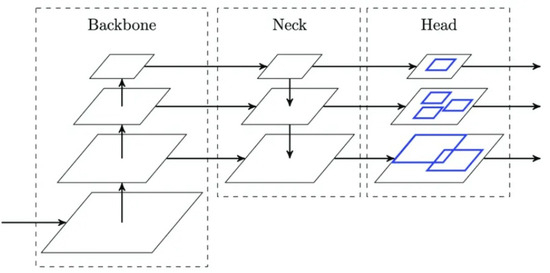
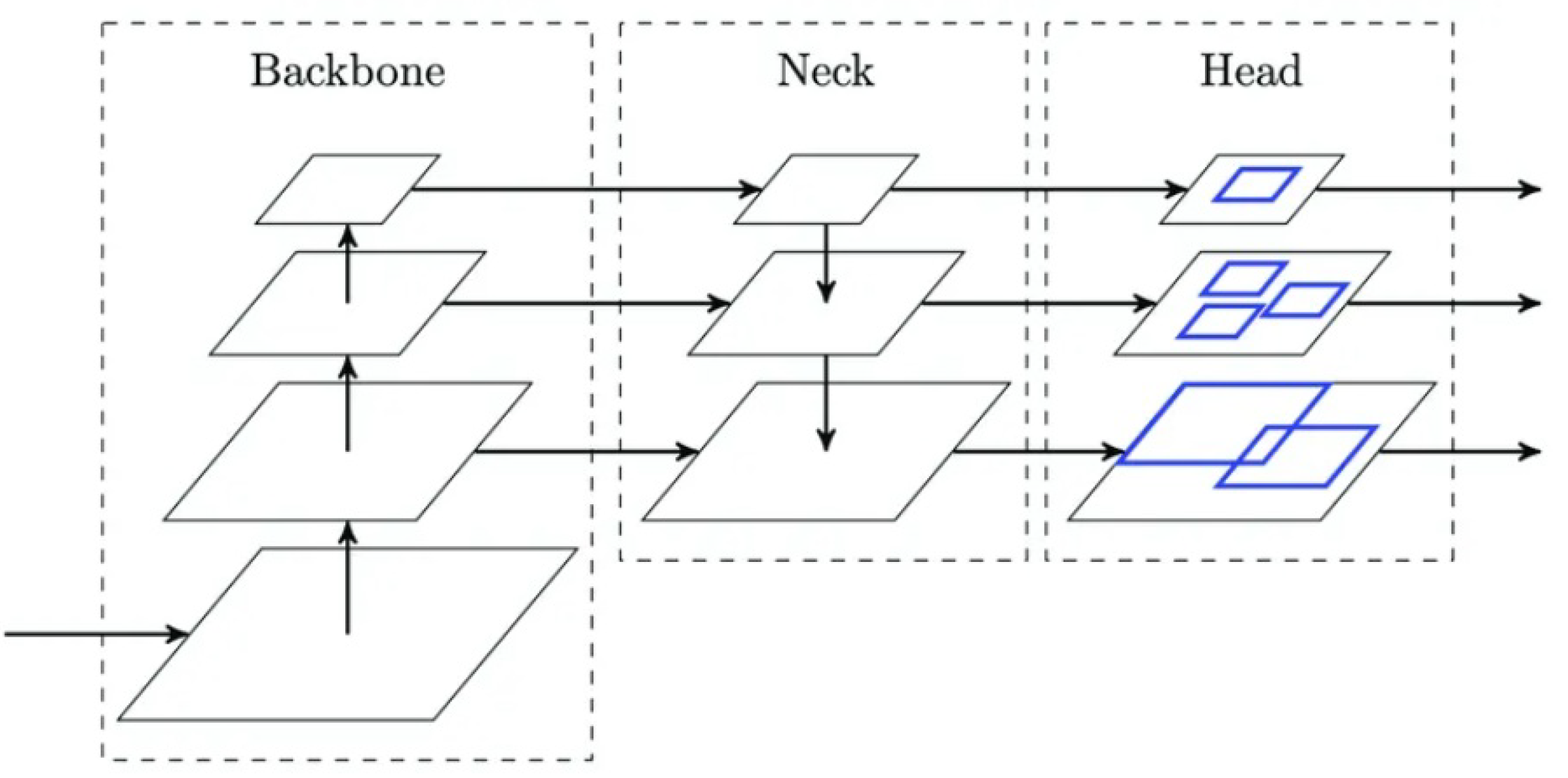
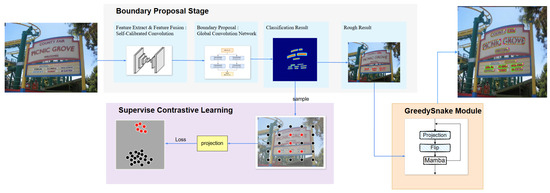
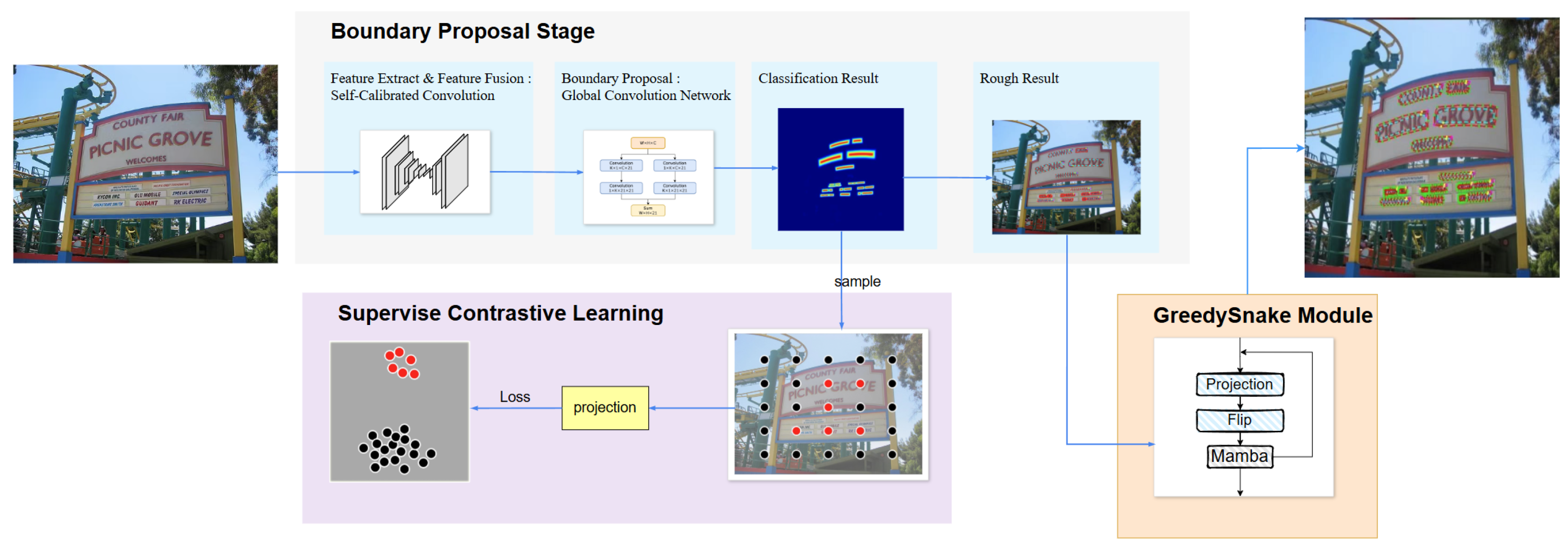
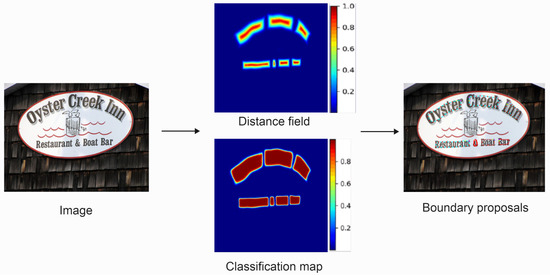
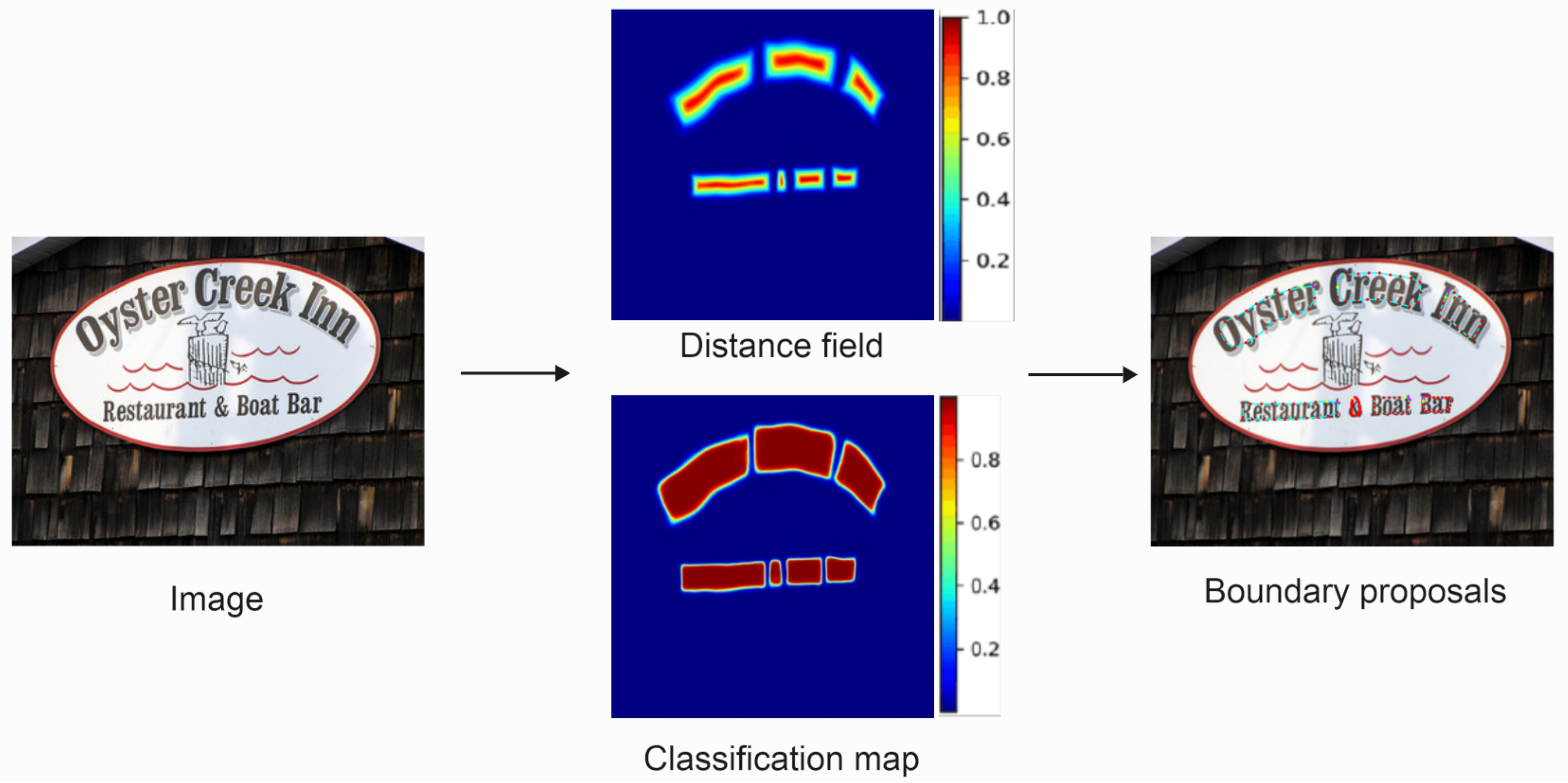
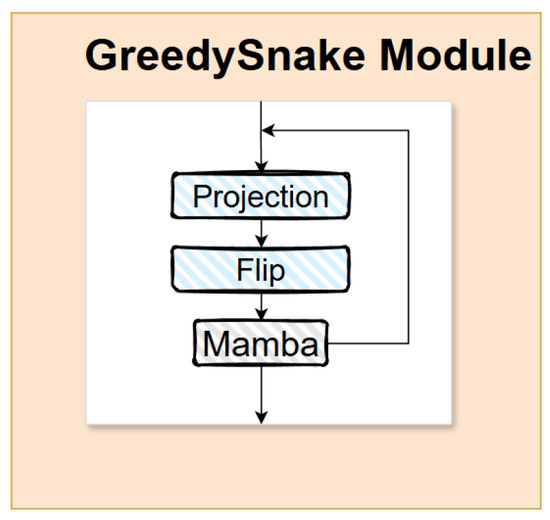
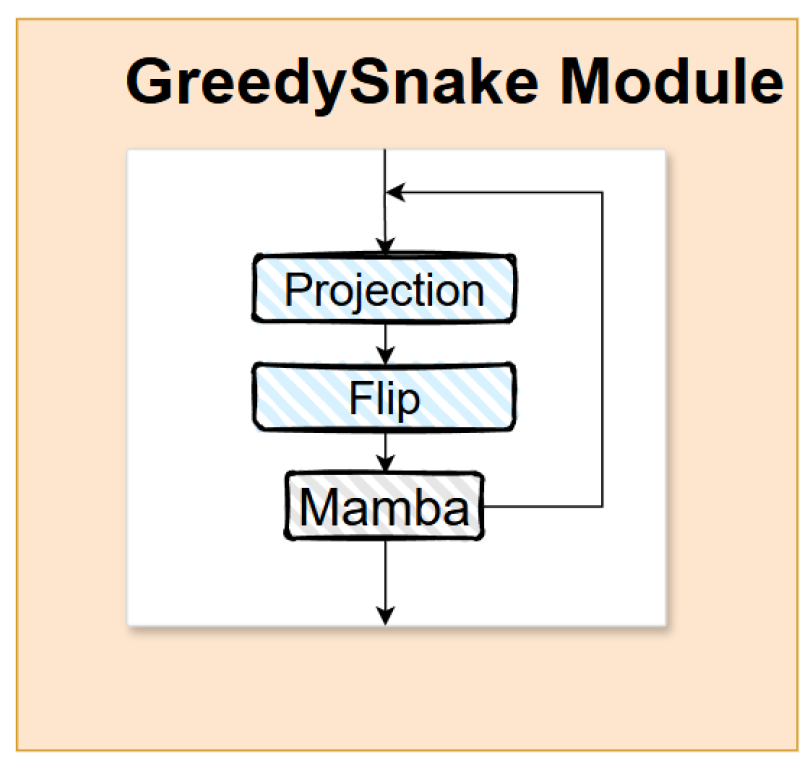
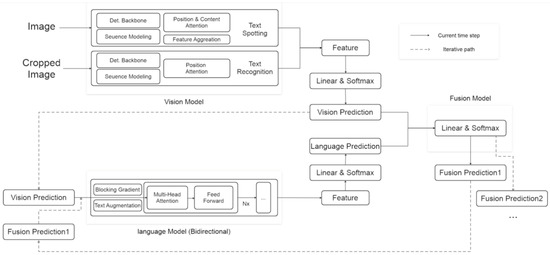
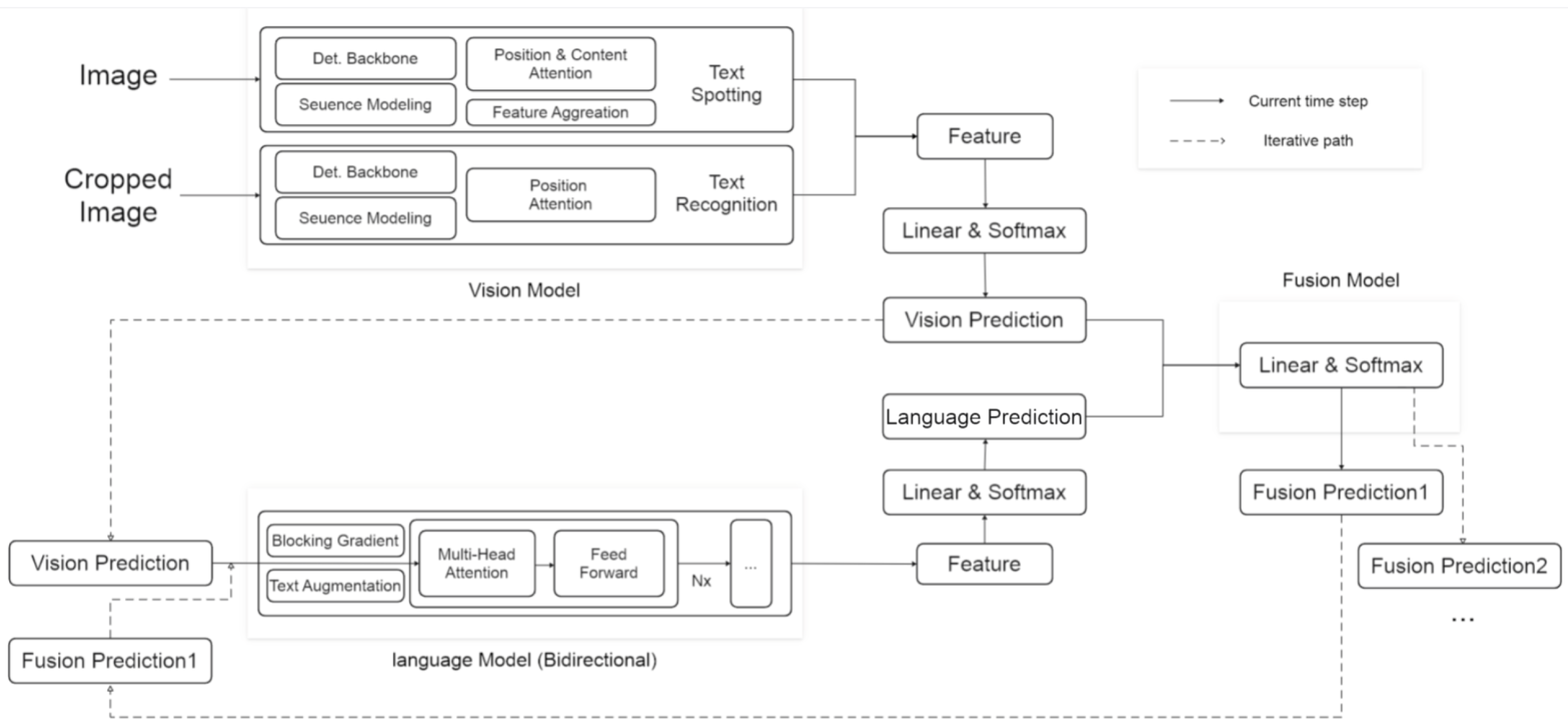
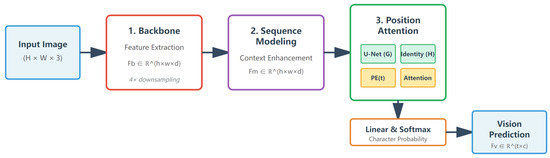
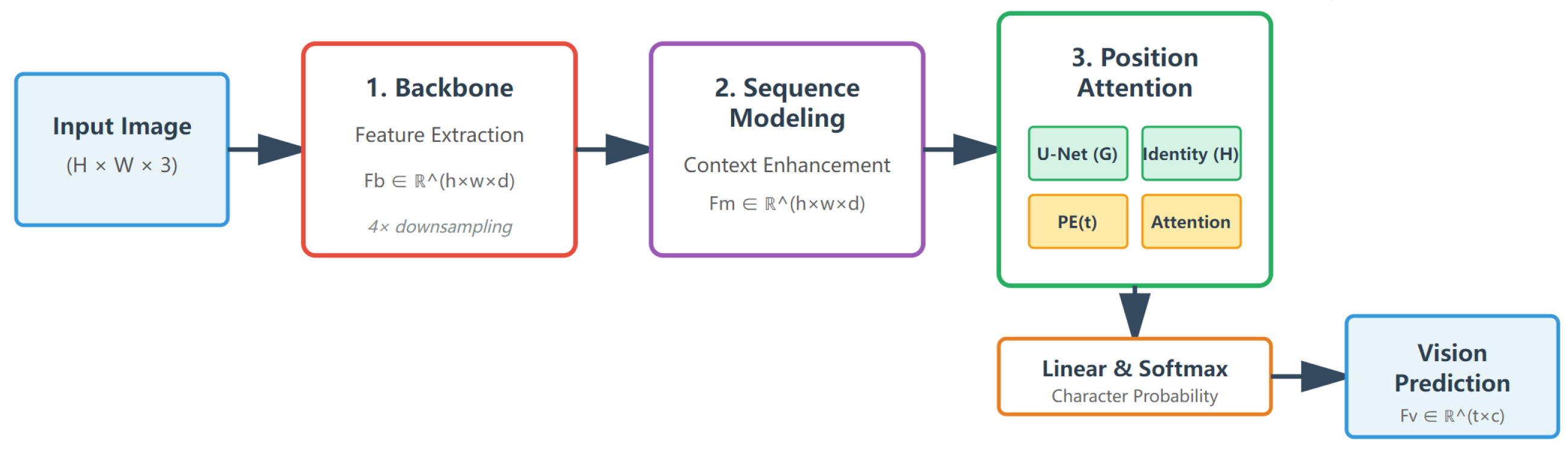
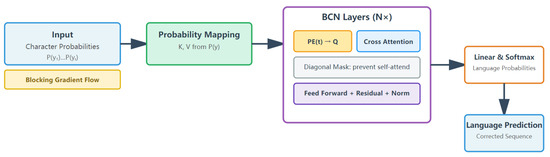
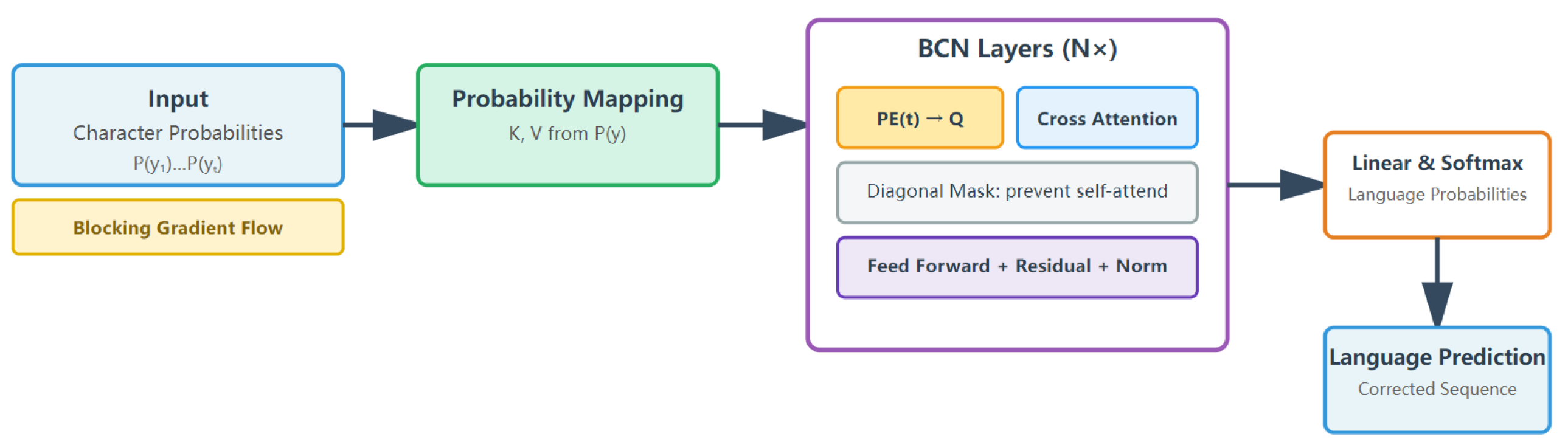
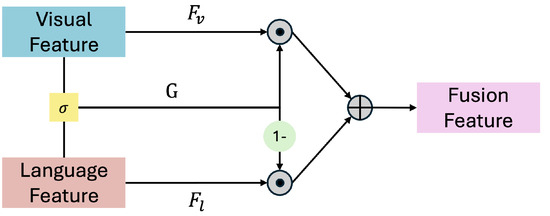
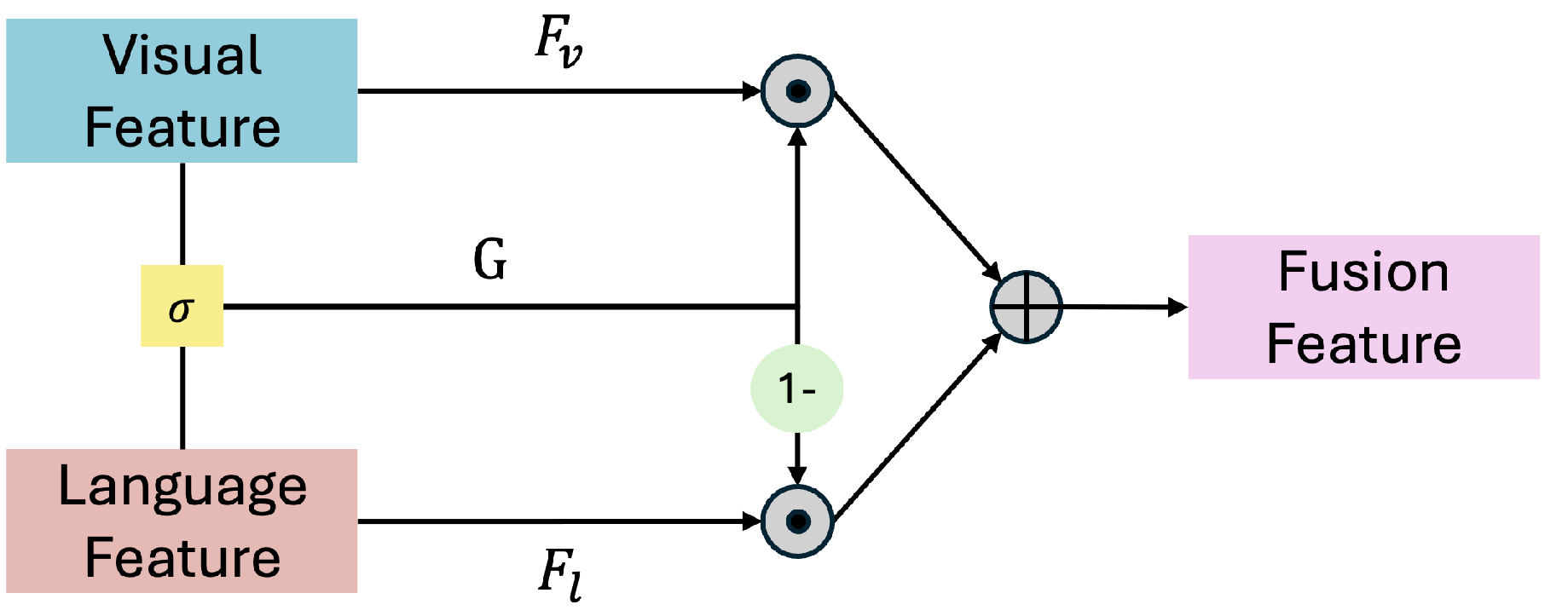
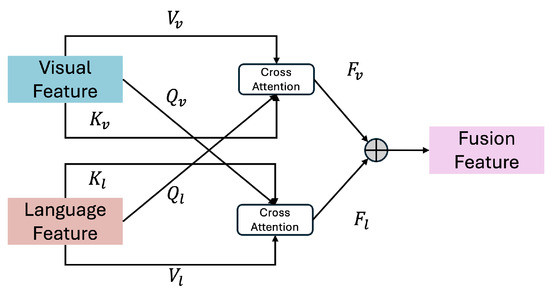
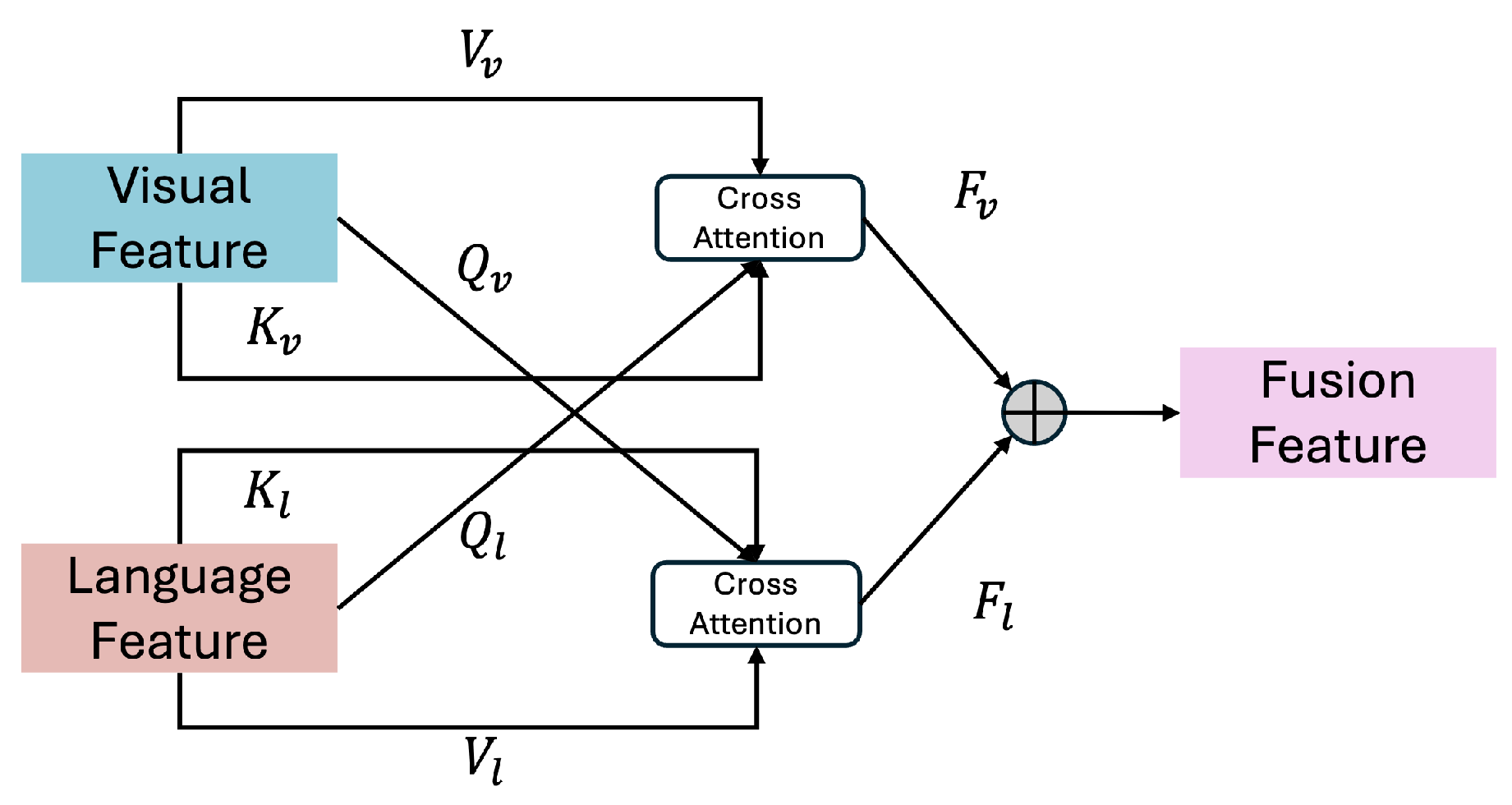
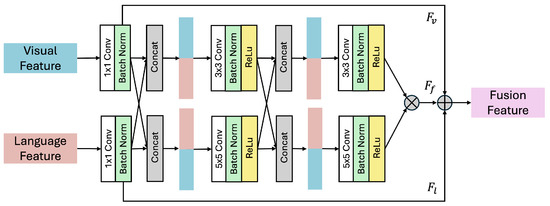
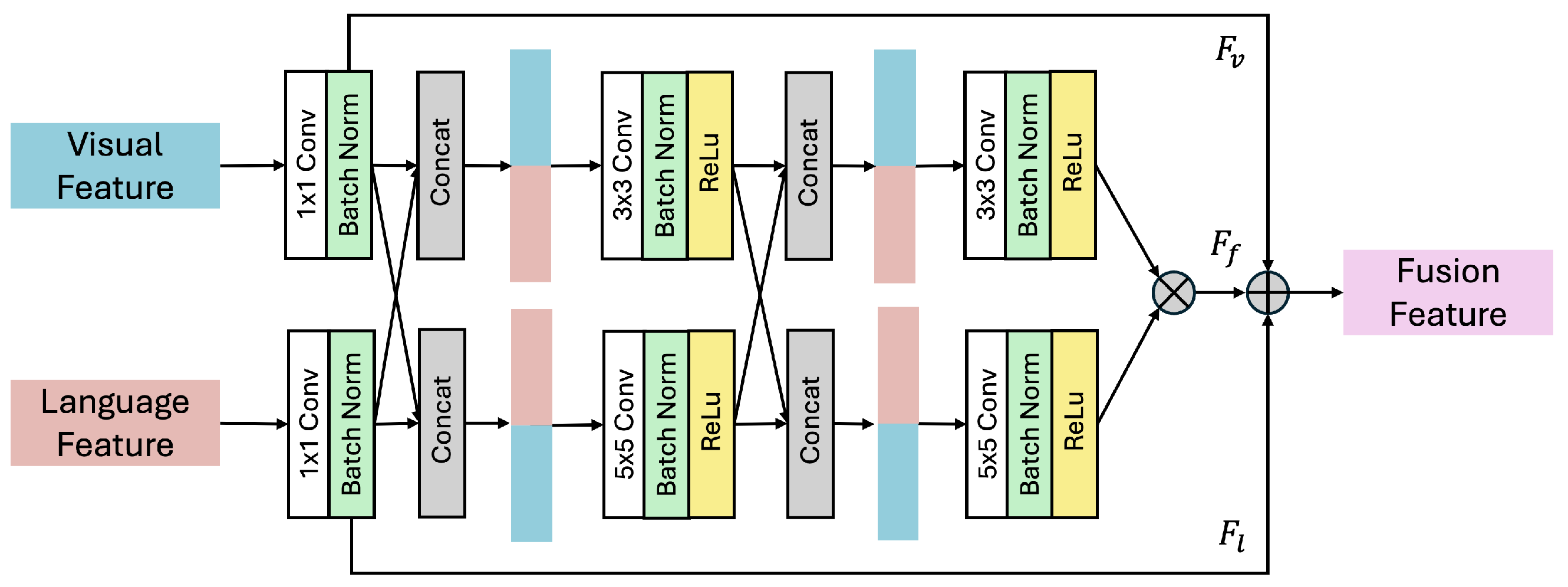
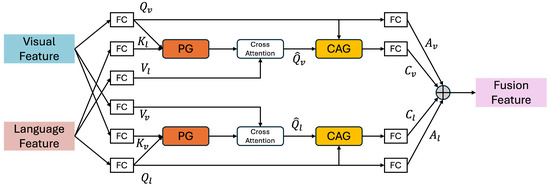
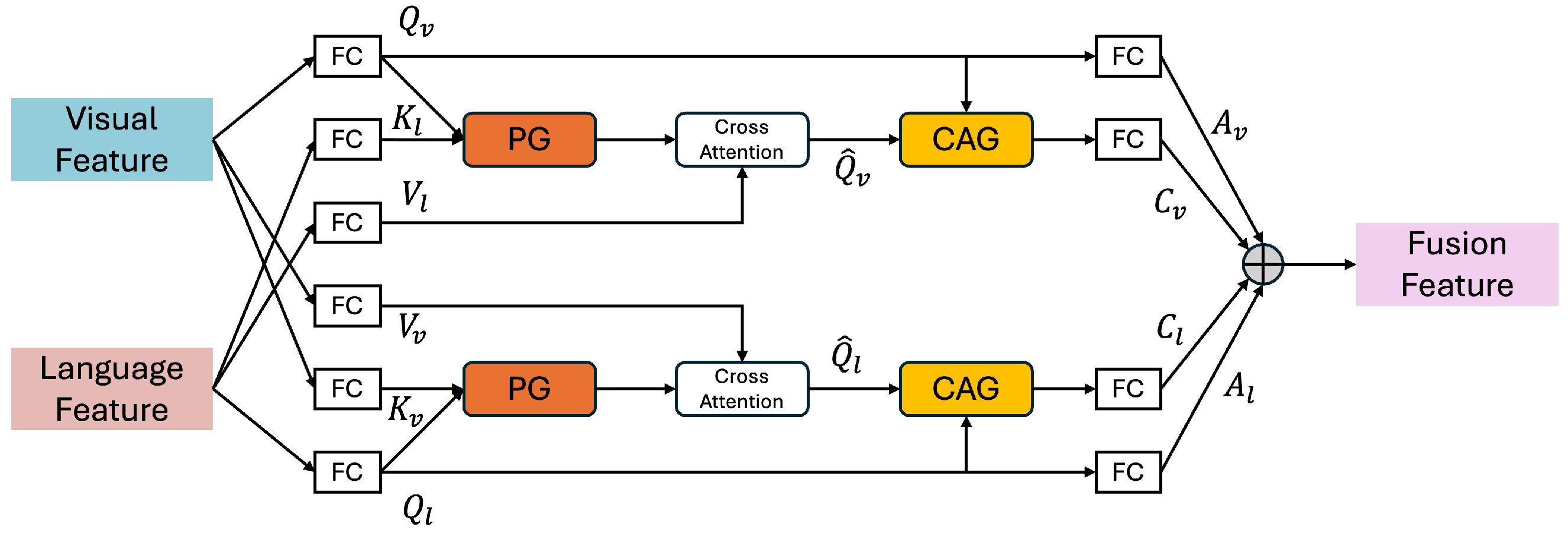
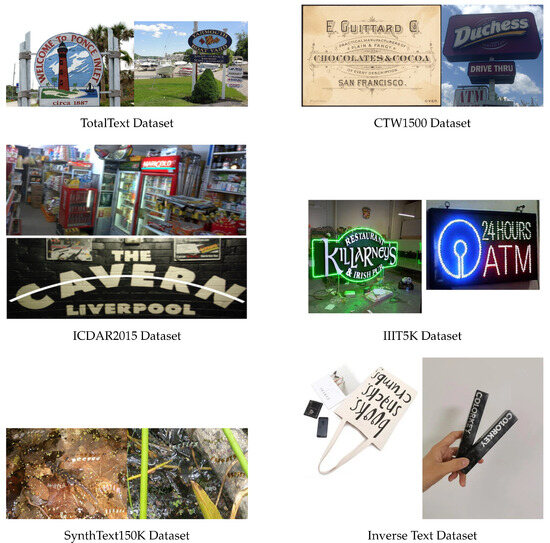
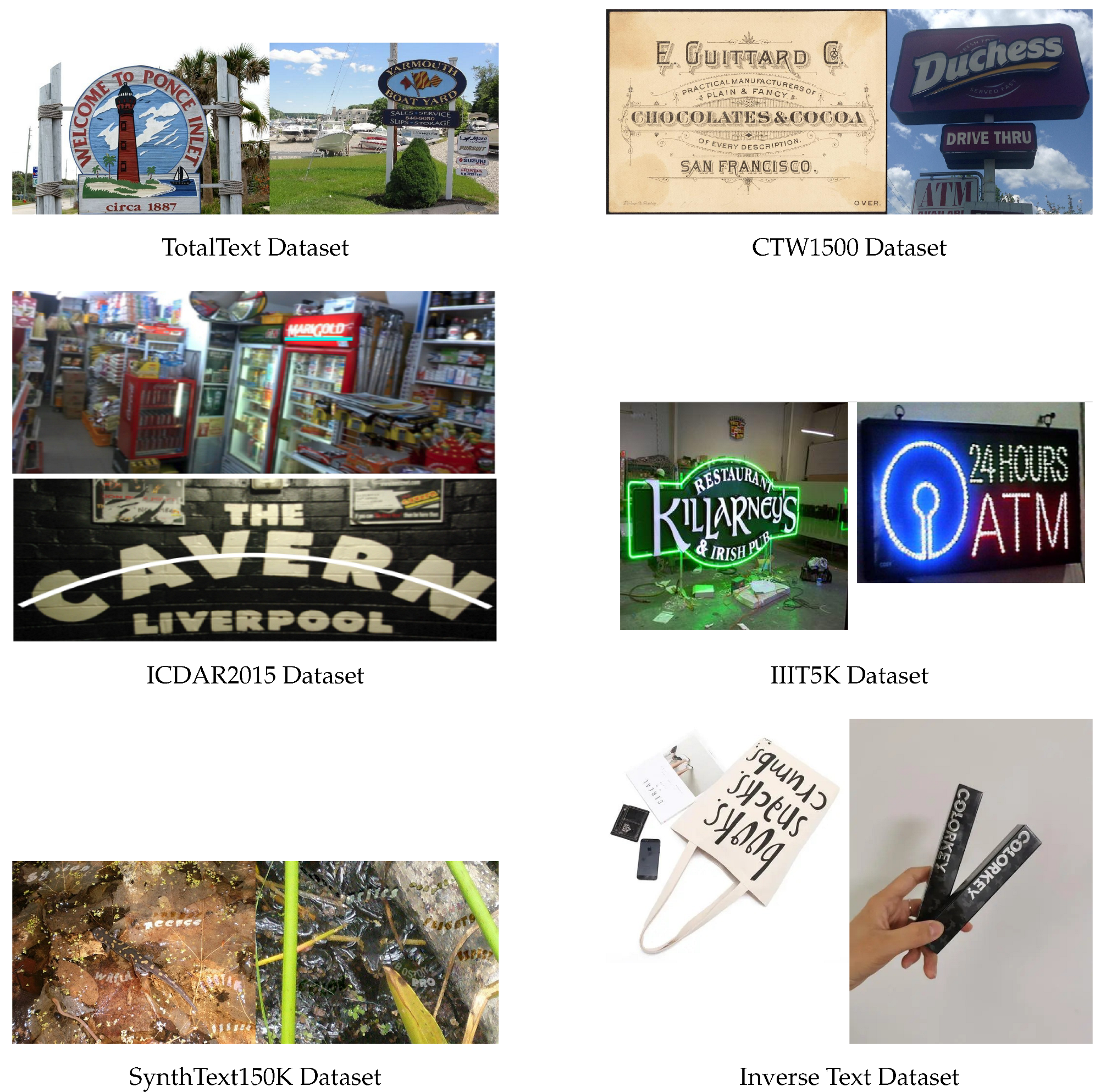
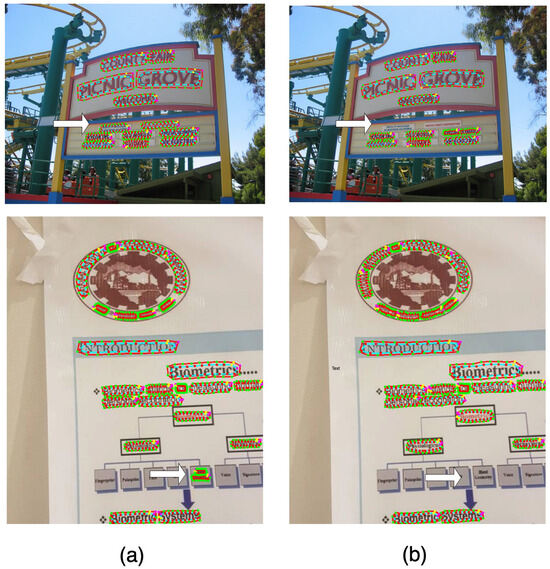
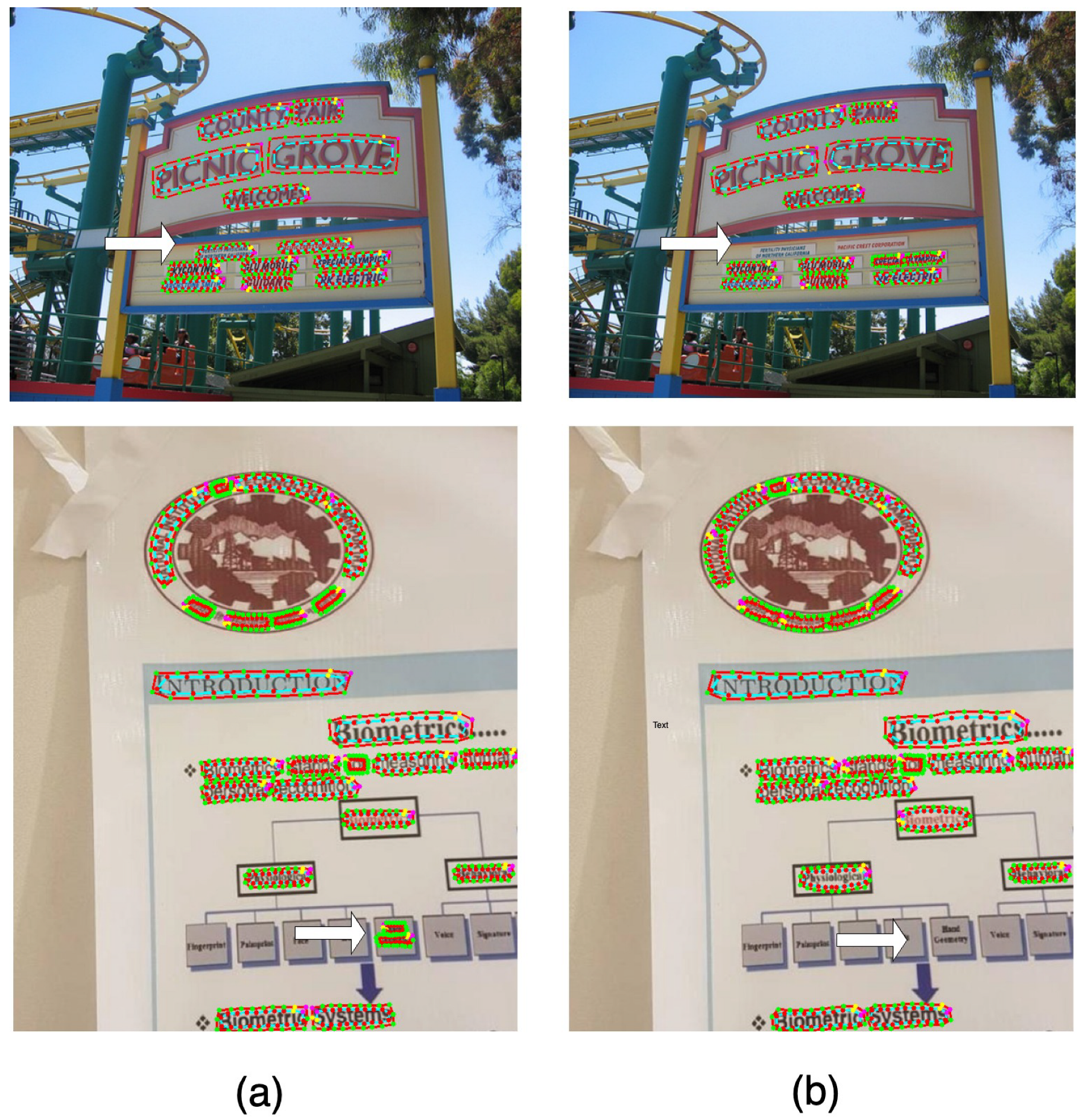
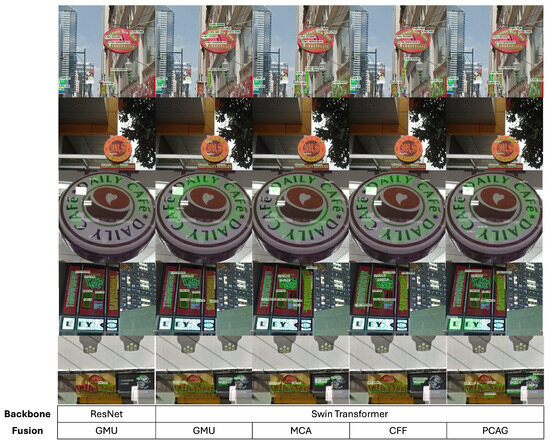
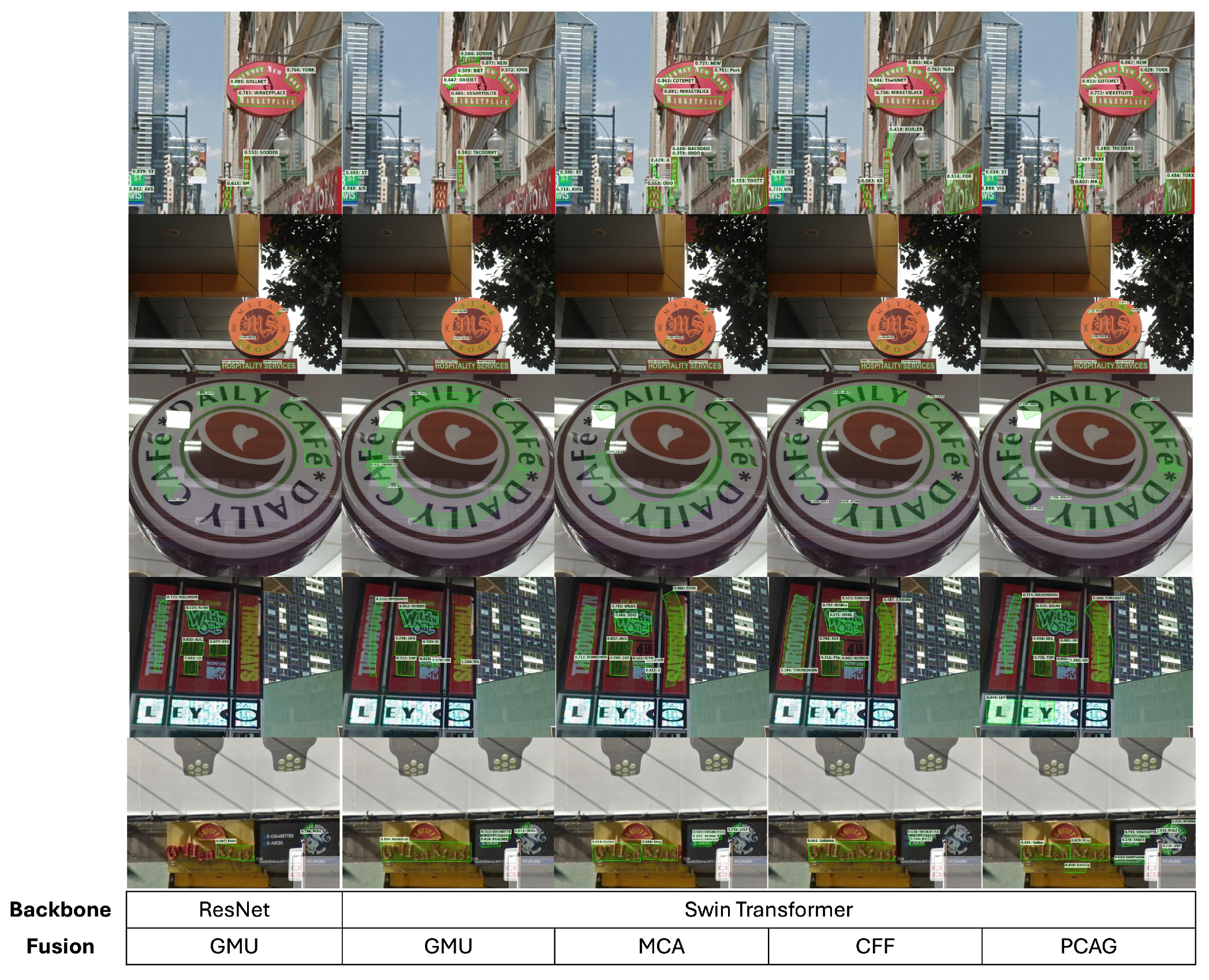


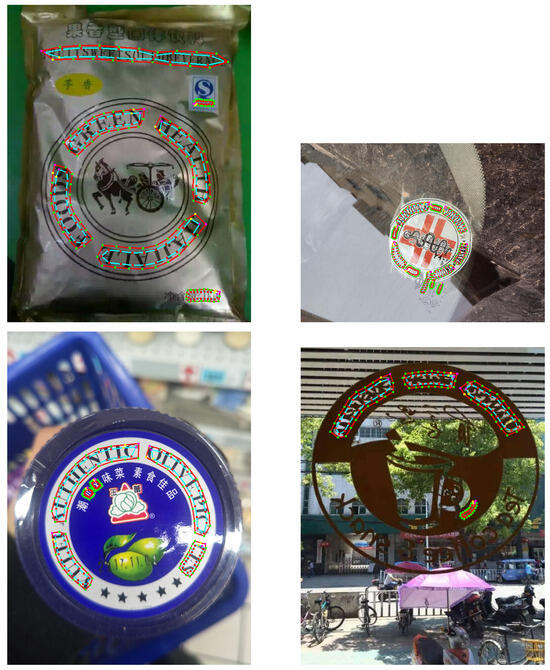
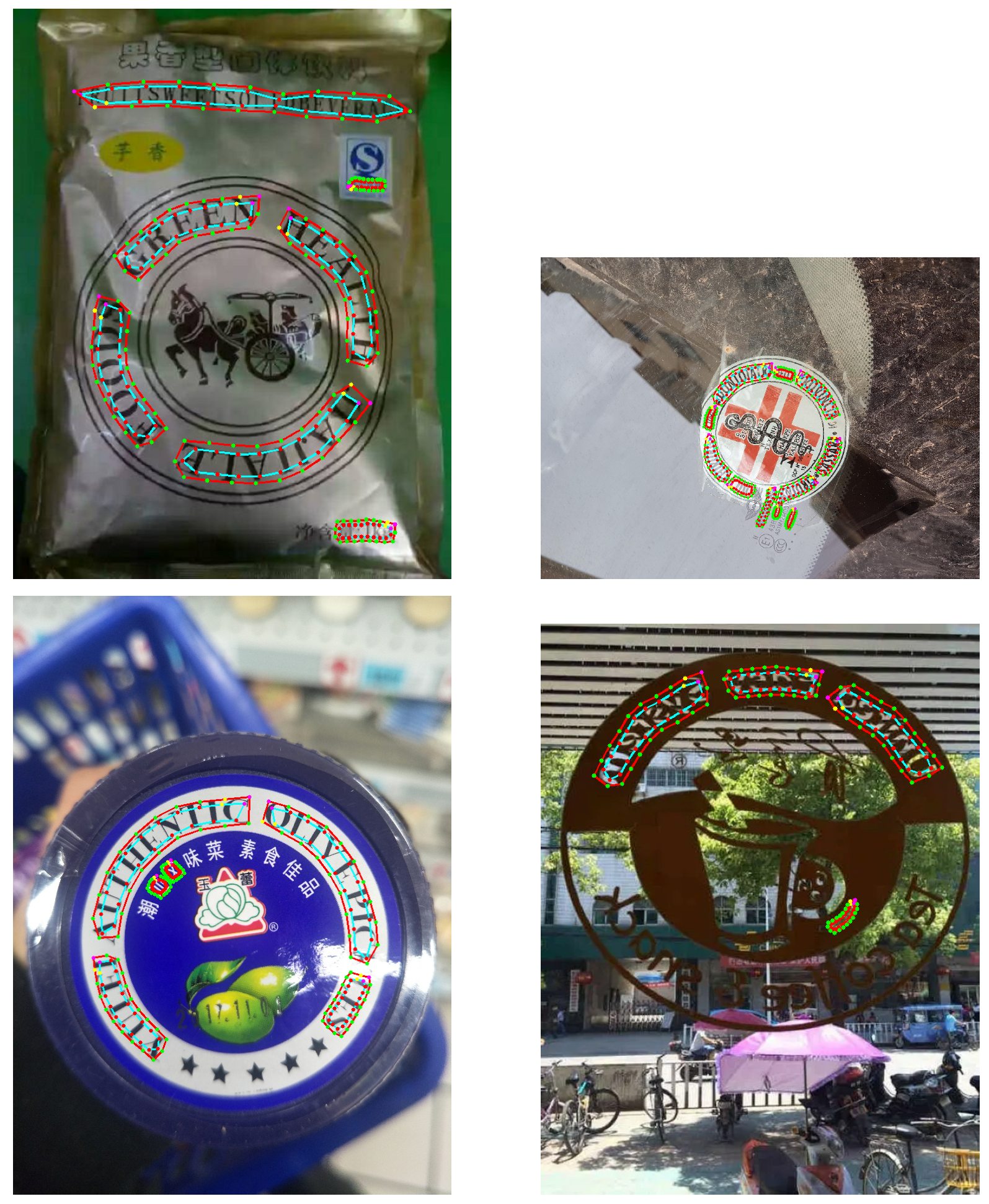
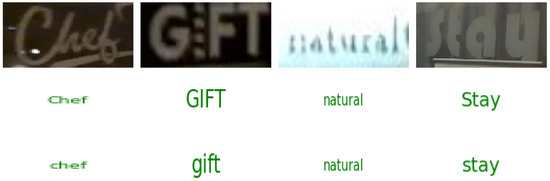
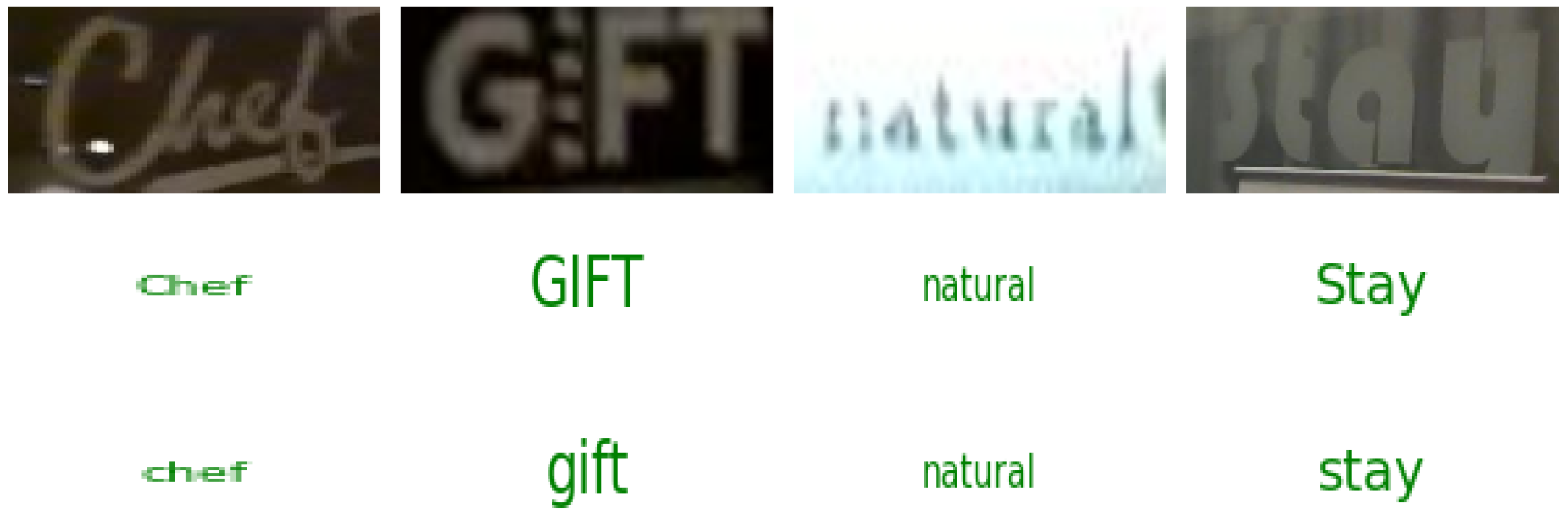
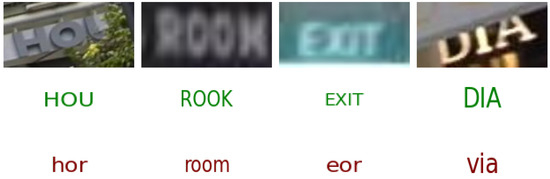
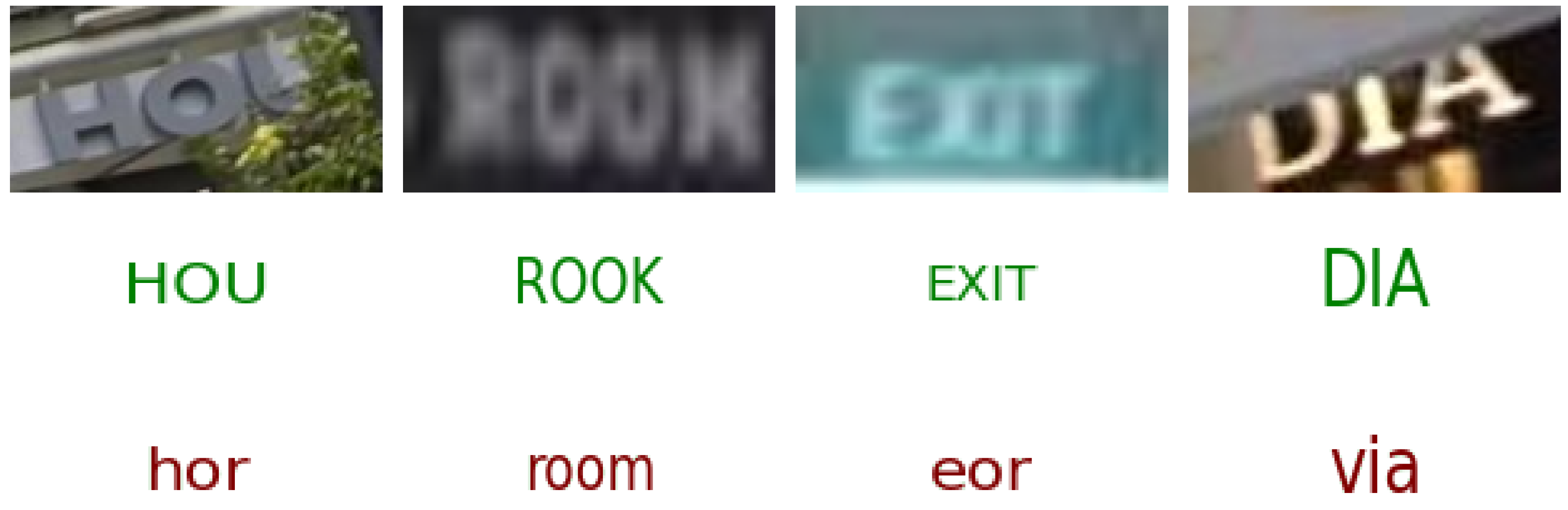



Disclaimer/Publisher’s Note: The statements, opinions and data contained in all publications are solely those of the individual author(s) and contributor(s) and not of MDPI and/or the editor(s). MDPI and/or the editor(s) disclaim responsibility for any injury to people or property resulting from any ideas, methods, instructions or products referred to in the content. |
© 2025 by the authors. Licensee MDPI, Basel, Switzerland. This article is an open access article distributed under the terms and conditions of the Creative Commons Attribution (CC BY) license (https://creativecommons.org/licenses/by/4.0/).