


Abstract
This paper examines the concepts, technologies, and services of various types of electronic wallets and compares and analyzes their security features. Additionally, it presents specialized security threats through cases of breaches of key information that need to be managed according to the type of electronic wallet. One of the main contributions of this paper is that, unlike existing studies, it provides explanations and discussions encompassing both traditional e-wallets and cryptocurrency-based wallets. It identifies and insightfully examines the functions of electronic wallets according to the type of digital asset while also incorporating scenario-based quantitative analysis to assess how effectively certain security requirements mitigate identified risks. In particular, the classification of wallet types in this paper is based on an analysis of the existing literature that has studied the services, functionality, and security of each wallet. Through this, we suggest a future direction for universal wallets by highlighting critical security requirements that may arise when identity (ID), payment, and cryptocurrency services converge in a single interface. Rather than proposing an exhaustive universal wallet architecture, this paper focuses on key technical elements that future e-wallet environments should consider to withstand the multifaceted threat landscape posed by integrated digital asset management.
1. Introduction
With the proliferation of the internet and the advancement of digital technologies, the amount of data generated is increasing exponentially, leading to the growth of digital assets for both individuals and businesses. Digital assets exist in various forms electronically produced within IT infrastructure. Efficiently managing and protecting these extensive digital assets is crucial for safeguarding users’ property and personal information. In particular, the recent emergence of blockchain technology and the expansion of various cryptocurrency markets based on it have increased the risks associated with digital assets, as evidenced by incidents such as the Terra-Luna crash and the bankruptcy of the FTX exchange in the United States [1].
As various types of digital assets circulate, the use of electronic wallets is increasing. However, digital assets and electronic wallets lack globally accepted terms and implementations, both institutionally and technically, leading to ambiguous identities [2]. Digital assets include all forms of data or content that hold economic value and are stored and managed electronically. Recently, the traditional meaning of digital assets has evolved to refer to cryptocurrencies or tokens generated through distributed ledger technology, which allows participants in a distributed network to use cryptographic methods to verify transaction information and collectively manage a ledger through consensus. The blockchain is a representative example of this technology [3,4].
Electronic wallets are used not only for online and offline financial transactions, digital artworks, and copyrights but also for managing identity verification by storing and using certificates. Recently, cryptocurrency wallets for storing cryptocurrencies like Bitcoin have also come into use.
An electronic wallet can be defined as a software- or hardware-based tool used to securely store and manage various assets in digital form [5,6]. These electronic wallets store and manage digital assets such as cryptocurrencies, payment information, and identity information, providing functions that protect users’ assets and allow for convenient use. Electronic wallets existed long before the invention of the blockchain, and cryptocurrency wallets can be seen as a new type of wallet that performs access control and transactions on the blockchain [7].
The purpose of this paper is to classify the major types of electronic wallets and to compare and analyze the functions and structures of each wallet type, thereby presenting the technical requirements and development prospects of electronic wallets as tools for secure digital asset management. First, in Section 2, the characteristics and technical elements of electronic wallets are examined by reviewing service cases in each area through recent related research trends. Section 3 classifies the main types of electronic wallets for digital asset management and analyzes the functions, key management information, technologies, and service evolution for each type. Section 4 outlines the specialized security threats facing electronic wallets and identifies corresponding countermeasures. Section 5 then presents a multi-dimensional risk analysis, including scenario-based evaluations that compare how different wallets and security measures mitigate the threats identified. Section 6 concludes the paper with a summary of the key findings and directions for future research.
2. Related Work
The concept of electronic wallets first emerged in the early 1990s and has developed alongside the increasing need for digital payments and asset management. Initially, electronic wallets started as simple online payment methods, but with the spread of the internet and advancements in mobile technology, they have evolved into complex platforms offering a variety of functions and services. Table 1 summarizes the development of electronic wallets in relation to advances in IT technology.
Table 1.
Advancements in information technology and the development of electronic wallets.
Electronic wallets have played a role as auxiliary tools supporting various services in the areas of identification (ID) management and payments, alongside the advancement of internet and IT technologies, with numerous related studies conducted. The authors of [8] compared and analyzed traditional payment methods such as cash and credit cards with electronic wallet payment methods. They introduced the forms of electronic wallets based on user platforms such as online, mobile, and desktop and discussed the development of cryptocurrency wallets. They also emphasized the importance of secure management of identity information for protecting digital assets in electronic wallets.
In [9,10,11,12], research was conducted on user-centered ID wallets to improve the complexity of ID management and security as mobile technology centered around smartphones expanded in the late 2010s. Technologies were developed to provide convenience in ID management through electronic wallets, allowing users to integrate and manage multiple IDs on their mobile phones or access various services with a single ID.
The 2010s was a period of active discussion on electronic wallets used for credit card payments, coinciding with the spread of smartphones, during which research on implementing secure mobile electronic wallets was conducted [13,14]. The authors of [15,16] proposed various service models based on the storage locations of payment information and the types of participants in the system to securely manage electronic wallets.
In [17], a comparison of the service alliance structures of credit card providers and major IT companies is presented to analyze mobile payment service types, along with a service structure analysis based on the different participants, such as telecommunications companies, platform providers, and governments. In [18], the structure and security characteristics of mobile payment electronic wallet services led by major IT companies such as Google, Samsung, and Apple in the mid-2010s are compared and analyzed, along with the security response requirements. In [19], case studies on global mobile proximity payment services are investigated and analyzed, based on financial information storage methods and wireless technologies in the early 2010s.
In [20], the status of electronic wallet services based on mobile payments and decentralized authentication technologies is investigated as of 2020. The study classifies electronic wallet models into user device-installed and third-party delegated types, providing an analysis of security threats and presenting security requirements.
Recently, with the expansion of the cryptocurrency market centered around Bitcoin, the need for electronic wallets and enhanced security for various digital assets has emerged. In [21], 24 commercial electronic wallet products currently in use are compared and analyzed based on the cryptocurrency types they support, key management methods, platform types, and key recovery mechanisms, categorized by their form, such as desktop, mobile, hardware, and cloud-based devices.
In [22], the trading types centered around cryptocurrency exchanges are classified based on whether the user’s key is entrusted, and the requirements for electronic wallets and key management are presented. In [23,24], electronic wallets are classified into three types—user-managed wallets, exchange-managed wallets, and proprietary managed wallets—based on the responsibility for protecting the private key for cryptocurrency access. In particular, the authors of [24] classified electronic wallets into hot wallets, cold wallets, and warm wallets (A warm wallet is a semi-online wallet that adds safety belts—such as approval delays and multi-signature controls—to “hot” online convenience, serving as an institutional-grade “middle storage” that balances frequent transactions with strong asset protection) based on internet connectivity. The warm wallet is presented as a form of electronic wallet that enhances key management security for cryptocurrency access by applying multi-signature and multi-party computation (MPC) technologies to overcome the connectivity limitations of cold wallets. The authors of [25] presented a threshold-based MPC signing technique for implementing warm wallets, and the authors of [26] provided an analysis of signing performance based on the number of keys for optimal multi-signature application in electronic wallets.
In [27], the characteristics and services provided by electronic wallets supporting cryptocurrencies, non-fungible tokens (NFTs), and ID management are analyzed, and the future direction of electronic wallets is proposed as a portal offering various online and offline services to users.
In [28,29,30,31,32], the implementation methods of electronic wallets used for simple payments, virtual assets, legal currencies, and identity verification across various industries are compared, along with major hacking incidents and security considerations. In particular, the authors of [6] classified electronic wallets for financial transactions, simple payments, and virtual assets, presenting security requirements and categorizing storage media.
When examining prior studies in the fields of electronic wallets and security, one finds that most research has addressed e-wallets individually, focusing on either ID management or payment services in line with the early conception of electronic wallets. More recent work on cryptocurrency-related wallets tends to concentrate on secure key management, primarily derived from analyzing security breach incidents. However, many of these studies propose relatively narrow security or technical requirements, typically aligned with the mainstream wallet technology of their time.
Table 2 succinctly summarizes the primary periods, technical scopes, and gaps of prior e-wallet research, indicating whether a study covers ID wallets, payment wallets, or cryptocurrency wallets. By juxtaposing the “identified gaps” with the ways our own approach addresses them, the table clarifies why this paper is both timely and necessary.
Table 2.
Comparison of gaps in related work and our contributions.
Building on these observations, our work aims to examine e-wallet security from multiple perspectives, rather than confining itself to a single domain. We analyze ID wallets, payment wallets, and cryptocurrency wallets under a single set of analytical criteria—namely key functions, managed data, enabling technologies, and service evolution—and discuss both their shared and distinct security aspects, along with emerging issues that may arise as these wallet types converge. The following are this paper’s contributions.
- Comparison and Organization of Three E-Wallet Types: Previous research frequently addressed ID wallets, payment wallets, and cryptocurrency wallets separately. In contrast, this paper organizes these three types under one classification system—encompassing the key players, assets, functions, technologies, and services of each wallet—so they can be analyzed on a common basis. Through this, we clarify the e-wallet-related terminology and scope, providing foundational references that subsequent studies may consult when examining specific wallet types.
- Comparative Analysis of Security Threats by Type: We collected and summarized threats and incident cases reported for traditional financial (payment) wallets and cryptocurrency wallets, describing how both fields share certain security issues despite differing operational environments while also identifying issues unique to each. This distinction helps future discussions on digital asset security determine which threats are common to both traditional finance and cryptocurrency and which are specialized in only one domain.
- Consideration of a Universal Wallet Perspective: Drawing on “super-app” examples, this paper addresses the possibility that ID, payment, and cryptocurrency wallets could merge on a single platform, an angle that introduces new questions from a security standpoint. For instance, we highlight overlooked challenges in individual studies—such as permission conflicts, session management, and key loss—when three different asset types are managed simultaneously in a single application. This examination suggests future implications for a universal wallet environment.
- Quantitative Analysis to Confirm Risk Reduction: We applied the security requirements derived in this paper to actual scenarios (super-app payment or transaction, distributed key recovery, and CBDC issuance) and conducted a deterministic stress test to compute residual expected losses and compare how much threats can be mitigated. Such a quantitative assessment indicates how effective each security mechanism might be when different e-wallets converge. It also provides valuable data for subsequent research, such as protocol design or empirical experimentation.
Taken together, this paper (1) groups three wallet types (ID, payment, and cryptocurrency) under a single classification system, (2) examines each type’s security threats, (3) discusses issues that warrant additional consideration for a future universal wallet environment, and (4) presents a scenario-based quantitative analysis of risk mitigation. In the process, it emphasizes that e-wallet security should not be confined to a particular type of wallet and systematically addresses the potential challenges that arise as individual wallets expand into convergent or integrated wallet scenarios.
3. Classification of Electronic Wallet Type
In this section, we classify various electronic wallets, which have been utilized in the market alongside the advancement of IT technology, into three categories based on the types of digital assets they protect: digital ID wallets, digital payment wallets, and digital cryptocurrency wallets. We classified the three types of electronic wallets (ID wallets, payment wallets, and cryptocurrency wallets) based on the leading business entity and the primary services they offer. For example, if a financial institution (such as a bank or credit card company) takes the lead in providing banking or credit card services, we categorize it as a payment wallet. If a telecom company or government agency operates the wallet with a primary focus on identity verification, then we consider it an ID wallet. Likewise, if a cryptocurrency exchange or similar entity provides asset transaction services at its core, then we regard it as a cryptocurrency wallet.
Although a particular business entity may initially launch a wallet service, financial technology (FinTech) companies have increasingly integrated additional services into what were originally finance- or ID-focused wallets, resulting in multiple features expanding within a single wallet. Nonetheless, this study adheres to the original leading provider and core service as the classification standard for three distinct types. We then compare and analyze each wallet’s key functions, management data, technologies, and service evolution within a single set of criteria. This paper focuses particularly on smartphone-based electronic wallets, which are widely used globally as user terminals.
3.1. Digital ID Wallets
3.1.1. Key Functions and Managed Information
Digital ID wallets are a type of electronic wallet that stores and manages users’ identities in digital form. They have evolved to enhance the efficiency of secure identifier management and are expanding their service functions and areas [3]. The main functions of digital ID wallets include secure storage and management of identity information, easy identity verification and authentication, and integrated use of identity information across multiple platforms. Additionally, users can enhance their access to various services while strengthening the security of their personal information through digital ID wallets.
In particular, digital ID wallet security plays a crucial role in protecting users’ identity information, combining various security technologies such as encryption, multi-factor authentication (MFA) [34], and user access control. Digital ID wallets support additional functions such as online service authentication, access to government services, personalized service provision, and payments and remittances. They achieve this by linking with various businesses such as financial institutions and public organizations through their primary function of proving user identity.
The digital identity information managed by digital ID wallets includes not only publicly available information such as names, phone numbers, and email addresses but also sensitive identifying information such as social security numbers and credit card numbers. Table 3 classifies these types of digital identity information and categorizes them into information for verifying identity, information for verifying qualifications and permissions, and information for proving actions and performing activities [5].
Table 3.
Types of digital identity information.
Digital ID wallets have evolved to focus on efficiently managing personal identity information and credentials distributed across individual systems while enhancing user convenience and privacy, thus providing strong authentication and identity verification functions. In particular, they have developed into a user-centered identity information management model that prioritizes convenience for personal identity management [9,10].
3.1.2. Technology and Service Evolution
With the development of the internet as a computer network, users are granted access rights through ID identifiers and corresponding secret information to connect to specific systems. As IT services and systems become more complex and diverse, the number of ID identifiers a specific user must manage continues to increase. This digital ID management structure is primarily based on the client-server model. On the client side, there is software or applications that securely store and manage the user’s identity information, while on the server side, systems authenticate this information and provide related services.
To manage digital identity information efficiently, the system structure has evolved from a service provider-managed model to a user-centered management model for reasons of security and user convenience. This shift has led to a change in the flow, where the data subject directly controls their own information, even in cases where the individual is managing it. This, in turn, necessitates secure information management and processing methods.
Figure 1 illustrates the evolution of systems for managing user identifiers in the technical field of ID management, and the concept of digital ID wallets emerges from the development of these ID management technologies [12,35,36]. Figure 1a represents the identity management model within a single system. Figure 1b depicts a centralized storage-based ID management model, where a single issuing organization manages verification information or transaction records. The advantage of this model is that it is easily compatible with existing infrastructure, while the disadvantage is that access to and verification by the issuing institution is required for every transaction and identity proof. Figure 1c shows a federated ID management model, which enhances convenience by enabling mutual access between systems through ID identifier mapping to improve the management of individual systems’ ID identifiers.
Figure 1.
Changes in digital identity information management models: (a) isolated model, (b) centralized model, (c) federated model, and (d) user-centered model.
Figure 1d shows the user-centered ID management model. With the widespread adoption of smartphones, digital ID wallets have evolved into a user-centered ID management model, where a user stores multiple ID identifiers in their phone’s digital ID wallet and can directly manage their identity information. This development led to the emergence of the term “digital ID wallet” [9].
Recently, with the emergence of blockchain technology, decentralized ID wallets utilizing distributed ledger technology have also emerged. This method reduces the need for centralized servers by storing user identification information on the distributed ledger, allowing all participants to share it. In particular, it has expanded to include features that allow limited sharing of information when providing identity data to service providers or third parties, emphasizing privacy protection and data ownership. The concept of a multi-purpose digital ID wallet has been further developed and is being increasingly used [37]. In South Korea, mobile driver’s licenses and electronic certificates through the Government24 service, which uses decentralized ID wallets, are already in use, and in the EU, the digital ID wallet standard known as eIDS is being developed to promote service expansion [38,39].
3.2. Digital Payment Wallets
3.2.1. Key Functions and Managed Information
The concept of a currency system that does not rely on physical coins has a long history, but the technology supporting such systems only became widespread with the popularization of the internet and smartphones. From the perspective of payment method development, the access media for financial transactions, such as plastic credit cards, evolved into services that provide convenience through mobile internet infrastructure.
A digital payment wallet is designed for making payments in both online and offline stores, enabling the management and control of financial information required for payments, such as credit card details. In particular, mobile-based digital payment wallets began to evolve in the 2000s, starting with Japan’s integrated circuit (IC) chip-based NFC payment services. With NFC technology, which expanded from the wireless IC functionality, payments could be made by simply touching the mobile device to a payment terminal. This type of wallet stores and manages bank account information, credit and debit card details, and e-money, offering services such as online payments, offline payments based on NFC and QR codes, money transfers, and additional financial and commercial services like discounts, coupons, and rewards programs. It also provides personal financial management features such as budget tracking and spending analysis [5,40,41,42].
Representative digital payment wallets include Alipay, Amazon Pay, Apple Pay, Google Wallet, and Samsung Pay, which are provided by many IT companies. These services have evolved into convenient and secure payment and FinTech solutions by integrating various payment methods and offering easy transfer and payment functionalities [5,19,42].
As shown in Table 4, digital payment wallets offer four main content areas. However, rather than being independent services, they tend to combine non-payment functions, like membership cards and tickets, with payment services, offering a more integrated solution as needed. Mobile wallet services bring together various functions, combining items we typically carry in a physical wallet—such as credit cards, coupons, and identification cards—into a single mobile device.
Table 4.
Digital payment wallet service areas (Mobey Forum 2011 [19]).
3.2.2. Technology and Service Evolution
Digital payment wallets generally operate based on a client-server architecture, where communication occurs between applications installed on user devices, such as smartphones, tablets, and personal computers (PCs), and servers responsible for payment processing. The server handles the secure processing of the user’s payment information and is responsible for authenticating and approving transactions.
Digital payment services are carried out when the user, as the purchaser of goods or services, receives the goods or services from the service provider and makes the payment through a telecommunications company. In this payment process, telecommunications companies and financial institutions are key stakeholders, while service providers, device manufacturers, platform providers, and others are indirect stakeholders [22]. The ecosystem of these digital payment services represents an evolution and expansion of the traditional financial system, where cash and physical cards are integrated with telecommunications companies and various stakeholders, formed through the combination of mobile smartphones, IC-based technologies, and wireless technologies [13,43,44].
Digital payment services are classified into NFC-based and non-NFC-based services, depending on the information transmission method between the payment terminal in the store and the mobile device [16]. Table 5 classifies the information storage and transmission methods of digital payment wallets based on the use of NFC. Regardless of the information storage method, the transmission method can be optionally combined. NFC-based services are further classified according to the implementation method of SE, which is the core platform for storing payment information in mobile payments. These include the universal subscriber identity module (USIM) method preferred by telecommunications companies, the secure digital memory (microSD) method that allows service providers like financial institutions to offer independent services, and the embedded SE method, where operating system (OS) platform providers or mobile manufacturers install Secure Element (SE) on the device.
Table 5.
Information storage and transmission methods of digital payment wallets.
Unlike the method of storing payment information in SE, non-NFC-based server-type payments involve users registering their payment information, such as credit card numbers, on a specific server in advance. When making a payment, instead of using complex payment information, a one-time payment code is generated for the transaction [42,43]. Although Micro SD and USIM methods, which emerged in the early 2010s, did not gain widespread market adoption due to conflicts of interest between service providers, server-type payments and embedded SE methods have remained key components in the implementation of digital payment wallets to this day [5,6].
Compared with other types of digital wallets, an important feature of digital payment wallets is the application of payment interface technologies that span both online and offline transactions. In particular, they enable direct payment by transmitting payment information from a smartphone with a digital wallet to a payment terminal in offline stores using NFC, barcodes, or magnetic secure transmission (MST). Thus, digital payment wallets can generate payment information via QR codes, which can be scanned by the store, or transmit payment information to the store terminal using NFC or MST methods to complete the payment. This implementation allows mobile phones to serve as a replacement for traditional cash and credit card-based access mediums, enabling easy payments anywhere online or offline with just a smartphone [35].
In the early 2010s, global companies, facing slow adoption of NFC infrastructure, began adding code-scanning payment functionality to mobile wallets to secure a foundation for mobile payment services. Today, payment terminals that support not only NFC and MST but also QR code scanning have been widely deployed and are now commonly used as standard payment interfaces [5].
3.3. Cryptocurrency Wallets
3.3.1. Key Functions and Managed Information
In 2008, Bitcoin was introduced as the first cryptocurrency, based on the principles outlined in the paper “Bitcoin: A Peer-to-Peer Electronic Cash System” by Satoshi Nakamoto. The first wallet program, simply called Bitcoin, was also known as the Satoshi client and was released in 2009 by Nakamoto as open-source software [4].
In particular, the main information managed by cryptocurrency wallets includes digital assets based on distributed ledger technology. These assets can encompass virtual assets, such as NFTs, tokenized securities, and stablecoins, as well as central bank digital currencies (CBDCs) as legal tender, depending on their valuation methods and structures [3].
The main functions of a cryptocurrency wallet include storing cryptocurrencies, checking the transaction history, sending, receiving, and exchanging. This wallet operates using two important pieces of information: a public key and a private key. The public key serves as the wallet address, which is shared with third parties to allow others to send cryptocurrencies. The private key is a password known only to the wallet owner, granting access to and the ability to transfer their cryptocurrency. In addition to these basic key storage functions, cryptocurrency wallets also provide the ability to encrypt and sign transaction information [8].
Cryptocurrency wallets gained significance with the rise of cryptocurrencies. As of 2019, approximately 200 different cryptocurrency wallets were in use, managing over 1600 cryptocurrencies held and traded by more than 75 million wallet users. A typical cryptocurrency wallet, such as the Bitcoin wallet, is used to check the balance and send Bitcoin. However, the Bitcoin wallet does not actually store the Bitcoin itself [26].
3.3.2. Technology and Service Evolution
Cryptocurrency wallets consist of physical devices, programs, or online services that store the public and private keys required for cryptocurrency transactions. As hacking incidents in the cryptocurrency space have become more frequent, secure storage methods have gained increasing importance. These wallets can be classified into hot wallets and cold wallets based on their internet connectivity. Hot wallets are connected to the internet, making them more convenient to use but potentially more vulnerable to security risks. In contrast, cold wallets are not connected to the internet, offering higher security but being less convenient for use [21,22,24].
Cryptocurrency wallets can also be classified into hardware wallets (HW wallets), software wallets (SW wallets), and cloud (server-based) wallets based on their implementation methods, as shown in Table 6. As mentioned earlier, online and mobile wallets fall under the hot wallet category, while hardware wallets, such as paper wallets, Universal Serial Bus (USB) drives, and smart cards, belong to the cold wallet category. From an implementation perspective, cloud-based wallets store keys and critical data in the cloud, but the user retains ownership and control of the wallet. Many centralized exchanges directly manage users’ keys and assign accounts to users, allowing transactions to be conducted through account authentication [45].
Table 6.
Classification of implementation methods for cryptocurrency wallets.
As of March 2022, approximately 600 cryptocurrency exchanges worldwide, including Binance (George Town, Cayman Islands), Coinbase (San Francisco, CA, USA), Crypto.com (Singapore, Singapore), Gemini (New York, NY, USA), Huobi (Victoria, Seychelles), eToro (Bnei Brak, Israel), Kraken (San Francisco, CA, USA), and Robinhood (Menlo Park, CA, USA), offer cryptocurrency trading services [46]. These exchanges typically provide electronic wallet services and offer information on market value fluctuations for users’ held assets. In addition to the electronic wallet services provided by cryptocurrency exchanges, users can also use wallets such as Ledger (Paris Region, France), Trezor (Prague, Czech Republic), and MetaMask (Brooklyn, NY, USA), which are managed directly by the user, for secure storage and management of digital assets [8,21,24].
Table 7 classifies the types and characteristics of custody wallets based on the authority of control and presents major related companies globally [5].
Table 7.
Types and examples of custodial wallets based on asset control methods.
Depending on who controls the digital assets, wallets are categorized into self-custody wallets (non-custodial wallets) and custody wallets, with further divisions based on the custodian, such as exchange wallets and proprietary custodial wallets [23,24]. Additionally, there is a partial custody model that applies a multi-signature approach, where the private key is split and stored across multiple devices (or users and custodial services) for added security [23,25,47]. Partial custody is a collaborative custody model in which a digital asset’s private key (or signing authority) is split and shared among multiple parties so that no single entity can move the entire asset on its own. A transaction is executed only when at least t out of n participants (where 0 < t < n), such as a user, a custodian, an insurer, or MPC nodes, provide signatures. This threshold approach effectively mitigates risks associated with single-point compromise, hacking, or insider abuse, while allowing rapid transaction approval or partial recovery when required.
When examining the key information storage methods of electronic wallets, Table 8 compares the forms of global electronic wallets according to the custody wallet model mentioned in Table 7. The trend in custody types is toward adopting a “partial custody” model to ensure secure private key management and improve transaction reliability.
Table 8.
Comparison of key management methods and custody models among major electronic wallet solutions.
Most domestic and international custodians follow the partial custody model, applying a distribution of authority between the asset owner and the custodian. Multi-signature or MPC technologies are primarily used for generating and using private keys. Additionally, major partial custodians also support backup and recovery functions. With the increasing value of information and the widespread adoption of smartphones, the need for recovery and reissuance mechanisms in the event of electronic wallet loss or theft has become more apparent.
4. Electronic Wallet Security Analysis
4.1. Comparison of Electronic Wallet Functions and Security Elements
Electronic wallets are exposed to different threat surfaces depending on the information assets they store and process, as well as the primary functions they provide. Table 9 summarizes the features and characteristics of the digital ID wallet, digital payment wallet, and digital cryptocurrency wallet discussed in Section 3. It also presents security features based on how each wallet retains, processes, and recovers its information, thereby serving as a starting point for the threat analysis in Section 4.2 and Section 5.
Table 9.
Comparison of security characteristics among different e-wallet types.
Although all three types of wallets support both online and offline environments, they each focus on different types of information and services. Digital ID wallets primarily target the storage and authentication of identity information, advancing user-centric information control and privacy technologies. Digital payment wallets revolve around payment information and financial transactions, contributing to the popularization of data transmission technologies such as NFC, QR, and MST. Digital cryptocurrency wallets store and transact assets based on private keys and have recently adopted a variety of management techniques, including custodial (escrow) methods. Despite their differing functions and characteristics, the three types of wallets share the common goal of providing user convenience and a variety of authentication and transaction methods.
In Table 9, the “Security Features” serve as key reference points for the subsequent threat analysis. “Primary Information” indicates the core assets targeted by attackers, while “Major Threats” outlines typical attack methods against those assets. These elements connect with the attack vectors (leaf nodes T1–T8) in Figure 2, ultimately leading to the final threats identified in Figure 3 and Table 10.
Figure 2.
Attack tree with threat codes (T1–T8).
Figure 3.
Coverage in the literature by wallet type and attack goal (ID/Payment (I/P) core study [18]; Other I/P studies [28,29]; Cryptocurrency (C) core study [32]; Other C studies [30,31]).
Table 10.
Risk values based on frequency or severity for each threat code (log1p scale).
- Key Information Processing: ID wallets have strengthened multi-factor authentication to identify and authenticate legitimate users, whereas digital payment wallets support secure financial transactions by storing payment information and minimizing exposure. Cryptocurrency wallets require further development of decentralized custody wallet models to protect assets from private key misuse and insider fraud.
- Key Information Storage: ID wallets mitigate the risk of critical information theft by implementing certificates and one-time passwords (OTPs) in separate hardware (e.g., security tokens and embedded secure elements), yet they remain vulnerable to sophisticated man-in-the-middle attacks [34,48]. Payment wallets tokenize sensitive information to reduce exposure of actual card numbers and use one-time codes to prevent reuse. Since a cryptocurrency wallet’s private key is considered “something you have”, the field is evolving toward securely storing keys in embedded secure elements (e.g., TEEs).
- Key Information Recovery: When an electronic wallet is lost or stolen, recovery and reissuance processes are essential. ID and payment wallets generally involve reverification and issuance of new certificates or payment information. However, in distributed ledger environments, if a cryptocurrency wallet’s key is lost, accessing the associated assets becomes impossible, a unique characteristic of such wallets. Accordingly, technologies that enable key recovery and reissuance (e.g., key revocation or reissuance, authority distribution, multi-signature, and MPC) have gained importance to address private key loss or leakage.
Although the three types of wallets differ in terms of the information they store and process, as well as the security techniques they employ, they have all applied and developed a variety of security technologies—such as multi-factor authentication, tokenization, embedded security modules, and distributed key management—to ensure secure authentication and transactions. In Section 4.2, we examine the attack vectors for each wallet type in detail based on these characteristics.
4.2. Literature-Based Threat Analysis of Electronic Wallets
To systematically analyze the electronic wallet attack surface, we constructed a four-stage attack tree (Figure 2) based on the asset–function–threat mapping defined in Table 9.
The meaning of each layer and its components is as follows. The highest attack goal level (L1) is fraudulent transactions. The second layer, impact or asset loss (L2), draws on the business impact categories defined by the Information Security Governance Framework (ISO/IEC 27005:2018 [49]) and identifies four types of damage: asset theft, fraudulent payment, unauthorized access, and fund request. The third layer, attack technique or method (L3), comprises transaction tampering, identity theft, and private key theft, based on prior studies dealing with cryptocurrency or payment attack trees [50,51] and the discussions in Section 3 of this paper. Finally, threat instance (L4) covers the specific threat codes T1–T8, derived by reflecting both the frequency analysis of previous studies in Section 4.3 and the incident data in Section 4.4.
Figure 2 provides a logical sequence from wallet functions (Table 9) to the attack tree (Figure 2) to the quantitative analysis framework (Figure 4 and Table 10). Using this sequence, we map the three main attack techniques to real-world prior research data, analyze and quantify the relative distribution of major threats, and ultimately identify the most significant threats.
Figure 4.
Risk scores with literature vs. incident contribution (incident % inside bars).
Our analysis targeted six key references published between 2016 and 2024; two were “major papers on electronic wallet security”, and the other four were more recent domain-specific studies. From these six references, we identified a total of 64 threats; after removing duplicates, 32 distinct threats remained, allowing us to pinpoint their distribution across the three main attack techniques. Among these six references, [32] is frequently cited in discussions on cryptocurrency wallet threats ([32], published in August 2023, has been cited 20 times as of May 2025), while [18] adopts trusted standards from ENISA, the EU security authority. (Even when considering only [18,32] as sources, the distribution of threats within the “attack techniques and methods” layer and the top three pattern—(1) key theft, (2) ID leakage, and (3) compromise of transaction integrity—remain consistent. Further studies, including those reflecting the real-world incidents discussed in Section 4.4, revealed no additional new threat codes, confirming a saturation point.) The remaining four papers—published within the past two years—included two each on ID and payment [28,29] and cryptocurrency [30,31], thus maintaining a balance between different wallet types.
Figure 3 visualizes the threat coverage from previous studies according to wallet type (ID or payment vs. crypto) and the attack techniques applied. In particular, there are differences in how frequently each wallet type is discussed under the three main attack perspectives. Crypto wallets show a heavier focus on private key theft > integrity violations of transactions > ID exposure, in that order. By contrast, ID or payment wallets tend to distribute their attention more evenly across the three categories. Although these wallets share common threats, their primary concerns differ. For instance, phishing and other social engineering, malware, and man-in-the-middle (MITM) attacks appear across the “user–device–network” front for all wallet types. This indicates that no wallet can avoid the fundamental attack surfaces related to social engineering and network vulnerabilities.
In the case of crypto wallets, because the public address is inherently exposed due to blockchain features, the risk of ID exposure is relatively low. However, since private keys are managed or signed locally or on a server, the keys themselves become a direct target. Accordingly, research on crypto wallets tends to focus on key backup, distributed signing, clipboard hijacking, and similar issues.
ID or payment wallets, on the other hand, list a wide range of threats to user IDs and transaction data across the entire transaction flow of card- or mobile-based payments, including phishing, point-of-sale (POS) malware, token or payment system breaches, and manipulation of approval processes. While transaction tampering appears at similar frequencies across different wallet types, in ID or payment wallets, common methods involve compromising transmission-layer integrity (e.g., MITM attacks or replay attacks) or reinjecting data at the device (NFC) level. Such attacks can alter the transaction details or retransmit them, leading to double payments, payment denial, and more. In crypto wallets, threats to transaction integrity occur in various ways, such as altering signed data or hashes before or after signing or manipulating the order of transactions in blocks.
4.3. Risk Matrix and Incident-Adjusted Quantitative Analysis
When evaluating the threat patterns of electronic wallets, relying solely on the literature-based distribution (from Section 4.2) poses a limitation in that actual incident cases are not sufficiently reflected. Therefore, in this section, we aim to examine how real incidents in the cryptocurrency field—which emerged on the blockchain after 2018—are incorporated into wallet threat analysis and the impact thereof. Specifically, we analyzed global hacking and fraud incidents related to blockchain and virtual assets (decentralized finance (DeFi), NFTs, exchanges, wallets, etc.) provided by the blockchain security firm SlowMist (founded in 2018). When combining the results of our literature-based threat analysis with the 2022–2025 Q1 SlowMist data, we confirmed that out of a total of 1259 incidents, 231 (≈18.3%) were related to electronic wallets. (We collected all 1259 incidents from 2022 to April 2025 listed on the “SlowMist Hacked Archive” (https://hacked.slowmist.io, accessed on 30 May 2025). From the incidents that matched category = “wallet” + attack method (private key leak, account compromise, wallet drainer, or insider) + keywords (wallet, drainer, private key, etc.), any duplicates referring to the same incident were removed, resulting in 231 (18.3%) cases of electronic wallet compromise) We then classified these by threat code to recalibrate the risk.
First, we derived 32 detailed methods through literature analysis and selected the top 12 with the highest frequency for an initial screening. Next, by incorporating SlowMist incident data (from 2022 to Q1 2025) and reassessing the severity of each threat, we arrived at a final set of eight threat codes (T1–T8). For severity scoring, we assigned the highest points (severity = 5) when the threat directly impacted the impact or asset loss (L2) level of the attack tree, as in T3. Conversely, threats like T5 and T6, which have a direct impact yet occur less frequently, were assigned a comparatively lower score (severity = 4). Even if a threat like T1 has a high occurrence rate, if it primarily causes secondary harm requiring further actions (rather than immediate direct damage), then it was given a relatively lower score (severity = 3). As for T2, T4, T7, and T8, we assigned 2–4 points by considering both the incident frequency and the actual influence (such as direct damage scale and potential spread). The risk value was calculated as shown in Equation (1) (LitFreq (Section 4.2) and IncidentFreq (SlowMist data, Section 4.3) are both measured in raw “event counts” and thus share the same unit of scale. We summed the two frequencies and applied the transformation to mitigate the heavy-tailed nature of the incident data (maximum-to-mean ratio = 44:1), which would otherwise allow a few extreme cases to dominate the overall risk. After the logarithmic transformation, the variance dropped from 73 to 2.4, normalizing the scale effect. Moreover, when we varied the IncidentFreq by ±25%, the ranking of the top four threats changed by at most one position, confirming the robustness of our model.) by weighting both the literature frequency (LitFreq) and the incident frequency (IncidentFreq) with severity (1–5) and then normalization via a log scale (log1p):
Looking at Table 10, T3 (private key exfiltration) ranked first in terms of risk, reflecting its high frequency both in the literature and in actual incidents. T1 (ID leakage) was notable for its incident frequency, while T6 (supply chain injection) ranked high in terms of severity × incident contribution. On the other hand, although T4 (key loss) and T5 (transaction tampering) have had no reported incident cases, their frequency in the literature placed them at a mid-level severity and thus in a moderate risk category. T7 and T8, despite their low frequency in the literature, are “low-frequency, high-severity” threats from a security standards and design standpoint and are therefore considered essential areas of concern. T2 (privilege misuse or session hijack) and T6 (malware and supply chain injection) especially jumped significantly in risk score after factoring in incident data, propelling them into the top four.
Figure 4 illustrates the Table 10 data as stacked bars—blue for the literature and salmon for incidents—with the percentage of incident contribution (%) indicated inside each bar. Through this visualization, one can intuitively grasp how incident data influences the overall risk of each threat code. T1 and T3, accounting for about 49% of all reported incidents, were the most frequently reported threats, whereas T4, T5, T7, and T8 fell into a group with a relatively low incident frequency.
Cases of private key theft were especially striking. Related case analyses revealed attacks involving vulnerabilities in internal wallet key management, malicious browser extensions or clipboard hijacking, brute-force or weak passphrases, and memory dumps after device theft or rooting. Table 11 presents the threats and risk factors associated with private keys [45]. The major threats to private keys involve leakage or loss, theft, and misuse. The text also indicated the existence of human error, malicious acts by legitimate users, spoofing, external intrusion, and unintended operations.
Table 11.
Private key risk matrix (3 × 4 + threat code).
Private key misuse can occur through clearly malicious acts committed by legitimate users such as system administrators. Fundamentally, theft threats stemming from hacking during the transaction process of digital wallet services differ from misuse or abuse by legitimate users with malicious intent. In traditional ID or payment wallets, attempts to steal private keys—often contained within certificates—still existed (see Table 11ⓐ), but these were limited to individual-level problems. However, in the case of cryptocurrency wallets, assets are often managed by exchanges or custodial services, and deliberate misuse by operators, for instance, can lead to massive theft of user keys, making this issue more prominent. Unlike ID or payment wallets—where this problem was not as pronounced—cryptocurrency wallet functionality integrates multiple aspects, implying that various new issues must be considered (see Table 11ⓐ).
4.4. Implications and Integrated Security Requirements
When summarizing the security elements, the literature, and incident cases related to wallets discussed in Section 4.1, Section 4.2 and Section 4.3 (see Figure 4, Table 10, etc.), it becomes clear that the proportion of vulnerabilities differs by electronic wallet type, and in a universal (multi-purpose) wallet environment, these vulnerabilities may occur in combination. For example, cryptocurrency wallets are highly prone to key management issues such as key theft (T3) and key loss (T4), while traditional ID or payment wallets are susceptible to credential theft (T1) and privilege misuse (T2). Moreover, in an environment where electronic wallets evolve into super-apps featuring multiple integrated mini-apps, threats like malware or supply chain infiltration (T6) and service availability (T8) issues may escalate further.
To address the eight identified threat codes (T1–T8), one must consider that key theft (T3) and key loss (T4)—which frequently occur in cryptocurrency wallets—can happen concurrently with credential theft (T1) and privilege hijacking (T2) attacks, which are common in traditional ID or payment wallets.
Therefore, it is necessary to combine distributed key management and centralized authentication techniques to eliminate single points of failure while maintaining user convenience. Additionally, as malware or supply chain (T6) and hardware attacks (T7) can have an even greater impact in super-app environments, signed code and runtime integrity checks should be considered essential modules. Lastly, to mitigate DDoS or node failures (T8), distributed node operations or a business continuity/disaster recovery (BC/DR) system should be established, alongside the scalability required to handle large-scale transactions (payments + cryptocurrency). This reveals that a set of countermeasures is imperative to address these threats effectively.
These security requirements are further detailed in Section 5 (universal wallet architecture), where the design of corresponding modules is specified and specialized scenarios illustrate the model in detail. The impact of mitigating T1–T8 threats is quantitatively evaluated through stress tests conducted in each scenario, and based on these outcomes, a comprehensive review of how well combined vulnerabilities are addressed in cross-domain electronic wallets will be performed.
5. Multi-Dimensional Risk Response Analysis for Electronic Wallets
5.1. Security Measures in a Universal Wallet Environment
Recently, electronic wallets have been diversifying and evolving into categories such as ID wallets, payment wallets, and cryptocurrency wallets. With growing demand for a single application that integrates these functionalities, “universal wallets” have emerged. The structure and functionality of universal wallets are gradually taking shape through recent super-app implementations. A super-app is a mobile or web platform that consolidates various services—such as messaging, payments, investing, insurance, crypto assets, travel, and shopping—into a single application, where the electronic wallet serves as a core module. Representative examples include Kakao (Republic of Korea), PayPal (USA), Revolut (UK), WeChat (China), and Grab (Singapore). These platforms tailor their wallet features to each country’s regulations and market characteristics, illustrating that not only financial institutions but also technology-driven mobility companies are aggressively pursuing super-app strategies to gain a competitive edge in digital finance [52,53].
In this section, we propose a conceptual universal wallet architecture that considers three domains (user, wallet, and service), as shown in Figure 5, and reclassifies them into three control zones from the perspective of security controls. Each domain represents the operational and functional aspects of how electronic wallet services actually run, while the control zones segment the security functions and control techniques from a design perspective. Through this approach, we provide a comprehensive look at which zones are mainly associated with the eight threat codes (T1–T8) defined in Section 4 and how various security techniques can be used to mitigate these threats.
Figure 5.
Abstract-level architecture for a universal wallet.
The following explains the roles and security issues of the three domains shown in Figure 5.
User Domain: This is the “user control zone”, where the user obtains wallet access rights and directly manages keys and authentication information. In a traditional ID or payment wallet, users can reregister their authentication information via a central server. In a cryptocurrency wallet, however, losing the private key generally means assets cannot be recovered, two opposing requirements that must be met simultaneously. In a super-app environment, multiple mini-apps share the wallet’s authentication system, increasing the risk of combined threats such as T1 (credential theft), T2 (privilege hijacking), T3 (key theft), and T4 (key loss), including authorization conflicts or the misuse of sessions and tokens.
Digital Wallet Domain: This is the “wallet core control zone”, which integrates and manages ID, payment, and cryptocurrency wallets through a single interface. Traditional wallets focus primarily on external hacking threats, whereas cryptocurrency wallets must also consider different risk dimensions, such as insider attacks and permanent loss due to lost private keys. In a universal wallet that combines both, a single security incident could potentially expose both user authentication data and cryptocurrency keys at the same time. Moreover, centralized control alone may not be sufficient for secure key generation, storage, and recovery. Therefore, a custodial option (see Table 7 in Section 3.3.2) should be utilized to implement distributed privilege control, thereby reducing core threats like T3 (key theft), T5 (transaction tampering), and T7 (signing module attacks).
Application Service Domain: This is the “service access control zone”, where both internet-based (i.e., centralized) public or financial services and distributed ledger-based (i.e., decentralized) services are continuously provided. By bundling online and offline payments (NFC and QR) together with cryptocurrency transactions (NFT, DeFi, etc.) into a single authorization flow, users can manage all of their assets through a single wallet. However, this integration increases the scope of large-scale attack surfaces, such as T5 (replay or tampering) and T8 (availability disruption). Moreover, as various partner businesses and mini-apps become interconnected, software supply chain attacks (T6) can intensify. Hence, signed code or plugin verification and runtime integrity monitoring become essential.
The three domains introduced above (user, wallet, and service) can be reorganized into three control zones from a security design perspective. Each control zone includes specific security modules that counter threats T1–T8, forming a structure that encompasses the entire universal wallet at the bottom of Figure 5.
First, the user control zone is composed of the following:
- (a)
- Unified UI Module: This module bundles ID, payment, and crypto asset wallets into a single interface, providing a consistent UX even in super-app and mini-app environments. It contributes to suppressing T1 (credential theft) and T2 (session hijacking) and protects the session through integrity signing (token binding).
- (b)
- Multi-Factor Manager: This module flexibly combines primary authentication based on biometrics or passkeys with secondary authentication based on OTP or FIDO and also supports a central reregistration + distributed recovery approach. It minimizes user-side errors that lead not only to T1 and T2 but also T3 (key theft) and T4 (key loss).
- (c)
- Local Key Manager: This is designed so that, in addition to user certificates, fragments (or shares) of a private key can be stored and signed on the device, which reduces T3 and T4. When a crypto wallet requires distributed recovery, it also helps safely store MPC shares on the user’s device.
Second, the wallet core control zone is composed of the following control measures:
- (a)
- Key Custody Engine: By distributing private key management through MPC, it fundamentally mitigates T3 (private key theft) and T4 (key loss). It removes the single point of failure, ensuring that the entire key is not leaked even in the event of an insider attack or a single hacking incident.
- (b)
- Strong Auth Gateway: By implementing hierarchical identity proof, this unifies the different levels of trust in ID, payment, and crypto wallets into a single authentication flow. It serves as a second line of defense at the core level against T1 and T2 and is also responsible for session integrity and token validation.
- (c)
- Secure Update Guard: This performs triple-layer defense—signature verification → integrity measurement → runtime monitoring—for the wallet core, plugins, and mini-apps. It suppresses T6 (malware or supply chain attacks) and strengthens software supply chain security in a super-app environment where many external vendors and SDKs are integrated.
Lastly, the service access control zone is composed of the following control measures:
- (a)
- Access Control Hub: Through a finely grained RBAC/ABAC policy engine, this dynamically controls payment limits, the scope of smart contract calls, and user privileges. It blocks T5 (transaction tampering) and T2 (privilege misuse) at the approval stage and defends against retransmission or double-spending attempts during transactions.
- (b)
- Resilience and HA Module: By using a hardware root of trust based on TEE/PUF and a dual-node (hot-standby) configuration, this mitigates T7 (hardware side channel attacks) and T8 (availability disruption). Even in the event of a large-scale DDoS attack or node failure, it maintains service continuity through distributed nodes and disaster recovery (BC/DR) procedures.
The three control zones (user, wallet core, and service access) presented above constitute a conceptual reference architecture for analyzing and responding to T1–T8 threats that may arise in the three domains (user, wallet, and service) described in Section 5.1. In other words, this model systematically examines which area each threat is concentrated in and what mitigation techniques are employed when converging the different functionalities of electronic wallets (ID, payment, and crypto) into a single environment.
In Section 5.2, based on this analytical model (three control zones + security modules), scenario-based stress tests (online or offline payment, crypto asset transactions, etc.) will be conducted. Through these tests, it will be quantitatively verified how effectively combined vulnerabilities arising during the convergence of electronic wallets can be mitigated and how much each module contributes to reducing each of the T1–T8 threats.
5.2. Scenario-Based Threat Analysis and Quantitative Evaluation
In this section, we examine the security and operational effects when the key threat codes (T1–T8) identified in Section 4 are applied to a universal wallet concept using three representative scenarios. First, the concept of each scenario (super-app integration, MPC-based distributed key recovery, and CBDC issuance or burning approval) and the main threats and mitigation measures are summarized. Then, a deterministic (single-value) stress test is performed to present quantitative results on how much the expected residual loss is reduced.
5.2.1. Scenario Concept and Security Modules
Below is a summary of the three representative scenarios selected in this paper for a universal wallet environment. Each scenario applied major security modules such as MFA, MPC, and threshold signature to address the threat codes (T1–T8) defined in Section 4. The goal was to comprehensively mitigate everything from high-frequency, medium-impact threats to low-frequency, high-impact threats. In the following paragraphs, we detail the operational structure, applied modules, and threat mitigation effects for each scenario and then evaluate the threat reduction rate and decrease in expected loss through quantitative analysis.
Scenario ①: Integrated Payment and Trading Super-App. The integrated payment and trading super-app scenario was configured so that a single financial super-app could handle both electronic payments and crypto asset transactions within one wallet. The user accesses the wallet through a single sign-on (SSO) + MFA method, undergoes an additional authentication process in the strong auth gateway, and then obtains transaction approval via the access control hub. In this scenario, T1 (credential theft) and T2 (session hijacking) were suppressed through MFA and standardized session and token policies, while T5 (transaction tampering) was tackled by combining electronic payments and crypto transactions into a single approval flow, enabling real-time detection and blocking man-in-the-middle or replay attacks. Through this approach, users could conveniently handle ID-based payments and blockchain asset transactions in one app, significantly improving user convenience.
Some super-apps like WeChat Pay, Kakao Pay, and Grab are trending toward integrating convenient payment and digital asset features. This scenario presents how such super-apps can enhance both security and convenience through an integrated approval process that covers electronic payments and crypto transactions.
Scenario ②: MPC-Based Distributed Key Recovery. This scenario involved linking a hardware wallet (a device equipped with a secure chip) with a mobile wallet, where the private key was stored in a distributed manner using a t-of-n MPC multi-signature. The key custody engine securely manages key shares, and the hardware shield (or integration with Secure Update Guard) defends against malicious firmware and side channel attacks on the signing module. Through this, T3 (private key leakage) is localized in its damage because the key is spread across multiple nodes rather than held in a single location, and T4 (permanent key loss) also becomes recoverable using a t-of-n configuration even if some shares disappear. In addition, T7 (signing module attacks) can be suppressed by security devices that maintain hardware and software integrity.
In traditional crypto wallets, the problem of “key loss = permanent asset loss” has been frequent, but this scenario greatly mitigates concerns over a single point of failure (SPOF), allowing the user to proceed with secure and straightforward recovery via threshold approval. Global firms such as Fireblocks and Curv are commercializing MPC-based multi-signature wallets, and some pilot projects are in progress which combine hardware wallets and mobile wallets. By examining the distributed recovery model from a security standpoint, this scenario demonstrates that private keys can be safely managed even under insider attacks or device theft.
Scenario ③: CBDC Issuance and Burning Approval. The CBDC issuance and burning scenario applied threshold signing (t/n ≥ 2/3) among central bank and commercial bank nodes to approve issuance and burning in a distributed manner. The key custody engine handles the aggregation of signatures, and the resilience and HA module defends against T8 (availability disruption) attacks, such as node failures or large-scale DDoS attacks, maintaining stable operation of the entire system. T5 (transaction tampering) attacks are also thwarted because threshold signing requires multiple node signatures, rendering it impossible through compromising just a single node. In this way, the risks of integrity breaches or operational paralysis that can occur in massive financial infrastructures are reduced through distributed consensus and verification. Several central banks, including the Bank of Korea, have conducted pilot tests on issuance and burning procedures in their CBDC projects, and international examples (such as the BIS Innovation Hub project) are discussing cases that utilize threshold signing and distributed nodes. This scenario concretized a strategy to harmonize traditional financial governance with the decentralized nature of blockchain, efficiently mitigating T5 and T8 attacks.
In conclusion, these three scenarios illustrated representative operations in a universal wallet environment—such as super-apps, distributed key recovery, and CBDC issuance—and specifically showed which threats (T1–T8) are primarily addressed and which security modules (strong auth gateway, key custody engine, access control hub, hardware shield, etc.) can be applied in each scenario. Subsequently, in Section 5.2, a deterministic stress test (considering frequency, impact, control effectiveness, etc.) is conducted for each scenario to quantitatively evaluate the expected annual losses or determine the priority for module adoption.
5.2.2. Deterministic Stress Test and Quantitative Results
In this study, a “scenario-based stress test” approach was employed, assuming fixed single values for each threat’s frequency (incidents/year), its impact per incident (USD M), and the control effectiveness, in order to calculate the residual expected loss. This approach is commonly referred to as a deterministic method, which calculates risk using a single estimate without relying on probability distributions or simulations:
Here, is the annual frequency of incident i, and is the per-incident impact of that incident. Summing these yields the basic expected loss .
Subsequently, by applying the control effectiveness (for example, a 70% reduction in ID theft through MFA), the residual expected loss (Residual E[L]) can be calculated based on the decrease in threats. According to Microsoft’s measurements, MFA blocked account takeovers by up to 99.9% [54]. In Google’s large-scale empirical study, MFA prevented 99% of bulk phishing and 66% of targeted phishing [55]. MPC-based distributed key storage fundamentally reduces the private key theft attack surface by eliminating any “single point of compromise” [56]:
Table 12 summarizes how the residual expected loss changed across the three scenarios when the frequency (cases/year) and per-incident impact (USD M) were conservatively estimated from recent industry reports (IBM, Chainalysis, TRM Labs, MazeBolt, etc.), and then the risk reduction effects of each modular control were applied. Here, represents the value of the “largest realistic single incident” (between the 90th and 95th percentile) that could occur in each scenario, and the frequency–impact parameters were conservatively recreated based on the median values from the latest industry reports.
Table 12.
Deterministic stress test results by scenario.
When interpreting Table 12, first, in the super-app integration scenario (①), introducing the access control hub and MFA reduced the annual expected loss from USD 5.35 M to USD 2.01 M, a decrease of about 62%. By simultaneously mitigating high-frequency, low-impact threats (ID theft and session hijacking) and low-frequency, high-impact threats (transaction tampering), a wide range of cyber risks likely to arise in a super-app environment could be efficiently suppressed.
Second, in the MPC-based distributed key recovery scenario (②), even if a private key leak (T3) occurred, the loss was limited to a single share (USD 7.00 M → USD 1.40 M), significantly reducing the total asset damage. Consequently, the expected loss decreased by 80%, and the permanent key loss issue (T4) was structurally resolved through the distributed recovery mechanism.
Lastly, in the CBDC issuance and burning approval scenario (③), using Threshold-Sig neutralized transaction tampering (T5) at the consensus and signing stage (USD 6.00 M → 0.60 M, a 90% reduction) and simultaneously blocked 70% of DDoS threats (T8), bringing the final loss down to USD 1.05 M, thus achieving an 86% reduction in risk.
In these three scenarios, when applying the security modules presented in the text (e.g., MFA·access control hub, MPC·HW shield, or Threshold-Sig), the residual expected losses were reduced by 60–86%. This indicates the capability to defend against a wide array of threats, ranging from high-frequency, low-impact to low-frequency, high-impact attacks.
Ultimately, applying the electronic wallet threat analysis identified in Section 4 to a universal wallet conceptual model provided quantitative implications that ease of use and security can be achieved simultaneously—even in different operational environments (super-apps, distributed key recovery, and CBDC issuance)—without mutual conflicts. However, as this study only serves as a conceptual validation at the scenario level, large-scale operational examples and performance tests remain tasks for future research.
5.3. Discussion
5.3.1. Industrial Implications and Risk Mitigation Model
Today, digital identity (ID), mobile payment, and cryptocurrency asset management have each established themselves as important services, and there is a clear trend of convergence into super-apps or integrated wallets. In this situation, the threats (T1–T8) identified in this paper for traditional and crypto wallets can serve as a systematic classification of potential risks faced by the industry. The following paragraphs present our risk-mitigation model as a checklist for developers and service providers, translating the threat analysis (T1–T8) into actionable architectural guidelines.
Product Development and Security Design: FinTech companies or electronic financial service providers seeking to offer multiple wallet functionalities (ID, payment, cryptocurrency, etc.) in a single platform can use the threat analysis and architectural approach proposed in this paper as a security guide. For instance, when integrating ID storage (related to T1–T2), bank payment (related to T5–T2), and cryptocurrency trading (related to T3–T4 and T7) in one platform, they can design a security architecture that addresses all of the key assets (identity information, payment information, and private keys) and vulnerabilities (ID theft, integrity compromise, key theft, and session hijacking). This contributes to a more systematic risk assessment and security architecture process, helping to build a robust system by identifying the T1–T8 attack vectors in advance.
Incident Response and Policy Making: The results of analyzing types of incidents involving electronic wallets in this paper are useful for security practitioners or financial institutions devising incident response strategies. For example, a payment wallet may prioritize defending against phishing and credential theft (T1–T2), while a cryptocurrency wallet may focus on addressing poor key management (T3–T4) and insider misuse (T3). Security solution vendors can also develop specialized monitoring tools or diagnostic solutions for the composite vulnerabilities that may newly arise in super-app or integrated wallet environments (e.g., T5 (transaction tampering), T6 (supply chain infiltration), and T8 (availability attacks)). Additionally, financial authorities and regulators can use the threat analysis from this paper to propose mandatory multi-factor authentication, insider controls, or distributed recovery procedures when establishing security standards for electronic wallet services handling digital assets.
User Education and Awareness: Security is not only the responsibility of service providers (companies) but also that of end users. The key threats (T1–T8) and incident statistics compiled in this paper can serve as educational materials to heighten general users’ security awareness. For example, in a cryptocurrency wallet, losing a private key (T4) or undergoing a hardware wallet attack (T7) could lead to permanent loss of assets; in a payment wallet, ID theft (T1) or phishing (T2) could occur with relative ease. By warning users with specific figures or cases, they can be encouraged to follow safety guidelines. This is expected to improve the overall security level of electronic wallet services and prevent large-scale breaches in advance.
In conclusion, the industrial significance of this paper lies in providing foundational knowledge for securely implementing next-generation digital wallet services (such as super-apps). Since integrated electronic wallets are being competitively developed across various industries, including finance, IT, and telecommunications, the results of this paper have a high likelihood of being used as a best practice or as the basis for security standards.
5.3.2. Additional Challenges
Universal wallets remain largely conceptual at this point, and there is not yet a sufficiently established integrated standard for distributed privilege management or diverse regulatory environments. Although this paper proposes a conceptual architecture and security requirements by synthesizing the existing literature and super-app case studies, large-scale implementation, quantitative performance analysis, and empirical validation are still lacking. Therefore, the following follow-up research is needed.
Advancing Distributed Cryptographic Technologies: The distributed storage model proposed in this paper adopts various technical combinations in which multiple parties share keys (e.g., multi-signature, threshold signatures, secret sharing, and MPC). However, the impact of network latency, threshold settings, or signing delays on transaction processing at the scale of an actual super-app remains unconfirmed. To address this, it is necessary to conduct penetration tests or fuzzing on a pilot implementation and verify performance and reliability in an empirical study (large-scale evaluations for T3, T4, T7, etc.).
User Experience in an Integrated Platform: When integrating online or offline payments with distributed ledger transactions into a single approval workflow, the authentication and recovery process can become more complex, and issues such as privilege conflicts or session hijacking (T2) may be amplified. It is essential to build an actual pilot platform for comprehensive UX scenario testing and verify the extent to which a single wallet interface can provide both security and convenience.
Paradigm Conflicts and Technical Responses: A universal wallet that simultaneously supports centralized and decentralized services will encounter conflicts with national regulations such as anti-money laundering (AML) and know your customer (KYC). It is necessary to empirically evaluate the extent to which privacy-enhancing technologies can be adopted effectively in large-scale financial or super-app environments. Additionally, prototyping of hybrid governance structures that reconcile legal identity verification with the anonymity of distributed ledgers (related to T5 and T8) should be performed.
Identifying and Validating Composite Vulnerabilities: The common vulnerabilities of traditional wallets and the particular issues of crypto wallets (irreversible transactions, insider attacks, session or token sharing, etc.) can operate simultaneously. One must identify any newly expanded attack vectors in the extended attack tree model (Section 4) and perform formal verification or penetration testing to demonstrate the stability of the integrated architecture. Moreover, a scenario-specific distributed governance response strategy should be established to comprehensively manage the multi-dimensional risk factors (encompassing T1–T8).
6. Conclusions and Future Work
This paper examined the concept, technology, and services of electronic wallets and compared their security across different types. By reviewing breach cases involving key information that must be managed for each type of electronic wallet, specialized security threats were identified. Existing research on electronic wallets has primarily focused on improving wallet functions, advancing services, and enhancing security in individual areas such as ID management, payments, and cryptocurrency. In this context, the emergence of cryptocurrency wallets for managing crypto assets has led to various forms of electronic wallets, which may cause confusion among users.
In particular, as the digital asset market continues to expand, ensuring the security of electronic wallets has become essential, underscoring the need to discuss their concepts, functions, future prospects, and limitations. Furthermore, research on electronic wallets for the secure use of digital certificates, self-sovereign identity (SSI), and cryptocurrencies is progressing actively, including case studies on wallet usage in super apps.
One of the key contributions of this paper, in the context of various electronic wallet applications, is that unlike previous research, it explains and discusses the core elements of digital cryptocurrency wallets alongside existing wallet types. Specifically, the paper (1) clarifies how ID, payment, and cryptocurrency wallets evolve and overlap, (2) systematically compares their security threats, (3) explores the emerging notion of a universal wallet in super-app environments, and (4) suggests core security requirements and design considerations that can guide future research or practical development. While this work highlights the direction in which modern e-wallet technologies are converging, it does not claim to propose a finalized universal wallet architecture; rather, it underscores the growing need for integrated security measures that address the expanding attack surface across domains.
The historical development of electronic wallets has been central to the progress of information technology and the innovation of digital services. It has focused on user-centric design, the enhancement of privacy and security technologies, and interoperability with various systems, wallets, and services. Consequently, electronic wallets are expected to serve not only as storage spaces for specific assets but as a common access and control point for services centered on digital assets such as personal credentials, payment information, and cryptocurrencies. This transformation positions the electronic wallet as a gateway to accessing a wide range of interconnected services for users.
Ultimately, by bridging both centralized and decentralized authority control through the lens of digital ID, payments, and crypto assets, this paper provides a cohesive reference for understanding and mitigating the complex threats posed by today’s evolving e-wallet ecosystems. Although the notion of a “universal wallet” remains an ongoing evolution rather than a fully realized model, the analysis presented here emphasizes the critical importance of collaborative security strategies in an environment where multiple wallet functionalities increasingly converge.
Author Contributions
H.-J.L. designed the basic framework of the study, conducted the literature review, and drafted the initial version of the manuscript. S.L. assisted with data collection and the formulation of case studies. M.K. and W.L. supervised the overall research process, validated the technical analysis, contributed to the revision of the manuscript, and played a key role in guiding the research direction. All authors have read and agreed to the published version of the manuscript.
Funding
This work was supported by an Incheon National University Research Grant in 2021 (2021-0433).
Data Availability Statement
The original contributions presented in this study are included in the article. Further inquiries can be directed to the corresponding author.
Conflicts of Interest
The authors declare no conflicts of interest.
References
- Deloitte. A Market Overview of Custody for Digital Assets. In Digital Custodian Whitepaper; DASA: Austin, TX, USA, 2020. [Google Scholar]
- Lim, H.J.; Hwang, S. Proposal for New Work Item: Technical Guideline for Digital Asset Custodians Using TTP-Based Key Management Service; Contribution 341; ITU-T SG17: Geneva, Switzerland, 2023. [Google Scholar]
- Kim, M.; Lim, H.J. Analysis of Electronic Wallet Types and Security Features. J. Internet Comput. Serv. 2024, 25, 6. [Google Scholar]
- ENISA. An Introduction to Digital Currencies and Distributed Ledger Technologies; ENISA Report; ENISA: Athens, Greece, 2021. [Google Scholar]
- Financial Security Institute. Implementation of a Secure General-Purpose E-Wallet for Digital Assets. Research Report. 2023. Available online: https://www.fsec.or.kr/bbs/detail?menuNo=69&bbsNo=11387 (accessed on 15 May 2025).
- Bank of Korea. Analysis of the Current Status and Security Requirements of Digital Wallets. In Financial Informatization Promotion Council Research Report; Bank of Korea: Seoul, Republic of Korea, 2022. [Google Scholar]
- Kang, K. Trends in Blockchain and Web 3.0 Technology Ecosystems. Available online: http://weekly.tta.or.kr/weekly/files/20223709033746_weekly.pdf (accessed on 15 May 2025).
- Jokić, S.; Cvetković, A.S.; Adamović, S.; Ristić, N.; Spalević, P. Comparative Analysis of Cryptocurrency Wallets vs Traditional Wallets. Sci. Rev. Artic. 2019, 65, 65–75. [Google Scholar] [CrossRef] [Scilit]
- Cho, Y.; Jin, S. An Electronic ID Wallet System Providing User-Centered ID Management Functions. J. Electron. Telecommun. Trends 2008, 23, 10. [Google Scholar] [CrossRef]
- Jung, Y.; Lim, S.; Yi, O.; Lim, J.; Jin, S. A Secure Mobile Digital ID Wallet Using USIM of 3GPP. In Proceedings of the Fourth EuroFGI Workshop on Wireless and Mobility, Barcelona, Spain, 16–18 January 2008. [Google Scholar]
- Song, D.; Lim, S.; Lim, J.; Yi, O. A Digital ID Wallet User-oriented Mechanism in a Mobile Environment. J. Korea Inst. Inf. Secur. Cryptol. 2007, 17, 57–64. [Google Scholar] [CrossRef]
- Jøsang, A.; Rosenberger, C.; Miralabé, L.; Klevjer, H.; Varmedal, K.A.; Daveau, J.; Husa, K.E.; Taugbøl, P. Local User-Centric Identity Management. J. Trust. Manag. 2015, 2, 1–28. [Google Scholar] [CrossRef] [Scilit]
- Steffens, E.J.; Nennker, A.; Ren, Z.; Yin, M.; Schneider, L. The SIM-Based Mobile Wallet. In Proceedings of the IEEE INGN Conference, Bordeaux, France, 26–29 October 2009. [Google Scholar] [CrossRef] [Scilit]
- Zhao, H.; Muftic, S. The Concept of Secure Mobile Wallet. In Proceedings of the IEEE WorldCIS Conference, London, UK, 21–23 February 2011. [Google Scholar] [CrossRef] [Scilit]
- Mjolsnes, S.F.; Rong, C. Localized Credentials for Server Assisted Mobile Wallet. In Proceedings of the IEEE ICCNMC Conference, Beijing, China, 16 October–19 October 2001. [Google Scholar] [CrossRef] [Scilit]
- European Central Bank. Study on Payment Methods and Digital Wallet. 2023. Available online: https://www.ecb.europa.eu/press/pr/date/2023/html/ecb.pr230424_1_annex~93abdb80da.en.pdf (accessed on 15 May 2025).
- Kim, T. Discussion on the Ecosystem of NFC Mobile Payment Services and the Role of TSM. Korea Information and Communications. Available online: https://www.kisdi.re.kr/report/view.do?key=m2101113025931&masterId=3934566&arrMasterId=3934566&artId=531290 (accessed on 15 May 2025).
- ENISA. Security of Mobile Payments and Digital Wallets; European Union Agency for Network and Information Security: Attiki, Greece, 2016. [Google Scholar]
- Heo, S. Analysis of Mobile Short-Range Payment Technology and Service Status. Payment Syst. Inf. Technol. 2013, 53, 1–32. Available online: https://research.kftc.or.kr/research/tech/5412 (accessed on 15 May 2025).
- Korea Internet; Security Agency (KISA). Cybersecurity Threats and Security Requirements for Digital Wallets. KISA Insight 2022. Available online: https://www.kisa.or.kr/20301?page=1 (accessed on 15 May 2025).
- Suratkar, S.; Shirole, M.; Bhirud, S. Cryptocurrency Wallet: A Review. In Proceedings of the IEEE ICCCSP Conference, Chennai, India, 28–29 September 2020. [Google Scholar] [CrossRef] [Scilit]
- Hardjono, T.; Lipton, A.; Pentland, A. Towards a Public Key Management Framework for Virtual Assets and Virtual Asset Service Providers. MIT J. FinTech 2021, 1, 2050001. [Google Scholar] [CrossRef] [Scilit]
- 2140.5-2020; IEEE Standard for a Custodian Framework of Cryptocurrency. IEEE: New York, NY, USA, 2020. [CrossRef] [Scilit]
- Jaroucheh, Z.; Ghaleb, B. Crypto Assets Custody: Taxonomy, Components, and Open Challenges. In Proceedings of the IEEE ICBC Conference, Dubai, United Arab Emirates, 1–5 May 2023. [Google Scholar] [CrossRef] [Scilit]
- Di Nicola, V.; Longo, R.; Mazzone, F.; Russo, G. Resilient Custody of Crypto-Assets, and Threshold Multisignatures. Mathematics 2020, 8, 1773. [Google Scholar] [CrossRef] [Scilit]
- Eyal, I. On Cryptocurrency Wallet Design. In Proceedings of the 3rd International Conference on Blockchain Economics, Security and Protocols, Virtual, 18–19 November 2021. [Google Scholar] [CrossRef]
- Jørgensen, K.P.; Beck, R. Universal Wallets. Bus. Inf. Syst. Eng. 2022, 64, 115–125. [Google Scholar] [CrossRef] [Scilit]
- Anwar, R.H.; Hussain, S.R.; Raza, M.T. In Wallet We Trust: Bypassing the Digital Wallets Payment Security for Free Shopping. In Proceedings of the 33rd USENIX Security Symposium (USENIX Security ’24), Philadelphia, PA, USA, 14 August 2024. [Google Scholar]
- Keršič, V.; Vidovic, U.; Vrecko, A.; Domajnko, M.; Turkanović, M. Orchestrating Digital Wallets for On- and Off-Chain Decentralized Identity Management. IEEE Access 2023, 11, 78135–78151. [Google Scholar] [CrossRef] [Scilit]
- Deshpande, V.; Harish, J.; Khade, A.V. A Practical Recovery Mechanism for Blockchain Hardware Wallets. IEEE Access 2024, 12, 169928–169944. [Google Scholar] [CrossRef] [Scilit]
- Sandeep, S.K.V.; Fawad, I.; Gagan, A.R.; Reddy, B.K.; Avanish, B.; Dileep, V. Secure Bitcoin Hardware Wallet Design, Implementation, and Security Analysis. In Proceedings of the 7th IEEE International Conference ESCI, Pune, Maharashtra, India, 5–7 March 2025. [Google Scholar] [CrossRef] [Scilit]
- Houy, S.; Schmid, P.; Bartel, A. Security Aspects of Cryptocurrency Wallets—A Systematic Literature Review. ACM Comput. Surv. 2023, 56, 1–31. [Google Scholar] [CrossRef] [Scilit]
- Kouliaridis, V.; Karopoulos, G.; Kambourakis, G. Assessing the Security and Privacy of Android Official ID Wallet Apps. Information 2023, 14, 457. [Google Scholar] [CrossRef] [Scilit]
- National Institute of Standards and Technology (NIST). Special Publication 800-63 Series (1, 2, and 3); CreateSpace: Scotts Valley, CA, USA, 2017. [Google Scholar]
- Patnode, M. Authentication in a Heterogeneous Environment. 2005. Available online: https://www.usenix.org/legacy/event/lisa08/tech/patnode_talk.pdf (accessed on 15 May 2025).
- Abe, T.; Itoh, H.; Takahashi, K. Implementing Identity Provider on Mobile Phone. In Proceedings of the DIM’07 Conference, Fairfax, VA, USA, 2 November 2007. [Google Scholar] [CrossRef] [Scilit]
- TTAK.KO-12.0359; Framework for Identity Managementusing Decentralized Identity. TTA Natl. Stand: Seongnam, Republic of Korea, 2020.
- Jin, S. EU eIDAS 2.0 and the European Digital Identity Wallet. TTA J. 2024, 211, 90–95. Available online: https://www.tta.or.kr/tta/preportNewsNDownload.do?sfn=20240311011443491_ZwAw.pdf (accessed on 15 May 2025).
- Lee, J. The Emergence of the European Digital Identity Wallet and Its Impact on the Korean Financial Sector. e-Finance Financ. Secur. 2024, 34, 41–54. Available online: https://www.fsec.or.kr/bbs/detail?menuNo=242&bbsNo=11385 (accessed on 15 May 2025).
- Kim, J. Trends and Security Considerations of Digital Wallets. Electron. e-Finance Financ. Secur. 2022, 27, 56–94. Available online: https://www.fsec.or.kr/bbs/detail?menuNo=242&bbsNo=6756 (accessed on 15 May 2025).
- Kim, S. Current Status and Implications of New Types of Payment Services at Home and Abroad. Payment Syst. Inf. Technol. 2013, 51, 1–30. Available online: https://research.kftc.or.kr/research/tech/5347 (accessed on 15 May 2025).
- Financial Security Institute. Research on Strengthening Security Technology for App Cards. In App Card Consortium Research Report; Financial Security Institute: Seoul, Republic of Korea, 2014. [Google Scholar]
- Lee, D. Trends and Implications of Mobile Payment Innovations. In BOK Issue Note; Bank of Korea: Seoul, Republic of Korea, 2013. [Google Scholar]
- Kim, T. TSM Models and Implications in Mobile Payment Services. Payment Syst. Inf. Technol. 2013, 51, 31–57. Available online: https://research.kftc.or.kr/research/tech/5346 (accessed on 15 May 2025).
- ISO/TR 23576; Blockchain and Distributed Ledger Technologies—Security Management of Digital Asset Custodians. International Organization for Standardization (ISO): Geneva, Switzerland, 2020.
- Global Digital Finance. Crypto Asset Safekeeping and Custody: Key Considerations and Takeaways. In Global Digital Finance Whitepaper; Global Digital Finance: London, UK, 2019; Available online: https://www.gdf.io/resources/crypto-asset-safekeeping-custody-key-considerations-and-takeaways (accessed on 15 May 2025).
- Std 2842-2021; IEEE Standards Association. Practice for Secure Multi-Party Computation. IEEE Comput. Soc.: Washington, DC, USA, 2021.
- Hiltgen, A.; Kramp, T.; Weigold, T. Secure Internet Banking Authentication. IEEE Secur. Priv. 2006, 4, 21–29. [Google Scholar] [CrossRef] [Scilit]
- ISO/IEC27005; 3rd ed. Information Technology—Security Techniques—Information Security Risk Management. ISO/IEC: Geneva, Switzerland, July 2018.
- Edge, K.; Raines, R.; Grimaila, M.; Baldwin, R.; Bennington, R.; Reuter, C. The Use of Attack and Protection Trees to Analyze Security for an Online Banking System. In Proceedings of the IEEE HICSS Conference, Waikoloa, HI, USA, 3–6 January 2007. [Google Scholar] [CrossRef] [Scilit]
- Eisentraut, J.; Holzer, S.; Klioba, K.; Křetínský, J.; Pin, L.; Wagner, A. Assessing Security of Cryptocurrencies with Attack-Defense Trees: Proof of Concept and Future Directions. In ICTAC; Springer: Berlin/Heidelberg, Germany, 2021; Volume LNCS 12819, pp. 214–234. [Google Scholar] [CrossRef] [Scilit]
- Chung, J.; Kang, H. Study of Methodologies for Compliance with the Travel Rules When Trading Virtual Assets by Virtual Asset Operators (VASPs)With a Focus on the FATF’s Interpretative Note to Recommendation 15(INR 15), Paragraph 7(b). Korean J. Law Econ. 2020, 17, 331–352. [Google Scholar] [CrossRef] [Scilit]
- Lee, D. Review of Key Security Threats and Considerations for Super Apps. e-Finance Financ. Secur. 2023, 33, 124–133. Available online: https://www.fsec.or.kr/bbs/detail?menuNo=242&bbsNo=11341 (accessed on 15 May 2025).
- Weinert, A. Your Pa$$word doesn’t matter, Microsoft Tech Community Blog. 10 March 2020. Available online: https://techcommunity.microsoft.com/t5/azure-active-directory-identity/your-pa-ord-doesn-t-matter/ba-p/731984 (accessed on 1 June 2025).
- Google Security Blog, New research: How Effective is Basic Account Hygiene at Preventing Hijacking. 17 May 2019. Available online: https://security.googleblog.com/2019/05/new-research-how-effective-is-basic.html (accessed on 1 June 2025).
- Fireblocks, Secure MPC: Eliminating the Single Point of Compromise—MPC-CMP Whitepaper, Rev. 1 September 2023. Available online: https://www.fireblocks.com/wp-content/uploads/2023/09/Secure-MPC-Framework-OP.pdf (accessed on 1 June 2025).
- IBM Security and Ponemon Institute. Cost of a Data Breach Report 2024; IBM Corp.: Armonk, NY, USA, 2024; Available online: https://www.ibm.com/reports/data-breach (accessed on 1 June 2025).
- TRM Labs. 2025 Crypto Crime Report; TRM Labs Inc.: San Francisco, CA, USA, February 2025; Available online: https://www.trmlabs.com/resources/reports/2025-crypto-crime-report (accessed on 1 June 2025).
- Chainalysis Team, $2.2 Billion Stolen from Crypto Platforms in 2024, but Hacked Volumes Stagnate Toward Year-End as DPRK Slows Activity, Chainalysis Blog. 19 December 2024. Available online: https://www.chainalysis.com/blog/crypto-hacking-stolen-funds-2025/ (accessed on 1 June 2025).
- MazeBolt Technologies, Cost of Damaging DDoS Attacks in 2025: Annual Trends Report, MazeBolt Blog. February 2025. Available online: https://mazebolt.com/blog/cost-of-damaging-ddos-attacks-in-2025-annual-trends-report/ (accessed on 1 June 2025).
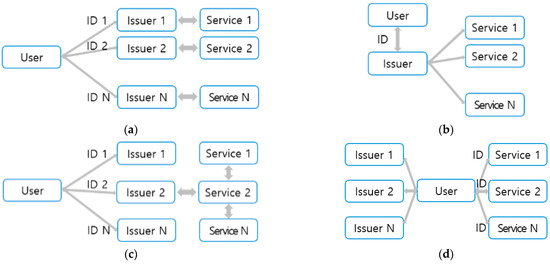
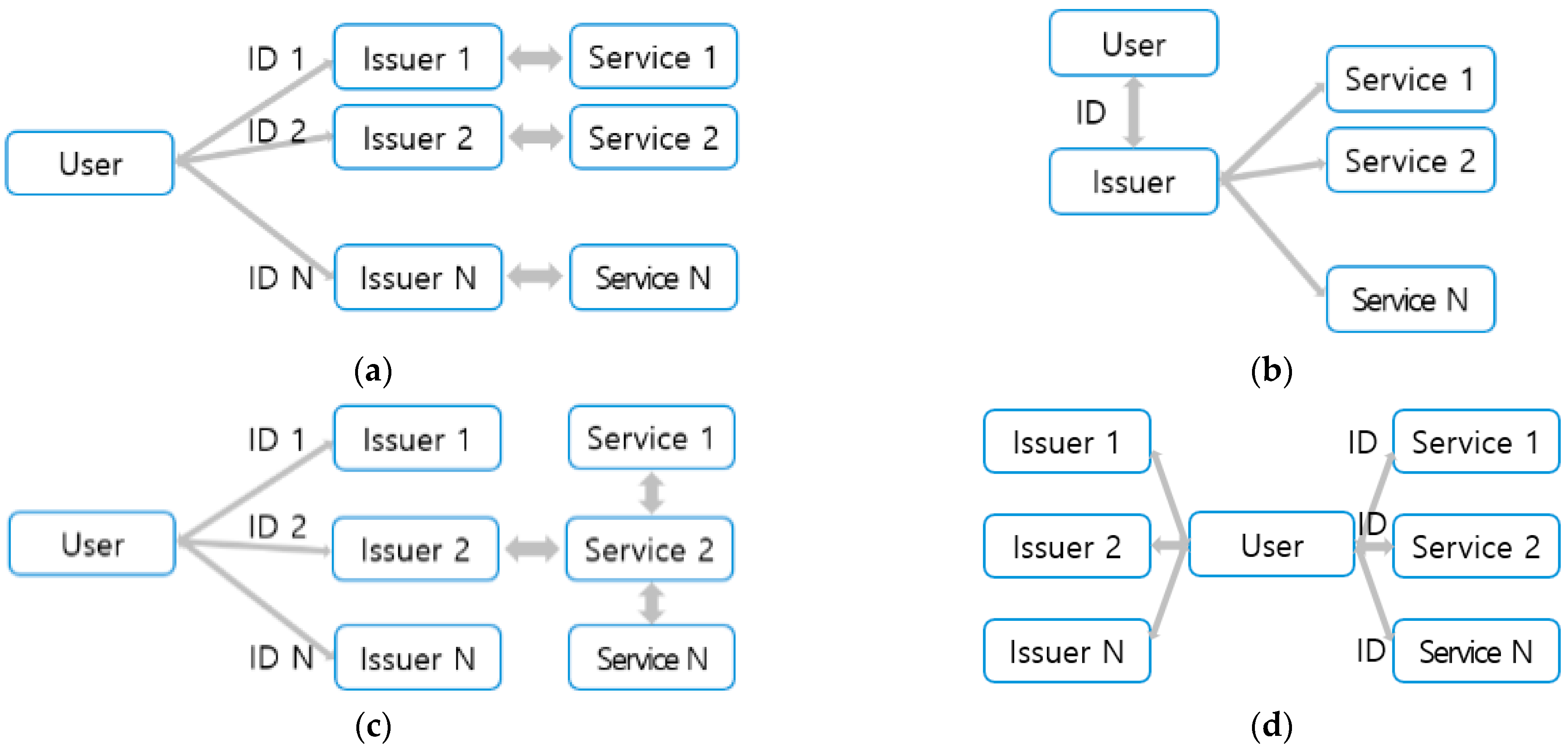
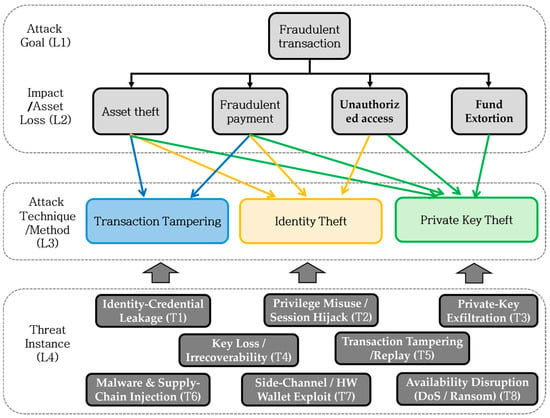
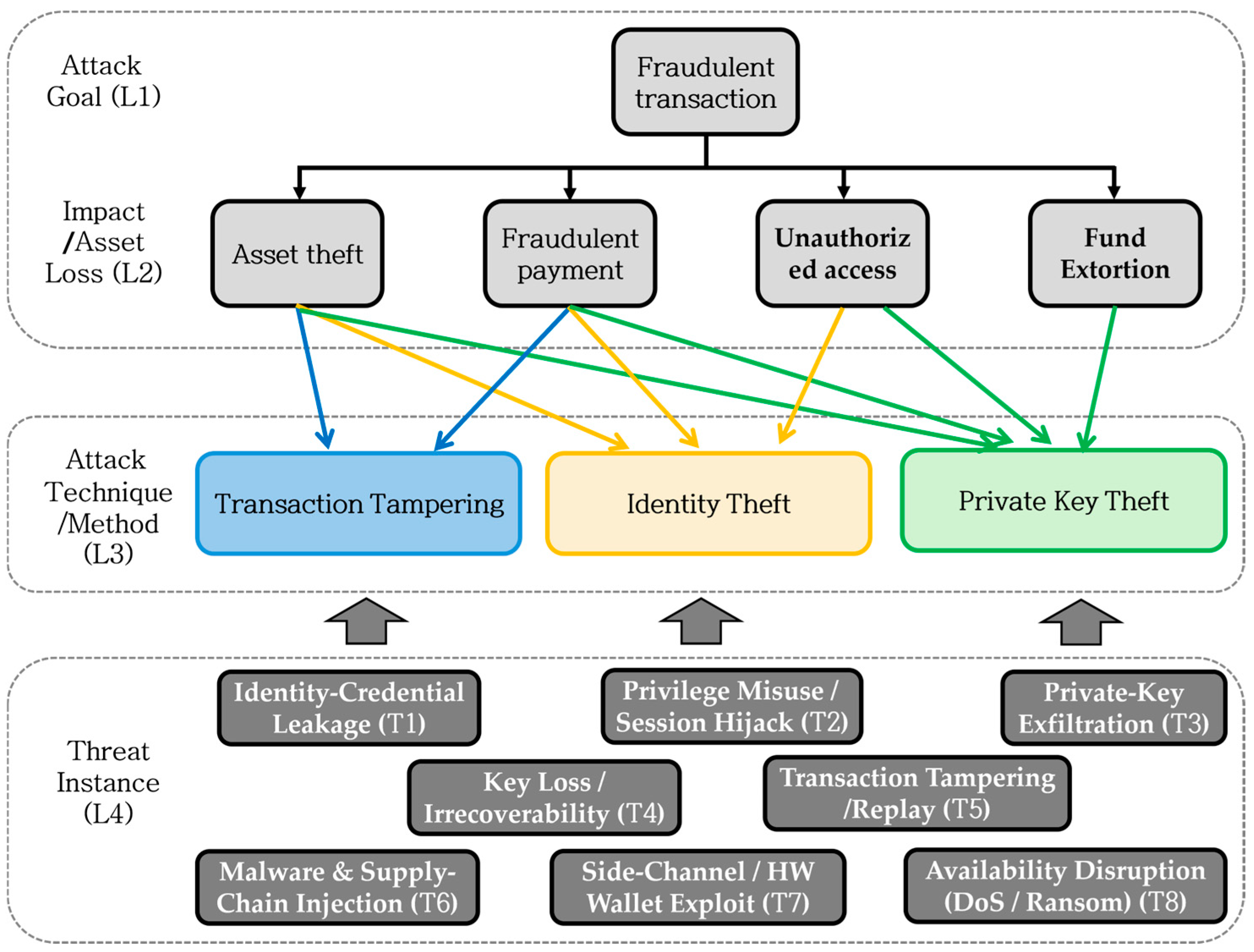
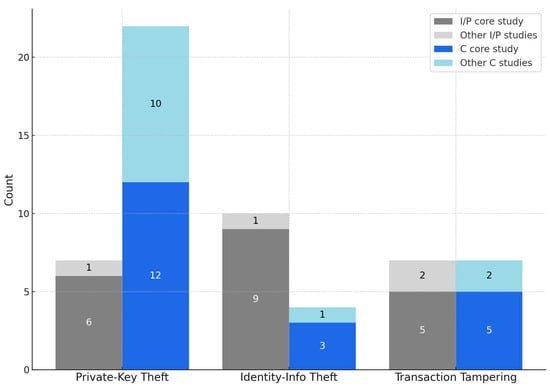
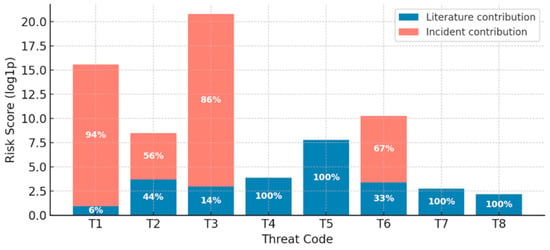
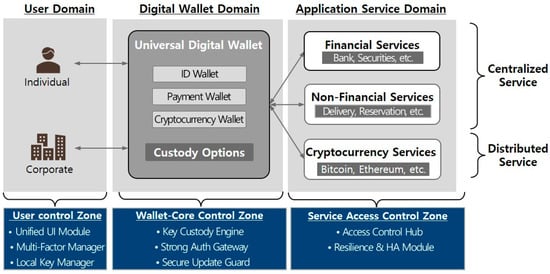
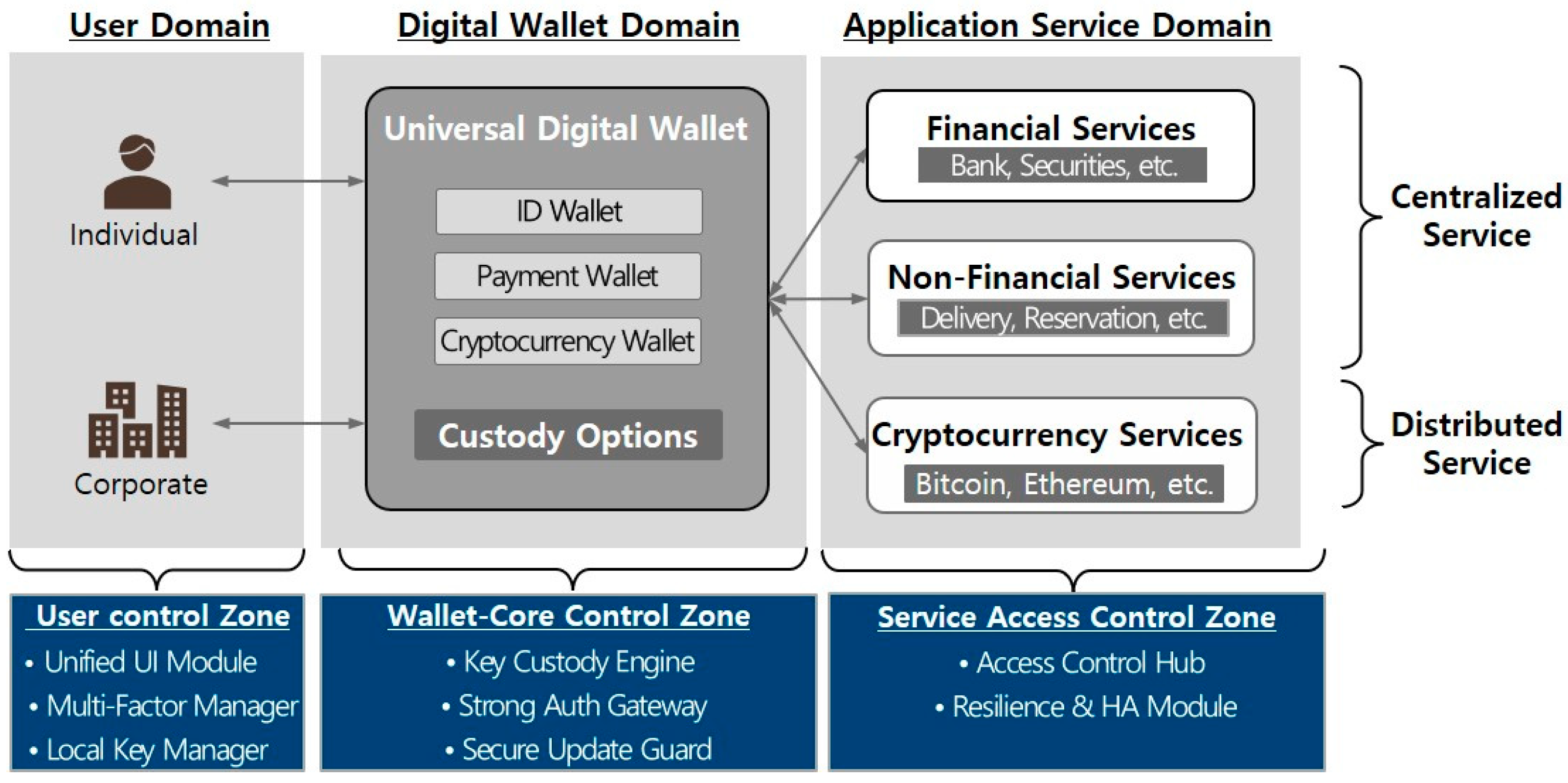

Disclaimer/Publisher’s Note: The statements, opinions and data contained in all publications are solely those of the individual author(s) and contributor(s) and not of MDPI and/or the editor(s). MDPI and/or the editor(s) disclaim responsibility for any injury to people or property resulting from any ideas, methods, instructions or products referred to in the content. |
© 2025 by the authors. Licensee MDPI, Basel, Switzerland. This article is an open access article distributed under the terms and conditions of the Creative Commons Attribution (CC BY) license (https://creativecommons.org/licenses/by/4.0/).