


Abstract
Polyphenol-rich botanical extracts have emerged as promising nutricosmetic interventions against signs of skin aging. Fruit polyphenols improve skin appearance, while biotin plays a recognized role in keratin synthesis and hair follicle metabolism, yet their combined effects have not been evaluated. This study assessed the effects of a red- and blackcurrant polyphenol with biotin supplement (RiboBeauty®) in a randomized, double-blind, placebo-controlled trial. Fifty-four women were randomized, and fifty-two were eligible for the efficacy analyses (Placebo, n = 27; Supplement, n = 25). Over 12 weeks, wrinkle morphology and skin roughness were quantified by 3D imaging and hair shedding by a combing test. For skin roughness, mean local peak-to-peak amplitude (Stm) showed significant within-group reductions in the supplement group at D56 (−4.897%; p = 0.0489) and D84 (−6.558%; p = 0.0491), without significant between-group differences. Hair shedding was significantly lower in the Supplement group versus Placebo at D28 (−30.90%; p = 0.0203) and D56 (−41.58%; p = 0.0158), although the treatment × time interaction was not significant. The crow’s feet wrinkle area showed numerically (but non-statistically significant) lower values in the supplement group than in the placebo group at all post-baseline visits. Overall, these findings indicate a favorable efficacy signal, while the limited demonstration of statistically significant placebo superiority across the main skin outcomes warrants cautious interpretation.
1. Introduction
Skin aging is a complex and multifactorial biological process resulting from the interaction between intrinsic factors and extrinsic environmental stressors, particularly ultraviolet (UV) radiation, pollution, and lifestyle factors. These processes lead to progressive structural and functional alterations of the skin, including collagen degradation, loss of elasticity, wrinkle formation, and impaired barrier function. At the molecular level, oxidative stress plays a central role in skin aging, as the accumulation of reactive oxygen species (ROS) promotes extracellular matrix degradation, inflammatory signaling, and cellular senescence, ultimately contributing to visible aging phenotypes [1,2,3,4].
In this context, increasing attention has been directed toward plant-derived bioactive compounds, particularly polyphenols, as strategies to mitigate skin aging. Polyphenols are widely distributed phytochemicals with antioxidant, anti-inflammatory, and photoprotective properties, capable of modulating key biological pathways involved in skin aging, including ROS scavenging, inhibition of matrix metalloproteinases, and regulation of inflammatory cascades [2,5,6,7]. These mechanisms contribute to the preservation of the dermal structure and the improvement of visible skin parameters such as wrinkles and texture [2,6]. Moreover, polyphenol intake has been proposed as a strategy to support skin homeostasis and prevent environmental stress-induced damage [8].
Among these compounds, anthocyanins—abundant in berries such as redcurrants and blackcurrants—[9,10] have attracted particular interest due to their biological activity and relevance in skin health. As polyphenols, their antioxidant, inflammation-modulatory, extracellular matrix (ECM)-synthesis-stimulating, and pigmentation-regulating activities have been demonstrated across in vitro, in vivo, and emerging clinical studies, thus supporting their potential as active ingredients in nutricosmetic formulations [11,12].
One of the most concerning aspects of aging is hair thinning and shedding, which especially impacts perimenopausal women. Hair follicle biology is tightly regulated by the niche via signaling pathways that modulate cell proliferation and differentiation [13]. Biotin (vitamin B7) is a cofactor for carboxylase enzymes involved in fatty acid and amino acid metabolism and has recognized physiological relevance for keratin synthesis and hair structure maintenance [14]. While biotin deficiency has been associated with hair loss, evidence supporting the beneficial use of supplementation with this vitamin in healthy individuals has long been limited and heterogeneous [15].
Our own recent experimental and clinical evidence has provided further insight into the role of biotin in hair follicle maintenance. In this regard, in vitro data have shown that encapsulated biotin can enhance the expression of hair-related keratins and upregulate growth factors involved in follicular activity, including vascular endothelial growth factor (VEGF), fibroblast growth factor 7 (FGF7), and insulin-like growth factor 1 (IGF1) [16]. These findings are supported by clinical observations demonstrating reductions in hair shedding and improvements in hair strength following topical application of a formulation containing the aforementioned encapsulated biotin [17].
Despite the increasing use of polyphenols and biotin in cosmetic and nutraceutical formulations, the number of well-controlled clinical studies is scarce, particularly in relation to their direct application in skin-related outcomes [5]. Indeed, much of the available literature is based on in vitro and preclinical models, with fewer studies providing robust clinical validation [7]. The available evidence provides insights on the molecular mechanisms of action of this kind of substance, such as oxidative stress modulation and inflammatory signaling, rather than on comprehensive clinical endpoints [2].
Recent evidence syntheses further support the scientific relevance of oral interventions for skin-aging-related endpoints, while also highlighting the limitations of the current evidence base. A recent systematic review and meta-analysis of randomized controlled trials in healthy adults concluded that dietary supplements can improve selected parameters of skin photoaging, with the strongest signals reported for collagen, flavanols, and other polyphenol-containing interventions, although the authors emphasized substantial heterogeneity across formulations and outcome measures [18]. In addition, plant-based polyphenol-rich foods and beverages have been associated with beneficial effects on skin barrier function and hydration [19], thereby supporting the broader plausibility of food-derived bioactives as nutricosmetic strategies. Moreover, placebo-controlled clinical evidence with specific fruit-derived polyphenols such as piceatannol-rich passion fruit seed extract has shown measurable effects on facial skin hydration in healthy women after oral intake, reinforcing the rationale for investigating orally delivered fruit bioactives in the context of visible skin aging [20].
Furthermore, current intervention studies tend to evaluate either skin or hair outcomes independently, thus offering a fragmented landscape on the effects of formulations on overall aging. While polyphenols are widely explored in the context of skin aging and biotin in relation to hair physiology, evidence regarding their combined effects on both skin and hair remains scarce or null. In addition, relatively few studies have incorporated advanced objective methodologies, such as three-dimensional (3D) wrinkle analysis and quantitative skin surface roughness measurements, which are essential for the robust and reproducible assessment of cosmetic efficacy.
From a formulation perspective, combining these ingredients in a single oral supplement is of interest because they may target complementary dimensions of appearance-related aging. The currant- and strawberry-derived polyphenol fraction is relevant to skin-aging-associated pathways, including oxidative stress, inflammation, and extracellular matrix homeostasis, whereas biotin is physiologically linked to keratin-related processes and hair follicle function. In this context, a multi-ingredient nutricosmetic strategy may be particularly relevant for women presenting concomitant signs of facial aging and hair thinning, two concerns that frequently coexist in midlife [21]. The rationale of the present study was to assess whether the combined formulation could provide measurable benefits across both skin- and hair-related endpoints using objective instrumental methods.
Therefore, the present study aimed to evaluate the effects of a polyphenol-rich red and black currant extract combined with biotin and strawberry extract on objectively quantified wrinkle morphology, skin surface roughness, and hair shedding in women presenting signs of facial aging and hair thinning.
2. Materials and Methods
2.1. Study Population and Polyphenol Extract Administration
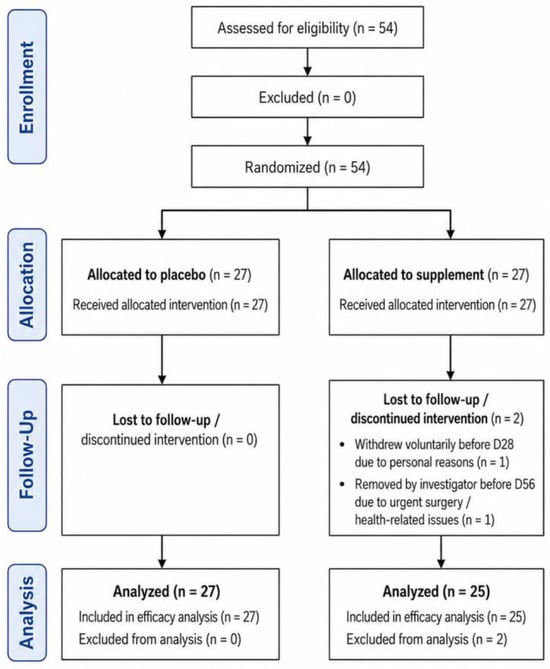
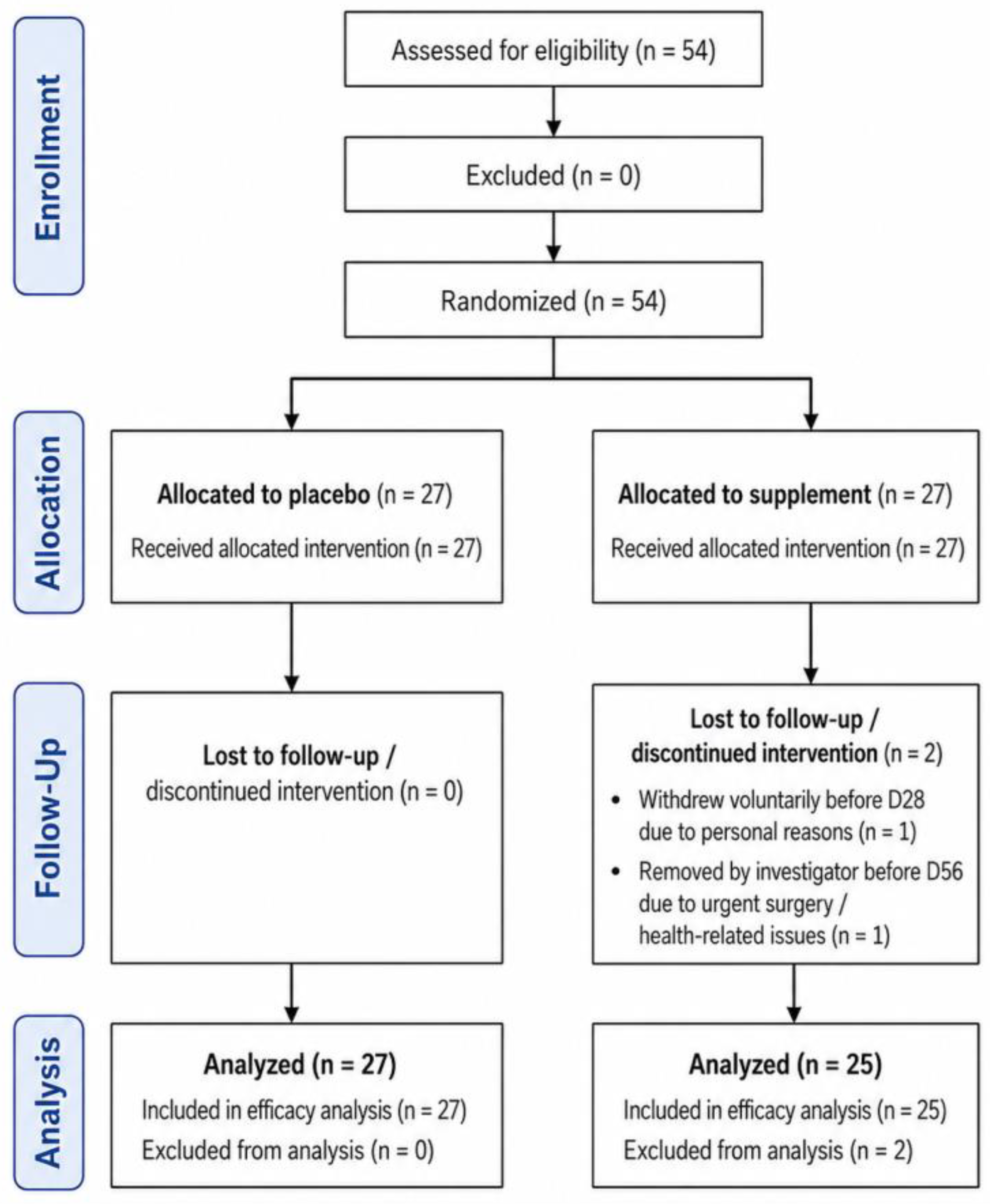
A total of 54 eligible female participants were enrolled and randomized in a 1:1 ratio to placebo or supplement. The efficacy analysis set comprised all participants with evaluable post-baseline data (n = 52). Participant disposition and final analyzed group sizes are reported in the Results section and summarized in the CONSORT flow diagram (Figure 1).
Figure 1.
CONSORT flow diagram of participant enrollment, allocation, follow-up, and analysis. A total of 54 participants were randomized, of whom 52 completed the study and were included in the efficacy analyses (placebo, n = 27; supplement, n = 25).
The mean age was 51.1 ± 6.7 years (range: 30–62 years). Ethnicities were Caucasian (n = 50) and Latin (n = 2). Skin types included dry (n = 25), combination (n = 26), and oily (n = 1) according to sebum levels [22], with most subjects presenting dry or very dry skin based on hydration measurements using a Corneometer CM 825 (Courage + Khazaka, Cologne, Germany). Hydration-based skin type classification was interpreted according to published reference cutoffs, with values < 30 arbitrary units (a.u.) considered very dry, 30–45 a.u. dry, and >45 a.u. normal [23]. According to Fitzpatrick classification [24], subjects were phototype I (n = 1), II (n = 32) and III (n = 19). From standardized questionnaires and tests (1/3 tests with positive result) [25,26,27,28], 32 subjects were identified with normal skin and 20 with sensitive skin. Finally, 41 subjects had a normal scalp and 11 subjects were classified as having a sensitive scalp [29] (Supplementary Table S1).
Sample size was estimated using GRANMO software (Version 8.0, IMIM, Barcelona, Spain) [30], assuming a two-tailed test with an alpha risk of 0.05 and a statistical power of 0.80. Based on an expected minimum detectable difference of 5% in wrinkle area and an estimated standard deviation of 10%, a minimum of 34 subjects was required. A dropout rate of 5% was considered.
Eligible participants were healthy female volunteers aged 21–65 years. This age range was selected to capture the intended target population of adult women presenting concomitant signs of facial aging and hair thinning/shedding, rather than to define eligibility on the basis of age alone. Accordingly, inclusion additionally required grades 1–3 in the Eiben-Nielson & Kerscher scale for wrinkles and roughness [31], as well as suffering from moderate to excessive hair shedding (grades 3–6 in the Sinclair Hair Shedding Scale, shown by Kovacevic and colleagues [32]) confirmed through a combing test, with low hair density (grades 3–6 in a customized female Ludwig scale, Supplementary Figure S1). Additional inclusion criteria included damaged, dry and brittle and/or unhealthy nails, previous participation in a clinical study ending at least 8 weeks before the start of the study, a washout period for the application of interfering products of 15 days before the start of the treatment, good general health, absence of conditions that could interfere with study outcomes, and provision of written informed consent.
Exclusion criteria included dermatological or systemic conditions affecting the study areas, recent esthetic treatments, use of interfering medications or products, pregnancy or lactation, and any condition that could compromise participation or data integrity.
Participants were recruited through digital media and direct communication channels and managed using dedicated clinical software (Clinic Cloud, Doctoralia Internet S.L., Barcelona, Spain).
Subjects were instructed to maintain their usual lifestyle and cosmetic habits throughout the study, while avoiding the use of other products or treatments that could affect the face, hair, or nails. Additional restrictions included avoidance of excessive sun exposure and adherence to standardized conditions prior to each visit, including hair washing and consistent grooming habits.
One plant-based capsule (hydroxypropyl methylcellulose) containing 500 mg total of RiboBeauty® (Specnova LLC, Tysons Corner, VA, USA, hereafter referred to as Supplement), comprising a polyphenol-rich red and black currant extract with biotin (10 mcg) and strawberry extract or placebo (maltodextrin), was orally administered daily per subject for a total period of 12 weeks.
2.2. Wrinkle Morphology Assessment by 3D Imaging
Facial wrinkle morphology was assessed using a three-dimensional (3D) fringe projection imaging system (AEVA-HE, Eotech, Marcoussis, France) coupled with a standardized positioning device (VisioTOP-500 bench, Eotech, Marcoussis, France) to ensure reproducible subject alignment across all measurement time points.
Subjects were seated in the VisioTOP-500 bench and positioned using ear supports, head stabilization, and visual alignment guides (mirror and laser reference) to ensure consistent head orientation and repositioning between visits. The positioning system enabled precise and repeatable acquisition of facial images under standardized conditions.
Wrinkle analysis was performed using object detection based on a predefined Z-threshold applied to the skin topography. This threshold corresponds to a plane parallel to the mean surface plane, allowing discrimination between depressions (valley objects) and elevations (bump objects). Wrinkles were defined as topographical depressions located below the threshold plane and were automatically detected and quantified within the region of interest (ROI).
The following parameters were calculated: wrinkle number (N), total wrinkle area (mm2), average perimeter (mm), total volume (mm3), and mean depth (mm). The Z-threshold position was determined at baseline (D0) based on the histogram of topography height distribution and was subsequently applied consistently to all follow-up measurements.
For crow’s feet analysis, a standardized ROI of 20 mm × 20 mm was defined. Image processing parameters included a leveling order of 7, threshold range of 30–50% (scan mode, step threshold 10), and spatial filtering using a high-frequency cutoff of 0.8 mm and low-frequency cutoff of 3 mm. A maximum of 200 objects were detected, with a minimum object area threshold of 0.85 mm2. These parameters were predefined laboratory-standardized settings for crow’s feet wrinkle analysis and were applied identically to all images across subjects and visits. They were selected to improve the detection of wrinkle-related topographic depressions while reducing background noise and irrelevant surface features.
2.3. Skin Surface Roughness Analysis
Skin surface roughness was evaluated using three-dimensional (3D) topographic analysis obtained with the AEVA-HE fringe projection imaging system (Eotech, Marcoussis, France). The technique generates a high-resolution topographic map of the skin surface, allowing quantitative assessment of microrelief irregularities characterized by peaks and valleys.
All topographical data points within the defined region of interest (ROI) were included in the analysis. Surface roughness parameters were calculated based on the statistical distribution of height values across the topography. The following parameters were assessed: Sa (mean height deviation), Sq (root mean square deviation), Stm (mean peak-to-peak amplitude), St (maximum peak-to-valley height), and Sr (developed interfacial area ratio).
For Stm calculation, the analyzed surface was subdivided into 25 equal sub-areas, and the peak-to-peak height (difference between the highest and lowest point) was determined for each sub-area. The mean of these values was calculated and used as a representative amplitude parameter of skin roughness. St was defined as the maximum vertical distance between the highest peak and the lowest valley within the ROI. Sa and Sq were derived from the average and standard deviation of all height values, respectively, while Sr represented the ratio between the developed surface area and the projected area.
This methodology allows the evaluation of skin texture patterns distributed across the surface, such as pores and microrelief irregularities [33]. A reduction in these parameters was interpreted as an improvement in skin smoothness.
2.4. Combing Test (CT)
Participants attended the research facility after a 48 h period free of hair washing or combing. Their hair was combed in a standardized way on the hairdresser’s washing chair, protected by a dense weft fabric. Three different combs were sequentially used: (i) a thick flat brush was used once in each hair strand; (ii) a medium brush was used once in each strand of hair; (iii) a fine comb was used in each strand of hair, as many times as needed until no hair shed.
Shed hairs were collected onto dense weft fabrics conveniently labeled. Fabrics were let dry for 48–72 h, hairs were transferred to plastic boxes and photographed, and hair fibers were manually counted.
2.5. Statistical Analysis
The main outcomes were defined by efficacy domains as follows: crow’s feet wrinkle area for wrinkle morphology, Stm for skin surface roughness, and hair shedding assessed by Combing Test for hair-related efficacy. Wrinkle area was selected as the most easily interpretable parameter from a clinical point of view and was used for sample size estimation. Stm was selected because it is the most representative amplitude parameter of skin roughness, whereas the remaining roughness variables are closely related supportive descriptors. Hair shedding was the only hair-related efficacy parameter assessed and was therefore considered the primary hair outcome. Other wrinkle-related parameters (number, perimeter, depth, and volume) and additional roughness parameters (St, Sa, Sq, and Sr) were analyzed as secondary/exploratory outcomes.
Parameter values of an individual at a given time point were normalized versus the values of the same individual at baseline (D0) and expressed as a percentage. Mean ± Standard Error of the Mean (SEM) were calculated and are shown in the graphs. Data were analyzed using a mixed-effects model (REML) with treatment, time, and treatment × time interaction as fixed effects and subject as a random effect.
When appropriate, Dunnett’s multiple comparisons test was applied to compare each post-baseline visit with D0 within each treatment arm and supplement versus placebo at each time point. * denotes statistical significance with p-value < 0.05. ** denotes statistical significance with p-value < 0.01. *** denotes statistical significance with p-value < 0.001. **** denotes statistical significance with p-value < 0.0001. Cohen’s d for between-group and Cohen’s dz for within-group comparisons were calculated for size effect.
GraphPad Prism V10.6.1 software (GraphPad Software, Boston, MA, USA) was used for graph plotting and statistical analysis.
3. Results
3.1. Participant Flow
A total of 54 participants were enrolled and randomized, with 27 assigned to placebo and 27 assigned to the supplement group. In the supplement group, two participants discontinued the study: one withdrew voluntarily before D28 for personal reasons, and one was withdrawn before D56 due to urgent surgery. No participants were lost to follow-up or discontinued in the placebo group. Therefore, 52 participants completed the study and were included in the efficacy analyses, corresponding to 27 participants in the placebo group and 25 participants in the supplement group. The participant flow is summarized in Figure 1.
3.2. Effects on Crow’s Feet Wrinkle Morphology
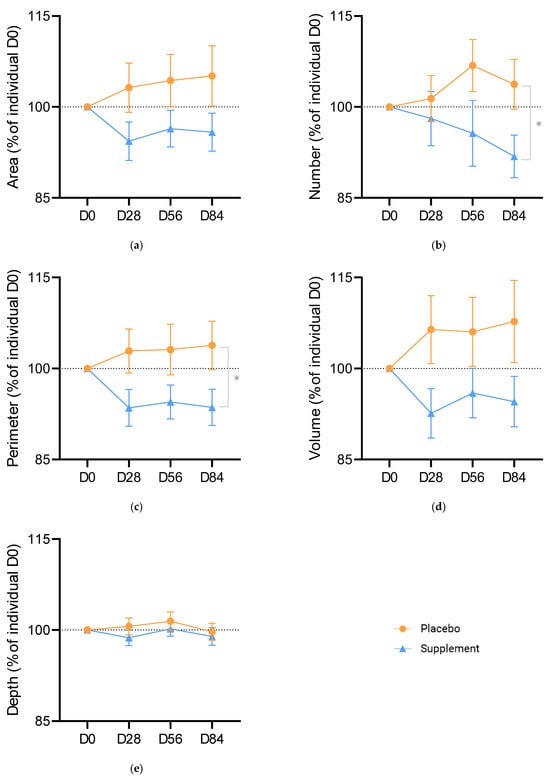
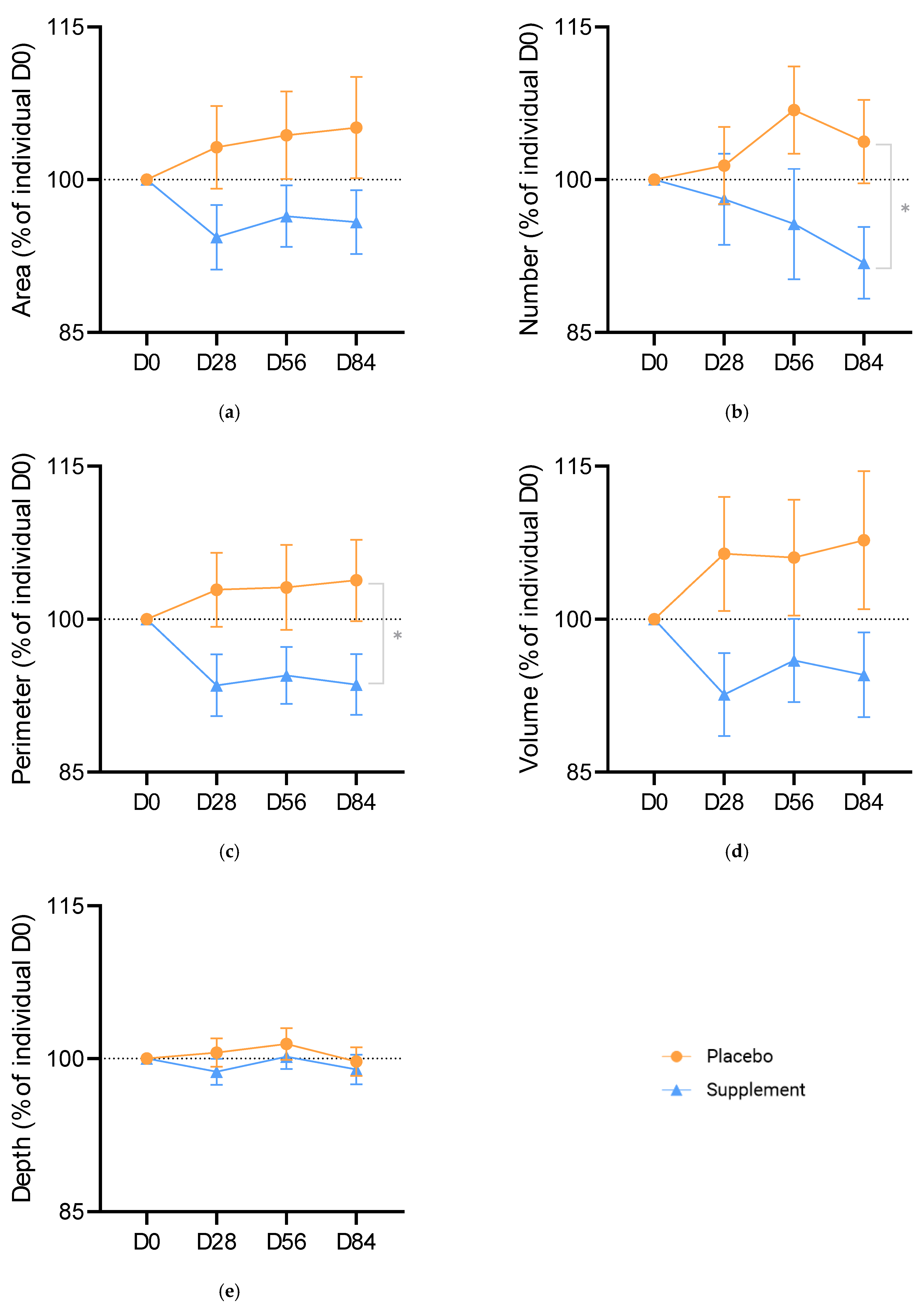
For the primary outcome, crow’s feet wrinkle area, the mixed-effects model did not show a significant effect of time (p = 0.8900), treatment (p = 0.0770), or treatment × time interaction (p = 0.2299). Nevertheless, the supplement group showed consistently lower mean values than placebo at all post-baseline visits, with between-group differences of −8.83% at D28 (95% CI: −19.18 to 1.52; adjusted p = 0.0927; Cohen’s d = −0.476), −7.94% at D56 (95% CI: −18.51 to 2.64; adjusted p = 0.1377; d = −0.419), and −9.29% at D84 (95% CI: −21.15 to 2.57; adjusted p = 0.1216; d = −0.438). Within the supplement group, wrinkle area also showed lower post-baseline values than D0, but none of these within-group comparisons reached statistical significance (D28: 95% CI: −13.59 to 2.29, adjusted p = 0.2049; D56: 95% CI: −11.13 to 3.97, adjusted p = 0.5066; D84: 95% CI: −12.01 to 3.66, adjusted p = 0.4158) (Figure 2a).
Figure 2.
Effect of the test Supplement (500 mg/day; polyphenol-rich red and black currant extract combined with strawberry extract and biotin [10 µg]) versus Placebo on crow’s feet wrinkle parameters assessed by 3D topographic analysis with an AEVA-HE fringe projection imaging system coupled with a VisioTOP-500 bench. Representation of parameters normalized to participant’s individual baseline (D0) at each time point for (a) area (the main outcome), and the exploratory outcomes (b) number, (c) perimeter, (d) volume, and (e) depth. Asterisks denote statistical significance of between-group comparisons at the time point indicated.
Among the exploratory wrinkle descriptors, wrinkle number showed a significant between-group difference at D84, favoring the supplement group (mean difference: −11.90%; 95% CI: −22.77 to −1.03; adjusted p = 0.0325; Cohen’s d = −0.610), although the overall mixed-effects model did not show significant effects of time (p = 0.7120), treatment (p = 0.0807), or interaction (p = 0.1439) (Figure 2b). Perimeter showed a significant overall treatment effect in the mixed-effects model (p = 0.0269), with a significant between-group difference at D84 (mean difference: −10.20%; 95% CI: −20.25 to −0.16; adjusted p = 0.0465; Cohen’s d = −0.466). Between-group differences at D28 and D56 were of similar direction and magnitude, but did not reach statistical significance (D28: adjusted p = 0.0531; D56: adjusted p = 0.0924) (Figure 2c). Volume showed a directionally favorable pattern for the supplement group across visits; however, neither the overall model nor the individual between-group comparisons reached statistical significance (D28: 95% CI: −27.71 to 0.11, adjusted p = 0.0518; D56: 95% CI: −24.18 to 4.01, adjusted p = 0.1565; D84: 95% CI: −29.22 to 2.81, adjusted p = 0.1035) (Figure 2d). By contrast, depth did not show statistically significant or biologically relevant changes in either group at any time point (Figure 2e).
Overall, the primary wrinkle outcome showed a consistent numerical separation favoring the supplement group, while statistically supported between-group differences were identified only for the exploratory descriptors number and perimeter at D84.
3.3. Effects on Skin Surface Roughness
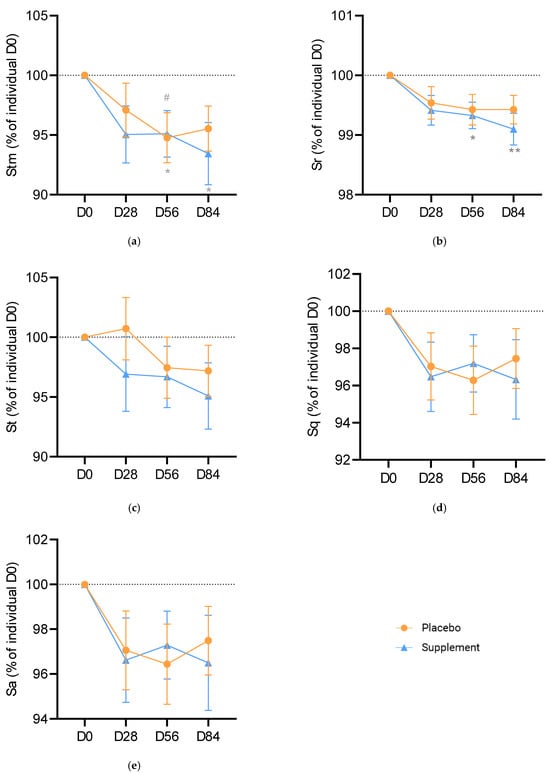
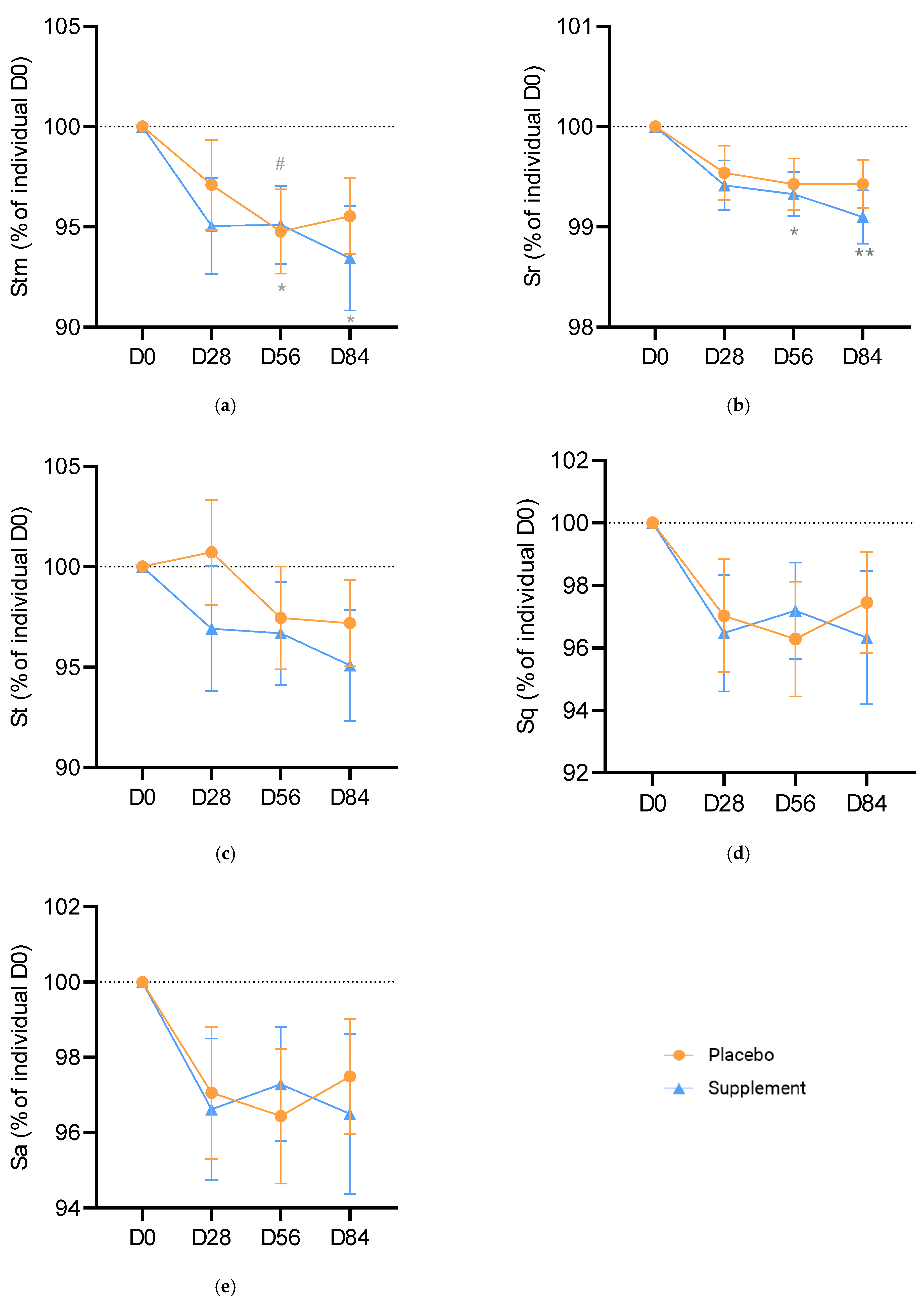
For the primary roughness outcome, Stm, the mixed-effects model showed a significant effect of time (p = 0.0020), but no significant treatment effect (p = 0.6208) or treatment × time interaction (p = 0.7845). In the supplement group, Stm was significantly lower than baseline at D56 (mean difference: −4.897%; 95% CI: −9.775 to −0.019; adjusted p = 0.0489; Cohen’s dz = −0.503) and D84 (mean difference: −6.558%; 95% CI: −13.09 to −0.023; adjusted p = 0.0491; dz = −0.503), whereas the D28 comparison did not reach significance (adjusted p = 0.1193). A significant within-group reduction was also observed in the placebo group at D56 (adjusted p = 0.0500). No significant between-group differences were detected for Stm at any post-baseline visit (Figure 3a).
Figure 3.
Effect of the testSupplement (500 mg/day; polyphenol-rich red and black currant extract combined with strawberry extract and biotin [10 µg]) versus Placebo on skin surface roughness parameters assessed by 3D topographic analysis with an AEVA-HE fringe projection imaging system. Representation of parameters normalized to each participant’s individual baseline (D0) for each time point for (a) Stm (the primary roughness outcome), and the secondary outcomes (b) Sr, (c) St, (d) Sq, and (e) Sa. Asterisks denote statistical significance of within-group comparisons versus baseline (D0) in the Supplement group, and hashes do so for the Placebo group.
Among the exploratory outcomes, Sr showed a significant effect of time in the mixed-effects model (p < 0.0001), but no significant treatment effect (p = 0.5747) or treatment × time interaction (p = 0.7237). In the supplement group, Sr was significantly lower than baseline at D56 (95% CI: −1.229 to −0.118; adjusted p = 0.0153, dz = −0.607) and D84 (95% CI: −1.567 to −0.235; adjusted p = 0.0066; dz = −0.678), whereas no significant between-group differences were detected at any time point (Figure 3b). St did not show significant effects of time, treatment, or interaction in the mixed-effects model, and no within-group or between-group comparison reached statistical significance (Figure 3c). The remaining roughness parameters, Sa and Sq, did not show statistically significant or biologically meaningful differences and are therefore not emphasized in the main text (Figure 3d,e).
Taken together, the roughness data indicate significant within-group changes for Stm and Sr in the supplement group, but no statistically significant superiority over placebo for the primary roughness outcome.
3.4. Effects on Hair Shedding Assessed by Combing Test
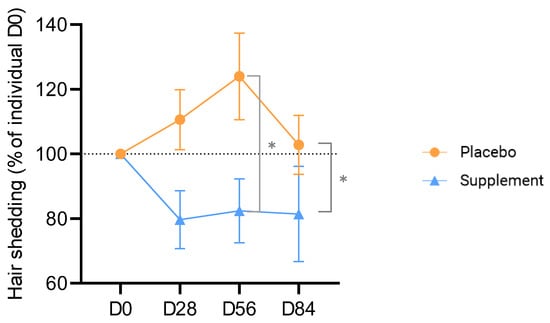
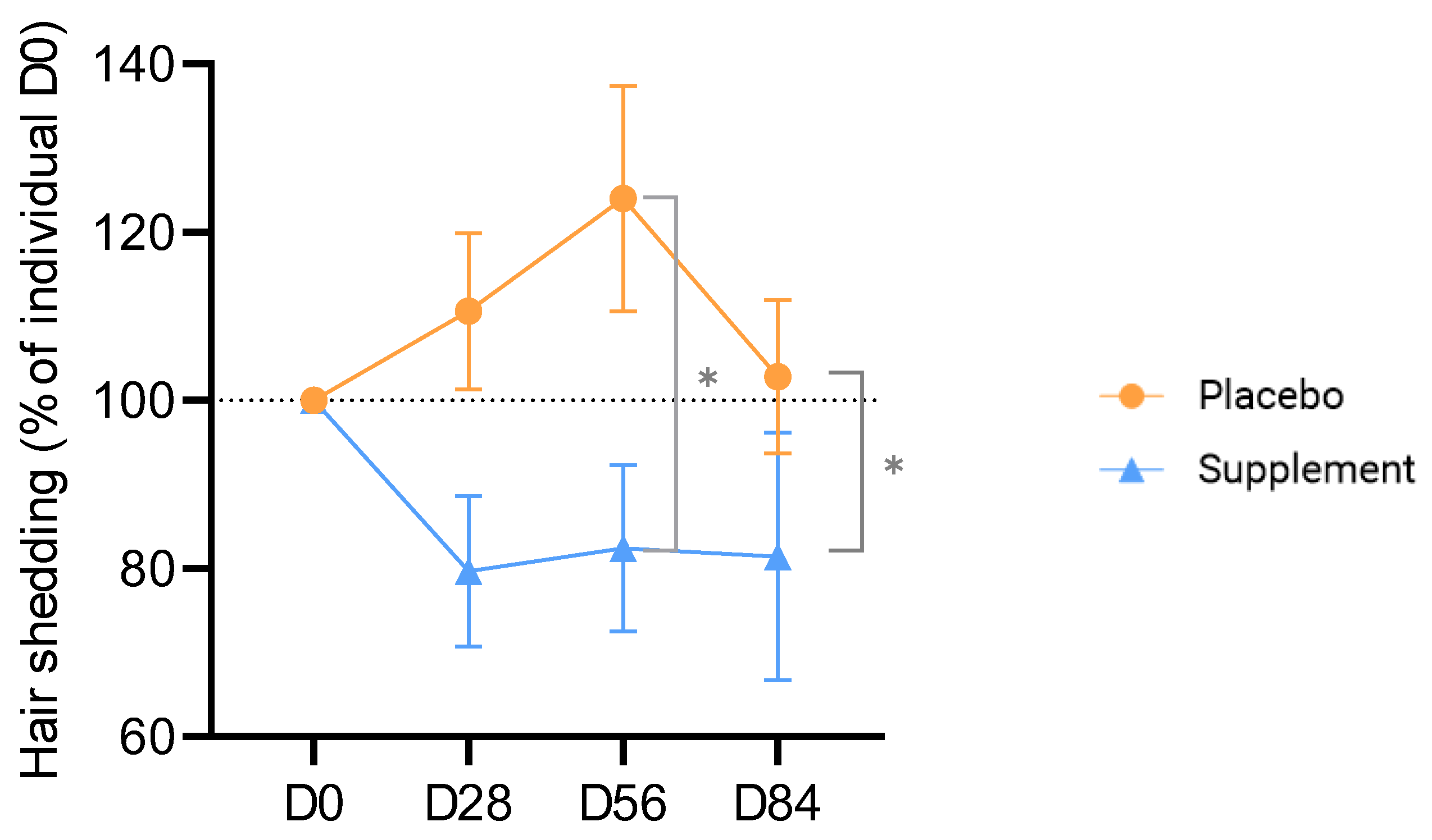
Finally, hair shedding was evaluated as a main hair-related outcome using the Combing Test. In the mixed-effects model, a significant overall treatment effect was detected (p = 0.0152), whereas neither the time effect (p = 0.5084) nor the treatment × time interaction (p = 0.0808) reached statistical significance. The predicted mean difference between groups across the study period was 23.47% (95% CI: 4.72 to 42.22), favoring the supplement group.
In the between-group comparisons, hair shedding was significantly lower in the supplement group than in the placebo group at D28 (mean difference: −30.90%; 95% CI: −56.80 to −5.00; adjusted p = 0.0203; Cohen’s d = −0.665) and D56 (mean difference: −41.58%; 95% CI: −74.98 to −8.17; adjusted p = 0.0158; d = −0.695). At D84, the between-group difference remained directionally favorable to the supplement group, but did not reach statistical significance (95% CI: −56.38 to 13.57; adjusted p = 0.2233).
Within the supplement group, post-baseline values were lower than D0 at all visits, but these within-group comparisons did not reach statistical significance (D28: adjusted p = 0.0822; D56: adjusted p = 0.2066; D84: adjusted p = 0.4602). In contrast, the placebo group showed higher mean values at D28 and D56 and little change at D84, none of which were statistically significant (Figure 4).
Figure 4.
Effect of the test Supplement (500 mg/day; polyphenol-rich red and black currant extract combined with strawberry extract and biotin [10 µg]) versus Placebo on hair shedding assessed by the Combing Test (CT). Representation of the number of hairs harvested through CT normalized to participant’s individual baseline (D0). Asterisks denote statistical significance of between-group comparisons at the time point indicated.
Overall, these results support a favorable hair-shedding profile for the supplement, driven primarily by significant between-group differences at the intermediate study visits.
4. Discussion
Skin aging is driven by both intrinsic aging and extrinsic factors, such as ultraviolet exposure and external pollution, all of which are tightly associated with oxidative stress, collagen fragmentation, reduced collagen production, and increased matrix metalloproteinase activity, eventually leading to loss of structural integrity and wrinkle formation [34]. Anthocyanins, which are major polyphenols in many berries, have been acknowledged as bioactive anti-aging compounds through mitigation of oxidative stress, inflammatory responses, and DNA damage, as well as promoting collagen synthesis. Importantly, berries are a major dietary source of anthocyanins [1].
In the present randomized, double-blind, placebo-controlled trial, daily oral supplementation with a polyphenol-rich red and black currant extract combined with biotin for 12 weeks was associated with favorable changes in selected objective parameters related to facial aging and hair shedding. The main findings were reductions in crow’s feet wrinkle area, number, perimeter, and volume, significant improvements in selected skin surface roughness parameters, and a reduction in hair shedding versus placebo. Because the present study used instrumental 3D fringe-projection imaging and quantitative roughness analysis, these results add objective evidence to the clinical evaluation of nutricosmetic strategies targeting visible skin aging and hair appearance.
Although the available literature so far is scarce, the results presented herein fit within previous reports describing the age-signs-mitigating effect of orally administered botanical polyphenols for skin appearance. In a randomized, double-blind, placebo-controlled trial in healthy women, Shoji et al. reported that 12 weeks of apple polyphenol supplementation significantly prevented UV-induced skin pigmentation, measured through different objective parameters [35]. In another randomized, double-blind, placebo-controlled study, Chakkalakal and colleagues reported the facial-wrinkle-severity-reducing effect of a pomegranate extract administered over four weeks [36]. Consistently, Krishnakumar and colleagues reported that oral intake of a pomegranate-extract-based formula over a 60-day period reduced crow’s feet and forehead wrinkles, as well as tactile roughness, with close similarity to the data reported herein [37]. In addition, clinical data have shown that piceatannol-rich passion fruit seed extract significantly increased facial skin hydration in healthy women with dry skin, indicating that fruit-derived polyphenols may generate measurable cosmetic benefits even when wrinkle-related endpoints are not the primary signal [20]. Besides this, oral intake of Boesenbergia pandurata extract-containing capsules, which contains panduratin A, a chalcone derivative, reportedly improved skin hydration, gloss and elasticity, and reduced wrinkles, in an extensive cohort of 92 participants of a randomized, placebo-controlled trial [38]. Notwithstanding this, comparison of effects should be cautiously interpreted, as the phytochemical composition of Boesenbergia pandurata substantially differs from the anthocyanin-rich polyphenol profile of red and black currant extracts. Of interest, another randomized clinical trial with fermented bilberry extract reported improvements in wrinkle-related parameters together with changes in skin smoothness/roughness, firmness, elasticity, complexion evenness, and skin antioxidant capacity after 84 days of supplementation [39].
Beyond skin surface properties, the hair-related findings of the present study can also be contextualized against recent original trials of plant-based or botanical nutraceuticals. Oral Annurca apple polyphenols have been correlated with improvements in hair features (growth, density and keratin content) in a 2-month clinical intervention [40]. In another placebo-controlled study, daily oral intake banana flower extract for 12 weeks increased hair root diameter and reduced hair loss in a cohort mainly composed by women [41]. Likewise, randomized placebo-controlled nutraceutical studies with standardized botanicals have reported significant increases in terminal and vellus hair counts, improvements in hair quality, and reductions in shedding in women with self-perceived thinning hair [42], including perimenopausal, menopausal, and postmenopausal women, in whom hair shedding decreased progressively and significantly versus placebo over 6 months [43].
Noteworthily, the present study adds evidence to the broader clinical literature on orally administered botanical extracts by showing improvement not only in wrinkle-related outcomes but also in hair loss parameters after oral supplementation with a currant-derived polyphenol formulation. Thus, it expands the traditional scope of nutricosmetic evaluation with isolated endpoints specifically focused on a single category of aging signs, with the simultaneous evaluation of skin surface and hair loss, both of which are common concerns for mature women. Besides polyphenols, the supplementation tested herein also contains biotin, which might underly the amelioration of hair shedding observed in volunteers participating in this study. Although the scientific evidence is somewhat controversial, reports supporting the beneficial effect of this molecule for hair growth are increasing. On one hand, Patel and colleagues invite to cautious interpretation of beneficial results attributed to biotin, as evidence in healthy individuals is limited and improvements have been found mainly in pathological conditions [15]. An intermediate position has been reached by Drake et al., who do not disregard the possible improvements of this molecule but highlight high heterogeneity across studies and encourage conducting randomized clinical trials versus benchmarks [44]. To further support the possible involvement of biotin in the anti-hair shedding effect of the supplement tested in this work, in vitro and in vivo data from studies conducted with a water-soluble form of biotin strongly support the beneficial effect of this vitamin on hair biology, with a molecular mechanism likely involving the upregulation of growth factor and hair keratins [16,17].
Irrespective of the precise mechanisms responsible for the observed improvements following oral intake of the tested supplement, the significance of this work lies in presenting a multi-ingredient nutricosmetic strategy directed at complementary skin- and hair-related targets.
Several limitations should be considered when interpreting the present findings. First, the study population included only women with mild to moderate facial aging and hair thinning, so extrapolation beyond that population should be made cautiously. Second, because the intervention combined a currant polyphenol extract with biotin, the study was not designed to determine the isolated contribution of each component, but the overall clinical outcome after its intake. Third, although the formulation showed a favorable overall efficacy profile, statistically significant placebo superiority was not demonstrated for the primary skin outcomes, which warrants cautious interpretation of those endpoints. Fourth, the sample size was modest and powered on wrinkle area, which may have limited sensitivity for detecting between-group differences across all efficacy domains. Finally, potential sponsor-related bias should be considered. Further mechanistic studies may help clarify the biological pathways involved, while larger and adequately powered clinical trials are warranted to confirm the present findings.
5. Conclusions
Overall, the clinical data presented herein show that 12 weeks of oral supplementation with the tested formulation was associated with a favorable profile across objective markers of crow’s feet wrinkle morphology, skin surface roughness parameters, and hair shedding.
The most robust signal was observed for hair shedding, which showed a significant overall treatment effect together with significant between-group differences at the intermediate visits, supporting a beneficial effect of the formulation on this outcome.
For skin-related efficacy, the primary wrinkle outcome (crow’s feet wrinkle area) and the primary roughness outcome (Stm) showed consistent numerical improvement trends in the supplement group over the intervention period, although statistically significant superiority over placebo was not demonstrated for these main outcomes. In addition, significant between-group differences were observed for exploratory wrinkle descriptors, specifically wrinkle number and perimeter at week 12.
These findings support the potential of this multi-ingredient nutricosmetic approach targeting complementary skin and hair concerns, while warranting confirmation in larger and adequately powered placebo-controlled trials, together with further investigation of the underlying biological mechanisms.
Supplementary Materials
The following supporting information can be downloaded at: https://www.mdpi.com/article/10.3390/cosmetics13030143/s1, Table S1: Clinical features of the study population; Figure S1: Female Ludwig scale customized for this study, with degrees 1 to 9 defined increasingly in numerical value by the area of scalp affected with hair shedding.
Author Contributions
Conceptualization, R.J., M.P., S.T.B. and D.G.; methodology, L.F., D.M. and D.G.; validation, D.M. and D.G.; formal analysis, D.G.; investigation, D.M. and L.F.; resources, D.M., L.F. and D.G.; data curation, D.M. and D.G.; writing—original draft preparation, A.P.-F.; writing—review and editing, R.J., M.P. and D.G.; visualization, A.P.-F.; supervision, D.G.; project administration, L.F. and D.G.; funding acquisition, R.J. and M.P. All authors have read and agreed to the published version of the manuscript.
Funding
This research and the article processing charge (APC) were funded by Specnova, LLC. The funder developed the investigational product and provided study funding, but data collection, instrumental assessments, and statistical analyses were performed independently by Dermaclaim Lab.
Institutional Review Board Statement
The study was conducted in accordance with the Declaration of Helsinki, and approved by the Ethics Committee for Research with Medicines (CEIm) of Hospital Universitari i Politècnic La Fe (protocol code 2025-0608-1 approved on 25 June 2025).
Informed Consent Statement
Informed consent was obtained from all subjects involved in the study.
Data Availability Statement
The raw data supporting the conclusions of this article are available within the article and its supporting materials.
Acknowledgments
During the preparation of this manuscript, the authors used ChatGPT 5.4 (OpenAI, San Francisco, CA, USA) to assist with text structuring and language refinement, as well as supervised creation of the CONSORT flowchart. The authors reviewed, edited, and take full responsibility for the final content.
Conflicts of Interest
R.J. and M.P. are employees of Increnovo LLC. S.B. is an employee of Specnova LLC, which developed the investigational product and funded the study. In addition, S.B., R.J. and M.P. are named inventors on a pending patent related to the use of the investigated formulation for oral cosmetic applications. D.G., L.F., D.M. and A.P.-F. are employees of Dermaclaim Lab, a contract research organization that conducted the clinical study. These relationships represent potential competing interests and should be considered when interpreting the findings. To mitigate sponsor-related bias, data collection, instrumental assessments, and statistical analyses were performed by Dermaclaim Lab. The sponsor did not perform the statistical analysis or the primary interpretation of the data. However, because one co-author is employed by the sponsor and three co-authors are named on a related pending patent, the potential for bias cannot be entirely excluded.
Abbreviations
The following abbreviations are used in this manuscript:
| a.u. | Arbitrary units |
| ECM | Extracellular matrix |
| FGF7 | Fibroblast growth factor 7 |
| IGF1 | Insulin-like growth factor 1 |
| ROI | Region of interest |
| ROS | Reactive oxygen species |
| Sa | Skin surface arithmetic mean height deviation |
| SEM | Standard error of the mean |
| Sq | Skin surface root mean square height deviation |
| Sr | Skin surface developed interfacial area ratio |
| St | Skin surface total height |
| Stm | Skin surface mean local peak-to-peak amplitude |
| UV | Ultraviolet |
| VEGF | Vascular endothelial growth factor |
References
- Guo, X.; He, L.; Sun, J.; Ye, H.; Yin, C.; Zhang, W.; Han, H.; Jin, W. Exploring the Potential of Anthocyanins for Repairing Photoaged Skin: A Comprehensive Review. Foods 2024, 13, 3506. [Google Scholar] [CrossRef] [Scilit]
- Lee, J.H.; Park, J.; Shin, D.W. The Molecular Mechanism of Polyphenols with Anti-Aging Activity in Aged Human Dermal Fibroblasts. Molecules 2022, 27, 4351. [Google Scholar] [CrossRef] [Scilit]
- Sharma, P.; Dhiman, T.; Negi, R.S.; Oc, A.; Gupta, K.; Bhatti, J.S.; Thareja, S. A Comprehensive Review of the Molecular Mechanisms Driving Skin Photoaging and the Recent Advances in Therapeutic Interventions Involving Natural Polyphenols. S. Afr. J. Bot. 2024, 166, 466–482. [Google Scholar] [CrossRef] [Scilit]
- Bharadvaja, N.; Gautam, S.; Singh, H. Natural Polyphenols: A Promising Bioactive Compounds for Skin Care and Cosmetics. Mol. Biol. Rep. 2023, 50, 1817–1828. [Google Scholar] [CrossRef] [Scilit]
- Farhan, M. The Promising Role of Polyphenols in Skin Disorders. Molecules 2024, 29, 865. [Google Scholar] [CrossRef] [Scilit]
- Nisa, R.U.; Nisa, A.U.; Tantray, A.Y.; Shah, A.H.; Jan, A.T.; Shah, A.A.; Wani, I.A. Plant Phenolics with Promising Therapeutic Applications against Skin Disorders: A Mechanistic Review. J. Agric. Food Res. 2024, 16, 101090. [Google Scholar] [CrossRef] [Scilit]
- Csekes, E.; Račková, L. Skin Aging, Cellular Senescence and Natural Polyphenols. Int. J. Mol. Sci. 2021, 22, 12641. [Google Scholar] [CrossRef] [Scilit]
- El-Saadony, M.T.; Yang, T.; Saad, A.M.; Alkafaas, S.S.; Elkafas, S.S.; Eldeeb, G.S.; Mohammed, D.M.; Salem, H.M.; Korma, S.A.; Loutfy, S.A.; et al. Polyphenols: Chemistry, Bioavailability, Bioactivity, Nutritional Aspects and Human Health Benefits: A Review. Int. J. Biol. Macromol. 2024, 277, 134223. [Google Scholar] [CrossRef] [Scilit]
- Šimerdová, B.; Bobríková, M.; Lhotská, I.; Kaplan, J.; Křenová, A.; Šatínský, D. Evaluation of Anthocyanin Profiles in Various Blackcurrant Cultivars over a Three-Year Period Using a Fast HPLC-DAD Method. Foods 2021, 10, 1745. [Google Scholar] [CrossRef] [Scilit]
- Zdunić, G.; Šavikin, K.; Pljevljakusic, D.; Djordjevic, B. Black (Ribes nigrum L.) and Red Currant (Ribes rubrum L.) Cultivars. In Nutritional Composition of Fruit Cultivars; Academic Press: London, UK, 2016; pp. 101–126. [Google Scholar]
- Correia, P.; Araújo, P.; Ribeiro, C.; Oliveira, H.; Pereira, A.R.; Mateus, N.; de Freitas, V.; Brás, N.F.; Gameiro, P.; Coelho, P.; et al. Anthocyanin-Related Pigments: Natural Allies for Skin Health Maintenance and Protection. Antioxidants 2021, 10, 1038. [Google Scholar] [CrossRef] [Scilit]
- Li, X.; Liu, C.; Li, Y.; Yuan, K.; Zhang, W.; Cai, D.; Peng, Z.; Hu, Y.; Sun, J.; Bai, W. Bioactivity and Application of Anthocyanins in Skin Protection and Cosmetics: An Extension as a Functional Pigment. Phytochem. Rev. 2023, 22, 1441–1467. [Google Scholar] [CrossRef] [Scilit]
- Lee, J.H.; Choi, S. Deciphering the Molecular Mechanisms of Stem Cell Dynamics in Hair Follicle Regeneration. Exp. Mol. Med. 2024, 56, 110–117. [Google Scholar] [CrossRef] [Scilit]
- Karachaliou, C.-E.; Livaniou, E. Biotin Homeostasis and Human Disorders: Recent Findings and Perspectives. Int. J. Mol. Sci. 2024, 25, 6578. [Google Scholar] [CrossRef] [Scilit]
- Patel, D.P.; Swink, S.M.; Castelo-Soccio, L. A Review of the Use of Biotin for Hair Loss. Ski. Appendage Disord. 2017, 3, 166–169. [Google Scholar] [CrossRef] [Scilit]
- Duchi, S.; Rebollo Torregrosa, P.; Hajuj, A.; Molho, D.; Shkoor, R.; Saada, N.A.; Fernández, D.G.; Goldstein, D.; Pérez-Fernández, A. The Formulation and In Vitro Evaluation of WS Biotin, a Novel Encapsulated Form of D-Biotin with Improved Water Solubility for Hair and Skin Treatment Applications. Int. J. Cosmet. Sci. 2024, 46, 119–129. [Google Scholar] [CrossRef] [Scilit]
- González Fernández, D.; Duchi, S.; Fernández Gómez, L.; León Sala, T.; Hajuj, A.; Molho, D.; Saada, N.A.; Molina Martínez, D.; Pérez-Fernández, A.; Goldstein, D. The Clinical Evaluation of Serum WS Biotin, a Novel Encapsulated Form of D-Biotin with Improved Water Solubility, for Anti-Hair Shedding Applications. A Prospective Single-Arm, Nonrandomized, Pretest−Posttest Study. Health Sci. Rep. 2025, 8, e70862. [Google Scholar] [CrossRef] [Scilit]
- Yang, Q.; Li, H.; Zhang, H.; Ma, L.; Zhang, X.; Wu, J. Effectiveness of Dietary Supplements for Skin Photoaging in Healthy Adults: A Systematic Review and Meta-Analysis of Randomized Controlled Trials. Front. Med. 2025, 12, 1582946. [Google Scholar] [CrossRef] [Scilit]
- Fam, V.W.; Charoenwoodhipong, P.; Sivamani, R.K.; Holt, R.R.; Keen, C.L.; Hackman, R.M. Plant-Based Foods for Skin Health: A Narrative Review. J. Acad. Nutr. Diet. 2022, 122, 614–629. [Google Scholar] [CrossRef] [Scilit]
- Maruki-Uchida, H.; Morita, M.; Yonei, Y.; Sai, M. Effect of Passion Fruit Seed Extract Rich in Piceatannol on the Skin of Women: A Randomized, Placebo-Controlled, Double-Blind Trial. J. Nutr. Sci. Vitaminol. 2018, 64, 75–80. [Google Scholar] [CrossRef] [Scilit]
- Zouboulis, C.C.; Blume-Peytavi, U.; Kosmadaki, M.; Roó, E.; Vexiau-Robert, D.; Kerob, D.; Goldstein, S.R. Skin, Hair and beyond: The Impact of Menopause. Climacteric 2022, 25, 434–442. [Google Scholar] [CrossRef] [Scilit]
- Kim, M.-K.; Choi, S.-Y.; Byun, H.-J.; Huh, C.-H.; Park, K.-C.; Patel, R.A.; Shinn, A.H.; Youn, S.-W. Comparison of Sebum Secretion, Skin Type, pH in Humans with and without Acne. Arch. Dermatol. Res. 2006, 298, 113–119. [Google Scholar] [CrossRef]
- Constantin, M.-M.; Poenaru, E.; Poenaru, C.; Constantin, T. Skin Hydration Assessment through Modern Non-Invasive Bioengineering Technologies. Maedica 2014, 9, 33–38. [Google Scholar]
- Fitzpatrick, T.B. The Validity and Practicality of Sun-Reactive Skin Types I through VI. Arch. Dermatol. 1988, 124, 869–871. [Google Scholar] [CrossRef] [Scilit]
- Misery, L.; Jean-Decoster, C.; Mery, S.; Georgescu, V.; Sibaud, V. A New Ten-Item Questionnaire for Assessing Sensitive Skin: The Sensitive Scale-10. Acta Derm.-Venereol. 2014, 94, 635–639. [Google Scholar] [CrossRef] [Scilit]
- Guerra-Tapia, A.; Serra-Baldrich, E.; Prieto Cabezas, L.; González-Guerra, E.; López-Estebaranz, J.L. Diagnóstico y tratamiento del síndrome de piel sensible: Un algoritmo para la práctica clínica habitual. Actas Dermosifiliográficas 2019, 110, 800–808. [Google Scholar] [CrossRef] [Scilit]
- Ding, D.-M.; Tu, Y.; Man, M.-Q.; Wu, W.-J.; Lu, F.-Y.; Li, X.; Li, Y.; Yang, J.-T.; Jin, Y.-M.; Yang, C.-Y.; et al. Association between Lactic Acid Sting Test Scores, Self-Assessed Sensitive Skin Scores and Biophysical Properties in Chinese Females. Int. J. Cosmet. Sci. 2019, 41, 398–404. [Google Scholar] [CrossRef] [Scilit]
- Pan, Y.; Ma, X.; Song, Y.; Zhao, J.; Yan, S. Questionnaire and Lactic Acid Sting Test Play Different Role on the Assessment of Sensitive Skin: A Cross-Sectional Study. Clin. Cosmet. Investig. Dermatol. 2021, 14, 1215–1225. [Google Scholar] [CrossRef] [Scilit]
- Misery, L.; Rahhali, N.; Ambonati, M.; Black, D.; Saint-Martory, C.; Schmitt, A.-M.; Taieb, C. Evaluation of Sensitive Scalp Severity and Symptomatology by Using a New Score. J. Eur. Acad. Dermatol. Venereol. 2011, 25, 1295–1298. [Google Scholar] [CrossRef] [Scilit]
- Marrugat de la Iglesia, J.; Vila, J.; Pavesi, M.; Sanz Carreras, F. Estimación del tamaño de la muestra en la investigación clínica y epidemiológica. Med. Clínica 1998, 111, 267–276. [Google Scholar]
- Eiben-Nielson, C.; Kerscher, M. Development and Validation of a Global Photonumeric Scale for Evaluating Skin Quality of Aged Female Facial Skin. J. Cosmet. Dermatol. 2021, 20, 4032–4039. [Google Scholar] [CrossRef] [Scilit]
- Kovacevic, M.; Goren, A.; Shapiro, J.; Sinclair, R.; Lonky, N.M.; Situm, M.; Bulat, V.; Bolanca, Z.; McCoy, J. Prevalence of Hair Shedding among Women. Dermatol. Ther. 2017, 30, e12415. [Google Scholar] [CrossRef] [Scilit]
- Shaiek, A.; Monot, M.; Rubert, V.; Cornillon, C.; Vicic, M.; Flament, F.; Decocq, G.; Servant, J.-J.; Koeller, G.; Lille, C. In Vitro and in Vivo Validation of a New Three-Dimensional Fringe Projection-Based Device (AEVA-HE) Dedicated to Skin Surface Mapping. Ski. Res. Technol. 2023, 29, e13209. [Google Scholar] [CrossRef] [Scilit]
- Tu, Y.; Quan, T. Oxidative Stress and Human Skin Connective Tissue Aging. Cosmetics 2016, 3, 28. [Google Scholar] [CrossRef] [Scilit]
- Shoji, T.; Masumoto, S.; Moriichi, N.; Ohtake, Y.; Kanda, T. Administration of Apple Polyphenol Supplements for Skin Conditions in Healthy Women: A Randomized, Double-Blind, Placebo-Controlled Clinical Trial. Nutrients 2020, 12, 1071. [Google Scholar] [CrossRef] [Scilit]
- Chakkalakal, M.; Nadora, D.; Gahoonia, N.; Dumont, A.; Burney, W.; Pan, A.; Chambers, C.J.; Sivamani, R.K. Prospective Randomized Double-Blind Placebo-Controlled Study of Oral Pomegranate Extract on Skin Wrinkles, Biophysical Features, and the Gut-Skin Axis. J. Clin. Med. 2022, 11, 6724. [Google Scholar] [CrossRef] [Scilit]
- Krishnakumar, A.; Chellappan, D.K.; Jeyakodi, S.; Dalal, M.; Shetty, S. Efficacy and Safety of a Proprietary Punica Granatum Extract in Skin Health—A Randomized, Placebo-Controlled Clinical Study in Healthy Volunteers. Am. J. Transl. Res. 2024, 16, 8043–8053. [Google Scholar] [CrossRef] [Scilit]
- Kim, D.U.; Chung, H.C.; Kim, C.; Hwang, J.-K. Oral Intake of Boesenbergia Pandurata Extract Improves Skin Hydration, Gloss, and Wrinkling: A Randomized, Double-Blind, and Placebo-Controlled Study. J. Cosmet. Dermatol. 2017, 16, 512–519. [Google Scholar] [CrossRef] [Scilit]
- Nobile, V.; Dudonné, S.; Kern, C.; Roveda, G.; Garcia, C. Antiaging, Brightening, and Antioxidant Efficacy of Fermented Bilberry Extract (Vaccinium myrtillus): A Randomized, Double-Blind, Placebo-Controlled Trial. Nutrients 2024, 16, 2203. [Google Scholar] [CrossRef] [Scilit]
- Tenore, G.C.; Caruso, D.; Buonomo, G.; D’Avino, M.; Santamaria, R.; Irace, C.; Piccolo, M.; Maisto, M.; Novellino, E. Annurca Apple Nutraceutical Formulation Enhances Keratin Expression in a Human Model of Skin and Promotes Hair Growth and Tropism in a Randomized Clinical Trial. J. Med. Food 2018, 21, 90–103. [Google Scholar] [CrossRef] [Scilit]
- Liang, C.-H.; Lin, Y.-H.; Lin, Y.-K.; Chiang, C.-F. Hair Growth-Promotion Effects and Antioxidant Activity of the Banana Flower Extract HappyAngel®: Double-Blind, Placebo-Controlled Trial. Food Sci. Hum. Wellness 2023, 12, 1917–1923. [Google Scholar] [CrossRef] [Scilit]
- Ablon, G.; Kogan, S. A Six-Month, Randomized, Double-Blind, Placebo-Controlled Study Evaluating the Safety and Efficacy of a Nutraceutical Supplement for Promoting Hair Growth in Women with Self-Perceived Thinning Hair. J. Drugs Dermatol. 2018, 17, 558–565. [Google Scholar]
- Ablon, G.; Kogan, S. A Randomized, Double-Blind, Placebo-Controlled Study of a Nutraceutical Supplement for Promoting Hair Growth in Perimenopausal, Menopausal, and Postmenopausal Women with Thinning Hair. J. Drugs Dermatol. 2021, 20, 55–61. [Google Scholar] [CrossRef] [Scilit]
- Drake, L.; Reyes-Hadsall, S.; Martinez, J.; Heinrich, C.; Huang, K.; Mostaghimi, A. Evaluation of the Safety and Effectiveness of Nutritional Supplements for Treating Hair Loss: A Systematic Review. JAMA Dermatol. 2023, 159, 79–86. [Google Scholar] [CrossRef] [Scilit]
Disclaimer/Publisher’s Note: The statements, opinions and data contained in all publications are solely those of the individual author(s) and contributor(s) and not of MDPI and/or the editor(s). MDPI and/or the editor(s) disclaim responsibility for any injury to people or property resulting from any ideas, methods, instructions or products referred to in the content. |
© 2026 by the authors. Licensee MDPI, Basel, Switzerland. This article is an open access article distributed under the terms and conditions of the Creative Commons Attribution (CC BY) license.