


Highlights
What are the main findings?
- Gold production promotes economic growth in Burkina Faso, supporting the resource-blessing hypothesis despite terrorism-related development constraints.
- Gold production supports economic activity while increasing terrorism-related vulnerabilities, revealing a resource–security paradox.
- Dynamic interdependencies exist among gold production, terrorism, trade openness, economic growth, and financial development.
- Stronger mining governance, formalization, traceability, and illicit-flow controls can help disrupt the terrorism–gold financing nexus.
- Transforming gold into a sustainable resource blessing requires stronger institutions, security, economic diversification, and human-capital development.
Abstract
This paper examines the relationship among gold production, terrorist attacks, FDI, trade openness, financial assistance, World Bank aid, and economic growth in Burkina Faso over the period of 1975–2024. To account for structural shifts and nonlinear dynamics, the analysis employs the FBARDL model together with Fourier Granger causality tests. To check the robustness of the results, the FBARDL estimates were compared with those obtained from the conventional ARDL, ARDL with structural break dummies, and OLS models. In addition, the BDS and Fourier-NL tests were performed on the residuals to assess neglected nonlinear dynamics and remaining structural breaks, while the Fourier F test was employed to verify the significance of the Fourier approximation. Finally, the Fourier Granger causality test was re-estimated using alternative lag lengths to confirm the robustness of the causality. The empirical results revealed contrasting effects of gold production and terrorism on economic growth in Burkina Faso. Gold production exerts a positive and economically meaningful effect in both the long and short run: a 1% increase in gold production increases economic growth by approximately 0.894% in the long run and 0.56% in the short run. By contrast, terrorism significantly undermined long-run economic growth, with a 1% increase in terrorist activity reducing economic growth by approximately 0.45%. The causality analysis further identified unidirectional causality from gold production to terrorism and trade openness, from trade openness and FDI to terrorism, and from terrorism to IBRD/IDA assistance. Bidirectional causality is found between FDI and trade openness, economic growth and FDI, economic growth and terrorism, FDI and gold production, economic growth and trade openness, and trade openness and financial assistance. Taken together, these results revealed a resource–security paradox. Gold production generates a clear resource blessing effect in terms of economic growth, but terrorism indicated that resource expansion may simultaneously intensify conflict-related vulnerabilities. Moreover, the growth benefits generated by gold production do not necessarily translate into broader and more inclusive development. The results therefore suggest that resource blessing in economic growth can coexist with resource curse dynamics in economic development. The policy implications emphasize strengthening resource governance and security institutions while channeling mining revenues toward productive investment and inclusive development. Such measures are essential for transforming gold-driven growth into sustainable development while mitigating the security risks associated with resource dependence. The results therefore revealed a sustainability paradox in which resource wealth generates economic benefits but also increases security and development vulnerabilities. The policy implications emphasized strengthening resource governance and security institutions and improving the allocation of mining revenues toward productive investment and inclusive development. Such policies are essential for transforming gold wealth into sustainable economic development while limiting the conflict-related risks associated with resource dependence.
1. Introduction
The connection between resource abundance and economic development remains one of the most enduring and controversial debates in development economics. Natural resources have long been considered strategic assets capable of promoting economic growth by generating export revenues by increasing fiscal capacity, attracting foreign investment, and supporting industrial expansion. In resource-rich economies, these advantages can provide substantial opportunities for capital accumulation, infrastructure development, and structural transformation. However, resource wealth does not automatically translate into sustainable development outcomes. A growing body of literature suggests that abundant natural resources may also generate significant economic, institutional, and social challenges by including revenue volatility, rent-seeking behavior, weak governance, corruption, and macroeconomic instability [1]. As a result, natural resource abundance may function as both a source of economic opportunity and a driver of structural vulnerability. This paradox is particularly evident in resource-dependent economies with fragile institutions where resource wealth often coexists with political instability, inequality, social fragmentation, and persistent insecurity. Burkina Faso provides a striking example of this paradox. Despite becoming one of Africa’s major gold producers in recent years, the country continues to face severe security challenges by rising terrorist violence and fragile economic performance. Rather than functioning solely as an engine of development, gold wealth may also intensify conflict by attracting non-state armed groups seeking control over extraction sites, informal taxation networks, and smuggling routes. In such environments, resource wealth can reinforce violence, weaken state capacity, and discourage productive investment. Resource abundance may undermine long-run economic performance through institutional deterioration, rent-seeking behavior, and distorted political incentives. Ref. [2] accented resource curse hypothesis. Following the seminal contribution of [2], a substantial literature has emerged around the “resource curse” by referring to the paradox that economies endowed with abundant natural resources may grow more slowly than resource-poor economies. Early explanations attributed this phenomenon to several mechanisms by including structuralist arguments originating with [3], rent-seeking and competition for resource rents ([4,5,6] and Dutch disease effects. The latter emphasize that resource sector expansion may crowd out productive non-resource sectors [7]). While a substantial strand of the literature has examined the resource curse hypothesis through its diverse economic, institutional, and political transmission mechanisms [8,9,10,11,12,13], another strand has challenged the inevitability of the curse by emphasizing the “resource blessing” hypothesis [14,15,16,17,18]. Economic consequences of natural resource abundance depend critically on the institutional, policy, and structural conditions under which resource rents are managed and transformed into productive capacity. The divergence in the results of “resource blessing” and “resource curse” hypothesis is generally attributed to differences in institutional quality, resource dependence structures, and methodological methods [19].
Institutional quality plays a central role in determining if natural resources become a blessing or a curse. Resource rents often contribute to corruption, governance deterioration, and weaker government effectiveness [20,21,22]. Ref. [23] examined 76 countries over 1980–2012 and showed that the resource curse is strongly conditioned by political institutional quality. On the other hand, abundant resource rents can suppress financial development by reducing incentives for external financing and weakening financial intermediation, particularly in countries with weak legal and contractual enforcement [24,25]. Several papers documented this mechanism [1,18,26,27,28]. Within this framework, terrorism emerges as both a consequence and a reinforcing mechanism of institutional fragility in resource-rich economies. Terrorist activity exacerbates governance weaknesses by generating informal structures that undermine state authority and facilitate illicit resource extraction [29].
The macroeconomic consequences of terrorism are well documented. Terrorism reduces economic growth by destroying physical and human capital by increasing uncertainty and by raising security-related costs [30,31,32]. It also distorts public expenditure toward security at the expense of productive investment. A key transmission channel operates through foreign direct investment (FDI), as terrorism reduces investor confidence and increases risk perceptions. Empirical evidence confirms significant negative impacts on FDI and growth [33].
However, the interaction between resource abundance and terrorism remains complex. Ref. [34] show that resource-rich countries may still attract FDI despite weak institutions, although such inflows may intensify competition over resource rents and increase vulnerability to terrorist exploitation. This suggests a nonlinear and context-dependent relationship between resource wealth, terrorism, and macroeconomic performance.
External financial assistance constitutes another important dimension in this framework. Institutions such as the World Bank provide aid aimed at strengthening governance by improving fiscal transparency and supporting institutional reforms in fragile states. Ref. [35] argue that post-conflict aid can reduce the likelihood of conflict recurrence by fostering economic recovery and rebuilding state capacity. However, aid effectiveness is highly conditional on institutional quality. Refs. [36,37] emphasize that governance and absorptive capacity determine whether aid contributes to growth, while in weak institutional environments, aid may be misallocated or captured by informal networks.
Despite the extensive literature on the resource curse, in particular, ref. [34] jointly examined the dynamic interactions among terrorism, natural resource production, and FDI and refs. [1,18] tested the relation among terrorism, natural resource production, FDI, economic growth, and financial development within an empirical framework. And none has explicitly investigated these interdependencies in the context of Burkina Faso. While ref. [29] highlighted the prevalence of informal and illicit artisanal gold production and its associated revenue losses, its analysis was not situated within the resource curse framework. This gives an important gap regarding how terrorism interacts dynamically with gold production and broader macroeconomic and financial conditions in a highly resource-dependent and conflict-affected economy. To address this gap, this paper integrates terrorism, gold production, trade openness, financial assistance, economic growth, and financial development within an empirical framework by providing new evidence on its long- and short-run relationships and Granger causality in Burkina Faso. To address these empirical and methodological gaps, this paper adopts a comprehensive nonlinear econometric framework. Specifically, this paper employs the Fourier Bootstrap ARDL (FBARDL) approach, which is particularly suitable for capturing structural breaks and nonlinear components that are often ignored in standard linear or standard cointegration frameworks. In addition, Fourier Granger causality (FGC) method is used to identify the direction of causality among the variables. This enables the paper to not only establish long-run equilibrium relationships but also establish the short-run relation and Granger causality between terrorism, gold production (GP), FDI, trade openness, financial assistance, and economic growth (Y). To ensure that the policy implications are supported by robust evidence, the results are validated through a three-stage robustness analysis. In the first stage, the long-run estimates obtained from the FBARDL method are compared with those derived from the ARDL model, ARDL method with structural break dummies, and the OLS estimator for long-run coefficients. In the second stage, the BDS and Fourier-NL tests will be performed on the residuals to assess neglected nonlinear dynamics and remaining structural breaks, while the Fourier F test will be employed to verify the significance of the Fourier approximation. Finally, the robustness of the causality results is further assessed through Granger causality analyses estimated under alternative lag structures. The consistency of the results across these complementary procedures enhances the reliability of the empirical results and strengthens the policy implications derived from the paper.
This paper will make four important contributions to the literature. First, unlike most previous papers that examine either the resource curse hypothesis or the economic consequences of terrorism separately, this paper will integrate terrorism, gold production, FDI, trade openness, financial assistance, and economic growth within an empirical framework. By jointly modeling these variables, this paper provides a more comprehensive understanding of the complex relation through which resource dependence and conflict jointly influence macroeconomic performance.
Second, this paper will contribute to the limited country-specific evidence for Burkina Faso, a resource-rich economy that has experienced a dramatic escalation in terrorist activities while simultaneously becoming one of Africa’s leading gold producers. Although Sub-Saharan Africa has received increasing attention in the resource economics literature, empirical papers focusing exclusively on Burkina Faso remain remarkably scarce. Consequently, the results provide new evidence for a country where natural resource dependence and security challenges coexist and interact.
Third, this paper will advance the empirical literature by employing the Fourier Bootstrap Augmented Autoregressive Distributed Lag (FBARDL) methodology, which accommodates unknown structural breaks and nonlinear components without requiring prior information on break dates. Given the long sample period and the possibility of unknown and structural breaks in Burkina Faso’s economic, resource, and security dynamics, the Fourier-based framework is preferred because it can accommodate such changes without requiring their exact break dates to be known a priori. Given the substantial political instability, institutional changes, and security shocks experienced by Burkina Faso during the sample period, this method provides a more flexible and reliable econometric framework. In an ARDL specification, structural breaks are typically represented by dummy variables whose timing must be identified and imposed ex ante. Such an approach requires the researcher to determine the break date in advance, which may be restrictive for a long historical period such as 1975–2024. During this period, Burkina Faso experienced substantial economic, political, security, and resource sector transformations that may have occurred gradually, repeatedly, or without a uniquely identifiable break date.
Finally, unlike the majority of the papers that measure resource dependence using aggregate natural resource or oil rents, this paper focuses specifically on gold production by reflecting Burkina Faso’s economic structure and the strategic importance of the mining sector. Furthermore, by complementing the Fourier BARDL analysis with Fourier Granger causality tests, this paper explores both long- and short-run relation and Granger causality among terrorism, gold production, FDI, trade openness, external financial assistance, and economic growth. These methodological and empirical contributions offer new insights into the macroeconomic consequences of resource dependence under conditions of persistent insecurity and provide policy-relevant evidence for resource-rich developing economies confronting similar institutional and security challenges.
This article is organized as follows: After the introduction, Section 2 delves into the literature. Section 3 outlines the methodology and data, while Section 4 encompasses the empirical results. Section 5 covers discussion. Section 6 incorporates these conclusions and explores the economic policy implications.
2. Literature Review
To provide a systematic theoretical foundation for the empirical analysis, the literature review is organized into four complementary sections. Section 2.1 reviews the connection between Y and natural resources (NRs) richness by focusing on the resource curse (RCH) and resource blessing (RBH) hypotheses. Section 2.2 examines the transmission mechanisms linking Y and natural resource richness by emphasizing the roles of financial development, institutional quality, structural transformation, and human capital. Section 2.3 discusses the growing literature on terrorism, Y, and natural resources by highlighting the canals through which conflict and insecurity interact with resource dependence to influence macroeconomic performance. Section 2.4 highlights literature gaps. This structured review provides the conceptual basis for the empirical framework developed in the subsequent sections.
2.1. Natural Resource Richness and Economic Growth
Natural resources have long been regarded as a fundamental driver of economic development. Early development economists, including [38,39,40], emphasized that natural resources provide countries with substantial opportunities for capital accumulation, industrialization, export expansion, and sustained economic growth. From this perspective, resource wealth should stimulate rather than constrain economic development by generating foreign exchange earnings, fiscal revenues, and investment opportunities. However, despite these theoretical expectations, the relationship between natural resource richness and Y has become one of the most debated issues in development economics. An extensive empirical literature has produced conflicting evidence, with some papers supporting the RCH while others argue that natural resource wealth can become a catalyst for long-run growth under appropriate institutional and economic conditions. Consequently, no consensus has yet emerged regarding whether natural resource endowments promote or hinder long-run economic development.
The modern debate was initiated by the seminal contributions of [2,7], who provided the first systematic empirical evidence supporting the RCH. Their analyses revealed that economies heavily dependent on NRs tend to grow more slowly than countries with relatively limited resource endowments. These results challenged the conventional view that abundant NRs automatically constitute a comparative advantage and stimulated an extensive body of empirical research examining the growth consequences of resource dependence. Subsequent papers largely confirmed the existence of the RCH across different countries, periods, and empirical methodologies. For example, refs. [9,10,11,12,41,42] consistently reported that excessive dependence on NRs is associated with weaker long-run economic growth.
Despite the broad empirical support for the RCH, an equally important strand of the literature argues that NR abundance should not be viewed as inherently detrimental to economic development. This alternative perspective, commonly referred to as the RBH, maintains that natural resources can become an important engine of sustainable economic growth when resource revenues are efficiently managed and supported by appropriate institutional and macroeconomic frameworks. Early contributions by [14,15,16,17,18,43,44,45] demonstrated that several resource-rich economies successfully transformed natural resource rents into economic development. Ref. [46] found bidirectional causality between oil production and Y for Eurasian countries; Turkmenistan, Russian Federation Azerbaijan, and Kazakhstan from 1993 to 2010. Similar conclusions were reached by [47], who argue that resource rents contribute positively to Y under favorable institutional conditions, while refs. [48,49] emphasize that governance quality largely determines if natural resource wealth becomes a blessing or a curse. Country-specific evidence further illustrates this heterogeneity.
The coexistence of these contradictory results has shifted the focus of the literature from asking if natural resources promote or hinder Y toward understanding under which conditions resource wealth generates either favorable or adverse development outcomes. One important explanation concerns the distinction between resource dependence and resource abundance. Ref. [50] argues that these concepts are frequently treated interchangeably despite representing fundamentally different economic phenomena. Resource abundance refers to the physical availability of natural resources, whereas resource dependence measures the degree to which economic activity relies on resource extraction. Since dependence itself is influenced by the level of economic development, empirical estimates may suffer from endogeneity, potentially biasing the estimated effects of NRs on growth [51].
Methodological diversity constitutes another important explanation for the absence of consensus in the literature. Empirical results vary considerably according to the measurement of natural resource wealth, the distinction between renewable and non-renewable resources, sample composition, estimation techniques, and the level of economic development. Ref. [52] argues that the estimated effects differ significantly across cross-sectional analyses, nonlinear specifications, and quantile-based approaches [53].
The lack of consensus is perhaps most clearly demonstrated by the comprehensive meta-analysis conducted by [54]. Reviewing forty-three empirical papers published over the previous two decades, they reported that approximately forty percent support the resource curse hypothesis, another forty percent find no statistically significant relationship, and only about twenty percent identify positive growth effects. Importantly, the authors conclude that much of this divergence originates from differences in institutional quality, measurement strategies, econometric methodologies, and model specifications rather than from the intrinsic characteristics of NRs themselves.
Consequently, current research has increasingly shifted its attention from establishing a simple direct relationship between NRs and Y toward identifying the transmission mechanisms through which resource dependence influences long-run development.
2.2. Transmission Mechanisms Linking Natural Resource Richness and Economic Growth
The absence of consensus regarding the relation between natural resource richness and Y has gradually redirected empirical research toward identifying the mechanisms through which resource dependence influences long-run development. Rather than viewing the resource curse as an inevitable consequence of abundant NR, contemporary papers increasingly argue that resource wealth affects economic performance indirectly through a series of interconnected economic, institutional, and social channels. Among these, the most extensively investigated mechanisms include Dutch disease, institutional quality, financial development, and human capital accumulation. Collectively, these transmission channels explain why countries with comparable levels of natural resource wealth frequently experience remarkably different development outcomes.
2.2.1. Dutch Disease, Resource Curse, and Structural Transformation
One of the earliest and most influential explanations of the RCH is provided by the Dutch disease hypothesis. Refs. [55,56] developed theoretical models demonstrating that a boom in NR exports appreciates the real exchange rate by reducing the international competitiveness. As labor and capital gradually move toward the booming extractive sector, other tradable industries contract, limiting economic diversification and reducing long-run productivity growth. Consequently, resource-dependent economies become increasingly vulnerable to fluctuations in international commodity prices and external demand shocks.
Subsequent empirical papers provided considerable support for this mechanism. Ref. [57] argues that excessive specialization in extractive industries weakens manufacturing capacity and reduces long-run growth potential. Similarly, ref. [58] showed that resources generate structural distortions by shifting productive resources away from manufacturing and other tradable sectors toward primary commodity production. These results suggested that the adverse consequences of natural resource dependence arise not only from resource abundance itself but also from the structural transformation it induces within the economy.
2.2.2. Natural Resources, Institutional Quality, and Governance
Among all proposed transmission mechanisms, institutional quality emerged as the dominant explanation for the heterogeneous growth experiences of resource-rich countries. Rather than considering NRs detrimental, numerous papers argued that governance quality determines whether resource revenues are transformed into productive investment or dissipated through corruption, rent-seeking, and political instability.
Ref. [9] was among the first to argue that abundant natural resource rents encourage rent-seeking behavior and corruption by reducing economic efficiency through the misallocation of productive resources. Ref. [59] discussed the relation between NRs and democracy ref. [60] further demonstrated that natural resource abundance becomes a curse primarily in countries lacking sufficiently strong institutions to control conflicts over resource rents and to prevent opportunistic behavior. Similarly, ref. [20] showed that while democratic institutions alone do not necessarily eliminate the adverse effects of resource dependence, effective checks and balances substantially reduce these negative consequences.
More recent empirical evidence reinforces this institutional perspective. Ref. [61], by analyzing twenty-six oil-exporting economies over the period of 1996–2011, report that oil revenues negatively affect both government performance and economic development, although the magnitude of this relationship depends on the degree of oil dependence. Likewise, ref. [13], using data for twenty-one African countries, identifies a threshold level beyond which resource dependence begins to exert increasingly detrimental effects on economic performance.
A growing body of empirical evidence consistently supported these conclusions. Ref. [62], by using a sample of 87 countries over 1965–1990, similarly argued that institutional quality fundamentally determines whether NRs become a blessing or a curse, whereas ref. [63] demonstrated that weak governance considerably increases the likelihood of conflict in resource-rich economies. Several papers investigated governance issues in natural resource management by emphasizing institutional quality, governance effectiveness, and resource allocation [64,65,66,67]. Refs. [68,69,70] suggest that the relation between natural resources and economic outcomes is conditioned by ethnic fractionalization. However, the existing literature has largely examined these governance dimensions independently with limited attention to the broader institutional, regional, and socioeconomic environments in which resource governance operates. As a result, the current evidence provides valuable insights into individual governance arrangements but offers only a partial understanding of the systemic factors that determine the effectiveness of natural resource governance across countries and regions. A more integrated perspective is therefore needed to explain how governance structures interact with institutional and regional characteristics in shaping natural resource management and development outcomes.
Taken together, these results indicate that institutions represent the principal transmission mechanism through which natural resource wealth affects long-run economic development.
2.2.3. Natural Resources, Financial Development as an Indirect Channel
Financial development constitutes another important mechanism linking natural resource richness to Y. Well-functioning financial systems improve capital allocation, facilitate investment, reduce transaction costs, and enhance economic resilience. However, resource-dependent economies frequently exhibit relatively underdeveloped financial sectors because abundant resource revenues reduce incentives for domestic financial intermediation and private sector borrowing.
Ref. [25] argue that weak institutional environments undermine contract enforcement and consequently restrict financial development in resource-rich countries. Likewise, ref. [27] emphasize that developed financial markets play an essential role in mitigating the macroeconomic volatility generated by fluctuating commodity prices. Ref. [28] explored the Financial Resource Curse (FRC) hypothesis based on a panel of 68 resource-abundant countries covering the period of 1980–2014. They found that commodity price shocks significantly weaken financial development by supporting the existence of a financial resource curse.
Country-specific papers largely support these theoretical arguments. Country-specific empirical evidence largely supports these theoretical arguments. Ref. [71] examines the economic sustainability of the gold mining industry in Burkina Faso and finds evidence consistent with resource curse and financial curse dynamics, suggesting that a substantial share of resource rents may be allocated inefficiently. Evidence from several African countries similarly indicates that greater dependence on natural resources can weaken financial development [72]. Comparable findings are also reported for Pakistan, where natural resource dependence is associated with adverse financial development outcomes [73].
Despite this broad consensus, recent papers suggest that the finance–resource relationship is considerably more nuanced than previously believed. Ref. [74] argue that the effects of resource rents on financial development depend critically on institutional quality and governance structures. Their analysis indicates that, under favorable institutional conditions, resource revenues may contribute positively to financial development, although the evidence for Gulf Cooperation Council countries remains inconclusive because of their distinctive institutional and economic characteristics. These results imply that financial development, much like institutional quality, conditions the extent to which natural resource wealth contributes to long-run economic prosperity.
An important recent contribution is provided by [75], who discusses the Natural Resource Drag hypothesis. Using panel data for fifty-eight developing countries during the period of 1996–2014, the paper emphasized the importance of financial sector reforms and economic diversification strategies for mitigating the adverse consequences of natural resource dependence.
2.2.4. Human Capital and Social Development
Beyond institutional and financial factors, the literature increasingly recognizes human capital as another key mechanism explaining the heterogeneous development experiences of resource-rich economies. Ref. [12] argues that governments in resource-abundant countries frequently regard NRs as their principal source of wealth by reducing incentives to invest in education and healthcare. Consequently, excessive dependence on NRs may slow productivity growth through insufficient human capital accumulation.
Supporting this argument, refs. [57,76,77,78] identify negative relationships between natural resource dependence and educational indicators by including school enrolment, public education expenditures, and expected years of schooling. However, empirical evidence remains mixed. Refs. [15,43] argue that several resource-rich economies exhibit relatively favorable human capital outcomes, while accordingly [79], evidence from Burkina Faso shows that the post-2007 gold boom improved living standards and reduced poverty in mining areas while also generating adverse effects such as greater local inequality and child labor. These mixed outcomes highlight the potential benefits and socioeconomic costs of resource-driven growth. Ref. [80] shows that the effects of natural resources depend critically on institutional quality. Resource discoveries may increase the risk of political instability and revolution in countries with weak institutions and reduce human capital accumulation, whereas strong institutions reverse this relationship, allowing resource wealth to promote human capital development. Ref. [81] showed that the effect of natural resources on growth and human capital depends on government policies, institutional quality, and factor allocation efficiency. High-quality education, sufficient human capital, and institutions supporting manufacturing can transform resource wealth into a “resource blessing,” whereas weak human capital and inefficient resource allocation increase the likelihood of a resource curse. Ref. [82] showed that natural resource windfalls shift labor from manufacturing to non-manufacturing sectors, leading to smaller but more productive manufacturing sectors and larger but less productive non-manufacturing sectors. Thus, low aggregate productivity in resource-rich economies primarily reflects resource-induced structural transformation and worker self-selection rather than declining manufacturing productivity. Ref. [83] showed that natural resource wealth induces specialization, and ref. [84] highlighted that natural resource abundance can intensify rent-seeking, diverting entrepreneurs from productive activities.
Recent evidence further demonstrated that the consequences of resource dependence extend beyond education to broader dimensions of social welfare. Ref. [85] reports that increases in oil revenues significantly reduce per capita expenditure on education and healthcare in authoritarian regimes. Ref. [86], by using panel data for fifty-five developed and developing countries, found that natural resource dependence improves educational attainment while simultaneously worsening health outcomes. Ref. [87] shows that intensive gold extraction in Colombia decreases local unemployment in the short term by 3.5%, increases child labor, and reduces school enrolment. Collectively, these papers suggest that the long-run effects of natural resource dependence extend beyond Y, influencing social development, labor market outcomes, and human welfare.
Ref. [88] found that resource-rich U.S. states are more capital-intensive and therefore more sensitive to monetary policy shocks. Ref. [89] demonstrate that technological shocks affect resource-rich and resource-poor economies differently. While technological improvements may initially reduce output in resource-rich U.S. states and counties, their long-run effects are more strongly expansionary, reflecting differences in capital–labor substitution associated with resource abundance. Similarly, ref. [90] investigated the connections among Y, NR, trade, human capital, financial development, and sustainable development using dynamic nonlinear panel techniques. Their results showed that the relation between financial development, Y, and NR utilization follows a nonlinear inverse U-shaped pattern. Moreover, financial market development strengthens the contribution of human capital and Y to SD by suggesting that the economic effects of NRs depend critically on the level of financial development.
Therefore, the contemporary resource economics literature increasingly recognizes that the economic consequences of NR richness cannot be explained by resource abundance alone. Rather, institutional quality, financial development, technological progress, structural transformation, and human capital jointly determine whether NR wealth becomes a catalyst for SD or a source of persistent economic vulnerability. This multidimensional perspective also provides the conceptual foundation for examining how natural resources may interact with conflict and terrorism, an issue that has attracted growing attention in recent years and forms the focus of the following section.
2.3. Terrorism, Investment, and Economic Growth
In parallel with the resource curse literature, a substantial body of research has examined the macroeconomic consequences of terrorism and armed conflict. Terrorism has increasingly been recognized as a major obstacle to sustainable economic development because it disrupts productive activities, increases uncertainty, discourages investment, weakens institutional effectiveness, and diverts scarce public resources toward security expenditures. Consequently, the economic costs of terrorism extend far beyond the immediate devastation of human and physical capital by influencing virtually every component of long-run Y.
The pioneering empirical contributions focused primarily on the effects of terrorism on tourism, investment, and FDI. Ref. [30], by using a VAR framework for Spain, demonstrated that terrorist incidents significantly reduced tourist arrivals. Subsequently, ref. [31] showed that terrorism substantially reduced FDI inflows into Spain and Greece during 1968–1991. Since foreign investment represents an important source of technology transfer, employment generation, and capital accumulation, reductions in FDI inevitably constrain long-run Y, particularly in developing economies.
The negative relationship between terrorism and investment has been confirmed by numerous subsequent papers. Ref. [91] estimated that terrorism reduced economic activity in Basque Country by nearly ten percent relative to comparable regions. Later, ref. [92] demonstrated that increasing terrorist activity significantly discourages foreign direct investment by estimating that a one percent increase in terrorist risk reduces FDI by approximately five percent of GDP. Ref. [93] demonstrated a link between economic conditions and terrorism, suggesting that economic deterioration can increase incentives for terrorist activity. Empirical evidence shows that, particularly in democratic high-income countries, economic contractions are associated with a higher likelihood of terrorism. Ref. [94] emphasized that the costs of terrorism extend beyond casualties and direct economic losses. Using a life satisfaction approach, it showed that terrorism can generate substantial welfare and well-being losses that may considerably exceed its measurable economic costs.
2.3.1. Institutional Capacity and the Economic Cost of Terrorism
An important extension of this literature emphasizes the moderating role of institutional quality. Ref. [95] explored economic consequences of terrorism in developed and developing countries and found that developed economies are generally more capable of absorbing terrorist shocks because of stronger institutions, diversified production structures, and more effective policy responses. Ref. [96] employed economic and game theoretic approaches to explain strategic interactions between terrorist groups and governments. It demonstrates the usefulness of these approaches for understanding terrorist behavior, assessing its economic consequences and evaluating the effectiveness of counterterrorism policies.
Empirical evidence from developing countries further supports this conclusion. Pakistan has received particular attention because of its prolonged exposure to terrorism. Refs. [97,98] explored the relation between terrorism and foreign direct investment. Consistent with these results, refs. [99,100,101,102] documented significant adverse effects of terrorism on foreign direct investment by indicating that deteriorating security conditions substantially reduce external capital inflows.
2.3.2. Domestic and Transnational Terrorism
Recognizing that not all terrorist activities generate identical economic consequences, recent papers distinguish between domestic and transnational terrorism. While domestic terrorism primarily affects the host economy, transnational terrorism creates broader regional and international economic spillovers.
Ref. [101] examined 78 developing countries over 1984–2008 and finds that both domestic and transnational terrorism reduce FDI. However, foreign aid mitigates these adverse effects, with bilateral aid being more effective against transnational terrorism and multilateral aid against domestic terrorism. Ref. [103] concluded that transnational terrorism imposes larger economic costs than domestic terrorism. Similar results were obtained by [104] for fifty-one African countries, where transnational terrorism produced stronger negative effects on Y than domestic terrorism. In contrast, ref. [105] found that, based on nearly 40 years of data, domestic terrorism poses a greater threat than transnational terrorism and can spill over into international attacks. It also shows a shift toward attacks on people and less-defended public/private targets by emphasizing the need for proactive counterterrorism strategies and stronger international cooperation.
As differentiation, from a different perspective, ref. [106] examined the terrorism–FDI nexus through firms’ heterogeneous risk behavior rather than the type of terrorism. Using data for up to 107 developing countries over 2004–2018, it finds that U.S. firms are generally risk-averse, whereas Chinese firms exhibit greater risk acceptance, particularly in extractive industries. These differences help explain the mixed findings in the terrorism–FDI literature. Collectively, these results show the economic outcomes of terrorism depend not only on the frequency of attacks but also on their geographical scope, institutional context, and economic structure.
More recently, researchers have expanded the scope of terrorism papers beyond conventional macroeconomic indicators by incorporating environmental quality, energy consumption, and sustainable development. Ref. [1] investigated the dynamic relationships among gold production, terrorism, financial development, FDI, and Y in five resource-rich economies: Philippines, DRC, Indonesia, Colombia, and Mali from 1975 to 2023. Employing the FBARDL method together with a Fourier Granger causality method, the paper accounted for nonlinear dynamics and smooth structural changes. The empirical results indicated that terrorism exerts a significant adverse impact on Y in all sample countries, whereas gold production promotes Y in both the short and long run by providing evidence against the RCH.
2.4. Research Gap and Contribution of the Paper
The existing literature has generated important insights into the economic consequences of natural resource dependence and terrorism. Nevertheless, several important gaps remain. First, previous papers have generally examined the resource–growth nexus and the terrorism–growth nexus as separate research agendas, despite the fact that many resource-dependent developing countries simultaneously experience persistent security challenges. Consequently, relatively few empirical papers exist on the joint interaction among natural resource dependence, terrorism, foreign direct investment, trade, and Y within analytical methods.
Second, although Sub-Saharan Africa has attracted increasing scholarly attention, empirical evidence focusing specifically on Burkina Faso remains remarkably limited despite the country’s growing dependence on gold production and the simultaneous escalation of terrorist activities during recent decades. Most existing African papers employ broad cross-country panel datasets, which may conceal country-specific dynamics and structural characteristics.
Third, previous empirical papers have relied predominantly on standard time-series and panel estimation techniques. Comparatively fewer papers have employed econometric approaches capable of accommodating structural changes and nonlinear dynamics that characterize resource-dependent economies exposed to persistent political instability and terrorism.
Motivated by these gaps, this paper investigates the relationships among natural resource dependence, terrorism, FDI, trade openness, financial assistance, and Y in Burkina Faso. By employing a Fourier-based econometric framework, this paper contributes to the literature in three important respects. First, it integrates the resource curse and terrorism literature within a unified analytical framework. Second, it provides country-specific evidence for Burkina Faso, where empirical research remains relatively scarce despite the country’s increasing strategic importance as one of Africa’s major gold-producing economies. Finally, the paper offers a more comprehensive understanding of the long-run dynamics linking NR, conflict, and economic growth.
3. Data and Econometric Methodology
3.1. Data
We included the countries, namely Burkina Faso. Data covering the period of 1975–2024 is annual and transformed into logarithmic form (ln). The terrorism data include death tolls sourced from the GTD and Our World in Data. Gold production data was used and taken from U.S. Geological Survey Minerals Yearbooks(U.S.G.S.M.Y). Gold production is a sector-specific activity that can influence a country’s economy directly through exports, employment, and investment attraction.
Share of merchant trade in GDP is employed for the trade openness variable. It was desired to employ the share of trade in GDP data as a measure of trade openness. On the other hand, bank loans opened to the private sector were intended to be used for the financial openness variable, but the analysis period data for these countries could not be obtained. In this case, FDI loans were used. FDI contributes to financial depth in two critical ways by strengthening foreign exchange reserves and improving the balance of payments (BoP). And IBRD loans and IDA credits are employed as the financial assistance variable. IBRD and IDA credits are financial tools provided by the World Bank Group to support developing countries in reducing poverty, building infrastructure, and fostering sustainable economic growth. These financial products are often tied to policy reforms, development programs, or specific projects aimed at improving social and economic conditions. Variable definitions are presented in Table 1.
Table 1.
Variable definitions.
Table 2 shows the place under analysis among the top twenty gold-producing countries. Burkina Faso ranks 13th among gold-producing countries. In Table 2 in the fourth and fifth column, the rank of countries impacted by terrorism in the GTI published by [107] is shown, which ranks 134 countries, and the score is 1.
Table 2.
Gold production and Global Terrorism Index in 2024.
The statistics are given in Table 3.
Table 3.
Statistics.
In Table 4, the ADF test is applied and the variables are determined as I (1).
Table 4.
Test of unit root results.
3.2. Fourier Bootstrapping ARDL Method
The use of the FBARDL method is particularly motivated by the possibility of unknown and structural break over the selected period. In the ARDL method, dummy variables for structural breaks must be identified ex ante. The Fourier terms provide a parsimonious approximation to structural break. This feature is particularly valuable when the timing and form of structural changes cannot be determined with sufficient confidence. This feature makes the approach particularly suitable for examining the long-run and short-run relationships among the selected variables in Burkina Faso over a period characterized by substantial economic and institutional transformation.
In line with [108], a three-test procedure allows distinguishing between degenerate cases, cointegration, and none-cointegration,. This extension eliminates the need to pre-specify structural break characteristics such as frequency, timing, and functional form while also accommodating multiple unknown structural changes. In particular, when the sample period is short and the data is nonlinear, linear specifications may lead to serious econometric distortions. Unlike the original BARDL approach of [109], the FBARDL method explicitly improves the power and reliability of the test.
FBARDL method is given as follows
where γ10 and γ11 denote the coefficients of the sine and cosine Fourier terms, respectively.
- Ftest: against .
- ttest: against .
- Ftest: against .
Fourier Granger Causality (FGC) Test
The FGC test is employed to test the presence of causality. FVAR can be estimated as follows.
where ecmt−1 denotes the error-correction term obtained from the FBARDL model, are the corresponding error-correction coefficients, and is i.i.d and .
It is accepted as and < 0.
H0: β2k = 0, for k = 1, …, m
H1: for k = 1, …, m
4. Empirical Results
Empirical results will be obtained in four stages. These stages are:
Stage 1. Selection of the Variables
In the first stage, the FBARDL approach will be employed to find the dependent and independent variables. The model specification providing the cointegration evidence will be selected.
Stage 2. Long- and Short-run Coefficient Estimations
The FBARDL model will be estimated to obtain the long- and short-run coefficients. ECM will also be estimated to evaluate the speed at which short-run disequilibria following a shock converge to the long-run equilibrium.
Stage 3. Causality Analysis
In the third stage, the FGC test will be conducted to identify the Granger causality direction among the variables.
Stage 4. Robustness Analyses
To check the robustness and reliability of the empirical results, several additional analyses will be performed.
Stage 4.1. Alternative Estimation Methods
The long-run coefficients determined from the FBARDL model will be compared with those derived from the conventional ARDL and OLS estimators. This comparison will assess whether the estimated relationships remain stable across different estimation techniques.
Stage 4.2. Residual Diagnostic and Stability Tests
Residual diagnostics will be performed to examine whether the estimated FBARDL model adequately captures structural changes and nonlinear dynamics. Specifically, the Fourier F test will be applied to verify the significance of the Fourier approximation. In addition, the BDS test will be employed to detect residual dependence resulting from neglected nonlinear dynamics, whereas the Fourier-NL test will be conducted to determine whether any remaining structural breaks or nonlinear deterministic components persist in the residuals.
Stage 4.3. Reverse Causality Check
Finally, to eliminate the reverse causality possibility and to verify the causality, the Fourier Granger causality test will be re-estimated under alternative lag specifications. Consistent causality across different lag lengths will provide additional evidence for the robustness of the causality results. Figure 1 shows these stages.
Figure 1.
Flow chart.
The cointegration results based on the FBARDL framework indicate evidence of cointegration when the dependent variable is specified as Y (see Table 5).
Table 5.
FBARDL cointegration test results.
The cointegration was determined when y was accepted as the dependent variable. When gp is accepted, the states of degenerate-2 was determined. In cases where terrorism is the dependent variable, degenerate-1 status was determined.
In Table 6, the long-run coefficients from the FBARDL method are provided. Accordingly, terrorist attacks have negative impacts on economic growth. A 1% rise in terrorism causes a 0.44% decrease in the Y. And in the short run, a 1% increase in terrorism leads to a 0.264% shrinkage in the economic growth. The result is in line with [91]. Gold production exerts a positive and economically meaningful effect on economic growth in both the long and short run. Specifically, a 1% increase in gold production increases economic growth by approximately 0.894% in the long run and 0.56% in the short run. This result is consistent with the resource blessing hypothesis, which suggests that natural resource abundance can stimulate economic growth through export revenues, investment, and other linkages rather than necessarily generating a resource curse [1,14,15,16,17,18,43,44,45,110]. Accordingly, in the case of Burkina Faso, gold production exhibits a resource blessing effect in terms of economic growth. The ECM is statistically significant by meaning that there are adjustments towards the long-run equilibrium and that any alteration in one variable can impact the other ones. Thus, analyzing the Granger causalities between the variables is important. In Table 7, the GC test results were provided.
Table 6.
The results of FBARDL method.
Table 7.
The GC test results.
There is bidirectional causality (BDGC) detected between terrorism and the Y. This result is not surprising since the country has experienced the impacts of terrorism for many years. They continue to achieve the economic growth through terrorism. There is bidirectional causality between economic growth and FDI, FDI and gold production, FDI and trade openness, trade openness and financial assistance, economic growth and terrorism, and economic growth and trade openness. There is a UDGC (unidirectional causality) running from gold production to the economic growth and terrorism. Other results can be given as follows.
There is
- UDGC from gold production to trade openness, terrorism and economic growth;
- UDGC from FDI to terrorism;
- UDGC from trade openness to terrorism;
- UDGC from terrorism to IBRD/IDA loans;
- No causality between FDI and IBRD, between gold production and financial assistance, and between economic growth and IBRD.
Figure 2 shows the Granger causality results.
Figure 2.
Granger causality results.
Robustness Checks
- i
- To compare ARDL and OLS results
In Table 8, for the robustness check, results were obtained from the ARDL, ARDL with dummies, and OLS methods and compared with the FBARDL ones. In Table 8, to further examine whether the estimated ARDL relationship is affected by major structural changes, we re-estimated the ARDL model by incorporating dummy variables for historically important periods in Burkina Faso. This exercise is intended as an additional robustness analysis rather than as an alternative to the baseline specification. Some papers have shown that the inclusion of appropriately identified dummy variables may improve the performance of ARDL models when structural shifts affect the underlying relationship. Accordingly, the dummy variables D1979, D1991, D1994, D2008, D2015, D2020, and D2022 were introduced to account for major economic, political, geo-political, and external shocks. The selected break periods correspond to economically meaningful episodes: the drought and 1979–1980 oil shock; the macroeconomic and policy changes around 1991 and the 1994 CFA devaluation; the 2007–2008 food price and global financial crisis; the political and security transformation around 2015; the COVID-19 shock in 2020; and the multiple crises in 2022 involving terrorism, political instability, the Ukraine war, and food and energy shocks. These events potentially altered the economic environment in which the variables evolved and may therefore affect the estimated long-run and short-run relationships.
Table 8.
ARDL and OLS results.
As a robustness check, the baseline results are compared with ARDL, OLS, and ARDL with structural break dummies. The OLS and ARDL models produce very high (R2) values of 0.93 and 0.98, respectively. Such exceptionally high explanatory power should be interpreted with caution in a long time-series setting as it may partly raise concerns about spurious regression. When structural break dummies are introduced, the (R2) falls to 0.36. Moreover, specifying numerous break dummies requires the break dates to be determined ex ante increases the number of parameters and may reduce estimation efficiency and degrees of freedom. The error-correction results further distinguish the specifications. The ARDL produces a negative and statistically significant ECM coefficient of −0.57 by indicating a relatively rapid adjustment toward the long-run equilibrium. In contrast, the structural break dummies ARDL yields a much smaller ECM coefficient of −0.041 by providing slow adjustment toward the long-run equilibrium. These results highlight the limitations of imposing dummies and support the use of the FBARDL method, which accommodates unknown and structural changes through Fourier terms without requiring their exact break dates to be specified ex ante.
- ii.
- Fourier Test and Tests of Nonlinearity and Structural Breaks for Residuals
At this stage, a series of post-estimation diagnostic tests was conducted to examine whether the estimated models adequately account for residual nonlinearity and structural breaks. Specifically, the BDS test was employed to assess residual dependence arising from neglected nonlinear dynamics, while the Fourier nonlinearity (Fourier-NL) test was used to evaluate the presence of remaining structural breaks and nonlinear deterministic components.
The BDS test fails to reject the null of residual dependence ARDL models by indicating that these linear specifications are unable to fully capture the underlying nonlinear dynamics. Consistent with this evidence, the Fourier-NL test also detects significant nonlinearities associated with structural breaks by suggesting that models estimated without Fourier augmentation remain misspecified due to unmodeled deterministic shifts.
By contrast, the Fourier-augmented specifications reported in Table 9 exhibit a substantial improvement in model adequacy. In particular, the FBPARDL model, selected as the preferred specification during the model selection stage, effectively absorbs both smooth structural changes and nonlinear dynamics. The joint evidence from the BDS and Fourier-NL diagnostics indicates that the inclusion of Fourier terms successfully controls for neglected nonlinearity and structural breaks, thereby producing a statistically more reliable specification. These results provide additional support for the robustness of the Fourier-augmented framework and confirm that the estimated long- and short-run relations are unlikely to be driven by omitted nonlinear dynamics or unmodeled structural changes.
Table 9.
Fourier test and tests of nonlinearity and structural breaks for residuals.
- iii.
- Granger causality for different lags
As a robustness check, the Fourier Granger causality test was repeated using alternative lag lengths (lags 2 and 3). Granger causality is reported in Table 10.
Table 10.
The Granger Causality results for lag(2).
As a robustness check against potential reverse causality, the Fourier Granger causality test was repeated using alternative lag lengths (lags 2 and 3). The results obtained with lags 3 and 2 were identical to those of the baseline model by confirming the stability of the estimated causality. In contrast, the lag 2 specification produced only one difference. Meanwhile, the baseline model and the lag 2 specification indicated no causality between gold production (GP) and financial assistance (IBRD); the lag 3 model identified a unidirectional Granger causality running from gold production to financial assistance (GP → IBRD). Since all remaining causality remained unchanged across the alternative lag specifications, the overall results can be considered highly robust. The consistency of the causality results confirms that the identified Granger causalities are not sensitive to lag selection and provides strong evidence against reverse causality by reinforcing the reliability of the empirical results.
5. Discussion
The direction and nature of Granger causality are particularly important for understanding the resource–growth–security nexus in Burkina Faso. The empirical results revealed contrasting effects of gold production and terrorism on economic growth. Gold production exerts a positive and economically meaningful effect in both the long and short run: a 1% increase in gold production increases economic growth by approximately 0.894% in the long run and 0.56% in the short run. By contrast, terrorism significantly undermines long-run economic performance, with a 1% increase in terrorist activity reducing economic growth by approximately 0.45%. The causality analysis reinforces this distinction. Gold production is Granger causality causes of economic growth and terrorism, whereas the reverse causal direction from terrorism to gold production is not supported. At the same time, bidirectional causality between terrorism and economic growth indicates a more complex feedback mechanism. These differences in the direction and nature of causality reflect the specific economic and security structure of Burkina Faso and highlight the need for country-specific resource and security strategies.
The Granger causality running from gold production to terrorism provides particularly important insight into the security dimension of resource dependence. Although Granger causality does not by itself identify the underlying transmission mechanism, the expansion of informal and unregulated mining activities provides a plausible channel through which resource production may become connected with insecurity. Gold’s high value, portability, and liquidity make it particularly attractive for illicit financial flows, tax evasion, smuggling, and trade-based money laundering. In fragile security environments, armed groups may target mining regions, exploit artisanal production networks, appropriate resource rents, and use revenues generated from resource extraction to finance their operations. In Burkina Faso, armed groups including violent extremist organizations have increasingly targeted both industrial and artisanal gold mining areas by disrupting production and threatening an important source of government revenue. Accordingly, the IMF [111] report that terrorism-related insecurity contributed to the closure of several industrial mines and a 12% decline in industrial gold production between 2021 and 2023. At the same time, worsening insecurity increased the vulnerability of artisanal mining sites to control and exploitation by armed groups.
These mechanisms revealed what may be characterized as a resource–security paradox. Gold production contributes positively to economic growth, yet the rents and economic opportunities generated by the same resource may create incentives for rent appropriation, illicit trade, and conflict in areas where state capacity and security institutions are weak. The resulting insecurity may subsequently reduce the economic benefits of resource extraction by disrupting production, discouraging investment, reducing government revenues, and increasing security and defense expenditures. The bidirectional causality between terrorism and economic growth further points to a potentially self-reinforcing cycle: terrorism constrains economic performance, while deteriorating economic conditions may deepen the socioeconomic vulnerabilities within which insecurity persists. Resource wealth may therefore simultaneously generate economic opportunities and security risks by limiting the extent to which its growth-enhancing effects are transmitted to the broader economy.
The broader causality structure demonstrates that these effects are embedded within the macroeconomic system. Gold production is the Granger cause of trade openness by suggesting that expansion of the gold sector contributes to Burkina Faso’s integration into international trade. Moreover, the bidirectional causality between gold production and FDI indicates a mutually reinforcing relationship: increased gold production may attract foreign investment by expanding opportunities in the mining sector, while FDI may contribute capital, technology, and productive capacity that facilitate further expansion of gold production. This feedback suggests that policies promoting an appropriate investment climate and international trade can strengthen the positive economic contribution of the gold sector. However, such policies need to be accompanied by effective governance and security measures; otherwise, increased resource production and investment may coexist with the conflict-related vulnerabilities identified above.
In contrast, none Granger causality is found between gold production and IBRD/IDA financial assistance in either direction. This result suggests that external financial assistance does not automatically translate into changes in gold production and that developments in the gold sector are likely to be driven predominantly by sector-specific factors, including mineral prices, geological potential, mining regulations, infrastructure, security conditions, and the investment climate. Similarly, expansion of gold production does not appear to directly determine the level of IBRD/IDA assistance. The policy implication is that increasing external financial assistance alone is unlikely to stimulate mineral production unless it is accompanied by targeted improvements in mining governance, infrastructure, security, and investment conditions.
The positive growth effect of gold production provides evidence consistent with the resource blessing hypothesis. Its positive short- and long-run coefficients, together with the unidirectional causality from gold production to economic growth, are consistent with the resource blessing literature [1,14,15,16,17,18,43,44,45]. In this respect, gold acts as a growth-enhancing resource rather than a constraint on aggregate economic performance. However, this resource blessing effect at the growth level does not eliminate resource curse dynamics at the economic development level. Resource-driven growth may increase aggregate output without generating a proportional distribution of its benefits or equivalent improvements in broader development outcomes. The relevant question is therefore not simply whether gold increases output, but whether the income and rents generated by resource extraction are effectively transmitted into broad-based and sustainable improvements in welfare.
The poverty indicators for Burkina Faso provide important evidence for this distinction. According to World Bank statistics, the poverty headcount ratio at $4.20 a day declined from 93.0% in 1994 to 66.1% in 2018, while the poverty headcount ratio at $8.30 a day decreased from 98.2% to 89.5% over the same period (Figure 3 was prepared from World Bank indicators data). Although these changes represent meaningful progress, the levels recorded in 2018 indicate that economic vulnerability remained widespread.
Figure 3.
Development indicators.
More recent national poverty data further show that the poverty headcount ratio at the national poverty line increased from 41.4% in 2018 to 43.2% in 2021 (Figure 4). Thus, progress in poverty reduction has been substantial over the longer term but neither complete nor uniformly sustained.
Figure 4.
Poverty headcount ratio at national poverty lines (% of population).
Income distribution indicators reinforce this interpretation. The Gini index declined from 48.0 in 1994 to 39.8 in 2009 but subsequently increased to 43.0 in 2018, indicating that earlier improvements in income distribution were not fully sustained. Similarly, the income share held by the highest 10% increased from 33.8% in 2004 to 35.3% in 2019, whereas the share held by the lowest 10% increased only marginally from 2.3% to 2.6%. Although some improvement occurred in 2021, when these shares reached 30.2% and 3.0%, respectively, the distributional gap remained substantial. These descriptive indicators show that improvements in aggregate economic performance have coexisted with persistent distributional disparities and widespread economic vulnerability. Accordingly, the growth benefits associated with resource production have not been transmitted proportionately into broad-based improvements in welfare.
The sustainability implications extend beyond income distribution and poverty. Informal and illegal gold mining can generate substantial economic, social [112], and environmental costs through deforestation, land degradation, water and soil pollution, biodiversity loss, unsafe working conditions, and human rights violations by including child labor; see [79] for socioeconomic costs, especially for child labor. Terrorism compounds these costs through the destruction or underutilization of human and physical capital and by altering the behavior of consumers, producers, domestic investors, and foreign investors. Weak governance further magnifies these vulnerabilities because limited regulatory and enforcement capacity facilitates informality, smuggling, rent appropriation, and the diversion of resource revenues away from productive uses. Consequently, economic growth generated by natural resource extraction cannot be regarded as fully sustainable when it coexists with institutional fragility, environmental degradation, social vulnerability, and insecurity.
A further long-run concern is the potential emergence of Dutch disease effects. Heavy dependence on gold may redirect capital and labor toward the resource sector, weaken incentives for investment in agriculture and manufacturing, and increase vulnerability to fluctuations in commodity prices and resource sector shocks. Such sectoral distortions can constrain economic diversification and undermine the foundations of sustainable long-run development. However, given that the present analysis does not directly estimate Dutch disease mechanisms, this channel should be interpreted as a potential risk associated with excessive resource dependence rather than as a directly established empirical finding for Burkina Faso.
Taken together, the evidence therefore qualifies rather than simply confirms or rejects the conventional resource curse hypothesis. Gold production generates a resource blessing in terms of economic growth, whereas persistent poverty, distributional disparities, environmental and social costs, informality, and the incomplete transmission of growth gains into broader welfare improvements indicate continuing resource curse dynamics at the economic development level. Simultaneously, the Granger causality gold production, terrorism, economic growth, trade openness, FDI, and financial assistance reveal a resource–security paradox, in which the economic benefits generated by resource wealth coexist with conflict-related and macroeconomic vulnerabilities. Resource blessing, resource curse, and the resource–security paradox are therefore not mutually exclusive outcomes; rather, they constitute different but simultaneously observable dimensions of Burkina Faso’s resource–development nexus.
This multidimensional interpretation highlights several interconnected policy priorities. Gold production can support economic growth, but its development contribution is weakened by informality, smuggling, and the limited transmission of resource rents to the broader economy. Terrorism undermines stability, discourages investment, disrupts production, and increases fiscal and security burdens, while weak governance magnifies the economic, environmental, and social costs of resource dependence. Policy should therefore combine the formalization and monitoring of artisanal mining with stronger controls over illicit gold flows, improved security around mining regions, and greater transparency in the collection and allocation of mining revenues. At the same time, mining revenues should be directed toward human capital, infrastructure, productive investment, environmental protection, and vulnerable communities. Economic diversification is equally important for reducing excessive dependence on gold and limiting potential Dutch disease effects. Such an integrated resource–security–development strategy is essential for transforming the resource blessing effect observed in economic growth into inclusive and sustainable development, while mitigating the resource curse and security vulnerabilities associated with gold dependence.
6. Conclusions
This paper examines the relationships among economic growth, FDI, trade openness, gold production, financial assistance, and terrorism in Burkina Faso over the period of 1975–2024 by using the FBARDL and Fourier Granger causality (FGC) methods within an FVAR framework. The FBARDL analysis identifies economic growth as the dependent variable and provides evidence of a long-run and short-run relationship, together with ECM. The robustness of the findings is assessed through comparisons with ARDL, ARDL with structural break dummies, and OLS methods, residual-based BDS, Fourier-NL tests, the Fourier F test, and alternative lag specifications for the FGC analysis. Overall, the robustness results support the stability of the main empirical findings. Most importantly, terrorism has a significant adverse effect on economic growth in Burkina Faso.
The results reveal an important distinction between the resource blessing and resource curse hypotheses. Gold production contributes positively to economic growth, while the causality analysis identifies unidirectional causality from gold production to economic growth. Thus, the direct growth effect of gold production does not support the proposition that greater resource abundance necessarily depresses economic development. Instead, this result is consistent with the resource blessing literature, which suggests that natural resource abundance can enhance economic performance [1,14,15,16,17,18,43,44,45]. However, while gold production promotes economic growth, these gains do not translate into broader economic development by indicating that a resource blessing in terms of growth can coexist with a resource curse in terms of development.
The Fourier Granger causality results reveal a broader network of interactions. Bidirectional causality exists between economic growth and FDI, FDI and gold production, FDI and trade openness, trade openness and financial assistance, economic growth and terrorism, and economic growth and trade openness. Unidirectional causality runs from gold production to economic growth, terrorism, and trade openness; from FDI to terrorism; from trade openness to terrorism; and from terrorism to IBRD/IDA assistance. In contrast, no Granger causality is detected between FDI and IBRD/IDA assistance, between gold production and financial assistance, or between economic growth and IBRD/IDA assistance.
Causality results are particularly important for understanding the role of natural resources in Burkina Faso. First, gold production Granger causality causes economic growth by confirming its role as an important source of economic activity. Second, gold production Granger causality causes terrorism, whereas the reverse causal direction is not supported. Gold therefore exhibits a dual role: it stimulates economic growth while simultaneously creating conditions that may intensify conflict incentives in a fragile security environment. The economic benefits generated by mineral extraction may coexist with incentives for armed groups to target mining areas, exploit informal extraction networks, and appropriate resource rents. Moreover, the bidirectional causality between terrorism and economic growth points to a potentially self-reinforcing mechanism in which terrorism constrains economic performance, while deteriorating economic conditions may deepen the socioeconomic vulnerabilities within which insecurity persists.
Taken together, these results qualify rather than simply confirm or reject the resource curse hypothesis. Gold production exhibits a resource blessing effect in terms of economic growth, whereas its causality results with terrorism and the limited transmission of resource-generated gains into broader development outcomes point to persistent resource curse dynamics. The causality between terrorism and key macroeconomic variables further revealed a broader resource paradox, in which the economic benefits of resource wealth coexist with macroeconomic and security vulnerabilities. Resource blessing, resource curse, and resource paradox should therefore not be viewed as mutually exclusive outcomes, but as different dimensions of the resource–development nexus.
This multidimensional interpretation is particularly relevant for sustainable development. The central issue is not merely whether natural resources increase aggregate output, but whether resource rents are effectively transformed into broad-based and sustainable improvements in welfare. Where institutions are weak and resource extraction is characterized by informality, unequal rent distribution, security risks, and illicit activities, the gains from mineral production may be accompanied by substantial social and institutional costs. Economic gains from gold extraction therefore cannot be considered fully sustainable when they coexist with insecurity, unequal access to resource rents, informal and illegal extraction, environmental degradation, and institutional fragility. Moreover, excessive dependence on gold may constrain economic diversification and increase vulnerability to resource sector and security shocks.
Policy Recommendations
The results call for an integrated policy framework that recognizes the interdependence between terrorism, gold production, economic growth, trade, FDI, and financial assistance in Burkina Faso. The positive contribution of gold production to economic growth suggests that the policy objective should not be to constrain the mining sector, but rather to strengthen the institutional and economic conditions under which mineral wealth can be transformed into sustainable development. This requires simultaneously protecting the productive role of gold by preventing the capture of resource rents by illicit actors and reducing the structural vulnerabilities associated with excessive resource dependence.
First, disrupting the terrorism–gold financing nexus should be a central policy priority. Informal production, smuggling, and illicit cross-border gold flows can weaken state control over resource revenues and create opportunities for armed groups to benefit from the mining economy. Burkina Faso should therefore strengthen mine-to-export traceability, accelerate the formalization of artisanal and small-scale mining, reinforce monitoring of gold exports and border transactions, and enhance coordination among mining authorities, customs agencies, financial intelligence units, and security institutions. Conflict-sensitive certification and traceability mechanisms could further help separate legitimate gold production from supply chains exposed to armed group influence. Importantly, such measures should target illicit extraction and financial flows rather than suppressing legitimate gold production, given its contribution to economic growth.
Second, counterterrorism policy should be combined with institutional strengthening and development interventions in mining regions. Terrorism not only creates direct security costs but may also undermine investment, destroy human and physical capital, increase fiscal pressures, and weaken the productive capacity of affected regions. Security interventions should therefore be complemented by investments in education, employment, infrastructure, financial inclusion, and local economic opportunities. At the institutional level, stronger rule of law, regulatory enforcement, accountability, and transparency in the collection and allocation of mining revenues are essential for preventing rent capture. A greater share of legitimate resource revenues should be transparently transformed into human capital, infrastructure, and productive investment by strengthening the link between mineral wealth and long-run development.
Third, gold-sector governance should incorporate environmental and social sustainability into the formalization process. Illegal and poorly regulated mining may generate environmental degradation, deforestation, pollution, biodiversity loss, unsafe working conditions, and human rights concerns. Formalization should therefore go beyond registration and taxation and include enforceable environmental standards, labor protections, monitoring of mining practices, and rehabilitation of degraded mining areas. This is particularly important because resource-generated growth cannot constitute a genuine resource blessing when its economic benefits are accompanied by substantial environmental and social costs.
Fourth, economic diversification is essential for limiting both resource curse and Dutch disease risks. Heavy dependence on gold can increase Burkina Faso’s exposure to commodity price fluctuations, disruptions caused by terrorism, and the reallocation of productive resources away from agriculture, manufacturing, and other tradable sectors. Resource revenues should therefore be used strategically to support agriculture, agro-processing, manufacturing, and other non-mineral activities rather than reinforcing dependence on the extractive sector. Improvements in transport infrastructure, access to finance, trade facilitation, and regional market connectivity would further support private sector development and broaden the country’s production and export base.
Finally, these policies should be implemented as a resource curse prevention strategy rather than as isolated mining or counterterrorism measures. The results imply that gold itself need not constitute a curse: the development outcome depends on how resource rents interact with terrorism, institutional capacity, financial conditions, and the broader productive structure of the economy. Burkina Faso therefore requires a dual-track strategy that simultaneously disrupts conflict financing and strengthens the capacity of the formal economy to absorb and productively use resource revenues. By combining security and supply chain governance with stronger institutions, human capital formation, environmental protection, financial development, trade facilitation, and economic diversification, gold can be redirected away from conflict and rent capture toward productive investment.
Limitations and Future Research
This paper has several limitations that also provide directions for future research. First, the analysis focuses on Burkina Faso. Future papers could extend the analysis to a panel of major gold-producing and resource-dependent countries. From a methodological perspective, future research could employ panel Fourier cointegration and panel Fourier causality methods.
Author Contributions
M.B.: methodology; conceptualization; project administration; investigation; validation; resources; data curation; supervision; formal analysis writing; proofreading. A.D.: methodology; conceptualization; investigation; validation; resources; data curation; formal analysis; writing; proofreading. All authors have read and agreed to the published version of the manuscript.
Funding
This research received no external funding.
Data Availability Statement
Data were obtained from open-access sources.
Conflicts of Interest
The authors declare no conflicts of interest.
Abbreviations
| GDP | Gross Domestic Product |
| Y | Economic Growth |
| FBARDL | Fourier Bootstrap Augmented Autoregressive Distributed Lag |
| FDI | Foreign Direct Investment |
| BoP | Balance of Payments |
| FGC | Fourier-based Granger causality |
| ADF | Adjusted Dickey–Fuller |
| BDGC | Bidirectional Causality |
| TBML | Trade-Based Money Laundering |
| TER | Terrorism |
| NRs | Natural Resources |
References
- Bildirici, M.E.; Gokmenoglu, S.M. Terrorism, gold production, and economic development: Evidence from Colombia, Dem. Rep. Congo, Indonesia, Mali and Philippines. Resour. Policy 2026, 116, 105909. [Google Scholar] [CrossRef] [Scilit]
- Sachs, J.D.; Warner, A.M. Natural Resource Abundance and Economic Growth; NBER Working Papper 5398; NBER: Cambridge, MA, USA, 1995; pp. 1–54. [Google Scholar]
- Prebisch, R. The Economic Development of Latin America and Its Principal Problems; United Nations: New York, NY, USA, 1950. [Google Scholar]
- Tornell, A.; Lane, P. The voracity effect. Am. Econ. Rev. 1999, 89, 22–46. [Google Scholar] [CrossRef] [Scilit]
- Baland, J.M.; Francois, P. Rent seeking and resource booms. J. Dev. Econ. 2000, 61, 527–542. [Google Scholar] [CrossRef] [Scilit]
- Torvik, R. Natural resources rent seeking and welfare. J. Dev. Econ. 2002, 67, 455–470. [Google Scholar] [CrossRef] [Scilit]
- Sachs, J.D.; Warner, A.M. The big push, natural resource booms and growth. J. Dev. Econ. 1999, 59, 43–76. [Google Scholar] [CrossRef] [Scilit]
- Henry, A. Transmission channels of the resource curse in Africa: A time perspective. Econ. Model. 2019, 82, 13–20. [Google Scholar] [CrossRef] [Scilit]
- Leite, C.; Weidman, J. Does Mother Nature Corrupt? Natural Resources, Corruption and Economic Growth; IMF Working Papers WP 99/85; International Monetary Fund: Washington, DC, USA, 1999. [Google Scholar] [CrossRef] [Scilit]
- Auty, R.M. Resource Abundance and Economic Development; Oxford University Press: Oxford, UK, 2001. [Google Scholar] [CrossRef] [Scilit]
- James, A.; Aadland, D. The curse of natural resources: An empirical investigation of U.S. counties. Resour. Energy Econ. 2011, 33, 440–453. [Google Scholar] [CrossRef] [Scilit]
- Gylfasonn, T. Natural resources, educationand economic development. Eur. Econ. Rev. 2001, 45, 847–859. [Google Scholar] [CrossRef] [Scilit]
- Tiba, S. Modeling the nexus between resources abundance and economic growth: An overview from the PSTR model. Resour. Policy 2019, 64, 101503. [Google Scholar] [CrossRef] [Scilit]
- Alexeev, M.; Conrad, R. The elusive curse of oil. Rev. Econ. Stat. 2009, 91, 586–598. [Google Scholar] [CrossRef] [Scilit]
- Stijns, J.P. Natural resource abundance and human capital accumulation. World Dev. 2006, 34, 1060–1083. [Google Scholar] [CrossRef] [Scilit]
- Nülle, G.M.; Davis, G.A. Neither dutch nor disease?—Natural resource booms in theory and empirics. Miner. Econ. 2018, 31, 35–59. [Google Scholar] [CrossRef] [Scilit]
- Arin, K.P.; Braunfels, E. The resource curse revisited: A bayesian model averaging approach. Energy Econ. 2018, 70, 170–178. [Google Scholar] [CrossRef] [Scilit]
- Bildirici, M.; Gokmenoglu, S. Precious metal abundance and economic growth: Evidence from top precious metal producer countries. Resour. Policy 2020, 65, 101572. [Google Scholar] [CrossRef] [Scilit]
- Brunnschweiler, C.N. Cursing the blessings? Natural resource abundance, institutions, and economic growth. World Dev. 2008, 36, 399–419. [Google Scholar]
- Collier, P.; Hoeffler, A. Testing the neocon agenda: Democracy in resource-rich societies. Eur. Econ. Rev. 2009, 53, 293–308. [Google Scholar] [CrossRef] [Scilit]
- Antonakakis, N.; Cunado, J.; Filis, G.; Gracia, F.P. Oil dependence, quality of political institutions and economic growth: A panel VAR approach. Resour. Policy 2017, 53, 147–163. [Google Scholar] [CrossRef] [Scilit]
- Abdulahi, M.E.; Shu, Y.; Khan, M.A. Resource rents, economic growth, and the role of institutional quality: A panel threshold analysis. Resour. Policy 2019, 61, 293–303. [Google Scholar] [CrossRef] [Scilit]
- Goldberg, E.; Wibbels, E.; Mvukiyehe, E. Lessons from strange cases: Democracy, development, and the resource curse in the U.S. State. Comp. Political Stud. 2008, 41, 477. [Google Scholar] [CrossRef] [Scilit]
- Tilburg Uni. EBC Discussion Paper. Volume 2011-04. Available online: https://research.tilburguniversity.edu/en/publications/finance-and-oil-is-there-a-resource-curse-in-financial-developmen-2/ (accessed on 1 September 2026).
- Bhattacharyya, S.; Hodler, R. Do natural resource revenues hinder financial development? The Role of Political Institutions. In Proceedings of the German Development Economics Conference; ZBW: Berlin, Germany, 2011; p. 11. Available online: https://www.econstor.eu/bitstream/10419/48356/1/11_bhattacharyya.pdf (accessed on 20 July 2026).
- Yuxiang, K.; Chen, Z. Resource abundance and financial development: Evidence from China. Resour. Policy 2011, 36, 72–79. [Google Scholar] [CrossRef] [Scilit]
- Van der Ploeg, F.; Poelhekke, S. Volatility and the natural resource curse. Oxf. Econ. Pap. 2009, 61, 727–760. [Google Scholar] [CrossRef] [Scilit]
- Mlachila, M.; Ouedraogo, R. Financial development curse in resource-rich countries: The role of commodity price shocks. Q. Rev. Econ. Financ. 2020, 76, 84–96. [Google Scholar] [CrossRef] [Scilit]
- Brugger, F.; Zongo, T.; Proksik, J.J.; Bugmann, A. Unravelling the nexus of illicit gold trade, protection rackets, and political settlement dynamics: Evidence from Burkina Faso. World Dev. 2024, 181, 106682. [Google Scholar] [CrossRef] [Scilit]
- Enders, W.; Sandler, T. Causality between transnational terrorism and tourism: The case of Spain. Stud. Confl. Terror. 1991, 14, 49–58. [Google Scholar] [CrossRef] [Scilit]
- Enders, W.; Sandler, T. Terrorism and foreign direct investment in Spain and Greece. Kyklos 1996, 49, 331–352. [Google Scholar] [CrossRef] [Scilit]
- Enders, W.; Sandler, T. Terrorism: Theory and applications. In Handbook of Defense Economics; Hartley, K., Sandler, T., Eds.; Elsevier: Amsterdam, The Netherlands; New York, NY, USA; Oxford, UK, 1995; Volume 1, pp. 213–249. [Google Scholar]
- Blomberg, S.; Hess, G.D.; Orphanides, A. The macroeconomic consequences of terrorism. J. Monet. Econ. 2004, 51, 1007–1032. [Google Scholar] [CrossRef] [Scilit]
- Aleksynska, M.; Havrylchyk, O. FDI from the South: The Role of Institutional Distance and Natural Resources, CEPII Research Center WP. Available online: https://www.cepii.fr/CEPII/en/publications/wp/abstract.asp?NoDoc=3266 (accessed on 21 July 2026).
- Collier, P.; Hoeffler, A. Greed and grievance in civil war. Oxf. Econ. Pap. 2004, 56, 563–595. [Google Scholar] [CrossRef] [Scilit]
- Burnside, C.; Dollar, D. Aid, policies, and growth. Am. Econ. Rev. 2000, 90, 847–868. [Google Scholar] [CrossRef] [Scilit]
- Rajan, R.G.; Subramanian, A. Aid and Growth: What Does the Cross-Country Evidence Really Show? NBER WP 11513; NBER: Cambridge, MA, USA, 2005; Available online: https://www.nber.org/papers/w11513 (accessed on 1 September 2026). [CrossRef] [Scilit]
- Nurkse, R. Problems of Capital Formation in Underdeveloped Countries; Basil Blackwell: Oxford, UK, 1953. [Google Scholar]
- Rostow, W.W. The Stages of Economic Growth: A Non-Communist Manifesto; Cambridge University Press: Cambridge, UK, 1960. [Google Scholar]
- Watkins, M.H. A staple theory of economic growth. Canad. J. Econ. Pol. Scie. 1963, 29, 142–158. [Google Scholar] [CrossRef] [Scilit]
- Martin, X.S.-I.; Subramanian, A. Addressing the natural resource curse: An illustration from Nigeria. J. Afr. Econ. 2013, 22, 570–615. [Google Scholar] [CrossRef] [Scilit]
- Ofori, P.E.; Grechyna, D. Remittances, natural resource rent and economic growth in Sub-Saharan Africa. Cogent Econ. Financ. 2021, 9, 1979305. [Google Scholar] [CrossRef] [Scilit]
- Davis, G.A. Learning to love the Dutch disease: Evidence from the mineral economies. World Dev. 1995, 23, 1765–1779. [Google Scholar] [CrossRef] [Scilit]
- Banco Central de Chile. Documentos de Trabajo Central Bank of Chile Working Papers N° 148; Banco Central de Chile: Santiago, Chile, 2002. [Google Scholar]
- Allcott, H.; Keniston, D. Dutch disease or agglomeration? The local economic effects of natural resource booms in modern America. Rev. Econ. Stud. 2018, 85, 695–731. [Google Scholar] [CrossRef] [Scilit]
- Bildirici, M.E.; Kayıkçı, F. Effects of oil production on economic growth in Eurasian countries: Panel ARDL approach. Energy 2013, 49, 156–161. [Google Scholar] [CrossRef] [Scilit]
- Moshiri, S.; Hayati, S. Natural resources, institutions quality, and economic growth; A cross-country analysis. Iran. Econ. Rev. 2017, 21, 661–693. [Google Scholar] [CrossRef] [Scilit]
- Kaznacheev, P. Resource Rents and Economic Growth: Economic and Institutional Development in Countries with a High Share of Income from the Sale of Natural Resources; Russian Presidential Academy of National Economy and Public Administration (RANEPA): Moscow, Russia, 2013. [Google Scholar]
- Kaznacheev, P. Curse or Blessing? How Institutions Determine Success in Resource-Rich Economies. Cato Institute Policy Analysis No. 808. 2017. Available online: https://ssrn.com/abstract=2919443 (accessed on 20 April 2026).
- Brunnschweiler, C.N.; Bulte, E.H. The resource curse revisited and revised: A tale of paradoxes and red herrings. Environ. Econ. Manag. 2008, 55, 248–264. [Google Scholar] [CrossRef] [Scilit]
- Van der Ploeg, F.; Poelhekke, S. The pungent smell of “red herrings”: Subsoil assets, rents, volatility and the resource curse. Environ. Econ. Manag. 2010, 60, 44–55. [Google Scholar] [CrossRef] [Scilit]
- Torvik, R. Why do some resource-abundant countries succeed while others do not? Oxf. Rev. Econ. Policy 2009, 25, 241–256. [Google Scholar] [CrossRef] [Scilit]
- Haseeb, M.; Kot, S.; Hussain, H.I.; Kamarudin, F. The natural resources curse-economic growth hypotheses: Quantile-on-Quantile evidence from top Asian economies. J. Clean. Prod. 2021, 279, 123596. [Google Scholar] [CrossRef] [Scilit]
- Havranek, T.; Horvath, R.; Zeynalov, A. Natural resources and economic growth: A meta-analysis. World Dev. 2016, 88, 134–151. [Google Scholar] [CrossRef] [Scilit]
- Corden, M.; Neary, P. Booming sector and de-industrialization in a small open economy. Econ. J. 1982, 92, 825–848. [Google Scholar] [CrossRef] [Scilit]
- Wijnbergen, S.V. The ‘Dutch Disease’: A disease after all? Econ. J. 1984, 94, 41–55. [Google Scholar] [CrossRef] [Scilit]
- Gylfason, T. Exports, inflation and growth. World Dev. 1999, 27, 1031–1057. [Google Scholar] [CrossRef] [Scilit]
- Papyrakis, E.; Gerlagh, R. The resource curse hypothesis and its transmission channels. J. Comp. Econ. 2004, 32, 181–193. [Google Scholar] [CrossRef] [Scilit]
- Ross, M.L. Does oil hinder democracy? World Politics 2001, 53, 325–361. [Google Scholar] [CrossRef] [Scilit]
- Boschini, A.D.; Pettersson, J.; Roine, J. Resource curse or not: A question of appropriability. Scand. J. Econ. 2007, 109, 593–617. [Google Scholar] [CrossRef] [Scilit]
- Damette, O.; Seghir, M. Natural resource curse in oil exporting countries: A nonlinear approach. Int. Econ. 2018, 156, 231–246. [Google Scholar] [CrossRef] [Scilit]
- Mehlum, H.; Moene, K.; Torvik, R. Institutions and the resource curse. Econ. J. 2006, 116, 1–20. [Google Scholar] [CrossRef] [Scilit]
- Aysan, A.F.; Bakkar, Y.; Ul-Durar, S.; Kayani, U.N. Natural resources governance and conflicts: Retrospective analysis. Resour. Policy 2023, 85, 103942. [Google Scholar] [CrossRef] [Scilit]
- Huynh, T.L.D.; Burggraf, T.; Nasir, M.A. Financialization of natural resources & instability caused by risk transfer in commodity markets. Resour. Policy 2020, 66, 101620. [Google Scholar] [CrossRef] [Scilit]
- Ni, Z.; Yang, J.; Razzaq, A. How do natural resources, digitalization, and institutional governance contribute to ecological sustainability through load capacity factors in highly resource-consuming economies? Resour. Policy 2022, 79, 103068. [Google Scholar] [CrossRef] [Scilit]
- Redmond, T.; Nasir, M.A. Role of natural resource abundance, international trade and financial development in the economic development of selected countries. Resour. Policy 2020, 66, 101591. [Google Scholar] [CrossRef] [Scilit]
- Song, M.; Fisher, R.; Kwoh, Y. Technological challenges of green innovation and sustainable resource management with large scale data. Technol. Forecast. Soc. Change 2019, 144, 361–368. [Google Scholar] [CrossRef] [Scilit]
- Hodler, R. The curse of natural resources in fractionalized countries. Eur. Econ. Rev. 2006, 50, 1367–1386. [Google Scholar] [CrossRef] [Scilit]
- Baggio, J.A.; Papyrakis, E. Ethnic diversity, property rights, and natural resources. Dev. Econ. 2010, 48, 473–495. [Google Scholar] [CrossRef] [Scilit]
- Fum, R.M.; Hodler, R. Natural resources and income inequality: The role of ethnic divisions. Econ. Lett. 2010, 107, 360–363. [Google Scholar] [CrossRef] [Scilit]
- Ouoba, Y. Economic sustainability of the gold mining industry in Burkina Faso. Resour. Policy 2017, 51, 194–203. [Google Scholar] [CrossRef] [Scilit]
- Dwumfour, R.A.; Ntow-Gyamfi, M. Natural resources, financial development and institutional quality in Africa: Is there a resource curse? Resour. Policy 2018, 59, 411–426. [Google Scholar] [CrossRef] [Scilit]
- Asif, M.; Khan, K.B.; Anser, M.K.; Nassani, A.A.; Abro, M.M.Q.; Zaman, K. Dynamic interaction between financial development and natural resources: Evaluating the ‘Resource curse’ hypothesis. Resour. Policy 2020, 65, 101566. [Google Scholar] [CrossRef] [Scilit]
- Al-Jarallah, R.A. Impact of Financial Development and Resource Rents on Total Factor Productivity in Gulf Cooperation Council Countries. Glob. J. Manag. Bus. Res. B Econ. Commer. 2022, 22, 1–8. [Google Scholar]
- Saeed, K.A. The natural resource drag: Natural resource dependence, financial system development, and economic growth. Cogent Econ. Financ. 2026, 14, 2638070. [Google Scholar] [CrossRef] [Scilit]
- Birdsall, N.; Pinckney, T.; Sabot, R. Natural Resources, Human Capital, and Growth. In Resource Abundance and Economic Development; Auty, R.M., Ed.; Oxford University Press: Oxford, UK, 2004; pp. 57–75. [Google Scholar] [CrossRef] [Scilit]
- Behbudi, D.; Mamipour, D.; Karami, A. Natural resource abundance, human capital and economic growth in the petroleum exporting countries. J. Econ. Dev. 2010, 35, 81–102. [Google Scholar] [CrossRef] [Scilit]
- Cockx, L.; Francken, N. Natural resources: A curse on education spending? Energy Policy 2016, 92, 394–408. [Google Scholar] [CrossRef] [Scilit]
- Zabsonré, A.; Agbo, M.; Somé, J. Gold exploitation and socioeconomic outcomes: The case of Burkina Faso. World Dev. 2018, 109, 206–221. [Google Scholar] [CrossRef] [Scilit]
- Cabrales, A.; Hauk, E. The quality of political institutions and the curse of natural resources. Econ. J. 2011, 121, 58–88. [Google Scholar] [CrossRef] [Scilit]
- Shao, S.; Yang, L. Natural resource dependence, human capital accumulation, and economic growth: A combined explanation for the resource curse and the resource blessing. Energy Policy 2014, 74, 632–642. [Google Scholar] [CrossRef] [Scilit]
- Kuralbayeva, K.; Stefanski, R. Windfalls, structural transformation and specialization. J. Int. Econ. 2013, 90, 273–301. [Google Scholar] [CrossRef] [Scilit]
- Michaels, G. The long term consequences of resource-based specialisation. Econ. J. 2011, 121, 31–57. [Google Scholar] [CrossRef] [Scilit]
- Torvik, R. Learning by doing and the Dutch disease. Eur. Econ. Rev. 2001, 45, 285–306. [Google Scholar]
- Hong, J.Y. Does oil hinder social spending? Evidence from dictatorships. Stud. Comp. Int. Dev. 2017, 52, 457–482. [Google Scholar] [CrossRef] [Scilit]
- Kim, D.H.; Lin, S.C. Human capital and natural resource dependence. Struct. Change Econ. Dyn. 2017, 40, 92–102. [Google Scholar] [CrossRef] [Scilit]
- Santos, R.J. Blessing and curse. The gold boom and local development in Colombia. World Dev. 2018, 106, 337–355. [Google Scholar] [CrossRef] [Scilit]
- Raveh, O. Monetary policy, natural resources, and federal redistribution. Environ. Resour. Econ. 2020, 75, 585–613. [Google Scholar] [CrossRef] [Scilit]
- Perz-Sebastian, F.; Raveh, O.; Van der Ploeg, F. Natural resources, technology improvements, and growth. Environ. Resour. Econ. 2025, 88, 2157–2199. [Google Scholar] [CrossRef] [Scilit]
- Jie, Y.; Lan, J. Dynamic linkages between human capital, natural resources, and economic growth—Impact on achieving sustainable development goals. Heliyon 2024, 10, e33536. [Google Scholar] [CrossRef] [Scilit] [PubMed]
- Abadie, A.; Gardeazabal, J. The economic costs of conflict: A case study of the Basque country. Am. Econ. Rev. 2003, 93, 113–132. [Google Scholar] [CrossRef] [Scilit]
- Abadie, A.; Gardeazabal, J. Terrorism and the world economy. Eur. Econ. Rev. 2008, 52, 1–27. [Google Scholar] [CrossRef] [Scilit]
- Blomberg, S.B.; Hess, G.D.; Weerapana, A. Economic conditions and terrorism. J. Political Econ. 2004, 20, 463–478. [Google Scholar] [CrossRef]
- Frey, B.S.; Luechinger, S.; Stutzer, A. Calculating tragedy: Assessing the costs of terrorism. J. Econ. Surv. 2007, 21, 1–24. [Google Scholar] [CrossRef] [Scilit]
- Sandler, T.; Enders, W. Economic Consequences of Terrorism in Developed and Developing Countries: An Overview. In Terrorism, Economic Development, and Political Openness; Keefer, P., Loayza, N., Eds.; Cambridge University Press: Cambridge, UK, 2008; pp. 17–47. [Google Scholar]
- Sandler, T. An economic perspective on terrorism and counterterrorism. Terror. Political Violence 2025, 37, 56–72. [Google Scholar] [CrossRef] [Scilit]
- Ullah, I.; Rahman, M.U. Terrorism and foreign direct investments in Pakistan: A cointegration analysis. J. Econ. Sustain. Dev. 2014, 5, 233–242. [Google Scholar]
- Shah, S.H.; Hasnat, H.; Sarath, D. The impact of foreign direct investment on trade in Pakistan: The moderating role of terrorism. J. Econ. Stud. 2020, 47, 1137–1154. [Google Scholar] [CrossRef] [Scilit]
- Shah, M.H.; Faiz, M. Terrorism and Foreign Direct Investment: An Empirical Analysis of SAARC Countries, 2015. MPRA Paper No. 82008. 23 October 2017. Available online: https://mpra.ub.uni-muenchen.de/82008/ (accessed on 22 July 2026).
- Haider, M.; Anwar, A. Impact of terrorism on FDI flows to Pakistan. SSRN Electron. J. 2014, 1–30. Available online: https://ssrn.com/abstract=2463543 (accessed on 20 February 2026). [CrossRef] [Scilit]
- Bandyopadhyay, S.; Sandler, T.; Younas, J. Foreign direct investment, aid, and terrorism. Oxf. Econ. Pap. 2014, 66, 25–50. [Google Scholar] [CrossRef] [Scilit]
- Bildirici, M.E. Terrorism, environmental pollution, foreign direct investment (FDI), energy consumption, and economic growth: Evidences from China, India, Israel, and Turkey. Energy Environ. 2021, 32, 75–95. [Google Scholar] [CrossRef] [Scilit]
- Gaibulloev, K.; Sandler, T. Growth consequences of terrorism in western europe. Kyklos 2008, 61, 411–424. [Google Scholar] [CrossRef] [Scilit]
- Gaibulloev, K.; Sandler, T. The adverse effect of transnational and domestic terrorism on growth in Africa. J. Peace Res. 2011, 48, 355–371. [Google Scholar] [CrossRef] [Scilit]
- Gaibulloev, K.; Sandler, T.; Santifort, C. Assessing the evolving threat of terrorism. Glob. Policy 2012, 3, 135–144. [Google Scholar] [CrossRef] [Scilit]
- Biglaiser, G.; Lu, K.L.L.; Hunter, L.Y. Political risk and sectoral analysis: Foreign direct investment, terrorism, and extractive industries in the developing world. Extr. Ind. Soc. 2025, 22, 101605. [Google Scholar] [CrossRef] [Scilit]
- Global Terrorism Index 2024 Format Analysis Source IEP Posted 6 Mar 2024 Originally Published. 29 February 2024. (accessed on 12 April 2026).
- Bildirici, M.E.; Ersin, Ö.Ö. Nexus between Industry 4.0 and environmental sustainability: A fourier panel bootstrap cointegration and causality analysis. J. Clean. Prod. 2023, 386, 135786. [Google Scholar] [CrossRef] [Scilit]
- McNown, R.; Sam, C.Y.; Goh, S.K. Bootstrapping the autoregressive distributed lag test for cointegration. Appl. Econ. 2018, 50, 1509–1521. [Google Scholar] [CrossRef] [Scilit]
- Bildirici, M.E.; Gokmenoglu, S.M. Does resource curse really exist in precious metal producer countries? Nat. Resour. Res. 2019, 28, 1403–1428. [Google Scholar] [CrossRef] [Scilit]
- IMF. Burkina Faso: Second Review Under the Extended Credit Facility Arrangement and Financing Assurances Review-Press Release: Staff Report; and Statement by the Executive Director for Burkina Faso, 2025. 25/81. Available online: https://www.imf.org/en/publications/cr/issues/2025/04/01/burkina-faso-second-review-under-the-extended-credit-facility-arrangement-and-financing-565827 (accessed on 20 August 2026).
- Luning, S. Burkina Faso: Global Gold Expansion and Local Terrains. In Global Gold Production Touching Ground; Verbrugge, B., Geenen, S., Eds.; Palgrave Macmillan: Cham, Switzerland, 2020. [Google Scholar] [CrossRef] [Scilit]
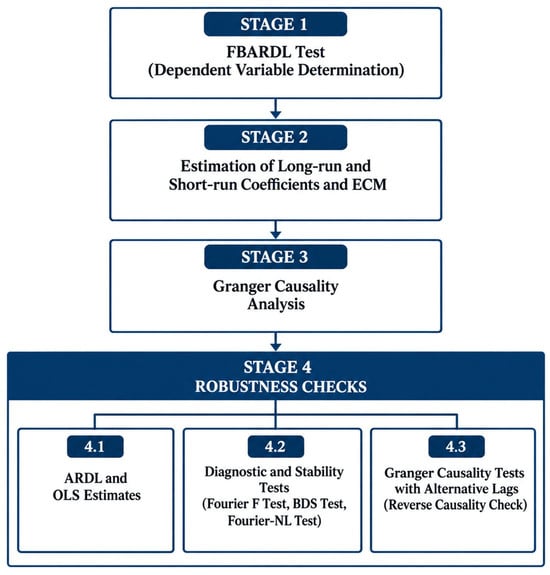
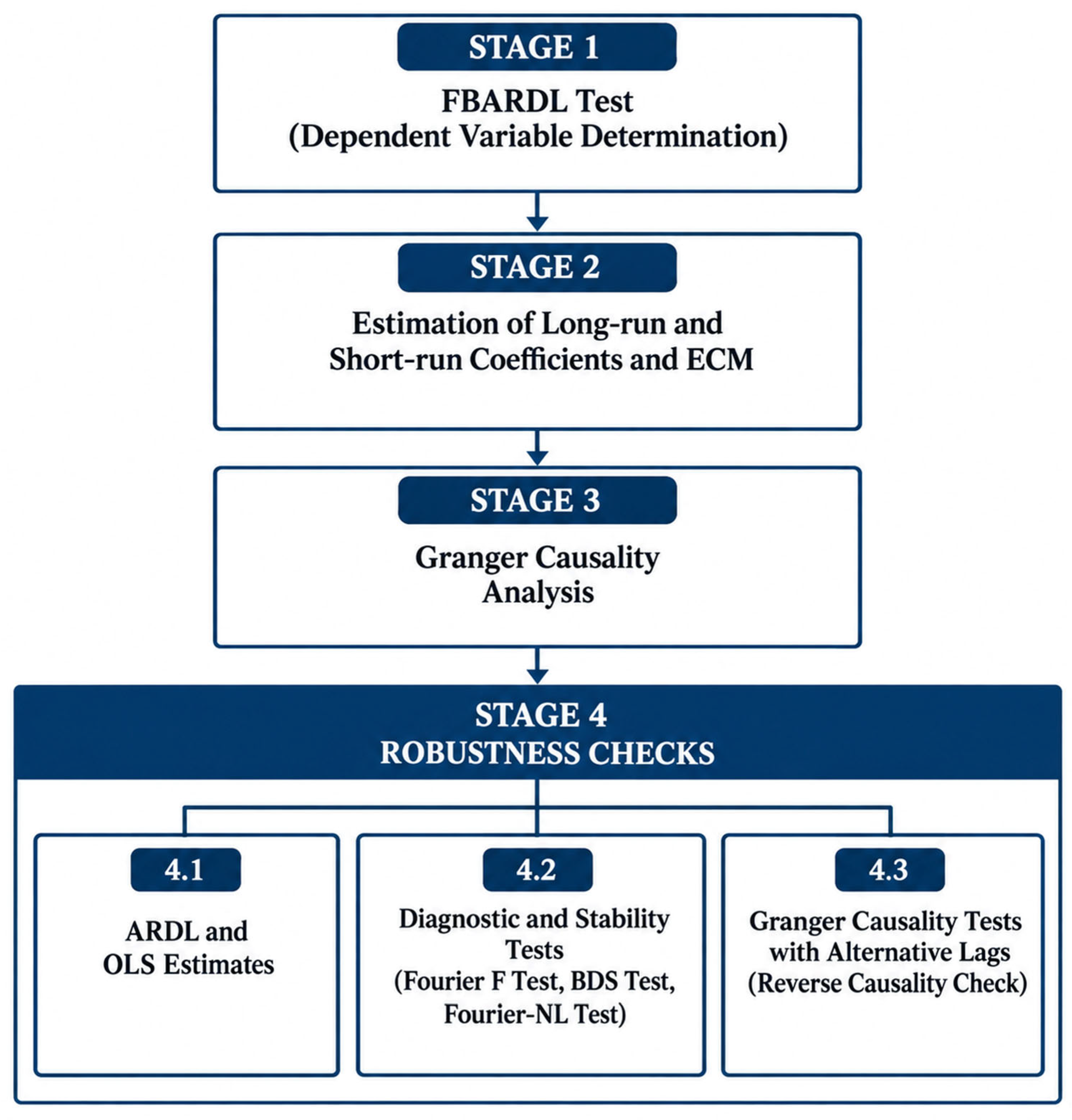
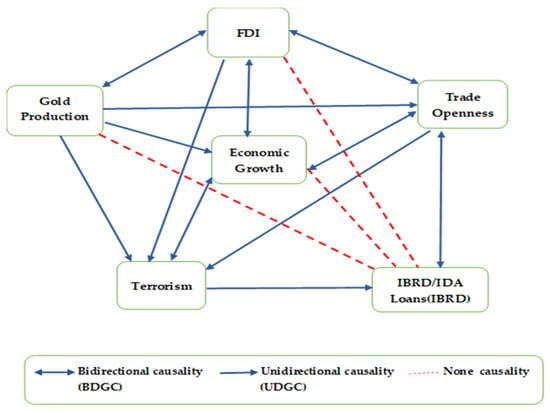
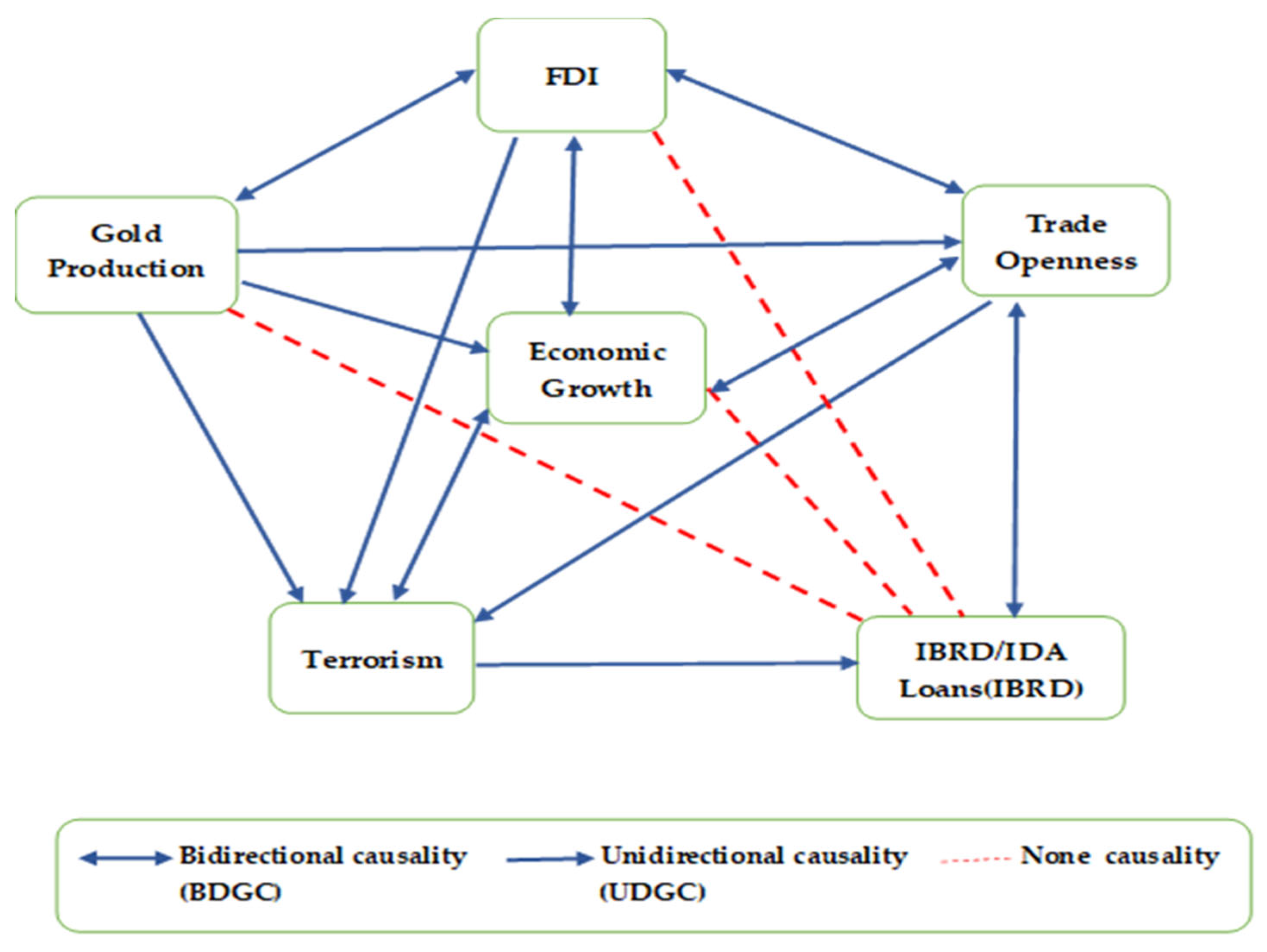
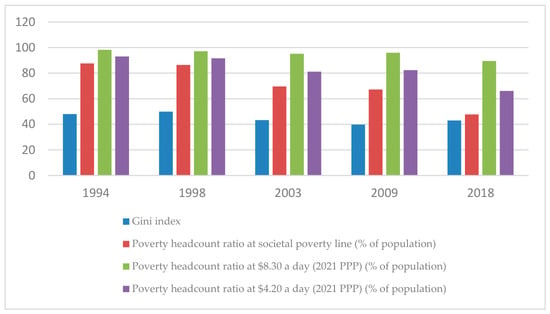
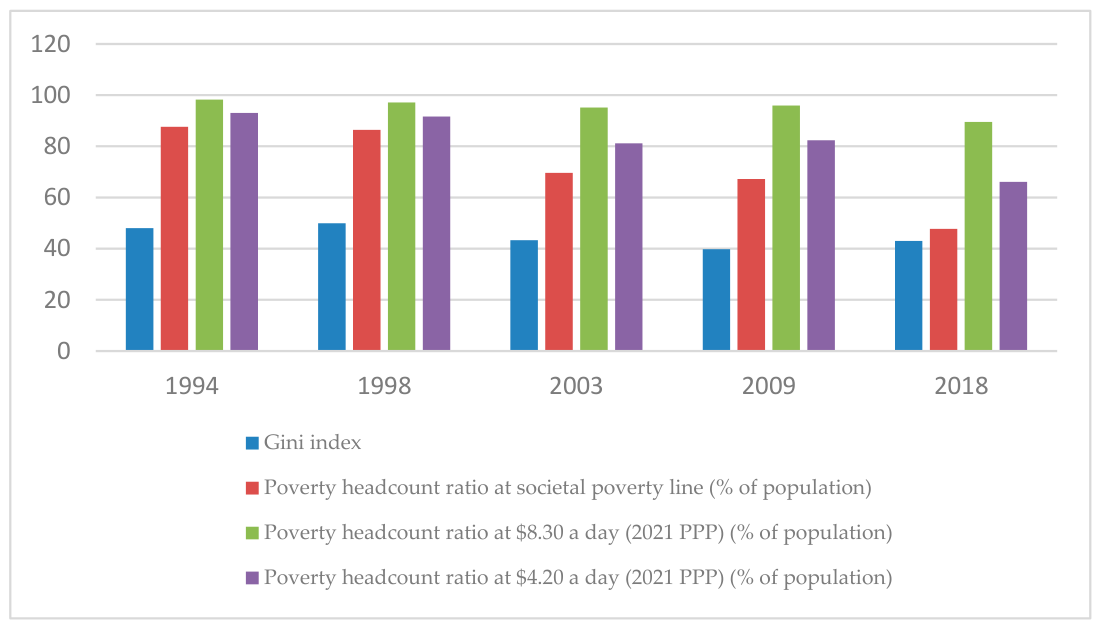
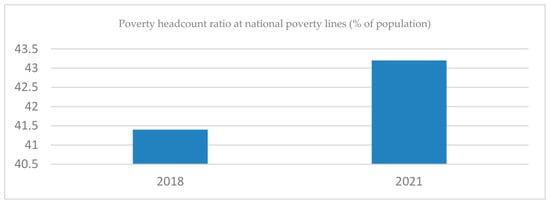
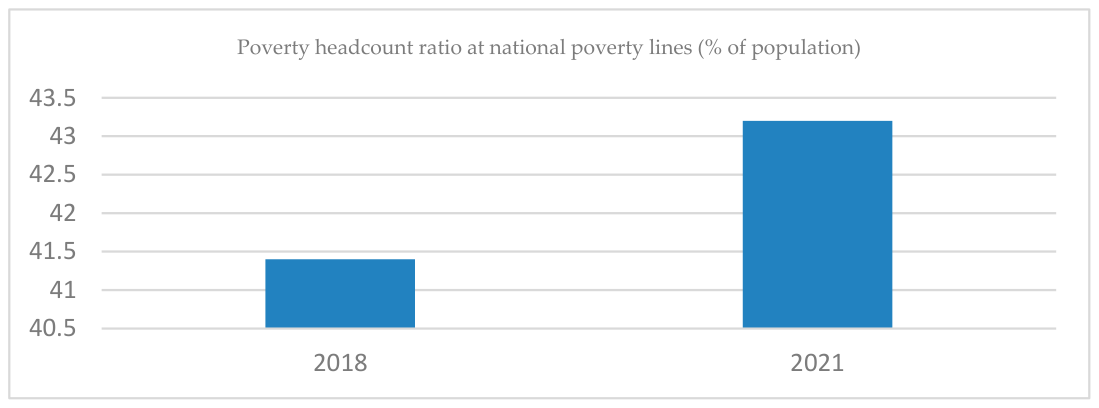

Disclaimer/Publisher’s Note: The statements, opinions and data contained in all publications are solely those of the individual author(s) and contributor(s) and not of MDPI and/or the editor(s). MDPI and/or the editor(s) disclaim responsibility for any injury to people or property resulting from any ideas, methods, instructions or products referred to in the content. |
© 2026 by the authors. Licensee MDPI, Basel, Switzerland. This article is an open access article distributed under the terms and conditions of the Creative Commons Attribution (CC BY) license.