


Abstract
The rapid expansion of the poultry industry has led to the large-scale generation of feather waste, creating serious environmental and public health concerns due to the recalcitrant nature of keratin. Poultry feathers are composed mainly of highly cross-linked keratin proteins stabilized by numerous disulfide bonds, which confer resistance to conventional proteolytic enzymes and natural degradation processes. This review examines the potential of keratinolytic fungi and their enzymes as sustainable, eco-friendly, and value-added strategies for poultry feather waste management and resource recovery. It discusses the environmental and health risks associated with improper feather disposal, such as pathogen proliferation, odor generation, and ecosystem contamination. Conventional management approaches, steam pressure hydrolysis, mechanical grinding, thermal treatment, acid–alkali hydrolysis, and oxidation, are critically evaluated in terms of efficiency and environmental impact. The review further highlights biological degradation pathways mediated by keratinolytic fungi and enzymes, with emphasis on fungal genera such as Aspergillus and Chrysosporium. Key mechanisms of fungal keratin degradation, including sulfitolysis, proteolysis, deamination, hyphal penetration, enzyme secretion, and biofilm formation, are discussed. Finally, industrial, agricultural, and feed applications of keratinases, along with advances in strain improvement, omics technologies, synthetic biology, and associated biosafety and regulatory considerations, are addressed.
1. Introduction
There has been a huge increase in the international poultry industry over the past decade, due to rising demand for protein-rich foods and it is estimated that a tremendous quantity of feather waste is generated, which is approximately 5–7% body weight in the case of poultry animals [1]. Millions of tons of feather waste, which are produced annually, are mainly composed of insoluble and fibrous keratin. The keratin’s resistance is due to its complex structure that is stabilized by high concentrations of disulfide bond cross-links, hydrogen bonds and hydrophobic interactions that help to render it resistant to the classical proteolytic enzymes and normal abiotic degradation processes. Therefore, treatment and disposal, such as landfilling or incineration, are a critical source of environmental pollution leading to soil and water contamination, greenhouse gases and loss of a valuable protein-rich bioresource due to environmental exposure, particularly in regions with high poultry populations [2].
The sustainable and green, biologically based alternatives of feather valorization using keratinolytic fungi are considered highly effective biocatalysts. Aspergillus, Trichophyton, Trichoderma, Chrysosporium and Fusarium fungi’s enzymes are known to efficiently break down the highly complex keratin structure; they include keratinases, proteases and disulfide reductase, among others [3]. The degradation process involves penetration by hyphae, sulfitolysis and proteolysis of the disulfide bonds and polypeptide chains of keratin [4]. Fungal keratinolytic activity is generally more substrate selective, tolerates better extreme conditions of pH and temperature and is more suited to large-scale fermentation compared to the bacterial system, all of which are significant benefits to industrial application [5].
Several factors, such as temperature, pH, preconditioning of the substrate and selection of the fungal strain, influence the efficacy of feather biodegradation [6]. Optimization of these fermentation conditions and strain improvement and enzyme purification are also key determinants of cost-effective technology. Moreover, the more recent strategies that have been adopted to enhance the performance of degradation processes are designing co-culture systems to achieve synergistic effects and combining fungal pretreatment with other biorefinery processes to achieve high resource recovery [1]. Based on these approaches, the advancement of genetic engineering, omics and synthetic biotechnology is aimed at the sustainable and ecologically friendly feather bioconversion. Hard keratin is converted to simpler, useful products, like nutrient hydrolysates, including peptides, amino acids and protein hydrolysates, with nutrients in their residues used in a circular economy [5,6,7].
These products, acquired as well, possess a very high number of applications, such as biofertilizers in agriculture, protein supplements in animal feed and various industries like biofuels, bioplastic, bioactive compounds, cosmetics and enzymes up to the tanning industry. This valorization is the act of transforming poultry waste into reusable products for the market, thereby reducing reliance on synthetic fertilizers and feed additives, as well as the environmental impact brought about by poultry production [1,2,3,4,5]. The use of keratinolytic fungi treats waste as a raw material and this gives an efficient and ecologically friendly solution in the treatment of chicken feathers. Keratin degradation processes can advance green technology through cleaner methods of reducing pollution, enriching biomass in the circular bioeconomy of poultry waste [7]. This review provides a comprehensive and critical analysis of the potential of keratinolytic fungi for the sustainable management and bioconversion of poultry feather waste within a circular bioeconomy framework. Emphasis is placed on the role of fungal keratin degradation in transforming keratin-rich residues into value-added bio-based products, thereby contributing to resource recovery, waste valorization, and sustainable bioresource management. The review further examines the mechanisms of fungal keratinolysis, recent biotechnological advances that enhance degradation efficiency, and the techno-economic and environmental implications of implementing fungal bioconversion strategies at an industrial scale. By integrating current knowledge on microbial biotechnology and resource sustainability, this work highlights the relevance of keratinolytic fungi as a promising tool for improving the recycling and sustainable utilization of poultry feather waste.
2. Physico-Chemical Characteristics of Feathers
The feathers of poultry are well-structured biological materials whose hierarchical structures lead to excellent mechanical performance and chemical resistance. They are made up of a central rachis, which supports the barbs and barbules forming a lightweight structure [1]. The main constituents of feathers are keratin protein (90–95%) and other compounds, including lipids and inorganic minerals. This is significant because the composition is rich in amino acids such as cysteine, glycine, alanine and serine. The high cysteine concentration facilitates disulfide bond formation that strongly increases structural rigidity and thermal stability [8]. These covalent cross-linkages, as well as noncovalent forces like hydrogen bonds and hydrophobic interactions, form a dense protein network that prevents enzyme access. As a result, feathers are typically water-resistant and inaccessible to most common proteolytic proteins like trypsin or pepsin. Figure 1 illustrates the hierarchical structure of a bird feather, showing the main vane attached to the central rachis and calamus, with barbs branching into barbules interconnected by hooklets (barbicels) to form a cohesive surface [1,2,3,4,5].
Figure 1.
Hierarchical structure of feather keratin.
Keratin exhibits remarkable stability under extreme temperatures and across a wide pH range, largely due to its highly ordered structure and extensive disulfide cross-linking. In addition, the natural hydrophobicity of feather surfaces limits microbial attachment and reduces susceptibility to biodegradation [4]. The extent of feather biodegradability is also strongly influenced by factors such as moisture content and surface texture. Under favorable environmental conditions, feathers can retain water and adsorb organic matter, which may facilitate early colonization by microorganisms [9]. Therefore, effective degradation often requires pretreatment processes or specialized enzymatic systems capable of disrupting the complex keratin structure [10,11,12,13,14,15,16,17,18,19,20,21]. Table 1 summarizes the key physicochemical properties of poultry feather waste that influence keratinolytic fungal degradation, including pH stability, temperature resistance, moisture content, and structural characteristics affecting enzyme accessibility and keratin degradation efficiency.
Table 1.
Physicochemical properties of poultry feather waste.
3. Keratin Structure
Keratin is a fibrous, and insoluble protein that predominates in the hair, nails, feathers, claws and wool. It can be divided into two main types, such as the hard and soft, by its structure and resulting mechanical properties [10,11,12,13,14,15]. This is significant to correlate the difference between the biodegradation of the keratinous materials and, hence, the issues that are related to the disposition of feather wastes. Poultry feathers are mostly made up of thermo-keratin, which is a highly complex structural molecule that is mainly made of cross-linking [22]. The excessive amount of sulfur provides numerous intra- and intermolecular disulfide bonds. These covalent bonds give tensile strength, rigidity and anti-degradative properties in their chemicals and enzymes [12].
3.1. Classification of Keratin
Keratin is characterized by a softer material and inner layers are more wet, having fewer disulfide connections, therefore more flexible and elastic. It is largely α-helical and thus is comparatively more vulnerable to enzymatic disintegration. This difference between tough keratin emphasizes the role of molecular structure in biodegradability, hence leading directly to the choice of microbial degraders to be used [1,10]. As their stability of secondary structural motifs, including α-helices and β-sheets, at the molecular level, the hydrogen bonding is stabilized along the polypeptide backbone in α-helical, and at the molecular level in β-sheet keratin, which are arrays of pleated sheets that form tight compact structures. The feather keratin has a peculiar β-sheet structure, with very ordered and tightly packed arrays, cross-linked by disulfide bridges, and resistant to enzyme action [23]. This keratin classification analysis and the mechanism of how the keratins are molecularly structured provide mechanistic clues as to how fungal degradation of keratin could occur. The keratinophilic fungi possess certain enzymatic arsenals that can cleave the disulfide bridges and then digest the peptide bonds of inflexible protein networks. Consequently, the structure–function relationships in keratin are to be explained as a requirement of the useful fungal-based biotechnological approaches aimed at attaining sustainable utilization and exploitation of poultry feather wastes [1,3,5,10].
3.1.1. Hard Keratin
Hard keratin is the toughest and least solubilized form of the protein and these components are found in nonviable structures such as human hair and nails, as well as bird feathers. It is also a cysteine-rich protein (7–8%), which makes covalent cross-links between chains and thereby confers rigidity, mechanical strength, and resistance against chemical denaturation or environmental impact. The polypeptide chains of hard keratin form dense, insoluble fibrils composed predominantly of β-keratin that are both crystalline and amorphous [24]. Hard keratin also has a more complex structure than that of terrestrial microorganisms, which do not possess the required enzymatic activity to degrade and decompose under natural conditions. The high content of β-sheet structures and the disulfide bond network stabilize the protein matrix. Therefore, in poultry processing plants, feather waste can cause environmental problems such as odor generation, pathogen survival and retarded soil aeration. Efficient bioconversion methods with keratinolytic fungi and sulfitolytic agents are needed to control feather waste in an environmentally friendly manner and to facilitate the liberation of digestible products [1,5].
3.1.2. Soft Keratin
Soft keratin gives flexibility and exists in skin and mucus membranes. It contains less cysteine and fewer disulfide bonds than hard keratin, so it is more elastic and more easily attacked by enzymes. Although not a dominant protein of bird feathers, its features regarding the structure of soft keratin improve the ability of this protein because the structure presents an α-helix strand and the polypeptides are linked by hydrogen bonds organized into intermediate filaments that give stability without rigidity [25]. This α-helical state also has an open structure that is more accessible to proteolytic enzymes for biodegradation than in the case of hard keratin. The greater proportion of polar and charged amino acids in soft keratin makes it more hydrophilic and allows microbial adherence, further interaction with enzymes, and faster decomposition. Soft keratin can be easily degraded by a wide range of microorganisms, such as nonspecialized bacteria and fungi, whereas hard keratin is very difficult to break down since fungal keratinases are not fully active against hard keratin because of its highly condensed disulfide-rich structure. Accordingly, efficient degradation of feather wastes is a challenge that demands more sophisticated enzymatic mechanisms than those necessary for soft keratin.
3.1.3. Molecular Structures
Keratin molecules consist of long chains of polypeptides and are organized into highly ordered secondary and tertiary structures, which are maintained by a complicated network of covalent and non-covalent interactions. They are disulfide bonds, hydrogen bonds, ionic interactions, and hydrophobic forces, which together make keratinous materials exceptionally strong. Keratin polypeptides form themselves in levels or hierarchy of α-helixes or β-sheets, as the type of keratin [26]. These secondary structures bind in their turn to create protofilaments and fibrils to create a dense and compact structure of proteins that resists degradation caused by restricted solvent access and enzyme access. Keratin has disulfide bonds that are significant to its structure. The disulfide linkages connect the cysteine residues by two, three, and more covalent bonds between peptide chains that increase the formation of protein networks on feather keratin, resulting in an increase in thermal stability and solvent resistance. In α-helices and β-sheets, hydrogen bonding reinforces disulfide bonding, preserving the secondary structure and thereby the rigidity of the keratin matrix. These intricate molecular structures of keratin are important to comprehend its degradation by fungi that employ reductive cleavage of disulfide bonds and proteolytic cleavage of the protein backbone [25,26]. Figure 2 depicts the secondary structural forms of keratin, highlighting α-keratin with its coiled α-helical arrangement and β-keratin characterized by extended β-sheet structures.
Figure 2.
Secondary structural forms of keratin.
The alpha-helix is a basic coiled protein structure, which is a right-handed coil held together by intra-molecular hydrogen bonds. The α-helical structures play a very important role in giving flexibility and elasticity to soft keratin. The stabilization of these helices is achieved by hydrogen bonds between the carbonyl oxygen of a single amino acid residue and the amide hydrogen of the same amino acid residue within the polypeptide chain to create a stable, although dynamic structure. This relatively accessible α-helical structure represents the primary target for fungal keratinases during the early stages of colonization. The exposed peptide bonds within α-helical regions are preferentially cleaved by serine proteases, which have evolved to recognize the specific hydrogen-bonding patterns associated with this conformation [27]. The resulting release of peptides provides an initial nutrient source that supports fungal growth and stimulates the expression of enzymes specialized in β-keratin degradation. This weakened the cross-linking as well as the relative accessibility of the helical structures of 2D-linked structures, which enhances the susceptibility of 2D-linked proteins to proteolytic breakdown by enzymes like serine and metalloproteases. Therefore, α-keratin acts as a model substrate to investigate the basics of keratinase activity and kinetics [28]. Though, as compared to poultry feathers, α-helical keratin is not so common as the more cross-linked β-keratin due to its structural properties. The rational design of improved enzymatic systems by the increased recalcitrance of feather keratin for the comparative analysis of the structures of α- and β-keratins is documented [27,28].
The structure that is characteristic of hard β-keratin is the principal structural feature in feather keratin. These strands are stabilized by many hydrogen bonds in parallel and antiparallel alignment of long polypeptide chains. The extreme stability of β-sheet structures explains the need for the multi-step degradation strategy employed by keratinolytic fungi. The dense hydrogen bonding and tight packing of β-strands hinder direct enzymatic access, thereby requiring the initial action of sulfitolysis to reduce disulfide bonds and destabilize the sheet structure. Once destabilized, the β-sheet conformation becomes accessible to metalloproteases, which possess extended binding clefts capable of accommodating the elongated polypeptide conformation characteristic of β-strands [29]. This structure–function relationship helps explain why species of Chrysosporium, which produce high levels of both sulfitolytic enzymes and metalloproteases, are particularly effective in degrading feather keratin. Specialized mechanisms developed by keratinolytic fungi for degrading β-sheet-rich keratin involve releasing reductive agents to break disulfide bonds. Efficient bioconversion of feathers requires a specific degradation process, and the stability of β-sheet structures for the structural barriers of α-keratin can help optimize enzyme levels, strain capabilities, and process design for sustainable poultry feather waste management. Table 2 summarizes how the structural characteristics of keratin act as barriers to degradation and outlines the specific enzymatic and morphological adaptations employed by fungi to overcome these obstacles and enable efficient keratin breakdown.
Table 2.
Structure–function relationships in fungal keratin degradation.
4. Environmental and Public Health Impacts of Feather Waste
The negative impact of poultry mass production on the environment is largely illustrated by the abundant loss or waste of feathers in regions with high densities of poultry processing and production. The lightweight and the structure of feathers result in their dissemination in the environment through erosion as well as water/ pollutant transfer [30]. This gradual decomposition liberates malodorous gases, such as ammonia, hydrogen sulfide and volatile fatty acids. Feather waste is an important source of pathogenic agents, such as bacteria, fungi and viruses in relation to avian species. Several foodborne pathogens, including Salmonella spp. and Campylobacter spp., may survive in feathers and environmental factors that affect their survival. The inappropriate disposition of infected feathers is a public health hazard since it leads to the spread of avian feather diseases to humans, domestic and wild animals [30].
The high concentration of nitrogen, sulfur and other nutrients that characterize this leachate can lead to water bodies’ eutrophication and, in general, water pollution. The impact of such contamination on the balance of the soil microbial population and crop yields is present. The implementation of sustainable management strategies that are to reduce waste, destroy pathogens and recover resources. The biological degradation of feathers by keratinolytic fungi offers a more environmentally friendly alternative to the traditional methods in terms of preferred degradation, contaminants release and eradication of health risks [31]. Fungal bioconversion is not only a cost-effective and more environmentally friendly technique for the management of poultry waste, but can also be used in reducing the environmental burden of the poultry industry, which will safeguard public health and ecological sustainability. Table 3 outlines the major environmental impacts associated with poultry feather waste, such as pollution, pathogen proliferation, and landfill burden, for their fungal-based mitigation strategies. These keratinolytic fungi enable eco-friendly waste valorization through biodegradation and conversion into value-added products.
Table 3.
Environmental impacts of poultry feather waste and fungal mitigation strategies.
5. Conventional Feather Waste Management and Degradation Methods
The traditional method of feather waste disposal is not for utilization. Landfilling, incineration, rendering and chemical hydrolysis are some of the most common methods due to several environmental and economic drawbacks. These practices have been increasingly used for several factors such as sustainability, regulation and the environment to support the long-term potential of soil management [40]. Landfilling is a form of waste disposal for waste treatment facilities. Feathers are very slow decomposers in suitable landfill decomposition facilities due to the high content of keratin, which results in amassing feathers. These feathers decompose anaerobically in landfills, generating methane, which is a potent greenhouse gas that contributes mightily to climate change.
These processes effectively eliminate organic matter but are energy-intensive and produce harmful air pollutants, including particulate matter and nitrogen oxides. The high humidity of feather materials increases combustion costs and emissions during nutrient regeneration. Although these processes yield a protein-rich animal feed supplement, they also destroy amino acids, reducing nutritional value and digestibility. The high energy demands and potential by-products raise sustainability concerns [41]. Consequently, there is a need for eco-friendly and cost-effective alternatives, such as biodegradation by keratinolytic fungi, which offers a low-energy method for converting feathers into beneficial products, surpassing traditional waste management techniques.
5.1. Physical Methods
The degradation of feather waste can be achieved by various physical methods, such as mechanical and thermal treatments, which can change the properties of keratin and decrease particle size. Although these pretreatments can facilitate subsequent degradation, they cause aggregation or a high energy cost for protein. Although steam treatment is energy-intensive and requires special equipment, it is less feasible in resource-limited environments [42]. These methods serve as secondary degradative strategies rather than degradation. The use of physical methods with biological methods together, such as the fungal keratinolysis to facilitate structure pretreatment and enzymatic hydrolysis, is to enhance feather bioremediation efficiency and reduce environmental contamination.
5.1.1. Steam Pressure Hydrolysis
Steam Pressure Hydrolysis (SPH) is one of the physico-chemical treatments applied to feathers, in which feathers are treated by high-pressure and high-temperature steam to affect the keratin of feathers. Partial denaturation of the protein is achieved by disruption of hydrogen bonds, thereby enabling subsequent enzymatic or chemical processing. Steam pressure hydrolysis is a good strategy to sterilize feathers by reducing pathogens and reducing odor in feather wastes [43]. Furthermore, the severe conditions such as temperature and pressure employed in steam treatment may degrade indispensable amino acids toward which these industrial hydrolysates are added, possibly requiring further processing to obtain high-quality or commercial products. Partial dissolution of keratin and a greater degree of softness after steaming would result in a shorter processing time and less enzyme, respectively. This integrated approach could offer a promising strategy in the feather waste valorization systems that is more sustainable, which is the basis for initial structure modification effect on the transformation efficiency.
5.1.2. Mechanical Grinding
Mechanical grinding is a pretreatment process to reduce the size of the feathers to a manageable and further utilizable size. The internal keratin structures are more accessible to either chemical or biological treatment since it diminishes size, thereby increasing the surface over which treatment can be applied. The inherent resilience and flexibility of feather keratin impart on mechanical grinding process a relatively low effect since feathers can break into pieces, causing additional wear and higher energy consumption for equipment. Nevertheless, mechanical grinding has some advantages, such as being easy to use, scale-up, and compatibility with primary treatments. Furthermore, feathers can be more easily transported and stored, as well as combined with enzymatic or microbial cultures to increase performances in post-processing such as heat and mass flux [44]. This process retains the keratin chemical framework, including disulfide bonds, but it does not have a good degradation effect on feathers. Mechanical grinding may improve fungal keratinolytic efficiency, shorten processing time and increase product yield by increasing enzyme adsorption and microbial invasion. While mechanical grinding alone does not achieve complete feather degradation, it functions as an effective pretreatment step that significantly enhances subsequent biological conversion. By increasing the surface area-to-volume ratio and disrupting the outer cuticle layer, mechanical grinding improves enzyme accessibility to keratin substrates. When combined with fungal keratinase treatment, this pretreatment can reduce the enzymatic hydrolysis time required for complete feather solubilization by approximately 30–35% [45]. This synergistic strategy enhances overall process efficiency and may reduce operational costs associated with prolonged fermentation periods.
5.1.3. Thermal Treatment
Thermal Treatment is an important method for the utilization of feather waste, which refers to treating with heat to change the structure of keratin protein. Hydrogen bonds of keratin could be destroyed at an elevated temperature, which altered the conventional secondary structures and weakened the resistibility from biodegradation. This method is multipurpose for sterilizing feather waste and reducing the volume of feathers, particularly when applied in a poultry slaughtering plant, since at high temperatures, pathogens are inactivated and odors generated by feathers [45]. Long-term heating can induce hazardous chemical reactions, such as protein cross-linking, Maillard reaction and fecal waste formation, which affect the quality of the meat product produced. Therefore, temperature profile optimization is needed to guarantee the trade-off between degradation and product quality. In addition, the integration of a heat-treated process and biological steps might improve efficiency. Recently, mild thermal pretreatment has been demonstrated to efficiently break the keratinaceous structure at relatively low-energy levels and the usage of fungal enzymes can be potentially performed for feather waste.
5.2. Chemical Methods
Chemical treatment of feather waste is intended to hasten the disruption of keratin, which is a highly resistant protein in feathers with strong covalent and non-covalent bonds, by incorporating chemicals. These processes involve acid, alkali and oxidation treatments to transform feathers into a value-added product like animal feed, fertilizer or raw industrial goods. Nevertheless, these advances are hindered by environmental and economic issues such as high reagent use, energy demands and disposal by-products. The chemical methods are acid and alkali hydrolysis, the breaking of peptide chains in addition to changes in disulfide-containing radicals by concentrated sodium or potassium hydroxide during alkali hydrolysis. This system is known to denature and solubilize proteins [46].
Disaggregation of keratin can be done using acid hydrolysis as well as alkaline hydrolysis: the former breaks disulfide bridges, whereas the latter leads to the breakdown of protein into amino acids. As much as these hydrolysis processes are applicable in manufacturing protein hydrolysates that are easy to digest, the processes are extremely costly in terms of energy requirements of concentrated reagents and/or high temperatures [47]. Furthermore, extreme pH is also considered detrimental to other valuable amino acids, e.g., tryptophan and cysteine, which lowers the nutritional value of the hydrolysate. The practices lead to large volumes of wastewater and chemicals that must be treated to control environmental issues. It facilitates inward rupture of the keratin structure, allowing quicker penetration. These plans are an enhancement of sustainable feather waste bioconversion, of chemical methods of specificity and environmental friendliness of biological depolymerization.
5.2.1. Acid and Alkali Hydrolysis
The chemical methods of hydrolysis for feather digestion, comprising acid and alkaline hydrolysis, towards peptide and disulfide bonds in keratin, are characteristic of insoluble feathers, resulting in soluble small fragments. Alkali hydrolysis uses highly concentrated sodium hydroxide at elevated temperatures to disrupt the stiff keratin matrix, which allows saponification of peptide bonds and disulfide bonding breaking by cleavage through cystine [48]. It is especially useful for harder feathers, which are naturally resistant to enzymatic degradation. Acid hydrolysis is a method of breaking down keratin into oligopeptides and amino acids using inorganic strong acids such as hydrochloric acid, sulfuric acid, or phosphoric acid at high temperature. The acid treatment of peptide bonds disrupts secondary structures, which will help in the solubilization of proteins. Acid hydrolysis expedites feather degradation, but racemization of amino acids and heat-sensitive residue degradation can increase the quality of the hydrolysate products.
Both hydrolysis reactions depend on several factors such as reagent concentration, temperature, duration of the reaction and particle size of feathers. The use of fine particles provides better surface area for chemical attack and thus improves hydrolysis efficiency. Optimization is used to enhance the degradation of keratin and to minimize the loss of essential amino acids, which are necessary for maintaining the functionality of recovered proteins. The waste of acid and alkaline hydrolysis must be neutralized with a large number of salts that may be disposed of and cause soil or water contamination [49]. Furthermore, they demand high energy input for heating and there are issues concerning chemical recovery, the environmental load of these processes, and greener approaches or synergies of these processes with biotechnological solutions. Although these methods, acid and alkali hydrolysis, have been used to make feather meals for animal feed and other non-edible protein derivatives.
5.2.2. Oxidation Techniques
Oxidation methods use a range of chemical agents to disrupt disulfide linkages in feather keratin. Some chemicals include hydrogen peroxide, sodium hypochlorite and ozone. They break disulfide bridges so that some of the cysteine is converted to sulphonic, sulphonic and subsequently to cystic acid groups and partially hydrolyze the keratin matrix, causing it to lose its structural integrity [50]. Oxidative pretreatment is commonly combined with thermal or mechanical treatments, which promote the performance of the obtained materials. The advantage of oxidation is its unique ability to target disulfide bonds to the primary resistant structures in keratin while remaining able to break down the internal peptide chains within the feathers.
This enhances the proteins or amino acids to downstream hydrolytic enzymes or chemicals, and thus significantly improves the soluble protein or amino acid production. Oxidation treatments have distinct drawbacks despite their advantages. Oxidation may impair the protein quality of deleterious by-products. However, industrial uses of oxidative treatments can successfully transform feather keratin to promote its hydrolysis for cosmetics, pharmaceuticals and agriculture [51]. This pretreatment increases solubility in water, functional properties and results in a substrate that is more susceptible to microbial or enzymatic bioconversion, to pre-valorization treatment for feather wastes.
5.3. Comparative Techno-Economic Analysis of Feather Processing Methods
To substantiate the claim of cost-effectiveness, a comparative techno-economic analysis of different feather processing methods based on their industrial applications was conducted. Table 4 presents a comparison of the major methods used in feather processing.
Table 4.
Comparison of feather processing methods.
Although fungal biodegradation requires a longer processing time (3–7 days), it offers substantial advantages in terms of energy consumption (80–90% reduction), operational costs (60–70% lower), and product quality. The preservation of heat-sensitive amino acids, such as cysteine, methionine, and tryptophan, is significantly higher in fungal processing (80–90%) compared with thermal methods (50–75%), resulting in higher-value end products suitable for animal feed and biofertilizer applications. Furthermore, the relatively low capital investment required (USD 100,000–300,000) makes fungal bioconversion particularly attractive for small- to medium-scale poultry processing operations in developing economies, where most feather waste is generated (Table 4).
5.4. Modern Thermochemical Processing Technologies
5.4.1. Pyrolysis
Pyrolysis is a thermal decomposition process carried out in the absence of oxygen at temperatures ranging from 300 to 700 °C [69]. When applied to feather waste, pyrolysis produces three main product streams: bio-oil (35–45%), syngas (20–30%), and biochar (25–35%) [70]. The bio-oil contains nitrogen-rich compounds derived from protein degradation, including pyrroles, pyridines, and amides, which have potential applications as chemical feedstocks. The resulting biochar, typically containing 8–12% nitrogen, can be used as a soil amendment or as a slow-release fertilizer. However, pyrolysis completely disrupts the native protein structure, preventing the recovery of amino acids or peptides for high-value applications. Energy consumption for this process ranges from 8 to 15 MJ/kg, with processing times between 30 and 120 min [52].
5.4.2. Torrefaction
Torrefaction is a milder thermal treatment conducted at temperatures between 200 and 300 °C that partially decomposes feather keratin while retaining part of the organic structure. This process produces a torrefied biomass with enhanced grindability, increased hydrophobicity, and higher energy density, making it suitable for co-firing in coal power plants or for use as a solid biofuel. Torrefaction of feathers typically requires 4–8 MJ/kg of energy and yields approximately 60–75% solid product [53]. However, like pyrolysis, this process sacrifices the protein value of feathers in favor of energy recovery.
5.4.3. Hydrothermal Liquefaction
Hydrothermal liquefaction (HTL) employs subcritical water at temperatures of 250–350 °C and pressures of 10–20 MPa to convert wet feather waste directly into bio-crude oil, aqueous-phase products, and solid residues. HTL is particularly attractive for high-moisture feedstocks, such as fresh feathers, because it eliminates the need for energy-intensive drying steps. The aqueous phase contains water-soluble organic compounds, including amino acids, organic acids, and ammonia, which may be recovered for fertilizer applications [54]. HTL processing typically requires 10–18 MJ/kg and can achieve bio-crude yields of 40–60%. However, capital costs remain relatively high due to the need for specialized high-pressure reactors, with pilot-scale systems typically requiring investments of approximately USD 500,000 to 1.2 million.
5.4.4. Comparative Analysis with Fungal Biodegradation
Fungal biodegradation primarily relies on extracellular oxidative enzymes, such as laccases and peroxidases, which enable the breakdown of complex and recalcitrant polymers, including lignin and keratin, under diverse environmental conditions. Although fungal biodegradation generally proceeds more slowly, it preserves amino acid content and generates higher-value products suitable for feed and agricultural applications [56]. In contrast, bacterial biodegradation often occurs more rapidly under controlled conditions, whereas fungal processes tend to be more stable and effective in natural ecosystems. Table 5 compares these thermochemical technologies with fungal biodegradation across key parameters.
Table 5.
Comparison of modern thermochemical technologies with fungal biodegradation.
This comparison indicates that thermochemical technologies provide advantages in terms of processing speed and the ability to handle mixed waste streams; however, they completely or partially destroy the protein value of feathers (Table 5). In contrast, fungal biodegradation, although slower, preserves amino acid content and generates higher-value products suitable for feed and agricultural applications [56]. The choice between these approaches ultimately depends on the desired end products and local economic conditions. In regions with established bioenergy infrastructure where energy recovery is prioritized, pyrolysis or hydrothermal liquefaction may be more appropriate. On the other hand, when the primary objective is protein recovery for feed or fertilizer applications, fungal biodegradation offers clear advantages.
6. Biological Degradation Using Keratinolytic Enzymes and Fungi
Keratinolytic fungi may help in the degradation of poultry feather waste biologically, which is a cost-effective and eco-friendly approach for waste management. Compared with physical and chemical treatments, this fungal degradation can be carried out under mild conditions with less energy consumption and toxic by-products. This tackles the long-standing problem of keratin resistance and transforms the waste feedstock into valuable end-products such as amino acids, industrial enzymes, or biofertilizers in harmony with the circular bioeconomy [71]. The synthesis keratinases, which are a family of specific enzymes that have been able to solubilize the insoluble and hard keratin matrix. Keratinases, such as serine proteases, metalloproteases, and cysteine proteases, exert different catalytic mechanisms to efficiently degrade keratin.
Feather degradation efficiency depends on several enzyme properties, such as the best pH or temperature. Although the activity of most keratinases increases under slightly alkaline to neutral conditions, some fungi are acid-tolerant and many are thermotolerant, which could increase reaction rate and decrease contamination during hydrolysis. Genera such as Aspergillus, Chrysosporium, Fusarium and Trichophyton, among others, have become known to be strong keratin degraders [72]. Their differences in enzyme production, substrate affinity and growth kinetics have a profound effect on bioconversion efficiency. Breakdown mechanisms used by fungi to decompose keratin are complex and multi-step, involving enzymatic proteolysis, sulfitolysis, deamination, hyphal penetration and biofilm formation. Sulfitolysis acts on cystine cross-links, and proteolytic action hydrolyzes the proteins. Furthermore, deamination constitutes ammonia and other nitrogenous compounds for nutrient exchange.
6.1. Types of Keratinases in Fungi
Keratinolytic fungi can produce diverse extracellular proteolytic enzymes known as keratinases, which specifically hydrolyze keratin, a resilient protein matrix. These enzymes are categorized into three main types: serine proteases, metalloproteases, and cysteine proteases, each distinguished by their catalytic mechanisms, structural configurations, and substrate affinities [73]. Figure 3 illustrates the major protease classes involved in keratin degradation, including serine, metalloproteases, cysteine, and aspartic proteases, highlighting their coordinated roles in keratinase activity. These enzymes act synergistically to cleave disulfide bonds and peptide linkages, enabling efficient keratin breakdown.
Figure 3.
Protease classes involved in keratin degradation and keratinase activity.
6.1.1. Serine Proteases
A major class of keratinases from keratinolytic fungi is composed of serine proteases that are proteins with an active-site nucleophilic serine. These serine proteases use histidine and aspartate, which are essential to their catalytic activity. Serine proteases promote hydrolysis of peptide bonds via the formation of a transient acyl-enzyme intermediate with the resultant formation of cleaved polypeptides. They are versatile, which allows them to degrade α-and β-keratin domains in feathers efficiently [74]. Since their stability towards a broad pH range and maximum activity at neutral to alkaline pHs, it has been demonstrated that these enzymes in different environmental conditions have good applicability for processes such as the production of feather meals or enzymatic bio-refinery systems.
Serine proteases also show substrate specificity in their binding activities, which enables selective cleavages of peptide bonds exposed on keratin. The synergistic actions of these enzymes contribute to the utilization of substrates and significantly increase the depolymerized feathers. In addition to feather waste degradation, fungal serine proteases have potential for industrial applications such as detergents, cosmetics and leather processing because of their stability and performance within formulations [75]. Enzyme properties can be modified via mutagenesis or direct evolution of catalytic activity, thermal stability and substrate affinity. Such developments are used to achieve sustainable and scalable biotechnological solutions for the treatment of poultry feathers.
6.1.2. Metallo-Proteases
Most fungal keratinases belong to a major group called metalloproteases, which are dependent on bivalent cations, for the maintenance of the tertiary structure and catalysis. These metalloproteases promote peptide bond hydrolysis within hard keratin by polarizing carbonyl groups of adjacent peptide bonds, preferentially the dense β-sheet domains found in avian feathers. These proteins have marked proteolytic activity, with a specific peptidase-type preference that enables them to degrade highly resistant keratinous structures, unlike serine or cysteine proteases. The efficient hydrolysis of 3-sheet-rich keratin material is important for the degradation of feathers into shorter peptides/free amino acids that can be consumed by microorganisms or recovered in various industrial operations. Apart from feather destruction, fungal metallic proteinases are potentially useful in other biotechnological processes such as leather making, detergent manufacturing and production of protein hydrolysates [76]. Because of their stability and high activities, they are potentially to be used for the industrial feather’s biodegradation, where substrates must be disintegrated and are intended to promote their catalytic activity, operational stability and yield in these processes for keratin degradation to become sustainable and efficient.
6.1.3. Cysteine Proteases
Cysteine proteases such as keratinases use nucleophilic cysteine in their catalytic site for peptide bond hydrolysis. The mechanism is a thiol attack on the carbonyl carbon of the peptide bond, resulting in a covalent acyl-enzyme intermediate followed by hydrolysis with water. Because of the high cystine level and compact orientation in β-sheet structures, these proteases are more effective in degrading hard keratins such as feathers. Cysteine proteases can disrupt the keratin matrix by hydrolyzing disulfide as well as peptide linkages and may act in synergy with serine and metalloproteases for complete protein breakdown. Typically, these enzymes are secreted into the extracellular media by keratinolytic fungi and show good activity under diverse environmental conditions. The optimal pH and temperature are species dependent, but fungal cysteine proteases generally possess a moderate alkaline environment, often in avian manure materials [77]. In addition, they are involved in feather utilizing cysteine proteinases that have applications like the production of amino acid hydrolysates for fermentation, bio-fertilizers and animal feed supplements. This capacity to degrade resistant keratinous substrates is used for bioconversion processes, used in the treatment of avian feather waste, in integrated biological systems. The variability among different classes of keratinases that are easily optimized multi-enzymes are used for efficient and eco-friendly bioprocessing of feather waste by fungi.
6.2. Enzyme Characteristics
The efficiency of fungal keratinases in feather hydrolysis is highly affected by their biochemical features, which influence substrate binding, catalytic turnover and environmental stability. These enzymatic properties include optimal pH and temperature of the enzyme, as well as substrate specificity. These properties not only influence the reaction rates but also affect the shelf life of enzymes and production efficiencies of the value-added products. Furthermore, these properties influence ionic strength and metal ion availability, as well as reducing agents and substrate particle size of the enzyme activity [78]. Thus, screening of these factors is required to improve fermentation or enzymatic hydrolysis for keratin decomposition with less energy and inputs. The kinetics of keratinase are greatly affected by enzyme level, substrate supply and potential inhibition in poultry feather waste.
Some keratinases are broad-spectrum, which can hydrolyze many different types of substrates, including certain peptide bonds in keratin. The acid-thermostable keratinases could be used with mild thermal or chemical pretreatments to hasten feather solubilization, thus enhancing their energy efficiency. This allows for the designing of enzymes with activity profiles, most favorable conditions, selective degradation towards certain keratin structures and better resistance in processing. The bioengineered enzymes enable easier scale-up and industrial application of fungal keratinase-based feather degradation, which represents a major step toward economical/eco-friendly poultry feather waste treatment [79].
6.2.1. pH
pH is also a crucial factor that affects the activity, stability and substrate specificity of keratinases: most fungal keratinases are active at a neutral to alkaline pH range (pH 7–9). The variation in pH influences the conformation of the enzyme and ionic interaction, which affects substrate affinity and feather protein decomposition [80]. Keratinases show dependent pH activity, with serine proteases most effective in alkaline environments, cysteine proteases performing well in weakly acidic to neutral conditions, and metalloproteases thriving in neutral to alkaline settings. Alkaline conditions facilitate keratin fiber swelling and enzyme access for degradation, whereas acidic conditions impede the solubilization of substrates for acidophilic keratinases.
Thus, pH adjustment in water is essential for efficient feather degradation, with hydrolysates utilized for livestock feed, fertilizer, or industrial products. For industrial feather bioconversion systems, different pH control strategies have been used in enzymatic efficiency during long-term degradation for the buffer addition, fed-batch mode substrate addition and continuous measurement of the medium pH [81]. In addition, the pH optimum of keratinases is useful for enzyme engineering and strain improvement. They can be modified for enhanced pH tolerance or for optimization towards acid/basic conditions and are able to function across a range of differences in feather waste bioresources and processing of the sustainable environmental solutions for feather waste management.
6.2.2. Temperature
Keratinase activity is optimal at temperatures between 30 and 50 °C, balancing reaction kinetics and enzyme stability. While higher temperatures can enhance molecular interaction and hydrolysis, excessive heat risks denaturation and inactivation. Thermotolerant keratinases functioning at 55–70 °C offer benefits such as reduced feather degradation time and lower microbial contamination risks [82]. Higher temperatures increase the mobility of the keratinous fibers, enhancing the availability of the enzymes used in the bioconversion of feathers, whereas low temperatures hinder the availability of enzymes and prolong processing periods. Proteins of the keratinase group differ in their heat resistance, with cysteine proteases being more heat labile than the more heat-resistant serine proteins in general. Temperature control is critical in large-scale feather degradation because bioreactor systems can maintain the temperature to ensure optimum enzyme activity. Thermal pretreatment at low levels (60 °C) could be used to increase substrate availability to enzymatic hydrolysis. Their use in the sustainable biodegradation of feathers can be extended by generating genetically modified keratinases that are thermoresistant.
6.2.3. Substrate Specificity
The substrate specificity significantly influences the capability of the keratinases to recognize and cut specific peptide bonds in keratins that define the degree of efficiency of the process of feather degradation. Feather primarily cross-linked with β-keratin, with a minor fraction of α-helical keratin, and various keratinases having various specificities to the structures. Serine proteins can cleave available bonds in both kinds of keratin, but metalloproteins are better cleavage proteins in dense β-sheet regions [83]. Cysteine proteins can break disulfide bonds, and this enhances the hydrolysis of keratin. Amino acid and oligopeptide profiles influence nutritional value and functionality of hydrolysates, which is necessary when using them in poultry food, biofertilizers and industry. Environmental factors also control substrate specificity, including pH and temperature. It is processed using keratinases to increase the degradation of the feathers and it will maximize the yield of useful hydrolysates that will aid in the sustainable processing of poultry waste.
6.3. Keratinolytic Fungi
Keratinolytic fungi are microorganisms that can break down keratin-rich materials such as feathers, hair, and nails, which is an essential ecological process because a set of keratinases is produced through the action of these fungi, and it facilitates the digestion of recalcitrant keratin bases. They are stenosis fungi that grow in soils and poultry waste, where there is a lot of keratin, and their genera, such as Aspergillus, Chrysosporium, Fusarium, Trichophyton and Microsporum, are diverse with unique enzyme capabilities essential in the effective breakdown of keratin [84]. These microorganisms increase the breakdown of keratin and can be used in bioconversion systems to maximize degradation and product output. In addition to the degradation, ketolytic fungi can be used in the production of bioactive substances in animal feed, biofertilizers, cosmetics, and medicines, for their ecological and industrial importance.
6.3.1. Aspergillus spp.
Aspergillus is an efficient filamentous fungus capable of decomposing poultry feather waste through the secretion of several extracellular enzymes, including keratinases that hydrolyze feather keratin. Species within this genus are characterized by rapid growth and high enzyme productivity, making them promising candidates for the industrial bioconversion of feather waste [85]. Critical factors influencing enzyme performance include strain-specific characteristics, keratinase activity, substrate density, and the extent of hyphal colonization on the feather surface. Aspergillus spp. are capable of degrading both soft and hard keratins and can tolerate relatively high alkaline pH and elevated temperatures. The resulting feather hydrolysates, which are rich in proteins and amino acids such as cysteine, lysine, and methionine, can be utilized in the production of biofertilizers and as protein-rich supplements in animal feed [86].
Aspergillus species are suitable with low intensity chemical or physical pretreatment to improve accessibility of keratin and efficiency on hydrolysis, indicating their adaptability in the bioconversion process. Aspergillus keratinases have been used in industrial production, such as the leather industry and detergent manufacturing, due to their thermal stability and tolerance of high alkaline pH [87]. Strain development and recombinant system design have been developed on an industrial scale for the production of platform chemicals, maximizing yield and specificity for substrates. Aspergillus spp. serves as an efficient enzyme system in biodegradation for the recycling of poultry feather waste.
6.3.2. Chrysosporium spp.
Chrysosporium is a distinct group of keratinolytic fungi for its high efficiency in digesting hard keratin, using not only specific enzymatic activities but also morphological properties. These fungi secrete diverse extracellular keratinases, including serine, metallo and cysteine proteases. These enzymes are active in cleaving the highly cross-linked β-sheet structures of keratin fibers present in feathers, Chrysosporium spp. especially suitable to bio convert feather wastes into valuable products [88]. The decomposition system utilized by Chrysosporium includes explicit invasion of hyphae into feathers and secretion of keratinolytic enzymes with a variety of reductive agents. The development of biomass at the substrate surface induces the solubilization/degradation of hard keratin into soluble peptides and amino acids.
Chrysosporium spp. show great potential to diverse environmental factors, e.g., temperature, pH, and substrate, etc. Although most of them prefer slightly alkaline conditions, some of the strains are moderately resistant to acid, increasing their potential for use with various kinds of feather wastes. Their metabolism effectively utilizes the amino acids resulting from keratin hydrolysis, which helps maintain enzyme supply and activity in extended bioconversion processes. In addition, the keratinases from bread mold have potential applications in different sectors such as the leather industry for preparing hide and skin, cosmetics and pharmaceuticals due to their enzymatic stability and specificity. Chrysosporium spp. are potent keratinolytic fungi that are employed for the treatment of hard keratinase substrates, including chicken feathers. Their specific enzyme activity in various environmental types has demonstrated their value in the bioconversion of feathers for sustainable waste management and production of high-value bioproducts [89].
6.3.3. Quantitative Comparison of Keratinolytic Fungal Genera
Keratinase activity (U/mL), degradation efficiency (percentage loss of substrate), growth rate, and incubation time are commonly used quantitative parameters for comparing keratinolytic fungal genera, including Aspergillus, Trichophyton, Microsporum, and Chrysosporium. Studies indicate that Chrysosporium and Aspergillus generally exhibit higher extracellular keratinase yields (approximately 20–80 U/mL) and greater feather degradation efficiency. In contrast, dermatophytes such as Trichophyton and Microsporum typically display moderate enzyme production but show strong substrate specificity. These quantitative indicators are valuable for identifying high-performing genera suitable for industrial bioconversion and waste valorization processes aimed at sustainable keratin-rich waste management. Table 6 presents a comparison of the keratinolytic potential of major fungal genera, summarizing key performance parameters under optimized conditions.
Table 6.
Quantitative comparison of keratinolytic activity across fungal genera.
Chrysosporium spp. consistently demonstrate the highest keratinase activity (120–580 U/mL) and degradation rates (4.0–12.0 g/L/day) among the evaluated genera, achieving up to 92% conversion of feather biomass into soluble protein hydrolysates under optimized conditions (Table 6). This superior performance is attributed to their specialized enzymatic arsenal, which includes multiple keratinase isoforms, such as serine, metallo-, and cysteine proteases, that act synergistically to degrade the highly cross-linked β-sheet structures predominant in feather keratin [88]. Aspergillus spp., although exhibiting slightly lower maximum activity (85–450 U/mL), offer advantages such as broader pH tolerance (6.0–9.5), faster growth rates, and well-established industrial-scale fermentation protocols, making them attractive candidates for commercial applications Notably, substantial strain-specific variation exists within each genus, with keratinase activity differing by up to fivefold among isolates of the same species. This variability highlights the importance of systematic screening and strain improvement programs for the identification of high-performing strains [85].
6.4. Mechanisms of Fungal Keratin Degradation
The presence of fungi is a multi-step process of degrading fungal keratin into highly recalcitrant keratin substrates, which is a complex process that employs physical, chemical, and enzymatic processes to degrade the substrate. Initially, the fungal hyphae attach to the surface and invade keratinous substances, which permit the colonization of substrates. Sulfide bonds are reduced by the sulfitolysis process and the release of reducing factors like sulfite undermines the rigid keratin structure. Then they release extracellular keratinolytic proteins, such as serine and metalloproteases, which cleave peptide bonds in α and β keratin. The resultant oligopeptides and amino acids are utilized to facilitate fungal growth and nutrient cycling [90]. Figure 4 illustrates the fungal-mediated pathways of keratin degradation, beginning with disulfide bond reduction followed by proteolytic cleavage of keratin fibers by keratinases and associated enzymes.
Figure 4.
Pathways of keratin degradation by fungi.
6.4.1. Sulfitolysis
Sulfitolysis is a biochemical process that is used by keratinolytic fungi to break down stable protein structures like those present in feathers and hair. This method is known to attack cystine residues in feather keratin and cleave those residues where disulfide crosslinks tie up β-sheet structures, thereby providing resistance to proteases. The secretion of reducing agents such as sulfite ions, cysteine and other thiol compounds, these fungi break the disulfide bridges in keratin, leading to the destabilization of the keratin protein matrix, which results in flexible peptides that are more susceptible to enzymatic hydrolysis [69]. The reactivity of sulfitolysis is dependent largely on the environmental factors such as pH, temperature and the concentration of reducing agents. The reactivity of sulfite ions is accelerated when the pH of the solution is high, resulting in cleavage of disulfide linkages, and such an environment corresponds to the high pH optimal by many fungal keratinases.
Sulfitolysis and enzymatic proteolysis act synergistically. Breaking disulfide bridges enables access to extracellular keratinases for inaccessible peptide segments and thus facilitates the breakdown of keratin. Sulfitolysis is essential for enhanced bioconversion of keratin. The addition of chemical reducing agents to the keratin improved production of reducing endogenous metabolites in fungi, or expression through genetic engineering, increasing the rate and sulfitolysis for better feather waste management systems [70]. In addition to industrial applications, sulfitolysis is of ecological importance, allowing keratinolytic fungi to release nutrients from keratin-rich wastes in soil and composts and thus contribute to the breakdown of organic matter and nutrient cycling. Sulfitolysis mechanism with specific enzymes and metabolites for efficient fungal consortia or enzymes is suitable for industrial implementation for the sustainable valorization of wastes. Sulfitolysis is a biochemical mechanism that keratinolytic fungi use to break the disulfide (cystine residues) bonding structure of the β-sheet form of feather keratin to make the protein matrix susceptible to proteolytic enzymes. This is carried out through the secretion of reducing agents and the major one is the sulfite ions (SO32−) and the thiol compounds that attack the disulfide bridges in the following biochemical steps:
Sulfite Generation Pathway
Some keratinolytic fungi, particularly species of Aspergillus and Chrysosporium, produce sulfite during keratin degradation through enzymatic pathways involving sulfur metabolism. One mechanism involves the enzyme sulfite reductase (EC 1.8.1.2), which catalyzes the reduction of sulfite to sulfide using NAD(P)H as a reducing agent. Alternatively, certain fungi generate extracellular sulfite through pathways involving sulfite oxidase or other sulfite-producing enzymes. Recent proteomic studies have reported increased expression of enzymes such as cysteine dioxygenase and cysteine desulfhydrase when fungi are cultured on keratin substrates [69]. These enzymes catalyze the conversion of L-cysteine into pyruvate, ammonia, and sulfite according to the following reaction:
L-cysteine + O2 → pyruvate + NH3 + SO32−
This pathway enables fungi to generate sulfite directly from the cysteine released during the initial stages of keratin hydrolysis, thereby establishing a positive feedback mechanism that accelerates keratin degradation [16].
Thiol Compound Secretion
In addition to sulfite, keratinolytic fungi secrete low-molecular-weight thiol compounds, including glutathione, cysteine, and thioglycolate, which function as reducing agents during keratin degradation. The biosynthesis of these compounds is often upregulated when fungi grow on keratinous substrates. Glutathione is synthesized via the γ-glutamyl cycle and can be secreted through specific transport systems [17]. Extracellular glutathione can reduce disulfide bonds through thiol–disulfide exchange reactions, as illustrated below:
Protein–S–S–Protein + 2 GSH → 2 Protein–SH + GSSG
The oxidized form of glutathione (GSSG) can subsequently be recycled intracellularly by the enzyme glutathione reductase, thereby maintaining the reducing potential necessary for continued keratin degradation in the extracellular environment [18].
Sulfitolysis Reaction Mechanism
The sulfitolysis of cystine residues proceeds through a nucleophilic attack by the sulfite ion on the disulfide bond, resulting in the formation of a thiol (cysteine residue) and an S-sulfocysteine residue:
R-S-S-R′ + SO32− → R-S− + R′-S-SO3−
This reaction breaks the covalent cross-link, destabilizing the keratin matrix and exposing previously inaccessible peptide bonds to proteolytic attack [70]. The S-sulfocysteine residues can undergo further reactions, including hydrolysis to cysteine and sulfate, or serve as substrates for additional enzymatic modification.
Regulatory Control
The expression of genes encoding sulfite-generating enzymes is tightly regulated in response to sulfur availability and the presence of keratin. Transcriptomic analyses of Aspergillus and Chrysosporium species grown on feathers have revealed upregulation of sulfur metabolism genes, including sulfate permeases, ATP sulfurylase, and APS kinase, indicating active sulfur assimilation and recycling pathways. The transcription factor MetR (in Aspergillus spp.) and its homologs have been implicated in coordinating the expression of genes involved in sulfur metabolism and keratinolysis [52].
Synergy with Proteolysis
Sulfitolysis and proteolysis act synergistically in keratin degradation. The initial reduction in disulfide bonds by sulfite and thiol compounds increases the accessibility of the keratin polypeptide backbone to keratinases, while proteolytic cleavage releases cysteine-containing peptides that serve as substrates for further sulfite generation. This coupled mechanism ensures efficient and complete degradation of the recalcitrant keratin structure [53].
6.4.2. Proteolysis
Proteolysis, the enzyme-catalyzed hydrolysis of peptide bonds of keratin by the keratinolytic fungi, is essential to convert insoluble keratin into soluble peptides and amino acids [61]. The process initiated by disulfide reduction, for example, via sulfitolysis, is followed by the proteolytic attack of several classes of endoproteinase, including serine-, metallo- and cysteine-specific enzymes [52]. Serine proteases cleave exposed peptide bonds in α-helices and folded β-sheets, and cysteine proteases deal with disulfide-rich areas. Environmental conditions like pH and temperature play a significant role in enhancing catalytic efficiency by stabilizing enzymes and promoting the enzyme–substrate binding.
In addition, the presence of peptide bonds depends upon the concentration of substrate, particle size and the degree of chemical/physical pretreatment. Fungal isolates producing high levels of keratinases with extensive proteolytic activity are particularly effective in industrial processing of feathers, resulting in shorter bioconversion times and better-quality hydrolysate. Proteolysis is particularly important for keratinolytic fungi because it produces oligopeptides and free amino acids, which act as indispensable carbon and nitrogen substrates for their growth or survival. The products obtained from proteolysis include animal feed, biofertilizer, and protein hydrolysates applied in cosmetic or pharmaceutical areas [53]. Therefore, to improve fungal productivity and convert feather waste into high-value bioproducts.
Therefore, sulfitolysis not only supports this process by rendering hitherto non-degradable peptide bonds susceptible to degradation but also enables proteolysis to release substrates, such as substrate deamination. This ensures long-term nutrient exposure and a complete degradation of the feather structure. Proteolytic efficiency is additionally favored by the penetration of the hyphae of fungi, breaking up the keratin matrix physically to allow deeper invasion by enzymes. Proteolysis can be made through the selection and eventually the recombinant expression of highly efficient keratinases [54]. These multi-enzymes containing different types of keratinases are a promising strategy to accelerate and improve the feather hydrolysis of industrial plants for economic feasibility.
6.4.3. Deamination
Deamidation is an enzymatic process for removing amino groups from amino acids, then excreting ammonia with the corresponding keto acid, which is important during fungal keratin degradation. This procedure plays two crucial roles, as it allows nitrogen to be reabsorbed in the fungal metabolism outside its cells, leading to an increase in solubility of keratin and enhancing further enzymatic hydrolysis [55]. The ammonia formed serves not only as a by-product, but also as the reducing agent, facilitating sulfitolysis and enhancing the substrate for enzymatic activity. Certain fungal enzymes, like the amino acid oxidases and deaminases, are released together with keratinase to enable an efficient metabolism that could lead to feedback inhibition of enzyme activity.
Deamination activity plays a crucial role in keratin degradation by contributing to the breakdown of amino acids released during proteolysis, thereby increasing the overall rate of feather bioconversion. This process also influences the quality and yield of the resulting hydrolysates [55]. The production of ammonia and corresponding keto acids enhances the nutritional composition of protein hydrolysates, making them suitable for use as biofertilizers or as supplements in animal feed. The rate of deamination is influenced by environmental factors such as pH, temperature, and substrate concentration. Enzymatic activity is typically favored under slightly alkaline conditions, which promotes the release of ammonia during the degradation process [55,56]. The interaction between deamination, proteolysis, and sulfitolysis plays a central role in fungal keratin breakdown and is essential for efficient bioconversion. Through these mechanisms, feather waste can be transformed into nitrogen-rich products that support nutrient recycling and contribute to more sustainable waste management practices. Furthermore, understanding the kinetics and regulatory mechanisms of fungal deaminases may provide opportunities for enzyme engineering aimed at improving feather utilization. Such approaches could offer a cost-effective and environmentally friendly biotechnological alternative for the treatment and valorization of poultry feather waste [56].
6.4.4. Hyphal Penetration
Hyphal penetration is a physical mechanism of keratinolytic fungi in addition to their biochemical action for the degradation of keratinous materials like feathers. Filamentous hyphae invade and produce microchannels through the dense keratin matrix, which physically disrupts its compact β-sheet fibrous structure, thereby increasing proteinase K and E-based keratinases’ access to peptide and disulfide bonds in extracellular keratin. This is important for the degradation of hard keratin substrates due to cross-linking in the keratin, which prevents enzyme access and action [57]. The intensity of hyphal growth is influenced by substrate composition, nutrient gradients, and environmental parameters. In addition, the hyphal physical network penetrates regions in which free enzymes cannot access and thus achieves full hydrolysis.
Hyphal penetration also stimulates synergistic enzymatic activity by forming channels whereby serine, metallo- and cysteine proteases can collaborate to constrain both peptide bonds and disulfide linkages. Consequently, rates of protein digestion have been shown to impede nitrogen digestion in ruminant animals. Such a combination of physical disruption and biochemical catalysis ensures continuous keratin degradation [58]. These steam treatment and exposure to mild alkaline environment in laboratory and several industrial process conditions have been employed to minimize hyphal penetration through partial opening of the keratin structure, favorably affecting the rate of enzymatic hydrolysis and feather conversion. Hyphal penetration, as we have shown here, is of particular importance in natural situations where filamentous fungi forage in keratin-rich environments to reduce nutrients and organic matter. This hyphal penetration mechanism is beneficial to the exploitation of those fungal strains possessing superior invasive ability for biotechnological purposes [57].
6.4.5. Enzyme Secretion
The extracellular secretion of keratinases is essential for the microbial degradation of keratin, especially when it comes to the hydrolysis of the insoluble keratin matrix through enzymes that are excreted into the medium. Extracellular agents produced by keratinolytic fungi are serine, metallo- and cysteine-proteases in addition to reducing compounds and proteins. These enzymes, working in concerted action on different structural parts of the feathers, disrupt them to such an extent that keratin is broken down into soluble peptides and amino acids. The process is under strict control in terms of timing, concentration and composition of the enzymes as well as substrate availability and environmental conditions [59]. The keratinase is secreted for the faster degradation of the feather, which can hinder substrate conversion.
The stability and secretion efficiency of enzymes are hugely affected by the environmental conditions, such as pH, temperature, and ionic strength. Keratinases tend to exhibit their optimum activity at relatively high temperatures and slightly alkaline pH, and this is in line with the natural environments of keratinolytic fungi. The control of these parameters in the process of fermentation or enzymatic hydrolysis may enhance enzyme activity and enhance the exploitation of its substrates. Secondly, enzyme secretion can also be synergistic with fungal mechanisms like hyphae penetration and biofilm development to create a concentration of localized enzymes at the substrate interfaces. This helps in accessing peptide bonds, which are essential in keratin degradation and are indispensable in the process of handling poultry feather wastes [60]. These keratinases yield stability and substrate specificity were identified through recombinant expression systems, strain developments and optimized enzymes. Freezing of high-activity enzymes under controlled situational conditions is one of the critical requirements of the production of value-added products of keratinous waste through bioconversion in a sustainable manner [59,60].
6.4.6. Biofilm Formation—Molecular Regulatory Pathways
Biofilm formation of the fungus includes concentration of the fungus and enzymes at the interface with the keratin substrate, thereby enabling an efficient degradation of the keratin. Filamentous cells in biofilms are also surrounded by an exopolymeric material that coats the secreted keratinases and shields them against early destruction. This matrix and its cross-linking with other enzymes allow an efficient way for the hydrolysis of the keratin fibers [61]. The processing condition optimization leads to an increase in physical contact and degree of colonization of the keratin substrates as the keratinases are appropriately used to cleave peptide bonds and disulfide bridges, to cleave most effectively, feather degradation.
Biofilms provide a protective microenvironment that supports fungal metabolism and enzymatic activity during keratin degradation. This structured matrix facilitates nutrient acquisition and enhances fungal tolerance to environmental stresses such as fluctuations in pH, temperature, and substrate concentration. Consequently, biofilm formation can increase the stability and efficiency of keratinolysis under variable process conditions, which are common in large-scale industrial systems [62]. Biofilms also facilitate synergistic interactions among different fungal species or isolate in co-culture systems. Such microbial consortia promote the coordinated activity of multiple keratinases and associated enzymes on feather surfaces, improving substrate degradation efficiency and increasing the yield of protein hydrolysates. Therefore, biofilm formation represents an important factor in the sustainable management of poultry feather waste and in the development of cost-effective industrial processes for keratin bioconversion [63]. The development of keratinolytic fungal biofilms occurs through a complex, multi-step process regulated by interconnected molecular pathways that control cell adhesion, extracellular polymeric substance (EPS) production, and the spatial organization of the microbial community [61,62,63].
Quorum-Sensing and Signaling Molecules
Fungi utilize quorum-sensing mechanisms to coordinate biofilm formation in response to population density. In Aspergillus spp., the production of the quorum-sensing molecule farnesol regulates the transition from planktonic growth to biofilm development [84]. Farnesol accumulation triggers the expression of biofilm-associated genes through the Ras-cAMP-PKA signaling pathway, which modulates transcription factors involved in adhesion and EPS production.
MAP Kinase Cascades
The mitogen-activated protein kinase (MAPK) pathways, particularly the HOG (High Osmolarity Glycerol) and cell wall integrity (CWI) pathways, play central roles in biofilm regulation. Upon surface contact, activation of the Sho1 and Msb2 sensors triggers a phosphorylation cascade involving Ste11, Ste7, and Kss1 (in Aspergillus), leading to the upregulation of adhesin genes such as calA (encoding a calcium-binding protein) and rodA (encoding hydrophobins) [85].
Transcription Factor Networks
The master regulator of biofilm formation in many fungi is BrlA (in Aspergillus) and its orthologs, which control the expression of hundreds of genes involved in conidiation and biofilm development. Additional transcription factors, including StuA and MedA, coordinate the temporal expression of EPS biosynthesis genes [86]. Recent transcriptomic studies on Chrysosporium growing on feathers have identified upregulation of C2H2 zinc finger transcription factors that bind to promoters of keratinase genes and EPS synthase genes, suggesting coordinated regulation of degradation and biofilm formation [87].
EPS Biosynthesis and Regulation
Fungal biofilm extracellular polymeric matrix is mainly composed of polysaccharides (a- and b-glucans, galactomannan), proteins (hydrophobins, adhesins), and extracellular DNA. Synthesis of these components is controlled by the Pkc1-Mpk1 cell wall integrity pathway, which detects cell wall stress and alters expression of glucan synthase genes (fksA, ags1) and chitin synthase genes (chsA-D) [88].
Matrix-Associated Enzyme Concentration
The EPS matrix is also a structural scaffold as well as a reservoir of secreted enzymes. Polysaccharide components retain the keratinases and sulfitolysis enzymes in the matrix, forming localized regions of high concentration of enzymes at the feather–fungus interface. This spatial arrangement increases the efficiency of degradation concentration of enzymatic activity, protecting against degradation by proteolytic enzymes or environmental inactivation of enzymes [89].
Nutrient Sensing and Metabolic Regulation
The formation of biofilms is closely linked to nutrient status using the TOR (Target of Rapamycin) and cAMP-PKA signaling pathways. In response to exposure of fungi to keratin-rich substrates, both pathways induce transcription factors that coordinate upregulation of biofilm formation and keratinase production processes, which ensures that energy resources are directed to both colonization and degradation events [90].
6.4.7. Temporal Coordination of Keratin Degradation Mechanisms
The six degradation mechanisms are described independently, but rather function in a temporally coordinated sequence that optimizes keratin breakdown efficiency. Figure 5 illustrates the temporal progression of these mechanisms during fungal colonization and degradation of feather substrates.
Figure 5.
Temporal progression of fungal keratin degradation mechanisms.
7. Applications of Keratinases and Bioconversion Products
Keratinases are versatile biocatalysts known to degrade recalcitrant keratin in sectors such as industrial, agricultural, and dietary applications. This enzymatic keratin degradation could be integrated with the industrial processes, and chemical methods could decrease, energy may be saved and some environmental concerns alleviated with the production of valuable bioproducts [64]. This could aid in the increasing demand for green alternatives in waste management and product manufacturing. Figure 6 presents the major industrial and agricultural applications of keratin bioconversion products, including biofertilizers, animal feed supplements, biodegradable materials, and cosmetic or pharmaceutical ingredients. This transforms feather waste into high-value, sustainable products supporting circular bioeconomy practices.
Figure 6.
Industrial and agricultural applications of keratin bioconversion products.
7.1. Industrial Applications
Keratinases are used as industrial enzymes because they can replace strong chemical methods for applications requiring keratin hydrolysis. These enzymes from keratinolytic fungi work at more benign conditions, which results in lower operational costs, energy consumption and pollutant generation. Their targeted functionality allows them to bind more selectively to keratinaceous materials without binding other substrates, making them suitable for different applications, such as leather processing, textile modification and personal care products [65]. The hydrolysates obtained by keratinases are also enriched in bioactive peptides, extending their industrial use for multiple benefits, such as antioxidants and antimicrobial activities.
7.1.1. Leather Industry
Keratinases are an alternative method to the conventional chemical methods for the dehairing and depilation process of leather. Conventional processes, including treatment with lime and treatment with sodium sulfide, generate noxious effluents, creating environmental pollution, damaging collagen, and thus resulting in reduced leather quality. Keratinase can effectively degrade hair keratin rather than collagen fibers underneath with good tensile strength, flexibility and surface [26,66]. Dehairing by enzyme treatment promotes resource utilization, as time and the amount of applied water used can be reduced. Keratinase-treated fabrics have better dye uptake and low shrinkage, which is preferable to chemically treated ones.
Meanwhile, amino acids and peptide hydrolysates can be made from hair waste residue by enzymatic hydrolysis for use as fertilizer or cosmetics. This fits with the concept of green manufacturing and environmental regulations for eco-friendly effluent discharge, ultimately reducing chemicals and wastewater in conventional processes while enhancing the quality of skin and increasing value for tanneries. Keratinase use in the dehairing operation demonstrates environmental benefits since the chemical oxygen demand decreases, together with tannery effluent total dissolved solids, significantly reducing soil and water pollution. This technology lies in the circular economy, converting waste such as hair and feathers to bioactive products and supports sustainability certificates in leather production [67].
7.1.2. Textile Industry
Keratinase is widely applied in textiles as a processing agent of proteinaceous fibers (wool and silk) through the controlled deactivation of the cuticle scales. The outputs of these enzymatic processes reduce the surface friction and damage, improve uniform dyeing and their mechanical properties. Keratinases are also somewhat different from the traditional chemical agents, especially because they are applied in mild conditions and are not harmful to either of the fabrics and due to their potential effects on the environment. Moreover, the enzyme keratinase can also provide value to fabrics having bioactive benefits such as antimicrobial and antioxidant properties; this is also affected by the concentration of the enzyme and the treatment [68]. Keratinase treatment, with a weak physical/chemical pretreatment, enhances accessibility of enzymes to the surface of fibers and leads to a finer quality of fabric that is also less shrinky. Such an enzymatic reaction is more sustainable because it conserves water and energy, and produces fewer chemical wastes. In addition, with the help of keratinase technology, waste products such as cotton, feathers, or wool can be used as products in the amino acids and peptides that can be used as biofertilizers, animal feed, or cosmetics [68].
7.1.3. Detergent and Cosmetic Applications
Keratinases play a major role in the detergent and cosmetic industries for proteolytic protein-containing materials and keratinous wastes. They remove stains from sweat, blood, etc., more efficiently at lower wash temperatures, resulting in energy and environmental benefits. Keratinases and their hydrolysates provide conditioning, moisturizing, and anti-aging properties in cosmetics and thus also improve the hair tensile strength, elasticity, shininess and increased moisturization [91]. Moreover, these peptides are biodegradable, low in toxicity and compatible with human skin, which provides healthier natural options for personal care.
Various factors, including enzyme concentration, pH and temperature, need to be optimized for their effectiveness and stability. Keratinases are incorporated in hair conditioners, masks and shampoos to reinforce the keratin structure of the hair cortex and then reduce breakage. In the field of skincare, they stimulate collagen synthesis and help in tissue regeneration [92]. Moreover, biotechnological progress on enzyme stabilization, immobilization and compatibility of formulation with the substrate also play an important role by making keratinases indispensable for high-performance processes compatible with the market economy of modern industrial biotechnology [91,92].
7.2. Agricultural Uses and Biofertilizers
Plant growth and soil fertility are improved by the biofertilizers obtained with fungal keratinases from keratin hydrolysate. The hydrolysates containing essential amino acids, peptides and sulfur compounds are the critical components for nutrient transformations and microbial action in soils [1,40]. These keratin hydrolysates can promote growth, yield and tolerance in crops like wheat, maize and legumes. The fungi keratinases can be utilized to transform the recalcitrant feather waste into plant-based nutrients, and because of this, organic waste can be avoided, and high nitrogen-and amino acids-rich compost can be produced through agricultural applications. These keratin-based nutrients are slow release of its multifaceted complex structure and hence it is an environmentally friendly and sustainable source of maintaining soil fertility and management of the ecosystem [40,93].
Keratin hydrolysates are bio-stimulants that enhance positive rhizosphere microbiomes that result in enhanced nutrient intake and pathogen defense. Certain amino acids, such as cysteine and methionine, are the genetic parts of bioactive compounds involved in the process, as well as their applications in plant defense against synthetic fertilizers that have been known to increase GHG emissions and chemically affect soils [94]. The use of enzyme-produced biofertilizers based on poultry feather waste to create an agribusiness product with its massive effect on human health and ecological parameters of the circular economy models is a sustainable technology and an economically friendly solution. This agronomic–environmental, agro-industrial innovation would allow for enhancing soil health to encourage greater crop yields and recycling of industrial by-products [94,95,96,97].
7.3. Animal Feed Supplements
The high-protein feed additives are derived from the enzymatic activity of fungal keratinase on otherwise indigestible feathers. These hydrolysates are rich in essential amino acids, including lysine, methionine, and cysteine, which significantly enhance feed quality and promote animal growth. The utilization of keratin hydrolysates (KHs) reduces dependency on conventional protein sources like soybean meals and fishmeal, which are associated with notable economic and environmental drawbacks [98]. This enzymatic hydrolysis of feather meals improves the feather digestibility and bioavailability, and it also reduces risks of potential contamination from pathogens and mycotoxins, ensuring stable, safe, and animal feed ingredients.
The use of keratinase-hydrolyzed feathers with circular economy practices is used in animal husbandry. Farms can reduce their environmental footprint and procurement prices by turning local feather waste into vital feed ingredients. This closed-loop system further reduces landfill deposition as well as promoting sustainable livestock farming practices. Application of keratin hydrolysates in feed for aquaculture induces growth promotion, immune enhancement, and nitrogen wastage reduction, resulting in a decrease in water pollution and sustainable approaches to aquaculture [99]. This approach uses keratinase-based feed supplements with multifaceted properties, addressing waste management and sustainability challenges in livestock and aquaculture by converting poultry feather waste into digestible, nutrient-rich meals.
8. Advanced Biotechnological Approaches
The disposal process of feathers in poultry using keratinolytic fungi has developed and diversified through biotechnological applications. Several methods with various strains of fungi possess several drawbacks, such as the production of keratinase, substrate selectivity and resistance to the environment. But the modern biotechnological processes offer enormous alternatives. These solutions include strain improvement to omics-based systems biology and synthetic biology tools in the CRISPR-Cas9 that enable improving fungal performances, optimizing the keratin-degrading pathways and generating value-added bio-products [100]. These novel technologies, fungal metabolic cells, are manipulable and at an industrial level.
8.1. Strain Improvement Strategies
Strain improvement is a widely used approach for improving the production and activity of keratinase in keratinolytic fungi. This strategy includes strain selection and genetic manipulation to develop strains with higher enzymatic performance, larger substrate tolerance and enhanced growing characteristics [101]. Traditional techniques such as adaptive evolution, mutagenesis and hybridization are used to create genetic diversity for the extraction of superior fungal strains. These improved strains have higher keratinase activity, faster feather hydrolysis rate and more stability under industrial processing conditions [102].
Besides several approaches, rational design and molecular engineering are also critical for the optimization of fungal strains. Furthermore, enzymatic production can be modified through regulatory genes that control keratinase expression and stress resistance to their metabolic pathways towards degradation of keratin by modifying the secretion of enzymes [103]. For example, the overexpression of specific transcription factors or protease-encoding genes has remarkably enhanced keratinolytic activity in fungi, including Aspergillus and Chrysosporium. These changes also result in increased enzyme stability at different temperatures and pH, which are critical for industrial applications [102,103,104].
Fungal strain enhancement leads to better feather hydrolysis, lower energy consumption and process cost. Effective fungal species can utilize multitudinous poultry waste products to increase the flexibility of the bioconversion system. Mutagenesis is still crucially important for obtaining mutant fungal strains that produce excessive amounts of the keratinase through mutations in the keratinase genes, which confer beneficial properties. Mutants can be screened under selective conditions for features like elevated keratinolysis, improved enzyme secretion and resistance to environmental stress. These biotechnological solutions involve the selection, mutagenesis and molecular engineering of advanced fungal strains that can efficiently degrade keratins under industrially relevant conditions to recycle the poultry feather waste [105].
Mutagenesis
Mutagenesis is used to improve fungal keratinolytic potential by causing specific or random genetic mutations. Chemical agents like ethyl methane sulfonate (EMS) and nitrosoguanidine, or physical methods, which include UV irradiation, result in nucleotide substitutions that could impact keratinase genes, regulatory regions or metabolic pathways through random mutagenesis. They provide the possibility to enhance enzyme expression, catalytic efficiency, as well as stability, leading to more robust fungal strains that can be used for industrial purposes. Random mutagenesis with related genetic diversity is essential and can be used for adaptive selection processes. When the mutants are subjected to a mutagen, fungi can be grown on keratin-baited media to screen them for isolates that have improved feather degradation, higher enzyme secretion or an increased tolerance of environmental conditions [106].
This strategy is used for efficient generations of improved fungal strains while maintaining genetic diversity for further process enhancement. Site-specific mutagenesis allows targeted changes in keratinase genes to enhance enzyme properties like thermostability and pH tolerance [107]. This method reduces off-target mutations and synergizes with enzyme engineering and metabolic optimization strategies. For instance, optimizing strains to boost keratinase production or reduce metabolic product repression can improve keratin degradation efficiency. Successful applications in fungi such as Aspergillus and Trichophyton show increased keratin decomposition rates, highlighting mutagenesis in improving fungal strains for sustainable poultry feather waste management.
8.2. Omics Approaches
The combination of omics technologies, including genomics, proteomics, and transcriptomics, has greatly improved the science and technology in learning and controlling the keratinolytic fungi. The developed techniques permit the selective optimization of fungal strains through which the degradation of keratin can be done effectively. Omics approaches at the genetic, transcriptomic, and protein levels help to identify novel keratinase genes as well as their regulatory networks and metabolic pathways. The biodegradation of keratin was revolutionized by the rational strain improvement and the bioprocess design [108].
8.2.1. Genomics
Genomics would be significant in the identification of keratinolytic fungal genome, their regulatory factors, and the metabolic processes that are based on the strategies of keratin degradation. Entire genome sequencing of a few fungi, such as Aspergillus, Chrysosporium, among others, has shown that there are various isoforms of keratinases, serine, cysteine and metalloproteases with distinct functions to break down keratinous fibers. Genome comparative genomics is also extensively applicable in finding possible novel keratinase genes and in designing recombinant enzymes with superior catalytic characteristics. Moreover, genomic research also illuminated transcription factors, promoters and regulatory networks that suppress the expression of keratinase. The mechanisms play a central role in the logical generation of fungal strains capable of producing these enzymes, hence improving the effectiveness of their conversion [109].
The targeted pH resistance, thermostability and oxidative stress tolerance genes in fungi have beneficial effects in the engineering of the strong strains that can be used in the industrial bioconversion of keratin. This plays a vital role in the attainment of uniform feather hydrolysis in practice. The genomic resources enable synthetic biology applications to be developed by building keratinase biosynthetic pathways, producing in better hosts, and metabolic engineering [110]. Such advances facilitate the conversion of keratin to levels greater than natural fungal abilities and simplify large-scale and cost-effective manufacturing. Genomics can help in the development of efficient and sustainable biocatalysts to achieve the desirable degradation of poultry feather waste in a sustainable way, which is congruent with the processes that are ecologically friendly and industrially efficient.
8.2.2. Proteomics
Proteomics is an important technique in the analysis of the protein landscape of keratinolytic fungi, for the expression of enzymes, their secretion, and post-translational modifications. These are the keratinases and related proteins secreted, which demonstrate keratinolysis. The information assists in streamlining culture media, fermentation environment and enzyme formulation, which can result in feather hydrolysis improvements. The analyses have also discovered different isoenzymes that have different substrate specificities, pH and thermostability, and are used to enhance enzyme stability and activity by stabilizing factors or proteins [111]. Post-translational modifications of keratinase regulation include glycosylation, phosphorylation, and the formation of disulfide bonds.
Better glycosylation can enhance thermotolerance and reduce proteolytic breakdown during feather hydrolysis. Proteomic analysis helps to map a cooperative enzymatic network of co-secreted enzymes such as oxidoreductases, sulfatases and lipases, which combine with keratinase to facilitate the breakdown of keratin. The integration of enzymes can be quite effective in enhancing their performance, rate of hydrolysis, and the yield of products. The joint use of proteomics, genomics and transcriptomics provides an analysis of keratinolytic fungi, which can be useful in the creation of high-performance strains and bioprocesses. The multi-omics approach will help in the predictive design of the industrial bioconversion of feathers by taking advantage of integrative omics approaches to complex interactions in gene expression, protein synthesis, and enzyme activity to provide sustainable solutions to poultry feather valorization [112].
8.2.3. Transcriptomics
The application of transcriptomics to describe the gene expression of the keratinolytic fungi under the diversified environmental conditions is applicable. It focuses on the levels of mRNA and valuable genes that get induced in keratin, including keratinases and regulatory transcription factors. Temporal transcriptomic analysis reveals degradation pathways and metabolic gene-symbiosis regulation and harvest of enzymes such as keratinases, which are under the influence of the culture conditions. Not only does this strategy involve regulatory components that influence the expression of keratinase, which allow genetic modification to enhance the generation of the enzyme, but it also involves adaptation to environmental factors. These expressions and the density of the enzymes assist in enhancing the performance of the strain and regulating fungal stress to environmental change. The transcriptomic analysis can be associated with proteomic studies, indicating the successful induction of gene expression [113]. This strain of fungi with high ability of large-scale keratin degradation and purity of their enzyme, scale up and stability of their process to efficiently convert poultry feathers into biodegradable products, which can provide a possible environmentally friendly solution to other waste disposal.
8.3. Synthetic Biology and CRISPR-Based Tools
Gene editing using CRISPR and synthetic biology enhances keratinolytic fungi, optimizing enzyme production and metabolic efficiency. CRISPR-Cas systems allow targeted editing of keratinase genes, minimizing off-target effects and expediting the development of fungal strains compared to traditional methods. Synthetic biology facilitates modular pathway design, incorporating accessory enzymes and regulators that improve the keratinolytic process. Genetically modified strains may improve substrate conversion and produce amino acid-rich hydrolysate for industrial and agricultural uses. CRISPR-based metabolic engineering allows for precise control over metabolic pathways, improving keratinase synthesis and significantly increasing hydrolysis rates. The CRISPR system enables the editing of keratinase isoforms and regulatory elements to enhance enzyme activity. By employing synthetic biology, keratinase pathways can be transferred to various industrial hosts, such as low secretion efficiency and slow growth in strains [114]. This integration of CRISPR and synthetic biology, along with omics strain selection, facilitates the creation of efficient keratinolytic fungi, promoting sustainable and cost-effective bioconversion of poultry feather waste into valuable products such as hydrolysates, biofertilizers, and protein supplements, with circular economy principles.
9. Biosafety, Regulatory, and Risk Assessment
Biosafety, regulatory obligations, and risk assessment are critical when utilizing keratinolytic fungi for feather waste management. Despite the significant environmental and economic benefits, these fungi must be managed safely to prevent adverse ecological or health impacts. Biosafety assessment focuses on factors such as pathogenicity, allergenicity, and the production of secondary metabolites, including mycotoxins [115]. Furthermore, a comprehensive analysis is necessary to ensure that applications in industrial, agricultural, and feed sectors do not pose threats to human health, animal welfare, or environmental integrity.
Mycotoxin Risk and Pathogenicity
Most of the keratinolytic fungi can be dangerous as opportunistic microorganisms, especially some belonging to the genera Aspergillus and Trichophyton, which can be dangerous to immunocompromised persons [116]. Handling of these fungi requires risk mitigation measures that include the use of controls through containment measures that involve the use of protective equipment and controls during the fermentation processes. One of the essential biosafety issues is that these fungi are likely to produce mycotoxins such as aflatoxins, ochratoxin and citrinin, which may cause hazards to the product of bioconversion, which may be used as biofertilizers or animal feed supplements. To ensure the safety and regulations of the product, frequent monitoring of mycotoxins and the use of non-toxigenic strains are essential.
The aspect of environmental biosafety is also a major factor of concern since the unwanted release of specialized fungi into the soil, water or animal plants may alter ecological balance and local microbial communities. To solve these hazards, controlled bioreactors are used to process biomass and sterilize residual biomass prior to effluent discharge to regulate the activities of keratinolytic fungi, including biosafety certifications, product registration and regulations on genetically modified organisms [117]. The future of the commercialization and societal acceptance of the keratinolytic fungi depends on adherence to the safety standards of the countries and the global community. In addition, biosafety through extensive risk assessment involves genomics, metabolomics and environmental surveillance. This pathogenic potential, toxigenicity and environmental interactions assessments hence enable the safe and sustainable use of keratinolytic fungi in the management of feather waste.
10. Challenges and Limitations
The degradation of keratinolytic fungi has the potential to enhance the degradation of keratin, as it has a high density of disulfide cross-linked network, which strongly prevents natural degradation. Hydrolysis optimization deals with the optimization of enzymes, control of pretreatment methods and strict control of the culture conditions. Keratinases are used in a wide range of pH and temperature conditions, and are also resistant to inhibitors present in the complex feather lysates [118]. In addition, the environmental factors will produce various levels of keratinase because of the variability in fungi strains in response to environmental factors. Moreover, fermentation, substrate pretreatment, enzyme purification and downstream processing-related processes can make the use of fungal keratinases less economical in comparison with fungal alternatives based on chemicals.
Some methods, such as solid-state fermentation and the utilization of economic substrates, have been suggested to increase economic viability. Nevertheless, biosafety and regulatory issues become a further complication to these attempts, since there are serious dangers related to pathogenicity, mycotoxins and possible environmental emissions. Increased requirements of strict containment and monitoring of the regulatory approvals that are needed on genetically modified organisms or genetically engineered microbes, which entail a safety assessment procedure [119]. Although more knowledge is available on the keratinase process and fungal physiology, the ability of multi-omics data, systems biology and predictive bioprocess modeling is essential to consider their potential contributions to the utilization of keratinolytic fungi in the sustainable management of poultry feather waste. Table 7 summarizes the key challenges and limitations in fungal-based keratin degradation and feather waste bioprocessing, including slow degradation rates, enzyme instability, scalability constraints, and contamination risks.
Table 7.
Key Challenges and limitations in fungal-based keratin degradation and feather waste bioprocessing.
10.1. Economic Feasibility in Real-World Production Environments
The practical implementation of fungal feather biodegradation at an industrial scale faces several economic challenges that must be addressed for commercial viability.
10.1.1. Processing Time and Throughput
The long degradation time (3–7 days) of the feathers fully degrade to make them non-toxic is also a major economic limitation in the form of high-throughput processing environments. The feather wastes produced in poultry processing plants are also steady (10–50 tons/day in the case of medium-scale plants), and the large-volume bioreactor capacity is needed to support the slow degradation rate. Bioreactor infrastructure capital cost is directly proportional to the processing time; a 7th day degradation time to 3rd day would require 57% of the reactor volume [110].
10.1.2. Contamination Control Costs
Open fermentation systems are vulnerable to contamination by other competing micro-organisms, especially those bacteria that have the ability to compete better in non-sterile conditions. Sustaining monoseptic cultures of fungi needs sterilization of the feed streams (raising the cost of energy) or low-selective conditions (low PH, high temperature), which could not be favorable to fungal growth. There is also an estimated additional 15–25% of costs in the operations that are associated with contamination control systems [111].
10.1.3. Downstream Processing Requirements
Value-added products that are obtained from the fermentation broths need to be separated, concentrated, and purified through procedures that add high costs to the total. Removal of solids left behind through centrifugation or filtration costs 5–15 USD/ton; product formulation through spray drying costs 20–40 USD/ton; and additional purification to a high-value product yields an exponential cost [112].
10.1.4. Scale-Up Challenges
Laboratory-scale fermentation parameters do not always directly predict the industrial scale because mixing, heat transfer, and oxygen mass transfer are different. Pilot-scale testing (100–1000 L) costs between 50 K and 150 K USD to capitalize, and demonstration-scale operation (10,000–50,000 L) costs 500 K USD to capitalize, which is a serious obstacle to small-to-medium business ventures [113].
10.1.5. Economic Modeling for Different Scales
Economic modeling across industrial scales evaluates capital investment, operational costs, and return on investment to determine financial feasibility. It incorporates scale-dependent factors such as resource efficiency, process optimization, energy consumption, and supply chain logistics [114,115]. Sensitivity and cost–benefit analyses help identify break-even points and guide strategic decisions for sustainable commercialization. Table 8 presents economic modeling for fungal feather processing at different operational scales, based on published cost data and engineering estimates [115].
Table 8.
Economic modeling of fungal feather processing at different scales.
The economic modeling demonstrates that fungal feather processing can be economically viable across a range of scales, with profitability improving at larger scales due to economies of scale. The breakeven product price (140–400 USD/ton) is competitive with current feather meal prices (250–350 USD/ton) and substantially lower than prices for specialty protein hydrolysates (800–1500 USD/ton). The relatively short payback periods (1.1–2.9 years) and attractive ROI (34–91%) suggest that the technology is economically feasible, particularly at medium-to-large scales. However, these projections assume consistent feedstock availability, stable product markets, and successful technology scale-up assumptions that require validation through demonstration-scale operations [121,122,123,124].
11. Future Perspectives
The growing emphasis on sustainability and the circular economy, combined with advances in biotechnology, is increasing interest in the use of keratinolytic fungi for the management and valorization of poultry feather waste. Developments in strain engineering, multi-omics approaches, and synthetic biology are expected to enable the design of fungal strains with enhanced keratin-degrading capabilities [125,126]. These advances may improve process efficiency, product yield, and the integration of fungal bioconversion technologies into industrial applications. In parallel, innovations in enzyme immobilization techniques, reactor design, and optimized bioprocess strategies are contributing to more efficient keratin degradation systems. Stabilized enzyme systems integrated into continuous-flow reactors and co-fermentation platforms can extend enzyme lifespan, enhance product recovery, and reduce operational costs. Furthermore, the incorporation of real-time monitoring and automated control systems enables more precise process management, allowing faster and more efficient keratin degradation [1].
The environmental benefits of keratin hydrolysates are expected to increase as their applications expand into biofertilizers, animal feed additives, and bioactive compounds. In addition, keratin-derived functional peptides have potential applications in the nutraceutical, cosmetic, and pharmaceutical industries, contributing to the development of a circular bioeconomy. The integration of other waste streams, such as agricultural by-products, may further enhance substrate availability and improve the overall sustainability of these bioconversion processes [127]. However, the broader application of keratinolytic fungi depends on strict compliance with biosafety and regulatory frameworks. The development and use of non-toxic and non-pathogenic strains, along with robust sanitary and quality control measures, are essential to ensure safe implementation. These considerations are critical for addressing issues related to biosafety, product safety, and environmental protection.
Overcoming Techno-Economic and Regulatory Barriers
Recent advances in fungal feather bioconversion have highlighted its potential for commercial applications; however, several interconnected techno-economic and regulatory challenges must be addressed before large-scale industrial implementation can be achieved [127]. Key limitations in the development of these bioprocesses include relatively high operational costs, extended processing times, and challenges related to process scalability. These major techno-economic constraints are summarized in Table 9.
Table 9.
Techno-economic obstacles in bioprocess development.
12. Conclusions
Keratinolytic fungi represent promising sustainable and environmentally friendly biocatalysts for the conversion of poultry feather waste, an abundant keratin-rich by-product of the poultry industry and a potential environmental pollutant, into valuable bio-based products. The remarkable resistance of feather keratin to degradation, primarily due to its highly cross-linked structure stabilized by numerous disulfide bonds, necessitates specialized degradation mechanisms. Such mechanisms are effectively provided by fungi, particularly genera such as Aspergillus and Chrysosporium, which employ a coordinated system involving sulfitolysis, proteolysis, and mechanical disruption through hyphal penetration to break down keratin matrices. Comparative analyses indicate that conventional physical and chemical processing methods are often energy-intensive, may generate toxic by-products, and frequently compromise the nutritional quality of the resulting proteins. In contrast, fungal biodegradation occurs under milder conditions, preserves essential amino acids, and generates higher-value products suitable for applications in agriculture, animal nutrition, and other industrial sectors. Recent advances in biotechnology, including multi-omics approaches and CRISPR-based synthetic biology, further expand the potential to engineer fungal strains with enhanced keratinase production, improved degradation efficiency, and greater process scalability. Despite these promising developments, the transition from laboratory-scale studies to industrial implementation requires overcoming several techno-economic constraints, including relatively long processing times, process optimization challenges, and risks of microbial contamination. Furthermore, successful large-scale deployment depends on strict compliance with biosafety standards and regulatory frameworks to ensure environmentally responsible and sustainable integration of fungal keratin bioconversion within circular bioeconomy systems.
Author Contributions
Conceptualization, B.L. and P.S.; investigation, H.F.H.A.-A., S.F.H.A.-A., H.H.E.A.-M., M.T.J., I.M.E., H.A.J.G., K.G. and A.M.C.; writing—original draft preparation, B.L. and P.S.; writing—review and editing, P.S. and A.M.C. All authors have read and agreed to the published version of the manuscript.
Funding
This research received no external funding.
Informed Consent Statement
Not applicable.
Data Availability Statement
No new data was created in this study.
Acknowledgments
We would like to express our sincere appreciation to the members of our departments for their valuable support and collaboration.
Conflicts of Interest
The authors declare no conflicts of interest.
Abbreviations
The following abbreviations are used in this manuscript:
| SPH | Steam Pressure Hydrolysis |
| KHs | Keratin Hydrolysates |
| EMS | Ethyl Methane Sulfonate |
| PTMs | Post-Translational Modifications |
| MAPK | Mitogen-Activated Protein Kinase |
| HOG | High Osmolarity Glycerol |
| CWI | Cell Wall Integrity |
References
- Enciso-Tenorio, V.; Vargas-León, E.A.; Castillo-Minjarez, J.M.Á.; Quezada-Cruz, M.; Espinosa-Ramírez, B.H.A.; Martínez-Valdez, F.J. Transforming waste into wealth: Innovative bioconversion of keratin-rich by-products for sustainable industrial applications. Syst. Microbiol. Biomanuf. 2025, 5, 500–511. [Google Scholar] [CrossRef] [Scilit]
- Łaba, W.; Żarowska, B.; Chorążyk, D. New keratinolytic bacteria in valorization of chicken feather waste. AMB Express 2018, 8, 9. [Google Scholar] [CrossRef] [Scilit] [PubMed]
- Sharma, S.; Gupta, A.; Saufi, S.M.; Chua, G.K.; Podder, P.K.; Subramaniam, M.; Thuraisingam, J. Study of different treatment methods on chicken feather biomass. IIUM Eng. J. 2017, 18, 47–58. [Google Scholar] [CrossRef] [Scilit]
- Ciurko, D.; Łaba, W.; Piegza, M.; Juszczyk, P.; Choińska-Pulit, A.; Sobolczyk-Bednarek, J. Enzymatic bioconversion of feather waste with keratinases of Bacillus cereus PCM 2849. Pol. J. Chem. Technol. 2019, 21, 53–59. [Google Scholar] [CrossRef] [Scilit]
- Mousa, A.A.A.; Moubayed, N.; Jaloud, A.M.A.; Khattaf, F.S.A.; Dahmasha, N.D. Chicken feathers waste management by microbial as a sustainable and environmentally friendly tool. J. Environ. Prot. 2021, 12, 639–653. [Google Scholar] [CrossRef]
- Ciesielska, A.; Kawa, A.; Kanarek, K.; Soboń, A.; Szewczyk, R. Metabolomic analysis of Trichophyton rubrum and Microsporum canis during keratin degradation. Sci. Rep. 2021, 11, 3959. [Google Scholar] [CrossRef] [Scilit]
- Bouwman, T.; Higa, L.; Lee, C.; Young, S.; Ragasa, A.; Bonito, G.; Nguyen, N.; Du, Z. Biochemical and molecular characterisation of fungal isolates from California annual grassland soil. Biotechnol. Biofuels Bioprod. 2025, 18, 567. [Google Scholar] [CrossRef] [Scilit]
- Machado, M.; Bautista-Hernández, I.; Gómez-García, R.; Silva, S.; Costa, E.M. Bioactive food proteins: Bridging nutritional and functional benefits with sustainable protein sources. Foods 2025, 14, 3035. [Google Scholar] [CrossRef] [Scilit]
- Rai, M.; Bonde, S.; Golińska, P.; Trzcińska-Wencel, J.; Gade, A.; Abd-Elsalam, K.A.; Shende, S.; Gaikwad, S.; Ingle, A.P. Fusarium as a novel fungus for the synthesis of nanoparticles: Mechanism and applications. J. Fungi 2021, 7, 139. [Google Scholar] [CrossRef] [Scilit]
- Nnolim, N.E.; Nwodo, U.U. Microbial keratinase and the bio-economy: A three-decade meta-analysis of research exploit. AMB Express 2021, 11, 12. [Google Scholar] [CrossRef] [Scilit]
- El-Aziz, N.M.A.; Khalil, B.E.; Elgamal, N.N. Structure prediction, docking studies and molecular cloning of novel Pichia kudriavzevii YK46 metalloprotease for improvement of feather waste biodegradation. Sci. Rep. 2023, 13, 19989. [Google Scholar] [CrossRef] [Scilit]
- Sypka, M.; Jodłowska, I.; Białkowska, A. Keratinases as versatile enzymatic tools for sustainable development. Biomolecules 2021, 11, 1900. [Google Scholar] [CrossRef] [Scilit]
- Chellapackialakshmi, M.; Packialakshmi, A.; Ravi, C. Effect of pre-treatment of chicken feather on degradation potential of Glutamicibacter arilaitensis. J. Environ. Biol. 2024, 45, 161–170. [Google Scholar] [CrossRef] [Scilit]
- L, B.J.J.; Dhanasingh, I. An update on thermostable keratinases for protein engineering against feather pollutants. Appl. Microbiol. Biotechnol. 2025, 109, 75. [Google Scholar] [CrossRef] [Scilit] [PubMed]
- Love, D.C.; Halden, R.U.; Davis, M.F.; Nachman, K.E. Feather meal: A previously unrecognised route for reentry into the food supply of multiple pharmaceuticals and personal care products (PPCPs). Environ. Sci. Technol. 2012, 46, 3795–3802. [Google Scholar] [CrossRef] [Scilit] [PubMed]
- Derhab, N.; Mabrouk, M.E.M.; El-Metwally, M.M.; Mohammed, Y.M.M. Thermostable keratinase from Bacillus cereus L10: Optimization and some potential biotechnological applications. Biomass Convers. Biorefinery 2023, 14, 29757–29773. [Google Scholar] [CrossRef] [Scilit]
- Putra, S.; Ishak, N.H.; Sarbon, N.M. Preparation and characterization of golden apple snail (Pomacea canaliculata) protein hydrolysate as affected by different proteases. Biocatal. Agric. Biotechnol. 2017, 13, 123–128. [Google Scholar] [CrossRef] [Scilit]
- Hyde, K.D.; Baldrián, P.; Chen, Y.; Chethana, K.W.T.; de Hoog, S.; Doilom, M.; Farias, A.R.G.; Gonçalves, M.F.M.; Gonkhom, D.; Gui, H.; et al. Current trends, limitations and future research in fungi. Fungal Divers. 2024, 125, 1–71. [Google Scholar] [CrossRef] [Scilit]
- Bodde, S.G.; Meyers, M.A.; McKittrick, J. Correlation of mechanical and structural properties of cortical rachis keratin of rectrices of the Toco Toucan (Ramphastos toco). J. Mech. Behav. Biomed. Mater. 2011, 4, 572–582. [Google Scholar] [CrossRef] [Scilit]
- Lai, Y.; Wu, X.; Zheng, X. Insights into keratin efficient degradation mechanism mediated by Bacillus sp. CN2 based on integrating functional degradomics. Biotechnol. Biofuels 2023, 16, 59. [Google Scholar] [CrossRef] [Scilit]
- Preczeski, K.P.; Dalastra, C.; Czapela, F.F.; Kubeneck, S.; Scapini, T.; Camargo, A.F.; Zanivan, J.; Bonatto, C.; Stefanski, F.S.; Venturin, B.; et al. Fusarium oxysporum and Aspergillus sp. as keratinase producers using swine hair. Front. Bioeng. Biotechnol. 2020, 8, 515271. [Google Scholar] [CrossRef] [Scilit]
- Arokiyaraj, S.; Varghese, R.; Ahmed, B.A.; Duraipandiyan, V.; Al-Dhabi, N.A. Optimising fermentation conditions and enhancing production of keratinase from Bacillus cereus isolated from halophilic environment. Saudi J. Biol. Sci. 2019, 26, 378–381. [Google Scholar] [CrossRef] [Scilit]
- Rekadwad, B.N.; Grau, J.M.G. Multidisciplinary involvement and potential of thermophiles. Folia Microbiol. 2018, 64, 389–406. [Google Scholar] [CrossRef] [Scilit]
- Mattiello, S.; Guzzini, A.; Giudice, A.D.; Santulli, C.; Antonini, M.; Lupidi, G.; Gunnella, R. Physico-chemical characterization of keratin from wool and chicken feathers extracted using refined chemical methods. Polymers 2022, 15, 181. [Google Scholar] [CrossRef] [Scilit] [PubMed]
- Nneoma, U.C.; Chukwudi, O.F.; Nnenna, U.J.; Ugwu, O.P.-C. Hybrid biofactories: Integrating microalgae and engineered microbiomes for enhanced biofuel production in circular carbon systems. Front. Energy Res. 2025, 13, 1654079. [Google Scholar] [CrossRef] [Scilit]
- Saeed, M.; Yan, M.; Ni, Z.; Hussain, N.; Chen, H. Molecular strategies to enhance keratinase gene expression and implications in poultry feed industry. Poult. Sci. 2024, 103, 103606. [Google Scholar] [CrossRef] [Scilit]
- Navone, L.; Speight, R. Understanding dynamics of keratin weakening and hydrolysis by proteases. PLoS ONE 2018, 13, e0202608. [Google Scholar] [CrossRef] [Scilit] [PubMed]
- Thadiyan, V.; Sharma, V.; Gupta, R. Keratinase and its diverse applications. 3 Biotech 2025, 15, 151. [Google Scholar] [CrossRef] [Scilit]
- Dąbrowska, M.; Sommer, A.; Sinkiewicz, I.; Taraszkiewicz, A.; Staroszczyk, H. Optimal experiment for alkaline hydrolysis of feather keratin. Environ. Sci. Pollut. Res. 2022, 29, 24145–24154. [Google Scholar] [CrossRef] [Scilit]
- Feroz, S.; Muhammad, N.; Ratnayake, J.; Dias, G. Keratin-based materials for biomedical applications. Bioact. Mater. 2020, 5, 496–509. [Google Scholar] [CrossRef] [Scilit]
- Adejumo, I.O.; Adetunji, C.O. Production and evaluation of biodegraded feather meal using immobilised and crude enzyme from Bacillus subtilis on broiler chickens. Braz. J. Biol. Sci. 2018, 5, e324. [Google Scholar] [CrossRef] [Scilit]
- Gradišar, H.; Friedrich, J.; Križaj, I.; Jerala, R. Similarities and specificities of fungal keratinolytic proteases. Appl. Environ. Microbiol. 2005, 71, 3420–3426. [Google Scholar] [CrossRef] [Scilit]
- Lange, L.; Huang, Y.; Busk, P.K. Microbial decomposition of keratin in nature—A new hypothesis of industrial relevance. Appl. Microbiol. Biotechnol. 2016, 100, 2083–2096. [Google Scholar] [CrossRef] [Scilit]
- Boboua, S.Y.B.; Wen, Q.; Zhang, L.; Chen, Y.; Yu, J.; Chen, P.; Sun, Y.; Zheng, T. Valorization of animal waste proteins for agricultural, food, and medicinal applications. Front. Sustain. Food Syst. 2024, 8, 1366333. [Google Scholar] [CrossRef] [Scilit]
- Maurya, S.D.; Singh, A. Application and future perspectives of keratin protein extracted from chicken feather: A review. Sustain. Chem. Eng. 2023, 5, 32–45. [Google Scholar] [CrossRef] [Scilit]
- Ali, A.; Wei, S.; Ali, A.; Khan, I.; Sun, Q.; Xia, Q.; Wang, Z.; Han, Z.; Liu, Y.; Liu, S. Research progress on nutritional value and processing of fish. Foods 2022, 11, 3669. [Google Scholar] [CrossRef] [Scilit] [PubMed]
- Verma, A.; Singh, H.; Anwar, S.; Chattopadhyay, A.; Tiwari, K.K.; Kaur, S. Microbial keratinases: Industrial enzymes with waste management potential. Crit. Rev. Biotechnol. 2017, 37, 476–491. [Google Scholar] [CrossRef] [Scilit]
- Meyers, M.A.; Chen, P.-Y.; Lin, A.Y.-M.; Seki, Y. Biological materials: Structure and mechanical properties. Prog. Mater. Sci. 2008, 53, 1–206. [Google Scholar] [CrossRef] [Scilit]
- Prajapati, S.; Koirala, S.; Anal, A.K. Bioutilization of chicken feather waste by keratinolytic bacteria and conversion into protein hydrolysates. Appl. Biochem. Biotechnol. 2021, 193, 2497–2515. [Google Scholar] [CrossRef] [Scilit]
- Kumari, P.; Jasrotia, P.; Kumar, D.; Kashyap, P.L.; Kumar, S.; Mishra, C.N.; Kumar, S.; Singh, G.P. Biotechnological approaches for host plant resistance to insect pests. Front. Genet. 2022, 13, 914029. [Google Scholar] [CrossRef] [Scilit]
- Temporiti, M.E.E.; Nicola, L.; Nielsen, E.; Tosi, S.F. Fungal enzymes involved in plastics biodegradation. Microorganisms 2022, 10, 1180. [Google Scholar] [CrossRef] [Scilit]
- Rani, B.; Sharma, V. Transcriptome profiling: Methods and applications—A review. Agric. Rev. 2017, 38, 271–281. [Google Scholar]
- Goda, D.A.; Bassiouny, A.R.; Monem, N.M.A.; Soliman, N.A. Feather protein lysate optimization using keratinolytic protease. Sci. Rep. 2021, 11, 14543. [Google Scholar] [PubMed]
- Sharma, R.; Kar, K.K. Oxygen reduction reaction activity of carbon derived from poultry feather fibre. Electrochim. Acta 2015, 176, 1054–1064. [Google Scholar] [CrossRef] [Scilit]
- Calin, M.; Constantinescu-Aruxandei, D.; Alexandrescu, E.; Raut, I.; Doni, M.B.; Arsene, M.-L. Degradation of keratin substrates by keratinolytic fungi. Electron. J. Biotechnol. 2017, 28, 101–112. [Google Scholar] [CrossRef] [Scilit]
- Puyana, V.M.P.; Capezza, A.J.; Newson, W.R.; Bengoechea, C.; Johansson, E.; Guerrero, A.; Hendeqvist, M.S. Functionalization routes for keratin from poultry side-streams. Polymers 2023, 15, 351. [Google Scholar]
- Jin, H.-S.; Park, S.Y.; Kim, K.; Lee, Y.-J.; Nam, G.-W.; Kang, N.J. Development of keratinase activity assay using recombinant chicken feather substrates. PLoS ONE 2017, 12, e0172712. [Google Scholar] [CrossRef] [Scilit]
- Mpaka, L.; Nnolim, N.E.; Nwodo, U.U. Microbial keratinolysis: Eco-friendly valorisation of keratinous waste. Microorganisms 2025, 13, 2270. [Google Scholar] [CrossRef] [Scilit]
- Korniłłowicz-Kowalska, T.; Bohacz, J. Biodegradation of keratin waste: Theory and practical aspects. Waste Manag. 2011, 31, 1689–1701. [Google Scholar] [CrossRef] [Scilit]
- Martínez-Hernández, A.L.; Velasco-Santos, C.; de Icaza, M.; Castaño, V.M. Microstructural characterisation of keratin fibres. Int. J. Environ. Pollut. 2005, 23, 162–178. [Google Scholar] [CrossRef] [Scilit]
- Belarmino, D.D.; Ladchumananandasivam, R.; Belarmino, L.D.; Pimentel, J.R.d.M.; da Rocha, B.G.; Galvão, A.O.; de Andrade, S.M.B. Physical and morphological structure of chicken feathers. Mater. Sci. Appl. 2012, 3, 887–893. [Google Scholar]
- Karnwal, A.; Dohroo, A.; Malik, T. Potential of bioinoculants and nanoparticles in sustainable agriculture. BioMed Res. Int. 2023, 2023, 6911851. [Google Scholar] [CrossRef] [Scilit]
- Akimova, D.; Kaкимoв, A.; Suychinov, A.; Urazbayev, Z.; Zharykbasov, Y.; Ibragimov, N.; Bauyrzhanova, A.; Utegenova, A. Enzymatic hydrolysis in food processing: Advancements and applications. Potravinarstvo Slovak J. Food Sci. 2024, 18, 347–373. [Google Scholar] [CrossRef] [Scilit]
- Cao, L.; Tan, H.; Liu, Y.; Xue, X.; Zhou, S. New keratinolytic Trichoderma atroviride strain F6 that degrades chicken feather. Lett. Appl. Microbiol. 2008, 46, 389–394. [Google Scholar] [CrossRef] [Scilit]
- Chilakamarry, C.R.; Khilji, I.A.; Gupta, A.; Bhuyar, P.; Mahmood, S.; AL-Japairai, K.; Chua, G.K. Valorization of keratin waste biomass. J. Water Process Eng. 2021, 40, 101707. [Google Scholar]
- Ghaffar, I.; Imtiaz, A.; Hussain, A.; Javid, A.; Jabeen, F.; Akmal, M.; Qazi, J.I. Microbial keratinase production and applications. Int. Microbiol. 2018, 21, 163–174. [Google Scholar] [CrossRef] [Scilit]
- Rahimnahal, S.; Meimandipour, A.; Fayazi, J.; Karkhane, A.A.; Shamsara, M.; Nassiri, M.B.; Mirzaei, H.; Hamblin, M.R.; Tarrahimofrad, H.; Bakherad, H.; et al. Characterization of keratinolytic protease from Bacillus licheniformis. Front. Microbiol. 2023, 14, 1132760. [Google Scholar] [CrossRef] [Scilit] [PubMed]
- Tamreihao, K.; Mukherjee, S.; Khunjamayum, R.; Devi, L.J.; Asem, R.S.; Ningthoujam, D.S. Feather degradation by keratinolytic bacteria and biofertilizing potential. J. Basic Microbiol. 2019, 59, 4–13. [Google Scholar] [CrossRef] [Scilit] [PubMed]
- Costa, J.C.; Barbosa, S.G.; Sousa, D.Z. Effects of pretreatment and bioaugmentation on anaerobic digestion of chicken feathers. Bioresour. Technol. 2012, 121, 450–453. [Google Scholar]
- Fakhfakh, N.; Ktari, N.; Haddar, A.; Mnif, I.H.; Dahmen, I.; Nasri, M. Total solubilisation of chicken feathers using keratinolytic Bacillus pumilus A1. Process Biochem. 2011, 46, 1731–1737. [Google Scholar] [CrossRef] [Scilit]
- Tavano, O.L. Protein hydrolysis using proteases: An important tool for food biotechnology. J. Mol. Catal. B Enzym. 2013, 90, 1–11. [Google Scholar] [CrossRef] [Scilit]
- Bragulla, H.H.; Homberger, D.G. Structure and functions of keratin proteins in epithelia. J. Anat. 2009, 214, 516–559. [Google Scholar] [CrossRef] [Scilit]
- Silva, R.R.d. Keratin hydrolysate improves production of commercially valuable metabolites. Biologia 2024, 79, 1071–1073. [Google Scholar] [CrossRef] [Scilit]
- Rajput, R.; Sharma, R.; Gupta, R. Biochemical characterization of thiol-activated keratinase from Bacillus pumilus KS12. Enzyme Res. 2010, 2010, 132148. [Google Scholar] [CrossRef] [Scilit]
- Aldred, A.K.; Klungsupya, P.; Charerntantanakul, W.; Weichold, O.; Sillapawattana, P. Preparation of keratin–metal complexes from chicken feather waste. Waste Biomass Valorization 2023, 15, 115–129. [Google Scholar] [CrossRef] [Scilit]
- Mukesh, K.; Kannan, P.; Saleena, L.M. Keratin hydrolysates: A sustainable product in biotechnology sectors. Biologia 2024, 79, 2535–2549. [Google Scholar] [CrossRef] [Scilit]
- Sharma, V.; Sharma, A.; Seth, R. Evaluation of keratinolytic activity by keratinophilic fungi. Am. J. Appl. Sci. 2017, 14, 678–681. [Google Scholar] [CrossRef] [Scilit]
- Wang, B.; Yang, W.; McKittrick, J.; Meyers, M.A. Keratin: Structure, mechanical properties, occurrence in biological organisms, and bioinspiration efforts. Prog. Mater. Sci. 2016, 76, 229–318. [Google Scholar] [CrossRef] [Scilit]
- Oluba, O.M.; Akpor, O.B.; Alabi, O.O.; Shoyombo, A.J.; Adeyonu, A.G.; Adebiyi, F.D. In vitro antioxidant properties and digestibility of chicken feather protein hydrolysates. Food Res. 2020, 4, 1053–1059. [Google Scholar] [CrossRef] [Scilit]
- Tesfaye, T.; Sithole, B.; Ramjugernath, D. Valorisation of chicken feathers: Recycling and recovery routes. Clean Technol. Environ. Policy 2017, 19, 2363–2378. [Google Scholar] [CrossRef] [Scilit]
- Moktip, T.; Salaipeth, L.; Cope, A.E.; Taherzadeh, M.J.; Watanabe, T.; Phitsuwan, P. Current understanding of feather keratin and keratinase. Biochem. Res. Int. 2025, 2025, 6619273. [Google Scholar] [CrossRef] [Scilit]
- Sumit, S. Molecular mechanisms of keratin degradation by soil fungi. Acta Entomol. Zool. 2024, 5, 245–248. [Google Scholar]
- Arkanit, K.; Senphan, T.; Issapap, N.; Mungmueang, N.; Sriket, P.; Benjakul, S.; Sriket, C. Physicochemical properties and bioavailability of bio-calcium products from tilapia bone. J. Agric. Food Res. 2025, 19, 101708. [Google Scholar] [CrossRef] [Scilit]
- Bhari, R.; Kaur, M.; Singh, R.S. Optimization of keratinase production by Bacillus cereus NSMk2 in stirred tank reactor. SN Appl. Sci. 2021, 3, 641. [Google Scholar] [CrossRef] [Scilit]
- Isembart, C.; Zimmermann, B.; Matić, J.; Losada, C.B.; Afseth, N.K.; Köhler, A.; Horn, S.J.; Eijsink, V.G.H.; Chylenski, P.; Shapaval, V. Comparative analysis of pretreatment strategies for feather hydrolysis. Microb. Cell Fact. 2025, 24, 118. [Google Scholar] [CrossRef] [Scilit] [PubMed]
- Wu, W.-L.; Chen, M.-Y.; Tu, I.F.; Lin, Y.-C.; EswarKumar, N.; Chen, M.-Y. Discovery of heat-stable keratinases from Meiothermus taiwanensis. Sci. Rep. 2017, 7, 4658. [Google Scholar] [CrossRef] [Scilit] [PubMed]
- Adav, S.S.; Subbaiaih, R.S.; Kerk, S.K.; Lee, A.Y.; Lai, H.Y.; Ng, K.W. Studies on proteome of human hair—Identification of histones and deamidated keratins. Sci. Rep. 2018, 8, 1599. [Google Scholar] [CrossRef] [Scilit]
- Pawar, K.S.; Singh, P.N.; Kumar, S. Fungal alkaline proteases and potential industrial applications. Front. Microbiol. 2023, 14, 1138401. [Google Scholar] [CrossRef] [Scilit] [PubMed]
- Gaur, V.K.; Gupta, S.; Sharma, P.; Gupta, P.; Varjani, S.; Srivastava, J.K.; Chang, J.-S.; Bui, X.-T. Metabolic cascade for remediation of plastic waste. Curr. Pollut. Rep. 2022, 8, 30–50. [Google Scholar] [CrossRef] [Scilit]
- Wang, H.; Tong, H. Preparation and functional characteristics of regenerated keratin-based biofilms. Polymers 2022, 14, 4723. [Google Scholar] [CrossRef] [Scilit]
- Mengistu, A.; Andualem, G.; Abewaa, M.; Birhane, D. Keratin extraction optimization from poultry feather using Box-Behnken design. Results Eng. 2024, 22, 102360. [Google Scholar] [CrossRef] [Scilit]
- Fang, Z.; Zhang, J.; Liu, B.; Du, G.; Chen, J. Biodegradation of wool waste and keratinase production in scale-up fermenter by Stenotrophomonas maltophilia BBE11-1. Bioresour. Technol. 2013, 140, 286–291. [Google Scholar] [CrossRef] [Scilit]
- Batool, H.; Akhthar, M.S.; Saleem, M. Characterization of microbial keratinase with leather dehairing potential. J. Anim. Plant Sci. 2021, 31, 1082–1090. [Google Scholar] [CrossRef] [Scilit]
- Peng, Z.; Mao, X.; Zhang, J.; Du, G.; Chen, J. Biotransformation of keratin waste to amino acids and active peptides. Biotechnol. Biofuels 2020, 13, 61. [Google Scholar] [CrossRef] [Scilit]
- Snider, N.T.; Omary, M.B. Post-translational modifications of intermediate filament proteins. Nat. Rev. Mol. Cell Biol. 2014, 15, 163–177. [Google Scholar] [CrossRef] [Scilit] [PubMed]
- Ismail, S.A.; Nour, S.A.; Nashy, E.-S.H.A.; Abdel-Fattah, A.M. Economic production of eco-friendly dehairing keratinase. Biomass Convers. Biorefinery 2024, 15, 10425–10439. [Google Scholar] [CrossRef] [Scilit]
- Nuutinen, E.-M.; Virtanen, T.; Lantto, R.; Vähä-Nissi, M.; Jääskeläinen, A.-S. Ductile keratin films from deep eutectic solvent-fractionated feathers. RSC Adv. 2021, 11, 27512–27522. [Google Scholar] [CrossRef] [Scilit] [PubMed]
- Calva-Estrada, S.d.J.; Jiménez-Fernández, M.; Lugo-Cervantes, E. Protein-based films for food packaging. Food Eng. Rev. 2019, 11, 78–92. [Google Scholar] [CrossRef] [Scilit]
- Giwu, N.; Nnolim, N.E.; Nwodo, U.U. Keratinases from Chryseobacterium proteolyticum and Pseudomonas aeruginosa liberating amino acids. Biomass Conv. Bioref. 2025, 15, 687–699. [Google Scholar] [CrossRef] [Scilit]
- Dormatey, R.; Sun, C.; Ali, K.; Coulter, J.A.; Bi, Z.; Bai, J. Gene pyramiding for sustainable crop improvement. Agronomy 2020, 10, 1255. [Google Scholar] [CrossRef] [Scilit]
- de Menezes, C.L.A.; Santos, R.; Santos, M.V.; Boscolo, M.; da Silva, R.; Gomes, E.; da Silva, R.R. Industrial sustainability of microbial keratinases. World J. Microbiol. Biotechnol. 2021, 37, 86. [Google Scholar] [CrossRef] [Scilit] [PubMed]
- Vadillo, J.; Montes, S.; Grande, H.; Verstichel, S.; Almqvist, J.; Wrześniewska-Tosik, K. Enhanced biodegradability of chicken feather by steam explosion. Polymers 2023, 15, 3701. [Google Scholar] [CrossRef] [Scilit] [PubMed]
- Akram, F.; Aqeel, A.; Shoaib, M.; Haq, I.U.; Shah, F.I. Multifarious revolutionary aspects of microbial keratinases. Environ. Sci. Pollut. Res. 2022, 29, 86913–86932. [Google Scholar] [CrossRef] [Scilit]
- Anbesaw, M.S. Bioconversion of keratin wastes using microorganisms to generate value-added products. Int. J. Biomater. 2022, 24, 048031. [Google Scholar]
- Peng, Z.; Mao, X.; Zhang, J.; Du, G.; Chen, J. Effective biodegradation of chicken feather waste by co-cultivation of keratinase producing strains. Microb. Cell Fact. 2019, 18, 84. [Google Scholar] [CrossRef] [Scilit]
- Raydan, N.D.V.; Loquet, A.; Habenstein, B.; Kauffmann, B.; Charrier, B.; Châtel, G.; Robles, E.A. Comparative study of ultrasound-alkaline and thermal-alkaline hydrolysis of duck feather. J. Clean. Prod. 2024, 467, 142927. [Google Scholar] [CrossRef] [Scilit]
- Al-Sa’ady, A.J.R. Optimization and purification of keratinase from local Aspergillus terreus A13 isolate. Iraqi J. Sci. 2023, 64, 5051–5063. [Google Scholar] [CrossRef] [Scilit]
- Hill, P.; Brantley, H.; Van Dyke, M. Properties of keratin biomaterials: Keratins. Biomaterials 2010, 31, 585–593. [Google Scholar] [CrossRef] [Scilit]
- Xia, Y.; Massé, D.I.; McAllister, T.A.; Beaulieu, C.; Ungerfeld, E. Anaerobic digestion of chicken feathers with manure or sludge for biogas. Waste Manag. 2012, 32, 404–409. [Google Scholar] [CrossRef] [Scilit]
- Ghalamara, S.; Brazinha, C.; Silva, S.; Pintado, M. Valorization of fish processing by-products: Bioactive peptides. Curr. Food Sci. Technol. Rep. 2024, 2, 393–406. [Google Scholar] [CrossRef] [Scilit]
- Patil, U.; Nilsuwan, K.; Benjakul, S. Functional ingredients from seafood processing wastes: Protein hydrolysate and biocalcium. Turk. J. Fish. Aquat. Sci. 2024, 24, 25347. [Google Scholar] [CrossRef] [Scilit]
- Almahasheer, A.A.; Mahmoud, A.; El-Komy, H.M.A.; Alqosaibi, A.I.; Aktar, S.; AbdulAzeez, S.; Borgio, J.F. Feather degrading keratinases from Bacillus cereus group. Microorganisms 2022, 10, 93. [Google Scholar] [CrossRef] [Scilit] [PubMed]
- Solís-Moreno, C.A.; Cervantes-González, E.; Saavedra-Leos, M.Z. Use of chicken feathers as natural adsorbent for copper removal. J. Environ. Health Sci. Eng. 2021, 19, 707–720. [Google Scholar] [CrossRef] [Scilit]
- Brandelli, A. Biochemical features of microbial keratinases and their production and applications. Appl. Microbiol. Biotechnol. 2010, 85, 1735–1750. [Google Scholar] [CrossRef] [Scilit] [PubMed]
- Brooks, M.S. Fish processing wastes as source of proteins, amino acids and oils: A critical review. J. Microb. Biochem. Technol. 2013, 5, 107–129. [Google Scholar] [CrossRef]
- Abdel-Fattah, A.M.; El-Gamal, M.S.; Ismail, S.; Emran, M.A.; Hashem, A.M. Feather waste biodegradation by keratinase from Bacillus licheniformis ALW1. J. Genet. Eng. Biotechnol. 2018, 16, 311–318. [Google Scholar] [CrossRef] [Scilit] [PubMed]
- Maheendran, R.; Chilakala, A.R.; Shankar, C.; Yasodha, P.; Abida, P.S.; Sivakumar, P.; Rajesh, S.; Velayutham, A. Transcriptomics and its role in crop improvement. Plant Arch. 2022, 22, 1–7. [Google Scholar]
- Gupta, R.; Rajput, R.; Sharma, R.; Gupta, N. Biotechnological applications and market of microbial keratinases. Appl. Microbiol. Biotechnol. 2013, 97, 9931–9940. [Google Scholar] [CrossRef] [Scilit]
- Cropotova, J.; Kvangarsnes, K.; Stangeland, J.; Rustad, T. Ultrasound pretreatment effect prior to enzymatic hydrolysis on fish protein hydrolysates. Front. Sustain. Food Syst. 2024, 8, 1500359. [Google Scholar] [CrossRef] [Scilit]
- Dhiva, S.; Akshara, C.; Afna, K.; Dhanush, U.; Arya, P.; Saigeetha, S.; Abirami, S.; Abraham, A.M.; Renitta, R.E.; Samrot, A.V. Optimisation of keratinase production using Bacillus pumilus for feather degradation. J. Pure Appl. Microbiol. 2020, 14, 2483–2494. [Google Scholar] [CrossRef] [Scilit]
- Sharma, C.; Tимoршина, C.H.; Osmolovskiy, A.A.; Misri, J.; Singh, R. Chicken feather waste valorization using thermostable keratinase from Bacillus pacificus RSA27. Front. Microbiol. 2022, 13, 882902. [Google Scholar]
- Jabeen, F.; Zil-e-Aimen; Ahmad, R.M.; Mir, S.; Awwad, N.S.; Ibrahium, H.A. Carrageenan: Structure, properties and applications, with emphasis on food science. RSC Adv. 2025, 15, 22035–22062. [Google Scholar] [CrossRef] [Scilit] [PubMed]
- Nnolim, N.E.; Udenigwe, C.C.; Okoh, A.I.; Nwodo, U.U. Microbial keratinase: Next generation green catalyst and prospective applications. Front. Microbiol. 2020, 11, 580164. [Google Scholar] [CrossRef] [Scilit] [PubMed]
- Sharma, I.; Pranaw, K.; Soni, H.; Rawat, H.K.; Kango, N. Optimized feather degradation by Bacillus velezensis NCIM 5802. Sci. Rep. 2022, 12, 17118. [Google Scholar] [CrossRef] [Scilit] [PubMed]
- Kanoksilapatham, W.; Intagun, W. Biodegradation and applications of keratin-degrading microorganisms. Am. J. Appl. Sci. 2017, 14, 1016–10223. [Google Scholar] [CrossRef] [Scilit]
- Lange, L. Importance of fungi for a sustainable future. Fungal Biol. Rev. 2010, 24, 90–92. [Google Scholar] [CrossRef] [Scilit]
- Bohacz, J. Biodegradation of feather waste keratin by soil fungus Chrysosporium. World J. Microbiol. Biotechnol. 2016, 33, 13. [Google Scholar] [CrossRef] [Scilit]
- Koutb, M.; Hassan, E.A.; Morsy, F.M.; Bagy, M.M.K. Optimization of keratinase production by keratinolytic fungus Chrysosporium tropicum. J. Umm Al-Qura Univ. Appl. Sci. 2022, 9, 50–56. [Google Scholar] [CrossRef] [Scilit]
- Mahmud, A.; Aliyu, Z.I.; Oluwatoyin, B.A.; Aliyu, A.; Saleh, A.M. Extraction and characterization of keratin protein from chicken feathers. Malays. J. Catal. 2023, 7, 37–41. [Google Scholar] [CrossRef] [Scilit]
- Sinkiewicz, I.; Śliwińska, A.; Staroszczyk, H.; Kołodziejska, I. Alternative methods of preparation of soluble keratin from chicken feathers. Waste Biomass Valorization 2016, 8, 1043–1048. [Google Scholar] [CrossRef] [Scilit]
- Eaksuree, W.; Prachayakitti, A.; Upathanpreecha, T.; Taharnklaew, R.; Nitisinprasert, S.; Keawsompong, S. In vitro and in vivo evaluation of enzymatic feather meals. SpringerPlus 2016, 5, 971. [Google Scholar] [CrossRef] [Scilit] [PubMed]
- Cheng, D.; Liu, Y.; Ngo, H.H.; Guo, W.; Chang, S.W.; Nguyen, D.D.; Zhang, S.; Luo, G.; Bui, X. Sustainable enzymatic technologies in animal waste management. J. Environ. Manag. 2021, 284, 112040. [Google Scholar] [CrossRef] [Scilit]
- Li, Q. Progress in microbial degradation of feather waste. Front. Microbiol. 2019, 10, 494654. [Google Scholar] [CrossRef] [Scilit] [PubMed]
- Ng, C.S.; Chen, J.-J.; Lu, M.-Y.J.; Ho, M.-R.; Wu, S.-M.; Fan, W.-L. Genomic organisation, transcriptomic analysis, and functional characterisation of avian keratins. Genome Biol. Evol. 2014, 6, 2258–22733. [Google Scholar] [CrossRef] [Scilit]
- Vidmar, B.; Vodovnik, M. Microbial keratinases: Enzymes with biotechnological applications. Food Technol. Biotechnol. 2018, 56, 312–328. [Google Scholar] [CrossRef] [Scilit] [PubMed]
- Solcova, O.; Knapek, J.; Wimmerova, L.; Vávrová, K.; Králík, T.; Rouskova, M.; Sabata, S.; Hanika, J. Environmental and economic evaluation of new green hydrolysis for feather processing. Clean Technol. Environ. Policy 2021, 23, 1863–1872. [Google Scholar] [CrossRef] [Scilit]
- Vikash, V.L.; Kamini, N.R.; Ponesakki, G.; Anandasadagopan, S.K. Keratinous bioresources: Generation, microbial degradation, and value enhancement for biotechnology. World J. Microbiol. Biotechnol. 2025, 41, 118. [Google Scholar] [CrossRef] [Scilit]
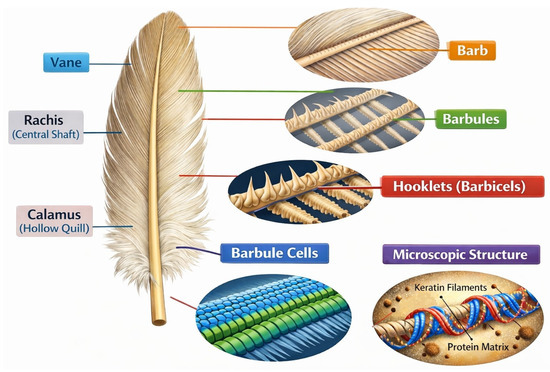
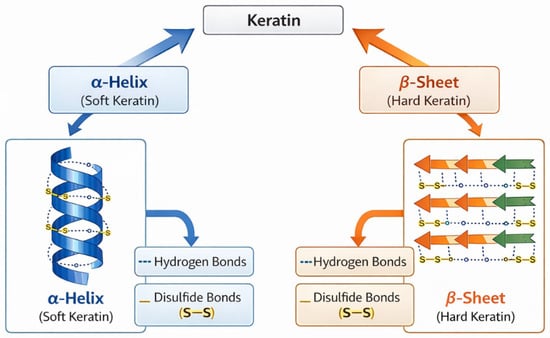
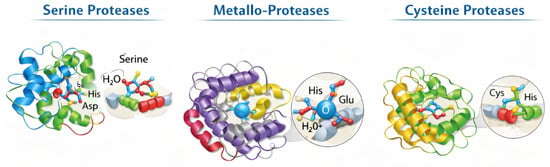
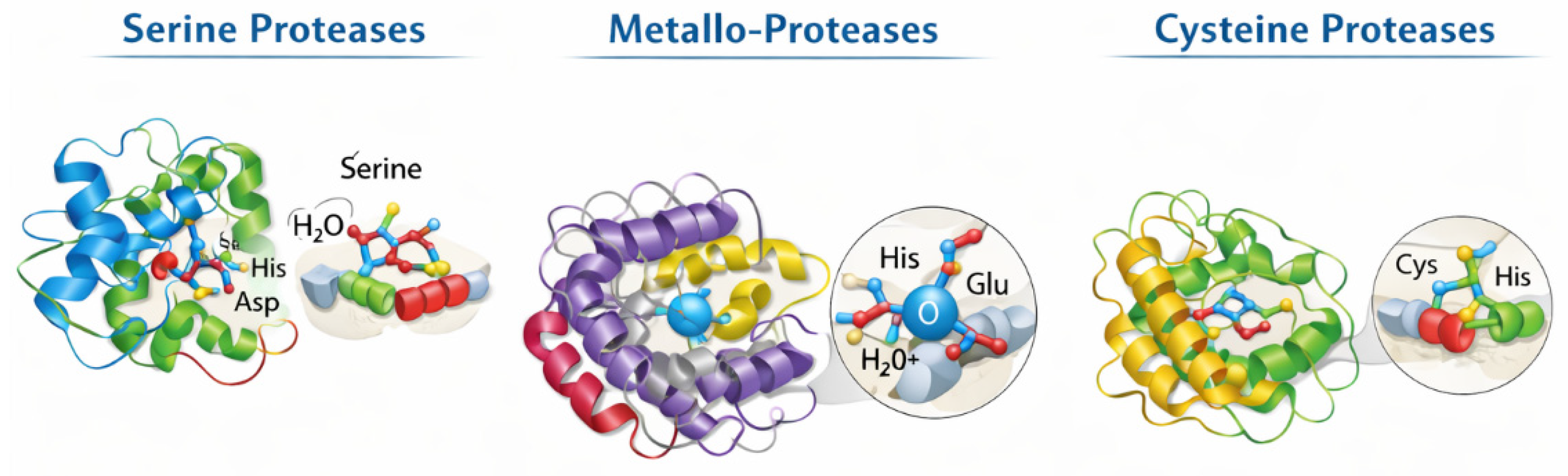
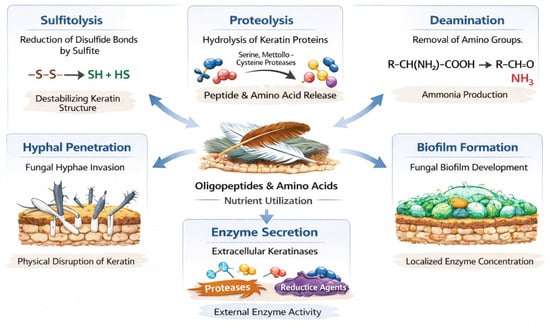
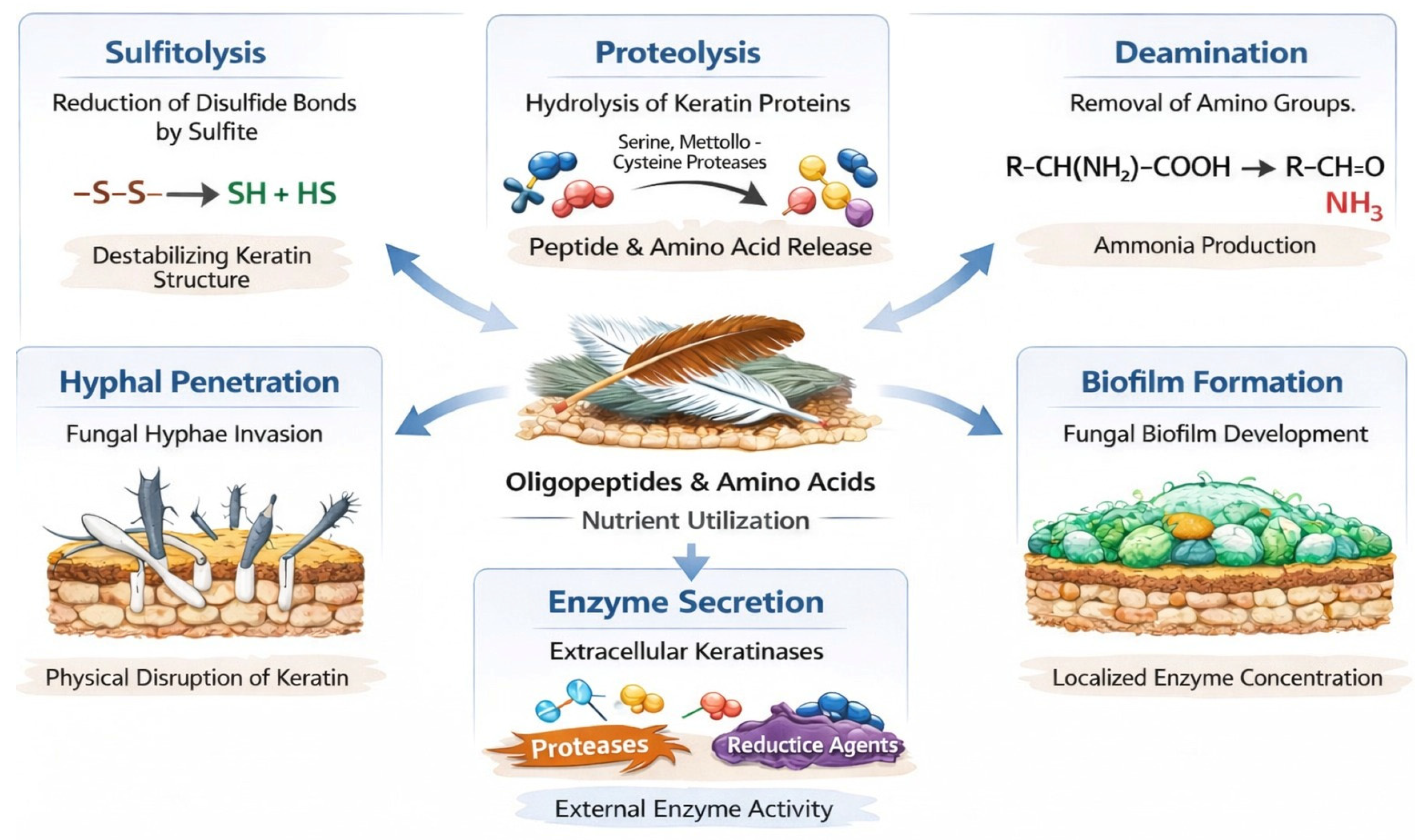
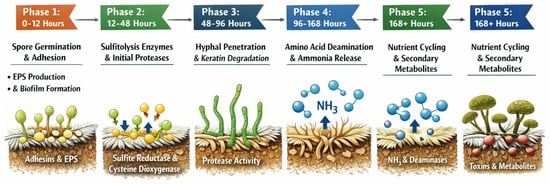
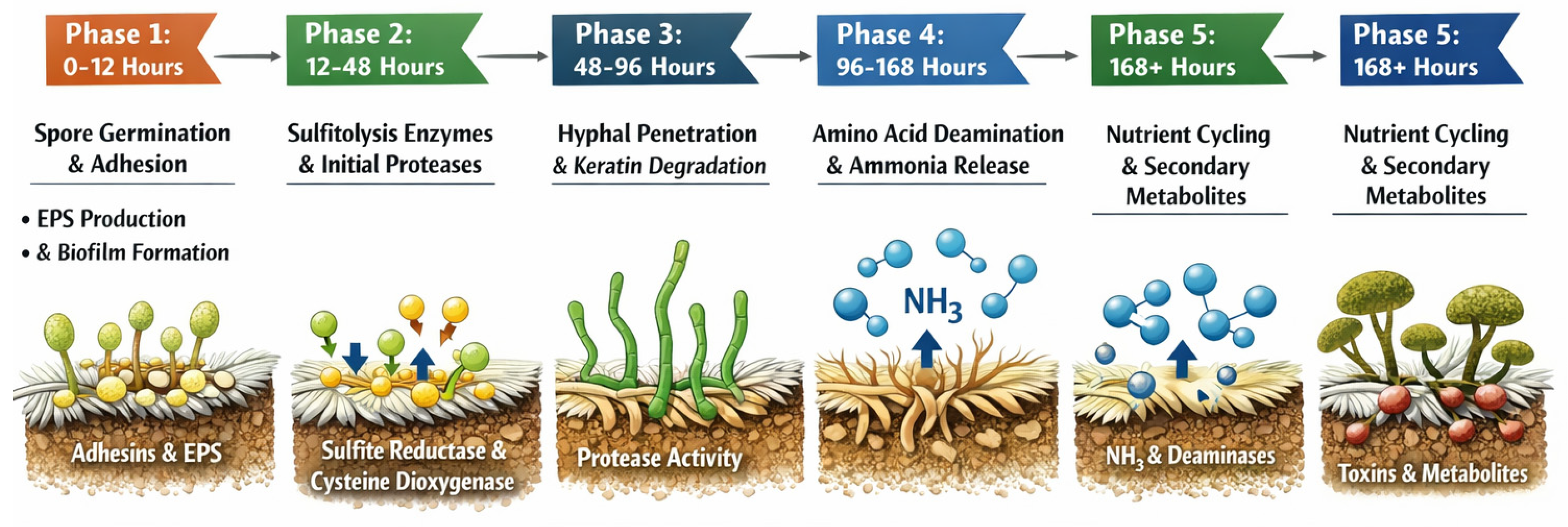
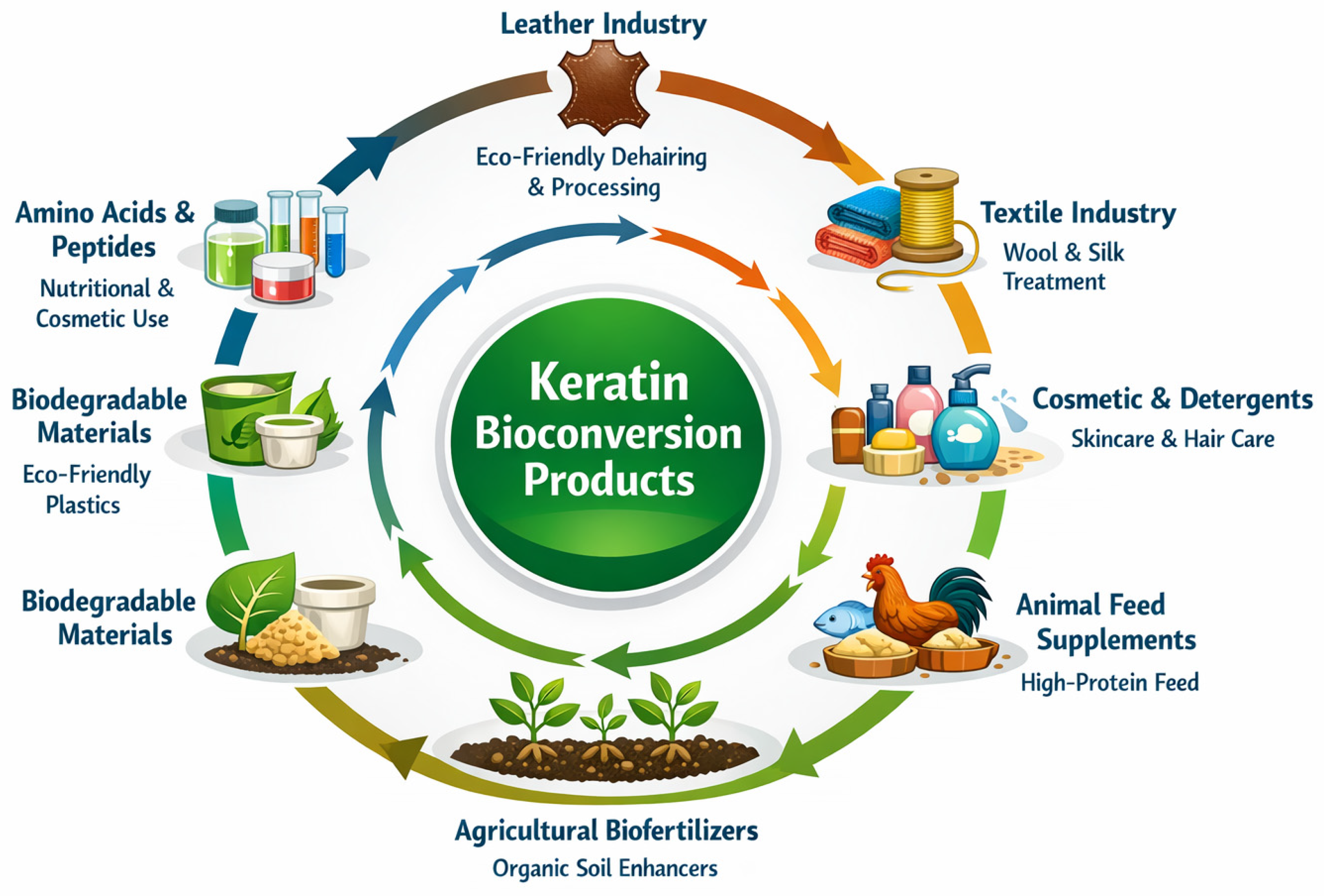

Disclaimer/Publisher’s Note: The statements, opinions and data contained in all publications are solely those of the individual author(s) and contributor(s) and not of MDPI and/or the editor(s). MDPI and/or the editor(s) disclaim responsibility for any injury to people or property resulting from any ideas, methods, instructions or products referred to in the content. |
© 2026 by the authors. Licensee MDPI, Basel, Switzerland. This article is an open access article distributed under the terms and conditions of the Creative Commons Attribution (CC BY) license.