


Abstract
Large language models (LLMs) are increasingly discussed in digital government research, but existing studies remain fragmented across application opportunities, technical performance, and governance risks, with limited synthesis of how they support service provision within digital government service processes. Using the concept of interpretive support, this study examines: (1) what forms of interpretive support LLMs provide; (2) what task- and service-level effects are reported; and (3) what governance conditions shape responsible integration. Drawing on a socio-technical systems perspective, the study conducts a PRISMA-informed systematic review and thematic synthesis of 60 studies from the Web of Science Core Collection and Scopus. The findings show a shift from stand-alone question answering to broader forms of interpretive support, including rule explanation, service navigation, complaint interpretation, issue routing, and back-office knowledge structuring. The strongest evidence concerns efficiency, responsiveness, and accessibility, whereas claims about trust, accountability, and wider public value remain less well supported. The review concludes that public value is conditional rather than automatic, depending on reliability, legal boundaries, responsibility allocation, data security and privacy, and organizational capacity. Future research should examine whether these service-level gains persist in routine service environments and how governance mechanisms affect service quality, equity, and accountability.
1. Introduction
Over the past decade, digital government has shifted from a transformation-oriented agenda toward approaches that place greater emphasis on contextual embeddedness and cross-departmental coordination [1]. In practice, this shift is reflected in the platformization of government and service integration [2], as well as the optimization of online government services around public values such as efficiency, transparency, and accessibility [3]. The rapid development of generative artificial intelligence (GenAI), especially large language models (LLMs), has further directed research and emerging applications in digital government toward conversational, explanatory, and generative service models centered on natural language interaction [4]. This development raises a central puzzle: LLMs are often presented as instrumental tools for automating service processes, yet they also operate as mediators in complex interactions among citizens, administrative rules, service procedures, and public organizations. In these service contexts, LLM-enabled systems are increasingly used to interpret citizens’ requests in natural language, explain policy rules, and generate personalized responses [5]. In some contexts, they also perform functions such as consultation and guidance, inquiry triage, and assistance with administrative procedures [6]. LLMs therefore provide more than new technical support for government service delivery. They also reshape how governments interpret citizens’ needs, translate formal rules into service explanations, and organize responses across different stages of service delivery. Their significance lies not only in automating information provision, but also in mediating the interpretation of rules, procedures, and service requirements within digital government service systems. This distinction matters because gains in efficiency or responsiveness do not automatically translate into broader public value outcomes such as trust, accountability, inclusion, or legitimacy.
Although research on the adoption of artificial intelligence in the public sector has expanded rapidly in recent years [7], existing studies remain fragmented across technological applications, governance issues, and public-sector outcomes. Work on adoption, implementation, and diffusion has rarely been connected to a common analytical framework that explains how LLMs are incorporated into government service delivery [8]. Relevant studies have examined chatbot and system design [9], the deployment landscape and application contexts of government AI [10], and the governance implications of AI in the public sector and related research agendas [11], as well as public perceptions, public value, and governance constraints [12,13]. However, these studies do not yet provide a systematic review of how LLMs function specifically as components of socio-technical digital government service systems. At the same time, many studies on LLMs in digital government still treat them primarily as functional tools for answering questions, generating texts, or improving service efficiency. This tool-centered view is useful but incomplete because LLMs also help explain rules, guide service procedures, interpret complaints, route issues, and organize back-office knowledge. This under-synthesized interpretive role constitutes the scientific gap addressed by this review.
For this reason, LLM-enabled government service delivery should be understood as a socio-technical systems issue. Rather than operating as stand-alone tools, LLMs are embedded in service processes shaped by citizens, public officials, legal rules, knowledge bases, data infrastructures, and organizational workflows. A socio-technical systems perspective is therefore appropriate because the role of LLMs depends not only on model performance but also on how these elements are connected in service routines. LLMs are better assessed at the system level than through the performance of individual applications alone.
This review addresses this gap by examining LLMs as sources of interpretive support in digital government service systems. In this study, interpretive support refers to the use of LLM-based systems to translate policy rules, administrative procedures, citizen requests, and organizational knowledge into service explanations, navigation cues, issue interpretations, and coordination resources. This perspective shifts attention from isolated tool performance to the ways in which LLMs support rule explanation, service navigation, complaint and issue interpretation, and back-office knowledge structuring across service processes. Accordingly, this study conducts a systematic review and thematic synthesis of research on LLM applications in digital government and addresses three questions:
- What forms of interpretive support do LLMs provide in digital government service systems?
- What task- and service-level effects of LLM-based interpretive support are reported in the existing literature?
- What governance conditions shape the responsible integration of LLM-based interpretive support into digital government service systems?
This study makes three contributions. First, it shifts the review of LLMs in digital government from a tool-centered account of question answering and text generation to a service-system-oriented account of interpretive support. Second, it synthesizes four recurring forms of interpretive support in the literature: rule explanation, service navigation, complaint and issue interpretation, and back-office knowledge structuring. Third, it clarifies that the reported benefits of LLM-based applications remain conditional on governance arrangements related to reliability, legal boundaries, responsibility allocation, data security, and organizational capacity. In doing so, the review distinguishes task- and service-level gains from more durable public value outcomes and explains why such outcomes should not be assumed from technological deployment alone.
2. Methodology
2.1. Research Design
This study draws on a systematic literature review, complemented by thematic analysis, to identify, screen, and synthesize research on LLMs and closely related generative AI applications in digital government [14,15,16]. The aim is to map research themes, application contexts, forms of interpretive support, reported service effects, and governance conditions, and to generate a conceptual synthesis across heterogeneous studies rather than to statistically aggregate effect sizes from homogeneous studies. For this reason, a meta-analysis was not conducted. To enhance transparency and reproducibility, the review process was reported in accordance with the PRISMA 2020 statement [17]. To further clarify the procedural trail, the review process also drew on the Systematic Search Flow (SSF) method to structure the literature search, study selection, data extraction, and synthesis [18]. The SSF method was used to organize the review process into four procedural stages: search planning, database searching, screening and data extraction, and reporting and synthesis. The review protocol was not preregistered. Since the review focused on heterogeneous forms of evidence rather than intervention effects, this study did not apply a formal risk-of-bias tool designed primarily for intervention-effect or study-design-specific appraisal. Consistent with the logic of structured review typologies [19], the strength and nature of the evidence were characterized descriptively through the main coding dimensions described below.
2.2. Data Sources and Search Strategy
Given the interdisciplinary nature of the topic, Web of Science Core Collection and Scopus were used as the source databases. Conference proceedings retrieved from either database were considered eligible if they met the inclusion criteria, given their importance as publication outlets in computing and information systems research. In Web of Science Core Collection, searches were conducted in the TS field, whereas in Scopus the TITLE-ABS-KEY field was used. No restriction was placed on publication year, and the search covered all records indexed in the two databases up to 1 April 2026.
The search string consisted of two groups of terms:
- LLM- and GenAI-related terms: “large language model” OR “large language models” OR LLM OR LLMs OR “generative AI” OR “generative artificial intelligence” OR GenAI OR “Gen-AI” OR ChatGPT OR “GPT-4” OR “GPT-3.5” OR “foundation model” OR “foundation models” OR “generative pre-trained transformer”;
- Digital government- and public-sector-related terms: “digital government” OR “e-government” OR “electronic government” OR “digital governance” OR “e-governance” OR “smart government” OR “digital public service” OR “digital public services” OR “electronic public service” OR “electronic public services” OR “public service delivery” OR “government service” OR “government services” OR “government portal” OR “government portals” OR “citizen-government interaction” OR “citizen-government interactions” OR “public administration” OR “public sector”.
The two groups were combined using the Boolean operator AND to generate the initial set of records. All searches were completed on 1 April 2026. No additional database search to identify eligible review records was conducted after this date; the final included study set therefore reflects the database search completed on that date. Records without DOIs were not automatically excluded, as DOI availability was not an eligibility criterion. Where DOI information was unavailable or inconsistently indexed, records were verified using titles, author names, publication venues, database metadata, and full-text information where available.
2.3. Inclusion and Exclusion Criteria
To align the final sample with the research questions, a common set of inclusion and exclusion criteria was applied.
Studies were included when the following criteria were met:
- The focus was on LLMs, GenAI, or conversational systems built around these capabilities, rather than on general digital tools or traditional rule-based systems;
- The research context was digital government, e-government, government service delivery, or another clearly defined public-sector setting;
- The study addressed issues directly related to government service applications, citizen interaction, service performance, public value, or governance constraints;
- The publication was a substantive research output with full text available.
Because full-text availability was an inclusion criterion, authors were not contacted for missing full texts or additional study information.
No language filter was applied during database searching or screening. The final sample included English- and Chinese-language publications. Chinese-language full texts were assessed and coded directly, with the extracted information recorded in English for thematic synthesis.
The exclusion criteria were as follows:
- Studies on purely commercial customer service, general consumer applications, and sectoral settings outside the scope of government service delivery, including education or healthcare studies when they were not situated in a government or public-sector service context;
- Studies that were not substantively concerned with LLMs, or that mentioned them without treating them as the core object of analysis;
- Studies lacking a direct connection to government service applications or key governance issues;
- Purely technical or benchmark-focused studies without a clear public-sector application or governance component;
- Editorial materials, non-research book chapters, and other publication types that did not provide complete research information.
2.4. Study Selection Process
Using the above search strategy, 532 records were initially retrieved, including 218 from Web of Science Core Collection and 314 from Scopus. After duplicate records and clearly non-substantive publication types, such as editorials and non-research book chapters, were removed before screening, 367 records remained for title and abstract screening. Title and abstract screening and full-text eligibility assessment were conducted independently by two researchers. Disagreements mainly concerned whether records focused substantively on LLMs or GenAI, had a direct connection to government service delivery, or demonstrated sufficient public-sector relevance in technically oriented studies; these cases were re-examined using the original records or full texts and resolved through discussion. No third reviewer was therefore required. In the first round of screening, 204 records were excluded, leaving 163 for full-text assessment. After the second round, 103 reports were excluded because they did not meet the inclusion criteria. The main reasons included insufficient substantive focus on LLMs or GenAI, location outside government or public-sector contexts, weak connection to government service delivery, limited relevance to public value or governance conditions, or a purely technical or benchmark-focused orientation without a clear public-sector application or governance component. Because these reasons often overlapped within the same report, they were treated as a combined exclusion category rather than as mutually exclusive subcategories. A final sample of 60 studies was retained for thematic analysis. The detailed screening process is presented in Figure 1.
Figure 1.
PRISMA flow diagram for study selection.
2.5. Coding and Thematic Synthesis
Once the final sample was determined, the included studies were coded systematically. The coding scheme recorded eight types of information: bibliographic information, research type, evidence base, application context, point of application within the service process, reported impact dimensions, governance constraints or institutional conditions, and primary synthesis role. The first five categories were used to profile the sample, and the final three informed the thematic synthesis and comparative analysis. To improve coding dependability, coding was conducted by one member of the research team and reviewed and refined through discussions with the other co-authors during the pilot and category-refinement stages. Pilot coding was first conducted on a subset of the included studies to refine and clarify the category definitions before the full coding procedure was completed. Formal inter-rater reliability statistics or percentage agreement were not calculated because the coding procedure was organized as primary coding followed by co-author review and consensus refinement, rather than as parallel independent coding by multiple coders. Coding questions or differences in interpretation were resolved through discussion by returning to the original texts where necessary. Given the heterogeneity of the included studies in design and evidence base, as well as the interpretive nature of the synthesis, coding dependability was strengthened through pilot coding, category clarification, repeated reference to the original texts, and consensus-based discussion. Theme development followed the basic logic of thematic analysis: initial codes were generated, candidate themes were identified, themes were reviewed and refined, and higher-order interpretive themes were developed from the key findings reported in the included studies [15,16].
3. Results
The 60 included studies were published between 2023 and 2026, underscoring the recent and emerging nature of this body of research. Publication output increased sharply after 2023 and peaked in 2025 (n = 33, 55.0%). Because data collection ended on 1 April 2026, the count for 2026 is necessarily partial. Table 1 profiles the sample by publication year, research type, evidence base, application context, and point of application within the service process.
Table 1.
Characteristics of the included studies (n = 60).
Regarding research type, system development or prototype studies accounted for the largest share of the sample (n = 30, 50.0%). The most common evidence base was prototype- and benchmark-based evidence (n = 27, 45.0%). As shown in Figure 2, the largest cluster of studies combines system development or prototype studies with prototype- and benchmark-based evidence (n = 19), followed by system development or prototype studies drawing on evidence from real-world government settings or pilot implementations (n = 10). By contrast, empirical evaluation studies tend to draw more often on case-based and user-based evidence. Overall, the literature still relies heavily on system building, prototype validation, and evaluations conducted in limited settings. Studies based on real deployment environments have begun to appear, but robust empirical evidence on sustained performance, organizational adaptation, and the consequences of long-term deployment remains limited.
Figure 2.
Distribution of research type by evidence base among the included studies (n = 60).
This distribution of evidence bases matters for interpreting the review findings. Prototype- and benchmark-based studies can show technical feasibility, task performance, or architectural plausibility, but they offer limited evidence of institutional viability, sustained organizational effects, or public value outcomes. Accordingly, many of the reported effects should be read primarily as evidence of technical feasibility at the prototype or validation stage, rather than as evidence that LLM-based systems are already institutionally viable in routine government service environments. Evidence from real-world government settings or pilot projects provides stronger support for implementation-related claims, although it remains relatively limited and often localized. User-based studies are useful for examining acceptance, trust, perceived clarity, and service experience, while case-based evidence helps explain organizational processes and governance conditions. The findings reported below are therefore interpreted in relation to their evidential basis, rather than treated as equivalent forms of evidence. Because the review included both journal articles and conference proceedings, publication type was interpreted alongside research type, evidence base, deployment setting, and evaluation design rather than treated as a stand-alone indicator of study quality.
The included studies also cover diverse application contexts. Government question answering remains the most common specific context (n = 21, 35.0%). Front-stage direct service is the dominant point of application (n = 38, 63.3%), while back-office support also accounts for a substantial share (n = 21, 35.0%). This pattern suggests that current research is moving beyond front-stage information response toward process support, document handling, and wider forms of internal administrative support.
Table 1 and Figure 2 show that the included studies cover multiple application contexts and points of application, while their empirical basis remains concentrated in prototypes, benchmark evaluations, and limited context-specific studies. Against this background, the following analysis offers a cautious synthesis of the shift from information response to interpretive support in digital government service systems. It examines the main forms of interpretive support, the reported task- and service-level effects, and the governance conditions that shape responsible integration into service systems.
3.1. Forms of Interpretive Support in Digital Government Service Systems
Coding the 60 included studies identified four recurring forms of interpretive support in LLM applications within digital government service systems. Of these, 43 studies can be grouped into four categories according to their dominant service functions: government question answering as rule explanation and information response; service guidance as procedural navigation; complaint handling as issue interpretation and routing; and back-office support as administrative knowledge structuring. The remaining studies address cross-cutting themes, including, for example, public service innovation, intelligent government development, chatbot architecture, public acceptance, public value, and governance constraints [20,21,22,23]. Table 2 summarizes these categories, their sub-categories, core functions, and representative studies.
Table 2.
Categories and functions of interpretive support in digital government service systems.
3.1.1. Government Question Answering as Rule Explanation and Information Response
Government question answering and intelligent consultation represent one of the earliest and most concentrated forms of LLM-based interpretive support in digital government service delivery. In digital government, question answering serves as a direct entry point for government–citizen interaction. Citizens’ ability to articulate questions accurately, obtain clear explanations, and understand procedural rules often shapes whether they can proceed smoothly to subsequent stages of public service delivery.
Early studies therefore examined LLMs embedded in government intelligent question-answering systems, public service portals, and mobile intelligent customer service settings [24,25,26]. These applications were mainly designed to strengthen citizen-facing policy consultation, service-related question answering, and service explanation [58]. Across these studies, LLMs are reported to reduce reliance on traditional frequently asked questions (FAQs) and rule-based chatbots built around predefined question–answer pairs, while improving semantic understanding and response capabilities when dealing with non-standardized queries, ambiguous expressions, and multi-turn follow-up questions [24,28,58]. Some studies further combine retrieval-augmented generation (RAG), hybrid retrieval, and knowledge-graph coupling, moving government question answering beyond static information retrieval toward more conversational and contextualized service responses [27,29,59].
As this line of work developed, subsequent studies showed that the key issue in government question answering is not simply whether a model can produce an answer, but whether its outputs can be constrained by formal policy texts, administrative rules, and local knowledge bases. Domain knowledge injection is reported to improve the professionalism and consistency of responses [4], while local-language adaptation extends linguistic coverage in multilingual or local service contexts [30]. RAG connected to local knowledge bases further strengthens the grounding and intelligibility of responses [28], and continued domain pretraining or lightweight fine-tuning can improve domain-specific question answering in public service settings [60]. These advantages, however, are shown mainly through prototype testing, method comparison, and experiments in limited settings. Less is known about how such systems perform in real interactions, especially when users rely on colloquial expressions, ask repeated follow-up questions, or place sustained demands on the system. Their practical value also depends on whether citizens find the explanations clear, understandable, and appropriate for public service delivery [31].
This growing concern with answer quality and knowledge constraint has widened the functional boundaries of government question answering. It no longer refers only to systems that directly provide answers to citizens. Some studies use LLMs together with retrieval mechanisms to generate draft responses for staff revision [33], while others apply them to response quality screening and evaluation [32]. Studies on modular design and knowledge-organized question answering architectures [5,61], automated evaluation, answer faithfulness, and trustworthy architectures [34,35,62], as well as multi-document retrieval reasoning and cache optimization [63,64], all point in this direction. Government question answering is increasingly being treated not simply as an application function, but as a governed subsystem of public service delivery. Its longer-term institutional consequences, however, remain underexamined.
3.1.2. Service Guidance as Procedural Navigation
Service guidance and administrative navigation extend LLM-based interpretive support from answering questions to helping citizens understand procedures, eligibility conditions, document requirements, and next steps. Whereas government question answering is primarily concerned with whether a question can be answered clearly, this form of support is more directly concerned with whether citizens can move a case or service request forward. Recent studies therefore extend LLM use from information response to process explanation, form assistance, eligibility clarification, and service recommendation.
This development is most visible in studies that use LLMs to translate abstract, fragmented, and institutionally complex administrative requirements into service pathways that users can more easily understand and follow. The reviewed studies illustrate several approaches. One study combines generative AI with model-driven engineering to provide process explanation, contextual support, navigational guidance, and form assistance [37]. Another study designs conversational agents around public-service semantic standards to improve citizens’ ability to discover, understand, and access services [36]. A further study integrates knowledge graphs, rule validation, and LLMs to identify eligibility conditions for different citizen profiles and generate dynamic service recommendations [38]. Service guidance is therefore moving beyond passive responses to procedural questions toward more proactive support based on users’ circumstances.
The value of this process support is especially relevant for users less familiar with administrative systems. Studies suggest that such systems may help immigrants, refugees, and other users with limited administrative literacy understand government services and reduce barriers linked to language proficiency, institutional unfamiliarity, and limited experience with public administration [39,40]. Research on the service entry stage also shows that recognizing localized and non-standardized requests can shape subsequent routing and guidance [42], while clear, intelligible, and legally compliant service descriptions affect whether citizens can move smoothly through later stages of the process [41]. The value of service guidance therefore lies not in restating procedures, but in reducing the friction involved in understanding requirements and completing service tasks.
These studies shift attention from single-question answering to service-process completion, although the evidence remains concentrated in prototypes and localized evaluations.
3.1.3. Complaint Handling as Issue Interpretation and Routing
Complaint handling, hotline triage, and complaint classification extend LLM-based interpretive support to the interpretation and routing of public problems. In digital government, complaint governance depends not only on response speed, but also on whether problems are understood accurately and routed to appropriate responsible actors.
This role appears first at intake and frontline handling. A grievance chatbot, for example, provides more than a channel for complaint submission. It can support progress inquiries and status updates, changing complaint handling from a one-off submission followed by passive waiting into a more continuous service interaction [43]. The ACQAR system blueprint indicates another use: helping frontline staff organize responses through sentiment recognition, service-level agreement (SLA) prediction, and question-answer recommendation [44]. A case study by Lee et al. [45] on ACQAR implementation in a Singapore government agency similarly suggests that such systems function less as replacements for frontline personnel than as tools for understanding problems more quickly, consolidating relevant information, and formulating responses.
LLMs are also being used in later stages of complaint processing. One study applies LLMs to the automatic classification of public transport complaints, showing that issue types can be identified relatively efficiently from large volumes of unstructured text [47]. Another study combines knowledge graphs with LLMs for hotline dispatching, suggesting that these models are beginning to influence not only how a problem is classified, but also who is assigned to handle it [46]. Related work extends LLM use to the quality control of government replies [49]. Other studies use LLMs to identify public sentiment, extract complaint themes and issue patterns, and support public authorities’ awareness of the distribution and dynamics of public demands [48,50]. Its contribution lies less in accelerating a single processing step than in strengthening continuity across problem detection, classification, dispatch, and analysis.
The evidence, however, still comes mainly from prototype systems, localized cases, and specific administrative contexts. These studies point to a possible direction of institutional adjustment rather than a stable governance reality already in place. Existing research has not yet examined sufficiently how frontline discretion changes when models intervene, how responsibility is redistributed, or how classification bias may accumulate over time.
3.1.4. Back-Office Support as Administrative Knowledge Structuring
Beyond front-stage interaction, several studies introduce LLMs into internal document processing and back-office administrative support. From the perspective of interpretive support, these applications are important because they transform unstructured administrative texts, rules, and records into knowledge that can be retrieved, organized, and used in service processes.
One important development is the extraction of structured information from heterogeneous and text-intensive administrative materials. One study uses an instruction-tuned model to extract semantic triples from tender documents in Italian public administration, supporting the transformation of public documents from unstructured text into more organized knowledge [51]. Another study applies ontology-aware zero-shot prompting to information extraction from administrative documents on the Greek open government platform, emphasizing the feasibility of generating structured metadata and event information from document repositories [52]. Together, these studies show how LLMs support both document interpretation and administrative knowledge structuring.
LLM use in back-office settings also extends beyond document understanding. One framework proposes the semi-structured generation of administrative documents based on multi-agent systems and semantic templates, showing that LLMs are beginning to participate in administrative text production [53]. Another study examines how unstructured government information can be transformed into executable rules and then used for process generation, intelligent approval, and automated verification [54]. Related studies on administrative process modeling show that LLMs can convert legal texts and procedural documents into structured process models, thereby supporting the organization, standardization, and visualization of procedural knowledge [55,56]. Research on question answering systems for public contract management likewise suggests that LLMs can function as internal knowledge-support tools, helping staff retrieve structured and unstructured information for contract oversight, clause interpretation, and routine administrative decision-making [57]. The role of LLMs in back-office administration therefore extends from document understanding to text generation, knowledge organization, and process support.
This line of work extends LLM use from front-stage interaction to internal knowledge processing, although the evidence remains concentrated in context-specific prototypes and validation studies.
3.1.5. Summary: From Information Response to Interpretive Support
The reviewed studies show a shift from point-level information response to broader interpretive support across digital government service processes. This shift appears in rule explanation, procedural navigation, issue interpretation, and back-office knowledge structuring. The evidence, however, still points to an emerging research direction rather than mature operational deployment.
3.2. Reported Task- and Service-Level Effects
As LLM applications expand across government service delivery, research is shifting from whether these systems can be applied to what effects they may produce. The evidence on impact should be interpreted cautiously, because many reported effects are derived from prototype systems, benchmark comparisons, scenario-based tests, or localized pilots rather than from long-term institutional deployment. In this section, “impact” therefore refers to reported or potential effects in the reviewed literature, not fully established institutional outcomes. Figure 3 shows that service-performance dimensions, such as responsiveness, efficiency, and accessibility, receive the greatest attention, whereas dimensions more closely related to public value, such as service experience, satisfaction, trust, fairness, and inclusion, receive less sustained discussion. This pattern indicates that current research is better able to identify task- and process-level gains than to demonstrate broader public value outcomes.
Figure 3.
Reported task-level, service-level, and public-value effects of LLMs in digital government service systems: (a) ranked frequencies; (b) cumulative contribution. Note: A single study may report more than one impact dimension. Counts therefore represent the number of included studies mentioning each dimension rather than mutually exclusive categories. The cumulative contribution in panel (b) is calculated based on total mentions across impact dimensions.
3.2.1. Efficiency Gains
Efficiency gains are among the most frequently reported effects of LLMs in government service delivery. In the current literature, however, efficiency is observed mainly at the task and process levels rather than as a demonstrated improvement in overall administrative performance in long-term institutional use.
In front-stage service settings, the reviewed studies generally suggest that LLMs can reduce the time and effort citizens spend between raising a question and obtaining usable information. Research on the use of LLMs in intelligent question answering for digital government shows that these models can improve response speed in policy consultation and public service question answering while reducing the burden of manual inquiry handling [24]. A study of the Brazilian federal government portal Gov.br similarly suggests that embedding generative agents into government portals may reduce the initial friction users face in service discovery, information comprehension, and entry into service processes, although this claim is still based mainly on prototype validation and method testing [25]. Likewise, a public knowledge graph question answering system built on lightweight open-source models and retrieval-augmented generation is reported to reduce the cumulative effort involved in searching for, reading, and interpreting public information [61]. In grievance chatbot settings, LLM-enabled mechanisms for complaint intake and status tracking may also reduce waiting time and information costs during complaint submission, progress inquiry, and information confirmation [43]. These studies suggest that in front-stage settings the efficiency value of LLMs lies primarily in reducing the time and effort citizens spend searching, navigating, confirming, and waiting.
In back-office settings, existing research presents potential efficiency gains more often in terms of task performance and process support. Studies on government answer quality detection report that combining LLMs with machine learning can improve the identification of high- and low-quality replies while reducing the need for manual case-by-case inspection [32]. Research on quality detection frameworks for government replies further finds that complementarities between LLMs and traditional machine learning not only outperform several baseline methods in detection performance, but also improve modeling efficiency, thereby lowering training and deployment costs [49]. Beyond the quality control of government replies, research combining knowledge graphs and LLMs for hotline dispatch suggests that improved issue recognition and semantic matching can reduce the manual costs of complaint triage and work-order assignment [46]. Studies of RAG chatbots in Italian public administration likewise indicate that LLMs can improve the efficiency of administrative information retrieval and internal knowledge support in back-office settings [65].
Efficiency gains are also discussed at the level of system architecture and cross-stage coordination rather than only in isolated tasks. Research on modular e-government LLM architectures, Hybrid Multi-Agent GraphRAG assistants, and intelligent monitoring in e-government suggests that when model capabilities, knowledge retrieval, and service components are integrated in a more modular way, public service systems may achieve greater efficiency in deployment coordination, knowledge retrieval, service reuse, monitoring, and analysis [5,35,66]. Based on the available evidence, the efficiency gains associated with LLMs can be summarized in three respects: shorter response times for citizens seeking usable information, less repetitive work for staff in quality inspection, triage, retrieval, and dispatch, and stronger process-support capacity through modular architectures, retrieval augmentation, and multi-agent coordination. Even so, current evidence mainly demonstrates task-level efficiency gains or localized process improvements rather than broader administrative performance validated through long-term use.
3.2.2. Responsiveness and Service Experience
Responsiveness is one of the most frequently examined outcomes in existing studies. By contrast, service experience, although increasingly discussed alongside responsiveness, has received much less attention. Unlike efficiency gains, which are usually reflected in lower time and processing costs, responsiveness and service experience relate to how LLMs reshape the quality of interaction between governments and citizens. The value of LLMs in this area lies not only in faster answers, but also in more natural, context-sensitive, and explainable responses that improve public service interaction.
This change can be seen in the better alignment between governmental responses and citizens’ needs. One study on policy understanding suggests that GenAI can translate complex policy content into explanations that are easier for citizens to understand [29]. In e-government question answering, purpose-trained LLMs appear to generate responses that are more closely tailored to the specific context of a question, thereby improving response relevance [58]. Retrieval-augmented question answering points in a similar direction: when models draw on richer background information and institutional knowledge, explanations in government services are more likely to match users’ actual questions and circumstances [27]. The issue is therefore not simply whether a system can produce an answer, but whether LLMs can help governments translate rules, policies, and procedures into responses that citizens can understand and act on.
This improvement is not limited to a single exchange. Studies of public process guidance systems suggest that LLMs can provide ongoing explanation, navigation, and form assistance throughout a service process, making government response part of task completion rather than a single question-answer exchange [37]. In staff-support settings, some system designs integrate sentiment recognition, service-level agreement prediction, and question-answer recommendation to help frontline personnel produce responses that are more sensitive to citizens’ immediate circumstances, emotional states, and service expectations [44]. Service experience also depends on whether explanations are clear and easy to follow. A comparative study of explanation effects shows that even when technical performance is strong, users may still differ in whether they perceive responses as faithful, comprehensible, and acceptable [31]. A study of service-description texts in Gov.br further suggests that balancing legal accuracy, linguistic clarity, and public comprehensibility can improve users’ subjective experience of the service process [41].
Across these studies, the main service-level gain lies in contextualized explanation, process-oriented guidance, and more intelligible service descriptions. The evidence, however, still concerns localized interactions rather than long-term satisfaction or institutional outcomes.
3.2.3. Accessibility and Inclusion
Beyond responsiveness and efficiency, accessibility is another frequently discussed impact dimension in the reviewed studies. Inclusion has also entered the debate, but empirical support for inclusion-related claims remains weaker. Government service delivery differs from commercial service settings because users vary widely in language proficiency, educational background, digital skills, familiarity with administrative procedures, and access to social resources. Service performance therefore depends not only on response quality, but also on whether citizens can enter a system, understand the information provided, identify the relevant service, and complete the required processes. In this context, LLMs may lower barriers to service access through language adaptation, process explanation, and service discovery.
One important advantage of LLMs is their ability to respond to diverse and non-standardized forms of user expression. A study of local-language public service chatbots suggests that when systems communicate in ways that better match users’ linguistic environments, barriers to obtaining service information and completing service inquiries may be reduced [30]. Research on request enhancement and classification in Moroccan Arabic similarly shows that improving a system’s ability to understand how users express themselves is a precondition for broadening service accessibility [42]. Accessibility, however, depends not only on whether citizens can ask questions, but also on whether they can enter the service process in the first place. Research on conversational agents for public services suggests that when such agents are aligned with semantic standards for public service, they are more likely to support citizens in discovering, understanding, and accessing services [36]. Studies of service recommendation extend this logic by moving LLMs beyond passive response toward the proactive identification of services for which users may be eligible given their individual circumstances [38]. In this sense, LLMs reduce not only the costs of obtaining information, but also some of the institutional barriers involved in entering service processes.
These reductions in barriers are especially important for users who are less familiar with administrative institutions and for socially disadvantaged groups. Research on immigrants, refugees, and minority populations shows that differences in clarity, tone, depth of information, and the use of official sources can directly affect their ability to access and use government services [40]. Research on generative AI conversational agents further suggests that browsing, translation, and explanation functions can help alleviate the barriers to institutional access associated with limited administrative literacy [39]. The inclusive value of LLMs lies not simply in improving convenience, but in providing additional support for users who face greater barriers to institutional access. This value, however, is not automatic. It depends on system designs that respond to diverse user needs, as well as on local-language adaptation, process guidance, and wider conditions of digital inclusion.
3.2.4. Trust and Acceptance
Trust and acceptance receive less attention than responsiveness, efficiency, and accessibility, even though they are more institutionally sensitive. The available evidence suggests that citizens may be willing to try LLM-enabled services, but initial willingness to use should not be equated with stable trust. In government service settings, acceptance depends not only on convenience, but also on accuracy, clarity, source reliability, and perceived risk.
Evidence on initial uptake points to a conditional form of openness toward ChatGPT-like models in government services. One study of public acceptance shows that users are not driven simply by technological novelty, but by whether the system meets practical needs in the service process. Perceived risk and trust also significantly shape this initial uptake [67]. A study of digital human agents in government services similarly finds that willingness to use is closely related to information quality, perceived intelligence, expectation confirmation, and satisfaction [68]. Acceptance in government settings therefore rests less on curiosity about the technology itself than on judgments about whether the service is usable and reliable.
Initial openness, however, does not necessarily develop into stable trust. A study of sustainable AI chatbot adoption emphasizes that trust is central to continued use and must be built gradually through reliability, consistency, and repeated interaction, rather than arising automatically from efficiency or convenience [69]. Trust formation is also shaped by affective and experiential factors. Research on AI-driven government chatbots suggests that users’ prior expectations influence their emotional perceptions of the interaction, and that responses to the system depend not only on system outputs but also on the experience of interaction itself [70]. Trust and acceptance are further embedded in broader perceptions of public value. Experimental evidence indicates that the effects of GenAI on citizens’ perceptions of public value vary across service contexts, response styles, and evaluative dimensions [71]. Citizens’ acceptance of LLMs therefore depends not only on task completion, but also on whether these systems align with basic expectations of public service, including fairness, reliability, and accountability.
The current evidence suggests that willingness to use often precedes stable trust. Citizens may be prepared to try LLM-enabled services without yet seeing them as institutional tools on which they can rely over time. In government service delivery, ease of use does not necessarily mean trustworthiness, and acceptability does not necessarily mean dependability. Trust and acceptance should therefore be treated not as secondary outcomes, but as conditions shaping whether LLMs can be stably embedded in public service systems.
3.2.5. Summary: Task-Level Gains and Conditional Public Value
The reported effects of LLMs on government service delivery remain conditional. The literature points to potential gains in efficiency, responsiveness, and accessibility, but these gains do not automatically amount to stable public value. They are still accompanied by unresolved questions of trust, inclusion, accountability, legality, and dependability. Improved task performance therefore should not be treated as evidence of improved public value without stronger support from real service environments, organizational processes, and repeated citizen–government interactions.
3.3. Governance Conditions for Responsible Integration into Service Systems
The performance improvements and public value potential identified above do not automatically translate into durable outcomes. In government service delivery, the use of LLMs must be reliable, accountable, and subject to effective oversight. Governance is therefore not external to implementation or public value realization; it shapes whether LLM-based support can be responsibly integrated into service systems. Table 3 summarizes the main constraints and mitigation mechanisms identified in the literature.
Table 3.
Major governance constraints on the use of LLMs in digital government service systems and typical mitigation mechanisms.
3.3.1. Reliability and Security as Threshold Conditions
In government service delivery, reliability and security form the basic threshold for the institutionalized use of LLMs. Errors in this setting differ from incorrect recommendations or incomplete information in ordinary consumer services. Government services involve high-consequence information, including eligibility determinations, document requirements, processing deadlines, policy applicability, procedural pathways, and citizens’ personal data. When model outputs depart from formal rules, or when data access and knowledge integration exceed appropriate boundaries, users may make decisions that lead to failed applications, loss of entitlements, policy misunderstanding, or data breaches. The problem is therefore not merely technical error. It is a governance issue that concerns the reliability of public service delivery and institutional responsibility allocation.
Given the risk of erroneous answers, existing studies generally do not treat LLMs as systems suited to unconstrained generation at critical stages of service delivery. Instead, they tend to place them in controlled supporting roles. Some studies restrict LLMs to functions such as intent recognition, answer synthesis, and candidate-response generation [24,44], while others use knowledge constraints to reduce unsupported outputs and factual errors. More specifically, retrieval-augmented generation is used to anchor responses in policy texts or official documents [29,59]. Modular and reproducible architectures are used to improve transparency and controllability [5]. GraphRAG and related faithfulness evaluation further emphasize source attribution, factual grounding, and traceability [35,62]. The closer LLMs come to formal service outputs in government settings, the less they can rely on unconstrained models and the more they must be anchored in traceable knowledge sources.
Security also cannot be treated as an add-on to be addressed only after deployment. Existing studies emphasize that government data are inherently sensitive and that external API calls, cross-system integration, and platform-based deployment can amplify privacy and leakage risks [66,72]. They also increasingly treat data privacy, trusted access, and compliant deployment as design preconditions [65,73]. Even so, these claims are still based mainly on policy analysis, system design, or perceived risk identification rather than on systematic security-audit evidence from long-term operation. More importantly, the relevant risks arise not only from the model itself, but also from the quality of knowledge sources, regulatory updates, and information heterogeneity across organizational environments. Retrieval strategies, source granularity, and attribution mechanisms shape factual grounding and output traceability [62,65]. Public process-support systems must also adapt to regulatory change and ongoing system maintenance [37]. Integrating multi-source, heterogeneous, and even multimodal government information is itself a deployment challenge [5,66]. In government service delivery, the key issue is not simply whether LLMs can generate answers, but whether their outputs remain dependable, controllable, and secure in terms of data protection in high-consequence environments.
3.3.2. Legal Boundaries and Responsibility Allocation
If reliability and security concern whether LLMs can be used in government service delivery, legal boundaries and responsibility allocation concern the institutional role they are allowed to assume. In government settings, system outputs may be understood by users not merely as information, but as statements carrying a degree of official authority. The issue therefore moves from whether a system can answer to who has the authority to interpret, who is speaking to the public, and who bears responsibility when an explanation proves wrong.
The reviewed studies point to tensions between LLM use and formal interpretive authority in policy explanation, process guidance, and service interpretation. Studies on public-sector conversational agents and process-support systems emphasize that such systems cannot be treated tacitly as unrestricted “official interpreters,” because users may mistake their suggestions for formal judgments [36,37]. Studies on government service-description texts and trustworthy question answering also show that, once models participate in external communication, the basis of their outputs, the sources on which they rely, and the limits of their authority need to be made sufficiently transparent [41,65]. Otherwise, answers that appear reasonable may be misunderstood as official positions. The core legal issue, therefore, is not machine output itself, but whether the boundary between machine explanation and formal interpretation can be clearly drawn.
For this reason, existing studies commonly place LLMs within arrangements of human review and human–machine collaboration. LLMs are rarely designed as fully autonomous government service systems. More often, they operate under staff supervision and human screening, serving as tools for candidate generation, assisted understanding, or preliminary judgment [33,44]. Final confirmation, formal output, and responsibility remain with human actors in order to preserve the boundary of official interpretation and the traceability of accountability [36,41]. In government service delivery, human–machine collaboration is therefore not merely a temporary response to technological immaturity. It functions as a governance mechanism for maintaining legal boundaries and traceable responsibility. Institutional acceptability requires at least three conditions: explicit boundaries for system outputs, traceable sources for those outputs, and clearly assignable responsibility.
3.3.3. Organizational Capacity and Institutional Adaptation
Even when reliability, security, legal boundaries, and responsibility allocation are partly addressed through technical and procedural controls, the responsible use of LLMs in government service delivery still depends on organizational capacity. The deeper obstacles often lie not only in model accuracy or reasoning capability, but also in whether government organizations can incorporate LLMs into actual service processes and govern them over time. Applying LLMs in digital government is therefore not simply a matter of adding a new technical module. It also requires mechanisms for knowledge updating, service-process design, cross-departmental coordination, staff capability development, and platform governance.
The reviewed studies emphasize several capacity requirements. Practical deployment depends on basic technical resources, human expertise, and training-related capacities [72,74]. More fundamentally, it also requires standardized knowledge systems and sustainable data-governance arrangements. Studies of public-service conversational agents and process-support systems suggest that, without standardized service semantics and clear pathways for integration into service systems, models may be usable in the short term but are unlikely to become sustainable public-service tools [36]. Related research further indicates that data standards, machine-readable service rules, semantic interoperability, and the management of legal complexity, privacy, and data fragmentation are important conditions for moving LLM-enabled public service recommendation from prototype use cases toward wider adoption [38].
These requirements become more demanding when LLM applications move into platform-based, cross-departmental, and proactive service settings. Related studies show that proactive and platform-based public services are not simply extensions of model capability; they depend heavily on cross-departmental data sharing and coordination [75]. Cross-national case research likewise identifies interoperability, unified governance frameworks, and data standardization as key conditions for long-term deployment [76]. Organizational capacity is therefore not a peripheral implementation issue, but a condition for moving LLMs from prototypes to routine service use.
Digital inclusion, transparency, and audit capacity also depend on ongoing back-office governance and sustained organizational investment. Existing studies point to the need for formal mechanisms of fairness, transparency, and accountability [73], as well as organizational support for inclusive and sustainable AI governance [77]. In this sense, organizational capacity shapes whether LLM-based interpretive support can be incorporated into routine public service operations in a reliable and accountable way.
These findings suggest a conditional pathway through which LLM applications move from point-level information response toward broader forms of interpretive support in digital government service systems. As shown in Figure 4, this pathway links four forms of interpretive support, reported task- and service-level effects, and the governance conditions required for responsible integration into service systems. The figure should therefore be read as a synthesis of current research directions rather than as evidence of mature deployment.
Figure 4.
From information response to interpretive support in digital government service systems: A conceptual synthesis.
Figure 4 summarizes the central argument of this review. Rather than implying a linear progression from LLM deployment to public value, the model conceptualizes a conditional pathway: LLM-enabled interpretive functions may support task- and service-level gains, but the translation of these gains into public value outcomes and institutional embedding depends on governance conditions. In this sense, efficiency, responsiveness, accessibility, and service experience should be understood as intermediate service effects rather than final public value outcomes. The figure also highlights the distinction between functional adoption and institutional embedding: LLMs may support rule explanation, service navigation, issue interpretation, and knowledge structuring, but their institutional embedding in digital government service systems requires outputs that are traceable and legally bounded, subject to accountable review, and integrated into administrative routines. By specifying the interpretive functions, intermediate service effects, and governance contingencies involved, the model offers a framework for future empirical testing and for managerial assessment of LLM readiness in digital government service systems.
4. Discussion
4.1. From Information Response to Socio-Technical Service-Process Support
The review suggests that research on LLMs in digital government service systems is moving beyond isolated information-response applications toward broader service-process support. The significance of this shift lies not simply in the growing number of application contexts, but in the way LLMs are being designed and evaluated across multiple stages of digital government service processes, including service entry, procedural guidance, issue routing, and back-office knowledge support. This pattern indicates a broader socio-technical understanding of LLM use: these systems are not only technical interfaces for generating answers, but also components embedded in service processes, organizational routines, data infrastructures, and governance arrangements.
This interpretation is consistent with the socio-technical systems tradition, which emphasizes that technical systems and social arrangements jointly shape work organization and institutional performance [78]. In digital government, this means that the effects of LLMs cannot be inferred from model capability alone. They depend on how models are connected to official knowledge bases, legal rules, administrative workflows, staff oversight, and citizen interaction. This also aligns with research on the virtual state and ICT-enabled organizational change [79,80]. Such work shows that information technologies are reshaped by institutional arrangements and administrative design rather than simply inserted into public organizations.
However, this shift should not be overstated. The literature documents a widening research scope and more ambitious application design, but it also reveals tensions between reported service gains and the strength of available evidence. Efficiency, responsiveness, and accessibility gains are frequently supported by prototypes, benchmark evaluations, or localized pilots rather than sustained deployment in routine service environments. Claims about improved access also remain under-specified, because relatively few studies examine whether LLM-mediated guidance is equally accurate and usable across users with different levels of digital skill, administrative literacy, language proficiency, or familiarity with public institutions. Finally, although LLMs may make rules and procedures more legible, the legal and organizational status of LLM-mediated explanations remains underdeveloped. These tensions support a cautious conclusion: LLMs are increasingly studied as components of service-process support, but their long-term institutional consequences and public-value implications remain insufficiently demonstrated.
4.2. Reframing LLMs as Interpretive Support in Digital Government Service Systems
The patterns identified in the results suggest that LLMs in digital government service systems should not be viewed simply as more powerful tools for generating information. A more precise interpretation is that they provide interpretive support by mediating between formal rules, service processes, citizen requests, and administrative knowledge. Interpretive support differs from general information support because it does not merely retrieve or present information; rather, it translates policy rules, procedural requirements, citizen circumstances, and organizational knowledge into service-relevant meanings, such as explanations, classifications, navigation cues, and routing suggestions. Building on this service-system perspective, the contribution of this review is not to identify another category of digital tools but to specify how LLMs operate as interpretive components within digital government service systems.
This concept is related to, but distinct from, sensemaking, boundary spanning, and knowledge brokering. Sensemaking focuses on how actors construct meaning under ambiguity [81], while boundary spanning emphasizes the connection of actors, organizations, or knowledge domains across institutional boundaries [82]. Knowledge brokering is concerned with translating and moving knowledge between knowledge producers and users [83]. By contrast, interpretive support is used here to capture the service-process functions through which LLMs convert rules, requests, procedures, and organizational knowledge into service explanations, navigation cues, issue classifications, routing suggestions, and structured administrative knowledge. LLMs may support sensemaking, boundary spanning, or knowledge brokering, but the concept of interpretive support focuses specifically on how these interpretive functions are operationalized within digital government service processes.
The reviewed literature therefore positions LLMs less as substitutes for formal decision-making than as systems that support explanation, navigation, classification, and knowledge organization across digital government service processes. Their emerging significance lies in rule explanation, service navigation, issue interpretation, and back-office knowledge structuring. Current evidence, however, still indicates an emerging interpretive role rather than mature integration into routine public service systems.
4.3. Why Public Value Is a Conditional System Outcome
The review further shows that the reported positive effects of LLMs in digital government remain conditional. The analyses in Section 3.2 and Section 3.3 show stronger evidence for task- and process-level gains than for stable outcomes in trust, legitimacy, or public value. Whether these gains develop into longer-term public outcomes depends on reliability, data security, legal boundaries, responsibility allocation, and organizational capacity. Governance is therefore not external to LLM use. It shapes whether reported service improvements can become institutionally viable.
These conditions should be understood as a configuration rather than as discrete constraints. Reliability is foundational: if outputs are inaccurate or unstable, service guidance cannot sustain trust, legal defensibility, or administrative usability. Legal boundaries and responsibility allocation then define whether LLM-mediated explanations can be incorporated into formal service processes without obscuring administrative authority. Data security shapes whether these systems can use citizen information, administrative records, and knowledge bases without creating new risks of exposure, misuse, or unauthorized inference. Organizational capacity determines whether these safeguards can be maintained through updated knowledge bases, staff review, fallback procedures, and error correction. The most consequential issue is therefore not any single condition in isolation, but the alignment between technical reliability, data protection, legal accountability, and administrative capacity.
This argument is consistent with public value theory when applied to LLM-enabled digital government. Public value theory does not treat administrative performance as valuable only because services become faster or cheaper. Rather, public value depends on whether public action creates substantively valuable outcomes, is legitimate and publicly acceptable, and can be supported by administrative capacity [84]. In e-government research, public value has similarly been linked to service quality, administrative effectiveness, openness, trust, and broader transformative capacity [3,85]. The findings of this review therefore suggest that LLM-enabled efficiency, responsiveness, and accessibility gains are only potential contributors to public value. They become public value outcomes only when embedded in reliable, legally bounded, inclusive, and accountable service systems.
This interpretation also aligns with wider research on artificial intelligence in the public sector. Chen et al. [13] show that the public value effects of AI are mediated by governance arrangements, responsibility structures, and risk-control mechanisms, rather than emerging automatically once the technology is deployed. Citizens also appear more willing to accept AI in advisory or supportive roles than in dominant decision-making roles, which suggests that legitimacy and acceptance are themselves conditional [12]. Research on AI adoption and diffusion further shows that organizational capacity, absorptive capacity, and environmental constraints shape whether a technology can move from localized prototypes to sustained implementation and stable value creation [8]. These studies reinforce a common point: public value should be treated not as a natural product of LLM deployment, but as an outcome shaped by governance arrangements and organizational conditions.
This caution also reflects the current evidence base. Much of the literature supports claims about feasibility, task-level performance, or localized process improvement, while fewer studies examine sustained use in real government settings. It is therefore easier to show that LLMs can improve specific tasks, such as answering questions, retrieving information, classifying complaints, or drafting responses, than to show that these improvements produce durable gains in trust, fairness, accountability, or institutional performance. The movement from technical feasibility to public value remains an empirical question rather than a direct consequence of model deployment.
4.4. Implications for Digital Government Research, Public Managers, and Society
The findings have implications for digital government research, public management, and society. For digital government research, the concept of interpretive support provides a way to move beyond typologies that classify LLMs mainly by technical function, such as question answering, text generation, or automation. It highlights how LLMs mediate between citizens’ requests, administrative rules, organizational knowledge, and service processes. This perspective makes it possible to examine not only whether LLMs improve task performance, but also how they reshape the relationship between citizens, public officials, and administrative systems.
For public managers and administrators, the findings suggest that LLM adoption should not be treated as a matter of model deployment alone. It requires readiness assessment across data governance, knowledge-base quality, workflow integration, staff capacity, legal boundaries, and responsibility allocation. This emphasis on readiness is consistent with recent GenAI adoption research linking use intention to perceived usefulness, trust, and organizational readiness [86]. Human oversight should also be understood not as a temporary stage before full automation, but as a durable governance requirement in LLM-supported public service processes. Systems used for rule explanation, service navigation, complaint routing, or administrative knowledge structuring need traceable sources, clear limits of authority, fallback procedures, and review mechanisms for erroneous or misleading outputs.
For citizens and society, the inclusive value of LLMs depends on whether they improve access to public services for users with different levels of administrative literacy, language proficiency, digital skills, and familiarity with public institutions. Faster answers alone are insufficient if systems reproduce unclear rules, biased classifications, inaccessible interfaces, or ambiguous responsibility. LLM-enabled interpretive support can contribute to fairer and more accessible services only when it is designed around clarity, inclusion, accountability, and reliability rather than efficiency alone.
4.5. Future Research on LLM-Based Interpretive Support in Digital Government
Building on the analysis above, future research should examine LLM-based interpretive support in real digital government service environments, rather than treating technical feasibility as sufficient evidence of service value. Existing studies show that LLM-based systems can support tasks such as question answering, service guidance, triage, drafting, and information retrieval. Less is known about whether these task-level gains persist under routine operational conditions, how knowledge sources are updated and validated, how human review structures are organized, how failures are handled, and how responsibility is allocated when generative systems support service interpretation. This direction is consistent with earlier calls for AI research in public governance to become more empirical and more closely grounded in specific public-sector contexts [11].
Three research priorities follow from this review. First, future studies should evaluate whether LLM-supported gains in question answering, complaint classification, response drafting, and information retrieval can be sustained in real service processes, rather than only in prototype or benchmark settings. Longitudinal case studies of deployed systems and comparative studies across agencies or service domains would be especially useful for examining whether initial task-level improvements persist as organizational routines, knowledge bases, and user expectations change over time. Second, research should examine the governance arrangements that shape responsible use, including source traceability, human oversight, legal boundaries, review procedures, and accountability for erroneous or misleading outputs. This requires closer attention to how responsibility is distributed between models, frontline staff, technical teams, and public organizations. Third, future work using mixed-methods user studies should investigate how different user groups experience LLM-mediated service guidance, especially in relation to accessibility, trust, administrative literacy, and potential guidance bias. These priorities would help move the field from local demonstrations of technical feasibility toward a clearer understanding of how LLM-based interpretive support can be responsibly integrated into digital government service systems.
4.6. Limitations
This study has three limitations. First, the search was limited to Web of Science Core Collection and Scopus. As a result, some non-indexed technical venues, preprints, grey literature, or conference proceedings outside these databases may not have been captured. At the same time, given the recency of LLM applications in digital government, peer-reviewed conference publications, prototype studies, and system-development research form an important part of the current evidence base. Excluding them would have removed much of the literature through which this emerging field is presently developing. This inclusion strategy, however, also means that the findings should be interpreted as a synthesis of an early-stage and uneven evidence base. Publication type was therefore treated as contextual information and interpreted alongside research type, evidence base, deployment setting, and evaluation design, rather than used as a stand-alone proxy for evidential strength.
Second, although the review considered evidential strength through these coding dimensions, it did not apply a formal risk-of-bias scoring tool to individual studies. This choice reflects the heterogeneity of the reviewed literature, which includes prototype studies, empirical evaluations, conceptual frameworks, and peer-reviewed conference publications. The coding procedure was consensus-based and did not involve formal inter-rater reliability statistics. As a result, the review is better understood as a structured synthesis of the current evidence base than as a fine-grained methodological appraisal of individual studies.
Third, long-term evidence from real institutional settings remains limited. The arguments advanced here about interpretive support and conditional public value should therefore be understood as analytical conclusions drawn from an emerging evidence base, rather than as evidence of mature deployment or stable institutional outcomes.
5. Conclusions
This systematic review of 60 studies shows that research on LLMs in digital government is moving beyond information response and question answering toward broader forms of interpretive support in digital government service systems. The main scientific contribution of this review is to conceptualize LLMs not simply as information-reply tools but as systems that mediate between formal administrative rules, service processes, citizen requests, and organizational knowledge. By identifying rule explanation, service navigation, complaint and issue interpretation, and back-office knowledge structuring as four recurring forms of interpretive support, the review provides a more precise vocabulary for analyzing how LLMs mediate between administrative systems and citizens’ needs.
The review advances the literature by shifting attention from isolated technical performance to service-process integration, by distinguishing task- and service-level gains from broader public value outcomes, and by identifying the governance conditions under which LLM-based interpretive support can become institutionally viable. These advances should be interpreted in light of the current evidence base, which remains dominated by prototypes, benchmark evaluations, and localized pilots. As a result, existing research is better able to demonstrate task- and service-level gains in efficiency, responsiveness, and accessibility than to establish durable improvements in trust, accountability, or broader public value outcomes. The review therefore argues that the public value of LLMs should be treated as conditional rather than automatic, as it depends on governance arrangements related to reliability, legal boundaries, responsibility allocation, data security, and organizational capacity.
For public service managers and policymakers, this means that LLM adoption should not be treated as a matter of model deployment alone. Practical use requires attention to knowledge-base quality, workflow integration, human oversight, legal boundaries, source traceability, fallback procedures, and clear responsibility allocation. Policy frameworks should also address transparency, accountability, data protection, and the legal authority of LLM-mediated service explanations. For scholars, the concept of interpretive support provides a starting point for future empirical research on how LLMs reshape service support, administrative interpretation, and citizen–government interaction.
To support access and reproducibility, the Supplementary Materials provide the PRISMA 2020 checklist, coding definitions, the study-level coding matrix, database-specific search strings, and a chronological breakdown of the review process. These materials allow readers to inspect the review procedure, examine study-level coding decisions, and reuse the extracted review data for replication, secondary analysis, or future extensions of the review.
Future research should move beyond prototype-oriented evaluation and generate more evidence from routine service environments, with closer attention to how LLM-based interpretive support is integrated into administrative routines, organizational coordination, and citizen–government interaction. In particular, future studies should examine whether task-level gains in question answering, complaint classification, response drafting, and information retrieval persist in real service processes, how governance mechanisms operate in practice, and how different user groups experience LLM-mediated service guidance in relation to accessibility, trust, administrative literacy, and potential guidance bias.
Supplementary Materials
The following supporting information can be downloaded at: https://www.mdpi.com/article/10.3390/systems14070823/s1. PRISMA 2020 checklist; Table S1: Coding definitions; Table S2: Coding matrix of the included studies; Table S3: Database-specific search strings; Table S4: Chronological breakdown of the review process.
Author Contributions
Conceptualization, X.Z. and Z.M.; methodology, X.Z.; validation, X.Z., Z.M. and Y.M.; formal analysis, X.Z.; investigation, X.Z.; data curation, X.Z. and Z.M.; writing—original draft preparation, X.Z.; writing—review and editing, X.Z., Z.M., Y.M. and I.I.; visualization, Y.M.; supervision, I.I.; project administration, X.Z. All authors have read and agreed to the published version of the manuscript.
Funding
This research received no external funding.
Data Availability Statement
No new primary data were generated in this study. The review data supporting the findings are included in this article and its Supplementary Materials. Further inquiries can be directed to the corresponding author.
Acknowledgments
Not applicable.
Conflicts of Interest
The authors declare no conflicts of interest.
Abbreviations
The following abbreviations are used in this manuscript:
| AI | Artificial intelligence |
| API | Application programming interface |
| FAQ | Frequently asked questions |
| GenAI | Generative artificial intelligence |
| LLM | Large language model |
| PRISMA | Preferred Reporting Items for Systematic Reviews and Meta-Analyses |
| QA | Question answering |
| RAG | Retrieval-augmented generation |
References
- Janowski, T. Digital Government Evolution: From Transformation to Contextualization. Gov. Inf. Q. 2015, 32, 221–236. [Google Scholar] [CrossRef] [Scilit]
- Cordella, A.; Paletti, A. Government as a Platform, Orchestration, and Public Value Creation: The Italian Case. Gov. Inf. Q. 2019, 36, 101409. [Google Scholar] [CrossRef] [Scilit]
- Twizeyimana, J.D.; Andersson, A. The Public Value of E-Government—A Literature Review. Gov. Inf. Q. 2019, 36, 167–178. [Google Scholar] [CrossRef] [Scilit]
- Han, J.; Lu, J.; Xu, Y.; You, J.; Wu, B. Intelligent Practices of Large Language Models in Digital Government Services. IEEE Access 2024, 12, 8633–8640. [Google Scholar] [CrossRef] [Scilit]
- Papageorgiou, G.; Sarlis, V.; Maragoudakis, M.; Tjortjis, C. Enhancing E-Government Services through State-of-the-Art, Modular, and Reproducible Architecture over Large Language Models. Appl. Sci. 2024, 14, 8259. [Google Scholar] [CrossRef] [Scilit]
- Chen, T.; Gascó-Hernandez, M.; Esteve, M. The Adoption and Implementation of Artificial Intelligence Chatbots in Public Organizations: Evidence from U.S. State Governments. Am. Rev. Public Adm. 2024, 54, 255–270. [Google Scholar] [CrossRef] [Scilit]
- de Sousa, W.G.; de Melo, E.R.P.; de Souza Bermejo, P.H.; Sousa Farias, R.A.; Oliveira Gomes, A. How and Where Is Artificial Intelligence in the Public Sector Going? A Literature Review and Research Agenda. Gov. Inf. Q. 2019, 36, 101392. [Google Scholar] [CrossRef] [Scilit]
- Madan, R.; Ashok, M. AI Adoption and Diffusion in Public Administration: A Systematic Literature Review and Future Research Agenda. Gov. Inf. Q. 2023, 40, 101774. [Google Scholar] [CrossRef] [Scilit]
- Cortés-Cediel, M.E.; Segura-Tinoco, A.; Cantador, I.; Rodríguez-Bolívar, M.P. Trends and Challenges of E-Government Chatbots: Advances in Exploring Open Government Data and Citizen Participation Content. Gov. Inf. Q. 2023, 40, 101877. [Google Scholar] [CrossRef] [Scilit]
- Van Noordt, C.; Misuraca, G. Artificial Intelligence for the Public Sector: Results of Landscaping the Use of AI in Government across the European Union. Gov. Inf. Q. 2022, 39, 101714. [Google Scholar] [CrossRef] [Scilit]
- Zuiderwijk, A.; Chen, Y.-C.; Salem, F. Implications of the Use of Artificial Intelligence in Public Governance: A Systematic Literature Review and a Research Agenda. Gov. Inf. Q. 2021, 38, 101577. [Google Scholar] [CrossRef] [Scilit]
- Haesevoets, T.; Verschuere, B.; Van Severen, R.; Roets, A. How Do Citizens Perceive the Use of Artificial Intelligence in Public Sector Decisions? Gov. Inf. Q. 2024, 41, 101906. [Google Scholar] [CrossRef] [Scilit]
- Chen, Y.-C.; Ahn, M.J.; Wang, Y.-F. Artificial Intelligence and Public Values: Value Impacts and Governance in the Public Sector. Sustainability 2023, 15, 4796. [Google Scholar] [CrossRef] [Scilit]
- Tranfield, D.; Denyer, D.; Smart, P. Towards a Methodology for Developing Evidence-Informed Management Knowledge by Means of Systematic Review. Br. J. Manag. 2003, 14, 207–222. [Google Scholar] [CrossRef] [Scilit]
- Braun, V.; Clarke, V. Using Thematic Analysis in Psychology. Qual. Res. Psychol. 2006, 3, 77–101. [Google Scholar] [CrossRef] [Scilit]
- Thomas, J.; Harden, A. Methods for the Thematic Synthesis of Qualitative Research in Systematic Reviews. BMC Med. Res. Methodol. 2008, 8, 45. [Google Scholar] [CrossRef] [Scilit] [PubMed]
- Page, M.J.; McKenzie, J.E.; Bossuyt, P.M.; Boutron, I.; Hoffmann, T.C.; Mulrow, C.D.; Shamseer, L.; Tetzlaff, J.M.; Akl, E.A.; Brennan, S.E.; et al. The PRISMA 2020 Statement: An Updated Guideline for Reporting Systematic Reviews. BMJ 2021, 372, n71. [Google Scholar] [CrossRef] [Scilit] [PubMed]
- Ferenhof, H.A.; Fernandes, R.F. Demystifying the Literature Review as Basis for Scientific Writing: SSF Method. Rev. ACB 2016, 21, 550–563. [Google Scholar]
- Grant, M.J.; Booth, A. A Typology of Reviews: An Analysis of 14 Review Types and Associated Methodologies. Health Inf. Libr. J. 2009, 26, 91–108. [Google Scholar] [CrossRef] [Scilit] [PubMed]
- Alamsyah, A.; Aryfiyanto, H. Leveraging Generative AI for Public Service Innovation: A Path to Smart Government in Indonesia. Digit. Gov. Res. Pract. 2025, 6, 50. [Google Scholar] [CrossRef] [Scilit]
- Ding, F.; Mao, W.; Chen, Y.; Shi, F.; Liu, N.; Ning, H. Intelligent Government Service Applications Based on Large Language Models: Technological Status, Challenges, and Future Outlook. Chin. J. Eng. 2026, 48, 98–113. [Google Scholar] [CrossRef]
- Papadopoulos, T.; Alexopoulos, C.; Charalabidis, Y. Evaluating Chatbot Architectures for Public Service Delivery: Balancing Functionality, Safety, Ethics, and Adaptability. Front. Polit. Sci. 2025, 7, 1601440. [Google Scholar] [CrossRef] [Scilit]
- Oszlak, O. From Reactive to Proactive Government: Scope, Limitations, and Safeguards. Rev. CLAD Reforma Democr. 2025, 93, 1–27. [Google Scholar] [CrossRef] [Scilit]
- Gao, S.; Gao, L.; Li, Q.; Xu, J. Application of Large Language Model in Intelligent Q&A of Digital Government. In Proceedings of the 2023 2nd International Conference on Networks, Communications and Information Technology, Online, 16–18 June 2023; ACM: New York, NY, USA, 2023; pp. 24–27. [Google Scholar] [CrossRef] [Scilit]
- de Melo, M.K.; Reis, S.; Di Oliveira, V.; Faria, A.; De Lima, R.; Weigang, L.; Salm Junior, J.; Souza, J.; Freitas, V.; Brom, P.; et al. Implementing AI for Enhanced Public Services Gov.br: A Methodology for the Brazilian Federal Government. In Proceedings of the 20th International Conference on Web Information Systems and Technologies, Porto, Portugal, 17–19 November 2024; SCITEPRESS—Science and Technology Publications: Setúbal, Portugal, 2024; pp. 90–101. [Google Scholar] [CrossRef] [Scilit]
- Oksama, M.H.; Marsal, A.; Hamzah, M.L.; Syaifullah; Rozanda, N.E. Transforming Public Service: AI Chatbot Integration in SI-PEKA Mobile App Development. In Proceedings of the 2024 2nd International Symposium on Information Technology and Digital Innovation (ISITDI), Bukittinggi, Indonesia, 24–25 July 2024; IEEE: Piscataway, NJ, USA, 2024; pp. 234–240. [Google Scholar] [CrossRef] [Scilit]
- Jiang, S.; Xie, X.; Tang, R.; Wang, X.; Sun, K.; Li, G.; Xu, Z.; Xue, P.; Li, Z.; Fu, X. ARGUS: Retrieval-Augmented QA System for Government Services. Electronics 2025, 14, 2445. [Google Scholar] [CrossRef] [Scilit]
- La, D.-D.; Vu, Q.-H.; Tran, V.-K.; Phung, T.-N.; Ha, T.-T. Enhancing the Performance of Vietnamese Online Public Service Chatbots with RAG. In Advances in Information and Communication Technology; Nghia, P.T., Thai, V.D., Thuy, N.T., Huynh, V.-N., Van Huan, N., Eds.; Lecture Notes in Networks and Systems; Springer Nature: Cham, Switzerland, 2025; Volume 1205, pp. 70–77. [Google Scholar] [CrossRef] [Scilit]
- Yun, L.; Yun, S.; Xue, H. Improving Citizen-Government Interactions with Generative Artificial Intelligence: Novel Human-Computer Interaction Strategies for Policy Understanding through Large Language Models. PLoS ONE 2024, 19, e0311410. [Google Scholar] [CrossRef] [Scilit] [PubMed]
- Kusuma, A.R.; Wongso, C.R.; Aldrich, D.; Darari, F. Trisurya: A Local Language-Powered Omnichannel Chatbot as a Solution for the Enhancement of E-Government Quality and Accessibility of Public Services in Indonesia. In Proceedings of the 2024 6th International Conference on Informatics, Multimedia, Cyber and Information System (ICIMCIS), Jakarta, Indonesia, 20–21 November 2024; IEEE: Piscataway, NJ, USA, 2024; pp. 601–607. [Google Scholar] [CrossRef] [Scilit]
- Limonad, L.; Fournier, F.; Mulian, H.; Manias, G.; Borotis, S.; Kyrkou, D. Selecting the Right LLM for eGov Explanations. In Proceedings of the 2025 Eleventh International Conference on eDemocracy & eGovernment (ICEDEG), Bern, Switzerland, 18–20 June 2025; IEEE: Piscataway, NJ, USA, 2025; pp. 214–221. [Google Scholar] [CrossRef] [Scilit]
- Fang, K.; Chai, Y.; Xu, C.K. Detecting Digital Government Answer Quality: An Integrated Method Based on Large Language Models and Machine Learning Models. In Proceedings of the 2024 3rd Asia Conference on Algorithms, Computing and Machine Learning, Shanghai, China, 22–24 March 2024; ACM: New York, NY, USA, 2024; pp. 7–12. [Google Scholar] [CrossRef] [Scilit]
- Fang, K.; Xu, K. Automating Government Response to Citizens’ Questions: A Large Language Model-Based Question-Answering Guidance Generation System. In Proceedings of the 2023 3rd International Conference on Digital Society and Intelligent Systems (DSInS), Chengdu, China, 10–12 November 2023; IEEE: Piscataway, NJ, USA, 2023; pp. 386–389. [Google Scholar] [CrossRef] [Scilit]
- Yang, B.; Yu, X.; Zheng, X.; Nong, J.; Liu, Z.; Dai, X.; Xie, X. CuBE: A Customizable Bounds Evaluation Framework for Automated Assessment of RAG Systems in Government Services. Appl. Sci. 2025, 15, 10447. [Google Scholar] [CrossRef] [Scilit]
- Papageorgiou, G.; Sarlis, V.; Maragoudakis, M.; Tjortjis, C. Hybrid Multi-Agent GraphRAG for E-Government: Towards a Trustworthy AI Assistant. Appl. Sci. 2025, 15, 6315. [Google Scholar] [CrossRef] [Scilit]
- Bruno, D. Road Map for the Implementation of a Conversational Agent Chatbot Consistent with the Guidelines of the Design System Italy (DSI). In Proceedings of the Ital-IA 2024 Thematic Workshops, Naples, Italy, 29–30 May 2024; CEUR-WS.org, 2024; Volume 3762, pp. 447–451. Available online: https://ceur-ws.org/Vol-3762/514.pdf (accessed on 14 June 2026).
- Netz, L.; Michael, J.; Rumpe, B. AI-Based and Model-Driven Methods to Guide Citizens through Processes in the Public Sector. In Proceedings of the Joint STAF 2025 Workshops, Koblenz, Germany, 10–13 June 2025; CEUR-WS.org, 2025. Volume 4122. Available online: https://ceur-ws.org/Vol-4122/invited1.pdf (accessed on 14 June 2026).
- Konstantinidis, I.; Magnisalis, I.; Peristeras, V. A Framework for a Public Service Recommender System Based on Neuro-Symbolic AI. Appl. Sci. 2025, 15, 11235. [Google Scholar] [CrossRef] [Scilit]
- Crivellari, I.; Rizk, A. Immigrants’ Perceptions Towards Using Generative AI Conversational Agents to Bridge Administrative Literacy. In Electronic Government; Lindgren, I., Rodríguez-Bolívar, M.P., Janssen, M., Loukis, E., Mureddu, F., Panagiotopoulos, P., Viale Pereira, G., Tambouris, E., Eds.; Lecture Notes in Computer Science; Springer: Cham, Switzerland, 2026; Volume 15944, pp. 133–149. [Google Scholar] [CrossRef] [Scilit]
- Farah, D.A.; Sin, J. “Hey Google, How Do I File My Taxes?”: Evaluating Conversational Interfaces for Newcomers Navigating Government Services. In Proceedings of the 7th ACM Conference on Conversational User Interfaces, Waterloo, ON, Canada, 8–10 July 2025; ACM: New York, NY, USA, 2025; Article 4; pp. 1–4. [Google Scholar] [CrossRef] [Scilit]
- Ramos, R.M.; Brom, P.C.; Souza, J.G.M.; Weigang, L.; Di Oliveira, V.; Reis, S.A.; Salm Junior, J.F.; Freitas, V.; Kimura, H.; Cajueiro, D.O.; et al. Collective Intelligence with Large Language Models for the Review of Public Service Descriptions on Gov.br. In Proceedings of the 21st International Conference on Web Information Systems and Technologies, Marbella, Spain, 21–23 October 2025; SCITEPRESS: Setúbal, Portugal, 2025; pp. 301–312. [Google Scholar] [CrossRef] [Scilit]
- Zaidani, H.; Koulali, R.; Maizate, A.; Ouzzif, M. Augmentation and Classification of Requests in Moroccan Dialect to Improve Quality of Public Service: A Comparative Study of Algorithms. Future Internet 2025, 17, 176. [Google Scholar] [CrossRef] [Scilit]
- Dhingra, D.; Rani, K.; Kundu, K.; Singla, D.; Kumar, I.; Tyagi, S. Samadhan AI: An LLM-Driven Chatbot for Grievance Lodging. In AI Technologies for Information Systems and Management Science; Garg, L., Kesswani, N., Brigui, I., Eds.; Lecture Notes in Networks and Systems; Springer Nature: Cham, Switzerland, 2025; Volume 1479, pp. 87–95. [Google Scholar] [CrossRef] [Scilit]
- Lee, A.H.S.; Shankararaman, V.; Ouh, E.L. Extending the Horizon by Empowering Government Customer Service Officers with ACQAR for Enhanced Citizen Service Delivery. In Proceedings of the 2023 IEEE International Conference on Big Data (BigData), Sorrento, Italy, 15–18 December 2023; IEEE: Piscataway, NJ, USA, 2023; pp. 1952–1958. [Google Scholar] [CrossRef] [Scilit]
- Lee, A.H.S.; Shankararaman, V.; Ouh, E.L. Enhancing Government Service Delivery: A Case Study of ACQAR Implementation and Lessons Learned from ChatGPT Integration in a Singapore Government Agency. In Proceedings of the 25th Annual International Conference on Digital Government Research, Taipei, Taiwan, 11–14 June 2024; ACM: New York, NY, USA, 2024; pp. 645–653. [Google Scholar] [CrossRef] [Scilit]
- Gong, Q.; Bai, Z.; Gao, X.; Luo, D.; Ai, S. Collaborative Enhancement Method of Knowledge Graph and Large Language Model for Dispatch of Government Citizen Hotline. In Proceedings of the 2025 8th International Conference on Computer Information Science and Artificial Intelligence, Wuhan, China, 12–14 September 2025; ACM: New York, NY, USA, 2025; pp. 813–817. [Google Scholar] [CrossRef] [Scilit]
- Rakhimzhanov, D.; Belginova, S.; Yedilkhan, D. Automated Classification of Public Transport Complaints via Text Mining Using LLMs and Embeddings. Information 2025, 16, 644. [Google Scholar] [CrossRef] [Scilit]
- Cruz, G.S.; Matos, L.N.; Silva, G.J.F. NLP-Based Queries: Using Embeddings and Generative Models for Complaint Analysis in Smart Cities. In Emerging Trends in Information Systems and Technologies; Rocha, A., Adeli, H., Poniszewska-Marańda, A., Moreira, F., Bianchi, I., Eds.; Lecture Notes in Networks and Systems; Springer: Cham, Switzerland, 2026; Volume 1582, pp. 367–378. [Google Scholar] [CrossRef] [Scilit]
- Fang, K.; Xu, K. Complementary Strengths of LLMs and ML: Government Service Response Quality Detection and Explanation Algorithm Framework. J. Comput. Eng. Appl. 2025, 61, 146–159. [Google Scholar] [CrossRef]
- Teng, J.; He, H.; Hu, G. A Fine-Grained Sentiment Recognition Method for Online Government-Public Interaction Texts Based on Large Language Models. In Proceedings of SPIE 13635, International Conference on Artificial Intelligence and Machine Learning Research (CAIMLR 2024); Ghosh, A., Zhao, H., Tan, C.W., Liu, J., Eds.; SPIE: Singapore, 2025; Paper 1363503. [Google Scholar] [CrossRef] [Scilit]
- Carta, S.; Giuliani, A.; Manca, M.M.; Piano, L.; Pisu, A.; Tiddia, S.G. Instruct Large Language Models for Public Administration Document Information Extraction. In Proceedings of the Ital-IA 2024 Thematic Workshops, Naples, Italy, 29–30 May 2024; CEUR-WS.org, 2024; Volume 3762, pp. 424–429. Available online: https://ceur-ws.org/Vol-3762/485.pdf (accessed on 14 June 2026).
- Zeginis, D.; Kalampokis, E.; Tarabanis, K. Applying an Ontology-Aware Zero-Shot LLM Prompting Approach for Information Extraction in Greek: The Case of DIAVGEIA Gov Gr. In Proceedings of the 28th Pan-Hellenic Conference on Progress in Computing and Informatics, Athens, Greece, 13–15 December 2024; ACM: New York, NY, USA, 2024; pp. 324–330. [Google Scholar] [CrossRef] [Scilit]
- Musumeci, E.; Brienza, M.; Suriani, V.; Nardi, D.; Bloisi, D.D. LLM Based Multi-Agent Generation of Semi-Structured Documents from Semantic Templates in the Public Administration Domain. In Artificial Intelligence in HCI; Degen, H., Ntoa, S., Eds.; Lecture Notes in Computer Science; Springer: Cham, Switzerland, 2024; Volume 14736, pp. 98–117. [Google Scholar] [CrossRef] [Scilit]
- Qiu, H.; Chen, H.; Zou, B.; Dong, Z. Intelligent Design and Implementation of Government Affairs Processes Driven by Large Language Models. In Proceedings of the 2024 International Conference on Artificial Intelligence of Things and Computing, Hangzhou, China, 1–3 November 2024; ACM: New York, NY, USA, 2024; pp. 70–79. [Google Scholar] [CrossRef] [Scilit]
- De Luzi, F.; Macrì, M.; Mecella, M. Toward a National Repository of Administrative Procedures: Web Crawling and Process Modeling with Large Language Models. In Proceedings of the Joint STAF 2025 Workshops, Koblenz, Germany, 10–13 June 2025; CEUR-WS.org, 2025. Volume 4122. Available online: https://ceur-ws.org/Vol-4122/invited2.pdf (accessed on 14 June 2026).
- Macrì, M.; De Luzi, F.; Mecella, M. AdmPModeler: Modeling Administrative Processes Using Large Language Models. A Case Study. In Electronic Government; Lindgren, I., Rodríguez-Bolívar, M.P., Janssen, M., Loukis, E., Mureddu, F., Panagiotopoulos, P., Viale Pereira, G., Tambouris, E., Eds.; Lecture Notes in Computer Science; Springer: Cham, Switzerland, 2026; Volume 15944, pp. 303–319. [Google Scholar] [CrossRef] [Scilit]
- Seabra de Medeiros, A.; Cavalcante, C.; Ruberg, N.; Nepomuceno, J.; Medeiros, G.; Millome, V.; Lifschitz, S. Improving Public Contract Management with LLMs: A Q&A System. In Emerging Challenges in Intelligent Management Information Systems; Hernes, M., Walaszczyk, E., Rot, A., Eds.; Lecture Notes in Networks and Systems; Springer: Cham, Switzerland, 2026; Volume 1767, pp. 3–14. [Google Scholar] [CrossRef] [Scilit]
- Syahidi, A.A.; Kiyokawa, K.; Nuchitprasitchai, S. A Fine-Tuned GPT-4-Based Question Answering System for E-Government Services Using a Custom-Built Dataset. In Proceedings of the 2025 IEEE 7th Symposium on Computers & Informatics (ISCI), Kuala Lumpur, Malaysia, 9 August 2025; IEEE: Piscataway, NJ, USA, 2025; pp. 232–237. [Google Scholar] [CrossRef] [Scilit]
- Arsal, M.; Ashfaq, H.; Mahmood, M.A.; Ashfaq, A. Towards Intelligent Tax Systems: Evaluating NLP Approaches for Pakistan’s Fiscal Needs. In Proceedings of the 2025 International Conference on Frontiers of Information Technology (FIT), Islamabad, Pakistan, 15–16 December 2025; IEEE: Piscataway, NJ, USA, 2025; pp. 1–6. [Google Scholar] [CrossRef] [Scilit]
- Le, V.T.; Le, A.-C. A Small Language Model and Domain-Specific Resources for Vietnamese Public Services. In Multi-Disciplinary Trends in Artificial Intelligence; Quan, T.T., Sombattheera, C., Pham, H.-A., Tran, N.T., Eds.; Lecture Notes in Computer Science; Springer: Singapore, 2026; Volume 16354, pp. 14–26. [Google Scholar] [CrossRef] [Scilit]
- Caruso, M.; Lodi, G.; Macis, C.; Persiani, S.; Presutti, V. Boosting Knowledge Graph Question Answering with Open-Source Lightweight Large Language Models and RAG Techniques. In Proceedings of the Second International Workshop on Retrieval-Augmented Generation Enabled by Knowledge Graphs, Nara, Japan, 2–3 November 2025; CEUR-WS.org, 2025. Volume 4079, pp. 160–168. Available online: https://ceur-ws.org/Vol-4079/short3.pdf (accessed on 14 June 2026).
- Papageorgiou, G.; Sarlis, V.; Maragoudakis, M.; Magnisalis, I.; Tjortjis, C. Evaluating Faithfulness in Agentic RAG Systems for E-Governance Applications Using LLM-Based Judging Frameworks. Big Data Cogn. Comput. 2025, 9, 309. [Google Scholar] [CrossRef] [Scilit]
- Jin, Z.; Yi, Z.; Tu, Z.; Chu, D. Enhancing Multi-Document Question Answering with Semantic Document Graph Construction and LLM-Based Graph Retrieval. Serv. Oriented Comput. Appl. 2026, 20, 239–249. [Google Scholar] [CrossRef] [Scilit]
- Untariyati, N.A.; Adi, K.; Widodo, A.P.; Teduh Uliniansyah, M. SKV-Cache: A Topology-Aware Cache Framework for Efficient Question Answering over Governmental Archival KGs. In Proceedings of the 2025 International Conference on Computer, Control, Informatics and its Applications (IC3INA), Jakarta, Indonesia, 15–16 October 2025; IEEE: Piscataway, NJ, USA, 2025; pp. 108–113. [Google Scholar] [CrossRef] [Scilit]
- Mala, C.S.; Di Maio, C.; Proietti, M.; Gezici, G.; Giannotti, F.; Melacci, S.; Lenci, A.; Gori, M. Towards Building a Trustworthy RAG-Based Chatbot for the Italian Public Administration. In Hybrid Human-Artificial Intelligence; Pedreschi, D., Milano, M., Tiddi, I., Russell, S., Boldrini, C., Pappalardo, L., Passerini, A., Wang, S., Eds.; IOS Press: Amsterdam, The Netherlands, 2025; pp. 196–204. [Google Scholar] [CrossRef] [Scilit]
- Wen, H.; He, M. Research on Intelligent Monitoring of E-Government Using LLM, RAG, and Hybrid Retrieval Technologies. Teh. Vjesn. 2026, 33, 30–40. [Google Scholar] [CrossRef] [Scilit]
- Yang, L.; Wang, J. Factors Influencing Initial Public Acceptance of Integrating the ChatGPT-Type Model with Government Services. Kybernetes 2024, 53, 4948–4975. [Google Scholar] [CrossRef] [Scilit]
- Chen, J.; Jia, F.; Liu, Q. Expectation Confirmation and Technology Acceptance: A Study of the Public’s Attention to Accept the Government’s Digital Human Avatar. J. Libr. Inf. Sci. Agric. 2024, 36, 16–33. [Google Scholar] [CrossRef]
- Rathnayake, A.S.; Dosmambetov, T.; Nguyen, T.D.H.N.; Kim, B.; Ahn, Y. Building Trust for Sustainable AI Chatbot Adoption: Policy Pathways for Smart Cities/Government in Sri Lanka. Int. J. Sustain. Build. Technol. Urban Dev. 2025, 16, 290–316. [Google Scholar] [CrossRef]
- Guo, Y.; Dong, P.; Lu, B. The Influence of Public Expectations on Simulated Emotional Perceptions of AI-Driven Government Chatbots: A Moderated Study. J. Theor. Appl. Electron. Commer. Res. 2025, 20, 50. [Google Scholar] [CrossRef] [Scilit]
- Wang, G.; Zhang, Z.; Li, X.; Zhang, Z. How Generative Artificial Intelligence Shapes Citizens’ Perceptions of Public Value: An Experimental Study. Int. Public Manag. J. 2025, 1–21. [Google Scholar] [CrossRef] [Scilit]
- Onwuka, I.A.; Okeke, O.K.; Melugbo, D.U.; Jemisenia, O.J. Facilitators and Barriers Influencing the Integration of ChatGPT-Based Models in Enhancing the Delivery of Public Services within Government Institutions in Nigeria. Ianna J. Interdiscip. Stud. 2023, 5, 220–237. [Google Scholar]
- Alyileili, M.; Opoku, A. Sustainable and Inclusive AI Governance in Municipal Self-Service Systems: Ethical, Smart-Government, and Generative AI Perspectives. Sustainability 2026, 18, 849. [Google Scholar] [CrossRef] [Scilit]
- Morande, S.; Sogani, G.; Shah, S. From Automation to Innovation: Harnessing the Synergy of Generative AI and Retrieval-Augmented Generation for Citizen-Centric Governance. In Proceedings of the 2024 ITU Kaleidoscope: Innovation and Digital Transformation for a Sustainable World (ITU K), New Delhi, India, 21–23 October 2024; IEEE: Piscataway, NJ, USA, 2024; pp. 1–8. [Google Scholar] [CrossRef] [Scilit]
- Jain, A.S.; Jaiswal, M.; Rathore, B. Bridging the Digital Divide: How Generative AI-Powered Digital Platforms Enhance e-Government Service Delivery. Sci. Public Policy 2026, scaf097. [Google Scholar] [CrossRef] [Scilit]
- Ryu, J.; Woo, Y.; Lee, K. Implementation of RAG-LLM Based AI Agents for Public Service Innovation: RAG System Architecture Analysis and A Cross-National Case Study. In Proceedings of the 2025 IEEE/ACIS 29th International Conference on Software Engineering, Artificial Intelligence, Networking and Parallel/Distributed Computing (SNPD), Busan, Republic of Korea, 25–27 June 2025; IEEE: Piscataway, NJ, USA, 2025; pp. 308–321. [Google Scholar] [CrossRef] [Scilit]
- Radojičić, S.; Vukmirović, D. Exploring the Impact of Generative AI on Digital Inclusion: A Case Study of the E-Government Divide. AI 2025, 6, 303. [Google Scholar] [CrossRef] [Scilit]
- Trist, E.L.; Bamforth, K.W. Some Social and Psychological Consequences of the Longwall Method of Coal-Getting: An Examination of the Psychological Situation and Defences of a Work Group in Relation to the Social Structure and Technological Content of the Work System. Hum. Relat. 1951, 4, 3–38. [Google Scholar] [CrossRef] [Scilit]
- Fountain, J.E. Building the Virtual State: Information Technology and Institutional Change; Brookings Institution Press: Washington, DC, USA, 2001. [Google Scholar]
- Cordella, A.; Tempini, N. E-Government and Organizational Change: Reappraising the Role of ICT and Bureaucracy in Public Service Delivery. Gov. Inf. Q. 2015, 32, 279–286. [Google Scholar] [CrossRef] [Scilit]
- Weick, K.E. Sensemaking in Organizations; SAGE Publications: Thousand Oaks, CA, USA, 1995. [Google Scholar]
- Williams, P. The Competent Boundary Spanner. Public Adm. 2002, 80, 103–124. [Google Scholar] [CrossRef] [Scilit]
- Ward, V.; House, A.; Hamer, S. Knowledge Brokering: The Missing Link in the Evidence to Action Chain? Evid. Policy 2009, 5, 267–279. [Google Scholar] [CrossRef] [Scilit] [PubMed]
- Moore, M.H. Creating Public Value: Strategic Management in Government; Harvard University Press: Cambridge, MA, USA, 1995. [Google Scholar]
- Bannister, F.; Connolly, R. ICT, Public Values and Transformative Government: A Framework and Programme for Research. Gov. Inf. Q. 2014, 31, 119–128. [Google Scholar] [CrossRef] [Scilit]
- Cheng, M.; Chong, H.-Y.; Xu, Y.; Wu, H. Exploring the Determinants of Generative Artificial Intelligence Use Intention: A Mixed Methods Study. J. Constr. Eng. Manag. 2026, 152, 04026091. [Google Scholar] [CrossRef] [Scilit]
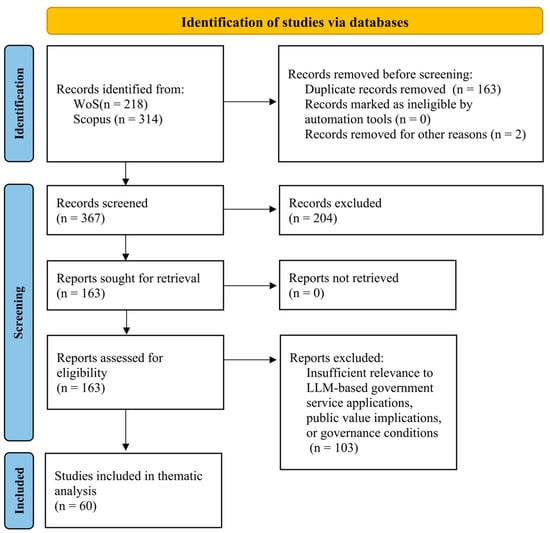
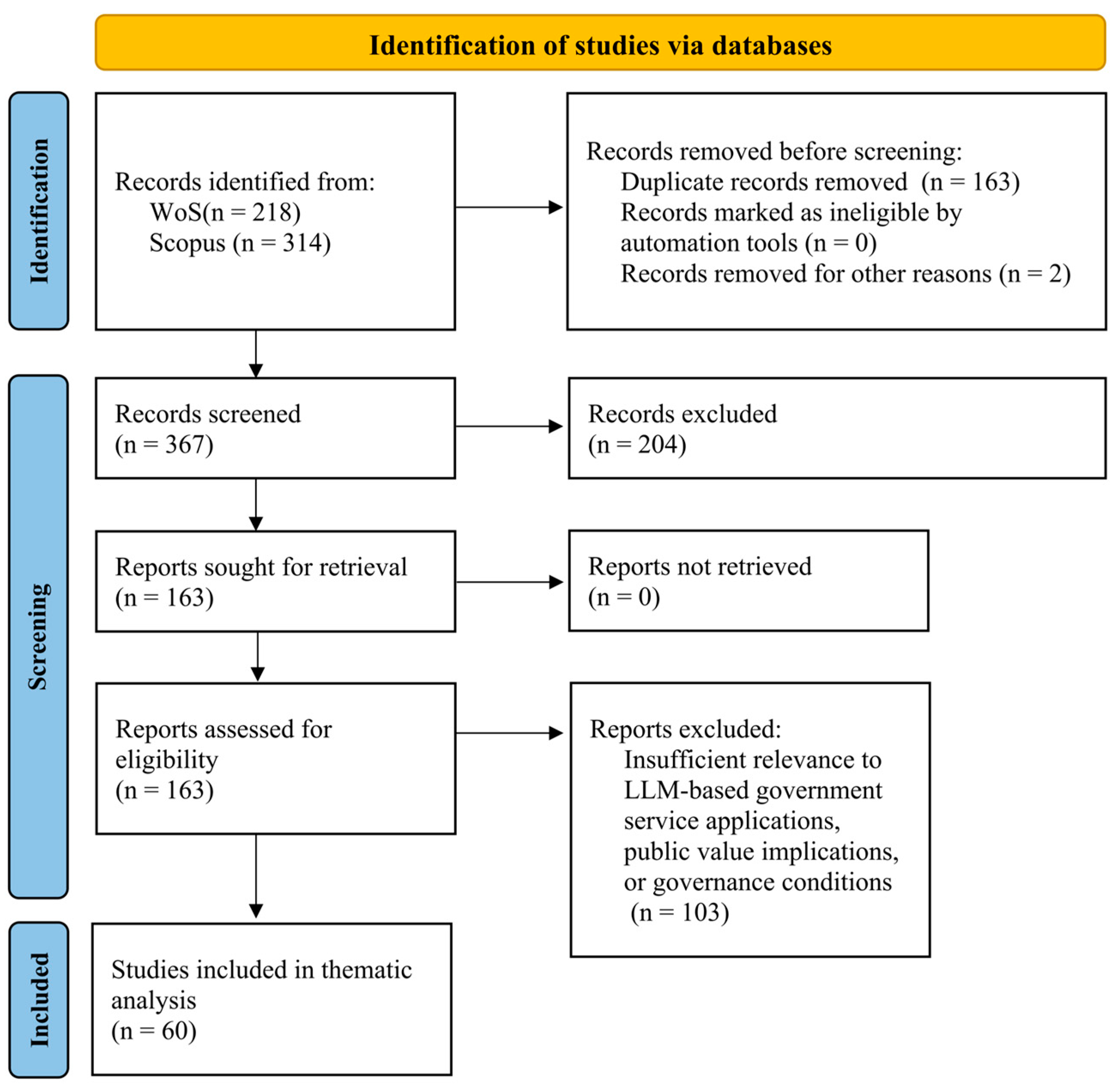
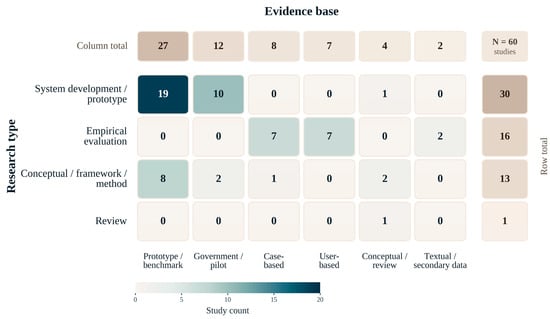
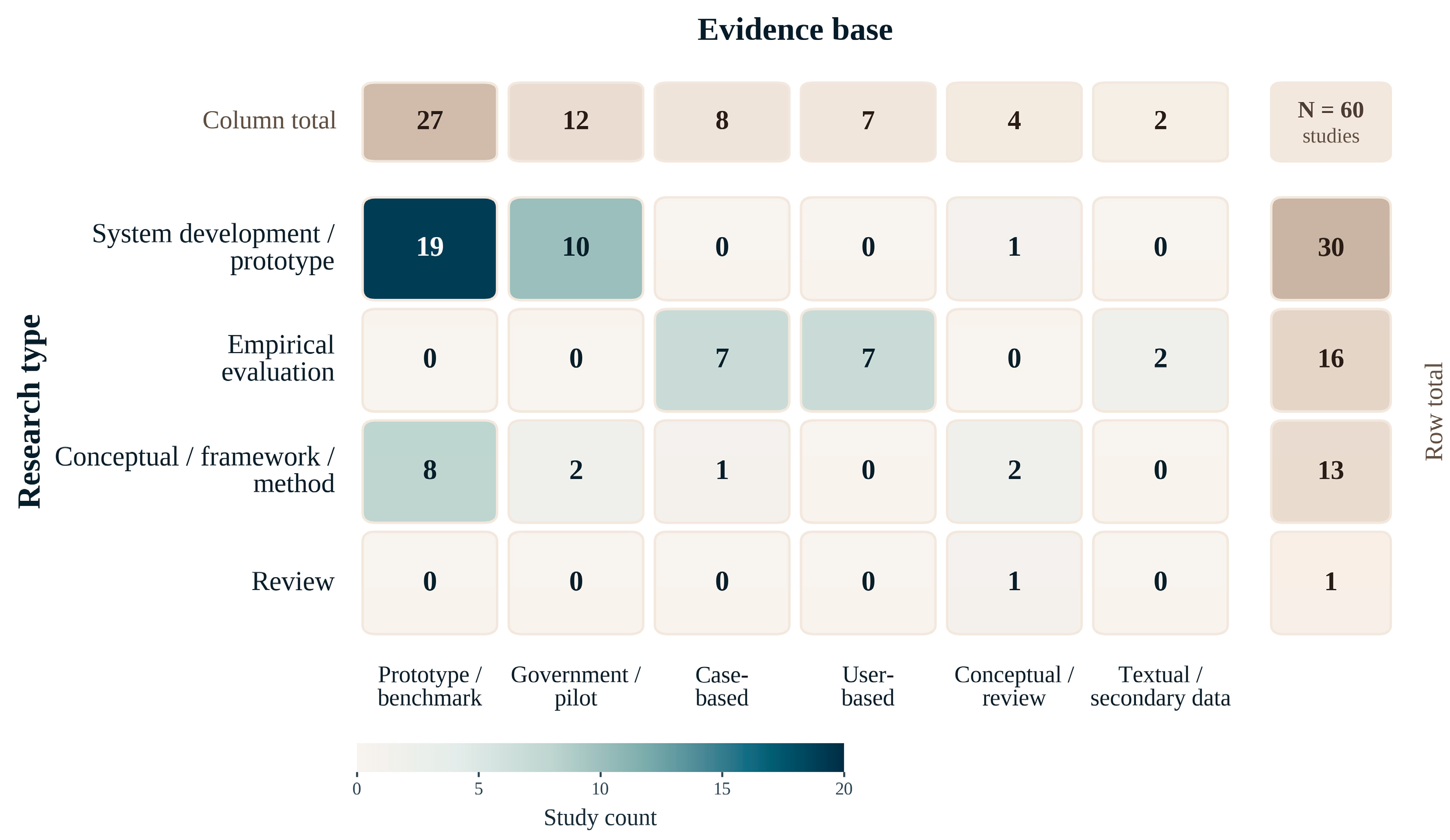
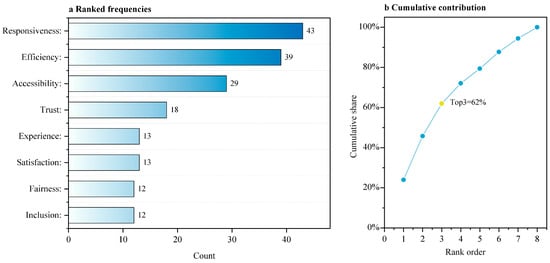
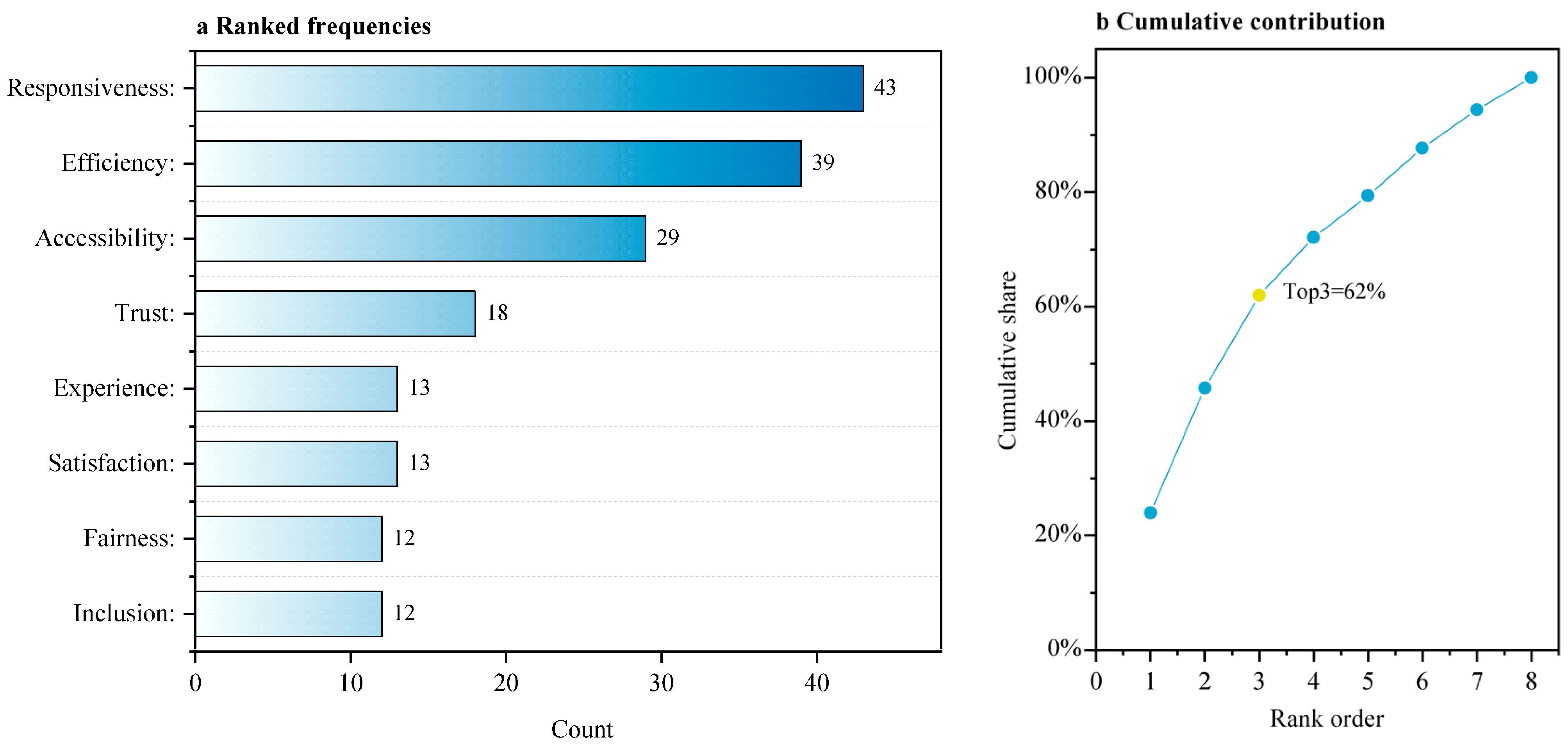
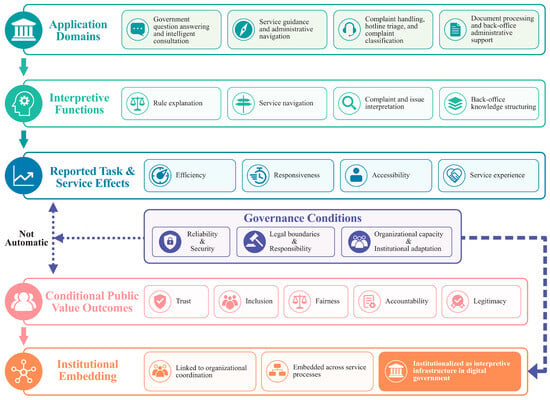
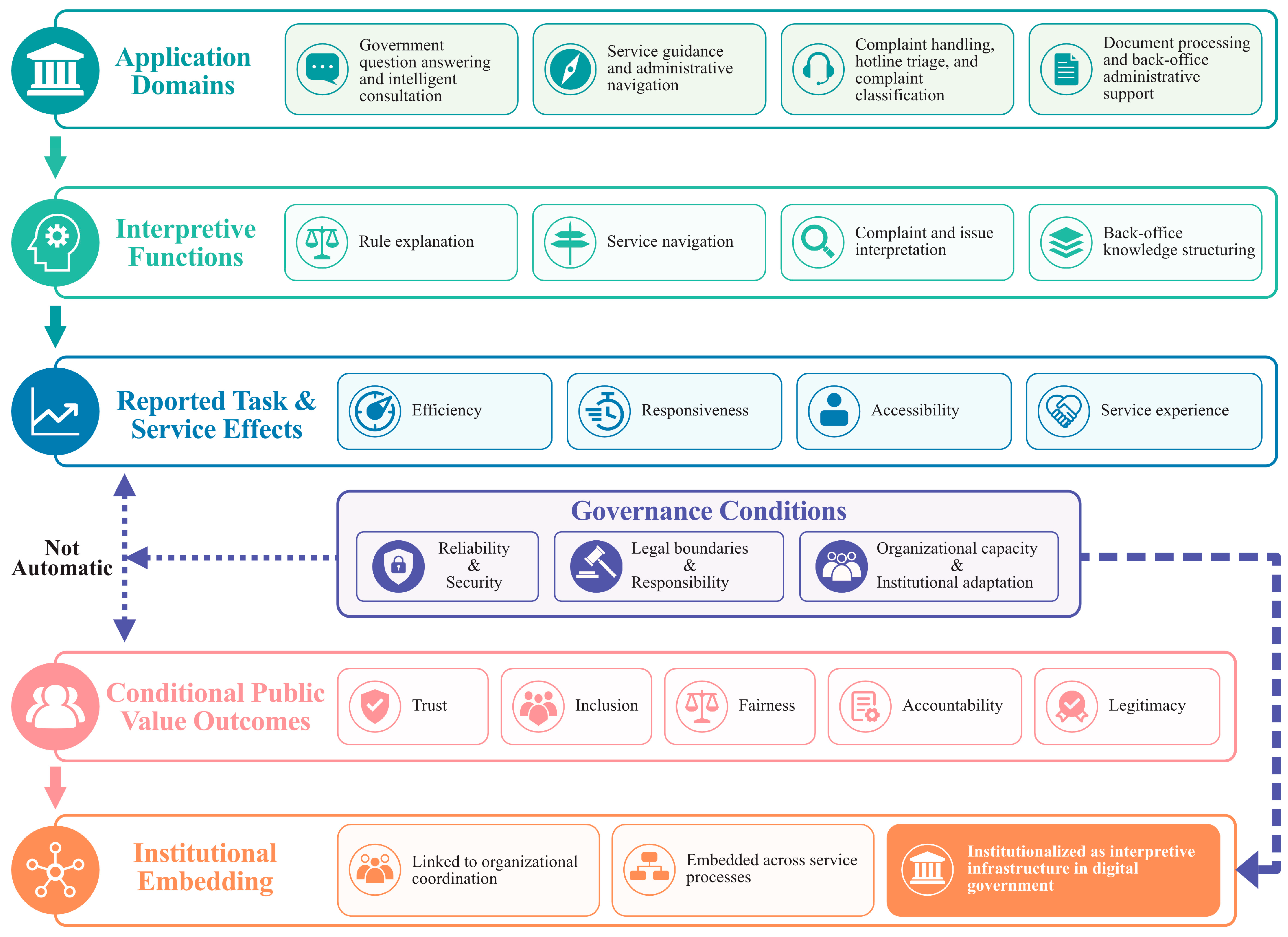

Disclaimer/Publisher’s Note: The statements, opinions and data contained in all publications are solely those of the individual author(s) and contributor(s) and not of MDPI and/or the editor(s). MDPI and/or the editor(s) disclaim responsibility for any injury to people or property resulting from any ideas, methods, instructions or products referred to in the content. |
© 2026 by the authors. Licensee MDPI, Basel, Switzerland. This article is an open access article distributed under the terms and conditions of the Creative Commons Attribution (CC BY) license.