


Abstract
This study examines how configurations of innovation ecosystem functions are associated with dual performance outcomes in global science cities. Moving beyond dominant variable-centered approaches, the study adopts a configurational perspective to explore how interdependent ecosystem conditions jointly shape (1) innovation capacity and (2) innovation-driven entrepreneurial dynamism. Drawing on an original dataset of 200 global science cities in 2023, the study employs fuzzy-set qualitative comparative analysis (fsQCA) to identify ecosystem configurations associated with these outcomes. The findings reveal pronounced equifinality and configurational asymmetry. High innovation capacity is associated with two distinct ecosystem arrangements: an endogenous knowledge-production configuration characterized by the alignment of human capital, research institutions, and industrial actors, and an openness-enabled configuration in which talent mobility co-occurs with institutional and industrial support. By contrast, high innovation-driven entrepreneurial dynamism is more consistently associated with configurations combining endogenous knowledge capacity with conditions related to commercialization and scaling, including talent circulation or advanced computing infrastructure. Configurations associated with non-high outcomes further suggest that underperformance is linked not only to resource deficiencies but also to misalignment across ecosystem domains. The study contributes to innovation ecosystem research by demonstrating that performance differences among global science cities are associated with internally coherent combinations of ecosystem functions rather than the independent effects of isolated factors. More broadly, the findings suggest that innovation capacity and entrepreneurial scaling follow partially different configurational logics, highlighting the importance of complementarity and context-specific ecosystem arrangements in global science cities.
1. Introduction
Over the past decades, cities have increasingly emerged as pivotal arenas for global competition in science, technology, and innovation. Within this landscape, a subset of cities—often referred to as global science cities—has assumed a particularly prominent role due to their concentration of scientific resources and knowledge-generating activities. These cities are widely regarded as key engines of the knowledge economy, where frontier research, technological development, and economic activities converge and reinforce one another [1].
To provide conceptual clarity, this study conceptualizes global science cities as urban innovation ecosystems, defined as spatially bounded systems in which heterogeneous actors—such as talent, research institutes, firms, and supporting infrastructures—interact to generate and capture value [2,3]. While embedded in national institutional contexts and connected to global knowledge networks, the city constitutes the primary level at which these interactions become observable and measurable. This perspective highlights that science city performance reflects the alignment of interdependent system components rather than isolated factors.
A growing body of research has examined the determinants of innovation performance in cities and regions. Studies on human capital emphasize the role of skilled scientists and engineers in enhancing scientific productivity [4]. Research on universities and public research institutes highlights the importance of institutionalized knowledge production [5,6]. Work on openness and global collaboration stresses the contribution of talent mobility and external knowledge linkages [7,8]. In parallel, the innovation ecosystem literature has drawn attention to the interdependence among heterogeneous actors and complementary resources [2,9], while recent studies on digital and scientific infrastructures have emphasized the growing importance of data-intensive and computational capabilities in enabling coordination, experimentation, and scalability [10,11].
Despite these advances, three important limitations remain. First, much of the existing literature still treats ecosystem components as separate explanatory factors, thereby paying insufficient attention to how these components jointly perform distinct system functions. In global science cities, heterogeneous ecosystem components do not operate independently. Rather, they jointly support different but interrelated system functions, including knowledge generation, knowledge transformation, external connectivity, and innovation scalability. How these functions are coordinated into internally coherent ecosystem arrangements remains insufficiently theorized.
Second, prior research has often assumed that stronger resource endowments should generate better innovation outcomes in a relatively linear manner. However, innovation ecosystems are characterized by complementarity, interdependence, and possible functional substitution. A city with strong local knowledge production capacity may achieve high innovation performance through endogenous scientific accumulation, whereas another city may rely more heavily on external knowledge inflows, institutional absorption, or infrastructure-enabled scaling. This suggests that global science cities may follow multiple configurational logics rather than a single universal development model.
Third, existing studies have not sufficiently distinguished between different types of innovation-related performance. In particular, the generation of technological knowledge and the transformation of such knowledge into high-growth entrepreneurial outcomes are related but analytically distinct processes. A city may be highly capable of producing patents and scientific outputs, yet less effective in converting these outputs into scalable ventures. Conversely, another city may show strong entrepreneurial dynamism by combining knowledge inputs with industrial absorption, capital markets, and scaling infrastructures. This potential divergence calls for a dual-outcome perspective that distinguishes innovation capacity from innovation-driven entrepreneurial dynamism.
To address these gaps, this study uses fuzzy-set qualitative comparative analysis (fsQCA) to examine how alternative configurations of urban innovation ecosystem functions are associated with two performance outcomes in global science cities: innovation capacity and innovation-driven entrepreneurial dynamism. Specifically, we address three research questions: (1) Which configurations of ecosystem functions are associated with high innovation capacity in global science cities? (2) Which configurations are associated with high innovation-driven entrepreneurial dynamism? (3) How do the configurational logics underlying these two performance outcomes differ?
This study makes three contributions. First, it integrates the innovation ecosystem perspective with configurational theorizing, conceptualizing global science cities as systems in which performance emerges from aligned configurations rather than isolated factors. Second, it identifies multiple patterns through which cities achieve high performance and provides a configurational explanation of equifinality by revealing the roles of complementarity and functional substitutability among ecosystem components, thereby advancing understanding of global science cities [12]. Third, by distinguishing between innovation capacity and innovation-driven entrepreneurial dynamism, the study demonstrates that technological knowledge generation and entrepreneurial scaling do not necessarily follow the same ecosystem logic, thereby contributing to a more nuanced understanding of why some science cities excel in scientific and technological production whereas others are more effective in translating knowledge into high-growth entrepreneurial activity. By developing a configurational understanding of how urban innovation ecosystems generate both knowledge and entrepreneurial value, this study contributes to debates on innovation-led growth and offers a more analytically grounded framework for understanding the diverse development trajectories of global science cities.
2. Literature Review and Configurational Research Framework
2.1. Global Science Cities as Innovation Ecosystems
Global science cities have emerged as key nodes in the global knowledge economy, characterized by a high concentration of scientific institutions, skilled human capital, and innovation-oriented organizations [13,14,15]. Despite their growing prominence, the concept of “science cities” remains insufficiently theorized and is often conflated with related notions such as smart cities, global cities, or regional innovation systems. To provide conceptual clarity, we conceptualize global science cities as urban innovation ecosystems in which knowledge production, technological development, and entrepreneurial and innovation activities are deeply interconnected and spatially concentrated.
Although these concepts overlap in certain respects, they emphasize different urban functions and development logics. Global cities are primarily defined by their command-and-control roles in the global economy, particularly in finance, advanced producer services, and international connectivity. Smart cities, by contrast, emphasize the application of digital technologies and data-driven governance to improve urban management, public services, and sustainability. Regional innovation systems focus more broadly on institutional interactions supporting innovation within a regional or national territory [13,16,17]. In contrast, global science cities are distinguished by their concentration of frontier scientific activities and their capacity to connect knowledge production with technological and entrepreneurial application through dense urban interactions among universities, research institutes, firms, talent, and supporting infrastructures.
From the innovation ecosystem perspective, the distinctive feature of global science cities lies not simply in the concentration of scientific resources, but in the systemic alignment of heterogeneous actors, complementary resources, and knowledge flows within geographically concentrated urban environments [2,9,18]. This conceptualization builds on the innovation ecosystem perspective, which emphasizes interdependence, complementarities, and value co-creation among multiple actors rather than the isolated effects of individual organizations or sectors [19,20,21]. Cities constitute a particularly relevant unit of analysis because they provide dense spatial settings in which these interactions become intensified, coordinated, and institutionally embedded [22].
However, existing research has largely examined the determinants of urban innovation performance from a net-effect perspective, focusing on the independent contribution of factors such as human capital, infrastructure, or openness. While these studies have generated important insights, they often overlook the systemic nature of global science cities, where multiple elements interact in complex and non-linear ways [23,24]. As a result, it remains unclear how different components of urban innovation ecosystems jointly shape outcomes, or whether alternative combinations of conditions are associated with similar levels of performance. Addressing this gap requires a shift from variable-centered explanations to a system-oriented perspective that captures the configurational logic of innovation ecosystems. In particular, it is necessary to examine how different ecosystem components—such as human capital, institutional structures, industrial actors, infrastructure, and global connectivity—combine to form coherent systems that support both knowledge generation and entrepreneurial dynamism. This perspective provides the foundation for the configurational framework developed in this study.
2.2. From System Components to Configurational Analysis
Prior research has highlighted several critical dimensions, including human capital, research institutions, industrial capabilities, infrastructure, and openness to external knowledge flows [3,21,25]. These dimensions represent distinct functional elements of innovation ecosystems, each contributing to the generation, diffusion, and application of knowledge. However, a central limitation of existing studies is that these elements are typically examined in isolation, with an emphasis on their independent effects on innovation or economic outcomes. Such an approach implicitly assumes linear and additive relationships, which may not adequately reflect the complex and interdependent nature of urban innovation systems. In reality, the effectiveness of any given component is contingent upon its interaction with other elements within the system. For example, a strong human capital base may not translate into high innovation output without supportive institutional structures, while advanced infrastructure may yield limited benefits in the absence of capable organizations that can utilize it.
This interdependence suggests that the relationship between system components and outcomes is inherently configurational [2,9,20,23]. Rather than asking whether a single factor has a significant effect, a configurational perspective focuses on how multiple conditions combine into internally consistent patterns that are associated with specific outcomes [12]. This approach explicitly accommodates equifinality—where different combinations of conditions are associated with similar outcomes—as well as configurational asymmetry, whereby the conditions of outcome presence may differ from those of outcome absence [24].
In the context of global science cities, this implies that both innovation capacity and innovation-driven entrepreneurial dynamism should be understood as reflecting distinct but potentially overlapping configurations of ecosystem functions. Innovation capacity reflects the ability of a city to generate high-quality scientific and technological knowledge, while innovation-driven entrepreneurial dynamism captures the extent to which a city supports high-growth, venture-oriented innovation outcomes. Although these two dimensions are related, they are not necessarily aligned, as strong scientific performance does not automatically correspond to strong entrepreneurial scaling capacity [26,27,28]. To examine these configurational relationships, this study adopts a fuzzy-set qualitative comparative analysis (fsQCA) approach. This method is particularly suited to examining how multiple interdependent conditions are associated with different outcomes and allows for the identification of alternative configurational patterns.
2.3. Configurational Alignment in Global Science City Ecosystems
Building on the innovation ecosystem perspective, the performance of global science cities cannot be adequately explained by examining individual factors in isolation. Instead, it emerges from the interaction and alignment of multiple interdependent components that collectively shape how knowledge is created, diffused, and commercialized within urban systems [8,9,10]. These components—spanning human capital, research institutions, industrial actors, infrastructure, and global connectivity—form a complex and co-evolving system in which complementarities play a central role [19,29]. Rather than exerting independent net effects, these elements combine into configurations that enable distinct developmental patterns, reflecting the principles of interdependence, complementarity, and equifinality [12,30].
Within this framework, four interrelated functional domains can be identified: knowledge production, knowledge transformation and commercialization, scientific and digital infrastructure, and openness and connectivity. Together, these domains represent major dimensions along which global science cities generate and appropriate value.
The first domain, knowledge production, is rooted in the interaction between the scale and quality of human capital and the institutional structures that support research activities. A large population of active researchers provides the basis for sustained scientific output by enabling cumulative learning and increasing opportunities for knowledge recombination [31,32,33,34,35]. At the same time, the presence of young top talents enhances the frontier orientation of the local knowledge system by introducing cutting-edge expertise and facilitating access to global scientific networks [7]. These human capital resources are embedded within organizational contexts shaped by leading research institutes, which offer advanced facilities and stable research environments for large-scale and long-term scientific projects [5]. The interaction among researcher scale, elite talent, and institutional support thus forms a coherent knowledge production system.
The second domain concerns knowledge transformation and commercialization, which shapes whether scientific advances can be translated into innovation-driven market value and entrepreneurial dynamism. While knowledge creation is a necessary condition for innovation, it does not automatically generate high-impact entrepreneurial outcomes. The conversion of scientific knowledge into market value depends on the presence of organizations capable of absorbing, recombining, and scaling technological opportunities [36,37,38]. In this respect, globally leading innovative firms provide an important organizational foundation for commercialization by strengthening local absorptive capacity, facilitating knowledge spillovers, and supporting entrepreneurial experimentation. Through these processes, they can create favorable conditions for the emergence and growth of high-impact ventures.
The third domain relates to scientific and digital infrastructure, which provides the foundational conditions that enable both knowledge production and commercialization processes. Advances in data-intensive science have increased the importance of infrastructure that supports large-scale computation and collaboration [10,39,40]. High-performance computing infrastructure enables complex simulations, large-scale data processing, and cutting-edge research. By reducing the costs of experimentation and enabling large-scale data-intensive research and collaboration, such infrastructure strengthens the scalability and coordination capacity of urban innovation ecosystems.
The fourth domain, openness and connectivity, captures the extent to which science cities are embedded in global networks of knowledge and talent. Openness encompasses multiple dimensions, including international collaboration and institutional permeability [8,25,41,42]. In this study, openness is operationalized through talent mobility, which reflects the bidirectional flow of researchers and inventors across cities. While openness encompasses multiple institutional and policy dimensions, talent mobility captures the most direct and observable channel of cross-border knowledge circulation in global science cities. Such mobility facilitates knowledge circulation, recombination, and diffusion across geographic and organizational boundaries.
Importantly, these four domains do not operate independently. Their effects are inherently conjunctural, meaning that the influence of each component depends on how it interacts with others within the system [20,23,24]. Human capital requires institutional and infrastructural support, industrial actors depend on knowledge inputs, and openness amplifies the effectiveness of local resources. This interdependence implies that multiple internally consistent configurations can lead to similar outcomes, while the absence of specific combinations may constrain performance. Accordingly, this study conceptualizes global science cities as configurational systems in which ecosystem components do not exert independent effects, but combine into multiple internally consistent configurations that generate distinct performance outcomes (see Figure 1).
Figure 1.
Theoretical framework.
3. Methods
3.1. Research Design
This study adopts a configurational approach using fuzzy-set qualitative comparative analysis (fsQCA) to examine how different combinations of ecosystem components are associated with innovation capacity and innovation-driven entrepreneurial dynamism in global science cities [12,43,44]. Consistent with the configurational perspective developed in Section 2, fsQCA enables the identification of multiple patterns through which interdependent conditions are associated with these outcomes.
The analysis focuses on two outcome dimensions—innovation capacity and innovation-driven entrepreneurial dynamism—and examines how different configurations of conditions are associated with these outcomes. This dual-outcome design is particularly relevant given that prior research highlights a potential decoupling between scientific excellence and economic performance [45], such that strong knowledge production does not automatically translate into entrepreneurial or industrial success.
Against this theoretical background, fsQCA is well suited to the research objective for three reasons. First, it captures conjunctural causation by identifying how multiple conditions jointly form sufficient configurations. Second, it accommodates equifinality, recognizing that different cities may be associated with similar outcomes via distinct but internally coherent development configurations. Third, it allows for configurational asymmetry, meaning that the configurations associated with high performance may differ fundamentally from those associated with its absence. These features make fsQCA particularly appropriate for analyzing heterogeneous innovation ecosystems characterized by multiple development trajectories.
Although the sample size (N = 200) is larger than in many traditional QCA studies, prior research has demonstrated that fsQCA can be effectively applied to medium- and large-N settings when the objective is to identify configurational regularities rather than to conduct in-depth case comparisons [12,46]. Accordingly, the aim of this study is not case-oriented explanation, but the identification of configurational patterns across a diverse set of global science cities. This design leverages the strength of fsQCA in capturing equifinality and identifying multiple patterns associated with similar outcomes across heterogeneous cases.
3.2. Sample and Procedure
To implement this research design, we constructed an original cross-sectional dataset of global urban innovation ecosystems for 2023. The city is defined as the primary unit of analysis in this study, and all variables are constructed at the city level to ensure conceptual consistency. Because no universally accepted list of “global science cities” exists, the sample was developed through a transparent multi-stage procedure designed to ensure both comprehensive coverage and analytical comparability.
In the first stage, a broad sampling frame was established by triangulating three internationally recognized indices that capture complementary aspects of urban performance: the A.T. Kearney Global Cities Index (global connectivity and business environment), the WIPO Global Innovation Index (innovation capability), and the 2ThinkNow Innovation Cities Index (city-level innovation ecosystems). Cities were included in the initial pool if they ranked within the top 200 in at least one index or appeared in at least two indices regardless of rank. This procedure yielded 349 candidate cities, thereby reducing reliance on any single ranking system and ensuring broad geographical and institutional coverage.
In the second stage, the sample was refined to 200 cities to ensure both data completeness and comparability across cases. To avoid arbitrary selection, cities were ranked based on their aggregated performance across the three indices. Specifically, the scores from each index were first standardized using a z-score transformation to ensure comparability across different scales, and then averaged with equal weights to construct a composite ranking. The top 200 cities according to this composite score were retained for analysis. This threshold reflects a balance between inclusiveness and analytical tractability: retaining a sufficiently large number of cases to capture global variation while ensuring that all selected cities exhibit consistently high levels of performance across multiple dimensions. Cities excluded at this stage were typically those with lower composite rankings or incomplete data coverage, thereby reducing potential measurement bias.
Importantly, the purpose of this sampling strategy is not to construct a representative sample of all global cities, but rather to identify a theoretically relevant population of cities that already participate meaningfully in global science and innovation networks. In this sense, the study focuses on variation within relatively innovation-oriented urban ecosystems rather than attempting to explain innovation performance across the full spectrum of cities. Although some overlap may exist between the conceptual dimensions captured by the sampling indices and the outcome variables examined in this study, the indices were used only to establish a bounded empirical context for comparison rather than to pre-classify cities according to the specific configurational outcomes identified through fsQCA. Accordingly, the configurational analysis should be interpreted as revealing differences in ecosystem arrangements among globally innovation-oriented cities, rather than as a universal model applicable to all urban contexts.
The resulting sample reflects a geographically diverse distribution, including 31 cities in Asia, 74 in Europe, 88 in the Americas, 6 in Oceania, and 1 in Africa. This distribution captures a wide range of institutional contexts and development trajectories, thereby enhancing the comparability and external validity of the configurational analysis.
Data for the human capital and talent mobility variables were derived from Boguan Big Data, a proprietary scientometric and innovation database integrating publication records, patent information, citation relationships, and author affiliation data. Its underlying data infrastructure has been documented in a recent peer-reviewed study on the Intelligent Innovation Dataset (IIDS) [47], jointly developed by Boguan Innovation, Fudan University, Shanghai University, and the Shanghai Artificial Intelligence Laboratory. According to the IIDS framework, publication metadata are primarily sourced from Scopus, while patent information is primarily sourced from the official database of the European Patent Office (EPO), whose PATSTAT infrastructure integrates large-scale international patent records across multiple countries and regions.
Boguan Big Data was used to construct the Active Researchers (AR), Young Top Talents (YTT), and Talent Mobility (TM) variables. Researcher profiles were constructed by linking publication and patent records over time, and institutional affiliations were standardized and mapped to city-level units according to reported affiliation addresses. Additional information on researcher-profile construction, author disambiguation, institution-city matching, and quality-control procedures is provided in Appendix A.
3.3. Measures
3.3.1. Outcomes
Innovation Capacity (INN). Urban innovation capacity was measured using the number of Patent Cooperation Treaty (PCT) international patent applications associated with each city. Patents have long been used as a proxy for technological innovation output in management and innovation research [48,49]. Among different patent types, PCT applications are widely regarded as high-value indicators of innovation, as they reflect inventions with international protection potential, higher technological significance, and stronger commercial applicability [50]. In this study, PCT applications are used specifically to capture internationally codified technological innovation outputs at the city level, rather than broader scientific, organizational, or entrepreneurial dimensions of innovation ecosystems. At the same time, patents represent only one dimension of innovation activity and may not fully capture other forms of innovation, such as organizational, service-based, design-oriented, or non-patented innovation. Accordingly, this measure should be interpreted more specifically as reflecting the technological knowledge-generation capacity of urban innovation ecosystems rather than innovation in its broadest sense. Despite these limitations, PCT patents remain particularly appropriate for the present study because global science cities are primarily characterized by frontier scientific and technological activities, international knowledge competition, and science-based innovation. In this context, PCT applications provide a relatively standardized and internationally comparable indicator of technologically significant innovation outputs across cities.
Innovation-driven Entrepreneurial Dynamism (IED) was operationalized using the number of unicorn firms, defined as privately held startup companies with valuations exceeding USD 1 billion. This indicator captures the high-growth, venture-capital-supported segment of entrepreneurial activity within urban innovation ecosystems [36]. Data were compiled from the 2023 CB Insights Unicorn List (https://www.cbinsights.com/research-unicorn-companies, accessed on 21 January 2025) and the 2023 Hurun Global Unicorn Index (https://www.hurun.cn/, accessed on 21 January 2025), with duplicates removed to improve consistency and comparability.
Unicorn firms are widely regarded as indicators of entrepreneurial scaling, innovation commercialization, and the capacity of urban ecosystems to support globally competitive technology ventures. Compared with broader measures of economic performance, this indicator more specifically reflects the upper tier of innovation-oriented entrepreneurial activity, particularly in sectors characterized by rapid technological change and strong venture capital participation. Accordingly, the measure is interpreted in this study as capturing the extent to which global science cities support high-growth, technology-oriented entrepreneurial development.
Although unicorn firms do not encompass the full range of innovation-related economic activities within cities, they provide one of the few internationally comparable indicators of scalable entrepreneurial performance at the technological frontier. In the context of global science cities, where the transformation of scientific and technological capabilities into globally competitive ventures constitutes a central dimension of ecosystem performance, this indicator offers a meaningful proxy for high-growth entrepreneurial outcomes.
Together, INN and IED represent two analytically distinct but complementary dimensions of global science city performance: technological knowledge generation and high-growth entrepreneurial scaling.
3.3.2. Conditions
Active Researchers (AR). The scale of active research personnel was operationalized as the number of individuals per million population who had authored at least one scholarly publication. Data were drawn from Boguan Big Data, a multi-source scientometric database that integrates publication records, patent data, and author affiliation information. For this variable, active researchers are identified based on publication records, and researchers are assigned to cities according to their primary institutional affiliations, enabling consistent city-level aggregation.
Young Top Talents (YTT). To capture the structural quality of human capital, we include the number of globally recognized young scientific and technological elites (under 40 years old, top 0.1% worldwide). These individuals are identified based on a combination of indicators, including scientific productivity, patent performance, and citation impact. Importantly, patent-related performance constitutes only one component of the broader multidimensional evaluation used to identify frontier-oriented talent. Accordingly, this variable is intended to capture the qualitative structure and frontier orientation of local human capital rather than patent output itself. They represent potential leaders of frontier research and technological development. Data were obtained from Boguan Big Data. YTT complements AR by capturing the qualitative edge of human capital, reflecting both the frontier orientation and renewal capacity of the local knowledge system.
Leading Research Institutes (LRI). This indicator reflects the presence of globally recognized research organizations. We tallied institutions within each city ranked among the top 200 in the Nature Index. The Nature Index assesses institutions by publication share and count across 145 high-quality journals in natural and health sciences [51]. Data were collected from Nature Index (https://www.nature.com/nature-index/, accessed on 11 December 2024). This measure captures the institutional foundation supporting coordinated and high-quality knowledge production.
Global Innovative Enterprises (GIE). To capture the industrial dimension of innovation systems, we measured the number of globally leading innovative enterprises located in each city. These enterprises were identified based on the 2023 EU Industrial R&D Investment Scoreboard, which ranks the world’s top 2500 firms by R&D investment. Firms included in this dataset are characterized by substantial R&D expenditures, strong patent portfolios, and significant technological capabilities. Although such firms may possess significant patent portfolios, the variable is not designed to capture patent outputs themselves. Instead, it reflects the presence of established R&D-intensive enterprises that provide absorptive capacity, industrial resources, and commercialization capabilities within local innovation ecosystems. This indicator reflects the presence of established, R&D-intensive enterprises that act as key agents in knowledge absorption, technological recombination, and large-scale commercialization. It therefore serves as a proxy for the capacity of the local ecosystem to support the transformation of scientific knowledge into market-oriented innovation activities.
High-Performance Computing Infrastructure (HPC). The level of advanced scientific infrastructure was measured using the number of supercomputers located in each city that are listed in the global TOP500 ranking. Supercomputers represent critical infrastructure for frontier research, enabling large-scale simulations, data processing, and advanced technological development. This indicator captures a city’s advanced computing capacity as a key component of its scientific and digital infrastructure, supporting both knowledge production and technology-intensive innovation processes.
Talent Mobility (TM). To capture the openness and connectivity of global science cities, we combine talent inflow and outflow into a single measure of talent mobility. Specifically, this variable is operationalized as the ratio of inflow to outflow, defined as the number of researchers and inventors affiliating to the focal city in the current year after publishing or patenting in other cities in the previous year, divided by those affiliating to other cities after publishing or patenting in the focal city in the previous year. A higher ratio indicates stronger attractiveness and retention capacity relative to talent loss, while values below 1 suggest net outflow. This integrative measure reflects the openness and circulation of talent within the global innovation system [1]. Data for 2023 were obtained from Boguan Big Data. Although publication and patent affiliation records are used to trace mobility trajectories, the variable is conceptually oriented toward the openness and inter-city circulation of human capital within urban innovation ecosystems rather than toward the measurement of innovation outputs. The emphasis is therefore on connectivity and knowledge circulation across cities rather than on patent production itself. Talent mobility thus bridges human and institutional dimensions by linking local ecosystems to transnational knowledge networks, with high TM values reflecting both attractiveness and permeability in globally connected innovation systems. A summary of all variables, their measurements, and data sources is provided in Table 1.
Table 1.
Measurement of Variables.
3.4. Calibration of Set Memberships
Following Ragin’s (2008) guidelines, we employed the direct method to calibrate all variables into fuzzy sets. This approach transforms raw values into membership scores ranging from 0 (full non-membership) to 1 (full membership) through a logistic function [43].
Calibration in fsQCA is not merely a statistical procedure but a theoretically informed process that assigns cases to substantively meaningful sets. Accordingly, the specification of qualitative anchors—full membership, crossover point, and full non-membership—was guided primarily by theoretical reasoning about the characteristics of high-performing science city ecosystems, complemented by empirical data distributions [43,44,52]. Rather than applying a uniform calibration rule across all variables, we adopted differentiated calibration strategies reflecting the distinct empirical properties and theoretical meanings of each condition (see Table 2). Full membership represents cities that clearly possess strong capabilities in the relevant ecosystem function, the crossover point captures ambiguous or intermediate cases, and full non-membership reflects weak or underdeveloped capabilities.
Table 2.
Calibration thresholds for fuzzy-set memberships.
For continuously distributed variables without substantial zero inflation—namely innovation capacity (INN), active researchers (AR), young top talents (YTT), leading research institutions (LRI), and talent mobility (TM)—calibration thresholds were defined to capture meaningful differences between strongly developed and comparatively weak science city ecosystems [52]. For example, full membership in INN reflects internationally visible technological knowledge outputs, while full membership in AR, YTT, and LRI indicates dense research communities, frontier-oriented elite talent, and strong institutional research foundations, respectively. Full membership in TM reflects strong integration into global talent circulation networks.
In operational terms, these theoretically informed distinctions were approximated using distribution-informed breakpoints, such as the median and upper/lower deciles, in the absence of externally validated city-level thresholds. Importantly, the crossover point was not treated as a purely statistical median, but as representing cases that are neither clearly inside nor clearly outside the relevant set.
For talent mobility (TM), theoretical considerations suggest that a value of 1 represents a meaningful equilibrium between inflows and outflows of researchers. However, given that the empirical distribution is skewed and concentrated below this benchmark, using this value as the crossover would compress variation in set membership. Therefore, the crossover point was set at the sample median to preserve empirical differentiation.
For variables characterized by substantial zero values and highly skewed distributions—specifically innovation-driven entrepreneurial dynamism (IED), global innovative enterprises (GIE), and high-performance computing infrastructure (HPC)—a hybrid calibration approach was employed. Zero values were treated as full non-membership, reflecting the absence of the relevant capability. The presence of at least one unit corresponds to the transition from absence to initial presence, while full membership thresholds were defined using the upper tail of the distribution to capture cities with clearly developed capabilities. Accordingly, full membership in IED reflects a well-established capacity to support globally visible high-growth entrepreneurial ventures, while full membership in GIE and HPC reflects strong industrial innovation capacity and advanced computational infrastructure, respectively.
It should also be noted that calibration in fsQCA may be sensitive to measurement uncertainty, particularly when cases are located near qualitative thresholds. Small variations in underlying indicators may affect fuzzy-set membership scores and, consequently, the assignment of cases to specific configurational groupings. This issue is especially relevant in studies relying on secondary and composite indicators collected from multiple international data sources. To mitigate these concerns, the present study adopted theoretically informed calibration procedures, employed logarithmic transformations for highly skewed variables, and conducted multiple robustness analyses using alternative calibration specifications and outcome operationalizations.
4. Analysis and Results
4.1. Analytical Approach
We employed fuzzy-set qualitative comparative analysis using fsQCA software version 4.1 to examine how different combinations of ecosystem components are associated with innovation capacity (INN) and innovation-driven entrepreneurial dynamism (IED), as well as their negations. Consistent with configurational methodology, the analysis proceeded in two stages: necessity analysis and sufficiency analysis. Descriptive statistics and correlations for all variables are reported in Table 3.
Table 3.
Descriptive statistics and correlations.
We first assessed whether any individual condition constitutes a necessary condition for the presence or absence of the outcomes (see Table 4). Following established conventions, a consistency threshold of 0.90 was adopted as the benchmark for necessity [12]. For each condition, both consistency (the degree to which the condition is present whenever the outcome occurs) and coverage (its empirical relevance) were examined. The results indicate that no single condition consistently meets the threshold for necessity across the outcomes. Although some conditions approach this benchmark in specific models, their empirical coverage remains limited, suggesting that they are not universally required. This finding indicates that performance differences among globally innovation-oriented science cities are not associated with any single dominant condition, but rather with combinations of interdependent ecosystem conditions.
Table 4.
Necessary conditions for innovation capacity and innovation-driven entrepreneurial dynamism in Global Science Cities.
We then conducted sufficiency analysis using truth tables and the Quine–McCluskey minimization algorithm. A frequency threshold of 1 was set to retain rare but theoretically meaningful configurations [53], and a consistency threshold of 0.78 was adopted for all outcomes [54]. Complex, parsimonious, and intermediate solutions were examined, with primary emphasis placed on intermediate solutions due to their theoretical interpretability [12].
Prior to minimization, truth tables were manually reviewed to assess logical remainders and ensure theoretical plausibility. Logical remainders were included only when supported by substantive reasoning consistent with the conceptual framework, so that the reported configurations reflect theoretically interpretable patterns rather than purely algorithmic artifacts.
To facilitate cross-outcome comparison, solutions for INN and IED were analyzed separately and then compared to identify overlapping and distinct patterns. Overall solution consistency values exceed 0.80, indicating stable configurational associations. This approach explicitly captures equifinality and asymmetry, allowing different patterns to be associated with similar outcomes and recognizing that the configurations associated with outcome presence may differ from those associated with its absence.
4.2. Result Interpretation
4.2.1. Configurations Associated with High Innovation Capacity
The analysis identifies two equifinal configurations associated with high innovation capacity (INN), each reflecting a distinct configurational pattern through which global science cities sustain technologically significant scientific output (see Table 5).
Table 5.
Configurations for high innovation capacity and innovation-driven entrepreneurial dynamism.
In this study, innovation capacity refers to technologically significant knowledge outputs, extending beyond basic science to include applied and patent-based innovation. The identified configurations should therefore be interpreted as ecosystem arrangements associated with high technological knowledge-generation capacity, rather than as evidence of unidirectional causal mechanisms.
The first configuration reflects an endogenous knowledge-production configuration. Its interpretive logic lies in the alignment of human capital, institutional structures, and industrial embedding within the local urban innovation ecosystem. A large research workforce (AR) is associated with the scale needed for sustained knowledge production and cumulative recombination. Young top talents (YTT) indicate the frontier orientation of the system by reflecting advanced expertise and global knowledge linkages. Leading research institutes (LRI) represent organizational coordination, stable research environments, and specialized facilities that allow human capital resources to function as part of a coherent knowledge-production system. Global innovative enterprises (GIE) further indicate industrial embedding by connecting scientific outputs with technological application and absorptive capacity.
The second configuration reflects an openness-enabled configuration. In contrast to the first configuration, this arrangement is characterized by the absence of strong local concentrations of active researchers and young top talents. Instead, high innovation capacity is associated with the joint presence of talent mobility (TM), leading research institutes (LRI), and global innovative enterprises (GIE). TM indicates external knowledge access and cross-boundary circulation, while LRI and GIE represent the institutional and industrial capacities through which external knowledge can be absorbed and connected to application-oriented innovation.
Taken together, these findings indicate that high innovation capacity is associated with multiple internally consistent ecosystem arrangements. What matters is not the independent contribution of individual factors, but the extent to which ecosystem components are aligned into a coherent knowledge-production system.
4.2.2. Configurations Associated with High Innovation-Driven Entrepreneurial Dynamism
The fsQCA results identify two configurations associated with high innovation-driven entrepreneurial dynamism (IED), each capturing a distinct configurational pattern through which urban innovation ecosystems are linked to high-growth entrepreneurial outcomes. Compared with innovation capacity, the configurational logic of IED places greater emphasis on the alignment between knowledge production, commercialization capacity, and scaling-related conditions.
The first configuration reflects a knowledge-spillover and opportunity-formation configuration. Active researchers (AR) and young top talents (YTT) indicate a dense and high-quality knowledge base. Leading research institutes (LRI) provide institutional anchoring for knowledge production and diffusion. Talent mobility (TM) links the local ecosystem to broader knowledge networks and is associated with cross-boundary knowledge circulation. Global innovative enterprises (GIE) represent industrial absorptive capacity and commercialization-oriented resources. In this configuration, high IED is associated with the alignment of knowledge creation, knowledge circulation, and industrial commercialization capacity.
The second configuration reflects a technology-enabled scaling configuration. While knowledge production remains present through AR and YTT, the enabling condition differs from the first IED configuration. Here, high-performance computing infrastructure (HPC) is present, while TM is not a defining condition. AR and YTT indicate local knowledge-generating capacity, LRI represent institutional coordination, and GIE indicate industrial application capacity. HPC is associated with data-intensive experimentation, large-scale computation, and infrastructure-enabled scalability. This configuration suggests that high-growth entrepreneurial dynamism may be associated with the combination of local knowledge capacity, institutional anchoring, industrial application, and computational infrastructure.
The comparison between these two configurations suggests that TM and HPC may play functionally analogous but not equivalent roles across different ecosystem arrangements. TM is associated with external knowledge circulation and cross-boundary recombination, whereas HPC is associated with computational scalability and data-intensive innovation capacity. This pattern should be interpreted as configurational differentiation rather than as evidence that one condition causally substitutes for another.
4.2.3. Cross-Outcome Insights: Towards Dual Excellence
A systematic comparison of the configurations presented in Table 5 reveals both shared structural foundations and distinct configurational logics underlying the two outcome dimensions. Across both innovation capacity (INN) and innovation-driven entrepreneurial dynamism (IED), high performance is consistently associated with the joint presence of multiple ecosystem components rather than any single condition, supporting the view that performance differences among global science cities are configurational.
Beyond this general observation, a more fine-grained comparison highlights a striking regularity: leading research institutes (LRI) and global innovative enterprises (GIE) are present in all four high-performance configurations. This empirical consistency suggests that these two elements may serve as important structural anchors within high-performing urban innovation ecosystems in global science cities. LRI represent institutional support for coordinated and high-quality knowledge production, while GIE indicate industrial capacity for knowledge absorption, recombination, and commercialization.
However, important differences emerge when comparing the specific composition of configurations across outcomes. For INN, the two identified configurations exhibit greater heterogeneity in the presence of knowledge-production conditions. While Solution 1 includes active researchers (AR) and young top talents (YTT), Solution 2 is associated with high innovation capacity despite their absence, relying instead on the combination of talent mobility (TM), leading research institutes (LRI), and global innovative enterprises (GIE). This suggests that high innovation capacity among globally innovation-oriented cities may be associated with either endogenous knowledge resources or external knowledge connectivity combined with local absorptive structures.
By contrast, the configurations associated with high IED display a more consistent presence of endogenous knowledge conditions. Both AR and YTT appear across these configurations, suggesting that high-growth entrepreneurial dynamism is more consistently associated with locally embedded knowledge capacity combined with transformation and scaling conditions. In addition, while the two IED configurations differ in their enabling conditions—TM in Solution 3 and HPC in Solution 4—these conditions appear alongside, rather than instead of, endogenous knowledge capacity.
A further insight concerns the role of enabling mechanisms across configurations. The comparison of Solutions 3 and 4 shows that TM and HPC appear in mutually exclusive configurations, each co-occurring with similar core conditions (AR, YTT, LRI, and GIE). This pattern suggests that different ecosystem arrangements may rely on alternative mechanisms to support the conversion of knowledge into scalable outcomes. Rather than indicating equivalence at the level of individual variables, this reflects configurational substitution, whereby different conditions fulfill analogous roles within distinct but internally consistent configurations.
4.2.4. Configurations for Non-High Outcomes
To further capture configurational asymmetry, we examine the configurations associated with non-high innovation capacity (~INN) and non-high innovation-driven entrepreneurial dynamism (~IED). This analysis helps clarify whether non-high outcomes are associated with distinct configurations rather than simply representing the inverse of high-performance configurations (see Table 6).
Table 6.
Configurations for non-high outcomes.
For non-high innovation capacity (~INN), the fsQCA results identify four configurations, with an overall solution consistency of 0.87 and coverage of 0.50. These configurations are associated with patterns of resource deficiency or ecosystem misalignment.
A first pattern, exemplified by Solutions 1 and 2, reflects a weakened knowledge-production base combined with the absence of industrial anchoring. In both configurations, active researchers and young top talents are absent, indicating limited human capital resources for sustained knowledge production. At the same time, global innovative enterprises are also absent, suggesting weak industrial anchoring. Although individual elements such as leading research institutes in Solution 1 or talent mobility in Solution 2 are present, they do not appear together with a broader set of complementary ecosystem conditions. This pattern suggests that isolated institutional presence or openness is not necessarily associated with high innovation capacity when core human and industrial resources are absent.
A second pattern, reflected in Solutions 3 and 4, points to structural misalignment across ecosystem domains. These configurations retain certain potentially valuable components—such as elite talent and HPC in Solution 3, or human capital, industrial actors, and infrastructure in Solution 4—yet remain associated with non-high innovation capacity. What these configurations share is the absence of leading research institutes, indicating a lack of institutional coordination within the knowledge-production domain. In addition, the absence of openness limits the integration of external knowledge resources. These results indicate that the presence of individual ecosystem components, even in relatively strong combinations, may not correspond to high innovation capacity unless they are aligned with institutional coordination and connectivity.
Taken together, the ~INN results indicate that non-high innovation capacity arises through two distinct processes: depletion of the core knowledge-production base and misalignment among otherwise valuable ecosystem components. This reinforces the asymmetric nature of the findings: configurations associated with non-high outcomes are not simple mirror images of those associated with high outcomes.
For non-high innovation-driven entrepreneurial dynamism (~IED), the analysis identifies four configurations, with an overall solution consistency of 0.85 and coverage of 0.66. In contrast to ~INN, non-high IED is more consistently associated with weak transformation and scaling conditions.
A first pattern, exemplified by Solutions 5–7, reflects a weak endogenous knowledge base combined with the absence of scaling infrastructure. Across these configurations, active researchers and young top talents are consistently absent, indicating limited local knowledge-generation capacity. At the same time, HPC is also absent, suggesting weak infrastructure support for scaling. In addition, either GIE is absent or institutional coordination is lacking, while the isolated presence of talent mobility in Solution 7 does not correspond to high IED. This pattern suggests that openness alone is not necessarily associated with high-growth entrepreneurial dynamism when endogenous knowledge capacity and scaling-related conditions are absent.
A second pattern, reflected in Solution 8, reveals a commercialization and scaling bottleneck. Although active researchers and young top talents are present, the absence of GIE, HPC, and TM is associated with non-high IED. This configuration indicates that a local knowledge base, even when relatively strong, does not necessarily correspond to high-growth entrepreneurial dynamism in the absence of industrial, infrastructural, and connectivity-related conditions.
Overall, the ~IED results show that non-high entrepreneurial dynamism is associated not simply with weak knowledge production, but with limited alignment between knowledge resources and conditions related to transformation, commercialization, and scaling. These findings provide a more cautious interpretation of configurational asymmetry: high and non-high outcomes are associated with different ecosystem arrangements within the bounded context of globally innovation-oriented science cities.
4.2.5. Robustness Tests
To assess the robustness of the configurational findings, we conducted a series of additional analyses focusing on key parameters in fsQCA, including consistency thresholds, frequency thresholds, and calibration specifications (see Table 7).
Table 7.
Robustness checks of configurational results.
First, we examined the sensitivity of the results to changes in the consistency threshold. The main analyses adopted a threshold of 0.78. We re-estimated the models using more stringent (0.80) and more relaxed (0.75) thresholds. The core configurations identified in the main analysis remained stable.
Second, we tested the robustness of the results to alternative frequency thresholds. While the main analysis used a frequency threshold of 1 to retain theoretically meaningful but rare configurations, we increased the threshold to 2 to exclude less frequently observed cases. The main configurational patterns remained unchanged, indicating that the results are not driven by rare or idiosyncratic cases.
Third, we assessed the sensitivity of the results to alternative calibration specifications. In addition to the theoretically informed calibration approach described in Section 3.3, we implemented a percentile-based calibration scheme using the 25th, 50th, and 75th percentiles as qualitative anchors. The resulting configurations were highly consistent with the main findings, suggesting that the results are not sensitive to reasonable variations in calibration choices.
Fourth, we conducted an alternative proxy robustness test for innovation capacity. In the main analysis, innovation capacity was operationalized using PCT international patent applications, which primarily capture technologically codified innovation outputs. To assess whether the configurational findings were dependent on this specific operationalization, we replaced the patent-based measure with the number of publications in Nature and Science, which reflects frontier scientific research performance. Although the alternative indicator captures a somewhat different dimension of innovation activity, the major configurational patterns remained broadly consistent with the main results. This finding suggests that the identified ecosystem configurations are not dependent on a single operationalization of innovation-related performance.
Across all robustness checks, the overall solution consistency and coverage values remain within comparable ranges, and the core configurational structures are preserved. These findings provide strong evidence that the results are robust to alternative model specifications.
5. Discussion
5.1. Theoretical Implications
This study contributes primarily to innovation ecosystem research by examining how ecosystem conditions become configurationally associated with performance differences across globally innovation-oriented science cities. Existing innovation ecosystem research has increasingly emphasized interdependence, complementarity, and ecosystem-level coordination among heterogeneous actors and resources rather than isolated organizational capabilities alone [2,9,18,55]. Recent studies further stress that innovation ecosystems should be understood as complex arrangements of interdependent actors, infrastructures, institutions, and knowledge flows whose functions emerge through alignment and coordination rather than through the isolated accumulation of resources [19,20,21,29]. However, much of the existing literature continues to rely on variable-centered explanations that examine the independent contribution of factors such as human capital, institutions, infrastructure, or openness [23,42]. Although these studies have generated important insights, they provide more limited understanding of how ecosystem conditions jointly align within complex urban innovation environments.
Building on recent calls to strengthen ecosystem-level and configurational explanations in innovation ecosystem research [2,21,23,24], the present study adopts a configurational perspective and conceptualizes global science cities as complex innovation ecosystems composed of interdependent knowledge-production, institutional-coordination, commercialization, infrastructural, and connectivity functions [56,57]. Rather than asking which individual factor exerts the strongest influence, the findings shift attention toward how different combinations of ecosystem conditions become associated with distinct forms of science city performance. In this sense, the study contributes not simply by identifying multiple configurations, but by demonstrating that ecosystem performance is associated with the coherence and alignment of complementary ecosystem functions across different structural arrangements. This perspective advances innovation ecosystem research beyond additive logic and highlights the importance of interdependence, complementarity, and configurational alignment in globally innovation-oriented urban ecosystems [20,24].
More importantly, the findings suggest that ecosystem conditions do not contribute to performance independently, but relationally. The significance of any individual ecosystem component depends on how it is combined with other conditions within the broader ecosystem arrangement. Human capital, for example, is not uniformly associated with high performance across all configurations; rather, its role varies depending on the presence of institutional coordination, industrial embedding, openness, and infrastructural support. This relational interpretation is consistent with ecosystem research emphasizing complementarity and interdependence among heterogeneous ecosystem actors [2,9,18,55], as well as economic geography research showing that innovation depends on the interaction between local embeddedness and external knowledge pipelines [58,59]. The findings therefore indicate that ecosystem performance is associated less with the accumulation of isolated resources than with the formation of internally coherent functional arrangements. Accordingly, the configurational perspective developed in this study extends innovation ecosystem theory by shifting attention from “which factors matter” to “how ecosystem functions become aligned.”
Proposition 1.
In global science cities, where innovation ecosystems are characterized by high levels of knowledge complexity and interdependence, ecosystem performance is associated more strongly with the configurational alignment of complementary ecosystem functions than with the independent presence of individual resources.
Beyond demonstrating the existence of multiple configurations, the study also contributes to configurational theorizing by clarifying why equifinality emerges in urban innovation ecosystems. Existing configurational studies frequently identify multiple solutions but often devote limited attention to the structural logic underlying these alternative configurations. Recent ecosystem research increasingly emphasizes that complementarity, coordination, and functional differentiation may allow distinct ecosystem arrangements to sustain comparable forms of value creation and innovation performance [20,29]. The present findings suggest that equifinality in global science cities is associated with two broader configurational principles: complementarity and functional differentiation. Complementarity refers to the way ecosystem conditions reinforce one another when aligned within coherent arrangements. Functional differentiation, by contrast, refers to the possibility that different ecosystem configurations may rely on distinct enabling conditions while still corresponding to similar outcomes.
For example, some high-performing configurations are associated with openness and talent circulation, whereas others are associated with advanced computing infrastructure and infrastructure-enabled scalability. These conditions do not represent equivalent variables, nor do they exert identical effects. Rather, they support different forms of coordination, knowledge recombination, and scaling within alternative ecosystem arrangements. This finding advances configurational ecosystem research beyond the simple observation that “multiple patterns exist” and instead suggests that different ecosystem domains may support partially overlapping systemic functions under different structural conditions. In this sense, the study contributes to emerging configurational ecosystem research that emphasizes ecosystem robustness, substitution logics, and governance heterogeneity across different ecosystem forms [23,24].
A further theoretical contribution concerns the distinction between innovation capacity and innovation-driven entrepreneurial dynamism. One of the study’s most important findings is that these two dimensions do not follow identical configurational logics. Innovation capacity is associated with more flexible ecosystem arrangements, including both endogenous knowledge concentration and openness-enabled configurations. This suggests that technologically significant knowledge generation may emerge either from dense local research capabilities or from strong external knowledge connectivity combined with absorptive institutional structures. This interpretation aligns with prior studies emphasizing the role of both localized knowledge spillovers and global knowledge pipelines in supporting urban innovation processes [8,35,58].
By contrast, innovation-driven entrepreneurial dynamism exhibits a more demanding configurational structure. Across all high-performing entrepreneurial configurations, endogenous knowledge conditions remain consistently present, while entrepreneurial scaling additionally requires commercialization-oriented organizations and scaling-related infrastructural support. This finding extends recent research arguing that innovation should not be understood exclusively as technological invention, but as a broader process linking knowledge production, commercialization, scaling, and market formation [26,27,28]. The results therefore suggest that entrepreneurial scaling depends not only on knowledge creation, but also on organizational and infrastructural functions capable of transforming scientific and technological capabilities into scalable economic activities.
This distinction further suggests that knowledge generation and entrepreneurial scaling involve partially different microfoundational requirements within urban innovation ecosystems. Knowledge production primarily depends on the creation, circulation, and recombination of scientific and technological knowledge, which may be supported through either locally concentrated resources or externally connected networks. Entrepreneurial scaling, however, requires that knowledge resources become organizationally embedded and connected to commercialization, absorptive capacity, and scalability conditions. In other words, while knowledge generation may tolerate greater configurational flexibility, entrepreneurial scaling appears to depend more systematically on the integration of local knowledge capacity with industrial and infrastructural functions that support transformation and scale expansion.
Proposition 2.
In global science cities, ecosystem configurations associated with entrepreneurial scaling are more likely to include organizational and infrastructural conditions that support commercialization, coordination, and scalability.
5.2. Practical Implications
The findings of this study suggest that there is no universal policy model for fostering innovation and entrepreneurial dynamism in globally innovation-oriented science cities. Instead, policy effectiveness depends on the alignment between local resource endowments, institutional contexts, and broader ecosystem configurations. Accordingly, the configurational results should not be interpreted as universally applicable development templates, but rather as analytically distinct ecosystem arrangements that may be more relevant under different urban conditions and stages of development. This perspective is particularly important given the substantial heterogeneity among global science cities in terms of industrial structures, research systems, governance capacities, and openness to global knowledge networks.
For cities characterized by an endogenous knowledge-production configuration, policy priorities should focus on strengthening internal knowledge-generation capacity. This includes sustained investment in research workforce expansion, support for young top talents, and long-term funding for leading research institutes. Strengthening linkages between research institutions and innovation-oriented firms is also critical to enhance knowledge application and commercialization [60]. This configuration is more commonly associated with globally leading science cities that possess dense local research systems, strong university infrastructures, and established industrial innovation bases. Representative examples include cities such as Boston and Beijing, where frontier scientific research, elite talent concentration, and industrial absorptive capacity are deeply embedded within the local ecosystem. In these contexts, policy effectiveness depends less on attracting external resources and more on reinforcing the coordination and cumulative advantages of existing knowledge infrastructures.
In contrast, cities following an openness-enabled configuration should prioritize global connectivity and absorptive capacity. Rather than replicating the large-scale resource base of leading science cities, these cities may achieve high innovation performance by facilitating international talent mobility and cross-border collaboration. Policies that reduce barriers to talent inflows and strengthen institutional capacity for knowledge absorption are therefore particularly important. This type of configuration may be more relevant for internationally connected but comparatively smaller or resource-constrained science cities that rely more heavily on external knowledge circulation and network integration. Examples may include cities such as Singapore and Amsterdam, where openness, international talent attraction, and institutional coordination compensate for more limited domestic scale advantages. In such contexts, policy emphasis should focus on strengthening transnational connectivity and improving the local ecosystem’s absorptive and coordination capacities.
For cities associated with high innovation-driven entrepreneurial dynamism through a knowledge-circulation and opportunity-formation configuration, policy interventions should focus on strengthening processes that facilitate knowledge circulation and entrepreneurial opportunity conversion. This includes enhancing international talent mobility, supporting cross-border collaboration, and strengthening linkages between research institutions and firms. Improving technology transfer systems and fostering startup ecosystems can further support the translation of dispersed knowledge into high-impact entrepreneurial ventures [36]. This configuration appears particularly relevant in cities where entrepreneurial ecosystems benefit from strong interactions between globally connected talent networks and commercialization-oriented organizations. Representative cases may include London or New York, where entrepreneurial dynamism is closely linked to international knowledge circulation, venture networks, and dense institutional–industrial interactions.
In contrast, technology-enabled scaling configurations suggest that policy priorities should focus on strengthening the infrastructural and organizational conditions required for scaling innovation-oriented entrepreneurship. This involves strategic investment in high-performance computing infrastructure and digital infrastructure, alongside support for firms capable of commercializing and scaling technological innovations. Rather than emphasizing the expansion of knowledge production alone, these cities may benefit more from improving the efficiency, scalability, and computational support of existing innovation resources [61]. This configuration may be particularly relevant for cities pursuing data-intensive and computationally driven innovation strategies, especially in sectors such as artificial intelligence, advanced manufacturing, biotechnology, and digital platforms. Representative examples may include Shenzhen and Seoul, where infrastructure-enabled scalability and industrial application capacity play especially important roles in supporting entrepreneurial growth.
More broadly, the configurational findings suggest that policy design should move beyond one-size-fits-all approaches and instead recognize that different ecosystem arrangements may support different forms of urban innovation performance. Importantly, the findings also indicate that knowledge production and entrepreneurial scaling do not necessarily depend on identical ecosystem conditions. Policies aimed at strengthening frontier scientific output may therefore differ from those aimed at supporting high-growth entrepreneurial development. While the former may place greater emphasis on research institutions, talent concentration, and knowledge production, the latter may require stronger commercialization capacity, industrial absorptive structures, and scaling-related infrastructure. Recognizing these differences is essential for developing context-sensitive innovation strategies among globally innovation-oriented science cities.
6. Conclusions
This study shows that global science cities achieve high innovation capacity and innovation-driven entrepreneurial dynamism through multiple, internally coherent configurational patterns rather than through a single dominant model. By integrating configurational analysis with the innovation ecosystem perspective, the findings demonstrate that high performance arises from the alignment of multiple resource domains—including human capital, institutional structures, infrastructures, and openness. Specifically, innovation capacity can emerge through either endogenous knowledge-production configurations or openness-enabled compensatory functions, whereas innovation-driven entrepreneurial dynamism depends more consistently on the alignment between knowledge production and processes of transformation and scaling, achieved through alternative patterns involving knowledge spillovers or infrastructure-enabled scaling, reflecting distinct configurational logics across outcomes. While human capital is indispensable for frontier knowledge production, its contribution to entrepreneurial outcomes is conditional on institutional structures, industrial actors, and enabling infrastructures. The results further indicate that core elements such as leading research institutions and advanced infrastructures appear to function as important systemic anchors whose effects depend on their alignment with other ecosystem components. Overall, the study challenges one-size-fits-all approaches to innovation policy by demonstrating that cities with different resource endowments can achieve comparable outcomes through alternative configurations, underscoring the importance of configuration-sensitive and context-specific ecosystem strategies.
Several limitations should also be acknowledged. First, the cross-sectional design constrains the ability to examine temporal transitions and the long-term evolution of ecosystem configurations. Future research could combine longitudinal data with fsQCA or sequence analysis to explore how globally innovation-oriented cities transition between different configurational states over time. Second, the study focuses specifically on globally innovation-oriented science cities with relatively developed innovation ecosystem characteristics. While this bounded sampling strategy improves analytical comparability across cases, the findings should not be interpreted as universally representative of all urban contexts. In addition, because the sampling frame was partially constructed using internationally recognized global-city and innovation-oriented indices, some degree of conceptual overlap may exist between the sample-selection procedure and the outcome dimensions examined in this study. Although these indices were used primarily to identify globally innovation-oriented urban ecosystems rather than to pre-select cities based on specific outcome values, the sampling strategy may still bias the analysis toward cities with relatively mature innovation characteristics. Future research could therefore extend configurational comparisons to peripheral or less-developed cities in order to examine whether alternative ecosystem logics emerge under different institutional and developmental conditions. Third, the study primarily examines frontier-oriented and high-growth dimensions of urban innovation ecosystem performance. Broader dimensions such as inclusiveness, resilience, SME development, employment generation, and socially embedded innovation are not fully captured. Future research could incorporate more diverse outcome indicators to explore how different ecosystem configurations relate to wider socio-economic and developmental objectives. Finally, future work could combine fsQCA with qualitative case studies and network-based approaches to further investigate the micro-level processes and relational dynamics associated with different ecosystem configurations. Such mixed-methods designs may help bridge comparative configurational analysis with richer contextual understanding.
Author Contributions
Conceptualization, C.L. and K.Y.; methodology, C.L.; formal analysis, C.L.; investigation, C.L., X.Y. and X.H.; data curation, C.L., X.Y. and X.H.; writing—original draft preparation, C.L.; writing—review and editing, C.L., K.Y. and X.Y.; supervision, C.L. and K.Y. All authors have read and agreed to the published version of the manuscript.
Funding
This research was supported by the Research Project of the School of Management, Fudan University, “Research on Organizational Resilience of Sci-Tech Innovation Enterprises” (Grant No. 20210208), and by the Postdoctoral Fellowship Program of the China Postdoctoral Science Foundation (Grant No. GZC20250464).
Data Availability Statement
The data that support the findings of this study are available from the corresponding author upon reasonable request. The data are not publicly available because they contain information that could compromise the privacy of research participants.
Conflicts of Interest
The authors report that there are no competing interests to declare.
Appendix A. Data Construction and Quality-Control Procedures for Boguan Big Data
Boguan Big Data was used to construct the human capital and talent mobility variables in this study, including Active Researchers (AR), Young Top Talents (YTT), and Talent Mobility (TM). Because these variables constitute important components of the empirical analysis, this appendix provides additional information on data sources, researcher-profile construction, institution-city matching, and quality-control procedures.
Appendix A.1. Data Sources
Boguan Big Data is a proprietary scientometric and innovation database integrating publication records, patent information, citation relationships, and author affiliation data. Its underlying data infrastructure has been documented in the Intelligent Innovation Dataset (IIDS), jointly developed by Boguan Innovation, Fudan University, Shanghai University, and the Shanghai Artificial Intelligence Laboratory [47].
Publication metadata are primarily sourced from Scopus, while patent information is primarily sourced from the European Patent Office (EPO), whose PATSTAT infrastructure integrates large-scale international patent records across countries and regions. The database further integrates publication metadata, citation relationships, patent legal-status information, author and inventor affiliations, and institutional address information, thereby supporting the construction of city-level indicators of research activity, frontier talent, and inter-city talent mobility.
Appendix A.2. Researcher Profiles, Disambiguation, and Institution-City Matching
Researcher profiles were constructed by linking publication and patent records over time. Author disambiguation relied on multiple sources of information, including author names, institutional affiliations, co-authorship patterns, research-topic similarity, publication histories, and patenting histories. This multi-criteria procedure was designed to reduce the risk of incorrectly merging different researchers with similar names or splitting the same researcher into multiple profiles. Institutional affiliations were standardized before city-level aggregation. The standardization process included cleaning institution names, merging alternative spellings and abbreviations, and matching institutions to their reported institutional addresses. Institutions were then assigned to city-level units according to standardized affiliation addresses. For institutions with multiple campuses or research sites, city assignment was based on the address reported in the underlying publication or patent record rather than on the institution’s headquarters location.
Appendix A.3. Quality Control
Several quality-control procedures were implemented during data construction. First, duplicate publication, patent, author, inventor, and institutional records were removed before aggregation. Second, institutional names and city affiliations were standardized to improve consistency in institution-city matching. Third, records with missing, inconsistent, or ambiguous affiliation information were excluded from mobility calculations.
In addition, selected researcher profiles, institutional affiliations, and affiliation-change records were manually inspected using publicly available information, including institutional websites, publication affiliation information, and patent assignee records. The manual inspection focused on three issues: whether the researcher profile showed obvious signs of homonymous-author conflation; whether the reported institution could be linked to the assigned city; and whether multi-campus or multi-affiliation cases were assigned according to the reported address.
References
- Benneworth, P.; Herbst, M. The City as a Focus for Human Capital Migration: Towards a Dynamic Analysis of University Human Capital Contributions. Eur. Plan. Stud. 2015, 23, 452–474. [Google Scholar] [CrossRef] [Scilit]
- Adner, R. Ecosystem as Structure: An Actionable Construct for Strategy. J. Manag. 2017, 43, 39–58. [Google Scholar] [CrossRef] [Scilit]
- Autio, E.; Kenney, M.; Mustar, P.; Siegel, D.; Wright, M. Entrepreneurial Innovation: The Importance of Context. Res. Policy 2014, 43, 1097–1108. [Google Scholar] [CrossRef] [Scilit]
- Agrawal, A.; Cockburn, I.; McHale, J. Gone but Not Forgotten: Knowledge Flows, Labor Mobility, and Enduring Social Relationships. J. Econ. Geogr. 2006, 6, 571–591. [Google Scholar] [CrossRef] [Scilit]
- Ponomariov, B.L.; Boardman, P.C. Influencing Scientists’ Collaboration and Productivity Patterns through New Institutions: University Research Centers and Scientific and Technical Human Capital. Res. Policy 2010, 39, 613–624. [Google Scholar] [CrossRef] [Scilit]
- Gittelman, M. National Institutions, Public–Private Knowledge Flows, and Innovation Performance: A Comparative Study of the Biotechnology Industry in the US and France. Res. Policy 2006, 35, 1052–1068. [Google Scholar] [CrossRef] [Scilit]
- Azoulay, P.; Ganguli, I.; Zivin, J.G. The Mobility of Elite Life Scientists: Professional and Personal Determinants. Res. Policy 2017, 46, 573–590. [Google Scholar] [CrossRef] [Scilit]
- Verginer, L.; Riccaboni, M. Talent Goes to Global Cities: The World Network of Scientists’ Mobility. Res. Policy 2021, 50, 104127. [Google Scholar] [CrossRef] [Scilit] [PubMed]
- Jacobides, M.G.; Cennamo, C.; Gawer, A. Towards a Theory of Ecosystems. Strateg. Manag. J. 2018, 39, 2255–2276. [Google Scholar] [CrossRef] [Scilit]
- Henfridsson, O.; Bygstad, B. The Generative Mechanisms of Digital Infrastructure Evolution. MIS Q. 2013, 37, 907–931. [Google Scholar] [CrossRef] [Scilit]
- Nambisan, S.; Wright, M.; Feldman, M. The Digital Transformation of Innovation and Entrepreneurship: Progress, Challenges and Key Themes. Res. Policy 2019, 48, 103773. [Google Scholar] [CrossRef] [Scilit]
- Fiss, P.C. Building Better Causal Theories: A Fuzzy Set Approach to Typologies in Organization Research. Acad. Manag. J. 2011, 54, 393–420. [Google Scholar] [CrossRef] [Scilit]
- Chakravarty, D.; Goerzen, A.; Musteen, M.; Ahsan, M. Global Cities: A Multi-Disciplinary Review and Research Agenda. J. World Bus. 2021, 56, 101182. [Google Scholar] [CrossRef] [Scilit]
- Balland, P.A.; Jara-Figueroa, C.; Petralia, S.G.; Steijn, M.P.; Rigby, D.L.; Hidalgo, C.A. Complex Economic Activities Concentrate in Large Cities. Nat. Hum. Behav. 2020, 4, 248–254. [Google Scholar] [CrossRef] [Scilit]
- Bettencourt, L.M.; Lobo, J.; Helbing, D.; Kuhnert, C.; West, G.B. Growth, Innovation, Scaling, and the Pace of Life in Cities. Proc. Natl. Acad. Sci. USA 2007, 104, 7301–7306. [Google Scholar] [CrossRef] [Scilit] [PubMed]
- Appio, F.P.; Lima, M.; Paroutis, S. Understanding Smart Cities: Innovation Ecosystems, Technological Advancements, and Societal Challenges. Technol. Forecast. Soc. Change 2024, 142, 1–14. [Google Scholar] [CrossRef] [Scilit]
- Scaringella, L.; Radziwon, A. Innovation, Entrepreneurial, Knowledge, and Business Ecosystems: Old Wine in New Bottles? Technol. Forecast. Soc. Change 2018, 136, 59–87. [Google Scholar] [CrossRef] [Scilit]
- Adner, R.; Kapoor, R. Value Creation in Innovation Ecosystems: How the Structure of Technological Interdependence Affects Firm Performance in New Technology Generations. Strateg. Manag. J. 2010, 31, 306–333. [Google Scholar] [CrossRef]
- Baldwin, C.Y.; Bogers, M.L.A.M.; Kapoor, R.; West, J. Focusing the Ecosystem Lens on Innovation Studies. Res. Policy 2024, 53, 104949. [Google Scholar] [CrossRef] [Scilit]
- Jacobides, M.G.; Cennamo, C.; Gawer, A. Externalities and Complementarities in Platforms and Ecosystems: From Structural Solutions to Endogenous Failures. Res. Policy 2024, 53, 104906. [Google Scholar] [CrossRef] [Scilit]
- Silva, L.E.N.; de Vasconcelos Gomes, L.A.; de Faria, A.M.; Borini, F.M. Innovation Processes in Ecosystem Settings: An Integrative Framework and Future Directions. Technovation 2024, 132, 102984. [Google Scholar] [CrossRef] [Scilit]
- Audretsch, D.B.; Belitski, M. Entrepreneurial Ecosystems in Cities: Establishing the Framework Conditions. J. Technol. Transf. 2017, 42, 1030–1051. [Google Scholar] [CrossRef] [Scilit]
- Wang, H.; Zheng, L.J.; Zhang, J.Z.; Kumar, A.; Srivastava, P.R. Unpacking Complementarity in Innovation Ecosystems: A Configurational Analysis of Knowledge Transfer for Achieving Breakthrough Innovation. Technol. Forecast. Soc. Change 2024, 198, 122974. [Google Scholar] [CrossRef] [Scilit]
- Cobben, D.; Ooms, W.; Roijakkers, N.; de Man, A.P. Paths to Innovation Ecosystem Robustness: An fsQCA of Structural and Relational Conditions in Dutch Healthcare Innovation Ecosystems. J. Bus. Res. 2026, 204, 115855. [Google Scholar] [CrossRef] [Scilit]
- Spigel, B. The Relational Organization of Entrepreneurial Ecosystems. Entrep. Theory Pract. 2017, 41, 49–72. [Google Scholar] [CrossRef] [Scilit]
- Ye, Q.; Zhang, X.; Zeng, G.; Cao, Z.; Zhou, S. The Spatial Distribution and Synergistic Effect of Different Innovation Activities in Chinese Cities: An Analysis Based on Technology, Design, and Market Activities. Appl. Geogr. 2025, 176, 103527. [Google Scholar] [CrossRef] [Scilit]
- Castaldi, C. The Geography of Urban Innovation beyond Patents Only: New Evidence on Large and Secondary Cities in the United States. Urban Stud. 2024, 61, 1248–1272. [Google Scholar] [CrossRef] [Scilit]
- Castaldi, C.; Drivas, K. Relatedness, Cross-Relatedness and Regional Innovation Specializations: An Analysis of Technology, Design, and Market Activities in Europe and the US. Econ. Geogr. 2023, 99, 253–284. [Google Scholar] [CrossRef] [Scilit]
- Reiter, A.; Stonig, J.; Frankenberger, K. Managing Multi-Tiered Innovation Ecosystems. Res. Policy 2024, 53, 104905. [Google Scholar] [CrossRef] [Scilit]
- Misangyi, V.F.; Greckhamer, T.; Furnari, S.; Fiss, P.C.; Crilly, D.; Aguilera, R. Embracing Causal Complexity: The Emergence of A Neo-Configurational Perspective. J. Manag. 2017, 43, 255–282. [Google Scholar] [CrossRef] [Scilit]
- Bozeman, B.; Mangematin, V. Editor’s Introduction: Scientific and Technical Human Capital. Res. Policy 2004, 33, 565–568. [Google Scholar] [CrossRef]
- Carlino, G.A.; Chatterjee, S.; Hunt, R.M. Urban Density and the Rate of Invention. J. Urban Econ. 2007, 61, 389–419. [Google Scholar] [CrossRef] [Scilit]
- Boschma, R. Proximity and Innovation: A Critical Assessment. Reg. Stud. 2005, 39, 61–74. [Google Scholar] [CrossRef] [Scilit]
- Jaffe, A.B.; Trajtenberg, M.; Henderson, R. Geographic Localization of Knowledge Spillovers as Evidenced by Patent Citations. Q. J. Econ. 1993, 108, 577–598. [Google Scholar] [CrossRef] [Scilit]
- Bathelt, H.; Malmberg, A.; Maskell, P. Clusters and Knowledge: Local Buzz, Global Pipelines and the Process of Knowledge Creation. Prog. Hum. Geogr. 2004, 28, 31–56. [Google Scholar] [CrossRef] [Scilit]
- Audretsch, D.B.; Belitski, M. Towards an Entrepreneurial Ecosystem Typology for Regional Economic Development: The Role of Creative Class and Entrepreneurship. Reg. Stud. 2021, 55, 735–756. [Google Scholar] [CrossRef] [Scilit]
- Guerrero, M.; Siegel, D.S. Schumpeter Meets Teece: Proposed Metrics for Assessing Entrepreneurial Innovation and Dynamic Capabilities in Entrepreneurial Ecosystems in an Emerging Economy. Res. Policy 2024, 53, 104984. [Google Scholar] [CrossRef] [Scilit]
- Audretsch, D.; Feldman, M. R&D Spillovers and the Geography of Innovation and Production. Am. Econ. Rev. 1996, 86, 630–640. Available online: https://www.jstor.org/stable/2118216 (accessed on 5 May 2026).
- Pujadas, R.; Valderrama, E.; Venters, W. The Value and Structuring Role of Web APIs in Digital Innovation Ecosystems: The Case of the Online Travel Ecosystem. Res. Policy 2024, 53, 104931. [Google Scholar] [CrossRef] [Scilit]
- Gawer, A.; Cusumano, M.A. Industry Platforms and Ecosystem Innovation. J. Prod. Innov. Manag. 2014, 31, 417–433. [Google Scholar] [CrossRef] [Scilit]
- Benoit, F.; Belderbos, R. International Connection, Local Disconnection: The (Heterogeneous) Role of Global Cities in Local and Global Innovation Networks. J. Int. Manag. 2024, 30, 101137. [Google Scholar] [CrossRef] [Scilit]
- Belderbos, R.; Lee, G.H.; Mudambi, R.; Du, H.S.; Somers, D. When Does International Knowledge Connectivity of Global Cities Attract R&D Investments? The Role of Concentrated Ownership through Organizational Pipelines. Res. Policy 2024, 53, 105083. [Google Scholar] [CrossRef] [Scilit]
- Ragin, C.C. Redesigning Social Inquiry: Fuzzy Sets and Beyond; University of Chicago Press: Chicago, IL, USA, 2008. [Google Scholar]
- Schneider, C.Q.; Wagemann, C. Set-Theoretic Methods for the Social Sciences: A Guide to Qualitative Comparative Analysis; Strategies for Social Inquiry; Cambridge University Press: Cambridge, UK, 2012. [Google Scholar]
- Jonkers, K.; Sachwald, F. The Dual Impact of ‘Excellent’ Research on Science and Innovation: The Case of Europe. Sci. Public Policy 2018, 45, 159–174. [Google Scholar] [CrossRef] [Scilit]
- Greckhamer, T.; Furnari, S.; Fiss, P.C.; Aguilera, R.V. Studying Configurations with Qualitative Comparative Analysis: Best Practices in Strategy and Organization Research. Strateg. Organ. 2018, 16, 482–495. [Google Scholar] [CrossRef] [Scilit]
- Wu, X.; Zou, H.; Xing, Y.; Qu, J.; Li, Q.; Xue, R.; Fu, X. An Intelligent Innovation Dataset on Scientific Research Outcomes. arXiv 2024, arXiv:2409.06936. [Google Scholar] [CrossRef] [Scilit]
- Katila, R.; Ahuja, G. Something Old, Something New: A Longitudinal Study of Search Behavior and New Product Introduction. Acad. Manag. J. 2002, 45, 1183–1194. [Google Scholar] [CrossRef] [Scilit]
- Fleming, L.; Mingo, S.; Chen, D. Collaborative Brokerage, Generative Creativity, and Creative Success. Adm. Sci. Q. 2007, 52, 443–475. [Google Scholar] [CrossRef] [Scilit]
- Boeing, P.; Mueller, E. Measuring Patent Quality in Cross-Country Comparison. Econom. Lett. 2016, 149, 145–147. [Google Scholar] [CrossRef] [Scilit]
- Waltman, L.; Calero-Medina, C.; Kosten, J.; Noyons, E.C.M.; Tijssen, R.J.W.; van Eck, N.J.; van Leeuwen, T.N.; van Raan, A.F.J.; Visser, M.S.; Wouters, P. The Leiden Ranking 2011/2012: Data Collection, Indicators, and Interpretation. J. Am. Soc. Inf. Sci. 2012, 63, 2419–2432. [Google Scholar] [CrossRef] [Scilit]
- Kraus, S.; Ribeiro-Soriano, D.; Schüssler, M. Fuzzy-Set Qualitative Comparative Analysis (fsQCA) in Entrepreneurship and Innovation Research—The Rise of a Method. Int. Entrep. Manag. J. 2018, 14, 15–33. [Google Scholar] [CrossRef] [Scilit]
- Crilly, D. Predicting Stakeholder Orientation in the Multinational Enterprise: A Mid-Range Theory. J. Int. Bus. Stud. 2011, 42, 694–717. [Google Scholar] [CrossRef] [Scilit]
- Ragin, C.C. Set Relations in Social Research: Evaluating Their Consistency and Coverage. Political Anal. 2006, 14, 291–310. [Google Scholar] [CrossRef] [Scilit]
- Granstrand, O.; Holgersson, M. Innovation Ecosystems: A Conceptual Review and a New Definition. Technovation 2020, 90, 102098. [Google Scholar] [CrossRef] [Scilit]
- Dedehayir, O.; Makinen, S.J.; Ortt, J.R. Roles during Innovation Ecosystem Genesis: A Literature Review. Technol. Forecast. Soc. Change 2018, 136, 18–29. [Google Scholar] [CrossRef] [Scilit]
- Thomas, L.D.; Autio, E.; Gann, D.M. Processes of Ecosystem Emergence. Technovation 2022, 115, 102441. [Google Scholar] [CrossRef] [Scilit]
- Cao, Z.; Derudder, B.; Dai, L.; Peng, Z. ‘Buzz-and-Pipeline’ Dynamics in Chinese Science: The Impact of Interurban Collaboration Linkages on Cities’ Innovation Capacity. Reg. Stud. 2022, 56, 290–306. [Google Scholar] [CrossRef] [Scilit]
- Storper, M.; Venables, A.J. Buzz: Face-to-Face Contact and the Urban Economy. J. Econ. Geogr. 2004, 4, 351–370. [Google Scholar] [CrossRef] [Scilit]
- Agrawal, R.; Majumdar, A.; Kumar, A.; Luthra, S. Integration of Artificial Intelligence in Sustainable Manufacturing: Current Status and Future Opportunities. Oper. Manag. Res. 2023, 16, 1720–1741. [Google Scholar] [CrossRef] [Scilit]
- Zhai, C.; Ding, X.; Zhang, X.; Jiang, S.; Zhang, Y.; Li, C. Assessing the Effects of Urban Digital Infrastructure on Corporate Environmental, Social and Governance (ESG) Performance: Evidence from the Broadband China Policy. Systems 2023, 11, 515. [Google Scholar] [CrossRef] [Scilit]
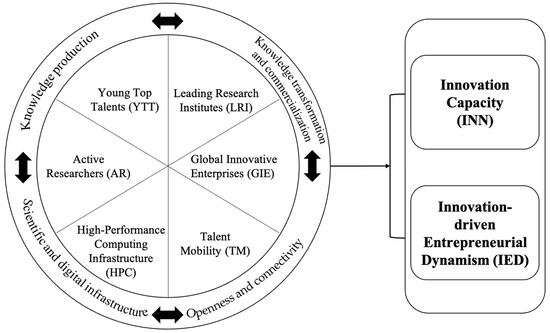

Disclaimer/Publisher’s Note: The statements, opinions and data contained in all publications are solely those of the individual author(s) and contributor(s) and not of MDPI and/or the editor(s). MDPI and/or the editor(s) disclaim responsibility for any injury to people or property resulting from any ideas, methods, instructions or products referred to in the content. |
© 2026 by the authors. Licensee MDPI, Basel, Switzerland. This article is an open access article distributed under the terms and conditions of the Creative Commons Attribution (CC BY) license.