


Abstract
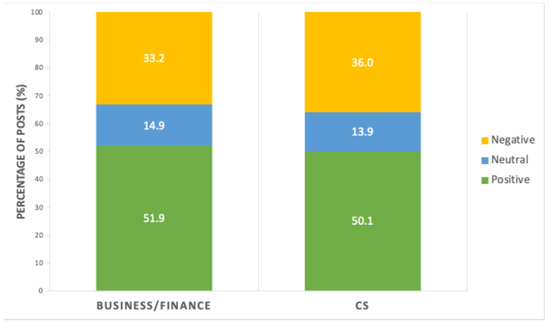
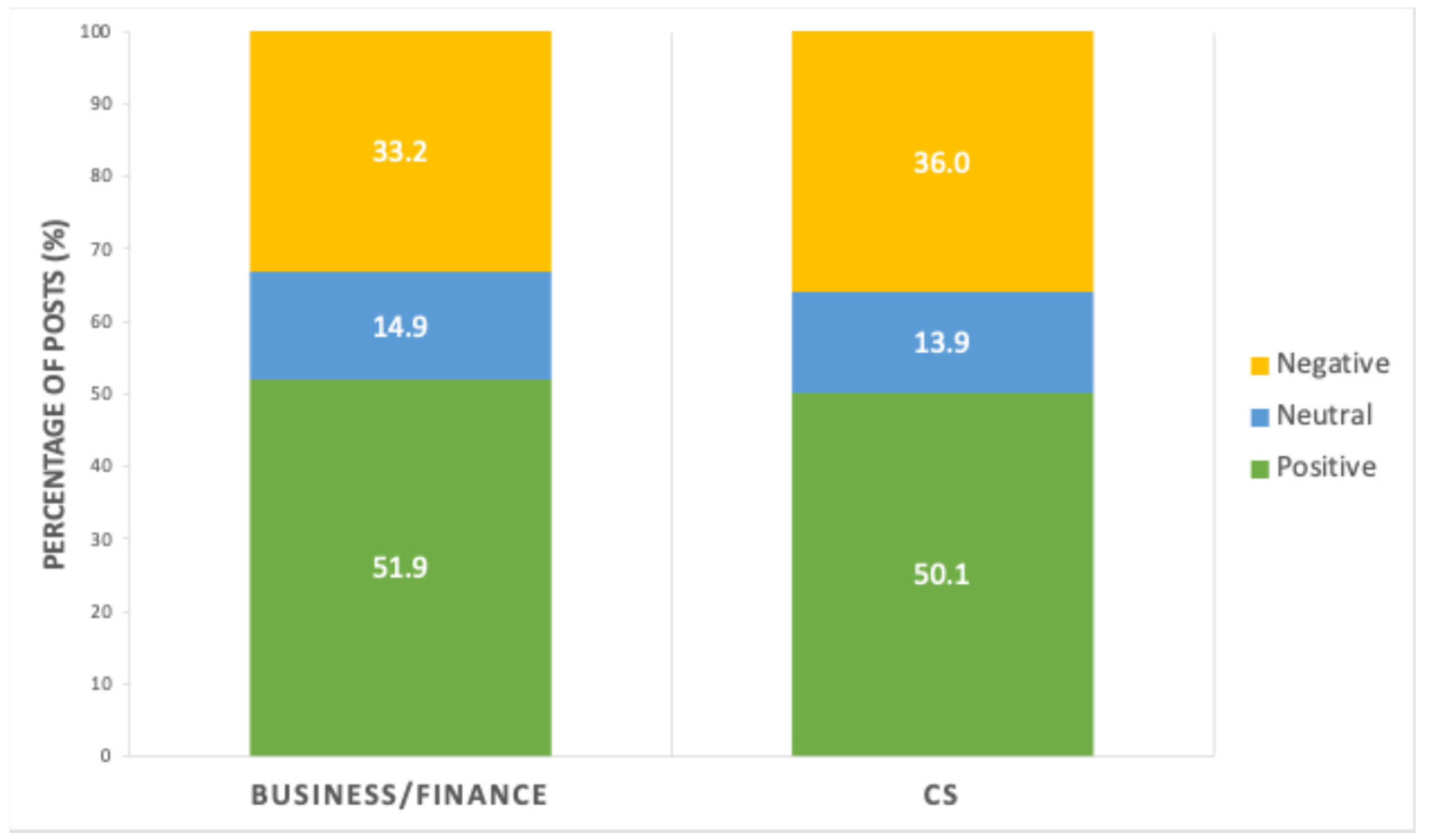
Artificial intelligence (AI) systems and tools are increasingly reshaping educational practices. This study examines perspectives shared in student-focused online communities on AI’s impact on education, comparing those of computer science (CS) and business students through an analysis of Reddit posts. Using natural language processing (NLP), sentiment analysis, and Latent Dirichlet Allocation (LDA) topic modeling, we analyzed 1108 posts collected from six subreddits. Results reveal distinct thematic focuses: CS students emphasize technical aspects, including programming efficiency, coding assistance, and concerns about job displacement, while business students focus on decision-making enhancement, financial analysis applications, and operational efficiency. Sentiment analysis indicates that the Business/Finance-oriented corpus is slightly more positive than the CS-oriented corpus (51.9% vs. 50.1% positive). The CS-oriented corpus also contains a higher proportion of negative posts (36.0% vs. 33.2%). These differences reflect discipline-specific epistemological frameworks shaping AI perception. The findings provide educators with guidelines for developing tailored AI integration strategies that address discipline-specific concerns and opportunities. This study contributes to understanding how academic background influences perceptions of AI in education, offering insights for curriculum design and policy development.
1. Introduction
As Andriessen and Sandberg [1] noted in their foundational analysis of AI’s educational trajectory, AI systems and tools have increasingly penetrated various aspects of our lives, including education. Prior work suggests that AI-enabled educational technologies can shape how students learn and how classroom activities are organized, for example, through personalized support, new instructional formats, and improved integration of learning resources and platforms [2,3,4,5]. At the same time, the perceived benefits and risks of AI in education may vary across student communities and disciplinary contexts.
Winkler and Roos [6] highlighted that social media platforms such as Reddit provide students with an important space to express their views and share experiences, making these platforms valuable data sources for understanding student perspectives. Zhang and Aslan [7] highlighted the value of studying AI-in-education developments and called for further empirical evidence from diverse data sources.
Building on prior work discussing AI and the student experience [8], this study compares how CS-oriented and business/finance-oriented Reddit communities discuss AI in learning and classroom contexts. We selected these two disciplinary fields because they represent contrasting orientations toward AI: CS students are trained to build and critically evaluate AI systems, while Business students are trained to apply AI as a decision-support tool. This conceptual distinction makes the comparison analytically meaningful for understanding how disciplinary backgrounds shape perceptions of AI in education. There are significant differences in educational backgrounds, professional knowledge, and career paths between students majoring in computer science and those majoring in business [9]. By analyzing students’ social media data in these two fields, we can gain a more comprehensive understanding of how artificial intelligence affects students’ learning and classroom experience across different academic backgrounds [10].
We collected relevant Reddit posts via web scraping, following common practices in Reddit-based learning analytics studies [11]. Reddit, a global social news website, has a large user base and diverse discussion topics, making it a rich data source. Through web scraping technology, we can effectively obtain these posts and perform subsequent text analysis and clustering.
For text analysis, we use natural language processing techniques to conduct in-depth text mining of the collected posts. Using sentiment analysis and topic modeling, we aim to reveal attitudes and experiences regarding AI in educational contexts and to compare patterns across the two discipline-oriented corpora.
Overall, this study provides an exploratory, data-driven comparison of how CS and business/finance students frame AI in educational contexts. The findings contribute to understanding the current discourse around AI adoption in education and may inform instructional design and policy discussions while acknowledging the limitations of social-media-based evidence [12,13].
2. Literature Review
AI is increasingly reshaping educational practices, promising significant advancements in teaching and learning. Foundational perspectives by Schank and Edelson [2], Beck et al. [14], and Woolf [15] envisioned AI’s transformative potential early on, advocating for technology-driven educational reform to reshape methodologies through innovation. Providing a historical lens on this trajectory, Williamson and Eynon [12] and Chen et al. [16] identified current challenges and proposed future directions for development within educational frameworks. More recently, Tahiru [17] conducted a comprehensive review across contexts, documenting diverse impacts and future potentials while acknowledging the uncertainties inherent in integration.
Despite the focus on technology, the educator remains central to this shift. Guilherme [18] explored this dynamic, affirming the indispensable role of teachers in effectively leveraging AI tools to enhance learning. This aligns with Zawacki-Richter et al. [19], who, in a systematic review of higher education, emphasized the educator’s pivotal role in driving innovation and research in AI initiatives.
Regarding specific applications and tools, Yang [20] highlighted precision education as a key frontier, advocating for personalized approaches that integrate student data to optimize outcomes. Expanding on specific systems, Mousavinasab et al. [21] and Nye [22] examined the applications and effectiveness of AI-powered Intelligent Tutoring Systems (ITS) in online and broader educational contexts. Katiyar et al. [10] further evaluated the effectiveness of such AI-driven personalization in enhancing learning experiences across various settings. Finally, integrating these systems requires strong governance. Miao et al. [23] emphasized the critical role of policy frameworks, advocating strategic alignment between policies and technological advancements. Complementing this, Holmes et al. [24] addressed ethical considerations, proposing frameworks to ensure responsible deployment and mitigate potential risks.
In summary, the literature indicates that AI applications in education may support personalization, feedback, and data-informed instructional decisions. However, the evidence also points to practical and ethical constraints, including the need for educator capacity, institutional governance, and responsible use. These considerations motivate empirical work that examines how students themselves interpret AI’s benefits and risks in real discussions.
3. Research Gap and Questions
Despite extensive research on AI in education, comparative evidence on how students from different disciplines discuss AI in educational contexts on social media remains limited [25]. To address this gap, we compare CS-oriented and business/finance-oriented Reddit discussions to identify dominant themes and sentiment patterns.
Disciplinary context may matter because students’ training and career expectations shape what they attend to when evaluating AI. CS programs typically emphasize programming and systems thinking, whereas business/finance programs emphasize decision-making, organizational practice, and market-oriented analysis [9]. These differences may influence whether students focus on issues such as technical reliability, learning dependency, employability, or practical workflow benefits.
Accordingly, comparing CS- and business/finance-oriented discussions on Reddit can provide insight into how these communities interpret AI’s role in learning and future work. This study addresses the gap by systematically collecting and analyzing Reddit posts to (i) identify dominant themes and (ii) compare sentiment patterns across the two disciplinary corpora. Because subreddit membership is an imperfect proxy for student identity, we interpret the findings as discipline-oriented discourse patterns rather than definitive population estimates. Thus, the following research questions guide this study:
RQ1.
What are the key thematic differences in how CS and Business students discuss AI in education on Reddit?
RQ2.
How do sentiment patterns (polarity and intensity) differ between CS and Business students regarding AI in education?
4. Materials and Methods
This section describes the study design, including data collection, preprocessing, analysis, and visualization. Data processing was performed using Python 3.11.5. The goal is to examine how AI-related classroom and learning experiences are discussed by CS-oriented and business/finance-oriented communities on Reddit. Throughout the paper, “CS students” refers to posts from CS-related subreddits and “business students” refers to posts from business/finance-related subreddits; group assignment is based on subreddit source rather than verified self-identification. The CS-oriented corpus was collected from r/cscareerquestions, r/learnprogramming, and r/compsci, whereas the Business/Finance-oriented corpus was collected from r/MBA, r/FinancialCareers, and r/business. We use “Business students” as an umbrella term that includes finance-related discussions, as finance is a core discipline within most business school curricula; we acknowledge that this grouping conflates distinct sub-disciplines, which we address as a limitation.
4.1. Data Collection
Reddit was chosen as the primary platform for data collection due to its global reach and diverse user demographics. As a social news aggregation and discussion website, Reddit offers a rich tapestry of discussions that can provide nuanced insights into student perspectives on AI in education. On Reddit, specific subreddits gather users with similar interests or professional backgrounds, such as students and professionals in computer science or business, to facilitate comparative research on the viewpoints of specific groups. Moreover, Reddit has a large user base, and discussions on the platform are updated in real time, reflecting the latest developments and changes in people’s perspectives. Moreover, the structure of posts and comments on Reddit is clear, making it easy to crawl and analyze text.
Keywords were carefully selected to capture the essence of discussions related to AI in educational contexts. These include terms such as “AI education”, “AI classroom”, “AI finance”, “AI study”, “AI business”, and “AI code CS”. These keywords were designed to guide the web crawler in identifying relevant posts for analysis.
Web-crawling technology was used to retrieve posts from Reddit systematically. The crawler was programmed to identify and extract posts that contain the predefined keywords. The data collected included text content and publishing information, ensuring a comprehensive dataset for analysis. Table 1 lists the six subreddits included in the study and the discipline-oriented grouping used for comparison.
Table 1.
Subreddits included in the study and their discipline-oriented grouping.
4.2. Data Preprocessing
The collected data underwent rigorous cleaning to remove any noise that could skew the analysis. This involved eliminating duplicate posts, advertisements, and any content deemed irrelevant to the study’s objectives. The cleaning process was critical in ensuring the accuracy and reliability of the dataset.
The cleaned text data was further processed to prepare it for analysis. This included segmenting the text, removing stop words, and extracting word stems. These steps facilitated more effective text analysis by reducing the complexity of the data.
4.3. Sentiment Analysis
We used the SnowNLP sentiment module to estimate the valence and intensity of attitudes expressed in the posts. SnowNLP returns a continuous sentiment score from 0 to 1, with higher values indicating more positive sentiment. Following the coding procedure used in our analysis, scores above 0.6 were classified as positive, scores below 0.4 as negative, and scores between 0.4 and 0.6 as neutral. The same thresholds were applied to both corpora, and no additional post hoc contextual adjustment rules were used. Results were then summarized at the corpus level for each discipline-oriented group.
4.4. Content Analysis
Based on the sentiment analysis results, various visual charts were created to facilitate deeper analysis of the text. These charts included:
- Sentiment Analysis Circular Graphs visually depict sentiment distributions, providing a quick overview of the overall emotional tone of the discussions.
- Overall Sentiment Tendency Graphs provide a comprehensive view of sentiment trends across all collected posts, highlighting significant patterns and outliers.
4.5. LDA (Latent Dirichlet Allocation) Topic Modeling
The LDA model was employed to uncover hidden topic structures within the collected documents. This statistical method treats each document as a blend of multiple topics, each represented by a set of keywords. The LDA analysis aimed to enhance insights into the specific views of CS and business students on AI’s impact in classrooms.
We used Latent Dirichlet Allocation to identify latent themes, training separate models for the CS and Business corpora under the same preprocessing settings. Models were trained in Gensim with 20 passes, 1000 iterations, chunksize = 100, alpha = 0.1, eta = 0.01, and a random seed = 42. To justify the number of topics, we evaluated K from 2 to 10 using Cv coherence. Coherence is maximized at K equal to 3 for the Business corpus, whereas the CS corpus reaches a slightly higher maximum at K equal to 8 but remains close at K equal to 3. Because the primary objective is to compare high-level themes between the two communities at a consistent resolution, we report results with K = 3 for both corpora and provide the full coherence results in Appendix A. Topics were labeled by examining high-probability terms and representative high-loading posts, with LDAvis and word-cloud visualizations used to support qualitative interpretation. The results of the LDA analysis were visualized using interactive tools such as:
- LDAvis Bubble Charts provide a dynamic visualization of the topics, showing the relationships and distributions of the keywords within each topic.
- Word Clouds were generated for each topic to visually overview the most salient terms, emphasizing the keywords that define each topic.
The visualizations and analysis from the LDA model were interpreted to understand the underlying themes and discourses present in the discussions. This interpretation aimed to reveal the specific concerns, hopes, and expectations that CS and business students have regarding AI in education.
By combining these methodologies, this study aims to provide a systemic and multifaceted view of AI’s impact on students’ classroom experiences, as reported by students from diverse academic backgrounds. This approach not only offers insights into the current state of AI systems and tools in education but also sets the stage for further research and discussion on the future of AI in the classroom.
5. Results
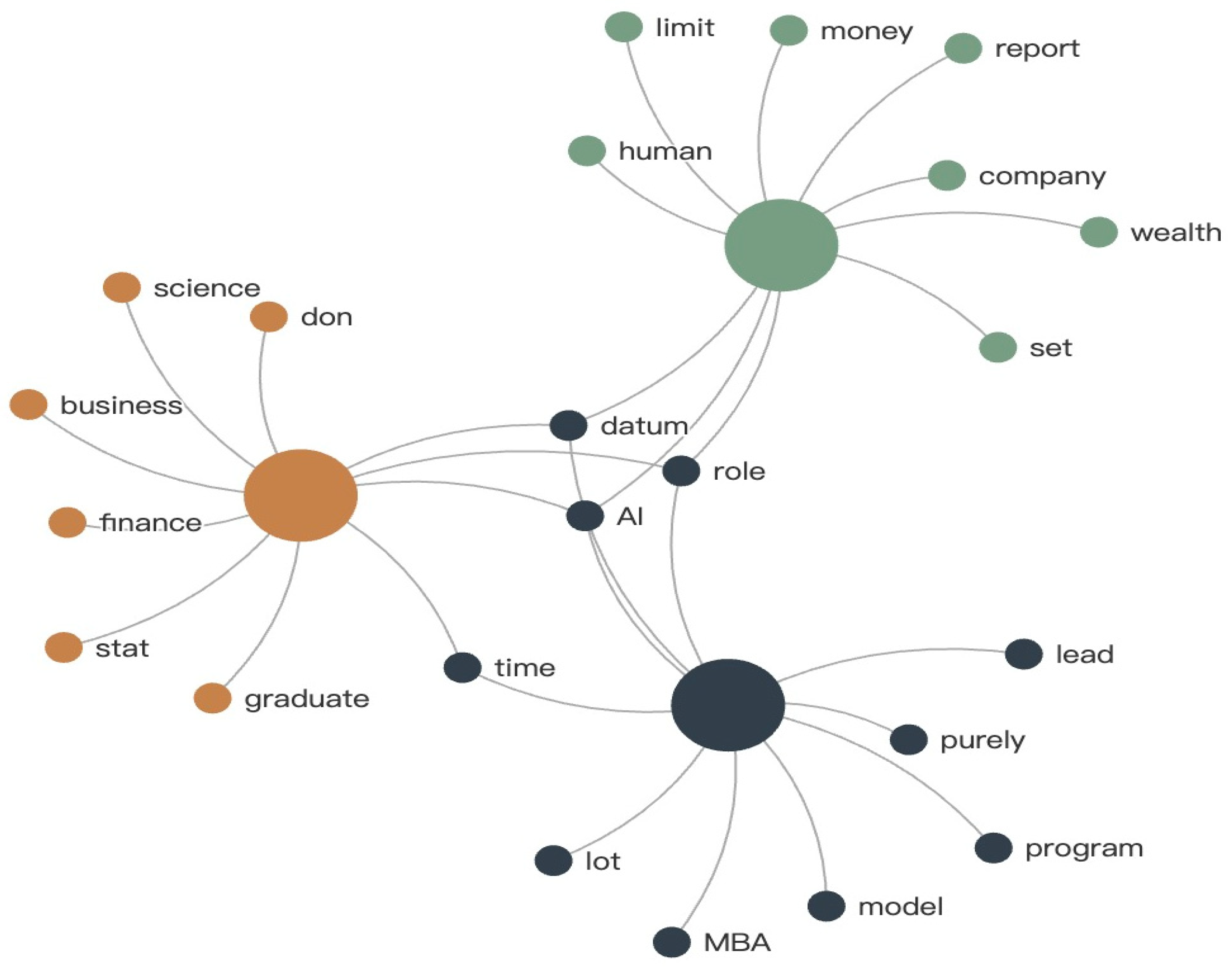
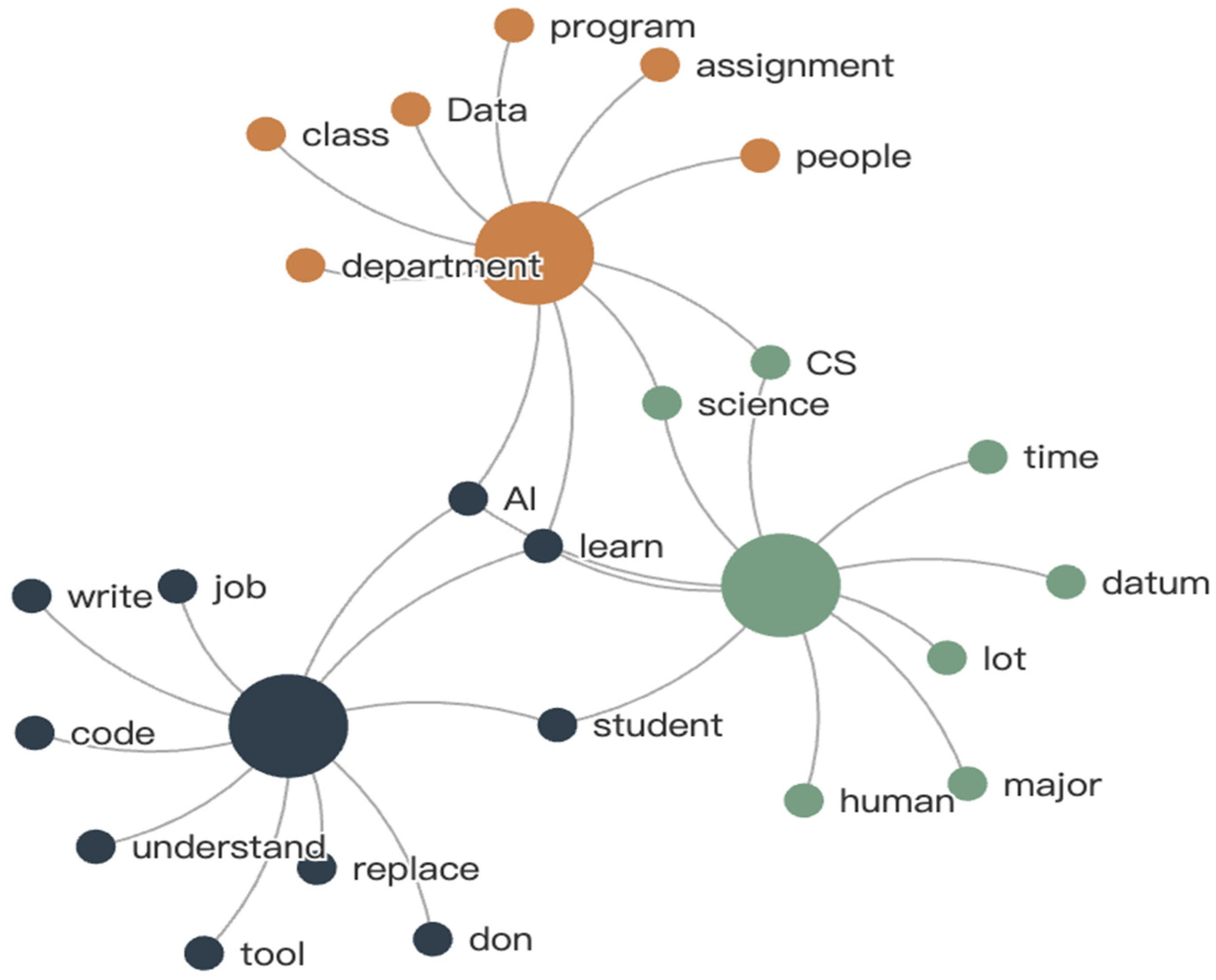
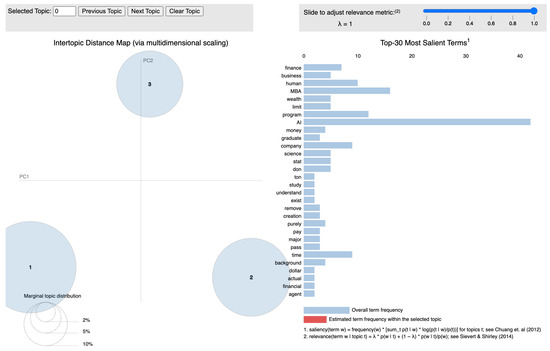
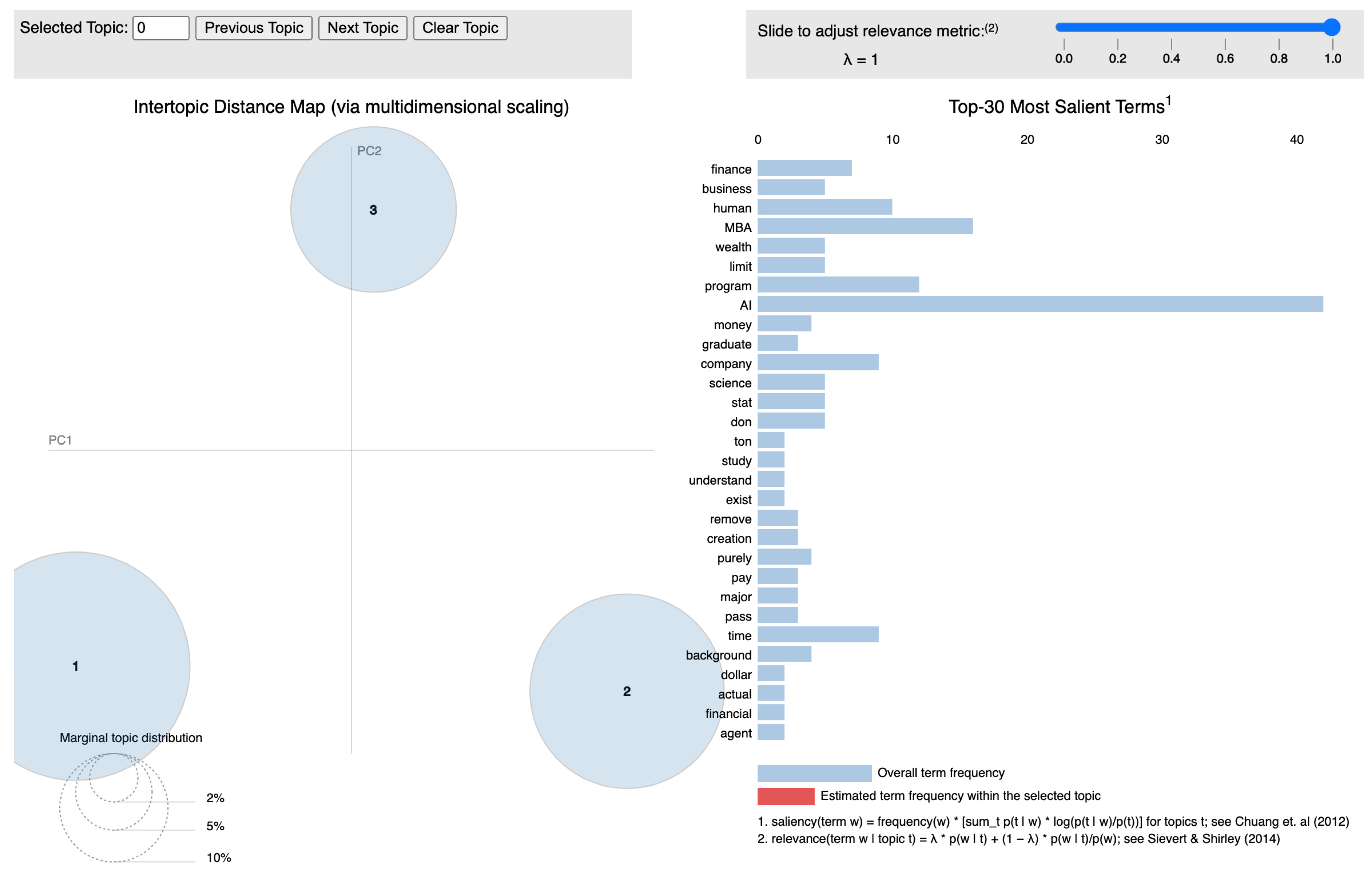
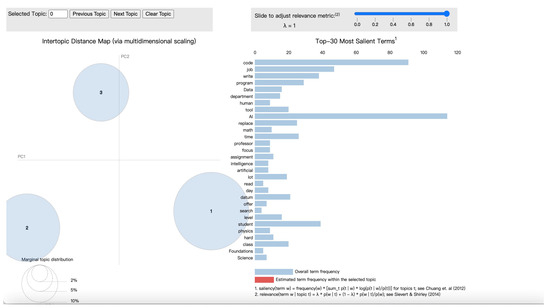
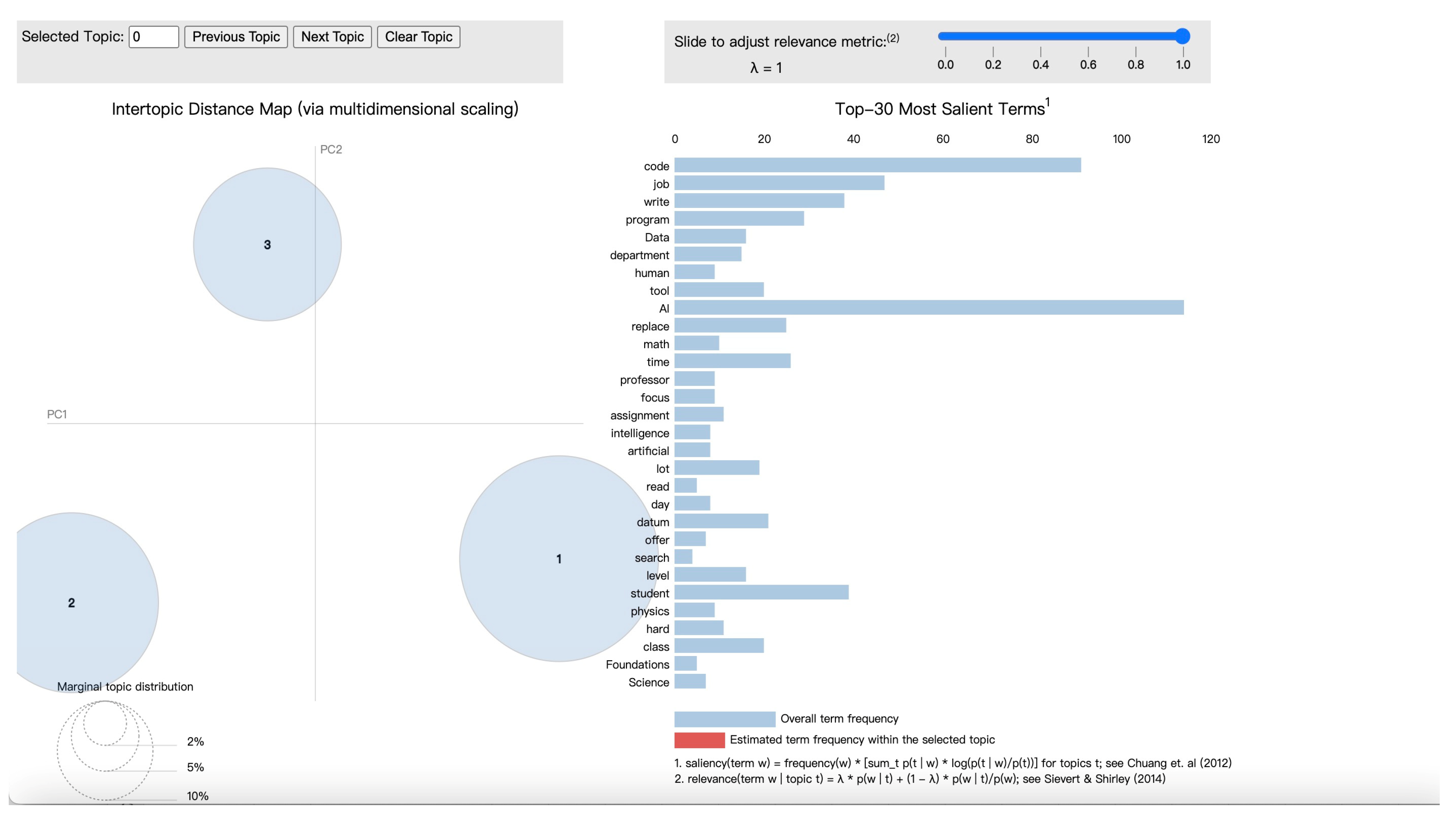
Three topics were retained for both corpora for cross-group comparison. Figure 1 and Figure 2 present the LDAvis bubble charts for the Business and CS corpora, respectively, and Figure 3 and Figure 4 display the most relevant terms. Table 2 and Table 3 summarize the three topics for each group with descriptive labels and representative top terms. Although CS coherence peaks at K = 8, the high-level thematic structure remains similar, and K = 3 provides a consistent level of granularity for comparison; full coherence results are reported in Appendix A.
Figure 1.
Ldavis Bubble Chart for business students.
Figure 2.
Ldavis Bubble Chart in computer science.
Figure 3.
Interactive topic visualization created by pyLDAvis for business students. The circles labeled 1–3 denote Topics 1–3, and their sizes reflect topic prevalence. The bar chart shows the most salient terms, with blue bars indicating overall term frequency [26,27].
Figure 4.
Interactive topic visualization created by pyLDAvis for CS students. The circles labeled 1–3 denote Topics 1–3, and circle size reflects topic prevalence. The bar chart shows the most salient terms, with blue bars indicating overall term frequency [26,27].
Table 2.
CS-oriented topics, descriptive labels, and representative top terms (stemmed tokens).
Table 3.
Business/Finance-oriented topics, descriptive labels, and representative top terms (stemmed tokens).
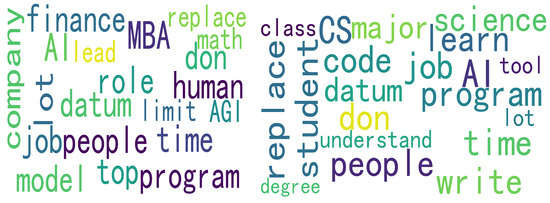
Table 4 and Table 5 show the top 10 most salient terms of each topic. Figure 5 depicts the Word clouds in business and CS.
Table 4.
Top 10 most salient terms of each topic for business students.
Table 5.
Top 10 most salient terms of each topic for CS students.
Figure 5.
Word clouds for business versus computer students.
5.1. Key Discussion Topic Review (RQ1)
By observing the terms associated with each topic and the inter-topic distances when assigning different topic numbers, batch sizes, and random states, 3 topics are ultimately determined to be optimal.
Figure 1 and Figure 2 present the LDAvis intertopic distance maps, which visualize the spatial relationships among topics. Each circle represents a topic, and its size indicates the relative prevalence of that topic in the corpus. The distance between circles reflects topic similarity, where larger distances suggest greater semantic differentiation. Table 2 and Table 3 present the three topics for the CS and Business corpora, respectively, together with descriptive labels and representative top terms. Salient terms were identified using pyLDAvis’s relevance metric, which balances term frequency within a topic against term distinctiveness across topics [26]. Across both corpora, the three topics are clearly separated, indicating distinct thematic structures. The CS corpus is dominated by programming- and learning-related themes, whereas the Business/Finance corpus emphasizes MBA, company, finance, and management-related themes.
Although both groups have actively discussed AI systems and tools, the applications and impacts in their respective fields differ. The topic structure suggests that the CS corpus emphasizes tool use for coding workflows and skill development, whereas the business/finance corpus emphasizes organizational and market applications.
Representative examples substantiate these interpretations: a CS student post in Topic 1 stated, “ChatGPT (web interface; exact underlying model/version unspecified) has been incredibly helpful for debugging my code. It explains errors clearly and suggests fixes faster than searching Stack Overflow,” while a Business student post in Topic 3 noted, “AI tools are changing how we analyze financial data. The automation of routine analysis lets us focus on strategic decision-making.”
5.2. Sentiment Analysis Revealing Differences (RQ2)
Figure 6 compares the sentiment polarity distribution (positive/neutral/negative) between the Business/Finance-oriented corpus and the CS-oriented corpus using a single comparative bar chart. Both corpora are predominantly positive (Business/Finance: 51.9%; CS: 50.1%). However, the CS corpus contains a higher share of negative posts (36.0% vs. 33.2%), while neutral posts remain a minority in both groups (14.9% vs. 13.9%). Overall, differences are modest (≤2.8 percentage points) but align with the qualitative themes reported in RQ1, in which CS-oriented discussions more frequently emphasize job displacement and the limitations of AI-generated code.
Figure 6.
Sentiment polarity distribution in AI-in-education discussions across Business/Finance-oriented and CS-oriented subreddits. The green, blue, and orange represent positive, neutral, and negative sentiments, respectively.
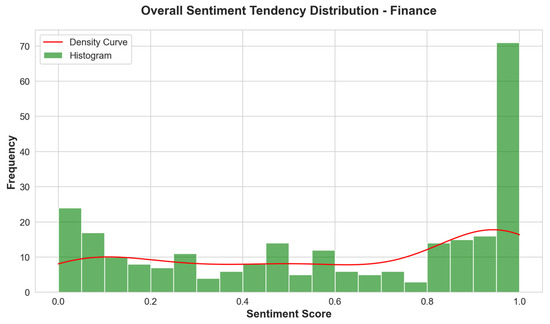
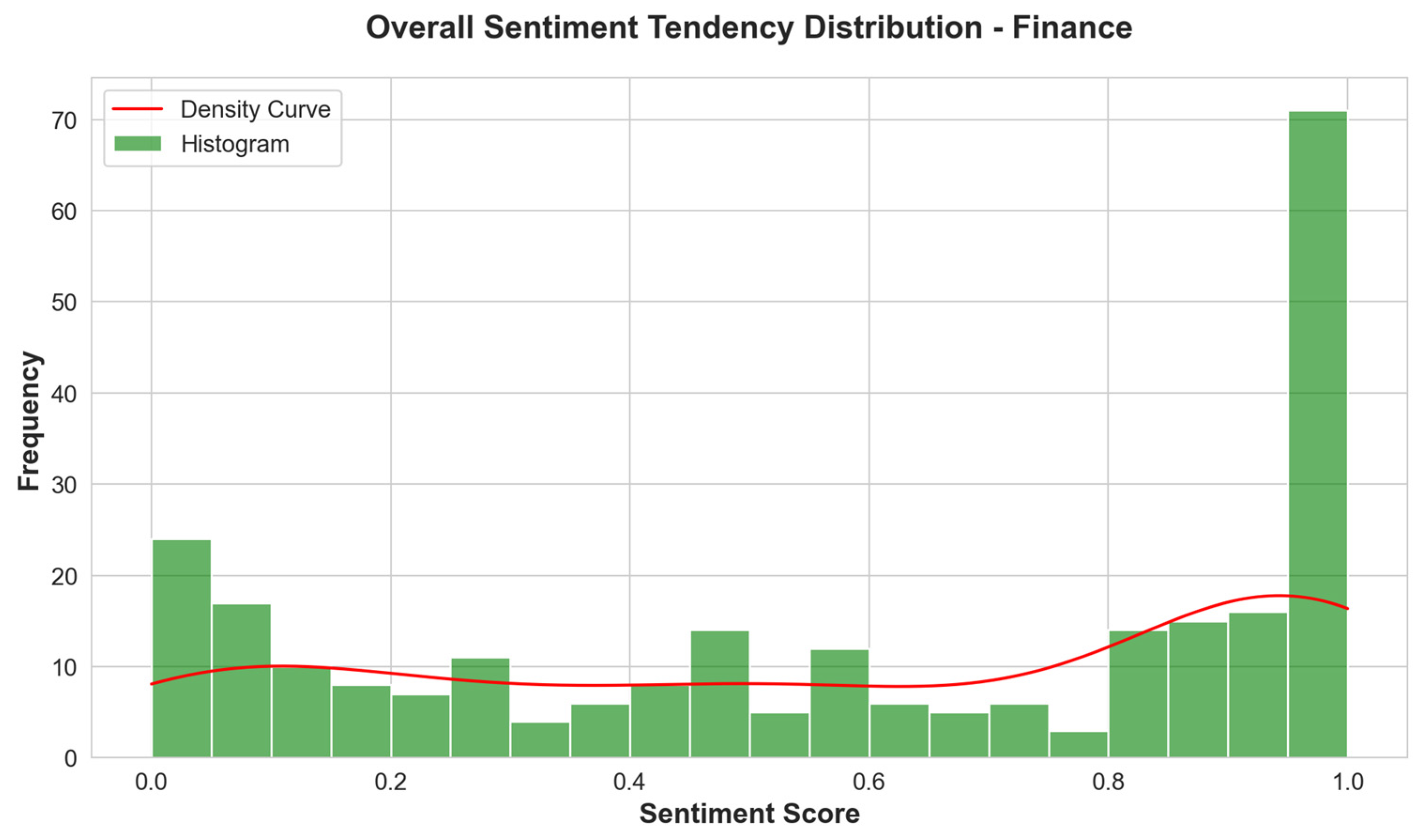
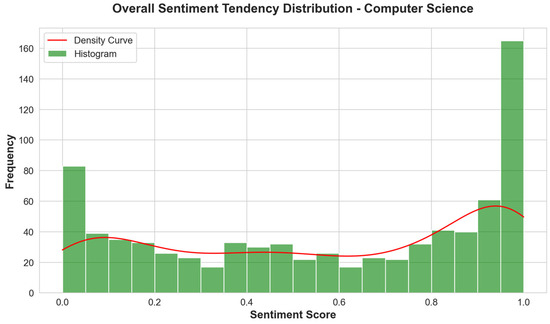
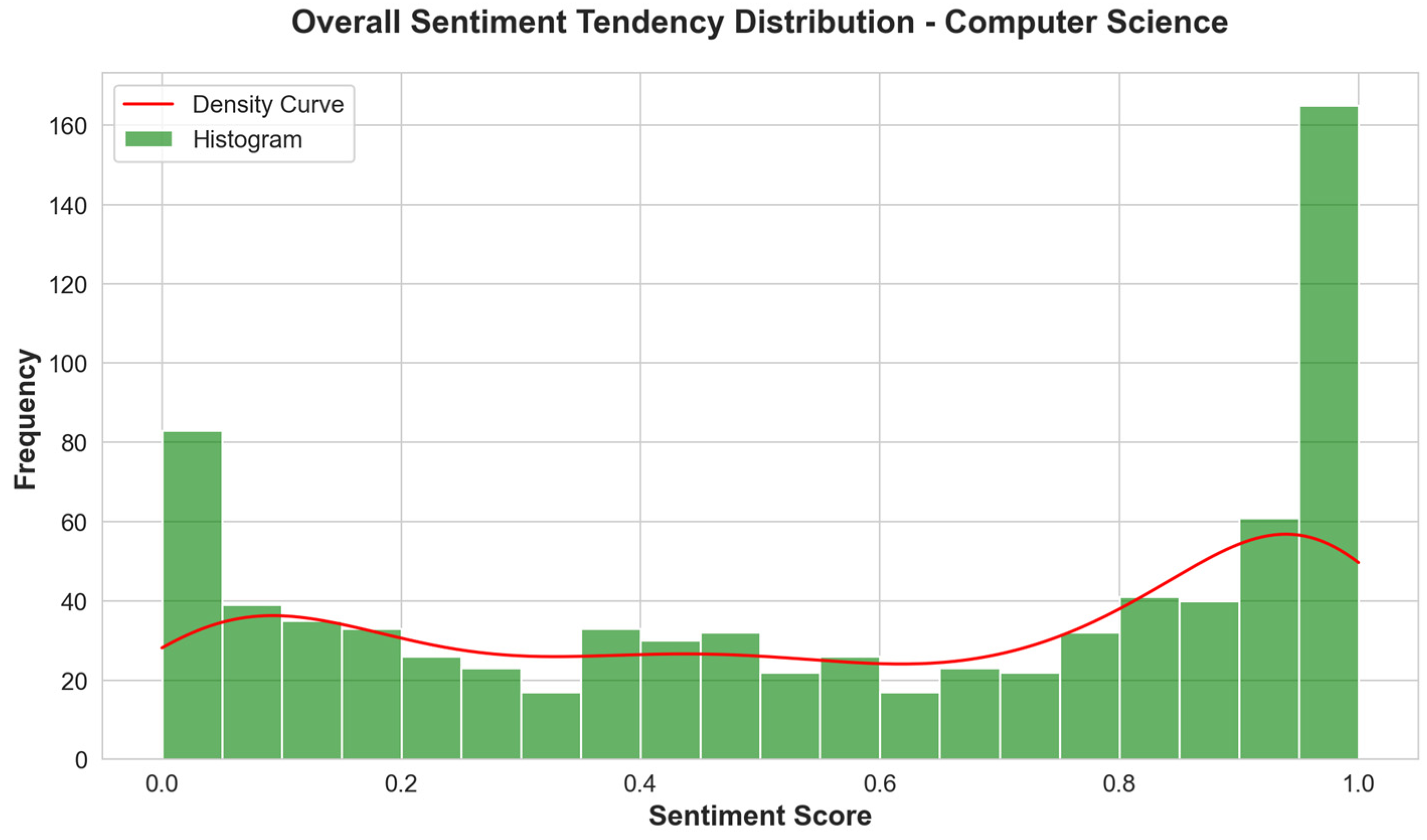
Figure 7 and Figure 8 show the distribution of continuous sentiment scores (scaled from 0 = most negative to 1 = most positive) for the Business/Finance-oriented and CS-oriented corpora, plotted as histograms with kernel density curves. In both groups, scores cluster toward the extremes—particularly near 1—while mid-range values are less frequent, indicating a polarized (approximately bimodal) pattern rather than a uniform or neutral distribution. The CS corpus exhibits two notable density peaks: one at low scores (around 0.1) and another near 1, suggesting that strongly negative posts occur more often in CS-oriented discussions alongside strongly positive content. By contrast, the Business/Finance corpus is dominated by a sharp peak near 1 and shows a weaker low-score peak, resulting in a more positively skewed and less dispersed distribution overall. This shows that sentiment scores in the CS corpus are more widely spread across the 0–1 range, whereas Business/Finance sentiment scores are more concentrated at the positive end.
Figure 7.
Overall Emotional Tendency Map for business students.
Figure 8.
Overall Emotional Tendency Map for CS students.
6. Discussion
Our findings suggest that both CS- and business/finance-oriented discussions often frame AI as improving learning efficiency and providing on-demand support. Many students describe AI tools as assisting with coding, writing, and data organization, suggesting that AI is often perceived as a supplementary learning resource that provides immediate feedback and support. This is consistent with evidence that AI-enhanced classroom tools can benefit learning when appropriately integrated [28]. Similarly, recent research has emphasized the role of generative AI systems in improving efficiency and facilitating knowledge access in educational contexts [29].
At the same time, the topic modeling results (RQ1) reveal clear disciplinary differences in how students discuss AI technologies. CS-oriented discussions are strongly associated with technical vocabulary such as code, debugging, and programming tasks. In contrast, Business-oriented discussions contain more terms related to finance, management, and organizational decision-making. These thematic patterns suggest that students tend to interpret AI technologies through the lens of their disciplinary training and anticipated career paths. More specifically, discussions within CS communities frequently emphasize AI’s role in coding workflows, software development tasks, and technical problem-solving. Many posts describe how AI tools can assist with debugging code, explaining programming concepts, and improving coding efficiency. Some students also portray AI as a catalyst for innovation and experimentation, suggesting that AI tools can help them explore alternative programming approaches and develop new technical solutions. At the same time, some posts raise concerns about excessive reliance on AI tools and the quality of AI-generated outputs, particularly regarding code accuracy and creativity. In contrast, Business-oriented discussions more often highlight the practical applications of AI in financial and organizational contexts. Students frequently refer to AI’s potential to improve decision-making, automate routine analytical tasks, and enhance operational efficiency in business environments. Some discussions also frame AI adoption as a potential competitive advantage that enables organizations to analyze data more effectively and respond more quickly to market changes. In addition, a subset of posts raises broader concerns about ethical responsibility, data governance, and privacy risks associated with the use of AI systems in business and financial settings [30].
The sentiment analysis results (RQ2) further support these disciplinary differences. Although both corpora exhibit predominantly positive sentiment toward AI systems and tools, the CS corpus contains a slightly higher proportion of negative posts and a wider dispersion of sentiment scores. This pattern suggests that discussions within CS communities include both strong enthusiasm for AI’s capabilities and notable concerns regarding its potential limitations and societal impacts. Negative posts among CS-oriented users are more likely to express concerns about reduced competitiveness and potential job displacement. These concerns reflect broader debates about automation and the future of technical labor in AI-related professions [13,20]. Some discussions also highlight the perceived limitations of AI in generating reliable or innovative code. By contrast, Business-oriented discussions tend to express fewer concerns about job replacement and instead emphasize the potential benefits of AI for improving efficiency, supporting managerial decision-making, and enabling data-driven strategies in organizational contexts.
These differences may be explained by the distinct perspectives that disciplinary training fosters. Students in computer science programs are typically more familiar with the underlying mechanisms of AI systems and, therefore, may be more aware of both their capabilities and limitations. This familiarity may contribute to a more cautious or critical stance toward AI, particularly regarding issues such as automation, over-reliance on AI tools, and the reliability of AI-generated outputs. In contrast, students in business-related fields often view AI primarily as a tool to support organizational efficiency, automate repetitive tasks, and enhance strategic decision-making. While this instrumental orientation highlights the perceived benefits of AI for organizational performance, it may also lead some students to underestimate the limitations and risks associated with AI-assisted decision-making, such as over-reliance on automated outputs or insufficient scrutiny of algorithmic recommendations. These findings also resonate with prior discussions on the responsible integration of AI in education. Holmes et al. [24] emphasize that students should develop the ability to evaluate the capabilities and limitations of AI systems critically. The concerns expressed by CS students about automation, the potential for over-reliance on AI tools, and the reliability of AI-generated outputs underscore the importance of developing critical AI literacy in technology education. At the same time, the generally positive orientation observed among Business students suggests that AI literacy education should also encourage them to critically assess the reliability, transparency, and accountability of AI-supported decision processes in organizational contexts.
Despite these differences, the findings also reveal a broadly positive perception of AI tools as educational resources across both disciplines. Many students describe AI systems as useful for answering questions, assisting with problem-solving, and supporting learning processes. This suggests that AI technologies are increasingly perceived not only as technical innovations but also as practical learning aids that complement traditional educational resources. These findings have several implications for the integration of AI technologies in higher education. Rather than broadly restricting students’ use of AI tools, educators may achieve better outcomes by providing clear guidance on appropriate use, verification practices, and academic integrity. Instructional designers can incorporate AI tools into personalized and adaptive learning activities [20,31] while also introducing cross-disciplinary examples that demonstrate how AI technologies are applied in different professional contexts. For example, since CS-oriented discussions frequently highlight concerns about the quality of AI-generated code and the potential impact of automation on technical careers, seminars and coursework could focus on helping students critically evaluate AI-generated outputs and understand how AI tools may reshape future programming work. Similarly, because Business-oriented discussions emphasize decision-making and organizational efficiency, instructional activities may incorporate case studies that demonstrate how AI systems are applied in financial analysis, business strategies, and data-driven management. Educators can also help students critically evaluate the capabilities and limitations of AI systems and remain informed about emerging technological developments [24]. Encouraging students to engage with AI tools in authentic, real-world problem-solving contexts may help them develop both practical skills and critical perspectives regarding AI technologies.
To support these goals, a more systemic approach to AI integration in higher education may be necessary. Institutions may consider offering training programs that help students develop AI literacy and understand the potential implications of AI technologies for future careers. AI-enabled teaching assistants and adaptive learning platforms can provide additional support by responding to student questions, offering personalized feedback, and facilitating interactive learning environments [32,33,34]. At the same time, universities should ensure that the necessary infrastructure is available for deploying AI systems and tools, including reliable computing resources and appropriate software environments.
7. Conclusions
This study examined how CS and business students discuss AI in education on Reddit, addressing two research questions with the following key findings. For RQ1 (thematic differences), LDA topic modeling revealed distinct thematic focuses between groups: CS students emphasize technical aspects including programming efficiency (Topic 1: “Technical Skills and Programming”), career development (Topic 2: “Learning and Career Development”), and academic structure (Topic 3: “Academic Structure and Data Science”), while business students focus on practical applications including graduate education planning (Topic 1), corporate applications (Topic 2), and finance operations (Topic 3). These differences reflect discipline-specific concerns and career orientations. For RQ2 (sentiment differences), sentiment analysis revealed significant differences: business students showed more positive attitudes (51.9% positive) than CS students (50.1% positive), and CS students expressed notably more negative sentiment (33.2% vs. 36.0%), primarily regarding job displacement and AI-generated code quality. Business students’ optimism stems from viewing AI as a decision-support tool rather than a job replacement.
Our results highlight the importance of discipline-sensitive guidance for AI integration in education, aligning with policy-oriented recommendations that emphasize governance and responsible adoption [23]. This indicates that educators need to develop targeted AI education strategies tailored to students from different disciplines [24]. Miao et al. [23] emphasized the importance of policy frameworks for the application of AI in education, and this study also revealed students’ views across disciplines on AI applications, providing a basis for educational policy formulation [18]. By integrating AI systems and tools, students can enhance personalized learning and improve learning efficiency. Policymakers can support these advances by enacting regulations, investing in infrastructure, and providing strong support systems. These efforts can collectively create a more inclusive, efficient, and effective educational environment, thereby preparing students for future challenges and opportunities and better embracing the future influenced by artificial intelligence [17].
This study also has some limitations despite the significant and meaningful differences found. Due to relatively small sample sizes, a short data collection period, and limited data sources, the generalizability and applicability of research results may be limited. Thus, further studies are necessary to review other significant differences in user behavior and content across different disciplines, regions, and cultural backgrounds [35]. To address the limitation, future research may expand sample sizes and extend data collection periods, use multiple social media platforms for broader representation, employ advanced sentiment analysis algorithms (e.g., BERT-based models) to improve accuracy, conduct longitudinal studies tracking attitude changes over time, examine business sub-disciplines separately (finance, marketing, and management), include qualitative interviews to complement social media analysis, and investigate cross-cultural differences in AI perception [36]. Third, our ‘Business students’ category encompasses discussions from finance-focused subreddits alongside general business forums. While finance is typically housed within business schools, the conflation of these sub-disciplines may obscure nuanced differences in how finance versus marketing or management students perceive AI.
Author Contributions
Conceptualization, L.Y.; methodology, L.Y.; software, L.Y.; validation, L.Y., H.W. and Z.X.; formal analysis, L.Y.; investigation, L.Y.; resources, L.Y.; data curation, L.Y.; writing—original draft preparation, L.Y.; writing—review and editing, H.W., Z.X., R.T., S.P.-M.C., and K.K.W.H.; visualization, L.Y.; supervision, D.K.W.C.; project administration, L.Y., S.P.-M.C., K.K.W.H. and D.K.W.C.; funding acquisition, D.K.W.C. All authors have read and agreed to the published version of the manuscript.
Funding
This research received no external funding.
Data Availability Statement
The raw data supporting the conclusions of this article will be made available by the authors on request.
Conflicts of Interest
The authors declare no conflict of interest.
Appendix A. Coherence-Based Justification for K
We report coherence scores for –10 for both corpora, computed with identical preprocessing and LDA settings (random seed = 42). These results support as the optimal solution for the Business corpus and show that the CS corpus achieves slightly higher coherence at larger , with a small absolute gain relative to .
Table A1.
coherence scores for –10.
References
- Andriessen, J.; Sandberg, J. Where is education heading and how about AI. Int. J. Artif. Intell. Educ. 1999, 10, 130–150. [Google Scholar]
- Schank, R.C.; Edelson, D.J. A role for AI in education: Using technology to reshape education. J. Artif. Intell. Educ. 1989, 1, 3–20. [Google Scholar]
- Boulay, B.D. Artificial intelligence as an effective classroom assistant. IEEE Intell. Syst. 2016, 31, 76–81. [Google Scholar] [CrossRef]
- Berendt, B.; Littlejohn, A.; Blakemore, M. AI in education: Learner choice and fundamental rights. Learn. Media Technol. 2020, 45, 312–324. [Google Scholar] [CrossRef] [Scilit]
- Chen, Y.; Jensen, S.; Albert, L.J.; Gupta, S.; Lee, T. Artificial intelligence (AI) student assistants in the classroom: Designing chatbots to support student success. Inf. Syst. Front. 2023, 25, 161–182. [Google Scholar] [CrossRef] [Scilit]
- Winkler, R.; Roos, J. Bringing AI into the classroom: Designing smart personal assistants as learning tutors. In ICIS 2019 Proceedings; Association for Information Systems: Atlanta, GA, USA, 2019. [Google Scholar]
- Zhang, K.; Aslan, A.B. AI technologies for education: Recent research future directions. Comput. Educ. Artif. Intell. 2021, 2, 100025. [Google Scholar] [CrossRef] [Scilit]
- Khare, K.; Stewart, B.; Khare, A. Artificial intelligence and the student experience: An institutional perspective. Int. Acad. Forum (IAFOR) J. Educ. 2018, 6, 63–78. [Google Scholar] [CrossRef] [Scilit]
- Yang, R. Artificial intelligence-based strategies for improving the teaching effect of art major courses in colleges. Int. J. Emerg. Technol. Learn. 2020, 15, 146–160. [Google Scholar] [CrossRef] [Scilit]
- Katiyar, N.; Awasthi, M.V.K.; Pratap, R.; Mishra, M.K.; Shukla, M.N.; Tiwari, M. Ai-Driven Personalized Learning Systems: Enhancing Educational Effectiveness. Educ. Adm. Theory Pract. 2024, 30, 11514–11524. [Google Scholar] [CrossRef] [Scilit]
- Li, S.; Xie, Z.; Chiu, D.K.W.; Ho, K.K.W. Sentiment Analysis and Topic Modeling Regarding Online Classes on the Reddit Platform: Educators versus Learners. Appl. Sci. 2023, 13, 2250. [Google Scholar] [CrossRef] [Scilit]
- Williamson, B.; Eynon, R. Historical threads, missing links, and future directions in AI in education. Learn. Media Technol. 2020, 45, 223–235. [Google Scholar] [CrossRef] [Scilit]
- Woolf, B.P.; Lane, H.C.; Chaudhri, V.K.; Kolodner, J.L. AI grand challenges for education. AI Mag. 2013, 34, 66–84. [Google Scholar] [CrossRef] [Scilit]
- Beck, J.; Stern, M.; Haugsjaa, E. Applications of AI in education. XRDS Crossroads ACM Mag. Stud. 1996, 3, 11–15. [Google Scholar] [CrossRef] [Scilit]
- Woolf, B. AI in Education; University of Massachusetts at Amherst, Department of Computer and Information Science: Amherst, MA, USA, 1991. [Google Scholar]
- Chen, X.; Xie, H.; Zou, D.; Hwang, G.J. Application and theory gaps during the rise of online teaching quality of basic education based on artificial intelligence in education. Comput. Educ. Artif. Intell. 2020, 1, 100002. [Google Scholar] [CrossRef] [Scilit]
- Tahiru, F. AI in education: A systematic literature review. J. Cases Inf. Technol. (JCIT) 2021, 23, 1–20. [Google Scholar] [CrossRef] [Scilit]
- Guilherme, A. AI and education: The importance of teacher and student relations. AI Soc. 2019, 34, 47–54. [Google Scholar] [CrossRef] [Scilit]
- Zawacki-Richter, O.; Marín, V.I.; Bond, M.; Gouverneur, F. Systematic review of research on artificial intelligence applications in higher education -where are the educators? Int. J. Educ. Technol. High. Educ. 2019, 16, 39. [Google Scholar] [CrossRef] [Scilit]
- Yang, S.J. Precision education—A new challenge for AI in education. J. Educ. Technol. Soc. 2021, 24, 105–108. [Google Scholar]
- Mousavinasab, E.; Zarifsanaiey, N.R.; Niakan Kalhori, S.; Rakhshan, M.; Keikha, L.; Ghazi Saeedi, M. Intelligent tutoring systems by and for the developing world: A systematic review of characteristics, applications, and evaluation methods. Interact. Learn. Environ. 2021, 29, 142–163. [Google Scholar] [CrossRef] [Scilit]
- Nye, B.D. Intelligent tutoring systems by and for the developing world: A review of trends and approaches for educational technology in a global context. Int. J. Artif. Intell. Educ. 2015, 25, 177–203. [Google Scholar] [CrossRef] [Scilit]
- Miao, F.; Holmes, W.; Huang, R.; Zhang, H. AI and Education: A Guidance for Policymakers; UNESCO Publishing: Paris, France, 2021. [Google Scholar]
- Holmes, W.; Porayska-Pomsta, K.; Holstein, K.; Sutherland, E.; Baker, T.; Shum, S.B.; Santos, O.C.; Rodrigo, M.T.; Cukurova, M.; Bittencourt, I.I.; et al. Ethics of AI in Education: Towards a Community-Wide Framework. Int. J. Artif. Intell. Educ. 2022, 32, 504–526. [Google Scholar] [CrossRef] [Scilit]
- Malik, G.; Tayal, D.K.; Vij, S. An analysis of the role of artificial intelligence in education and teaching. In Recent Findings in Intelligent Computing Techniques: Proceedings of the 5th ICACNI 2017, Volume 1; Springer: Singapore, 2019; pp. 407–417. [Google Scholar]
- Sievert, C.; Shirley, K. LDAvis: A method for visualizing and interpreting topics. In Proceedings of the Workshop on Interactive Language Learning, Visualization, and Interfaces, Baltimore, MD, USA, 27 June 2014; Association for Computational Linguistics: Kerrville, TX, USA, 2014; pp. 63–70. [Google Scholar]
- Chuang, J.; Manning, C.D.; Heer, J. Termite: Visualization Techniques for Assessing Textual Topic Models. In Proceedings of the International Working Conference on Advanced Visual Interfaces (AVI 2012), Capri Island, Italy, 22–25 May 2012; Association for Computing Machinery: New York, NY, USA, 2012; pp. 74–77. [Google Scholar]
- Holstein, K.; McLaren, B.M.; Aleven, V. Student learning benefits of a mixed-reality teacher awareness tool in AI-enhanced classrooms. In Artificial Intelligence in Education: 19th International Conference, AIED 2018, London, UK, 27–30 June 2018, Proceedings, Part I 19; Springer International Publishing: Cham, Switzerland, 2018; pp. 154–168. [Google Scholar]
- Dai, Y.; Liu, A.; Lim, C.P. Reconceptualizing ChatGPT and generative AI as a student-driven innovation in higher education. Procedia CIRP 2023, 119, 84–90. [Google Scholar] [CrossRef] [Scilit]
- Soni, N.; Sharma, E.K.; Singh, N.; Kapoor, A. Artificial intelligence in business: From research and innovation to market deployment. Procedia Comput. Sci. 2020, 167, 2200–2210. [Google Scholar] [CrossRef] [Scilit]
- Diwanji, P.; Hinkelmann, K.; Witschel, H.F. Enhance Classroom Preparation for Flipped Classroom using AI and Analytics. In Proceedings of the 20th International Conference on Enterprise Information Systems; Science and Technology Publications: Setúbal, Portugal, 2018; Volume 1, pp. 477–483. [Google Scholar]
- Montenegro-Rueda, M.; Fernández-Cerero, J.; Fernández-Batanero, J.M.; López-Meneses, E. Impact of the implementation of ChatGPT in education: A systematic review. Computers 2023, 12, 153. [Google Scholar] [CrossRef] [Scilit]
- Chiu, T.K.; Moorhouse, B.L.; Chai, C.S.; Ismailov, M. Teacher support and student motivation to learn with Artificial Intelligence (AI) based chatbot. Interact. Learn. Environ. 2024, 32, 3240–3256. [Google Scholar] [CrossRef] [Scilit]
- Li, M.; Su, Y. Evaluation of online teaching quality of basic education based on artificial intelligence. Int. J. Emerg. Technol. Learn. (iJET) 2020, 15, 147–161. [Google Scholar] [CrossRef] [Scilit]
- Song, P.; Wang, X. A bibliometric analysis of worldwide educational artificial intelligence research development in recent twenty years. Asia Pac. Educ. Rev. 2020, 21, 473–486. [Google Scholar] [CrossRef] [Scilit]
- Salas-Pilco, S.Z. The impact of AI and robotics on physical, social-emotional and intellectual learning outcomes: An integrated analytical framework. Br. J. Educ. Technol. 2020, 51, 1808–1825. [Google Scholar] [CrossRef] [Scilit]

Disclaimer/Publisher’s Note: The statements, opinions and data contained in all publications are solely those of the individual author(s) and contributor(s) and not of MDPI and/or the editor(s). MDPI and/or the editor(s) disclaim responsibility for any injury to people or property resulting from any ideas, methods, instructions or products referred to in the content. |
© 2026 by the authors. Licensee MDPI, Basel, Switzerland. This article is an open access article distributed under the terms and conditions of the Creative Commons Attribution (CC BY) license.