


Abstract
The impact of artificial intelligence (AI) innovation on urban labor markets has emerged as a critical issue. Drawing on economic density and governmental digital attention, this study examines 268 Chinese cities from 2010 to 2023 and integrates theoretical analysis with empirical testing to systematically investigate the employment effects of AI innovation at the urban level and the underlying mechanisms. The results indicate that, overall, AI innovation has a positive effect on urban employment, with more pronounced effects in the secondary and tertiary sectors and in southern cities. Mechanism analysis shows that AI innovation indirectly promotes employment growth by enhancing urban economic density, while governmental digital attention positively moderates the relationship between AI innovation and urban employment. Extended analysis reveals that, from a temporal perspective, AI innovation affects the scale of urban employment through both immediate and lagged effects, with the magnitude of these effects diminishing over time, and that the effects are cumulative and stage-specific; from a spatial perspective, AI innovation generates significant positive spatial spillover effects on employment in neighboring cities, thereby promoting the expansion of their employment scale. These findings provide theoretical and empirical support for governments to coordinate AI development and urban employment in a place-specific manner.
1. Introduction
In August 2025, the State Council of China proposed that by 2030, artificial intelligence (AI) will be fully empowering high-quality development in China, with the penetration rate of new-generation smart terminals, AI agents, and other applications exceeding 90%. By 2035, the country will fully enter a new stage of intelligent economy and intelligent society development. As a key driver of the Fourth Industrial Revolution, the widespread adoption of AI may trigger cascading effects on product upgrading, production efficiency, labor supply, and demand. Unlike previous automation technologies, which primarily replaced routine tasks, AI penetrates into high-skilled positions, sparking widespread societal concerns over technological unemployment [1]. Through agglomeration economies, economies of scale, and knowledge spillovers, cities become key spatial carriers for the diffusion of new technologies, factor reallocation, and job creation. As a general-purpose technology, AI influences production organization and labor demand in ways that typically rely on urban high-density market environments and well-developed industrial linkages. Against the backdrop of China’s continued urbanization, labor, capital, and innovative factors increasingly concentrate in cities, and changes in urban employment largely shape the regional employment landscape. Compared with rural areas or firm-level contexts, urban labor markets exhibit more complex dynamics, rendering the impact of AI innovation on urban employment more multidimensional and uncertain. Meanwhile, substantial differences across Chinese cities in technology penetration, industrial structure, and labor market institutions lead to spatial heterogeneity in the employment effects of AI. In this context, a systematic examination of the employment effects of AI innovation and their underlying mechanisms at the urban level holds both theoretical significance and pressing practical relevance.
Endogenous growth theory, represented by Romer, posits that sustained economic expansion is primarily driven by the accumulation of knowledge and continuous technological innovation [2]. The Creative Destruction theory further posits that technological progress continuously destroys old technologies, production systems, and market structures, while simultaneously creating new economic structures, markets, and business forms at a higher level [3,4]. As a typical manifestation of endogenous technological progress today, the development and diffusion of AI can generate new labor demand at the macro level, offsetting or even exceeding the job displacement effects caused by automation. However, the effectiveness of AI technologies requires certain enabling conditions. First, innovation activities themselves display geographic agglomeration [5], and the reliance on tacit knowledge during AI-related innovation makes this spatial concentration particularly pronounced in knowledge-intensive industries. Economic density, being the spatial manifestation of agglomeration economies, measures the intensity of concentration for economic factors within a defined spatial area [6]. The positive externalities of agglomeration economies on employment are mainly realized through Scope economies, Marshallian externalities, and Jacobs externalities, which together enhance the efficiency of labor allocation and increase the effective labor supply through labor-sharing mechanisms. Scope economies stem from internal scale advantages within firms; Marshallian externalities arise from intra-industry input–output linkages, knowledge spillovers, and shared labor markets; while Jacobs externalities derive from inter-industry knowledge spillovers and forward–backward linkages. Therefore, the impact of AI on employment might be indirectly transmitted to the labor market through economic density. Specifically, the applications of AI reduce the costs of factor mobility and information sharing, optimize resource allocation, and foster innovative business models, consequently attracting businesses and labor to concentrate and augment urban economic density. Higher economic density, in turn, provides impetus for employment growth by deepening specialization and promoting knowledge spillovers. In addition, under China’s market system, the regulatory role of the government, as a key player, cannot be overlooked. The development of AI in China follows a model that combines “efficient markets” with an “active government.” Keynesian employment theory suggests that when market mechanisms fail to maintain full employment, government intervention—through proactive fiscal and industrial policies—can stimulate effective demand and stabilize employment [7]. Governmental digital attention embodies the strategic prioritization of AI development, policy support intensity, and digital governance capacity. By shaping industrial planning, providing fiscal incentives, improving digital infrastructure, and implementing talent policies, governments guide the allocation of resources and influence the direction and pace of AI technology diffusion. Moreover, by fostering a more efficient digital business environment and stimulating market vitality, closer governmental digital attention can amplify the employment-creating effects of AI innovation. These raise the question: What is the role of urban economic density and government attention in the mechanism through which AI innovation influences urban employment? Answering this question provides more actionable policy insights for governments to tailor the coordination of AI development and employment growth in the new era, thereby promoting inclusive development.
The remainder of the study is organized as follows. Section 2 reviews the literature on the effects of AI on labor markets and identifies the marginal contributions of this study. Section 3 develops a theoretical model and proposes three research hypotheses. Section 4 presents the empirical design, including model specifications, variable definitions, and data sources. Section 5 and Section 6 conduct empirical tests of the three hypotheses. Specifically, Section 5 tests Hypothesis 1 and reports endogeneity and robustness checks, as well as heterogeneity analyses. Section 6 examines the underlying mechanisms and empirically tests Hypotheses 2 and 3. Section 7 provides extended analyses by exploring the impact of AI on urban employment from temporal and spatial perspectives. Section 8 concludes with a summary of the main findings, policy implications, research limitations, and directions for future research.
2. Literature Review
The impact of AI innovation on employment is still up for debate among academics. One viewpoint suggests that AI innovation may lead to technological unemployment. A report by the IMF stated AI may impact nearly 40% of global jobs [8]. Advanced economies face a bigger risk from AI than emerging markets and developing economies [9]. Under demand rigidity, the technological substitution effect cannot be sufficiently mitigated by market expansion, hence amplifying the risk of net job loss [10]. Some scholars even contend that firms using robots are more likely to replace high-skilled, high-cost labor with machines to maximize profits, which may result in a more significant negative impact on high-skilled jobs [11,12]. The second viewpoint posits that AI technology could be neutral for employment. The impact of AI on employment is contingent on context rather than purely negative. Future changes in labor market structure are not only technology-driven but also constrained by external factors such as institutional environments, consumer behavior, and global market structures [13]. The degree to which AI substitutes traditional labor is highly dependent on the extent to which AI covers core skills [14]. Nakamura & Zeira’s task model illustrates that while AI automates old tasks, new tasks are also created and absorb labor, ultimately leading to a steady-state equilibrium [15]. The third viewpoint is that AI technology can promote employment. AI technology drives business expansion by enhancing production efficiency, which in turn increases labor demand. Concurrently, technological advancement perpetually produces novel employment structures [16]. Even while the labor income share is trending downward in industries with productivity gains, macro-level employment is nevertheless increasing [17]. In regions such as Europe and Japan, where labor costs are high, the population is aging, and there is a relative shortage of productive labor in middle-aged and younger cohorts, AI innovation has not only failed to significantly replace jobs but has also promoted employment expansion and wage growth [18,19]. Regarding the mechanisms through which AI impacts employment, on one hand, AI innovation optimizes production and factor allocation in traditional industries, promoting industrial upgrading and improving labor employment. On the other hand, by reducing circulation, transaction, and integration costs, AI creates conditions for industrial agglomeration and fosters collaborative innovation-oriented industrial cluster ecosystems. These, in turn, indirectly generate more employment opportunities through both vertical extension and horizontal expansion of industrial chains [20]. Furthermore, scholars also suggested that factors like human capital level, R&D investment intensity, and technology adoption duration play a moderating role [21,22,23]. In addition, government intervention can effectively mitigate labor market shocks associated with AI [24].
In recent years, research on the relationship between AI and employment has gradually expanded within the Chinese context. Most studies suggest that, under China’s market conditions, AI technologies exert a generally positive impact on the labor market. Using provincial panel data from China, Shen and Zhang examine AI innovations—particularly the adoption of industrial robots—and find that AI introduction and installation increase employment and raise employment shares in labor-intensive industries and among female workers [25]. Based on textual analysis of annual reports of Chinese listed firms, Chen et al. showed that AI intensity significantly enhances firm productivity and operational competitiveness and generates a positive effect on labor demand [24]. From a spatial perspective, Tian and Sui documented that AI development across Chinese provinces concentrates mainly in industrial manufacturing and relatively affluent regions and exhibits significant positive spatial dependence; however, their analysis does not examine the spatial spillover effects of AI development on employment [26].
The current literature provides valuable insights for this study. Nonetheless, specific constraints persist. First, in terms of analytical perspective, most studies focus on micro-level data from industries or enterprises, concentrating on the reshaping of labor relations inside production units due to AI technology. However, they do not consider the market spillover effects on other industries or enterprises, and overlook labor reallocation, perhaps leading to an inaccurate assessment of AI’s actual effects on employment. There is limited research on how AI is affecting labor markets in metropolitan areas. Second, in terms of impact pathways, while fiscal expenditure and human capital are frequently analyzed, with little research examining the impact pathways from the perspectives of economic density and governmental digital attention. Third, in terms of analytical methods, most existing studies focus on contemporaneous and local effects while overlooking the temporal lag and spatial spillover characteristics of the relationship between artificial intelligence and labor employment.
The study examines the impact of AI on urban labor markets, exploring the roles of economic density and governmental digital attention in this context. The potential marginal contributions are threefold. First, from an urban perspective, this study utilizes a sample of 268 Chinese cities (2010–2023), constructing a theoretical model followed by empirical analysis to examine the impact of AI on employment within urban geographic units. Second, it disentangles the pathways via which AI influences urban employment from the dimensions of economic density and governmental digital attention, extending the mechanistic understanding in the existing literature. Third, the analysis examines potential lagged effects, cumulative effects, and spatial spillover effects of AI innovation on urban employment from both temporal and spatial perspectives. These provide policy design references for developing countries to balance AI innovation with high-quality employment.
3. Theoretical Model and Research Hypothesis
This study formulates a theoretical model based on the task analysis frameworks of Acemoglu & Restrepo; Aghion et al. [14,27] to illustrate the micro-level process by which AI innovation influences urban employment. Initially, it characterizes the labor market’s demand and its response to the shocks of AI. Next, the model examines the determinants and their directional impacts on total employment after an AI technology shock by calculating the total differential of the labor decision equation under conditions of factor market equilibrium. Finally, the study derives the conclusions of the theoretical model and presents the research hypotheses.
3.1. Theoretical Analysis of AI Innovation Impacting Urban Employment
Drawing upon the research of Acemoglu & Restrepo; Aghion et al. [14,27] for a given city c where total output Yc is produced through a series of continuous production tasks s ∈ [0,S] with 0 ≤ S ≤ 1. Xc(s) denotes the output specialized in task s during the production process, and these tasks are combined together in fixed proportions:
Production tasks are categorized into two groups. The first category, referred to as “intelligent tasks,” can employ an intelligent production mode by integrating advanced machinery and labor, with output modeled by a Cobb–Douglas function. The second category, referred to as “non-intelligent tasks,” depends exclusively on manual labor and does not incorporate intelligent production methods. The production function of task s in city c is delineated as follows:
In Equation (2), Ms represents the input of intelligent equipment, Lms represents the labor input in intelligent tasks, and Lns represents the labor input in non-intelligent tasks. The parameter α denotes the elasticity of substitution between intelligent equipment and labor, with α ∈ [0, 1]. The term λ(s) represents the output efficiency of human machine collaboration, where λ(s) ∈ [0, 1], while η(s) represents labor productivity in non-intelligent tasks, with η(s) ∈ [0, 1]. For simplicity, labor productivity in intelligent tasks is normalized to 1, that is, η (s ∈ intelligent tasks) = 1. Given the output level, firms choose the cost-minimizing combination of production factors. A further assumption is made as follows [28]:
Equation (3) defines W as the equilibrium wage and R as the rental rate of intelligent equipment. The left-hand side, , indicates that in non-intelligent tasks, the relative productivity of labor exceeds its relative cost—implying that labor holds a comparative advantage. Conversely, the right-hand side, , signifies that in intelligent tasks, the relative productivity of intelligent equipment surpasses its relative cost, meaning intelligent equipment possesses a comparative advantage. Therefore, in equilibrium, intelligent tasks will necessarily employ intelligent equipment to assist production, while non-intelligent tasks will be performed entirely by labor. The factor market clearing conditions are given by:
Consistent with Acemoglu et al. [29], let the proportion of intelligent tasks be denoted by θ ∈ (0, 1). The share of non-intelligent tasks is (1 − θ). The total labor input allocated to intelligent tasks (Lcm) and non-intelligent tasks (Lcn) in city cc can be determined as follows:
The total labor input in city c is given by . Based on the expressions above, the following is derived:
Taking the total differential of the aggregate urban labor input leads to:
Equation (10) indicates that AI innovation may affect the urban employment market through four potential channels, as analyzed below:
The coefficient of the first term reflects the marginal effect of changes in the share of intelligent tasks (θ) on the urban employment scale. Under the assumption of rational economic agents, and . Thus, , which implies that the coefficient of is positive. Ceteris paribus, this indicates that a higher share of intelligent tasks enlarges the urban employment scale.
The second term’s coefficient represents the marginal effect of changes in intelligent equipment input on the urban employment scale. Given that , the coefficient of is negative. Ceteris paribus, an increase in intelligent equipment input leads to a decline in urban employment.
The coefficient of the third component captures the marginal effect of changes in human–machine collaboration efficiency on urban employment. Since , the coefficient of is also negative. Ceteris paribus, a human improvement–machine collaboration efficiency reduces urban employment scale.
The coefficient of the fourth term reflects the marginal effect of changes in total output on urban employment. Given that and , the coefficient of is positive. Ceteris paribus, an increase in total output promotes urban employment growth.
The above analysis reveals that AI affects employment scale mainly through two channels: substitution effect and creation effect. Enhancements in intelligent equipment utilization and production efficiency through human machine collaboration create a substitution impact on labor demand. Traditional labor and automation technologies demonstrate task-specific comparative advantages. Human machine substitution occurs when automation demonstrates significant cost-effectiveness, thereby reducing labor costs and optimizing production efficiency [30]. In contrast, the creation effect emerges from the rising share of intelligent tasks and total output. An increase in the proportion of intelligent tasks reduces overall operating costs and improves production efficiency, which in turn lowers product prices, stimulates consumer demand expansion, and encourages firms to scale up production—ultimately increasing labor demand in non-intelligent segments.
The ultimate impact of AI on urban labor markets is shaped by the equilibrium between the substitution and creation effects, and is closely linked to a country’s labor market conditions. Long-term historical evidence shows that since the First Industrial Revolution, a range of new occupations has emerged—such as engineers, accountants, managers, and maintenance technicians. As a new generation of general-purpose technology, AI is no exception in its potential for job creation [31]. China’s historical data demonstrate that advances in AI have not produced large-scale unemployment. In fact, both the magnitude of economic activities and the scale of employment have increased alongside technical progress. Figure 1 illustrates that urban employment in China exhibited an increasing trajectory from 2010 to 2023, rising from 347 million to 470 million. Concurrently, the employment structure experienced notable adjustments. Primary sector employment fell from 279 million to 169 million—a decrease of 39.4%; the secondary sector fluctuated, peaking at 232 million in 2012 before gradually recovering to 215 million post-2019; the tertiary sector emerged as the dominant employment pillar, surging by 35.36%, from 263 million to 356 million. Building upon the theoretical discussion above, the study posits the following hypothesis:
Figure 1.
Employment Trends in China, 2010–2023. Note: Figure 1 is constructed based on data obtained from the “China Statistical Yearbook”. The total of sectoral employment corresponds to China’s overall employment, rather than the urban employment.
H1.
AI innovation contributes to an increase in the scale of urban employment.
3.2. Theoretical Mechanisms Analysis of AI Innovation Affecting Urban Employment
3.2.1. Theoretical Analysis of the Economic Density’s Mediating Effect
Unlike firm- or job-level analyses, the employment effects of AI at the urban level do not manifest primarily through the direct substitution or creation of jobs, but rather emerge indirectly by influencing firm agglomeration, factor mobility, and modes of production organization. In the context of AI diffusion, economic density captures changes in the concentration of urban economic factors and spatial efficiency, providing a sound theoretical basis for its role as a mediating variable. Examining the indirect transmission mechanism of economic density in the relationship between AI innovation and urban labor employment helps clarify the interaction between urban spatial economic development and labor markets.
Taking the total differential of the production function for intelligent tasks yields:
Taking the partial derivative with respect to total labor input yields:
Equations (11) and (12) delineate the correlations among AI innovation, economic density, and employment magnitude. Equation (11) demonstrates that an augmentation in AI equipment input or an enhancement in human machine coordination directly elevates the output of intelligent tasks, thus fostering increased economic density within the city. As shown in Equation (12), since , output expansion stimulates employment growth. Therefore, it can be theoretically inferred that the degree of AI innovation can indirectly promote urban employment growth through the enhancement of economic density.
Specifically, AI facilitates the optimization of capital–labor allocation efficiency across urban industries, strengthens information processing and networking to promote knowledge spillovers, and decreases transaction costs while increasing total factor productivity. These reinforce economies of scale and network externalities, attracting high-skilled labor and advanced industries to cluster, thereby further intensifying the spatial concentration of economic activities. Such productivity enhancements and optimized resource allocation elevate economic production per unit of urban space, resulting in increased economic density. Second, as a technological innovation, AI is characterized by high R&D investment, significant return risks, and prolonged adoption lags. Its advancement depends on robust urban economic capacity for sustenance. An elevated degree of economic density offers AI technology scalable application scenarios and a sustainable environment for enhancement, while simultaneously assisting firms in fostering technological development and practical application capabilities, dismantling information barriers, and reducing production and transaction costs. The decrease in production and transaction costs promotes the spatial concentration of enterprises, resulting in economies of scale. Considering that AI technologies demonstrate increasing returns to scale, greater economic density allows firms and industries to exploit scale economies, so achieving efficiency and cost benefits, improving market competitiveness, and consequently raising labor demand. Building on the aforementioned mechanism analysis, the study posits the following hypothesis:
H2.
AI innovation indirectly fosters urban employment growth via economic density.
3.2.2. Theoretical Analysis of the Governmental Digital Attention’s Moderating Effect
Governmental digital attention originates from the “attention-driven policy choice model” proposed by Jones et al., which emphasizes the significance of issues that receive closer attention in the policymaking process [32]. Given that policymakers’ attention is a scarce resource, its allocation directly shapes policy preferences and resource distribution. As underpinned by the Attention-Based View, the government’s limited attention resources tend to concentrate on major socioeconomic transformations, thereby triggering targeted policy responses [33,34]. Governmental digital attention measures the degree to which a government prioritizes digital technologies and applications. It signifies the distribution of constrained governmental focus on the digital domain, hence affecting future policy development, resource distribution, and behavioral direction. The regulating mechanism of governmental digital engagement in the influence of AI implementation on urban employment functions chiefly through the following routes. First, the implementation of AI in industry necessitates significant capital investment and policy backing. Higher governmental digital attention implies greater public financing for infrastructure and technical expertise necessary for AI development, conveys policy indications, and reallocates societal resources to this area. These alleviate the risks of technological unemployment and are essential in promoting employment development led by AI. Second, governmental digital attention plays a guiding role in the labor market and may establish a robust foundation for its advancement. The government’s emphasis on digital advancement creates a demonstration effect by offering fiscal subsidies and legislative incentives for enterprises to embrace and develop AI technology, hence prioritizing support for certain firms in implementing intelligent production [35]. This enables other companies to acknowledge the considerable potential of AI-driven change, consequently drawing additional enterprises to participate in intelligent manufacturing, enhancing the overall industrial framework, and increasing labor demand. Third, governmental digital engagement assumes a crucial role in the advancement of AI-driven urban job growth. Implementing adaptable social security systems and lifelong learning initiatives—such as vocational training subsidies and employment matching platforms—strengthens labor market resilience and mitigates structural unemployment challenges. Consequently, as a preliminary step in policy development, governmental focus can enhance the employment-generating impacts of AI technology while mitigating its displacement implications, thus favorably influencing overall variations in urban employment levels. Building on the preceding analysis, the study posits the following hypothesis:
H3.
Governmental digital attention positively moderates the impact of AI innovation on urban employment expansion.
4. Study Design
4.1. Model Construction
This study analyzes the effects of AI innovation on urban employment by applying the fixed-effects model as a benchmark regression. This specification is justified for two main reasons: Initially, both the Hausman test and F-test yield a statistically zero p-value, rejecting the null hypothesis, demonstrating that the fixed-effects model is superior to the random-effects model. Secondly, by fixing city and year effects, the model effectively controls for the interference of city-specific characteristics and year-specific trends on the results, while mitigating omitted variable bias, thus enabling a more accurate identification of AI innovation’s effects on urban employment. The specific model is as follows:
Equation (13) demonstrates the effects of AI innovation on the urban employment scale. represents the urban employment scale of city i in year t, denotes intensity of AI innovation in city i during year t. represents a vector of control variables. denotes city fixed effects. As cities exhibit heterogeneity in geographical and economic fundamentals and other structural factors, such heterogeneity can affect urban labor demand to some extent. The inclusion of city fixed effects aims to control unobservable, time-invariant urban characteristics that are difficult to measure but systematically affect labor market outcomes. denotes year fixed effects, which controls for characteristics that do not vary across cities. denotes the stochastic error term. represents the effects of AI innovation on urban employment and is the key coefficient of this study.
4.2. Variable Selection
4.2.1. Explained Variable
The explained variable is the urban employment scale (labor), quantified by the number of urban employees in city i during year t. Employment data at the city level are sourced from the “China City Statistical Yearbook” (China National Bureau of Statistics, 2011–2021) and the statistical yearbooks of various regions (2022–2024). Missing data in the yearbooks are supplemented using Statistical Communiqués on National Economic and Social Development of various regions.
4.2.2. Core Explanatory Variable
The core explanatory variable is urban AI innovation (AI). Patents for AI in a region mirror the status of its AI technological innovation. The study utilizes the count of AI patents granted to assess AI innovation intensity, adhering to the methodology of Choi & Leigh [36]. Patent data were gathered in accordance with the “AI Technology Patent Classification System Table” from the “Key Digital Technology Patent Classification System (2023)” released by the China National Intellectual Property Administration (CNIPA) in September 2023. This study identifies relevant AI patents by matching primary classification codes to the standards specified in this document. Only invention patents and utility model patents were included; design patents were excluded due to their unique classification format. AI patent granted counts were aggregated at the city level for the period 2010–2023.
4.2.3. Mediator Variable
The mediator variable is economic density (agg). Economic density quantifies the volume of economic activity per unit of land area, reflecting a city’s level of economic development and agglomeration, and serving as a spatial manifestation of urban agglomeration economies. Following the approach of Ciccone & Hall [6], it is quantified as a ratio of the city’s total output (real GDP) to its administrative land area.
4.2.4. Moderator Variable
The moderator variable is governmental digital attention (diga). This variable assesses the degree of governmental investment and emphasis on the advancement of the digital economy. Utilizing the methodology of Li & Yue [35], this study applies text mining technology to quantify the ratio of digital-related keywords in a city’s Government Work Report in relation to the overall word count. An increased prevalence of digital keywords signifies a more pronounced shift in policymakers’ focus on digital development matters, suggesting an elevated level of governmental digital attention at the local level. This study encompasses two dimensions—“Digital Technology” and “Digital Application”—consisting of a total of 121 phrases. The “Digital Technology” dimension encompasses terminology such as intelligent technology, artificial intelligence, cloud computing, and machine learning, whereas “Digital Application” comprises keywords like intelligent manufacturing, intelligent supply chain, autonomous vehicles, and unmanned banks.
4.2.5. Control Variables
This study accounts for a wide array of regional-level variables to reduce omitted variable bias, considering the several factors influencing labor employment. In line with the research objectives and related studies [25,37], this paper controls for a set of region-level variables from three dimensions: economic structure and market conditions, social and human capital characteristics, and government behavior and institutional factors. The details are as follows.
The first dimension, economic structure and market conditions, includes industrial structure, housing prices, income levels, the degree of openness, and the level of financial development. These variables capture the effects of traditional economic factors on employment. The second dimension, social and human capital characteristics, comprises the level of urbanization, population density, transportation accessibility, and human capital, which account for the influence of urban social and spatial endowments as well as human capital on employment. The third dimension, government behavior and institutional factors, includes the degree of government intervention, the intensity of educational support, the level of medical security, and household registration regulation, reflecting the impact of government fiscal expenditure, public service provision, and institutional arrangements on employment. Qualitative descriptions of the variables are provided in Table 1.
Table 1.
Variable definitions and measurements.
4.3. Data Sources and Descriptive Statistics
Constrained by data availability, this study utilizes a balanced panel dataset covering 268 cities across 31 Chinese provinces, including 4 municipalities directly under the central government and 264 prefecture-level cities, but excludes county-level cities. Data collection comprises two primary components: AI innovation indicators sourced from the China Research Data Services (CNRDS) and China’s “Tianyancha” commercial enterprise database, “the Artificial Intelligence Patent Dataset” (AIPD) released by the United States Patent and Trademark Office (USPTO). City-level socioeconomic indicators derived from the “China City Statistical Yearbook”, provincial/prefecture-level “Statistical Yearbooks”, regional “Statistical Communiques on National Economic and Social Development”, and the LandScan “Global Population Database”.
The analysis employs a balanced panel spanning 2010–2023, resulting in 3752 valid observations. Given that Post-2010, developing information technologies like cloud computing have expedited their commercial applications, offering a substantial data foundation and formidable processing capacity to enhance and refine deep learning algorithms. China’s AI innovation has progressively reached a phase of significant growth. Furthermore, to smooth the data and mitigate the effect of data magnitude differences on estimation results, some variables were ln-transformed. Table 2 shows the descriptive statistics of the variables.
Table 2.
Descriptive Statistics of Variables.
5. Empirical Analysis
5.1. Benchmark Regression
Table 3, column (1) reports the estimated results of Model (13) on the influence of AI innovation for urban employment. The results show that, after controlling for a series of covariates and two-way fixed effects, the estimated coefficient of AI innovation is 0.044 and exhibits statistical significance at the 1% level. As both AI and urban employment are measured in logarithmic form, this coefficient can be interpreted as the elasticity of urban employment with respect to AI innovation. Over the sample period, a 1% increase in the degree of AI innovation in a city corresponds to an approximately 0.044% increase in total employment. At the current stage of development, the job-creation effect of AI innovation partly offsets its automation-driven substitution effect. This finding provides empirical support for Hypothesis 1 (H1).
Table 3.
AI Innovation’s Impacts on Urban Employment.
The 2019 special investigation titled “The Impact of AI Development on Labor Employment”, conducted by the Chinese People’s Political Consultative Conference, indicated that the national impact of AI innovation on employment in China is marked by “a more pronounced incremental effect, with the substitution effect mitigated to some degree.” This corresponds with the empirical findings of this study derived from city-level panel data. Existing studies also note that the economy remains in a phase of “weak” AI, in which task specificity, together with institutional constraints related to economic, legal, and political systems, slows the process of large-scale job displacement [25]. At the same time, as a new general-purpose technology, AI mitigates automation pressures by improving factor allocation efficiency and fostering emerging business models. Moreover, China’s industrial development remains in a high-growth phase, where AI adoption aligns with capacity expansion, and the servitization of manufacturing and the expansion of the platform economy extend the boundaries of human–machine collaboration, thereby contributing to employment growth.
5.2. Endogeneity Tests
This study seeks to account for time fixed effects, city fixed effects, and external environmental factors to reduce omitted variable bias; nonetheless, residual endogeneity may remain due to bidirectional causality. Acemoglu and Restrepo apply the logic of a Bartik instrumental variable (IV) to construct an instrument for robot penetration at the regional level in the United States [14]. Following the approaches of Acemoglu and Restrepo; Goldsmith-Pinkham et al. [14,38], this study constructs a Bartik-style IV for city-level AI innovation and employs two-stage least squares (2SLS) estimation to mitigate potential endogeneity concerns. The specific construction of the IV is as follows:
In Equation (14), denotes the number of AI (machine-related) patent grants in city i in China in 2005, while represents the number of AI patent grants in the United States during 2010–2023 [39]. Finally, to maintain consistency with the functional form of the explanatory variable measuring AI and to smooth the data, the variable is expressed in logarithmic form. Regarding the relevance condition, the stock of AI patents in Chinese cities in 2005 reflects their initial technological endowments. As the United States occupies a global leading position in AI innovation, its development trajectory influences AI technological progress in China. The interaction between these two components, therefore, correlates with city-level AI innovation over the sample period. With respect to the exclusion restriction, first, the number of AI patent grants in cities in 2005 constitutes a strictly predetermined variable and is unlikely to directly affect employment during the sample period. Second, the U.S. AI technological innovation represents an external shock that remains largely independent of labor markets in Chinese cities; its primary channel of influence operates through technology diffusion that affects AI innovation in Chinese cities rather than through direct effects on local employment. Accordingly, the instrumental variable satisfies both the relevance and exogeneity assumptions.
Table 3 reports the Two-Stage Least Squares (2SLS) empirical results. Column (2) displays the first-stage results, where the coefficient on the instrumental variable IVAI equals 0.798 and exhibits statistical significance at the 1% level, indicating a positive association between the instrument and city-level AI innovation. The Kleibergen–Paap rk LM statistic equals 49.101 and exhibits statistical significance at the 1% level, rejecting the null of underidentification. The Kleibergen–Paap rk Wald F statistic equals 50.106, exceeding the Stock–Yogo 10% critical value of 16.380, thereby passing the weak instrument test. Column (3) of Table 3 reports the second-stage results, in which the coefficient on AI innovation equals 0.272 and is statistically significantly positive at the 1% level. This finding indicates that the positive effect of AI innovation on urban employment remains robust after accounting for potential endogeneity, providing further empirical support for H1. The coefficient of AI innovation estimated by the IV-2SLS approach is higher than that obtained from the baseline regression. This may be because the IV-2SLS method employs instrumental variables, which effectively mitigates the potential endogeneity bias present in the baseline regression. As a result, it is able to identify a relatively purer effect of AI innovation on urban employment, leading to a comparatively larger estimated coefficient.
5.3. Robustness Tests
5.3.1. Considering Differences in AI Innovation Measurement Indicators
Robustness checks evaluate potential measurement differences in the metrics of AI innovation. Two alternative proxies are utilized: initially, the number of AI patent applications in each city serves as an alternative metric, compiled in the same manner as the previously described patent grant measure. Then, using a feature keyword extraction method, AI-related firms were identified and screened from China’s Tianyancha corporate database, and the natural logarithm of the number of AI enterprises in each city was used as an alternative measure of AI innovation. Enterprises are categorized as AI enterprises if their business descriptions contain terms such as image recognition, speech recognition, computer vision, chips, or sensors. Columns (1) and (2) of Table 4 exhibit robustness findings utilizing these alternative AI innovation intensity metrics.
Table 4.
Robustness Test of AI Innovation’s Impacts on Urban Employment.
5.3.2. Considering the Impact of Extreme Outliers
This study used winsorization on the sample data at the 1st and 99th percentiles to limit potential bias from extreme outliers and to preserve sample size while addressing distributional skewness. Results utilizing winsorized data are reported in Column (3) of Table 4. Table 4 demonstrates that regardless of the use of other indicators for measuring AI innovation intensity or the implementation of winsorization on the sample, the predicted coefficients for AI consistently stay positive and statistically significant. These results align substantially with baseline estimates, confirming the highly robust positive impact of AI innovation on the urban employment scale.
As shown by the regression results in the three columns of Table 4, the estimated coefficients of AI innovation are 0.039, 0.052, and 0.044, respectively. These estimates are close to those obtained in the baseline regression and are statistically significant at the 1% and 10% levels, collectively confirming the robustness of the baseline results.
5.4. Industry and Regional Heterogeneity Analysis
5.4.1. Industrial Heterogeneity
Given differences in labor intensity and modes of technology adoption across industries, the employment effects of AI innovation may exhibit industrial heterogeneity. Accordingly, following the National Bureau of Statistics of China’s classification of the three sectors, urban employment is disaggregated into primary, secondary, and tertiary sector employment, and the impact of AI innovation is estimated separately for each sector. The results are reported in columns (1)–(3) of Table 5.
Table 5.
Heterogeneous Effects of AI Innovation on Urban Employment.
As shown in Table 5, in the primary sector, the coefficient of AI innovation equals 0.003 and is not statistically significant. By contrast, in the secondary sector, the coefficient of AI innovation equals 0.033 and is statistically significant at the 5% level. In the tertiary sector, the coefficient equals 0.028 and is statistically significant at the 1% level. A 1% increase in the degree of AI innovation corresponds to average increases of approximately 0.033% and 0.028% in urban employment in the secondary and tertiary sectors, respectively. These results indicate that, over the sample period, AI innovation is significantly positively associated with urban employment growth in the secondary and tertiary sectors, while the relationship in the primary sector remains relatively weak.
At present, China’s primary sector continues to rely largely on low-skilled labor, and AI technologies are mainly applied in localized scenarios such as precision agriculture and intelligent monitoring, resulting in relatively limited impacts on labor markets. In contrast, the secondary and tertiary sectors exhibit stronger capacities for technology absorption and more advanced human capital structures. As a skill-biased technology, AI shows greater complementarity with high-skilled labor in manufacturing and modern services, making its adoption more likely to generate positive employment effects through efficiency gains, job structure upgrading, and the development of new business models. This finding is also consistent with the pattern described by the Petty–Clark law, whereby technological progress drives labor reallocation from low value added industries toward high value added industries.
5.4.2. Regional Heterogeneity
China’s vast territory has long been marked by systematic differences between the northern and southern regions in natural endowments, industrial structures, and development trajectories. This suggests that the employment effects of the new wave of technological progress may vary across the north–south divide. Compared with the “eastern–central–western–northeastern” regional classification, which mainly reflects gradients in economic development levels, the north–south division more effectively captures differences in China’s historical growth processes, development momentum, market mechanisms, and industrial structures. Accordingly, following the Qinling–Huaihe Line in physical geography, China is divided into northern and southern regions, and the impact of AI innovation on urban employment is estimated separately. The results are reported in columns (4) and (5) of Table 5.
As shown in column (4) of Table 5, the coefficient of AI innovation for southern cities equals 0.053 and is statistically significant at the 1% level. A 1% increase in the degree of AI innovation corresponds to an average increase of approximately 0.053% in employment in southern cities. In contrast, the coefficient for northern cities equals only 0.023, less than half that of the southern region, and does not reach statistical significance. These findings indicate that the employment effects of AI innovation exhibit strong regional dependence. Since the 1990s, economic imbalances between northern and southern China have gradually emerged and have shown an accelerating divergence since 2013. Southern China, anchored by major urban agglomerations such as the Yangtze River Delta and the Pearl River Delta, has developed an industrial system centered on the digital economy, high-end manufacturing, and modern services. In this context, AI technologies more readily complement high-skilled labor and expand employment opportunities through new business models and occupations. By contrast, northern China maintains a higher share of traditional industries and state-owned enterprises, where AI adoption mainly takes the form of incremental improvements to existing manufacturing technologies, yielding more limited employment expansion effects. In addition, relatively lagging digital infrastructure and weaker market dynamism in the northern region reduce the diffusion and spillover benefits of technological progress.
6. Mechanism Analysis
6.1. Test of the Mediating Effect of Economic Density
The prior theoretical research indicates that the intensity of AI innovation may indirectly affect urban employment via economic density. To empirically evaluate this mechanism and investigate Hypothesis 2, the following test equations are proposed:
where denotes economic density. The selection of control variables and estimation method remains consistent with the benchmark regression Equation (13). The coefficient μ1 captures the direct effect of AI innovation on urban labor employment, while the indirect effect transmitted through economic density is quantified by the product β1 × μ2. A partial mediating effect is confirmed if the coefficients β1, μ1, and μ2 are all statistically significant. Conversely, a full mediating effect is established if β1 and μ2 are significant, but μ1 is not. This study initially used the stepwise regression method to examine the existence of a partly mediating effect of economic density. To overcome the constraints of the stepwise strategy, a bias-corrected nonparametric percentile Bootstrap methodology with 2000 replications is employed to reassess the mediating effect.
Table 6 reports the results of the stepwise regression analysis. Column (1) presents the estimation of Equation (15), in which the coefficient of AI innovation equals 0.021 and is statistically significant at the 1% level. A 1% increase in the degree of innovation corresponds to an average increase of approximately 0.021% in economic density. Column (2) reports the estimation of Equation (16), where the coefficient of AI innovation equals 0.039, and the coefficient of economic density equals 0.085. Both coefficients are statistically significant at the 1% and 10% levels, respectively, and are positively associated with urban employment, providing preliminary evidence that AI innovation may influence employment through urban economic density.
Table 6.
Mechanisms test results.
Table 7 presents the estimation results based on the bias-corrected nonparametric percentile bootstrap method. The results indicate that the total effect of AI innovation on urban employment equals 0.044 and is statistically significant at the 1% level. The estimated direct effect equals 0.041 and is statistically significant at the 1% level, accounting for 94.483% of the total effect. The estimated indirect effect operating through economic density equals 0.002 and is statistically significant at the 5% level, accounting for 5.517% of the total effect. These findings suggest that economic density plays a partial mediating role in the relationship between AI innovation and urban employment, with its contribution primarily reflecting a complementary transmission channel rather than a dominant mechanism. It is worth noting that, as a city-level structural economic characteristic, economic density typically evolves relatively slowly, whereas AI innovation represents a technological shock that directly affects modes of production and the efficiency of factor allocation. In this context, AI innovation may first influence firm organization and spatial agglomeration and then indirectly affect employment through gradual adjustments in economic density. Overall, these results provide empirical support for Hypothesis 2.
Table 7.
Bootstrap Test for the Mediating Effect of Economic Density.
6.2. Test of the Moderating Effect of Governmental Digital Attention
To test Hypothesis 3, a moderating effect model is specified by incorporating governmental digital attention () and its interaction term with AI innovation into the baseline model (13), formulated as follows:
In Equation (17), denotes governmental digital attention, while the definitions of all other variables remain consistent with Equation (13). To facilitate results interpretation and reduce multicollinearity, both the and were mean-centered before constructing the interaction term.
Column (3) of Table 6 presents the moderating effect of governmental digital attention in the relationship between AI innovation and urban employment. The results show that the coefficient on the interaction term between governmental digital attention and AI innovation equals 16.132 and is statistically significant at the 1% level, indicating that governmental digital attention exerts a significant positive moderating effect on the relationship between AI innovation and urban employment. In the context of China’s institutional framework, government policy rhetoric itself often plays a significant signaling and expectation-shaping role. Governmental digital attention reflects the degree of policy prioritization by local governments regarding digital technology and AI-related issues. Its enhancement contributes to clearer policy orientation and development expectations, potentially strengthening the synergistic relationship between AI innovation and employment expansion by influencing corporate expectations and the environment for technology adoption. These results provide empirical support for Hypothesis 3.
7. Extended Analysis
7.1. Dynamic Analysis of the Impact of AI Innovation on Urban Employment
The preceding analysis focuses on the contemporaneous effects of AI innovation on urban employment. However, due to investment and adjustment costs during the process of technology adoption, AI capital typically requires time to move from initial introduction to full integration into production processes. In addition, new business models and occupations generated by emerging technologies need to be gradually created and recognized by the market [40], which implies that the employment effects of AI innovation at the urban level may exhibit temporal lag structures. Accordingly, this study further incorporates lagged terms of AI innovation and, following Dell et al. [41], constructs a distributed lag model (DLM) to examine the dynamic evolution of employment effects. The model is specified as follows:
Here, denotes the constant term, represents AI innovation in city i at time t-j, and L denotes the maximum number of lag periods. The interpretations of the remaining variables are consistent with those in Equation (13).
Table 8 reports the estimation results of Equation (18), sequentially incorporating one- to four-period lags of AI innovation. In DLM, the statistical significance of individual lag coefficients does not serve as the criterion for assessing long-run propensity; instead, inference relies on the significance of the sum of contemporaneous and lagged explanatory variables [42]. Accordingly, the last row of each column reports the cumulative effect of AI innovation, calculated as the sum of the contemporaneous and lagged explanatory variable coefficients.
Table 8.
Distributed Lag Model Estimates of AI Innovation’s Impact on Urban Employment.
The results indicate that, after accounting for lagged terms, both the magnitude and statistical significance of the AI innovation coefficients remain broadly consistent, while exhibiting clear dynamic patterns. The contemporaneous coefficient remains statistically significant after the inclusion of lagged terms, suggesting that AI innovation affects employment at an early stage of technological adoption. However, as the lag order increases, the estimated contemporaneous coefficient of AI innovation declines from 0.042 to 0.019, and its significance level decreases from 1% to 5%, indicating a gradual weakening of the marginal employment effect. At the same time, the cumulative effect of AI innovation also displays diminishing marginal effects, with the coefficient declining from 0.054 to 0.037. The cumulative effect remains significant at the 1% level when one or two lag terms are included, falls to the 10% level of significance when three lag terms are included, and becomes statistically insignificant when four lag terms are incorporated. These findings suggest that the employment effects of AI innovation do not materialize entirely in a single period, but instead unfold through short- to medium-term temporal diffusion, with effects distributed smoothly across adjacent periods rather than concentrated in a specific lag.
At present, AI technologies in China mainly focus on automation upgrading and the reorganization of production processes, implying that employment effects may be released primarily during the early stages of technology adoption and diffusion, followed by a gradual decline in marginal impacts. Moreover, frictions in labor markets—such as regional mobility constraints, skill transitions, and job matching inefficiencies—limit the sustained expansion of AI-induced employment in the longer term. In addition, over longer horizons, employment outcomes are influenced by numerous factors, making it statistically difficult to distinguish the employment effects of AI innovation from noise, which calls for further investigation.
7.2. Spatial Spillover Effects of AI Innovation on Urban Employment
7.2.1. Spatial Econometric Model Construction
The theoretical analysis above indicates that AI innovation often exhibits regional agglomeration effects, while labor employment demonstrates spatial mobility. Further, using Moran’s I test urban employment and AI innovation’s spatial autocorrelation, with results reported in Table 9. All Moran’s I indices are significantly positive at the 1% level, confirming pronounced spatial clustering of urban employment and AI innovation across cities during 2010–2023. Spatial correlation may emanate from the dependent variable, explanatory variables, or error terms. The Spatial Durbin Model (SDM) effectively captures these distinct spatial linkages by incorporating spatial lag terms of explanatory variables. Consequently, the following SDM is constructed, and the BC-QML estimation method is applied to verify the spatial spillover effects of AI innovation on urban employment:
Table 9.
Spatial Autocorrelation Test Results for Key Variables (Moran’s I).
In Equation (19), − capture the elasticity coefficient of spatial lag effects for the dependent variable and core explanatory variable, represents control variables, denotes city fixed effects, denotes time fixed effects, denotes the stochastic error term. A geographic distance matrix () is employed to measure spatial dependence across regions. Geographic proximity constitutes a primary source of spatial spillovers in economic activities. The geographic distance matrix is constructed based on the first law of geography and is defined as , where (i ≠ j) denotes the distance between the geographic centroids of cities i and j, calculated using their latitude and longitude coordinates; when i = j, = 0. In addition, an economic distance matrix is used for robustness checks, with economic distance measured based on differences in per capita GDP across regions. The spatial weight matrix is row-normalized so that the elements in each row sum to one. The estimation results of the spatial Durbin model are reported in Table 10.
Table 10.
The spatial spillover effects of AI innovation on urban employment.
7.2.2. Analysis of Spatial Spillover Effects Results
Table 10 reports the direct effects and spatial spillover effects of AI innovation on labor employment scale, with columns (1) and (4) showcasing the point estimates. However, as point estimates may produce biased assessments of spatial spillover effects, a more thorough analysis of impact decomposition is necessary [43]. Columns (2), (3), (5), and (6) report the results of the decomposed effects. The analysis focuses primarily on the geographic distance matrix.
As shown in Table 10, the coefficient on the spatial lag of urban employment equals 0.933 and is significantly positive at the 1% level, indicating strong positive spatial dependence in urban employment. Factors such as labor mobility, economic linkages, and policy transmission across neighboring regions generate spatiotemporal interactions, leading to synchronized movements in employment changes among adjacent cities. The point estimate of AI innovation and the corresponding direct effect from the effect decomposition are 0.027 and 0.028, respectively, both statistically significant at the 1% level. Meanwhile, the spatial lag coefficient of the point estimate and the estimated spatial spillover effect from the decomposition are 0.501 and 0.505, respectively, statistically significant at the 1% level. These results indicate that AI innovation is not only significantly associated with local employment growth but is also positively linked to employment expansion in neighboring cities through spatial spillover channels. In terms of magnitude, the spatial spillover effect even exceeds the local effect.
Several mechanisms may account for these findings. First, as a broad general-purpose technology, AI-related knowledge and application experience can diffuse across cities through the intercity mobility of labor and technological factors, as well as regional production networks, facilitating technology absorption and industrial upgrading in neighboring cities and thereby increasing labor demand, and amplifying the employment spillover effects of AI innovation [44]. Second, efficiency gains and cost reductions brought about by AI innovation transmit to surrounding regions through intercity supply chains and industrial collaboration networks, promoting capacity expansion and profit growth in related industries and, in turn, enlarging their employment base [45]. Third, in a context where regional competition and cooperation coexist, neighboring cities often accelerate the adoption and localization of AI technologies through “demonstration learning” mechanisms [46]. This process promotes the joint construction and sharing of computing power, data platforms, and digital applications at the regional level, thereby generating positive feedback effects on employment growth. Taken together, these mechanisms contribute to the spatial diffusion of the employment effects of AI innovation. In China, regional coordinated development strategy may further reinforce such spatial spillover effects. For example, labor market integration policies promoted by the Chinese government—such as mutual recognition of professional qualifications and the portability and continuity of social insurance—have reduced the institutional costs of cross-regional talent mobility and employment. In addition, regional coordination initiatives, including the cross-administrative sharing of digital infrastructure, the joint development of AI industrial parks, and supply chain collaboration platforms, provide a favorable environment for technology diffusion and application.
8. Conclusions and Policy Implications
8.1. Conclusions
Based on a theoretical framework and empirical analysis using panel data from 268 Chinese cities over the period 2010–2023, this study systematically investigates the employment effects of AI innovation at the urban level, its industrial and regional heterogeneity, and the underlying mechanisms from the perspectives of economic density and governmental digital attention. The analysis further explores the temporal lag structure and spatial spillover characteristics of the employment effects of AI innovation.
The main conclusions are as follows: (1) In terms of aggregate employment, AI innovation exerts a significantly positive effect on urban employment expansion, indicating a clear job-creation effect. This conclusion remains robust after addressing potential endogeneity, replacing key variables, and applying data winsorization. (2) Regarding industrial heterogeneity, AI innovation has no significant effect on employment in the primary sector, while it significantly promotes employment in the secondary and tertiary sectors. From a regional perspective, AI innovation does not exert a significant impact on employment in northern cities but significantly boosts employment in southern cities. (3) With respect to mediating mechanisms, urban economic density plays a significant partial mediating role. AI innovation indirectly affects employment by enhancing urban economic density. (4) In terms of moderating effects, governmental digital attention significantly and positively moderates the relationship between AI innovation and urban employment. Compared with cities with lower levels of governmental digital attention, cities with higher levels exhibit a stronger positive association between AI innovation and employment growth. (5) From a temporal perspective, AI innovation affects urban employment through both immediate and short- to medium-term lagged effects. The magnitude of both contemporaneous and lagged effects exhibits diminishing marginal intensity over time, indicating that the employment effects of AI innovation are cumulative and stage-specific. (6) From a spatial perspective, AI innovation promotes employment expansion in neighboring cities through spatial spillover channels, generating positive spatial diffusion effects.
8.2. Policy Implications
Building on the study’s main conclusions, several policy implications can be proposed:
First, from the perspective of short-term policy instruments, enhancing digital governance capacity and policy coordination can amplify the positive relationship between AI innovation and employment growth. Local governments and labor market institutions can mitigate structural frictions during technology diffusion by improving digital governance frameworks, strengthening dynamic employment monitoring, and providing targeted skills training, thereby increasing the employment absorption capacity of AI innovation. Second, from a long-term structural perspective, optimizing urban economic density and industrial composition constitutes a crucial foundation for the sustained realization of AI-driven employment effects. Urban planning and development authorities should integrate AI industrial layout with spatial planning to improve factor allocation efficiency. Firms, in turn, may prioritize cities with higher economic density and stronger complementary advantages when making location and expansion decisions. Third, differentiated development strategies should be adopted across industries and regions. Given that AI-related employment effects are concentrated in the secondary and tertiary sectors, firms in manufacturing and modern services can accelerate the integration of AI technologies into production processes and service models, expanding employment opportunities through intelligent upgrading, human–machine collaboration, and the cultivation of new business models. At the same time, policies should account for north–south regional differences by guiding the orderly interregional flow of technology, capital, and talent to enhance regional coordination in AI development. Fourth, from a spatial perspective, greater emphasis should be placed on leveraging the spillover effects of AI innovation. Regional planning and coordination authorities, together with local governments, can promote cross-city industrial collaboration, data sharing, and talent mobility mechanisms to facilitate the diffusion of AI technologies over a wider geographic scope, thereby strengthening overall regional employment resilience.
8.3. Research Limitations Future Directions
This study still has the following limitations. First, this study is based on city-level panel data from China, and the findings mainly reflect the relationship between AI innovation and employment under a particular institutional environment, industrial structure, and stage of development. Therefore, their applicability may differ across countries or economies at different development stages. Second, the sample period ends in 2023, meaning that the results primarily capture the employment effects of AI innovation at its current stage, rather than providing a comprehensive assessment of future technological forms. Third, this study focuses on employment scale as a quantitative dimension and does not further distinguish more refined labor market outcomes such as employment quality, income distribution, or job stability, which, to some extent, limits a more comprehensive understanding of the employment effects of AI innovation.
In light of these limitations, future research can be extended in several directions. On the one hand, as AI technologies continue to evolve—particularly with the widespread application of generative AI—future studies should re-evaluate the long-term impacts of AI innovation on labor demand structures and employment quality, especially its potential effects on the differentiation between high-skilled and middle- and low-skilled jobs, income inequality, and the reshaping of occupational structures. On the other hand, introducing cross-country comparisons or multi-level analytical frameworks would help to examine the robustness and heterogeneity of the employment effects of AI innovation across different institutional settings and stages of development. In addition, future research could further explore the dynamic interaction mechanisms among technological progress, institutional arrangements, and labor market adjustments. Alternatively, building on the work of Ozay et al. [47], future studies could aggregate the micro-level concept of organizational capability into digital governance capacity at the city or regional level, and examine how it moderates the macroeconomic and social effects of AI. These would provide more forward-looking evidence on the long-term evolutionary trends of AI innovation’s employment effects.
Author Contributions
Conceptualization, methodology, data curation, analysis, writing—original draft, and final draft X.C.; analysis, validation, editing, and final draft, H.Z.; analysis, review, supervision, final draft, and funding acquisition, S.Y. All authors have read and agreed to the published version of the manuscript.
Funding
This research was supported by the National Social Science Foundation Youth Project “Mechanisms and Pathways for Environmental Regulation to Promote Balanced Regional Economic Development” (Grant No. 20CTJ017).
Data Availability Statement
The data are not publicly available to preserve participant privacy and are available from the corresponding author upon reasonable request.
Conflicts of Interest
The authors declare no conflicts of interest.
References
- Frey, C.B.; Osborne, M.A. The Future of Employment: How Susceptible Are Jobs to Computerisation? Technol. Forecast. Soc. Change 2017, 114, 254–280. [Google Scholar] [CrossRef] [Scilit]
- Romer, P.M. Endogenous technological change. J. Political Econ. 1990, 98, S71–S102. [Google Scholar] [CrossRef] [Scilit]
- Schumpeter, J.A. Capitalism, socialism and democracy. Am. Econ. Rev. 1942, 3, 594–602. [Google Scholar] [CrossRef] [Scilit]
- Aghion, P.; Howitt, P. A model of growth through creative destruction. Econometrica 1992, 60, 323–351. [Google Scholar] [CrossRef] [Scilit]
- Audretsch, D.B.; Feldman, M.P. R&D spillovers and the geography of innovation and production. Am. Econ. Rev. 1996, 86, 630–640. [Google Scholar]
- Ciccone, A.; Hall, R.E. Productivity and the density of economic activity. Am. Econ. Rev. 1996, 86, 54–70. [Google Scholar]
- Keynes, J.M. The General Theory of Employment, Interest, and Money; Palgrave Macmillan: London, UK, 1936. [Google Scholar]
- IMF. AI Will Transform the Global Economy: Let’s Make Sure It Benefits Humanity. 2024. Available online: https://www.imf.org/en/Blogs/Articles/2024/01/14/ai-will-transform-the-global-economy-lets-make-sure-it-benefits-humanity (accessed on 5 May 2025).
- David, B. Computer technology and probable job destructions in Japan: An evaluation. J. Jpn. Int. Econ. 2017, 43, 77–87. [Google Scholar] [CrossRef] [Scilit]
- Bessen, J. Automation and jobs: When technology boosts employment. Econ. Policy 2019, 34, 589–626. [Google Scholar] [CrossRef] [Scilit]
- Feng, A.; Graetz, G. Training requirements, automation, and job polarization. Econ. J. 2020, 130, 2249–2271. [Google Scholar] [CrossRef] [Scilit]
- Faber, M.; Sarto, A.P.; Tabellini, M. Local Shocks and Internal Migration: The Disparate Effects of Robots and Chinese Imports in the U.S.; NBER Working Paper, No. 30048; National Bureau of Economic Research: Cambridge, MA, USA, 2022. [Google Scholar] [CrossRef] [Scilit]
- Agrawal, A.; Gans, J.S.; Goldfarb, A. Artificial intelligence: The ambiguous labor market impact of automating prediction. J. Econ. Perspect. 2019, 33, 31–50. [Google Scholar] [CrossRef] [Scilit]
- Acemoglu, D.; Restrepo, P. Robots and jobs: Evidence from US labor markets. J. Political Econ. 2020, 128, 2188–2244. [Google Scholar] [CrossRef] [Scilit]
- Nakamura, H.; Zeira, J. Automation and unemployment: Help is on the way. J. Econ. Growth 2024, 29, 215–250. [Google Scholar] [CrossRef] [Scilit]
- Dauth, W.; Findeisen, S.; Suedekum, J.; Woessner, N. The adjustment of labor markets to robots. J. Eur. Econ. Assoc. 2021, 19, 3104–3153. [Google Scholar] [CrossRef] [Scilit]
- Autor, D.; Salomons, A. Robocalypse now: Does productivity growth threaten employment? In Robocalypse Now? Technology, Productivity and Employment—MIT Initiative on the Digital Economy; MIT Press: Cambridge, MA, USA, 2017. [Google Scholar]
- Domini, G.; Grazzi, M.; Moschella, D.; Treibich, T. Threats and opportunities in the digital era: Automation spikes and employment dynamics. Res. Policy 2021, 50, 104137. [Google Scholar] [CrossRef] [Scilit]
- Koch, M.; Manuylov, I.; Smolka, M. Robots and firms. Econ. J. 2021, 131, 2253–2584. [Google Scholar] [CrossRef] [Scilit]
- Wang, S.; Li, M. Does industrial intelligence improve resource misallocation? An empirical test based on China. Environ. Sci. Pollut. Res. 2022, 29, 77973–77991. [Google Scholar] [CrossRef] [Scilit]
- Wu, Q. How does AI affect the pay gap within firms: Mechanism analysis based on personnel structure and corporate investment. Manag. Decis. Econ. 2025, 46, 717–733. [Google Scholar] [CrossRef] [Scilit]
- Chun, H.; Shin, D. Beyond automation: The multifaceted impact of advanced digital technologies on employment dynamics. Res. Policy 2025, 54, 105321. [Google Scholar] [CrossRef] [Scilit]
- Zhao, J.; Han, M.; Zhang, Y. Does artificial intelligence affect manufacturing employment? Based on a robot applications perspective. Kybernetes, 2025; epub ahead of printing. [CrossRef] [Scilit]
- Chen, X.; Yang, J.; Wu, B. How is artificial intelligence shaping the labor demand of firms?—Evidence from text-mining analysis of listed companies. Telecommun. Policy 2025, 49, 103055. [Google Scholar] [CrossRef] [Scilit]
- Shen, Y. Future jobs: Analyzing the impact of artificial intelligence on employment and its mechanisms. Econ. Change Restruct. 2024, 57, 34. [Google Scholar] [CrossRef] [Scilit]
- Tian, L.; Sui, D. Spatial pattern of artificial intelligence and its influence on labor market in China. J. Phys. Conf. Ser. 2020, 1629, 012070. [Google Scholar] [CrossRef] [Scilit]
- Aghion, P.; Jones, B.F.; Jones, C.I. Artificial Intelligence and Economic Growth; NBER Working Paper, No. 23928; National Bureau of Economic Research: Cambridge, MA, USA, 2017. [Google Scholar]
- Acemoglu, D.; Restrepo, P. Artificial Intelligence, Automation, and Work; NBER Working Paper, No. 24196; National Bureau of Economic Research: Cambridge, MA, USA, 2018. [Google Scholar] [CrossRef] [Scilit]
- Acemoglu, D.; Restrepo, P. Automation and New Tasks: How technology displaces and reinstates labor. J. Econ. Perspect. 2019, 33, 3–30. [Google Scholar] [CrossRef] [Scilit]
- Acemoglu, D.; Restrepo, P. The race between machine and man: Implications of technology for growth, factor shares and employment. Am. Econ. Rev. 2018, 108, 1488–1542. [Google Scholar] [CrossRef] [Scilit]
- Furman, J.; Seamans, R. AI and the economy. Innov. Policy Econ. 2019, 19, 161–191. [Google Scholar] [CrossRef] [Scilit]
- Jones, B.D.; Baumgartner, F.R.; Talbert, J.C. The destruction of issue monopolies in Congress. Am. Political Sci. Rev. 1993, 87, 657–671. [Google Scholar] [CrossRef] [Scilit]
- Jones, B.D.; Baumgartner, F.R. A model of choice for public policy. J. Public Adm. Res. Theory 2005, 15, 325–351. [Google Scholar] [CrossRef] [Scilit]
- Jones, B.D.; Baumgartner, F.R. From there to here: Punctuated equilibrium to the general punctuation thesis to a theory of government information processing. Policy Stud. J. 2012, 40, 1–20. [Google Scholar] [CrossRef] [Scilit]
- Li, X.; Yue, S. Does the government digital attention improve China’s digital economy output efficiency: Accelerator or inhibitor. Econ. Anal. Policy 2025, 85, 607–625. [Google Scholar] [CrossRef] [Scilit]
- Choi, T.; Leigh, N.G. Artificial intelligence’s creation and displacement of labor demand. Technol. Forecast. Soc. Change 2024, 209, 123824. [Google Scholar] [CrossRef] [Scilit]
- Chang, Z. Influence of artificial intelligence on the financial labor market. Financ. Res. Lett. 2025, 80, 107039. [Google Scholar] [CrossRef] [Scilit]
- Goldsmith-Pinkham, P.; Sorkin, I.; Swift, H. Bartik Instruments: What, When, Why, and How. Am. Econ. Rev. 2020, 110, 2586–2624. [Google Scholar] [CrossRef] [Scilit]
- Pairolero, N.A.; Giczy, A.V.; Torres, G.; Erana, T.I.; Finlayson, M.A. The artificial intelligence patent dataset (AIPD) 2023 update. J. Technol. Transf. 2025, 50, 2587–2610. [Google Scholar] [CrossRef] [Scilit]
- Crafts, N. Artificial intelligence as a general-purpose technology: An historical perspective. Oxf. Rev. Econ. Policy 2021, 37, 521–536. [Google Scholar] [CrossRef] [Scilit]
- Melissa, D.; Benjamin, F.J.; Benjamin, A.O. Temperature Shocks and Economic Growth: Evidence from the Last Half Century. Am. Econ. J. Macroecon. 2012, 4, 66–95. [Google Scholar] [CrossRef] [Scilit]
- Wooldridge, J.M. Introductory Econometrics: A Modern Approach, 7th ed.; Cengage Learning: Boston, MA, USA, 2020. [Google Scholar]
- Elhorst, J.P. Spatial Econometrics: From Cross-Sectional Data to Spatial Panels; Springer: Berlin/Heidelberg, Germany, 2014. [Google Scholar]
- Duranton, G.; Puga, D. The Economics of Urban Density. J. Econ. Perspect. 2020, 34, 3–26. [Google Scholar] [CrossRef] [Scilit]
- Bretschger, L. Labor supply, migration, and long-term development. Open Econ. Rev. 2001, 1, 5–27. [Google Scholar] [CrossRef] [Scilit]
- Morrison, A.; Roberta, R.; Lorenzo, Z. When do global pipelines enhance the diffusion of knowledge in clusters? Econ. Geogr. 2013, 89, 77–96. [Google Scholar] [CrossRef] [Scilit]
- Ozay, D.; Jahanbakht, M.; Wang, S. What resources are needed for effective AI implementation in CRM, and does it actually enhance performance? Electron. Commer. Res. Appl. 2025, 74, 101552. [Google Scholar] [CrossRef] [Scilit]
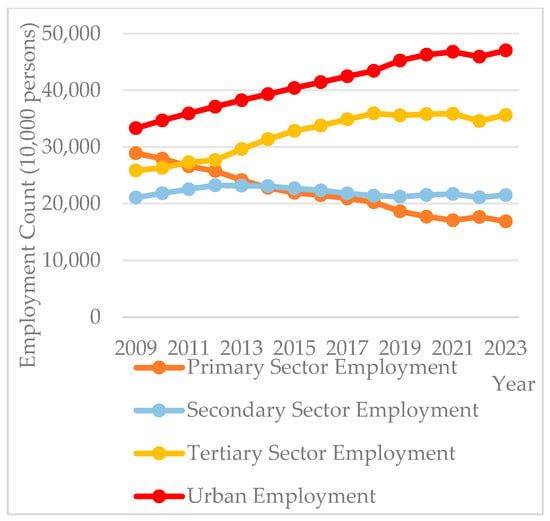
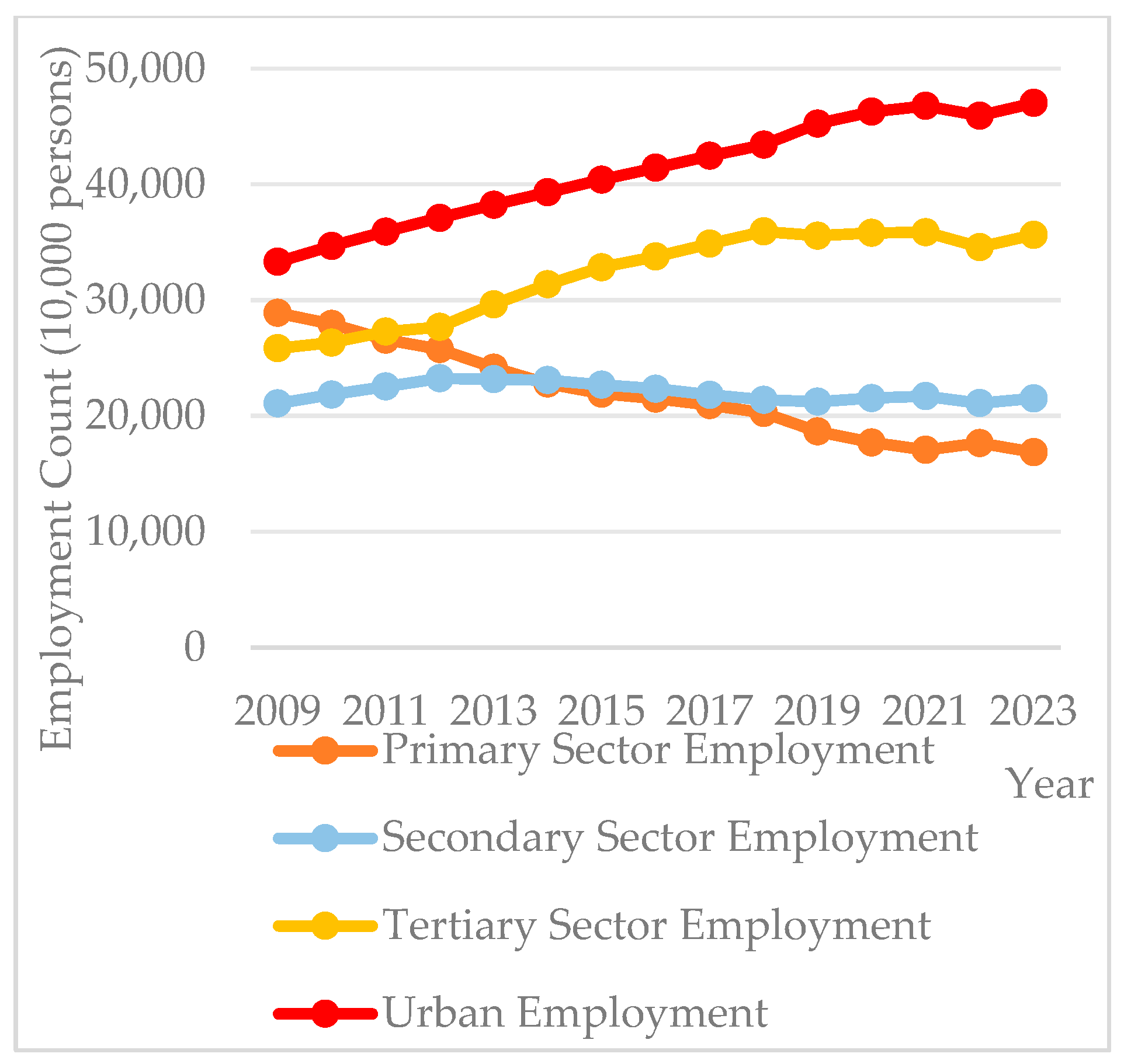

Disclaimer/Publisher’s Note: The statements, opinions and data contained in all publications are solely those of the individual author(s) and contributor(s) and not of MDPI and/or the editor(s). MDPI and/or the editor(s) disclaim responsibility for any injury to people or property resulting from any ideas, methods, instructions or products referred to in the content. |
© 2026 by the authors. Licensee MDPI, Basel, Switzerland. This article is an open access article distributed under the terms and conditions of the Creative Commons Attribution (CC BY) license.