


Abstract
As the global space sector enters the NewSpace era, developing countries such as Mongolia face significant challenges in developing functional space programs without the institutional legacy of established space powers. This study examines the gap between Mongolia’s long-term development strategy, “Vision 2050”, its sectoral policy guidance for space science and technology, and the absence of a comprehensive national space governance system. Using Qualitative Systems Analysis (QSA), the study compares governance arrangements across advanced, developing, and emerging spacefaring nations. The method enables comparative evaluation of institutional interactions, regulatory adaptability, and governance structures in national space systems where quantitative indicators remain limited or difficult to standardize. The findings indicate that direct replication of traditional “Old Space” institutional models often produces structural misalignment in latecomer states with limited financial and technological capacity. In response, the study proposes an Agile Governance Model (AGM) based on the Governance–Resilience–Agility (GRA) Triad. The model combines strategic coordination, adaptive regulation, and operational implementation through a flexible governance structure emphasizing phased legal development, public–private partnerships, and national capacity-building. The study further argues that latecomer nations can avoid rigid legacy institutions by adopting modular governance structures and targeted specialization in areas such as Earth observation, geospatial services, and ground infrastructure. By leveraging geographic advantages and human capital, Mongolia and other emerging space nations can strengthen digital sovereignty and improve institutional resilience. Adaptive governance approaches can also support their long-term participation in the global space economy.
1. Introduction
The contemporary global space sector increasingly operates as a Complex Adaptive System (CAS), shaped by interactions among technological innovation, market forces, institutional structures, and geopolitical competition [1,2]. Once dominated by state-centric, hierarchical governance structures, the sector has transitioned into the NewSpace ecosystem, a polycentric ecosystem characterized by commercialization, diversified actors, and rapid institutional change [3,4,5]. This transformation has been further accelerated by reinforcing feedback mechanisms linking declining launch costs [6,7], satellite miniaturization [7,8], and growing demand for satellite data [7]. These dynamics frequently exceed the adaptive capacity of existing regulatory and institutional frameworks. Consequently, space governance institutions must adapt continuously to technological change [2,9], market uncertainty [2], and evolving geopolitical conditions [7,10]. For emerging space actors, the ability to navigate this complex environment is increasingly essential for sustained participation in the global space economy [3,11,12,13,14].
Within the global environment of systemic complexity, Mongolia is a latecomer state seeking to expand its role in the space sector [15,16,17]. Under the “Vision 2050 Long-Term Development Policy” [18] and the short-term policy “Guidance for the Development of Space Science and Technology in Mongolia” [19], Mongolia has identified space technology and its applications as strategic national priorities. Together, these policies aim to position the country as an active participant in space operations and digital-economy infrastructure. However, a substantial governance gap exists between these aspirations and the current institutional structures in aligning policy ambitions with operational realities. Mongolia’s emerging space ecosystem currently lacks institutional foundation required for sustainable growth [20]. It also operates without a comprehensive space law [21], an autonomous regulatory authority [21], or formal mechanisms for integrating private-sector actors into national space activities [20,21].
This structural misalignment generates systemic vulnerability by weakening the mechanisms through which policy intent is translated into operational outcomes. Political commitment may function as a strong initial driver [22], but in the absence of effective regulatory processes and sufficient institutional capacity, such inputs cannot be transformed into stable and sustainable functional capabilities [23,24]. These institutional deficiencies may also weaken Mongolia’s ability to meet international regulatory and safety expectations within an increasingly congested space environment [3,25,26].
Existing studies on space governance have focused primarily on advanced spacefaring powers and commercially driven NewSpace ecosystems [3,5,27]. In contrast, relatively limited attention has been given to how latecomer states with constrained institutional and technological capacity can develop adaptive governance systems for sustainable participation in the global space economy [11,26]. Comparative analyses of transferable governance approaches for resource-constrained emerging space nations remain limited [24,28]. This study examines how Mongolia can establish a resilient and adaptive space governance architecture. Particular attention is given to the challenges faced by latecomer states operating with limited institutional and technological capacity in the NewSpace environment. To address this question, the study examines three related sub-questions:
RQ1: Which governance configurations among advanced, developing, and emerging spacefaring nations have successfully balanced institutional stability with adaptive capacity, and which elements are transferable to a resource-constrained, late-entry state such as Mongolia?
RQ2: What foundational combination of legislative, organizational, and operational instruments is required to translate Mongolia’s strategic ambitions under Vision 2050 into an executable governance architecture?
This article is intended to contribute simultaneously to space governance scholars and to policy design for emerging space actors. Academically, the study advances the literature on NewSpace governance by examining the institutional challenges faced by late-entry states with limited administrative and technological capacity. Using comparative Qualitative Systems Analysis (QSA) [29], the study develops an Agile Governance Model (AGM) based on transferable governance practices observed across multiple space ecosystems. For Mongolia, the framework provides an institutional roadmap for policy implementation. It also offers adaptable approaches for other resource-constrained states seeking sustainable participation in the global space economy amid rapid technological and geopolitical change.
2. Theoretical Framework
Space governance encompasses international treaties, national laws, and regulatory frameworks that manage human activity in outer space. These governance structures support a safe, stable, and sustainable environment for space exploration, commercial activities, and scientific research. In recent decades, governance has evolved from a predominantly state-centric model [30] toward a multi-layered framework involving international organizations, national governments, and private-sector actors [27,31].
2.1. The Architecture of Space Governance: A Systems Perspective
Within the broader space systems architecture, space governance functions as the control layer that regulates system behavior through rules, institutional processes, feedback mechanisms, and decision-making pathways. Existing studies describe space systems using systems architecture and sociotechnical systems approaches [32,33]. Building on these perspectives, together with the space economy dimensions identified in [34], a functional space governance system can be conceptualized as following interdependent subsystems:
- Regulatory subsystem: Establishes the legal and normative foundation by translating international commitments into domestic legislation. It defines operational boundaries for activities such as orbital access, spectrum allocation, and liability management while ensuring legal certainty and international compliance.
- Administrative subsystem: Oversees the implementation of national space policy through ministries, agencies, and coordinating institutions. Its organizational structure influences decision-making speed, institutional efficiency, and coordination between policy development and technical execution.
- Economic subsystem: Governs interactions between the state and the industrial sector through procurement systems, licensing mechanisms, and financial incentives that support commercial participation and sectoral growth.
- Knowledge subsystem: Supports long-term resilience through human capital development, research capacity, and technological innovation. Universities, research institutes, and technical standards contribute to sustaining expertise and reducing the risk of technological obsolescence.
2.2. National Space Governance
A national space governance system consists of the laws, policies, and institutions through which a state manages and regulates its activities in outer space. Although international treaties establish the foundational legal principles of space activities, implementation and enforcement largely occur at the national level. Under Article VI of the Outer Space Treaty, states bear responsibility for all national space activities, including those conducted by private actors [35,36]. To manage this responsibility, governments have developed governance structures involving policymakers, regulators, and operational institutions. The transition toward the NewSpace environment has gradually shifted these arrangements from centralized state hierarchies toward commercially integrated and multi-actor governance networks [3,27]. This shift is especially significant for latecomer nations such as Mongolia. A central challenge is identifying governance arrangements that maintain institutional stability while remaining adaptable to rapid technological and commercial change. Another challenge involves determining which governance mechanisms can be realistically transferred to a resource-constrained nations. Table 1 compares the functional roles and institutional characteristics of Legacy-Space and NewSpace governance configurations. Figure 1 illustrates the integrated architecture of national space systems and governance structures supporting the broader space sector.
Table 1.
Functional roles in the national space governance system, comparing Legacy-Space and NewSpace configurations.
Figure 1.
Integrated architecture of space systems and governance supporting national space sector.
2.3. The Institutional Ecosystem of Space Governance
Although space governance functions are commonly categorized into policymaking, regulation, and execution, responsibilities often overlap in practice. Effective governance therefore depends on coordination among institutions with interconnected roles. This section identifies the main institutional actors involved in national space governance and outlines their functional responsibilities.
2.3.1. The Space Agency
Space agencies serve as the primary coordinating institutions within national space governance systems. Their mandates vary considerably across countries. Some maintain extensive research and operational capabilities, while others focus mainly on policy coordination, regulation, funding, or international cooperation. In recent decades, many agencies have shifted away from direct manufacturing roles toward coordinating collaboration among government institutions, private companies, research organizations, and international partners [3,5,37]. This institutional spectrum, ranging from vertically integrated agencies to lean coordinating bodies, is particularly relevant for latecomer nations. The most suitable institutional model depends on available resources, operational maturity, and national priorities rather than direct replication of the structures used by established space powers. Section 6 further examines how these institutional variations may inform Mongolia’s governance design.
2.3.2. Research Institutes and Universities
National research institutes and universities form the knowledge subsystem of space governance. They conduct fundamental research, support technology demonstration, and develop human capital [38]. For emerging and latecomer space nations, these institutions are essential for strengthening organizational resilience and reducing long-term dependence on foreign technological expertise.
2.3.3. Military and Defense Forces as Security Actors
Space activities are no longer confined to civilian and commercial domains, military and defense organizations now play prominent roles in national space governance. These institutions are typically responsible for functions such as space situational awareness, protection of space assets, and oversight of technologies with both civil and defense applications [5,39].
2.3.4. The Private Sector
In the contemporary NewSpace environment, private companies have evolved from subcontractors into central actors within national space ecosystems. These include upstream firms involved in launch services and spacecraft manufacturing, as well as downstream organizations that convert space-derived data into applications for agriculture, resource management, logistics, and other commercial and civilian sectors [40]. From a governance perspective, the private sector contributes to institutional adaptability through market competition, rapid technological development, and innovative business models.
2.4. Space System Architecture: Main Segments
While institutional actors define governance authority and oversight responsibilities, the physical architecture of space systems shapes the operational domains and technical activities requiring regulation. National governance systems must therefore be designed to manage interconnected operational segments, each with distinct operational, resilience, and sustainability requirements [41]. Figure 2 shows the main segments of the space systems.
Figure 2.
Architecture of the space, ground, and user segments enabling satellite mission operations and service delivery.
- The Space Segment includes hardware for orbital and deep-space operations, such as satellites, launch vehicles, and probes. Space governance systems formerly focused on launch authorization, orbital slot allocation, frequency coordination, and on-orbit operation liability.
- The Ground Segment includes terrestrial infrastructure for commanding and controlling space assets, such as mission control centers, tracking stations, and data facilities. For latecomer nations such as Mongolia, ground stations offer an accessible entry into the space sector by hosting facilities for global satellite constellations or Earth observation missions.
- The User Segment integrates space-derived data into terrestrial applications. Software platforms, value-added services, including navigation receivers and satellite communication terminals are included. By turning satellite data into actionable outputs for agricultural, mineral resource management, environmental monitoring, and disaster risk reduction, this area creates social value for governance.
3. The Current Space System Architecture of Mongolia
This section provides an overview of Mongolia’s space sector by examining its historical development and institutional structure, followed by a discussion of key governance challenges, ongoing activities, and major international partners.
3.1. The Governance Subsystem: Policy and Regulatory History
Mongolia’s space governance framework began to develop in the mid-1960s through the ratification of the core United Nations space treaties [42], including the Outer Space Treaty (1967) [43], Rescue Agreement (1968) [44], Liability Convention (1972) [45], and Registration Convention (1972) [46]. These agreements establish the international legal foundation for Mongolia’s space activities but do not provide a comprehensive domestic regulatory framework. The development of Mongolia’s national space policy can be divided into three main phases:
- The Interkosmos Era (1970s–1990): Governance during this period was highly centralized and state-directed, with primary emphasis placed on scientific cooperation within the Soviet bloc. Although the period produced Mongolia’s first astronaut, J.Gurragchaa, in 1981, it did not establish a domestic commercial or regulatory framework for space activities [47,48].
- The Stagnation Phase (1991–2011): Following the transition to a market economy, Mongolia’s space governance system weakened because of economic instability and the collapse of the Soviet Union [49].
- The Restoration Phase (2012–Present): Space governance activities resumed with Government Resolution No. 137 (2012), which established the National Satellite Program [50]. The program aimed to strengthen institutional capacity for space research and support the development of a national satellite initiative. At present, the long-term strategic direction is guided by the “Vision 2050” development policy, which organizes national space development into three ten-year phases [18]:
- Phase I (2021–2030): Establish foundational infrastructure, deploy national satellites, and support the emergence of space-technology startups.
- Phase II (2031–2040): Achieve nationwide satellite communications coverage and improve resource management systems.
- Phase III (2041–2050): Expand the use of space technologies to enhance economic competitiveness, disaster early-warning capabilities, and border management systems.
3.2. Institutional Topology: Current Governance Configuration
Figure 3 illustrates the current structure of Mongolia’s space governance system based on official government documents published in 2024 [20] and 2025 [51]. As shown in the figure, the National Space Policy Council (NSPC) serves as the main intersectoral coordination body under the Government of Mongolia and maintains a consultative relationship with the National Security Council. The NSPC is chaired by the Minister of Economy and Development and vice-chaired by the Minister of Digital Development, Innovation and Communications (MDDIC). Its primary role is to coordinate national space policy and advise the government on long-term strategic priorities for the sector. The Ministry of Digital Development, Innovation and Communications currently functions as the main governmental institution responsible for national space policy development. However, Mongolia’s governance framework still relies largely on general telecommunications and digital governance legislation rather than a dedicated national space law. The institutional structure also remains fragmented, with overlapping mandates and limited mechanisms for inter-agency coordination. While the MDDIC oversees national policy development and satellite communications initiatives, responsibility for remote sensing applications is distributed across multiple ministries and agencies. In addition, private companies and non-governmental organizations represented within the NSPC continue to play a limited role in formal policy implementation and operational decision-making processes [20,51].
Figure 3.
Mongolian current space governance system topology.
3.3. Regulatory Gap and the Case for a Minimal Framework Act
As of 2025, Mongolia has not enacted a national Law on Space Activities, and no independent space regulatory authority currently exists [21]. The Ministry of Digital Development, Innovation and Communications (MDDIC) identified both the authorization gap and the absence of a competent regulatory body as major concerns in its 2025 Study on the Need for Space Law and Regulatory Framework in Mongolia [21]. This regulatory gap has significant practical implications. Without a domestic legal framework, Mongolia cannot formally authorize private space activities, establish liability mechanisms, or provide the legal certainty necessary for commercial investment and international cooperation. The absence of dedicated legislation also constrains participation in emerging international governance frameworks that increasingly require national regulatory capacity. Addressing this issue does not require Mongolia to replicate the highly detailed legislation adopted by established space powers. Although a minimal framework law would not resolve all governance challenges immediately, it would eliminate the current legal vacuum limiting both domestic sector development and international engagement. Accordingly, this paper treats the absence of legislation primarily as an issue of institutional sequencing. Section 6.2 therefore proposes a phased legal development model aligned with Mongolia’s institutional and operational capacity.
3.4. The Operational Subsystem: Emerging Capabilities
Despite the existing governance gap, the operational capabilities of Mongolia’s space system have progressed into university-led scientific missions and “NewSpace” commercial activities.
- Academic Capacity Building: The revitalization of the sector began with the Joint Global Multi-Nation Birds (BIRDS) project in collaboration with the Kyushu Institute of Technology (Japan). This resulted in the development of Mazaalai, Mongolia’s first 1U CubeSat. Launched to the ISS in June 2017 via SpaceX CRS-11 and deployed from the Kibo module, this project functioned as a critical “Human Resource Development Program”, training the engineers who would later drive the commercial sector [52].
- Commercial Sector Emergence: In March 2024, the private entity ONDO Space LLC successfully launched two commercial satellites (ONDO SAT-OWL-1 and OWL-2) into Low Earth Orbit. This event represents an important milestone that Mongolia demonstrated indigenous commercial satellite manufacturing capacity for the first time. The satellites employ IoT technology to provide connectivity to remote regions, directly addressing the national need for rural digital inclusion [53].
- Future Operations: The government has initiated negotiations with Thales Alenia Space (France) to develop a high-capacity national telecommunications satellite [54]. Simultaneously, the Mars-V Project aims to establish a Mars analog research station in the Gobi Desert, leveraging Mongolia’s unique geography to integrate into the global space exploration [55].
3.5. The International Subsystem: Strategic Diversification
The space governance system’s international cooperation is diversified across the following geopolitical vectors:
- Regional Cooperation (APSCO & APRSAF): As a founding member of the Asia-Pacific Space Cooperation Organization (APSCO) since 2008, Mongolia utilizes this platform for data sharing and human resource development, specifically leveraging scholarship programs in China [56]. In parallel, Mongolia actively engages with the Asia-Pacific Regional Space Agency Forum (APRSAF). This forum provides a vital multilateral platform for capacity building, policy dialog, and regional collaboration in space technology and satellite applications [57]. By participating in both (APSCO) and (APRSAF) activities, Mongolia ensures a diversified approach to regional integration and human resource development.
- Technical Partnership (Japan): Japan remains the primary partner for technical capacity building. The cooperation extends beyond the Mazaalai project to include space environmental testing of Mongolian satellites at Kyutech (2024) and the SATREPS project (2025) for assessing Gobi Desert ecosystem resilience via remote sensing [58].
- Strategic Dialogue (USA & France): Recent high-level visits have expanded cooperation with Western space powers. The 2023 dialog with the United States ways to expand Mongolia–U.S. space and technology cooperation, including the development of a bilateral space dialogue to promote a peaceful, safe, secure, and sustainable space environment [59]. Concurrently, the partnership with France focuses on the strategic telecommunications satellite project.
- Human Spaceflight Aspirations: The system retains a strong symbolic component, with renewed interest in sending a second Mongolian astronaut into space. This mission could be carried out in cooperation with the Russian Federation and the People’s Republic of China.
3.6. Modern Multilateral Initiatives: Artemis Accords and ILRS
Although Mongolia is a party to the core United Nations space treaties and participates in regional cooperation mechanisms such as APSCO and APRSAF, the international space governance environment is increasingly shaped by new multilateral initiatives. These include the US-led Artemis Accords, a non-binding framework for peaceful and responsible space exploration with 67 signatory states as of May 2026 [55], and the China–Russia-led International Lunar Research Station (ILRS) initiative, a cooperative lunar exploration program [60] involving 13 participating states as of September 2024 [61,62]. Mongolia has signed neither initiative. This non-aligned position nevertheless carries important implications for national space governance design. First, norms associated with the Artemis Accords may increasingly influence international commercial space governance and operational standards, potentially limiting the influence of non-signatory states in shaping emerging practices and regulatory expectations [63]. Second, cooperation through the ILRS initiative could provide opportunities for technical exchange, scientific collaboration, and future participation in lunar activities, although participation mechanisms and operational arrangements remain under development [64]. Third, consistent with Mongolia’s “Third Neighbor” foreign policy approach, the coexistence of these frameworks may allow Mongolia to pursue a flexible and selective cooperation strategy by adopting compatible operational standards and engaging with multiple international partners.
3.7. Current Budget and Resource Baseline
Mongolia’s current space governance framework remains limited by the absence of a clearly institutionalized and publicly transparent national space budget. Although the government adopted the National Satellite Program (2012) and incorporated space-related objectives into the long-term development policy “Vision 2050,” these documents primarily outline strategic priorities rather than specific financing mechanisms, annual budget allocations, or long-term investment commitments.
Unlike established spacefaring states and agencies such as NASA, JAXA and ISRO, Mongolia does not maintain an independent national space agency with a dedicated public budget. Instead, space-related activities are distributed across ministries, universities, research institutes, and telecommunications operators, while related expenditures are incorporated into broader programs associated with information and communication technology (ICT), digital development, education, and scientific research.
As shown in Table 2, Mongolia’s space sector remains largely project-based and dependent on international cooperation, including the Temuulel nanosatellite project, APSCO programs, and emerging partnerships with companies such as Thales Alenia Space. However, many of these initiatives remain at the planning or feasibility stage rather than operating as fully institutionalized national programs. Private-sector participation also remains limited and is concentrated mainly in satellite communications, ICT infrastructure, and geospatial services. In addition, Mongolia has not established dedicated financing mechanisms, a consolidated national space budget, or centralized public reporting systems for space-sector expenditures. Funding instead remains fragmented across government programs, international partnerships, university research activities, and emerging private-sector initiatives, while publicly available financial information is generally limited to project-level disclosures.
Table 2.
Mongolian Space Initiatives and Their Budget and Funding Characteristics.
4. Materials and Methods
4.1. Research Design: Qualitative Systems Analysis
This study adopts a Qualitative Systems Analysis (QSA) approach to evaluate the structure, adaptability, and resilience of national space governance systems. Compared with theoretical legal analysis or quantitative policy benchmarking, QSA is particularly well suited to emerging technology sectors because it captures interactions among institutions, policy instruments, regulatory mechanisms, market actors, and adaptive governance structures across national space systems at different stages of development [65]. As illustrated in Figure 4, the research framework consists of three main stages: Research Foundations, the QSA Process, and Research Outcomes.
Figure 4.
The methodological pathway of the Qualitative Systems Analysis (QSA).
The study focuses on governance challenges faced by latecomer spacefaring nations, with Mongolia serving as the primary case study. The literature review draws on systems architecture, sociotechnical governance, and comparative space policy research to identify institutional gaps, including fragmented regulatory responsibilities and the absence of a comprehensive national space law. It also examines Mongolia’s transition from research-oriented initiatives, such as the Mazaalai CubeSat program, toward broader satellite development and international cooperation.
Case selection follows a system-tiered purposive sampling strategy that includes advanced spacefaring nations, developing utility-driven systems, and emerging NewSpace actors. Data collection is based on qualitative analysis of national policies, legal frameworks, institutional arrangements, and secondary academic literature. The analysis focuses on institutional coordination, regulatory flexibility, public–private interaction, and strategic adaptability.
The analytical framework is organized around the Governance–Resilience–Agility (GRA) triad. Governance refers to institutional organization and coordination mechanisms. Resilience examines the capacity of governance systems to respond to geopolitical, technological, and economic disruptions. Agility evaluates the ability of regulatory systems to adapt to technological and market change. The findings are synthesized into an Agile Governance Framework (AGF) for Mongolia and other latecomer nations, with emphasis placed on modular institutions, adaptive regulation, human resource development, and strategic international partnerships.
4.2. Case Selection: System-Tiered Purposive Sampling
Given Mongolia’s status as a latecomer in space development, this study adopts a system-tiered purposive sampling strategy to ensure analytical relevance and contextual comparability. Cases are grouped into three categories based on institutional maturity, governance characteristics, and development objectives.
- Group A: Advanced Spacefaring Nations
These nations provide reference models for international compliance, safety regulation, debris mitigation, and long-term strategic planning. The analysis focuses particularly on identifying forms of institutional complexity and regulatory rigidity that may be unsuitable for developing nations with limited administrative capacity.
- Group B: Developing Spacefaring Nations (Utility-Driven Systems)
These nations operate under socio-economic constraints comparable to Mongolia and prioritize practical applications such as environmental monitoring, disaster management, and communications services. The analysis examines cost-efficient institutional arrangements and incremental capability development strategies.
- Group C: Emerging NewSpace Actors
These cases represent highly adaptive and market-oriented governance systems characterized by agile licensing, innovation-focused regulation, and public–private coordination mechanisms. They are particularly relevant to Mongolia’s objective of developing an investment-oriented and flexible governance framework.
4.3. The Analytical Lens: The GRA Triad
This study evaluates national space governance systems using the Governance–Resilience–Agility (GRA) Triad, a multidimensional framework developed to assess institutional effectiveness and policy transferability for latecomer developing states such as Mongolia.
- Governance Configuration: This dimension examines institutional organization, the distribution of authority, and coordination mechanisms among governmental and non-governmental actors. The objective is to identify governance arrangements that provide effective oversight while remaining compatible with domestic administrative and financial capacity.
- Systemic Resilience: Resilience refers to the ability of governance systems to absorb and adapt to external disruptions, including geopolitical tensions, technological restrictions, and supply-chain dependencies. For Mongolia, the focus is on strategic autonomy through diversified international partnerships and domestic human capital development.
- Adaptive Agility: Agility evaluates how regulatory systems respond to technological and market change. The analysis compares rigid legal frameworks with more adaptive and performance-based approaches capable of evolving without repeated legislative restructuring.
5. Results
This section presents the results of a qualitative systems analysis of eleven spacefaring nations across three tiers, examining their governance structures, resilience mechanisms, and adaptive capacities. The findings show how different states balance governance, resilience, and agility, forming a basis for identifying global taxonomy of space governance archetypes and emerging systemic trends.
5.1. Comparative Analysis of Global Space Governance Architectures
5.1.1. Group A: Advanced Spacefaring Nations
The United States
The United States represents one of the world’s most developed examples of a polycentric yet coordinated space governance system. Strategic direction is separated from operational activities, with responsibilities distributed among civil institutions such as NASA, defense organizations including the United States Space Force and the Department of Defense, and regulatory agencies such as the Federal Aviation Administration (FAA), Federal Communications Commission (FCC), and National Oceanic and Atmospheric Administration (NOAA) [5,66]. Rather than relying on vertically integrated state control, the system increasingly emphasizes procurement-based partnerships and commercial participation. This shift is illustrated by the transition from the Space Shuttle program to the Commercial Orbital Transportation Services (COTS) program [67], which repositioned NASA from a direct operator to a major institutional customer [68]. In turn, COTS supported the growth of a more diversified commercial space sector through the acquisition of services from multiple providers [40]. At the same time, U.S. regulatory institutions have demonstrated considerable adaptability by implementing licensing frameworks capable of accommodating reusable launch systems and large satellite constellations [69] without requiring major legislative reform [70]. For latecomer spacefaring nations such as Mongolia, an important lesson is the separation of strategic government functions from direct operational activities. Rather than acting as the primary developer and operator of space systems, governments can focus on coordination, regulation, and demand generation while encouraging private-sector participation and innovation.
People’s Republic of China
The People’s Republic of China represents a highly centralized model of space governance characterized by strong state coordination, civil–military integration [71], and long-term strategic planning. Governance is organized through state institutions and vertically integrated enterprises such as China Aerospace Science and Technology Corporation (CASC) and China Aerospace Science and Industry Corporation (CASIC) [72,73], with a strong emphasis on technological self-reliance and domestic industrial capability [74].
Recent reforms introduced under “Document No. 60” allowed greater commercial participation by enabling the growth of private companies such as LandSpace and GalaxySpace while maintaining state oversight of strategically important programs [75,76]. Although the broader Chinese model is difficult for latecomer nations to replicate because of its substantial industrial and financial requirements, its phased approach to commercialization offers a more transferable lesson. It demonstrates how private-sector participation can expand while preserving strategic state coordination. Despite its technological achievements, China still lacks a comprehensive national space law, illustrating both the flexibility and the long-term regulatory limitations of a governance system that relies primarily on policy instruments rather than a consolidated legislative framework [77].
Europe
Europe operates through a multi-level space governance system involving the European Union, the European Space Agency (ESA), and individual member states. This model emphasizes multinational cooperation [78,79], shared industrial participation, and institutional coordination while enhancing resilience through geographically distributed industrial capabilities [80]. Programs such as the Copernicus Programme demonstrate how shared infrastructure can support downstream commercial activity and data-driven services [81,82]. However, consensus-based decision-making can slow responses [83] to commercial and technological change as illustrated by challenges associated with the Ariane 6 program [84,85]. For latecomer NewSpace nations, the primary lesson is not to replicate Europe’s institutional structure but to participate in multilateral frameworks that provide access to shared infrastructure, technical expertise, collaborative research opportunities, and reduced investment costs.
Japan
Japan offers one of the most transferable governance models for latecomer NewSpace nations through its phased approach to legal and institutional development. The Basic Space Act (2008) [86] provides the overarching strategic framework, while subsequent legislation, including the Act on Launching of Spacecraft and Control of Spacecraft [87] and the Remote Sensing Act [88] (both enacted in 2016), expanded the regulatory system in response to evolving operational requirements. Strategic priorities are updated through periodic revisions of the Basic Space Plan rather than major legislative reform, allowing legal stability to coexist with administrative flexibility [89]. This approach has supported the growth of commercial actors such as ispace and Astroscale under clearer authorization, licensing, and liability arrangements [90,91]. The Japanese experience demonstrates how regulatory systems can evolve gradually alongside commercial activity while maintaining consistent strategic direction at the national level.
The United Kingdom
The United Kingdom provides a notable example of how regulatory systems can adapt to the requirements of the NewSpace environment. The Space Industry Act 2018 [92] expanded the UK’s legal framework beyond the overseas focus of the Outer Space Act 1986 by introducing regulation for domestic launch services, spaceports, sub-orbital operations, and re-entry activities, while the 1986 Act continues to apply to certain overseas activities [93,94]. Regulatory responsibilities are shared between the UK Space Agency and the Civil Aviation Authority, with licensing and oversight functions allocated according to activity type [95,96]. This institutional arrangement supports commercial participation while maintaining regulatory oversight and safety standards [94]. In addition, the Space Industry Regulations 2021 allow many regulatory requirements to be updated through secondary legislation and regulator-issued guidance, enabling the system to respond to technological and commercial developments without requiring frequent legislative amendment [97,98].
5.1.2. Group B: Utility-Driven Developing Spacefaring Nations
India
India combines strong state leadership with expanding commercial participation through a governance structure centered on the Department of Space, the Indian Space Research Organisation (ISRO), IN-SPACe, and NewSpace India Limited (NSIL) [99]. A distinctive institutional feature is the role of IN-SPACe as a single-window authorization body that seeks to reduce barriers to private-sector participation by providing access to national testing facilities, launch infrastructure, and technical expertise [100,101]. India’s governance model demonstrates how public investment and regulatory adaptation can support both national development objectives and commercial growth. Space activities are governed primarily through executive policies and administrative instruments, including the Indian Space Policy 2023 and IN-SPACe’s Norms, Guidelines and Procedures (NGP), rather than through comprehensive parliamentary legislation [100,102]. This approach has allowed regulatory arrangements to evolve alongside the growth of commercial space activities. India also illustrates the importance of cost-effective innovation in resource-constrained environments. Missions such as the Mars Orbiter Mission demonstrate how careful cost management and mission-oriented planning can expand national space capabilities while operating within fiscal constraints [103,104].
South Korea
South Korea represents a successful example of a latecomer nation developing indigenous space capabilities and reducing technological dependence on external partners. Historically centered on the Korea Aerospace Research Institute (KARI), the governance system evolved significantly with the establishment of the Korea AeroSpace Administration (KASA) in 2024 [105], which was intended to strengthen strategic leadership, policy coordination, and commercial development [106,107]. Under this arrangement, KASA is responsible for national strategy and industrial promotion, while KARI focuses primarily on research, technology development, and program implementation. South Korea’s experience demonstrates how international cooperation can serve as a transitional pathway toward greater technological autonomy rather than long-term dependence. The Naro (KSLV-I) program, developed in cooperation with Russia, provided valuable experience in launch operations and systems integration that subsequently contributed to the development of the indigenous Nuri (KSLV-II) launch vehicle [108,109]. Recent reforms have also expanded opportunities for private-sector involvement through technology transfer, commercialization initiatives, and industrial partnerships [110]. Together, these measures have supported the emergence of a more diversified space sector while maintaining strong strategic direction from the state.
Philippines
The Philippines provides a useful reference case for Mongolia because both countries face institutional constraints and a strong demand for application-oriented space services. The adoption of the Philippine Space Act in 2019 established the Philippine Space Agency as the central authority for national space activities, creating a coordinating institution [111,112] within what had previously been a fragmented governance environment [113]. The Philippine model prioritizes Earth observation, disaster management, and human resource development rather than large-scale industrial self-sufficiency, demonstrating how developing countries can build practical and sustainable space capabilities through gradual institutional growth [111,114]. A defining feature of the Philippine approach is its university-led pathway to capability development. Early satellite programs such as Diwata and Maya were implemented through partnerships among Philippine universities, government agencies, and Japanese institutions including Tohoku University, Hokkaido University, and the Kyushu Institute of Technology. These initiatives emphasized workforce development and technical expertise before broader expansion of the national space sector [115,116]. This experience is particularly relevant to Mongolia, where university-led initiatives such as the Mazaalai project similarly provide a foundation for future national capabilities. The Philippine case illustrates how application-focused programs, international cooperation, and gradual institutional development can support the growth of a sustainable and socially relevant space sector [114,117].
5.1.3. Group C: Emerging “NewSpace” Actors
Luxembourg
Luxembourg represents a distinctive NewSpace governance model that emphasizes regulatory certainty, financial support mechanisms, and international partnerships rather than traditional manufacturing or launch capabilities [118]. Through the Luxembourg Space Agency and the SpaceResources.lu initiative, the country established a specialized legal and investment framework designed to attract foreign space companies, private investment, and international capital [119]. A central feature of this approach is the Law of 20 July 2017 on the Exploration and Use of Space Resources, which provides a legal basis for recognizing rights over extracted space resources [120,121]. The Luxembourg experience demonstrates how clear legal frameworks and targeted public co-investment can help compensate for limited industrial scale while supporting participation in the global space economy [118]. Rather than pursuing broad industrial self-sufficiency, Luxembourg has positioned itself as a specialized center for space finance, investment, and commercial activity. Its experience illustrates how regulatory predictability, financial innovation, and international partnerships can strengthen a country’s role within the global space sector despite limited domestic industrial capacity [122].
New Zealand
New Zealand has developed a commercially oriented space governance model centered on regulatory efficiency, legal clarity, and private-sector participation. The Outer Space and High-altitude Activities Act 2017 (OSHAA) established a streamlined legal framework for launch services, payloads, and commercial space activities, enabling the rapid growth of companies such as Rocket Lab without requiring major state investment in national launch infrastructure [123,124]. Within this framework, the New Zealand Space Agency functions primarily as a regulatory authority and coordinating body under the Ministry of Business, Innovation and Employment rather than as a mission operator [124,125,126]. A defining feature of the New Zealand model is its ability to leverage geographic characteristics, including low population density, remote launch locations, and access to relatively uncongested launch corridors and favorable orbital inclinations, to support commercial launch operations [123]. By aligning regulatory arrangements with these geographic advantages, New Zealand has established itself as a competitive location for commercial launch services while maintaining oversight related to national security, public safety, and international obligations [124,125,126]. For Mongolia, the principal lesson is that effective regulation and strategic use of geographic advantages can support participation in the space sector even in the absence of large-scale domestic space infrastructure.
United Arab Emirates
The United Arab Emirates (UAE) demonstrates how a latecomer nation can accelerate space capability development through international partnerships, centralized strategic leadership, and phased regulatory development. The governance system combines federal-level coordination led by the UAE Space Agency with operational and technical activities undertaken by the Mohammed Bin Rashid Space Centre (MBRSC), reflecting the country’s federal and emirate-level institutional structure [127,128]. The UAE’s development strategy has emphasized partnership-based capability acquisition rather than immediate technological self-sufficiency. This approach was exemplified by the Emirates Mars Mission, in which UAE engineers worked closely with U.S. university partners through structured knowledge-transfer arrangements that accelerated workforce development and technical expertise [129]. Recent revisions to the UAE’s space legislation and authorization regulations have established a flexible legal framework that supports commercial participation and sector growth [127,130,131,132]. At the same time, the AED 3 billion National Space Fund demonstrates how phased public investment can be coordinated with regulatory development to support long-term sector expansion [128,133]. More broadly, the UAE experience illustrates how space governance can be integrated into a national economic diversification strategy [128]. Through a combination of international partnerships, human capital development, regulatory reform, and targeted investment, the UAE has used the space sector to support broader objectives related to innovation, technology development, and long-term economic development [127,128,129].
5.2. Taxonomy of Global Governance Archetypes
To compare the governance structures examined in Section 5.1, Table 3 presents a taxonomy of space governance archetypes observed across contemporary space systems. Each archetype is characterized by its primary policy objective and is associated with representative countries based on institutional arrangements, market orientation, and regulatory structure.
Table 3.
Archetypes of national space governance systems, representative countries, and their primary strategic drivers.
5.3. Cross-Case Synthesis: Emerging Trends in Global Space Governance
The comparative analysis of national space governance systems reveals a common pattern of institutional change. Across both established and emerging spacefaring nations, governance arrangements are moving away from highly centralized and hierarchical structures toward more networked and collaborative models. Five key trends characterize this transition:
- Functional decoupling of strategy, regulation, and execution: In the adaptive systems examined in this study, including the United Kingdom, India, the United Arab Emirates, and South Korea after 2024, strategic, regulatory, and operational functions are separated across different institutions. This structure reduces potential conflicts of interest and improves the flow of information between operational activities and policy development.
- Performance-based regulation as a pacing instrument: Across both established and emerging spacefaring nations, including the United States, the United Kingdom, Japan, and New Zealand, prescriptive technical regulations are increasingly being replaced by outcome-based safety requirements and risk-based standards supported by secondary legislation that can be amended administratively. This approach allows regulatory frameworks to adapt more readily to technological change than legislation requiring formal statutory revision.
- Single-window authorization as competitive infrastructure: India’s IN-SPACe, the United Kingdom’s space licensing system under the Civil Aviation Authority, and the New Zealand Space Agency demonstrate that consolidating authorization, oversight, and liability management within a single institutional gateway can improve regulatory efficiency and reduce administrative barriers for private-sector participants.
- Legal certainty as economic strategy in small and resource-dependent states: Luxembourg, New Zealand, and the United Arab Emirates illustrate that a clearly drafted framework law and effective authorization mechanisms can provide the regulatory certainty needed to attract foreign investment, even in the absence of extensive industrial support programs.
- Prioritization of Social Utility and Resilience: Developing spacefaring nations are increasingly orienting their space programs toward public-service applications. The use of Earth observation for agriculture, disaster risk reduction, and climate monitoring illustrates how space activities can contribute to national development objectives while supporting long-term program continuity. Examples from India and the Philippines suggest that these approaches can produce broader economic and environmental benefits.
5.4. Comparative Pathways of Space Regulatory Framework Development
To complement the governance archetypes identified in Section 5.2, Table 4 and Table 5 examine how national space regulatory systems evolve through different institutional pathways. Rather than emerging from a single comprehensive law, most systems develop incrementally through framework legislation, secondary regulation, and administrative adaptation. Table 4 shows that the time required to establish functional regulatory systems varies considerably. Mature spacefaring nations such as Japan and the United Kingdom required several years to progress from framework legislation to operational regulation, while commercially oriented states such as Luxembourg and New Zealand adopted faster and more integrated approaches. Table 5 synthesizes these experiences into five regulatory development models and suggests that effective regulation depends less on comprehensive legislation at the outset than on the gradual development of adaptable institutions and regulatory mechanisms. For latecomer nations such as Mongolia, a phased and modular approach to legal development may therefore be more practical than attempting to establish a fully comprehensive framework at the initial stage.
Table 4.
Comparison for Space Law Development Timelines.
Table 5.
Comparative Approaches to Space Regulatory Framework Development.
5.5. Comparative Approaches to Building NewSpace Ecosystems
Drawing on the comparative analysis presented in Section 5.1 and summarized in Table 6, several common characteristics of successful NewSpace ecosystems can be identified. Despite differences in institutional capacity and available resources, several common enabling factors can be identified, including public funding and public–private partnership (PPP) mechanisms, collaboration between universities and industry, and innovation-supporting infrastructure that contributes to human capital development. In more advanced cases, regulatory frameworks evolve alongside commercial growth, while governments initially act as strategic coordinators and primary customers for Earth observation, communications, and digital services. The evidence further suggests that successful NewSpace development is more closely associated with gradual institutional development and international cooperation than with the direct replication of mature space-governance models. For Mongolia, these findings indicate that a governance model aligned with fiscal realities, institutional capacity, and international partnerships may provide a more practical foundation for long-term sector development.
Table 6.
Comparative National Space Ecosystem Development Models and Emerging Commercial Outcomes.
6. Discussion: Designing the Agile Governance Model
The comparative analysis presented in Section 5 shows that contemporary space governance is increasingly moving away from centralized state-led systems toward more networked and collaborative forms of governance [3,4,40]. For latecomer nations such as Mongolia, this shift provides an opportunity to develop institutions that reflect the operational realities of the NewSpace era without replicating the legacy structures of established space powers. Drawing on the Governance–Resilience–Agility (GRA) Triad and the governance mechanisms identified in Section 5, this section proposes an Agile Governance Model (AGM) for Mongolia and other latecomer space nations.
6.1. The System Architecture: A Cybernetic Loop
The proposed governance structure builds on the existing institutional arrangement shown in Figure 3 while reorganizing it into a more coordinated and responsive system. Drawing on the experiences discussed in Section 5.1, the model introduces a clearer separation of strategic, regulatory, and operational responsibilities to improve coordination and reduce institutional overlap. Unlike the fragmented structure described in Section 3, the proposed framework promotes closer interaction among institutions and allows operational experience to inform policy and regulatory decisions. As illustrated in Figure 5, the model consists of three interconnected levels that together form the proposed governance system.
Figure 5.
Agile governance model for national space system development linking strategy, policy implementation, infrastructure provision, and operational service delivery.
- The National Space Council serves as the central coordinating body of the governance system. Rather than engaging in routine technical management, the Council aligns national space activities with broader socioeconomic, security, scientific, and digital-development priorities. Its core responsibilities include setting strategic direction, coordinating inter-ministerial interests, approving major initiatives, and supporting long-term resource allocation. This level provides policy coordination across the space sector and helps reduce institutional fragmentation.
- Regulatory and Policy Implementation Level, drawing on the experience of the United Kingdom and India’s IN-SPACe model, this level operates through a single-window authorization system and regulatory sandbox mechanism. Instead of establishing a large traditional national space agency, the model proposes a lean coordinating body responsible for licensing, policy implementation, inter-agency coordination, and sector development. The objective is to provide a flexible regulatory environment that can accommodate emerging technologies without requiring frequent revisions to primary legislation.
- The Operational Level includes organizations responsible for implementation, technical development, and innovation. Participants include private companies such as ONDO Space LLC, the proposed Assembly, Integration, and Testing (AIT) Center, and academic and research institutions. Engineering and research activities are undertaken by organizations such as the Aerospace Engineering and Application Center at NUM and the Space Research Center of the Institute of Astronomy and Geophysics at the Mongolian Academy of Sciences. The level also includes university-affiliated incubators at NUM and MUST, which support startups through laboratory access, mentoring, and intellectual-property support. Building on the experience of the Mazaalai and ONDO Space initiatives, this arrangement strengthens collaboration among universities, industry, and emerging startups.
6.2. Principle 1: Phased Legal Development (The Adaptive Legal Framework)
The proposed phased legal model draws on the experiences of Japan, the United Kingdom, Luxembourg, and the United Arab Emirates, where regulatory systems developed incrementally through framework legislation rather than comprehensive legal frameworks at the initial stages. In these cases, secondary legislation and administrative regulations enabled legal and institutional arrangements to evolve alongside operational needs and institutional capacity. As illustrated in Figure 6, the proposed phased and modular legal development model allows regulatory systems to expand progressively as domestic capabilities mature. This approach is consistent with the comparative findings presented in Table 4 and Table 5, which show that many successful space governance systems evolved through framework laws, secondary legislation, and gradually expanding regulatory arrangements.
Figure 6.
Proposed phased legal development roadmap for Mongolia’s space governance framework.
For Mongolia, the absence of even a basic legal framework creates uncertainty that may discourage private investment and constrain the development of domestic space activities. The proposed model therefore adopts a sequential approach in which framework legislation is introduced first, followed by more specialized regulations as institutional and operational requirements evolve.
The first phase establishes a Basic Space Activities Law focused on international treaty compliance, single-window authorization, liability principles consistent with the Liability Convention, and legal recognition of national space activities. The second phase introduces secondary legislation covering launch authorization, insurance requirements, Earth observation data governance, spectrum coordination, debris mitigation, cybersecurity, and limited regulatory sandbox mechanisms for emerging technologies. The final phase expands this framework through greater alignment with international standards and more flexible regulatory provisions for advanced commercial and scientific activities.
The phased approach also helps avoid institutional overload by aligning legal complexity with the gradual development of domestic technical, administrative, and industrial capabilities. For a latecomer nation such as Mongolia, this staged model may provide a more practical and sustainable path toward regulatory maturity than attempting to replicate the comprehensive legal systems of established spacefaring nations at the outset.
6.3. Principle 2: Designing for Sustainability (The Economic Engine)
The proposed market-development approach draws on the experiences of Luxembourg and the United Arab Emirates, where governments initially acted as strategic investors and major customers before gradually expanding opportunities for private-sector participation. To improve long-term financial sustainability, the proposed governance model shifts the role of the state from direct ownership and operation toward enabling market growth. Rather than building and operating space assets directly, the government would primarily act as a lead customer that creates stable demand for space-related data and services.
Long-term sustainability also depends on aligning space governance with broader national development objectives. The experiences of Luxembourg and the United Arab Emirates demonstrate how regulatory certainty and targeted public investment can support the growth of high-technology industries and encourage private investment. By linking space investments to Vision 2050 and related development priorities, Mongolia can use demand for advanced technologies to support the gradual transition toward a knowledge-based economy and reduce long-term dependence on mineral exports.
In the near term, however, the state will continue to play a central role as both regulator and principal financier of public-service applications. Greater private-sector participation is likely to emerge gradually as domestic commercial capacity, investment, and technical expertise expand.
6.4. Principle 3: Designing for Resilience (The Human and Social Layer)
The emphasis on public-service applications and human capital development draws on the experiences of India, the Philippines, and South Korea, where application-oriented missions and university-led programs contributed to sustained institutional growth. In Mongolia, the resilience of the space sector must address both geographic isolation and climate-related vulnerability. Experiences in India and the Philippines demonstrate how Earth observation applications for disaster risk reduction and agricultural monitoring can strengthen public support and help sustain long-term government investment.
Space activities should therefore be closely linked to national development priorities. Satellite-enabled forecasting for the National Emergency Management Agency (NEMA) and pasture monitoring for the agricultural sector could provide practical early applications for space-derived services. Integrating satellite data into disaster management, environmental monitoring, and food-security programs would help establish space infrastructure as a practical national asset rather than prestige-oriented projects.
Human capital development is equally important. The experiences of South Korea, the United Arab Emirates, and the Philippines suggest that long-term success depends not only on acquiring technology but also on retaining skilled personnel and building institutional continuity. The governance system should create opportunities for engineers trained through programs such as BIRDS and APSCO to contribute to domestic startups, research institutions, and the proposed Assembly, Integration, and Testing (AIT) Center. This approach strengthens domestic technical capability and reduces long-term dependence on external expertise.
6.5. Principle 4: Designing for Agility (The Regulatory Interface)
While Principle 1 establishes the phased legal structure, agility governs how regulations adapt through operational learning. Comparative analysis demonstrates a broader global shift from prescriptive regulation toward performance-based and single-window authorization models. For Mongolia, this trend supports a more flexible approach to regulatory development during the early stages of sector formation. Japan and the UAE demonstrate that legal stability and regulatory flexibility can coexist within a single governance framework. Japan revises its Basic Plan on Space Policy through Cabinet approval rather than formal legislative amendment, allowing policy adaptation without altering the core statutory framework. Similarly, the UAE rapidly enacted its primary national space legislation and subsequently refined its licensing and authorization regulations in response to industry development and commercial activity. Performance-based authorization mechanisms and iterative regulatory review enable regulatory systems to remain adaptable while preserving legal certainty, investor confidence, and compliance with international obligations. From a systems-governance perspective, agility represents the institutional capacity to continuously adjust governance mechanisms in response to technological advancement, operational experience, and market evolution change.
6.6. Strategic Priorities for Building National Space Capabilities
The proposed regulatory approach draws on the experiences of the United Kingdom, Japan, and the United Arab Emirates, where regulatory systems have adapted to technological and commercial change while maintaining legal certainty. Although the previous sections focused on institutional and regulatory arrangements, the Agile Governance Framework also depends on the development of domestic technical, industrial, and operational capabilities. Based on the comparative analysis, five priority capability areas are identified for Mongolia.
- Digital Sovereignty through National Communications.
Mongolia currently relies heavily on leased foreign geostationary (GEO) satellite services, creating dependence on external providers for critical communications infrastructure. This reliance increases vulnerability to service disruptions and long-term cost fluctuations. To reduce these risks, Mongolia should consider developing a national communications satellite through a public–private partnership (PPP). Such an approach could improve infrastructure redundancy and strengthen national control over strategic communications services without requiring full state ownership.
- 2.
- Social Resilience through High-Resolution Earth Observation.
Given Mongolia’s exposure to climate-related challenges such as dzud, desertification, forest fires, and land degradation, Earth observation provides one of the strongest justifications for sustained public investment in space capabilities. Governance priorities should therefore include the deployment of high-resolution microsatellites integrated with a national geospatial data infrastructure. These capabilities would support evidence-based decision-making in disaster risk reduction, pasture management, environmental monitoring, and climate adaptation.
- 3.
- Ground-Segment Development.
Mongolia should capitalize on its geographic location by developing a centralized national ground-station hub. Its position along the orbital tracks of many polar-orbiting satellites creates opportunities to provide ground-station services to international operators. Such a capability could generate service revenue while improving domestic access to satellite data and communications infrastructure.
- 4.
- Domestic Technical Capability Development: The AIT Center.
Reducing dependence on foreign space infrastructure will require the establishment of a dedicated Assembly, Integration, and Testing (AIT) Center for small and medium-class satellites. The facility would support satellite development, testing, and workforce training while providing opportunities for engineers returning from international education and training programs. Over time, the center could serve as a focal point for domestic satellite engineering and reduce reliance on foreign testing facilities.
- 5.
- LEO Broadband Integration.
To address the high cost of terrestrial connectivity in remote regions, the governance framework should support an enabling licensing environment for Low Earth Orbit (LEO) broadband providers. The adoption of satellite broadband services could expand access to high-speed internet for remote and nomadic communities while reducing the costs associated with conventional terrestrial infrastructure deployment.
These capability priorities translate the Agile Governance Framework into practical development objectives by linking institutional resilience, technical capability, and commercial participation. Building on these priorities, the following section proposes a broader NewSpace ecosystem development framework aligned with Mongolia’s national conditions.
6.7. Proposed NewSpace Ecosystem Development Framework for Mongolia
Based on the comparative analysis, this section proposes a phased framework for the development of Mongolia’s NewSpace ecosystem. The framework emphasizes incremental institutional development, flexible governance arrangements, public–private partnerships, and practical space applications aligned with Mongolia’s economic conditions, technological capabilities, and development priorities.
6.7.1. Proposed NewSpace Development Model for Mongolia
Based on the comparative analysis presented in Table 6, the proposed NewSpace development model for Mongolia adopts a phased approach aligned with the country’s institutional capacity, fiscal constraints, and technological capabilities. The model emphasizes gradual commercialization, flexible regulatory arrangements, public–private collaboration, and targeted government support. The proposed model is summarized in Table 7.
Table 7.
The proposed NewSpace development model for Mongolia.
The framework promotes a hybrid public–private ecosystem centered on satellite communications, Earth observation, and university and private sector led innovation within a governance structure that integrates strategic, regulatory, and operational functions. During the initial stage, the state acts as a financier, coordinator, and lead customer for applications related to disaster monitoring, environmental management, and rural connectivity, while progressively encouraging commercial participation through public–private partnerships and startup-support programs.
The model also prioritizes the development of institutional and technical capabilities through a national coordinating body, university nanosatellite laboratories, geospatial data infrastructure, and shared testing facilities. Regulatory development is based on flexible licensing systems aligned with international legal principles and emerging commercial activities, including Low Earth Orbit (LEO) broadband services and UAV integration.
Commercial priorities focus on sectors where Mongolia has both practical demand and geographic advantages, including remote sensing, mining and environmental analytics, precision agriculture, satellite-based Internet of Things (IoT) services, and support for polar-orbiting satellite operations. Anticipated outcomes include stronger domestic geospatial capabilities, reduced dependence on foreign satellite services, expansion of space-related digital industries, and deeper regional and international cooperation.
6.7.2. Phased NewSpace Ecosystem Development Strategy for Mongolia (2026–2035)
Mongolia’s NewSpace development strategy should follow a phased approach that prioritizes institutional and technical capability development before pursuing more capital-intensive space activities. The objective is to align sector growth with available resources, institutional capacity, and market demand.
Phase I (2026–2028) should focus on establishing the foundations of the ecosystem through human resource development, the creation of the proposed Assembly, Integration, and Testing (AIT) Center, university laboratories, incubation programs, small innovation grants, and downstream applications such as remote sensing and UAV-integrated services. During this stage, the government would primarily act as a coordinator and lead customer, supporting research activities, institutional development, and technology demonstration projects.
Phase II (2029–2031) should emphasize service expansion and public–private partnership (PPP) development through support for Earth observation services, shared geospatial infrastructure, and regulatory arrangements that facilitate private-sector participation. The role of government would gradually shift toward regulation and market facilitation while encouraging commercial activity in agriculture, environmental monitoring, and communications. During this phase, the AIT Center would expand its role as a national hub for applied research, technology incubation, and shared operational infrastructure.
Phase III (2032–2035) should focus on the emergence of an early commercial NewSpace ecosystem characterized by stronger private-sector participation, regional geospatial services, satellite-enabled Internet of Things (IoT) applications, and international innovation partnerships. At this stage, the government would primarily function as a regulator, facilitator, and co-financing partner supporting long-term sector growth. Particular emphasis should be placed on the development of specialized market segments identified in the proposed NewSpace model, including mining and environmental analytics, satellite-enabled IoT services, and polar-orbit ground-station and tracking services as areas for private-sector expansion and regional market integration.
6.7.3. Indicative Budget Requirements for NewSpace Ecosystem Development
Given Mongolia’s fiscal and institutional constraints, NewSpace ecosystem development should follow a phased financing strategy that combines public funding, international cooperation, development assistance, and selective private-sector investment. Priority should be given to institutional development, geospatial infrastructure, workforce training, and downstream satellite applications rather than capital-intensive launch systems or large-scale satellite manufacturing programs. The indicative budget framework presented below reflects a gradual development pathway aligned with the proposed NewSpace ecosystem model. Emphasis is placed on investments that support capability development, technology adoption, and practical service delivery during the early stages of sector growth. Particular attention is given to the proposed Assembly, Integration, and Testing (AIT) Center, which represents the largest infrastructure investment within the framework. The facility is intended to support CubeSat, nanosatellite, and small-satellite systems of up to approximately 100 kg for integration, testing, research, and applied mission development. In addition to supporting domestic satellite projects, the center would provide a foundation for workforce development, technology transfer, and future expansion of national space capabilities. Table 8 presents indicative budget requirements, potential funding sources, and implementation timelines for developing Mongolia’s emerging NewSpace ecosystem during 2026–2035.
Table 8.
Indicative Budget Requirements for Mongolia’s Emerging NewSpace Ecosystem (2026–2035).
7. Conclusions
This study addressed three interrelated research questions concerning the design of adaptive space governance systems for latecomer nations. First, the comparative analysis demonstrated that governance systems balancing institutional coordination with regulatory flexibility were more effective in supporting sustainable NewSpace development. This was particularly evident in the approaches adopted by Japan, the United Kingdom, the United Arab Emirates, and New Zealand. Second, the findings identified several governance mechanisms that may be transferable to Mongolia, including phased legal development, single-window authorization systems, performance-based regulation, and university-centered capability development. Third, the study proposed an Agile Governance Model (AGM) integrating strategic coordination, adaptive regulation, and modular operational development through the Governance–Resilience–Agility (GRA) framework.
The research aimed to develop a space governance architecture capable of bridging the gap between Mongolia’s strategic ambitions under “Vision 2050” and the operational realities of a latecomer space nation. The comparative analysis indicates that contemporary space governance is increasingly moving away from centralized governance systems toward more networked, collaborative, and innovation-oriented arrangements. Emerging space systems such as those of New Zealand, the United Arab Emirates, and Luxembourg demonstrate how flexible institutional structures and public–private collaboration can support sector growth without replicating the vertically integrated institutions traditionally associated with Old Space.
For Mongolia, the findings suggest that an Agile Governance Model grounded in the GRA Triad of governance, resilience, and agility offers a realistic approach to developing the national space sector. The proposed framework emphasizes strategic coordination rather than centralized control, flexible regulation rather than rigid legal structures, and sector development rather than direct state monopolization. Within this framework, the state functions primarily as a strategic coordinator, regulator, and anchor customer, while universities, research institutions, startups, and private firms drive technical development and innovation.
The study identifies four priorities for implementing the AGM. First, regulatory development should follow a phased approach that supports performance-based authorization and regulatory sandbox mechanisms for emerging space activities. Second, long-term resilience depends on linking space activities to public-service functions, particularly disaster risk reduction, environmental monitoring, rural connectivity, and digital sovereignty. Third, economic sustainability requires a transition from a state-operated model toward a market-oriented approach in which government demand supports the growth of domestic space services and geospatial industries. Fourth, long-term capability development depends on establishing technical infrastructure, particularly an Assembly, Integration, and Testing (AIT) Center, to strengthen domestic expertise and reduce reliance on foreign testing facilities.
Beyond institutional reform, the successful implementation of the AGM depends on the development of domestic technical capabilities. Priorities include sovereign communications infrastructure, Earth observation systems, ground-segment services, domestic satellite engineering expertise, and Low Earth Orbit (LEO) broadband integration. These capabilities complement the governance framework by strengthening technological resilience, supporting commercial participation, and expanding national capacity in the space sector. Space governance therefore emerges not only as a regulatory challenge but also as a strategic instrument for digital sovereignty, socioeconomic resilience, and sustainable national development.
This study has several limitations. First, the analysis relies primarily on qualitative comparative systems analysis and publicly available policy documents rather than quantitative measures of institutional performance. As a result, the proposed governance framework remains conceptual and has not yet been empirically validated. Second, Mongolia’s space sector remains at an early stage of development, and institutional arrangements, regulatory priorities, commercial activities, and international partnerships may evolve substantially over time. The study is also constrained by the limited availability of reliable data, particularly regarding financial, commercial, and operational indicators.
Future research should extend this work through longitudinal policy analysis, quantitative systems modeling, stakeholder-informed institutional assessment, and evaluation of alternative governance pathways. Additional legal research is also needed to examine liability mechanisms, insurance arrangements, and treaty-compliance issues associated with adaptive regulatory systems and commercial NewSpace activities.
Despite these limitations, the proposed Agile Governance Model provides a practical framework for aligning Mongolia’s long-term space ambitions with the evolving dynamics of the global NewSpace environment and may offer transferable insights for other emerging space nations.
Author Contributions
Conceptualization, E.D., T.T. and T.U.; methodology, T.U. and E.D.; formal analysis, E.D., T.T. and T.U.; investigation, T.U.; data curation, T.U.; writing—original draft preparation, T.U.; writing—review and editing, E.D., T.T., B.T.; visualization, T.U.; supervision, E.D., T.T., B.T. and B.V. All authors have read and agreed to the published version of the manuscript.
Funding
This research received no external funding.
Data Availability Statement
The data utilized in this study can be obtained from the corresponding author upon reasonable request.
Acknowledgments
The lead author gratefully acknowledges the JICA Training Program on Capacity Development of Space Technology Utilization for SDGs (2024), which provided the inspiration and foundation for the initial development of this article.
Conflicts of Interest
The authors declare no conflicts of interest.
Abbreviations
The following abbreviations are used in this manuscript:
| AGF | Agile Governance Framework |
| AGM | Agile Governance Model |
| AIT | Assembly, Integration, and Testing |
| APRSAF | Asia-Pacific Regional Space Agency Forum |
| APSCO | Asia-Pacific Space Cooperation Organization |
| CAS | Complex Adaptive System |
| CASC | China Aerospace Science and Technology Corporation |
| CASIC | China Aerospace Science and Industry Corporation |
| COTS | Commercial Orbital Transportation Services |
| EO | Earth Observation |
| ESA | European Space Agency |
| FAA | Federal Aviation Administration |
| FCC | Federal Communications Commission |
| GEO | Geostationary Earth Orbit |
| GRA | Governance–Resilience–Agility |
| ICT | Information and Communications Technology |
| ILRS | International Lunar Research Station |
| ISRO | Indian Space Research Organisation |
| JAXA | Japan Aerospace Exploration Agency |
| KARI | Korea Aerospace Research Institute |
| KASA | Korea AeroSpace Administration |
| LEO | Low Earth Orbit |
| MDDIC | Ministry of Digital Development, Innovation and Communications |
| MBIE | Ministry of Business, Innovation and Employment |
| MBRSC | Mohammed Bin Rashid Space Centre |
| MUST | Mongolian University of Science and Technology |
| NASA | National Aeronautics and Space Administration |
| NEMA | National Emergency Management Agency |
| NOAA | National Oceanic and Atmospheric Administration |
| NSPC | National Space Policy Council |
| NUM | National University of Mongolia |
| PPP | Public–Private Partnership |
| QSA | Qualitative Systems Analysis |
| UAE | United Arab Emirates |
| UAV | Unmanned Aerial Vehicle |
References
- Russell, M.G.; Smorodinskaya, N.V. Leveraging complexity for ecosystemic innovation. Technol. Forecast. Soc. Change 2018, 136, 114–131. [Google Scholar] [CrossRef] [Scilit]
- Migaud, M.R.; Greer, R.A.; Bullock, J.B. Developing an adaptive space governance framework. Space Policy 2021, 55, 101400. [Google Scholar] [CrossRef] [Scilit]
- Zancan, V.; Paravano, A.; Locatelli, G.; Trucco, P. Evolving governance in the space sector: From legacy space to NewSpace models. Acta Astronaut. 2024, 225, 515–523. [Google Scholar] [CrossRef] [Scilit]
- Paravano, A.; Locatelli, G.; Trucco, P. Evolution of Space Programs Governance. In Research Handbook on the Governance of Projects; Müller, R., Sankara, S., Drouin, N., Eds.; Edward Elgar Publishing: Cheltenham, UK, 2023; pp. 429–445. [Google Scholar] [CrossRef] [Scilit]
- Del Canto Viterale, F. Global Governance of the Space System: A Multilevel Governance Analysis. Systems 2024, 12, 318. [Google Scholar] [CrossRef] [Scilit]
- Kulu, E. From Hype and Bubbles to Sustainable Industries in NewSpace: Cases in Launch, Constellations, In-Space Transportation, Space Sustainability & More. In Proceedings of the 76th International Astronautical Congress (IAC 2025), Sydney, Australia, 29 September–3 October 2025; pp. 304–328. [Google Scholar] [CrossRef] [Scilit]
- Yang, K.; Wu, Y. Improving international governance of space debris in the era of large constellations of small satellites and China’s response. Adv. Space Res. 2023, 72, 2607–2615. [Google Scholar] [CrossRef] [Scilit]
- Boley, A.C.; Byers, M. Satellite mega-constellations create risks in Low Earth Orbit, the atmosphere and on Earth. Sci. Rep. 2021, 11, 10642. [Google Scholar] [CrossRef] [Scilit] [PubMed]
- Clech, J.; Maurin, A.; Vallée, P. Space Governance amid Emerging Technological Challenges, Policy Brief; PSIA Technology & Global Affairs Innovation Hub, Sciences Po: Paris, France, 2025; Available online: https://www.sciencespo.fr/psia-innovation-hub/files/space-governance-amid-emerging-technological-challenges.pdf (accessed on 29 May 2026).
- Bower, A.S. Orbital uncertainty and the governance of outer space activities. In Uncertainty in Global Politics; Matejova, M., Shesterinina, A., Eds.; Routledge: London, UK, 2023; pp. 191–211. [Google Scholar] [CrossRef] [Scilit]
- Jason, S.; da Silva Curiel, A.; Liddle, D.; Chizea, F.; Leloglu, U.M.; Helvaci, M.; Bekhti, M.; Benachir, D.; Boland, L.; Gomes, L.; et al. Capacity building in emerging space nations: Experiences, challenges and benefits. Adv. Space Res. 2010, 46, 571–581. [Google Scholar] [CrossRef] [Scilit]
- Valente, M.; Caviggioli, F.; Agostini, L. Space Economy and Sustainability: A Systematic Review. Sustain. Dev. 2025, 33, 4922–4959. [Google Scholar] [CrossRef] [Scilit]
- Rathnasabapathy, M.; Slavin, M.; Wood, D. Role of emerging nations in ensuring long-term space sustainability. Acta Astronaut. 2024, 219, 8–16. [Google Scholar] [CrossRef] [Scilit]
- Del Canto Viterale, F. Global Power Dynamics in the Contemporary Space System. Systems 2025, 13, 276. [Google Scholar] [CrossRef] [Scilit]
- Tuguldur, U.; Usukhbayar, E.; Amartuvshin, D.; Turtogthokh, T.; Erdenebaatar, D. Development of the Ground Station for the “Mazaalai” Satellite and Some Results. Sci. Trans. Natl. Univ. Mongol. Phys. 2022, 30, 57–64. [Google Scholar] [CrossRef] [Scilit]
- Intelligent CIO. Maiden Satellite Launch Marks New Era of Mongolian Space Industry. Available online: https://www.intelligentcio.com/apac/2024/04/09/maiden-satellite-launch-marks-new-era-of-mongolian-space-industry/ (accessed on 2 February 2026).
- Krebs, G.D. ONDOSAT-OWL 1, 2. Gunter’s Space Page 2025. Available online: https://space.skyrocket.de/doc_sdat/ondosat-owl-1.htm (accessed on 29 May 2026).
- Ministry of Economy and Development of Mongolia. Vision-2050 Long-Term Development Policy of Mongolia. Available online: https://en.med.gov.mn/post/124760 (accessed on 7 January 2026).
- Ministry of Digital Development, Innovation and Communications. Guidance for the Development of Space Science and Technology in Mongolia; Ministry of Digital Development, Innovation and Communications: Ulaanbaatar, Mongolia, 2022. [Google Scholar]
- Digital Transformation Promoting Association of Mongolia (DX Mongolia). Data Collection Survey on Utilizing Inner and Outer Space of Mongolia—Report; DX Mongolia: Ulaanbaatar, Mongolia, 2024; Available online: https://dxmongolia.org/wp-content/uploads/2024/04/Survey-Peport-Final-4.17.pdf (accessed on 24 January 2026).
- Ministry of Digital Development, Innovation and Communications (MDDIC), Mongolia. Study on the Need for Space Law and Regulatory Framework in Mongolia (Сансрын Тухай Хууль, Тoгтooмжийн Хэрэгцээ, Шаардлагын Урьдчилсан Тандалт Судалгаа); MDDIC: Ulaanbaatar, Mongolia, 2025. [Google Scholar]
- Capano, G.; Woo, J.J. Designing policy robustness: Outputs and processes. Policy Soc. 2018, 37, 422–440. [Google Scholar] [CrossRef] [Scilit]
- Ashford, N.A.; Hall, R.P. The Importance of Regulation-Induced Innovation for Sustainable Development. Sustainability 2011, 3, 270–292. [Google Scholar] [CrossRef] [Scilit]
- Khanal, A.; Shrestha, H.R. Challenges faced by emerging space nations in the absence of space law and policy: The case of Nepal and the need for space law and policy frameworks. In Proceedings of the 38th IAA Symposium on Space Policy, Regulations and Economics; International Astronautical Federation: Sydney, Australia, 2025; pp. 390–401. [Google Scholar] [CrossRef] [Scilit]
- Palit, S.; Dias, T.S.; Hazra, S. Rebalancing space governance: A Global South perspective on outer space as a global commons. Front. Space Technol. 2025, 6, 1594352. [Google Scholar] [CrossRef] [Scilit]
- Dennerley, J.A. Emerging space nations and the development of international regulatory regimes. Space Policy 2016, 35, 27–32. [Google Scholar] [CrossRef] [Scilit]
- Oltrogge, D.L.; Christensen, I.A. Space governance in the NewSpace era. J. Space Saf. Eng. 2020, 7, 432–438. [Google Scholar] [CrossRef] [Scilit]
- Oniosun, T.I.; Klinger, J.M. A Review of Country Classification Frameworks in the Space Sector: Priorities, Limitations, and Global Considerations. Space Policy 2022, 61, 101491. [Google Scholar] [CrossRef] [Scilit]
- Lancaster, K. The Theory of Qualitative Linear Systems. Econometrica 1965, 33, 395–408. [Google Scholar] [CrossRef] [Scilit]
- Manoli, M. The Architecture of Authority in Global Space Governance: The Moon Agreement and the Future of Property and Authority in Space. Utrecht Law Rev. 2024, 20, 100–113. [Google Scholar] [CrossRef] [Scilit]
- Yang, L.; Du, Z.; Cheng, C.; Shen, P. Building a compound and collaborative governance framework to improve international space sustainability. Glob. Public Policy Gov. 2021, 1, 202–224. [Google Scholar] [CrossRef] [Scilit]
- Del Canto Viterale, F. Transitioning to a NewSpace Age in the 21st Century: A Systemic-Level Approach. Systems 2023, 11, 232. [Google Scholar] [CrossRef] [Scilit]
- Del Canto Viterale, F. An Examination of the Complexity of the Large Sociotechnical Space System. Aerospace 2025, 12, 491. [Google Scholar] [CrossRef] [Scilit]
- Aleksandraviciute, M.; Impink, S.M.; Seamans, R. Industrial Policy for the Final Frontier: Governing Growth in the Emerging Space Economy; Brookings Institution: Washington, DC, USA, 2025; Available online: https://www.brookings.edu/articles/industrial-policy-for-the-final-frontier-governing-growth-in-the-emerging-space-economy (accessed on 24 January 2026).
- United Nations Office for Outer Space Affairs (UNOOSA). Treaty on Principles Governing the Activities of States in the Exploration and Use of Outer Space, Including the Moon and Other Celestial Bodies (Outer Space Treaty). Available online: https://www.unoosa.org/oosa/en/ourwork/spacelaw/treaties/outerspacetreaty.html (accessed on 26 January 2026).
- von der Dunk, F.G. Scoping National Space Law: The True Meaning of “National Activities in Outer Space” of Article VI of the Outer Space Treaty. Proc. Int. Inst. Space Law 2019, 62, 227–237. [Google Scholar] [CrossRef] [Scilit]
- Kommel, R.K.; Peter, A.; Puig-Hall, M.; Riesbeck, L. Exploring Insights from Emerging Space Agencies; George Washington University Elliott School of International Affairs and Center for Strategic and International Studies (CSIS). 2020. Available online: https://aerospace.csis.org/wp-content/uploads/2020/10/2020_GWU_ExploringInsights_FINAL_2nd-Edits-101920-compressed.pdf (accessed on 24 January 2026).
- Bell, M.; Albu, M. Knowledge systems and technological dynamism in industrial clusters in developing countries. World Dev. 1999, 27, 1715–1734. [Google Scholar] [CrossRef] [Scilit]
- Malinowska, K. Legal Aspects of Military and Defence Use of Outer Space. In Shielding Europe with the Common Security and Defence Policy: The EU Legal Framework for the Development of an Innovative European Defence Industry in Times of a Changing Global Security Environment; Zombory, K., Szilágyi, J.E., Eds.; Central European Academic Publishing: Miskolc/Budapest, Hungary, 2024; pp. 479–524. [Google Scholar] [CrossRef] [Scilit] [PubMed]
- Melamed, A.; Rao, A.; de Rohan Willner, O.; Kreps, S. Going to Outer Space with NewSpace: The Rise and Consequences of Evolving Public-Private Partnerships. Space Policy 2024, 68, 101626. [Google Scholar] [CrossRef] [Scilit]
- Elbert, B.R. Fundamentals of Satellite Systems. In Introduction to Satellite Communication; Artech House: Norwood, MA, USA, 2008; pp. 15–20. [Google Scholar]
- Hedman, N.; Duysenhanova, A. Role of COPUOS and UNOOSA in Global Space Governance. Presentation at the Vienna International Centre, United Nations Office for Outer Space Affairs (UNOOSA), Vienna, Austria, 5 September 2018; Available online: https://www.unoosa.org/documents/ppt/2018_visit_to_VIC_presentation.pdf (accessed on 4 February 2026).
- United Nations Office for Outer Space Affairs (UNOOSA). The Outer Space Treaty. United Nations, Vienna, Austria. Available online: https://www.unoosa.org/oosa/en/ourwork/spacelaw/treaties/introouterspacetreaty.html (accessed on 29 May 2026).
- United Nations Office for Outer Space Affairs (UNOOSA). Agreement on the Rescue of Astronauts, the Return of Astronauts and the Return of Objects Launched into Outer Space (Rescue Agreement). United Nations: Vienna, Austria. Available online: https://www.unoosa.org/oosa/en/ourwork/spacelaw/treaties/rescueagreement.html (accessed on 29 May 2026).
- United Nations Office for Outer Space Affairs (UNOOSA). Convention on International Liability for Damage Caused by Space Objects (Liability Convention). United Nations: Vienna, Austria. Available online: https://www.unoosa.org/oosa/en/ourwork/spacelaw/treaties/liability-convention.html (accessed on 29 May 2026).
- United Nations Office for Outer Space Affairs (UNOOSA). Convention on Registration of Objects Launched into Outer Space (Registration Convention). United Nations: Vienna, Austria. Available online: https://www.unoosa.org/oosa/en/ourwork/spacelaw/treaties/registration-convention.html (accessed on 29 May 2026).
- Ganzorig, M. Space Research—A Historical Overview. In Science and Technology in Mongolia in the 20th Century; Mongolian Academy of Sciences: Ulaanbaatar, Mongolia, 1999; Volume 2, pp. 83–89. [Google Scholar]
- Oyuntsetseg, B. Space Technology in Mongolia. In Proceedings of the United Nations/United Arab Emirates High Level Forum on Space as a Driver for Socio-Economic Sustainable Development, Dubai, United Arab Emirates, 20–24 November 2016; Available online: https://www.unoosa.org/documents/pdf/hlf/1st_hlf_Dubai/Presentations/86.pdf (accessed on 5 February 2026).
- Soni, S.K. Evaluating Mongolia’s Experience of Democratization: The Post-Soviet Scenario. Mong. J. Int. Aff. 2013, 18, 30–46. [Google Scholar] [CrossRef] [Scilit]
- Government of Mongolia. Resolution No. 137 of the Government of Mongolia: Approval of the “National Satellite Program of Mongolia”; Government of Mongolia: Ulaanbaatar, Mongolia, 2012; Available online: https://legalinfo.mn/mn/detail/8845 (accessed on 4 February 2026).
- Government of Mongolia. Order No. A/39: Approval of the National Space Council Composition and Operation Procedures; Government of Mongolia: Ulaanbaatar, Mongolia, 2025. [Google Scholar]
- Tumenjargal, T.; Cho, M. Development Status of Joint Global Multi-Nation BIRDS CubeSat Constellation Project. In Proceedings of the 60th Space Sciences and Technology Conference, Hakodate, Japan, 7–9 September 2016. [Google Scholar]
- ONDO LLC. ONDO Space Satellites Successfully Complete Testing and Ready to Begin Commercial Operations; ONDO: Ulaanbaatar, Mongolia, 2024; Available online: https://ondo.mn/post/48/ (accessed on 6 February 2026).
- Thales Group. New Satellite Agreement to Strengthen Strategic Partnership Between France and Mongolia. Available online: https://www.thalesgroup.com/en/news-centre/press-releases/new-satellite-agreement-strengthen-strategic-partnership-between-france (accessed on 6 February 2026).
- The Mars Society. Space Nomads: Why Mongolians Are Destined to Go to Mars. 15 July 2022. Available online: https://www.marssociety.org/news/2022/07/15/space-nomads-why-mongolians-are-destined-to-go-to-mars/ (accessed on 6 February 2026).
- Yan, Y. Capacity building in regional space cooperation: Asia-pacific space cooperation organization. Adv. Space Res. 2021, 67, 597–616. [Google Scholar] [CrossRef] [Scilit]
- Kaku, K.; Held, A. Sentinel Asia: A space-based disaster management support system in the Asia-Pacific region. Int. J. Disaster Risk Reduct. 2013, 6, 1–17. [Google Scholar] [CrossRef] [Scilit]
- Japan International Cooperation Agency (JICA). Signing of Record of Discussions on Science and Technology Research Partnership for Sustainable Development (SATREPS) Project with Mongolia; JICA Press Release: Tokyo, Japan, 2026; Available online: https://www.jica.go.jp/english/information/press/2025/20260107_11.html (accessed on 6 February 2026).
- Embassy of Mongolia to the United States of America. Joint Statement on the Strategic Third Neighbor Partnership between Mongolia and the United States of America; Embassy of Mongolia: Washington, DC, USA, 2023. Available online: https://mongolianembassy.us/2024/09/%EF%BB%BFjoint-statement-on-the-strategic-third-neighbor-partnership-between-mongolia-and-the-united-states-of-america (accessed on 11 February 2026).
- United States Department of State. Artemis Accords. Available online: https://www.state.gov/bureau-of-oceans-and-international-environmental-and-scientific-affairs/artemis-accords (accessed on 19 May 2026).
- Deep Space Exploration Laboratory of CNSA. International Lunar Research Station (ILRS). Presented at the United Nations Office for Outer Space Affairs (UNOOSA), Vienna, Austria, 29 May 2023; Available online: https://www.unoosa.org/documents/pdf/copuos/2023/TPs/ILRS_presentation20230529_.pdf (accessed on 19 May 2026).
- Jones, A. Senegal among new members of China’s ILRS moon base project. SpaceNews, 5 September 2024. Available online: https://spacenews.com/senegal-among-new-members-of-chinas-ilrs-moon-base-project/ (accessed on 19 May 2026).
- Boamah, F. Artemis Accord-A Critical Analysis of Global Norm-Making in Outer Space. Adv. Space Law 2025, 15, 58–72. [Google Scholar] [CrossRef] [Scilit]
- Wu, X. The International Lunar Research Station: China’s New Era of Space Cooperation and Its New Role in the Space Legal Order. Space Policy 2023, 65, 101537. [Google Scholar] [CrossRef] [Scilit]
- Wiek, A.; Lang, D.J.; Siegrist, M.; Walter, A.I. Qualitative system analysis as a means for sustainable governance of emerging technologies: The case of nanotechnology. J. Clean. Prod. 2008, 16, 988–999. [Google Scholar] [CrossRef] [Scilit]
- Migaud, M.R. Protecting Earth’s Orbital Environment: Policy Tools for Combating Space Debris. Space Policy 2020, 52, 101361. [Google Scholar] [CrossRef] [Scilit]
- National Aeronautics and Space Administration (NASA). Commercial Orbital Transportation Services: A New Era in Spaceflight; NASA SP-2014-617; NASA: Houston, TX, USA, 2014. Available online: https://www.nasa.gov/wp-content/uploads/2016/08/sp-2014-617.pdf (accessed on 11 February 2026).
- Lambright, W.H. Launching Commercial Space: NASA, Cargo, and Policy Innovation. Space Policy 2015, 34, 23–31. [Google Scholar] [CrossRef] [Scilit]
- Abashidze, A.; Chernykh, I.; Mednikova, M. Satellite Constellations: International Legal and Technical Aspects. Acta Astronaut. 2022, 196, 176–185. [Google Scholar] [CrossRef] [Scilit]
- Federal Aviation Administration (FAA). Streamlined Launch and Reentry License Requirements. Fed. Regist. 2020, 85, 79566–79713. [Google Scholar]
- Wu, X.; Long, J. Assessing the Particularity and Potentiality of Civil–Military Integration Strategy for Space Activities in China. Space Policy 2022, 62, 101514. [Google Scholar] [CrossRef] [Scilit]
- Mu, R.; Fan, Y. An overview of Chinese space policy. In Handbook of Space Policy; Kai-Uwe Schrogl, P., Hays, P., Robinson, J., Moura, D., Eds.; Springer: New York, NY, USA, 2014; pp. 227–240. [Google Scholar] [CrossRef] [Scilit]
- Lu, Z. Chinese space and security policy: An overview. In Handbook of Space Security: Policies, Applications and Programs; Schrogl, K.-U., Ed.; Springer: Cham, Switzerland, 2020; pp. 515–526. [Google Scholar] [CrossRef] [Scilit]
- Kim, J.-Y. Strategic Motivation of China’s Space Technology Rise: From Dependence to Independence under Xi Jinping. Int. Area Stud. Rev. 2025, 28, 147–166. [Google Scholar] [CrossRef] [Scilit]
- Zhang, M.; Yang, X. China’s emerging commercial space industry: Current developments, legislative challenges, and regulatory solutions. Acta Astronaut. 2023, 202, 9–16. [Google Scholar] [CrossRef] [Scilit]
- Nie, M. The Growth of China’s Non-Governmental Space Sector in the Context of Government Support for Public–Private Partnerships: An Assessment of Major Legal Challenges. Space Policy 2022, 59, 101461. [Google Scholar] [CrossRef] [Scilit]
- Yan, Y.; Yang, Y.; Ning, W.; Li, S. Capacity-building in space law and policy in China: Status quo, international comparisons, and recommendations. Adv. Space Res. 2025, 76, 4693–4722. [Google Scholar] [CrossRef] [Scilit]
- Lieberman, S.; Hoerber, T. Finding Space for the European Space Agency. Space Policy 2024, 68, 101637. [Google Scholar] [CrossRef] [Scilit]
- Bartóki-Gönczy, B.; Malinowska, K. Paradigm Shift in the European Union’s Space Policy: Institutional Restructuring and Its Possible Consequences for the CEE Region. Front. Polit. Sci. 2025, 7, 1536170. [Google Scholar] [CrossRef] [Scilit]
- Franzoso, M. Navigating the tensions: ESA, EU, the geographical return principle, and competitiveness in the European ambit. Bus. Law Rev. 2024, 45, 36–40. [Google Scholar] [CrossRef] [Scilit]
- Jutz, S.; Milagro-Pérez, M.P. Copernicus: The European Earth Observation Programme. Rev. Teledetección 2020, 56, V–XI. [Google Scholar] [CrossRef] [Scilit]
- Kucera, J.; Janssens-Maenhout, G.; Brink, A.; Van Wimersma Greidanus, H.; Roggeri, P.; Strobl, P.; Tartaglia, G.; Belward, A.; Dowell, M. Copernicus and Earth Observation in Support of EU Policies; Publications Office of the European Union: Luxembourg, 2020; ISBN 978-92-76-14559-2. [Google Scholar] [CrossRef] [PubMed]
- Dalledonne, S.; Dousset, J.; Aliberti, M. New Challenges for European Space Industrial Policy. Glob. Policy 2025. [Google Scholar] [CrossRef] [Scilit]
- Nicoli, F.; Porcaro, G.; Sekut, K. Can Europe Make Its Space Launch Industry Competitive? Bruegel Analysis, 5 July 2023. Available online: https://www.bruegel.org/analysis/can-europe-make-its-space-launch-industry-competitive (accessed on 4 March 2026).
- Gatti, E.; D’Ottavio, A. The missing rocket: An economic and engineering analysis of the reusability dilemma in the European space sector. Intereconomics 2025, 60, 88–95. [Google Scholar] [CrossRef] [Scilit]
- Government of Japan. Basic Space Law (Law No. 43 of 2008). Enacted 21 May 2008. Available online: https://stage.tksc.jaxa.jp/spacelaw/country/japan/27A-1.E.pdf (accessed on 4 March 2026).
- Ministry of Justice, Government of Japan. Act on Launching of Spacecraft, etc. and Control of Spacecraft (Act No. 76 of 2016); Japanese Law Translation Database System. Available online: https://www.japaneselawtranslation.go.jp/en/laws/view/4329/en (accessed on 4 March 2026).
- Ministry of Justice, Government of Japan. Act on Ensuring Appropriate Handling of Satellite Remote Sensing Data (Act No. 77 of 2016); Japanese Law Translation Database System. Available online: https://www.japaneselawtranslation.go.jp/en/laws/view/4344/en (accessed on 4 March 2026).
- Kallender-Umezu, P. Enacting Japan’s Basic Law for Space Activities: Revolution or Evolution? Space Policy 2013, 29, 28–34. [Google Scholar] [CrossRef] [Scilit]
- Chbani, O. Japanese Commercial Firms as Drivers of Japanese Space Policy. The Space Review, 12 January 2026. Available online: https://www.thespacereview.com/article/5135/1 (accessed on 5 March 2026).
- Pekkanen, S.M.; Aoki, S.; Takatori, Y. Japan in the New Lunar Space Race. Space Policy 2024, 69, 101577. [Google Scholar] [CrossRef] [Scilit]
- Government of the United Kingdom. Space Industry Act 2018 (c. 5). Available online: https://www.legislation.gov.uk/ukpga/2018/5/data.pdf (accessed on 6 March 2026).
- Billing, C.A.; Bryson, J.R.; Kitsos, T. Industrial path development in the UK space sector: Processes of legitimacy building in the establishment of Space 2.0. Ind. Innov. 2024, 31, 945–970. [Google Scholar] [CrossRef] [Scilit]
- Simmonds, A. The Space Industry Act 2018: A Giant Leap? Coventry Law J. 2020, 24, 95–104. [Google Scholar]
- Government of the United Kingdom. The Space Industry Regulations 2021: Explanatory Memorandum (SI 2021/792); UK Parliament: London, UK, 2021. Available online: https://www.legislation.gov.uk/uksi/2021/792/pdfs/uksiem_20210792_en.pdf (accessed on 6 March 2026).
- Black, J.; Ogden, T.; Lebret, M.; Skelton, A.; Wolford, Z.; van Soest, H. Implications of Emerging Technology for UK Space Regulation Policy: Findings of a Horizon Scan; RAND Corporation: Santa Monica, CA, USA, 2024; Available online: https://www.rand.org/content/dam/rand/pubs/research_reports/RRA3100/RRA3121-1/RAND_RRA3121-1.pdf (accessed on 9 March 2026).
- Rough, E. The UK Space Industry. House of Commons Library; UK Parliament: London, UK, 2025. Available online: https://researchbriefings.files.parliament.uk/documents/CBP-9202/CBP-9202.pdf (accessed on 6 March 2026).
- Newman, C.J. The Space Industry Act 2018: Unlocking the UK Space Economy? In Proceedings of the 70th International Astronautical Congress (IAC 2019), Washington, DC, USA, 21–25 October 2019. [Google Scholar]
- Department of Space, Government of India. Indian Space Policy 2023; Government of India: New Delhi, India, 2023. Available online: https://www.isro.gov.in/media_isro/pdf/IndianSpacePolicy2023.pdf (accessed on 5 March 2026).
- Bhat, S.B. Indian space policy 2023: An evaluation. Space Policy 2025, 72, 101743. [Google Scholar] [CrossRef] [Scilit]
- Rajagopalan, R.P.; Stroikos, D. The transformation of India’s space policy: From space for development to the pursuit of security and prestige. Space Policy 2024, 69, 101633. [Google Scholar] [CrossRef] [Scilit]
- Indian National Space Promotion and Authorization Centre (IN-SPACe). Norms, Guidelines and Procedures for Implementation of Indian Space Policy-2023 in Respect of Authorization of Space Activities (NGP); Department of Space, Government of India: Hyderabad, India, 2024. Available online: https://www.inspace.gov.in/sys_attachment.do?sys_id=5d532e37877102503b0f0d060cbb35cf (accessed on 5 March 2026).
- Corrado, L.; Gupta-Rawal, S.; Kattuman, P.; Prabhu, J. Democratizing space: India’s frugal space innovation provides key lessons for emerging nations. Proc. Natl. Acad. Sci. USA 2026, 123, e2514657123. [Google Scholar] [CrossRef] [Scilit]
- Negi, K.; Kiran, B.S.; Singh, S.K. Mission Design and Analysis for Mars Orbiter Mission. J. Astronaut. Sci. 2020, 67, 932–949. [Google Scholar] [CrossRef] [Scilit]
- Song, Y.-J.; Lee, D.; Park, J. Centralizing Korea’s space governance: Institutional impacts and strategic implications one year after launching KASA. Space Policy 2026, 73, 101748. [Google Scholar] [CrossRef] [Scilit]
- Lee, J.J.; Chung, S. Space policy for latecomer countries: A case study of South Korea. Space Policy 2011, 27, 187–194. [Google Scholar] [CrossRef] [Scilit]
- Draudt-Véjares, D.; Kim, K. South Korea’s Industrial Policy for the NewSpace Economy. Carnegie Endowment for International Peace, 30 October 2025. Available online: https://carnegieendowment.org/research/2025/10/south-koreas-industrial-policy-for-the-new-space-economy (accessed on 6 March 2026).
- Seo, K.-S.; Nam, C.-H.; Moon, Y.-W.; Han, Y.-M. Liquid Rocket Engine Development of the Upper-Stage for the Korea Space Launch Vehicle-II. In Proceedings of the 9th European Conference for Aeronautics and Space Sciences (EUCASS), Lille, France, 27 June–1 July 2022. [Google Scholar] [CrossRef]
- Moon, M. South Korea’s Detent with Soviet Russia: Building Diplomatic Relationship through Science and Technology Diplomacy, 1988–1998. J. Eurasian Stud. 2023, 14, 43–52. [Google Scholar] [CrossRef] [Scilit]
- Korea Legislation Research Institute, Republic of Korea. Space Development Promotion Act. Available online: https://elaw.klri.re.kr/eng_service/lawViewContent.do?hseq=24540 (accessed on 6 March 2026).
- Sese, R.M. The Philippine Space Program: A Modern Take on Establishing a National Space Program. In ASEAN Space Programs; Verspieren, Q., Berthet, M., Coral, G., Nakasuka, S., Shiroyama, H., Eds.; Springer: Singapore, 2022; pp. 57–77. [Google Scholar] [CrossRef] [Scilit]
- Philippine Space Agency (PhilSA). Implementing Rules and Regulations of Republic Act No. 11363 (Philippine Space Act). Available online: https://philsa.gov.ph/implementing-rules-and-regulations (accessed on 5 March 2026).
- Verspieren, Q.; Coral, G.; Pyne, B.; Roy, H. An Early History of the Philippine Space Development Program. Acta Astronaut. 2018, 151, 919–927. [Google Scholar] [CrossRef] [Scilit]
- Berthet, M.; Corrado, R. ASEAN Regional Cooperation in the Space Sector: Current Status, Potential Gaps, and Future Perspectives. Space Policy 2025, 72, 101666. [Google Scholar] [CrossRef] [Scilit]
- Ambatali, C.D.; Verspieren, Q. Human resource development and management in the Philippines’ national space capacity building program. Adv. Space Res. 2024, 73, 1031–1040. [Google Scholar] [CrossRef] [Scilit]
- Verspieren, Q.; Nagai, Y.; Shiroyama, H. Evaluating Japanese University-Led Space Technology Development and Utilisation Capacity Building Programmes in Emerging Countries; STIG Space Policy Report No. 1; Graduate School of Public Policy, The University of Tokyo: Tokyo, Japan, 2021. [Google Scholar] [CrossRef]
- Perez, G.J.; Pangasinan, J.; Refran, J.C.; De Maligaya, J.; Enricuso, O.; Marciano, J.J., Jr. Philippine Earth Observation Satellite Missions and Applications: A Decadal Survey. Int. Arch. Photogramm. Remote Sens. Spat. Inf. Sci. 2023, 48, 1507–1513. [Google Scholar] [CrossRef] [Scilit]
- Janikowski, A. Bold Steps Forward: The Investment Impact of Enacting Space Resources Legislation. Space Policy 2025, 72, 101675. [Google Scholar] [CrossRef] [Scilit]
- Hofmann, M. Luxembourg Completing its Space Legislation. In Proceedings of the International Institute of Space Law; Elsevier: Amsterdam, The Netherlands, 2021; Volume 64, pp. 523–530. Available online: https://www.boomdocent.nl/doi/10.5553/IISL/2021064005008 (accessed on 29 May 2026).
- Schmit, G. The Luxembourg SpaceResources.lu Initiative: Vision, Goals, Challenges, Actions. In Proceedings at the United Nations/UAE High Level Forum Space as a Driver for Sustainable Development, Dubai, United Arab Emirates, 6–9 November 2017; Available online: https://www.unoosa.org/documents/pdf/hlf/HLF2017/presentations/Day1/Session_1/Presentation3.pdf (accessed on 29 May 2026).
- Grand Duchy of Luxembourg. Law of 20 July 2017 on the Exploration and Use of Space Resources. Available online: https://static1.squarespace.com/static/6031611267c0d20c6f20ddc2/t/61bcb2a02e412c50d5367b7f/1639756448877/Law+of+20+July+2017.pdf (accessed on 11 March 2026).
- Bradford, K.J. A Model for Space Sector Growth: A Luxembourg Case Study. Center for Space Policy and Strategy. 2018. Available online: https://csps.aerospace.org/sites/default/files/2021-08/Bradford_Luxembourg_10292018.pdf (accessed on 6 March 2026).
- Borroz, N.; Korber, S. To Infinity and Beyond: A Teaching Case on Rocket Lab and the Emergence of New Zealand’s Space Ecosystem. Int. J. Entrep. Innov. 2023, 27, 163–174. [Google Scholar] [CrossRef] [Scilit]
- Outer Space and High-Altitude Activities Act 2017. Available online: https://www.legislation.govt.nz/act/public/2017/29/en/latest/ (accessed on 11 March 2026).
- Ministry of Business, Innovation and Employment (MBIE), New Zealand Government. New Zealand Space and Advanced Aviation Strategy 2024–2030; MBIE: Wellington, New Zealand, 2024. Available online: https://www.mbie.govt.nz/assets/new-zealand-space-and-advanced-aviation-strategy-2024-2030.pdf (accessed on 11 March 2026).
- Government of New Zealand. Outer Space and High-Altitude Activities (Licences and Permits) Regulations 2017. Available online: https://www.legislation.govt.nz/secondary-legislation/pco-drafted/2017/250/en/latest/ (accessed on 11 March 2026).
- Al Hosani, H.; Al Rashedi, N.; Al Sharji, F. Empowering the UAE Space Sector Through an Attractive Regulatory Framework. Air Space Law. 2021, 46, 329–350. [Google Scholar] [CrossRef] [Scilit]
- Krzymowski, A. Economic Diversification of the United Arab Emirates through the Space Sector and Its Diplomacy. Virtual Econ. 2024, 7, 30–47. [Google Scholar] [CrossRef] [Scilit] [PubMed]
- Amiri, H.E.S.; Brain, D.; Sharaf, O.; Withnell, P.; McGrath, M.; Alloghani, M.; Al Awadhi, M.; Al Dhafri, S.; Al Hamadi, O.; Al Matroushi, H.; et al. The Emirates Mars Mission. Space Sci. Rev. 2022, 218, 4. [Google Scholar] [CrossRef] [Scilit] [PubMed]
- United Arab Emirates. Federal Law No. 12 of 2019 on the Regulation of the Space Sector; Ministry of Justice: Abu Dhabi, United Arab Emirates, 2019. Available online: https://www.moj.gov.ae/assets/2020/Federal%20Law%20No%2012%20of%202019%20on%20THE%20REGULATION%20OF%20THE%20SPACE%20SECTOR.pdf.aspx (accessed on 11 March 2026).
- Government of United Arab Emirates. Cabinet Resolution No. (18) of 2023, Concerning the Regulations of Permits for Space Activities and Other Space Related Activities; UAE Government: Abu Dhabi, United Arab Emirates, 2023. Available online: https://uaelegislation.gov.ae/en/legislations/1631/archived (accessed on 9 March 2026).
- Abashidze, A.; Solntsev, A.; Mirzaee, S. The United Arab Emirates approach towards international space law: Divergence or convergence? Acta Astronaut. 2023, 213, 81–89. [Google Scholar] [CrossRef] [Scilit]
- United Arab Emirates Space Agency. National Space Fund. Available online: https://space.gov.ae/en/projects-and-initiatives/national-space-fund (accessed on 9 March 2026).
- UK Parliament. Space Industry Bill [HL]: Explanatory Notes (Bill 137, 2017–2019 Session); House of Commons: London, UK, 2017. Available online: https://publications.parliament.uk/pa/bills/cbill/2017-2019/0137/en/18137en.pdf (accessed on 29 May 2026).
- Government of India. Draft Space Activities Bill, 2017: Explanatory Note and Draft Bill Text; Department of Space, Government of India: New Delhi, India, 2017; Available online: https://prsindia.org/files/bills_acts/bills_parliament/1970/Draft%20Space%20Activities%20Bill%202017.pdf (accessed on 29 May 2026).
- House of Representatives of the Philippines. House Bill No. 3637: Philippine Space Act of 2016; 17th Congress, First Regular Session; House of Representatives: Quezon City, Philippines, 2016. Available online: https://web.archive.org/web/20200917103129/http://congress.gov.ph/legisdocs/basic_17/HB03637.pdf (accessed on 29 May 2026).
- United Arab Emirates Government. National Space Policy of the United Arab Emirates; UAE Space Agency: Abu Dhabi, United Arab Emirates, 2016. Available online: https://uaelegislation.gov.ae/en/policy/details/lsy-s-lotny-llfd-ldol-l-m-r-t-laarby-lmthd (accessed on 29 May 2026).
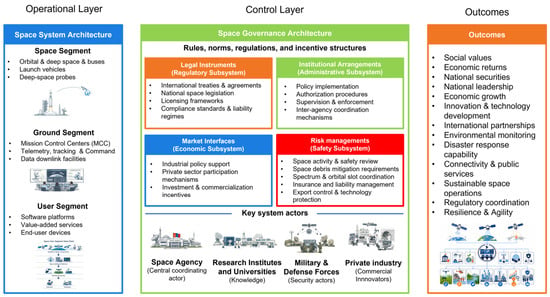
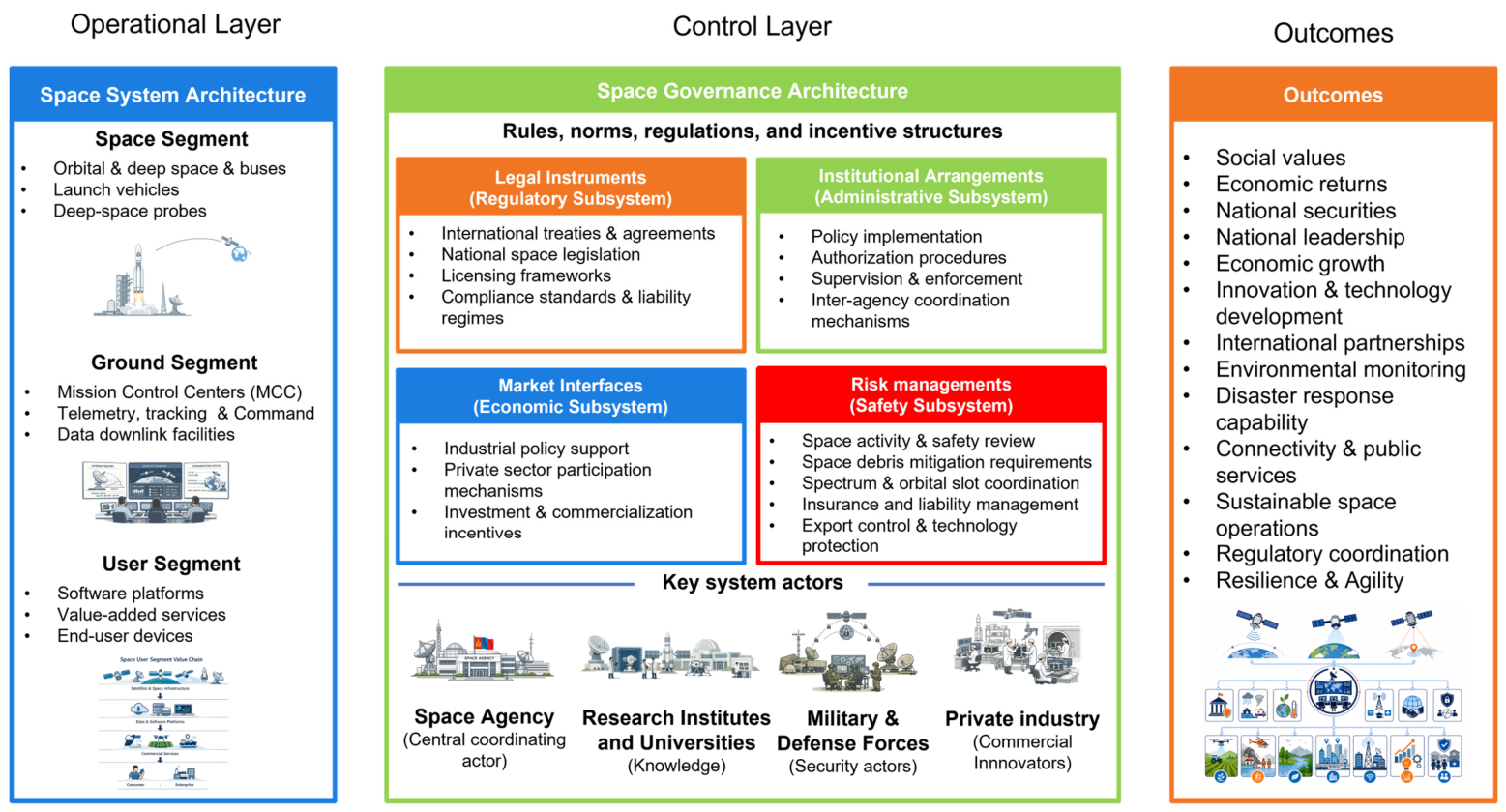
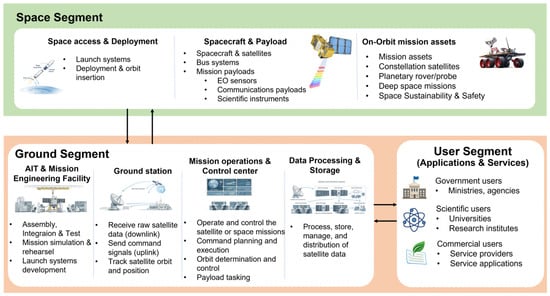
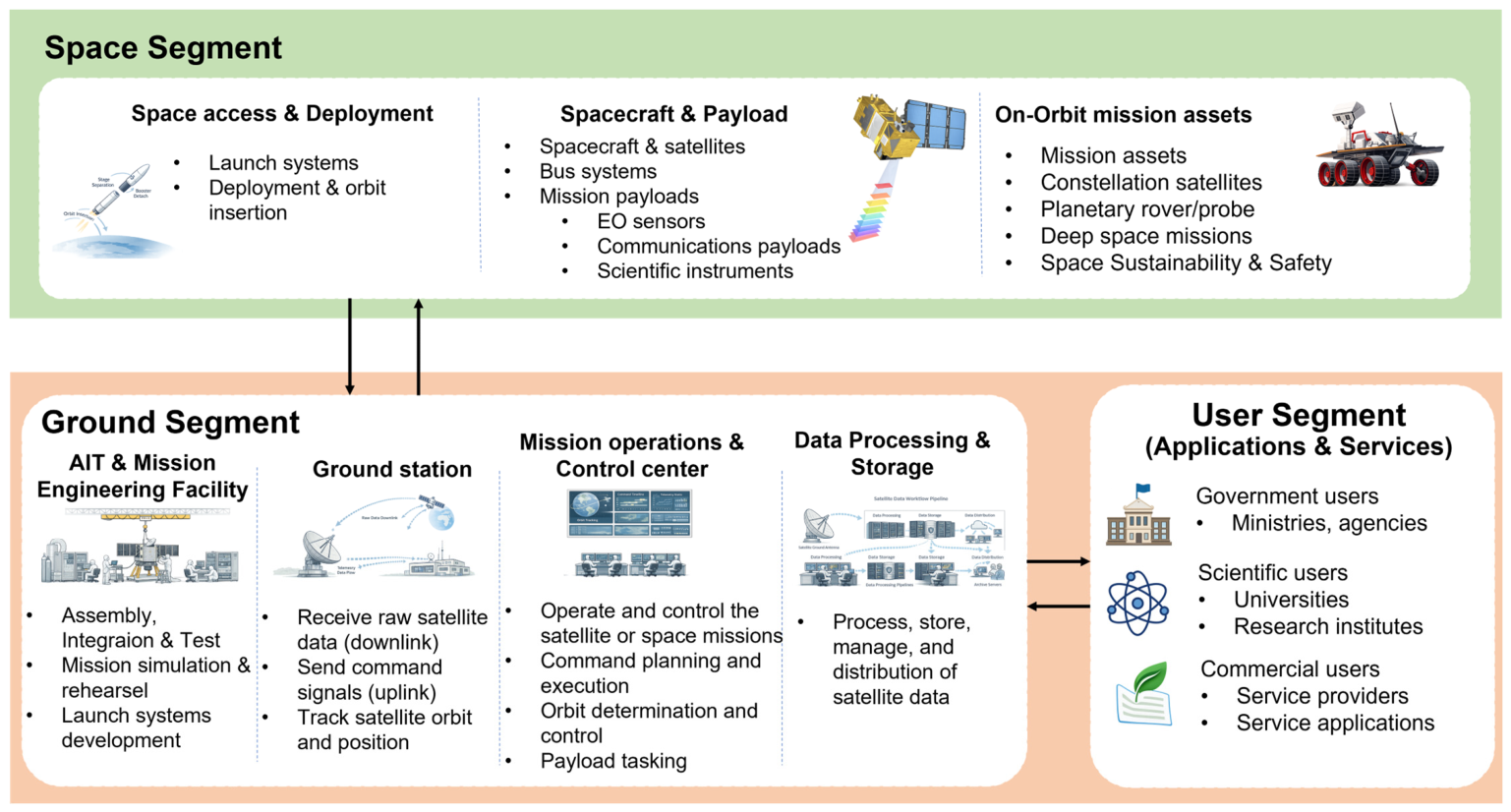
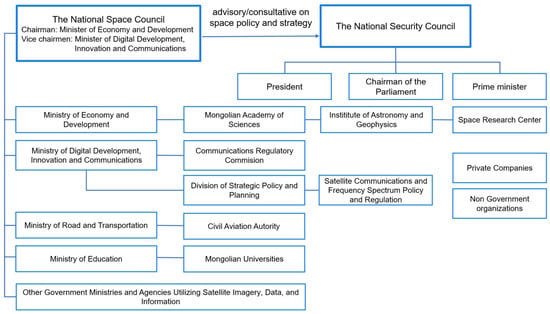
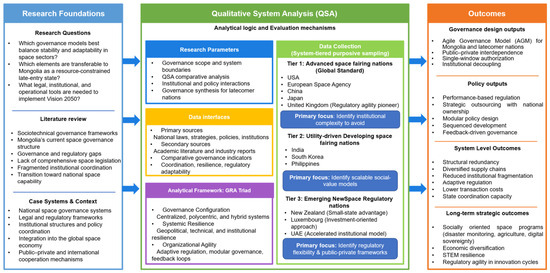
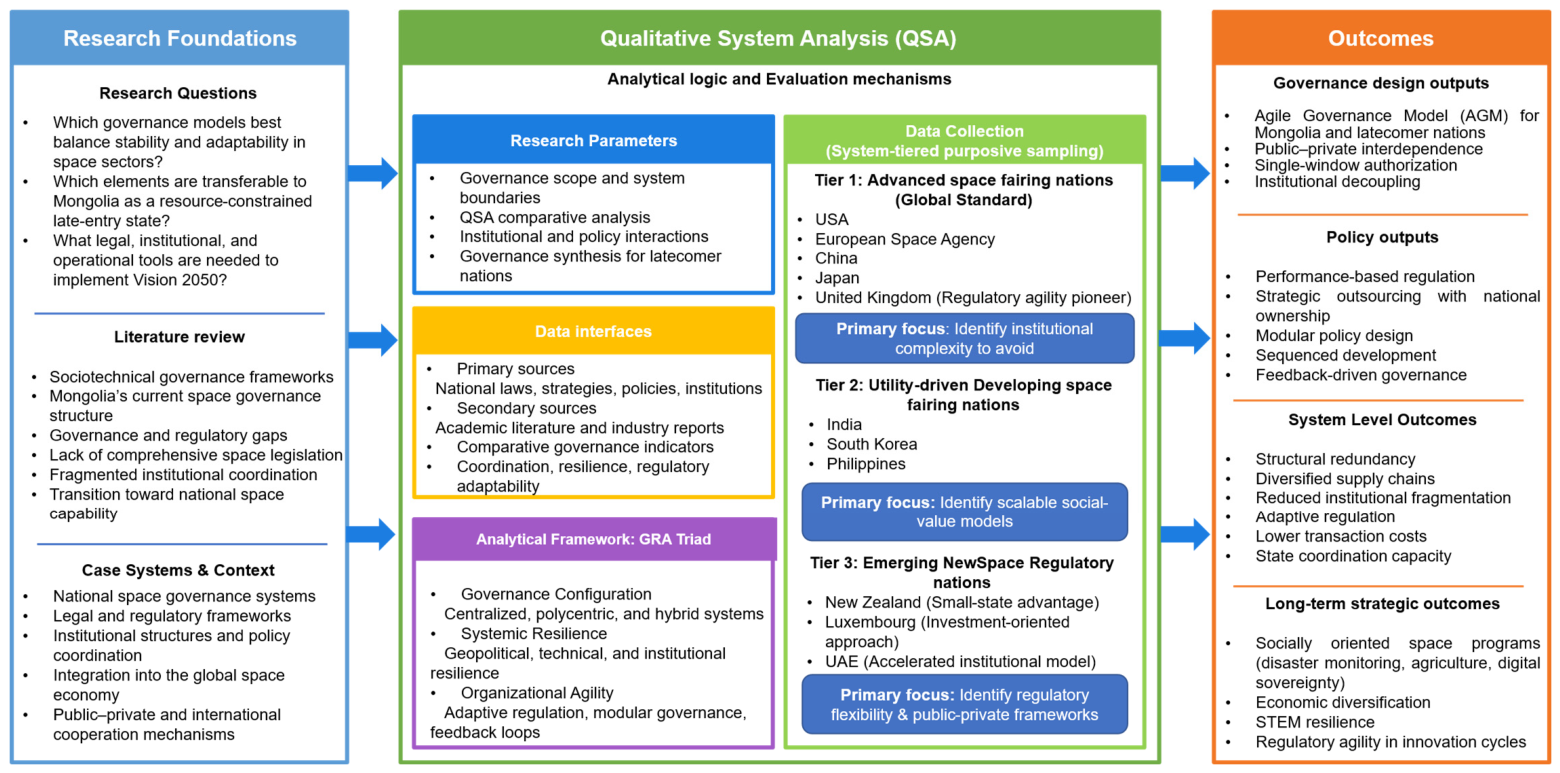
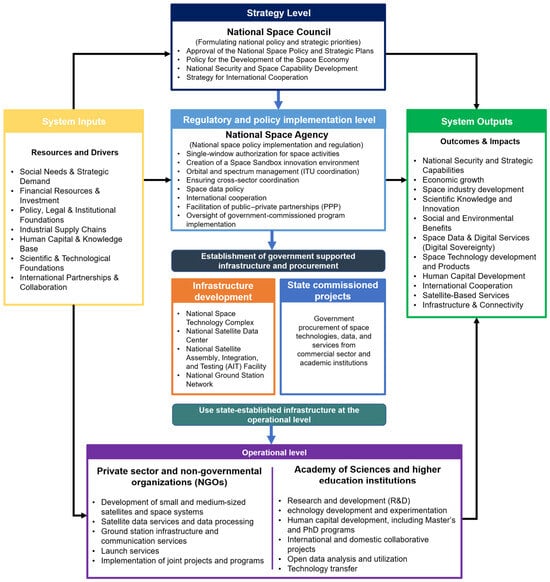
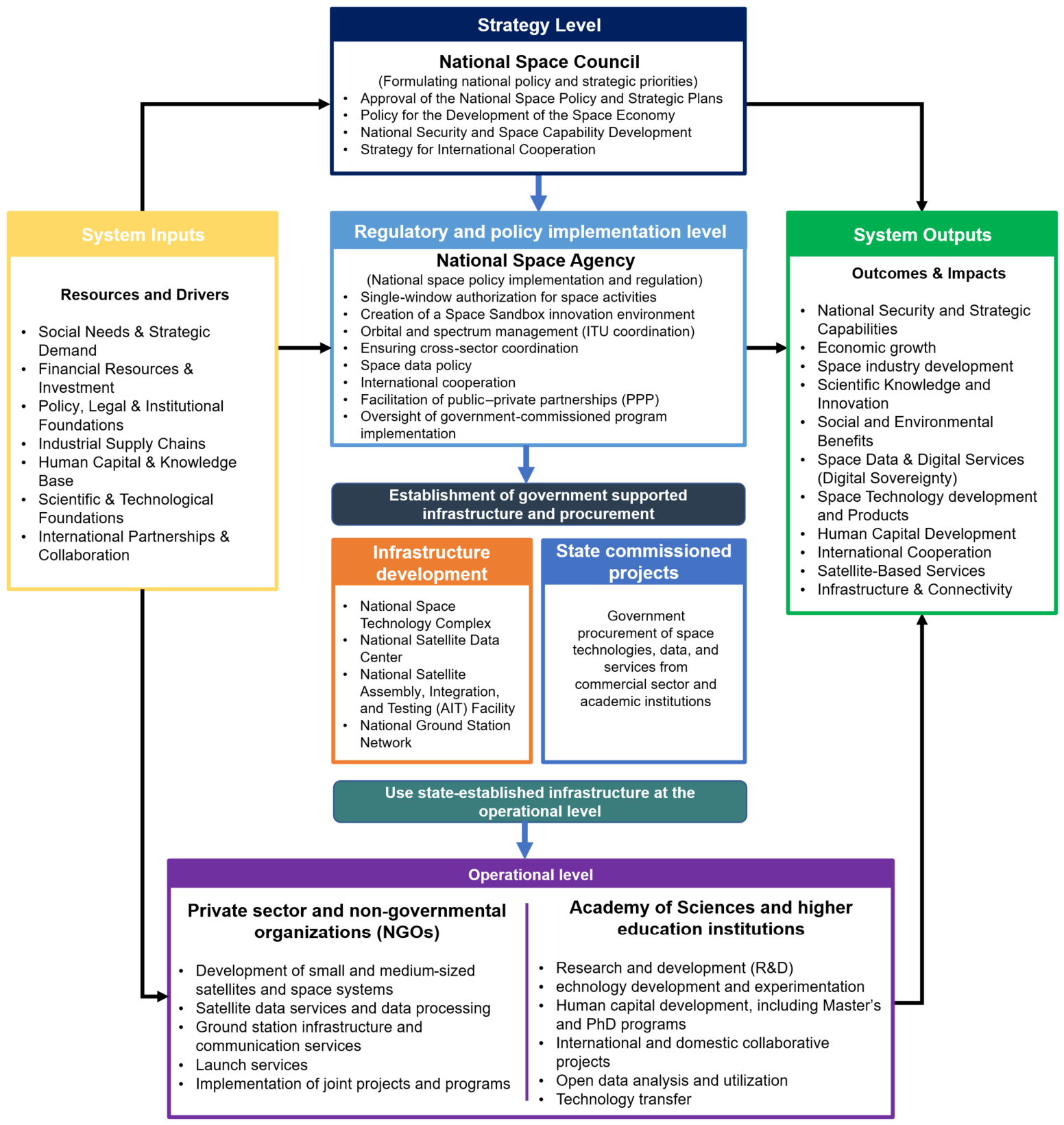
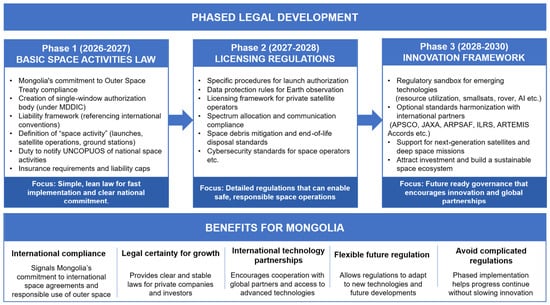
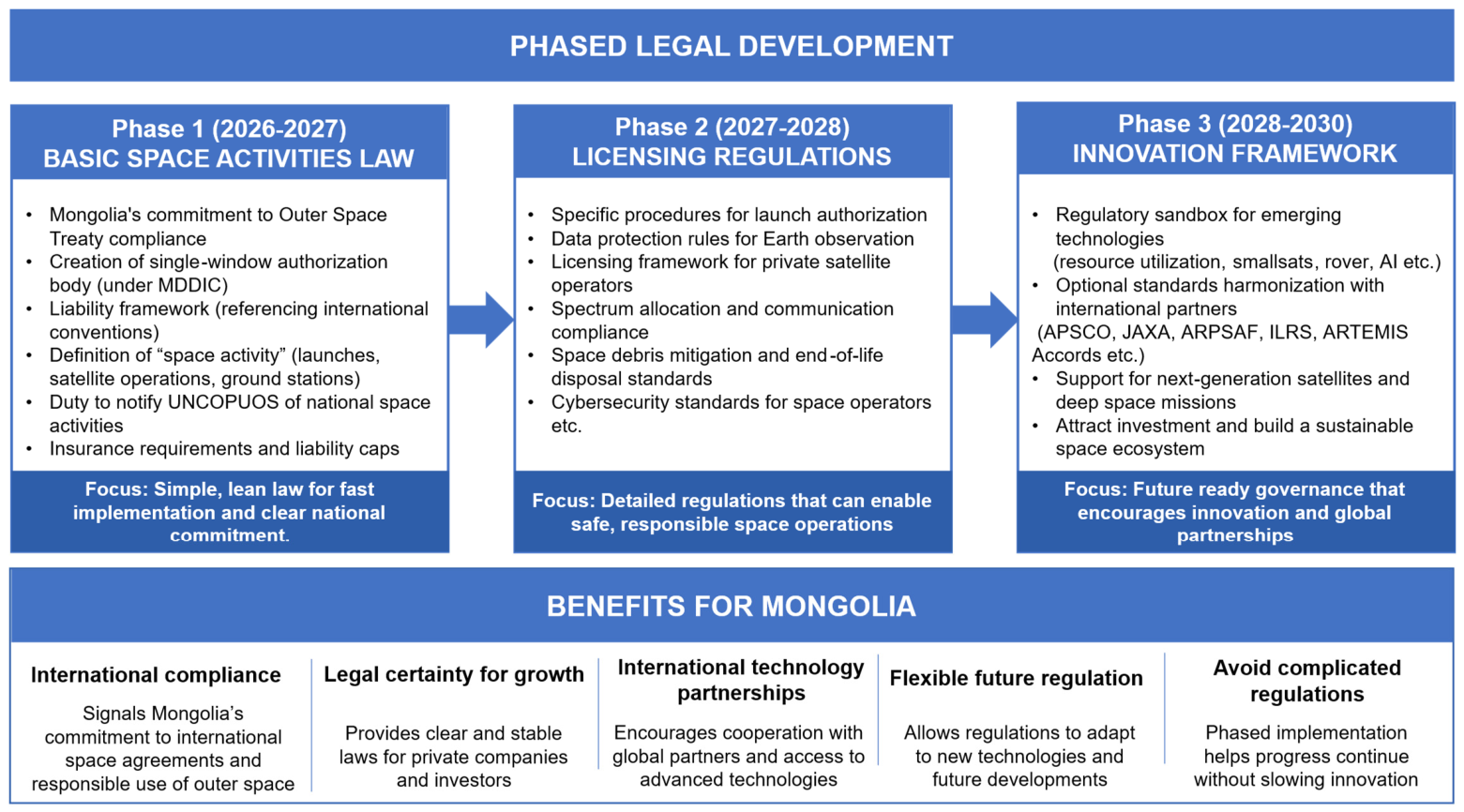

Disclaimer/Publisher’s Note: The statements, opinions and data contained in all publications are solely those of the individual author(s) and contributor(s) and not of MDPI and/or the editor(s). MDPI and/or the editor(s) disclaim responsibility for any injury to people or property resulting from any ideas, methods, instructions or products referred to in the content. |
© 2026 by the authors. Licensee MDPI, Basel, Switzerland. This article is an open access article distributed under the terms and conditions of the Creative Commons Attribution (CC BY) license.