


Simple Summary
Alzheimer’s disease is a major cause of memory loss and mental decline, but its causes are still not fully understood and effective treatments remain limited. For this reason, researchers often use animal studies to explore how the disease develops and to test possible treatments. Among these, studies in rats exposed to aluminum chloride are widely used because they can reproduce several features of Alzheimer-like brain damage. However, these studies differ greatly in the amount of aluminum chloride given, how long it is administered, how it is delivered and which memory tests are used. This makes results difficult to compare and may reduce the value of these models for future research. In this review, we examined how these rat models are methodologically designed and how cognition is assessed. We found that most studies rely on only a few memory tests and that the experimental methods vary considerably. Better standardization could improve the reliability of results and support the development of more useful models for Alzheimer’s disease research.
Abstract
Aluminum chloride (AlCl3)-induced rat models are widely used to investigate Alzheimer-like neurodegeneration, yet substantial methodological variability limits cross-study comparability. A structured synthesis focused specifically on the methodological architecture of these models, including dose, exposure duration, route of administration, and behavioral assessment, remains lacking. This review aimed to synthesize the behavioral paradigms used to assess learning and memory in rat models of aluminum chloride-induced Alzheimer’s disease, with particular emphasis on dose, duration, and route of administration. A structured narrative review incorporating systematic elements was conducted following PRISMA-informed procedures using PubMed, Web of Science, and Scopus. The reviewed literature showed a predominance of oral administration, low-to-moderate AlCl3 doses and subchronic exposure durations, most commonly 31–60 days. Behavioral assessment was dominated by hippocampal-dependent paradigms, particularly the Morris water maze and Y-maze. Across studies, AlCl3 exposure was associated with multidomain behavioral impairment accompanied by consistent hippocampal and cortical histopathological abnormalities and convergent biochemical and molecular changes, including cholinergic dysfunction, oxidative stress, neuroinflammation, and amyloid- and tau-related alterations. Overall, the available literature does not support a standardized experimental protocol or a clear overall dose–effect or duration–effect relationship. Greater harmonization of study design is needed to improve reproducibility and translational relevance.
1. Introduction
Alzheimer’s disease (AD) is a major neurodegenerative disorder with a substantial impact on quality of life and an increasing public health burden. Clinically, it is characterized by progressive cognitive decline, with variable involvement of multiple domains, including memory, language, executive function, and visuospatial abilities [1,2,3,4]. Neuropathologically, AD is characterized by the accumulation of beta-amyloid oligomers and the aggregation of tau protein, leading to the formation of neurofibrillary tangles and neuropil threads. These alterations are accompanied by chronic neuroinflammation, with accumulation of pro-inflammatory cytokines, reactive oxygen species, and other mediators that contribute to synaptic dysfunction, neuronal degeneration, and impaired neurogenesis [5,6,7].
In the absence of curative therapies or treatments that can fundamentally modify disease progression, biomedical research relies heavily on animal models to elucidate pathogenic mechanisms and evaluate novel therapeutic strategies [6,7,8,9]. At present, both genetic models and models induced by pharmacological or toxic agents are widely used. Although transgenic models are highly valuable, they are often costly and less accessible. Moreover, they typically reproduce only selected aspects of the disease and do not fully capture the complexity of sporadic AD, which accounts for the vast majority of clinical cases (over 95%) [8,9,10,11,12,13].
In recent years, chemically and pharmacologically induced animal models of AD have been used increasingly, driven by the need for more accessible and cost-effective systems that better reflect the multifactorial nature of sporadic AD and offer greater experimental flexibility. A wide range of agents have been used to induce Alzheimer-like phenotypes, including proteins and chemical compounds such as scopolamine, streptozotocin, aluminum chloride (AlCl3), amyloid-β peptides, and okadaic acid, as well as other substances capable of triggering neuroinflammatory and neurodegenerative processes. Aluminum, a neurotoxic metal known to affect cholinergic neurotransmission, is widely used in experimental studies of learning and memory in laboratory animals [2,14,15,16]. It can cross the blood–brain barrier and accumulate in vulnerable brain regions, such as the hippocampus and frontal cortex, where it induces histological, biochemical, and behavioral alterations that resemble key features of human Alzheimer’s pathology [14,15,16,17].
Aluminum is most commonly administered in the form of aluminum chloride [16,18]. AlCl3 can be delivered orally or intraperitoneally and, less frequently, by intracerebroventricular or intrahippocampal injection. The doses used in experimental studies span a broad range, from very low levels (e.g., 4.2 mg/kg body weight) to as high as 500 mg/kg body weight, and exposure may be acute, lasting only a few days, or chronic, extending over several months [15,16,18]. A variety of animal models have been used, including mice, rats, zebrafish, Drosophila melanogaster, and non-human primates, although rodent models remain the mainstay of preclinical research [19,20,21]. Compared with mice, rats are particularly well suited for behavioral and histological studies because of their more complex behavioral repertoire and larger brain size. In AlCl3-induced models, learning and memory are assessed using a range of behavioral paradigms targeting different cognitive domains: the Morris water maze (MWM) for spatial memory, the Y-maze for working memory, passive avoidance tasks for associative memory, and the novel object recognition (NOR) test for short- and long-term recognition memory [22,23,24,25,26,27].
Despite the large number of published studies, a structured synthesis of how AlCl3-induced rat models of Alzheimer-like disease are experimentally designed is still lacking. In particular, the literature remains highly heterogeneous with regard to AlCl3 dose, exposure duration, route of administration, and the behavioral paradigms used to assess learning and memory. Most existing reviews focus primarily on the molecular mechanisms of aluminum neurotoxicity, the histopathological changes induced by exposure, or the therapeutic effects of candidate interventions, rather than on the methodological features that define the behavioral model itself. As a result, it remains difficult for researchers to determine which experimental regimens are most commonly used and how behavioral assessment is typically performed across studies. This methodological variability has also made it difficult to establish a standardized experimental protocol for AlCl3 dose, exposure duration, and behavioral battery selection.
The aim of this review is to provide a structured overview of the main methodological characteristics of AlCl3-induced rat models used in AD research. Specifically, we sought to synthesize the AlCl3 doses, exposure durations, routes of administration, and learning and memory tests most frequently employed in these models, while also examining how these experimental variables shape the behavioral outcomes reported across studies.
2. Materials and Methods
This review was conducted as a structured narrative synthesis that incorporates systematic elements in order to enhance methodological rigor. Given the substantial heterogeneity across studies in terms of AlCl3 dose, exposure duration, route of administration, behavioral paradigms and outcome reporting, the findings were synthesized using a stratified descriptive approach rather than direct cross-study comparison of individual outcomes. A formal quantitative meta-analysis was not performed because the included studies differed substantially in experimental design, behavioral paradigms and the interpretation of outcomes relative to study-specific control groups.
2.1. Search Strategy and Data Sources
The search strategy was designed to identify original experimental studies investigating cognitive impairment induced by AlCl3 in rat models of AD, using at least one validated learning and/or memory test. Searches were performed in the following databases: PubMed, Web of Science Core Collection and Scopus. Search queries were conducted independently in each database, in accordance with their specific indexing structures and search requirements.
The main search terms included “rats,” “Alzheimer’s disease,” “learning and memory tests,” and “aluminium chloride”. No restrictions on year of publication were applied in order to capture the temporal evolution of research interest in this field and to include as many relevant studies as possible. Study screening was performed by four independent reviewers. The search process was carried out between 7 and 25 December 2025. All retrieved records were exported to Microsoft Excel, where duplicate entries were identified and removed prior to screening.
Disagreements between reviewers were resolved by discussion and consensus. The extracted variables included the year of publication, the dose of AlCl3, the duration of exposure, the route of administration, the cognitive tests used and the main reported cognitive outcomes.
2.2. Eligibility Criteria
The review was restricted to rat studies in order to preserve species-level consistency across behavioral paradigms and model induction protocols.
2.2.1. Inclusion Criteria
Studies were considered eligible for inclusion if they fulfilled all of the following criteria:
- original experimental investigations conducted in rats;
- use of AlCl3 as the sole agent to induce an Alzheimer-type model in rats in at least one experimental group;
- inclusion of at least one validated learning and/or memory test, with reporting of objective cognitive outcomes based on quantifiable behavioral parameters;
- presence of an appropriate control group;
- full-text availability, written in English.
2.2.2. Exclusion Criteria
Studies were excluded if they met any of the following conditions:
- conducted in species other than rats (e.g., mice, fish, insects, non-human primates) or in human subjects;
- reporting exclusively biochemical or molecular markers in the absence of cognitive assessment;
- employing combined or mixed models of cognitive impairment;
- failing to establish an experimental Alzheimer-type model;
- absence of a distinct experimental group in which AlCl3 was administered alone to induce the model;
- assessing only anxiety-like behavior, depressive-like behavior, or locomotor activity without the inclusion of cognitive tests;
- publication type limited to reviews, meta-analyses, editorials or conference abstracts;
- lack of full-text availability or publication in a language other than English.
2.3. Selection of Studies
Study inclusion and exclusion were performed using Preferred Reporting Items for Systematic Reviews and Meta-Analyses (PRISMA)-informed procedures. Initially, all records were organized in an Excel file and the first step consisted of the removal of duplicate entries. Subsequently, a screening procedure based on titles and abstracts was applied, leading to the exclusion of a subset of records that did not meet the predefined eligibility criteria. The results of the selection process are presented in Figure 1.
Figure 1.
PRISMA flow diagram of study selection.
3. Results
3.1. Temporal Distribution of Included Studies
The included articles were grouped into five-year intervals (2021–2025, 2016–2020, 2011–2015, 2006–2010, 2001–2005, and before 2001) to illustrate the temporal evolution of research interest in this field. The number of studies identified in each interval is shown in Figure 2.
Figure 2.
Temporal distribution of the included studies according to publication period. The figure shows a marked increase in publications after 2015, with a clear predominance of studies published between 2021 and 2025.
Out of the 250 included studies, 160 were published between 2021 and 2025 [16,28,29,30,31,32], followed by 65 published between 2016 and 2020 [33,34,35,36,37] and 18 published between 2011 and 2015 [38,39,40,41,42]. Earlier periods were represented by substantially fewer publications, with only four studies between 2006 and 2010 [43], two between 2001 and 2005 [44], and one study published prior to 2001 [45].
3.2. Aluminum Chloride Administration Routes in Experimental Rat Models of Alzheimer’s Disease
In experimental rat models of AD, AlCl3 has been administered via different routes, including intraperitoneal [46,47,48,49,50] and oral delivery [51,52,53,54,55], as well as direct intrahippocampal injection to induce localized neurodegeneration [56,57]. The distribution of the included studies according to the route of administration is presented in Figure 3.
Figure 3.
Distribution of the included studies according to the route of aluminum chloride administration (intraperitoneal, oral, and intrahippocampal). Oral administration predominated, whereas intrahippocampal administration was rarely used.
Oral administration was the most frequently employed route, accounting for 170 of the 250 included studies, followed by intraperitoneal administration with 77 studies, whereas the intrahippocampal approach was rarely used, being identified in only 3 studies.
3.3. Aluminum Chloride Dosing Regimens Stratified by Route of Administration
Of the 250 included studies, 243 AlCl3 dose values reported in mg/kg body weight were eligible for descriptive quantitative analysis, comprising 77 intraperitoneal and 166 oral administration protocols. This number was lower than the total number of included studies because some articles reported more than one dosing regimen, while others expressed AlCl3 exposure in formats that could not be directly converted into mg/kg body weight (e.g., ppm in feed or drinking water, μg per animal, or intermittent fixed-dose schedules). These protocols were therefore considered only in the qualitative synthesis [58,59,60].
For ease of interpretation, AlCl3 doses were stratified into predefined intervals: ≤50, 51–100, 101–150, 151–200, 201–250, and >250 mg/kg body weight. This categorization provided a structured overview of the dose ranges most frequently employed across experimental rat models of AD, stratified by route of administration.
3.3.1. Intraperitoneal Dosing Regimens
Intraperitoneal administration of AlCl3 was most frequently performed using doses ≤50 mg/kg and within the 51–100 mg/kg range [61,62,63,64,65,66,67,68,69]. Higher dose intervals were only sporadically represented, with a single study reporting doses in the 151–200 mg/kg range [70] and one study employing doses >250 mg/kg [71]. No intraperitoneal studies reported doses between 101–150 mg/kg or 201–250 mg/kg. As illustrated in Figure 4, this distribution highlights a pronounced clustering of intraperitoneal protocols within the low-to-moderate dose ranges.
Figure 4.
Intraperitoneal Aluminum Chloride Dose Ranges in Experimental Rat Models of Alzheimer’s Disease. Most intraperitoneal protocols were concentrated within the low-to-moderate dose ranges.
As shown in Figure 5, within intraperitoneal paradigms, the most frequently employed dose was 100 mg/kg [72,73,74,75], followed by 70 mg/kg [76,77,78,79] and 10 mg/kg [61,62,64]. Lower doses, such as 4.2 mg/kg [28,29] and 50 mg/kg [80,81,82,83], were also commonly used, whereas all other dose levels were reported only sporadically. Overall, intraperitoneal regimens ranged from a minimum of 4.2 mg/kg to a maximum of 300 mg/kg.
Figure 5.
Top Five Aluminum Chloride Doses Used in Intraperitoneal Rat Models of Alzheimer’s Disease. The 100 mg/kg dose was the most frequently employed intraperitoneal regimen.
3.3.2. Oral Dosing Regimens
Oral administration of AlCl3 was most commonly performed within the 51–100 mg/kg range [84,85,86,87]. Lower doses (≤50 mg/kg) [88,89,90,91,92] were also frequently employed, whereas higher dose intervals were progressively less common. Doses between 101–150 mg/kg [93,94,95,96] and 151–200 mg/kg [97,98,99,100] were reported in a smaller number of studies, and few investigations employed doses exceeding 250 mg/kg [101,102,103]. The 201–250 mg/kg interval was represented by only one study [104]. Overall, this pattern indicates a strong concentration of oral protocols within the low-to-moderate dose ranges, with a marked preference for the 51–100 mg/kg interval, as shown in Figure 6.
Figure 6.
Oral Aluminum Chloride Dose Ranges in Experimental Rat Models of Alzheimer’s Disease. Oral protocols were predominantly clustered within the 51–100 mg/kg interval.
Within oral administration paradigms, a pronounced clustering at the individual dose level was observed. As shown in Figure 7, the most frequently employed dose was 100 mg/kg [105,106,107,108,109], followed by 17 mg/kg [110,111,112,113] and 175 mg/kg [114,115,116,117]. Higher doses, such as 300 mg/kg [118,119,120,121], as well as intermediate doses such as 75 mg/kg [122,123,124,125], were also repeatedly used, whereas all other dose levels were reported only sporadically. Overall, oral regimens ranged from a minimum of 10 mg/kg to a maximum of 500 mg/kg.
Figure 7.
Top Five Aluminum Chloride Doses Used in Oral Rat Models of Alzheimer’s Disease. The 100 mg/kg dose was the most frequently employed oral regimen.
In experimental rat models of AD employing oral AlCl3 administration, several studies adopted alternative exposure strategies. These included sequential regimens combining an initial high-dose phase with prolonged exposure via drinking water, intermittent administration at fixed intervals (e.g., every other day), or continuous passive exposure through AlCl3-containing water provided ad libitum. In these paradigms, the actual amount of aluminum ingested cannot be precisely expressed in mg/kg, as it depends on individual drinking behavior and solution concentration [58,59,60].
3.3.3. Intrahippocampal Dosing Regimens
Across intrahippocampal paradigms, AlCl3 was administered as a single, focal injection directly into the CA1 region of the hippocampus using stereotaxic techniques. Two studies employed an identical dose of 3.7 × 10⁻⁴ g/kg body weight, delivered unilaterally into the left hippocampus, thereby inducing a localized lesion in a structure critical for learning and memory. In contrast, a third study included multiple experimental groups receiving single intrahippocampal injections of AlCl3 at different doses (1–200 μg per rat) via a stereotaxically implanted guide cannula, enabling precise delivery into the CA1 region [56,57,59].
3.4. Aluminum Chloride Exposure Duration Stratified by Route of Administration
The assessment of exposure duration was performed on the same cohort of 243 studies that were included in the dose analysis. To facilitate interpretation and allow structured comparison across studies, exposure durations were grouped into four predefined intervals: 1–7 days, 8–30 days, 31–60 days, and >60 days.
3.4.1. Intraperitoneal Exposure Duration
Among the 77 analyzed studies, only 2 employed very short exposure periods (1–7 days) [71,126], whereas the majority used intermediate durations (Figure 8). Specifically, 28 studies reported exposure periods between 8 and 30 days [127,128,129,130,131,132,133], and 45 studies used durations between 31 and 60 days [134,135,136,137,138,139], making this the most frequently applied interval. Long-term exposure exceeding 60 days was comparatively rare, being identified in only two studies [33,69]. This distribution highlights a clear predominance of subchronic AlCl3 administration protocols in experimental AD models. The shortest reported exposure consisted of a single day of AlCl3 administration, whereas the longest protocols extended beyond 60 days, reaching up to 70 days in some studies.
Figure 8.
Intraperitoneal Aluminum Chloride Exposure Duration Intervals in Experimental Rat Models of Alzheimer’s Disease. Most studies used subchronic intraperitoneal exposure durations, particularly within the 31–60 day interval.
3.4.2. Oral Exposure Duration
Oral AlCl3 exposure durations were predominantly concentrated within the intermediate time frames (Figure 9). Most studies employed treatment periods of 31–60 days [140,141,142,143,144,145,146,147,148,149], followed by protocols lasting 8–30 days [150,151,152,153,154,155,156,157,158,159,160]. Very short exposures (1–7 days) were rarely used [71,118], whereas prolonged regimens exceeding 60 days were uncommon [161,162,163,164,165,166,167,168]. The shortest reported oral exposure lasted 5 days, whereas the longest protocols extended to 180 days.
Figure 9.
Oral Aluminum Chloride Exposure Duration Intervals in Experimental Rat Models of Alzheimer’s Disease. Oral studies were also concentrated within intermediate exposure durations, especially 31–60 days.
3.5. Behavioral Tests Used to Assess Learning and Memory in Experimental Rat Models of Alzheimer’s Disease
Behavioral learning and memory tests provide a quantitative assessment of cognitive impairment in experimental AD rat models, allowing an objective evaluation of induced cognitive deficits.
Different forms of learning and memory rely predominantly on specific cerebral structures. For example, the prefrontal cortex generally coordinates working memory and social learning, the frontal and parietal cortices are involved in executive functions, the hippocampus and entorhinal cortex mediate spatial learning and memory, the dorsal hippocampus supports incidental learning and the amygdala is central to emotional learning. For each of these functional domains, dedicated behavioral learning and memory tests have been developed to selectively probe the corresponding neural substrates.
In the analyzed articles, the principal learning and memory tests were grouped into seven categories: the NOR test, passive avoidance tests, the MWM, the Y-maze, the radial arm maze, the T-maze, and other less frequently used paradigms (e.g., the Barnes maze and adapted versions of the elevated plus maze).
Of the 250 included studies, the majority employed a limited number of behavioral paradigms to assess cognitive function as shown in Figure 10. Most frequently, a single behavioral test was used (121 studies) [169,170,171,172,173,174,175,176,177,178], closely followed by protocols incorporating two tests (100 studies) [179,180,181,182,183,184,185,186,187,188]. In contrast, the use of more extensive testing batteries was uncommon: only 23 studies employed three behavioral assays [189,190,191,192,193,194,195,196,197,198], five studies included four tests [165], and a single study applied five distinct paradigms [32]. This distribution indicates that experimental models of AlCl3-induced cognitive impairment in rats typically rely on one or two behavioral measures to characterize learning and memory deficits, whereas comprehensive multimodal behavioral assessment remains relatively rare.
Figure 10.
Number of Behavioral Learning and Memory Tests per Study in Experimental Rat Models of Alzheimer’s Disease. Most studies relied on one or two behavioral paradigms, whereas broader multimodal behavioral assessment was uncommon.
3.6. Behavioral Paradigms Used for the Assessment of Learning and Memory in Experimental Rat Models of Alzheimer’s Disease, Stratified by Route of Administration
Figure 11 illustrates the distribution of behavioral paradigms used to assess learning and memory across different AlCl3 dose ranges in studies employing intraperitoneal administration. At the lower dose ranges (≤50 mg/kg and 51–100 mg/kg), the behavioral assessment was dominated by a core set of paradigms, with the MWM being the most frequently employed test [75,199,200] followed by the Y-maze [201], passive avoidance [202,203] and NOR test [182]. At doses between 151 and 200 mg/kg, cognitive performance was assessed exclusively using the T-Maze [70], whereas at doses exceeding 250 mg/kg, the only behavioral paradigm employed was the Y-maze test [71].
Figure 11.
Learning and Memory Tests across Intraperitoneal Aluminum Chloride Dose Ranges in Experimental Rat Models of Alzheimer’s Disease. At low-to-moderate doses, behavioral assessment was dominated by the Morris water maze and Y-maze.
Figure 12 illustrates the distribution of behavioral paradigms used to assess learning and memory across different AlCl3 dose ranges in studies employing oral administration. At the lower and intermediate dose ranges (≤50 mg/kg and 51–100 mg/kg), cognitive evaluation was dominated by a core set of paradigms, with the MWM being by far the most frequently employed test [204,205,206,207,208,209,210,211,212,213], followed by the Y-maze [214,215,216,217,218,219,220,221,222,223], NOR [224,225,226,227,228], and passive avoidance tasks [229,230,231,232,233,234,235,236,237,238,239].
Figure 12.
Learning and Memory Tests across Oral Aluminum Chloride Dose Ranges in Experimental Rat Models of Alzheimer’s Disease. The Morris water maze predominated across oral dose ranges, with more limited diversity of behavioral paradigms at higher doses.
At intermediate doses (101–150 mg/kg and 151–200 mg/kg), the same methodological pattern was preserved, with the MWM remaining the principal tool for cognitive assessment [240,241], complemented sporadically by Y-maze [242,243,244,245] and NOR paradigms. At higher dose ranges (201–250 mg/kg and >250 mg/kg), behavioral testing became more restricted, with only a limited number of paradigms being applied, predominantly the MWM and the Y-maze [104,246].
Across behavioral paradigms, AlCl3 exposure was associated with a broad pattern of behavioral impairment rather than with an isolated deficit restricted to a single task [65,135]. The most commonly affected domain was spatial learning and memory, most often assessed by the MWM, in which AlCl3-treated rats generally showed longer escape latencies during acquisition, poorer retrieval during probe trials, and reduced time spent in the target quadrant [65,85,199]. Working memory deficits were also frequently reported, particularly in Y-maze paradigms, where spontaneous alternation performance was reduced, and in radial arm maze protocols, where both working and reference memory errors increased [96,135]. Less frequently, T-maze paradigms were also used, and AlCl3-treated rats showed marked impairment of spontaneous alternation, consistent with deficits in spatial working memory and exploratory capacity [70]. Recognition memory was commonly impaired in NOR tasks, with treated animals showing reduced preference for the novel object and lower discrimination indices [66,155]. Associative or aversive memory deficits were likewise observed in passive avoidance and related retention-based paradigms, typically reflected by shorter step-through latencies or prolonged transfer latencies [39,135]. Some studies also used the modified elevated plus maze to assess learning and memory, most often through transfer latency–based measures [135]. In addition, several studies reported changes in exploratory behavior, anxiety-related performance, or motor function in tasks such as the open field, beam balance, and rotarod [39,66,96]. Overall, these findings indicate that the behavioral phenotype produced by AlCl3 is multidimensional, encompassing deficits in spatial, working, and recognition memory, together with broader alterations in exploratory behavior, anxiety-related performance, and motor function.
3.7. Histopathological Findings in Aluminum Chloride-Induced Rat Models of Alzheimer’s Disease
Histopathological abnormalities were reported in a substantial subset of the included studies and most consistently involved the hippocampus, particularly the CA1 and CA3 subfields and the dentate gyrus [39,65,66]. Across these studies, AlCl3 exposure was commonly associated with neuronal degeneration, disruption of normal cytoarchitecture, shrunken or pyknotic neurons, and vacuolative changes [39,70,87,88]. In some studies, hippocampal injury was further supported by Nissl staining, which showed reduced intact neuronal counts in the CA1, CA3, and dentate gyrus regions, while Congo red staining demonstrated β-amyloid plaque deposition in the CA1 region [65]. These findings support the view that the hippocampus is one of the principal anatomical targets of AlCl3 neurotoxicity in rat models of Alzheimer-like disease.
Beyond the hippocampus, several studies also described cortical and extra-hippocampal structural abnormalities [31,39,63,70,88]. Reported cortical changes included neuronal degeneration, vascular congestion or hemorrhagic changes, and glial alterations, while some reports also described perineuronal and perivascular edema [31,39,63,88]. Some studies additionally documented cerebellar involvement, including Purkinje cell degeneration and reduced granular layer density [247]. Amyloid-related deposition, increased Aβ immunoreactivity, and, in some cases, neurofibrillary tangle-like alterations were also reported, suggesting that at least a subset of AlCl3 rat models reproduces structural features associated with Alzheimer-like neurodegeneration [31,65,66,85,87]. Although imaging was reported far less frequently than histopathology, the limited available ultrastructural observations were broadly consistent with these structural findings [31,43].
3.8. Biochemical and Molecular Alterations in Aluminum Chloride-Induced Rat Models of Alzheimer’s Disease
Biochemical and molecular findings were broadly consistent with the behavioral and histopathological abnormalities described across the included studies. One of the most common patterns was evidence of oxidative imbalance, with AlCl3 exposure commonly associated with increased lipid peroxidation markers, including malondialdehyde (MDA) and thiobarbituric acid reactive substances (TBARS), together with reductions in endogenous antioxidant defenses such as superoxide dismutase (SOD), catalase (CAT), glutathione (GSH), glutathione peroxidase (GPx), and total antioxidant capacity (TAC) [31,36,117,135,205,207]. In parallel, cholinergic dysfunction was frequently reported, most often as increased acetylcholinesterase (AChE) activity. A small number of studies, however, described reduced acetylcholinesterase activity, possibly reflecting differences in model induction, sampled brain region, and assay methodology [31,36,39,43,52,63].
Inflammatory and neurotrophic alterations were also repeatedly identified. Across multiple studies, AlCl3 administration increased pro-inflammatory mediators such as tumor necrosis factor alpha (TNF-α), interleukin-1 beta (IL-1β), and interleukin-6 (IL-6), and in several reports this was accompanied by activation of broader inflammatory signaling pathways, including nuclear factor kappa B (NF-κB), inducible nitric oxide synthase (iNOS), cyclooxygenase-2 (COX-2), receptor for advanced glycation end products (RAGE), and microglial markers [31,66,117,161,207]. Some studies additionally reported vascular- or injury-related molecular changes, such as increased vascular cell adhesion molecule-1 (VCAM-1) and reduced vascular endothelial growth factor A (VEGF-A), while others described reductions in brain-derived neurotrophic factor (BDNF) and disturbances in monoaminergic neurotransmission, including decreases in dopamine and serotonin [88,205,209]. Together, these findings support the view that AlCl3 exposure induces a combined oxidative, inflammatory, and neurochemical disturbance rather than a single isolated molecular abnormality.
A substantial subset of studies further reported molecular alterations more closely aligned with Alzheimer-like pathology. These included increases in amyloid precursor protein (APP), amyloid beta (Aβ) or Aβ1–42, beta-site amyloid precursor protein-cleaving enzyme 1 (BACE1), β-secretase, and γ-secretase, as well as tau- or phosphorylated tau (pTau)-related abnormalities [36,66,135,136,161,204]. In several studies, these changes were accompanied by activation of apoptotic pathways, reflected by increased Bcl-2-associated X protein (Bax), cytosolic cytochrome c, and caspase-3, -8, or -9, together with reductions in anti-apoptotic markers such as B-cell lymphoma 2 (Bcl-2) and, in some reports, downregulation of Akt/GSK-3β signaling [31,72,86,135]. Beyond apoptosis, some studies also implicated necroptotic signaling, with increased hippocampal phosphorylation of receptor-interacting protein kinase 1 (RIP1), receptor-interacting protein kinase 3 (RIP3), and mixed lineage kinase domain-like protein (MLKL), increased cylindromatosis (CYLD) expression, and reduced cellular inhibitor of apoptosis 1 and 2 (cIAP1/2), supporting a possible contribution of regulated necrotic pathways to AlCl3-induced neurodegeneration [65]. Additional disease-relevant findings included increased α-synuclein, reduced nestin, altered cyclic guanosine monophosphate (cGMP) signaling, and changes in autophagy-related markers [86,88]. Overall, the biochemical and molecular data indicate that the AlCl3 model is characterized by convergent cholinergic, oxidative, inflammatory, amyloid-related, tau-related, pro-apoptotic, and necroptotic alterations, which provide a mechanistic substrate for the multidomain cognitive deficits observed across behavioral paradigms.
4. Discussion
The temporal distribution of publications reveals a marked and progressive increase in research interest in this field over the past two decades. The clear predominance of studies published between 2021 and 2025 suggests that this topic has gained substantial scientific attention only relatively recently. This trend likely reflects the growing global burden of AD, the continuous search for disease-modifying strategies and the increasing use of experimental models to explore novel therapeutic approaches. The sharp rise in publications after 2015 may also be linked to advances in molecular and behavioral neuroscience techniques, which have enabled more detailed investigation of neurodegenerative mechanisms [247,248,249,250,251,252,253,254,255,256].
The predominance of oral administration indicates a preference for exposure paradigms that approximate chronic environmental or dietary aluminum intake. The frequent use of the intraperitoneal route likely reflects its methodological reliability, enabling accurate dose control and reproducible systemic exposure. In contrast, intrahippocampal administration is rarely used, possibly because of its invasive nature [127,128,129,130,257,258,259,260,261,262,263,264,265].
The clustering of intraperitoneal AlCl3 doses within the ≤100 mg/kg range indicates a clear preference for low-to-moderate dosing paradigms that are sufficient to induce cognitive and neuropathological alterations while limiting excessive systemic toxicity. The repeated use of specific doses such as 100, 70, and 10 mg/kg suggests that these regimens have become empirically standardized in the field. Conversely, the limited use of very high doses likely reflects concerns regarding nonspecific toxic effects that extend beyond Alzheimer-like pathology [64,72,73,74,75,76,77,78,79].
A similar pattern is observed for oral AlCl3 administration, where the predominance of the 51–100 mg/kg interval indicates reliance mainly on low-to-moderate dosing. The clustering around 100 mg/kg implies that this dose has emerged as a practical reference point for model induction. Compared with intraperitoneal protocols, oral regimens display greater variability, including both lower and higher doses, possibly reflecting attempts to simulate heterogeneous patterns of chronic exposure. However, paradigms based on aluminum-containing drinking water or intermittent dosing schedules, while potentially more ecologically relevant, introduce variability in actual intake and reduce dose precision [266,267,268,269,270,271,272,273,274,275].
Regarding intracerebral administration of AlCl3, the reviewed studies targeted the hippocampal CA1 region, a structure critically involved in learning and memory and selectively vulnerable to neurotoxic insults. This focal stereotaxic approach enables the assessment of direct aluminum-induced hippocampal neurotoxicity while minimizing systemic effects [56,57,59].
Comparative analysis of exposure duration across administration routes shows a predominance of subchronic paradigms. Both oral and intraperitoneal studies predominantly employed exposure intervals between 31 and 60 days suggesting that this timeframe represents a balance between achieving measurable neurotoxic effects and avoiding excessive systemic toxicity [143,144,145,146,147,148,149].
The broader range of long-term protocols observed in oral studies, including exposures extending up to 180 days, further supports the notion that oral models aim to reproduce gradual accumulation and chronic neurotoxicity. While this is highly relevant to human exposure, it may also increase variability due to differences in gastrointestinal absorption, distribution and aluminum metabolism [161,162,163,164,165,166].
The predominance of studies employing only one or two behavioral paradigms suggests that cognitive assessment in AlCl3-induced models is often based on relatively narrow behavioral sampling. Although single-test approaches may detect clear behavioral impairments, they are unlikely to capture the multidimensional nature of cognition, which depends on coordinated activity across multiple neural systems [175,176,177,178,179,180,181,182,183,184].
In intraperitoneal models, behavioral assessment of learning and memory relies predominantly on a limited set of hippocampal-dependent paradigms, particularly the MWM and the Y-maze. This focus emphasizes spatial and recognition memory domains but may only partially reflect the broader cognitive disturbances characteristic of Alzheimer-like pathology. Expanding behavioral batteries to include multiple cognitive domains may provide a more comprehensive characterization of cognitive impairment in these models [199,200,201].
A similar pattern is observed in oral exposure models, where the MWM predominates across dose ranges, highlighting hippocampal-dependent spatial memory as the primary outcome. While the high sensitivity of this task to hippocampal dysfunction explains its popularity, recurrent reliance on a single paradigm constrains cognitive profiling [207,208,209,210,211,212,213,214,215,216].
The use of similar behavioral tests across dose ranges may provide some consistency in behavioral assessment, but it does not eliminate the broader methodological heterogeneity that limits direct cross-study comparison. In addition, the limited diversity of behavioral paradigms at higher doses may further constrain the characterization of dose-related differences in cognitive impairment across multiple domains.
Taken together, these observations indicate that current aluminum-induced AD models prioritize sensitivity to hippocampal dysfunction while providing a more limited characterization of other cognitive domains relevant to Alzheimer-like neurodegeneration. More diverse and better standardized behavioral assessment strategies may therefore improve both the multidimensional interpretation of cognitive impairment and the comparability of findings across studies.
From a clinical and translational perspective, AlCl3-induced rat models are best regarded as controlled models of Alzheimer-like neurotoxicity rather than direct surrogates of sporadic AD in humans. Their main value lies in reproducing convergent behavioral, biochemical, molecular, and histopathological abnormalities under experimentally controlled conditions. At the same time, direct comparison of administered rat doses with human exposure remains difficult. Moreover, the pharmacokinetics of aluminum vary according to the route of administration, so nominal experimental doses cannot be assumed to produce equivalent systemic or brain exposure across paradigms. Oral paradigms may therefore be more clinically intuitive because they better resemble chronic environmental intake, whereas intraperitoneal models provide tighter dose control but are less representative of typical human exposure. In this context, the translational value of AlCl3 models lies less in strict human dose equivalence and more in their ability to reproduce convergent neurotoxic processes associated with Alzheimer-like cognitive decline.
Overall, a major challenge in interpreting the current literature is the marked methodological heterogeneity across studies. Differences in AlCl3 dose, route of administration, exposure duration, number and type of behavioral tests and outcome reporting substantially limit direct comparison across studies. Although the present review attempted to address this issue by stratifying the evidence according to major experimental variables, the available literature still does not support straightforward one-to-one comparison of all protocols or the identification of a single optimal induction paradigm. Taken together, the available evidence does not support a standardized experimental protocol for AlCl3 dose, exposure duration, or behavioral assessment, and this remains a major obstacle to reproducibility and cross-study comparability. Moreover, because experimental regimens varied substantially across studies, the current literature does not support a clear dose–effect or duration–effect relationship at the level of the overall evidence base.
5. Conclusions
This review provides a structured overview of the main methodological characteristics of AlCl3-induced rat models used in AD research. The available evidence indicates a predominance of oral administration, low-to-moderate AlCl3 doses, and subchronic exposure durations, particularly within the 31–60-day range. Behavioral assessment across studies was dominated by a relatively narrow set of hippocampal-dependent paradigms, especially the MWM and the Y-maze, while broader multidomain cognitive profiling remained limited.
Across the reviewed literature, AlCl3 exposure was associated with a multidimensional pattern of impairment that extended beyond spatial memory alone and was broadly accompanied by histopathological abnormalities, most consistently affecting the hippocampus and, in some cases, the cortex, together with convergent biochemical and molecular alterations. At the same time, marked heterogeneity in dosing regimens, exposure duration, route of administration, behavioral batteries, and outcome reporting limited direct comparison across studies and did not support a standardized experimental protocol or a clear overall dose–effect or duration–effect relationship. Greater harmonization of experimental design and broader behavioral assessment will be essential to improve the robustness, reproducibility, and translational relevance of aluminum-induced Alzheimer-like rat models.
6. Limitations
This review has several limitations. First, the included studies were highly heterogeneous in terms of AlCl3 dose, exposure duration, route of administration, behavioral paradigms, and outcome reporting, which reduced direct cross-study comparability. Although we addressed this variability through structured stratification of studies by route, dose range, exposure duration, and type of behavioral assessment, this heterogeneity still limited the integration of findings into a fully unified methodological framework. In addition, the analysis was intentionally restricted to rat studies using AlCl3 as the sole induction agent. Although this approach improved species-level consistency and allowed a more focused comparison of behavioral paradigms and model induction parameters, it may limit the generalizability of the findings to other experimental species. The analysis was also restricted to full-text articles published in English. This criterion was applied to ensure accurate and consistent interpretation of study design, methodology, and reported outcomes across the included literature. However, it may also have introduced language-related selection bias, as potentially relevant studies published in other languages may have been excluded. Some oral exposure protocols could not be standardized in mg/kg body weight and were therefore considered only in the qualitative synthesis. Finally, formal quantitative synthesis was further limited by the fact that, even when the same behavioral paradigm was used, outcome measures were interpreted relative to study-specific control groups and experimental conditions. Therefore, apparently similar endpoints, such as escape latency in the MWM, could not be assumed to represent directly comparable effect magnitudes across studies. This issue, together with the heterogeneity in paradigms, dosing regimens, exposure durations, routes of administration, and reporting formats, reduced the methodological reliability of pooled effect-size comparisons and correlations between dose or exposure duration and cognitive deficit severity.
Author Contributions
Conceptualization, A.-F.D. and S.S.; methodology, A.-F.D., S.S. and A.Z.; software, E.P. and M.C.D.; validation, A.Z. and O.A.C.; formal analysis, E.P.; investigation, A.-F.D., G.A., T.-N.T., G.R.I. and M.G.L.; data curation, A.-F.D., G.A., T.-N.T., G.R.I. and M.G.L.; writing—original draft preparation, A.C.B. and A.-F.D.; writing—review and editing, A.Z., S.S. and E.P.; visualization, O.A.C. and S.F.; supervision, S.S., A.Z., O.A.C. and I.F. All authors have read and agreed to the published version of the manuscript.
Funding
This research received no external funding.
Institutional Review Board Statement
Not applicable.
Informed Consent Statement
Not applicable.
Data Availability Statement
The data supporting the findings of this review are contained within the article. Further details can be provided by the corresponding authors upon reasonable request.
Acknowledgments
Publication of this paper was supported by the University of Medicine and Pharmacy Carol Davila, through the institutional program Publish not Perish.
Conflicts of Interest
The authors declare no conflicts of interest.
Abbreviations
The following list of abbreviations is used in this review:
| AD | Alzheimer’s disease |
| AlCl3 | Aluminum chloride |
| CA1 | Cornu Ammonis 1 hippocampal region |
| PRISMA | Preferred Reporting Items for Systematic Reviews and Meta-Analyses |
| MWM | Morris water maze |
| NOR | Novel object recognition |
References
- Alzheimer’s Association. 2024 Alzheimer’s disease facts and figures. Alzheimer’s Dement. 2024, 20, 3708–3821. [Google Scholar] [CrossRef] [Scilit]
- Knopman, D.S.; Amieva, H.; Petersen, R.C.; Chételat, G.; Holtzman, D.M.; Hyman, B.T.; Nixon, R.A.; Jones, D.T. Alzheimer disease. Nat. Rev. Dis. Primers 2021, 7, 33. [Google Scholar] [CrossRef] [Scilit]
- Coman, L. Alzheimer’s Disease—Estrogens and Selective Estrogen Receptor Modulators, Friends or Foes? Acta Endocrinol. 2017, 13, 77–83. [Google Scholar] [CrossRef] [Scilit]
- Paunescu, H.; Dima, L.; Ghita, I.; Coman, L.; Ifteni, P.I.; Fulga, I.; Coman, O.A. A Systematic Review of Clinical Studies on the Effect of Psychoactive Cannabinoids in Psychiatric Conditions in Alzheimer Dementia. Am. J. Ther. 2020, 27, e249–e269. [Google Scholar] [CrossRef] [Scilit] [PubMed]
- Scheltens, P.; de Strooper, B.; Kivipelto, M.; Holstege, H.; Chételat, G.; Teunissen, C.E.; Cummings, J.; van der Flier, W.M. Alzheimer’s disease. Lancet 2021, 397, 1577–1590. [Google Scholar] [CrossRef] [Scilit]
- Leng, F.; Edison, P. Neuroinflammation and microglial activation in Alzheimer disease: Where do we go from here? Nat. Rev. Neurol. 2021, 17, 157–172. [Google Scholar] [CrossRef] [Scilit]
- Moisescu, R.E.; Ghiță, I.C.V.; Sorescu, A.; Coman, O.A.; Coman, L.; Fulga, I. Cholinergic Modulation Of Memory. Farmacia 2018, 66, 938–947. [Google Scholar] [CrossRef] [Scilit]
- Nakai, T.; Yamada, K.; Mizoguchi, H. Alzheimer’s Disease Animal Models: Elucidation of Biomarkers and Therapeutic Approaches for Cognitive Impairment. Int. J. Mol. Sci. 2021, 22, 5549. [Google Scholar] [CrossRef] [Scilit] [PubMed]
- Costescu, M.; Paunescu, H.; Coman, O.A.; Coman, L.; Fulga, I. Antidepressant effect of the interaction of fluoxetine with granisetron. Exp. Ther. Med. 2019, 18, 5108–5111. [Google Scholar] [CrossRef] [Scilit] [PubMed]
- Ghiță, I.; Zugravu, A.; Segarceanu, A.; Chirilă, M.; Handra, C.; Fulga, I. Experimental research regarding the impact of aluminum salts on locomotor activity in mice. Rom. Biotechnol. Lett. 2015, 20, 10977. [Google Scholar]
- Ghita, I.; Zugravu, A.; Handra, C.; Segarceanu, A.; Negutu, M.; Fulga, I. Experimental research concerning the effect of aluminium compounds on anxiety in mice. Farmacia 2015, 63, 568–573. [Google Scholar]
- Timofeeva, A.M.; Aulova, K.S.; Nevinsky, G.A. Modeling Alzheimer’s Disease: A Review of Gene-Modified and Induced Animal Models, Complex Cell Culture Models, and Computational Modeling. Brain Sci. 2025, 15, 486. [Google Scholar] [CrossRef] [Scilit] [PubMed]
- Gavrilă, R. Biostatistic, legislative and ethical problems of comparative clinical studies. I. Generic and biosimilar drugs case. Farmacia 2018, 66, 930–937. [Google Scholar] [CrossRef] [Scilit]
- Khan, K.; Emad, N.A.; Sultana, Y. Inducing Agents for Alzheimer’s Disease in Animal Models. J. Explor. Res. Pharmacol. 2024, 9, 169–179. [Google Scholar] [CrossRef] [Scilit]
- Rahman, A.; Banu, Z. Impact of Aluminium Chloride (AlCl3) on Brain Function: A Review of Neuro-toxic Mechanisms and Implications for Alzheimer’s Disease. Trends Pharm. Sci. 2024, 10, 355–366. [Google Scholar]
- Asani, E.; Hatami, H.; Hamidian, G.; Hatami, S. Investigating the Effects of Niosome Curcumin on the Alteration of NF-κB Gene Expression and Memory and Learning in the Prefrontal Cortex of Alzheimer’s Rats. Mol. Neurobiol. 2025, 62, 13707–13721. [Google Scholar] [CrossRef] [Scilit]
- Handra, C.M.; Ghita, I.; Ulmeanu, A.; Enache, A.-M.; Epureanu, F.; Coman, O.A.; Coman, L.; Fulga, I. Depressive Clinical Manifestations Associated with Professional Aluminum Exposure. Rev. Chim. 2019, 70, 2162–2167. [Google Scholar] [CrossRef] [Scilit]
- Wong-Guerra, M.; Montano-Peguero, Y.; Ramírez-Sánchez, J.; Jiménez-Martin, J.; Fonseca-Fonseca, L.A.; Hernández-Enseñat, D.; Nonose, Y.; Valdés, O.; Mondelo-Rodriguez, A.; Ortiz-Miranda, Y.; et al. JM-20 treatment prevents neuronal damage and memory impairment induced by aluminum chloride in rats. NeuroToxicology 2021, 87, 70–85. [Google Scholar] [CrossRef] [Scilit] [PubMed]
- Yenkoyan, K.B.; Kotova, M.M.; Apukhtin, K.V.; Galstyan, D.S.; Amstislavskaya, T.G.; Strekalova, T.; de Abreu, M.S.; Chavushyan, V.A.; Lim, L.W.; Yang, L.; et al. Experimental modeling of Alzheimer’s disease: Translational lessons from cross-taxon analyses. Alzheimer’s Dement. 2025, 21, e70273. [Google Scholar] [CrossRef] [Scilit]
- Jiang, Z.; Wang, J.; Qin, Y.; Liu, S.; Luo, B.; Bai, F.; Wei, H.; Zhang, S.; Wei, J.; Ding, G.; et al. A nonhuman primate model with Alzheimer’s disease-like pathology induced by hippocampal overexpression of human tau. Alzheimer’s Res. Ther. 2024, 16, 22. [Google Scholar] [CrossRef] [Scilit]
- Poenaru, E.; Dugăeşescu, M.; Poenaru, C.; Andrei-Bitere, I.; Băicoianu-Niţescu, L.-C.; Constantin, T.-V.; Zugravu, A.; Bitel, B.; Constantin, M.M.; Stoleru, S. Perspectives on Research and Personalized Healthcare in the Context of Federated FAIR Data Based on an Exploratory Study by Medical Researchers. Data 2025, 10, 187. [Google Scholar] [CrossRef] [Scilit]
- Moraru, M.V.; Stoleru, S.; Zugravu, A.; Coman, O.A.; Fulga, I. New Insights Into Pharmacology of GABAA Receptor Alpha Subunits–Selective Modulators. Am. J. Ther. 2024, 31, e669–e676. [Google Scholar] [CrossRef] [Scilit] [PubMed]
- Singh, N.A.; Bhardwaj, V.; Ravi, C.; Ramesh, N.; Mandal, A.K.A.; Khan, Z.A. EGCG Nanoparticles Attenuate Aluminum Chloride Induced Neurobehavioral Deficits, Beta Amyloid and Tau Pathology in a Rat Model of Alzheimer’s Disease. Front. Aging Neurosci. 2018, 10, 244. [Google Scholar] [CrossRef] [Scilit]
- Coman, L.; Păunescu, H.; Ghiță, C.I.V.; Țincu, R.C.; Vasile, S.; Cinteza, D.; Fulga, I.; Coman, O.A. Paracetamol-Induced Hypothermia in Rodents: A Review on Pharmacodynamics. Processes 2022, 10, 687. [Google Scholar] [CrossRef] [Scilit]
- Moraru, M.V.; Bucurica, S.; Proske, B.N.A.; Stoleru, S.; Zugravu, A.; Coman, O.A.; Fulga, I. Endoscopy Sedation Challenges in Patients With Hepatic Encephalopathy: A Focused Review on Propofol and Selective Use of Benzodiazepines. Am. J. Ther. 2025, 32, e247–e255. [Google Scholar] [CrossRef] [Scilit]
- Epureanu, F.B. New experimental data on the central effects of an old analgesic—Paracetamol. Farmacia 2019, 67, 648–655. [Google Scholar] [CrossRef] [Scilit]
- Barbu, A.C.; Stoleru, S.; Zugravu, A.; Poenaru, E.; Dragomir, A.; Costescu, M.; Aurelian, S.M.; Shhab, Y.; Stoleru, C.M.; Coman, O.A.; et al. Dopamine and the Gut Microbiota: Interactions Within the Microbiota–Gut–Brain Axis and Therapeutic Perspectives. Int. J. Mol. Sci. 2025, 27, 271. [Google Scholar] [CrossRef] [Scilit] [PubMed]
- Kaur, A.; Kaur, S.; Khurana, N.; Dhawan, R.K.; Singh, S.; Singh, M.; Mannan, A.; Mahmoud, M.H.; Alexiou, A.; Papadakis, M.; et al. Synergistic approach of alpha-Asarone (α-asarone) with donepezil in mitigating Alzheimer’s disease induced by Aluminium chloride in rats. J. Funct. Foods 2025, 129, 106847. [Google Scholar] [CrossRef] [Scilit]
- Tozlu, Ö.Ö.; Türkez, H.; Okkay, U.; Ceylan, O.; Bayram, C.; Hacımüftüoğlu, A.; Mardinoğlu, A. Assessment of the neuroprotective potential of d-cycloserine and l-serine in aluminum chloride-induced experimental models of Alzheimer’s disease: In vivo and in vitro studies. Front. Nutr. 2022, 9, 981889. [Google Scholar] [CrossRef] [Scilit]
- Huang, J.; Lai, L.; Su, Y.; Chen, J.; Li, P.; Du, B. Probiotic-fermented ginger-processed Gastrodia elata BI. Ameliorates AlCl3-induced cognitive dysfunction in an Alzheimer’s disease rat model by regulating the gut microbiota and CREB/BDNF pathway. Food Res. Int. 2025, 207, 116087. [Google Scholar] [CrossRef] [Scilit]
- Balgoon, M.J. Garden Cress (Lepidium sativum) Seeds Ameliorated Aluminum-Induced Alzheimer Disease in Rats Through Antioxidant, Anti-Inflammatory, and Antiapoptotic Effects. Neuropsychiatr. Dis. Treat. 2023, 19, 865–878. [Google Scholar] [CrossRef] [Scilit]
- Ojha, P.S.; Biradar, P.R.; Tubachi, S.; Patil, V.S. Evaluation of neuroprotective effects of Canna indica L. against aluminium chloride induced memory impairment in rats. Adv. Tradit. Med. 2023, 23, 539–556. [Google Scholar] [CrossRef] [Scilit]
- Abdelghany, A.K.; Khalil, F.; Azeem, N.M.A.; EL-Nahass, E.-S.; EL-Kashlan, A.M.; Emeash, H.H. Ginseng and Moringa Olifera Ameliorated Cognitive Impairments Induced by Aluminium Chloride In Albino Rat. Adv. Anim. Vet. Sci. 2019, 7, 557–565. [Google Scholar] [CrossRef] [Scilit]
- Osman, A.S.; Gad, M.H.; Hareedy, A.A.; Mishriki, A.A.; Rasheed, E.A.M.A. Sitagliptin attenuates cognitive impairment in the rat model of Aluminum-induced Alzheimer’s disease. J. Adv. Pharm. Educ. Res. 2019, 9, 53–61. [Google Scholar]
- Sagar, S.R.; Singh, D.P.; Das, R.D.; Panchal, N.B.; Sudarsanam, V.; Nivsarkar, M.; Vasu, K.K. Pharmacological investigation of quinoxaline-bisthiazoles as multitarget-directed ligands for the treatment of Alzheimer’s disease. Bioorganic Chem. 2019, 89, 102992. [Google Scholar] [CrossRef] [Scilit]
- Kumar, A.; Mallik, S.; Rijal, S.; Changdar, N.; Mudgal, J.; Shenoy, R. Dietary oils ameliorate aluminum chloride-induced memory deficit in wistar rats. Pharmacogn. Mag. 2019, 15, 36. [Google Scholar] [CrossRef] [Scilit]
- Changdar, N.; Ganjhu, R.; Rijal, S.; Kumar, A.; Mallik, S.; Nampoothiri, M.; Shenoy, R.; Sonawane, K.; Rao, M.; Mudgal, J. Exploring the potential of Desmodium gangeticum (L.) DC. extract against spatial memory deficit in rats. Pharmacogn. Mag. 2019, 15, S78–S83. [Google Scholar]
- Bitra, V.R.; Rapaka, D.; Mathala, N.; Akula, A. Effect of wheat grass powder on aluminum induced Alzheimer’s disease in Wistar rats. Asian Pac. J. Trop. Med. 2014, 7, S278–S281. [Google Scholar] [CrossRef] [Scilit]
- Chakrabarty, M.; Bhat, P.; Kumari, S.; D’Souza, A.; Bairy, K.L.; Chaturvedi, A.; Natarajan, A.; Rao, M.K.G.; Kamath, S. Cortico-hippocampal salvage in chronic aluminium induced neurodegeneration by Celastrus paniculatus seed oil: Neurobehavioural, biochemical, histological study. J. Pharmacol. Pharmacother. 2012, 3, 161–171. [Google Scholar] [CrossRef] [Scilit]
- Khan, K.A.; Kumar, N.; Nayak, P.G.; Nampoothiri, M.; Shenoy, R.R.; Krishnadas, N.; Rao, C.M.; Mudgal, J. Impact of caffeic acid on aluminium chloride-induced dementia in rats. J. Pharm. Pharmacol. 2013, 65, 1745–1752. [Google Scholar] [CrossRef] [Scilit]
- Abdel-Salam, O.M.E.; Youness, E.R.; Morsy, F.A.; Mahfouz, M.M.; Kenawy, S.A. Study of the effect of antidepressant drugs and donepezil on aluminum-induced memory impairment and biochemical alterations in rats. Comp. Clin. Pathol. 2015, 24, 847–860. [Google Scholar] [CrossRef] [Scilit]
- Subedee, L. Preventive Role of Indian Black Pepper in Animal Models of Alzheimer’s Disease. J. Clin. Diagn. Res. 2015, 9, FF01. [Google Scholar] [CrossRef] [Scilit]
- Sethi, P.; Jyoti, A.; Hussain, E.; Sharma, D. Curcumin attenuates aluminium-induced functional neurotoxicity in rats. Pharmacol. Biochem. Behav. 2009, 93, 31–39. [Google Scholar] [CrossRef] [Scilit]
- Bilkei-Gorzó, A. Neurotoxic effect of enteral aluminium. Food Chem. Toxicol. 1993, 31, 357–361. [Google Scholar] [CrossRef] [Scilit]
- Gong, Q.-H.; Wu, Q.; Huang, X.-N.; Sun, A.-S.; Shi, J.-S. Protective effects of Ginkgo biloba leaf extract on aluminum-induced brain dysfunction in rats. Life Sci. 2005, 77, 140–148. [Google Scholar] [CrossRef] [Scilit]
- Gangoda, D.M.; Saiyed, M.S.; Pathan, S.R.; Sharma, K.B.; Patel, V.A.; Sachdeva, P.D.; Patel, M.Y.; Patel, M.D. Enhanced Neuroprotective Synergy of Atorvastatin and Magnesium L-Threonate in a Rat Model of Alzheimer’s Disease Induced by Aluminum Chloride. Cureus 2023, 15, e48400. [Google Scholar] [CrossRef] [Scilit]
- Vishala, T.; Pitchaiah, G.; Pravadha, D.; Annapurna, A. Effect of plain and fortified amla fruit powder on aluminum-induced Alzheimer’s Disease in Wistar Rats. Pharmacogn. Res. 2019, 11, 406. [Google Scholar] [CrossRef] [Scilit]
- Abdel-Salam, O.M.; El-Shamarka, M.E.-S.; Youness, E.R.; Shaffie, N. Inhibition of aluminum chloride-induced amyloid Aβ peptide accumulation and brain neurodegeneration by Bougainvillea spectabilis flower decoction. Iran. J. Basic Med. Sci. 2021, 24, 1437–1445. [Google Scholar] [CrossRef] [Scilit] [PubMed]
- Anusha, C.M.; Mudgal, J.; Nampoothiri, M. An Insight in to the Efficacy of Dehydrozingerone against Aluminium Induced Cognitive Dysfunction in Rats. Int. J. Pharm. Sci. Rev. Res. 2016, 39, 70–73. [Google Scholar]
- Khalifa, M.; Abdelsalam, R.M.; Safar, M.M.; Zaki, H.F. Phosphodiesterase (PDE) III inhibitor, Cilostazol, improved memory impairment in aluminum chloride-treated rats: Modulation of cAMP/CREB pathway. Inflammopharmacology 2022, 30, 2477–2488. [Google Scholar] [CrossRef] [Scilit] [PubMed]
- Fernandes, J.; Mudgal, J.; Rao, C.M.; Arora, D.; Basu Mallik, S.; Pai, K.S.R.; Nampoothiri, M. N-acetyl-L-tryptophan, a substance-P receptor antagonist attenuates aluminum-induced spatial memory deficit in rats. Toxicol. Mech. Methods 2018, 28, 328–334. [Google Scholar] [CrossRef] [Scilit]
- Zidan, N.S.; Omran, A.M.E.; Rezk, S.M.; Atteia, H.H.; Sakran, M.I. Anti-Alzheimer’s disease potential of Arabian coffee versus Date palm seed extract in male rats. J. Food Biochem. 2022, 46, e14017. [Google Scholar] [CrossRef] [Scilit] [PubMed]
- Dash, D.; Kurady, L.B.; Chogtu, B. Effect of Vildagliptin on Cognitive Deficits in an Experimental Model of Alzheimer’s Disease. Biomed. Pharmacol. J. 2022, 15, 1261–1270. [Google Scholar] [CrossRef] [Scilit]
- Ebrahim, N.; Al Saihati, H.A.; Alali, Z.; Aleniz, F.Q.; Mahmoud, S.Y.M.; Badr, O.A.; Dessouky, A.A.; Mostafa, O.; Hussien, N.I.; Farid, A.S.; et al. Exploring the molecular mechanisms of MSC-derived exosomes in Alzheimer’s disease: Autophagy, insulin and the PI3K/Akt/mTOR signaling pathway. Biomed. Pharmacother. 2024, 176, 116836. [Google Scholar] [CrossRef] [Scilit]
- El Shahed, Z.A.E.; Elhallouty, S.M.; Rashad, A.M.; Elrhman, E.A.A.; Elkaramany, H.A.K.; Ibrahim, M.G.; Salem, N.T.; Adeeb, R.A.; Ibrahim, Y.W. Effect of Ginkgo biloba leaf extract in combination with vitamin C, E and D on Aluminum Chloride induced Alzheimer in rats. Egypt. J. Chem. 2022, 65, 827–841. [Google Scholar] [CrossRef] [Scilit]
- Geravand, S.; Karami, M.; Sahraei, H.; Rahimi, F. Protective effects of L-arginine on Alzheimer’s disease: Modulating hippocampal nitric oxide levels and memory deficits in aluminum chloride-induced rat model. Eur. J. Pharmacol. 2023, 958, 176030. [Google Scholar] [CrossRef] [Scilit]
- Jovanović, M.D.; Jelenković, A.; Stevanović, I.D.; Bokonjić, D.; Čolić, M.; Petronijević, N.; Stanimirović, D.B. Protective effects of glucose-6-phosphate dehydrogenase on neurotoxicity of aluminium applied into the CA1 sector of rat hippocampus. Indian J. Med. Res. 2014, 139, 864–872. [Google Scholar]
- Ismail, H.; Khalid, D.; Waseem, D.; Ijaz, M.U.; Dilshad, E.; Haq, I.-U.; Bhatti, M.Z.; Anwaar, S.; Ahmed, M.; Saleem, S. Bioassays guided isolation of berberine from Berberis lycium and its neuroprotective role in aluminium chloride induced rat model of Alzheimer’s disease combined with insilico molecular docking. PLoS ONE 2023, 18, e0286349. [Google Scholar] [CrossRef] [Scilit]
- Jelenković, A.; Jovanović, M.D.; Stevanović, I.; Petronijević, N.; Bokonjić, D.; Živković, J.; Igić, R. Influence of the Green Tea Leaf Extract on Neurotoxicity of Aluminium Chloride in Rats. Phytother. Res. 2014, 28, 82–87. [Google Scholar] [CrossRef] [Scilit] [PubMed]
- Zhang, Z.-J.; Qian, Y.-H.; Hu, H.-T.; Yang, J.; Yang, G.-D. The herbal medicine Dipsacus asper Wall extract reduces the cognitive deficits and overexpression of β-amyloid protein induced by aluminum exposure. Life Sci. 2003, 73, 2443–2454. [Google Scholar] [CrossRef] [Scilit] [PubMed]
- Abdel-Salam, O.M.E.; El-Shamarka, M.E.-S.; Youness, E.R.; Shaffie, N. Protective effect of hot peppers against amyloid β peptide and brain injury in AlCl3-induced Alzheimer’s disease in rats. Iran. J. Basic Med. Sci. 2023, 26, 335–342. [Google Scholar] [CrossRef] [Scilit]
- El-din Hussein, A.S.; Abou-El Nour, R.K.E.D.; Khorshid, O.A.; Osman, A.S. Study of the possible effect of sacubitril/valsartan combination versus valsartan on the cognitive function in Alzheimer’s disease model in rats. Int. J. Immunopathol. Pharmacol. 2023, 37, 03946320231161469. [Google Scholar] [CrossRef] [Scilit] [PubMed]
- Hawash, Z.A.S.; Yassien, E.M.; Alotaibi, B.S.; El-Moslemany, A.M.; Shukry, M. Assessment of Anti-Alzheimer Pursuit of Jambolan Fruit Extract and/or Choline against AlCl3 Toxicity in Rats. Toxics 2023, 11, 509. [Google Scholar] [CrossRef] [Scilit] [PubMed]
- Khalifa, M.; Safar, M.M.; Abdelsalam, R.M.; Zaki, H.F. Telmisartan Protects Against Aluminum-Induced Alzheimer-like Pathological Changes in Rats. Neurotox. Res. 2020, 37, 275–285. [Google Scholar] [CrossRef] [Scilit]
- Motawi, T.M.K.; Abdel-Nasser, Z.M.; Shahin, N.N. Ameliorative Effect of Necrosulfonamide in a Rat Model of Alzheimer’s Disease: Targeting Mixed Lineage Kinase Domain-like Protein-Mediated Necroptosis. ACS Chem. Neurosci. 2020, 11, 3386–3397. [Google Scholar] [CrossRef] [Scilit]
- Eraky, S.M.; Ramadan, N.M.; El-Magd, N.F.A. Ameliorative effects of bromelain on aluminum-induced Alzheimer’s disease in rats through modulation of TXNIP pathway. Int. J. Biol. Macromol. 2023, 227, 1119–1131. [Google Scholar] [CrossRef] [Scilit]
- Hamdan, A.M.E.; Alharthi, F.H.J.; Alanazi, A.H.; El-Emam, S.Z.; Zaghlool, S.S.; Metwally, K.; Albalawi, S.A.; Abdu, Y.S.; Mansour, R.E.-S.; Salem, H.A.; et al. Neuroprotective Effects of Phytochemicals against Aluminum Chloride-Induced Alzheimer’s Disease through ApoE4/LRP1, Wnt3/β-Catenin/GSK3β, and TLR4/NLRP3 Pathways with Physical and Mental Activities in a Rat Model. Pharmaceuticals 2022, 15, 1008. [Google Scholar] [CrossRef] [Scilit]
- Khairy, E.Y.; Salama, O.A. Effect of exercise on the hypothalamic–pituitary–gonadal axis in a rat model of Alzheimer’s disease. Sci. Rep. 2023, 13, 14300. [Google Scholar] [CrossRef] [Scilit]
- Samman, W.A.; Selim, S.M.; El Fayoumi, H.M.; El-Sayed, N.M.; Mehanna, E.T.; Hazem, R.M. Dapagliflozin Ameliorates Cognitive Impairment in Aluminum-Chloride-Induced Alzheimer’s Disease via Modulation of AMPK/mTOR, Oxidative Stress and Glucose Metabolism. Pharmaceuticals 2023, 16, 753. [Google Scholar] [CrossRef] [Scilit] [PubMed]
- El-Kashak, W.A.; Essa, A.F.; Abdelhameed, M.F.; Ahmed, Y.H.; Elkarim, A.S.A.; Elghonemy, M.M.; Ibrahim, B.M.M.; Gaara, A.H.; Mohamed, T.K.; Elshamy, A.I. Unveiling the neuroprotective potential of Ipomoea carnea ethanol extract via the modulation of tau and β-secretase pathways in AlCl3-induced memory impairment in rats in relation to its phytochemical profiling. Inflammopharmacology 2025, 33, 2043–2068. [Google Scholar] [CrossRef] [Scilit]
- Ali, H.; Tofrizal, T.; Tjong, D.H.; Yanis, A.; Yarni, S.D. The RYR3 gene is involved in Wharton’s jelly derived mesenchymal stem cell treatment of Alzheimer’s disease in rats. Arch. Med. Sci. 2023, 19, 820–824. [Google Scholar] [CrossRef] [Scilit]
- Justin-Thenmozhi, A.; Bharathi, M.D.; Kiruthika, R.; Manivasagam, T.; Borah, A.; Essa, M.M. Attenuation of Aluminum Chloride-Induced Neuroinflammation and Caspase Activation Through the AKT/GSK-3β Pathway by Hesperidin in Wistar Rats. Neurotox. Res. 2018, 34, 463–476. [Google Scholar] [CrossRef] [Scilit]
- Reddy, K.S.; Pradeepkumar, B.; Sudheer, A.; Vijayajyothi, M. Effect of Annona squamosa Linn against aluminium chloride induced Alzheimer’s disease in rats. Egypt. Pharm. J. 2020, 19, 330. [Google Scholar] [CrossRef] [Scilit]
- Mohamed, E.A.; Ahmed, H.I.; Zaky, H.S.; Badr, A.M. Boswellic acids ameliorate neurodegeneration induced by AlCl3: The implication of Wnt/β-catenin pathway. Environ. Sci. Pollut. Res. 2022, 29, 76135–76143. [Google Scholar] [CrossRef] [Scilit]
- Wang, Y.; Gong, Q.; Pan, H.; Wang, X.; Yan, C. Gardenia jasminoides J. Ellis extract attenuates memory impairment in rats with Alzheimer’s disease by suppressing NLRP3 inflammasome. Brain Res. 2024, 1824, 148687. [Google Scholar] [CrossRef] [Scilit]
- Sajad, M.; Ali, R.; Kumar, R.; Khan, N.J.; Wahab, S.; Alshehri, S.A.; Thakur, S.C. β-Sitosterol ameliorates the cognitive deficits and neuropathological hallmarks in an Alzheimer’s disease model. Arab. J. Chem. 2025, 18, 106072. [Google Scholar] [CrossRef] [Scilit]
- Sajad, M.; Ali, R.; Kumar, R.; Khan, N.J.; Wahab, S.; Alshehri, S.A.; Thakur, S.C. Therapeutic potential of cedrol in alleviating cognitive impairments in aluminum chloride-induced Alzheimer’s disease: A biomarker-based approach. Results Chem. 2025, 16, 102487. [Google Scholar] [CrossRef] [Scilit]
- Sajad, M.; Ali, R.; Kumar, R.; Khan, N.J.; Thakur, S.C. Therapeutic potential of Asplenium caudatum in Aluminum Chloride-induced Alzheimer’s diseases: An insight of integrative approaches. Phytomedicine Plus 2025, 5, 100806. [Google Scholar] [CrossRef] [Scilit]
- Almeaqli, M.T.; Alaidaa, Y.; Alnajjar, F.M.; Al Shararh, A.S.; Alharbi, D.S.; Almslmani, Y.I.; Alotibi, Y.A.; Alrashidi, H.S.; Alshehri, W.A.; Hassan, H.M.; et al. Therapeutic Effects of Arctiin on Alzheimer’s Disease-like Model in Rats by Reducing Oxidative Stress, Inflammasomes and Fibrosis. Curr. Alzheimer Res. 2024, 21, 276–288. [Google Scholar] [CrossRef] [Scilit]
- Saleh, R.A.; Eissa, T.F.; Abdallah, D.M.; Saad, M.A.; El-Abhar, H.S. Peganum harmala enhanced GLP-1 and restored insulin signaling to alleviate AlCl3-induced Alzheimer-like pathology model. Sci. Rep. 2021, 11, 12040. [Google Scholar] [CrossRef] [Scilit]
- Chavali, V.D.; Agarwal, M.; Vyas, V.K.; Saxena, B. Neuroprotective Effects of Ethyl Pyruvate against Aluminum Chloride-Induced Alzheimer’s Disease in Rats via Inhibiting Toll-Like Receptor 4. J. Mol. Neurosci. 2020, 70, 836–850. [Google Scholar] [CrossRef] [Scilit] [PubMed]
- Elreedy, H.A.; Elfiky, A.M.; Mahmoud, A.A.; Ibrahim, K.S.; Ghazy, M.A. Neuroprotective effect of quercetin through targeting key genes involved in aluminum chloride induced Alzheimer’s disease in rats. Egypt. J. Basic Appl. Sci. 2023, 10, 174–184. [Google Scholar] [CrossRef] [Scilit]
- Nafea, M.; Elharoun, M.; Abd-Alhaseeb, M.M.; Helmy, M.W. Leflunomide abrogates neuroinflammatory changes in a rat model of Alzheimer’s disease: The role of TNF-α/NF-κB/IL-1β axis inhibition. Naunyn-Schmiedeberg’s Arch. Pharmacol. 2023, 396, 485–498. [Google Scholar] [CrossRef] [Scilit]
- Attia, H.; Albuhayri, S.; Alaraidh, S.; Alotaibi, A.; Yacoub, H.; Mohamad, R.; Al-Amin, M. Biotin, coenzyme Q10, and their combination ameliorate aluminium chloride-induced Alzheimer’s disease via attenuating neuroinflammation and improving brain insulin signaling. J. Biochem. Mol. Toxicol. 2020, 34, e22519. [Google Scholar] [CrossRef] [Scilit] [PubMed]
- Shehata, M.K.; Ismail, A.A.; Kamel, M.A. Combined Donepezil with Astaxanthin via Nanostructured Lipid Carriers Effective Delivery to Brain for Alzheimer’s Disease in Rat Model. Int. J. Nanomed. 2023, 18, 4193–4227. [Google Scholar] [CrossRef] [Scilit]
- Wadie, C.M.; Ali, R.H.; Mohamed, A.E.-H.A.; Labib, J.M.W.; Sabaa, A.R.; Awad, H.E.A.; Abou-Bakr, D.A. A comparative study of acetyl -carnitine and caloric restriction impact on hippocampal autophagy, apoptosis, neurogenesis, and astroglial function in AlCl3-induced Alzheimer’s in rats. Can. J. Physiol. Pharmacol. 2023, 101, 244–257. [Google Scholar] [CrossRef] [Scilit]
- Anwar, H.M.; Georgy, G.S.; Hamad, S.R.; Badr, W.K.; el Raey, M.A.; Abdelfattah, M.A.O.; Wink, M.; Sobeh, M. A Leaf Extract of Harrisonia abyssinica Ameliorates Neurobehavioral, Histological and Biochemical Changes in the Hippocampus of Rats with Aluminum Chloride-Induced Alzheimer’s Disease. Antioxidants 2021, 10, 947. [Google Scholar] [CrossRef] [Scilit]
- Ibrahim, M.; Haleem, M.; AbdelWahab, S.; Abdel-Aziz, A. Sildenafil ameliorates Alzheimer disease via the modulation of vascular endothelial growth factor and vascular cell adhesion molecule-1 in rats. Hum. Exp. Toxicol. 2021, 40, 596–607. [Google Scholar] [CrossRef] [Scilit]
- Nayak, A.; Raju, R.; Das, P.; Das, K.; Suvitha, A.; Meher, B.R.; Alobid, S.; Almoteer, A.I.; Almadani, M.E.; Alshehri, A.; et al. Novel ibuprofen prodrug: A possible promising agent for the management of complications of Alzheimer’s disease. Saudi Pharm. J. 2024, 32, 101888. [Google Scholar] [CrossRef] [Scilit]
- Dey, M.; Singh, R.K. Chronic oral exposure of aluminum chloride in rat modulates molecular and functional neurotoxic markers relevant to Alzheimer’s disease. Toxicol. Mech. Methods 2022, 32, 616–627. [Google Scholar] [CrossRef] [Scilit] [PubMed]
- Borai, I.H.; Ezz, M.K.; Rizk, M.Z.; Aly, H.F.; El-Sherbiny, M.; Matloub, A.A.; Fouad, G.I. Therapeutic impact of grape leaves polyphenols on certain biochemical and neurological markers in AlCl3-induced Alzheimer’s disease. Biomed. Pharmacother. 2017, 93, 837–851. [Google Scholar] [CrossRef] [Scilit]
- Dubey, A.; Dhas, N.; Naha, A.; Rani, U.; Gs, R.; Shetty, A.; Shetty, C.R.; Hebbar, S. Cationic biopolymer decorated Asiatic Acid and Centella asiatica extract incorporated liposomes for treating early-stage Alzheimer’s disease: An In-vitro and In-vivo investigation. F1000Research 2022, 11, 1535. [Google Scholar] [CrossRef] [Scilit] [PubMed]
- Cao, Z.; Wang, F.; Xiu, C.; Zhang, J.; Li, Y. Hypericum perforatum extract attenuates behavioral, biochemical, and neurochemical abnormalities in Aluminum chloride-induced Alzheimer’s disease rats. Biomed. Pharmacother. 2017, 91, 931–937. [Google Scholar] [CrossRef] [Scilit]
- Chen, C.-L.; Chang, K.-Y.; Pan, T.-M. Monascus purpureus NTU 568 fermented product improves memory and learning ability in rats with aluminium-induced Alzheimer’s disease. J. Funct. Foods 2016, 21, 167–177. [Google Scholar] [CrossRef] [Scilit]
- Liu, Y.-C.; Chen, S.-Y.; Chen, Y.-Y.; Chang, H.-Y.; Chiang, I.-C.; Yen, G.-C. Polysaccharides extracted from common buckwheat (Fagopyrum esculentum) attenuate cognitive impairment via suppressing RAGE/p38/NF-κB signaling and dysbiosis in AlCl3-treated rats. Int. J. Biol. Macromol. 2024, 276, 133898. [Google Scholar] [CrossRef] [Scilit]
- Zhao, X.; Yao, N.; Fan, W.; Du, B.; Chen, Y.; Wang, C.; Song, L.; Yin, J.; Fang, F.; Guan, J. Ameliorating Effects of Aloe Emodin in an Aluminum-Induced Alzheimer’s Disease Rat Model. J. Food Biochem. 2024, 2024, 7306081. [Google Scholar] [CrossRef] [Scilit]
- Agrawal, M.; Singhal, M.; Mir, K.B.; Singh, T.G.; Kumar, D.; Kumar, M. Neuroprotective potential of synephrine against aluminium chloride (AlCl3) induced cognitive impairment & neuronal damage in rats. Pharmacol. Res.-Mod. Chin. Med. 2025, 16, 100680. [Google Scholar] [CrossRef] [Scilit]
- Chen, X.; Zhang, M.; Ahmed, M.; Surapaneni, K.M.; Veeraraghavan, V.P.; Arulselvan, P. Neuroprotective effects of ononin against the aluminium chloride-induced Alzheimer’s disease in rats. Saudi J. Biol. Sci. 2021, 28, 4232–4239. [Google Scholar] [CrossRef] [Scilit]
- Gong, F.; Su, Y.; Wu, T.; Alahmadi, T.A.; Almoallim, H.S. Sinensetin Shows Neuroprotective Effects in Aluminum Chloride-induced Alzheimer’s Disease in Rats by Regulating BDNF/PPAR-γ/p38MAPK/NF-κB Pathways. Pharmacogn. Mag. 2026, 22, 321–333. [Google Scholar] [CrossRef] [Scilit]
- Shende, V.S.; Kakadiya, J.L. Neuroprotective Potential of Solanum giganteum; Leaves Extracts against Neurotoxin Agents and Oxidative DNA Damage in Rodents. J. Nat. Remedies 2023, 23, 129–142. [Google Scholar] [CrossRef] [Scilit]
- Fatima, N.; Tabassum, A. Effect of salvia officinalis on neuromodulating and oxidative stress status in brain of male albino wistar rats intoxicated with aluminium. ACTA Pharm. Sci. 2020, 58, 277. [Google Scholar] [CrossRef] [Scilit]
- Saadullah, M.; Fakhar-e-Alam, M.; Muzammil, S.; Asif, M.; Siddique, M.H.; Rashad, M.; Atif, M.; Sayyid, A.H.; Afzal, M. Evaluation of molecular mechanisms responsible for in vivo anti-Alzheimer’s property of Euphorbia cotinifolia methanol extract. J. King Saud Univ.-Sci. 2023, 35, 102785. [Google Scholar] [CrossRef] [Scilit]
- Shabbir, A.; Rehman, K.; Akash, M.S.H.; Akbar, M.; Chaudhary, Z.; Panichayupakaranant, P.; Shah, M.A. Differential neuroprotective effect of curcuminoid formulations in aluminum chloride–induced Alzheimer’s disease. Environ. Sci. Pollut. Res. 2022, 29, 67981–67996. [Google Scholar] [CrossRef] [Scilit]
- Mohamed, S.M.; Shalaby, M.A.; Al-Mokaddem, A.K.; El-Banna, A.H.; EL-Banna, H.A.; Nabil, G. Evaluation of anti-Alzheimer activity of Echinacea purpurea extracts in aluminum chloride-induced neurotoxicity in rat model. J. Chem. Neuroanat. 2023, 128, 102234. [Google Scholar] [CrossRef] [Scilit] [PubMed]
- Ali, A.A.; Ahmed, H.I.; Khaleel, S.A.; Abu-Elfotuh, K. Vinpocetine mitigates aluminum-induced cognitive impairment in socially isolated rats. Physiol. Behav. 2019, 208, 112571. [Google Scholar] [CrossRef] [Scilit]
- Dighe, S.; Lonkar, S.; Jog, S.; Mangrulkar, S.V.; Sawarkar, S.P. Thermosensitive in-situ gel of Nifedipine: A strategy to offset cognition impairment in Alzheimer’s disease. J. Drug Deliv. Sci. Technol. 2024, 102, 106393. [Google Scholar] [CrossRef] [Scilit]
- El-Banna, A.H.; El-Ela, F.I.A.; Abdel-Wahab, A.; Gamal, A.; Abdel-Razik, A.-R.H.; El-Banna, H.A.; Elsamannoudy, S.; Ibrahim, M.A.; Abdelghany, A.K. Therapeutic efficacy of amygdaline and amygdaline-loaded niosomes in a rat model of Alzheimer’s disease via oxidative stress, brain neurotransmitters, and apoptotic pathway. Beni-Suef Univ. J. Basic Appl. Sci. 2024, 13, 117. [Google Scholar] [CrossRef] [Scilit]
- Prabhakar, V.; Mazumder, A.; Das, S.; Kanda, A.; Singh, T. Therapeutic Influence of Nyctanthes arbor-tristis; against Aluminum Chloride-induced Impairment in Wistar Rats. J. Nat. Remedies 2023, 23, 1053–1060. [Google Scholar] [CrossRef] [Scilit]
- Rapaka, D.; Bitra, V.R.; Vishala, T.C.; Akula, A. Vitis vinifera acts as anti-Alzheimer’s agent by modulating biochemical parameters implicated in cognition and memory. J. Ayurveda Integr. Med. 2019, 10, 241–247. [Google Scholar] [CrossRef] [Scilit]
- Zaher, M.F.; Bendary, M.A.; El-Aziz, G.S.A.; Ali, A.S. Potential Protective Role of Thymoquinone on Experimentally-induced Alzheimer Rats. J. Pharm. Res. Int. 2019, 31, 1–18. [Google Scholar] [CrossRef] [Scilit]
- Alawdi, S.H.; El-Denshary, E.S.; Safar, M.M.; Eidi, H.; David, M.-O.; Abdel-Wahhab, M.A. Neuroprotective Effect of Nanodiamond in Alzheimer’s Disease Rat Model: A Pivotal Role for Modulating NF-κB and STAT3 Signaling. Mol. Neurobiol. 2017, 54, 1906–1918. [Google Scholar] [CrossRef] [Scilit]
- Attia, H.N.; Ahmed, K.A. Protective role of functional food in cognitive deficit in young and senile rats. Behav. Pharmacol. 2020, 31, 81–96. [Google Scholar] [CrossRef] [Scilit]
- Dash, D.; Chogtu, B.; Kurady, L.B. Metformin attenuates cognitive deficits in experimentally induced Alzheimer’s disease. J. Glob. Pharma Technol. 2017, 8–12. [Google Scholar]
- Kangtao; Yangqian; Bais, S. Neuroprotective Effect of Protocatechuic Acid Through MAO-B Inhibition in Aluminium Chloride Induced Dementia of Alzheimer’s Type in Rats. Int. J. Pharmacol. 2018, 14, 879–888. [Google Scholar] [CrossRef] [Scilit]
- Agrawal, M.; Singhal, M.; Semwal, B.C.; Arora, S.; Singh, B.; Sikarwar, V.; Sethi, P.; Chaudhary, H.; Akram, W.; Bhargva, S.; et al. Neuroprotective action of hordenine against the Aluminium Chloride (AlCl3) induced Alzheimer’s diseases & associated memory impairment in experimental rats. Pharmacol. Res.-Mod. Chin. Med. 2024, 12, 100492. [Google Scholar] [CrossRef] [Scilit]
- Nampoothiri, M.; Ramalingayya, G.V.; Kutty, N.G.; Krishnadas, N.; Rao, C.M. Insulin Combined with Glucose Improves Spatial Learning and Memory in Aluminum Chloride-Induced Dementia in Rats. J. Environ. Pathol. Toxicol. Oncol. 2017, 36, 159–169. [Google Scholar] [CrossRef] [Scilit]
- Zhao, Y.; Wang, D.; Bais, S.; Wang, H. Modulation of Pro-inflammatory Mediators by Eugenol in AlCl3 Induced Dementia in Rats. Int. J. Pharmacol. 2019, 15, 457–464. [Google Scholar] [CrossRef] [Scilit]
- Annita, A.; Revilla, G.; Ali, H.; Almurdi, A. The Effect of Bone Marrow Mesenchymal Stem Cells on Nestin and Sox-2 Gene Expression and Spatial Learning (Percent Alternation Y-Maze Test) against AlCl3-Induced Alzheimer’s-like Pathology in a Rat Model. Iran. J. Med. Sci. 2024, 49, 441–449. [Google Scholar] [CrossRef] [Scilit]
- Asirvatham, R.; Pa, D.; Salam, S. The beneficial effect of Pluchea lanceolata on aluminum chloride-induced Alzheimer’s disease in rats. J. Cell. Neurosci. Oxidative Stress 2022, 14, 1045–1062. [Google Scholar] [CrossRef] [Scilit]
- Mallika, B.; Sudha, K.; Massand, A.; Murlimanju, B.V.; Sonal, G.; Neelam, M.P.; Sowndarya, K. Evaluation of neuroprotective role of benfotiamine in Alzheimer’s disease model: A randomized control study. Clin. Ter. 2025, 176, 127–135. [Google Scholar] [CrossRef] [Scilit] [PubMed]
- Raju, A.; Salwa, A.S.; Daisy, P.A.; Aparna, A.M.; Boby, J. Neuroprotective Effect of Vanda Tessellata as “Rasna” Species, on Aluminium Chloride Induced Alzheimer’s in Rats. J. Microbiol. Biotechnol. Food Sci. 2022, 12, e5164. [Google Scholar] [CrossRef] [Scilit]
- Abdel-Aal, R.A.; Hareedy, M.S.; Badary, D.M.; Abdelnabi, S.; Hussein, A.M.R. Neuroprotective Effects of Liraglutide and/or Rivastigmine Combination on the Rat Hippocampus. Drug Dev. Res. 2025, 86, e70160. [Google Scholar] [CrossRef] [Scilit]
- El-Kazaz, S.E.-S.; Hafez, M.H.; Noreldin, A.E.; Khafaga, A.F. Lycopene alleviates cognitive dysfunctions in an Alzheimer’s disease rat model via suppressing the oxidative and neuroinflammatory signaling. Tissue Cell 2025, 96, 102975. [Google Scholar] [CrossRef] [Scilit]
- Al-Sawasany, A.S.; Fayed, H.M.; Mahmoud, B.F.; Elblehi, S.S.; Ghazal, N.A. Evaluation of the Neurotherapeutic Effect of Quercetin on Neuronal miR-124 and β-Site Amyloid Precursor Protein Cleaving Enzyme 1 (BACE1) in an Experimental Alzheimer’s Disease Model. J. Biochem. Mol. Toxicol. 2025, 39, e70290. [Google Scholar] [CrossRef] [Scilit]
- Azouz, A.A.; El Komy, M.H.; Elmowafy, M.; Mahmoud, M.O.; Ali, F.E.; Aboud, H.M. Crafting cationic lecithmer nanocomposites as promising wagons for brain targeting of cinnamaldehyde: Accentuated neuroprotection via downregulation of Aβ1-42/p-tau crosstalk. J. Drug Deliv. Sci. Technol. 2025, 106, 106664. [Google Scholar] [CrossRef] [Scilit]
- Lin, Y.-W.; Fang, C.-H.; Yang, C.-Y.; Liang, Y.-J.; Lin, F.-H. Investigating a Curcumin-Loaded PLGA-PEG-PLGA Thermo-Sensitive Hydrogel for the Prevention of Alzheimer’s Disease. Antioxidants 2022, 11, 727. [Google Scholar] [CrossRef] [Scilit]
- Gravandi, M.M.; Hosseini, S.Z.; Alavi, S.D.; Noori, T.; Sureda, A.; Amirian, R.; Farzaei, M.H.; Shirooie, S. The Protective Effects of Pistacia Atlantica Gum in a Rat Model of Aluminum Chloride-Induced Alzheimer’s Disease via Affecting BDNF and NF-kB. Iran. J. Pharm. Res. 2024, 23, e142203. [Google Scholar] [CrossRef] [Scilit] [PubMed]
- Haider, S.; Tabassum, S.; Perveen, T. Scopolamine-induced greater alterations in neurochemical profile and increased oxidative stress demonstrated a better model of dementia: A comparative study. Brain Res. Bull. 2016, 127, 234–247. [Google Scholar] [CrossRef] [Scilit] [PubMed]
- Iranpanah, A.; Fakhri, S.; Bahrami, G.; Majnooni, M.B.; Gravandi, M.M.; Taghavi, S.; Badrbani, M.A.; Amirian, R.; Farzaei, M.H. Protective effect of a hydromethanolic extract from Fraxinus excelsior L. bark against a rat model of aluminum chloride-induced Alzheimer’s disease: Relevance to its anti-inflammatory and antioxidant effects. J. Ethnopharmacol. 2024, 323, 117708. [Google Scholar] [CrossRef] [Scilit]
- Mohammadbaghban, E.; Taravati, A.; Najafzadehvarzi, H.; Khaleghzadeh-Ahangar, H.; Tohidi, F. Oral administration of encapsulated catechin in chitosan-alginate nanoparticles improves cognitive function and neurodegeneration in an aluminum chloride-induced rat model of Alzheimer’s disease. Physiol. Rep. 2024, 12, e16095. [Google Scholar] [CrossRef] [Scilit]
- Yin, S.; Ran, Q.; Yang, J.; Zhao, Y.; Li, C. Nootropic effect of neferine on aluminium chloride–induced Alzheimer’s disease in experimental models. J. Biochem. Mol. Toxicol. 2020, 34, e22429. [Google Scholar] [CrossRef] [Scilit]
- Zarneshan, S.N.; Arkan, E.; Kiani, A.; Hosseini, S.Z.; Abbaszadeh, F.; Fakhri, S. Protective effects of polydatin amphiphilic chitosan nanocarriers against an aluminum chloride-induced model of Alzheimer’s disease in rats: Relevance to its anti-inflammatory and antioxidant effects. Naunyn-Schmiedeberg’s Arch. Pharmacol. 2025, 398, 7605–7624. [Google Scholar] [CrossRef] [Scilit]
- Zarneshan, S.N.; Fakhri, S.; Kiani, A.; Abbaszadeh, F.; Hosseini, S.Z.; Mohammadi-Noori, E.; Echeverría, J. Polydatin attenuates Alzheimer’s disease induced by aluminum chloride in rats: Evidence for its antioxidant and anti-inflammatory effects. Front. Pharmacol. 2025, 16, 1574323. [Google Scholar] [CrossRef] [Scilit]
- Hazarika, I.; Mukundan, G.K.; Sundari, S.P.; Das, A. The modulatory effect of Hydrocotyle sibthorpioides in attenuating the aluminium chloride induced neurotoxicity in rat brain. Adv. Tradit. Med. 2022, 22, 207–219. [Google Scholar] [CrossRef] [Scilit]
- Thenmozhi, A.J.; Dhivyabharathi, M.; Manivasagam, T.; Essa, M.M. Tannoid principles of Emblica officinalis attenuated aluminum chloride induced apoptosis by suppressing oxidative stress and tau pathology via Akt/GSK-3βsignaling pathway. J. Ethnopharmacol. 2016, 194, 20–29. [Google Scholar] [CrossRef] [Scilit]
- Thenmozhi, A.J.; Dhivyabharathi, M.; Raja, T.R.W.; Manivasagam, T.; Essa, M.M. Tannoid principles of Emblica officinalis renovate cognitive deficits and attenuate amyloid pathologies against aluminum chloride induced rat model of Alzheimer’s disease. Nutr. Neurosci. 2016, 19, 269–278. [Google Scholar] [CrossRef] [Scilit] [PubMed]
- Thenmozhi, A.J.; Raja, T.R.W.; Manivasagam, T.; Janakiraman, U.; Essa, M.M. Hesperidin ameliorates cognitive dysfunction, oxidative stress and apoptosis against aluminium chloride induced rat model of Alzheimer’s disease. Nutr. Neurosci. 2017, 20, 360–368. [Google Scholar] [CrossRef] [Scilit] [PubMed]
- Mustafa, H.N. Neuro-amelioration of cinnamaldehyde in aluminum-induced Alzheimer’s disease rat model. J. Histotechnol. 2020, 43, 11–20. [Google Scholar] [CrossRef] [Scilit]
- Prabhakar, O. Naringin Attenuates Aluminum Induced Cognitive Deficits in Rats. Indian J. Pharm. Educ. Res. 2020, 54, 674–681. [Google Scholar] [CrossRef] [Scilit]
- Aldemh, O.; Alnefaie, F.; Bawazir, E. A comparative Study of the Effects of Virgin Coconut Oil and Vitamin D on Alzheimer’s Disease Induced by Aluminium Chloride in Male Albino Rats Hippocampus. Egypt. J. Vet. Sci. 2024, 56, 559–573. [Google Scholar] [CrossRef] [Scilit]
- Elmorsy, E.; Elsharkawy, E.; Alhumaydhi, F.A.; Salama, M. The protective effect of Indian Catechu methanolic extract against aluminum chloride-induced neurotoxicity, A rodent model of Alzheimer’s disease. Heliyon 2021, 7, e06269. [Google Scholar] [CrossRef] [Scilit]
- Kolakemar, A.; Gangachannaiah, S.; Holla, S.N.; Kg, M.R.; Shenoy, S.; Chinta, R.; Mehta, C.H.; Nayak, U.Y. Sphingosine-1-Phosphate Receptor Modulator—Siponimod: An Evaluation to Ameliorate Aluminium Chloride Induced Behavioural Change and Biochemical effects. Res. J. Pharm. Technol. 2024, 17, 179–187. [Google Scholar] [CrossRef] [Scilit]
- Mohamed, E.A.; Ahmed, H.I.; Zaky, H.S.; Badr, A.M. Sesame oil mitigates memory impairment, oxidative stress, and neurodegeneration in a rat model of Alzheimer’s disease. A pivotal role of NF-κB/p38MAPK/BDNF/PPAR-γ pathways. J. Ethnopharmacol. 2021, 267, 113468. [Google Scholar] [CrossRef] [Scilit] [PubMed]
- Ogunlade, B.; Adelakun, S.A.; Agie, J.A. Nutritional supplementation of gallic acid ameliorates Alzheimer-type hippocampal neurodegeneration and cognitive impairment induced by aluminum chloride exposure in adult Wistar rats. Drug Chem. Toxicol. 2022, 45, 651–662. [Google Scholar] [CrossRef] [Scilit] [PubMed]
- Promyo, K.; Iqbal, F.; Chaidee, N.; Chetsawang, B. Aluminum chloride-induced amyloid β accumulation and endoplasmic reticulum stress in rat brain are averted by melatonin. Food Chem. Toxicol. 2020, 146, 111829. [Google Scholar] [CrossRef] [Scilit]
- Ravi, S.K.; Narasingappa, R.B.; Mundagaru, R.; Girish, T.K.; Vincent, B. Cassia tora extract alleviates Aβ1–42 aggregation processes in vitro and protects against aluminium-induced neurodegeneration in rats. J. Pharm. Pharmacol. 2020, 72, 1119–1132. [Google Scholar] [CrossRef] [Scilit]
- Singla, N.; Dhawan, D.K. Zinc Improves Cognitive and Neuronal Dysfunction During Aluminium-Induced Neurodegeneration. Mol. Neurobiol. 2017, 54, 406–422. [Google Scholar] [CrossRef] [Scilit]
- Weng, M.-H.; Chen, S.-Y.; Li, Z.-Y.; Yen, G.-C. Camellia oil alleviates the progression of Alzheimer’s disease in aluminum chloride-treated rats. Free Radic. Biol. Med. 2020, 152, 411–421. [Google Scholar] [CrossRef] [Scilit]
- Wu, Y.-H.; Chen, S.-Y.; Yang, J.-Y.; Chen, Y.-Y.; Yen, G.-C. Gac (Momordica cochinchinensis Spreng.) oil supplementation mitigates cognitive decline in AlCl3-induced rats through the regulation of Alzheimer’s disease markers and autophagy via gut-brain communication. J. Funct. Foods 2023, 110, 105860. [Google Scholar] [CrossRef] [Scilit]
- Bagalagel, A.A.; El-Hawary, S.S.; Alaaeldin, R.; Elmaidomy, A.H.; Altemani, F.H.; Waggas, D.S.; Algehainy, N.A.; Saeedi, N.H.; Alsenani, F.; Mokhtar, F.A.; et al. The Protective and Therapeutic Anti-Alzheimer Potential of Olea europaea L. cv. Picual: An In Silico and In Vivo Study. Metabolites 2022, 12, 1178. [Google Scholar] [CrossRef] [Scilit] [PubMed]
- Fathy, M.M.; Eid, H.; Hussein, M.A.; Ahmed, H.H. The role of Zingiber officinale in the treatment of Alzheimer’s disease: In-vitro and in-vivo evidences. Res. J. Pharm. Biol. Chem. Sci. 2015, 6, 735–749. [Google Scholar]
- Olajide, O.J.; Yawson, E.O.; Gbadamosi, I.T.; Arogundade, T.T.; Lambe, E.; Obasi, K.; Lawal, I.T.; Ibrahim, A.; Ogunrinola, K.Y. Ascorbic acid ameliorates behavioural deficits and neuropathological alterations in rat model of Alzheimer’s disease. Environ. Toxicol. Pharmacol. 2017, 50, 200–211. [Google Scholar] [CrossRef] [Scilit] [PubMed]
- Gangarde, P.; Bhatt, S.; Pujari, R. Assessment of neuroprotective potential of Cuscuta reflexa in aluminium chloride-induced experimental model of Alzheimer’s disease: In vitro and in vivo studies. J. Trace Elem. Med. Biol. 2025, 88, 127612. [Google Scholar] [CrossRef] [Scilit] [PubMed]
- Zhou, L.; Tan, S.; Shan, Y.; Wang, Y.-G.; Cai, W.; Huang, X.; Liao, X.; Li, H.; Zhang, L.; Zhang, B.; et al. Baicalein improves behavioral dysfunction induced by Alzheimer’s disease in rats. Neuropsychiatr. Dis. Treat. 2016, 12, 3145–3152. [Google Scholar] [CrossRef] [Scilit]
- Oyagbemi, A.A.; Femi-Akinlosotu, O.M.; Obasa, A.A.; Ojo, M.S.; Salami, A.T.; Ajibade, T.O.; Onukak, C.E.; Igado, O.O.; Esan, O.O.; Oyagbemi, T.O.; et al. Apigenin mitigates oxidative stress, neuroinflammation, and cognitive impairment but enhances learning and memory in aluminum chloride-induced neurotoxicity in rats. Alzheimer’s Dement. 2025, 21, e70223. [Google Scholar] [CrossRef] [Scilit]
- Hakeem, K.R.; Harakeh, S.; Ramadan, W.S.; Al Muhayawi, M.S.; Al Jaouni, S.; Mousa, S. Pomegranate peel extract lessens histopathologic changes and restores antioxidant homeostasis in the hippocampus of rats with aluminium chloride-induced Alzheimer’s disease. Asian Pac. J. Trop. Med. 2020, 13, 456. [Google Scholar] [CrossRef] [Scilit]
- Hejaziyan, L.B.; Hosseini, S.M.; Taravati, A.; Asadi, M.; Bakhshi, M.; Nezhad, P.M.; Gol, M.; Mououdi, M. Effect of Rosa damascena Extract on Rat Model Alzheimer’s Disease: A Histopathological, Behavioral, Enzyme Activities, and Oxidative Stress Study. Evid.-Based Complement. Altern. Med. 2023, 2023, 4926151. [Google Scholar] [CrossRef] [Scilit]
- Deshmukh, R.; Jaiswal, M.; Shukla, A.; Patil, U.; Sharma, M. Cognitive enhancing effect of an extract of Swertia chirata against memory impairment induced by aluminum chloride. Brain Disord. 2025, 17, 100190. [Google Scholar] [CrossRef] [Scilit]
- Kandiş, S.; Altintaş, L.; Kizildağ, S.; Simsek, F.; Ateş, M.; Alaçam, H.; Uysal, N. Comparison anti-oxidant and neuroprotective effects of extra-virgin olive oil, donepezil and rosmarinic acid on aluminum chloride-induced Alzheimer’s in rat models. Ank. Üniversitesi Vet. Fakültesi Derg. 2022, 69, 171–181. [Google Scholar] [CrossRef] [Scilit]
- Saleem, U.; Raza, Z.; Anwar, F.; Ahmad, B.; Hira, S.; Ali, T. Experimental and Computational Studies to Characterize and Evaluate the Therapeutic Effect of Albizia lebbeck (L.) Seeds in Alzheimer’s Disease. Medicina 2019, 55, 184. [Google Scholar] [CrossRef] [Scilit]
- Rapaka, D.; Bitra, V.R.; Ummidi, R.; Akula, A. Benincasa hispida alleviates amyloid pathology by inhibition of Keap1/Nrf2-axis: Emphasis on oxidative and inflammatory stress involved in Alzheimer’s disease model. Neuropeptides 2021, 88, 102151. [Google Scholar] [CrossRef] [Scilit]
- Bhounsule, A.; Bhatt, L.K. Protective effect of resveratrol and tannic acid combination on aluminium chloride induced neurotoxicity in rats. Nutr. Neurosci. 2024, 27, 438–450. [Google Scholar] [CrossRef] [Scilit]
- Elbini-Dhouib, I.; Doghri, R.; Ellefi, A.; Degrach, I.; Srairi-Abid, N.; Gati, A. Curcumin Attenuated Neurotoxicity in Sporadic Animal Model of Alzheimer’s Disease. Molecules 2021, 26, 3011. [Google Scholar] [CrossRef] [Scilit] [PubMed]
- ElMosbah, D.E.; Khattab, M.; Ibrahim, M.; Khalil, H.; El-Asssal, M.; El Miniawy, H. The improvement potential of camel milk whey as a natural remedy in comparison with Rivastigmine chitosan-loaded nanoparticles in aluminum chloride induced Alzheimer-like disease in rats. Egypt. J. Vet. Sci. 2024, 55, 1435–1446. [Google Scholar] [CrossRef] [Scilit]
- Khalil, F.; Azeem, N.A.; Abdelghany, A.; Hussein, H.; Emeash, H.; El-Nahass, E.S. Medicinal Plants Reduce Neurodegeneration and Improve Memory in Induced Alzheimer’s Disease in Rat Model. J. Adv. Vet. Res. 2023, 13, 1609–1617. [Google Scholar]
- Tripathi, S.; Mahdi, A.A.; Nawab, A.; Chander, R.; Hasan, M.; Siddiqui, M.S.; Mahdi, F.; Mitra, K.; Bajpai, V.K. Influence of age on aluminum induced lipid peroxidation and neurolipofuscin in frontal cortex of rat brain: A behavioral, biochemical and ultrastructural study. Brain Res. 2009, 1253, 107–116. [Google Scholar] [CrossRef] [Scilit]
- Zakrzeska, A.; Kitlas, P.; Shlyahtun, A.; Jabłoński, R.; Tomulewicz, M.; Szymańska, N. Protective effect of betulin against aluminium-induced Alzheimer-like neurodegeneration. Acta Pol. Pharm.-Drug Res. 2023, 80, 99–107. [Google Scholar] [CrossRef] [Scilit]
- Zhou, X.; Almoallim, H.S.; Ravindran, B.; Qin, R. Citrollenol Abrogates Neuroinflammatory Pathway Regulated via Induction of NF-kB in AlCl3 Induced Alzheimer’s Disease—Molecular Approach. Indian J. Pharm. Educ. Res. 2023, 57, 1053–1060. [Google Scholar] [CrossRef] [Scilit]
- El Rabey, H.A.; Rezk, S.M.; Mahmoud, S.A.; Abdallah, Z.; Loutfy, M.; Alalawy, A.I.; Alenazi, Y.F.; Sheta, H.; Bakry, N. Portulaca oleracea L. Methanolic Extract Protects the Brain of Male Rats Against Alzheimer’s Disease. Scientifica 2025, 2025, 7701263. [Google Scholar] [CrossRef] [Scilit]
- Alghamdi, B.S.A. Possible prophylactic anti-excitotoxic and anti-oxidant effects of virgin coconut oil on aluminium chloride-induced Alzheimer’s in rat models. J. Integr. Neurosci. 2018, 17, 593–607. [Google Scholar] [CrossRef] [Scilit]
- Gilani, S.J.; Bin-Jumah, M.N.; Al-Abbasi, F.A.; Imam, S.S.; Alshehri, S.; Ghoneim, M.M.; Nadeem, M.S.; Afzal, M.; Alzarea, S.I.; Sayyed, N.; et al. Antiamnesic Potential of Malvidin on Aluminum Chloride Activated by the Free Radical Scavenging Property. ACS Omega 2022, 7, 24231–24240. [Google Scholar] [CrossRef] [Scilit]
- Ismail, Z.; Morcos, M.; Ragai, M.; Alghandour, S. Histological Study on the Effect of Rivastigmine and Coconut Oil on the Hippocampus of Experimentally Induced Alzheimer’s Disease in Adult Male Albino Rats. Egypt. J. Histol. 2022, 46, 723–742. [Google Scholar] [CrossRef] [Scilit]
- Keshat, A.T. Evaluating the Neuroprotective Effects of Curcumin Nanoparticles on the Biochemical and Histological Alterations in Aluminum Chloride-Induced Alzheimer’s Disease in rats. Egypt. J. Chem. 2024, 68, 309–322. [Google Scholar] [CrossRef] [Scilit]
- Saxena, B.; Parmar, P.; Chauhan, H.; Singh, P.; Datusalia, A.K.; Vyas, V.K.; Tripathi, N.; Shah, J. Neuroprotective effect of taxifolin against aluminum chloride-induced dementia and pathological alterations in the brain of rats: Possible involvement of toll-like receptor 4. Toxicol. Mech. Methods 2024, 34, 703–716. [Google Scholar] [CrossRef] [Scilit] [PubMed]
- Sharma, A.; Ray, A.; Sathaye, S.; Singhal, R.S. A supercritical fluid co-extract of turmeric powder and dried coconut shreds shows neuroprotection against AlCl3-induced Alzheimer’s disease in rats through nose to brain delivery. Bioorganic Chem. 2024, 143, 107046. [Google Scholar] [CrossRef] [Scilit]
- Elfiky, A.M.; Mahmoud, A.A.; Elreedy, H.A.; Ibrahim, K.S.; Ghazy, M.A. Quercetin stimulates the non-amyloidogenic pathway via activation of ADAM10 and ADAM17 gene expression in aluminum chloride-induced Alzheimer’s disease rat model. Life Sci. 2021, 285, 119964. [Google Scholar] [CrossRef] [Scilit]
- Ramadan, W.S.; Alkarim, S. Ellagic Acid Modulates the Amyloid Precursor Protein Gene via Superoxide Dismutase Regulation in the Entorhinal Cortex in an Experimental Alzheimer’s Model. Cells 2021, 10, 3511. [Google Scholar] [CrossRef] [Scilit]
- Salama, R.M.; Yehia, R.; Elmongy, N.F.; Sallam, A.A.; Abd-Elgalil, M.M.; Schaalan, M.F.; Abdel-Mottaleb, M.M.A.; Bazan, L.S. Evaluation of betanin-loaded liposomal nanocarriers in AlCl3 -induced Alzheimer’s disease in rats: Impact on cognitive function, neurodegeneration, and TREM2/ADAM10 pathways. Arch. Pharm. 2025, 358, e2400641. [Google Scholar] [CrossRef] [Scilit]
- Basuny, A.M.; Arafat, S.M.; Hamed, E.A.; Jaleel, G.A.A.; Hassan, A.; Anin, M.A. The Effect of Extra Virgin Olive Oil on The Behavior and Biochemical Analysis of Brain Tissues of Rats with Alzheimer’s Disease. J. Pharm. Negat. Results 2022, 13, 546–561. [Google Scholar] [CrossRef] [Scilit]
- Bazzari, F.H.; Abdallah, D.M.; El-Abhar, H.S. Chenodeoxycholic Acid Ameliorates AlCl3-Induced Alzheimer’s Disease Neurotoxicity and Cognitive Deterioration via Enhanced Insulin Signaling in Rats. Molecules 2019, 24, 1992. [Google Scholar] [CrossRef] [Scilit] [PubMed]
- Abu-Elfotuh, K.; Mahran, Y.; El Gazzar, W.B.; Youssef, H.S.; Hamdan, A.M.E.; Albalawi, T.M.; Alsunbul, M.; Alqahtani, R.; Mohammed, A.A. Targeting Ferroptosis/Nrf2 Pathway Ameliorates AlCl3-Induced Alzheimer’s Disease in Rats: Neuroprotective Effect of Morin Hydrate, Zeolite Clinoptilolite, and Physical Plus Mental Activities. Int. J. Mol. Sci. 2025, 26, 1260. [Google Scholar] [CrossRef] [Scilit]
- Elariny, H.A.; Kabel, A.M.; Selim, H.M.R.M.; Helal, A.I.; Abdelrahman, D.; Borg, H.M.; Elkady, M.A.; Dawood, L.M.; El-Badawy, M.F.; Almalawi, H.F.A.; et al. Repositioning Canagliflozin for Mitigation of Aluminium Chloride-Induced Alzheimer’s Disease: Involvement of TXNIP/NLRP3 Inflammasome Axis, Mitochondrial Dysfunction, and SIRT1/HMGB1 Signalling. Medicina 2024, 60, 1805. [Google Scholar] [CrossRef] [Scilit]
- Waheed, A.R.; Mshimesh, B.A.R. Evaluating the effectiveness of pterostilbene in improving memory and offering neuroprotection in a rat model of Alzheimer’s disease induced by aluminum chloride. J. Complement. Integr. Med. 2025. [Google Scholar] [CrossRef] [Scilit]
- Abu-Elfotuh, K.; Hamdan, A.M.; Mohamed, S.A.; Bakr, R.O.; Ahmed, A.H.; Atwa, A.M.; Hamdan, A.M.; Alanzai, A.G.; Alnahhas, R.K.; Gowifel, A.M.; et al. The potential anti-Alzheimer’s activity of Oxalis corniculata Linn. Methanolic extract in experimental rats: Role of APOE4/LRP1, TLR4/NF-κβ/NLRP3, Wnt 3/β-catenin/GSK-3β, autophagy and apoptotic cues. J. Ethnopharmacol. 2024, 324, 117731. [Google Scholar] [CrossRef] [Scilit] [PubMed]
- Abu-Elfotuh, K.; Selim, H.M.R.M.; Riad, O.K.M.; Hamdan, A.M.E.; Hassanin, S.O.; Sharif, A.F.; Moustafa, N.M.; Gowifel, A.M.; Mohamed, M.Y.A.; Atwa, A.M.; et al. The protective effects of sesamol and/or the probiotic, Lactobacillus rhamnosus, against aluminum chloride-induced neurotoxicity and hepatotoxicity in rats: Modulation of Wnt/β-catenin/GSK-3β, JAK-2/STAT-3, PPAR-γ, inflammatory, and apoptotic pathways. Front. Pharmacol. 2023, 14, 1208252. [Google Scholar] [CrossRef] [Scilit]
- Dulla, B.S.; Bindhu, S. A Study on the Effect of Valeric Acid in Alzheimer’s Induced Rats by the Estimation of Aβ 1-42 Biomarker. J. Health Allied Sci. NU 2022, 12, 134–138. [Google Scholar] [CrossRef] [Scilit]
- Zeb, Z.; Sharif, A.; Akhtar, B.; Shahnaz. 3-Acetyl coumarin alleviate neuroinflammatory responses and oxidative stress in aluminum chloride-induced Alzheimer’s disease rat model. Inflammopharmacology 2024, 32, 1371–1386. [Google Scholar] [CrossRef] [Scilit]
- Mishra, S.; Prusty, S.K.; Sahu, P.K.; Das, D. Azilsartan ameliorates aluminium chloride induced Alzheimer’s disease like pathology. Curr. Issues Pharm. Med. Sci. 2023, 36, 151–157. [Google Scholar] [CrossRef] [Scilit]
- Abu-Elfotuh, K.; Tolba, A.M.A.; Hussein, F.H.; Hamdan, A.M.E.; Rabeh, M.A.; Alshahri, S.A.; Ali, A.A.; Mosaad, S.M.; Mahmoud, N.A.; Elsaeed, M.Y.; et al. Anti-Alzheimer Activity of Combinations of Cocoa with Vinpocetine or Other Nutraceuticals in Rat Model: Modulation of Wnt3/β-Catenin/GSK-3β/Nrf2/HO-1 and PERK/CHOP/Bcl-2 Pathways. Pharmaceutics 2023, 15, 2063. [Google Scholar] [CrossRef] [Scilit] [PubMed]
- Cordaro, M.; Salinaro, A.T.; Siracusa, R.; D’amico, R.; Impellizzeri, D.; Scuto, M.; Ontario, M.L.; Cuzzocrea, S.; Di Paola, R.; Fusco, R.; et al. Key Mechanisms and Potential Implications of Hericium erinaceus in NLRP3 Inflammasome Activation by Reactive Oxygen Species during Alzheimer’s Disease. Antioxidants 2021, 10, 1664. [Google Scholar] [CrossRef] [Scilit]
- Abdel-Aal, R.A.; Hussein, O.A.; Elsaady, R.G.; Abdelzaher, L.A. Naproxen as a potential candidate for promoting rivastigmine anti-Alzheimer activity against aluminum chloride-prompted Alzheimer’s-like disease in rats; neurogenesis and apoptosis modulation as a possible underlying mechanism. Eur. J. Pharmacol. 2022, 915, 174695. [Google Scholar] [CrossRef] [Scilit]
- Abdel-Aal, R.A.; Meligy, F.Y.; Maghraby, N.; Sayed, N.; Ashry, I.E.-S.M. Comparing levetiracetam and zonisamide effects on rivastigmine anti-Alzheimer’s activity in aluminum chloride-induced Alzheimer’s-like disease in rats: Impact on α7 nicotinic acetylcholine receptors and amyloid β. Brain Res. 2025, 1855, 149573. [Google Scholar] [CrossRef] [Scilit]
- Auti, S.T.; Kulkarni, Y.A. Beneficial Effects of Caraway Oil in Aluminium Chloride-Induced Neurotoxicity. Cureus 2025, 17, e86783. [Google Scholar] [CrossRef] [Scilit]
- Jangwan, N.S.; Singh, M.F. Ameliorative effect of Modified Atkins Diet against aluminium chloride induced cognitive, behavioural and neurochemical impairments in rats. Indian J. Exp. Biol. 2025, 63, 361–373. [Google Scholar] [CrossRef] [Scilit]
- Anadozie, S.O.; Effiom, D.O.; Adewale, O.B.; Jude, J.; Zosela, I.; Akawa, O.B.; Olayinka, J.N.; Roux, S. Hibiscus sabdariffa synthesized gold nanoparticles ameliorate aluminum chloride induced memory deficits through inhibition of COX-2/BACE-1 mRNA expression in rats. Arab. J. Chem. 2023, 16, 104604. [Google Scholar] [CrossRef] [Scilit]
- Banu, Z.; Das, N.R. Protective effects of alkaloidal fraction of Elaeocarpus angustifolius Blume against AlCl3-evoked neurotoxicity: Insights from an in vivo model of Alzheimer’s disease. Metab. Brain Dis. 2025, 40, 330. [Google Scholar] [CrossRef] [Scilit]
- Mushtaq, S.; Hanif, U.; Shah, M.A.; Mazhar, N.; Chauhdary, Z.; Qasim, M.; Muneeb, M.; Chaudhary, M.; Dar, M. Neuroprotective evaluation of Marsilea quadrifolia L. and Salvinia molesta D.S Mitchel in aluminium chloride induced Alzheimer disease. Not. Bot. Horti Agrobot. Cluj-Napoca 2023, 51, 13228. [Google Scholar] [CrossRef] [Scilit]
- Sequeira, R.C.; Godad, A. Novel insights into famotidine as a GSK-3β inhibitor: An explorative study in aluminium chloride-induced Alzheimer’s disease rat model. Behav. Brain Res. 2025, 476, 115270. [Google Scholar] [CrossRef] [Scilit]
- Mathiyazahan, D.B.; Justin Thenmozhi, A.; Manivasagam, T. Protective effect of black tea extract against aluminium chloride-induced Alzheimer’s disease in rats: A behavioural, biochemical and molecular approach. J. Funct. Foods 2015, 16, 423–435. [Google Scholar] [CrossRef] [Scilit]
- Abdel-Aal, R.A.; Assi, A.-A.A.; Kostandy, B.B. Memantine prevents aluminum-induced cognitive deficit in rats. Behav. Brain Res. 2011, 225, 31–38. [Google Scholar] [CrossRef] [Scilit] [PubMed]
- Ali, A.A.; El-Fattah, A.I.A.; Abu-Elfotuh, K.; Elariny, H.A. Natural antioxidants enhance the power of physical and mental activities versus risk factors inducing progression of Alzheimer’s disease in rats. Int. Immunopharmacol. 2021, 96, 107729. [Google Scholar] [CrossRef] [Scilit]
- Abdel-Aal, R.A.; Assi, A.-A.A.; Kostandy, B.B. Rivastigmine reverses aluminum-induced behavioral changes in rats. Eur. J. Pharmacol. 2011, 659, 169–176. [Google Scholar] [CrossRef] [Scilit] [PubMed]
- Gol, M.; Ghorbanian, D.; Soltanpour, N.; Faraji, J.; Pourghasem, M. Protective effect of raisin (currant) against spatial memory impairment and oxidative stress in Alzheimer disease model. Nutr. Neurosci. 2019, 22, 110–118. [Google Scholar] [CrossRef] [Scilit] [PubMed]
- AbdElRaouf, K.; Farrag, H.S.; El-Ganzuri, M.A.; El-Sayed, W.M. A new bithiophene inhibited amyloid-β accumulation and enhanced cognitive function in the hippocampus of aluminum-induced Alzheimer’s disease in adult rats. J. Alzheimer’s Dis. 2024, 102, 1084–1098. [Google Scholar] [CrossRef] [Scilit]
- Kazmi, I.; Afzal, M.; Imam, F.; Alzarea, S.I.; Patil, S.; Mhaiskar, A.; Shah, U.; Almalki, W.H. Barbaloin’s Chemical Intervention in Aluminum Chloride Induced Cognitive Deficits and Changes in Rats through Modulation of Oxidative Stress, Cytokines, and BDNF Expression. ACS Omega 2024, 9, 6976–6985. [Google Scholar] [CrossRef] [Scilit]
- Guan, H.; Yu, M.; Zhou, Y.; Yao, X. Steroidal saponin dioscin attenuated aluminum chloride–Induced alzheimer’s-Like pathology in rat model via modulation of oxidative and inflammatory markers. Pharmacogn. Mag. 2022, 18, 903–910. [Google Scholar]
- Li, D.; Wang, M. Shikonin Attenuate Behavioral Defects, Oxidative Stress, and Neuroinflammation During Aluminum Chloride-induced Alzheimer’s Disease Condition in an in vivo Experimental Model. Pharmacogn. Mag. 2024, 20, 983–995. [Google Scholar] [CrossRef] [Scilit]
- Agwa, M.M.; Abdelmonsif, D.A.; Khattab, S.N.; Sabra, S. Self- assembled lactoferrin-conjugated linoleic acid micelles as an orally active targeted nanoplatform for Alzheimer’s disease. Int. J. Biol. Macromol. 2020, 162, 246–261. [Google Scholar] [CrossRef] [Scilit]
- Alqarni, S.S.; Afzal, M.; Alharbi, K.S.; Alenezi, S.K.; Alsahli, T.G.; Zaidi, S.; Altyar, A.E.; Ghaboura, N.; Kazmi, I.; Mantargi, M.J.S.; et al. Rosiridin Protects Against Aluminum Chloride-Induced Memory Impairment via Modulation of BDNF/NFκB/PI3K/Akt Pathway in Rats. Medicina 2024, 60, 1812. [Google Scholar] [CrossRef] [Scilit]
- Olajide, O.J.; Fatoye, J.O.; Idowu, O.F.; Ilekoya, D.; Gbadamosi, I.T.; Gbadamosi, M.T.; Asogwa, N.T. Reversal of behavioral decline and neuropathology by a complex vitamin supplement involves modulation of key neurochemical stressors. Environ. Toxicol. Pharmacol. 2018, 62, 120–131. [Google Scholar] [CrossRef] [Scilit]
- Lin, W.-T.; Chen, R.-C.; Lu, W.-W.; Liu, S.-H.; Yang, F.-Y. Protective effects of low-intensity pulsed ultrasound on aluminum-induced cerebral damage in Alzheimer’s disease rat model. Sci. Rep. 2015, 5, 9671. [Google Scholar] [CrossRef] [Scilit] [PubMed]
- Kumar, A.; Dogra, S.; Prakash, A. Protective effect of curcumin (Curcuma longa), against aluminium toxicity: Possible behavioral and biochemical alterations in rats. Behav. Brain Res. 2009, 205, 384–390. [Google Scholar] [CrossRef] [Scilit] [PubMed]
- Ghaderi, S.; Gholipour, P.; Komaki, A.; Salehi, I.; Rashidi, K.; Khoshnam, S.E.; Rashno, M. p-Coumaric acid ameliorates cognitive and non-cognitive disturbances in a rat model of Alzheimer’s disease: The role of oxidative stress and inflammation. Int. Immunopharmacol. 2022, 112, 109295. [Google Scholar] [CrossRef] [Scilit]
- Alzahrani, Y.M.; Sattar, M.A.A.A.; Kamel, F.O.; Ramadan, W.S.; Alzahrani, Y.A. Possible combined effect of perindopril and Azilsartan in an experimental model of dementia in rats. Saudi Pharm. J. 2020, 28, 574–581. [Google Scholar] [CrossRef] [Scilit] [PubMed]
- Kumar, R.; Tyagi, N. Pharmacological Characterization of Ruellia tuberosa Ethanolic Extract in a Rodent Model of Cognitive Impairment. Recent Adv. Inflamm. Allergy Drug Discov. 2025, 19. [Google Scholar] [CrossRef] [Scilit]
- Yossef, R.R.; Al-Yamany, M.F.; Saad, M.A.; El-Sahar, A.E. Neuroprotective effects of vildagliptin on drug induced Alzheimer’s disease in rats with metabolic syndrome: Role of hippocampal klotho and AKT signaling pathways. Eur. J. Pharmacol. 2020, 889, 173612. [Google Scholar] [CrossRef] [Scilit]
- Zhao, Y.; Dang, M.; Zhang, W.; Lei, Y.; Ramesh, T.; Priya Veeraraghavan, V.; Hou, X. Neuroprotective effects of Syringic acid against aluminium chloride induced oxidative stress mediated neuroinflammation in rat model of Alzheimer’s disease. J. Funct. Foods 2020, 71, 104009. [Google Scholar] [CrossRef] [Scilit]
- Aljarari, R.M. Neuroprotective effects of a combination of Boswellia papyrifera and Syzygium aromaticum on AlCl3 induced Alzheimer’s disease in male albino rat. Braz. J. Biol. 2023, 83, e272466. [Google Scholar] [CrossRef] [Scilit]
- Radi, R.A.; Kandeil, M.A.; Mohammed, E.T.; Ibrahim, M.A.; Gamal, A.; Abdel-Razik, A.-R.H.; Khalil, F.; Sabry, D. Neuroprotective effects of Chlorella vulgaris loaded niosomes via SIRT1 activation in aluminum chloride-induced Alzheimer’s model. Sci. Rep. 2025, 15, 40361. [Google Scholar] [CrossRef] [Scilit]
- Saleem, U.; Akhtar, R.; Anwar, F.; Shah, M.A.; Chaudary, Z.; Ayaz, M.; Ahmad, B. Neuroprotective potential of Malva neglecta is mediated via down-regulation of cholinesterase and modulation of oxidative stress markers. Metab. Brain Dis. 2021, 36, 889–900. [Google Scholar] [CrossRef] [Scilit]
- Mishra, S.; Prusty, S.K.; Sahu, P.K.; Das, D. Irbesartan protects against aluminium chloride induced amyloidogenesis and cognitive impairment. J. Krishna Inst. Med. Sci. Univ. 2022, 11, 18–30. [Google Scholar]
- Kandeil, M.A.; Mohammed, E.T.; Ibrahim, M.A.; Radi, R.A.; Gamal, A.; Abdel-Razik, A.-R.H.; Khalil, F.; Sabry, D. Formulation and Evaluation of Astaxanthin-Loaded Invasomes as Therapeutic Approaches for Alzheimer’s Disease Induced in Rats: Role of SIRT-1/BDNF/miRNA-134/GSK-3β Signaling. Mol. Neurobiol. 2025, 62, 16189–16208. [Google Scholar] [CrossRef] [Scilit]
- Singh, M.; Thakur, V.; Deshmukh, R.; Sharma, A.; Rathore, M.S.; Kumar, A.; Mishra, N. Development and characterization of morin hydrate-loaded micellar nanocarriers for the effective management of Alzheimer’s disease. J. Microencapsul. 2018, 35, 137–148. [Google Scholar] [CrossRef] [Scilit]
- Mousavi-Nasab, K.; Amani, M.; Mostafalou, S. The Effect of Trientine on AlCl3-Induced Cognitive Dysfunction and Biochemical Changes in the Hippocampus of Rats. Drug Res. 2024, 74, 405–414. [Google Scholar] [CrossRef] [Scilit]
- Raj, K.; Gupta, G.D.; Singh, S. Spermine protects aluminium chloride and iron-induced neurotoxicity in rat model of Alzheimer’s disease via attenuation of tau phosphorylation, Amyloid-β (1–42) and NF-κB pathway. Inflammopharmacology 2021, 29, 1777–1793. [Google Scholar] [CrossRef] [Scilit]
- Khalaf, N.E.A.; El Banna, F.M.; Youssef, M.Y.; Mosaad, Y.M.; Daba, M.-H.Y.; Ashour, R.H. Clopidogrel combats neuroinflammation and enhances learning behavior and memory in a rat model of Alzheimer’s disease. Pharmacol. Biochem. Behav. 2020, 195, 172956. [Google Scholar] [CrossRef] [Scilit]
- El-Hawary, S.S.; Sobeh, M.; Badr, W.K.; Abdelfattah, M.A.; Ali, Z.Y.; El-Tantawy, M.E.; Rabeh, M.A.; Wink, M. HPLC-PDA-MS/MS profiling of secondary metabolites from Opuntia ficus-indica cladode, peel and fruit pulp extracts and their antioxidant, neuroprotective effect in rats with aluminum chloride induced neurotoxicity. Saudi J. Biol. Sci. 2020, 27, 2829–2838. [Google Scholar] [CrossRef] [Scilit]
- Jasoria, Y.; Agrawal, M.; Kumar, S.; Chaudhary, H.; Sahu, K.K.; Singhal, M.; Arora, S.; Chandolia, P.; Saha, S.; Singh, K.; et al. In-vivo evaluation of neuroprotective effect of Chinese plant calendula officinalis Linn. Flower Extract against Aluminium chloride-induced Alzheimer’s in Wistar rats. Pharmacol. Res.-Mod. Chin. Med. 2024, 12, 100458. [Google Scholar] [CrossRef] [Scilit]
- Jajin, E.A.; Esmaeili, A.; Rahgozar, S.; Noorbakhshnia, M. Quercetin-Conjugated Superparamagnetic Iron Oxide Nanoparticles Protect AlCl3-Induced Neurotoxicity in a Rat Model of Alzheimer’s Disease via Antioxidant Genes, APP Gene, and miRNA-101. Front. Neurosci. 2021, 14, 598617. [Google Scholar] [CrossRef] [Scilit]
- Khandale, N.; Birla, D.; Alam, S.; Bashir, B.; Vishwas, S.; Kumar, A.; Potale, Y.; Gupta, G.; Negi, P.; Alam, A.; et al. Quality by design endorsed fabrication of xanthohumol loaded solid nanostructured lipid carrier based powder for effective treatment of Alzheimer’s disease in rats. J. Drug Deliv. Sci. Technol. 2025, 107, 106792. [Google Scholar] [CrossRef] [Scilit]
- Sadeghi, A.; Noorbakhshnia, M.; Khodashenas, S. Protective potential of BM-MSC extracted Exosomes in a rat model of Alzheimer’s disease. PLoS ONE 2025, 20, e0320883. [Google Scholar] [CrossRef] [Scilit] [PubMed]
- Lakshmi, B.V.S.; Sudhakar, M.; Prakash, K.S. Protective Effect of Selenium Against Aluminum Chloride-Induced Alzheimer’s Disease: Behavioral and Biochemical Alterations in Rats. Biol. Trace Elem. Res. 2015, 165, 67–74. [Google Scholar] [CrossRef] [Scilit]
- Meena, P.; Manral, A.; Saini, V.; Tiwari, M. Protective Effects of a Piperazine Derivative [N-{4-[4-(2-methoxy-phenyl)-piperazin-1-yl]-phenyl} Carbamic Acid Ethyl Ester] Against Aluminium-Induced Neurotoxicity: Insights From In Silico and In Vivo Studies. Neurotox. Res. 2015, 27, 314–327. [Google Scholar] [CrossRef] [Scilit]
- Rashno, M.; Gholipour, P.; Salehi, I.; Komaki, A.; Rashidi, K.; Esmaeil Khoshnam, S.; Ghaderi, S. p-Coumaric acid mitigates passive avoidance memory and hippocampal synaptic plasticity impairments in aluminum chloride-induced Alzheimer’s disease rat model. J. Funct. Foods 2022, 94, 105117. [Google Scholar] [CrossRef] [Scilit]
- Yang, X.; Du, W.; Zhang, Y.; Wang, H.; He, M. Neuroprotective Effects of Higenamine Against the Alzheimer’s Disease Via Amelioration of Cognitive Impairment, Aβ Burden, Apoptosis and Regulation of Akt/GSK3β Signaling Pathway. Dose-Response Publ. Int. Hormesis Soc. 2020, 18, 1559325820972205. [Google Scholar] [CrossRef] [Scilit]
- Jadhav, R.; Kulkarni, Y.A. Neuroprotective Effect of Quercetin and Memantine against AlCl3-Induced Neurotoxicity in Albino Wistar Rats. Molecules 2023, 28, 417. [Google Scholar] [CrossRef] [Scilit]
- Thawkar, B.S.; Kaur, G. Betanin combined with virgin coconut oil inhibits neuroinflammation in aluminum chloride-induced toxicity in rats by regulating NLRP3 inflammasome. J. Tradit. Complement. Med. 2024, 14, 287–299. [Google Scholar] [CrossRef] [Scilit]
- Kumar, P.S.E.; Bairy, K.L.; Nayak, V.; Rao, M.; Reddy, S.K.; Ballal, A.; Fathima, A. Effect of artesunate in an animal model of Aluminium chloride induced Alzheimer’s disease. Res. J. Pharm. Technol. 2021, 14, 633–639. [Google Scholar] [CrossRef] [Scilit]
- Pattanayak, C.; Patanaik, S.K.; Srivastava, V.; Das, M.C.; Sarkar, S. Effect of Artesunate on Behavioral Functions in Experimental Model of Alzheimer’s Disease. Med. J. Dr. DY Patil Vidyapeeth 2025, 18, 117–124. [Google Scholar] [CrossRef] [Scilit] [PubMed]
- Bais, S. Therapeutic effect of Sinapic acid in aluminium chloride induced dementia of Alzheimer’s type in rats. J. Acute Dis. 2017, 6, 154–162. [Google Scholar] [CrossRef] [Scilit]
- Bais, S.; Kumari, R.; Prashar, Y. Ameliorative Effect of Trans-Sinapic Acid and its Protective Role in Cerebral Hypoxia in Aluminium Chloride Induced Dementia of Alzheimer’s Type. CNS Neurol. Disord.-Drug Targets 2018, 17, 144–154. [Google Scholar] [CrossRef] [Scilit] [PubMed]
- Adelodun, S.T.; Ishola, O.A.; Abijo, A.Z.; Olatunji, S.Y.; Owolabi, J.O.; Olanrewaju, J.A.; Adekomi, D.A. Aluminium chloride-induced hippocampal damage: CA3 hippocampal subfield involvement and the neuroprotective role of Buchholzia coriacea ethanolic seed extract. Phytomedicine Plus 2021, 1, 100104. [Google Scholar] [CrossRef] [Scilit]
- Awad, S.M.; Attia, Y.A.; ElSayed, H.; Abdelhafez, S.H.; Keshta, A.T.; Rashad, E.; Khalil, H.M.A.; Fathy, A.T. Efficacy of curcumin-selenium nanoemulsion in alleviating oxidative damage induced by aluminum chloride in a rat model of Alzheimer’s disease. J. Mol. Histol. 2025, 56, 122. [Google Scholar] [CrossRef] [Scilit]
- Baker, D.H.A.; Ibrahim, B.M.; Hassan, N.S.; Yousuf, A.; El Gengaihi, S. Exploiting Citrus aurantium seeds and their secondary metabolites in the management of Alzheimer disease. Toxicol. Rep. 2020, 7, 723–729. [Google Scholar] [CrossRef] [Scilit]
- Aboubaker, D.H.; Elsayed, A.A.A.; El-Gohary, A.; El-Garf, I.A.; Ibrahim, B.M.M. Introduction of Cistanche phelypaea fatty acids as a new natural neurotrophic supplement by evaluating its effects in normal and Alzheimer’s diseased rats. Sci. Rep. 2025, 15, 42855. [Google Scholar] [CrossRef] [Scilit]
- Shrief, A.I.; Elshenawy, D.S.; Elsukary, A.E.; Elekhtiar, S.A.; Yahia, O.A. Behavioral and histological study on the neuroprotective effect of thymoquinone on the cerebellum in AlCl3-induced neurotoxicity in rats through modulation of oxidative stress, apoptosis, and autophagy. J. Mol. Histol. 2025, 56, 81. [Google Scholar] [CrossRef] [Scilit]
- Bakhsh, H.T.; Mokhtar, F.A.; Elmaidomy, A.H.; Aly, H.F.; Younis, E.A.; Alzubaidi, M.A.; Altemani, F.H.; Algehainy, N.A.; Majrashi, M.A.A.; Alsenani, F.; et al. Abelmoschus eculentus Seed Extract Exhibits In Vitro and In Vivo Anti-Alzheimer’s Potential Supported by Metabolomic and Computational Investigation. Plants 2023, 12, 2382. [Google Scholar] [CrossRef] [Scilit] [PubMed]
- Bakhsh, H.T.; Abdelhafez, O.H.; Elmaidomy, A.H.; Aly, H.F.; Younis, E.A.; Alzubaidi, M.A.; Algehainy, N.A.; Altemani, F.H.; Majrashi, M.; Alsenani, F.; et al. Anti-Alzheimer potential of Solanum lycopersicum seeds: In vitro, in vivo, metabolomic, and computational investigations. Beni-Suef Univ. J. Basic Appl. Sci. 2024, 13, 1. [Google Scholar] [CrossRef] [Scilit]
- Rajamanickam, G.; Manju, S.L. Neuroprotective effects of chitosan nanoparticles loaded with niruriflavone in an aluminium chloride-induced Alzheimer’s disease rat model. Toxicol. Environ. Health Sci. 2024, 16, 181–190. [Google Scholar] [CrossRef] [Scilit]
- Firdaus, Z.; Kumar, D.; Singh, S.K.; Singh, T.D. Centella asiatica Alleviates AlCl3-induced Cognitive Impairment, Oxidative Stress, and Neurodegeneration by Modulating Cholinergic Activity and Oxidative Burden in Rat Brain. Biol. Trace Elem. Res. 2022, 200, 5115–5126. [Google Scholar] [CrossRef] [Scilit]
- Mohapatra, D.; Kanungo, S.; Pradhan, S.P.; Jena, S.; Prusty, S.K.; Sahu, P.K. Captopril is more effective than Perindopril against aluminium chloride induced amyloidogenesis and AD like pathology. Heliyon 2022, 8, e08935. [Google Scholar] [CrossRef] [Scilit]
- Rajamanickam, G.; Sl, M. Bio-guided isolation of anti-Alzheimer’s compounds from Phyllanthus niruri and role of niruriflavone in the reversal of aluminum chloride-induced neurobehavioral and biochemical changes in an animal model. Med. Chem. Res. 2022, 31, 1740–1753. [Google Scholar] [CrossRef] [Scilit]
- Khalil, H.M.A.; Salama, H.H.; Al-Mokaddem, A.K.; Aljuaydi, S.H.; Edris, A.E. Edible dairy formula fortified with coconut oil for neuroprotection against aluminium chloride-induced Alzheimer’s disease in rats. J. Funct. Foods 2020, 75, 104296. [Google Scholar] [CrossRef] [Scilit]
- Aljarari, R.M.; Bawazir, A.E. Effect of Black Raisins (Vitis vinifera) on Aluminum Chloride Induced Alzheimer’s Disease in Male Albino Rat. Int. J. Pharm. Res. Allied Sci. 2019, 8, 193–203. [Google Scholar]
- Prakash, A.; Kumar, A. Effect of N -Acetyl Cysteine against Aluminium-induced Cognitive Dysfunction and Oxidative Damage in Rats. Basic Clin. Pharmacol. Toxicol. 2009, 105, 98–104. [Google Scholar] [CrossRef] [Scilit]
- Jadhav, R.; Kulkarni, Y.A. Effects of baicalein with memantine on aluminium chloride-induced neurotoxicity in Wistar rats. Front. Pharmacol. 2023, 14, 1034620. [Google Scholar] [CrossRef] [Scilit]
- Prema, A.; Justin Thenmozhi, A.; Manivasagam, T.; Mohamed Essa, M.; Guillemin, G.J. Fenugreek Seed Powder Attenuated Aluminum Chloride-Induced Tau Pathology, Oxidative Stress, and Inflammation in a Rat Model of Alzheimer’s Disease. J. Alzheimer’s Dis. 2017, 60, S209–S220. [Google Scholar] [CrossRef] [Scilit] [PubMed]
- Prema, A.; Thenmozhi, A.J.; Manivasagam, T.; Essa, M.M.; Akbar, M.D.; Akbar, M. Fenugreek Seed Powder Nullified Aluminium Chloride Induced Memory Loss, Biochemical Changes, Aβ Burden and Apoptosis via Regulating Akt/GSK3β Signaling Pathway. PLoS ONE 2016, 11, e0165955. [Google Scholar] [CrossRef] [Scilit]
- Alrefaie, Z.; Bashraheel, J.; Hammad, H.A.; Ali, S.S.; Alahmadi, A. Hippocampal mitochondrial Ca++ in experimentally induced Alzheimer’s disease, link to calpains and impact of vitamin D3 supplementation. Saudi Pharm. J. 2023, 31, 101834. [Google Scholar] [CrossRef] [Scilit]
- Patel, K.C.; Goli, D. Formulation development, systematic optimization of PLGA-CS-Tween 80 nanoparticles of Rivastigmine Tartrate for treatment of Alzheimer’s disease. Pharm. Lett. 2015, 7, 307–320. [Google Scholar]
- Obasi, K.K.; Anyanwu, G.E. Fisetin potentiates anxiolysis in rat models of aluminium chloride-induced Alzheimer-like disease. J. Krishna Inst. Med. Sci. Univ. 2022, 11, 39. [Google Scholar]
- El-Ganainy, S.O.; Soliman, O.A.; Ghazy, A.A.; Allam, M.; Elbahnasi, A.I.; Mansour, A.M.; Gowayed, M.A. Intranasal Oxytocin Attenuates Cognitive Impairment, β-Amyloid Burden and Tau Deposition in Female Rats with Alzheimer’s Disease: Interplay of ERK1/2/GSK3β/Caspase-3. Neurochem. Res. 2022, 47, 2345–2356. [Google Scholar] [CrossRef] [Scilit] [PubMed]
- Gaber, H.A.; Aly, E.M.; Mohamed, E.S.; Elfoly, M.; Rabie, M.A.; Talaat, M.S.; El-Sayed, E.-S.M. Linking Cognitive Impairment with Amyloid-β Accumulation in Alzheimer’s Disease: Insights from Behavioral Tests and FTIR Spectroscopy. J. Alzheimer’s Dis. Rep. 2023, 7, 1187–1200. [Google Scholar] [CrossRef] [Scilit]
- Kaur, P.; Sodhi, R.K. Memory recuperative potential of rifampicin in aluminum chloride-induced dementia: Role of pregnane X receptors. Neuroscience 2015, 288, 24–36. [Google Scholar] [CrossRef] [Scilit]
- Prakash, A.; Kumar, A. Mitoprotective effect of Centella asiatica against aluminum-induced neurotoxicity in rats: Possible relevance to its anti-oxidant and anti-apoptosis mechanism. Neurol. Sci. 2013, 34, 1403–1409. [Google Scholar] [CrossRef] [Scilit] [PubMed]
- Chauhdary, Z.; Saleem, U.; Ahmad, B.; Shah, S.; Shah, M.A. Neuroprotective evaluation of Tribulus terrestris L. in aluminum chloride induced Alzheimer’s disease. Pak. J. Pharm. Sci. 2019, 32, 805–816. [Google Scholar]
- Fernandes, R.M.; Corrêa, M.G.; Aragão, W.A.B.; Nascimento, P.C.; Cartágenes, S.C.; Rodrigues, C.A.; Sarmiento, L.F.; Monteiro, M.C.; Maia, C.D.S.F.; Crespo-López, M.E.; et al. Preclinical evidences of aluminum-induced neurotoxicity in hippocampus and pre-frontal cortex of rats exposed to low doses. Ecotoxicol. Environ. Saf. 2020, 206, 111139. [Google Scholar] [CrossRef] [Scilit]
- Grigore, A.; Stoleru, S.; Zugravu, A.; Balcan, A.V.; Poenaru, E.; Engi, M.; Fulga, I. Experimental Evaluation of the Influence of Amiodarone on Wound Healing. Farmacia 2024, 72, 234–242. [Google Scholar] [CrossRef] [Scilit]
- Hassan, H.M.; Elnagar, M.R.; Abdelrazik, E.; Mahdi, M.R.; Hamza, E.; Elattar, E.M.; ElNashar, E.M.; Alghamdi, M.A.; Al-Qahtani, Z.; Al-Khater, K.M.; et al. Neuroprotective effect of naringin against cerebellar changes in Alzheimer’s disease through modulation of autophagy, oxidative stress and tau expression: An experimental study. Front. Neuroanat. 2022, 16, 1012422. [Google Scholar] [CrossRef] [Scilit]
- Kumar, A.; Prakash, A.; Dogra, S. Neuroprotective effect of carvedilol against aluminium induced toxicity: Possible behavioral and biochemical alterations in rats. Pharmacol. Rep. 2011, 63, 915–923. [Google Scholar] [CrossRef] [Scilit] [PubMed]
- Li, D.; Man, X.; Ma, X.; Sun, J. Neuroprotective Role of Periplocin Against Aluminium Chloride-stimulated Alzheimer’s Disease in a Rat Model by Modulation of Oxidative Stress and Inflammation. Indian J. Pharm. Educ. Res. 2023, 57, 147–154. [Google Scholar] [CrossRef] [Scilit]
- Auti, S.T.; Kulkarni, Y.A. Neuroprotective Effect of Cardamom Oil Against Aluminum Induced Neurotoxicity in Rats. Front. Neurol. 2019, 10, 399. [Google Scholar] [CrossRef] [Scilit] [PubMed]
- Bindhu, K.H.; Vijayalakshmi, A. Neuroprotective Effect of Carica papaya Leaf Extract against Aluminium Toxicity: An Experimental Study on Cognitive Dysfunction and Biochemical Alterations in Rats. Indian J. Pharm. Educ. Res. 2019, 53, s392–s398. [Google Scholar] [CrossRef] [Scilit]
- Bhagyasree, P.; Kalyani, G. Neuroprotective effect of Anacardium occidentale (cashew apple fruit) against aluminum toxicity: An experimental study on cognitive dysfunction and biochemical alterations in rats. Asian J. Pharm. Clin. Res. 2017, 10, 164. [Google Scholar] [CrossRef] [Scilit]
- Shunan, D.; Yu, M.; Guan, H.; Zhou, Y. Neuroprotective effect of Betalain against AlCl3-induced Alzheimer’s disease in Sprague Dawley Rats via putative modulation of oxidative stress and nuclear factor kappa B (NF-κB) signaling pathway. Biomed. Pharmacother. 2021, 137, 111369. [Google Scholar] [CrossRef] [Scilit] [PubMed]
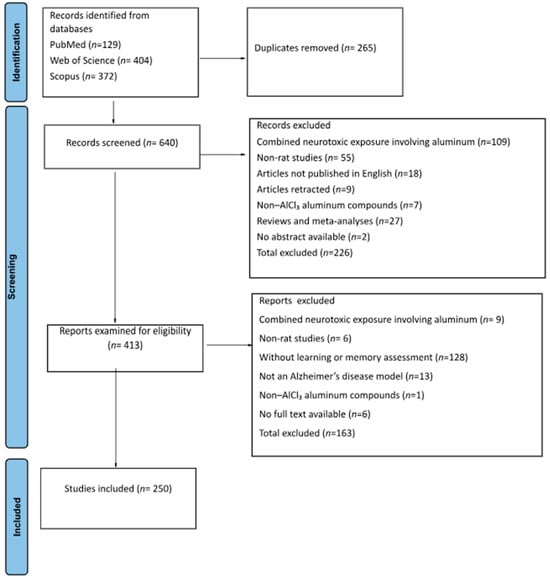
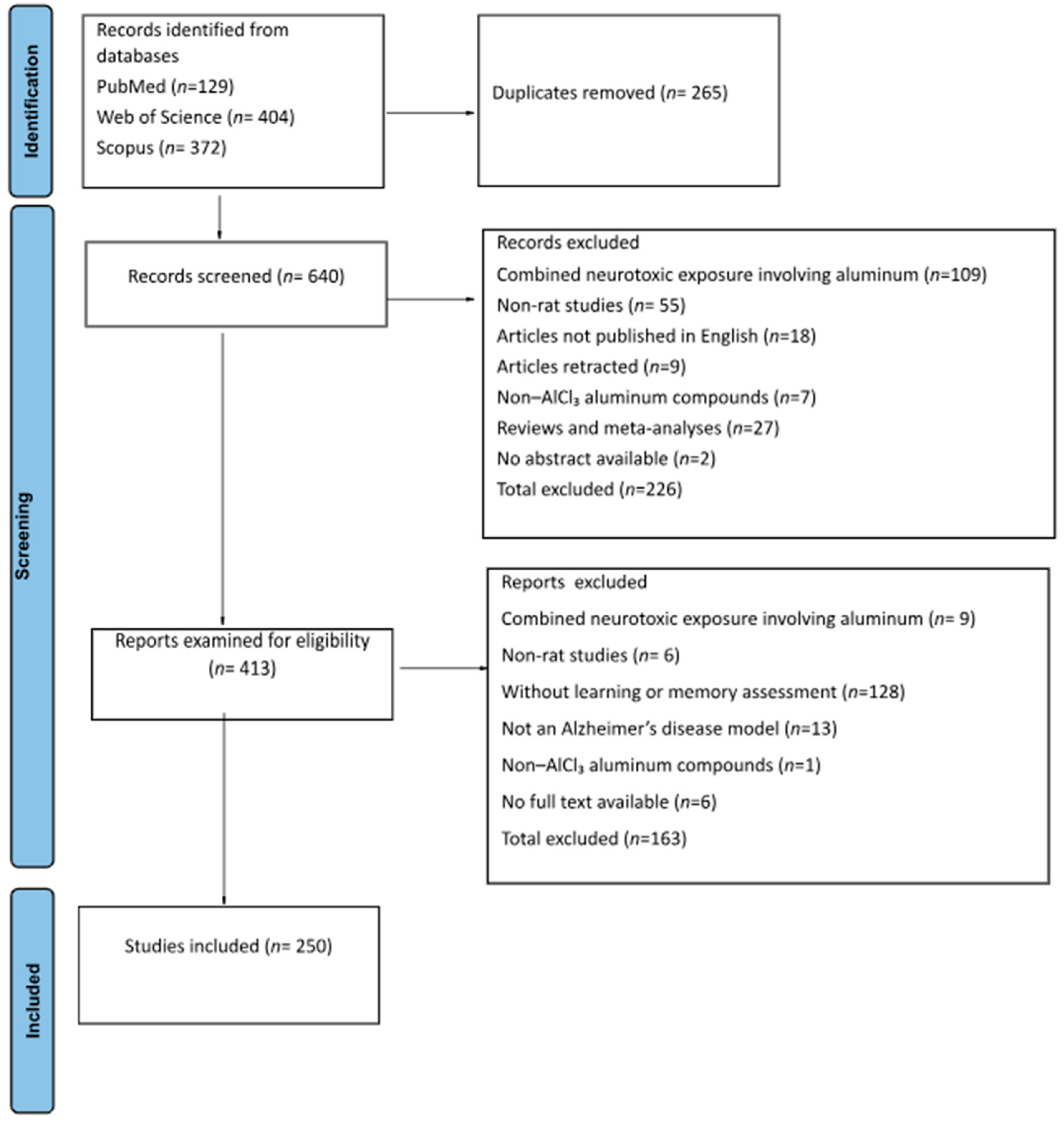
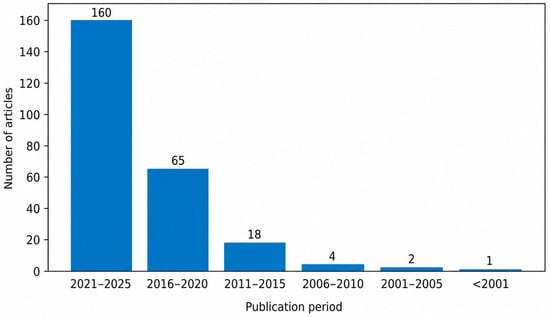
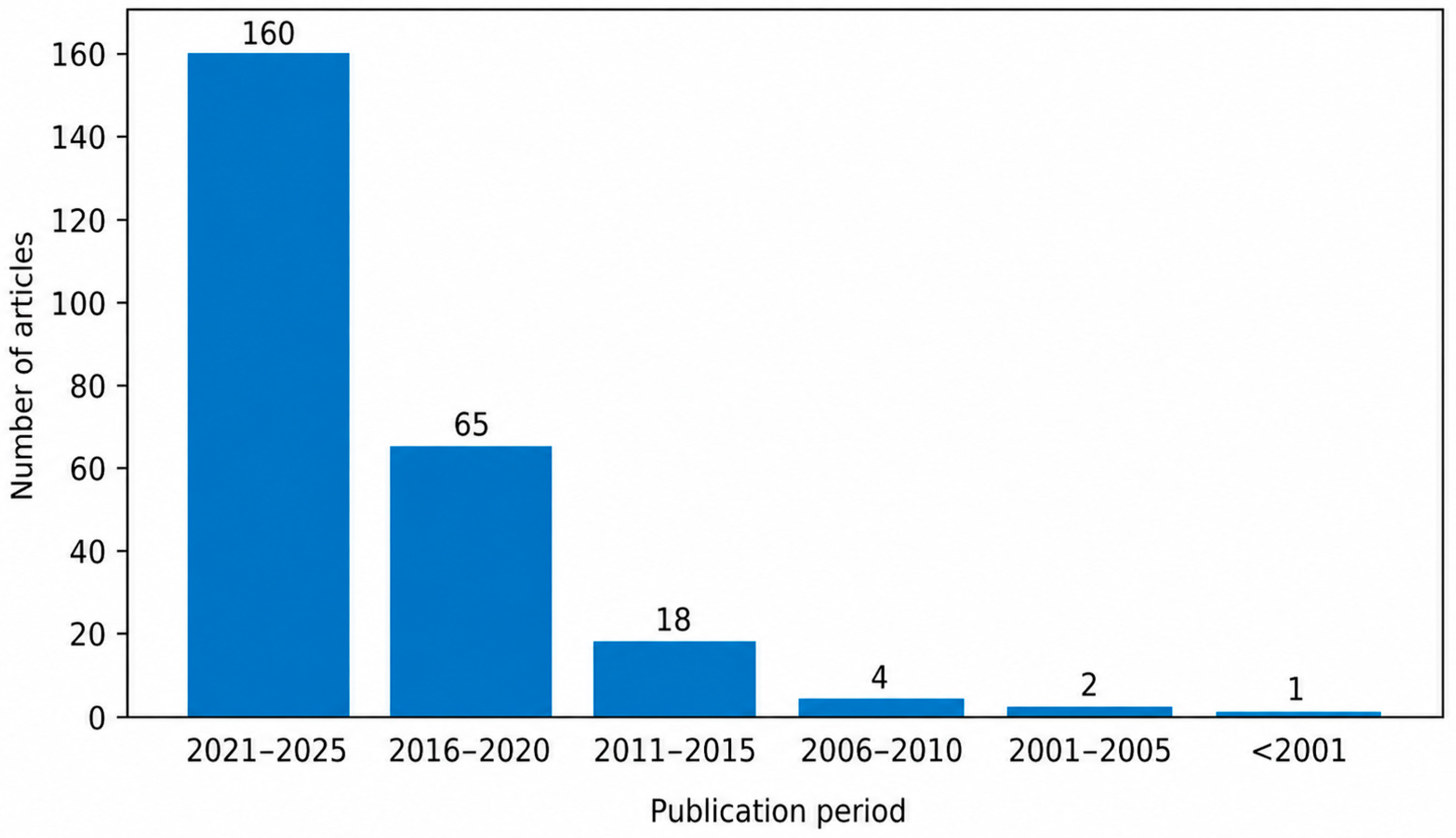
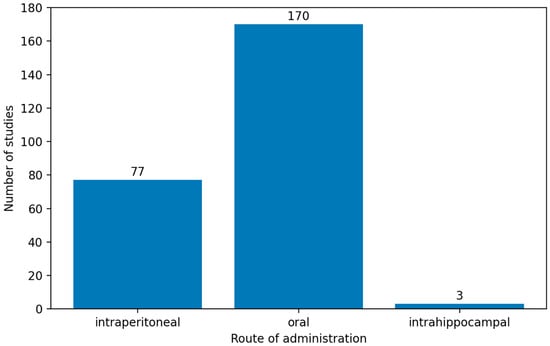
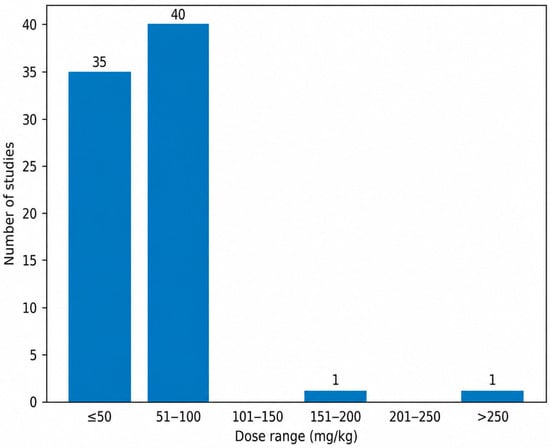
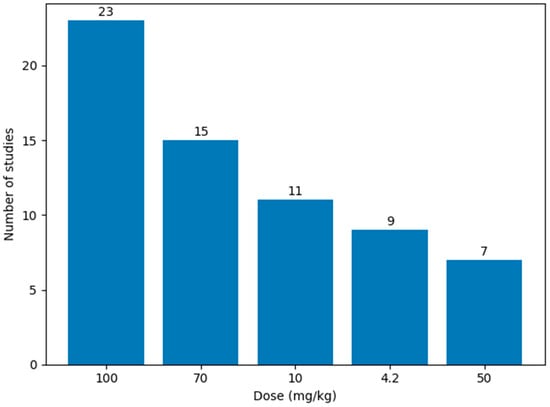
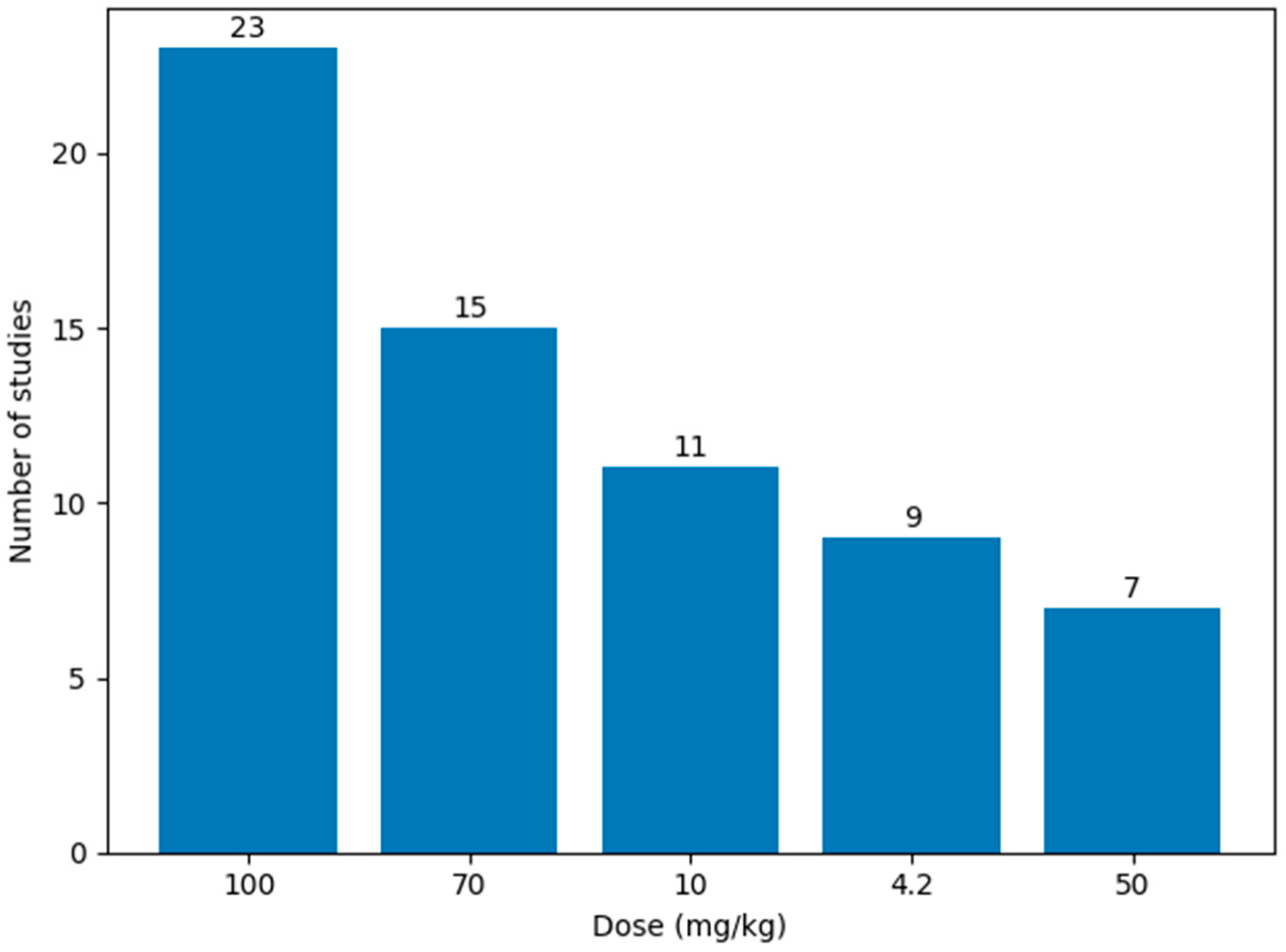
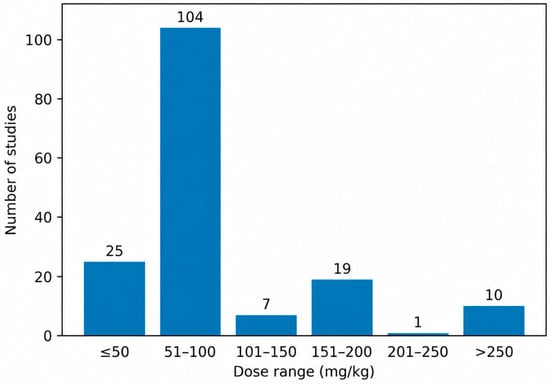
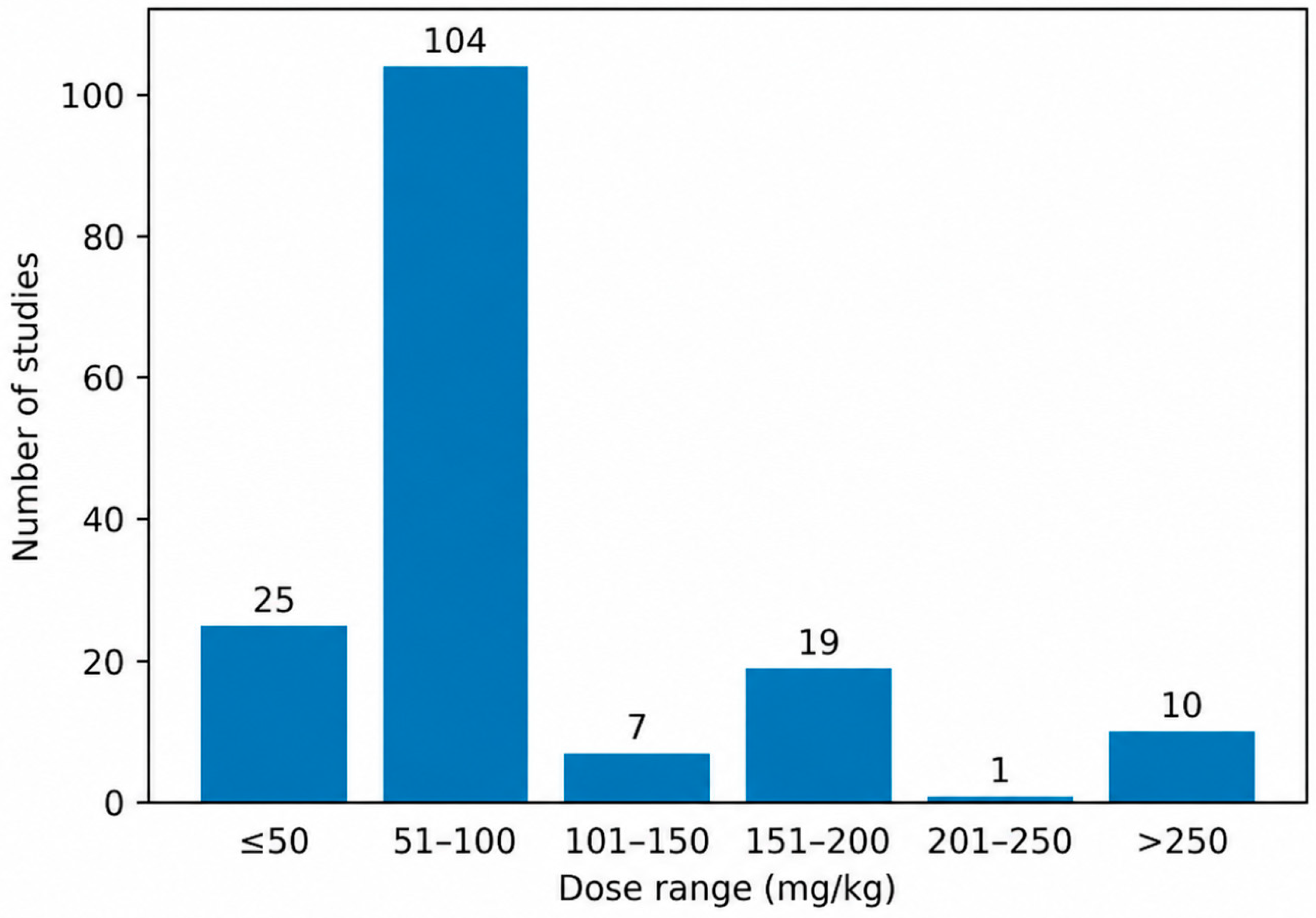
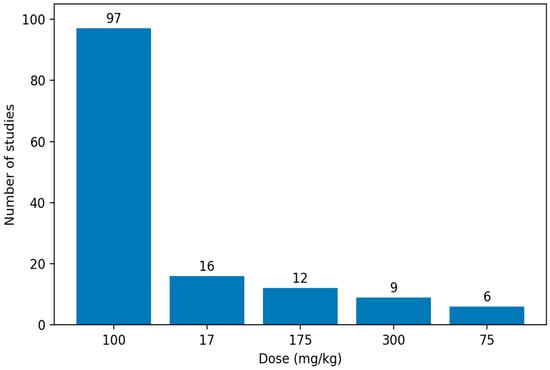
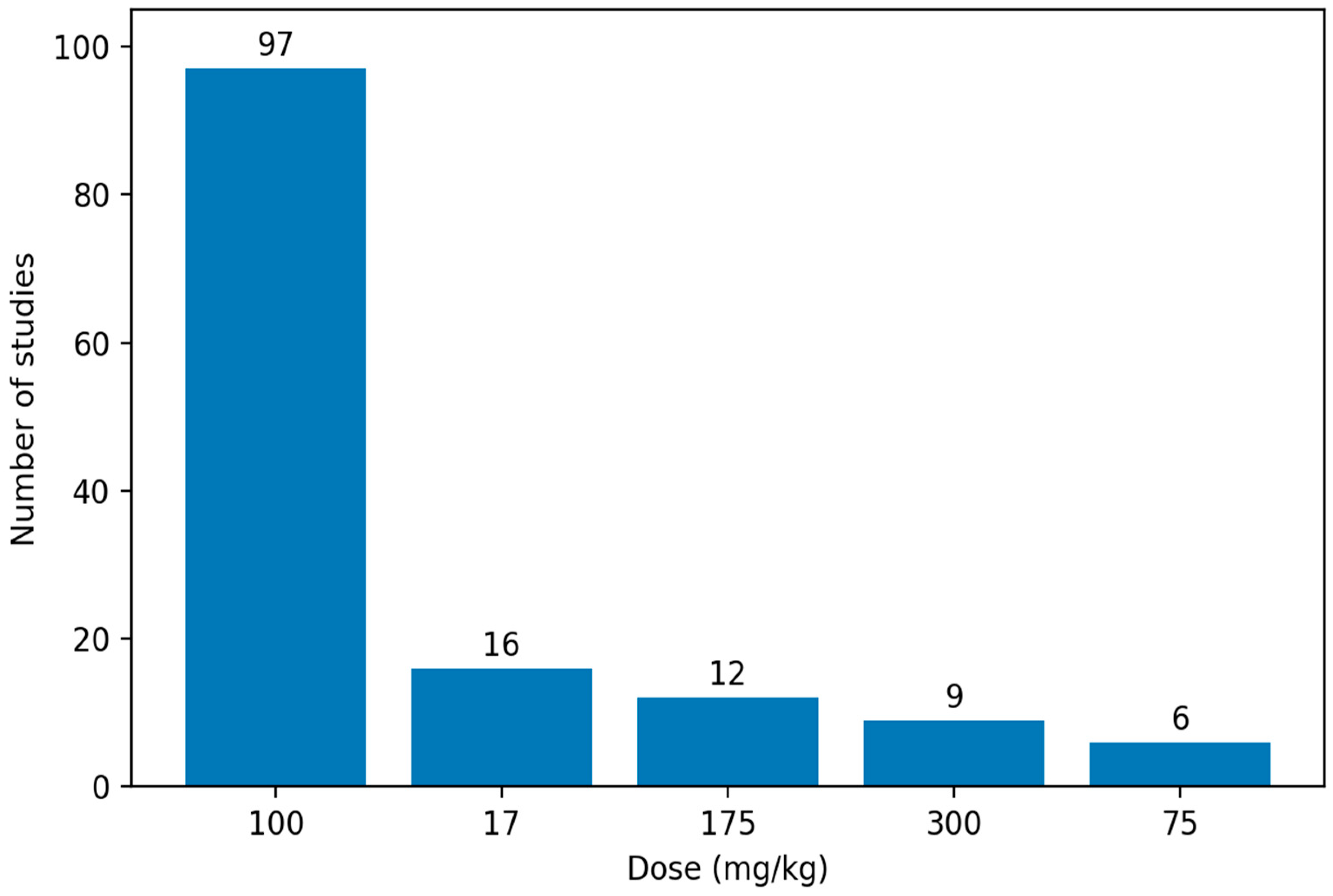
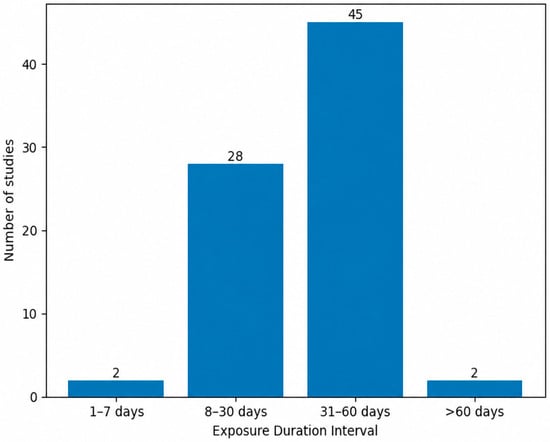
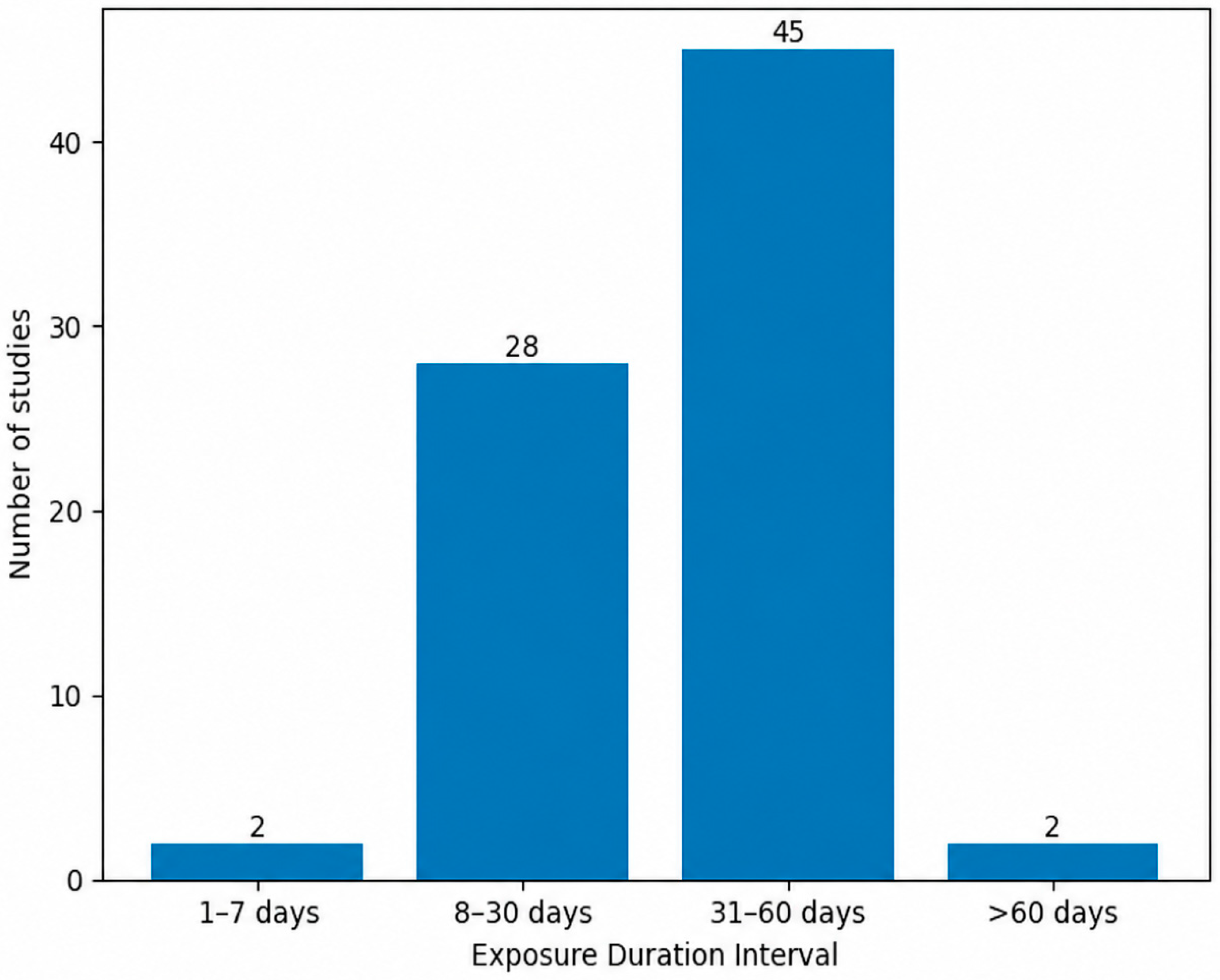
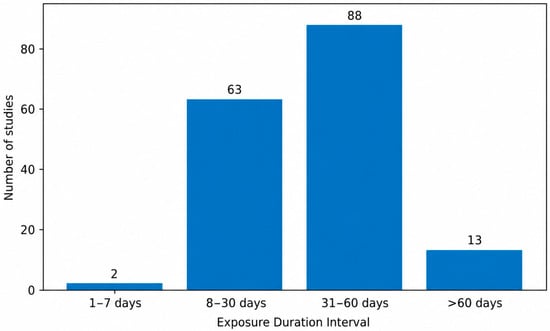
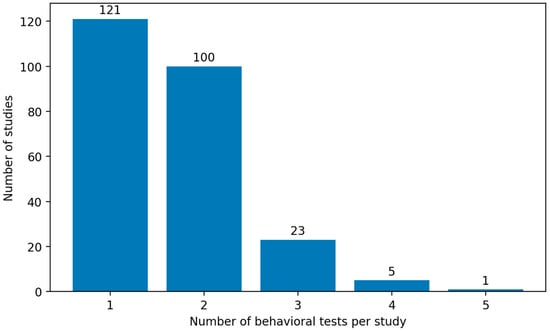
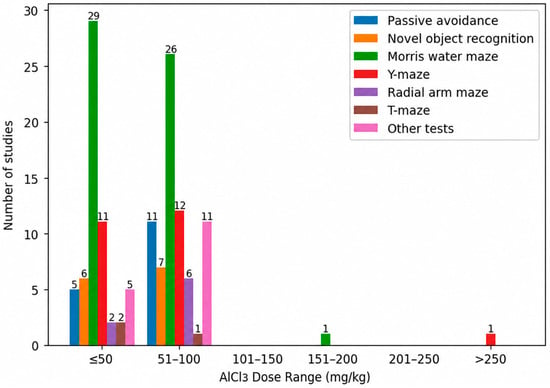
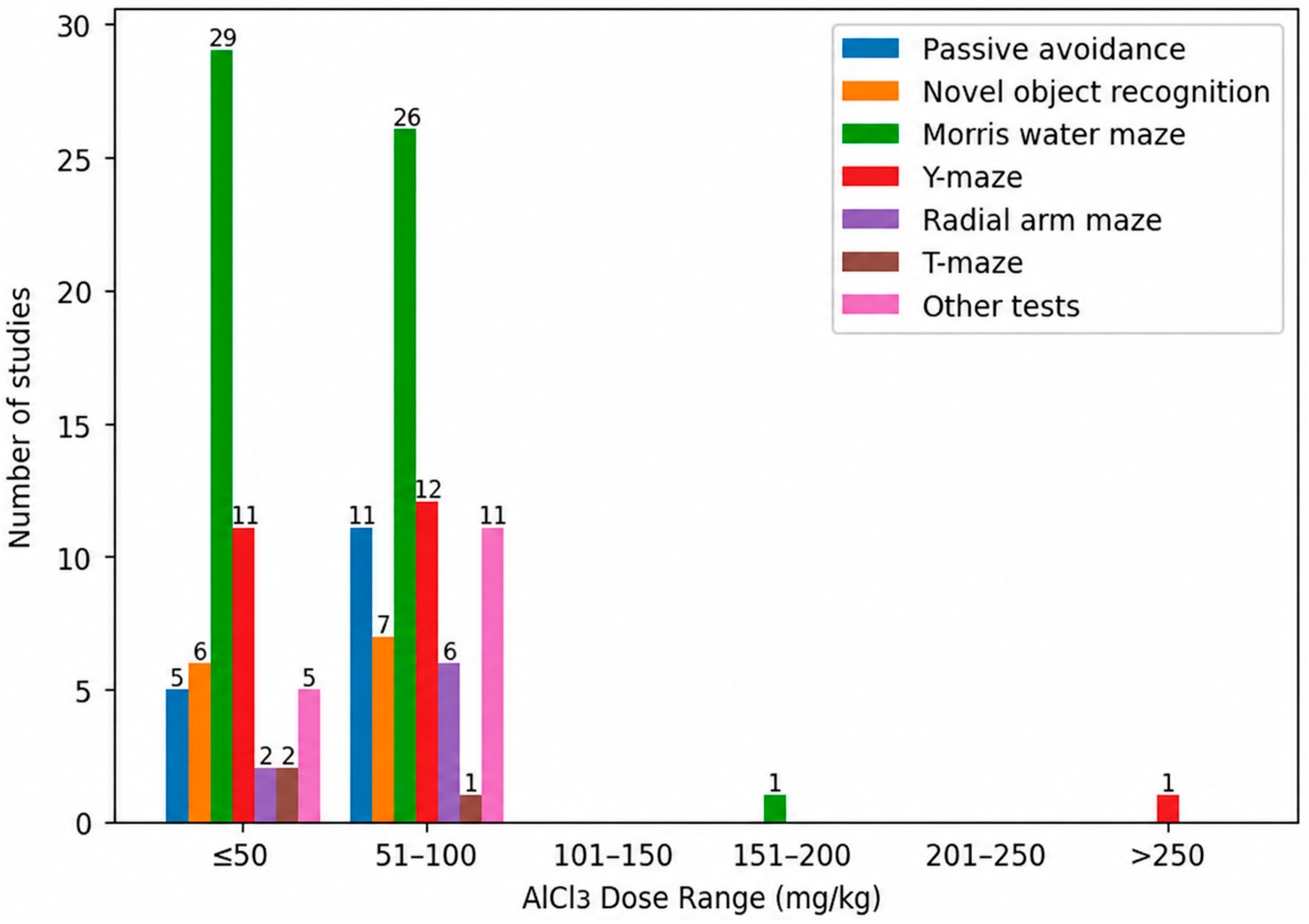
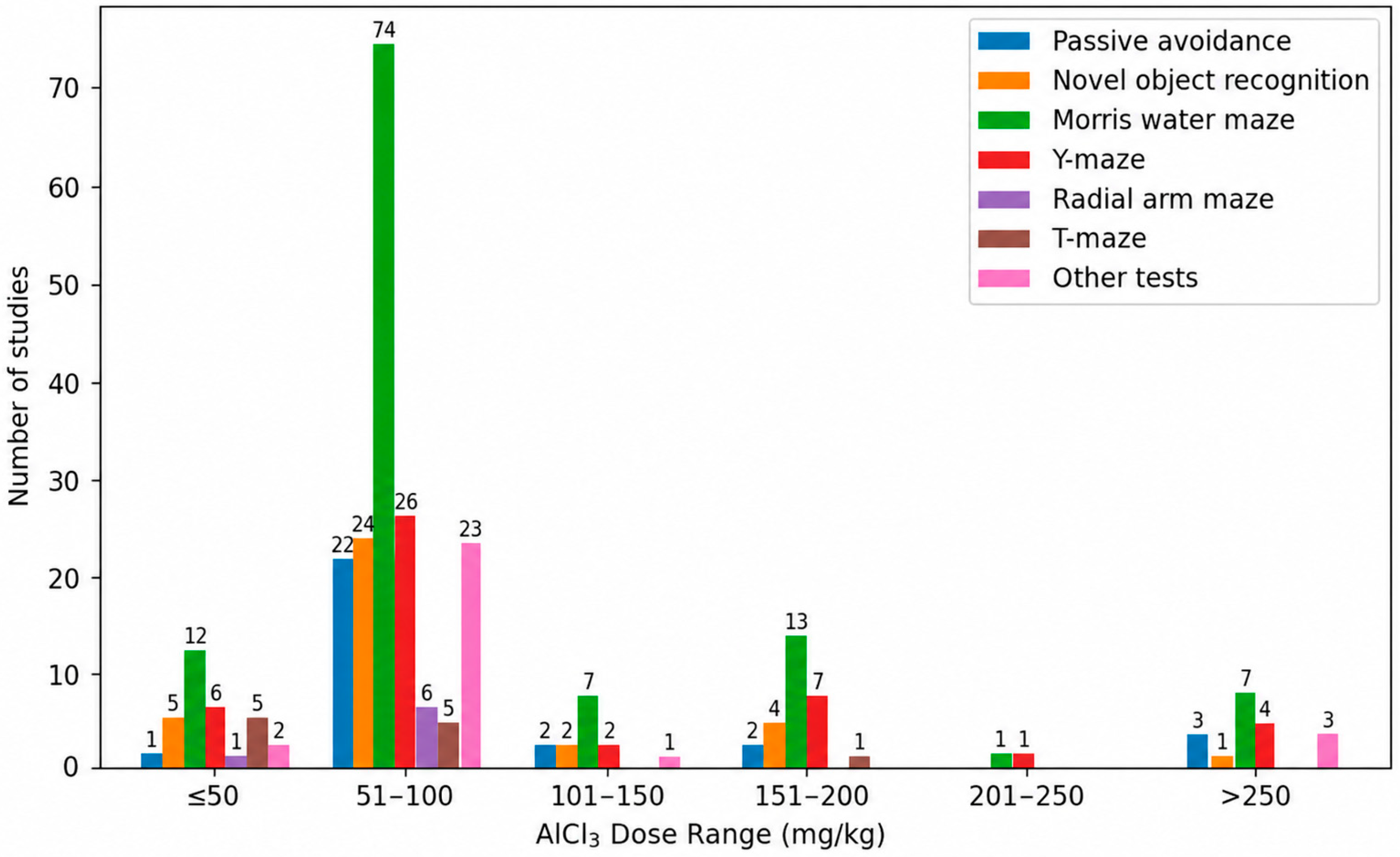
Disclaimer/Publisher’s Note: The statements, opinions and data contained in all publications are solely those of the individual author(s) and contributor(s) and not of MDPI and/or the editor(s). MDPI and/or the editor(s) disclaim responsibility for any injury to people or property resulting from any ideas, methods, instructions or products referred to in the content. |
© 2026 by the authors. Licensee MDPI, Basel, Switzerland. This article is an open access article distributed under the terms and conditions of the Creative Commons Attribution (CC BY) license.