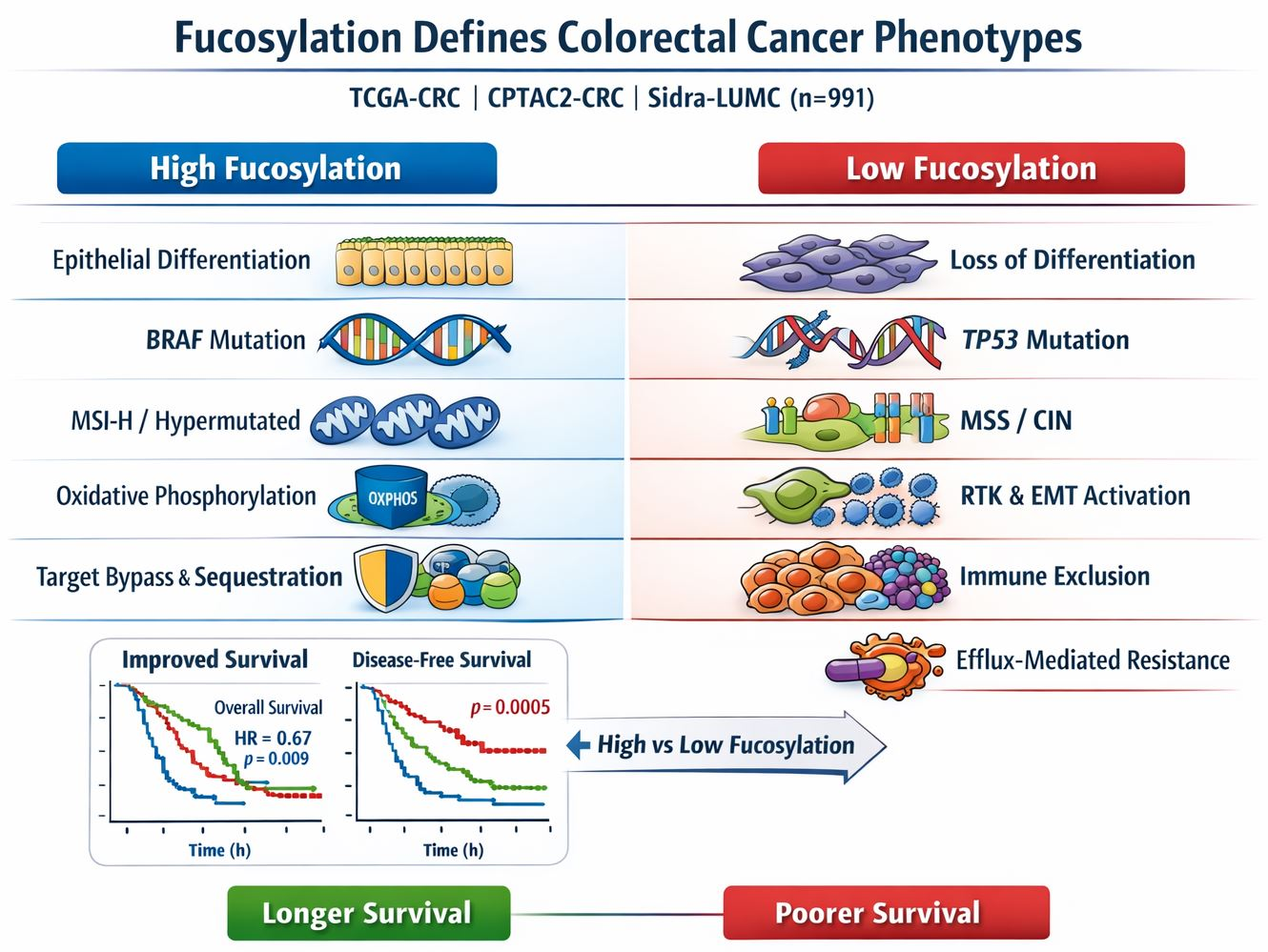
Fucosylation Dynamics as a Critical Determinant of Cancer Cell Fate in Colorectal Carcinoma: Integrating Hallmark Plasticity, Microenvironmental Remodelling, and Therapeutic Resistance

Simple Summary
Abstract
1. Introduction
2. Materials and Methods
2.1. Study Cohorts and Data Harmonisation
2.2. Definition and Scoring of the Fucosylation Programme
2.3. Construction of Functional and Phenotypic Modules
2.4. Differential Expression and Enrichment Analyses
2.5. Association with Tumour Progression and Phenotypic States
2.6. Statistical Analysis
2.7. Data Visualisation
3. Results
3.1. Association of Tumour Fucosylation with Histogenetic Status and Tumour Microenvironmental Phenotypes
3.1.1. Epithelial Differentiation and Histogenetic Status
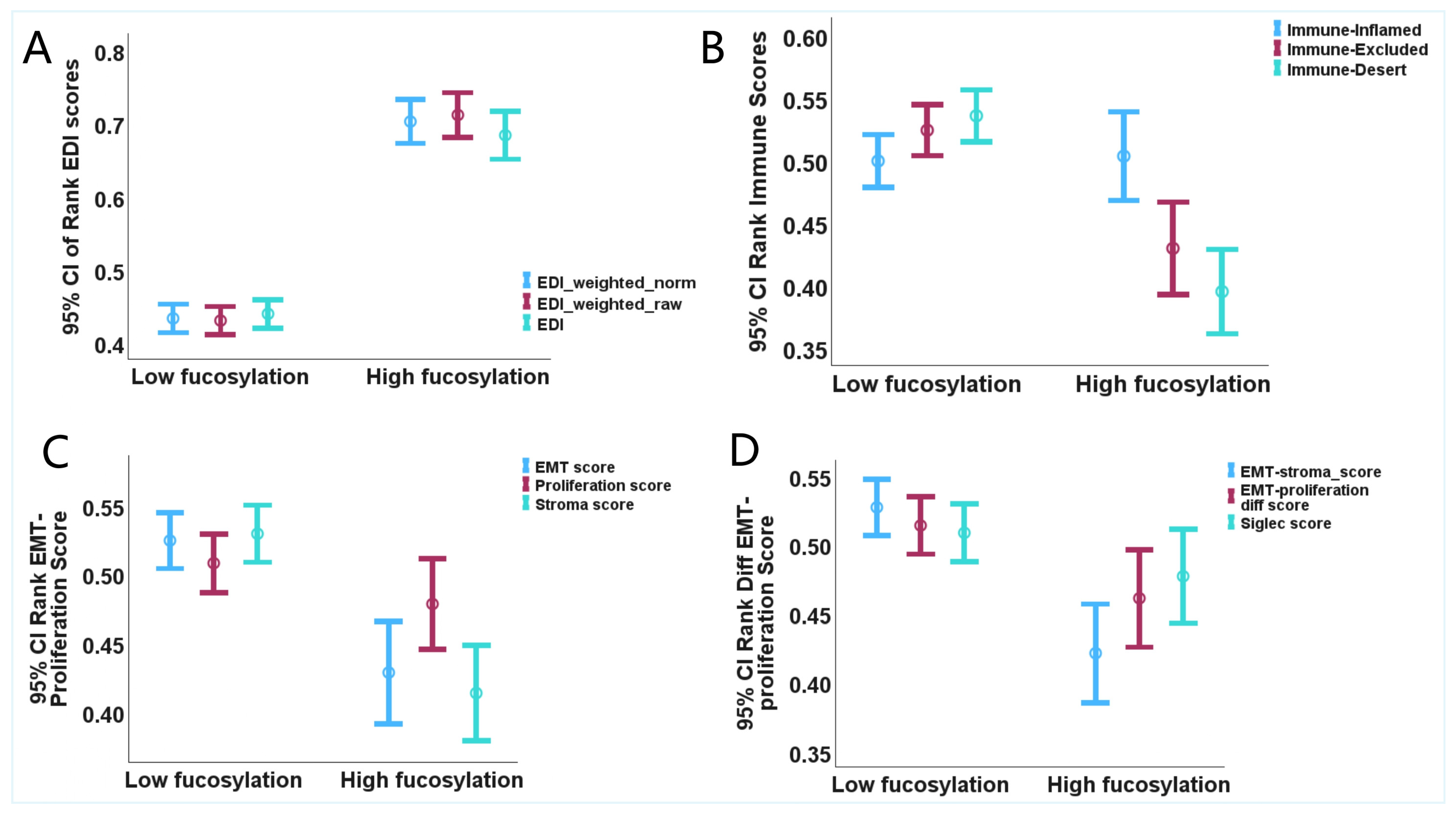
3.1.2. Immune Phenotypes
3.1.3. Epithelial–Mesenchymal Transition and Stromal Programmes
3.1.4. Siglec Signalling
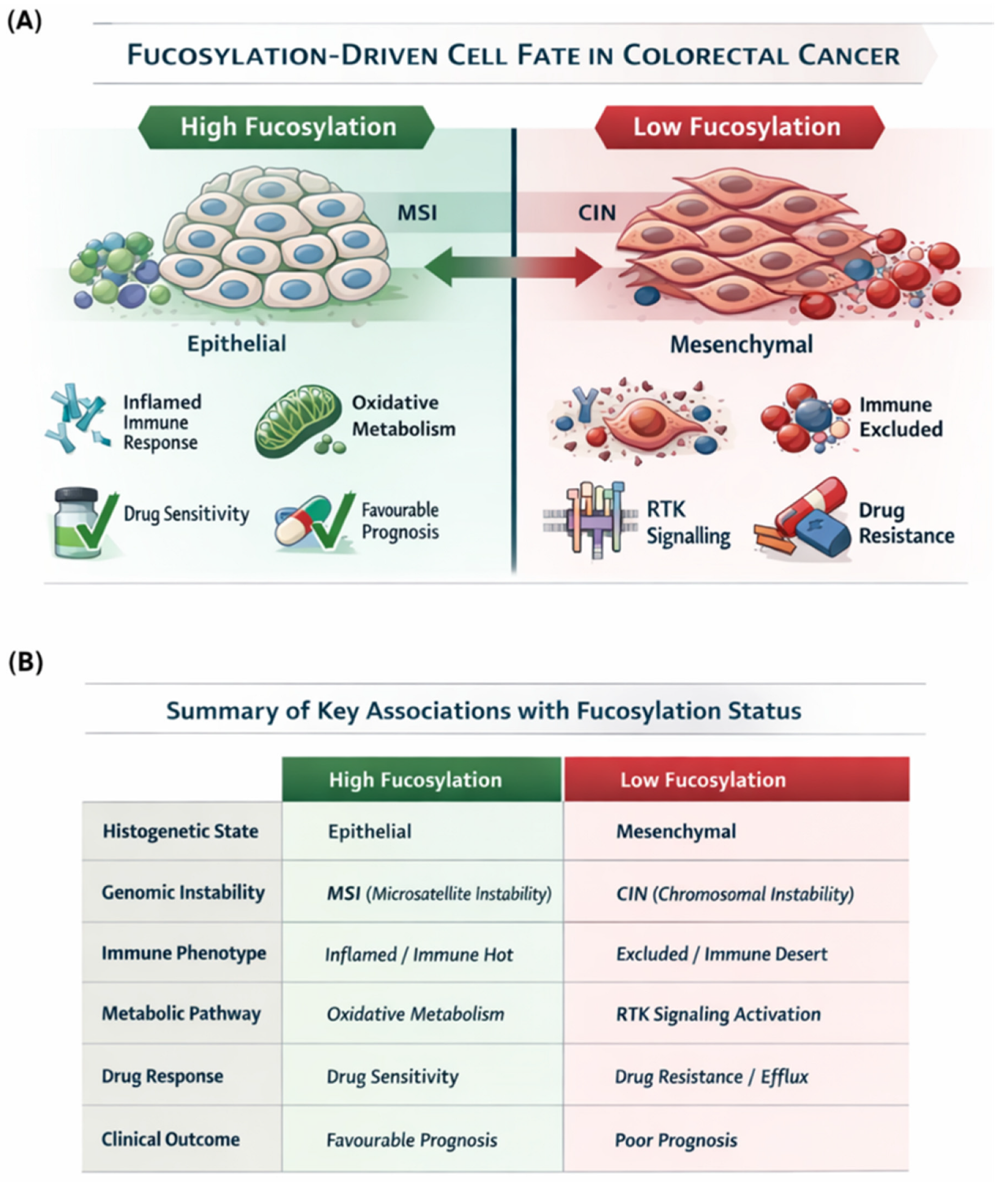
3.1.5. Summary of Phenotypic Associations
3.2. Association of Tumour Fucosylation with Clinicopathological Features and Patient Prognosis
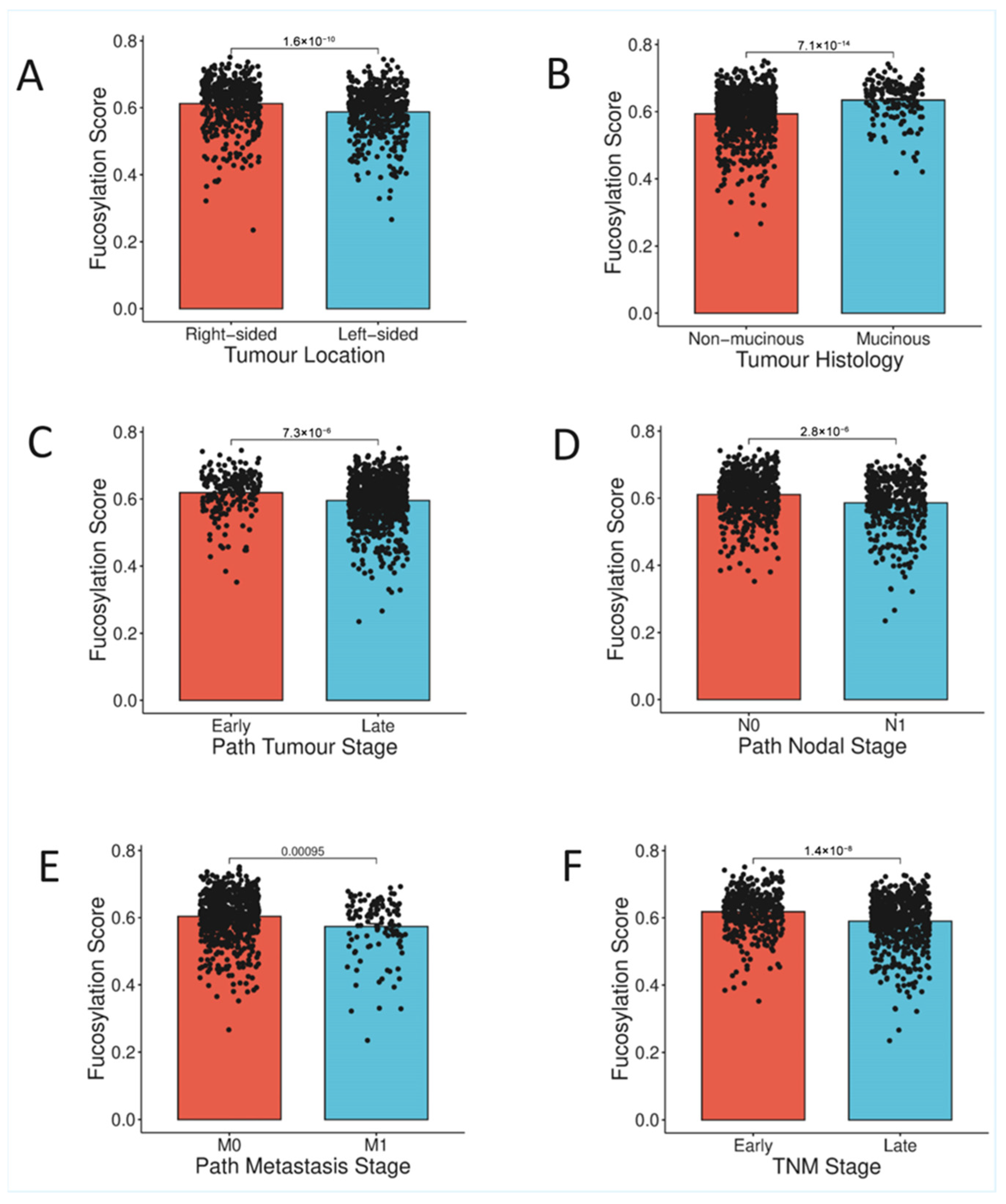
3.2.1. Clinicopathological Features
3.2.2. Association with Tumour Progression and Aggressive Behaviour
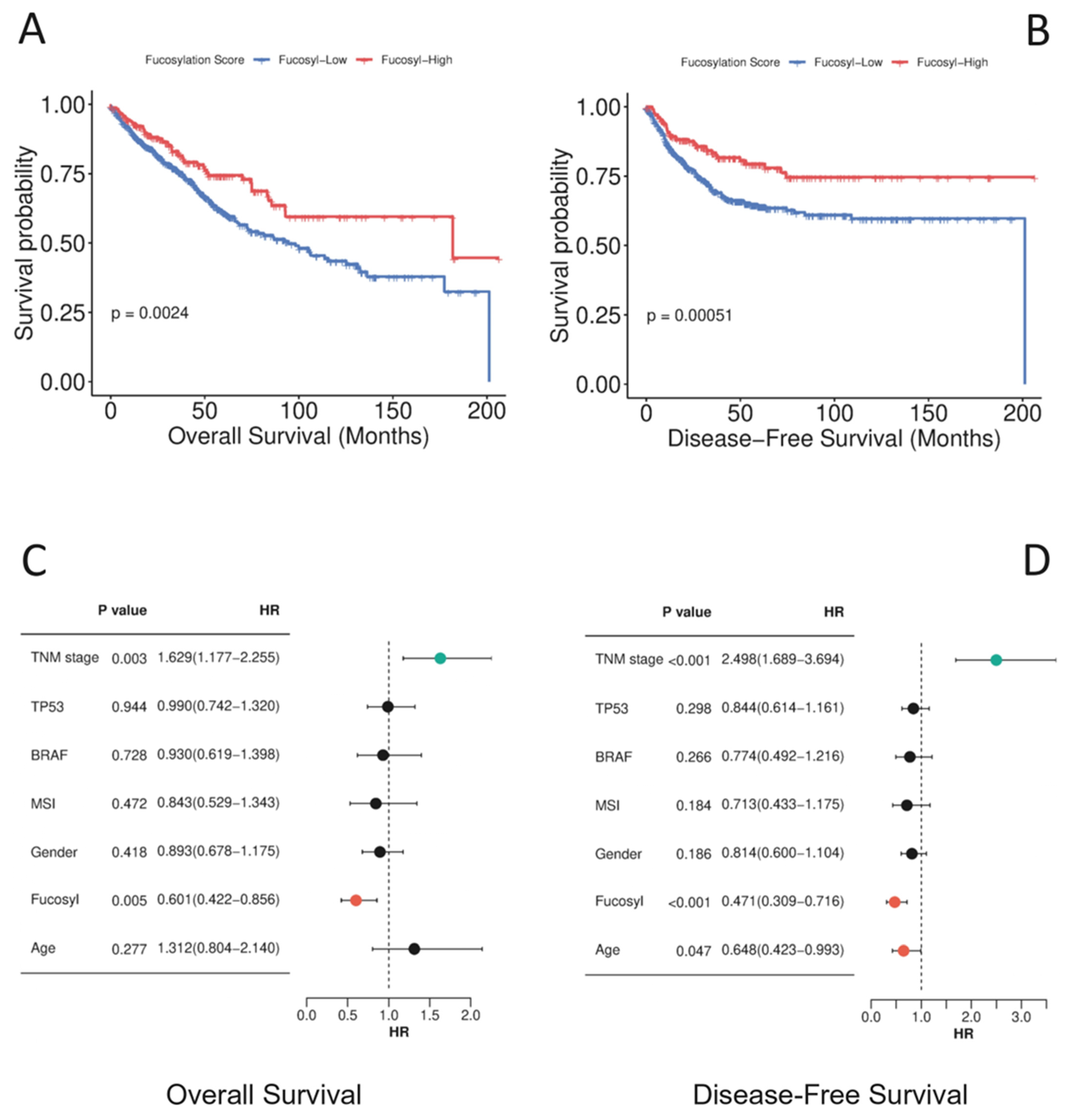
3.2.3. Survival Analysis: Kaplan–Meier Estimation
3.2.4. Univariate and Multivariable Cox Regression Analysis
3.2.5. Dose–Response Relationship: Continuous Fucosylation Score Analysis
3.2.6. Integration with Histogenetic and Microenvironmental Phenotypes
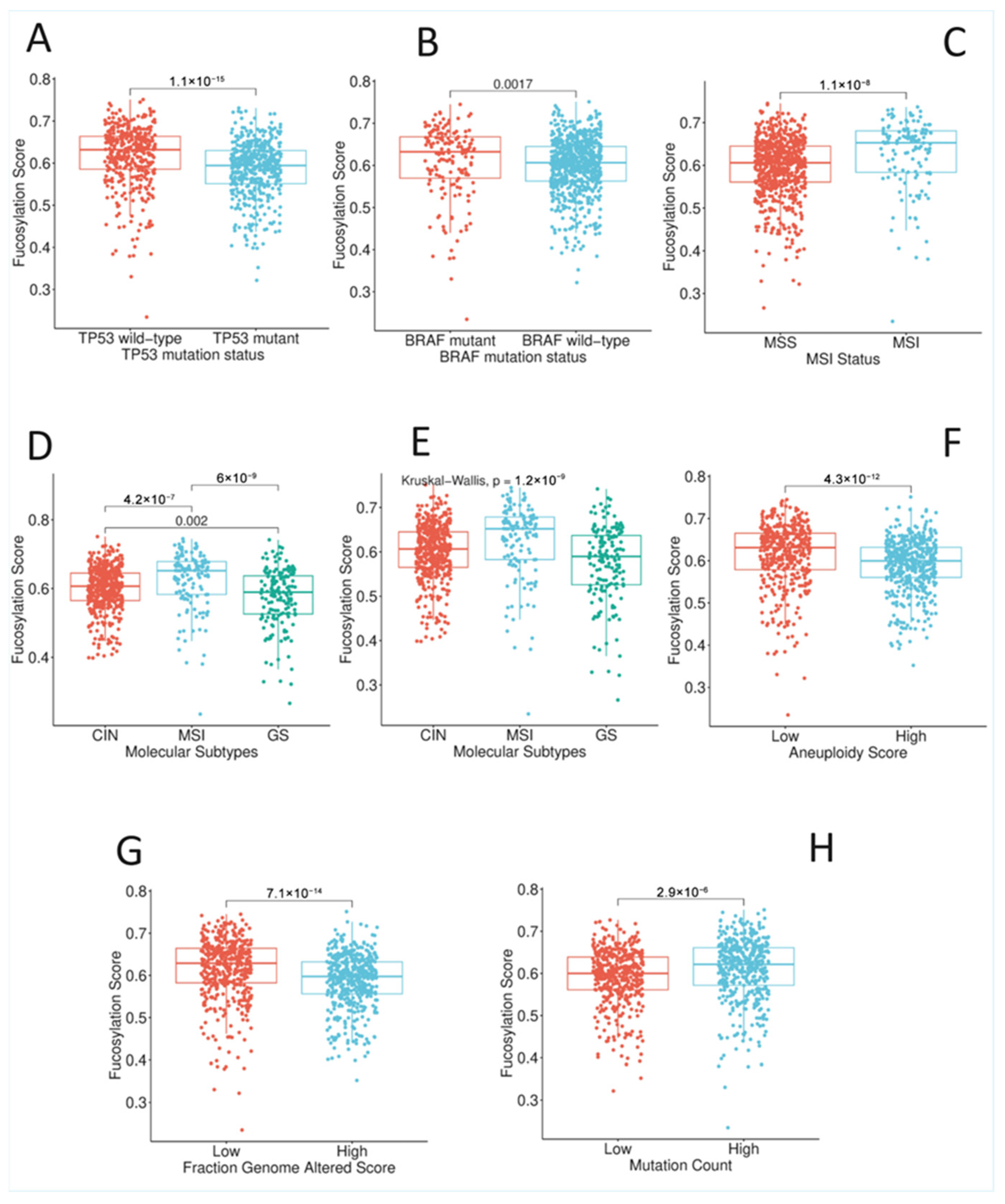
3.3. Association of Tumour Fucosylation with Genomic and Molecular Subsets of Colorectal Cancer
3.3.1. Driver Gene Mutations
3.3.2. Microsatellite Instability Status
3.3.3. Molecular Subtypes
3.3.4. Genomic Instability Metrics
3.3.5. Mutation Burden
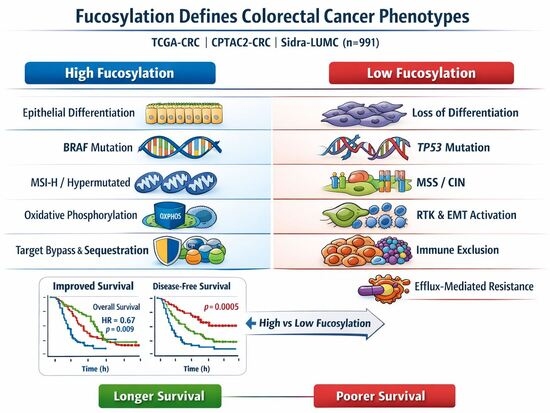
3.3.6. Integrated Molecular Portrait
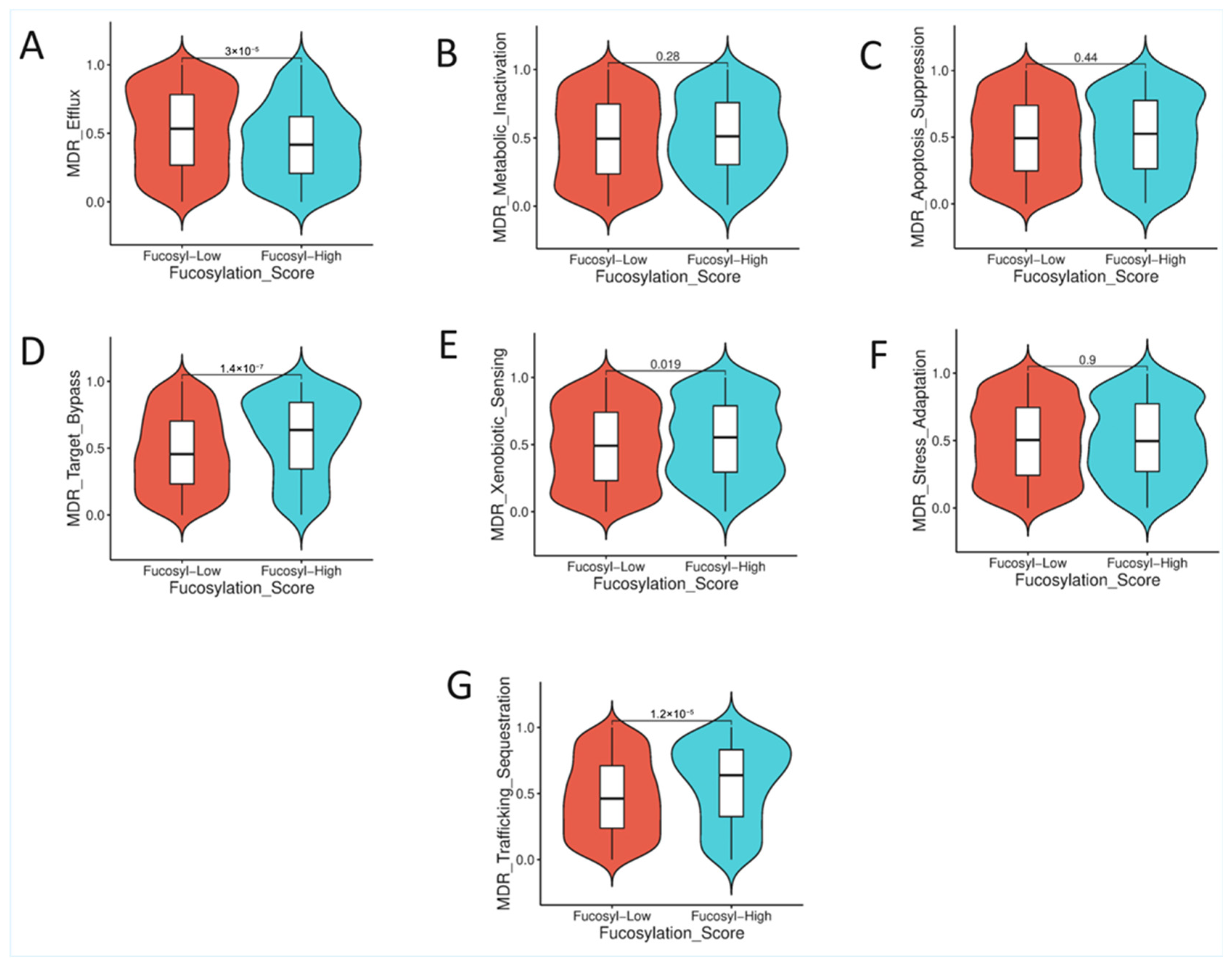
3.4. Association of Tumour Fucosylation with Multidrug Resistance Phenotypes
3.4.1. Drug Efflux: A Resistance Mechanism Enriched in Low-Fucosylation Tumours
3.4.2. Target Bypass Signalling: A Resistance Mechanism Enriched in High-Fucosylation Tumours
3.4.3. Xenobiotic Sensing: Enhanced Detection Capacity in High-Fucosylation Tumours
3.4.4. Drug Trafficking and Sequestration: Enhanced Compartmentalisation in High-Fucosylation Tumours
3.4.5. Resistance Mechanisms with No Differential Engagement
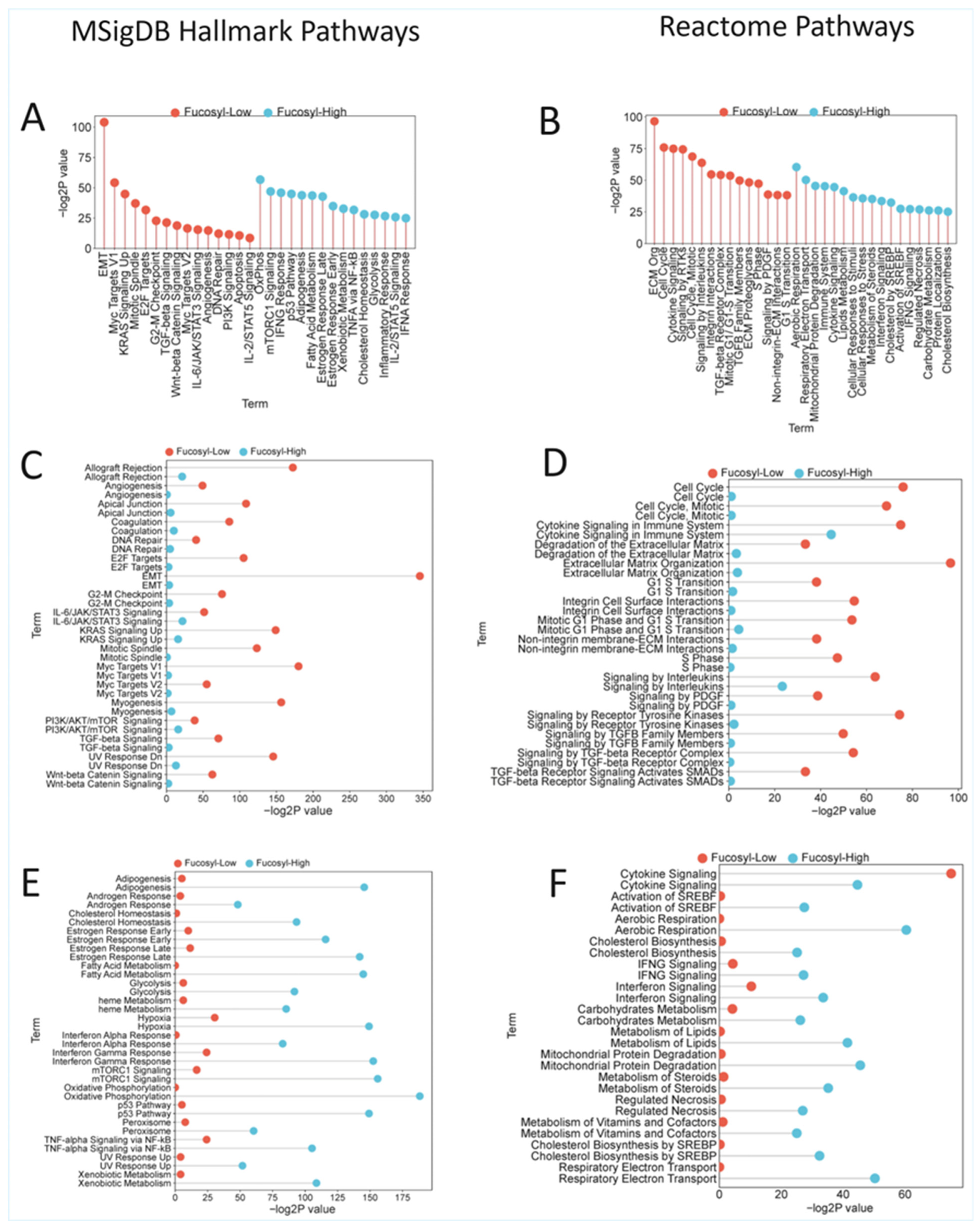
3.5. Association of Tumour Fucosylation with Cancer Hallmarks and Receptor Tyrosine Kinase Pathways
3.5.1. Hallmark Enrichment in Low-Fucosylation Tumours: The Invasive, Proliferative Phenotype
3.5.2. Hallmark Enrichment in High-Fucosylation Tumours: The Metabolic, Differentiated, Non-Invasive Phenotype
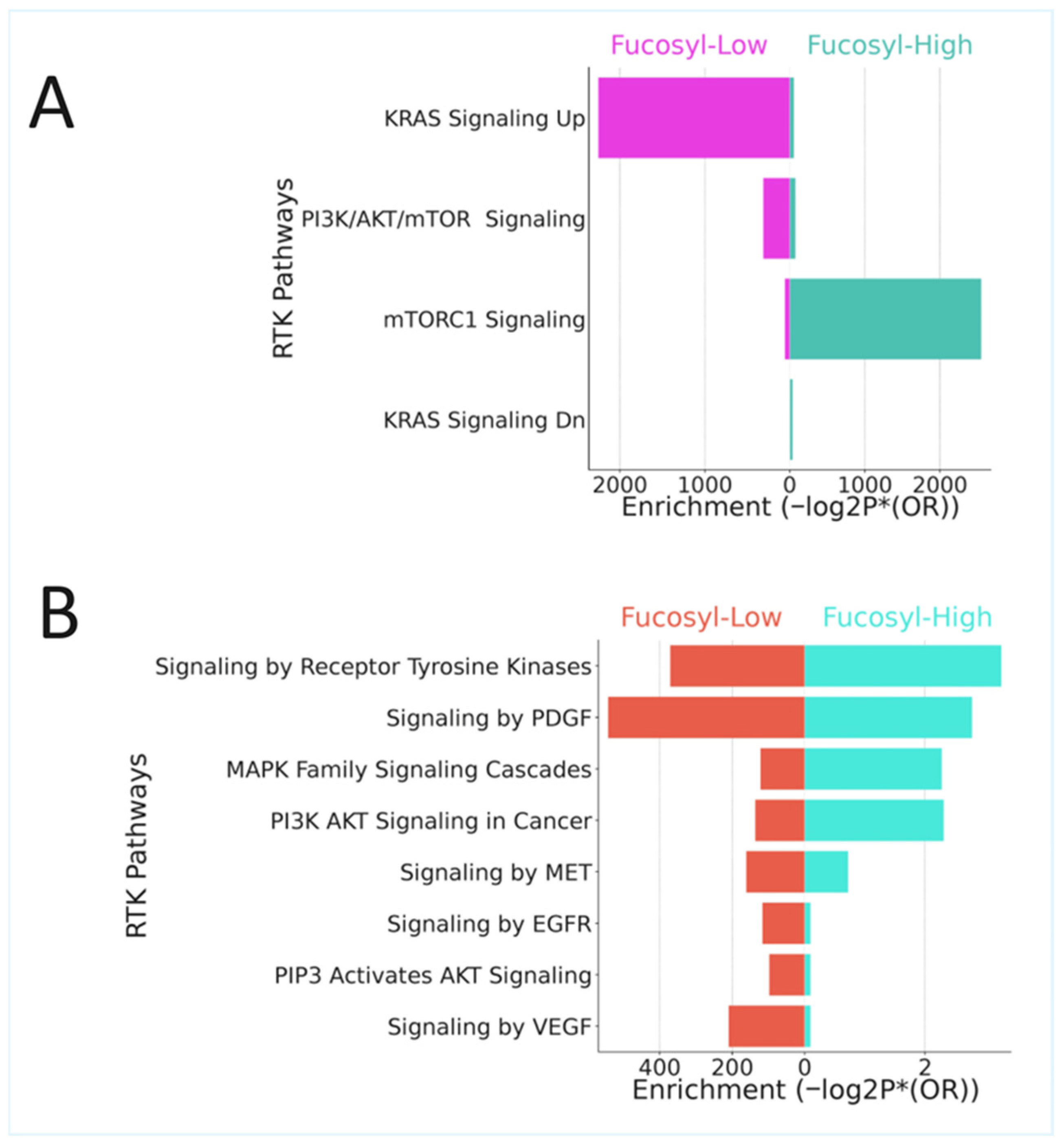
3.5.3. Receptor Tyrosine Kinase Pathways: Divergent Signalling Architectures
3.5.4. The Differentiation Connection Unifies the Pathway Architecture
4. Discussion
5. Conclusions
Supplementary Materials
Author Contributions
Funding
Institutional Review Board Statement
Informed Consent Statement
Data Availability Statement
Acknowledgments
Conflicts of Interest
References
- Cancer Genome Atlas Network. Comprehensive molecular characterization of human colon and rectal cancer. Nature 2012, 487, 330–337. [Google Scholar] [CrossRef]
- Barker, N. Adult intestinal stem cells: Critical drivers of epithelial homeostasis and regeneration. Nat. Rev. Mol. Cell Biol. 2014, 15, 19–33. [Google Scholar] [CrossRef]
- Batlle, E.; Clevers, H. Cancer stem cells revisited. Nat. Med. 2017, 23, 1124–1134. [Google Scholar] [CrossRef]
- Pinho, S.S.; Reis, C.A. Glycosylation in cancer: Mechanisms and clinical implications. Nat. Rev. Cancer 2015, 15, 540–555. [Google Scholar] [CrossRef]
- Bastian, K.; Scott, E.; Elliott, D.J.; Munkley, J. FUT8 alpha-(1,6)-fucosyltransferase in cancer. Int. J. Mol. Sci. 2021, 22, 455. [Google Scholar] [CrossRef]
- Miyoshi, E.; Moriwaki, K.; Nakagawa, T. Biological function of fucosylation in cancer biology. J. Biochem. 2008, 143, 725–729. [Google Scholar] [CrossRef]
- Okajima, T.; Irvine, K.D. Regulation of notch signalling by O-linked fucose. Cell 2002, 111, 893–904. [Google Scholar] [CrossRef]
- Stanley, P.; Okajima, T. Roles of glycosylation in Notch signalling. Curr. Top. Dev. Biol. 2010, 92, 131–164. [Google Scholar] [CrossRef]
- Nieto, M.A.; Huang, R.Y.; Jackson, R.A.; Thiery, J.P. EMT: 2016. Cell 2016, 166, 21–45. [Google Scholar] [CrossRef]
- Terry, S.; Savagner, P.; Ortiz-Cuaran, S.; Mahjoubi, L.; Saintigny, P.; Thiery, J.P.; Chouaib, S. New insights into the role of EMT in tumor immune escape. Mol. Oncol. 2017, 11, 824–846. [Google Scholar] [CrossRef]
- Pavlova, N.N.; Thompson, C.B. The emerging hallmarks of cancer metabolism. Cell Metab. 2016, 23, 27–47. [Google Scholar] [CrossRef]
- Vasaikar, S.; Huang, C.; Wang, X.; Petyuk, V.A.; Savage, S.R.; Wen, B.; Dou, Y.; Zhang, Y.; Shi, Z.; Arshad, O.A.; et al. Proteogenomic analysis of human colon cancer reveals new therapeutic opportunities. Cell 2019, 177, 1035–1049.e19. [Google Scholar] [CrossRef]
- Roelands, J.; Kuppen, P.J.K.; Ahmed, E.I.; Mall, R.; Masoodi, T.; Singh, P.; Monaco, G.; Raynaud, C.; de Miranda, N.F.; Ferraro, L.; et al. An integrated tumor, immune and microbiome atlas of colon cancer. Nat. Med. 2023, 29, 1273–1286. [Google Scholar] [CrossRef]
- Johnson, W.E.; Li, C.; Rabinovic, A. Adjusting batch effects in microarray expression data using empirical Bayes methods. Biostatistics 2007, 8, 118–127. [Google Scholar] [CrossRef]
- Becker, D.J.; Lowe, J.B. Fucose: Biosynthesis and biological function in mammals. Glycobiology 2003, 13, 41R–53R. [Google Scholar] [CrossRef]
- Keeley, T.S.; Yang, S.; Lau, E. The diverse contributions of fucosylation in cancer. Cancers 2019, 11, 1241. [Google Scholar] [CrossRef] [PubMed]
- Subramanian, A.; Tamayo, P.; Mootha, V.K.; Mukherjee, S.; Ebert, B.L.; Gillette, M.A.; Paulovich, A.; Pomeroy, S.L.; Golub, T.R.; Lander, E.S.; et al. Gene set enrichment analysis: A knowledge-based approach for interpreting genome-wide expression profiles. Proc. Natl. Acad. Sci. USA 2005, 102, 15545–15550. [Google Scholar] [CrossRef]
- Wojtowicz, K.; Szaflarski, W.; Januchowski, R.; Zawierucha, P.; Nowicki, M.; Zabel, M. Inhibitors of N-glycosylation as a potential tool for analysis of the mechanism of action and cellular localisation of glycoprotein P. Acta Biochim. Pol. 2012, 59, 445–450. [Google Scholar] [CrossRef] [PubMed]
- Zhitomirsky, B.; Assaraf, Y.G. Lysosomal sequestration of hydrophobic weak base chemotherapeutics: A novel mechanism of multidrug resistance. Oncotarget 2015, 6, 1143–1156. [Google Scholar] [CrossRef]
- Fonseca, L.M.; Silva, V.A.; Freire-de-Lima, L.; Previato, J.O.; Mendonça-Previato, L.; Capella, M.A.M. Glycosylation in cancer: Interplay between multidrug resistance and epithelial-to-mesenchymal transition? Front. Oncol. 2016, 6, 158. [Google Scholar] [CrossRef] [PubMed]
- Ashburner, M.; Ball, C.A.; Blake, J.A.; Botstein, D.; Butler, H.; Cherry, J.M.; Davis, A.P.; Dolinski, K.; Dwight, S.S.; Eppig, J.T.; et al. Gene ontology: Tool for the unification of biology. Nat. Genet. 2000, 25, 25–29. [Google Scholar] [CrossRef]
- Tang, D.; Chen, M.; Huang, X.; Zhang, G.; Zeng, L.; Zhang, G.; Wu, S.; Wang, Y. SRplot: A free online platform for data visualization and graphing. PLoS ONE 2023, 18, e0294236. [Google Scholar] [CrossRef]
- Moriwaki, K.; Noda, K.; Furukawa, Y.; Ohshima, K.; Uchiyama, A.; Nakagawa, T.; Taniguchi, N.; Daigo, Y.; Nakamura, Y.; Hayashi, N.; et al. Deficiency of GMDS leads to escape from NK cell-mediated tumor surveillance through modulation of TRAIL signalling. Gastroenterol 2009, 137, 188–198.e2. [Google Scholar] [CrossRef] [PubMed]
- Hong, S.; Feng, L.; Yang, Y.; Jiang, H.; Hou, X.; Guo, P.; Marlow, F.L.; Stanley, P.; Wu, P. In Situ Fucosylation of the Wnt Co-receptor LRP6 Increases Its Endocytosis and Reduces Wnt/β-Catenin Signalling. Cell Chem. Biol. 2020, 27, 1140–1150.e4. [Google Scholar] [CrossRef] [PubMed]
- Stowell, S.R.; Ju, T.; Cummings, R.D. Protein glycosylation in cancer. Annu. Rev. Pathol. 2015, 10, 473–510. [Google Scholar] [CrossRef] [PubMed]
- Wang, X.; Gu, J.; Ihara, H.; Miyoshi, E.; Honke, K.; Taniguchi, N. Overexpression of α(1,6)-fucosyltransferase associated with aggressive prostate cancer. Glycobiology 2014, 24, 935–944. [Google Scholar] [CrossRef]
- Guinney, J.; Dienstmann, R.; Wang, X.; de Reyniès, A.; Schlicker, A.; Soneson, C.; Marisa, L.; Roepman, P.; Nyamundanda, G.; Angelino, P.; et al. The consensus molecular subtypes of colorectal cancer. Nat. Med. 2015, 21, 1350–1356. [Google Scholar] [CrossRef] [PubMed]
- Okagawa, Y.; Takada, K.; Arihara, Y.; Kikuchi, S.; Osuga, T.; Nakamura, H.; Kamihara, Y.; Hayasaka, N.; Usami, M.; Murase, K.; et al. Activated p53 with histone deacetylase inhibitor enhances L-fucose-mediated drug delivery through induction of fucosyltransferase 8 expression in hepatocellular carcinoma cells. PLoS ONE 2016, 11, e0168355. [Google Scholar] [CrossRef]
- Le, D.T.; Durham, J.N.; Smith, K.N.; Wang, H.; Bartlett, B.R.; Aulakh, L.K.; Lu, S.; Kemberling, H.; Wilt, C.; Luber, B.S.; et al. Mismatch repair deficiency predicts response of solid tumors to PD-1 blockade. Science 2017, 357, 409–413. [Google Scholar] [CrossRef]
- Overman, M.J.; Lonardi, S.; Wong, K.Y.M. Nivolumab in patients with DNA mismatch repair-deficient/microsatellite instability-high metastatic colorectal cancer. J. Clin. Oncol. 2018, 36, 773–779. [Google Scholar] [CrossRef]
- Ukkola, I.; Nummela, P.; Heiskanen, A.; Holm, M.; Zafar, S.; Kero, M.; Haglund, C.; Satomaa, T.; Kytölä, S.; Ristimäki, A. N-Glycomic profiling of microsatellite unstable colorectal cancer. Cancers 2023, 15, 3571. [Google Scholar] [CrossRef]
- Tsai, K.Y.; Chang, Y.J.; Huang, C.Y.; Prince, G.M.S.H.; Chen, H.-A.; Makondi, P.T.; Shen, Y.-R.; Wei, P.-L. Novel heavily fucosylated glycans as a promising therapeutic target in colorectal cancer. J. Transl. Med. 2023, 21, 505. [Google Scholar] [CrossRef] [PubMed]
- Sahasrabudhe, N.M.; Lenos, K.; van der Horst, J.C.; Rodríguez, E.; van Vliet, S.J. Oncogenic BRAFV600E drives expression of MGL ligands in the colorectal cancer cell line HT29 through N-acetylgalactosamine-transferase 3. Biol. Chem. 2018, 399, 649–659. [Google Scholar] [CrossRef]
- Wang, X.; Gu, J.; Ihara, H.; Miyoshi, E.; Honke, K.; Taniguchi, N. Core fucosylation regulates epidermal growth factor receptor-mediated intracellular signalling. J. Biol. Chem. 2006, 281, 2572–2577. [Google Scholar] [CrossRef]
- Tu, C.F.; Wu, M.Y.; Lin, Y.C.; Kannagi, R.; Yang, R.B. FUT8 promotes breast cancer cell invasiveness by remodeling TGF-β receptor core fucosylation. Breast Cancer Res. 2017, 19, 111. [Google Scholar] [CrossRef]
- Gao, Y.; Luan, X.; Melamed, J.; Brockhausen, I. Role of glycans on key cell surface receptors that regulate cell proliferation and cell death. Cells 2021, 10, 1252. [Google Scholar] [CrossRef]
- Mossmann, D.; Park, S.; Hall, M.N. mTOR signalling and cellular metabolism are mutual determinants in cancer. Nat. Rev. Cancer 2018, 18, 744–757. [Google Scholar] [CrossRef]
- Zhou, Y.; Rychahou, P.; Wang, Q.; Weiss, H.L.; Evers, B.M. TSC2/mTORC1 signaling controls Paneth and goblet cell differentiation in the intestinal epithelium. Cell Death Dis. 2015, 6, e1631. [Google Scholar] [CrossRef] [PubMed]
- Ito, K.; Suda, T. Metabolic requirements for the maintenance of self-renewing stem cells. Nat. Rev. Mol. Cell Biol. 2014, 15, 243–256. [Google Scholar] [CrossRef]
- Zhang, H.; Berezov, A.; Wang, Q.; Zhang, G.; Drebin, J.; Murali, R.; Greene, M.I. ErbB receptors: From oncogenes to targeted cancer therapies. J. Clin. Investig. 2007, 117, 2051–2058. [Google Scholar] [CrossRef] [PubMed]
- Zhao, Y.; Butler, E.B.; Tan, M. Targeting cellular metabolism to overcome cancer therapy resistance. Cell Death Dis. 2013, 4, e532. [Google Scholar] [CrossRef]
- Cheng, C.; Ru, P.; Geng, F.; Liu, J.; Yoo, J.Y.; Wu, X.; Cheng, X.; Euthine, V.; Hu, P.; Guo, J.Y.; et al. Glucose-mediated N-glycosylation of SCAP is essential for SREBP-1 activation and tumor growth. Cancer Cell 2015, 28, 569–581. [Google Scholar] [CrossRef]
- Pratama, A.M.; Sharma, M.; Naidu, S.; Bömmel, H.; Prabhuswamimath, S.C.; Madhusudhan, T.; Wihadmadyatami, H.; Bachhuka, A.; Karnati, S. Peroxisomes and PPARs: Emerging role as master regulators of cancer metabolism. Mol. Metab. 2024, 90, 102044. [Google Scholar] [CrossRef]
- Dongre, A.; Rashidian, M.; Reinhardt, F.; Bagnato, A.; Keckesova, Z.; Ploegh, H.L.; Weinberg, R.A. Epithelial-to-mesenchymal transition contributes to immunosuppression in breast carcinomas. Cancer Res. 2017, 77, 3982–3989. [Google Scholar] [CrossRef]
- Rodríguez, E.; Schetters, S.T.T.; van Kooyk, Y. The tumour glyco-code as a novel immune checkpoint for immunotherapy. Nat. Rev. Immunol. 2018, 18, 204–211. [Google Scholar] [CrossRef] [PubMed]
- Calon, A.; Lonardo, E.; Berenguer-Llergo, A.; Espinet, E.; Hernando-Momblona, X.; Iglesias, M.; Sevillano, M.; Palomo-Ponce, S.; Tauriello, D.V.F.; Byrom, D.; et al. Stromal gene expression defines poor-prognosis subtypes in colorectal cancer. Nat. Genet. 2015, 47, 320–329. [Google Scholar] [CrossRef] [PubMed]
- Zhang, J.; Han, W.; Zhang, M.; Yi, Y.; Long, M. Targeting tumor microenvironmental barriers to enhance immunogenic cell death in solid tumors. Front. Immunol. 2025, 16, 1672601. [Google Scholar] [CrossRef] [PubMed]
- van de Wall, S.; Santegoets, K.C.M.; van Houtum, E.J.H.; Büll, C.; Adema, G.J. Sialoglycans and Siglecs can shape the tumor immune microenvironment. Trends Immunol. 2020, 41, 274–285. [Google Scholar] [CrossRef]
- Saxena, M.; Stephens, M.A.; Pathak, H.; Rangarajan, A. Transcription factors that mediate epithelial–mesenchymal transition lead to multidrug resistance by upregulating ABC transporters. Cell Death Dis. 2011, 2, e179. [Google Scholar] [CrossRef]
- Williams, C.J.M.; Peddle, A.M.; Kasi, P.M.; Seligmann, J.F.; Roxburgh, C.S.; Middleton, G.W.; Tejpar, S. Neoadjuvant immunotherapy for dMMR and pMMR colorectal cancers: Therapeutic strategies and putative biomarkers of response. Nat. Rev. Clin. Oncol. 2024, 21, 839–851. [Google Scholar] [CrossRef]
- Boumahdi, S.; de Sauvage, F.J. The great escape: Tumour cell plasticity in resistance to targeted therapy. Nat. Rev. Drug Discov. 2020, 19, 39–56. [Google Scholar] [CrossRef] [PubMed]
- Little, M.; Dutta, M.; Li, H.; Matson, A.; Shi, X.; Mascarinas, G.; Molla, B.; Weigel, K.; Gu, H.; Mani, S.; et al. Understanding the physiological functions of the host xenobiotic-sensing nuclear receptors PXR and CAR on the gut microbiome using genetically modified mice. Acta Pharm. Sin. B 2022, 12, 801–820. [Google Scholar] [CrossRef]
- Hanahan, D.; Weinberg, R.A. Hallmarks of cancer: The next generation. Cell 2011, 144, 646–674. [Google Scholar] [CrossRef]
- Esserman, L.J.; Thompson, I.M.; Reid, B. Addressing overdiagnosis and overtreatment in cancer: A prescription for change. Lancet Oncol. 2015, 16, e234–e242. [Google Scholar] [CrossRef]
- Lai, J.-I.; Tseng, Y.-J.; Chen, M.-H.; Huang, C.-Y.F.; Chang, P.M.-H. Clinical perspective of FDA approved drugs with P-glycoprotein inhibition activities for potential cancer therapeutics. Front. Oncol. 2020, 10, 561936. [Google Scholar] [CrossRef] [PubMed]
- Sun, C.; Wang, L.; Huang, S.; Heynen, G.J.J.E.; Prahallad, A.; Robert, C.; Haanen, J.; Blank, C.; Wesseling, J.; Willems, S.M.; et al. Reversible and adaptive resistance to BRAF(V600E) inhibition in melanoma. Nature 2014, 508, 118–122. [Google Scholar] [CrossRef]
- Okeley, N.M.; Alley, S.C.; Anderson, M.E.; Boursalian, T.E.; Burke, P.J.; Emmerton, K.M.; Jeffrey, S.C.; Klussman, K.; Law, C.L.; Sussman, D.; et al. Development of orally active inhibitors of protein and cellular fucosylation. Proc. Natl. Acad. Sci. USA 2013, 110, 5404–5409. [Google Scholar] [CrossRef]
- Mariathasan, S.; Turley, S.J.; Nickles, D.; Castiglioni, A.; Yuen, K.; Wang, Y.; Kadel, E.E., III; Koeppen, H.; Astarita, J.L.; Cubas, R.; et al. TGFβ attenuates tumour response to PD-L1 blockade by contributing to exclusion of T cells. Nature 2018, 554, 544–548. [Google Scholar] [CrossRef]
- Cummings, R.D.; Pierce, J.M. The challenge and promise of glycomics. Chem. Biol. 2021, 28, 491–501. [Google Scholar] [CrossRef]
- Blanas, A.; Sahasrabudhe, N.M.; Rodríguez, E.; van Kooyk, Y.; van Vliet, S.J. Fucosylation in cancer: An alliance toward tumor progression, metastasis, and resistance to chemotherapy. Front. Oncol. 2018, 8, 39. [Google Scholar] [CrossRef] [PubMed]
- Pelka, K.; Hofree, M.; Chen, J.H.; Sarkizova, S.; Pirl, J.D.; Jorgji, V.; Bejnood, A.; Dionne, D.; Ge, W.H.; Xu, K.H.; et al. Spatially organized multicellular immune hubs in human colorectal cancer. Cell 2021, 184, 4734–4752.e20. [Google Scholar] [CrossRef] [PubMed]
- Grzesik, K.; Janik, M.; Hoja-Łukowicz, D. The hidden potential of glycomarkers: Glycosylation studies in the service of cancer diagnosis and treatment. Biochim. Biophys. Acta Rev. Cancer 2023, 1878, 188889. [Google Scholar] [CrossRef] [PubMed]



| Variable | Mann–Whitney U | Standardized Test Statistic | p-Value | FDR q-Value | Direction of Association |
|---|---|---|---|---|---|
| Immune_Inflamed | 92,221 | 0.182 | 0.855 | 0.855 | No significant difference |
| Immune_Excluded | 74,204 | −4.457 | 8.32 × 10⁻⁶ | 1.66 × 10⁻⁵ | Higher in Low Fucosylation |
| Immune_Desert | 65,759 | −6.631 | 3.33 × 10⁻¹¹ | 1.67 × 10⁻¹⁰ | Higher in Low Fucosylation |
| EMT_score | 73,966 | −4.518 | 6.24 × 10⁻⁶ | 1.56 × 10⁻⁵ | Higher in Low Fucosylation |
| Proliferation_score | 86,065 | −1.403 | 0.161 | 0.201 | No significant difference |
| Stroma_score | 70,353 | −5.448 | 5.09 × 10⁻⁸ | 2.55 × 10⁻⁷ | Higher in Low Fucosylation |
| EMT_stroma_score | 72,091 | −5.001 | 5.71 × 10⁻⁷ | 1.90 × 10⁻⁶ | Higher in Low Fucosylation |
| EMT_proliferation_diff_score | 81,796 | −2.502 | 0.012 | 0.02 | Higher in Low Fucosylation |
| Siglec_Score | 85,714 | −1.493 | 0.135 | 0.15 | No significant difference |
Disclaimer/Publisher’s Note: The statements, opinions and data contained in all publications are solely those of the individual author(s) and contributor(s) and not of MDPI and/or the editor(s). MDPI and/or the editor(s) disclaim responsibility for any injury to people or property resulting from any ideas, methods, instructions or products referred to in the content. |
© 2026 by the authors. Licensee MDPI, Basel, Switzerland. This article is an open access article distributed under the terms and conditions of the Creative Commons Attribution (CC BY) license.
Share and Cite
Alfahed, A.; Alahmari, A.A.; Alasiri, G. Fucosylation Dynamics as a Critical Determinant of Cancer Cell Fate in Colorectal Carcinoma: Integrating Hallmark Plasticity, Microenvironmental Remodelling, and Therapeutic Resistance. Biology 2026, 15, 689. https://doi.org/10.3390/biology15090689
Alfahed A, Alahmari AA, Alasiri G. Fucosylation Dynamics as a Critical Determinant of Cancer Cell Fate in Colorectal Carcinoma: Integrating Hallmark Plasticity, Microenvironmental Remodelling, and Therapeutic Resistance. Biology. 2026; 15(9):689. https://doi.org/10.3390/biology15090689
Chicago/Turabian StyleAlfahed, Abdulaziz, Abdulrahman A. Alahmari, and Glowi Alasiri. 2026. "Fucosylation Dynamics as a Critical Determinant of Cancer Cell Fate in Colorectal Carcinoma: Integrating Hallmark Plasticity, Microenvironmental Remodelling, and Therapeutic Resistance" Biology 15, no. 9: 689. https://doi.org/10.3390/biology15090689
APA StyleAlfahed, A., Alahmari, A. A., & Alasiri, G. (2026). Fucosylation Dynamics as a Critical Determinant of Cancer Cell Fate in Colorectal Carcinoma: Integrating Hallmark Plasticity, Microenvironmental Remodelling, and Therapeutic Resistance. Biology, 15(9), 689. https://doi.org/10.3390/biology15090689