Next Issue
Volume 15, April-2
Previous Issue
Volume 15, March-2


Biology, Volume 15, Issue 7 (April-1 2026) – 74 articles

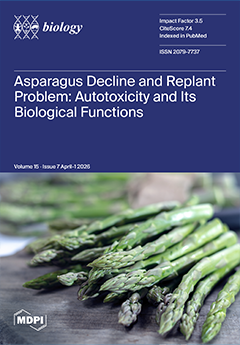
Cover Story (view full-size image): The cultivation of asparagus (Asparagus officinalis) is plagued by two serious issues: “asparagus decline” and “asparagus replant problem”. These issues are characterized by low vigor, growth, and productivity. It is believed that these issues result from a combination of Fusarium infection and asparagus autotoxicity. Asparagus contains autotoxic substances, including trans-cinnamic acid, p-coumaric acid, caffeic acid, and ferulic acid. These substances disrupt phytohormone levels, cellular metabolism, and membrane function, and induce oxidative stress. They also weaken the asparagus defense mechanisms against pathogen infection and enhance Fusarium pathogenicity. This paper provides an overview of the literature on asparagus autotoxicity, covering the substances and mechanisms involved. View this paper
  • Issues are regarded as officially published after their release is announced to the table of contents alert mailing list.
  • You may sign up for e-mail alerts to receive table of contents of newly released issues.
  • PDF is the official format for papers published in both, html and pdf forms. To view the papers in pdf format, click on the "PDF Full-text" link, and use the free Adobe Reader to open them.
Order results
Result details
Section
Select all
Export citation of selected articles as:
27 pages, 5970 KB  
Article
Spatiotemporal Dynamics of Micropropagules in Seawater During the 2020 Green Tide Outbreak in the Southern Yellow Sea
by Lihua Xia, Yutao Qin, Huanhong Ji, Jiaxing Cao, Xiaobo Wang, Yuhan Zhang and Jinlin Liu
Biology 2026, 15(7), 591; https://doi.org/10.3390/biology15070591 - 7 Apr 2026
Cited by 1 | Viewed by 732
Abstract
Large-scale green tides dominated by Ulva species have recurred annually in the Southern Yellow Sea for nearly two decades, yet early detection remains challenging due to the patchy distribution of incipient floating macroalgae. This study investigated the spatiotemporal dynamics of Ulva micropropagules during [...] Read more.
Large-scale green tides dominated by Ulva species have recurred annually in the Southern Yellow Sea for nearly two decades, yet early detection remains challenging due to the patchy distribution of incipient floating macroalgae. This study investigated the spatiotemporal dynamics of Ulva micropropagules during the 2020 outbreak using a systematic cultivation assay. Seawater samples were collected from 23 stations across the Subei Shoal and adjacent waters in April, May, and July, and incubated under controlled laboratory conditions to enumerate Ulva germling densities. Results revealed that Ulva micropropagule abundance peaked in April, with high-density foci concentrated in the Subei Shoal region—particularly in aquaculture areas of Neopyropia J. Brodie & L.-E. Yang, 2020—confirming this zone as one of the important sources. Abundance declined progressively through May and July as macroalgae drifted northward under wind and current forcing. This method effectively identified putative source regions and reconstructed initial dispersal patterns prior to satellite-detectable macroalgal aggregation. These findings demonstrate that Ulva micropropagule monitoring provides a cost-effective, sensitive tool for early warning and Ulva source tracking, offering finer-scale propagule distribution data to inform precision management strategies for mitigating green tide impacts on coastal marine ecosystems. Future research should expand investigations into Ulva micropropagule dynamics to elucidate their mechanistic processes and ecological significance in green tide initiation and development. Full article
(This article belongs to the Special Issue Advances in Aquatic Ecological Disasters and Toxicology)
Show Figures

Figure 1

14 pages, 6489 KB  
Article
Characterization and Phylogenetic Analysis of the Chloroplast Genome of Elaeagnus oxycarpa Schltdl
by Kaidiriye Yusupu, Qiyu Gu, Boqiang Wei, Hui Geng and Li Xiong
Biology 2026, 15(7), 590; https://doi.org/10.3390/biology15070590 - 7 Apr 2026
Viewed by 591
Abstract
Background: Elaeagnus oxycarpa Schltdl. (Elaeagnaceae) is a vital sand-fixing tree species in the arid, semi-arid, and desert regions of China, holding significant ecological and economic value. However, its chloroplast (cp) genome has not been previously characterized. Results: In this study, we sequenced the [...] Read more.
Background: Elaeagnus oxycarpa Schltdl. (Elaeagnaceae) is a vital sand-fixing tree species in the arid, semi-arid, and desert regions of China, holding significant ecological and economic value. However, its chloroplast (cp) genome has not been previously characterized. Results: In this study, we sequenced the complete cp genome of Elaeagnus oxycarpa using Illumina high-throughput sequencing technology. We performed de novo assembly, annotation, and comparative genomic and phylogenetic analyses with six other Elaeagnaceae species. The results revealed a typical quadripartite structure for the E. oxycarpa cp genome, with a total length of 150,567 bp and a GC content of 36.90%. Annotation identified 132 genes, comprising 86 protein-coding genes (PCGs), 38 tRNA genes, and 8 rRNA genes. Codon usage bias analysis indicated a preference for A/U endings, with leucine codons being the most frequent (9.5%). Additionally, 77 simple sequence repeat (SSR) loci were detected, predominantly mononucleotide repeats (71.4%). Comparative genomic analysis demonstrated high sequence conservation among the seven Elaeagnus species, with nucleotide variations primarily concentrated in non-coding regions and intergenic spacers of genes such as rps16, ycf1, and trnC-GCA. These variable regions and SSR loci represent valuable molecular markers for future population genetics and species identification studies on Elaeagnus. Phylogenetic analysis strongly supported the notion that E. oxycarpa and Elaeagnus angustifolia form a sister clade, indicating their close genetic relationship. Conclusions: Our findings provide crucial genomic resources and a theoretical foundation for the species identification and elucidation of the evolutionary history of Elaeagnaceae. Full article
(This article belongs to the Collection Abiotic Stress in Plants and Resilience: Recent Advances)
Show Figures

Figure 1

17 pages, 1779 KB  
Review
Potential of Lecanicillium uredinophilum as a Biocontrol Agent of Hemileia vastatrix: A Review Compared with Other Biological Control Agents
by Jose Luis Pinedo-Mas, Eyner Huaman, Amilcar Valle-Lopez, Jamil Delgado Rafael, Raúl Vargas, Robin Oblitas-Delgado, Jhon Edler Lopez-Merino and Manuel Oliva-Cruz
Biology 2026, 15(7), 589; https://doi.org/10.3390/biology15070589 - 7 Apr 2026
Viewed by 1236
Abstract
Coffee leaf rust (Hemileia vastatrix) is a major constraint on coffee production, while reliance on chemical fungicides raises environmental concerns and may become less sustainable over time. This review critically analyzes the available evidence on the potential of Lecanicillium uredinophilum as [...] Read more.
Coffee leaf rust (Hemileia vastatrix) is a major constraint on coffee production, while reliance on chemical fungicides raises environmental concerns and may become less sustainable over time. This review critically analyzes the available evidence on the potential of Lecanicillium uredinophilum as a biological control agent against H. vastatrix, with comparative consideration of other microbial agents evaluated for coffee leaf rust management. A structured literature review was conducted using searches in Scopus and PubMed, complemented by manual searches and reference screening. The available evidence indicates that L. uredinophilum shows affinity for urediniospore structures and exhibits mycoparasitic activity against rust fungi under controlled conditions. However, direct evidence against H. vastatrix remains limited and is still concentrated mainly in laboratory and greenhouse studies. In comparison with more established biocontrol agents, L. uredinophilum should be regarded as a promising but still early-stage candidate whose practical relevance has not yet been validated. Future progress will depend on robust field-based studies, improved understanding of its mechanisms of action, evaluation of its environmental stability, and the development of viable formulations compatible with integrated disease management strategies. Full article
(This article belongs to the Section Microbiology)
Show Figures

Graphical abstract

25 pages, 3712 KB  
Article
An AI-Enabled Single-Cell Transcriptomic Analysis Pipeline for Gene Signature Discovery in Natural Killer Cells Linked to Remission Outcomes in Chronic Myeloid Leukemia
by Santoshi Borra, Da Yan, Robert S. Welner and Zongliang Yue
Biology 2026, 15(7), 588; https://doi.org/10.3390/biology15070588 - 6 Apr 2026
Cited by 1 | Viewed by 1527
Abstract
Background: A major technical challenge in single-cell transcriptomics is the absence of an integrative analytic pipeline that can simultaneously leverage gene regulatory network (GRN) architecture, AI-assisted gene panel discovery, and functional relevance analyses to generate coherent biological insights. Existing approaches often treat these [...] Read more.
Background: A major technical challenge in single-cell transcriptomics is the absence of an integrative analytic pipeline that can simultaneously leverage gene regulatory network (GRN) architecture, AI-assisted gene panel discovery, and functional relevance analyses to generate coherent biological insights. Existing approaches often treat these components independently, focusing on clusters, marker genes, or predictive features without integrating them into a mechanistically grounded framework. Consequently, comprehensive screening that links regulatory association, gene signature screening, and functional interpretation within single-cell datasets remains limited, underscoring the need for an integrated strategy. Methods: We developed an integrative bioinformatics pipeline based on Gene regulatory network–AI–Functional Analysis (GAFA), combining latent-space integration, unsupervised clustering, diffusion pseudotime analysis, lineage-resolved generalized additive modeling, GRN inference, and machine learning-based gene panel discovery. This framework enables systematic mapping of cell-state structure, reconstruction of differentiation and effector trajectories, and identification of transcriptional and regulatory features strongly associated with clinical outcomes. As a case study, we applied the pipeline to NK cell transcriptomes from six CML patients (two early relapse, two late relapse, two durable treatment-free remission—TFR; 15 samples) collected at TKI discontinuation and 6–12 months after therapy cessation. Results: We reanalyzed publicly available scRNA-seq data from a previously published CML cohort to evaluate NK-cell transcriptional programs associated with treatment-free remission and relapse. We resolved six transcriptionally distinct NK cell states spanning CD56bright-like cytokine-responsive, early activated, terminally mature, cytotoxic, lymphoid trafficking, and HLA-DR+ immunoregulatory populations, each exhibiting outcome-specific compositional differences. Pseudotime analysis revealed two major NK cell lineages—a maturation trajectory and a cytotoxic effector trajectory. TFR samples displayed balanced occupancy of both lineages, whereas early relapse samples showed marked depletion of the maturation branch and preferential accumulation in cytotoxic end states. AI-guided feature selection and random forest modeling identified an 18-gene panel that distinguished NK cells from TFR and relapse samples in an exploratory manner. Among them, CST7, FCER1G, GNLY, GZMA, and HLA-C were conventional NK-associated genes, whereas ACTB, CYBA, IFITM2, IFITM3, LYZ, MALAT1, MT2A, MYOM2, NFKBIA, PIM1, S100A8, S100B, and TSC22D3 were novel. The GRN inference further uncovered outcome-specific regulatory modules, with RUNX3, EOMES, ELK4, and REL regulons enriched in TFR, whereas FOSL2 and MAF regulons were enriched in relapse, and their downstream targets linked to IFN-γ signaling, metabolic reprogramming, and immunoregulatory feedback circuits. Conclusions: This AI-enabled single-cell analysis demonstrates how NK cell state composition, differentiation trajectories, and regulatory network rewiring collectively shape TFR versus relapse following TKI discontinuation in CML. The integrative pipeline provides a modular framework that could be extended to additional datasets for data-driven biomarker discovery and mechanistic stratification, and highlights candidate transcriptional regulators and NK cell programs that may be leveraged to improve remission durability, pending validation in larger patient cohorts. Full article

Show Figures

Figure 1

16 pages, 110154 KB  
Article
Nasopharyngeal Bacterial–Fungal Dysbiosis in Respiratory-Diseased Endangered Forest Musk Deer (Moschus berezovskii)
by Lijuan Suo, Kun Bian, Jie Tang, Feiran Li, Kuo Sun and Chao Yang
Biology 2026, 15(7), 587; https://doi.org/10.3390/biology15070587 - 6 Apr 2026
Viewed by 713
Abstract
Background: The nasopharyngeal microbiome is crucial for respiratory health in mammals, yet it remains poorly characterized in the endangered forest musk deer (Moschus berezovskii), particularly in the context of disease. Methods: We compared the bacterial (16S rRNA) and fungal (ITS2) communities [...] Read more.
Background: The nasopharyngeal microbiome is crucial for respiratory health in mammals, yet it remains poorly characterized in the endangered forest musk deer (Moschus berezovskii), particularly in the context of disease. Methods: We compared the bacterial (16S rRNA) and fungal (ITS2) communities in the nasopharynx of healthy (n = 6) and clinically diseased (n = 6) individuals. Results: Although alpha diversity did not differ significantly, beta diversity (PCoA) analysis revealed distinct bacterial (PERMANOVA, R2 = 0.165, p = 0.014) and fungal (R2 = 0.577, p = 0.003) community structures between groups. The diseased group exhibited a significant increase in the bacterial phylum Proteobacteria (70.97% vs. 46.27%), primarily driven by the genera Bibersteinia and Pseudomonas. Fungal communities in the diseased group were dominated by a higher relative abundance of Ascomycota and Basidiomycota, with significant enrichment of Wallemia and Aspergillus. LEfSe analysis identified Pseudomonas and multiple fungal taxa (e.g., Wallemia, Aspergillus) as biomarkers for the diseased group. PICRUSt2 prediction indicated enrichment of pathways related to carotenoid biosynthesis and sphingolipid metabolism in the diseased state, while FUNGuild analysis suggested a higher abundance of animal/plant pathogen-related fungi. Conclusions: Symptomatic respiratory infections in forest musk deer are associated with significant dysbiosis of the nasopharyngeal microbiome, characterized by the marked enrichment of potential bacterial opportunists (e.g., Pseudomonas) and specific fungal taxa (e.g., Wallemia, Aspergillus), alongside distinct functional shifts in the microbiome. These findings provide the first integrated bacterial–fungal profile of the nasopharyngeal microbiome in this endangered species, and highlight potential microbial biomarkers associated with respiratory disease. Full article
(This article belongs to the Special Issue Exploring the Biodiversity, Taxonomy, Ecology and Genomics of Fungi)
Show Figures

Figure 1

16 pages, 3460 KB  
Article
Characterization of the Complete Mitochondrial Genome of Pedicularis henryi and Its Phylogenetic Implications in Lamiales
by Ying Deng, Hong Zhao, Yang Wang, Tian Tian, Zuhong Fan, Fangfang Luo and Ping You
Biology 2026, 15(7), 586; https://doi.org/10.3390/biology15070586 - 6 Apr 2026
Viewed by 632
Abstract
Pedicularis henryi is a hemiparasitic species within Orobanchaceae (Lamiales). In this study, the mitochondrial genome of P. henryi was assembled and characterized. The mitogenome is 251,317 bp in length with a GC content of 44.32%, containing 36 protein-coding genes, 24 tRNAs, and three [...] Read more.
Pedicularis henryi is a hemiparasitic species within Orobanchaceae (Lamiales). In this study, the mitochondrial genome of P. henryi was assembled and characterized. The mitogenome is 251,317 bp in length with a GC content of 44.32%, containing 36 protein-coding genes, 24 tRNAs, and three rRNAs. Codon usage analysis revealed a marked preference for A/U-terminated codons. A total of 196 repetitive elements were identified, with interspersed repeats as the most abundant type. We detected 293 C-to-U RNA editing sites across 31 protein-coding genes, predominantly causing non-synonymous substitutions. Eighteen chloroplast-derived fragments totaling 35,894 bp were found, accounting for 15.0% of the mitogenome. Nucleotide diversity analysis among three Pedicularis species showed an average π of 0.0018, with core respiratory genes highly conserved. Synteny analysis revealed extensive structural rearrangement in P. henryi compared to P. chinensis. This study provides mitochondrial genomic resources for Orobanchaceae and insights into mitogenome evolution in hemiparasitic plants. Full article
Show Figures

Figure 1

16 pages, 3517 KB  
Article
Transcriptome Analysis Revealed Potential Regulatory Networks Underlying Corolla Movement in Mirabilis jalapa (Nyctaginaceae)
by Dingkun Liu, Huiqi Yan, Xuan Wang, Xiaohong Yan and Bing Zhou
Biology 2026, 15(7), 585; https://doi.org/10.3390/biology15070585 - 6 Apr 2026
Viewed by 544
Abstract
Corolla movement is a typical plant movement behavior that enables plants to optimize pollination and adapt to environmental changes. Nevertheless, its molecular mechanism remains poorly understood. In the present study, we conduct a comprehensive transcriptome analysis of Mirabilis jalapa (Nyctaginaceae) corolla at five [...] Read more.
Corolla movement is a typical plant movement behavior that enables plants to optimize pollination and adapt to environmental changes. Nevertheless, its molecular mechanism remains poorly understood. In the present study, we conduct a comprehensive transcriptome analysis of Mirabilis jalapa (Nyctaginaceae) corolla at five stages (AG-EG) to elucidate the regulatory networks underlying movement. The results showed that the differentially expressed genes (DEGs) were mainly associated with cellular processes, catalytic activity, MAPK signaling, plant hormone signal transduction, and photosynthesis-related pathways, highlighting their involvement in corolla dynamics. Transcriptome profiling further demonstrated that auxin, ethylene, and abscisic acid signaling pathways were key hormonal regulators of corolla movement. Moreover, Ca2+ transport genes (CNGCs and CMLs) and respiratory burst oxidase homologs (RBOHs) were significantly enriched, indicating that Ca2+–ROS signaling oscillations also play an important role in driving differential cell expansion and turgor changes. Transcription factor analysis also revealed the upregulation of WRKY2, WRKY22, and WRKY33, suggesting that WRKYs act as the critical transcriptional regulators linking ROS–Ca2+ signals with downstream gene expression. The reliability of RNA-Seq data was confirmed by RT-qPCR, which showed high consistency with transcriptome profiles. These findings suggested that corolla movement in M. jalapa is carried through the integration of hormonal pathways, Ca2+–ROS signaling, and WRKY-mediated transcriptional regulation. This research provided novel insights into the molecular basis of plant movement and established a foundation for further study on floral dynamics and adaptive strategies in angiosperms. Full article
(This article belongs to the Special Issue Advances in Plant Multi-Omics)
Show Figures

Figure 1

16 pages, 602 KB  
Article
Integrated Desalination, Phycoremediation, and Biodiesel Production from Halophilic Microalgae Using Aquaculture Wastewater
by Adel W. Almutairi
Biology 2026, 15(7), 584; https://doi.org/10.3390/biology15070584 - 6 Apr 2026
Viewed by 765
Abstract
Aquaculture wastewater (AWW) contains elevated concentrations of nitrogen, phosphorus, and salts, in addition to many micropollutants that may cause environmental pollution if discharged untreated. This study evaluated the potential of the halophilic microalga Dunaliella salina for simultaneous phycoremediation of AWW and production of [...] Read more.
Aquaculture wastewater (AWW) contains elevated concentrations of nitrogen, phosphorus, and salts, in addition to many micropollutants that may cause environmental pollution if discharged untreated. This study evaluated the potential of the halophilic microalga Dunaliella salina for simultaneous phycoremediation of AWW and production of biodiesel-oriented biomass. Microalgal growth and biochemical composition were compared between AWW and synthetic f/2 medium under controlled laboratory conditions. Results showed that AWW supported efficient microalgal growth, showing a biomass yield of 1.32 g L−1 with a productivity of 0.09 g L−1 d−1, representing 40.88% and 18.42%, respectively, over that obtained in f/2 medium. Cultivation in wastewater also enhanced the volumetric productivity of lipids, proteins, and carbohydrates by 26.20%, 12.46%, and 26.38%, respectively. Significant nutrient removal from AWW was achieved, with high reduction efficiencies for nitrate, nitrite, ammonium, phosphate, and sulfate within the range 76.80–94.10%, along with a decrease in salinity by 29.70%. The lipid fraction was dominated by fatty acid methyl esters suitable for biodiesel production, representing 94.10% of the total lipids. Biodiesel properties met the international fuel standards and were even improved when the microalga was cultivated in AWW. These findings demonstrate that AWW can serve as an effective culture medium for halophilic microalgae, enabling simultaneous wastewater treatment and sustainable biofuel feedstock production. Full article
Show Figures

Figure 1

24 pages, 3696 KB  
Article
Glandular Cells of Forest Musk Deer Autonomously Synthesize Sex Steroid Hormones
by Xian An, Xiangyu Han, Jinming Huang, Zexiu Zhang, Zhiyi Lou, Jingyao Hu, Rongzeng Tan, Pengcheng Yang, Xinyue Dou, Habib Bati, Yuetong Zhao, Yele Zhang, Xin Dou, Henghao Zhang, Shuqiang Liu and Congxue Yao
Biology 2026, 15(7), 583; https://doi.org/10.3390/biology15070583 - 6 Apr 2026
Viewed by 975
Abstract
The musk gland of male forest musk deer (Moschus berezovskii) secretes musk enriched with sex steroid hormones. The testes mainly produce these hormones; however, whether glandular cells can autonomously synthesize them remains unexplored. This study aimed to utilize an in vitro-cultured [...] Read more.
The musk gland of male forest musk deer (Moschus berezovskii) secretes musk enriched with sex steroid hormones. The testes mainly produce these hormones; however, whether glandular cells can autonomously synthesize them remains unexplored. This study aimed to utilize an in vitro-cultured musk gland cell model to investigate whether musk gland cells possess the capability for autonomous synthesis of sex steroid hormones. We used single-cell RNA sequencing (scRNA-seq), reverse transcription quantitative real-time polymerase chain reaction, and liquid chromatography–mass spectrometry (LC-MS) to verify the steroidogenic potential of musk gland cells. scRNA-seq revealed that during the secretion period, 18 cholesterol and 6 sex steroid hormone biosynthesis genes were significantly expressed in the cells. In vitro experiments demonstrated that these genes were expressed without exogenous cholesterol supplementation. LC-MS analysis confirmed stable synthesis of nine sex steroid hormones. Increasing cholesterol concentration to 20 mg/L significantly upregulated SRD5A3 and AKR1D1, with AKR1C3 expression showing an upward trend. Elevated cholesterol increased several sex steroid hormone levels: pregnenolone, progesterone, 17α-hydroxypregnenolone, androstenedione, androsterone, and etiocholanolone by 4.12-, 1.46-, 33.42-, 2.06-, 3.11-, and 5.65-fold, respectively. These results collectively indicate that the musk glandular cells can synthesize sex steroid hormones de novo and suggest that cholesterol may regulate their biosynthesis in these cells. Full article
(This article belongs to the Section Developmental and Reproductive Biology)
Show Figures

Graphical abstract

23 pages, 3614 KB  
Article
Transcriptome Analysis Provides New Insight into Apoptosis and Immunosuppression in Procambarus clarkii After Exposure to High Temperature
by Shengjie Ren, Wenjing Xu, Xianjun Ma, Qin Gui, Wanqiu Tian, Qiuning Liu, Lishang Dai and Dandan Bian
Biology 2026, 15(7), 582; https://doi.org/10.3390/biology15070582 - 5 Apr 2026
Viewed by 784
Abstract
Acute heat stress frequently causes mass mortality in farmed red swamp crayfish (Procambarus clarkii), yet the mechanisms underlying immune collapse remain poorly understood. We established an acute heat stress model (37 °C, 6 h) and performed an integrative analysis combining hemocyte [...] Read more.
Acute heat stress frequently causes mass mortality in farmed red swamp crayfish (Procambarus clarkii), yet the mechanisms underlying immune collapse remain poorly understood. We established an acute heat stress model (37 °C, 6 h) and performed an integrative analysis combining hemocyte profiling, redox and immune assays, RNA-seq, and qRT-PCR. Heat stress significantly increased mortality and disrupted the hemocyte system, with a ~25% reduction in total hemocyte count and a selective decline in granular cells. This was associated with severe redox imbalance, evidenced by ROS/H2O2 accumulation, suppressed SOD and CAT activities, and lipid peroxidation damage. Transcriptomic analysis revealed 1446 differentially expressed genes, indicating concurrent activation of ER stress and autophagy alongside suppression of energy metabolism. Key gene validation confirmed upregulation of pro-apoptotic factors (CASP3, P53) and ER stress markers (GRP78, XBP1), consistent with hemocyte depletion. These findings provide multi-level evidence that acute heat stress triggers a redox crisis (“oxidative burst–defense suppression”), which in turn activates ER stress and apoptosis, leading to selective loss of granular cells and systemic immune compromise. This study establishes a mechanistic framework for understanding heat-induced mortality in crustaceans and offers a theoretical basis for developing targeted interventions to enhance thermal resilience in crayfish aquaculture. Full article
Show Figures

Graphical abstract

12 pages, 235 KB  
Article
Association of Rumination Time with Metabolic Imbalance and Milk Quality Traits in Holstein Cattle
by Samanta Grigė, Akvilė Girdauskaitė, Lina Anskienė, Inga Sabeckienė, Karina Džermeikaitė, Justina Krištolaitytė, Dovilė Malašauskienė, Mindaugas Televičius and Ramūnas Antanaitis
Biology 2026, 15(7), 581; https://doi.org/10.3390/biology15070581 - 5 Apr 2026
Viewed by 819
Abstract
Rumination time is considered a sensitive behavioral indicator of physiological and metabolic status in dairy cows, yet its relationships with biochemical and milk quality parameters under commercial robotic milking conditions remain insufficiently described. This study combined precision monitoring technologies, serum biochemical profiling, and [...] Read more.
Rumination time is considered a sensitive behavioral indicator of physiological and metabolic status in dairy cows, yet its relationships with biochemical and milk quality parameters under commercial robotic milking conditions remain insufficiently described. This study combined precision monitoring technologies, serum biochemical profiling, and in-line milk analysis to evaluate physiological differences among early-lactation Holstein cows according to rumination time. A total of 88 cows were classified into three rumination time categories (>527, 412–527, and <412 min/day). Milk production traits, milk quality indicators, and blood biochemical parameters were compared among groups, and univariable regression analysis was performed to identify variables associated with rumination time. Cows in the low rumination group showed higher milk temperature, electrical conductivity, and somatic cell count, as well as lower milk protein percentage. They also showed higher concentrations of total protein, urea, gamma-glutamyl transferase, and lactate dehydrogenase, while triglyceride concentrations were lower. Regression analysis identified electrical milk conductivity, creatinine, magnesium, potassium, and chloride as variables associated with rumination time. These findings indicate that reduced rumination time is associated with changes in milk quality and biochemical parameters in early-lactation dairy cows, suggesting that rumination monitoring may provide useful information for identifying cows experiencing physiological and metabolic challenges under commercial farming conditions. Full article
(This article belongs to the Special Issue Nutritional Physiology of Animals)
12 pages, 565 KB  
Article
Association of TRPS1 rs2737229 and TRIB1 rs2954029 Genetic Polymorphisms with Subclinical Atherosclerosis, LDL Cholesterol, and Glucose Levels
by Gilberto Vargas-Alarcón, Rosalinda Posadas-Sánchez, Oscar Pérez-Méndez, Marva Arellano-González and José Manuel Fragoso
Biology 2026, 15(7), 580; https://doi.org/10.3390/biology15070580 - 5 Apr 2026
Viewed by 582
Abstract
Recent reports have shown that polymorphisms in the TRPS1 and TRIB1 genes are associated with plasma lipid levels and the risk of cardiovascular disease. This study evaluates the associations of TRPS1 and TRIB1 polymorphisms with subclinical atherosclerosis (SA) and plasma lipid levels in [...] Read more.
Recent reports have shown that polymorphisms in the TRPS1 and TRIB1 genes are associated with plasma lipid levels and the risk of cardiovascular disease. This study evaluates the associations of TRPS1 and TRIB1 polymorphisms with subclinical atherosclerosis (SA) and plasma lipid levels in Mexican individuals. This study included 1406 Mexican mestizo individuals (417 individuals with SA and 989 healthy controls). Genotyping of TRPS1 and TRIB1 polymorphisms was performed using TaqMan assays in a real-time PCR system. To analyze whether these polymorphisms are associated with SA and plasma lipid levels, we used logistic regression (OR [95% CI]), adjusted for confounding factors. The AA genotype of the TRPS1 rs2737229 A/C polymorphism showed a significant association with the risk of developing SA under multiple genetic models [codominant: OR = 1.61 (95% CI: 1.10–2.36), p = 0.048; recessive: OR = 1.42 (1.02–1.99), p = 0.039; additive: OR = 1.26 (1.05–1.53), p = 0.015]. Similarly, the TT genotype of the TRIB1 rs2954029 T/A polymorphism was also significantly associated with the risk of developing SA [codominant: OR = 1.63 (1.10–2.43), p = 0.033; recessive: OR = 1.64 (1.13–2.37), p = 0.009]. In a sub-analysis of SA individuals, individuals with homozygous AA for the TRPS1 rs2737229 polymorphism had higher LDL cholesterol levels [135 mg/dL (110–148)] than those with homozygous CC [118 mg/dL (99–139)] (p < 0.003). The analysis of the TRIB1 rs2954029 polymorphism showed that carriers of the TT genotype had increased glucose levels [97 mg/dL (87–118)] compared to carriers of the AA genotype [91 mg/dL (84–99)] (p < 0.002). In summary, our findings showed that, in Mexican Mestizos, the AA genotype of the TRPS1 rs2737229 A/C SNP and the TT genotype of the TRIB1 rs2954029 A/T polymorphism are associated with a higher risk of developing SA and elevated levels of glucose and LDL cholesterol. Full article
Show Figures

Figure 1

54 pages, 656 KB  
Review
Unveiling Emergence and Holism in Biology: Essential Insights from Self-Organization
by Srdjan Kesić
Biology 2026, 15(7), 579; https://doi.org/10.3390/biology15070579 - 4 Apr 2026
Viewed by 1262
Abstract
This essay re-examines the enduring conceptual landscape of self-organization with the objective of clarifying the fundamental role of emergence and holism in contemporary biology. A deeper appreciation of these concepts can help biologists establish a solid theoretical foundation, avoiding biases that may occur [...] Read more.
This essay re-examines the enduring conceptual landscape of self-organization with the objective of clarifying the fundamental role of emergence and holism in contemporary biology. A deeper appreciation of these concepts can help biologists establish a solid theoretical foundation, avoiding biases that may occur when such perspectives are incomplete. The essay begins by exploring the historical roots of self-organization in biology and then discusses relevant theories of self-organization in the biological sciences. A comprehensive understanding of these historical foundations and the significance of self-organization is used to explore and conceptually connect self-organization to emergence and holism. Throughout the essay, these theoretical frameworks are illustrated with significant examples from biology and other scientific fields. In conclusion, the essay emphasizes the need for deeper conceptual reflection to clarify many controversial issues at the intersection of self-organization, emergence, and holism in biology and, more broadly, within science. Full article
(This article belongs to the Section Theoretical Biology and Biomathematics)
32 pages, 7169 KB  
Article
Phage Frontiers: Genomic and Functional Profiling of Novel Virulent Agents Targeting Foodborne Enterobacteriaceae
by Ramy Abdelreheim Qabel, Miao Xu, Chunwen Li, Chuhan Zhang, Chuanzhi Zhang, Yong Huang, Guangming Xiong, Edmund Maser and Liquan Guo
Biology 2026, 15(7), 578; https://doi.org/10.3390/biology15070578 - 4 Apr 2026
Viewed by 835
Abstract
Foodborne pathogens of Enterobacteriaceae are becoming an increasing global concern, with multidrug-resistant strains posing significant risks to food safety and public health, especially in high-risk products like dairy. This research focused on isolating, biologically characterizing, and genomically profiling new bacteriophages that target key [...] Read more.
Foodborne pathogens of Enterobacteriaceae are becoming an increasing global concern, with multidrug-resistant strains posing significant risks to food safety and public health, especially in high-risk products like dairy. This research focused on isolating, biologically characterizing, and genomically profiling new bacteriophages that target key Enterobacteriaceae members as potential biocontrol agents. Eight phages were isolated from wastewater using four bacterial hosts and analyzed through transmission electron microscopy, one-step growth analysis, adsorption kinetics, host range evaluation, whole-genome sequencing, comparative genomics, phylogenetic analysis, proteomic profiling, and virion assembly pathway characterization. All eight isolates exhibited icosahedral heads with contractile tails typical of Myoviridae morphology, demonstrated broad-spectrum lytic activity against 21 bacterial strains (infectivity: 47.6–95.2%), showed high adsorption efficiencies (84.75–99.98%), and had burst sizes ranging from 11 to 166 particles per cell. Genome sizes varied from 103 to 170 kb with coding densities between 92–96%. Importantly, none contained antimicrobial resistance genes, virulence factors, or lysogeny-associated elements, confirming their strictly lytic lifestyles and favorable biosafety profiles. Phylogenetic and comparative analyses indicated mosaic genomic structures influenced by horizontal gene transfer rather than host phylogeny. These findings provide a robust biological and genomic basis for evaluating these phages as potentially safe and effective alternatives to antibiotics in controlling foodborne Enterobacteriaceae, pending further in situ validation. Full article
(This article belongs to the Special Issue Advances in Foodborne Pathogens)
Show Figures

Graphical abstract

22 pages, 972 KB  
Review
DNMT/TET Imbalance and Network-Level DNA Methylation Remodeling in Ovarian Aging: Mechanistic Perspectives
by Miaofang Lin, Sheng Yang, Fengwen Huang, Xiaoyifan Deng, Chengwan Shen, Xiangkai Zhen and Aikebaier Reheman
Biology 2026, 15(7), 577; https://doi.org/10.3390/biology15070577 - 3 Apr 2026
Viewed by 930
Abstract
Reproductive aging is characterized by progressive decline in ovarian reserve, reduced oocyte competence, and impaired endocrine coordination. Although these phenotypic changes are well documented, the molecular mechanisms that integrate aging-associated stress signals into coordinated ovarian dysfunction remain incompletely understood. Increasing evidence indicates that [...] Read more.
Reproductive aging is characterized by progressive decline in ovarian reserve, reduced oocyte competence, and impaired endocrine coordination. Although these phenotypic changes are well documented, the molecular mechanisms that integrate aging-associated stress signals into coordinated ovarian dysfunction remain incompletely understood. Increasing evidence indicates that DNA methylation remodeling is closely associated with ovarian aging. Rather than representing isolated promoter-specific events, age-related methylation alterations may reflect progressive imbalance between DNA methyltransferases (DNMTs) and TET-mediated demethylation. Stress-responsive DNMT/TET dysregulation has been linked to distributed epigenetic remodeling across regulatory elements governing PI3K–AKT, TGF-β/SMAD, metabolic, and DNA damage response pathways in ovarian cell populations. We propose a network-level framework in which methylation drift preferentially affects highly connected regulatory hubs, potentially reducing transcriptional robustness and intercellular coordination within the follicular microenvironment. However, current human data remain largely correlative, and functional validation is required to determine whether methylation remodeling acts as a driver, amplifier, or biomarker of ovarian aging. Finally, we discuss translational implications, including circulating cell-free DNA signatures and epigenetic clock models, while emphasizing the importance of cell type-resolved and longitudinal studies. Collectively, the available evidence supports a model in which progressive DNMT/TET imbalance is associated with distributed pathway-level regulatory instability during ovarian aging. Full article
(This article belongs to the Special Issue Genetic and Epigenetic Regulation of Gene Expression)
Show Figures

Figure 1

12 pages, 925 KB  
Article
Cytostatic and Non-Apoptotic Effects of Vinorelbine-Based Therapy in 3D Endometrial Cancer Spheroids
by Berna Yıldırım, Burcu Biltekin, Mete Hakan Karalök and Ayhan Bilir
Biology 2026, 15(7), 576; https://doi.org/10.3390/biology15070576 - 3 Apr 2026
Viewed by 648
Abstract
Resistance to apoptosis represents a major therapeutic challenge in advanced and recurrent endometrial cancer. This study investigated whether vinorelbine, alone or in combination with lithium chloride (LiCl) or medroxyprogesterone acetate (MPA), suppresses tumor growth through non-apoptotic mechanisms in a three-dimensional spheroid model of [...] Read more.
Resistance to apoptosis represents a major therapeutic challenge in advanced and recurrent endometrial cancer. This study investigated whether vinorelbine, alone or in combination with lithium chloride (LiCl) or medroxyprogesterone acetate (MPA), suppresses tumor growth through non-apoptotic mechanisms in a three-dimensional spheroid model of Ishikawa endometrial cancer cells. Proliferation was assessed by BrdU incorporation, cell cycle distribution by flow cytometry, and apoptosis by Annexin V/propidium iodide staining. Vinorelbine-based treatments significantly reduced DNA synthesis and were associated with decreased S-phase fractions and altered cell cycle distribution. These effects were sustained over time and were more pronounced in combination treatments. Importantly, no consistent increase in apoptotic cell death was observed, and most cells remained viable despite strong suppression of proliferation. These findings indicate that vinorelbine-based regimens inhibit tumor spheroid growth predominantly through cytostatic mechanisms rather than induction of apoptosis. This non-apoptotic growth-control strategy may be relevant for the management of apoptosis-resistant endometrial cancer. Full article
(This article belongs to the Section Cancer Biology)
Show Figures

Figure 1

27 pages, 2524 KB  
Review
Malaria in the 21st Century: Global Disease Burden, Epidemiological Insights, and Strategic Control Approaches
by Basmah F. Alharbi and Mawahib A. Ahmed
Biology 2026, 15(7), 575; https://doi.org/10.3390/biology15070575 - 3 Apr 2026
Cited by 2 | Viewed by 2535
Abstract
Malaria remains a major public health issue worldwide and a repeated cause of illness and death in tropical and subtropical areas. It is caused by protozoan parasites of the genus Plasmodium and transmitted through bites of infected female Anopheles mosquitoes, but it can [...] Read more.
Malaria remains a major public health issue worldwide and a repeated cause of illness and death in tropical and subtropical areas. It is caused by protozoan parasites of the genus Plasmodium and transmitted through bites of infected female Anopheles mosquitoes, but it can also be transmitted via blood transfusions, organ transplants, and congenitally from mother to child. Despite decades of intervention efforts, millions of new cases and hundreds of thousands of deaths still occur each year, primarily in low- and middle-income countries. This review summarizes current epidemiological data on the global burden of malaria, mainly from the World Health Organization’s (WHO) World Malaria Report 2024 and Global Burden of Disease estimates. It brings together the latest evidence on worldwide malaria epidemiology, regional trends, determinants, and control strategies, with a particular focus on socio-economic factors, intervention methods, and emerging challenges such as drug resistance, climate change, and limited funding. Disease prevention and management require global, multifactorial approaches that are tailored to the local environment. Strengthening health education with locally relevant knowledge is important to improving outcomes in primary health prevention, secondary health prevention, and tertiary health prevention. The review concludes with a discussion of policy priorities needed in the future to meet the WHO Global Technical Strategy goals for malaria elimination by 2030. Full article
(This article belongs to the Special Issue Ecological Dynamics of Vector-Borne Pathogens: From Hosts to Vectors)
Show Figures

Figure 1

32 pages, 2657 KB  
Review
Decoding Drug Resistance in Pancreatic Cancer: A Subcellular Structure Perspective
by Xiaowen Li, Hao Lyu, Yixin Wu, Anyi Chen, Guifang Wu, Rui Zhang, Shuai Xiao, Dong Guo, Qi Zhang, Chaojun Yan, Jingfeng Tang and Cefan Zhou
Biology 2026, 15(7), 574; https://doi.org/10.3390/biology15070574 - 2 Apr 2026
Viewed by 1297
Abstract
Pancreatic ductal adenocarcinoma (PDAC) remains one of the most lethal malignancies, with drug resistance representing the primary barrier to effective treatment. Current research has largely focused on individual signaling pathways or isolated organelle functions, yet a comprehensive understanding of how these subcellular structures [...] Read more.
Pancreatic ductal adenocarcinoma (PDAC) remains one of the most lethal malignancies, with drug resistance representing the primary barrier to effective treatment. Current research has largely focused on individual signaling pathways or isolated organelle functions, yet a comprehensive understanding of how these subcellular structures coordinate to drive resistance remains lacking. This review synthesizes current knowledge through the perspective of subcellular structural homeostasis, the dynamic balance maintained by intracellular organelles. We examine how key subcellular structures, the cell membrane, mitochondria, endoplasmic reticulum, ribosomes, lysosomes, exosomes, and stress granules, undergo functional remodeling to promote drug resistance. It is crucial that these organelles do not work independently but form an integrated and dynamic communication network. Mitochondria serve as the intracellular signaling hub, integrating calcium signals, metabolic progress, and stress responses, while exosomes function as intercellular messengers that spread the anti-drug-resistant phenotype between cells. This framework reveals why targeting individual structures often fails and highlights the therapeutic potential of disrupting inter-organelle communication. We discuss emerging clinical strategies targeting subcellular structures and identify critical knowledge gaps, including the need for non-invasive biomarkers and combination approaches that target multiple network nodes. By shifting the focus from isolated organelles to their coordinated interplay, this review offers a new paradigm for overcoming drug resistance in PDAC. Full article
Show Figures

Figure 1

20 pages, 1717 KB  
Article
Polyethylene Microplastics Exert Dose-Dependent Effects on the Growth, Physiology, and Rhizosphere Microbiome of Persicaria capitata
by Rou Ma, Ying Liu, Ruhuan Wang, Suhang Li, Qiong Yang, Yue Chen, Jun Ren, Yang Luo, Yangzhou Xiang and Xuqiang Luo
Biology 2026, 15(7), 573; https://doi.org/10.3390/biology15070573 - 2 Apr 2026
Viewed by 772
Abstract
Microplastic pollution has become a major environmental challenge for terrestrial ecosystems; however, the mechanisms by which it affects the growth of medicinal plants and their rhizosphere microecology remain unclear. This study selected the important medicinal herb P. capitata as the research subject. A [...] Read more.
Microplastic pollution has become a major environmental challenge for terrestrial ecosystems; however, the mechanisms by which it affects the growth of medicinal plants and their rhizosphere microecology remain unclear. This study selected the important medicinal herb P. capitata as the research subject. A pot experiment was conducted to investigate the effects of different concentrations (0%, 1%, 4%, and 8% w/w) of polyethylene microplastics (PE-MPs) on its growth performance, physiological responses, and rhizosphere bacterial communities. The main findings are as follows: (1) PE-MPs exhibited a hormetic effect on the biomass of P. capitata. A low concentration (1%) slightly promoted total biomass (44.78 g) compared to the control (40.94 g), whereas higher concentrations caused significant inhibition. Total biomass decreased by 28.5% and 53.5% under the 4% and 8% treatments, respectively, indicating that the transition from stimulation to inhibition occurred between the 1% and 4% PE-MPs. (2) Chlorophyll a was more sensitive to stress, with its content significantly increasing under the 1% treatment but declining at higher concentrations. (3) Regarding the antioxidant system, POD activity was significantly inhibited at low and medium concentrations, while MDA content increased significantly only under the 8% treatment (by 72%). SOD and CAT showed no significant changes, indicating that POD and MDA were more sensitive indicators of oxidative damage. (4) PE-MPs significantly reduced rhizosphere bacterial community richness (Chao1 index), and the loss of microbial diversity was highly coupled with the decline in plant biomass and the exacerbation of oxidative damage. In conclusion, this study confirms a threshold effect in the toxicity of PE-MPs to P. capitata, with the transition from hormetic stimulation to toxic inhibition occurring between 1% and 4% (w/w). Furthermore, rhizosphere microecological imbalance is identified as a key indirect mechanism underlying phytotoxicity. These findings provide a new theoretical basis for understanding the potential impacts of microplastic pollution on medicinal plants and agroecosystems. Full article
Show Figures

Figure 1

25 pages, 2486 KB  
Review
Beyond Feature Selection: Interpretable Machine Learning for Mechanistic Insights in Metabolomics
by Haotian Bai, Yufei Ren, Jihan Wang, Yangyang Wang and Yanning Yang
Biology 2026, 15(7), 572; https://doi.org/10.3390/biology15070572 - 2 Apr 2026
Viewed by 969
Abstract
While metabolomics captures the dynamic chemical landscape of biological systems, its inherent high dimensionality and complexity pose significant analytical hurdles. Interpretable Machine Learning (IML) is revolutionizing the field by moving beyond traditional feature selection to extract biologically meaningful insights alongside robust predictions. This [...] Read more.
While metabolomics captures the dynamic chemical landscape of biological systems, its inherent high dimensionality and complexity pose significant analytical hurdles. Interpretable Machine Learning (IML) is revolutionizing the field by moving beyond traditional feature selection to extract biologically meaningful insights alongside robust predictions. This review systematically examines IML’s application in metabolomic biomarker discovery. We highlight how interpretation frameworks decode the key metabolites driving model decisions, transforming opaque “black-box” algorithms into testable mechanistic hypotheses. By evaluating cutting-edge studies across various pathologies, we illustrate IML’s pivotal role in disease subtyping, early diagnosis, treatment prediction, and mitigating demographic disparities. Although challenges in data generalizability persist, IML remains an indispensable bridge between computational prediction and biological understanding, ultimately advancing precision medicine. Full article
Show Figures

Graphical abstract

19 pages, 6714 KB  
Article
Comparative Mitogenomic Analysis of Water Scavenger Beetles (Coleoptera: Hydrophiloidea) Provides Insights into Phylogeny and Adaptive Evolution
by Huan Wang, Han-Hui-Ying Lv, Yi-Yang Zhao, Shi-Yun Hu, Feng-Yi Gan, Yu-Xiang Wang and Ming-Long Yuan
Biology 2026, 15(7), 571; https://doi.org/10.3390/biology15070571 - 2 Apr 2026
Viewed by 723
Abstract
Water scavenger beetles (Coleoptera: Hydrophiloidea) exhibit remarkable adaptations to both aquatic and terrestrial habitats and play irreplaceable ecological roles, yet their higher-level phylogeny and the molecular basis of their adaptive evolution remain unresolved. Here, we sequenced four complete mitogenomes of C. unipunctatus from [...] Read more.
Water scavenger beetles (Coleoptera: Hydrophiloidea) exhibit remarkable adaptations to both aquatic and terrestrial habitats and play irreplaceable ecological roles, yet their higher-level phylogeny and the molecular basis of their adaptive evolution remain unresolved. Here, we sequenced four complete mitogenomes of C. unipunctatus from the Qinghai–Tibetan Plateau (QTP) and conducted a comprehensive mitogenomic analysis by integrating these new data with 22 publicly available Hydrophiloidea mitogenomes, representing three families and six subfamilies. Our analyses revealed highly conserved mitogenomic architecture across Hydrophiloidea, with structural variation confined to non-coding regions and AT content correlating with both habitat type and phylogenetic lineage. Phylogenetic reconstructions robustly resolved the higher-level relationships: Helophoridae and Hydrochidae formed the sister group to Hydrophilidae, within which Hydrophilinae and Sphaeridiinae were strongly supported as monophyletic clades. We detected positive selection in the energy metabolism genes cox3 and nad5 along the ancestral branch of the terrestrial subfamily Sphaeridiinae, providing the first molecular evidence linking mitochondrial adaptation to the aquatic-to-terrestrial habitat shift. However, no positive selection signals were found in high-altitude C. unipunctatus populations, suggesting that adaptation to extreme environments operates through alternative mechanisms (e.g., regulatory or structural variation) rather than protein-coding evolution. This study establishes a robust phylogenetic framework for Hydrophiloidea and reveals the diverse molecular pathways underlying their adaptive evolution, from protein-coding adaptation during aquatic–terrestrial shifts to non-coding responses in extreme high-altitude environments. Full article
(This article belongs to the Special Issue Mitochondrial Genomics of Arthropods)
Show Figures

Figure 1

18 pages, 4987 KB  
Article
Variation in the Distribution Characteristics of Nemopilema nomurai in Relation to Marine Environmental Conditions
by Sunyoung Oh, Kyoung Yeon Kim, Seok Hyun Youn and Kyounghoon Lee
Biology 2026, 15(7), 570; https://doi.org/10.3390/biology15070570 - 2 Apr 2026
Viewed by 416
Abstract
In this study, we examined the interannual distribution patterns of the giant jellyfish Nemopilema nomurai and their relationship with marine environmental factors using field survey data collected from the East China Sea from 2020 to 2024. Acoustic surveys and jellyfish-specific trawl sampling were [...] Read more.
In this study, we examined the interannual distribution patterns of the giant jellyfish Nemopilema nomurai and their relationship with marine environmental factors using field survey data collected from the East China Sea from 2020 to 2024. Acoustic surveys and jellyfish-specific trawl sampling were conducted to analyze their vertical distribution characteristics in relation to water temperature, salinity, seawater density, and chlorophyll-a concentrations. The results revealed that N. nomurai were mainly distributed in the mid-to-lower water layers at depths of 40–60 m, particularly in areas with strong stratification between the surface and bottom waters. Temperatures and salinity at these depths were relatively stable, and jellyfish were concentrated within high-density layers (1024.6–1025.0 kg·m−3). Correlation analysis revealed significant positive relationships between jellyfish occurrence frequency and salinity and seawater density, whereas no significant relationship was observed with water temperature. The chlorophyll-a concentrations varied between the years but did not directly correspond to the primary habitat depths of jellyfish, although synchronous variations in jellyfish abundance occurred in some years. These results indicate that the vertical distribution of N. nomurai is primarily controlled by physical oceanographic factors rather than by chlorophyll-a concentrations, reflecting an ecological adaptation for efficient energy use. Full article
(This article belongs to the Section Ecology)
Show Figures

Figure 1

14 pages, 4010 KB  
Article
miRNA Sequencing and Differential Analysis of Testes from 1-Year-Old and 3-Year-Old Kazakh Horses
by Qiuping Huang, Mingyue Wen, Liuxiang Wen, Qunchang Li, Yaqi Zeng, Jianwen Wang, Jun Meng, Wanlu Ren and Xinkui Yao
Biology 2026, 15(7), 569; https://doi.org/10.3390/biology15070569 - 2 Apr 2026
Viewed by 495
Abstract
This study aims to elucidate the miRNA regulatory mechanisms during the developmental process of Kazakh horse testes at 1 and 3 years of age. Through miRNA sequencing and bioinformatics analysis of testicular tissues from 1-year-old and 3-year-old horses, a developmentally stage-specific miRNA expression [...] Read more.
This study aims to elucidate the miRNA regulatory mechanisms during the developmental process of Kazakh horse testes at 1 and 3 years of age. Through miRNA sequencing and bioinformatics analysis of testicular tissues from 1-year-old and 3-year-old horses, a developmentally stage-specific miRNA expression profile was constructed. A total of 1640 miRNAs were identified, among which 437 (380 up-regulated and 57 down-regulated) exhibited significant differential expression between the two age groups, including eca-miR-16, eca-miR-17, eca-miR-103, and eca-miR-199a-5p. Functional enrichment analysis revealed that the target genes of these differentially expressed miRNAs were primarily involved in key processes such as oxidative stress response, hormone receptor signaling regulation, and cytoskeletal remodeling, suggesting that testicular maturation depends on a complex post-transcriptional regulatory network. Further KEGG analysis revealed significant enrichment of classic reproductive signaling pathways, including PI3K/AKT, Wnt/β-catenin, Hippo, and TGF-β, indicating their synergistic roles in spermatocyte proliferation/differentiation and testicular homeostasis establishment. Although limited by a small sample size, this study elucidates the molecular mechanisms underlying male reproductive maturation in Kazakh horses at the post-transcriptional regulatory network level, providing preliminary theoretical support and potential markers for evaluating stallion reproductive performance and molecular breeding. Full article
Show Figures

Figure 1

25 pages, 397 KB  
Review
Molecular Regulation of Cardiomyocyte Cell Cycle and Regeneration
by Fan Li, Yura Son, Ming Yang and Wuqiang Zhu
Biology 2026, 15(7), 568; https://doi.org/10.3390/biology15070568 - 2 Apr 2026
Viewed by 1114
Abstract
The regulation of the cardiomyocyte cell cycle is central to understanding heart regeneration. In adult mammals, cardiomyocytes withdraw from the cell cycle, limiting their ability to proliferate and repair heart tissue after injury. This process is controlled by intrinsic genetic programs and extrinsic [...] Read more.
The regulation of the cardiomyocyte cell cycle is central to understanding heart regeneration. In adult mammals, cardiomyocytes withdraw from the cell cycle, limiting their ability to proliferate and repair heart tissue after injury. This process is controlled by intrinsic genetic programs and extrinsic signals, which together restrict the regenerative response in mature hearts. Understanding the mechanisms that regulate cardiomyocyte cell cycle activity is therefore critical for advancing cardiac regenerative medicine. In this review, we provide a comparative and integrated overview of cardiomyocyte cell cycle regulation in lower vertebrates and mammals, and discuss the major intrinsic factors that govern this process, including cyclin/CDK pathways, transcription factors and co-activators, oxygen and metabolic regulation, and epigenetic mechanisms. We also review the influence of hormones and growth factors, as well as the supportive roles of nonmyocyte populations in heart regeneration. By integrating findings across species, developmental stages, and regulatory levels, these findings highlight the complex regulatory network controlling cardiomyocyte proliferation and provide insight into potential therapeutic strategies for stimulating cardiac repair in the adult mammalian heart. Full article
(This article belongs to the Section Biochemistry and Molecular Biology)
16 pages, 3010 KB  
Article
Effect of Fixative Solutions in Long-Term Bone Preservation
by Victoria Gulimova, Yuri Krivonosov, Inna Bukreeva, Alexey Buzmakov, Olga Junemann, Victor Asadchikov and Sergey Saveliev
Biology 2026, 15(7), 567; https://doi.org/10.3390/biology15070567 - 2 Apr 2026
Viewed by 679
Abstract
Preservation of biological specimens over extended periods is essential for morphological research, especially in contexts where sample collection is limited or unrepeatable, such as spaceflight studies. However, the impact of long-term exposure to chemical fixatives remains underexplored. In this study, we used high-resolution [...] Read more.
Preservation of biological specimens over extended periods is essential for morphological research, especially in contexts where sample collection is limited or unrepeatable, such as spaceflight studies. However, the impact of long-term exposure to chemical fixatives remains underexplored. In this study, we used high-resolution X-ray microtomography and X-ray phase contrast tomography to investigate the stability of mineralized tissues subjected to prolonged chemical fixation. We examined the forelimb digits of geckos (Chondrodactylus turneri) preserved for over six years using a protocol involving formalin and ethanol, as well as the humeral bone of gerbils (Meriones unguiculatus) stored in fixative for more than four years. The gecko samples originated from the delayed vivarium control group of the Bion-M No. 1 space mission, offering a valuable chance to evaluate the preservation effects on specimens of significant scientific value. Comparative analysis revealed distinct changes in bone volume and linear attenuation coefficient of bone associated with formalin storage, highlighting the need for optimized storage strategies in long-term biorepositories. These findings offer valuable guidance for maintaining morphological fidelity in chemically preserved skeletal tissues. Full article
Show Figures

Figure 1

22 pages, 5875 KB  
Article
Combined Addition of Microalgae and Probiotic Enhances Bacterial Community Network Stability, Water Quality, and Fish Growth in Micropterus salmoides Aquaculture
by Huimin Xu, Tianyu Zeng, Liping Qiu, Dandan Li, Longxiang Fang, Zhuping Liu, Yuhang Gao, Xi Chen, Limin Fan, Chao Song and Shunlong Meng
Biology 2026, 15(7), 566; https://doi.org/10.3390/biology15070566 - 1 Apr 2026
Viewed by 552
Abstract
Microalgae and probiotics are increasingly considered a promising approach for addressing environmental problems in freshwater aquaculture. However, how this approach affects the resident free-living (FL) and particle-associated (PA) bacterial communities that are essential in biogeochemical processes remains unclear. Here, we established a 60-day [...] Read more.
Microalgae and probiotics are increasingly considered a promising approach for addressing environmental problems in freshwater aquaculture. However, how this approach affects the resident free-living (FL) and particle-associated (PA) bacterial communities that are essential in biogeochemical processes remains unclear. Here, we established a 60-day mesocosm aquaculture system for Micropterus salmoides to examine the effects of microalgal and probiotic addition on fish growth, water quality, and resident bacterial communities. Four treatments were included: Chlorella vulgaris addition (6.25 × 10⁶ cells/L), Bacillus subtilis addition (7.5 × 10⁷ CFU/L), their combined addition, and a control. Our results indicated that the combined addition significantly improved fish growth performance and reduced total and inorganic nitrogen concentrations than single additions. Moreover, the combined addition enhanced nitrogen- and carbon-related metabolic functions in FL fraction and increased host-associated functions in PA community. Taxa assigned with the classes Bacilli, Bacteroidia, Gammaproteobacteria, and Alphaproteobacteria showed predominant explanations for variations in nitrogen and phosphorus. Furthermore, the combined addition enhanced potential interactions among taxa across lifestyles and strengthened the bacterial community network complexity and stability. These findings provide new insights into the microbial mechanisms underlying microalgae–probiotic synergism and offer a scientific basis for sustainable microbial management in freshwater aquaculture. Full article
(This article belongs to the Section Biotechnology)
Show Figures

Figure 1

15 pages, 6578 KB  
Article
Glaesserella parasuis Infection Modulates the Transcriptome of Porcine Peritoneal Mesothelial Primary Cells: Implications for Understanding Peritoneal Invasion Mechanisms
by Pu Guo, Jialong Fan, Yangfan Dong, Jiacheng Zhang, Qirong Lu, Chun Ye, Shulin Fu, Zhongyuan Wu, Yu Liu and Yinsheng Qiu
Biology 2026, 15(7), 565; https://doi.org/10.3390/biology15070565 - 1 Apr 2026
Viewed by 612
Abstract
Polyserositis is an important clinical feature of Glaesserella parasuis (G. parasuis, GPS) infection in pigs, typically presenting as peritonitis, pleuritis, pericarditis, meningitis, and arthritis, resulting in heavy economic losses in the swine industry. However, the current research on the pathogenesis of [...] Read more.
Polyserositis is an important clinical feature of Glaesserella parasuis (G. parasuis, GPS) infection in pigs, typically presenting as peritonitis, pleuritis, pericarditis, meningitis, and arthritis, resulting in heavy economic losses in the swine industry. However, the current research on the pathogenesis of infectious peritonitis, particularly that caused by GPS, remains limited, and this condition has long been poorly reported in both clinical practice and research. In this study, we investigated the overall changes in gene expression in porcine peritoneal mesothelial primary cells (PPMCs) following a GPS infection using transcriptomics analysis. A total of 779 differentially expressed genes (DEGs) were identified after 12 h of infecting the PPMCs with GPS, resulting in 253 and 526 genes being upregulated and downregulated, respectively. Additionally, 220 DEGs, mainly involved in the NOD-like receptor signaling pathway, the TNF signaling pathway, and the metabolic pathway, were enriched in the KEGG analysis. These pathways were associated with the main DEGs (IL-1β, IL6, CCL5, CCL2 and NFKBIA), and their gene expression levels were verified through quantitative real-time fluorescence PCR (qRT-PCR). Moreover, oxidative phosphorylation, Salmonella infection, rheumatoid arthritis, and other regulating pathways were clustered together. Our results provide insights into the molecular mechanism underlying GPS-induced peritonitis in swine, identify novel therapeutic targets, and provide research direction for the control and prevention of GPS infections. These insights provide a foundational basis for advancing intervention and prevention approaches for this overlooked yet clinically significant manifestation of polyserositis. Full article
Show Figures

Figure 1

16 pages, 2207 KB  
Article
Local Lung HIF-1α and VEGF Activation to Reverse Emphysema by a Sulfated Caffeic Acid Dehydropolymer
by Tien M. Truong, Meghan L. Thompson, Umesh R. Desai and Masahiro Sakagami
Biology 2026, 15(7), 564; https://doi.org/10.3390/biology15070564 - 1 Apr 2026
Viewed by 573
Abstract
In emphysema, the alveolar septal structure is progressively destroyed, which is believed to be irreversible. However, as it has recently been linked to vascular endothelial growth factor (VEGF) deficiency, we hypothesized that VEGF stimulation can promote lung cell proliferation/migration to reverse emphysema. Our [...] Read more.
In emphysema, the alveolar septal structure is progressively destroyed, which is believed to be irreversible. However, as it has recently been linked to vascular endothelial growth factor (VEGF) deficiency, we hypothesized that VEGF stimulation can promote lung cell proliferation/migration to reverse emphysema. Our sulfated caffeic acid dehydropolymer, CDSO3, was thus examined in vitro and in vivo, given its VEGF-stimulating activity via ferrous ion (Fe2+) chelation-mediated stabilization of hypoxia-inducible factor-1α (HIF-1α). In lung epithelial/endothelial cells, CDSO3 promoted proliferation and wound closure by 1.6–3.0-fold at 10 μM; however, these effects were negated by excess FeSO4 or an HIF-1α inhibitor, indicating an Fe2+- and HIF-1α-dependent mechanism. In rat models of established emphysema induced by cigarette smoke extract or the VEGF receptor antagonist SU5416, two-week lung administration of CDSO3 at 60 μg/kg from day 21 enabled: 68–79% recovery of exercise endurance and airspace enlargement/destruction; a 1.8-fold increase in proliferating cell nuclear antigen above healthy levels; normalization of cleaved caspase-3; restoration of HIF-1α; and a 1.3-fold increase in VEGF above healthy levels. In contrast, CDSO3 pre-chelated with Fe2+ was ineffective. In conclusion, Fe2+ chelation-mediated HIF-1α stabilization and VEGF stimulation via local lung delivery of CDSO3 can reverse established emphysema by promoting cell growth and survival. Full article
(This article belongs to the Special Issue The Molecular and Cellular Mechanisms of Lung Injury and Recovery)
Show Figures

Figure 1

21 pages, 3172 KB  
Article
Biomarkers of Adipose Color: A Multi-Omics Analysis Unravels the Molecular Landscape of White and Yellow Fat in Kazakh Horse
by Xiaokang Chang, Xiangyun Shi, Penghui Luo, Xinkui Yao, Jun Meng, Jianwen Wang, Wanlu Ren, Linling Li and Yaqi Zeng
Biology 2026, 15(7), 563; https://doi.org/10.3390/biology15070563 - 1 Apr 2026
Viewed by 576
Abstract
Fat color is one of the most important economic traits influencing consumer preference and the market value of meat products. To explore the molecular mechanisms underlying abdominal adipose tissue color differentiation in the Kazakh horse, this study employed a multi-omics strategy, integrating targeted [...] Read more.
Fat color is one of the most important economic traits influencing consumer preference and the market value of meat products. To explore the molecular mechanisms underlying abdominal adipose tissue color differentiation in the Kazakh horse, this study employed a multi-omics strategy, integrating targeted metabolomics (fatty acid and amino acid profiling), untargeted metabolomics, and transcriptomic analyses. Two types of adipose tissue, white adipose tissue (WAT, n = 8) and yellow adipose tissue (YAT, n = 8), were selected for systematic comparative analysis. Fatty acid composition analysis revealed no significant differences between WAT and YAT in total saturated and unsaturated fatty acid content (p > 0.05). However, the levels of C15:0 and C17:1 were significantly higher in YAT than in WAT (p < 0.05), with C21:0 showing a very significant increase (p < 0.01). In contrast, the level of C22:1n9 was significantly lower in YAT (p < 0.05). Amino acid analysis indicated that the aspartic acid content in WAT was approximately 3.3 times higher than in YAT (p < 0.01). Through analysis of transcriptomic and metabolomic data, a total of 378 differentially expressed genes (DEGs) and 51 differentially expressed metabolites (DEMs) were identified. Further integrative analysis of metabolomic and transcriptomic data identified LPGAT1, AKT2, and ADH5 genes, along with metabolites such as stearate and myo-inositol, as potential key regulatory factors and biomarkers associated with fat color differentiation. This study provides a theoretical foundation for understanding the molecular mechanisms governing adipose tissue color variation in horses and their implications for meat quality. Full article
Show Figures

Figure 1

10 pages, 1069 KB  
Article
Palmaris Longus in the Anubis Baboon (Papio anubis): A Conservative Single-Tendon Pattern with Rare Distal Bifurcation
by Ingrid C. Landfald, Rui Diogo, Kacper Ruzik, Judney Cley Cavalcante, Bento João Abreu, Magdalena Ciechanowska and Łukasz Olewnik
Biology 2026, 15(7), 562; https://doi.org/10.3390/biology15070562 - 1 Apr 2026
Viewed by 581
Abstract
The palmaris longus (PL) remains insufficiently quantified in cercopithecoids (Cercopithecoidea), despite growing comparative data across primates. We examined adult archival material of the Anubis baboon (Papio anubis) to document PL presence, tendon configuration and topography, describe muscle–tendon morphometrics, and test for [...] Read more.
The palmaris longus (PL) remains insufficiently quantified in cercopithecoids (Cercopithecoidea), despite growing comparative data across primates. We examined adult archival material of the Anubis baboon (Papio anubis) to document PL presence, tendon configuration and topography, describe muscle–tendon morphometrics, and test for side-, sex- and size-related effects. A PL was present in all limbs. Two tendon configurations were observed: a single tendon inserting into the palmar aponeurosis (Type I, 87.0%) and a bifurcated tendon with both medial and lateral slips inserting into the palmar aponeurosis (Type II, 13.0%). No side- or sex-related differences were found in variant distribution. Males showed larger absolute values for selected measurements, but these differences were not independent of antebrachial size. PL lengths and interstyloid distances were strongly correlated with antebrachial size, indicating overall scaling with limb dimensions. These findings identify a species-level pattern in which PL is consistently present and predominantly unbranched, with only occasional distal bifurcation. The data establish a comparative anatomical baseline for Papio and broaden the available evidence on PL morphology in non-human primates. Full article
(This article belongs to the Section Zoology)
Show Figures

Figure 1

Previous Issue
Next Issue
Back to TopTop