


Simple Summary
Extremophilic microorganisms are an interesting but still underexplored source of natural carotenoids. Unlike conventional microbial producers, these organisms thrive in environments with unusual conditions, such as extreme salinity, cold, or radiation, and often synthesize pigments that contribute to their adaptation and survival. Some of these carotenoids have properties that make them attractive for future applications in food, cosmetics, and biotechnology. Nevertheless, their potential remains largely unexplored, and important questions persist regarding the microorganisms that produce them, the biological role of these pigments, and the conditions required for their production. A better understanding of these aspects is essential to recognize the opportunities and limitations of extremophilic microorganisms as alternative sources of valuable natural pigments.
Abstract
Extremophilic microorganisms produce structurally diverse carotenoids with distinctive biological functions and potential biotechnological applications. However, their biosynthetic capacity does not necessarily translate into efficient, reproducible, or economically viable production. This critical narrative review examines the evidence supporting the development of extremophilic carotenoid-producing microorganisms, with emphasis on bacterioruberin, decaprenoxanthin, sarcinaxanthin, and deinoxanthin. It discusses the influence of environmental conditions on carotenoid biosynthesis, current gaps in pathway regulation and phenotypic stability, and challenges associated with experimental reproducibility, analytical comparability, scale-up, and downstream processing. Particular attention is given to distinguishing demonstrated production performance from inferred industrial potential. The review also considers genetic engineering, process intensification, techno-economic analysis, and life-cycle assessment as complementary approaches for evaluating future development. Overall, translation into practical applications will require robust evidence of reproducibility, target-pigment productivity, efficient recovery, and economic and environmental feasibility.
1. Introduction
Carotenoids are a diverse group of naturally occurring pigments with important biological functions and applications in food, feed, cosmetics, and health-related products [1,2]. In plants, they contribute to coloration involved in pollination and seed dispersal and serve as precursors of phytohormones, including abscisic acid and strigolactones, which regulate development and responses to environmental stress [3,4]. In addition to their antioxidant capacity, carotenoids have been associated with a range of biological effects, including photoprotection, modulation of inflammatory responses and immune function, and improvements in reproductive performance and fertility in various animal species, including poultry, mammals, fish, and others [5,6]. Their commercial relevance is further supported by consumer interest in naturally derived and clean-label ingredients, together with efforts to diversify colorant sources and reduce reliance on selected synthetic azo dyes, such as Tartrazine (E102), Sunset Yellow FCF (E110), and Allura Red AC (E129) [7,8].
Microbial production using microalgae, yeasts, bacteria, and other microorganisms has therefore attracted attention as an alternative to carotenoid extraction from plant materials and macroalgae. Microbial platforms offer opportunities for controlled cultivation, year-round production, and improved productivity through process optimization and metabolic engineering [9]. However, describing a pigment as natural or microbially produced does not, by itself, establish its environmental sustainability, economic viability, or suitability for a particular application. These attributes depend on cultivation requirements, downstream processing, product quality, and the applicable regulatory framework. Accordingly, the value of a microbial carotenoid source must be assessed beyond its ability to synthesize the target compound.
An important opportunity offered by microbial production lies in the structural diversity of the carotenoids produced [1]. Industrial research has largely focused on C40 carotenoids, including carotenes such as β-carotene and lycopene and xanthophylls such as astaxanthin and lutein [10]. Microorganisms inhabiting specialized ecological niches, however, can produce less-explored pigments with different carbon skeletons, including C50 carotenoids [11,12,13]. Extremophiles are particularly interesting in this context because their adaptation to high salinity, extreme temperatures, acidity, or intense radiation may involve the production of protective pigments [14,15,16]. Examples of structurally distinct microbial C50 carotenoids include bacterioruberin, produced by haloarchaea and certain bacteria, and decaprenoxanthin and sarcinaxanthin, produced by bacterial species [12,17,18]. Other microorganisms associated with resistance to extreme stress, such as members of the genus Deinococcus, produce distinctive carotenoids, including deinoxanthin [19]. This diversity illustrates the potential of microbial resources to expand the range of carotenoids investigated for industrial applications beyond the traditionally studied C40 compounds [9]. Among these less explored pigments, bacterioruberin has attracted particular interest because of its extended conjugated system and reported antioxidant properties, although its applications in food, feed, cosmetics, and other sectors remain under investigation [13,20,21,22].
Nevertheless, the discovery of a carotenoid-producing extremophile does not necessarily establish its suitability as an efficient production platform. Salinity, temperature, pH, oxygen availability, and nutrient composition can influence microbial growth, carotenoid biosynthesis, and intracellular pigment accumulation, and conditions that maximize cellular carotenoid content do not necessarily maximize biomass formation or volumetric productivity [13]. Conditions that stimulate pigment accumulation may also restrict growth, increase cultivation costs, or complicate downstream recovery. Consequently, the production of a rare carotenoid under native or laboratory conditions should not be equated with high productivity, phenotypic stability, or economic feasibility at larger scales. The distinction between demonstrating biosynthetic capacity and establishing robust production is therefore central to evaluating the biotechnological relevance of these microorganisms.
This distinction is particularly important for extremophiles proposed as sources of high-value carotenoids [16,19,23]. Although their metabolic diversity provides opportunities to discover compounds with distinctive structures and properties, their development into practical production platforms requires an assessment of cultivation requirements, product titers, recovery yields, and process scalability. Meaningful comparisons also require consideration of cultivation duration, biomass concentration, environmental conditions, and analytical methods. Without this information, differences in reported carotenoid production may be difficult to interpret, and promising laboratory findings may provide an incomplete basis for evaluating industrial potential. A critical assessment must therefore consider not only what these microorganisms produce, but also how production is measured, under which conditions it is achieved, and whether the resulting performance can be reproduced and maintained as process scale increases.
This article is a critical narrative review; it synthesizes selected primary studies and relevant review literature on extremophilic carotenoid producers, their biosynthetic pathways, cultivation, analytical characterization, and process development. The discussion is organized thematically around biological constraints, reproducibility, scale-up, downstream processing, industrial context, and research priorities (Figure 1). Statements concerning the scarcity or absence of studies are therefore restricted to the literature considered and should be interpreted as indications of evidence gaps, not proof that no relevant work exists. The review aims to critically distinguish experimentally demonstrated findings from hypotheses, projections, and proposed applications. Particular attention is given to the influence of environmental conditions on microbial physiology and carotenoid production, alongside a critical assessment of the evidence supporting proposed roles for quorum sensing. The review also examines the distinction between biosynthetic capacity and robust production, the limitations of cross-study comparisons, and the evidence required to assess scalability and biotechnological feasibility. Finally, it aims to provide researchers and industry professionals with a clearer understanding of the mechanisms, limitations, and opportunities associated with extremophilic carotenoid producers; it identifies knowledge gaps and research priorities to support the development of reproducible, scalable, and economically viable production processes.
Figure 1.
Representative examples of microbial sources of structurally diverse carotenoids include Microbacterium spp. and Arthrobacter spp., associated with C50-carotenoid producers and the key aspects explored in this review.
2. What Do We Actually Know About Extremophilic Carotenoid Producers?
The literature on extremophilic carotenoid-producing microorganisms emphasizes taxonomic diversity, rare pigment structures, protective biological functions, and prospective industrial applications. Haloarchaeal studies frequently highlight bacterioruberin and its derivatives, whereas investigations of cold-adapted bacteria and radiation-resistant microorganisms broaden the range of ecological settings and carotenoid structures considered [24,25]. These contributions have established a valuable foundation for bioprospecting and pathway investigation. However, the evidence supporting pigment identification, biological activity, production performance, and industrial applicability does not always develop to the same extent within individual studies. Consequently, evaluating this literature requires distinguishing what has been demonstrated experimentally from what remains a proposed application or an extrapolation from laboratory observations [26].
2.1. Taxonomic and Ecological Diversity
Haloarchaea occupy a prominent position in the literature on extremophilic carotenoid producers, particularly in studies addressing C50 carotenoids [24,27,28]. Bacterioruberin-producing representatives have been investigated within genera including Haloferax [17,29], Halobacterium [30], Halorubrum [31,32], among others. Their pigmentation is closely associated with hypersaline habitats, where carotenoid-rich microorganisms contribute to the characteristic pink-to-red appearance of saltern crystallizer ponds [33]. This visible ecological association has supported interest in haloarchaea as sources of protective pigments and as models for investigating carotenoid production under high ionic strength. Nevertheless, the prominence of these organisms in bacterioruberin research should not be interpreted as evidence that all haloarchaeal species offer comparable production performance [26,34].
Bacterial producers extend this diversity beyond the archaeal domain. Bacterioruberin production has been reported in organisms described as Micrococcus [35] and in members of the genus Arthrobacter [21,36], demonstrating that this C50 carotenoid is not exclusive to haloarchaea. Although bacterial examples are less extensively represented in bacterioruberin-focused reviews, their physiological diversity makes them relevant to discussions of alternative production hosts rather than merely secondary occurrences of an archaeal pigment.
Cold-adapted bacteria provide a particularly informative connection between habitat, pigmentation, and physiological response [37]. The psychrotrophic bacterium Arthrobacter agilis MB813 [38], isolated from Antarctic sea ice, has been investigated for temperature-dependent carotenoid accumulation. Subsequent work with A. agilis DSM 20550 and Arthrobacter bussei DSM 109896 demonstrated increased bacterioruberin content as cultivation temperature decreased from 30 to 10 °C and examined its contribution to membrane-fluidity regulation [39]. These findings illustrate why the ecological significance of carotenoids should be considered alongside production measurements: “an increase in microbial pigmentation may reflect a physiological adjustment to temperature rather than an equivalent improvement in overall process output.” Other Antarctic bacteria illustrate the value of combining genomic investigation with chemical and functional analyses. Styczynski et al. [40] investigated carotenoid production in Planococcus sp. ANT_H30 (i.e., apocarotenoids) and Rhodococcus sp. ANT_H53B (i.e., lycopene, β-carotene, chlorobactene, and astaxanthin) and demonstrated radical-scavenging activity in their pigment extracts. Such studies expand the range of candidate organisms and provide evidence of extract functionality. However, isolation from an Antarctic environment and detection of antioxidant activity address different questions from the demonstration of efficient cultivation or scalable pigment recovery.
Radiation-resistant bacteria constitute another important group. Deinococcus radiodurans, for example, produces the distinctive xanthophyll deinoxanthin and has been investigated both as a source of a native protective pigment and as a host for metabolic engineering [19,41,42]. Its inclusion also highlights a useful distinction within the scope of this review: resistance to an extreme stressor and optimal growth under an extreme cultivation condition are related but not interchangeable characteristics. The physiological property relevant to each organism should therefore be stated explicitly rather than subsumed under a single, undifferentiated designation of extremophile.
Pigmented yeasts provide complementary examples of stress-tolerant production systems. Rhodotorula diobovata S-361 has been cultivated in a bioreactor using lactose-hydrolyzed salted whey, demonstrating the ability to combine carotenoid production (i.e., torulene, torulene-like compounds, and torularhodin) with the utilization of a saline, dairy-derived substrate [43]. The Antarctic yeast Rhodotorula frigidialcoholis has also been reported to increase carotenoid biosynthesis at 0 °C, potentially contributing to the regulation of membrane fluidity [44]. Such findings are relevant to substrate selection and process integration, but the classification of a strain as an extremophile should remain distinct from its demonstrated capacity to tolerate the salinity of a particular feedstock.
Taken together, these examples support a broad taxonomic and ecological perspective, but not the assumption that all groups are equally characterized. For the purposes of this review, haloarchaea, cold-adapted bacteria, radiation-resistant, and halotolerant or cold-adapted yeast systems should be compared according to their documented physiological properties and available production evidence. Limited representation of other habitats in a selected reference set should be treated as a limitation of coverage rather than, without a dedicated search, as proof that carotenoid producers are absent or universally understudied in those environments.
2.2. Reported Carotenoids and Functionalities
Bacterioruberin is the characteristic C50 xanthophyll of many haloarchaeal and Arthrobacter carotenoid profiles. Its molecular formula is C50H76O4, and its structure contains 13 conjugated double bonds and four terminal hydroxyl groups [13]. It is commonly accompanied by monoanhydrobacterioruberin and bisanhydrobacterioruberin, together with smaller amounts of other carotenoids or biosynthetic intermediates [21]. Although bacterioruberin-rich extracts containing approximately 80–85% bacterioruberin have been described, this proportion should not be treated as a fixed compositional characteristic of haloarchaea [17,45] and Arthrobacter [21,36,46].
For example, Montero-Lobato et al. [47] reported that four chromatographic peaks assigned to four bacterioruberin isomers collectively represented 89.13% of the carotenoid profile of H. mediterranei under the investigated conditions. Rigano et al. [21] reported bacterioruberin and monoanhydrobacterioruberin from Arthrobacter sp. CP30 strain. The relative abundance of a bacterioruberin-associated fraction, the identification of its constituent isomers, and the purity of an isolated product represent distinct analytical outcomes. Recently, Contreras et al. [48] described a novel Arthrobacter sp. strain LAPM80 isolated from King George Island, Antarctica, as a natural decaprenoxanthin C50 carotenoid producer. The structural diversity of extremophile-associated carotenoids cannot, however, be reduced to a simple division between C50-producing haloarchaea or bacteria and C40-producing bacteria. Bacterial production of bacterioruberin or decaprenoxanthin already crosses this boundary, while Deinococcus species produce the C40 xanthophyll deinoxanthin. Conversely, haloarchaeal pathways can be redirected towards C40 products: engineered H. mediterranei accumulated lycopene following reinforcement of precursor conversion, blockage of bacterioruberin biosynthesis, and disruption of competing carbon flux [49]. These examples show that taxonomic origin, native pigment profile, and engineered production phenotype must be considered separately.
Three functional themes recur throughout this literature: photoprotection, membrane adaptation, and resistance to oxidative stress. Bacterioruberin and related haloarchaeal pigments have been associated with protection against radiation and oxidative damage [25,27,50], whereas temperature-dependent bacterioruberin [39] and decaprenoxanthin [48] accumulation in Arthrobacter has been investigated in relation to membrane-fluidity regulation and photoprotection. These observations provide a biological basis for studying microbial carotenoids as components of stress adaptation, but their interpretation depends on whether the evidence derives from physiological measurements, pigment-deficient mutants, purified compounds, or chemically complex extracts. Antioxidant activity is particularly prominent in discussions of prospective applications. Extracts from Antarctic Planococcus and Rhodococcus strains [40] exhibited DPPH radical-scavenging activity (reduced approximately 50% and 77% of DPPH, respectively), while deinoxanthin produced by engineered D. radiodurans showed higher DPPH scavenging activity (21.7% higher than astaxanthin) [51]. These findings demonstrate activity in defined experimental systems; they do not, by themselves, establish equivalent performance in food matrices, cosmetic formulations, or biological systems with different exposure and delivery conditions. Accordingly, comparative descriptions such as “superior antioxidant activity” should identify the assay, comparator, concentration basis, and nature of the tested material.
The distinction between a purified carotenoid and a carotenoid-rich extract is particularly important when interpreting biological activities. To date, commercial analytical standards of several extremophile-associated carotenoids, including sarcinaxanthin, deinoxanthin, decaprenoxanthin, and bacterioruberin, are not readily available, which limits the ability to conduct studies using well-characterized, purified reference compounds. Consequently, much of the available literature relies on carotenoid-rich extracts containing the target pigment, its derivatives, and potentially other co-extracted constituents. These compounds may exert synergistic or additive effects, potentially enhancing the biological activities observed in crude preparations relative to those attributable to the target carotenoid alone. Therefore, “biological activities measured using such extracts should not be attributed exclusively to the major carotenoid unless supported by appropriate purification, chemical characterization, and experimental controls.”
2.3. Reported Potential and Process Performance
Descriptions of “high biotechnological potential” are understandable when a microorganism produces an uncommon pigment with measurable biological activity. Nevertheless, such descriptions can refer to different achievements: (i) discovery of a biosynthetic pathway, (ii) improvement of laboratory cultivation, (iii) demonstration of extract functionality, or (iv) development of a controlled fermentation. Their significance becomes clearer when the associated quantitative evidence and experimental scale are reported explicitly.
Montero-Lobato et al. [47], for example, used response surface methodology (RSM) to optimize H. mediterranei cultivation and experimentally obtained 3.74 ± 0.20 mg/L of total carotenoids, of which 89.13% correspond to bacterioruberin isomers. Similarly, Noby et al. [52] optimized pigment production using a Box–Behnken design (BBD), achieving a maximum pigment yield of 5.13 mg/L after 72 h of incubation in a medium composed of 96% sweet whey supplemented with 0.46% MgSO4 and 0.5% yeast extract. Although these results demonstrate the potential of statistical optimization to improve carotenoid productivity, they do not establish the feasibility of industrial-scale production. Rather, they provide a laboratory-scale basis for further process development and scale-up validation.
Controlled bioreactor studies provide a further level of evidence. More recently, bacterioruberin production by Haloferax marinum MBLA0078 was investigated using one-factor-at-a-time (OFAT) experiments and statistical optimization. In a 7-L laboratory-scale fermenter, carotenoid concentrations of 0.954 mg/L under OFAT-optimized conditions, 2.80 mg/L during fed-batch fermentation, and 2.16 mg/L following response surface methodology (RSM) optimization were reported. RSM optimization also increased volumetric productivity 12-fold relative to the basal medium, reaching 0.72 mg/L/day. Similarly, in Halorubrum ruber MBLA0099 [53], optimization was followed by cultivation in a 7-L vessel with a working volume of 4.2 L, yielding a carotenoid productivity of 0.492 mg L−1 d−1. This study further demonstrated that agitation and aeration affected cell growth, carotenoid accumulation, and cell integrity. These findings are valuable because they extend beyond endpoint pigment measurements to examine process performance under controlled operating conditions. Nevertheless, laboratory-scale bioreactor results do not, by themselves, establish commercial feasibility.
A balanced assessment must also account for reports that challenge the notion of uniformly low carotenoid production in native microbial systems. Chen et al. [54] reported a maximum pigment concentration of 555.6 mg/L in H. mediterranei cultivated using extruded rice bran and starch under controlled medium conductivity, with bacterioruberin accounting for approximately 52.4% of the extracted red pigment. This result demonstrates that high total pigment concentrations can be achieved under specific cultivation conditions, while highlighting the importance of distinguishing total pigment concentration from the concentration of an individual carotenoid. In contrast, Rigano et al. [21] characterized Arthrobacter sp. CP30 as a novel bacterial source of bacterioruberin, reporting a carotenoid titre of 1.28 mg/L after 72 h of controlled fermentation, a yield of 327.67 ± 6.6 μg/g of dry biomass, and a volumetric productivity of 0.02 mg/L/h. The bacterioruberin-enriched extracts also exhibited antioxidant and antimicrobial activities, although these effects cannot necessarily be attributed exclusively to bacterioruberin in the absence of appropriate controls using purified pigment.
Metabolic engineering provides further examples of substantial improvements in microbial carotenoid production. Engineered Deinococcus radiodurans produced 394 ± 17.6 mg/L deinoxanthin, corresponding to 102 ± 11.1 mg/g dry cell weight, under optimized shake-flask cultivation conditions [51]. Similarly, engineered H. mediterranei produced 429.41 ± 5.81 mg/L lycopene, corresponding to 119.25 ± 0.55 mg/g dry cell weight, also in shake flasks [49]. These findings demonstrate the potential of pathway engineering to enhance carotenoid accumulation. However, because they involve different target pigments, microbial hosts, and cultivation systems, their reported titers should not be interpreted as directly comparable measures of production-platform performance or industrial readiness. Collectively, these studies illustrate the considerable variability in reported carotenoid titers across microbial producers and cultivation strategies. Meaningful comparisons require consideration of pigment identity and composition, volumetric titer, biomass-specific yield, productivity, cultivation conditions, and product purity. Furthermore, high titers obtained in optimized laboratory systems, whether through process optimization or metabolic engineering, should be distinguished from demonstrated scalability and economic feasibility. Such distinctions are particularly important when evaluating the potential of extremophilic microorganisms as platforms for the production of commercially relevant carotenoids.
Economic claims require similar care. Noby et al. [52] reported 5.13 mg/L of bacterioruberin-related pigments from A. agilis NP20 in a whey-based medium costing USD 1.58/L, compared with USD 30.1/L for the reference commercial medium. This demonstrates a substantial reduction in the reported medium cost. It does not constitute a complete production-cost estimate, because cultivation operation, biomass harvesting, extraction, purification, formulation, and product losses lie outside that comparison. The strongest conclusion is therefore that whey substitution improved the substrate-cost basis of the investigated process, while overall economic feasibility remained to be established. Downstream processing and equipment requirements further qualify assessments based exclusively on cultivation. A bio-based extraction study [36] reported 100% recovery of bacterioruberin from Arthrobacter sp. biomass, a useful recovery metric that cannot be directly compared with a fermentation titer or a dry-biomass pigment content. Likewise, high-salinity cultivation, for example, can require corrosion-resistant equipment, and biofilm formation has been identified as an operational concern in H. volcanii [34]. These considerations do not negate the advantages of extremophilic hosts, but they show why process simplicity must be demonstrated across the production chain rather than inferred from an individual biological trait. Biological protection in the producing microorganism should not be equated with stability after extraction or incorporation into a product. The bacterioruberin literature identifies stability, compatibility with food matrices [13,21,22,46], processing behavior, sensory effects, and safety as unresolved or incompletely characterized requirements for food-related applications. Thus, proposed uses should be discussed according to the level of validation achieved, distinguishing chemical or cellular assays from formulation studies and application-specific demonstrations. Table 1 summarizes selected quantitative findings across microbial carotenoid production platforms, highlighting the experimental evidence available and the limitations that should be considered when interpreting their biotechnological potential.
Table 1.
Selected experimental findings and the limits of their interpretation.
3. What Biological Constraints Limit Extremophilic Carotenoid Production?
Extremophilic carotenoid producers face constraints that extend beyond low biomass or modest volumetric titers. Their pigments are often integral components of stress-adaptation systems, embedded in membranes or cell envelopes, and regulated by environmental signals that differ from those used to optimize industrial fermentation. These constraints apply to haloarchaeal bacterioruberin, bacterial sarcinaxanthin and decaprenoxanthin, and deinoxanthin from radiation-resistant Deinococcus, although their relative importance differs among pigments and habitats. These constraints determine “not only how much carotenoid a strain can accumulate, but also which pigment profile is obtained, how reproducible that profile is, and whether it can be deliberately redirected.”
3.1. Ecological Roles and Biosynthetic Knowledge Gaps
In extremophiles, carotenoids are not merely storage compounds or secondary metabolites; they frequently participate directly in survival. Bacterioruberin contributes to membrane stabilization and protection against oxidative and photo-oxidative damage in haloarchaea. Deinoxanthin contributes to the exceptional resistance of Deinococcus radiodurans to ionizing radiation and oxidative stress. In cold-adapted bacteria, carotenoids such as bacterioruberin and decaprenoxanthin have been associated with membrane-fluidity regulation and protection at low temperatures. This ecological coupling means that pigment biosynthesis is regulated to meet physiological needs. A strain may increase carotenoid content under cold, osmotic, oxidative, or radiation stress because the pigment improves survival, not because it maximizes the production of a commercially useful molecule. Consequently, conditions that enhance biological protection may reduce growth rate, alter cell morphology, or redirect carbon away from biomass formation. The relevant objective in nature is fitness under stress; the objective in production is reproducible accumulation of a defined carotenoid. These objectives overlap only partially.
For many extremophilic carotenoids, the biosynthetic route is known only in outline. In haloarchaea, bacterioruberin is derived from lycopene through the addition of C5 isoprenoid units, additional desaturation, and hydroxylation steps, ultimately generating a C50 xanthophyll with four hydroxyl groups. Key genes commonly associated with this route include crtB, encoding phytoene synthase; crtI, encoding phytoene desaturase; lyeJ or related lycopene elongases; crtD; and cruF, associated with C50 carotenoid modification [28,45]. However, the complete sequence of enzymatic reactions, the substrate specificity of individual enzymes, and the regulatory connections among these steps remain incompletely resolved for many haloarchaeal and bacterial producers. This incomplete pathway knowledge has practical consequences. Metabolic engineering strategies often assume that increasing precursor supply or overexpressing a structural gene will predictably increase the target product [13]. In C50 carotenoid biosynthesis, however, intermediates such as monoanhydrobacterioruberin and bisanhydrobacterioruberin can accumulate alongside bacterioruberin, and their proportions may change with strain, medium, oxygen availability, and cultivation mode. Without a validated reaction map and quantitative flux information, process optimization may increase total pigment without increasing the specific compound of interest. This is particularly relevant for bacterioruberin, because “total carotenoids” and “bacterioruberin-rich extract” do not necessarily represent the same analytical or commercial product.
In contrast, decaprenoxanthin biosynthesis has been characterized in considerably greater detail in Corynebacterium glutamicum. Initial pathway reconstruction based on carotenoid-accumulating mutants identified nonaprene, sarcinene, nonaflavuxanthin, and flavuxanthin as intermediates, leading to a proposed sequence of C5 extension, cyclization, and subsequent steps [56]. Subsequent functional characterization of the carotenoid biosynthetic gene cluster established the role of CrtEb in lycopene elongation and that of the CrtYe–CrtYf enzyme pair in ε-ring formation, thereby refining the original pathway model [57]. Further genetic analysis confirmed the principal functions of these enzymes [58]. Nevertheless, this progress in C. glutamicum should not be taken as evidence that the same pathway architecture and regulatory organization apply to all C50-carotenoid-producing bacteria. For rational optimization, it is therefore important to distinguish between a pathway characterized in a model producer and one experimentally validated in other hosts, particularly when the objective is to selectively increase decaprenoxanthin rather than total carotenoid accumulation.
Sarcinaxanthin biosynthesis has likewise been experimentally elucidated, particularly in Micrococcus luteus. Netzer et al. [59] cloned and functionally characterized the corresponding carotenogenic gene cluster and reconstructed the pathway through heterologous expression in Escherichia coli. The proposed route proceeds from farnesyl pyrophosphate through geranylgeranyl pyrophosphate, phytoene, lycopene, the C45 intermediate nonaflavuxanthin, and the C50 intermediate flavuxanthin, followed by γ-ring formation to yield sarcinaxanthin. The authors also demonstrated that CrtX catalyzes sarcinaxanthin glucosylation. Importantly, functional comparisons with the ε-cyclic decaprenoxanthin pathway revealed that C50 carotenoid cyclases can exhibit distinct and overlapping catalytic activities: replacing the native γ-cyclase components with the corresponding enzymes from Corynebacterium glutamicum resulted in the production of decaprenoxanthin, sarcinaxanthin, and the mixed ε-/γ-cyclic carotenoid sarprenoxanthin [59]. These findings show that carotenoid product profiles depend not only on precursor availability but also on enzyme specificity and catalytic versatility. Accordingly, rational optimization of sarcinaxanthin production should consider cyclase selection, pathway expression, and the formation of glucosylated derivatives, rather than relying exclusively on strategies aimed at increasing total carotenoid accumulation.
Overall, these examples illustrate that the challenges associated with C50 carotenoid production are not uniform across compounds or microbial hosts. Although the biosynthetic pathways of decaprenoxanthin and sarcinaxanthin have been experimentally characterized in model bacteria, important questions remain regarding the transferability of these pathways to other producers, the control of intermediate accumulation, and the influence of enzyme specificity on final product profiles. For bacterioruberin, uncertainties concerning individual enzymatic steps and pathway regulation further complicate targeted optimization. Addressing these limitations will require integrating functional gene characterization with quantitative metabolite profiling and systematic evaluation of cultivation conditions. Such an approach would help distinguish limitations arising from precursor availability, enzymatic conversion, and product modification, thereby enabling more selective and predictable production of individual C50 carotenoids rather than simply maximizing total pigment accumulation.
3.2. Membrane Organization and Carotenoid Compartmentalization
The cellular organization of carotenoids represents a biological dimension that remains insufficiently integrated into studies of extremophilic producers. Increasing biosynthetic flux is only one requirement for pigment accumulation; the resulting molecules must also be accommodated within the cellular structures in which they function. Evidence from cold-adapted bacteria illustrates the importance of this relationship. In Arthrobacter agilis DSM 20550ᵀ and Arthrobacter bussei DSM 109896ᵀ, increased bacterioruberin content at lower cultivation temperatures was accompanied by increased membrane fluidity, a broader membrane phase transition, and greater resistance to freeze–thaw stress [39]. These observations establish a connection between pigmentation and membrane behaviour, rather than simply between temperature and carotenoid concentration. Nevertheless, this connection should not be generalized into a universal mechanism for extremophilic carotenoids. Bacterioruberin, sarcinaxanthin, and decaprenoxanthin differ in their terminal structures and chemical modifications, and their interaction with the cell envelope should therefore be examined individually. Sarcinaxanthin can undergo glucosylation through the activity of CrtX, while decaprenoxanthin occurs in free, monoglucosylated, and diglucosylated forms in characterized bacterial systems [59,60].
This structural diversity raises an unresolved question for extremophilic production: “does increased pigment accumulation involve expansion of an existing cellular pool, changes in the proportions of free and glycosylated carotenoids, or redistribution among cellular fractions?” The characterization of glucosylated sarcinaxanthin and decaprenoxanthin provides a basis for investigating these possibilities, but it does not establish their physiological significance in every extremophilic producer. In particular, findings from Micrococcus luteus or Corynebacterium glutamicum should be used as mechanistic reference points, rather than as evidence that the same localization or regulatory relationships operate in cold-adapted or halophilic isolates. An important distinction is therefore required between a demonstrated membrane function and a proposed limitation on pigment storage. The membrane-fluidity measurements in Arthrobacter support a physiological role for bacterioruberin, but they do not establish that membrane accommodation sets an upper limit on carotenoid accumulation [39]. Demonstrating such a limitation would require experiments that increase pathway flux while simultaneously measuring pigment localization, membrane lipid composition, cell-envelope integrity, and growth. Without these measurements, a plateau in carotenoid content cannot be assigned specifically to membrane saturation. For extremophilic producers of bacterioruberin, sarcinaxanthin, and decaprenoxanthin, the research priority is therefore to connect molecular composition with cellular organization. Subcellular fractionation, separate quantification of free and glycosylated forms, and membrane-biophysical measurements would help distinguish whether a production response reflects increased synthesis, altered chemical modification, or changes in pigment distribution. The functional measurements already performed in cold-adapted Arthrobacter, together with the biochemical characterization of bacterial C50 carotenoid glucosylation, provide complementary starting points for this approach.
3.3. Regulatory Control
Understanding how carotenoid biosynthesis is activated remains a distinct challenge from identifying the enzymes responsible for pigment formation. Studies of extremophilic producers frequently establish associations between environmental conditions and pigmentation, but these associations do not necessarily identify the underlying regulatory mechanism. Mechanistic work in characterized systems reveals several possible control layers, including transcriptional repression, metabolite-dependent induction, and inhibition of biosynthetic enzymes by other proteins. These mechanisms provide useful reference points, but their operation must be demonstrated in the extremophilic strain under investigation rather than inferred from pigment identity or taxonomic proximity. Decaprenoxanthin biosynthesis provides an instructive example of metabolite-dependent transcriptional control. In the mesophilic reference organism Corynebacterium glutamicum, the MarR-type regulator CrtR represses transcription of the carotenoid biosynthetic operon and its own gene. Deletion of crtR increased the activity of a crtE promoter fusion approximately fivefold, while geranylgeranyl pyrophosphate interfered with CrtR–DNA binding in vitro [61,62,63]. These findings support a regulatory connection between isoprenoid precursor availability and expression of the downstream carotenoid pathway. However, they do not establish that decaprenoxanthin-producing extremophiles use the same regulatory architecture. Their relevance is to identify a testable mechanism: environmental responses may involve changes in precursor-dependent transcription, rather than direct activation of individual biosynthetic enzymes alone.
Regulation can also occur beyond transcription. In halophilic archaea, bacterioopsin-mediated inhibition of lycopene elongase provides a mechanism for controlling the allocation of shared precursors between bacterioruberin and retinal biosynthesis. Heterologous-expression experiments demonstrated that bacterioopsin was sufficient to inhibit the Halobacterium salinarum elongase, while a subsequent comparative study observed reduced bacterioruberin production in five of nine tested organism-derived systems following expression of a corresponding opsin [61]. This evidence shows that the presence of biosynthetic genes, or even their expression, may be insufficient to predict pathway output when enzyme activity is subject to protein-mediated inhibition. The mechanism should nevertheless not be generalized to sarcinaxanthin- or decaprenoxanthin-producing extremophiles without equivalent functional evidence. For sarcinaxanthin, characterization of the biosynthetic gene cluster in Micrococcus luteus established the enzymatic basis of pigment formation, including the role of CrtX in glucosylation. Such pathway reconstruction answers which gene products can generate the pigment, but it does not by itself explain how an extremophilic producer senses environmental change and coordinates expression of those genes [59]. The distinction is important across all three C50 carotenoids: a functionally reconstructed pathway is not equivalent to a validated regulatory model in the native producing organism.
Quorum sensing requires a similarly explicit distinction between demonstrated signalling and demonstrated control of carotenogenesis. Cell-to-cell signalling has been documented in extreme-environment microorganisms; for example, N-acyl-homoserine lactone production was reported in exopolysaccharide-producing Halomonas species [64]. Consequently, the relevant question is not whether quorum sensing can occur under extreme conditions, but whether a defined signalling system controls carotenoid synthesis in a particular producer. Detection of an autoinducer, identification of a putative signalling gene, or an association between population density and pigmentation would not independently establish that connection. A convincing demonstration would require signal or receptor perturbation, restoration of the phenotype through complementation or signal addition, and measurement of the corresponding effects on carotenoid-pathway expression and product formation [65].
Growth-phase behavior further cautions against assigning a universal regulatory model to extremophilic carotenogenesis. Although stationary-phase accumulation has been reported in Haloferax mediterranei, a 2024 genome- and transcriptome-based investigation of a halophilic archaeal producer found bacterioruberin synthesis to be most active during logarithmic growth [66]. In that system, osmotic downshock applied during logarithmic growth increased productivity without sacrificing biomass. This finding challenges the assumption that carotenoid induction necessarily requires growth arrest or a separate stationary-phase production stage. Rather, the timing of induction must be established for each strain and cultivation regime. The central regulatory limitation is therefore not simply insufficient knowledge of which environmental conditions increase pigmentation, but insufficient causal evidence connecting those conditions to pathway activity. For extremophilic producers of bacterioruberin, sarcinaxanthin, and decaprenoxanthin, the next step is to combine time-resolved pigment analysis with measurements of precursor pools, gene expression, and targeted genetic modifications. The contrasting mechanisms demonstrated in characterized systems, for example, precursor-responsive repression, protein-mediated enzyme inhibition, and growth-phase-dependent pathway activity, show why environmental optimization alone cannot reveal how production is controlled.
3.4. Biological Constraints
Taken together, the biological constraints discussed above reveal a common challenge: carotenoid production in extremophilic microorganisms is embedded in the physiological systems that sustain their adaptation. Pigment biosynthesis, cellular organization, and regulatory responses cannot therefore be treated as independent features. A change in cultivation conditions may affect not only the amount of carotenoid produced, but also its molecular composition, cellular distribution, and relationship with growth. The relevant question is consequently not simply whether an environmental stimulus increases pigmentation, “but whether the resulting response can be understood and reproduced without compromising the producing organism.”
This distinction is important when interpreting bacterioruberin, sarcinaxanthin, and decaprenoxanthin production. Their shared C50 classification does not establish equivalent physiological roles or regulatory behavior, just as production of the same pigment does not imply equivalent responses among strains. Mechanistic findings from a characterized organism should guide hypotheses for other producers rather than substitute for their experimental evaluation. Otherwise, similarities in pigment identity risk concealing differences in the biological processes that determine its accumulation. A central research priority is therefore to distinguish transient adaptive responses from sustained production phenotypes. An increase in pigmentation following environmental perturbation may identify a useful induction condition, but its significance depends on whether the response persists, remains compositionally consistent, and can be elicited again in independent cultures. Addressing this question requires following the response over time and after repeated exposure, rather than relying exclusively on a single endpoint. Such an approach would also help determine whether an apparent improvement represents a reproducible change in carotenoid production or a temporary consequence of altered cellular physiology.
The biological value of extremophilic carotenoid producers thus lies not only in their ability to withstand unusual conditions, but in the possibility of understanding and controlling the responses associated with those conditions (Figure 2). Establishing that control is the link between ecological adaptation and predictable production provides the biological foundation for the cultivation and process-development strategies considered next.
Figure 2.
Extremophilic carotenoid producers, key biosynthetic constraints, and research priorities for sustainable production. Representative producers of bacterioruberin (C50), decaprenoxanthin (C50), sarcinaxanthin (C50), and deinoxanthin (C40) are presented alongside their biological roles, major challenges in carotenoid biosynthesis and accumulation, and strategies to improve production through omics integration, targeted engineering, and bioprocess optimization.
4. Are Extremophilic Carotenoid Producers Stable and Reproducible?
The demonstration that an extremophilic microorganism produces a target carotenoid under a defined set of cultivation conditions does not establish that this production phenotype will remain reproducible during routine subculturing, preservation, revival, or transfer between laboratories. For biotechnological development, reproducibility requires that both the quantity and the chemical composition of the carotenoid fraction be maintained over time. This requirement is particularly relevant for C50 carotenoids such as bacterioruberin, sarcinaxanthin, and decaprenoxanthin, as well as for the C40 carotenoid deinoxanthin produced by radiation-resistant Deinococcus species, because the target product is a structurally defined molecule rather than an undifferentiated pool of extractable pigments. At present, however, the available literature does not provide convincing evidence that carotenoid production in haloarchaea, cold-adapted bacteria, or radiation-resistant microorganisms is inherently unstable. Most studies evaluate pigment production at a single time point or after a defined optimization experiment, without documenting passage number, preservation history, independent biological replication over time, or compound-specific carotenoid profiles. The absence of such evidence does not allow the conclusion that extremophilic producers are stable or prone to pigment loss. Instead, stability should be treated as an experimental property that must be demonstrated for each strain, cultivation system, and target carotenoid.
This distinction is essential because environmental conditions strongly influence carotenoid accumulation in extremophiles. In haloarchaea, salinity, temperature, pH, oxygen availability, illumination, and nutrient composition can affect both growth and bacterioruberin production. In cold-adapted Arthrobacter species, bacterioruberin accumulation increases at low temperature and contributes to membrane-fluidity regulation [39]. These observations demonstrate environmental regulation of carotenogenesis, but they do not demonstrate genetic or phenotypic instability. A reproducible change in pigment content under a defined condition should therefore be distinguished from unpredictable variation under nominally equivalent conditions or from a persistent, non-reversible loss of the production phenotype.
4.1. Pigment Variation During Propagation
Pigment loss or alteration during repeated cultivation has been documented in selected bacterial systems, but direct evidence in extremophilic carotenoid producers remains limited. In Staphylococcus aureus, loss or reduction in staphyloxanthin pigmentation has been reported under particular experimental or selective conditions [67]. However, such observations should not be generalized as evidence that carotenoid production is unstable during ordinary laboratory maintenance, nor extrapolated to haloarchaea, psychrophilic actinobacteria, or radioresistant bacteria. They establish only that visible pigment phenotypes can change in some bacteria under specific circumstances. Genetic changes in carotenoid biosynthesis provide a plausible mechanism by which pigment production could be lost. crtB, encoding phytoene synthase, catalyses an early committed step in carotenoid biosynthesis, and mutations in this gene can generate non-pigmented phenotypes [68]. In Pantoea stewartii, disruption of crtB eliminates carotenoid synthesis despite continued bacterial viability [68]. Analogous losses of pathway function could, in principle, affect the production of bacterioruberin, sarcinaxanthin, decaprenoxanthin, or deinoxanthin. Nevertheless, the existence of a genetic mechanism does not establish its frequency during routine propagation. Demonstrating genetic instability requires evidence that an altered phenotype is heritable, for example through stable pigment loss after single-colony isolation, targeted or whole-genome sequencing, complementation, or recovery of the original genotype. For extremophilic producers, the ecological function of carotenoids provides a rationale for environment-dependent regulation, but not evidence of inevitable instability. Bacterioruberin contributes to membrane organization and low-temperature adaptation in Arthrobacter species [48]. Glycosylated bacterioruberin derivatives have also been associated with protection against freezing–thawing stress in A. agilis [52]. Similarly, deinoxanthin contributes to the oxidative-stress resistance of Deinococcus radiodurans [41]. These functions suggest that the strength of selection maintaining pigment production may differ between stressful natural environments and favorable laboratory conditions. It remains hypothetical whether reduced pigment synthesis under non-stress conditions would confer a growth or energetic advantage. Testing this hypothesis requires direct measurement of pigment production, growth or competitive fitness, reversibility after restoration of the original conditions, and genotype.
Incomplete reporting of strain maintenance history can further complicate the interpretation of carotenoid production information. Studies may provide a culture-collection accession and cultivation conditions without specifying the number of passages since revival, the preservation method, storage duration, or whether pigmentation was verified before the experiments. These factors may influence culture recovery and the phenotype observed during cultivation, although their effects on carotenoid production remain insufficiently characterized for many extremophilic microorganisms. Consequently, differences in pigmentation between studies cannot always be attributed to intrinsic differences between strains, as variation associated with strain maintenance and experimental history may also contribute. Pigment stability should therefore be established experimentally rather than inferred from a single successful cultivation. A minimum assessment should include independent cultures initiated from a defined, authenticated stock; repeated propagation under specified conditions; periodic quantification of biomass, total carotenoids, and individual carotenoids; and recovery testing under the original conditions after any observed decline. Colony color is useful for initial screening but cannot replace chromatographic quantification, because visual intensity does not establish the concentration or identity of individual carotenoids. Where a persistent decline or altered profile is observed, physiological reversibility should be tested before genetic instability is invoked.
4.2. Environmental Regulation vs. Phenotypic Instability
Phenotypic stability encompasses more than the persistence of a colored colony or the continued presence of carotenoid biosynthetic genes. A strain may retain its genetic capacity for carotenogenesis while producing different biomass concentrations, biomass-specific pigment contents, volumetric titers, or carotenoid profiles under different cultivation conditions. Therefore, production stability should be evaluated using biomass formation, carotenoid content per unit biomass, volumetric titer, and, where possible, volumetric productivity and product composition.
Environmental dependence is well documented in extremophilic carotenoid producers. In haloarchaea, salinity, temperature, pH, oxygen transfer, light exposure, carbon and nitrogen sources, and trace elements can influence growth and bacterioruberin accumulation. In Haloferax mediterranei, response-surface optimization identified favorable conditions around 36.5–36.8 °C, pH 8.2–9.0, and 12.0–15.0% NaCl [47]. In Halorubrum ruber MBLA0099, statistically based optimization of cultivation conditions increased total carotenoid production, predominantly bacterioruberin [53]. These results demonstrate that production performance is condition-dependent; they do not demonstrate that the wild-type phenotype is unstable. The same principle applies to cold-adapted and radiation-resistant bacteria. In Arthrobacter agilis and A. bussei, bacterioruberin content increases when growth temperature is reduced from 30 to 10 °C, consistent with a role in membrane-fluidity regulation [39]. In Deinococcus radiodurans, deinoxanthin production depends strongly on medium composition and cultivation parameters; carbon-source optimization and process engineering have been used to improve deinoxanthin production [51]. Such findings show that an unoptimized cultivation system may underestimate attainable production. They do not establish that the original phenotype was genetically unstable or that the biosynthetic pathway was previously silent. The distinction between biomass-specific content and volumetric productivity is essential. A condition that increases carotenoid content per gram of biomass may simultaneously reduce biomass formation, whereas conditions that promote rapid growth may result in lower cellular pigment content. Consequently, an increase in specific carotenoid content does not necessarily translate into a higher volumetric titer (mg/L), just as a higher volumetric titer does not necessarily reflect greater cellular biosynthetic capacity. These parameters describe different aspects of the production phenotype and should therefore be reported separately when comparing strains or evaluating process performance.
Product composition introduces an additional dimension. Bacterioruberin-producing microorganisms, for example, may accumulate bacterioruberin together with monoanhydrobacterioruberin, bisanhydrobacterioruberin, and other C50 carotenoids or biosynthetic intermediates [21]. A culture may therefore maintain a relatively stable total carotenoid concentration while the relative abundance of the target compound changes. Conversely, the absolute concentration of bacterioruberin may increase while total extractable pigment remains similar, reflecting altered pathway flux or product distribution. For applications requiring a defined chemical specification, stability assessment must include compound-specific quantification rather than absorbance-based total pigment measurement alone. Carotenoid glycosylation further complicates product characterization. In characterized bacterial systems, glycosylation contributes to carotenoid chemical diversity, as illustrated by sarcinaxanthin glucosylation and glycosylated decaprenoxanthin derivatives [56]. In Arthrobacter agilis, bacterioruberin and glycosylated derivatives have been reported as part of the low-temperature adaptation strategy [52]. These observations do not establish that glycosylation patterns vary during routine cultivation in every extremophilic producer, but they show why total pigment measurements may be insufficient when the target product is a specific molecule.
Induction of carotenogenesis by cultivation conditions also requires careful interpretation. The one-strain-many-compounds (OSMAC) concept demonstrates that modifying culture conditions can alter microbial metabolite profiles, but much of its foundational literature concerns fungal secondary metabolites and silent biosynthetic gene clusters [69]. Its direct application to extremophilic carotenogenesis is therefore limited. In carotenoid-producing microorganisms, changes in medium composition, salinity, oxygen, or temperature are more appropriately interpreted as determinants of biosynthetic activity or product distribution unless there is direct evidence of transcriptional silencing and subsequent pathway activation [70].
A suitable experimental strategy would combine controlled variation of selected environmental factors with repeated measurements of growth and carotenoid accumulation. Initial experiments should establish the response range for the most relevant variables; subsequent experiments should test reproducibility across independent cultures and persistence after repeated propagation. Time-course sampling can distinguish transient induction from sustained changes in production. Where a particular carotenoid is the target, HPLC or equivalent chromatographic analysis should accompany total-pigment measurements to determine whether increased production reflects greater accumulation of the target compound or a shift in the overall carotenoid profile.
4.3. Reproducibility and Comparability
Reproducibility is a prerequisite for evaluating whether a carotenoid-producing microorganism can serve as a reliable production platform. Nevertheless, cross-study comparisons are often compromised by differences in strain identity, maintenance history, medium composition, cultivation mode, oxygen transfer, analytical workflow, extraction efficiency, and reporting units. These factors can generate apparently conflicting results without implying that any individual study is incorrect. Strain identity is the first requirement for meaningful comparison. Strains within the same species may differ in biosynthetic capacity, growth kinetics, regulatory responses, and carotenoid composition [71]. Even identical strain designations do not guarantee equivalent biological material if culture-collection accession numbers, preservation procedures, revival protocols, and passage histories are not reported. For extremophilic isolates, provenance and preservation conditions are particularly important because they provide context for differences in environmental response. Cultivation conditions are equally decisive. In haloarchaea, salinity, pH, temperature, nutrient composition, oxygen, and light can affect both growth and carotenoid accumulation [72]. Vessel geometry, working volume, agitation, aeration, illumination, and inoculum density can further alter oxygen transfer and mixing. These variables are not interchangeable between shake flasks and bioreactors, even when nominal medium composition and temperature are similar. This issue was also encountered in our laboratory during the cultivation of Antarctic Arthrobacter agilis, where an insufficient pre-inoculum density initially prevented satisfactory growth under the conditions tested. A factorial experimental design was therefore used to investigate the inoculum-related parameters and identify a density that supported successful culture establishment. This experience illustrates “how an inadequately controlled inoculum can compromise growth and complicate the interpretation of carotenoid production, even when other cultivation parameters are maintained”.
The cultivation system may also affect the apparent chemical profile; for example, differences in carotenoid composition between cultivation systems have been reported for Arthrobacter, including detection of bacterioruberin isomers without some derivatives [21,36]. Such observations justify further investigation, but they do not identify the cause of the compositional difference unless cultivation and analytical conditions are matched. The appropriate conclusion is that pigment profiles should be characterized under the conditions actually used, rather than assumed to be invariant strain properties. Units of expression are another major barrier to comparison. Volumetric concentration (mg/L), biomass-specific content (mg/g dry cell weight), extract-normalized content (µg/mg extract), wet-biomass normalization, and percentage of dry biomass describe different quantities. A high mg/g DCW value can coexist with a low mg/L titer if biomass concentration is low; conversely, a culture with moderate cellular pigment content may achieve a high volumetric titer through high biomass formation. Extract-normalized values additionally depend on extraction yield and the mass of non-carotenoid compound recovered, and cannot be converted reliably without biomass concentration, extraction yield, and mass-balance information. Productivity requires further specification; i.e., volumetric titer is an endpoint concentration, whereas volumetric productivity requires an explicit time interval and should distinguish total cultivation duration from the period over which the reported production occurred. In fed-batch, repeated-batch, or multistage processes, calculations should state whether culture-volume changes, substrate addition, and harvest strategy are included. Without these details, apparent productivity differences may reflect calculation conventions rather than biological performance.
Analytical methodology also affects reported values; for example, spectrophotometric quantification is useful for screening and estimating total carotenoids, but the result depends on wavelength, solvent, extinction coefficient, calibration basis, and extract composition. When multiple carotenoids are present, a single-wavelength measurement cannot independently quantify each compound. HPLC, preferably supported by diode-array, fluorescence, or mass-spectrometric characterization, provides better resolution of individual carotenoids and derivatives. However, chromatographic peak-area percentages should not automatically be interpreted as mass fractions because detector responses differ among compounds. Reported total carotenoid titer cannot be equated with the concentration of a specific carotenoid unless compound identity and composition have been established. In fact, reproducibility also has distinct levels, viz., independent biological replicates quantify variability among cultures under specified conditions; interlaboratory repetition tests whether a published procedure and phenotype can be reproduced under independently implemented conditions; and scale-up validation assesses whether performance is maintained after introducing engineering variables. These are complementary but non-equivalent forms of evidence. Reproduction in several shake flasks does not demonstrate that the same titer, product profile, or productivity will be maintained in a controlled bioreactor.
Negative or incomplete results should be reported because they can identify conditions under which a production phenotype is not maintained, reveal analytical limitations, and prevent unnecessary repetition of unsuccessful approaches. Reporting such outcomes is therefore part of rigorous process characterization rather than an indication of experimental failure (Figure 3). Where pigment production is lost or altered during propagation, the strain history, cultivation conditions, analytical method, and evidence for genetic or phenotypic change should be documented.
Figure 3.
Key factors influencing the stability and reproducibility of carotenoid production in extremophilic microorganisms, highlighting environmental regulation and the experimental requirements for reliable production assessment.
4.4. Minimum Reporting Requirements and Research Priorities
The limitations discussed above indicate that improving the reliability of extremophilic carotenoid research requires more than optimizing cultivation conditions or identifying additional pigment-producing strains. It also requires systematic documentation of the biological material, experimental conditions, analytical methods, and uncertainty associated with reported results. The objective should not be to impose a universal protocol on organisms with substantially different physiological requirements, but to establish a common reporting basis that enables meaningful comparison and replication. Table 2 proposes a minimum reporting framework for studies investigating carotenoid production by extremophilic microorganisms. It distinguishes information necessary to interpret a production result from additional measurements that become important when genetic stability, long-term reproducibility, or process feasibility is explicitly investigated. Not every study will address all categories; however, any omissions should be considered when interpreting the conclusions and comparing the reported performance with other systems.
Table 2.
Proposed minimum reporting requirements for studies of extremophilic carotenoid production.
The proposed framework depicted in Table 2 should be regarded as a research and reporting recommendation rather than an established community standard. Its implementation would make it easier to distinguish biological differences between strains from differences arising from experimental design, analytical methods, or reporting practices. It would also improve the interpretation of unusually high titers, particularly when results are expressed on different mass bases or derived from different cultivation systems. Several research priorities follow directly from this framework. First, long-term stability studies should be conducted using well-characterized extremophilic carotenoid producers, including haloarchaea, cold-adapted bacteria, and radiation-resistant microorganisms. Such studies should quantify carotenoid production over repeated transfers and after defined preservation and revival procedures. Where pigment loss occurs, experiments should establish whether the phenotype can be restored under the original conditions and whether the change is associated with a heritable genetic alteration. Second, stability assessments should incorporate the composition of the carotenoid fraction rather than measuring only total pigment concentration. For bacterioruberin-producing strains, for example, longitudinal quantification of bacterioruberin and its anhydro derivatives would help determine whether the target product remains compositionally consistent throughout cultivation and maintenance. Comparable approaches should be adapted to other carotenoid-producing systems according to their characteristic pigments and derivatives.
Third, interlaboratory reproducibility should be evaluated using defined strains, shared analytical procedures, and sufficiently documented cultivation conditions. A staged approach would be appropriate: initial replication of a published procedure, subsequent assessment of robustness to controlled changes in cultivation conditions, and finally validation in a different cultivation system. This would help determine which findings are transferable and which depend on laboratory-specific practices or narrowly defined experimental conditions. Fourth, production studies should report measured values separately from estimates derived through normalization or extrapolation. This distinction is particularly important when comparing volumetric titers, biomass-specific yields, and productivity. Reporting the underlying biomass concentration, cultivation duration, calibration basis, and relevant mass-balance information would make it possible to evaluate whether apparent improvements reflect genuine increases in target-pigment production. Finally, future studies should connect the demonstration of pigment production to the evidence required for practical process development. A strain that retains its carotenoid-producing phenotype under laboratory conditions may still require optimization of growth, product composition, recovery, and operational robustness. Conversely, a strain with a modest initial titer may remain a valuable candidate if its production phenotype is stable, its product profile is well characterized, and its cultivation and recovery requirements are compatible with further development.
5. Can Extremophilic Carotenoid Production Be Translated from Flasks to Fermenters?
Few studies of extremophilic carotenoid production extend beyond shake-flask cultivation [21,52,54]. This limitation is important because scale-up introduces variables that are absent or poorly controlled in flasks, including oxygen transfer, mixing, temperature distribution, foam formation, salt handling, reactor materials, and downstream recovery from biomass suspensions [73,74]. The translational gap is therefore not simply a matter of increasing culture volume; it concerns whether the biological performance observed at small scale can be maintained under controlled, economically relevant operating conditions. This issue is particularly relevant for haloarchaeal bacterioruberin producers, which require high salt concentrations, and for cold-adapted Arthrobacter, which may require operation at low temperature. It is also relevant for Deinococcus species, whose deinoxanthin production has been advanced further through metabolic engineering but still requires process-level validation beyond laboratory-scale fermentation. Across these systems, the central question is not only whether a strain produces a carotenoid, but “whether biomass formation, target-pigment titer, product composition, and recovery performance can be reproduced at larger scale?”
5.1. Scarcity of Scale-Up Data
Most primary studies included in this review rely on shake-flask experiments. Among the peer-reviewed haloarchaeal studies retrieved, the largest explicitly reported fermentation volume was 7 L [53,54]. Chen et al. [54] demonstrated progress beyond shake-flask cultivation by producing C50 carotenoids from Haloferax mediterranei in a fed-batch process with controlled pH, feeding, and medium conductivity. Total carotenoid concentration reached 555.6 mg/L at 25 S/m after approximately 84 h, compared with 361.4 mg/L at 30 S/m and 125 mg/L at 40 S/m. However, bacterioruberin accounted for only 52.4% of the relative HPLC peak area; the experiments were performed in duplicate, and scale-up across reactor volumes and techno-economic feasibility were not demonstrated. Similarly, Hwang et al. [53] increased total carotenoid concentration in Halorubrum ruber MBLA0099 from 0.496 to 1.966 mg/L, achieving a maximum productivity of 0.492 mg/L/day in a 7-L laboratory-scale fermenter. Despite these advances, the reported productivity remains modest compared with that of astaxanthin production by the microalga Haematococcus pluvialis, for which productivities of approximately 16.0–17.1 mg/L/day have been reported [75,76]. These values are approximately 33–35 times higher than the maximum productivity reported by Hwang et al. [53], highlighting the substantial gap that remains between laboratory-scale bacterioruberin production and the performance achieved by an established microbial carotenoid production platform. Nevertheless, this comparison should be interpreted cautiously because the organisms, cultivation strategies, and product-specific accumulation characteristics differ.
A more complete process dataset should include not only an endpoint titer, but also biomass concentration, target-carotenoid content, yield on substrate, volumetric productivity, cultivation time, and mass balance. The metabolically engineered D. radiodurans strain R1 study illustrates this reporting standard: the final strain produced 394 mg/L deinoxanthin, corresponding to 102 mg/g DCW, with a yield of 40.4 mg/g sucrose and a productivity of 8.4 mg/L/h from 10 g/L sucrose [51]. This example is instructive because it reports yield and productivity alongside titer. However, it should not be interpreted as representative of native extremophilic producers, because the strain was metabolically engineered and the reported performance was obtained under defined laboratory conditions. Few studies of native extremophilic producers report yield on substrate. This omission is consequential because substrate yield, rather than titer alone, strongly influences raw-material cost and process economics. A high titer obtained with a high substrate concentration or long cultivation time may be less attractive than a lower titer achieved with higher substrate conversion and shorter residence time. Similarly, productivity cannot be interpreted without an explicit time basis, particularly when fed-batch, repeated-batch, or multistage strategies are used.
Industrial claims also illustrate the challenges of translating microbial carotenoid production into a sustainable commercial business. Although not a direct example of extremophile biotechnology, DEINOVE provides a relevant contextual case. In 2016, the company announced a six- to eight-fold increase in carotenoid yield at laboratory scale, anticipating commercial supply within approximately two and a half years. By 2018, it had produced an industrial batch of a Deinococcus-derived carotenoid at a scale of several cubic meters and launched its phytoene-based cosmetic ingredient, PHYT-N-RESIST®. However, DEINOVE entered judicial liquidation in January 2023 [77]. Although its closure cannot be attributed specifically to the carotenoid program, this trajectory illustrates that successful fermentation scale-up and product launch do not guarantee long-term commercial sustainability. Financing, market demand, and the capacity to sustain operations also shape the fate of industrial biotechnology ventures.
5.2. Process Incompatibilities
Scale-up of haloarchaeal carotenoid production raises engineering constraints that are rarely addressed in flask-based studies. High salt concentrations can compromise conventional stainless-steel equipment through corrosion [78], and biofilm formation has been reported for Haloferax volcanii [79]. A haloarchaeal fermentation system may therefore require corrosion-resistant materials, modified cleaning protocols, and careful control of biofilm formation. These requirements can increase capital and operating costs, although quantitative cost comparisons for haloarchaeal carotenoid processes are not available. Temperature and salinity create different demands depending on the producer. Haloferax mediterranei grows under moderately thermophilic conditions, with reported optima around 36–37 °C and 12–15% NaCl [47]. Heating requirements may therefore be moderate, but the salt load remains substantial. By contrast, cold-adapted Arthrobacter strains are cultivated at much lower temperatures; A. agilis, for example, has been cultivated between −5 and 30 °C [80]. Large-scale cultivation of psychrophilic or psychrotolerant producers may therefore require active cooling, with associated energy demands that have not been systematically quantified for carotenoid production. Oxygen supply represents another scale-dependent constraint. Oxygen is required for haloarchaeal or Arthrobacter growth and carotenoid production, but increasing aeration in shake flasks does not necessarily improve productivity because flask aeration does not reproduce the oxygen-transfer coefficient, mixing time, or hydrodynamic conditions of a fermenter [73,81].
Low-cost media can reduce operating expenditure but do not by themselves establish process viability. For example, a whey-based medium for A. agilis was reported to cost 1.58 USD/L, compared with 30.1 USD/L for marine broth, while producing 5.13 mg/L carotenoids [52]. Using only these reported values, the medium cost would correspond to approximately 0.31 USD per mg of carotenoid, or roughly 300,000 USD per kg before accounting for capital expenditure, energy, labour, extraction, purification, product loss, and depreciation. This calculation should be interpreted strictly as a lower-bound medium-cost sensitivity estimate, not as a process cost or a market-price benchmark. It nevertheless illustrates why low-cost media must be coupled to higher volumetric productivity and efficient downstream recovery.
5.3. Downstream Processing Challenges
Downstream processing is a major unclear component of extremophilic carotenoid bioprocesses. However, extraction efficiency cannot be evaluated independently of both the cellular structure of the producing microorganism and the physicochemical properties of the target carotenoid. The cell envelope determines the barriers to intracellular pigment release, whereas carotenoid molecular structure influences solvent affinity, solubilization, and partitioning [82]. These factors interact to determine whether recovery requires only solvent contact and agitation or more intensive operations involving heating, mechanical disruption, or other extraction-enhancement technologies such as ultrasound-, microwave- or supercritical-assisted extraction. The importance of the cell wall is particularly evident when comparing different microbial producers. In Haematococcus pluvialis, astaxanthin accumulates within cysts surrounded by a resistant cell wall, which can hinder solvent penetration and pigment release [83]. Consequently, downstream processing may require a combination of biomass concentration, drying, cell disruption, and intensified extraction techniques, including supercritical CO2 extraction [84,85]. These operations increase process complexity and energy demand. In contrast, the cell envelopes of haloarchaea can be disrupted relatively readily under low-salt or aqueous conditions, potentially facilitating intracellular pigment release [24,72,86]. Nevertheless, the high salt content of haloarchaeal cultures can introduce a different separation challenge, as salts and other biomass components may need to be removed from the recovered extract. The physicochemical properties of the target carotenoid provide a second, equally important determinant of extraction performance. Although bacterioruberin is a large C50 carotenoid with an extended hydrophobic polyene chain, its terminal hydroxyl groups confer polar character that can facilitate interactions with polar protic solvents [87]. Our group has demonstrated that bacterioruberin can be recovered using methanol or ethanol without heating, relying on straightforward solvent extraction under mild conditions, including room-temperature agitation [21,36,46]. This finding challenges the assumption that the recovery of large, highly conjugated carotenoids necessarily requires non-polar solvents or energy-intensive extraction technologies. It also illustrates why extraction strategies developed for one carotenoid cannot automatically be transferred to another, even when both compounds belong to the same broad chemical family.
The contrast with astaxanthin is informative, although the differences should not be attributed to molecular polarity alone. Astaxanthin contains oxygenated functional groups [88], but its recovery from H. pluvialis is strongly influenced by the resistant cyst wall, intracellular pigment localization, and the composition of the biomass matrix [89,90,91]. Conversely, the relatively straightforward extraction of bacterioruberin reflects the combined effects of its solvent interactions and the accessibility of the pigment within the producing biomass. Thus, the need for extraction intensification is determined not simply by whether a carotenoid is hydrophobic or belongs to a particular structural class, but by the interaction between pigment chemistry, cellular organization, and biomass characteristics. Recovery of the target carotenoid is therefore only one component of downstream performance; selectivity, product purity, solvent consumption, and the management of residual biomass must also be considered. Similarly, for Arthrobacter bacterioruberin, conventional methanol extraction has been reported to recover approximately 80% of the pigment, with process optimization increasing recovery to approximately 100% at bench scale [36].
Low-cost solvents such as methanol and ethanol offer potential routes to more sustainable downstream processing for recovery of decaprenoxanthin [92]. Aqueous γ-valerolactone with ethanol has been used to recover pigment, protein, and polysaccharide fractions from Halobacterium salinarum [93]. Bioethanol-based microwave-assisted extraction has been reported to achieve full bacterioruberin recovery from Arthrobacter at bench scale [36]. However, the use of a bio-based solvent or an intensified extraction technique does not, by itself, demonstrate that a process is more sustainable [94]. The benefits depend on solvent demand, energy consumption, selectivity, product quality, and the feasibility of integrating pigment recovery with the valorization of other biomass fractions. A solvent system is environmentally and economically advantageous only if the solvent can be recovered efficiently, reused without unacceptable contamination or product degradation, and managed at an acceptable energy cost. The studies considered here provide promising extraction and fractionation strategies, but the available evidence does not yet establish whether their advantages are maintained through solvent recycling and operation beyond bench scale. Future studies should therefore evaluate downstream processing as an integrated operation, accounting for the cellular barrier, carotenoid-specific solvent requirements, extraction intensity, purification, solvent recovery, and overall process performance.
5.4. What Scale-Up Studies Must Demonstrate
Future scale-up studies should move beyond endpoint titers and report the variables required to assess process feasibility. At minimum, studies intending to demonstrate scalability should report (i) strain identity, preservation history, and passage number; (ii) medium composition, substrate concentration, and substrate consumption; (iii) bioreactor configuration, working volume, impeller configuration, agitation, aeration, and oxygen-transfer coefficient, where available; (iv) cultivation temperature, pH control, foam control, use of antibiotics or not, and cultivation time; (v) biomass concentration and growth kinetics; (vi) total carotenoid concentration and concentration of the identified target compound; (vii) substrate yield, volumetric productivity, and mass balance; (viii) extraction recovery, product purity, solvent consumption, and solvent recovery; (ix) in independent biological replicates and estimates of experimental variability; and (x) process performance across repeated batches or during continuous operation, where relevant. For haloarchaeal bacterioruberin processes, for example, the decisive questions are whether high-salt operation can be maintained without excessive corrosion or fouling, whether oxygen transfer remains adequate at high biomass concentration, and whether bacterioruberin can be recovered with acceptable purity and solvent demand. For psychrophilic Arthrobacter processes, the equivalent questions concern cooling demand, oxygen transfer at low temperature, and the economic viability of low-titer but low-temperature processes. For Deinococcus deinoxanthin processes, the priority is to determine whether engineered titers can be maintained in defined media, repeated batches, and larger cultivation systems without loss of productivity or product quality. Practical solutions should be tested in a staged manner. For high-salinity systems, this includes screening corrosion-resistant alloys or polymer-lined contact surfaces, validating seals and sensors under the actual brine composition, and designing salt-tolerant cleaning and sterilization procedures. Oxygen-transfer limitations should be addressed through measured kLa and oxygen-uptake rates, followed by adjustment of impeller design, agitation, aeration, pressure, and fed-batch feeding rather than simple geometric enlargement. Where high salt loads make downstream processing costly, options include cell concentration before extraction, selective disruption, aqueous or recyclable solvent systems, and recovery of salts and solvents where technically feasible. Two-stage cultivation may separate biomass formation from pigment induction, while co-production or residual-substrate valorization may distribute process costs across more than one product. Each intervention requires validation through mass balances, product quality, repeated batches, and scale-dependent energy and cost data.
The scale-up gap therefore does not imply that extremophilic carotenoid producers lack biotechnological potential. Rather, it shows that most current evidence establishes biosynthetic capacity and small-scale production performance, while leaving unresolved the engineering, recovery, and economic questions that determine practical feasibility. Closing this gap will require studies that treat upstream and downstream processing, and process economics as integrated components of carotenoid production rather than as separate experimental topics (Figure 4).
Figure 4.
Schematic representation of the main stages involved in bacterial cultivation, biomass production, harvesting, and pigment extraction, from laboratory-scale cultivation to downstream processing. The workflow highlights key advantages, process challenges, and optimization strategies relevant to the development and scale-up of bacterioruberin production processes.
6. Publication Bias and the “Success-Only” Narrative
The evidence gaps identified throughout this review may reflect not only biological and methodological limitations but also how research findings are selected, reported, and interpreted. Although the available literature provides valuable evidence of carotenoid biosynthesis in extremophilic microorganisms, successful pigment production and optimization strategies are more visible than unsuccessful cultivation attempts, inconclusive results, or limitations encountered during process development. Within the selected studies discussed in this narrative review, explicit descriptions of failed scale-up, persistent pigment loss during strain maintenance, or cultivation media that failed to support pigment production were uncommon. Because the literature selection was not exhaustive or systematic, this observation should be interpreted as a limitation of the evidence available for this discussion rather than as evidence that such outcomes have not been reported. Potential gaps in experimental reporting may also affect the interpretation of carbon and nitrogen source utilization. The inclusion of a substrate in a culture medium does not, by itself, demonstrate that it is efficiently metabolized or contributes directly to carotenoid biosynthesis. For example, studies of halophilic archaea have reported strain-dependent responses to glucose, with pigment production increasing in some isolates but decreasing in others; moreover, changes in growth did not always parallel changes in pigmentation [32]. These findings highlight the importance of distinguishing substrate effects on biomass production from effects on cellular carotenoid content and overall pigment productivity. When measurements of substrate consumption, biomass concentration, carotenoid content per unit of dry cell weight, and volumetric productivity are not reported together, it may be difficult to determine whether an apparent improvement reflects more efficient substrate utilization, increased biomass formation, or enhanced carotenoid accumulation. Similarly, claims that “alternative or low-cost substrates could improve process economics” require evidence of their actual utilization, reproducibility, and impact on overall process performance, rather than their mere inclusion in the culture medium.
These observations should nevertheless be interpreted cautiously. The absence of reports documenting failed scale-up, pigment loss, or unsuccessful cultivation conditions in the literature considered here does not establish that these outcomes occur frequently or that they have been deliberately excluded from publications. Pigment loss during cultivation has been documented in non-extremophilic bacterial systems, indicating that the stability of a carotenoid-producing phenotype cannot be assumed solely from its initial characterization [95]. More broadly, publication bias towards positive findings is a recognized potential contributor to gaps in the research record. Negative or inconclusive results may remain in doctoral theses, Supplementary Materials, or technical reports rather than being readily identifiable through conventional searches of primary literature [96]. A doctoral thesis on quantitative bioprocess development with extreme halophilic archaea, for example, showed that cultivation conditions and medium composition, particularly nitrogen availability, influenced growth and carotenoid production. Controlled bioreactor cultivation achieved a tenfold increase in volumetric productivity compared with chemostat cultures and identified bacterioruberin as the only carotenoid detected in bioreactor extracts of Natronobacterium gregoryi. These findings illustrate the value of quantitative process characterization and systematic evaluation of nutritional limitations. They do not, however, demonstrate the prevalence of unpublished negative results. Consequently, reporting bias and a success-oriented literature narrative should be treated as plausible risks and evidence gaps, not as quantitatively established properties of this research field [97].
A related concern is the concentration of quantitative evidence in a relatively small number of organisms. Within the literature considered here, Haloferax is particularly prominent, with multiple studies addressing cultivation optimization, pigment characterization, and metabolic engineering [17,29,47,49,54,55]. Other organisms, including Halorubrum [31,32,53], Deinococcus [51,98,99], and Arthrobacter [21,22,38,39,100], also contribute important quantitative results, whereas several other reported extremophilic producers remain less extensively characterized. This distribution may partly reflect the scope and terminology of the narrative literature selection and should not be interpreted as a quantitative demonstration of publication bias. However, it also illustrates a potential mechanism through which research attention can become concentrated on organisms that are comparatively tractable, have established cultivation protocols, or offer genetic tools for further investigation. Once a strain becomes a well-established experimental model, subsequent studies can build on existing knowledge and generate increasingly detailed evidence, while less-characterized organisms may remain represented primarily by isolation reports, pigment identification, or preliminary assessments of biological activity.
The interpretation of industrial readiness presents a further dimension of this problem. Descriptions such as “promising,” “high potential,” and “economically viable” are frequently used to communicate the significance of microbial carotenoid production, but their evidential basis varies considerably. For example, the literature includes statements that haloarchaea can accumulate carotenoids at approximately 2–2.5% of dry cell weight and that their production could offer economic advantages over microalgal systems [101]. However, the quantitative performance reported for individual organisms depends on the strain, cultivation conditions, analytical methods, and basis of measurement, and these figures cannot be assumed to represent a typical or reproducible production level. Likewise, substantial fold-improvements obtained through statistical optimization may reflect comparison with a low-performing baseline rather than achievement of a high absolute titer or volumetric productivity. Laboratory-scale optimization and proof-of-concept fermentation are important stages in process development, but they do not independently demonstrate successful scale-up, sustained production, or commercial feasibility.
Taken together, these considerations call for a more cautious interpretation of progress in extremophilic carotenoid production. The issue is not that reported achievements are necessarily unreliable, but that isolated demonstrations may provide an incomplete or potentially misleading basis for evaluating the performance and industrial potential of these microorganisms. High pigment content in a particular strain, improved production relative to an unoptimized control, or promising antioxidant activity may each represent a meaningful finding; however, none alone establishes reproducibility, scalability, or superiority over existing alternatives. This concern also applies to claims that some extremophilic carotenoids exhibit greater antioxidant activity than commercially available microbial carotenoids or other established antioxidants. Such claims may be difficult to substantiate when comparisons involve crude extracts rather than purified compounds, different assay methods, or non-equivalent experimental conditions. The antioxidant activity of a crude extract may reflect the combined contributions of multiple pigments and other co-extracted compounds, rather than the activity of the target carotenoid alone. Consequently, attributing the observed effect to a specific carotenoid, or concluding that it is intrinsically more active than a commercial reference, requires carefully controlled comparisons using equivalent assay conditions, appropriate concentration normalization, and, where possible, purified compounds. Without such comparability, apparent differences in antioxidant performance may create an exaggerated impression of superiority. Similar caution is required when interpreting cultivation and process-development results. Improvements relative to poorly performing controls, optimization at laboratory scale, and projections of industrial feasibility should be distinguished from reproducible gains in volumetric productivity, successful scale-up, and demonstrated economic performance. A structured assessment of primary studies could therefore examine not only cultivation volume, biomass concentration, substrate yield, and volumetric productivity, but also the comparability of antioxidant assays, the use of purified compounds versus crude extracts, the adequacy of reference standards, and the experimental basis for claims of superior performance. Until these aspects are systematically evaluated, publication bias, inconsistent benchmarking, and a success-oriented narrative should be regarded as plausible concerns rather than quantitatively established conclusions. More transparent reporting and standardized comparative approaches would help distinguish demonstrated advantages from preliminary observations and strengthen the assessment of the actual biotechnological value of extremophilic carotenoid producers (Figure 5).
Figure 5.
Critical assessment of reported claims and remaining evidence gaps in extremophilic carotenoid production.
7. Global Industrial Landscape and Economic Benchmarks
Commercial experience with microbial carotenoids is concentrated in a limited number of established products and production organisms, rather than in the extremophilic pigments discussed throughout this review. Industrially relevant examples include natural astaxanthin from Haematococcus pluvialis, β-carotene from Dunaliella species, astaxanthin from the yeast Phaffia rhodozyma (syn. Xanthophyllomyces dendrorhous), and bacterial astaxanthin from Paracoccus carotinifaciens [102,103]. Companies reported in the literature include Cyanotech, Algalif, AstaReal and Algatechnologies for microalgal astaxanthin, and ENEOS for bacterial astaxanthin products [104]. These examples demonstrate that microbial carotenoid production can reach commercial markets, but they do not establish that all microbial platforms, or all carotenoid structures, share equivalent process maturity. Commercial activity is also distributed across producers, ingredient manufacturers, formulators, and distributors; company presence in the carotenoid market should not be interpreted as evidence that every product in a portfolio is manufactured through a microbial route. In contrast, the studies considered in this review do not establish commercial production of bacterioruberin, deinoxanthin, sarcinaxanthin, or decaprenoxanthin from the extremophilic producers discussed here. This is an important distinction between the commercial carotenoid sector as a whole and the industrial status of these particular pigments. The available evidence is largely at the isolation, analytical characterization, laboratory cultivation, or laboratory-fermentation stages. The reported approximately USD 300,000/kg figure associated with an Arthrobacter agilis whey-medium process is a medium-cost-derived estimate under the assumptions used in that study [52], not a verified plant-gate manufacturing cost. It should not be compared directly with an astaxanthin market price or with the total cost of production reported for a different organism and process. A defensible comparison would require a common functional unit, equivalent product purity and formulation, consistent system boundaries, and inclusion of upstream and downstream costs. At present, a robust global market price for purified bacterioruberin or the other rare extremophile-associated pigments cannot be inferred from the studies reviewed. The author’s assessment is therefore that the immediate opportunity is not to claim price competitiveness, but to determine whether these pigments can deliver a sufficiently differentiated function to justify process development and the costs of purification, safety assessment, formulation, and regulatory evaluation.
8. Moving Forward from Reported Potential to Realistic Strategies
The available evidence suggests that improving extremophilic carotenoid production requires more than identifying pigment-rich microorganisms or exploiting their natural stress tolerance. The most promising advances have emerged when native metabolic regulation has been deliberately modified, biosynthetic pathways have been reconstructed, or cultivation conditions have been designed around specific physiological constraints. However, these achievements should be interpreted in the context of their experimental scale, product titers, and process requirements. Three complementary directions warrant particular attention: (i) metabolic engineering and synthetic biology, (ii) adaptive or community-based approaches to improving production, and (iii) early techno-economic and life-cycle assessments to establish whether lab results justify further development.
Metabolic engineering provides a direct means of overcoming limitations imposed by native extremophile carotenoid regulation. In Haloferax mediterranei, deletion of the bacterioruberin biosynthetic branch combined with overexpression of phytoene synthase and desaturase redirected metabolic flux towards lycopene, reaching 119 mg/g dry cell weight in shake-flask cultures [49]. Similarly, introducing crtB and dxs into Deinococcus radiodurans, together with optimisation of temperature and carbon source, increased deinoxanthin production to 394 mg/L [51]. These studies demonstrate that native regulatory networks can constrain pigment accumulation and that targeted genetic interventions may substantially improve production. Importantly, engineering the native extremophile does not eliminate the operational constraints associated with its physiology. High salinity, materials compatibility, oxygen transfer and downstream processing may remain significant barriers to scale-up. An alternative is to transfer the biosynthetic pathway into a more conventional production host. This strategy could retain the biochemical diversity of extremophilic carotenoids while avoiding some of the infrastructure and operating requirements associated with extreme cultivation conditions. C50 carotenoid pathways have been reconstructed in Escherichia coli using enzymes from Corynebacterium glutamicum, C. efficiens, Micrococcus luteus and Dietzia species, enabling the production of sarcinaxanthin and decaprenoxanthin [105]. C. glutamicum, already established as an industrial microbial platform, also offers a relevant alternative for carotenoid overproduction [106]. For bacterioruberin and deinoxanthin, however, the evidence reviewed here does not establish a heterologous production process supported by scale-up data. Thus, heterologous expression represents a promising direction, but its practical value must be demonstrated through quantitative production data rather than pathway reconstruction alone.
Adaptive laboratory evolution (ALE) offers a complementary approach that exploits the relationship between carotenoid production and cellular fitness [107]. Because carotenoids can contribute to protection against oxidative and other environmental stresses, selection under appropriate conditions may favour variants with improved pigment-associated fitness. Growth-coupled carotenoid production has been investigated in an engineered Saccharomyces cerevisiae producer strain by exploiting the antioxidant properties [108], providing a conceptual basis for exploring similar approaches in extremophiles. Selection under oxidative, ultraviolet, osmotic or cold stress could potentially enrich variants with improved pigment production while preserving the physiological characteristics of the native host. Co-cultivation provides another potential route to modifying carotenoid production through interactions between microorganisms. In a study involving Paracoccus haeundaensis and Lactobacillus fermentum, co-cultivation increased astaxanthin accumulation to approximately 2.5-fold above the monoculture, alongside increased transcription of carotenoid biosynthetic genes [109]. These findings illustrate that positive interactions observed at laboratory scale do not necessarily translate into improved reactor performance. For extremophilic carotenoid producers, compatibility between partners represents an additional constraint because both organisms must tolerate the relevant temperature, salinity and other environmental conditions. Such applications should therefore be treated as research opportunities rather than demonstrated production strategies. Furthermore, two-stage cultivation, in which biomass accumulation is separated from subsequent stress induction, has been demonstrated for bacterioruberin production by H. mediterranei [55]. This approach allows growth conditions to be optimized independently of the conditions intended to stimulate pigment accumulation, potentially reducing the trade-off between biomass formation and secondary-metabolite production. The feasibility of co-producing poly(3-hydroxybutyrate-co-3-hydroxyvalerate) (PHBV) and bacterioruberin from the same culture (Haloferax mediterranei) has also been reported [110], suggesting a possible route to improve overall biomass valorization rather than relying exclusively on pigment revenue.
These technological strategies should be accompanied by early techno-economic analysis (TEA) and life-cycle assessment (LCA), rather than postponing economic and environmental evaluation until after scale-up. A TEA should define the process boundary and production scale and account for medium preparation, substrate conversion, sterilization, aeration and agitation, temperature control, water and salt use, corrosion-resistant equipment, biomass harvesting, cell disruption, extraction, solvent recovery, purification, formulation, waste treatment, labor, capital expenditure, and product losses. Sensitivity analysis should identify the variables that most strongly affect the minimum selling price [111,112,113]. An LCA should use a clearly stated functional unit and system boundary and quantify energy, water, nutrient, solvent, and material inputs alongside waste and emissions. In a life-cycle assessment of microalgal astaxanthin production from laboratory to pilot scale, electricity demand and the cultivation stage were major contributors to environmental impacts [114]. This provides a methodological benchmark, not a direct environmental comparison with extremophilic systems. The approximately USD 300,000/kg figure discussed for Arthrobacter agilis must be described specifically as a reported medium-cost-based estimate under the assumptions of that study; it is not a validated total manufacturing cost, a market price, or a directly comparable economic indicator to the reported selling prices of astaxanthin. Such figures should not be juxtaposed as if they represented equivalent cost bases. For extremophilic carotenoid processes, complete TEA and LCA datasets are not yet available in the studies discussed here. Therefore, economic and environmental advantages remain hypotheses until supported by transparent process inventories, mass and energy balances, recovery yields, and sensitivity analyses. Ultimately, advancing these pigments requires integrated process evaluation rather than reliance on isolated demonstrations of accumulation.
9. Conclusions and Outlook
Carotenoids from extremophilic microorganisms have distinctive structures and biological functions, but their industrial potential remains largely unproven. The available evidence supports three conclusions. First, the chemical diversity of these pigments is well established, particularly for bacterioruberin. However, evidence of biological activity does not, by itself, demonstrate application value, product stability or commercial feasibility. These properties require validation under conditions relevant to the intended application. Second, native extremophilic producers remain far from established microbial carotenoid processes in terms of volumetric production and economic competitiveness. The highest cultivation volumes identified in this review are still limited, reported titers remain low in comparison with established benchmarks, and available economic estimates indicate substantial cost gaps. Inconsistent reporting of biomass concentration, pigment yield, productivity and downstream recovery further limits meaningful comparisons and scale-up should therefore not be justified by pigment discovery or successful cultivation alone. Third, further progress will depend less on identifying additional pigment-producing strains than on improving the performance and evaluating the feasibility of existing systems. Strain engineering, adaptive laboratory evolution and process development are potential routes, but their effectiveness in extremophilic producers must be demonstrated rather than assumed. Co-production and two-stage cultivation may also warrant investigation where they offer measurable improvements in overall process performance.
The immediate priority is to generate comparable and reproducible data; for example, studies should report, at minimum, dry cell weight, pigment concentration and composition, yield on substrate, volumetric productivity, cultivation conditions, strain passage history and recovery performance. Negative results and losses in performance during cultivation should also be documented and published. Before scale-up, promising systems should undergo preliminary TEA and LCA using explicit assumptions for medium preparation, energy, equipment, corrosion, solvent recovery and downstream processing, with established production processes serving as benchmarks. At present, extremophilic carotenoids are better regarded as promising biological resources than as demonstrated industrial alternatives. Their future will depend on whether improved strains and processes can close the gaps in productivity, reproducibility and cost, rather than on further demonstrations of pigment production alone.
Funding
This research was supported by grants from ANID Chile: ANID/FONDECYT/1250170; ANID/FOVI/250065; ANID CTI250006; as well as by the São Paulo Research Foundation (FAPESP, Brazil) under the PROASA Program (Grant No. 2025/18237-4 and 26/03124-2), a Chile–Brazil collaborative initiative. This research was also funded by the Pontificia Universidad Católica de Valparaíso-VINCI grant number 044.216/2026.
Data Availability Statement
No new data were created or analyzed in this study. Data sharing is not applicable to this article.
Acknowledgments
During the preparation of this work, the author used ChatGPT—GPT-6.2 (OpenAI) to enhance the figures and for language feedback. After using this tool, the author carefully reviewed and edited the content as needed and takes full responsibility for the content of the published article.
Conflicts of Interest
The author declares that occasional consultancy activities are undertaken for companies. No other conflicts of interest are declared.
References
- Meléndez-Martínez, A.J.; Cooperstone, J.L.; Giuffrida, D.; Hornero-Méndez, D.; Mapelli-Brahm, P.; Morón-Ortiz, Á.; Olmedilla-Alonso, B.; Rodriguez-Amaya, D.B. Carotenoid Analysis in Food and Nutritional Science: Generalities, Do’s and Don’ts on Sampling, Handling, Extraction, Saponification, Identification and Quantification. Food Res. Int. 2026, 245, 120896. [Google Scholar] [CrossRef] [Scilit] [PubMed]
- Mussagy, C.; Winterburn, J.; Santos-Ebinuma, V.C.; Pereira, J.F.B. Production and Extraction of Carotenoids Produced by Microorganisms. Appl. Microbiol. Biotechnol. 2019, 103, 1095–1114. [Google Scholar] [CrossRef] [Scilit] [PubMed]
- Pike, T.W.; Blount, J.D.; Lindström, J.; Metcalfe, N.B. Dietary Carotenoid Availability, Sexual Signalling and Functional Fertility in Sticklebacks. Biol. Lett. 2010, 6, 191–193. [Google Scholar] [CrossRef] [Scilit] [PubMed]
- Blount, J.D. Carotenoids and Life-History Evolution in Animals. Arch. Biochem. Biophys. 2004, 430, 10–15. [Google Scholar] [CrossRef] [Scilit] [PubMed]
- Pasquariello, R.; Anipchenko, P.; Pennarossa, G.; Crociati, M.; Zerani, M.; Brevini, T.A.L.; Gandolfi, F.; Maranesi, M. Carotenoids in Female and Male Reproduction. Phytochemistry 2022, 204, 113459. [Google Scholar] [CrossRef] [Scilit] [PubMed]
- Ismail, F.; Sherif, K.; Rizk, Y.; Hassan, M.; Mekawy, A.; Mahrose, K. Dietary Supplementation of Spirulina and Canthaxanthin Boosts Laying Performance, Lipid Profile in Blood and Egg Yolk, Hatchability, and Semen Quality of Chickens. J. Anim. Physiol. Anim. Nutr. 2023, 107, 650–658. [Google Scholar] [CrossRef] [Scilit] [PubMed]
- Echegaray, N.; Guzel, N.; Kumar, M.; Guzel, M.; Hassoun, A.; Lorenzo, J.M. Recent Advancements in Natural Colorants and Their Application as Coloring in Food and in Intelligent Food Packaging. Food Chem. 2023, 404, 134453. [Google Scholar] [CrossRef] [Scilit] [PubMed]
- Manzoor, M.; Singh, J.; Gani, A.; Noor, N. Valorization of Natural Colors as Health-Promoting Bioactive Compounds: Phytochemical Profile, Extraction Techniques, and Pharmacological Perspectives. Food Chem. 2021, 362, 130141. [Google Scholar] [CrossRef] [Scilit] [PubMed]
- Mussagy, C.; Dufossé, L. (Eds.) Microbial Carotenoids: From Laboratory to Market; Royal Society of Chemistry: London, UK, 2026. [Google Scholar]
- Yabuzaki, J. Carotenoids Database: Structures, Chemical Fingerprints and Distribution among Organisms. Database 2017, 2017, bax004. [Google Scholar] [CrossRef] [Scilit] [PubMed]
- Kelly, M.; Jensen, S.L.; Theander, O.; Cyvin, S.J.; Hagen, G. Bacterial Carotenoids. XXVI. C50-Carotenoids. 2. Bacterioruberin. Acta Chem. Scand. 1967, 21, 2578–2580. [Google Scholar] [CrossRef] [Scilit] [PubMed]
- Chopra, A.K.; Khambay, B.P.S.; Madden, H.; Moss, G.P.; Weedon, B.C.L. Synthesis of C50 Carotenoids; the Structure of Decaprenoxanthin. J. Chem. Soc. Chem. Commun. 1977, 13, 357–358. [Google Scholar] [CrossRef] [Scilit]
- Mussagy, C.U.; Caicedo-Paz, A.V.; Farias, F.O.; de Souza Mesquita, L.M.; Giuffrida, D.; Dufossé, L. Microbial Bacterioruberin: The New C50 Carotenoid Player in Food Industries. Food Microbiol. 2024, 124, 104623. [Google Scholar] [CrossRef] [Scilit] [PubMed]
- Gallo, G.; Aulitto, M. Advances in Extremophile Research: Biotechnological Applications Through Isolation and Identification Techniques. Life 2024, 14, 1205. [Google Scholar] [CrossRef] [Scilit] [PubMed]
- Pearce, D.A. Extremophiles in Antarctica: Life at Low Temperatures. In Adaption of Microbial Life to Environmental Extremes; Springer International Publishing: Cham, Switzerland, 2017; pp. 99–131. [Google Scholar]
- Squillaci, G.; Parrella, R.; Carbone, V.; Minasi, P.; La Cara, F.; Morana, A. Carotenoids from the Extreme Halophilic Archaeon Haloterrigena Turkmenica: Identification and Antioxidant Activity. Extremophiles 2017, 21, 933–945. [Google Scholar] [CrossRef] [Scilit] [PubMed]
- Baeza-Morales, A.; Pascual-García, S.; Martínez-Peinado, P.; Navarro-Sempere, A.; Segovia, Y.; Medina-García, M.; Pujalte-Satorre, C.; García, M.M.; Martínez-Espinosa, R.M.; Sempere-Ortells, J.M. Bacterioruberin Extract from Haloferax mediterranei Induces Apoptosis and Cell Cycle Arrest in Myeloid Leukaemia Cell Lines. Sci. Rep. 2025, 15, 23485. [Google Scholar] [CrossRef] [Scilit] [PubMed]
- Kelly, M.; Norgård, S.; Liaaen-Jensen, S.; Holme, D.; Lamvik, A.; Sunde, E.; Sørensen, N.A. Bacterial Carotenoids. XXXI. C50-Carotenoids 5. Carotenoids of Halobacterium Salinarium, Esperially Bacterioruberin. Acta Chem. Scand. 1970, 24, 2169–2182. [Google Scholar] [CrossRef] [Scilit] [PubMed]
- Mussagy, C.U. Microbial Deinoxanthin: A Rare Carotenoid Linking Extremophiles to Functional Food Applications. Food Biosci. 2025, 72, 107509. [Google Scholar] [CrossRef] [Scilit]
- Cho, E.-S.; Hwang, C.Y.; Seo, M.-J. Enhanced Production of C50 Carotenoid Bacterioruberin by Metabolically Engineered Corynebacterium glutamicum. Bioresour. Technol. 2025, 432, 132670. [Google Scholar] [CrossRef] [Scilit] [PubMed]
- Rigano, F.; Tropea, A.; Micalizzi, G.; Salerno, T.M.G.; Mussagy, C.U.; Caicedo Paz, A.V.; Poehlein, A.; Brinkhoff, T.; Dufossé, L.; Zinno, P.; et al. Comprehensive Multi-Analytical Characterization of a Novel Arthrobacter Strain Producing Natural Bacterioruberin for Food Applications. Food Microbiol. 2026, 140, 105222. [Google Scholar] [CrossRef] [Scilit] [PubMed]
- Sajjad, W.; Muhammad, M.; Bukhari, S.M.A.U.S.; Abbasi, S.W.; Mohamad, O.A.A.; Liu, Y.-H.; Li, W.-J. Application of Bacterioruberin from Arthrobacter sp. Isolated from Xinjiang Desert to Extend the Shelf-Life of Fruits during Postharvest Storage. Food Chem. Mol. Sci. 2025, 10, 100239. [Google Scholar] [CrossRef] [Scilit] [PubMed]
- Mandelli, F.; Miranda, V.S.; Rodrigues, E.; Mercadante, A.Z. Identification of Carotenoids with High Antioxidant Capacity Produced by Extremophile Microorganisms. World J. Microbiol. Biotechnol. 2012, 28, 1781–1790. [Google Scholar] [CrossRef] [Scilit] [PubMed]
- Churio, M.S.; Cerletti, M.; De Castro, R.E. Carotenoids from Haloarchaea: Extraction, Fractionation, and Characterization. In Methods in Molecular Biology; Humana: New York, NY, USA, 2022; pp. 331–343. [Google Scholar]
- Rodrigo-Baños, M.; Garbayo, I.; Vílchez, C.; Bonete, M.; Martínez-Espinosa, R. Carotenoids from Haloarchaea and Their Potential in Biotechnology. Mar. Drugs 2015, 13, 5508–5532. [Google Scholar] [CrossRef] [Scilit] [PubMed]
- Martínez-Espinosa, R.M. Bacterioruberin (C50 Carotenoid): Nutritional and Biomedical Potential of a Microbial Pigment. Nutrients 2025, 17, 3899. [Google Scholar] [CrossRef] [Scilit] [PubMed]
- Serino, I.; Squillaci, G.; Errichiello, S.; Carbone, V.; Baraldi, L.; La Cara, F.; Morana, A. Antioxidant Capacity of Carotenoid Extracts from the Haloarchaeon Halorhabdus utahensis. Antioxidants 2023, 12, 1840. [Google Scholar] [CrossRef] [Scilit] [PubMed]
- Yang, Y.; Yatsunami, R.; Ando, A.; Miyoko, N.; Fukui, T.; Takaichi, S.; Nakamura, S. Complete Biosynthetic Pathway of the C50 Carotenoid Bacterioruberin from Lycopene in the Extremely Halophilic Archaeon Haloarcula japonica. J. Bacteriol. 2015, 197, 1614–1623. [Google Scholar] [CrossRef] [Scilit] [PubMed]
- Giani, M.; Gervasi, L.; Loizzo, M.R.; Martínez-Espinosa, R.M. Carbon Source Influences Antioxidant, Antiglycemic, and Antilipidemic Activities of Haloferax mediterranei Carotenoid Extracts. Mar. Drugs 2022, 20, 659. [Google Scholar] [CrossRef] [Scilit] [PubMed]
- Ben Hamad Bouhamed, S.; Chaari, M.; Baati, H.; Zouari, S.; Ammar, E. Extreme Halophilic Archaea: Halobacterium salinarum Carotenoids Characterization and Antioxidant Properties. Heliyon 2024, 10, e36832. [Google Scholar] [CrossRef] [Scilit] [PubMed]
- Ma, Y.-C.; Su, W.-P.; Sun, Z.-S.; Zhang, Z.-X.; Li, P.-Y.; Zhang, B.; Sui, L.-Y. Optimization of Extraction Procedure and Antioxidant Activity of C50 Carotenoids from Halorubrum sp. HRM-150. Process Biochem. 2023, 130, 577–583. [Google Scholar] [CrossRef] [Scilit]
- Vázquez-Madrigal, A.S.; Barbachano-Torres, A.; Arellano-Plaza, M.; Kirchmayr, M.R.; Finore, I.; Poli, A.; Nicolaus, B.; De la Torre Zavala, S.; Camacho-Ruiz, R.M. Effect of Carbon Sources in Carotenoid Production from Haloarcula sp. M1, Halolamina sp. M3 and Halorubrum sp. M5, Halophilic Archaea Isolated from Sonora Saltern, Mexico. Microorganisms 2021, 9, 1096. [Google Scholar] [CrossRef] [Scilit] [PubMed]
- Giani, M.; Valdés, E.; Miralles-Robledillo, J.M.; Martínez, G.; Pire, C.; Martínez-Espinosa, R.M. A New Era for Using Natural Pigments: The Case of the C50 Carotenoid Called Bacterioruberin. Biotechnol. Appl. Biochem. 2026, 73, 913–926. [Google Scholar] [CrossRef] [Scilit] [PubMed]
- Haque, R.U.; Paradisi, F.; Allers, T. Haloferax volcanii for Biotechnology Applications: Challenges, Current State and Perspectives. Appl. Microbiol. Biotechnol. 2020, 104, 1371–1382. [Google Scholar] [CrossRef] [Scilit] [PubMed]
- Shivaji, S.; Prakash, J.S.S. How Do Bacteria Sense and Respond to Low Temperature? Arch. Microbiol. 2010, 192, 85–95. [Google Scholar] [CrossRef] [Scilit] [PubMed]
- Caicedo Paz, A.V.; Giuffrida, D.; Mondello, L.; Tropea, A.; Rigano, F.; Farias, F.O.; Franco, M.; Mussagy, C.U. Total Recovery of Bacterioruberin from Arthrobacter via Sustainable One-Cycle Extraction: A Bench-Scale Guide to Solvent Selection and Process Intensification. Sep. Purif. Technol. 2026, 380, 135483. [Google Scholar] [CrossRef] [Scilit]
- Sajjad, W.; Din, G.; Rafiq, M.; Iqbal, A.; Khan, S.; Zada, S.; Ali, B.; Kang, S. Pigment Production by Cold-Adapted Bacteria and Fungi: Colorful Tale of Cryosphere with Wide Range Applications. Extremophiles 2020, 24, 447–473. [Google Scholar] [CrossRef] [Scilit] [PubMed]
- Fong, N.J.C.; Burgess, M.L.; Barrow, K.D.; Glenn, D.R. Carotenoid Accumulation in the Psychrotrophic Bacterium Arthrobacter agilis in Response to Thermal and Salt Stress. Appl. Microbiol. Biotechnol. 2001, 56, 750–756. [Google Scholar] [CrossRef] [Scilit] [PubMed]
- Flegler, A.; Lipski, A. The C50 Carotenoid Bacterioruberin Regulates Membrane Fluidity in Pink-Pigmented Arthrobacter Species. Arch. Microbiol. 2022, 204, 70. [Google Scholar] [CrossRef] [Scilit] [PubMed]
- Styczynski, M.; Rogowska, A.; Gieczewska, K.; Garstka, M.; Szakiel, A.; Dziewit, L. Genome-Based Insights into the Production of Carotenoids by Antarctic Bacteria, Planococcus sp. ANT_H30 and Rhodococcus sp. ANT_H53B. Molecules 2020, 25, 4357. [Google Scholar] [CrossRef] [Scilit] [PubMed]
- Lemee, L.; Peuchant, E.; Clerc, M.; Brunner, M.; Pfander, H. Deinoxanthin: A New Carotenoid Isolated from Deinococcus radiodurans. Tetrahedron 1997, 53, 919–926. [Google Scholar] [CrossRef] [Scilit]
- Kılınç, S. Purification and Optimization of Deinoxanthin Isolated from Deinococcus radiodurans R1. Master’s Thesis, Marmara University, Institute for Graduate Studies in Pure and Applied Sciences, Istanbul, Turkey, 2019. [Google Scholar]
- El-Ziney, M.; Abu Zaid, E.; El-Naggar, M. Characterization of Carotenogenic Rhodotorula Strains Isolated from Delta Region, Egypt and Their Potential for Carotenoids Production. J. Pure Appl. Microbiol. 2018, 12, 587–599. [Google Scholar] [CrossRef] [Scilit]
- Touchette, D.; Altshuler, I.; Gostinčar, C.; Zalar, P.; Raymond-Bouchard, I.; Zajc, J.; McKay, C.P.; Gunde-Cimerman, N.; Whyte, L.G. Novel Antarctic Yeast Adapts to Cold by Switching Energy Metabolism and Increasing Small RNA Synthesis. ISME J. 2022, 16, 221–232. [Google Scholar] [CrossRef] [Scilit] [PubMed]
- Giani, M.; Pire, C.; Martínez-Espinosa, R.M. Bacterioruberin: Biosynthesis, Antioxidant Activity, and Therapeutic Applications in Cancer and Immune Pathologies. Mar. Drugs 2024, 22, 167. [Google Scholar] [CrossRef] [Scilit] [PubMed]
- Mussagy, C.U.; Mondlhane, C.; Alvarado-Holtheuer, C.N.; Caicedo Paz, A.V.; Giuffrida, D.; Tropea, A.; Mondello, L.; Farias, F.O.; Felipe, M.G.A.; Pessoa, A. Ultrasound-Assisted Recovery of Microbial Hydroxylated C50 Bacterioruberin as a Food-Grade Antioxidant and Natural Colorant for Resource-Efficient Food Processing and Biomass Valorization. Food Biosci. 2026, 80, 109018. [Google Scholar] [CrossRef] [Scilit]
- Montero-Lobato, Z.; Ramos-Merchante, A.; Fuentes, J.L.; Sayago, A.; Fernández-Recamales, Á.; Martínez-Espinosa, R.M.; Vega, J.M.; Vílchez, C.; Garbayo, I. Optimization of Growth and Carotenoid Production by Haloferax mediterranei Using Response Surface Methodology. Mar. Drugs 2018, 16, 372. [Google Scholar] [CrossRef] [Scilit] [PubMed]
- Paredes Contreras, B.V.; Vermelho, A.B.; Casanova, L.; de Alencar Santos Lage, C.; Spindola Vilela, C.L.; da Silva Cardoso, V.; Pacheco Arge, L.W.; Cardoso-Rurr, J.S.; Correa, S.S.; Passos De Mansoldo, F.R.; et al. Enhanced UV-B Photoprotection Activity of Carotenoids from the Novel Arthrobacter sp. Strain LAPM80 Isolated from King George Island, Antarctica. Heliyon 2025, 11, e41400. [Google Scholar] [CrossRef] [Scilit] [PubMed]
- Zuo, Z.-Q.; Xue, Q.; Zhou, J.; Zhao, D.-H.; Han, J.; Xiang, H. Engineering Haloferax mediterranei as an Efficient Platform for High Level Production of Lycopene. Front. Microbiol. 2018, 9, 2893. [Google Scholar] [CrossRef] [Scilit] [PubMed]
- Sahli, K.; Gomri, M.A.; Esclapez, J.; Gómez-Villegas, P.; Bonete, M.-J.; León, R.; Kharroub, K. Characterization and Biological Activities of Carotenoids Produced by Three Haloarchaeal Strains Isolated from Algerian Salt Lakes. Arch. Microbiol. 2022, 204, 6. [Google Scholar] [CrossRef] [Scilit] [PubMed]
- Jeong, S.-W.; Kim, J.-H.; Kim, J.-W.; Kim, C.Y.; Kim, S.Y.; Choi, Y.J. Metabolic Engineering of Extremophilic Bacterium Deinococcus radiodurans for the Production of the Novel Carotenoid Deinoxanthin. Microorganisms 2020, 9, 44. [Google Scholar] [CrossRef] [Scilit] [PubMed]
- Noby, N.; Khattab, S.N.; Soliman, N.A. Sustainable Production of Bacterioruberin Carotenoid and Its Derivatives from Arthrobacter agilis NP20 on Whey-Based Medium: Optimization and Product Characterization. Bioresour. Bioprocess. 2023, 10, 46. [Google Scholar] [CrossRef] [Scilit] [PubMed]
- Hwang, C.Y.; Cho, E.-S.; Kim, S.; Kim, K.; Seo, M.-J. Optimization of Bacterioruberin Production from Halorubrum ruber and Assessment of Its Antioxidant Potential. Microb. Cell Fact. 2024, 23, 2. [Google Scholar] [CrossRef] [Scilit] [PubMed]
- Will Chen, C.; Hsu, S.; Lin, M.-T.; Hsu, Y. Mass Production of C50 Carotenoids by Haloferax mediterranei in Using Extruded Rice Bran and Starch Under Optimal Conductivity of Brined Medium. Bioprocess Biosyst. Eng. 2015, 38, 2361–2367. [Google Scholar] [CrossRef] [Scilit] [PubMed]
- Giani, M.; Montero-Lobato, Z.; Garbayo, I.; Vílchez, C.; Vega, J.M.; Martínez-Espinosa, R.M. Haloferax mediterranei Cells as C50 Carotenoid Factories. Mar. Drugs 2021, 19, 100. [Google Scholar] [CrossRef] [Scilit] [PubMed]
- Krubasik, P.; Takaichi, S.; Maoka, T.; Kobayashi, M.; Masamoto, K.; Sandmann, G. Detailed Biosynthetic Pathway to Decaprenoxanthin Diglucoside in Corynebacterium glutamicum and Identification of Novel Intermediates. Arch. Microbiol. 2001, 176, 217–223. [Google Scholar] [CrossRef] [Scilit] [PubMed]
- Krubasik, P.; Kobayashi, M.; Sandmann, G. Expression and Functional Analysis of a Gene Cluster Involved in the Synthesis of Decaprenoxanthin Reveals the Mechanisms for C50 Carotenoid Formation. Eur. J. Biochem. 2001, 268, 3702–3708. [Google Scholar] [CrossRef] [Scilit] [PubMed]
- Heider, S.A.E.; Peters-Wendisch, P.; Wendisch, V.F. Carotenoid Biosynthesis and Overproduction in Corynebacterium glutamicum. BMC Microbiol. 2012, 12, 198. [Google Scholar] [CrossRef] [Scilit] [PubMed]
- Netzer, R.; Stafsnes, M.H.; Andreassen, T.; Goksøyr, A.; Bruheim, P.; Brautaset, T. Biosynthetic Pathway for γ-Cyclic Sarcinaxanthin in Micrococcus luteus: Heterologous Expression and Evidence for Diverse and Multiple Catalytic Functions of C50 Carotenoid Cyclases. J. Bacteriol. 2010, 192, 5688–5699. [Google Scholar] [CrossRef] [Scilit] [PubMed]
- Abdel-Mawgoud, A.M.; Stephanopoulos, G. Simple Glycolipids of Microbes: Chemistry, Biological Activity and Metabolic Engineering. Synth. Syst. Biotechnol. 2018, 3, 3–19. [Google Scholar] [CrossRef] [Scilit] [PubMed]
- Peck, R.F.; Pleşa, A.M.; Graham, S.M.; Angelini, D.R.; Shaw, E.L. Opsin-Mediated Inhibition of Bacterioruberin Synthesis in Halophilic Archaea. J. Bacteriol. 2017, 199, e00303-17. [Google Scholar] [CrossRef] [Scilit] [PubMed]
- Henke, N.A.; Austermeier, S.; Grothaus, I.L.; Götker, S.; Persicke, M.; Peters-Wendisch, P.; Wendisch, V.F. Corynebacterium glutamicum CrtR and Its Orthologs in Actinobacteria: Conserved Function and Application as Genetically Encoded Biosensor for Detection of Geranylgeranyl Pyrophosphate. Int. J. Mol. Sci. 2020, 21, 5482. [Google Scholar] [CrossRef] [Scilit] [PubMed]
- Henke, N.A.; Heider, S.A.E.; Hannibal, S.; Wendisch, V.F.; Peters-Wendisch, P. Isoprenoid Pyrophosphate-Dependent Transcriptional Regulation of Carotenogenesis in Corynebacterium glutamicum. Front. Microbiol. 2017, 8, 633. [Google Scholar] [CrossRef] [Scilit] [PubMed]
- Llamas, I.; Quesada, E.; Martínez-Cánovas, M.J.; Gronquist, M.; Eberhard, A.; González, J.E. Quorum Sensing in Halophilic Bacteria: Detection of N-Acyl-Homoserine Lactones in the Exopolysaccharide-Producing Species of Halomonas. Extremophiles 2005, 9, 333–341. [Google Scholar] [CrossRef] [Scilit] [PubMed]
- Montgomery, K.; Charlesworth, J.; LeBard, R.; Visscher, P.; Burns, B. Quorum Sensing in Extreme Environments. Life 2013, 3, 131–148. [Google Scholar] [CrossRef] [Scilit] [PubMed]
- Ma, Y.; Sun, Z.; Yang, H.; Xie, W.; Song, M.; Zhang, B.; Sui, L. The Biosynthesis Mechanism of Bacterioruberin in Halophilic Archaea Revealed by Genome and Transcriptome Analysis. Appl. Environ. Microbiol. 2024, 90, e0054024. [Google Scholar] [CrossRef] [Scilit] [PubMed]
- Nosair, A.M.; Abo-Kamar, A.M.; Al-Madboly, L.A.; Farghali, M.H.; Abdelaziz, A.A. Staphylococcus aureus’s Golden-Yellow Pigment Staphyloxanthin: Production Enhancement, Analytical Characterization, and Biological Attributes. Microb. Cell Fact. 2026, 25, 51. [Google Scholar] [CrossRef] [Scilit] [PubMed]
- Mohammadi, M.; Burbank, L.; Roper, M.C. Biological Role of Pigment Production for the Bacterial Phytopathogen Pantoea stewartii subsp. stewartii. Appl. Environ. Microbiol. 2012, 78, 6859–6865. [Google Scholar] [CrossRef] [Scilit] [PubMed]
- Zheng, J.; Wang, H.; Wang, X.; Zeng, S.; Yuan, S.; Yin, T. Genome Mining and OSMAC Strategies Unveil Diverse Secondary Metabolites from the Endophytic Fungus Diaporthe kyushuensis ZMU-48-1 with Antifungal Activity. Front. Microbiol. 2025, 16, 1604639. [Google Scholar] [CrossRef] [Scilit] [PubMed]
- Jiang, W.; Sun, J.; Gao, H.; Tang, Y.; Wang, C.; Jiang, Y.; Zhang, W.; Xin, F.; Jiang, M. Carotenoids Production and Genome Analysis of a Novel Carotenoid Producing Rhodococcus aetherivorans N1. Enzyme Microb. Technol. 2023, 164, 110190. [Google Scholar] [CrossRef] [Scilit] [PubMed]
- Cunningham, A.L.; Zhbannikov, I.Y.; Myers, R.; Tran, T.H.; Gao, W.; Lemon, K.P.; Aquino, J.N.; Hurst, J.H.; Yoon, J.W.; Seed, P.C.; et al. Genome Mining Identifies a Diversity of Natural Product Biosynthetic Capacity in Human Respiratory Corynebacterium Strains. mSphere 2025, 10, e0025825. [Google Scholar] [CrossRef] [Scilit] [PubMed]
- Lizama, C.; Romero-Parra, J.; Andrade, D.; Riveros, F.; Bórquez, J.; Ahmed, S.; Venegas-Salas, L.; Cabalín, C.; Simirgiotis, M.J. Analysis of Carotenoids in Haloarchaea Species from Atacama Saline Lakes by High Resolution UHPLC-Q-Orbitrap-Mass Spectrometry: Antioxidant Potential and Biological Effect on Cell Viability. Antioxidants 2021, 10, 1230. [Google Scholar] [CrossRef] [Scilit] [PubMed]
- Picão, B.W.; Gonçalves, D.O.; Ribeiro, R.M.M.G.P.; Esperança, M.N.; Peixoto, G.; Cerri, M.O. Oxygen Transfer and Gas Holdup in Airlift Bioreactors Assembled with Helical Flow Promoters. Bioprocess Biosyst. Eng. 2023, 46, 681–692. [Google Scholar] [CrossRef] [Scilit] [PubMed]
- Mussagy, C.; Guimarães, A.A.C.; Rocha, L.V.F.; Winterburn, J.; Santos-Ebinuma, V.d.C.; Pereira, J.F.B. Improvement of Carotenoids Production from Rhodotorula glutinis CCT-2186. Biochem. Eng. J. 2021, 165, 107827. [Google Scholar] [CrossRef] [Scilit]
- Wang, J.; Han, D.; Sommerfeld, M.R.; Lu, C.; Hu, Q. Effect of Initial Biomass Density on Growth and Astaxanthin Production of Haematococcus Pluvialis in an Outdoor Photobioreactor. J. Appl. Phycol. 2013, 25, 253–260. [Google Scholar] [CrossRef] [Scilit]
- Wang, J.; Sommerfeld, M.R.; Lu, C.; Hu, Q. Combined Effect of Initial Biomass Density and Nitrogen Concentration on Growth and Astaxanthin Production of Haematococcus pluvialis (Chlorophyta) in Outdoor Cultivation. Algae 2013, 28, 193–202. [Google Scholar] [CrossRef] [Scilit]
- DEINOVE Announces the Success of Its Cosmetic Active Ingredient’s Production Process Industrialization. SynBioBeta, 2018 February 26.
- Qian, H.; Ma, L.; Zhang, D.; Li, Z.; Huang, L.; Lou, Y.; Du, C. Microbiologically Influenced Corrosion of 304 Stainless Steel by Halophilic Archaea Natronorubrum tibetense. J. Mater. Sci. Technol. 2020, 46, 12–20. [Google Scholar] [CrossRef] [Scilit]
- Chimileski, S.; Franklin, M.J.; Papke, R.T. Biofilms Formed by the Archaeon Haloferax volcanii exhibit Cellular Differentiation and Social Motility, and Facilitate Horizontal Gene Transfer. BMC Biol. 2014, 12, 65. [Google Scholar] [CrossRef] [Scilit] [PubMed]
- Wood, C.; Magnuson, E.; Harrop, E.; Trembath-Reichert, E.; Wilhelm, M.B.; Goordial, J. Subzero Cell Division, Respiration, and Genomic Traits of Cryophilic Arthrobacter agilis Ant-EH-1 Isolated from Cold-Arid Antarctic Mineral Soils. Front. Microbiol. 2025, 16, 1620620. [Google Scholar] [CrossRef] [Scilit] [PubMed]
- Yamane, Y.; Higashida, K.; Nakashimada, Y.; Kakizono, T.; Nishio, N. Influence of Oxygen and Glucose on Primary Metabolism and Astaxanthin Production by Phaffia rhodozyma in Batch and Fed-Batch Cultures: Kinetic and Stoichiometric Analysis. Appl. Environ. Microbiol. 1997, 63, 4471–4478. [Google Scholar] [CrossRef] [Scilit] [PubMed]
- Mussagy, C.U. Advances in Microbial Astaxanthin Production. Adv. Appl. Microbiol. 2024, 128, 105–120. [Google Scholar] [CrossRef] [Scilit] [PubMed]
- Li, X.; Wang, X.; Duan, C.; Yi, S.; Gao, Z.; Xiao, C.; Agathos, S.N.; Wang, G.; Li, J. Biotechnological Production of Astaxanthin from the Microalga Haematococcus pluvialis. Biotechnol. Adv. 2020, 43, 107602. [Google Scholar] [CrossRef] [Scilit] [PubMed]
- Vardanega, R.; Cerezal-Mezquita, P.; Veggi, P.C. Supercritical Fluid Extraction of Astaxanthin-Rich Extracts from Haematococcus pluvialis: Economic Assessment. Bioresour. Technol. 2022, 361, 127706. [Google Scholar] [CrossRef] [Scilit] [PubMed]
- Sanzo, G.; Mehariya, S.; Martino, M.; Larocca, V.; Casella, P.; Chianese, S.; Musmarra, D.; Balducchi, R.; Molino, A. Supercritical Carbon Dioxide Extraction of Astaxanthin, Lutein, and Fatty Acids from Haematococcus pluvialis Microalgae. Mar. Drugs 2018, 16, 334. [Google Scholar] [CrossRef] [Scilit] [PubMed]
- Lee, H.; Cho, E.; Hwang, C.Y.; Cao, L.; Kim, M.; Lee, S.G.; Seo, M. Bacterioruberin Extract from Haloarchaea Haloferax marinum: Component Identification, Antioxidant Activity and Anti-atrophy Effect in LPS-treated C2C12 Myotubes. Microb. Biotechnol. 2024, 17, e70009. [Google Scholar] [CrossRef] [Scilit] [PubMed]
- Palanisamy, M.; Ramalingam, S. Microbial Bacterioruberin: A Comprehensive Review. Indian J. Microbiol. 2024, 64, 1477–1501. [Google Scholar] [CrossRef] [Scilit] [PubMed]
- López-Cervantes, J.; Sánchez-Machado, D.I. Astaxanthin, Lutein, and Zeaxanthin. In Nonvitamin and Nonmineral Nutritional Supplements; Elsevier: Amsterdam, The Netherlands, 2018. [Google Scholar]
- Choi, S.-A.; Oh, Y.-K.; Lee, J.; Sim, S.J.; Hong, M.E.; Park, J.-Y.; Kim, M.-S.; Kim, S.W.; Lee, J.-S. High-Efficiency Cell Disruption and Astaxanthin Recovery from Haematococcus pluvialis Cyst Cells Using Room-Temperature Imidazolium-Based Ionic Liquid/Water Mixtures. Bioresour. Technol. 2019, 274, 120–126. [Google Scholar] [CrossRef] [Scilit] [PubMed]
- Liu, Z.-W.; Zeng, X.-A.; Cheng, J.-H.; Liu, D.-B.; Aadil, R.M. The Efficiency and Comparison of Novel Techniques for Cell Wall Disruption in Astaxanthin Extraction from Haematococcus pluvialis. Int. J. Food Sci. Technol. 2018, 53, 2212–2219. [Google Scholar] [CrossRef] [Scilit]
- Irshad, M.; Myint, A.A.; Hong, M.E.; Kim, J.; Sim, S.J. One-Pot, Simultaneous Cell Wall Disruption and Complete Extraction of Astaxanthin from Haematococcus pluvialis at Room Temperature. ACS Sustain. Chem. Eng. 2019, 7, 13898–13910. [Google Scholar] [CrossRef] [Scilit]
- Stegelmann, F.; Seeger, J.; Peters-Wendisch, P.; Henke, N.A.; Wendisch, V.F. Production of Ultraviolet A Protectant C50 Carotenoid Decaprenoxanthin by Metabolically Engineered Corynebacterium glutamicum. Bioresour. Technol. 2026, 439, 133319. [Google Scholar] [CrossRef] [Scilit] [PubMed]
- Kholany, M.; Macário, I.P.E.; Veloso, T.; Contieri, L.S.; Vaz, B.M.C.; Pereira, J.L.; Nunes, C.; Coutinho, J.A.P.; Rostagno, M.A.; Ventura, S.P.M.; et al. Bio-Based Solvents as a Sustainable Alternative to Develop a Multiproduct Biorefinery Process from Archaebacteria Halobacterium salinarum R1. Green Chem. 2024, 26, 2793–2806. [Google Scholar] [CrossRef] [Scilit]
- Mussagy, C.U.; Dias, A.C.R.V.; Santos-Ebinuma, V.C.; Shaaban Sadek, M.; Ahmad, M.; de Andrade, C.R.; Haddad, F.F.; dos Santos, J.L.; Scarim, C.B.; Pereira, J.F.B.; et al. Is the Carotenoid Production from Phaffia rhodozyma Yeast Genuinely Sustainable? A Comprehensive Analysis of Biocompatibility, Environmental Assessment, and Techno-Economic Constraints. Bioresour. Technol. 2024, 397, 130456. [Google Scholar] [CrossRef] [Scilit] [PubMed]
- Bible, A.N.; Fletcher, S.J.; Pelletier, D.A.; Schadt, C.W.; Jawdy, S.S.; Weston, D.J.; Engle, N.L.; Tschaplinski, T.; Masyuko, R.; Polisetti, S.; et al. A Carotenoid-Deficient Mutant in Pantoea sp. YR343, a Bacteria Isolated from the Rhizosphere of Populus deltoides, Is Defective in Root Colonization. Front. Microbiol. 2016, 7, 491. [Google Scholar] [CrossRef] [Scilit] [PubMed]
- Yasinski, E. Microbes May Take Some of the Blame for the Reproducibility Crisis. TheScientist, 2019 April 5.
- Lorantfy, B. Quantitative Bioprocess Development with Extreme Halophilic Microorganisms for Waste to Value Applications. Doctoral Dissertation, Technische Universität Wien, Wien, Austria, 2014. [Google Scholar]
- Tian, B.; Hua, Y. Carotenoid Biosynthesis in Extremophilic Deinococcus–thermus Bacteria. Trends Microbiol. 2010, 18, 512–520. [Google Scholar] [CrossRef] [Scilit] [PubMed]
- Jeong, S.-W.; Kang, C.K.; Choi, Y.J. Metabolic Engineering of Deinococcus radiodurans for the Production of Phytoene. J. Microbiol. Biotechnol. 2018, 28, 1691–1699. [Google Scholar] [CrossRef] [Scilit] [PubMed]
- Yu, X.; Jiang, K.; Zhang, W.; Dong, S.; Wu, Y.; Zhang, G.; Wu, S.; Chen, T.; Liu, G. Purification, Identification, and Properties of a Novel Carotenoid Produced by Arthrobacter sp. QL17 Isolated from Mount Qomolangma. Antioxidants 2022, 11, 1493. [Google Scholar] [CrossRef] [Scilit] [PubMed]
- Cho, E.-S.; Hwang, C.Y.; Seo, M.-J. Optimized Production of Bacterioruberin from “Haloferax marinum” Using One-Factor-at-a-Time and Central Composite Design Approaches. Bioresour. Bioprocess. 2024, 11, 111. [Google Scholar] [CrossRef] [Scilit] [PubMed]
- Hayashi, M.; Ishibashi, T.; Kuwahara, D.; Hirasawa, K. Commercial Production of Astaxanthin with Paracoccus carotinifaciens. In Carotenoids: Biosynthetic and Biofunctional Approaches; Springer: Singapore, 2021; pp. 11–20. [Google Scholar]
- Niizawa, I.; Espinaco, B.Y.; Zorrilla, S.E.; Sihufe, G.A. Astaxanthin Production by Autotrophic Cultivation of Haematococcus pluvialis: A Success Story. In Global Perspectives on Astaxanthin; Elsevier: Amsterdam, The Netherlands, 2021; pp. 71–89. [Google Scholar]
- Mussagy, C.U.; Kot, A.; Dufossé, L.; Gonçalves, C.N.D.P.; Pereira, J.F.B.; Santos-Ebinuma, V.C.; Raghavan, V.; Pessoa, A. Microbial Astaxanthin: From Bioprocessing to the Market Recognition. Appl. Microbiol. Biotechnol. 2023, 107, 4199–4215. [Google Scholar] [CrossRef] [Scilit] [PubMed]
- Li, L.; Furubayashi, M.; Wang, S.; Maoka, T.; Kawai-Noma, S.; Saito, K.; Umeno, D. Genetically Engineered Biosynthetic Pathways for Nonnatural C60 Carotenoids Using C5-Elongases and C50-Cyclases in Escherichia Coli. Sci. Rep. 2019, 9, 2982. [Google Scholar] [CrossRef] [Scilit] [PubMed]
- Saini, R.K.; Keum, Y.-S. Progress in Microbial Carotenoids Production. Indian J. Microbiol. 2017, 57, 129–130. [Google Scholar] [CrossRef] [Scilit] [PubMed]
- Reyes, L.H.; Kao, K.C. Growth-Coupled Carotenoids Production Using Adaptive Laboratory Evolution. In Synthetic Metabolic Pathways; Humana Press: New York, NY, USA, 2018; pp. 319–330. [Google Scholar]
- Reyes, L.H.; Gomez, J.M.; Kao, K.C. Improving Carotenoids Production in Yeast via Adaptive Laboratory Evolution. Metab. Eng. 2014, 21, 26–33. [Google Scholar] [CrossRef] [Scilit] [PubMed]
- Choi, S.S.; Seo, Y.B.; Nam, S.-W.; Kim, G.-D. Enhanced Production of Astaxanthin by Co-Culture of Paracoccus haeundaensis and Lactic Acid Bacteria. Front. Mar. Sci. 2021, 7, 597553. [Google Scholar] [CrossRef] [Scilit]
- Borselleca, E.; Dzhambazova, I.I.; Alfieri, M.L.; Panzella, L.; Marano, A.; Trifuoggi, M.; Pezzella, C.; Varriale, S. To Salt or Not to Salt: Optimized Production and Sequential Downstream Processing of Poly(3-Hydroxybutyrate-Co-3-Hydroxyvalerate) and Bacterioruberin from Haloferax mediterranei. Sustain. Chem. Pharm. 2025, 47, 102137. [Google Scholar] [CrossRef] [Scilit]
- Li, J.; Zhu, D.; Niu, J.; Shen, S.; Wang, G. An Economic Assessment of Astaxanthin Production by Large Scale Cultivation of Haematococcus pluvialis. Biotechnol. Adv. 2011, 29, 568–574. [Google Scholar] [CrossRef] [Scilit] [PubMed]
- Banerjee, S.; Ramaswamy, S. Process Model and Techno-Economic Analysis of Natural Astaxanthin Production from Microalgae Incorporating Geospatial Variabilities. Bioresour. Technol. Rep. 2022, 20, 101260. [Google Scholar] [CrossRef] [Scilit]
- Mussagy, C.U.; Ramos, N.F.; Caicedo-Paz, A.V.; Farias, F.O.; Gini, A.L.R.; Scarim, C.B.; Filho, P.E.L.L.; Herculano, R.D.; Shaaban Sadek, M.; Ahmad, M.; et al. Techno-Economic Insights into One-Pot Bacterial Astaxanthin Extraction and Sustainable Therapeutic Product Development Using Natural Solvent Mixtures. Sep. Purif. Technol. 2025, 356, 129926. [Google Scholar] [CrossRef] [Scilit]
- Pérez-López, P.; González-García, S.; Jeffryes, C.; Agathos, S.N.; McHugh, E.; Walsh, D.; Murray, P.; Moane, S.; Feijoo, G.; Moreira, M.T. Life Cycle Assessment of the Production of the Red Antioxidant Carotenoid Astaxanthin by Microalgae: From Lab to Pilot Scale. J. Clean. Prod. 2014, 64, 332–344. [Google Scholar] [CrossRef] [Scilit]
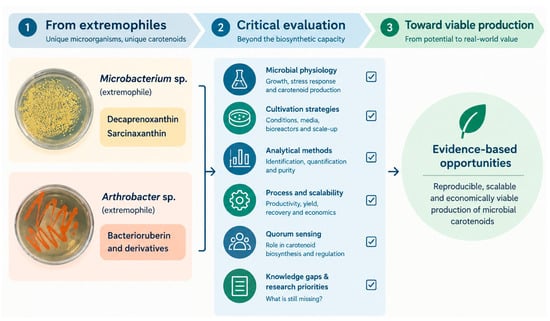
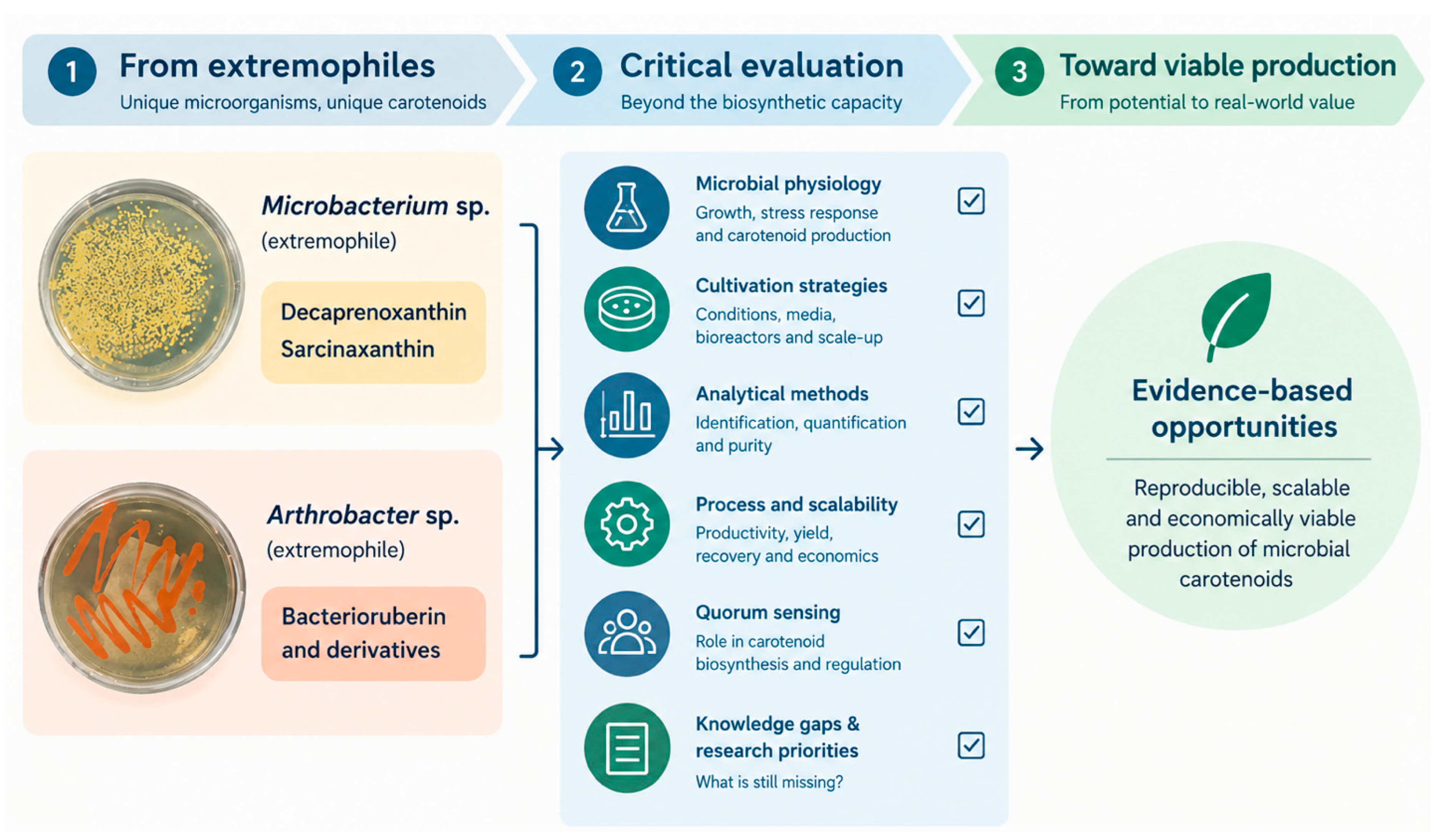
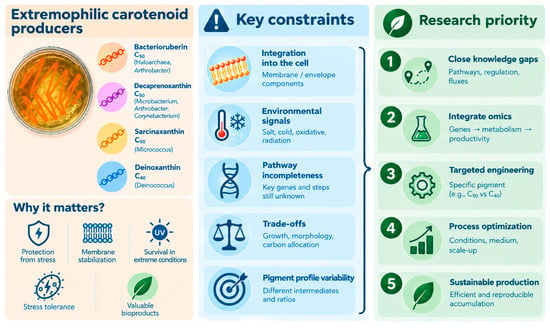
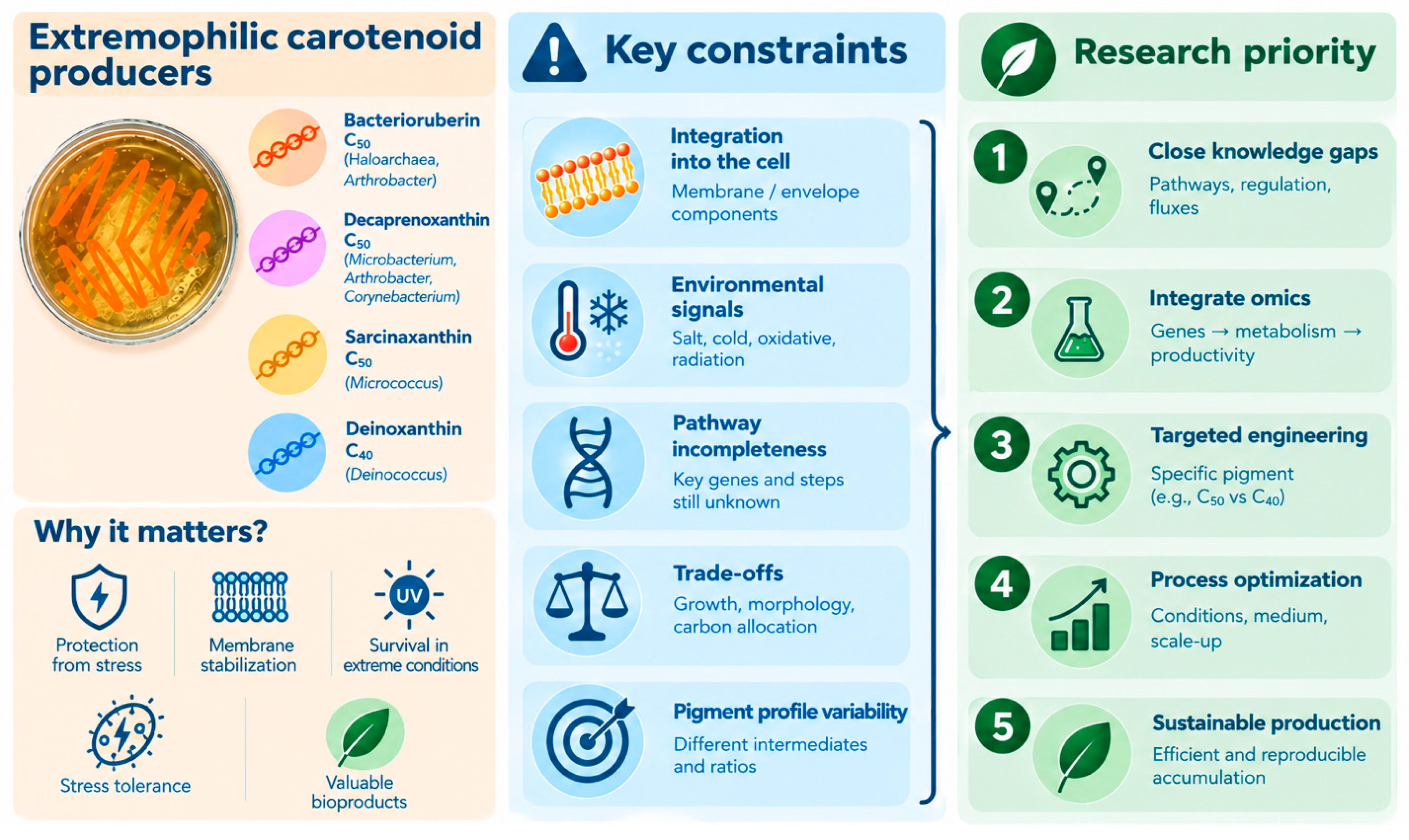
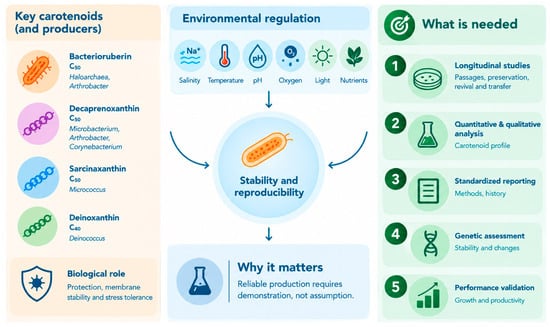
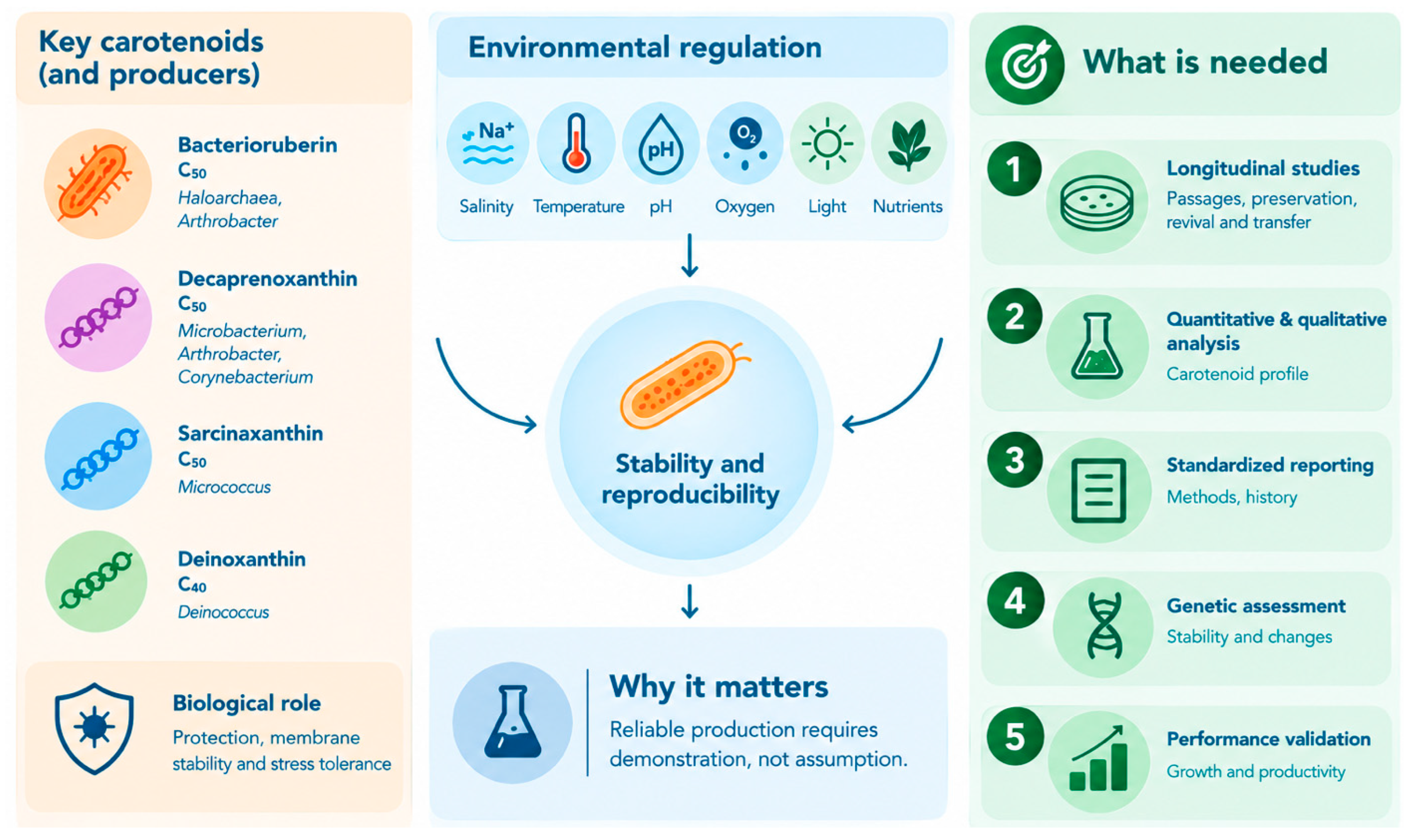
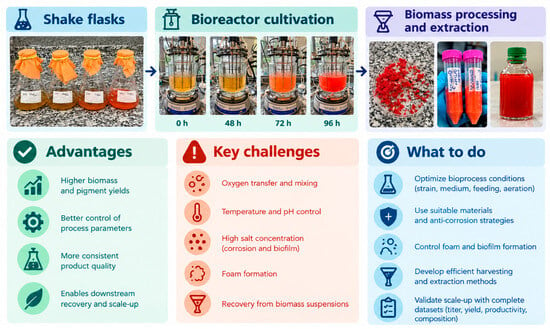
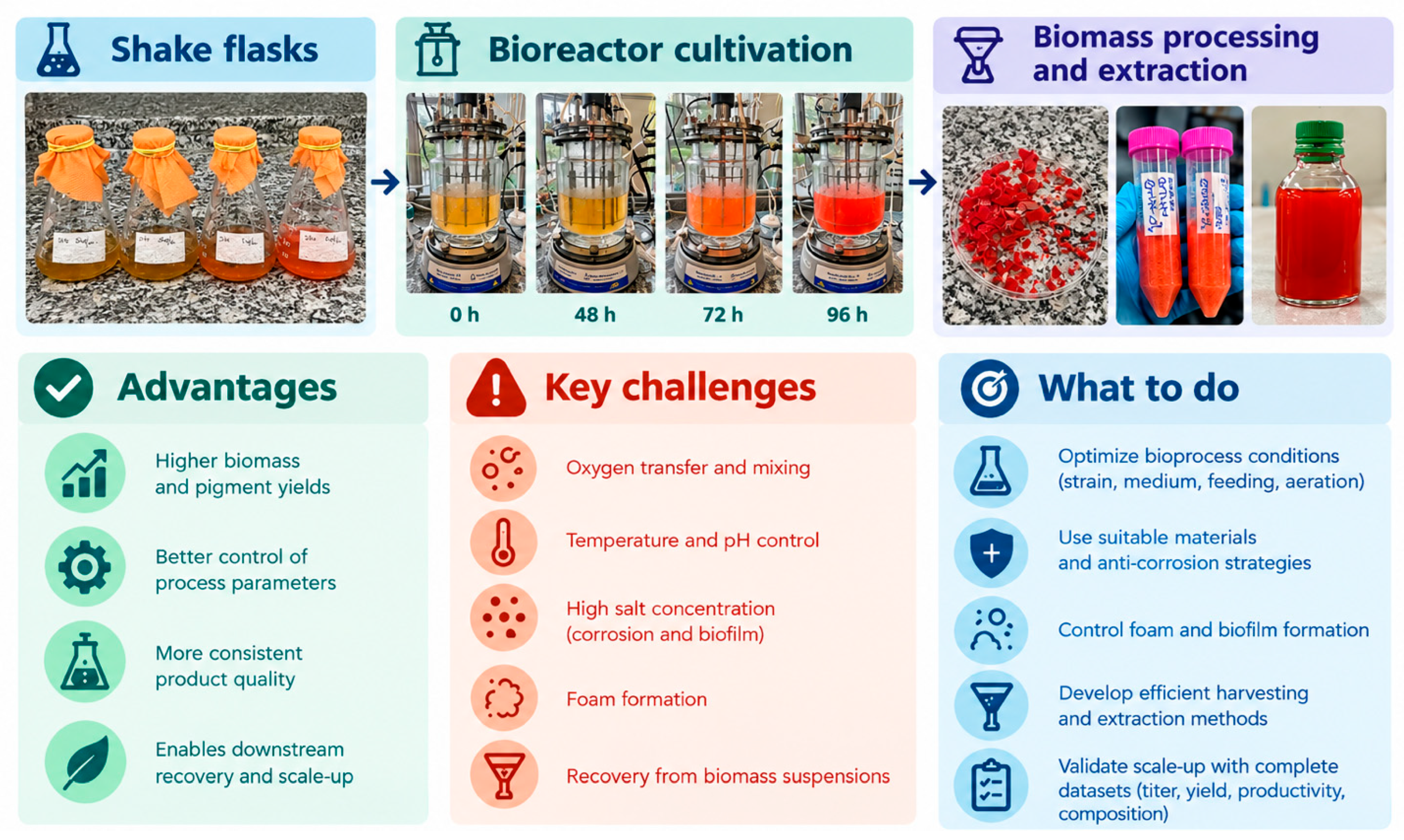
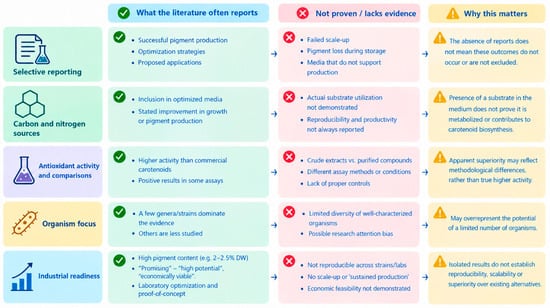
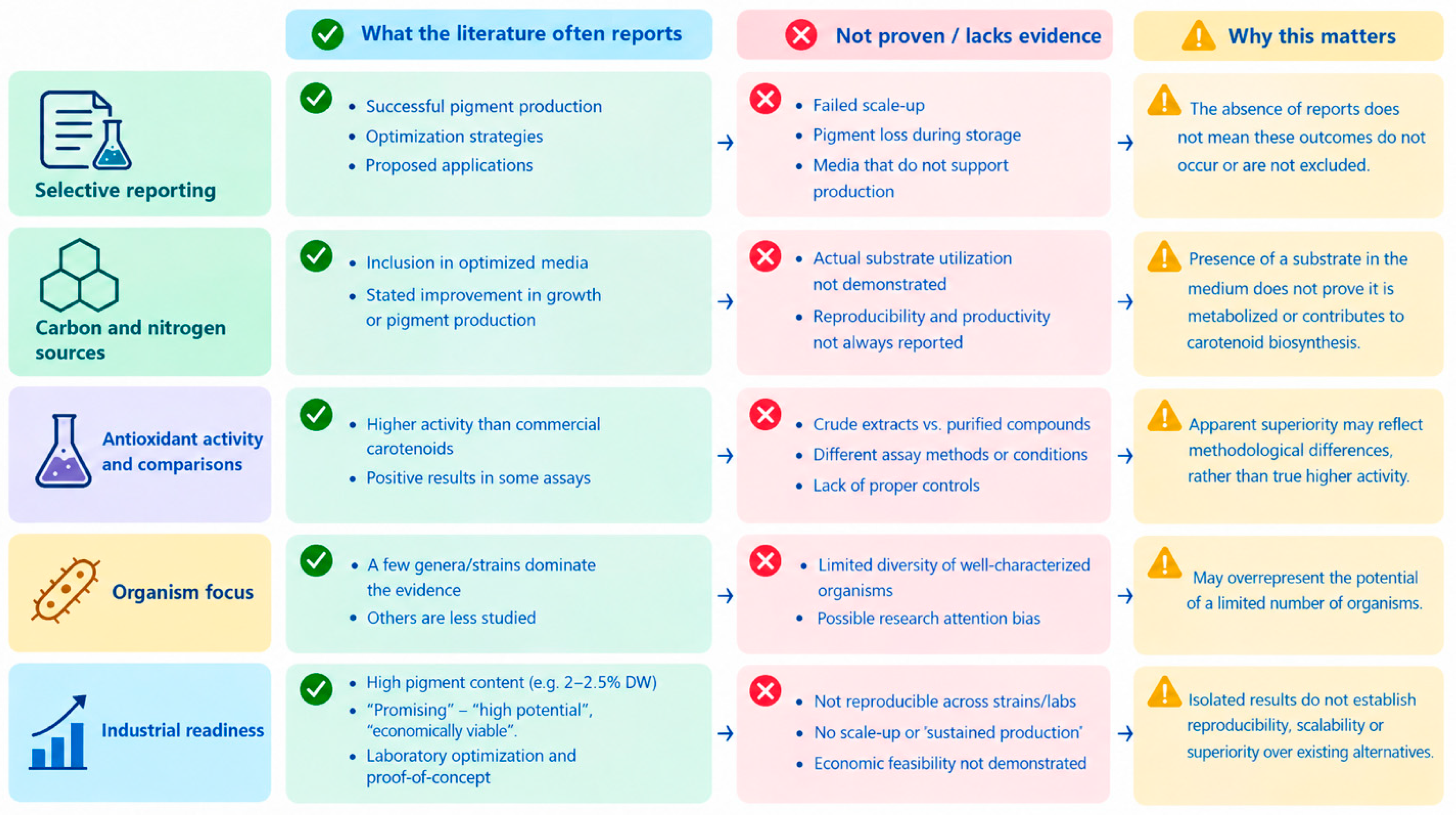

Disclaimer/Publisher’s Note: The statements, opinions and data contained in all publications are solely those of the individual author(s) and contributor(s) and not of MDPI and/or the editor(s). MDPI and/or the editor(s) disclaim responsibility for any injury to people or property resulting from any ideas, methods, instructions or products referred to in the content. |
© 2026 by the author. Licensee MDPI, Basel, Switzerland. This article is an open access article distributed under the terms and conditions of the Creative Commons Attribution (CC BY) license.