


Simple Summary
Potato production is highly sensitive to drought, which threatens yields in many regions. This study examined whether beneficial soil fungi known as arbuscular mycorrhizal fungi can help potato plants better tolerate periods without enough water. We tested two types of fungal inocula and compared inoculated and non-inoculated plants grown under normal watering and drought. We evaluated plant growth, leaf pigments involved in photosynthesis, markers of cellular damage, and several natural defense systems that plants use to protect themselves from stress. The results showed that inoculated plants maintained better leaf function, kept more chlorophyll and carotenoids, and regulated water loss more effectively during drought. They also activated important protective systems that help the plant neutralize harmful particles produced under stress. As a result, inoculated plants suffered less cellular damage than non-inoculated ones. Overall, this study shows that these beneficial fungi can strengthen potato plants and help them better withstand drought, offering a natural and environmentally friendly strategy to support crop production under water-limited conditions.
Abstract
Potato (Solanum tuberosum L.) is one of the most widely cultivated crops in the world; however, drought is a major constraint to its productivity. Arbuscular mycorrhizal fungi (AMF) have been shown to improve plant resistance under conditions of water stress. However, their effects on potato plants are poorly studied. The purpose of this study was to evaluate the potential of two AMF inocula (two different strains of the AMF species Rhizophagus irregularis with different origin: Southern Spain MI1 and Tunisia MI2) on potato tolerance to drought stress through the determination of growth parameters, photosynthetic parameters, and antioxidant systems, under well-watered (WW; field capacity) and drought stress (DS; 50% of field capacity) conditions. Therefore, the experiment consisted of two factors: AMF strain and watering regime. The results showed that under drought stress conditions, AMF inoculation considerably stimulated photosynthetic performance as compared with non-inoculated controls. Moreover, leaf superoxide dismutase (SOD) and catalase (CAT) activities of inoculated plants were higher in WW conditions, but unchanged in DS conditions. Inoculated plants had significantly higher ascorbate peroxidase (APX) and glutathione reductase (GR) activities than non-inoculated plants under DS conditions. Also, expression of some antioxidant enzyme genes were upregulated by inoculation. Lipid peroxidation content of inoculated plants was lower than that of non-inoculated. Furthermore, there was a high positive correlation between mycorrhizal root colonization (RC) and almost all the measured parameters. The results of this study indicated that AMF inoculation could enhance potato plant tolerance to water stress through the induction of antioxidant mechanisms implicated in scavenging oxygen-free radicals.
1. Introduction
Potatoes (S. tuberosum) are among the world’s most widely cultivated crops, making a significant contribution to the global food supply [1]. As a staple crop, potatoes are essential to the diets of millions of people and serve as a critical source of starchy carbohydrates, proteins, essential amino acids, minerals, antioxidants, and vitamins [2,3,4]. Globally, approximately 380 million tons of potato tubers are produced annually, with 20 million hectares devoted to potato cultivation [5]. However, potato production faces significant constraints due to its vulnerability to environmental stresses, particularly drought.
Drought can severely impair potato growth and productivity, resulting in substantial losses in both yield and tuber quality [6,7]. Its negative effects are manifold, affecting physiological processes such as photosynthesis, stomatal conductance, and overall biomass accumulation [8]. Drought reduces photosynthetic efficiency through stomatal closure, limiting carbon dioxide availability in the leaf mesophyll [9]. Consequently, this decrease in photosynthetic activity can adversely impact tuber growth and development [7].
Water stress also leads to the accumulation of reactive oxygen species (ROS), including superoxide (O2−), singlet oxygen (1O2), hydroxyl radicals (OH−), and hydrogen peroxide (H2O2), which can cause significant oxidative damage to cellular components [10,11]. ROS accumulation disrupts the integrity of cellular organelles and impairs physiological functions. In response, plants activate antioxidant defense mechanisms composed of both enzymatic and non-enzymatic components [12]. Among non-enzymatic agents, ascorbic acid (AsA) and glutathione (GSH) play key roles, while enzymatic defenses involve the regulation of superoxide dismutase (SOD), peroxidase (POD), and catalase (CAT) activities [13,14]. These enzymes are crucial for scavenging excessive ROS, protecting metabolic processes, and maintaining cellular homeostasis [15].
Numerous studies emphasize the importance of balancing ROS production and scavenging to prevent cellular damage and enhance plant resilience under drought [16,17,18]. Maintaining this balance is essential for preserving photosynthetic machinery, membrane stability, and overall growth and productivity under environmental stress [19].
Given these challenges, developing sustainable strategies to mitigate drought effects on crops is critical. Among these, inoculation with beneficial microorganisms such as arbuscular mycorrhizal fungi (AMF) has emerged as a promising approach to enhance drought tolerance [20]. AMF form symbiotic associations with plant roots, improving water and nutrient uptake [21,22] and influencing various physiological and biochemical processes, thereby increasing drought resilience [23]. Moreover, AMF exude a glycoprotein called glomalin into the soil, which improves soil structure and enhances water retention [24].
Recent studies show that AMF inoculation can enhance the activity and gene expression of antioxidant enzymes, improving drought tolerance in several crops [25]. For example, He et al. [26] reported that maize plants inoculated with AMF exhibited higher SOD, CAT, and POD activities under drought compared to non-inoculated plants. Similarly, mycorrhizal inoculation in tomato has been shown to upregulate genes encoding antioxidant enzymes, enhancing drought resilience [27]. However, the role of AMF in modulating the antioxidant defense system under drought in potatoes remains poorly understood.
This study aims to investigate the effect of AMF inoculation on drought tolerance in potato by assessing the activity and gene expression of key antioxidant enzymes. Considering that the response to AMF is strain-dependent [28], two distinct AMF strains were used to explore potential differences in plant response. Understanding these mechanisms may inform the application of mycorrhizal biotechnology as a sustainable strategy to mitigate drought effects on potato production. The novelty of this research lies in evaluating the effects of different AMF strains on drought tolerance at the leaf level—a less extensively studied aspect of plant–AMF interactions. The findings are expected to contribute to improving agricultural practices to enhance food security in the context of climate change.
2. Materials and Methods
2.1. Experimental Design
A pot experiment was conducted at the Zaidín Experimental Station, in the Soil and Plant Microbiology department (Mycorrhiza laboratory). It consisted in a randomized complete block design (since pots were used) with two main factors: (1) mycorrhizal inoculation, which included non-inoculated control plants (C), plants inoculated with the AM fungus Rhizophagus irregularis, reproduced at the collection of the Zaidin Experimental Station (isolate EEZ 58) (MI)1 and plants inoculated with R. irregularis strain, provided by the Horticultural Sciences Laboratory of the National Agronomic Institute of Tunisia (LSH-INAT) (MI)2 and (2) water irrigation, where one half of the plants were grown under well-watered (WW) conditions during the entire experiment, while the other half of plants were subjected to drought stress (DS), 21 days after planting (when 50% of the plants at least reached the 4 leaves stage). This resulted in six treatments: well-watered non-inoculated plants (C-WW), inoculated plants with isolate EEZ 58 well-watered (MI1-WW), inoculated plants with Tunisian isolate well-watered (MI2-WW), non-inoculated plants subjected to drought (C-DS), inoculated plants with isolate EEZ 58 subjected to drought (MI1-DS), and inoculated plants with Tunisian isolate subjected to drought (MI2-DS). Each treatment had 11 replicates.
2.2. Soil and Biological Materials
The soil used in this study was collected from IFAPA grounds (Granada, Spain) on 20 September 2022. It underwent a sieving process (2 mm) and it was mixed with quartz sand (<1 mm) at a ratio of 1:3 (soil: sand, v/v), and subsequently subjected to sterilization through steam treatment (100 °C for 1 h on 3 consecutive days). The original soil had a pH of 8.1 [measured in water 1:5 (w/v)], and it contained 0.85% organic matter, along with the following nutrient concentrations (mg/kg): N, 1; P, 10 (NaHCO3-extractable P); and K, 110. The composition of the soil was determined and it comprises 38.3% sand, 47.1% silt, and 14.6% clay.
Tubers of S. tuberosum cultivar Colomba, were purchased from the supermarket with a medium caliber (diameter ranging between 40 and 55 mm). Tubers were incubated at room temperature for 21 days and then transferred to pots of 5 L capacity containing 4 Kg of the soil/sand mixture described above. Sixty-six pots were prepared, each one containing one potato sprouted tuber.
The mycorrhizal inoculum contained a mixture of soil, spores, mycelia, and infected root fragments of sorghum growing plants. The AM fungus was R. irregularis, belonging to the EEZ Collection, strain EEZ 58 (MI)1 and the LSH-INAT collection (MI)2. Five grams of inoculum, containing approximately 650 infective propagules per gram (as determined by the most probable number test), were placed into the chosen pots during the transplantation of tubers. Non-inoculated control plants were treated with a 10 mL aliquot of a <20 µm filtrate obtained from both AM inocula to establish a complete microbial community free of AM propagules.
2.3. Growth Conditions
The experiment was carried out under glasshouse conditions with temperatures ranging from 18 to 25 °C, 16/8 light/dark period, and a relative humidity of 50–60%. Plants were cultivated for a total of 8 weeks, and 3 weeks after planting, water-stressed plants started receiving half of the quantity of water per pot. All pots were weighed twice a week to determine the water quantity to add. Soil water field capacity was calculated as described by Sánchez-Romera et al. [29]. Well-watered plants were watered up to field capacity twice a week, while drought plants were watered up to 50% of field capacity twice a week too. Additionally, all plants were normally fertilized (2.17, 1.63 and 3.91 g/pot of N, P2O5 and K2O, respectively). Tap water was used for watering.
2.4. Measurements
2.4.1. Shoot Biomass Production and Symbiotic Development
Upon harvesting, the plant shoots were weighed in order to ascertain their fresh weights (FW). Subsequently, the dry weight (DW) was also determined after drying in a forced hot-air oven at 70 °C for 2 days.
The mycorrhizal root colonization’s percentage in potato plants was determined through microscopic examination of fungal colonization. This process involved cleaning the washed roots in a 10% KOH, followed by staining with 0.05% trypan blue in lactic acid (v/v), in accordance with the methodology established by Phillips and Hyman [30]. The rate of mycorrhizal colonization was assessed through the gridline intersect method [31].
2.4.2. Efficiency of Photosystem II
The photosystem II efficiency was assessed using a FluorPen FP100 (Photon Systems Instruments, Brno, Czech Republic), enabling non-invasive evaluation of plant photosynthetic performance by measuring chlorophyll a fluorescence. For each treatment, measurements were taken one day before harvest on the second youngest, fully expanded leaf, taken in a fully sunlight position. The measurements were taken in the 11 plants per treatment.
2.4.3. Stomatal Conductance
Stomatal conductance (gs, mmol H2O m−2 s−1) was measured two hours after light turned on by using a porometer system (Porometer AP4, Delta-T Devices Ltd., Cambridge, UK) following the user manual instructions. For each treatment, measurements were taken one day before harvest on the second youngest, fully expanded leaf, taken in a fully sunlight position.
2.4.4. Chlorophylls and Carotenoids Contents
Leaf samples were crushed with liquid nitrogen and 100 mg of the sample was weighed, mixed with 1 mL of methanol, 100% (pure solvent), stirred, and finally incubated in darkness at 4 °C for 24 h. Afterward, the samples were centrifuged at 10,000 rpm at 4 °C for 5 min. Chlorophyll a (Chla), chlorophyll b (Chlb), total chlorophylls (Chl-tot), and carotenoids (Car) contents were determined using a microplate spectrophotometer (Infnite M200 NanoQuant, Tecan, Zurich, Switzerland) at 470, 652.4, and 665.2 nm. The pigment concentrations were determined according to formula developed by [32].
2.4.5. Malondialdehyde Content (MDA)
The measurement of malondialdehyde (MDA) contents was conducted spectrophotometrically through a modified approach based on the technique outlined by [33]. Potato leaves samples from each treatment (100 mg) were homogenized in 1.5 mL of 80% ethanol (v/v) and centrifuged at 3000× g for 10 min at 4 °C. The supernatant obtained was combined with 700 µL of 20% TCA (trichloroacetic acid, v/v) that included 0.5% TBA (2-thiobarbituric acid) and subsequently heated at 95 °C in a block heater for 25 min. After heating, it was quickly cooled in an ice bath. The samples underwent a second centrifugation at 3000× g for a duration of 10 min. The concentration of MDA was subsequently measured using a spectrophotometer and calculated based on the differences in absorbance at 440, 532, and 600 nm, following the formula referenced by [34].
2.4.6. Antioxidant Enzyme Activities
The procedure outlined by [35] for enzyme extraction was followed. In a cooled mortar, 50 mg of polyvinylpolypyrrolidone (PVPP) and 5 mL of 100 mM phosphate buffer (pH 7.0) supplemented with 0.1 mM diethylenetriamine pentaacetic acid (DTPA) were combined with around 0.25 g of leaf tissue. By eliminating phenolic chemicals and alkaloids from the plant extracts, this formulation improved enzyme stability and reduced interference with spectrophotometric analyses. The extract was centrifuged for 10 min at 38,000× g after it had been filtered. The antioxidant enzymes’ activity was assessed using the supernatant. Superoxide dismutase (SOD), glutathione reductase (GR), and ascorbate peroxidase (APX) activity were assessed using the procedures outlined in Aroca et al. [35]. The enzymatic activity of catalase (CAT) was evaluated using the procedure described by Aebi [36], which consisted of monitoring the decrease in H2O2 at a wavelength of 240 nm for a period of 1 min, applying an extinction coefficient of 39.6 mM−1 cm−1. The reaction solution was formulated with 50 mM phosphate buffer at a pH of 7.0, 10 mM H2O2, and incorporated 100 µL of enzyme extract to achieve an overall volume of 2 mL.
2.4.7. Expression Analysis of Antioxidant Genes
Three biological replicates of potato leaves were used for the extraction of total RNA, following the method outlined by Quiroga et al. [37]. The synthesis of first-strand cDNA was accomplished using random hexamers as primers alongside SuperScript-II RT (Invitrogen, Carlsbad, CA, USA). The amplification of antioxidant enzymes genes (SOD, CAT, APX, and GR) through real-time PCR was carried out with the CFX96 Touch Real-Time PCR Detection System (Bio-Rad, Hercules, CA, USA) employing gene-specific primers indicated in Table 1. These primers were chosen as described previously by [10,38]. The PCR was conducted using the SYBR Green PCR kit (Qiagen, Hilden, Germany), with actin serving as the internal control. The PCR settings included an initial denaturation phase at 95 °C lasting 5 min, followed by 30 cycles consisting of denaturation at 94 °C for 30 s, annealing for 30 s at 50 °C, followed by 2 min of extension at 72 °C. Threshold (Ct) values were normalized against the actin control and applied to ascertain the relative levels of gene expression.
Table 1.
Primer sequences of genes used for RT–PCR analysis.
2.5. Statistical Analysis
For statistical analysis, R software (v.4.3.1) was used. The effect of two factors, AMF inoculation and water irrigation regimes, and their interactions on measured parameters was performed using the two-way analysis of variance (ANOVA). A post hoc analysis was carried out using Tukey’s multiple comparison test. Correlation between measured variables was assessed using Pearson’s correlation coefficient (p < 0.05). The principal component analysis (PCA) was performed using the FactoMineR [39] and Factoextra [40] R libraries.
3. Results
3.1. Root Mycorrhizal Colonization
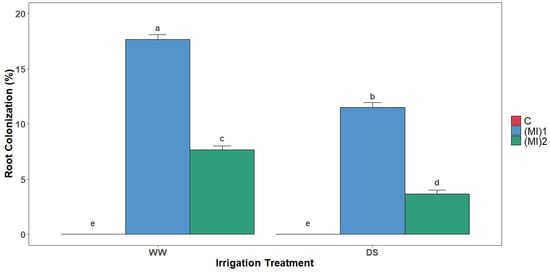
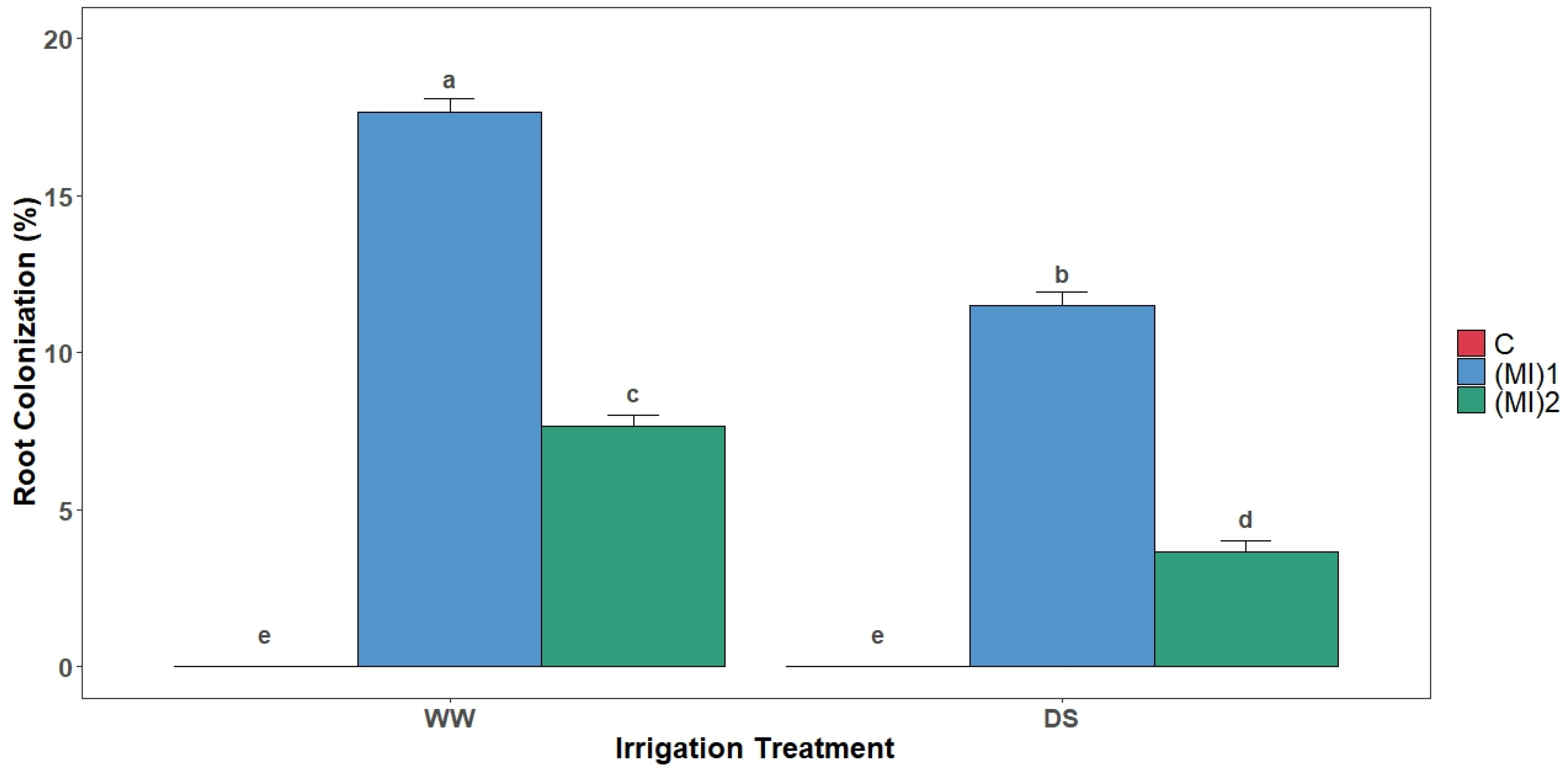
The microscopic observations demonstrated that the roots of non-inoculated plants were not colonized by AMF. However, for the inoculated plants, mycorrhizal colonization varied between 3.3 and 17.5% for (MI)2 and (MI)1, respectively (Figure 1). The water stress conditions (DS) induced a significant lower mycorrhizal root colonization than the well-watered conditions (WW). In fact, DS generated a root colonization decrease of 38.3 and 51.2% for (MI)1 and (MI)2, respectively (Figure 1).
Figure 1.
Root colonization rate of potato (Solanum tuberosum L.) plants non-inoculated (control: C) or inoculated with the two mycorrhizal inocula (MI)1 and (MI)2 and cultivated under well-watered (WW) and drought stress (DS) conditions. Different letters indicate significant differences between all treatments according to two-way ANOVA followed by Tukey’s test (p < 0.05).
3.2. Shoot Fresh and Dry Biomass
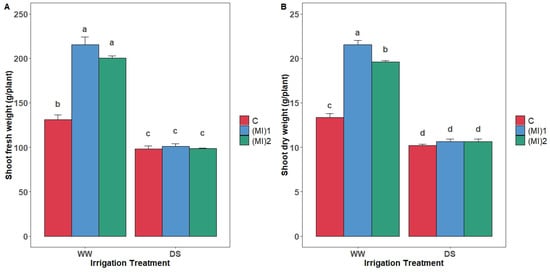
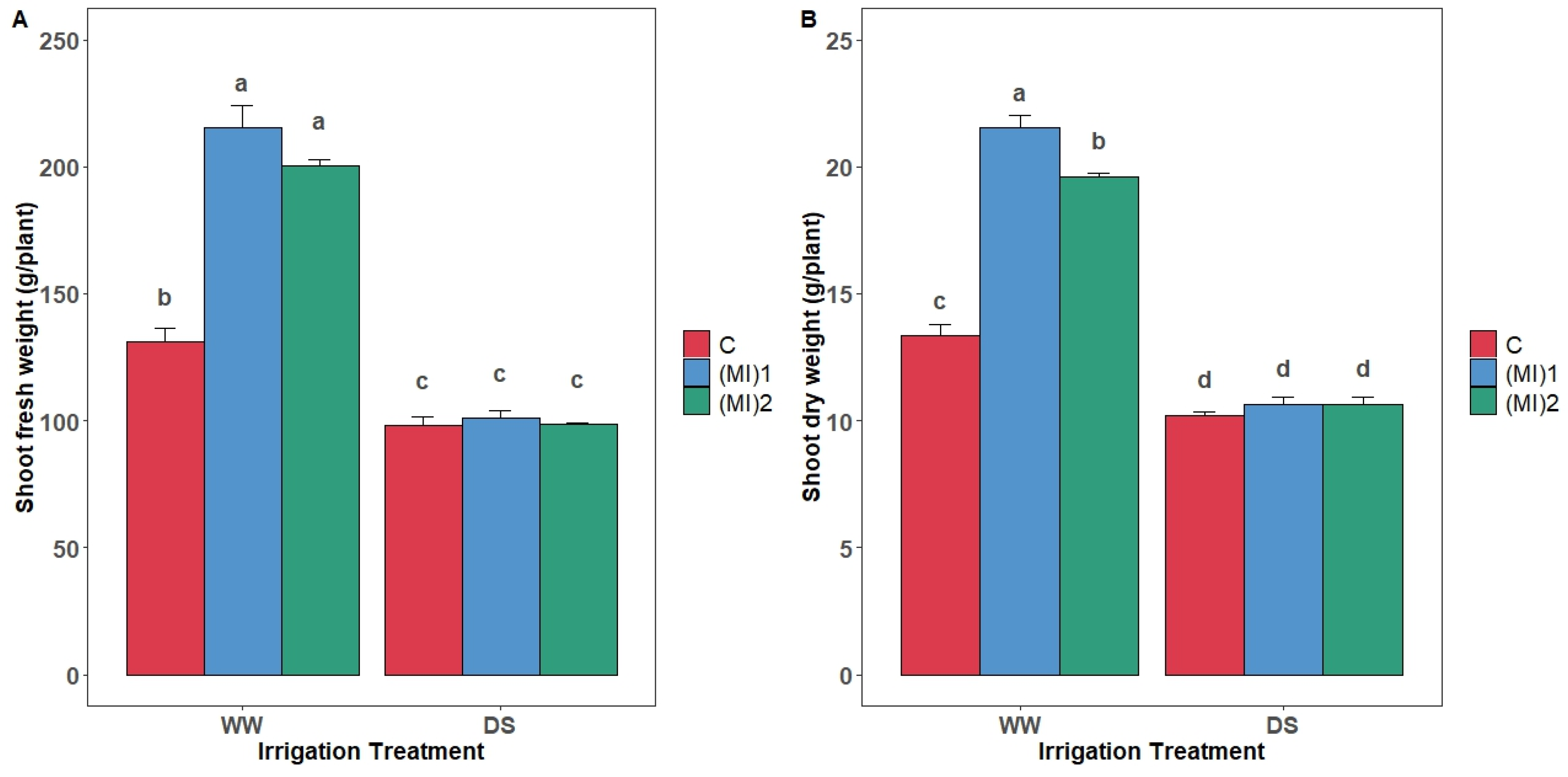
Under well-watered (WW) conditions, potato’s shoot fresh biomass was higher in inoculated plants compared to non-inoculated (Figure 2A). Under drought conditions, no significant difference was observed between the treatments. Furthermore, under WW conditions, the inoculation with AMF significantly increased the shoot dry biomass by 61.4 and 47.2% for (MI)1 and (MI)2, respectively, compared with non-inoculated plants (Figure 2B). No significant difference was observed between the dry biomass of control and inoculated plants under water stress conditions.
Figure 2.
Shoot fresh biomass (A) and dry biomass (B) of potato (Solanum tuberosum L.) plants non-inoculated (control: C) or inoculated with the two mycorrhizal inocula (MI)1 and (MI)2 and cultivated under well-watered (WW) and drought stress (DS) conditions. Different letters indicate significant differences between all treatments according to two-way ANOVA followed by Tukey’s test (p < 0.05).
3.3. Photosynthetic Efficiency and Stomatal Conductance
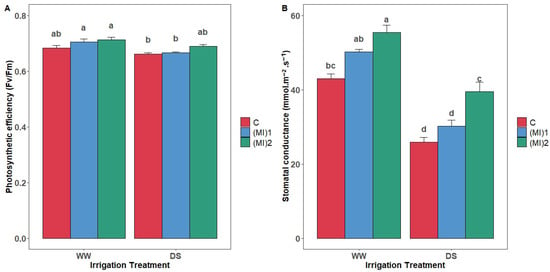
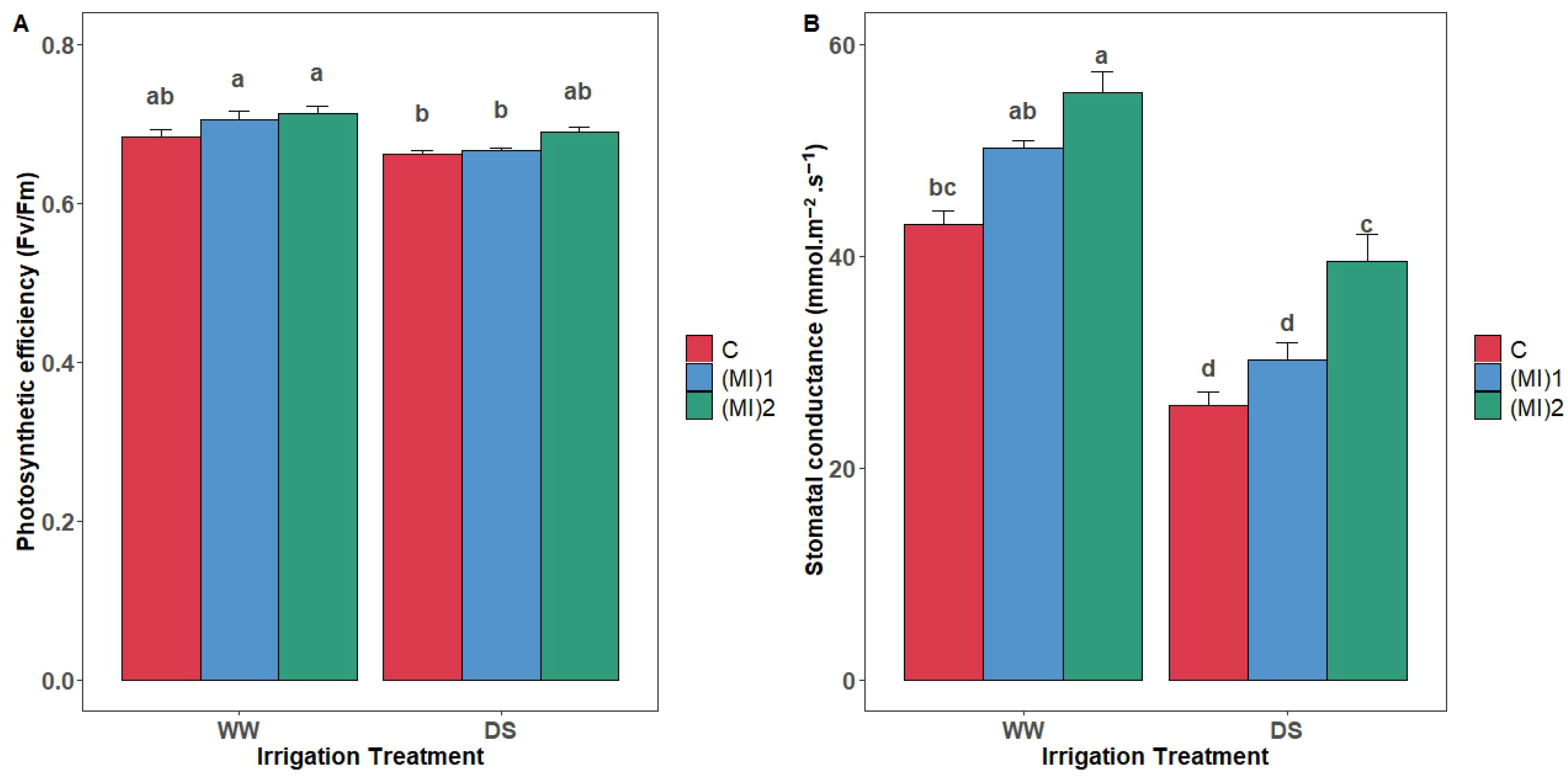
The highest values of photosynthetic efficiency (PSE) were observed under well-watered conditions (Figure 3A). Plants inoculated with AMF and grown under well-watered conditions showed slightly higher values than the control. Furthermore, for water stress conditions, PSE was marginally affected in plants inoculated with the mycorrhizal inoculum (MI)2.
Figure 3.
Photosynthetic efficiency (A) and stomatal conductance (B) of potato (Solanum tuberosum L.) plants non-inoculated (control: C) or inoculated with the two mycorrhizal inocula (MI)1 and (MI)2 and cultivated under well-watered (WW) and drought stress (DS) conditions. Different letters indicate significant differences between all treatments according to two-way ANOVA followed by Tukey’s test (p < 0.05).
The positive effect of mycorrhizal inoculation on gs was more pronounced under drought conditions (Figure 3B). In fact, plants inoculated with (MI)2 reported the highest stomatal conductance value compared to the control, with an increase of 52.5%, such difference being statistically significant (p < 0.05).
3.4. Photosynthetic Pigments
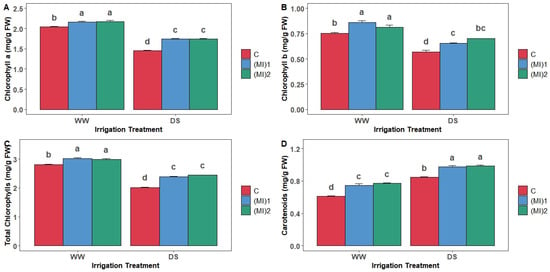
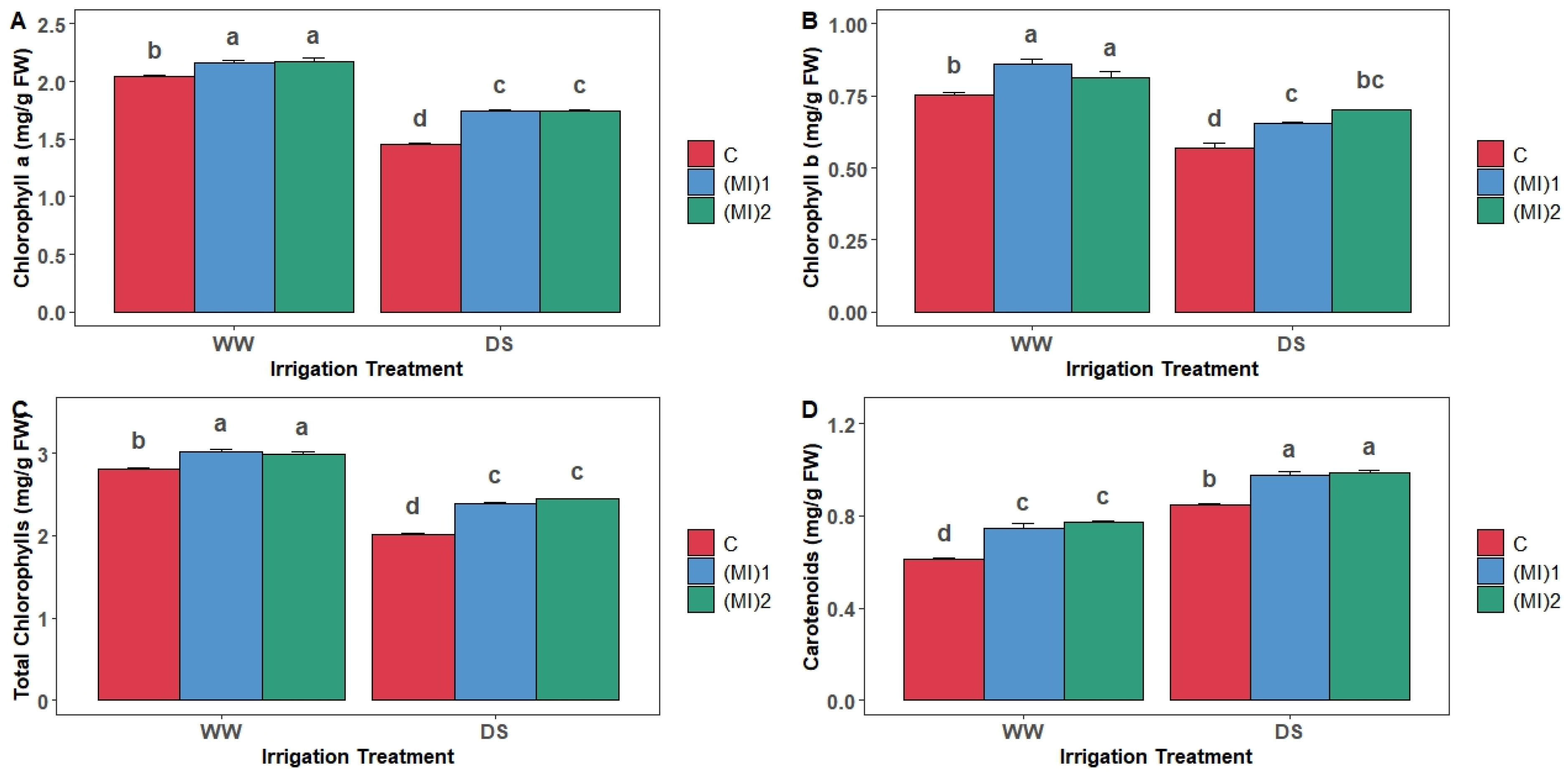
Chlorophylls and carotenoids contents were increased by AMF application under well-watered conditions, but it was affected under conditions of water deficit (Figure 4A–C). However, this decrease was less drastic for inoculated plants. For chlorophyll a, the decrease was by 19.4% in AMF-inoculated plants compared to 28.8% in non-inoculated plants. For total chlorophylls, the reduction was by 19.8% in inoculated plants and 28.1% in non-inoculated plants. Regarding chlorophyll b contents, (MI)1 and (MI)2 allowed a decrease by 24 and 14%, respectively, compared to 24.5% in non-inoculated plants. For carotenoids, water stress induced an increase in their contents for inoculated and non-inoculated plants (Figure 4D). When comparing inoculated plants to non-inoculated ones, carotenoid contents were generally higher by 23.6 and 16.2% under WW and DS conditions, respectively. Additionally, mycorrhizal inoculation allowed an increase of 29.6% of its contents.
Figure 4.
Chlorophyll a (A), chlorophyll b (B), total chlorophylls (C), and carotenoids (D) contents in leaves of potato (Solanum tuberosum L.) plants non-inoculated (control: C) or inoculated with the two mycorrhizal inocula (MI)1 and (MI)2 and cultivated under well-watered (WW) and drought stress (DS) conditions. Different letters indicate significant differences between all treatments according to two-way ANOVA followed by Tukey’s test (p < 0.05).
3.5. Malonaldehyde Content (MDA)
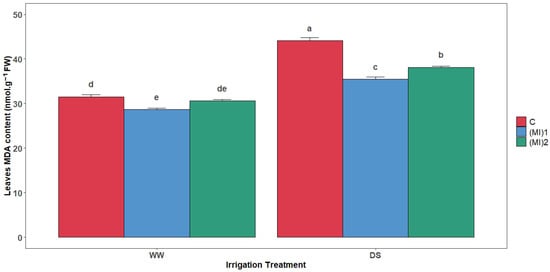
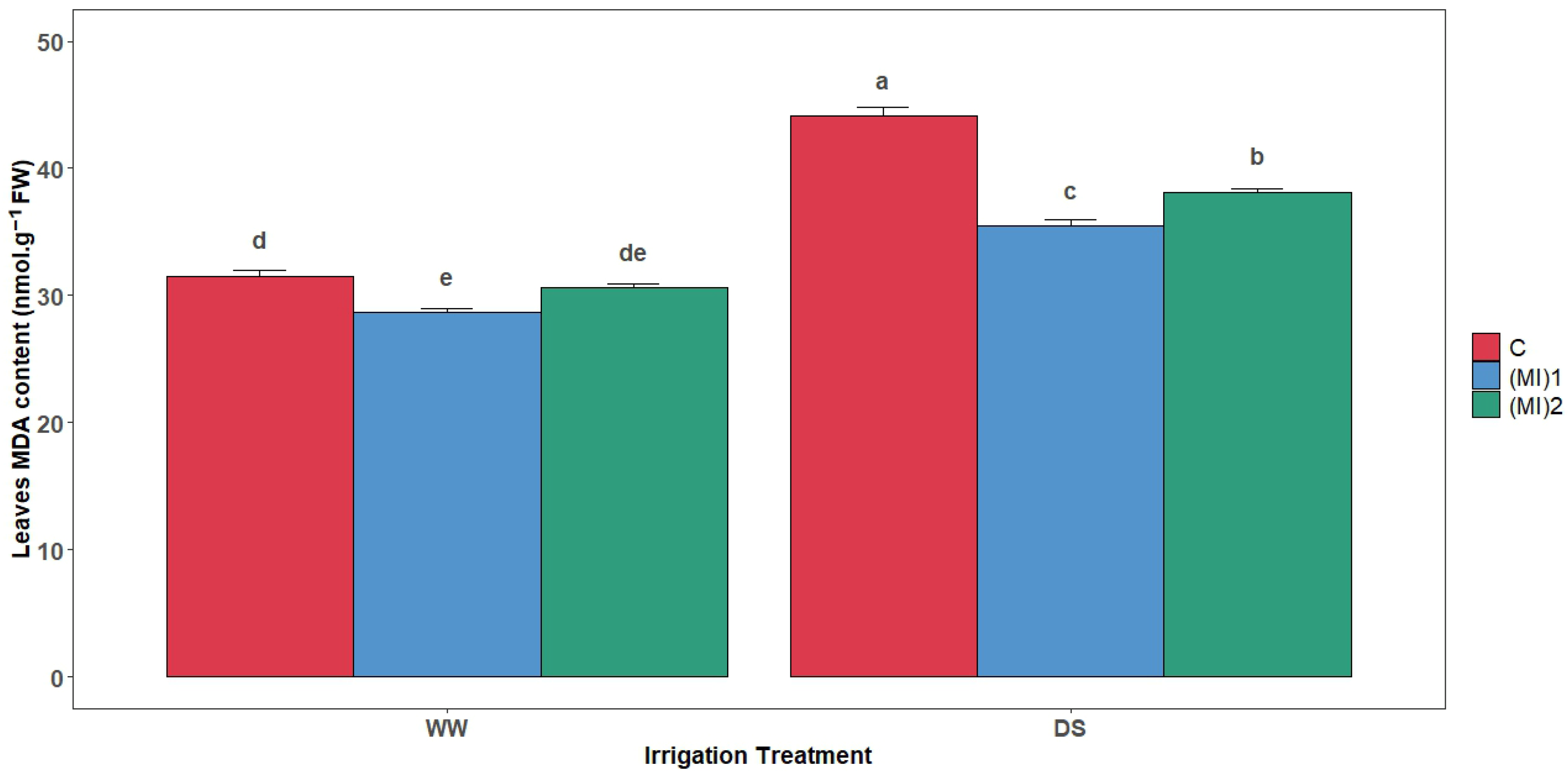
Drought stress significantly increased MDA content in potato leaves (Figure 5). However, the results show that AMF inoculation reduced MDA content under both WW and DS conditions. In fact, inoculation with (MI)1 and (MI)2 induced a decrease in leaf MDA content by 9.2% and 2.9%, respectively, under WW conditions, and by 19.5% and 13.4% under DS conditions, compared to control plants.
Figure 5.
Malonaldehyde content (MDA) in leaves of potato (Solanum tuberosum L.) plants non-inoculated (control: C) or inoculated with the two mycorrhizal inocula (MI)1 and (MI)2 and cultivated under well-watered (WW) and drought stress (DS) conditions. Different letters indicate significant differences between all treatments according to two-way ANOVA followed by Tukey’s test (p < 0.05).
3.6. Antioxidant Enzymatic Activities
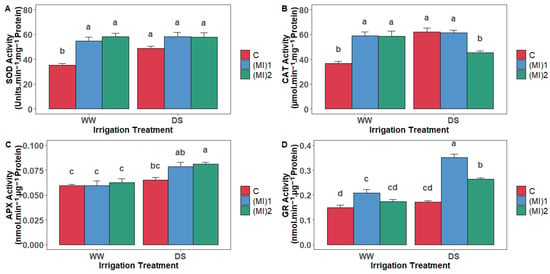
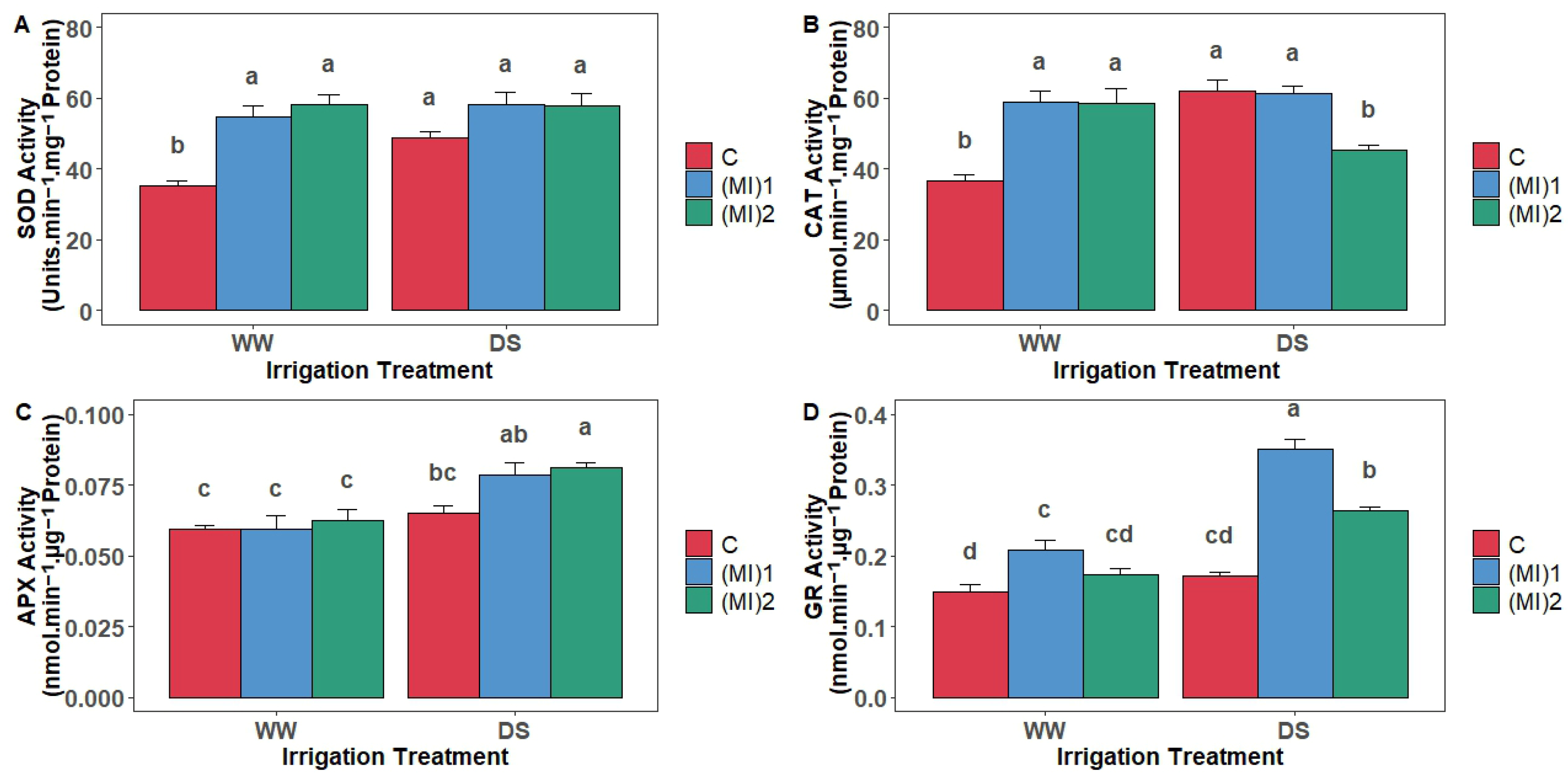
Water stress did not affect the SOD activity of AMF-inoculated plants, but this activity increased by 38.9% in non-inoculated plants. Additionally, under WW conditions, mycorrhizal inoculation allowed a significant increase in CAT activity. In contrast, under DS conditions, there was an increase in CAT activity by 68.7% in non-inoculated plants and a decrease by 23% in plants inoculated with (MI)2. APX activity increased significantly under DS conditions, especially in plants inoculated with (MI)2. This increase was by 23.5% in AMF-inoculated plants, while non-inoculated plants showed a significantly lower increase of 8.7%. Furthermore, water stress induced a highly significant increase in GR activity in AMF-inoculated plants, with the highest values reaching 0.351 nmol/min/µg protein in plants inoculated with (MI)1. This increase was approximately by 68 and 52% under water stress conditions compared to WW conditions for (MI)1 and (MI)2, respectively (Figure 6).
Figure 6.
Antioxidant enzyme activities in leaves of potato (Solanum tuberosum L.) plants non-inoculated (control: C) or inoculated with the two mycorrhizal inocula (MI)1 and (MI)2 and cultivated under well-watered (WW) and drought stress (DS) conditions; (A) superoxide dismutase (SOD), (B) catalase (CAT), (C) ascorbate peroxidase (APX), and (D) glutathione reductase (GR). Different letters indicate significant differences between all treatments according to two-way ANOVA followed by Tukey’s test (p < 0.05).
3.7. Antioxidant Enzymes Gene Expression Levels
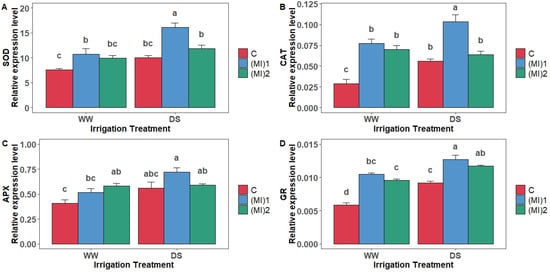
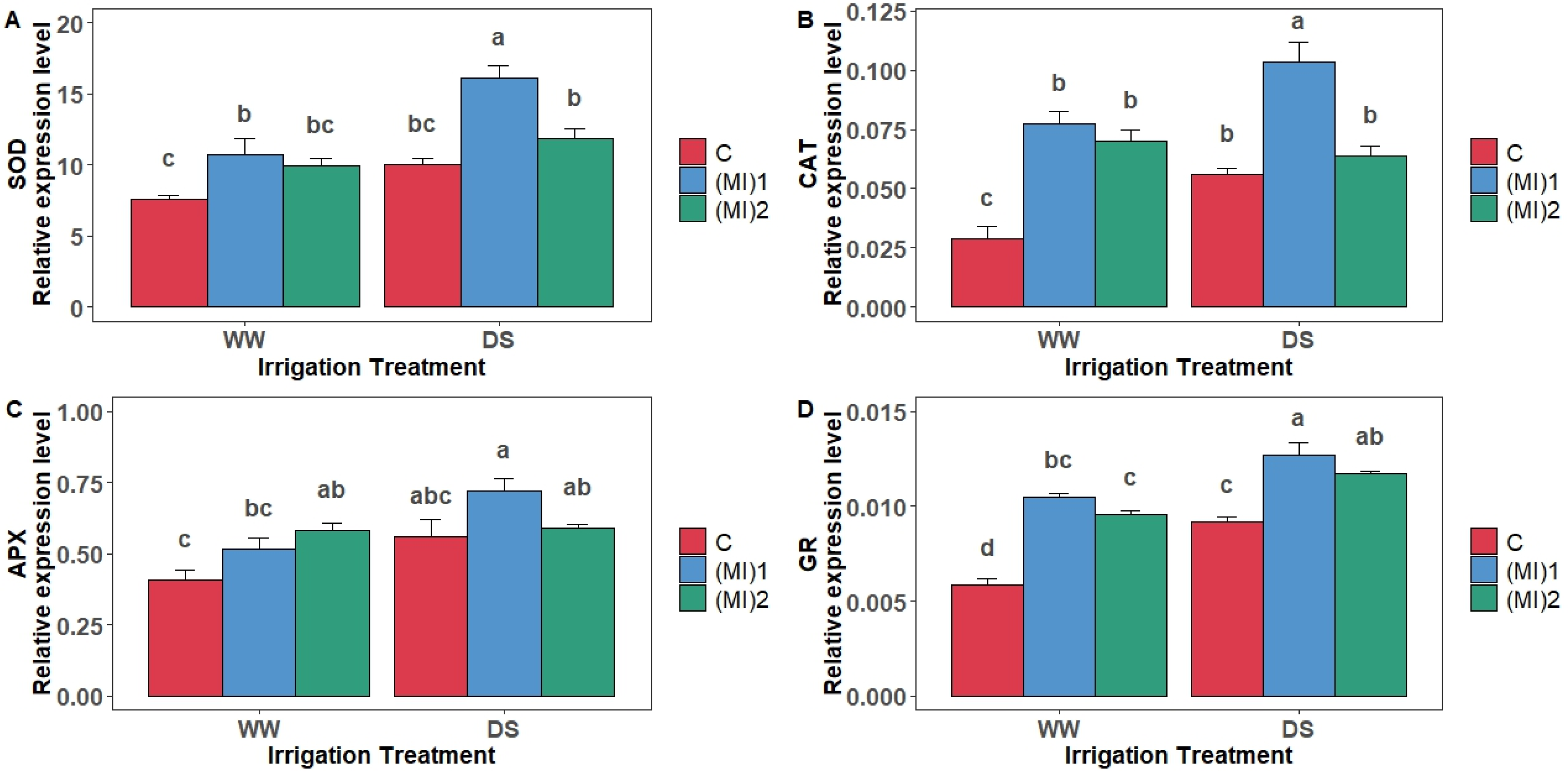
Our results indicated that drought stress significantly upregulated the expression of one SOD gene in potato leaves inoculated with (MI)1, resulting in a 50.5% increase (Figure 7A).
Figure 7.
Relative expression level of (A) superoxide dismutase (SOD), (B) catalase (CAT), (C) ascorbate peroxidase (APX), and (D) glutathione reductase (GR) genes in potato (Solanum tuberosum L.) plants non-inoculated (control: C) or inoculated with the two mycorrhizal inocula (MI)1 and (MI)2 and cultivated under well-watered (WW) and drought stress (DS) conditions. Different letters indicate significant differences between all treatments according to two-way ANOVA followed by Tukey’s test (p < 0.05).
CAT gene expression was strongly induced by mycorrhizal inoculation under WW conditions, with increases of 140.8% in plants inoculated with (MI)1 and 93.5% with (MI)2. Under DS conditions, a significant increase in CAT expression was observed only in plants inoculated with (MI)1, showing an upregulation of 38.4% (Figure 7B).
APX gene expression increased in response to AMF inoculation under both WW and DS conditions. Under WW conditions, APX expression increased by 26.8% with (MI)1 and by 42.5% with (MI)2 compared with non-inoculated plants (Figure 7C). Under DS conditions, APX expression was upregulated by approximately 40% in plants inoculated with (MI)1.
GR gene expression was markedly induced by AMF inoculation under both watering regimes (Figure 7D). Under WW conditions, GR expression increased by 78.6% with (MI)1 and by 62.4% with (MI)2 relative to non-inoculated plants. Under DS conditions, GR expression increased by 38.5% and 28.7% with (MI)1 and (MI)2, respectively. In addition, drought stress further enhanced GR expression by 21% with (MI)1 and by 23.6% with (MI)2 (Figure 7).
3.8. Pearson’s Correlation Analysis
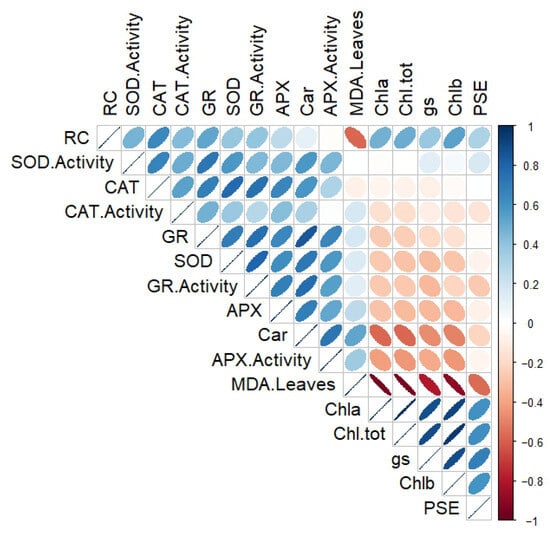
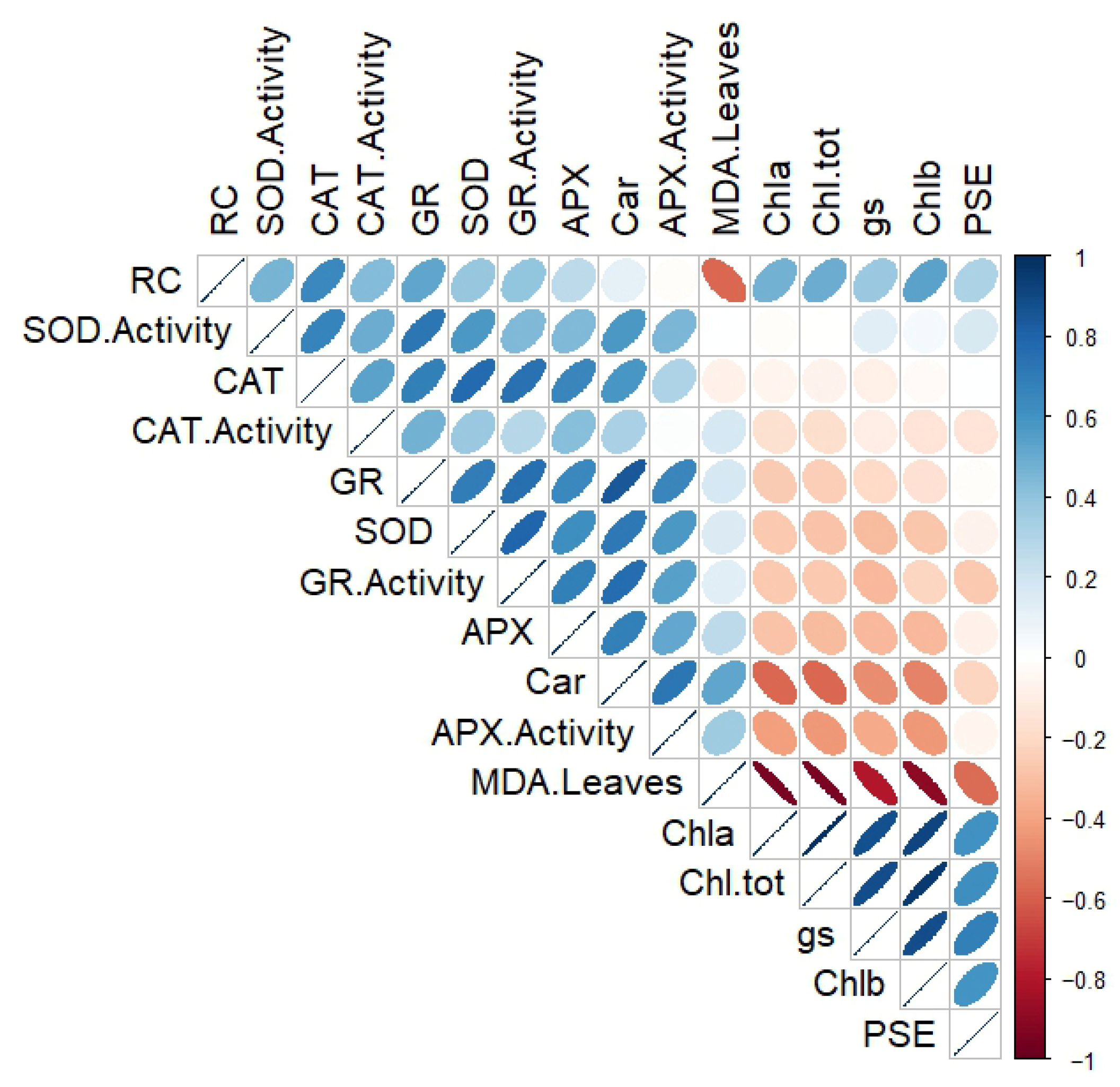
The analysis revealed that mycorrhizal root colonization (RC) was positively correlated to photosynthetic efficiency (PSE), stomatal conductance (gs), photosynthetic pigments contents (Chla, Chlb, Chl-tot, and Car), the antioxidant enzymatic activities, and their gene expression levels. No significant correlation was found between RC and APX activity. Conversely, RC was negatively correlated to malondialdehyde (MDA) content in leaves. MDA content showed high negative correlations with PSE, gs, and photosynthetic pigments contents, but a positive correlation with all measured antioxidant enzymatic activities, except SOD. A positive correlation was found between MDA content and the gene expression levels of all studied antioxidant enzymatic activities, except CAT. Moreover, CAT, GR, and APX activities and their gene expression levels were negatively correlated to PSE, gs, and photosynthetic pigments contents (Figure 8).
Figure 8.
Pearson’s correlation matrix between physiological and biochemical parameters measured in potato (Solanum tuberosum L.) plants. Color gradient 0 to 1 indicates a positive correlation and 0 to −1 indicates a negative correlation between the studied parameters. RC: root colonization, PSE: photosynthetic efficiency, gs: stomatal conductance, Chla: chlorophyll a, Chlb: chlorophyll b, Chl-tot: total chlorophylls, Car: carotenoids, MDA leaves: malondialdehyde content in leaves, SOD activity: superoxide dismutase activity, CAT activity: catalase activity, APX activity: ascorbate peroxidase, GR activity: glutathione reductase, SOD: superoxide dismutase gene expression, CAT: catalase gene expression, APX: ascorbate peroxidase gene expression, and GR: glutathione reductase gene expression.
3.9. Principal Component Analysis (PCA)
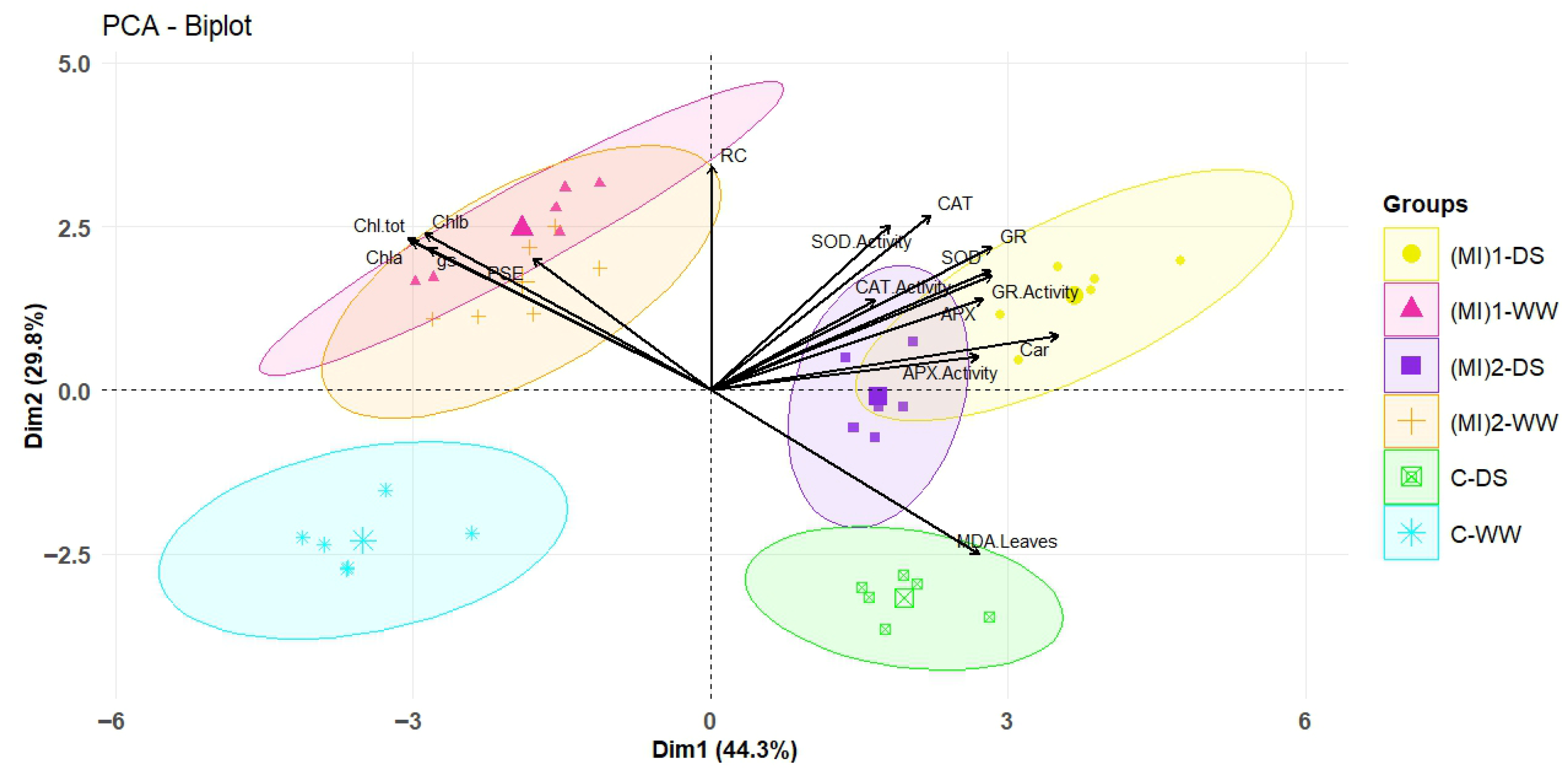
The combined principal components PC1 and PC2 (Dim1 and Dim 2) account for 74.1% of the variance, indicating a strong association among the studied parameters (Figure 9). The results revealed an opposing effect between non-inoculated (control) and inoculated treatments, under both well-watered and drought stress conditions. All photosynthetic activity parameters (Chla, Chlb, Chl-tot contents, PSE, and gs) were highly associated with AMF inoculation under well-watered conditions. The highest carotenoids content and antioxidant enzyme activities and their gene expressions were linked to AMF inoculation under water stress conditions. However, MDA was highly associated with non-inoculated plants under water stress conditions.
Figure 9.
Principal component analysis (PCA) biplot of physiological and biochemical parameters measured in potato (Solanum tuberosum L.) plants non-inoculated (control: C) or inoculated with the two mycorrhizal inocula (MI)1 and (MI)2, and cultivated under well-watered (WW) and drought stress (DS) conditions. RC: root colonization, PSE: photosynthetic efficiency, gs: stomatal conductance, Chla: chlorophyll a, Chlb: chlorophyll b, Chl-tot: total chlorophylls, Car; carotenoids, MDA leaves: malondialdehyde content in leaves, SOD activity: superoxide dismutase activity, CAT activity: catalase activity, APX activity: ascorbate peroxidase, GR activity: glutathione reductase, SOD: superoxide dismutase gene expression, CAT: catalase gene expression, APX: ascorbate peroxidase gene expression, and GR: glutathione reductase gene expression.
4. Discussion
Drought remains one of the most detrimental abiotic stresses affecting potato (S. tuberosum L.) productivity [6,7]. Insufficient water disrupts physiological and biochemical processes, impairing tuber yield and biomass accumulation [41]. Although research on potato drought tolerance is still limited, interest has grown as the crop expands into semi-arid and arid regions [42,43]. Concurrently, AMF have gained attention for their ability to enhance plant tolerance to environmental stresses [18,44,45]. This study highlights the multifaceted contribution of AMF inoculation to drought mitigation in potato through combined physiological and biochemical mechanisms.
Variations in mycorrhizal colonization under different irrigation regimes suggest a dynamic interaction between AMF and roots, influencing water and nutrient uptake. The significant reduction in AMF colonization under drought aligns with previous studies showing that water limitation negatively affects fungal growth, likely due to decreased spore germination and restricted hyphal proliferation [26,46,47,48,49]. Under well-watered conditions, AMF inoculation increased shoot biomass, reflecting enhanced water and nutrient acquisition. AMF improve phosphorus uptake, water balance via increased root hydraulic conductivity, and root morphology, with fungal hyphae expanding soil volume explored by roots [50,51,52]. This synergistic relationship enhances nutrient use efficiency and aligns with previous biomass increases observed under optimal conditions [53,54]. However, under drought, biomass enhancement was limited, indicating that while AMF alleviate stress, growth-promoting effects are constrained under severe water deficit [18,55].
AMF symbiosis tended to increase total pigment content and stomatal conductance (gs), while no consistent change in PSII photochemical efficiency was detected. This may be due to the conserved structural organization of the PSII core complex and light-harvesting pigments [56], limiting detectable differences. Nevertheless, the physiological stability suggests improved water use efficiency and sustained photosynthesis, crucial under drought. Previous studies similarly reported that AMF sustain photosynthetic rates and modulate stomatal behavior under water deficit [18,57,58]. AMF improved leaf gas exchange and preserved PSII efficiency under drought [59]. Moreover, AMF inoculation significantly increased chlorophyll a, chlorophyll b, total chlorophyll, and carotenoids under both well-watered and drought conditions, supporting enhanced pigment synthesis under stress, as observed in maize [60] and trifoliate orange [26]. Enhanced chlorophyll may maintain photosynthetic capacity [61,62], while carotenoids provide photoprotection by quenching triplet chlorophyll and scavenging singlet oxygen, reducing photooxidative damage [35,63].
Under drought, decreased MDA in AMF-inoculated plants indicated reduced lipid peroxidation and ROS damage [26,49]. Variations in antioxidant enzyme activities further elucidate AMF-mediated drought tolerance. SOD activity remained stable in AMF-inoculated plants under drought, unlike the pronounced increase in non-inoculated plants, reflecting a more efficient redox balance, similar to findings in tea seedlings [25]. CAT activity increased under well-watered conditions with AMF, but decreased under drought in some inoculated plants, while non-inoculated plants showed increased CAT under stress. APX activity rose under drought, particularly in AMF-inoculated plants, highlighting activation of the ascorbate–glutathione pathway [48]. GR activity increased in all AMF-inoculated plants under drought, supporting ROS detoxification [64,65,66]. Gene expression patterns mirrored enzymatic activities: SOD and CAT expression increased under AMF inoculation, APX and GR expression were significantly higher in inoculated plants under both conditions, confirming AMF stimulation of ROS detoxification at the transcriptional level [25,66,67].
AM symbiosis may also influence root metabolites. Hu et al. [68] reported increased primary metabolites (fatty acids, organic acids, polyamines) under drought in AMF plants. Plant hormones regulated by AMF could further enhance antioxidant defense [69].
Differential responses between the two AMF inocula likely reflect inoculum-specific traits, ecological origin, and adaptation to environmental conditions. Although both belong to Rhizophagus irregularis, MI1 (Spain) may be more compatible with northern Mediterranean environments, whereas MI2 (Tunisia) may perform better in arid/semi-arid zones. Functional differences may also reflect host genotype interactions, emphasizing the importance of selecting AMF strains based on environmental origin, ecological adaptation, and host compatibility [70,71,72].
In summary, AMF inoculation enhances potato antioxidant defense by modulating enzyme activities and gene expression, improving drought tolerance. Strong correlations between root colonization and physiological/biochemical traits, including photosynthetic efficiency, gs, pigment content, and antioxidant activity, highlight the systemic integration of AMF-mediated responses [26,73]. PCA clearly distinguished inoculated from non-inoculated plants under both conditions, demonstrating the consistent and comprehensive impact of AMF on plant function and supporting its potential as a sustainable strategy to enhance drought resilience.
5. Conclusions
Overall, AMF-inoculated potato plants exhibited enhanced drought tolerance compared to non-inoculated controls, as reflected by improved photosynthetic efficiency, greater stomatal conductance, and increased photosynthetic pigment contents. The study also revealed significant differences in leaves’ MDA contents and antioxidant enzymes and their gene expression levels, which varied according to both inoculum type and water regimes. Additionally, these findings underscore the complex and inoculum-specific nature of AMF–plant interactions under water stress conditions. Future research should focus on exploring the molecular pathways through which each AMF strain modulates drought tolerance, with particular attention to host genotype compatibility. Finally, investigating the variability of these mechanisms across different potato cultivars will be essential to optimize AMF-based strategies for sustainable crop production in diverse agroecological contexts.
Author Contributions
Conceptualization, R.A. and S.E.; methodology, R.A. and S.E.; formal analysis, S.E.; resources, R.A., S.L., N.D. and F.B.J.; writing—original draft preparation, S.E.; writing—review and editing, R.A. and S.L.; visualization, R.A. and S.E.; supervision, R.A., S.L., N.D. and F.B.J. All authors have read and agreed to the published version of the manuscript.
Funding
This work is a part of the I + D + i Project PID2023-151376NB-I00, financed by the Ministry of Science, Innovationa and Universities and FEDER ‘A way to make Europe’.
Institutional Review Board Statement
Not applicable.
Informed Consent Statement
Not applicable.
Data Availability Statement
Data will be provided upon request.
Acknowledgments
The technical assistance of Sonia Maria Molina Arias and Maria Carmen Peralvarez Gutierrez is gratefully acknowledged.
Conflicts of Interest
The authors declare no conflicts of interest.
Abbreviations
The following abbreviations are used in this manuscript:
| AMF | Arbuscular Mycorrhizal Fungi |
| AsA | Ascorbic Acid |
| PSE | Photosystem II efficiency |
| gs | Stomatal conductance |
| GSH | Glutathione |
| MDA | Malondialdehyde |
| SOD | Superoxide Dismutase |
| CAT | Catalase |
| APX | Ascorbate Peroxidase |
| GR | Glutathione Reductase |
| WW | Well-watered |
| DS | Drought stress |
| RC | Root colonization |
| ROS | Reactive Oxygen Species |
| (1O2) | singlet oxygen |
| (H2O2) | hydrogen peroxide |
| Chla | Chlorophyll a |
| Chlb | Chlorophyll b |
| Chl-tot | total chlorophylls |
| Car | Carotenoids |
References
- FAO, Food and Agriculture Organization of the United Nations. Statistical Databases 2020. Available online: http://faostat.fao.org (accessed on 1 December 2024).
- Wegener, C.B.; Jansen, G. Antioxidants in different potato genotypes: Effect of drought and wounding stress. Agriculture 2013, 3, 131–146. [Google Scholar] [CrossRef] [Scilit]
- Zaheer, K.; Akhtar, M.H. Potato Production, Usage, and Nutrition-A Review. Crit. Rev. Food Sci. Nutr. 2016, 56, 711–721. [Google Scholar] [CrossRef] [Scilit]
- Islam, M.M.; Naznin, S.; Naznin, A.; Uddin, M.N.; Amin, M.N.; Rahman, M.M.; Tipu, M.M.H.; Alsuhaibani, A.M.; Gaber, A.; Ahmed, S. Dry Matter, Starch Content, Reducing Sugar, Color and Crispiness Are Key Parameters of Potatoes Required for Chip Processing. Horticulturae 2022, 8, 362. [Google Scholar] [CrossRef] [Scilit]
- FAO, Food and Agriculture Organization of the United Nations. FAOSTAT-Potato Production 2023. Available online: https://www.fao.org/faostat/en/#data/QCL/visualize (accessed on 1 December 2024).
- Anithakumari, A.M.; Nataraja, K.N.; Visser, R.G.F.; van der Linden, C.G. Genetic dissection of drought tolerance and recovery potential by quantitative trait locus mapping of a diploid potato population. Mol. Breed. 2012, 30, 1413–1429. [Google Scholar] [CrossRef] [Scilit] [PubMed]
- Tahira, B.; Shafaqat, A.; Seleiman, M.F.; Naveed, N.H.; Aamir, A.; Khurshid, A.; Abid, M.; Muhammad, R.; Muhammad-Rizwan, S.; Alotaibi, M.; et al. Plant growth promoting rhizobacteria alleviates drought stress in potato in response to suppressive oxidative stress and antioxidant enzymes activities. Sci. Rep. 2020, 10, 16975. [Google Scholar] [CrossRef] [Scilit]
- Rodríguez-Pérez, L.; Ñústez, L.C.E.; Moreno, F.L.P. Drought stress affects physiological parameters but not tuber yield in three Andean potato (Solanum tuberosum L.) cultivars. Agron. Colomb. 2017, 35, 158–170. [Google Scholar] [CrossRef] [Scilit]
- Jafari, S.; Garmdareh, S.E.H.; Azadegan, B. Effects of drought stress on and biochemical characteristics of stock plant (Matthiola incana L.). Sci. Hortic. 2019, 253, 128–133. [Google Scholar] [CrossRef] [Scilit]
- Hemavathi, U.C.P.; Akula, N.; Kim, H.S.; Jeon, J.H.; Ho, O.M.; Chun, S.C.; Kim, D.H.; Park, S.W. Biochemical analysis of enhanced tolerance in transgenic potato plants overexpressing D-galacturonic acid reductase gene in response to various abiotic stresses. Mol. Breed. 2011, 28, 105–115. [Google Scholar] [CrossRef] [Scilit]
- Li, X.C.; Chang, C.; Pei, Z.M. Reactive Oxygen Species in Drought-Induced Stomatal Closure: The Potential Roles of NPR1. Plants 2023, 12, 3194. [Google Scholar] [CrossRef] [Scilit]
- Deng, S.; Wu, Y.; Zeng, Q.; Zhang, A.; Duan, M.; Deng, M. Effects of Cd stress on morphological and physiological characteristics of maize seedlings. Agronomy 2024, 14, 379. [Google Scholar] [CrossRef] [Scilit]
- Bian, S.; Jiang, Y. Reactive oxygen species, antioxidant enzyme activities and gene expression patterns in leaves and roots of Kentucky bluegrass in response to drought stress and recovery. Sci. Hortic. 2009, 120, 264–270. [Google Scholar] [CrossRef] [Scilit]
- Bai, Y.; Xiao, S.; Zhang, Z.; Zhang, Y.; Sun, H.; Zhang, K.; Liu, L. Melatonin improves the germination rate of cotton seeds under drought stress by opening pores in the seed coat. PeerJ 2020, 8, E9450. [Google Scholar] [CrossRef] [Scilit]
- Chen Yao, Z.; Sun, Y.; Wang, E.; Tian, C.; Sun, Y.; Liu, J.; Sun, C.; Tian, L. Current Studies of the Effects of Drought Stress on Root Exudates and Rhizosphere Microbiomes of Crop Plant Species. Int. J. Mol. Sci. 2022, 23, 2374. [Google Scholar] [CrossRef] [Scilit]
- Anjum, S.A.; Tanveer, M.; Ashraf, U.; Hussain, S.; Shahzad, B.; Khan, I.; Wang, L. Effect of progressive drought stress on growth, leaf gas exchange, and antioxidant production in two maize cultivars. Environ. Sci. Pollut. Res. 2016, 23, 17132–17141. [Google Scholar] [CrossRef] [Scilit]
- Hussain, H.A.; Men, S.; Hussain, S.; Chen, Y.; Ali, S.; Zhang, S.; Zhang, K.; Li, Y.; Xu, Q.; Liao, C.; et al. Interactive effects of drought and heat stresses on morpho-physiological attributes, yield, nutrient uptake and oxidative status in maize hybrids. Sci. Rep. 2019, 9, 3890. [Google Scholar] [CrossRef] [Scilit] [PubMed]
- Jerbi, M.; Labidi, S.; Laruelle, F.; Tisserant, B.; Dalpé, Y.; Lounès-Hadj Sahraoui, A.; Ben Jeddi, F. Contribution of native and exotic arbuscular mycorrhizal fungi in improving the physiological and biochemical response of hulless barley (Hordeum vulgare ssp. nudum L.) drought. J. Soil Sci. Plant Nutr. 2022, 22, 2187–2204. [Google Scholar] [CrossRef] [Scilit]
- Hasegawa, T.; Sakurai, G.; Fujimori, S.; Takahashi, K.; Hijioka, Y.; Masui, T. Extreme climate events increase risk of global food insecurity and adaptation needs. Nat. Food 2021, 2, 587–595. [Google Scholar] [CrossRef] [Scilit]
- Hanaka, A.; Ozimek, E.; Reszczyńska, E.; Jaroszuk-ściseł, J.; Stolarz, M. Plant tolerance to drought stress in the presence of supporting bacteria and fungi: An efficient strategy in horticulture. Horticulturae 2021, 7, 390. [Google Scholar] [CrossRef] [Scilit]
- Zaouchi, Y.; Rezgui, S.; Ben Jeddi, F.; Labidi, S.; Bettaieb, T.; Abidi, W.; Gogorcena, Y. The effects of inoculation with a complex of indigenous mycorrhizal strains on growth and nutrient uptake of Jacaranda mimosifoliaD. Don. J. New Sci. Agric. Biotechnol. 2015, 17, 621–628. [Google Scholar]
- Ye, Q.; Wang, H.; Li, H. Arbuscular Mycorrhizal Fungi Enhance Drought Stress Tolerance by Regulating Osmotic Balance, the Antioxidant System, and the Expression of Drought-Responsive Genes in Vitis vinifera L. Aust. J. Grape Wine Res. 2023, 12, 1–13. [Google Scholar] [CrossRef] [Scilit]
- Liang, S.M.; Jiang, D.J.; Miao-Miao, X.; Ying-Ning, Z.; Qiang-Sheng, W.U.; Kamil, K. Physiological responses of mycorrhizal symbiosis to drought stress in white clover. Not. Bot. Horti Agrobot. Cluj-Napoca 2021, 49, 12209. [Google Scholar] [CrossRef] [Scilit]
- Kaushal, M. Microbes in cahoots with plants: Mist to hit the jackpot of agricultural productivity during drought. Int. J. Mol. Sci. 2019, 20, 1769. [Google Scholar] [CrossRef] [Scilit] [PubMed]
- Liu, C.Y.; Wang, Y.J.; Wu, Q.S.; Yang, T.Y.; Kuča, K. Arbuscular mycorrhizal fungi improve the antioxidant capacity of tea (Camellia sinensis) seedlings under drought stress. Not. Bot. Horti Agrobot. Cluj-Napoca 2020, 48, 1993–2005. [Google Scholar] [CrossRef] [Scilit]
- He, J.D.; Zou, Y.N.; Wu, Q.S.; Kuča, K. Mycorrhizas enhance drought tolerance of trifoliate orange by enhancing activities and gene expression of antioxidant enzymes. Sci. Hortic. 2020, 262, 108745. [Google Scholar] [CrossRef] [Scilit]
- Haddidi, I.; Duc, N.H.; Tonk, S.; Rápó, E.; Posta, K. Defense enzymes in mycorrhizal tomato plants exposed to combined drought and heat stresses. Agronomy 2020, 10, 1657. [Google Scholar] [CrossRef] [Scilit]
- Erice, G.; Cano, C.; Bago, A.; Ruíz-Lozano, J.M.; Aroca, R. Contrasting Regulation of Phaseolus vulgaris Root Hydraulic Properties Under Drought and Saline Conditions by Three Arbuscular Mycorrhizal Fungal Species From Soils with Divergent Moisture Regime. J. Soil Sci. Plant Nutr. 2024, 24, 2934–2945. [Google Scholar] [CrossRef] [Scilit]
- Sánchez-Romera, B.; Ruiz-Lozano, J.M.; Zamarreño, Á.M.; García-Mina, J.M.; Aroca, R. Arbuscular mycorrhizal symbiosis and methyl jasmonate avoid the inhibition of root hydraulic conductivity caused by drought. Mycorrhiza 2016, 26, 111–122. [Google Scholar] [CrossRef] [Scilit]
- Phillips, J.M.; Hayman, D.S. Improved procedures for cleaning roots and staining parasitic and VAM fungi for rapid assessment of infection. Trans. Br. Mycol. Soc. 1970, 1, 158–161. [Google Scholar] [CrossRef] [Scilit]
- Giovannetti, M.; Mosse, B. An evaluation of techniques for measuring vesicular arbuscular mycorrhizal infection in roots. New Phytol. 1980, 3, 489–500. [Google Scholar] [CrossRef] [Scilit]
- Lichtenthaler, H.K. Chlorophylls and carotenoids: Pigments of photosynthetic biomembranes. Methods Enzymol. 1987, 148, 350–382. [Google Scholar] [CrossRef] [Scilit]
- Hodges, D.M.; DeLong, J.M.; Forney, C.F.; Prange, R.K. Improving the thiobarbituric acid-reactive-substances assay for estimating lipid peroxidation in plant tissues containing anthocyanin and other interfering compounds. Planta 1999, 207, 604–611. [Google Scholar] [CrossRef] [Scilit]
- Landi, M. Commentary to: “Improving the thiobarbituric acid-reactive-substances assay for estimating lipid peroxidation in plant tissues containing anthocyanin and other interfering compounds” by Hodges et al. (1999) Planta 207: 604–611. Planta 2017, 245, 1067. [Google Scholar] [CrossRef] [Scilit]
- Aroca, R.; Irigoyen, J.J.; Sanchez-Diaz, M. Photosynthetic characteristics and protective mechanisms against oxidative stress during chilling and subsequent recovery in two maize varieties differing in chilling sensitivity. Plant Sci. 2001, 161, 719–726. [Google Scholar] [CrossRef] [Scilit]
- Aebi, H. Catalase in vitro. Methods Enzymol. 1984, 105, 121–126. [Google Scholar] [CrossRef] [Scilit] [PubMed]
- Quiroga, G.; Erice, G.; Aroca, R.; Chaumont, F.; Ruiz-Lozano, J.M. Enhanced drought stress tolerance by the arbuscular mycorrhizal symbiosis in a drought-sensitive maize cultivar is related to a broader and differential regulation of host plant aquaporins than in a drought-tolerant cultivar. Front. Plant Sci. 2017, 8, 1056. [Google Scholar] [CrossRef] [Scilit] [PubMed]
- Gururani, M.A.; Upadhyaya, C.P.; Baskar, V.; Venkatesh, J.; Nookaraju, A.; Park, S.W. Plant Growth-Promoting Rhizobacteria Enhance Abiotic Stress Tolerance in Solanum tuberosum Through Inducing Changes in the Expression of ROS-Scavenging Enzymes and Improved Photosynthetic Performance. J. Plant Growth Regul. 2013, 32, 245–258. [Google Scholar] [CrossRef] [Scilit]
- Lê, S.; Josse, J.; Husson, F. FactoMineR: An R package for multivariate analysis. J. Stat. Softw. 2008, 1, 1–18. [Google Scholar] [CrossRef] [Scilit]
- Kassambara, A.; Mundt, F. Package ‘Factoextra.’ Extract and Visualize the Results of Multivariate Data Analyses. 2017, Volume 76. Available online: https://CRAN.R-project.org/package=factoextra (accessed on 20 December 2024).
- Zlatev, Z.; Lidon, F.C. An overview on drought induced changes in plant growth, water relations and photosynthesis. Emir. J. Food Agric. 2012, 24, 57–72. [Google Scholar] [CrossRef] [Scilit]
- Nasir, M.W.; Toth, Z. Effect of Drought Stress on Potato Production: A Review. Agronomy 2022, 12, 635. [Google Scholar] [CrossRef] [Scilit]
- Alvarez-Morezuelas, A.; Barandalla, L.; Ritter, E.; Ruiz de Galarreta, J.I. Genome-Wide Association Study of Agronomic and Physiological Traits Related to Drought Tolerance in Potato. Plants 2023, 12, 734. [Google Scholar] [CrossRef] [Scilit]
- Labidi, S. Diversité Biologique des Champignons Mycorhiziens a Arbuscules Autochtones et Effet de L’inoculation Mycorhizienne sur la Fertilisation Phosphatée et la Croissance du Sulla en sol Calcaire. Ph.D. Thesis, Institut National Agronomique de Tunisie, Tunis, Tunisia, 2011; 255p. [Google Scholar]
- Huang, D.; Ma, M.; Wang, Q.; Zhang, M.; Ma, F. Arbuscular mycorrhizal fungi enhanced drought resistance in apple by regulating genes in the MAPK pathway. Plant Physiol. Biochem. 2020, 149, 245–255. [Google Scholar] [CrossRef] [Scilit]
- Begum, N.; Ahanger, M.A.; Su, Y.; Lei, Y.; Mustafa, N.S.A.; Ahmad, P.; Zhang, L. Improved drought tolerance by AMF inoculation in maize (Zea mays) involves physiological and biochemical implications. Plants 2019, 8, 579. [Google Scholar] [CrossRef] [Scilit]
- Zhang, Z.; Zhang, J.; Xu, G.; Zhou, L.; Li, Y. Arbuscular mycorrhizal fungi improve the growth and drought tolerance of Zenia insignis seedlings under drought stress. New For. 2019, 50, 593–604. [Google Scholar] [CrossRef] [Scilit]
- Huang, Y.M.; Zou, Y.N.; Wu, Q.S. Alleviation of drought stress by mycorrhizas is related to increased root H2O2 efflux in trifoliate orange. Sci. Rep. 2017, 7, 42335. [Google Scholar] [CrossRef] [Scilit]
- Wu, Q.S.; Zou, Y.N. Arbuscular Mycorrhizal Fungi and Tolerance of Drought Stress in Plants. In Arbuscular Mycorrhizas and Stress Tolerance of Plants; Wu, Q.S., Ed.; Springer: Singapore, 2017. [Google Scholar] [CrossRef] [Scilit]
- Jiang, Y.; Wang, W.; Xie, Q.; Liu, N.; Liu, L.; Wang, D.; Zhang, X.; Yang, C.; Chen, X.; Tang, D.; et al. Plants transfer lipids to sustain colonization by mutualistic mycorrhizal and parasitic fungi. Science 2017, 356, 1172–1175. [Google Scholar] [CrossRef] [Scilit]
- Zhang, F.; Zou, Y.N.; Wu, Q.S.; Kuča, K. Arbuscular mycorrhizas modulate root polyamine metabolism to enhance drought tolerance of trifoliate orange. Environ. Exp. Bot. 2020, 171, 103926. [Google Scholar] [CrossRef] [Scilit]
- Shalaby, O.A.; Ramadan, M.E.-S. Mycorrhizal colonization and calcium spraying modulate physiological and antioxidant responses to improve pepper growth and yield under salinity stress. Rhizosphere 2024, 29, 100852. [Google Scholar] [CrossRef] [Scilit]
- Chitarra, W.; Pagliarani, C.; Maserti, B.; Lumini, E.; Siciliano, I.; Cascone, P.; Schubert, A.; Gambino, G.; Balestrini, R.; Guerrieri, E. Insights on the impact of arbuscular mycorrhizal symbiosis on tomato tolerance to water stress. Plant Physiol. 2016, 171, 1009–1023. [Google Scholar] [CrossRef] [Scilit]
- Sawers, R.J.; Svane, S.F.; Quan, C.; Grønlund, M.; Wozniak, B.; Gebreselassie, M.N.; Paszkowski, U. Phosphorus acquisition efficiency in arbuscular mycorrhizal maize is correlated with the abundance of root-external hyphae and the accumulation of transcripts encoding PHT1 phosphate transporters. New Phytol. 2017, 214, 632–643. [Google Scholar] [CrossRef] [Scilit] [PubMed]
- Aroca, R.; Ruiz-Lozano, J.M.; Zamarreño, Á.M.; Paz, J.A.; García-Mina, J.M.; Pozo, M.J.; López-Ráez, J.A. Arbuscular mycorrhizal symbiosis influences strigolactone production under salinity and alleviates salt stress in lettuce plants. J. Plant Physiol. 2013, 170, 47–55. [Google Scholar] [CrossRef] [Scilit] [PubMed]
- Aro, E.M.; Suorsa, M.; Rokka, A.; Allahverdiyeva, Y.; Paakkarinen, V.; Saleem, A.; Battchikova, N.; Rintamäki, E. Dynamics of photosystem II: A proteomic approach to thylakoid protein complexes. J. Exp. Bot. 2005, 56, 347–356. [Google Scholar] [CrossRef] [Scilit]
- Wu, Q.S.; Srivastava, A.K.; Zou, Y.N. AMF-induced tolerance to drought stress in citrus: A review. Sci. Hortic. 2013, 164, 77–87. [Google Scholar] [CrossRef] [Scilit]
- Augé, R.M.; Toler, H.D.; Saxton, A.M. Arbuscular mycorrhizal symbiosis and osmotic adjustment in response to NaCl stress: A meta-analysis. Front. Plant Sci. 2014, 5, 562. [Google Scholar] [CrossRef] [Scilit]
- Zhang, Y.M.; Ma, K.M.; Qu, L.Y. Inoculation with arbuscular mycorrhizal fungi enhances the root system of Bauhinia Var. Microphylla seedlings under drought stress conditions. Acta Ecol. Sin. 2016, 37, 2611–2619. [Google Scholar] [CrossRef] [Scilit]
- Sheng, M.; Tang, M.; Chen, H.; Yang, B.W.; Zhang, Y.F.; Huang, Y.H. Influence of arbuscular mycorrhizae on photosynthesis and water status of maize plants under salt stress. Mycorrhiza 2008, 18, 287–296. [Google Scholar] [CrossRef] [Scilit]
- Ekanayake, I.J.; Oyetunji, O.J.; Osonubi, O.; Lyasse, O. The effects of arbuscular mycorrhizal fungi and water stress on leaf chlorophyll production of cassava (Manihot esculenta Crantz). J. Food Agric. Environ. 2004, 2, 190–196. [Google Scholar]
- Abdelaal, K.; Alaskar, A.; Hafez, Y. Effect of arbuscular mycorrhizal fungi on physiological, bio-chemical and yield characters of wheat plants (Triticum aestivum L.) under drought stress conditions. BMC Plant Biol. 2024, 24, 1119. [Google Scholar] [CrossRef] [Scilit] [PubMed]
- Sun, T.; Rao, S.; Zhou, X.; Li, L. Plant carotenoids: Recent advances and future perspectives. Mol. Hortic. 2022, 2, 3. [Google Scholar] [CrossRef] [Scilit]
- Pyngrope, S.; Bhoomika, K.; Dubey, R.S. Reactive oxygen species, ascorbate–glutathione pool, and enzymes of their metabolism in drought-sensitive and tolerant indica rice (Oryza sativa L.) seedlings subjected to progressing levels of water deficit. Protoplasma 2013, 250, 585–600. [Google Scholar] [CrossRef] [Scilit]
- Zandi, P.; Schnug, E. Reactive Oxygen Species, Antioxidant Responses and Implica-tions from a Microbial Modulation Perspective. Biology 2022, 11, 155. [Google Scholar] [CrossRef] [Scilit]
- Mo, Y.; Wang, Y.; Yang, R.; Zheng, J.; Liu, C.; Li, H.; Ma, J.; Zhang, Y.; Wei, C.; Zhang, X. Regulation of Plant Growth, Photosynthesis, Antioxidation and Osmosis by an Arbuscular Mycorrhizal Fungus in Watermelon Seedlings under Well-Watered and Drought Conditions. Front. Plant Sci. 2016, 7, 644. [Google Scholar] [CrossRef] [Scilit]
- Ruiz-Lozano, J.M.; Porcel, R.; Azcon, C.; Aroca, R. Regulation by arbuscular mycorrhizae of the integrated physiological response to salinity in plants: New challenges in physiological and molecular studies. J. Exp. Bot. 2012, 63, 4033–4044. [Google Scholar] [CrossRef] [Scilit]
- Hu, Y.; Xie, W.; Chen, B. Arbuscular mycorrhiza improved drought tolerance of maize seedlings by altering photosystem II efficiency and the levels of key metabolites. Chem. Biol. Technol. Agric. 2020, 7, 20. [Google Scholar] [CrossRef] [Scilit]
- Madouh, T.A.; Quoreshi, A.M. The function of arbuscular mycorrhizal fungi associated with drought stress resistance in native plants of arid desert ecosystems: A review. Diversity 2023, 15, 391. [Google Scholar] [CrossRef] [Scilit]
- Maltz, M.R.; Treseder, K.K. Sources of inocula influence mycorrhizal colonization of plants in restoration projects: A meta-analysis. Restor. Ecol. 2015, 23, 625–634. [Google Scholar] [CrossRef] [Scilit]
- Guisande-Collazo, A.; González, L.; Souza-Alonso, P. Origin makes a difference: Alternative responses of an AM-dependent plant to mycorrhizal inoculum from invaded and native soils under abiotic stress. Plant Biol. 2022, 24, 417–429. [Google Scholar] [CrossRef] [Scilit] [PubMed]
- Guo, X.; Wang, P.; Wang, X.; Li, Y.; Ji, B. Specific plant mycorrhizal responses are linked to mycorrhizal fungal species interactions. Front. Plant Sci. 2022, 13, 930069. [Google Scholar] [CrossRef] [Scilit]
- Jemo, M.; Souleymanou, A.; Frossard, E.; Jansa, J. Cropping enhances mycorrhizal benefits to maize in a tropical soil. Soil Biol. Biochem. 2014, 79, 117–124. [Google Scholar] [CrossRef] [Scilit]

Disclaimer/Publisher’s Note: The statements, opinions and data contained in all publications are solely those of the individual author(s) and contributor(s) and not of MDPI and/or the editor(s). MDPI and/or the editor(s) disclaim responsibility for any injury to people or property resulting from any ideas, methods, instructions or products referred to in the content. |
© 2026 by the authors. Licensee MDPI, Basel, Switzerland. This article is an open access article distributed under the terms and conditions of the Creative Commons Attribution (CC BY) license.