


Abstract
Benzophenoxazines are among the most important classes of heterocyclic compounds, with strongly coupled π systems which enable efficient light absorption and emission. Due to its unique photophysical properties, such as high molar absorption coefficient, intense fluorescence, and good photochemical stability, the benzophenoxazine skeleton plays a key role in the design of fluorescent dyes for special applications. The article presents methods for synthesizing benzophenoxazine derivatives, their photophysical properties, and the significance of their applications, highlighting their potential as structural platforms for producing advanced fluorophores.
1. Introduction
Fluorescent dyes are the foundation of modern imaging, diagnostics, optoelectronics, and analytical chemistry technologies. They work by absorbing electromagnetic radiation and emitting light with longer wavelengths, producing an intense, bright “glow” [1,2]. Among the numerous classes of fluorescent compounds, phenoxazine derivatives, benzophenoxazines (Figure 1), Meldola’s Blue, Nile Blue, and Nile Red (Figure 2) occupy a special place. They are characterized by high fluorescence quantum yield, high photochemical stability, and a variety of possible structural modifications [3,4,5,6]. Due to their intense emission in the visible and near-infrared ranges, benzophenoxazines are an ideal starting point for synthesizing dyes with desired photophysical properties. Their structural flexibility allows them to be modified for specific applications, including dyeing synthetic fibers and use in medical diagnostics.
Figure 1.
Chemical structure of 10H-phenoxazine (1) and its benzophenoxazine analogues: benzo[a]phenoxazine (2), benzo[b]phenoxazine (3), benzo[c]phenoxazine (4).
Figure 2.
Structural formula of Meldola’s Blue (5), Nile Red (6), and Nile Blue (7) [6].
Fluorescent dyes are molecules that absorb electromagnetic radiation and re-emit light at a longer wavelength [1,2]. Today, they play a fundamental role in a wide range of scientific and technological fields [2,7]. Applications include bioimaging and medical diagnostics, high-sensitivity chemical analysis, optical sensor design, optoelectronic material development (e.g., organic light-emitting diodes—OLEDs), and projects related to nanotechnology and photodetection [8,9,10]. Growing application requirements—higher brightness, better photostability, emission in the near-infrared (NIR) range, biocompatibility, and selectivity of interaction with specific biomolecules—pose design challenges for chemists that can only be met by designing new molecular skeletons or by improving known structural platforms [7,11,12].
In this context, benzophenoxazines and related oxazines and phenoxazines stand out as an extremely useful and flexible class of compounds. Their tricyclic, strongly conjugated aromatic core, containing heteroatoms (nitrogen and oxygen), ensures high electron delocalization, which determines intense light absorption, high molar extinction coefficients, and significant fluorescence quantum yields. At the same time, this structure is characterized by high photostability, a relatively low photodegradation rate, and the ability to undergo extensive chemical modification. These features make benzophenoxazines an attractive scaffold for designing fluorophores for applications ranging from molecular biology to optoelectronic devices. Reviews and studies on this family of compounds, including classical analyses and more recent work on biomedical and optoelectronic applications, highlight the growing interest in this class of dyes [6,7,13].
Historically, the best-known representatives of this class include Meldola’s Blue (5), Nile Red (6), and Nile Blue (7), which laid the foundations for the use of phenoxazine dyes in lipid staining and as probes in cell imaging [14].
Over the past decades, a broad family of derivatives with various substituents has been developed, including numerous amino, oxidized, and condensed derivatives with enhanced π systems, which have expanded the spectral range and improved the photophysical parameters of these molecules [15]. Literature reviews on benzophenoxazines cover both the synthesis and applications of these compounds, while pointing to a growing field of research in the area of biological probes emitting in the red and NIR range, which is critical for in vivo imaging [6,12].
From the point of view of molecular design, the mechanisms influencing optical properties are of key importance: the type and position of substituents (donor/acceptor), the extension of the π system, the degree of molecular rigidity, as well as the effects of scattering and coupling between molecules in the solid phase or in solution [7,16]. The introduction of electron-donating groups, e.g., amine groups, often causes a shift in the absorption and emission bands towards longer wavelengths (bathochromic effect) and an increase in brightness (increased quantum yield) [7,17]. The use of electron-acceptor groups, by contrast, can modulate the HOMO–LUMO energy gaps, thereby affecting the polarity and stability of the excited state [16,17]. In addition, molecular design aimed at limiting intramolecular motion (e.g., by stiffening bridges or condensing additional rings) reduces non-radiative losses and increases photoluminescence efficiency [17,18]. Numerous experimental and theoretical studies confirm these relationships for phenoxazine and benzophenoxazine derivatives [7,19].
In biology and medicine, benzophenoxazine dyes have gained recognition for several practical advantages: the ability to emit at wavelengths useful for tissue imaging, high signal brightness, and the possibility of chemical functionalization, enabling targeted binding to biomolecules-DNA, RNA, or proteins [13,20]. These characteristics make these derivatives useful as histological markers, probes for monitoring lipid polarization, pH probes, and detection probes for specific ions and reactive oxygen species [13,21,22]. Recent work has focused on designing cationic Nile Blue derivatives and other modified phenoxazines as probes with optimized binding kinetics, increased selectivity, and improved biocompatibility [14,23]. This direction is particularly important for in vivo applications and for translational clinical applications [14,24].
Equally important is the potential of benzophenoxazines in optoelectronics [25,26]. Thanks to their favorable electrochemical properties (stable redox cycles, adjustable HOMO and LUMO energy levels) and their ability to efficiently transport charge, these derivatives have been tested as sensitizers, active emission layers in OLEDs, and components in photoconductive materials [27,28]. Research on their use in solar cells and other devices focuses on optimizing thermal and photochemical stability, emission efficiency, and integration with conductive polymers and nanomaterials [26,28]. Review papers on phenothiazines, phenoxazines, and related structures provide valuable insights that can be transferred to the design of benzophenoxazines for optoelectronic applications [25,29,30].
The synthesis and availability of benzophenoxazine derivatives are prerequisites for their practical application. Traditional synthesis methods—condensation of ortho-aminophenols with carbonyl reagents, oxidative cyclization or nitrosation and aromatization reactions—remain widely used and allow for the production of a wide range of structures. However, contemporary needs (high selectivity, waste minimization, environmentally friendly conditions) are driving the adoption of new methods, including transition-metal catalysis (e.g., Cu, Pd, Fe), multicomponent reactions (MCRs), microwave, and photochemical techniques. In particular, water-based synthesis and the use of green solvents are gaining importance. There have also been studies demonstrating the possibility of obtaining phenoxazines “in situ” in water, which paves the way for more sustainable synthesis processes [31].
Despite their numerous advantages, the design and use of benzophenoxazines in biological and technological applications also present challenges [7]. The most important ones include: toxicity and biocompatibility of some derivatives (the need to assess their impact on cells and organisms), stability in strongly reducing/oxidizing environments, and a tendency to aggregate in aqueous solutions at high concentrations, which may alter their optical properties [7,13,32]. In response to these challenges, efforts are intensifying to introduce solubilizing groups, pegylate molecules, encapsulate them in nanoparticles, and design molecules with reduced π-π stacking [33,34]. In addition, research on the biological safety and pharmacokinetics of dyes is helping to select structures for clinical applications [32,35].
Particular emphasis is placed on obtaining dyes with emission shifted to the NIR-II range (1000–1700 nm), which enables imaging of tissues at even greater depths and with better contrast [11,36]. Although many studies focus on cores other than benzophenoxazines, the design concepts used there (coupling extension, introduction of strong electron-donating and/or electron-accepting groups, hybridization with nanomaterials) are directly transferable and offer prospects for modifying benzophenoxazines to achieve emissions more shifted towards the NIR [37,38]. Intensified research in this direction shows that benzophenoxazines, with appropriate molecular engineering, can become competitive candidates for advanced imaging and clinical surgery applications using fluorescence [11,39].
Benzophenoxazine derivatives combine the desirable properties of modern fluorophores: efficient absorption, strong emission, high photostability, and broad chemical modification possibilities [6,7]. Current work includes improving synthetic strategies, optimizing photophysical parameters, and conducting application research in biology, medicine, and technology [7,14,31]. This work aims to present the current state of knowledge in this area, identify key structure–property relationships, and indicate the most promising directions for further research and applications [6,7,13].
2. Benzophenoxazines
Heterocyclic Core
Phenoxazines belong to the class of tricyclic heterocyclic compounds in which two benzene rings are connected to a heterocyclic oxazine system containing one nitrogen atom and one oxygen atom [40]. This structure determines their unique photophysical properties, which are mainly due to strong electron coupling between neighboring aromatic rings [2,41]. The strong delocalization of π electrons in the benzophenoxazine core promotes efficient absorption of UV-Vis radiation and stabilizes excited states, resulting in high fluorescence intensity and increased photochemical stability [1,2]. These properties make them particularly suitable for designing modern fluorophores used in bioimaging, chemical sensors, organic optoelectronics, and industrial-scale dyes [2,42].
The fundamental structure of benzophenoxazines enables diverse chemical modifications that can be used to tune their electronic and photophysical properties [40,41,43]. On the other hand, electron-accepting substituents, such as nitro (–NO2), cyano (–CN), or sulfonyl (–SO2R) groups, have the opposite effect: they lower the energy of LUMO orbitals, stabilize the acceptor part of the system, and enhance its polarity. Such modifications can alter solvatochromism, increase sensitivity to the microenvironment, and improve photochemical stability, though this often comes at the expense of fluorescence intensity. In the design of chemical and environmental sensors, these properties can be particularly advantageous as they enable high sensitivity to changes in polarity, pH, or metal cations [2,44].
Another important direction in the structural modification of benzophenoxazines is the replacement of the heteroatom in the oxazine ring, particularly oxygen, with sulfur, leading to thiophenoxazines. This change increases the polarizability of the aromatic system, shifts the absorption and emission spectra towards longer wavelengths, and often increases the molar absorption coefficient. For this reason, thiophenoxazines are being intensively studied as potential NIR fluorophores, which are particularly valuable for biomedical applications, including deep tissue imaging, photothermal cancer therapy, and the design of advanced fluorophores for multiphoton microscopy [1,45,46].
One of the most effective ways to control the photophysical properties of benzophenoxazines is to modify the coupling length by condensing the core with additional aromatic systems. Lengthening the π system decreases the electron transition energy and shifts absorption and emission towards the near-infrared. At the same time, increasing the rigidity of the structure minimizes energy losses due to rotation and vibration, thereby improving fluorescence quantum efficiency. This effect is particularly strong in the case of condensation with polycyclic systems such as anthracene, phenanthrene, or naphthalene, where a significant increase in both the molar absorption coefficient and photochemical stability is observed [2,44].
The structure of benzophenoxazines offers extremely broad modification possibilities, enabling precise adjustment of key photophysical parameters, including absorption and emission wavelengths, quantum yield, chemical stability, solubility, and response to environmental changes. As a result, benzophenoxazine derivatives are among the most versatile and promising chemical platforms for the design of modern fluorescent dyes, which play a key role in both advanced diagnostic technologies and the emerging field of organic optoelectronics [1,45].
3. Chemical Structure of Benzophenoxazines
Benzophenoxazine derivatives are characterized by a range of physicochemical and photophysical properties that determine their roles in the development of modern fluorescent dyes, chemical sensors, optoelectronic materials, and biological probes [7,47]. Key to these properties is the tricyclic, strongly conjugated aromatic system in which two benzene rings are connected to a heterocycle containing oxygen and nitrogen atoms [7,25]. Electron conjugation in the core enables efficient π → π* electron transitions, which directly contribute to high light absorption and emission intensities [7,48].
3.1. Absorption and Emission
The absorption properties of benzophenoxazines are highly advantageous, especially for bioimaging and chemical analysis [6,7]. Typical derivatives exhibit maximum absorption in the range of 550–700 nm, which results from electron coupling in the tricyclic system and the presence of substituent groups modulating electron density [6,49]. Extending the conjugation or introducing electron-donating groups (e.g., NR2 and –OH) shifts the absorption spectrum toward longer wavelengths, enabling emission in the red and near-infrared (NIR, 700–900 nm) regions [7,50].
The molar absorption coefficients of benzophenoxazine derivatives exceed 105 M−1 cm−1, making them among the most effective organic fluorophores [6,23]. NIR emission is particularly valued in biomedical research because it allows deeper tissue penetration, reduces background autofluorescence, and increases detection sensitivity [23,51]. In addition, the ability to adjust spectra via chemical substitution enables benzophenoxazines to be tailored to specific application requirements, such as selective labeling of biomolecules, environmental probes, or dyes for synthetic fibers [6,7].
3.2. Photochemical Stability
One of the most valued properties of benzophenoxazines is their high resistance to photodegradation. Their photochemical stability is mainly due to their planar, rigid aromatic systems, which limit ring rotation and minimize non-radiative energy losses [7,52]. The result is limited photobleaching, i.e., the slow fading of the fluorescence signal under prolonged exposure to light [52,53].
In addition, benzophenoxazines exhibit high stability in aqueous and biological environments, which is important for applications in bioimaging and in vitro and in vivo diagnostics [23,53]. Their resistance to oxidation and chemical degradation enables them to function in various biological and chemical systems without loss of optical properties [7,23]. This stability also enables their use in polymeric materials, where maintaining intense fluorescence is crucial for long-term process monitoring or color determination in consumer products [6,52].
3.3. Electrochemical Properties
Benzophenoxazine derivatives also exhibit interesting electrochemical properties resulting from the presence of a conjugated π system and heteroatoms in the oxazine ring [7,15]. These systems can participate in reversible redox processes, making them suitable for use in organic semiconductor and optoelectronic materials [15,54]. The conductivity of these compounds can be further increased by doping, which affects the mobility of electrons and holes and enables their use in OLEDs, organic field-effect transistors (OFETs), and photodetectors.
Controlling electrochemical properties by introducing appropriate electron-donating and/or electron-accepting groups enables precise adjustment of HOMO and LUMO energy levels, which is crucial for the design of charge-transport materials, electrochemical sensors and photovoltaic cells [7,54]. The high chemical stability of benzophenoxazines in electrochemical environments allows these compounds to function in devices for a long time without losing their efficiency, which is an advantage over many classic organic dyes [7,15].
3.4. Structure–Property Relationships in Benzophenoxazine Derivatives
The photophysical performance of benzophenoxazine derivatives is strongly governed by their molecular structure. Variations in the substitution pattern, extent of π-conjugation, molecular rigidity, and the presence of electron-donating or electron-accepting groups directly influence absorption and emission wavelengths, fluorescence quantum yields, Stokes shifts, photostability, and fluorescence lifetimes [6,7,16,47].
One of the most important design strategies involves the introduction of electron-donating amino substituents. Amino groups increase electron density within the benzophenoxazine framework and reduce the HOMO–LUMO energy gap, resulting in bathochromic shifts in both absorption and emission bands. Consequently, aminobenzophenoxazine derivatives typically exhibit stronger fluorescence and emission extending into the red or near-infrared (NIR) region compared with unsubstituted analogues [7,17,49,55]. However, excessive donor strength may enhance excited-state charge-transfer character and increase sensitivity to solvent polarity, sometimes leading to reduced fluorescence efficiency in highly polar environments [16,17,23].
Extension of the π-conjugated system through fusion with additional aromatic rings represents another highly effective strategy for tuning optical properties. Increased conjugation lowers electronic transition energies and shifts the absorption and emission spectra toward longer wavelengths [2,6,44,55]. In addition, fused-ring derivatives generally possess greater molecular rigidity, which reduces non-radiative relaxation pathways associated with bond rotation and vibrational motions. As a result, these compounds often display higher fluorescence quantum yields and greater photostability [17,18,52]. The principal drawback of extensive π-conjugation is an increased tendency toward intermolecular π-π stacking, which may induce aggregation-caused quenching, particularly in aqueous media [7,33,34,56].
Donor–acceptor (D–A) molecular architectures further enhance the tunability of benzophenoxazine fluorophores. The simultaneous presence of electron-donating and electron-withdrawing groups promotes intramolecular charge transfer (ICT) in the excited state [16,17,57]. Such systems commonly exhibit larger Stokes shifts, which are advantageous because they reduce self-absorption and improve signal-to-noise ratios in fluorescence imaging and sensing applications [56,58,59]. Nevertheless, excessively strong charge-transfer interactions may increase non-radiative decay processes and lower fluorescence quantum yields [17,60,61].
Substituent effects also influence fluorescence lifetimes. Rigid and highly conjugated structures generally exhibit longer excited-state lifetimes because molecular motions that deactivate the excited state are restricted [18,58,62]. In contrast, flexible derivatives containing freely rotating substituents often show shorter fluorescence lifetimes due to enhanced non-radiative relaxation [62,63]. Therefore, fluorescence lifetime is closely related to molecular rigidity and excited-state stabilization, making it an important parameter for biological imaging and sensing applications [58,62].
Photostability is similarly dependent on structural design. Planar and fused benzophenoxazine systems typically demonstrate superior resistance to photobleaching because their rigid aromatic scaffolds efficiently dissipate excitation energy without undergoing irreversible chemical degradation [52,53]. The incorporation of electron-donating substituents may further stabilize excited states; however, strongly reactive functional groups can occasionally promote photooxidative degradation under prolonged irradiation [7,52]. Therefore, achieving high photostability requires balancing electronic effects with chemical robustness [52,53].
For biological applications, the relationship between structure and performance extends beyond photophysical parameters. Cationic benzophenoxazine derivatives often display enhanced cellular uptake and preferential accumulation in mitochondria or lysosomes owing to favorable electrostatic interactions with negatively charged cellular components [14,23]. Sulfonamide-containing benzo[a]phenoxazine derivatives exhibit improved subcellular targeting and membrane staining capabilities as a result of their optimized balance between lipophilicity and polarity [23]. Furthermore, hydrophilic substituents improve aqueous solubility and reduce aggregation, whereas PEGylation and related approaches enhance biocompatibility and pharmacokinetic behavior [33,34]. Consequently, the most successful fluorescent probes combine extended conjugation, moderate donor–acceptor character, high molecular rigidity, and appropriately selected functional groups that ensure both strong fluorescence and favorable biological compatibility [11,23,55,64].
3.5. Representative Photophysical Properties of Benzophenoxazine Derivatives
The performance of benzophenoxazine fluorophores is commonly evaluated using several key photophysical parameters, including absorption maximum (λabs), emission maximum (λem), molar extinction coefficient (ε), fluorescence quantum yield (ΦF), fluorescence lifetime (τ), and Stokes shift. These parameters collectively determine the suitability of a fluorophore for sensing, imaging, and optoelectronic applications [1,2,6,15,42].
Benzophenoxazine derivatives generally exhibit absorption maxima in the visible-red region (550–700 nm) and emission extending from the red to the near-infrared region. Their high molar absorption coefficients, frequently approaching or exceeding 105 M−1 cm−1, contribute to strong fluorescence brightness and efficient excitation [6,23,42,43,55].
Amino-substituted benzophenoxazines typically display bathochromically shifted absorption and emission bands owing to the electron-donating nature of amino substituents. These compounds often exhibit higher fluorescence quantum yields than unsubstituted analogues because of increased electronic delocalization and more efficient radiative decay pathways [7,17,49,55,57,65].
Nile Red and Nile Blue derivatives are representative examples of environmentally sensitive benzophenoxazine fluorophores. Nile Red exhibits strong solvatochromism and large spectral shifts depending on solvent polarity, making it especially useful for lipid imaging and polarity sensing [4,13,22,66]. Nile Blue derivatives combine favorable NIR emission with good photostability and efficient cellular uptake, supporting their use in bioimaging and diagnostic applications [5,13,14,21,24].
The fluorescence lifetime of benzophenoxazine fluorophores is strongly influenced by molecular rigidity and environmental factors. Rigid and fused-ring derivatives generally possess longer excited-state lifetimes and enhanced photostability owing to reduced non-radiative relaxation processes [18,52,53,62,63]. Large Stokes shifts observed in several donor–acceptor benzophenoxazine systems are advantageous because they minimize self-absorption and improve fluorescence detection sensitivity [56,58,59,60,61].
Representative photophysical parameters reported for selected benzophenoxazine derivatives are summarized in Table 1. The data illustrate how structural modifications influence absorption and emission wavelengths, fluorescence efficiency, and excited-state behavior, thereby determining suitability for sensing, imaging, and optoelectronic applications [6,7,15,43,55].
Table 1.
Representative photophysical properties of selected benzophenoxazine derivatives.
Table 1 demonstrates that benzophenoxazine fluorophores generally combine long-wavelength absorption and emission with high molar absorptivity and favorable fluorescence efficiency. Compared with many conventional fluorophores, their red and near-infrared emission, combined with good photostability, makes them particularly attractive for biological imaging and sensing applications. Environmental responsiveness, especially in Nile Red and functionalized benzo[a]phenoxazine derivatives, further expands their utility for analytical and biomedical investigations.
4. Mechanism of Fluorescence of Benzophenoxazines
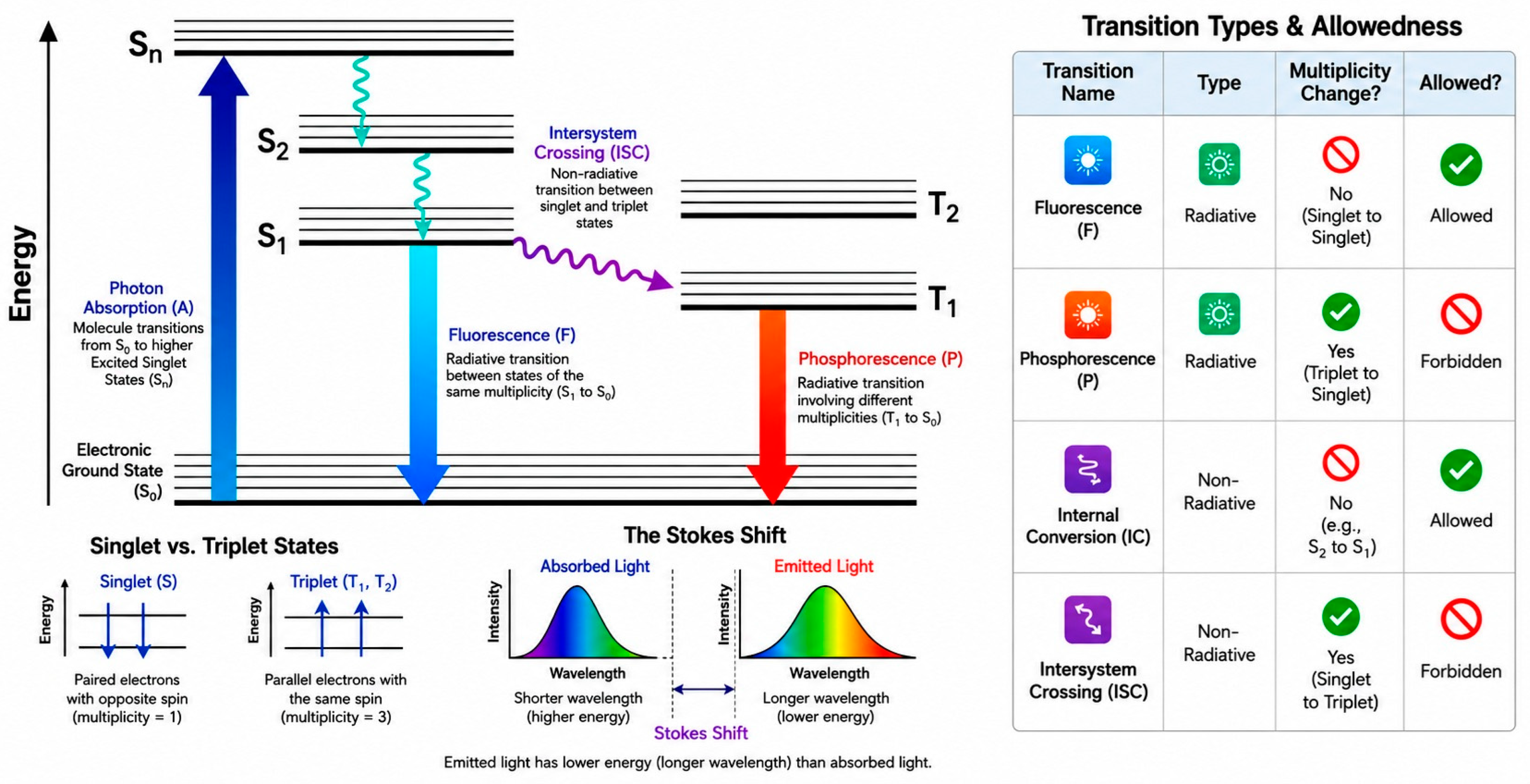
The fluorescence of benzophenoxazine derivatives is a photophysical phenomenon in which the energy of absorbed electromagnetic radiation is converted into the emission of light with lower energy. The mechanism of this process can be described by the classic Jablonski scheme (Figure 3), which shows the sequence of electron and energy transitions occurring in a molecule under the influence of photons [62,63,69].
The first stage of fluorescence is radiation absorption, during which an electron from the ground state (S0) is excited to a higher electronic state (S1 or S2). In the case of benzophenoxazines, the tricyclic aromatic system and the presence of heteroatoms (O, N) promote effective absorption in the visible range (550–700 nm), enabling these compounds for use in biological and industrial fluorescent applications. Additionally, appropriate substitution of electron-donating or electron-accepting groups shifts the absorption spectrum towards longer wavelengths, which is particularly desirable for near-infrared (NIR, 700–900 nm) emission in bioimaging [23,57,66,70,71].
The next stage is internal relaxation, i.e., the partial loss of energy of the excited electron through non-radiative processes such as molecular vibrations, aromatic ring rotations, and conformational changes. In benzophenoxazines, the planar, rigid tricyclic system limits free rotation, thereby minimizing non-radiative energy losses. As a result, these molecules exhibit high fluorescence quantum yields and emit intensely and stably under various environmental conditions, including aqueous solutions and biological environments.
The final stage is fluorescence emission, in which the electron returns from the excited state S1 to the ground state S0, emitting a photon with lower energy than the exciting photon. The energy difference between absorption and emission, known as the Stokes shift, depends on the molecular structure and its environment. In benzophenoxazines, this shift can be significant, further limiting the potential for reabsorption of the emitted light and increasing the efficiency of fluorescence detection [56,58,59,60,61].
In the context of benzophenoxazine derivatives, it should be emphasized that high electron delocalization in the π system minimizes non-radiative losses and the presence of heteroatoms in the oxazine ring stabilizes the excited state. Additionally, the rigid, flat structure increases resistance to photobleaching, which is crucial for long-term imaging applications.
Knowledge of the fluorescence mechanism and the factors that affect emission efficiency is essential for designing new fluorophores with specific emission wavelengths, high chemical stability, and optimal quantum efficiency. Due to their properties, benzophenoxazine derivatives form the basis for the creation of highly selective biological probes, dyes for polymers, optoelectronic materials, and chemical sensors [13,18,23,55,58].
Figure 3.
Jablonski diagram illustrating absorption, fluorescence, phosphorescence, internal conversion, and intersystem crossing processes. Dark blue, light blue, red, purple, and green arrows denote absorption, fluorescence, phosphorescence, intersystem crossing, and non-radiative relaxation processes, respectively [72].
Fluorescence Sensing Mechanisms in Benzophenoxazine-Based Probes
The outstanding sensing performance of benzophenoxazine derivatives is not determined solely by their favorable absorption and emission properties but also by the molecular mechanisms governing fluorescence signal modulation. Various sensing strategies have been employed in benzophenoxazine-based probes, including photoinduced electron transfer (PET), intramolecular charge transfer (ICT), twisted intramolecular charge transfer (TICT), excited-state intramolecular proton transfer (ESIPT), fluorescence resonance energy transfer (FRET), aggregation-induced emission (AIE), and analyte-triggered structural transformations such as spirolactam ring-opening. These mechanisms enable highly sensitive and selective detection of ions, biomolecules, pH changes, and reactive oxygen species [9,21,22,57,73].
- Photoinduced Electron Transfer (PET)
PET is one of the most widely applied sensing mechanisms in fluorescent probes. In PET systems, fluorescence is initially quenched by electron transfer between a receptor moiety and the benzophenoxazine fluorophore. Upon interaction with a target analyte, the electron-transfer pathway is inhibited, resulting in fluorescence enhancement. This approach offers high sensitivity and has been successfully used for the detection of metal ions, amines, and reactive sulfur species [73,74,75].
- Intramolecular Charge Transfer (ICT)
ICT occurs in molecules containing both electron-donating and electron-accepting groups. Following excitation, charge redistribution within the molecule generates an excited state possessing a different dipole moment than the ground state. Changes in solvent polarity, pH, or analyte binding can therefore induce significant shifts in absorption and emission wavelengths. Benzophenoxazine dyes containing amino donors and electron-withdrawing substituents frequently operate through this mechanism, making them valuable as polarity-sensitive probes and environmental sensors [16,17,23,57].
- Twisted Intramolecular Charge Transfer (TICT)
In some donor–acceptor systems, excitation promotes partial rotation between molecular fragments, generating a twisted charge-transfer state. Formation of the TICT state often decreases fluorescence intensity and increases environmental sensitivity. Restricting molecular motion suppresses TICT formation and enhances fluorescence efficiency. This concept is frequently employed when designing viscosity-sensitive or microenvironment-responsive probes derived from Nile Red and related benzophenoxazine dyes [4,13,16].
- Excited-State Intramolecular Proton Transfer (ESIPT)
ESIPT-based fluorophores undergo ultrafast proton transfer after excitation, producing an emissive tautomeric excited state. This process often generates exceptionally large Stokes shifts and minimizes self-absorption effects. Although ESIPT has been less extensively explored in classical benzophenoxazine systems than ICT or PET mechanisms, incorporation of suitable proton-donating and proton-accepting groups may enable the development of benzophenoxazine probes with enhanced sensing capabilities and improved spectral separation [58,60,61].
- Fluorescence Resonance Energy Transfer (FRET)
FRET involves non-radiative energy transfer from a donor fluorophore to an acceptor fluorophore when both are in close proximity and their spectra overlap. Benzophenoxazine derivatives are attractive FRET acceptors because of their strong absorption in the red and near-infrared region. FRET-based sensing systems have been extensively applied in biological imaging, enzymatic activity monitoring, and intracellular detection owing to their high sensitivity and ratiometric response characteristics [9,10,55].
- Aggregation-Induced Emission (AIE)
Many conventional fluorophores suffer from aggregation-caused quenching (ACQ), particularly in aqueous media. In contrast, AIE-active systems become more fluorescent upon aggregation because intramolecular motions responsible for non-radiative decay are restricted. Although classical benzophenoxazine dyes often show aggregation-related quenching, recent molecular engineering strategies aim to incorporate AIE characteristics to improve performance in biological environments and solid-state applications [34,56].
- Spirolactam Ring-Opening Mechanism
The spirolactam ring-opening strategy is widely used in fluorogenic probes. In the closed form, the molecular framework remains electronically disconnected and weakly fluorescent. Upon interaction with a specific analyte, ring opening restores π-conjugation, leading to dramatic increases in absorption and fluorescence intensity. Although this mechanism is more commonly associated with rhodamine fluorophores, analogous analyte-triggered structural transformations represent an attractive future direction for benzophenoxazine probe design, particularly for metal-ion and pH sensing applications [21,57,73].
Overall, ICT and PET are currently the dominant sensing mechanisms reported for benzophenoxazine-based probes, while FRET enables advanced imaging strategies and AIE-inspired designs offer promising solutions to aggregation-related limitations. Future developments are expected to integrate multiple mechanisms within a single molecular platform to achieve improved sensitivity, selectivity, and performance in complex biological environments [11,55,64].
5. Synthesis of Benzophenoxazine Derivatives
Traditional approaches to benzophenoxazine synthesis focus on several basic chemical reactions. One of the main approaches is the condensation of aminophenols with carbonyl reagents, most commonly aldehydes or ketones (Figure 4). This reaction involves the formation of an imine as a result of the combination of the amino group of the aminophenol with the carbonyl group, which then undergoes cyclization to form a phenoxazine ring. This method allows for the introduction of various substituents in aromatic compounds, enabling the synthesis of a wide range of dyes and functionalized derivatives.
Figure 4.
Condensation of 2-aminophenol (8) with 2,4-dichloro-1,4-naphthaquinone (9) to 6-chlorobenzo[a]phenoxazine-5-one (10) [67].
Another classic approach is the oxidation of aminophenols, leading to cyclization (Figure 5), in which oxidants such as iodine in the presence of acid or chlorate (V) cause the aromatic ring to close, forming a phenoxazine structure. This method is particularly useful for the synthesis of derivatives with a larger number of substituents or in more complex aromatic systems.
Figure 5.
Oxidative cyclization of 2-aminophenol (8) and 1,2-dihydroxybenzene (11), leading to the formation of phenoxazine (12) with elimination of two molecules of water (Bernthsen method) [76].
Another strategy involves nitrosation and aromatization reactions. Aminophenol (8) is nitrosated to form nitrosoaminophenol (13), which then undergoes dehydration and aromatization to form a phenoxazine structure (Figure 6 and Figure 7). This sequence allows for the production of durable dyes with high thermal and chemical stability.
Figure 6.
Phenoxazine (14) synthesis by nitrosation of 2-aminophenol (8), followed by condensation of the nitroso compound (13) with 8 [12].
Figure 7.
Synthesis of Meldola’s blue (reaction of nitroso compound with 2-naphthol) [12].
N-substituted phenoxazines can be prepared from iodo-substituted diaryl ethers via a metal-free cyclization reaction. In the presence of a mixture of 10 mol% N,N′-dimethyl-ethylenediamine (DMEDA) and 2 equivalents of K2CO2 in toluene at 135 °C, the products were obtained in high yield (Figure 8). It is also possible to synthesize dinitrophenoxazines using 4,5-difluoro-1,2-dinitrobenzene (21), as shown in Figure 9.
Figure 8.
Designing the desired functional group—phenoxazine by forming a central ring [75,77].
Figure 9.
Synthesis of dinitrophenoxazines [78].
Contemporary strategies for the synthesis of benzophenoxazine derivatives emphasize efficiency, selectivity, and environmental aspects. Modern methods primarily include catalytic reactions involving transition metals such as palladium, copper, and iron. These catalysts enable reactions to be carried out selectively, often at lower temperatures and with less reagent consumption, thereby increasing efficiency and reducing chemical waste. An example of this approach using a Pd catalyst is presented in Figure 10.
Figure 10.
Designing the desired functional group—phenoxazine by forming a central ring using a Pd catalyst [79].
Comparative Assessment of Synthetic Strategies
The synthesis of benzophenoxazine derivatives has evolved from classical oxidative and condensation reactions toward more sustainable and selective methodologies. Each strategy offers distinct advantages and limitations regarding substrate scope, reaction efficiency, catalyst requirements, environmental impact, and scalability.
Condensation reactions between aminophenols and carbonyl compounds remain among the most straightforward and widely used methods for preparing benzophenoxazine derivatives. Their major advantages include operational simplicity, broad substrate availability, and suitability for synthesizing structurally diverse derivatives. However, reaction yields may depend strongly on substrate substitution patterns and often require elevated temperatures or prolonged reaction times [67].
Oxidative cyclization methods, including the classical Bernthsen approach, provide a direct route to the phenoxazine framework and have historical significance in dye chemistry. Although these protocols are generally reliable and require inexpensive reagents, selectivity may decrease for highly substituted substrates, and the use of stoichiometric oxidants can generate undesirable waste streams [76].
Nitrosation-based routes have traditionally been used for the synthesis of phenoxazine dyes such as Meldola’s Blue [12]. These methodologies are effective for constructing highly conjugated systems but frequently involve multiple synthetic steps and the handling of reactive nitroso intermediates, which may limit large-scale implementation [12].
More recently, transition-metal-catalyzed methods have attracted considerable attention because of their improved selectivity, broader substrate scope, and ability to introduce structurally complex functional groups [79]. Palladium-catalyzed coupling reactions are particularly effective for constructing highly substituted benzophenoxazine derivatives and often provide higher yields than classical methods. However, the high cost of noble-metal catalysts, catalyst recovery issues, and concerns regarding metal contamination remain important drawbacks [79].
Metal-free intramolecular cyclization methodologies have emerged as attractive alternatives from the perspective of green chemistry. These approaches avoid transition-metal residues while maintaining good yields and functional-group tolerance. Their simplicity and lower environmental impact make them promising candidates for scalable industrial applications [75,77].
Recent developments have additionally focused on environmentally friendly synthetic approaches, including aqueous-phase reactions, green solvents, microwave-assisted synthesis, and in situ fluorescence-forming reactions. Such methods reduce solvent consumption, shorten reaction times, and improve sustainability, although their applicability to large-scale production still requires further evaluation [31].
Overall, no single synthetic route is universally optimal. Classical methods remain attractive for their simplicity and low cost, whereas catalytic methodologies provide superior selectivity and substrate scope. Green and metal-free approaches appear particularly promising for future large-scale production owing to their reduced environmental impact and increasing synthetic efficiency. A comparative summary of the advantages and limitations of the major synthetic strategies discussed above is presented in Table 2.
Table 2.
Comparison of major synthetic methods used for benzophenoxazine derivatives.
6. Applications of Benzophenoxazine Derivatives
Benzophenoxazine derivatives are a versatile group of heterocyclic compounds whose optical, chemical, and biological properties have found wide application in chemistry, industry, and biomedical sciences [13,23]. Their unique structure, which enables intense fluorescence and high chemical and thermal stability, makes them valuable tools in many fields [52,58]. The compound 26 (Figure 11) can be used as a fluorescent probe (bioimaging), in fluorescence microscopy, and in biochemical studies.
Figure 11.
Chemical structure of 3,3′-((2-hydroxy-5-oxo-5H-benzo[a]phenoxazin-9-yl)-azanediyl)dipropionic acid [80].
6.1. Fluorescent Dyes in Chemistry and Industry
Due to their intense fluorescence and high chemical stability, benzophenoxazines are widely used as fluorescent dyes [6,80]. They are used in the coloring of plastics, in the production of paints and fluorescent pigments, and in the production of polyester and synthetic fibers. In addition, their optical properties are used in sublimation printing technologies, enabling durable, bright colors that remain stable under light and temperature action [81]. The compound 27 (Figure 12) can be used as a laser dye for tunneling in the red/NIR region. It is utilized in the textile and cosmetic industries because of its vibrant color properties. It is employed in organic light-emitting diodes and photovoltaic cells due to its electronic characteristics. Additionally, it is being investigated for potential use in drug formulations targeting infections or cancer.
Figure 12.
Chemical structure of 3,7-bis(diethylamino)-phenoxazin-5-ium perchlorate [82].
6.2. Bioimaging and Diagnostics
Benzophenoxazine derivatives play an important role in bioimaging and medical diagnostics [7,83]. They are used as DNA and RNA markers, e.g., as oxazine dyes, as well as environmental probes that detect changes in polarity or pH within cells [68,84]. These compounds are effective as subcellular markers in fluorescence and confocal microscopy, and as markers in flow cytometry [23,65]. Thanks to their emission in the red and near-infrared (NIR) ranges, it is possible to image deeper into biological tissue, which is particularly important in in vivo studies [55,83]. Benzo[a]phenoxazine chlorides (28, 29) functionalized with various sulfonamide groups (Figure 13) are used as fluorescent probes and can stain the plasma membrane [23].
Figure 13.
Benzo[a]phenoxazine chlorides functionalized with sulfonamides.
6.3. Chemical Sensors and Analytical Applications
Benzophenoxazine-based fluorescent probes have been developed for the detection of a wide variety of analytes, including metal ions, reactive oxygen and sulfur species, pH changes, enzymes, biomolecules, and microenvironmental parameters such as polarity and viscosity. Their popularity arises from their NIR emission, high photostability, and good suitability for cellular imaging. The analytical performance of these probes depends strongly on their sensing mechanism, target analyte, and molecular design [21,22,23,55,73].
6.3.1. Metal-Ion Sensors
Metal-ion sensing represents one of the most extensively explored applications of benzophenoxazine fluorophores. The phenoxazine-based chemosensor reported by Ravichandiran et al. enabled dual-channel fluorescence detection of Cd2+ ions with high selectivity in the presence of competing ions and demonstrated successful bioimaging in living cells and zebrafish [85]. Figure 14 shows the chemical structure of the corresponding benzo[a]phenoxazine derivative employed as the sensing platform. Metal-ion recognition is commonly achieved through PET suppression or ICT modulation mechanisms, resulting in fluorescence enhancement or wavelength shifts [73,74].
Figure 14.
Chemical structure of N-(4-((4-((5-oxo-5H-benzo [a]phenoxazin-6-yl)amino)-phenyl)sulfonyl)-phenyl)furan-2-carboxamide [85].
6.3.2. Reactive Sulfur Species (RSS)
Reactive sulfur species are biologically important signaling molecules. Yin et al. developed a benzophenoxazine-based NIR fluorescent probe for H2S detection that displayed rapid fluorescence activation and successful imaging in living cells [67].
6.3.3. Reactive Oxygen Species (ROS)
Reactive oxygen species play key roles in oxidative stress and disease progression. Benzophenoxazine derivatives are attractive reporters for ROS monitoring because their long-wavelength emission minimizes biological background interference [74].
6.3.4. pH Sensors
pH-responsive benzo[a]phenoxazine fluorophores exhibit reversible spectral changes arising from protonation and deprotonation equilibria. Liu et al. reported reversible NIR pH probes suitable for biological applications, while Nile Blue-based nanosensors enabled simultaneous far-red and NIR imaging in living systems [21,68].
6.3.5. Biomolecule and Amino Acid Detection
Several benzophenoxazine derivatives have been developed as probes for amino acids and nucleic acids. Functionalized benzo[a]phenoxazine fluorophores demonstrated selective amino acid recognition, whereas Nile Blue derivatives showed strong affinity for DNA and enabled fluorescence-based nucleic acid detection [20,83].
6.3.6. Polarity and Viscosity Sensors
Solvatochromic benzophenoxazine dyes such as Nile Red are particularly useful for monitoring local polarity and membrane organization. Their fluorescence characteristics depend strongly on the surrounding microenvironment, which enables imaging of lipid droplets, membranes, and intracellular heterogeneity [4,22]. Representative benzophenoxazine-based sensors, together with their target analytes, sensing mechanisms, and analytical performance parameters, are summarized in Table 3.
Table 3.
Representative Benzophenoxazine-Based Sensors and Their Analytical Performance.
6.4. Optoelectronics
Benzophenoxazine derivatives are also used in optoelectronics [7]. They are used in organic light-emitting diodes (OLEDs), photoconductive materials, dye lasers, and organic photovoltaic cells [7,28,72]. Their luminescent properties and electron conductivity make them valuable components of modern functional materials used in electronics and photonics [7,72]. Figure 15 depicts a heterocyclic pentacene analogue (31) incorporating a phenoxazine moiety, composed of three fused rings with nitrogen and oxygen atoms in the central ring. Owing to its favorable electronic and emissive properties, this compound and its derivatives have been investigated for use in organic electroluminescent materials and other optoelectronic applications [74,86].
Figure 15.
Compound used in optoelectronic devices [75,86].
6.5. Bioimaging and Biological Performance of Benzophenoxazine Derivatives
The growing interest in benzophenoxazine fluorophores for biological imaging arises not only from their favorable photophysical properties but also from their biological performance, including cellular uptake, organelle specificity, cytotoxicity, tissue penetration, wash-free imaging capability, and in vivo applicability [13,14,23,55].
One of the major advantages of benzophenoxazine derivatives is their efficient cellular uptake. This property is particularly pronounced in cationic benzo[a]phenoxazinium and Nile Blue derivatives, whose positive charge promotes interactions with negatively charged cellular membranes and intracellular organelles. The accumulation of these fluorophores within living cells enables high fluorescence contrast and facilitates imaging without extensive sample preparation [14,23].
Subcellular targeting represents another important feature of modern benzophenoxazine probes. Through appropriate structural modification, specific localization within mitochondria, lysosomes, endoplasmic reticulum, vacuoles, or plasma membranes can be achieved. For example, sulfonamide-functionalized benzo[a]phenoxazinium chlorides have demonstrated selective staining of cellular membranes and intracellular organelles, highlighting the role of molecular design in controlling intracellular distribution [23]. Similarly, recently developed cationic Nile Blue derivatives exhibit highly specific mitochondrial targeting and have shown excellent performance in live-cell super-resolution imaging [14].
Cytotoxicity remains a crucial factor in evaluating fluorescent probes intended for biological applications. While many benzophenoxazine derivatives display acceptable biocompatibility at imaging concentrations, toxicity strongly depends on molecular structure, lipophilicity, charge, and exposure conditions [32]. Therefore, contemporary research increasingly focuses on introducing hydrophilic substituents, PEGylated fragments, and targeting groups to improve biological compatibility while preserving favorable optical properties [33,34].
Tissue penetration is another important consideration. The red and near-infrared emission of benzophenoxazine fluorophores significantly reduces light scattering and biological autofluorescence compared with conventional visible-emitting probes. Consequently, these dyes provide improved imaging depth and signal-to-background ratios in biological samples. This characteristic is particularly valuable for in vivo imaging and fluorescence-guided diagnostics [10,11,12,43,55].
Recent studies have also highlighted the suitability of benzophenoxazine derivatives for wash-free imaging. High target affinity combined with strong fluorescence responses minimizes the need for washing procedures, reducing sample manipulation and improving compatibility with live-cell imaging protocols. Cell wash-free imaging approaches have proven particularly advantageous for monitoring dynamic intracellular processes and long-term biological observations [53].
Beyond cellular imaging, benzophenoxazine fluorophores increasingly demonstrate potential for in vivo applications. Nile Blue-based probes and functionalized benzo[a]phenoxazine derivatives have been successfully employed for tissue imaging, disease biomarker detection, and real-time visualization of biological processes in living systems [24,68]. Moreover, the development of NIR-responsive probes has further improved imaging performance by enabling deeper tissue visualization and reduced background interference [11,12,39].
Overall, the biological performance of benzophenoxazine fluorophores results from a combination of favorable photophysical properties and rational molecular design. Current developments increasingly focus on enhancing organelle specificity, minimizing cytotoxicity, improving tissue penetration, and enabling advanced wash-free and in vivo imaging applications, thereby expanding the biomedical potential of this fluorophore family [14,23,43,87].
7. Aminobenzophenoxazine Derivatives as a Key Subgroup
The introduction of amino groups into the benzophenoxazine system significantly modifies the optical and chemical properties of these compounds [7,49]. Amines, acting as electron donors, increase fluorescence intensity and shift the absorption and emission spectra towards longer wavelengths, which is particularly advantageous for applications requiring emission in the red and near-infrared regions [49,55]. In addition, the presence of amino groups improves solubility in polar solvents and increases chemical reactivity, enabling further functionalization of the molecule [7,49].
Due to these properties, aminobenzophenoxazines have found wide application across various fields [6,7]. In biology and medicine, they are used as biomolecular markers to identify DNA and RNA and to study subcellular processes [6,55]. In optoelectronics, they serve as active components in organic light-emitting diodes (OLEDs), thereby improving light-emission efficiency. In addition, aminobenzophenoxazines are used as fluorescent dyes for polyester fibers and plastics, providing durable, intense color [7]. In pharmaceutical and biological chemistry research, they are also used to develop anticancer drugs and compounds with antioxidant properties, where their photophysical and chemical properties enable analysis of biological mechanisms of action [6,49]. Figure 16 presents the structure of dye 32, an aminobenzophenoxazine derivative that exhibits anticancer activity by inhibiting cell proliferation, migration, and survival in breast and colorectal cancers [87].
Figure 16.
Aminobenzophenoxazine dye with anticancer activity [87].
To move beyond a descriptive overview and provide a critical evaluation of the literature, the major classes of benzophenoxazine derivatives are compared in Table 4. The comparison highlights how specific structural modifications influence photophysical and biological properties and identifies the key advantages and limitations of each molecular design strategy.
Table 4.
Comparative analysis of major benzophenoxazine derivative classes and their structure–property relationships.
The comparison reveals that no single structural modification simultaneously optimizes all properties. Amino-substituted and cationic derivatives generally provide the best performance in biological imaging owing to their high brightness and cellular uptake, whereas π-extended and thiophenoxazine systems are more suitable for long-wavelength and NIR applications due to their enhanced conjugation and photostability. However, these latter systems often suffer from aggregation and poor aqueous solubility. Consequently, current molecular design strategies increasingly focus on balancing fluorescence efficiency, photostability, water solubility, and biological compatibility.
8. Prospects for the Development of Benzophenoxazine Derivatives
Contemporary research on benzophenoxazine derivatives focuses on expanding their applications by modifying their optical, chemical, and biological properties [64]. One of the main directions is the design of fluorophores that emit in the NIR-II range (1000–1700 nm), enabling imaging of biological tissues at even greater depths while reducing autofluorescence and background noise [64,88].
At the same time, strategies are being developed to introduce groups that increase biocompatibility, improve solubility in biological environments, and minimize cytotoxicity, which is crucial for in vivo applications [88,89]. Another innovative direction is hybridization with nanomaterials, such as quantum dots or carbon nanotubes, to obtain compounds with increased stability, modulated fluorescence emission, and new photophysical properties [89].
In addition, intensive work is underway to develop dyes with controllable photo-reactivity that enable light-controlled modulation of chemical or fluorescent activity, promising for phototherapy, optogenetics, and super-resolution microscopy [89].
Thanks to these innovations, benzophenoxazines remain one of the most valuable scaffolds in fluorescent dye chemistry, forming the basis for the development of modern fluorophores with a wide range of applications in chemical, materials, and biomedical sciences [64,89].
8.1. Recent Advances in Benzophenoxazine-Based Fluorescent Probes (2023–2025)
Recent years have witnessed significant progress in the development of benzophenoxazine-based fluorophores, particularly for near-infrared bioimaging, activatable sensing, organelle-specific targeting, and theranostic applications. These advances have been driven by the increasing demand for fluorescent probes combining high brightness, photostability, deep tissue penetration, and biological specificity [14,23,43,64].
One of the most important trends is the development of fluorophores operating in the NIR-I (700–900 nm) and NIR-II (1000–1700 nm) biological windows. Although classical benzophenoxazine dyes are mainly NIR-I emitters, recent molecular engineering strategies involving π-conjugation extension, donor–acceptor architectures, and heteroatom substitution have enabled substantial red-shifting of emission wavelengths. Such modifications improve tissue penetration depth, reduce autofluorescence, and enhance signal-to-background ratios, making these fluorophores attractive for in vivo imaging applications [11,12,36,37,38,39,43]. Recent reviews on benzo[a]phenoxazine probes have identified NIR imaging as one of the most rapidly expanding research directions in this field [71].
Another important development is the emergence of activatable fluorescent probes. Unlike conventional “always-on” fluorophores, activatable probes generate fluorescence only in the presence of a specific analyte or biological process. Recent benzophenoxazine-based systems have been reported for the detection of hydrogen sulfide, biogenic amines, pH variations, and reactive species through analyte-triggered modulation of fluorescence intensity or wavelength [46,67,68]. These probes provide improved sensitivity and lower background signals, making them particularly useful for real-time cellular imaging and diagnostic applications [21,22,73].
Considerable advances have also been achieved in organelle-targeted imaging. Cationic Nile Blue and benzo[a]phenoxazinium derivatives have demonstrated selective accumulation in mitochondria, lysosomes, endoplasmic reticulum, vacuoles, and plasma membranes through rational structural modification [14,23]. Such targeting strategies increase imaging specificity and allow monitoring of organelle-associated biological processes. The development of super-resolution imaging probes based on cationic Nile Blue derivatives represents an important milestone in this area, demonstrating excellent photostability and highly specific mitochondrial localization [14].
Furthermore, benzophenoxazine derivatives are increasingly being investigated as theranostic agents, combining diagnostic imaging with therapeutic action. Several recent studies have reported benzo[a]phenoxazine derivatives possessing intrinsic anticancer, antifungal, or phototherapeutic activity while simultaneously functioning as fluorescent imaging probes [48,65,87]. In particular, lysosome-targeting benzo[a]phenoxazine compounds showing anticancer activity against breast and colorectal cancer cells illustrate the potential of this scaffold for integrated diagnosis and therapy [87]. Such multifunctional systems are expected to play an increasingly important role in precision medicine and fluorescence-guided therapeutic strategies.
Future developments will likely focus on the integration of NIR-II emission, activatable sensing mechanisms, organelle-specific targeting, and therapeutic functions within single molecular platforms. Combined with advances in nanotechnology, molecular engineering, and phototheranostics, these approaches may further expand the biomedical relevance of benzophenoxazine derivatives and accelerate their translation into clinical applications [33,36,37,39,64,89].
8.2. Comparison of Benzophenoxazine Dyes with Other Fluorescent Platforms
Benzophenoxazine dyes belong to a broad family of organic fluorophores used in sensing, imaging, diagnostics, and optoelectronics. To assess their practical significance, it is important to compare their performance with other widely used fluorophore classes, including rhodamines, BODIPYs, cyanines, coumarins, fluoresceins, and Nile Red/Nile Blue derivatives [6,13,43,80].
Rhodamine dyes are among the most extensively utilized fluorescent probes due to their high quantum yields, excellent photostability, and well-established spirolactam-based sensing mechanisms. Compared with rhodamines, benzophenoxazines generally provide more red-shifted emission and superior NIR imaging capabilities, although rhodamines often exhibit higher brightness and broader commercial availability [43,68,69].
BODIPY fluorophores are characterized by narrow emission bands, high molar absorption coefficients, and excellent fluorescence quantum yields. Their optical properties are often easier to fine-tune than those of benzophenoxazines. However, benzophenoxazine derivatives typically display larger Stokes shifts and greater suitability for long-wavelength imaging applications, particularly in biological systems where reduced autofluorescence is desirable [43,69].
Cyanine dyes constitute one of the most important classes of NIR fluorophores and generally achieve longer emission wavelengths than classical benzophenoxazines. Nevertheless, cyanines frequently suffer from poor photostability, aggregation, and relatively rapid photobleaching. In contrast, benzophenoxazines often provide superior photochemical stability and may offer a better balance between fluorescence efficiency and long-term imaging performance [12,43,52].
Coumarins and fluoresceins remain standard fluorophores for analytical chemistry and biochemical assays because of their high brightness and ease of functionalization. Their principal limitation is emission in the blue-green spectral region, where tissue penetration is limited and biological autofluorescence is significant. Benzophenoxazines possess a clear advantage for bioimaging applications requiring red or near-infrared emission [10,12,43].
Among structurally related systems, Nile Red and Nile Blue serve as benchmark benzophenoxazine-derived fluorophores. Nile Red is particularly valuable as a polarity-sensitive solvatochromic dye, whereas Nile Blue exhibits favorable NIR fluorescence and cellular uptake characteristics. Modern benzophenoxazine derivatives build upon these classical structures by incorporating targeting groups, donor–acceptor architectures, and extended π-systems to improve brightness, selectivity, and biological performance [4,13,14].
Overall, benzophenoxazine dyes occupy an intermediate position between highly bright visible fluorophores such as rhodamines and fluoresceins and strongly red-shifted cyanine systems. Their major strengths include NIR emission capability, high photostability, structural versatility, and suitability for biological imaging and sensing applications. However, challenges related to aqueous solubility, aggregation, and the achievement of true NIR-II emission remain important targets for future development [7,11,12,33,43].
As shown in Table 5, benzophenoxazine dyes provide one of the best compromises between long-wavelength emission, photostability, structural tunability, and biological applicability, explaining their growing importance in modern sensing and imaging technologies.
Table 5.
Comparison of benzophenoxazine dyes with major fluorescent platforms.
9. Summary and Outlook
Benzophenoxazine derivatives constitute a highly versatile class of fluorophores that combine favorable photophysical properties with broad possibilities for structural modification. Their rigid and strongly conjugated heteroaromatic framework provides intense absorption, efficient fluorescence emission, high photostability, and access to red and near-infrared spectral regions. As demonstrated throughout this review, molecular engineering of the benzophenoxazine scaffold enables precise control over absorption and emission wavelengths, molar extinction coefficients, fluorescence quantum yields, Stokes shifts, and fluorescence lifetimes. In particular, amino substitution, donor–acceptor architectures, π-conjugation extension, and organelle-targeting functional groups have proven to be highly effective strategies for optimizing both photophysical and biological performance.
Comparison of different molecular designs reveals important structure–property relationships. Amino-substituted derivatives generally offer enhanced fluorescence brightness and red-shifted emission, while π-extended and fused-ring systems provide improved photostability and more favorable NIR characteristics. Donor–acceptor architectures allow fine-tuning of optical properties and often generate larger Stokes shifts, although excessive charge-transfer character may reduce fluorescence efficiency. Similarly, cationic and sulfonamide-functionalized derivatives exhibit superior cellular uptake and organelle specificity but may require careful optimization to balance imaging performance and biocompatibility.
The synthesis of benzophenoxazine derivatives has also evolved considerably. Classical condensation, oxidation, and nitrosation methodologies remain valuable due to their simplicity and scalability, whereas modern catalytic and metal-free approaches offer improved selectivity, broader substrate scope, and increased compatibility with green chemistry principles. Recent advances in environmentally friendly synthesis provide promising opportunities for the sustainable production of advanced benzophenoxazine fluorophores.
A particularly significant area of development concerns chemical sensing and bioimaging. Benzophenoxazine-based probes have been successfully applied to the detection of metal ions, reactive oxygen and sulfur species, pH changes, biomolecules, and microenvironmental parameters such as polarity and viscosity. The operation of these systems is often governed by fluorescence mechanisms including PET, ICT, TICT, and FRET processes. Furthermore, recent developments in organelle-targeted imaging, wash-free imaging, activatable probes, and theranostic systems demonstrate the expanding biomedical relevance of this fluorophore family.
Comparison with established fluorescent platforms such as rhodamines, BODIPYs, cyanines, coumarins, and fluoresceins indicates that benzophenoxazines occupy a unique position among modern fluorophores. Although they may not always achieve the highest brightness or the longest emission wavelengths, they offer an attractive balance between photostability, NIR emission capability, structural tunability, and biological applicability. These characteristics make them particularly promising for advanced sensing and imaging applications.
Despite substantial progress, several important challenges remain. Limited aqueous solubility, aggregation-caused quenching, long-term photostability under physiological conditions, incomplete toxicological characterization, and limited knowledge regarding biodegradation and in vivo clearance continue to restrict wider practical implementation. In addition, only a relatively small number of benzophenoxazine derivatives have advanced beyond cellular studies toward animal models or clinically relevant imaging platforms.
Future research should therefore focus on the development of aggregation-resistant and water-soluble fluorophores, the achievement of brighter NIR-I and NIR-II emission, improved biological safety, and the integration of imaging and therapeutic functions within single molecular platforms. Advances in molecular engineering, nanotechnology, and precision bioimaging are expected to accelerate the translation of benzophenoxazine-based probes from laboratory research to practical applications in diagnostics, fluorescence-guided surgery, theranostics, and optoelectronic technologies. Consequently, benzophenoxazine derivatives remain one of the most promising and adaptable fluorophore scaffolds for future developments in fluorescent dye chemistry.
Author Contributions
Conceptualization, M.A.; resources, M.A.; writing—original draft preparation, M.A.; writing—review and editing, R.P. and I.M.-L.; visualization, A.S.; supervision, R.P.; funding acquisition, M.A. All authors have read and agreed to the published version of the manuscript.
Funding
This research received no external funding.
Institutional Review Board Statement
Not applicable.
Informed Consent Statement
Not applicable.
Data Availability Statement
No new data were created or analyzed in this study. Data sharing is not applicable to this article.
Acknowledgments
This article has been completed while the first author was the Candidate in the Interdisciplinary Doctoral School at the Lodz University of Technology, Poland. During the preparation of this manuscript, the authors used NotebookLM (Google Labs) to create Figure 3 to improve its presentation. The authors have reviewed and edited the output and take full responsibility for the content of this publication.
Conflicts of Interest
The authors declare no conflicts of interest.
References
- Lakowicz, J.R. Principles of Fluorescence Spectroscopy, 3rd ed.; Springer: Boston, MA, USA, 2006. [Google Scholar]
- Valeur, B.; Berberan-Santos, M.N. Molecular Fluorescence: Principles and Applications; John Wiley & Sons: Hoboken, NJ, USA, 2013. [Google Scholar]
- Mall, C.; Tiwari, S.; Solanki, P.P. Comparison of dye (oxazine and thiazine) materials as a photosensitizer for use in photogalvanic cells based on molecular interaction with sodium dodecyl sulphate by spectral study. J. Saudi Chem. Soc. 2019, 23, 83–91. [Google Scholar] [CrossRef] [Scilit]
- Gajo, C.; Shchepanovska, D.; Jones, J.F.; Karras, G.; Malakar, P.; Greetham, G.M.; Oliver, T.A. Nile Red Fluorescence: Where’s the Twist? J. Phys. Chem. B. 2024, 128, 11768–11775. [Google Scholar] [CrossRef] [Scilit] [PubMed]
- Ferreira, J.C.; Sousa, R.P.; Sousa, M.J.M.; Gonçalves, M.S.T. Evaluation of fluorescent staining capacity of two New Nile Blue analogues. Chem. Proc. 2020, 3, 63. [Google Scholar] [CrossRef] [Scilit]
- Jose, J.; Burgess, K. Benzophenoxazine-based fluorescent dyes for labeling biomolecules. Tetrahedron 2006, 62, 11021–11037. [Google Scholar] [CrossRef] [Scilit]
- Sadhu, C.; Mitra, A.K. Synthetic, biological and optoelectronic properties of phenoxazine and its derivatives: A state of the art review. Mol. Divers. 2024, 28, 965–1007. [Google Scholar] [CrossRef] [Scilit] [PubMed]
- Tang, C.W.; VanSlyke, S.A. Organic electroluminescent diodes. Appl. Phys. Lett. 1987, 51, 913–915. [Google Scholar] [CrossRef] [Scilit]
- Yuan, L.I.N.; Lin, W.; Zheng, K.; Zhu, S. FRET-based small-molecule fluorescent probes: Rational design and bioimaging applications. Acc. Chem. Res. 2013, 46, 1462–1473. [Google Scholar] [CrossRef] [Scilit] [PubMed]
- Weissleder, R.; Ntziachristos, V. Shedding light onto live molecular targets. Nat. Med. 2003, 9, 123–128. [Google Scholar] [CrossRef] [Scilit] [PubMed]
- Chen, Y.; Xue, L.; Zhu, Q.; Feng, Y.; Wu, M. Recent advances in second near-infrared region (NIR-II) fluorophores and biomedical applications. Front. Chem. 2021, 9, 750404. [Google Scholar] [CrossRef] [Scilit] [PubMed]
- Hong, G.; Antaris, A.L.; Dai, H. Near-infrared fluorophores for biomedical imaging. Nat. Biomed. Eng. 2017, 1, 0010. [Google Scholar] [CrossRef] [Scilit]
- Martinez, V.; Henary, M. Nile red and Nile blue: Applications and syntheses of structural analogues. Chem. Eur. J. 2016, 22, 13764–13782. [Google Scholar] [CrossRef] [Scilit] [PubMed]
- Li, Y.; Bai, X.; Yang, D. Development and Application of Cationic Nile Blue Probes in Live-Cell Super-Resolution Imaging and Specific Targeting to Mitochondria. ACS Cent. Sci. 2024, 10, 1221–1230. [Google Scholar] [CrossRef] [Scilit] [PubMed]
- Nowakowska-Oleksy, A.; Sołoducho, J.; Cabaj, J. Phenoxazine based units-synthesis, photophysics and electrochemistry. J. Fluoresc. 2011, 21, 169–178. [Google Scholar] [CrossRef] [Scilit] [PubMed]
- Khan, F.; Misra, R. Recent advances in the development of phenothiazine and its fluorescent derivatives for optoelectronic applications. J. Mater. Chem. C 2023, 11, 2786–2825. [Google Scholar] [CrossRef] [Scilit]
- Kulszewicz-Bajer, I.; Guzauskas, M.; Makowska-Janusik, M.; Zagórska, M.; Mahmoudi, M.; Grazulevicius, J.V.; Volyniuk, D. Acridone and quinacridone derivatives with carbazole or phenoxazine substituents: Synthesis, electrochemistry, photophysics and application as TADF electroluminophores. J. Mater. Chem. C 2022, 10, 12377–12391. [Google Scholar] [CrossRef] [Scilit]
- Wang, C.; Zhao, Y.; Su, R.; Li, D.; Guo, Y.; Su, W.; Yu, T. Photo-and electro-luminescence properties of phenothiazine/phenoxazine-functionalized pyrene-fused pyrazaacenes with aggregation-induced emission. Dye. Pigment. 2023, 208, 110880. [Google Scholar] [CrossRef] [Scilit]
- Tsiko, U.; Bezvikonnyi, O.; Volyniuk, D.; Minaev, B.F.; Keruckas, J.; Cekaviciute, M.; Grazulevicius, J.V. TADF quenching properties of phenothiazine or phenoxazine-substituted benzanthrones emitting in deep-red/near-infrared region towards oxygen sensing. Dye. Pigment. 2022, 197, 109952. [Google Scholar] [CrossRef] [Scilit]
- Raju, B.R.; Naik, S.; Coutinho, P.J.; Gonçalves, M.S.T. Novel Nile Blue derivatives as fluorescent probes for DNA. Dye. Pigment. 2013, 99, 220–227. [Google Scholar] [CrossRef] [Scilit]
- Madsen, J.; Canton, I.; Warren, N.J.; Themistou, E.; Blanazs, A.; Ustbas, B.; Armes, S.P. Nile blue-based nanosized pH sensors for simultaneous far-red and near-infrared live bioimaging. J. Am. Chem. Soc. 2013, 135, 14863–14870. [Google Scholar] [CrossRef] [Scilit] [PubMed]
- Qin, X.; Yang, X.; Du, L.; Li, M. Polarity-based fluorescence probes: Properties and applications. RSC Med. Chem. 2021, 12, 1826–1838. [Google Scholar] [CrossRef] [Scilit] [PubMed]
- Ferreira, J.C.; Sousa, R.P.; Preto, A.; Sousa, M.J.; Gonçalves, M.S.T. Novel benzo[a]phenoxazinium chlorides functionalized with sulfonamide groups as NIR fluorescent probes for vacuole, endoplasmic reticulum, and plasma membrane staining. Int. J. Mol. Sci. 2023, 24, 3006. [Google Scholar] [CrossRef] [Scilit] [PubMed]
- Lozano-Torres, B.; Blandez, J.F.; Galiana, I.; García-Fernández, A.; Alfonso, M.; Marcos, M.D.; Martínez-Máñez, R. Real-Time In Vivo Detection of Cellular Senescence through the Controlled Release of the NIR Fluorescent Dye Nile Blue. Angew. Chem. Int. Ed. 2020, 59, 15152–15156. [Google Scholar] [CrossRef] [Scilit] [PubMed]
- Shruti; Dwivedi, J.; Kishore, D.; Sain, S. Recent advancement in the synthesis of phenoxazine derivatives and their analogues. Synth. Commun. 2018, 48, 1377–1402. [Google Scholar] [CrossRef] [Scilit]
- Nagar, M.R.; Choudhury, A.; Tavgeniene, D.; Beresneviciute, R.; Blazevicius, D.; Jankauskas, V.; Jou, J.H. Solution-processable phenothiazine and phenoxazine substituted fluorene cored nanotextured hole transporting materials for achieving high-efficiency OLEDs. J. Mater. Chem. C 2022, 10, 3593–3608. [Google Scholar] [CrossRef] [Scilit]
- Zhu, Y.; Kulkarni, A.P.; Jenekhe, S.A. Phenoxazine-based emissive donor− acceptor materials for efficient organic light-emitting diodes. Chem. Mater. 2005, 17, 5225–5227. [Google Scholar] [CrossRef] [Scilit]
- Li, P.; Cui, Y.; Song, C.; Zhang, H. A systematic study of phenoxazine-based organic sensitizers for solar cells. Dye. Pigment. 2017, 137, 12–23. [Google Scholar] [CrossRef] [Scilit]
- Buene, A.F.; Almenningen, D.M. Phenothiazine and phenoxazine sensitizers for dye-sensitized solar cells–an investigative review of two complete dye classes. J. Mater. Chem. C 2021, 9, 11974–11994. [Google Scholar] [CrossRef] [Scilit]
- Sarmah, T.; Srinivas, C.; Barman, D.; Gogoi, R.; Parui, R.; Narang, K.; Iyer, P.K. Evolution of color-tunable TADF emitters in OLEDs: From design strategies to color modulation. J. Mater. Chem. C 2025, 13, 20367–20423. [Google Scholar] [CrossRef] [Scilit]
- Jenni, S.; Renault, K.; Dejouy, G.; Debieu, S.; Laly, M.; Romieu, A. In Situ Synthesis of Phenoxazine Dyes in Water: Application for “Turn-On” Fluorogenic and Chromogenic Detection of Nitric Oxide. ChemPhotoChem 2022, 6, e202100268. [Google Scholar] [CrossRef] [Scilit]
- Shukla, S.; Dwivedi, J.; Yaduvanshi, N.; Jain, S. Medicinal and biological significance of phenoxazine derivatives. Mini Rev. Med. Chem. 2021, 21, 1541–1555. [Google Scholar] [CrossRef] [Scilit] [PubMed]
- Rajabi, M.; Feyzbakhsh, H. Polymeric nanocarriers in drug delivery, bioimaging, and biosensing: Advances and perspectives on nanomicelles, nanogels, and dendrimers. RSC Adv. 2025, 15, 40400–40438. [Google Scholar] [CrossRef] [Scilit] [PubMed]
- Cibotaru, S.; Sandu, A.I.; Belei, D.; Marin, L. Water soluble PEGylated phenothiazines as valuable building blocks for bio-materials. Mater. Sci. Eng. C 2020, 116, 111216. [Google Scholar] [CrossRef] [Scilit] [PubMed]
- Kozics, K.; Sramkova, M.; Kopecka, K.; Begerova, P.; Manova, A.; Krivosikova, Z.; Gabelova, A. Pharmacokinetics, biodistribution, and biosafety of PEGylated gold nanoparticles in vivo. Nanomaterials 2021, 11, 1702. [Google Scholar] [CrossRef] [Scilit] [PubMed]
- Jiang, Z.; Ding, Y.; Lovell, J.F.; Zhang, Y. Design and application of organic contrast agents for molecular imaging in the second near infrared (NIR-II) window. Photoacoustics 2022, 28, 100426. [Google Scholar] [CrossRef] [Scilit] [PubMed]
- Sparks, N.E.; Smith, C.; Stahl, T.; Amarasekara, D.L.; Hamadani, C.; Lambert, E.; Watkins, D.L. NIR-II emissive donor–acceptor–donor fluorophores for dual fluorescence bioimaging and photothermal therapy applications. J. Mater. Chem. C 2024, 12, 4369–4383. [Google Scholar] [CrossRef] [Scilit] [PubMed]
- Zhao, X.; Zhang, F.; Lei, Z. The pursuit of polymethine fluorophores with NIR-II emission and high brightness for in vivo applications. Chem. Sci. 2022, 13, 11280–11293. [Google Scholar] [CrossRef] [Scilit] [PubMed]
- Ullah, Z.; Roy, S.; Gu, J.; Ko Soe, S.; Jin, J.; Guo, B. NIR-II fluorescent probes for fluorescence-imaging-guided tumor surgery. Biosensors 2024, 14, 282. [Google Scholar] [CrossRef] [Scilit] [PubMed]
- Joule, J.A.; Mills, K. Heterocyclic Chemistry at a Glance; John Wiley & Sons: Hoboken, NJ, USA, 2012. [Google Scholar]
- Kawski, A. Solvent-shift effect on electronic spectra and excited-state dipole moments. Prog. Photochem. Photophysics 1992, 5, 1–47. [Google Scholar]
- Taniguchi, M.; Lindsey, J.S. Database of Absorption and Fluorescence Spectra of >300 Common Compounds for use in PhotochemCAD. Photochem. Photobiol. 2018, 94, 290–327. [Google Scholar] [CrossRef] [Scilit] [PubMed]
- Wu, J.; Shi, Z.; Zhu, L.; Li, J.; Han, X.; Xu, M.; Huang, W. The design and bioimaging applications of NIR fluorescent organic dyes with high brightness. Adv. Opt. Mater. 2022, 10, 2102514. [Google Scholar] [CrossRef] [Scilit]
- Hornum, M.; Mulberg, M.W.; Szomek, M.; Reinholdt, P.; Brewer, J.R.; Wustner, D.; Nielsen, P. Substituted 9-Diethylaminobenzo [a] phenoxazin-5-ones (Nile Red Analogues): Synthesis and Photophysical Properties. J. Org. Chem. 2021, 86, 1471–1488. [Google Scholar] [CrossRef] [Scilit] [PubMed]
- Lathrop, J.L.; Portela, B.S.; Paton, R.S.; Miyake, G.M. Impact of Oxygen and Sulfur Heteroatom Core Substitution on Catalyst Properties of Phenoxazines and Their Performance in Organocatalyzed Atom Transfer Radical Polymerization (O-ATRP). Chem. Eur. J. 2025, 31, e202501179. [Google Scholar] [CrossRef] [Scilit] [PubMed]
- Rees, C.W.; Smithen, C.E. The reactions of heterocyclic compounds with carbenes. Adv. Heterocycl. Chem. 1964, 3, 57–78. [Google Scholar] [CrossRef] [Scilit]
- Wang, H.; Yin, W.; Ma, H.; He, X.; Yin, G.; Huang, W. Benzophenoxazine-based colorimetric and fluorescent probe for highly sensitive detection of amines and food freshness. Spectrochim. Acta Part A 2023, 302, 123004. [Google Scholar] [CrossRef] [Scilit] [PubMed]
- Guimarães, B.S.; Sousa, M.J.; Gonçalves, M.S.T. Synthesis, photophysics, and potential antifungal activity of Benzo [a] phenoxazines. Chem. Proc. 2024, 16, 81. [Google Scholar] [CrossRef] [Scilit]
- Sousa, R.P.; Ferreira, J.C.; Sousa, M.J.; Gonçalves, M.S.T. N-(5-Amino-9 H-benzo [a] phenoxazin-9-ylidene) propan-1-aminium chlorides as antifungal agents and NIR fluorescent probes. N. J. Chem. 2021, 45, 7808–7815. [Google Scholar] [CrossRef] [Scilit]
- Katsamakas, S.; Zografos, L.; Sarli, A. Advances of phenoxazines: Synthesis, reactivity and their medicinal applications. Curr. Med. Chem. 2016, 23, 2972–2999. [Google Scholar] [CrossRef] [Scilit] [PubMed]
- Pansare, V.J.; Hejazi, S.; Faenza, W.J.; Prud’homme, R.K. Review of long-wavelength optical and NIR imaging materials: Contrast agents, fluorophores, and multifunctional nano carriers. Chem. Mater. 2012, 24, 812–827. [Google Scholar] [CrossRef] [Scilit] [PubMed]
- Goll, F.D.; Welscher, P.J.; Bodenmüller, F.; Blinder, R.; Jelezko, F.; Ziener, U. Photostability of Phenoxazine Derivatives. ChemPhysChem 2024, 25, e202400506. [Google Scholar] [CrossRef] [Scilit] [PubMed]
- Wang, Z.; Lyu, J.; Sun, Y.; Liu, F.; Li, L.; Li, S.; Zhang, X. Cell wash-free fluorescent probes based on phenothiazine and phenoxazine with high photostability and large stokes shifts for targeted imaging of subcellular organelles. Mater. Today Bio 2025, 35, 102399. [Google Scholar] [CrossRef] [Scilit] [PubMed]
- Hu, B.; Song, H.; Zhang, X.; He, Y.; Ren, J.; Huang, J. Effects of Phenoxazine Chromophore on Optical, Electrochemical and Electrochromic Behaviors of Carbazole–Thiophene Derivatives. Polymers 2024, 16, 3546. [Google Scholar] [CrossRef] [Scilit] [PubMed]
- Yin, W.; Wang, H.; Ma, F.; Xu, Z.; Lu, Y.; Zhou, M.; Zhang, J. A benzophenoxazine-based NIR fluorescent probe for the detection of hydrogen sulfide and imaging in living cells. Analyst 2022, 147, 4547–4552. [Google Scholar] [CrossRef] [Scilit] [PubMed]
- Stenspil, S.G.; Laursen, B.W. Photophysics of fluorescent nanoparticles based on organic dyes–challenges and design principles. Chem. Sci. 2024, 15, 8625–8638. [Google Scholar] [CrossRef] [Scilit] [PubMed]
- Liu, W.; Sun, R.; Ge, J.F.; Xu, Y.J.; Xu, Y.; Lu, J.M.; Ihara, M. Reversible near-infrared pH probes based on benzo [a] phenoxazine. Anal. Chem. 2013, 85, 7419–7425. [Google Scholar] [CrossRef] [Scilit] [PubMed]
- Becker, R.S.; Chakravorti, S.; Das, S. The photosensitizers benzophenoxazine and thiazines: Comprehensive investigation of photophysical and photochemical properties. Photochem. Photobiol. 1990, 51, 533–538. [Google Scholar] [CrossRef] [Scilit] [PubMed]
- Deshpande, S.S.; Kumbhar, H.S.; Shankarling, G.S. Solvatochromic fluorescence properties of phenothiazine-based dyes involving thiazolo [4, 5-b] quinoxaline and benzo [e] indole as strong acceptors. Spectrochim. Acta Part A 2017, 174, 154–163. [Google Scholar] [CrossRef] [Scilit] [PubMed]
- Gawale, Y.; Sekar, N. Investigating the excited state optical properties and origin of large stokes shift in Benz [c, d] indole N-Heteroarene BF2 dyes with ab initio tools. J. Photochem. Photobiol. B Biol. 2018, 178, 472–480. [Google Scholar] [CrossRef] [Scilit] [PubMed]
- Rybczyński, P.; Bousquet, M.H.; Kaczmarek-Kędziera, A.; Jędrzejewska, B.; Jacquemin, D.; Ośmiałowski, B. Controlling the fluorescence quantum yields of benzothiazole-difluoroborates by optimal substitution. Chem. Sci. 2022, 13, 13347–13360. [Google Scholar] [CrossRef] [Scilit] [PubMed]
- Berezin, M.Y.; Achilefu, S. Fluorescence lifetime measurements and biological imaging. Chem. Rev. 2010, 110, 2641–2684. [Google Scholar] [CrossRef] [Scilit] [PubMed]
- Feng, G.; Zhang, G.Q.; Ding, D. Design of superior phototheranostic agents guided by Jablonski diagrams. Chem. Soc. Rev. 2020, 49, 8179–8234. [Google Scholar] [CrossRef] [Scilit] [PubMed]
- Li, L.; Dong, X.; Li, J.; Wei, J. A short review on NIR-II organic small molecule dyes. Dye. Pigment. 2020, 183, 108756. [Google Scholar] [CrossRef] [Scilit]
- Nikolova, K.; Kaloyanova, S.; Mihaylova, N.; Stoitsova, S.; Chausheva, S.; Vasilev, A.; Tchorbanov, A. New fluorogenic dyes for analysis of cellular processes by flow cytometry and confocal microscopy. J. Photochem. Photobiol. B Biol. 2013, 129, 125–134. [Google Scholar] [CrossRef] [Scilit] [PubMed]
- Che, Z.L.; Yan, C.C.; Wang, X.D.; Liao, L.S. Organic near-infrared optoelectronic materials and devices: An overview. Adv. Photonics 2024, 6, 014001. [Google Scholar] [CrossRef] [Scilit]
- Ayogu, J.I.; Enoo, O.; Okoro, U.C. Synthesis of 6-anilino derivatives of benzo [a] Phenoxazin-5-one and related aza analogues via palladium-catalyzed buchwald–hartwig amination reaction. Int. J. Sci. Res. 2017, 16, 2001–2007. [Google Scholar]
- Lavis, L.D.; Raines, R.T. Bright building blocks for chemical biology. ACS Chem. Biol. 2014, 9, 855–866. [Google Scholar] [CrossRef] [Scilit] [PubMed]
- Zacharioudaki, D.E.; Fitilis, I.; Kotti, M. Review of fluorescence spectroscopy in environmental quality applications. Molecules 2022, 27, 4801. [Google Scholar] [CrossRef] [Scilit] [PubMed]
- Leitao, M.I.P.; Raju, B.R.; Cerqueira, N.M.; Sousa, M.J.; Gonçalves, M.S.T. Benzo [a] phenoxazinium chlorides: Synthesis, antifungal activity, in silico studies and evaluation as fluorescent probes. Bioorg. Chem. 2020, 98, 103730. [Google Scholar] [CrossRef] [Scilit] [PubMed]
- Dai, M.; Yang, Y.J.; Sarkar, S.; Ahn, K.H. Strategies to convert organic fluorophores into red/near-infrared emitting analogues and their utilization in bioimaging probes. Chem. Soc. Rev. 2023, 52, 6344–6358. [Google Scholar] [CrossRef] [Scilit] [PubMed]
- Wang, X.; Ma, C.; Xie, M.; Chu, L.; Zhou, Y.; Sun, Q.; Xue, S. Efficient and ultra-high luminance orange-red organic light emitting diode (OLED) based on triphenylamine-benzothiadiazole-phenoxazine hybrid molecule with hybrid local and charge-transfer (HLCT) characteristic. Dye. Pigment. 2024, 229, 112274. [Google Scholar] [CrossRef] [Scilit]
- Gebremdhin, K.H.; Hiben, M.G.; Gebremariam, H.F.; Kassage, H.H.; Reda, T.G. Recent Advances in Benzo [a] phenoxazine-based Fluorescent Probes: A review and perspectives. J. Photochem. Photobiol. 2026, 32, 100280. [Google Scholar] [CrossRef] [Scilit]
- Hyman, L.M.; Franz, K.J. Probing oxidative stress: Small molecule fluorescent sensors of metal ions, reactive oxygen species, and thiols. Coord. Chem. Rev. 2012, 256, 2333–2356. [Google Scholar] [CrossRef] [Scilit] [PubMed]
- Kervefors, G.; Becker, A.; Dey, C.; Olofsson, B. Metal-free formal synthesis of phenoxazine. Beilstein J. Org. Chem. 2018, 14, 1491–1497. [Google Scholar] [CrossRef] [Scilit] [PubMed]
- Bernthsen, A. Ueber ein neues Chromogen, das Phenazoxin. Ber. Dtsch. Chem. Ges. 1887, 20, 942–944. [Google Scholar] [CrossRef] [Scilit]
- Thomé, I.; Bolm, C. Transition-metal-free intramolecular N-arylations. Org. Lett. 2012, 14, 1892–1895. [Google Scholar] [CrossRef] [Scilit] [PubMed]
- Plater, M.J.; Harrison, W.T. New Functionalized Phenoxazines and Phenothiazines. ACS Omega 2023, 8, 44163–44171. [Google Scholar] [CrossRef] [Scilit] [PubMed]
- Zhang, L.; Huang, X.; Zhen, S.; Zhao, J.; Li, H.; Yuan, B.; Yang, G. Pd-Catalyzed double N-arylation of primary amines to synthesize phenoxazines and phenothiazines. Org. Biomol. Chem. 2017, 15, 6306–6309. [Google Scholar] [CrossRef] [Scilit] [PubMed]
- Liu, Q.H.; Guo, J.C.; Lu, H.Y.; Guo, Y.N.; Wang, H.B.; Hu, Z.Y.; Chen, L.G. Synthesis and application of water-soluble oxazine dyes for detection of PHAs-producing bacteria. J. Fluoresc. 2018, 28, 1347–1355. [Google Scholar] [CrossRef] [Scilit] [PubMed]
- Okafor, C.O. Synthesis, properties and uses of angular phenoxazines. Dye. Pigment. 1986, 7, 103–131. [Google Scholar] [CrossRef] [Scilit]
- Paudics, A.; Farah, S.; Bertóti, I.; Farkas, A.; László, K.; Mohai, M.; Kubinyi, M. Fluorescence probing of binding sites on graphene oxide nanosheets with Oxazine 1 dye. Appl. Surf. Sci. 2021, 541, 148451. [Google Scholar] [CrossRef] [Scilit]
- Escobedo, J.O.; Rusin, O.; Lim, S.; Strongin, R.M. NIR dyes for bioimaging applications. Curr. Opin. Chem. Biol. 2010, 14, 64–70. [Google Scholar] [CrossRef] [Scilit] [PubMed]
- Frade, V.H.; Coutinho, P.J.; Moura, J.C.; Gonçalves, M.S.T. Functionalised benzo[a]phenoxazine dyes as long-wavelength fluorescent probes for amino acids. Tetrahedron 2007, 63, 1654–1663. [Google Scholar] [CrossRef] [Scilit]
- Ravichandiran, P.; Boguszewska-Czubara, A.; Masłyk, M.; Bella, A.P.; Johnson, P.M.; Subramaniyan, S.A.; Yoo, D.J. A phenoxazine-based fluorescent chemosensor for dual channel detection of Cd2+ and CN− ions and its application to bio-imaging in live cells and zebrafish. Dye. Pigment. 2020, 172, 107828. [Google Scholar] [CrossRef] [Scilit]
- Xiangcheng, W.; Peng, S.; Hongyang, R.; Wei, H.; Chen, L. Organic Electroluminescent Material and Organic Optoelectronic Device. U.S. Patent US10538700B2, 21 January 2020. Available online: https://patents.google.com/patent/US10538700B2/en (accessed on 22 May 2026).
- Ferreira, J.C.C.; Gonçalves, M.S.T.; Preto, A.; Sousa, M.J. Anticancer activity of benzo[a]phenoxazine compounds promoting lysosomal dysfunction. Cells 2024, 13, 1385. [Google Scholar] [CrossRef] [Scilit] [PubMed]
- Guo, M.; Hu, X.; Du, W. Near-Infrared-II Fluorescence Imaging of Tumors with Organic Small-Molecule Fluorophores. Sensors 2025, 25, 7080. [Google Scholar] [CrossRef] [Scilit] [PubMed]
- Zhu, Q.; Nie, J.; Li, Y.; Ni, L.; Kong, X.; Zhou, H.; Wu, J. Recent advances in near-infrared-II (NIR-II) small molecule fluorophores for cancer theranostics. J. Mater. Chem. B 2025, 13, 10836–10852. [Google Scholar] [CrossRef] [Scilit] [PubMed]
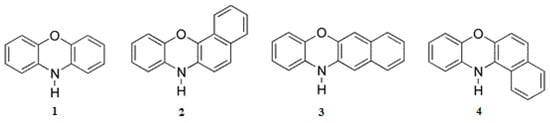
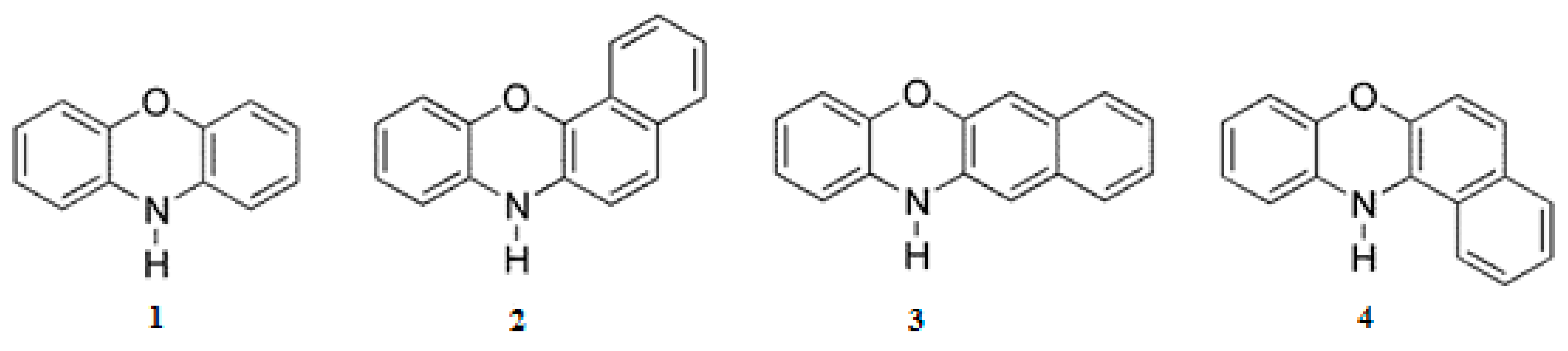


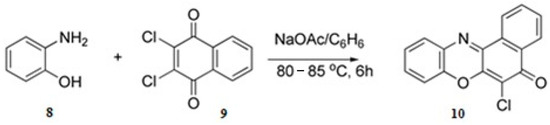
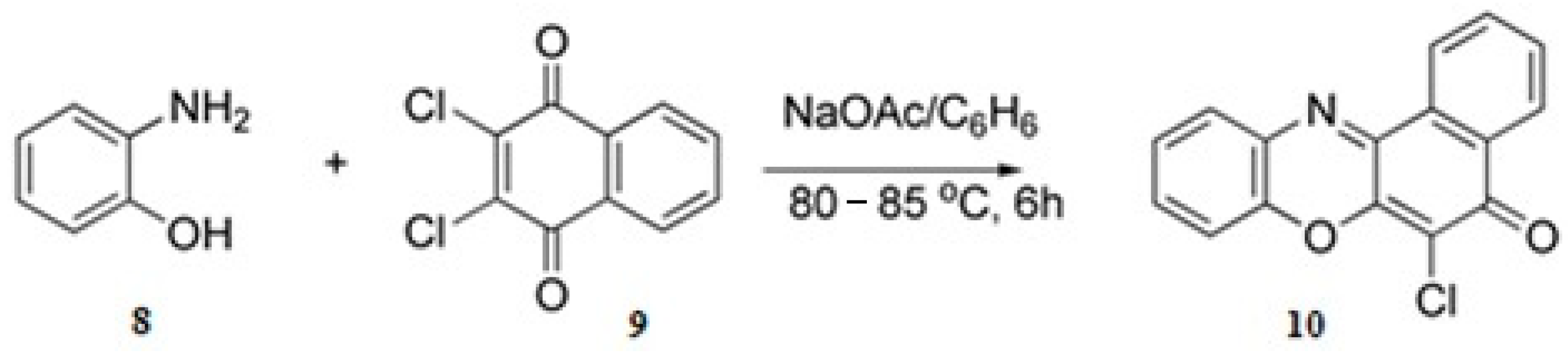
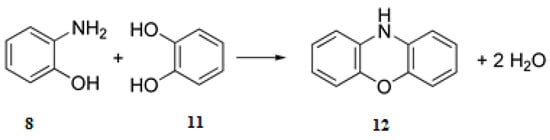
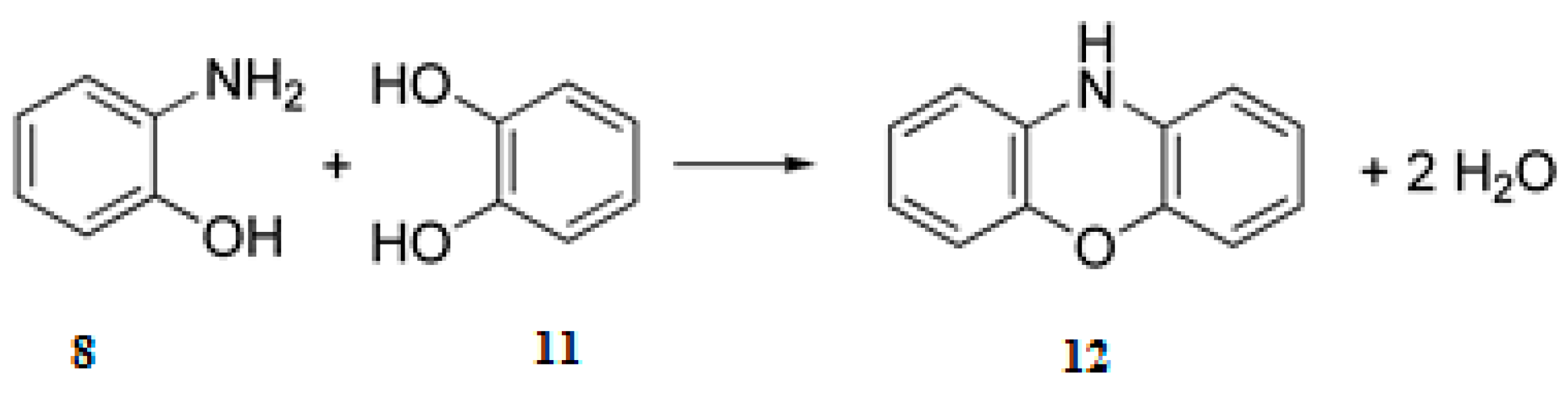
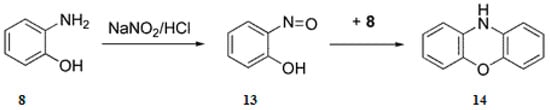
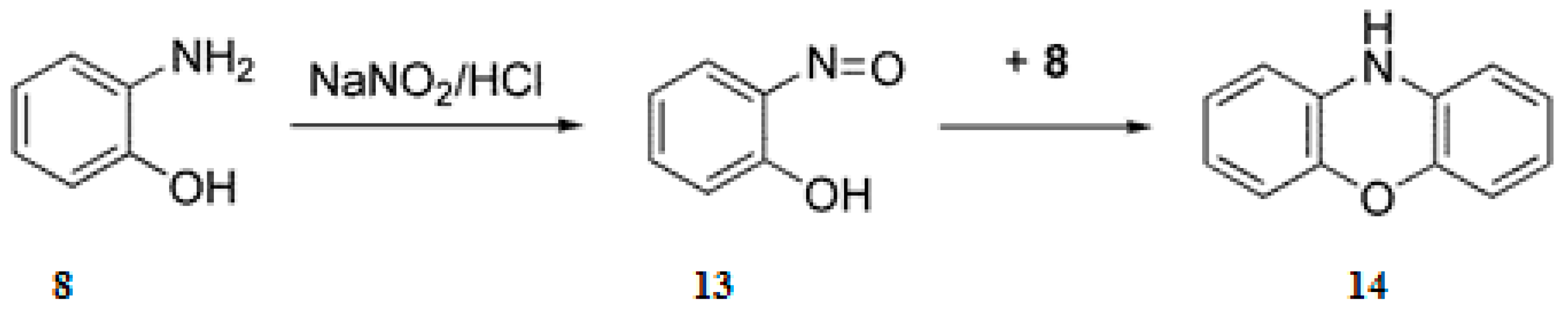
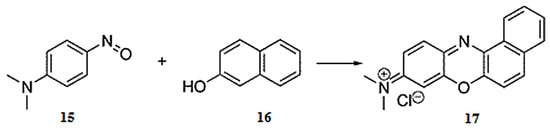
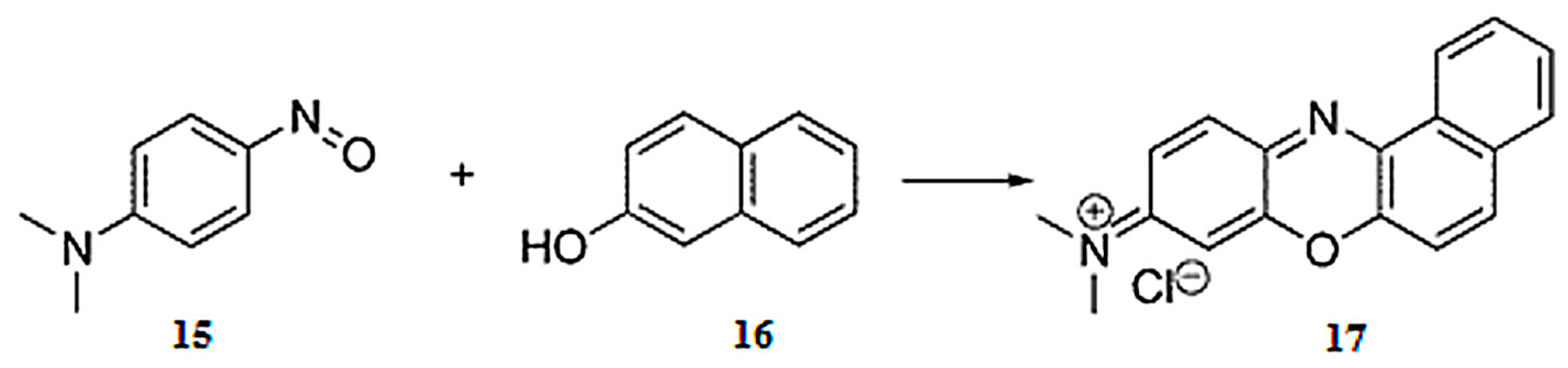
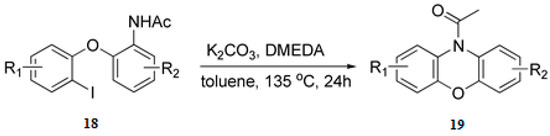
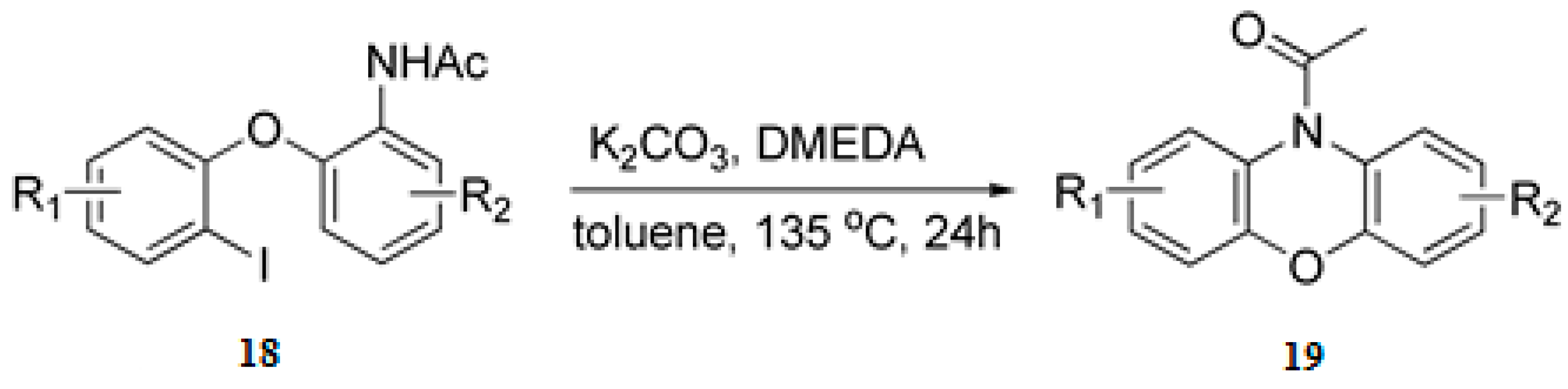
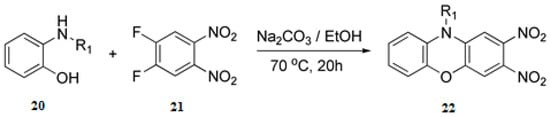
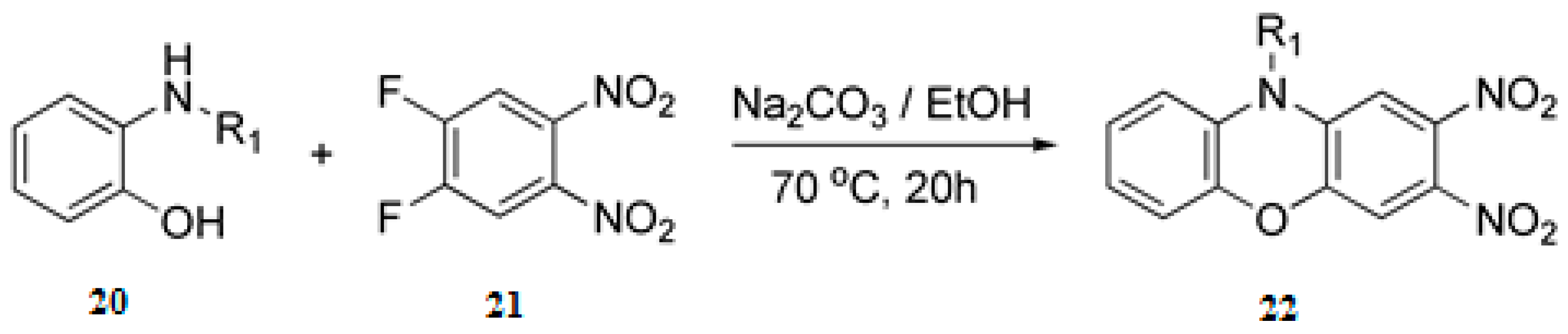


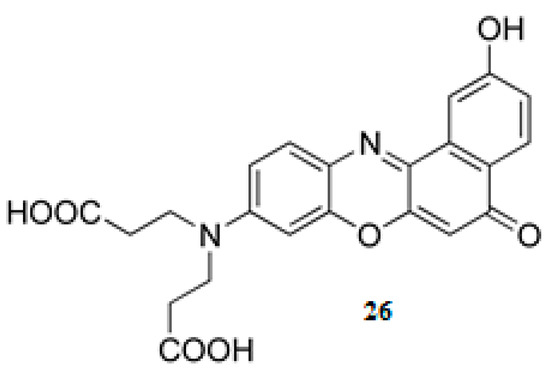
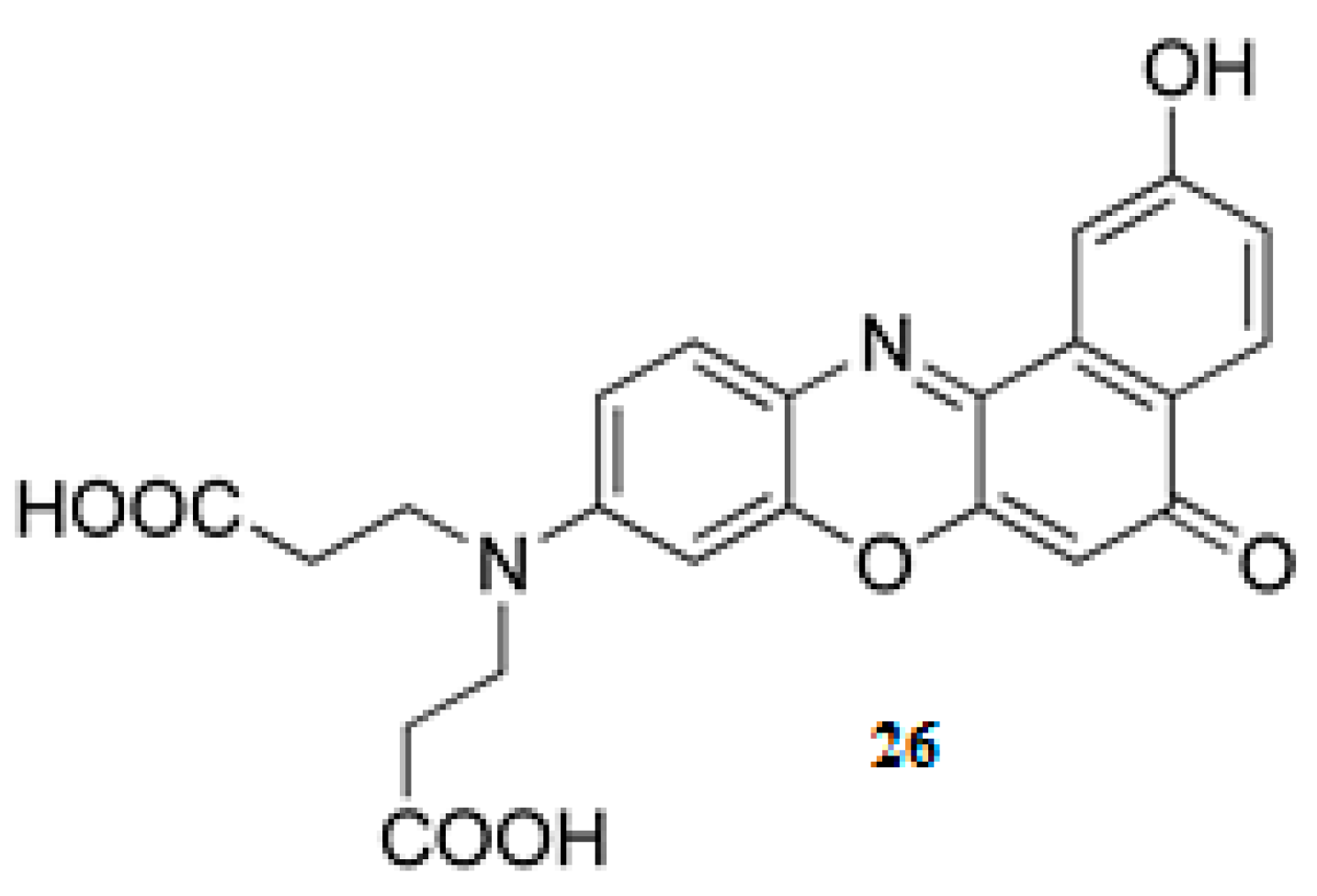
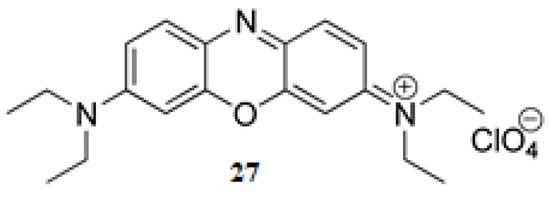
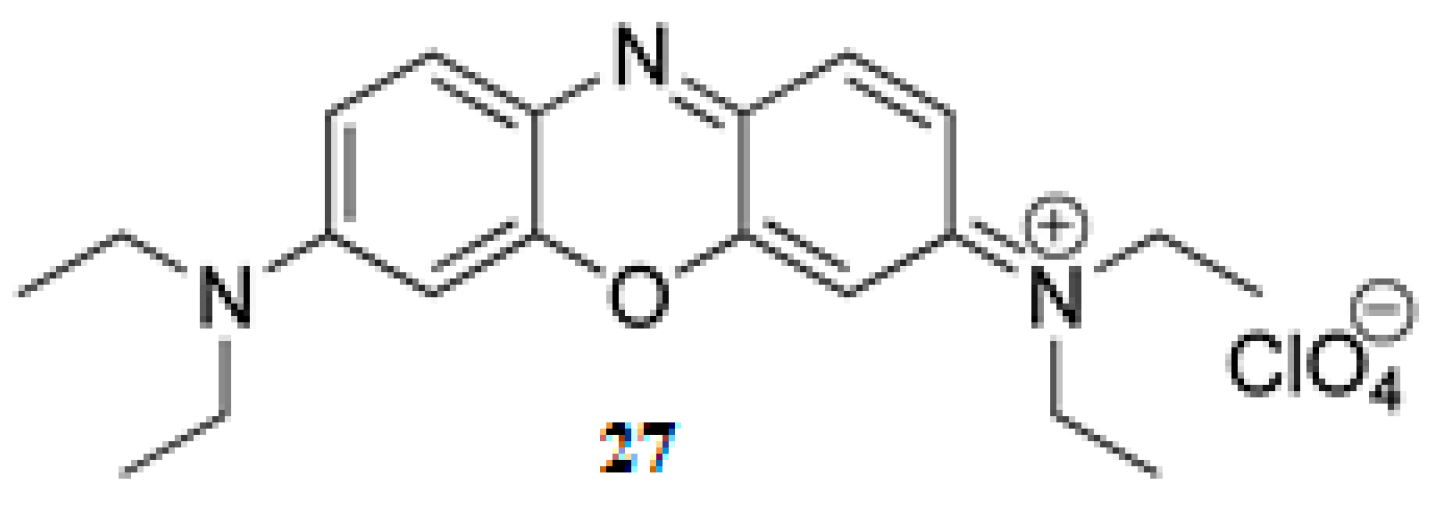
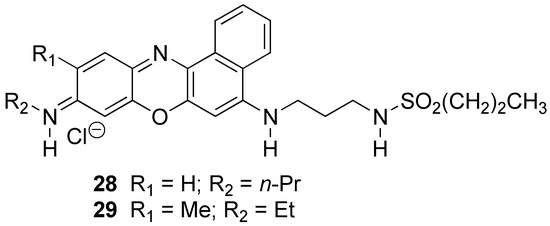
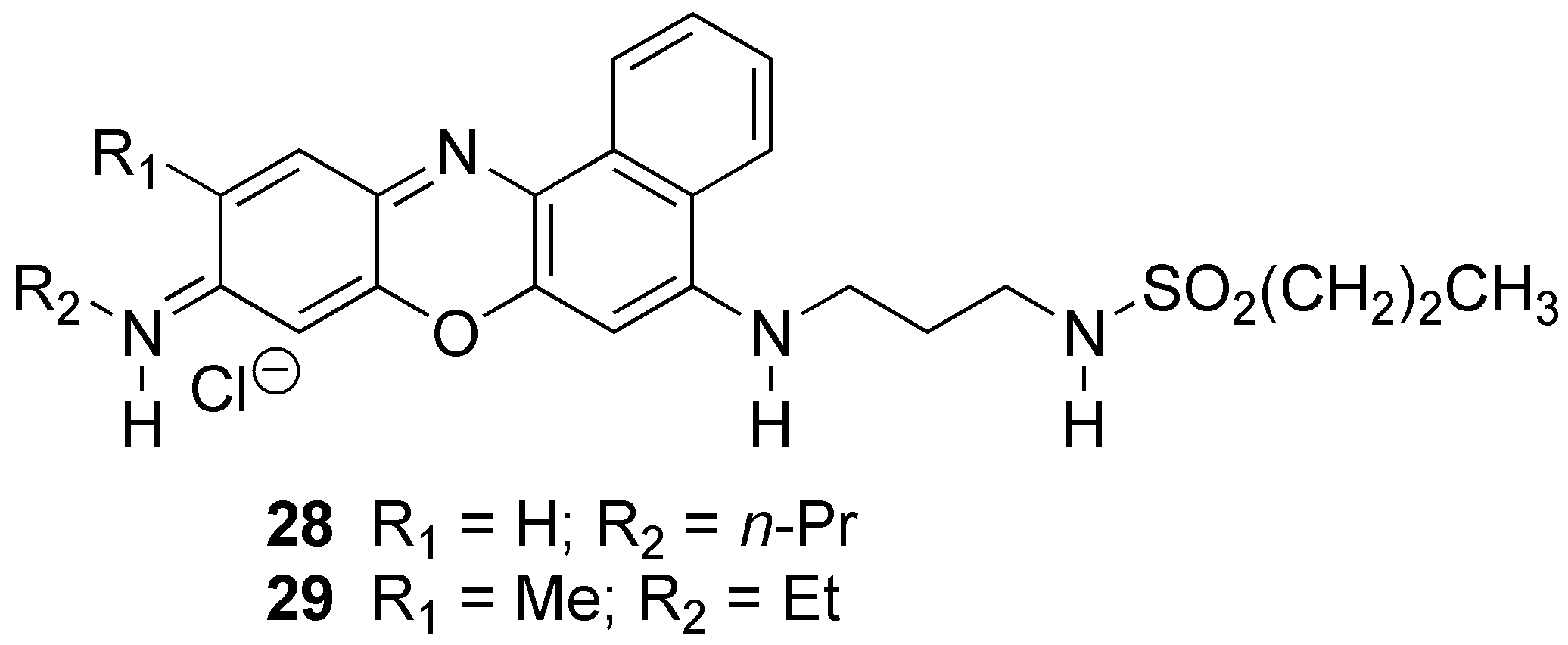
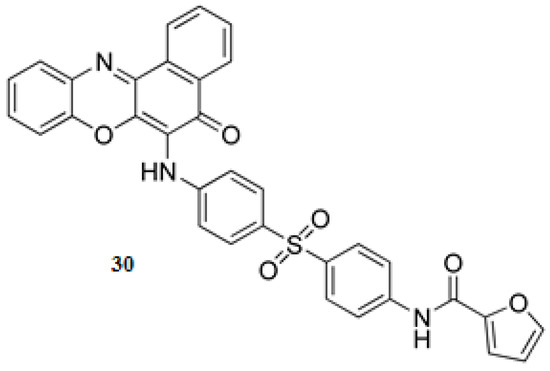
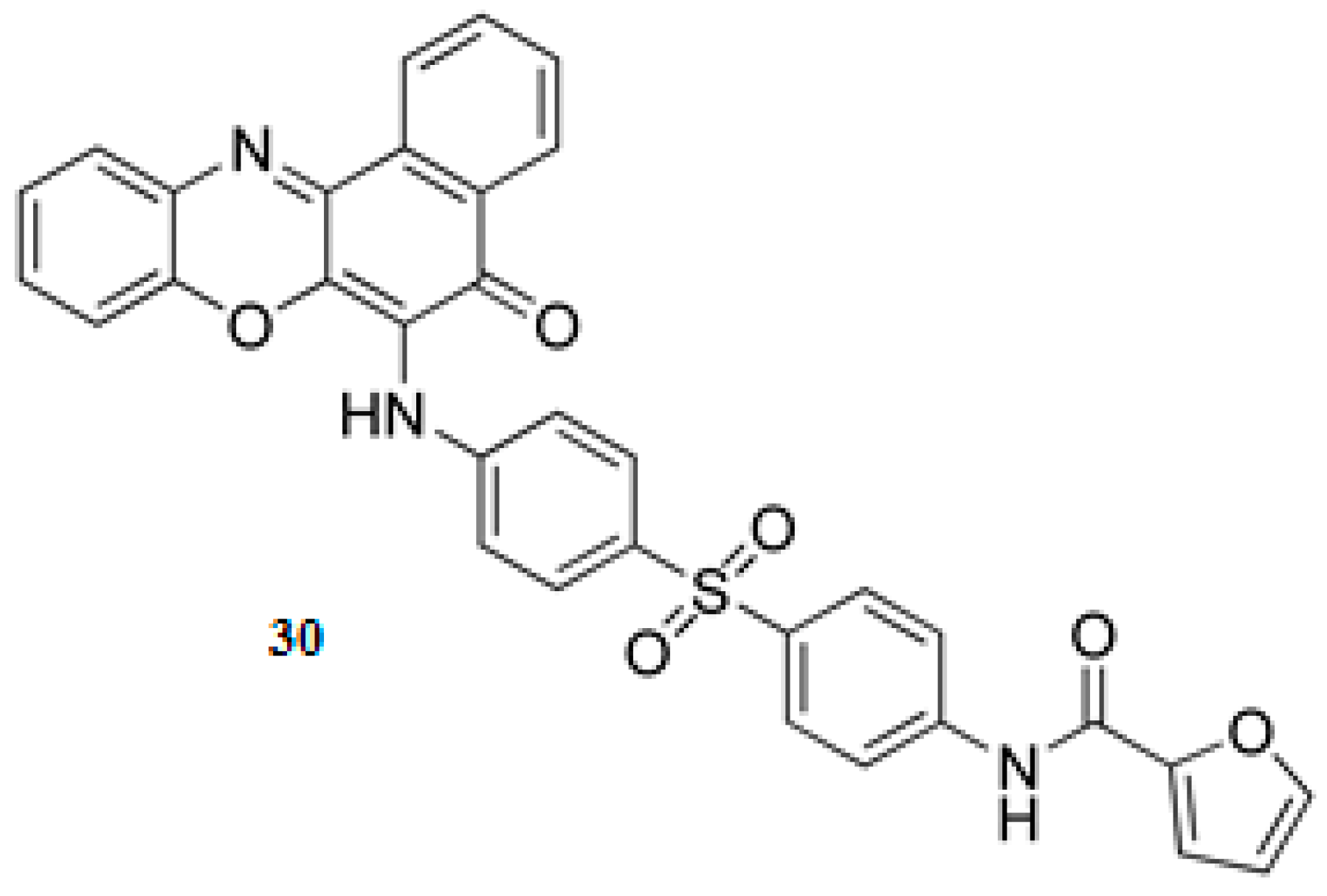
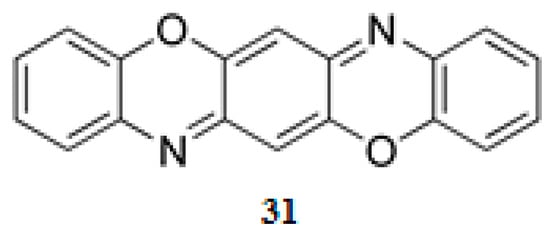
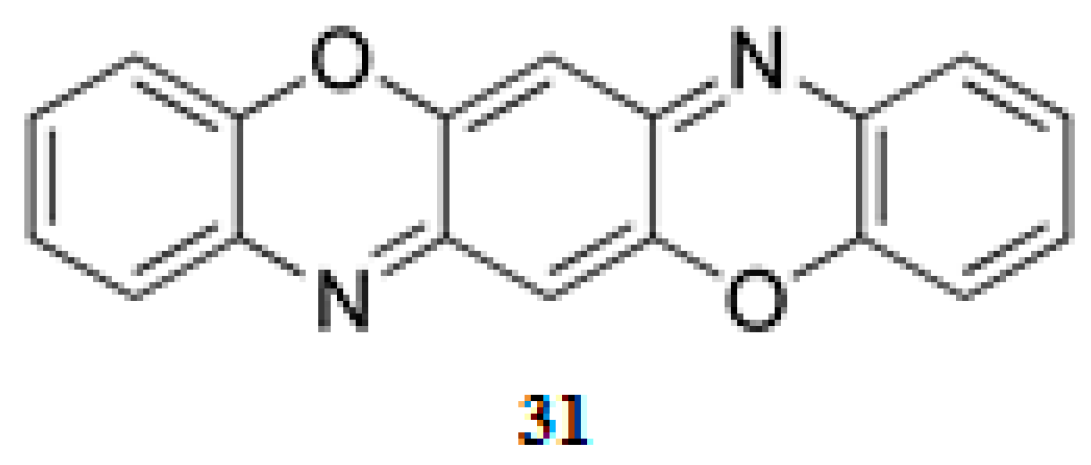
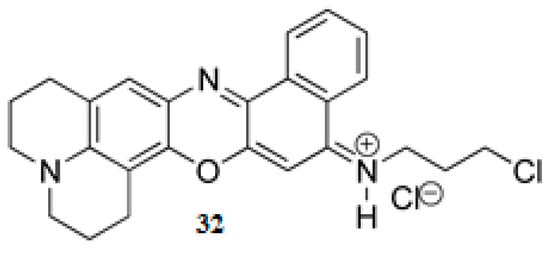
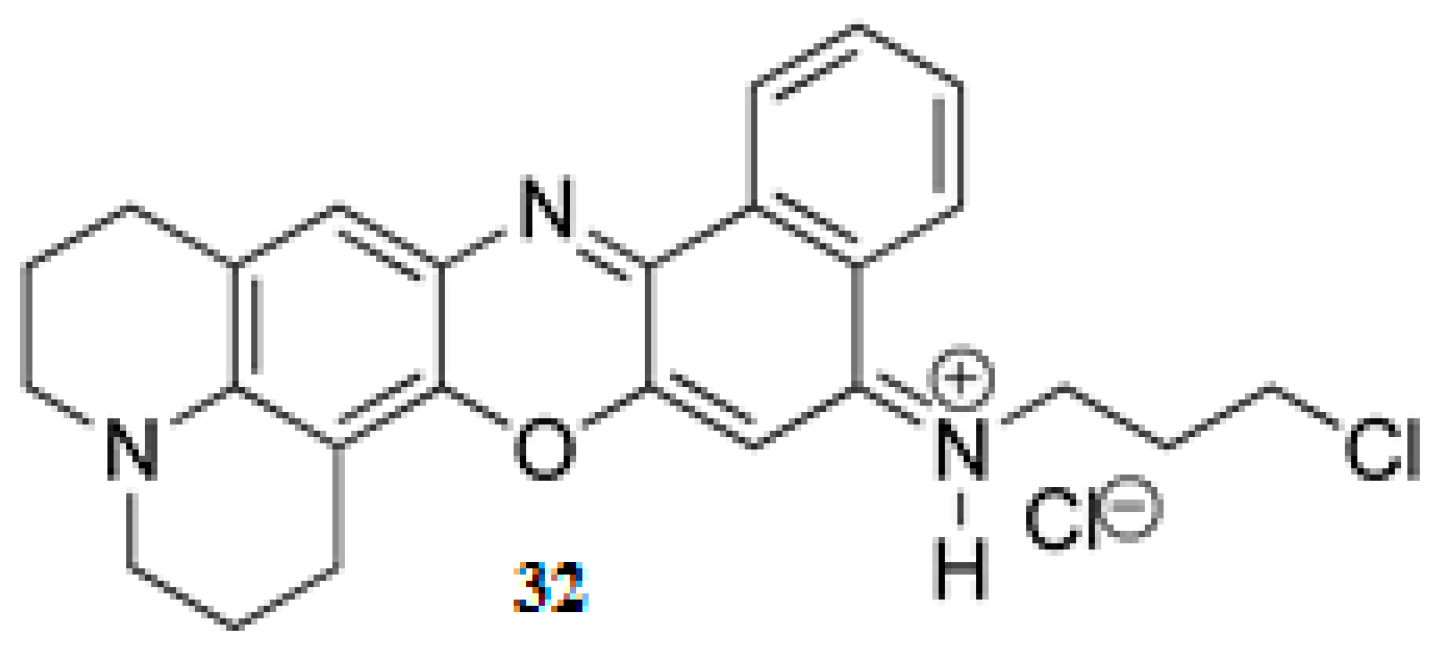

Disclaimer/Publisher’s Note: The statements, opinions and data contained in all publications are solely those of the individual author(s) and contributor(s) and not of MDPI and/or the editor(s). MDPI and/or the editor(s) disclaim responsibility for any injury to people or property resulting from any ideas, methods, instructions or products referred to in the content. |
© 2026 by the authors. Licensee MDPI, Basel, Switzerland. This article is an open access article distributed under the terms and conditions of the Creative Commons Attribution (CC BY) license.