


Abstract
The creation of new settlements on the Moon is an extraordinary opportunity for both economic and research purposes, but it is hindered by the prohibitive costs of transporting materials from Earth. In this frame, in situ resource utilization (ISRU) can significantly reduce these costs by exploiting lunar regolith, the Moon’s most abundant resource. In this work, a lunar regolith simulant is aggregated by an innovative manufacturing process based on geopolymerization. Bricks were obtained by mixing the simulant with a small amount of sodium hydroxide solution, followed by cold compaction at 20 MPa and oven drying at 500 °C for 1 h. Regolith bricks reinforced with unidirectional dry carbon fibers were manufactured by alternating the regolith-based mixture with layers of CFs. Mechanical properties were evaluated by bending and compression tests. Neat bricks were manufactured for comparison. Improvements in mechanical behavior were obtained thanks to fiber insertion, mainly in terms of resilience, even if stress at break is not improved. In compression, fibers limit brittle behavior, resulting in an average increase in toughness of 59.5%. Fast curing time and limited water consumption, compared to the traditional geopolymerization process, make this manufacturing process highly attractive to obtain lunar regolith bricks.
1. Introduction
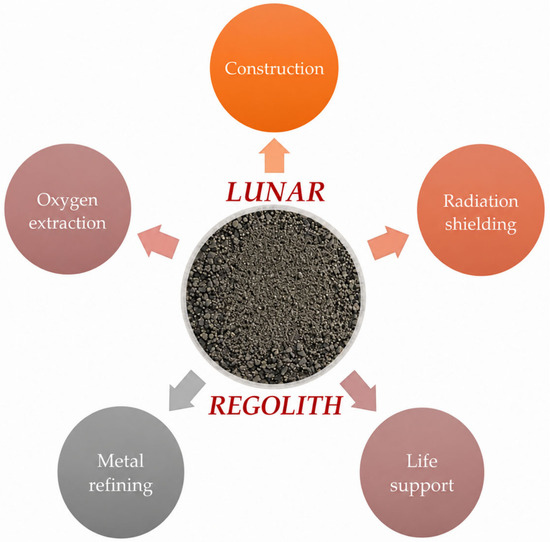
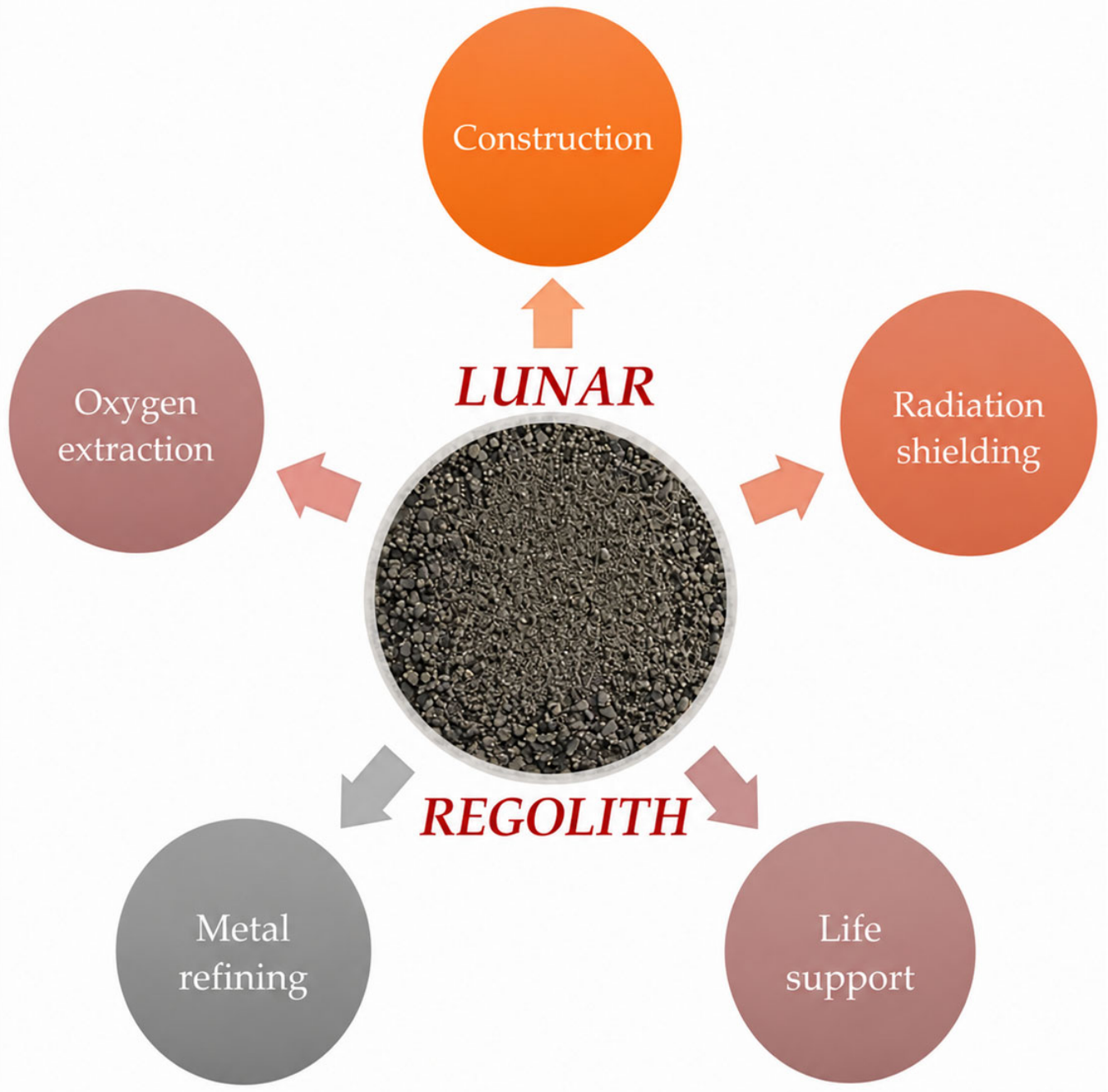
Renewed interest in lunar and space exploration has revived the need for technologies that are able to support long-term human missions. In this context, the ability to establish new settlements on the Moon would offer significant opportunities for both economic development and scientific research. However, long-term lunar missions entail significant challenges, especially in terms of building habitats, infrastructures, and other critical systems. The Moon is a harsh environment for both human beings and machines, and the lack of raw materials, thin atmosphere and reduced gravity make it difficult to use conventional manufacturing technologies. Furthermore, transporting materials from the Earth to the Moon has prohibitive costs, particularly under the constraints of limited payload capacity and high launching expenditures [1]. For this reason, in situ resource utilization (ISRU) has arisen as a sustainable strategy to reduce mission costs and logistical complexity by using lunar regolith as a key material for infrastructures and consumables, reducing Earth dependence and allowing the development of settlements [2]. In fact, regolith is the most abundant resource in the Moon’s soil, with its mineralogical composition depending on the specific region of extraction. Regolith can be exploited in a variety of ways; potential products include O2 and H2O for life support, H2 and O2 as fuel and propellant, and other elements and compounds for metallurgical and chemical manufacturing processes, and construction and shielding materials [3], as shown in Figure 1.
Figure 1.
Possible uses of lunar regolith.
The aggregation of lunar regolith is a significant challenge for future space construction; it is a fine-grained material with poor cohesion, which makes it difficult to bind into stable structures without further processing. The irregular shape of the particles and the lack of natural bonding agents reduce mechanical strength and increase brittleness. Developing efficient methods to aggregate regolith is essential to produce durable building materials directly on the Moon, minimizing the need to transport resources from Earth.
A significant challenge for human settlement on the Moon is the radiation resulting from the combination of Galactic Cosmic Rays (GCRs) and Solar Particle Events (SPEs). The incorporation of lunar regolith into construction materials is an effective approach to ensure shielding from space radiation [4]. Traditionally, infrastructure consists of a pressurized shell and a multi-layer insulation capable of radiation shielding. A two-layer lunar dome made of a thin aluminum-based alloy as the inner layer and an outer layer made of lunar regolith has been simulated, confirming the positive effect of regolith on radiation protection [5]. Furthermore, the use of materials with low atomic numbers, like boron and carbon, in combination with lunar regolith helps to lower secondary radiation emissions [6]. Another study proposed a multi-layer structure obtained from surface regolith mixed with an alkali binder in the form of paste [7]. A possible solution regards the use of high-hydrogen-content materials to coat the inner wall of the regolith wall, to increase shielding efficiency against protons and neutrons [8]. A multi-layer structure consisting of a layer of PE on top of a regolith slab has enhanced radiation protection behavior in comparison with a wall made by regolith bricks enriched with a polymer binder [9].
In terms of manufacturing, one of the most investigated solutions to aggregate lunar regolith regards additive manufacturing (AM) [10]. Among the different techniques, laser powder bed fusion (LPBF) has been studied for its ability to operate without using additional resources such as water, gases, or binders [11]. The use of lunar regolith as feedstock material in LPBF technology is challenging because of its morphological and geochemical properties that affect the manufacturing process. A careful selection and optimization of the substrate materials and process parameters, including laser power and scan speed, is crucial to successfully use such technology on lunar regolith simulants [12,13]. Aerosol deposition (AD) is an AM process that produces dense ceramic films and coatings from powders using kinetic energy. Potentially, it can be used on the Moon, since it benefits from vacuum and only requires the use of a pressurized gas to accelerate particles. Ceramic films have been produced from lunar mare simulant (LMS-1), suggesting that lunar regolith can be used as a low-loss dielectric for in-space manufacturing [14]. A deposited film of lunar mare simulant EAC-1 (European Astronaut Centre-1) made by the AD method has been produced within minutes, showing that this technology is promising for the production of dense coatings to be used in future Moon exploration and utilization missions [15]. While efforts have been made to investigate lunar regolith deposition on metals, studies on polymeric substrates remain largely limited. Cold spray AM deposition of lunar regolith simulant onto polymeric substrates has the potential to create functional coatings that can advance future ISRU on the Moon [16]. Fused Deposition Modeling (FDM) is another effective technology that enables on-demand production of components, especially when materials transport from the Earth is limited [17]. Different thermoplastic matrices, such as poly-ether-ketone-ketone (PEKK) and low-density polyethylene (LDPE), have been tested in combination with lunar regolith simulants to create composites to be printed by this technique [18,19]. PE has been deeply studied for its shielding ability against space radiation, chemical stability and low cost, as well as for its recyclability (i.e., packaging used by astronauts is typically made of PE) [20]. In this frame, a PE-based composite with boron-rich fillers was designed for both space radiation attenuation and in situ manufacturability via scalable FDM printing [21].
Regolith brick manufacturing can be performed in several ways. In [22], graphene-modified lunar brick materials were prepared via microwave sintering. The incorporation of graphene into the bricks promotes the formation of three-dimensional networks within the regolith simulant matrix, enhancing the specific heat capacity and thermal conductivity of the bricks. Furthermore, sintering has resulted in an effective method of manufacturing synthetic space bricks [23], using a compaction pressure of 300 MPa followed by a heating step. Inspired by the natural geological cementation process of carbonate minerals, the production of bricks on the Moon using in situ sand-sized regolith has been performed via microbially induced carbonate precipitation, a process resulting from various bacterial metabolic pathways as cementing agents [24].
Geopolymerization is a chemical process in which aluminosilicate materials react with alkaline solutions to form a hardened, cement-like binder. It can be used to turn lunar regolith into solid bricks by activating its mineral content, enabling in situ construction without transporting materials from Earth. Cold sintering process is an energy-efficient strategy for fabrication of lunar-regolith based geopolymer, employing moderate temperatures (80–200 °C) and pressures (50–250 MPa) with minimal alkali activator (14.4 wt%), while achieving rapid consolidation (15–75 min) and preserving lunar regolith’s mineral composition [25]. The effect of temperature in the geopolymerization process was investigated by [26], finding that a curing range between 40 °C and 80 °C increased both compressive and flexural strength in comparison with higher temperatures. Another study proposed a geopolymer made of 1 part hydroxide to 1.5 parts silicate by weight, called “Lunamer”, with a compressive strength that would enable the construction of structures on the Moon [27]. Moreover, the incorporation of basalt fiber into lunar regolith simulant geopolymers permitted good flexural strength performance with an excellent fiber-matrix synergy to be achieved, showing that customized fiber reinforcement could be used to optimize lunar construction materials [28]. The placing of carbon nanotubes inside lunar simulant-based geopolymers has been also investigated, showing an improvement of mechanical performance and heat transfer throughout the specimen, resulting in uniform thermal distribution [29]. In addition, geopolymer cement was prepared by mixing an alkali fusion of simulated lunar rock sand and sodium hydroxide and water. The obtained material has a good radiation shielding capacity and is comparable with commercially available Portland cement [30]. Compression tests on specimens of geopolymers made of lunar regolith simulants mixed with different sodium hydroxide contents and cured in a temperature range between 52.7 °C and 76.3 °C have been performed. The highest compressive strength was 6.87 MPa, obtained with a sodium hydroxide content of 12% [31]. However, geopolymerization typically requires long curing times, relatively low processing temperatures, and a significant amount of water to enable the reaction and ensure proper workability. These conditions mean it is challenging to use this process on the Moon, where water is extremely scarce and environmental conditions are harsh. As a result, concerns about water utilization and extended curing periods limit the actual implementation of geopolymerization for in situ lunar construction.
To overcome these issues, an innovative aggregation process of lunar regolith is presented in this work. A commercially available simulant is used to obtain bricks produced by mixing the powder with a minimal amount of a sodium hydroxide solution for a short time. Subsequently, cold compaction and oven drying are performed. Also, reinforced samples were manufactured by alternating layers of the regolith mixture with unidirectional dry carbon fibers (CFs). Physical properties are measured and mechanical behavior is evaluated by bending and compression tests. Results highlighted the potential of this manufacturing procedure to be used in a space environment to fabricate shields made of lunar regolith.
In conclusion, the aim of this work is to develop an innovative manufacturing process for the agglomeration and consolidation of lunar regolith simulant into structural shields in the form of bricks for future settlements.
2. Materials and Methods
2.1. Supplied Materials
The lunar highlands regolith simulant (LHS-1) was obtained from the Stephen W. Hawking Center for Microgravity Research and Education of Orlando, FL, USA. This material was prepared with the aim of reproducing the chemical, physical and mechanical behavior of the Moon ground. It was supplied as a powder with an uncompressed bulk density of 1.30 g/cm3 and a particle size between 0.04 µm and 1000 µm. It is mainly composed of anorthosite-rich material and resembles material from the lighter regions of the Moon. The mineralogical composition is approximately 74.4 wt.% anorthosite and 24.7 wt.% glass-rich basalt, with a minor presence of ilmenite, pyroxene, and olivine. LHS-1 is particularly attractive for the geopolymerization process thanks to its aluminosilicate-rich composition, which enables it to react with alkaline activators to form networks. Unlike common terrestrial powders, LHS-1 contains angular and irregular particles that reproduce the fragmented grains produced on the Moon by meteorite impacts and space weathering. These particles create high interparticle friction, which improves compaction resistance but can also lead to brittle failure after consolidation.
The selected activator was sodium hydroxide (NaOH), which was dispersed in a solution made of distilled water and solid particles of NaOH (AnalytiCals by Carlo Erba Reagents, Cornaredo, Italy), whose molar mass was 39.997 g/mol.
2.2. Preliminary Testing
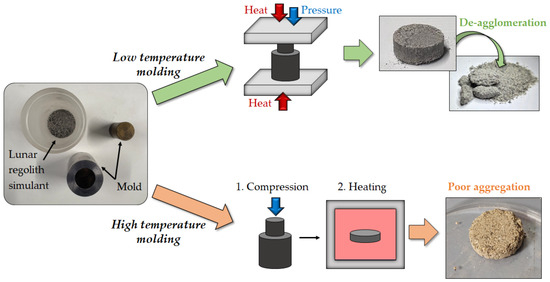
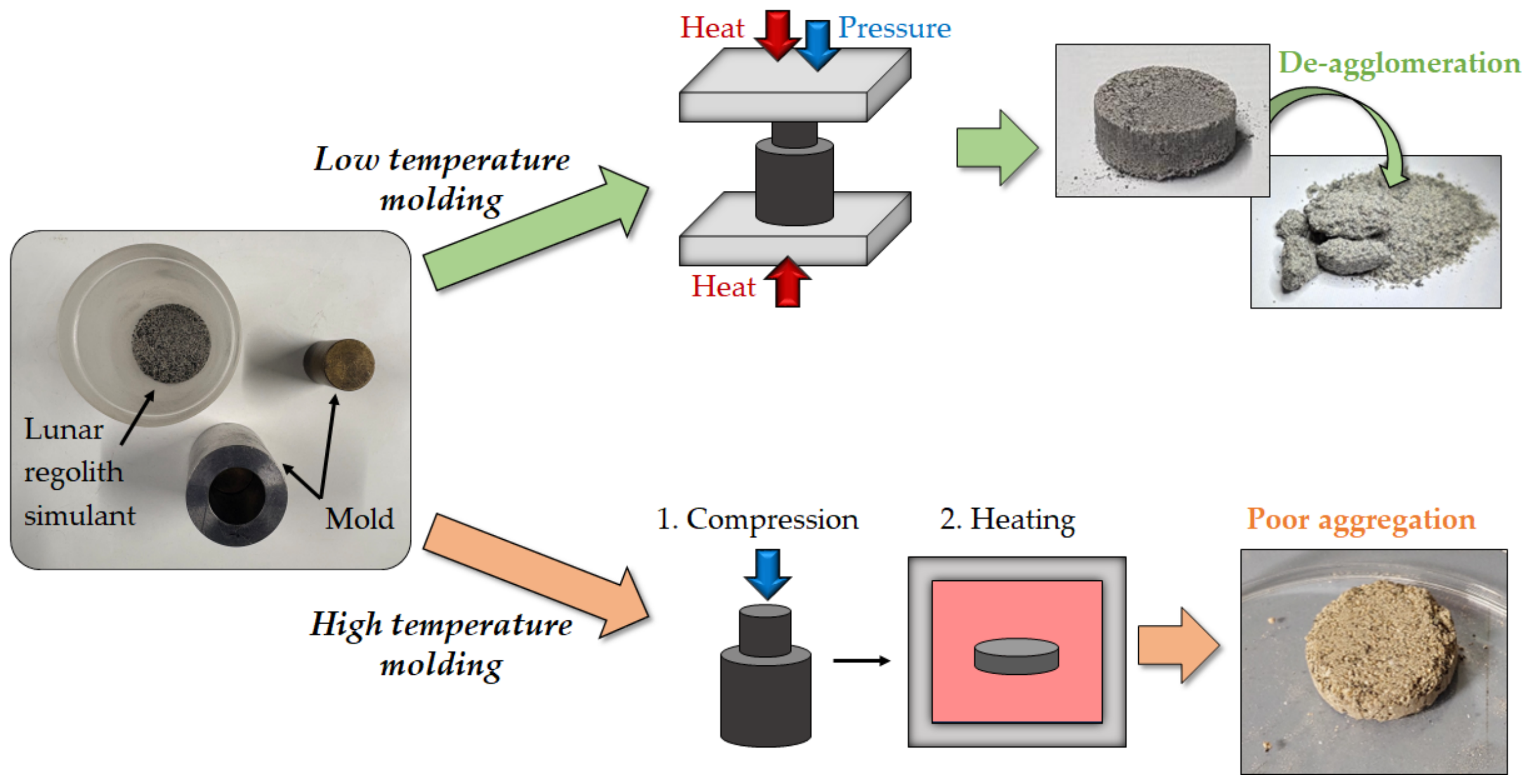
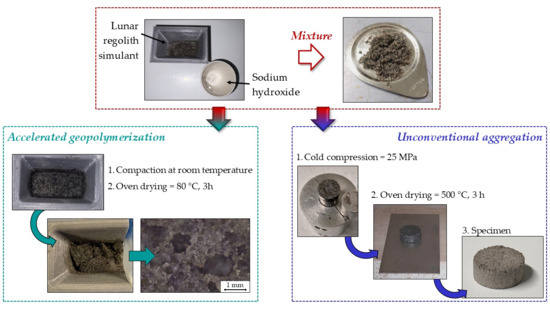
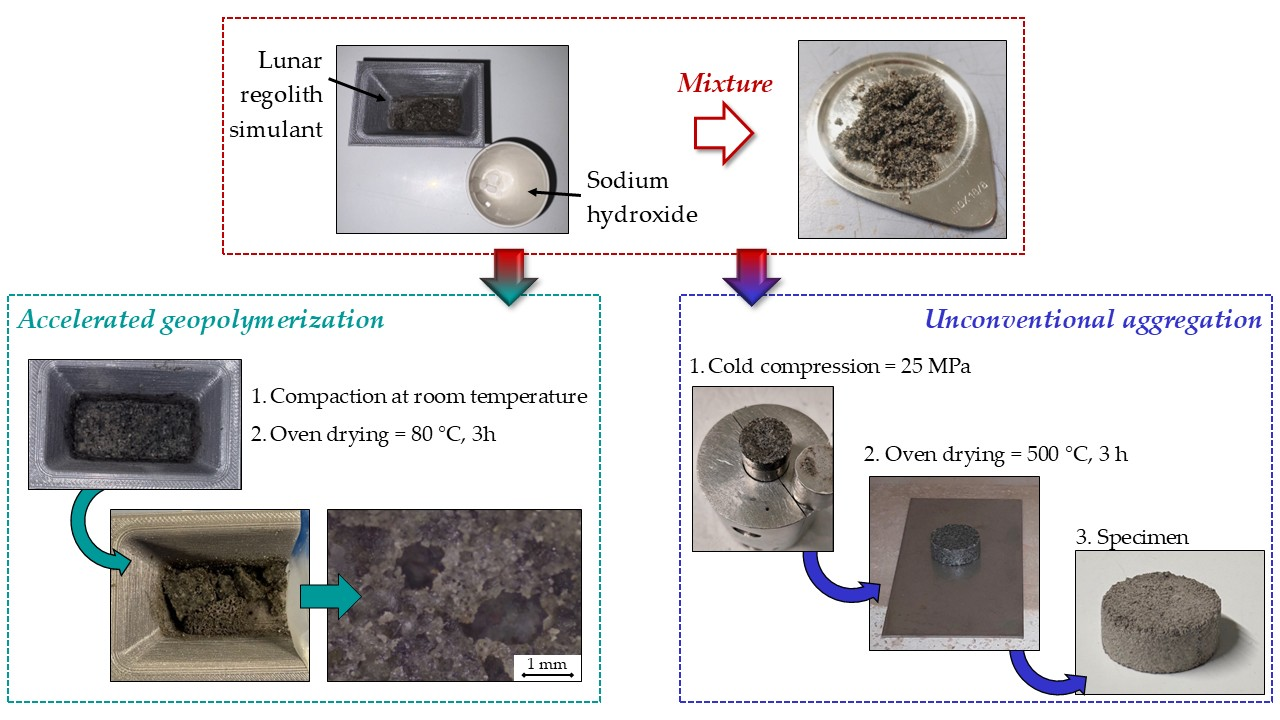
At first, grain interlocking capability was investigated through direct molding. A mass of 6.9 g of LHS-1 was inserted into a cylindrical metal mold having a cross section of 22 mm. Figure 2 reports the manufacturing strategies that were fulfilled, which differ primarily in terms of consolidation temperature. First, experiments were performed at a low temperature (250 °C) using a hot parallel plate press (by ATS FAAR, Cassina dè Pecchi, Italy). Molding conditions also included a pressure of 25 MPa and a holding time of 2 h. Subsequently, a test at high temperature was carried out by a 2-step process; a small amount of water was added to the powder to favor compaction at room temperature, which was conducted using a pressure of 25 MPa, and then the specimen was extracted from the mold and consolidated in an oven (by Nabertherm, Lilienthal, Germany) at 500 °C for 3 h.
Figure 2.
Direct molding of lunar regolith simulant at low and hot temperature.
Subsequently, first tests based on geopolymerization (Figure 3) were performed by following 2 methodologies. The former is a traditional process for ceramic materials. A mixture of LHS-1 (2.06 g) and a solution of NaOH and distilled water (12 M) was prepared, and a small ingot was manufactured by manually leveling the compound at room temperature and heating in an oven at 80 °C for 3 h. Typically, geopolymerization is characterized by a long dry time, up to 24 h, but a shortened time was used; indeed, this study was performed in the frame of in-space manufacturing and a 24 h process does not seem to be feasible in a space environment. The following experiment was carried out using the same cylindrical mold of direct molding, with 5.7 g of LHS-1 being mixed with a NaOH solution of 12 M molarity. Compaction was performed at 25 MPa at room temperature, and then consolidation was carried out in oven at 500 °C for 3 h. Both methods used a small amount of the alkaline solution and short mixing time.
Figure 3.
Manufacturing of regolith simulants through different geopolymerization paths.
2.3. Samples Testing
An unconventional manufacturing process was employed to fabricate 4 samples in the form of bricks using a lunar regolith-based mixture. The manufactured specimens had nominal dimensions of 80 × 15 × 10 mm3. Two unreinforced specimens were produced, while an additional two specimens were manufactured by incorporating dry carbon fibers (CFs). The reinforced specimens were produced by alternatively stacking 5 layers of unidirectional CFs with layers of the regolith-based mixture.
The physical properties of the bricks were measured after molding, and the surface morphology was investigated using digital microscopes (Hirox HRX-01 by Hirox Europe (Limonest, France) and Leica S9i by Leica(Wetzlar, Germany)).
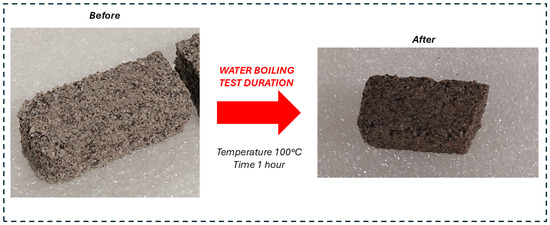
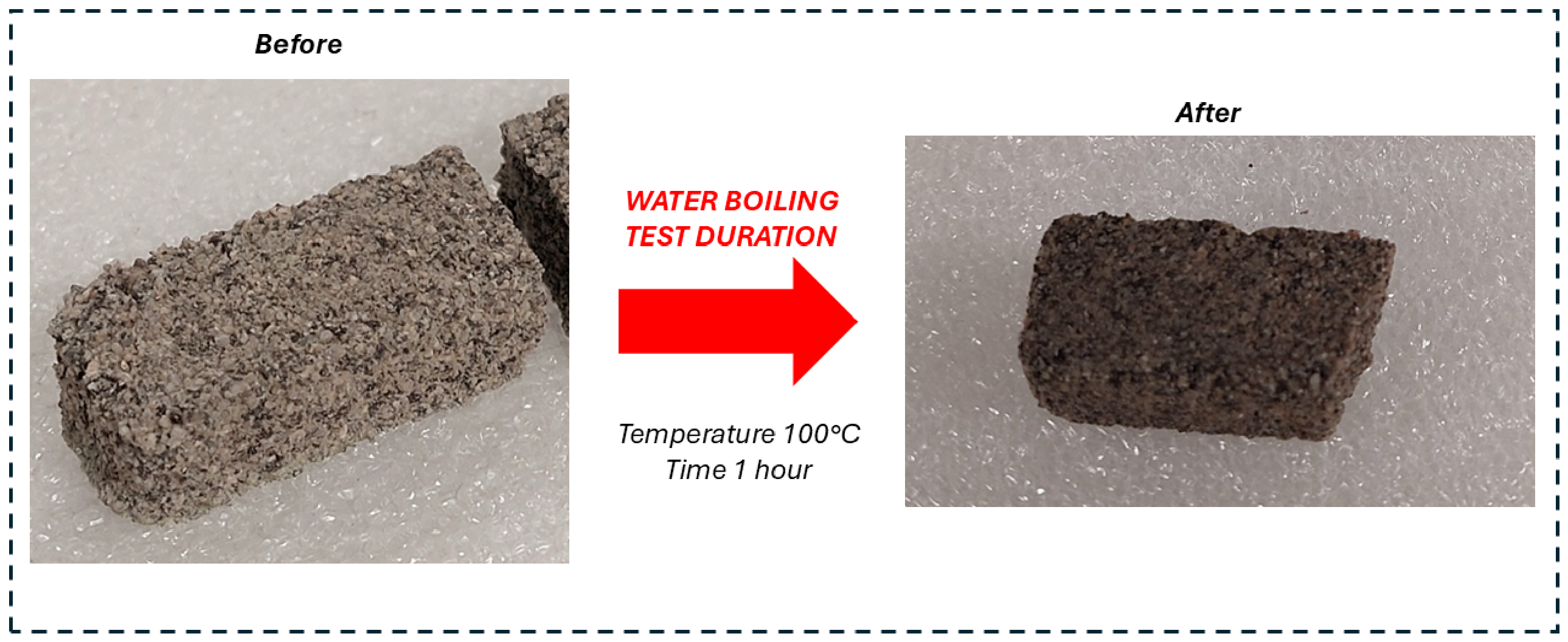
Water boiling tests were performed on the samples to evaluate the integrity of consolidated bricks when exposed to water and severe thermal conditions. The bricks were immersed in water at a temperature of 100 °C for 1 h.
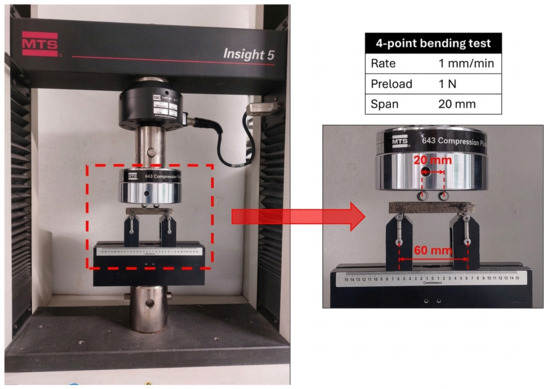
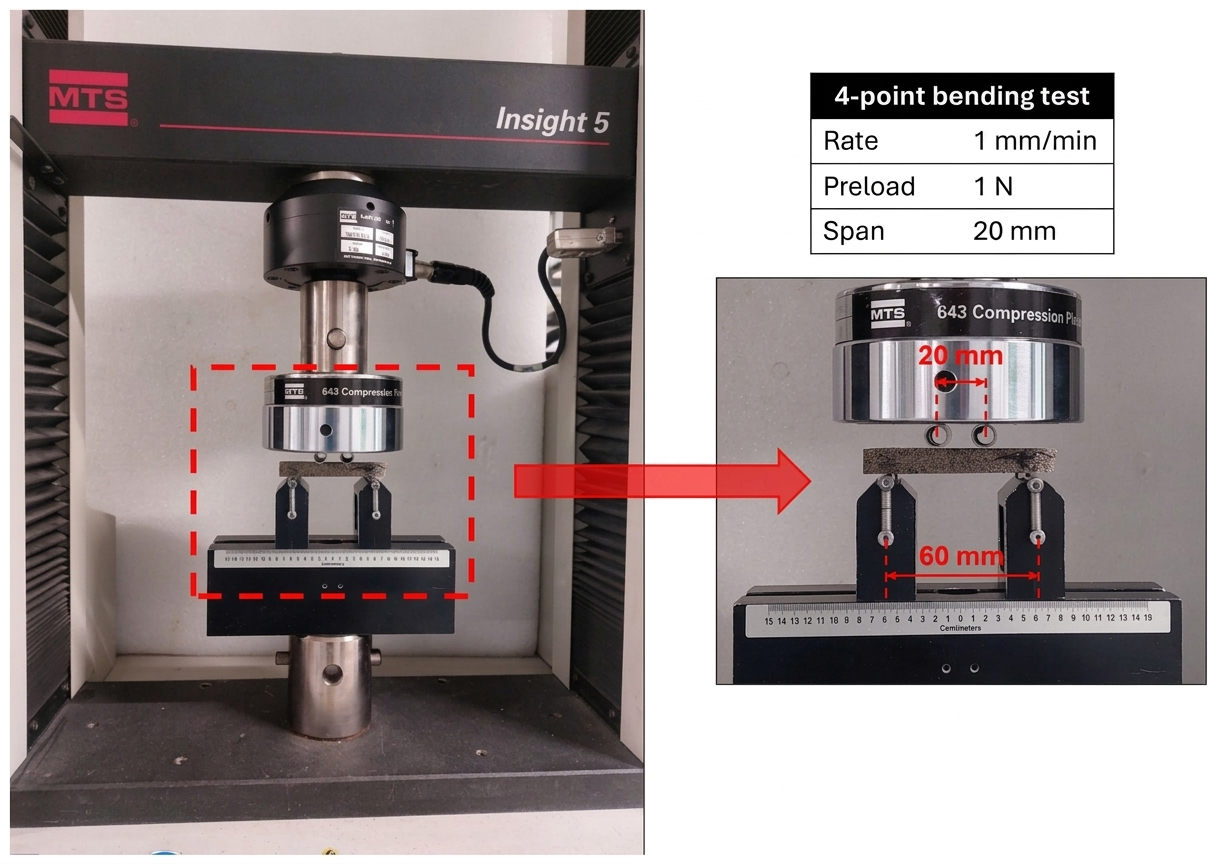
Mechanical testing was performed via 4-point bending using a universal material testing machine (MTS Insight 5 by MTS Systems Corporation, Eden Prairie, MN, USA). The distance between the loading pins was 20 mm, while the distance between the supporting pins was 60 mm. Tests were carried out at a 1 mm/min rate with a preload of 1 N. This configuration was chosen because of the brittle nature of the samples, which exhibited the typical mechanical behavior of agglomerated materials. The bending test setup is shown in Figure 4. At the end of the test, the maximum bending stress and the toughness were extracted from each stress–strain curve. Testing in a 4-point bending configuration is useful for agglomerated materials, such as regolith-based composites, to provide information about their toughness and energy absorption capacity, especially in comparison with fiber-reinforced materials.
Figure 4.
Mechanical testing via 4-point bending of neat and CFR regolith simulant samples.
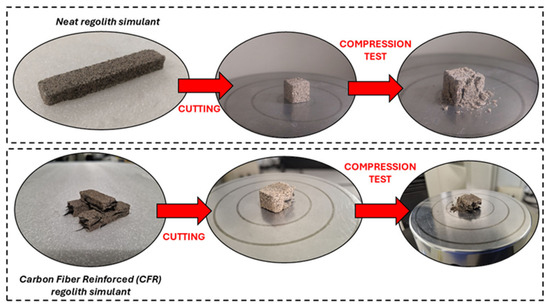
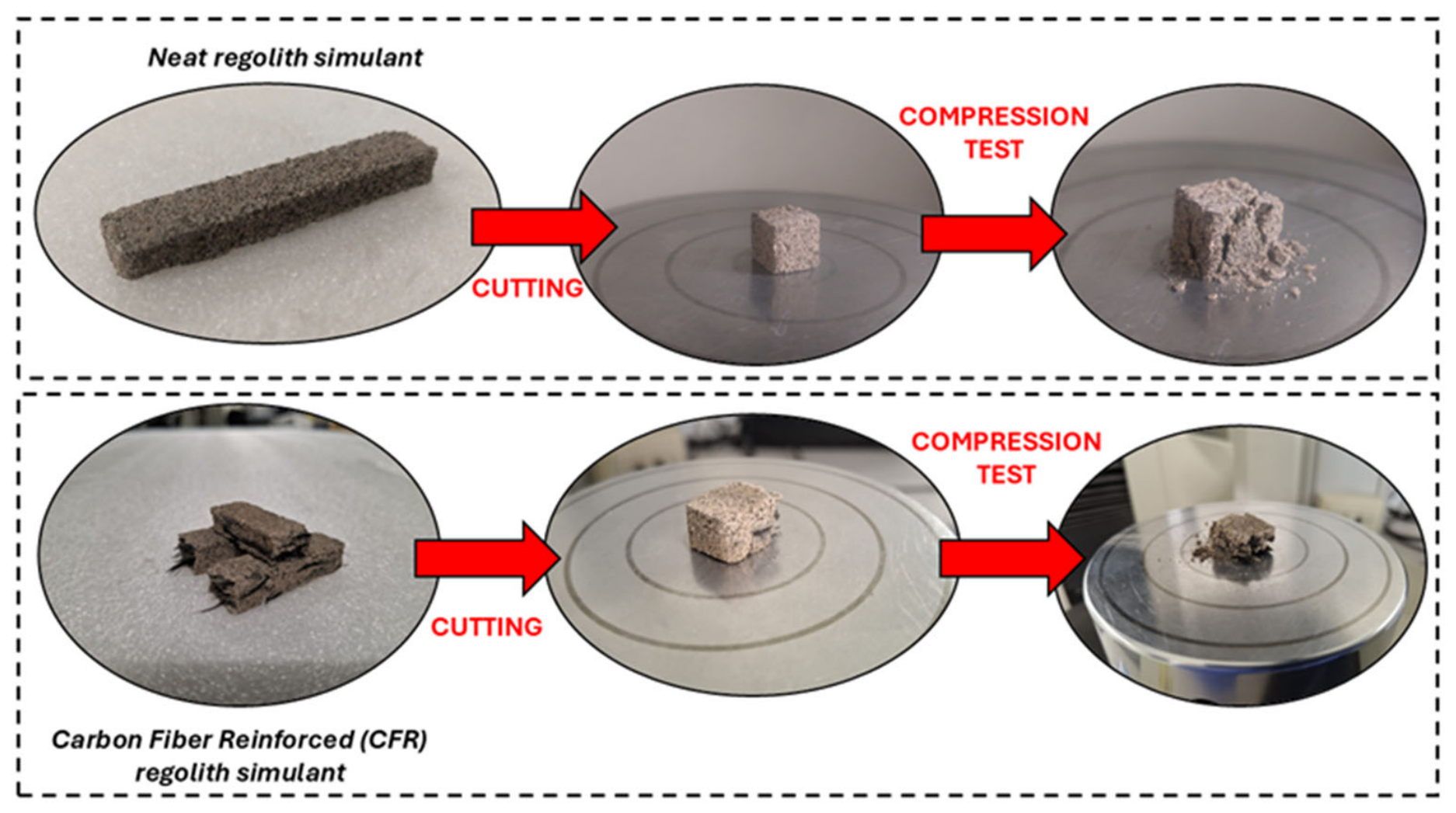
Compression tests were carried out on the manufactured samples using the same universal material testing machine equipped with compression plates (MTS Insight 5 by MTS Systems Corporation, Eden Prairie, MN, USA). These tests are useful for evaluation of the mechanical behavior of agglomerated materials under compressive stress, which represents the main loading condition in structural applications. Bricks were cut to obtain cubes with a nominal 10 mm side; the testing setup is shown in Figure 5.
Figure 5.
Mechanical testing via compression of neat and CFR regolith simulant samples.
Tests were executed with a speed of 1 mm/min and a preload of 1 N. Compression tests are effective for evaluating the degree of consolidation of the samples and investigating their failure mode under loading. The influence of reinforcement, such as the addition of unidirectional CFs, has been investigated. These tests are crucial for assessing the potential applicability of this class of materials as a structural shield for future settlements on the Moon.
Toughness was evaluated both in bending and in compression by using the trapezoidal rule. The area under the stress–strain curves was approximated by trapezoids, and then the area of each one was calculated. Finally, the toughness value was obtained by summing up the single areas.
3. Results
Preliminary tests were conducted to investigate the manufacturability of the regolith simulant. LHS-1 powder was made of particles of different sizes and irregular shapes that can fit together by the action of high pressure. This is a typical procedure for manufacturing ceramic powders, and thus, first, aggregation attempts were performed via direct molding. The specimen obtained by the low temperature test showed a very poor level of compaction, and disaggregation occurred simply by handling. A higher level of stability was obtained by using a temperature of 500 °C for consolidation, but fragments originated during extraction and overall poor aggregation was observed. To improve this aspect, a solution of NaOH was mixed with the regolith simulant with the sample obtained by the accelerated geopolymerization process showing, that a good level of aggregation can be achieved in a short time. Based on these results and with the focus on in-space manufacturing, a new agglomeration process was developed, involving a much higher temperature (i.e., 500 °C instead of 80 °C). The manufactured specimen had an optimal level of aggregation and a minimum quantity of fragments was produced; the manufactured disk showed a diameter of 20.56 mm, a thickness of 7.65 mm and a density of 1.94 g/cm3.
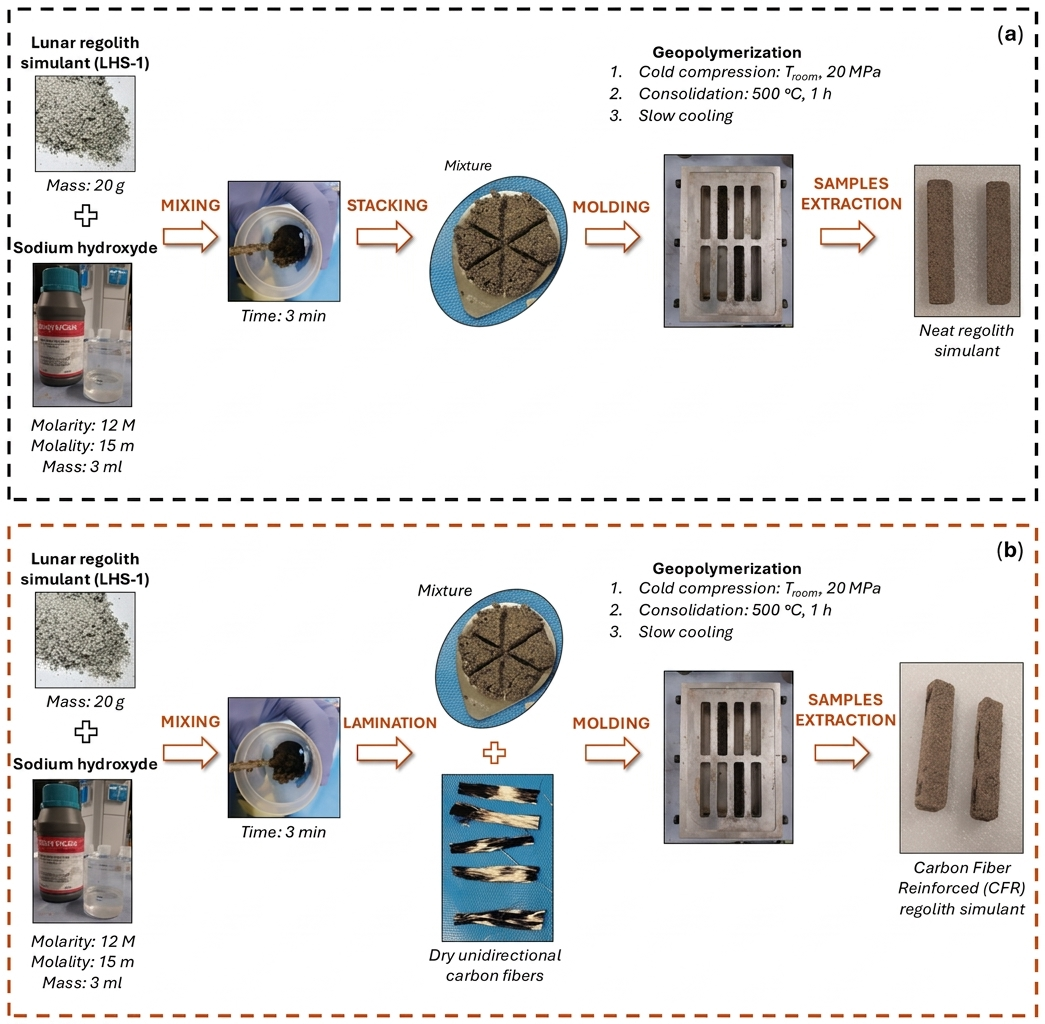
Based on the results obtained from the preliminary tests, an innovative manufacturing process was employed for the fabrication of structural shields in the form of bricks. First, the alkaline solution was prepared by mixing distilled water and NaOH to obtain a molarity of 12 M and a molality of 15 m. Then the regolith simulant powder (20 g) was combined with the NaOH solution (3 mL) and stirred for 3 min.
The mixture was placed into an aluminum mold made of three elements: a shaped upper punch, a bottom plate, and an intermediate plate with eight cavities, with a depth of 30 mm each, matching the shaped punch. Only two cavities of the eight-cavity mold were filled to ensure better stability and uniform pressure distribution during the cold compression process. This configuration helped to prevent misalignment and uneven load transfer inside the mold, improving the dimensional consistency and integrity of the manufactured specimens. A pressure of 20 MPa was applied at room temperature to compact the mixture, promoting particle rearrangement and improving interparticle contact.
Compaction pressure permitted the reduction of porosity and the improvement of the distribution of the solution among the powder grains.
After compression, bricks were dried in an oven at 500 °C for 1 h; this step allowed sample stabilization and strengthening. The process ended with a slow cooling phase to minimize the generation of thermal stresses and prevent the formation of cracks.
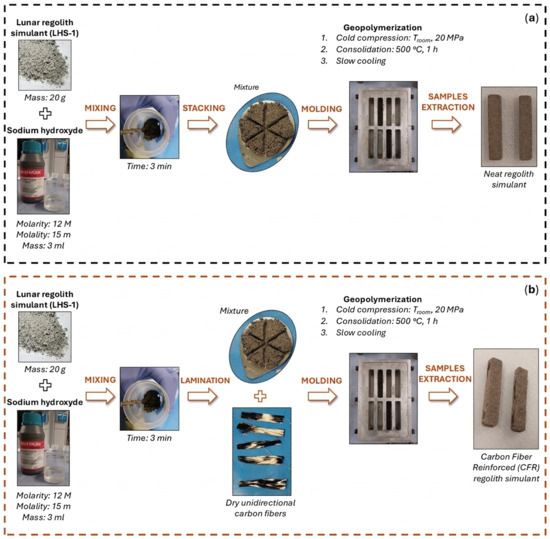
Manufactured samples had nominal sizes of 80 × 15 × 10 mm3. Two unreinforced samples were manufactured by this procedure, and an additional two specimens were obtained by embedding dry CFs. The reinforced specimens were produced by alternating five layers of unidirectional CFs and the regolith-based mixture. The manufacturing process is illustrated in Figure 6.
Figure 6.
Manufacturing process of neat (a) and CF-reinforced (b) samples.
The conventional geopolymerization process typically involves the preparation of an alkaline solution mixed with an aluminosilicate precursor cured at low temperatures for several hours or even days. In contrast, the proposed manufacturing process employs a small amount of water combined with high curing temperatures and short processing times. These characteristics make this process highly attractive for in-space manufacturing applications.
The limited number of samples investigated in this study was due to the restricted amount of lunar regolith simulant available for the experimental campaign.
Therefore, additional tests on a larger number of specimens are required to reach firm conclusions regarding the mechanical behavior of the material and the influence of the manufacturing parameters on its properties.
The evaluation of the mechanical behavior was performed through 4-point bending tests. The physical properties of the manufactured samples are summarized in Table 1. After molding, the weight fraction of CFs was 2%.
Table 1.
Main physical properties of the manufactured samples.
Boiling water tests confirmed the structural integrity and durability of hardened regolith simulant bricks. Manufactured samples were immersed in water at a temperature of 100 °C for one hour without suffering any damage, as shown in Figure 7. In particular, the specimen width remained unchanged while the thickness was reduced by approximately 3%.
Figure 7.
Boiling water test performed on a neat LHS-1 sample.
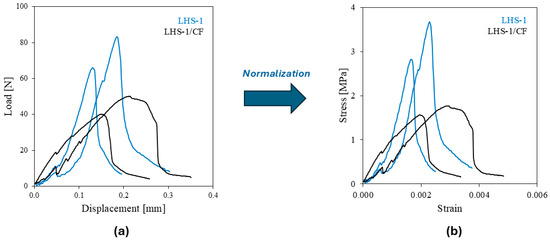
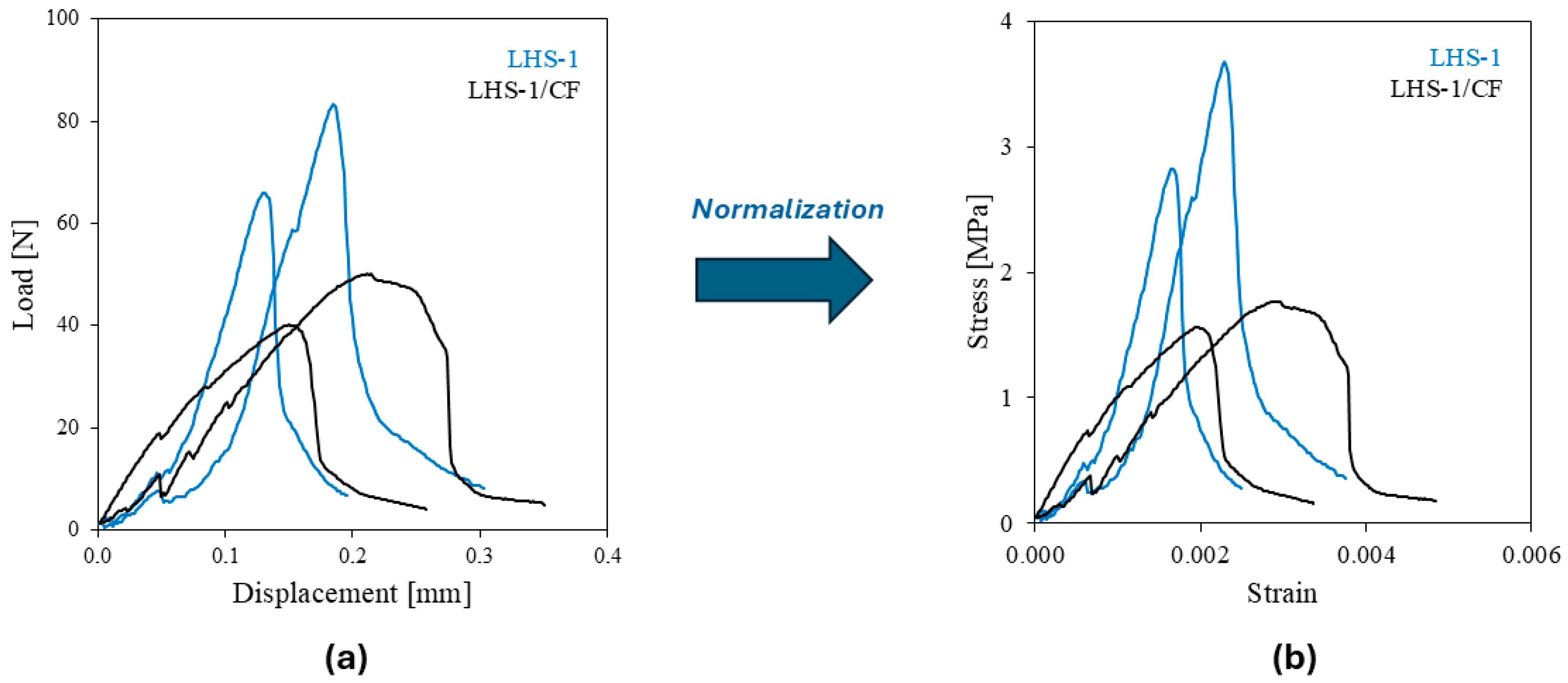
Curves extracted from 4-point bending tests are shown in Figure 8, while reference data are reported in Table 2. The curves highlighted the different mechanical behavior between neat and CF-reinforced samples. The neat specimens reached a higher value of maximum stress. The first sample recorded a maximum load of 83 N, while the second arrived at 66 N, corresponding, respectively, to normalized stresses of 3.7 and 2.8 MPa. At the same time, neat samples exhibited brittle mechanical behavior, collapsing immediately after reaching maximum stress. Embedding unidirectional CFs led to lower peak stresses, equal to 1.8 MPa for the first sample and 1.6 MPa for the second, but results highlighted an increase in toughness, with the area under the stress–strain graph being greater for CF samples. In terms of magnitude, the bending toughness of reinforced specimens was 4.3 and 2.5 kJ/m3, while for neat specimens it was 4.1 and 2.4 kJ/m3. Hence, the presence of CFs in the regolith simulant has the effect of delaying failure, promoting a progressive damage evolution of the sample. The mean values of toughness obtained from bending tests were 3.3 ± 0.8 kJ/m3 for neat specimens and 3.4 ± 0.9 kJ/m3 for CF-reinforced ones, showing a moderate increase.
Figure 8.
Curves extracted from 4-point bending tests: (a) load–displacement; (b) stress–strain.
Table 2.
Main mechanical properties extracted from 4-point bending test.
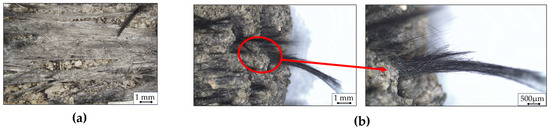
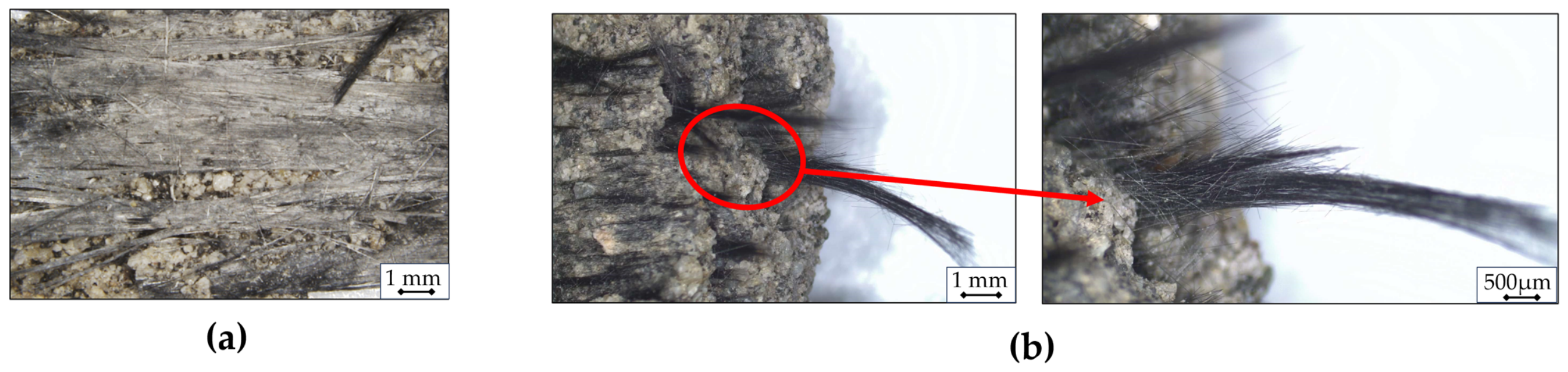
Micrographic images of the fractured specimens, reported in Figure 9, showed that a good level of agglomeration was achieved with fibers still in place after molding. Indeed, CF layers were easily identified and neither distortion or dispersion occurred. Moreover, fiber pull-out after failure was clearly visible, as reported in Figure 9b.
Figure 9.
Micrography of the CF-reinforced brick: (a) fiber alignment; (b) fiber pull-out.
The incorporation of CF layers modifies the internal structure and the mechanical behavior of the specimens. The CFs act as reinforcement, limiting the propagation of cracks across the matrix of the manufactured samples. Thus, reinforcement led to a more gradual failure mechanism, as crack propagation is mitigated by the presence of fiber interfaces, promoting a more ductile mechanical behavior compared with neat samples, which exhibited a brittle behavior.
However, further experimental testing on a larger number of specimens is required to provide a comprehensive characterization of the mechanical behavior of the reinforced samples.
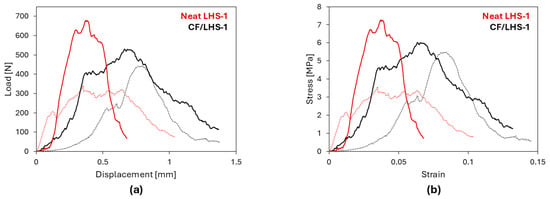
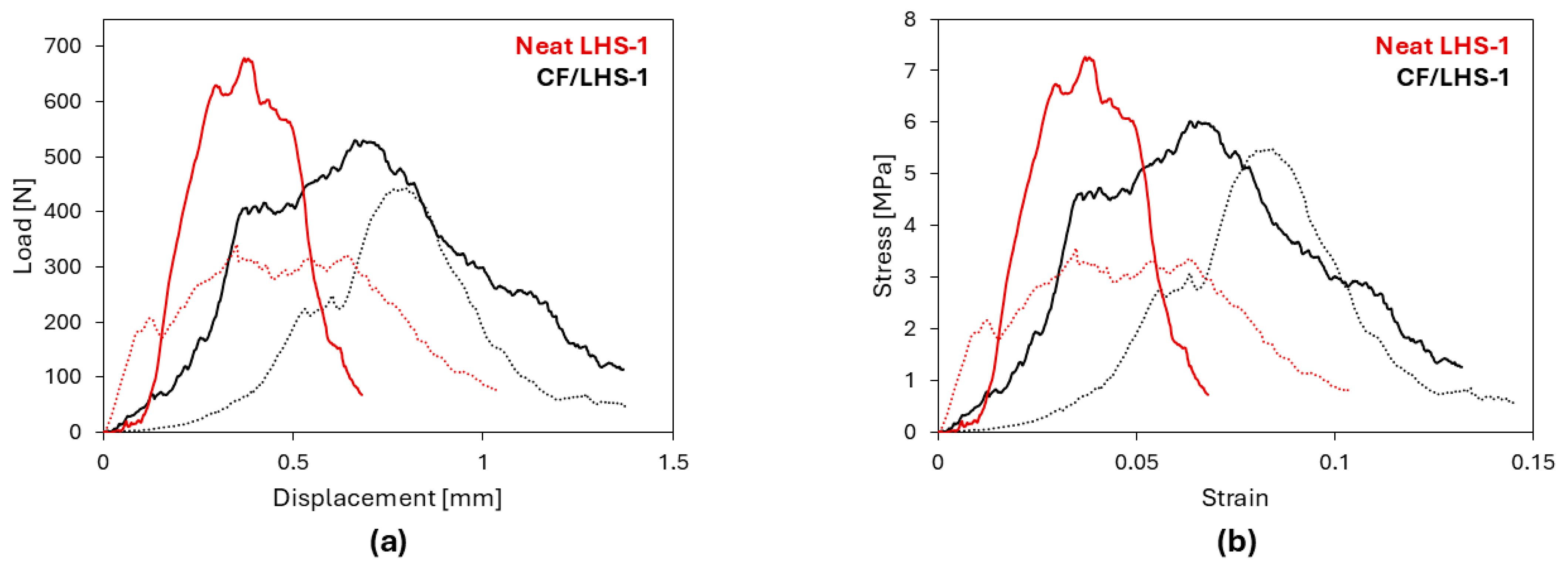
By observing compression curves, a different mechanical behavior can be observed between neat LHS-1 samples and CF samples, as shown in Figure 10. Also, in compression the maximum stress was reached by a neat specimen, equal to 7.3 MPa, while the second was 3.6 MPa, with a mean value of 5.4 MPa. Once the maximum stress was achieved, it was followed by a high stress drop, indicating a brittle failure mechanism and limited deformation capability. CF samples displayed lower maximum stresses compared with one of the neat samples, but they possessed an extended deformation region. This behavior suggests that the incorporation of CFs permits crack mitigation and damage containment, preventing a brittle catastrophic collapse of the bricks. The maximum stresses were similar for reinforced specimens, equal to 6.0 MPa for the first and 5.5 MPa for the second, with an average value of 5.7 MPa, indicating a comparable mechanical behavior between them.
Figure 10.
Curves extracted from compression tests: (a) load–displacement; (b) stress–strain.
In addition to having a higher average compressive stress value, the larger area under stress–strain curves also indicates a higher energy absorption capability. Average values of toughness obtained from compression tests were 210 ± 20 kJ/m3 for neat specimens and 335 ± 95 kJ/m3 for CF-reinforced ones. Therefore, CF reinforcement improved both toughness and damage tolerance in compression, changing mechanical behavior from brittle to more ductile. Mechanical properties extracted from compression tests are summarized in Table 3.
Table 3.
Main mechanical properties extracted from compression testing.
The effect of CF reinforcement seems to be more pronounced under compression than in bending. Under compression loads, the fibers could contribute to load redistribution, slowing crack initiation and propagation. In bending, the reinforcement could suffer the weak interfaces between fibers and matrix, which could cause debonding or delamination under tensile stresses. Therefore, the ability of the CFs to increase the flexural strength may be less significant if compared to the benefits observed under compression.
4. Discussion
The conventional geopolymerization process is based on chemical activation of aluminosilicate powders using a large quantity of alkaline solutions. Then, the mixture is cured at low temperatures, usually below 100 °C, for several hours or even days. This solution can be easily applied on Earth, but the complexity of the space environment is not suitable for such long processing times. Considering the constraints of the Moon surface, such as lack of water and severe thermal excursion, an innovative agglomeration process was developed. The starting point is the intrinsic ability of the regolith simulant grains to fit together under high pressure, with raising temperature permitting agglomeration to be improved, as shown by preliminary direct molding tests. However, the level of aggregation is significantly increased using an alkaline solution because of the interaction between silicon dioxide (SiO2) and aluminum oxide (Al2O3) of LHS-1 and the NaOH solution.
Specimens were obtained by mixing the simulant with a minimum amount of a NaOH solution for 3 min. Thus, cold compression at room temperature was performed on the samples by applying a pressure of 20 MPa, followed by a consolidation process consisting of heating up to 500 °C for 1 h. The selection of these parameters was performed considering that the applied pressure must be sufficient to allow the excess of NaOH solution to escape, so that the brick would be pre-formed and easy to handle. Consolidation temperature and time were chosen to accelerate drying without damaging the samples. However, process parameter optimization is needed for the implementation of this technology in a space environment.
Cold compaction promotes densification of the mixture, reducing porosity and enhancing particle contact before thermal treatment. Temperature mainly affects the dissolution of aluminosilicate precursors and promotes the formation of networks. High temperatures accelerate chemical reactions between the alkaline activator and the precursor particles, improving the development of a stable and dense matrix. Thermal treatment can also enhance particle bonding and reduce residual moisture. The combined effect of temperature and pressure allows the production of bricks made of regolith simulant powders with enhanced mechanical performance and greater structural stability.
Geopolymerization requires that a certain amount of solution is mixed with the regolith simulant, which can lead to shrinkage, cracking, and residual porosity during drying. The manufacturing process proposed in this work drastically reduces curing time and minimizes the presence of liquids, limiting these issues. In this context, these characteristics are highly attractive for ISRU, favoring the design of new settlements.
Boiling water duration tests require the specimens to be immersed in hot water to accelerate degradation and assess the quality of bonding between particles. This test is useful for agglomerated materials to evaluate the stability of the internal structure of the manufactured bricks. If the specimen has weak interparticle bonding or porosity, immersion in boiling water could result in cracking or complete disintegration. As a result, the manufactured samples were able to maintain their integrity after the test, showing strong interparticle bonding and resistance to harsh environmental conditions.
To provide a quantitative evaluation of the bricks’ mechanical behavior, bending and compression tests were performed. However, a limited number of specimens was fabricated to show only the feasibility of the proposed manufacturing technology. Mechanical tests show that LHS-1 samples exhibit a brittle behavior in both bending and compression.
Neat specimens display higher maximum load and stress compared to reinforced specimens in bending tests. Thus, incorporation of unidirectional dry CF layers does not improve the strength of the material. A possible explanation could be related to a non-optimal matrix–fiber interaction and to the possible presence of small defects, such as porosity or weak interfaces between adjacent layers, which could introduce localized defects that may promote premature crack initiation. However, the toughness of reinforced samples is comparable to that of neat specimens, as shown by average data reported in Table 2. In particular, the average toughness of neat and reinforced specimens was calculated as the arithmetic mean of the two values, with the variability being the half-range between them. Fiber embedding limits crack propagation in bending, preventing brittle failure. Therefore, reinforcement mainly affects post-cracking behavior.
In compression, all the samples show higher stress values compared to bending, confirming that the regolith bricks have similar mechanical behavior with respect to cementitious material, which performs better under compressive loading instead of bending. The first LHS-1 neat sample reached the highest compressive stress, equal to 7.3 MPa, while reinforced samples achieved stress between 5.5 and 6.0 MPa. At the same time, mean toughness increased from 210 ± 20 to 335 ± 95 kJ/m3 after incorporation of CFs, representing an increment of 59.5% in the energy absorbed during the fracture mechanism. The average toughness was obtained by the arithmetic mean of the two values, and the experimental scatter was determined as the half-range between them.
The presence of CFs introduces discontinuities within the regolith simulant matrix creating fiber–matrix interfaces, with the quality of the bonding influencing the mechanical behavior of the entire composite structure. The effect of these discontinuities is amplified under bending whereas it is partially compensated in compression. Indeed, by comparing loading conditions, higher stress is achieved in compression rather than bending. The effect of CF incorporation is more evident in compression, with fibers limiting the brittle behavior of the regolith simulant and improving the damage tolerance of the material.
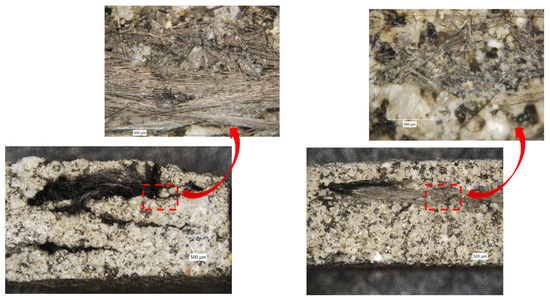
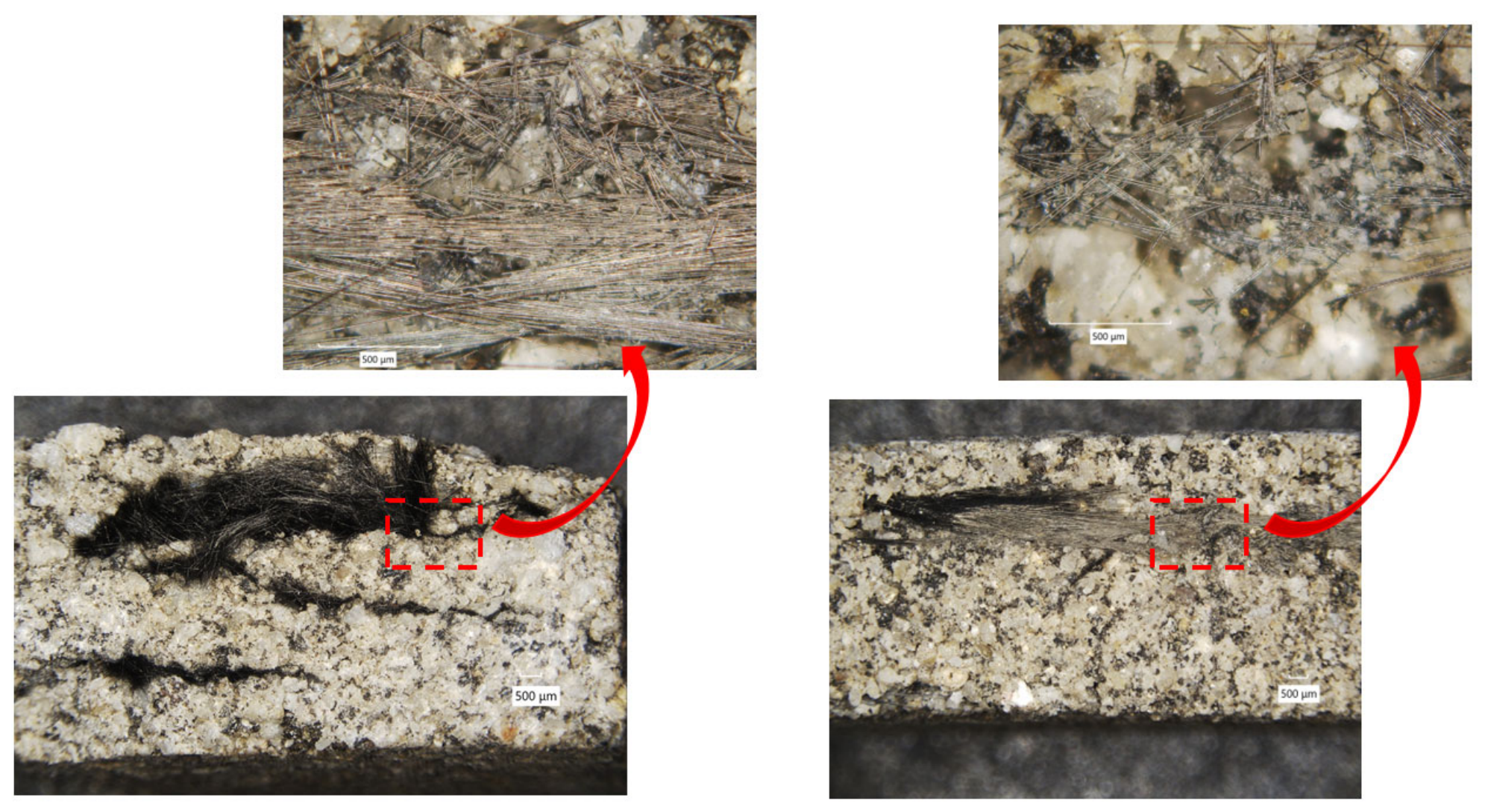
Images taken at different magnifications with a digital microscope, showing the incorporation of fibers into the regolith simulant, are reported in Figure 11.
Figure 11.
Incorporation of 5 CF layers into the lunar regolith simulant.
In comparison with other manufacturing processes, the use of the developed agglomeration method allows full advantage to be taken of Moon soil, thereby reducing the amount of material that needs to be transported from Earth to a minimum. On the other hand, AM processes, such as LPBF and FDM, have the potential to be used in a space environment, but several limitations to their implementation can be identified, with the former requiring a lot of energy and a long processing time. FDM is also suitable, but regolith must be dispersed into a thermoplastic matrix to be deposited, with the polymer having to be taken from the Earth. Sintering is one of the most common solutions for ceramic powder aggregation; however, the traditional process uses very high temperatures, above 1000 °C, and energy consumption is significantly high. Cold sintering permits temperature reduction, but the application of high pressure while heating requires complex equipment. Consequently, the proposed agglomeration process offers a valuable solution to address issues related to productivity and energy consumption, while reducing dependance on the Earth, with further analysis being necessary to numerically compare the different processes.
5. Conclusions
In this paper, an innovative agglomeration process for lunar regolith has been proposed. It requires a minimal water amount, making it attractive for the production of shielding construction materials, such as bricks, for future lunar settlements. In contrast to the traditional geopolymerization process, the developed procedure involves higher curing temperatures, equal to 500 °C, and much shorter consolidation time.
The results of the boiling water tests confirm the structural integrity and durability of manufactured samples.
Incorporation of unidirectional dry CFs inside the regolith simulant enhances toughness and fracture resistance, even if the stress at break is not improved. Such properties are particularly relevant for the use of brittle materials in the fabrication of regolith-based infrastructure, which requires reliability and resistance to crack propagation.
Future studies will focus on the evaluation of the behavior of these materials under different loading conditions, which will be representative of the Moon environment, including reduced gravity, vacuum, thermal cycling and radiation shielding ability. Even though some works on shielding ability of regolith-based materials are already present in the literature [3,4,5,6,7,8], further investigations can be carried out on composites obtained by embedding layers of CFs into regolith, validating their use as construction material in lunar environment.
Author Contributions
Conceptualization, L.S. and F.Q.; methodology, F.Q.; validation, A.P. and F.Q.; formal analysis, A.P. and G.P.; investigation, A.P.; resources, L.S.; data curation, A.P. and G.P.; writing—original draft preparation, G.P.; writing—review and editing, A.P. and G.P.; visualization, A.P. and F.Q.; supervision, L.S. and F.Q.; project administration, L.S.; funding acquisition, L.S. All authors have read and agreed to the published version of the manuscript.
Funding
This research received no external funding.
Data Availability Statement
The raw data supporting the conclusions of this article will be made available by the authors on request.
Acknowledgments
This study has been carried out within the Space It Up project funded by the Italian Space Agency, ASI, and the Ministry of University and Research, MUR, under contract n. 2024-5E.0—CUP n. I53D24000060005. The authors are grateful to The Stephen W. Hawking Center for Microgravity Research and Education for providing the lunar regolith simulant to start the research activities on this topic.
Conflicts of Interest
The authors declare no conflicts of interest.
Abbreviations
The following abbreviations are used in this manuscript:
| ISRU | In situ resource utilization |
| CFs | Carbon fibers |
| AM | Additive manufacturing |
| LPBF | Laser powder bed fusion |
| AD | Aerosol deposition |
| FDM | Fused Deposition Modeling |
| LHS | Lunar highlands simulant |
| GCR | Galactic Cosmic Ray |
| EAC | European Astronaut Centre |
| LDPE | Low-density polyethylene |
| PEKK | Poly-ether-ketone-ketone |
References
- Makaya, A.; Pambaguian, L.; Ghidini, T.; Rohr, T.; Lafont, U.; Meurisse, A. Towards out of earth manufacturing: Overview of the ESA materials and processes activities on manufacturing in space. CEAS Space J. 2023, 15, 69–75. [Google Scholar] [CrossRef] [Scilit]
- Zhou, C.; Gao, Y.; Zhou, Y.; She, W.; Shi, Y.; Ding, L.; Miao, C. Properties and Characteristics of Regolith-Based Materials for Extraterrestrial Construction. Engineering 2024, 37, 159–181. [Google Scholar] [CrossRef] [Scilit]
- Anand, M.; Crawford, I.; Balat-Pichelin, M.; Abanades, S.; van Westrenen, W.; Péraudeau, G.; Jaumann, R.; Seboldt, W. A brief review of chemical and mineralogical resources on the Moon and likely initial in situ resource utilization (ISRU) applications. Planet. Space Sci. 2012, 74, 42–48. [Google Scholar] [CrossRef] [Scilit]
- Kunja, L.A.; Kim, E.; Yi, Y.; Sohn, J.; Jung, J. Capability of lunar regolith with hydrogenous materials as shielding material against GCR and SPE on the surface of Moon studied using OLTARIS. Adv. Space Res. 2025, 76, 2951–2959. [Google Scholar] [CrossRef] [Scilit]
- Blunier, S.; Athanasopoulos, D.; Dittmar, C.; Thoresen, F.; Cowley, A.; Fogtman, A. Regolith-based lunar habitat for astronaut radiation protection and organ dose assessment. Planet. Space Sci. 2025, 261, 106116. [Google Scholar] [CrossRef] [Scilit]
- Bannova, O.; Gulacsi, E. Architectural approach for evaluation of radiation shielding integration in space habitats. Acta Astronaut. 2024, 220, 27–36. [Google Scholar] [CrossRef] [Scilit]
- Ferrone, K.L.; Taylor, A.B.; Helvajian, H. In situ resource utilization of structural material from planetary regolith. Adv. Space Res. 2022, 69, 2268–2282. [Google Scholar] [CrossRef] [Scilit]
- Kunja, L.A.; Yi, Y.; Kim, E.; Sohn, J.; Jung, J. Performance of hydrogen-rich materials in combination with lunar regolith for shielding against GCR, albedo, and SPEs on the surface of the moon studied using MULASSIS. AIP Adv. 2025, 15, 125310. [Google Scholar] [CrossRef] [Scilit]
- Akisheva, Y.; Gourinat, Y.; Guatelli, S.; Dossat, C.; Robin-Chabanne, S.; Varotsou, A.; Cowley, A.; Makaya, A. Regolith-based lunar habitats: An engineering approach to radiation shielding. CEAS Space J. 2024, 16, 667–676. [Google Scholar] [CrossRef] [Scilit]
- Sacco, E.; Moon, S.K. Additive manufacturing for space: Status and promises. Int. J. Adv. Manuf. Technol. 2019, 105, 4123–4146. [Google Scholar] [CrossRef] [Scilit]
- Overmeyer, L.; Raupert, M.; Pusch, M.; Griemsmann, T.; Katterfeld, A.; Lotz, C. Laser powder directed energy deposition and substrate-free single layer powder bed fusion under micro- and lunar gravity conditions. CIRP Ann. 2025, 74, 297–301. [Google Scholar] [CrossRef] [Scilit]
- Caprio, L.; Demir, A.G.; Previtali, B.; Colosimo, B.M. Determining the feasible conditions for processing lunar regolith simulant via laser powder bed fusion. Addit. Manuf. 2020, 32, 101029. [Google Scholar] [CrossRef] [Scilit]
- Iantaffi, C.; Leung, C.L.A.; Maddison, G.; Bele, E.; Hocine, S.; Snell, R.; Rack, A.; Meisnar, M.; Rohr, T.; Todd, I.; et al. Laser additive manufacturing of lunar regolith simulant: New insights from in situ synchrotron X-ray imaging. Addit. Manuf. 2025, 101, 104711. [Google Scholar] [CrossRef] [Scilit]
- Borrego, R.; Fuierer, P. Dielectric properties of dense ceramic films made by dry aerosol deposition of lunar regolith simulant. Part 1: Lunar mare. Acta Astronaut. 2026, 239, 137–147. [Google Scholar] [CrossRef] [Scilit]
- Nieke, P.; Kita, J.; Häming, M.; Moos, R. Manufacturing dense thick films of lunar regolith simulant EAC-1 at room temperature. Materials 2019, 12, 487. [Google Scholar] [CrossRef] [Scilit] [PubMed]
- Rahman, S.; Akin, S. Cold spray deposition of lunar regolith on polymeric substrates: A pathway toward in-situ resource utilization on the Moon. Surf. Interfaces 2026, 80, 108224. [Google Scholar] [CrossRef] [Scilit]
- Rahman, M.H.; Hayes, A.K.; Muralidharan, K.; Loy, D.A.; Shafae, M. Additive manufacturing of hydrogel-based lunar regolith pastes: A pathway toward in-situ resource utilization and in-space manufacturing. J. Manuf. Process. 2024, 118, 269–282. [Google Scholar] [CrossRef] [Scilit]
- Moazen, S.; Gosselin, F.P.; Tabiai, I.; Dubé, M. 3D printing LDPE/lunar regolith simulant composite: Manufacturing with in-situ resources on the moon. Acta Astronaut. 2025, 237, 409–420. [Google Scholar] [CrossRef] [Scilit]
- Malekpour, F.; Abdali, M.; Skonieczny, K.; Azami, M.; Hojjati, M. Sustainable lunar additive manufacturing of high regolith-loaded PEKK composites for space infrastructure. Compos. B Eng. 2026, 310, 113176. [Google Scholar] [CrossRef] [Scilit]
- Laurenzi, S.; Zaccardi, F.; Toto, E.; Santonicola, M.G.; Botti, S.; Scalia, T. Fused Filament Fabrication of Polyethylene/Graphene Composites for In-Space Manufacturing. Materials 2024, 17, 1888. [Google Scholar] [CrossRef] [Scilit] [PubMed]
- Xu, D.; Korolovych, V.; Lyu, Y.; Aslarus, J.; Flores-Hernandez, D.R.; Pajovic, S.; Heller, W.T.; Sihver, L.; Boriskina, S.V. Warpage-Resistant, Under-Extrusion-Free, High-Surface-Quality Additive Manufacturing Process for Polyethylene-Based Composite Radiation Shielding Material. ACS Appl. Polym. Mater. 2025, 7, 12304–12320. [Google Scholar] [CrossRef] [Scilit]
- Liu, Z.; Li, J.; Guo, Z.; Yuan, S.; Meng, S. Enhancing thermal performance and energy storage capacity of lunar bricks through graphene incorporation for lunar infrastructure applications. Ceram. Int. 2026, 52, 10552–10561. [Google Scholar] [CrossRef] [Scilit]
- Gupta, N.; Dawara, V.; Kumar, A.; Viswanathan, K. Synthetic space bricks from lunar and Martian regolith via sintering. Adv. Space Res. 2024, 74, 3902–3915. [Google Scholar] [CrossRef] [Scilit]
- Zuo, H.; Ni, S.; Xu, M. An assumption of in situ resource utilization for ‘bio-bricks’ in space exploration. Front. Mater. 2023, 10, 1155643. [Google Scholar] [CrossRef] [Scilit]
- Xue, G.; Qiao, G. Cold sintering as a promising in-situ lunar regolith resource utilization approach: Parameter optimization for geopolymer products. Acta Astronaut. 2025, 234, 271–286. [Google Scholar] [CrossRef] [Scilit]
- Zhan, J.; Xue, X.; Hua, J.; Huang, L. Effects of curing temperature on early-age mechanical property and microstructure of lunar regolith simulant geopolymer. Case Stud. Constr. Mater. 2025, 22, e04329. [Google Scholar] [CrossRef] [Scilit]
- Montes, C.; Broussard, K.; Gongre, M.; Simicevic, N.; Mejia, J.; Tham, J.; Allouche, E.; Davis, G. Evaluation of lunar regolith geopolymer binder as a radioactive shielding material for space exploration applications. Adv. Space Res. 2015, 56, 1212–1221. [Google Scholar] [CrossRef] [Scilit]
- Zhan, J.; Yi, H.; Wang, N.; Wang, F.; Li, S.; Hua, J.; Xue, X. Effect of Basalt Fiber Content on Mechanical Properties of Lunar Regolith Simulant Geopolymer Under Static Loading. Materials 2025, 18, 4442. [Google Scholar] [CrossRef] [Scilit] [PubMed]
- Prater, J.; Kim, Y.H. Carbon Nanotube Reinforced Lunar-Based Geopolymer: Curing Conditions. J. Compos. Sci. 2024, 8, 492. [Google Scholar] [CrossRef] [Scilit]
- Toda, O.; Wajima, T. Preparation of geopolymer cement from lunar rock sand using alkali fusion, and its evaluation of radiation shielding ability. Int. J. GEOMATE 2023, 24, 54–60. [Google Scholar] [CrossRef] [Scilit]
- Gu, J.; Ma, Q. Experimental Study on Geopolymerization of Lunar Soil Simulant under Dry Curing and Sealed Curing. Materials 2024, 17, 1413. [Google Scholar] [CrossRef] [Scilit] [PubMed]

Disclaimer/Publisher’s Note: The statements, opinions and data contained in all publications are solely those of the individual author(s) and contributor(s) and not of MDPI and/or the editor(s). MDPI and/or the editor(s) disclaim responsibility for any injury to people or property resulting from any ideas, methods, instructions or products referred to in the content. |
© 2026 by the authors. Licensee MDPI, Basel, Switzerland. This article is an open access article distributed under the terms and conditions of the Creative Commons Attribution (CC BY) license.