


Highlights
What are the main findings?
- •
- A finite element framework was developed using hexagonal and stochastic fibril-scale representative volume elements (RVEs) to link hydrostatic consolidation pressure with interstitial void collapse, fibril deformation, contact evolution, and effective transverse mechanical properties in UHMWPE fibril arrays.
- •
- Compared with the idealized hexagonal RVE, the stochastic RVE captures microstructural variability in fibril packing and void morphology, showing earlier localized plastic deformation and nonuniform fibril–fibril contact evolution during consolidation.
What are the implications of these findings?
- •
- Combined thermal softening, elastic–plastic fibril behavior, and stochastic fibril packing reduce the predicted pressure required to reach 1–2% void content from nearly 1.3 GPa at 300 K to approximately 160 MPa at 400 K, while identifying post-yield softening, progressive fibril damage/defibrillation, and time-dependent deformation as key mechanisms for future study.
Abstract
This study develops a finite element analysis (FEA) framework to quantify hydrostatic consolidation of ultra-high-molecular-weight polyethylene (UHMWPE) fibril arrays containing interstitial voids. Hexagonal and stochastic representative volume elements (RVEs) were constructed from experimentally measured fibril diameters and embedded in a nearly incompressible Mooney–Rivlin medium to transfer hydrostatic pressure to irregular fibril surfaces. Molecular dynamics (MD)-derived fibril properties at 300 K and 400 K were used to evaluate the effects of temperature, elastic–plastic deformation, and stochastic microstructure on void collapse and effective fiber properties. The 300 K elastic model required pressures approaching 1.3 GPa to reach approximately 1–2% void content, whereas the combined effects of elevated temperature, elastic–plastic fibril behavior, and stochastic fibril packing reduced the corresponding pressure to approximately 160 MPa. The stochastic RVE exhibited a higher initial void content, earlier plastic dissipation, lower initial effective stiffness, and nonuniform fibril–fibril contact evolution compared to the idealized hexagonal RVE. As void content decreased, both models converged toward the dense fibril response. The framework establishes a processing–microstructure–property relationship linking consolidation pressure to the evolving void morphology, fibril shape and contact development, and the resulting effective plane-strain bulk modulus and the transverse compressive stress–strain response, including the Young’s modulus and Poisson’s ratio, of UHMWPE fibers.
1. Introduction
Ultra-high-molecular-weight polyethylene (UHMWPE) fibers are widely used for protection, biomedical, and industrial applications due to their high axial tensile strength-to-weight ratio and chemical resistance [1,2,3,4,5,6]. However, a high void content arising during fiber drawing and sheet fabrication (typically a 4-layer cross-ply laminate) can significantly affect their mechanical performance. Consolidation through the application of temperature, pressure, and time (T–P–t) is an effective method to reduce void content [5,6,7,8,9,10]. Typical compression molding conditions use consolidation pressures in the range of 21–70+ MPa at processing temperatures of 400 K to reduce void content in UHMWPE fiber and their composite sheets. Voids exist at multiple length scales within the microstructure of UHMWPE composite sheets. Nanoscale voids exist within individual fibrils of varying diameter within a fiber. Additional voids can form within fibril–fibril contact regions (analogous to grain boundary defects) [11]. Nanoscale voids can also form between fibrils as interstitial voids [8]. Micron-scale voids can exist in the matrix used in UHMWPE composite sheets. Consolidation pressure at processing temperature affects void reduction mechanisms at all length scales. This paper focuses on establishing a modeling framework for relating consolidation pressure and temperature to the microstructural evolution of a statistical fibril array containing interstitial voids between fibrils, as shown in Figure 1.
Figure 1.
Schematic representation of the multiscale structure of a UHMWPE fiber showing the hierarchical morphology of UHMWPE fibrils and interstitial voids within the fiber cross-section. In this study, the effects of hydrostatic consolidation pressure on fibril deformation and interstitial void reduction in the transverse (a–b) plane are investigated. The AFM image is reproduced from McDaniel et al. [7].
Recent experimental studies quantify the effects of processing on the axial tensile strength of UHMWPE fibers (Dyneema SK76) extracted from compression-molded panels of HB210 sheets (4-ply 0/90/0/90 SK76 fibers impregnated with high elongation matrix manufactured by Dyneema) [8,12]. Pycnometer measurements of void content within individual fibers are in the range of 6–10%. Ali et al. [13] measured the effects of consolidation pressure from vacuum to 70 MPa on void content reduction and tensile strength of the individual HB210 sheet materials. The total void content of the sheets, including voids in the matrix, was in the range of 20–25%. These experimental studies showed that sheet tensile strength increases with void content reduction, but excessive consolidation pressure can lead to gradual strength reduction through process-induced defects such as transverse flattening of cylindrical fibers that causes defibrillation and an increase in void content due to axial splitting. The maximum tensile strength of the sheets occurred at approximately 21 MPa consolidation pressure (with 4% void content). Scanning Electron Microscopy images obtained by Ali et al. [13] showed flattening in aligned fibers within a layer but also higher levels of local flattening of the fibers at the surface between 0 and 90 layers in the HB210 where orthogonal fibers contact at periodic cross-over locations and have a characteristic length scale on the order of the fiber diameter.
The effects of flattening on fiber deformation were visualized by McDaniel et al. [7] using Atomic Force Microscopy, which confirmed the presence of defibrillation at high transverse compression strain levels (up to 70%) with evidence that void volume was being generated as fibrils split and separated. The effects of transverse flattening on fiber tensile strength were measured over a wide range of strain rates, showing fiber tensile strength degradation [2,3,14,15]. This mechanism of void increase with tensile strength reduction was measured by Ali et al. [13] in their experiments on sheet materials consolidated at very high pressures (up to 70 MPa) showing good consistency with the results reports for transverse compression of single SK76 fibers.
Overall, these experimental results confirm that consolidation pressure can lead to improvement in tensile strength by void content reduction, but excessive consolidation pressure can generate new defects that reduce the tensile strength of fibers, indicating the presence of an optimal consolidation pressure. This study contributes to the understanding of the role of consolidation pressure on microstructure evolution within fibers and the effects of interstitial voids between fibrils on the effective properties of fibers.
To better understand these mechanisms at the fibril scale, molecular dynamics (MD) simulations have been employed. Dewapriya et al. [11,16,17] have used MD simulations to study the effects of molecular weight, including chain-end defects, as a function of strain rate, hydrostatic pressure and temperature on mechanical properties. The presence of chain-end defects promoted chain slippage and low axial tensile strength at low strain rates. At higher strain rates and hydrostatic pressure, chain slippage was limited and failure mode transitioned to chain scission at much higher axial tensile strengths. Related MD studies by Dewapriya et al. have shown that nanoscale defects and transverse pressure can reduce the effective mechanical response of polyethylene crystals and fibrils by disturbing chain alignment, promoting nonuniform chain loading, and contributing to progressive failure [18]. The voids disrupt the crystalline structure where the chains become wavy and follow the surface contour of the void. The amplitude and wavelength of the wavy chains are governed by the void dimensions. The chains become straight as the distance from the void increases. The results in [18] show that the presence of voids reduces elastic properties. In addition, voids can induce nonuniform loading of the chains, resulting in progressive failure of chains and a reduction in axial tensile properties compared with defect-free crystals, where all chains are straight and loaded uniformly. The application of consolidation pressure collapses the voids and creates a localized amorphous defect region which can also reduce the axial tensile strength of the fibril through progressive failure of the chains. This lower-length-scale MD modeling suggests that smaller void sizes (and lower void contents) do not have a significant effect on fibril properties, but void collapse under consolidation pressure can create defects that may lead to strength reduction in the individual fibrils. The effect on fibril stiffness and strength is dependent on void size and shape. The effects of voids on fibril properties, and in turn their effect on fiber properties, require the modeling framework developed in this study that considers stochastic arrays of fibrils and calculates effective fiber properties as a function of void content.
Dewapriya et al. [11] also used MD to investigate nano-void formation at grain boundaries between fibrils with various relative orientations to one another. The detrimental effects of these voids on fibril adhesion were quantified through prediction of mixed-mode cohesive traction laws (strength and energy absorption associated with defibrillation). These MD-derived fibril properties represent the input to our modeling framework presented in this paper that includes the prediction of evolving fibril geometry (i.e., flattening) and contact area as well as effects of interstitial voids on effective fiber properties and understanding defibrillation mechanisms. Consequently, the framework developed in this study is an essential capability for multiscale modeling from MD to fiber properties, including effects of defects at multiple length scales.
The morphology of gel-spun UHMWPE fibers is complex as they consist of discontinuous crystalline fibrils, amorphous/interfacial regions, tie molecules, and nanoscale voids distributed across multiple length scales [4,19]. Stockdale et al. [20] and McDaniel et al. [7,9] further demonstrated that lateral interactions and tie-chain networks between neighboring fibril bundles play a significant role in governing the mechanical response of high-performance polyethylene fibers. Experimental SAXS/WAXS and solid-state NMR studies by Litvinov et al. [10] demonstrated that highly drawn UHMWPE fibers possess a complex hierarchical morphology containing crystalline fibrils, amorphous interfacial regions, and nanoscale void domains that evolve during processing and drawing. Balzano et al. [4] further emphasized that the discontinuous crystalline phase and tie-molecule network strongly influence load transfer and deformation mechanisms within UHMWPE fibers, while AFM modulus mapping studies by Strawhecker et al. [19] directly revealed extended-chain fibrils, fibril bundles, macrofibrils, tie chains, and interfibrillar void regions within the fiber interior. McDaniel et al. [9] have experimentally measured mixed-mode failure envelops governing fibril–fibril adhesion, defibrillation and the formation of a fibrillar network bridging the crack surface through peel-testing of a single UHMWPE fiber that was split at mid-diameter to create a starter crack. Collectively, these experimental and multiscale observations provide the physical basis for the stochastic fibril geometry and interstitial void representation adopted in the present study.
Based on this literature, the authors were motivated to develop a finite element analysis (FEA) framework to investigate the effect of hydrostatic consolidation pressure at elevated temperatures on the fibril-scale microstructure containing interstitial voids between nanometer-sized fibrils that exist within UHMWPE fibers (a single 10–15 µm diameter fiber contains hundreds of thousands of fibrils). The model is constructed at the fibril level and is informed by AFM imaging [7] of the fibril diameter distribution, as illustrated in Figure 1.
The input geometry is based on representative volume elements (RVEs) defined using both periodic hexagonal packing and stochastic fibril arrays containing interstitial voids (see Figure 1). A stochastic array of fibrils is constructed by adding additional fibrils (randomly selected from the measured distribution) until the array closely matches the measured fibril diameter distribution and void content (as shown in this paper, our statistical fibril array has approximately 25 fibrils with a total void content of 9.5%, representing a significant reduction in the total number of fibrils). Hydrostatic pressure is applied using a surrogate incompressible embedding medium that surrounds the fibril array. Uniform pressure is applied at the outer boundary of the embedding medium, and frictionless contact is enforced on the contact surface between the embedding medium and fibrils to ensure pure hydrostatic loading conditions. This approach enables prediction of fibril deformation and shape, contact area evolution, and interstitial void shape and void content reduction as functions of applied pressure.
Prior micromechanics models commonly assume a void-free fibril microstructure [21] in periodic arrangements such as hexagonal spacing within a representative volume element. In contrast, relatively few studies consider stochastic microstructures where fibril diameter and void size vary spatially and fibril and void shapes evolve under applied loading. The present study overcomes this limitation by developing a framework to predict pressure-driven microstructural evolution, including interstitial voids, and couple this microstructure to the prediction of the effective mechanical response of fibers, including plane-strain bulk modulus, Young’s modulus, Poisson’s ratio and compressive stress–strain behavior as a function of elastic–plastic fibril properties and void content/consolidation pressure. MD simulations provide the FEA input properties for fibrils without internal voids. The effects of voids within fibrils on fibril properties is a focus of our future work. The modeling framework presented in this study can be used for both cases.
The paper is organized as follows. Section 2 describes the construction of the fibril geometries and representative volume elements. Section 3 presents the finite element modeling approach, including material models, boundary conditions, and verification. Section 4 presents the results, including material sensitivity, hexagonal RVE behavior, and stochastic microstructure response and the prediction of effective properties of the fiber. Finally, the main conclusions are presented.
2. Microstructural Modeling Strategy
2.1. Geometry and Assumptions
The fibrillar microstructure is modeled as an assembly of 3D circular cylinders, either arranged in idealized hexagonal arrays or distributed according to statistically representative patterns. The properties of the fibrils were predicted using MD simulations and exhibit inelastic temperature-dependent material response [16]. Interfibrillar voids collapse as the fibrils undergo large shear deformation under applied hydrostatic pressure. A novel methodology to apply hydrostatic pressure to the external surfaces of the fibril array was developed by embedding the fibril array within an incompressible medium based on the Mooney–Rivlin constitutive model. The medium has a prescribed outer diameter, while the inner diameter conforms to the irregular shape created by the fibril surfaces. The contact surface between the incompressible medium and the fibril surface is frictionless, ensuring that hydrostatic pressure is achieved (see details below). Two models were constructed: (1) a hexagonal packing representing a uniform fibril array (using the average of the fibril diameter distribution of 35 nm) and (2) a stochastic fibril array using discrete fibril diameters randomly selected from the fibril diameter distribution. In the present study, the reported void content refers only to the interstitial void area contained within the fibril assembly region of the RVE and excludes the surrounding incompressible embedding medium used to apply hydrostatic pressure. Therefore, the predicted void fractions represent the total interstitial porosity within the fibril array. The initial void content of 6% is comparable to the lower range of experimentally measured void contents obtained from Pycnometer measurements of single SK77 UHMWPE fibers [12].
According to McDaniel et al. [7] and Deitzel et al. [8], the average fibril diameter is approximately 35 nm. Given this dimension, a single UHMWPE fiber with a diameter of 12–15 µm is estimated to contain on the order of 100,000–250,000 fibrils. The sheer number of fibrils necessitates the development of a statistically equivalent RVE modeling strategy. Statistical distributions of fibril diameters—extracted from experimentally measured logarithmic histograms (using 103 fibril diameters measured by AFM [7]) were translated into geometric models using AutoCAD 2025. A randomly selected fibril diameter is first placed at the origin, after which additional fibrils with randomly selected diameters are sequentially positioned around the circumference (with point contacts) to generate the stochastic packing geometry. Additional rings of randomly selected fibril diameters are added to form stochastic packing geometries. Histograms for these CAD-constructed arrays are calculated and compared to the experimental distribution. The final stochastic RVE was selected when the relative differences of the fibril diameter distribution and the upper range of the experimentally reported interstitial void content (approximately 10%) were sufficiently small. Reasonable computational cost is achieved by minimizing the number of total fibrils in the model. Our RVEs used in this study contained 25 fibrils, providing a significant reduction in computational time compared to the experimental array containing 103 fibrils [7].
Therefore, our approach begins with a simplified, hexagonal fibril arrangement with a 6% void content to establish the methodology and generate baseline deterministic results to compare with the more realistic stochastic results described in the following sections.
2.2. Simulation Approach
The simulation workflow, illustrated in Figure 2, consists of two main phases designed to ensure both accuracy and computational efficiency. Figure 2a,b show the hexagonal and stochastic RVEs, while Figure 2c summarizes the overall workflow linking model inputs, RVE generation, consolidation FEA, and pressure-dependent microstructure evolution. In Step 1, a uniform fibril array arranged in a 2-ring hexagonal packing was used to perform convergence and validation studies. Due to geometric symmetry, only a 60° sector equivalent to approximately three fibrils was modeled in the finite element simulation. The resulting RVE has an approximately 6% initial void content and provides a computationally efficient baseline for evaluating mesh sensitivity and confirming that hydrostatic loading behavior is achieved. This step also establishes the numerical stability of the finite element model under hydrostatic pressure. Step 2 advances to a more realistic representation by generating stochastic fibril geometries (nominally comprising 25 fibrils with a 10% void volume). These statistically representative fibril arrays reflect the inherent variability of the fiber microstructure. The stochastic fibril array required approximately eight times higher computation time than the hexagonal array.
Figure 2.
Simulation approach for hydrostatic consolidation of UHMWPE fibril arrays: (a) hexagonal RVE; (b) stochastic RVE; and (c) workflow linking model inputs, RVE generation, consolidation FEA, and pressure-dependent microstructure evolution. In both RVEs, a nearly incompressible Mooney–Rivlin medium transfers hydrostatic pressure to the irregular fibril surfaces.
In both steps, radial pressure is applied uniformly along the outer boundary of the embedding material (see Figure 2a,b) to impart hydrostatic consolidation process to the fibrils. As summarized in Figure 2c, AFM-informed geometry and MD-derived properties are used as model inputs, the hexagonal and stochastic RVEs are generated, and hydrostatic consolidation is simulated using a nearly incompressible Mooney–Rivlin pressure-transfer medium under large-deformation plane-strain conditions. The simulations capture critical micromechanical behavior, including fibril deformation, fibril-to-fibril contact area evolution and void collapse as a function of hydrostatic pressure. This predicted microstructure is used to predict the effective mechanical properties, such as Young’s modulus, Poisson’s ratio and bulk modulus, as functions of void content (determined by the magnitude of the applied pressure). The results from this deterministic model are compared to the stochastic results in a later section to assess differences and what additional microstructural information is generated from the fibril array model.
2.2.1. Geometric Model of the Hexagonal RVE
The objective of this step is to establish a methodology to select the initial geometry of the fibrils within the hexagonal RVE. The uniform fibril array is idealized as a hexagonal packing structure with the average fibril diameter (35 nm), allowing for systematic modeling of void distribution. To determine the optimal number of rings for this configuration, two mathematical expressions were derived. Equation (1) describes the relationship between the void fraction and the number of rings, while Equation (2) estimates the total number of fibrils.
where n is the number of rings.
where N is the number of fibrils.
These equations were validated against AutoCAD-generated geometries, showing excellent agreement, as detailed in Table 1. Figure 3 presents AutoCAD drawings for configurations of up to four rings, illustrating the asymptotic increase in void fraction with added rings. Note that the outer interstitial volume between fibrils and the embedding medium is filled with our incompressible material that is needed to apply uniform hydrostatic pressure. Hence, this small deviation from ideal hexagonal packing requires additional rings to approach the theoretical packing efficiency. Based on these considerations, a two-ring configuration was selected as our RVE for hexagonal packing. This configuration also resulted in a void content of 6%, which matches the lower bound of void content measured in the UHMWPE fiber. Mesh convergence is based on deformation (discussed below) which requires a high level of mesh refinement.
Table 1.
Comparison between analytically calculated and CAD-based void fractions as a function of the number of rings and corresponding fibrils. The geometry of the 2-ring model is selected for FEA analysis.
Figure 3.
Dependence of void fraction on the number of rings in a hexagonal fibril array.
2.2.2. Geometric Model of the Stochastic RVE
Atomic Force Microscopy (AFM) imaging of UHMWPE fibers, as reported by McDaniel et al. [7], revealed aligned fibrils with interstitial voids, where fibril diameters followed a log-normal distribution validated through direct surface measurements. This statistical distribution served as the input for microstructure modeling. To generate representative geometries, Monte Carlo sampling was applied to the fibril diameter data, and AutoCAD was used to create ten randomized configurations for each case. The experimental distribution included 103 fibrils and served as our baseline to compare with smaller, computationally efficient datasets comprising 50, 25, and 15 fibrils (see Figure 4). Histograms were generated for each reduced dataset, and corresponding CAD models were created for statistical analysis to show equivalent diameter distributions and initial void contents. Among all cases considered, the 25-fibril model offered an optimal geometric model providing an initial void content of 9.5% in agreement with the upper bound on void content measured in the fiber [12]. The fibril array geometry is used as the input to FEA models and provides good accuracy and efficiency, reducing simulation time by nearly 86–89% compared to the full baseline model (i.e., 103 fibrils).
Figure 4.
Histogram plots showing fibril array geometry and initial void content as a function of number of fibrils: (a) 103-fibril experimental baseline [7], (b) ~50 fibrils, (c) ~25 fibrils and (d) ~15 fibrils. The 25-fibril array is used for FEA modeling.
3. Finite Element Implementation
3.1. Material Models
3.1.1. Fibril Material Properties
The fibril material properties used in this study were derived from MD simulations of UHMWPE fibrils (with no internal nano-voids). These simulations were performed at 300 K (room temperature) and 400 K (consolidation temperature) to characterize the temperature-dependent mechanical response for use as input into the FEA models. The MD simulations applied uniaxial compression in the crystallographic a and b directions, together with a–b shear deformation, to characterize the orthotropic mechanical behavior of the fibrils under plane-strain conditions in the c-direction.
The MD simulations were performed using the Large-scale Atomic/Molecular Massively Parallel Simulator (LAMMPS) [22] with the adaptive intermolecular reactive empirical bond order potential (AIREBO-M) [23], which has been widely used for predicting the structural and mechanical behavior of polyethylene crystals and fibrillar structures [11,16,17]. The AIREBO-M potential combines the reactive empirical bond order (REBO) formulation for covalent bonding with intermolecular and torsional interactions required to capture large deformation and chain-sliding mechanisms in polyethylene systems. Previous MD simulations have shown that intermolecular load transfer between UHMWPE chains is governed primarily by van der Waals interactions and inter-chain shear mechanisms, which strongly influence the deformation and failure behavior of polyethylene crystals and fibrillar assemblies [3] in the a-b plane of interest in this study.
Figure 5 presents the MD-derived stress–strain curves in the a-b plane that form the basis of the fibril constitutive model used in the finite element simulations. The simulations were conducted using the isothermal–isobaric (NPT) ensemble with a timestep of 0.2 fs. The Nosé–Hoover thermostat and barostat were used to control temperature and pressure, respectively, with damping constants set at 0.1 ps for temperature and 0.5 ps for pressure. The dimensions of the MD model were 5.18 × 4.93 × 10.14 nm3. A constant strain rate of 109 s−1 was maintained throughout all simulations. The strain-rate sensitivity of MD-predicted mechanical properties were reported to be minimal [17]. The effects of temperature affect properties to a greater extent and were included in the simulations. These stress–strain curves were used to determine the elastic modulus, yield stress, and post-yield response required to define the continuum constitutive behavior of the fibrils used in the FEA models. The corresponding material properties are summarized in Table 2. The elastic moduli were obtained from the initial linear portion of the stress–strain curves (). The MD results demonstrate a strong temperature dependence of the UHMWPE fibril response, with both the elastic modulus (28–40%) and compressive yield stress (13–54%) decreasing significantly at the consolidation temperature of 400 K. As shown in later sections, this reduction in stiffness significantly decreases the hydrostatic pressure required to reduce the void content during consolidation.
Figure 5.
Molecular dynamics (MD) stress–strain response of UHMWPE fibrils in the a and b-directions at 300 K and 400 K: (a) compressive stress–strain response; (b) shear stress–strain response.
Mukherjee et al. [24] demonstrated through MD simulations that the individual fibrils retain strong orthotropic crystalline behavior at the nanoscale, with elastic properties in the c-direction of the crystal being an order of magnitude higher than the properties in the a-b plane (see Table 2). For our plane-strain model, focusing on deformation in the a-b plane, the properties in the c-direction are not important.
The MD results indicate that the elastic responses in the a and b directions are comparable but not identical, reflecting the orthotropic crystalline structure of UHMWPE fibrils (Table 2). For comparison purposes, isotropic-equivalent (iso-eq) properties were calculated in the a–b plane. The equivalent modulus was estimated using the classical Voigt–Reuss–Hill (VRH) averaging approach proposed by Hill (1952) [25,26]. In this approach, the Voigt estimate assumes uniform strain and provides an upper-bound approximation of the effective modulus, while the Reuss estimate assumes uniform stress and provides a lower-bound approximation.
For the transversely isotropic response in the a–b plane, the Voigt estimate was calculated as the arithmetic average of the directional elastic moduli,
while the Reuss estimate was calculated as the harmonic average,
where and are the elastic moduli in the crystalline a and b directions obtained from the MD simulations. Following Hill’s recommendation, the isotropic-equivalent modulus was then estimated as
This isotropic-equivalent approximation provides a practical and consistent representation of the fibril elastic response, particularly when individual fibrils may possess different relative orientations of their a–b axes. It is widely accepted that UHMWPE fibers, which consist of a very large number of fibrils, exhibit a transversely isotropic response due to the random relative orientation of fibrils within the a–b plane [1,8,27]. Therefore, the use of isotropic-equivalent properties allows both the 25-fibril stochastic array and the hexagonal RVE models to represent the transversely isotropic deformation of a fiber containing a large number of fibrils (most experimental studies are conducted on fibers). Future studies will extend this framework by randomly assigning an orientation to each fibril within the stochastic array and predicting both the effective properties of the fibers for comparison to iso-equivalent properties used in this study. This approach will also predict the relative angle between crystallographic planes that develop within the evolving contact area between fibrils. The information will be important to study the adhesion and defibrillation between fibrils with different relative orientations that were shown to significantly affect the mixed-mode cohesive traction laws [11].
In addition to the elastic representation, an elastic–perfectly plastic idealization of the fibril response was considered to capture the onset of inelastic deformation observed in the MD stress–strain curves. In this model, the fibril material behaves elastically up to the MD-predicted compressive yield stress, after which the stress is assumed to remain constant. The corresponding yield strain is defined as
where E is the elastic modulus and is the compressive yield stress obtained from the MD simulations. This simplified constitutive representation enables evaluation of the influence of plastic deformation on void collapse during hydrostatic consolidation within the FEA framework. The resulting orthotropic and isotropic-equivalent material properties used in the finite element simulations are summarized in Table 2. Inspection of Figure 5 shows features of progressive damage and softening. This progressive softening may lead to a further reduction in the consolidation pressure to reduce the void content (compared to the elastic–plastic response). Incorporating orthotropic progressive damage in the material model is an important direction for future study.
Table 2.
Molecular dynamics-derived material properties used in finite element simulations. Strain rate was 109 s−1.
3.1.2. Material Model for Applying Hydrostatic Pressure to the Fibril Array
To apply hydrostatic consolidation pressure to the fibril array, the microstructure was embedded within a surrounding rubber-like incompressible medium. This embedding medium does not represent a physical constituent of the UHMWPE fiber but is used as a numerical method to impose uniform pressure boundary conditions on the irregular surfaces of the fibril array while maintaining a stable finite element formulation (see Figure 2).
The embedding material is used as our pressure-transfer medium. The medium is described using a Mooney–Rivlin hyperelastic formulation commonly used to model incompressible materials [28,29,30]. In this formulation, the strain energy potential is expressed as
where and are the first and second invariants of the deviatoric strain tensor and is the elastic volume ratio. The constants C10 and C01 control the shear response of the material, while D1 governs volumetric compressibility.
where μ0 is the shear modulus and is the initial bulk modulus.
In the present study, the Mooney–Rivlin parameters were selected to produce an effectively incompressible response (D1 = 0) so that the surrounding medium sustains hydrostatic pressure without undergoing volumetric deformation. Under these conditions the Cauchy stress tensor can be written as follows [29]:
where p is the hydrostatic pressure, B = FFT is the left Cauchy–Green deformation tensor, and μ is the shear modulus.
A relatively small shear modulus was assigned to the embedding medium in order to minimize resistance to shear deformation and to ensure that the applied boundary loading on the outer surface of the rubber (see Figure 2a,b)) generates a nearly pure hydrostatic pressure field within the fibril array. In this way, the embedding medium (rubber) serves only as a pressure-transfer domain and not as a load-bearing constituent of the UHMWPE microstructure. Since the embedding medium remains effectively incompressible, all volume change of the deformable fibril array can be calculated from the radial deformation of the outer surface of this medium, which is used in a later section to calculate void-dependent effect properties of the fibril array.
Under hydrostatic loading conditions, the stress state in the embedding medium should satisfy
where and are the radial and circumferential stresses, respectively, and is the in-plane shear stress. The hydrostatic pressure transmitted to the fibril array is therefore
In the finite element implementation, these stress components were evaluated from the stress field within the rubber domain. In ABAQUS notation, the in-plane normal stresses correspond to , while the in-plane shear stress corresponds to . Verification of the hydrostatic loading condition was performed by examining both contour plots and extracted stress components in the embedding medium. The results confirm that the radial and circumferential stresses are nearly identical ), while the shear stress remains negligible (), indicating that the applied loading produces a nearly pure hydrostatic pressure field, as shown in Figure 6. In addition, the volume of the embedding medium remained essentially constant during loading, consistent with the assumed incompressible response. The Mooney–Rivlin parameters used in the simulations are summarized in Table 3.
Figure 6.
Verification of hydrostatic pressure transfer through the incompressible Mooney–Rivlin embedding medium. (a) Contour of circumferential stress in the embedding medium is uniform. (b) Shear stress in the embedding material is zero. (c) Predicted hydrostatic pressure is equal to the ideal pressure . (d) Normalized volume of the embedding medium, , versus applied pressure is constant, confirming incompressible response is achieved.
Table 3.
Mooney–Rivlin hyperelastic constants used to model the incompressible embedding medium in the finite element simulations to apply hydrostatic pressure transfer to the fibril array.
These results demonstrate that the embedding medium transmits the applied loading as a nearly ideal hydrostatic pressure field, without introducing significant shear or volumetric artifacts. The volume of the embedding medium remains constant, confirming that volume reduction arises solely from void collapse within the fibril array.
3.2. Meshing and Boundary Conditions
Finite element simulations were performed using ABAQUS 2022/Standard (implicit, quasi-static). An incremental solver is required to deal with material nonlinearity and evolving contact surfaces. Different element formulations were employed for the incompressible medium and the fibril array in order to accurately capture their distinct mechanical responses. The surrounding incompressible embedding medium, used to transmit hydrostatic consolidation pressure, was modeled as a Mooney–Rivlin hyperelastic material with the properties given in Table 3 [30,31]. As noted in [31], an incompressible material sustains only hydrostatic pressure under constant-volume deformation, making it well suited for enforcing a uniform hydrostatic pressure field. To represent this behavior numerically, the embedding medium was discretized using hybrid hexahedral elements (C3D8H), consistent with SIMULIA recommendations for nearly incompressible materials [30].
The fibrils were discretized using fully integrated three-dimensional brick elements (C3D8) to accurately resolve local stress and strain fields. The mesh density was selected to provide sufficient resolution of the fibril geometry and evolving contact regions during progressive void collapse.
Mesh refinement was primarily governed by the deformation behavior in the interstitial void regions between adjacent fibrils, where high local strain gradients develop during consolidation. These regions required finer discretization than the bulk embedding medium in order to accurately capture void closure and contact area evolution while minimizing element distortion. In coarser meshes, excessive element distortion was observed in these interstitial regions at higher pressure levels, necessitating local mesh refinement to maintain numerical stability and solution accuracy.
A mesh convergence study was conducted using the predicted void content–pressure response and the effective stress–strain behavior as primary metrics. Three mesh densities (0.75 nm, 1.5 nm, and 2.0 nm element sizes) were examined initially for the hexagonal fibril model. As shown in Figure 7a, the void content–pressure curves for the medium and fine meshes are nearly identical, indicating convergence of the predicted void collapse behavior. Similarly, the effective radial compressive stress–strain response shown in Figure 7b demonstrates negligible differences between the refined meshes, confirming that the global mechanical response is insensitive to further mesh refinement. The results show that the medium mesh (1.5 nm, ~3384 elements) produces responses that closely match those of the fine mesh (0.75 nm, ~16,638 elements) for both the void content–pressure relationship and the effective stress–strain behavior, indicating convergence of the solution.
Figure 7.
Mesh convergence study for the hexagonal fibril model using elastic–plastic iso-equivalent properties at 400 K. (a) Predicted void content as a function of applied hydrostatic pressure. (b) Effective radial stress–strain response. The 1.5 nm mesh was selected since it offers good accuracy and reduced computational cost.
Compared to the fine mesh, the selected 1.5 nm mesh reduced computational time by approximately 86% for the hexagonal packing model while maintaining essentially identical predictions of both local (void evolution) and global (mechanical response) behavior. Similarly, for the stochastic 25-fibril array, the same mesh density reduced computational time by approximately 89% relative to the refined mesh while preserving stable contact evolution and accurate prediction of local deformation and effective mechanical response. Therefore, the selected mesh density provided an acceptable balance between numerical accuracy and computational efficiency for both the hexagonal and stochastic fibril models.
Although the formulation is fully three-dimensional, plane-strain boundary conditions were imposed on surfaces normal to the fibril cross-section (c-direction of the crystal) as the fibrils are very long in the c-direction. Note that the minor Poisson ratios ( and ) in Table 2 are nearly zero due to the high stiffness in the c-direction (essentially plane-strain conditions due to material anisotropy). This meshing strategy and boundary condition framework were applied consistently to both the uniform hexagonal RVE and the stochastic fibril array models. The same element formulations, refinement strategy, and interstitial-region resolution were used for the stochastic model, ensuring comparable numerical accuracy across both configurations.
This modeling approach enables prediction of the effective plane-strain bulk modulus, Young’s modulus and Poisson’s ratio of the continuum fiber as functions of consolidation pressure applied to the fibril array that induces fibril inelastic behavior and void content reduction. Surface interactions between the incompressible embedding medium and the fibril phase were defined using hard contact in the normal direction with frictionless tangential behavior. This formulation ensures uniform transmission of hydrostatic pressure to the external surface of the fibrils without introducing unwanted shear loading at the fibril–rubber interface. Interior fibril–fibril interactions were likewise modeled using hard normal contact to prevent interpenetration, with frictionless tangential behavior to permit sliding during compaction. High levels of plastic strain are predicted at the location of interstitial voids.
In addition to the global convergence assessment based on the void content–pressure response and effective fiber properties, a local mesh convergence evaluation was performed within a representative interstitial ligament region between adjacent fibrils, where the highest strain gradients and element distortion occurred during void collapse. The spatial distribution of equivalent plastic strain (PEEQ) was compared for the 0.75 nm, 1.5 nm, and 2.0 nm meshes at the same consolidation pressure. Contour plot comparisons and line profiles across the interstitial ligament show that the 1.5 nm mesh captures both the magnitude and localization of the peak strain with close agreement relative to the refined mesh. Furthermore, as summarized in Table 4, the maximum equivalent plastic strain within the ligament region exhibits only a 2.7% difference between the 0.75 nm and 1.5 nm meshes, indicating local convergence, whereas the 2.0 nm mesh begins to underpredict the localized deformation (with differences exceeding 20%). The same meshing strategy and C3D8 element formulation were subsequently employed for the stochastic 25-fibril model, where stable contact evolution and robust local deformation predictions were also obtained with acceptable computational efficiency. These results confirm that the selected mesh resolution is sufficient to accurately represent the localized deformation near voids, in addition to the global consolidation response, while significantly reducing computational cost.
Table 4.
Local mesh convergence assessment for the hexagonal RVE model is based on the maximum equivalent plastic strain (PEEQ) that occurs near the interstitial void. The 1.5 nm mesh was selected since it offers good accuracy and reduced computational cost.
4. Results and Discussion
The results are presented in three stages. First, the influence of fibril material properties on pressure-void collapse behavior is examined using the hexagonal fibril array. Next, the effective mechanical response of the hexagonal microstructure is evaluated to establish a baseline relationship between void content and effective properties. Finally, the framework is extended to stochastic fibril geometries to assess the influence of microstructural variability versus the deterministic hexagonal microstructure and to compare the findings with experimental results reported in the literature.
4.1. Effect of the Fibril Properties on Void Reduction Due to Consolidation Pressure
Material sensitivity studies were first performed using the hexagonal fibril array model to assess the sensitivity of fibril constitutive behavior on the predicted pressure-void collapse response. The hexagonal configuration provides reduced computational cost while preserving the essential mechanics of contact development and void closure, making it well-suited for systematic parametric evaluation of material effects. For reference, consolidation pressure ranges from 21 to 70+ MPa in the compression molding of UHMWPE panels.
Figure 8a,b compare the void content–pressure response for elastic deformation based on the a-direction, b-direction, and isotropic-equivalent moduli (see Table 2) at 300 K and 400 K (the c-direction is normal to the a-b plane in the direction of plane-strain). At room temperature, the results from all three property sets are essentially equivalent and require an excessive level of pressure (>1 GPa) to reduce void content to the 1% range. At 400 K, the elastic moduli reduce by approximately 28–40%, with the lowest curve corresponding to the a-direction having the lowest elastic modulus (see Table 2). The pressure to achieve approximately 1% void content is reduced to 600–800 MPa. Figure 8c extends this comparison between elastic and elastic–plastic properties at 400 K for the iso-equivalent properties to include the effects of temperature on yield stress reduction (37% reduction). In this case, the pressure to achieve 1% void content is further reduced four-fold to approximately 200 MPa (which is still higher than the pressure used in compression molding). However, this result clearly shows the importance of temperature and plastic deformation of the fibrils to reduce the interstitial void content during consolidation.
Figure 8.
Influence of the MD-derived fibril material framework on the predicted void content–pressure response. (a) RT (300 K) properties. (b) Processing temperature 400 K properties. (c) Influence of plastic deformation on the void content–pressure response at 400 K.
Based on these results, the isotropic-equivalent elastic–plastic material representation at 400 K was selected to provide the input properties for the fibrils in the stochastic simulations. This selection provides the most physically representative consolidation response by incorporating both thermal softening and pressure-induced plastic deformation mechanisms that govern interstitial void collapse within the fibril assembly.
4.2. Effective Mechanical Response of the Hexagonal Fibril Array
To predict the effective mechanical behavior of the consolidated fibril assembly as a function of hydrostatic pressure and void content, the deformed fibril microstructure obtained after hydrostatic consolidation at 400 K was used as the initial configuration for the effective property calculations. A circular fibril–void region of equivalent area was defined, as illustrated schematically in Figure 9, such that the enclosed area was equal to the combined fibril and interstitial void area within the RVE. Since the model thickness in the plane-strain direction is constant, this equivalent area also defines the corresponding fibril–void volume used in the pressure–volume and effective-property calculations. The initial radius of this equivalent region is denoted by , while denotes the initial outer radius of the surrounding embedding medium where radial pressure is applied. The fibrils were modeled using the isotropic-equivalent elastic–plastic material properties listed in Table 2 at 400 K. Hydrostatic pressure was then applied at the outer boundary of the surrounding incompressible embedding medium to obtain the effective pressure–volume and stress–strain response of the microstructure undergoing consolidation.
Figure 9.
Schematic of the initial fibril–void configuration at zero applied pressure, defining the equivalent fibril–void volume used in the analysis. The parameter denotes the outer radius of the equivalent circular fibril–void region. denotes the is the initial outer radius of the embedding medium.
Figure 10a shows the evolution of void content with applied hydrostatic pressure for the hexagonal RVE. The initial void content of the fibril assembly is approximately 6.1% and progressively decreases with increasing hydrostatic pressure, approaching near-zero void content at pressures close to 275 MPa.
Figure 10.
Finite element predictions for the uniform hexagonal RVE using MD-derived isotropic-equivalent elastic–plastic fibril properties at 400 K: (a) void content versus hydrostatic pressure; (b) effective fibril–void volume versus pressure in the RVE; (c) versus void content; (d) effective compressive radial stress–strain response; (e) versus void content; and (f) versus void content. Vertical dashed lines indicate the approximate transitions between elastic deformation, elastic–plastic void collapse, and densification-induced stiffening.
To evaluate the effective response of the hexagonal fibril–void assembly, the deformation of the equivalent circular region was related to the volume change transferred through the incompressible embedding medium. The initial radius of the equivalent fibril–void circle was calculated from the initial fibril–void volume as
where is the initial combined fibril–void volume and is the model thickness in the plane-strain direction. The volume reduction associated with the inward displacement of the outer boundary of the embedding medium subjected to pressure was calculated as
where is the initial outer radius of the embedding medium and corresponds to the inward radial displacement under pressure (P). Since the embedding medium is incompressible, this volume change is equivalent to the volume change of the equivalent radius of the fibril array, :
The pressure-dependent equivalent radius was then obtained from
The radial displacement at can be calculate as a function of pressure using Equations (13)–(16):
To calculate the effective modulus and Poisson ratio of the fibril array, we introduce an analytical axisymmetric plane-strain solution of a circular disk with isotropic properties subjected to hydrostatic pressure that relates radial displacement to the effective properties,
In this analytical solution the strain and stress are given by
P is the radial stress applied on the boundary at is the effective Young’s modulus, is the effective Poisson’s ratio of the fibril array to be calculated, and r is the radial coordinate with the origin at the center of the fibril array. Note that radial and hoop stress are equal to the applied pressure and that the radial strain is equal to the hoop strain (defined as ur/r). The effective radial strain can also be obtained from the radial displacement gradient,
Using Equations (18) and (21), the effective radial strain at is defined as
This expression shows that the slope of the pressure–strain response is given by the term versus alone. A methodology to calculate the effective modulus and Poisson’s ratio as a function of void content is given below.
Furthermore, since the fibril–void assembly evolves during consolidation, , and the effective bulk modulus, , were calculated as functions of void content. This was done by calculating the deformation using Equation (17) for each pressure level where the void content is predicted. The pressure increments in the FEA simulation were small to ensure that the radial displacement varied linearly over the loading increment, consistent with Equation (17). This means that the slope (i.e., ) of radial pressures versus radial strain will vary with pressure/void content. This slope is calculated by fitting the pressure versus radial strain to smooth the curve followed by taking the derivative of this fitting function. To calculate the void-content-dependent modulus and Poisson’s ratio, the plane-strain bulk modulus, , was first obtained independently from the pressure–volume response, providing a second equation to solve for the two unknowns, and , at each void-content level.
The effective bulk modulus was obtained independently from the pressure–volume response as follows [32,33,34,35]:
where is the effective fibril–void volume. The effective plane-strain bulk modulus is defined by Equation (24) in terms of and The corresponding and were then calculated at each pressure/void-content level by solving Equation (23) together with the plane-strain bulk modulus relation, [36].
The solution procedure was constrained to retain real, positive, and physically admissible values, with the zero-void limit equaling the void-free () fibril material properties ( listed in Table 2:
Using this formulation, Figure 10a shows the evolution of void content with applied hydrostatic pressure for the hexagonal RVE. The initial void content is approximately 6.1% and progressively decreases with increasing pressure, approaching near-zero void content at pressures close to 275 MPa. The consolidation response exhibits three regimes. At low pressures, the response is dominated by elastic fibril deformation and gradual void reduction due to Hertzian-type contact and growth of the initial point contacts between neighboring cylindrical fibrils. As pressure increases, the response transitions into an elastic–plastic void-collapse regime, where local plastic deformation increases fibril contact area and reduces interstitial void size. At higher pressures, the rate of void reduction decreases as the structure approaches a nearly fully densified state. A 1% void content level is achieved near 160 MPa, while near-complete void elimination occurs at approximately 275 MPa. These deformation transitions produce the nonlinear evolution of the effective mechanical response.
Figure 10b shows the corresponding evolution of the effective fibril–void volume with hydrostatic pressure. The effective volume was determined from the equivalent circular region enclosing the combined fibril and interstitial void domains. Because the embedding hyperelastic medium is incompressible, the volume change transferred from the outer boundary primarily reflects equivalent volume reduction associated with void collapse and local deformation within the fibril assembly, following Equations (13)–(17). The volume change obtained from the outer boundary motion was also checked against direct calculation (AutoCAD) of interstitial void reduction within the RVE.
Figure 10c shows the effective plane-strain bulk modulus as a function of void content. The bulk modulus was obtained from the pressure–volume response using Equation (23). The derivative was calculated using a staged semi-logarithmic fitting procedure to reduce numerical fluctuations associated with calculating derivatives between discrete data points [37,38]. Separate fits were applied within the three consolidation regimes identified from Figure 10a. The resulting bulk modulus–void content response exhibits a nonlinear increase as porosity decreases. At the initial void content of approximately 6.1%, the effective bulk modulus is approximately 2.6 GPa, reflecting the compliant response of the porous fibril domain. As consolidation progresses, the bulk modulus increases rapidly, approaching as the void content approaches zero. This limiting value is consistent with the void-free plane-strain bulk modulus calculated from the isotropic-equivalent fibril properties listed in Table 2.
Figure 10d shows the effective compressive radial stress–strain response of the hexagonal fibril–void assembly during hydrostatic consolidation. As described above, the slope of this response is not simply , but depends on both and through Equation (22). The applied hydrostatic pressure is treated as the effective radial compressive stress acting on the boundary of the equivalent circular fibril–void region. The effective radial strain was obtained from the radial displacement formulation described in Equations (18)–(21). The strain values in Figure 10d were verified using the volume-change relation with a maximum value of approximately 3.4%. The three consolidation regimes identified in Figure 10a are overlaid on the stress–strain response. The first two regimes, up to approximately 3% strain, are slightly nonlinear even though the second regime includes significant local plastic deformation (discussed in greater detail below). This indicates that although localized plasticity is a softening mechanism that contributes primarily to void collapse, it is offset by the stiffening mechanism associated with the increase in contact area without producing a strong nonlinear macroscopic response in this strain range. At higher pressures, the response stiffens rapidly as void content decreases and densification dominates the mechanical behavior.
Figure 10e,f show the variation in and with void content. These properties were calculated by satisfying Equations (22) and (24) for each void content level. The effective Young’s modulus increases as void content decreases, reflecting the progressive reduction in compliance associated with interstitial void space and the increasing contribution of contact area in the fibril network. This behavior is consistent with modulus–porosity relations for porous materials, where elastic moduli such as K, E and shear modulus (G) decrease with increasing porosity [39,40,41]. As the void content approaches zero, approaches the void-free fibril modulus, .
Figure 10f shows the corresponding variation in with void content. The effective Poisson’s ratio increases as void content decreases and approaches the void-free fibril value, , at complete consolidation. Unlike elastic moduli, the effective Poisson’s ratio of porous materials does not vary with total porosity alone; it also depends strongly on pore shape [39,40]. This point is particularly relevant here because the voids in our model evolve from larger interstitial regions toward thin, higher-aspect-ratio residual voids during consolidation. Therefore, the present analysis captures the coupled evolution of void content and void morphology with pressure, rather than assuming a fixed pore shape or fixed porosity condition.
Together, Figure 10a–f provide a consistent link between pressure-driven void collapse, effective fibril–void volume reduction, bulk modulus evolution, radial stress–strain behavior, and effective elastic property evolution of the hexagonal fibril array. These results establish the baseline response for comparison with the stochastic fibril microstructure discussed in the next section.
4.3. Effective Mechanical Response of the Stochastic Fibril Array
While the hexagonal fibril model provides a useful baseline for understanding the relationship between consolidation pressure, void collapse, and effective mechanical response, the actual UHMWPE fiber microstructure contains significant variation in fibril diameter, interstitial void size and spatial arrangement, as well as an initially higher void content of 9.5%. Therefore, the framework was extended to stochastic fibril geometry (the 25-fibril array defined above). To understand the mechanisms governing void collapse and fibril interaction during consolidation, the evolution of the stochastic microstructure was examined using local measures of deformation and contact evolution. The stochastic fibril model provides a more realistic representation of the UHMWPE fiber microstructure.
Figure 11 illustrates the evolution of the stochastic fibril microstructure during hydrostatic consolidation at 400 K using contour plots of equivalent plastic strain (PEEQ). The initial undeformed fibril geometry at 0 MPa is shown in Figure 11a, corresponding to the stochastic fibril diameter distribution presented in Figure 4c with an initial total void content of approximately 9.5%. Undeformed cylindrical fibrils have point contact (defined as zero contact area). As the hydrostatic pressure increases to approximately 45 MPa (Figure 11b), localized plastic deformation develops near interstitial void regions and within thin fibril–fibril contact zones, marking the onset of plastic energy dissipation, increases in contact area and void-collapse mechanisms. The localized deformation regions achieve high equivalent plastic strain levels approaching 60%. The majority of the internal cross-section of the fibrils remains elastic. These PEEQ values represent accumulated equivalent plastic strain in the continuum finite element formulation and should not be interpreted as direct engineering strain or as evidence that defect-free crystalline fibrils can sustain such deformation without damage. Instead, the high local PEEQ values indicate severe localized shear deformation near interstitial voids and fibril–fibril contact regions, where progressive fibril damage, local defibrillation, and post-yield softening may occur. The results also indicate that smaller fibrils in contact with larger fibrils undergo greater levels of plastic deformation due to the local contact conditions. At higher pressures (~160 MPa), the fibril assembly approaches a densified configuration with continuous fibril contact and minimal residual void content (~1%), as shown in Figure 11c. The equivalent plastic strain distribution achieved a maximum level of plastic strain (112%), where the zone of plastic deformation follows connected fibril–fibril contact paths that form around the deformed fibrils as the interstitial voids collapse. This irregular path can be seen in Figure 11c (contours of highest plastic strain) and is very different than the periodic path that develops in the hexagonal model that considers a single fibril diameter (recall that the max plastic strain is also over 50% lower than the stochastic model). As consolidation progresses, the increase in fibril–fibril contact area enhances local load transfer between neighboring fibrils and contributes to the progressive stiffening of the consolidated fibril assembly. At this stage the deformed fibril array is effectively subjected to hydrostatic pressure, where further deformation is governed by the effective bulk modulus of the void-free array.
Figure 11.
Evolution of the stochastic fibril microstructure during hydrostatic consolidation at 400 K, shown using equivalent plastic strain (PEEQ) contours: (a) initial configuration at 0 MPa with 9.5% void content; (b) deformed configuration at approximately 45 MPa, corresponding to the onset of plastic dissipation and localized void-collapse deformation; (c) densified configuration at approximately 160 MPa with ~1% residual void content and localized maximum PEEQ of approximately 112%.
The predicted fibril–fibril contact path also corresponds to the physical interfaces for applying mixed-mode cohesive-zone traction laws to study fibril adhesion and defibrillation mechanisms. Clearly the stochastic model is preferred for these types of studies compared to the hexagonal model. The localized deformation of the individual fibrils within the array includes the change in fibril shapes, including fibril flattening and defects (i.e., voids, shape and location), over the full range of consolidation pressures. These results are consistent with experimentally measured compressive strain on individual fibers and fibers within composite sheets under compression loading [12,42]. Based on the literature, the maximum equivalent plastic strain in the stochastic array (up to 112% in some fibrils) is sufficient to cause flattening, fibrillation and splitting of UHMWPE fibers. In contrast, in the periodic hexagonal model the peak equivalent plastic strain is significantly lower (47%) and predicts a periodic contact pattern that does not accurately capture the stochastic microstructure seen in AFM images [8,19]. These differences highlight the importance of stochastic geometry in capturing realistic microstructural response during hydrostatic consolidation. The effects of these high levels of plastic strain that develop within the contact area near interstitial voids on fibril–fibril interfacial bonding and defibrillation-related damage are not yet known. Our future work will map the predicted microstructure, MD-predicted fibril properties (including the effects of high levels of plastic strain) and mixed-mode traction laws into our FEA model to study these interactions.
The previous section highlighted the major differences in the local microstructure predicted by the periodic and stochastic models. In this section we consider the differences in the prediction of effective properties between these two models, reflecting the volume-averaged response over the RVEs. The evolution of void content, effective radial strain, bulk modulus, and normalized plastic dissipation energy is presented in Figure 12. Figure 12a shows the reduction in void content together with the corresponding effective radial strain as a function of applied hydrostatic pressure for both the hexagonal and stochastic fibril models. The stochastic model begins with a higher initial void content (~9.5%) than the hexagonal model (~6.1%) and therefore requires larger effective radial strain prior to densification. At approximately 70 MPa, the two models reach the same void content in the range of 3.5%. As pressure increases further, the two models follow the same path, achieving 1% void content at 160 MPa pressure. The models show significant differences at pressures less than 70 MPa.
Figure 12.
Comparison of the macroscopic consolidation response between the hexagonal and stochastic fibril models at 400 K: (a) void content and effective radial strain versus hydrostatic pressure; (b) effective plane-strain bulk modulus () versus void content; (c) plastic dissipation energy/volume versus hydrostatic pressure; (d) effective Young’s modulus () versus void content; and (e) effective Poisson’s ratio () versus void content.
Figure 12b compares the effective plane-strain bulk modulus as a function of void content for the periodic and stochastic fibril arrays. The general trend for both models is the increase in bulk modulus as void content decreases. Figure 12b shows that the bulk moduli predicted by the two models converge at the void content of approximately 2%. The two models predict the same bulk modulus for higher pressure/lower void content, achieving the same theoretical bulk modulus of a fully dense material (K ≈ 16 GPa). The major differences occur at the higher void content region of the curve. It should be noted that the measured void content in the UHMWPE fiber is in the range of 10% that is more accurately represented with the stochastic array. This behavior is consistent with classical porous-media theory, where effective elastic moduli decrease with increasing porosity. Interestingly, this comparison reveals that the effective bulk and transverse response are similar at the higher pressure/lower void content levels, despite the significant differences in the evolving fibril microstructure (i.e., fibril shape and size). This indicates that the response in this pressure region is more sensitive to the total void content and that both models predict similar effective properties.
Conversely, the stochastic model predicts significantly lower bulk moduli by incorporating higher initial void contents measured experimentally. In this regime, the deformation of fibrils associated with contact and plastic deformation between fibrils of different diameter levels contributes to the lower bulk modulus. The present model captures simultaneous changes in void content, void morphology, fibril contact area, and local elastic–plastic deformation during consolidation [34,39,41]. A direct comparison with the hexagonal model using the average fibril diameter (35 nm) is not possible since a porosity level of 9–10% cannot be achieved in the hexagonal RVE.
A second comparison can be based on the energy absorbed within the volume of each RVE. Figure 12c shows the evolution of normalized plastic dissipation energy as a function of hydrostatic pressure. To enable a physically consistent comparison between the stochastic and hexagonal models, the plastic dissipation energy was normalized by the initial equivalent fibril–void volume for each RVE. Normalization of the energy was needed since the hexagonal model represents a 60° sector of the full fibril packing geometry, whereas the stochastic model represents the full 360° fibril array. The stochastic model exhibits both earlier onset and higher levels of plastic dissipation compared to the hexagonal model. The onset of plastic dissipation at approximately 45 MPa corresponds to the transition from elastic-dominated behavior to localized inelastic deformation and initiation of accelerated void-collapse mechanisms. In contrast, the hexagonal model exhibits delayed onset of significant plastic dissipation near approximately 84 MPa due to its symmetric packing arrangement. As noted above, the level of plastic strain in the stochastic model is more than twice that of the hexagonal model. To quantify the cumulative difference over the full range of consolidation pressure, the normalized plastic dissipation curves were integrated from 0 to 160 MPa. The integrated normalized plastic dissipation was 1.38 × 10⁻⁷ pJ·MPa/nm3 for the hexagonal model and 2.901 × 10⁻⁷ pJ·MPa/nm3 for the stochastic model, indicating that the stochastic RVE dissipates approximately 110% more plastic energy over this pressure range. This confirms that the stochastic microstructure exhibits greater cumulative plastic dissipation throughout consolidation, not only at selected pressure levels, due to localized stress concentrations and enhanced plastic deformation associated with fibril diameter variability, irregular fibril arrangement, and nonuniform contact evolution.
Figure 12d,e compare the corresponding effective Young’s modulus, , and effective Poisson’s ratio, , as functions of void content for the hexagonal and stochastic fibril models. The same methodology for calculating effective properties summarized above is followed. Similar to the bulk modulus response, both and have the lowest values at the initial void content, increase monotonically with decreasing void content and achieve the void-free properties given in Table 2. In Figure 12d, the effective moduli can be compared at equivalent void fractions. At 6% void content, the stochastic model has an effective modulus that is 30% lower than the hexagonal model. This clearly shows the importance of the stochastic microstructure and the higher level of plastic deformation that develops during consolidation on the effective modulus. The two models converge at approximately 1% void content.
The results for the Poisson’s ratio are shown in Figure 12e. The stochastic model has a much lower Poisson ratio at the initial void content (9.5%) with a value of 0.15, which rises to 0.19 at 6% voids. In comparison, the Poisson ratio of the hexagonal model at 6% is much higher at 0.35. This is a significant difference that is due to the stochastic microstructure of the fibril array. The lower initial in the stochastic model is also consistent with effective-medium solutions for porous materials, where the Poisson’s ratio depends on both total porosity and pore shape/aspect ratio [40]. Our results are consistent with these solutions while incorporating more realistic stochastic microstructural features such as the coupled effects of void content, void shape, contact evolution, and localized elastic–plastic deformation during UHMWPE fibril consolidation [39,40,41].
While the continuum compressive response captures the overall differences in densification behavior, further insight into the consolidation mechanism can be obtained by examining fibril–fibril contact evolution. To this end, fibril contact was quantified using pairwise contact length obtained from the Abaqus CNAREA. This corresponds to the contact area per unit length in the plane-strain direction (i.e., c-direction). Complementing the plastic energy contours (Figure 11), the contact length metric enables direct quantification of fibril interactions, including the length of interfaces between the fibrils, in the two models. Accurate contact length information is important for studying interfacial bonding and defibrillation mechanisms.
Figure 13 presents the evolution of fibril–fibril contact length distributions as a function of consolidation pressure. At zero pressure, contact between fibrils of varying diameter consists primarily of point contacts with negligible contact areas. At the onset of plastic deformation (~45 MPa), the contact length distribution shown in Figure 13a exhibits an average contact length of approximately 18.8 nm. As the pressure increases toward ~160 MPa, corresponding to near-full densification, the contact distribution shifts toward larger contact lengths with an average contact length of approximately 34 nm, as shown in Figure 13b.
Figure 13.
Evolution of fibril–fibril contact length during hydrostatic consolidation for the stochastic fibril model at 400 K: (a) contact length distribution at the onset of plastic deformation (~45 MPa); (b) contact length distribution near densification (~160 MPa); (c) total fibril–fibril contact length versus pressure; and (d) average contact length versus pressure. The 25-fibril stochastic array has a total of 58 contact regions. The dashed vertical lines indicate the mean contact length in panels (a,b) and the onset of plastic deformation in panels (c,d).
Figure 13c,d show the cumulative contact length and average contact length as continuous functions of consolidation pressure. For the present 25-fibril stochastic system, the number of active fibril–fibril contacts stabilizes at approximately 58 contact interactions. At higher consolidation pressures, densification progresses primarily through growth and expansion of the existing contact regions rather than through formation of additional fibril contacts. These results demonstrate that consolidation evolves from localized point contacts to continuous load-transfer paths through expansion of fibril–fibril contact regions. Such stochastic contact evolution cannot be captured using the simplified periodic hexagonal RVE. Consequently, using the hexagonal RVE would not be suitable for studying adhesion and progressive damage between fibrils that occurs within the contact area.
At full densification, the predicted fibril microstructure exhibits a distribution of irregular fibril shapes and contact regions resembling a Voronoi-like tessellation geometry. However, unlike idealized geometric tessellation approaches [2,21], the present model predicts this microstructure directly as a function of consolidation pressure, void content, and fibril inelastic material behavior. The earlier results further demonstrated that the effective mechanical properties are strongly dependent on this evolving process-dependent microstructure, especially at the lower consolidation pressure where void content is higher. In particular, the predicted fibril shapes and contact and interface regions provide insight into experimentally observed defibrillation damage mechanisms identified in AFM and SEM images, where transverse compression results in fiber flattening and fibril separation occurs at the fibril interfaces subjected to high levels of plastic strain [7,13].
In summary, the framework developed in this study has been applied to both hexagonal and stochastic RVEs. Comparison of the model results reveals that the differences in the model are minimal when comparing volume average effective properties (e.g., , , and ) at low void contents and are equivalent at the zero void content limit. It can be concluded that at these low void contents the effective properties are dependent on total void content and less sensitive to the microstructure differences (i.e., fibril and void shapes). In this case, the hexagonal model can be used for effective property prediction at much lower computational cost.
However, there are major differences in these effective properties at higher void contents measured experimentally. In this case, the effective properties are 35–50% lower than in the hexagonal model. The absorbed energy and magnitude of the plastic strain predicted to achieve zero void content is 110–140% higher than in the hexagonal model. It can be concluded that these properties are very sensitive to the stochastic microstructure and that the stochastic model is needed. This includes the prediction of the Voronoi-like tessellation geometry that includes the spatial distribution of fibril locations and their distribution of the deformed fibril diameters and void sizes/shapes within the RVE as a function of consolidation pressure. This model predicts essential information for investigating adhesion, progressive damage and effects of defects (i.e., interstitial void) on defibrillation mechanisms between fibrils within RVEs. This essential information includes the prediction of the spatial network of the contact area (which defines the interface network) as well as the magnitude of the plastic deformation within each fibril as a function of consolidation pressure. Accurate prediction of plastic deformation is important as experiments on single UHMWPE fibers and composite sheets show that this loading causes defibrillation and reductions in tensile strength. Future work on these topics requires the stochastic model as this level of detail is not included in the hexagonal model. Our framework can also be used to study these defibrillation-related mechanisms of damage evolution during consolidation as well as predict the effect of this damage on effective properties of the fiber.
The predicted void content corresponds to interstitial porosity between fibrils within a fiber and is just one source of voids in the composite sheets, as discussed in the Introduction. Consequently, quantitative correlation between the predicted consolidation pressure to reduce interstitial voids within a single fiber with compression-molding pressures used on composite sheets and laminates is not possible without simulating the other void reduction mechanisms (e.g., voids in matrices, voids within fibrils, and voids within fibril–fibril contact areas). However, this study has shown that consolidation pressure to achieve 1–2% void content drops from 1.3 GPa to 160 MPa as the material modulus and yield stress drop with temperature and the material undergoes elastic–perfectly plastic deformation. In contrast, 4% void content was measured during compression molding of the HB210 sheets at 21 MPa. Our model predicts a consolidation pressure of 65–70 MPa to reach the 4% void content level. Based on our study, a further reduction in consolidation pressure requires other mechanisms of material softening. Our MD models indicate that post-yield softening occurs where the stress progressively decreases to low levels. Our model also shows that plastic strain levels to reduce void content are high enough to locally damage/defibrillate the fibrils. Both mechanisms reduce material shear resistance and would allow for significantly higher levels of plastic deformation at lower consolidation pressure to fill the interstitial voids. Other contributing factors would be the effects of nanoscale defects within individual fibrils that would reduce the fibril stress–strain response compared to the defect-free properties used in this study. Processing of composite sheets occurs over relatively long timescales compared to our MD simulations. The effects of long-time viscoelastic deformation at processing temperature under hydrostatic pressure would result in higher levels of deformation and filling of interstitial voids at lower pressures. Regarding these mechanisms, our future work will first consider post-yield softening and progressive local damage effects in our framework, as they are expected to promote the highest level of localized shear deformation to reduce interstitial void regions at lower applied pressure.
5. Conclusions
A micromechanical finite element framework was developed to establish a direct link between hydrostatic consolidation pressure at 400 K and fibril-scale void collapse, microstructural evolution, and the resulting effective mechanical properties of UHMWPE fibril assemblies.
A deterministic hexagonal fibril array model using the average fibril diameter and 6% voids was first employed as a computationally efficient baseline to establish a numerical approach to apply hydrostatic pressure to the fibril array embedded in an incompressible Mooney–Rivlin medium and to conduct mesh convergence studies. The model was used to perform sensitivity studies on effects of fibril material properties (predicted using molecular dynamic simulations) on pressure vs. void content. The pressure to achieve a low void content (~1%) was significantly reduced by an order of magnitude using the elastic–perfectly plastic properties at the consolidation temperature of 400 K, where thermal softening reduced the modulus and yield stress by over 50%. The hexagonal model captured the fundamental consolidation mechanisms, including fibril deformation, interstitial void reduction, and progressive development of fibril–fibril contact. These results served as a point of comparison to understand the more realistic stochastic fibril array.
The framework was then applied to define a stochastic RVE consisting of 25 fibrils with random diameters and spatial locations, selected from AFM-measured fibril diameter distributions. This fibril array was also embedded in the incompressible medium to successfully apply hydrostatic pressure loading. The stochastic model exhibited a higher and more physically realistic initial void content (~9–10%) than the hexagonal RVE. The stochastic geometry initiated plastic deformation at lower pressure, resulting in a more rapid reduction in void content. As full densification is approached at higher pressures (i.e., 1%), the deterministic and stochastic models converge in terms of pressure–volume response.
The stochastic fibril array predicted substantially different behavior from the hexagonal array. A key difference was the transition from elastic-dominated to inelastic deformation that occurred at approximately 45 MPa, as identified from the onset of plastic energy dissipation. This transition marks the initiation of void-collapse mechanisms. Plastic deformation in the stochastic geometry is significantly higher than the hexagonal RVE and highly localized within the contact area that develops between fibrils and near the interstitial voids.
A major contribution of this work is the prediction of the stochastic fibril microstructure as a function of consolidation pressure, resulting in a distribution of irregular fibril shapes and interstitial voids resembling a Voronoi-like tessellation geometry. The model also predicts the evolution of fibril–fibril contact lengths during consolidation. At low pressures, contact occurs primarily through localized point-contact regions, while increasing consolidation pressure produces larger and more continuous contact regions between neighboring fibrils. The average fibril contact length progressively increases and eventually approaches approximately 34 nm as the structure approaches near-full densification. The total contact length also increases with pressure and may be interpreted as the product of the average contact length and the number of active contacts, which stabilizes at approximately 58 for the 25-fibril stochastic array. These results demonstrate that densification at higher pressures is governed primarily by the growth of existing contact regions rather than the formation of new contacts, providing a direct mechanistic link between local fibril-scale contact evolution and the macroscopic mechanical response. The predicted void–pressure trends and consolidation behavior are qualitatively consistent with experimental observations for UHMWPE systems, indicating that the fibril-scale model captures the essential physics governing void collapse and densification, despite differences in structural scale.
Finally, the pressure-dependent microstructures were used to evaluate the effective plane-strain bulk modulus, Young’s modulus, and Poisson’s ratio as functions of void content, establishing a direct processing–microstructure–property relationship. The stochastic model predicted lower initial , and values than the hexagonal model because of its higher initial void content, irregular void morphology, and heterogeneous contact evolution. As void content decreased, both models approached the dense fibril response, indicating that microstructural variability has the strongest influence during the early and intermediate stages of consolidation. The results show a nonlinear increase in effective stiffness with decreasing void content, with , and approaching the intrinsic response of a nearly fully dense fibril assembly.
Overall, the proposed finite element framework links hydrostatic consolidation pressure, stochastic fibril-scale microstructural evolution, interstitial void collapse, and the resulting effective mechanical response of UHMWPE fibers. The framework provides a physically motivated methodology for predicting how consolidation-induced changes in fibril geometry, contact evolution, void content, and void morphology influence the continuum-scale mechanical behavior of UHMWPE fibrillar systems.
Author Contributions
Conceptualization, A.I.F. and J.W.G.J.; methodology, A.I.F. and J.W.G.J.; software, A.I.F.; validation, A.I.F., M.A.N.D. and J.W.G.J.; formal analysis, A.I.F.; investigation, A.I.F.; resources, J.W.G.J. and M.A.N.D.; data curation, A.I.F.; writing—original draft preparation, A.I.F.; writing—review and editing, A.I.F., M.A.N.D. and J.W.G.J.; visualization, A.I.F.; supervision, J.W.G.J.; project administration, J.W.G.J.; funding acquisition, J.W.G.J. All authors have read and agreed to the published version of the manuscript.
Funding
The research was sponsored by the Army Research Laboratory and was accomplished under Cooperative Agreement Number W911NF-23-2-0022. The views and conclusions contained in this document are those of the authors and should not be interpreted as representing the official policies, either expressed or implied, of the Army Research Laboratory or the U.S. Government. The U.S. Government is authorized to reproduce and distribute reprints for Government purposes, notwithstanding any copyright notation herein.
Data Availability Statement
The data presented in this study are available on request from the corresponding author.
Acknowledgments
The authors acknowledge J. M. Deitzel of the University of Delaware Center for Composite Materials for insightful discussions on the role of processing in the microstructural evolution of UHMWPE fibers.
Conflicts of Interest
The authors declare no conflicts of interest. The funders had no role in the design of the study; in the collection, analyses, or interpretation of data; in the writing of the manuscript; or in the decision to publish the results.
References
- Kempesis, D.; Iannucci, L.; Rosso, S.D.; Curtis, P.T.; Pope, D.; Duke, P.W. A Representative Volume Element Model for Ultra-High-Molecular-Weight-Polyethylene Composites. Compos. Struct. 2021, 262, 113609. [Google Scholar] [CrossRef] [Scilit]
- Staniszewski, J.M.; Sockalingam, S.; Bogetti, T.A.; Gillespie, J.W. Modeling the Fibrillation of Kevlar® KM2 Single Fibers Subjected to Transverse Compression. Fibers Polym. 2018, 19, 1479–1489. [Google Scholar] [CrossRef] [Scilit]
- Chowdhury, S.C.; Longoria, T.; Gillespie, J.W. Effects of Transverse Compression on the Structure and Axial Tensile Properties of Polyethylene: A Molecular Simulation Study. Polymer 2023, 267, 125660. [Google Scholar] [CrossRef] [Scilit]
- Balzano, L.; Coussens, B.; Engels, T.; Oosterlinck, F.; Vlasblom, M.; Van Der Werff, H.; Lellinger, D. Multiscale Structure and Microscopic Deformation Mechanisms of Gel-Spun Ultrahigh-Molecular-Weight Polyethylene Fibers. Macromolecules 2019, 52, 5207–5216. [Google Scholar] [CrossRef] [Scilit]
- McDaniel, P.B.; Sockalingam, S.; Deitzel, J.M.; Gillespie, J.W.; Keefe, M.; Bogetti, T.A.; Casem, D.T.; Weerasooriya, T. The Effect of Fiber Meso/Nanostructure on the Transverse Compression Response of Ballistic Fibers. Compos. Part Appl. Sci. Manuf. 2017, 94, 133–145. [Google Scholar] [CrossRef] [Scilit]
- Chowdhury, S.C.; Sockalingam, S.; Gillespie, J.W., Jr. Inter-Molecular Interactions in Ultrahigh Molecular Weight Polyethylene Single Crystals. Comput. Mater. Sci. 2020, 172, 109360. [Google Scholar] [CrossRef] [Scilit]
- McDaniel, P.B.; Deitzel, J.M.; Gillespie, J.W. Structural Hierarchy and Surface Morphology of Highly Drawn Ultra High Molecular Weight Polyethylene Fibers Studied by Atomic Force Microscopy and Wide Angle X-Ray Diffraction. Polymer 2015, 69, 148–158. [Google Scholar] [CrossRef] [Scilit]
- Deitzel, J.M.; McDaniel, P.; Gillespie, J.W. High Performance Polyethylene Fibers. In Structure and Properties of High-Performance Fibers; Elsevier: Amsterdam, The Netherlands, 2017; pp. 167–185. [Google Scholar]
- McDaniel, P.B.; Strawhecker, K.E.; Deitzel, J.M.; Gillespie, J.W. Nanoscale Interfibrillar Adhesion in UHMWPE Fibers. J. Polym. Sci. Part B Polym. Phys. 2018, 56, 391–401. [Google Scholar] [CrossRef] [Scilit]
- Litvinov, V.M.; Xu, J.; Melian, C.; Demco, D.E.; Möller, M.; Simmelink, J. Morphology, Chain Dynamics, and Domain Sizes in Highly Drawn Gel-Spun Ultrahigh Molecular Weight Polyethylene Fibers at the Final Stages of Drawing by SAXS, WAXS, and 1H Solid-State NMR. Macromolecules 2011, 44, 9254–9266. [Google Scholar] [CrossRef] [Scilit]
- Dewapriya, M.A.N.; Gillespie, J.W.; Deitzel, J.M. Mixed-Mode Traction–Separation Laws for Crystalline UHMWPE Interphases Derived from Molecular Dynamics. Int. J. Solids Struct. 2026, 333, 113946. [Google Scholar] [CrossRef] [Scilit]
- Obaid, A.A.; Doshi, S.M.; Yeager, M.; Bogetti, T.A.; Deitzel, J.M.; Gillespie, J.W., Jr. Effects of Consolidation Process on the Tensile Strength of UHMWPE Filaments Extracted from Composite Panels. In Proceedings of the American Society for Composites-Thirty Eighth Technical Conference; DEStech Publications, Inc.: Lancaster, PA, USA, 2023. [Google Scholar]
- Ali, M.; Bogetti, T.A.; Deitzel, J.M.; Gillespie, J.W.; Staniszewski, J.M.; Yeager, M. Influence of Consolidation Pressure on Tensile Strength of Ultra High Molecular Weight Polyethylene Composites. In Proceedings of the 24th International Conference on Composite Materials (ICCM24), Baltimore, MD, USA, 4–8 August 2025. [Google Scholar]
- Sockalingam, S.; Bremble, R.; Gillespie, J.W.; Keefe, M. Transverse Compression Behavior of Kevlar KM2 Single Fiber. Compos. Part Appl. Sci. Manuf. 2016, 81, 271–281. [Google Scholar] [CrossRef] [Scilit]
- Chowdhury, S.; Sockalingam, S.; Gillespie, J. Molecular Dynamics Modeling of the Effect of Axial and Transverse Compression on the Residual Tensile Properties of Ballistic Fiber. Fibers 2017, 5, 7. [Google Scholar] [CrossRef] [Scilit]
- Dewapriya, M.A.N.; Gillespie, J.W.; Deitzel, J.M. Molecular Dynamics Study of Axial Tensile Response of Crystalline Ultra-High Molecular Weight Polyethylene under Different Loading Conditions. Polymer 2024, 311, 127564. [Google Scholar] [CrossRef] [Scilit]
- Dewapriya, M.A.N.; Chowdhury, S.C.; Deitzel, J.M.; Gillespie, J.W. Strain Rate Effects on the Axial Tensile Behavior of Crystalline Polyethylene: Insights from Molecular Dynamics Simulations. Polymer 2024, 295, 126779. [Google Scholar] [CrossRef] [Scilit]
- Dewapriya, M.A.N.; Chowdhury, S.C.; Gillespie, J.W., Jr. Molecular Dynamics Investigation of the Effects of Defects and Transverse Pressure on the Axial Tensile Behaviors of Polyethylene Crystals and Fibrils. In Proceedings of the American Society for Composites-Thirty Eighth Technical Conference; DEStech Publications, Inc.: Lancaster, PA, USA, 2023. [Google Scholar]
- Strawhecker, K.E.; Sandoz-Rosado, E.J.; Stockdale, T.A.; Laird, E.D. Interior Morphology of High-Performance Polyethylene Fibers Revealed by Modulus Mapping. Polymer 2016, 103, 224–232. [Google Scholar] [CrossRef] [Scilit]
- Stockdale, T.A.; Cole, D.P.; Staniszewski, J.M.; Roenbeck, M.R.; Papkov, D.; Lustig, S.R.; Dzenis, Y.A.; Strawhecker, K.E. Hierarchical Mechanisms of Lateral Interactions in High-Performance Fibers. ACS Appl. Mater. Interfaces 2020, 12, 22256–22267. [Google Scholar] [CrossRef] [Scilit] [PubMed]
- Staniszewski, J.M.; Bogetti, T.A.; Wu, V.; Moy, P. Interfibrillar Behavior in Ultra-High Molecular Weight Polyethylene (UHMWPE) Single Fibers Subjected to Tension. Int. J. Solids Struct. 2020, 206, 354–369. [Google Scholar] [CrossRef] [Scilit]
- Thompson, A.P.; Aktulga, H.M.; Berger, R.; Bolintineanu, D.S.; Brown, W.M.; Crozier, P.S.; In ’T Veld, P.J.; Kohlmeyer, A.; Moore, S.G.; Nguyen, T.D.; et al. LAMMPS—A Flexible Simulation Tool for Particle-Based Materials Modeling at the Atomic, Meso, and Continuum Scales. Comput. Phys. Commun. 2022, 271, 108171. [Google Scholar] [CrossRef] [Scilit]
- O’Connor, T.C.; Andzelm, J.; Robbins, M.O. AIREBO-M: A Reactive Model for Hydrocarbons at Extreme Pressures. J. Chem. Phys. 2015, 142, 024903. [Google Scholar] [CrossRef] [Scilit] [PubMed]
- Mukherjee, I.A.; Dewapriya, M.A.N.; Gillespie, J.W., Jr.; Deitzel, J.M. Developing Mode I Cohesive Traction Laws for Crystalline Ultra-High Molecular Weight Polyethylene Interphases Using Molecular Dynamics Simulations. Comput. Mater. Sci. 2025, 247, 113552. [Google Scholar] [CrossRef] [Scilit]
- Hill, R. The Elastic Behaviour of a Crystalline Aggregate. Proc. Phys. Soc. Sect. A 1952, 65, 349–354. [Google Scholar] [CrossRef] [Scilit]
- Elvin, A.A. Number of Grains Required to Homogenize Elastic Properties of Polycrystalline Ice. Mech. Mater. 1996, 22, 51–64. [Google Scholar] [CrossRef] [Scilit]
- Kempesis, D.; Iannucci, L.; Ramesh, K.T.; Del Rosso, S.; Curtis, P.T.; Pope, D.; Duke, P.W. Micromechanical Analysis of High Fibre Volume Fraction Polymeric Laminates Using Micrograph-Based Representative Volume Element Models. Compos. Sci. Technol. 2022, 229, 109680. [Google Scholar] [CrossRef] [Scilit]
- Bonet, J.; Wood, R.D. Nonlinear Continuum Mechanics for Finite Element Analysis, 2nd ed.; Cambridge University Press: Cambridge, UK, 2008. [Google Scholar]
- Ogden, R.W. Non-Linear Elastic Deformations; Dover Publications: Mineola, NY, USA, 1997. [Google Scholar]
- Dassault Systèmes Simulia Corp. Abaqus Documentation. Available online: https://help.3ds.com/ (accessed on 6 August 2026).
- Hoo Fatt, M.S.; Ouyang, X. Integral-Based Constitutive Equation for Rubber at High Strain Rates. Int. J. Solids Struct. 2007, 44, 6491–6506. [Google Scholar] [CrossRef] [Scilit]
- Beer, F.P.; Johnston, E.R.; DeWolf, J.T.; Mazurek, D.F. (Eds.) Mechanics of Materials, 7th ed.; McGraw-Hill Education: New York, NY, USA, 2015. [Google Scholar]
- Budynas, R.G.; Nisbett, K.J.; Nisbett, J.K.; Shigley, J.E. Shigley’s Mechanical Engineering Design, 10th ed.; Mcgraw-Hill Series in Mechanical Engineering; McGraw-Hill Education: New York, NY, USA, 2015. [Google Scholar]
- Mackenzie, J.K. The Elastic Constants of a Solid Containing Spherical Holes. Proc. Phys. Soc. Sect. B 1950, 63, 2–11. [Google Scholar] [CrossRef] [Scilit]
- Sadd, M.H. Elasticity: Theory, Applications, and Numerics, 4th ed.; Academic Press: London, UK, 2020. [Google Scholar]
- Timoshenko, S.P.; Goodier, J.N. Theory of Elasticity, 3rd ed.; McGraw-Hill: New York, NY, USA, 1970. [Google Scholar]
- Piccolroaz, A.; Bigoni, D.; Gajo, A. An Elastoplastic Framework for Granular Materials Becoming Cohesive through Mechanical Densification. Part I—Small Strain Formulation. Eur. J. Mech. A/Solids 2006, 25, 334–357. [Google Scholar] [CrossRef] [Scilit][Green Version]
- Johnson, K.L. Contact Mechanics; Cambridge University Press: Cambridge, UK, 1985. [Google Scholar]
- Yakovlev, M.Y.; Yarushina, V.M.; Bystrov, I.D.; Nikitin, L.S.; Podladchikov, Y.Y. Benchmarking Effective Moduli in Porous Elastoplastic Materials. Int. J. Mech. Sci. 2025, 306, 110854. [Google Scholar] [CrossRef] [Scilit]
- Lutz, M.P.; Zimmerman, R.W. The Effect of Pore Shape on the Poisson Ratio of Porous Materials. Math. Mech. Solids 2021, 26, 1191–1203. [Google Scholar] [CrossRef] [Scilit]
- Pabst, W.; Gregorová, E.; Tichá, G. Elasticity of Porous Ceramics—A Critical Study of Modulus−porosity Relations. J. Eur. Ceram. Soc. 2006, 26, 1085–1097. [Google Scholar] [CrossRef] [Scilit]
- Attwood, J.P.; Fleck, N.A.; Wadley, H.N.G.; Deshpande, V.S. The Compressive Response of Ultra-High Molecular Weight Polyethylene Fibres and Composites. Int. J. Solids Struct. 2015, 71, 141–155. [Google Scholar] [CrossRef] [Scilit]
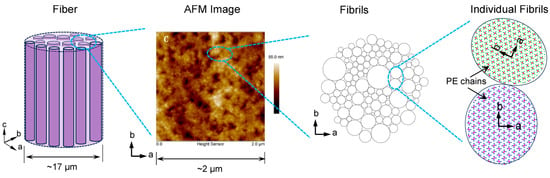
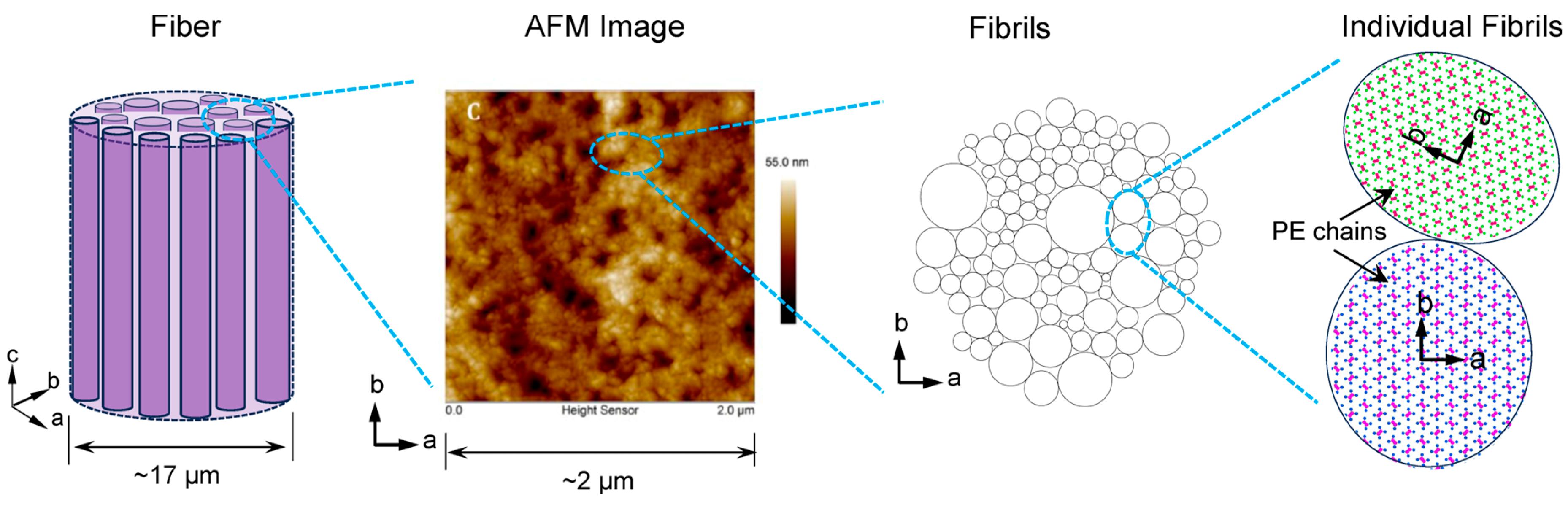
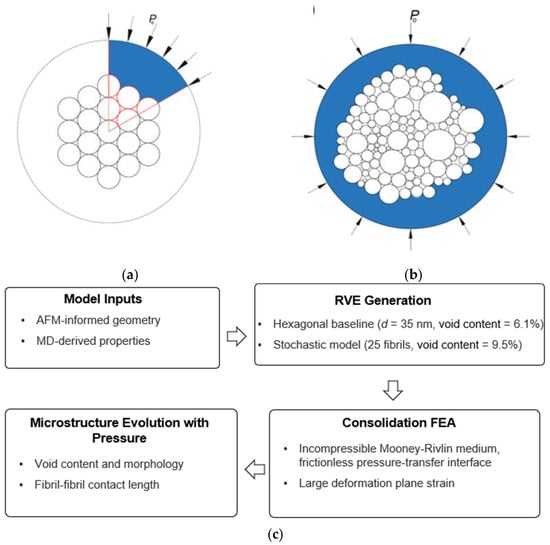
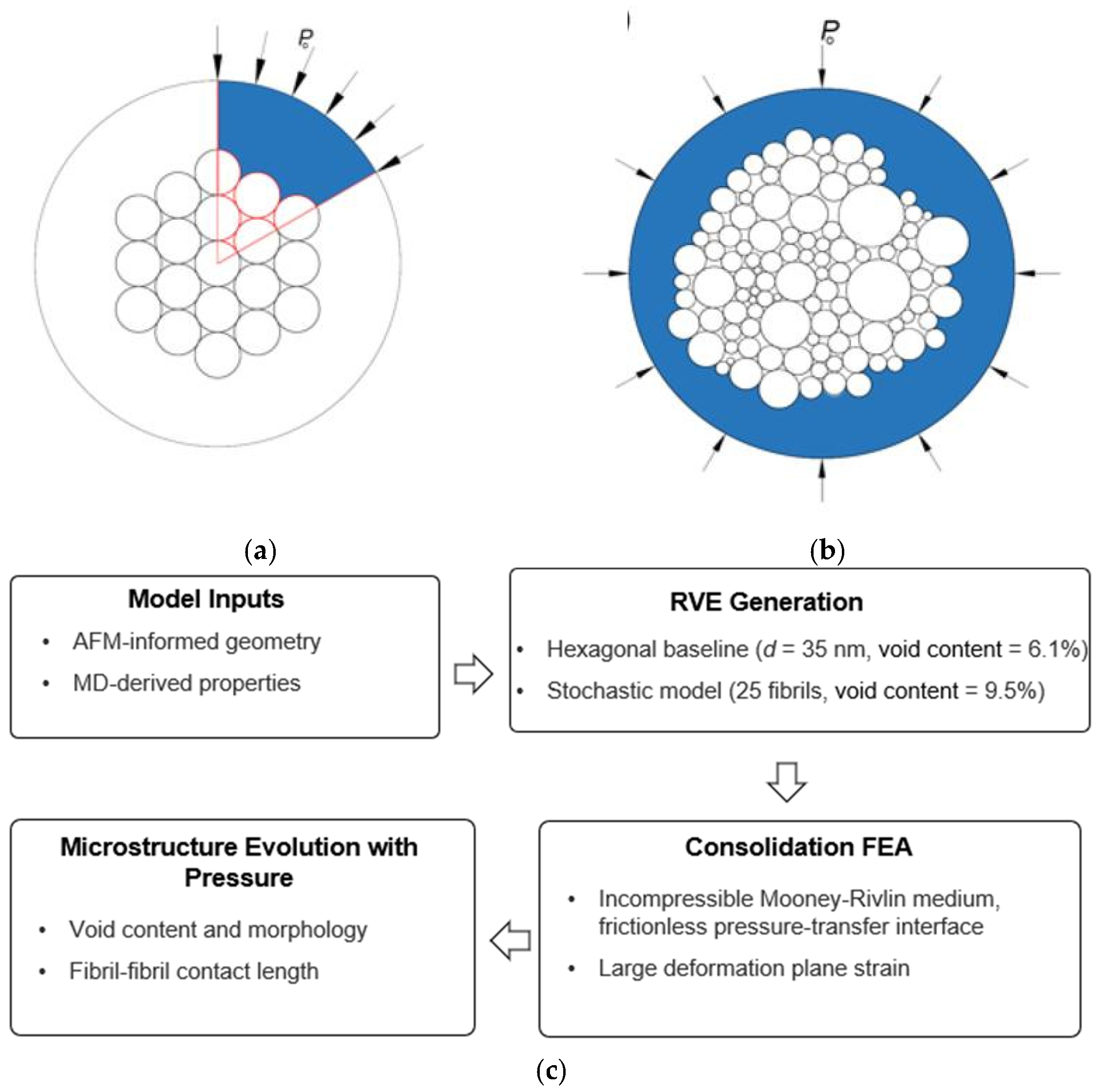
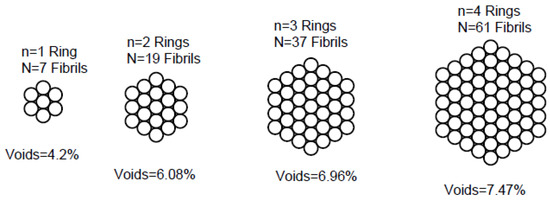
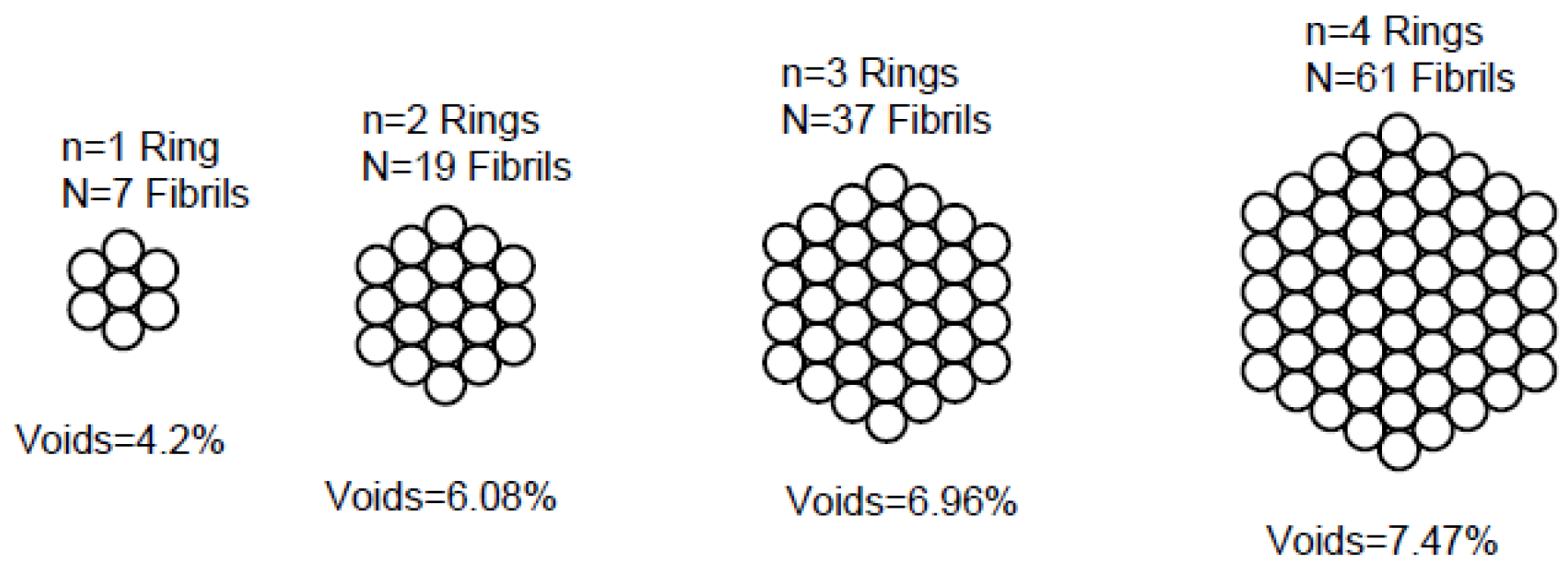
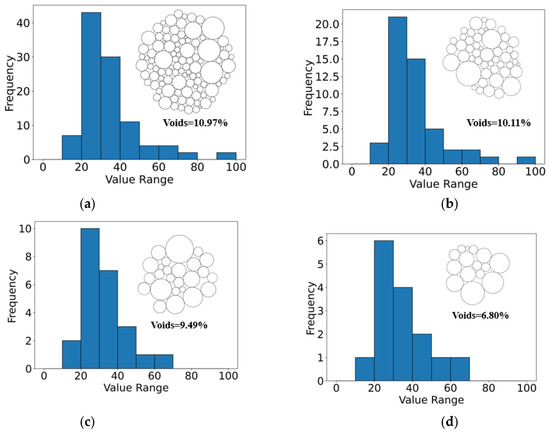
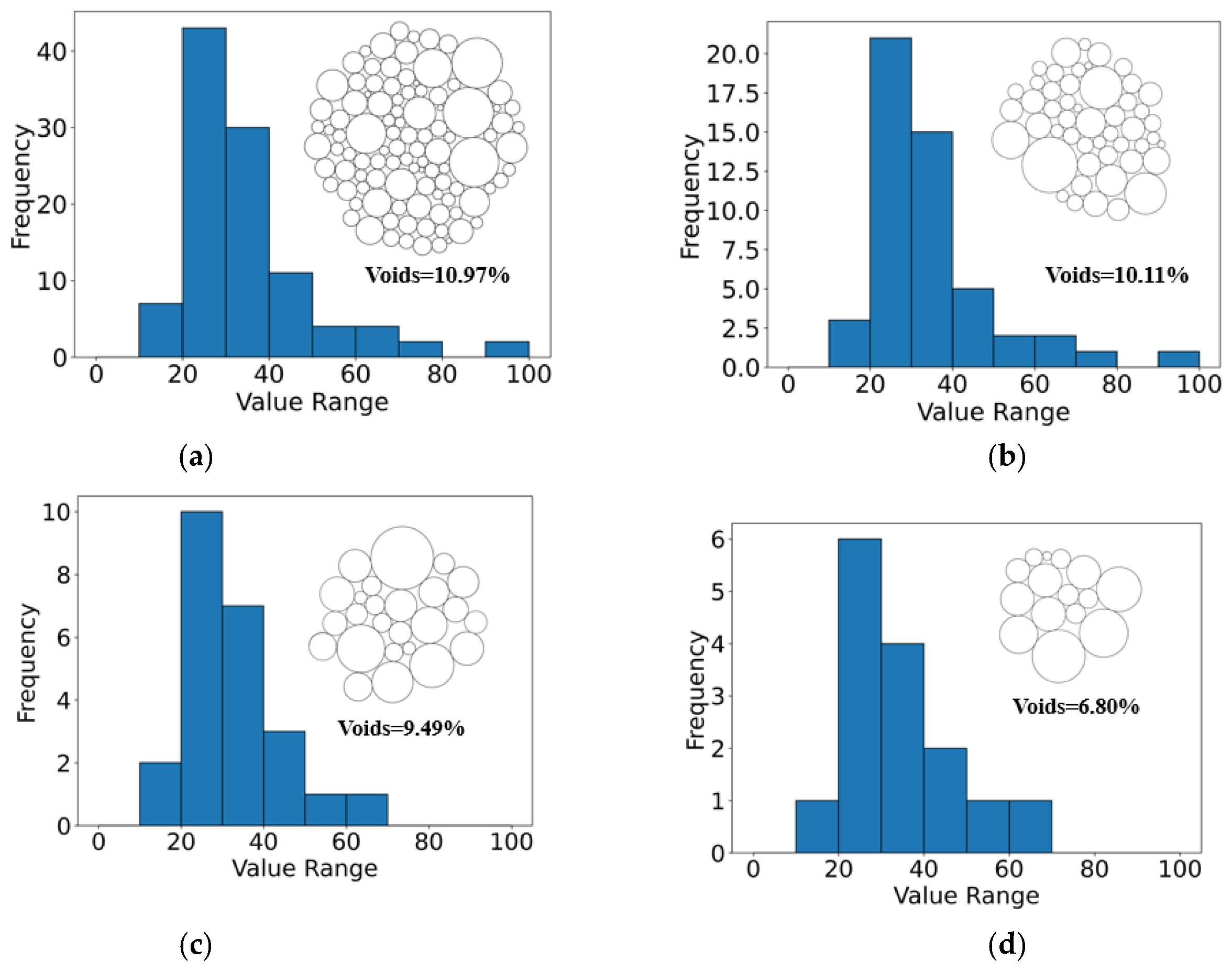
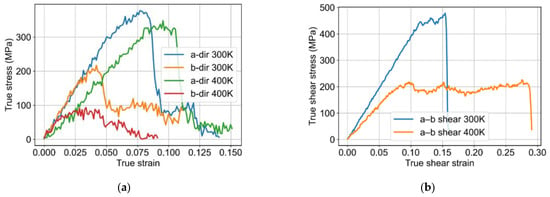
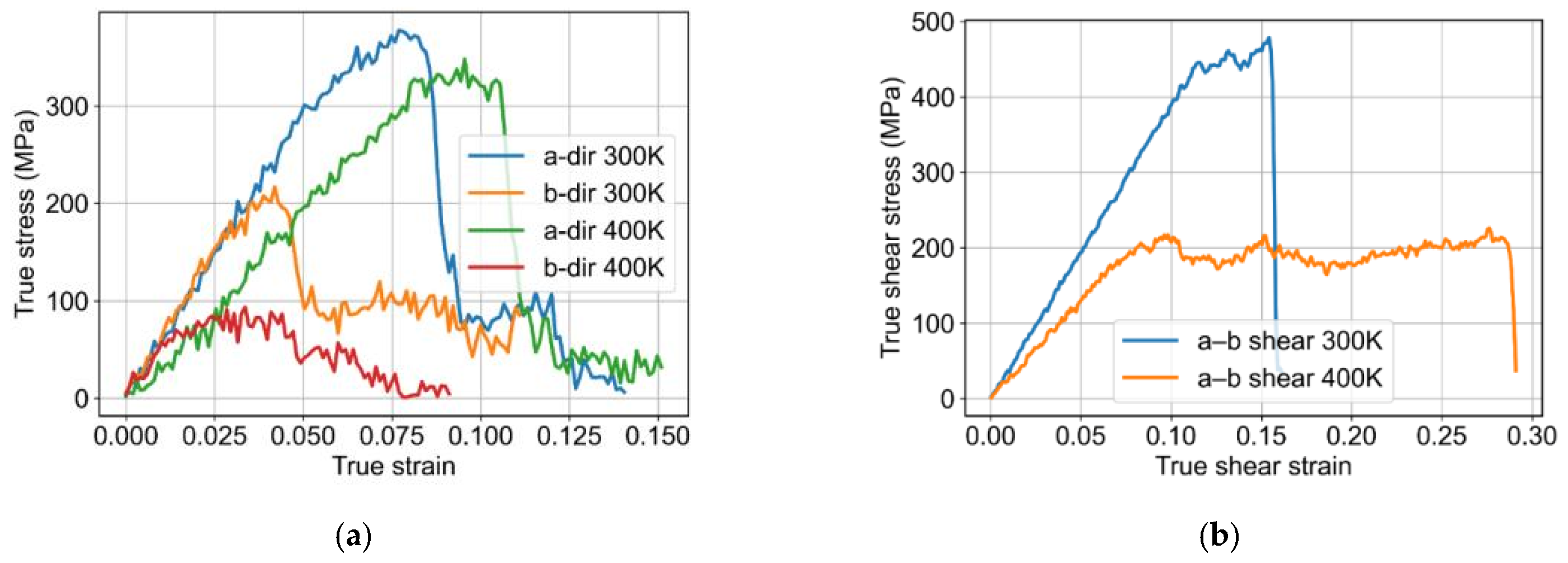
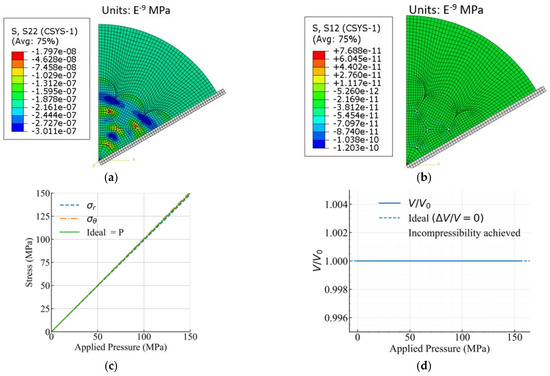
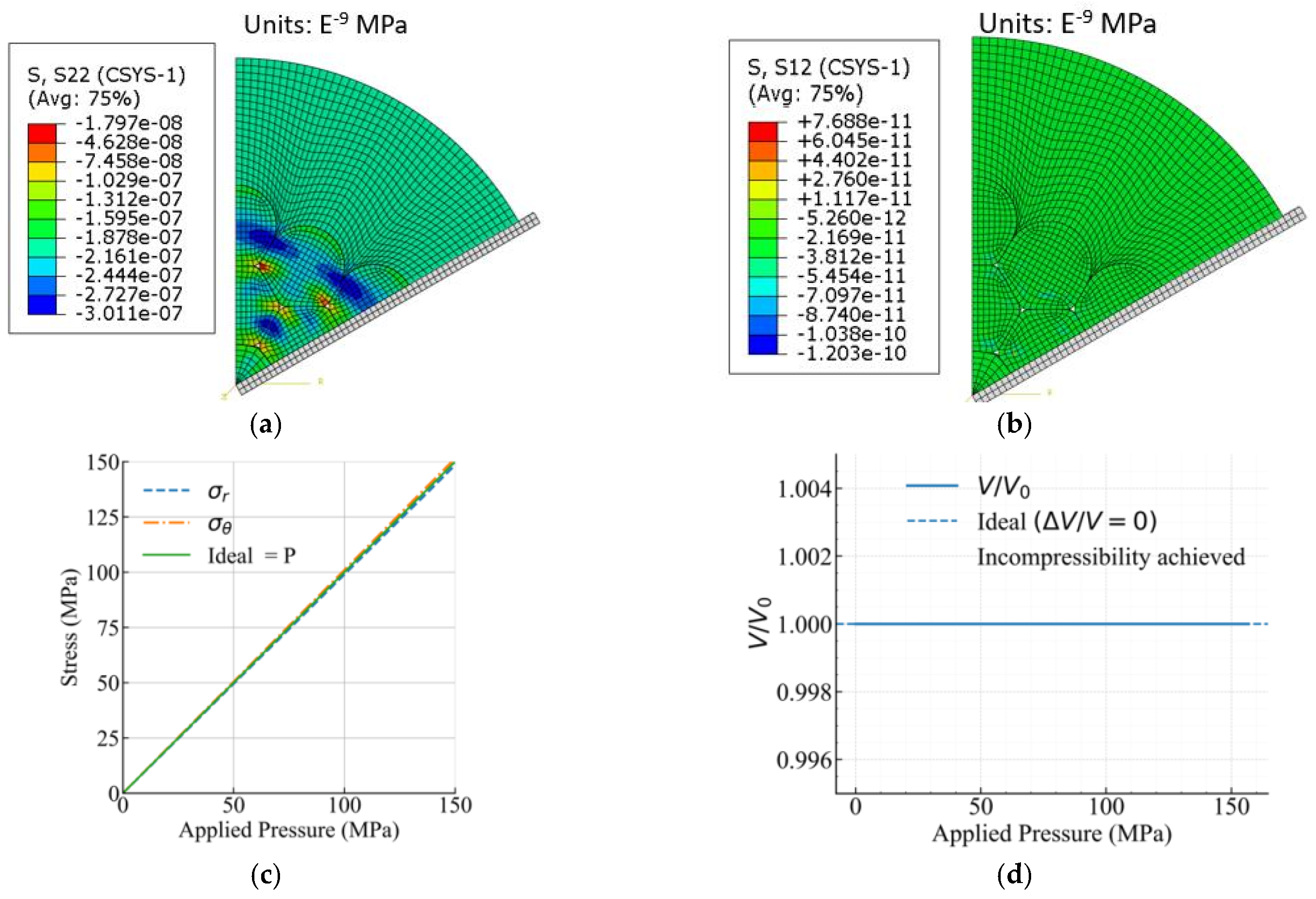
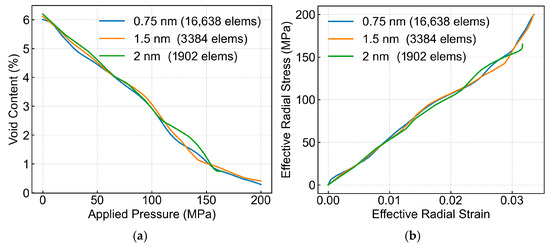
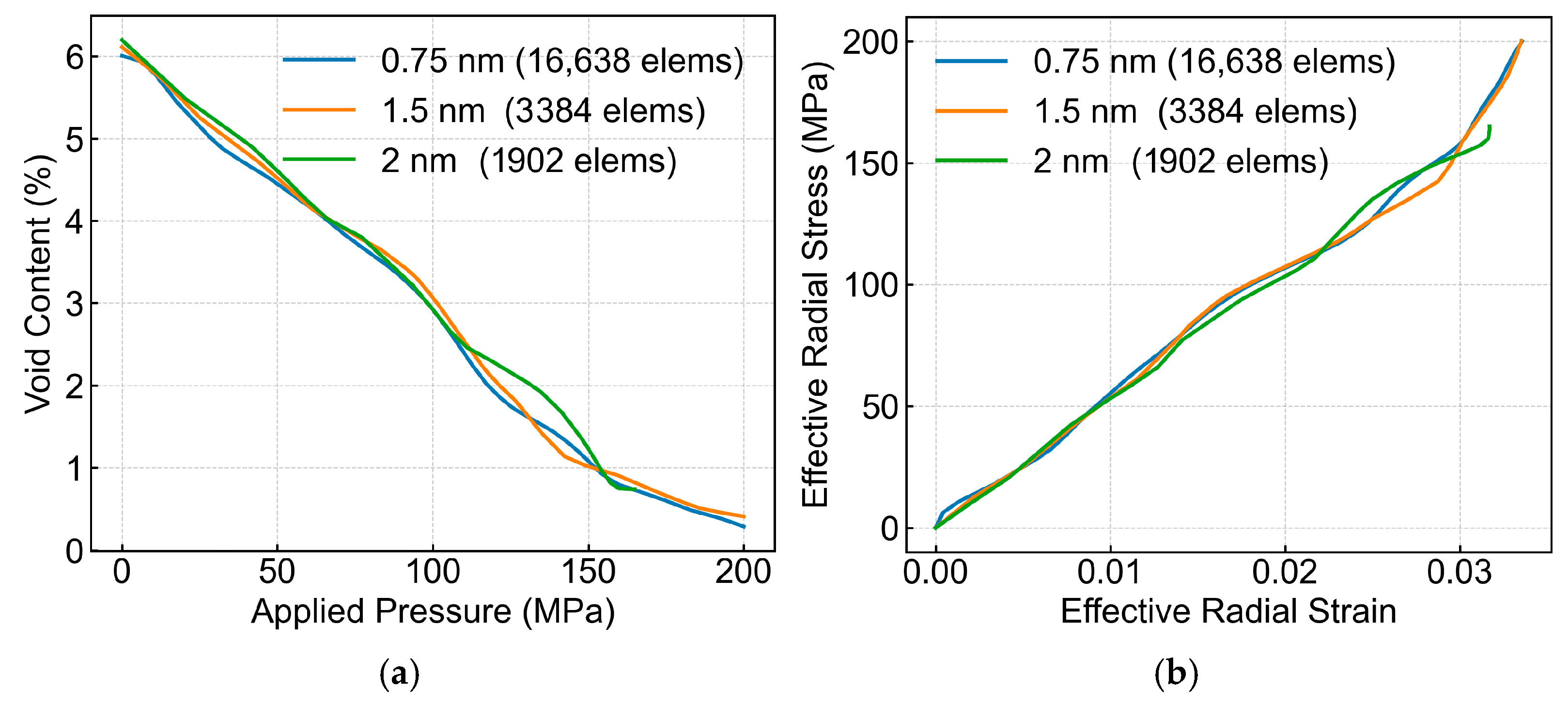
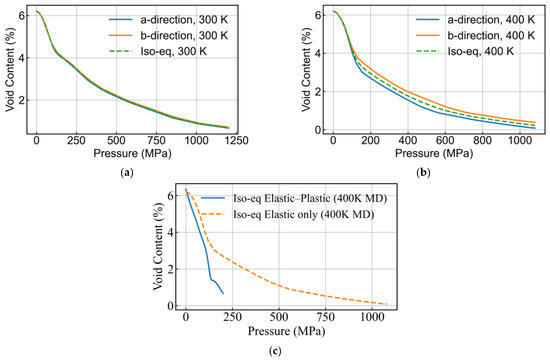
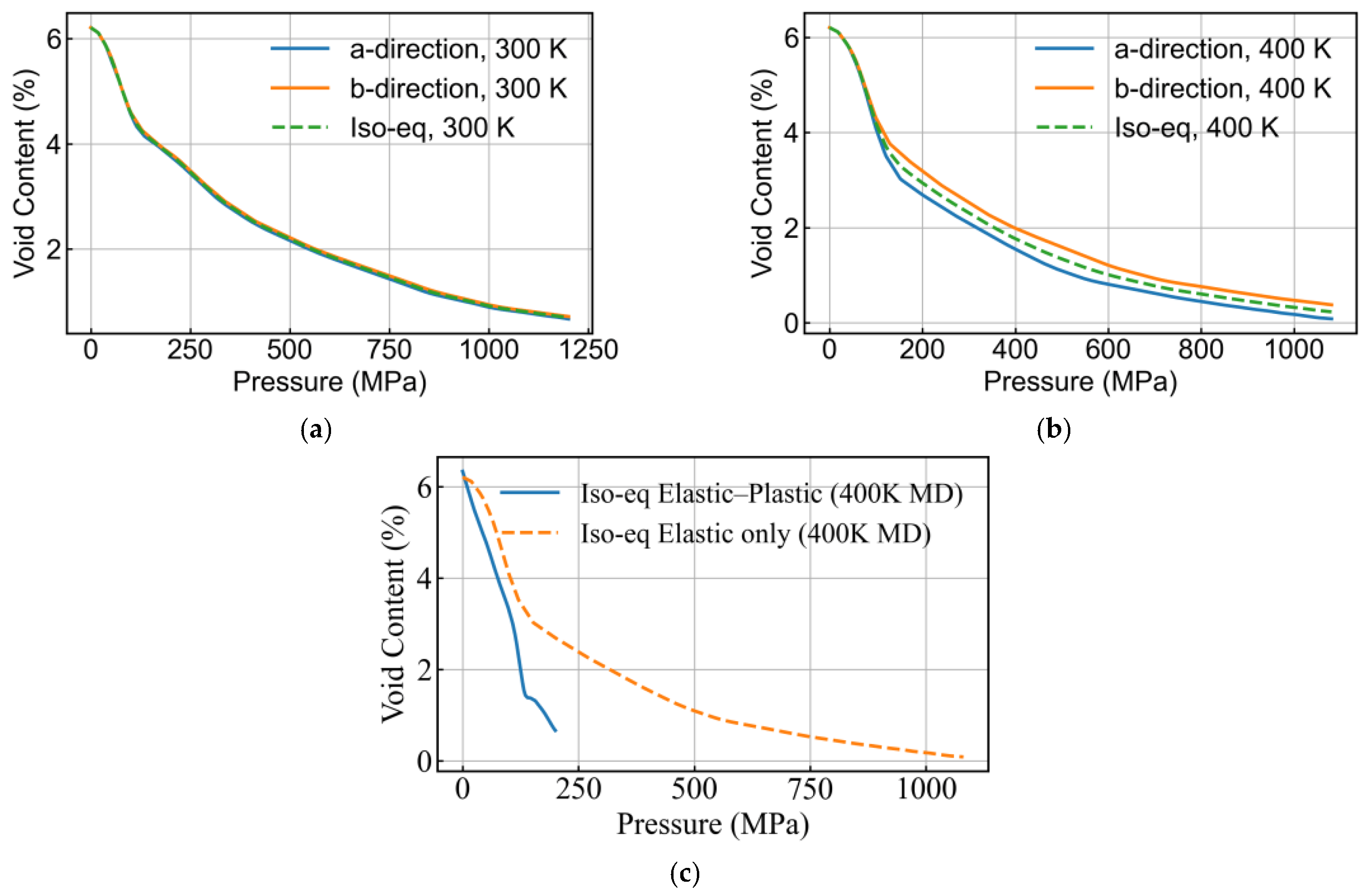
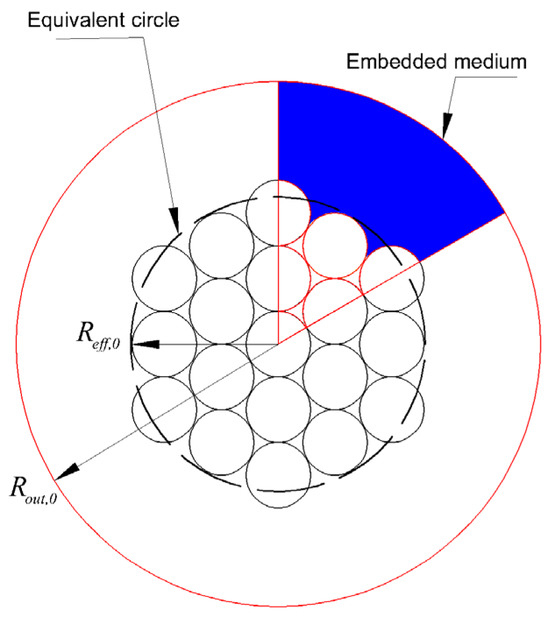
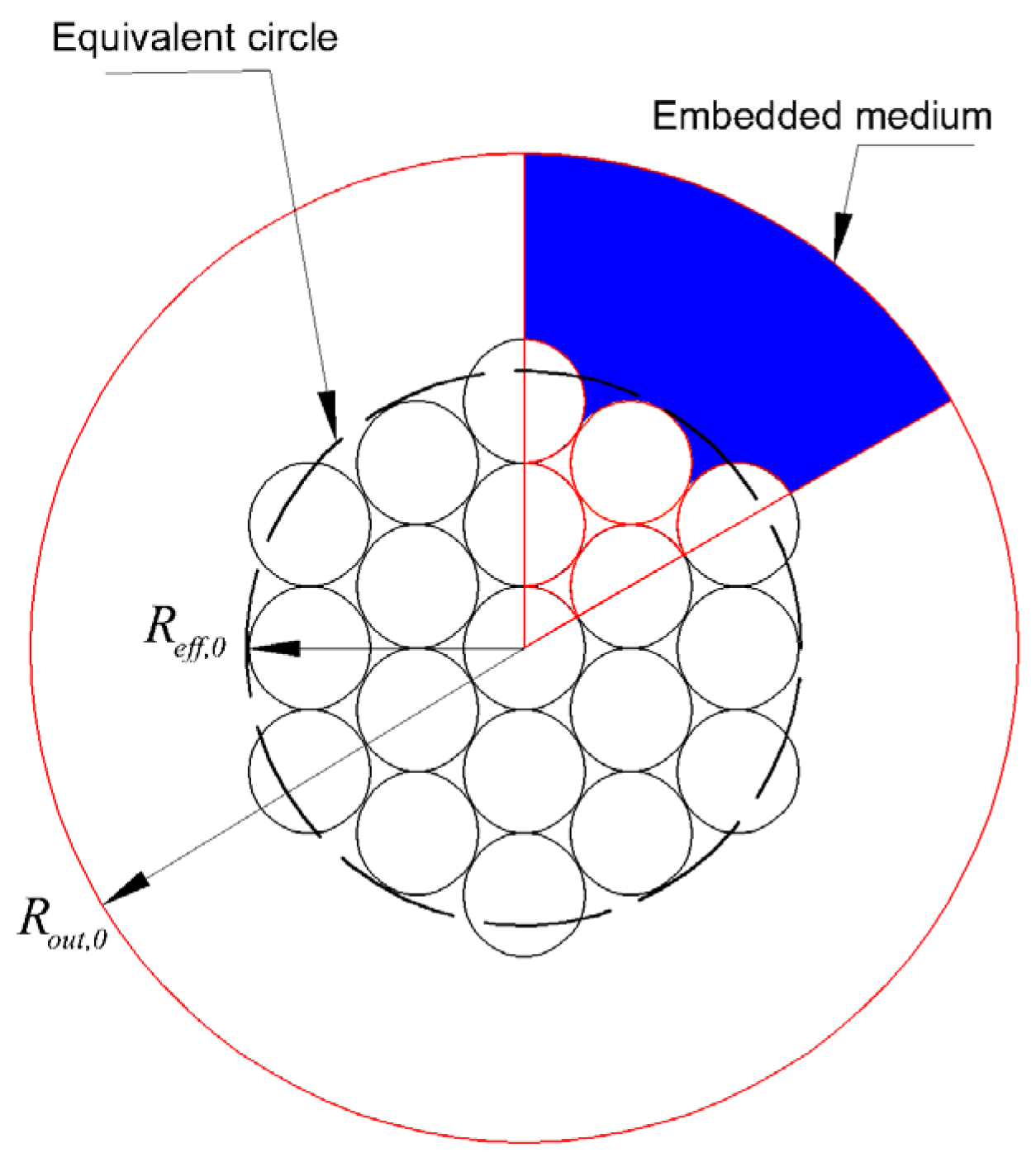
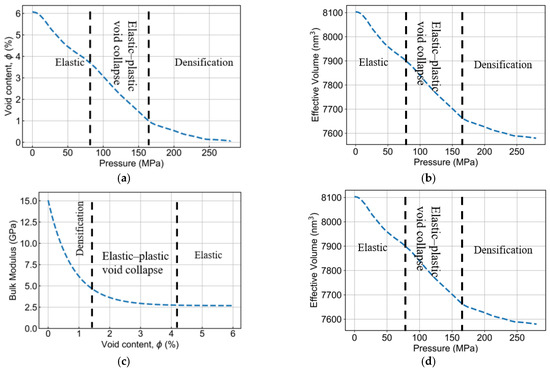
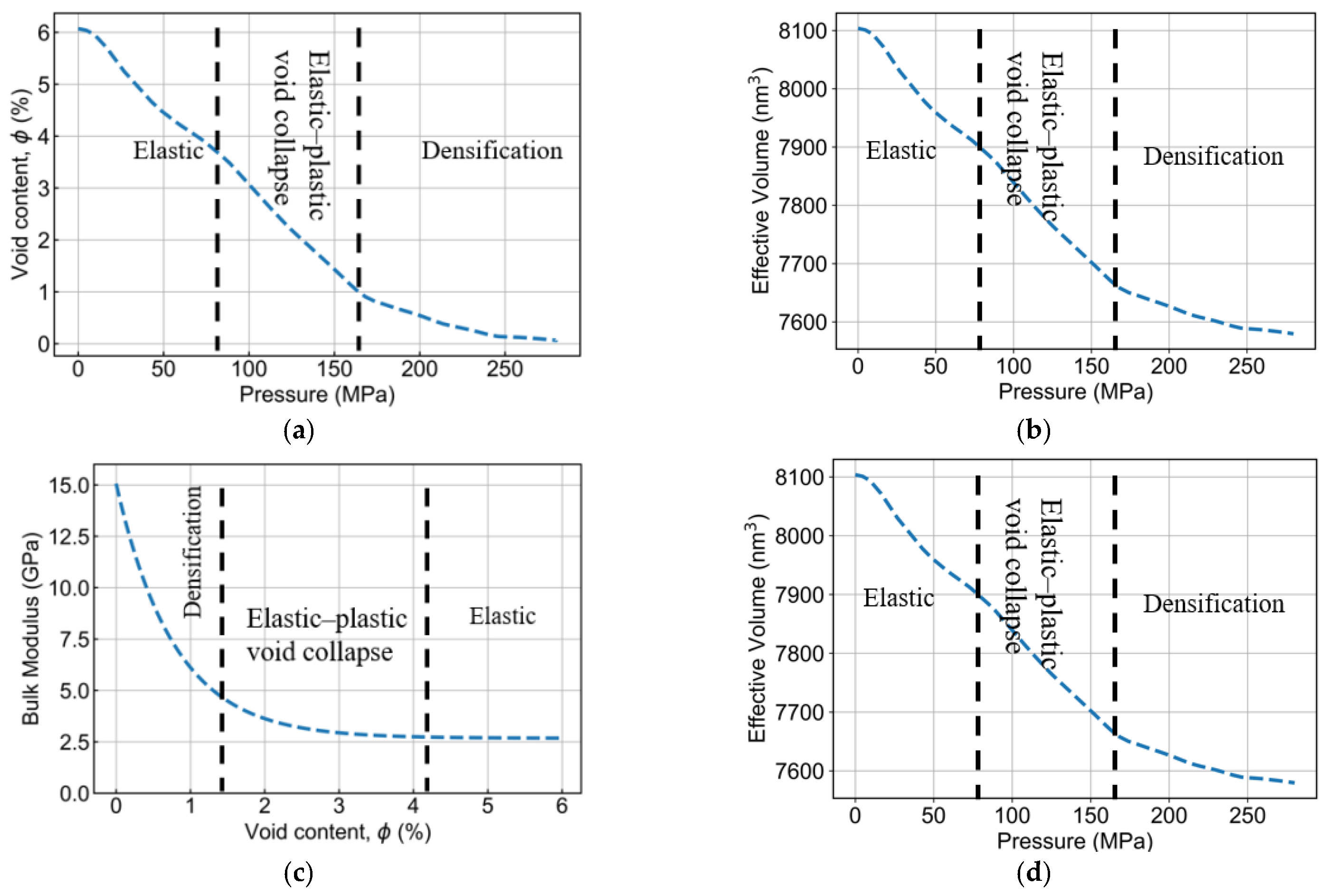
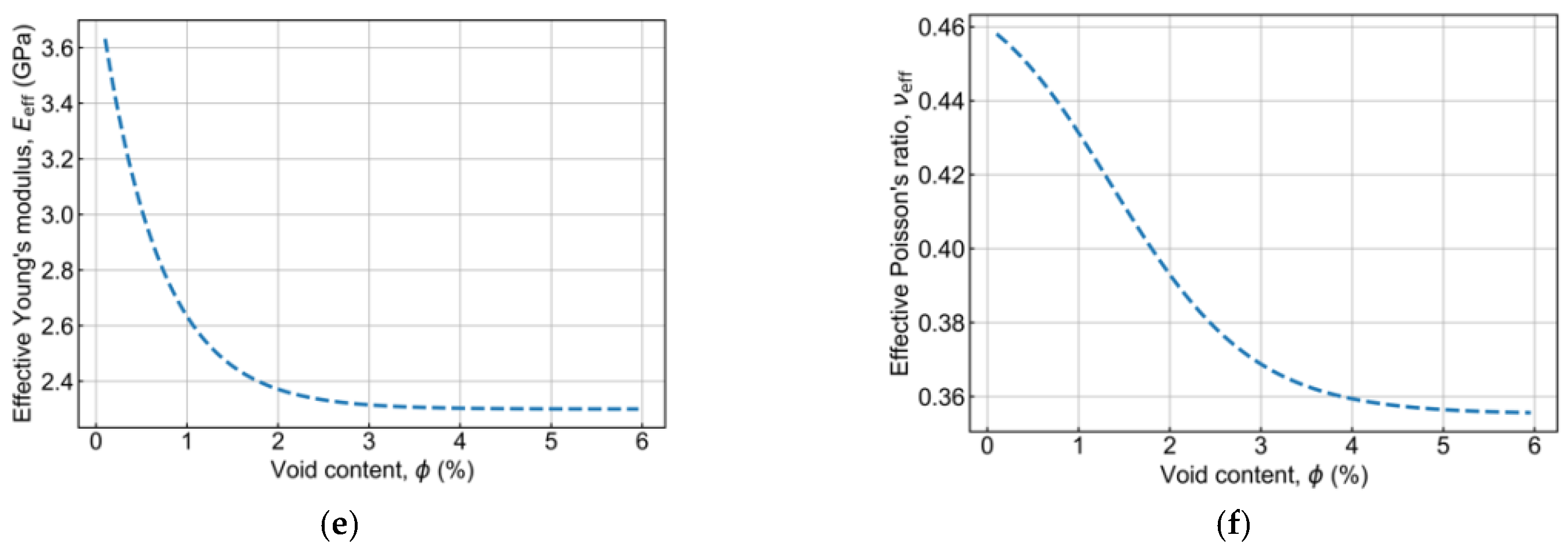
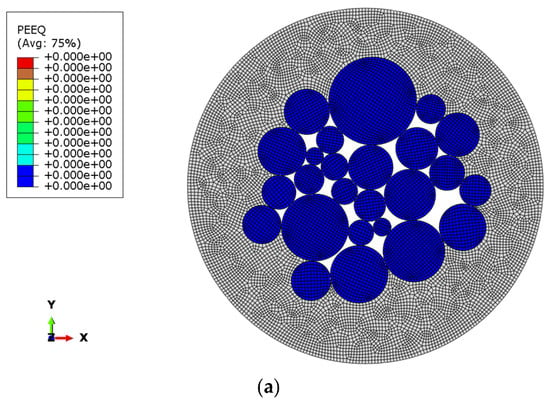
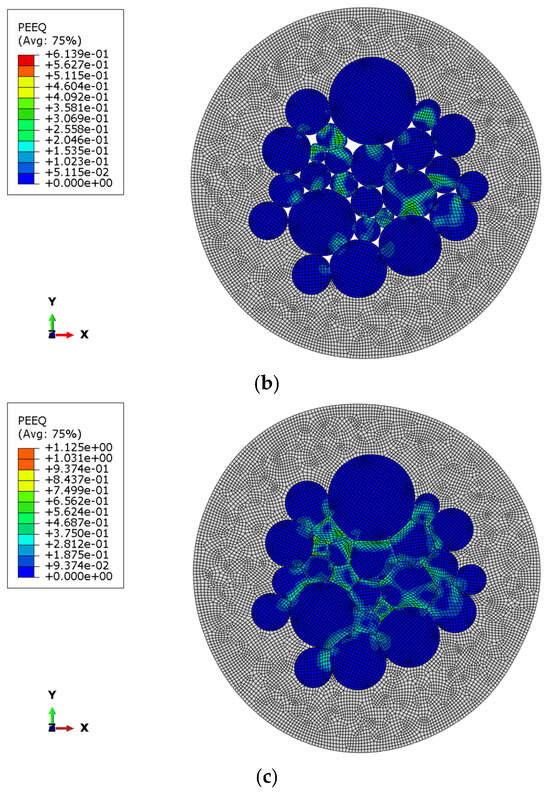
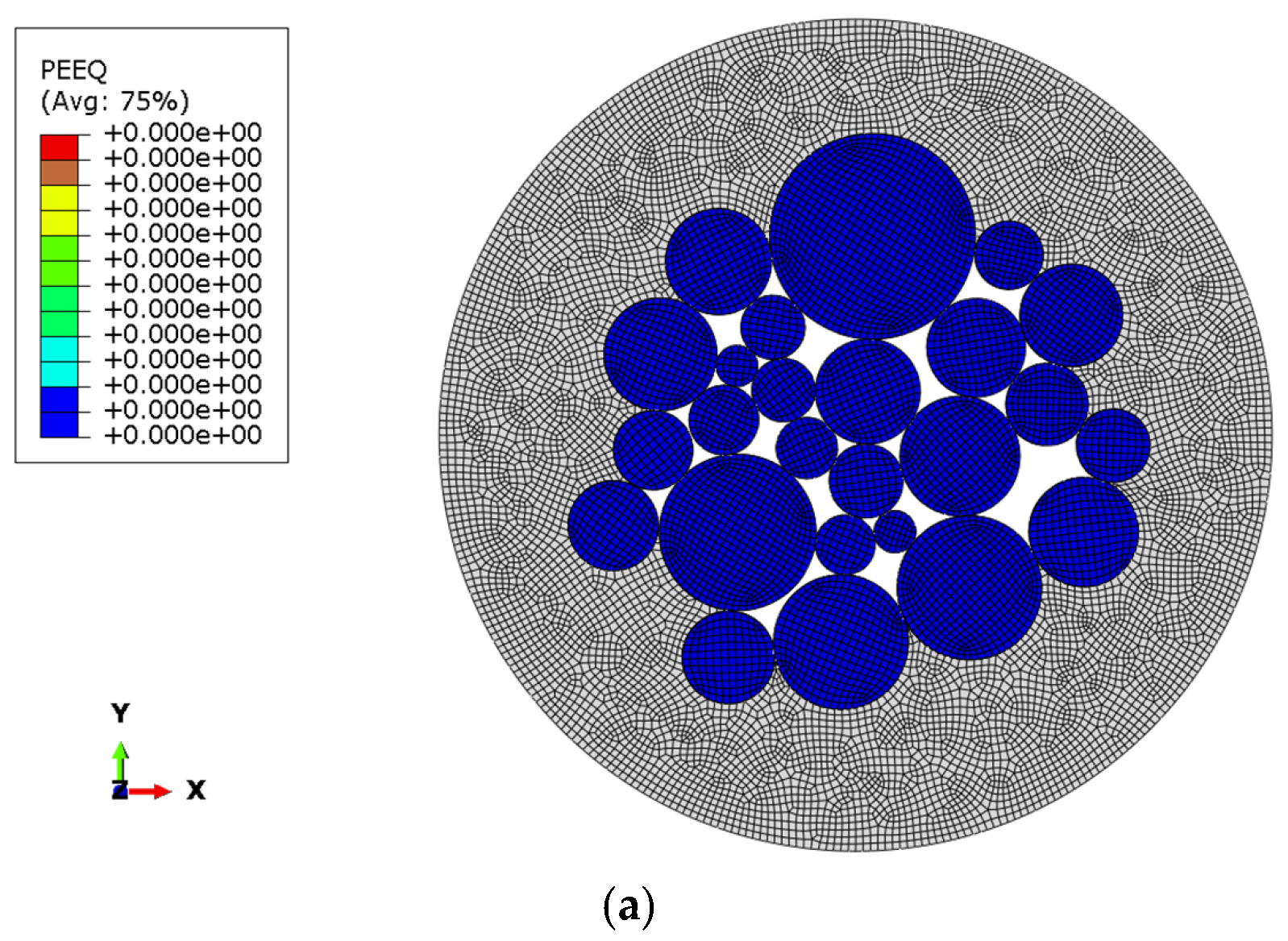
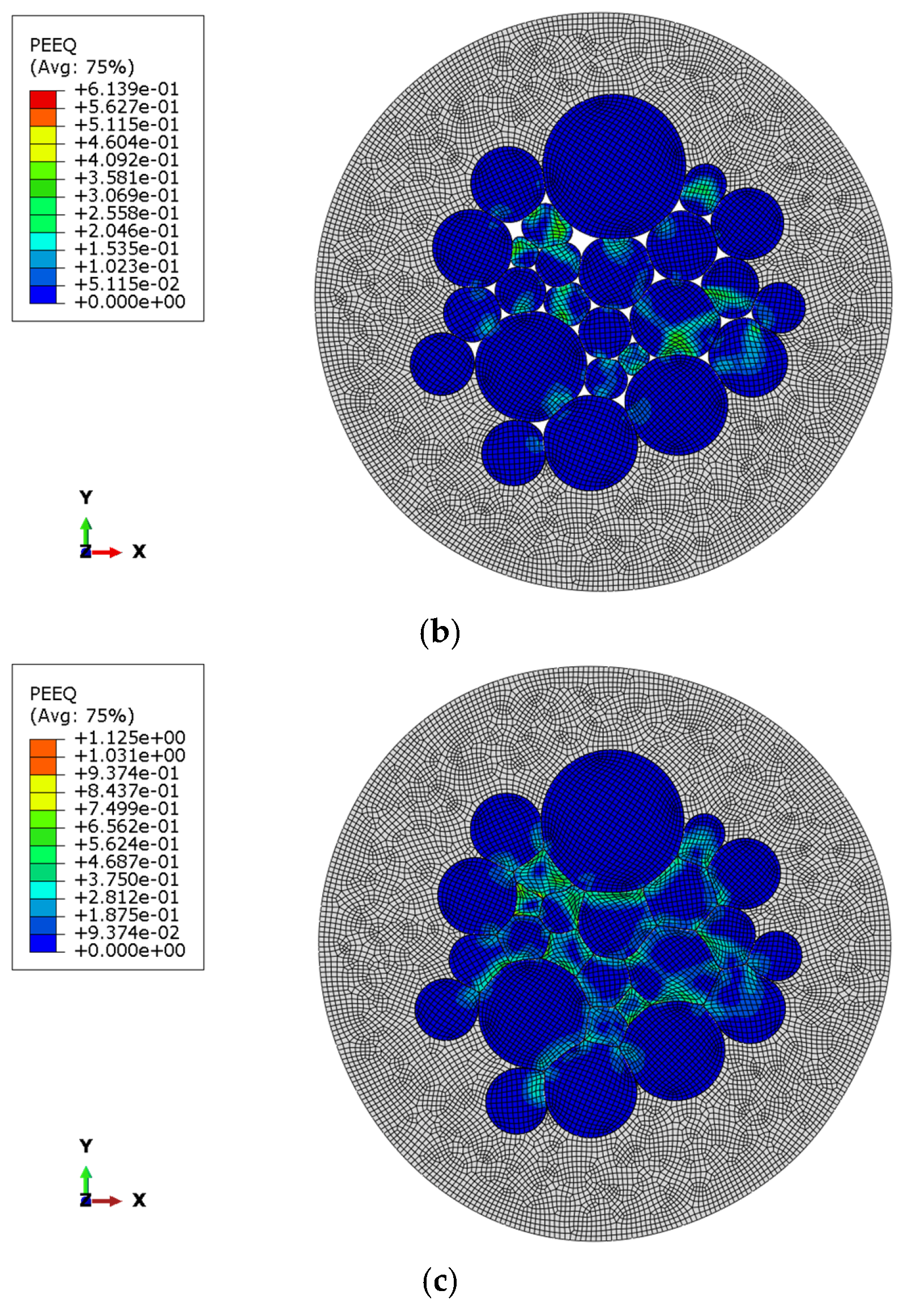
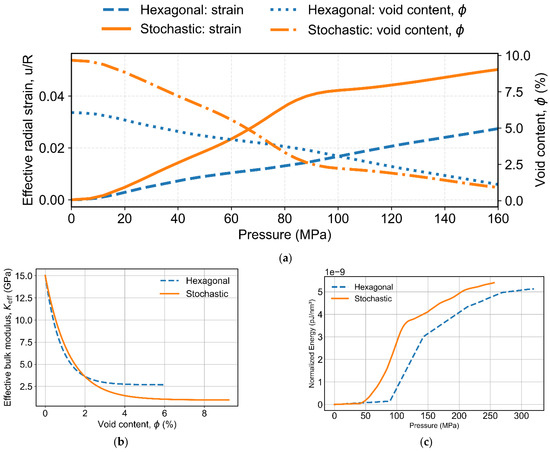
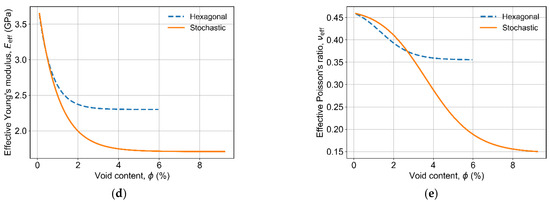
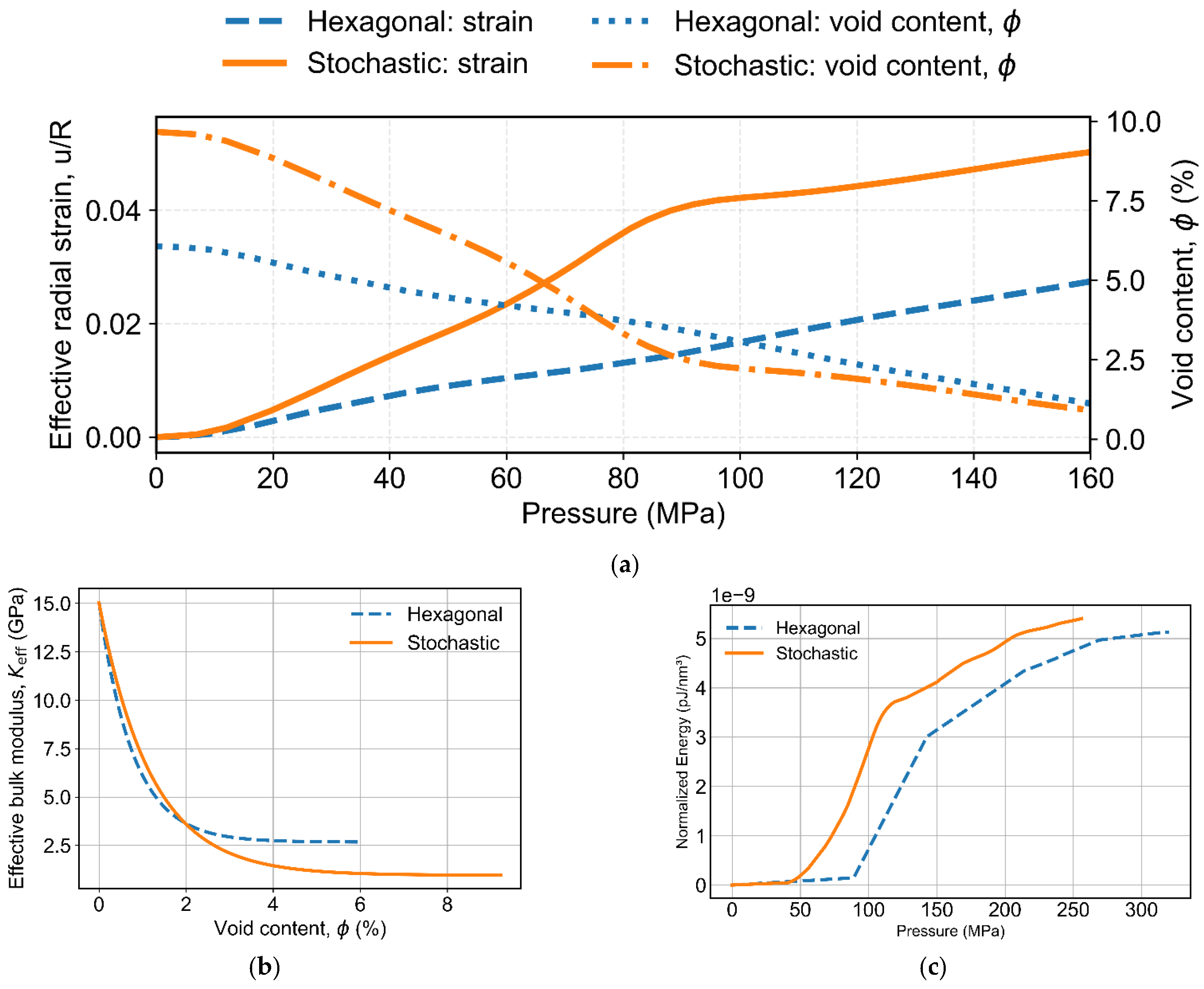
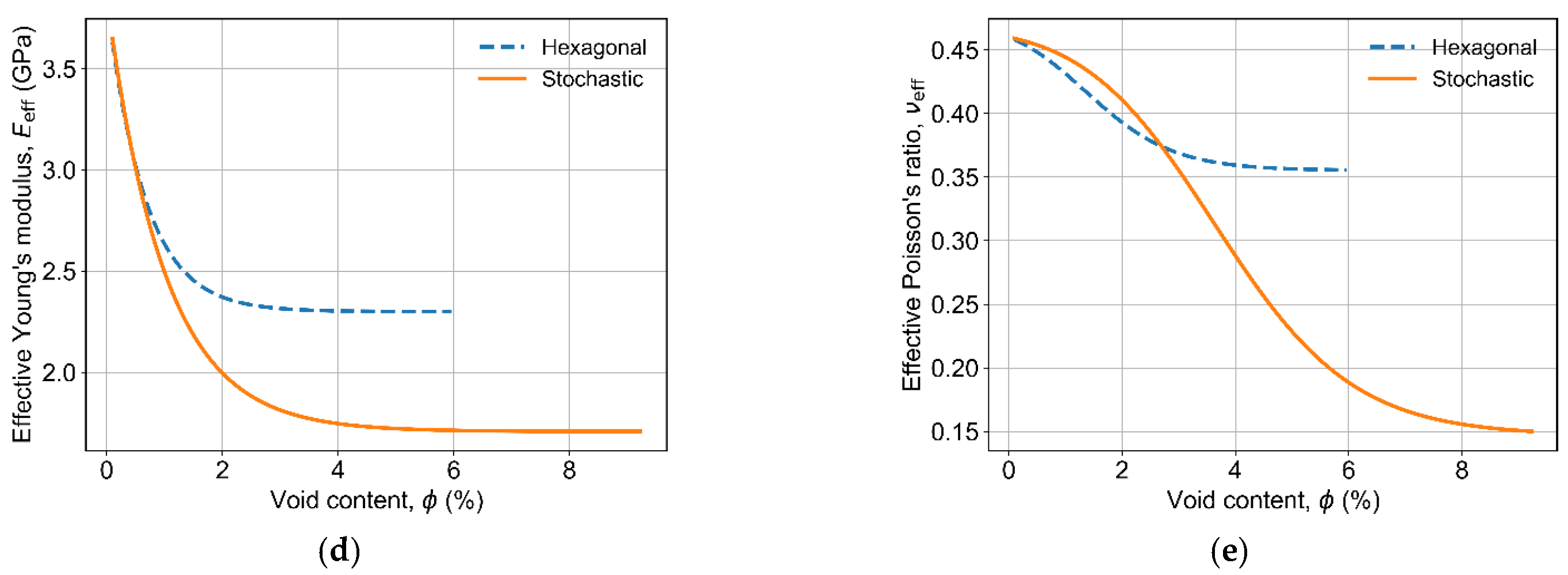
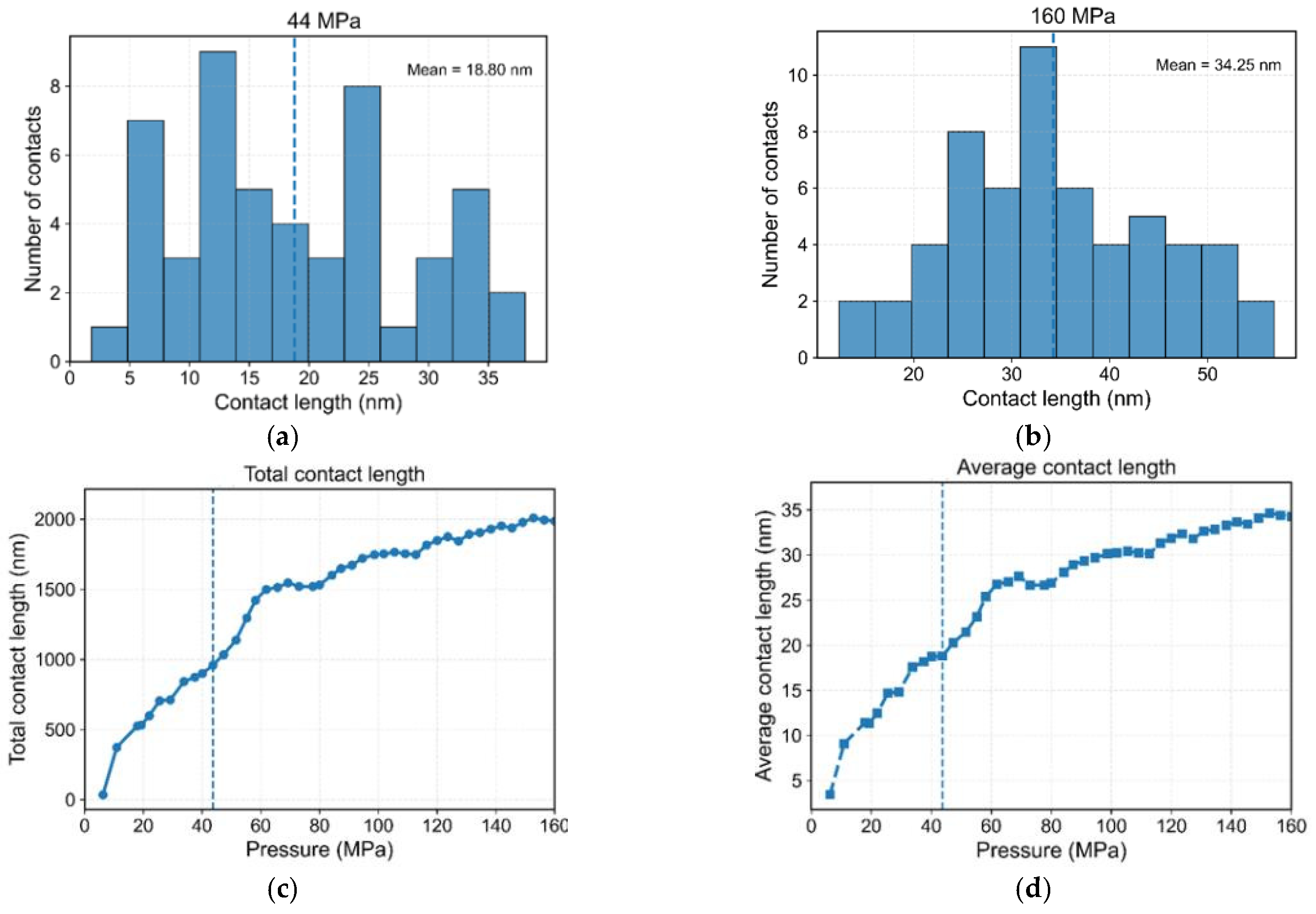

Disclaimer/Publisher’s Note: The statements, opinions and data contained in all publications are solely those of the individual author(s) and contributor(s) and not of MDPI and/or the editor(s). MDPI and/or the editor(s) disclaim responsibility for any injury to people or property resulting from any ideas, methods, instructions or products referred to in the content. |
© 2026 by the authors. Licensee MDPI, Basel, Switzerland. This article is an open access article distributed under the terms and conditions of the Creative Commons Attribution (CC BY) license.