


Highlights
What are the main findings?
- Polyurethane coatings and impact protectors were damaged by laundering lowering seam strength and impact protection.
- Hot wash/tumble-dry cycles caused greater deterioration of protective properties than cold wash/line-dry cycles.
What are the implications of these findings?
- Some losses in protective performance were not visually apparent, highlighting the limitations of visual inspection alone.
- Following appropriate care instructions and removing impact protectors before laundering may help maintain protective performance.
Abstract
Motorcycle protective clothing plays a crucial role in enhancing rider safety. However, routine laundering may affect its performance over time. This study investigated how different washing conditions impact key protective properties of motorcycle garments, including manufacturer’s instructed cold wash/line dry and a standard machine hot wash/tumble dry. Laundering had a limited effect on the abrasion resistance of most garments tested. Interestingly, garments containing p-aramid demonstrated improved abrasion resistance after laundering, particularly under cold washing conditions. However, laundering adversely affected polyurethane-based components within the garments. Deterioration of polyurethane coatings in textile garments contributed to reductions in abrasion resistance and seam strength, while degradation of polyurethane-based impact protectors resulted in reduced energy absorption performance. The hot wash/tumble-dry condition produced more severe deterioration than the cold wash/line-dry condition, indicating that elevated temperature and more aggressive drying conditions accelerate material degradation.
1. Introduction
Motorcycles play a vital role in the lives of many people in the world, serving as both a source of enjoyment and a practical, cost-effective mode of transport. They are an integral part of daily life for many riders. As an example, registration numbers in Australia continue to rise [1], with a twofold increase in Victorian and NSW registrations observed between 2005 and 2014 [2]. According to the Bureau of Infrastructure and Transport Research Economics (BITRE) 2023 statistical report [3], motorcycles account for approximately 4.5% of all registered vehicles in Australia.
Despite their benefits, motorcycles are overrepresented in road trauma statistics, accounting for a disproportionate number of fatalities and injuries. In 2022, Australia recorded 1194 road crash deaths, a 5.8% increase from the previous year [4]. The economic burden of road trauma was estimated at $27 billion in 2012, with motorcyclists contributing to one-fifth of this cost. In 2023, motorcycles made up just 3.8% of registered vehicles, yet motorcyclists accounted for 19% of all injury and fatality compensation claims in Victoria [5]. This percentage inclusion in road trauma is higher when the work of Allen et al. is considered, as they found in Victoria that whilst registered motorcycles were 4% of all registered vehicles, only 0.6% of road users were motorcycles when road monitoring was adopted [6]. Similarly, in New Zealand, motorcycles represented 3.6% of registered vehicles but contributed to 17% of motorcycling fatalities in 2024 [7]. These statistics highlight the urgent need for improved rider safety measures.
One crucial factor in mitigating motorcycle crash injuries is the use of protective clothing. Research has shown that high-quality protective garments significantly reduce injury severity and hospitalisations in the event of an accident [8,9,10]. The key protective qualities of motorcycle clothing are abrasion resistance, impact protection and burst resistance (strong seams and fastenings). However, various challenges impact the long-term effectiveness of protective gear. Australia’s warm climate is one such challenge, as heat and discomfort often discourage riders from wearing protective clothing [11]. Regular laundering is necessary to maintain hygiene, but the effect of washing methods on the protective performance of motorcycle clothing is currently unexplored.
Laundering of textiles may have a range of different effects on the fibres and fabrics. The agitation and chemicals used in laundering can reduce the tensile [12], tearing [13], and seam [14] strength. Fibre fibrillation from tumbling and spinning were the main contributor to strength loss [15]. Fibre shedding may occur due to this damage to the fibres [16]. In some cases, laundering was found to have no effect or improved performance on ballistic protective performance [17] and stretch for elastane core yarns [18]. Chemicals may be added to the textile that change its protective performance such as residual detergent reducing the fire resistance of meta-aramid firefighter clothing [19] and chlorine bleach damage of ballistic vests [20]. Understanding the effects of laundering on motorcycle clothing protection may be used in rider awareness to reduce rider risk.
The aim of this study was to determine if laundering affected the three key protection properties of motorcycle clothing: abrasion resistance, seam strength, and impact attenuation. This study aims to provide evidence-based recommendations for maintaining the performance and longevity of motorcycle protective clothing.
2. Materials and Methods
Two laundering scenarios were evaluated in this study. The first involved washing and drying according to the manufacturers’ care instructions, allowing the effect of laundering under recommended condition to be assessed. The second involved machine wash at 60 °C followed by tumble-drying, representing a heavy laundering scenario in which the manufacturer’s care instructions were not followed and the garments may be washed with other clothing. This condition was intended to represent a more severe laundering process that could potentially cause greater damage to the protective components of the motorcycle garment. Two sets of seven newly purchased garments, representing the same selections listed in Table 1, were evaluated under the two laundering conditions. The first set was subjected to 20 washing cycles according to the manufacturers’ care instructions, comprising a wash temperature below 30 °C followed by line drying. The second set, consisting of the same seven garment types, was subjected to 20 washing cycles under the heavy laundering condition, comprising machine washing at 60 °C followed by tumble drying. Unfortunately, the heavy laundering condition was limited to 10 washes because excessive damage was observed in two of the test garments.
Table 1.
Research code and fabric construction of the test garments used in this research.
Key protective properties, including abrasion resistance, impact energy attenuation, and seam strength, were evaluated before and after laundering using the test methods described in the following sections.
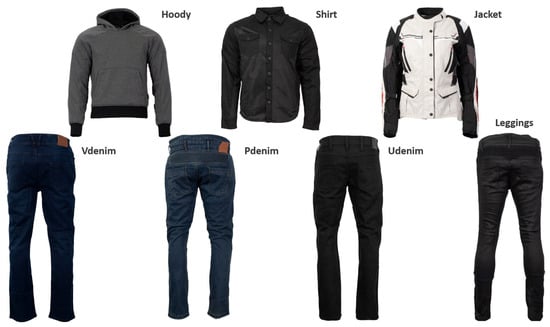
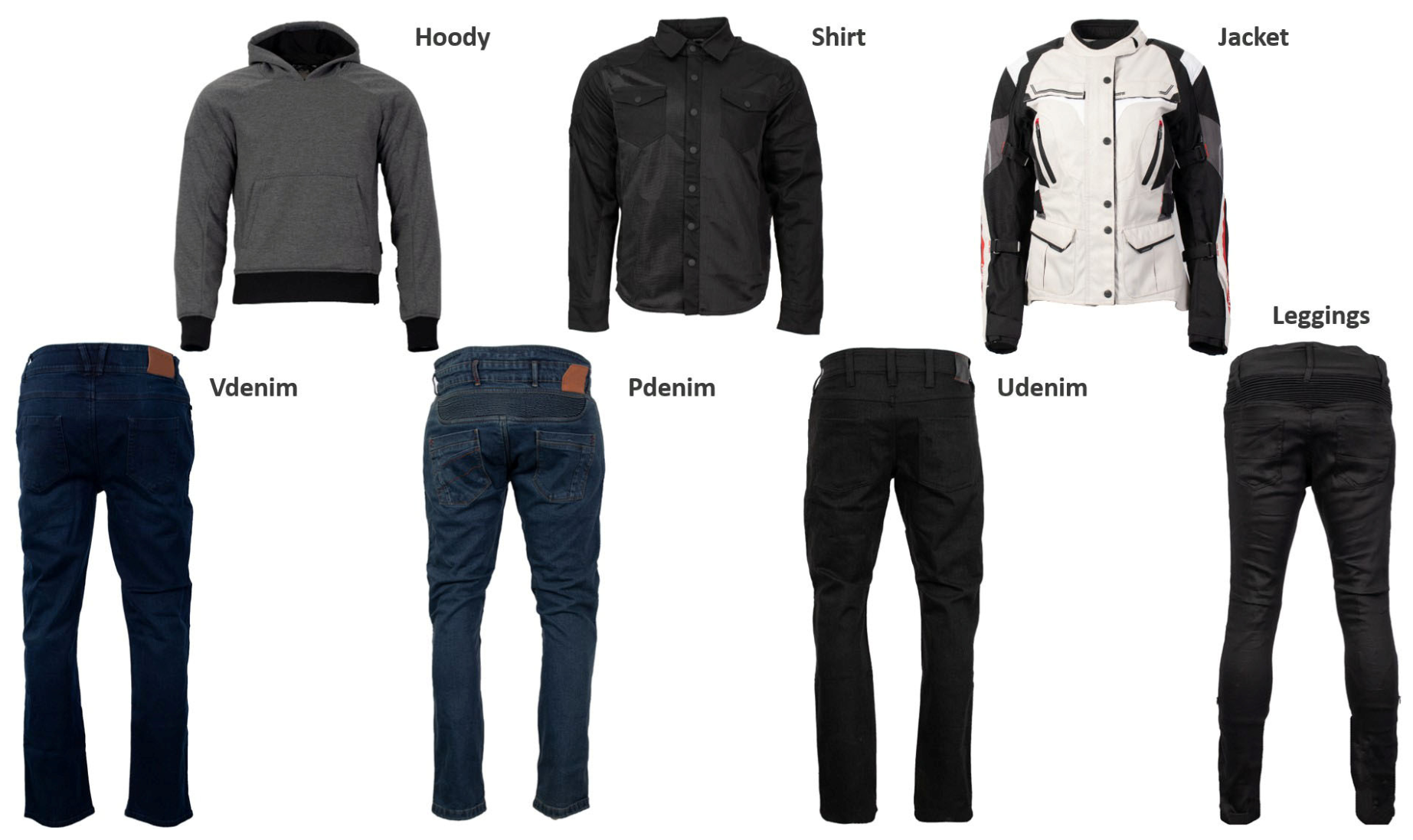
The garment types selected for laundering are presented in Table 1. The garments were commercially available protective motorcycle clothing products and have been deidentified for reporting in this study Figure 1. One garment of each selected type was included, representing garment types that would typically undergo laundering during their service life. Three different protective denim jeans were included because each incorporated a different protective fibre type in its construction.
Figure 1.
De-identified garments used in this work.
2.1. Washing
All washing cycles were conducted using an SDL Atlas Wascator FOM71CLS (SDL Atlas LLC, Rock Hill, SC, USA), front loading machine (Type A). The washing instructions detailed in the care labels on the garments were examined. Garments were observed to require a cold wash by hand or a gentle machine wash or a cold normal agitation machine wash. The washing following the manufacturers’ care instructions was conducted at 30 ± 3 °C using the program parameters outlined in BS EN ISO6330:2021 3H [21] for simulated hand wash and 3G for gentle agitation; both featured 3 s drum movement and 12 s static and low spin, liquor level 130 mm. 3N for normal agitation featured 12 s drum movement and 3 s static and high spin, liquor level 100 mm. The standard machine wash was conducted at 60 ± 3 °C using the program parameters outlined in BS EN ISO6330:2001, 6Nh. The program featured normal agitation and heating to 40 °C, followed by a 15-min hold with agitation before heating to the final wash temperature. The liquor level was 100 mm, measured from the bottom of the cage after the machine had been running for 1 min and allowed to stand for 30 s.
The detergent used for this study was ICE Non-Phosphate reference detergent 2, base powder; the dose for type A machine was (20 ± 1) g. The composition is included in BS EN ISO6330:2021, provided in Table S1.
The water used for laundering was tap water with a total hardness of approximately 34.8 mg/L according to local government water quality data [22]. This value is well below the commonly accepted threshold of 60 mg/L [23], indicating that the water used in this study was classified as soft water.
2.2. Drying
The manufacturers’ drying instructions specified line drying or drying flat in the shade. For consistency, an ASKO drying cabinet DC 7573 (ASKO Appliances AB, Lidköping, Sweden) was used for the conditioned drying. This allowed the garments and impact protectors to be dried under controlled conditions while avoiding direct heat and sunlight.
For the second laundering condition, tumble drying was performed using, an Electrolux 5.5 kg Sensor Dry Clothes Dryer (Electrolux, Brussel, Belgium). During tumble drying, the impact protectors were placed in a mesh bag to prevent direct contact with the drum and minimise potential damage during drying.
2.3. Impact Abrasion Resistance
Impact abrasion was conducted on a Mesdan LAB Cambridge type impact abrasion tester (Mesdan S.p.A., Puegnago del Garda, Italy). A 60-grit abrasive belt travelling at 8 m/s was used to determine the time to hole in accordance with EN 13595-2:2002 [24] at a test temperature of 23 ± 2 °C. The test head had a diameter of 50 mm, a drop height of 50 mm and a mass of 5 kg. Six samples (n = 6) of each material combination were tested. Two specimens were tested with the warp direction at 0° , two at 45° and two at 90°. A calibration test using two layers of the canvas calibration fabric was conducted every tenth specimen. The measured time to hole was adjusted according to the degree of abrasive belt wear using the method specified in EN 13595-2:2002.
2.4. Impact Resistance
Impact resistance testing was conducted on a Cadex twin drop wire tester following the method detailed in EN 1621-1:2012 [25] at a test temperature of 23 ± 2 °C. Each impact protector was subjected to three impacts in each of the A, B and C areas, as specified in EN 1621-1, resulting in a total of nine measurements per impact protector (n = 9). The mean of the nine measurements was reported in this study.
2.5. Seam Burst Strength
Seam strengthurst testing was conducted using an SDL Atlas Autoburst machine in accordance with EN13595-3:2002 [26], with the test diameter modified to 79 mm as specified in the MotoCAP test protocol [27]. The force required to rupture the seam or fabric was recorded, Six seams from each risk zone were tested and and the results were averaged (n = 6).
2.6. Fabric Selection for Different Tests
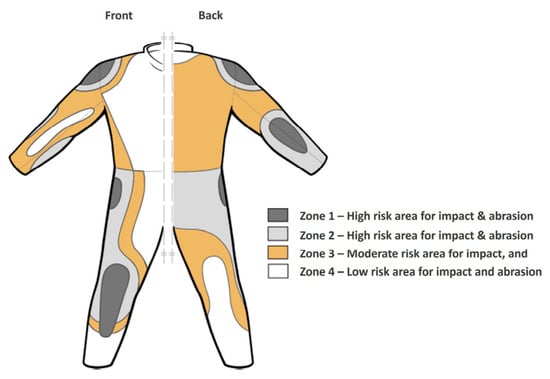
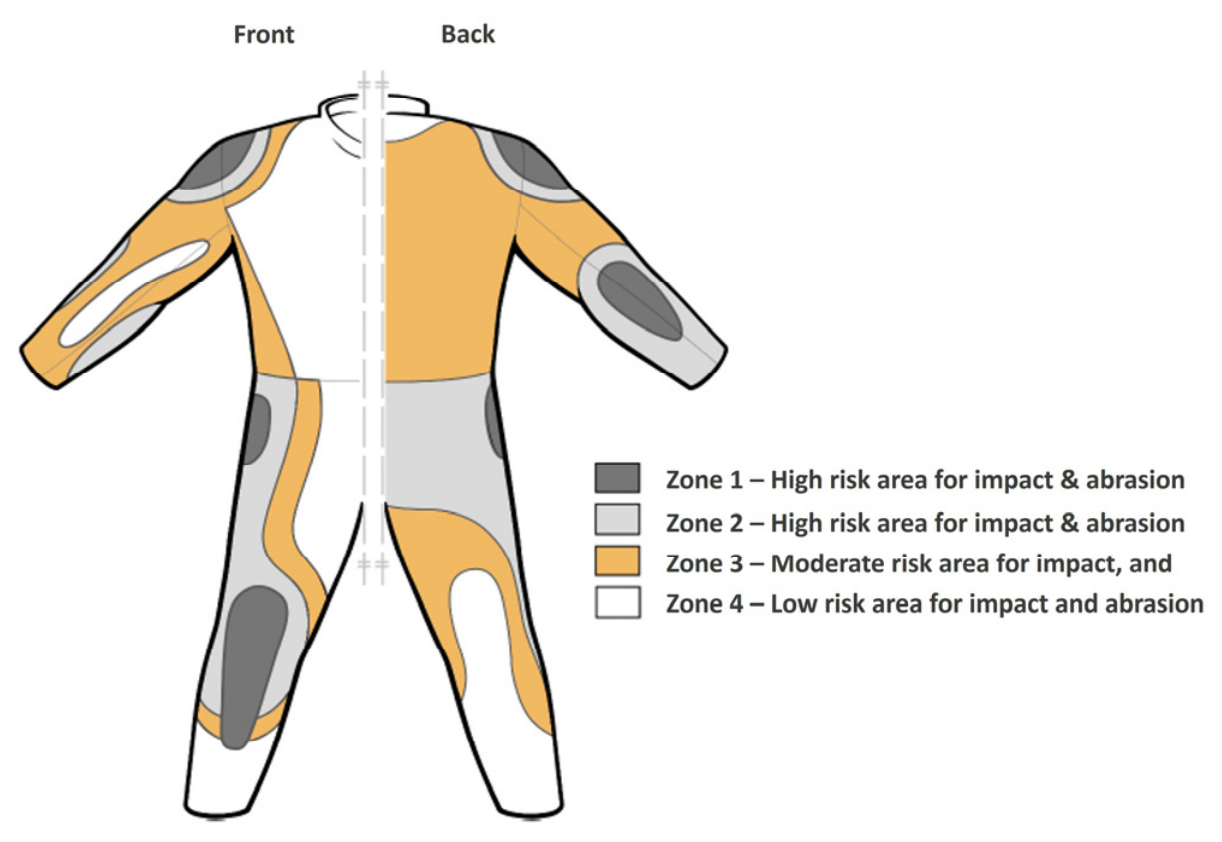
The fabric specimens were collected from the designated tested zones in accordance with the MotoCAP test protocols. For this study, Zone 1 and Zone 2 were combined and classfied as the high-risk area, while Zone 3 and Zone 4 were combined and classified as the low-risk area (Figure 2).
Figure 2.
Diagram of zone positions on a suit. Drawn from a suit laid out flat. (EN13595-1:2002 [28]).
2.7. UHMWPE Additional Experiments
Five additional denim fabrics reinforced with ultra-high-molecular-weight polyethylene (UHMWPE) were also evaluated (Table 2). The fabrics were subjected to 20 laundering cycles at 30 ± 3 °C using programe 3G in accordance with BS EN ISO 6330:2021. Following each wash cycle, the specimens were line-dried according to the procedure described in Section 2.2.
Table 2.
Five additional UHMWPE fabrics were laundered 20 times at 30 °C and tested.
2.8. Data Analysis
Box-and-whisker plots were used to visualise the distribution of the test results. The box represents the interquartile range (IQR; 25th–75th percentile), with the horizontal line inside the box indicating the median value. The small square within each box denotes the mean value. The whiskers extend to the most extreme data points within 1.5 times the IQR from the lower and upper quartiles, while individual points beyond the whiskers are displayed as outliers, indicated by rhombus signs. Percentage changes reported in the study were calculated based on the mean values of the laundered samples relative to the corresponding new (unlaundered) samples under each washing condition.
Statistical analyses were performed using Microsoft Excel for Microsoft 365 MSO version 2607 (Microsoft Corporation, Redmond, WA, USA). Paired t-tests were conducted to compare each key protective property between the new and laundered conditions, including new versus 20 cold wash/line-dry cycles and new versus 10 hot wash/tumble-dry cycles. All tests were two-tailed, and statistical significance was defined as p < 0.05. Statistically significant differences are indicated by an asterisk (*) in the figures.
3. Results
3.1. Abrasion Resistance
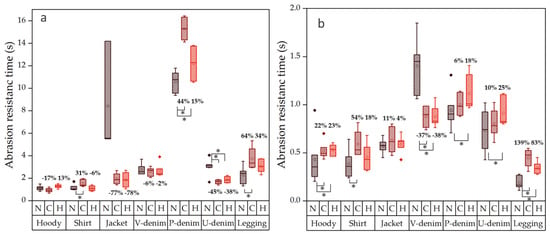
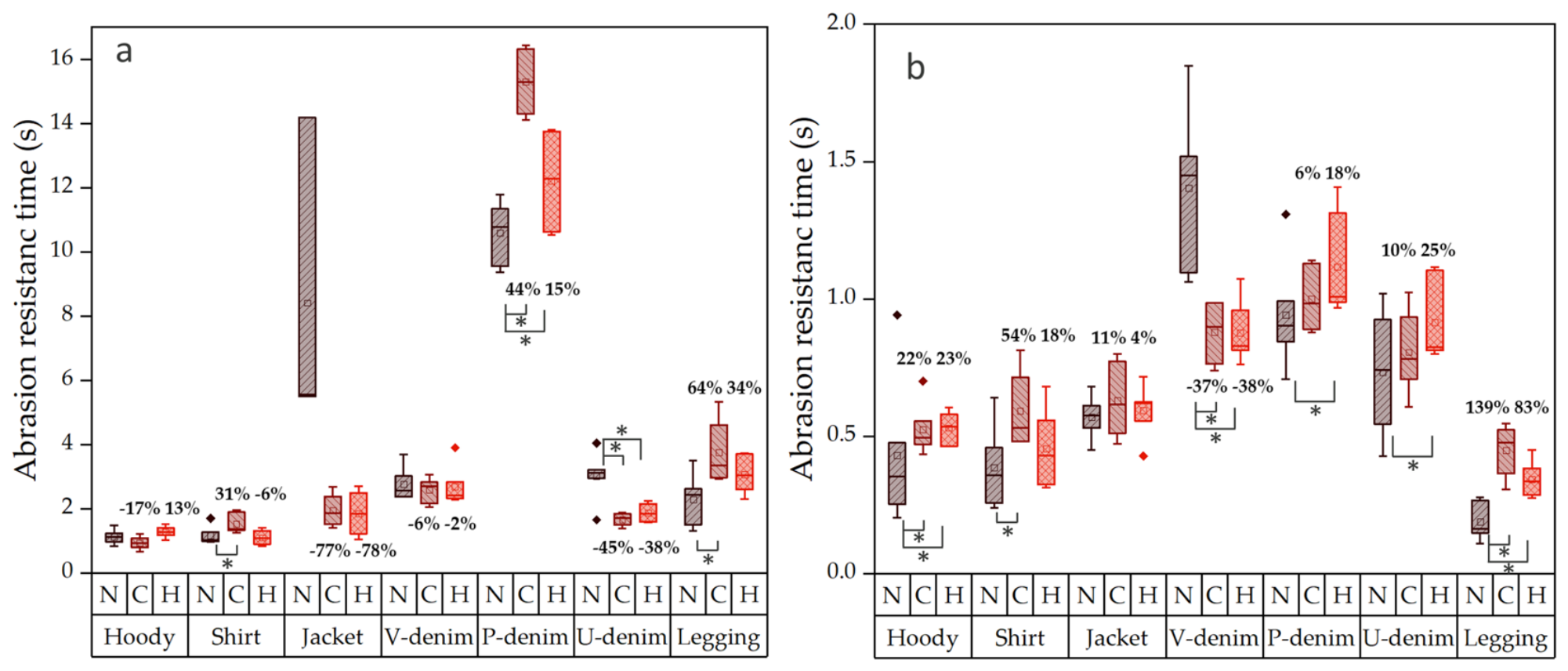
There was limited change of abrasion resistance in the high-risk area (Zone 1 and 2) after washing for most of the garments (Figure 3a). There were several exceptions where either a decrease or increase in abrasion occurred. The abrasion resistance of the textile jacket decreased almost 80% after washing cycles by both cold and hot washing methods. This was because a polyurethane reinforced foam cushion material used as an internal protective layer in the high-risk area was broken down by the water, detergent and agitation of the washing cycle.
Figure 3.
Results of abrasion resistance in the different high-risk areas of the selected garments where N is unwashed, C is cold-water-washed (n = 20) and H is hot water washed (n = 10). (a) High risk area, zones 1 and 2; (b) low risk area, zones 3 and 4.
In contrast, the p-aramid denim pants and stretch leggings increased in abrasion resistance in the high-risk areas, after cold washing by 44% and 64%, and after hot wash by 15% and 34%, respectively. These two pairs of pants were both lined with knitted p-aramid fabrics as the protective layers. This improvement in abrasion resistance may be attributed to the entanglement of the p-aramid fibres during the washing process restricting their removal during the abrasion test. A recommendation from this research is to advise riders that the cold washing of p-aramid containing garments following the manufacturers washing and drying instructions to improve their impact abrasion resistance.
The riding shirt also had a p-aramid fabric liner in the high-risk areas. This resulted in a 31% increase in abrasion resistance after cold washing. A similar improvement was not seen for hot washing, with a slight negative impact on abrasion observed. This was due to the damage caused to the polyester/cotton outer fabric of the riding shirt by the hot wash and tumble dry process. Distortion and colour change were observed in the outer fabric. Abrasion resistance is contributed to by all layers in a garment, so damage of the outer layer offset abrasion gains achieved in the p-aramid layer.
The single layer UHMWPE garment had a decrease in abrasion performance noted for both washing conditions. Whilst the mean abrasion time decreased by 45% for cold washing and 38% for hot washing, the coefficient of variation in abrasion time decreased for both washed samples. Additional experiments were required to confirm if this reduction was due to decreased performance of the UHMWPE-reinforced product due to laundering or stabilization of the fabric resulting in more consistent abrasion measurements.
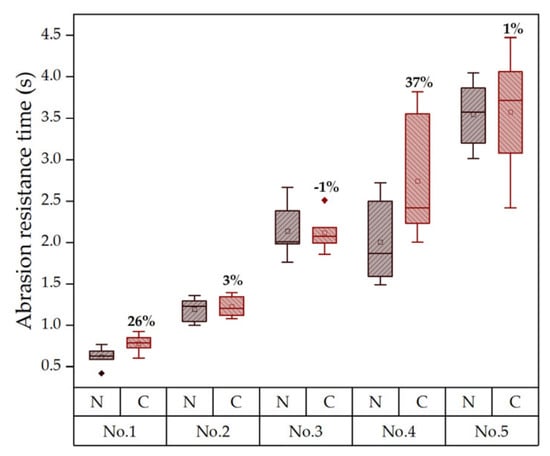
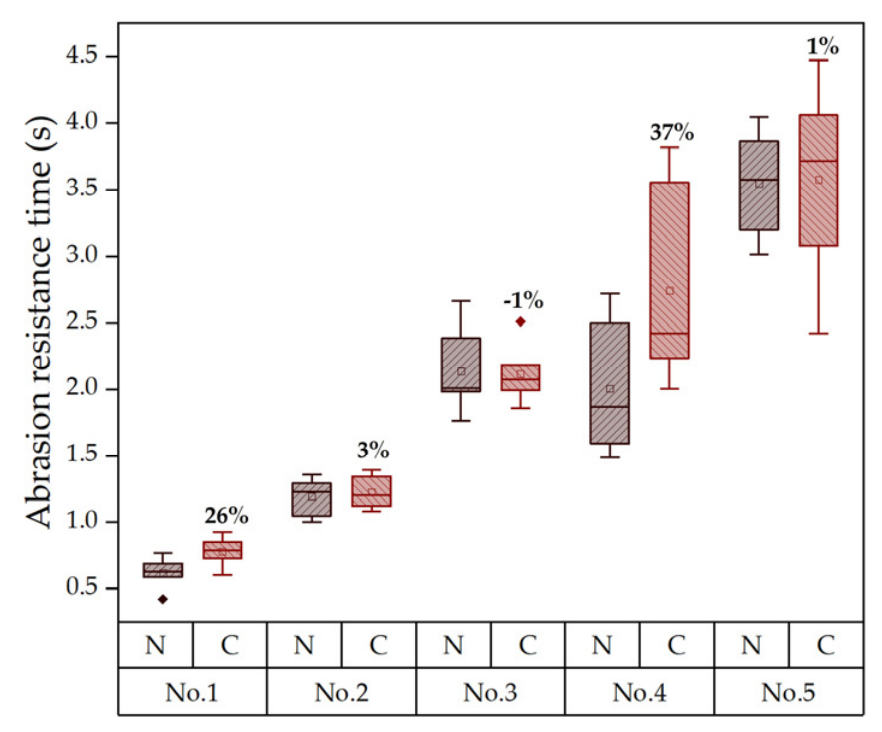
Five additional single layer protective denim fabrics containing different amounts of UHMWPE and constructed following different methods were subjected to 20 cold wash cycles (Figure 4). The reduction in abrasion observed in the initial trials was not observed in these additional tests. This indicates that UHMWPE-reinforced pants are unlikely to be reduced in abrasion due to laundering. The result observed in Figure 3a may have been a product-specific issue or may be laundering-induced reduction in the co-efficient of variation.
Figure 4.
Comparison of abrasion resistance results on protective denim materials with different UHMWPE contents before and after 20 cold wash and line dry cycles where N is unwashed and C is cold-water-washed.
Comparing the changes of abrasion resistance in high-risk areas and low-risk areas of each garment, as shown in (Figure 3a,b), respectively, it was noticed that washing improved the abrasion resistance of the hoody, shirt, jacket, U-denim pants, P-denim pants and leggings. Washing had a detrimental impact on V-denim pants in the low-risk area.
These changes were due to materials used in the lower risk zone. Most had minimal changes in the abrasion resistance of the low-risk zone. The exception was the cotton shell fabric of the V-denim, which was degraded by the laundering process and reduced in abrasion resistance by 40%.
3.2. Seam Strength
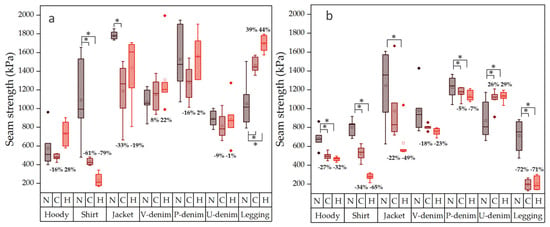
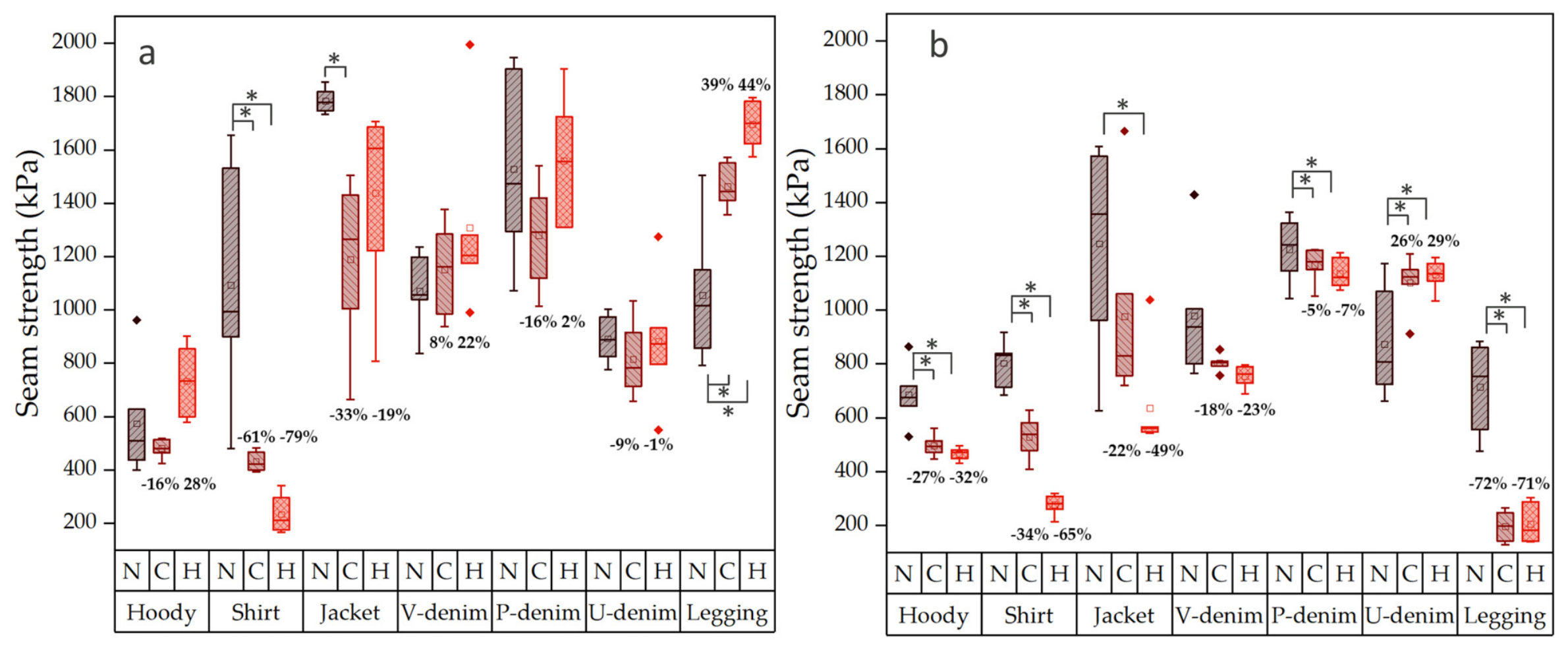
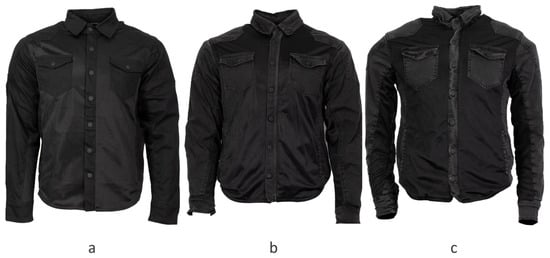
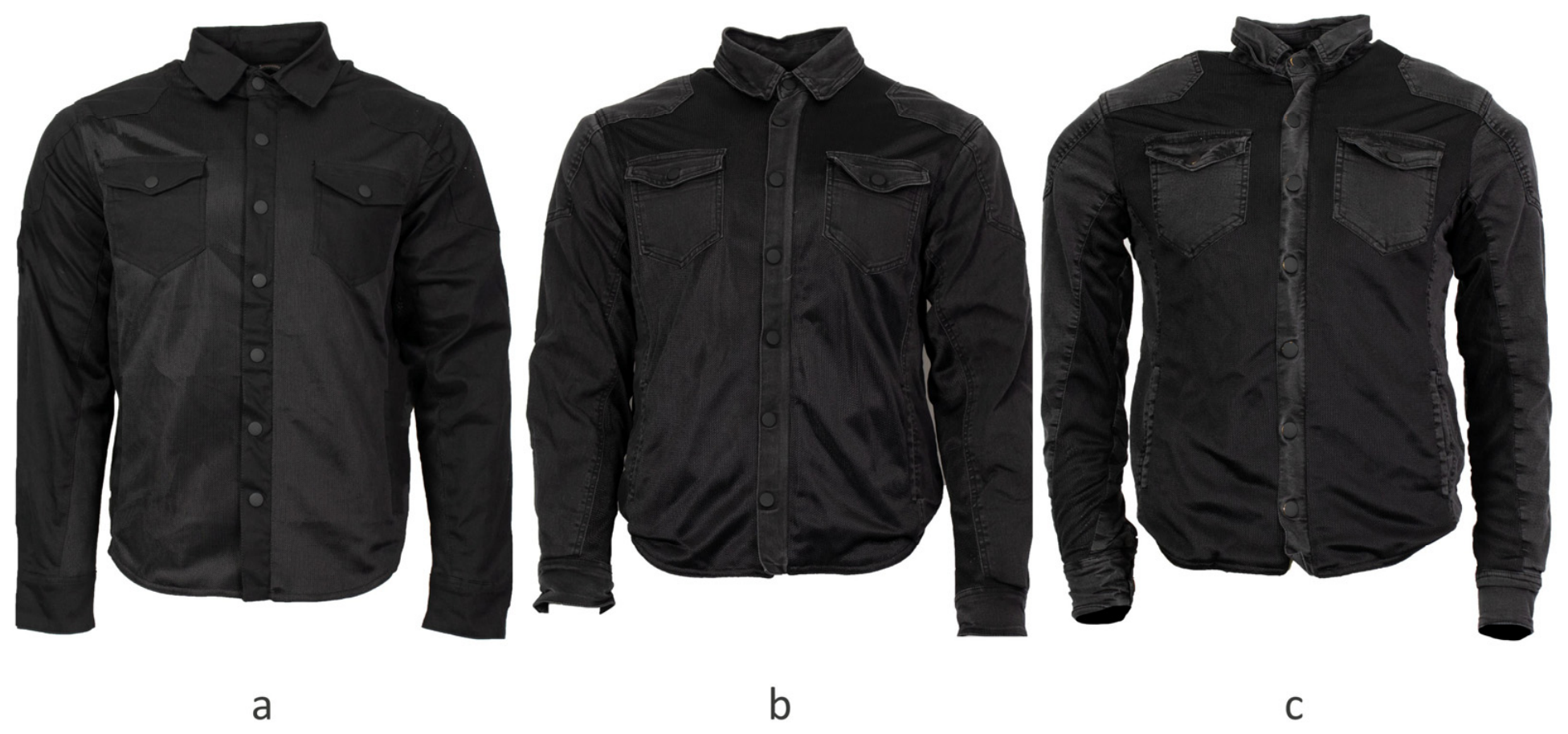
Hot and cold wash cycles had little effect on seam strength in the high-risk and low-risk areas of most of the garments tested (Figure 5a,b). The woven riding shirt and woven textile jacket both decreased in seam strength after laundering. The riding shirt was more affected by the hot wash/tumble dry condition than the cold wash/line dry condition. Hot washing followed by tumble drying caused distortion and visual changes to the shell fabric, which correlated with the reduction in seam strength (Figure 6a–c).
Figure 5.
Seam strength of different fabric types of jackets in three conditions: N = new (no wash), C = cold wash and H = hot wash. (a) High-risk area: zones 1 and 2; (b) low-risk area: zones 3 and 4.
Figure 6.
Photos of riding shirt: (a) new/no wash, (b) after 20 cold washing/line drying cycles and (c) after 10 hot washing/tumble drying cycles.
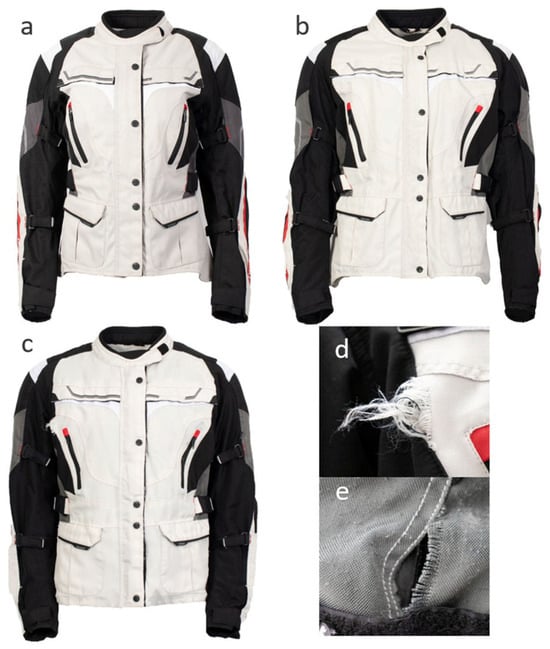
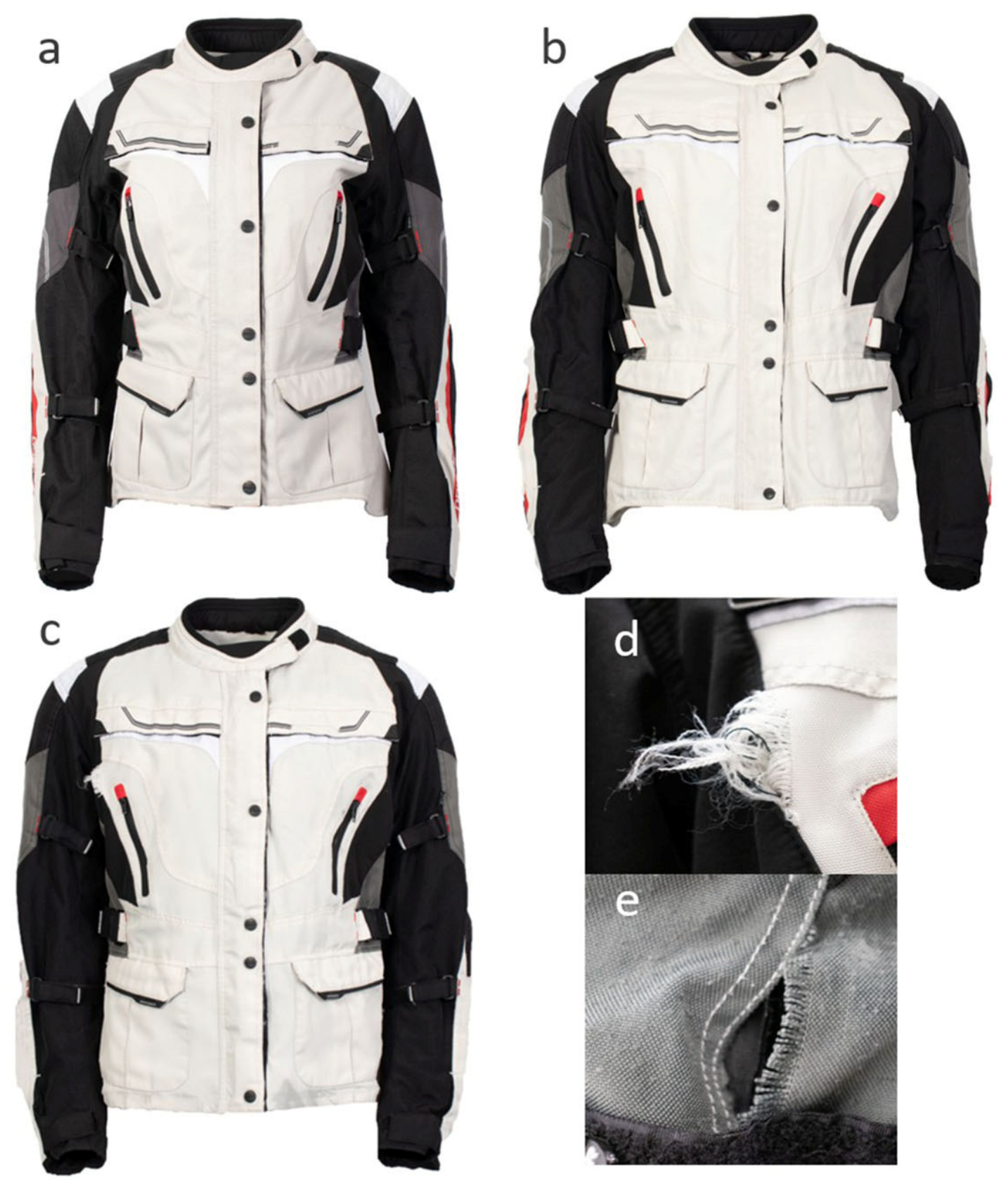
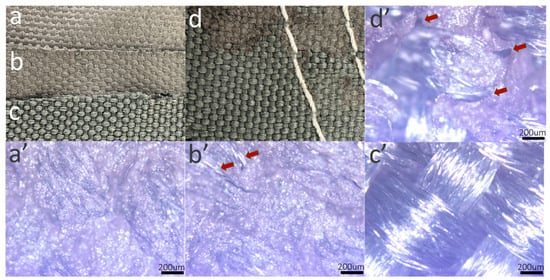
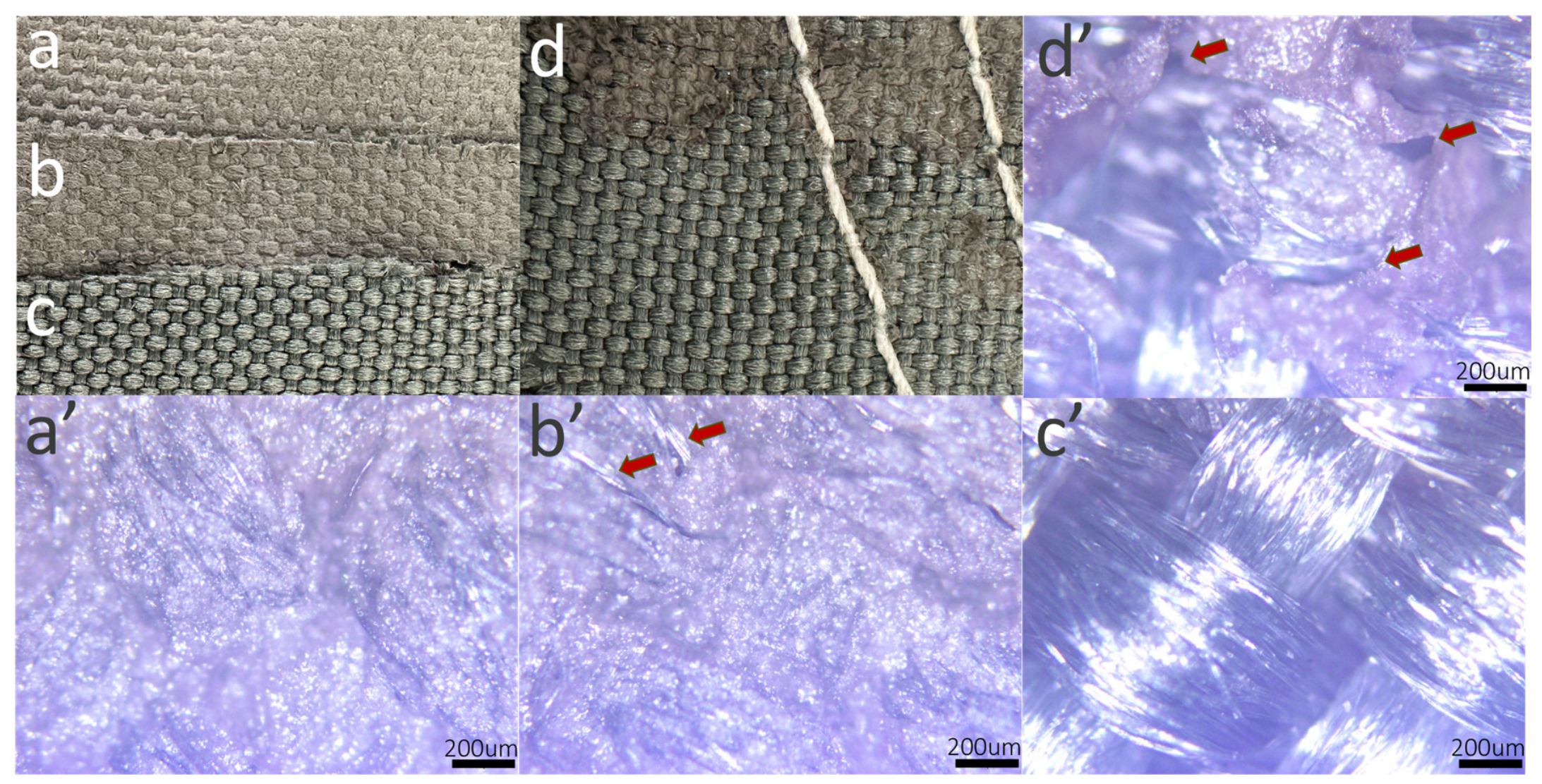
Unlike the riding shirt, this seam strength reduction in the textile jacket occurred without visual change of the jacket (Figure 7a–c). The woven textile jacket had two seams fail due to seam slippage of the yarns within the weave structure (Figure 7d,e). To investigate the potential cause of seam slippage, the inner (coated) surfaces of the textile jacket fabric under three laundering conditions were examined using a digital camera and an Olympus DP70 microscope (Figure 8).
Figure 7.
Textile jacket comparison. (a) new; (b) after 20 cold washing/line drying cycles; (c) after 10 hot washing/tumble drying cycles; and (d,e) points of seam failure after 10 hot washing/tumble drying cycles.
Figure 8.
Comparison of the coated textile jacket fabric under three laundering conditions. The top row shows the inner (coated) surface, while the bottom row shows the outer surface. (a,a’) New; (b,b’) after 20 cold wash/line-dry cycles; and (c,c’,d,d’) after 10 hot wash/tumble-dry cycles. Red arrows indicate cracks and areas where the coating layer has peeled away.
Compared with the new coating layer (Figure 8a), after 20 cold wash/line-dry cycles, the coating layer became thinner, allowing the underlying fibre texture to become more visible (Figure 8b). However, the coating remained largely intact and exhibited visible cracks, as indicated by the red arrows in Figure 8b’. In contrast, after 10 hot wash/tumble-dry cycles, most of the coating layer was removed, exposing the underlying polyester substrate (Figure 8c,c’). Only small remnants of the coating remained around the seam area (Figure 8d), which appeared to be partially detached from the fabric surface (Figure 8d’).
These observations suggest that repeated laundering may progressively degrade the polyurethane coating. Under the cold wash/line-dry condition, water exposure may initiate crack formation within the coating, whereas the combined effects of elevated temperature, mechanical agitation, and tumble drying during the hot wash condition may accelerate coating deterioration and delamination. The loss of coating integrity may reduce the resistance of the fabric structure to yarn slippage, thereby contributing to the seam failure observed after laundering. However, further microstructural and chemical characterisation is required to confirm the underlying degradation mechanisms.
The findings suggest that frequent laundering of woven polyester motorcycle garments should be avoided where possible. Seam strength reduction may occur after repeated washing, while the associated damage may not be visually apparent to the user. Therefore, appropriate laundering practices and minimising unnecessary washing may help maintain the protective performance of motorcycle garments.
3.3. Impact Energy Absorption
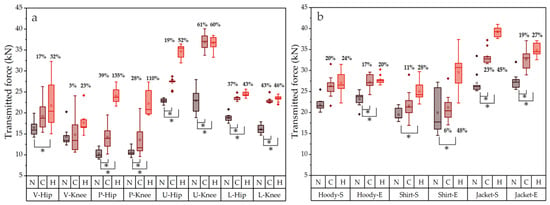
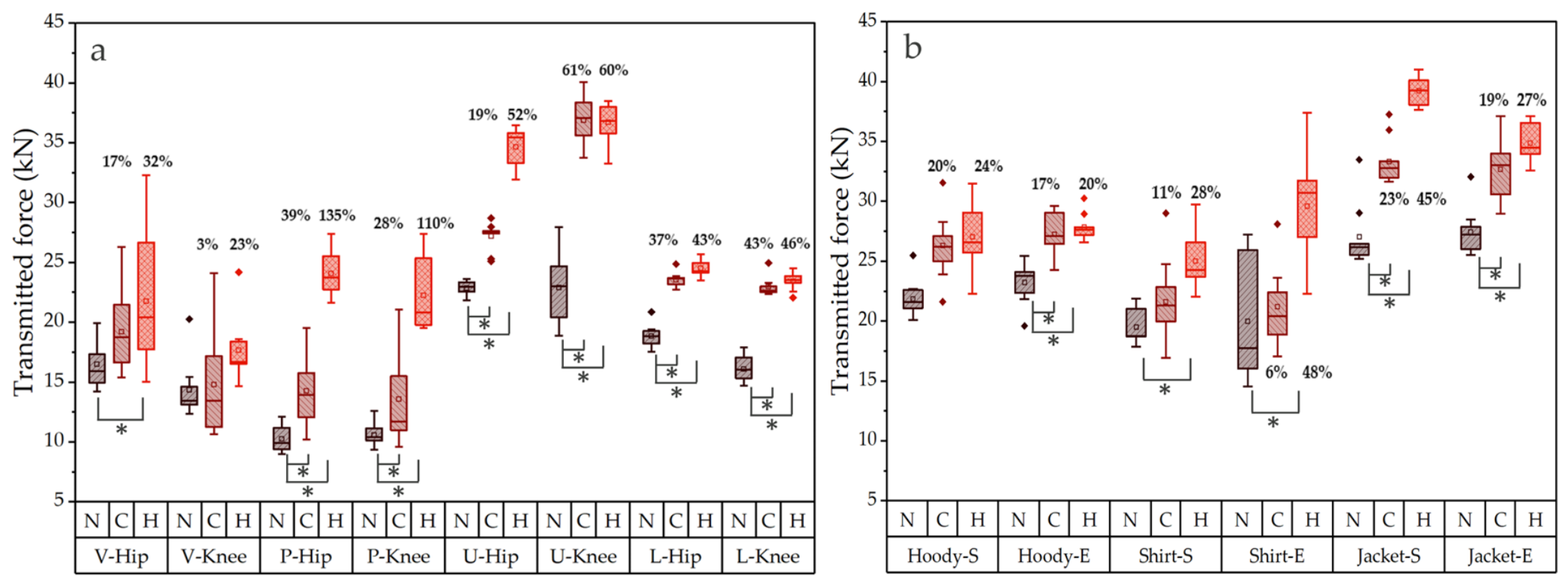
Washing had a negative impact on all the impact protectors tested (Figure 9). This result may be associated with the susceptibility of polyurethane-based materials to hydrolytic degradation, particularly due to the presence of hydrolysable ester linkages within the soft segments [29]. Repeated exposure to water and elevated temperatures during laundering may accelerate the degradation of polyurethane and reduce its mechanical performance. The greater deterioration observed in the hot wash/tumble-dry condition compared with the cold wash/line-dry condition suggests that higher temperature and more severe mechanical actions may accelerate the degradation process. In most cases, the loss of protective performance was not accompanied by visible changes, indicating that deterioration of impact protection may not be apparent to users through visual inspection alone. Notably, the hip armour from the V-denim pants developed cracks and fractured after only three wash/dry cycles under the hot wash protocol (Figure S1), demonstrating the potential vulnerability of polyurethane-based impact protectors to repeated laundering.
Figure 9.
Impact energy attenuation of impact protectors removed from (a) pants and (b) jackets. V = V-denim, P = P-denim, U = U-denim and L = Legging. S = shoulder, E = elbow.
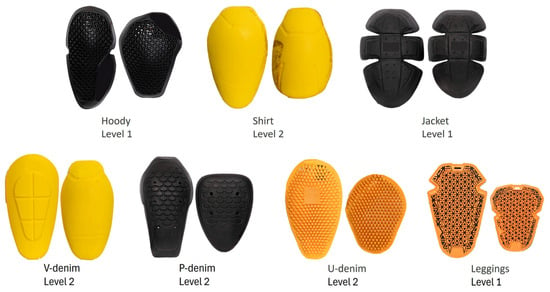
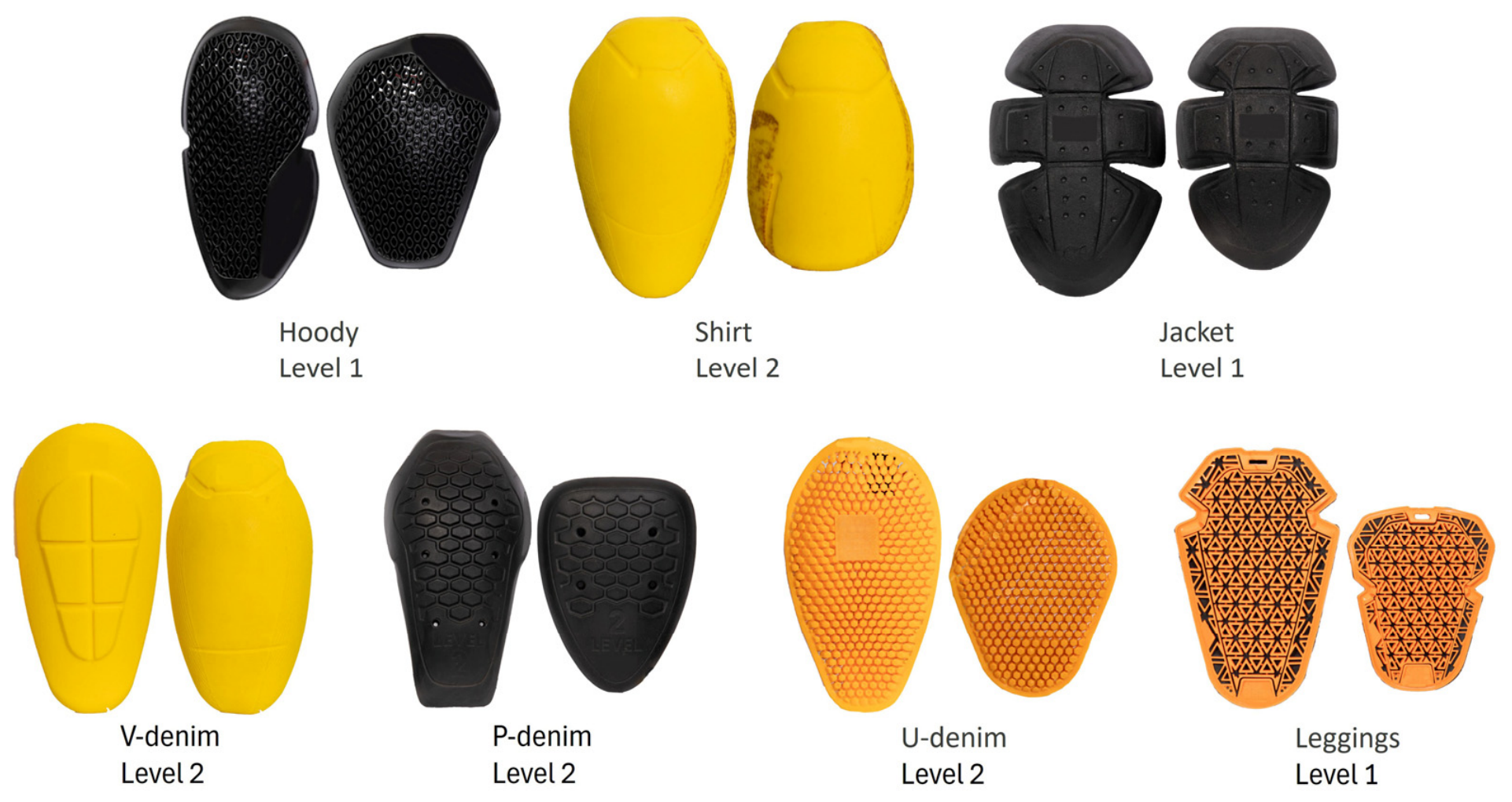
The impact protectors tested in this study represented both conventional and newer-generation designs (Figure 10). These included traditional polyurethane impact protectors (jacket and P-denim), polyurethane impact protectors incorporating shear-thickening compounds (shirt and V-denim), polyurethane solid-column structures (U-denim), polyurethane hollow-column structures (Hoody), and hollow-column polyurethane structures incorporating shear-thickening compounds (Leggings). Despite the differences in construction, all tested impact protectors exhibited deterioration after laundering, suggesting that current impact protector designs may require further development to improve their wash durability. Based on these findings, it is recommended that riders avoid laundering garments with impact protectors fitted and follow manufacturer care instructions to minimise the potential loss of protective performance.
Figure 10.
Armour photos and EN1621-1:2012 certification for each garment.
3.4. Appearance
The appearance of the garments before and after laundering was compared to evaluate visible changes induced by different washing conditions. Various forms of degradation were observed, including colour fading, fabric shrinkage, fabric deformation, seam damage, surface abrasion and fluffing, and deterioration of hook-and-loop fasteners. The riding shirt provided a representative example, exhibiting both noticeable colour fading and uncontrolled shrinkage after laundering (Figure 6). In several cases, visible appearance changes were accompanied by reductions in protective performance, suggesting that visual assessment alone may provide an indication of garment deterioration; however, some performance losses occurred without obvious visible damage.
4. Conclusions
This study investigated the effects of laundering on the protective performance of motorcycle protective clothing under two laundering conditions: cold wash/line-dry and hot wash/tumble-dry. A range of upper-body garments (including a hoody, riding shirt, and textile jacket) and lower-body garments containing different protective materials, including UHMWPE, Vectra, Kevlar®/p-aramid, and Kevlar®-lined stretch leggings, were evaluated.
Cold washing had limited influence on the abrasion resistance of most textile garments. A reduction in abrasion resistance was observed in the protective textile jacket, which was associated with deterioration of the polyurethane-bonded quilted wadding in the high-risk area. A decrease in abrasion resistance was also observed for the UHMWPE pants; however, further analysis suggested that this effect may be product-specific. In comparison, hot washing was more detrimental to abrasion resistance across the tested products.
Kevlar®-lined pants showed improved abrasion resistance in high-risk areas after both cold and hot laundering, with a greater improvement observed after cold washing. Similar improvements were observed for the cold-washed riding shirt. These findings suggest that laundering effects on abrasion resistance are highly dependent on garment construction and material composition.
Cold washing had little effect on seam strength for most garments; however, reductions were observed in woven polyester textile garments, with greater deterioration occurring after hot washing. As these reductions were not always accompanied by visible damage, riders should minimise unnecessary laundering of woven nylon and polyester motorcycle garments to help maintain seam strength and protective performance.
Both cold and hot laundering negatively affected the impact energy attenuation performance of all impact protectors tested in this study. The deterioration was not always visually apparent, highlighting the importance of following manufacturer care instructions. Riders should avoid laundering garments with impact protectors fitted unless the manufacturer specifically indicates that washing is suitable.
Overall, this research furthers our understanding of how laundering conditions influence the protective performance of motorcycle garments and provides practical information to support riders in maintaining the effectiveness and durability of their protective equipment.
Limitations
This work was conducted on only seven different garments. There are many different fabrics and garment constructions used for motorcycle protective gear. The laundering performance of other garments may differ from the observations of this report due to these material and construction variations.
Supplementary Materials
The following supporting information can be downloaded at https://www.mdpi.com/article/10.3390/fib14080091/s1, Figure S1: Comparison of the impact protectors of Vdenim in the condition of new (a), after 3 (b) and 6 (c) hot wash and tumble dry cycles. Table S1: Reference detergent 2 - IEC reference detergent A. BS EN ISO6330:2001.
Author Contributions
Conceptualization, C.H. and W.C.; methodology, C.H., W.C. and Z.X.; formal analysis, W.C., Z.X. and C.H.; data curation, W.C.; writing—original draft preparation, W.C.; writing—review and editing, C.H., W.C., Z.X., T.W. and J.O.; supervision, C.H. All authors have read and agreed to the published version of the manuscript.
Funding
This research was funded by Transport for New South Wales and the Traffic Accident Commission (TAC) of Victoria and was conducted as part of the Australian Research Council Research Hub for Future Fibres (IH210100023). Some of the work was performed usingequipment supported by the Australian National Fabrication Facility.
Data Availability Statement
The original contributions presented in this study are included in the article/Supplementary Material. Further inquiries can be directed to the corresponding authors.
Conflicts of Interest
The authors declare no conflicts of interest.
References
- Australia, M.R.A. General Road Safety the Australasian College of Road Safety. 2023. Available online: https://mraa.net.au/general-road-safety/ (accessed on 9 August 2026).
- Budd, L.; Allen, T.; Newstead, S. Current Trends in Motorcycle-Related Crash and Injury Risk in Australia by Motorcycle Type and Attributes; Monash University Accident Research Centre: Clayton, Australia, 2018. [Google Scholar]
- BITR. Road Vehicles, Australia January 2023 (Re-issue). In Bureau of Infrastructiure and Transport Research Economics Statistical Report; Department of Infrastructure, Transport, Regional Development, Communications and the Arts: Canberra, Australia, 2023; p. 41. [Google Scholar]
- BITR. Road Trauma Australia 2022 statistical summary. In Road Safety; Department of Infrastructure, Transport, Regional Development, Communications and the Arts: Canberra, Australia , 2022; p. 42. [Google Scholar]
- TAC. Statistics. 2023. Available online: https://www.tac.vic.gov.au/road-safety/statistics (accessed on 9 August 2026).
- Allen, T.; McClure, R.; Newstead, S.V.; Lenné, M.G.; Hillard, P.; Symmons, M.; Day, L. Exposure factors of Victoria’s active motorcycle fleet related to serious injury crash risk. Traffic Inj. Prev. 2016, 17, 870–877. [Google Scholar] [CrossRef] [Scilit] [PubMed]
- NZ Transport Agency Staff. Safety—Annual Statistics. 2024. Available online: https://www.transport.govt.nz/statistics-and-insights/safety-annual-statistics#:~:text=Table%20of%20contents%20*%20In%202024%2C%20there,deaths%20in%20crashes%20involving%20driver%20diverted%20attention (accessed on 9 August 2026).
- De Rome, L.; Ivers, R.; Fitzharris, M.; Du, W.; Haworth, N.; Heritier, S.; Richardson, D. Motorcycle protective clothing: Protection from injury or just the weather? Accid. Anal. Prev. 2011, 43, 1893–1900. [Google Scholar] [CrossRef] [Scilit] [PubMed]
- ACEM. In-Depth Invesitigations of Accidents Involving Powered Two Wheelers; Association of European Motorcycle Manufacturers: Brussels, Belgium, 2009; p. 179. [Google Scholar]
- Hurt, H.H.; Ouellet, J.V.; Thom, D.R. Motorcycle Accident Cause Factors and Identification of Countermeasures; Volume 1: Technical Report; National Technical Information Service: Springfield, VA, USA, 1981.
- de Rome, L. Could wearing motorcycle protective clothing compromise rider safety in hot weather? Accid. Anal. Prev. 2019, 128, 240–247. [Google Scholar] [CrossRef] [Scilit] [PubMed]
- Ijaz, M.; Kalsoom, S.; Akhtar, N.A. Effect of Laundering on Tensile Strength of Chemical Protective Clothing Materials. Tech. J. Univ. Eng. Technol. Taxila 2019, 24, 63–68. [Google Scholar]
- Dann, T.J. The Tearing Behaviour and Effect of Laundering on Knicker Fabrics; University of Otago: Dunedin, New Zealand, 2011. [Google Scholar]
- Mukhopadhyay, A.; Sikka, M.; Karmakar, A.K. Impact of laundering on the seam tensile properties of suiting fabric. Int. J. Cloth. Sci. Technol. 2004, 16, 394–403. [Google Scholar] [CrossRef] [Scilit]
- Bates, B.; Hoque, S.; Munevar-Ortiz, L.; Batcheller, J.; Dolez, P.I. Effect of Different Laundering and Drying Procedures on the Performance of Fire-Protective Fabrics. J. Polym. Sci. 2025, 63, 3496–3508. [Google Scholar] [CrossRef] [Scilit]
- Thompson, A.J. The Science of Laundering and Wear: Understanding Fiber Fragmentation from Secondhand Cotton Denim. Fibers 2025, 13, 166. [Google Scholar] [CrossRef] [Scilit]
- Helliker, M.; Carr, D.; Lankester, C.; Fenton, L.; Girvan, L.; Horsfall, I. Effect of domestic laundering on the fragment protective performance of fabrics used in personal protection. Text. Res. J. 2014, 84, 1298–1306. [Google Scholar] [CrossRef] [Scilit]
- Jasińska, I.; Nejman, A.; Tkacz-SzczęSna, B.; Grgac, S.F. Durability Assessment of Elastolefin-Based Workwear Fabrics. Fibers 2026, 14, 35. [Google Scholar] [CrossRef] [Scilit]
- Won, A.Y.; Yun, C. The Effects of Laundering on the Protective Performance of Firefighter Clothing. Fibers Polym. 2021, 22, 3232–3239. [Google Scholar] [CrossRef] [Scilit]
- Chin, J.; Petit, S.; Forster, A.; Riley, M.; Rice, K. Effect of artificial perspiration and cleaning chemicals on the mechanical and chemical properties of ballistic materials. J. Appl. Polym. Sci. 2009, 113, 567–584. [Google Scholar] [CrossRef] [Scilit]
- BS EN ISO 6330:2021; Textiles—Domestic Washing and Drying Procedures for Textile Testing. The International Organization for Standardization: Geneva, Switzerland, 2021.
- BarwonWater. Water Quality Results. Water and Waste. 2026. Available online: https://www.barwonwater.vic.gov.au/water-and-waste/water-quality/results-and-data (accessed on 9 August 2026).
- Chouhan, R.K.; Bansal, A.K.; Chhipa, R.C. Physico-Chemical Analysis of Water at Selected Point in Kota, Rajasthan. J. Drug Deliv. Ther. 2019, 9, 722–725. [Google Scholar] [CrossRef] [Scilit]
- EN 13595-2:2002; Protective Clothing for Professional Motorcycle Riders—Jackets, Trousers and One Piece or Divided Suits—Test Method for Determination of Impact Abrasion Resistance. European Committee for Standardization: Brussels, Belgium, 2002.
- EN 1621-1:2012; Motorcyclists’ Protective Clothing Against Mechanical Impact—Part 1: Motorcyclists’ Limb Joint Impact Protectors—Requirements and Test Methods. European Committee for Standardization: Brussels, Belgium, 2012.
- BS EN 13595-3:2002; Protective clothing for Professional Motorcycle Riders. Jackets, Trousers and One Piece or Divided Suits—Test Method for Determination of Burst Strength. European Committee for Standardization: Brussels, Belgium, 2002.
- de Rome, L.; Hurren, C.; Gibson, T. Test and Rating Protocols for the Motorcycle Clothing Assessment Program (MotoCAP). The Motorcycle Clothing Assessment Program (MotoCAP). 2024. Available online: https://www.motocap.com.au/sites/default/files/2024-07/MotoCAP%20test%20protocols%201.3%20-%2023%20July%202024.pdf (accessed on 9 August 2026).
- BS EN 13595-1:2002; Protective Clothing for Professional Motorcycle riders. Jackets, Trousers and One Piece or Divided Suits—General Requirements. European Committee for Standardization: Brussels, Belgium, 2002.
- Magnin, A.; Pollet, E.; Avérous, L. Characterization of the enzymatic degradation of polyurethanes. Methods Enzym. 2021, 648, 317–336. [Google Scholar] [CrossRef] [Scilit] [PubMed]

Disclaimer/Publisher’s Note: The statements, opinions and data contained in all publications are solely those of the individual author(s) and contributor(s) and not of MDPI and/or the editor(s). MDPI and/or the editor(s) disclaim responsibility for any injury to people or property resulting from any ideas, methods, instructions or products referred to in the content. |
© 2026 by the authors. Licensee MDPI, Basel, Switzerland. This article is an open access article distributed under the terms and conditions of the Creative Commons Attribution (CC BY) license.