


Abstract
Polymer concretes with fiber reinforcement have many desirable properties when compared to cementitious concretes, including rapid development of mechanical properties, excellent bond to concrete and other substrates, high tensile strength, and resistance to abrasion and aggressive chemical environments. However, their use as a structural material has been limited, in part, by temperature-dependent mechanical properties, affecting bond and development of steel reinforcement, deformation of structural elements, and section capacity of structural members. This research investigated the development of mechanical properties for a commercially available polymer concrete with fiber reinforcement to determine the effects of temperature on compressive strength, elastic modulus, modulus of rupture, and pull-out bond strength. The compressive, flexural, and bond strengths of the tested polymer concrete with fiber reinforcement were over 70% of their 7 d values within 4 h after mixing when cured at laboratory temperature, demonstrating the rapid development of mechanical properties that is possible with polymer binders. The average 7 d compressive strength across the experimental program was 62.2 MPa at 25 °C, with the measured elastic modulus and modulus of rupture roughly half and three times that of estimated values using established code relationships and the measured compressive strength, respectively. The pull-out bond strength at 25 °C was found to be similar to non-proprietary ultra-high performance and polymethyl methacrylate concretes, and the variation in mechanical properties with temperature was roughly linear and independent of the mechanical property tested when normalized by the value at laboratory temperature. This limited test series supports the structural use of polymer concrete with fiber reinforcement, when in-service temperature is expressly considered in the design process, although further testing is needed to develop rational design procedures.
1. Introduction
Polymer concretes (PCs) have many desirable properties when compared to cementitious concretes, including, rapid development of mechanical properties, excellent bond to concrete and other substrates, high tensile strength, resistance to aggressive chemical environments, negligible permeability, low curing shrinkage, and excellent abrasion resistance [1]. These properties have made PCs a popular choice for road surface overlay and repair projects [2,3,4], architectural panels [5], and industrial products [6]. The use of PCs in a structural capacity has been limited, in part, by the temperature-dependent mechanical properties of PCs, including the bond and development of steel reinforcement, the stiffness and deformation of structural elements, and the section capacity of structural members.
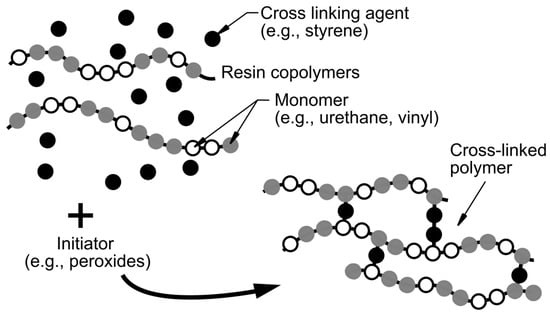
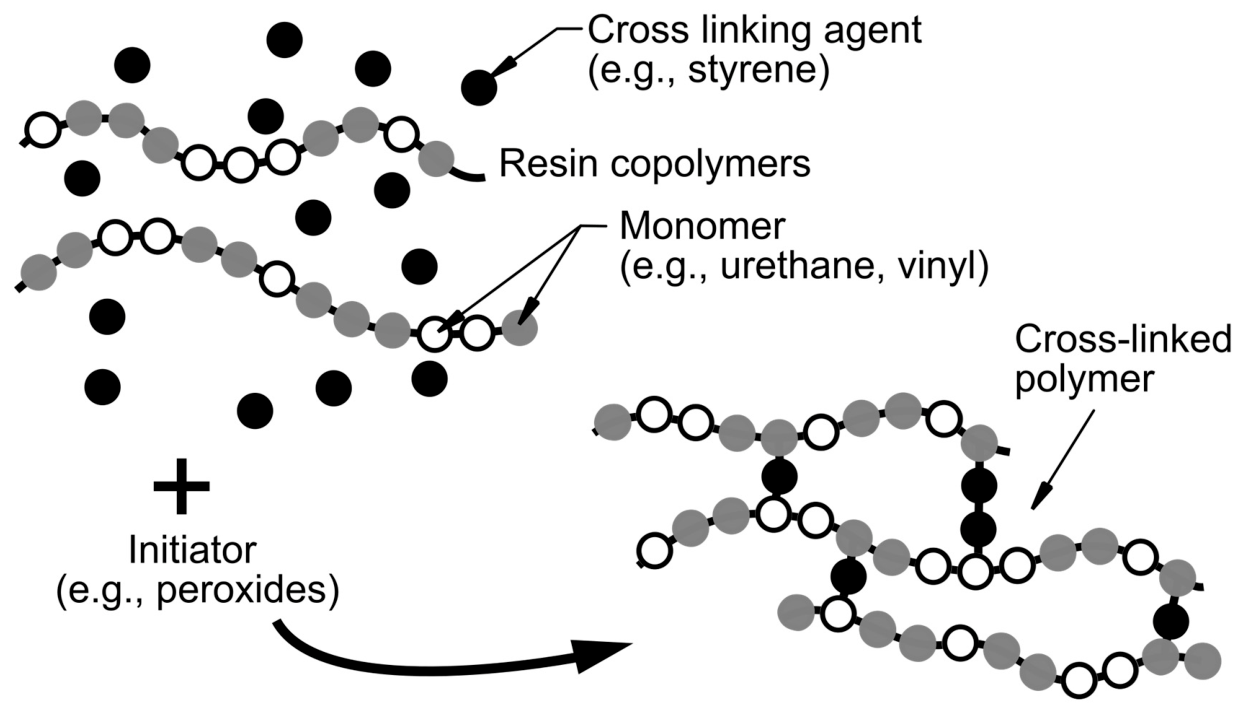
Figure 1 summarizes the chemical hardening process for a typical commercially available polymer concrete system. Unlike conventional concrete, which hardens through the hydration of cementitious materials, PCs harden via cross-linking of polymer (or copolymer) chains and monomers to form a connected, rigid network of crosslinked polymer chains. Prepackaged mixtures commonly have the resin polymers in a binder solution with the monomer cross-linking agent. When mixed with an initiator, the monomer and polymer chain form a cross-linked network with the monomer providing the link between polymer chains. This pathway is popular in commercial applications because the two-part mixing process is simple for the installer yet still allows adjustments for project- and site-specific conditions. The cross-linking process is exothermic, increasing the material temperature as the mixture gels and hardens. The end result is a thermoset polymer, a polymer that will solidify when cured and cannot be remolded due to the irreversible cross-linked bonds. In PCs, the cross-linked polymer physically binds with the aggregate, creating a cohesive material.
Figure 1.
Schematic of polymer concrete cross-linking reaction.
Several binder chemistries are commonly used and commercially available for polymer concrete including epoxies, methacrylates, and polyesters. Differences among these products tend to be the ability to adjust working time; volatility of the chemical constituents; viscosity; and resistance to temperature, moisture, and ultraviolet light. In general, PCs can be designed with comparable or higher compressive strengths than high-strength cementitious concrete at room temperature [7,8]. PCs typically have higher flexural and tensile strengths than cementitious concrete but lower compressive and flexural moduli [9,10,11,12,13]. They are also less permeable and more resistant to freezing and thawing than cementitious concrete, because they lack an interconnected internal pore structure [6]. Similar to cementitious concretes, a correlation between compressive strength and elastic modulus, bond strength, and flexural strength has been observed, although this relationship depends on binder chemistry and is different than that for cementitious concretes [7,14,15].
Many laboratory studies have researched various properties of PCs, using a wide range of binder chemistries and mixture proportions. These studies have demonstrated that the physical and mechanical properties of PC vary based on many factors, including:
- •
- The properties of the binder, with highly cross-linked polymers having higher strengths [7,10];
- •
- The proportioning of aggregates and binder in the mixture, with strength typically increasing with the percentage of binder used by weight (typically 10–15%) [8,11,12,16];
- •
- Curing conditions, with higher curing temperatures leading to faster strength development and lower final strengths in some studies [12,15] but not in others [17];
- •
- The age of the specimen at testing, with studies showing roughly three quarters of final strengths within 24 h of curing at room temperature [7,10,15];
- •
- Testing conditions, with the strength of polymer concrete varying inversely with testing temperature, depending significantly on the binder chemistry [7,18,19].
As an additional tool for the modification of polymer concrete behavior, fibers can be added to the mixture of binder and aggregate. Possible fiber materials include steel, glass, basalt, and recycled materials [20,21]. Glass fibers have been shown to increase the compressive, flexure, and tensile strength and deformation capacity of PC when used in sufficient volume fractions (up to 6%) [8,16,22,23]. Carbon fibers have also been shown to decrease the coefficient of thermal expansion of PC [24], which is otherwise roughly 50% to 100% larger than that of conventional concrete and steel.
While numerous studies have investigated the mechanical properties of PC, only limited research has been conducted on the structural behavior of reinforced PC elements, including the flexural behavior of reinforced epoxy and polyester PC beams [11,14,25,26] and the bond and splice performance of deformed bars [27,28,29]. In general, these tests show that reinforced PC structural elements behave differently than geometrically identical components made with cementitious concrete, and accepted design equations for reinforced concrete structural elements (e.g., ACI 318 [30] or AASHTO Bridge Design Specifications [31]) do not adequately predict the behavior of PC structural elements [7,25]. For example, the embedded length required to yield a Grade 60 (fy = 413.7 MPa) deformed bar in polymethyl methacrylate (PMMA) concrete was found to be between 3.6 and 4.1 times the bar diameter [27], roughly one-eighth the embedded length required by the ACI and AASHTO specifications when using cementitious reinforced concrete with the same compressive strength.
While data on the mechanical properties of PC exists in the literature, the wide variability in properties makes generalizations difficult between different commercially available chemistries. Newer products, including polymer concrete with fiber reinforcement (PCFR), have improved mechanical and bond properties over previously investigated PCs and have not been extensively studied. The objective of the proposed research was to assess the temperature- and time-dependent mechanical properties (compressive, flexural, and bond) of a commercially available polymer concrete with basalt fiber reinforcement and investigate its suitability as a structural material. This was one of the first research programs to include the influence of testing temperature on the bond strength of deformed bars in PCFR.
2. Materials and Methods
2.1. Polymer Concrete with Fiber Reinforcement
A commercially available PCFR material, Kwik Bond Polymers (Benicia, CA, USA) Hybrid Composite Synthetic Concrete (HCSC), was used in this study. HCSC comprises a urethane-vinyl-ester hybrid copolymer resin binder, graded silica aggregates with pre-blended basalt chopped fibers, a methyl ethyl ketone peroxide (MEKP) initiator, and a proprietary accelerator (Z-cure). Each test series was cast with one mixed batch of approximately 104 kg of prebagged aggregate and basalt fiber mix. The binder mixture proportions used in this study consisted of 13.5% binder by mass aggregate, 2.2% MEKP by mass binder, and 3.0% Z-cure by volume MEKP.
To accommodate specific site conditions (e.g., cold/hot weather casting), the volume of the proprietary accelerator can be adjusted to achieve a range of working and curing times. At the start of the project, trial batches were prepared and tested to determine the appropriate level of the accelerator to use for the remainder of the laboratory test series. A value of 3% accelerator by volume initiator was selected as a compromise between working time and rate of strength development. Details of the initial trial batches can be found in Donohoe and Thonstad (2024) [32].
For the bond tests that included deformed bar reinforcement, a high-molecular weight methacrylate (HMWM) primer was applied to the bar surface before casting HCSC per the manufacturer’s recommendation. The HMWM primer was mixed with cumene hydro peroxide (CHP) as the initiator and the proprietary Z-cure accelerator in a 128-3-1 volume ratio. The primer was applied in a thin coat using a foam brush and allowed to cure for at least 30 min before casting the HCSC.
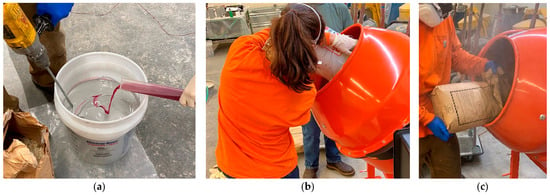
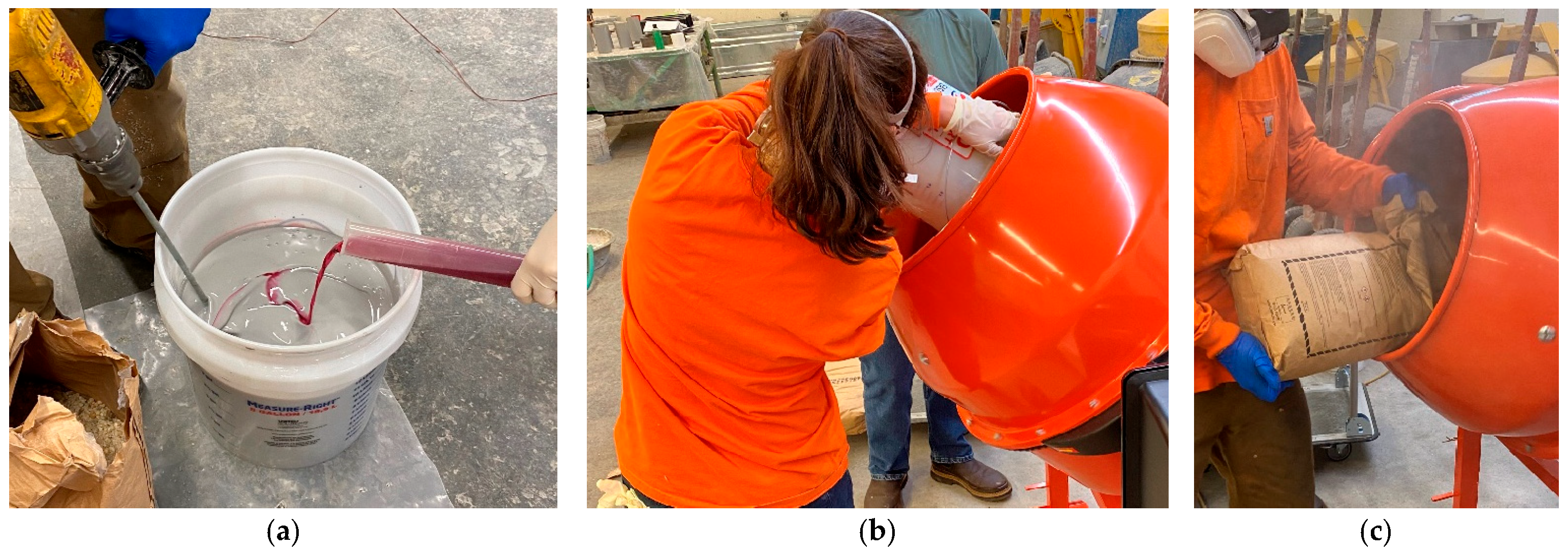
Figure 2 shows the mixing procedure for the particular equipment used in this study. Each test batch was mixed in the laboratory using a standard drum mixer. In a field application, mixing would typically be completed using a volumetric mix truck to accommodate the required volume of material. The mixing procedure comprised three primary steps:
Figure 2.
Mixing procedure for the PCFR used in this study. (a) Mixing of MEKP and HCSC resin with a squirrel cage mixer. (b) Resin mixture being transferred from mixing bucket to drum mixer. (c) Adding the pre-packaged aggregate and fiber blend to the drum mixer.
- Separately add MEKP and Z-cure accelerator to the HCSC resin and mix using a squirrel cage mixer until incorporation, around 45 s (Figure 2a).
- Mix for 2 min, then discharge.
Plastic molds were used for all specimens. Beam molds were sprayed with a general-purpose release agent prior to casting. The specimens were placed in two lifts and lightly consolidated on a vibrating table for approximately 30 s per lift to remove any entrapped air.
2.2. Test Setup and Instrumentation
The development of mechanical properties over time and the influence of temperature on the mechanical properties of cured PCFR were experimentally investigated by testing beam, cylinder, and bond specimens under monotonic loads to failure using standard test procedures:
- •
- Compressive strength tests were conducted according to ASTM C39 [33] on 100 mm × 200 mm PCFR cylinders.
- •
- Elastic modulus tests were conducted according to ASTM C469 [34] on 100 mm × 200 mm PCFR cylinders.
- •
- Modulus of rupture tests were conducted according to ASTM C78 [35] on 100 mm × 100 mm × 350 mm PCFR beams.
- •
- Pull-out bond cylinders were tested following the procedures of ASTM D7913 [36] to measure the pull-out bond strength of PCFR (when failure occurs by reinforcement pull-out rather than splitting), modified to reduce the specimen size and allow casting in a standard 150 mm cylinder mold and to use epoxy-coated steel reinforcement.
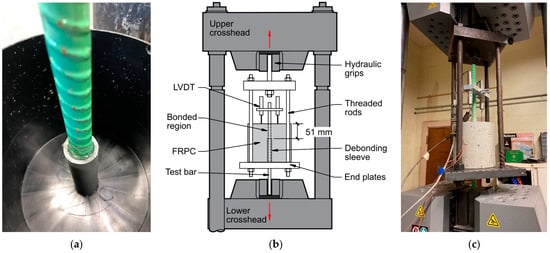
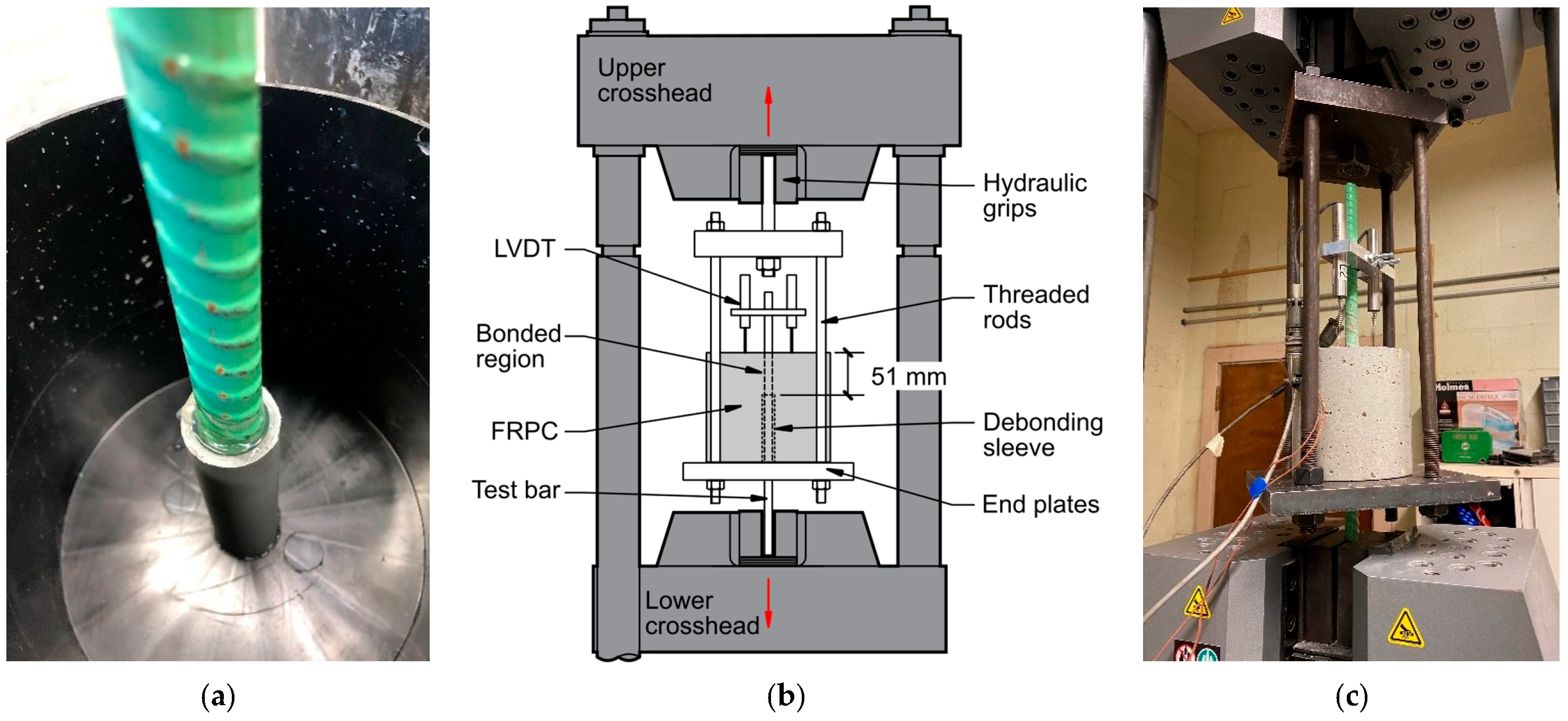
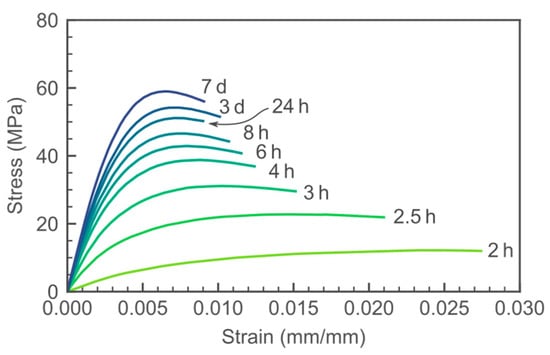
Figure 3a shows the pull-out bond cylinder specimens under construction. The beam and cylinder specimens were cast in standard molds and are therefore not shown here. A706 [37] epoxy-coated No. 5 reinforcement (16 mm in diameter) with yield and ultimate strengths of fy = 445 MPa and fu = 662 MPa, were cast in the center of 150 mm diameter cylinder molds that were cut to be 152 mm tall. The bottom 102 mm of the reinforcement was debonded from the PCFR by placing a PVC tube around the bar and sealing the top and bottom with caulking. This resulted in a 51 mm bonded length and ensured a pull-out failure mode, instead of splitting of the polymer concrete. The tests were not meant to replicate the conditions used for assessing the pull-out strength of fiber-reinforced polymer matrix composite (FRPC) bars embedded in cementitious concrete, for which the ASTM D7913 [36] standard was developed. Instead, the standard provided a useful starting point to base the test procedure for the pull-out strength of epoxy-coated bars embedded in PCFR, since none existed. While epoxy-coated reinforcement and FRPC bars can be used in similar structural applications, comparison of the bond strength of the two reinforcements was not the focus of the study, and thus the modifications to the test procedure did not limit direct comparison with the bond and development-length provisions for FRPC bars. As shown in Figure 3b,c, the test configuration for the pull-out bond tests consisted of suspending the specimens by the bottom face (closest to the debonded bar) via a steel plate with a hole in the middle, and the bottom portion of the rebar was gripped by the testing machine.
Figure 3.
Bond pull-out test setup. (a) Specimen construction. (b) Diagram of test setup. (c) Photograph of test specimen prior to testing.
For each standard test, two batches of PCFR specimens were cast. One batch of specimens was used to measure the early-age mechanical properties at laboratory temperature with testing starting 2 h after mixing and concluding after 7 d. The other batch was allowed to cure at laboratory temperature (roughly 25 °C) for 7 d, conditioned to four different temperatures, then tested. Table 1 summarizes the testing program and reports the average 7 d compressive strength of cylinders (n = 3) from each batch of PCFR tested at laboratory temperature (roughly 25 °C), which were used to measure the variability in the material throughout the testing program due to mixing, batching, and curing. The results show that the average compressive strength of the cast PCFR at laboratory temperature was 62.2 MPa and was consistent between the eight test series, indicating low batch-to-batch variability with coefficient of variation (COV) less than 5%.
Table 1.
Summary of experimental testing program.
The elastic modulus, modulus of rupture, and bond pull-out tests were conducted using an Instron 600DX 600 kN (Instron Corporation, Norwood, MA, USA) universal testing machine (UTM). For each test, the applied load, crosshead displacement, and specimen strain (for modulus tests only) were recorded by devices integral to the UTM. For the bond tests, additional instrumentation was synchronized to these signals to measure bond slip. Two LVDTs arranged at 180° from one another, attached to the epoxy-coated rebar 100 mm above the face of the specimen recorded the back-end slip displacement of the reinforcement relative to the bottom face of the PCFR cylinder. All compressive strength tests, including the 7 d reference strengths from each batch, were conducted using a Forney 1780 kN compression (Forney, LP, Zelienople, PA, USA) testing machine. To track the internal temperature of specimens during the casting, curing, and testing process, Type J thermocouples were embedded in at least one specimen per batch, approximately at the center of mass of the specimen.
3. Results
3.1. Strength Gain over Time
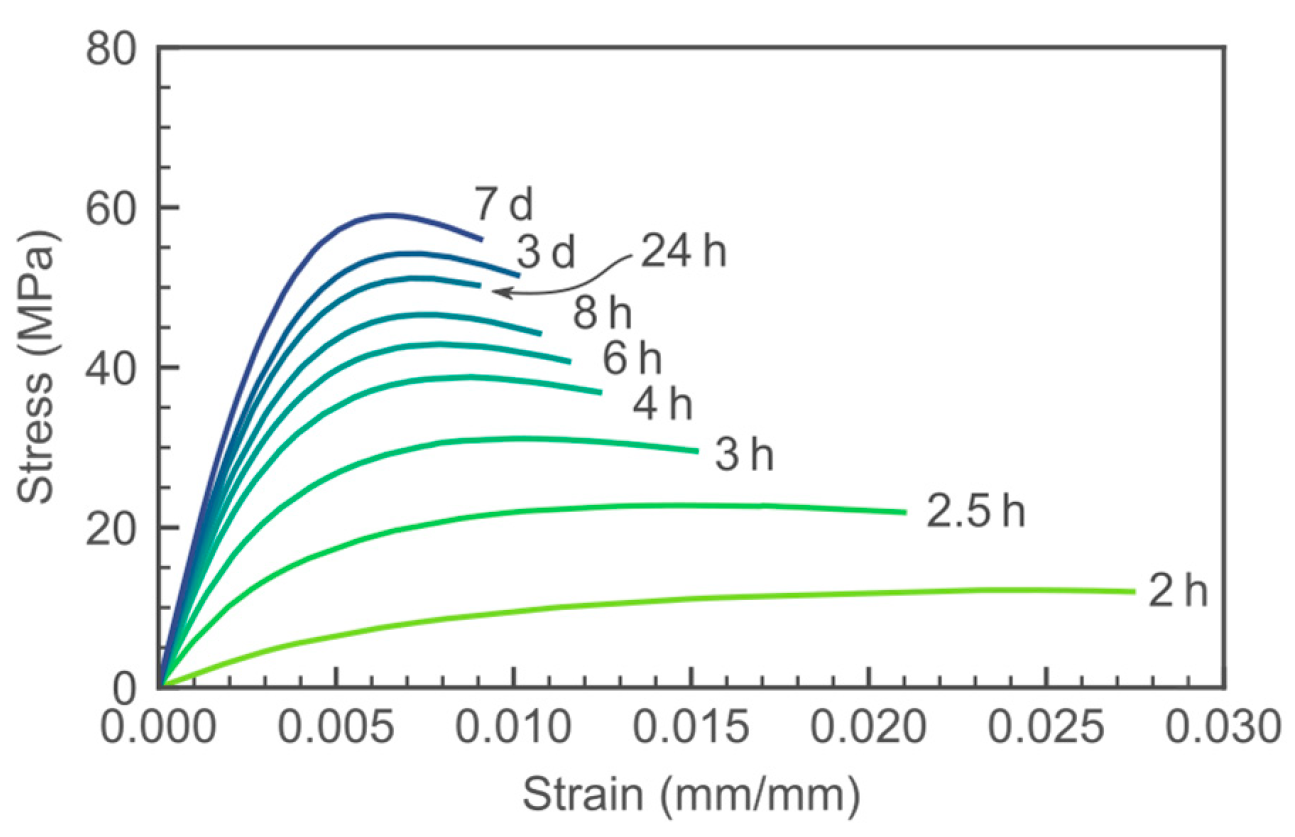
One of the stated advantages of polymer concretes is their rapid development of mechanical properties. For example, Figure 4 shows the complete stress–strain relationship for the PCFR used in this study at several representative ages, established under displacement control at a crosshead displacement rate of 1.3 mm/min. From the figure, several observations were made:
Figure 4.
Compressive stress–strain relationship of fiber-reinforced polymer concrete as a function of time after curing.
- •
- The compressive strength of the samples exceeded 20 MPa by 2.5 h, a practically significant threshold for reopening rapid repair work to service;
- •
- The compressive stress–strain behavior asymptotically approached the 7 d behavior, which was considered fully hardened (less than a 5% increase in strength was observed at 28 d in trial batches, see [32] for more details);
- •
- The strain at peak compressive stress decreased as the material gained strength, which is partially attributable to the samples cooling over time and the increased flexibility at higher temperatures that is characteristic of polymer concretes.
To quantify the evolution of mechanical properties over time, especially the strength gain over the first few hours after mixing, test specimens (compressive and flexure) were cast and allowed to cure under laboratory conditions (roughly 25 °C and 45% RH). The strength and modulus of these samples were then compared to various opening and operational requirements for highway projects in the United States [38,39].
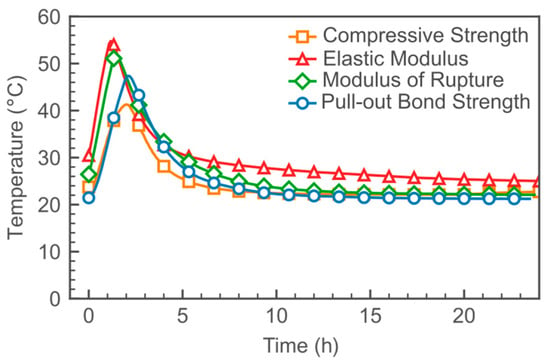
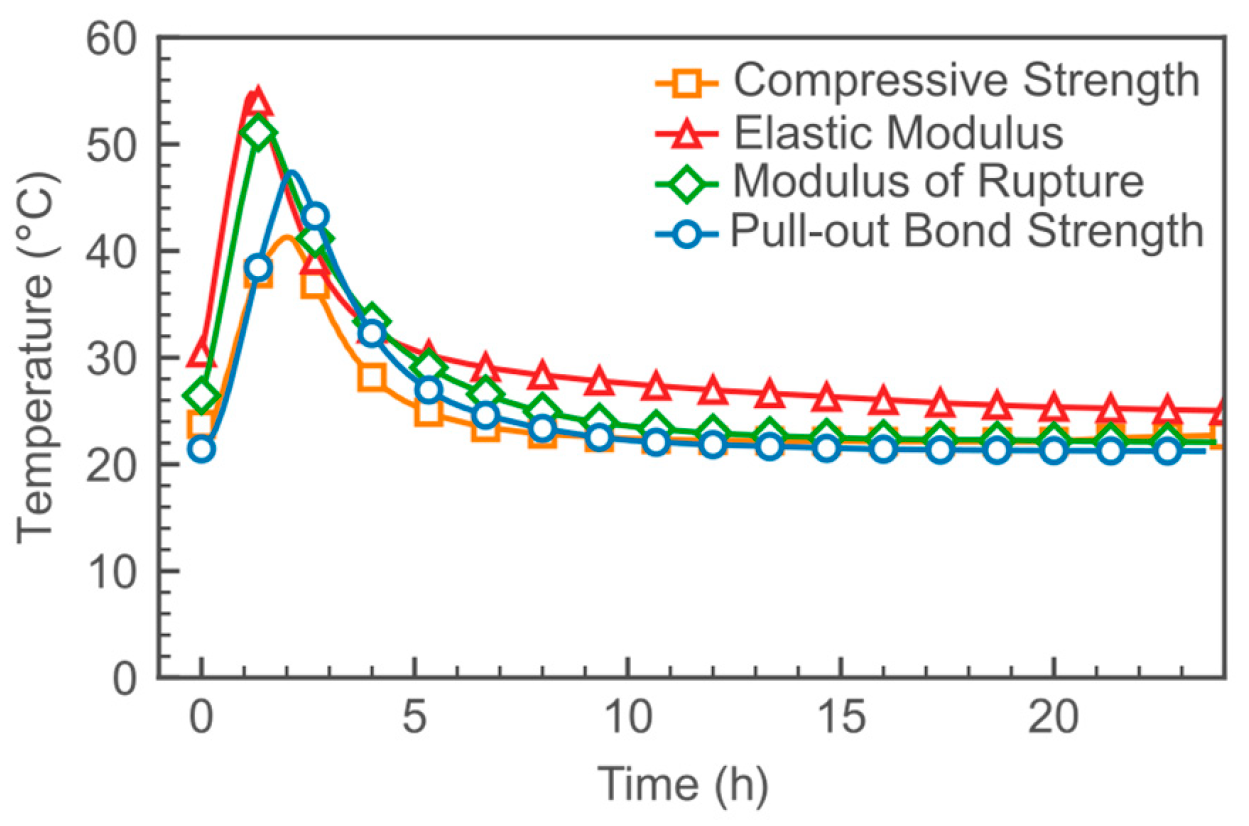
Figure 5 shows the temperature history of four monitored specimens during the first 24 h of curing. The peak internal temperatures of the samples were between 40 °C and 50 °C and occurred between 1 h and 2 h after mixing. Because the strength development of polymer concrete is strongly influenced by curing temperature [13], higher peak temperatures should be associated with a more rapid development in strength, which could be further adjusted through the use of insulation or the proportioning of the proprietary accelerator in this binder system. In the laboratory, the samples were cured at laboratory temperature with nominally identical levels of accelerator, and the variation in peak temperature and the time to peak temperature between batches was attributed to the differing specimen sizes (thermal masses) and the varying insulation provided by the molds that were used. Starting at the earliest feasible time (determined to be 2 h after mixing), specimens were removed from their molds and tested to failure, and three specimens were reserved for testing at 7 d.
Figure 5.
Temperature of specimens during curing.
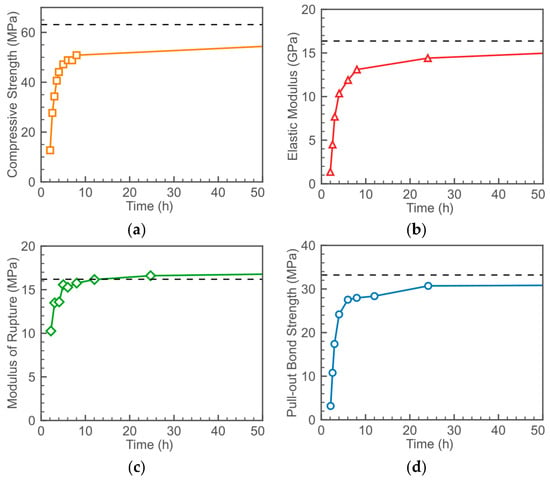
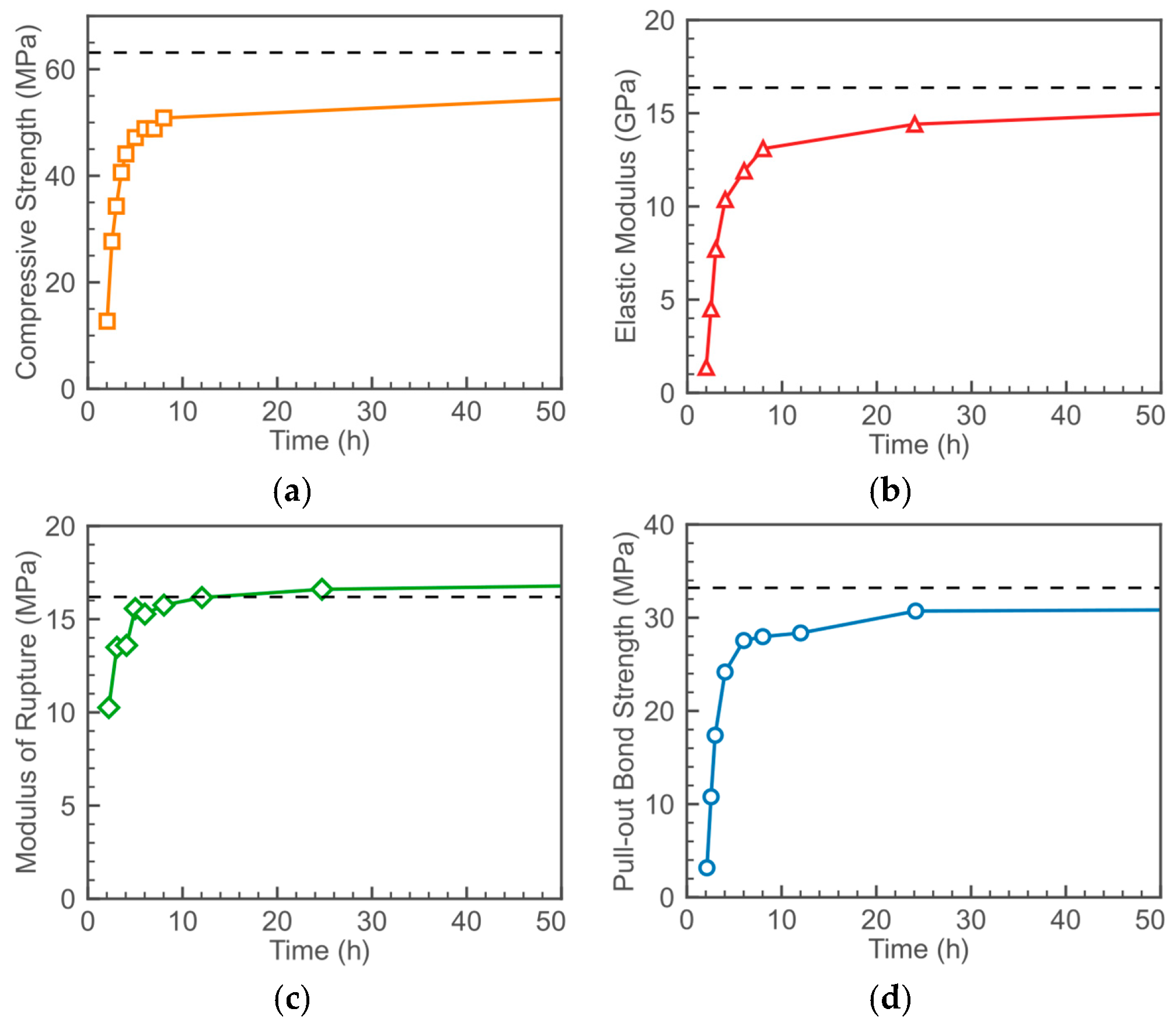
Figure 6 shows the mechanical properties of the PCFR as a function of time over the first 48 h after mixing. The bond strength reported here is the peak average bond stress recorded during the test, computed by dividing the peak test load by the nominal surface area of the bar in contact with the PCFR (assumed to be a cylindrical surface with the nominal diameter of the reinforcement). The 7 d values are also shown in the plots as horizontal dashed lines, for reference.
Figure 6.
Material properties as a function of time after mixing. (a) Compressive strength. (b) Elastic modulus. (c) Modulus of rupture. (d) Pull-out bond strength. Horizontal dashed lines indicate 7-d strength or modulus values.
Overall, the development of mechanical properties was consistent between the four test series, with a majority of the strength and modulus development occurring over the first 8 h after mixing (corresponding to the time where elevated temperatures were observed in the samples in Figure 5). As expected, the higher internal temperatures observed in elastic modulus and modulus of rupture specimens in Figure 5 led to more rapid development of those mechanical properties (95% of the 7 d modulus of rupture was achieved in 5 h); however, this beneficial effect was, in part, countered by the attendant reduction in strength and stiffness caused by testing the specimens at the higher temperature.
For the commercially available PCFR and level of accelerator used in this study (3% accelerator by volume initiator), the compressive strength was 44.1 MPa 4 h after mixing, or roughly 70% of the 7 d strength value. In earlier trial batches that used 8.3% accelerator by volume initiator, the compressive strength reached roughly 70% of its 7 d strength in 2 h. This demonstrates the rapid strength gain that is possible with PC and the ability to fine tune the development of mechanical properties to meet project- and site-specific considerations by varying the amount of accelerator. The tradeoff when considering accelerator dosage is in the working time before initial gel, which occurred approximately 20 min after mixing and 7 min after mixing for the 3% accelerator and 8.3% accelerator trial batches, respectively. Additional details of the initial trial batches can be found in Donohoe and Thonstad (2024) [32].
For rapid repair or infrastructure projects, the time at which the roadway can be returned to service is often based on the compressive or flexural strength of the concrete material. For example, the Washington State Department of Transportation specifies a minimum compressive strength of 17.2 MPa for opening pavements to traffic [38], while the California Department of Transportation requires a modulus of rupture of approximately 2.8 MPa within 4 h and at least 4.1 MPa by 28 d for fast-setting hydraulic cement concretes [39]. For the commercially available PCFR and level of accelerator used in this study and with specimens cured at laboratory temperature (roughly 25 °C), the compressive strength of the PCFR samples was 27.7 MPa at 2.5 h after initial mixing and the modulus of rupture was 10.3 MPa at 2.2 h after mixing, easily surpassing both of these practical thresholds. It should be noted that the development of mechanical strength in PCFR systems is highly sensitive to binder chemistry and mixture proportioning and only a single commercially available PCFR mixture design was considered here, precluding generalization of these results to a broader class of PCFR materials. For other binder formulations and mixture designs, similar re-opening times would need to be determined separately. Although the temperature, and therefore the development of strength, in situ will be influenced by the thermal mass of the surrounding structure and weather, these results demonstrate PCFR’s potential as a structural repair material, when a rapid return to service is critical.
3.2. Influence of Testing Temperature on Mechanical Properties
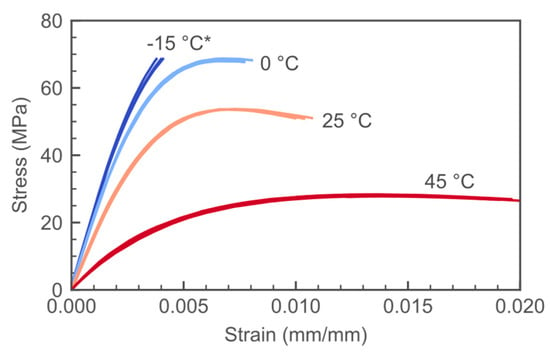
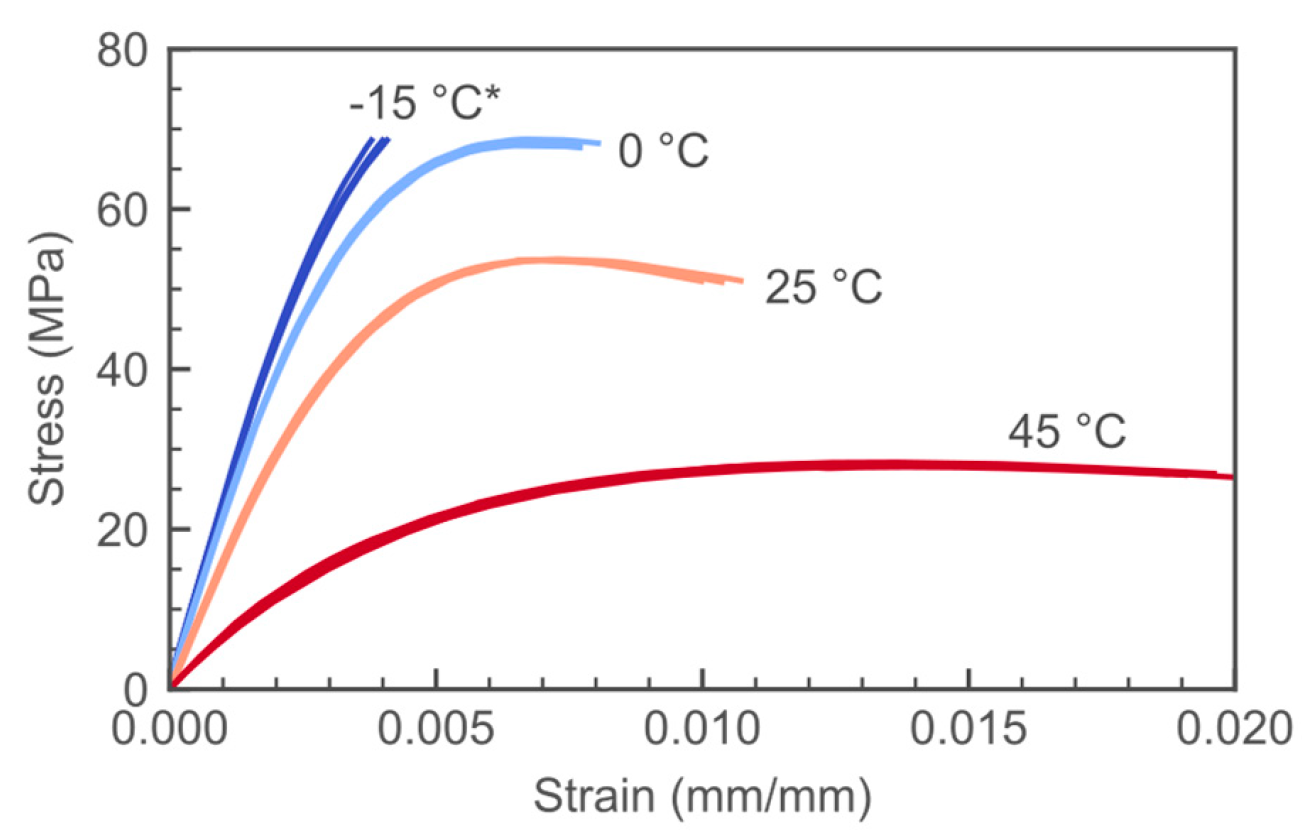
The change in strength and stiffness of PCFR within the range of climatic conditions anticipated for a particular site must be considered in design. For example, Figure 7 shows the complete stress–strain relationship for the PCFR used in this study at several representative temperatures, established under displacement control at a rate of 1.3 mm/min. Samples were first cured for 7 d at laboratory temperature, before being conditioned to the testing temperatures shown. The stress–strain response for cylinders tested at −15 °C were limited by the capacity of the universal testing machine rather than material strength. From the figure, the compressive strength of the samples, the strain at peak compressive stress, and the initial slope of the stress–strain response were all sensitive to testing temperature, with strength and stiffness decreasing as temperature increased and vice versa, consistent with previous studies of PC and PCFR that studied the effect of testing temperature [18,19].
Figure 7.
Compressive stress–strain relationship of fiber-reinforced polymer concrete as a function of testing temperature. * Curves limited by test machine capacity.
To quantify the influence of temperature on the mechanical properties of the commercially available PCFR used in this study, test specimens (cylinders, beams, bond pull-out specimens) were cast and allowed to cure under laboratory conditions (roughly 25 °C and 45% RH) for 7 d. The specimens were then conditioned to the target test temperatures (−15 °C, 0 °C, 25 °C, 45 °C) using temperature-controlled cabinets. The specimens were kept in the temperature-controlled cabinets for at least 16 h prior to testing to achieve the desired internal temperature, monitored by embedded thermocouples in select specimens.
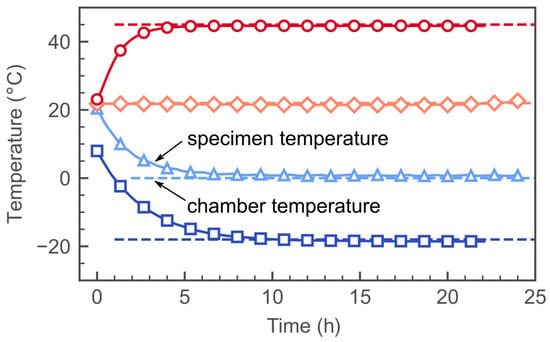
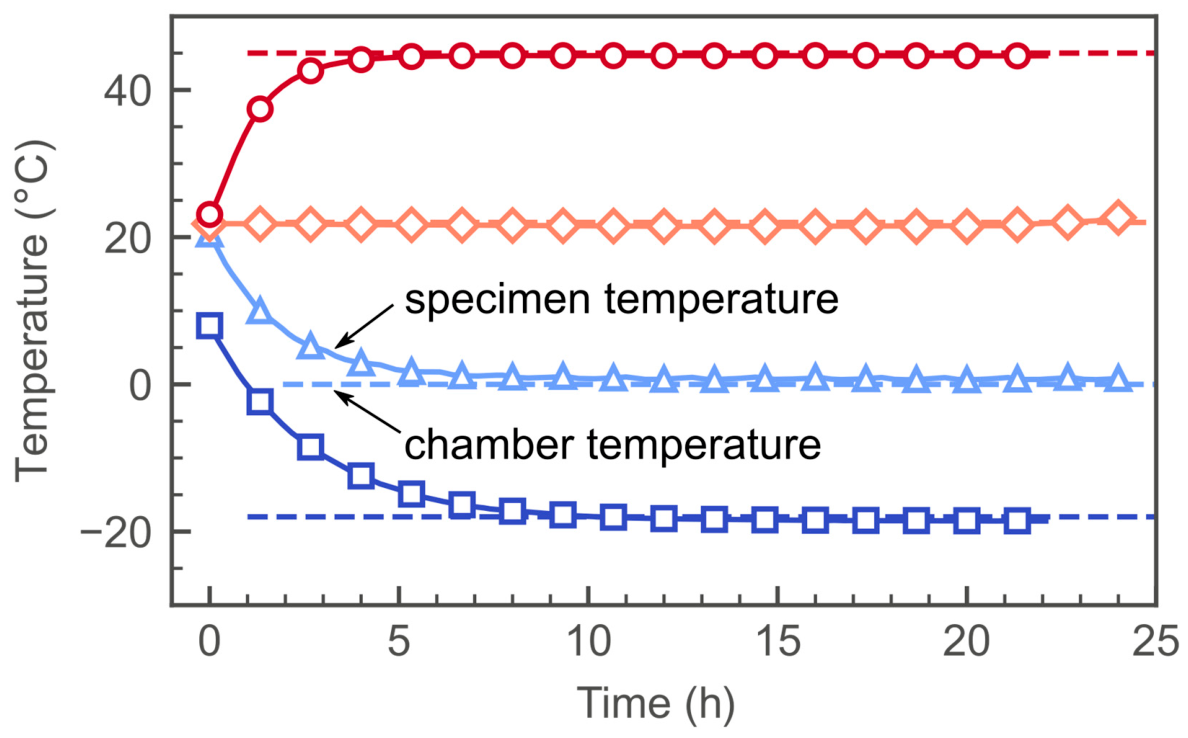
Figure 8 shows the internal temperature change for the pull-out bond cylinder specimens during the conditioning period. The dashed lines indicate the temperature of the chambers. After conditioning to the target temperature, the specimens were then removed, one by one, from the cabinets and tested promptly. This procedure was meant to reduce deviation from the target test temperatures; however, some variation was unavoidable. To quantify these deviations, the temperatures of the specimens were measured, both immediately before and after each test, on their surface, using a laser infrared thermometer, and internally, using the embedded thermocouples on select specimens. For the specimens tested at 0 °C, 25 °C, and 45 °C, the surface temperatures changed (increased or decreased toward laboratory temperature) by less than 2 °C during testing. For specimens tested at −15 °C, a more significant difference was observed during testing, up to 13 °C for one flexural beam (partly due to the 15 min duration of the testing procedure for the colder, and therefore stronger, specimens). Despite the significant change in surface temperature observed during these beam tests, the internal temperature changed less, by only 5 °C. Additional details about the temperature variations can be found in Donohoe and Thonstad (2024) [32]. The temperatures shown in subsequent figures and used in regressions were the surface temperature of the specimens at the start of testing, although the uncertainty arising from temperature variations within the specimens during testing is acknowledged as a limitation of the test procedure.
Figure 8.
Temperature of bond pull-out specimens during conditioning.
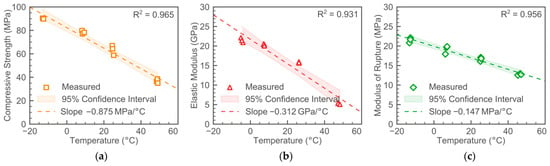
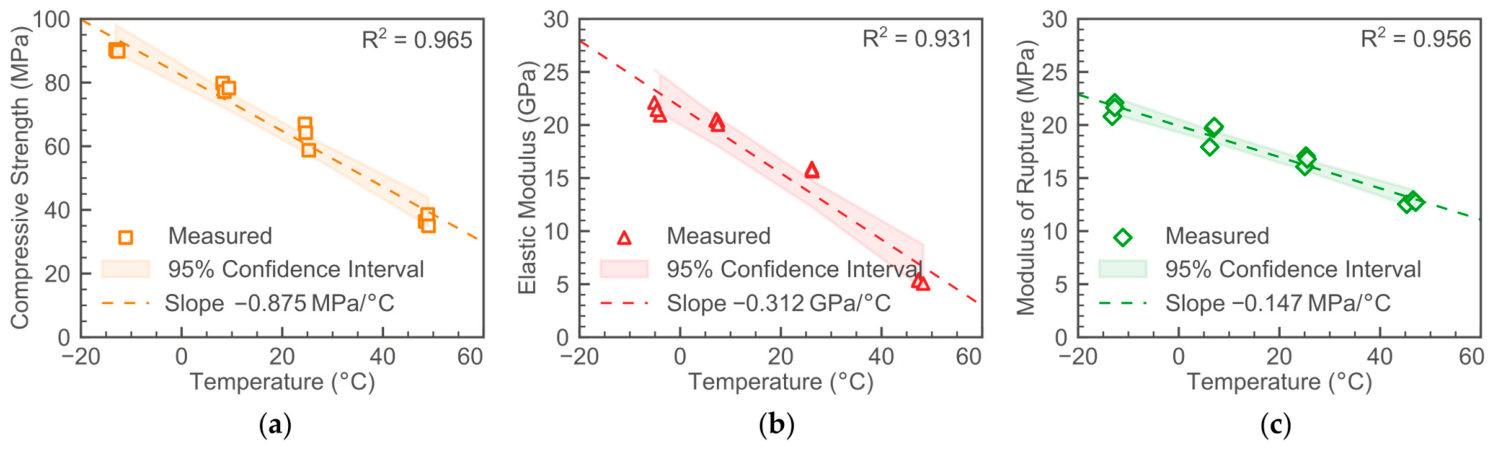
Figure 9 shows the mechanical properties of the PCFR as a function of temperature, over the range of temperatures tested. In the figures, the markers indicate individual measurements, with three specimens per target temperature tested. The temperatures shown in the figure are the surface temperature of the samples at the start of testing. Deviation from the target temperature was evident in the data, due to changes in specimen temperature during handling and setup. The dashed lines in the figures indicate a linear fit to the measured data, and the shaded region shows the 95% confidence interval for the fitted relationship. Because the experimental program included only four test temperatures, the effect of temperature on the compressive strength, elastic modulus, and modulus of rupture was modeled using simple linear relationships, with corresponding coefficients of determination of 0.965, 0.931, and 0.956, respectively. Subsequent testing at additional test temperatures within, and outside of, the range considered would support the use of more complex models to better explain the observed variation in mechanical properties.
Figure 9.
Material properties as a function of temperature. (a) Compressive strength. (b) Elastic modulus. (c) Modulus of rupture.
The variation in mechanical properties with temperature was roughly linear in all three of the test series, with an increase in strength and modulus observed for specimens conditioned to colder than laboratory temperature and a decrease observed for specimens conditioned to above laboratory temperature. These trends are consistent with previous studies investigating epoxy and polyester binder systems [7,23]; however, the sensitivity to temperature depends significantly on binder type and mixture proportioning. Therefore, the results presented should be interpreted as applicable to only the commercially available PCFR examined in this study. The most significant quadratic term in initial models was observed for the elastic modulus test series (p < 0.001). This departure from linear is partially attributed to the standard elastic modulus test method [34], which describes a method for obtaining secant stiffness values at 40% of the compressive strength of a concrete cylinder. For PCFR at elevated temperatures, this stress level resulted in significant nonlinear deformation and therefore resulted in secant stiffnesses much lower than the initial stiffnesses. When the elastic modulus data at elevated temperatures were removed from the dataset, the significance of the second-order term was reduced by several orders of magnitude.
The variation in mechanical properties with temperature was also roughly consistent between the three mechanical properties, when the slopes of the regression relationships were normalized by the strength or modulus at laboratory temperature. Across the three mechanical properties, the average normalized slope was −1.4%/°C, which was nearly identical to the normalized slope of the compressive strength–temperature relationship (the quotient of −0.875 MPa/°C and 63.3 MPa). Practically, these results suggest that for the PCFR used in this study, the temperature dependence of the mechanical properties was nearly independent of test method. For example, the average modulus of rupture at 46.3 °C was 12.7 MPa, 24% lower than the modulus of rupture at laboratory temperature (25.2 °C) of 16.7 MPa (ΔT = 21.1 °C). Similarly, the average elastic modulus was 20.3 GPa at 7.4 °C, 28% higher than the average elastic modulus at laboratory temperature (26.2 °C) of 15.8 GPa (ΔT = −18.8 °C). It should be noted that this temperature dependence is highly sensitive to binder chemistry and mixture proportioning, and only a single commercially available PCFR mixture design was considered here, precluding generalization of these results to a broader class of PCFR materials. For other binder formulations and mixture designs, similar relationships would need to be determined separately.
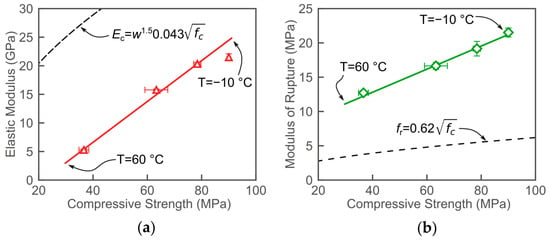
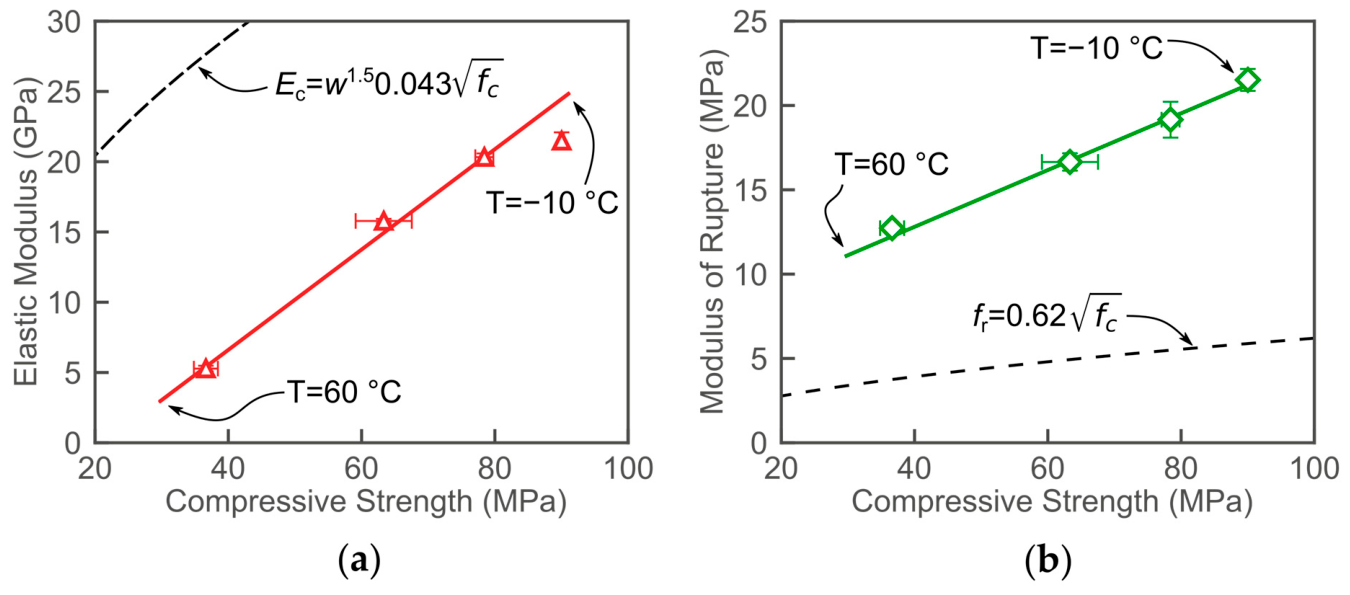
Figure 10 shows the elastic modulus and modulus of rupture as a function of the compressive strength at the four temperatures tested. The markers in the plots represent the average values for each mechanical property at each of the target temperatures, which varied from the surface temperature at the start of testing by different amounts for each of the samples tested. The error bars indicate the standard deviation of the measurements (n = 3) for each property at each of the target temperatures. The solid line in the figure shows the relationship between the parameters for the range of temperatures between −10 °C and 60 °C, based on the linear regressions reported in Figure 9. Also shown in the figure, as dashed lines, are estimates of the mechanical properties based on compressive strength specified in ACI 318 [30], calculated assuming a unit weight for PCFR of 2243 kg/m3, for reference.
Figure 10.
Relationship between mechanical properties and compressive strength as a function of temperature. (a) Elastic modulus. (b) Modulus of Rupture.
As anticipated, the calculated values based on the design expressions for cementitious concrete did not adequately capture the material properties of PCFR, as has been reported for other polymer concretes [7]. Specifically, the measured elastic modulus was roughly half of the values predicted by the code equations, and the measured modulus of rupture was about three times that of the estimated values, demonstrating the difference between the two binder systems. For the range of temperatures investigated, the elastic modulus and modulus of rupture were roughly proportional to the compressive strength. However, using a linear relationship, the elastic modulus estimation would imply zero elastic modulus at a non-zero compressive strength, differing significantly from assumptions for cementitious concrete.
3.3. Influence of Testing Temperature on Bond Properties
The bond between steel reinforcement and concrete influences the response of structures in several ways, including the spacing of transverse cracks, deflections, the strength of anchorages and splices, and the rotational capacity of plastic hinges. Bond strength depends on many factors, including the geometric properties of the deformed bar, concrete strength, location of the reinforcement during casting, the presence of transverse reinforcement and concrete cover. For PCFR, bond strength, like compressive and tensile strength, is also strongly dependent on temperature.
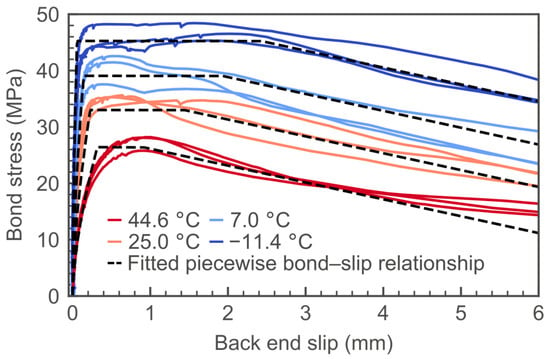
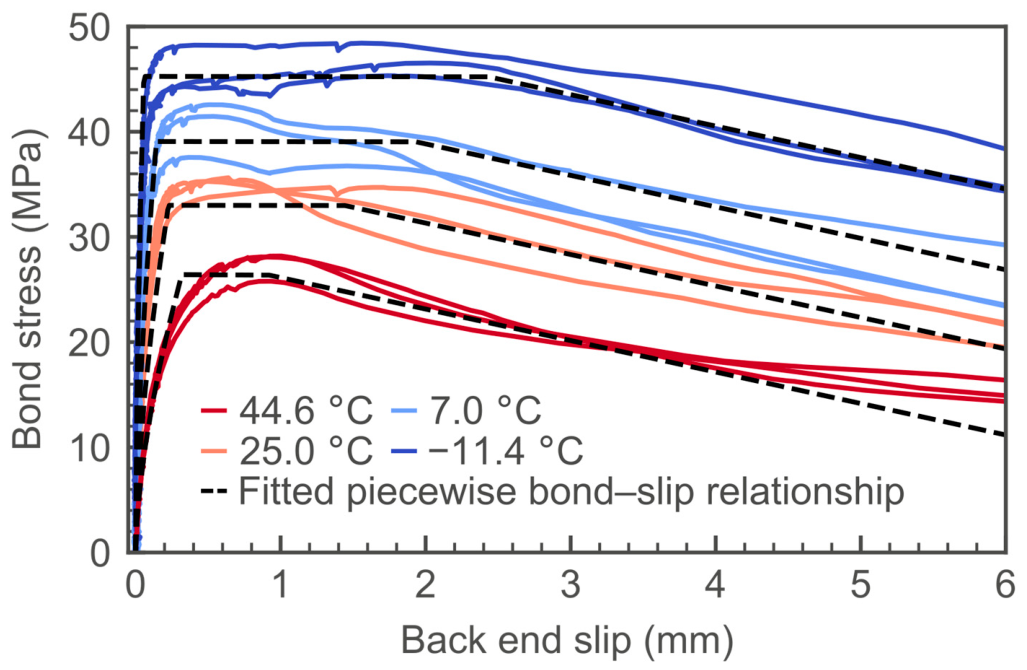
Figure 11 shows the average bond stress–back-end slip response of the reinforcement at four testing temperatures. The average bond stress was computed by dividing the measured load by the notional surface area of the bar that was in contact with the PCFR, idealized as a smooth cylinder with diameter equal to the nominal diameter of the reinforcement. The temperatures reported in the legend are the average measured surface temperatures at the start of testing for the three specimens tested at that target test temperature. As the bond stress increased initially, there was minimal slip. Once the maximum bond stress was reached, the curves softened with diminished bond stress and increasing slip. As the testing temperature decreased, the bond stress increased for all levels of back-end slip. For specimens tested at an average surface temperature of −11 °C, there was less slip during the initial phase of loading before maximum bond stress than compared with specimens tested at 45 °C. Although only a short bonded length (roughly 3 bar diameters) was provided—in order to promote bond failure before bar yielding—the specimens tested at temperatures below laboratory temperature (with average surface temperatures at the start of testing of 7 °C and −11 °C) achieved bar stresses above the measured yield stress (445 MPa).
Figure 11.
Bond stress–back-end slip relationship as a function of testing temperature.
For each specimen, the piecewise bond–slip relationship given in Equation (1) was used to parameterize each experimental curve between 0.0 mm and 5.5 mm back-end slip (corresponding to half of the maximum deformation spacing for a No. 5 A706 deformed bar [37]). The fitted function was determined through Sequential Least Squares Programming optimization [40]. The form of Equation (1) is identical to the local bond stress–slip model for ribbed bars presented in the fib Model Code (MC) 2010 [41], except that the residual bond stress plateau at slips larger than the clear spacing of the deformations was omitted, since data at large levels of slip, where the plateau would occur, were not available.
The five fitted parameters (, , , , and ) were modeled as linear functions of temperature. For each fitted parameter, slope coefficients with significance values greater than 0.01 were removed from the models, and the remaining coefficients and their values are provided in Table 2. Also shown in the table are 95% confidence intervals for each coefficient and the bond model values from the fib Model Code 2010 [41] for cementitious concrete assuming pull-out failure, good bond conditions, and the bar size and compressive strength of the test specimens at laboratory temperature (25 °C), for reference. The resulting bond stress–slip relationships calculated using the fitted values of the parameters in Table 2, at the four average measured surface temperatures at the start of testing, are shown in Figure 11 as dashed lines.
Table 2.
Fitted PCFR bond model parameters.
The parameters sensitive to changes in temperature were found to be , which controls the peak bond strength; , which controls the secant stiffness to peak bond strength; and , which controls the length of the bond–slip plateau. The remaining parameters, the slope of the post-peak bond–slip response, , and the shape parameter, , were found to be constant with temperature. The parameters for the fitted piecewise bond–slip relationship at laboratory temperature (25 °C) were markedly different than the ones given in fib MC 2010 [41] for cementitious concrete, with the peak bond strength roughly 70% higher (33.0 MPa versus 19.7 MPa), the peak bond stress–slip plateau occurring at a lower slip (0.23 mm versus 1.0 mm), and the post-peak strength diminishing more rapidly with increasing slip (−3.0 MPa/mm versus −1.3 MPa/mm).
The bond strength was also estimated from the 7 d compressive strengths of the PCFR at laboratory temperature (62.2 MPa) using ACI 318 [30] and the AASHTO LRFD Bridge Design Specifications [31]. It should be noted that neither code estimates an equivalent pull-out bond strength, instead identifying splitting of the concrete surrounding the deformed bar in tension as the mechanism governing the required development length needed for design. For reference, the ratio between the bond pull-out and splitting strengths estimated by the fib Model Code 2010 [41] for concrete with a compressive strength of 62.2 MPa was 1.96, assuming good bond conditions and adequate confinement. Comparisons between the measured and estimated bond strength values from the ACI and AASHTO codes should therefore be interpreted with these different failure mechanisms in mind.
From the code provisions, “equivalent bond strengths” were computed using equilibrium and the development length equations for a deformed bar loaded at its yield stress. This calculation assumed the equivalent bond stress acted uniformly over the exterior surface of a smooth cylindrical bar with the same nominal diameter as the reinforcement that was embedded for one development length. The estimated properties were calculated assuming the most favorable bond condition possible, since the pull-out test method used in this study represents an upper bound to the bond splitting strength [42]. The development length correction factors pertaining to casting location, reinforcement diameter, reinforcement grade and the use of lightweight concrete were all taken at their lowest values, and the factor for coating was taken as 1.2 (for epoxy-coated bars). The development length reduction from cover and transverse reinforcement was taken as the maximum of 2.5 in ACI (well-confined). The resulting bond strengths of 5.4 MPa and 4.3 MPa for the ACI and AASHTO codes, respectively, were less than 20% of the measured pull-out bond strengths at laboratory temperature (33.8 MPa). The dramatic difference between the measured pull-out bond strength and the code estimates largely reflects designed conservatism in the provisions and the different assumed failure modes, since the two codes assume a splitting failure mode for their development length expressions while the experimental specimens failed through a pull-out mechanism. Despite the variation in definition, the ACI and AASHTO codes drastically underpredict the pull-out bond strength of PCFR, even if it is assumed that the pull-out test strengths are roughly double the bond splitting strengths under similar conditions. More importantly, the measured pull-out bond strength was more comparable to the pull-out bond strengths for non-proprietary ultra-high-performance concretes (UHPCs) and PMMA polymer concretes. Using a similar test configuration to the one used in this study and tested at laboratory temperature, the pull-out bond strength of a non-proprietary UHPC was reported as 44 MPa [43], and the pull-out bond strength of PMMA was reported as 29 MPa [27].
4. Conclusions
The mechanical properties of a commercially available polymer concrete with fiber reinforcement (PCFR) were investigated to quantify the development of strength and stiffness over time, especially over the first 24 h after mixing, and to determine the effects of test temperature on the fully hardened properties. Four different properties were investigated: compressive strength, elastic modulus, modulus of rupture, and pull-out bond strength. Eight batches of PCFR were mixed, cast, and tested—two batches per property, one for temperature effects and one to quantify early-age strength gain. To understand the development of strength and stiffness, specimens were mixed and cast at laboratory temperature (25 °C), then tested at frequent intervals, starting 2 h after mixing through to 7 d. To investigate the influence of testing temperature, specimens were cast and cured for 7 d at laboratory temperature and then conditioned to four different testing temperatures. Because the study examined only one proprietary PCFR system and a limited number of test specimens, further testing is needed to assess the consistency of these results at other test temperatures and their generalizability to other systems. The following conclusions were drawn from the study:
- •
- For the PCFR mixture design used in this study (with 3% accelerator by volume initiator) and for specimens cured at laboratory temperature, the compressive, flexural, and bond strengths were roughly 70%, 80%, and 75% of their 7 d values, respectively, 4 h after mixing. The development of compressive, flexure, and bond strengths was similar. Specimens surpassed typical compressive strength and modulus of rupture opening criteria for pavements in roughly 2.5 h when cured at 25 °C. If shorter working times can be tolerated, significant strength (70% of the 7 d value) can be achieved within 2 h after mixing using higher dosages of accelerator. Although the in situ temperature—and therefore the development of strength—was influenced by the thermal mass of the surrounding structure and weather, these results demonstrate PCFR’s potential as a structural repair material for projects requiring short closure windows.
- •
- The commercially available PCFR exhibited significant variation in mechanical properties with temperature, consistent between the compression and flexure tests and previous research using other polymer concrete systems without fibers. For the PCFR used in this study, a temperature increase of 20 °C from laboratory temperature (25 °C) resulted in a roughly 28% reduction in material strength and modulus. The opposite was true for a roughly 20 °C decrease from laboratory temperature.
- •
- Established relationships, developed for cementitious concrete, between compressive strength, modulus of rupture, elastic modulus, and bond strength were not effective for estimating the properties of the commercially available PCFR examined in this study, as expected. Although similar proportionalities exist, these relationships vary by binder chemistry and are only valid for a particular range of testing temperatures. For the PCFR used in this study, the measured elastic modulus was roughly half of the values predicted by ACI 318 code estimations, and the measured modulus of rupture was about three times that of the estimated values, based on the average 7 d compressive strength of 62.2 MPa at 25 °C.
- •
- The measured pull-out bond strength of the PCFR used in this study (33.8 MPa at 25 °C) was 70% higher than the value predicted by the fib Model Code 2010 for cementitious concrete with the same compressive strength. While the results suggest that the bond strength of PCFR is comparable to PMMA and non-proprietary UHPC at laboratory temperature, the use of pull-out test results as the sole basis for determining the necessary development length for design is inappropriate, and further bond testing is needed to develop rational design procedures for bars embedded in PCFR. Practically, the improved bond strength of PCFR over conventional high-strength concrete could reduce the required demolition work for splicing repairs into existing portions of the structure and provide additional alternatives when rapid return to service is critical.
- •
- Both the bond strength and the shape of the parameterized bond stress–slip relationship for the PCFR used in this study were found to vary with temperature. While the fitted bond strength () and the length of the bond stress–slip plateau ( − ) were found to be negatively correlated with temperature, the slope of the post-peak response () and the shape parameter describing the initial portion of the curve () were not. Also, values for the parameters at laboratory temperature were markedly different than those found in the fib MC 2010 for cementitious concrete, with the bond strength roughly 70% higher, the bond stress–slip plateau occurring at a lower slip (0.23 mm versus 1.0 mm), and the post-peak strength diminishing more rapidly with increasing slip (−3.0 MPa/mm versus −1.3 MPa/mm). The resulting bond stress–slip relationship could be useful for estimating required embedment lengths for a given in situ temperature, although additional testing is needed to corroborate these limited experimental results and determine the effects of cover and transverse reinforcement on splitting failure modes, which were out of the scope of the present study. The presented local bond–slip relationship should, therefore, be treated as preliminary and requiring further validation with additional testing.
- •
- While material strength changes due to temperature are often an important consideration in other engineering disciplines, it is rarely a focus of structural engineering design. Based on this limited test series, in situ temperature should be considered a critical element in the design process for the structural use of polymer concrete with fiber reinforcement, although further testing is needed to develop rational design procedures.
Supplementary Materials
The measured data shown in Figure 6, Figure 9 and Figure 11 can be downloaded in .xlsx format at: https://www.mdpi.com/article/10.3390/fib14100111/s1.
Author Contributions
Conceptualization, T.T.; methodology, C.D. and T.T.; software, A.O.; validation, C.D.; formal analysis, C.D. and A.O.; investigation, C.D.; resources, T.T.; data curation, C.D.; writing—original draft preparation, T.T.; writing—review and editing, C.D. and A.O.; visualization, C.D. and A.O.; supervision, T.T.; project administration, T.T.; funding acquisition, T.T. All authors have read and agreed to the published version of the manuscript.
Funding
This research was funded by the US Department of Transportation (USDOT) through the Accelerated Bridge Construction University Transportation Center (ABC-UTC), grant number 69A3551747121. The opinions, findings and conclusions expressed here are those of the authors alone and do not reflect an official position of the USDOT or the ABC-UTC.
Data Availability Statement
The original contributions presented in this study are included in the article/Supplementary Materials. Further inquiries can be directed to the corresponding author.
Acknowledgments
The authors would like to express their appreciation for Kwik Bond Polymers for their in-kind contribution of the HCSC material used in this testing program and would like to specifically thank Casey Rafter and Dan Uldall for their technical assistance and guidance throughout the project.
Conflicts of Interest
The authors declare no conflicts of interest.
References
- ACI PRC-548.1-09; Guide for the Use of Polymers in Concrete. American Concrete Institute: Farmington Hills, MI, USA, 2009.
- Maass, J. How Polyester Polymer Concrete Highway and Bridge Deck Overlays Became “State of the Art”. In ACI Symposium Paper; American Concrete Institute: Farmington Hills, MI, USA, 2003; Volume 214, pp. 39–49. [Google Scholar]
- DePuy, G.W.; Dimmick, F.E. Polymer Concrete Overlays for the Repair and Protection of Concrete. In Polymers in Concrete: The First Thirty Years, SP-214; Kaeding, A.O., Prusinski, R.C., Eds.; American Concrete Institute: Farmington Hills, MI, USA, 2003; pp. 139–149. [Google Scholar]
- Sprinkel, M. Twenty-Five-Year Experience with Polymer Concrete Bridge Deck Overlays. In ACI Symposium Paper; American Concrete Institute: Farmington Hills, MI, USA, 2003; Volume 214, pp. 51–62. [Google Scholar]
- Kaeding, A.O.; Prusinski, R. Curtain Wall Panels. In ACI Symposium Paper; ACI SP-214; American Concrete Institute: Farmington Hills, MI, USA, 2003; pp. 151–162. [Google Scholar]
- Fowler, D.W. Polymers in Concrete: A Vision for the 21st Century. Cem. Concr. Compos. 1999, 21, 449–452. [Google Scholar] [CrossRef] [Scilit]
- Vipulanandan, C.; Paul, E. Performance of Epoxy and Polyester Polymer Concrete. ACI Mater. J. 1990, 87, 241–251. [Google Scholar] [CrossRef] [Scilit] [PubMed]
- Mebarkia, S.; Vipulanandan, C. Compressive Behavior of Glass-Fiber Reinforced Polymer Concrete. J. Mater. Civ. Eng. 1992, 4, 91–105. [Google Scholar] [CrossRef] [Scilit]
- Mani, P.; Gupta, A.K.; Krishnamoorthy, S. Comparative Study of Epoxy and Polyester Resin-Based Polymer Concretes. Int. J. Adhes. Adhes. 1987, 7, 157–163. [Google Scholar] [CrossRef] [Scilit]
- Vipulanandan, C.; Paul, E. Characterization of Polyester Polymer and Polymer Concrete. J. Mater. Civ. Eng. 1993, 5, 62–82. [Google Scholar] [CrossRef] [Scilit]
- Abdel-Fattah, H.; El-Hawary, M.M. Flexural Behavior of Polymer Concrete. Constr. Build. Mater. 1999, 13, 253–262. [Google Scholar] [CrossRef] [Scilit]
- Oussama, E.; Elhem, G.; Mignot, V.; Mongi, B.O. Mechanical and Physical Properties of Epoxy Polymer Concrete after Exposure to Temperatures up to 250 °C. Constr. Build. Mater. 2012, 27, 415–424. [Google Scholar] [CrossRef] [Scilit]
- Ribeiro, M.C.S.; Nóvoa, P.R.; Ferreira, A.J.M.; Marques, A.T. Flexural Performance of Polyester and Epoxy Polymer Mortars under Severe Thermal Conditions. Cem. Concr. Compos. 2004, 26, 803–809. [Google Scholar] [CrossRef] [Scilit]
- Hsu, H.-T. Flexural Behavior of Polymer Concrete Beams; University of Texas at Austin: Austin, TX, USA, 1984. [Google Scholar]
- Hong, S. Influence of Curing Conditions on the Strength Properties of Polysulfide Polymer Concrete. Appl. Sci. 2017, 7, 833. [Google Scholar] [CrossRef] [Scilit]
- Sett, K.; Vipulanandan, C. Properties of Polyester Polymer Concrete with Glass and Carbon Fibers. ACI Mater. J. 2004, 101, 30–41. [Google Scholar] [CrossRef] [Scilit] [PubMed]
- Ribeiro, M.C.S.; Tavares, C.M.L.; Figueiredo, M.; Ferreira, A.J.M.; Fernandes, A.A. Bending Characteristics of Resin Concretes. Mater. Res. 2003, 6, 247–254. [Google Scholar] [CrossRef] [Scilit][Green Version]
- Al-Negheimish, A.I. Bond Strength, Long Term Performance and Temperature Induced Stresses in Polymer Concrete-Portland Cement Concrete Composite Members. Ph.D. Thesis, University of Texas at Austin, Austin, TX, USA, 1988. [Google Scholar]
- Aboutaha, R.S.; Lui, E.M.; Martin, G.; Petrina, P.; Phoenix, L.; Giannelis, E. Investigation of Durability of Wearing Surfaces for FRP Bridge Decks; New York State Department of Transportation: New York, NY, USA, 2005; p. 397.
- Coviello, C.G.; Lassandro, P.; Foti, D.; Serna, P. Crack Pattern Analysis of Masonry Walls Reinforced with FRCMs and TRMs Containing Commercial, Recycled and Natural Material Fibers or Grids under a Mass Impact. Structures 2026, 87, 111606. [Google Scholar] [CrossRef] [Scilit]
- Coviello, C.G.; Lassandro, P.; Foti, D.; Serna, P. Comparison at the Short and Long Term of the Mechanical Performance of FRCs with Recycled, Natural and Commercial Fibers. J. Build. Eng. 2026, 119, 115304. [Google Scholar] [CrossRef] [Scilit]
- Vipulanandan, C.; Mebarkia, S. Flexural and Fracture Properties of Glass Fiber Reinforced Polyester Polymer Concrete. In ACI Symposium Paper; American Concrete Institute: Farmington Hills, MI, USA, 1996; Volume 166, pp. 1–16. [Google Scholar]
- Reis, J. Mechanical Characterization of Fiber Reinforced Polymer Concrete. Mater. Res. 2005, 8, 357–360. [Google Scholar] [CrossRef] [Scilit]
- Ribeiro, M.C.S.; Reis, J.M.L.; Ferreira, A.J.M.; Marques, A.T. Thermal Expansion of Epoxy and Polyester Polymer Mortars-Plain Mortars and Fibre-Reinforced Mortars. Polym. Test. 2003, 22, 849–857. [Google Scholar] [CrossRef] [Scilit]
- Park, S.-K.; Jo, B.-W.; Park, D.-H.; Chun, B.-S. Flexural Rigidity and Ductility of High-Strength Reinforced Polyester Polymer Concrete Beams. Adv. Cem. Res. 2010, 22, 91–97. [Google Scholar] [CrossRef] [Scilit]
- Rebeiz, K.S.; Serhal, S.P.; Fowler, D.W. Structural Behavior of Polymer Concrete Beams Using Recycled Plastic. J. Mater. Civ. Eng. 1994, 6, 150–165. [Google Scholar] [CrossRef] [Scilit]
- Mantawy, I.; Chennareddy, R.; Genedy, M.; Taha, M.R. Polymer Concrete for Bridge Deck Closure Joints in Accelerated Bridge Construction. Infrastructures 2019, 4, 31. [Google Scholar] [CrossRef] [Scilit]
- Donohoe, C.; Olstad, A.; Thonstad, T. Polymer Concrete with Fiber Reinforcement for Bridge Deck Closure Joints in Accelerated Bridge Construction. J. Bridge Eng. 2026, 31, 04026050. [Google Scholar]
- Abokifa, M.; Moustafa, M.A. Experimental Behavior of Poly Methyl Methacrylate Polymer Concrete for Bridge Deck Bulb Tee Girders Longitudinal Field Joints. Constr. Build. Mater. 2021, 270, 121840. [Google Scholar] [CrossRef] [Scilit]
- ACI 318; Building Code Requirements for Structural Concrete and Commentary. American Concrete Institute: Farmington Hills, MI, USA, 2019.
- American Association of State and Highway Transportation Officials. LRFD Bridge Design Specifications; AASHTO: Washington, DC, USA, 2020. [Google Scholar]
- Donohoe, C.; Thonstad, T. Exploring Fiber-Reinforced Polymer Concrete for Accelerated Bridge Construction Applications; ABC-UTC-2016-C4-UW01-Final; University of Washington: Seattle, WA, USA, 2024. [Google Scholar]
- ASTM International C39/C39M; Standard Test Method for Compressive Strength of Cylindrical Concrete Specimens. ASTM International: West Conshohocken, PA, USA, 2021.
- ASTM International C469/C469M; Standard Test Method for Static Modulus of Elasticity and Poisson’s Ratio of Concrete in Compression. ASTM International: West Conshohocken, PA, USA, 2022.
- ASTM International C78/C78M; Standard Test Method for Flexural Strength of Concrete (Using Simple Beam with Third-Point Loading). ASTM International: West Conshohocken, PA, USA, 2021.
- ASTM International D7913/D7913M; Standard Test Method for Bond Strength of Fiber-Reinforced Polymer Matrix Composite Bars to Concrete by Pullout Testing. ASTM International: West Conshohocken, PA, USA, 2020.
- ASTM International A706/A706M; Specification for Deformed and Plain Low-Alloy Steel Bars for Concrete Reinforcement. ASTM International: West Conshohocken, PA, USA, 2022.
- Washington State Department of Transportation. WSDOT Design Manual, Division 5: Surface Treatments and Pavements; Washington State Department of Transportation: Washington, DC, USA, 2025.
- Federal Highway Administration Research and Technology. Use of Fast-Setting Hydraulic Cement Concrete for Interstate Concrete Pavement Rehabilitation; Report 9902; US Department of Transportation: Washington, DC, USA, 2017.
- Nocedal, J.; Wright, S.J. Numerical Optimization; Springer Series in Operations Research and Financial Engineering; Springer: New York, NY, USA, 2006; ISBN 978-0-387-30303-1. [Google Scholar]
- FIB. Fib Model Code for Concrete Structures 2010; International Federation for Structural Concrete (fib): Lausanne, Switzerland, 2013; ISBN 978-3-433-60409-0. [Google Scholar]
- ACI 408R-03; Bond and Development of Straight Reinforcing Bars in Tension. ACI Committee 408, American Concrete Institute: Farmington Hills, MI, USA, 2003.
- Peruchini, T.J.; Stanton, J.F.; Calvi, P.M. Longitudinal Joints between Deck Bulb Tee Girders Made with Nonproprietary Ultra-High-Performance Concrete. J. Bridge Eng. 2021, 12, 04021092. [Google Scholar] [CrossRef] [Scilit]

Disclaimer/Publisher’s Note: The statements, opinions and data contained in all publications are solely those of the individual author(s) and contributor(s) and not of MDPI and/or the editor(s). MDPI and/or the editor(s) disclaim responsibility for any injury to people or property resulting from any ideas, methods, instructions or products referred to in the content. |
© 2026 by the authors. Licensee MDPI, Basel, Switzerland. This article is an open access article distributed under the terms and conditions of the Creative Commons Attribution (CC BY) license.