


Abstract
The corrosion behavior of AISI 316Ti stainless steel was examined in NaCl solutions (0.9%, 3.5%, and 5%), whereas tribocorrosion tests were performed in both chloride-containing solutions and distilled water as a reference environment. Potentiodynamic polarization tests were performed to evaluate passive film stability, while tribocorrosion experiments were conducted under a 10 N normal load using a ball-on-flat configuration with continuous monitoring of open circuit potential (OCP) and coefficient of friction (COF). Surface degradation was quantified using optical 3D profilometry and scanning electron microscopy. Electrochemical results confirmed passive behavior in all environments; however, increasing chloride concentration shifted corrosion and pitting potentials toward more negative values and reduced passive stability. During sliding, a pronounced cathodic OCP shift indicated mechanical depassivation, with the magnitude of the shift increasing in chloride-rich solutions. Repassivation after sliding was progressively hindered as NaCl concentration increased. Wear analysis revealed a clear dependence on chloride content, with the wear area in 5% NaCl (0.0020 mm2) exceeding that in distilled water (0.0009 mm2) by approximately 122%. Abrasive wear was identified as the dominant mechanism, accompanied by delamination wear in highly aggressive environments. The results demonstrate a strong synergistic interaction between wear and corrosion, with chloride concentration significantly intensifying tribocorrosion-induced material degradation.
1. Introduction
The continuous demand for materials capable of maintaining high mechanical performance and corrosion resistance under severe operating conditions has stimulated extensive research into surface degradation mechanisms affecting engineering components. Among these mechanisms, tribocorrosion has attracted considerable attention because it results from the simultaneous action of mechanical wear and electrochemical corrosion, often leading to material degradation that exceeds the sum of the individual wear and corrosion contributions. Understanding these synergistic interactions is therefore essential for improving the service life, reliability, and safety of components operating in aggressive environments.
Stainless steels have shown exceptional reliability and durability in a variety of demanding environments, including marine settings, chemical and petroleum processing, and biomedical applications. Their widespread use as corrosion-resistant materials is attributed to a combination of excellent corrosion resistance and favorable mechanical properties. This study focuses on AISI 316Ti, a titanium-stabilized austenitic stainless steel containing chromium, nickel, molybdenum, and titanium. The addition of titanium (typically in a ratio of Ti ≥ 5 × % C) suppresses chromium carbide precipitation during welding or prolonged exposure to elevated temperatures, thereby improving resistance to sensitization and intergranular corrosion while preserving excellent corrosion resistance and mechanical properties. Owing to these characteristics, AISI 316Ti is widely employed in chemical processing equipment, heat exchangers, pressure vessels, marine engineering components, food-processing systems and automotive exhaust systems. Biological inertness and favorable mechanical properties make this steel suitable for specific biomedical applications, including temporary medical orthopedic fixation devices and surgical implants (e.g., bone plates, intramedullary pins, screws, spinal fixation components), specialized surgical instruments, endoscopic devices and also cardiovascular and micro-tubing components [1].
A key advantage of stainless steels is their outstanding corrosion resistance, which arises primarily from a spontaneously formed passive oxide film on the surface in the presence of oxygen. This passive layer is thin, compact, adherent, and non-porous, providing effective protection against corrosion under normal conditions. However, mechanical stresses such as friction or wear can compromise the integrity of this protective film. The corrosion resistance of stainless steels is strongly influenced by the composition, structure, and thickness of the passive layer, which can vary considerably between alloy types and environmental conditions [1,2,3].
Passivity develops under specific conditions that depend on the surrounding environment, and the ability to maintain it is determined both by environmental factors and the particular stainless steel grade. When the passive film remains intact, corrosion rates are exceptionally low, but if the layer is disrupted under conditions that hinder its regeneration, stainless steels corrode similarly to carbon or low-alloy steels [4].
In erosion–corrosion processes, depassivation is typically a rapid phenomenon, primarily resulting from the mechanical removal of the passive surface layer by particle impacts, cavitation bubbles, or liquid droplets. The disruption of this protective film facilitates charge transfer at varying rates, thereby increasing the susceptibility of the underlying metal to dissolution. Consequently, the material’s ability to recover through repassivation becomes a critical factor, although it is largely governed by the specific conditions of the system [5]. Stainless steels are iron-based alloys containing at least 10.5% chromium. Their corrosion resistance can vary considerably depending on the chromium content as well as the presence of up to fifteen additional alloying elements [4].
Certain stainless steels are also classified as biomaterials. Compared to other materials, biomaterials are distinguished by their ability to withstand the effects of the biological environment while minimizing adverse effects on surrounding tissues, a property known as biocompatibility. For specific applications, it is essential that biomaterials satisfy both material-related and biological requirements [6].
Biological tissues present a highly aggressive environment that can significantly influence a material’s properties and lead to its degradation. Conversely, the implant may affect the host organism, potentially eliciting an immune response. Biocompatibility depends not only on the intended application but also on the implant’s location, as different tissues can respond differently to the same material, and these responses may change over time [7]. Steel biomaterials are known for their ability to spontaneously form an oxide layer, primarily composed of Cr2O3 on their surface, which provides inherent corrosion resistance. However, mechanical stresses such as friction with contacting components can damage this oxide film, accelerating the corrosion process [8,9].
In recent years, numerous studies have investigated the behaviour of metallic materials under the combined effects of mechanical, chemical, and electrochemical loading [10,11,12].
The concept of tribocorrosion describes the complex interplay between mechanical wear induced by friction and chemical degradation resulting from the electrochemical properties of the environment. Tribocorrosion refers to the irreversible material transformation or functional degradation resulting from the combined effects of mechanical and chemical/electrochemical interactions between surfaces in relative motion [13,14]. During tribocorrosion, wear-induced depassivation can directly accelerate the corrosion of the material [13,14,15]. Material degradation caused by tribocorrosion results in economic losses, reduced lifespan, decreased reliability, safety concerns, lower energy efficiency, and increased pollution [16].
Tribocorrosion is characterized by the synergistic interaction between mechanical wear and electrochemical corrosion, resulting in material degradation that frequently exceeds the sum of the individual contributions. Depending on the operating conditions, this interaction may be either beneficial or detrimental owing to the nature of the reaction products formed on the material surface [16,17].
Wood et al. [18] presented a detailed experimental methodology for quantifying the synergistic effects between wear and corrosion. The approach involves performing three distinct tests: one to assess pure erosion and determine the erosion rate, another to evaluate pure corrosion and establish the corrosion rate, and a third test that combines both erosion and corrosion. The combined test allows for the identification of additional material loss resulting from the interaction between mechanical and electrochemical processes.
The aim of this study is to investigate tribocorrosion processes and their synergistic effects on AISI 316Ti stainless steel under different NaCl concentrations. Although the individual corrosion and mechanical properties of AISI 316Ti have been documented, its tribocorrosion response and the specific synergy between mechanical depassivation and electrochemical dissolution across varying saline concentrations remain to be fully quantified. Corrosion behavior was evaluated using potentiodynamic polarization (PDP), while tribocorrosion and tribological responses were examined using a specialized linear microtribometer with continuous monitoring of the open-circuit potential (OCP) and coefficient of friction (COF). Post-test wear tracks and pitting characteristics were evaluated using optical 3D profilometry and scanning electron microscopy (SEM) to differentiate the wear mechanisms and assess the material loss driven by synergistic wear–corrosion interaction.
2. Materials and Methods
Experimental investigations were performed on austenitic AISI 316Ti stainless steel (ITALINOX Slovakia, s.r.o, Bratislava, Slovakia) supplied in the form of 3 mm thick sheets. Rectangular specimens with dimensions of 80 mm × 30 mm were prepared by laser cutting from the sheets to ensure consistent geometry for all experimental procedures. The nominal chemical composition of AISI 316Ti is provided in Table 1. All experiments were conducted on as-received specimens.
Table 1.
The nominal chemical composition of AISI 316Ti [10].
Metallographic analysis was performed to characterize the experimental material. Specimen preparation involved cutting, grinding, polishing, and etching, and the microstructure of the as-received material was examined using an optical metallographic microscope.
Electrochemical behavior was assessed by potentiodynamic polarization (PDP) (Biologic, Seyssinet-Pariset, France) in 0.9%, 3.5%, and 5% NaCl solutions at room temperature. The selected NaCl concentrations were intended to simulate a range of chloride-rich environments relevant to practical applications. A 0.9% NaCl solution corresponds to the physiological saline concentration, commonly used to model body fluids in biomedical contexts (its aggressiveness given mostly by the chloride content is approximately the same as for Hank’s and Ringer’s solutions). A 3.5% solution reflects the average salinity of seawater, representative of marine or offshore conditions, while a 5% solution simulates a more aggressive chloride environment to evaluate corrosion resistance under high-salinity conditions. Electrochemical measurements were carried out in a conventional three-electrode cell comprising a saturated calomel reference electrode (SCE, 0.244 V versus the standard hydrogen electrode) [19] and a platinum counter electrode. Potentiodynamic tests were conducted over a potential range of −200 mV to +1200 mV relative to the open-circuit potential (OCP), with a potential scan rate of 1 mV/s. The exposed surface area of each sample during testing was 1 cm2, and the resulting data were analyzed using Tafel extrapolation (EC-Lab software 11.10).
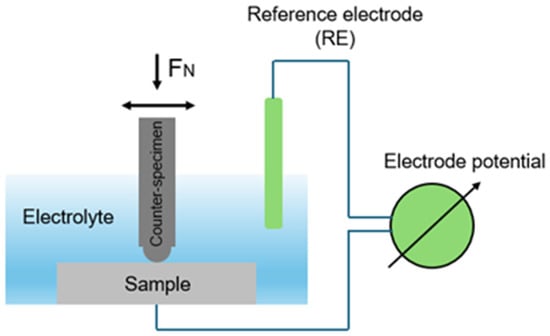
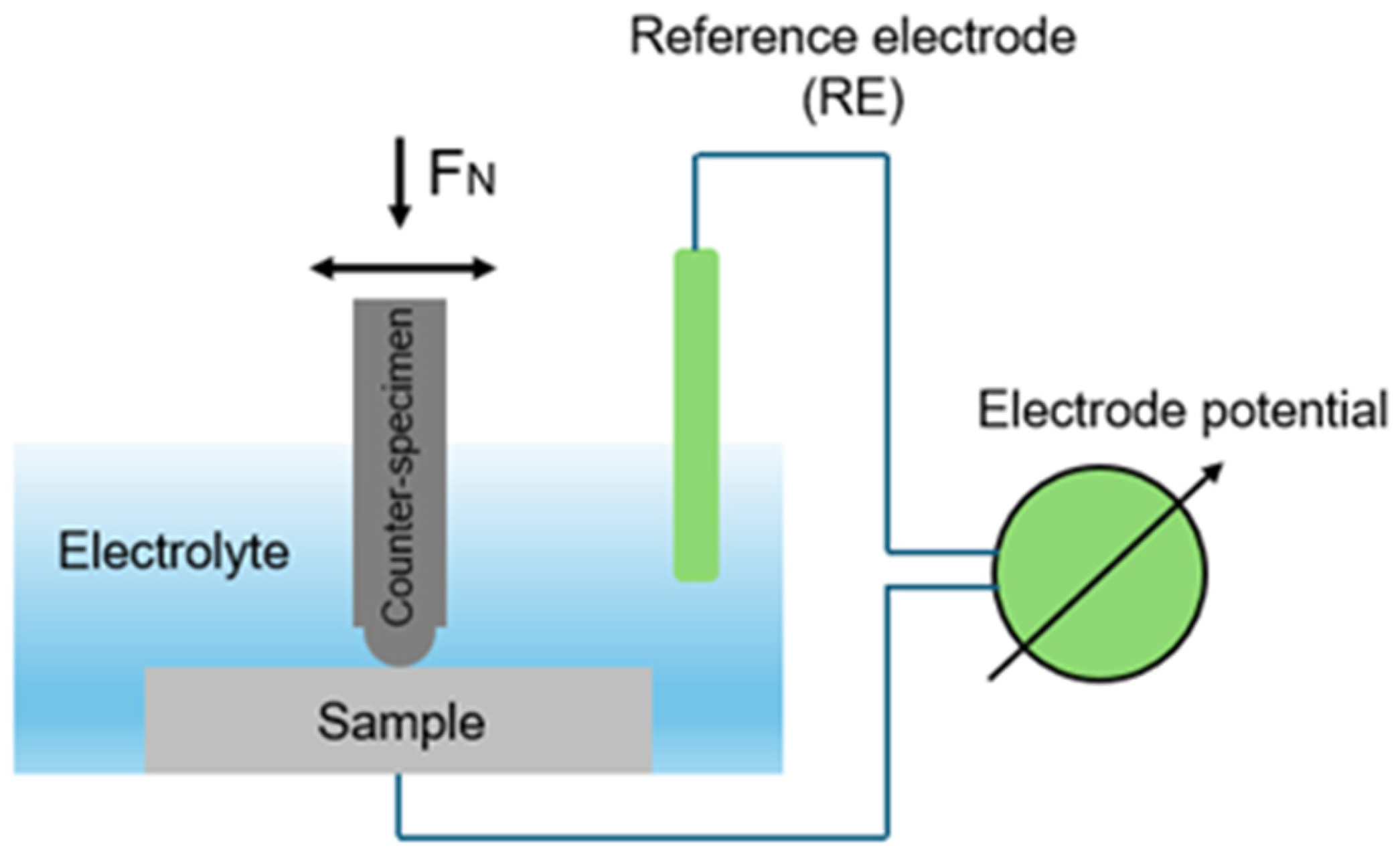
The tribological and tribocorrosion properties of the specimens were evaluated using a specialized testing device designed for assessing surface and coating characteristics of structural materials, following the ball-on-flat principle. A schematic of the experimental setup for the specialized ball-on-flat testing device is shown in Figure 1. Friction tests were conducted under corrosive conditions in various solutions, including distilled water, 0.9% NaCl, 3.5% NaCl, and 5% NaCl. Experimental data from the linear tribometer were analyzed using NI DIAdem software 18.0.017097. During testing, both the coefficient of friction (COF) and the open-circuit potential (OCP) were continuously monitored. Distilled water was employed as a reference environment to provide a baseline for assessing material behavior in the absence of aggressive ions. Its low conductivity and lack of dissolved salts create an essentially inert medium, allowing the isolation of mechanical wear effects from electrochemical corrosion processes [20].
Figure 1.
Schematic of the experimental setup for tribocorrosion testing.
The tribocorrosion test was conducted in three distinct phases. During the initial stabilization phase, the specimens were left stationary for approximately 60 min to allow the open-circuit potential (OCP) to stabilize. This was followed by the friction phase, which lasted 120 min, during which both the OCP and the coefficient of friction (COF) were continuously monitored. After the sliding stage, a final stabilization phase was conducted to allow the OCP to reach equilibrium once more. A normal force (FN) of 10 N was applied throughout the tests to the counter-specimen, which was a SiC ball with a diameter of 3.175 mm.
Following the corrosion and tribocorrosion tests, a detailed surface analysis of the specimens was performed using an optical 3D measurement system (Alicona InfiniteFocus G5, Bruker Alicona, Graz, Austria; software IF Measure Suite 5.1 × 64) and scanning electron microscopy (SEM) (VEGA II Tescan, Tescan, Brno, Czech Republic and Gemini SEM, Carl Zeiss, Oberkochen, Germany). The Alicona system enabled precise topographical characterization, allowing quantification of wear track depth, width, and cross-sectional wear area loss resulting from tribocorrosion. SEM provided high-resolution imaging, facilitating the identification of wear mechanisms, microstructural alterations, and damage induced by tribocorrosion at the microscopic scale.
3. Results and Discussion
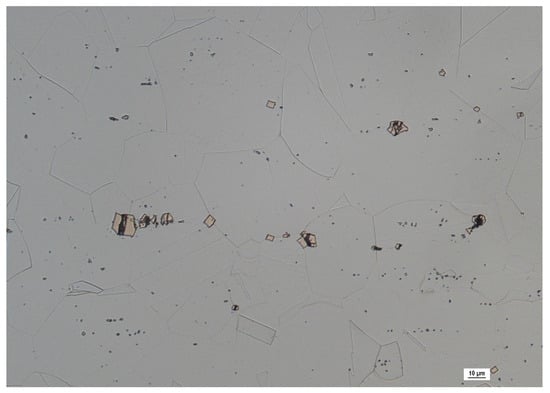
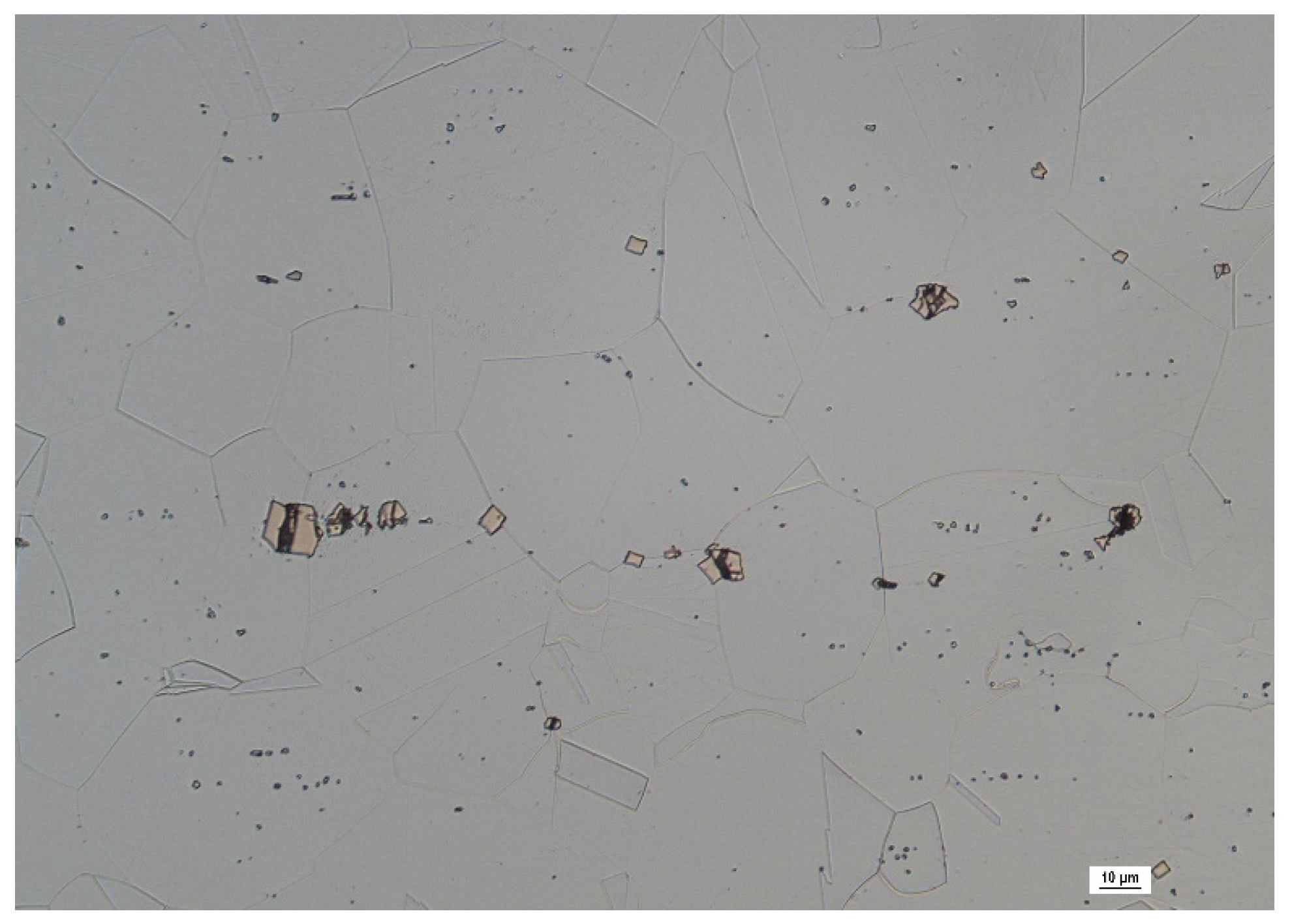
The microstructure of AISI 316Ti stainless steel was characterized by polyhedral austenitic grains with clearly visible annealing twins. The presence of these twins is typically associated with thermomechanical processing, such as annealing or rolling, applied during material manufacturing. In addition to the austenitic matrix, titanium additions promote the formation of titanium carbide (TiC) precipitates, which were observed within the microstructure (Figure 2).
Figure 2.
Microstructure of AISI 316Ti, transversal section (Kalling’s 2 etch., magnification 400×).
The primary objective of the potentiodynamic polarization measurements was to evaluate the quality and stability of the passive layer formed on the surface of AISI 316Ti stainless steel upon exposure to the electrolyte (0.9%, 3.5%, and 5% NaCl) under laboratory conditions. These tests were specifically designed to assess the chemical stability of the passive films in the absence of mechanical damage. By isolating the electrochemical behavior from tribological influences, it was possible to determine the inherent corrosion resistance of the materials. The measured potentiodynamic polarization curves were analyzed using Tafel extrapolation in EC-Lab software 11.10 and they are presented in both semilogarithmic and linear coordinates. Key electrochemical corrosion parameters, including the thermodynamic corrosion potential (Ecorr) and kinetic parameters such as corrosion current density (icorr) and corrosion rate (rcorr), derived from the Tafel analysis are summarized in Table 2.
Table 2.
Electrochemical corrosion characteristics of AISI 316Ti from potentiodynamic polarization curves.
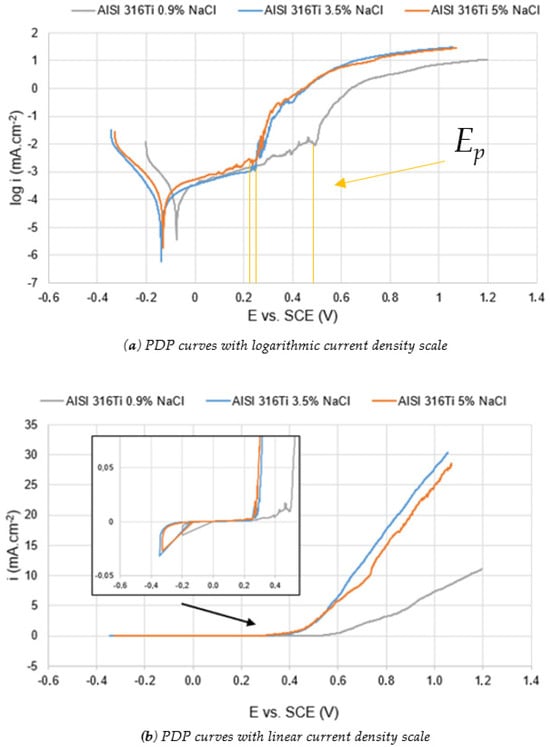
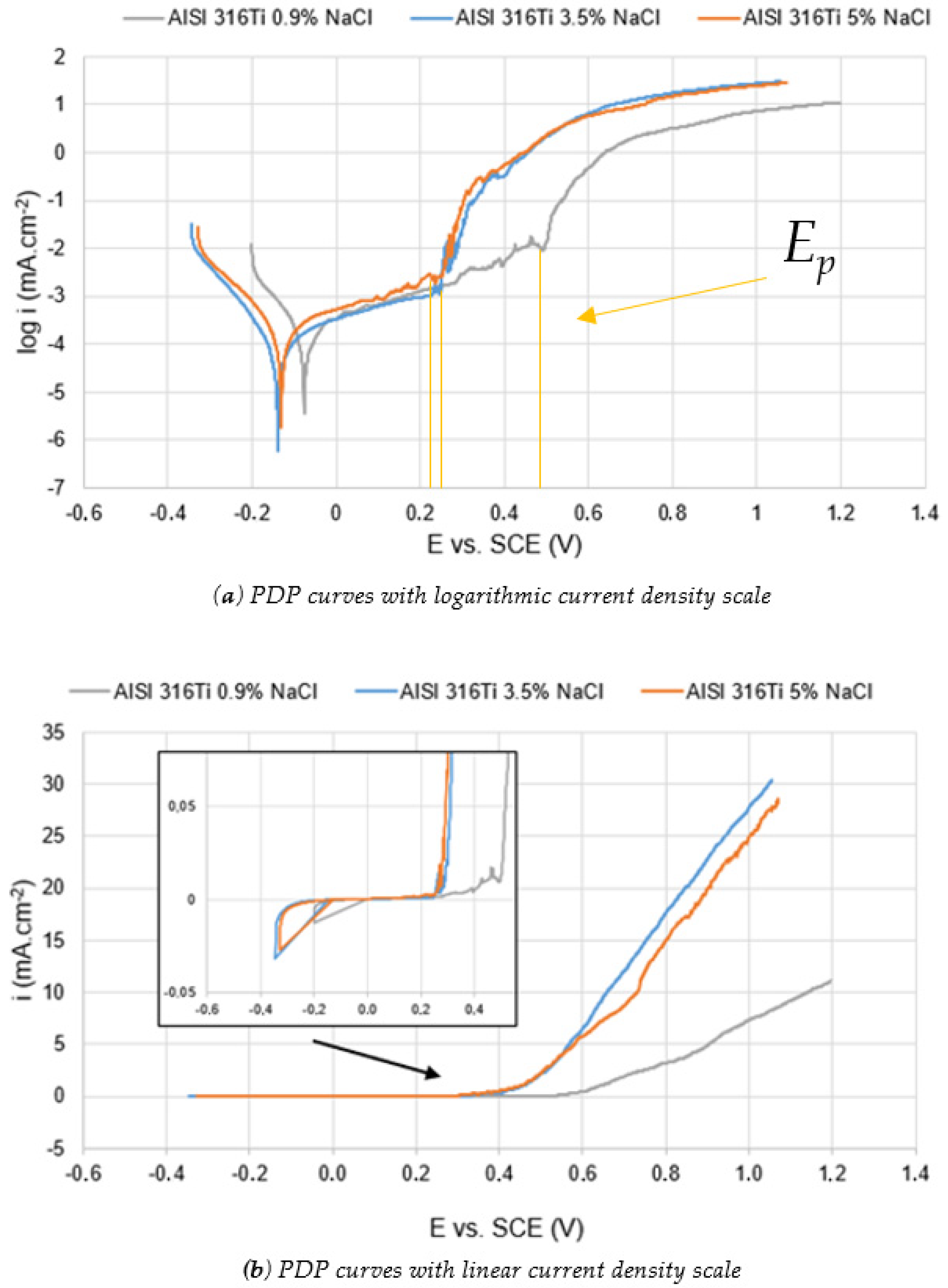
The potentiodynamic polarization curves of the tested surfaces are presented in Figure 3a. The curves exhibit a characteristic shape typical of passivating metals, with anodic branches showing a well-defined passive region. This behavior indicates that the anodic dissolution rate is governed by the passive current density rather than by active metal dissolution [21,22].
Figure 3.
Potentiodynamic polarization curves of AISI 316Ti in 0.9%, 3.5% and 5% NaCl: (a) logarithmic current density scale; (b) linear current density scale (The yellow solid lines express the location of the pitting potentials Ep).
The polarization curves for 3.5% and 5% NaCl are shifted toward more negative potentials, indicating that increasing chloride concentration promotes electrochemical attack and facilitates the initiation of corrosion [23,24].
The anodic branches of all potentiodynamic polarization curves displayed a region of nearly constant current density, followed by a sharp rise. In 3.5% and 5% NaCl solutions, AISI 316Ti exhibited fluctuations in anodic current at approximately 0.26 V and 0.22 V, respectively, which are attributed to metastable pitting [25]. In 0.9% NaCl, these fluctuations were observed near 0.49 V. Metastable pits are generally considered precursors to stable pits, with their formation primarily driven by surface heterogeneities. These localized imperfections increase the likelihood of passive film rupture, thereby enhancing the susceptibility of the material to pitting corrosion [26].
In passivating metals, the assessment of corrosion resistance also requires consideration of the width of the passive region, analysis of fluctuations in passive current density, and determination of the pitting potential (Ep). A higher Ep value corresponds to greater resistance to pitting corrosion, making it a key parameter for evaluating the durability of the tested material. Increased Ep values reflect improved passive film quality and enhanced resistance to localized corrosion [22,27].
A detailed view of the passivity region in the potentiodynamic polarization curves of AISI 316Ti, presented on a linear scale, is shown in Figure 3b, while the corresponding pitting potential values are summarized in Table 3. The passive current density remains well below 0.05 mA/cm2, which is considered the threshold for a stable passive state, with no significant evidence of metastable pit formation [27]. However, increasing chloride concentration results in a narrowing of the passive region (Figure 3), indicating that the passive film becomes less stable and breaks down at lower potentials, thereby promoting localized corrosion (pitting). Consistently, as reported in Table 3, higher chloride concentrations correspond to a decrease in the pitting potential (Ep) [21].
Table 3.
Values of pitting potential of AISI 316Ti.
Numerous studies have shown that corrosion susceptibility increases with rising chloride concentrations. This enhanced corrosive effect is largely attributed to the small size, high mobility, strong anionic character, and high solubility of chloride ions, which facilitate aggressive penetration and destabilization of passive films on metal surfaces [28]. Moreover, several studies have reported a linear relationship between pitting potential and chloride ion concentration, indicating that as Cl− concentration increases, the pitting potential progressively shifts toward more negative values [29,30,31].
The adverse impact of increasing chloride concentration was further confirmed through SEM analysis, which provided detailed insight into the surface morphology of the tested stainless steel. SEM analysis also allowed for the evaluation of corrosion pit formation and the characteristics of localized damage that developed during the experiments.
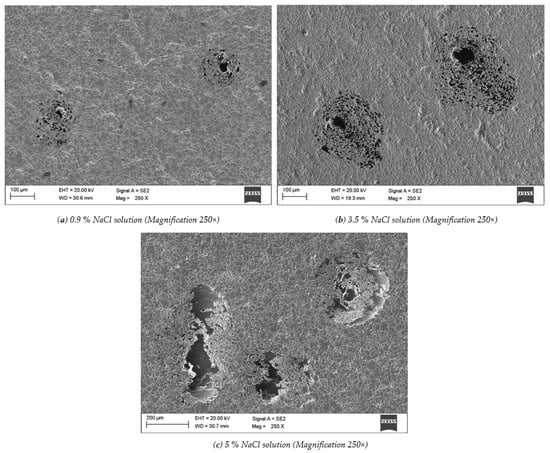
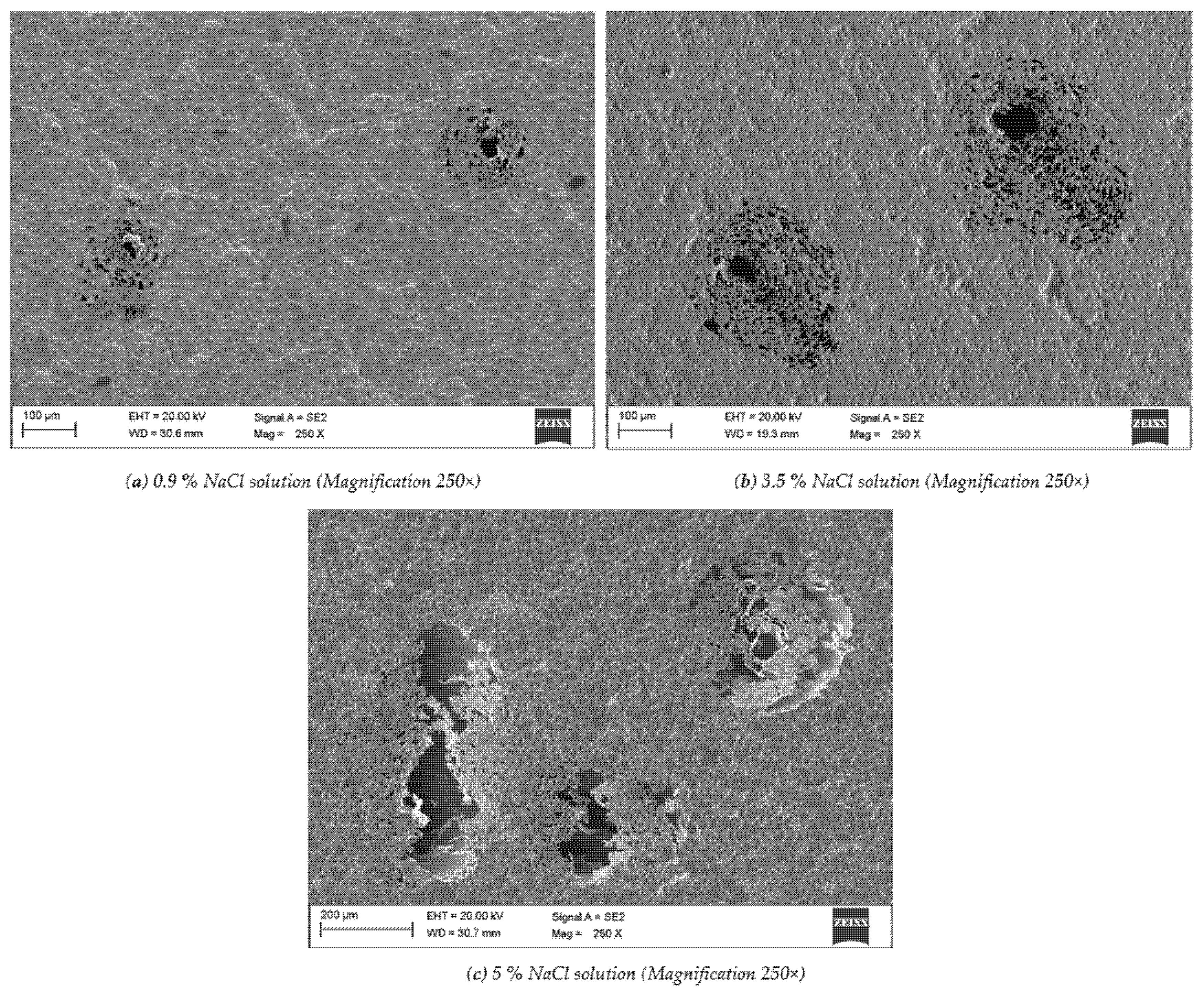
Figure 4a shows the corrosion morphology of AISI 316Ti after exposure to 0.9% NaCl, as observed by SEM. The surface exhibits localized degradation, primarily in the form of pitting corrosion, while the surrounding microstructure remains relatively intact, indicating that the passive film is preserved in unaffected areas. The presence of metastable pits or early-stage pit formation around larger corrosion sites suggests ongoing localized corrosion. Chloride ions (Cl−) penetrate the passive film, promoting anodic dissolution within the pits, whereas the surrounding regions maintain passivity.
Figure 4.
SEM image of pits of AISI 316Ti at the end of corrosion testing: (a) in 0.9% NaCl solution (Magnification 250×); (b) in 3.5% NaCl solution (Magnification 250×); (c) in 5% NaCl solution (Magnification 250×).
Figure 4b shows the corrosion morphology of AISI 316Ti after exposure to 3.5% NaCl, as observed by SEM. Compared to the pits formed in 0.9% NaCl, these corrosion sites are larger in diameter, reflecting a more aggressive corrosion attack. The surface morphology indicates an increased tendency for passive film breakdown and stable pit growth. This behavior is consistent with previous studies on stainless steel in chloride-rich environments, where higher chloride concentrations accelerate passive layer degradation and promote pitting initiation [28].
The SEM image of AISI 316Ti after corrosion testing in 5% NaCl (Figure 4c) reveals pronounced surface degradation. Multiple irregularly shaped pits are observed, indicating localized corrosion attack. The surrounding porous and rough surface suggests active material dissolution and significant breakdown of the passive film.
Several studies have investigated the corrosion resistance of stainless steels in chloride-rich environments, consistently demonstrating that higher chloride concentrations compromise passivity and reduce overall corrosion resistance [32]. This behavior is evident in the present study, where at lower chloride concentrations (0.9% NaCl), corrosion attack was relatively mild, with smaller and fewer pits distributed across the surface, and the passive film largely remained intact, showing only localized breakdown. In 3.5% NaCl, corrosion became more aggressive, resulting in larger and deeper pits accompanied by increased surface roughness, indicative of greater passive film disruption. Exposure to 5% NaCl produced the most severe pitting corrosion, with pits that were larger, more defined, and more numerous, surrounded by extensive passive film degradation.
The tribocorrosion experiments involved the simultaneous monitoring of the coefficient of friction (COF) and the open-circuit potential (OCP) throughout testing. The OCP recorded during tribocorrosion reflects the combined electrochemical response of the material, capturing the behavior of both the unworn surface and the mechanically affected wear track [33].
Studies indicate that this mixed potential is primarily governed by the kinetics of anodic and cathodic reactions in both worn and unworn regions, the relative area and spatial distribution of these regions, and the intrinsic open-circuit potentials of the material in each region [34].
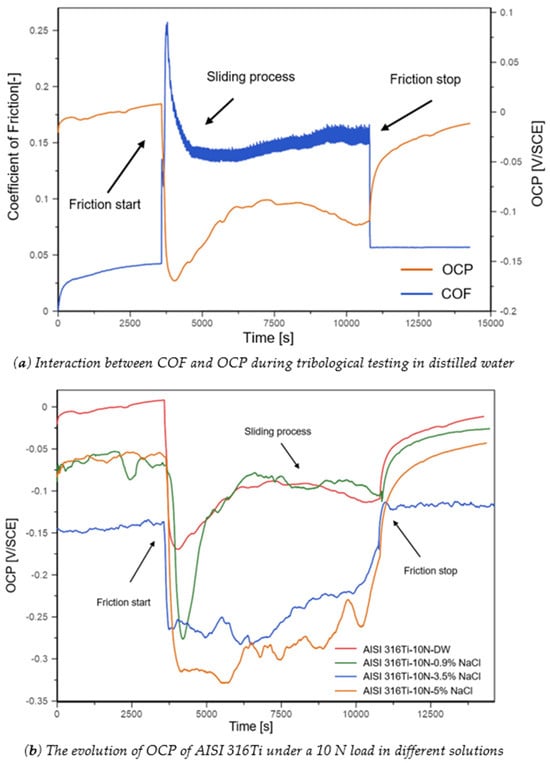
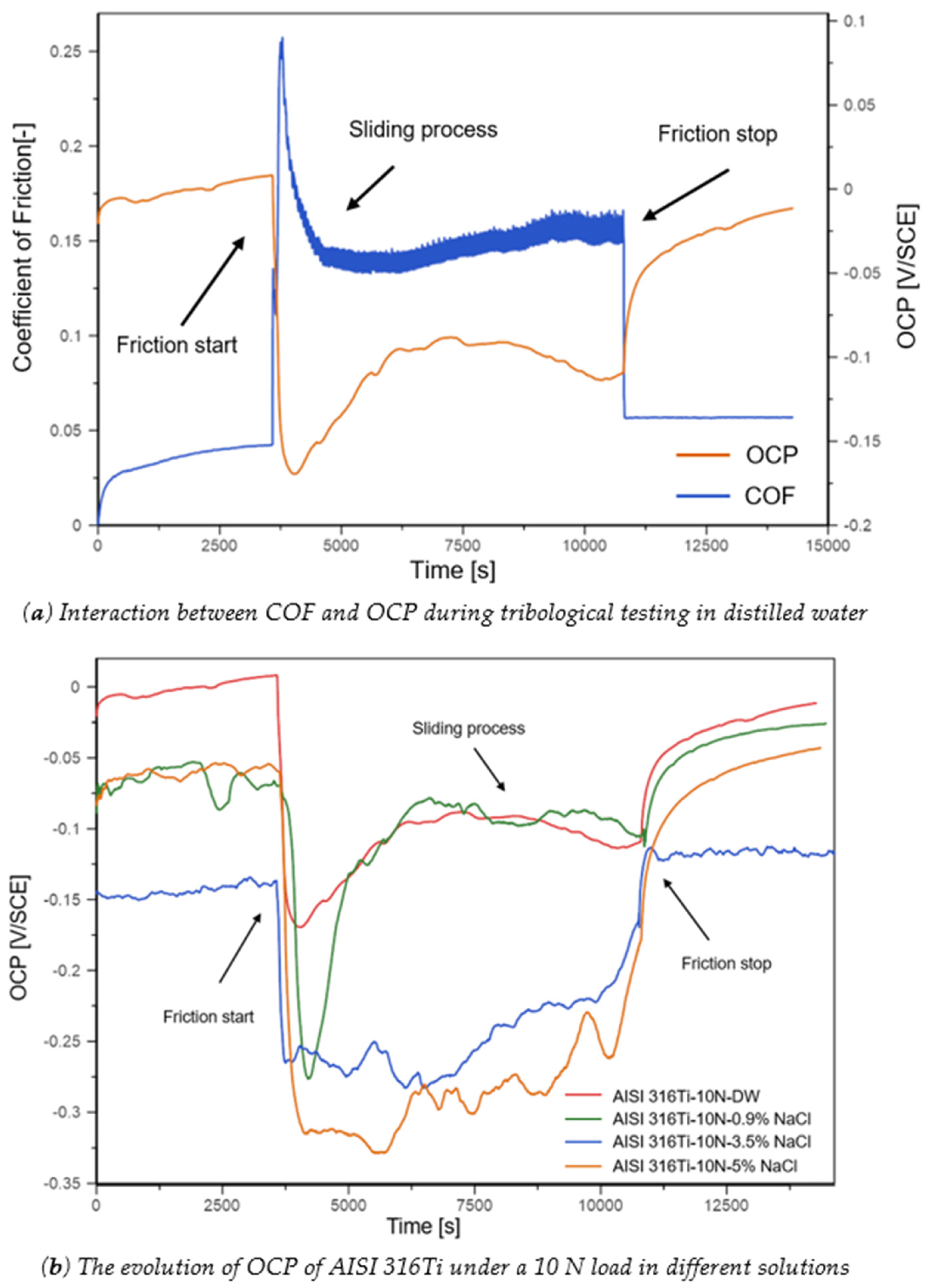
A direct correlation between mechanical degradation and variations in the open-circuit potential (OCP) is observed in Figure 5a, which illustrates the evolution of OCP and the coefficient of friction during tribocorrosion testing.
Figure 5.
The evolution of OCP and coefficient of friction of AISI 316Ti during friction test in distilled water.
In all tribocorrosion experiments, the evolution of the coefficient of friction followed a similar trend. An initial rapid increase in friction was observed at the onset of sliding, followed by a stabilization period during which the coefficient reached its maximum value. In the later stage of testing, the friction coefficient remained relatively constant, exhibiting no pronounced changes. Despite this apparent stabilization, minor fluctuations were present, which can be attributed to the formation and subsequent removal of wear debris during sliding [35].
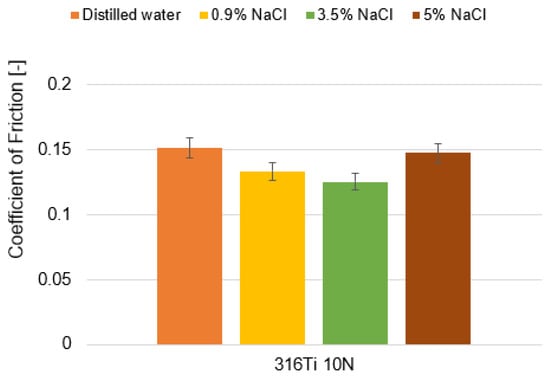
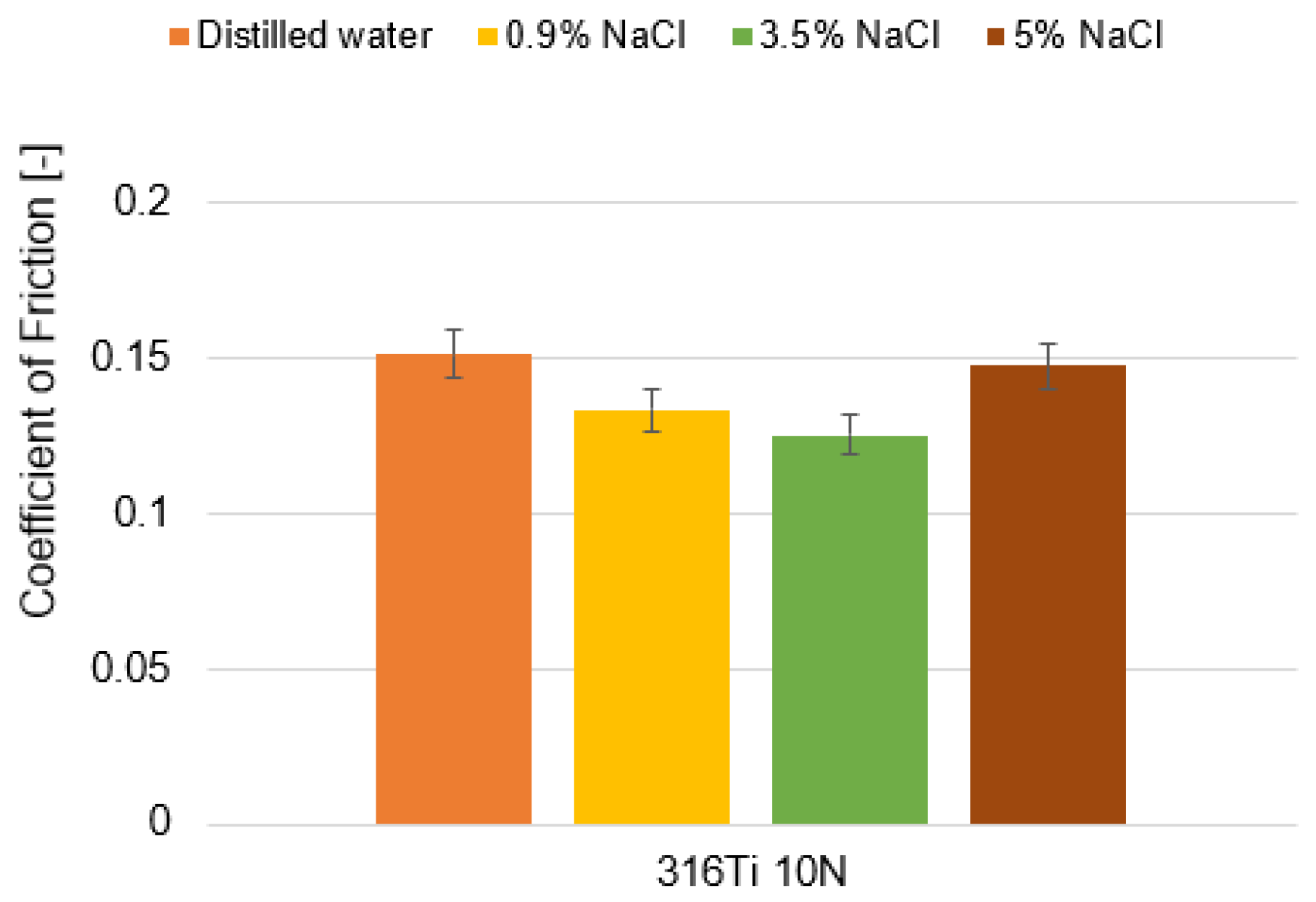
For comparison, the average coefficient of friction over the entire duration of sliding was calculated for each test and is presented in Figure 6. A reciprocal relationship exists between COF and tribocorrosion behavior, whereby higher friction levels generate increased shear stresses on the steel surface [36]. For AISI 316Ti, the lowest COF values were recorded in 3.5% NaCl, while the highest values were observed in distilled water. This behavior suggests that a moderate chloride concentration may exert a lubricating effect, leading to reduced friction during sliding [33].
Figure 6.
Mean coefficient of friction for AISI 316Ti at normal loads of 10 N in NaCl solutions and distilled water.
In the 5% NaCl solution, an increase in the average coefficient of friction was observed. This behavior can be attributed to the degradation and removal of the passive film on the contact surfaces under the combined effects of sliding and the aggressive chloride environment. The disruption of this protective layer exposes fresh metal to the corrosive solution, accelerating localized electrochemical attack within the wear track. As a result, surface roughness increases, leading to higher frictional resistance and more pronounced fluctuations in COF during tribocorrosion testing [34].
The evolution of the open-circuit potential (OCP) for AISI 316Ti stainless steel during tribocorrosion testing under a 10 N load in different NaCl solutions, including distilled water (DW), is shown in Figure 5b. During the initial stages of immersion, the OCP remained relatively stable with only minor fluctuations, with the highest potential observed in distilled water, indicating the formation of the most stable passive film. The fluctuations observed during the stabilization phase are likely due to the buildup of the natural passive layer, while subsequent variations can be attributed to chemical and electrochemical destabilization of the passive film by chloride ions [37,38].
During sliding, the open-circuit potential (OCP) exhibited a pronounced negative shift relative to static conditions, reflecting the breakdown of the passive film caused by mechanical wear. This transient cathodic shift arises from the rapid removal or partial disruption of the protective oxide layer on the steel surface due to frictional contact, which compromises the integrity of the passive film, exposes the underlying metal, and increases anodic activity [3,34].
The magnitude of the OCP shift was strongly dependent on chloride concentration, with the 5% NaCl solution showing the most negative potential, indicating extensive passive film degradation and elevated electrochemical activity. In contrast, the OCP in distilled water experienced a more moderate decline, reflecting less severe passive layer damage. Fluctuations in OCP observed during the sliding phase correspond to the continuous processes of film rupture and repassivation.
After the sliding motion stopped, electrochemical processes dominated, allowing the protective oxide layer to reform and gradually restore the material’s surface to a more stable state, often approaching the initial OCP levels observed prior to sliding [38,39]. This repassivation was more pronounced in distilled water and 0.9% NaCl, whereas in higher chloride concentrations (3.5% and 5% NaCl) the OCP remained suppressed, indicating a compromised passive film and increased susceptibility to corrosion. These observations confirm that chloride concentration plays a critical role in the tribocorrosion behavior of AISI 316Ti, with higher concentrations promoting more severe passive film degradation [3].
To further assess the tribocorrosion performance of AISI 316Ti, the surface topography and cross-sectional wear areas were examined following the tribocorrosion tests.
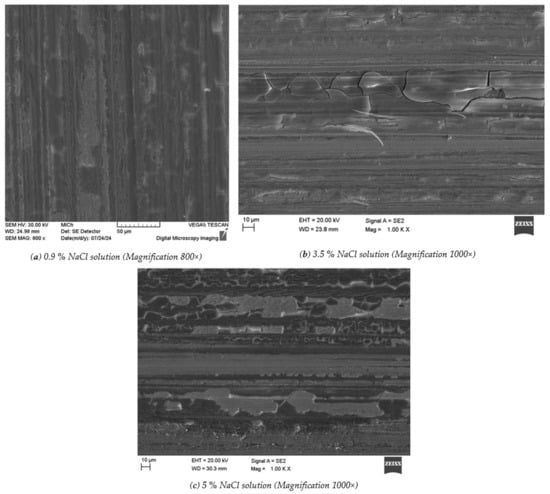
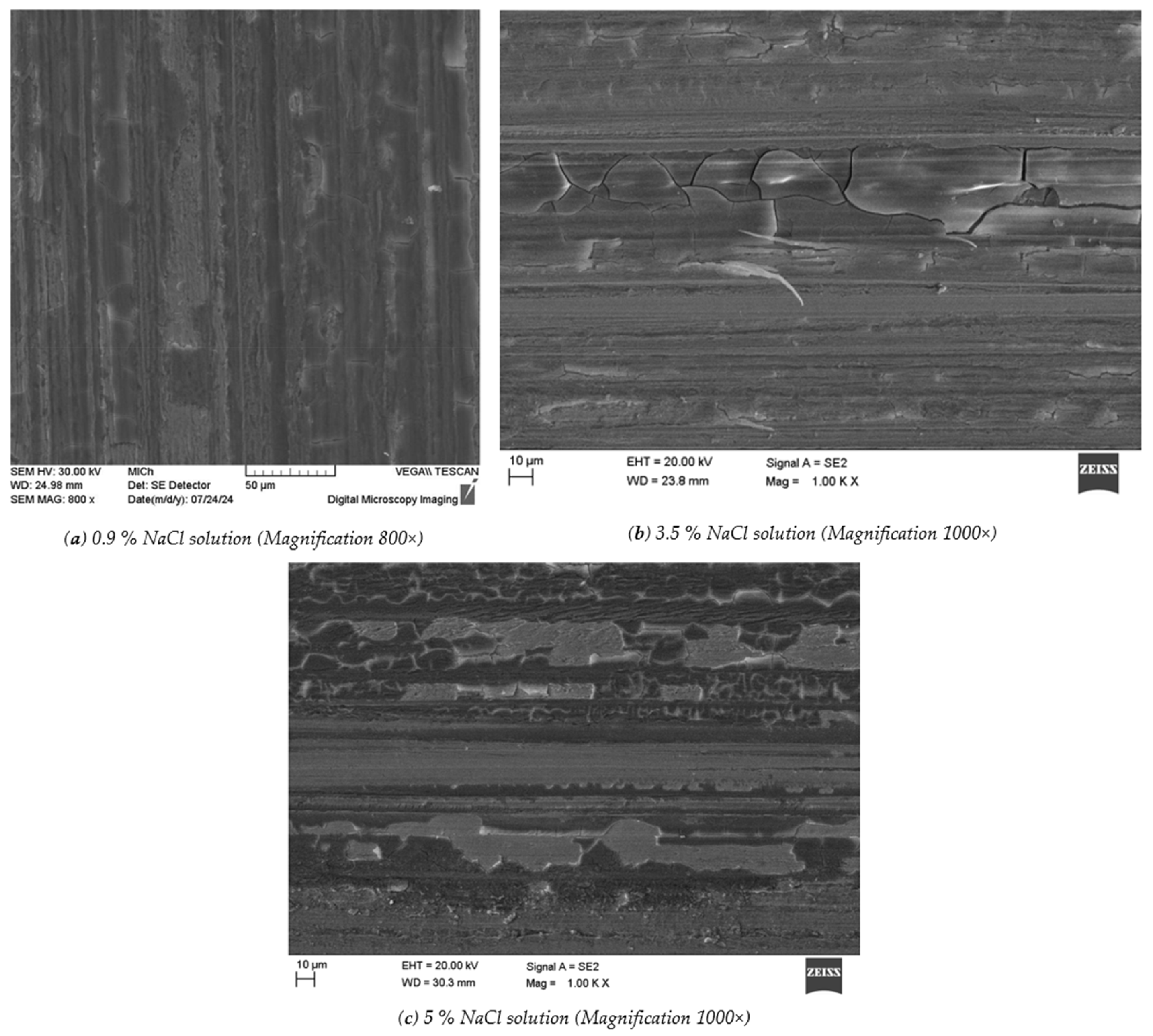
SEM analysis of the wear track on AISI 316Ti stainless steel tested in 0.9% NaCl under a 10 N normal load (Figure 7a) revealed the presence of wear debris and a markedly roughened surface. Sharp cracks and thin flakes were also observed, indicating significant material degradation and active wear mechanisms [33]. The worn surface exhibited numerous grooves, reflecting substantial material removal primarily due to abrasive wear [3].
Figure 7.
SEM morphology of worn surface of AISI 316Ti at a normal load of 10 N: (a) 0.9% NaCl solution (Magnification 800×); (b) 3.5% NaCl solution (Magnification 1000×); (c) 5% NaCl solution (Magnification 1000×).
The wear surface in 3.5% NaCl (Figure 7b) showed more pronounced cracking, accompanied by lamellar flaking and fragmentation. These features are likely caused by stress accumulation in the subsurface region, resulting from the combined effects of mechanical loading and localized corrosion attack [36].
Figure 7c presents micrographs of AISI 316Ti after tribocorrosion testing in 5% NaCl under a 10 N normal load. The worn surface displayed extensive lamellar tearing and cracking, characteristic of delamination wear, indicating subsurface crack initiation and propagation caused by cyclic shear stresses during sliding. Large areas of delaminated material and deep fractures were observed, giving the steel a brittle and fragmented appearance with layered structures typical of advanced delamination wear [34].
A substantial accumulation of wear debris was observed around the wear scars of all specimens, with the number of furrows increasing at higher NaCl concentrations. SEM images showed numerous grooves caused by the asperities of the harder SiC counter-specimen, indicating that abrasive wear was the dominant mechanism. In addition, features such as lamellar tearing, residual wear margins, and abundant flake-like debris suggest that delamination wear also contributed to material degradation, highlighting a complex interplay of wear mechanisms during tribocorrosion [34].
The interaction between mechanical wear and electrochemical corrosion results in a synergistic effect that cannot be described as a simple superposition of wear in the absence of corrosion and corrosion without mechanical action. In practical industrial and biomedical environments, these processes occur simultaneously within the same system, leading to accelerated and more severe material degradation than would be expected from either mechanism acting independently [40].
The wear volume is significantly affected by both the applied normal load and the surrounding environmental conditions. Key wear parameters, including the maximum depth and width of the wear scar as well as the cross-sectional area of the wear track, were extracted from surface profiles obtained after tribocorrosion testing. The dominant wear mechanisms are primarily associated with the pronounced mismatch in mechanical properties between the contacting materials, as the SiC counter-specimen possesses substantially higher hardness than the AISI 316Ti stainless steel surface [10]. Table 4 presents the cross-sectional wear areas of the tested samples.
Table 4.
The cross-sectional areas of the experimental samples after tribocorrosion testing.
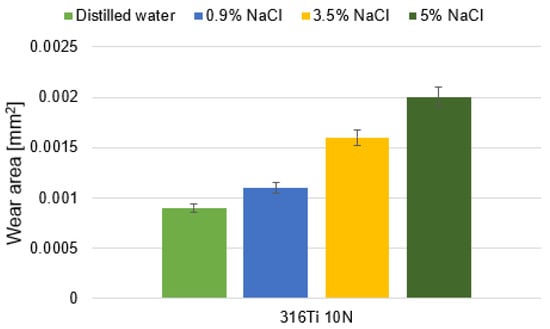
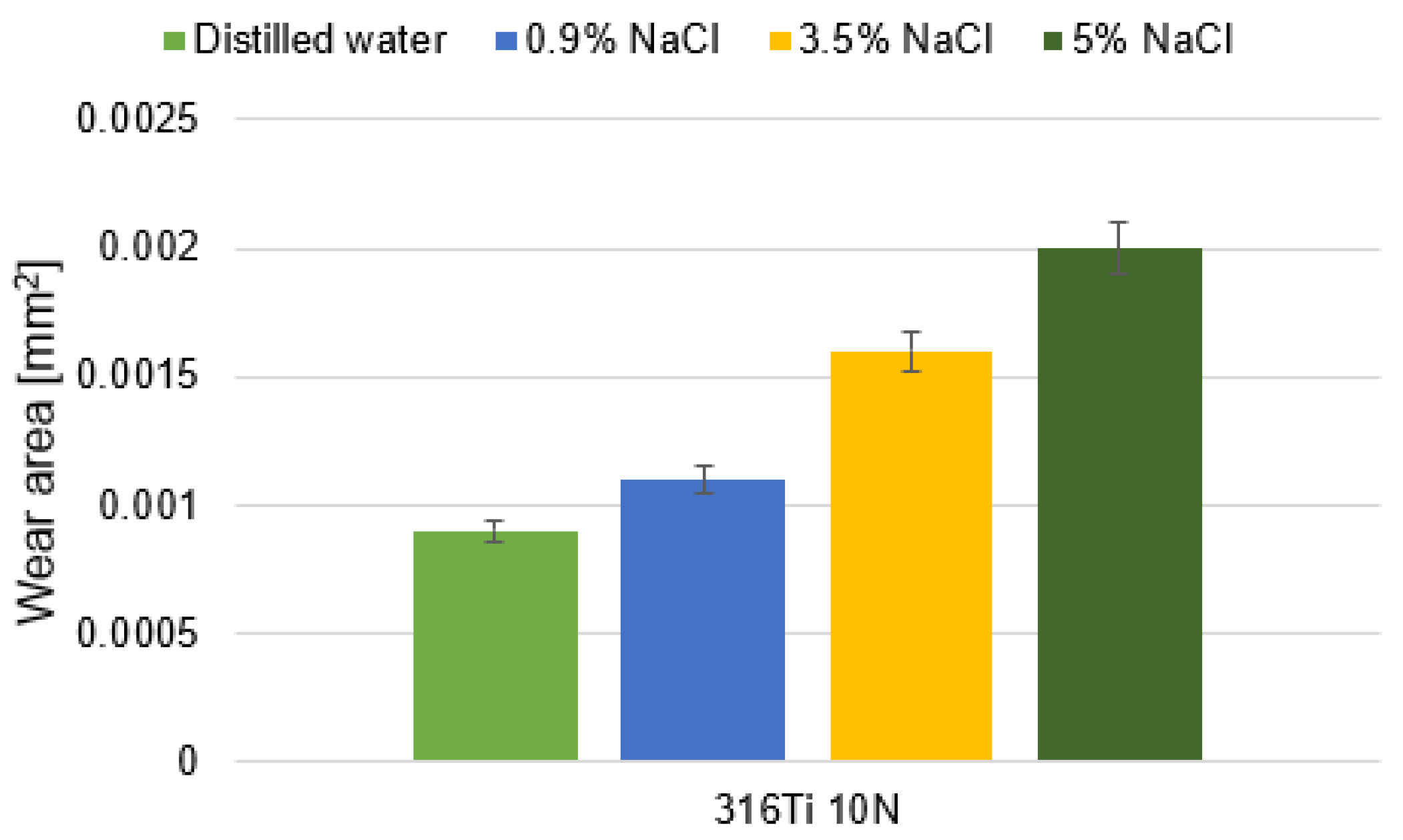
For better clarity and comparison, the values of the cross-sectional areas are also presented in the form of a diagram (Figure 8).
Figure 8.
The cross-sectional areas of the tested samples in different solutions.
A clear dependence on chloride concentration can be identified. The cross-sectional wear areas are consistently smallest in distilled water, which served as the reference environment. Owing to the absence of aggressive ions, distilled water does not significantly promote corrosion processes, and material degradation is therefore governed predominantly by mechanical wear. In contrast, markedly larger cross-sectional wear areas were observed in chloride-containing solutions, reflecting the synergistic interaction between wear and corrosion. As the chloride concentration increases from 0.9% to 5%, a progressive increase in wear area is evident, confirming that higher concentrations of aggressive chloride ions intensify corrosion processes within the wear track. Chloride ions accelerate passive film breakdown, hinder effective repassivation, and promote metal dissolution, which collectively enhances surface damage and overall material loss. This trend is consistent with the OCP measurements, which indicate increased electrochemical activity during sliding in chloride-rich environments.
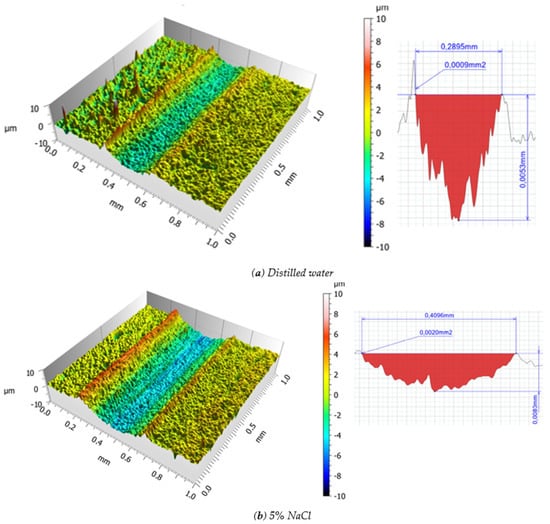
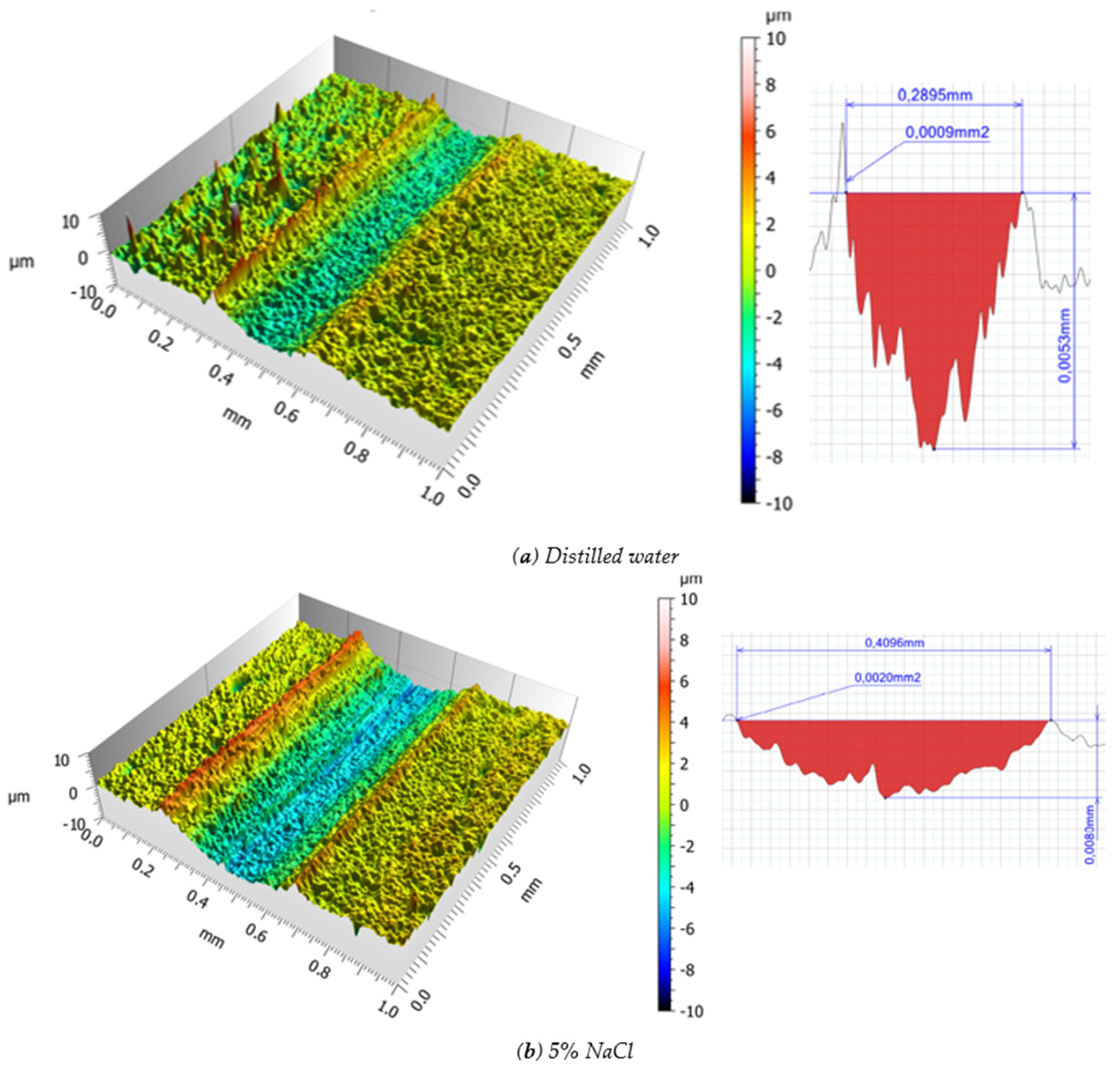
Figure 9 illustrates the surface topography of AISI 316Ti stainless steel following tribocorrosion testing under a 10 N normal load in distilled water and 5% NaCl solution. In distilled water, the measured wear area was 0.0009 mm2, reflecting predominantly mechanical wear in the absence of aggressive ions. In contrast, the wear area increased to 0.0020 mm2 in 5% NaCl, corresponding to a 122% increase. This substantial rise highlights the synergistic effect of wear and corrosion under chloride-rich conditions.
Figure 9.
Surface topography of AISI 316Ti at a normal load of 10 N: (a) in distilled water; (b) in 5% NaCl solution.
The measured wear areas and surface topographies under these conditions clearly demonstrate that tribocorrosion-induced material loss cannot be explained by mechanical or electrochemical processes alone. Instead, the combined action of wear-assisted depassivation and corrosion-enhanced material removal leads to degradation that exceeds the sum of the individual contributions, underscoring the critical role of synergistic effects in tribocorrosion systems.
The surface degradation observed during tribocorrosion may also have important implications for the long-term mechanical integrity of AISI 316Ti components. Although the mechanical strength and fatigue resistance were not directly evaluated in the present study, the formation of corrosion pits, wear grooves, surface cracks, and delaminated regions can generate local stress concentrations and potentially promote fatigue crack initiation under cyclic loading. Similar behavior has been reported for AISI 316L stainless steel, where corrosion pits acted as preferential sites for fatigue crack initiation in corrosive environments [41]. Therefore, the progressively more severe surface damage observed with increasing NaCl concentration in the present study may be particularly relevant for components subjected to simultaneous corrosive exposure and cyclic mechanical loading.
From an engineering perspective, mitigation of tribocorrosion in chloride-rich environments requires limiting both electrochemical attack and mechanically induced disruption of the passive film. Surface modification and appropriate protective treatments can improve the tribocorrosion resistance of 316-series stainless steels; however, their effectiveness strongly depends on the treatment and operating conditions [15].
In marine and offshore applications, additional protection strategies may include appropriate material selection, cathodic protection where applicable, and component design aimed at minimizing crevices, stagnant electrolyte zones, and highly loaded sliding contacts. Particular attention should also be paid to surface condition, since the tribocorrosion behavior of 316L stainless steel has been shown to vary significantly with industrial surface finishing procedures [42]. Consequently, for AISI 316Ti components operating under severe chloride exposure, an integrated approach combining suitable surface engineering, corrosion-control measures, appropriate design, and regular inspection is recommended to minimize passive-film breakdown and subsequent tribocorrosion damage.
4. Conclusions
This study evaluated the corrosion and tribocorrosion behavior of AISI 316Ti stainless steel in distilled water and NaCl solutions with concentrations of 0.9%, 3.5%, and 5%. Corrosion behavior was assessed using potentiodynamic polarization, while tribocorrosion performance was investigated using a ball-on-flat configuration with continuous monitoring of the open circuit potential (OCP) and coefficient of friction (COF). Surface degradation was analyzed by optical 3D profilometry and scanning electron microscopy.
Potentiodynamic polarization results showed typical passive behavior of AISI 316Ti; however, increasing chloride concentration led to a progressive shift in corrosion and pitting potentials toward more negative values and a narrowing of the passive region, indicating reduced passive film stability. Evidence of metastable pitting confirmed the detrimental effect of chloride ions on passivity.
During tribocorrosion testing, a pronounced cathodic shift in OCP occurred during sliding due to mechanical depassivation of the surface, with the magnitude of this shift increasing with chloride concentration. Repassivation after sliding was effective in distilled water and 0.9% NaCl but significantly hindered in 3.5% and 5% NaCl solutions. Friction measurements revealed stabilized COF values after the running-in phase, with the highest friction observed in distilled water and 5% NaCl.
Surface and wear analyses demonstrated a clear increase in material degradation with rising chloride concentration. The smallest wear areas were measured in distilled water, where degradation was dominated by mechanical wear. In contrast, chloride-containing solutions produced significantly larger wear scars due to the synergistic interaction between wear and corrosion. SEM observations identified abrasive wear as the dominant mechanism, accompanied by delamination wear, particularly in the most aggressive environment.
Overall, the results confirm that the synergistic interaction between mechanical wear and electrochemical corrosion governs material degradation in tribocorrosion systems. Higher chloride concentrations significantly intensify passive film breakdown, hinder repassivation, and increase total material loss, underscoring the importance of considering combined wear–corrosion effects when assessing the performance of AISI 316Ti stainless steel in practical applications.
Author Contributions
Conceptualization, D.Č. and J.B.; methodology, D.Č., J.B. and V.Z.; software, D.Č., M.D. and J.H.; validation, M.B. and J.B.; formal analysis, D.Č., J.B. and V.Z.; investigation, M.D. and J.H.; resources, D.Č., J.B. and V.Z.; data curation, D.Č.; writing—original draft preparation, D.Č., J.B. and M.D.; writing—review and editing, M.B.; visualization, M.D. and J.H.; supervision, J.B.; project administration, M.D. and D.Č.; funding acquisition, M.D. and D.Č. All authors have read and agreed to the published version of the manuscript.
Funding
This research was funded by the EU NextGenerationEU through the Recovery and Resilience Plan for Slovakia under the project No. 09I05-03-V02-00080, VEGA 1/0722/25 Research on additive technologies with a focus on their application in the design and construction of cutting tools, APVV-23-0366 Research of reference standards and measurement methods ensuring determination of the relationship of geometric specifications and qualitative indicators of 3D objects created by additive technologies, KEGA 045ŽU-4/2025—Integrating Language of Geometric Specification into Surface Roughness Evaluation.
Institutional Review Board Statement
Not applicable.
Informed Consent Statement
Not applicable.
Data Availability Statement
The data presented in this study are available on request from the corresponding author.
Conflicts of Interest
The authors declare no conflicts of interest.
References
- Obadele, B.A.; Andrews, A.; Shongwe, M.; Olubambi, P.A. Tribocorrosion behaviours of AISI 310 and AISI 316 austenitic stainless steels in 3.5% NaCl solution. Mater. Chem. Phys. 2016, 171, 239–246. [Google Scholar] [CrossRef] [Scilit]
- Fritz, J. Practical Guidelines for the Fabrication of Austenitic Stainless Steels; IMOA: London, UK, 2020. [Google Scholar]
- Liu, E.; Zhang, Y.; Zhu, L.; Zeng, Z.; Gao, R. Effect of strain-induced martensite on the tribocorrosion of AISI 316L austenitic stainless steel in seawater. RSC Adv. 2017, 7, 44923–44932. [Google Scholar] [CrossRef] [Scilit]
- Cramer, D.S.; Covino, B.S. Corrosion of Wrought Stainless Steels. In ASM Handbook, Volume 13B: Corrosion: Materials; ASM International: Almere, The Netherlands, 2005; pp. 54–77. [Google Scholar]
- Wood, R.J. Tribocorrosion. In Developments in Electrochemistry: Science Inspired by Martin Fleischmann; John Wiley and Sons: Hoboken, NJ, USA, 2014; pp. 281–294. [Google Scholar]
- Palček, P.; Markovičová, L.; Zatkaliková, V. Materiály Pre Biomedicínske Inžinierstvo; Edis-Vydavateľské Centrum ŽU: Žilina, Slovakia, 2015. [Google Scholar]
- Williams, D.F. On the mechanisms of biocompatibility. Biomaterials 2008, 29, 2941–2953. [Google Scholar] [CrossRef] [Scilit] [PubMed]
- Stendal, J.; Fergani, O.; Yamaguchi, H.; Espallargas, N. A comparative tribocorrosion study of additive manufactured and wrought 316L stainless steel in simulated body fluids. J. Bio- Tribo-Corros. 2018, 4, 9. [Google Scholar] [CrossRef] [Scilit]
- Shahini, M.H.; Eivaz Mohammadloo, H.; Ramezanzadeh, B. Recent approaches to limit the tribocorrosion of biomaterials: A review. Biomass Convers. Biorefin. 2024, 14, 4369–4389. [Google Scholar] [CrossRef] [Scilit]
- Čuchor, D.; Bronček, J.; Obertová, V.; Drbúl, M.; Radek, N. Comparison of tribological and corrosion characteristics of AISI 316Ti and AISI 430 stainless steels. Prod. Eng. Arch. 2024, 30, 565–576. [Google Scholar] [CrossRef] [Scilit]
- Sun, Y.; Rana, V. Tribocorrosion behaviour of AISI 304 stainless steel in 0.5 M NaCl solution. Mater. Chem. Phys. 2011, 129, 138–147. [Google Scholar] [CrossRef] [Scilit]
- Bronček, J.; Dzimko, M.; Hadzima, B.; Takeichi, Y. Experimental Investigations of Aluminium Alloys 2024 –T 3 Form in Terms of Tribocorrosion Characteristics. Acta Metall. Slovaca 2014, 20, 97–104. [Google Scholar] [CrossRef] [Scilit]
- Landolt, D. Electrochemical and materials aspects of tribocorrosion systems. J. Phys. D Appl. Phys. 2006, 39, 3121–3127. [Google Scholar] [CrossRef] [Scilit]
- Axente, E.R.; Benea, L.; Bogatu, N.; Celis, J.P. Susceptibility to tribocorrosion degradation of 304 L stainless steel from dental structures in biological solution. Tribol. Int. 2022, 174, 107769. [Google Scholar] [CrossRef] [Scilit]
- Tan, L.; Wang, Z.; Ma, Y.; Yan, Y.; Qiao, L. Tribocorrosion investigation of 316L stainless steel: The synergistic effect between chloride ion and sulfate ion. Mater. Res. Express 2022, 8, 086501. [Google Scholar] [CrossRef] [Scilit]
- Mathew, M.T.; Srinivasa Pai, P.; Pourzal, R.; Fischer, A.; Wimmer, M.A. Significance of Tribocorrosion in Biomedical Applications:Overview and Current Status. Adv. Tribol. 2009, 2009, 250986. [Google Scholar] [CrossRef] [Scilit]
- Munoz, A.; Espallargas, N.; Mischler, S. Tribocorrosion; Springer International Publishing: Cham, Switzerland, 2020. [Google Scholar]
- Wood, R.J.; Hutton, S.P. The synergistic effect of erosion and corrosion: Trends in published results. Wear 1990, 140, 387–394. [Google Scholar] [CrossRef] [Scilit]
- Chen, J.; Yan, F. Tribocorrosion behaviors of Ti–6Al–4V and Monel K500 alloys sliding against 316 stainless steel in artificial seawater. Trans. Nonferrous Met. Soc. China 2012, 22, 1356–1365. [Google Scholar] [CrossRef] [Scilit]
- Pondicherry, K.; Fauconnier, D.; De Baets, P. Synergism in multi-asperity abrasion-corrosion of martensitic and dual phase steels in three aqueous electrolytes. Wear 2020, 452, 203286. [Google Scholar] [CrossRef] [Scilit]
- Bellezze, T.; Viceré, A.; Giuliani, G.; Sorrentino, E.; Roventi, G. Study of Localized Corrosion of AISI 430 and AISI 304 Batches Having Different Roughness. Metals 2018, 8, 244. [Google Scholar] [CrossRef] [Scilit]
- Zatkalíková, V.; Podhorský, Š.; Štrbák, M.; Liptáková, T.; Markovičová, L.; Kuchariková, L. Plasma Electrolytic Polishing—An EcologicalWay for Increased Corrosion Resistance in Austenitic Stainless Steels. Materials 2022, 15, 4223. [Google Scholar] [CrossRef] [Scilit] [PubMed]
- Borko, K.; Pastorek, F.; Hadzima, B. Electrochemical corrosion characteristics of high strength low alloy Domex 700 steel after mechanical surface treatment in chloride environment. Koroze A Ochr. Mater. 2017, 61, 162–168. [Google Scholar] [CrossRef] [Scilit][Green Version]
- Pastorek, F.; Borko, K.; Dundeková, S.; Fintová, S.; Hadzima, B. Electrochemical corrosion characteristics of phosphated S355J2 steel in sulfate environment. Koroze A Ochr. Mater. 2016, 60, 107–113. [Google Scholar] [CrossRef] [Scilit]
- Zhang, H.; Huang, W.; Wei, H.; Chen, Z.; Cao, J.; Tang, Y.; Zhao, X.; Zuo, Y. Effect of HAc on the metastable pitting corrosion of 304 SS in NaCl solution. Materials 2022, 15, 3618. [Google Scholar] [CrossRef] [Scilit] [PubMed]
- Kumar, A.M.; Toor, I.-U. Localized corrosion evaluation of newly developed stainless-steel alloys in chloride medium through dynamic and localized micro electrochemical techniques. J. Mater. Res. Technol. 2023, 26, 5668–5682. [Google Scholar] [CrossRef] [Scilit]
- Zatkalíková, V.; Uhríčik, M.; Markovičová, L.; Pastierovičová, L.; Kuchariková, L. The Effect of Sensitization on the Susceptibility of AISI 316L Biomaterial to Pitting Corrosion. Materials 2023, 16, 5714. [Google Scholar] [CrossRef] [Scilit] [PubMed]
- Asaduzzaman, M.D.; Mohammad, C.M.; Mayeedul, I. Effects of concentration of sodium chloride solution on the pitting corrosion behavior of AISI 304L austenitic stainless steel. Chem. Ind. Chem. Eng. Q. 2011, 17, 477–483. [Google Scholar] [CrossRef] [Scilit]
- Ibrahim, M.; Abd El Rehim, S.; Mamza, M. Corrosion behavior of some austenitic stainless steels in chloride environments. Mater. Chem. Phys. 2009, 115, 80–85. [Google Scholar] [CrossRef] [Scilit]
- Loto, R.T. Study of the corrosion resistance of type 304L and 316 austenitic stainless steels in acid chloride solution. Orient. J. Chem. 2017, 33, 1090–1096. [Google Scholar] [CrossRef] [Scilit]
- Zatkalíková, V.; Markovičová, L. Influence of temperature on corrosion resistance of austenitic stainless steel in cl¯ containing solutions. Prod. Eng. Arch. 2019, 25, 43–46. [Google Scholar] [CrossRef] [Scilit]
- Zhang, Y.; Yang, C.; Zhao, L.; Zhang, J. Study on the electrochemical corrosion behavior of 304 stainless steel in chloride ion solutions. Int. J. Electrochem. Sci. 2021, 16, 210251. [Google Scholar] [CrossRef] [Scilit]
- Chen, J.; Zhang, Q.; Li, Q.; Fu, S.; Wang, J. Corrosion and tribocorrosion behaviors of AISI 316 stainless steel and Ti6Al4V alloys in artificial seawater. Trans. Nonferrous Met. Soc. China 2014, 24, 1022–1031. [Google Scholar] [CrossRef] [Scilit]
- Zhang, B.; Wang, J.; Liu, H.; Yan, Y.; Jiang, P.; Yan, F. Tribocorrosion properties of AISI 1045 and AISI 2205 steels in seawater: Synergistic interactions of wear and corrosion. Friction 2020, 9, 929–940. [Google Scholar] [CrossRef] [Scilit]
- Hiromoto, S.; Mischler, S. The influence of proteins on the fretting–corrosion behaviour of a Ti6Al4V alloy. Wear 2006, 261, 1002–1011. [Google Scholar] [CrossRef] [Scilit]
- Wang, R.; Ohgata, Y.; Li, Y.; Xiao, T.; Honda, M. Tribocorrosion behaviour of SUS430 stainless steel in aqueous solutions with different pH. Coatings 2023, 13, 1539. [Google Scholar] [CrossRef] [Scilit]
- Jeglić, B.; Dražić, D.M.; Popić, J.P. Open circuit potentials of metallic chromium and austenitic 304 stainless steel in aqueous sulphuric acid solution and the influence of chloride ions on them. Corros. Sci. 2008, 50, 1235–1244. [Google Scholar] [CrossRef] [Scilit]
- Zhang, B.; Wang, J.; Zhang, Y.; Han, G.; Yan, F. Comparison of tribocorrosion behavior between 304 austenitic and 410 martensitic stainless steels in artificial seawater. RSC Adv. 2016, 6, 107933–107941. [Google Scholar] [CrossRef] [Scilit]
- Han, G.; Jiang, P.; Wang, J.; Yan, F. Effects of NaCl concentration on wear–corrosion behavior of SAF 2507 super duplex stainless steel. RSC Adv. 2016, 6, 111261–111268. [Google Scholar] [CrossRef] [Scilit]
- Maher, M.; Iraola-Arregui, I.; Youcef, H.B.; Rhouta, B.; Trabadelo, V. The synergistic effect of wear-corrosion in stainless steels: A review. Mater. Today Proc. 2022, 51, 1975–1990. [Google Scholar] [CrossRef] [Scilit]
- Xie, J.; Alpas, A.; Northwood, D. A mechanism for the crack initiation of corrosion fatigue of Type 316L stainless steel in Hank’s solution. Mater. Charact. 2002, 48, 271–277. [Google Scholar] [CrossRef] [Scilit]
- Cai, B.; Liu, Y.; Tian, X.; Wang, F.; Li, H.; Ji, R. An experimental study of crevice corrosion behaviour of 316L stainless steel in artificial seawater. Corros. Sci. 2010, 52, 3235–3242. [Google Scholar] [CrossRef] [Scilit]

Disclaimer/Publisher’s Note: The statements, opinions and data contained in all publications are solely those of the individual author(s) and contributor(s) and not of MDPI and/or the editor(s). MDPI and/or the editor(s) disclaim responsibility for any injury to people or property resulting from any ideas, methods, instructions or products referred to in the content. |
© 2026 by the authors. Licensee MDPI, Basel, Switzerland. This article is an open access article distributed under the terms and conditions of the Creative Commons Attribution (CC BY) license.