


Abstract
Microbially influenced corrosion (MIC) poses a significant threat to buried metallic infrastructure, yet assessing MIC risks in complex, vertically stratified soil environments remains challenging. Unlike traditional models that focus on single canonical corrosion-related species, localized MIC is increasingly recognized as a community-driven process mediated by biofilm formation and stress adaptation. This study investigated the spatial and vertical distribution (0–2.5 m) of microbiomes and corrosion-associated functional genes along a transmission line in Guangxi, China, using shotgun metagenomic sequencing. Taxonomic profiling revealed pronounced site-specific divergence. Site C was enriched in Sphingomonas and nitrifying taxa that promote biofilm-mediated corrosion, whereas Site E was dominated by the iron-reducing Anaeromyxobacter, suggesting anaerobic corrosion susceptibility. Along all investigated sites, surface horizons were dominated by aerobic biofilm formers. Intermediate depths were enriched in dissimilatory iron reducers and nitrite oxidizers, while the deepest layers were dominated by acid-producing Streptomyces. Similarly, the corrosion-related functional genes exhibited a shared vertical stratification across all sites. Functional annotation identified a persistent baseline of corrosion-relevant functions—including oxidative-stress sigma factors (e.g., K03088), nickel-transport systems for hydrogenase assembly (e.g., K02035/K02033/K02034), biofilm-regulatory kinases (e.g., K12132), and ATP-binding cassette (e.g., K06147). These functional markers exhibited clear vertical stratification, with nickel-transport and stress-response genes peaking at intermediate depths. Correlation analyses suggested that K03088 was associated with high resistivity and oxidation-reduction potential, whereas the nickel-transport cluster K02035/K02033/K02034 was correlated with lower pH and reduced salinity. These findings suggest that MIC risk in soils is potentially driven by complex ecological networks, and provide candidate genetic biomarkers for the early warning and risk assessment of buried infrastructure corrosion.
1. Introduction
Microbially influenced corrosion (MIC) represents one of the most economically significant forms of material degradation affecting buried metallic infrastructure, including oil and gas pipelines, water distribution systems, storage tanks, and structural foundations [1,2]. The global economic impact of MIC has been estimated to account for a substantial fraction of all corrosion-related costs, translating to billions of dollars in annual losses across multiple industrial sectors. Unlike abiotic corrosion processes that follow predictable electrochemical pathways, MIC involves the metabolic activities of diverse microbial communities that can establish biofilms at the soil–metal interface, substantially altering local geochemistry and accelerating degradation through multiple mechanisms [3,4,5].
The principal microbial groups associated with soil-associated MIC include sulfate-reducing bacteria (SRB), iron-oxidizing bacteria (IOB), iron-reducing bacteria (IRB), nitrate-reducing bacteria (NRB), sulfur-oxidizing bacteria (SOB), and methanogenic archaea [6,7,8]. SRB, particularly genera Desulfovibrio, Desulfobacter, and Desulfomicrobium, are among the most extensively studied corrosion-relevant microorganisms [9,10]. In addition, IRB and aerobic biofilm-forming taxa also pose severe localized corrosion threats by utilizing iron oxides as electron acceptors or establishing distinct anodic-cathodic microenvironments [11,12]. However, contemporary genomic advancements indicate that in highly heterogeneous terrestrial environments, localized MIC is rarely driven solely bysingle canonical species or straightforward metabolic pathways such as simple dissimilatory sulfate reduction. Instead, it is increasingly recognized that community-level mechanisms, particularly biofilm formation dynamics, cell-to-cell communication, and environmental stress responses, play a more fundamental role in initiating corrosion [1,13]. Recent studies show that microbiomes rely on key metabolic processes, using oxidative-stress sigma factors to survive metal toxicity, nickel-acquisition pathways to support hydrogenase-mediated electron transfer, and biofilm-regulatory kinases to stabilize extracellular polymeric substances, to colonize metal surfaces and cause severe localized corrosion [14,15]. Within the biofilm matrix, quorum-sensing systems enable coordinated gene expression across microbial populations, facilitating synchronized extracellular polymeric substance production and enhanced tolerance to environmental stresses. Concurrently, integrated stress-response pathways allow microorganisms to withstand the toxic effects of dissolved metal ions and reactive oxygen species at the biofilm–metal interface, thereby sustaining their corrosive activity under otherwise inhibitory conditions [16].
Soil represents a uniquely complex environment for potential MIC due to its heterogeneous matrix of mineral particles, organic matter, moisture films, and gas-filled pores, where multiple corrosion guilds may coexist [17,18]. Vertical soil profiles exhibit continuous environmental gradients that markedly influence microbial community structure and function [19]. From the surface to the deep subsurface, significant physicochemical parameters including oxygen availability, oxidation-reduction potential (ORP), pH, organic carbon content, moisture content, and temperature shift dramatically. In the upper soil horizons, aerobic conditions generally predominate, favoring aerobic heterotrophs, nitrifiers, and iron-oxidizing bacteria [20]. Root exudates and plant litter provide abundant labile carbon substrates, supporting high microbial biomass and diversity [21]. As depth increases, oxygen diffusion becomes limiting, and ORP declines, creating zones of microaerophilic and eventually strictly anaerobic metabolism. The transition from aerobic to anaerobic conditions represents a significant ecological threshold at which dominant microbial metabolisms shift substantially [22]. In addition, to adapt to the progressively shifting environmental gradients from surface to deep soil horizons, microbial communities could strategically modulate their metabolic processes through regulation stress and transport genes [23,24]. Therefore, by characterizing and analyzing the variations in key functional genes and microbial populations, the MIC risk in this region can be elucidated.
Despite the clear link between depth-stratified microbial ecologies and localized corrosion risks, systematic investigations characterizing these communities across continuous depth profiles remain limited. Traditional culture-based methods and 16S rRNA gene amplicon sequencing often fail to capture the comprehensive functional potential of soil microbiomes, as they capture only phylogenetic information and are subject to primer biases [25,26]. To address this, shotgun metagenomic sequencing has emerged as a promising and powerful analytical tool. The core advantage of metagenomics lies in its ability to simultaneously resolve taxonomic identity and functional gene potential without cultivation biases [27]. For corrosion research, this approach is particularly valuable because it allows for the direct identification and quantification of functional genes driving structural biofilm formation, membrane transport processes, and universal stress adaptations, providing a more accurate assessment of the metabolic susceptibility for MIC in heterogeneous environments [16,28,29,30].
Therefore, to better understand the MIC risks for buried metallic infrastructure in complex geological environments, the spatial and vertical distribution of soil microbiomes along a transmission line in Guangxi, China, was investigated. Through metagenomic sequencing and soil chemical analysis, microbiomes from five different sites at depths down to 2.5 m were systematically profiled. Particular emphasis was placed on the community-level functional genes responsible for localized MIC. Changes in key metabolic processes across locations and depths were systematically evaluated. Traditional MIC marker genes (e.g., dsrAB for sulfate reduction, mcrA for methanogenesis, nirS for denitrification) target specific metabolic pathways carried by limited taxonomic groups. However, in the investigated heterogeneous soil environments, these traditional markers showed low detection abundance. Therefore, functional genes representing core community capabilities for metal surface colonization and environmental adaptation: K03088 (oxidative stress response), K02035/K02033/K02034 (nickel transport for hydrogenase assembly), K12132 (biofilm regulation), and K06147 (cellular detoxification) were examined. Their presence and relative abundance across sites and depths reflect the collective corrosion capacity of the entire microbial community, rather than the activity of any single species. Furthermore, correlation analysis was conducted to determine how environmental factors (including pH, humidity, soil resistivity, chloride ions, etc.) are associated with the distribution of these specific microorganisms and their genes. These findings are intended to provide important insights and early-warning genetic targets to help assess and reduce corrosion risks for buried metals in complex soils.
2. Materials and Methods
2.1. Collection of Soil Samples
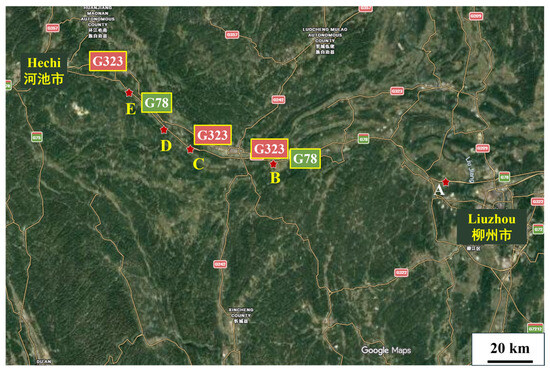
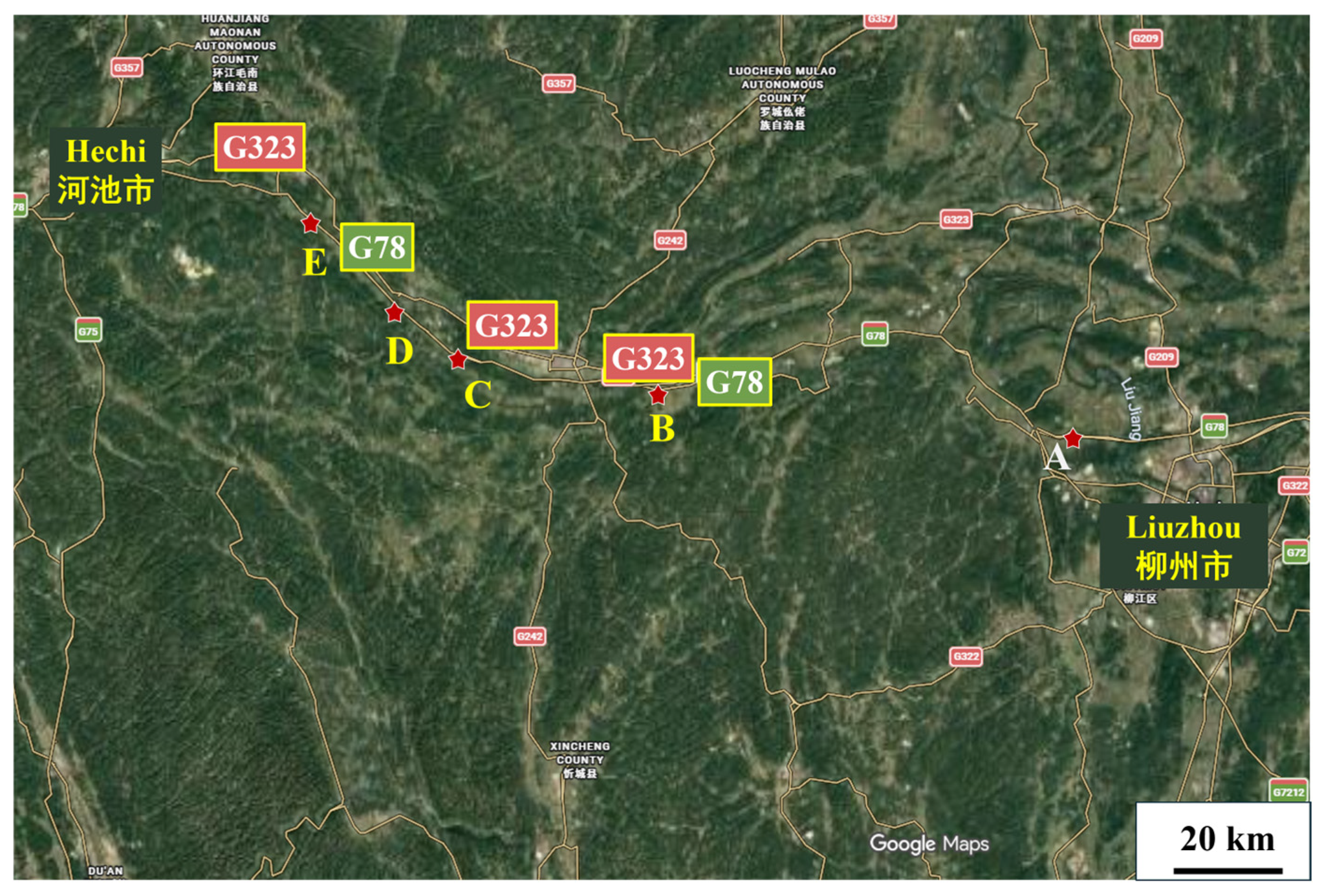
The study area is located along a transmission line spanning Hechi and Liuzhou in the Guangxi Zhuang Autonomous Region, China. The region features a subtropical monsoon climate. The dominant soil types are red and yellow soils with intermittent limestone distributions, exhibiting acidic to slightly alkaline properties. Owing to the underlying karst geology, the localized soil thickness and properties exhibit significant spatial variability. Five discrete sampling sites were established near the transmission towers (Figure 1). The five sampling sites were randomly selected at distances of 20–50 m from the transmission towers. The surrounding areas are primarily used for agricultural crop cultivation, with regular farming activities including tillage and fertilization, representing a typical human-disturbed soil environment.
Figure 1.
Spatial distribution of the soil-sampling sites (red stars indicate the sampling locations, and the numbers in the figure refer to two nearby major roads).
At each site, soil cores were systematically collected at five continuous depth intervals: 0–0.5 m (Depth 1, surface), 0.5–1.0 m (Depth 2, shallow), 1.0–1.5 m (Depth 3, middle), 1.5–2.0 m (Depth 4, sub-deep), and 2.0–2.5 m (Depth 5, deep). A Luoyang shovel was utilized for soil boring, with rigorous water rinsing and ethanol-sterilization performed between samplings to prevent cross-contamination. The collected samples were temporarily stored on ice and transported to the laboratory within 48 h. Aliquots designated for biological sequencing were immediately preserved at −80 °C. The remaining fractions were utilized for fresh soil moisture testing or air-dried, cleared of debris, and passed through a 2 mm sieve for subsequent physicochemical analysis.
2.2. Physicochemical Characterization of Soil Samples
The physicochemical parameters of the soil samples were measured following standard testing protocols. Soil pH was determined potentiometrically in a 1:2.5 (w/v) soil–water suspension (NY/T 1121.2-2006) [31]. Briefly, 10.00 g of air-dried soil was weighed into a 50 mL beaker, and 25 mL of deionized water was added. The suspension was thoroughly stirred with a glass rod and allowed to stand for 30 min before pH measurement using a calibrated pH meter. Soil moisture content was measured gravimetrically by drying fresh soil samples at 105 °C to a constant weight (NY/T 52-1987) [32]. Fresh soil (20.00 g) was placed in a pre-weighed aluminum box, and the total mass was recorded. The box was dried in an oven at 105 °C for 8 h, cooled in a desiccator for 30 min, and reweighed. Moisture content (ω, %) was calculated as: ω = (m1 − m2)/(m2 − m0) × 100%, where m0 is the mass of the empty box, m1 is the mass of the box plus wet soil, and m2 is the mass of the box plus dry soil. Soil resistivity was evaluated utilizing the four-electrode method in a standard soil box (GB/T 17949.1-2000) [33]. A soil resistivity meter was used with grounding electrodes inserted vertically into a standard soil box filled with air-dried soil samples to measure soil resistivity (Ω·m).
The ORP was measured in situ using a platinum working electrode coupled with a saturated calomel reference electrode (HJ 746-2015), with final values mathematically converted to the standard hydrogen electrode (SHE) scale [34]. The ORP was measured using the ORP mode of a pH meter, and the reading was recorded once it stabilized. The water-soluble salt content was estimated by measuring the electrical conductivity of a 1:5 (w/v) soil–water extract (LY/T 1251-1999) [35]. Air-dried soil (10.00 g) was placed in a 50 mL conical flask, and 50 mL of deionized water (soil-to-water ratio 1:5) was added. The mixture was shaken for 30 min and filtered through medium-speed filter paper to obtain a clear filtrate. The electrical conductivity (EC, μS/cm) of the filtrate at 25 °C was measured using a conductivity meter.
Chloride ion (Cl−) concentrations were quantified from aqueous extracts utilizing ion chromatography (GB/T 36240-2018) [36]. Air-dried soil (5.00 g) was placed in a 50 mL centrifuge tube, and 25 mL of deionized water was added. The mixture was sonicated for 30 min and then centrifuged at 4000 r/min for 10 min. The supernatant was filtered through a 0.22 μm membrane and injected into the ion chromatograph. Furthermore, the natural corrosion potential of the soil was recorded using embedded Q235 steel coupons against a copper/copper sulfate reference electrode (CSE). Prepolished and degreased Q235 steel coupons were vertically inserted into fresh soil samples to a depth of approximately 5 cm, with the lead end exposed. A saturated copper sulfate reference electrode (CSE) was inserted into the soil approximately 10 cm from the coupon, with the electrode tip at the same level as the coupon. A potentiometer was connected to the working electrode and the reference electrode to record the corrosion potential.
2.3. DNA Extraction and Metagenomic Sequencing
Total genomic DNA was extracted from approximately 5 g of each soil sample using the DNeasy PowerMax Soil Kit (Qiagen, Hilden, Germany) following the manufacturer protocols with minor optimizations for high-clay tropical soils. Bead-beating homogenization was performed on a vortex mixer at maximum speed for 10 min (alternating 30 s of beating and 30 s of cooling on ice) to ensure complete cell lysis. Three independent DNA extractions were performed per sample as technical replicates, and the resulting DNA was pooled for downstream analysis. DNA quality was assessed by 1% agarose gel electrophoresis, and concentration was quantified using a NanoDrop One spectrophotometer (Thermo Fisher Scientific, Waltham, MA, USA). Only samples meeting quality thresholds (A260/A280: 1.8–2.0; A260/A230: >1.5) were used for downstream analysis. Paired-end sequencing libraries with an insert size of approximately 350 bp were constructed following standard Illumina protocols and sequenced on the Illumina NovaSeq 6000 platform (NovaSeq 6000 S4 Reagent Kit v1.5, 2 × 150 bp paired-end reads; Illumina, San Diego, CA, USA).
2.4. Bioinformatics Processing and Annotation
Raw sequencing reads were processed using fastp (v0.23.2) for adapter trimming, quality filtering (5 bp sliding window, mean Phred quality ≥ Q20), and removal of reads shorter than 50 bp or containing ambiguous bases. Host DNA contamination was filtered using minimap2 (v2.24); reads with mapping scores ≥ 10 were discarded. Quality-controlled reads were error-corrected using BBCMS (BBTools v38.98) and assembled into contigs using MEGAHIT (v1.1.2); contigs shorter than 300 bp were excluded. Taxonomic classification of contigs was performed using geNomad (v1.9.0). Open reading frames were predicted using Prodigal (v2.6.3) and dereplicated by MMseqs2 (v13.45111; 95% identity, 90% coverage) into a non-redundant gene catalog. The top twenty most abundant KEGG orthologs were selected based on TPM-normalized relative abundance rankings across all samples. Functional profiling was performed by aggregating the relative abundances of KO groups and ranking them in descending order. The top twenty orthologs were then manually curated to identify those potentially associated with MIC processes. The raw metagenomic sequencing data have been uploaded to the NCBI Sequence Read Archive database and are available under the SRA accession number PRJNA1475876 (https://www.ncbi.nlm.nih.gov/sra/PRJNA1475876, release date: 9 June 2026).
2.5. Statistical and Correlation Analysis
Statistical analysis and data visualizations were performed in R (version 4.3.3). The alpha diversity of the microbial communities and functional profiles was evaluated using the Shannon and Simpson indices. Beta diversity was assessed and visualized via Principal Coordinate Analysis (PCoA) based on Bray–Curtis distances. For each target gene (e.g., K03088), the relative abundance of all taxonomic groups in each sample was cross-referenced with the gene abundance data. The contribution of each genus to the target gene was estimated based on co-occurrence patterns and relative abundance proportions. Furthermore, Spearman rank correlation analysis was performed to evaluate the relationships between soil physicochemical parameters and the relative abundances of key microbial genera and corrosion-related functional genes.
Statistical analysis and data visualizations were performed in R. The alpha diversity of the microbial communities and functional profiles was evaluated using the Shannon and Simpson indices. Beta diversity was assessed and visualized via Principal Coordinate Analysis (PCoA) based on Bray–Curtis distances. The taxon-gene correspondence analysis was performed to estimate the relative contribution of each genus to the abundance of a target functional gene in each sample, based on co-occurrence patterns and relative abundance proportions. The calculation follows the weighted contribution formula:
where A(g,s) is the relative abundance of genus g in sample s, and F(k,s) is the relative abundance of functional gene k in sample s.
Furthermore, Spearman rank correlation analysis was performed to evaluate the relationships between soil physicochemical parameters and the relative abundances of key microbial genera and corrosion-related functional genes.
3. Results and Discussion
3.1. Site-Specific Characteristics of Soil Microbial Communities
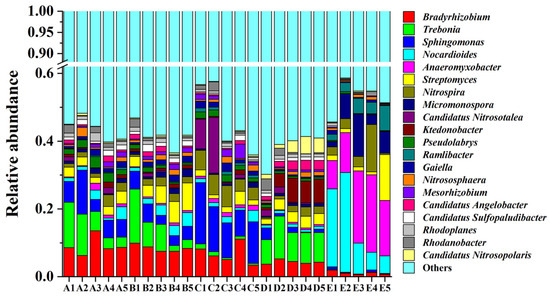
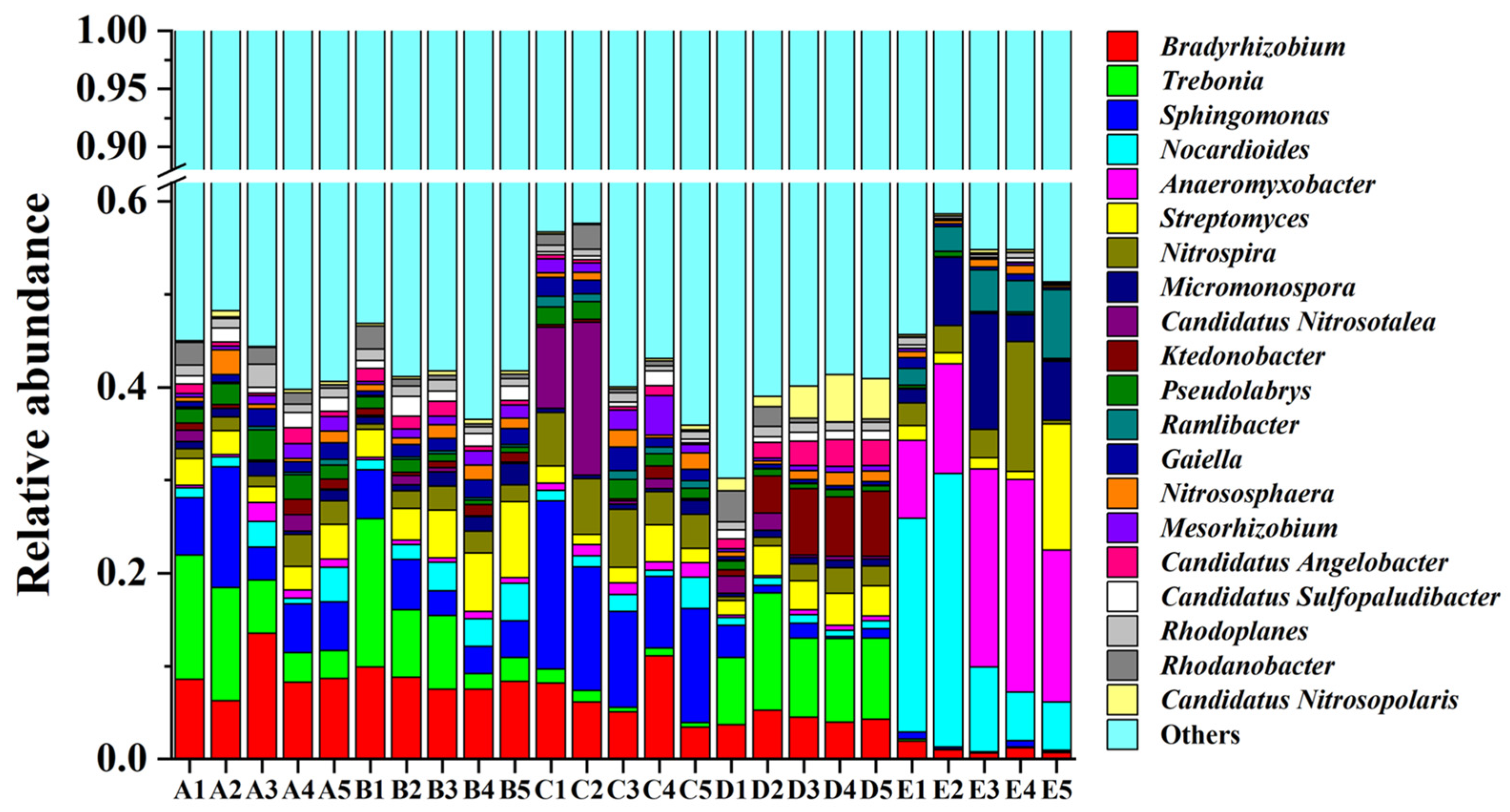
To identify the biological agents potentially associated with soil-induced corrosion risk, the bacterial community structure was first characterized at the genus level across all sampling sites, as community composition provides the taxonomic basis for functional potential assessment. As illustrated in Figure 2, the microbial composition varied significantly between different locations. The category designated as others accounted for a substantial proportion of the community, ranging from 43.5% to 63.0% across the five sites. This is typical in soil metagenomic studies and reflects the high diversity of uncharacterized taxa. Among the bacterial communities, Anaeromyxobacter is an anaerobic myxobacterium capable of dissimilatory iron reduction [37,38]. It utilizes ferric oxides as terminal electron acceptors, destabilizing the protective oxide film on steel surfaces [39]. Notably, this bacterium can also employ nitrate as an alternative electron acceptor, potentially sustaining electron withdrawal from the metal and thereby contributing to localized pitting corrosion risk in oxygen-depleted environments [40]. Nitrospira is typically considered as a chemolithoautotrophic nitrite- and/or ammonium-oxidizing bacterium, which can also utilize alternative substrates such as molecular hydrogen and formate, using either oxygen or nitrate as a terminal electron acceptor. Nitrospira exhibits a high iron requirement met through siderophore-mediated uptake [41,42]. Candidatus Nitrosotalea is an obligately acidophilic ammonia-oxidizing archaeon that dominates nitrification in acidic soils. The nitrite generated during ammonia oxidation can fuel subsequent nitrogen-transforming reactions within biofilms [43,44]. Streptomyces is a filamentous actinobacterium that forms biofilms on metal surfaces and secretes organic acids, which may contribute to initial corrosion. In mixed consortia, it may also cooperate with other microbes to intensify localized corrosion [45]. However, its metabolic activities can induce biomineralization, forming dense protective films that inhibit corrosion progression [39]. Additionally, antimicrobial metabolites produced by this genus can suppress corrosive bacteria such as sulfate-reducing bacteria, indicating prospects for microbial corrosion control [46]. Rhodanobacter is a genus capable of thiosulfate oxidation and nitrate respiration [47,48]. This genus has been detected in biofilms associated with corroded carbon-steel surfaces, where it occurs alongside sulfur-oxidizing and nitrate-reducing bacteria in corrosion products [49]. Sphingomonas is an aerobic bacterium that readily forms biofilms on metal surfaces [50]. Within these biofilms, oxygen-depleted microenvironments develop beneath the dense biomass, establishing differential aeration cells that promote localized corrosion [1]. This genus has been identified among the principal bacterial communities in corroded pipeline sediments and is frequently associated with microbiologically influenced corrosion of steel and copper alloys [51]. Other microbes such as Bradyrhizobium, Pseudolabrys, Micromonospora, and Ramlibacter have been recovered from metal-associated environments [52]. Bradyrhizobium is capable of nitrogen fixation and denitrification and has been isolated from corroding galvanized steel pipes [53]. Pseudolabrys and Ramlibacter carry nitrogen-cycling genes and Micromonospora exhibits biofilm-forming capacity [52,54].
Figure 2.
The overall microbial composition and relative abundance across the different locations.
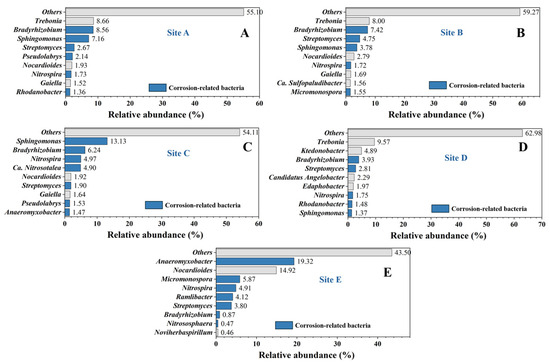
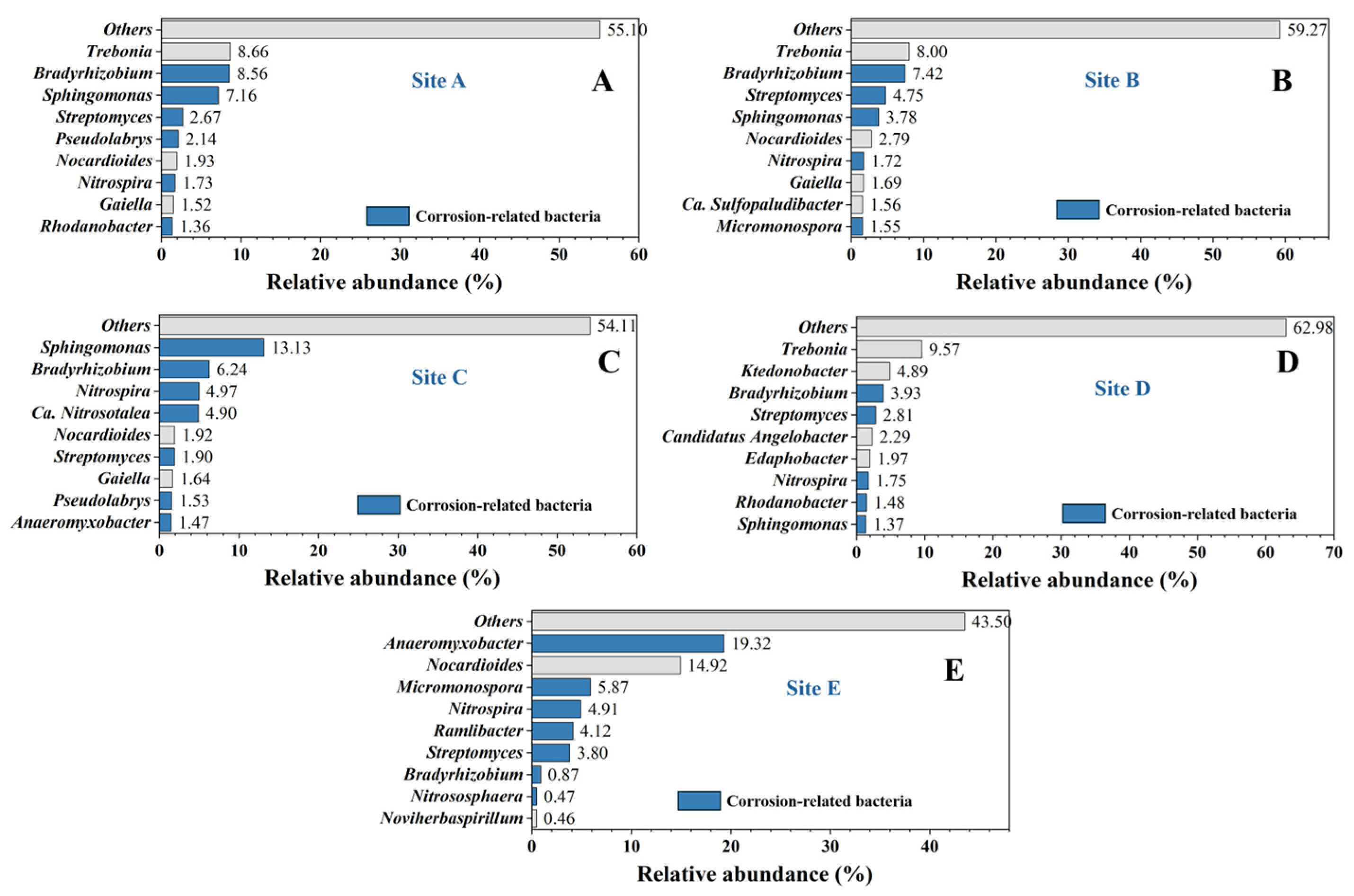
Detailed taxonomic profiles of individual sites are presented in Figure 3A–E. Site A displayed a relatively balanced community structure, with Bradyrhizobium, Streptomyces, and Sphingomonas as the dominant corrosion-related taxa among the top ten genera. These taxa accounted for a moderate total corrosion-related proportion of 27.5%. The absence of a single dominant corrosion genus and the relatively balanced community structure at Site A suggest a functionally redundant microbial network where no specialized corrosive guild has achieved competitive dominance. This contrasts sharply with the streamlined, enrichment-driven communities observed at Site C, where Sphingomonas ranked as the second most abundant genus, and at Site E, which was dominated by the iron-reducing Anaeromyxobacter. Site B showed a community profile broadly similar to Site A but with a lower overall corrosion-related burden of 23.2%. Streptomyces and Bradyrhizobium were the primary contributors, while Sphingomonas was less abundant compared to Site A. The relatively small variation among soil samples suggests a stable microbial environment. In contrast, Site C was characterized by a marked enrichment of Sphingomonas, which ranked as the second most abundant genus overall. In addition, the nitrogen-cycling taxa Nitrospira and Candidatus Nitrosotalea were substantially elevated compared to other sites. These findings suggest a potential active nitrification-driven acidification pathway coupled with extensive biofilm formation. Site D exhibited the lowest corrosion-related microbial load among all five sites at 14.9%. No single corrosion-associated genus exceeded 4.0 percent in relative abundance. The community was instead dominated by non-corrosion taxa, suggesting a comparatively benign microbial environment with limited corrosive activity. Site E presented a substantially different community structure dominated by Anaeromyxobacter. Since this genus is known for dissimilatory iron reduction under anaerobic conditions, its high abundance is indicative of potential anaerobic corrosion susceptibility [37].
Figure 3.
The detailed taxonomic distribution of dominant corrosion-related genera for Site A (A), Site B (B), Site C (C), Site D (D), and Site E (E).
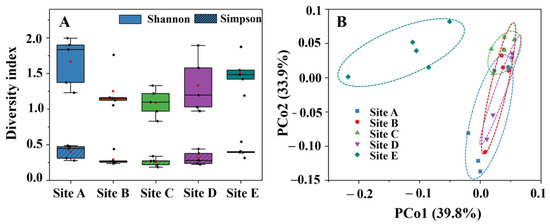
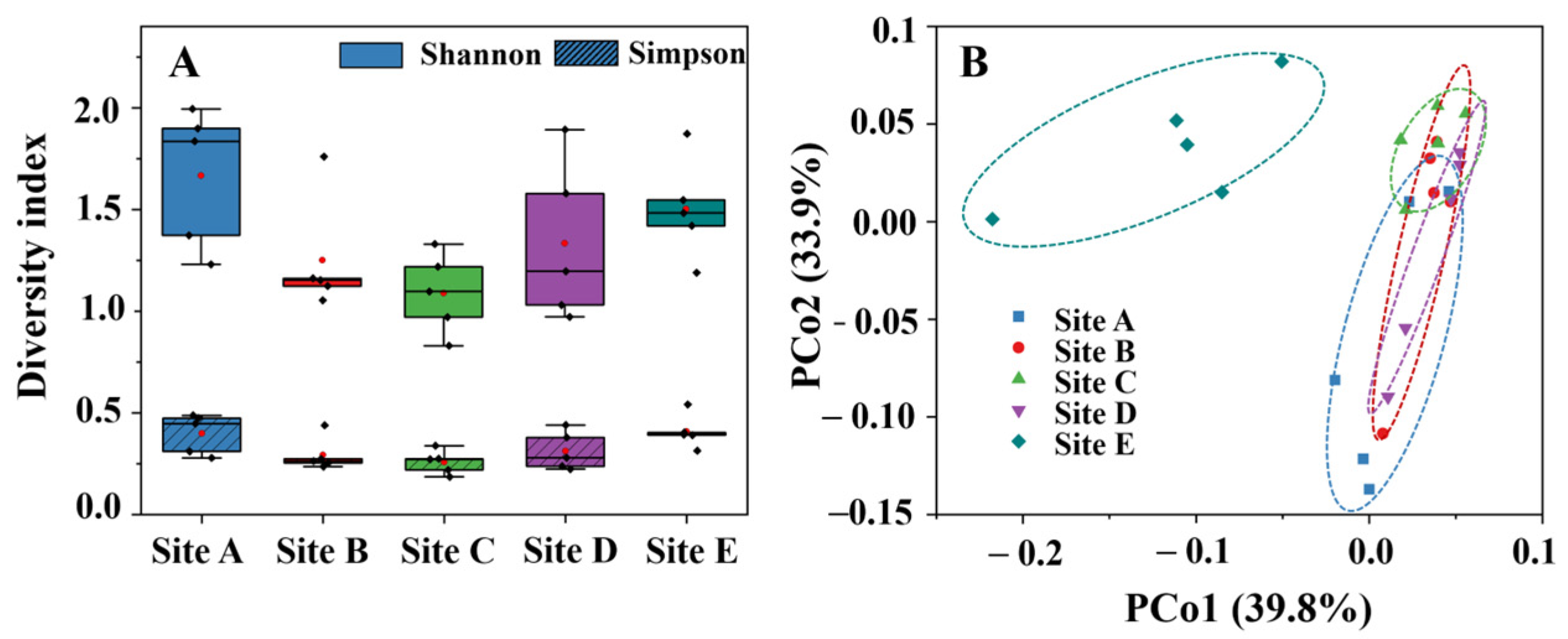
To evaluate the ecological stability and spatial heterogeneity of the corrosive microbiomes, alpha and beta diversity analysis were conducted as detailed in Figure 4. The alpha diversity of the soil microbial communities was assessed through Shannon and Simpson indices, revealing distinct spatial patterns that reflect the heterogeneity of the burial environments shown in Figure 4A. Site A harbored the most complex and taxonomically rich microbiome, characterized by the highest mean Shannon index. Such a diverse community structure typically suggests a balanced metabolic network where no single group dominates, which may reduce the probability of specialized corrosive activity. In contrast, Site C exhibited the most streamlined community structure with the Shannon index dropping to its minimum, while Sites A and D maintained higher evenness across their community profiles. Notably, Site E maintained a relatively stable and robust diversity profile across the entire vertical profile. The coexistence of iron-reducing Anaeromyxobacter, Nocardioides, and nitrifying Nitrospira at Site E suggests a multitrophic synergistic network. From a corrosion perspective, this implies that the degradation process is potentially driven by a robust and multispecies community capable of adapting to fluctuating environmental conditions. Principal Coordinate Analysis (PCoA) revealed a clear site-specific clustering of microbial communities in Figure 4B. The most significant finding was the isolation of Site E along the first principal coordinate. Site E uniquely occupied the negative region, while all other sites clustered predominantly on the positive side. This marked divergence indicates that Site E harbors a fundamentally different microbiome. This ecological shift is potentially driven by the localized selection of specialized functional taxa such as Anaeromyxobacter, making Site E the most distinct and potentially corrosive hotspot within the study area. The Simpson index, reflecting community evenness, was similar with the Shannon trends. Site C exhibited the lowest Simpson value, indicating reduced evenness and a streamlined community structure dominated by a few abundant taxa. In contrast, Sites A and D maintained higher Simpson values, consistent with their balanced taxonomic profiles and lower risk of specialized corrosive dominance.
Figure 4.
Alpha (A) and beta diversity (B) analysis of the soil microbial communities across the distinct sampling sites.
3.2. Spatial Divergence of Microbial Functional Gene Profiles
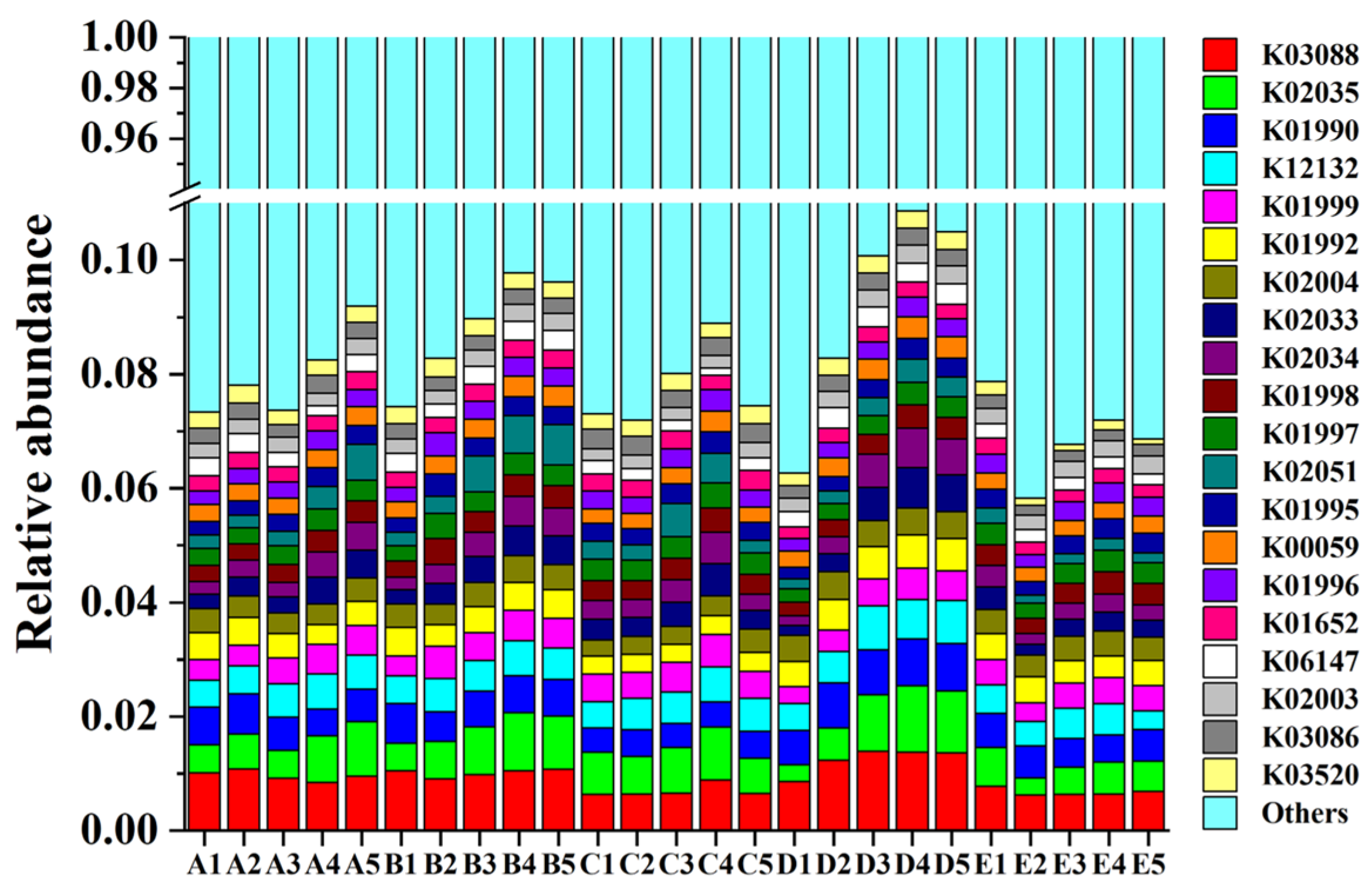
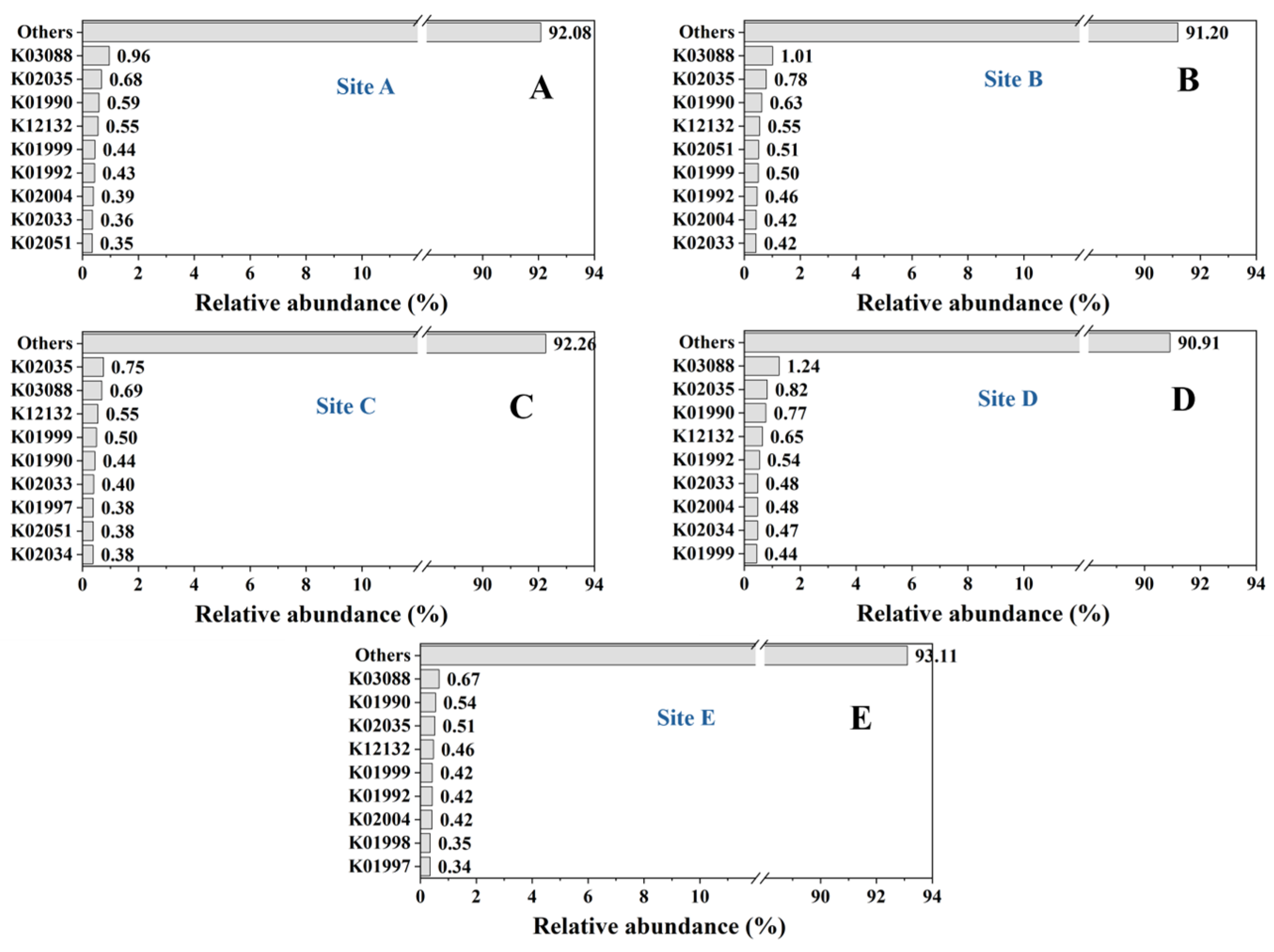
Building upon the taxonomic profiles described above, the functional gene landscapes were examined to determine whether the observed community divergence translates into distinct metabolic capabilities relevant to MIC risk. Metagenomic functional profiling of the twenty most abundant KEGG orthologs revealed that the annotated fraction was dominated by housekeeping functions rather than canonical corrosion enzymes such as dissimilatory sulfite reductase or nitrate reductase. Metagenomic functional profiling of the twenty most abundant KEGG orthologs revealed that the annotated fraction was dominated by housekeeping functions rather than canonical corrosion enzymes such as dissimilatory sulfite reductase or nitrate reductase (Figure 5). Among the top twenty orthologs, K03088 (rpoE), K02035 (nikA), K12132 (prkC/stkP/stk1), K02033 (nikB), K02034 (nikC), and K06147 (ABCB-BAC) were considered to be related with the MIC process. K03088 encodes the extracytoplasmic-function sigma factor RpoE, which orchestrates oxidative-stress and heavy-metal-resistance responses essential for microbial survival on metal surfaces [55]. K02035, K02033, and K02034 constitute the peptide-/nickel-transport system, where K02035 is the substrate-binding protein, while K02033 and K02034 are permease components that facilitate nickel uptake for [NiFe]-hydrogenase assembly, thereby supporting potential electron-mediated corrosion [56]. K12132 encodes a eukaryote-like serine/threonine protein kinase that regulates biofilm formation and extracellular polysaccharide synthesis [57]. K06147 (ABCB-BAC) encodes an ATP-binding cassette subfamily B transporter that contributes to cellular detoxification by exporting harmful substrates, including toxic metal species, thereby improving persistence in metal-stressed environments [58]. Site-level variations in the top twenty profiles were less pronounced compared to the taxonomic divergence. The exact TPM-normalized relative abundances of these target genes across all sites and depth intervals are provided in Supplementary Table S1. Sites A and B exhibited a relatively uniform and stable profile of these housekeeping genes and general transporters; K03088 was the most abundant corrosion-related ortholog, followed by K02035, suggesting the communities with strong stress-response capacity and a substantial investment in nickel/peptide transport and signal-mediated biofilm regulation (Figure 6A,B). At Site C, K02035 became the highest-ranked named gene, exceeding K03088, which suggested transport-mediated metabolic support, especially nickel-associated transport. K12132 remained highly stable, indicating that biofilm-related signaling is still a core feature. Site C was also notable for the appearance of K02034 and K01997 among the top ten, implying a broader representation of both the peptide-/nickel-transport system and amino acid uptake functions (Figure 6C). Site D displayed the strongest enrichment of the six target orthologs with the strongest genomic abundance for K03088, implying active gene reprogramming under fluctuating redox conditions. In addition, K02035, K12132, K02033 and K02034 occurred simultaneously at relatively high abundance, suggesting that the peptide-/nickel-transport system is particularly complete and active at this site (Figure 6D). At Site E, K03088 and K02035 remained the dominant corrosion-related orthologs, but the abundance of K12132 was only 0.463%, and K02033, K02034, and K06147 did not appear among the top ten genes. All sites maintained baseline abundances of K03088 and K12132, indicating these as universal community functions. Site C showed marked enrichment of K02035, Site E displayed unique co-occurrence of K03088 with Anaeromyxobacter, and Sites A and B exhibited relatively uniform and stable gene profiles. These results suggested that while oxidative-stress and nickel-binding functions are maintained, the full peptide/nickel permease system and heavy-metal efflux pump are present at lower relative abundances (Figure 6E).
Figure 5.
The overall relative abundance of the twenty most dominant KEGG orthologs across the sampling locations.
Figure 6.
The specific functional gene profiles and spatial variations for Site A (A), Site B (B), Site C (C), Site D (D), and Site E (E).
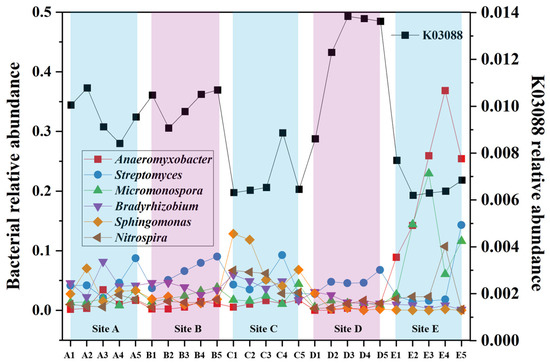
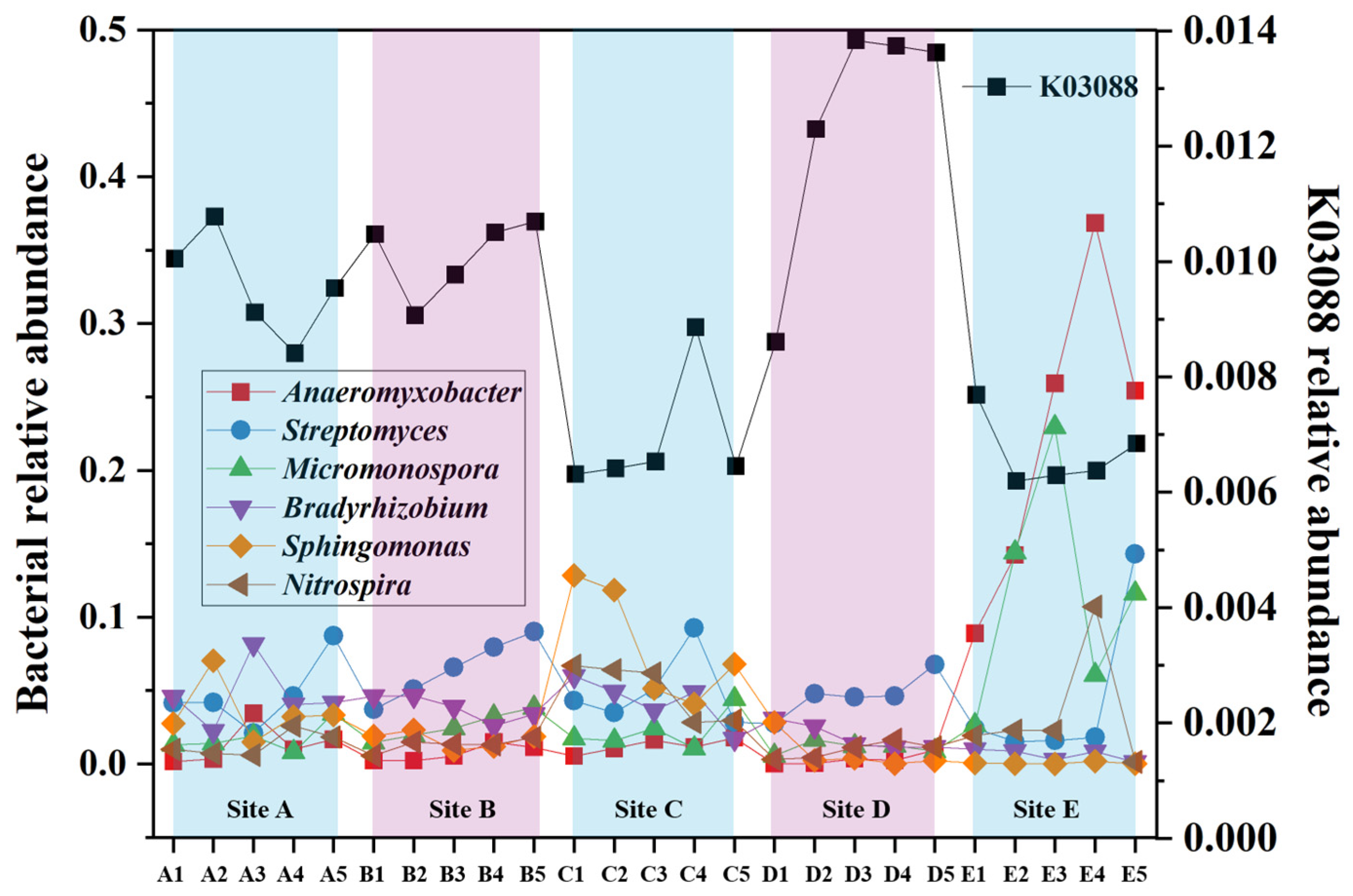
To identify which of the key potential corrosion-associated taxa actively deploy stress-defense systems, taxon–gene correspondence analysis was performed using K03088 as the target ortholog. As shown in Figure 7, K03088 was mainly associated with a broad group of functionally relevant taxa, including Anaeromyxobacter, Nitrospira, Sphingomonas, Bradyrhizobium, Streptomyces, and Micromonospora. Bradyrhizobium remained more evenly distributed across sites and likely represented a background contributor connected with general nitrogen cycling. Sphingomonas and Nitrospira contributed mainly at Site C, indicating that K03088 was also associated with biofilm development and nitrogen transformation in microaerobic niches. The strongest signal of K03088 was associated with Anaeromyxobacter, especially at Site E, where this iron-reducing genus became highly enriched, suggesting that K03088 was linked to anaerobic conditions favorable for electron transfer and destabilization of protective iron oxides. These results indicated that the K03088 gene was linked not to a single dominant corrosive lineage, but to a stress-adapted community combining iron reduction, nitrogen transformation, and biofilm formation/persistence.
Figure 7.
The relationship between specific microbial taxa and relative abundance of the functional gene K03088 across the distinct sampling sites.
The taxon–gene correspondence analysis revealed that K03088 was not restricted to a single dominant lineage but was distributed across multiple high-abundance corrosion-related taxa, including Anaeromyxobacter, Nitrospira, Sphingomonas, Bradyrhizobium, Streptomyces, and Micromonospora, all of which ranked among the top 20 most abundant genera. This pattern indicates that the observed corrosion-related functions are maintained by the collective metabolic capacity of diverse community members rather than by rare or specialist species, supporting a community-driven model of MIC risk in these soils.
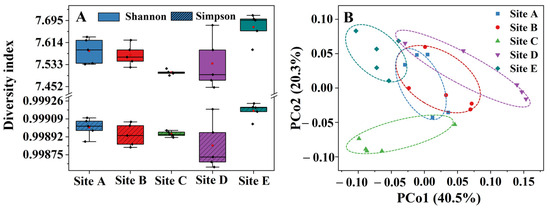
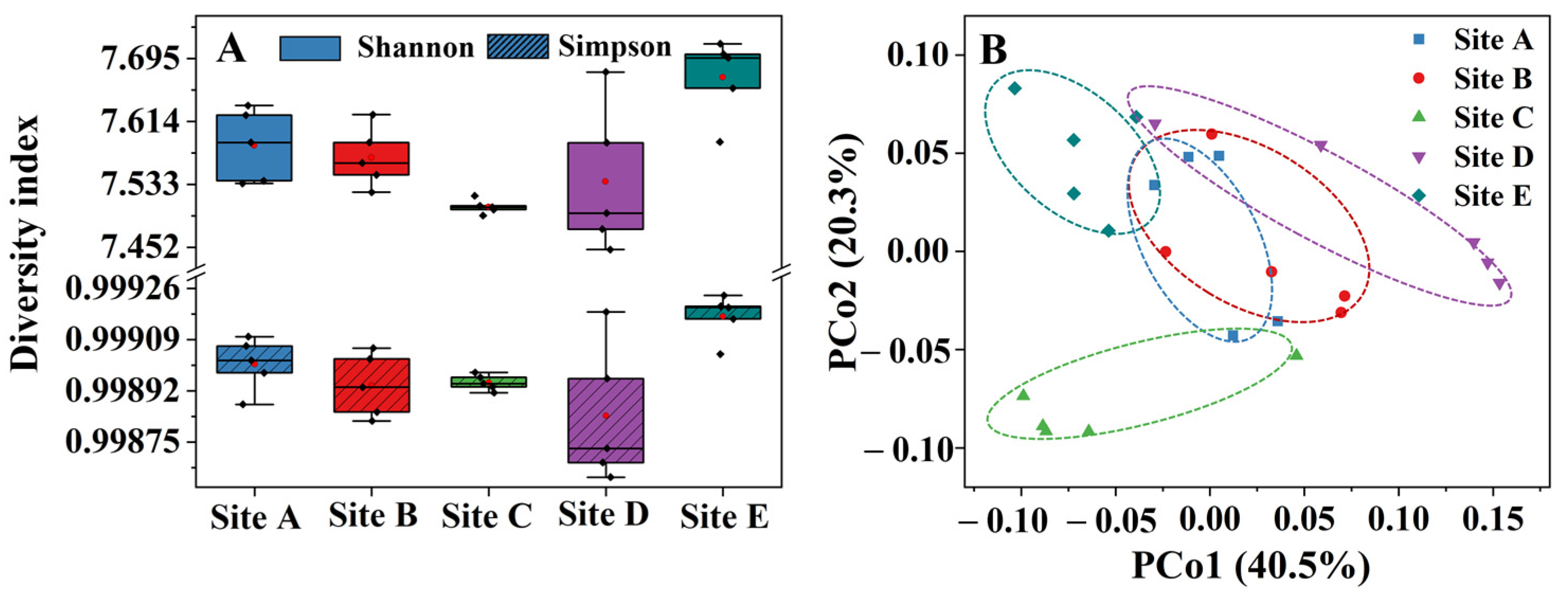
To evaluate the functional richness and evenness of the microbial communities, the alpha diversity of functional genes was assessed using the Shannon and Simpson indices as depicted in Figure 8A. Across all five sampling sites, the functional gene diversity remained consistently high. Shannon indices ranged from 7.45 to 7.71 and Simpson indices approached 0.999. The lack of significant variation in these indices suggests that the overall metabolic potential and functional repertoire of the soil microbiomes are robust and stable throughout the sites, despite the observed taxonomic and specific functional composition shifts. PCoA was employed to examine the similarity of functional gene compositions across the five sites. The results in Figure 8B show that Sites A, B, D, and E exhibited partial overlaps in the functional space. In contrast, Site C formed a distinct and isolated cluster in the lower-left quadrant. This separation indicates that the microbial community at Site C possessed a unique functional gene profile that diverged from the other locations. The relative clustering of the other four sites suggests they share a more similar core functional repertoire despite their different geographic positions.
Figure 8.
Alpha (A) and beta diversity (B) analysis of the functional genes across the distinct sampling sites.
3.3. Vertical Patterns of Microbial Populations and Gene Abundance Along Depth Gradients
Having established the spatial patterns of microbial communities and their functional capacities, we subsequently investigated how these features change along the vertical soil profile. To evaluate the influence of environmental gradients on the soil microbiome from the surface to various depths, the relative abundance of the twenty most dominant bacterial genera was analyzed across the five sampling sites. The microbial composition exhibited strong site-specific shifts along the depth profiles rather than a uniform vertical gradient, as shown in Figure S1. The functional potential of the microbial communities across the soil profile (Depths 1–5) was evaluated based on the relative abundance of KO groups, as illustrated in Figure S2. The vertical distribution of microbial communities and corrosion-related functional genes exhibited strong site-specific patterns (Figures S3 and S4). At Site A, Trebonia dominated the surface layer, and nickel-transport genes (K02035 and K02034) increased markedly with depth, suggesting a shift from oxidative-stress-driven to hydrogenase-facilitated corrosion capacity. Site B was characterized by an extremely surface-enriched Trebonia community and a uniform upward trend of all target genes toward deeper layers. Site C displayed the most pronounced niche differentiation, with Sphingomonas and Candidatus Nitrosotalea alternating across depths and all genes peaking at Depth 4 before declining—an inverted-U pattern likely potentially associated with mid-layer redox optima. Site D showed the strongest depth-gradient enrichment of functional genes, consistent with its high deep-layer resistivity. Site E exhibited a substantially different pattern. Nocardioides dominated the surface, whereas Anaeromyxobacter peaked in deeper layers. Target genes decreased with depth, indicating that anaerobic iron reduction in deep horizons did not translate into elevated gene-expression capacity. Across all sites, K03088 and K12132 were universally maintained at baseline levels, underscoring oxidative-stress response and biofilm regulation as conserved community functions, whereas nickel-transport genes displayed site- and depth-specific dynamics that reflect local geochemical drivers of MIC risk.
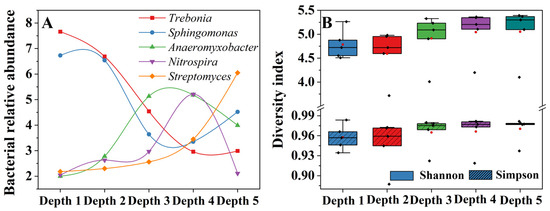
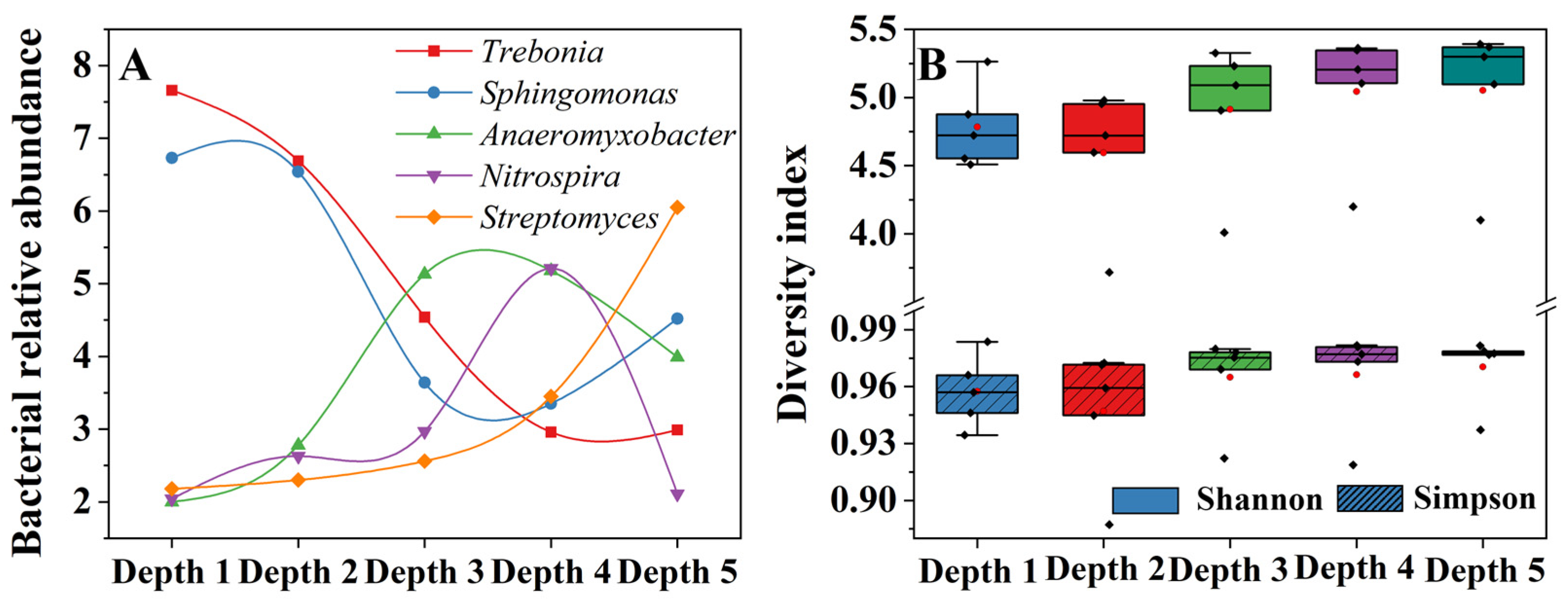
Key genera along the depth gradient were extracted and analyzed. The results are presented in Figure 9A. Trebonia is an oligotrophic actinobacterial genus characteristic of arid soils. This genus exhibited the highest surface enrichment and its relative abundance declined progressively with depth. This gradual decline indicates that surface organic matter and greater oxygen availability sustain a distinct surface community that is subsequently replaced by deeper populations. Sphingomonas is a biofilm-forming bacterium that also showed an enriched distribution at the surface. This distribution indicates that aerobic biofilm formation is concentrated in the upper horizons where root secretions support microbial growth. The mid-depth horizons (Depths 3–4) represented a significant transition zone where the signatures of anaerobic metabolism increased. Anaeromyxobacter is a dissimilatory iron reducer that reached its maximum abundance within this interval. Nitrospira is a nitrite-oxidizing bacterium that followed a comparable trend. This trend coincided with the progressive oxygen depletion. The deepest horizon (Depth 5) presented a distinct community dominated by Streptomyces. This organism is a filamentous and acid-producing actinobacterium that increased consistently with depth. This shift implies that the bottom layer selects for spore-forming and acid-tolerant microorganisms capable of persisting under reduced oxygen conditions with accumulated organic matter.
Figure 9.
The relative abundance of key bacterial genera across the five depth intervals (A). The alpha diversity of the microbial communities across the five depth intervals (B).
The alpha diversity of microbial communities was evaluated using Shannon and Simpson indices. As depicted in Figure 9B, this diversity varied across the five depth groups. Depth 1 exhibited moderate diversity and reflected the influence of surface organic matter and generally aerobic conditions. The deepest layers (Depths 4–5) exhibited the highest diversity values among all groups. This observation reflects the establishment of persistent microbial communities adapted to the stable low-oxygen and chemically distinct environment of the deep soil.
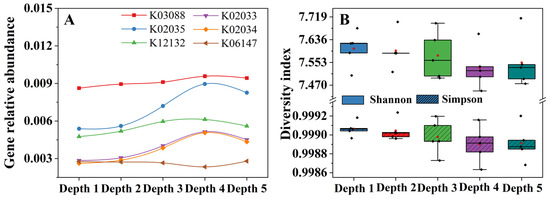
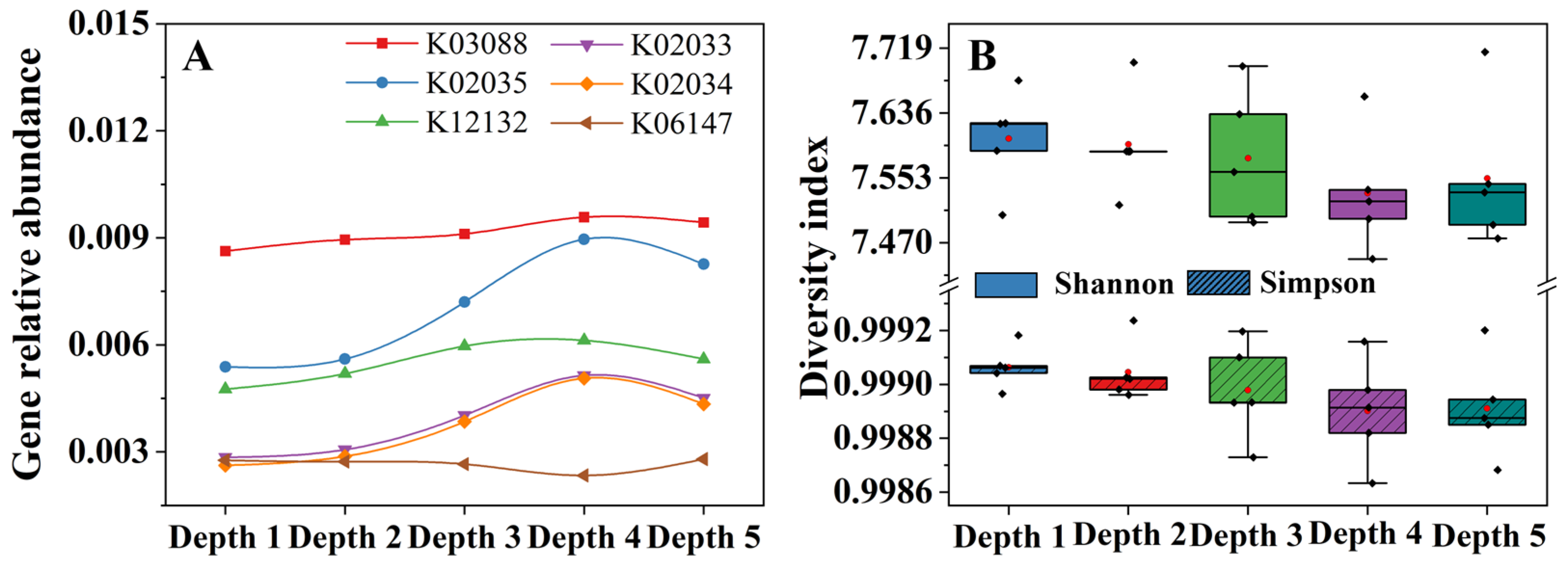
Among the corrosion-related functional genes, several modules suggested clear depth-dependent trends as shown in Figure 10A. The peptide-/nickel-transport system including K02035, K02033, and K02034 increased steadily from the surface with increasing depth and reached its maximum abundance at the fourth depth level. This pattern indicated that nickel acquisition, which supported [NiFe]-hydrogenase assembly and electron-transfer processes, remained an important function as overall community activity transitions from aerobic surface colonization to deeper soil conditions. K03088 and K12132 genes also increased gradually from the surface to the deeper layers, with the highest abundance observed at Depth 4. This increase corresponded to the zone where anaerobic iron reduction and nitrite oxidation became more prominent, suggesting enhanced requirements for stress adaptation and biofilm maintenance in the middle and deeper horizons. In contrast, the detoxification-related gene K06147 showed minimal variation across all depths.
Figure 10.
The relative abundance of corrosion-related functional genes across the five depth intervals (A). The alpha diversity of the functional genes across the five depth intervals (B).
The alpha diversity of functional genes across the five soil depth groups was evaluated using the Shannon and Simpson indices. The results showed a high level of consistency across all depths as depicted in Figure 10B. Specifically, the Simpson index values were nearly identical across the entire vertical profile and were maintained at approximately 0.999. Similarly, the Shannon index values exhibited minimal variation ranging between 7.45 and 7.71. No substantial differences or clear vertical gradients were observed in the functional alpha diversity among soil layers. This overall uniformity suggests that although species composition varies along the depth profile, the microbial communities maintain a stable and diverse functional repertoire throughout the soil depths.
3.4. Correlation Between Soil Physicochemical Properties and MIC-Associated Microbiomes and Functional Genes
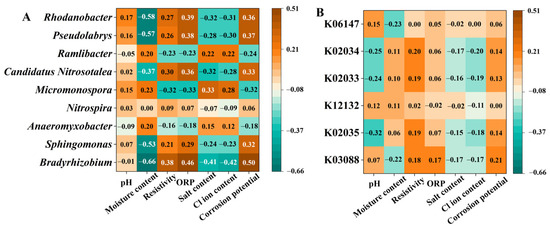
To systematically elucidate the environmental drivers shaping the distribution of MIC-associated microorganisms, seven key soil physicochemical parameters, including pH, moisture content, soil resistivity, ORP, salt content, chloride (Cl−) ion content, and natural corrosion potential, were evaluated and the results are given in Table S2. The Spearman correlation analysis revealed distinct ecological niche preferences among the detected bacterial genera, which may reflect their varying potential to influence the corrosion process under different soil conditions (Figure 11A). A prominent microbial cluster including Bradyrhizobium, Rhodanobacter, Pseudolabrys, Sphingomonas, and Candidatus Nitrosotalea exhibited strong positive associations with well-aerated soil environments characterized by higher electrochemical resistance. These genera were positively correlated with oxidation-reduction potential, natural corrosion potential, and soil resistivity, while exhibiting negative correlations with moisture content, salt content, and chloride ion content. The enrichment of these aerobic and biofilm-forming taxa in high-potential and high-resistivity zones implied a potential risk of localized oxygen depletion. In contrast, Micromonospora exhibited a higher relative abundance in environments characterized by higher corrosivity and conductivity. This genus was positively correlated with soil salt content and chloride ion content, while demonstrating negative correlations with soil resistivity, oxidation-reduction potential, and natural corrosion potential. The presence of Micromonospora in these low-resistivity and high-chloride niches suggested that this genus was capable of persisting in highly corrosive electrolytes. Other genera such as Anaeromyxobacter and Ramlibacter showed correlation trends similar to Micromonospora. Specifically, they exhibited positive associations with moisture and salts alongside negative associations with oxidation-reduction potential and resistivity. Nitrospira appeared to be largely independent of the measured physicochemical fluctuations and showed negligible correlations across most parameters. Furthermore, across all analyzed MIC-associated genera, soil pH displayed the weakest overall influence. This suggested that pH within the observed range may not be the primary factor limiting the distribution of these specific taxa.
Figure 11.
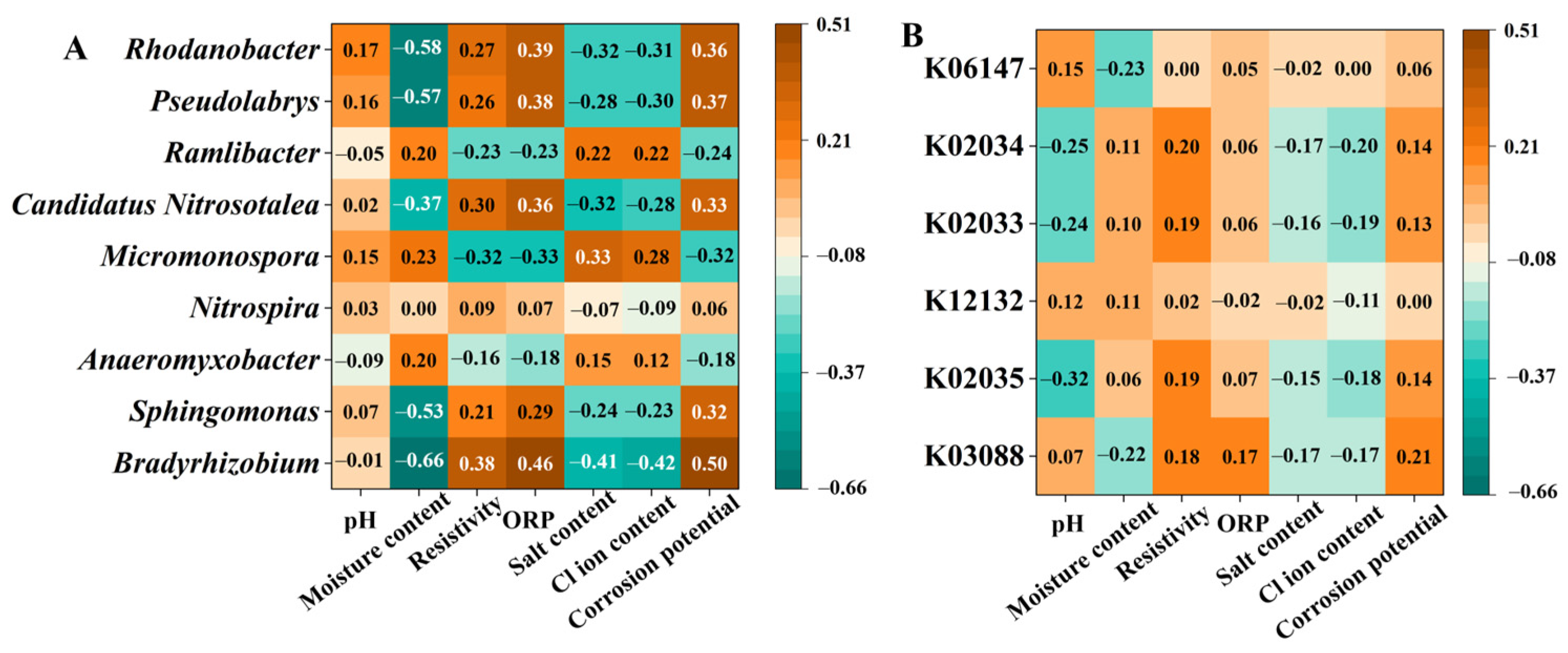
Spearman correlation analysis evaluating the relationships between soil physicochemical parameters and MIC-associated biomarkers. The correlation matrix between soil environmental parameters and the relative abundance of specific bacterial genera (A). The correlation matrix between environmental parameters and the relative abundance of targeted corrosion-related functional genes (B).
To further elucidate the environmental drivers governing the functional capacity of MIC, the relationships between seven key soil physicochemical parameters and the abundance of specific functional genes were analyzed. The Spearman correlation matrix revealed that these functional genes can be distinctly categorized based on their environmental response profiles, as depicted in Figure 11B. The functional gene K03088 exhibited a distinct positive association with less aggressive and well-aerated environments. This gene showed the strongest positive correlations with natural corrosion potential, soil resistivity, and oxidation-reduction potential. Conversely, it was negatively correlated with chloride ion content, salt content, and moisture content, while its correlation with pH was weak. The enrichment of the metabolic functions associated with K03088 in drier, high-resistance, and high-potential niches implied that these biological activities were elevated in relatively oxic environments, where oxidative and envelope stress responses may be more important for microbial persistence on metal surfaces. In contrast, the gene cluster including K02035, K02033, and K02034 exhibited highly similar environmental responses that were potentially associated with soil acidity and salinity. These genes showed distinct negative correlations with soil pH, chloride ion content, and salt content, indicating a higher abundance in slightly acidic and less saline microenvironments. Similarly, they exhibited weak positive correlations with natural corrosion potential, soil resistivity, oxidation-reduction potential, and moisture content. The presence of this nickel-transport module in mildly acidic niches suggested that the associated microbial functions, particularly nickel acquisition for [NiFe]-hydrogenase assembly, were maintained under conditions favorable for electron-transfer metabolism. The distribution pattern indicated that these transport-related pathways may contribute to MIC through hydrogenase-dependent processes rather than through direct synergy with corrosive inorganic ions. The functional gene K12132 exhibited generally weak correlations with all measured environmental variables. It showed slight positive associations with pH and moisture content, a weak negative correlation with chloride ion content, and negligible correlations with all other electrochemical and salinity parameters. This pattern indicated that the biofilm-related regulatory functions represented by K12132 were broadly tolerant of variations in soil conditions, serving as relatively stable background activities rather than being strongly controlled by a single environmental factor. Finally, K06147 appeared to be primarily associated with moisture content, but in an inverse manner, while exhibiting a weak positive association with pH and negligible correlations with all other electrochemical and salinity parameters. In summary, these correlations suggested that the functional potential for MIC was not uniform across the soil sites, and specific combinations of soil properties could modulate the corresponding biological mechanisms. The divergent environmental responses of specific functional genes suggest that potential corrosion mechanisms may differ under distinct soil conditions. In well-aerated, high-resistivity environments (Sites A and B), K03088-driven oxidative stress responses dominate, consistent with aerobic biofilm-mediated corrosion risk. Under slightly acidic, reduced-salinity conditions (Site C), enrichment of nickel-transport genes points to hydrogenase-facilitated electron transfer capacity. At anaerobic-dominated sites (Site E), co-occurrence of iron-reducing taxa and K03088 suggests dissimilatory iron reduction as a potential primary mechanism.
4. Conclusions
This study systematically profiled the spatial and vertical distribution of soil microbiomes and microbially influenced corrosion (MIC) risks in a heterogeneous karst region using shotgun metagenomic sequencing. The findings revealed marked site-specific divergence, with different local environments selecting for potential corrosion drivers, such as a consortium of biofilm-forming Sphingomonas and nitrifying taxa at Site C or the anaerobic iron-reducing Anaeromyxobacter at Site E. Vertical profiles exhibited distinct depth-dependent variations in microbial corrosion susceptibility. Surface soils were dominated by aerobic biofilm formers, mid-depth horizons constituted a significant redox transition zone where anaerobic iron reduction and nitrite oxidation intensified, and deep layers favored acid-producing actinobacteria. Functionally, potential corrosion-related genes persisted as a baseline capacity, including oxidative-stress sigma factors (e.g., K03088), nickel-transport systems for hydrogenase assembly (e.g., K02035), biofilm-regulatory kinases (e.g., K12132), and ATP-binding cassette (e.g., K06147). This indicates that MIC risk in these soils is governed primarily by the community-level capacity to colonize metal surfaces and withstand environmental fluctuations. Furthermore, correlation analyses suggested that electrochemical and salinity factors, particularly soil resistivity, oxidation-reduction potential, and chloride content, imposed stronger selective pressures on these microbiomes. The divergent environmental responses of specific functional genes further suggest that potential corrosion mechanisms differ under distinct soil conditions. We acknowledge that this study provides a genetic-potential-based risk assessment framework rather than direct evidence of active corrosion. Metagenomic data indicate the presence and relative abundance of potential corrosion-relevant functional genes but cannot confirm their expression or the resulting metal degradation rates. Future studies combining the molecular screening approach developed herein with targeted electrochemical validation at sites flagged as high-risk through our biomarker framework will be essential to establish definitive causal linkages. Additionally, metatranscriptomic analysis would provide valuable insights into the actual expression levels of corrosion-related genes under field conditions, further strengthening the predictive capability of our risk-assessment model.
Supplementary Materials
The following supporting information can be downloaded at: https://www.mdpi.com/article/10.3390/coatings16070838/s1, Figure S1: The relative abundance of the twenty most dominant bacterial genera of the five sampling sites along the vertical depth profiles; Figure S2: The relative abundance of the twenty most dominant functional genes of the five sampling sites along the vertical depth profiles; Figure S3: The relative abundance of key bacterial genera across the five depth intervals at different sites; Figure S4: The relative abundance of corrosion-related functional genes across the five depth intervals at different sites; Table S1: Physicochemical characteristics of the analyzed soil samples; Table S2: Physicochemical characteristics of the analyzed soil samples.
Author Contributions
Conceptualization, S.H., B.F. and P.Q.; methodology, K.S.; investigation, S.H., B.F. and K.S.; data curation, S.H., G.W., Q.Z. and P.Q.; writing—original draft preparation, S.H., B.F. and P.Q.; writing—review and editing, S.H., K.S., G.W., Q.Z. and P.Q.; supervision, P.Q.; funding acquisition, P.Q. All authors have read and agreed to the published version of the manuscript.
Funding
This research was funded by the Science and Technology Service Project of China Southern Power Grid Extra High Voltage Transmission Company, grant number 0104002025030301BD00012.
Institutional Review Board Statement
Not applicable.
Informed Consent Statement
Not applicable.
Data Availability Statement
The raw data supporting the conclusions of this article will be made available by the authors on request.
Conflicts of Interest
Authors S.H., B.F., K.S., G.W. and Q.Z. were employed by Liuzhou Bureau of EHV Power Transmission Company, China Southern Power Grid Company Limited. The remaining authors declare that the research was conducted in the absence of any commercial or financial relationships that could be construed as a potential conflict of interest.
Abbreviations
The following abbreviations are used in this manuscript:
| MIC | microbially influenced corrosion |
| KEGG | Kyoto Encyclopedia of Genes and Genomes |
| PCoA | Principal Coordinate Analysis |
| ORP | oxidation-reduction potential |
References
- Xu, D.; Gu, T.; Lovley, D.R. Microbially mediated metal corrosion. Nat. Rev. Microbiol. 2023, 21, 705–718. [Google Scholar] [CrossRef] [Scilit] [PubMed]
- Hou, B.; Li, X.; Ma, X.; Du, C.; Zhang, D.; Zheng, M.; Xu, W.; Lu, D.; Ma, F. The cost of corrosion in China. npj Mater. Degrad. 2017, 1, 4. [Google Scholar] [CrossRef] [Scilit]
- Catherine, A.L.; Priyanka, V.; Nandhini, B.; Jagannathan, S.; Suresh, B. Microbiologically influenced corrosion dynamics and technological innovations in monitoring and control. J. Microbiol. Methods 2026, 243, 107432. [Google Scholar] [CrossRef] [Scilit] [PubMed]
- Qi, P.; Zeng, Y.; Zhang, D.; Sun, Y.; Wang, P. The biofilm-metal interface: A hotspot for microbiologically influenced corrosion. Cell Rep. Phys. Sci. 2025, 6, 102500. [Google Scholar] [CrossRef] [Scilit]
- Olawole, O.O.; Gbadeyan, O.J.; Deigh, C.; Sijuade, M.F. Advanced sensor systems and machine learning for pipeline integrity management: A review of corrosion monitoring and prediction strategies. npj Mater. Degrad. 2026, 10, 48. [Google Scholar] [CrossRef] [Scilit]
- Li, Y.; Feng, S.; Liu, H.; Tian, X.; Xia, Y.; Li, M.; Xu, K.; Yu, H.; Liu, Q.; Chen, C. Bacterial distribution in SRB biofilm affects MIC pitting of carbon steel studied using FIB-SEM. Corros. Sci. 2020, 167, 108512. [Google Scholar] [CrossRef] [Scilit]
- Lekbach, Y.; Liu, T.; Li, Y.; Moradi, M.; Dou, W.; Xu, D.; Smith, J.A.; Lovley, D.R. Chapter Five—Microbial corrosion of metals: The corrosion microbiome. Adv. Microb. Physiol. 2021, 78, 317–390. [Google Scholar] [CrossRef] [Scilit] [PubMed]
- Daebeler, A.; Güell-Bujons, Q.; Mooshammer, M.; Zechmeister, T.; Herbold, C.W.; Richter, A.; Wagner, M.; Daims, H. Rapid nitrification involving comammox and canonical Nitrospira at extreme pH in saline-alkaline lakes. Environ. Microbiol. 2023, 25, 1055–1067. [Google Scholar] [CrossRef] [Scilit] [PubMed]
- Li, E.; Wu, J.; Zhang, D.; Wang, P.; Zhu, L.; Li, C.; Sun, Z.; Gao, Y. Effect of autoinducer-2 on corrosion of Q235 carbon steel caused by sulfate reducing bacteria. Corros. Sci. 2022, 200, 110220. [Google Scholar] [CrossRef] [Scilit]
- Wang, Y.; Zhang, R.; Mathivanan, K.; Zhang, Y.; Yang, L.; Guan, F.; Duan, J. Proteomics and EPS Compositional Analysis Reveals Desulfovibrio bisertensis SY-1 Induced Corrosion on Q235 Steel by Biofilm Formation. Materials 2024, 17, 5060. [Google Scholar] [CrossRef] [Scilit] [PubMed]
- Chugh, B.; Sheetal; Singh, M.; Thakur, S.; Pani, B.; Singh, A.K.; Saji, V.S. Extracellular Electron Transfer by Pseudomonas ae-ruginosa in Biocorrosion: A Review. ACS Biomater. Sci. Eng. 2022, 8, 1049–1059. [Google Scholar] [CrossRef] [Scilit] [PubMed]
- Lovley, D.R.; Holmes, D.E. Electromicrobiology: The ecophysiology of phylogenetically diverse electroactive microorganisms. Nat. Rev. Microbiol. 2021, 20, 5–19. [Google Scholar] [CrossRef] [Scilit] [PubMed]
- Salgar-Chaparro, S.J.; Lepkova, K.; Pojtanabuntoeng, T.; Darwin, A.; Machuca, L.L. Microbiologically influenced corrosion as a function of environmental conditions: A laboratory study using oilfield multispecies biofilms. Corros. Sci. 2020, 169, 108595. [Google Scholar] [CrossRef] [Scilit]
- Huang, Y.; Xu, D.; Huang, L.-Y.; Lou, Y.-T.; Muhadesi, J.-B.; Qian, H.-C.; Zhou, E.-Z.; Wang, B.-J.; Li, X.-T.; Jiang, Z.; et al. Responses of soil microbiome to steel corrosion. npj Biofilms Microbiomes 2021, 7, 6. [Google Scholar] [CrossRef] [Scilit] [PubMed]
- Zhang, Y.; Ma, Y.; Zhang, R.; Zhang, B.; Zhai, X.; Li, W.; Xu, L.; Jiang, Q.; Duan, J.; Hou, B. Metagenomic Resolution of Functional Diversity in Copper Surface-Associated Marine Biofilms. Front. Microbiol. 2019, 10, 2863. [Google Scholar] [CrossRef] [Scilit] [PubMed]
- Xiong, F.; Dai, T.; Zheng, Y.; Wen, D.; Li, Q. Enhanced AHL-mediated quorum sensing accelerates the start-up of biofilm reactors by elevating the fitness of fast-growing bacteria in sludge and biofilm communities. Water Res. 2024, 257, 121697. [Google Scholar] [CrossRef] [Scilit] [PubMed]
- Tian, Q.; Jiang, Q.; Huang, L.; Li, D.; Lin, Q.; Tang, Z.; Liu, F. Vertical Distribution of Soil Bacterial Communities in Different Forest Types Along an Elevation Gradient. Microb. Ecol. 2022, 85, 628–641. [Google Scholar] [CrossRef] [Scilit] [PubMed]
- Su, H.; Mi, S.; Peng, X.; Han, Y. The mutual influence between corrosion and the surrounding soil microbial communities of buried petroleum pipelines. RSC Adv. 2019, 9, 18930–18940. [Google Scholar] [CrossRef] [Scilit] [PubMed]
- Dong, Z.; Ding, L.; Meng, Z.; Xu, K.; Mao, Y.; Chen, X.; Ye, H.; Poursaee, A. Machine learning-based corrosion rate prediction of steel embedded in soil. Sci. Rep. 2024, 14, 18194. [Google Scholar] [CrossRef] [Scilit] [PubMed]
- Yazdi, M.; Khan, F.; Abbassi, R.; Quddus, N.; Castaneda-Lopez, H. A review of risk-based decision-making models for microbiologically influenced corrosion (MIC) in offshore pipelines. Reliab. Eng. Syst. Saf. 2022, 223, 108474. [Google Scholar] [CrossRef] [Scilit]
- Jia, W.; Yu, Z.; Chen, J.; Zhang, J.; Zhu, J.; Yang, W.; Yang, R.; Wu, P.; Wang, S. Synergistic effect between biochar and nitrate fertilizer facilitated arsenic immobilization in an anaerobic contaminated paddy soil. Sci. Total. Environ. 2024, 955, 177007. [Google Scholar] [CrossRef] [Scilit] [PubMed]
- Mei, N.; Tremblay, P.-L.; Wu, Y.; Zhang, T. Proposed mechanisms of electron uptake in metal-corroding methanogens and their potential for CO2 bioconversion applications. Sci. Total. Environ. 2024, 923, 171384. [Google Scholar] [CrossRef] [Scilit] [PubMed]
- Xu, D.; Li, Y.; Gu, T. Mechanistic modeling of biocorrosion caused by biofilms of sulfate reducing bacteria and acid producing bacteria. Bioelectrochemistry 2016, 110, 52–58. [Google Scholar] [CrossRef] [Scilit] [PubMed]
- Yuan, Y.; Wang, M.; Feng, X.; Li, Q.; Qin, Y.; Sun, B.; Li, C.; Zhang, J.; Liu, H. Effects of Nitrogen Fertilizer on Nitrospira- and Nitrobacter-like Nitrite-Oxidizing Bacterial Microbial Communities under Mulched Fertigation System in Semi-Arid Area of Northeast China. Agronomy 2023, 13, 2909. [Google Scholar] [CrossRef] [Scilit]
- Frey, B.; Varliero, G.; Qi, W.; Stierli, B.; Walthert, L.; Brunner, I. Shotgun Metagenomics of Deep Forest Soil Layers Show Evidence of Altered Microbial Genetic Potential for Biogeochemical Cycling. Front. Microbiol. 2022, 13, 828977. [Google Scholar] [CrossRef] [Scilit] [PubMed]
- Jansson, J.K.; Hofmockel, K.S. The soil microbiome—From metagenomics to metaphenomics. Curr. Opin. Microbiol. 2018, 43, 162–168. [Google Scholar] [CrossRef] [Scilit] [PubMed]
- Avelino-Jiménez, I.; Hernández-Maya, L.; Larios-Serrato, V.; Quej-Ake, L.; Castelán-Sánchez, H.; Herrera-Díaz, J.; Garibay-Febles, V.; Rivera-Olvera, J.; Zavala-Olivares, G.; Zapata-Peñasco, I. Biofouling and biocorrosion by microbiota from a marine oil pipeline: A metagenomic and proteomic approach. J. Environ. Chem. Eng. 2023, 11. [Google Scholar] [CrossRef] [Scilit]
- Lu, J.; Struewing, I.; Ashbolt, N.J. Meta-Transcriptomic Response to Copper Corrosion in Drinking Water Biofilms. Microorganisms 2025, 13, 1528. [Google Scholar] [CrossRef] [Scilit] [PubMed]
- Way, J.; Sherman, T.; Leleika, S.; Crippen, K.; Wilson, R.; Fida, T.T. Enrichment and comparative metagenomics of microbes involved in biocorrosion of gas transport or storage steel infrastructure. Front. Microbiol. 2026, 17, 1771929. [Google Scholar] [CrossRef] [Scilit] [PubMed]
- Kleinbub, S.; Braymer, J.J.; Pfeiffer, F.; Dyall-Smith, M.; Spirgath, K.; Alfaro-Espinoza, G.; Koerdt, A. From genes to Black Rust: Genomic insights into corrosive methanogens. FEMS Microbes 2025, 6, xtaf018. [Google Scholar] [CrossRef] [Scilit] [PubMed]
- Soil Testing—Part 2: Method for Determination of Soil PH; China Agriculture Press: Beijing, China, 2006.
- Method for the Determination of Soil Water Content; Standards Press of China: Beijing, China, 1987.
- Guide for Measuring Earth Resistivity, Ground Impedance and Earth Surface Potentials of a Ground System—Part 1: Normal Measurements; Standards Press of China: Beijing, China, 2000.
- Soil—Determination of Redox Potential—Potential Method; China Environmental Press: Beijing, China, 2015.
- Analysis Methods of Water Soluble Salts of Forest Soil; Standards Press of China: Beijing, China, 1999.
- Ion Chromatographs; Standards Press of China: Beijing, China, 2018.
- Wang, K.; Jia, R.; Li, L.; Jiang, R.; Qu, D. Community structure of Anaeromyxobacter in Fe(III) reducing enriched cultures of paddy soils. J. Soils Sediments 2019, 20, 1621–1631. [Google Scholar] [CrossRef] [Scilit]
- Pan, Y.; Yang, X.; Xu, M.; Sun, G. The Role of Enriched Microbial Consortium on Iron-Reducing Bioaugmentation in Sediments. Front. Microbiol. 2017, 8, 462. [Google Scholar] [CrossRef] [Scilit] [PubMed]
- Wang, H.; Hu, C.; Yin, L.; Zhang, S.; Liu, L. Characterization of chemical composition and bacterial community of corrosion scales in different drinking water distribution systems. Environ. Sci. Water Res. Technol. 2016, 3, 147–155. [Google Scholar] [CrossRef] [Scilit]
- Sanford, R.A.; Cole, J.R.; Tiedje, J.M. Characterization and Description of Anaeromyxobacter dehalogenans gen. nov., sp. nov., an Aryl-Halorespiring Facultative Anaerobic Myxobacterium. Appl. Environ. Microbiol. 2002, 68, 893–900. [Google Scholar] [CrossRef] [Scilit] [PubMed]
- Daims, H.; Lebedeva, E.V.; Pjevac, P.; Han, P.; Herbold, C.; Albertsen, M.; Jehmlich, N.; Palatinszky, M.; Vierheilig, J.; Bulaev, A.; et al. Complete nitrification by Nitrospira bacteria. Nature 2015, 528, 504–509. [Google Scholar] [CrossRef] [Scilit] [PubMed]
- Velianyk, V.; Palusak, M.; Nguyen, N.H.A.; Riha, J.; Sevcu, A.; Cernik, M.; Hlavackova, V. Microbial diversity at remediated former gold and copper mines and the metal tolerance of indigenous microbial strains. Appl. Environ. Microbiol. 2025, 91, e0255524. [Google Scholar] [CrossRef] [Scilit] [PubMed]
- Liang, X.; Meng, S.; He, Z.; Zeng, X.; Peng, T.; Huang, T.; Wang, J.; Gu, J.-D.; Hu, Z. Higher abundance of ammonia-oxidizing bacteria than ammonia-oxidizing archaea in biofilms and the microbial community composition of Kaiping Diaolou of China. Int. Biodeterior. Biodegrad. 2023, 184, 105647. [Google Scholar] [CrossRef] [Scilit]
- Ding, X.; Lan, W.; Li, Y.; Yan, A.; Katayama, Y.; Koba, K.; Makabe, A.; Fukushima, K.; Yano, M.; Onishi, Y.; et al. An internal recycling mechanism between ammonia/ammonium and nitrate driven by ammonia-oxidizing archaea and bacteria (AOA, AOB, and Comammox) and DNRA on Angkor sandstone monuments. Int. Biodeterior. Biodegrad. 2021, 165, 105328. [Google Scholar] [CrossRef] [Scilit]
- Tkachuk, N.; Zelena, L. Mechanisms of Biodeterioration of Structural Materials by Streptomyces spp.: A Review. In Proceedings of the International Electronic Conference on Processes, Online, 29–31 May 2024; p. 12. [Google Scholar]
- Wang, J.; Du, M.; Shan, X. Effect of marine Streptomyces on corrosion behavior of X65 steel in simulated offshore oilfield produced water system. J. Mater. Res. Technol. 2023, 24, 7925–7937. [Google Scholar] [CrossRef] [Scilit]
- Prakash, O.; Green, S.J.; Jasrotia, P.; Overholt, W.A.; Canion, A.; Watson, D.B.; Brooks, S.C.; Kostka, J.E. Rhodanobacter denitrificans sp. nov., isolated from nitrate-rich zones of a contaminated aquifer. Int. J. Syst. Evol. Microbiol. 2012, 62, 2457–2462. [Google Scholar] [CrossRef] [Scilit] [PubMed]
- Lee, C.S.; Kim, K.K.; Aslam, Z.; Lee, S.-T. Rhodanobacter thiooxydans sp. nov., isolated from a biofilm on sulfur particles used in an autotrophic denitrification process. Int. J. Syst. Evol. Microbiol. 2007, 57, 1775–1779. [Google Scholar] [CrossRef] [Scilit] [PubMed]
- Hlavackova, V.; Koutnik, P.; Liskova, K.; Cmelik, J.; Riha, J.; Stoulil, J.; Sevcu, A. Microbially Influenced Corrosion in Epoxy-Ceramic Coated Carbon-Steel Cooler. Mater. Corros. 2025, 76, 1154–1168. [Google Scholar] [CrossRef] [Scilit]
- Akita, H.; Shinto, Y.; Kimura, Z.-I. Analysis of the Bacterial Community of Metal Scrap Using an Enrichment Culture Approach. Appl. Biosci. 2023, 2, 23–30. [Google Scholar] [CrossRef] [Scilit]
- Carvalho, M.L.; Doma, J.; Sztyler, M.; Beech, I.; Cristiani, P. The study of marine corrosion of copper alloys in chlorinated condenser cooling circuits: The role of microbiological components. Bioelectrochemistry 2014, 97, 2–6. [Google Scholar] [CrossRef] [Scilit] [PubMed]
- Li, L.; Zhao, J.; Liu, C.; Deng, Y.; Du, Y.; Liu, Y.; Wu, Y.; Wu, W.; Pan, X. Spatial Differentiation of Heavy Metals/Metalloids, Microbial Risk Genes and Soil Microbiota in a Sulfur-Contaminated Landscape. Microorganisms 2025, 13, 2010. [Google Scholar] [CrossRef] [Scilit] [PubMed]
- Bolton, N.; Critchley, M.; Fabien, R.; Cromar, N.; Fallowfield, H. Microbially influenced corrosion of galvanized steel pipes in aerobic water systems. J. Appl. Microbiol. 2010, 109, 239–247. [Google Scholar] [CrossRef] [Scilit] [PubMed]
- Hou, A.; Fu, H.; Liu, L.; Su, X.; Zhang, S.; Lai, J.; Sun, F. Exploring the distribution and co-occurrence of rpf-like genes and nitrogen-cycling genes in water reservoir sediments. Front. Microbiol. 2024, 15, 1433046. [Google Scholar] [CrossRef] [Scilit] [PubMed]
- Egler, M.; Grosse, C.; Grass, G.; Nies, D.H. Role of the Extracytoplasmic Function Protein Family Sigma Factor RpoE in Metal Resistance of Escherichia coli. J. Bacteriol. 2005, 187, 2297–2307. [Google Scholar] [CrossRef] [Scilit] [PubMed]
- Zeer-Wanklyn, C.J.; Zamble, D.B. Microbial nickel: Cellular uptake and delivery to enzyme centers. Curr. Opin. Chem. Biol. 2017, 37, 80–88. [Google Scholar] [CrossRef] [Scilit] [PubMed]
- Liu, Q.; Fan, J.; Niu, C.; Wang, D.; Wang, J.; Wang, X.; Villaruz, A.E.; Li, M.; Otto, M.; Gao, Q. The Eukaryotic-Type Serine/Threonine Protein Kinase Stk Is Required for Biofilm Formation and Virulence in Staphylococcus epidermidis. PLoS ONE 2011, 6, e25380. [Google Scholar] [CrossRef] [Scilit] [PubMed]
- Huang, L.; Wu, C.; Gao, H.; Xu, C.; Dai, M.; Huang, L.; Hao, H.; Wang, X.; Cheng, G. Bacterial Multidrug Efflux Pumps at the Frontline of Antimicrobial Resistance: An Overview. Antibiotics 2022, 11, 520. [Google Scholar] [CrossRef] [Scilit] [PubMed]
Disclaimer/Publisher’s Note: The statements, opinions and data contained in all publications are solely those of the individual author(s) and contributor(s) and not of MDPI and/or the editor(s). MDPI and/or the editor(s) disclaim responsibility for any injury to people or property resulting from any ideas, methods, instructions or products referred to in the content. |
© 2026 by the authors. Licensee MDPI, Basel, Switzerland. This article is an open access article distributed under the terms and conditions of the Creative Commons Attribution (CC BY) license.