


Highlights
What are the main findings?
- •
- Thin low-noise asphalt layers show the largest environmental impact reductions.
- •
- Reflective pavement coatings reduce fossil resource depletion but may increase land use.
- •
- Pavement durability and layer thickness strongly influence environmental performance.
- •
- Binder composition significantly affects environmental trade-offs in coating systems.
What are the implications of the main findings?
- •
- Surface coating selection can significantly reduce environmental impacts in pavement rehabilitation.
- •
- Reducing pavement layer thickness is a key strategy for improving environmental performance.
- •
- Life Cycle Assessment supports more sustainable material selection for road surface technologies.
Abstract
Road pavement rehabilitation increasingly incorporates innovative surface technologies aimed at improving pavement performance while reducing environmental impacts. In addition to conventional recycled asphalt pavement (RAP) maintenance strategies, advanced pavement surface systems such as reflective coatings, rejuvenator-based self-healing mixtures, and thin low-noise asphalt layers have been developed to enhance durability and functional performance. This study presents a comparative Life Cycle Assessment (LCA) of four pavement surface technologies using primary inventory data obtained from full-scale road sections. The systems evaluated include a conventional maintenance mixture and three alternative surface solutions: reflective pavement coatings, RAP mixtures incorporating rejuvenator-based self-healing systems, and thin low-noise asphalt layers. The assessment follows ISO 14040 and ISO 14044 standards and applies the ILCD 2011 midpoint+ (EF 2.0) method. To enable comparability between technologies with different durability, the functional unit was defined as 1 m2 of rehabilitated pavement per year of service life. The results indicate that thin low-noise asphalt layers provide the highest environmental benefits across most impact categories due to significant material savings associated with reduced layer thickness. Reflective pavement coatings decrease several impacts, particularly fossil resource depletion and atmospheric emissions, although higher burdens are observed in some categories due to synthetic binder production. RAP mixtures incorporating rejuvenator-based self-healing systems improve resource efficiency and extend pavement durability but may increase impacts associated with binder manufacturing. Overall, the findings highlight relevant environmental trade-offs between different pavement surface technologies and demonstrate that parameters such as layer thickness, binder composition, recycled material content, and service life strongly influence environmental performance. The study illustrates how comparative Life Cycle Assessment supports the development and selection of more sustainable pavement surface systems.
1. Introduction
The construction and maintenance of road infrastructure play a fundamental role in economic development and social mobility. However, these activities are also associated with significant environmental burdens due to the large quantities of raw materials, energy, and transportation processes required during pavement construction and rehabilitation. Asphalt pavements in particular require extensive use of aggregates and bituminous binders, whose extraction, processing, and production contribute substantially to greenhouse gas (GHG) emissions, resource depletion, and other environmental impacts [1,2,3].
In recent years, increasing attention has been devoted to improving the sustainability of road infrastructure systems in response to global climate mitigation goals and the transition toward more resource-efficient construction practices. The pavement sector has explored multiple strategies to reduce environmental impacts, including the incorporation of recycled materials, the optimization of asphalt mixture design, and the development of innovative pavement technologies that enhance durability and functional performance [4,5].
One of the most widely adopted approaches to improve pavement sustainability is the recycling of reclaimed asphalt pavement (RAP). RAP contains both aggregates and aged bitumen that can be reused in new asphalt mixtures, thereby reducing the demand for virgin raw materials and lowering the environmental impacts associated with aggregate extraction and binder production. Several studies have demonstrated that RAP incorporation can significantly improve the resource efficiency of asphalt pavements and supports circular economy strategies within the construction sector [6,7,8,9,10].
Beyond recycling strategies, recent research has focused on the development of advanced pavement surface technologies designed to improve pavement performance while reducing environmental impacts. Among these solutions, reflective pavement coatings aim to increase pavement albedo and reduce solar heat absorption, potentially mitigating urban heat island effects and improving thermal performance in urban environments [11,12,13]. In parallel, self-healing asphalt mixtures incorporating rejuvenators or encapsulated additives have been developed to restore the properties of aged binders and extend pavement service life by promoting autonomous crack healing [14,15,16]. Additionally, thin asphalt layers engineered for noise reduction have been introduced to decrease traffic noise while simultaneously reducing material consumption due to their reduced thickness [17,18].
To evaluate the environmental performance of these pavement technologies, Life Cycle Assessment (LCA) has become one of the most widely used methodologies in pavement sustainability research [19,20]. LCA provides a systematic framework for quantifying environmental impacts associated with all stages of a product or infrastructure system, from raw material extraction to construction, operation, maintenance, and end-of-life processes [21,22]. In the context of pavement engineering, LCA enables the identification of environmental hotspots within pavement life cycles and supports decision-making aimed at reducing environmental burdens in road infrastructure systems [23].
Previous LCA studies have analyzed the environmental impacts of various asphalt technologies, including recycled mixtures [24], warm-mix asphalt, and rubber-modified binders [25,26,27]. These studies consistently indicate that asphalt mixture production, particularly binder manufacturing and aggregate extraction, represents the dominant contributor to environmental impacts in pavement systems. Consequently, strategies aimed at reducing material consumption, increasing recycled content, and improving pavement durability have been identified as key approaches to reducing the environmental footprint of road infrastructure.
Despite the growing body of literature on sustainable pavements, several limitations remain in existing research. Many studies focus on individual technologies or specific material modifications, making it difficult to directly compare the environmental performance of different pavement surface solutions under consistent methodological conditions. In addition, differences in system boundaries, functional units, and inventory data sources across studies often limit the comparability of results reported in the literature [28,29]. Furthermore, the use of primary inventory data derived from real pavement construction projects remains relatively limited in many LCA studies, which frequently rely on generic datasets or simplified modeling assumptions. The integration of empirical data from actual road projects can significantly improve the reliability and representativeness of environmental assessments and provide more realistic insights into the environmental performance of pavement technologies [30,31].
In this context, the present study aims to address these research gaps by performing a comparative LCA of several pavement surface technologies using a harmonized methodological framework and primary data obtained from full-scale road sections. The analysis evaluates the environmental performance of reflective pavement coatings, RAP mixtures incorporating rejuvenator-based self-healing systems, and thin low-noise asphalt layers in comparison with a conventional asphalt surface used as the reference scenario.
The results provide insights into the environmental trade-offs associated with different pavement surface technologies and highlight the influence of key parameters such as layer thickness, binder composition, recycled material content, and pavement durability on the overall environmental performance of road maintenance systems.
2. Materials and Methods
2.1. Goal and Scope Definition
The goal of this study is to evaluate the environmental performance of alternative pavement surface technologies through a comparative LCA. The analysis focuses on innovative pavement surface systems designed to improve pavement durability and functional performance while reducing environmental impacts associated with road maintenance processes.
The study compares four different pavement surface technologies applied to real road sections: a conventional asphalt mixture used as a reference solution, a reflective pavement coating (cool pavement), a recycled mixture incorporating RAP with an alternative binder system, and a RAP mixture incorporating rejuvenator-based self-healing technologies. In addition, a thin asphalt layer designed to reduce traffic noise through optimized surface texture and reduced thickness is also considered. These technologies represent emerging approaches for improving pavement sustainability through material optimization, increased durability, or enhanced functional performance.
The LCA was carried out following the methodological framework defined by the ISO 14040 and ISO 14044 standards. The study adopts a comparative attributional LCA approach in order to quantify and compare the potential environmental impacts associated with each pavement surface technology under equivalent functional conditions. The assessment considers the main stages related to the rehabilitation process, including raw material extraction, material production, transportation, and pavement construction.
Primary inventory data were obtained from real experimental road sections constructed by industrial partners involved in the study. These datasets include information on material composition, quantities used, transportation distances, machinery consumption, and construction processes. The use of primary data from full-scale road sections improves the representativeness and reliability of the environmental assessment compared with studies relying solely on generic databases.
The scope of the study focuses on the rehabilitation phase of pavement systems, considering the processes required to manufacture and apply the asphalt mixtures used in each surface technology. Environmental impacts were evaluated using the ILCD 2011 midpoint+ method (EF 2.0), recommended by the European Commission for Environmental Footprint studies [32]. This method allows the assessment of multiple environmental impact categories related to resource use, emissions to air, water, and soil, and potential impacts on human health and ecosystems.
The results of this study have the potential to support decision making in sustainable pavement management by identifying environmental trade-offs between different pavement surface technologies and highlighting the most influential factors affecting the environmental performance of road maintenance strategies.
2.2. Functional Unit
The functional unit is defined as 1 m2 of rehabilitated pavement surface per year of service life. This functional unit was selected to ensure comparability between the different pavement surface technologies evaluated in this study, particularly considering that each solution presents different expected service lives.
The use of a time-normalized functional unit allows the environmental impacts associated with each pavement surface system to be expressed relative to its durability, enabling a fair comparison between alternatives that may differ in layer thickness, material composition, and lifespan. Surface technologies with longer service lives may involve higher initial environmental burdens due to the use of additional materials or modified binders; however, these impacts can be offset when evaluated over the entire service life of the pavement system.
For the purpose of the analysis, the rehabilitated surface area was determined based on the geometric characteristics of the experimental road sections provided by the industrial partners involved in the study. The expected service life of each pavement surface technology was estimated using technical information provided by the companies responsible for the construction of the test sections as well as available literature on pavement durability.
The functional unit therefore allows the environmental impacts of each rehabilitation strategy to be normalized according to both surface area and service life, ensuring that the comparison reflects the long-term environmental performance of the evaluated pavement surface technologies.
2.3. System Boundaries
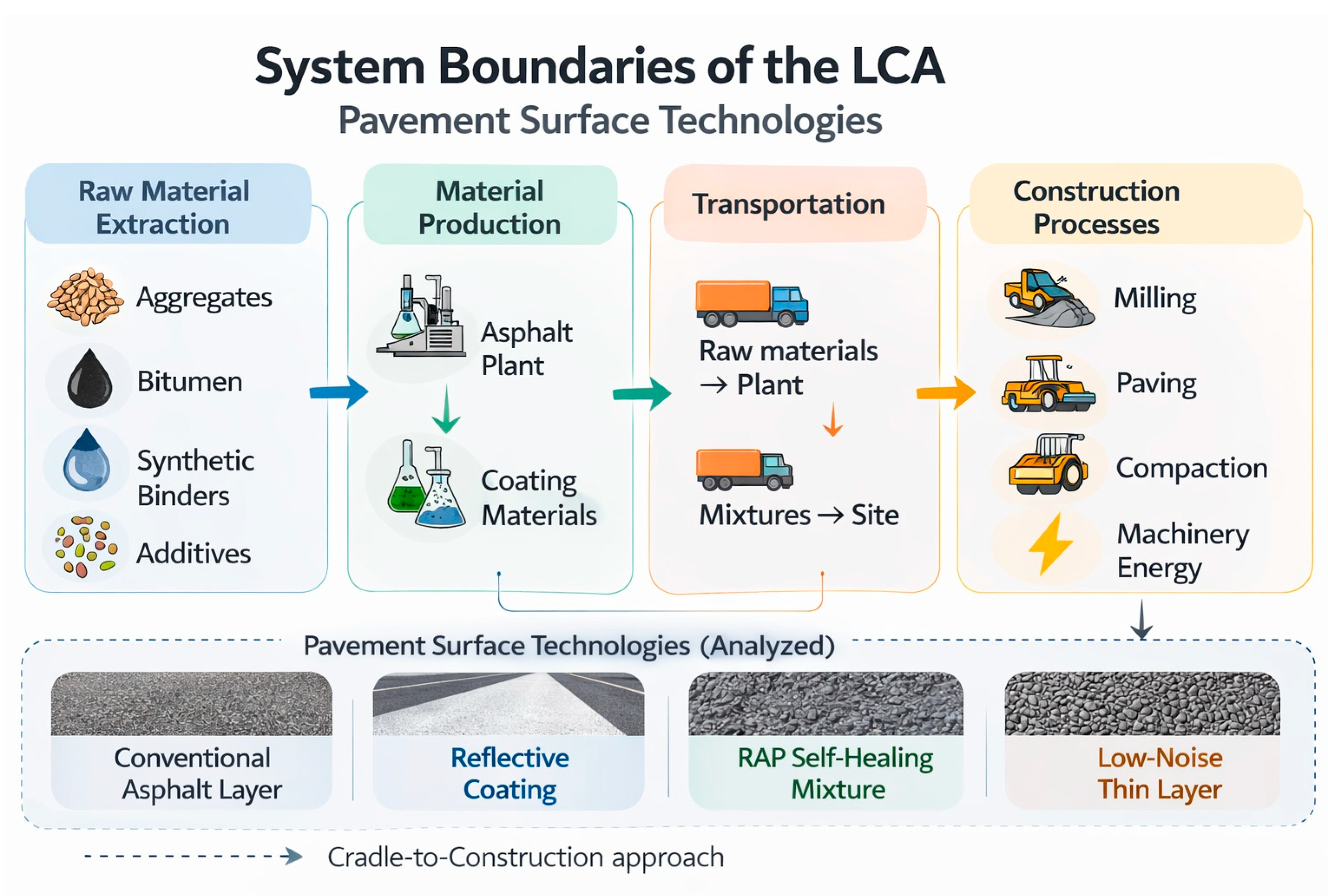
The system boundaries considered in this study include the main processes associated with the pavement rehabilitation phase. The assessment follows a cradle-to-construction approach, covering the stages required for the production and implementation of the asphalt mixtures used in each pavement surface technology.
The processes included within the system boundaries are the extraction and processing of raw materials, including aggregates and binders; production of asphalt mixtures at the asphalt plant; transportation of raw materials and asphalt mixtures; construction and implementation of the pavement surface layers on site; and energy consumption associated with construction machinery used during pavement rehabilitation.
Upstream processes related to the production of materials and energy carriers were modeled using background datasets obtained from the ecoinvent database, integrated within the Air.e LCA software version 3.2 (Solidforest, Madrid, Spain) [33] used for the environmental assessment.
Certain processes were excluded from the system boundaries due to their relatively minor contribution to the overall environmental impacts or due to the lack of consistent data across the different case studies. These exclusions include site preparation activities, signaling and road marking operations, infrastructure installation unrelated to pavement layers, maintenance of construction machinery, and cleaning operations after pavement installation. In addition, long-term pavement maintenance and end-of-life scenarios were not considered in this study due to the limited availability of reliable data and the focus on the environmental impacts associated with the rehabilitation phase.
The system boundaries were defined consistently for all pavement surface technologies analyzed in order to ensure a fair comparison between the different rehabilitation alternatives.
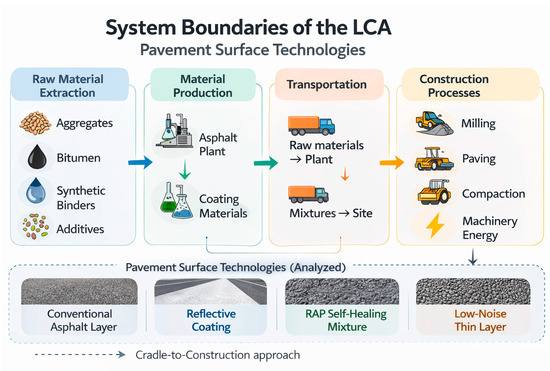
Figure 1 illustrates the system boundaries considered in the LCA and the pavement surface technologies analyzed in this study. The assessment follows a cradle-to-construction approach, including raw material extraction, material production at the asphalt plant, transportation of raw materials and mixtures, and construction processes on site. The figure also shows the four pavement surface technologies evaluated in the analysis: a conventional asphalt layer used as the reference scenario, a reflective pavement coating designed to increase surface albedo, a recycled asphalt mixture incorporating RAP with self-healing properties, and a low-noise thin asphalt layer. This framework allows the environmental impacts associated with each surface technology to be evaluated under consistent system boundaries and comparable functional conditions.
Figure 1.
System boundaries and pavement surface technologies considered in the Life-Cycle Assessment.
2.4. Pavement Surface Technologies
This study evaluates four pavement surface technologies applied to real road sections in order to assess their environmental performance under comparable conditions. The analyzed solutions include a conventional asphalt layer used as a reference case and three innovative pavement surface systems designed to improve functional performance and sustainability. The main characteristics of each technology are briefly described below.
2.4.1. Conventional Asphalt Layer
The conventional asphalt layer represents the standard rehabilitation solution commonly used in road maintenance. This mixture consists of traditional asphalt concrete composed of virgin aggregates and bituminous binder produced in an asphalt plant. The conventional system typically involves a surface layer thickness of approximately 5 cm and serves as the baseline scenario for comparing the environmental performance of the alternative pavement surface technologies analyzed in this study.
2.4.2. Reflective Pavement Coating
Reflective pavements are designed to increase surface albedo and reduce solar heat absorption. In the analyzed case, the reflective system consists of a thin surface coating applied over the pavement using a synthetic acrylic binder combined with aggregates. This technology allows a significant reduction in layer thickness compared with conventional asphalt mixtures, typically around 2.5 cm. In addition to reducing material consumption, reflective pavements may contribute to mitigating urban heat island effects by increasing pavement reflectivity.
2.4.3. RAP Self-Healing Mixture
The recycled asphalt mixture incorporates RAP together with rejuvenating agents designed to restore the mechanical properties of aged asphalt binders. These additives enhance the self-healing capacity of the mixture by promoting binder regeneration and improving resistance to ageing and cracking. By reusing existing pavement materials, RAP mixtures reduce the demand for virgin aggregates and bitumen while potentially extending pavement service life.
2.4.4. Low-Noise Thin Asphalt Layer
Low-noise asphalt pavements are engineered to reduce traffic noise through modifications in surface texture and mixture composition. In the analyzed system, the noise-reducing pavement consists of a thin asphalt surface layer, typically around 3 cm thick, designed to improve acoustic performance and reduce rolling noise generated by vehicles. The reduced layer thickness also contributes to lowering material consumption and energy requirements during pavement construction.
2.5. Life Cycle Inventory (LCI)
The life-cycle inventory (LCI) phase involved the compilation and quantification of all material and energy flows associated with the pavement surface technologies evaluated in this study. Inventory data were primarily obtained from real road rehabilitation projects carried out by industrial partners. These companies provided detailed information on the construction of experimental road sections where the surface technologies described in Section 2.4 were implemented and monitored.
The inventory datasets include information on the composition of asphalt mixtures, quantities of materials used, transportation distances, fuel and energy consumption of construction machinery, and operational characteristics of asphalt plants. The data collected from these projects allow for the modeling of the main processes associated with pavement rehabilitation under real operating conditions.
The inventory modeling was divided into three main categories of processes:
- (a)
- Material production: This stage includes the extraction and processing of raw materials used in the asphalt mixtures and surface layers, such as aggregates, bitumen, alternative binders, rejuvenators, and other additives. The quantities of each material were determined based on the mixture designs provided by the companies involved in the experimental sections.
- (b)
- Transportation: Transportation processes include the delivery of raw materials from their extraction or production sites to asphalt plants, as well as the transport of asphalt mixtures from the production facilities to the construction sites. Transportation distances were estimated using the information provided by the companies and typical logistics conditions associated with the studied projects.
- (c)
- Construction processes: The construction phase includes the energy consumption associated with the machinery used during pavement rehabilitation, such as milling machines, asphalt pavers, compactors, dump trucks, and auxiliary equipment. The operating times and power requirements of each machine were obtained from project documentation and technical specifications.
Background data required for upstream processes, including raw material extraction, fuel production, electricity generation, and industrial manufacturing processes, were obtained from the ecoinvent life-cycle database integrated within the Air.e LCA software. These datasets provide internationally recognized background data that complement the primary data collected from the case studies.
The inventory modeling was performed separately for each pavement surface technology in order to allow a consistent comparison of environmental impacts between the different rehabilitation alternatives. The detailed inventory data used in the analysis are presented in the corresponding tables for each case study.
Table 1 summarizes the main characteristics of the pavement surface technologies evaluated in this study. The table presents key parameters relevant for the LCA including layer thickness, binder type, and recycled material content. These parameters strongly influence the environmental performance of the analyzed systems, as they determine the quantity of materials required for pavement construction and the composition of the asphalt mixtures used in each surface technology. The information shown in Table 1 provides a simplified overview of the main differences between the conventional asphalt layer and the innovative pavement surface solutions considered in the analysis.
Table 1.
Main characteristics of the pavement surface technologies analyzed.
RAP was modeled using a cut-off approach, consistent with the system model of the ecoinvent database. Under this approach, RAP is considered a secondary material that enters the system without carrying environmental burdens from its previous life cycle. Therefore, the impacts associated with the original production of aggregates and bitumen are not allocated to RAP. Only the processes related to its recovery, transportation, and processing (e.g., milling and handling) are included in the inventory.
2.6. Life Cycle Impact Assessment (LCIA)
The environmental impacts associated with the pavement surface technologies were evaluated using the ILCD 2011 midpoint+ method (EF 2.0), which is recommended by the European Commission for Environmental Footprint studies. This method provides a standardized framework for assessing environmental impacts related to resource consumption, emissions to air, water and soil, and potential effects on human health and ecosystems.
The impact categories considered in this study include climate change, ozone depletion, particulate matter formation, human toxicity, ecotoxicity, photochemical ozone formation, acidification, eutrophication, ionizing radiation, land use, water resource depletion, and fossil and mineral resource depletion. These indicators represent midpoint environmental impacts, which quantify the potential environmental effects of emissions and resource use before they translate into endpoint damages to ecosystems, human health, or natural resources.
All calculations were performed using the same LCA software described above [33], which integrates both the ecoinvent database and the ILCD 2011 midpoint characterization method. The software enables the systematic calculation of environmental impacts based on the compiled life cycle inventory data and ensures consistent modeling of the processes included within the system boundaries defined in this study.
Environmental impact categories are reported using standard abbreviations (e.g., AP, GWP, ADPff) for clarity and conciseness. The full names of all impact categories are provided in the Abbreviations section.
2.7. Data Quality, Assumptions and Limitations
The reliability of the Life-Cycle Assessment results depends on the quality of the inventory data and the assumptions adopted during the modeling process. In this study, priority was given to the use of primary data obtained directly from the companies responsible for the construction of the experimental pavement sections. These datasets include detailed information on material quantities, mixture compositions, machinery operation, and transportation distances.
However, certain upstream processes required the use of secondary data obtained from the ecoinvent database, particularly for raw material extraction, energy production, and industrial manufacturing processes. Although these datasets are widely used in LCA studies, they may introduce some level of uncertainty due to differences between the modeled processes and the specific conditions of the analyzed projects.
Another important assumption concerns the expected service life of the pavement surface technologies. The service life values were determined based on technical information provided by the companies involved in the construction of the experimental road sections, complemented with values reported in the scientific literature on pavement durability.
These values are consistent with typical service life ranges reported for similar pavement technologies under comparable traffic and environmental conditions. Although some variability may arise depending on specific operating conditions, the selected values are considered representative for the purpose of comparative analysis.
To account for uncertainty associated with pavement durability, both minimum and maximum service life scenarios were considered in the analysis.
In addition, the case studies analyzed correspond to relatively short experimental road sections, which may not fully represent the efficiencies that can be achieved in large-scale rehabilitation projects. As a result, certain processes such as machinery operation or transportation logistics may present higher relative impacts compared with full-scale road rehabilitation works.
Despite these limitations, the use of detailed primary data and consistent methodological assumptions ensures that the results provide a reliable comparative evaluation of the environmental performance of the pavement surface technologies analyzed in this study.
In this study, the system boundaries are limited to the rehabilitation phase of pavement systems and therefore do not explicitly include the use phase or end-of-life processes. In a full life-cycle assessment of road infrastructure, the use phase would typically include repeated maintenance interventions over a defined analysis period. The effect of different maintenance frequencies is implicitly accounted for through the definition of the functional unit (1 m2 of rehabilitated pavement per year of service life), which normalizes environmental impacts according to pavement durability. As a result, surface technologies with shorter service lives inherently reflect higher impacts per year due to the need for more frequent interventions.
Nevertheless, explicitly modeling maintenance cycles over a defined analysis period (e.g., 20–30 years) could provide additional insights into the long-term environmental performance of pavement systems. Future research should therefore aim to extend the system boundaries to a full life cycle perspective, incorporating use-phase dynamics and end-of-life processes.
It should be noted that the environmental benefits associated with RAP incorporation depend on the allocation approach adopted in the LCA model. In this study, a cut-off approach was applied; however, alternative approaches such as system expansion (avoided burden) could lead to different results, particularly in impact categories related to resource use and climate change. Therefore, the results should be interpreted considering this methodological assumption.
The results presented in this study are based on deterministic modeling and do not include a formal uncertainty propagation analysis (e.g., Monte Carlo simulation or confidence intervals). Although primary data from real pavement sections were used to improve representativeness, uncertainty may arise from variability in input parameters such as material quantities, transport distances, machinery performance, and estimated service life.
Despite these uncertainties, the comparative results show consistent trends and relatively large differences between the analyzed pavement technologies, which support the robustness of the main conclusions. Nevertheless, future research should incorporate uncertainty analysis methods to quantify the statistical significance of the observed differences.
The results obtained from the LCIA are presented and discussed in Section 3.
3. Results and Discussion
3.1. Environmental Performance of Reflective Pavement Coating
The environmental performance of the reflective pavement coating was evaluated by comparing its impacts with those of the conventional asphalt surface layer used as the reference scenario. The analysis was based on the functional unit defined in Section 2.2, allowing the environmental impacts of both surface systems to be normalized per square meter of pavement and per year of service life.
Table 2 and Table 3 present the environmental impacts calculated per functional unit (1 m2 of rehabilitated pavement surface per year of service life) for the conventional asphalt mixture and the reflective pavement coating. Two service life scenarios were considered in order to account for the uncertainty associated with pavement durability: a minimum service life scenario (Table 2) and a maximum service life scenario (Table 3). These results allow a direct comparison of the environmental performance of the two pavement surface systems under different durability assumptions.
Table 2.
Environmental impacts per functional unit (1 m2·year) for conventional asphalt and reflective pavement coating under the minimum service life scenario.
Table 3.
Environmental impacts per functional unit (1 m2·year) for conventional asphalt and reflective pavement coating under the maximum service life scenario.
The differences between Table 2 and Table 3 are related to the assumed service life of the pavement systems. Table 2 corresponds to a minimum service life scenario, while Table 3 represents a maximum service life scenario. Since the results are expressed per functional unit (1 m2·year), longer service life values result in lower environmental impacts per year, as the initial environmental burdens are distributed over a longer period.
In general, the reflective pavement reduces several environmental impact categories compared with the conventional mixture.
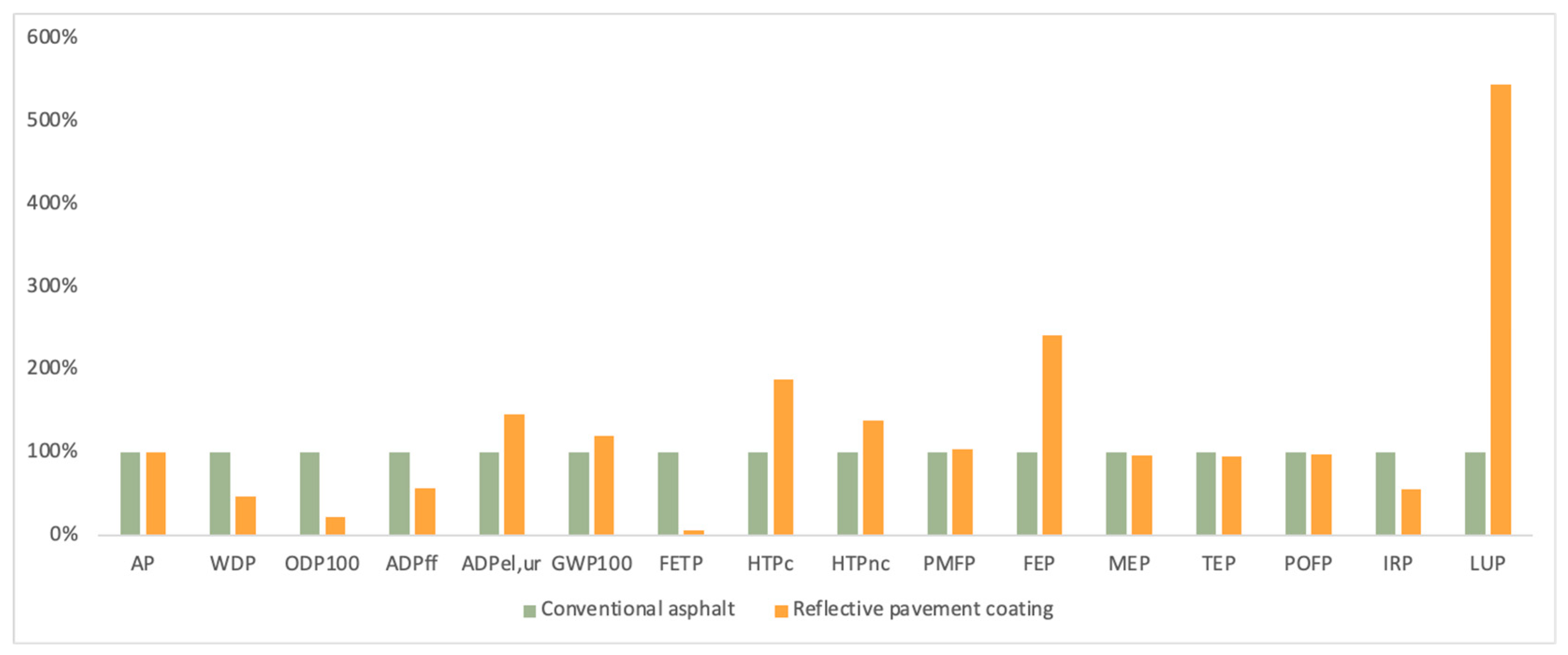
Notable reductions are observed in fossil resource depletion (ADPff), photochemical ozone formation (POFP), and particulate matter formation (PMFP). For acidification potential (AP), the results depend on the assumed service life scenario: a reduction is observed in the minimum service life scenario, while slightly higher values are obtained for the reflective pavement in the maximum service life scenario.
However, higher impacts are observed in some categories such as freshwater eutrophication (FEP) and land use (LUP). These increases are primarily related to the production processes of the synthetic acrylic binder used in the reflective coating.
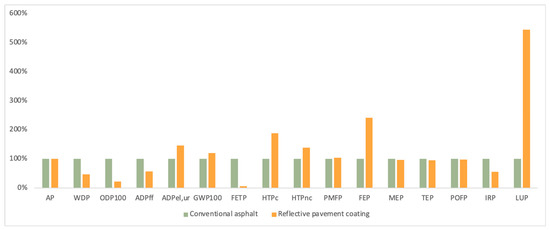
The relative environmental impacts of the reflective pavement coating compared with the conventional asphalt mixture are presented in Figure 2. The results are expressed as normalized values, where the environmental impacts of the conventional asphalt mixture are set as the reference value (100%) for each impact category.
Figure 2.
Relative environmental impacts of reflective pavement coating compared with the conventional asphalt mixture (reference value = 100%).
As shown in Figure 2, the reflective pavement coating reduces several environmental impacts compared with the conventional asphalt mixture. In particular, noticeable reductions are observed in fossil resource depletion (ADPff), photochemical ozone formation (POFP), and particulate matter formation (PMFP). The trend for acidification potential (AP) depends on the assumed service life scenario.
However, higher relative impacts are observed in certain categories such as freshwater eutrophication (FEP) and land use (LUP). These increases are primarily related to the production processes of the synthetic acrylic binder used in the reflective coating. The results therefore highlight the existence of environmental trade-offs associated with the use of reflective pavement coatings.
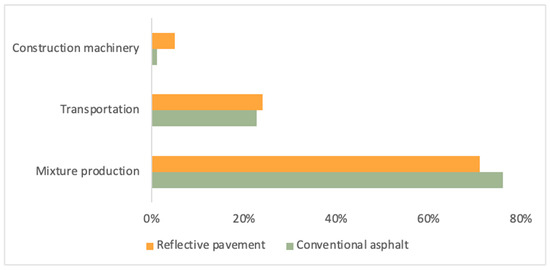
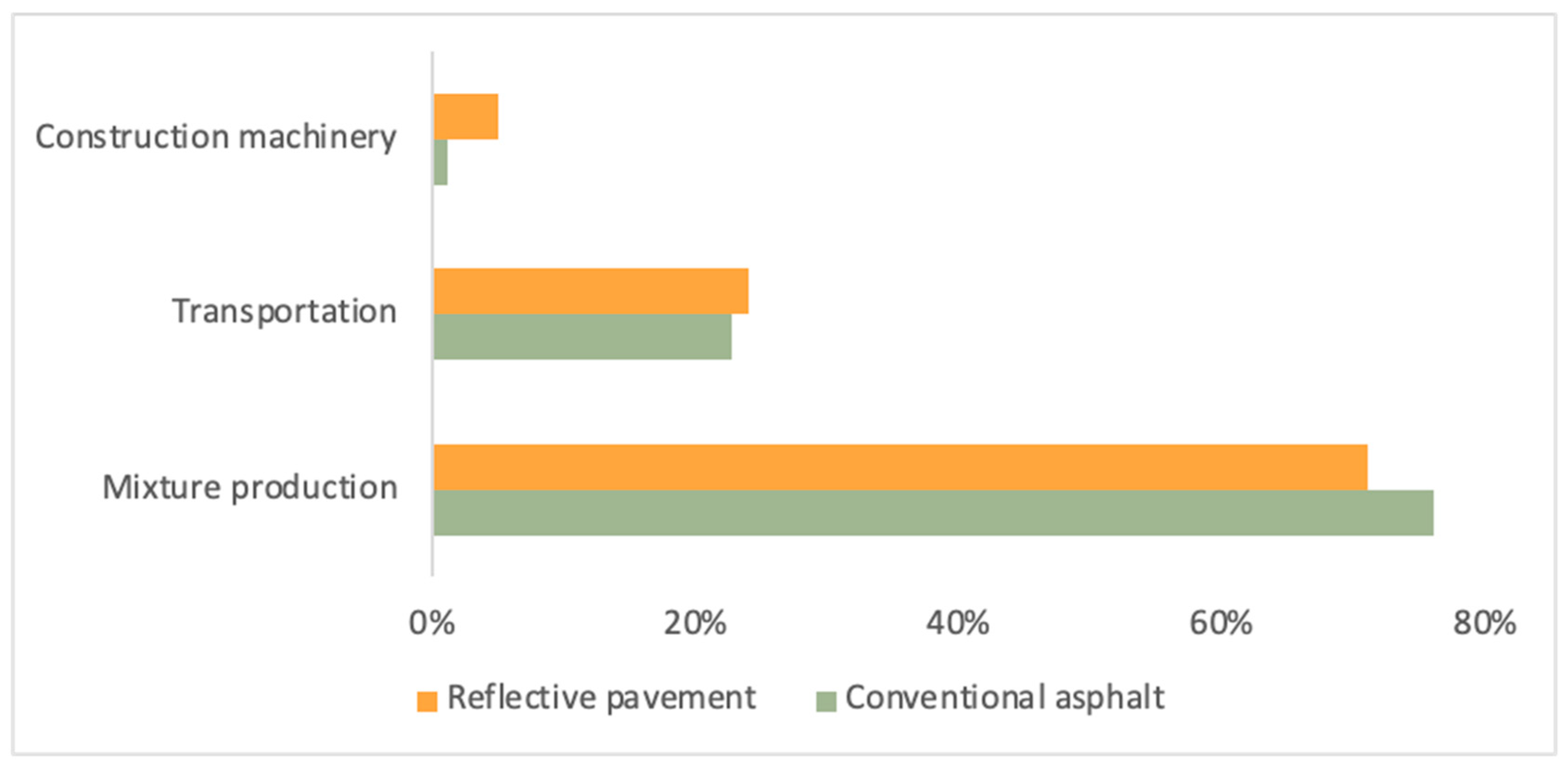
As shown in Figure 3, asphalt mixture production represents the dominant contribution to climate change impacts for both pavement systems, accounting for more than 75% of the total impacts. Transportation represents the second largest contribution, while construction machinery contributes only marginally. This confirms that reducing asphalt mixture production is a key factor in improving the environmental performance of pavement surface technologies.
Figure 3.
Contribution of life-cycle processes to climate change impact (GWP) for conventional asphalt and reflective pavement coating.
These findings are consistent with previous studies indicating that reducing pavement layer thickness and material consumption significantly decreases environmental impacts in asphalt systems. In addition, similar trade-offs associated with alternative binder compositions have been reported in recent LCA studies of innovative pavement materials [11,13].
3.2. Environmental Performance of RAP Self-Healing Mixture
The environmental performance of the recycled asphalt mixture incorporating rejuvenator-based self-healing technology was evaluated by comparing its impacts with those of the conventional asphalt mixture used as the reference scenario. As in the previous analysis, the environmental impacts were normalized according to the functional unit defined in Section 2.2 (1 m2 of rehabilitated pavement surface per year of service life), enabling a consistent comparison between pavement surface technologies.
The RAP self-healing mixture incorporates reclaimed asphalt pavement together with rejuvenating agents designed to restore the mechanical properties of aged asphalt binders. The use of RAP enables the reuse of aggregates and bitumen from existing pavement materials, reducing the demand for virgin resources and promoting circular economy strategies in road infrastructure maintenance.
Table 4 presents the environmental impacts calculated per functional unit for both the conventional asphalt mixture and the RAP self-healing mixture. In addition, Table 5 shows the corresponding absolute environmental impacts for the analyzed pavement systems.
Table 4.
Environmental impacts calculated per functional unit for both the conventional asphalt mixture and the RAP self-healing mixture.
Table 5.
Environmental impacts of the conventional asphalt mixture and RAP self-healing mixture incorporating the rejuvenator-based binder.
The results indicate that the incorporation of recycled asphalt pavement leads to reductions in several environmental impact categories associated with resource extraction and material production.
In particular, lower impacts are observed in fossil resource depletion (ADPff), water resource depletion (WDP), and ozone depletion potential (ODP), reflecting the reduced demand for virgin aggregates and bitumen in the recycled mixture.
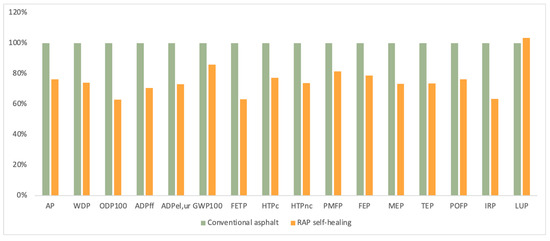
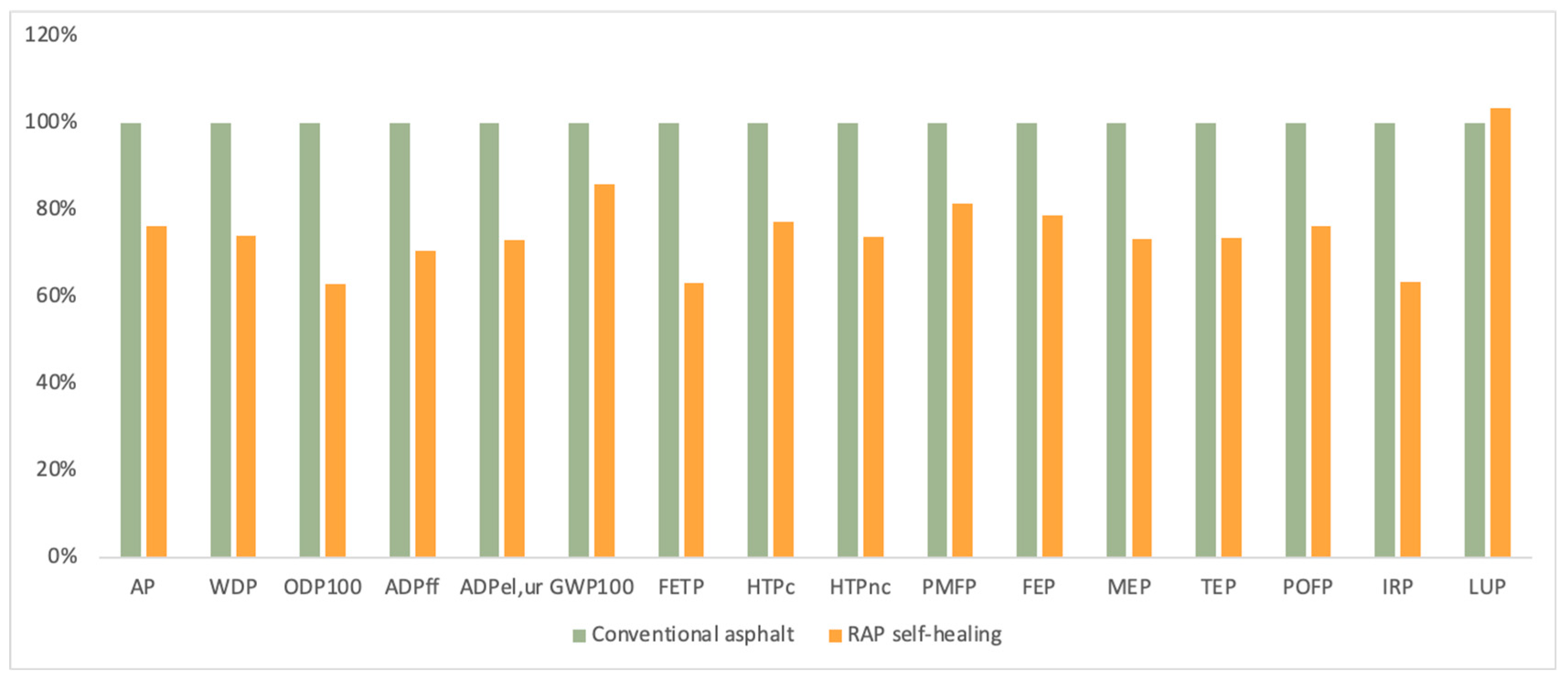
The relative environmental impacts of the RAP self-healing mixture compared with the conventional asphalt mixture are illustrated in Figure 4. The environmental impacts of the conventional mixture are used as the reference value (100%) for each impact category in order to facilitate comparison between the two pavement systems.
Figure 4.
Relative environmental impacts of RAP self-healing asphalt mixture compared with the conventional asphalt mixture (reference value = 100%).
As shown in Figure 4, the RAP self-healing mixture generally presents lower environmental impacts than the conventional asphalt mixture in most of the impact categories analyzed. Significant reductions can be observed in ozone depletion potential (ODP), freshwater ecotoxicity (FETP), ionizing radiation potential (IRP), and abiotic resource depletion (ADPff). These reductions are mainly associated with the incorporation of reclaimed asphalt pavement, which reduces the demand for virgin aggregates and bitumen during asphalt mixture production.
Moderate reductions are also observed in categories such as water depletion (WDP), human toxicity (HTPc and HTPnc), photochemical ozone formation (POFP), and terrestrial eutrophication (TEP). This highlights the environmental advantages of recycling pavement materials and support the application of circular economy strategies in road maintenance.
However, slight increases are observed in certain impact categories, particularly climate change (GWP), particulate matter formation (PMFP), freshwater eutrophication (FEP), and land use (LUP).
This pattern is also reflected in Figure 4, where the RAP self-healing mixture presents lower impacts in several categories while exhibiting higher values for land-use potential (LUP).
These increases are mainly related to the production of rejuvenating agents used to restore the mechanical properties of aged asphalt binders. The presence of these additives introduces additional environmental burdens that partially offset the benefits associated with the use of recycled pavement materials.
Overall, the results indicate that RAP mixtures incorporating rejuvenator-based self-healing technologies can improve the environmental performance of pavement rehabilitation systems by reducing the consumption of virgin materials, although careful consideration should be given to the environmental impacts associated with chemical additives used in the recycling process.
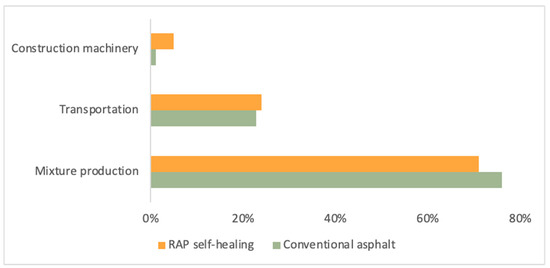
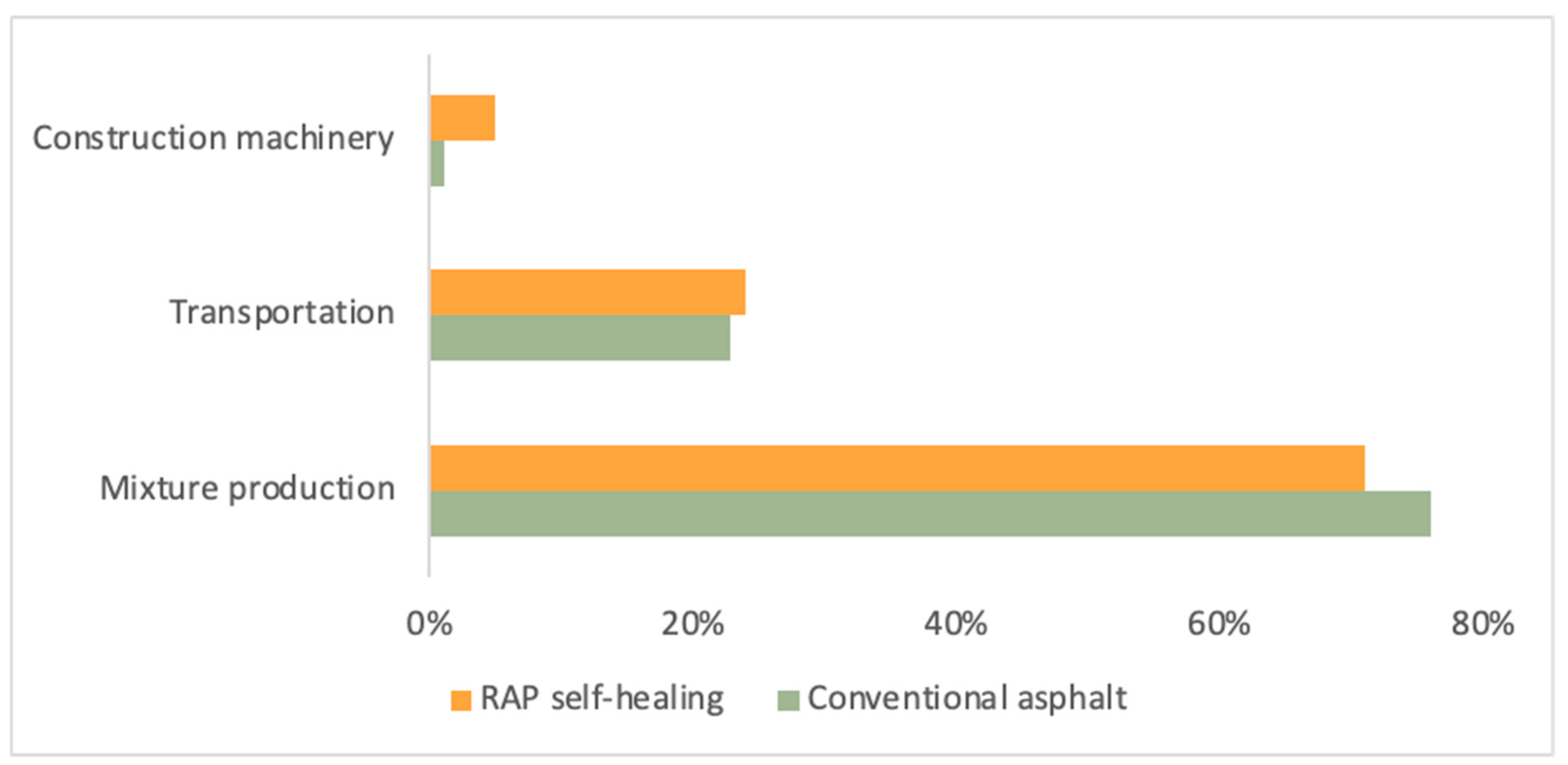
As shown in Figure 5, asphalt mixture production represents the dominant contribution to climate change impacts for both pavement systems. For the conventional asphalt mixture, mixture production accounts for approximately 76% of the total impacts, followed by transportation processes and construction machinery.
Figure 5.
Contribution of life-cycle processes to climate change impact (GWP) for conventional asphalt mixture and RAP self-healing mixture.
In the case of the RAP self-healing mixture, mixture production remains the main contributor, accounting for around 71% of the impacts. However, the relative contributions of transportation and construction machinery increase slightly compared with the conventional mixture. This change is mainly associated with the additional handling and processing operations required for recycled materials and rejuvenating agents.
This confirms that material production remains the most influential stage in the environmental performance of pavement rehabilitation technologies.
These results are in agreement with previous research showing that the incorporation of reclaimed asphalt pavement improves resource efficiency and reduces impacts associated with virgin material production, although the use of additives or rejuvenators may introduce additional environmental burdens [6,8,9].
3.3. Environmental Performance of Low-Noise Asphalt Mixture
The environmental performance of the low-noise asphalt mixture was evaluated by comparing its impacts with those of the conventional asphalt mixture used as the reference scenario. As in the previous analyses, the environmental impacts were normalized according to the functional unit defined in Section 2.2 (1 m2 of rehabilitated pavement surface per year of service life), ensuring a consistent comparison between pavement technologies.
Low-noise asphalt mixtures are designed to reduce traffic noise through optimized surface texture and reduced layer thickness. These mixtures typically require thinner surface layers compared with conventional asphalt pavements, which can lead to a reduction in the quantity of materials required for pavement rehabilitation. As a result, the production of aggregates and bitumen may be significantly reduced, potentially improving the environmental performance of the pavement system.
The results presented in Table 6 and Table 7 indicate that the low-noise asphalt mixture generally exhibits lower environmental impacts than the conventional asphalt mixture when the results are expressed per functional unit. Although the absolute environmental impacts shown in Table 6 are higher for the low-noise mixture due to the characteristics of the specific test section, the normalization per functional unit presented in Table 7 reveals clear environmental advantages associated with this pavement technology.
Table 6.
Environmental impacts of conventional asphalt mixture and low-noise asphalt mixture.
Table 7.
Environmental impacts per functional unit (1 m2·year) for conventional asphalt mixture and low-noise asphalt mixture.
In particular, noticeable reductions are observed in several impact categories related to resource use and atmospheric emissions. Climate change potential (GWP) decreases from 3.88 × 10⁻¹ to 2.34 × 10⁻¹ kg CO2e per functional unit, representing a significant reduction associated with the lower material demand of the thin asphalt layer. Similar reductions are observed in fossil resource depletion (ADPff), particulate matter formation (PMFP), and photochemical ozone formation (POFP), confirming the environmental benefits associated with reduced material consumption.
Reductions are also observed in other environmental impact categories, including freshwater ecotoxicity (FETP), human toxicity (HTPc and HTPnc), eutrophication (FEP, MEP, and TEP), ionizing radiation potential (IRP), and land use (LUP). These improvements are primarily related to the smaller quantities of aggregates and bitumen required for the low-noise asphalt mixture due to the reduced pavement thickness.
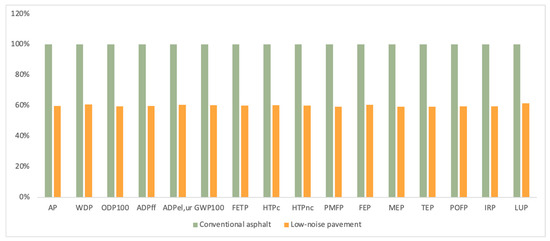
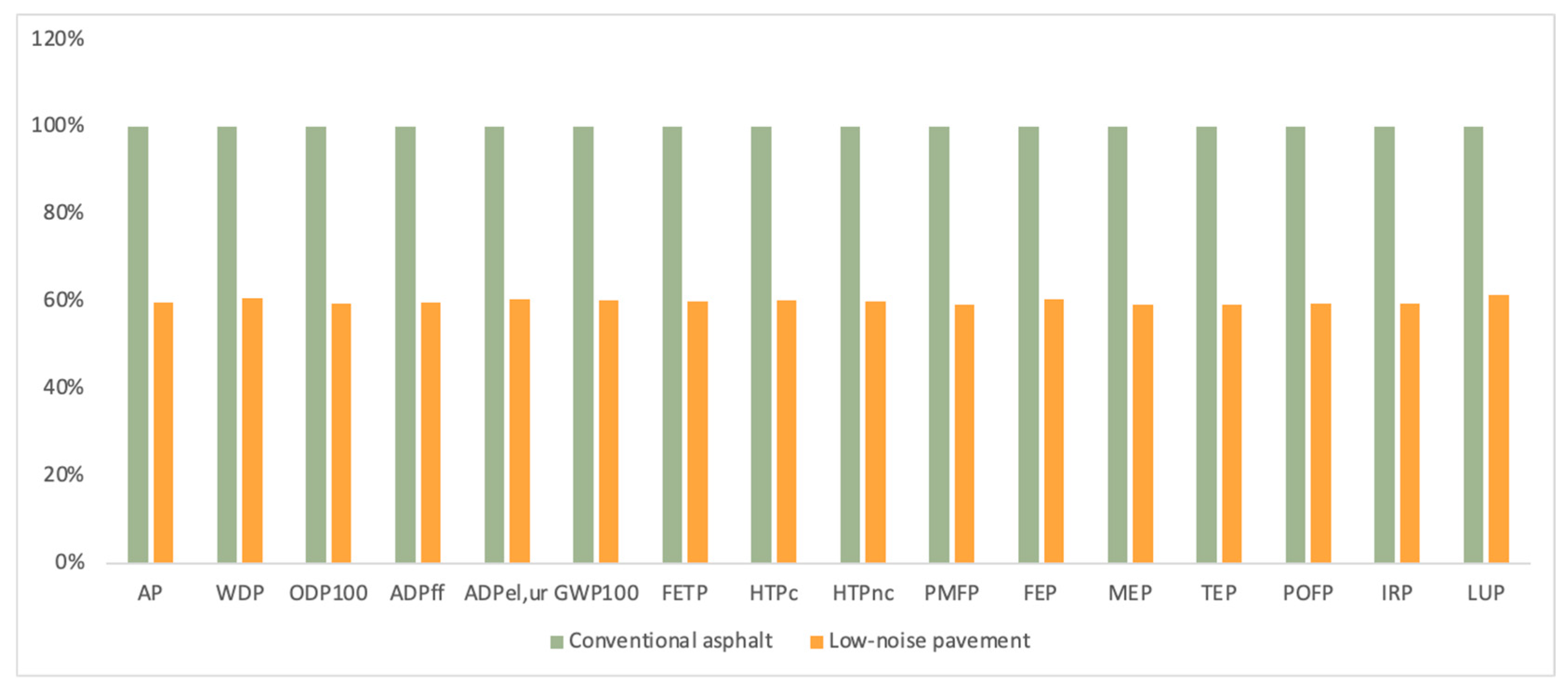
The relative environmental impacts of the low-noise asphalt mixture compared with the conventional asphalt mixture are presented in Figure 6. In this figure, the environmental impacts of the conventional mixture are used as the reference value (100%) in order to facilitate comparison between pavement technologies.
Figure 6.
Relative environmental impacts of low-noise asphalt mixture compared with the conventional asphalt mixture (reference value = 100%).
As shown in Figure 6, the low-noise asphalt mixture presents consistently lower environmental impacts than the conventional asphalt mixture across all impact categories evaluated in the study. The most significant reductions are observed in fossil resource depletion, climate change, particulate matter formation, and photochemical ozone formation. These reductions confirm that reducing pavement layer thickness is one of the most effective strategies for improving the environmental performance of pavement rehabilitation systems.
In addition to the environmental improvements observed in the LCA results, low-noise pavements also provide functional benefits by reducing traffic noise levels, which contributes to improving environmental quality and living conditions in urban and peri-urban areas. These combined environmental and functional advantages highlight the potential of low-noise asphalt layers as a sustainable solution for pavement maintenance.
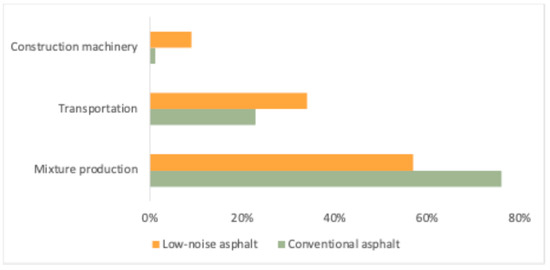
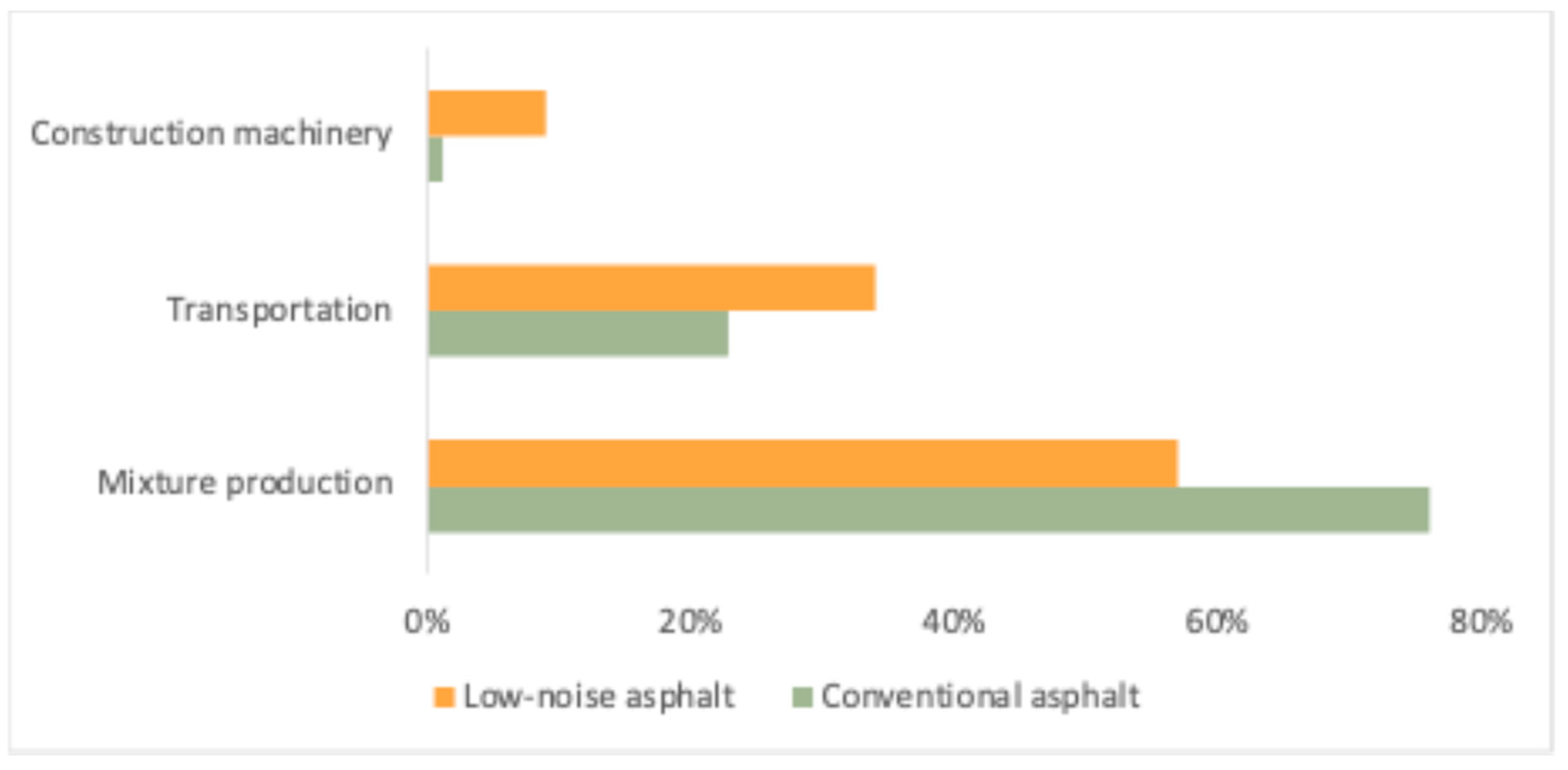
The contribution analysis presented in Figure 7 provides further insight into the processes responsible for the environmental impacts of the low-noise asphalt system. For the conventional asphalt mixture, asphalt mixture production represents the largest contribution to climate change impacts, accounting for approximately 76% of the total impacts, followed by transportation and construction machinery.
Figure 7.
Contribution of life-cycle processes to climate change impact (GWP) for conventional asphalt mixture and low-noise asphalt mixture.
In the case of the low-noise asphalt mixture, asphalt mixture production remains the main contributor, but its relative importance decreases to approximately 57% of the total impacts. At the same time, the relative contribution of transportation increases to around 34%, while construction machinery accounts for approximately 9% of the impacts.
This shift in contribution reflects the reduced material demand associated with the thinner pavement layer. As the quantity of asphalt mixture decreases, the relative importance of other processes such as transportation and construction operations becomes more significant. Nevertheless, asphalt mixture production continues to be the dominant source of environmental impacts for pavement rehabilitation systems.
These findings are consistent with previous studies highlighting that reducing pavement layer thickness is one of the most effective strategies for lowering environmental impacts in road infrastructure systems [19,20,23]. This reinforces the role of thickness reduction as a key strategy for improving the environmental performance of pavement systems.
3.4. Comparative Discussion of Pavement Surface Technologies
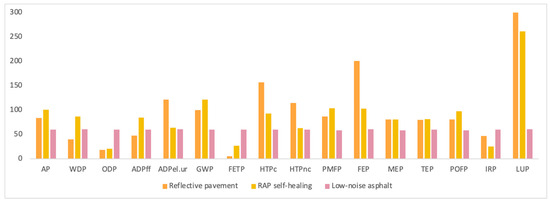
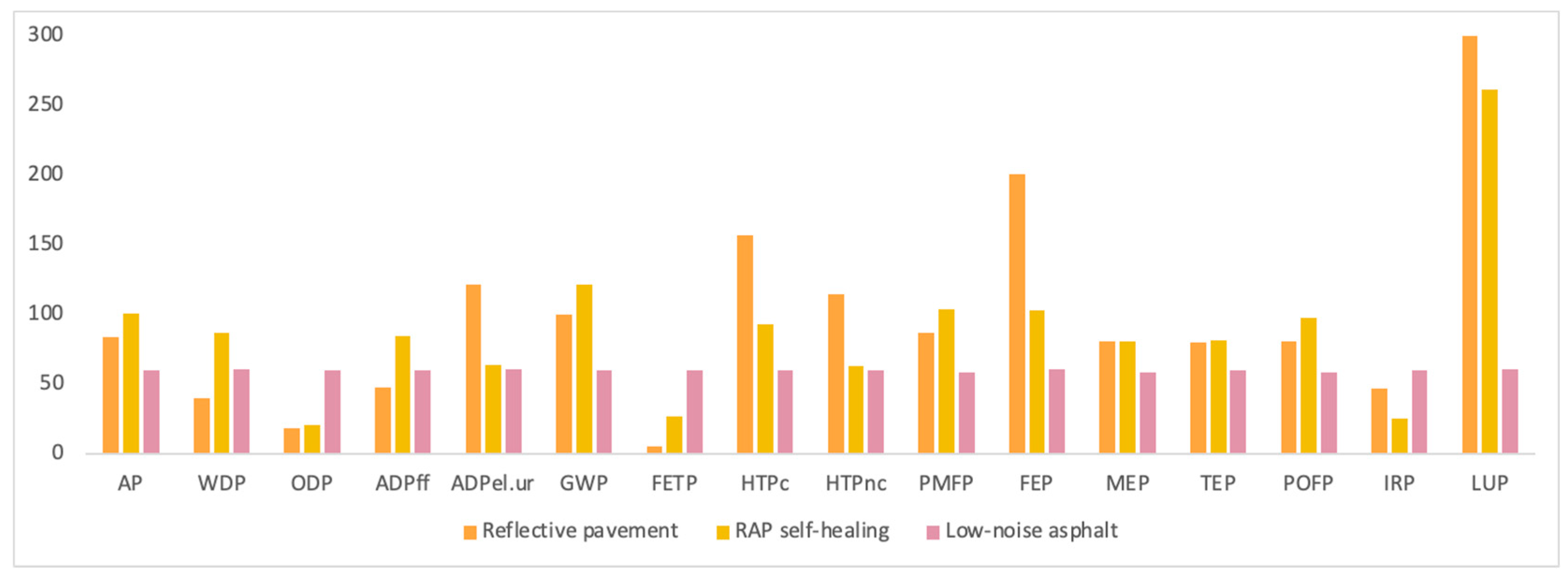
The comparative environmental performance of the pavement surface technologies analyzed in this study is summarized in Figure 8. The environmental impacts of each alternative surface system are expressed relative to the conventional asphalt mixture, which is used as the reference scenario.
Figure 8.
Comparative environmental performance of pavement surface technologies.
The results show that the thin low-noise asphalt mixture presents the lowest environmental impacts across most of the impact categories evaluated in the study. Reductions of approximately 40% are observed in several indicators, including climate change (GWP), fossil resource depletion (ADPff), particulate matter formation (PMFP), and photochemical ozone formation (POFP). These improvements are mainly associated with the reduced thickness of the pavement layer, which significantly decreases the amount of asphalt mixture required for pavement rehabilitation.
The reflective pavement coating also shows reductions in several environmental impact categories. However, the results reveal important environmental trade-offs, particularly in freshwater eutrophication (FEP) and land use (LUP). These increases are mainly associated with the production of the synthetic acrylic binder used in the reflective coating system.
The RAP self-healing mixture presents intermediate environmental performance. The incorporation of RAP contributes to reducing the consumption of virgin materials, although the environmental benefits are partially offset by the impacts associated with the production of rejuvenating agents.
Overall, the results highlight that reducing pavement layer thickness represents one of the most effective strategies for improving the environmental performance of pavement rehabilitation technologies. This is consistent with the existing body of literature, which identifies material consumption, layer thickness, and binder composition as key drivers of environmental performance in pavement systems [20,21,24].
It should be noted that the results are based on a rehabilitation-focused system boundary and a time-normalized functional unit. While this approach allows for a consistent comparison between pavement surface technologies with different service lives, the explicit modeling of maintenance cycles over a defined analysis period could further influence the comparative results.
In particular, pavement solutions with longer service lives would likely show additional environmental advantages when evaluated over extended time horizons, as fewer rehabilitation interventions would be required. Therefore, the inclusion of use-phase maintenance scenarios in future studies could provide a more comprehensive assessment of the long-term sustainability of pavement surface technologies.
From a practical perspective, the selection of pavement surface technologies should consider not only environmental performance but also local conditions such as traffic intensity, climate, and material availability.
Thin low-noise asphalt layers appear particularly suitable in urban and peri-urban areas with high traffic levels, where reducing material consumption and environmental impacts is a priority. Reflective pavement coatings may be more appropriate in regions with high solar radiation or pronounced urban heat island effects, where increased surface albedo can provide additional functional benefits. RAP self-healing mixtures are especially relevant in contexts where the availability of reclaimed asphalt pavement is high and circular economy strategies are promoted, allowing reductions in the use of virgin materials.
These considerations highlight the importance of integrating environmental assessment with site-specific design criteria to support more sustainable pavement management decisions.
4. Conclusions
This study presented a comparative Life-Cycle Assessment (LCA) of four pavement surface technologies applied to road maintenance: a conventional asphalt mixture used as a reference scenario, a reflective pavement coating, a recycled asphalt pavement (RAP) self-healing mixture incorporating rejuvenator-based binders, and a thin low-noise asphalt layer. The environmental assessment was performed using primary inventory data obtained from real pavement sections and applying the International Reference Life Cycle Data System (ILCD) 2011 midpoint+ method under a harmonized methodological framework.
The results of the comparative analysis allow the following conclusions to be drawn:
- •
- The thin low-noise asphalt layer presents the best overall environmental performance among the evaluated technologies, achieving reductions of approximately 40% in several impact categories compared with the conventional asphalt mixture. These improvements are mainly associated with the reduced pavement thickness, which significantly decreases material consumption and asphalt mixture production.
- •
- Reflective pavement coatings reduce several environmental impacts related to fossil resource depletion and atmospheric emissions. However, the effect on acidification potential depends on the assumed service life scenario.
- •
- RAP mixtures incorporating rejuvenator-based self-healing technologies contribute to improving resource efficiency by reducing the demand for virgin aggregates and bitumen. Nevertheless, the environmental benefits of recycling are partially offset by the impacts associated with the production of rejuvenating agents required to restore binder properties.
- •
- The contribution analysis indicates that asphalt mixture production is the dominant source of environmental impacts in pavement rehabilitation systems, typically accounting for more than 70% of total climate change impacts. Consequently, strategies aimed at reducing material consumption represent one of the most effective pathways for improving the environmental performance of road maintenance technologies.
- •
- Overall, the results demonstrate that parameters such as pavement layer thickness, binder composition, recycled material content, and expected service life strongly influence the environmental performance of pavement surface technologies.
The findings of this study highlight the importance of applying Life-Cycle Assessment methodologies to support decision-making in sustainable pavement design and maintenance. Comparative LCA can provide valuable insights for infrastructure managers, road agencies, and policymakers seeking to identify environmentally preferable pavement surface technologies and promote more sustainable road infrastructure systems.
Future research should further investigate long-term performance and maintenance scenarios to better capture the full life cycle impacts of innovative pavement technologies.
Author Contributions
Conceptualization, A.M.R.-A. and D.G.; data curation, A.M.R.-A. and D.G.; formal analysis, A.M.R.-A. and D.G.; investigation, A.M.R.-A. and D.G.; methodology, A.M.R.-A. and D.G.; project administration, A.M.R.-A.; resources, A.M.R.-A.; software, A.M.R.-A. and D.G.; supervision, A.M.R.-A.; validation, A.M.R.-A.; visualization, A.M.R.-A.; writing—original draft preparation, A.M.R.-A.; writing—review and editing, A.M.R.-A. and D.G. All authors have read and agreed to the published version of the manuscript.
Funding
This research received no external funding.
Institutional Review Board Statement
Not applicable.
Informed Consent Statement
Not applicable.
Data Availability Statement
Data are contained within the article.
Conflicts of Interest
The authors declare no conflicts of interest.
Abbreviations
The following abbreviations are used in this manuscript:
| Abbreviation | Meaning |
| ADPff | Abiotic Depletion Potential (fossil fuels) |
| ADPel.ur | Abiotic Depletion Potential (elements, ultimate reserves) |
| AP | Acidification Potential |
| CTUh | Comparative Toxic Unit for humans |
| CTUe | Comparative Toxic Unit for ecosystems |
| EF | Environmental Footprint |
| FEP | Freshwater Eutrophication Potential |
| FETP | Freshwater Ecotoxicity Potential |
| FU | Functional Unit |
| GHG | Greenhouse Gas |
| GWP | Global Warming Potential |
| HH | Human Health |
| HMA | Hot Mix Asphalt |
| HTPc | Human Toxicity Potential (cancer effects) |
| HTPnc | Human Toxicity Potential (non-cancer effects) |
| ILCD | International Reference Life Cycle Data System |
| IRP | Ionizing Radiation Potential |
| ISO | International Organization for Standardization |
| LCA | Life Cycle Assessment |
| LCI | Life Cycle Inventory |
| LCIA | Life Cycle Impact Assessment |
| LUP | Land Use Potential |
| MEP | Marine Eutrophication Potential |
| ODP | Ozone Depletion Potential |
| PMFP | Particulate Matter Formation Potential |
| POFP | Photochemical Ozone Formation Potential |
| RAP | Reclaimed Asphalt Pavement |
| TEP | Terrestrial Eutrophication Potential |
| WDP | Water Depletion Potential |
References
- Chong, D.; Wang, N.; Su, S.; Li, L. Global warming impact assessment of asphalt pavement by integrating temporal aspects: A dynamic life cycle assessment perspective. Transp. Res. Part D Transp. Environ. 2023, 117, 103663. [Google Scholar] [CrossRef] [Scilit]
- Wang, P.; Li, K.; Mao, J. Research on the carbon neutralization of hot mix asphalt pavement based on life cycle assessment theory. Sci. Total Environ. 2024, 954, 176691. [Google Scholar] [CrossRef] [Scilit]
- Liu, Q.; Yi, X.; Falchetto, A.C.; Wang, D.; Yu, B.; Qin, S. Carbon emissions quantification and different models comparison throughout the life cycle of asphalt pavements. Constr. Build. Mater. 2024, 411, 134323. [Google Scholar] [CrossRef] [Scilit]
- Zhao, W.; Yang, Q. Life cycle assessment and multi-index performance evaluation of semi-flexible pavement after composite modification by using fly ash, rubber particles, warm mixing asphalt and recycled asphalt pavement. Constr. Build. Mater. 2023, 364, 129945. [Google Scholar] [CrossRef] [Scilit]
- Li, J.; Santos, J.; Vargas-Farias, A.; Castro-Fresno, D.; Xiao, F. Prospective LCA of valorizing end-of-life tires in asphalt mixtures with emerging pretreatment technologies of crumb rubber. Resour. Conserv. Recycl. 2024, 210, 107828. [Google Scholar] [CrossRef] [Scilit]
- Aurangzeb, Q.; Al-Qadi, I.L.; Ozer, H.; Yang, R. Hybrid life cycle assessment for asphalt mixtures with high RAP content. Resour. Conserv. Recycl. 2014, 83, 77–86. [Google Scholar] [CrossRef] [Scilit]
- Zhang, Z.; Huang, W.; Sun, J.; Du, Y.; Chen, Y.; Dong, Q.; Zhuang, W.; Luo, S. Performance-informed life cycle assessment of waste-derived asphalt mixtures for full aggregate replacement. J. Environ. Manag. 2026, 404, 129299. [Google Scholar] [CrossRef] [Scilit]
- Bressi, S.; Primavera, M.; Santos, J. A comparative life cycle assessment study with uncertainty analysis of cement treated base (CTB) pavement layers containing recycled asphalt pavement (RAP) materials. Resour. Conserv. Recycl. 2022, 180, 106160. [Google Scholar] [CrossRef] [Scilit]
- Tushar, Q.; Santos, J.; Zhang, G.; Robert, D.; Giustozzi, F. Recycled used cooking oil (UCO) as a rejuvenator in high content reclaimed asphalt pavement (RAP) mixes: A life cycle assessment (LCA). Sci. Total Environ. 2025, 961, 178376. [Google Scholar] [CrossRef] [Scilit]
- Liu, M.; Luo, S.; Huang, W.; Yang, Y.; Hu, J.; Zhang, Z.; Zhang, B.; Du, K. Enabling high-RAP-content recycling in asphalt pavements through epoxy modification: Durability and life cycle assessment. Sustain. Mater. Technol. 2025, 45, e01519. [Google Scholar] [CrossRef] [Scilit]
- Santamouris, M. Using cool pavements as a mitigation strategy to fight urban heat island—A review of the actual developments. Renew. Sustain. Energy Rev. 2013, 26, 224–240. [Google Scholar] [CrossRef] [Scilit]
- Li, H.; Harvey, J.; Kendall, A. Field measurement of albedo for different land cover materials and effects on thermal performance. Build. Environ. 2013, 59, 536–546. [Google Scholar] [CrossRef] [Scilit]
- Qin, Y. A review on the development of cool pavements to mitigate urban heat island effect. Renew. Sustain. Energy Rev. 2015, 52, 445–459. [Google Scholar] [CrossRef] [Scilit]
- Su, J.; Schlangen, E.; Qiu, J. Design and construction of microcapsules containing rejuvenator for asphalt. Powder Technol. 2013, 235, 563–571. [Google Scholar] [CrossRef] [Scilit]
- Anupam, B.R.; Sahoo, U.C.; Chandrappa, A.K. A methodological review on self-healing asphalt pavements. Constr. Build. Mater. 2022, 321, 126395. [Google Scholar] [CrossRef] [Scilit]
- Varma, R.; Balieu, R.; Kringos, N. A state-of-the-art review on self-healing in asphalt materials: Mechanical testing and analysis approaches. Constr. Build. Mater. 2021, 310, 125197. [Google Scholar] [CrossRef] [Scilit]
- Li, H.; Wang, L.; Han, Y.; Zhang, X.; Zhang, H.; Chen, L. Acoustic properties and durability of porous low-noise pavement solutions to improve acoustic environment: A critical literature review. Int. J. Transp. Sci. Technol. 2025, in press. [Google Scholar] [CrossRef] [Scilit]
- Meng, Y.; Wu, Y.; Pei, J.; Hu, D. A review of porous elastic road surface as ultra-low noise pavement. J. Traffic Transp. Eng. (Engl. Ed.) 2025, 12, 1662–1689. [Google Scholar] [CrossRef] [Scilit]
- Garraín, D.; Lechón, Y. Environmental footprint of a road pavement rehabilitation service in Spain. J. Environ. Manag. 2019, 252, 109646. [Google Scholar] [CrossRef] [Scilit]
- Presti, D.L.; Carrion, A.J.D.B.; Parry, T.; Neves, L.; Keijzer, E.; Kalman, B.; Buttitta, G.; Mantalovas, K. A Framework for Life Cycle Management of Road Pavements in Europe. Transp. Res. Procedia 2023, 72, 1552–1559. [Google Scholar] [CrossRef] [Scilit]
- ISO 14040:2006; Environmental—Life Cycle Assessment—Principles and Framework. ISO: Geneva, Switzerland, 2006.
- ISO 14044:2006; Environmental Management—Life Cycle Assessment—Requirements and Guidelines. ISO: Geneva, Switzerland, 2006.
- Afshin, A.; Behnood, A. Sustainability of Asphalt Pavements: The role of life cycle assessment (LCA) and emerging technologies. Clean. Mater. 2025, 18, 100346. [Google Scholar] [CrossRef] [Scilit]
- Azam, A.; Gabr, A.; Ezzat, H.; Arab, M.; Alshammari, T.O.; Alotaib, E.; Zeiada, W. Life cycle assessment and pavement performance of recycled aggregates in road construction. Case Stud. Constr. Mater. 2024, 20, e03062. [Google Scholar] [CrossRef] [Scilit]
- Rodríguez-Alloza, A.M.; Malik, A.; Lenzen, M.; Gallego, J. Hybrid input–output life cycle assessment of warm mix asphalt mixtures. J. Clean. Prod. 2015, 90, 171–182. [Google Scholar] [CrossRef] [Scilit]
- Rodríguez-Alloza, A.M.; Garraín, D. Cradle-to-Grave Life Cycle Assessment of Asphalt Pavements Incorporating Recycled Tire Rubber and Warm Mix Additives. Coatings 2026, 16, 229. [Google Scholar] [CrossRef] [Scilit]
- Rodríguez-Alloza, A.M.; Garraín, D. Comparative Life Cycle Assessment of Rubberized Warm-Mix Asphalt Pavements: A Cradle-to-Gate Plus Maintenance Approach. Coatings 2025, 15, 899. [Google Scholar] [CrossRef] [Scilit]
- Asadi Azadgoleh, M.; Mohammadi, M.M.; AzariJafari, H.; Santos, J.; Ahmadi, A.; Alavi, M.Z.; Ayar, P. A comparative life cycle assessment (LCA), life cycle cost analysis (LCCA), mechanical and long-term leaching evaluation of road pavement structures containing multiple secondary materials. J. Clean. Prod. 2024, 458, 142484. [Google Scholar] [CrossRef] [Scilit]
- Mantalovas, K.; Graziano, F.; Teresi, R.; Mangano, M.C.; Sarà, G.; Celauro, C. Life Cycle Assessment of Asphalt Mixtures Incorporating Secondary Raw Materials Under a Circular Economy Perspective. Sustainability 2025, 17, 10869. [Google Scholar] [CrossRef] [Scilit]
- Santero, N.J.; Masanet, E.; Horvath, A. Life-cycle assessment of pavements. Part I: Critical review. Resour. Conserv. Recycl. 2011, 55, 801–809. [Google Scholar] [CrossRef] [Scilit]
- Santero, N.J.; Masanet, E.; Horvath, A. Life-cycle assessment of pavements Part II: Filling the research gaps. Resour. Conserv. Recycl. 2011, 55, 810–818. [Google Scholar] [CrossRef] [Scilit]
- Joint Research Centre: Institute for Environment, and Sustainability. In International Reference Life Cycle Data System (ILCD) Handbook—General Guide for Life Cycle Assessment—Detailed Guidance; Publications Office of the European Union: Luxembourg, 2011.
- Solidforest Air.e LCA Software, version 3.2; Solidforest: Madrid, Spain, 2023.

Disclaimer/Publisher’s Note: The statements, opinions and data contained in all publications are solely those of the individual author(s) and contributor(s) and not of MDPI and/or the editor(s). MDPI and/or the editor(s) disclaim responsibility for any injury to people or property resulting from any ideas, methods, instructions or products referred to in the content. |
© 2026 by the authors. Licensee MDPI, Basel, Switzerland. This article is an open access article distributed under the terms and conditions of the Creative Commons Attribution (CC BY) license.