


Highlights
What are the main findings?
- Dual-layer Cr-20Al composite coatings were successfully fabricated on Ti-6Al-4V substrates via mechanical alloying; 250 rpm is the optimal milling speed for dense, strongly adherent coatings.
- The coatings significantly boost the substrate’s oxidation resistance at 850 °C cyclic oxidation, forming protective (Al,Cr)2O3 and BCC Cr-rich solid solutions with a four-layer structure that effectively inhibits inward oxygen diffusion.
What are the implications of the main findings?
- The optimal 250 rpm milling speed enables low-cost, scalable mechanical alloying fabrication of high-quality Cr-20Al coatings on Ti-6Al-4V, offering a viable alternative to expensive traditional coating techniques.
- The coatings’ enhanced high-temperature oxidation resistance expands Ti-6Al-4V’s service scope in high-temperature fields like aerospace and nuclear engineering.
Abstract
Cr-Al composite coatings were fabricated on Ti-6Al-4V alloy substrates via mechanical alloying using a high-energy planetary ball mill. The coatings exhibited a distinctive bilayer architecture comprising an inner layer with coarse reinforcing particles and an outer layer featuring a refined, homogenized microstructure. Systematic investigations were conducted to elucidate the influence of rotational speed on coating formation, microstructural evolution, phase composition, and high-temperature oxidation performance. The findings revealed that insufficient milling speeds failed to facilitate adequate powder deposition, resulting in poor interfacial adhesion and the formation of porous or thin coatings. Conversely, excessive rotational speeds induced surface roughening and coating delamination. Optimization studies identified 250 r/min as the optimal milling speed, yielding dense, well-adherent coatings with superior oxidation resistance. Cyclic oxidation testing at 850 °C demonstrated that coated specimens exhibited significantly reduced mass gain compared to uncoated substrates. Post-oxidation characterization confirmed the formation of a protective corundum-type oxide scale (α-Al2O3 and Cr2O3) and revealed a four-layered structure in the oxidized coating: (I) a dense oxide film serving as an oxygen barrier, (II) a dense alloyed layer, (III) a porous alloyed layer, and (IV) an inner diffusion zone. These results demonstrate that the mechanically alloyed Cr-Al coatings provide effective protection against high-temperature oxidation for Ti-6Al-4V alloy substrates.
1. Introduction
Ti-6Al-4V alloy is the most widely used titanium alloy in aerospace and biomedical applications due to its excellent specific strength, corrosion resistance, and biocompatibility [1]. However, its poor oxidation resistance above 400 °C, caused by the high affinity of titanium for oxygen and the formation of a brittle, non-protective TiO2-rich scale, significantly limits its high-temperature applications [2]. Surface protective coatings represent an effective strategy to overcome this limitation by acting as diffusion barriers against oxygen ingress [3,4].
Among various protective coating systems, Cr-Al-based coatings have attracted considerable attention due to their ability to form thermodynamically stable and slow-growing α-Al2O3 and Al2O3 oxide scales [5,6]. The protective mechanism relies on the selective oxidation of Al and Cr to form a dense, adherent oxide layer that impedes inward oxygen diffusion. Ideally, protective oxide scales should be sufficiently thick to ensure complete surface coverage while avoiding excessive residual stress that could compromise mechanical integrity and adhesion [7]. Recent advances in Cr-Al coatings include the development of composite architectures, such as multilayered structures and gradient compositions, to enhance scale adhesion and thermal cycling resistance [8,9].
Current fabrication methods for Cr-Al coatings include diffusion heat treatment [10], physical vapor deposition (PVD) [11], and electrodeposition [12]. However, these techniques often involve high processing costs, complex equipment, or limited coating thickness. Mechanical alloying (MA) offers a promising alternative due to its simplicity, cost-effectiveness and ability to produce coatings with non-equilibrium phases and amorphous and composite structures [13,14,15,16]. This study employs high-energy ball milling to fabricate Cr-Al composite coatings on Ti-6Al-4V substrates. The effect of rotational speed on the microstructure and oxidation behavior of the coating was investigated through the comparison of the microstructures, the phase compositions and the oxidation behaviors. After that, a reasonable oxidation process of the coating was discussed and elucidated.
2. Experimental Details
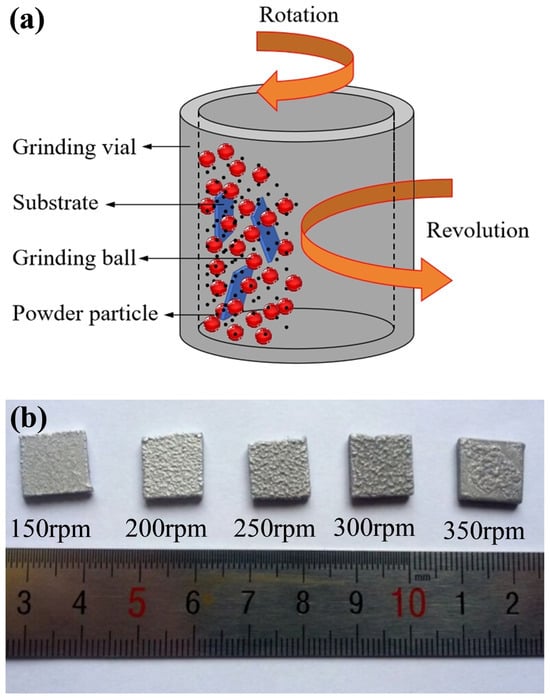
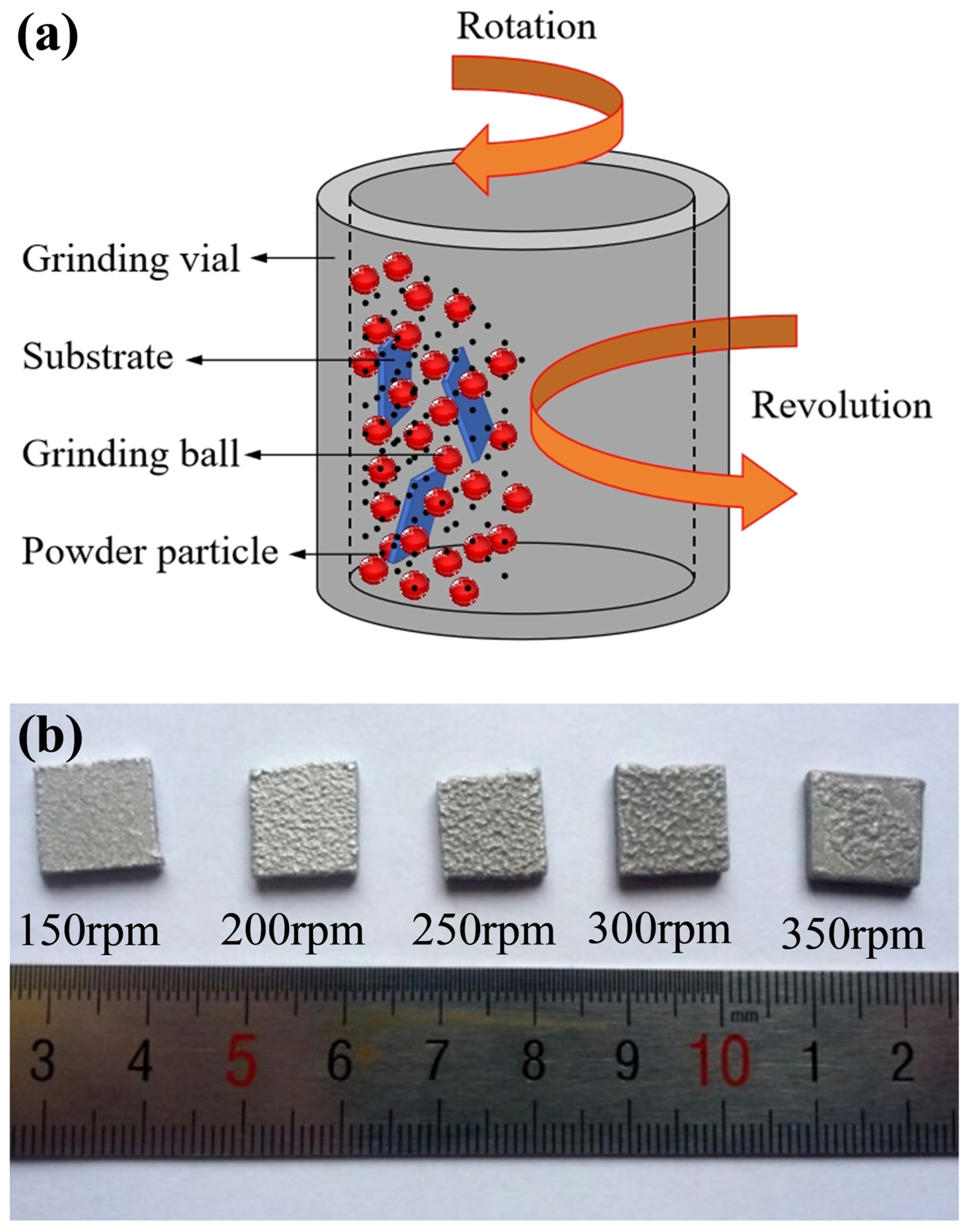
A Fritsch Pulverisette-6 planetary mono ball mill was employed for coating fabrication. The experimental setup is schematically illustrated in Figure 1a. Ti-6Al-4V alloy substrates were sectioned into blocks measuring 10 mm × 10 mm × 2 mm. Al and Cr powders served as the raw materials for Cr-Al coating preparation. The purity and particle size of the powders are listed in Table 1. To achieve dense coatings, various milling speeds were employed; the specific powder compositions and processing parameters are detailed in Table 2.
Figure 1.
Schematic illustrations of experimental method (a) and macro morphologies of the coatings fabricated at different rotational speeds (b).
Table 1.
Purity and average particle size of the raw powder.
Table 2.
Experimental parameters.
A milling duration of 5 h was chosen to mitigate severe work hardening of the powder particles. All experiments were conducted in a standard 700 mL stainless steel grinding vial (Figure 1a). No process control agent was introduced, and milling was performed in ambient atmosphere, with the vial sealed to prevent atmospheric contamination during mechanical alloying. To limit excessive temperature buildup, a cycle of 20 min milling followed by 10 min cooling was adopted. Oxidation behavior was evaluated using a cyclic testing method in a box-type high-temperature resistance furnace at 850 °C. This testing temperature exceeded twice the maximum service temperature of pure Ti (350 °C) yet remained below the β-transus temperature (882.5 °C) [1]. Both coated specimens and bare substrates were oxidized in static laboratory air at atmospheric pressure for a total duration of 100 h. The specimens were periodically removed from the furnace, cooled to room temperature, and weighed at 5 h intervals using an electronic balance with a precision of 0.1 mg.
Cross-sectional samples were extracted from the as-prepared coated specimens by spark erosion wire cutting, followed by careful grinding and polishing following standard metallographic procedures. Microstructural characterization was conducted using a JEOL JSM-6360LV (JEOL Ltd., Tokyo, Japan) scanning electron microscope (SEM) equipped with an EDAX energy-dispersive X-ray spectrometer (EDX). Phase identification of the coatings and oxide products was performed by X-ray diffraction (XRD) using an X’TRA diffractometer (SmartLab™, Rigaku Corporation, Tokyo, Japan) with Cu Kα radiation (λ = 0.1540562 nm) operated at 40 kV and 40 mA in continuous scan mode.
3. Results and Discussion
3.1. Microstructure
The macroscopic morphologies of the as-synthesized coatings are presented in Figure 1b. Evidently, the coating fabricated at 150 r/min was thin and discontinuous, rendering it unsuitable for substrate protection. Conversely, the coating prepared at 350 r/min exhibited partial flaking, likely attributable to excessive energy input during milling. In contrast, coatings formed at 200 r/min, 250 r/min and 300 r/min achieved complete substrate coverage. These coatings displayed a rough surface texture, with roughness increasing progressively with milling speed. Given the ineffectiveness of coatings produced at 150 r/min and 350 r/min, subsequent investigations focused primarily on the microstructural characteristics, phase compositions and oxidation behaviors of samples milled at 200 r/min, 250 r/min and 300 r/min. These samples are designated as MA-x, where x denotes the respective milling speed.
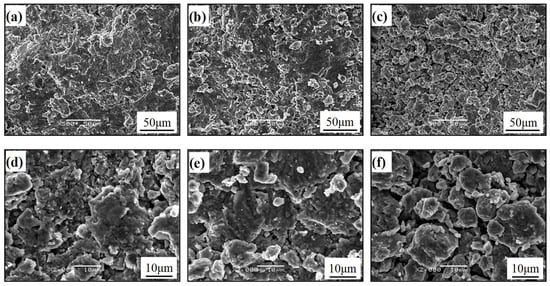
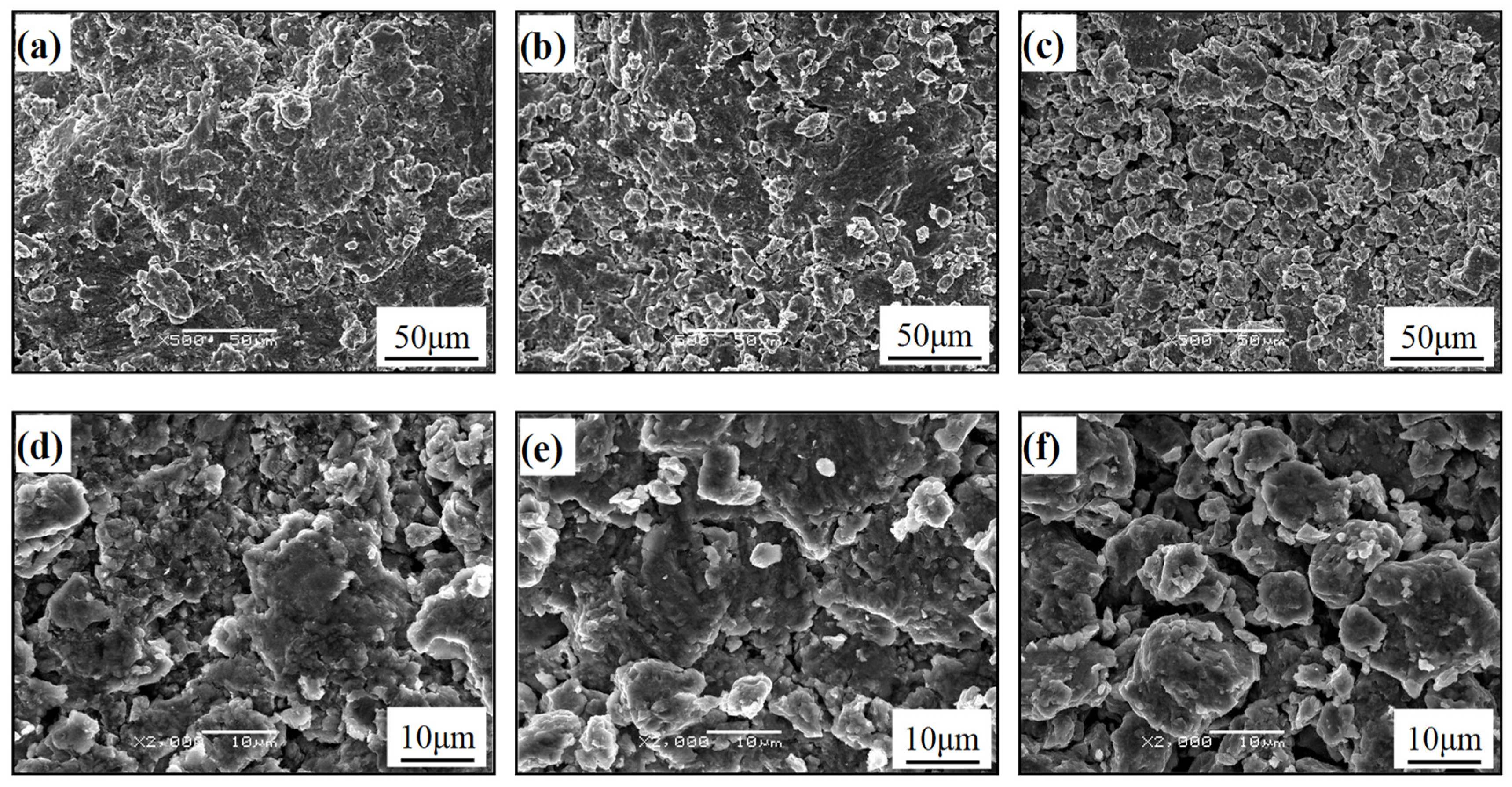
The surface microstructures of the coatings are revealed in the SEM images presented in Figure 2, which displays the surface morphologies of the MA-200, MA-250 and MA-300 samples, respectively. A clear trend emerges with increasing milling speed: the surface progressively becomes more porous and loosely packed. The MA-200 coating exhibits a dense, continuous structure composed of soft matrix regions interspersed with cold-welded angular particles, as evident in the high-magnification micrograph (Figure 2d). The MA-250 surface presents an intermediate condition, where both cold-welded regions and exposed, unincorporated particles coexist. At 300 r/min, however, the surface layer has been severely fragmented into numerous coarse, discrete particles that maintain only weak adhesion to the underlying coating, creating a microcracked, particulate surface layer. This evolution in surface morphology stems fundamentally from changes in particle state. Elevated milling speeds accelerate alloying and work hardening, both of which impede coating formation. At 200 r/min, particles retain sufficient ductility, enabling cold welding between the Al bonding agent and entrapped constituents to produce a continuous outer layer (Figure 2a,d). At 250 r/min, partial alloying and work hardening of ductile Al particles hinder further deposition, leaving exposed particles at the surface (Figure 2b,e). At 300 r/min, rapid and severe work hardening suppresses cold welding entirely, resulting in the loosely bonded, spalled structure observed in Figure 2c,f.
Figure 2.
Surface morphologies of the coatings prepared at the rotational speed of 200 rpm (a), 250 rpm (b) and 300 rpm (c); (d–f) are high magnifications of (a–c), respectively.
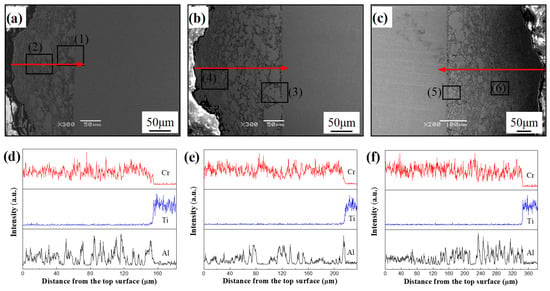
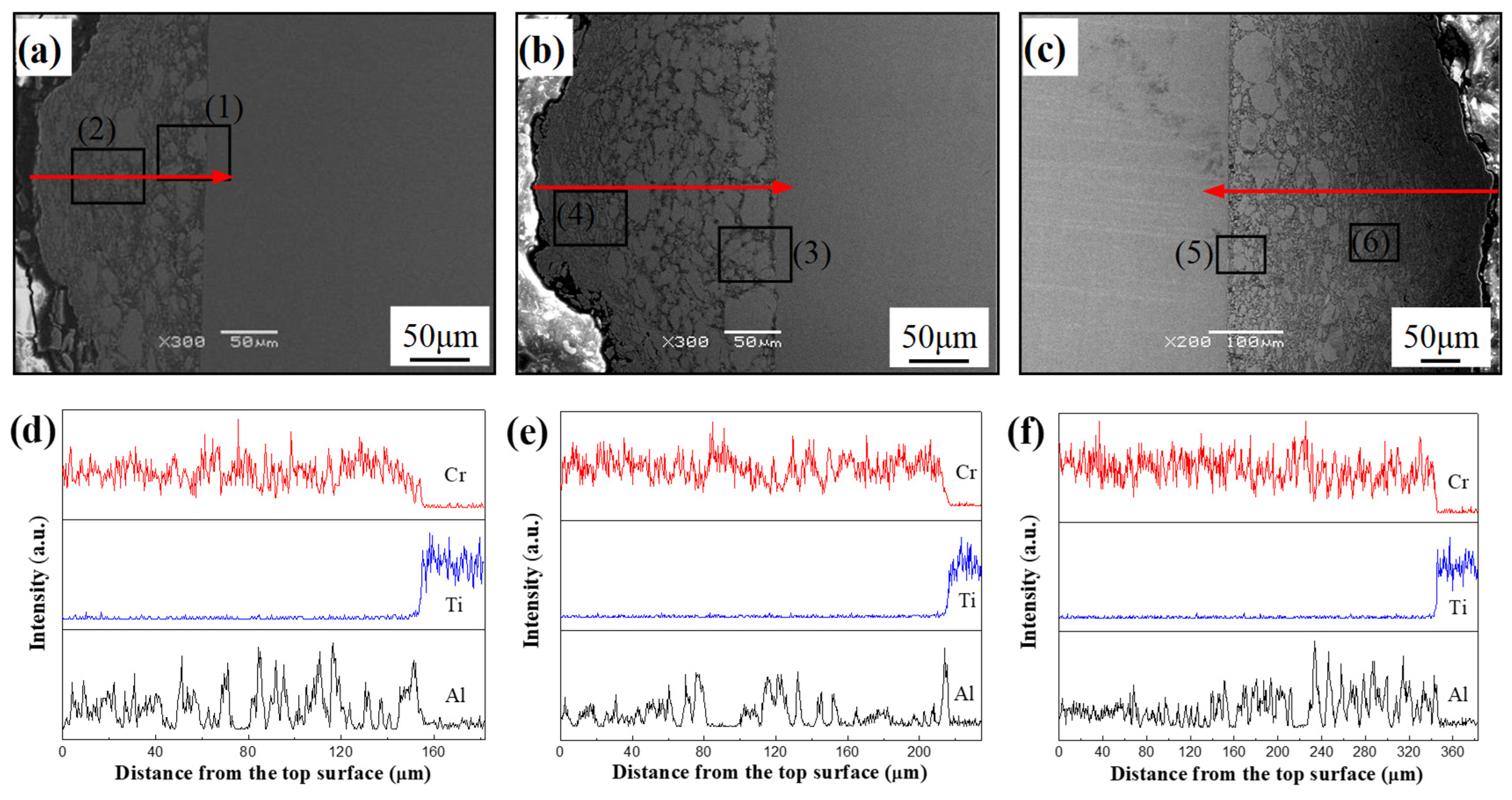
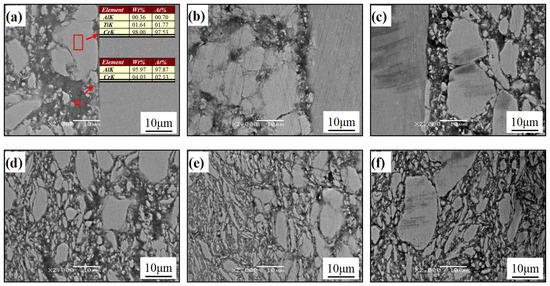
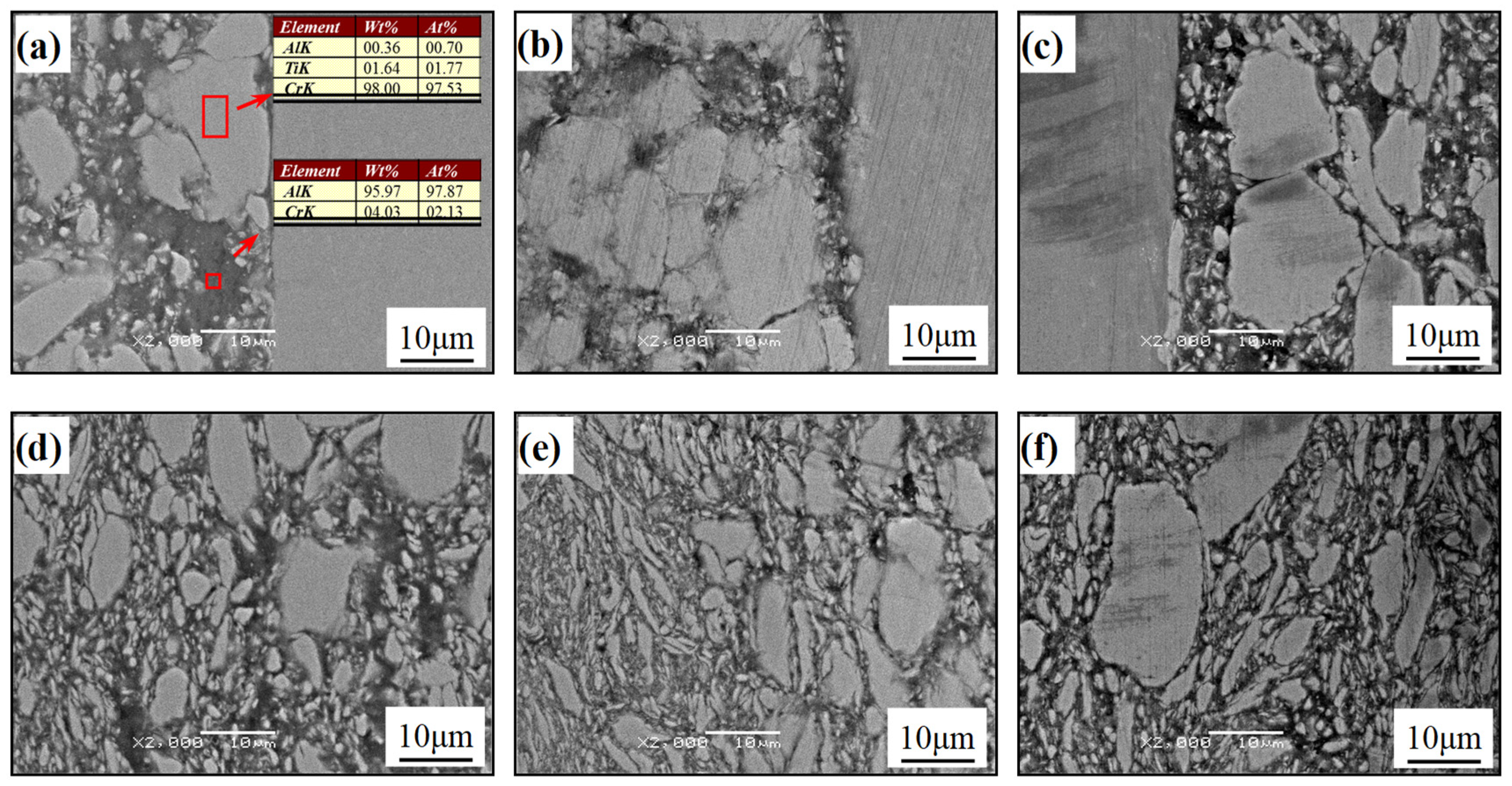
The microstructures of the coatings are presented in Figure 3. All coatings exhibit a similar composite architecture comprising angular reinforcing particles embedded within a surrounding bonding matrix. The chemical composition profiles from the coating surface toward the substrate are displayed in Figure 2d–f, where pronounced fluctuations in elemental concentrations confirm the composite nature of these layers. EDS analysis identifies the angular particles as Cr and the bonding agent as Al, with the composite structure arising from cold welding between these constituents. A gradient in Cr particle size is evident, decreasing from the inner coating layer toward the surface. This refinement effect stems from the ball milling process: initially, brittle Cr particles fracture and become entrapped within plastically deformed ductile Al. The cold welding of Al with these large Cr particles forms the inner layer, while continued milling progressively reduces Cr particle size, yielding finer reinforcements in the outer regions. Eventually, the fine Cr particles achieve uniform distribution throughout the Al matrix, producing a homogeneous near-surface microstructure. High-magnification views of the interfaces and coatings are provided in Figure 4. The ball-milled samples display seamless coating–substrate bonding, facilitated by the dark gray bonding agent visible in Figure 4a–c. Furthermore, Figure 4d–f reveal favorable interfacial bonding between Al and Cr constituents within the coating structure.
Figure 3.
Cross-section microstructures of the coatings prepared at the rotational speed of 200 rpm (a), 250 rpm (b) and 300 rpm (c); (d–f) are EDS line-scanning results along the arrow lines in (a–c), respectively.
Figure 4.
High magnifications of interfaces and the coatings of the MA-200 sample—(a,d), the MA-250 sample—(b,e), and the MA-300 sample—(c,f).
The coating thickness increased with rotational speed, attributable to two synergistic effects. Firstly, elevated milling speeds deliver greater energy input, which enhances particle activation and promotes cold welding. Secondly, higher speeds improve the collision frequency among the balls, powder and substrate, thereby accelerating material deposition within the same milling duration. However, this increased energy input simultaneously exacerbates surface roughness. Considering the effects of rotational speed on the thickness, the roughness, the density and the surface microstructure of the coating, both high and low milling speeds were unfavorable to the fabrication of the coating. Thus, the selection of optimal milling speed should take into consideration further analysis.
3.2. Phase Identification
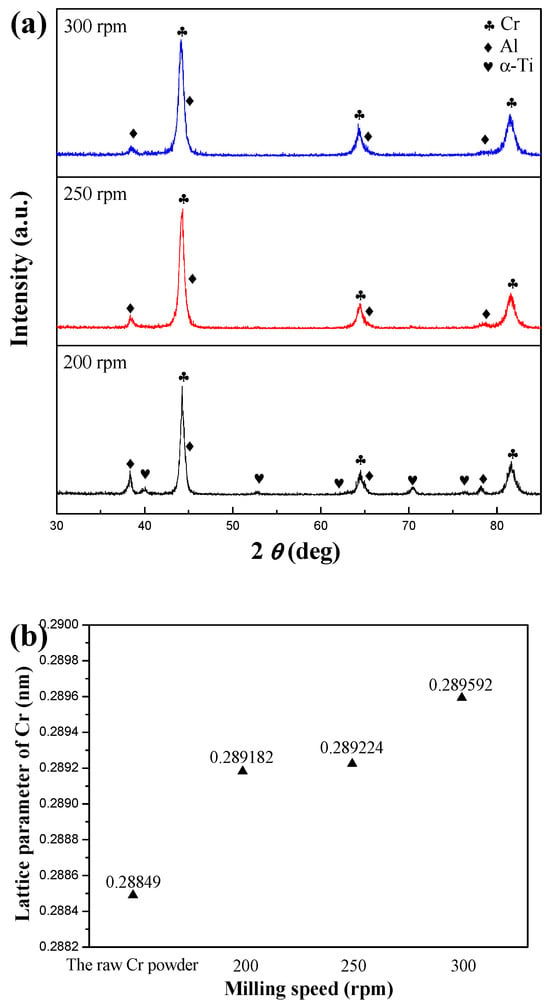
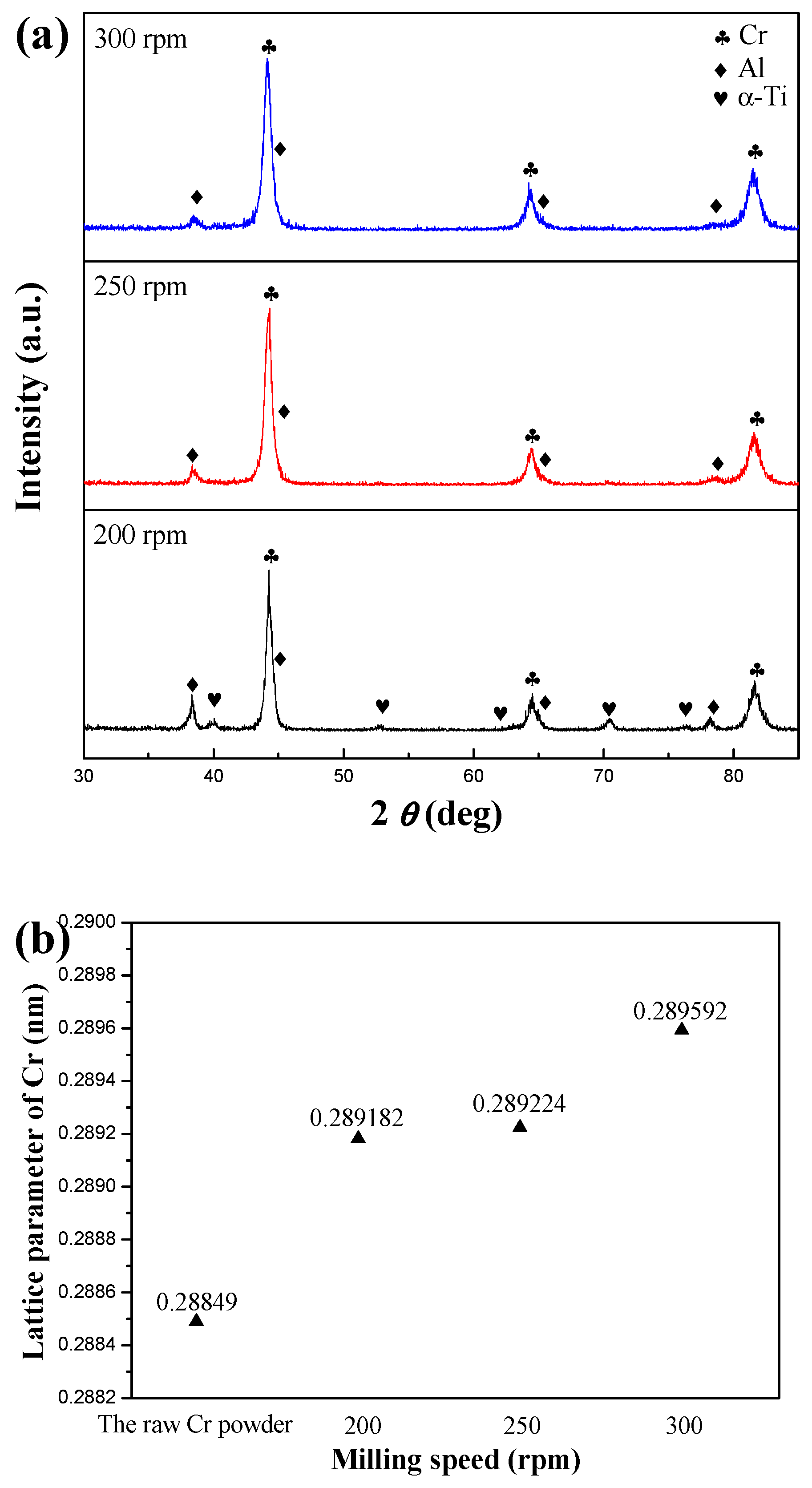
The phase compositions of the as-synthesized coatings were determined by XRD analysis, with results presented in Figure 5a. The diffraction patterns are dominated by Al and Cr phases. Notably, substrate diffraction peaks are visible in the MA-200 pattern, indicating that the coating formed at 200 r/min was insufficiently thick or contained discontinuities. Furthermore, the intensity of Al peaks diminishes with increasing milling speed, suggesting progressive alloying between Al and Cr. This interpretation is supported by variations in Cr lattice parameters. The lattice parameters of Cr in both milled and raw powders are illustrated in Figure 5b, calculated from XRD data after smoothing, background subtraction and peak fitting. An expansion of the Cr lattice is observed following milling, with higher rotational speeds producing larger lattice parameters. Conventionally, severe impact and frictional effects during mechanical alloying tend to reduce lattice parameters through defect generation [13]. The concurrent attenuation of Al peaks and lattice expansion with increasing rotational speed therefore provides compelling evidence for Al dissolution in Cr. Specifically, elevated milling speeds enhance energy input, thereby promoting Al-Cr alloying through particle refinement (reduced diffusion distances) and increased lattice defect density.
Figure 5.
XRD patterns of the coatings fabricated at different rotational speeds (a) and comparison of Cr lattice parameter changes as a function of milling speed (b).
3.3. Oxidation Behavior
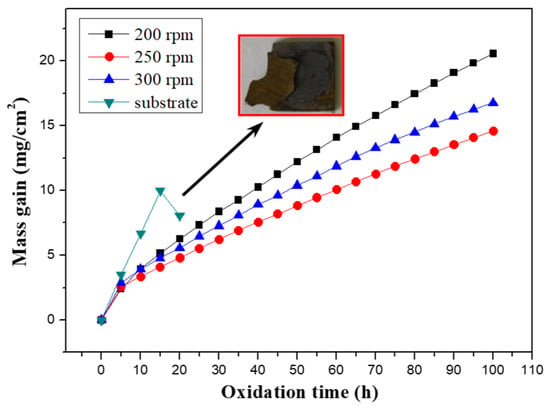
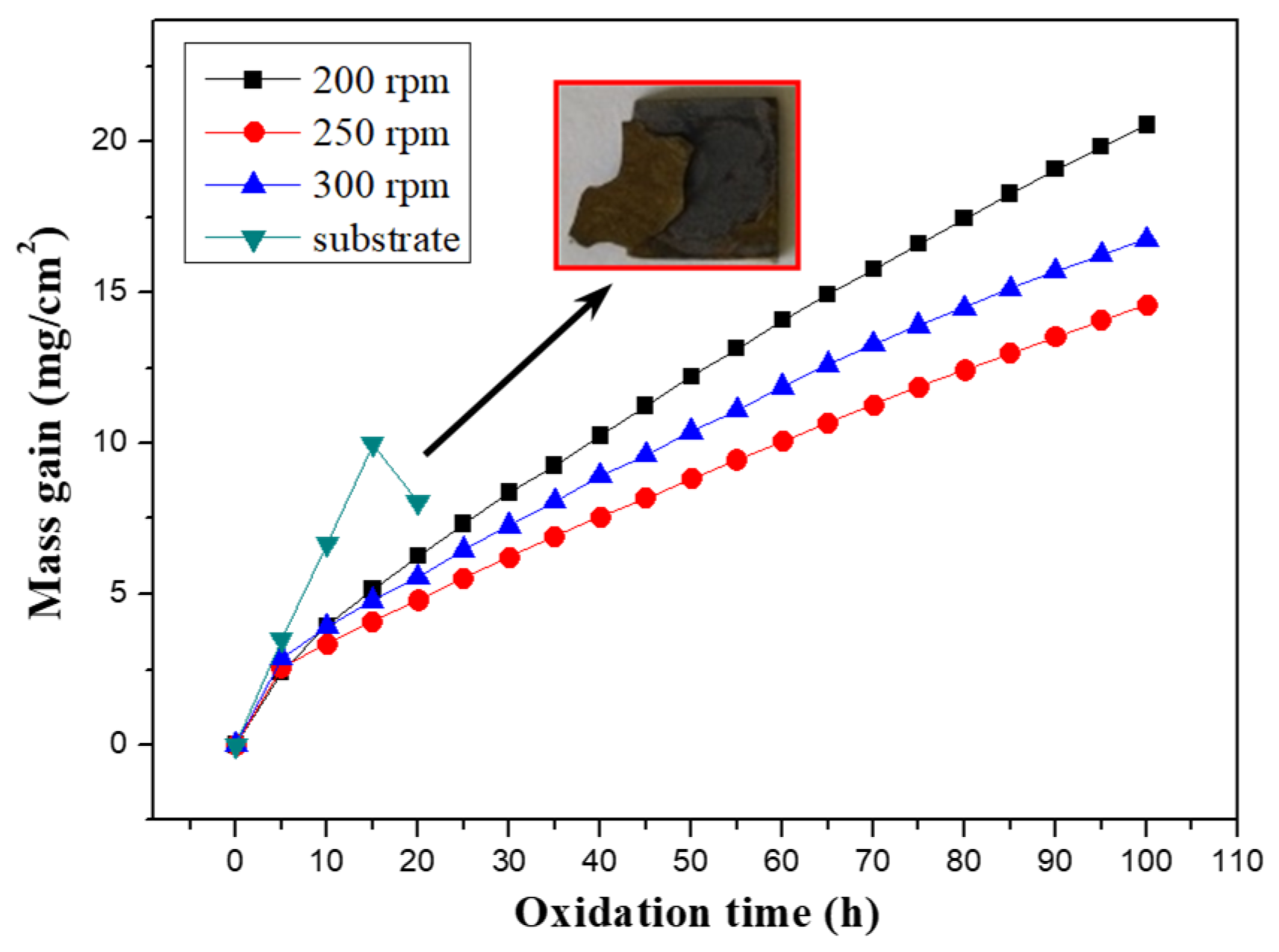
The oxidation kinetics of the substrate and coated samples are presented in Figure 6. The bare Ti-6Al-4V substrate exhibited linear mass gain during the initial 15 h of oxidation in laboratory air, with complete oxide spallation occurring at 20 h. In marked contrast, all coated samples demonstrated substantially superior oxidation resistance. During the initial 5 h, the mass gain (MG) of the coated samples increased linearly, consistent with reaction-controlled oxidation kinetics rather than diffusion-controlled behavior [17,18]. Upon prolonged exposure, the oxidation kinetics of the coated specimens transitioned to approximate parabolic behavior. Notably, the MA-250 sample achieved the lowest MG among all specimens, indicating optimal oxidation resistance. The MA-200 sample recorded the highest MG after 100 h, attributable to its insufficient coating thickness. Meanwhile, the MA-300 sample exhibited higher MG than MA-250, which can be ascribed to the porous, loosely packed surface structure evident in Figure 2f that compromises protective capability.
Figure 6.
Comparison of the oxidation kinetics of the substrate and the coated samples.
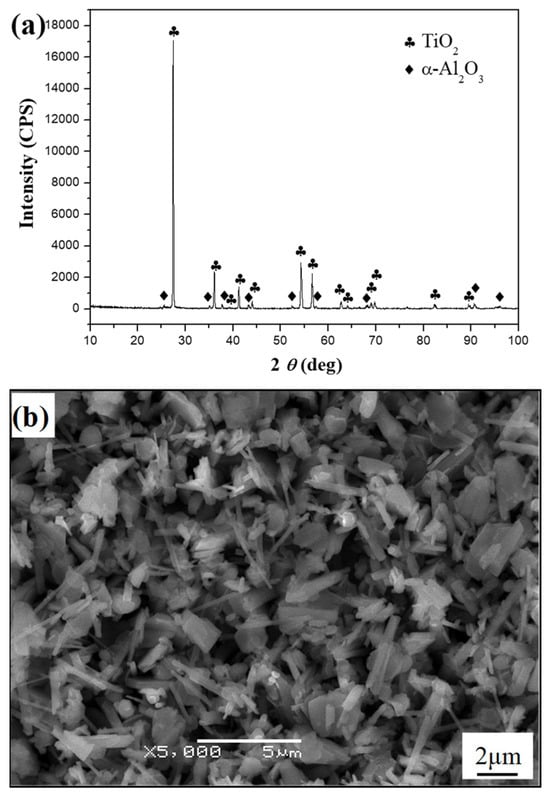
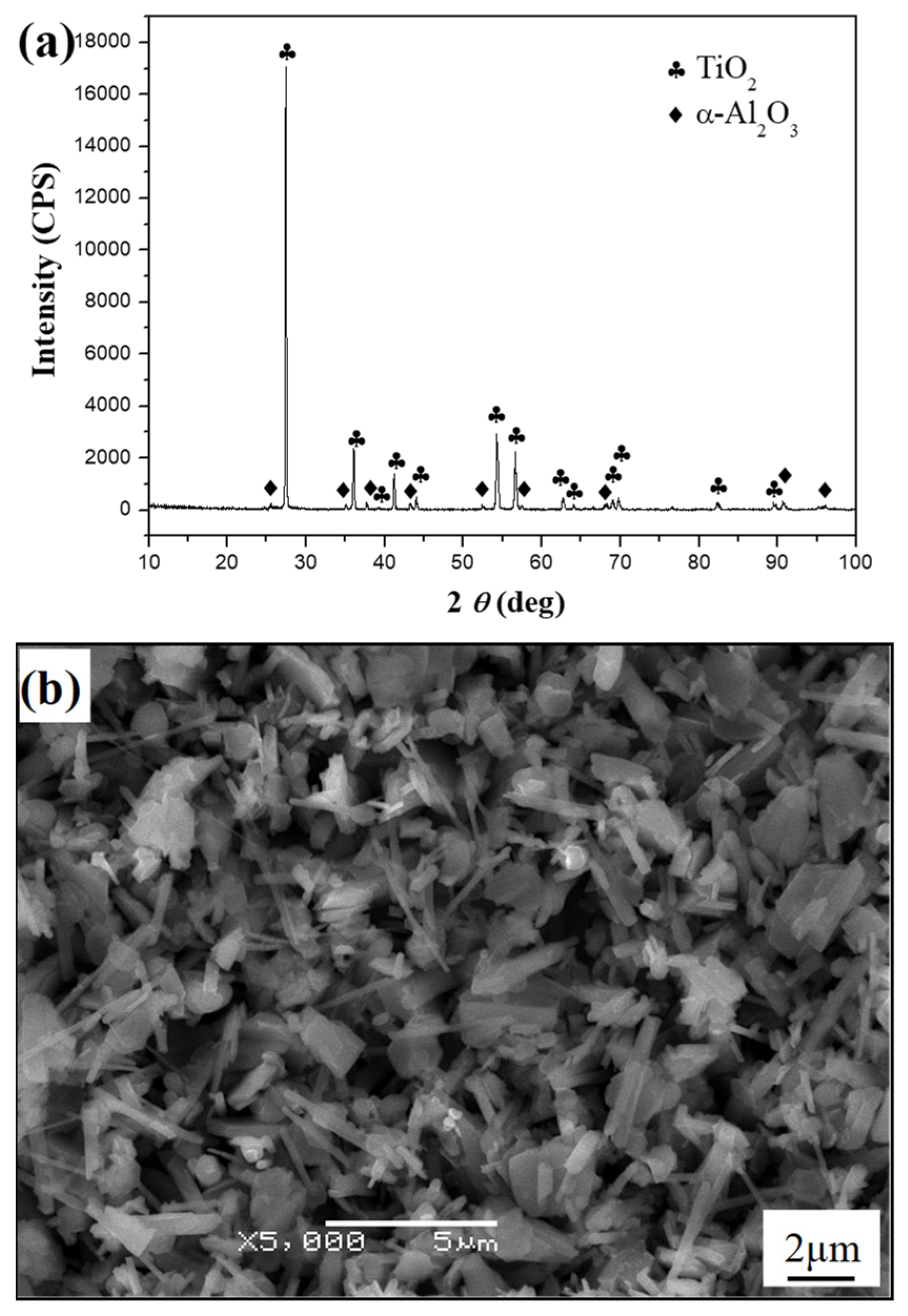
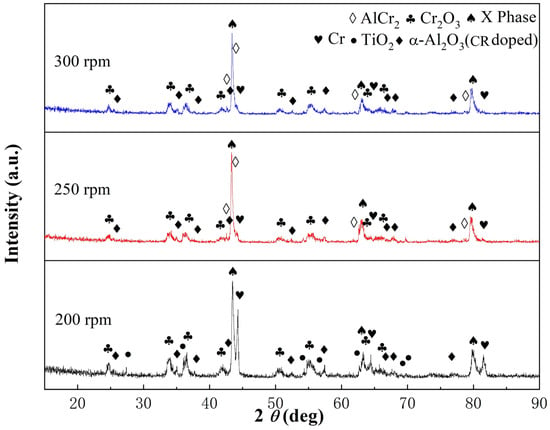
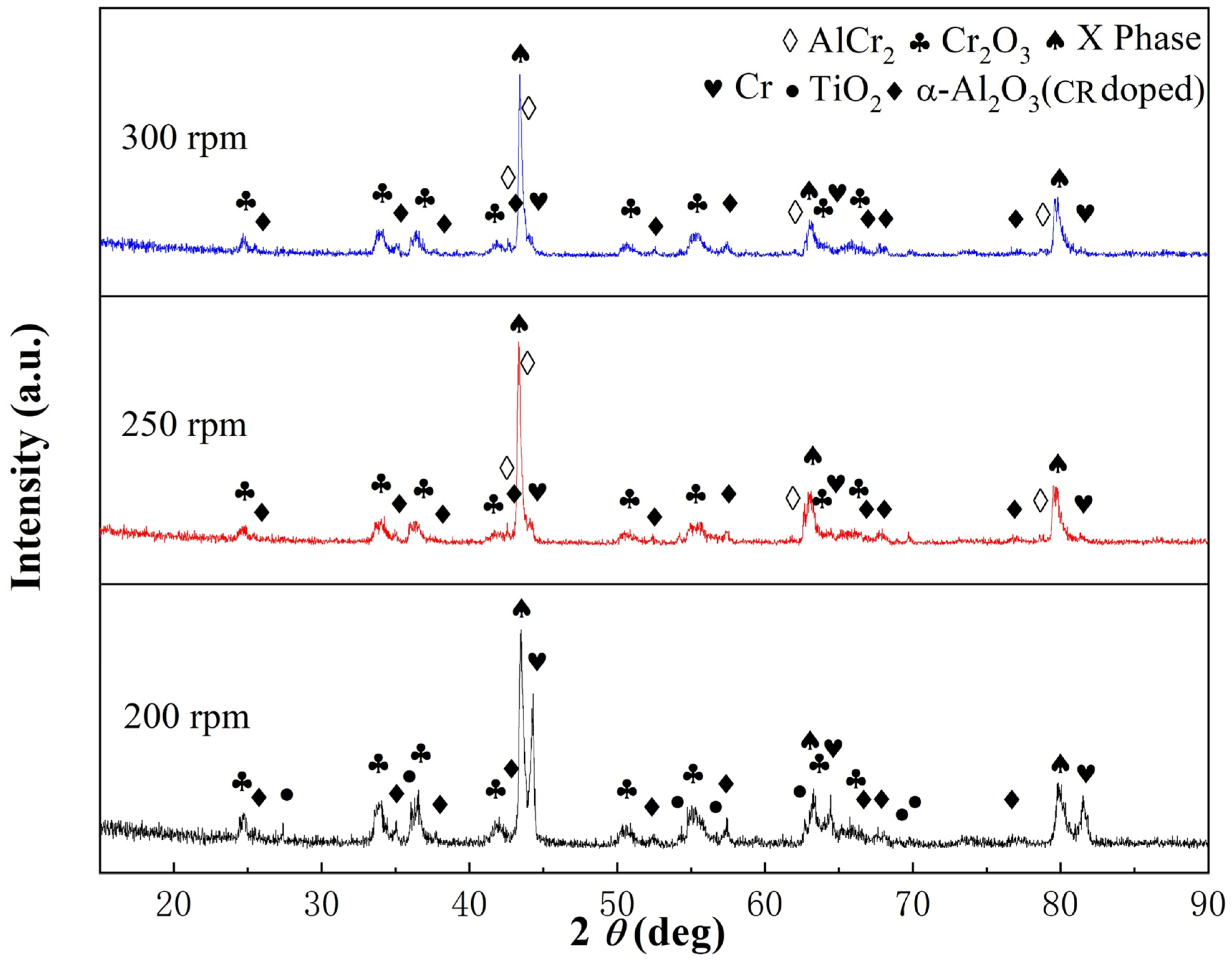
The phase compositions and surface morphologies of the oxidized samples were provided to discuss the oxidation behavior of the coatings. Figure 7a shows the phase compositions of the oxidized Ti-6Al-4V substrate. The oxides were made up of TiO2 and a small amount of α-Al2O3. The morphology of the oxide is exhibited in Figure 7b. The oxides showed irregular shapes, forming a loose oxide layer. The XRD patterns of oxidized coatings are shown in Figure 8. After oxidation, the oxide in the coatings mainly included Cr2O3 and α-Al2O3. The formation of corundum-type Al2O3 at a relatively low temperature (lower than 1000 °C) could be ascribed to the presence of the template structure of Cr2O3 [5,6]. The formation of dense Cr2O3 and α-Al2O3 film in the coating was favorable to the improvement of coating oxidation resistance.
Figure 7.
XRD pattern (a) and surface morphology (b) of the oxidized substrate.
Figure 8.
XRD patterns of the coated samples after the cyclic oxidation test.
In addition, the XRD patterns showed a rather strong peak at a diffraction angle of about 43.4°. This diffraction peak, along with the peaks at about 63.1° and 79.6°, were difficult to match with the phases in PDF cards. According to Bragg’s law, the interplanar spacing d, the diffraction angle 2θ, and the wavelength of diffraction beam, λ have the following relations:
2dsinθ = nλ
Thus, the relationship of interplanar spacing values at 43.4°, 63.1° and 79.6° could be calculated as follows:
This is an example of an equation:
In the standard PDF card of Cr (PDF 85-1336), the main diffraction peaks represent the (110), (200) and (220) planes at the diffraction angles of 44.37°, 64.552° and 81.690°, respectively. However, the interplanar spacing values of the (110), (200) and (220) planes in BCC structure have the relations
Thus, in the XRD patterns of oxidized coatings, the peaks that appeared at the diffraction angles of 43.4°, 63.1° and 79.6° could be considered an indication of a phase of Cr-rich solid solution with a BCC structure. Information on this phase could be traced from some previous research. G. Van Tendeloo and F. J. A. Den Broeder [19,20] found an additional phase in a Cr-rich part (at a Cr percent of about 75 at.%) of Cr-Al alloys; this phase was denoted as X and possessed a BCC structure. This phase was considered as a concentration modulation of the α-phase (Cr) or as a periodic antiphase boundary structure of the β-phase (Cr2Al). In this work, the alloying and oxidation in the cyclic heating and cooling process might have resulted in the formation of an X phase. It could be observed that the intensity of the Cr peaks decreased with the increase in rotational speed. Especially for the MA-300 sample, the Cr peaks almost disappeared. For the thick coating, the XRD-detected layer was the outer layer, which was made up of refined particles. This layer was easily alloyed under high temperature due to the homogeneous microstructure; thus, the Cr peaks of the MA-250 and M-300 samples were weak. For the sample with a thin coating, the XRD result included the signal from the inner coating, which consisted of coarse Cr particles and was difficult to fully alloy. Thus, a sharp main peak of Cr was detected in the MA-200 sample. Also, diffraction peaks indicating the presence of TiO2 were detected in the MA-200 sample, which came from the inner substrate and implied the low thickness or even the flaking of the coating.
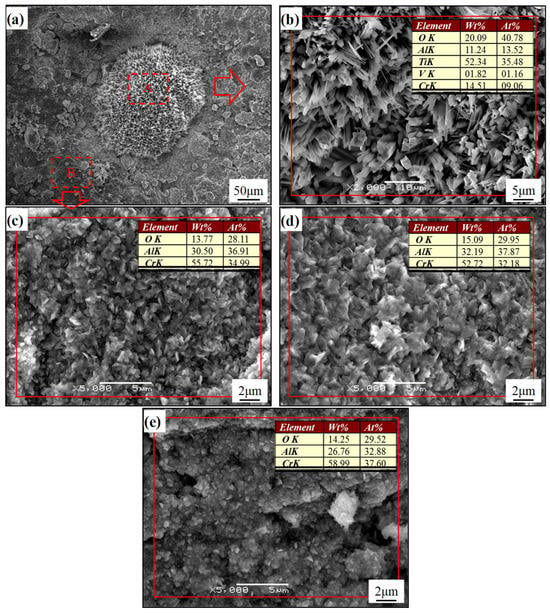
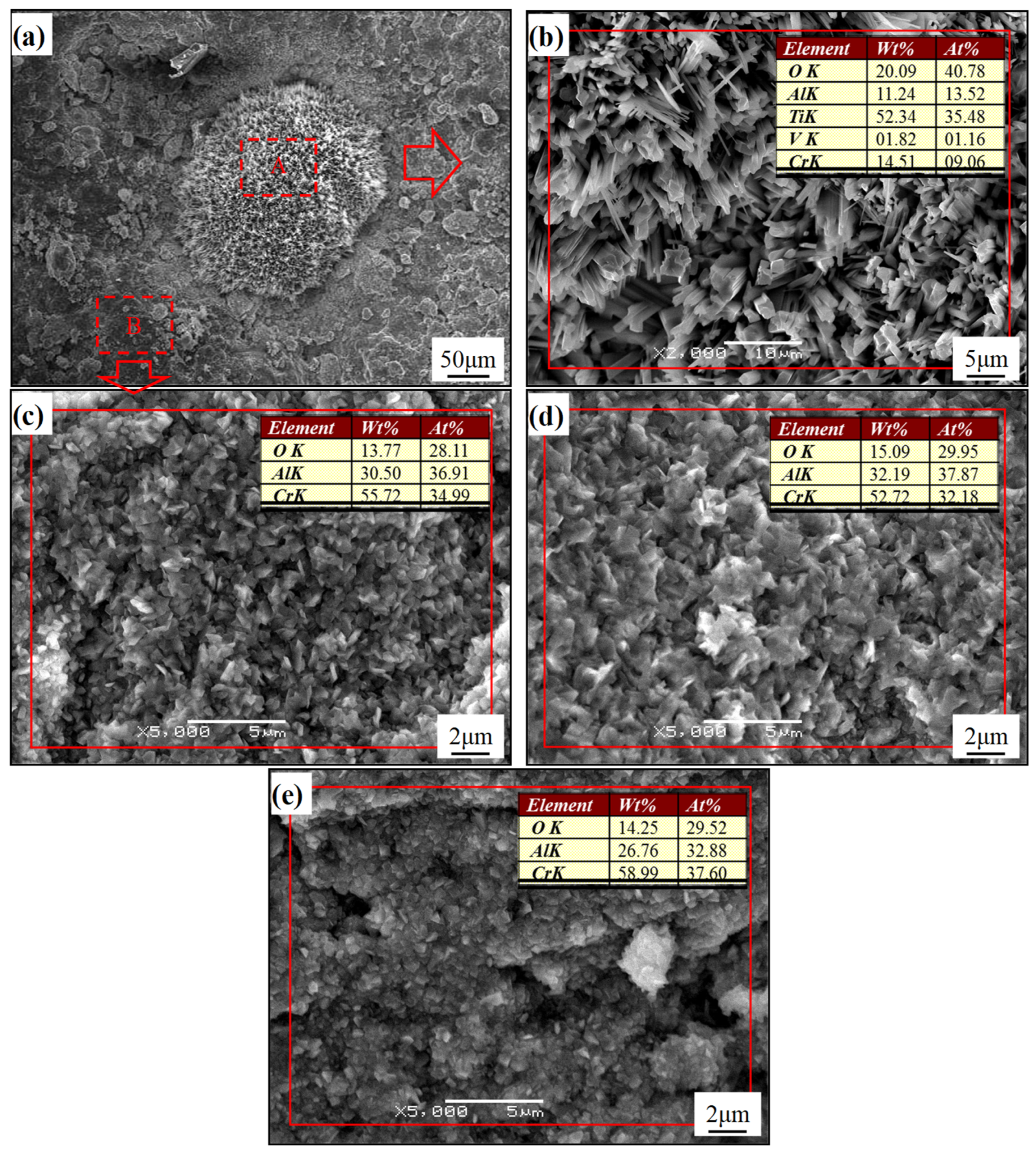
The surface morphologies of the oxidized coatings are shown in Figure 9. In the case of the MA-200 sample, regions with different microstructures were observed. The high magnifications (Figure 9b) of the loose region (region A) showed a microstructure similar to that of the oxidized substrate, and the EDS result showed a high content of Ti, which indicated the exposure of the substrate and the partial flaking of the coating after 100 h of oxidation. Region B was a dense region which was made up of oxide grains with uniform size and shape. The morphology of the oxide was similar to corundum-type (Al + Cr)2O3, and this structure could be considered to be protective under high-temperature oxidation conditions. In addition, the element compositions exhibited an atomic ratio of (Al + Cr) to O that was much higher than 2:3 (the atomic ratio of (Al + Cr)2O3), which implied that the surface was not completely oxidized. This also provided evidence of the formation of dense oxide film on the top coating surface. The partial faking of the oxidized MA-200 coating could provide evidence of weak adhesion of the coating fabricated at low rotational speed. Figure 9d,e are the oxide morphology of the MA-250 and MA-300 samples, respectively. They both showed dense oxide layers with the microstructure and chemical compositions similar to the dense region of the MA-200 sample. The oxide layer of the MA-300 sample showed higher roughness and lower continuity than that of the MA-250 sample. This could be applied to explain the reason for the higher mass gain of the MA-300 sample compared with the MA-250 sample. In general, the MA-250 sample had the best oxidation resistance compared with the other samples. Also, it could be assumed that the rotational speed of 250 rpm was optimal for the preparation of an oxidation-resistant 80Cr-20Al coating.
Figure 9.
Surface morphologies of the oxidized MA-200 sample (a), MA-250 sample (d) and MA-300 sample (e); (b) and (c) are high magnifications of the marked region A and B in (a), respectively.
3.4. Oxidation Process
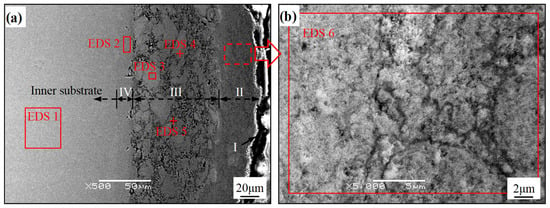
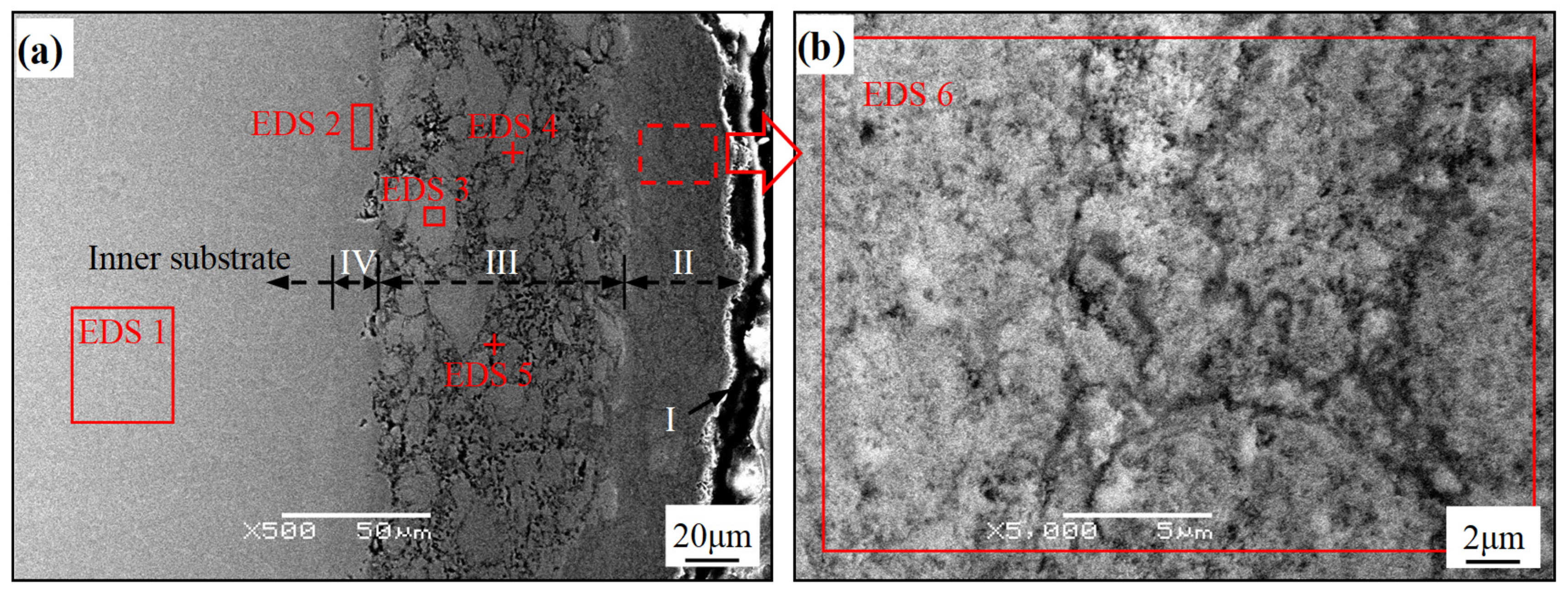
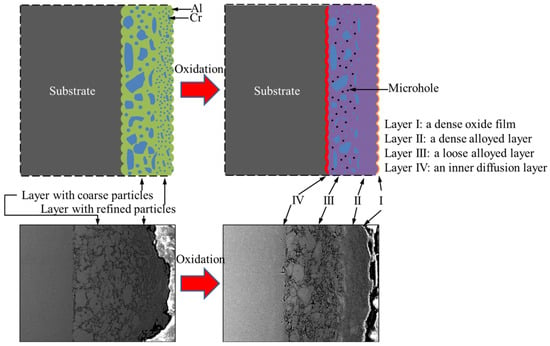
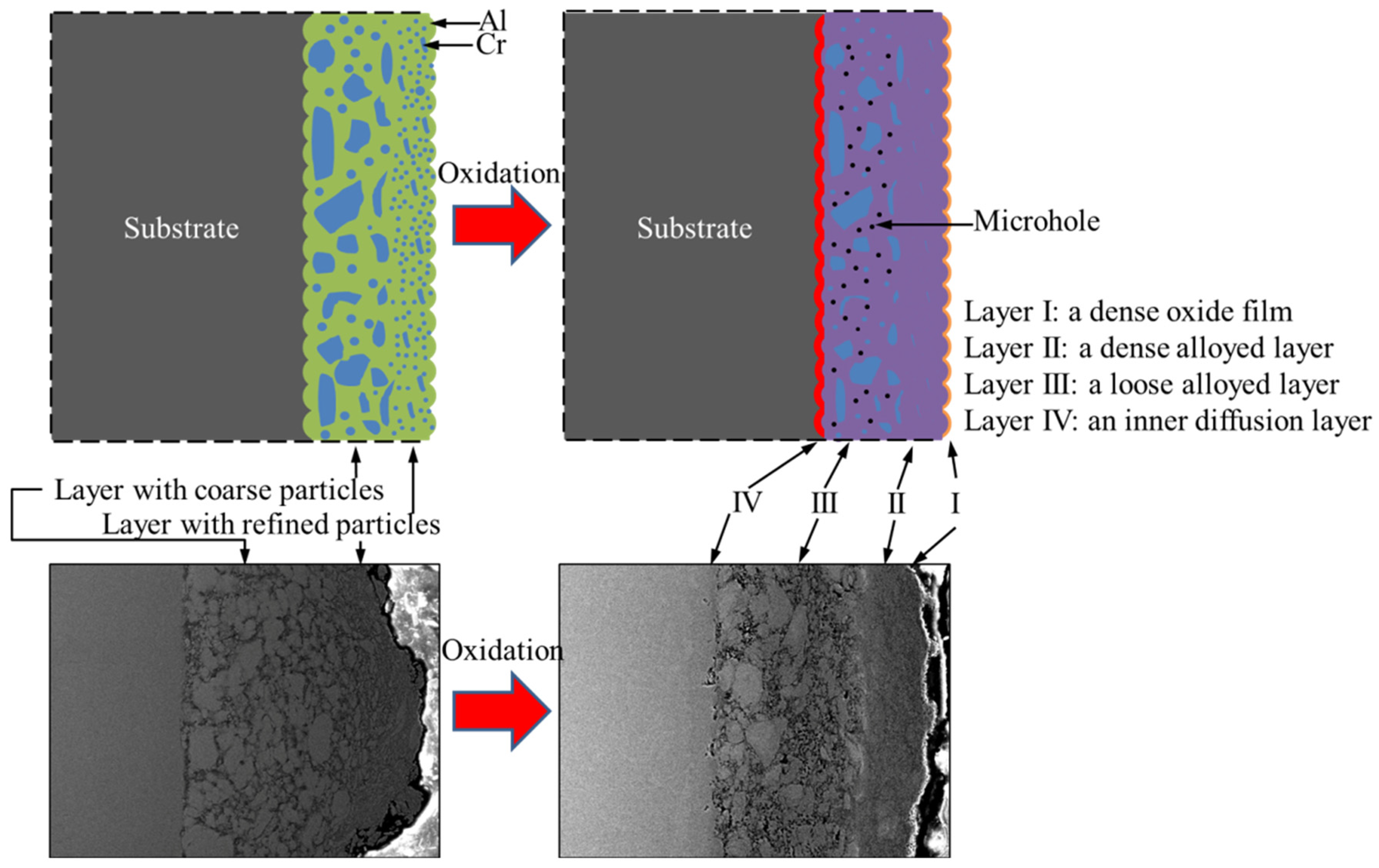
In order to further investigate the oxidation process of the coating, a cross-section of the oxidized MA-250 sample was obtained, as shown in Figure 10. The EDS results of the marked regions in Figure 10 are provided in Table 3. The oxidized coating could be considered to be made up of four layers through the combination of the cross-section microstructure and the chemical compositions in the marked region. Taking into consideration the double-layer structure of the as-fabricated coating, the formation of these layers after oxidation could be elucidated as follows, which is illustrated in Figure 11.
Figure 10.
Cross-section of the oxidized MA-250 sample exhibiting a four-layer structure (a) and the high magnification of the dense alloyed layer (b).
Table 3.
Chemical composition of marked regions in Figure 10.
Figure 11.
Schematic illustrations of the formation of the four layers in the coating during oxidation.
In the oxidation process, the top coating surface was exposed to air and reacted with O in the air at elevated temperature. Although the temperature was lower than that of the formation of α–Al2O3, the formation of Cr2O3 as a template of a corundum structure stimulated the nucleation of corundum-type Al2O3 and ultimately formed a dense oxide film, which was identified as Layer I in Figure 10 and Figure 11. The formation of a dense oxide layer on the top coating surface effectively protected the inner coating from severe oxidation. Thus, the inner layer exhibited relatively low O content, as shown in Table 3. Meanwhile, the heat input promoted the alloying in the coating. The outer coating layer with refined brittle particles and a homogenized structure tended to form a dense alloyed layer (Layer II). However, in the inner coating layer with coarse brittle particles (Layer III), the diffusion of Al towards large Cr particles induced the formation of microdefects. These defects were easily adsorbed by O before the formation of a dense oxide film and then formed positions with high O content (EDS 5 in Figure 10a). This layer was a loose layer; although its structure did not favor the improvement of oxidation resistance, it can act as a buffering layer to protect the substrate from direct oxidation when the outer layer fails. Also, it indicated that the utilization of more refined Cr powder might have a favorable effect on the improvement of the inner coating microstructure. It should be noted that a diffusion layer (Layer IV) was detected at the coating–substrate interface. This layer exhibited elevated Al content relative to the substrate, indicating formation through inward Al diffusion. The absence of detectable oxygen in both Layer IV and the substrate by EDS analysis confirms the effective protective function of the coating under oxidizing conditions. Layer IV functions as a multi-component barrier against oxygen penetration. The Al enrichment (approximately 15–20 wt%, compared with ~6 wt% in the substrate) promotes the formation of a Ti(Al) solid solution, which increases local Al activity and thermodynamically favors protective Al2O3 formation over non-protective TiO2 should oxygen reach the interface. Furthermore, the inward diffusion of Al occupies interstitial sites in the Ti lattice, thereby reducing the oxygen diffusion coefficient in this region. The layer also serves a sacrificial role, consuming Al reserves that are continuously replenished by diffusion from the coating, thus delaying substrate oxidation. Geometrically, the layer thickness of approximately 10–20 μm extends the diffusion path length for oxygen. The complete absence of oxygen in Layer IV and the underlying substrate, as confirmed by EDS analysis (Figure 10 and Table 3), demonstrates that oxygen penetration is effectively arrested above Layer III.
4. Conclusions
Cr-Al composite coatings were successfully fabricated on Ti-6Al-4V alloy substrates via mechanical alloying. The influence of rotational speed on coating formation was systematically investigated by examining microstructural evolution, phase development and high-temperature oxidation resistance. The principal findings are summarized as follows:
- (1)
- The coatings exhibited a distinctive bilayer architecture comprising an inner region with coarse reinforcing particles and an outer region with a refined, homogenized microstructure.
- (2)
- Rotational speed exerted a pronounced effect on coating quality. Insufficient milling speeds yielded inadequate deposition, poor interfacial adhesion and porous or discontinuous coatings; excessive speeds induced surface roughening and delamination. Optimization studies, considering microstructural integrity, phase stability and oxidation performance, identified 250 r/min as the optimal processing parameter for producing dense, well-adherent and oxidation-resistant coatings.
- (3)
- Coated specimens demonstrated substantially lower mass gains than uncoated substrates following high-temperature exposure. The protective oxide scale consisted predominantly of corundum-type Al2O3 and Cr2O3, whose dense morphology effectively impeded inward oxygen diffusion. Additionally, a body-centered cubic Cr solid solution phase formed through cyclic thermal-induced alloying and oxidation, contributing to the overall protective capability.
- (4)
- Post-oxidation characterization revealed a four-layered structure: an outer dense oxide film (Layer I), an intermediate dense alloyed layer (Layer II), a porous alloyed layer (Layer III) and an inner Al-enriched diffusion zone (Layer IV). The surface oxide film functioned as the primary oxygen barrier, while the subsurface layers provided supplementary protection through oxygen consumption and diffusion retardation.
- (5)
- The mechanically alloyed Cr-Al coatings markedly enhanced the high-temperature oxidation resistance of Ti-6Al-4V alloy substrates, demonstrating the feasibility of this cost-effective approach for aerospace and high-temperature applications.
Author Contributions
Conceptualization, Q.W.; methodology, Q.W. and C.S.; software, H.S.; validation, W.W.; formal analysis, H.P.; data curation, Q.W.; writing—original draft preparation, Q.W.; writing—review and editing, C.S., H.S., and W.W.; visualization, H.P.; supervision, Q.W.; project administration, Q.W.; funding acquisition, H.P. All authors have read and agreed to the published version of the manuscript.
Funding
This research was funded by the China National Nuclear Corporation Youth Talent Fund Project, grant number FY020280625711.
Institutional Review Board Statement
Not applicable.
Informed Consent Statement
Not applicable.
Data Availability Statement
Data are contained within the article.
Conflicts of Interest
The authors declare no conflicts of interest.
References
- Leyens, C.; Peters, M. (Eds.) Titanium and Titanium Alloys: Fundamentals and Applications; Wiley-VCH: Hoboken, NJ, USA, 2006. [Google Scholar]
- Lu, J.; Ji, K.; Zhuo, L.; Chen, B.; Shao, H.; Huo, W.; Zhao, Y. Revealing High-Temperature Oxidation and Tensile Behaviors Along with Underlying Mechanisms of a Titanium Alloy with Precipitated Titanium Silicide. Coatings 2023, 13, 2020. [Google Scholar] [CrossRef] [Scilit]
- Jeong, W.; Yang, J.; Aranas, C. Al-based functionally graded super-intermetallic compounds for the turbine blade of a high-performance jet engine. Adv. Compos. Hybrid Mater. 2025, 8, 420. [Google Scholar] [CrossRef] [Scilit] [PubMed]
- Wang, J.; Zhang, L.; Cheng, J.; Liu, J.; Qi, D.; Zou, Y.; Wei, D.; Cheng, S.; Wang, Y. Microstructure and high-temperature oxidation resistance of Ti-6Al-4V alloy with in-situ SiC-SiO2 nano-composite coating by LPDS technique. Ceram. Int. 2024, 50, 46288–46299. [Google Scholar] [CrossRef] [Scilit]
- Ma, J.; Meng, C.; Wang, H.; He, X. Effect of Al Content on the High-Temperature Oxidation Resistance and Structure of CrAl Coatings. Coatings 2021, 11, 1434. [Google Scholar] [CrossRef] [Scilit]
- Wang, Y.Q.; Zuo, J.D.; Xiao, X.; Wu, K.; Zhang, J.Y.; Liu, G.; Sun, J. High-temperature steam oxidation behavior and failure mechanisms of Al alloyed Cr coatings on Zr-4 alloy. Corros. Sci. 2024, 230, 111898. [Google Scholar] [CrossRef] [Scilit]
- Xu, Y.; Li, Y.; Meng, F.; Huang, F. Microstructure and multifunctionality of a 10-mu m-thick dense yet smooth Cr(C) coating prepared by low-temperature magnetron sputtering. Surf. Coat. Technol. 2022, 435, 128255. [Google Scholar] [CrossRef] [Scilit]
- Pan, D.; Liu, C.; Sun, Y.; Yang, H.; Li, Z. Microstructure and oxidation properties of Cr/CrAl multilayer coatings prepared via magnetron sputtering. Surf. Coat. Technol. 2025, 503, 132004. [Google Scholar] [CrossRef] [Scilit]
- Rakhadilov, B.; Sulyubayeva, L.; Maulet, M.; Sagdoldina, Z.; Buitkenov, D.; Issova, A. Investigation of High-Temperature Oxidation of Homogeneous and Gradient Ni-Cr-Al Coatings Obtained by Detonation Spraying. Coatings 2024, 14, 11. [Google Scholar] [CrossRef] [Scilit]
- Hou, X. Microstructure and properties of Cr-AlN composite coating prepared by pack-cementation on the surface of Al-containing ODS steel. Surf. Coat. Technol. 2022, 447, 128842. [Google Scholar] [CrossRef] [Scilit]
- Liu, L.; Ruan, Q.; Wu, Z.; Li, D.; Huang, C.; Wu, Y.; Li, T.; Wu, Z.; Tian, X.; Fu, R.K.; et al. Fabrication and cutting performance of CrAlN/CrAl multilayer coatings deposited by continuous high-power magnetron sputtering. Ceram. Int. 2022, 48, 14528–14536. [Google Scholar] [CrossRef] [Scilit]
- Xu, D.; Ni, S.; Bu, Y.; Liu, J.; Ling, G.; Wang, H. Electrodeposition of high-quality Cr coatings with solid solution Al from Cr2+ electrolyte. Surf. Coat. Technol. 2023, 452, 129121. [Google Scholar] [CrossRef] [Scilit]
- Suryanarayana, C. Mechanical alloying and milling. Prog. Mater. Sci. 2001, 46, 1–184. [Google Scholar] [CrossRef] [Scilit]
- Qi, Z.; Zhang, H.; Guo, X.; Geng, L. Preparation and Classification of Coatings by High-Energy Ball Milling: A Review. Coatings 2025, 15, 1343. [Google Scholar] [CrossRef] [Scilit]
- Yang, K.; Xu, G.; Jiang, Z.; Yang, Y.; Zhang, S.; Wang, S.; Ni, Z. High-temperature oxidation and wear resistance of nano-ZrB2 reinforced CoNiCrAlY composite coating via a step-fashion mechanical alloying powder process. Tribol. Int. 2023, 178, 108–120. [Google Scholar] [CrossRef] [Scilit]
- Pu, J.; Dai, Y.; Li, K.; Chen, L. Study on the Preparation and Corrosion-Wear Properties of TiN/Sn Coatings on the Ti-25Nb-3Zr-2Sn-3Mo Titanium Alloy. Materials 2025, 18, 1160. [Google Scholar] [CrossRef] [Scilit] [PubMed] [PubMed Central]
- Wei, D.B.; Zhang, P.Z.; Yao, Z.J. Oxidation of double-glow plasma chromising coating on TC4 titanium alloys. Corros. Sci. 2013, 66, 43–50. [Google Scholar] [CrossRef] [Scilit]
- Lavisse, L.; Grevey, D.; Langlade, C. The early stage of the laser-induced oxidation of titanium substrates. Appl. Surf. Sci. 2002, 186, 150–155. [Google Scholar] [CrossRef] [Scilit]
- Van Tendeloo, G.; Den Broeder, F.J.A.; Amelinckx, S. Microstructure of Cr100−xAlx alloys (10 at% ⪅ x ⪅ 33 at%) studied by means of transmission electron microscopy and diffraction. I. Microstructure of the β-phase. Phys. Status Solidi (A) 1981, 67, 217–232. [Google Scholar] [CrossRef] [Scilit]
- Den Broeder, F.J.A.; Van Tendeloo, G.; Amelinckx, S. Microstructure of Cr100−xAlx alloys (10 at% ⪅ x ⪅ 33 at%) studied by means of transmission electron microscopy and diffraction. II. Discovery of a new phase. Phys. Status Solidi (A) 1981, 67, 233–248. [Google Scholar] [CrossRef] [Scilit]

Disclaimer/Publisher’s Note: The statements, opinions and data contained in all publications are solely those of the individual author(s) and contributor(s) and not of MDPI and/or the editor(s). MDPI and/or the editor(s) disclaim responsibility for any injury to people or property resulting from any ideas, methods, instructions or products referred to in the content. |
© 2026 by the authors. Licensee MDPI, Basel, Switzerland. This article is an open access article distributed under the terms and conditions of the Creative Commons Attribution (CC BY) license.