


Abstract
Copper tailings are generated in large quantities, and their efficient utilization remains challenging because of their complex mineralogical composition and relatively low reactivity. This study investigated the feasibility of partially replacing cement with copper tailings, with particular emphasis on the combined effects of particle packing and potential alkaline dissolution. Unlike previous studies mainly focusing on the use of copper tailings as aggregates or cement raw materials, this work integrates mechanical performance, alkaline dissolution behavior, microstructural characteristics, Cu/Zn leaching behavior, and simplified embodied-carbon comparison. The results showed that a 10% copper tailings replacement yielded the highest 28 d compressive and flexural strengths of 46.5 MPa and 4.83 MPa, respectively. The improvement was mainly associated with particle filling and packing effects, while alkaline dissolution tests indicated that limited Si and Al species could be released from the tailings under alkaline conditions and potentially contribute to hydration. Excessive replacement reduced the cement content and weakened the mechanical performance. The prepared composites also exhibited low Cu and Zn leaching concentrations. Overall, the study demonstrates the potential of copper tailings for partial cement replacement while considering mechanical performance, environmental safety, and carbon-reduction potential. However, the conclusions are limited to one tailings source, 28 d mechanical properties, short-term leaching behavior, and a simplified embodied-carbon comparison.
1. Introduction
Copper tailings are industrial by-products generated in copper ore beneficiation plants through a series of processing steps—including crushing, screening, grinding, and classification—under specific process conditions [1]. Mine tailings are the residual materials produced during mineral beneficiation and generally consist of finely ground solid wastes. They represent a major component of global industrial solid waste, with annual generation estimated at approximately 20–25 billion tons [2]. Copper mine tailings constitute a significant proportion of this waste stream, with global annual production reaching approximately 4–5 billion tons [3]. Extensive copper tailings piles not only occupy vast amounts of land but also pose serious environmental risks, as the heavy metals they contain can easily leach into groundwater [4].
In recent years, the use of industrial solid waste such as copper tailings as construction materials has become a major research focus in resource recovery. Studies have shown that the physical and chemical properties of copper tailings are similar to those of common construction materials. Consequently, they are increasingly used as raw materials for producing cement, concrete aggregates, bricks and tiles, and foam materials [5,6,7,8]. Feng et al. prepared lightweight non-fired bricks using copper tailings, lime, and concrete foaming agents. The results showed that the proportion of copper tailings in the lightweight non-fired bricks could reach 70%–80%, and the compressive strength of the bricks could reach up to 10.4 MPa, demonstrating significant practical value [9]. Furthermore, Chen et al. used copper tailings as a substitute for fine aggregates. Their research found that copper tailings can improve the pore structure of cement mortar, thereby enhancing its mechanical properties [10]. Zhang et al. further corroborated this phenomenon; their results indicate that a 20% replacement rate of copper tailings not only optimizes the aggregate gradation but also improves the characteristics of the interface transition zone between the aggregate and cement [11]. At the same time, many scholars have chosen to use copper tailings as clinkers for cement production. Wu et al. used copper tailings as a substitute for siliceous raw materials in cement clinker, demonstrating that the use of copper tailings in cement clinker offers certain advantages, such as improving the calcination properties of cement raw materials [12]. In addition to their use as fine aggregates and raw materials for cement clinker, copper tailings have received increasing attention in recent years as cement-replacement components or mineral admixtures in cement-based materials. Onuaguluchi and Eren found that the incorporation of an appropriate amount of copper tailings could, to a certain extent, maintain or improve the mechanical properties, abrasion resistance, and resistance to chloride-ion penetration of concrete while reducing the risk of heavy-metal leaching [13]. Liu et al. incorporated copper tailings powders with different fineness levels and replacement ratios into Portland cement systems. The results showed that copper tailings powder primarily exerted a particle-filling effect during the early stage of hydration. However, as the replacement ratio increased, the cement clinker content and the corresponding amount of hydration products decreased, resulting in reduced material strength. In particular, when the replacement ratio exceeded a certain range, its effects on later-age hydration and pore structure became more pronounced [14]. In addition, Ghazi et al. demonstrated the feasibility of directly replacing part of the cement with copper tailings and found that the cement matrix could reduce the leachability of heavy metals in the copper tailings to a certain extent [15]. Recent studies have further indicated that unactivated copper tailings may exhibit low intrinsic reactivity. At low replacement ratios, their contributions to material performance are primarily derived from particle filling, hydration nucleation, and microstructural densification, whereas at higher replacement ratios, the cement dilution effect generally becomes dominant [16].
Although previous studies have demonstrated the feasibility of using copper tailings as partial fine-aggregate replacements, their influence strongly depends on particle-size distribution, mineralogical composition, replacement level, and mixture design. However, most studies have focused primarily on aggregate replacement, particle-packing effects, or the feasibility of using copper tailings in clinker production [17,18,19]. Compared with these utilization routes, relatively limited attention has been given to the coupled physical and chemical contributions of copper tailings when they directly replace a portion of cement, particularly when the tailings have a relatively coarse and broad particle-size distribution. Moreover, the relationships among alkaline dissolution behavior, mechanical performance, environmental leaching characteristics, and carbon-reduction potential have rarely been evaluated within the same experimental framework.
Based on these knowledge gaps, this study investigated copper tailings as a partial cement replacement rather than treating them solely as a conventional cementitious component. Mechanical tests, alkaline dissolution experiments, and XRD and SEM analyses were combined to distinguish the dominant physical particle effects from the potential chemical contribution of dissolved Si and Al species. Additionally, toxicity leaching tests were conducted to investigate the leaching behavior of heavy metals from copper tailings in cement materials and their solidification mechanisms. A comparative analysis of carbon emissions from cement materials based on copper tailings and ordinary Portland cement was conducted, quantifying the carbon reduction benefits of utilising copper tailings within the optimal substitution rate range. This study aims to provide theoretical guidance for the low-energy, resource-efficient, safe, and pollution-free application of copper tailings in building materials.
2. Raw Materials and Experimental Methods
2.1. Raw Materials
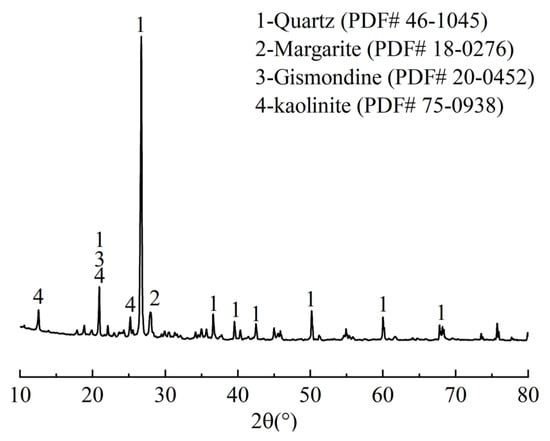
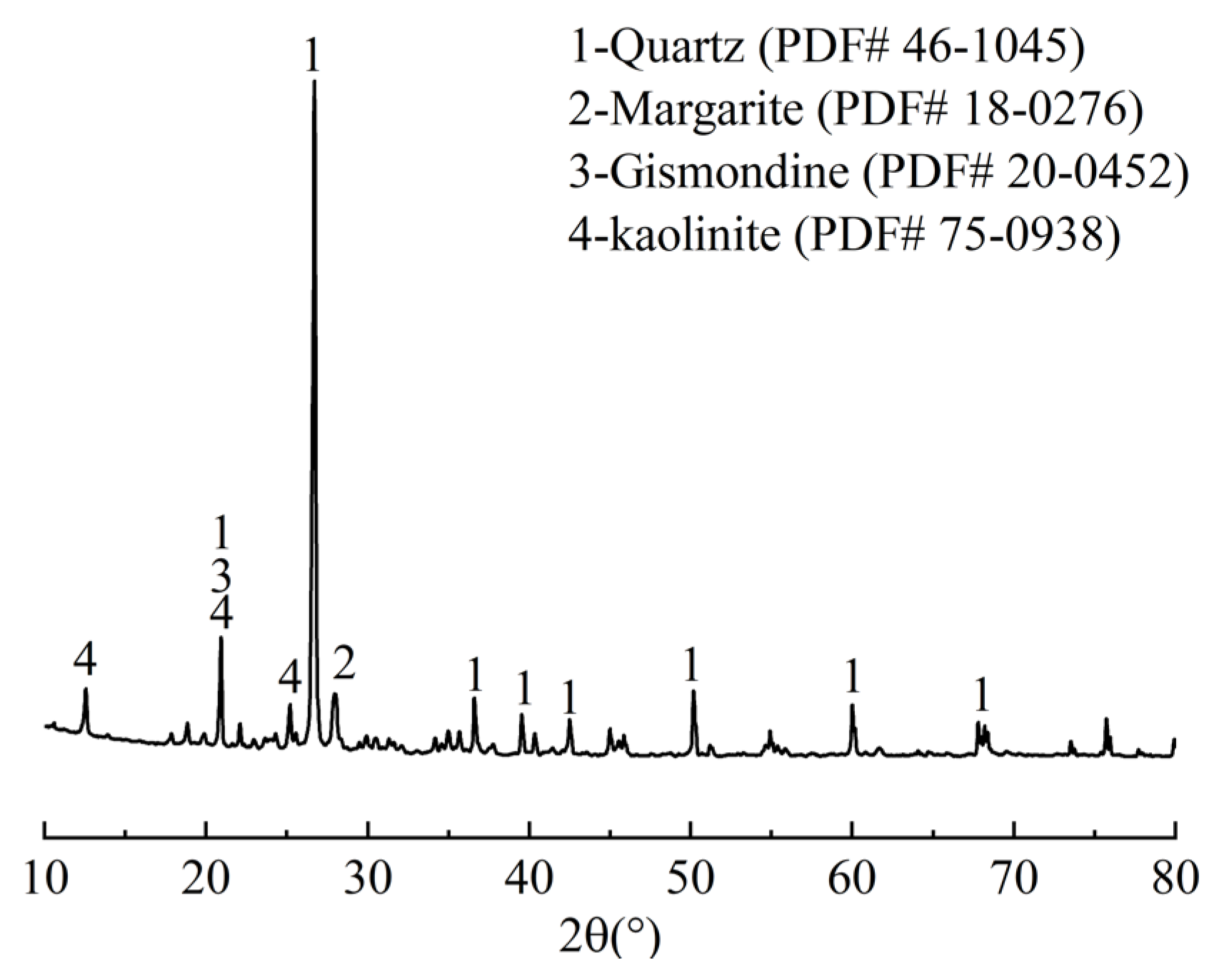
The copper tailings were sourced from Yuncheng, Shanxi Province, China. The cement used was P·O 42.5 ordinary Portland cement. The main chemical compositions of the copper tailings and cement are shown in Table 1. The mineral composition of the copper tailings is shown in Figure 1. As can be seen in Figure 1, the main mineral components of the copper tailings are quartz, hydrous calcium zeolite and kaolinite. Tap water was used as the mixing water for the cement–copper tailings composite.
Table 1.
Chemical Composition of Raw Materials (wt.%).
Figure 1.
XRD pattern of copper tailings.
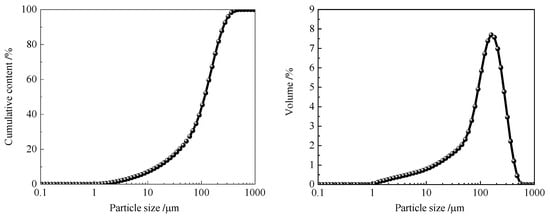
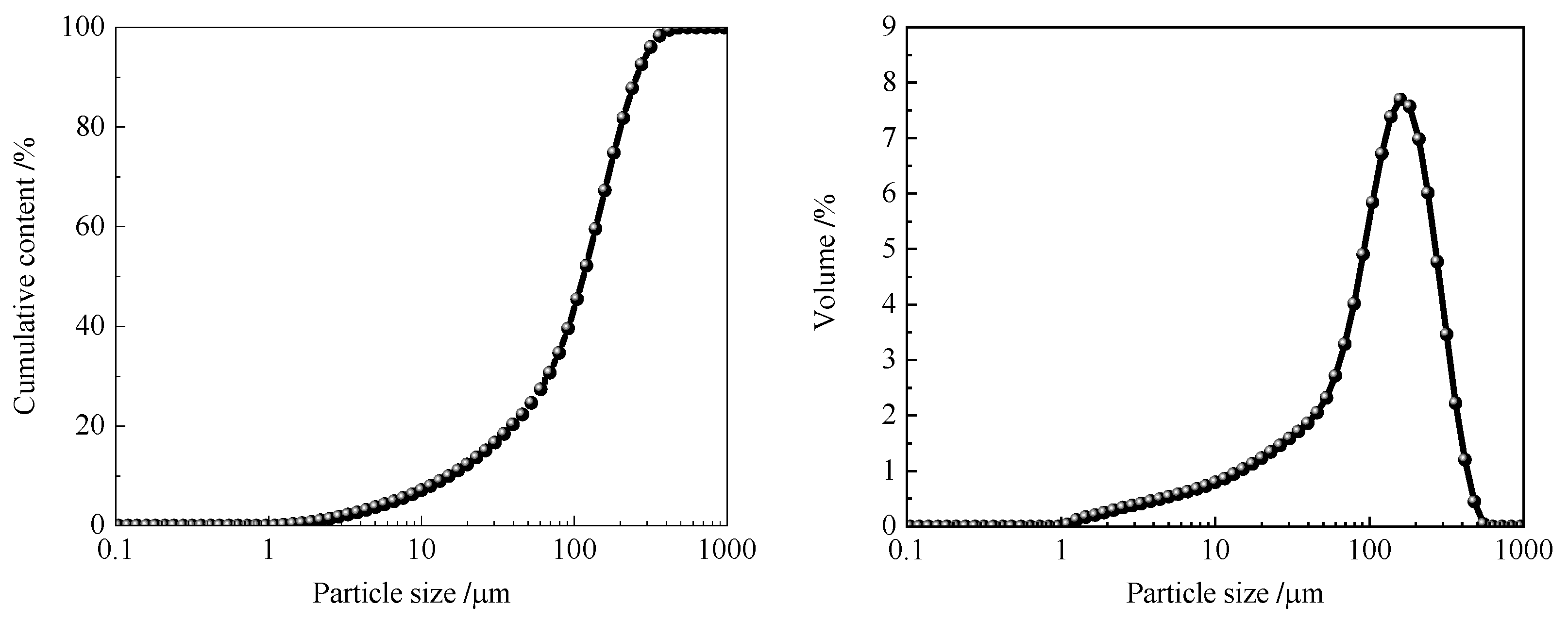
Figure 2 shows the particle size distribution of the copper tailings. As can be seen in Figure 2, the particle sizes of the copper tailings are mainly distributed between 10 and 600 μm. The relatively coarse particle size indicates that the copper tailings cannot be regarded as a conventional fine mineral admixture. Instead, they mainly act through the combined effects of particle filling, skeleton support, and partial dissolution of reactive components in the cementitious system.
Figure 2.
Particle size distribution curve of copper tailings.
2.2. Experimental Protocol for the Preparation of Cement–Copper Tailings Composites
Table 2 shows the composition ratios of the various components in the cement–copper tailings composite. The water-to-binder ratio was maintained at 0.45 for all mixtures. The water dosage was calculated based on the total mass of the cement and copper tailings in each mixture. The prepared cement–copper tailings composite was cured in a standard curing chamber for 28 d before undergoing performance testing. The curing conditions were as follows: temperature: 20 ± 2 °C; relative humidity: 95 ± 5%.
Table 2.
Composition Design of Cement–Copper Tailings Composites.
2.3. Test Methods
2.3.1. Alkali Dissolution Test
To evaluate the potential dissolution behavior of Si and Al in copper tailings under alkaline conditions, alkali dissolution tests were conducted using NaOH solutions with concentrations of 1, 5, and 10 mol/L. Copper tailings powder was mixed with NaOH solutions at a liquid-to-solid ratio of 1:100 g/mL, and maintained under constant temperature conditions. After reaction, the suspension was filtered, and the concentrations of dissolved Si and Al were determined by inductively coupled plasma optical emission spectrometry (ICP-OES).
2.3.2. Mechanical Strength
Compressive and flexural strength tests for cement–copper tailings composites were conducted in accordance with the Chinese standard GB/T 17671-2021, “Test Methods for the Strength of Cement Mortar (ISO Method)” [20], using a combined compressive and flexural testing machine. The specimen dimensions for the compressive strength test were 40 × 40 × 40 mm3, with a loading rate of 2400 N/s; for the flexural strength test, the specimen dimensions were 40 × 40 × 160 mm3, with a loading rate of 50 N/s. Three parallel specimens were tested for each mixture and each mechanical property. The reported value was calculated as the arithmetic mean of the three measurements. The error bars represent the standard deviation of the three parallel measurements.
2.3.3. Microstructural Characterization
The microstructural morphology of cement–copper tailings composites with different copper tailings replacement ratios was obtained using a scanning electron microscope (SEM, FEI-Sirion, Field Electron and Ion Company, Hillsboro, OR, USA). The SEM observations were performed at an accelerating voltage of 20 kV and a working distance of approximately 10 mm, and all samples were subjected to gold sputtering before SEM observation. The determination of mineral composition in the cement–copper tailings composites primarily relied on X-ray diffraction (XRD). In this study, XRD data were collected using a Bruker D8 Advance (Bruker, Billerica, MA, USA) powder X-ray Cu Ka radiation diffractometer at a voltage of 40 kV and a current of 40 mA, with a radiation range of 10–80° and a scanning speed of 1 °/min.
2.3.4. Toxicity Leaching Tests
To evaluate the environmental compatibility of the cement–copper tailings composite, a toxicity leaching procedure was employed to test the leaching of heavy metals Cu and Zn from the cement–copper tailings composite samples over 28 d. The testing standard followed HJ 557-2010, “Solid Waste Leaching Toxicity Testing Methods—Horizontal Shaking Method” [21]. First, the cement–copper tailings composite samples were ground, dried at 105 °C to constant weight, and then sieved through a 3 mm mesh. The cement–copper tailings composite samples were mixed with the leaching solution and shaken to obtain a filtrate containing heavy metal ions; the leaching solution was deionized water (H2O). Finally, the concentrations of Cu and Zn in the filtrate were measured using an inductively coupled plasma mass spectrometer (ICP-MS, Agilent 7850, Agilent Technologies Inc., Santa Clara, CA, USA). The leaching and agitation conditions are presented in Table 3. The heavy-metal leaching rate was calculated based on the mass of the heavy metal released relative to its total mass in the tested specimen as follows:
where η is the heavy-metal leaching rate (%); is the mass of the heavy metal released into the leachate (mg); is the total mass of the corresponding heavy metal in the tested specimen (mg); is the heavy-metal concentration measured in the leachate by ICP-MS (mg/L); is the total volume of the leachate (L); D is the dilution factor of the leachate before ICP-MS analysis (dimensionless); is the total heavy-metal content in the tested specimen (mg/kg); and is the dry mass of the specimen used for the leaching test (kg). The heavy metal content in the copper tailings is shown in Table 4. Although multiple metallic elements were detected in the copper tailings, Cu and Zn were selected as representative elements for leaching evaluation because they are typical environmentally sensitive elements associated with copper mining residues.
Table 3.
Leaching conditions in different leaching tests.
Table 4.
Content of heavy metals Cu and Zn in copper tailings (wt%).
3. Results and Discussion
3.1. Mechanical Strength of Cement–Copper Tailings Composites
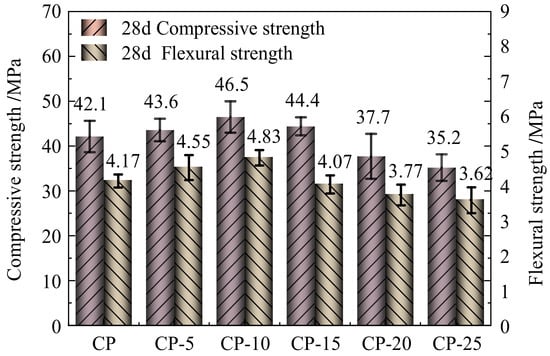
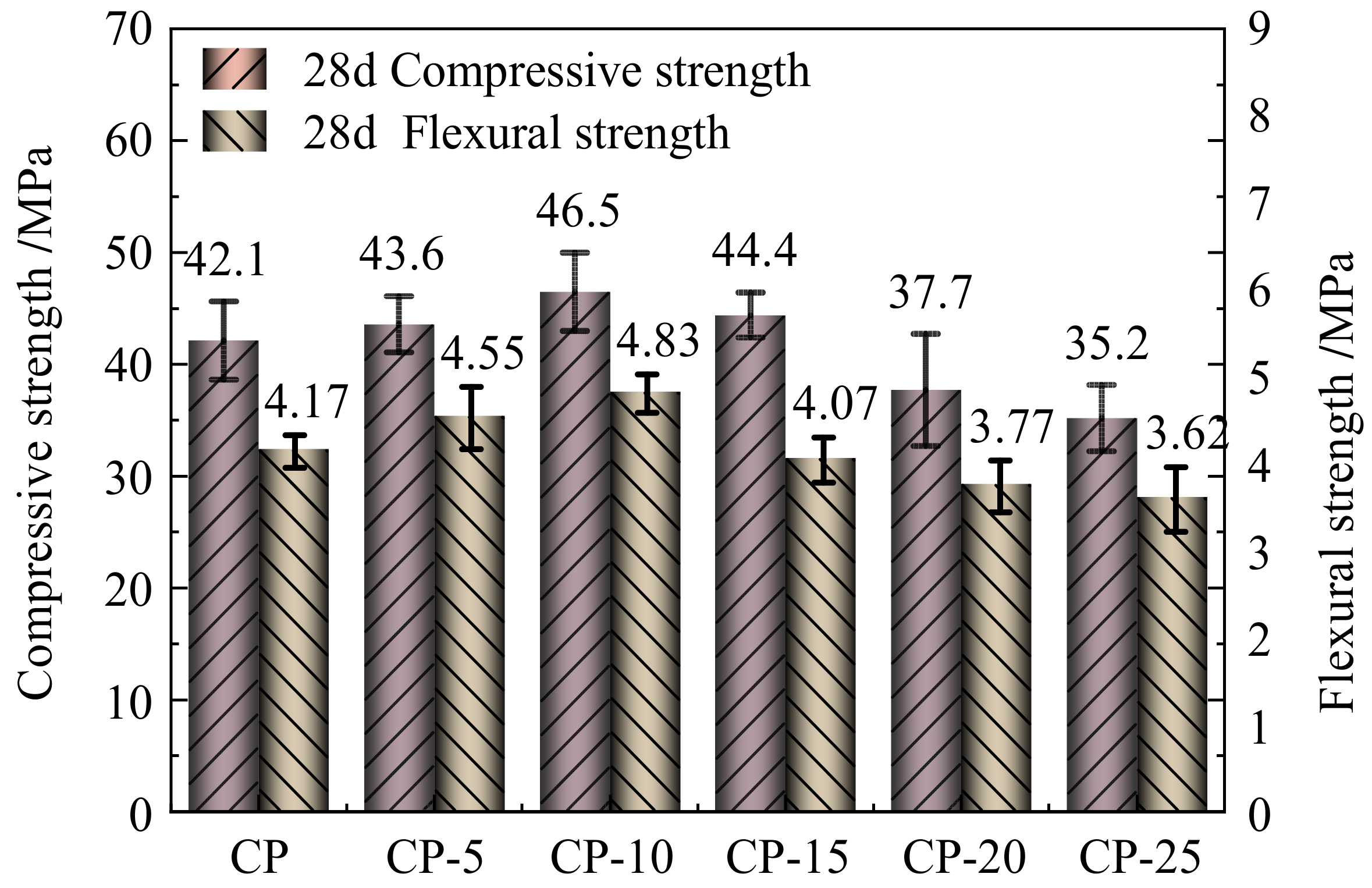
As shown in Figure 3, the 28 d compressive and flexural strengths of the cement–copper tailings composite exhibit similar trends: as the replacement rate of cement by copper tailings increases, the mechanical strength of the composite first increases and then decreases. Specifically, when the copper tailings content reaches 10%, the 28 d compressive and flexural strengths reach a maximum of 46.5 MPa and 4.83 MPa, respectively. This indicates that copper tailings replacement rates of 5%–10% provide a positive contribution to both compressive and flexural strength. At a replacement rate of 15%, the compressive strength remains higher than that of pure cement, whereas the improvement in flexural strength becomes less significant. This trend is primarily attributed to the role of copper tailings as micro-aggregates in the composite material. Since the particle size of copper tailings is mainly distributed between 10 and 600 μm, smaller copper tailings particles mainly contribute to pore filling and particle packing optimization, while larger particles (up to approximately 600 μm) provide a granular skeleton effect similar to fine aggregates. Therefore, the mechanical enhancement induced by copper tailings mainly originates from physical packing effects, together with a limited chemical contribution from dissolved Si and Al species under alkaline conditions. However, when the copper tailings content was further increased to 25%, both the compressive strength and flexural strength of the cement–copper tailings composite decreased. Compared to the cement matrix alone, the compressive strength and flexural strength decreased by 16.4% and 13.2%, respectively. This indicates that a higher copper tailings content exacerbates the inhibition of the cement hydration process.
Figure 3.
Mechanical strength of cement–copper tailings composites with different substitution rates.
In cement materials, the internal minerals of cement undergo hydration reactions through C2S and C3S, as shown in Equations (2)–(5). As the hydration reaction proceeds, the concentration of OH- ions increases, resulting in the pore solution in ordinary Portland cement largely taking the form of a saturated calcium hydroxide solution [22].
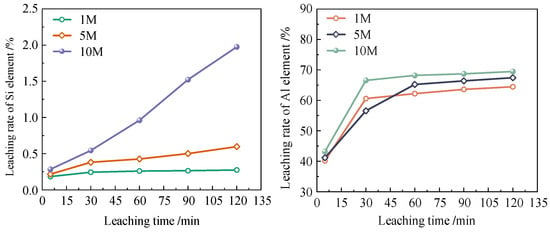
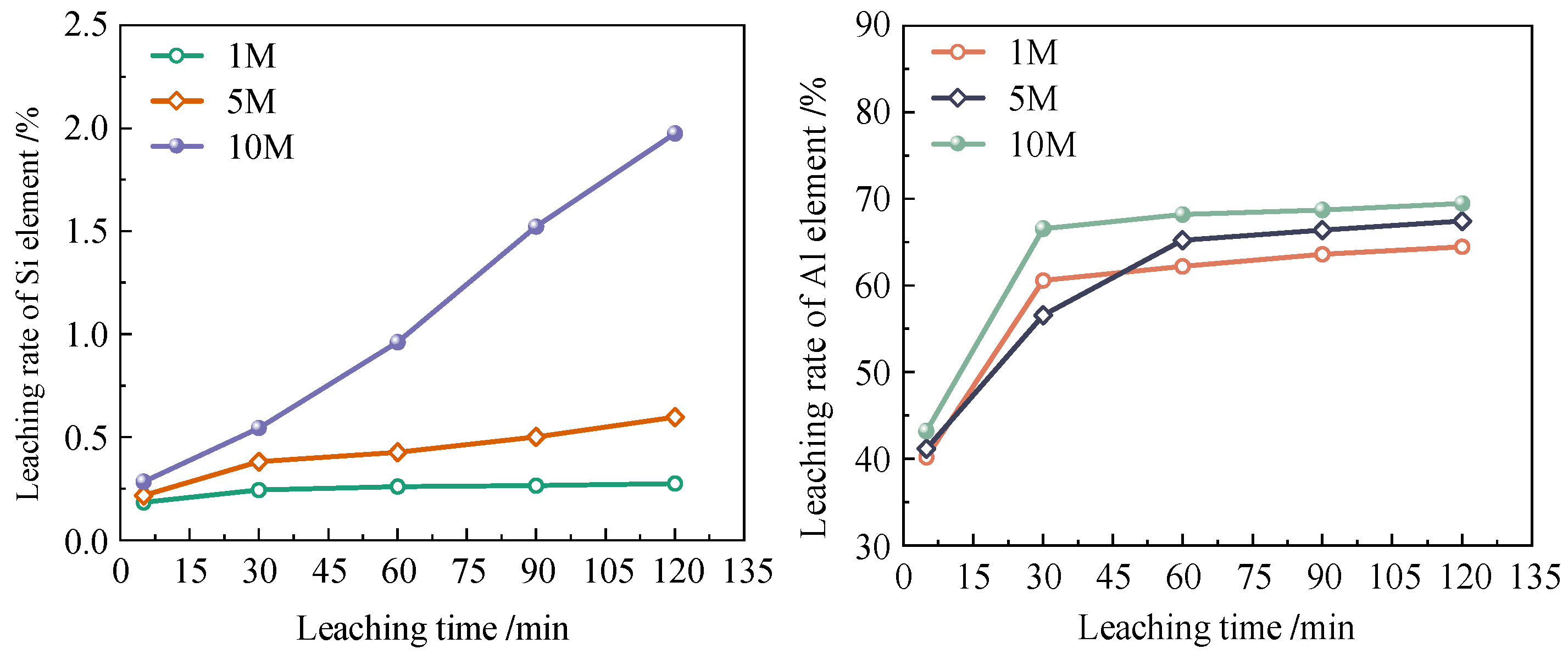
Furthermore, as a mineral material rich in silicon and aluminum, copper tailings contain soluble Si and Al within their structure; under the dissolving action of OH- ions, these elements can partially participate in the hydration reaction of cement. Therefore, this study further employed alkali leaching tests to determine the leachable content of soluble Si and Al in copper tailings under different alkali solution concentrations and elucidate the leaching behavior of soluble Si and Al from copper tailings in an alkaline environment. The alkali solution used was NaOH, with concentrations of 1 M, 5 M, and 10 M. It should be noted that the NaOH concentrations used in this test were not intended to directly reproduce the pore solution chemistry of hydrated cement. Instead, the accelerated alkaline dissolution method was adopted to evaluate the potential release capacity of reactive Si and Al species from copper tailings. As shown in Figure 4, the content of soluble Si and Al leached from the copper tailings increases with increasing alkali concentration. Furthermore, since the Si element in copper tailings primarily exists in the quartz phase, which has a high degree of mineral crystallinity, its leaching content is lower than that of the Al element [23]. The leaching test results indicate that OH− ions present in alkaline environments can promote the dissolution of certain components on the surface of copper tailings particles, as shown in Figure 5. The NaOH dissolution test provides evidence of the potential alkaline dissolution behavior of copper tailings, although the dissolution extent under accelerated conditions cannot be directly considered equivalent to that in actual cement pore solutions. This implies that copper tailings will leach out small amounts of Si and Al elements in the cement hydration environment. When Portland cement is mixed with water, C3A and C3S undergo hydration reactions. Under the influence of OH- ions, a certain amount of Si and Al species can be released from the surface of copper tailings particles. These dissolved species may provide additional silicon and aluminum sources for the formation of hydration products, together with the hydration products generated from cement hydration. Therefore, cement–copper tailings composites with lower SiO2 content exhibit enhanced mechanical strength due to two factors: first, the particle-filling effect of the copper tailings and, second, the dissolution of Si and Al from the copper tailings in the alkaline environment, which participate in the synthesis of the C-S-H gel.
Figure 4.
Leaching behavior of soluble Si and Al elements within copper tailings in alkaline solutions of different concentrations.
Figure 5.
The erosion of OH- ions on copper tailings in alkaline solution.
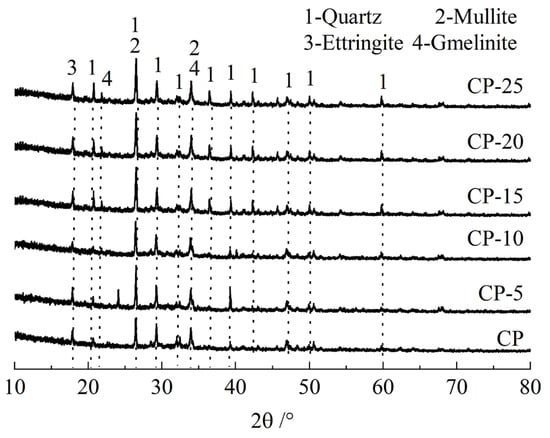
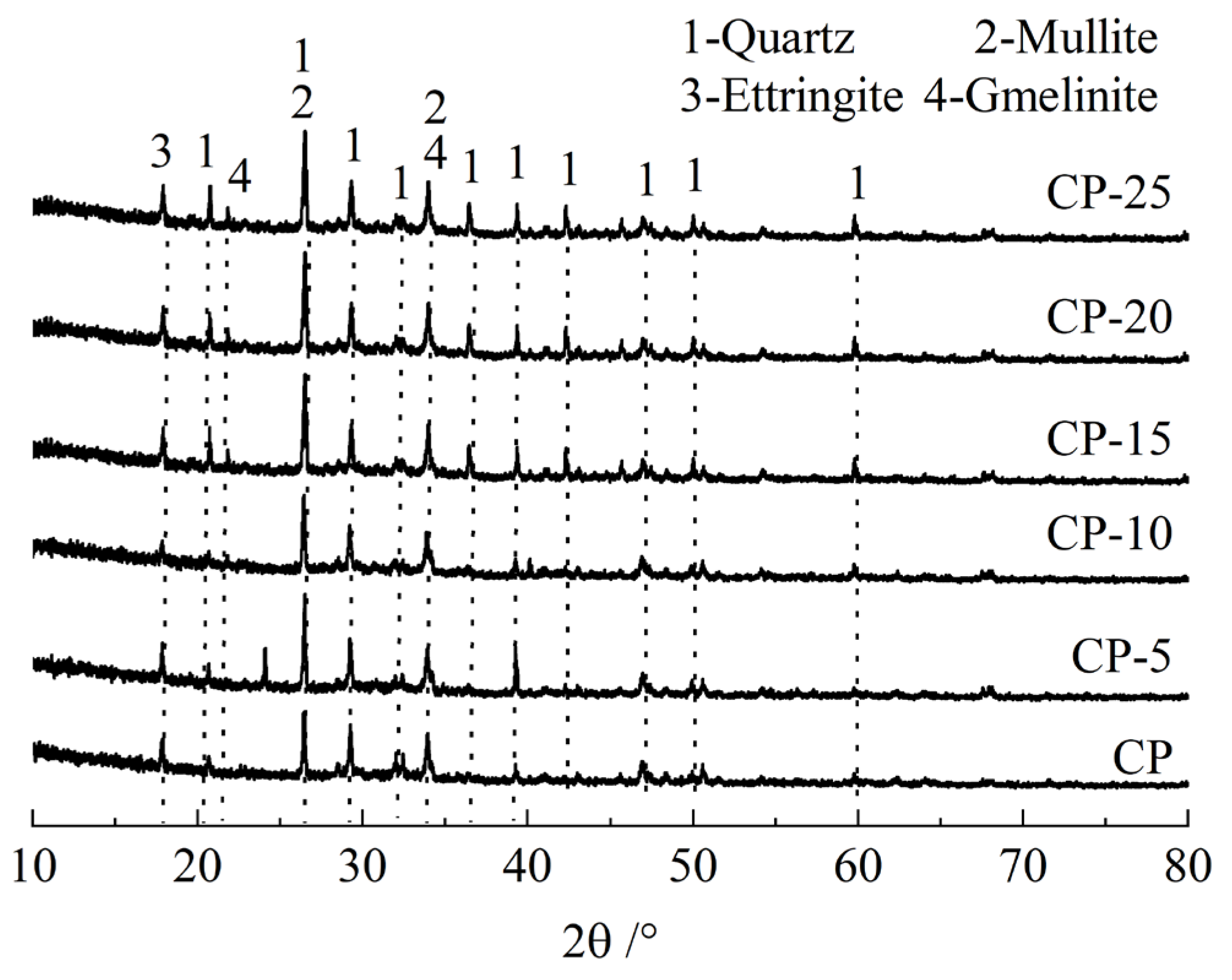
3.2. Mineral Composition of Cement–Copper Tailings Composite Materials
Figure 6 shows the XRD pattern of the cement–copper tailings composite. As shown in Figure 6. The XRD patterns reveal the presence of crystalline phases including quartz, ettringite, and zeolite-related phases in the cement–copper tailings composites. Due to the low crystallinity of C-S-H gel, it cannot be directly identified solely by XRD. However, the broad diffraction features associated with poorly crystalline hydration products, together with SEM observations, suggest the possible formation of C-S-H-type gels during hydration. Furthermore, as the copper tailings replacement rate gradually increases, some unreacted minerals, such as quartz, as well as some quartz diffraction peaks above 45°, are still detected in the cement–copper tailings composite. These mineral components primarily originate from unreacted copper tailings particles, a phenomenon most evident in samples with a copper tailings replacement rate of 15% or higher. Under hydration, the minerals in the cement gradually leach out active SiO2 and Al2O3; through hydration reactions, they form calcium silicate hydrate (C-S-H) and Ca(OH)2 solution [24]. Under the stimulation of these OH- ions, active Si and Al elements are dissolved from the surfaces of copper tailings particles, and under the continuous action of OH- ions, Si-O-Al/Si oligomeric tetrahedral structures are formed, as shown in Equations (6) and (7) [25]. The presence of OH− ions causes the active Si and Al in the copper tailings to undergo depolymerization and condensation reactions, thereby increasing the diffraction peaks of the hydration products in the cement–copper tailings specimens.
Figure 6.
XRD pattern of cement–copper tailings composites.
However, the alkaline conditions provided by the cement hydration system are insufficient to fully activate the reactivity of the copper tailings. When the copper tailings replacement rate is low, the cement content is high, resulting in a higher OH− ion concentration in the hydration environment. This causes some of the copper tailings to leach active Si and Al, which then combine with Na+, Ca2+, and OH− ions in the cement hydration system. Consequently, a larger amount of hydration products is generated in the 5%–10% cement–copper tailings specimens, contributing to an increase in their mechanical strength. However, when the copper tailings replacement rate increases to 25%, the cement content is lower compared to other test groups, resulting in a lower alkali concentration in the internal hydration environment. The OH− ions have a weaker dissolving effect on the copper tailings. This results in a weaker reaction of the copper tailings within the cement–copper tailings composite, causing them to act primarily as fine particles filling the interior of the matrix, which in turn leads to more pronounced diffraction peaks of the quartz phase. This also indicates that in cement–copper tailings specimens with a higher copper tailings replacement rate, the copper tailings have difficulty participating in the hydration reaction, and a large amount of copper tailings adheres to the surface of the cement particles. This adhesion hinders the hydration reaction between cement particles, thereby impeding the cement’s own hydration process and reducing the mechanical strength of the cement–copper tailings composite.
3.3. Microstructural Morphology of Cement–Copper Tailings Composites
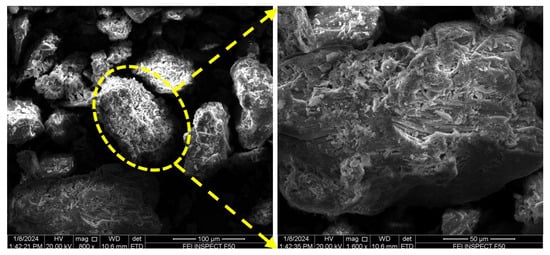
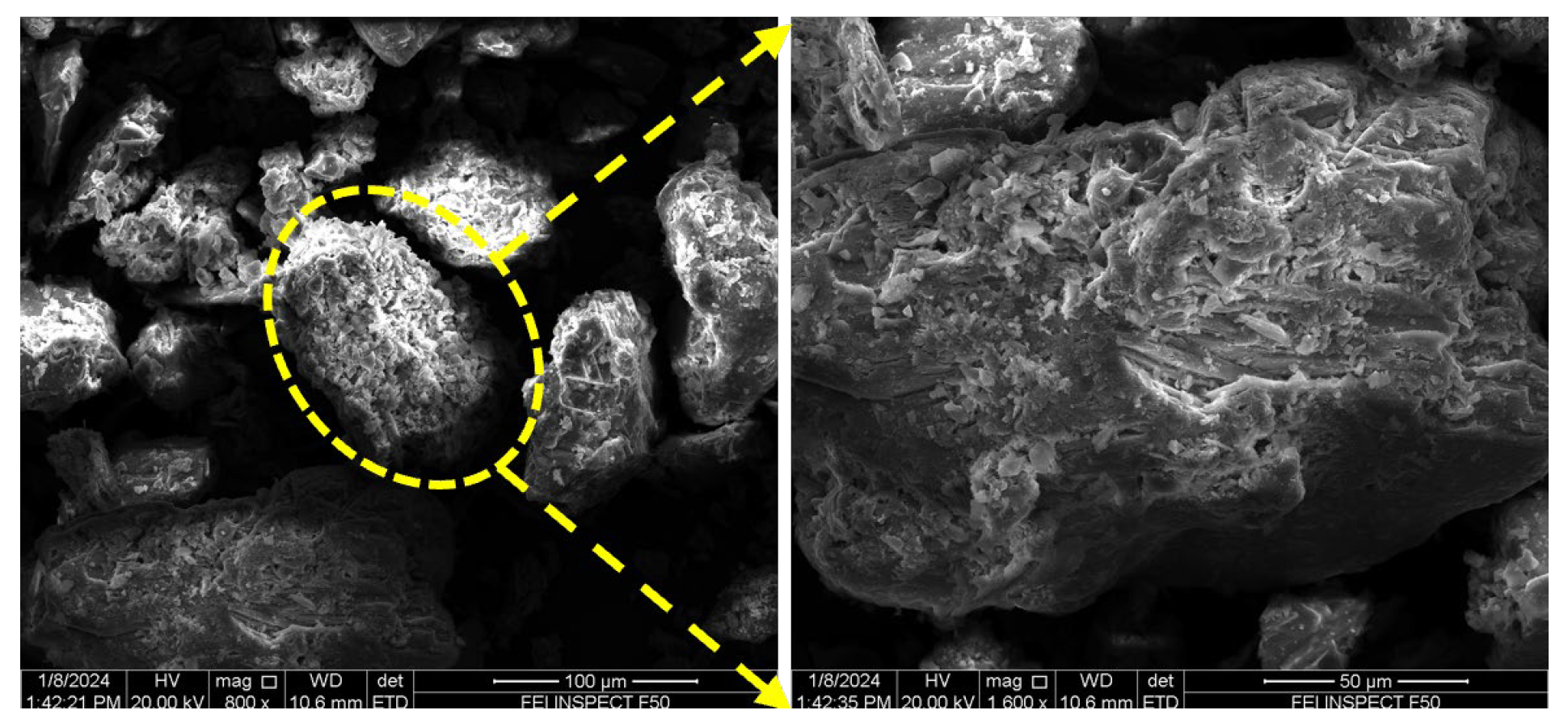
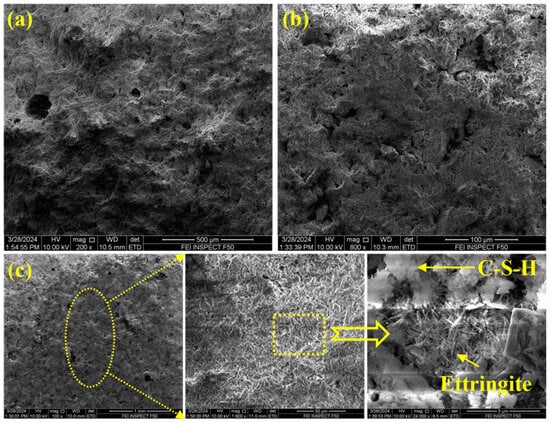
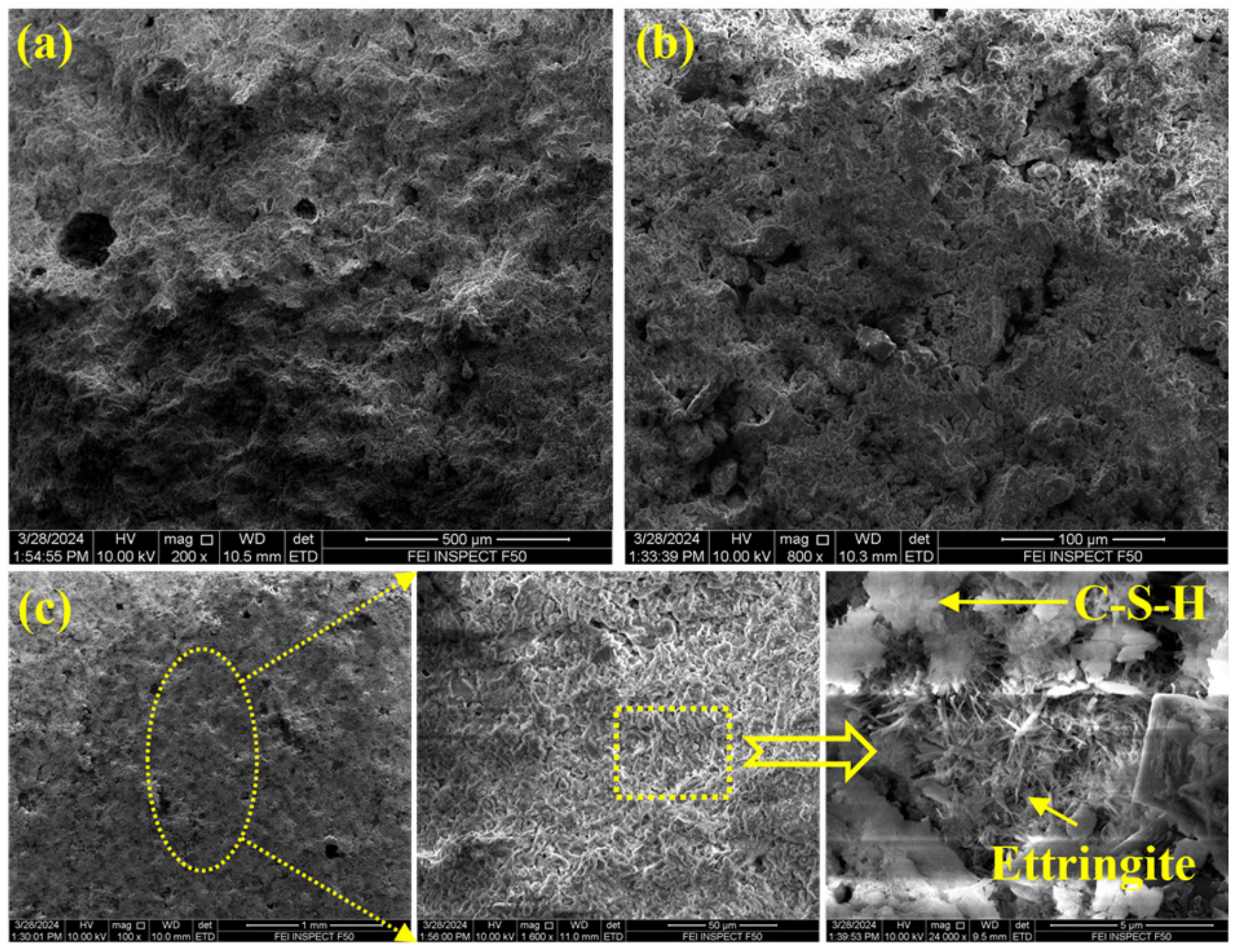
Figure 7 shows SEM images of cement–copper tailings composites at different copper tailings replacement rates. To compare representative microstructural states, CP, CP-10, and CP-25 were selected for SEM observation, representing the reference specimen, the mixture with the highest mechanical strength, and the highest copper-tailings replacement level, respectively. The SEM images show gel-like hydration products and acicular crystalline products within the cement matrix. The acicular morphology is consistent with the typical morphology of ettringite, while the gel-like regions are consistent with poorly crystalline C-S-H-type hydration products. In the cement specimens, the internal microstructure is relatively loose, with high porosity. When the copper tailings replacement rate is 10%, as shown in Figure 7c, the cement–copper tailings composite cementitious system produces a significant amount of acicular (3CaO·Al2O3·3CaSO4·32H2O) and layered calcium silicate hydrate (C-S-H) [26]. Furthermore, compared to the cement specimens, the cement–copper tailings composite exhibits a relatively compact microstructural morphology with fewer visible large pores. This phenomenon further demonstrates that a 10% copper tailings replacement rate is beneficial for the development of mechanical strength. Furthermore, based on the cement hydration mechanism and the leaching characteristics of copper tailings in an alkaline environment, it can be observed that copper tailings exhibit potential reaction contributions in the alkaline hydration environment. Specifically, under the action of OH− ions, smaller copper tailings particles dissolve Si and Al elements from their surfaces that can participate in the hydration reaction. This allows copper tailings particles to provide additional surfaces for the precipitation of hydration products, which may be associated with the precipitation of hydration products on the surface of copper tailings particles. These products envelop the surrounding copper tailings particles, forming a morphologically stable and structurally compact gel system [17]. Furthermore, the copper tailings particles exert a certain degree of physical filling effect, gradually reducing the large pores in the cement hydrate structure. On the other hand, with a maximum particle size of up to 600 μm, copper tailings exhibit a skeletal effect typical of fine aggregates, thereby positively influencing the mechanical strength of specimens with copper tailings replacement rates ranging from 5% to 15%. As the copper tailings replacement rate gradually increases from 15% to 20%, it can be seen in Figure 7b that the increased amount of copper tailings causes the cement matrix to become looser. This is primarily because copper tailings have limited ability to leach soluble Si and Al elements in an alkaline environment, a phenomenon also evident in Figure 4; consequently, the additional copper tailings particles do not exhibit significant hydration reaction characteristics. Furthermore, the presence of a greater amount of copper tailings, which adhere to the surfaces of cement particles, hinders the cement’s further participation in the hydration reaction. This results in a reduced content of hydration products, which in turn affects the mechanical strength of the cement–copper tailings composite material.
Figure 7.
SEM images of cement–copper tailings composites ((a) cement specimen; (b) 25% copper tailings replacement; (c) 10% copper tailings replacement).
3.4. Leaching Behavior of Cu and Zn in Cement–Copper Tailings Composites
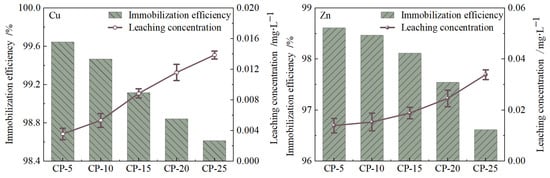
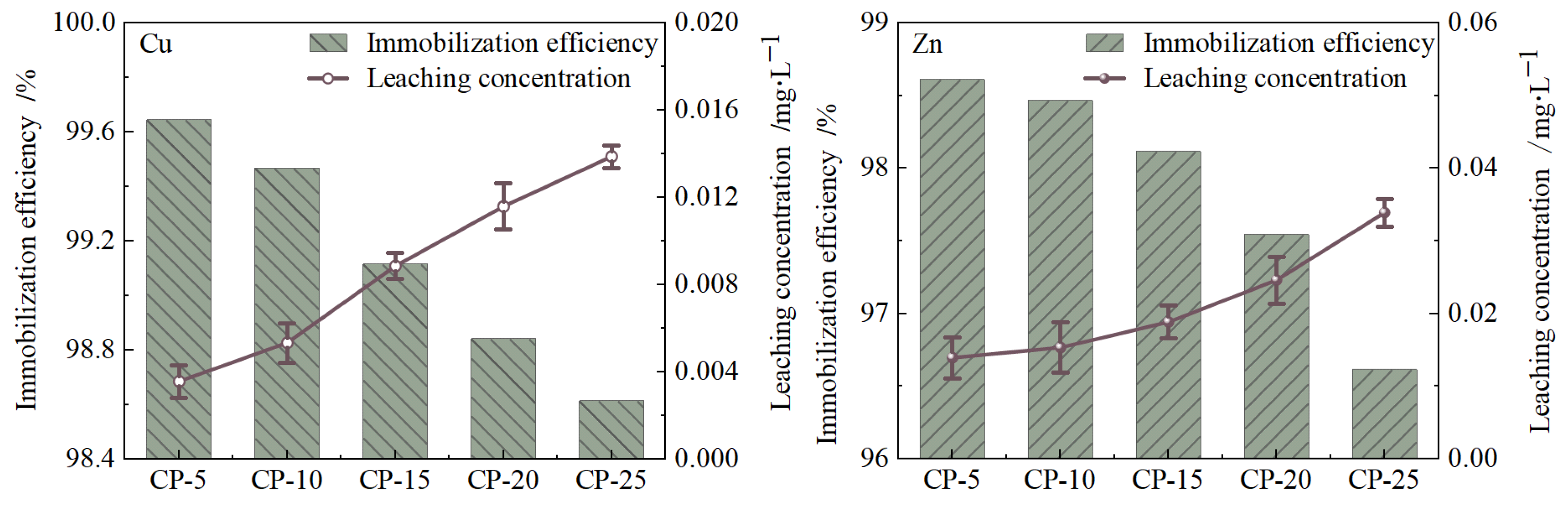
Figure 8 shows the leaching behavior and fixation efficiency of heavy metals in cement–copper tailings composites at different copper tailings replacement rates. As shown in the figure, as the copper tailings replacement rate increases, the leaching concentrations of Cu and Zn in the cement–copper tailings composites also increase. In specimens with a copper tailings replacement rate of 15% or less, the leaching concentrations of Cu and Zn were below 0.01 mg/L and 0.05 mg/L, respectively, meeting the regulatory requirements specified in HJ 557-2010 [21] and relevant solid waste leaching toxicity standards. According to the applicable criteria, the measured Cu and Zn concentrations were within the allowable limits for solid waste utilization. Cement reacts with water to form large amounts of calcium silicate hydrate and calcium aluminate hydrate. These hydration products, especially C-S-H gels, possess a highly disordered layered structure and can contribute to heavy metal retention through surface adsorption, ion exchange, and physical encapsulation effects [27,28]. Equations (8)–(11) further illustrate that Cu and Zn in copper tailings can enter the C-S-H gel and ettringite structures through cation exchange, thereby directly adsorbing onto the C-S-H gel surface. On the other hand, Cu and Zn react with OH− ions in the hydrated environment to form insoluble Cu(OH)2 and Zn(OH)2 precipitates, thereby achieving the immobilization of heavy metal ions [29].
Figure 8.
Leaching concentration of Cu and Zn in cement–copper tailings composites at 28 d.
Figure 8 also shows that as the copper tailings substitution rate increases further, the amount of cement material available for hydration in the cement–copper tailings composite decreases. On the other hand, the copper tailings content increases; however, since few copper tailings particles can participate in the hydration reaction, more copper tailings adhere to the surface of the cement particles, hindering the cement hydration process. Consequently, the reduced content of cement hydration products results in an insufficient amount of calcium silicate hydrate (C-S-H) to adsorb heavy metal ions. Furthermore, the impeded hydration reaction makes it difficult to stably fix heavy metal ions within the cement matrix; under the influence of the external environment, this leads to increased concentrations of leached Cu and Zn in the cement–copper tailings composite. The results of heavy metal leaching tests further indicate that a copper tailings replacement rate of 10%–15% enables the preparation of high-performance cement–copper tailings composites, which not only exhibit superior mechanical strength but also pose the lowest environmental risk.
3.5. Production-Stage Carbon Emission Comparison of Cement–Copper Tailings Composite Materials
During the production of ordinary Portland cement, limestone undergoes a decomposition reaction when calcined at high temperatures (12):
This process generates significant process-related CO2 emissions. Replacing a portion of the cement clinker with copper tailings can directly reduce the amount of CaCO3 subjected to calcination and decomposition, thereby reducing process carbon emissions at source. In the highly alkaline environment of cement hydration, OH− ions leach active Si and Al from the surface of the copper tailings particles, contributing to the formation of C-S-H gel and endowing the copper tailings with secondary hydration properties. This mechanism means that copper tailings are not merely an inert filler, but play a substantive role in the formation of the cementitious matrix. Consequently, even with a low clinker content, the mechanical properties of the material can be maintained or even enhanced, providing the material basis for achieving both carbon reduction and performance at low substitution rates. Furthermore, as copper tailings are solid waste generated during the mineral processing stage, the energy consumption required for their processing is far lower than that required for the calcination of cement clinker; moreover, there are no process emissions resulting from the high-temperature decomposition of carbonates, and the carbon emission factor is significantly lower than that of ordinary Portland cement. Research indicates that when the copper tailings substitution rate does not exceed 15 per cent, the C-S-H gel and insoluble precipitates formed during hydration exhibit good adsorption and solidification effects on heavy metal ions such as Cu2+ and Zn2+, with leaching concentrations falling below the national toxicity leaching limit for solid waste. This implies that the use of copper tailings in building materials can safely replace traditional landfill disposal methods, thereby reducing the energy consumption and associated carbon emissions resulting from the construction and maintenance of tailings dams.
According to the ‘Standard for the Calculation of Carbon Emissions from Buildings’ (GB/T 51366-2019 [30]), the carbon emission factor for ordinary Portland cement is taken as 735 kgCO2e/t. The carbon emission factor of copper tailings used in this study was estimated based on the major processing steps involved in their utilization, including crushing, screening, grinding, drying, transportation, and auxiliary energy consumption. This value represents a simplified estimation of processing-related embodied carbon rather than a complete life-cycle carbon inventory. Under these conditions, the total carbon emission factor for copper tailings admixtures is approximately 50–85 kgCO2e/t, with an average value of 68 kgCO2e/t. The embodied-carbon contribution of copper tailings was estimated from the main processing stages required for their utilization, including grinding, drying, transportation, and auxiliary energy consumption. The corresponding activity data, emission factors, data sources, and assumptions are summarized in Table 5. Compared with ordinary Portland cement, the carbon emission factor of copper tailings admixtures is only approximately 9.2 per cent of that of cement, demonstrating a significant advantage in terms of carbon reduction.
Table 5.
Parameters used for the carbon estimation of copper tailings.
According to the ‘Standard for the Calculation of Carbon Emissions in Buildings’, carbon emissions during the building materials production stage are calculated using the following formula:
Here, CSC represents carbon emissions from the production stage of building materials, Mi represents the consumption of the i-th primary building material, and Fi represents the carbon emission factor for the i-th primary building material. The carbon emission factor for cement is Fcement = 0.735 gCO2e/g, and that for copper tailings admixture is Fcopper tailings= 0.068 gCO2e/g.
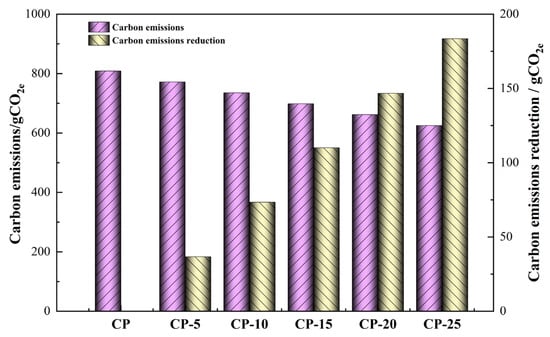
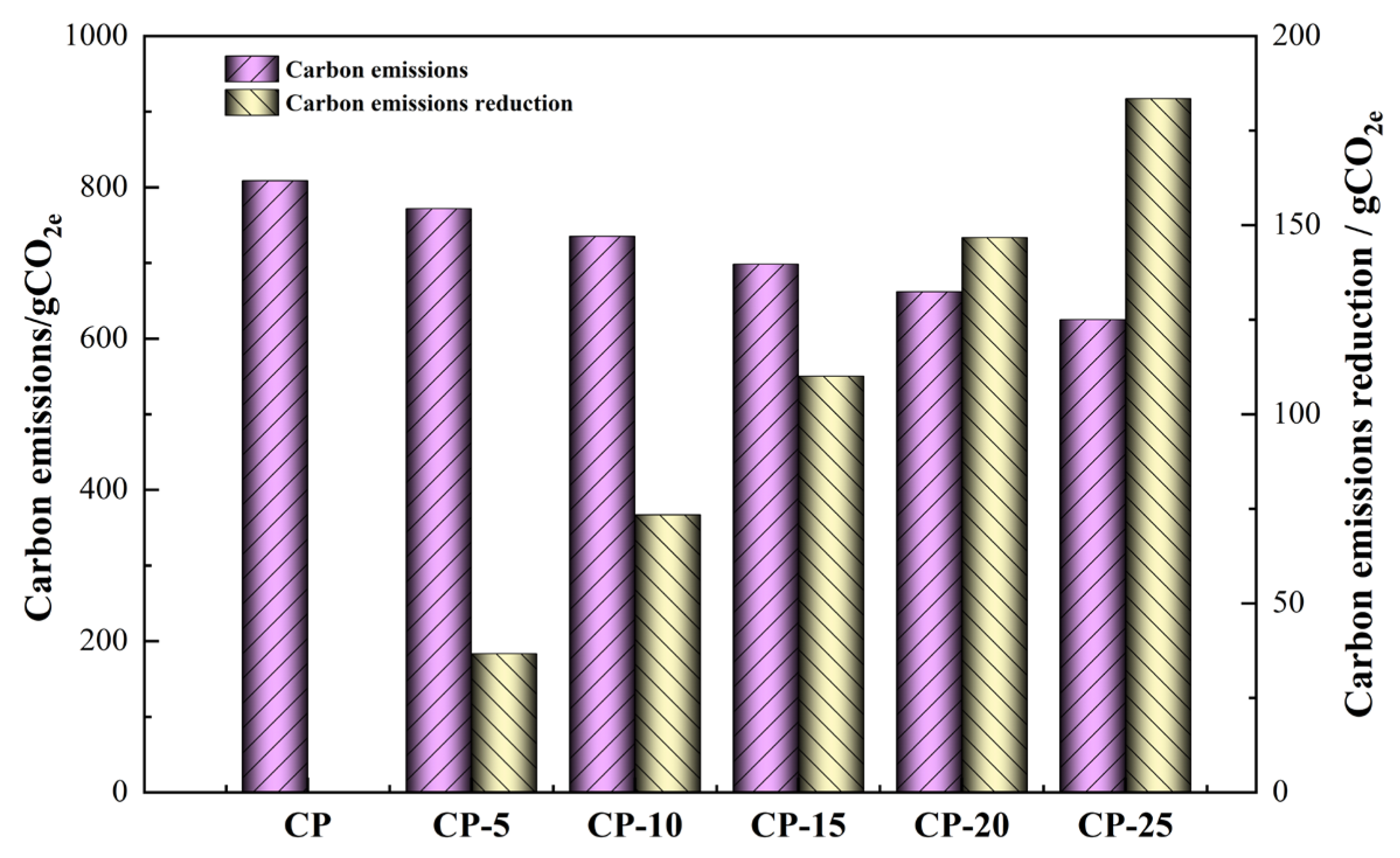
It should be noted that this analysis represents a simplified embodied carbon comparison rather than a complete life-cycle assessment. The calculation mainly considers the reduction in cement consumption and the processing-related emissions of copper tailings. Factors such as upstream mining processes, transportation assumptions, regional electricity structures, system boundary selection, and allocation methods were not fully considered. Therefore, the calculated carbon reduction values should be interpreted as comparative indicators rather than absolute life-cycle carbon emission values. Comparison of carbon emissions from cement–copper tailings composite materials is shown in Figure 9. The copper tailings substitution rate is positively correlated with the carbon reduction rate, but the mechanical properties follow a pattern of initially increasing and then decreasing: H3 offers the best mechanical properties, with a 28 d compressive strength of 46.5 MPa and a carbon reduction rate of 9.07 per cent. At the same time, the heavy metal leaching concentrations comply with national standards, indicating that CP-10 exhibited the best comprehensive performance among the investigated mixtures under the selected evaluation criteria, considering mechanical properties, Cu/Zn leaching behavior, and embodied carbon reduction. The CP-15 formulation achieves a carbon reduction rate of 13.61 per cent; although its mechanical properties have declined slightly, they remain within an acceptable range, and heavy metal leaching concentrations continue to comply with standards. It can therefore be recommended as a formulation for projects prioritising carbon reduction.
Figure 9.
Carbon emissions from cement–copper tailings composites with different substitution rates.
3.6. Limitations and Future Perspectives
In conclusion, only one source of copper tailings with a specific chemical composition, mineralogical assemblage, and particle-size distribution was investigated. Since the physicochemical characteristics of copper tailings can vary considerably depending on ore type and beneficiation process, the applicability of the present findings to copper tailings from other sources requires further verification. In addition, the investigated replacement ratios were limited to the range adopted in this study, and the mechanical properties were primarily evaluated at 28 d. Therefore, the long-term strength development and durability-related performance of the cement–copper tailings composites remain to be systematically investigated. The environmental assessment was also limited to the short-term leaching behavior of Cu and Zn, and therefore does not fully represent the long-term release behavior of potentially hazardous elements under different exposure conditions.
Furthermore, future studies should therefore investigate pore-solution chemistry and employ quantitative characterization techniques, such as thermogravimetric analysis and quantitative phase analysis, to better distinguish the physical filling effect from the chemical reaction contribution of copper tailings. Long-term durability, including resistance to carbonation, sulfate attack, chloride ingress, and wetting-drying or freeze–thaw cycles, should also be evaluated. In addition, copper tailings from different geological and processing origins should be investigated to assess the general applicability of the proposed utilization approach. Finally, a complete life-cycle assessment incorporating raw-material acquisition, processing, transportation, electricity mix, allocation principles, service life, and end-of-life scenarios is required to more comprehensively evaluate the environmental benefits of cement–copper tailings composites.
4. Conclusions
This study analyzed the resource recovery and efficient utilization of copper tailings in cement composites. High-performance cement–copper tailings composites were prepared by partially replacing cement with copper tailings. Microscopic experiments were used to elucidate the mechanism of action of copper tailings during the cement hydration process, and the leaching concentrations of heavy metal elements from copper tailings into the environment were analyzed. The main conclusions are as follows:
(1) When the replacement rate of copper tailings in cement composites ranges from 5% to 15%, the resulting cement–copper tailings composites exhibit good mechanical strength. Specifically, at a replacement rate of 10%, the 28 d compressive strength and flexural strength of the cement–copper tailings composites increased by approximately 10.5% and 15.8%, respectively, compared to pure cement. However, when the copper tailings replacement rate exceeds 15%, the mechanical strength of the cement–copper tailings composite decreases significantly.
(2) During the cement hydration process, OH− ions generated within the cement system exert a certain dissolving effect on the copper tailings. Under the erosion and activation of OH− ions, active Si and Al elements are dissolved from the surface of the copper tailings particles and participate in the cement hydration reaction, which is conducive to the formation of hydration products. However, as the replacement rate of copper tailings increases, it will significantly hinder the cement hydration reaction. Furthermore, the filling effect of copper tailings in the cement also helps reduce internal porosity in the cement matrix. Consequently, the combined dissolution and filling effects of copper tailings in alkaline solutions significantly enhance the mechanical strength of the cement–copper tailings composite material.
(3) Toxicity leaching tests indicate that the leaching concentrations of heavy metals in the cement–copper tailings composite meet national standards, primarily due to the adsorption of heavy metal ions by calcium silicate hydrate (C-S-H) and the encapsulation effect of insoluble precipitates. Although the leaching concentration of heavy metals increases with the rise in copper tailings replacement ratio, for the optimal replacement ratio of 10% proposed in this study, both the mechanical strength and heavy metal leaching concentration meet the requirements for future engineering applications, thereby indicating the potential environmental applicability of cement–copper tailings composites with respect to Cu and Zn leaching control.
Author Contributions
Conceptualization, C.L. and Y.X.; methodology, Z.L.; software, D.F.; validation, L.W., D.F. and Z.Z.; formal analysis, C.L.; investigation, Y.X.; resources, Z.L.; data curation, Y.X.; writing—original draft preparation, C.L.; writing—review and editing, F.X.; visualization, Z.L.; supervision, F.X.; project administration, F.X.; funding acquisition, D.F. and L.W. All authors have read and agreed to the published version of the manuscript.
Funding
This work was supported by the Science and Technology Project of Hubei Transportation Department (2024-81-1-7) and the Research Projects of the Guangdong Provincial Academy of Building Research Group Co., Ltd. (20260560377).
Institutional Review Board Statement
Not applicable.
Informed Consent Statement
Not applicable.
Data Availability Statement
The data from this study can be reasonably requested from the corresponding author.
Conflicts of Interest
Authors Zhu Luo and Dong Fang were employed by the company GuangDong Provincial Academy of Building Research Group Co., Ltd. Li Wan was employed by the company HuBei Jiaotou Intelligent Testing Co., Ltd. Zhigang Zhu was employed by the company CCCC WuHan Harbor Engineering Design and Research Co., Ltd. The remaining authors declare that the research was conducted in the absence of any commercial or financial relationships that could be construed as a potential conflict of interest.
References
- Yan, X. Comprehensive utilization and environmental protection of mine tailing resource. Rare Met. Cem. Carbides 2005, 33, 23–25. (In Chinese) [Google Scholar] [CrossRef]
- Xie, J.; Zhao, X.; Dai, Q.; Chen, S.; Hu, Y.H.; Aparicio, D.; Jin, Q. Reactivity, hydration kinetics, and microstructure evolution of activated copper mine tailings as supplementary cementitious materials. Constr. Build. Mater. 2026, 545, 148108. [Google Scholar] [CrossRef] [Scilit]
- Sun, R.; Gao, Y.; Yang, Y. Leaching of heavy metals from lead-zinc mine tailings and the subsequent migration and transformation characteristics in paddy soil. Chemosphere 2022, 291, 132792. [Google Scholar] [CrossRef] [Scilit]
- Guo, W.; Wu, M.; Wang, Y.; Deng, W.; Wang, X.; Mao, Y. Present situation and progress of resource utilization technology of copper tailings in China. Multipurp. Util. Mineral. Resour. 2023, 44, 127–134. (In Chinese) [Google Scholar]
- Ding, X.; Pan, Y.; Li, G.; Wang, X.; Gong, W.; Dong, Y. Study on effect of foaming and binding agent on lightweight material made of copper tailings. J. Shenyang Jianzhu Univ. (Nat. Sci.) 2013, 29, 121–126. (In Chinese) [Google Scholar]
- Tan, Q.; Lin, Z.; You, C. The properties of waste tailing sand and its application in building materials. Anhui Archit. 2020, 27, 108–109. (In Chinese) [Google Scholar] [CrossRef]
- Lin, H.; Zhang, S.; Xie, J. Study on properties of copper tailing powder permeable cement concrete. Concrete 2018, 5, 157–160. (In Chinese) [Google Scholar] [CrossRef]
- Zhu, J.; Song, J.; Wang, L.; Xiong, R.; Feng, S.; Ouyang, Y. Research progress on application of copper tailing in cement-based materials. Bull. Chin. Ceram. Soc. 2018, 37, 3492–3497. [Google Scholar]
- Feng, Q.; Wang, W.; Zhang, B. Research on techniques of light weight baking-free brick made of copper mine tailings from Sichuan. China Min. Mag. 2010, 19, 90–92. [Google Scholar]
- Chen, S.-C.; Gao, M.-Y.; Lin, W.-T.; Liang, J.-F.; Li, D.-W. Effects of incorporating large quantities of copper tailings with various particle sizes on the strength and pore structure of cement-based materials. Constr. Build. Mater. 2022, 329, 127150. [Google Scholar] [CrossRef] [Scilit]
- Zhang, Y.; Shen, W.; Wu, M.; Shen, B.; Li, M.; Xu, G.; Zhang, B.; Ding, Q.; Chen, X. Experimental study on the utilization of copper tailing as micronized sand to prepare high performance concrete. Constr. Build. Mater. 2020, 244, 118312. [Google Scholar] [CrossRef] [Scilit]
- Wu, X.; Xu, X.; Mao, Z. Research on the full replacement of siliceous raw materials by copper tailings to prepare cement clinker. Non Met. Mines 2023, 46, 40–44. [Google Scholar] [CrossRef]
- Onuaguluchi, O.; Eren, Ö. Copper tailings as a potential additive in concrete: Consistency, strength and toxic metal immobilization properties. Indian J. Eng. Mater. Sci. 2012, 19, 79–86. [Google Scholar]
- Liu, S.; Wang, L.; Li, Q.; Song, J. Hydration properties of Portland cement-copper tailing powder composite binder. Constr. Build. Mater. 2020, 251, 118882. [Google Scholar] [CrossRef] [Scilit]
- Barzegar Ghazi, A.; Jamshidi-Zanjani, A.; Nejati, H. Utilization of copper mine tailings as a partial substitute for cement in concrete construction. Constr. Build. Mater. 2022, 317, 125921. [Google Scholar] [CrossRef] [Scilit]
- Zeng, H.; Ramanathan, S.; Kim, H.J. Effect of copper mine tailings and copper slag on the hydration, microstructure, and mechanical property in Portland cement. Results Eng. 2025, 26, 104890. [Google Scholar] [CrossRef] [Scilit]
- Xie, R.; Ge, R.; Li, Z.; Qu, G.; Zhang, Y.; Xu, Y.; Zeng, Y.; Li, Z. Synthesis and influencing factors of high-performance concrete based on copper tailings for efficient solidification of heavy metals. J. Environ. Manag. 2023, 325, 116469. [Google Scholar] [CrossRef] [Scilit]
- Johansson, L.; Bahrami, A.; Wallhagen, M.; Cehlin, M. A comprehensive review on properties of tailings-based low-carbon concrete: Mechanical, environmental, and toxicological performances. Dev. Built Environ. 2024, 18, 100428. [Google Scholar] [CrossRef] [Scilit]
- Basheer Shahin, M.; Majhi, S.; Maitra, S.; Barai, S.V.; Mukherjee, A. Valorisation of mine tailings in blended cement: Material performance and life cycle assessment. Chemosphere 2026, 414, 145124. [Google Scholar] [CrossRef] [Scilit]
- GB/T 17671-2021; Test Method of Cement Mortar Strength (ISO Method). Standards Press of China: Beijing, China, 2021.
- HJ 557-2010; Solid Waste—Extraction Procedure for Leaching Toxicity—Horizontal Vibration Method. China Environmental Science Press: Beijing, China, 2010.
- Liu, Y.; Liu, M.; Li, H.; Luo, G.; Tan, H.; Liu, Q. Hydration kinetics of Portland cement shifting from silicate to aluminate dominance based on multi-mineral reactions and interactions. Mater. Des. 2023, 233, 112228. [Google Scholar] [CrossRef] [Scilit]
- Wu, A.; Jiang, G.; Lan, W.; Liu, J.; Xue, Y. Experimental study on copper slag activity excitation and hydration mechanism analysis. J. Cent. South Univ. (Sci. Technol.) 2017, 48, 2498–2505. (In Chinese) [Google Scholar]
- Li, Z.; Gao, X.; Lu, D.; Dong, J. Early hydration properties and reaction kinetics of multi-composite cement pastes with supplementary cementitious materials (SCMs). Thermochim. Acta 2022, 709, 179157. [Google Scholar] [CrossRef] [Scilit]
- Cheng, Y.; Qi, R.; Hou, J.; Huang, Q. Feasibility study on utilization of copper tailings as raw meal and addition for low carbon Portland cement production. Constr. Build. Mater. 2023, 382, 131275. [Google Scholar] [CrossRef] [Scilit]
- Haque, M.A.; Chen, B.; Maierdan, Y. Influence of supplementary materials on the early age hydration reactions and microstructural progress of magnesium phosphate cement matrices. J. Clean. Prod. 2022, 333, 130086. [Google Scholar] [CrossRef] [Scilit]
- Chen, Q.S.; Zhang, Q.; Qi, C.; Zhang, Q.; Feng, Y.; Wang, D.; Tao, Y.; Lu, R. Temperature-depending characteristics of strength and leaching toxicity of phosphogympsum-based cemented paste backfill. Chin. J. Nonferrous Met. 2021, 31, 1084–1095. (In Chinese) [Google Scholar]
- Liu, S.; Wang, Y.; Wu, A.; Zhang, M.; Wang, Z.; Wu, L. Leaching behavior and solidification mechanism of red mud composite filling material. Acta Mater. Compos. Sin. 2023, 40, 6729–6739. (In Chinese) [Google Scholar]
- Jiang, J.; Luo, H.; Wang, S.; Ou, X.; Su, J.; Lyu, Z.; Chen, J.; Wei, D. Synthesis of tailing slurry-based geopolymers for the highly efficient immobilization of heavy metals: Behavior and mechanism. Appl. Clay Sci. 2024, 247, 107199. [Google Scholar] [CrossRef] [Scilit]
- GB/T 51366-2019; Standard for Building Carbon Emission Calculation. China Architecture & Building Press: Beijing, China, 2019.
- Wu, M.; Zhang, Y.; Liu, G.; Wu, Z.; Yang, Y.; Sun, W. Experimental study on the performance of lime-based low carbon cementitious materials. Constr. Build. Mater. 2018, 168, 780–793. [Google Scholar] [CrossRef] [Scilit]
- Li, J.; Wei, X.; Li, J.; Jin, H. Low-carbon ternary precursor alkali-activated road subbase materials derived from industrial solid wastes: Synergistic utilization of red mud, molybdenum tailings and iron tailings. Environ. Res. 2026, 308, 125607. [Google Scholar] [CrossRef] [Scilit]
- Zou, X.; Ma, D.; Rao, M.; Chen, W.; Jiao, D.; Wu, H. Mechanical and sustainable properties of autoclaved aerated concrete with high-volume fly ash and iron tailings sand. Case Stud. Constr. Mater. 2025, 23, e05497. [Google Scholar] [CrossRef] [Scilit]
- Shen, J.; Xiao, J.; Wen, G.; Xi, Z.; Li, S. Orthogonal test of alkali-activated slag solidified construction spoil, fluidity, compressive strength, water resistance and carbon emission. J. Clean. Prod. 2024, 434, 140201. [Google Scholar] [CrossRef] [Scilit]

Disclaimer/Publisher’s Note: The statements, opinions and data contained in all publications are solely those of the individual author(s) and contributor(s) and not of MDPI and/or the editor(s). MDPI and/or the editor(s) disclaim responsibility for any injury to people or property resulting from any ideas, methods, instructions or products referred to in the content. |
© 2026 by the authors. Licensee MDPI, Basel, Switzerland. This article is an open access article distributed under the terms and conditions of the Creative Commons Attribution (CC BY) license.