


Highlights
- A 6.5 μm thick SiO2-based protective scale formed on the coating surface after oxidation for 100 h.
- Both diffusion of Si and internal oxidation would cause degradation of the NbSi2 layer.
- Migration of W could impair the diffusion resistance of the WSi2 layer.
- Persistent internal oxidation could promote failure of the compound coating.
Abstract
The oxidation behavior of a MoSi2/WSi2/NbSi2 compound coating prepared on a Nb-Si-based alloy through a two-step method upon oxidation at 1250 °C was investigated, and its possible failure mechanism after long-term oxidation was also discussed. In this study, the MoSi2, WSi2 and NbSi2 layers were assigned as the outermost anti-oxidation layer, the middle diffusion barrier layer and the innermost buffering layer, respectively. The oxidation results indicated that this coating had admirable oxidation resistance at 1250 °C. After oxidation for 100 h, a dense SiO2-based scale with thickness of about 6.5 μm formed on the coating surface, and the parabolic rate constant of scale growth is about 0.42 μm2/h within 100 h. The presence of the NbSi2 layer could suppress the fast degradation of WSi2 into W5Si3 by providing sufficient Si, while migration of W could cause the formation of Kirkendall voids in the WSi2 layer and then impair its diffusion performance. Due to the diffusion of Si and internal oxidation, there was massive formation of Nb5Si3 phases in the NbSi2 layer. During the oxidation process, oxidation of NbSi2 and reactive elements like Hf and Al also occurred inside the vertical cracks, and this process might promote formation and expansion of penetrable cracks through the compound coating. The persistent internal oxidation inside the penetrable cracks and at the WSi2/NbSi2 layer interface was ultimately likely to induce fracture and spallation of the MoSi2/WSi2 layer after long-term oxidation at 1250 °C.
1. Introduction
Nb-based alloys are developed as the material for aero-engine turbine blades for next-generation high thrust-to-weight ratio aircraft engines, with their advantages of a low density (~7.2 g/cm3), high melting point (over 1700 °C) and good high-temperature strength [1,2,3]. However, these alloys will be severely oxidized at elevated temperatures. By alloying with beneficial elements like Al, Cr, Ti, Hf, Y, Zr and B, their oxidation resistance could be promoted to a certain extent, but they are still far from meeting the requirements of engineering applications [4,5,6,7]. Hence, a protective coating is essentially demanded, which could ensure good oxidation resistance without compromising their mechanical properties. Up to now, various protective coatings have been developed on the surface of Nb-based alloys in succession, and silicide coatings like NbSi2 and MoSi2 are particularly preferred due to their better oxidation resistance relative to aluminide coatings at high temperatures, matchable high melting point, high Si-element content and low cost [2,8,9,10,11]. The generated SiO2-based scale, which has excellent performance against oxygen permeation and good fluidity, could cover the coating surface uniformly and restrict the inward diffusion of oxygen effectively.
However, each silicide coating has its own advantages and also main disadvantages that could impair its performance and shorten its service life, for instance, the MoSi2 coating, which has outstanding high-temperature oxidation resistance and matched CTE with an Nb-based alloy relative to the NbSi2 layer (about 8.4 × 10⁻⁶/°C and 8.5 × 10⁻⁶/°C, respectively [12,13]). But their structure and performance degrade at high temperatures due to oxidation and the inward diffusion-reaction of Si with a Nb-based alloy [14,15]. The formed porous (Mo,Nb)5Si3 interdiffusion layer with high brittleness would endanger its interfacial bonding with the Nb-based alloy. As to the NbSi2 coating, which is commonly prepared in situ on a Nb-based alloy with high bonding, it has high CTE mismatch with the Nb-based alloy (about 11.2 × 10⁻⁶/°C and 8.5 × 10⁻⁶/°C, respectively) [16], and the resulting vertical cracks formed in it would cause its premature failure during oxidation. Moreover, the generated Nb2O5 with a high Pilling–Bedworth ratio (PBR) of 3.18 and porous structure would weaken the oxygen blocking capacity and anti-stripping ability of the SiO2 scale and accelerate oxidation of the coating [9,16]. Although these problems could be alleviated to a certain extent when modified by beneficial elements like B, Ge, Y, Ti, Cr and Al [11,12,15,17,18], it is far from satisfying engineering application demands.
In order to utilize the advantages of MoSi2, NbSi2 and other silicide layers, the compound silicide coatings were successively fabricated on the Nb-based alloy to protect them from hot corrosion and high-temperature oxidation with a longer service life in recent years [13,19]. Among them, the NbSi2 layer, generally located at the innermost layer, acts as a buffering layer and Si source for the outermost MoSi2 layer used as the anti-oxidation layer [19]. Wang prepared a MoSi2/SiO2-Nb2O5/NbSi2 multilayer coating on Nb alloy and investigated its hot corrosion behavior at 900 °C, and the results indicated that cooperation of each layer enabled much better hot corrosion resistance of the compound coating than the NbSi2/Nb2O5-SiO2 coating due to MoSi2 as a Si source to supplement the SiO2 content [20]. Particularly, an interlayer was usually fabricated between the layers to suppress the intense mutual elemental diffusion and then postpone degradation of the MoSi2 layer upon oxidation at high temperatures. Cooperation of the barrier layer and NbSi2 layer could effectively delay the degradation of MoSi2-based coatings and then promote their oxidation resistance upon oxidation at elevated temperatures. Sun fabricated a MoSi2/Al2O3/NbSi2 multilayered coating on a Nb-based alloy and found that it exhibited three-times-higher oxidation resistance capacity than an alloy without the barrier layer when oxidized at 1500 °C [21]. The significant improvement was probably attributed to the Al2O3-based barrier layer and the Si reservoir role of NbSi2 and its stress transition-zone role when it degraded into a porous Nb5Si3 layer. A similar phenomenon was observed by Li in a MoSi2/Al-Si-O/NbSi2 compound coating, where the presence of Al-Si-O film could promote oxidation resistance of the compound coating compared to the control sample without an Al-Si-O barrier layer when oxidized at 1350 °C [22]. Qiao also fabricated a MoSi2/SiO2/(Nb,X)Si2 compound coating on a Nb-Si-based alloy and then investigated its oxidation resistance, and the results showed that compactness of the MoSi2 layer could be significantly improved by the SiO2 film and NbSi2 layer [23]. The outstanding oxidation resistance of the compound coating at 1350 °C was due to the dense structure of the MoSi2 layer, the sufficient Si source from the (Nb,X)Si2 layer and the barrier effect of the SiO2 layer.
In our previous study, we also fabricated a MoSi2/WSi2/NbSi2 compound coating on the Nb-Si-based alloy and it did show impressive oxidation resistance at 1400 °C. In it, the MoSi2, WSi2 and NbSi2 layers were assigned as outmost anti-oxidation layer, middle diffusion barrier layer and the innermost buffering layer, respectively. The results suggested that the NbSi2 layer could offer sufficient Si to postpone the degradation of MoSi2/WSi2 layers caused by diffusion of Si and ensure a better oxidation resistance relative to the MoSi2/WSi2 compound coating at this temperature [24]. Nevertheless, there were also observations of internal oxidation inside the vertical cracks located in the NbSi2 layer and then expansion of these cracks. Fortunately, due to the fast degradation rate of NbSi2 into (Ti,Nb)5Si4 at 1400 °C, there are very few penetrable cracks formed through the entire coating that might cause fracture and failure of the compound coating. However, the situation might be quite different when the compound coating is oxidized at 1250 °C due to the slower degradation rate of NbSi2, at which long-term protection of silicide coatings is urgently needed for the Nb-based alloy that is used for aero-engine turbine blade and other hot-end components. Persistent propagation and expansion of these vertical cracks might impair the performance of this compound coating and this potential hazard cannot be ignored upon oxidation at 1250 °C. Therefore, this paper investigated the oxidation behavior and microstructure evolution of the MoSi2/WSi2/NbSi2 compound coating upon isothermal oxidation at 1250 °C, and the possible failure mechanism was also discussed.
2. Experimental Part
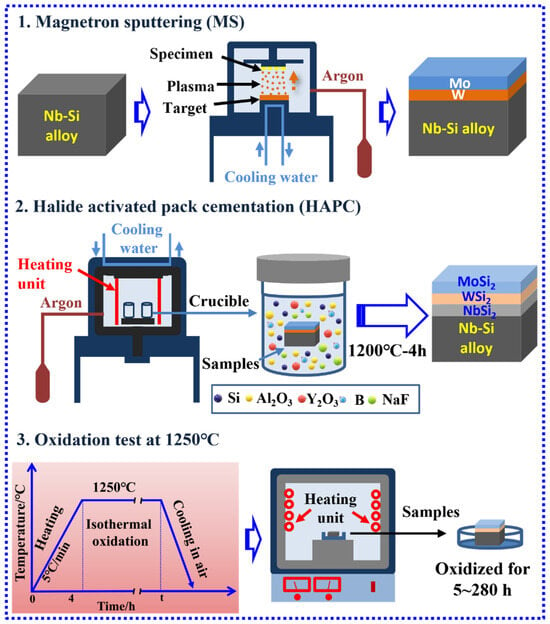
Figure 1 shows the sketch map of the whole experimental process including coating preparation and oxidation test. Generally, the MoSi2/WSi2/NbSi2 compound coating was prepared on the Nb-Si-based alloy through a two-step method involving magnetron sputtering (MS) and then halide activated pack cementation (HAPC) techniques.
Figure 1.
Schematic illustration of coating preparation process and oxidation test.
The Nb-Si-based alloy with a nominal composition of Nb-20Ti-16Si-6Cr-5Hf-4Al (at. %) was prepared by an arc-melting technique. Then, the substrate was cut into cubes of 8 × 8 × 3 mm3 size and then carefully abraded with 240 # grit SiC paper. After abrading, the cubes were activated with mixture acid (composed of distilled water, HNO3, HF and H2SO4 with the proportion of 4:1:1:1, vol. %, AR, Sinopharm Chemical Reagent Co., Ltd., Shanghai, China), and then washed with distilled water and in an ultrasonic ethanol pool successively. After that, the W and Mo films were deposited on the substrate surface in sequence by using pure W and Mo targets (99.95% purity, Kai’erheng Metal Materials Co., Ltd., Baoji, China) in a JPG450 MS system (SKY Technology Development Co., Ltd. Shenyang, China). The main sputtering parameters in terms of working pressure, sputtering power and deposition time of the W and Mo films were 0.9 Pa–150 W–1 h and 0.7 Pa–120 W–2.25 h, respectively. The second step process was the Si-B-Y co-deposition on the as-sputtered film specimens using HAPC in a custom non-standard high-vacuum pack cementation furnace. The samples were buried by the well ball milled pack powder with the nominal composition of 2Si-0.025B-5NaF-2.5Y2O3-Al2O3 (wt. %, AR, Sinopharm Chemical Reagent Co., Ltd., Shanghai, China) in an alumina crucible and then sealed with an alumina lid. The Si-B-Y co-deposition was carried out at 1200 °C for 4 h to generate a MoSi2/WSi2/NbSi2 compound coating on the Nb-Si based alloy. After deposition, the specimens were cooled down with a furnace.
Before the isothermal oxidation test, most of the residual pack agent on the coating surface was carefully removed by abrasive paper and then ultrasonically cleaned in an alcohol pool. As to the oxidation behavior test, an individual specimen was oxidized for 5, 10, 20, 50 or 100 h respectively in an electric muffle furnace (KSL-1500X-S, Kejing Materials Technology Co., Ltd., Hefei, China) with the door closed (nearly static air). After oxidation, the samples were taken from the furnace and then cooled in air. As to the failure process investigation, the sample was continuously oxidized at 1250 °C for 200 h without interval firstly. After that, the specimen in the muffle furnace was visually inspected at intervals of 10 h and then removed once failure signs were detected.
Scanning electron microscopy (SEM, TESCAN MIRA 3, Tescan, Brno, Czech Republic), X-ray diffraction (XRD, Panalytical X′Pert PRO, Cu Kα, Malvern PANalytical, Almelo, The Netherlands), energy dispersive X-ray spectrometry (EDS, Inca X-sight, Oxford Instruments, High Wycombe, England) and electron probe microanalysis (EPMA, JXA-8230, JEOL, Tokyo, Japan) equipped with XCE type wavelength dispersive X-ray spectrometer were used to study the microstructure, phase constituents and composition of the compound coatings before and after oxidation. Due to volatilization of Mo oxides (MoO3 mainly) during oxidation and unevenness of the compound coating of each face, oxidation kinetics was measured through the scale thickness evolution rather than the mass change within 100 h. Thickness of the scale and interdiffusion zone (IDZ layer) at the coating/substrate interface was measured 5 times from multiple locations in the middle part, then the average value was obtained and then adopted. The corresponding data were investigated via the Origin2021 software (OriginLab Corporation, Northampton, MA, USA). Of note, these measurements only represent the spatial variability within a specimen rather than specimen-to-specimen reproducibility, and the error bars shown in this paper represent thickness variation range.
3. Results
3.1. Structure of the Compound Coating
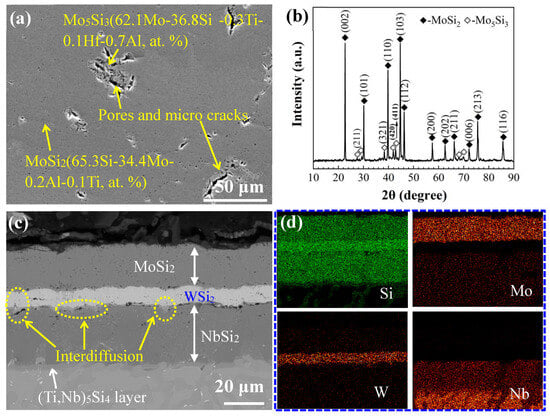
Figure 2a shows the surface morphology of the compound coating from which the residual pack agent has been completely removed through grinding and then polishing processes. Combined with the XRD pattern (Figure 2b), it could be confirmed that a few Mo5Si3 phases associated with microcracks and pores formed in localized areas of the MoSi2 layer. The EDS analysis results show that the porous Mo5Si3 phase has higher content of Al and Ti than the dense MoSi2 phase, suggesting the possible outward diffusion of active alloying element from the substrate or NbSi2 layer along the structure defects during the HAPC process. Formation of Mo5Si3 might be due to insufficiency of Si in the pack agent after a long-term HAPC process, and the microcracks are probably caused by the phase transition of MoSi2 into Mo5Si3 as well as the residual thermal stress in the compound coating that arose during the cooling process after HAPC [12,25,26]. Figure 2c shows the typical cross-sectional images of compound coating which was generated due to the inward diffusion and reaction of Si with Mo film, W film and Nb-Si-based alloy successively. The layers show the chemical composition of 65.2Si-34.2Mo-0.3Ti-x, 65.3Si-28.2W-1.8Nb-2.2Ti-1.5Cr-x and 65.3Si-25.6Nb-6.7Ti-1.2Cr-x from outermost to innermost according to the EDS analysis results, and thus they could be identified as MoSi2, WSi2 and NbSi2, respectively. Thickness of each layer is about 20~22, 8~9 and 28~30 µm consequently. Remarkably, there could be variation of thickness of the NbSi2 layer due to the experimental error during the HAPC process [10,26]. Of note, the MoSi2 layer shows good adhesion to the WSi2 barrier layer without pores and cracks at their interface, which is probably due to their good compatibility. On the contrary, there are a few microcracks and pores observed at the WSi2/NbSi2 interface despite the slight mutual elemental movement inward during the HAPC process (Figure 2c,d).
Figure 2.
(a) Surface morphology and (b) XRD pattern of the polished MoSi2 layer, (c) cross-sectional image and (d) EDS mapping of the as-prepared MoSi2/WSi2/NbSi2 compound coating.
3.2. Oxidation Kinetics Within 100 h
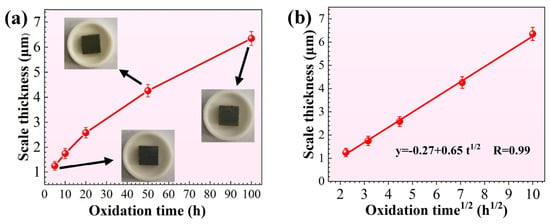
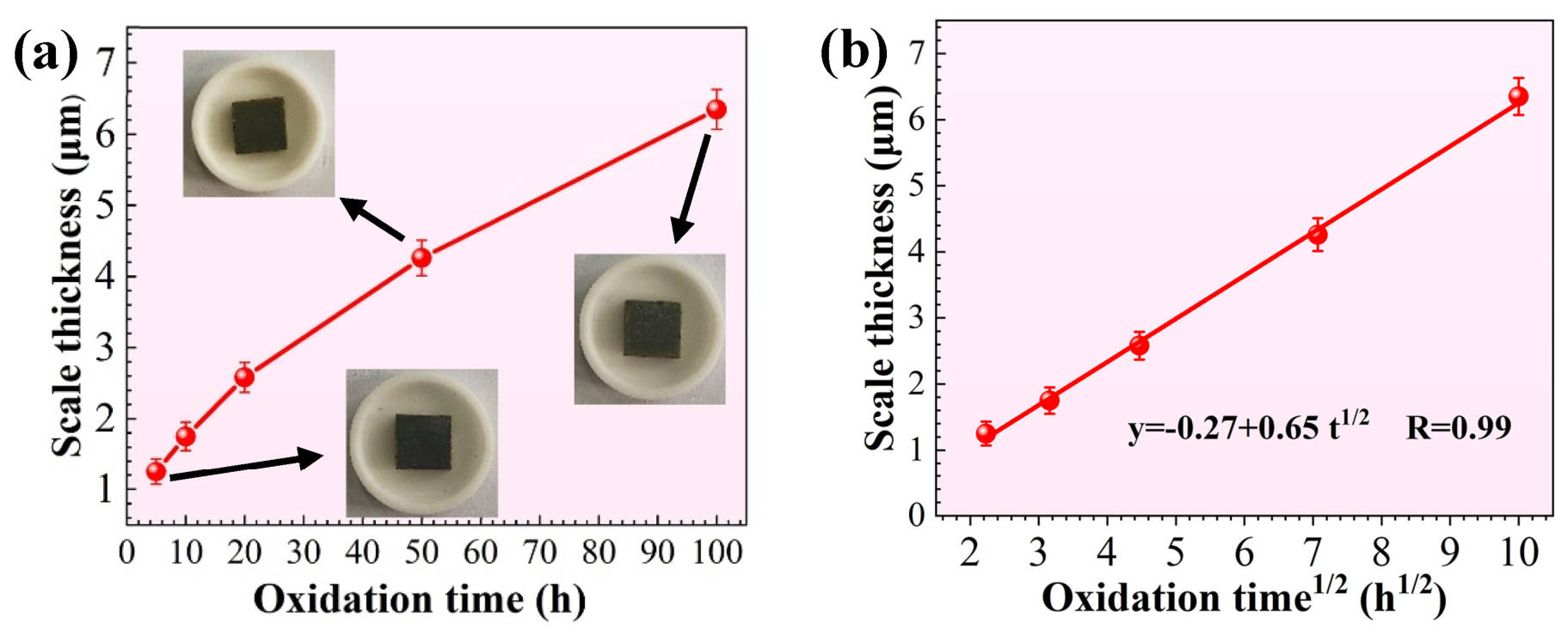
Figure 3 gives the related oxidation kinetics data and macrographic morphologies of the specimen after oxidation at 1250 °C for different hours, and it could be seen that all the coated samples are intact after oxidation for 100 h. In addition, it seems growth of the scale basically follows the parabolic-like kinetics as displayed in Figure 3a, implying that the oxidation is mainly governed by the diffusion processes. Figure 3b presents the fitted linear plot between scale thickness and square root of time, and the parabolic rate constants kp could be obtained by calculating the square of the slope and the value is about 0.42 μm2/h.
Figure 3.
(a) Macrographic morphology and scale thickness evolution and (b) the linear plot of oxidation kinetics of MoSi2/WSi2/NbSi2 coating upon oxidation at 1250 °C (5~100 h).
3.3. Oxidation Behavior Within 100 h
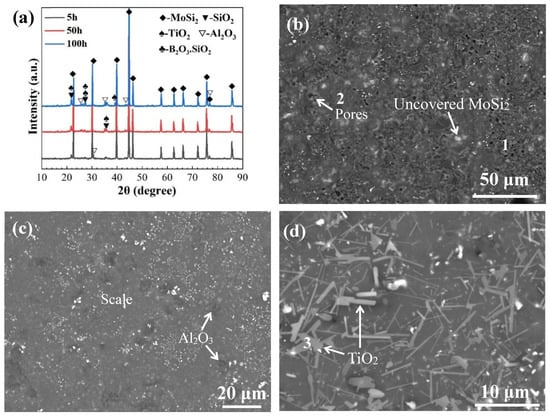
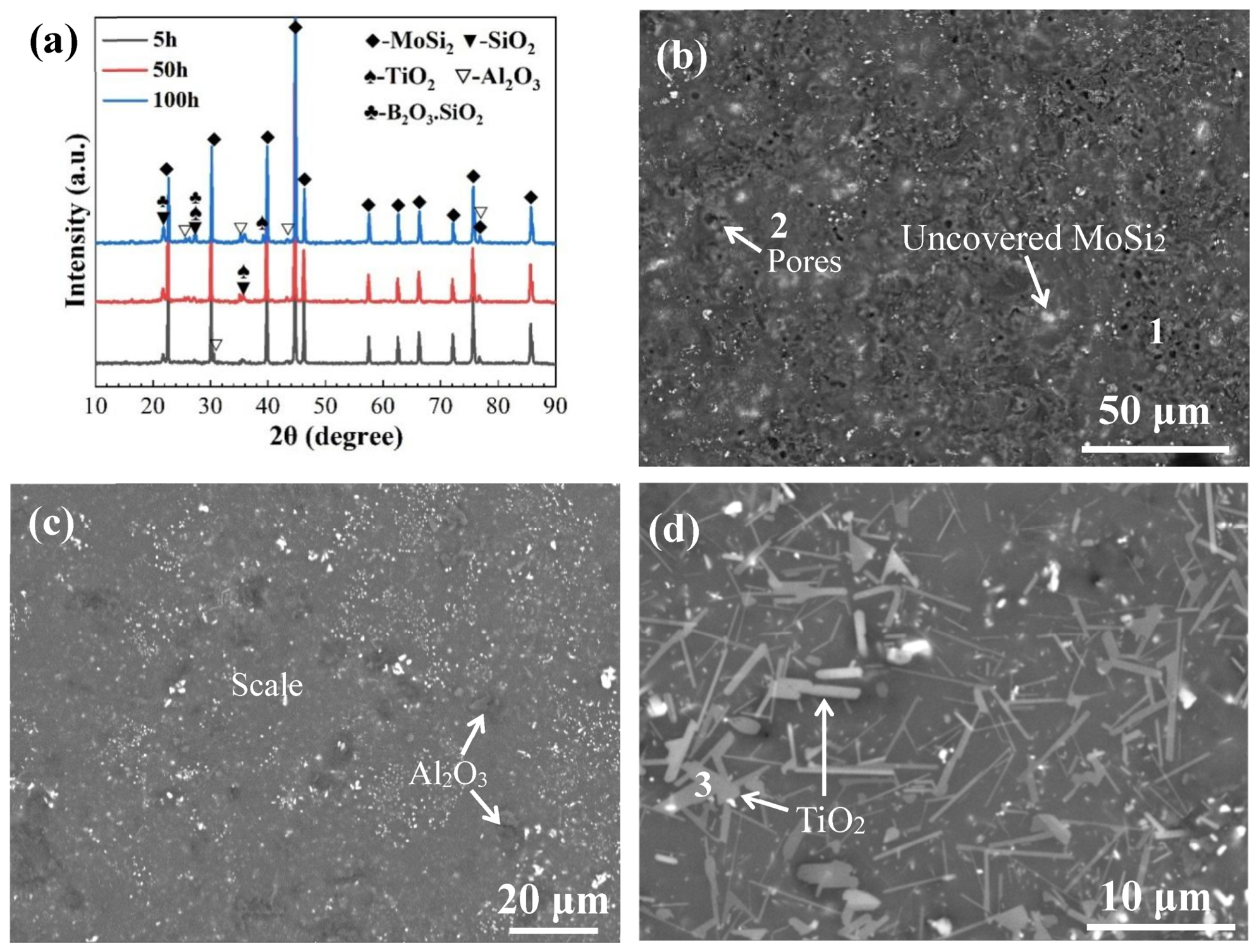
Figure 4a shows the XRD analysis results of the MoSi2/WSi2/NbSi2 coating surface after oxidation at 1250 °C for 5, 50 and 100 h respectively. And it could be inferred that the main oxidation products at 5 and 50 h are SiO2 and Al2O3, while peaks of TiO2 appeared after oxidation for 100 h. No peaks of Nb2O5 and its complex oxides like YNbO4 are observed. The peaks of MoSi2 are still predominant in the 100 h case, suggesting the small thickness of the scale. After oxidation for 5 h, most of the MoSi2 layer was covered by the scale while the texture of the scale is uneven. The EDS analysis results indicate that the thicker and mosslike scale associated with a few pores has higher content of Al relative to the smooth scale (Table 1). It seems that the Al2O3 could be preferentially generated on the coating surface and then promote growth of the scale (Figure 4b). In addition, a few pores could be detected and they are probably caused by volatilization of MoO3 that is generated from oxidation of MoSi2 at the initial oxidation stage [12,27]. After oxidation for 50 h, more SiO2 could be generated due to oxidation and a uniform and dense scale without pores forms on the coating surface. Noteworthily, a few Al2O3 particles could also be detected due to its low solubility in SiO2 [28]. During oxidation, the Ti element could also diffuse onto the coating surface and a few rodlike TiO2 particles could form in the SiO2-based scale after oxidation for 100 h (Figure 4d).
Figure 4.
XRD patterns and morphology of the coating surface after oxidation for different times, (a) XRD patterns, (b) 5 h, (c) 50 h and (d) 100 h.
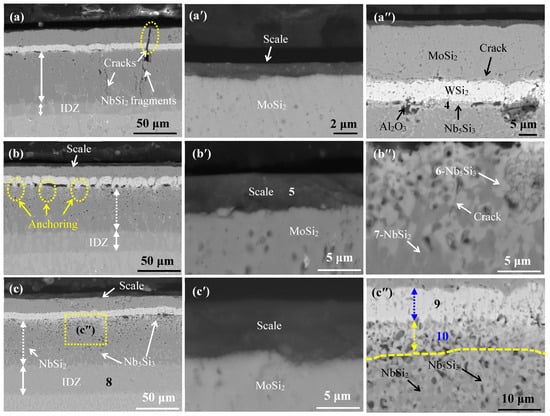
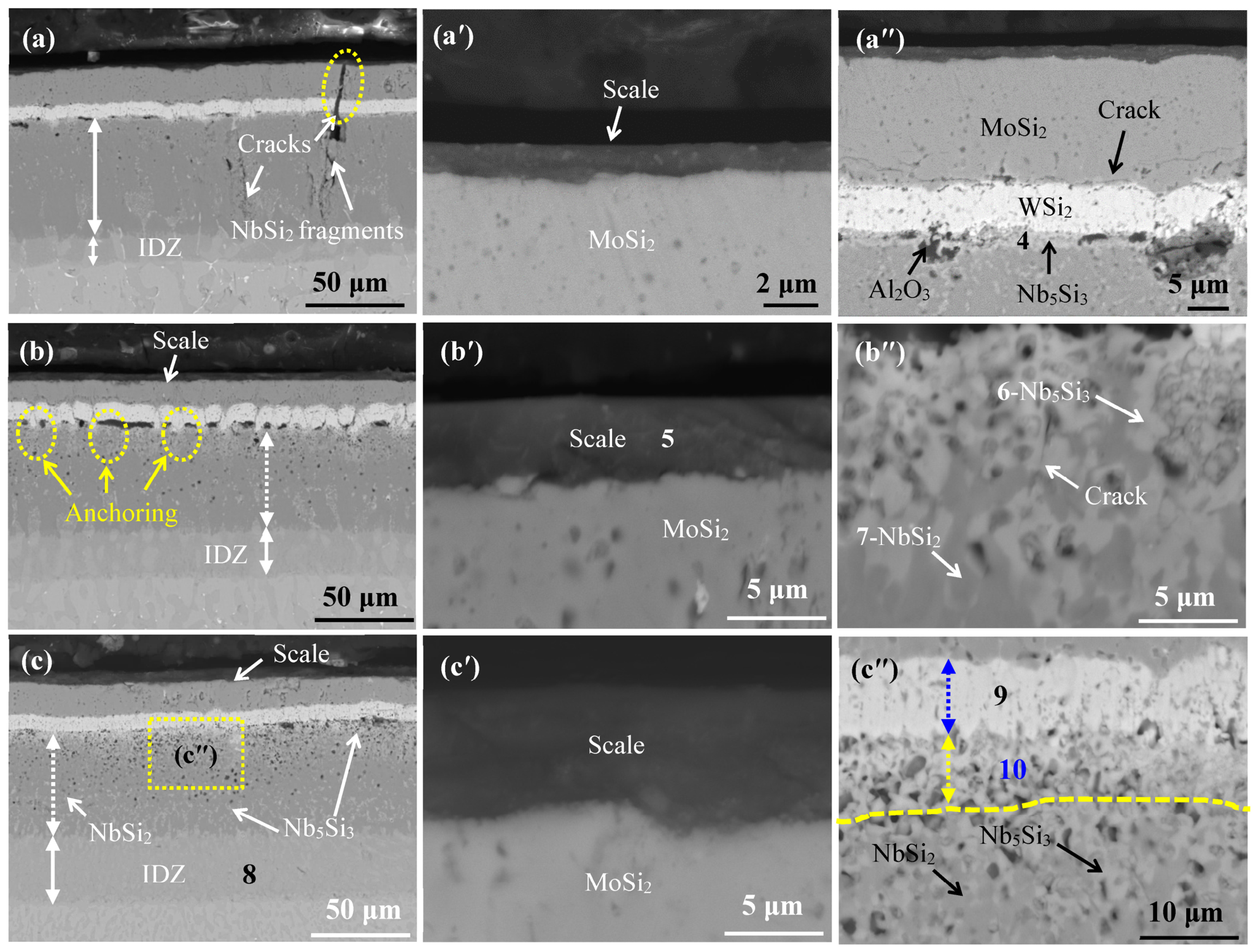
Figure 5 displays the cross-sectional morphology of the compound coating after oxidation at 1250 °C for 5, 50 and 100 h respectively. After oxidation for 5 h, scale formed on the coating surface is very thin and shows good adhesion to the residual MoSi2 layer. There is no significant change in morphology of the MoSi2 and WSi2 layers after oxidation for 5 h except for a few voids generated in them. In contrast, a very thin Nb5Si3 layer with obvious content of W could be viewed beneath the WSi2 layer (Figure 5a″ and Table 1). Additionally, a few tiny Nb5Si3 particles and vertical cracks could also be detected in the NbSi2 layer, and some could even expand through the compound coating only after oxidation for 5 h. After oxidation for 50 h, degradation of the compound coating becomes more pronounced and the WSi2 barrier layer even fractures at some regions. Moreover, more holes with bigger sizes could be detected beneath it. Fortunately, a few WSi2 fragments could fix the MoSi2/WSi2 layer to the residual NbSi2 layer like anchors due to elemental interdiffusion (Figure 5b–b″ and Table 1). As to the NbSi2 layer, more Nb5Si3 accompanied with pores formed in its upper part while the degradation at its middle and bottom parts is not so obvious. After oxidation for 100 h, microstructure degradation of the NbSi2 layer has been further aggravated and a continuous porous Nb5Si3 layer about 8 μm thick with high content of W and Ti formed at the upper part of the residual NbSi2 layer (Figure 5c″ and Table 1). It seems that the pores generated from phase transition of NbSi2 into Nb5Si3 accelerated the inward diffusion of W elements. Therefore, there are massive Kirkendall voids that could form in the WSi2 layer and then impair its barrier performance. Thus, the appreciable Ti element from the NbSi2 layer and substrate could diffuse onto the coating surface and then be oxidized.
Figure 5.
Cross-sectional images of the MoSi2/WSi2/NbSi2 compound coating after oxidation at 1250 °C for (a–a″) 5 h, (b–b″) 50 h and (c–c″) 100 h respectively.
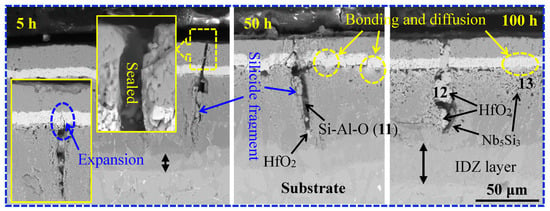
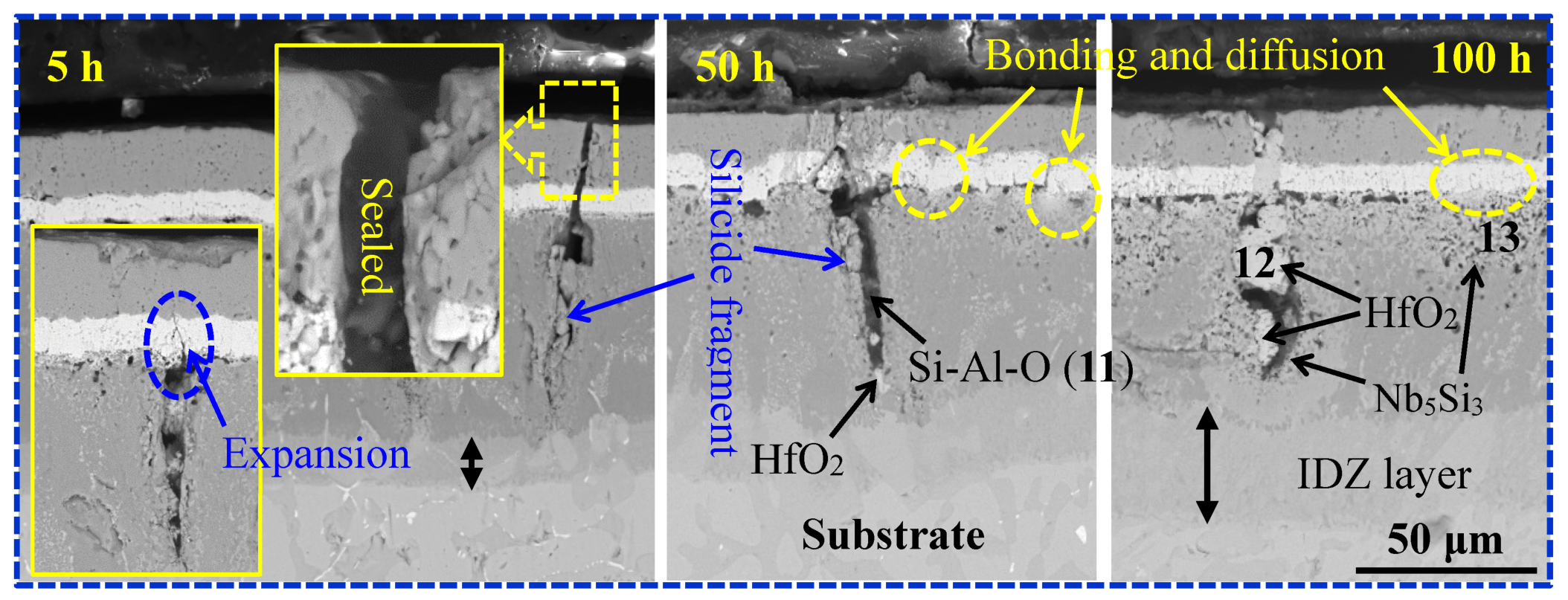
Figure 6 exhibits the typical morphology of the vertical cracks formed in the residual compound coating with oxidation for 100 h, and it could be clearly seen that the cracks initiated in the NbSi2 layer first and then expanded through the entire coating vertically during oxidation. Yet, it should be pointed out that there were a few vertical microcracks in the NbSi2 layer prior to oxidation [10,26], which is probably caused by the residual stress due to CTE mismatch between the NbSi2 layer with both the Nb-Si-based alloy and MoSi2/WSi2 layers during the cooling process after HAPC (CTEs of NbSi2, MoSi2, WSi2 and the Nb-Si based alloy are about 11.2 × 10⁻⁶/°C, 8.4 × 10⁻⁶/°C, 8.5 × 10⁻⁶/°C and 8.5 × 10⁻⁶/°C, respectively). According to Su [12], an approximation for the magnitude of the stress on cooling could be calculated using an analysis equation for simple one-dimensional elastic thermal stress, and the residual thermal stress in the NbSi2 layer could be calculated through Equation (1):
where σR is the residual stress in NbSi2 layer, Ec is the Young’s modulus of the NbSi2 layer and it is about 343 GPa, α is the coefficient thermal expansion, ΔT is the temperature range. Therefore, the residual thermal stress in the NbSi2 layer could be estimated. It is reported that the NbSi2 undergoes a ductile-to-brittle transition upon cooling from 1400 °C to low temperatures and it begins to exhibit the typical brittle fracture features in the range of 600~800 °C according to its tensile stress–strain curves at different temperatures [29]. Through Equation (1), the residual thermal stress could be obtained when it cooled from 1200 °C to 600~800 °C and the value is approximately 370.4~555.6 MPa, which is much higher than the measured fracture strength of NbSi2 (about 34~50 MPa) [29]. Therefore, the vertical cracks could be generated in the NbSi2 layer that were prepared on Nb-based alloy through the HAPC technique [26]. A few microcracks could penetrate through the compound coating even during the heating process or upon oxidation for a short time (the 5 h case in Figure 6). According to the EDS analysis results (Table 1), the cracks are generally filled with oxides like HfO2 and Si-Al-O after oxidation for a few hours (the 50 h and 100 h cases in Figure 6). Remarkably, there is also evident distribution of Nb5Si3 phase around these cracks. This observation indicates that the internal oxidation and accumulation of oxides inside these cracks could cause their growth to increase. Fortunately, there is no obvious failure of the compound coating yet and the specimen still keeps good macroscopic integrity at 100 h.
σR = Ec (αc − αs)ΔT
Figure 6.
SEM morphology of the typical cracks formed in the MoSi2/WSi2/NbSi2 compound coating upon oxidation at 1250 °C at 100 h.
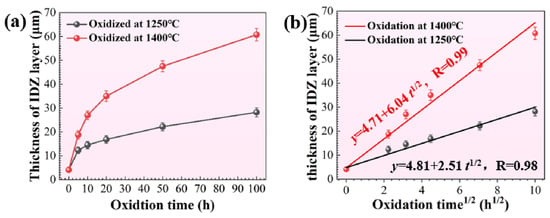
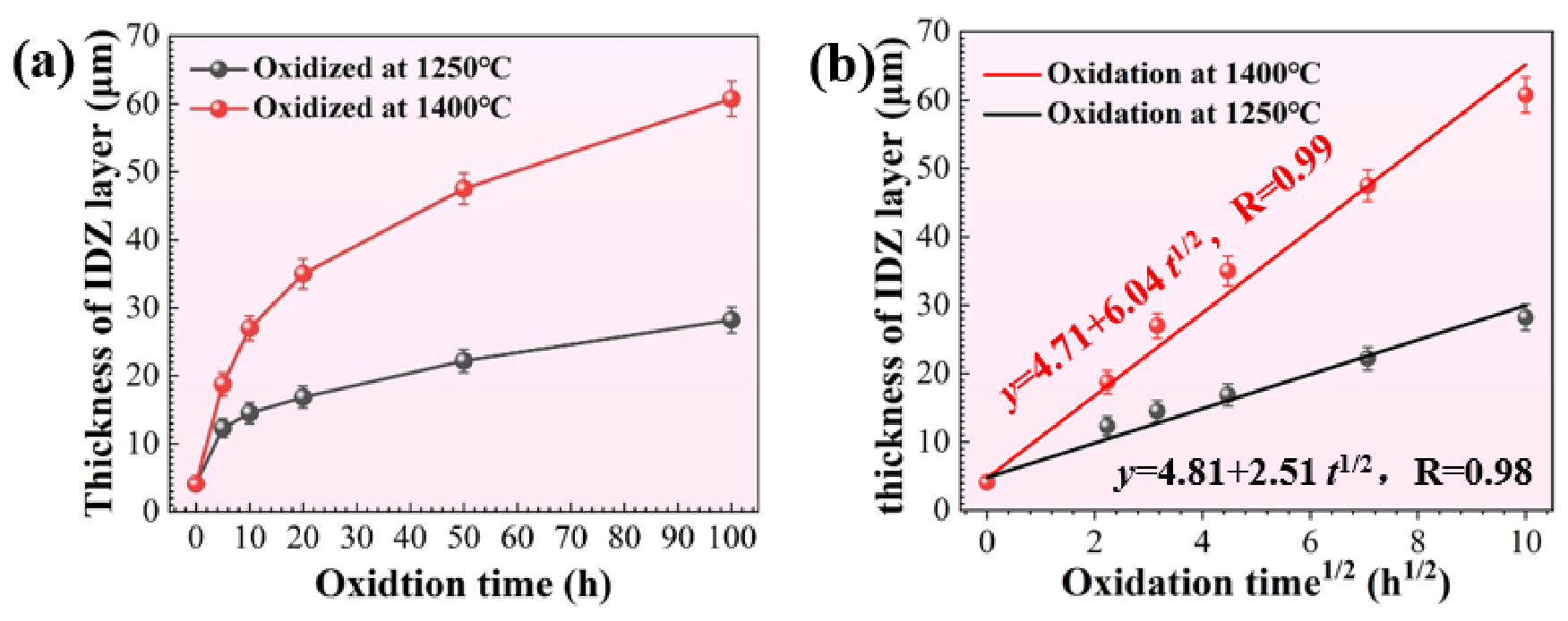
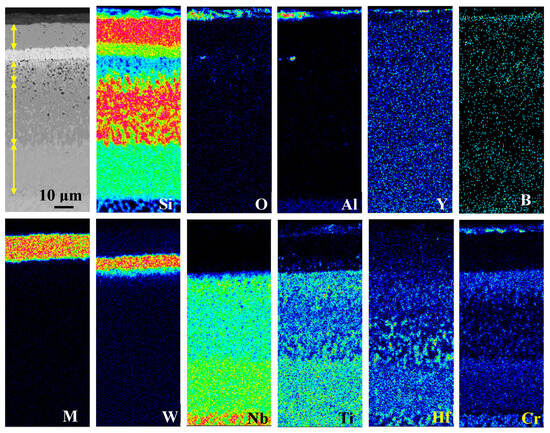
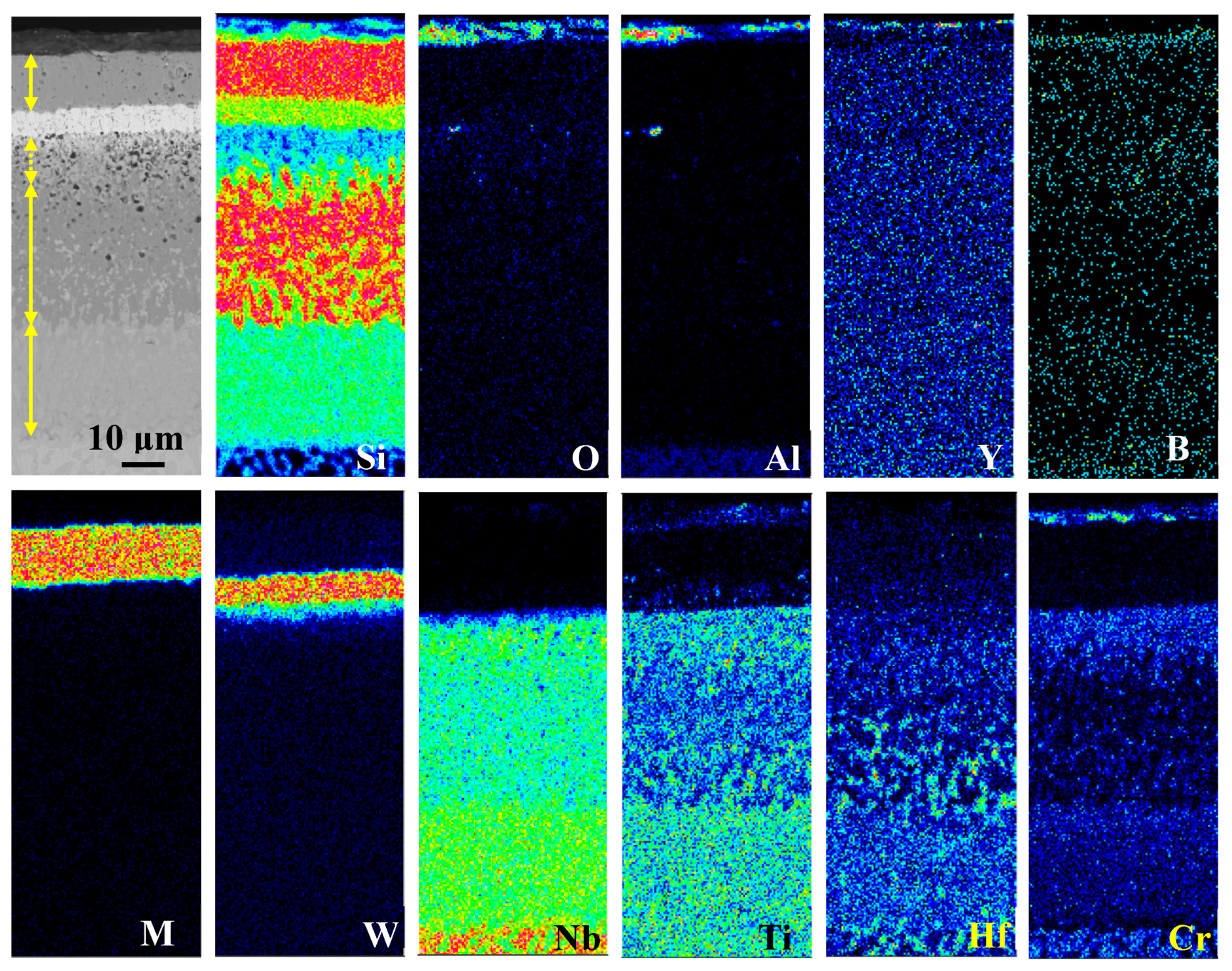
During oxidation, inward diffusion of Si could take place simultaneously and result in formation of a (Ti,Nb)5Si4 IDZ layer unceasingly following the parabolic law [14]. And this process could also exacerbate degradation of the NbSi2 layer, especially at its bottom part. Figure 7a shows the growth kinetics of the IDZ layer upon oxidation at 1250 °C within 100 h, and for comparison, growth kinetics of the IDZ layer formed upon oxidation at 1400 °C is also added according to our previous investigation [24]. Figure 7b presents the fitted linear relationship between the IDZ layer thickness and the square root of oxidation time, and the parabolic rate constants kp could be obtained by calculating the square of the slope and the value is about 6.30 μm2/h at 1250 °C, which is much lower than that upon oxidation at 1400 °C (36.48 μm2/h, within 100 h) [24]. It could be deduced that higher temperature would yield faster growth rate of the IDZ layer, which also means that the degradation rate of the NbSi2 layer could also be accelerated at elevated temperatures. In order to investigate the elemental interdiffusion behavior between the layers, EPMA in terms of element distribution was conducted and the results are listed in Figure 8. After oxidation at 1250 °C for 100 h, an obvious Si-deficient layer with enrichment of Ti and Cr could be detected beneath the residual WSi2 layer. Additionally, the inward diffusion of Mo and outward diffusion of Nb are both inconspicuous. These observations testify to the maintained barrier performance of the residual WSi2 layer. However, the diffusion of W could also impair its suppressing performance and there is apparent distribution of Al, B, Cr, Ti and Y in the scale.
Figure 7.
(a) Thickness evolution and (b) the linear plot of growth kinetics of the IDZ layer upon oxidation at 1250 and 1400 °C within 100 h respectively.
Figure 8.
EPMA maps of the MoSi2/WSi2/NbSi2 compound coating after oxidation at 1250 °C for 100 h.
3.4. Failure Investigation of the Compound Coating
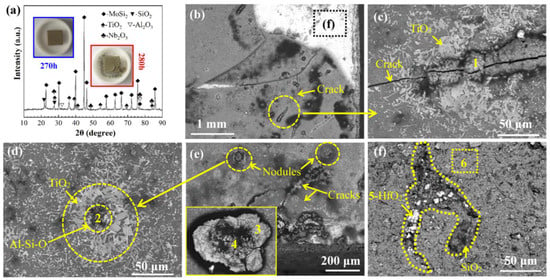
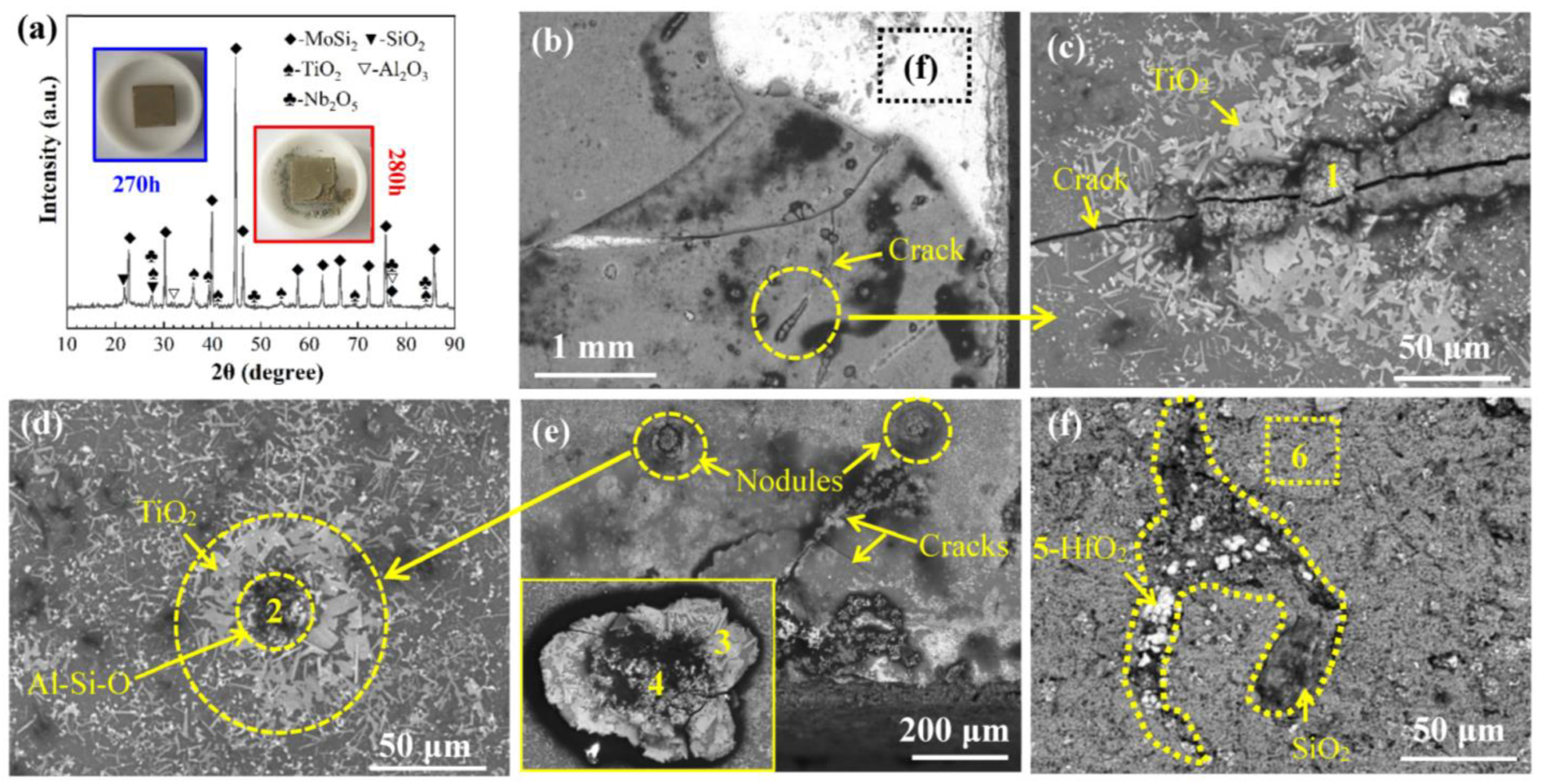
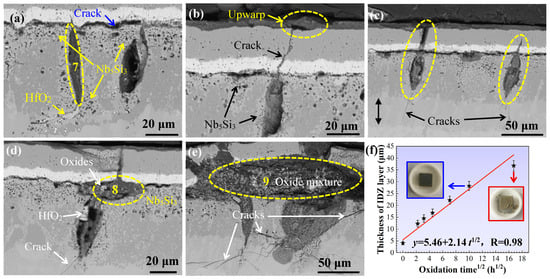
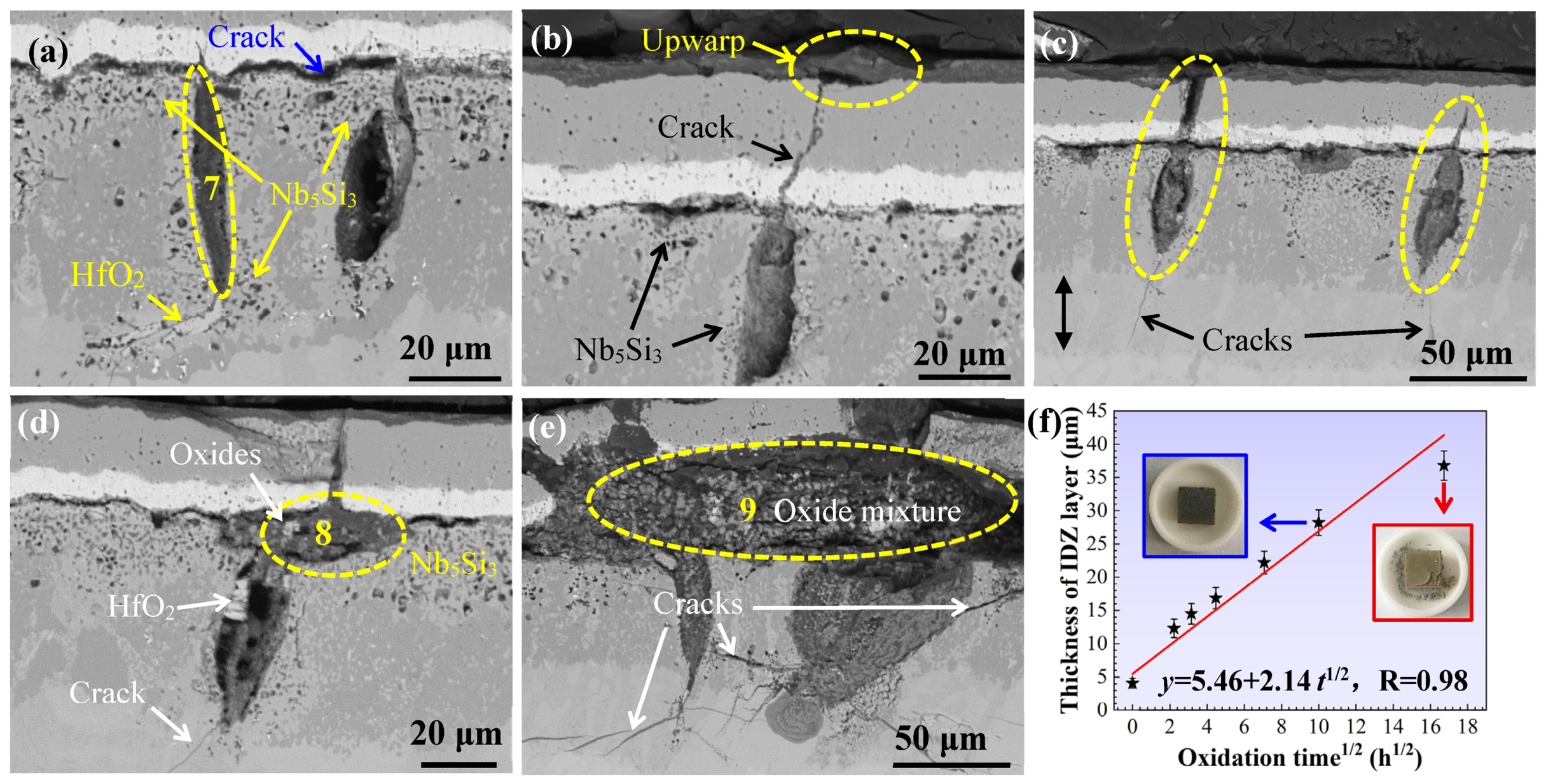
The oxidation inside the compound coating cannot be ignored for it could jeopardize the interfacial bonding and cause expansion of the vertical cracks and then failure of the compound coating after prolonged oxidation. In order to testify to the inference, prolonged oxidation of the coated specimen was conducted till detection of the macroscopic failure characteristics. The specimen still kept integrality after oxidation for 270 h while part of the coating fractured and exfoliated after oxidation for 280 h, as shown in the insets in Figure 9a. In addition to SiO2, TiO2 and Al2O3, there are also a few weak peaks of Nb2O5 that could be detected from the XRD pattern of the 280 h case, which is probably from the corner part of the specimen where the MoSi2/WSi2 layer peeled off (Figure 9b). As to the other parts, there are a few nodular structures and microcracks surrounded by TiO2 particles formed in the scale according to Figure 9b–e. In addition, the EDS analysis results indicate the high content of Al and Si of the nodular and vermicular-like oxides around the cracks (Table 2). Figure 9f shows the magnified morphology of the bare area and it could be seen that there is no continuous and protective SiO2-based scale formed on the degraded NbSi2 layer (Figure 9f). Only a few HfO2, SiO2 particles and porous Nb2O5 with poor protection could be detected according to the SEM, EDS and XRD analysis results. Figure 10a–d shows the typical cross-sectional morphology of the failed compound coating and many spindle-like cracks filled with oxides could be observed. Notably, the expansion of a few cracks could even cause desquamation of the scale around them. The residual MoSi2 layer still shows perfect bonding with the WSi2 layer, while cracks at the WSi2/NbSi2 layer interface become continuous with a few oxides. In some areas, the massive generated oxides could even result in fracture, upwarping and even desquamation of the MoSi2/WSi2 layer (Figure 10e). Figure 10f shows the growth kinetics of the IDZ layer within 280 h and the parabolic rate constants kp could be obtained at about 4.58 μm2/h, which is lower than that at 100 h. This is probably due to the reduced Si content gradient and increased thickness of the IDZ layer according to the Fick law [30].
Figure 9.
(a) XRD pattern and (b–f) SEM morphology of the failed coating from different areas after oxidation at 1250 °C for 280 h. The inset pictures in Figure 9a are the macroscopic morphology of the coating after oxidation for 270 h and 280 h, respectively.
Figure 10.
(a–e) Cross-sectional images of the failed compound coating from different locations after oxidation at 1250 for 280 h and (f) the growth kinetics of IDZ layer within 280 h.
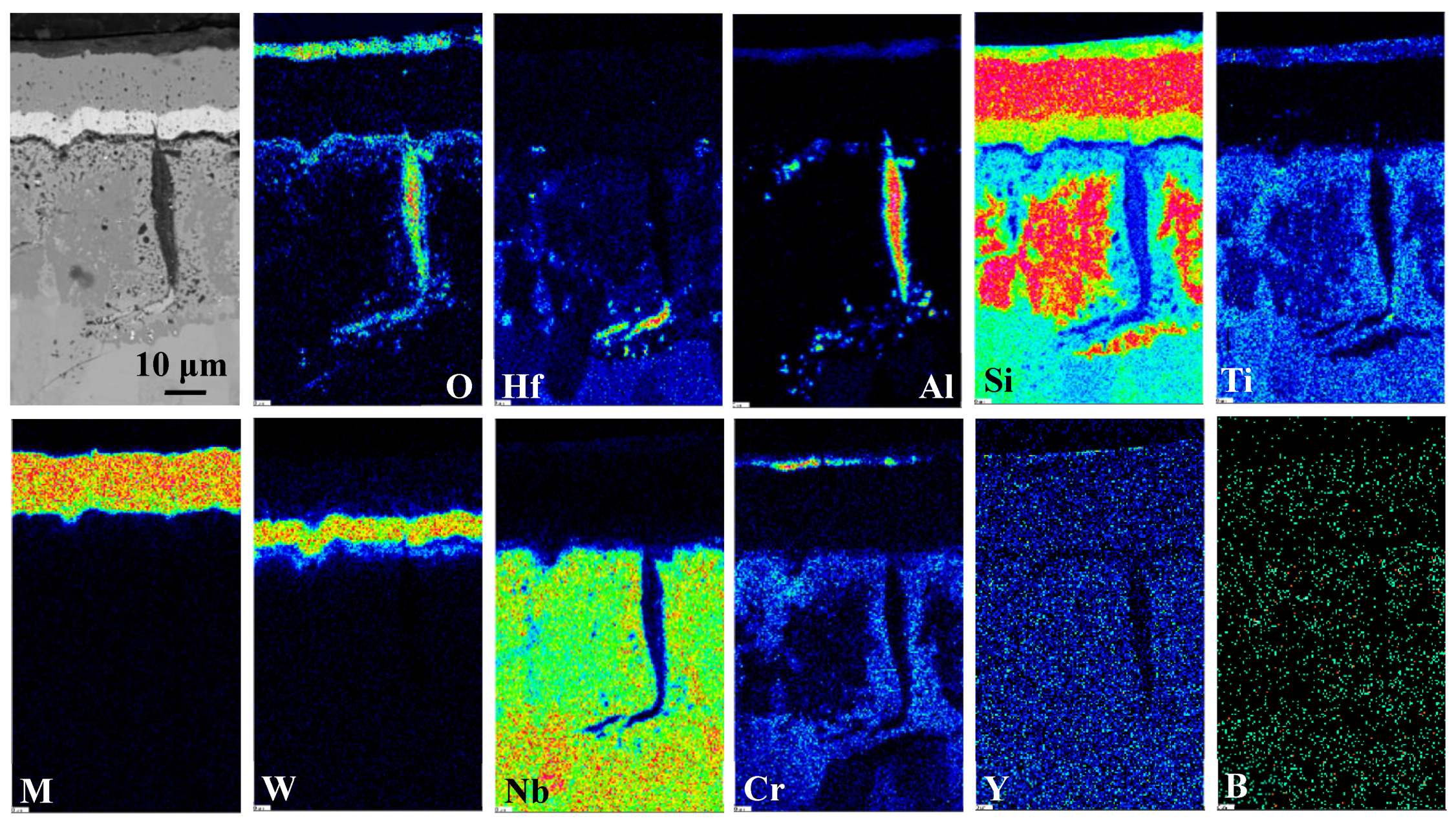
Figure 11 shows the EPMA maps of the residual compound coating after oxidation for 280 h, and distribution of elements in the scale is basically similar to that after oxidation for 100 h except for B. Additionally, formation and accumulation of Si-Al oxides and HfO2 in the vertical and interfacial cracks could also be corroborated. Of note, Ti and Cr elements show higher content distribution in the porous Nb5Si3 phase around the cracks relative to the undegraded NbSi2 phase. This observation suggests that these elements could probably diffuse toward the cracks driven by chemical potential that are accessible for oxygen penetration. Meanwhile, diffusion of W becomes more pronounced.
Figure 11.
EPMA maps of the MoSi2/WSi2/NbSi2 compound coating after oxidation at 1250 °C for 280 h.
4. Discussion
It has been reported that the presence of the NbSi2 layer could improve the formation rate of SiO2-based scale on the compound coating surface and suppress degradation of the upper MoSi2 layer by providing sufficient Si element upon oxidation at high temperatures [12,17,19]. Yet, formation of the protective scale is also related to the outward diffusion and preferred oxidation of Al element from the NbSi2 layer and substrate in this study (Figure 4b). Actually, Al is commonly added into silicide coatings as a modifying element to accelerate the formation process of protective scale on it through preferential formation of Al2O3, and the effect is more pronounced upon oxidation at an intermediate temperature [10,18,31]. Oxidation of Al and formation of Al2O3 in the scale could be illustrated by reaction (2). Simultaneously, oxidation of the MoSi2 layer could also take place via the reactions of (3) and (4) at the initial oxidation stage. With continuous generation of SiO2, a dense and continuous SiO2-based scale formed on the coating surface to block the inward diffusion of oxygen. After that, reaction (4) became predominant due to its lower oxygen partial pressure [32]. During oxidation, the Si element from the NbSi2 layer could also outwardly diffuse due to the thermal self-diffusion effect of Si in silicide, which restricted formation of Mo5Si3 in the MoSi2 layer according to reaction (5). Similarly, there is also no transition of WSi2 into W5Si3 in the presence of the NbSi2 layer, which is helpful to maintain its barrier performance to some extent. Nevertheless, the diffusion of Si could also cause phase transition of NbSi2 into Nb5Si3 associated with formation of pores due to volume change (reaction (6)), and this phenomenon is more pronounced at the upper part of the NbSi2 layer. The massive formation of pores could not only impair interfacial bonding between the WSi2 layer and residual NbSi2 layer but also aggravate degradation of the WSi2 barrier layer through migration of W by providing more accessible diffusion paths. Therefore, many Kirkendall voids formed in the WSi2 layer and the alloying elements like Ti and Cr from the residual NbSi2 layer could diffuse onto the coating surface feasibly and then react with oxygen (reactions (7) and (8)). As a result, there is obvious distribution of TiO2 particles and Cr element in the scale. Even so, the MoSi2/WSi2/NbSi2 compound coating still exhibits good oxidation resistance at 1250 °C at 100 h and the thickness of the scale is less than 7 μm.
4/3Al + O2(g) → 2/3Al2O3 ΔG1250 °C = −792.19 KJ/mol
2/7MoSi2 + O2 → 2/7MoO3 + 4/7SiO2 ΔG1250 °C = −441.88 KJ/mol
5/7MoSi2 + O2 → 1/7Mo5Si3 + SiO2 ΔG1250 °C = −599.44 KJ/mol
Mo5Si3 + 7Si → 2MoSi2 ΔG1250 °C = −288.44 KJ/mol
NbSi2 → Nb5Si3 + Si
Ti + O2→ TiO2 ΔG1250 °C = −669.82 KJ/mol
4/3Cr + O2→ 2/3Cr2O3 ΔG1250 °C = −502.14 KJ/mol
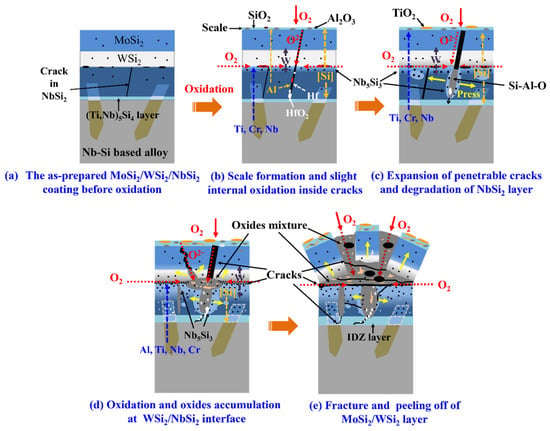
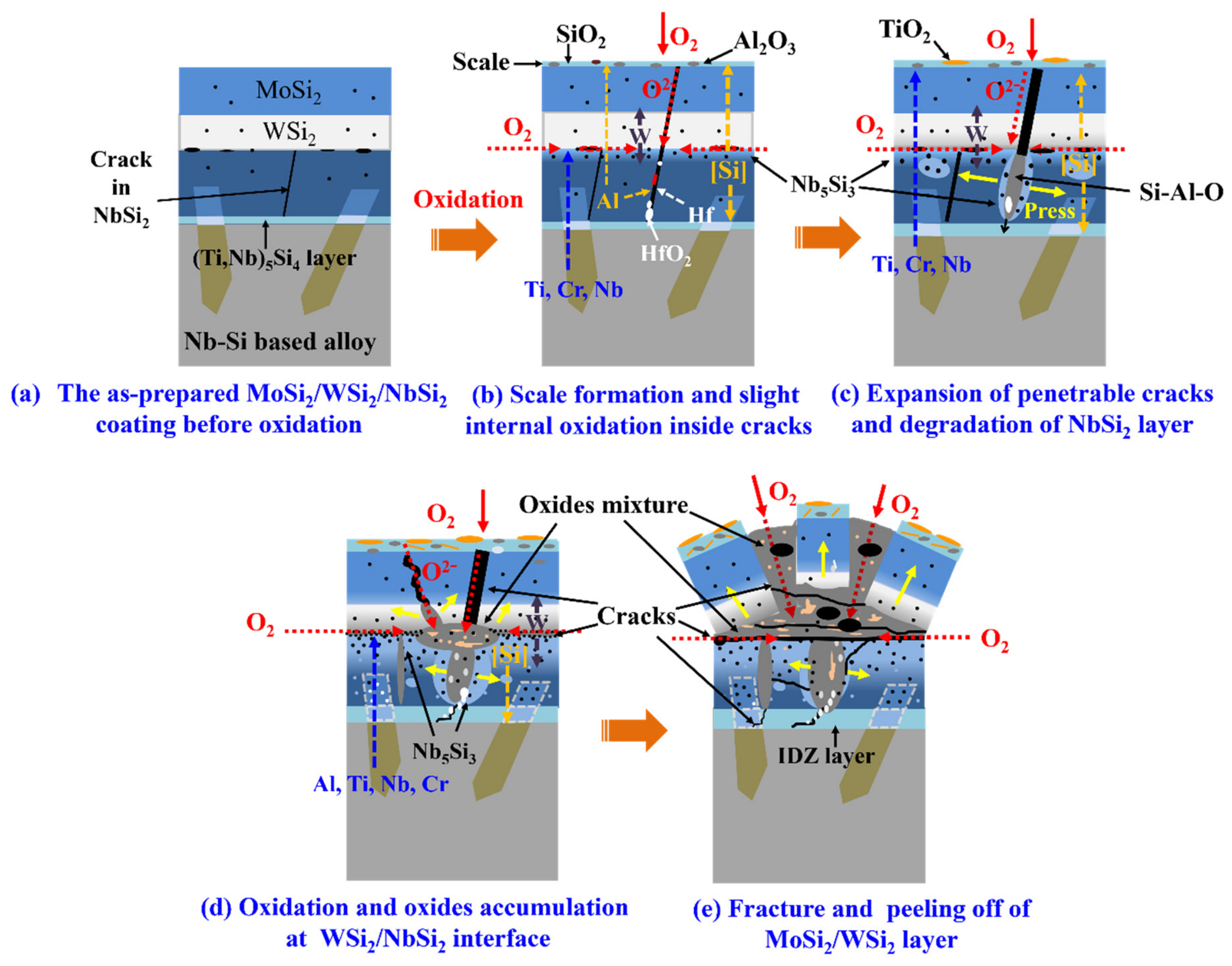
Simultaneously, a sequence of internal oxidations that are promoted by inward diffusion of oxygen and even thermal stress could also take place inside the compound coating, and this process might be proposed to contribute to propagation and expansion of these cracks and then ultimately fracture of the compound coatings after prolonged oxidation, as illustrated in Figure 12. During oxidation, the oxygen could diffuse into the compound coating through structural defects like pores and cracks inside the silicide layers and then gather in these aeras, especially in the vertical cracks in the NbSi2 layer. Of note, continued migration of Si from the NbSi2 layer could also result in increasing pores and even cracks at the WSi2/NbSi2 layer interface and then promote the inward diffusion of oxygen. With increasing oxygen partial pressure, the active elements like Hf and Al from the nearby NbSi2 phase could diffuse toward the cracks driven by chemical potential and then be oxidized according to reactions (2) and (9) respectively. Meanwhile, oxidation of NbSi2 around the cracks also took place through reaction (10) rather than reaction (11) due to its more negative ΔG. Standard Gibbs free energy of the corresponding reactions could be calculated (1 mol O2), and then the minimum oxygen partial pressure required for reactions (1), (9) and (10) could be obtained and through Equation (12) [33], which are 6.82 × 10⁻²⁸, 1.34 × 10⁻²⁹, 1.95 × 10⁻²² Pa respectively and they could be readily achievable in the cracks upon oxidation at high temperatures.
Hf + O2 → HfO2 ΔG1250 °C = −843.93 KJ/m
5/7NbSi2 + O2 → 1/7 Nb5Si3 + SiO2 ΔG1250 °C = −633.01 KJ/mol
4/13NbSi2 + O2 = 2/13Nb2O5 + 8/13SiO2 ΔG1250 °C = −550.31 KJ/mol
LogPO2 = ΔG0/2.303RT
Figure 12.
Schematic illustrating failure process of the MoSi2/WSi2/NbSi2 compound coating upon oxidation at 1250 °C.
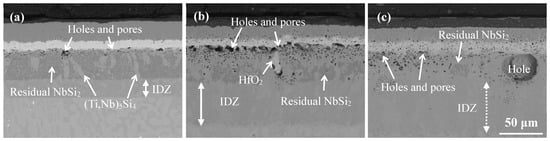
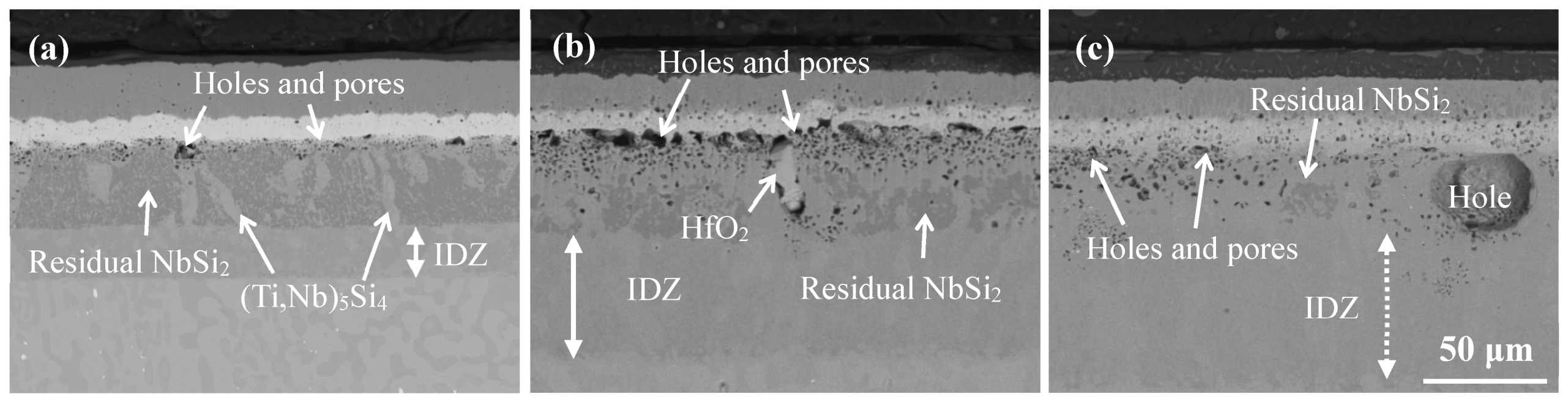
As the PBR values of HfO2, Al2O3 and reaction (10) are all greater than 1 (1.9, 1.29 and 2.04, respectively), there might be compression stress inside the cracks and then against the NbSi2 side [16,34,35]. Due to persistent oxidations, accumulation of the oxides like HfO2, Al2O3 and SiO2 (especially the massive Nb5Si3 and SiO2) in the vertical cracks could possibly cause their expansion and even penetrate the compound coating. Of note, it should be pointed out that the formation of penetrable cracks might also be related to the lower degradation rate of NbSi2 caused by Si diffusion at 1250 °C compared with the phenomenon at 1400 °C, at which the NbSi2 layer almost completely degraded within 50 h and there were much less penetrable cracks formed in the residual compound coating in spite of the observation of HfO2 inside the vertical cracks and massive pores at the interface (Figure 13). It seems that the accelerated Si diffusion and fast formation of (Ti,Nb)5Si4 could alleviate the CTE mismatch of residual NbSi2 with the MoSi2/WSi2 layers and the Nb-Si-based alloy, and then postpone expansion of the vertical cracks.
Figure 13.
Cross-sectional images of the MoSi2/WSi2/NbSi2 compound coating after oxidation at 1400 °C for (a) 5 h, (b) 50 h and (c) 100 h respectively.
Even so, formation of these penetrable cracks would not induce the disastrous internal oxidation and then failure of the compound coating immediately due to the sealing effect of SiO2 and other oxides that could postpone the inward diffusion of oxygen to some extent [36]. However, the inward diffusion of oxygen could not be completely suppressed in the presence of massive pores and cracks. After a prolonged oxidation time, the Nb5Si3 at the WSi2/Nb5Si3 interface could be oxidized once the oxygen partial pressure reached a certain degree according to reaction (13) (Figure 10d,e). Due to the high PBR of reaction (13) (about 2.95) and formation of oxides [16,37], the bonding structure at the WSi2/residual NbSi2 interface could be destroyed and continuous interfacial cracks could be generated, which would accelerate the inward diffusion of oxygen and then result in serious oxidation inside the residual NbSi2 layer in turn. With prolonged oxidation time, more oxides could be produced and then accumulated at the interface, which could likely induce fracture and finally peeling off of the residual WSi2/MoSi2 layers. As to the degraded NbSi2 layer, there is not enough SiO2 generated from oxidation of Nb5Si3 to form a continuous and dense SiO2-based scale on its surface due to lack of Si (Figure 9f). The porous oxides could not restrict the subsequent oxidation of the residual NbSi2 layer and it might be completely oxidized within a short time at this temperature.
4/27Nb5Si3 + 1O2(g) = 10/27Nb2O5 + 4/9SiO2 ΔG1250 °C = −487.70 KJ/mol
In general, the MoSi2/WSi2/NbSi2 compound coating showed a good oxidation resistance within 100h while the persistent internal oxidation could probably cause its failure after a prolonged oxidation time at 1250°C. As to the NbSi2 layer, it could be the buffering layer and Si reservoir to postpone degradation of MoSi2/WSi2 layers upon oxidation, while the formation of detrimental penetrable cracks in it caused by CTE mismatch might also be the failure source of the compound coating upon oxidation at 1250 °C. To address this issue, a possible way is to alleviate its CTE mismatch with both the MoSi2/WSi2 layers and the Nb-Si-based alloy and improve its breaking strength and fracture toughness by introducing toughening phases with low CTE like SiC and Si3N4 in it [38,39]. Additionally, interfacial reinforcement structures and beneficial elements could also be introduced in the compound coating to increase the interfacial bonding strength between each layer and sealing ability of SiO2-based scale upon oxidation at high temperatures.
5. Conclusions
A MoSi2/WSi2/NbSi2 compound coating was prepared on Nb-Si-based alloy through a two-step method involving MS and then HAPC techniques and then its oxidation behavior and failure mechanism at 1250 °C were also investigated. The results indicated that this coating showed admirable oxidation resistance at 1250 °C. After oxidation for 100 h, a dense SiO2-based scale containing TiO2 and Al2O3 about 6.5 μm thick formed on the coating surface, and the parabolic rate constant of the scale growth is about 0.42 μm2/h within 100 h. The oxidation results suggested that the conventional degradation of WSi2 into the W5Si3 layer caused by Si diffusion could be suppressed in the presence of the NbSi2 layer and its barrier performance could be maintained to some extent. Growth of the IDZ layer was governed by the inward diffusion of Si from the NbSi2 layer and the parabolic rate constants of the IDZ layer growth are about 6.30 μm2/h within 100 h. Therefore, the NbSi2 layer degraded inevitably and numerous Nb5Si3 phases associated with pores were generated in it. In addition, degradation of the NbSi2 layer could also be related to the internal oxidation inside the cracks, which could also promote formation and expansion of penetrable cracks through the compound coating upon oxidation at 1250 °C. The persistent internal oxidation that occurred both inside the penetrable cracks and at the WSi2/NbSi2 layer interface might result in fracture and spallation of the MoSi2/WSi2 layer after oxidation at 1250 °C for a long time.
Author Contributions
G.Y.: Writing—original draft, Methodology, Funding acquisition, Investigation. W.R.: Writing—original draft, Investigation, Data curation. Y.L.: Writing—review and editing, Investigation, Validation. J.Q.: Writing—review and editing, Supervision, Resources. F.L.: Writing—review and editing, Software, Funding acquisition, Data curation. S.H.: Writing—review and editing, Formal analysis. H.L.: Resources, Validation. J.G.: Resources, Supervision. All authors have read and agreed to the published version of the manuscript.
Funding
This work was funded by the National Natural Science Foundation of China (Grant No. 52561019), Guangxi Science and Technology Project Key Research and Development Project (Grant Nos. GuiKe AB25069507, GuiKe AB25069327 and GuiKe AB24010208), Guangxi Natural Science Foundation (Grant Nos. 2026GXNSFAA00640180 and 2021GXNSFBA196038), the Innovation Platform and Talent Program of Guilin City (Grant No. 20230120-14).
Data Availability Statement
Data are contained within the article.
Conflicts of Interest
Author Yucheng Luo was employed by the Guilin Fuda Co., Ltd. The remaining authors declare that the research was conducted in the absence of any commercial or financial relationships that could be construed as a potential conflict of interest.
References
- Perepezko, J.H. The hotter the engine, the better. Science 2009, 326, 1068–1069. [Google Scholar] [CrossRef] [Scilit] [PubMed]
- Tsakiropoulos, P. Alloys for application at ultra-high temperatures: Nb-silicide in-situ composites: Challenges, breakthroughs and opportunities. Prog. Mater. Sci. 2022, 123, 100714. [Google Scholar]
- Liu, W.; Huang, S.; Ye, C.T.; Jia, L.A.; Kang, Y.W.; Sha, J.B.; Chen, B.Q.; Wu, Y.; Xiong, H.P. Progress in Nb-Si ultra-high temperature structural materials: A review. J. Mater. Sci. Technol. 2023, 149, 127–153. [Google Scholar] [CrossRef] [Scilit]
- Sun, G.X.; Jia, L.N.; Hong, Z.; Liu, G.X.; Zhang, H. Improvement of oxidation resistance of Nb-Ti-Si based alloys with additions of Al, Cr and B at different temperatures. Prog. Nat. Sci. Mater. Int. 2021, 31, 442–453. [Google Scholar] [CrossRef] [Scilit]
- Zhang, S.; Guo, X.P. Microstructural characteristics of Nb-Si based ultrahigh temperature alloys with B and Hf additions. Intermetallics 2015, 64, 51–58. [Google Scholar] [CrossRef] [Scilit]
- Qiao, Y.Q.; Guo, X.P.; Zeng, Y.X. Study of the effects of Zr addition on the microstructure and properties of Nb-Ti-Si based ultrahigh temperature alloys. Intermetallics 2017, 88, 19–27. [Google Scholar] [CrossRef] [Scilit]
- Wang, Q.B.; Wang, Q.; Chen, R.R.; Wang, X.X.; Su, Y.Q.; Fu, H.Z. Optimizing isothermal oxidation behavior of the Y-containing Nb-Ti-Si based alloy: The role of precursor Y2O3. Corros. Sci. 2024, 227, 111706. [Google Scholar] [CrossRef] [Scilit]
- Holgate, C.S.; Frey, C.; Endsley, M.A.; Suzuki, A.; Levi, C.G.; Pollock, T.M. Design of an alumina forming coating for Nb-based refractory alloys. Mater. Des. 2025, 251, 113652. [Google Scholar] [CrossRef] [Scilit]
- Mitra, R. Mechanical behavior and oxidation resistance of structural silicides. Int. Mater. Rev. 2006, 51, 13–64. [Google Scholar] [CrossRef] [Scilit]
- Zhang, P.; Guo, X.P. Y and Al modified silicide coatings on an Nb-Ti-Si based ultrahigh temperature alloy prepared by pack cementation process. Surf. Coat. Technol. 2011, 206, 446–454. [Google Scholar] [CrossRef] [Scilit]
- Wang, W.; Zhou, C.G. Characterization of microstructure and oxidation resistance of Y and Ge modified silicide coating on Nb-Si based alloy. Corros. Sci. 2016, 110, 114–122. [Google Scholar] [CrossRef] [Scilit]
- Su, L.F.; Steffes, O.L.; Zhang, H.; Perepezko, J.H. An ultra-high temperature Mo-Si-B based coating for oxidation protection of Nbss/Nb5Si3 composites. Appl. Surf. Sci. 2015, 337, 38–44. [Google Scholar] [CrossRef] [Scilit]
- Majumdar, S.; Mishra, S.C.; Paul, B.; Kishor, J.; Mishra, P.; Chakravartty, J.K. Development of MoSi2 coating on Nb-1Zr-0.1C alloy. Mater. Today Proc. 2016, 3, 3172–3177. [Google Scholar] [CrossRef] [Scilit]
- Yan, J.H.; Wang, Y.; Liu, L.F.; Wang, Y.M. Oxidation and interdiffusion behavior of niobium substrate coated MoSi2 coating prepared by spark plasma sintering. Appl. Surf. Sci. 2014, 320, 791–797. [Google Scholar] [CrossRef] [Scilit]
- Hou, Q.Y.; Li, M.F.; Shao, W.; Zhou, C.G. Oxidation and interdiffusion behavior of Mo-Si-B coating on Nb-Si based alloy prepared by spark plasma sintering. Corros. Sci. 2020, 169, 108638. [Google Scholar] [CrossRef] [Scilit]
- Yoon, J.K.; Kim, G.H. Accelerated oxidation behavior of NbSi2 coating grown on Nb substrate at 600–900 °C. Corros. Sci. 2018, 141, 97–108. [Google Scholar] [CrossRef] [Scilit]
- Xiao, L.R.; Zhou, X.J.; Wang, Y.F.; Pu, R.; Zhao, G.; Shen, Z.Q.; Huang, Y.L.; Liu, S.N.; Cai, Z.Y.; Zhao, X.J. Formation and oxidation behavior of Ce-modified MoSi2-NbSi2 coating on niobium alloy. Corros. Sci. 2020, 173, 108751. [Google Scholar] [CrossRef] [Scilit]
- Hou, S.X.; Liu, Z.D.; Liu, D.Y.; Li, B.R. Effect of alloying with Al on oxidation behavior of MoSi2 coatings at 1100 °C. Surf. Coat. Technol. 2012, 206, 4466–4470. [Google Scholar] [CrossRef] [Scilit]
- Wang, S.Q.; Ye, Z.Y.; Ge, Y.L.; Zou, Y.C.; Zhang, T.L.; Zhao, X.R.; Wang, M.J.; Song, C.; Wang, Y.M.; Zhou, Y. High temperature oxidation behavior at 1250 °C: A new multilayer modified silicide coating design strategy on niobium alloys. J. Mater. Sci. Technol. 2025, 210, 159–169. [Google Scholar] [CrossRef] [Scilit]
- Wang, Z.; Wang, Y.M.; Wang, S.Q.; Zou, Y.C.; Chen, G.L.; Wen, L.; Zhang, G.X.; Zhao, L.N.; Ouyang, J.H.; Jia, D.C.; et al. Design and preparation of MoSi2/SiO2-Nb2O5/NbSi2 multilayer coating on Nb alloy: Microstructure and hot corrosion behavior. Corros. Sci. 2022, 209, 110733. [Google Scholar] [CrossRef] [Scilit]
- Sun, J.; Fu, Q.G.; Li, T.; Wang, C.; Huo, C.X.; Zhou, H.; Yang, G.J.; Sun, L. A long-term ultrahigh temperature application of layered silicide coated Nb alloy in air. Appl. Surf. Sci. 2018, 439, 1111–1118. [Google Scholar] [CrossRef] [Scilit]
- Li, W.Z.; Zhang, B.; Zhang, K.; Zhang, H.A.; Wu, D.L.; Lei, S.Y. Oxidation resistance of MoSi2/NbSi2 coatings with or without an Al-Si-O interlayer on Nb-based alloy. Surf. Coat. Technol. 2024, 477, 130382. [Google Scholar] [CrossRef] [Scilit]
- Zhang, W.P.; Qiao, Y.Q.; Guo, X.P.; Li, L.F.; Nan, X. Excellent oxidation resistance: A dense and well-bonded MoSi2/(Nb,X)Si2 composite coating on Nb-Si based alloy. Corros. Sci. 2025, 249, 112863. [Google Scholar] [CrossRef] [Scilit]
- Yue, G.; Guo, X.P.; Qiao, Y.Q. Oxidation resistance and diffusion behavior of MoSi2/WSi2/NbSi2 compound coating at 1400 °C. J. Alloys Compd. 2021, 870, 159498. [Google Scholar] [CrossRef] [Scilit]
- Qiao, Y.Q.; Shen, Z.; Guo, X.P. Co-deposition of Si and B to form oxidation-resistant coatings on an Nb-Ti-Si based ultrahigh temperature alloy by pack cementation technique. Corros. Sci. 2015, 93, 126–137. [Google Scholar] [CrossRef] [Scilit]
- Ran, W.X.; Qiao, Y.Q.; Guo, X.P. Characterization of micromechanical properties of Al, Y-modified silicide coating on Nb-Si based alloy. Surf. Coat. Technol. 2022, 443, 128646. [Google Scholar] [CrossRef] [Scilit]
- Pang, J.; Wang, W.; Zhou, C.G. Microstructure evolution and oxidation behavior of B modified MoSi2 coating on Nb-Si based alloys. Corros. Sci. 2016, 105, 1–7. [Google Scholar] [CrossRef] [Scilit]
- Zhang, Y.J.; Chen, D.Z.; Du, J.Q.; Chai, H.F.; Ding, X.; Yin, S.; Lupob, R.; Chen, R.R. Microstructural evolution and oxidation resistance at 1250 °C of a slurry-sintered Si-Cr-Mo-Ti multicomponent silicide coating on a high-Al-Nb-Si based alloy. Appl. Surf. Sci. Adv. 2026, 34, 101017. [Google Scholar] [CrossRef] [Scilit]
- Nakano, T.; Azuma, M.; Umakoshi, Y. Tensile deformation and fracture behaviour in NbSi2 and MoSi2 single crystals. Acta Mater. 2002, 50, 3731–3742. [Google Scholar] [CrossRef] [Scilit]
- Yang, C.X.; Li, Z.X.; Liu, L.T.; Ye, F.; Wu, S.J. High temperature behavior of a diffusion barrier coating evolved from ZrO2 precursor layer. Surf. Coat. Technol. 2019, 357, 384–392. [Google Scholar] [CrossRef] [Scilit]
- Jiang, H.; Qiao, Y.Q.; Zhang, W.P.; Guo, X.P. Characterization of microstructure and oxidation behavior of Al modified MoSi2 coating on Nb-Si based alloy. Surf. Interfaces. 2024, 51, 104739. [Google Scholar] [CrossRef] [Scilit]
- Knittel, S.; Mathieu, S.; Vilasi, M. The oxidation behaviour of uniaxial hot pressed MoSi2 in air from 400 to 1400 °C. Intermetallics 2011, 19, 1207–1215. [Google Scholar] [CrossRef] [Scilit]
- Cai, Z.; Wu, Y.; Liu, H.; Tian, G.; Pu, R.; Piao, S.; Tang, X.; Liu, S.; Zhao, X.; Xiao, L. Formation and oxidation resistance of a new YSZ modified silicide coating on Mo-based alloy. Mater. Des. 2018, 155, 463–474. [Google Scholar] [CrossRef] [Scilit]
- Hua, N.B.; Xu, Y.; Lin, B.Z.; Zeng, D.; Liang, X.W.; Xiao, X.X.; Lin, H.X.; Zhang, L.; Lu, W.F.; Dai, P.Q.; et al. Remarkable enhancement of the corrosive-wear resistance for Ti-Zr-Hf-Nb-Fe high-entropy alloys by a facile high-temperature oxidation treatment. Tribol. Int. 2024, 200, 110172. [Google Scholar] [CrossRef] [Scilit]
- Qin, L.; Ren, P.; Yi, Y.L.; Deng, C.; Hu, L.X.; Chen, D.C.; Lu, Y.; Zhou, S.F. Effect of temperature on the oxidation behavior of Al2O3 reinforced CoCrAlYTa coating by laser-induction hybrid cladding. Surf. Coat. Technol. 2023, 473, 130038. [Google Scholar] [CrossRef] [Scilit]
- Wang, M.; Li, C.; Zheng, C.B.; Dong, H.; Yang, G.J.; Chen, L. Enhancing the oxidation resistance of Nb superalloys at 1900 °C via in-situ formation of MoSi2/NbSi2/Nb5Si3 coatings. J. Eur. Ceram. Soc. 2026, 46, 117791. [Google Scholar] [CrossRef] [Scilit]
- Ye, Z.Y.; Zou, Y.C.; Wang, S.Q.; Chen, G.L.; Wang, Z.; Wen, L.; Zhang, G.X.; Zhao, L.N.; Wang, Y.M.; Zhou, Y. Microstructure evolution and oxidation/ablation behaviors of NbSi2/Nb2O5-SiO2/HfC-HfO2 multilayer protective coating at 1200 °C and 1800 °C. Corros. Sci. 2024, 230, 111908. [Google Scholar] [CrossRef] [Scilit]
- Son, K.H.; Yoon, J.K.; Han, J.H.; Kim, G.H.; Doh, J.M.; Lee, S.R. Microstructure of NbSi2/SiC nanocomposite coating formed on Nb substrate. J. Alloys Compd. 2005, 395, 185–191. [Google Scholar] [CrossRef] [Scilit]
- Yoon, J.K.; Kim, G.H.; Han, J.H.; Shon, I.J.; Doh, J.M.; Hong, K.T. Microstructure and oxidation property of NbSi2/Si3N4 nanocomposite coating formed on Nb substrate by nitridation process followed by pack siliconizing process. Intermetallics 2005, 13, 1146–1156. [Google Scholar] [CrossRef] [Scilit]

Disclaimer/Publisher’s Note: The statements, opinions and data contained in all publications are solely those of the individual author(s) and contributor(s) and not of MDPI and/or the editor(s). MDPI and/or the editor(s) disclaim responsibility for any injury to people or property resulting from any ideas, methods, instructions or products referred to in the content. |
© 2026 by the authors. Licensee MDPI, Basel, Switzerland. This article is an open access article distributed under the terms and conditions of the Creative Commons Attribution (CC BY) license.