


Abstract
Lacquerware craftsmanship of the Western Han period is well known, yet the specific material choices and formulation techniques remain poorly understood. This study investigates two lacquer pots (dated to 186 BCE) from the Guankou cemetery in Chongqing, as a case study to explore their manufacturing characteristics. We characterised the artefacts using wood anatomical analysis, scanning electron microscopy with energy-dispersive X-ray spectroscopy (SEM-EDS), and pyrolysis–gas chromatography–mass spectrometry (Py-GC/MS), enabling systematic analysis of wood substrates, layer sequences and material compositions. The results reveal a functional tailoring of materials: the round pot was made of lightweight poplar, whereas the flattened pot used harder, dimensionally stable crape myrtle. Structurally, the round pot exhibits a four-layer sequence (wood core, clay–ash ground with aluminosilicate fillers, base lacquer, and cinnabar-pigmented decoration), while the flattened pot has a simplified two-layer construction with lacquer directly on wood. Both artefacts utilise natural lacquer from Toxicodendron vernicifluum, but the round pot employs a pure-lacquer system, whereas the flattened pot incorporates a blend of lacquer and drying oil. These findings, based on two vessels from a single tomb, demonstrate technological diversity and suggest customised formulation in early Western Han lacquer production. This work provides empirical case-study evidence for research on craft traditions, regional manufacturing characteristics, and the history of lacquer-related materials science.
1. Introduction
The Western Han dynasty marks the pinnacle of traditional Chinese lacquerware craftsmanship. The well-established technical standards, stable material systems, and sophisticated decorative techniques of this period closely mirror social stratification and the division of specialised labour [1,2]. As principal storage containers, lacquer pots fulfilled both ritual and domestic utilitarian roles, rendering them important material witnesses for reconstructing Han-dynasty material culture [3,4,5,6]. Nevertheless, lacquerware constitutes fragile organic cultural heritage, and sampling opportunities are severely limited. Existing scholarship has mainly concentrated on macroscopic morphology and decorative patterns, whereas systematic scientific understanding of intrinsic properties, including wood taxon identification, lacquer-film stratigraphy, and organic–inorganic compositional profiles, remains limited [7,8].
The combination of archaeometric approaches and advanced micro-characterisation techniques, including wood-anatomical analysis, SEM-EDS, and Py-GC/MS, has delivered powerful analytical tools for reconstructing ancient lacquer-making technologies [9,10,11]. Nonetheless, studies on Han-dynasty lacquerware still exhibit prominent research gaps. Most analytical investigations focus on common artefact types such as ear cups and cosmetic boxes. Systematic analyses targeting lacquer pots remain scarce [12,13,14,15,16], and comparative research contrasting painted ritual vessels against undecorated utilitarian items in terms of material selection and compositional design is particularly limited. Furthermore, empirical datasets concerning rare timber taxa such as Lagerstroemia, as well as criteria for distinguishing pure-lacquer from oil-modified lacquer systems, remain sparse.
Archaeological specimens with secure absolute dates form the foundation for chronologically oriented technological research. Tomb No. 1 at the Guankou site in Wulong District, Chongqing, dated to 186 BCE on the basis of unearthed bamboo and wooden slips bearing explicit written records, has yielded a well-preserved assemblage of early Western Han lacquerware, providing a rare, securely dated chronological reference for the Upper Yangtze River basin [17]. The tomb is well sealed; the groundwater table at its location is high, and the pH value is 6.6–6.8, close to neutral. Among this assemblage, the cloud-motif painted round pot and the undecorated flattened pot were both recovered from the same layer within the outer-coffin chamber of the tomb. For more than 2000 years, these two artefacts have remained buried in a sealed, waterlogged environment and are relatively well preserved. Nevertheless, they differ sharply in morphology, decoration, and function: the former is a high-status ritual vessel produced with sophisticated craftsmanship, whereas the latter is a simply made functional utilitarian container [18]. This marked contrast makes for an instructive case study of early Western Han manufacturing principles—namely, that form follows function and materials are chosen according to craft requirements.
Employing wood anatomical analysis, SEM-EDS, and Py-GC/MS, the present study compares the two pots with respect to divergent characteristics in timber selection, lacquer stratigraphy, ground layer fillers, and organic film-forming systems. As a case study of two vessels from a single dated tomb, its objectives are: (1) to examine the technical diversity and material-adaptation strategies evident in these two artefacts; (2) to provide empirical data for microscale materials-science research on contemporaneous lacquerware; and (3) to supply scientific references for the conservation and restoration of analogous cultural-heritage objects.
2. Materials and Methods
2.1. Sample Description
The objects under study are two lacquer pots from Guankou Tomb No. 1, designated as Sample 156 (painted cloud-patterned round pot) and Sample 174 (plain flattened pot). Both were excavated from the same tomb dated to 186 BCE.
2.1.1. Painted Cloud-Patterned Round Lacquer Pot
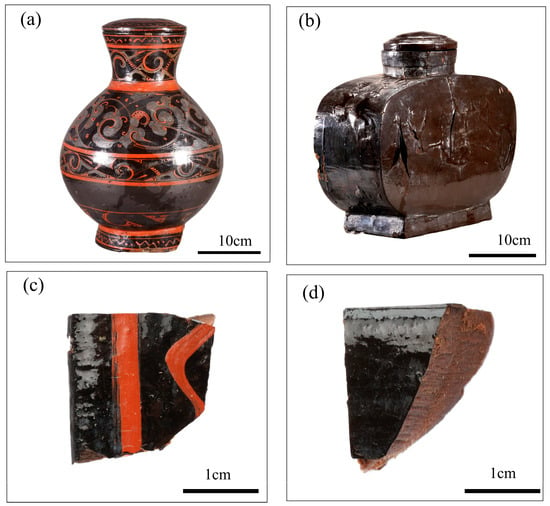
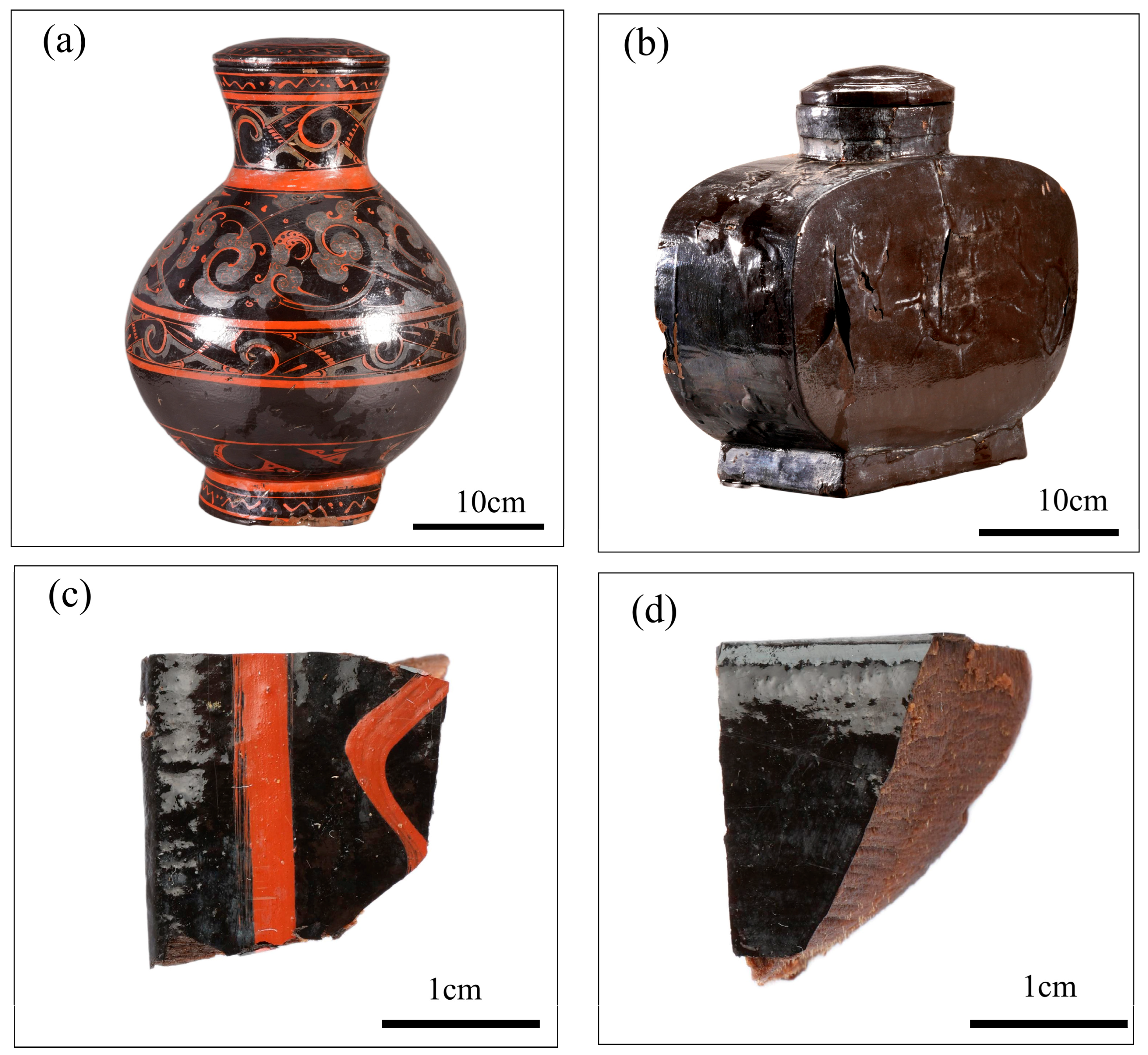
This vessel has a rounded belly, total height of 36 cm, and mouth diameter of 12.5 cm (Figure 1a,c). It features an everted mouth, constricted neck, broad shoulder, bulging abdomen, and splayed ring foot; the lid is slightly domed with a mortise-and-tenon rim. The exterior surface has a black lacquer ground, decorated with cloud motifs in vermilion mineral pigment, with smooth and flowing lines in a typical Western Han cloud-pattern style; the neck bears a zigzag band, and the shoulder, belly, and upper ring foot are divided by broad red bands, filled with S-shaped scroll clouds and scroll-grass motifs, producing a striking black-red visual contrast. The interior and the inner lid are coated with evenly toned reddish-brown lacquer. A fragment (Figure 1c) measuring approximately 2 cm × 2 cm was retrieved from the bottom ring foot; this fragment preserves well-intact painted layers displaying strip-shaped and S-curve decorative elements.
Figure 1.
Photographs of the lacquer pots and samples: (a) painted cloud-patterned round pot; (b) plain flattened pot; (c) sample from the painted round pot; (d) sample from the plain flattened pot.
2.1.2. Plain Lacquer Flattened Pot
This flattened pot has a total height of 26 cm, a width of 29.5 cm, and a thickness of 11 cm (Figure 1b,d). It is elliptical and compressed in profile, with a straight mouth, short neck, flattened belly, and rectangular ring foot; the lid is straight-walled and circular with a mortise-and-tenon rim. The entire exterior is covered by undecorated black lacquer without painted ornamentation, exhibiting a deep brownish-black hue with subdued lustre. Local cracking and surface wear resulting from ageing and long-term burial are observable. The interior is coated with reddish-brown lacquer. The overall form is regular and streamlined, characteristic of plain utilitarian artefacts. A fragment (Figure 1d) of approximately 2 cm × 2 cm was sampled from the damaged bottom ring foot. Cross-sectional observation reveals that the black lacquer film adheres directly to the wood surface, showing uniform thickness and dense texture.
2.1.3. Sampling Strategy and Limitations
For each artefact, sampling was conducted on a single micro-area of exposed wood at the outer bottom ring foot, the only surviving damaged zone. This site was chosen to avoid secondary damage to the relics. Both artefacts bear a plain reddish-brown inner coating. Destructive internal sampling was prohibited due to the relics’ rarity and high value, representing a limitation of this study.
2.2. Analytical Methods
2.2.1. Wood Species Identification
Permanent sections covering three anatomical planes were prepared via embedding and sliding-microtome techniques. Wood sections were prepared from samples (approximately 1 cm × 1 cm × 1 cm) taken from the bottom ring foot of each vessel. Specimens were fixed, softened, and embedded, then sectioned using a Leica 2000R (Nussloch, Germany) sliding microtome to obtain standard transverse, radial, and tangential sections. Observations and micrographs were acquired with a Leica DM 2000 LED biological microscope (Wetzlar, Germany). Anatomical features were documented following the coding standards of the International Association of Wood Anatomists (IAWA), focusing on tracheids, vessels, parenchyma, rays, pits, cross-field pits, and crystal inclusions. Micromorphological traits were compared against authoritative wood-anatomy reference databases, including the IAWA lists of microscopic features for hardwood and softwood identification (IAWA Committee, 2004) and the InsideWood database (Wheeler, 2011) [19,20], combined with macroscopic features, to assign taxonomic identification. Auxiliary instruments included an MH-300A density metre and a DB-1A constant-temperature hot-plate. All experimental procedures complied with standard wood-identification protocols.
2.2.2. Microscopic Observation
A Zeiss Smartzoom 5 digital microscope (Jena, Germany) was used to record surface micromorphology within a magnification range of 3× to 300×. For cross-sectional characterisation, micro-fragments (approximately 1 cm × 1 cm) were embedded in epoxy resin, ground and polished, and subsequently examined with a Zeiss Axio Imager A2 m metallurgical microscope (Jena, Germany) at magnifications of 50× to 1000×, enabling characterisation and thickness measurement of individual stratigraphic layers. The polished cross-sections prepared in this step were also used for SEM-EDS analysis in Section 2.2.3, so no additional sampling was required.
2.2.3. SEM-EDS
Cross-sectional micromorphology of paint films was investigated using a Thermo Fisher Scientific Axia ChemiSEM LoVac tungsten-filament scanning electron microscope (Hillsboro, OR, USA). For morphological imaging, the acceleration voltage was set to 2–5 kV with a working distance of 10 mm; secondary-electron and backscattered-electron images were collected. X-ray energy-dispersive spectroscopic point analysis and elemental mapping were performed under high-vacuum conditions (9.6 × 10⁻⁵ Pa). An acceleration voltage of 20 kV and an acquisition duration of 30 s were applied for elemental-composition measurement.
2.2.4. Py-GC/MS
Micro-sample analysis was performed using a Frontier Lab EGA/PY-3030D multi-step pyrolyzer (Koriyama, Japan) coupled to a Shimadzu QP2020 GC-MS system (Kyoto, Japan). Approximately 0.1 mg of sample was loaded into a passivated stainless-steel cup, and 3 μL of tetramethylammonium hydroxide methanol solution was added to realise thermally assisted hydrolysis and methylation. After solvent evaporation at ambient temperature, the sample was pyrolyzed at 500 °C for 0.2 min. Pyrolysis products were transferred to the GC-MS instrument (Kyoto, Japan) under split-mode conditions (split ratio 1:20), with helium serving as the carrier gas maintained at a constant flow rate of 1.0 mL min−1. Both the pyrolyzer interface and GC injector were held at 300 °C. Chromatographic separation was achieved on an HP-5MS capillary column (30 m × 0.25 mm × 0.25 μm). The column-oven temperature programme was set as follows: initial temperature of 50 °C, ramped upward at 4 °C min−1 to 300 °C, and held isothermally for 5 min. Mass spectrometry was operated under electron-ionisation mode (70 eV), scanning over the mass-to-charge range m/z 10–600, with the ion-source temperature maintained at 230 °C. Mass-spectral interpretation was conducted by matching experimental spectra against the NIST mass-spectral library.
3. Results and Discussion
3.1. Wood Substrate Identification
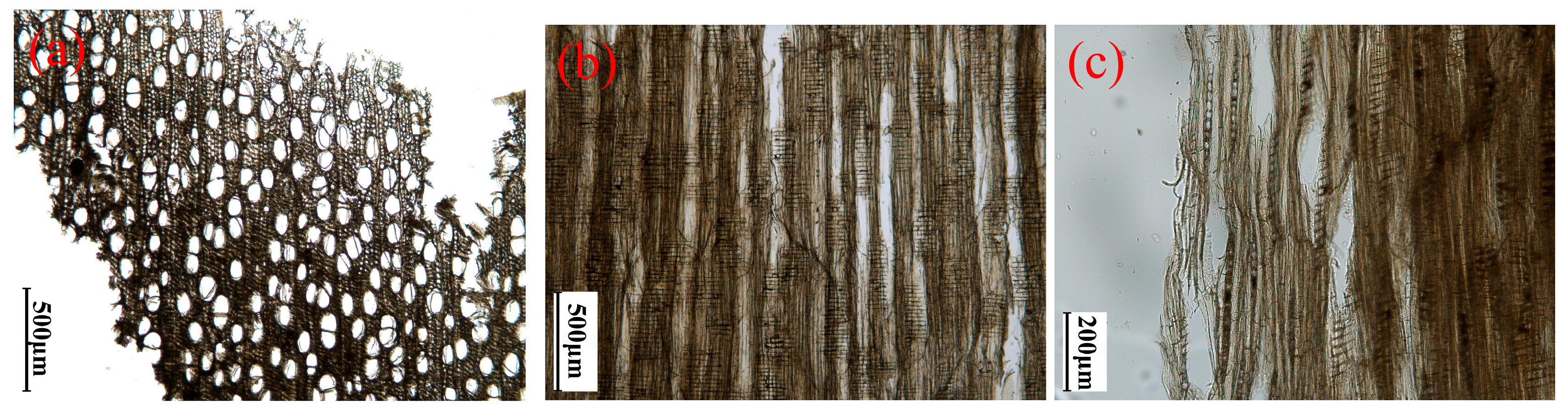
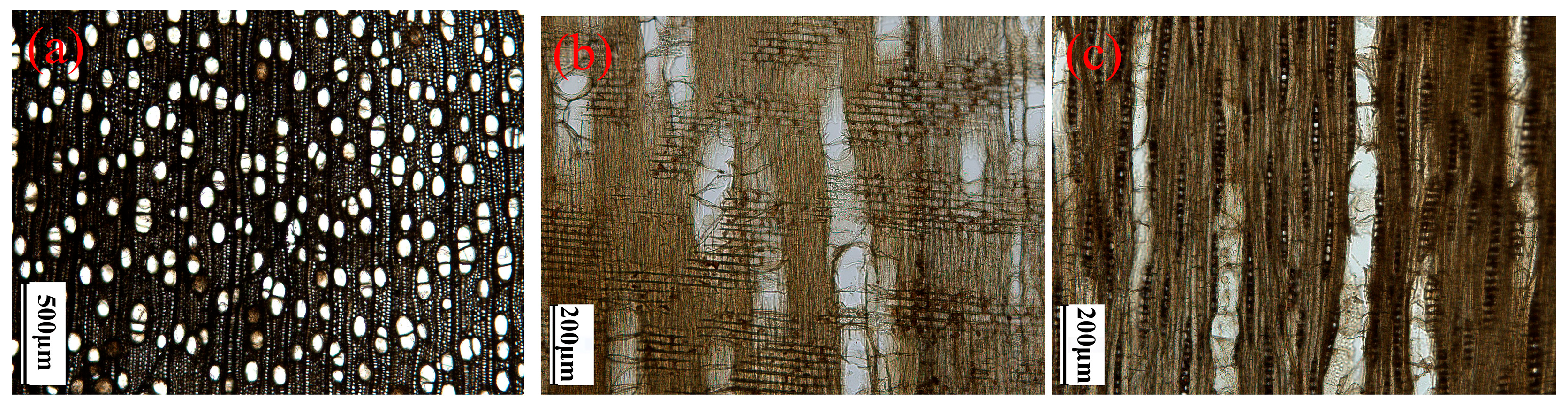
Wood-sample micro-observations were carried out following IAWA hardwood-characteristic criteria [21,22]. The wood of the round-pot sample (Figure 2) exhibits distinct growth rings (IAWA 1) and diffuse-porous wood anatomy (IAWA 5); simple vessel-perforation plates (IAWA 13); alternate polygonal intervascular pits (IAWA 22, 23); vessel-ray pits with reduced borders tending toward simple, rounded, or angular outlines (IAWA 31); vessel density of 40–100 vessels per mm2 (IAWA 49); absent or extremely sparse axial parenchyma (IAWA 75), with parenchyma strands of 2–4 cells (IAWA 91, 92); and predominantly uniseriate rays (IAWA 96) composed entirely of procumbent cells (IAWA 104). These diagnostic features correspond to poplar (Populus spp., Salicaceae).
Figure 2.
Micrographs of wood sections from the painted round pot: (a) transverse, 200×; (b) radial, 200×; (c) tangential, 400×.
The wood of the flattened-pot sample (Figure 3) displays distinct growth rings (IAWA 1) and a diffuse-porous structure (IAWA 5); simple perforation plates (IAWA 13); alternate polygonal intervascular pits (IAWA 22, 23); vessel-ray pits with reduced borders of rounded or angular shape (IAWA 31); vessel density of 40–100 vessels per mm2 (IAWA 49); absent or extremely sparse axial parenchyma (IAWA 75) formed by parenchyma strands of 2–4 cells (IAWA 91, 92); and mostly uniseriate rays (IAWA 96) exclusively consisting of procumbent cells (IAWA 104). This material is identified as Lagerstroemia spp. (Lythraceae).
Figure 3.
Micrographs of wood sections from the plain flattened pot: (a) transverse, 200×; (b) radial, 400×; (c) tangential, 400×.
Poplar wood is lightweight, soft, and readily turned on lathes, representing one of the most widely utilised base-substrate timbers for ancient Chinese lacquerware [23,24]. Its adoption of the round pot conforms to the general ancient principle of selecting materials that are lightweight and easy to shape. By comparison, Lagerstroemia wood possesses higher hardness, low shrinkage rates, and favourable decay resistance. Its employment for the flattened pot indicates elevated structural-strength requirements. Furthermore, the flattened curved geometry demands enhanced bending resistance and dimensional stability, mechanical properties well matched by Lagerstroemia timber. Notably, this genus is rarely documented among excavated lacquerware assemblages. This finding demonstrates that Han-dynasty craftsmen, beyond routine utilisation of common softwoods, already possessed refined differentiated material-selection awareness for non-standard vessel shapes, supplying new evidence for the diversity of timber-utilisation strategies adopted in Han-period lacquerware production [25].
3.2. Lacquer Film Layering
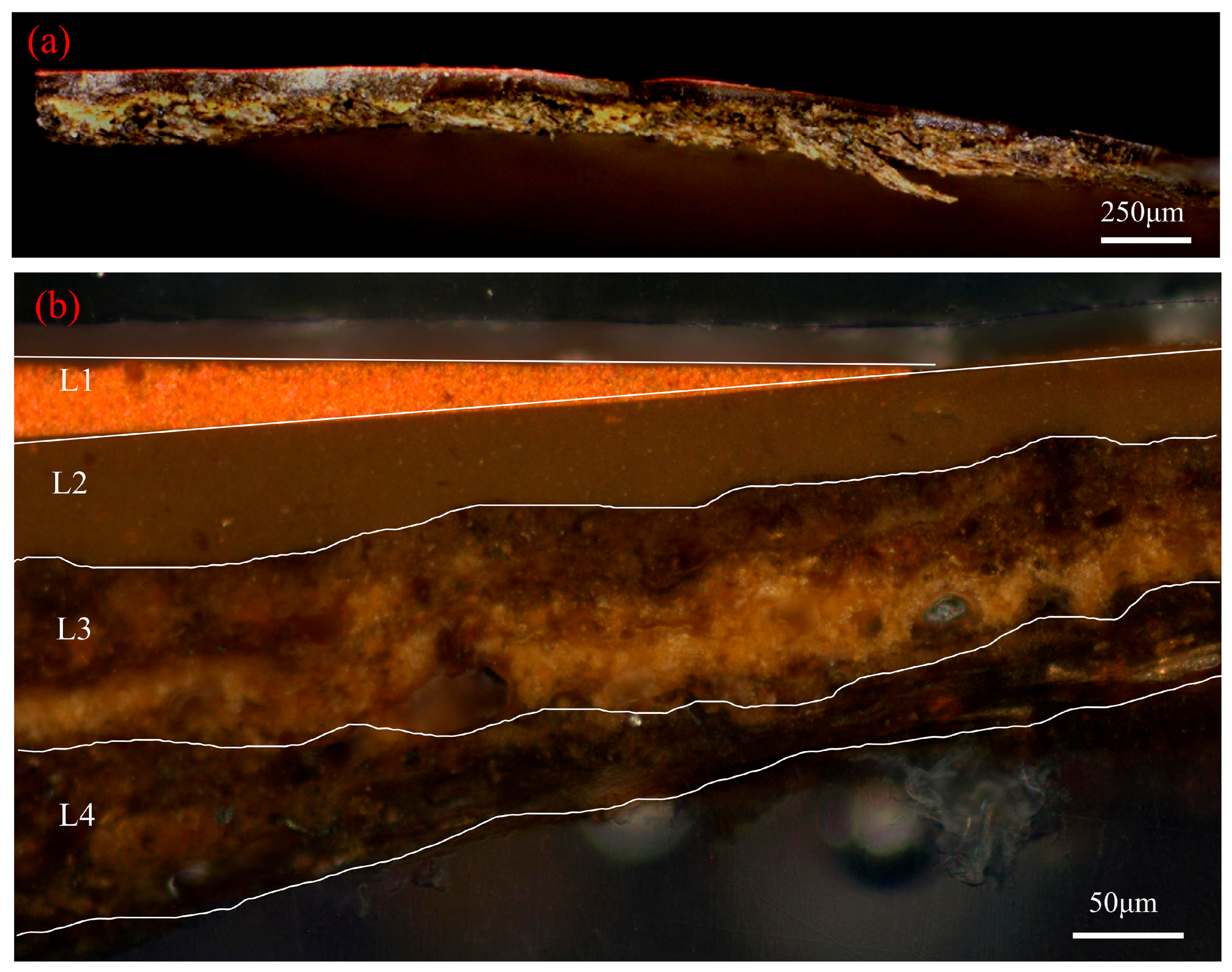
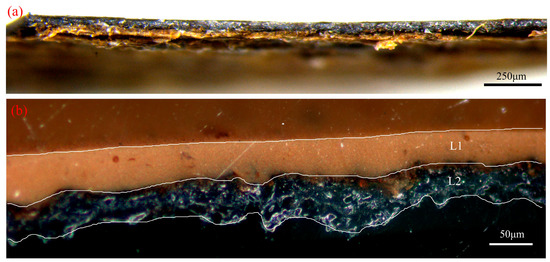
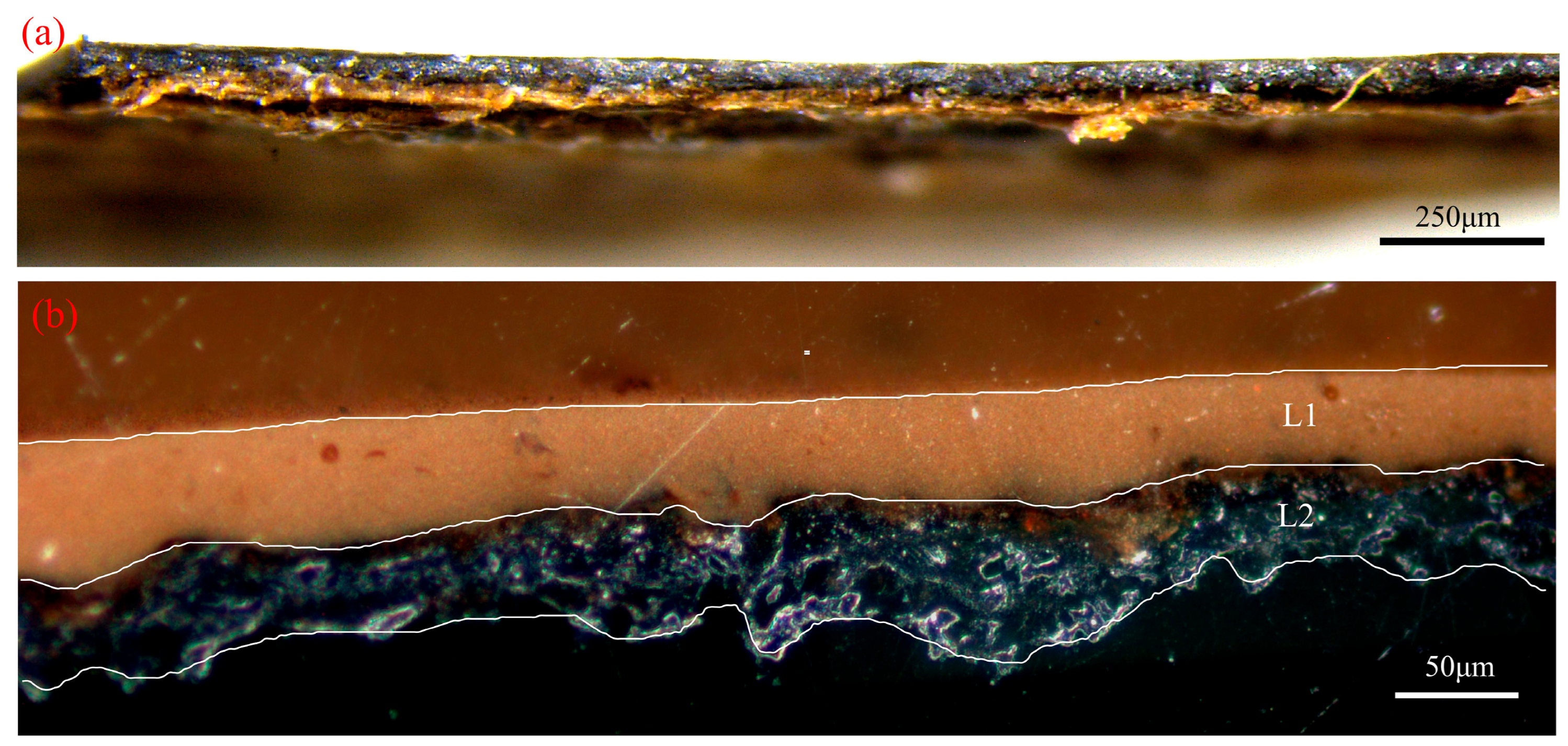
After embedding, grinding, and polishing, cross-sectional imaging clearly resolved stratigraphic structures. Specimens from the painted round pot (Figure 4) reveal a typical four-tier stratigraphic sequence: “polychrome paint layer, base lacquer layer-clay–ash ground-layer-wooden core”, consistent with the canonical “core-ground-base-paint” layering schema for high-grade Western Han lacquerware [15].
Figure 4.
Micrographs of lacquer cross-sections from the painted round pot: (a) natural fracture, 100×; (b) polished section, 200×. The top of each image corresponds to the exterior surface.
Layer L1 (polychrome painted layer) ranges from 0 μm to 42 μm in thickness, appearing brick-red to orange-red under reflected light, with homogeneously dispersed pigment particles and no internal sublayering. This observation suggests pigment was thoroughly blended with lacquer and directly applied atop the base-lacquer substrate. Its thin and uniform morphology is consistent with a single-step brush-painting process using fine-brushed tools and with skilled craftsmanship [26].
Layer L2 (base lacquer) exhibits a thickness of 50–73 μm, appearing dark-brown to black, with translucent-amber-to-black tonal transitions under reflected light. This layer is dense and homogeneous without obvious mineral-filler particles and is interpreted as pure raw lacquer. The L1/L2 contact is sharp, conformable, and well bonded, with no visible voids, peeling, delamination, truncation, or discontinuity. This suggests a well-preserved interface and is consistent with complete curing of the base-lacquer layer prior to polychrome painting, although this alone is not sufficient to conclude that full curing had occurred.
Layer L3 (clay–ash ground layer) reaches 86–100 μm in thickness, constituting one of the thickest functional layers. It presents yellowish-brown to brown coloration and contains numerous bright reflective particles with heterogeneous grain sizes. Its upper surface was mechanically polished to achieve relative planarity. This layer fills wood pores and grain grooves to generate a smooth substrate surface, while simultaneously improving mechanical strength and dimensional stability. The L2/L3 contact is conformable and continuous, with no visible voids, truncation or discontinuity.
Layer L4 corresponds to the underlying wooden core, exhibiting wood-fibre textures and vessel anatomical structures. The L3/L4 contact is irregular and undulating, indicating that the original wood surface was not highly polished and retained natural textural features. Grain-orientation evidence implies the vessel body was most likely shaped by lathe-turning or carving operations.
Specimens from the undecorated flattened pot (Figure 5) show a markedly simplified two-tier stratigraphy: L1 (surface lacquer layer) directly overlies L2 (wooden core), with no intermediate clay–ash ground-layer. The L1/L2 contact is sharp, direct, and conformable, with no visible voids or discontinuities. Compared with the four-component sequence observed for the round pot, this simplified structure reflects fundamental differences in manufacturing investment between undecorated utilitarian artefacts and painted ritual-grade objects. L1 has a uniform thickness of 42–56 μm, displays homogeneous brown coloration, and possesses a dense, non-particulate texture corresponding to a single applied lacquer coat. L2 represents the wooden substrate, generating clear visual contrast against the overlying lacquer layer L1. The reddish-brown interior coating was not sampled, and the cross-section therefore represents only the exterior lacquer system.
Figure 5.
Micrographs of lacquer cross-sections from the plain flattened pot: (a) natural fracture, 100×; (b) polished section, 200×. The top of each image corresponds to the exterior surface. L1 is the exterior surface lacquer layer; L2 is the wooden core.
3.3. Composition of the Clay–Ash Ground Layer
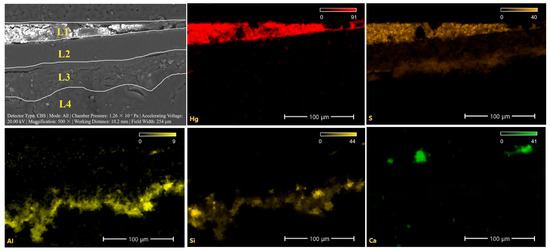
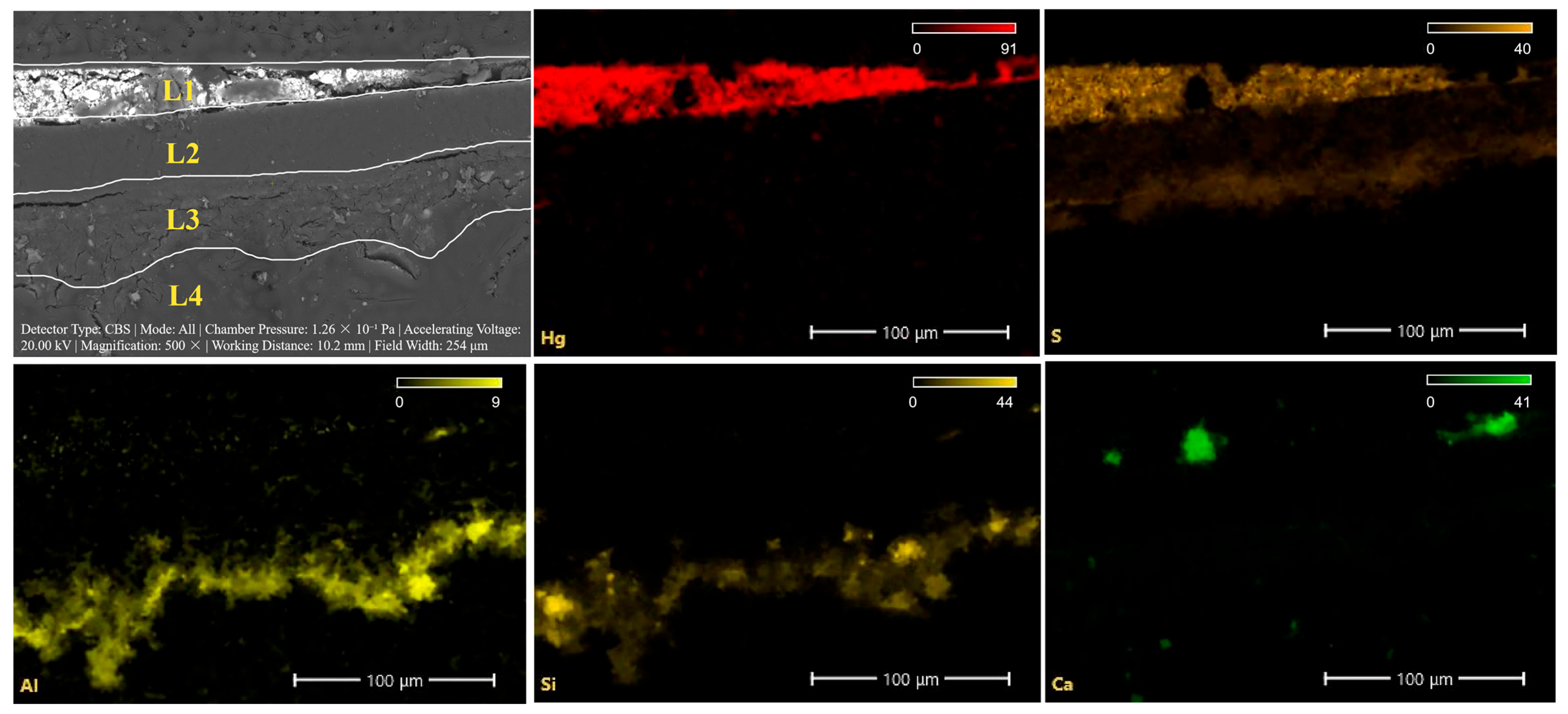
Stratigraphic observations confirm that the round pot bears an 86–100 μm-thick clay–ash ground layer abundant in reflective mineral particles, whereas the flattened pot lacks such a ground layer entirely. Given the limited volume of precious archaeological micro-samples, X-ray diffraction (XRD) analysis was not feasible; accordingly, SEM-EDS micro-area characterisation was performed. Table 1 presents the EDS analytical data for cross-sections of both lacquer pots, and Figure 6 shows the SEM-EDS elemental mapping of the painted round pot cross-section.
Table 1.
EDS analytical data of cross-sections from the two lacquer pots (wt%).
Figure 6.
SEM-EDS elemental mapping of the painted round pot cross-section. The numerical values on the colour scales denote relative X-ray intensities (semi-quantitative estimates), rather than absolute weight fractions.
In the painted round pot, SEM-EDS elemental mapping (Figure 6) and point analyses (Table 1) show strong co-enrichment of mercury (Hg) and sulphur (S) within layer L1 (polychrome painted layer), with approximately 63.3 wt% Hg and 10.6 wt% S. This elemental signature is consistent with the stoichiometry of cinnabar (HgS) [27]. Cinnabar is the most widely adopted chemically stable red mineral pigment in ancient Chinese lacquer painting, consistent with the characteristic black-and-red decorative aesthetic prevalent among Han-dynasty lacquerware [28]. In contrast, the flattened pot (Sample 174) shows no Hg or S enrichment in its surface lacquer layer (L1), consistent with its undecorated exterior (Table 1).
Layer L2 (base lacquer) of the round pot shows no prominent metallic-mineral elemental signals, indicating that it is predominantly composed of natural lacquer, fulfilling sealing, levelling, and adhesion-promoting functions. After curing, pure lacquer forms dense continuous films, supplying a uniform stable substrate for subsequent painting and mitigating upward migration of moisture and soluble salts from underlying strata. The absence of mineral fillers preserves the excellent film-forming and adhesive properties of raw lacquer, a hallmark of high-quality lacquerware production.
Noticeable enrichment of aluminium (Al) and silicon (Si) occurs within layer L3 (clay–ash ground layer) of the round pot, with approximately 4.2 wt% Al and 10.2 wt% Si (Table 1; Figure 6). This is consistent with aluminosilicate-rich fillers such as clay or kaolin, possibly mixed with quartz, corresponding to the traditional terms “lacquer ash” or “yuan lacquer” in ancient Chinese craft records [11]. However, because EDS provides elemental rather than phase information, this mineralogical identification is an inference based on Al/Si ratios, not a direct phase identification. This layer fills wood-surface voids to achieve surface smoothness; the mineral–lacquer organic–inorganic composite substantially enhances mechanical performance and dimensional stability [29]. Layer L4 (wooden core) yields no detectable metallic-mineral elements, consistent with its purely organic nature. The Ca signal in Figure 6 is localised above L1 and is interpreted as soil/earth adhering to the lacquer surface, rather than a component of the lacquer layer itself. This is supported by the low Ca content in L1 (0.5 wt%) in Table 1.
3.4. Lacquer Material and Additives Analysis
Py-GC/MS was employed to identify organic constituents within lacquer-film samples. This analytical technique thermally decomposes macromolecular substances into volatile pyrolysis fragments, which are subsequently separated and identified via gas chromatography–mass spectrometry; it constitutes one of the most robust analytical workflows for characterising organic matrices within ancient lacquerware [30,31,32]. The so-called “Anacard Gestalt Graph” (urushiol molecular fingerprint) enables lacquer-tree-species discrimination and side-chain-structure characterisation. Within oil-component pyrograms, glycerol serves as a diagnostic marker for triglycerides, while various fatty-acid profiles reflect oil-type classification and long-term degradation status.
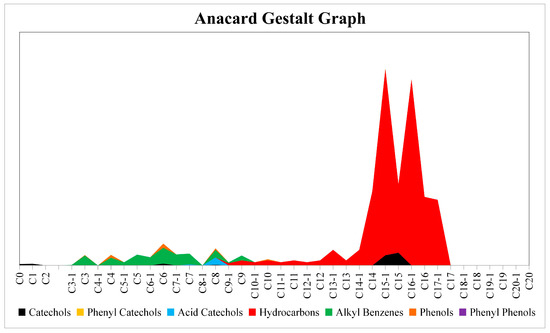
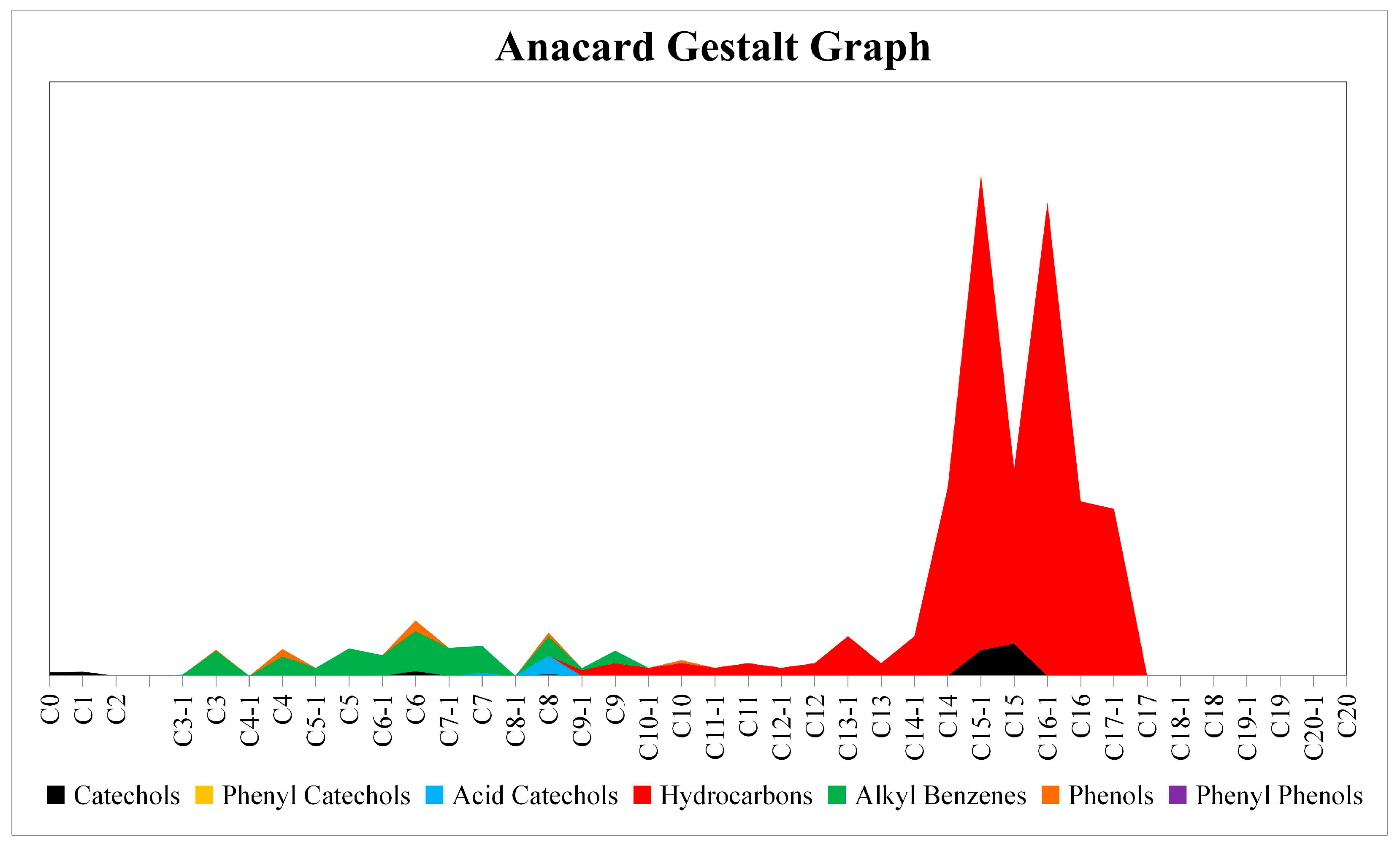
The Anacard Gestalt Graph acquired from the painted round-pot sample (Figure 7) exhibits prominent hydrocarbon double peaks at C15-1 and C16-1, with major peak clusters distributed across the C15 and C16 ranges. This profile matches pyrolytic fingerprints of urushiol bearing C15-unsaturated side-chains (pentadecenyl groups carrying one to three double bonds). A distinct catechol-related peak appears at C15, corresponding to the 3-pentadecenyl catechol molecular skeleton. In the low-carbon-number interval (C3–C8), alkylbenzene and phenol signals originating from side-chain cleavage fragments are observable. These fingerprint features unambiguously confirm the presence of urushiol-catechol-type natural lacquer derived from the Chinese lacquer tree (Toxicodendron vernicifluum) [33].
Figure 7.
Anacard Gestalt Graph (urushiol fingerprint) of the painted round pot sample.
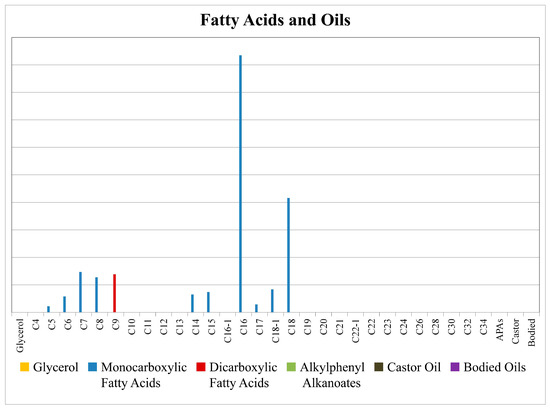
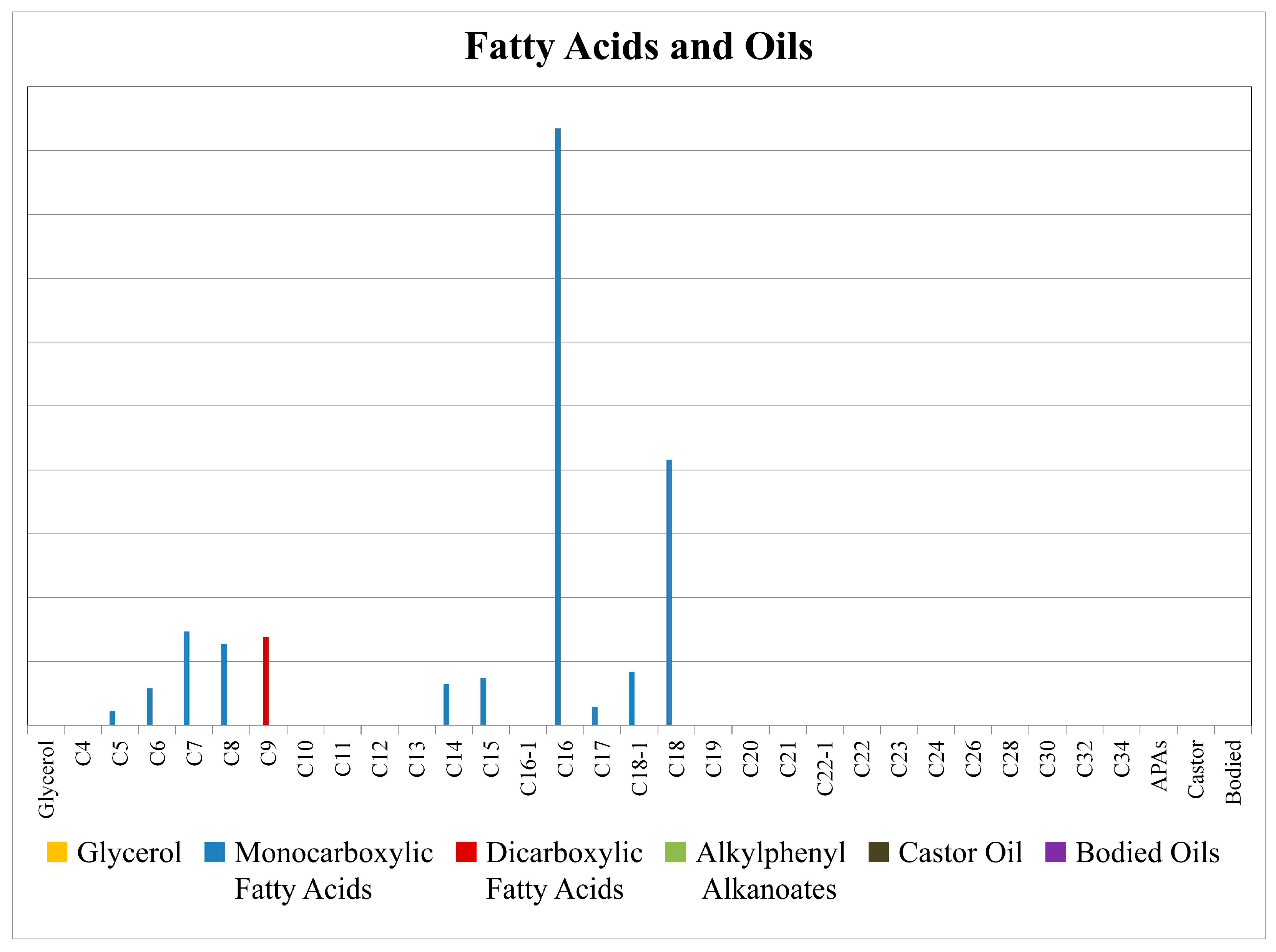
Fatty-acid pyrograms for this sample (Figure 8) reveal monocarboxylic-acid signals dominated by palmitic acid (C16:0) and stearic/oleic-acid (C18:0/C18:1). Nevertheless, the glycerol signal remains weak and the total oil-related content is extremely low. The detected C16/C18 fatty-acid species may stem from intrinsic trace lipids within raw lacquer or negligible externally added oil fractions. Collectively, the lacquer-film system of this artefact is classified as a pure-lacquer formulation [34,35].
Figure 8.
Fatty acid pyrogram of the painted round pot sample.
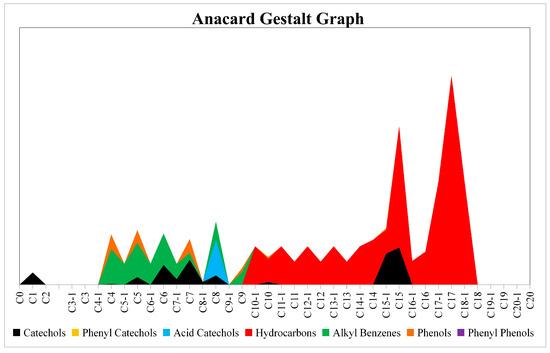
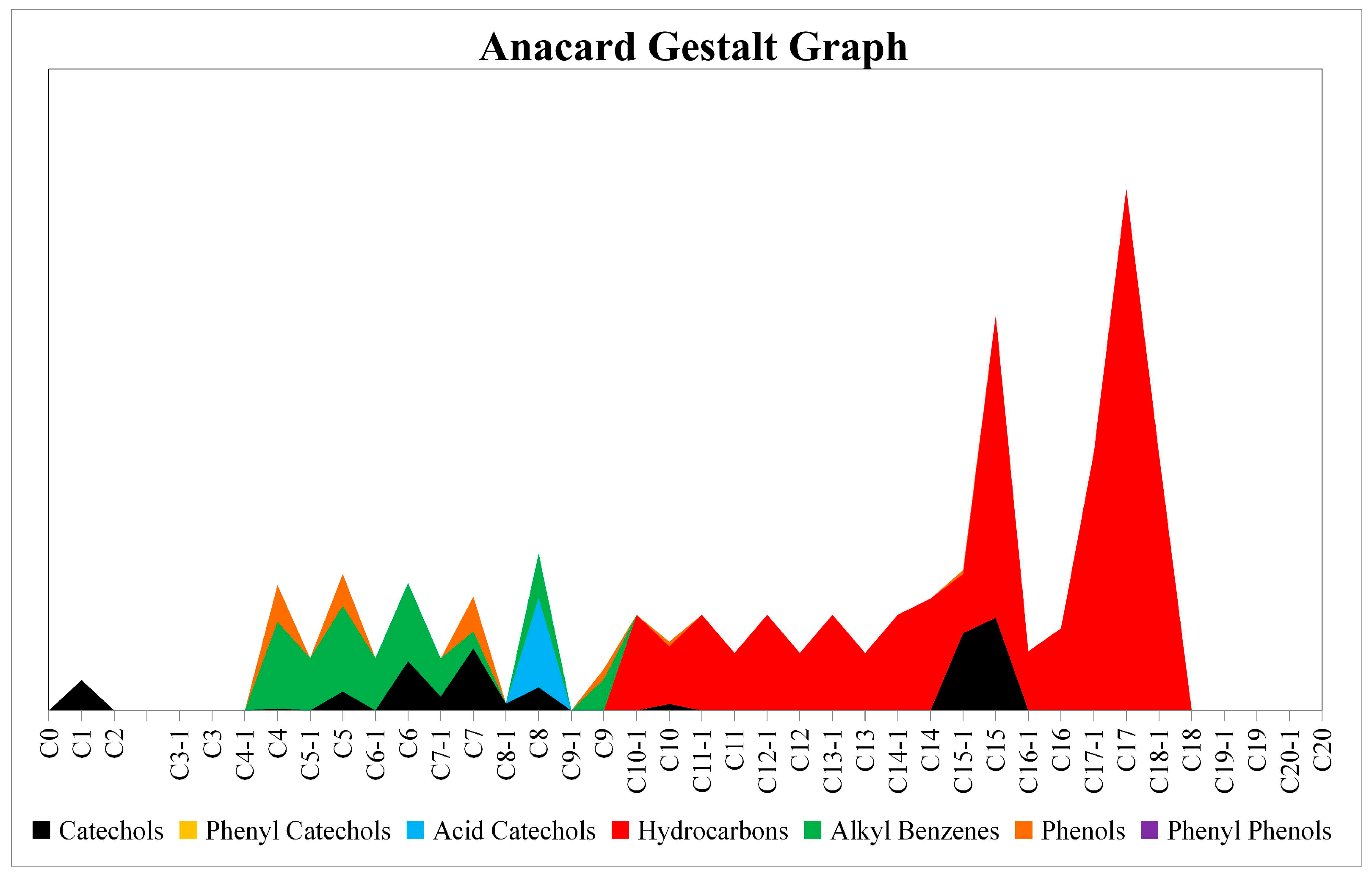
The Anacard Gestalt Graph obtained from the undecorated flattened-pot sample (Figure 9) also displays diagnostic urushiol-type pyrolytic signatures: pronounced hydrocarbon peaks at C15-1 and C17-1, a well-defined C15 catechol-derived peak, plus intact alkylbenzene and phenol distributions across low-carbon segments. Its overall fingerprint shows high similarity to that of the round-pot sample, confirming the utilisation of the same Chinese-lacquer-tree raw-material source.
Figure 9.
Anacard Gestalt Graph of the plain flattened pot sample.
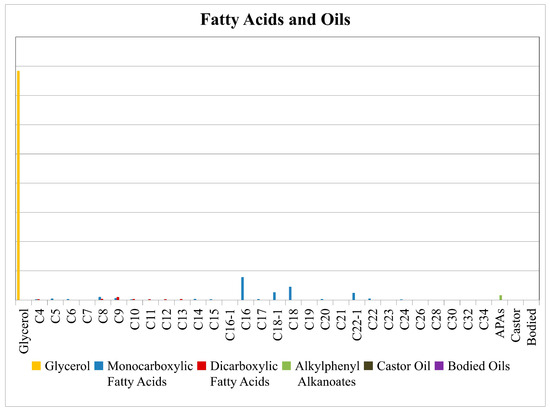
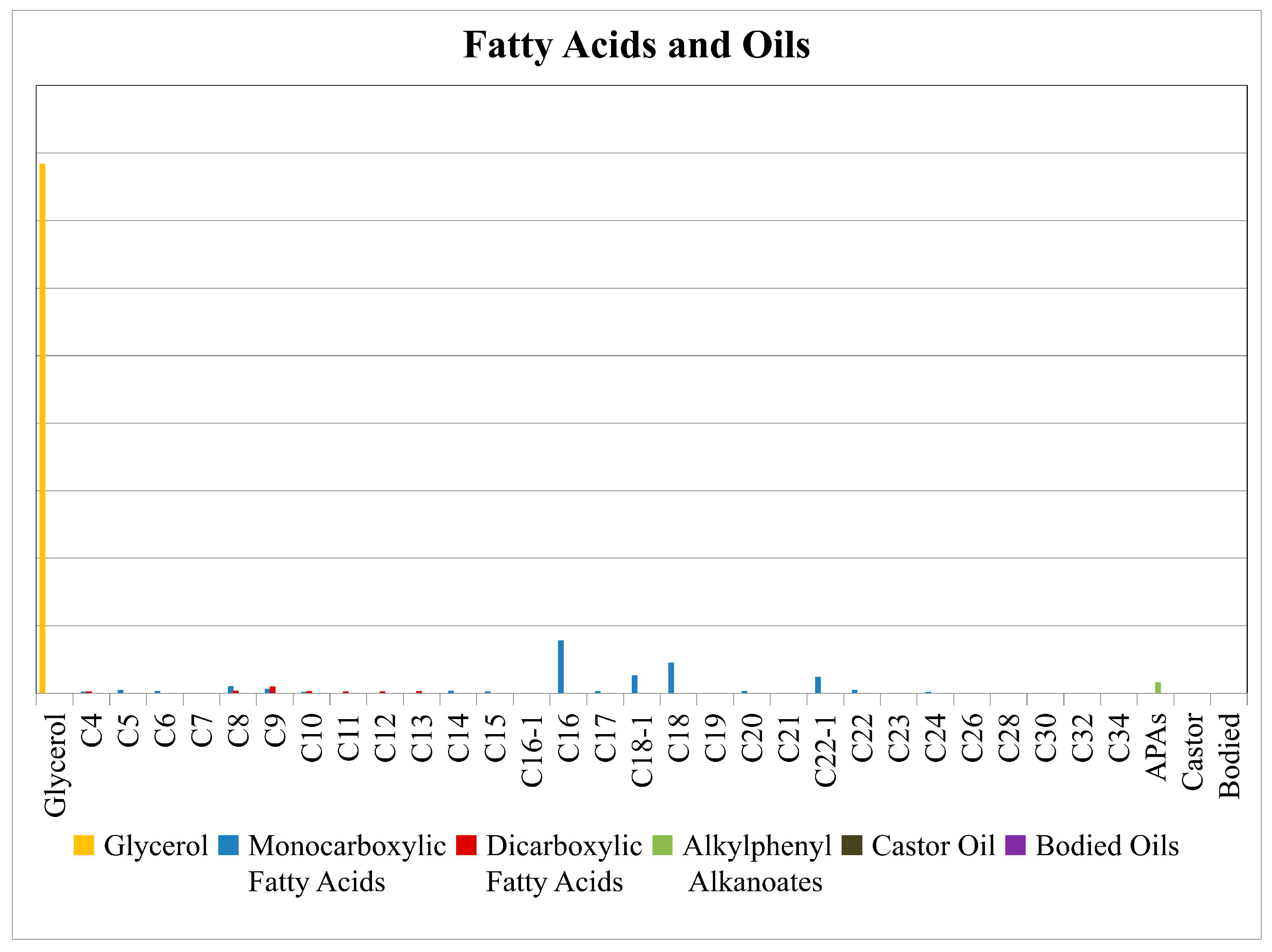
By contrast, fatty-acid pyrograms of the flattened-pot sample (Figure 10) differ substantially from those of the round pot. An extremely intense glycerol peak is detected, representing a clear marker for triglycerides originating from vegetable oils and demonstrating substantial oil incorporation. Monocarboxylic-acid signals are distributed across C16, C18, and C18-1, consistent with typical vegetable-oil compositional profiles. Critically, distinct dicarboxylic-acid peaks are observed for suberic acid (C8), azelaic acid (C9), and sebacic acid (C10). These compounds represent characteristic oxidation-degradation products of drying oils generated via oxidative cleavage of unsaturated carbon–carbon bonds over long burial durations. Additionally, alkylphenol alkanoate (APA) signals appear at corresponding mass-spectral positions, plausibly originating from esterification-condensation reactions between urushiol moieties and fatty-acid molecules during burial-diagenesis [32].
Figure 10.
Fatty acid pyrogram of the plain flattened pot sample.
The above analytical results indicate that the lacquer film of the undecorated flattened pot is a composite blend of natural lacquer and a plant drying oil. The coexistence of a strong glycerol signal, C16/C18 fatty acid peaks, and an oxidised dicarboxylic acid fingerprint provides strong evidence for the intentional addition of a substantial amount of drying plant oil. The drying-oil fatty acid characteristics detected in the sample (P/S = 1.69, A/P = 0.12, C8–C10 dicarboxylic acids) are compatible with drying plant oils such as linseed oil or perilla oil. The relatively low A/P ratio is consistent with the ageing and cross-linking of drying oil in the raw lacquer matrix [36,37].
4. Conclusions
Systematic multi-analytical characterisation of these two Western Han lacquerware artefacts—the cloud-motif-painted round pot and the undecorated flattened pot—identifies significant disparities in timber selection, lacquer-making procedures, and compositional formulation. These findings supply new scientific evidence for understanding fine-grained labour specialisation patterns and technical evolution within Western Han lacquerware manufacture. The primary conclusions are summarised as follows.
Timber selection follows the core principle of “material performance tailored to vessel functional requirements.” The round pot adopts lightweight, soft poplar (Populus spp.), complying with the general ancient standard favouring lightweight, easily workable substrate materials. The flattened pot employs Lagerstroemia wood, which combines high hardness, low-shrinkage behaviour, and favourable decay resistance, to satisfy specific mechanical demands for bending strength and dimensional stability imposed by its flattened curved morphology. The infrequent archaeological occurrence of Lagerstroemia-based lacquerware confirms that Han-dynasty craftsmen possessed differentiated timber-selection expertise for manufacturing non-standard vessel forms.
Lacquer-making technology exhibits prominent hierarchical differentiation. The round pot is produced according to the standard four-component stratigraphic workflow (“wooden core-ground-layer-base lacquer-polychrome paint”), involving complex multi-step fabrication procedures. The flattened pot adopts a simplified two-layer configuration (“surface lacquer directly atop wooden core”) without any clay–ash ground layer. Such technical divergence reflects fundamental disparities in manufacturing standards and functional positioning between high-status painted ritual-grade vessels and simple undecorated utilitarian containers.
The compositional nature of the clay–ash ground layer and decorative pigments has been clarified. The ground layer of the round pot is enriched with aluminosilicate-based mineral fillers (clay, kaolin, and related phases), serving to enhance mechanical robustness and dimensional stability. The red decorative pigment within painted layers is cinnabar (HgS), providing direct material evidence for the iconic black-and-red decorative tradition of Han-dynasty lacquerware.
Distinct lacquer-formulation strategies are documented. Both artefacts utilise natural lacquer from Toxicodendron vernicifluum as the fundamental film-forming component. Nevertheless, the round pot relies upon a pure-lacquer-only system, whereas the flattened pot implements a composite formulation blending natural lacquer with drying vegetable oil. This observation demonstrates that Han-dynasty artisans could flexibly adjust lacquer-mixture recipes according to target performance requirements (e.g., surface gloss, hardness, drying kinetics), manifesting advanced practical chemical insights and compounding know-how. Compared with some Chu region samples and the three Guankou lacquer lian, in which no drying oil additives were detected, the oil-modified formulation of the flattened pot may reflect differences in vessel functional requirements, workshop formulation traditions, or raw material availability; further validation with more samples is still needed.
The two Guankou lacquer pots show both connections with and differences from the Chu core region, northern, and Jianghuai traditions. Their forms and decoration are close to Chu-style lacquerware, but their poplar and Lagerstroemia wooden cores reflect local resources. The continued use of cinnabar indicates that high-grade red decoration was not abandoned. The ground layer and lacquer formulation diverge according to functional hierarchy: the painted round pot approaches the high-grade multilayer composite tradition, whereas the undecorated flattened pot has a simplified structure and a possibly oil-modified formulation, meeting the performance and cost requirements of a utilitarian container. Consistent with the three Guankou lacquer lian, this reflects “selective adoption and local adaptation”: the differences were jointly determined by functional hierarchy, regional resources, and workshop-specific choices, rather than by a unified protocol or arbitrary ad hoc adjustment. They are neither a simple peripheral extension of Chu-style production nor a transplant of the simplified northern system, but rather a flexible strategy developed in the Guankou area of the Yangtze region among external technological knowledge, local materials, and functional needs.
In summary, the present study systematically reconstructs the full technical profiles of these two Western Han lacquer pots, covering timber-raw-material choice, stratigraphic layer construction, and chemical compositional characteristics. The discovery of Lagerstroemia-based wooden substrates and empirical evidence for oil-modified lacquer formulations deliver invaluable material evidence for investigating regional characteristics, technical inheritance, and innovative developments within Han-dynasty lacquer-making craftsmanship.
Author Contributions
L.G.: investigation, data curation, writing—original draft, and writing—review and editing; L.Y.: writing—review and supervision; J.D.: Writing—original draft and investigation; W.H. and J.B.: Resources and supervision. All authors have read and agreed to the published version of the manuscript.
Funding
This work was supported by the National Social Science Foundation of China (Project: Compilation and Research on the Excavation Report of Tomb No. 1 at Guankou, Wulong, Chongqing, grant No. 24BKG013) and the Chongqing Performance-Driven Incentive Guidance Special Project for Research Institutions (Scientific Analysis and Technological Study of Bamboo, Wood, and Lacquerware from the Western Han Tomb No. 1 at Guankou, Wulong, grant No. CSTB2024JXJL-YFX0058).
Institutional Review Board Statement
Not applicable.
Informed Consent Statement
Not applicable.
Data Availability Statement
The datasets used and/or analysed during the current study are available from the first author upon reasonable request.
Conflicts of Interest
The authors declare no conflicts of interest.
References
- Sung, M.; Jung, J.; Lu, R.; Miyakoshi, T. Study of historical Chinese lacquer culture and technology-Analysis of Chinese Qin-Han dynasty lacquerware. J. Cult. Herit. 2016, 21, 889–893. [Google Scholar] [CrossRef] [Scilit]
- Liu, X.Y.; Lv, M.Q.; Liu, M.; Wu, Z.H.; Lv, J.F. Characterization and identification of lacquer films from the Qin and Han Dynasties. BioResources 2019, 14, 9509–9517. [Google Scholar] [CrossRef] [Scilit]
- Ma, R.G.; Wang, Y.W.; Shen, K. Craftsmanship and reconstruction study of the wooden lacquer pot with inlaid jade ornaments unearthed from M12 at Fanshan. China Lacq. 2025, 44, 60–63. (In Chinese) [Google Scholar]
- Wu, Y. Research on the Applicability Design of Han Dynasty Lacquer Pots. Master’s Thesis, Anhui University of Technology, Ma’anshan, China, 2024; pp. 18–24. (In Chinese) [Google Scholar]
- Tang, M. A Study of Flat-Sided Lacquer Pots (Bianhu) Unearthed from the Warring States to Han Periods in the Two-Lake Region. Master’s Thesis, Hunan University, Changsha, China, 2017; pp. 1–6. (In Chinese) [Google Scholar]
- Qin, J.Y. A study on the design aesthetics of lacquer wine vessels from the Qin and Han dynasties in the Two-Lake region. Zhuangshi (Decoration) 2015, 6, 140–141. (In Chinese) [Google Scholar]
- Liu, Y.; Liu, Y.; Feng, X.; Liu, X. Analytical and molecular recognition strategies for Chinese lacquerware conservation. Polymers 2026, 18, 1454. [Google Scholar] [CrossRef] [Scilit]
- Kamiya, Y.; Honda, T.; Ohbuchi, A.; Miyakoshi, T. Simultaneous organic and inorganic analysis of colored oriental lacquerware by pyrolysis-gas chromatography/mass spectrometry. Int. J. Polym. Sci. 2015, 2015, 725467. [Google Scholar] [CrossRef] [Scilit][Green Version]
- Ma, X.; Shi, Y.; Khanjian, H.; Schilling, M.; Li, M.; Fang, H.; Cui, D.; Kakoulli, I. Characterization of early imperial lacquerware from the Luozhuang Han tomb, China. Archaeometry 2017, 59, 121–132. [Google Scholar] [CrossRef] [Scilit]
- Karpova, E.; Nefedov, A.; Mamatyuk, V.; Polosmak, N.; Kundo, L. Multi-analytical approach (SEM-EDS, FTIR, Py-GC/MS) to characterize the lacquer objects from Xiongnu burial complex (Noin-Ula, Mongolia). Microchem. J. 2017, 130, 336–344. [Google Scholar] [CrossRef] [Scilit]
- Li, J.; Lan, D.; Zhao, X.; Hu, H.; Zhan, S.; Fan, X. Multi-analytical characterization of Western Han wooden lacquerware from the Xiaotaoyuan Cemetery, Shandong, China. npj Herit. Sci. 2026, 14, 181. [Google Scholar] [CrossRef] [Scilit]
- Song, J.J.; Yao, Z.Q.; Xu, J.; Yang, J.; Li, Q.H. Study on lacquering technique of ear cups excavated from Shuangdun No. 1 Han Tomb in Lu’an. Sci. Conserv. Archaeol. 2022, 34, 38–44. [Google Scholar]
- Wu, H.; Zhao, Y.; Fang, B.; Dong, J. Systematic investigation into the evolution of materials and techniques used in lacquer Lian from the Warring States Period to the Yuan Dynasty. Coatings 2023, 13, 1750. [Google Scholar] [CrossRef] [Scilit]
- Zhang, Y.X.; Wu, H.; Song, J.R.; Shi, S.; Zhao, X.Y.; Wang, N. Study on materials and manufacturing techniques of lacquer toiletry boxes excavated from Han tombs in Xianyang, Shaanxi. Sci. Conserv. Archaeol. 2024, 36, 58–65. (In Chinese) [Google Scholar]
- Zheng, L.; Li, X.; Zhao, Z.C.; Tian, S.E.; Tang, J.L.; Li, S.; Li, X.; Wang, N.; Yu, T. Craftsmanship and techniques of a lacquered ear cup from the ancient Nanyue Kingdom. Coatings 2025, 15, 752. [Google Scholar] [CrossRef] [Scilit]
- Chen, Y.; Niu, Q.; Qin, Y.; Yang, H.; Cao, J.; Wu, Z.; Zou, Z.; Xue, C.; Liu, X. Research and Conservation of Carved Lacquer Horse-Hoof-Shaped Box from Yulin, Shaanxi Province. Coatings 2026, 16, 180. [Google Scholar] [CrossRef] [Scilit]
- Gu, L.Y.; Zhao, Y.; Huang, W.; Liu, Y.; Ye, L.; Shi, S.H.; Fang, B.S. Conservation of wooden tablets unearthed from the No. 1 Western Han tomb at Guankou, Wulong, Chongqing. Sci. Conserv. Archaeol. 2026, 38, 77–87. (In Chinese) [Google Scholar]
- Chongqing Municipal Institute of Cultural Heritage; Wulong District Cultural Heritage Protection and Management Office. Excavation of the No. 1 Han tomb at Guankou, Wulong, Chongqing. Kaogu (Archaeology) 2026, 5, 30–51. (In Chinese) [Google Scholar]
- IAWA Committee. IAWA list of microscopic features for softwood identification. IAWA J. 2004, 25, 1–70. [Google Scholar] [CrossRef] [Scilit]
- Wheeler, E.A. InsideWood—A web resource for hardwood anatomy. IAWA J. 2011, 32, 199–211. [Google Scholar] [CrossRef] [Scilit]
- Dou, X.D.; He, L.; Zhai, S.C.; Pan, B. Identification and analysis of wood materials used in the tombs of Dayunshan Han dynasty. J. For. Eng. 2025, 10, 51–59. (In Chinese) [Google Scholar]
- Yuan, C.; Chen, B.W.; Huang, C.X.; She, Y.N.; Pan, B.; Zhai, S.C. Identification of wood species and chemical properties of Han dynasty coffin timbers unearthed from Xuzhou. J. For. Eng. 2019, 4, 52–59. (In Chinese) [Google Scholar]
- Liu, Y.G.; Liu, J.L.; Miao, T.T.; Ding, C.J.; Qin, S.L.; Shi, X.; Yu, M.; Liu, S.Q. Study on the variational patterns of main anatomical characteristics of six “catkin-free” clones of poplar trees. J. For. Eng. 2025, 10, 42–50. (In Chinese) [Google Scholar]
- Wang, Y.F. Identification of wood species used for lacquerware from Mawangdui Han tombs. J. Hunan Prov. Mus. 2010, 1, 583–588. (In Chinese) [Google Scholar]
- Zhang, G.Q.; Wang, Z.Y.; Xia, J.; Wang, N. Study on the wood identification and manufacturing technology evolution of wooden lacquerware excavated from the lower Yangtze River. Sci. Conserv. Archaeol. 2025, 37, 88–96. (In Chinese) [Google Scholar]
- Qin, Y.; Zhu, Z.; Zhu, Y.; Schilling, M.; He, J.; Zhang, L.; Chen, T.; Zhou, P. Exploring thitsi in Qing Dynasty lacquerware: Insights from a preliminary study. npj Herit. Sci. 2025, 13, 46. [Google Scholar] [CrossRef] [Scilit]
- Wu, M.; Zhang, Y.; Zhang, B.; Li, L. Study of colored lacquerwares from Zenghou Yi Tomb in Early Warring States. New J. Chem. 2021, 45, 9434–9442. [Google Scholar] [CrossRef] [Scilit]
- Zheng, L.; Wang, L.; Zhao, X.; Xi, Z.; Wu, X.; Fan, X. Characterization of the materials and techniques of red lacquer painting of a horizontal plaque inscribed by General Feng Yu-hsiang. Coatings 2023, 13, 583. [Google Scholar] [CrossRef] [Scilit]
- Chen, Z.; Wei, S.; Fu, Y.; Fang, Q. Analysis of lacquer from the Zeng Cemetery (1046–771 BCE) at Guojiamiao. Coatings 2024, 14, 1559. [Google Scholar] [CrossRef] [Scilit]
- Tamburini, D. Analytical pyrolysis applied to the characterisation and identification of Asian lacquers in cultural heritage samples-A review. J. Anal. Appl. Pyrolysis 2021, 157, 105202. [Google Scholar] [CrossRef] [Scilit]
- Lee, J.; Jung, S.-B.; Terlier, T.; Lee, Y.-B.; Lee, K.-B. Molecular identification of Asian lacquers from different trees using Py-GC/MS and ToF-SIMS. Surf. Interface Anal. 2018, 50, 696–704. [Google Scholar] [CrossRef] [Scilit]
- Schilling, M.R.; Heginbotham, A.; Van Keulen, H.; Szelewski, M. Beyond the basics: A systematic approach for comprehensive analysis of organic materials in Asian lacquers. Stud. Conserv. 2016, 61, 3–27. [Google Scholar] [CrossRef] [Scilit]
- Wei, S.Y.; Pintus, V.; Pitthard, V.; Schreiner, M.; Song, G.D. Analytical characterization of lacquer objects excavated from a Chu tomb in China. J. Archaeol. Sci. 2011, 38, 2667–2674. [Google Scholar] [CrossRef] [Scilit]
- Wang, N.; Min, J.R.; Kang, B.Q.; Gu, A.; Lei, Y. Scientific research on the materials of lacquer putty in ancient lacquer wares from the Palace Museum collection. Sci. Conserv. Archaeol. 2023, 35, 101–110. (In Chinese) [Google Scholar]
- Hao, X.; Wu, H.; Zhao, Y.; Tong, T.; Li, X.; Yang, C.; Tang, Y.; Shen, X.; Liu, S.; Tong, H. Scientific investigation of the lacquered wooden coffin of Xiang Fei excavated from eastern royal tombs of the Qing dynasty. New J. Chem. 2017, 41, 9806–9814. [Google Scholar] [CrossRef] [Scilit]
- Heginbotham, A.; Schilling, M. New evidence for the use of Southeast Asian raw materials in seventeenth-century Japanese export lacquer. In East Asian Lacquer: Material Culture, Science and Conservation; Rivers, S., Faulkner, R., Pretzel, B., Eds.; Archetype: London, UK, 2011; pp. 92–106. [Google Scholar]
- Heginbotham, A.; Han, J.; Auffret, S.; Schilling, M.R.; Khanjian, H. Use of THM-PY-GC/MS technique to characterize complex, multilayered Chinese lacquer. J. Anal. Appl. Pyrolysis 2019, 140, 339–348. [Google Scholar] [CrossRef] [Scilit]

Disclaimer/Publisher’s Note: The statements, opinions and data contained in all publications are solely those of the individual author(s) and contributor(s) and not of MDPI and/or the editor(s). MDPI and/or the editor(s) disclaim responsibility for any injury to people or property resulting from any ideas, methods, instructions or products referred to in the content. |
© 2026 by the authors. Licensee MDPI, Basel, Switzerland. This article is an open access article distributed under the terms and conditions of the Creative Commons Attribution (CC BY) license.