


Abstract
AISI 1045 steel often undergoes premature failure under combined corrosive-wear conditions due to its insufficient surface durability. To address this, a hot-dip aluminum (HDA) coating was deposited on the steel substrate. The microstructure, corrosion behavior, and tribological properties of the coating were systematically characterized using scanning electron microscopy (SEM), electrochemical techniques, and tribometry. The results reveal that the coating exhibits a continuous triple-layer structure, consisting of the steel substrate, an intermediate Fe-Al intermetallic compound layer, and an outer aluminum-rich layer. In a 3.5 wt.% NaCl solution, the coating formed a protective Al2O3 film, demonstrating clear passivation behavior. It significantly enhanced the substrate’s performance, achieving an approximately 90% reduction in wear rate and a substantial increase in charge transfer resistance. The coated sample showed a lower friction coefficient (0.24) compared to the bare substrate (0.34). Herein, this work demonstrates that a straightforward and industrially viable hot-dip aluminizing process can effectively improve the corrosion and wear resistance of medium-carbon steel. The findings provide a practical surface-hardening strategy for such steels operating in aggressive environments.
1. Introduction
Critical engineering components, such as fusion reactors [1], industrial heat exchangers [2], and automobiles [3], are consistently exposed to harsh service environments involving simultaneous corrosive media and mechanical wear. These components are predominantly fabricated from steels renowned for their excellent comprehensive mechanical properties [4], exemplified by AISI 1045 medium-carbon steel, commonly used in structural applications, and X80 pipeline steel [5]. However, the inherent insufficient corrosion and wear resistance of steels at the surface compromises their reliability under demanding conditions. The synergistic interaction between corrosion and cyclic wear during service can markedly accelerate material degradation. This not only escalates maintenance costs but also raises safety concerns, thereby severely restricting the long-term application of steels in aggressive environments. Consequently, surface engineering technologies that can concurrently impart excellent corrosion resistance, wear resistance, and high-temperature stability are required.
To address this challenge, various surface engineering techniques, including hot-dip aluminizing [6], thermal spraying [7], and aluminizing diffusion coating [8], have been developed. Among them, thermal spraying can be used to deposit high-hardness coatings via high-pressure injection, offering superior wear resistance [9,10]. However, the coatings produced by this method primarily adhere through mechanical bonding, resulting in relatively low interfacial strength [11]. The frequent necessity for post-deposition sealing treatments, coupled with a process cost approximately 3 to 5 times higher than that of hot-dip aluminizing, limits its suitability for high-volume production [12]. Aluminizing diffusion coating, which relies on the inward diffusion of Al atoms to form an Fe-Al intermetallic compound layer, offers exceptional high-temperature resistance [8,13]. Practically, it often suffers from issues like poor coating uniformity and surface porosity. Its applicability is further restricted for large or complex components, the extended processing cycles with high energy consumption hinder its adoption in efficient manufacturing [14], the combined corrosion–fretting degradation mechanism of medium-carbon steels in chloride media remains poorly quantified, and the protective potential of hot-dip Al coatings on AISI 1045 has not been systematically evaluated [15].
In contrast, hot-dip aluminizing (HDA) has emerged as a promising candidate to fulfill these protection requirements, owing to its excellent corrosion resistance [16] and good wear resistance [17]. It enhances the substrate’s resistance to corrosion and wear through the formation of a metallurgically bonded interface [18,19]. The coating exhibits outstanding resistance to high-temperature oxidation and corrosion, particularly in elevated-temperature environments, thereby effectively prolonging the service life of equipment [20]. Compared with recently reported low-pressure cold-spray Al [21] and laser-cladded Al-Fe coatings [22], HDA offers significant advantages in metallurgical bond quality, high-temperature/corrosion resistance, and large-scale production cost-effectiveness, albeit with less process flexibility. Notably, the HDA process can simultaneously mitigate the poor corrosion and wear resistance of AISI 1045 steel without requiring subsequent composite treatments, streamlining manufacturing. The resulting coating possesses strong adhesion and is less susceptible to spallation under vibration or impact [23,24,25].
As a surface treatment technology balancing practicality and economy, the fundamental hot-dip process of galvanizing with zinc was first documented by Malouin as early as 1742 [26]. The hot-dip aluminum process involves immersing a steel component into a molten aluminum bath, facilitating an interfacial metallurgical reaction that forms a protective overlay on the substrate surface [27]. Recent years have witnessed systematic research on HDA coatings by the global scientific community. For instance, Muhammed et al. [28] employed metallographic techniques to characterize the interfacial microstructure of hot-dip aluminized carbon steel, revealing the preferential growth of the Fe2Al5 phase at 700 °C. In another study, Zhang et al. [29] fabricated a Fe-Al conversion layer on X80 steel via hot-dipping to alleviate the coefficient of thermal expansion (CTE) mismatch between the steel substrate and an alumina coating.
Building upon this foundation, this study systematically investigates the microstructure, wear behavior, and corrosion protection performance of an HDA coating applied to an AISI 1045 steel substrate. The research employs a combination of characterization techniques, including scanning electron microscopy (SEM), tribological wear tests, and electrochemical measurements. The findings aim to provide a theoretical basis for extending the application of hot-dip aluminizing technology to other medium-carbon steels.
2. Materials and Methods
2.1. Experimental Materials
AISI 1045 steel (composition in wt.%: C 0.42, Mn 0.74, S 0.02, Cr 0.21, Ni 0.24, Cu 0.30, balance Fe) was used as the substrate. The steel was machined into sheet specimens measuring 100 mm × 10 mm × 3 mm. Commercial pure aluminum ingots with a purity of 99.6% served as the coating source material.
2.2. Coating Preparation
The as-cut specimens were progressively ground with 400# to 2000# metallographic sandpaper and then polished. To remove the surface oxide layer, the specimens were etched in a 10 wt.% HCl aqueous solution for 5 min, followed by rinsing with deionized water and ultrasonic cleaning in anhydrous ethanol for 10 min. Finally, the specimens were dried for subsequent use.
The commercial pure aluminum was cut into pieces, placed in a ceramic crucible, and melted in a resistance furnace. After the aluminum was completely molten, the temperature was held at 760 °C for 30 min to stabilize. A flux cover (40% NaCl + 40% KCl + 10% NaF + 6% CaCl2 + 4% SiO2) was added to the melt surface to prevent oxidation. Dross was regularly skimmed off prior to immersion. The pre-treated and dried steel specimen was swiftly immersed into the molten aluminum molten bath of commercially pure aluminum (≥99.7%) with the addition of approximately 2 wt.% silicon at 760 °C for 6 min, then withdrawn and allowed to cool naturally in air to room temperature.
Finally, a diffusion treatment was conducted in a vacuum tube furnace. The temperature was increased to 650 °C at a heating rate of 5 °C/min, held for 3 h, and then cooled to room temperature to complete the coating process. The diffusion annealing treatment following hot-dip aluminizing was employed to modify the coating’s structure and enhance its performance. The treatment serves to eliminate brittleness and improve adhesion by promoting the interdiffusion of Al and Fe atoms and enhance heat and corrosion resistance, resulting in a dense Fe-Al alloy layer, thereby extending the service life of components in demanding environments [30].
2.3. Tribological and Wear Performance Tests
Dry sliding wear tests were conducted at room temperature using a ball-on-disk TriboLab CMP tribometer. A GCr15 steel ball (5 mm in diameter, HRC 60–62) served as the counterface. The tests were performed under a normal load of 5 N, with a track radius of 2 mm and a rotational speed of 280 rpm (≈0.733 m/s), for durations of 2 and 60 min. The friction coefficient was recorded in real time, and the tests were repeated 3 times.
After testing, the wear scars were analyzed using a white light interferometer (KC-X3000, Nanjing, China) to obtain three-dimensional surface topography. Key parameters, including wear scar depth and volume, were extracted to evaluate wear resistance. The specific wear rate (W) was calculated using Equation (1):
where W is the wear rate (mm3/(N·m)); V is the wear volume (mm3), which is calculated by the three-dimensional morphology method using a laser confocal microscope to scan the entire wear scar area, performing three-dimensional reconstruction; F is the applied load (N); and L is the total sliding distance (m). All the experiments were repeated more than three times to verify the repeatability rate.
W = V/(F × L)
2.4. Electrochemical Performance Tests
Electrochemical measurements were carried out using a Zahner electrochemical workstation with a standard three-electrode system. The prepared specimen served as the working electrode, with its non-testing area sealed with epoxy resin to expose a defined working area of 1 cm2. A saturated calomel electrode (SCE) and a platinum sheet were used as the reference and counter electrodes, respectively. An aqueous solution of 3.5 wt.% NaCl was employed as the electrolyte.
Prior to measurements, the working electrode was immersed in the electrolyte until the open-circuit potential (OCP) stabilized. Electrochemical impedance spectroscopy (EIS) was then performed over a frequency range from 10−2 to 105 Hz, with an applied AC amplitude of 10 mV. Subsequently, potentiodynamic polarization tests were conducted by scanning the potential from −300 mV (vs. OCP) to 1.6 V at a scan rate of 1 mV/s. The acquired EIS data were fitted using ZSimpWin V3.0 software. The specimens were subjected to a galvanostatic polarization at 2 mA/cm2 for 10 min to accelerate corrosion of the sample as an observation of the macroscopic appearance. All the electrochemical tests were conducted at least 5 times, and the curves with better repeatability were selected.
2.5. Hardness Tests
The Vickers hardness of the HDA coating was measured using a KB-30BVZ fully automatic hardness tester. Testing was conducted with a load (F) of 0.5 kgf (4.903 N) and a dwell time of 15 s. The hardness value (HV) was automatically calculated by the KB Hardwin XL semi-automatic V2.4 software according to the standard formula HV = 1.8544·F/d2, where d is the average diagonal length of the indentation. At least five valid indentations were made within the alloy layer of the coating to obtain a mean value and standard deviation.
2.6. Morphology Characterization
The surface appearance of the coatings before and after corrosion tests was documented using a digital camera to observe macroscopic defects such as cracks or blisters. The surface morphology of the specimens (before and after wear tests), the interfacial bonding state between the coating and the substrate, and the cross-sectional layered structure of the coating were analyzed using a scanning electron microscope (SEM, JSM-6510A, Tokoyo, Japen). Furthermore, the elemental distribution across the coating was characterized via energy-dispersive X-ray spectroscopy (EDS).
3. Results and Discussion
3.1. Microstructure Morphology
To establish a clear link between the processing conditions and the final coating performance, this section focuses on the fundamental microstructural characteristics of the HDA layer. The specific morphology, layer architecture, and interfacial features directly determine the coating’s subsequent corrosion resistance and tribological behavior, which are analyzed in the following sections.
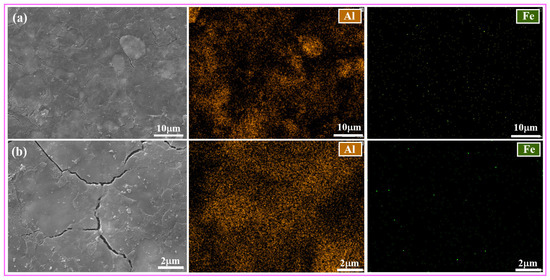
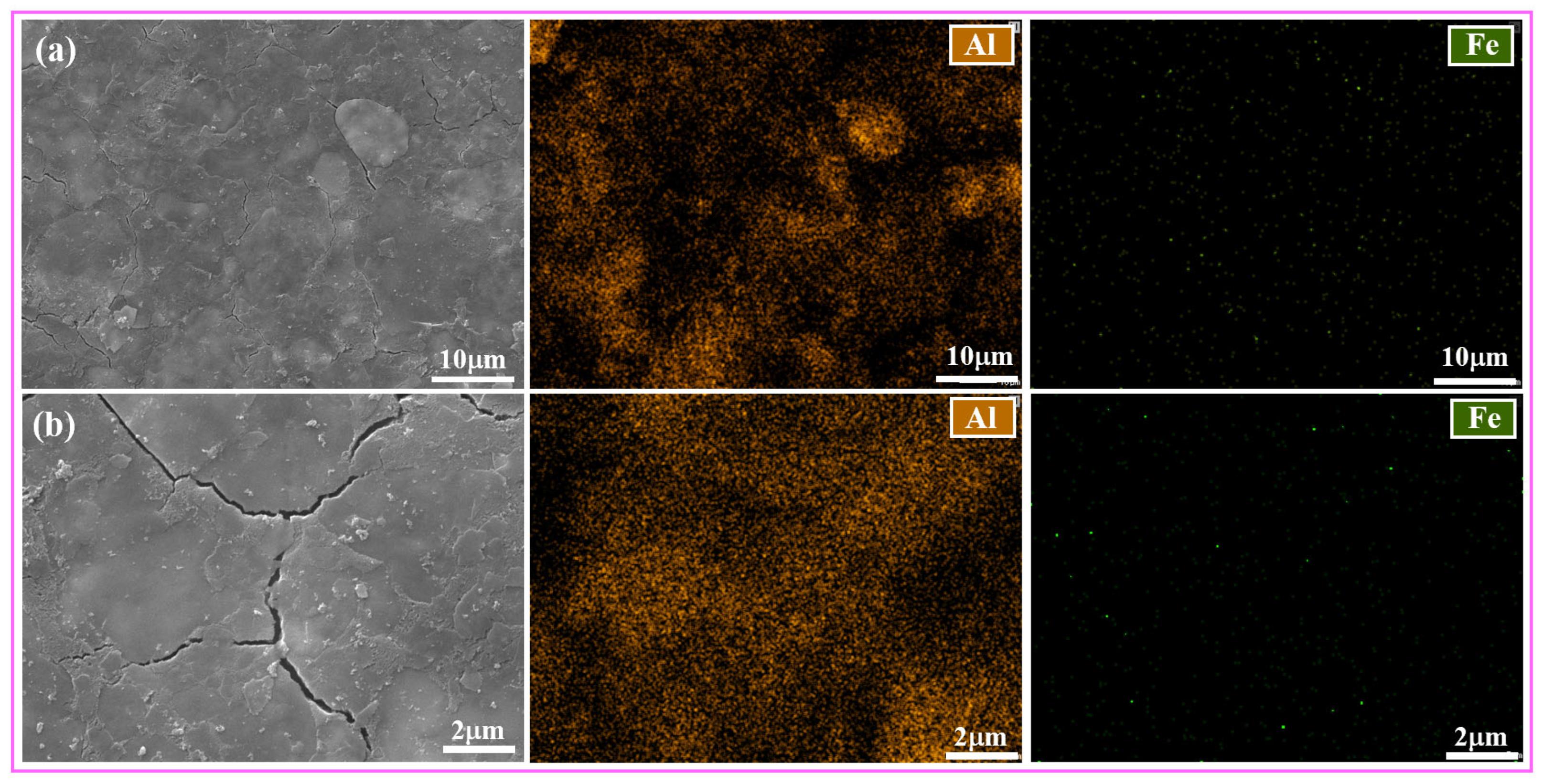
Figure 1 presents the surface SEM morphology and corresponding EDS elemental analysis of the HDA coating. As shown in Figure 1a, the coating surface appears smooth without significant protrusions, depressions, or large-area spallation defects. Only minor fine textures and scattered blocky structures are observed. The corresponding elemental mapping reveals a homogeneous and dense distribution of Al across the surface, whereas the Fe signal is exceptionally weak and appears only as isolated bright spots. This indicates that the aluminum coating provides uniform surface coverage and maintains good integrity.
Figure 1.
Surface morphology and corresponding EDS of the HDA coating: (a) SEM and (b) magnified image of a local area.
At higher magnification (Figure 1b), fine cracks are observed on the coating surface. EDS analysis of this area confirms that the regions surrounding these cracks remain uniformly covered by Al, with no significant enrichment or exposure of Fe detected, suggesting that these surface cracks did not lead to large-scale exposure of the steel substrate.
The formation of these cracks is primarily attributed to the thermal stresses generated during the hot-dipping and subsequent cooling stages. The significant difference in the coefficients of thermal expansion (CTE) between aluminum and the AISI 1045 steel substrate induces interfacial thermal stress due to the differential contraction upon cooling from the dipping temperature to room temperature [31]. Additionally, the solidification shrinkage of the molten aluminum and the transformation stresses associated with the formation of Fe-Al intermetallic compounds during the subsequent diffusion treatment contribute to a localized stress concentration [16]. The combined effect of these tensile stresses ultimately promotes the formation of fine micro-cracks. However, since these cracks are non-penetrating and discontinuously distributed, their detrimental impact on the overall barrier and protective capability of the coating is considered limited.
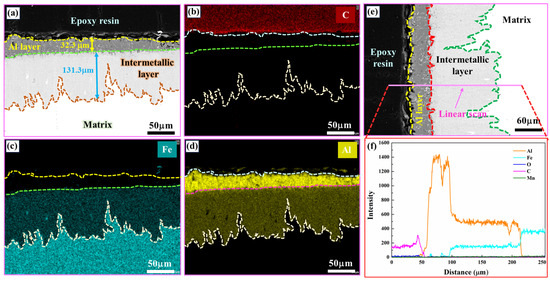
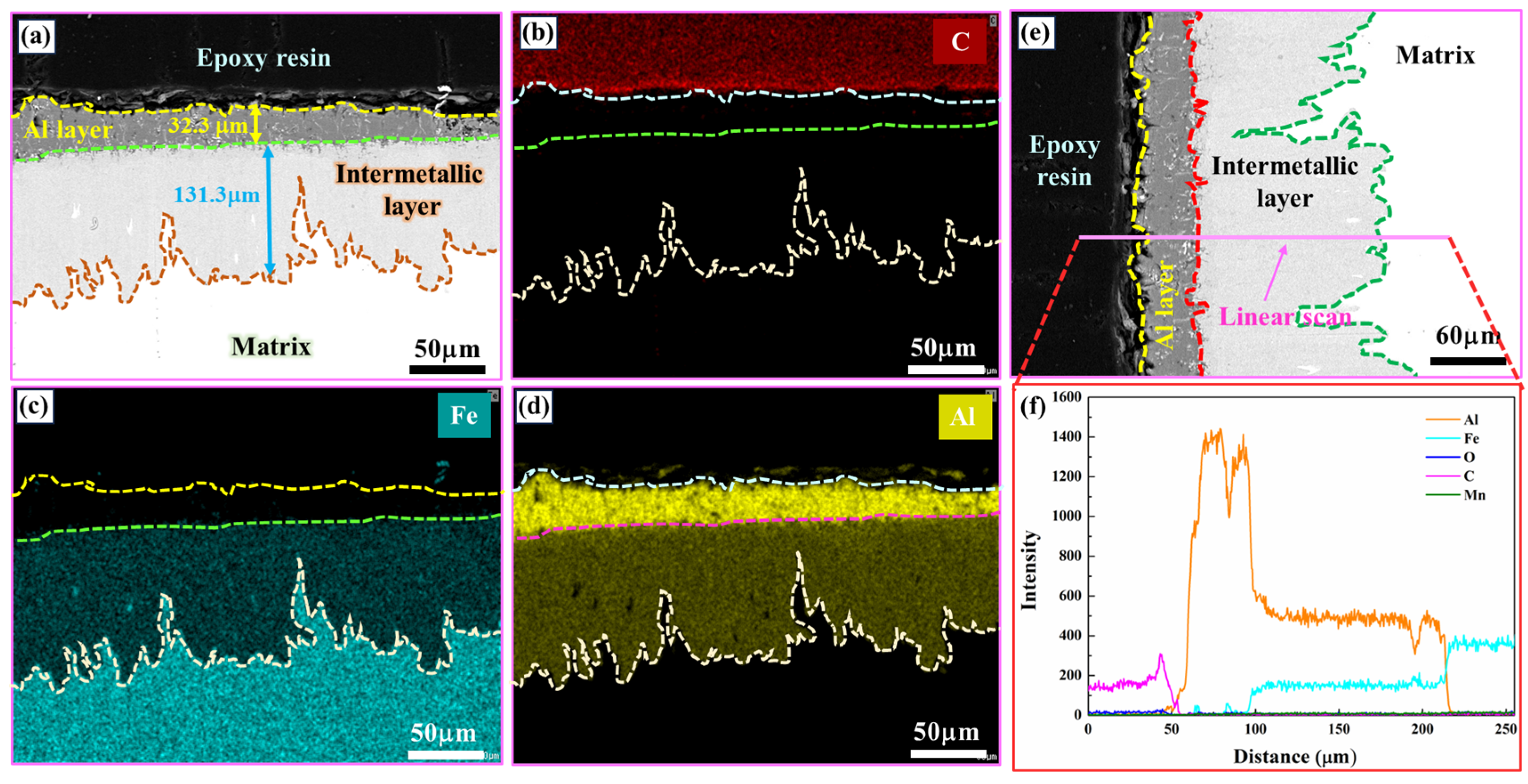
As illustrated in Figure 2a and the associated elemental maps, the coating structure can be distinctly divided into three regions: the steel substrate at the bottom, an intermediate alloy layer, and the top pure aluminum layer. The measured thicknesses of the alloy layer and the aluminum overlay are (21.9–44.6) μm and (49.7–149.6) μm, respectively. Notably, the outer aluminum layer exhibits excellent thickness uniformity without obvious local thinning or thickening.
Figure 2.
SEM morphology and elemental analysis of the hot-dip Al coating cross-section: (a) SEM image; (b–d) EDS elemental analysis; (e,f) cross-sectional line scan and corresponding element distribution.
Within the intermediate layer, a gradient in the concentrations of Al and Fe elements is observed. This compositional transition results from interdiffusion between the coating and the substrate during the hot-dipping process at 760 °C. Specifically, Al atoms diffused inward from the overlay towards the substrate, while Fe atoms migrated outward from the substrate. This mutual diffusion facilitated a metallurgical reaction, leading to the formation of an intermetallic compound (IMC) layer with a compositionally graded profile [32].
Furthermore, the interface between the IMC layer and the steel substrate exhibits a distinct saw-toothed or irregular morphology (Figure 2a,e). This characteristic interfacial roughening originates from the preferential growth of intermetallic compounds and dynamic reactions at the interface during diffusion. Nucleated at the interface, the Fe-Al intermetallic compounds preferentially grow along substrate grain boundaries or defect sites. Concurrently, the interdiffusion rates of Al and Fe atoms vary with local temperature and crystal orientation, causing continuous fluctuations in the interfacial reaction front. These factors collectively contribute to the development of the undulating interface. For such diffusion-based coatings, this “saw-toothed” interface is known to enhance mechanical interlocking, thereby improving the coating adhesion strength [33].
3.2. Electrochemical Performance
Building upon the microstructural analysis, this section evaluates the electrochemical performance of the HDA coating, with a focus on how its unique architecture dictates corrosion behavior. The integrity of the outer pure aluminum layer and the barrier function of the intermediate Fe-Al intermetallic layer are critical to the coating’s ability to form a stable passive film and resist chloride-induced breakdown.
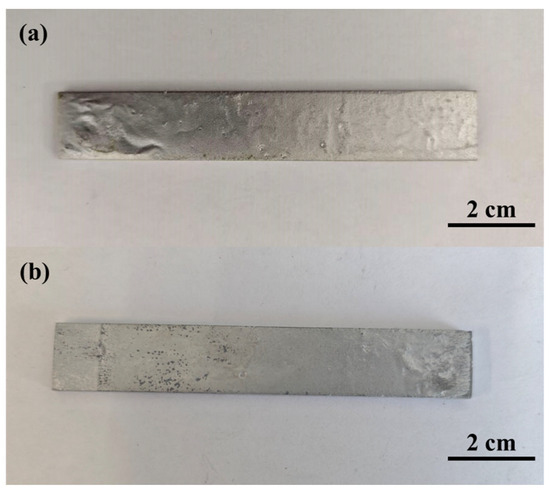
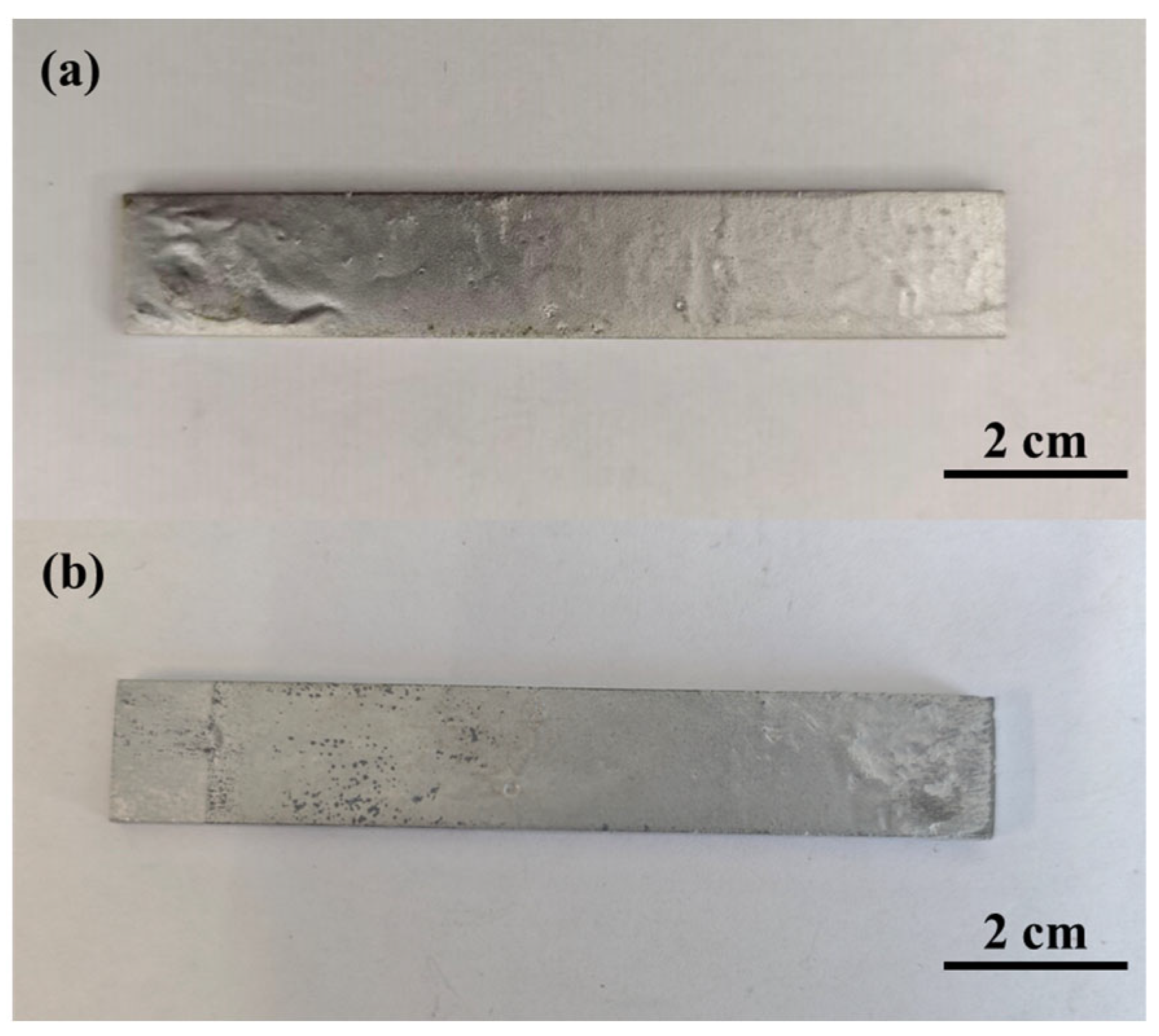
Figure 3 illustrates the macroscopic surface morphology of the HDA coating before and after potentiostatic polarization. As observed in Figure 3a, the as-prepared HDA coating exhibits a uniform silver-gray metallic luster, free of noticeable scratches, blisters, or exposed substrate areas. Only minor textures formed during the immersion process are present, indicating an overall smooth and continuous surface. In contrast, a significant transformation in surface morphology is evident after potentiostatic polarization (Figure 3b). Irregular dark gray corrosion patches and localized brownish rust stains appear, with the corrosion products distributed in a spot-like or patchy pattern. Notably, corrosion is more concentrated at the coating edges and pre-existing micro-defects.
Figure 3.
Macroscopic characterization of the HDA coating (a) before and (b) after potentiostatic polarization.
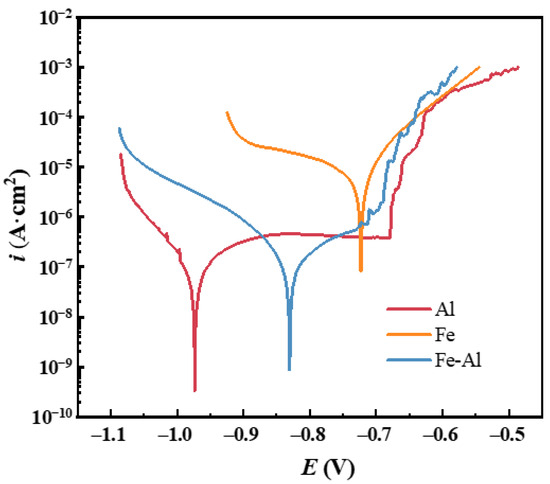
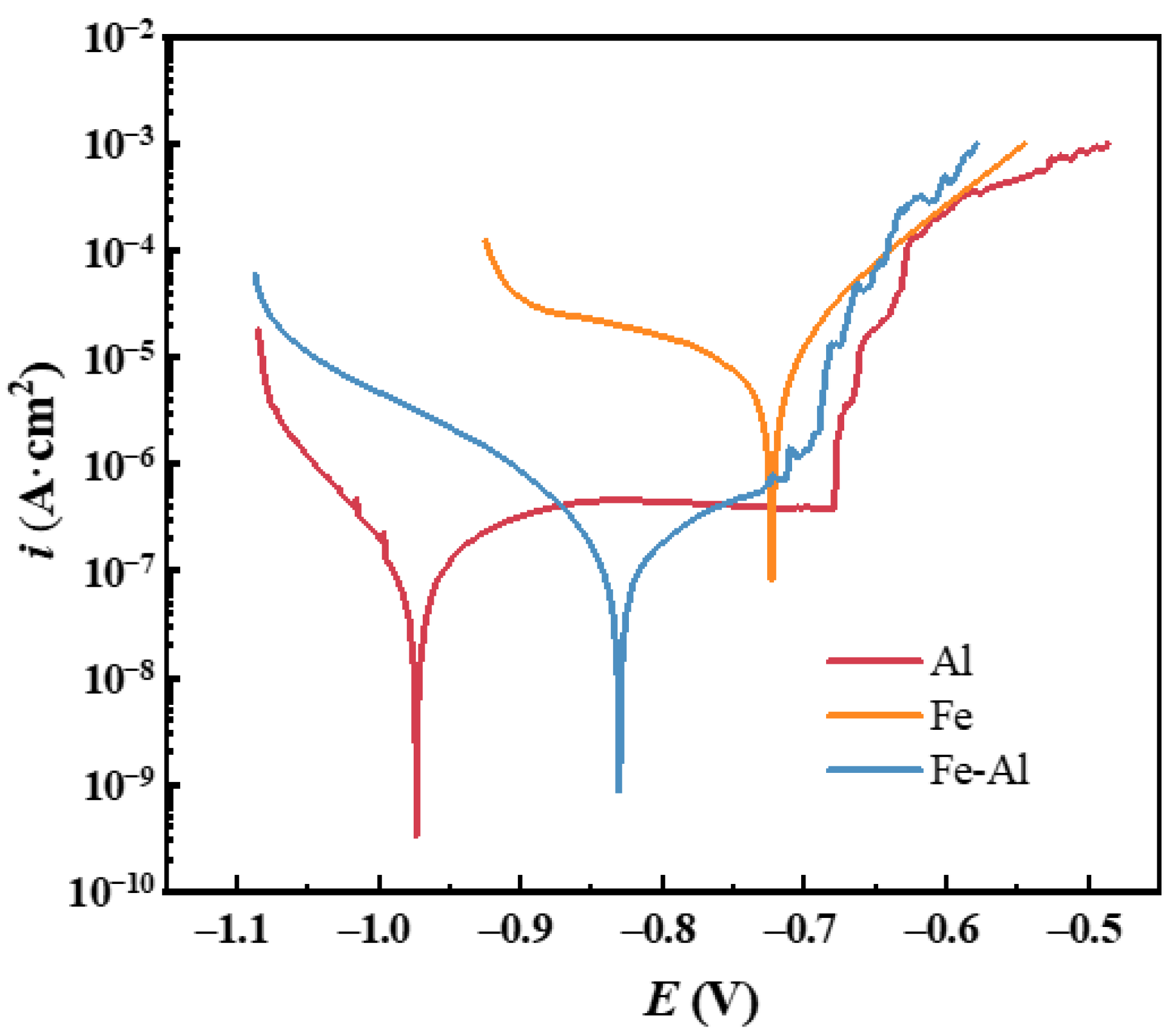
Figure 4 presents the potentiodynamic polarization curves of the hot-dip Al coating, the Fe-Al interdiffusion layer, and the bare substrate, revealing distinct corrosion behaviors. The HDA coating exhibits typical passivation characteristics and the lowest corrosion current density, signifying superior corrosion resistance. This is attributed to the rapid formation of a dense and stable Al2O3 passive film upon exposure to the 3.5 wt.% NaCl solution. Electrochemical parameters were calculated, as shown in Table 1, illustrating that both the surface Al layer and the Fe-Al interlayer have relatively low corrosion current densities, indicating the better protective effects for the substrate. This film effectively acts as a barrier, isolating the corrosive medium from the Fe-based substrate and thereby suppressing the anodic dissolution reaction [34].
Figure 4.
Potentiodynamic polarization curves of the hot-dip Al coating, the Fe-Al interdiffusion layer, and the substrate.
Table 1.
Electrochemical parameters fitted in Figure 4.
However, as the potential increases further, the polarization curve of the HDA coating begins to converge towards that of the bare substrate. The current density rises rapidly with increasing potential, eventually reaching values comparable to the substrate in the high-potential region. This indicates the breakdown of the passive film due to the overpotential, leading to a loss of protective capability. Consequently, the underlying substrate or the Fe-Al layer becomes exposed and participates actively in the corrosion reaction, resulting in a substantial increase in the corrosion rate.
The corrosion potential of the Fe-Al layer lies between that of the HDA coating and the substrate. Its polarization curve lacks a distinct passive plateau, with the current density increasing continuously with potential, albeit at a slightly slower rate than that of the substrate. This suggests that Cl− can damage the oxide film through competitive adsorption, causing pitting corrosion. The passivation potential range of the Fe-Al alloy layer is lower than that of the pure aluminum layer. This is mainly because the passivation film formed on its surface is mainly composed of aluminum oxide but contains iron elements [35]. The mixed oxide film is thermodynamically less stable than the dense Al2O3 film on the surface of pure aluminum, thus exhibiting a lower passivation potential range in electrochemistry. The current density of the bare substrate increases rapidly with potential, confirming that the unprotected AISI 1045 steel is highly susceptible to continuous dissolution in the corrosive medium, representing the poorest corrosion resistance [34].
3.3. EIS Analysis
Complementing the potentiodynamic polarization results, this section employs EIS to probe the charge-transfer and interfacial processes that underpin the coating’s corrosion resistance. The analysis focuses on how the structural integrity of the HDA coating, particularly in the presence of chloride ions, governs its electrochemical response at the interface.
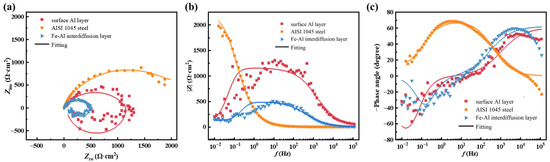
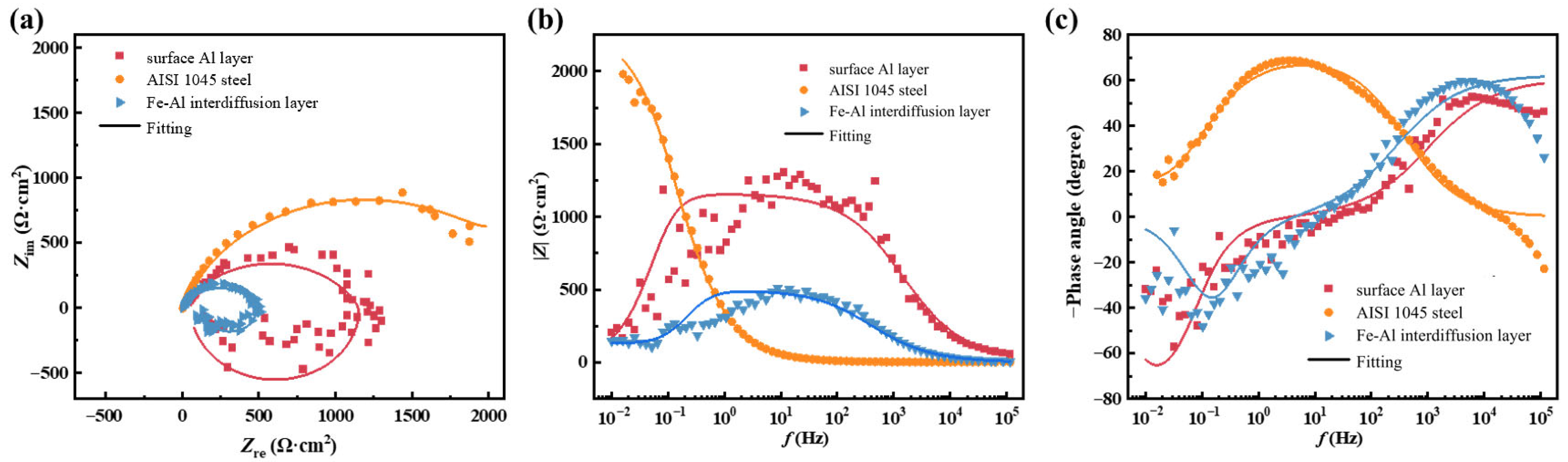
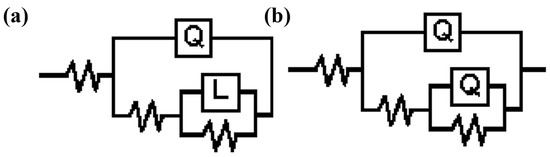
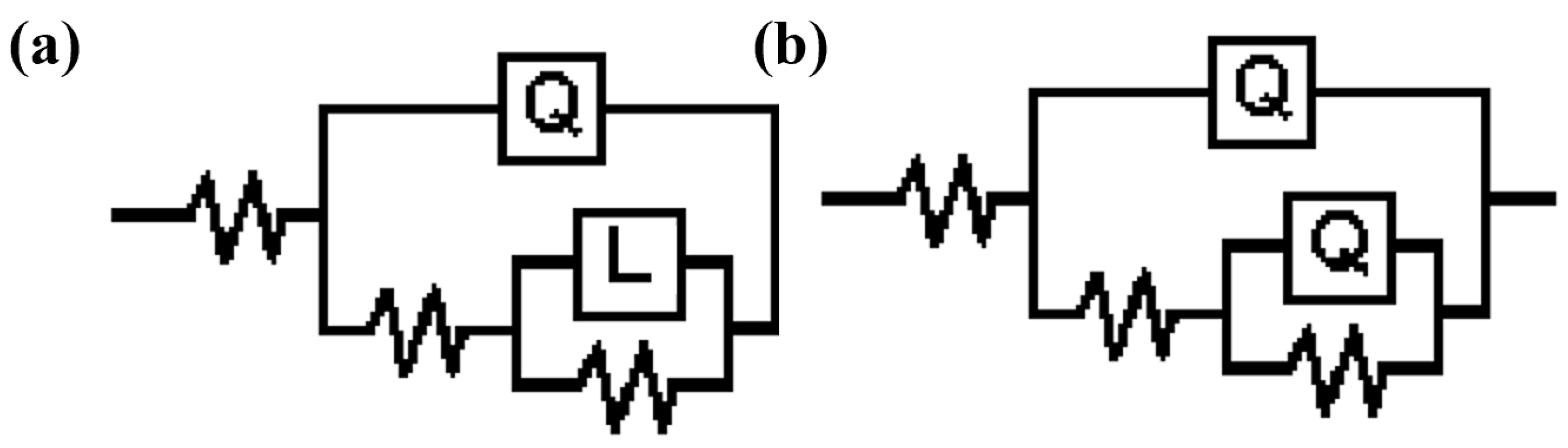
Figure 5 presents the EIS results for the HDA coating, the Fe-Al interdiffusion layer, and the bare substrate, with the corresponding equivalent electrical circuit model shown in Figure 6 and the fitted parameters listed in Table 2.
Figure 5.
Electrochemical impedance test diagrams of the surface Al layer, Fe-Al interdiffusion layer and substrate: (a) Nyquist diagram, (b) Bode amplitude diagram, (c) Bode phase angle diagram.
Figure 6.
Electrochemical fitting circuit diagram: (a) fitting circuit of the heat-treated Al coating and the Fe-Al interdiffusion layer, (b) fitting circuit of the substrate.
Table 2.
Fitted electrochemical parameters.
As observed in the Nyquist plots (Figure 5a), all three samples exhibit a characteristic single capacitive loop. The diameter of these capacitive arcs directly correlates with the charge transfer resistance at the electrode interface. The HDA coating demonstrates the larger capacitive arc diameter compared to the interdiffusion layer, indicating the highest charge transfer resistance. This is attributed to the presence of a dense and continuous Al2O3 passive film, which effectively suppresses charge transfer and acts as a robust barrier against the penetration of corrosive species [15]. This interpretation is consistent with the high charge-transfer resistance (Rct) value obtained from the EIS fitting (Table 2). However, the capacitive arc radius of the HDA coating, while large, does not reach an ideal magnitude. This can be primarily ascribed to the presence of micro-cracks within the passive film (as identified in the microstructural analysis) [18], which can provide pathways for aggressive ions like Cl− to penetrate and initiate localized corrosion at the underlying aluminum layer.
The Fe-Al interdiffusion layer exhibits the smallest capacitive arc diameter, suggesting a lower charge transfer resistance compared to the HDA coating. Although the Fe-Al alloy phases provide a certain barrier effect, residual aluminum may form a galvanic coupling with the iron-rich substrate, establishing a large cathode-to-small anode area. This galvanic interaction can accelerate localized corrosion, thereby reducing the overall charge transfer resistance.
Furthermore, the EIS curves for both the HDA coating and the Fe-Al layer exhibit inductive loops. This feature is related to dynamic relaxation processes during corrosion [36]. For the HDA coating, Cl− ions can adsorb at inherent micro-defects in the passive film, triggering a dynamic equilibrium between localized dissolution and re-passivation [37]. For the Fe-Al layer, an unstable adsorption layer formed due to the selective dissolution of Fe or Al can lead to a phase lag between the current and voltage signals [38].
The Bode phase angle plot (Figure 5c) provides further insight. The HDA coating displays a higher phase angle peak over a broader frequency range (100 to 102 Hz), which is characteristic of a protective barrier layer that effectively blocks the contact between the corrosive medium and the substrate [39]. In contrast, the Fe-Al layer shows a narrower and lower phase angle peak, suggesting a weaker barrier effect that allows partial penetration of corrosive media through grain boundaries or defects [40].
3.4. Wear Resistance Evaluation
Having established the coating’s electrochemical performance, this section transitions to evaluating its tribological properties. The wear resistance of the HDA coating is intrinsically linked to its functionally graded microstructure, where the soft outer Al layer and the underlying hard Fe-Al intermetallic compound layer play distinct and synergistic roles in different stages of the wear process.
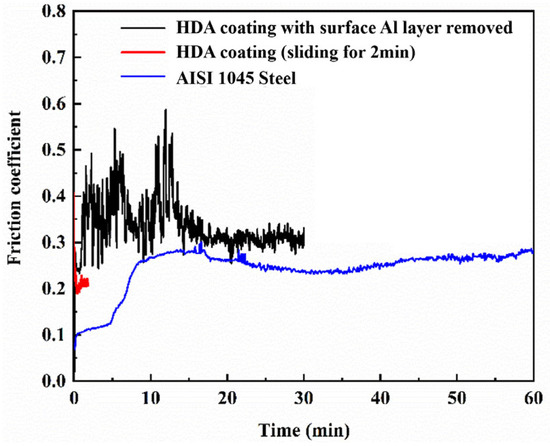
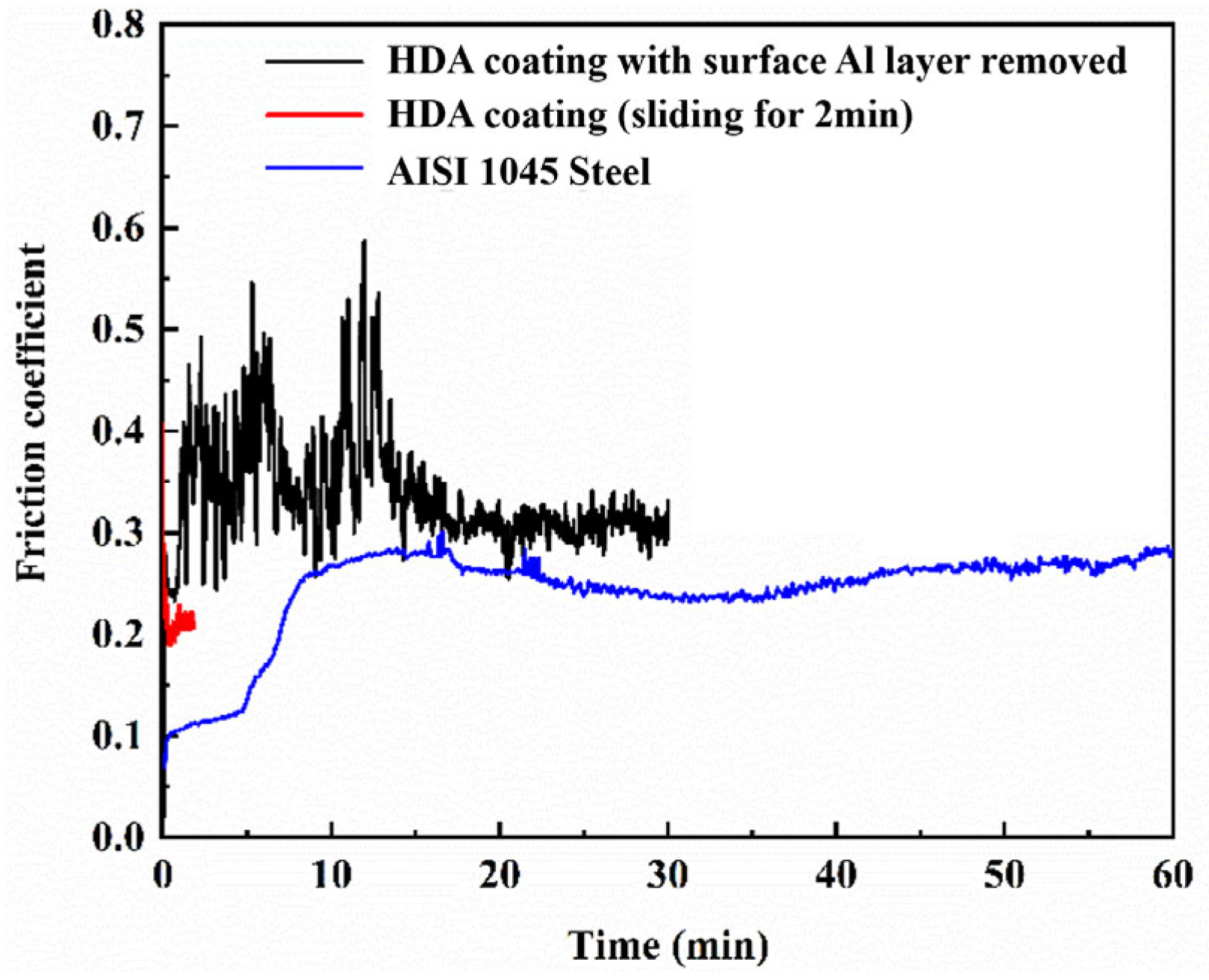
Figure 7 illustrates the friction coefficient curves for the bare substrate and the HDA coating under different wear durations. The friction test consists of three parts, a 2 min test on the base material and a 60 min test, as well as a 30 min test on the material after the surface aluminum layer has been removed. The average friction coefficient after 60 min of testing was approximately 0.34 for the bare substrate and 0.24 for the HDA-coated sample.
Figure 7.
Friction coefficient curves of the substrate and the hot-dip Al coating.
As shown in the inset of Figure 7, the HDA coating maintained a relatively low and stable friction coefficient (averaging around 0.24) during the initial stage of the wear test. However, a sharp increase in the friction coefficient was observed after approximately 2 min, indicating that the aluminized coating had been worn through and the underlying substrate began to participate directly in the sliding contact.
A comparison of the friction curves between the uncoated and coated specimens reveals that the curve for the HDA-coated sample exhibits superior stability overall. This suggests that even after the coating was penetrated within a short period, it continued to function effectively as a solid lubricant throughout the remainder of the test. The presence of the coating helped to improve the tribological conditions at the contact interface, thereby mitigating the overall severity of the wear process.
The Vickers hardness profile across the cross-section of the HDA coating reveals a characteristic three-layer structure with significant variations, which is a direct consequence of the interdiffusion and phase formation during the process. The outermost pure aluminum layer exhibits the lowest hardness (103 ± 23 HV), which is consistent with the intrinsic softness of face-centered cubic (FCC) aluminum. This layer primarily provides initial corrosion resistance and acts as a reservoir for the subsequent formation of the alloy layer. The steel substrate shows a typical hardness of (151 ± 21) HV, serving as a reliable baseline for the untreated material. The most remarkable feature is the intermediate Fe-Al alloy layer, which demonstrates a peak hardness of approximately (772 ± 15) HV. This value is about five times higher than that of the substrate. This extreme hardening is attributed to the formation of hard and brittle iron-aluminide intermetallic compounds (such as Fe2Al5, FeAl3) during the hot-dipping process. The rapid interdiffusion of Fe and Al atoms at the interface leads to a microstructure dominated by intermetallics, which possess ordered crystal structures and strong covalent bonding, thereby resulting in high hardness but limited ductility.
This sharp hardness gradient from the soft Al top layer, through the extremely hard intermetallic layer, to the tough steel substrate creates a functionally graded coating. In service, the hard Fe-Al layer effectively resists abrasive wear and plastic deformation, while the underlying substrate absorbs mechanical energy and prevents catastrophic brittle fracture. However, the large mismatch in mechanical properties, particularly between the hard intermetallic layer and the substrate, can be a potential source of crack initiation under high shear or impact stress, which is a critical consideration for applications involving dynamic loads.
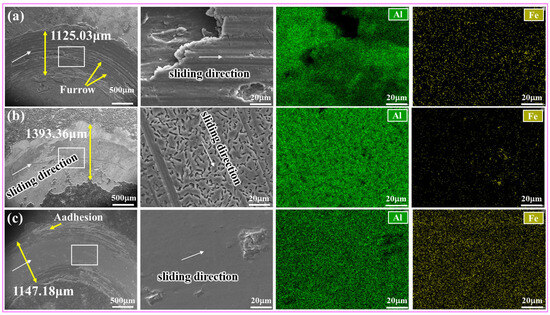
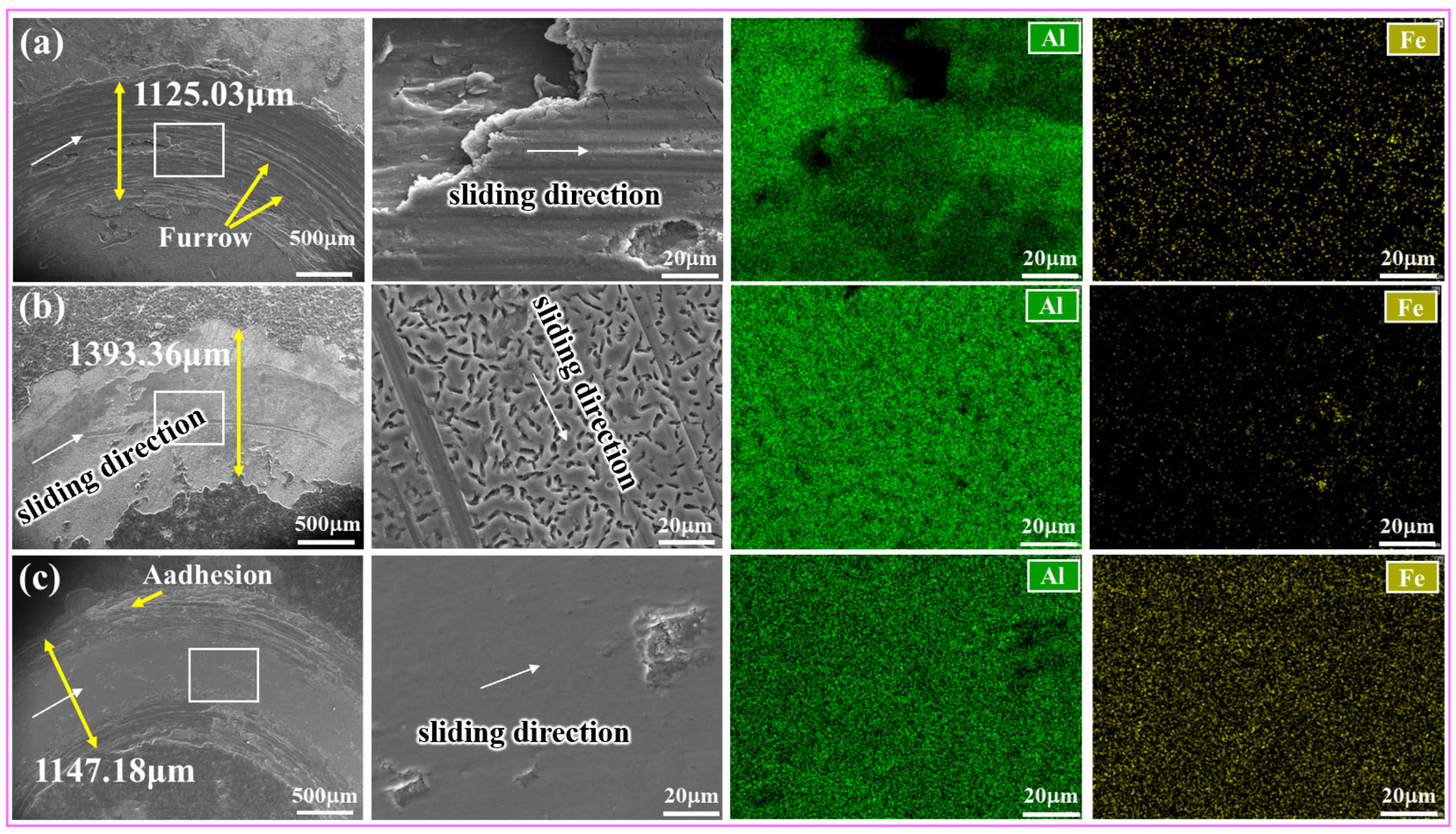
To further investigate the wear mechanisms, SEM observations were conducted on the wear scars of both the bare substrate (with the Al coating removed) and the HDA coating after testing, as shown in Figure 8.
Figure 8.
SEM images of the wear marks on the substrate and the hot-dip Al coating: (a) after removing the Al coating—30 min; (b) after hot-dip Al coating—2 min; (c) after hot-dip Al coating—60 min.
For the substrate with the alloy layer exposed, the wear scar on the substrate with the remaining alloy layer (Figure 8a) exhibited a width of approximately 1125.03 μm. The scar surface was covered with distinct plowing grooves, indicating that the primary wear mechanism for the substrate was abrasive wear type. Elemental analysis detected the presence of both Al and Fe from the alloy layer in this region.
After the HDA coating was subjected to wear for 2 min (Figure 8b), the wear scar width measured about 1393.36 μm. The corresponding magnified image revealed a porous structure on the worn surface, which is a typical morphological feature of the HDA coating, suggesting that the Al overlay had not been completely penetrated. This was further confirmed by elemental analysis, which showed a high concentration of Al and only a minor amount of Fe on the worn surface, verifying that the wear was confined within the Al coating layer during this short-term test.
In contrast, after 60 min of continuous wear (Figure 8c), the HDA coating developed a wear scar with a reduced width of 1147.18 μm compared to both the bare substrate and the short-term wear case. Furthermore, adhered wear debris was observed at the edges of the scar, suggesting that the dominant wear mechanism shifted to adhesive wear. The corresponding magnified image showed a relatively smooth worn surface without significant plowing grooves or debris accumulation. The simultaneous detection of Al and Fe elements on this surface confirmed that the wear had progressed into the underlying alloy layer.
Despite the coating being worn through, its presence effectively reduced overall wear, which was attributed to the relatively low hardness of the aluminum coating, allowing it to undergo plastic deformation easily during friction. This deformation leads to the formation of a shear-induced film that acts as a solid lubricant, reducing direct contact between the sliding counterparts. This lubricating effect demonstrates considerable persistence, contributing to sustained wear protection [41].
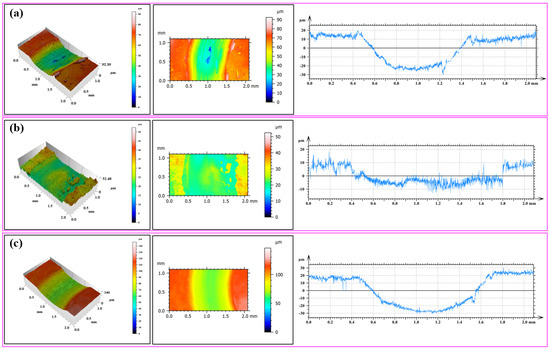
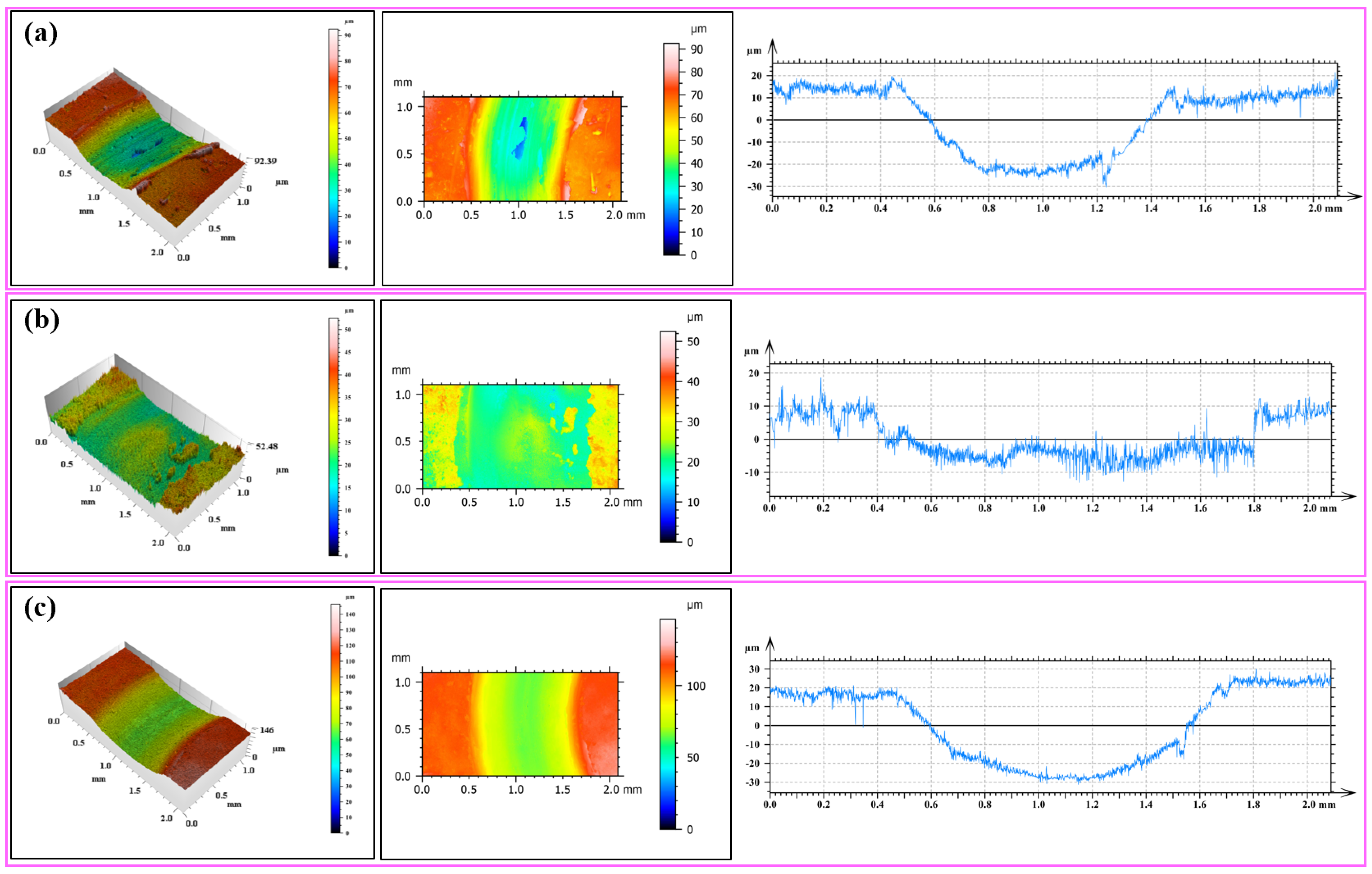
To systematically evaluate the improvement in wear resistance afforded by the coating, the three-dimensional morphology of the wear scars was characterized, and the corresponding wear rates were calculated based on this data. Figure 9 presents the 3D wear morphologies of the substrate and the HDA coating after different wear durations.
Figure 9.
Three-dimensional morphology images of the matrix and the hot-dip Al coating wear marks: (a) after removing the Al coating—30 min; (b) after hot-dip Al coating—2 min; (c) after hot-dip Al coating—60 min.
As shown in Figure 9a, after the removal of the HDA coating, the AISI 1045 substrate exhibited a wear scar with a maximum depth of approximately 38 μm and a width of about 1030 μm. The wear rate calculated using Equation (1) was 1.12 × 10⁻³ mm3/N·m and 3.47 × 10⁻² mm3/N·m for the HDA coating. Figure 9b,c show the morphologies of the HDA coating after 2 min and 60 min of wear, respectively. After 2 min, the scar depth and width were 15 μm and 1400 μm, respectively. After 60 min, the depth increased to 50 μm while the width was 1240 μm; these width measurements are consistent with the observations from Figure 7.
A comparison of the wear rates reveals that the HDA coating itself, tested for 2 min, exhibited a higher wear rate than the uncoated substrate. This is primarily attributed to the relatively low hardness of the aluminum coating, resulting in its inferior intrinsic wear resistance. However, a crucial finding is that after the prolonged 60 min test, the overall wear rate of the coated sample was nearly one order of magnitude lower than that of the uncoated substrate, despite the coating being penetrated. This significant reduction in wear is due to the soft nature of the aluminum coating, which undergoes plastic deformation during the friction process, forming a lubricating tribolayer at the interface. This layer effectively isolates the substrate from direct contact with the counterface, thereby substantially mitigating wear of the underlying steel [42].
4. Conclusions
In this study, an HDA coating was successfully fabricated on AISI 1045 steel. The microstructure, corrosion resistance, and tribological properties of the coating were systematically investigated using scanning electron microscopy (SEM), electrochemical measurements, and wear tests. The main conclusions are summarized as follows:
- (1)
- The coating exhibits a triple-layer structure. The characteristic saw-toothed interface of the Fe-Al intermetallic layer provides strong mechanical adhesion. However, the high hardness (~772 HV) of this layer is concomitant with inherent brittleness, which may lead to the formation of micro-cracks under severe thermal cycling or impact loads, posing a potential risk for coating integrity in demanding applications.
- (2)
- The coating shows effective passivation in 3.5 wt.% NaCl solution. Nevertheless, this protection is potential-dependent. The presence of aggressive chloride ions increases the risk of localized passivation breakdown, leading to pitting corrosion, especially at defects or thin regions of the outer Al layer. Long-term reliability in halide-rich environments requires further evaluation.
- (3)
- The coating reduces the wear rate by nearly an order of magnitude. The soft outer Al layer acts as a solid lubricant and sacrificial layer in short-term tests. For long-term protection, optimizing the dipping temperature and time is critical to balance the thickness of the ductile outer layer and the brittle intermetallic layer, thereby maximizing the coating’s durability under sustained friction.
Future work may focus on (i) process optimization to tailor the intermetallic layer’s toughness and crack resistance; (ii) performance evaluation under real-world corrosive wear conditions; and (iii) development of composite coatings by incorporating secondary elements or particles into the Al bath to further improve the coating’s comprehensive properties.
Author Contributions
Conceptualization, H.Y. and X.Z.; methodology, J.W.; software, H.M.; validation, H.M., C.Y. and J.Z.; formal analysis, S.G. and J.Z.; investigation, S.G.; resources, X.Z. and C.Y.; data curation, S.G. and H.M.; writing—original draft preparation, J.W.; writing—review and editing, S.G.; visualization, C.Y.; supervision, X.Z.; project administration, H.Y.; funding acquisition, H.Y. and X.Z. All authors have read and agreed to the published version of the manuscript.
Funding
This work was supported by the Open Research Fund of Key Laboratory of Ministry Education (NEU-ATM-2024-3), Heilongjiang Provincial Natural Science Foundation of China (LH2024E116), Longjiang Project Young Goose Innovation Team Support Program (2024CYQN01), and Fundamental Scientific Research Funds for Heilongjiang Provincial Universities (2022GJ07) and CEPREI special fund (No. 24Z07).
Institutional Review Board Statement
Not applicable.
Informed Consent Statement
Not applicable.
Data Availability Statement
The data can be provided upon request.
Conflicts of Interest
The authors declare no conflicts of interest.
References
- Macdonald, D.D.; Engelhardt, G.R. A critical review of radiolysis issues in water-cooled fission and fusion reactors: Part II, Prediction of corrosion damage in operating reactors. Corros. Mater. Degrad. 2022, 3, 694–758. [Google Scholar] [CrossRef] [Scilit]
- Dhavale, A.A.; Lele, M.M. Numerical investigations on the impact of metallic foam configurations on heat transfer in double tube heat exchanger, A parametric approach. Numer. Heat Transf. Part A Appl. 2025, 16, 5682–5734. [Google Scholar] [CrossRef] [Scilit]
- Adama, K.K.; Ukhurebor, K.E.; Aigbe, U.O.; Hossain, I. Implications of waste cooking oil biodiesel on carbon steel alloy in automobiles: Corrosion degradation. Int. J. Thermofluids 2025, 26, 101143. [Google Scholar] [CrossRef] [Scilit]
- He, H.; Liu, Z.; Wang, P.; Duan, S.; Zhao, W.; Fu, A. Hot-dip aluminizing of stainless steel and investigation of interfacial intermetallics. J. Mater. Res. Technol. 2025, 36, 7148–7157. [Google Scholar] [CrossRef] [Scilit]
- Huang, M.; Zhang, M.X.; Wang, Y.; Zhang, P.; Xu, A.-J. Electrochemical behavior of X80 pipeline steel with alumina coating. Surf. Eng. 2015, 31, 295–301. [Google Scholar] [CrossRef] [Scilit]
- Yu, Y.; Shi, Q.; Qiao, D.; Du, X.; Zhao, X.; Wang, J.; Zhang, G.; Peng, P. Effect of steel substrate roughness on microstructure and properties of hot-dip Zn-Al-Mg coating. J. Mater. Res. Technol. 2025, 39, 1877–1893. [Google Scholar] [CrossRef] [Scilit]
- He, C.; Hu, X.; Li, S.; He, J.; Liu, Z.; Fan, X.; Deng, C. Development of durable and multifunctional superhydrophobic ceramic/fluoropolymer coatings by one-step thermal spraying methodology. Surf. Interfaces 2025, 74, 107699. [Google Scholar] [CrossRef] [Scilit]
- Li, D.; Wang, Q.; Li, G.; Liu, T.; He, J. Evolution of coating layers during pack alumetizing process induced by high magnetic fields. Mater. Lett. 2009, 63, 890–892. [Google Scholar] [CrossRef] [Scilit]
- Dangi, S.; Chaudhary, S.; Walia, R.S.; Karloopia, J.; Katiyar, J.K. Tribo-corrosion, mechanical and morphological performance of multilayer ceramic deposited on cast iron via HVOF thermal spray. Tribol. Int. 2025, 212, 110999. [Google Scholar] [CrossRef] [Scilit]
- Deloffre, P.; Balbaud-Célérier, F.; Terlain, A. Corrosion behaviour of aluminized martensitic and austenitic steels in liquid Pb-Bi. J. Nucl. Mater. 2004, 335, 180–184. [Google Scholar] [CrossRef] [Scilit]
- Gurevich, L.M.; Pronichev, D.V.; Slautin, O.V.; Tikhaeva, V.V. Corrosion resistance of Fe-Cr-Al intermetallic coatings obtained by aluminizing. Metals 2023, 13, 1883. [Google Scholar] [CrossRef] [Scilit]
- Fu, T.; Zhang, Y.; Han, Z.; Chen, L.; Zhu, J.; Peng, S. Morphology, phase composition, surface roughness evolution and growth mechanism of hot-dip aluminum coating on Mo substrate. J. Mater. Res. Technol. 2024, 28, 1405–1414. [Google Scholar] [CrossRef] [Scilit]
- Wang, D. Corrosion behavior of chromized and/or aluminized 214Cr-1Mo steel in medium-BTU coal gasifier environments. Surf. Coat. Technol. 1988, 36, 49–60. [Google Scholar] [CrossRef] [Scilit]
- Dong, J.; Li, X.; Dai, S.; Chen, R.; Hua, Y.; Cai, J.; Lu, J. Effect of aluminizing and laser shock peening on the high-temperature oxidation behavior of NiCrAlY coating. Surf. Coat. Technol. 2025, 34, 132835. [Google Scholar] [CrossRef] [Scilit]
- Khazaal, S.H.; Makki, H.F. Comprehensive Review on Carbon Steels Corrosion in Chloride-Rich Media. J. Chem. Pet. Eng. 2025, 59, 357–385. [Google Scholar]
- Zhao, J.; Yang, G.; Zhang, Y.; Zhang, S.; Zhang, P. A simple preparation of HDA-CuS nanoparticles and their tribological properties as a water-based lubrication additive. Tribol. Lett. 2019, 67, 88. [Google Scholar] [CrossRef] [Scilit]
- Zhang, X.; Liu, B.; Hu, Q.; Wang, J. Interaction of the periodic layered structure formed on the hot-dip aluminized Fe-Cr-B cast steel with molten MoCl5 salt. Mater. Today Commun. 2024, 41, 110658. [Google Scholar] [CrossRef] [Scilit]
- Gurevich, L.M.; Pronichev, D.V.; Kulevich, V.P.; Slautin, O.V.; Naumenko, V.A.; Kharlamov, V.O. Investigation of aluminized intermetallic coatings on Fe-Cr-Al system alloy corrosion resistance. Metallurgist 2023, 67, 70–78. [Google Scholar] [CrossRef] [Scilit]
- Kulevich, V.P.; Bogdanov, A.I.; Shmorgun, V.G. Formation of a heat-resistant aluminide coating on CrNi32Ti alloy by hot-dip aluminizing. Metallurgist 2025, 69, 706–712. [Google Scholar] [CrossRef] [Scilit]
- Zhang, X.; Fu, R.; Liu, B.; Ling, Z. Growth of various in whiskers on Cr-Al-B MAB phases formed during hot-dip aluminizing and subsequent thermal diffusion treatment of Fe-Cr-B cast steel. Intermetallics 2025, 185, 108891. [Google Scholar] [CrossRef] [Scilit]
- Ogawa, K.; Ito, K.; Ichimura, K.; Ichikawa, Y.; Ohno, S.; Onda, N. Characterization of low-pressure cold-sprayed aluminum coatings. J. Therm. Spray Technol. 2008, 17, 728–735. [Google Scholar] [CrossRef] [Scilit]
- Rodrigues, A.V.; Ramirez, A.F.; Fogagnolo, J.B.; Wolf, W. Laser-clad Al-Matrix coatings reinforced with icosahedral quasicrystals obtained using Al-Cu-Fe-Cr decagonal quasicrystalline powders on Al substrates. J. Mater. Sci. 2025, 60, 6369–6386. [Google Scholar] [CrossRef] [Scilit]
- Zhang, X.; Liu, B.; Wang, J.; Zhou, T. Effect of Bi on microstructure evolution of the Cr-Al-B MAB phase formed during hot-dip aluminizing and subsequent thermal diffusion treatment of Fe-Cr-B cast steel. Intermetallics 2025, 182, 108782. [Google Scholar] [CrossRef] [Scilit]
- Shmorgun, V.G.; Bogdanov, A.I.; Kulevich, V.P. Formation of the Diffusion Coatings Structure on the Surface of the Fe-Cr-Al Alloy during Hot-Dip Aluminizing with Ultrasonic Impact. Metallurgist 2023, 67, 1138–1145. [Google Scholar] [CrossRef] [Scilit]
- Zhang, X.; Zheng, Z.; Hu, Q.; Wen, W.; Ling, Z.; Luo, H. Hot-dip aluminizing of Fe-Cr-B cast steel in Al-Ti-B alloy melt. J. Mater. Res. Technol. 2024, 29, 3891–3897. [Google Scholar] [CrossRef] [Scilit]
- Laleh, M.; Jurak, T.; Gusieva, K.; Williams, J.; Renshaw, W.; Correnti, S.; Hodges, J.; Gazder, A.A. New insights into corrosion initiation and propagation in a hot-dip Al-Zn-Mg-Si alloy coating via multiscale analytical microscopy. Corros. Sci. 2025, 245, 112695. [Google Scholar] [CrossRef] [Scilit]
- Grandhi, S.; Oh, M.-S. Influence of calcium on the morphology and corrosion performance of hot-dip Al-Si coatings. Mater. Lett. 2023, 353, 135278. [Google Scholar] [CrossRef] [Scilit]
- Muhammed, H.J.; Koncz-Horváth, D.; Lassú, G.; Illés, I.B.; Török, T.I. Characterization of Fe-Al intermetallic phases formed during hot-dip Al coating on carbon steel C45. MRS Commun. 2022, 12, 68–73. [Google Scholar] [CrossRef] [Scilit]
- Zhang, C.; Wang, B.; Sun, X.; Liu, L.; Liu, E.; Guo, H.; Yin, L.; Yang, J.; Ma, J. Study of Hot-Dip Aluminium Plating Based on Micro-Morphology and Coating Bond Strength. Coatings 2024, 14, 1257. [Google Scholar] [CrossRef] [Scilit]
- Sarada Sree, A.; Rajendra Kumar, E. Effect of heat treatment and silicon concentration on microstructure and formation of intermetallic phases on hot dip aluminized coating on Indian RAFMS. Fusion Sci. Technol. 2014, 65, 282–291. [Google Scholar] [CrossRef] [Scilit]
- Muhammed, H.J.; Koncz-Horváth, D.; Illés, I.B.; Török, T.I. Surface Protective Layers of Iron Aluminides on Medium Carbon Steel by the Hot-Dip Aluminizing (HDA) Process. Multidiszcip. Tudományok 2021, 11, 68–77. [Google Scholar] [CrossRef] [Scilit]
- Chen, J.; Li, X.; Hua, P.; Wang, C.; Chen, K.; Wu, Y.; Zhou, W. Growth of inter-metallic compound layers on CLAM steel by HDA and preparation of permeation barrier by oxidation. Fusion Eng. Des. 2017, 125, 57–63. [Google Scholar] [CrossRef] [Scilit]
- Su, C.W.; Lee, J.W.; Wang, C.S.; Chao, C.G.; Liu, T.F. The effect of hot-dipped aluminum coatings on Fe-8Al-30Mn-0.8C alloy. Surf. Coat. Technol. 2008, 202, 1847–1852. [Google Scholar] [CrossRef] [Scilit]
- Mahdavi, A.; Medvedovski, E.; Leal Mendoza, G.; McDonald, A. Corrosion resistance of boronized, aluminized, and chromized thermal diffusion-coated steels in simulated high-temperature recovery boiler conditions. Coatings 2018, 8, 257. [Google Scholar] [CrossRef] [Scilit]
- Koo, C.H.; Bai, C.Y.; Luo, Y.J. The structure and high temperature corrosion behavior of pack aluminized coatings on superalloy IN-738LC. Mater. Chem. Phys. 2004, 86, 258–268. [Google Scholar] [CrossRef] [Scilit]
- Wang, Y.; Xiong, J.; Yan, J.; Fan, H.; Wang, J. Oxidation resistance and corrosion behavior of HDA coatings on commercial-purity titanium. Surf. Coat. Technol. 2011, 206, 1277–1282. [Google Scholar] [CrossRef] [Scilit]
- Wang, S.; Xie, N.; Ma, X.; Chen, S.; Liu, H.; Ma, R.; Du, A.; Zhao, X.; Fan, Y. Study on the self-healing behavior and corrosion mechanism of hot-dipping Zn-6Al-3Mg alloy coatings in corrosive environments. Surf. Interfaces 2025, 74, 107714. [Google Scholar] [CrossRef] [Scilit]
- Wang, C.J.; Lee, J.W.; Twu, T.H. Corrosion behaviors of low carbon steel, SUS310 and Fe-Mn-Al alloy with hot-dipped aluminum coatings in NaCl-induced hot corrosion. Surf. Coat. Technol. 2003, 163, 37–43. [Google Scholar] [CrossRef] [Scilit]
- Al-Negheimish, A.; Hussain, R.R.; Alhozaimy, A.; Singh, D.D.N. Corrosion performance of hot-dip galvanized zinc-aluminum coated steel rebars in comparison to the conventional pure zinc coated rebars in concrete environment. Constr. Build. Mater. 2021, 274, 121921. [Google Scholar] [CrossRef] [Scilit]
- Wang, W.; Wang, D.; Han, F. Improvement of corrosion resistance of twinning-induced plasticity steel by hot-dipping aluminum with subsequent thermal diffusion treatment. Mater. Lett. 2019, 248, 60–64. [Google Scholar] [CrossRef] [Scilit]
- Jiang, W.; Fan, Z.; Li, G.; Liu, X.; Liu, F. Effects of hot-dip galvanizing and aluminizing on interfacial microstructures and mechanical properties of aluminum/iron bimetallic composites. J. Alloys Compd. 2016, 688, 742–751. [Google Scholar] [CrossRef] [Scilit]
- Lu, L.; Zhang, J.; Shen, D.; Wu, L.; Jiang, G.; Li, L. TEM analysis and wear resistance of the ceramic coatings on Q235 steel prepared by hybrid method of hot-dipping aluminum and plasma electrolytic oxidation. J. Alloys Compd. 2012, 512, 57–62. [Google Scholar] [CrossRef] [Scilit]

Disclaimer/Publisher’s Note: The statements, opinions and data contained in all publications are solely those of the individual author(s) and contributor(s) and not of MDPI and/or the editor(s). MDPI and/or the editor(s) disclaim responsibility for any injury to people or property resulting from any ideas, methods, instructions or products referred to in the content. |
© 2026 by the authors. Licensee MDPI, Basel, Switzerland. This article is an open access article distributed under the terms and conditions of the Creative Commons Attribution (CC BY) license.