


Abstract
Background/Objectives: Liver abscesses in feedlot cattle remain a significant health and economic concern, highlighting the need to investigate non-antibiotic strategies for controlling associated bacterial pathogens. This study evaluated the in vitro antimicrobial activity of cinnamaldehyde (CIN) and clove bud oil (CBO) against Fusobacterium necrophorum subspecies necrophorum and funduliforme, Trueperella pyogenes, and Salmonella enterica serovar Lubbock. Methods: Antimicrobial activity was assessed using agar-well diffusion, broth microdilution, macro-broth dilution, and in vitro ruminal fermentation assays. Results: In agar-well diffusion assays, CIN produced significantly larger inhibition zones than CBO, with responses varying by bacterial species and treatment volume (p < 0.001). Similarly, CIN exhibited greater inhibitory potency in broth microdilution assays, requiring approximately 2.1-fold lower concentrations than CBO across the four pathogens (p < 0.001), although the difference was not significant for T. pyogenes after adjustment (p = 0.28). In contrast, macro-broth dilution assays demonstrated greater optical-density-based growth inhibition with CBO than CIN (p = 0.0025), particularly at 200 µL. No viable bacteria were recovered from either essential oil blend (EO) treatment at 24 or 48 h, indicating bactericidal activity under the tested conditions. In vitro ruminal fermentation experiments revealed significant interactions among EO treatment, bacterial subspecies, substrate availability, and incubation time (p = 2.89 × 10⁻⁶). At lower treatment volumes (100–200 µL), CBO demonstrated favorable inhibitory activity under lactate-supplemented conditions, whereas CIN generally produced greater suppression at higher treatment volumes (200–400 µL). Notably, CIN reduced F. necrophorum subsp. necrophorum to undetectable levels within 12 h under lactate supplementation, while responses in subsp. funduliforme were more variable. Conclusions: CIN and CBO exhibited distinct assay- and substrate-dependent antimicrobial activities against liver abscess-associated pathogens. These findings support further investigation of their efficacy, stability, safety, and effects on ruminal microbial ecology before their potential application as non-antibiotic interventions in cattle.
1. Introduction
Liver abscesses (LAs) in feedlot cattle, detected at slaughter, represent a major economic loss due to liver and viscera condemnations and reduced growth performance and carcass yield. In the United States, liver abscesses (LAs) have long been recognized as an important cause of liver condemnation, accounting for 17.8% of rejected beef livers in 2016 [1]. More recent data indicate a combined LA prevalence of 17.5% (11.1% minor and 6.4% major) among fed steers and heifers and LA-related liver condemnation in 16.5% of market cows and bulls [2,3]. Severe abscesses may adhere to the body wall, necessitating additional carcass trimming and increasing economic losses, while liver abscesses can also reduce growth performance and carcass yield [4]. Collectively, these production and carcass-related effects contribute to substantial economic losses, estimated at USD 256 million annually (95% credible interval: USD 162–USD 378 million) to the U.S. beef industry [5].
High-concentrate, starch-rich feedlot diets are a major risk factor for LA development, as rapid starch fermentation promotes ruminal and hindgut acidosis and epithelial damage, facilitating bacterial translocation to the liver via the portal vein [6,7]. Liver abscesses are polymicrobial infections predominantly involving anaerobic bacteria [8,9,10]. Fusobacterium necrophorum is the most consistently isolated pathogen in culture-based studies and is widely regarded as the primary etiological agent of liver abscesses [11]. Two subspecies of F. necrophorum, subsp. necrophorum and subsp. funduliforme, that differ in a number of characteristics, notably virulence, have been described [7,12]. Trueperella pyogenes is the second most frequently isolated organism and is believed to act synergistically with F. necrophorum to exacerbate liver pathology, with well-characterized virulence mechanisms for both species [12,13,14]. Although traditionally underrepresented in culture-based studies, Salmonella enterica has also been identified in liver abscesses [15,16].
In North America, low levels of antimicrobials are commonly included in feedlot diets to prevent liver abscesses, with tylosin being the most widely used. Tylosin, a macrolide antibiotic, inhibits peptide elongation during protein synthesis and targeting F. necrophorum [11,17,18]. Continuous administration of tylosin is required to maintain its protective effect [19]. However, concerns over antimicrobial resistance (AMR) have led to regulatory changes, which have eliminated use of medically important antimicrobials for growth promotion and requiring veterinary oversight, underscoring the need for effective non-antibiotic alternatives. Tylosin phosphate has been widely used as an in-feed antimicrobial in feedlot cattle because of its proven efficacy in reducing liver abscess prevalence and improving animal performance. Moreover, continuous in-feed use of tylosin may exert selective pressure favoring macrolide-resistant bacteria and increasing the abundance of macrolide resistance determinants in cattle, potentially contributing to the broader antimicrobial resistance burden [20,21].
Potential alternatives to tylosin include vaccines, medium-chain fatty acids, essential oils (EOs), and probiotics [22,23,24]. Essential oils (EOs) have received increased attention due to their broad-spectrum antimicrobial properties. Essential oils are plant-derived volatile compounds with well-documented antimicrobial activity against a broad range of microorganisms. Their antimicrobial effects are largely attributed to bioactive constituents such as terpenoids and phenylpropanoids, which disrupt bacterial cell membranes, increase permeability, and interfere with essential metabolic processes. Due to their lipophilic nature, EO components readily penetrate microbial membranes, leading to structural and functional damage [25]. Clove bud oil, rich in eugenol, and cinnamaldehyde, the major active component of cinnamon oil, have demonstrated strong antibacterial activity against both Gram-positive and Gram-negative bacteria [26]. Collectively, these properties highlight the potential of essential oils as alternative antimicrobial strategies in food animal production systems. Numerous studies have shown that essential oils exhibit antibacterial activity against both Gram-positive and Gram-negative bacteria, often demonstrated by zones of inhibition in agar assays [27,28,29]. Their minimum inhibitory (MIC) and bactericidal (MBC) concentrations have also been determined in broth-based assays, supporting their potential as antimicrobial alternatives [30,31]. Although the antimicrobial properties of cinnamaldehyde and clove-derived essential oils have been widely documented, their inhibitory effects against bacterial pathogens associated with bovine liver abscesses remain incompletely characterized. Previous investigations have primarily examined the effects of plant-derived compounds on ruminal microbial populations, fermentation characteristics, and selected bacterial species. However, comparatively limited information is available regarding their antimicrobial activity against multiple liver abscess-associated pathogens, including Fusobacterium necrophorum subsp. necrophorum, F. necrophorum subsp. funduliforme, Trueperella pyogenes, and Salmonella enterica serovar Lubbock. Furthermore, the effects of these substances on F. necrophorum under different substrate-supplemented rumen fermentation conditions warrant further investigation. Therefore, the present study evaluated the in vitro antimicrobial activity of cinnamaldehyde and clove bud oil against multiple bovine liver-abscess-associated bacterial isolates using agar-well diffusion, broth microdilution, and broth macrodilution assays, together with simulated rumen fermentation experiments. This integrated approach provides additional insight into their inhibitory activities under laboratory and rumen-like conditions and supports further investigation of their potential as non-antibiotic interventions. Our objectives were to investigate the in vitro antimicrobial activity of clove bud oil (CBO) and cinnamaldehyde (CIN) against major liver abscess-associated pathogens, including Fusobacterium necrophorum subsp. necrophorum, F. necrophorum subsp. funduliforme, Trueperella pyogenes, and Salmonella enterica.
2. Results
2.1. Agar-Well Diffusion
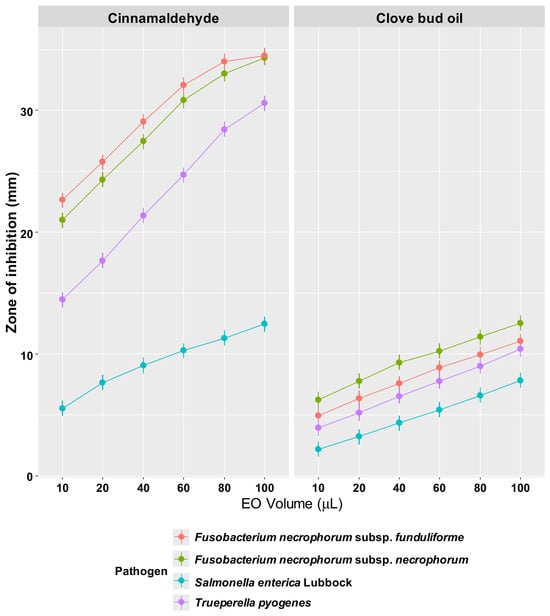
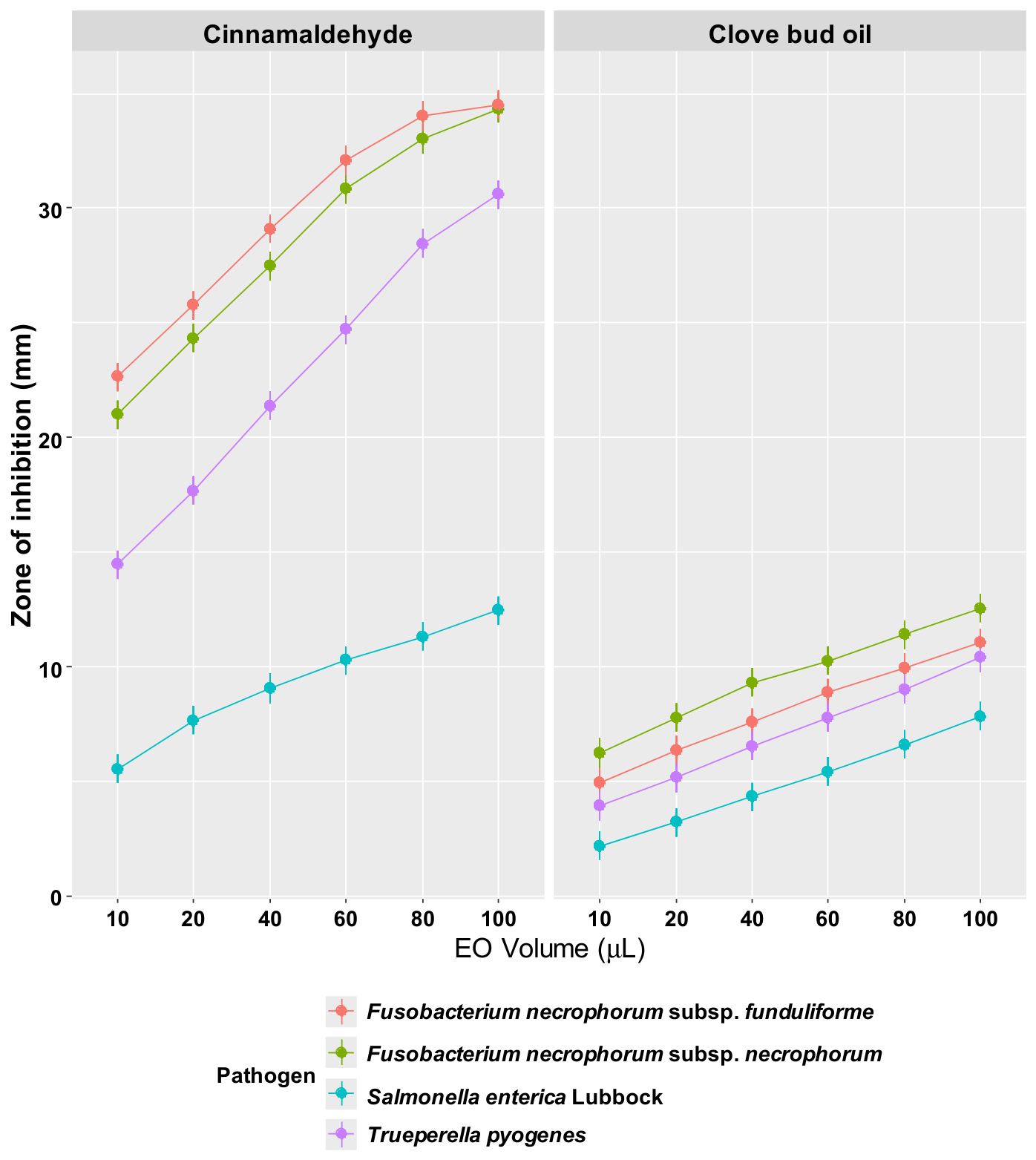
Inhibition zone diameters varied significantly according to EO type, volume, and bacterial strain. The effects of cinnamaldehyde (CIN), clove bud oil (CBO), application volume, and bacterial species on inhibition zone diameters were significant, with a significant interaction among these factors (p < 2.2 × 10⁻¹⁶), indicating that antibacterial activity varied depending on the specific combination of compound, application volume, and bacterial species. Similar patterns were observed among strains within each species, supporting the consistency of the observed species-level differences. Species-specific analyses showed strong responses to EO treatments in subsp. necrophorum, S. Lubbock, and T. pyogenes, each displaying significant variation in inhibition zone diameters across EO types and volumes. In contrast, subsp. funduliforme exhibited weaker strain-by-EO differences (p = 0.775), although a modest three-way interaction was still detectable (adjusted p = 0.014). Strain-level comparisons revealed substantial variability within subsp. necrophorum and S. Lubbock (p < 0.01), whereas strains of subsp. funduliforme and T. pyogenes responded more uniformly (p > 0.05). Increased EO volume was associated with a dose-dependent increase in antimicrobial activity, with CIN demonstrating greater inhibitory effects compared to CBO across all pathogens (Figure 1). Across all species, CIN produced larger inhibition zones than CBO with activity increasing approximately linearly with EO volume. Clove bud oil produced smaller inhibition zones across all tested isolates, indicating comparatively lower antibacterial activity. Among the pathogens evaluated, subsp. necrophorum and T. pyogenes were the most susceptible to CIN, whereas subsp. funduliforme and S. Lubbock exhibited moderate susceptibility. Inhibition zone measurements were consistent among replicates, demonstrating the reproducibility of the assay and highlighting the broad-spectrum antibacterial activity of CIN against liver abscess-associated pathogens.
Figure 1.
Predicted zones of inhibition (mm) for liver abscess-causing bacterial pathogens across increasing volumes of essential oil blend, clove bud oil and cinnamaldehyde. Points represent model-predicted means, and error bars indicate 95% confidence intervals.
2.2. Minimum Inhibitory Concentrations
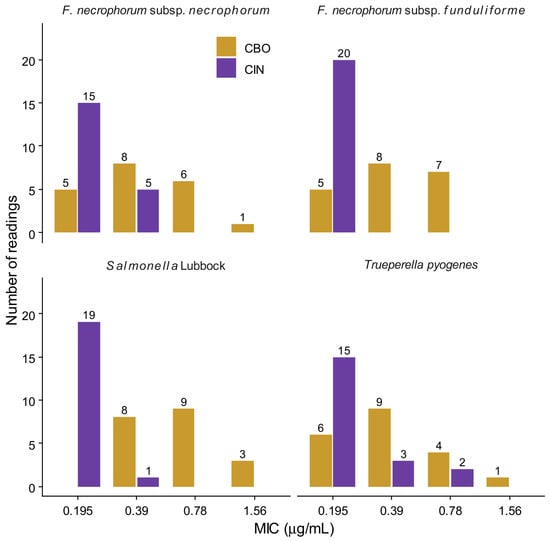
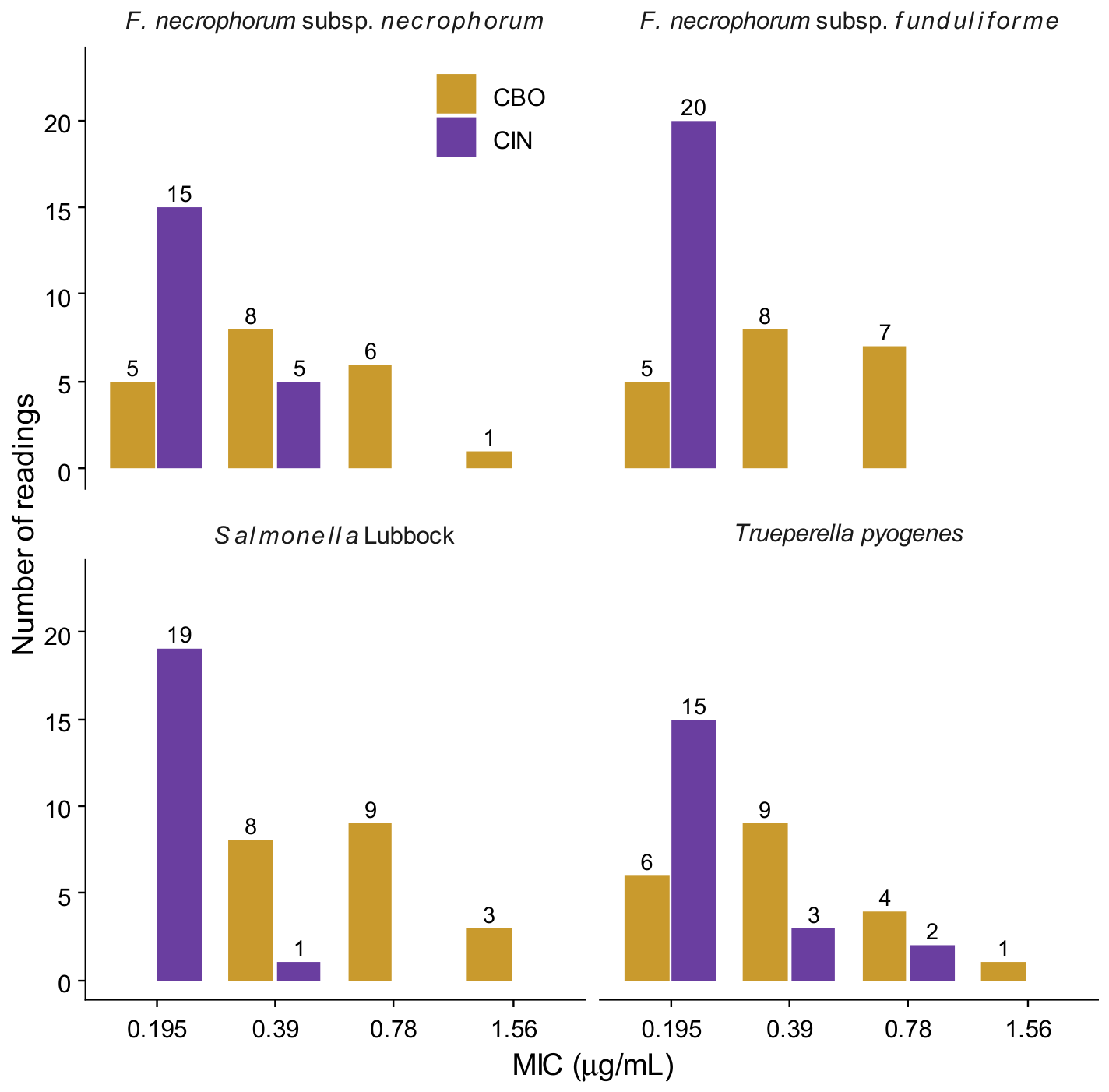
The MIC of CIN and CBO differed across the four bacterial pathogens tested (Table 1, Figure 2). CIN MICs were at the lowest concentration tested (0.195 µg/mL) in 86% of readings (CBO, 20%). The log2 linear mixed model initially considered for these data was inadequate: residuals were not normally distributed (Shapiro–Wilk W = 0.954, p < 0.001) and residual variance differed between oils (Levene test, F(1, 158) = 37.0, p < 0.001; residual SD 0.72 for CBO vs. 0.38 for CIN), so MIC values were analyzed as ordered categories. Across all species, EO type had a strong effect on MIC (ordinal mixed model, likelihood-ratio χ2 = 87.3, df = 1, p < 0.001): the odds of a higher MIC category were approximately 38-fold greater for CBO than for CIN (odds ratio for CIN vs. CBO = 0.026, 95% CI: 0.010–0.068). CBO had the higher MIC in 18 of the 20 strains. The two oils were equal in the remaining two strains, and CIN was never higher (exact randomization test, p < 0.001), corresponding to CIN requiring, on average, 2.1-fold lower concentrations than CBO to inhibit bacterial growth (log2 difference = 1.09, bootstrap 95% CI: 0.90–1.28). Within species, CBO MICs were significantly higher than CIN MICs for F. necrophorum subsp. necrophorum (1.87-fold, p = 0.031), F. necrophorum subsp. funduliforme (2.14-fold, p = 0.008), and Salmonella enterica serovar Lubbock (3.25-fold, p = 0.008). The difference was in the same direction for T. pyogenes (1.57-fold) but was not significant after adjustment (p = 0.28. All p-values Bonferroni-adjusted for the four within-species comparisons). Because CIN MICs were frequently at the lowest concentration tested, the true differences are likely larger than these fold-differences. We found no evidence that overall MIC differed among bacterial species (p = 0.41), although the difference between CBO and CIN appeared largest for Salmonella Lubbock and smallest for T. pyogenes (heterogeneity among species, Kruskal–Wallis H = 9.07, df = 3, permutation p = 0.018). Strain-to-strain variation was detected overall (likelihood-ratio test for the random strain effect, p = 0.023), but no species showed a significant strain effect after Bonferroni adjustment (all adjusted p ≥ 0.37; unadjusted p = 0.094 for T. pyogenes, 0.28 for Salmonella Lubbock, 0.48 for F. necrophorum subsp. necrophorum, and 0.88 for F. necrophorum subsp. funduliforme). Collectively, these findings indicate that CIN exhibited significantly greater in vitro antibacterial potency than CBO against the bacterial isolates evaluated, as evidenced by lower MIC values across all four pathogens, although the magnitude of this difference varied among bacterial species.
Table 1.
Minimum inhibitory concentrations (MIC; µg/mL) of clove bud oil (CBO) and cinnamaldehyde (CIN) against liver abscess-causing bacterial pathogens. Values are the number of individual MIC readings (of n = 20 per bacterium × oil combination: 5 strains × 2 biological replicates × 2 technical duplicates) at each two-fold dilution step; a lower MIC indicates greater potency. Readings at 0.195 µg/mL were at the lowest concentration tested, so the true MIC is ≤0.195 µg/mL. Fold-differences are ratios of geometric mean MICs (CBO/CIN).
Figure 2.
Distribution of minimum inhibitory concentrations (MIC) of clove bud oil (CBO) and cinnamaldehyde (CIN) against liver abscess-causing bacterial pathogens. Bars show the number of individual MIC readings (n = 20 per oil per species) at each two-fold dilution step; 0.195 µg/mL was the lowest concentration tested.
2.3. Macro-Broth Dilution
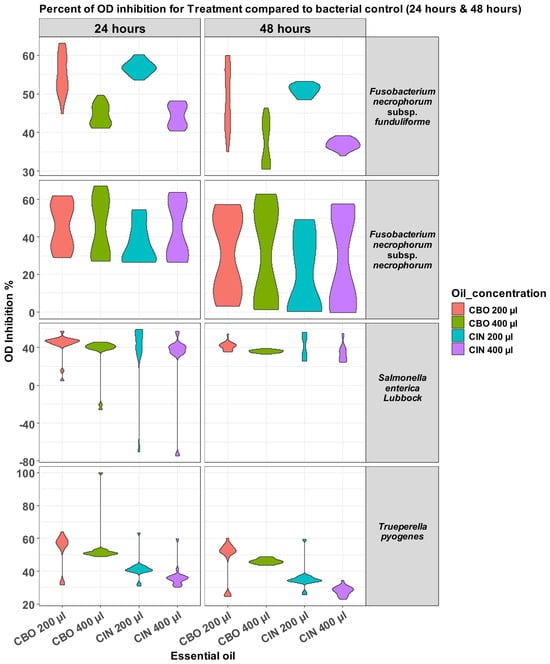
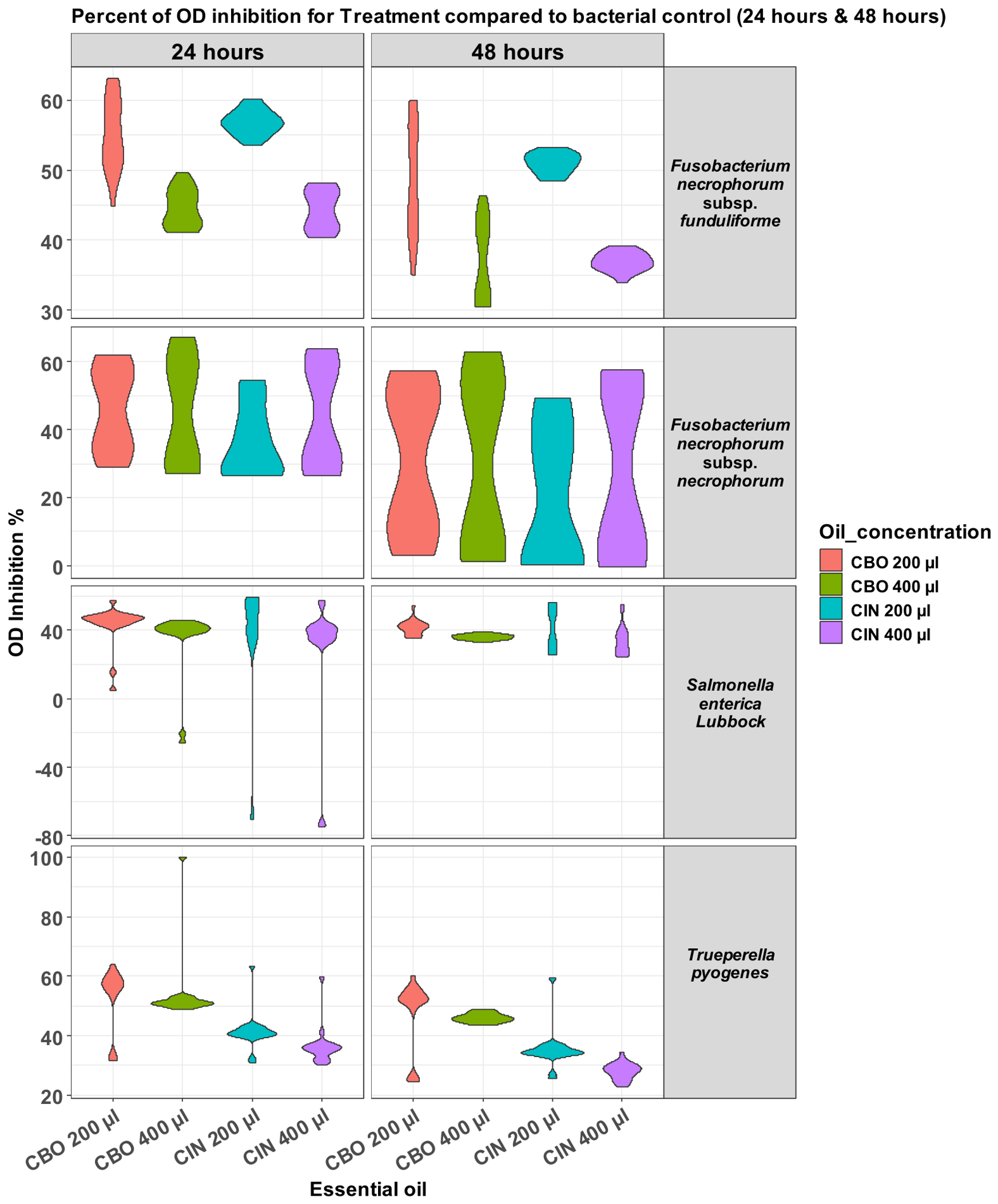
Optical density (OD) measurements from the macro-broth dilution assays demonstrated significant differences in bacterial growth inhibition according to EO type and treatment volume. Across the tested species, CBO produced significantly greater OD inhibition than CIN (p = 0.0025). The EO type × EO volume interaction was not significant (p = 0.8826), indicating that the effect of treatment volume was generally consistent between CBO and CIN. Across species and sampling time points, CBO generally produced greater growth suppression than CIN, while the 200 µL treatment yielded equal or greater inhibition than the 400 µL treatment. Thus, CBO at 200 µL provided the greatest and most consistent OD-based growth inhibition under the conditions tested, despite the absence of a conventional concentration-dependent response. These patterns were also evident in the violin and box plots, which showed generally higher OD-based inhibition values for CBO than CIN, particularly at the 200 µL treatment volume (Figure 3). However, these differences reflect changes in sample turbidity and may not directly correspond to differences in viable bacterial populations.
Figure 3.
Box–violin plots showing the percent optical density (OD) inhibition of liver abscess-causing bacterial pathogens following treatment with clove bud oil (CBO) and cinnamaldehyde (CIN) at 200 and 400 µL after 24 h and 48 h of incubation. Violin shapes represent the data distribution, while embedded boxplots indicate the median and interquartile range.
Strain-level analyses demonstrated that the magnitude and determinants of EO activity varied among bacterial species. No significant strain-to-strain variation was detected among subsp. necrophorum, subsp. funduliforme, or Salmonella enterica isolates, and no significant EO type × strain interactions were observed, indicating relatively consistent responses among strains within these species. For subsp. necrophorum, EO type was the only significant main effect, with CIN producing an estimated 11.2 percentage-point lower OD inhibition than CBO (p = 0.0328), whereas treatment volume had no significant effect (p = 0.9957). For subsp. funduliforme, treatment volume was the only significant main effect, with the 400 µL treatment producing an estimated 8.8 percentage-point lower OD inhibition than the 200 µL treatment (p = 0.0027). Neither EO type (p = 0.8452) nor treatment volume (p = 0.1708) significantly affected OD inhibition in S. enterica. In contrast, significant strain-to-strain differences were observed among T. pyogenes isolates. Relative to the reference strain, strains 311, 315, 318, and 319 exhibited significantly or borderline significantly lower baseline OD inhibition, with estimated differences of approximately 9.8–11.4 percentage points (p = 0.0244–0.0518). However, the EO type × strain interaction was not significant, indicating that the relative response to CBO and CIN was consistent among T. pyogenes strains. Overall, EO type remained the primary treatment effect in T. pyogenes, with CIN producing an estimated 15.38 percentage-point lower OD inhibition than CBO (p = 0.0027).
Although clove bud oil (CBO) exhibited significantly greater OD-based growth inhibition than cinnamaldehyde (CIN) (p = 0.0025), no recoverable bacterial colonies were detected following either treatment at 24 or 48 h, at both 200 and 400 µL, whereas untreated controls demonstrated substantial bacterial growth. These findings indicate strong antibacterial activity of both compounds under the experimental conditions, although the absence of recoverable colonies does not necessarily establish complete bacterial killing. The differences in OD-based inhibition may not directly reflect differences in bacterial viability, as optical density can be influenced by nonviable cells, cellular debris, and compound-related turbidity. Growth-curve analyses further demonstrated that CBO maintained consistently low OD values over time, whereas CIN exhibited comparatively limited OD-based growth suppression against T. pyogenes, with values approaching those of untreated controls. Overall, CBO at 200 µL demonstrated greater and more consistent OD-based growth inhibition than CIN across the tested bacterial species and strains. However, neither treatment yielded recoverable bacterial colonies at 24 or 48 h under the experimental conditions, indicating substantial antibacterial activity of both compounds without establishing superior bactericidal activity of CBO over CIN.
2.4. In Vitro Rumen Fermentation
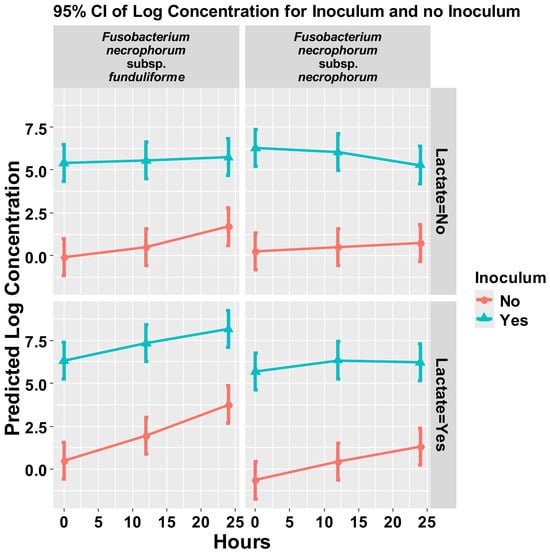
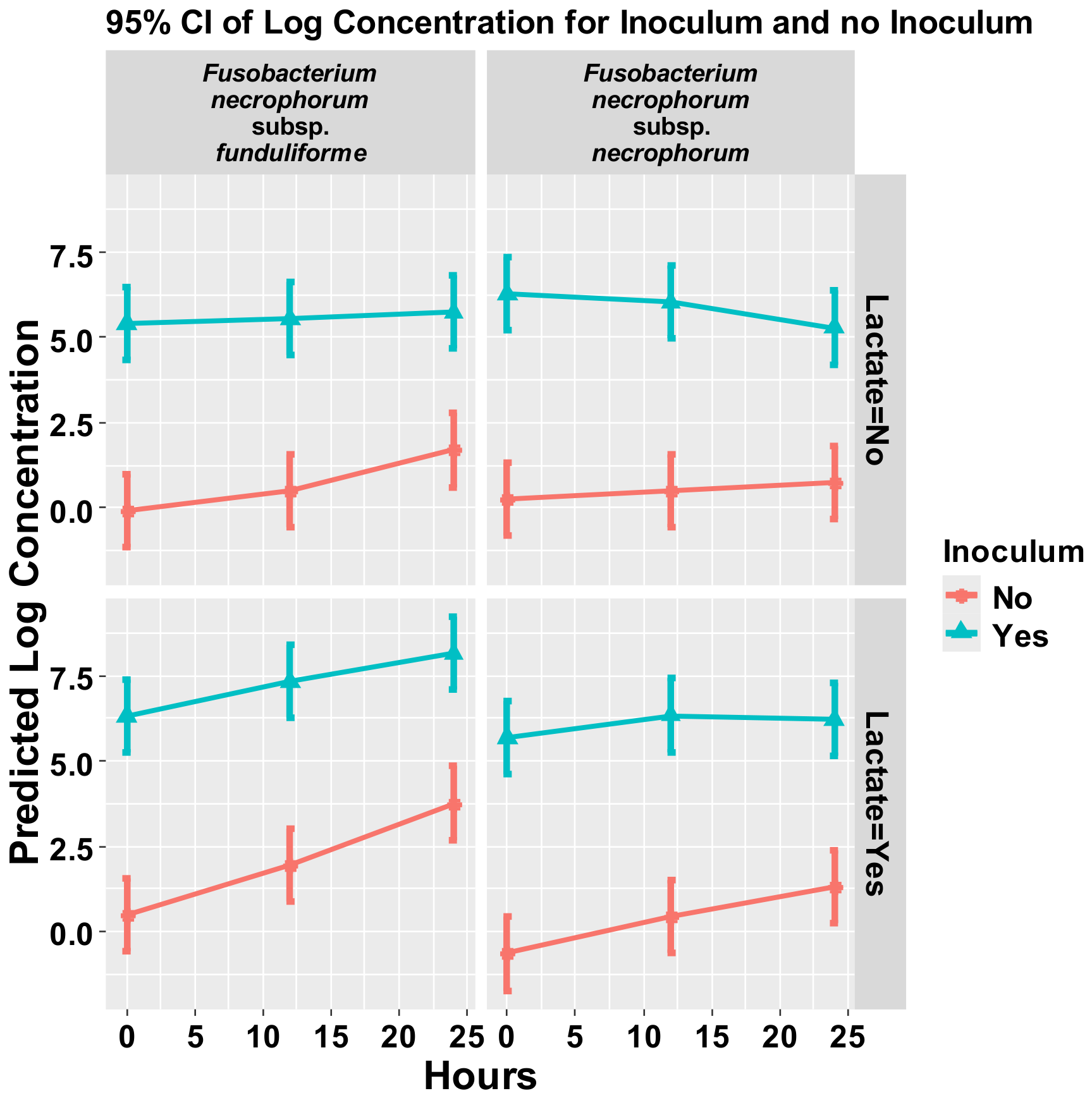
In the first experiment (100 and 200 µL, evaluated with and without lactate), both essential oil blend suppressed Fusobacterium growth relative to the untreated control, with bacterial concentrations increasing over time in the control but declining in both CIN- and CBO-treated cultures. A significant four-way interaction among treatment, lactate, bacterium, and time (p = 2.89 × 10⁻⁶) indicated that the treatment response over time differed by species and by lactate condition, so treatment × time interactions were evaluated separately within each bacterium × lactate combination. All four combinations showed significant treatment × time interactions, ranging from p = 0.0103 (subsp. necrophorum, no lactate) to p = 2.23 × 10⁻¹¹ (subsp. funduliforme, with lactate). Inoculum size also had a highly significant effect on bacterial concentration (p < 2.2 × 10⁻¹⁶), with inoculated cultures consistently higher than uninoculated controls across both species and lactate conditions (Figure 4).
Figure 4.
Predicted log concentrations (mean ± 95% CI) of Fusobacterium necrophorum subsp. necrophorum and F. necrophorum subsp. funduliforme over time under in vitro rumen fermentation conditions. Treatments include control and lactate, evaluated in the presence and absence of inoculum. Points represent model-predicted means and error bars indicate 95% confidence intervals.
The second experiment (200 and 400 µL, evaluated with lactate, lysine, and their combination) showed that essential oil blend efficacy depended strongly on both bacterial subspecies and substrate composition (Table 2 and Table 3; summarized in Table 4). For subsp. necrophorum, CIN was consistently the more effective oil once lactate and/or lysine was present: under lactate, CIN at both 200 and 400 µL reduced bacterial concentrations to undetectable levels by 12 h, significantly below the bacteria control (adjusted p = 4.78 × 10⁻⁶ and 1.89 × 10⁻⁵, respectively), and CBO 400 µL was also significant (adjusted p = 8.11 × 10⁻⁴). Under lysine, CIN 400 µL produced the greatest suppression (2.03 × 10³ at 24 h, a 4.3-log10 reduction from control; adjusted p = 1.49 × 10⁻⁴), and under the combined lactate-plus-lysine condition, CIN 400 µL was the only treatment that differed significantly from control (1.03 × 10² at 24 h, a 5.6-log10 reduction; adjusted p = 0.015). In plain medium (no lactate or lysine), all four treatments reduced subsp. necrophorum to undetectable levels by 24 h, but none differed significantly from the bacteria control, likely reflecting the control’s own decline in the absence of a growth-promoting substrate.
Table 2.
Evaluation of the effect of essential oil blend with and without the presence of lactate and lysine alone or in combination on the concentrations of Fusobacterium necrophorum subspecies necrophorum in an in vitro ruminal fermentation at 0, 12, and 24 h by quantitative PCR assay.
Table 3.
Evaluation of the effect of essential oil blend with and without the presence of lactate and lysine alone or in combination on the concentrations of Fusobacterium necrophorum subsp. funduliforme in an in vitro ruminal fermentation at 0, 12, and 24 h by quantitative PCR assay.
Table 4.
Summary of essential oil blend efficacy against Fusobacterium necrophorum subspecies necrophorum and funduliforme across substrate conditions in the 200/400 µL in vitro rumen fermentation experiment. For each subspecies x substrate combination, the most effective treatment at 24 h is shown (lowest concentration among treatments reaching statistical significance vs. the bacteria control; where none reached significance, the numerically lowest concentration is shown and marked non-significant). Full time-course data and all treatment comparisons are in Table 3 and Table 4.
The response of subsp. funduliforme was markedly different. Although essential oil blend-treated cultures showed numerically lower concentrations than the bacteria control under every substrate condition with reductions of a similar order of magnitude to those seen for subsp. necrophorum (2.9- to 3.4-log10), none of the eight treatments × substrate combinations reached statistical significance (all adjusted p = 1.00), reflecting greater variability in this subspecies’ response. This contrast suggests that essential oil blend efficacy in a rumen-simulated environment is subspecies-dependent, and that concentration reductions of comparable magnitude do not necessarily translate into comparable statistical confidence across subspecies.
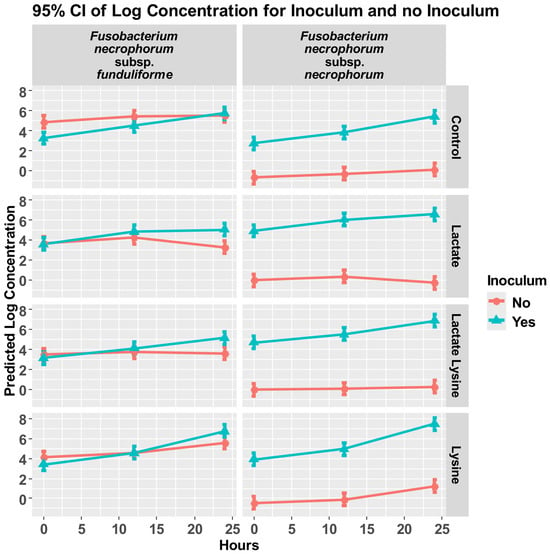
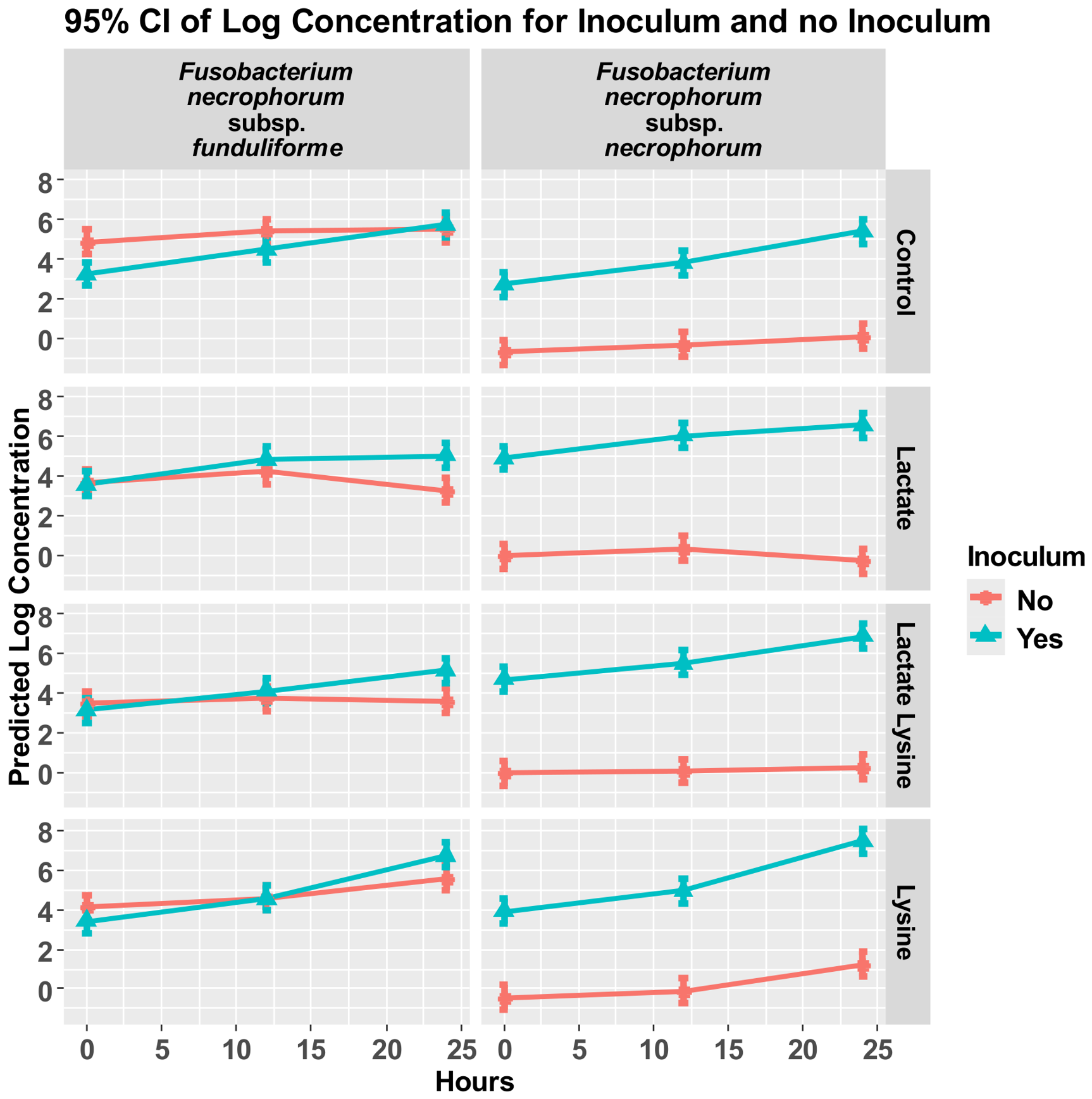
As in the first experiment, inoculum size had a highly significant effect on bacterial concentration in the second experiment (p < 2.2 × 10⁻¹⁶), with inoculated cultures showing consistently higher concentrations and greater increases over time than uninoculated cultures across both subspecies and all substrate conditions; this difference was more pronounced for subsp. necrophorum than for subsp. funduliforme (Figure 5).
Figure 5.
Predicted log concentrations (mean ± 95% CI) of Fusobacterium necrophorum subsp. necrophorum and F. necrophorum subsp. funduliforme over time under in vitro rumen fermentation conditions. Treatments include control, lactate, lysine, and lactate + lysine substrates, evaluated in the presence and absence of inoculum. Points represent model-predicted means and error bars indicate 95% confidence intervals.
3. Discussion
The increased interest in plant-derived antimicrobials underscores the need for effective alternatives to conventional antibiotics particularly in light of concerns about antimicrobial resistance and sustainable livestock production [32,33,34]. Essential oils derived from cinnamon and clove buds have been reported to exhibit strong antibacterial and antibiofilm-forming activities across food and biological systems [35,36,37]. Prior studies have demonstrated that cinnamaldehyde and clove bud oil significantly reduce bacterial loads in food matrices, suppress spoilage organisms, and act synergistically at sub-inhibitory concentrations, supporting their potential as natural antimicrobial agents [38,39]. The present study builds upon this foundation by evaluating the antimicrobial activity of cinnamaldehyde (CIN) and clove bud oil (CBO) against liver abscess causing bacterial pathogens using in vitro assays, including rumen-simulated fermentation.
Cinnamaldehyde (CIN) demonstrated greater antibacterial efficacy in agar-well diffusion and microbroth dilution assays, producing larger inhibition zones and requiring lower concentrations to suppress bacterial growth, respectively. Although CIN exhibited greater antibacterial activity than CBO in agar-well diffusion and MIC assays, its comparatively lower OD-based growth inhibition in macro-broth assays may reflect differences in their solubility, dispersion, and interactions with the broth medium. Additionally, differences in assay conditions and the influence of essential oil blend-induced turbidity on optical density measurements may have contributed to the observed variation in antibacterial activity. The findings are in agreement with the previous mechanistic studies showing that CIN readily penetrates bacterial membranes and disrupts key intracellular processes, leading to growth inhibition and cell death [40]. The strong dose-dependent responses observed in the diffusion assays further support CIN’s high diffusibility and rapid antimicrobial action in aqueous environments, a property that has been highlighted in both food preservation and clinical contexts [41]. Although CBO demonstrated greater OD-based inhibition than CIN in the macro-broth dilution assay, optical density measurements may be influenced by nonviable bacterial cells, cellular debris, and related turbidity. Notably, no viable colonies were detected following either treatment at 24 or 48 h, suggesting that differences in OD measurements did not necessarily reflect differences in bacterial viability.
In contrast, clove bud oil (CBO) demonstrated reduced efficacy in diffusion-based and MIC assays, necessitating higher inhibitory concentrations, while macrodilution assays revealed a more complex antimicrobial response. Because most CIN MICs were at the lowest concentration tested (0.195 µg/mL), the MIC differences between CIN and CBO reported here are likely conservative, and testing a lower concentration range would be needed to resolve differences among species and strains. Although both CIN and CBO achieved complete bactericidal effects across species and concentrations, optical density–based measurements showed that CBO more effectively suppressed bacterial growth, particularly at intermediate volumes. The relatively low MIC values observed for CIN and CBO should be interpreted in the context of the experimental conditions employed in this study. To our knowledge, established reference MIC values for these substances against the specific liver abscess-associated bacterial pathogens investigated are not available, limiting direct comparisons with published susceptibility data. Although the MIC measurements were obtained using independently prepared bacterial inocula and appropriate uninoculated controls, additional studies employing independent susceptibility testing methods and complementary viability-based assays are warranted to confirm these findings and assess their reproducibility across laboratories. This observation aligns with prior studies indicating that clove oil, rich in eugenol, exerts sustained inhibitory effects on cellular metabolism and membrane function rather than rapid lytic activity [26,42]. Together, these findings reinforce the notion that antimicrobial efficacy cannot be fully captured by a single assay and that essential oil blend may exert biologically meaningful effects beyond immediate cell death.
The in vitro rumen fermentation experiments further demonstrated that the antimicrobial activities of CIN and CBO varied according to treatment volume and fermentation conditions. Although differences in bacterial suppression were observed between the two essential oil blends under lactate-supplemented conditions, the results did not demonstrate a consistent advantage of CBO over CIN at lower treatment volumes (100–200 µL). These findings suggest that the relative antimicrobial activity of the essential oil blend is influenced by the experimental conditions, emphasizing the importance of considering treatment concentration and substrate availability when interpreting their effects in rumen-simulated environments. This finding is especially relevant given prior reports showing that clove oil maintains antibacterial activity across a range of pH and metabolic conditions and exhibits strong antibiofilm effects [43]. The enhanced efficacy of CBO under acidic, metabolically active conditions suggests that its hydrophobic constituents may interact favorably with fermentation intermediates or bacterial membranes in rumen-like environments. Additionally, the strong influence of inoculum level observed in this study supports previous observations that bacterial load can substantially alter antimicrobial outcomes, emphasizing the importance of considering microbial density in both experimental design and practical application. At higher treatment volumes (200–400 µL), CIN emerged as the dominant inhibitor in the fermentation system, rapidly reducing bacterial populations, often to near-zero levels, within the first 12 h. This rapid suppression was particularly evident for F. necrophorum, a primary pathogen associated with liver abscesses. These results extend earlier findings demonstrating CIN’s potent, concentration-dependent antimicrobial activity and suggest that its efficacy in complex microbial systems may depend on achieving a threshold concentration sufficient to induce widespread membrane disruption and metabolic collapse. However, the reduced effectiveness of both CIN and CBO in the presence of lysine supplementation highlights the role of substrate availability in modulating antimicrobial activity, likely by influencing bacterial stress responses and metabolic flexibility.
The differential antimicrobial activity observed between lactate- and lysine-supplemented fermentations may reflect substrate-dependent differences in the metabolism and physiological state of F. necrophorum. Although F. necrophorum can utilize both lactate and lysine as energy substrates, these compounds are metabolized through distinct pathways and generate different fermentation products; lactate is primarily converted to acetate, propionate and butyrate, whereas lysine degradation yields acetate, butyrate, and ammonia [44,45]. Lactate can also contribute to butyrate production occurs in mixed ruminal microbial communities through other lactate-utilizing bacteria, particularly Megasphaera elsdenii [46,47]. Thus, butyrate detected in lactate-supplemented fermentations cannot be attributed exclusively to F. necrophorum. This highlights the importance of microbial interactions and cross-feeding in shaping fermentation profiles, which may also influence the antimicrobial activity of CIN and CBO under in vitro rumen fermentation conditions. Importantly, lysine utilization by ruminal fusobacteria is highly sensitive to the surrounding physicochemical environment. Russell [48] reported an approximately 85% reduction in lysine transport when pH decreased from 6.7 to 5.5, while Russell (44) demonstrated that the inhibitory effects of fermentation acids on lysine degradation increased substantially as pH declined. Furthermore, Elwakeel et al. [45] showed that antimicrobial susceptibility of F. necrophorum can vary according to the growth substrate, with greater susceptibility to monensin when grown on lysine than on lactate. Collectively, these observations suggest that the differences in CIN and CBO activity between lactate- and lysine-supplemented fermentations in the present study may reflect substrate-dependent changes in bacterial metabolism, growth physiology, and the resulting fermentation environment rather than a direct protective effect of lysine. Thus, substrate availability represents an important determinant of antimicrobial efficacy against F. necrophorum and should be considered when extrapolating the activity of CIN and CBO to the complex ruminal environment. The in vitro rumen fermentation experiments utilized rumen fluid repeatedly collected from a single donor steer, which limited the assessment of inter-animal variability. Furthermore, the study primarily evaluated the abundance of F. necrophorum subspecies without comprehensively characterizing the broader rumen microbial community. Total bacterial abundance and representative beneficial rumen microorganisms were not quantified. Future studies incorporating multiple donor animals, total bacterial quantification, and microbial community profiling using 16S rRNA gene sequencing or metagenomic approaches are warranted to evaluate the selectivity of CIN and CBO and their potential effects on beneficial ruminal microorganisms. Although rumen fluid was consistently obtained from the same donor animal maintained under routine feeding conditions, potential effects of diet and temporal variation in rumen microbial composition cannot be completely excluded.
Collectively, these findings extend previous research on cinnamon- and clove-derived antimicrobials by demonstrating that the antibacterial activities of cinnamaldehyde (CIN) and clove bud oil (CBO) varied across experimental assays, bacterial species, and treatment conditions. CIN generally exhibited greater inhibitory activity in agar-well diffusion and broth microdilution assays, whereas CBO demonstrated greater OD-based growth inhibition in broth macrodilution assays. These differences may be attributable to variations in their physicochemical properties, interactions with assay media, and experimental conditions. Importantly, evaluating both compounds across multiple assay platforms, including substrate-supplemented in vitro rumen fermentation, provided a broader understanding of their antimicrobial activities under different experimental conditions. However, the underlying mechanisms responsible for these differences were not directly investigated, and further studies are warranted to elucidate their modes of action and assess their potential applications in controlling bovine liver abscesses.
Despite the promising antimicrobial activity of CIN and CBO observed in the present study, practical application as feed additives may be challenged by their stability and delivery limitations. First, the experiments were conducted exclusively under in vitro conditions, which do not fully reproduce the complex physiological, microbial, and environmental interactions occurring within the rumen of living cattle. Consequently, the observed antimicrobial activities of CIN and CBO do not establish their efficacy in preventing or controlling liver abscesses in vivo. Furthermore, the stability, bioavailability, effective delivery methods, and safety of these substances under practical feeding conditions remain to be determined. Their potential effects on beneficial ruminal microorganisms, microbial community composition, fermentation efficiency, and feed intake were not comprehensively evaluated. Additionally, the rumen fermentation experiments utilized fluid repeatedly collected from a single donor steer, limiting the assessment of inter-animal variability. An additional limitation of the present study is that conventional qPCR quantifies bacterial DNA targets without distinguishing viable from nonviable bacterial cells. Therefore, reductions in qPCR-derived F. necrophorum abundance should be interpreted as decreases in detectable target DNA rather than definitive evidence of bacterial killing or complete elimination. Therefore, further studies are warranted to evaluate the stability, bioavailability, and antimicrobial activity of CIN and CBO under practical feeding conditions, as well as their potential effects on beneficial ruminal microorganisms and overall fermentation dynamics. Although the present in vitro findings provide preliminary evidence of antibacterial activity against liver abscess-associated pathogens, additional in vivo investigations are necessary to establish their safety, efficacy, and feasibility before considering their potential application in cattle production systems.
Essential oils are susceptible to volatilization, oxidation, and chemical degradation during storage and processing, particularly following exposure to heat, light, and oxygen [49]. Furthermore, their hydrophobic nature and interactions with complex biological matrices may influence the availability of active constituents and antimicrobial efficacy [27]. In ruminants, variations in dietary composition, treatment concentration, and ruminal fermentation conditions may further contribute to inconsistent antimicrobial responses [50].
The greater inhibitory activity of CIN observed in the agar-well diffusion and MIC assays is consistent with previous reports describing the antimicrobial properties of cinnamaldehyde and clove-derived compounds. In the present study, CIN exhibited approximately 2.1-fold greater inhibitory potency than CBO based on MIC measurements, although the magnitude of this difference varied among bacterial species. However, the greater OD-based inhibition observed with CBO in the macro-broth assays indicates that the relative activity of these compounds depends on the experimental method and measured endpoint. Previous investigations have also demonstrated that essential oil and or its blend activity in ruminal environments is influenced by concentration, pH, and fermentation conditions. Cardozo et al. [51] evaluated a mixture of cinnamaldehyde and eugenol in beef heifers fed a high-concentrate diet, provided evidence that these compounds influence ruminal fermentation. Encapsulation technologies may improve the stability and controlled release of essential oil constituents [52]. However, these studies primarily evaluated fermentation characteristics rather than antimicrobial activity against liver abscess-associated pathogens. The present investigation extends these observations by directly evaluating CIN and CBO against F. necrophorum subsp. necrophorum, F. necrophorum subsp. funduliforme, T. pyogenes, and S. enterica serovar Lubbock. Nevertheless, inhibition of these pathogens under in vitro conditions does not establish that either CIN and or CBO can prevent liver abscess development in cattle. Future studies involving multiple donor animals, comprehensive rumen microbiome analyses, and controlled in vivo experiments are warranted to evaluate the safety, optimal dosage, and efficacy of CIN and CBO as potential non-antibiotic interventions for bovine liver abscesses. Additional investigations should assess their effects on beneficial ruminal microorganisms, animal performance, and their stability and persistence under practical feed storage and feeding conditions to determine their suitability as alternatives to conventional antimicrobials in cattle production.
Overall, CIN exhibited stronger and more rapid antimicrobial activity, producing larger inhibition zones, lower MIC values, and substantial bacterial suppression at moderate to high concentrations. In contrast, CBO demonstrated greater efficacy under rumen-simulating conditions, particularly at lower treatment volumes and in lactate-rich environments. Both of the essential oil blends exhibited bactericidal activity in macrodilution assays, indicating their potential for controlling liver abscess-associated pathogens. These findings suggest that CIN and CBO offer distinct antimicrobial advantages and may serve as promising alternatives to conventional antibiotics for liver abscess control in cattle. Future studies should investigate their combined effects, long-term impacts on ruminal microbial ecology, and in vivo efficacy to establish their practical applications in livestock production. These findings provide preliminary evidence supporting further investigation of CIN and CBO as potential antimicrobial interventions against liver abscess-associated bacterial pathogens. Future studies should evaluate their combined effects, optimal delivery strategies, impacts on ruminal microbial ecology, and in vivo safety and efficacy before their potential application in liver abscess prevention programs in cattle.
4. Materials and Methods
Cinnamaldehyde and clove bud oil, obtained from Sigma-Aldrich® (St. Louis, MO, USA), were used in this study.
4.1. Bacterial Strains
The study included five strains each of Fusobacterium necrophorum subsp. necrophorum (2016-13#55, 2016-13#69, 2018-13#23, 2018-13#24, 2018-13#37) and F. necrophorum subsp. funduliforme (2018-1#6, 2018-1#7, 2018-13#2, 2018-13#16, 2018-13#35), five strains of S. enterica serovar Lubbock (2016-13#26, 2016-13#33, 2016-13#34, 2016-13#36, 2016-13#38), and five strains of T. pyogenes (2016-13#306, 2016-13#311, 2016-13#315, 2016-13#318, 2016-13#319). All strains were previously isolated from liver abscesses in feedlot cattle [53,54].
4.2. Preparation of Bacterial Inocula
All bacterial strains were maintained at −80 °C in a bacteriological preservation medium supplemented with glycerol as a cryoprotectant. Following recovery from frozen stocks, the isolates were cultured on blood agar plates (Remel, Lenexa, KS, USA) under species-specific incubation conditions. Fusobacterium isolates were incubated anaerobically in an anaerobic glove box at 39 °C for 48 h, Trueperella pyogenes isolates were incubated at 37 °C in an atmosphere containing 5% CO2 for 48 h, and Salmonella enterica serovar Lubbock isolates were incubated aerobically at 37 °C for 24 h. Following incubation, Fusobacterium colonies were inoculated into pre-reduced anaerobically sterilized (PRAS) brain heart infusion (BHI) broth (Becton Dickinson, Sparks, MD, USA), whereas T. pyogenes and S. enterica serovar Lubbock isolates were inoculated into Mueller–Hinton (MH) broth (Becton Dickinson). Bacterial inocula were prepared from freshly grown cultures, and the turbidity of each bacterial suspension was adjusted to a 0.5 McFarland standard using a densitometer (Remel, Lenexa, KS, USA). The standardized suspensions were subsequently used directly for broth microdilution and macrodilution assays without further dilution prior to inoculation. Antimicrobial susceptibility testing was performed following the relevant Clinical and Laboratory Standards Institute (CLSI) guidelines [55], including CLSI M07 (Methods for Dilution Antimicrobial Susceptibility Tests for Bacteria That Grow Aerobically) for Salmonella enterica serovar Lubbock and Trueperella pyogenes, and CLSI M11 (Methods for Antimicrobial Susceptibility Testing of Anaerobic Bacteria) for Fusobacterium necrophorum subsp. necrophorum and F. necrophorum subsp. funduliforme, with modifications as described in the subsequent sections.
4.3. Agar-Well Diffusion Test
The agar-well diffusion assay was performed as previously described [56], with minor modifications. Wells measuring 11 mm in diameter were prepared in blood agar plates using sterile cork borers under aseptic conditions. The cork borers were sterilized by autoclaving before use and subsequently flame-sterilized using alcohol between uses to maintain aseptic conditions and prevent cross-contamination. The bottoms of the wells were sealed with 70 µL of sterile molten tryptic soy agar to prevent leakage of the test compounds beneath the agar surface. After solidification of the sealing agar, bacterial cultures were uniformly inoculated onto the blood agar surface using sterile swabs to establish bacterial lawns. Cinnamaldehyde (CIN) and clove bud oil (CBO) were subsequently dispensed into separate wells at volumes of 10, 20, 40, 60, 80, and 100 µL. Plates inoculated with Fusobacterium spp. were incubated anaerobically at 39 °C for 48 h, whereas those inoculated with Trueperella pyogenes were incubated at 37 °C under 5% CO2 for 48 h. Plates inoculated with Salmonella enterica serovar Lubbock were incubated aerobically at 37 °C for 24 h. Following the addition of cinnamaldehyde (CIN) and clove bud oil (CBO) to the agar wells, the Petri dishes were covered with their lids and incubated under the appropriate species-specific conditions. The lids remained in place throughout incubation to minimize environmental exposure and potential evaporation of the tested substances. Following incubation, inhibition zone diameters were measured in millimeters using digital Vernier calipers by two independent observers.
4.4. Broth Microdilution Method
The microbroth dilution technique was used to determine the minimum inhibitory concentrations (MIC) of cinnamaldehyde, clove bud oil, and the antibiotics chlortetracycline, tylosin, and erythromycin (Sigma-Aldrich, St. Louis, MO, USA). The antibiotics served as positive controls. Stock solutions of antibiotics were prepared according to the manufacturer’s instructions to achieve a concentration of 1000 μg/mL, depending on their potencies. Cinnamaldehyde and clove bud oil were used as supplied. The measured volumes were converted to mass using the manufacturer-reported density of 1.05 g/mL for each compound. Final concentrations (µg/mL) were calculated by dividing the mass added by the total culture volume after addition. Both antibiotics and essential oil blend were tested at serial two-fold dilutions of 100, 50, 25, 12.5, 6.25, 3.125, 1.56, 0.78, 0.39, and 0.195 μg/mL. Experiments were conducted in sterile 96-well microtiter plates (Becton Dickinson, Franklin Lakes, NJ, USA) and incubated under conditions appropriate for each species: anaerobic for Fusobacterium spp., 5% CO2 for T. pyogenes, and aerobic for S. Lubbock. Following incubation, bacterial growth was assessed visually, and the minimum inhibitory concentration (MIC) was defined as the lowest concentration of CIN or CBO at which no visible bacterial growth was observed. Uninoculated control wells containing the corresponding concentrations of CIN or CBO in the appropriate broth medium were included to assess the background appearance of the tested substances and distinguish substance-related turbidity from bacterial growth. MIC endpoints were determined by comparing the appearance of inoculated wells with their corresponding uninoculated controls. All experiments were performed in duplicate, with independent bacterial inocula serving as biological replicates.
4.5. Broth Macrodilution Method
The broth macrodilution assay was performed to evaluate the antimicrobial activities of cinnamaldehyde (CIN) and clove bud oil (CBO), as previously described [57], with minor modifications. Bacterial growth was monitored by measuring optical density at 600 nm (OD600) at 0, 6, 12, 24, and 48 h of incubation. When the OD600 reached approximately 0.5 (6 h), CIN or CBO was added to the bacterial cultures at volumes of 200 or 400 µL. Cultures without CIN or CBO served as untreated controls. Bacterial viability was assessed at 24 and 48 h by performing tenfold serial dilutions of the cultures following OD600 measurements. Briefly, 100 µL of the appropriate dilutions was spread-plated onto suitable agar media and incubated under the respective species-specific conditions. Following incubation, recoverable bacterial colonies were enumerated, and viable bacterial concentrations were calculated based on colony counts, dilution factors, and the plated volume (0.1 mL). Results were expressed as log10 CFU/mL. Samples yielding no recoverable colonies were reported as having no detectable viable bacteria under the experimental conditions. Each experiment was repeated using an independently prepared bacterial inoculum.
4.6. In Vitro Rumen Fermentation
Rumen fluid was collected in the early morning before feeding from a single, approximately 3-year-old ruminally cannulated Jersey steer maintained at the Kansas State University Veterinary Health Center. The steer was fed a conventional forage-based diet with access to pasture. Approximately 1 L of rumen fluid was collected per experiment into tightly capped containers, transported to the laboratory under anaerobic conditions at approximately 39 °C, and processed within 10 min of collection. Upon arrival at the laboratory, ruminal contents pH was immediately measured and recorded. The ruminal content was then strained through four layers of cheesecloth into a sterile bottle. Each serum bottle contained 50 mL of strained rumen fluid and 50 mL of McDougall’s buffer. The in vitro fermentation experiment was conducted using the two F. necrophorum subspecies, F. necrophorum subsp. necrophorum and F. necrophorum subsp. funduliforme. For each subspecies, four fermentation conditions were evaluated: (1) control, with no addition of lactate or lysine; (2) lactate; (3) lysine; and (4) a combination of lysine and lactate. Sodium lactate (60% w/w solution) was added at 1.67 mL per fermentation bottle, whereas lysine was added at 1.82 g per bottle, corresponding to final concentrations of approximately 100 mM for each substrate in a total fermentation volume of 100 mL. Lactate and lysine were selected because of their relevance to the growth and metabolic activity of Fusobacterium necrophorum. Lactate serves as an important ruminal fermentation intermediate, whereas lysine can be utilized as a substrate for amino acid fermentation. These substrates were evaluated individually and in combination to investigate the effects of cinnamaldehyde (CIN) and clove bud oil (CBO) under different substrate-supplemented rumen fermentation conditions. Cinnamaldehyde (CIN) and clove bud oil (CBO) were initially evaluated at volumes of 100 and 200 µL per fermentation bottle. Based on the preliminary findings, a second experiment was conducted using higher volumes of 200 and 400 µL. Each fermentation bottle contained a final mixture volume of 100 mL. The administered volumes of 100, 200, and 400 µL corresponded to final volumetric concentrations of 1, 2, and 4 µL/mL (0.1%, 0.2%, and 0.4%, v/v), respectively. The bottles were flushed with CO2, sealed with sterile rubber stoppers, and crimped with aluminum seals before incubation. Samples were collected from each serum bottle before incubation (0 h) and after incubation at 12 and 24 h for pH measurement and qPCR using a previously developed and validated subspecies-specific quantitative PCR (qPCR) assay (58). The assay utilizes specific primers and fluorescent probes targeting the leukotoxin gene promoter regions, designated lktA-n for subsp. necrophorum and lktA-f for subsp. funduliforme, allowing differentiation and quantification of the two subspecies. The primer and probe sequences and their analytical validation have been described previously by Deters et al. [58]. Genomic DNA was extracted from rumen fermentation samples using the GENECLEAN Turbo Kit (MP Biomedicals, Solon, OH, USA), according to the manufacturer’s instructions.
4.7. Statistical Analysis
All statistical analyses were performed in R statistical software (Version 4.5.2). For the agar-well diffusion assay, treatment effects were evaluated using general linear models (lm) and analysis of variance (ANOVA); for the broth macrodilution and in vitro ruminal fermentation experiments, linear mixed-effects models were fit using the lme4 and lmerTest packages, with bacterial strain and/or biological replicate included as random effects to account for the correlation among repeated measurements from the same isolate or fermentation run. Model-based F-tests for mixed models used Satterthwaite’s approximation for denominator degrees of freedom. Where appropriate, higher-order interaction terms were evaluated by comparing nested models with likelihood ratio tests, and post hoc pairwise comparisons were based on estimated marginal means (package emmeans) or multiple comparison procedures (package multcomp), with Tukey’s, Dunnett’s, or Bonferroni adjustment for multiple testing as indicated. Statistical significance was defined as p < 0.05 for all analyses.
Agar-well diffusion assay: Zone-of-inhibition diameters were analyzed using a three-way ANOVA with fixed effects of bacterial strain, EO volume, oil type, and their two- and three-way interactions. Because individual strains were nested within bacterial species, a parallel model was fit using bacterial species in place of strain to evaluate species-level effects, and separate models were subsequently fit within each species to assess strain-to-strain variability; resulting p-values for the four within-species interaction tests were adjusted for multiple comparisons using the Bonferroni correction. Model-predicted zone-of-inhibition means and 95% confidence intervals were obtained for each combination of oil type, volume, and species/strain, and pairwise comparisons among oil types and among bacteria were conducted using Dunnett’s and Tukey’s tests, respectively.
Minimum inhibitory concentration: MIC values were derived from a two-fold dilution series and are therefore discrete, ordered outcomes (observed values 0.195, 0.39, 0.78, and 1.56 µg/mL); values at the lowest concentration tested (0.195 µg/mL) are left-censored. Because MIC data are not normally distributed, MIC distributions were summarized as counts per dilution step rather than as means. The effect of oil type was tested with a cumulative-logit (proportional-odds) mixed model with fixed effects of oil type and bacterial species and a random intercept for bacterial strain to account for the correlation among repeated readings (biological and technical replicates) from the same isolate (maximum likelihood, Laplace approximation). Fixed effects were evaluated with likelihood-ratio tests, and the significance of strain-to-strain variation was assessed with a likelihood-ratio test comparing the mixed model to a reduced model without the random strain effect, with the p-value corrected for the boundary of the parameter space. A species × oil interaction could not be estimated in this model because CIN readings were almost entirely at the lowest concentration tested. As a distribution-free confirmation, paired CBO-CIN differences in log2 MIC were calculated for each strain (pooled analysis) and for each strain × biological replicate unit (within-species analysis), with duplicate wells averaged, and tested with exact sign-flip randomization tests. Within-species p-values were Bonferroni-adjusted for four comparisons. A 95% confidence interval for the pooled difference was obtained by stratified bootstrap resampling of strains within species. Heterogeneity of the CBO-CIN difference among species was tested with a Kruskal–Wallis permutation test on strain-level differences. Strain-to-strain variation within each species was tested with a permutation F test in which strain labels were permuted among strain × replicate units after removing the oil effect. The MIC analyses were performed in R using the ordinal, lme4, car, and ggplot2 packages.
Broth macrodilution assay: Percent OD inhibition at 48 h was analyzed using a linear mixed-effects model with fixed effects of oil type, concentration, and their interaction, and random intercepts for bacterial strain and biological replicate. To evaluate strain-to-strain variability, separate mixed models with fixed effects of oil type, concentration, strain, and their interactions, and a random intercept for replicate, were fit within each bacterial species. Pairwise comparisons of estimated marginal means between oil types and concentrations were obtained using emmeans. Because no viable colonies were recovered from any essential oil blend-treated sample at 24 or 48 h, colony-forming unit (CFU) data were summarized descriptively rather than modeled statistically.
In vitro ruminal fermentation: Because the two ruminal fermentation experiments differed in the essential oil blend concentrations evaluated (100 and 200 µL vs. 200 and 400 µL) and in the substrates tested (lactate alone vs. lactate, lysine, and their combination), they were analyzed separately. For the first experiment, log-transformed bacterial concentrations (by qPCR) were modeled using a linear mixed-effects model with fixed effects of treatment, lactate condition, bacterial subspecies, incubation time, and their interactions up to the four-way interaction, and a random intercept for replicate; the significance of the four-way interaction was assessed with a likelihood ratio test comparing this model to a reduced model retaining only up to three-way interactions. Because the four-way interaction was significant, treatment × time interactions were subsequently evaluated separately within each combination of bacterial subspecies and lactate condition, using models that included linear and quadratic time terms and their interactions with treatment, again evaluated with a likelihood ratio test against a reduced model excluding the treatment × time interaction. The second experiment (200 and 400 µL, evaluated with lactate and lysine) was analyzed analogously, with linear mixed-effects models fit separately within each combination of bacterial subspecies and substrate condition. In both experiments, pairwise comparisons among treatments were based on estimated marginal means with Bonferroni adjustment for multiple comparisons. The effect of initial bacterial inoculation on bacterial concentrations was evaluated separately in each experiment using a linear mixed-effects model with fixed effects of inoculum status, substrate condition, bacterial subspecies, time, and their two-way interactions, and a random intercept for replicate; inoculated vs. uninoculated contrasts were obtained from estimated marginal means with Bonferroni-adjusted p-values.
Author Contributions
Conceptualization, R.G.A. and T.G.N.; methodology, H.A. and R.G.A.; software, H.W.; formal analysis, H.A., H.S., T.M., and X.S.; investigation, H.A. and R.G.A.; resources, R.G.A.; data curation, R.G.A. and H.W.; writing—original draft preparation, H.A., R.G.A., and T.G.N.; writing—review and editing, H.S., H.W., X.S., and T.M.; visualization, H.W.; supervision, R.G.A. and T.G.N.; project administration, R.G.A.; funding acquisition, R.G.A. and T.G.N. All authors have read and agreed to the published version of the manuscript.
Funding
This study was supported in part by the Phibro Animal Health. Phibro Animal Health provided input for the products screened and participated in the design of the in vitro fermentation study. The sponsor had no role in data collection, data analysis, data interpretation, the writing of the manuscript, or the decision to submit the paper for publication. This research was funded in part by the USDA National Institute of Food and Agriculture, Hatch/Multistate Project 1014385.
Institutional Review Board Statement
The rumen fluid used in this study was obtained from an existing ruminally cannulated steer maintained at the Kansas State University Veterinary Health Center. Samples were collected by Veterinary Health Center personnel as part of routine teaching and clinical activities and subsequently provided for in vitro laboratory experiments. No additional animal procedures were performed specifically for this study. Therefore, separate Institutional Animal Care and Use Committee (IACUC) approval was not required. Also, IRB approval is not applicable because the study did not involve human participants. The relevant oversight question concerns IACUC requirements.
Informed Consent Statement
Not applicable.
Data Availability Statement
The aggregated data supporting the findings of this study are included in the article.
Acknowledgments
Contribution no. 27-055-J, Kansas Agricultural Experiment Station, Kansas State University, Manhattan, KS, USA. During the preparation of this manuscript, the authors used ChatGPT (GPT 6.2, OpenAI, San Francisco, CA, USA) to assist with language editing, improve clarity and readability, and format references. The authors reviewed and revised all AI-assisted content and verified the references for accuracy. The authors take full responsibility for the content of the published manuscript.
Conflicts of Interest
The authors declare no conflicts of interest.
Abbreviations
The following abbreviations are used in this manuscript:
| EO | Essential Oil Blend |
| CBO | Clove Bud Oil |
| CIN | Cinnamaldehyde |
| LA | Liver Abscess |
| MIC | Minimum Inhibitory Concentration |
| OD | Optical Density |
| PRAS | Pre-Reduced Anaerobically Sterilized |
| BHI | Brain Heart Infusion |
| ANOVA | Analysis of Variance |
| CFU | Colony Forming Unit |
| qPCR | Quantitative Polymerase Chain Reaction |
References
- Eastwood, L.C.; Boykin, C.A.; Harris, M.K.; Arnold, A.N.; Hale, D.S.; Kerth, C.R.; Griffin, D.B.; Savell, J.W.; Belk, K.E.; Woerner, D.R.; et al. National Beef Quality Audit-2016: Transportation, mobility, and harvest-floor assessments of targeted characteristics that affect quality and value of cattle, carcasses, and by-products. Transl. Anim. Sci. 2017, 1, 229–238. [Google Scholar] [CrossRef] [Scilit] [PubMed]
- Borders, S.E.; Schwartz, T.E.; Mayer, T.R.; Gehring, K.B.; Griffin, D.B.; Kerth, C.R.; Belk, K.E.; Edwards-Callaway, L.; Scanga, J.A.; Nair, M.N.; et al. National Beef Quality Audit-2022: Harvest-floor assessments of hide defects, carcass defects, and offal condemnations that affect value of carcasses and by-products from market cows and bulls. Transl. Anim. Sci. 2025, 9, txae178. [Google Scholar] [CrossRef] [Scilit] [PubMed]
- Schwartz, T.E.; Borders, S.E.; Mayer, T.R.; Gehring, K.B.; Griffin, D.B.; Kerth, C.R.; Belk, K.E.; Edwards-Callaway, L.; Scanga, J.A.; Nair, M.N.; et al. National Beef Quality Audit-2022: Transportation, mobility, and harvest-floor assessments of targeted characteristics that affect quality and value of cattle, carcasses, and by-products from fed steers and heifers. Transl. Anim. Sci. 2025, 9, txaf150. [Google Scholar] [CrossRef] [Scilit] [PubMed]
- Lawrence, T.E. Effect of liver abscessation on carcass outcomes. Vet. Clin. N. Am. Food Anim. Pract. 2022, 38, 361–365. [Google Scholar] [CrossRef] [Scilit] [PubMed]
- Taylor, D.D.; Groenendaal, H.; Morley, P.S.; Zagmutt, F. Economic costs of liver abscesses in U.S. beef feedlot cattle: A comprehensive economic analysis. J. Anim. Sci. 2025, 103, skaf127. [Google Scholar] [CrossRef] [Scilit] [PubMed]
- Nagaraja, T.G.; Chengappa, M.M. Liver abscesses in feedlot cattle: A review. J. Anim. Sci. 1998, 76, 287–298. [Google Scholar] [CrossRef] [Scilit] [PubMed]
- Amachawadi, R.G.; Nagaraja, T.G. Pathogenesis of liver abscesses in cattle. Vet. Clin. N. Am. Food Anim. Pract. 2022, 38, 335–346. [Google Scholar] [CrossRef] [Scilit] [PubMed]
- Langworth, B.F. Fusobacterium necrophorum: Its characteristics and role as an animal pathogen. Bacteriol. Rev. 1977, 41, 373–390. [Google Scholar] [CrossRef] [PubMed]
- Scanlan, C.M.; Hathcock, T.L. Bovine rumenitis-liver abscess complex: A bacteriological review. Cornell Vet. 1983, 73, 288–297. [Google Scholar] [PubMed]
- Tan, Z.L.; Nagaraja, T.G.; Chengappa, M.M. Fusobacterium necrophorum infections: Virulence factors, pathogenic mechanism and control measures. Vet. Res. Commun. 1996, 20, 113–140. [Google Scholar] [CrossRef] [Scilit] [PubMed]
- Nagaraja, T.G.; Lechtenberg, K.F. Liver abscesses in feedlot cattle. Vet. Clin. N. Am. Food Anim. Pract. 2007, 23, 351–369. [Google Scholar] [CrossRef] [Scilit] [PubMed]
- Tadepalli, S.; Narayanan, S.; Stewart, G.C.; Chengappa, M.M.; Nagaraja, T.G. Fusobacterium necrophorum: A ruminal bacterium that invades liver to cause abscesses in cattle. Anaerobe 2009, 15, 36–43. [Google Scholar] [CrossRef] [Scilit] [PubMed]
- Lechtenberg, K.F.; Nagaraja, T.G.; Leipold, H.W.; Chengappa, M.M. Bacteriologic and histologic studies of hepatic abscesses in cattle. Am. J. Vet. Res. 1988, 49, 58–62. [Google Scholar] [CrossRef] [Scilit]
- Jost, B.H.; Billington, S.J. Arcanobacterium pyogenes: Molecular pathogenesis of an animal opportunist. Antonie Van Leeuwenhoek 2005, 88, 87–102. [Google Scholar] [CrossRef] [Scilit] [PubMed]
- Amachawadi, R.G.; Nagaraja, T.G. First report of anaerobic isolation of Salmonella enterica from liver abscesses of feedlot cattle. J. Clin. Microbiol. 2015, 53, 3100–3101. [Google Scholar] [CrossRef] [Scilit] [PubMed]
- Herrick, R.T.; Rogers, C.L.; McEvers, T.J.; Amachawadi, R.G.; Nagaraja, T.G.; Maxwell, C.L.; Reinbold, J.B.; Lawrence, T.E. Exploratory observational quantification of liver abscess incidence, specific to region and cattle type, and their associations to viscera value and bacterial flora. Appl. Anim. Sci. 2022, 38, 170–182. [Google Scholar] [CrossRef] [Scilit]
- Tenson, T.; Lovmar, M.; Ehrenberg, M. The mechanism of action of macrolides, lincosamides and streptogramin B reveals the nascent peptide exit path in the ribosome. J. Mol. Biol. 2003, 330, 1005–1014. [Google Scholar] [CrossRef] [Scilit] [PubMed]
- Lechtenberg, K.F.; Nagaraja, T.G.; Chengappa, M.M. Antimicrobial susceptibility of Fusobacterium necrophorum isolated from bovine hepatic abscesses. Am. J. Vet. Res. 1998, 59, 44–47. [Google Scholar] [CrossRef] [Scilit]
- U.S. Food and Drug Administration. Code of Federal Regulations, Title 21, § 558.625. 2022. Available online: https://www.accessdata.fda.gov/scripts/cdrh/cfdocs/cfcfr/CFRSearch.cfm?fr=558.625 (accessed on 2 July 2026).
- Chen, J.; Fluharty, F.L.; St-Pierre, N.; Morrison, M.; Yu, Z. Technical note: Occurrence in fecal microbiota of genes conferring resistance to both macrolide-lincosamide-streptogramin B and tetracyclines concomitant with feeding of beef cattle with tylosin. J. Anim. Sci. 2008, 86, 2385–2391. [Google Scholar] [CrossRef] [Scilit] [PubMed]
- Agga, G.E.; Galloway, H.O.; Appala, K.; Mahmoudi, F.; Kasumba, J.; Loughrin, J.H.; Conte, E. Effect of continuous in-feed administration of tylosin to feedlot cattle on macrolide and tetracycline resistant enterococci in a randomized field trial. Prev. Vet. Med. 2023, 216, 105930. [Google Scholar] [CrossRef] [Scilit] [PubMed]
- Meyer, N.F.; Erickson, G.E.; Klopfenstein, T.J.; Greenquist, M.A.; Luebbe, M.K.; Williams, P.; Engstrom, M.A. Effect of essential oils, tylosin, and monensin on finishing steer performance, carcass characteristics, liver abscesses, ruminal fermentation, and digestibility. J. Anim. Sci. 2009, 87, 2346–2354. [Google Scholar] [CrossRef] [Scilit] [PubMed]
- Reinhardt, C.D.; Hubbert, M.E. Control of liver abscesses in feedlot cattle: A review. Prof. Anim. Sci. 2015, 31, 101–108. [Google Scholar] [CrossRef] [Scilit]
- Amachawadi, R.G.; Nagaraja, T.G. Liver abscesses in cattle: A review of incidence in Holsteins and of bacteriology and vaccine approaches to control in feedlot cattle. J. Anim. Sci. 2016, 94, 1620–1632. [Google Scholar] [CrossRef] [Scilit] [PubMed]
- El-Sakhawy, M.A.; Abd El Raheim, M.D.; Tawfiq, N.J.; Abeer, A.E.S.A.; Wadah, O.; Amr, A.; Mohamed, M.S.; Abdel Naser, A.K.; Mohamed, A.B. Action mechanism of essential oils or their components against pathogenic bacteria: Literature review. Int. J. Microbiol. 2026, 2026, 7468450. [Google Scholar] [CrossRef] [Scilit] [PubMed]
- Ginting, E.V.; Retnaningrum, E.; Widiasih, D.A. Antibacterial activity of clove (Syzygium aromaticum) and cinnamon (Cinnamomum burmannii) essential oil against extended-spectrum β-lactamase-producing bacteria. Vet. World 2021, 14, 2206–2211. [Google Scholar] [CrossRef] [Scilit] [PubMed]
- Burt, S. Essential oils: Their antibacterial properties and potential applications in foods—A review. Int. J. Food Microbiol. 2004, 94, 223–253. [Google Scholar] [CrossRef] [Scilit] [PubMed]
- Kalemba, D.; Kunicka, A. Antibacterial and antifungal properties of essential oils. Curr. Med. Chem. 2003, 10, 813–829. [Google Scholar] [CrossRef] [Scilit] [PubMed]
- Fournomiti, M.; Kimbaris, A.; Mantzourani, I.; Plessas, S.; Theodoridou, I.; Papaemmanouil, V.; Kapsiotis, I.; Panopoulou, M.; Stavropoulou, E.; Bezirtzoglou, E.E.; et al. Antimicrobial activity of essential oils of cultivated oregano (Origanum vulgare), sage (Salvia officinalis), and thyme (Thymus vulgaris) against clinical isolates of Escherichia coli, Klebsiella oxytoca, and Klebsiella pneumoniae. Microb. Ecol. Health Dis. 2015, 26, 23289. [Google Scholar] [CrossRef] [Scilit] [PubMed]
- Poaty, B.; Lahlah, J.; Porqueres, F.; Bouafif, H. Composition, antimicrobial and antioxidant activities of seven essential oils from the North American boreal forest. World J. Microbiol. Biotechnol. 2015, 31, 907–919. [Google Scholar] [CrossRef] [Scilit] [PubMed]
- Tsiri, D.; Graikou, K.; Pobłocka-Olech, L.; Krauze-Baranowska, M.; Spyropoulos, C.; Chinou, I. Chemosystematic value of the essential oil composition of Thuja species cultivated in Poland—Antimicrobial activity. Molecules 2009, 14, 4707–4715. [Google Scholar] [CrossRef] [Scilit] [PubMed]
- Berida, T.I.; Adekunle, Y.A.; Dada-Adegbola, H.; Kdimy, A.; Roy, S.; Sarker, S.D. Plant antibacterials: The challenges and opportunities. Heliyon 2024, 10, e31145. [Google Scholar] [CrossRef] [Scilit] [PubMed]
- Ibeagha-Awemu, E.M.; Omonijo, F.A.; Piché, L.C.; Vincent, A.T. Alternatives to antibiotics for sustainable livestock production in the context of the One Health approach: Tackling a common foe. Front. Vet. Sci. 2025, 12, 1605215. [Google Scholar] [CrossRef] [Scilit] [PubMed]
- Rachwał, K.; Gustaw, K. Plant-derived phytobiotics as emerging alternatives to antibiotics against foodborne pathogens. Appl. Sci. 2025, 15, 6774. [Google Scholar] [CrossRef] [Scilit]
- Fidelis, J.; de Aguiar Bernardo, Y.A.; de Souza, H.C.A.; Conte-Junior, C.A.; Paschoalin, V.M.F. Modulating bacterial virulence: The role of food-plant essential oils in counteracting foodborne pathogen threats—A systematic review. Int. J. Food Microbiol. 2025, 442, 111382. [Google Scholar] [CrossRef] [Scilit] [PubMed]
- Noshirvani, N. Essential oils as natural food preservatives: Special emphasis on antimicrobial and antioxidant activities. J. Food Qual. 2024, 2024, 5807281. [Google Scholar] [CrossRef] [Scilit]
- Rafique, A.; Baig, N.; Naim, A.; Rafiq, I. Utilization of clove and cinnamon essential oils as an alternative to inhibit MDR and biofilm producing E. coli from raw chicken meat. Sci. Rep. 2025, 15, 34079. [Google Scholar] [CrossRef] [Scilit] [PubMed]
- Siddiqua, S.; Anusha, B.A.; Ashwini, L.S.; Negi, P.S. Antibacterial activity of cinnamaldehyde and clove oil: Effect on selected foodborne pathogens in model food systems and watermelon juice. J. Food Sci. Technol. 2015, 52, 5834–5841. [Google Scholar] [CrossRef] [Scilit] [PubMed]
- Iseppi, R.; Truzzi, E.; Sabia, C.; Messi, P. Efficacy and synergistic potential of cinnamon (Cinnamomum zeylanicum) and clove (Syzygium aromaticum L. Merr. & Perry) essential oils to control foodborne pathogens in fresh-cut fruits. Antibiotics 2024, 13, 319. [Google Scholar] [CrossRef] [Scilit] [PubMed]
- Pang, D.; Huang, Z.; Li, Q.; Wang, E.; Liao, S.; Li, E.; Zou, Y.; Wang, W. Antibacterial mechanism of cinnamaldehyde: Modulation of biosynthesis of phosphatidylethanolamine and phosphatidylglycerol in Staphylococcus aureus and Escherichia coli. J. Agric. Food Chem. 2021, 69, 13628–13636. [Google Scholar] [CrossRef] [Scilit] [PubMed]
- Yammine, J.; Chihib, N.-E.; Gharsallaoui, A.; Dumas, E.; Ismail, A.; Karam, L. Essential oils and their active components applied as free, encapsulated and in hurdle technology to fight microbial contaminations: A review. Heliyon 2022, 8, e12472. [Google Scholar] [CrossRef] [Scilit] [PubMed]
- Xu, J.G.; Liu, T.; Hu, Q.P.; Cao, X.M. Chemical composition, antibacterial properties and mechanism of action of essential oil from clove buds against Staphylococcus aureus. Molecules 2016, 21, 1194. [Google Scholar] [CrossRef] [Scilit] [PubMed]
- Tyfa, A.; Kunicka-Styczyńska, A.; Molska, M.; Gruska, R.M.; Baryga, A. Clove, cinnamon, and peppermint essential oils as antibiofilm agents against Alicyclobacillus acidoterrestris. Molecules 2025, 30, 2312. [Google Scholar] [CrossRef] [Scilit] [PubMed]
- Russell, J.B. Enrichment of fusobacteria from the rumen that can utilize lysine as an energy source for growth. Anaerobe 2005, 11, 177–184. [Google Scholar] [CrossRef] [Scilit] [PubMed]
- Elwakeel, E.A.; Amachawadi, R.G.; Nour, A.M.; Nasser, M.E.A.; Nagaraja, T.G.; Titgemeyer, E.C. In vitro degradation of lysine by ruminal fluid-based fermentations and by Fusobacterium necrophorum. J. Dairy Sci. 2013, 96, 495–505. [Google Scholar] [CrossRef] [Scilit] [PubMed]
- Counotte, G.H.M.; Prins, R.A.; Janssen, R.H.A.M.; de Bie, M.J.A. Role of Megasphaera elsdenii in the fermentation of DL-[2-13C]lactate in the rumen of dairy cattle. Appl. Environ. Microbiol. 1981, 42, 649–655. [Google Scholar] [CrossRef] [Scilit] [PubMed]
- Prabhu, R.; Altman, E.; Eiteman, M.A. Lactate and acrylate metabolism by Megasphaera elsdenii under batch and steady-state conditions. Appl. Environ. Microbiol. 2013, 79, 856–864. [Google Scholar] [CrossRef] [Scilit] [PubMed]
- Russell, J.B. Factors affecting lysine degradation by ruminal fusobacteria. FEMS Microbiol. Ecol. 2006, 56, 18–24. [Google Scholar] [CrossRef] [Scilit] [PubMed]
- Turek, C.; Stintzing, F.C. Stability of essential oils: A review. Compr. Rev. Food Sci. Food Saf. 2013, 12, 40–53. [Google Scholar] [CrossRef] [Scilit]
- Benchaar, C.; Calsamiglia, S.; Chaves, A.V.; Fraser, G.R.; Colombatto, D.; McAllister, T.A.; Beauchemin, K.A. A review of plant-derived essential oils in ruminant nutrition and production. Anim. Feed Sci. Technol. 2008, 145, 209–228. [Google Scholar] [CrossRef] [Scilit]
- Cardozo, P.W.; Calsamiglia, S.; Ferret, A.; Kamel, C. Effects of alfalfa extract, anise, capsicum, and a mixture of cinnamaldehyde and eugenol on ruminal fermentation and protein degradation in beef heifers fed a high-concentrate diet. J. Anim. Sci. 2006, 84, 2801–2808. [Google Scholar] [CrossRef] [Scilit] [PubMed]
- Bakry, A.M.; Abbas, S.; Ali, B.; Majeed, H.; Abouelwafa, M.Y.; Mousa, A.; Liang, L. Microencapsulation of oils: A comprehensive review of benefits, techniques, and applications. Compr. Rev. Food Sci. Food Saf. 2016, 15, 143–182. [Google Scholar] [CrossRef] [Scilit] [PubMed]
- Salih, H.M.; Amachawadi, R.G.; Kang, Q.; Li, Y.; Nagaraja, T.G. In vitro antimicrobial activities of grape seed, green tea, and rosemary phenolic extracts against liver abscess-causing bacterial pathogens in cattle. Microorganisms 2024, 12, 2291. [Google Scholar] [CrossRef] [Scilit] [PubMed]
- Salih, H.M.; Amachawadi, R.G.; Kang, Q.; Smolensky, D.; Perumal, R.; Bowser, S.S.; Prasad, P.V.V.; Nagaraja, T.G. Investigating the in vitro antimicrobial activities of sorghum [Sorghum bicolor (L.) Moench] phenolic extracts on liver abscess-causing bacterial pathogens. Front. Cell. Infect. Microbiol. 2025, 15, 1568504. [Google Scholar] [CrossRef] [Scilit] [PubMed]
- Clinical and Laboratory Standards Institute (CLSI). Performance Standards for Antimicrobial Disk and Dilution Susceptibility Tests for Bacteria Isolated from Animals, 6th ed.; CLSI Supplement VET01S; CLSI: Wayne, PA, USA, 2023. [Google Scholar]
- Hossain, T.J. Methods for screening and evaluation of antimicrobial activity: A review of protocols, advantages, and limitations. Eur. J. Microbiol. Immunol. 2024, 14, 97–115. [Google Scholar] [CrossRef] [Scilit] [PubMed]
- Feßler, A.T.; Schug, A.R.; Geber, F.; Scholtzek, A.D.; Merle, R.; Brombach, J.; Hensel, V.; Meurer, M.; Michael, G.B.; Reinhardt, M.; et al. Development and evaluation of a broth macrodilution method to determine the biocide susceptibility of bacteria. Vet. Microbiol. 2018, 223, 59–64. [Google Scholar] [CrossRef] [Scilit] [PubMed]
- Deters, A.; Shi, X.; Bai, J.; Kang, Q.; Mathieu, J.; Nagaraja, T.G. A real-time PCR assay for the detection and quantification of Fusobacterium necrophorum and Fusobacterium varium in ruminal contents of cattle. Appl. Anim. Sci. 2024, 40, 250–259. [Google Scholar] [CrossRef] [Scilit]

Disclaimer/Publisher’s Note: The statements, opinions and data contained in all publications are solely those of the individual author(s) and contributor(s) and not of MDPI and/or the editor(s). MDPI and/or the editor(s) disclaim responsibility for any injury to people or property resulting from any ideas, methods, instructions or products referred to in the content. |
© 2026 by the authors. Licensee MDPI, Basel, Switzerland. This article is an open access article distributed under the terms and conditions of the Creative Commons Attribution (CC BY) license.