


Abstract
The development of new materials that are inherently safe and sustainable has become a critical objective in the context of the green transition. This challenge is especially significant for plastics, which often contain complex mixtures of chemicals that may be released during various stages of their life cycle and that can pose risks to human health and the environment. Within this context, the Safe and Sustainable by Design (SSbD) framework was followed to support the design of an innovative epoxy–vitrimer composite that integrates non-releasable fire-retardant functionalities, aiming to produce safer, sustainable, and recyclable materials suitable for railway applications. A simple methodology was developed to identify release hotspots potentially affecting workers, consumers, and environmental species and organisms. Based on this, experimental simulations were conducted to evaluate the release of materials such as flame retardants, non-intentionally added substances, and microplastics at hotspots and to compare release profiles between a benchmark material and an SSbD alternative. The results demonstrate that the newly developed recyclable and less hazardous composites can also reduce material release under weathering and abrasion conditions.
1. Introduction
During the last years, a lot of effort has been made to implement the Safe and Sustainable by Design (SSbD) Framework developed by the European Commission (EC) Joint Research Centre (JRC) [1], where the definition of criteria and evaluation procedures for chemicals [2], the application of SSbD framework to case studies [3], and the SSbD methodological guidance [4] still lack of specific methodologies to assess releases along the life cycle of the product development. The use of standardized and reliable communication tools should be further investigated to improve/overcome data and information gaps [5]. Moreover, the application of SSbD in real production contexts is still a key point for the refinement of the Framework, as guidance on how and when to apply existing methodologies, as well as assessment tools are needed for pragmatic and flexible SSbD implementation [6]. Close attention is paid in the context of plastic production, where plastic contamination is a key point in the current EU regulations, such as the Zero Pollution Action Plan and the EU Circular Economy Action Plan. Indeed, over the past twenty years, even more advanced investigations were conducted about the widespread presence and unintentional release in the environment of unreacted starting substances, residual processing aids, impurities, and reaction by-products with a specific focus on substances of concern, such as microplastics, generated from the degradation of plastic products [7,8,9,10,11]. As a result, in October 2023, an EU regulation under REACH was published that restricts the sale of primary microplastics, both as standalone substances and as intentionally added components to products: the EC 2023/2055 [12]. Regulation of unintentionally released secondary micro- and nanoplastics (MNPs) is not yet established, but it may become increasingly important with the introduction of the Ecodesign for Sustainable Products Regulation. Understanding the release of microplastics along a product’s lifecycle allows designers and manufacturers to reduce release at the source through material selection, product design, and process changes. Accurate data on release rates and mechanisms are also essential for risk assessment, regulation, and for prioritizing interventions that protect ecosystems and human health. Moreover, quantifying secondary microplastic emissions helps ensure that circular-economy measures (e.g., recycling, reuse) do not unintentionally increase microplastic pollution, enabling more genuinely sustainable product systems.
For this reason, in the Horizon Europe SURPASS project, a Safe, Sustainable and Recyclable by Design integrated approach has been developed and tested in three composite materials case studies, representing three key market sectors: construction, automotive, and packaging. How the Safe, Sustainable, and Recyclable by Design (SSRbD) approach has been made and tested in case studies through an interdisciplinary group of experts is presented in Soeteman-Hernandez et al. 2025 [13], where a tailor-made guidance for identifying polymer material relevant information is described.
However, while the hazard assessment as Step 1 of the JRC SSbD framework is operational and well-structured through the H classification, methodologies to easy identify hotspots of released materials and transformed substances at the early stage of the product development are missing, especially for complex materials such as plastics and their composites, where many different species can be released along the product’s life cycle. This represents a critical gap, since without robust approaches to anticipate where and how release or emissions may occur along the life cycle, it is difficult to implement (re)design measures, compare alternative materials and production routes, or assess the safety of emitted substances for workers, consumers, and the environment.
For this reason, in the current work, a methodology to assess the release of materials to support the Step 2 and 3 of the SSbD Framework implementation for composite materials is presented. Moreover, we demonstrate its implementation in a real case study: an epoxy–resin composite material containing halogen-based flame retardants to be potentially used as the exterior part of a train. Halogen-based agents are bromine- or chlorine-based compounds used to reduce flammability in plastics, electronics, insulation, and textiles. Some examples include Tetrabromobisphenol A (TBBPA), Hexabromocyclododecane (HBCD), Chlorinated Paraffins, and Tri(3-chloropropyl) phosphate (TCPP). These substances have been commonly used as flame retardants, but they are being phased out due to concerns regarding toxicity, persistence in the environment, and bioaccumulation. For this reason, the release assessment of these substances is of high importance to improve the materials design, avoiding any release along the life cycle. The assessment started with the identification of material release hotspots along the lifecycle. For this purpose, a template based on European Chemicals Agency (ECHA) guidance and scientific publications was developed to collect the data and information on substances, activities, and corresponding scenarios that were proven to influence release or emissions. A traffic-light classification was then applied to flag potential release hotspots. Next, actual releases at those hotspots were quantified experimentally by simulating the relevant activities. Finally, a scoring-system was developed and applied to determine whether the SSRbD alternative achieved improved release performance compared with the reference material, as reported in Artous et al. submitted [14]. The contribution of our work towards the development of new functional plastic composites is to provide a fast-screening methodology to assess the release of different materials during their production and use. The objective and the scientific purpose of this article is to give support to the design of a material/product by providing methodologies that allow investing less time and money at this early stage of innovation. At later stages of development, at higher technology readiness level (TRL), more advanced experimental methods will be needed to deeply characterize released substances with more sophisticated and expensive analytical techniques.”
2. Materials and Methods
2.1. Case Study Description
To increase the safety, sustainability, and recyclability performances of the metal material used in the exterior structural part of a train, different SSRbD strategies were selected and implemented. The replacement of a metal material with a plastic composite one would allow a significant reduction in vehicle weight and, thus, energy consumption during its use. Moreover, the use of non-halogenated flame retardants (FRs) contributes to the improvement of human health and environmental safety.
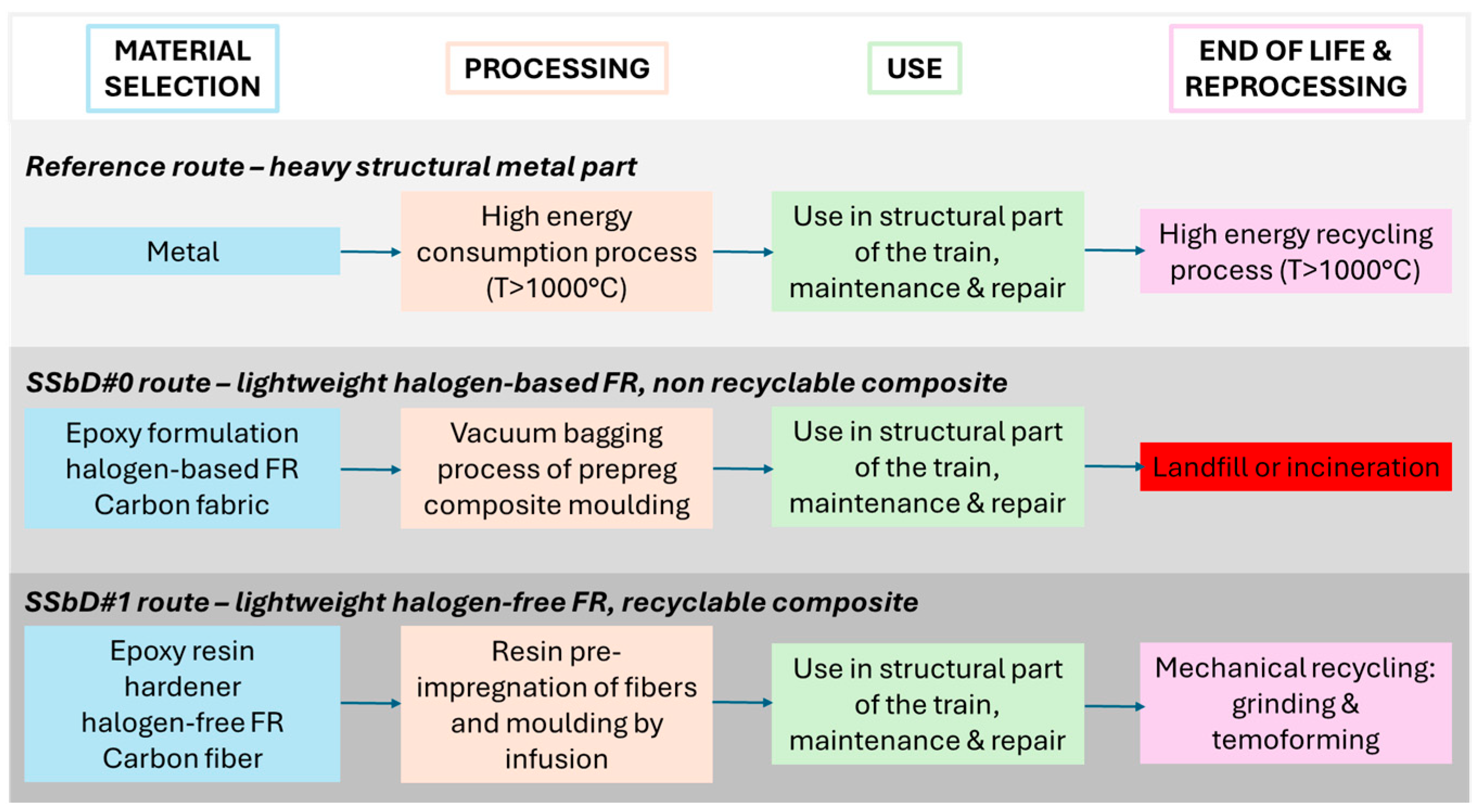
Figure 1 shows the starting point used in this case study (reference route), in which the metal part is expected to be substituted by a light-weight material in order to decrease energy consumption during use in railway applications and recycling at the end of life. A promising alternative emerging in the last year is represented by the Safe and Sustainable by Design route (indicated hereafter as SSbD#0) using a lightweight material (carbon fibre epoxy composite), which is, however, not recyclable and contains a halogen-based FR. To go further, a halogen-free FR is used, combined with a reversible hardening technology, where the infusion manufacturing process permits the development of a recyclable composite, thus increasing the performance in terms of safety and sustainability (indicated hereafter as SSbD#1 route). To investigate the release performances of the different SSbD implemented strategies, SSbD#0 and SSbD#1 have been tested.
Figure 1.
Reference and SSbD routes (SSbD#0 and SSbD#1).
The SSbD#0 route is represented by a composite containing the halogen-based FR Tris(1-chloro-2-propyl) phosphate (TCPP) (i.e., Araldite LY1564, Huntsman Advanced Materials, Guangzhou, China and TCPP). The composite material representing the SSbD#1 route is SP3 RTM, which is made by a flame-retardant epoxy resin (i.e., Araldite LY1564 and Exolit EP360, Clariant Plastics & Coatings, Frankfurt am Main, Deutschland, respectively) and carbon fibres. Both composites were fabricated through the resin transfer manufacturing process. To investigate the contribution of carbon fibres in the material release during simulated exposure scenarios of SP3 RTM, a composite without carbon fibres was also tested (indicated as SP3). All the details related to the chemistry behind the tested materials are described in Berner et al., 2025 [15].
2.2. Release Assessment Methodology
Considering the consequential relationship between release and exposure, the proposed methodology aims to investigate release to inform designers who can modify their materials to minimize it, minimizing, as a consequence, the possible exposure of target populations [16,17,18]. For exposure to occur, the released materials must be emitted into an environmental compartment where they can undergo fate and transformation processes (transmission) before coming into contact with, and potentially entering the body of the receptor(s) through a specific exposure route [19,20,21]. For this reason, the proposed methodology is based on (i) the release hotspots identification; (ii) quantification of actual released materials through experimental work when a hotspot of release is identified; and (iii) a scoring system strategy to verify if the SSbD alternative has better performance in terms of release than the reference material, which is included in Artous et al. submitted [14].
2.3. Release Hotspots Identification
To identify potential release of substances/materials along the life cycle of each case study (from the manufacturing to the end-of-life, and eventually considering re-use), knowledge acquired in previous projects as well as scientific publications dealing with the identification of hotspots of release were considered, such as the work performed in screening safety assessment in [22,23,24] or the investigations related to transformation processes included in [25,26,27], ECHA guidelines [28,29,30,31]. An Excel file was developed to organize important information related to the substances used and the activities performed at each stage of the life cycle.
The release/emission hotspot identification was performed in a simple and pragmatic way, since this first step should be kept as easy and accessible as possible, to allow the different actors in the value chain (all those people/entities involved with different roles from material/product idea and design, to production, processing, distribution and final use) to perform this check as a preliminary step of the exposure assessment. In our approach, a release or emission hotspot was defined by the concomitant presence of a combination of variables related to both the material or product under study, the process/activity that was performed with it, and some relevant system-related parameters. As a reference, material intrinsic properties such as the presence of known toxic elements, the physical state (e.g., powder), the size (e.g., fine or ultrafine particles), or the shape (e.g., fibre or elongated particles) of some of the components of the material, can play an important role in the release of materials. Moreover, high-energy activities (e.g., spray, high-energy mixing or grinding, etc.) are associated with a likely release or emission of materials. Finally, system-related parameters (e.g., humidity, presence of containment system, ventilation, engineering controls, etc.) are known to affect material emissions. For this reason, the above-mentioned parameters were included in an Excel file (accessible through Zenodo 10.5281/zenodo.17817147), and their presence and/or combination were then used to flag possible release/emission hotspots to be further investigated using exposure assessment models or experimental testing.
Expert judgement—meaning judgement from scientists with a high level of knowledge and extensive experience (more than 10 years) in the field of emission and release assessment—and experiences acquired in previous EU projects (i.e., GUIDEnano, caLIBRAte, GRACIOUS, CIMPA, SAbyNA, ASINA, SbD4Nano) were used to identify the hotspots of release, in case of data gaps.
The experimental set-ups were designed to mimic those scenarios in which a likely hotspot of release was identified. The characterizations to be performed were selected following information found in the literature about the type of material/chemical potentially released (e.g., powder and fibre-like particles, micro-nanoplastics (MNPs)), as well as potential transformation processes occurring during the assessment scenarios [32].
In Table 1, the likely hotspots of release are presented for each Assessment Scenario.
Table 1.
Hotspots of release were identified, and an associated experimental test was performed.
In the current work, only the sequential ageing and abrasion experiments, simulating the use of the composite material as an exterior structural part of the train, were reported. During the use stage, powder of the polymeric composite, micro and nano fibres, and MNPs can be released [33,34] as a result of cracking and fragmentation after exposure to Xenon light [35,36,37,38,39,40].
As fibres play a dominant role in terms of performance on aged samples [41,42], a focus on released fibre-like particles was conducted. Indeed, according to the fibre (pathogenicity) paradigm [43,44] and as stated by the World Health Organization, respirable fibres with a length > 5 µm, a respirable diameter < 3 µm and an aspect ratio (A/R) > 3:1 are regarded as critical fibres as they can penetrate deep into the alveolar region of the lungs and may cause severe harm to humans upon inhalation exposure if they are sufficiently bio-durable [45]. Moreover, respirable fibres with a diameter greater than 30 nm can be classified as rigid fibres and are considered more hazardous than non-rigid fibres [46]. Information related to the hazardous effects of the hardener used in this case study can be found in Berenguer et al. (submitted).
2.4. Release Quantification at Identified Hotspots
2.4.1. Outdoor Ageing and Hard Abrasion Test
To simulate the use stage of these materials, cascade activities (i.e., two or more tests repeated sequentially) were applied to investigate the contribution of sunlight, rain, and strong abrasion once the composite is used as an exterior part of a train.
A climatic chamber SUNTEST XXL (Atlas Material Testing Technology GmbH, Linsengericht, Germany) has been used to simulate outdoor UV ageing conditions following ISO4892-3:2014 [47,48]. Samples were taken out of the ageing device at different time slots (0–500 h, 750 h) for abrasion testing and corresponding physico-chemical characterization.
For the abrasion, a Taber Abrader with 2 wheels of 1 kg each, covered with a medium abrasive paper, has been used to simulate a strong and heavy abrasion (500 cycles) without using the aspiration system of the instrument. The thickness and weight of samples were measured after each abrasion; the fragments generated were collected for SEM observations.
Inductively Coupled Plasma-Mass Spectrometry (ICP-MS) analysis has been conducted using the triple quadrupole ICP-QQQ (Agilent 8900, Santa Clara, CA, USA) after a total digestion to analyze the Sulphur (S) element to track the 4-Aminophenyldisulfide (AFD) hardener in each investigated sample.
Scanning Electron Microscopy (SEM) JEOL J-7100FE (JEOL (Europe) BV, Lireweg, The Netherlands), operating at 20 keV with a secondary electron detector, has been used to study the powder generated during the abrasion. The specimens were coated with carbon to increase their conductivity. Manual measurement of particle size was performed using ImageJ software v1.54. More details on materials, instruments, and testing performed are reported in Supplementary Information.
2.4.2. Micro- and Nanoplastic Spot-Check
In the microplastic spot-check analysis, the NanoRelease sampling protocol was applied before and after 2000 h of UV ageing of the test specimen. The purpose of the NanoRelease protocol is to remove loosely attached secondary micro- and nanoplastics from the surface of the (aged) test specimen and to disperse them in water for subsequent analysis [49]. Three different techniques were used for subsequent analysis of released micro- and nanoplastics: (1) A particle counter was used to quantify the number of released µm-sized fragments from 1 to 120 µm. (2) Analytical ultracentrifugation (AUC) was used to quantify the mass of released nanoplastics from 20 to 999 nm. (3) The release of water-soluble non-particulate organics (DOC) was performed via filtration and total organic carbon (TOC) measurements. More detailed information on the experimental set-ups, specimens used, sampling techniques, and measurements performed is reported in the Supplementary Information.
3. Results and Discussion
3.1. Release Quantification at Identified Hotspots
3.1.1. Outdoor Ageing and Hard Abrasion
The effect related to the sequential release experiments of hard abrasion and outdoor ageing is presented in terms of weight loss of the sample, thickness, and elemental analysis of the powder released during abrasion.
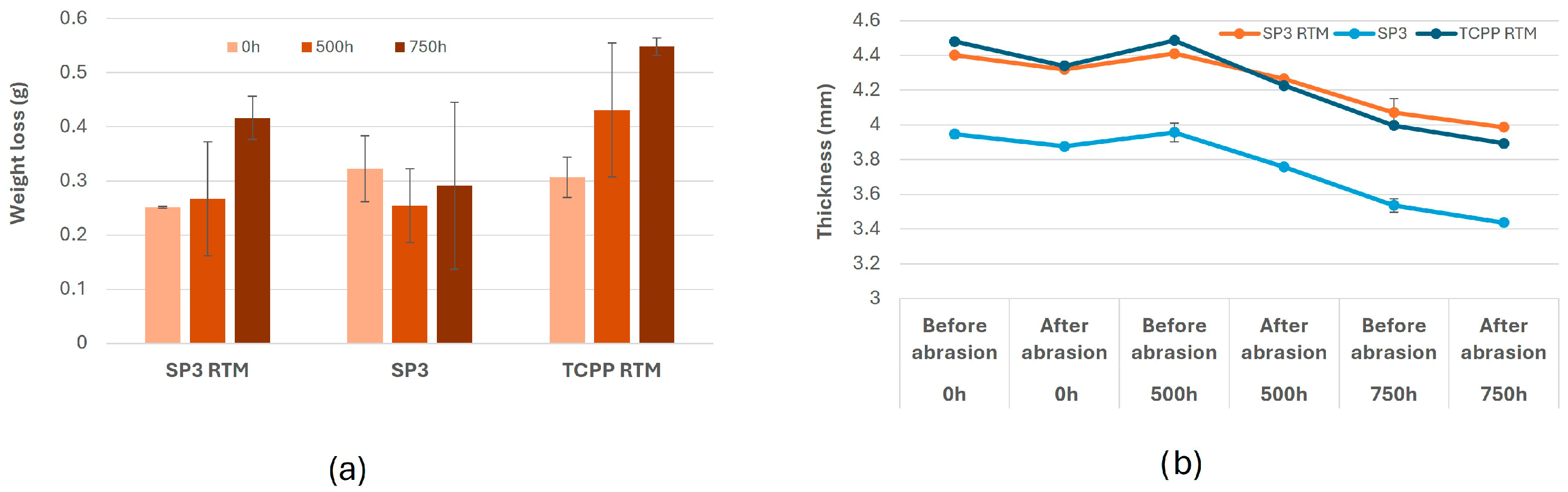
For the weight loss (Figure 2a), it is possible to notice differences between the effect of the abrasion alone (represented as the weight loss at 0 h) and the effect of the combination of abrasion and weathering (i.e., at 500 h and 750 h). Higher variability of the weight loss after the weathering of SP3 RTM, SP3, and TCPP RTM between the two repetitions was observed compared to the variability of the samples before weathering, probably due to the effects of water and light on samples that probably compromise the sample surface, creating a non-homogeneous surface with weaker points that release more materials when subjected to the hard abrasion. In addition, no significant differences can be noticed between the SSbD1 composite (i.e., SP3 RTM) and its corresponding version without carbon fibres (i.e., SP3). Higher release of material after weathering and abrasion of the benchmark material (i.e., TCPP RTM) can be observed compared to the SSbD alternative (i.e., SP3 RTM). A reduction in the thickness of each material can be observed after the abrasion, both in weathered and non-weathered samples (Figure 2b). Lower values can be detected for samples without carbon fibres (i.e., SP3) compared to the ones containing carbon fibres (i.e., SP3 RTM, TCPP RTM), and a progressive decrease in the thickness along the ageing for all the samples. Moreover, after ageing, a slight thickness increase was detected, probably due to the effect of the water and the light during the 500 h ageing, which could alter the structure of each sample.
Figure 2.
Weight loss (in g) of each sample after abrasion at 0 h, at 500 h, and 750 h of ageing (a) and thickness measurements (mm) of aged and not aged samples before and after the abrasion (b). All ageing and release experiments were performed in duplicate, and variability is represented as the difference between independent replicates.
Considering the release investigations by elemental analysis expressed as wt. % (Table 2), sulphur—element used to track AFD release—is released in higher quantities from samples with no carbon fibres (i.e., SP3) compared to the one containing the fibre material (i.e., SP3 RTM, TCPP RTM) during the hard abrasion test. This is because the carbon fibres’ functionality improves the stability and the resistance of the composite samples. Similar sulphur concentrations are obtained following the abrasion of SP3 RTM6 and TCPP RTM1.1, which does not permit discrimination of the release of AFD between the SSRbD alternative (halogen-free FR) and the benchmark composite (halogenated FR) during the simulation of the use stage. Similar releases between weathered and non-weathered samples can be detected, showing that the weathering does not influence the AFD release during the use stage of the various materials.
Table 2.
S content (% w/w) after total digestion of a 1 × 1 cm2 sample and corresponding total S concentration calculated for the abraded volume sample.
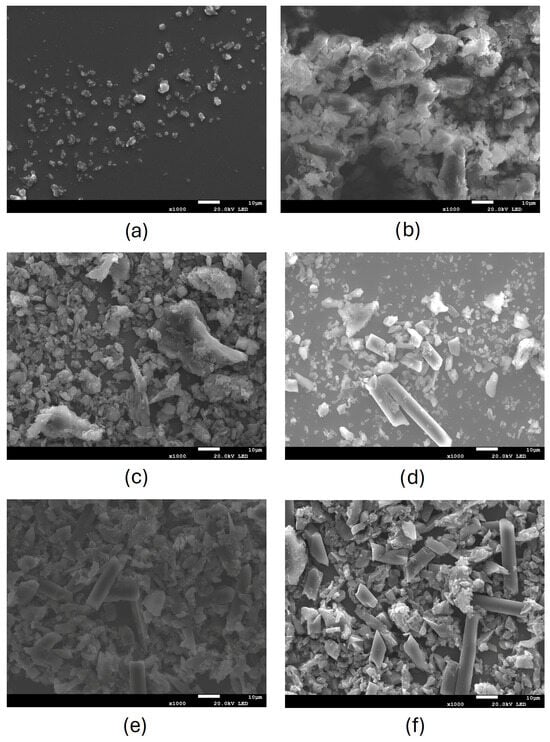
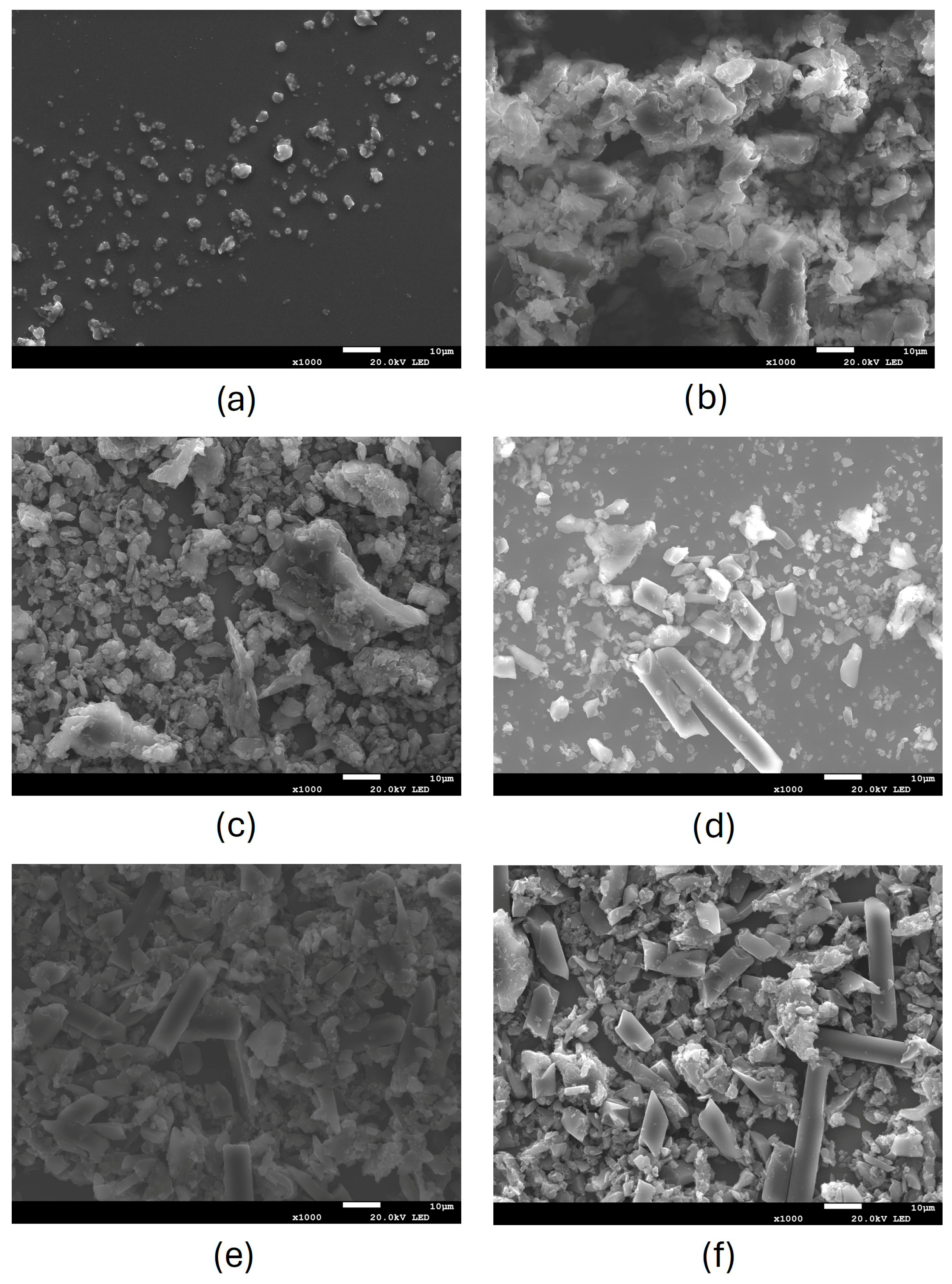
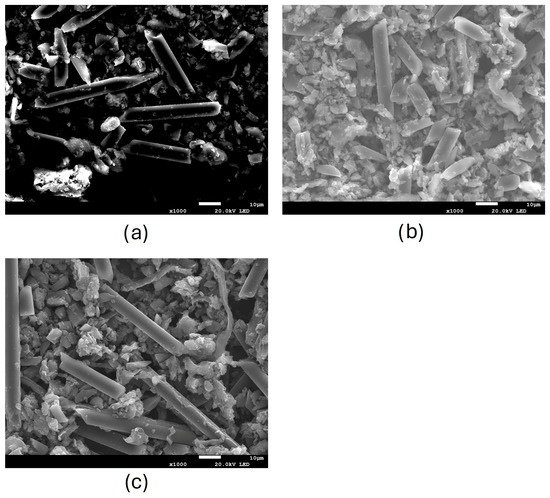
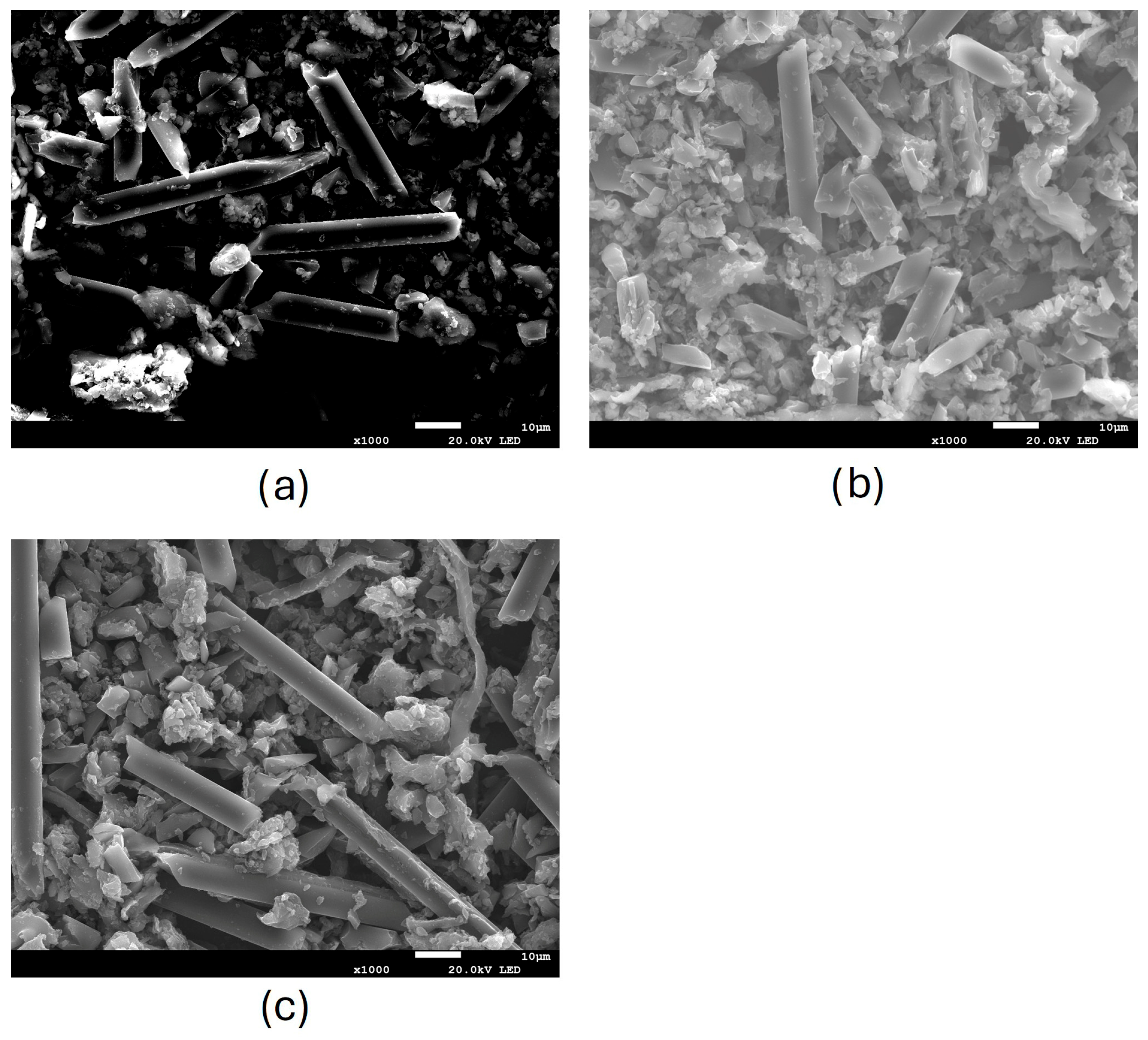
According to SEM observations (Figure 3 and Figure 4), the particles collected after the abrasion of non-aged and aged materials have a quite broad size distribution, characterized by particles having irregular spheroidal shapes. In samples containing the carbon fibre materials (SP3RTM and TCPP RTM), fibre fragments have different lengths.
Figure 3.
SEM images of powder released after abrasion of (a) SP3 at 0 h, (b) SP3 at 500 h, and (c) SP3 at 750 h, (d) SP3 RTM at 0 h, (e) SP3RTM at 500 h, and (f) SP3 RTM at 750 h.
Figure 4.
SEM images of powder released after abrasion of TCPP at (a) 0 h, (b) 500 h, and (c) 750 h.
After weathering, particles seem to be more aggregated, and the determination of the particle size is more challenging due to the presence of overlapping particles with very similar contrast in the SEM images. This increased aggregation makes it more difficult to measure small-sized particles and results in an apparent larger particle size.
Regarding the fibres released from the composites containing the carbon fibre materials (RTM), in all observed samples, the fibre diameter was 6.5 ± 0.5 µm, which can be considered as rigid fibres. The fibre diameter did not change after the first abrasion and the subsequent weathering plus abrasion, indicating that these types of fibres are not affected by these processes. Regarding the length of fibres, very few of them were shorter than 5 µm after the first abrasion, and their length remained quite constant after the subsequent weathering plus abrasion. Accordingly, the fibres A/R remained higher than 3:1. The number of fibres per picture and the number of fibres with A/R > 3, for aged and not aged samples, were quite similar, suggesting that the SSbD alternative (i.e., SP3 RTM) has the same behaviour when subjected to the combined weathering and abrasion. In Table 3, the measurements for length, diameter, and the percentage of fibres with an A/R higher than 3 are reported for 15 fibres of each sample, where the highest value was obtained for the TCPP material abraded and aged for 750 h.
Table 3.
Number of fibres detected in SEM images and percentage of elongated particles with aspect/ratio (A/R) higher than 3 for the samples containing carbon fibres.
3.1.2. Outdoor Ageing and Micro- and Nanoplastic Quantification
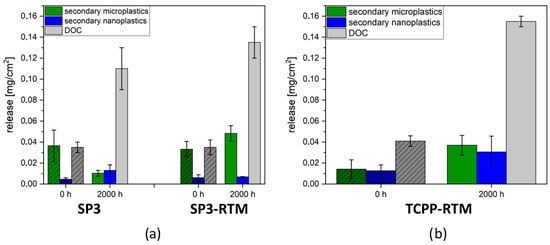
Each species of SP3 with and without carbon fibres (SP3 RTM and SP3, respectively) and the TCPP Reference with carbon fibres (TCPP RTM) was measured in duplicate. The measured raw data obtained with the three different analytical techniques were used to calculate the release of each species in mass per (aged) surface area. Figure 5a shows the comparison of releases from the SP3 (without carbon fibres) and the SP3-RTM (with carbon fibres) material, each pristine and aged. Figure 5b shows the releases from the TCPP-RTM Reference pristine and aged. After UV ageing, the DOC release is increased 3-4-fold in SP3, as well as in SP3-RTM. In the case of SP3, the microplastic release is decreased after UV ageing, and the nanoplastic release only slightly increased. In contrast to that, an increase in micro- and nanoparticle release from the SP3-RTM composite material was detected after UV ageing. In this context, it must be noted that micro- and nanoparticles released from the composite materials are most likely composite fragments as well. However, due to the definition of microplastics, they all must be classified as microplastics if their polymer content is at least 1%, which is very likely the case, but can currently not be proven with the available analytical techniques. In the case of the TCPP-RTM Reference without carbon fibres, an increase in micro-, nanoplastic, and DOC release was detected after UV ageing (Figure 5b). Particle releases from pristine TCPP-RTM Reference samples were lower compared to pristine SP3 samples (with and without carbon fibres). The nanoparticle release from the TCPP-RTM Reference detected after 2000 h UV ageing is, however, higher than the nanoparticle release from SP3 and SP3-RTM after the same ageing duration. Compared to the pristine TCPP-RTM, the micro- and especially the nanoparticle release increased after ageing.
Figure 5.
Release of secondary microplastics, nanoplastics, and DOC in mg/cm2 from the SSbD alternatives (a) and the reference (b) before and after UV ageing. All ageing and release experiments were performed in duplicate, and variability is represented as the difference between independently incubated replicates.
Comparing the Reference material (i.e., TCPP-RTM) and the SSRbD alternative material (i.e., SP3-RTM), the microparticle release from the Reference was, in most cases, lower than from the SSRbD product, but the nanoparticle release was, especially after ageing, higher than the nanoparticle release from any other SSRbD material (pristine and aged).
Overall, the comparative analysis between the SSbD alternative (SP3 RTM) and the benchmark material (TCPP RTM) revealed distinct differences in release behaviour under simulated use and ageing conditions. The SSbD composite consistently demonstrated reduced material release during both weathering and abrasion scenarios compared to the benchmark containing halogenated flame retardant, suggesting enhanced durability and resistance to environmental stressors. Notably, the release of MNPs from the SSbD composite was generally lower or comparable to the benchmark, particularly in the nanoparticle fraction after ageing, which is critical, given the heightened concern over nanoparticle emissions.
The obtained results, therefore, underscore the effectiveness of the SSbD approach in achieving its core objectives: minimizing hazardous releases, enhancing material recyclability, and supporting safer product innovation. By integrating non-halogenated flame retardants and reversible hardening technologies, the SSbD composite not only meets functional performance requirements for railway applications but also addresses key sustainability and safety criteria. The systematic identification and quantification of release hotspots throughout the product life cycle demonstrate how SSbD methodologies can proactively guide material selection and process optimization. The observed reduction in material release, especially under stress conditions that mimic real-world use, aligns with the SSbD framework’s emphasis on source reduction in emissions and supports regulatory trends such as the EU’s restrictions on microplastics and the upcoming Ecodesign for Sustainable Products Regulation. Importantly, the findings highlight the value of early-stage release assessment in the innovation process, enabling the anticipation and mitigation of potential risks before large-scale deployment.
For workers, the identification of release hotspots during manufacturing and end-of-life stages (e.g., fibre handling, grinding) provides insights for exposure mitigation, including technical measures and personal safety equipment. The SSbD composite’s lower propensity for releasing hazardous fibres and particles during high-energy processes directly translates to reduced inhalation and dermal exposure risks. From an environmental perspective, the decreased release of MNPs, as well as other substances of concern, supports ecosystem protection and aligns with circular economy principles by ensuring that recycling and reuse do not inadvertently increase pollution.
4. Conclusions
Our work contributed to the development of new plastic composites made of halogen-free flame retardant, providing a fast-screening methodology to assess the release of materials during their production and use stages. The contribution of our work towards the development of new functional plastic composites is to provide a fast-screening methodology to assess the release of different materials during their production and use. The objective and the scientific purpose of this article is to give support to the design of a material/product by providing methodologies that allow investing less time and money at this early stage of innovation. At later stages of development, at higher TRL, more advanced experimental methods will be needed to deeply characterize released substances with more advanced methods and corresponding analytical techniques (e.g., Pyrolysis–Gas Chromatography–Mass Spectroscopy or Raman for MNPs [50]). This approach is meant to be in line with the SSbD framework implementation, where all the safety and sustainability investigations should reflect the TRL of the material/product/process assessed.
This study presents a preparatory work for the development of a more structured methodology for assessing material release within the SSbD framework, specifically applied to an epoxy–resin composite intended for railway applications. By integrating expert knowledge, regulatory guidance, and experimental validation, the approach enables early identification of release hotspots across the product life cycle—from manufacturing to end-of-life. The developed Excel-based template for release hotspot identification, grounded in ECHA guidelines, facilitated a systematic screening of potential release scenarios. Experimental simulations of identified hotspots at the use stage allowed quantification of particles, fibres, and MNPs emissions. Comparative analysis between the benchmark and the SSRbD alternative demonstrated that the newly developed recyclable composites can also reduce material release, especially under weathering and abrasion conditions.
The findings underscore the importance of incorporating release assessments early in material innovation to guide safer and more sustainable design choices, especially to investigate releases of Substances of Very High Concern (SVHC) and their transformation processes along the life cycle of a product. Moreover, the results provide a foundation for developing a scoring system that integrates release data with hazard profiles, enabling a more holistic SSbD evaluation.
Future work will focus on refining the scoring methodology, validating the approach across broader material types, and exploring its integration into regulatory and industrial decision-making processes. Ultimately, the developed methodology provides a transparent, reproducible methodology to inform regulatory alignment, safer substitution, and data-driven material selection, contributing to the advancement of SSbD practices by offering a pragmatic tool for anticipating and mitigating environmental and human exposure risks associated with plastic-based materials.
Supplementary Materials
The following supporting information can be downloaded at: https://www.mdpi.com/article/10.3390/nano16070403/s1, Figure S1. Hard abrasion and weathering, respectively, using the (a) Taber abrader and the (b) SUNTEST XXL+ climatic chamber, and (c) the effect of 750 h of weathering on the samples. Figure S2. Equipment used to measure the thickness of the composite samples. Refs. [47,48] are cited in the supplementary materials.
Author Contributions
Conceptualization, V.C. and C.D.; methodology, V.C. and P.M.S.; investigation, B.P., H.F., D.T., V.B., A.H., C.-C.H., and S.A.; data curation, V.C., P.M.S., and C.D.; writing—original draft preparation, V.C. and P.M.S.; writing—review and editing, C.D.; funding acquisition, S.V.-C. All authors have read and agreed to the published version of the manuscript.
Funding
SURPASS (Safe-, sUstainable- and Recyclable-by design Polymeric systems: A guidance towardS next generation of plasticS) received funding from the European Union’s Horizon Europe research and innovation programme under grant agreement No. 101057901.
Data Availability Statement
The Excel file developed in the study is openly available in Zenodo at https://doi.org/10.5281/zenodo.17817147.
Acknowledgments
The authors have reviewed and edited the output and take full responsibility for the content of this publication.
Conflicts of Interest
Author Patrizia Marie Schmidt is an employee of BASF SE, a company producing and marketing polymers, including plastics. The other authors declare no conflicts of interest.
Abbreviations
The following abbreviations are used in this manuscript:
| A/R | Aspect ratio |
| AFD | 4-Aminophenyldisulfide |
| AUC | Analytical ultracentrifugation |
| DOC | Dissolved Organic Carbon |
| EC | European Commission |
| ECHA | European Chemicals Agency |
| FR | Flame retardants |
| HBDC | Hexabromocyclododecane |
| IAS | Intentionally added substances |
| ICP-MS | Inductively Coupled Plasma- Mass Spectrometry |
| JRC | Joint Research Centre |
| MNPs | Micro- and nanoplastics |
| NIAS | Non-intentionally added substances |
| SEM | Scanning Electron Microscopy |
| SSbD | Safe and Sustainable by Design |
| SSRbD | Safe, Sustainable, and Recyclable by Design |
| SVHC | Substances of Very High Concern |
| TBBPA | Tetrabromobisphenol A |
| TCPP | Tris(1-chloro-2-propyl) phosphate |
| TOC | Total Organic Carbon |
| TRL | Technology Readiness Level |
References
- Caldeira, C.; Farcal, R.; Garmendia, A.I.; Mancini, L.; Tosches, D.; Amelio, A.; Rasmussen, K.; Rauscher, H.; Riego, S.J.; Sala, S. Safe and Sustainable by Design Chemicals and Materials—Framework for the Definition of Criteria and Evaluation Procedure for Chemicals and Materials; EUR 31100 EN; Publications Office of the European Union: Luxembourg, 2022. [Google Scholar]
- Patinha Caldeira, C.; Farcal, R.; Moretti, C.; Mancini, L.; Rauscher, H.; Rasmussen, K.; Riego Sintes, J.; Sala, S. Safe and Sustainable by Design Chemicals and Materials—Review of Safety and Sustainability Dimensions, Aspects, Methods, Indicators, and Tools; EUR 30991 EN, JRC127109; Publications Office of the European Union: Luxembourg, 2022. [Google Scholar] [CrossRef]
- Caldeira, C.; Garmendia, A.I.; Tosches, D.; Mancini, L.; Abbate, E.; Farcal, R.; Lipsa, D.; Rasmussen, K.; Rauscher, H.; Riego Sintes, J.; et al. Safe and Sustainable by Design Chemicals and Materials—Application of the SSbD Framework to Case Studies; Publications Office of the European Union: Luxembourg, 2023. [Google Scholar] [CrossRef]
- Abbate, E.; Garmendia Aguirre, I.; Bracalente, G.; Mancini, L.; Tosches, D.; Rasmussen, K.; Bennett, M.J.; Rauscher, H.; Sala, S. Safe and Sustainable by Design Chemicals and Materials—Methodological Guidance; Publications Office of the European Union: Luxembourg, 2024. [Google Scholar] [CrossRef]
- Aguirre, I.G.; Rasmussen, K.; Rauscher, H. Safe and Sustainable by Design: Driving Innovation Toward Safer and More Sustainable Chemicals, Materials, Processes and Products. Sustain. Circ. NOW 2025, 2, a26361704. [Google Scholar] [CrossRef] [Scilit]
- Apel, C.; Sudheshwar, A.; Kümmerer, K.; Nowack, B.; Midander, K.; Strömberg, E.; Soeteman-Hernández, L.G. Safe-and-sustainable-by-design roadmap: Identifying research, competencies, and knowledge sharing needs. RSC Sustain. 2024, 2, 2833–2838. [Google Scholar] [CrossRef] [Scilit]
- Brander, S.M.; Senathirajah, K.; Fernandez, M.O.; Weis, J.S.; Kumar, E.; Jahnke, A.; Hartmann, N.B.; Alava, J.J.; Farrelly, T.; Almroth, B.C.; et al. The time for ambitious action is now: Science-based recommendations for plastic chemicals to inform an effective global plastic treaty. Sci. Total Environ. 2024, 949, 174881. [Google Scholar] [CrossRef] [Scilit]
- Geueke, B.; Parkinson, L.V.; Groh, K.J.; Kassotis, C.D.; Maffini, M.V.; Martin, O.V.; Zimmermann, L.; Scheringer, M.; Muncke, J. Evidence for widespread human exposure to food contact chemicals. J. Expo. Sci. Environ. Epidemiol. 2025, 35, 330–341. [Google Scholar] [CrossRef] [Scilit]
- Hahladakis, J.N.; Velis, C.A.; Weber, R.; Iacovidou, E.; Purnell, P. An overview of chemical additives present in plastics: Migration, release, fate and environmental impact during their use, disposal and recycling. J. Hazard. Mater. 2018, 344, 179–199. [Google Scholar] [CrossRef] [Scilit]
- Monclús, L.; Arp, H.P.H.; Groh, K.J.; Faltynkova, A.; Løseth, M.E.; Muncke, J.; Wang, Z.; Wolf, R.; Zimmermann, L.; Wagner, M. Mapping the chemical complexity of plastics. Nature 2025, 643, 349–355. [Google Scholar] [CrossRef] [Scilit] [PubMed]
- Thompson, R.C.; Courtene-Jones, W.; Boucher, J.; Pahl, S.; Raubenheimer, K.; Koelmans, A.A. Twenty years of microplastic pollution research—What have we learned? Science 2024, 386, eadl2746. [Google Scholar] [CrossRef] [Scilit] [PubMed]
- European Commission. Commission Regulation (EU) 2023/2055 of 25 September 2023 Amending Annex XVII to Regulation (EC) No 1907/2006 of the European Parliament and of the Council Concerning the Registration, Evaluation, Authorisation and Restriction of Chemicals (REACH) as Regards Synthetic Polymer Microparticles; Publications Office of the European Union: Luxembourg, 2023. [Google Scholar]
- Soeteman-Hernández, L.G.; Cabrera, G.; Huegun, A.; Outón, P.R.; Artous, S.; Desrousseaux, S.; Staal, Y.; Cazzagon, V.; Delpivo, C.; Ganszky, D.; et al. Safe, Sustainable, and Recyclable by Design (SSRbD): A Qualitative Integrated Approach Applied to Polymeric Materials Early in the Innovation Process. Sustain. Circ. NOW 2025, 2, a25547325. [Google Scholar] [CrossRef] [Scilit]
- Artous, S.; Desrousseaux, S.; Steck, J.; Fontaine, H.; Schmidt, P.; Ganszky, D.; Delpivo, C.; Cazzagon, V.; Candalija, A.; Martinez, R.; et al. Safe, sustainable and recyclable by design (SSRbD): A quantitative integrated approach through a scoring system applied to polymeric materials. Sustain. Circ. NOW 2026. submitted. [Google Scholar]
- Berner, V.; Huegun, A.; Hammer, L.; Cristadoro, A.M.; Höhne, C.-C. Thermal and flame retardant properties of recyclable disulfide based epoxy vitrimers. Polym. Degrad. Stab. 2025, 233, 111145. [Google Scholar] [CrossRef] [Scilit]
- Barrett, W.M.; Meyer, D.E.; Smith, R.L.; Takkellapati, S.; Gonzalez, M.A. Review of generic scenario environmental release and occupational exposure models used in chemical risk assessment. J. Occup. Environ. Hyg. 2023, 20, 545–562. [Google Scholar] [CrossRef] [Scilit]
- Jessop, P.G.; MacDonald, A.R. The need for hotspot-driven research. Green Chem. 2023, 25, 9457–9462. [Google Scholar] [CrossRef] [Scilit]
- Pourzahedi, L.; Pandorf, M.; Ravikumar, D.; Zimmerman, J.B.; Seager, T.P.; Theis, T.L.; Westerhoff, P.; Gilbertson, L.M.; Lowry, G.V. Life cycle considerations of nano-enabled agrochemicals: Are today’s tools up to the task? Environ. Sci. Nano 2018, 5, 1057–1069. [Google Scholar] [CrossRef] [Scilit]
- Jiang, D.; Nowack, B. Reconciling plastic release: Comprehensive modeling of macro- and microplastic flows to the environment. Environ. Pollut. 2025, 383, 126800. [Google Scholar] [CrossRef] [Scilit] [PubMed]
- Lambert, S.; Wagner, M. Formation of microscopic particles during the degradation of different polymers. Chemosphere 2016, 161, 510–517. [Google Scholar] [CrossRef] [Scilit] [PubMed]
- Li, J.; Song, Y.; Cai, Y. Focus topics on microplastics in soil: Analytical methods, occurrence, transport, and ecological risks. Environ. Pollut. 2020, 257, 113570. [Google Scholar] [CrossRef] [Scilit]
- Ben Jeddi, H.; Goede, H.; Franken, R.; van Someren, E.; Shandilya, N.; Vermoolen, R.; Steck, J.; Artous, S.; Hermosilla, J.S.; Fransman, W. Development of a nano-specific safe-by-design module to identify risk management strategies. Ann. Work. Expo. Health 2025, 69, 310–322. [Google Scholar] [CrossRef] [Scilit]
- Cazzagon, V.; Vanhauten, R.; Hanlon, J.; Jiménez, A.S.; Harrison, S.; Auffan, M.; Braakhuis, H.M.; Boyles, M.; Candalija, A.; Katsumiti, A.; et al. The SAbyNA platform: A guidance tool to support industry in the implementation of safe- and sustainable-by-design concepts for nanomaterials, processes and nano-enabled products. Environ. Sci. Nano 2025, 12, 4008–4025. [Google Scholar] [CrossRef] [Scilit]
- Chatzipanagiotou, K.-R.; Petrakli, F.; Steck, J.; Philippot, C.; Artous, S.; Koumoulos, E.P. Towards safe and sustainable by design nanomaterials: Risk and sustainability assessment on two nanomaterial case studies at early stages of development. Sustain. Futur. 2025, 9, 100511. [Google Scholar] [CrossRef] [Scilit]
- Lomonaco, T.; Manco, E.; Corti, A.; La Nasa, J.; Ghimenti, S.; Biagini, D.; Di Francesco, F.; Modugno, F.; Ceccarini, A.; Fuoco, R.; et al. Release of harmful volatile organic compounds (VOCs) from photo-degraded plastic debris: A neglected source of environmental pollution. J. Hazard. Mater. 2020, 394, 122596. [Google Scholar] [CrossRef] [Scilit]
- Ren, X.; Han, Y.; Zhao, H.; Zhang, Z.; Tsui, T.-H.; Wang, Q. Elucidating the characteristic of leachates released from microplastics under different aging conditions: Perspectives of dissolved organic carbon fingerprints and nano-plastics. Water Res. 2023, 233, 119786. [Google Scholar] [CrossRef] [Scilit]
- Sun, J.; Zheng, H.; Xiang, H.; Fan, J.; Jiang, H. The surface degradation and release of microplastics from plastic films studied by UV radiation and mechanical abrasion. Sci. Total Environ. 2022, 838, 156369. [Google Scholar] [CrossRef] [Scilit]
- European Chemicals Agency (ECHA). Guidance on Information Requirements and Chemical Safety Assessment—Chapter R.12: Use Description; European Chemicals Agency (ECHA): Helsinki, Finland, 2015; Available online: https://echa.europa.eu/documents/10162/2324909/inforeq_csr_r12_en.pdf/fd0c17f5-e677-4faf-9464-f318fae48a9d (accessed on 7 January 2024).
- European Chemicals Agency (ECHA). Guidance on Information Requirements and Chemical Safety Assessment—Chapter R. 14: Occupational Exposure Assessment; European Chemicals Agency (ECHA): Helsinki, Finland, 2016. [Google Scholar]
- European Chemicals Agency (ECHA). Guidance on Information Requirements and Chemical Safety Assessment Chapter R.15: Consumer Exposure Assessment; European Chemicals Agency (ECHA): Helsinki, Finland, 2016. [Google Scholar]
- European Chemicals Agency (ECHA). Guidance on Information Requirements and Chemical Safety Assessment—Chapter R.16: Environmental Exposure Assessment; ECHA-16-G-03-EN; European Chemicals Agency (ECHA): Helsinki, Finland, 2016. [Google Scholar]
- Wohlleben, W.; Bossa, N.; Mitrano, D.M.; Scott, K. Everything falls apart: How solids degrade and release nanomaterials, composite fragments, and microplastics. NanoImpact 2024, 34, 100510. [Google Scholar] [CrossRef] [Scilit] [PubMed]
- Rai, P.K.; Sonne, C.; Brown, R.J.; Younis, S.A.; Kim, K.-H. Adsorption of environmental contaminants on micro- and nano-scale plastic polymers and the influence of weathering processes on their adsorptive attributes. J. Hazard. Mater. 2022, 427, 127903. [Google Scholar] [CrossRef] [Scilit] [PubMed]
- Luo, H.; Liu, C.; He, D.; Sun, J.; Li, J.; Pan, X. Effects of aging on environmental behavior of plastic additives: Migration, leaching, and ecotoxicity. Sci. Total Environ. 2022, 849, 157951. [Google Scholar] [CrossRef] [Scilit]
- Luo, H.; Li, Y.; Zhao, Y.; Xiang, Y.; He, D.; Pan, X. Effects of accelerated aging on characteristics, leaching, and toxicity of commercial lead chromate pigmented microplastics. Environ. Pollut. 2020, 257, 113475. [Google Scholar] [CrossRef] [Scilit]
- Pfohl, P.; Santizo, K.; Sipe, J.; Wiesner, M.; Harrison, S.; Svendsen, C.; Wohlleben, W. Environmental degradation and fragmentation of microplastics: Dependence on polymer type, humidity, UV dose and temperature. Microplast. Nanoplast. 2025, 5, 7. [Google Scholar] [CrossRef] [Scilit]
- Cheng, H.; Luo, H.; Hu, Y.; Tao, S. Release kinetics as a key linkage between the occurrence of flame retardants in microplastics and their risk to the environment and ecosystem: A critical review. Water Res. 2020, 185, 116253. [Google Scholar] [CrossRef] [Scilit]
- Menger, F.; Römerscheid, M.; Lips, S.; Klein, O.; Nabi, D.; Gandrass, J.; Joerss, H.; Wendt-Potthoff, K.; Bedulina, D.; Zimmermann, T.; et al. Screening the release of chemicals and microplastic particles from diverse plastic consumer products into water under accelerated UV weathering conditions. J. Hazard. Mater. 2024, 477, 135256. [Google Scholar] [CrossRef] [Scilit]
- Jarosz, K.; Borek-Dorosz, A.; Drozdek, M.; Rokicińska, A.; Kiełbasa, A.; Janus, R.; Setlak, K.; Kuśtrowski, P.; Zapotoczny, S.; Michalik, M. Abiotic weathering of plastic: Experimental contributions towards understanding the formation of microplastics and other plastic related particulate pollutants. Sci. Total Environ. 2024, 917, 170533. [Google Scholar] [CrossRef] [Scilit]
- Bridson, J.H.; Masterton, H.; Theobald, B.; Risani, R.; Doake, F.; Wallbank, J.A.; Maday, S.D.; Lear, G.; Abbel, R.; Smith, D.A.; et al. Leaching and transformation of chemical additives from weathered plastic deployed in the marine environment. Mar. Pollut. Bull. 2024, 198, 115810. [Google Scholar] [CrossRef] [Scilit]
- Das, S.C.; La Rosa, A.D.; Goutianos, S.; Grammatikos, S. Effect of accelerated weathering on the performance of natural fibre reinforced recyclable polymer composites and comparison with conventional composites. Compos. Part C Open Access 2023, 12, 100378. [Google Scholar] [CrossRef] [Scilit]
- Amirnuddin, S.; Manda, M.; Hassan, S.; Wahit, M.; Rejab, M.; Binoj, J.; Ilyas, R. Compressive behaviour of tin slag polymer concrete confined with fibre reinforced polymer composites exposed to tropical weathering and aggressive conditions. Mater. Today Proc. 2023, in press. [Google Scholar] [CrossRef] [Scilit]
- Pott, F.; Friedrichs, K.H. Tumoren der Ratte nach i.p.-Injektion faserförmiger Stäube. Naturwissenschaften 1972, 59, 318. [Google Scholar] [CrossRef] [Scilit] [PubMed]
- Stanton, M.F.; Wrench, C. Mechanisms of mesothelioma induction with asbestos and fibrous glass. JNCI J. Natl. Cancer Inst. 1972, 48, 797–821. [Google Scholar] [CrossRef] [Scilit]
- World Health Organisation (WHO). Determination of Airborne Fibre Number Concentrations: A Recommended Method, by Phase-Contrast Optical Microscopy (Membrane Filter Method); World Health Organisation (WHO): Geneva, Switzerland, 1997. [Google Scholar]
- Dumit, V.I.; Liu, Y.; Bahl, A.; Kohonen, P.; Grafström, R.C.; Nymark, P.; Müller-Graf, C.; Haase, A.; Pink, M. Meta-Analysis of Integrated Proteomic and Transcriptomic Data Discerns Structure–Activity Relationship of Carbon Materials with Different Morphologies. Adv. Sci. 2024, 11, e2306268. [Google Scholar] [CrossRef] [Scilit]
- ISO 4892-3:2024; Plastics-Methods of Exposure to Laboratory Light Sources—Part 3: Fluorescent UV Lamps. International Organization for Standardization (ISO): Geneva, Switzerland, 2024.
- Wohlleben, W.; Kingston, C.; Carter, J.; Sahle-Demessie, E.; Vázquez-Campos, S.; Acrey, B.; Chen, C.-Y.; Walton, E.; Egenolf, H.; Müller, P.; et al. NanoRelease: Pilot interlaboratory comparison of a weathering protocol applied to resilient and labile polymers with and without embedded carbon nanotubes. Carbon 2017, 113, 346–360. [Google Scholar] [CrossRef] [Scilit]
- Pfohl, P.; Wagner, M.; Meyer, L.; Domercq, P.; Praetorius, A.; Hüffer, T.; Hofmann, T.; Wohlleben, W. Environmental Degradation of Microplastics: How to Measure Fragmentation Rates to Secondary Micro- and Nanoplastic Fragments and Dissociation into Dissolved Organics. Environ. Sci. Technol. 2022, 56, 11323–11334. [Google Scholar] [CrossRef] [Scilit]
- Singh, N.; Walker, T.R.; Hofmann, T. Chemistry in the Environment. Microplastics and Nanoplastics in the Environment; Royal Society of Chemistry: Cambridge, UK, 2026. [Google Scholar] [CrossRef] [Scilit]

Disclaimer/Publisher’s Note: The statements, opinions and data contained in all publications are solely those of the individual author(s) and contributor(s) and not of MDPI and/or the editor(s). MDPI and/or the editor(s) disclaim responsibility for any injury to people or property resulting from any ideas, methods, instructions or products referred to in the content. |
© 2026 by the authors. Licensee MDPI, Basel, Switzerland. This article is an open access article distributed under the terms and conditions of the Creative Commons Attribution (CC BY) license.