


Abstract
Aramid paper serves as an insulating material in high-frequency power electronic transformers, and the incorporation of composite K-BNNS particles has been shown to enhance the insulating properties of aramid paper. Partial discharge (PD) is a predominant phenomenon that can lead to insulation failure in high-frequency transformers. Therefore, this paper primarily investigates the PD performances of different nanoparticle doping concentrations on aramid paper. Firstly, composite aramid papers containing K-BNNSs at different concentrations are prepared, namely 5%, 8%, 10% and 13%, respectively. Then, the experimental platforms of PD for composite aramid paper are established, and the PD performances, surface potentials, and hydrogen bonds under different high-frequency applied voltages are discussed. The experiment results show that the composite aramid paper with 10% K-BNNSs nanoparticle content has the optimal insulation performance. In the needle-plate and column-plate models, the PD amplitude decreases by 65.35% and 27.33%, respectively, when compared with non-doped aramid paper. Moreover, the breakdown voltage improves by 32.2% and 38.5%, respectively. After that, the influence mechanisms of residual charges and hydrogen bonds on the PD characteristics of composite aramid paper are analyzed. The results obtained in this paper can provide important reference for the design and selection of insulation materials for high-frequency transformers.
1. Introduction
Power electronic transformers consist of power electronic converters and high-frequency transformers, which offer advantages such as a compact size, lightweight design, and high power density. In recent years, these devices have attracted considerable attention in the field of power electronics. High-frequency pulse voltages generated by power electronic converters often impinge upon the insulation characteristics of high-frequency transformers, thereby causing premature insulation failure. Existing studies have shown that high-frequency PD represents the primary cause of insulation failure in high-frequency transformers [1]. Currently, insulation in high-frequency transformers is primarily achieved through dry-type or oil-immersed methods. Oil-immersed configurations, with their superior heat dissipation and insulation properties, facilitate the development of high-frequency transformers with higher power, voltage, and capacity ratings. Given that aramid paper serves as the inter-turn insulation material in oil-immersed high-frequency transformers, the optimization of its PD characteristics under high-frequency operating conditions is of considerable research significance.
Research conducted by some scholars has primarily focused on high-frequency discharge characteristics, charge transport properties, and material optimization. With regard to high-frequency PD characteristics and the associated mechanisms, Han et al. [2] investigated the effects of different pulse waveforms on the surface discharge characteristics and insulation lifetime of polyimide films. Their findings indicated that the partial discharge initiation voltage varies little under different voltage waveforms, whereas the phase distribution and statistical characteristics of partial discharges exhibit significant changes. Furthermore, the aging rate under bipolar waveforms is higher than that under unipolar waveforms. Zhang et al. [3] employed finite element and molecular simulation methods to investigate the insulation failure mechanisms of polyimide under high-frequency electrical stress. Zhao, Li, and Zhang et al. [4,5,6,7,8] investigated the breakdown characteristics and PD properties of epoxy resin under high-frequency square-wave voltages. It was found that the flashover breakdown voltage, partial discharge initiation voltage, partial discharge amplitude, and insulation lifetime decrease significantly with increasing frequency, whereas the breakdown time is shortened. Moreover, the high-frequency thermal effect has been identified as the primary cause of the reduced breakdown voltage and shortened insulation lifetime. In contrast, Jiang et al. [9] observed that partial discharge amplitude and discharge repetition rate increase with frequency. Li et al. [10] investigated the PD characteristics of oil-paper insulation under high-frequency electrical stress and identified a “frequency-induced inflection point” effect in the discharge behavior of high-frequency oil-paper insulation.
Regarding charge transport characteristics, Li et al. [11] investigated the surface charge transport properties of oil-paper insulation under high-frequency pulse voltages. Their study revealed that the initial surface charge and trap density of high-frequency oil-paper specimens decrease with increasing frequency, whereas the surface potential decay rate initially increases and then decreases. Ren et al. [12] investigated the effect of unipolar square-wave voltage on the space charge characteristics of polyimide. Their findings indicated that internal charge accumulation in polyimide materials under square-wave voltage is greater than that under DC voltage, and that even higher charge accumulation and more severe electric field distortion occur under negative square-wave voltage.
Regarding material optimization, Han et al. [13] developed an electro-thermal coupled discharge breakdown phase-field model to study the evolution of breakdown pathways in polyimide subjected to high-frequency electrical stress. Their study revealed that, as frequency and temperature increase, the development of discharge breakdown pathways accelerates, with Joule heating gradually becoming the dominant factor. Asif et al. [14] investigated the influence of nanoparticles on the aging mechanism of polyimide (PI) and found that PI/TiO2 nanocomposites exhibit fewer defects, thereby suppressing the occurrence of PD. Xing et al. [15] developed disiloxane-modified polyimide films and observed that a 5% content significantly enhances the high-frequency surface dielectric strength of PI. Li et al. [16] prepared epoxy resin composites modified with dopamine-grafted nanoscale boron nitride (h-BN). Their findings showed that doping at a mass fraction of 10% yields the highest charge dissipation rate, with the high-frequency surface flashover voltage increasing by 14.73% compared to pure epoxy resin. Song et al. [17] prepared epoxy composites using a composite filler consisting of small SiO2 particles and large BN particles, thereby significantly enhancing both thermal conductivity and high-frequency electrical insulation properties.
Building on these studies, Li et al. [18] prepared composite aramid paper and found that its optimal PD resistance is achieved with a 10% content of the composite particle K-BNNSs. However, the mechanism by which K-BNNS nanoparticles influence the partial discharge characteristics of composite aramid paper remains unclear. Furthermore, existing research [19] suggests that composite particles alter the charge transport properties of the composite material, thereby influencing its partial discharge characteristics. Nevertheless, this hypothesis remains largely unverified by experimental evidence and theoretical studies. To address this gap, the present study established an experimental platform for high-frequency partial discharge and charge transport in composite aramid paper, as well as a terahertz detection platform. The low-frequency vibrations of terahertz waves can precisely reflect intermolecular forces such as hydrogen bonding, and terahertz spectroscopy can effectively evaluate the uniformity, dielectric properties, and molecular structural changes in insulating materials, providing key support for materials-performance research. Using the step-up voltage method and the constant voltage method, the high-frequency partial discharge characteristics and charge transport properties of composite aramid paper have been investigated. In addition, the mechanism by which K-BNNS nanoparticles influence the partial discharge characteristics of the composite aramid paper has been explored.
2. Experimental Platform
2.1. PD Experiment
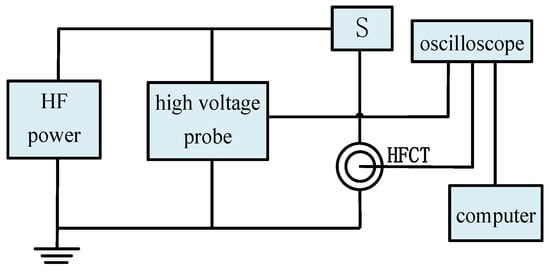
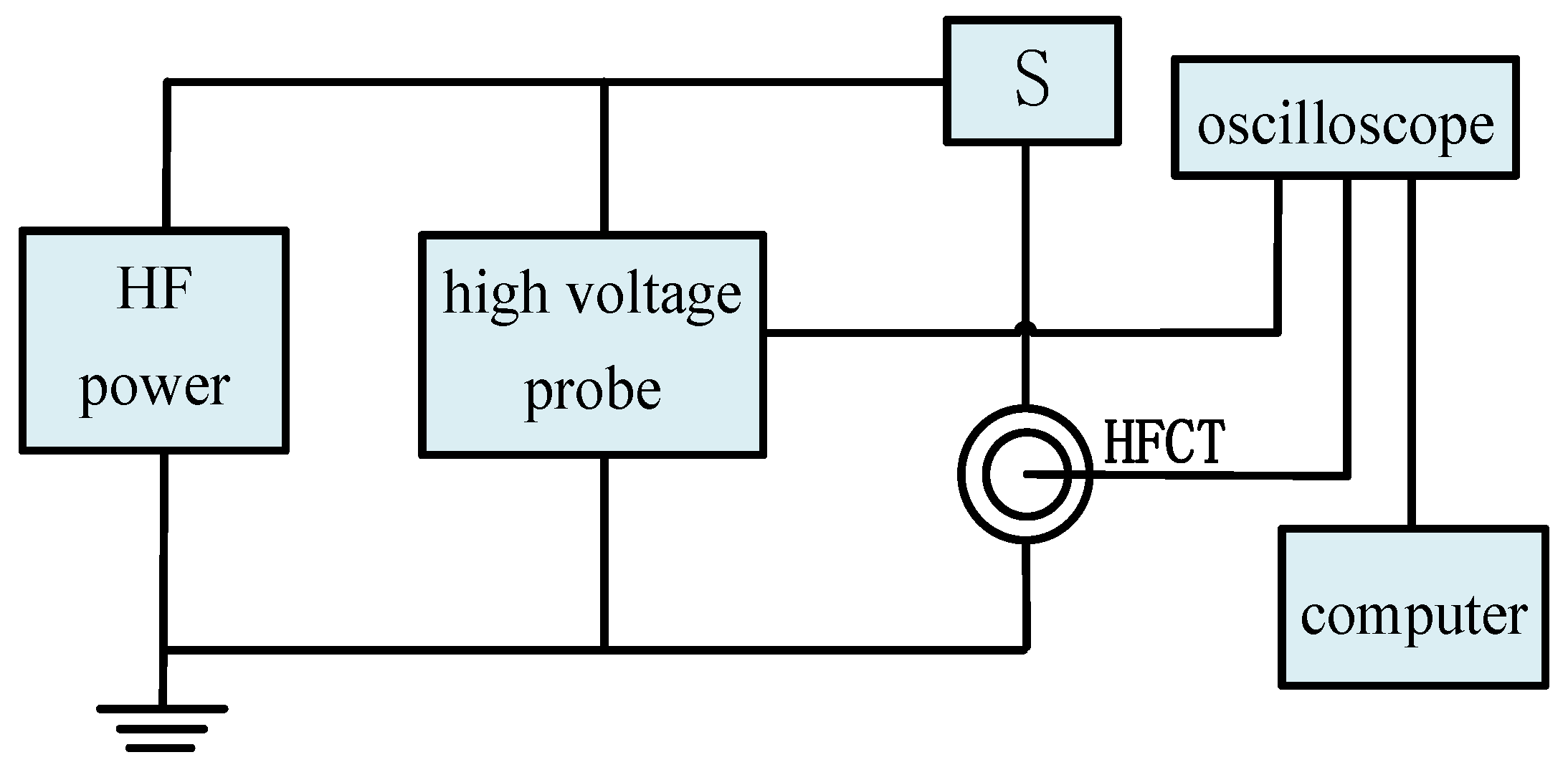
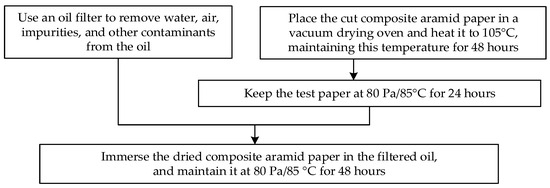
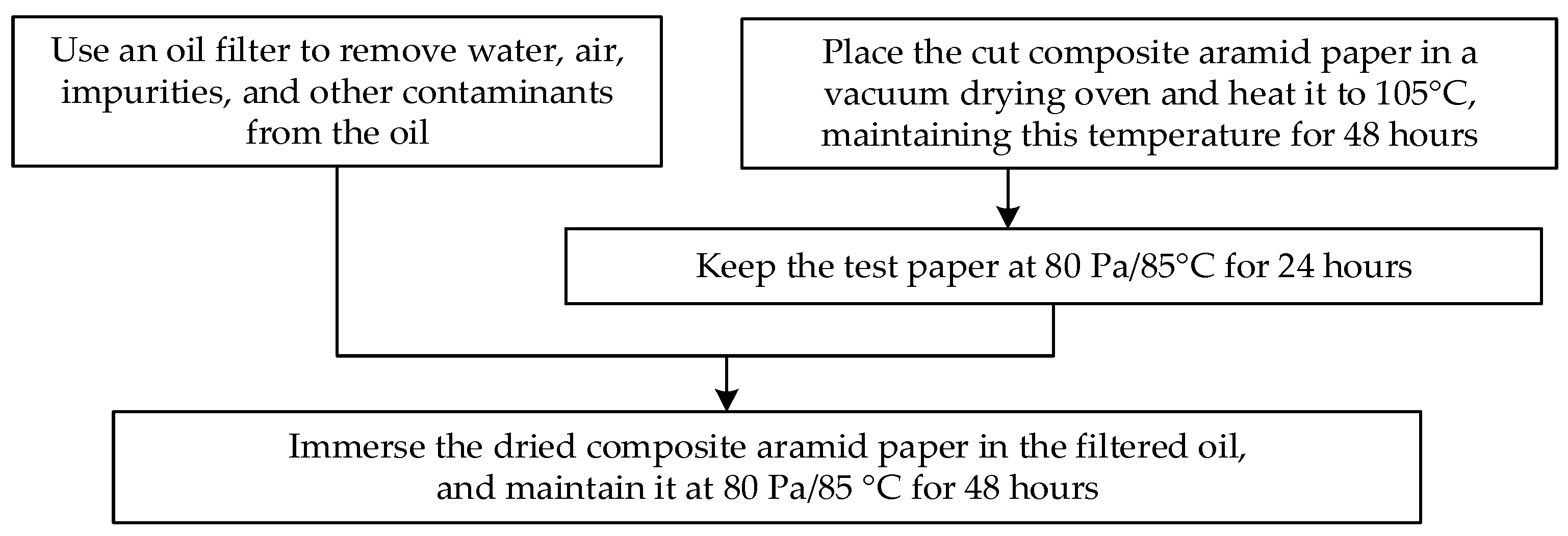
A high-frequency PD test platform for composite aramid paper was established to investigate the influence of K-BNNS nanoparticles on the partial discharge characteristics of composite aramid paper. The test platform is illustrated in Figure 1. It comprises a high-frequency power supply, a high-voltage probe, the test model (S), a high-frequency current transformer (HFCT), and an oscilloscope. The parameters of the relevant equipment are detailed in Table 1. Prior to partial discharge testing, background noise measurements and specimen pretreatment were performed. Herein, Karamay No.25 mineral oil was adopted as the filtered oil, and the mass fraction of KH-550 was set to 4%. The specimen pretreatment process is shown in Figure 2. The composite aramid papers illustrated in Figure 2 were selected from composite insulating papers prepared according to Reference [18], with filler contents of 0 wt%, 5 wt%, 8 wt%, 10 wt%, and 13 wt%. These specimens are designated as F-0, F-5, F-8, F-10, and F-13, respectively.
Figure 1.
High-frequency PD test platform.
Table 1.
Test platform parameters.
Figure 2.
Specimen processing flowchart.
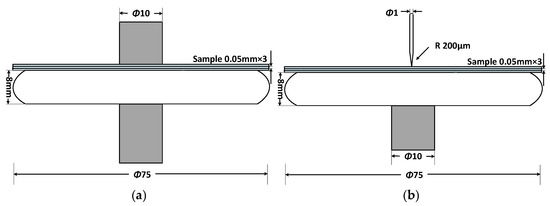
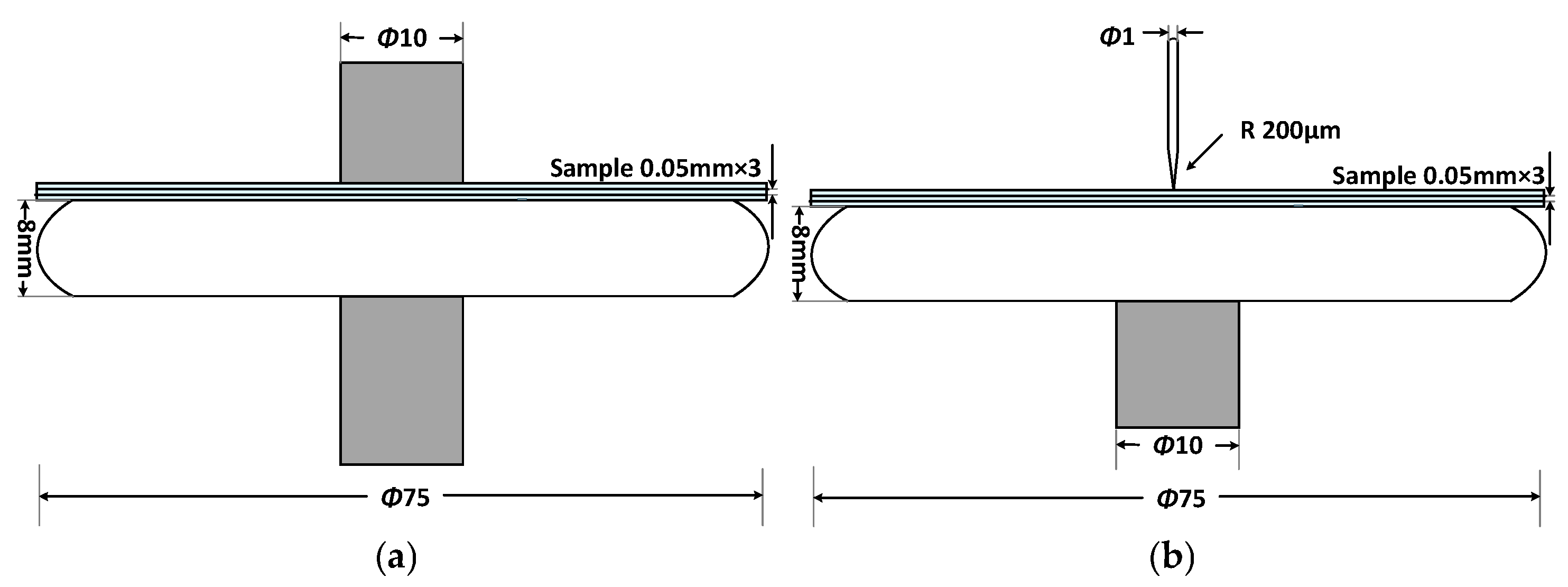
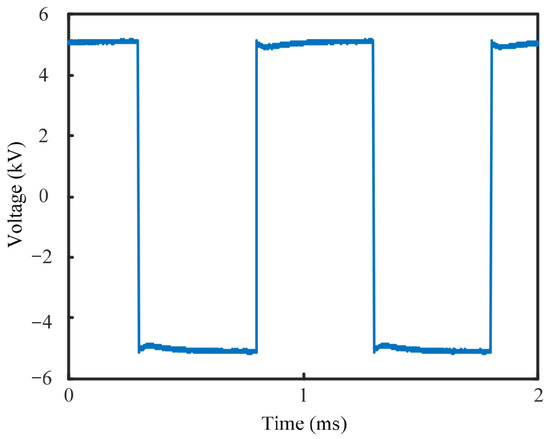
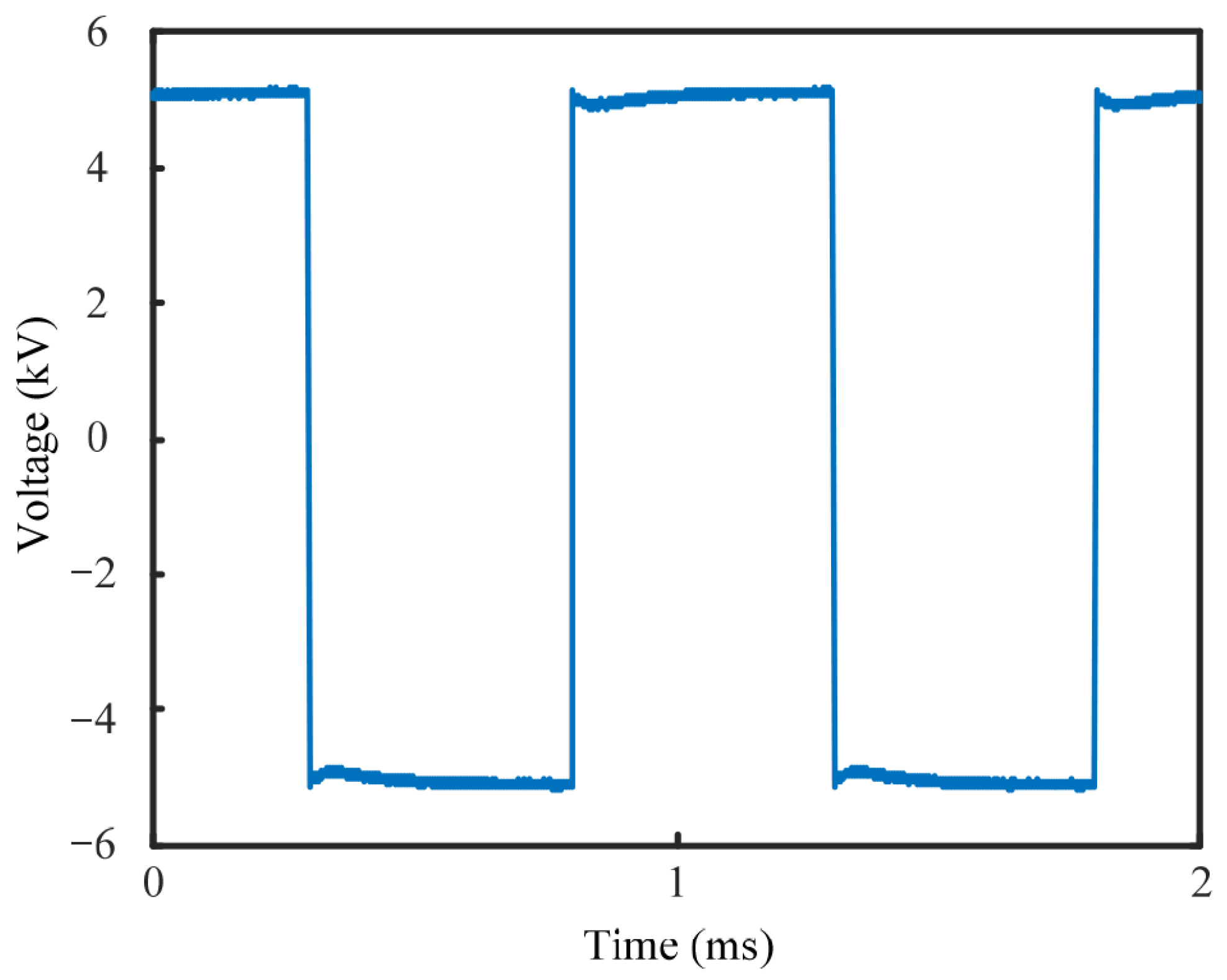
Based on the actual operating conditions of high-frequency transformers, existing research, and relevant standards [20,21], needle-plate and column-plate defect models were designed, as shown in Figure 3. The output voltage waveform of the high-frequency power supply is shown in Figure 4. Subsequently, high-frequency partial discharge experiments were conducted using the step-up voltage method and the constant voltage method, with the applied test conditions detailed in Table 2.
Figure 3.
Typical defect models in transformers: (a) Column-plate model; (b) Pin-plate model.
Figure 4.
High-frequency test voltage.
Table 2.
Experimental conditions of high-frequecy PD test.
2.2. Other Experiments
2.2.1. Testing of Surface Charge
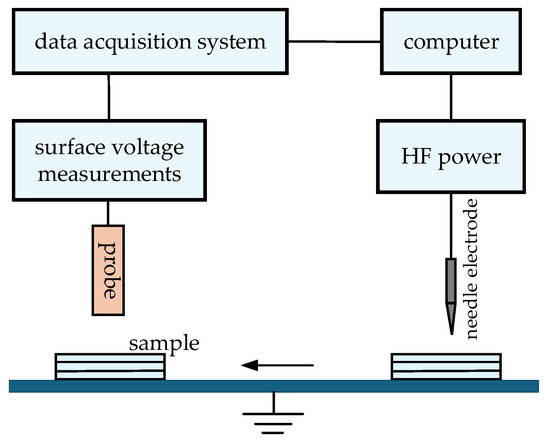
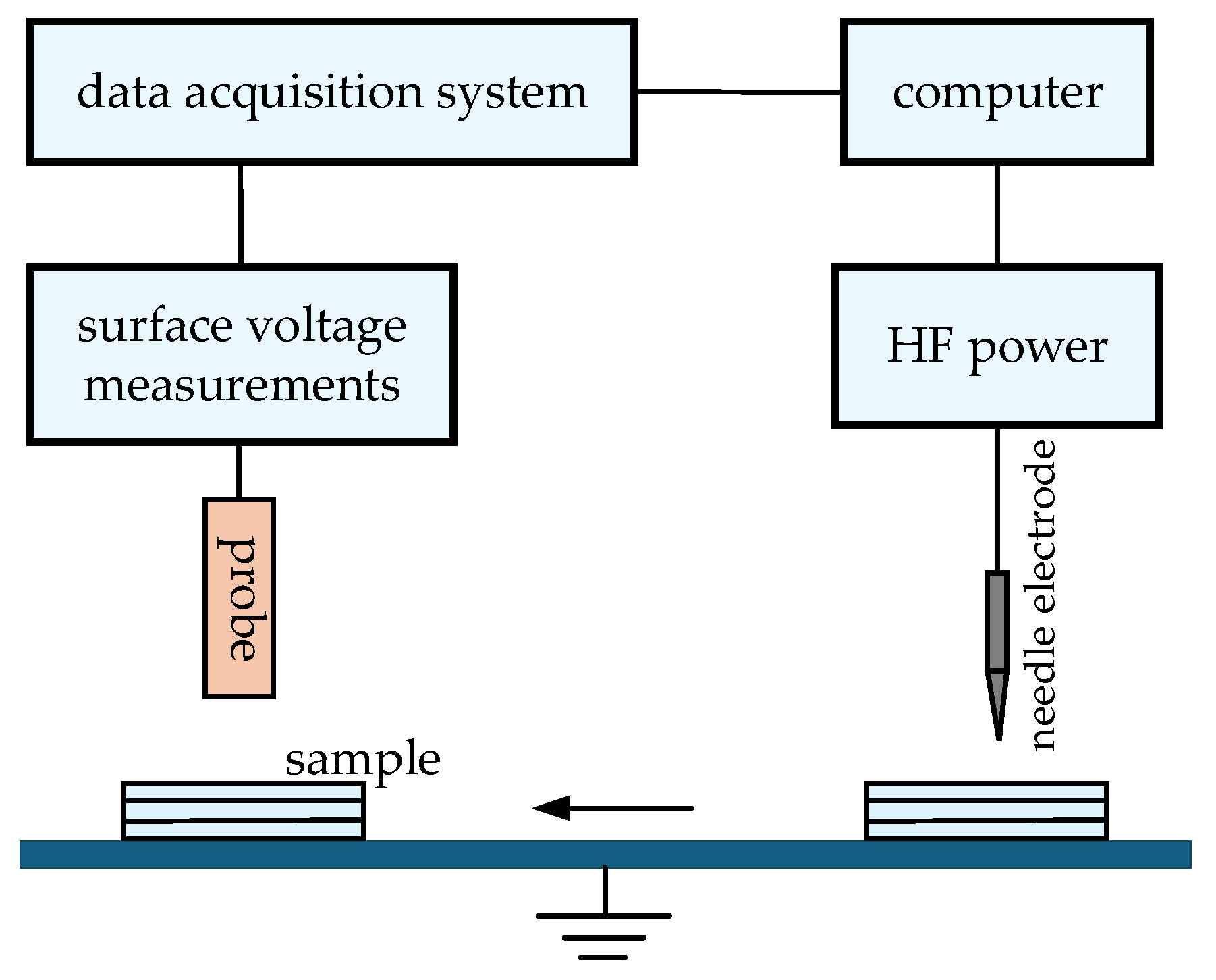
To investigate the effects of different nanoparticle concentrations on the charge transport properties and PD characteristics of composite aramid paper, a surface potential measurement platform was constructed for composite aramid paper under high-frequency pulse voltages, as shown in Figure 5. The platform comprises several components, including a high-frequency power supply, a needle electrode, the sample, a probe, a surface potential meter, a data acquisition card, and a computer. The technical specifications of the equipment and the experimental conditions are presented in Table 3 and Table 4, respectively. The high-frequency power supply was used to apply voltage to the specimen via the needle electrode for corona charging. The distance between the needle electrode and the specimen was maintained at 8 mm. After a 10 min charging period, the voltage was discontinued, and the specimen was rapidly transferred to a position 3 mm below the fixed probe for measurement of its surface potential distribution. The surface potential meter, connected to the probe and the data acquisition card, recorded the real-time variation in the surface potential.
Figure 5.
Surface potential test system under a high-frequency square wave.
Table 3.
Equipment parameters.
Table 4.
Experimental conditions of surface potential test.
Subsequently, the surface potential value of oil-impregnated composite aramid paper by means of the active electrostatic probe method previously delineated is measured. And the charge density σ at the point to be measured can be obtained by inverse calculation using the linear scaling method [22], as follows:
where μ is the potential of the point to be measured, ε0 is the vacuum dielectric constant; εr is the relative dielectric constant of the material; d is the thickness of the material.
σ = με0εr/d
From Equation (1), it can be observed that the charge density of the point under consideration is positively and linearly correlated with the surface potential value of said point. Furthermore, it is evident that the potential distribution can be a reflection of the charge distribution.
2.2.2. Testing of Hydrogen Bonding
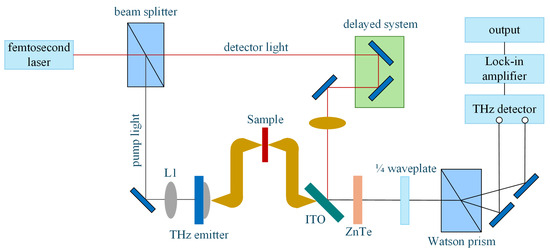
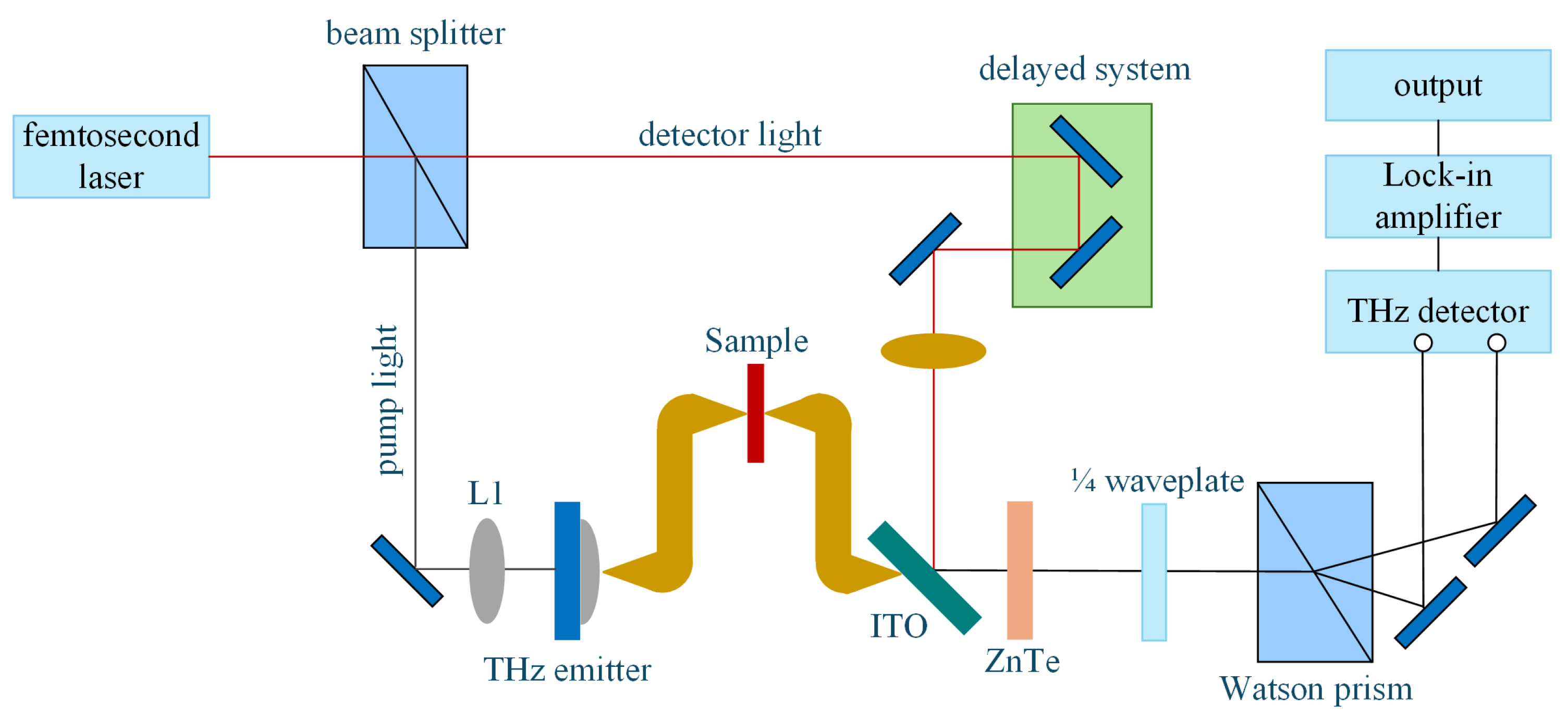
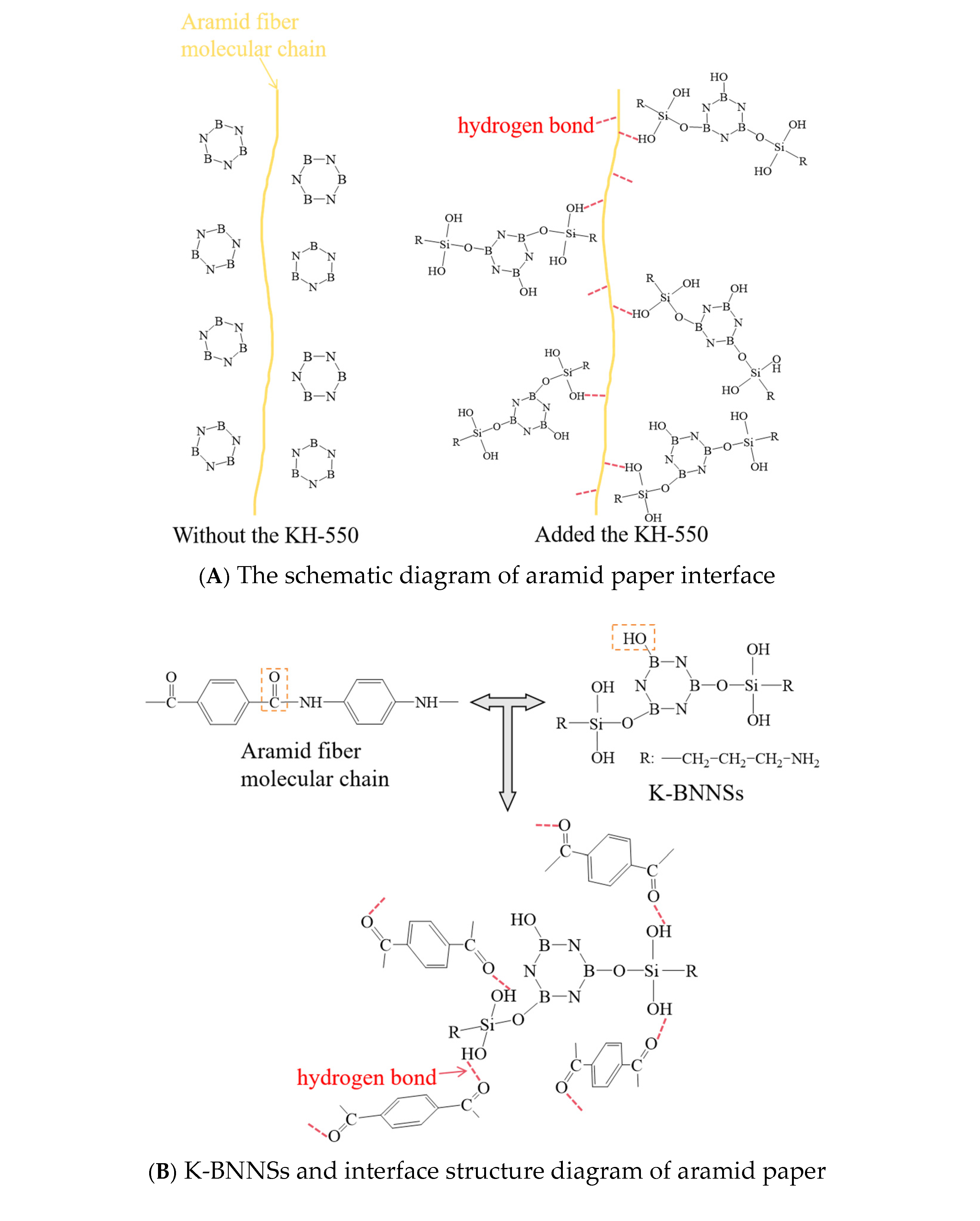
Previous studies [10,18] have speculated that the addition of a silane coupling agent KH-550 to the composite particles could facilitate the formation of hydrogen bonds between the composite particles and the aramid matrix; however, there has been a lack of relevant experimental verification. To verify this hypothesis, a terahertz detection platform for composite aramid paper was constructed, leveraging the ability of terahertz waves to probe deeply into the structure and strength variations of hydrogen bonds within the material [23,24], as shown in Figure 6 [25,26]. The platform primarily comprises a femtosecond laser, a terahertz radiation source, a terahertz radiation detection device, and a time delay control system. During operation, the pump light and probe light generated by the femtosecond laser are modulated and directed along their respective paths to excite terahertz radiation, ensuring synchronous arrival at the detection device. By precisely controlling the time delays between the probe light and terahertz pulses, terahertz waveforms can be effectively captured and recorded, enabling an in-depth study of the sample properties.
Figure 6.
Transmitted terahertz time-domain spectroscopy system.
3. PD Characteristics of Composite Aramid Paper
3.1. The Amplitude of PD
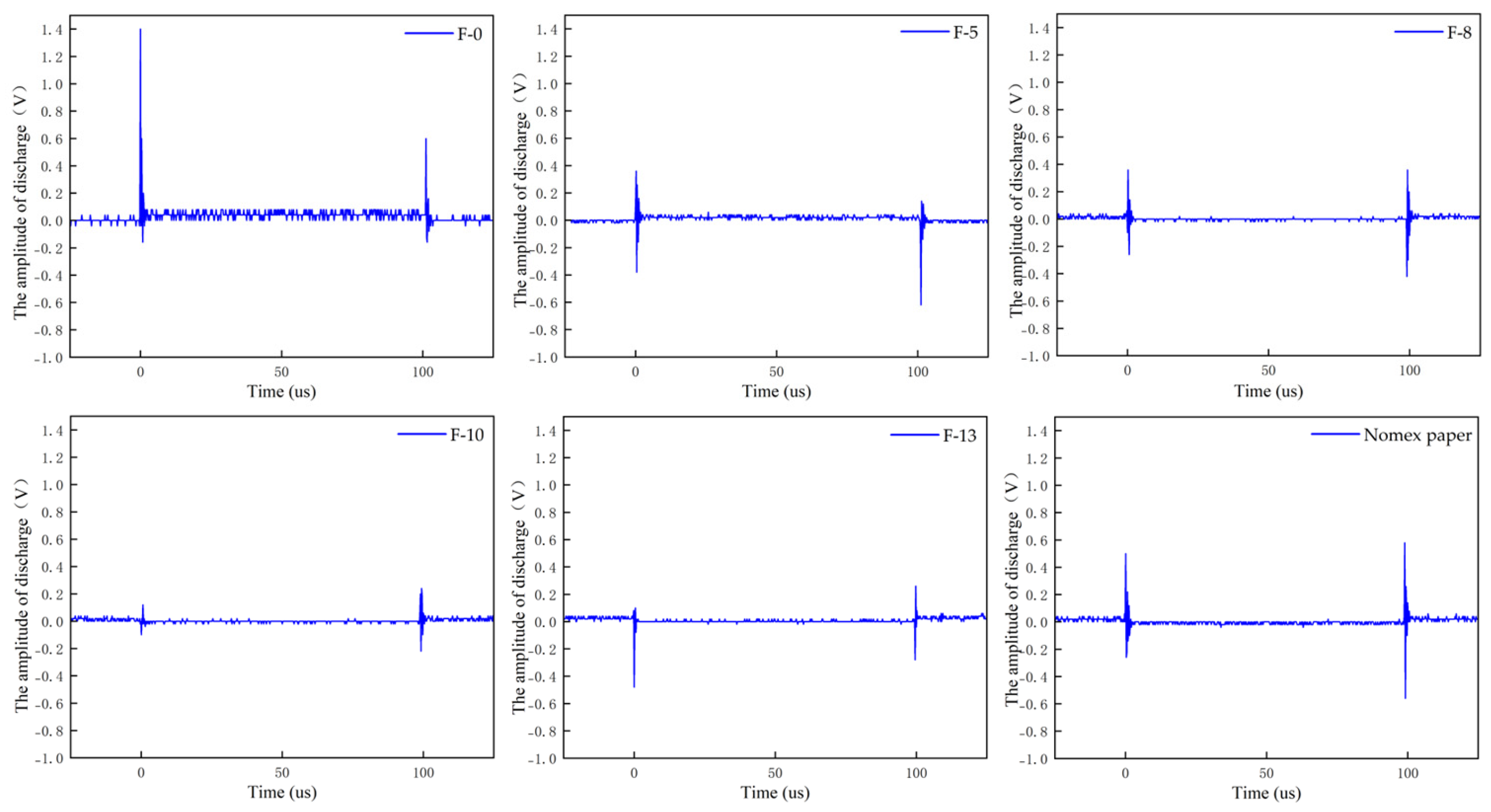
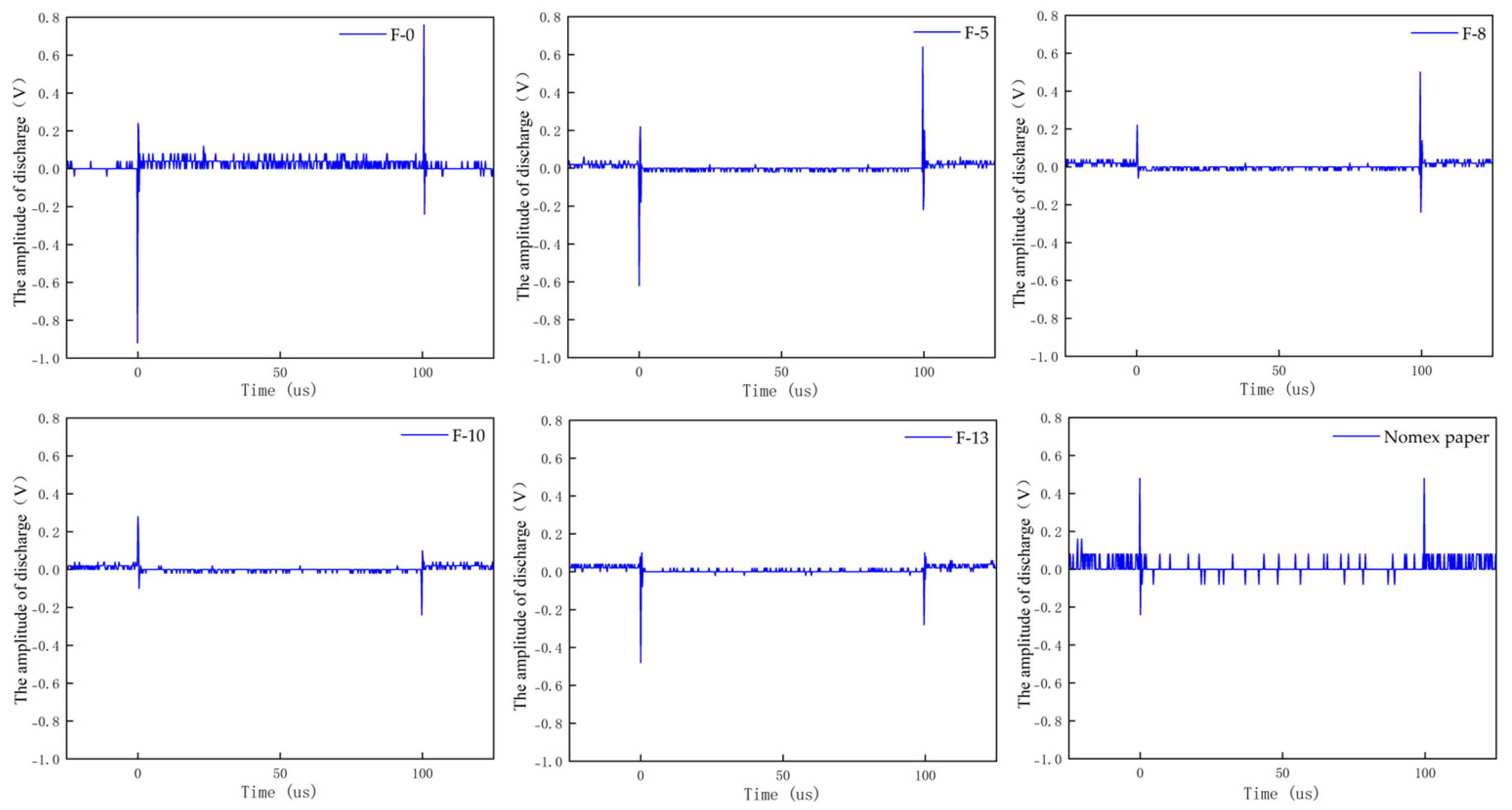
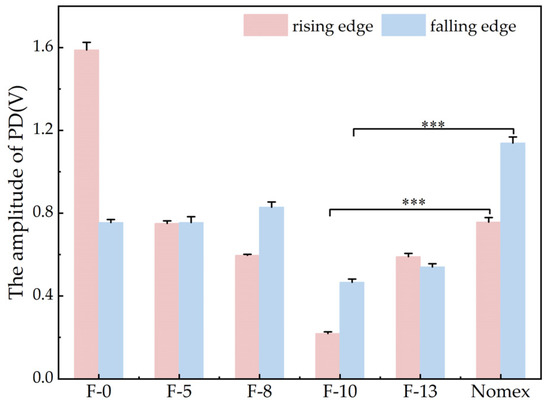
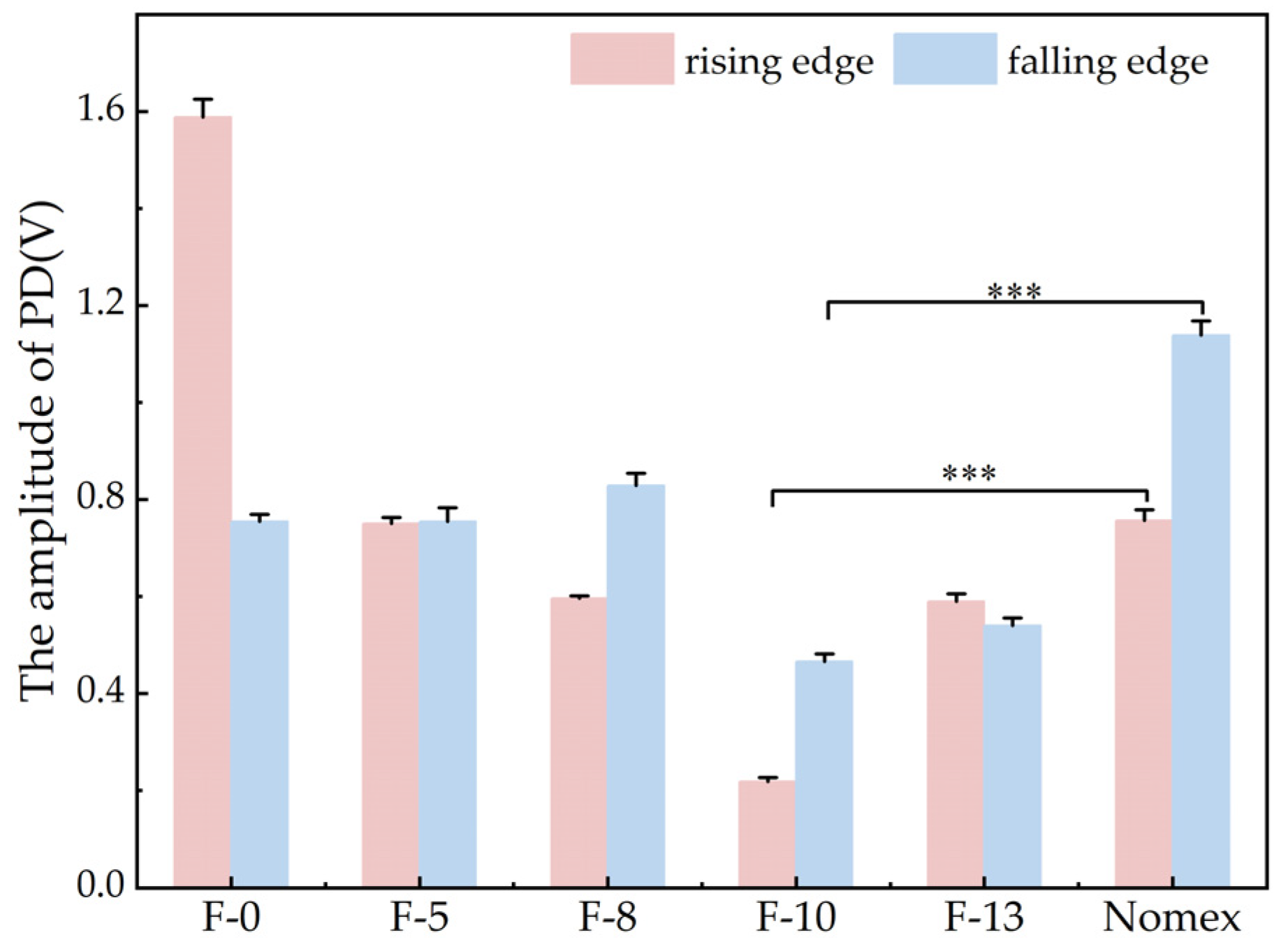
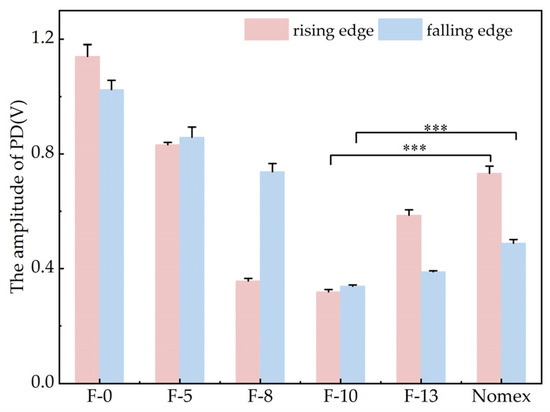
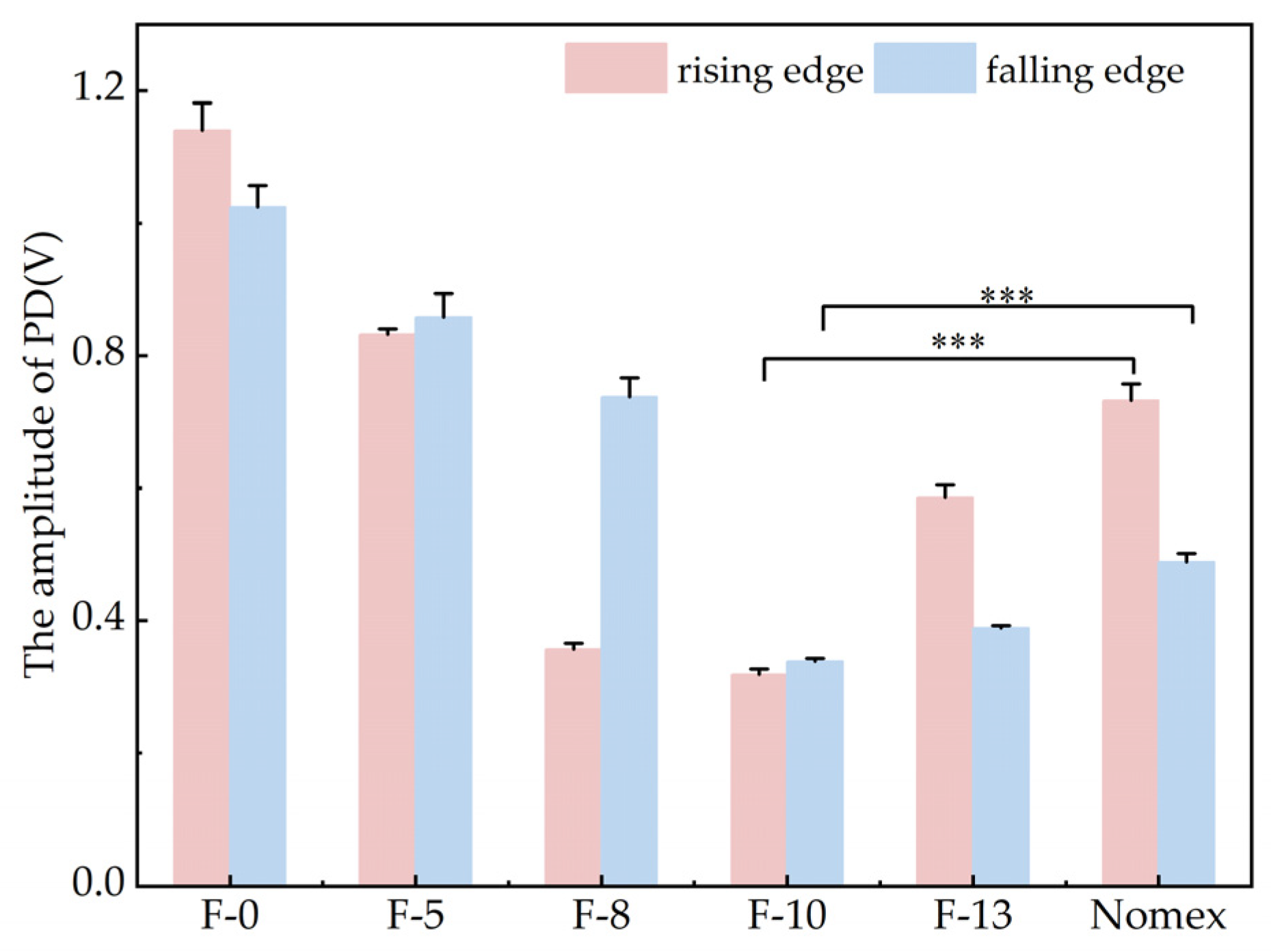
Based on the experimental setup described in Section 2.1, PD experiments were carried out using the step-up voltage method. The amplitudes of partial discharges for composite aramid paper in the needle-plate model and column-plate model at 5 kV (5 kHz) were obtained, as shown in Figure 7 and Figure 8, respectively. To facilitate the calculation of the average discharge amplitude for different filler contents, Figure 9 and Figure 10 are generated based on Figure 7 and Figure 8, respectively. As evident from the figures, the partial discharge amplitude initially decreases and then increases with increasing composite filler content. The PD amplitude for F-10 is the lowest, indicating that the composite aramid paper with a 10% filler content exhibits the greatest partial discharge resistance. Compared with Nomex paper, the average reduction in partial discharge amplitude was 59.65% for the needle-plate model and 25.48% for the column-plate model, respectively.
Figure 7.
PD amplitude of needle-plate model.
Figure 8.
PD amplitude of column-plate model.
Figure 9.
Variation curves of PD amplitude at the rising and falling edges for the needle-plate model (*** refers to ).
Figure 10.
Variation curves of PD amplitude at the rising and falling edges for the column-plate mode (*** refers to ).
3.2. PD Duration
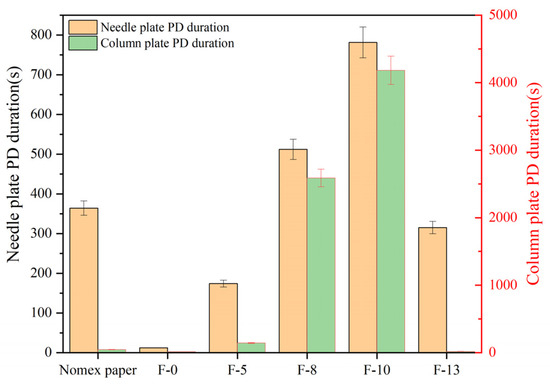
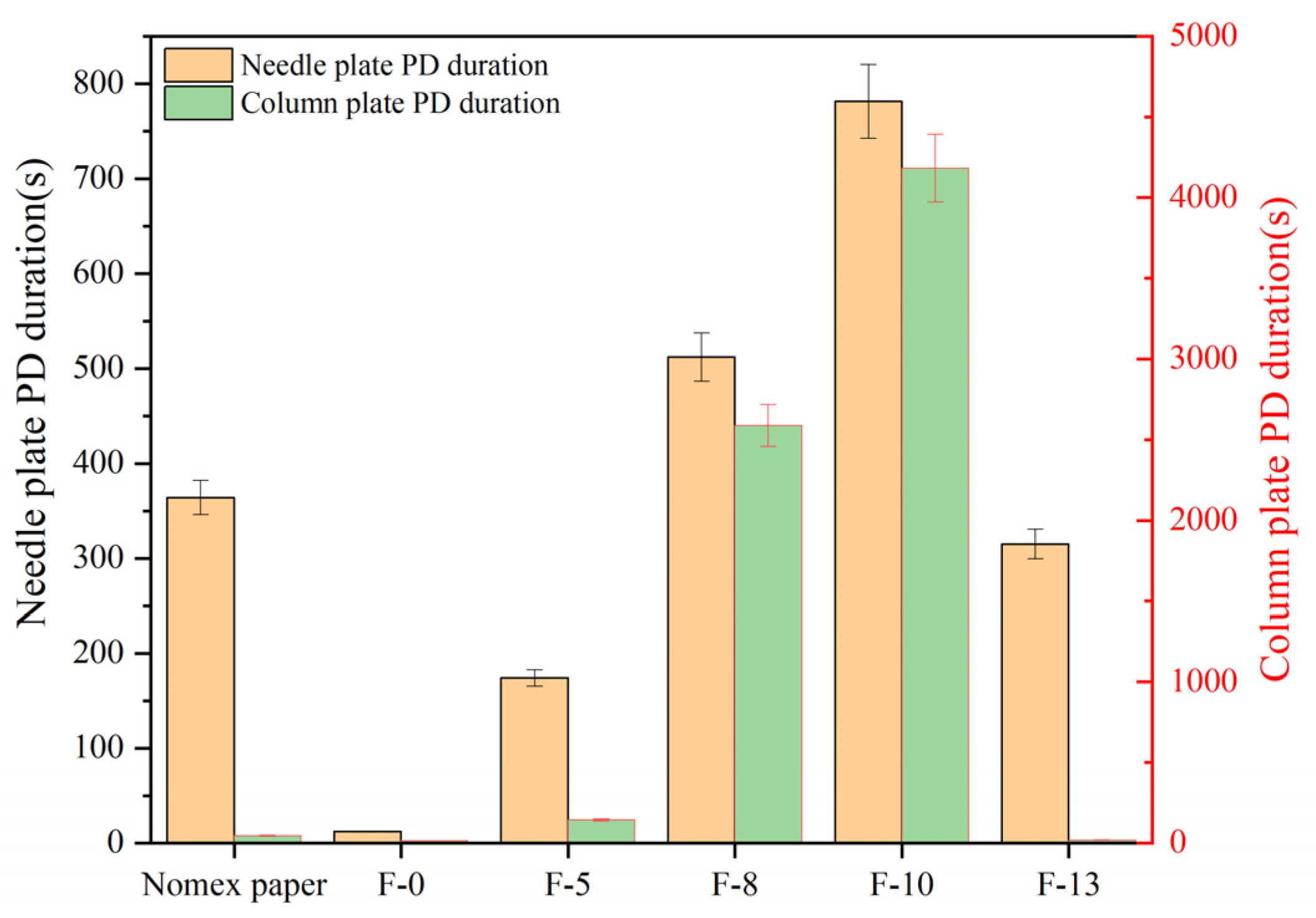
Based on the experimental setup described in Section 2.1, PD experiments were carried out using the constant voltage method. The partial discharge durations for composite aramid paper under 5 kV (20 kHz) in both the needle-plate and column-plate models are shown in Figure 11. As indicated in the figure, the partial discharge duration initially increases and then decreases with increasing composite filler content. The longest partial discharge duration is observed for F-10, which further confirms that the composite aramid paper with a 10% filler content exhibits the greatest partial discharge resistance. Compared with Nomex paper, the average partial discharge duration increased by 114.56% in the needle-plate model and 9195.56% in the column-plate model, respectively.
Figure 11.
Duration of different materials at 20 kHz.
3.3. PD Breakdown Voltage
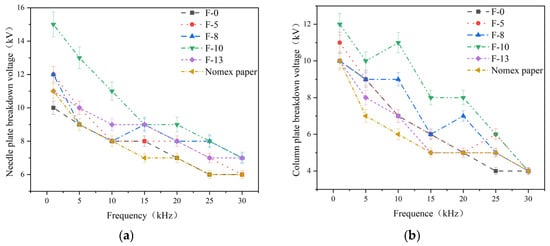
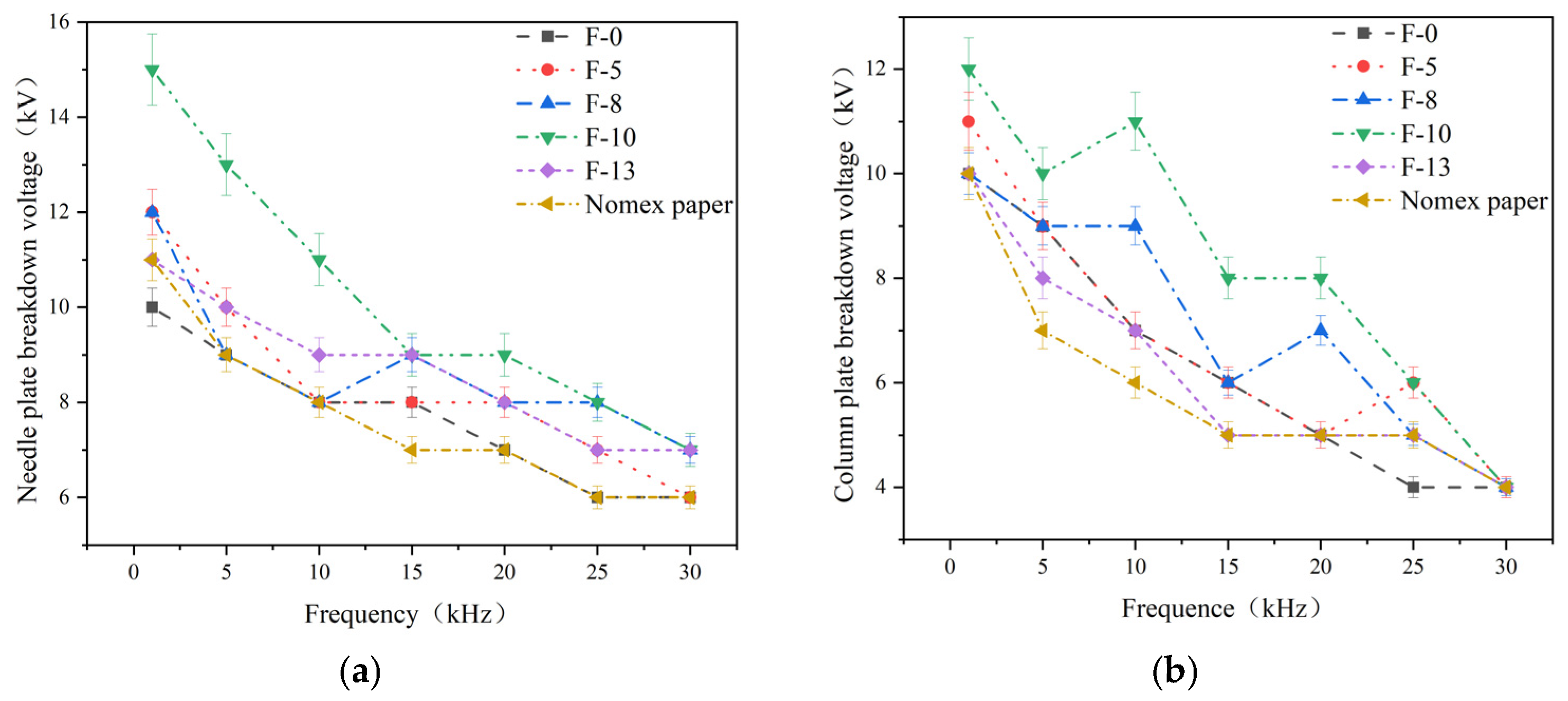
PD breakdown voltage refers to the applied test voltage on the composite aramid paper when it undergoes complete insulation breakdown. Based on the experimental setup described in Section 2.1, PD tests were conducted using the step-up voltage method. The breakdown voltages of composite aramid paper at different frequencies for both the needle-plate and column-plate models are shown in Figure 12. As indicated in the figure, for a given filler content, the breakdown voltage of composite aramid paper decreases with increasing applied frequency. At a given frequency, the breakdown voltage initially increases and then decreases with increasing nanofiller content, and F-10 exhibits the highest breakdown voltage. This further confirms that the composite aramid paper with a 10% filler content exhibits the greatest partial discharge resistance. Compared with Nomex paper, the average breakdown voltages in needle-plate and column-plate models increased by 32.2% and 38.5%, respectively.
Figure 12.
Breakdown voltage of different samples at high-frequency voltage: (a) Needle-plate model breakdown voltage; (b) Column-plate model breakdown voltage.
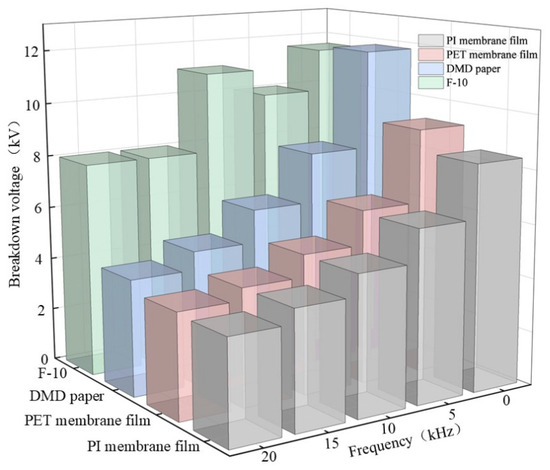
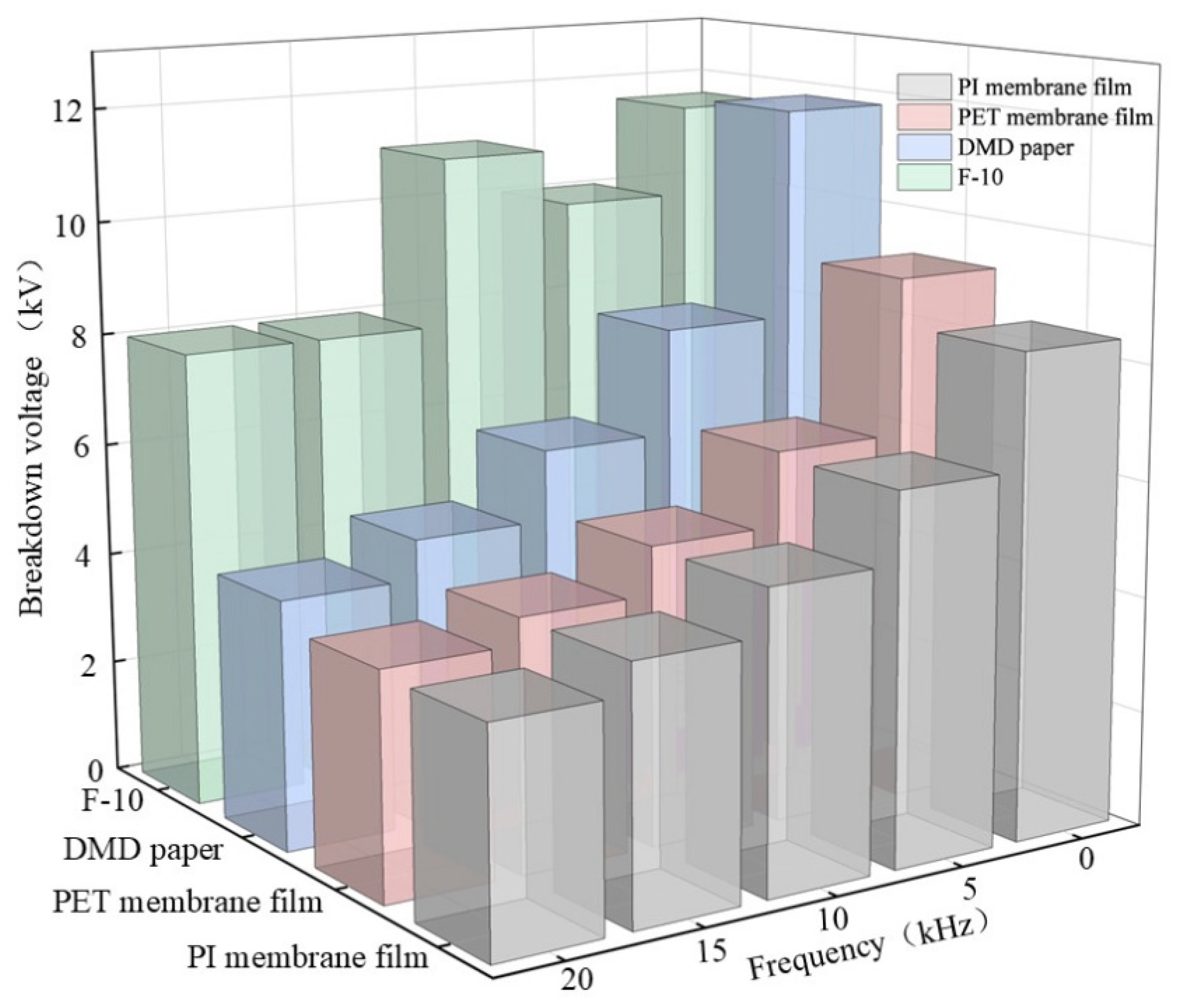
Compared with other composite materials reported in the literature, as shown in Table 5 and Figure 13, the PD breakdown voltage of the F-10 sample prepared in this study is significantly higher. This improvement may be attributed to the effects of residual charges on the surface of composite aramid paper and the enhanced interfacial bonding between the matrix and the filler. On the one hand, the combined effects of the initial charge accumulation and the surface charge decay rate in composite aramid paper result in variations in the residual charges deposited on the surface. This, in turn, alters the electric field strength and carrier mobility at insulation defects, thereby modifying the PD characteristics of composite aramid paper. On the other hand, the enhanced interfacial bonding between the matrix and the fillers reduces internal defects and traps within the material. Under increasing electric field strength, electrons are less likely to escape from traps, thereby increasing the breakdown voltage and partial discharge duration while reducing the partial discharge amplitude.
Table 5.
Insulation material parameter index.
Figure 13.
PD breakdown voltage of different materials.
4. Influence Mechanism
4.1. The Effect of Residual Charge
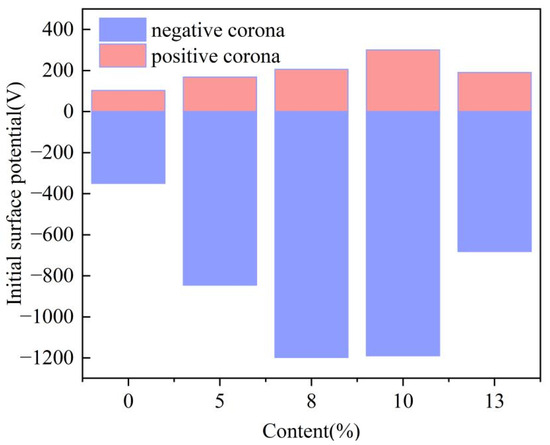
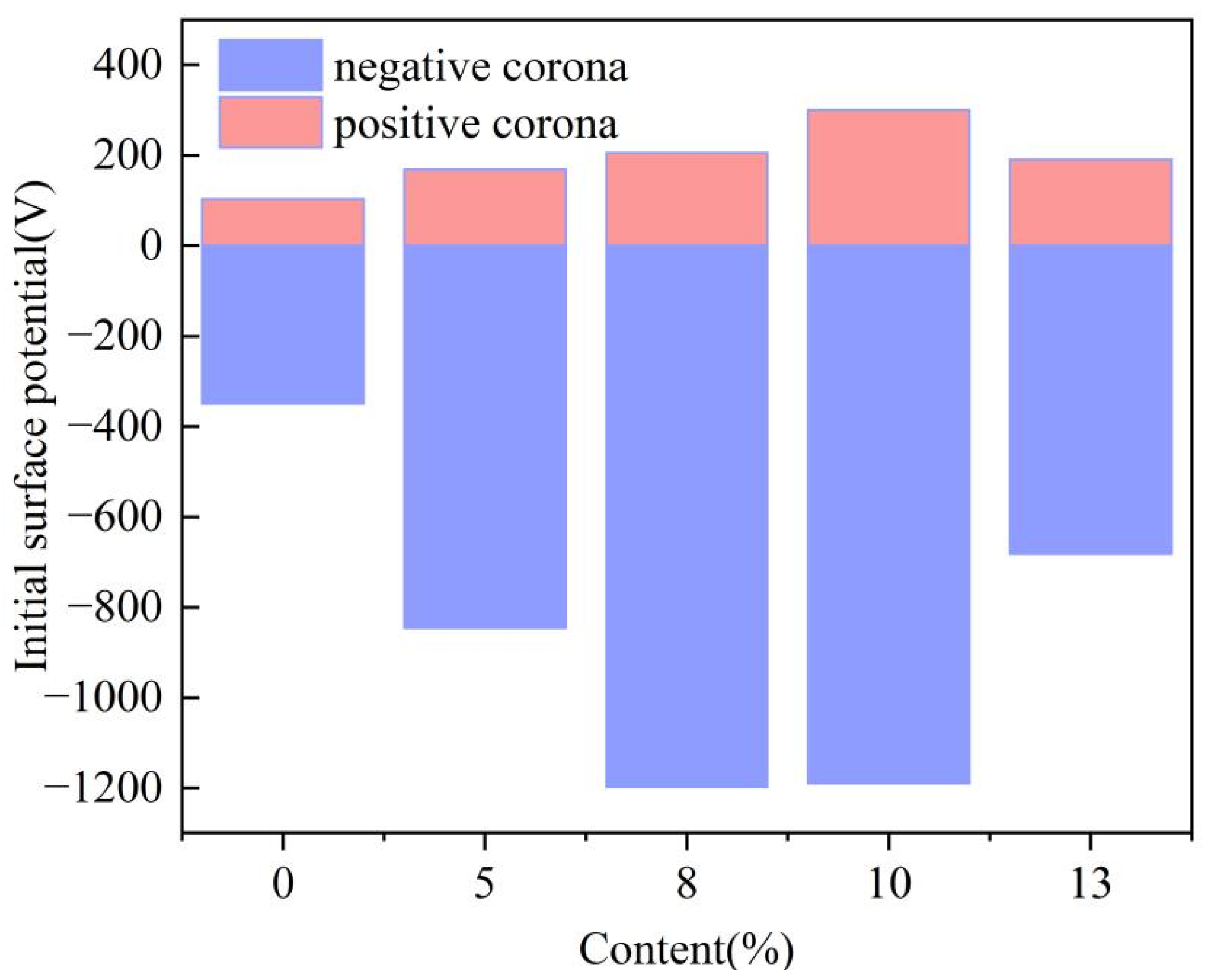
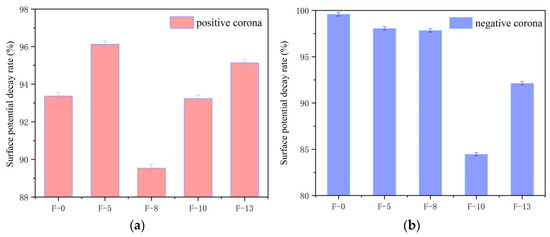
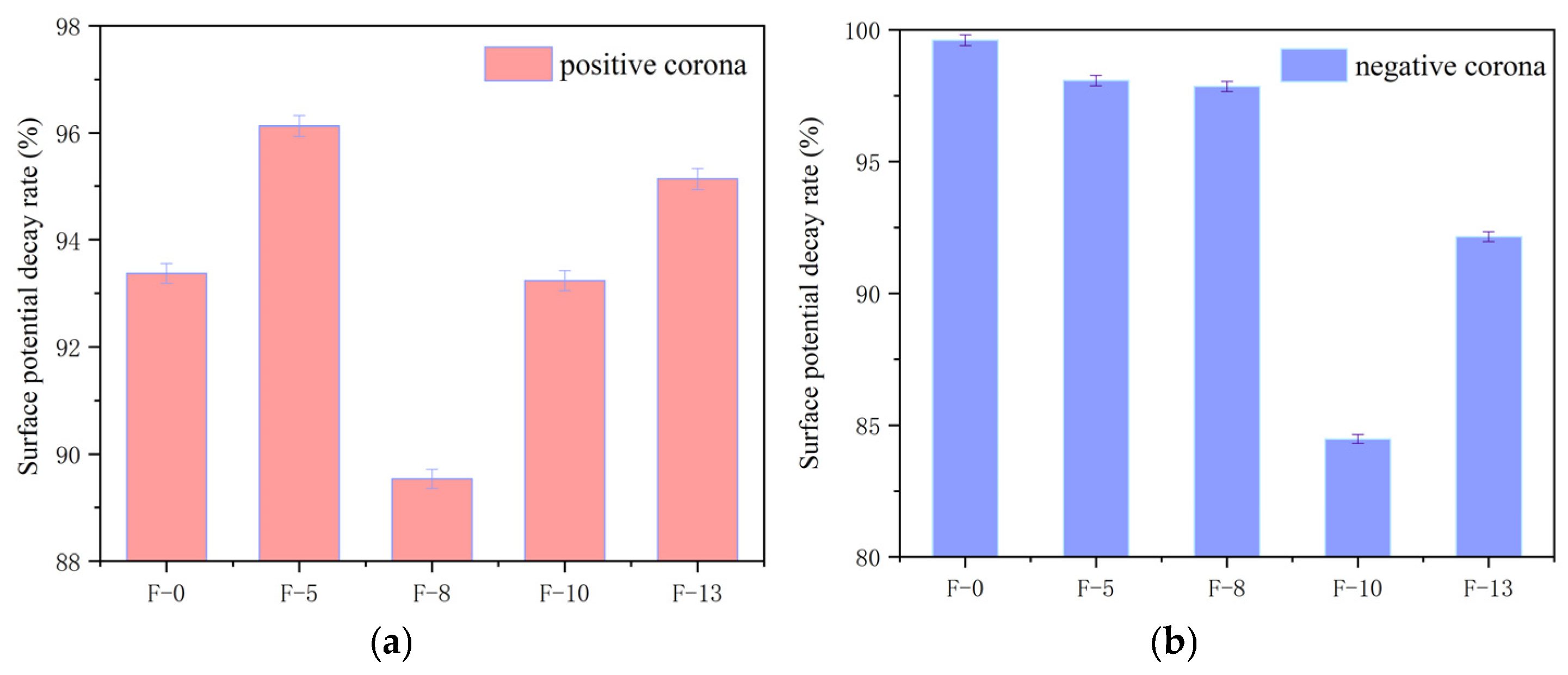
To investigate the influence of residual charges on PD in composite aramid paper, surface potential tests were conducted using the surface potential measurement platform for composite aramid paper, as described in Section 2.2. The results for the initial surface potential and surface potential decay rate of composite aramid paper specimens are presented in Figure 14. As demonstrated in Figure 14, the initial surface potential of composite aramid paper specimens initially increases and then decreases with increasing filler content. Furthermore, the maximum initial surface potential is observed for a 10% filler content.
Figure 14.
Distribution of initial surface potential for composite aramid paper with different filler contents.
In order to facilitate quantitative comparative analysis, the degree of potential decay is expressed using the surface potential decay rate D [29,30,31].
where V0 is the surface potential at the initial time and V3000 is the surface potential at a decay time of 3000 s. The obtained surface potential decay rate is shown in Figure 15.
Figure 15.
Surface potential decay rate of composite aramid paper with different filler contents: (a) Surface potential decay rate (%) under positive corona; (b) Surface potential decay rate (%) under negative corona.
As shown in Figure 15, the surface potential decay rate initially decreases and then increases with increasing filler content. After positive corona charging, the composite aramid paper with an 8% filler content exhibits the lowest surface potential decay rate (approximately 89.53%), whereas the composite aramid paper with a 5% filler content shows the highest decay rate (approximately 96.13%). After negative corona charging, the composite aramid paper exhibits the lowest surface potential decay rate (approximately 84.48%) at a filler content of 10%, whereas the highest decay rate (approximately 99.6%) occurs at a zero filler content.
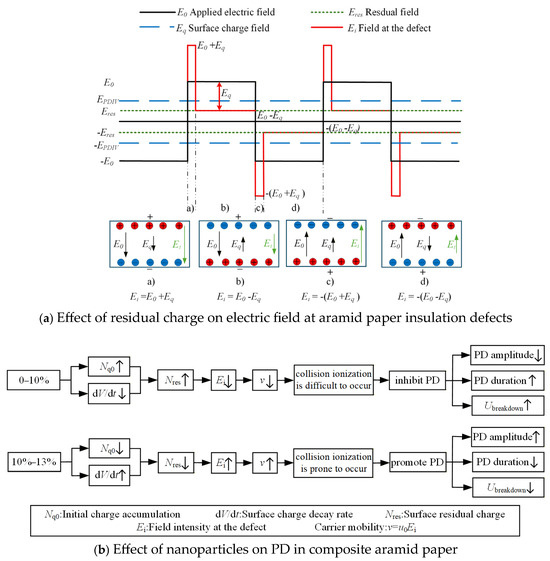
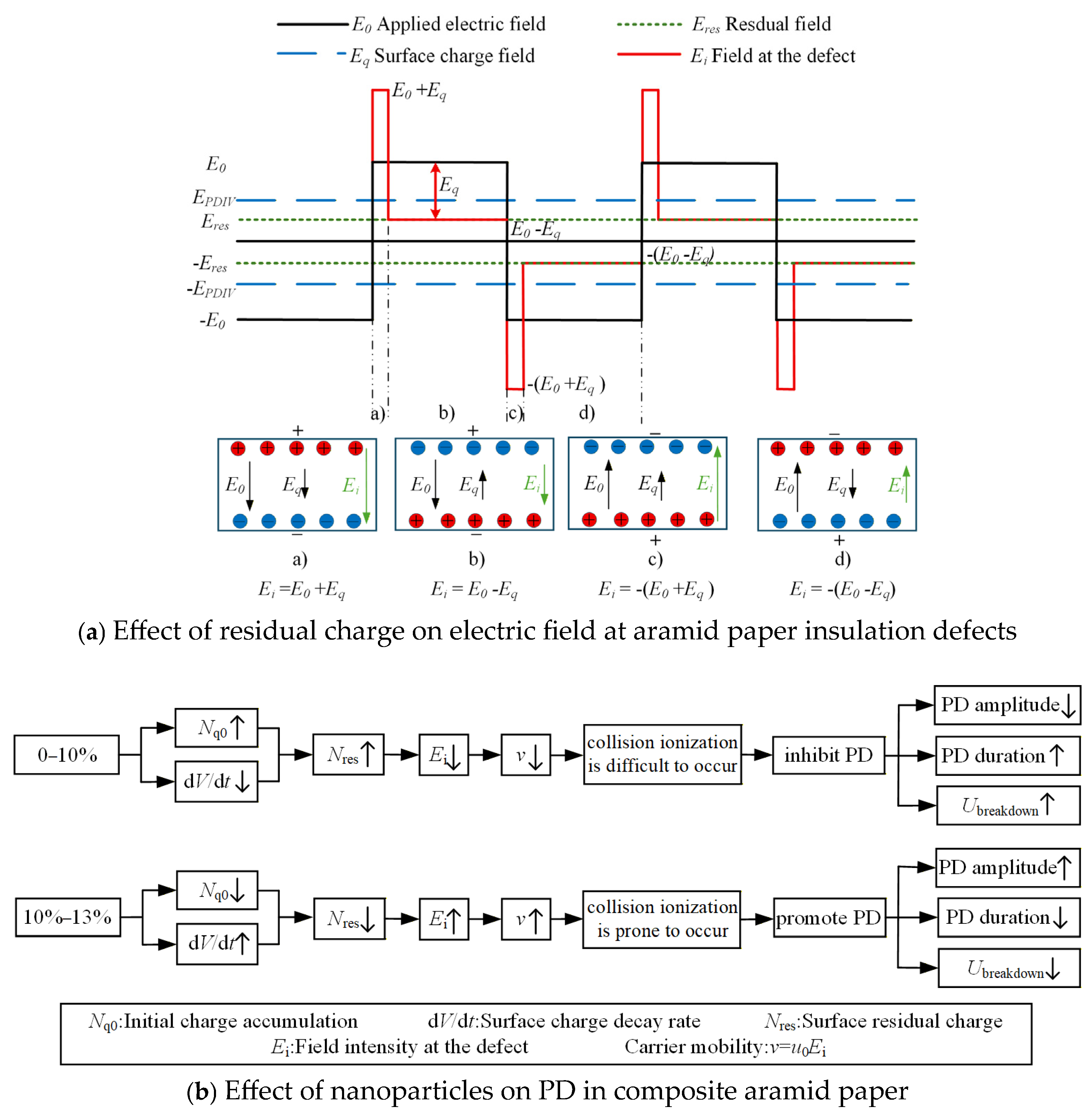
Based on the aforementioned research findings, Figure 16 illustrates the mechanism by which residual charges influence PD behavior in composite aramid paper. As the composite particle content increases from 0% to 10%, the initial charge accumulation on the surface of composite aramid paper increases, whereas the surface charge decay rate decreases. The combined effects of these factors result in an increase in the residual charges deposited on the surface of composite aramid paper, along with reductions in the electric field strength at insulation defects and a decrease in carrier mobility. Consequently, collision ionization is less likely to occur, thereby suppressing the occurrence of partial discharges. This results in an elevated partial discharge breakdown voltage, an extended partial discharge duration, and a reduced partial discharge amplitude, as shown in Figure 7, Figure 8, Figure 9, Figure 10, Figure 11 and Figure 12.
Figure 16.
Effect of residual charge on PD in composite aramid paper.
As the filler particle content increases beyond 10% to 13%, the initial charge accumulation on the surface of composite aramid paper decreases, whereas the surface charge decay rate increases. The combined effects of these factors result in a reduction in the residual charges deposited on the surface of composite aramid paper, along with an enhancement of the electric field strength at insulation defects and an increase in carrier mobility. Consequently, collision ionization is more likely to occur, thereby promoting the occurrence of partial discharges. This leads to a decreased partial discharge breakdown voltage, a reduced partial discharge duration, and an increased partial discharge amplitude, as shown in Figure 7, Figure 8, Figure 9, Figure 10, Figure 11 and Figure 12.
4.2. The Effects of Hydrogen Bonds
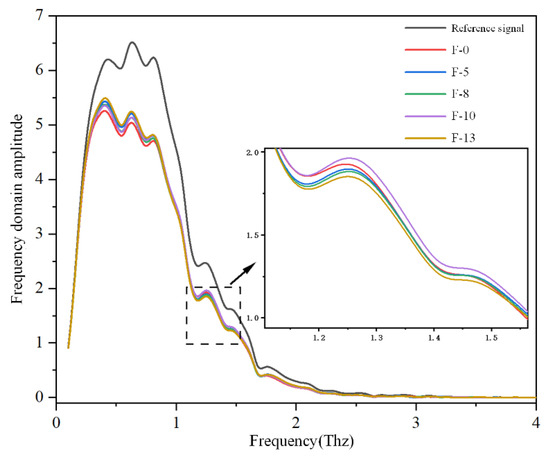
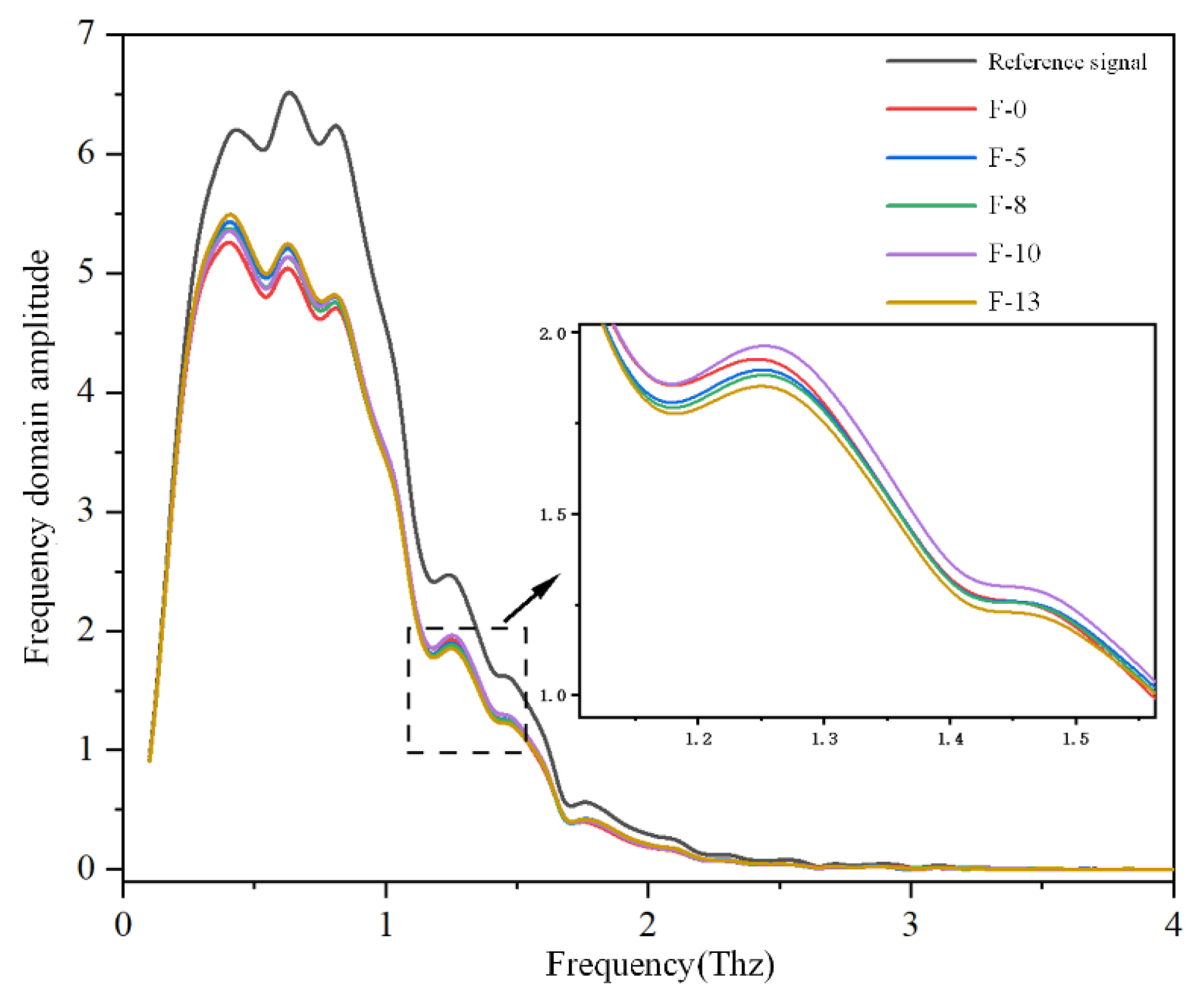
In the terahertz frequency range, peak absorption primarily originates from weak interactions, such as hydrogen bonds or lattice vibrations. The formation or strengthening of hydrogen bonds increases the intensity of absorption peaks, whereas the breaking or weakening decreases it. Based on this principle, terahertz spectra of composite aramid paper with varying nanofiller contents were obtained using the terahertz detection platform described in Section 2.2.2, as shown in Figure 17.
Figure 17.
Terahertz-frequency-domain spectra of different samples.
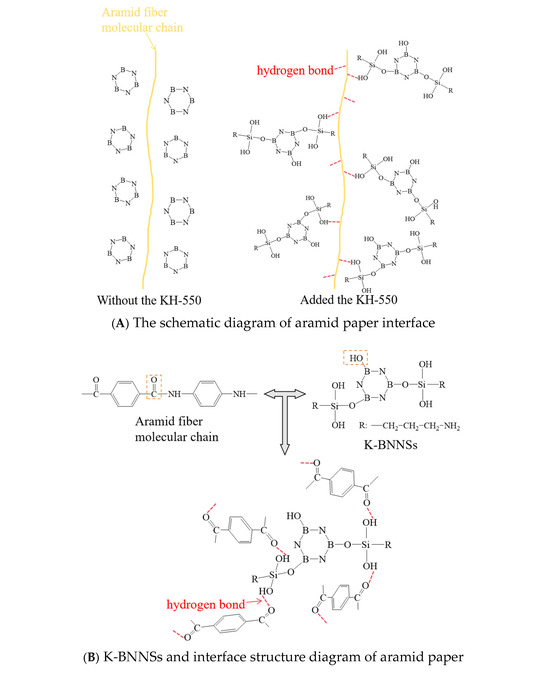
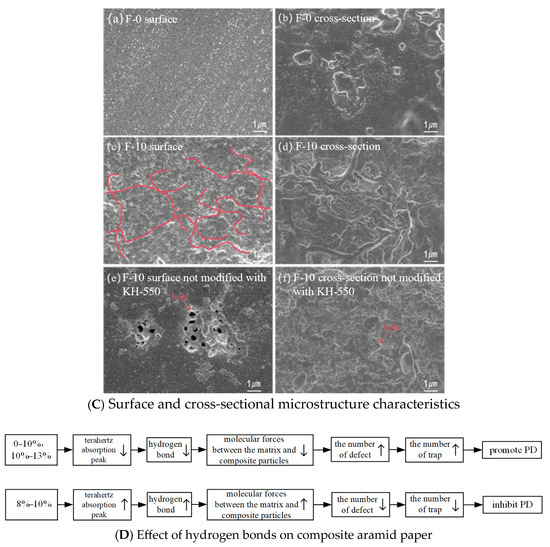
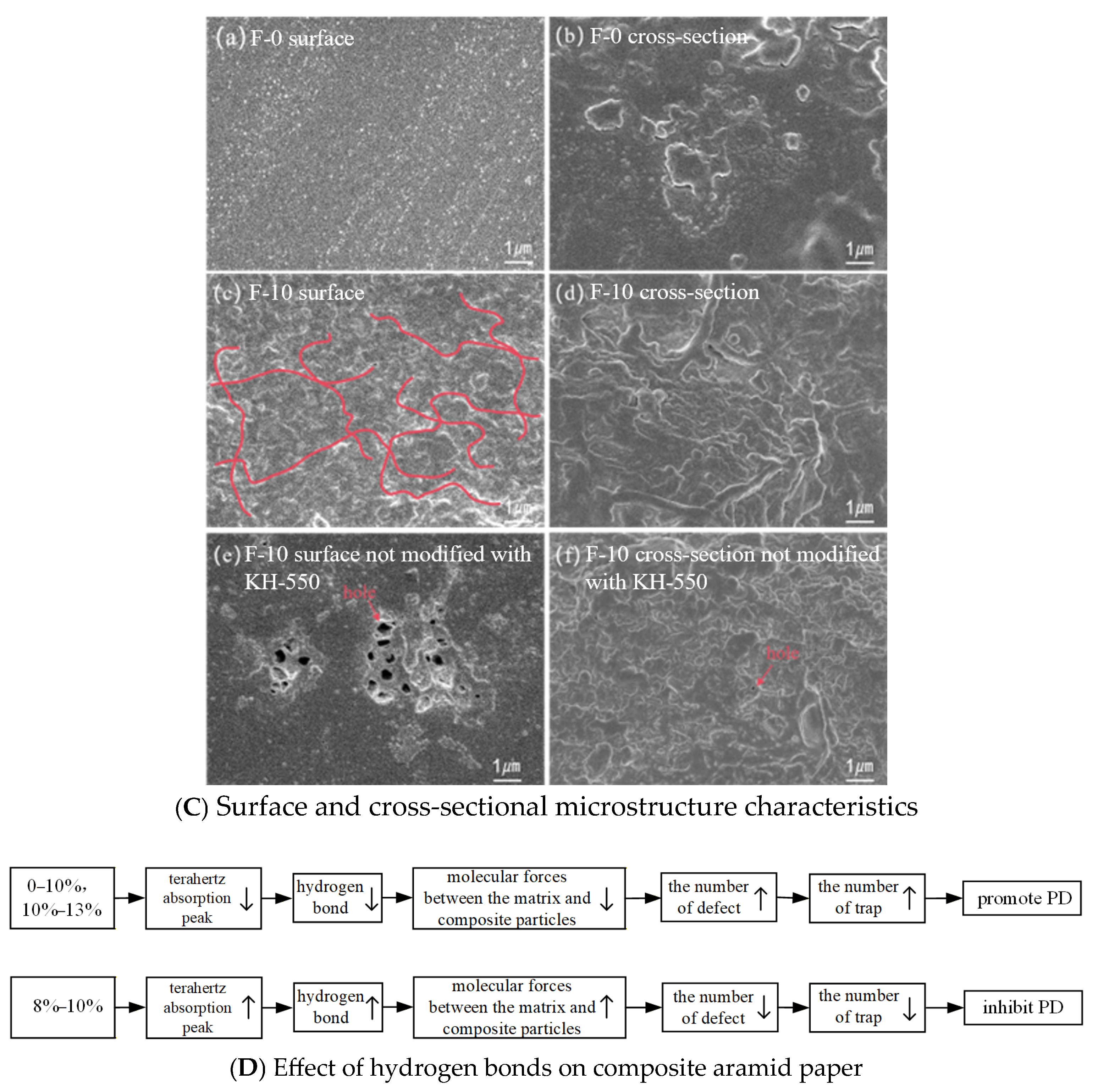
As shown in Figure 17, all samples of composite aramid paper with different nanofiller contents exhibit a characteristic absorption peak at approximately 1.25 THz. This peak corresponds to the specific resonant absorption between interfacial hydrogen bonds and terahertz waves, as the 1–2 THz range lies in the typical characteristic region for the vibration of strong intermolecular/interfacial hydrogen bonds [32]. The positions of these characteristic absorption peaks are nearly identical across all five sample groups, indicating that the factors influencing terahertz wave absorption in composite aramid paper are consistent. As the filler content increases, the intensity of the characteristic absorption peak initially decreases, then increases, and subsequently decreases again. The F-10 sample, with a 10% filler content, shows the highest amplitude in the frequency domain, suggesting that, at a 10% filler content, weak interactions, such as hydrogen bonds, are the strongest or that the greatest number of hydrogen bonds formed is the highest. When molecular chains within the composite aramid paper vibrate or twist under a high-frequency square-wave electric field, the addition of KH-550 for a 10% filler content promotes the formation of hydrogen bonds between the composite particles and the aramid matrix. This hydrogen bonding effect is the strongest, thereby suppressing the occurrence of partial discharges. This results in an increased high-frequency partial discharge breakdown voltage and an extended partial discharge duration, while reducing the partial discharge amplitude. Consequently, the suppression of partial discharges is most pronounced, and the corresponding mechanism is illustrated in Figure 18. Furthermore, the conjecture in Reference [18] is experimentally validated. The marginal differences among samples are derived from gradient changes in hydrogen bonds driven by filler dispersibility, reproducible via parallel tests, cross-validated by SEM, and reflective of terahertz spectroscopy’s high sensitivity to weak intermolecular interactions.
Figure 18.
Mechanism of hydrogen bonds’ influence on PD in composite aramid paper.
As shown in Figure 18, for the F-10 specimen, KH-550 modification enables uniform nanofiller dispersion and the formation of optimal interfacial hydrogen bonds, which alleviates agglomeration of aramid pulp and yields an interlaced dendritic-layered structure. This results in a homogeneous matrix with tight interparticle bonding, thereby fostering the construction of an efficient thermal conductive network. F-8 suffers from insufficient interfacial hydrogen bonds due to poor nanofiller dispersion, while F-13 presents a disrupted hydrogen bond structure caused by severe nanofiller agglomeration. For the 10% unmodified K-BNNS specimen, the absence of modification-induced interfacial hydrogen bonds leads to poor filler-matrix compatibility, accompanied by pronounced voids and severe agglomeration, thus resulting in impaired construction of the thermal conductive network. The aforementioned interfacial hydrogen bond and microstructural characteristics are in excellent agreement with the terahertz absorption results of the specimens at 1.25 THz, with F-10 exhibiting the highest absorption peak intensity across all samples.
5. Conclusions
Based on the foregoing research and analysis of the influence of K-BNNS nanoparticles on the PD characteristics of composite aramid paper, the following key conclusions can be drawn:
- (1)
- K-BNNS nanoparticles significantly improve the partial discharge performance of composite aramid paper. When the filler content reaches a 10% level, the composite aramid paper exhibits optimal insulation properties, with the lowest partial discharge amplitude, the longest partial discharge duration, and the highest partial discharge breakdown voltage.
- (2)
- At a filler content of 10%, the composite aramid paper exhibits the highest residual charges on its surface, as well as the lowest electric field strength at defects and the lowest carrier mobility. This configuration inhibits collision ionization, thereby suppressing the occurrence of partial discharges.
- (3)
- The introduction of KH-550 enhances the interfacial bonding strength between the composite particles and the aramid matrix. At a filler content of 10%, the hydrogen bonding forces are the strongest, internal material defects are minimized, and the suppression of partial discharges is most pronounced.
These results may guide the design and selection of insulation materials for high-frequency transformers, while also providing a theoretical basis and technical support for assessing the insulation state of high-frequency transformers.
Author Contributions
Conceptualization, X.-N.L. and T.Q.; methodology, T.Q.; software, W.-X.Z. and Y.-H.C.; validation, X.-N.L., T.Q. and Q.-K.C.; formal analysis, T.Q.; investigation, Y.-H.C.; resources, X.-N.L.; data curation, Y.-H.C.; writing—original draft preparation, Y.-H.C. and B.W.; writing—review and editing, Y.-H.C. and B.W.; visualization, X.-N.L.; supervision, X.-N.L. and Y.-H.C.; project administration, X.-N.L.; funding acquisition, X.-N.L. All authors have read and agreed to the published version of the manuscript.
Funding
This research was funded by the National Natural Science Foundation of China (52267011, 62366031), the Electric Power Research Institute of State Grid Ningxia Electric Power Company (5229DK23000M), Hongliu Outstanding Young Talent of Lanzhou University of Technology (062303).
Data Availability Statement
The data presented in this study are available on request from the corresponding author.
Conflicts of Interest
Author Tong Qin is employed by the company Urumqi Power Supply Company, Grid Xinjiang Electric Power Company. Author Bin Wu is employed by the company Electric Power Dispatching Center State, Grid Gansu Electric Power Company. The remaining authors declare that the research was conducted in the absence of any commercial or financial relationships that could be construed as a potential conflict of interest.
References
- Zhang, K.F.; Zhang, L.; Zhao, T. Influence of high frequency sinusoidal electrical stress on PD of gas-solid insulation. High Volt. Technol. 2019, 45, 3879–3888. [Google Scholar]
- Han, Z.; Li, Q.; Guo, Y.; Liu, T.; Dong, G.; Ren, H. Influence of repetitive impulse wave forms on surface discharge characteristics and insulation life for polyimide film. CSEE J. Power Energy Syst. 2024, 10, 746–755. [Google Scholar]
- Ayubi, B.I.; Zhang, L.; Wang, G.; Wang, Y.; Zhou, S. Molecular dynamics and finite element analysis of partial discharge mechanisms in polyimide under high-frequency electric stress. Polym. Degrad. Stab. 2025, 234, 111252. [Google Scholar] [CrossRef] [Scilit]
- Zhao, Y.; Zhang, G.; Han, D.; Li, K.; Qiu, Z.; Yang, F. Experimental study on insulation properties of epoxy casting resins using high-frequency square waveforms. CSEE J. Power Energy Syst. 2021, 7, 1227–1237. [Google Scholar]
- Jiang, Q.; Wang, W.; Zhong, Y.; Li, S.; Xu, Y. AC conductivity with high frequency relaxation and breakdown characteristics of epoxy resin under bipolar square wave voltage. Trans. China Electrotech. Soc. 2024, 39, 1159–1171. [Google Scholar]
- Wang, W.W.; Lü, J.J.; Guan, Z.L. Influence of high frequency steep pulsed voltage on PDs of epoxy resin and lifetime of electrical aging. High Volt. Eng. 2025, 51, 2631–2640. [Google Scholar]
- Shang, X.; Pang, L.; Bu, Q.; Zhang, Q. Effect of high-frequency pulse voltage parameters and DC bias on breakdown of epoxy cast insulation. IEEE Trans. Dielectr. Electr. Insul. 2025, 32, 180–189. [Google Scholar] [CrossRef] [Scilit]
- Shang, X.; Pang, L.; Bu, Q.; Zhang, Q. Thermal runaway and induced electrical failure of epoxy resin in high-frequency transformers: Insulation design reference. High Volt. 2024, 9, 989–1000. [Google Scholar] [CrossRef] [Scilit]
- Jiang, J.; Cui, D.; Liu, J.; Chen, B.; Chen, J.; Fu, R. Partial discharge characteristics of epoxy resin under high-frequency pulse electrical stress. IEEE Trans. Power Electron. 2025, 40, 2017–2027. [Google Scholar] [CrossRef] [Scilit]
- Liu, K.; Li, X.; Yang, Y.; Wu, Z.; Liu, T.; Zhu, M.; Wu, G. The physical mechanism of frequency-induced inflection point for oil-paper insulation under high frequency square-wave voltage. IEEE Trans. Plasma Sci. 2022, 50, 2388–2395. [Google Scholar] [CrossRef] [Scilit]
- Li, X.N.; Liu, K.; Yang, Y.; Wu, Z.H.; Li, Y.X.; Liu, T.; Zhu, M.H.; Wu, G.N. Effect of charge transportation on the partial discharge characteristics of oil-paper insulation under high frequency stress. Proc. CSEE 2022, 42, 1223–1232. [Google Scholar]
- Ren, H.; Tanaka, Y.; Miyake, H.; Endo, K.; Li, Q.; Gao, H.; Li, C.; Wang, Z. Research on the effect of unipolar pulse wave voltage on space charge characteristics for high-frequency equipment insulation. IEEE Trans. Dielectr. Electr. Insul. 2021, 28, 150–157. [Google Scholar] [CrossRef] [Scilit]
- Han, Z.; Li, Q.; Li, J.; Wang, M.; Ren, H.; Zou, L. Phase field model for electric-thermal coupled discharge breakdown of polyimide nanocomposites under high frequency electrical stress. Plasma Sci. Technol. 2024, 26, 025505. [Google Scholar] [CrossRef] [Scilit]
- Asif, M.; Li, Q.; Huang, X.; Ren, H.; Zian, D.; Liu, T. Microscopic analysis of polyimide nanocomposites aging mechanism exposed to PDs under high frequency voltage stress. IOP Conf. Ser. Mater. Sci. Eng. 2020, 782, 022090. [Google Scholar] [CrossRef] [Scilit]
- Xing, Z.; Zhang, C.; Xue, N.; Li, Z.; Li, F.; Wan, X.; Guo, S.; Hao, J. High-frequency surface insulation strength with nanoarchitectonics of disiloxane modified polyimide films. Polymers 2022, 14, 146. [Google Scholar] [CrossRef] [Scilit]
- Li, Z.H.; Xie, Z.Q.; Li, Q.M. Study on the surface charge dissipation characteristics of epoxy resin modified by dopamine grafted nano boron nitride under high frequency electric stress. Trans. China Electrotech. Soc. 2023, 38, 1116–1128. [Google Scholar]
- Song, Y.H.; Yin, L.J.; Zhong, S.L.; Feng, Q.-K.; Wang, H.; Zhang, P.; Xu, H.-P.; Liang, T.; Dang, Z.-M. A processable high thermal conductivity epoxy composites with multiscale particles for high-frequency electrical insulation. Adv. Compos. Hybrid Mater. 2024, 7, 115. [Google Scholar] [CrossRef] [Scilit]
- Li, X.; Qin, T.; Zhang, W.; Wang, H.; Chen, Y.; Li, K.; Wang, Q.; Wang, Y. Preparation and performance study of composite aramid paper for high-frequency working Conditions. Nanomaterials 2024, 14, 1880. [Google Scholar] [CrossRef] [Scilit]
- Zou, R.H.; Liao, R.J.; Hao, J.; Liu, C.; Wu, J. Simulation and deductive model of interface charge distribution in liquid-solid oil-paper insulation system under AC and AC/DC composite voltages. High Volt. Eng. 2021, 47, 1391–1402. [Google Scholar]
- IEC 60270-2000; High-Voltage B0902704 Test Techniques PD Measurements. International Electrotechnical Commission: Geneva, Switzerland, 2007.
- GB/T 1408.1-2006; Test Methods for Electrical Strength of Insulating Materials Part 1: Test at Power Frequency. China Standard Press: Beijing, China, 2006.
- Li, Y.X.; Gao, B.; Li, X.N. Effect of thermal aging on surface charge accumulation and dissipation of nomex paper. Proc. CSEE 2020, 40, 5707–5716. [Google Scholar]
- Xie, S.; Yang, F.; Huang, X.; Yu, X.; Gao, B. Air Gap Detection and Analysis of XLPE Cable Insulation Based on Terahertz Time Domain Spectroscopy. Trans. China Electrotech. Soc. 2020, 35, 10. [Google Scholar]
- Jin, Y.; Zhu, F.; Feng, J. Review of nondestructive testing of composites based on THz technology. J. Terahertz Sci. Electron. Inf. Technol. 2023, 21, 1295–1305. [Google Scholar]
- Li, S.B.; Li, T.G.; Dan, J.H. Review on Terahertz Non-destructive Testing of Composite Insulation Structures of Electrical Equipment. High Volt. Technol. 2024, 50, 194–209. [Google Scholar]
- Tang, Z.G.; Li, Y. Review of Terahertz Technology in Electrical Equipment Insulation Defect Detection. High Volt. Appar. 2023, 59, 135–144. [Google Scholar]
- Akram, S.; Gao, G.; Liu, Y.; Zhu, J.; Wu, G.; Zhou, K. Degradation Mechanism of Al2O3 Nano Filled Polyimide Film due to Surface Discharge under Square Impulse Voltage. IEEE Trans. Dielectr. Electr. Insul. 2015, 22, 3341–3349. [Google Scholar] [CrossRef] [Scilit]
- Wang, Y.; Wang, G.; Zhang, L.; Ayubi, B.I. Polydopamine-Modified Boron Nitride Nanosheet/Polyimide Composites with Enhanced Thermal Conductivity and Electrical Insulation for High-Frequency Applications. ACS Appl. Nano Mater. 2025, 8, 7360−7370. [Google Scholar] [CrossRef] [Scilit]
- Li, Q.; Li, X.; Yang, Y.; Li, Y.; Wu, G. The evolution of trapping parameters on three-layer oil-paper of partial discharge degradation for on-board traction transformers. IEEE Access 2020, 8, 175651–175659. [Google Scholar] [CrossRef] [Scilit]
- Li, Y.X.; Gao, B.; Li, X.N.; Yang, Y.; Xu, P.; Wang, Z. Evolution of trapping parameters of multi-layer oil-paper insulating medium at different partial discharge Stages. High Volt. Eng. 2021, 47, 260–268. [Google Scholar]
- Du, B.X.; Jiang, J.P.; Zhang, J.G.; Liu, D.S. Dynamic behavior of surface charge on double-layer oil-paper insulation under pulse voltage. IEEE Trans. Dielectr. Electr. Insul. 2016, 23, 2712–2719. [Google Scholar] [CrossRef] [Scilit]
- Li, Z.L.; Zhang, D.H. Discrimination of glucose and its isomers based on terahertz technology. J. Terahertz Sci. Electron. Inf. Technol. 2021, 19, 11–17. [Google Scholar]

Disclaimer/Publisher’s Note: The statements, opinions and data contained in all publications are solely those of the individual author(s) and contributor(s) and not of MDPI and/or the editor(s). MDPI and/or the editor(s) disclaim responsibility for any injury to people or property resulting from any ideas, methods, instructions or products referred to in the content. |
© 2026 by the authors. Licensee MDPI, Basel, Switzerland. This article is an open access article distributed under the terms and conditions of the Creative Commons Attribution (CC BY) license.