Article

TCAD Simulation of STI Depth and SiO2/Silicon Interface Trap Modulation Effects on Low-Frequency Noise in HZO-Based Nanosheet FETs

Department of System Semiconductor Engineering, Sangmyung University, Cheonan 31066, Republic of Korea
*
Author to whom correspondence should be addressed.
Nanomaterials 2026, 16(4), 248; https://doi.org/10.3390/nano16040248
Submission received: 16 January 2026 / Revised: 4 February 2026 / Accepted: 12 February 2026 / Published: 13 February 2026
(This article belongs to the Section Nanophotonics Materials and Devices)

Abstract

This study analyzed the low-frequency noise characteristics of nanosheet field-effect transistors (NSFETs) using technology computer-aided design (TCAD) simulations. In particular, the effects of shallow trench isolation (STI) depth and gate–insulator interface trap density on the device’s flicker noise power spectral density (PSD) were systematically evaluated. The simulation results show that as STI depth increases, excessive trap charges formed in the STI oxide can deplete or invert the substrate beneath the STI layer, reducing the threshold voltage of parasitic transistors and thereby increasing flicker noise. In contrast, the shallow STI structure’s trapped charge density was found to be lower than in thicker structures. Additionally, when an HfO2–ZrO2 (HZO)-based ferroelectric insulator is applied, improved gate–field control and reduced trap-induced noise are observed compared to HfO2. Optimization results indicate that the optimal noise performance is achieved with an STI depth of 3 nm and a SiO2/silicon interface trap density of 1 × 10¹⁰ eV−1cm−2. This study provides a design direction for low-noise NSFETs through structural (STI) and material (interface traps and HZO) optimization and is expected to contribute to the development of next-generation low-power, high-reliability logic devices.

1. Introduction

The development of transistors has had a profound influence on modern society, extending importance beyond their role as mere semiconductor components [1]. Transistors have evolved from metal-oxide-semiconductor field-effect transistors (MOSFETs) to Fin FETs, and further to gate-all-around FETs (GAAFETs), enhancing efficiency in critical aspects such as cost, performance, and energy consumption [2,3]. In addition, FinFET and GAAFET are examples of adopting an architecture that enables scaling by introducing the first and second trigate controls, respectively [4]. However, excessive scaling of FETs leads to short-channel effects (SCEs), resulting in an increased gate leakage current as the gate’s ability to control drain current diminishes [5]. Among the structures designed to suppress SCEs, nanosheet FETs (NSFETs), a type of GAAFET, exhibit improved performance compared to nanowire FETs (NWFETs) while also enabling vertical stacking and providing a larger channel area [6].
Ferroelectric field-effect transistors (FeFETs) have been extensively investigated for various memory-oriented applications due to their excellent scalability, energy efficiency, and compatibility with CMOS processes [7]. In NSFETs, HfO2, a fluorite-structure ferroelectric (FF) thin film, is used as the gate oxide, which influences device performance [8]. The ferroelectric (FE) properties of doped HfO2 allow further downscaling and low-power operation, demonstrating excellent performance in flash-like nonvolatile memory structures with superior process compatibility and high-speed operation [9,10]. Among HfO2-based films, FE HfZrO2(HZO) offers a low thermal budget, high remanent polarization, excellent endurance compared to other dopants, and it has the advantage of having a similar atomic radius and lattice parameters to HF [11,12].
Low-frequency noise is a powerful technique for evaluating the quality of oxide–semiconductor interfaces and channel layers [13]. In the low-frequency region, flicker noise and generation–recombination (G–R) noise are dominant. Flicker noise occurs in all semiconductor devices under bias conditions, while G–R noise arises from fluctuations in the number of carriers caused by the presence of G–R centers. These variations in carrier numbers lead to conductance fluctuations in the device. Additionally, FETs also exhibit shot noise, thermal noise, random telegraph signal noise, and burst noise [14,15].
Current research on shallow trench isolation (STI)-related noise mainly focuses on factors such as the distance between the STI and the channel, as well as channel width. However, few studies have directly analyzed the influence of variations in STI length on noise. Therefore, this study constructs a compact NSFET model based on HfO2 and HZO using technology computer-aided design (TCAD). Using this model, we investigate which material provides better noise performance and further explore how variations in charge density at the material interface and changes in STI width can be optimized to minimize noise.

2. NSFET Process and Simulation Setup

2.1. NSFET Physical Modeling with TCAD

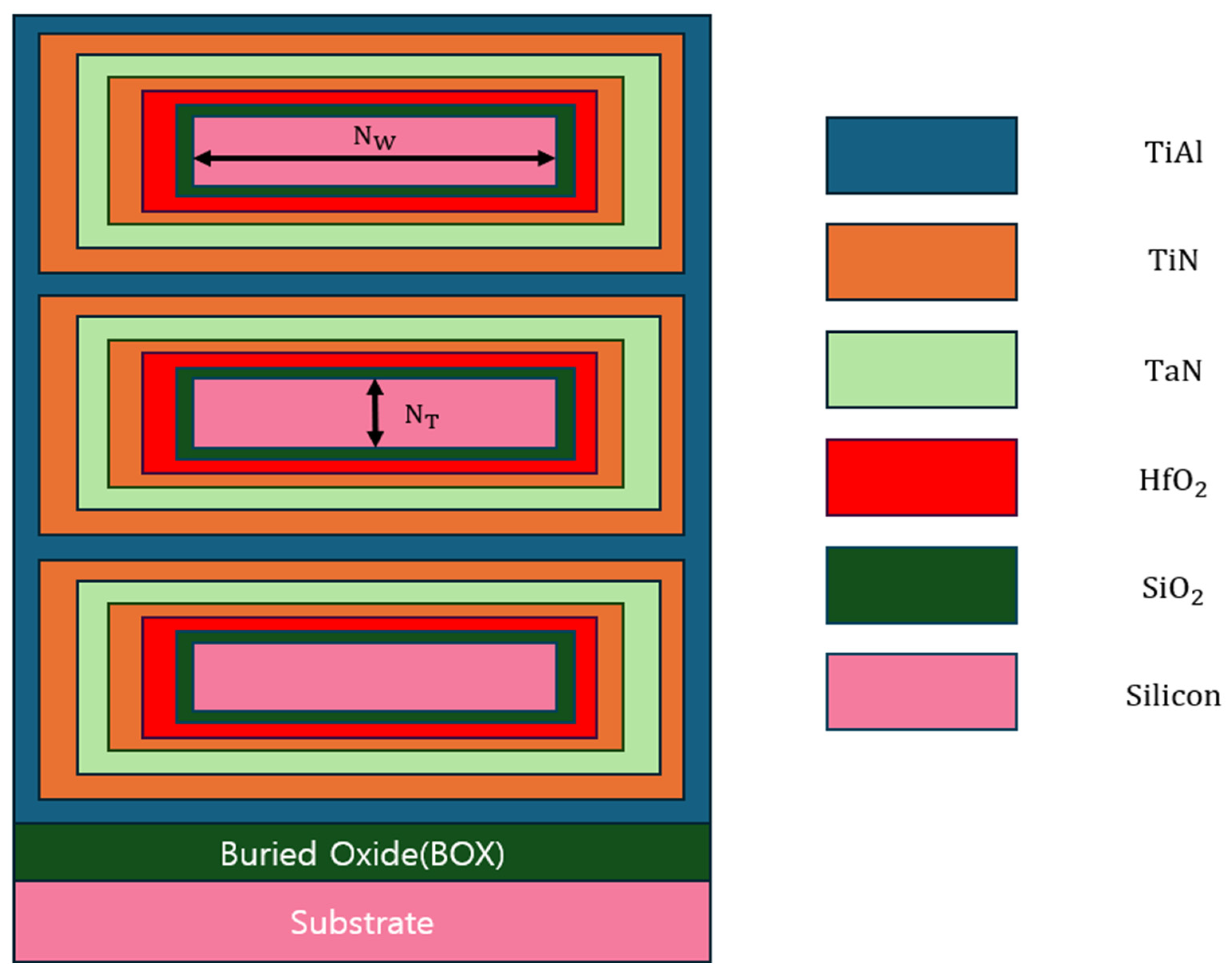
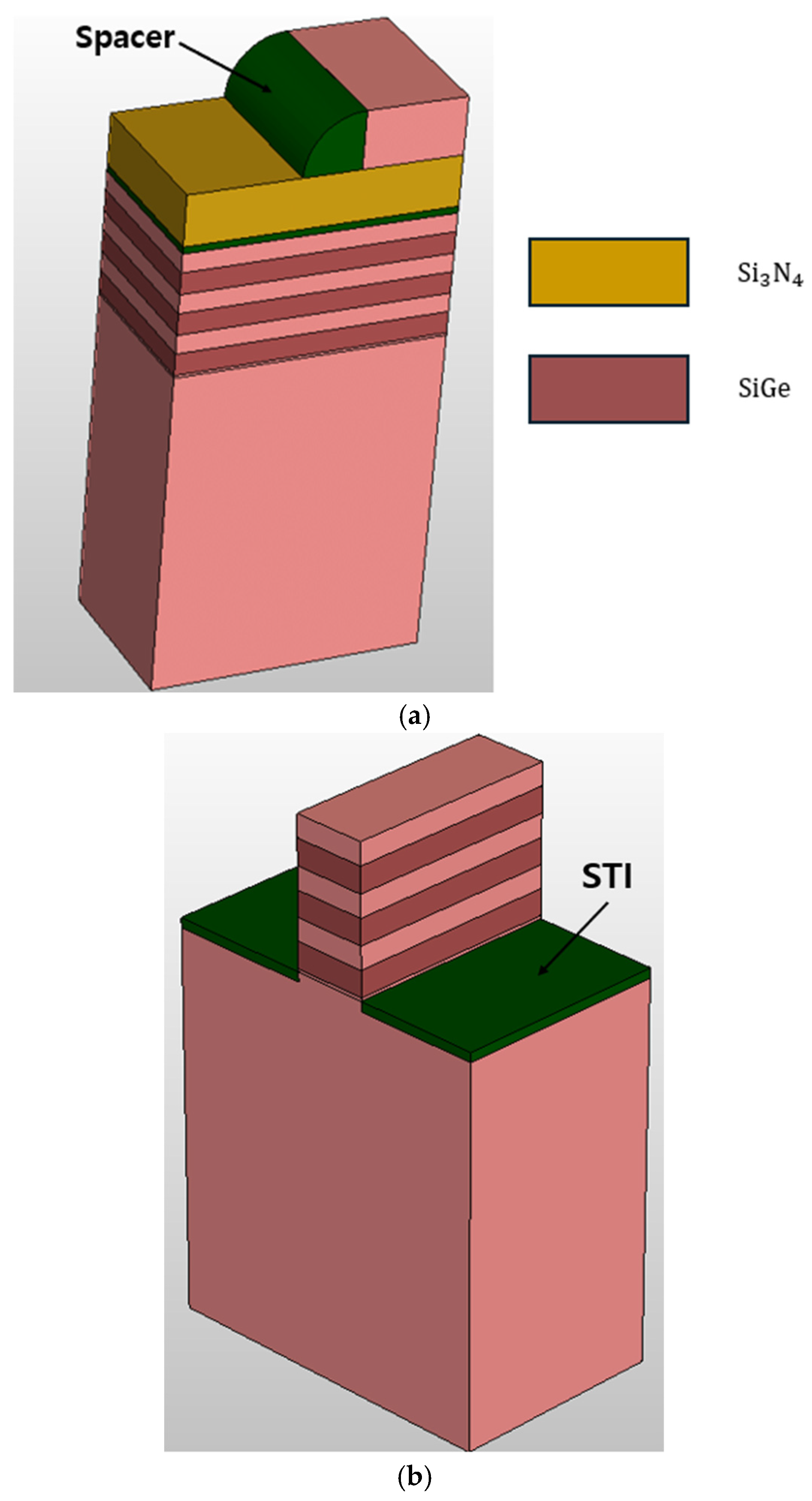
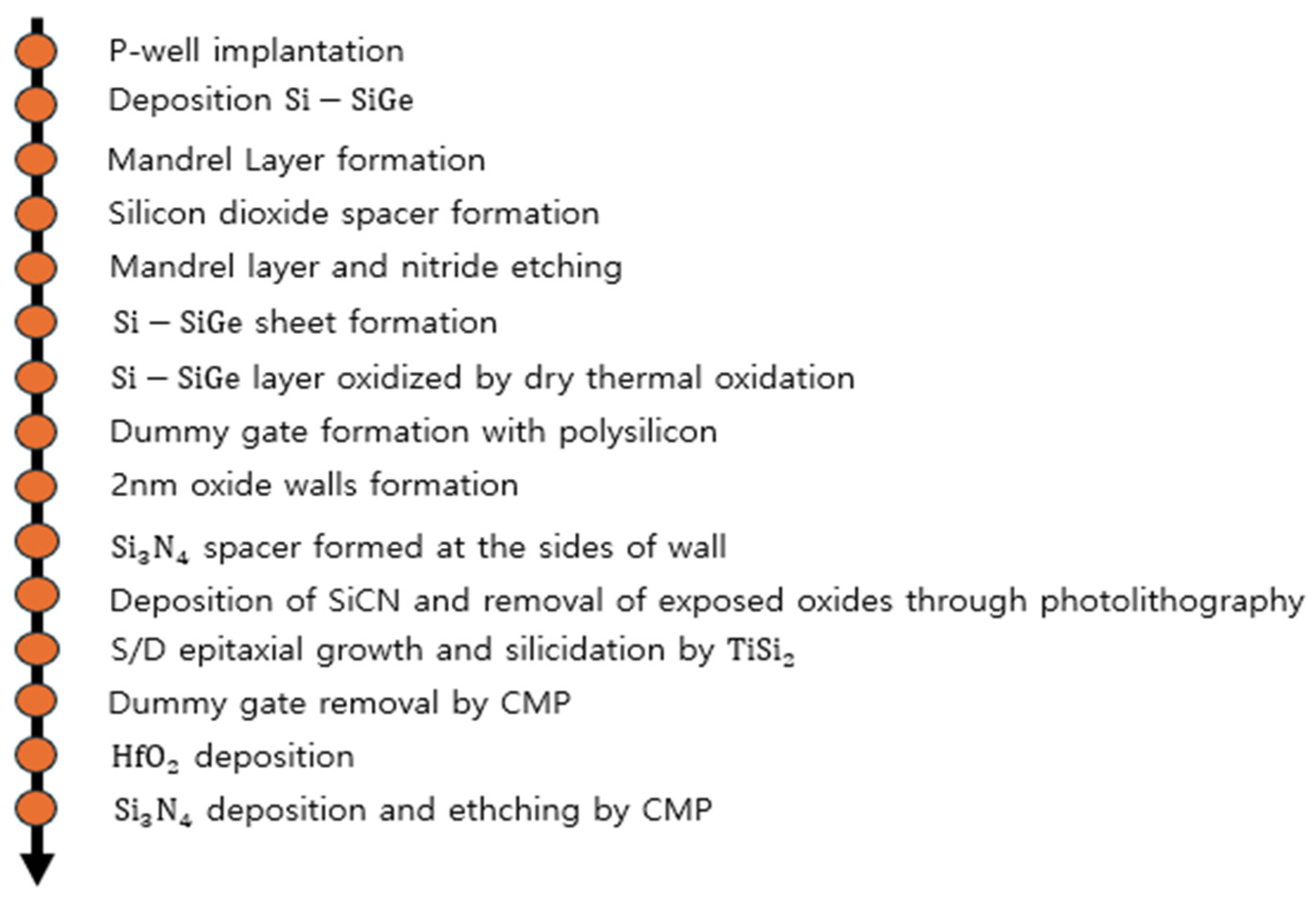
The process simulation of N-type NSFETs was conducted using Sentaurus TCAD Sprocess. Figure 1 shows the gate stack of the NSFET, and the process flow is illustrated in Figure 2. First, a boron dose was implanted onto the bulk wafer at an energy of 30 eV, followed by rapid thermal annealing at 1000 °C. Subsequently, three layers of silicon–germanium and three layers of silicon were alternately deposited on the silicon substrate. These layers were then covered with SiO2 (buffer oxide), silicon nitride (transfer layer), and silicon (mandrel layer). The mandrel layer was patterned through etching using photolithography. SiO2 spacers were formed through anisotropic etching, followed by isotropic overetching. Figure 3 confirms the formation of the SiO2 spacers. The mandrel layer was then etched, and the spacer served as a hard mask for etching the transfer layer. The residual nitride of the transfer layer acted as a hard mask for etching the nanosheet, and this nitride hard mask is a key element in sheet formation. To form the STI, before removing the remaining oxide through etching, the substrate region where silicon had been removed was filled with SiO2, which was then planarized using chemical mechanical planarization (CMP). Figure 4 confirms the formation of the STI. Next, a dummy gate was formed to mark the region where the channel would be located, and a thin oxide layer was grown on both sides of the dummy gate. To form the source and drain, epitaxial growth of boron-doped silicon was performed. Subsequently, a silicide process was conducted to reduce the contact resistance of the source and drain. All structures of the N-type NSFET were then covered with phosphosilicate glass (PSG), and CMP was used to remove the PSG above the dummy gate. A dielectric layer was then deposited to prevent breakdown and leakage current caused by quantum tunneling. A tungsten layer was deposited on the stack, 1 nm below the PSG level, using CMP. Between the PSG and tungsten layers, an additional dielectric was deposited and subsequently planarized using CMP. Finally, a cavity was created in the PSG through the self-aligned contact process. Table 1 lists the parameter values used for the N-type NSFET [16,17].

2.2. Device Characteristics of NSFET

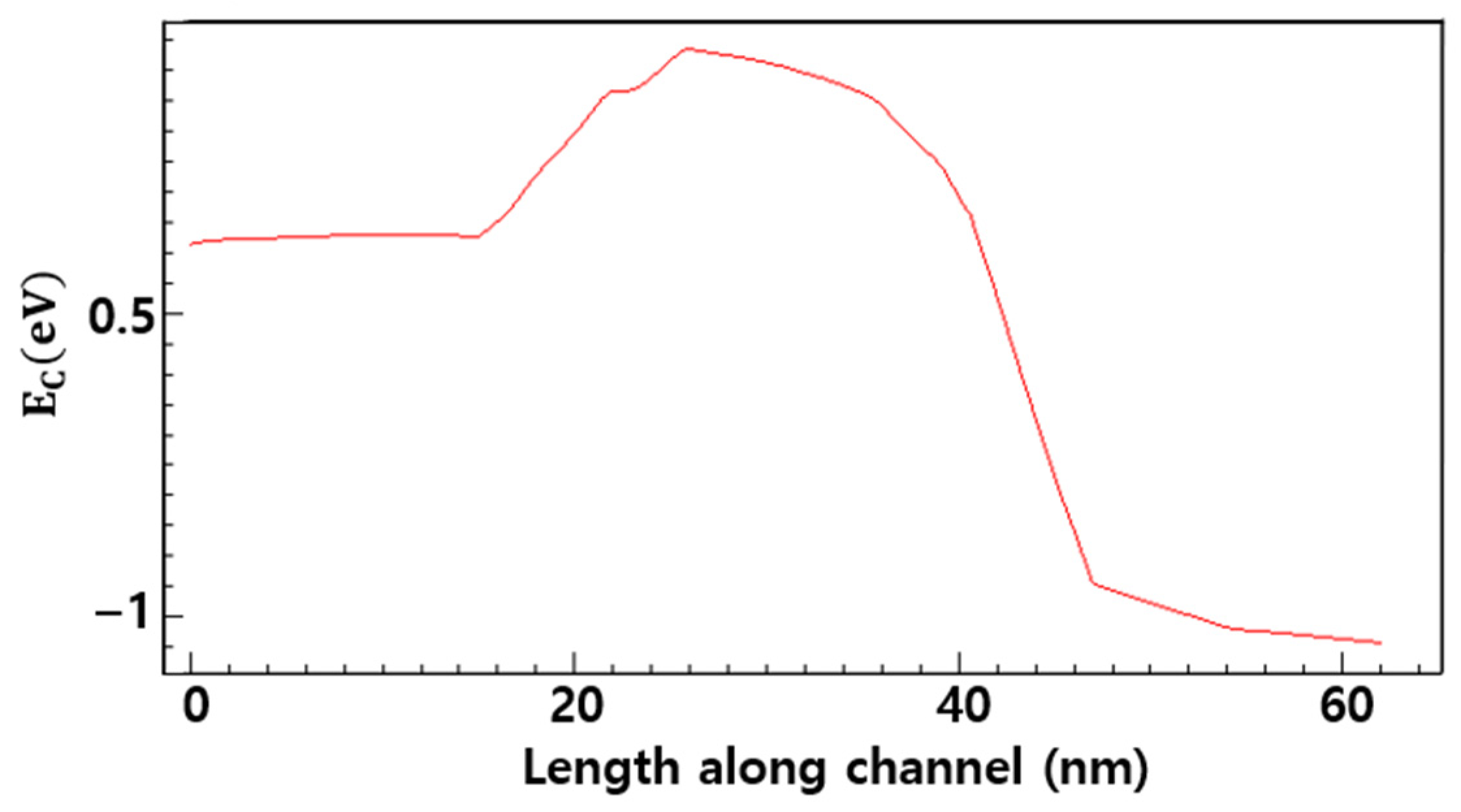
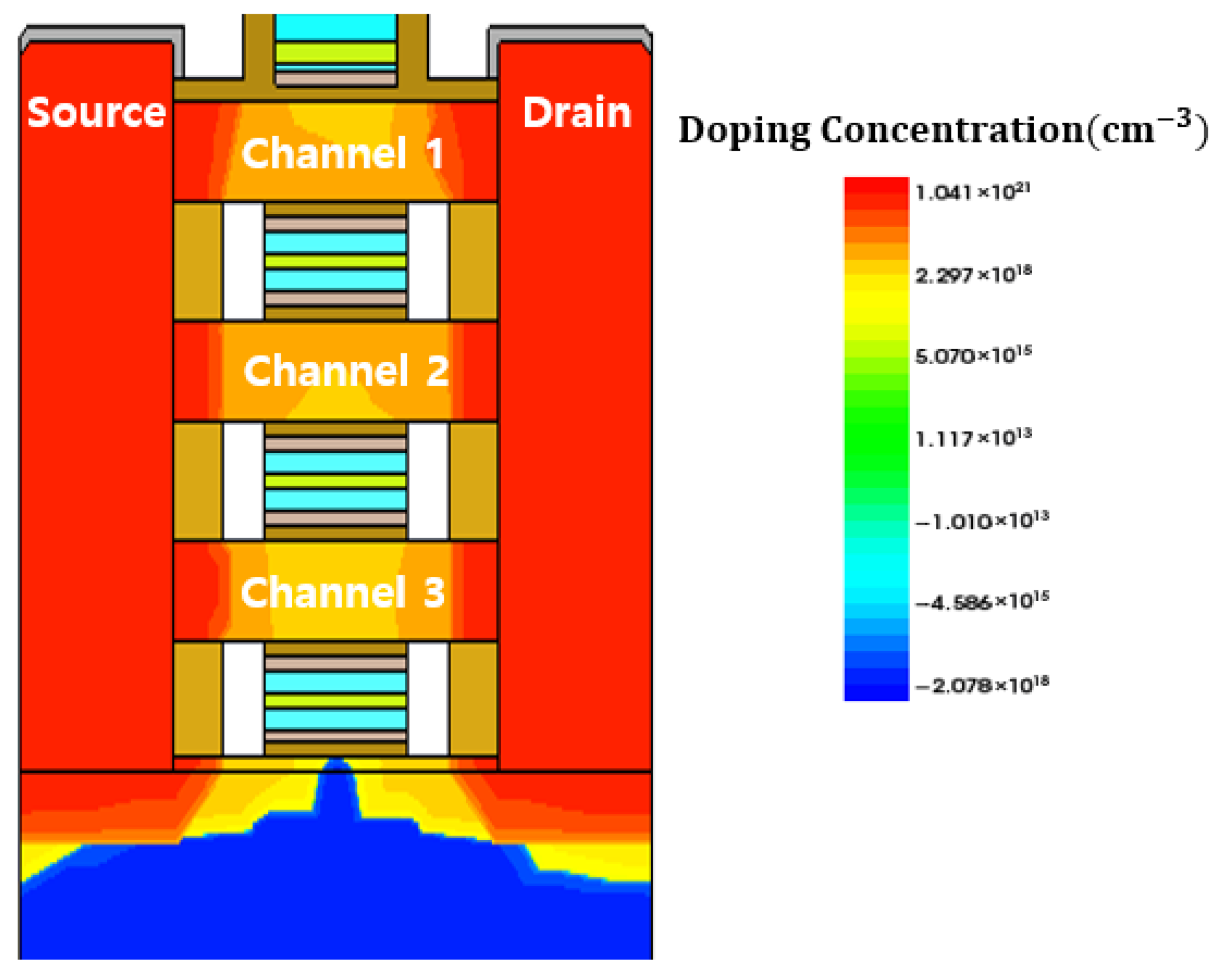
The device characteristics simulations were carried out under conditions of drain-to-source voltage (VDS) = 0.7 V and gate-to-source voltage (VGS) = 1.0 V with doped HfO2. Figure 4 shows the conduction-band energy profile of the NSFET in the channel region, and Figure 5 shows the NSFET doping concentration, allowing the distribution of dopants across various regions, such as the channel, source, and drain, to be visually confirmed.
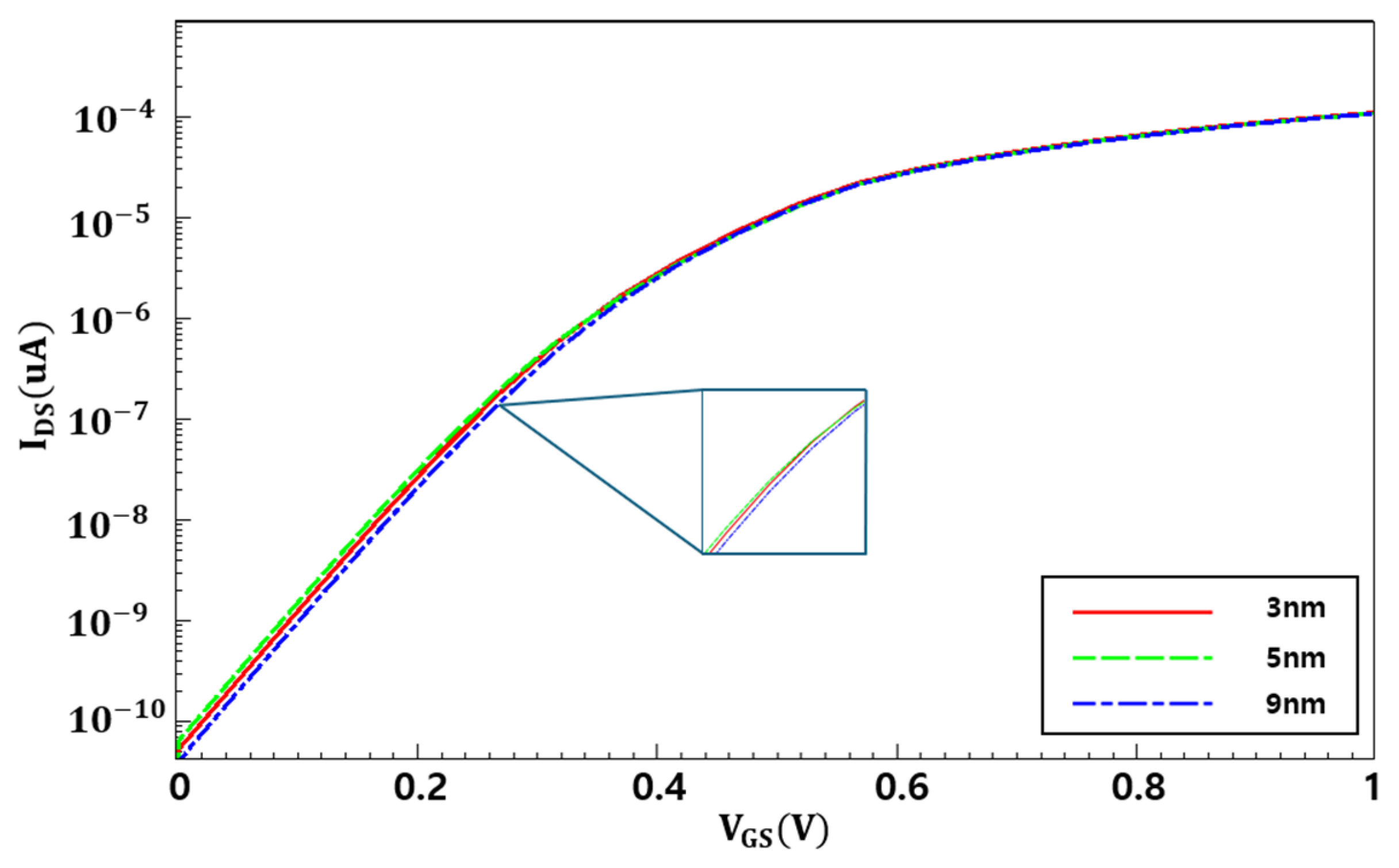
Figure 6 shows the drain current (IDS)—VGS characteristics of the N-type NSFET under varying STI depths at 3 nm, 5 nm, and 9 nm, which are used to extract various device parameters. The variation in IDS—VGS characteristics with STI depth is associated with differences in compressive stress induced in the active region due to changes in the STI structure. As the STI depth varies, the compressive stress originating from the oxide to silicon is changed, which in turn affects carrier mobility and threshold-voltage characteristics, leading to changes in the drain current [18].
STI, a structural feature commonly implemented in MOSFETs for complementary metal-oxide-semiconductor (CMOS) processes, affects key device parameters, such as threshold voltage (Vth), transconductance, leakage current, and drain current [18]. Therefore, variations in STI also influence noise behavior. However, low-frequency noise (LFN) can change significantly even when the global DC transfer characteristics change only marginally, because flicker noise is more sensitive to local imperfections/trap activity along the current path [19]. In NWFETs, the FE layer acts as a negative capacitor, amplifying the surface potential beyond the applied gate voltage. The subthreshold swing (SS) is given by Equation (1), where Vg denotes the gate voltage, φs the surface potential at the Si-SiO2 interface, Id the drain-to-source current, k the Boltzmann constant, q the elementary charge, Cs and Cins the capacitances of the semiconductor and insulator, and T the temperature [20].
S S = V g φ s   φ s l o g 10 I d = k T q 1 + C s C i n s ln 10
Drain-induced barrier lowering (DIBL), a key parameter indicating SCEs, is expressed by Equation (2) and is calculated from the difference between small drain voltage (VDlin), VDS = 0.07 V, and large drain voltages (VDsat), VDS = 0.7 V [21].
D I B L = V t h @ V D l i n V t h @ V D s a t V D s a t V D l i n
Table 2 lists the subthreshold swing (SS) and DIBL values according to variations in STI depth.

2.3. NSFET Physical Noise Mechanism

The simplest way to obtain flicker noise characteristics is to superpose various generation–recombination (G–R) noise spectra arising from the random trapping and emission of free carriers by centers with different lifetimes. This constitutes the basic concept of the McWhorter model, which can be expressed by Equation (3) [22].
S 1 / f Δ N 2 τ 1 τ 2 1 τ 4 τ 1 + ω τ 2 · d τ = Δ N 2 · 1 f   f o r   1 τ 2 ω 1 τ 1
where τ, ΔN, and ω represent the time constant, fluctuation in the number of electrons in the channel, and angular frequency, respectively.
In silicon MOSFETs, low-frequency noise is dominated by flicker noise. Flicker noise is referred to as 1/f noise because its spectral density is inversely proportional to frequency [23]. Flicker noise originates from random charge capture (trapping) and emission (de-trapping) processes at oxide traps near the SiO2/silicon interface, leading to fluctuations in the channel carrier density [24,25]. These oxide traps dynamically exchange carriers with the channel, inducing fluctuations in the surface potential, which, in turn, modulate the channel carrier density and cause variations in the inversion charge density [26,27]. The current spectral density of flicker noise is expressed by Equation (4).
S i d , 1 f = ( 2 F + B F 2 ) q 2 I D 2 N d ( E F N ) ϵ o x 2 W L α f η
where F = E x 2 + E y 2 + E z 2 denote the electric field, B is a fixed constant, and ID, L′, and Nd (EFN) represent the drain current, effective gate length, and trap density at the interface, respectively. The parameters f, α, and ϵox denote frequency, attenuation factor, and dielectric permittivity of the gate oxide, respectively. While Equation (4) follows a conventional trap-related flicker noise formalism, ferroelectric gate dielectrics such as HZO can exhibit additional dependence on polarization state and cycling history. Experimental studies on HZO-based ferroelectric vertical GAA FETs report that the measured LFN can be captured by carrier-number fluctuation (CNF) and mobility fluctuation (MF) formalisms through model fitting, supporting a CNF/MF-based framework as a first-order approach [28].
The generation–recombination (G–R) noise originates from local fluctuations in the number of free carriers caused by random transitions of charge carriers between different energy states within a semiconductor. Localized energy states, such as traps, deep donors, or Shockley–Read–Hall centers, stochastically capture and emit electrons and holes, leading to temporal variations in the mean value and variance of the free carrier number N [29]. The occurrence probability and characteristic lifetime of these capture–emission processes are governed by the relative energy conditions between the trap states and the energy levels occupied by the carriers, such that carrier number fluctuations are enhanced when transitions between energy states are energetically favorable. Consequently, these temporal fluctuations in the carrier population manifest as fluctuations in current and resistance, which are observed as generation–recombination noise [30,31]. Equation (5) represents the current spectral density of G–R noise.
S i d , G R = N T N 2 τ 1 + 4 π 2 f 2 τ 2
where NT, N, and τ represent the trap count, number of carriers, and time constant, respectively.
Drain-current noise can be interpreted as an equivalent gate-voltage source applied at the input through the gate-coupling capacitance, analogous to amplifier noise models. In practice, because this voltage is fixed, the noise is not generated through changes in gate voltage. Instead, it arises from changes in oxide charge that cause variations in the surface potential tail. Additionally, noise due to mobility fluctuations occurs along the conduction path through which charge carriers move. The equivalent input gate voltage noise is considered a mathematical construction derived from drain-current noise using a transconductance (gm). Thus, the relationship between drain-current noise spectral density (Sid) and gate voltage noise spectral density (Svg) is expressed by Equation (6) [32].
S v g = S i d g m 2
LFN was simulated using the built-in SDEVICE noise options with a consistent default parameter set [33]. Because the absolute LFN magnitude can depend on the selected noise-model parameters, this work emphasizes comparative trends obtained under an identical parameter set across STI depth splits.

3. TCAD Simulation of NSFET

3.1. HZO vs. HfO2 from a Noise Perspective

To verify the FE of HZO, a hysteretic loop is used to confirm polarization behavior. The Gibbs free energy (U–P) is based on the Landau–Khalatnikov (LK) equation. Equations (7) and (8) represent the Gibbs free energy, where U, P, and E denote energy, polarization, and electric field, respectively. The fitting parameters α, β, and γ use the values in Table 3. As the dielectric constant is inversely proportional to α, a reduction in α leads to an improvement in the dielectric constant. In this work, we adopted the parameters extracted by Lee, M.H., et al. [34].
U = α P 2 + β P 4 + γ P 6 E · P
E = 2 α P 2 + 4 β P 3 + 6 γ P 5
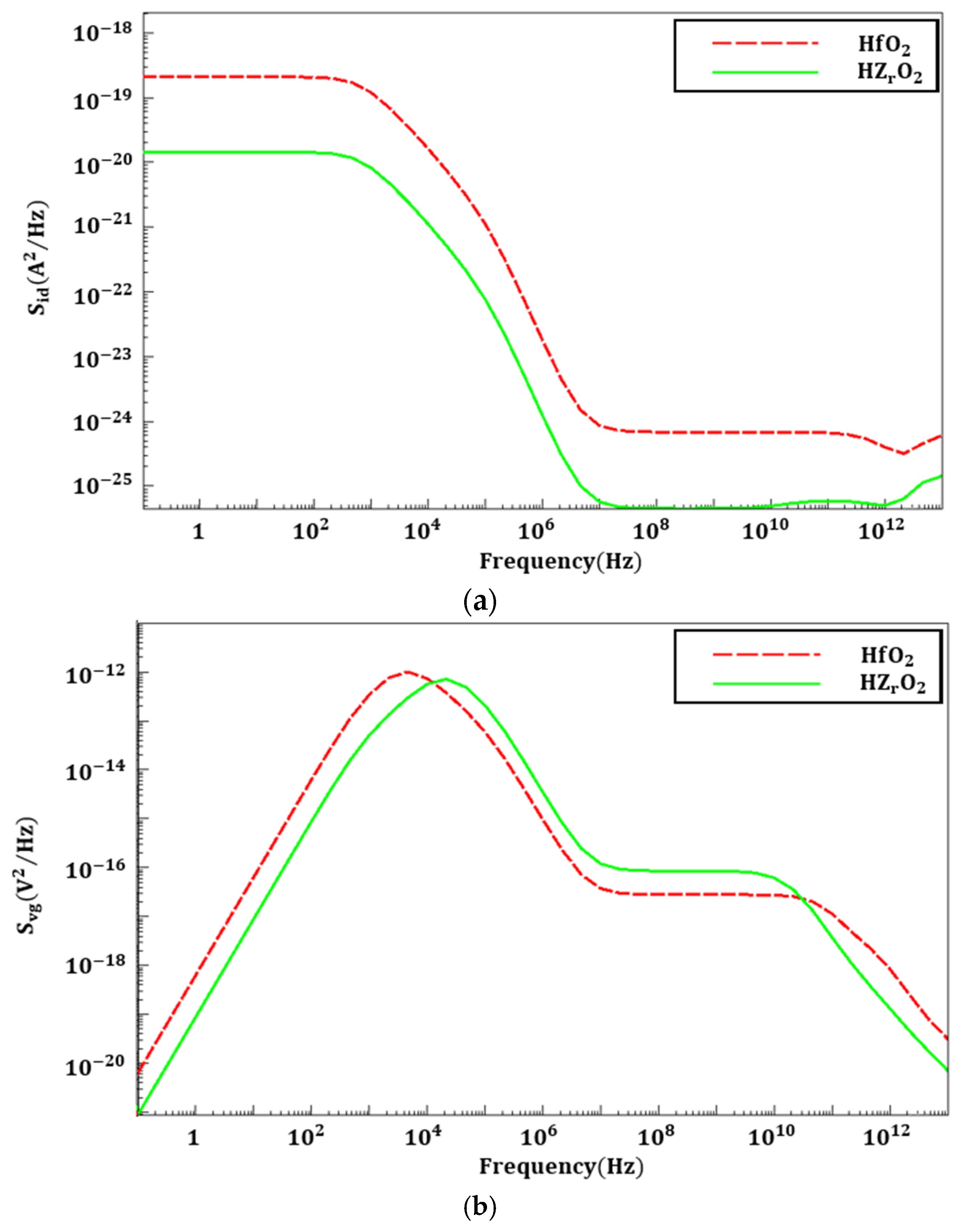
According to Maryam et al., adding elements such as ZrO2 to HfO2 reduces the oxide trap density, indicating that ZrO2 incorporation leads to noise reduction [35]. In this work, the HZO-related LFN behavior is discussed primarily within a trap-mediated flicker noise perspective, where the PSD is governed by carrier-number fluctuations associated with trapping/de-trapping activity in the gate dielectric and interface region [9]. This approach is supported by experimental LFN studies on ferroelectric-doped HfO2 gate dielectric performed under linear bias conditions, which report predominantly 1/f-like spectra governed by trapping and a lower PSD for the ferroelectric-doped HfO2 gate dielectric compared to the undoped HfO2 reference, consistent with a reduced trap density [9]. Accordingly, the observed HZO–HfO2 noise difference is attributed qualitatively to defect/trap engineering, without introducing an explicit polarization-fluctuation noise term. The simulation is conducted using the same physical model. In this simulation, the thickness of the HZO film is set to 5 nm. Previous studies have shown that even when the HZO film thickness is reduced to approximately 5 nm, a remanent polarization of about 10 µC/cm2 can be maintained, enabling saturated FE polarization at a low operating voltage of 1.0 V [36]. Figure 7 shows the Sid and Svg of HfO2 and HZO under conditions where VGS = 1.0 V, VDS = 0.7 V, and the trap concentration of oxide is 1 × 10¹⁰ eV−1cm−2. The Gaussian distribution of the trap is expressed by DGau = N0((E − E0)2/2Es2), where N0 is a peak Gaussian trap distribution, and E0 and Es denote its energy mean and energy standard deviation of the Gaussian distribution. The values considered for E0 and Es are 0.1 eV and 0.1 eV, respectively [17]. By comparing Sid and Svg for HfO2 and HZO, it can be confirmed that noise performance improves when ZrO2 is added to HfO2.

3.2. Simulation of Material Interface Trap Density

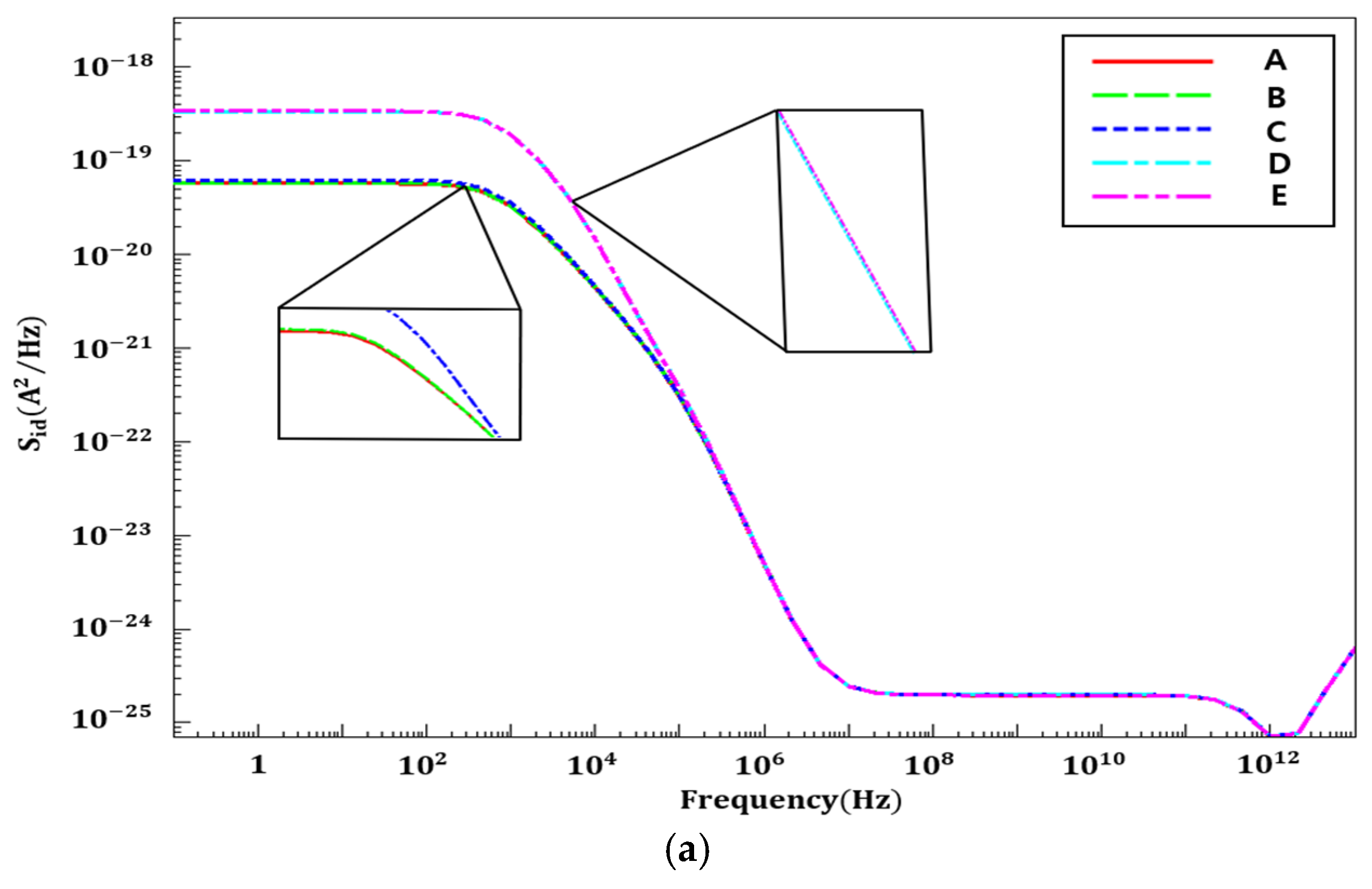
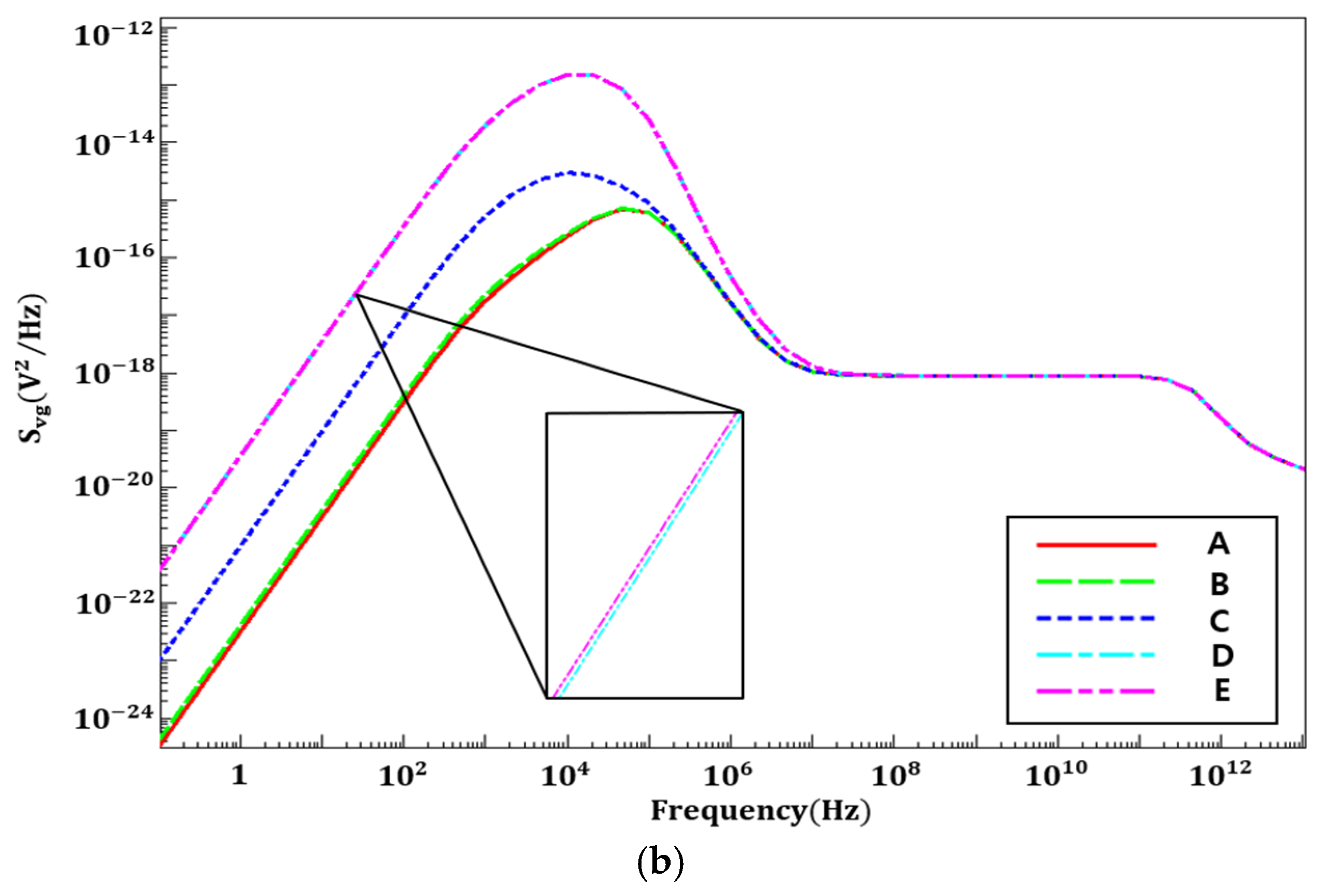
The variation in noise with changes in trap density at the material interface (SiO2/silicon). The performance of HZO-doped NSFETs is simulated. As the number of oxide traps increases, electron trapping and de-trapping within the traps also increase, leading to a rise in total flicker noise [35,37]. Figure 8 shows the power spectral density (PSD) of drain current and gate voltage as a function of material interface charge density in HZO-based NSFETs. The interface trap density at the HZO/SiO2 interface is fixed at 1 × 10¹⁰ eV−1cm−2, while the trap densities at the SiO2/silicon interface are varied as follows: 1 × 10¹⁰ (A), 1 × 10¹¹ (B), 1 × 10¹² eV−1cm−2 (C), 1 × 10¹³ eV−1cm−2 (D), and 1 × 10¹⁴ eV−1cm−2 (E). The simulation results demonstrate that when the interface trap density at the SiO2/silicon interface is 1 × 10¹⁰ eV−1cm−2, HZO-doped NSFETs achieve better noise performance than other values.

3.3. STI Depth-Dependent Noise Characteristics

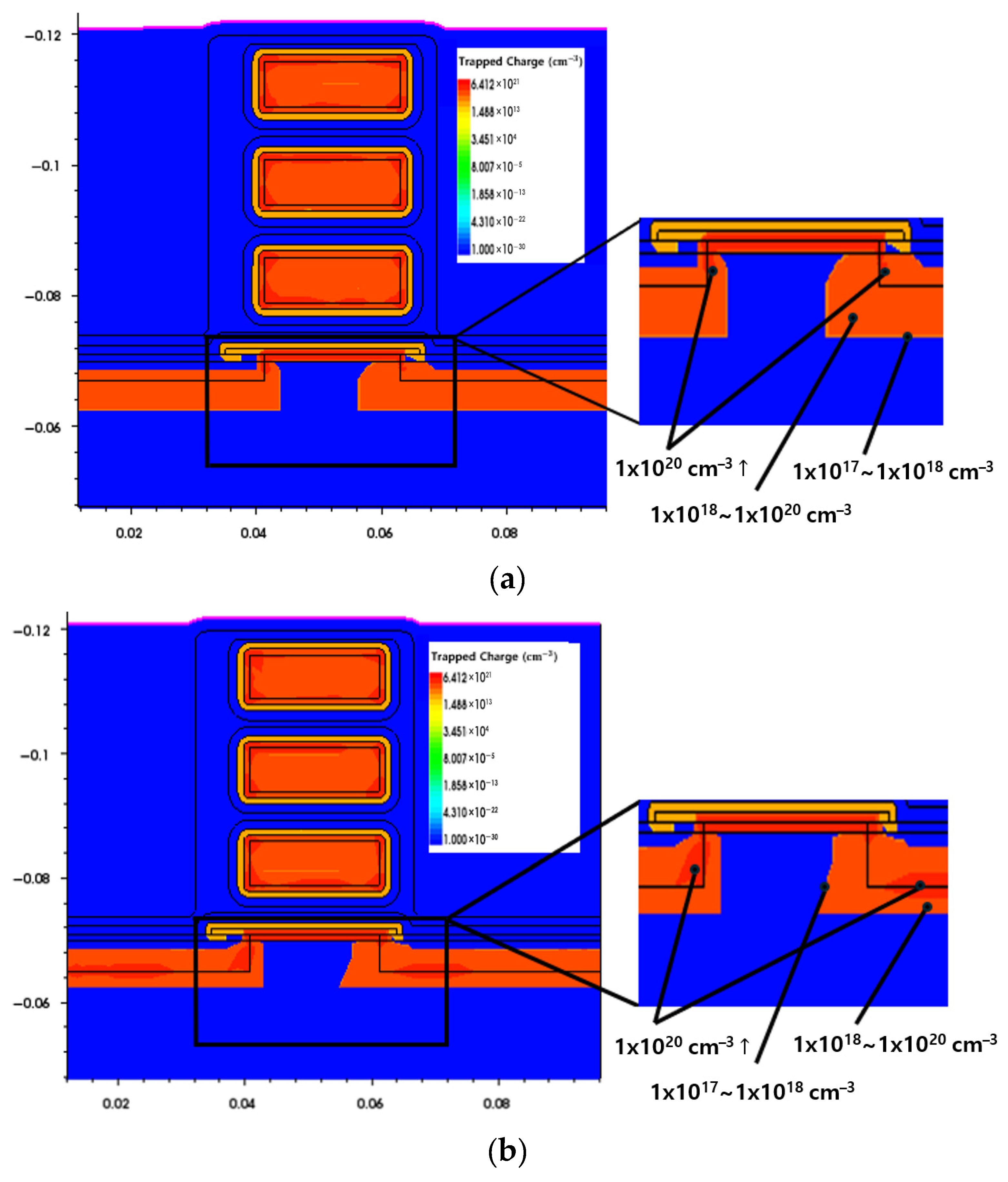
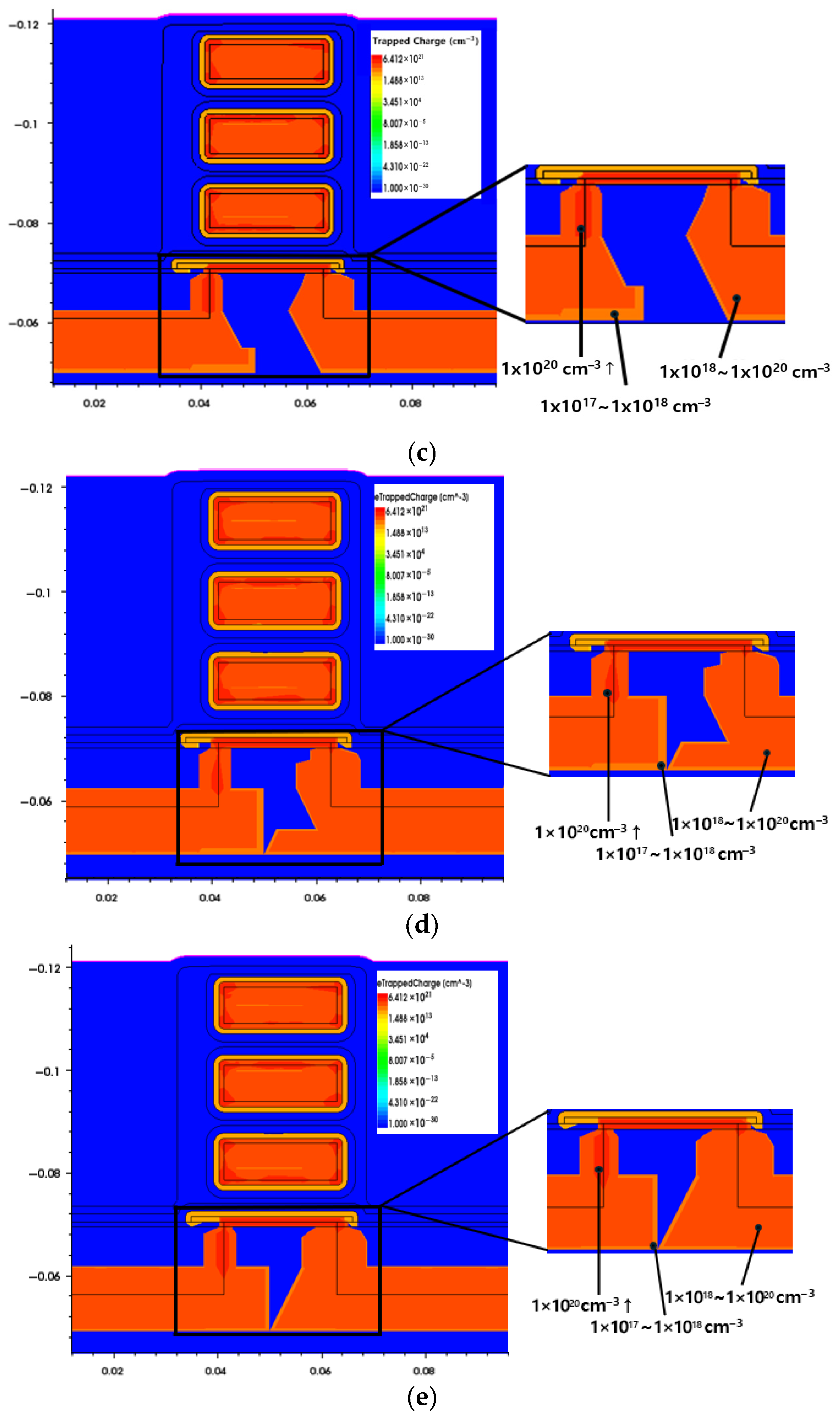
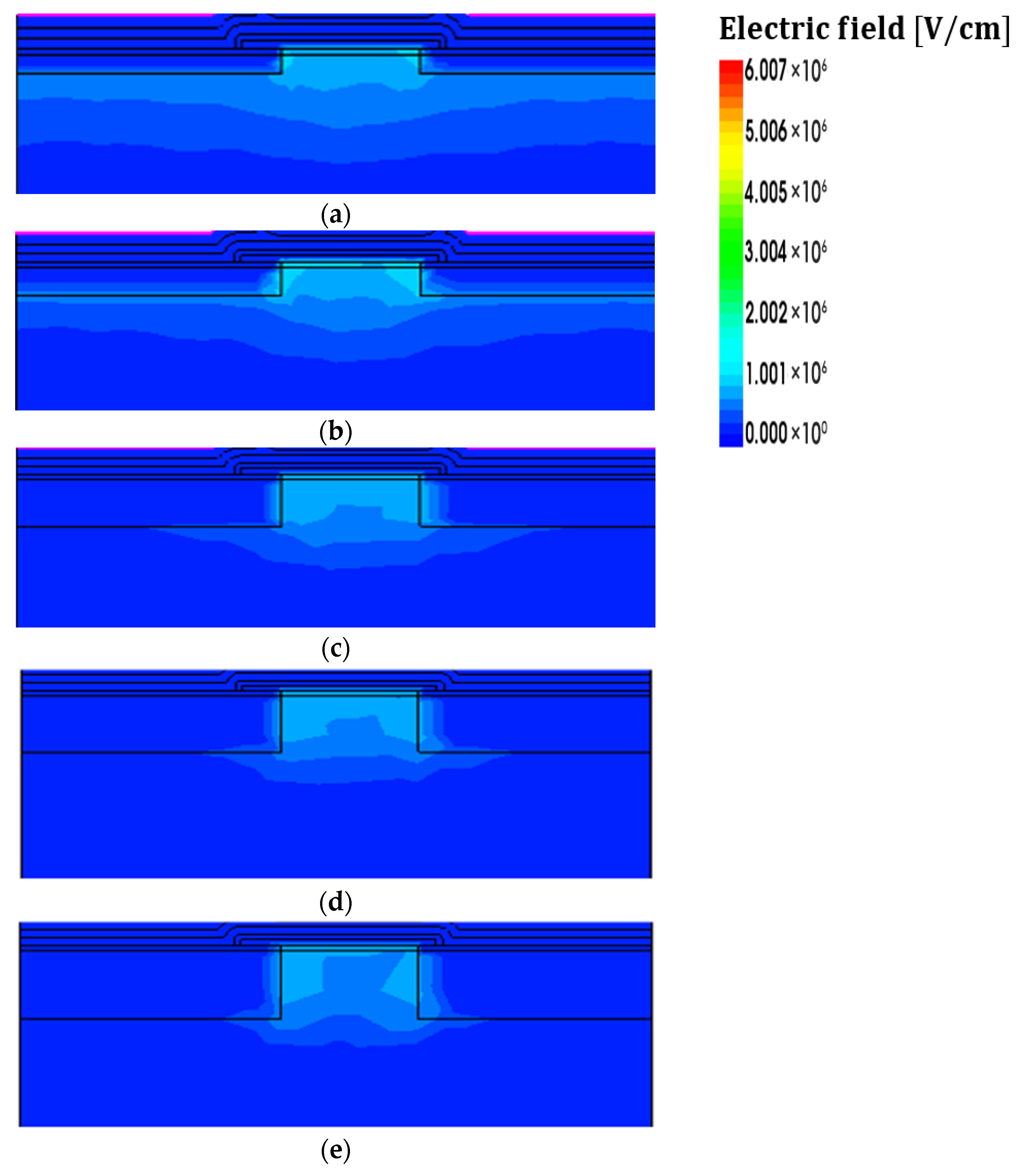
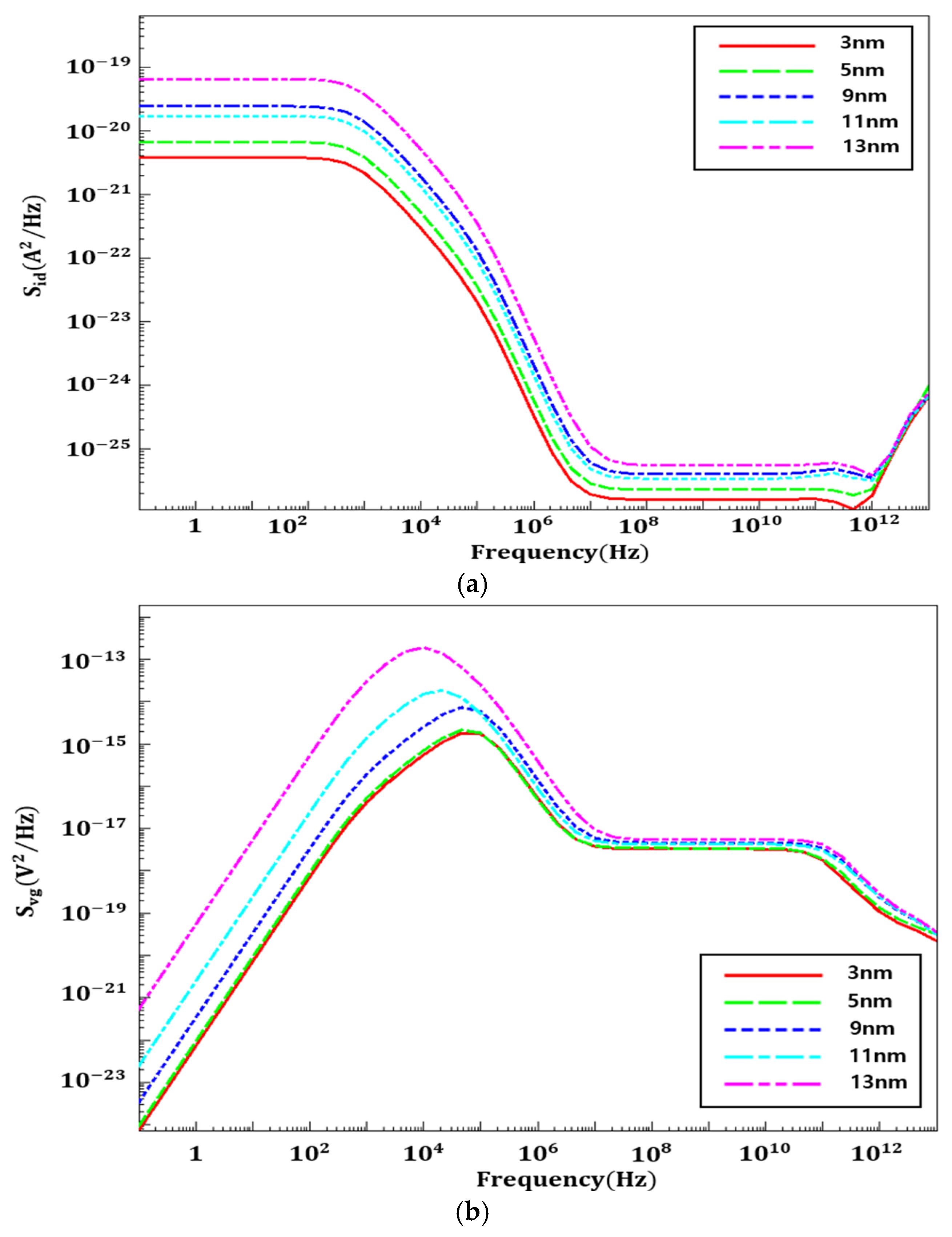
The STI oxide can influence drain-to-source leakage current and off-state current behavior; therefore, excessively shallow STI structures may complicate the interpretation of the device’s electrical characteristics. Accordingly, simulations in this work were performed for STI depths of 3 nm and above [38]. This lower bound is motivated by isolation literature indicating that aggressive isolation scaling can increase leakage and degrade gate–oxide integrity, implying a practical trade-off beyond LFN minimization [39]. Hot-carrier reliability studies on STI-based/narrow-width devices also report enhanced degradation due to current crowding and electron trapping at the STI edge, suggesting reliability-aware constraints [40]. Accordingly, the STI = 3 nm recommendation is presented as a noise-driven optimum under these reliability-aware constraints. Figure 9 shows the distribution of charge traps near the channel as a function of STI depth. The trap charge density near the STI oxide ranges from approximately 1 × 10¹⁷ to 1 × 1020 cm−3 [41]. Research on noise with STI depth as an independent variable is limited. Therefore, this study investigates the noise characteristics by examining changes in trap charge distribution obtained from TCAD simulations. According to Rongbin et al. [42], excessive trap charges formed in the STI oxide can deplete or invert the substrate beneath the STI layer, reducing the threshold voltage of parasitic transistors and thereby increasing flicker noise. In addition, under higher electric fields, the enhanced carrier interaction with traps increases the fluctuation rate, which directly leads to the observed increase in flicker noise magnitude [43,44]. Figure 10 shows the electric field distribution of the NSFET for different STI depths of 3, 5, 9, 11, and 13 nm. As the STI depth increases, a clear enhancement of the electric field is observed near the STI/silicon interface, particularly around the STI corner region adjacent to the channel. This behavior indicates that increasing STI depth leads to a spatial redistribution of the electric field at the SiO2/silicon boundary, resulting in an expanded high-field region rather than a simple increase in peak field strength. The intensified electric field near the STI region is consistent with the increased trap charge density shown in Figure 9 and contributes to enhanced carrier trapping and de-trapping processes. Therefore, the simulated electric field redistribution provides a theoretical basis for the observed STI depth–dependent noise behavior. Based on this, it can be inferred that as STI depth increases, the PSD of the channel also increases, particularly if the interface trap density near the SiO2/silicon interface is high. In addition, TCAD results indicate that STI depth primarily modulates trap-related flicker noise via changes in trapped charge and local electric-field distribution, which is compatible with compact-model workflows where trap-governed LFN can be mapped to BSIM-CMG noise parameters via subthreshold and linear region fitting [45].
Figure 11 shows the drain current and gate voltage PSD characteristics for STI depths of 3, 5, 9, 11, and 13 nm. As illustrated, PSD values increase across the entire frequency range with increasing STI depth, consistent with the results inferred from trap charge distribution. In other words, deeper STI structures lead to more charge traps near the STI–channel interface, which enhances channel charge fluctuations and amplifies flicker noise.

4. NSFET Parameter Optimization

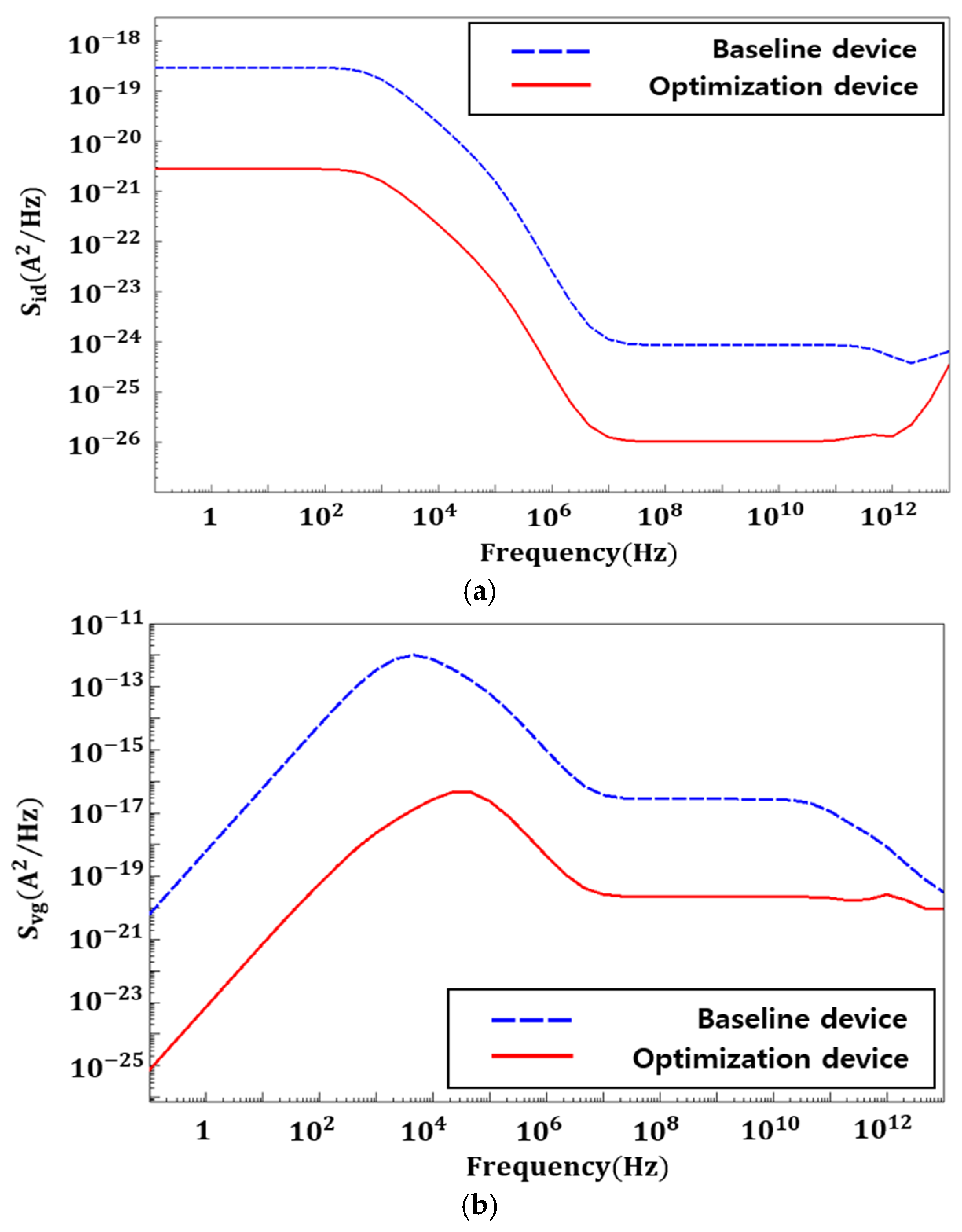
Based on the previous analyses, key structural and material parameters were optimized to improve the low-frequency noise performance of NSFETs. The baseline device in Figure 12 represents the PSD of an NSFET doped with HfO2 as the FE layer without STI formation, whereas the optimized device shows the PSD when the optimal material interface trap density and STI depth (3 nm)—from a noise perspective—are applied to an NSFET doped with HZO instead of HfO2. As STI depth increases, trap formation near the channel increases, leading to a corresponding rise in PSD. Furthermore, when the trap density at the SiO2/silicon interface is controlled at 1 × 10¹⁰ eV−1cm−2, trap-induced charge fluctuations decrease, resulting in reduced flicker noise. This improvement is attributed to enhanced interfacial quality of the gate insulator and suppression of charge-trapping paths. Therefore, it was confirmed that the combination of an HZO-based gate insulator with an STI depth of 3 nm provides the most stable and lowest-noise characteristics in NSFETs.

5. Conclusions

This study quantitatively analyzed the low-frequency noise characteristics of NSFET structures using TCADs. Evaluation of electric field distribution and trap formation behavior across different STI depths confirmed that as STI depth increases, the trapped charge density rises, leading to a corresponding increase in PSD. In contrast, shallower STI structures form fewer trapped charges near the channel sidewalls, thereby tending to suppress noise. Furthermore, replacing HfO2 with an HZO-based FE insulator improved gate–field control and reduced charge trapping, resulting in an overall enhanced noise performance. Optimization results demonstrated that the lowest-noise PSD was achieved with an STI depth of 3 nm and a SiO2/silicon interface trap density of 1 × 10¹⁰ eV−1cm−2. These findings indicate that complementary optimization of structural parameters (STI) and material parameters (interface traps and HZO) can improve the low-frequency noise characteristics of NSFETs. The results are expected to serve as important design guidelines for future low-noise, high-reliability nanoscale device design.

Author Contributions

Conceptualization, W.L. and J.L.; methodology, J.L.; software, W.L.; validation, W.L. and J.L.; writing—original draft preparation, W.L.; writing—review and editing, W.L. and J.L.; visualization, W.L.; supervision, J.L.; project administration, J.L.; funding acquisition, J.L. All authors have read and agreed to the published version of the manuscript.

Funding

This research was supported by the Basic Science Research Program through the National Research Foundation of Korea (NRF), funded by the Ministry of Education. (No. 2022R1I1A3064285).

Data Availability Statement

The data presented in this study are available on request from the corresponding author.

Conflicts of Interest

The authors declare no conflicts of interest.

References

  1. Duan, H. From MOSFET to FinFET to GAAFET: The evolution, challenges, and future prospects. Appl. Comput. Eng. 2024, 50, 113–120. [Google Scholar] [CrossRef]
  2. Cao, W.; Bu, H.; Vinet, M.; Cao, M.; Takagi, S.; Hwang, S.; Ghani, T.; Banerjee, K. The future transistors. Nature 2023, 620, 501–515. [Google Scholar] [CrossRef]
  3. Ajayan, J.; Nirmal, D.; Tayal, S.; Bhattacharya, S.; Arivazhagan, L.; Fletcher, A.S.A.; Murugapandiyan, P.; Ajitha, D. Nanosheet field effect transistors-A next generation device to keep Moore’s law alive: An intensive study. Microelectron. J. 2021, 114, 105141. [Google Scholar] [CrossRef]
  4. Mukesh, S.; Jingyun, Z. A review of the gate-all-around nanosheet FET process opportunities. Electronics 2022, 11, 3589. [Google Scholar] [CrossRef]
  5. Belkhiria, M.; Echouchene, F.; Jaba, N.; Bajahzar, A.; Belmabrouk, H. 2-D-Nonlinear electrothermal model for investigating the self-heating effect in GAAFET transistors. IEEE Trans. Electron Devices 2021, 68, 954–961. [Google Scholar] [CrossRef]
  6. Ryu, D.; Kim, M.; Yu, J.; Kim, S.; Lee, J.H.; Park, B.G. Investigation of sidewall high-k interfacial layer effect in gate-all-around structure. IEEE Trans. Electron Devices 2020, 67, 1859–1863. [Google Scholar] [CrossRef]
  7. Kuk, S.H.; Han, S.M.; Kim, B.H.; Baek, S.H.; Han, J.H.; Kim, S.H. An investigation of HZO-based n/p-FeFET operation mechanism and improved device performance by the electron detrapping mode. IEEE Trans. Electron Devices 2022, 69, 2080–2087. [Google Scholar] [CrossRef]
  8. Koo, R.H.; Shin, W.; Kim, S.; Kim, J.; Kwak, B.; Im, J.; Kim, H.; Kwon, D.H.; Cheema, S.S.; Lee, J.H.; et al. Low-Frequency Noise Spectroscopy for Navigating Geometrically Varying Strain Effects in HfO2 Ferroelectric FETs. Adv. Sci. 2025, 12, 2501367. [Google Scholar] [CrossRef]
  9. Simoen, E.; O’Sullivan, B.J.; Ronchi, N.; Van den Bosch, G.; Linten, D.; Van Houdt, J. Low-frequency noise assessment of ferro-electric field-effect transistors with Si-doped HfO2 gate dielectric. AIP Adv. 2021, 11, 015219. [Google Scholar] [CrossRef]
  10. Zeng, B.; Liao, M.; Peng, Q.; Xiao, W.; Liao, J.; Zheng, S.; Zhou, Y. 2-bit/cell operation of Hf0.5Zr0.5O2 based FeFET memory devices for NAND applications. IEEE J. Electron Devices Soc. 2019, 7, 551–556. [Google Scholar] [CrossRef]
  11. Li, Y.; Li, J.; Liang, R.; Zhao, R.; Xiong, B.; Liu, H.; Tian, H.; Yang, Y.I.; Ren, T.L. Switching dynamics of ferroelectric HfO2-ZrO2 with various ZrO2 contents. Appl. Phys. Lett. 2019, 114, 142902. [Google Scholar] [CrossRef]
  12. Yoo, J.; Song, H.; Lee, H.; Lim, S.; Kim, S.; Heo, K.; Bae, H. Recent research for HZO-based ferroelectric memory towards in-memory computing applications. Electronics 2023, 12, 2297. [Google Scholar] [CrossRef]
  13. de Oliveira, A.V.; Veloso, A.; Claeys, C.; Horiguchi, N.; Simoen, E. Low–frequency noise in vertically stacked Si n–channel nanosheet FETs. IEEE Electron Device Lett. 2020, 41, 317–320. [Google Scholar] [CrossRef]
  14. Wilamowski, B.M.; Irwin, J.D. Fundamentals of Industrial Electronics; CRC Press: Boca Raton, FL, USA, 2018. [Google Scholar]
  15. Silva, V.C.; Perina, W.F.; Martino, J.A.; Simoen, E.; Veloso, A.; Agopian, P.G. Analog figures of merit of vertically stacked silicon nanosheets nMOSFETs with two different metal gates for the sub-7 nm technology node operating at high temperatures. IEEE Trans. Electron Devices 2021, 68, 3630–3635. [Google Scholar] [CrossRef]
  16. Pelosi, M. From FinFET to Nanosheet Si-SiGe GAAFET: Fabrication Process Simulation and Analysis. Ph.D. Thesis, Politecnico di Torino, Turin, Italy, 2021. [Google Scholar]
  17. Sentaurus Process User Guide, Version S-2021.06-SP1; Synopsys Inc.: Mountain View, CA, USA, 2021.
  18. Chan, C.Y.; Huang, Y.C.; Chen, J.W.; Hsu, S.S.; Juang, Y.Z. STI-to-gate distance effects on flicker noise characteristics in 0.13 μm CMOS. Solid-State Electron. 2008, 52, 1182–1187. [Google Scholar] [CrossRef]
  19. Ren, L.; Okhonin, S.; Ilegems, M. Low-frequency noise in electrically stressed n-MOSFETs. Solid-State Electron. 1999, 43, 849–856. [Google Scholar] [CrossRef]
  20. Hosen, K.; Islam, M.S.; Stampfl, C.; Park, J. Numerical analysis of gate-all-around HfO2/TiO2/HfO2 high-K dielectric based WSe2 NCFET with reduced sub-threshold swing and high on/off ratio. IEEE Access 2021, 9, 116254–116264. [Google Scholar] [CrossRef]
  21. Kuang, F.; Li, C.; Li, H.; You, H.; Deen, M.J. Effect of Non-Ideal Cross-Sectional Shape on the Performance of Nanosheet-Based FETs. Electronics 2023, 12, 3419. [Google Scholar] [CrossRef]
  22. Konczakowska, A.; Wilamowski, B. Noise in semiconductor devices. In Fundamentals of Industrial Electronics, 2nd ed.; CRC Press: Boca Raton, FL, USA, 2011. [Google Scholar]
  23. Chang, J.; Abidi, A.A.; Viswanathan, C.R. Flicker Noise in CMOS Transistors from Subthreshold to Strong Inversion at Various Temperatures. IEEE Trans. Electron Devices 1994, 41, 1965–1971. [Google Scholar] [CrossRef]
  24. Kalra, E.; Kumar, A.; Haldar, S.; Gupta, R.S. Flicker noise modelling of small geometry LDD MOSFETs. Microelectron. J. 2001, 32, 143–147. [Google Scholar] [CrossRef]
  25. Bijesh, R.; Mohata, D.K.; Liu, H.; Datta, S. Flicker noise characterization and analytical modeling of homo and hetero-junction III–V tunnel FETs. In Proceedings of the 70th Device Research Conference, University Park, PA, USA, 18–20 June 2012; IEEE: New York, NY, USA, 2012; pp. 203–204. [Google Scholar]
  26. Shailesh, S.R. Low Frequency Noise Modeling in Single-and Double-Gate MOSFETs. Ph.D. Thesis, Rochester Institute of Technology, New York, NY, USA, 2005. [Google Scholar]
  27. Haartman, M.; Östling, M. Low-Frequency Noise in Advanced MOS Devices; Springer Science & Business Media: Dordrecht, The Netherlands, 2007. [Google Scholar]
  28. Zhu, Z.; Ram, M.K.; Persson, A.E.; Wernersson, L.E. Low-frequency noise in ferroelectric III-V vertical gate-all-around FETs. In IEEE Electron Device Letters; IEEE: New York, NY, USA, 2025. [Google Scholar]
  29. Van der Ziel, A.; Chenette, E.R. Noise in solid state devices. Adv. Electron. Electron Phys. 1978, 46, 313–383. [Google Scholar]
  30. Mitin, V.; Reggiani, L.; Varani, L. Generation-recombination noise in semiconductors. In Noise and Fluctuations Control in Electronic Devices; American Scientific Publishers: Stevenson Ranch, CA, USA, 2002; pp. 11–30. [Google Scholar]
  31. Nougier, J.P. Fluctuations and noise of hot carriers in semiconductor materials and devices. IEEE Trans. Electron Devices 2002, 41, 2034–2049. [Google Scholar] [CrossRef]
  32. Kumar, V.; Maurya, R.K.; Rawat, G.; Debnath, R.G.; Mummaneni, K. Noise analysis of NC-GAAFET cylindrical nanowire with non-uniform interface trap charge. Phys. Scr. 2024, 99, 075048. [Google Scholar] [CrossRef]
  33. SDU Manual. Sentaurus Device User Manual; Synopsys: Sunnyvale, CA, USA, 2022. [Google Scholar]
  34. Lee, M.H.; Wei, Y.T.; Liu, C.; Huang, J.J.; Tang, M.; Chueh, Y.L.; Chu, K.Y.; Chen, M.J.; Lee, H.Y.; Chen, Y.S.; et al. Ferroelectricity of HfZrO2 in Energy Landscape with Surface Potential Gain for Low-Power Steep-Slope Transistors. IEEE J. Electron Devices Soc. 2015, 3, 377–381. [Google Scholar]
  35. Olyaei, M. Low-Frequency Noise in High-k Gate Stacks with Interfacial Layer Engineering. Ph.D. Thesis, KTH Royal Institute of Technology, Stockholm, Sweden, 2015. [Google Scholar]
  36. Kim, S.J.; Mohan, J.; Kim, H.S.; Lee, J.; Young, C.D.; Colombo, L.; Summerfelt, S.R.; San, T.; Kim, J. Low-voltage operation and high endurance of 5-nm ferroelectric Hf0.5Zr0.5O2 capacitors. Appl. Phys. Lett. 2018, 113, 182903. [Google Scholar] [CrossRef]
  37. Magnone, P.; Crupi, F.; Giusi, G.; Simoen, E.; Claeys, C.; Pantisano, L.; Maji, D.; Rao, V.R.; Srinivasan, P. 1/f noise in drain and gate current of MOSFETs with high-k gate stacks. IEEE Trans. Device Mater. Reliab. 2009, 9, 180–189. [Google Scholar] [CrossRef]
  38. Liu, Z.; Hu, Z.; Zhang, Z.; Shao, H.; Chen, M.; Bi, D.; Ning, B.; Zou, S. Gate length dependence of the shallow trench isolation leakage current in an irradiated deep submicron NMOSFET. J. Semicond. 2011, 32, 064004. [Google Scholar] [CrossRef]
  39. Smeys, P. Local Oxidation of Silicon for Isolation. Ph.D. Thesis, Stanford University, Stanford, CA, USA, 2000. [Google Scholar]
  40. Yanagi, S.; Kimura, H.; Nitta, T.; Kuroi, T.; Hatasako, K.; Maegawa, S.; Onishi, K.; Otsu, Y. 0.15 µm BiC-DMOS technology with novel stepped-STI N-channel LDMOS. In 2009 21st International Symposium on Power Semiconductor Devices & IC’s; IEEE: New York, NY, USA, 2009. [Google Scholar]
  41. Shubham; Pandey, R.K. Role of oxygen vacancy in the performance variability and lattice temperature of the stacked nanosheet fet. IEEE Access 2024, 12, 162565–162580. [Google Scholar]
  42. Hu, R.; Wang, Y.; Lu, W. The total dose effects on the 1/f noise of deep submicron CMOS transistors. J. Semicond. 2014, 35, 024006. [Google Scholar] [CrossRef]
  43. Anandan, P.; Nithya, A.; Mohankumar, N. Simulation of flicker noise in gate-all-around silicon nanowire MOSFETs including interface traps. Microelectron. Reliab. 2014, 54, 2723–2727. [Google Scholar] [CrossRef]
  44. Matsumoto, S.; Ueno, H.; Hosokawa, S.; Kitamura, T.; Miura-Mattausch, M.; Mattausch, H.; Ohguro, T.; Kumashiro, S.; Yamaguchi, T.; Yamashita, K.; et al. 1/f-noise characteristics in 100 nm-MOSFETs and its modeling for circuit simulation. IEICE Trans. Electron. 2005, 88, 247–254. [Google Scholar] [CrossRef]
  45. Chen, Y.; Liu, X.; Lei, D.; Liu, Y.; Chen, R.; Ni, Y. Compatibility of the BSIM-CMG to the Low-Frequency Noise Simulation in Subthreshold and Linear Regions of Amorphous InZnO TFTs. IEEE J. Electron Devices Soc. 2024, 12, 275–280. [Google Scholar] [CrossRef]
Figure 1. Gate stack of NSFET in the Y–Z plane.
Nanomaterials 16 00248 g001
Figure 2. NSFET process.
Nanomaterials 16 00248 g002
Figure 3. (a) SiO2 spacer formation. (b) Shallow-trench-isolation formation.
Nanomaterials 16 00248 g003
Figure 4. Conduction band energy profile at the channel surface of NSFET. (VDS = 0.7 V, VGS = 1.0 V).
Nanomaterials 16 00248 g004
Figure 5. Doping concentration of N-type NSFET.
Nanomaterials 16 00248 g005
Figure 6. I-V characteristics of the N-type NSFET (VDS = 0.7 V, VGS = 1.0 V).
Nanomaterials 16 00248 g006
Figure 7. (a) Sid and (b) Svg flicker noises of HZO and HfO2.
Nanomaterials 16 00248 g007
Figure 8. (a) Sid flicker noise. (b) Svg flicker noise at different charge density values (SiO2/silicon interface trap densities = 1 × 10¹⁰ (A), 1 × 10¹¹ (B), 1 × 10¹² eV−1cm−2 (C), 1 × 10¹³ eV−1cm−2 (D), and 1 × 10¹⁴ eV−1cm−2 (E)).
Nanomaterials 16 00248 g008aNanomaterials 16 00248 g008b
Figure 9. NSFET trapped charge density at STI depth change: (a) 3 nm, (b) 5 nm, (c) 9 nm, (d) 11 nm, and (e) 13 nm.
Nanomaterials 16 00248 g009aNanomaterials 16 00248 g009b
Figure 10. NSFET electric field distribution at STI depth change (a) 3 nm, (b) 5 nm, (c) 9 nm, (d) 11 nm, and (e) 13 nm.
Nanomaterials 16 00248 g010
Figure 11. (a) Sid flicker noise and (b) Svg flicker noise at different STI depths.
Nanomaterials 16 00248 g011
Figure 12. (a) Sid flicker noise at baseline device and optimization parameters. (b) Svg flicker noise at baseline device and optimization parameters.
Nanomaterials 16 00248 g012
Table 1. NSFET simulation parameters.
ParameterValue
Channel length14 nm
Nanosheet Width (NW)22 nm
Nanosheet Thickness (NT)7 nm
Phosphorus concentration (source, drain)2 × 1021 cm−3
Boron concentration (channel)1 × 1015 cm−3
Boron concentration (substrate)2 × 1018 cm−3
HfO21 nm
TiN1.5 nm
TaN1.5 nm
TiAl2 nm
SiO22 nm
Silicon21.5 nm
Table 2. Simulated subthreshold swing and DIBL values for different STI depths.
S T I   D e p t h SS (mV/dec)DIBL (mV/V)
3 nm72.38−180.6
5 nm72.33−174.0
9 nm63.8−180.8
Table 3. LK equation parameters.
α (cm/F)1.4 × 1010
Β (cm5/F/coul2)−3.2 × 1019
γ (cm9/F/coul4)1.2 × 1028
Disclaimer/Publisher’s Note: The statements, opinions and data contained in all publications are solely those of the individual author(s) and contributor(s) and not of MDPI and/or the editor(s). MDPI and/or the editor(s) disclaim responsibility for any injury to people or property resulting from any ideas, methods, instructions or products referred to in the content.